Blog

  • Northeast Philadelphia is losing its last traditional Jewish deli

    Northeast Philadelphia is losing its last traditional Jewish deli

    Northeast Philadelphia’s last traditional Jewish delicatessen will close this weekend, ending a chapter in a food culture that for decades seemed inseparable from the area itself.

    Steve Stein’s Famous Deli, in Bustleton’s Grant Plaza, outlasted a food landscape once crowded with Jewish delis, bakeries, butchers, and other specialty shops. Its closing Sunday comes more than nine years after the finale of Jack’s Deli in Bell’s Corner, the Northeast’s penultimate deli. Like Stein’s, Jack’s combined a retail counter with a restaurant.
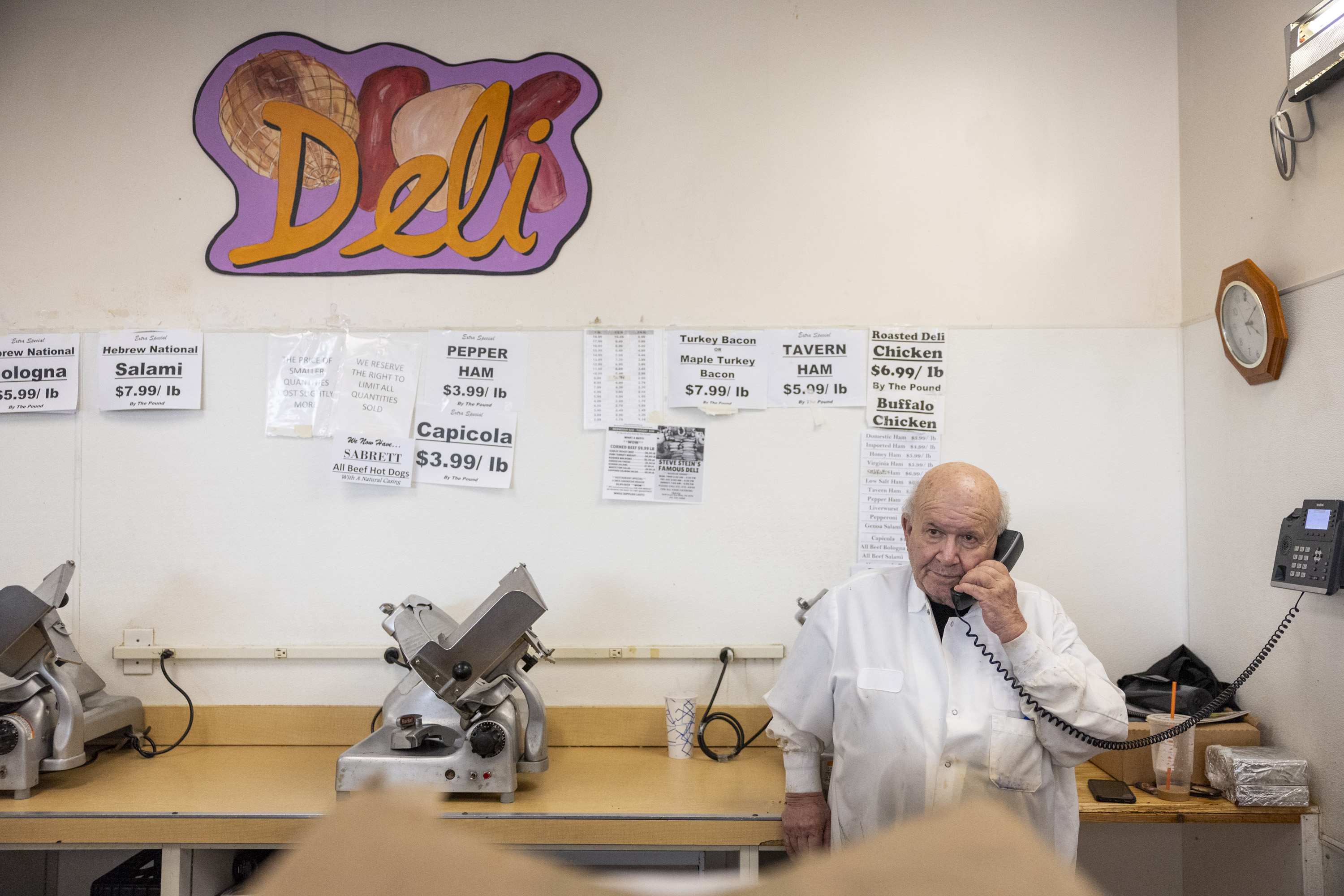
    The deli counter at Steve Stein’s Famous Deli on Aug. 14, 2026.Tyger Williams / Staff Photographer

    For Steve Stein, 83, the closing will end a family business whose roots stretch back to the late 1950s, when his family became involved with the Famous Deli location at 6826 Bustleton Ave. in Castor Gardens.

    Famous was part of an older Philadelphia deli dynasty. Beginning in the 1920s, the Auspitz brothers launched a string of delis around the city, including the flagship at Fourth and Bainbridge Streets in Queen Village, now owned by Al Gamble.

    Around 1960, Stein said, the Auspitzes sold the Bustleton Avenue Famous to Stein’s father, Mike, his brother Arnold, and his cousin Jack. The boys had run the produce concession there. Steve and Arnie, who died in 2010, later ran it side by side. Steve now runs the place with his son, Lee, now 57.

    Lee Stein weighs corned beef at his father’s deli on Aug. 14, 2026.Tyger Williams / Staff Photographer

    Since Stein announced the closing, customers have been stocking up on corned beef, smoked fish, rye bread, and other foods they fear they will not easily replace. Stein has cut prices as he tries to move inventory.

    “Nobody’s charging $9.99 a pound for house-cured corned beef,” Lee Stein said.

    On Friday, Tracey Lynn of Fox Chase ordered two pounds of corned beef while plucking garlic-perfumed sour tomatoes from a barrel, telling Stein that she planned to freeze some of the meat.

    Lynn said she and her husband have been customers since 1993. She is not sure where she will shop next. “I don’t want whitefish salad from BJ’s or from Costco,” she said.

    The closing is partly a retirement story. Stein said problems with his legs have made it increasingly difficult to work.

    But it is also about labor costs, food prices, succession, and a neighborhood whose demographics have changed dramatically over the life of the business.

    As Jewish families moved farther into the Northeast, Famous followed: first, in the mid-1970s, to Krewstown Road (where it had two locations) and, 14 years ago, to Grant Avenue. Stein, who later also had a short-lived store in Holland, Bucks County, sold the Bustleton Avenue store in the mid-1970s.

    In that sense, the history of Famous tracks the movement of Jewish Philadelphia itself.

    Steve Stein, owner of Steve Stein’s Famous Deli, takes a break in his office.Tyger Williams / Staff Photographer

    A suburban diaspora

    After World War II, thousands of Jewish families left older Philadelphia neighborhoods such as Strawberry Mansion, Queen Village, and Wynnefield for Oxford Circle, Castor Gardens, Rhawnhurst, and Bustleton in the rapidly developing Northeast. Others moved to Lower Merion and Cherry Hill, which developed large Jewish communities and deli cultures of their own that remain.

    By 1970, demographer Ira Rosenwaike estimated, using Census data on Yiddish as a mother tongue, that more than 68,000 Jewish adults 25 and older lived in the Near and Far Northeast.

    That population supported an extraordinary density of Jewish food businesses: Abe’s Appetizers, Castor Deli, R&W, Stern’s, Paul’s, Four Lads, Dave’s, Casino, the Nasherei, four Barson-Overbrook locations.

    Steve Stein (left), owner of Steve Stein’s Famous Deli, behind the counter with his son, Lee.Tyger Williams / Staff Photographer

    To Hasia Diner, a historian and New York University professor who specializes in American Jewish history, the significance of delis was precisely their ordinariness. They were not institutions created to preserve Jewish culture. They were where neighborhood life happened.

    “On the one hand, [delis] seem so everyday,” Diner said in an interview. “They’re not great synagogues where religion was expounded, or places where great ideas were pronounced. But they were places where life was lived.”

    Some were kosher and others were not. What mattered, Diner said, was that the deli offered a secular Jewish space, rooted as much in neighborhood and food as in religious observance.

    By the 1980s, however, those neighborhoods were changing. In a 1987 Inquirer article, Bruce Isakoff of Paul’s Deli, on Castor Avenue near Brighton Street, said his business was doing more lunchtime trade as Jews left the neighborhood and it became a more generic deli. By then, Four Lads, on Castor Avenue at Creston Street in Oxford Circle, had stopped carrying smoked fish and pastrami. Both are long gone.

    A ‘kind of shrine’

    Many Jewish households moved farther north and into Bucks and Montgomery Counties. A 1996-97 Jewish Federation study found that Philadelphia accounted for 41% of the region’s population living in Jewish households, down from 54% in 1984, while Bucks County’s share had nearly doubled.

    The studies used different definitions and geographic boundaries, but the direction was unmistakable: The dense Jewish population that once sustained neighborhood delis had dispersed.

    Steve Stein, owner of Steve Stein’s Famous Deli, taking a deli order on Aug. 14, 2026.Tyger Williams / Staff Photographer

    The movement itself was nothing new, Diner said. American Jewish communities repeatedly established themselves in neighborhoods and moved elsewhere. What changed was the role of the old neighborhood — and of the deli within it.

    “The deli was often the kind of shrine to which they went back,” she said.

    The old delis offered something beyond nostalgia. In their heyday, Diner said, they were overwhelmingly Jewish spaces where customers did not have to explain themselves or worry about how they appeared to outsiders.

    “These places were so rich with a kind of embeddedness, of comfort and security and, again, letting your hair down,” she said.
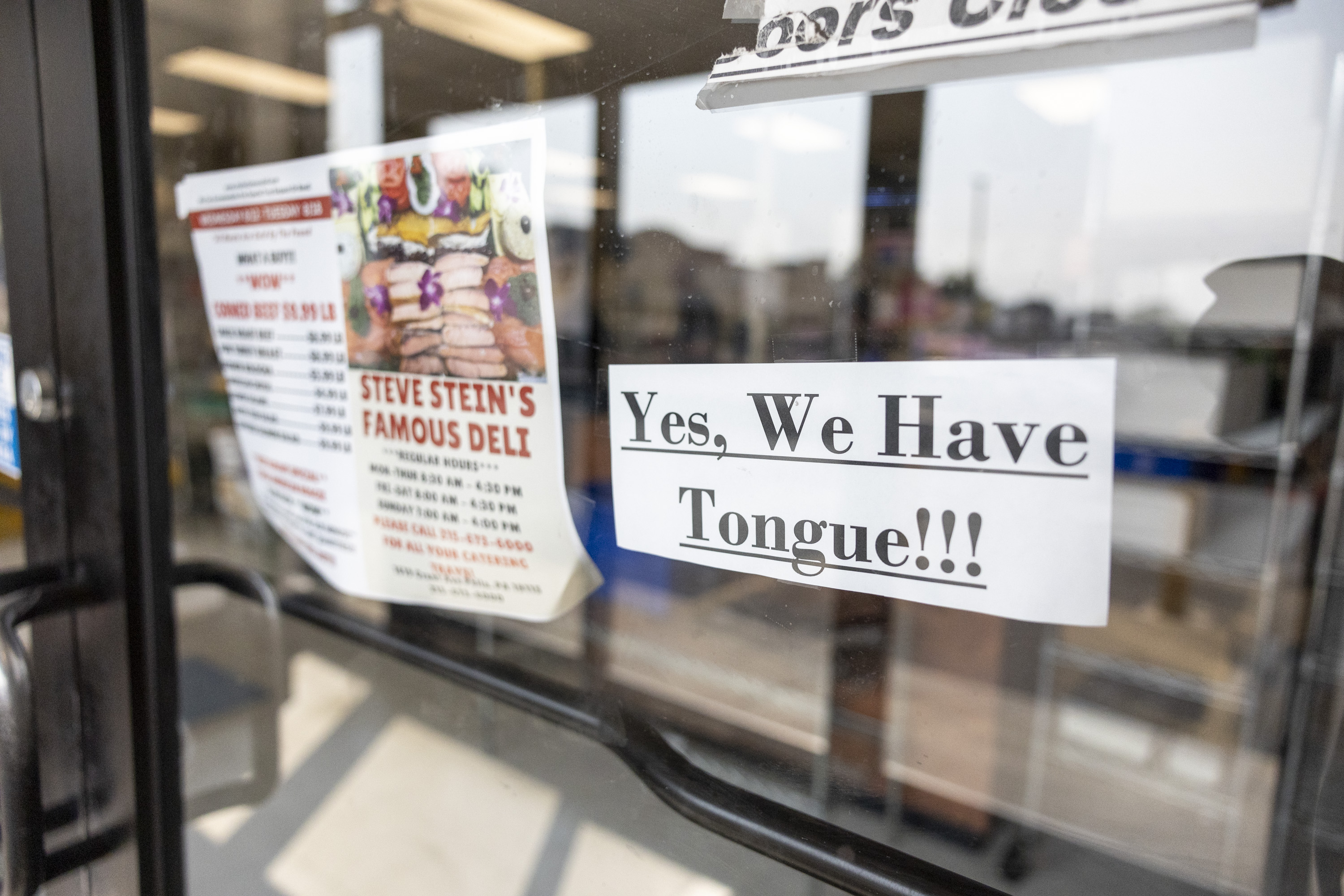
    A sign proclaiming, “Yes, We Have Tongue!!!” at the entrance at Steve Stein’s Famous Deli.Tyger Williams / Staff Photographer

    Population was only part of the story. Supermarkets increasingly stock foods that once sent customers to specialty counters: corned beef, pastrami, smoked fish, whitefish salad, herring, rye bread, bagels, pickles, and knishes. But not everything. Signs at Famous proclaim, “Yes, We Have Tongue!!!” Not many others do.

    More important, Diner said, is what cannot be sold at a supermarket: the deli as a secular gathering place, where being Jewish required neither religious observance nor agreement about politics. “A pastrami sandwich is a pastrami sandwich,” she said.

    Costly ingredients

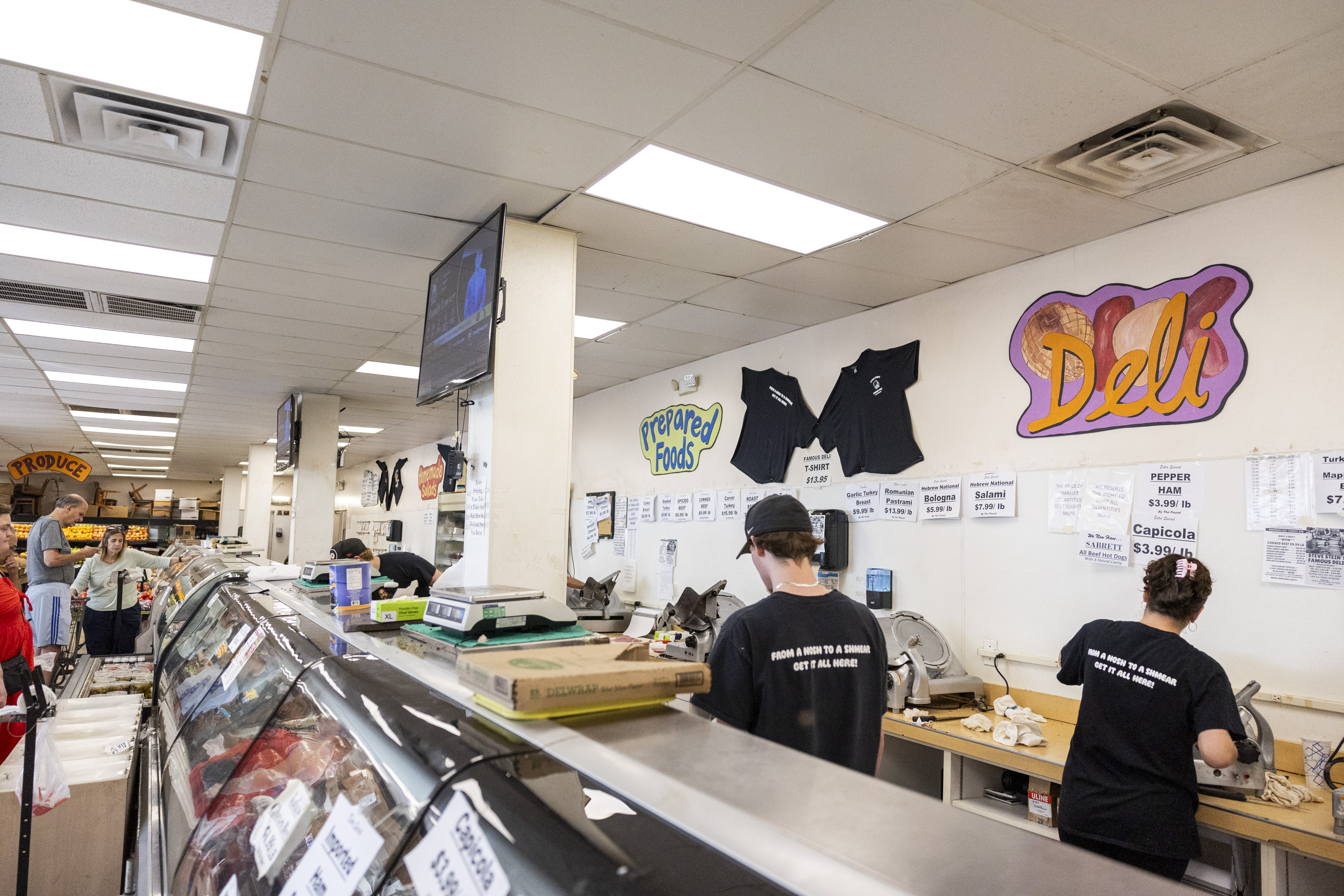
    The traditional deli model itself is expensive and labor-intensive, built around extensive preparation and a sprawling inventory. Famous still cures its corned beef and makes its own turkey, pastrami, whitefish salad, and spice beef.
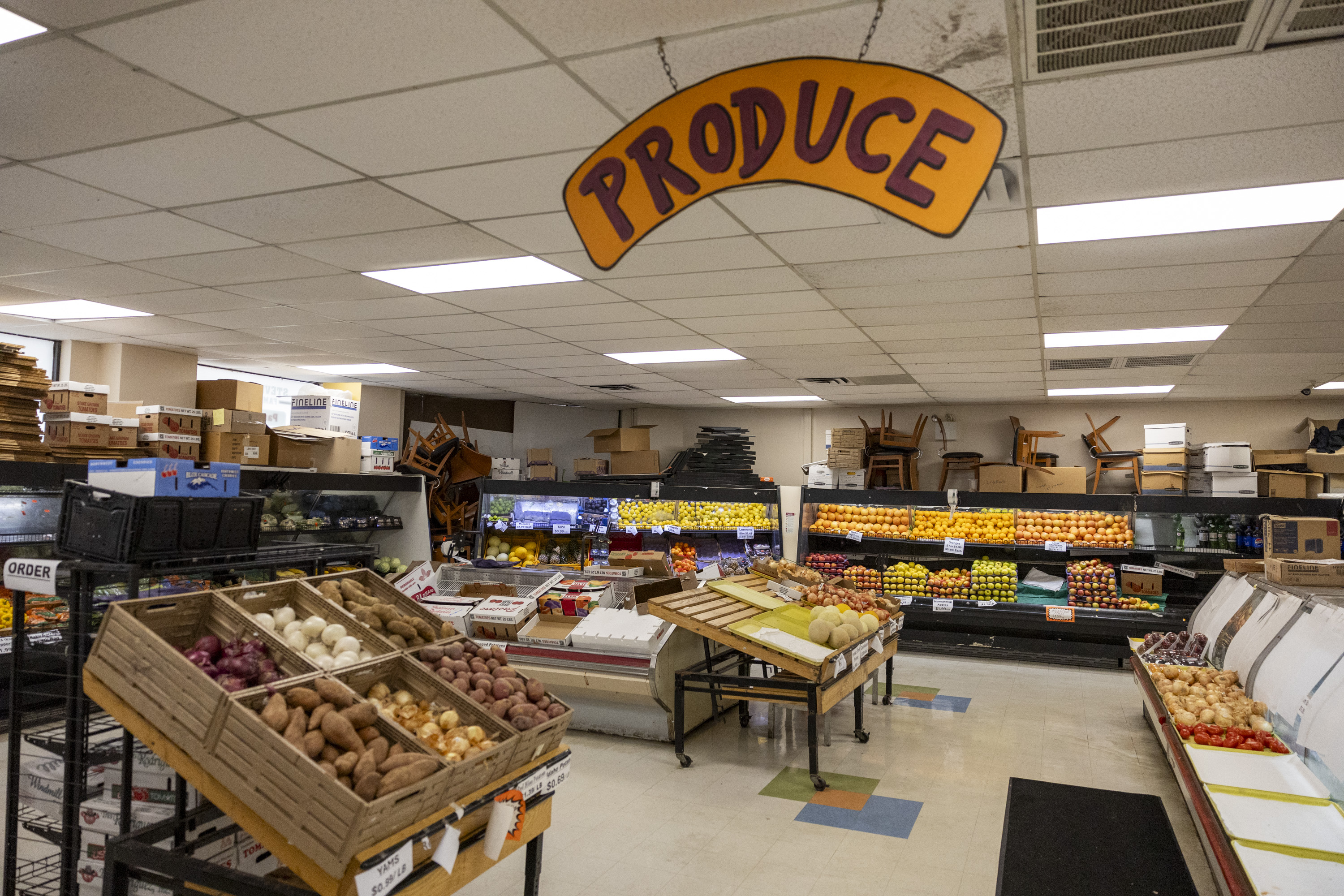
    Steve Stein’s Famous Deli is equal parts market, deli counter, and restaurant.Tyger Williams / Staff Photographer

    Steve Stein said finding employees has become increasingly difficult. Lee Stein said prospective workers have easier options, such as driving for Uber or making deliveries for Grubhub.

    The deli has about 35 employees, many part-time. Some are placed through SPIN, the Philadelphia nonprofit that supports people with intellectual, developmental, and autism spectrum disabilities.

    Survival has also required adapting to the customer base, increasingly non-Jewish. Lee said he remembers when Famous carried a single canned ham, hidden behind the counter. Though few Jewish delis are kosher, pork traditionally has been another matter.

    “Nobody was allowed to say the word ham,” he said.

    Today, their case holds about a dozen varieties.

    Rob Woloshin, 40, owner of Manny’s Deli Stop in Willow Grove, grew up going to Stein’s Famous with his father. His deli represents a leaner version of the old model: counter service, a few tables, online ordering, and delivery, with traditional deli sandwiches alongside chicken cutlets, wraps, and other contemporary offerings.
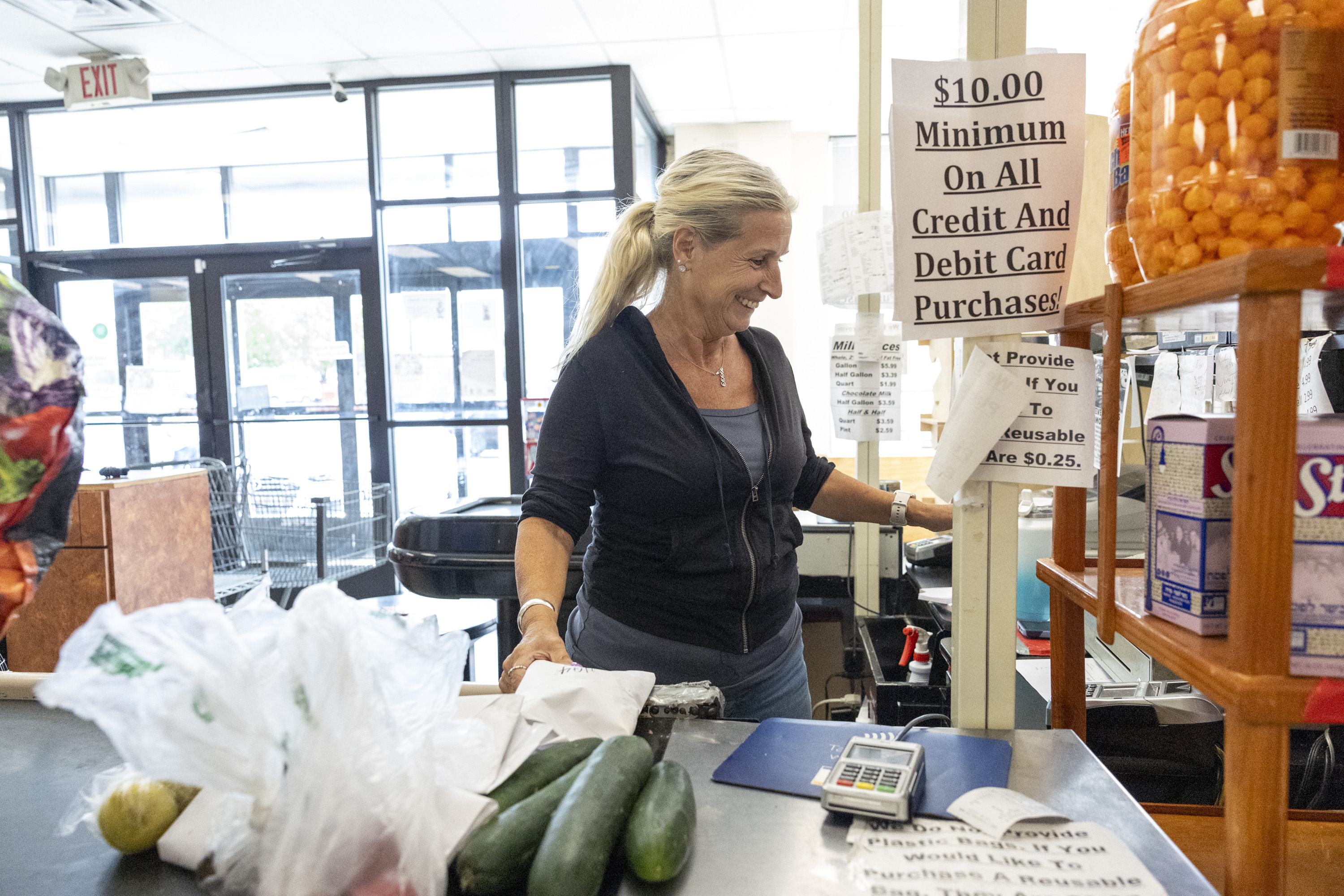
    Cashier Linda DiNenno, who has worked at Steve Stein’s Famous for about 13 years, checks out a customer.Tyger Williams / Staff Photographer

    “We’ve kind of modernized, I guess, as much as the Jewish deli can be modernized,” Woloshin said.

    Famous may yet have an afterlife. Lee Stein said he is talking with the landlord about a deal that could keep him in the space, under another name, in time for the Jewish High Holy Days, which begin Sept. 11. If not, he might offer catering from a synagogue kitchen.

    For longtime cashier Linda DiNenno, the closing is less about corned beef than the people around the counter. She said she will miss the family atmosphere among employees and customers who have been calling to say goodbye.

    “I’ve got customers calling on the phone, like, ‘Oh my God, I’m gonna miss you, Linda,’” she said.


  • Comcast rolls out new AI home-security system for internet users

    Comcast rolls out new AI home-security system for internet users

    Comcast is launching a new AI-fueled home-security platform, building on its suite of internet-related services for broadband customers as it looks to bulk up that side of its business,

    While it’s not the company’s first foray into home security technology, the newest offering combines cybersecurity, parental controls, cameras, and sensors for streamlined protection over its Wi-Fi network. It comes at a slightly higher monthly price than its previous comparable iteration.

    The move represents the Philadelphia-based telecom giant’s latest effort to diversify its services amid a steady erosion of cable subscribers and a leveling-off of broadband customers.

    The platform, Xfinity Shield, consists of cybersecurity and protection features that are available to existing Wi-Fi customers at no additional charge, as well as a premium tier of AI-powered tools that cost $15 per month.

    “It is a combination of things that we’ve had and brand new innovations,” Fraser Stirling, Comcast’s global chief product officer, said in a recent interview. He added that platform creators tried to answer the question: “How do you make these complicated things simple for people?”

    Fraser Stirling, Comcast’s global chief product officer, gives a presentation in April.Jessica Griffin / Staff Photographer

    On customers’ Xfinity app, they can protect themselves from online threats, limit their children’s screen time, and detect movement in their home while they’re away. Users can customize their settings and notifications for different times, including at night and when they’re away.

    Starting Tuesday, existing Wi-Fi customers with advanced Gateway routers can use those tools, though they have to opt in to the Wi-Fi Motion monitoring. The feature detects changes in the radio frequency signals between the Gateway and Wi-Fi-connected devices in the home, without recording video, taking photos, or identifying people, according to Comcast executives.

    Wi-Fi customers who want more features can pay $15 a month for a package that includes an indoor camera, door and window sensors, video storage, and the ability to call for emergency help at the tap of a button. Called Xfinity Shield Select, this service can work with a range of compatible hardware including outdoor cameras and smart locks.

    The Xfinity Shield services are being rolled out as Comcast changes its company structure and responds to evolving consumer demands.

    In June, Comcast executives announced plans to split into two publicly traded companies by spinning off the NBCUniversal media group. Comcast will continue to provide consumer and business services, with a renewed focus on streaming and mobile.

    In recent months, Comcast has expanded its Xfinity Mobile services in an attempt to offset the departure of cable and internet subscribers.

    (function(){function e(){window.addEventListener(`message`,function(e){if(e.data[`datawrapper-height`]!==void 0){var t=document.querySelectorAll(`iframe`);for(var n in e.data[`datawrapper-height`])for(var r=0,i;i=t[r];r++)if(i.contentWindow===e.source){var a=e.data[`datawrapper-height`][n]+`px`;i.style.height=a}}})}e()})();

    The number of broadband customers has plateaued in recent years, while the number of traditional cable TV subscribers has fallen off precipitously. Comcast reported about 10.7 million cable customers in its second-quarter earnings report, down from 11.3 million at the end of last year and 18.2 million in 2021.

    Xfinity Mobile, meanwhile, has seen growth, with about 900,000 new wireless lines being added in the first half of this year, according to earnings reports. As of June, there were about 10.2 million Xfinity Mobile lines, with each customer having two lines on average. Many of these connections are part of a free-line-for-a-year promotion, which will end for some customers later this year.

    Only new or existing broadband customers can sign up for mobile, which costs $30 or $45 a month depending on the plan. Wireless uptake represents a fraction of the company’s 28 million home internet subscribers, and brought in about $5 billion last year, out of $71 billion total internet and cable revenue.

    Comcast executives are hoping that some internet subscribers are willing to pay for Xfinity Shield Select.

    “The more of these products you take from us, the better the experience is,” Stirling said.

    Xfinity’s older home-security system and products remain available for existing customers, but the $10-a-month Smart Home indoor-monitoring package is no longer offered to new customers. Current Smart Home customers can keep their plan or switch to Xfinity Shield Select for the newer features. The more traditional home-security system, which includes 24/7 professional monitoring, costs $55 a month and will remain available for new and existing customers.

  • As Rose Tree Media pushes for new K-1 school, Middletown neighbors urge township to ‘just say no’

    As Rose Tree Media pushes for new K-1 school, Middletown neighbors urge township to ‘just say no’

    Armed with signs that read “Just say no!” and buttons etched with “Save our community,” Middletown Township residents on Tuesday pushed back fiercely against a proposal to build a new school on open land behind Penncrest High School as negotiations between the Rose Tree Media School District and the township drag on into the fall.

    The Rose Tree Media School District, which serves families in Media borough and Edgmont, Middletown, and Upper Providence Townships, is proposing a new school for kindergarten and first grade students on an empty lot behind Penncrest High School. The district says the school will relieve overcrowding and allow Rose Tree Media to finally offer full-day kindergarten, bringing it up to par with neighboring schools.

    Yet the proposal has not been welcomed by many neighbors in Middletown, who during nearly two hours of public comment on Tuesday raised concerns that the school would create dangerous driving conditions on key roadways, increase traffic, and burden taxpayers.

    During the meeting, representatives from the school district presented traffic impact data to the planning commission, an advisory board that will issue a recommendation to Middletown’s seven-member council on whether the township should approve the project. The planning commission voted to postpone a recommendation vote until a later date, when the school district will be expected to provide more detailed traffic data.

    The estimated cost for the school building is around $84 million, with an additional estimated $7.5 million for a proposed athletics addition. The realignment of Rose Tree Road will cost around $3.7 million, but is likely to be funded in part by grants.

    The meeting was the latest development in a protracted process for the Rose Tree Media School District, which has been attempting, unsuccessfully, to build a new school for six years.

    School officials say the district is overcrowded and unprepared for a wave of young students coming in the next decade.

    The school district’s enrollment has risen steadily in the last 10 years, from 3,779 students in the 2015-16 school year to 4,269 in the 2024-25 year. Enrollment is expected to peak in 2032-33 with nearly 4,600 students. Student population growth has forced the district to adopt space-saving measures, including installing multiple modular classrooms.

    !function(){“use strict”;window.addEventListener(“message”,function(a){if(void 0!==a.data[“datawrapper-height”]){var e=document.querySelectorAll(“iframe”);for(var t in a.data[“datawrapper-height”])for(var r,i=0;r=e[i];i++)if(r.contentWindow===a.source){var d=a.data[“datawrapper-height”][t]+”px”;r.style.height=d}}})}();

    The new school would also allow the district to provide full-day kindergarten, officials say, as Rose Tree Media is one of the few remaining school districts in the region that only offers a half-day option.

    During brief remarks at the beginning of the meeting, Rose Tree Media’s superintendent Joe Meloche said, “I think we all want the same thing ultimately, which is a plan that is safe, practical, and that works well for everyone.”

    Yet dozens of Middletown residents, many of whom live in close proximity to the proposed school site, said they felt the project was misguided, poorly planned, and would add hazards to already congested roadways. Some recounted watching dangerous car accidents on the streets abutting the site. Others charged the district with failing to account for how many cars would be clogging roads during peak pickup and drop off times. Many said they disagreed with the concept of a K-1 center as a whole and asked the planning commission to require the district to come up with a different option.

    “The site is too small, and student capacity is too great,” said resident Peter Wolf, who called the proposal “an oversized industrial project.”

    Residents of Middletown Township line up to make public comment at an Aug. 11 meeting of the township’s planning commission. Dozens of residents spoke in opposition to a new K-1 school proposed by the Rose Tree Media School District.Denali Sagner

    Resident Sally Turek said she agrees that the district needs full-day kindergarten, but that “there are definitely other, better options than this.”

    “This is like planning for Disney World. We can’t afford Disney World. We don’t need Disney World,” Turek said. “This is not the right time to do this, nor the right place.”

    A small contingent of parents spoke in favor of the proposal, describing the crowd as a vocal minority and saying that the residents who needed the school most, namely parents and their young children, were the very people who were unable to attend the evening meeting.

    “The kids are here. They need a place to go, and this notion that we can move the fifth grade to the middle school does not solve the problem,” said Ron Peterson, parent of an elementary school student.

    “Is this an ideal spot? Perhaps not,” Peterson said. “But there aren’t better spots available.”

    The proposal in Middletown Township is Rose Tree Media’s second attempt to find a home for a new school. The school district proposed putting a new elementary school in Edgmont Township in 2023, a plan that was voted down by the township’s board of supervisors, who cited traffic and location concerns.

    The planning commission will reconsider the proposal in September or October and has asked the school district to provide more detailed traffic data.

    Correction: This story has been updated to include accurate enrollment numbers.
    Clarification: This story has been updated to reflect the latest cost estimate for the center provided by the school district.

    This suburban content is produced with support from the Leslie Miller and Richard Worley Foundation and The Lenfest Institute for Journalism. Editorial content is created independently of the project donors. Gifts to support The Inquirer’s high-impact journalism can be made at inquirer.com/donate. A list of Lenfest Institute donors can be found at lenfestinstitute.org/supporters.

  • The U.S. national debt is set to hit $40 trillion this week

    The U.S. national debt is set to hit $40 trillion this week

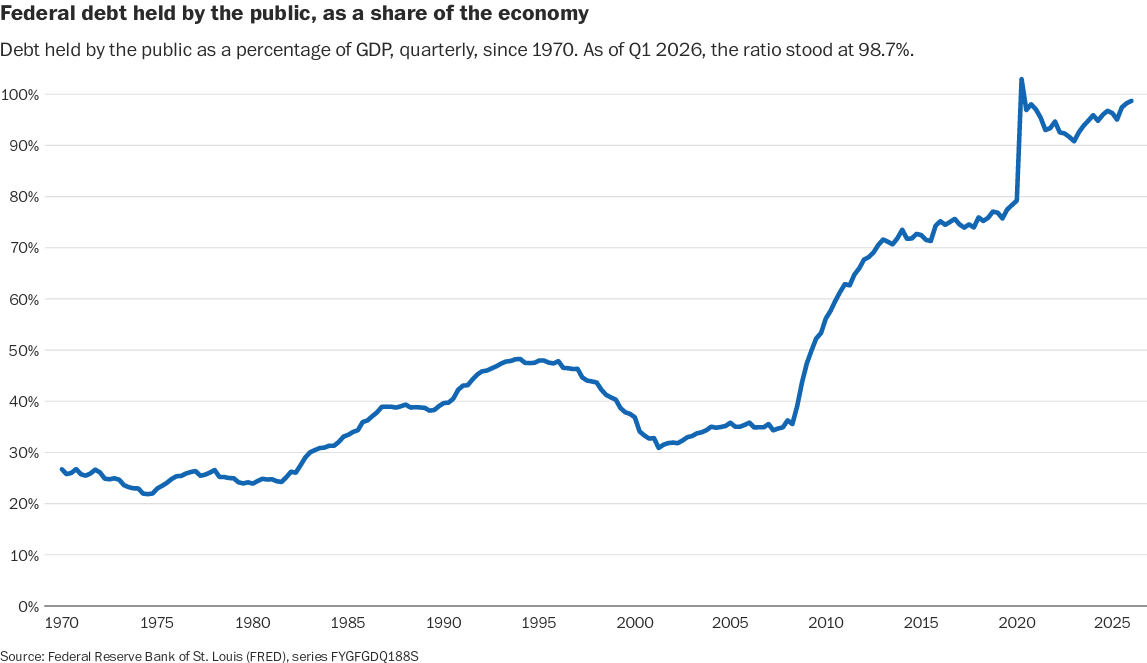
    The U.S. national debt is likely to surpass $40 trillion this week, months earlier than forecasters previously expected, in part because of billions of dollars in lost revenue from President Donald Trump’s invalidated tariffs.

    The lost revenue has forced the U.S. Treasury Department to borrow more rapidly to cover the nation’s bills: Six months ago, the nonpartisan Congressional Budget Office projected that total borrowing would top out at $39.4 trillion this fiscal year. But on Monday, Treasury reported that the debt stood at $39.9 trillion and counting.

    The faster accumulation of debt means the next deadline for raising the legal limit on borrowing is also likely to arrive ahead of schedule. Just last year, Congress set the debt limit at $41.1 trillion. Budget analysts now say borrowing could hit that threshold by early next year, forcing lawmakers either to suspend it or raise it again to avoid the risk of an economy-shaking default.

    Trump is already focused on the debt limit, which has repeatedly plunged Washington into a dangerous game of legislative chicken. Late last month, the president urged the Senate to address “the ever looming Debt Ceiling disaster” before leaving town for its August recess.

    Senate leaders did not comply, but Majority Leader John Thune (R-South Dakota) told reporters at the time that “we’ll have to be dealing with it.” He added: “$40 trillion in debt — seems to me that should get our attention.”

    For the past quarter-century, the national debt has grown under both parties, through the tax cuts of the George W. Bush era, the wars in Iraq and Afghanistan, the Great Recession, the 2017 Trump tax cuts and the nearly $2 trillion Biden administration initiative to prop up the economy during the coronavirus pandemic. Trump pledged during his first campaign in 2016 to eliminate the debt within eight years; instead, it has doubled since he first took office.

    This year, the gap between spending and revenue was already expected to approach $2 trillion, the CBO reported in February. Days later, the U.S. Supreme Court struck down Trump’s “Liberation Day” tariffs, cutting federal revenue by an estimated $250 billion. The Treasury has also increased borrowing lately to build up its cash reserves.

    Military spending tied to the conflict with Iran could add more to the debt in the months ahead, according to the Bipartisan Policy Center, a nonpartisan Washington think tank that tracks federal spending.

    “Our current fiscal trajectory is plainly unsustainable, and that’s the best-case scenario,” BPC president and CEO Margaret Spellings said in a statement. “AI disruption, a recession, global war, or any number of other events could quickly push us over the edge from a challenge into a full-blown crisis. Even in the rosiest scenarios, we’re speeding toward a cliff and refusing to turn the wheel.”

    In an email, White House spokesman Kush Desai said that “the Trump administration remains focused on slashing waste, fraud, and abuse across the federal government while accelerating economic growth, policies that will get America’s debt-to-GDP ratio trending in the right direction.”

    So far, Washington lawmakers have raised or suspended the debt limit every time it has been reached, but often after dramatic, deadline-pushing partisan battles. Even these near misses have rattled markets and carried a price: Standard & Poor’s, Fitch and Moody’s have each downgraded the credit rating of U.S. government debt since 2011, moves tied at least partly to debt ceiling brinkmanship.

    Congress last raised the debt limit in quieter fashion, adding $5 trillion to the debt ceiling as part of the One Big Beautiful Bill Act, the Republicans’ marquee tax and spending law. Measures to raise the debt ceiling often include spending cuts aimed at reducing the annual budget deficit. But the One Big Beautiful Bill Act, which Trump signed in July 2025, did the opposite: That law added $4.7 trillion to projected deficits over the next decade, according to CBO estimates.

    According to preliminary projections by the BPC, Washington is on track to next hit the debt limit between late winter and midsummer 2027. Based on the latest borrowing figures, the center’s estimate is “trending toward the earlier end” of that range, Shai Akabas, the center’s vice president of economic policy, said in a statement.

    Hitting the debt ceiling would not by itself trigger a default. Once the borrowing limit is reached, Treasury can pay bills by drawing on its cash reserves and using stopgap accounting maneuvers known as “extraordinary measures,” which typically buy another six to nine months, according to the BPC. Only after that runs out does the government reach what’s known as the X-date, when the Treasury risks running out of cash and defaulting on its obligations.

    If Republicans lose one or both chambers of Congress in the Nov. 3 midterm elections, they could attempt to raise the debt limit in the lame-duck period during November and December — before the new Congress is seated in January. Otherwise, they could be forced to make policy concessions to Democrats that Republicans — and the White House — would prefer not to make.

    But raising the debt ceiling could prove challenging even under total GOP control. Especially in the House, where the GOP holds a slim majority, party leaders would be forced to win over their fiscal hawks, who have previously revolted when a debt ceiling increase was not accompanied by an agreement to cut spending.

    “You have to raise the debt limit just the same way that you have to pay your credit card bill,” said Marc Goldwein, senior policy director for the Committee for a Responsible Federal Budget, a nonpartisan group focused on deficit reduction. It reflects spending choices you’ve already made, he said. “But if you keep getting credit card bills that are more than you can afford, it’s probably a good time to reassess how much you’re spending, or to get a second job, right?”

    As with many credit cards, interest is itself becoming a bigger part of the problem. Last week, the U.S. government sold 30-year bonds at 5.216 percent, the highest rate in a quarter-century, Bloomberg News reported. Treasury rates ripple into mortgage rates, corporate debt and other borrowing.

    Annual interest payments on the debt are projected to top $1 trillion this year, according to CBO — about the size of the Pentagon budget. They now consume about 19 percent of federal revenue, according to the Peter G. Peterson Foundation, a nonpartisan group that tracks the debt and advocates for fiscal discipline, and are projected to climb to 26 percent by 2036.

    “Interest costs are paying for your past, not paying for your future,” said Peterson Foundation chief executive Michael Peterson, and unfairly burden future generations.

    “It’s immoral to, year after year, trillion after trillion, just keep borrowing the money, not paying your bills for immediate consumption and deferring not only the principal balance but the interest costs onto our kids and grandkids,” he said.

    Peterson pointed to Social Security as a preview of what happens when Washington puts off big problems: Unless Congress acts, the program’s trust fund is projected to become insolvent in 2032, triggering an automatic 22 percent cut in benefits.

    “Can a democracy that’s run by all of us collectively make tough decisions to sacrifice in the short term for long-term benefit?” Peterson said. “The political system hasn’t risen to this challenge in recent decades.”

    Theodoric Meyer and Jarrell Dillard contributed to this report.

  • I spent 15 years in Head Start classrooms. Cutting the program is a mistake.

    I spent 15 years in Head Start classrooms. Cutting the program is a mistake.

    Once again, Head Start — a program beloved by millions of families and with overwhelming public support — is being threatened by the Trump administration.

    I was a Head Start teacher, administrator, and coach for nearly 15 years, and can attest to the transformative power of the program. I saw children thrive thanks to Head Start’s visionary emphasis on the whole child by providing a high-quality education, welcoming classrooms, healthy nutrition, and dental and health screenings. Through home visiting, regular parent communication, and frequent parent participation in the classroom, I saw families become stronger and more resilient.

    Research has shown, time and again, that Head Start increases high school, college, and postsecondary graduation rates, leads to higher self-esteem for participants, and has a positive effect on future generations, as examined through parents’ practices exhibited decades later.

    Which is why I am astounded by the methodical steps to dismantle a program that is the gold standard when it comes to early childhood programs. Back in 2023, the Heritage Foundation made exaggerated claims of fraud and abuse in its call to eliminate Head Start in the now-infamous Project 2025 plan for the second Trump administration.

    A year later, word leaked that President Donald Trump was planning to use the biased Heritage Foundation report to zero out federal funding for Head Start. Widespread public outcry and political pressure thwarted that plan.

    Undeterred, the Heritage Foundation developed a new strategy to kill off Head Start through death by a thousand cuts: If Head Start can’t be eliminated outright, deregulate it until it’s a skeleton of itself. Trump’s Department of Health and Human Services is proposing changes to Head Start that will do just that.

    In May, Health and Human Services put out a proposal to retract wage increases for Head Start teachers. This move would exacerbate the already significant challenges in recruiting and retaining the standard high-caliber staff, resulting in fewer slots and lower enrollment.

    Recently, Health and Human Services announced another proposed change to Head Start that would lower staff qualifications while raising the teacher-student ratios. The latest proposal would also eliminate some of the structures that keep lines of communication open between parents and providers, like parent-teacher conferences. And a new English-only mandate in instruction, written materials, and family communications would isolate parents and children who are dual-language learners.

    Physical and dental health screenings and follow-up care — instrumental in the identification of vision problems, developmental delays, missed vaccines, and hearing challenges for many low-income children — are also on the chopping block.

    These proposed changes are just a few examples of how Head Start would be hamstrung from providing the care and education that has transformed so many children’s lives. Even Health and Human Services’ own Administration for Children and Families admits that these proposed changes could “introduce some risk.”

    Once again, people-power can successfully defend Head Start. Contact Sens. John Fetterman and Dave McCormick and your representative and tell them to pressure the Trump administration to withdraw these proposed changes.

    Members of the public — like you — are able to voice your opinion, life experiences, academic research, or general passion for Head Start in response to the proposed changes. You can submit public comments on the Health and Human Services website — comments Health and Human Services must read and report on before finalizing anything.

    When President Lyndon B. Johnson established Project Head Start in 1965, he said, “I believe that this is one of the most constructive, and one of the most sensible, and also one of the most exciting programs that this Nation has ever undertaken.” That sentiment continues today.

    Head Start sets up society as we know it for success. We must defend against this tactic of death by a thousand cuts and make sure future generations are able to reap the rewards of this tried-and-true program.

    Zaina Cahill is the early childhood education policy director at Children First.

  • Bob Harvie’s debate challenge to Brian Fitzpatrick sets off new war of words in Bucks County race

    Candidates are trading debate challenges in a contentious congressional race in a key swing district in the Philadelphia suburbs.

    Democrat Bob Harvie is challenging Republican U.S. Rep. Brian Fitzpatrick to four debates, his campaign told The Inquirer. Fitzpatrick, after learning of Harvie’s challenge from The Inquirer, countered with 10 debates — but only if Harvie releases files related to an FBI investigation that Fitzpatrick and allies have routinely alleged focuses on the Democrat.

    Harvie does not have files to release, said Dan McCormick, the candidate’s campaign manager. Harvie also has never been under investigation, lawyers for his campaign said. And he has already filed a defamation lawsuit against a pro-Fitzpatrick super PAC for making the same claim.

    “Bob would be happy to participate in 10 debates,” McCormick said. “Bob has no files to release and Brian Fitzpatrick knows it. If Fitzpatrick has proof as he says he does, he should put up or shut up.”

    The back-and-forth emerged Monday when the Harvie campaign told The Inquirer that the two-term Bucks County commissioner would be challenging the five-term GOP lawmaker to three debates in Bucks — one each in the lower, central, and upper parts of the county — and a fourth in the Montgomery County portion of the 1st Congressional District.

    Harvie said that Fitzpatrick “refuses to answer questions here at home” and “has nothing to show for his nearly 10 years in Washington.”

    The increasingly heated race is one of four marquee congressional contests in Pennsylvania that could decide which party controls the U.S. House in November.

    “It’s time for Fitzpatrick to show up in Bucks and Montgomery County — not Manhattan or the Lavender Fields in France,” Harvie said in a statement, referring to the venues for Fitzpatrick’s wedding and engagement to Fox News senior White House correspondent Jacqui Heinrich. “I’ll be there whether or not he shows, because I will never forget who I am fighting for.”

    Heather Roberts, a spokesperson for Fitzpatrick, said as soon as Harvie releases “his full FBI files,” the campaign will move forward with date and venue selections for 10 debates.

    “If the Subject of an FBI Corruption investigation is asking to be provided a platform by the only FBI Agent in Congress, he sure as hell will be required to come clean with the public and release these documents in their entirety,” Roberts said in a statement. “If he has nothing to hide, this should be an easy decision for him.”

    Roberts also proposed a joint sit-down interview with Harvie and Fitzpatrick, conducted by The Inquirer, to discuss the allegations.

    The Harvie campaign questioned how Fitzpatrick would know the content of the files.

    Roberts said that Fitzpatrick, who served 15 years as an FBI agent and a federal prosecutor, “is extremely familiar with this specific grand jury protocol and the documents that are generated.”

    The debate drama is the most recent development in what has become an increasingly combative race, filled with personal jabs and legal filings related to controversial ads making allegations that Harvie is the subject of an FBI investigation.

    Harvie, a former Falls Township supervisor, and other officials testified as witnesses to a grand jury in an FBI probe in 2022 into political donations and union contracts related to the Pennsbury School District. In 2020, the FBI interviewed several people connected to Falls Township and Pennsbury.

    It has been four years since voters have been able to see a general election debate in the 1st Congressional District. In 2024, Fitzpatrick did not debate Democratic challenger Ashley Ehasz, after doing so in 2022.

    The Harvie campaign said that it would be willing to work with the Fitzpatrick campaign on logistics and other event details, but that the commissioner’s preference is a town hall-style debate so voters can hear from him directly.

    The last time Fitzpatrick announced an in-person town hall was August 2017, according to Fitzpatrick’s government website.

    Fitzpatrick has held tele-town halls, including one in June, for constituents, and frequently posts on social media recapping the meetings and events he attends in the community.

  • Trump is selling early access to his Truth Social posts — and, of course, there are no investigators in sight | Editorial

    Trump is selling early access to his Truth Social posts — and, of course, there are no investigators in sight | Editorial

    Donald Trump continues to enrich himself through rampant self-dealing while everyone else pays the cost of his failed policies — including the war in Iran, tariffs, and mass deportations.

    Now comes the latest pocket-lining scheme that reeks of insider trading.

    Trump’s media company has begun selling investors advanced access to his often market-moving Truth Social posts. More than 10 customers are paying up to $100,000 a month to get an early peek at the president’s social media posts.

    The CEO of Trump Media and Technology Group (TMTG) told investors he expects more buyers to sign on, and that selling early access to the posts could “grow into a meaningful, durable contributor.”

    Joe Rogan, the podcaster and Trump supporter, asked the obvious question: “How is that legal?”

    Two media organizations sued Trump over the service, arguing it is unconstitutional, and Rep. Jamie Raskin (D., Md.) said it represents “the depraved essence of insider trading.”

    Trump is the majority owner of TMTG, which owns Truth Social, the main platform he uses to communicate to his followers and the world, sometimes going on unhinged rants and posting more than 100 times a day.

    But major announcements from Trump about issues such as tariffs, the erratic peace negotiations with Iran, and attacks on Federal Reserve interest rate policy often cause stock, oil, and bond markets to rise and fall.

    Advanced knowledge of such information will enable insiders who buy early access to profit from Trump’s posts. Indeed, suspicious trading ahead of some of Trump’s previous market-moving announcements has raised red flags of insider trading.

    Trump knows how to manipulate financial markets.

    Last April, he wrote on his social media platform: “THIS IS A GREAT TIME TO BUY!!! DJT.” Hours later, the president detailed a 90-day pause on nearly all his tariffs, causing the stock market to gain back about $4 trillion that had been lost in the previous days of trading.

    Trump has also used his presidential bully pulpit to bolster individual stocks.

    He touted Dell stock after founder Michael Dell and his wife, Susan, pledged to donate more than $6 billion to the “Trump Accounts” program. Shares of Dell jumped 7% after Trump urged investors to “go out and buy a Dell computer.”

    After shares of Tesla sank following Elon Musk’s disastrous tenure dismantling the government as the DOGE figurehead, Trump held an embarrassing promotional event outside the White House praising the cars.

    Commerce Secretary Howard Lutnick followed Trump’s Tesla promo by going on Fox News and urging viewers to buy the stock — an apparent violation of federal ethics rules that prohibit officials from endorsing products or businesses.

    The White House push boosted Tesla’s stock price.

    But don’t look for the U.S. Department of Justice or the Securities and Exchange Commission (SEC) to investigate Trump’s plan to sell access to his Truth Social posts.

    Todd Blanche, the newly confirmed attorney general who enriched himself as Trump’s defense attorney, refused to pledge that he will always act independently of the White House.

    SEC enforcement cases hit a record low during Trump’s first year back in office. The agency just dropped insider trading charges against a healthcare executive the president pardoned.

    Several Democratic lawmakers called on the SEC to investigate the Truth Social deal. But any real investigations of Trump’s moneymaking are unlikely until Democrats win control of the House or Senate.

    Trump made an estimated $2.2 billion last year on side hustles involving cryptocurrency, branding deals, real estate ventures, and legal settlements with media companies that blur the power of the presidency with profiteering.

    The Truth Social scheme will add to Trump’s pocket lining.

  • Vanished in the Pine Barrens | Inquirer South Jersey

    Vanished in the Pine Barrens | Inquirer South Jersey

    Good morning, South Jersey.

    More than two years after Danielle Lopez disappeared in the Pine Barrens while camping with her boyfriend, her mother continues to search with the hope that she’s still alive.

    Plus, an athletic director of a Mercer County school district was caught on a surveillance camera lurking outside the bedroom window of his neighbor’s underage daughter, Avalon is allowing a popular bar to have one more hour of outdoor live music, and more news of the day.

    — Taylor Allen (southjersey@inquirer.com)

    P.S. Want to give us story idea? Ask a question to Curious South Jersey, and it might just end up in a future article.

    If someone forwarded you this email, sign up for free here.

    Two years later, a mother is still searching for her daughter

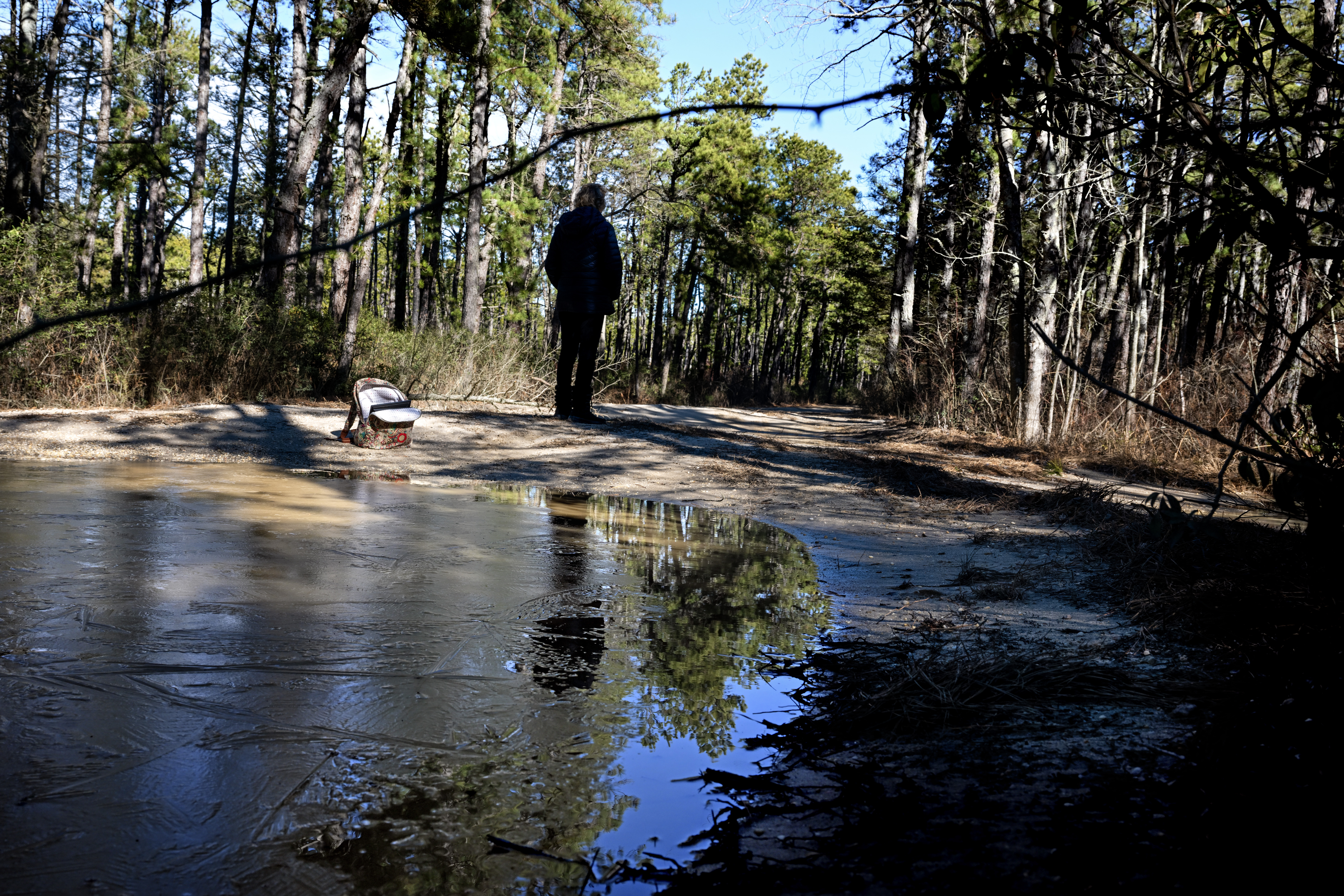
    Sue Quackenbush has been looking for answers ever since her daughter, Danielle Lopez, went missing in the Pine Barrens in April 2024.

    “This isn’t grief yet. This is terror,” she said during a visit there earlier this year.

    At the time of her disappearance, the 37-year-old woman was staying with her boyfriend at a campground in Brendan T. Byrne State Forest.

    She was last seen walking alone on Lost Lane, an empty road deep in the forest.

    More than two years later, the New Jersey State Police are still investigating and Quackenbush is offering $25,000 to anyone with information that could solve the case.

    The Inquirer’s Jason Nark has the story.

    What to know today

    • A Pine Hill woman was arrested and charged with multiple offenses, including second-degree death by auto and driving under the influence, after she crashed into an e-bike on Saturday, killing the rider, a 46-year-old Lindenwold woman, officials announced Monday.
    • The athletic director of a Mercer County school district has been charged with prowling outside the bedroom window of his neighbor’s underage daughter in Bucks County after he was caught on a surveillance camera, according to local authorities.
    • The McKernan Supportive Housing Center, a $22 million project that will provide 60 units of supportive housing for people experiencing homelessness, is set to open later this year in Gloucester Township, 42 Freeway reports.
    • Avalon voted to loosen its liquor license restrictions and allow the new bar Gully’s to have one more hour of outdoor live music until 9 p.m.
    • More than 1.1 million New Jersey residents are expected to receive letters from the state about their eligibility for the Affordable New Jersey Communities for Homeowners and Renters property tax relief program, aka ANCHOR. WHYY shares what you need to know to get your rebate payment.
    • Residents in Cherry Hill, Haddon Heights, and Camden should be prepared to alter their routes, as they have the most roadwork projects this week in Camden County.

    🗣️ Quote of the week

    Ferchen and three friends attended Saturday night’s UFC 330 at Xfinity Mobile Arena to celebrate his birthday with tickets to his first UFC event.

    🧠 Trivia time

    Kelly Ripa, cohost for ABC’s Live with Kelly and Mark, is from South Jersey. Which county?

    A) Camden

    B) Burlington

    C) Gloucester

    D) Salem

    Think you know? Check your answer.

    What we’re …

    🌯 Craving: The sharp Italian hoagie from Pal Joey’s Deli in Sewell.

    👟 Walking: The Riverfront Promenade in Burlington.

    📺 Rewatching: Heroes and Nashville after the recent passing of actress Hayden Panettiere.

    And that’s all I have for you today. Let’s do this again tomorrow.

    By submitting your written, visual, and/or audio contributions, you agree to The Inquirer’s Terms of Use, including the grant of rights in Section 10.

  • Still missing in the Pine Barrens | Morning Newsletter

    Still missing in the Pine Barrens | Morning Newsletter

    Good morning, Philly.

    We start with a tragic story about a woman who went missing in the Pine Barrens more than two years ago, and her stricken mother who’s been left with more questions than answers, and more fear than grief.

    And, Philly bankers and builders are seeing a switch this summer: college, hospital, and apartment projects are out; data centers and military projects are in.

    Plus, the Justice Department says the much-maligned Penrose Hotel in South Philly was part of a $100 million Ponzi scheme, and more news of the day.

    — Tommy Rowan (morningnewsletter@inquirer.com)

    If someone forwarded you this email, sign up for free here.

    No good answers

    Danielle Lopez disappeared in April 2024 while camping with her boyfriend in New Jersey’s Brendan T. Byrne State Forest — in the Pine Barrens.

    Security cameras recorded her leaving a Burlington County Wawa not far from the couple’s camping ground, and she was later spotted walking alone along Lost Lane in Woodland Township.

    And she hasn’t been seen since.

    For millions of visitors, these Pine Barrens are full of folklore. For Sue Quackenbush, the pines feel ominous, a place to fear ever since her daughter disappeared.

    Quackenbush, who has lost two other children, describes the last two-plus years as agonizing and torturous.

    She believes people possess information about Lopez’s disappearance and is appealing for answers.

    She’s looking for closure, which would help transform her terror into grief.

    Read Jason Nark’s full report.

    The pivot to data centers and military projects

    Construction in the Philly area has slowed.

    “Confidence is shaky in the construction industry,” one contractor told The Inquirer.

    In past years, a commercial slowdown meant falling back on “eds and meds” — college, hospital, and drug-company jobs.

    But federal funding cuts, combined with general confusion caused by shifting priorities under the Trump Administration, has left contractors asking an ominous question:

    “What industry right now is doing great?”

    Reporter Joseph DiStefano has the full story.

    What you should know today

    • Federal authorities say the owners of the Penrose Hotel in South Philly, which was derided by a reviewer as a “tower of terror,” have been accused of using chronically understaffed and underfunded hotels to fraudulently obtain loans as part of a $100 million Ponzi scheme.
    • Philadelphia police released images of a suspect in the fatal shooting of an off-duty officer outside an after-hours nightclub in Southwest Philly during the weekend.
    • Members of a Penn State drug ring have been charged with trafficking cocaine through off-campus fraternity houses in State College between 2023 and 2024 and distributing it to classmates, according to the state attorney general’s office.
    • Summer break ended Monday for 9,000 Philadelphia School District teachers, counselors, nurses, and others. Meanwhile, Kensington High School staff were rerouted to an old middle school more than seven miles away. They’re bracing for a “chaotic year.”
    • Life sentences are no longer mandated for some murder convictions in Pennsylvania. Families and courts are waiting for answers from lawmakers.
    • Seeking President Donald Trump’s support is a risky strategy in a swing state. And yet Stacy Garrity, who is challenging Josh Shapiro in the race for Pennsylvania governor, is doing it anyway.
    • A 24-year-old Portuguese man was sentenced to seven years in federal prison for stealing more than $1 million in cryptocurrency from unwitting victims, including a resident of Montgomery County.

    Quote of the day

    Columnist Luis F. Carrasco argues in favor of talking to people you disagree with. Not only is it possible — he says it’s the whole point of politics.

    🧠 Trivia time

    This Hulu crime dramedy set in Philadelphia (but filmed in Chicago) has been canceled after two seasons.

    A) Bakery Bros

    B) Food Dudes

    C) Deli Boys

    D) Two Guys

    Think you know? Check your answer.

    What we’re…

    🍽️ Taking note of. For restaurant critic Craig LaBan, there is only one cleaver-swinging duck chef who has a legitimate claim to the title: “Chinatown’s Wizard of Ducks.” Sure, there are larger and better-known duck houses in the neighborhood. But this wizard’s cozy 20-seater, with no decorations on the walls, is LaBan’s vote for Philly’s best.

    🎸 Following. Avalon will allow its bars to host outdoor live music until 9 p.m., which gives the shore-town venues an extra hour of revelry — despite objections from nearby residents.

    ⚾ Considering. Is Alec Bohm a stud player? Probably not, says sports columnist Marcus Hayes. But Bohm does not stink, and if Phillies fans are wise, Hayes argues, they would choose to appreciate what they have in the 30-year-old infielder.

    🧩 Unscramble the anagram

    Hint: A Wawa customer said this new menu item tastes like a “World Series win with a sprinkling of Mets’ tears.”

    ANAHEIM SHOT TOPIC

    Email us if you know the answer. We’ll select a reader at random to shout out here.

    Cheers to Valerie A. Metzler, who correctly guessed Monday’s answer: Subaru Park. The Union’s home field is where the Maryland Charm beat the California Palms, 16-13, to claim the first-ever Women’s Lacrosse League championship.

    Photo of the day

    Flags and a bright blue sky are reflected in the windows of a Center City Philadelphia hotel.Tom Gralish / Staff Photographer

    And we end today with a reflection of —mercifully — stilled banners. Tuesday’s forecast calls for clear skies, reasonable temperatures, mild winds, and rain chances in single digits. Enjoy it while it lasts.

    👋 Thanks for starting your day with The Inquirer. Laura Benshoff, our new Morning Newsletter shepherd, will write her first edition tomorrow. Be nice to her.

    By submitting your written, visual, and/or audio contributions, you agree to The Inquirer’s Terms of Use, including the grant of rights in Section 10.

  • Resident sues over public pool deal | Inquirer Greater Abington

    Hi, Greater Abington. 👋

    A Cheltenham resident has filed a lawsuit against the township alleging a $4.5 million project for a new public pool complex illegally circumvented the standard bidding process. In other news, some families in the township are nervous about the school year fast approaching as the district looks to move past its football scandal.

    Plus, a new local police chief also led one of the area’s most famous criminal investigations, and more news of the week.

    — Laura Smythe (greaterabington@inquirer.com)

    P.S. We want your feedback! Tell us what you think of this newsletter by taking our survey or replying to this email.

    If someone forwarded you this email, sign up for free here.

    Cheltenham resident files lawsuit alleging township’s $4.5M pool deal breaks bidding rules

    Cheltenham Township last month made a deal with a private developer to pay up to $4.5 million for three public pools and a new 5,000-square-foot building by Ashmead Road and Front Street. But a resident filed a recent lawsuit alleging the agreement violates public bidding rules.

    The lawsuit also scrutinizes township commissioners’ arrangement to lease the land to the developer for $10 per year.

    In response to public questioning, township officials wrote in an FAQ posted last week that Cheltenham had “received estimates from multiple pool consultants indicating that constructing a comparable standalone replacement pool would cost approximately $6-8 million.”

    The Inquirer’s Jess Rohan digs into concerns about the project and where it goes from here as the lawsuit moves through Montgomery County courts.

    Cheltenham parents and students are nervous ahead of the school year

    The first Cheltenham school board meeting following charges surrounding two high school locker room assaults in 2025 was an emotional one. Officials sought to address families’ concerns last week by laying out next steps, such as new leadership and an independent review of policies.

    Despite officials’ attempts to ease frustrations, many are expressing a lack of confidence in the board’s response and whether it will be effective.

    As a result, some Cheltenham families are anxious as the new school year approaches — as does the Aug. 27 preliminary hearing for three football coaches and two players charged as adults in the scandal.

    💡 Community news

    • Cheltenham’s new police chief, Richard Schaffer, will be sworn in tomorrow night. He is a longtime crisis negotiator who previously headed the township’s gun violence task force and led the 2005 criminal investigation into Bill Cosby.
    • A 59-year-old Philadelphia man was sentenced to 25 to 50 years in state prison by a Montgomery County judge last week after fatally shooting his wife on their way home from a family party in Rockledge in February, The Inquirer’s Vinny Vella reports.
    • The first phase of SEPTA’s bus network overhaul begins on Sunday, including Route 72, a new crosstown bus running along Cheltenham Avenue.
    • Overnight paving in Cheltenham Township will close a lane on Church Road between Township Line Road and Route 73 from 8 p.m. to 5 a.m. through Friday. Milling will close a lane during the same hours on Ashbourne Road, Montgomery Avenue, and Central Avenue between Washington Lane and Route 73.

    🏫 Schools briefing

    • Nearly 850 people responded to the recent community survey on the design for Abington’s forthcoming middle school, which faces a final step in the permitting process with the board of commissioners on Aug. 27. 
    • New cameras were installed in Cheltenham High School’s parking lot, athletic fields, and administration building, and building access procedures were updated, administrators said during the district’s first facilities committee meeting of the new school year. Both moves come in response to recommendations following an assessment conducted last school year.
    • The recently uncovered Cheltenham High School locker room assaults and student-on-student incidents at Cheltenham Elementary are linked in a longstanding, problematic culture district-wide, Inquirer columnist Mike Sielski writes. They’re also part of a larger pattern in youth and high school athletics at other schools, he argues.

    🍽️ On our plate

    • The Pita Pocket Eatery in Cheltenham Township at 582 Cottman Ave. has permanently closed, ending its more than 14-year run.

    🎳 Things to do

    🖼️ KidFest 2026: Discover future Picassos at the annual exhibition, where young artists will show off their creative works. ⏰ Thursday, Aug. 20, 6-8 p.m. 💵 Free 📍 Abington Art Center

    🪄 The Cajun Sensation: Will you be tricked by New Orleans magician Michael Dardant? To find out, check out one of his Glenside shows, complete with hand mastery, improv comedy, and Cajun charm. These shows are meant for ages 16 and up. ⏰ Friday, Aug. 21 and Saturday, Aug. 22, 8 p.m. 💵 $35-$45 📍 House of Magic PA, Glenside

    🧩 Casual Puzzle Party: Put the pieces together with like-minded community members seeking a low-key way to kick off the weekend. ⏰ Saturday, Aug. 22, 10-11 a.m. 💵 Free 📍 Abington Free Library

    📚 Philadelphia Book Crawl: Capricorn Books in Jenkintown is participating in the region-wide event, including offering specials. ⏰ Saturday, Aug. 22, times vary 💵 Pay as you go 📍 Locations vary

    🐶 Paint Your Pet: Bring your own food and drinks to this guided session. Email instructors a picture of your furry friend ahead of time, and they’ll sketch an outline for you. ⏰ Tuesday, Aug. 25, 6:30-9:30 p.m. 💵 $60 📍 Painting With a Twist, Jenkintown

    🏡 On the market

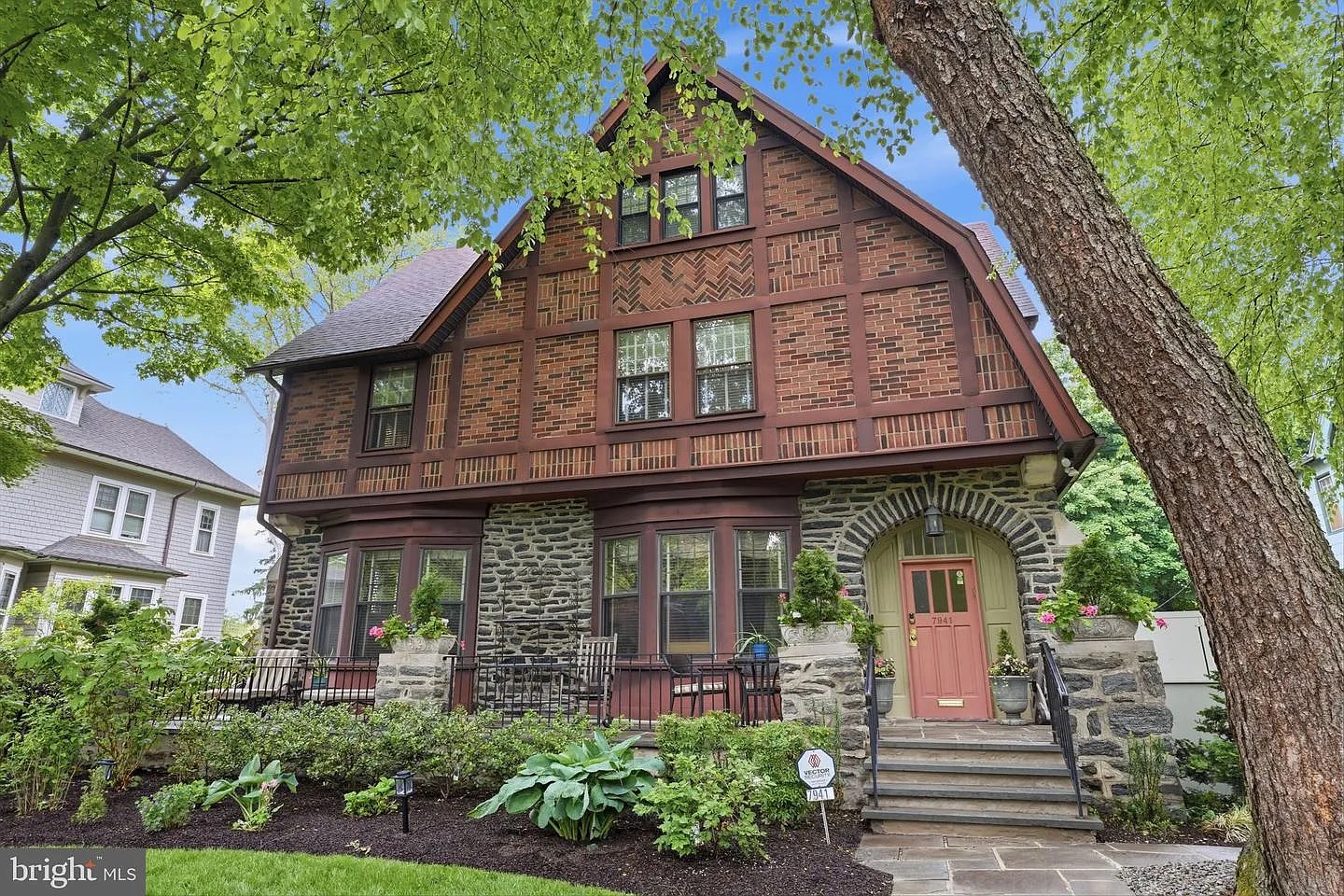
    A 20th-century Tudor with a patterned brick exterior

    The exterior of 7941 Park Ave. in Elkins Park, PA

    Step into this six-bedroom, four-bathroom Elkins Park home through an original wooden door from its 1902 build. Details throughout the house include French doors, wainscoting, custom built-in bookshelves, stained glass, and window seats. There is a chef’s kitchen equipped with double sinks, ovens, and dishwashers; an island; and both a pantry and butler’s pantry. Outside offers a front porch, rear deck, stone-edged garden beds, walking pathways, and mature trees.

    See more photos of the property here.

    Price: $739,900 | Size: 4,746 SF | Acreage: 0.23

    📈 Greater Abington market report

    Abington

    • Median listing price: $492,000 (down $7,900 from June) 📉
    • Median sold price: $525,000 (up $102,500 from June) 📈
    • Median days on the market: 36 (up seven days from June) 📈

    Jenkintown

    • Median listing price: $372,000 (same as June)
    • Median sold price: $480,000 (up $10,000 from June) 📈
    • Median days on the market: 57 (up 24 days from June) 📈

    Cheltenham

    • Median listing price: $475,000 (up $26,500 from June) 📈
    • Median sold price: $455,000 (down $15,000 from June) 📉
    • Median days on the market: 36 (up nine days from June) 📈

    This Greater Abington market report is published on a monthly basis. Above is data for July from realtor.com.

    🗞️ What other Greater Abington residents are reading this week:

    By submitting your written, visual, and/or audio contributions, you agree to The Inquirer’s Terms of Use, including the grant of rights in Section 10.

    This suburban content is produced with support from the Leslie Miller and Richard Worley Foundation and The Lenfest Institute for Journalism. Editorial content is created independently of the project donors. Gifts to support The Inquirer’s high-impact journalism can be made at inquirer.com/donate. A list of Lenfest Institute donors can be found at lenfestinstitute.org/supporters.