TEHRAN, Iran — Iran’s currency hit a record low Monday as Washington prepared to announce new sanctions it said would add further pressure on an economy already battered by previous sanctions and a U.S. naval blockade.
The rial dropped to 2.02 million to the U.S. dollar as trading opened on currency markets. Iran’s official Central Bank rate stood at around 1.5 million rial to the dollar, but the market rate is what most Iranians pay.
The currency had already been under pressure before the U.S. and Israel attacked Iran on Feb. 28, as Iran faced double-digit inflation and negative growth, but has repeatedly hit new lows as nearly six months of war have taken an even greater toll.
Iranians find daily staples increasingly unaffordable. Since the war began, rice is up some 60% and prices of beef are more than 150% higher. The International Monetary Fund forecasts that GDP will contract more than 5%.
Still, economic pressure has not yet translated into political pressure. Iran retains a key strategic advantage: Its attacks and threats on ships in the Strait of Hormuz have brought traffic in the vital waterway to a near halt, damaging the world economy and heaping pressure on U.S. President Donald Trump ahead of congressional elections.
The war, as a result, has devolved into a fight over who controls the strait, through which a fifth of the world’s traded oil transited before the conflict. Iran is now refusing to fully reopen it unless it can charge ships.
Iran and Oman, which is on the opposite side of the strait, are reportedly in the final stages of agreeing upon a plan for joint management of the waterway. Oman’s foreign minister is set to visit Iran on Tuesday.
In an attempt to break the impasse, Trump’s administration promised even stronger sanctions than those already in place would be announced Monday, including secondary sanctions on countries that continue to do business with Iran.
“President Trump decimated Iran’s economy to a point where the rial has never been weaker and inflation has rarely been higher,” U.S. Treasury Secretary Scott Bessent wrote Sunday in an opinion piece in the Financial Times. “The regime’s final refuge now lies in the self-deception of fearful nations that still believe accommodating aggression can secure a durable peace.”
Already last week, the United Arab Emirates announced that it was suspending all trade with Iran. The UAE has long been one of Iran’s largest trading partners and its biggest source of imports.
Iranian Foreign Ministry spokesperson Esmail Baghaei told reporters in Tehran on Monday that “any escalation of this situation will undoubtedly bring about consequences.”
“Our hands are not tied,” he added.
Pakistan, which played a key role in brokering a 60-day ceasefire in June, sent a high-level delegation to Iran on Monday to discuss ending the war, the military said.
In downtown Tehran, 73-year-old Sadegh Mahmoudi did not hold out hope for a resolution. He joined a line of about a dozen people to purchase U.S. dollars with his remaining savings to hedge against further declines.
KYIV, Ukraine — European leaders joined President Volodymyr Zelenskyy in Kyiv on Monday for official celebrations marking Ukraine’s Independence Day as Russia pushes on with its 4-year-old invasion of the country.
One of President Vladimir Putin’s key goals in starting a war with Russia’s neighbor in February 2022 was to place Kyiv in Moscow’s orbit. Ukrainians voted overwhelmingly for independence in 1991.
With no significant changes on the front line for months and no apparent progress after more than a year of U.S.-led peace efforts, the warring countries are locked in a spiral of escalating aerial attacks that are killing civilians and smashing infrastructure.
EU leaders rally around Ukraine
U.K. Prime Minister Andy Burnham, on his first overseas trip since taking office last month, on Monday joined almost a dozen other European leaders, as well as other dignitaries including European Council President Antonio Costa, in Kyiv.
“For Ukraine, independence is not an abstract idea. We defended it against all odds,” Ukrainian Foreign Minister Andrii Sybiha said on social media. “In times like these, nations learn how important it is to have allies by your side.”
Burnham was to co-chair a meeting of the so-called Coalition of the Willing group of countries helping Ukraine resist Russia’s onslaught, with the leaders of France and Germany expected to join online.
The visiting leaders took to Kyiv pledges of further military and financial support. Burnham is expected to announce that the U.K. Government has agreed to allow defense company MBDA to release classified information relating to British components used in the SCALP long-range missile, according to his office. That would pave the way for France and Ukraine to advance plans for local production of the weapon in Ukraine.
SCALP is the French version of the UK’s Storm Shadow missile, with both systems incorporating shared French and British technology.
Ukraine has leaned heavily on NATO countries for help fighting Russia’s bigger army, although relations with the United States have been cooler under President Donald Trump.
Both Russia and Ukraine are trying through long-range strikes to inflict economic pain, disrupt military supplies and erode public morale.
Ukraine’s long-range drones have repeatedly hit facilities in Russia’s vital oil industry, causing fuel shortages, and have also engaged in a campaign against Russia’s largest online retailer Wildberries.
Ukrainian strikes kill 3 teenagers
Three teenagers were killed and six children were wounded in the southern Russian city of Krasnodar, Russia’s children’s rights ombudswoman Maria Lvova-Belova said Monday, as Ukraine attacked several warehouses of Ozon for the third straight day, according to officials and the company.
Ozon is one of Russia’s major e-commerce retailers. The company said a large fire raged at an Ozon logistics facility in the suburbs of Krasnodar following the overnight attack.
A drone also hit the grounds of an Ozon logistics center in the southern Russian region of Adygeya, regional governor Murat Kumpilov said, though the company said its Adygeya warehouse wasn’t damaged.
In all, four Ozon premises appeared to have been targeted.
Russia’s Defense Ministry said its air defenses overnight intercepted and destroyed 351 Ukrainian drones over eight Russian regions, as well as occupied Crimea and the waters of the Azov and the Black Seas.
The ministry also said that its forces overnight continued to strike Ukrainian ports and vessels delivering cargo for the armed forces.
Forget student fun runs, PTA bake sales and Saturday morning car washes.
The future of public-school fundraising may soon look more like a payroll deduction. Or perhaps door-to-door campaigns each tax season asking filers to earmark donations to support nearby public schools.
When President Donald Trump’s tax overhaul known as the One Big Beautiful Bill last year created the first national school-voucher-style program to help families pay for private schools or home-school costs, it allowed public schools to benefit as well. According to U.S. Treasury guidelines released in June, the program allows specific nonprofits to collect donations that people direct from their federal taxes for a vast array of public school costs, such as transportation or tutoring.
Sara Hazel, president of the Denver Public Schools Foundation, the fundraising arm for Colorado’s largest school district, is among a small but growing number of district leaders who have said they plan to take advantage of the financial opportunity. She said she plans to tell potential donors, “Do you want that money going to the IRS or going to local kids?”
The program doesn’t officially start until the new year, but its resemblance to private-school vouchers has inspired opponents of school choice to line up against it. Still, supporters and even cautious critics say the Republican-backed initiative could mean a financial boon for public schools.
The program works like this: Taxpayers can contribute up to $1,700 to what’s known as a scholarship-granting organization and receive a credit on their federal income taxes. It’s a dollar-for-dollar credit, meaning every pledged dollar reduces what an individual owes to the Internal Revenue Service by the same amount.
These new intermediaries could be formed by an array of nonprofits, including public-school foundations, with approval from their state. The scholarship-granting organization would then pass on the money to private school and home-school applicants in the form of scholarships — or to school districts so they could cover certain services for student applicants.
Marguerite Roza, a school finance expert, has advised school districts — many of which have bandaged their slashed budgets by shuttering campuses or issuing pink slips — that they can’t afford to ignore this new source of funding. “Any time there’s an available revenue source, generally we don’t see districts saying, ‘No thank you,’” said Roza, director of the Edunomics Lab at Georgetown University.
States must opt into the program, and so far, 30 states have done so. Now it’s up to individual school district leaders in those states to decide if they want to try to tap into the money.
School finance experts suggest the scholarships could help districts access funding comparable to 3 percent of their entire budget. But tapping into this unexpected revenue risks political backlash and logistical headaches. Governors and superintendents may face fierce resistance from teachers unions, which in many states have portrayed the new program as a Trojan horse for the expansion of vouchers in education because it also allows money to be funneled to families to pay for private school.
Some opponents also raise concerns about creating a new funding system that could favor school districts with a ready pool of wealthy donors over those in low-income communities where few residents may owe enough in federal taxes to contribute to the scholarships.
“In low-income areas, you’re going to find it’s not easy for school districts to raise this money,” said Thomas Toch, director of the think tank FutureEd at Georgetown University.
He said he worried that the inclusion of public school districts in the legislation was little more than a ploy, a shrewd political strategy to further school choice in states otherwise unlikely to support it.
“It was designed to make the case that this program can support the public sector in order to win support in blue states,” Toch said.
The mechanics of the tax credit scholarships represent a dramatic departure from how the federal government supports schools.
The money for the scholarships never flows through federal Department of Education coffers, entirely bypassing Congress and its spending decisions.
Treasury regulators will soon issue formal rules to set additional guardrails for the program. But the law suggests the scholarships could be used to cover an expansive list of expenses that public schools often struggle to fund including costs such as field trips, textbooks or support services.
The inclusion of public schools now places some governors, superintendents and school boards in a new dilemma: Do they choose to tap into a Trump-backed program that could boost their bottom line, or leave the tax-credit cash on the table for others to claim?
“The reality is this program exists, and if there are dollars on the table that can go to our children and families, I don’t understand the purpose of not trying to do everything we possibly can,” said Justin Dayhoff, chief financial officer for Nevada’s Clark County School District, which includes Las Vegas.
His district, like many around the country, is strapped for cash as health insurance and other costs increase and fewer students enroll in public school due to population decline. Enrollment in Clark County — the nation’s fifth-largest district — has dwindled by more than 35,000 students, or 11 percent, since before the pandemic and it laid off five dozen staff ahead of this new school year.
How big a financial difference the voucher-style program would make for school districts remains to be seen.
Some school finance experts expect soliciting donations could be as simple as districts partnering with employers to enroll their workers in the tax credit program, perhaps as another form in their regular HR paperwork. (Many employers already partner with nonprofits like United Way to collect pretax donations from paychecks.)
Roza, of Georgetown, estimated a district could bring in about $200 per student by enrolling its own employees into the program. Convincing major companies to do the same — directing proceeds to nonprofits supporting students who attend local public schools — could push that figure higher. City and county governments might participate as well.
“Local employers are an absolutely critical piece of this puzzle,” said Hazel, with the Denver Public Schools Foundation.
Her organization hasn’t officially approached any of its corporate partners yet about enrolling their employees in the tax credit program. (Past donors to the foundation have included Chevron, the Colorado Rockies and United Airlines.) But Hazel’s already thinking about whether Denver Public Schools will have to compete with other Colorado districts attempting to woo the same business leaders.
“We’re the largest school district in Colorado, so we already have an advantage,” Hazel said. “But how can we go to a company and say, ‘Your employees must choose between all these great school districts?’”
But her new fundraising plans will come with steep operational hurdles.
Under the new law, at least 90 percent of all donations to scholarship-granting organizations like Hazel’s must go directly to student scholarships, leaving relatively little to cover marketing, staff, annual independent audits and payment processing. Fees already take 4 percent of each credit card transaction, Hazel said.
Yet even as she awaits further clarity from Treasury on how organizations can collect donations, she’s imagining what the money could mean for Denver schools.
“My dream is I can give every second grader a tutor and we get everyone to grade-level reading and math,” Hazel said. “There are things like that that are so scalable and would support every student.”
This story about the One Big Beautiful Bill was produced by the Hechinger Report, a nonprofit, independent news organization focused on inequality and innovation in education.
WASHINGTON — The war in the Middle East is increasingly unpopular. So is the president as his numbers dip perilously — a common development in the sixth year of a presidency. Congressional Republicans are embroiled in unsavory scandals. Americans are shelling out big bucks for gas while economic anxiety runs high.
The grim backdrop for November’s midterm elections has created a steep challenge for Republicans and opportunities for Democrats that look much the same as those they encountered in 2006. Back then, congressional Republicans faced the voters at the midpoint of President George W. Bush’s second term, with the public roiled by the war in Iraq, high fuel prices and a series of ugly accusations against members of the GOP majority on Capitol Hill.
“It is striking,” said Sen. Chuck Schumer of New York, the Democratic minority leader and chief architect of his party’s Senate campaign strategy this year and two decades ago. “The analogy is amazing.”
The parallels are not perfect, since politics and campaigns have both changed radically over 20 years. But the comparisons are instructive, as officials in both parties stare down the final months of an election that will determine who controls Congress for the remainder of President Donald Trump’s term.
“This is 2006 2.0,” said Rahm Emanuel, who in 2006 was an ambitious Democratic House member from Illinois and Schumer’s counterpart across the Capitol as the head of the Democratic Congressional Campaign Committee. “The similarities are eerie.”
Emanuel and Schumer both have good reason to look back fondly on 2006, when Democrats triumphed in a blue wave.
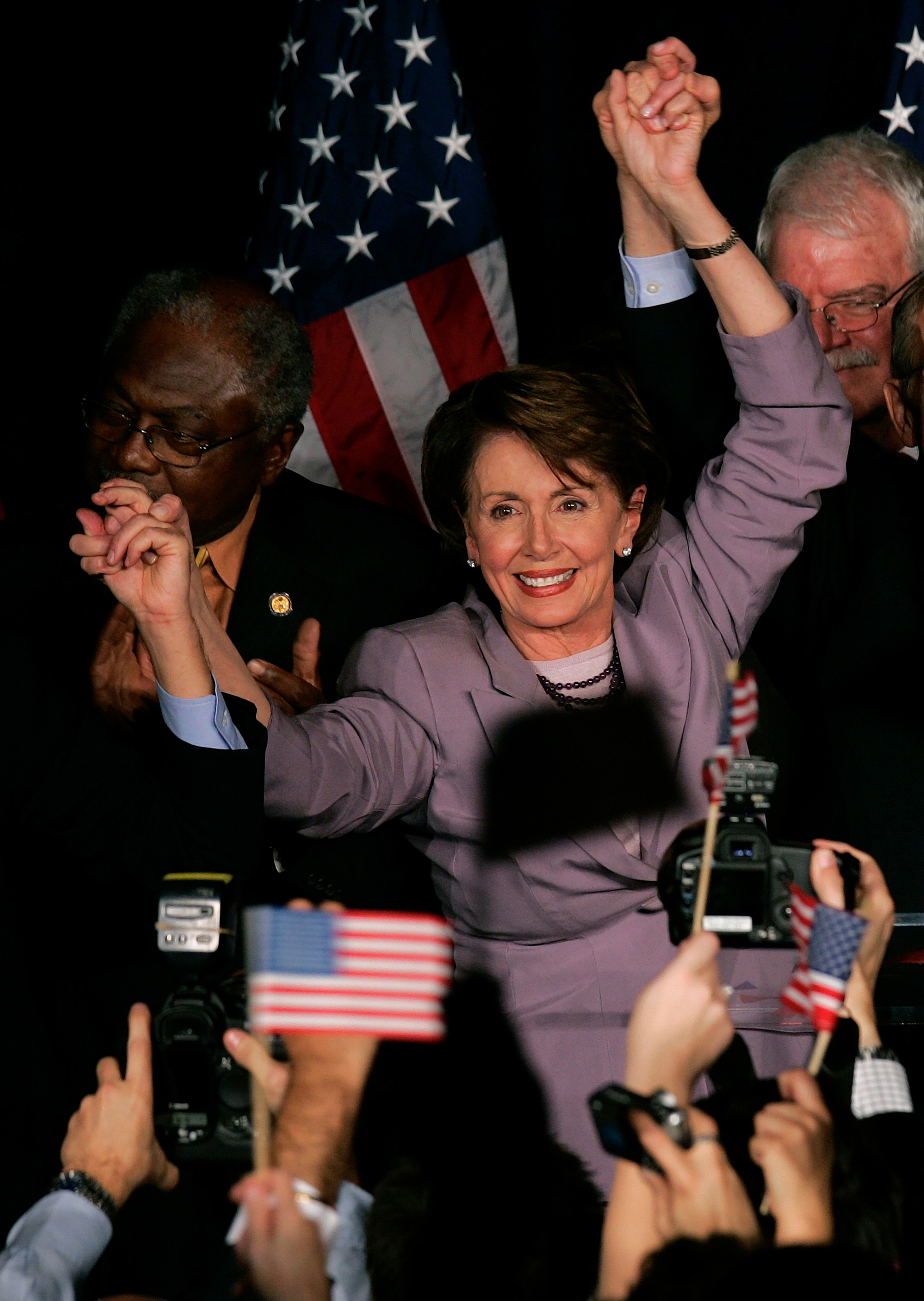
Exceeding expectations that year, Democrats picked up six seats in the Senate, taking control of the chamber. In the House, where the Republican majority seemed to have exhausted itself after a dozen years, Democrats gained 31 seats and installed Nancy Pelosi, who is now retiring, as the first woman speaker. Bush, another victim of the six-year presidential itch, famously branded the outcome “a thumping.”
This year, the Senate map is stacked against Democrats — they would need to win at least four Republican-held seats to take control, all but one of them in states that Trump won in 2024. And not all of the most competitive races have gone as party leaders had hoped. But Democrats have benefited from some political twists in places where they had not anticipated being competitive, such as in Texas, where Trump’s primary endorsement of the state’s attorney general, Ken Paxton, over Sen. John Cornyn, put that seat in play.
The nonpartisan Cook Political Report on Thursday moved its ratings of the Texas and Iowa Senate races from leaning Republican to a toss up, underscoring the expanding battleground that Democrats would need in order to replicate 2006. Democrats say that they believe they are also increasingly competitive in other states carried by Trump two years ago, including Kansas.
While clear similarities exist this year, significant differences are present as well — not the least of which is that Americans consume and process political content far differently than they did 20 years ago, with an emphasis on digital media rather than traditional television advertising.
Other structural changes have taken place that could influence the results. The two parties this year engaged in a redistricting war that could help stem some of the House losses Republicans might have suffered in a midterm year that traditionally runs against those in power. Polarization runs deeper, making it harder to shake voters from their party identification. Trump’s hold on his base seems stronger than Bush’s was in 2006, though it is potentially weakening amid a backlash to the war with Iran.
In the Senate and the House, the Democratic establishment did not get its preferred candidates through the primaries in some key races, including in Maine and Michigan. And the rise of far-left socialist candidates has Republicans seeing an opening to try to brand Democratic contenders across the country as part of a movement out of step with typical Americans.
For those reasons and more, Republicans say the comparison between the two elections comes up short.
“Democrats are running with a radically different party on a dramatically different map, and the fundamentals are stacked against them,” Mike Marinella, a spokesperson for the National Republican Congressional Committee, said in a statement. “Republicans have stronger candidates, a historic fundraising advantage and a more favorable battlefield, while Democrats are letting socialists hijack must-win races from Michigan to Colorado, Arizona, California and Maine.”
In 2006, the war with Iraq was the central issue in the campaign as Americans soured on Bush’s handling of the conflict, particularly after his main justification for the invasion — the claim that Saddam Hussein had weapons of mass destruction — turned out to be false. Trump’s conflict with Iran has not gone on nearly as long, nor has it produced the same level of casualties. But Bush had significantly more support at the start. Public opposition helped drive approval numbers for the two presidents below 40%, a dangerous midterm level, as both wars also drove up fuel costs.
Then as now, Democrats tried to capitalize on kitchen-table economic concerns with the potential to drive voters. In 2006, it was Bush’s proposal to privatize Social Security, which never came to pass. Now, it is the Republican-written law slashing Medicaid and other safety net programs to pay for large tax cuts, as well as the GOP’s decision to allow healthcare subsidies to expire, sending premiums soaring.
“We found an issue early,” Schumer said, recalling 2006. “Rahm and I did Social Security. Now we found the costs issue, particularly led by healthcare.”
Another undercurrent of the 2006 campaign has an equivalent today: the image of disturbing Republican misconduct. Twenty years ago, Democrats campaigned against a “culture of corruption,” pointing to a series of financial and sex scandals that led to resignations and jail time for a series of senior Republicans.
Then, in September 2006, it was disclosed that Rep. Mark Foley, R-Fla., had sent sexually suggestive messages to male House pages, and that Republican leaders had failed to take action even when they had been alerted to his actions, putting a cloud over the party two months before the election.
This year, Republicans have again had to contend with high-profile sexual misconduct accusations against multiple House members, though Democrats have had their own to deal with as well, a difference from 20 years ago.
Top Democrats have sought to emphasize Republican conduct on Capitol Hill and in an administration in which the president, his family and his allies have faced scrutiny for profiteering. In an appearance on NBC’s “Meet the Press” this month, Rep. Hakeem Jeffries of New York, the Democratic leader, said a central element of the Democratic campaign agenda was “pushing back against the corruption that has been unleashed on the American people, and holding the crooks accountable beginning on day one in January of next year.”
It is not clear whether it will all add up to a repeat of 2006. But Nathan Gonzales, editor of the nonpartisan Inside Elections, sees the potential for the factors working against Republicans building into a resounding voter backlash against the party in power, as they did two decades ago.
“I remember 2006 when everything snowballed against Republicans,” Gonzales said. “Ordinarily unrelated events got lumped together under one umbrella. Everything was Bush’s fault. The war with Iraq and Mark Foley really had nothing to do with each other, but it cultivated an appetite for change. I could see that happening again.”
In early July, before the 250th anniversary of the nation’s founding, Texas Democrat James Talarico preached on the proper place of religion in politics. In his sermon, he argued for the importance of the separation of church and state while emphasizing that religion could still inform a person’s approach to and involvement in politics. He stressed how Christianity should shape the tone of one’s politics. Drawing on Jesus’ Parable of the Good Samaritan, Talarico claimed that loving one’s neighbor includes respecting people of different faiths.
Many of these politicians, including Talarico, Trone Garriott, and Hamilton, have emphasized their religious faith not only as a part of their overall message, but they have situated their Christianity at the core of their identity. While there’s nothing “new” about Democratic politicians whose religious identity is central to their politics — this was common a century ago with progressives such as William Jennings Bryan and Barbara Jordan during the Civil Rights era (and still is quite common among African American politicians) — today’s candidates do represent a departure from the trend of the past four decades of Democratic Party politics.
It hasn’t always been this way. Prior to the 1980s, candidates conversant in religion were common and unremarkable. At the time, evangelical and “mainline” Protestants were not aligned with political parties in the way they are today. As social scientist Ryan Burge has pointed out, in the 1970s most white evangelicals were Democrats and evangelicals helped elect “born again” Jimmy Carter in 1976 — the so-called “Year of the Evangelical.”
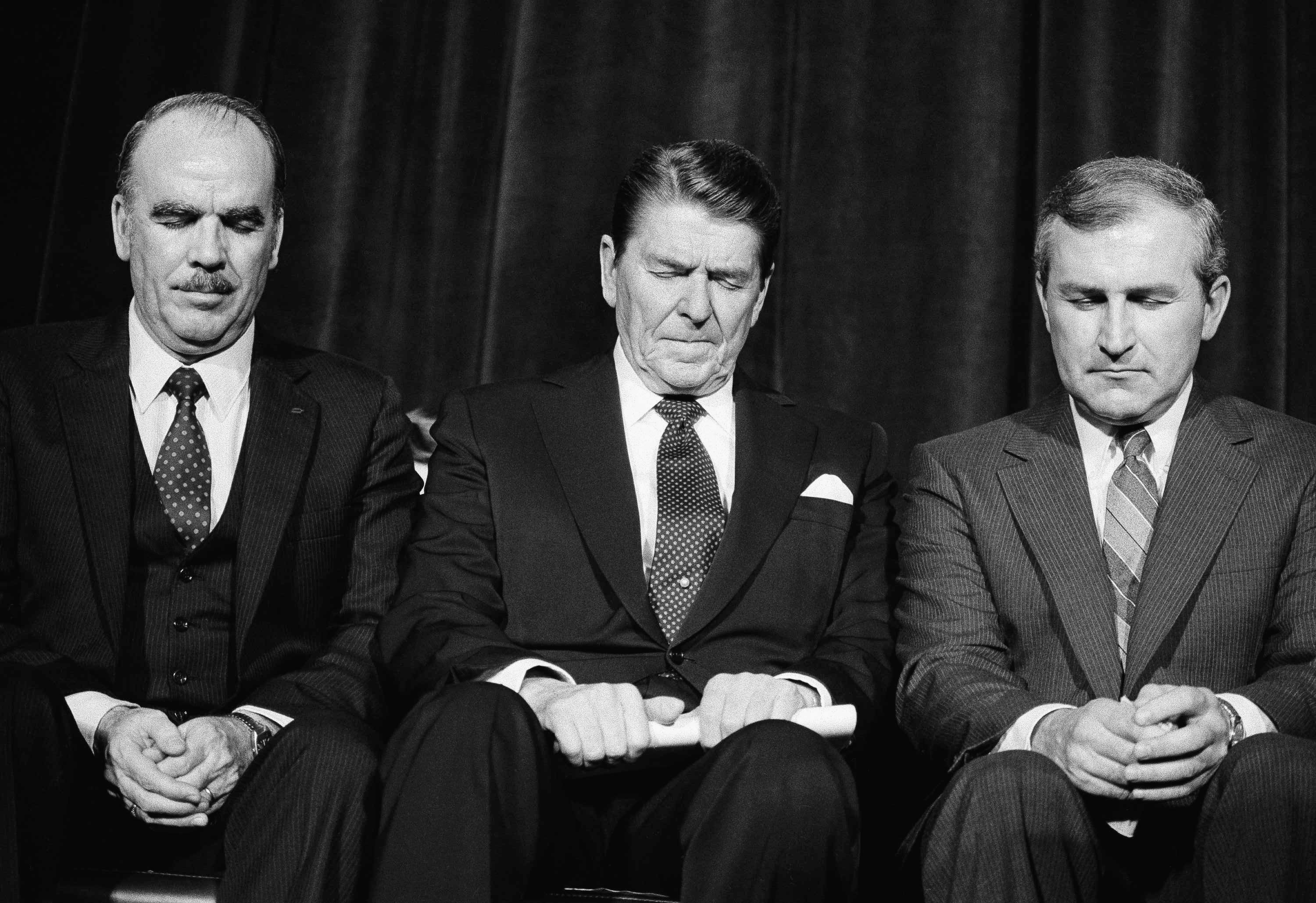
President Ronald Reagan prays with National Association of Evangelicals President Arthur Gay, left, following his address to the organization’s convention asking for help in winning approval of a constitutional amendment permitting prayer in school in Columbus, Ohio, March 7, 1984.Barry Thumma
But evangelicals’ rejection of Carter for reelection in 1980 signified an important shift for both parties. Explanations for white evangelicals’ turn away from Christian politicians like Carter and toward Ronald Reagan and the Republican Party — newly perceived as a reliably religious unit — usually point to several events in the 1970s.
By 1972, the number of delegates at the Democratic National Convention identifying as agnostics, atheists, or people who almost never attended church had grown to 24% (compared to 5% of Americans who listed “no religion” on the General Social Survey.) These delegates helped to add progressive positions on women and gay rights into the party platform at a time when they were to the left of mainstream America’s sensibilities.
Then in 1978, the IRS targeted mostly white private elementary and secondary schools, sometimes known as “segregation academies,” many of them religious, that had formed in response to desegregation, threatening their tax-exempt status unless they could demonstrate non-discrimination toward Black students. Additionally, by this time, the Supreme Court’s 1973 decision in Roe v. Wade began to galvanize evangelical activists in a space that had been historically dominated by Catholic priests and laypeople.
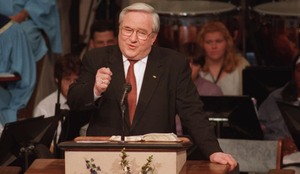
Both of these issues came together in the 1980 election, the latter thanks in part to the attention Francis Schaeffer drew to the issue in his writings and speeches across America and the organizing of Jerry Falwell Sr.’s Moral Majority. Because of the growing number of Democrats who self-identified as atheist, agnostic, or non-church attending, white Democrats tended to cede the religious political ground to the new Religious Right, even though plenty of Democrats were religious. Over the next decade, this helped create a binary between a “religious traditionalist” Republican Party and a “secularist progressive” Democratic Party.
The Rev. Jerry Falwell speaks at his Thomas Road Baptist Church in Lynchburg, Va., in a 1999 photo.
Demographic trends over the next 40 years reinforced this shift. In 1975, 30% of Americans were part of the Protestant “mainline” (e.g. United Methodist, Evangelical Lutheran, Presbyterian USA, Episcopal Church, American Baptist, Disciples of Christ, and United Church of Christ). Today the mainline only accounts for between 9% and 13% of Americans. Theories for this decline abound, including loss of identity, aging congregations, poor retention of children as they grow into adulthood, controversies over sexuality, ordination of women and LGBTQ clergy, and same-sex marriage, which led to conservatives joining more evangelical churches.
Over this same period, the number of Americans identifying as “unaffiliated” (the so-called “nones”) rose from 5% to nearly 30%.
Factors driving this growth include people being more willing in a secularizing environment to admit they aren’t religious, young people who choose not to identify with any religion, and the general population becoming less religious over time. Democrats have enjoyed a decided advantage among the voting “nones” going all the way back to the 1984 election.
For Black Americans, there has also been a more modest decline in affiliation with historically Black churches (e.g. National Baptist, Church of God in Christ, and AME Zion). Yet these churches have maintained a continued source of relevance for Black Protestants, playing a vital role in Black life as a source of social support, political organizing, community engagement, aid to the needy, and defense against racism and ethnic solidarity. Today, 53% of African Americans are still associated with historically Black Protestant churches, which probably accounts for the persistence over the past 40 years of progressive Black politicians with ministerial credentials.
Meanwhile, evangelicals shifted from a slight majority favoring the Democratic Party before the 1980s toward a reliable core of the Republican Party, at a moment when their numbers were increasing. By the end of the 20th century, evangelicals grew to represent nearly 30% of all Americans, in part by having larger families, retaining their children in the church at higher rates, and maintaining cultural and theological distinctiveness.
Collectively though, these trends meant the Democratic Party became less beholden to a religious demographic within its own constituency, and consequently, religiously-oriented politicians seemed less relevant to the Democratic Party.
Made By History sponsors. FOR USE ON MADE BY HISTORY STORIES ONLY.Inquirer Staff
The exception was the African American wing of the party, where Christianity remained central to most voters’ identities. Here, a political figure like U.S. Sen. Raphael Warnock (senior pastor of Ebenezer Baptist in Atlanta, a historically Black mainline church that Dr. Martin Luther King Sr. and Jr. pastored) is not exceptional. The Black church’s historic emphasis on social issues and inequality allowed for adherents’ continued support of Democratic candidates who were white and less religious, even as it did lead to some tension over progressive social goals, such as same-sex marriage.
In fact, it was the emergence of a Black politician in 2004, then-Senate candidate Barack Obama, who helped call attention to the dearth of religiously-conversant Democratic politicians, arguing that his party needed to reengage religiously-affiliated voters. From 2004 to 2008, the Democratic Party emphasized outreach to religious voters in a concerted way. But after the 2008 election, and Obama’s win, this focus for the Democrats declined so much so that, by 2016, Michael Wear and others involved in rallying Democratic religious voters for Obama had become frustrated at the lack of dedicated outreach.
So, does the emergence of Democratic politicians such as Talarico, Trone Garriott, and Hamilton signal a new shift on the order of what happened in the 1970s?
It may be too early to tell.
It may be, as Wheaton College Professor Esau McCaulley has argued, that the emergence of these politicians is linked to the backlash growing among Protestants tired of MAGA evangelicals defining what Christianity means in America today. Or, perhaps, these candidates are simply the culmination of a growing recognition within the Democratic Party of its need to reengage Christian voters.
Regardless, it’s not an accident that the new crop of ordained Democratic candidates are located in regions of relative mainline Protestantism vibrancy in the Midwest and South.
With the exception of Presbyterian Pastor Matt Schultz of Alaska, all 12 of the ordained candidates are running in Midwest or Southern states. Perhaps, politicians such as Talarico will succeed in reshaping how Christianity functions in the political space and reclaim a lost politics of religion within the Democratic Party. Time will tell if they are part of a new vanguard, or only a brief aberration.
Made by History takes readers beyond the headlines with articles written and edited by professional historians. Opinions expressed do not necessarily reflect the views of The Inquirer.
Welcome to a new week, Philly. The weather looks clear with highs in the low 80s.
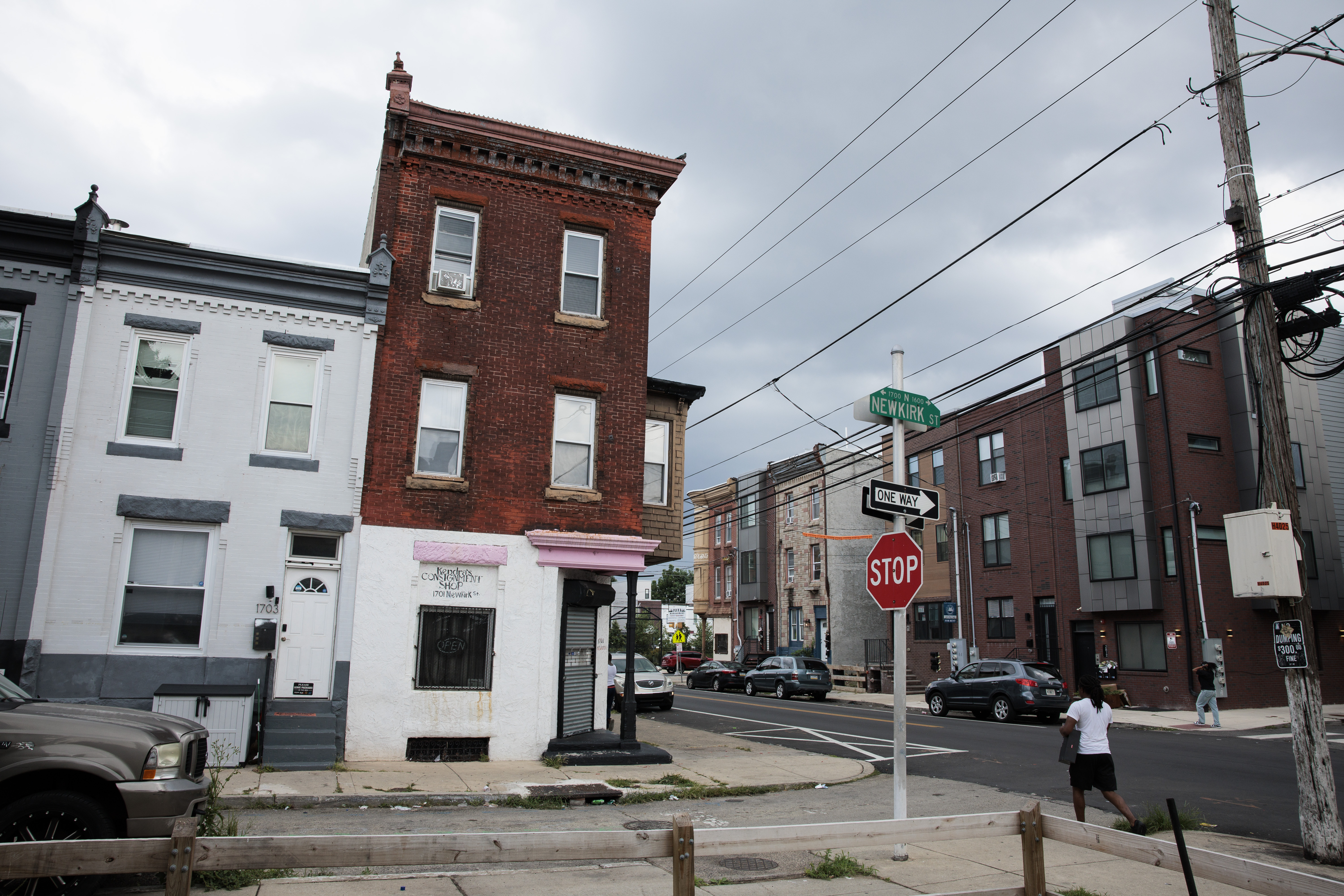
Today we’re starting at home. Thousands of Philly homeowners face property tax hikes of 50% or more — and those who could be most impacted live in some of the city’s higher-poverty areas.
When the City of Philadelphia reassessed property values this year, most homeowners saw a modest increase. The median uptick was 3%.
But others were hit much harder. Nearly 6,000 homeowners in Philadelphia saw their property assessments climb by more than 50%, an Inquirer analysis found.
That spike translates to much higher property taxes in some areas with high poverty, such as Strawberry Mansion and Hartranft.
“[Residents] feel taken advantage of, and they feel like it’s coming out of nowhere,” said Jalon Alexander, a Strawberry Mansion native hoping to unseat his local city councilmember.
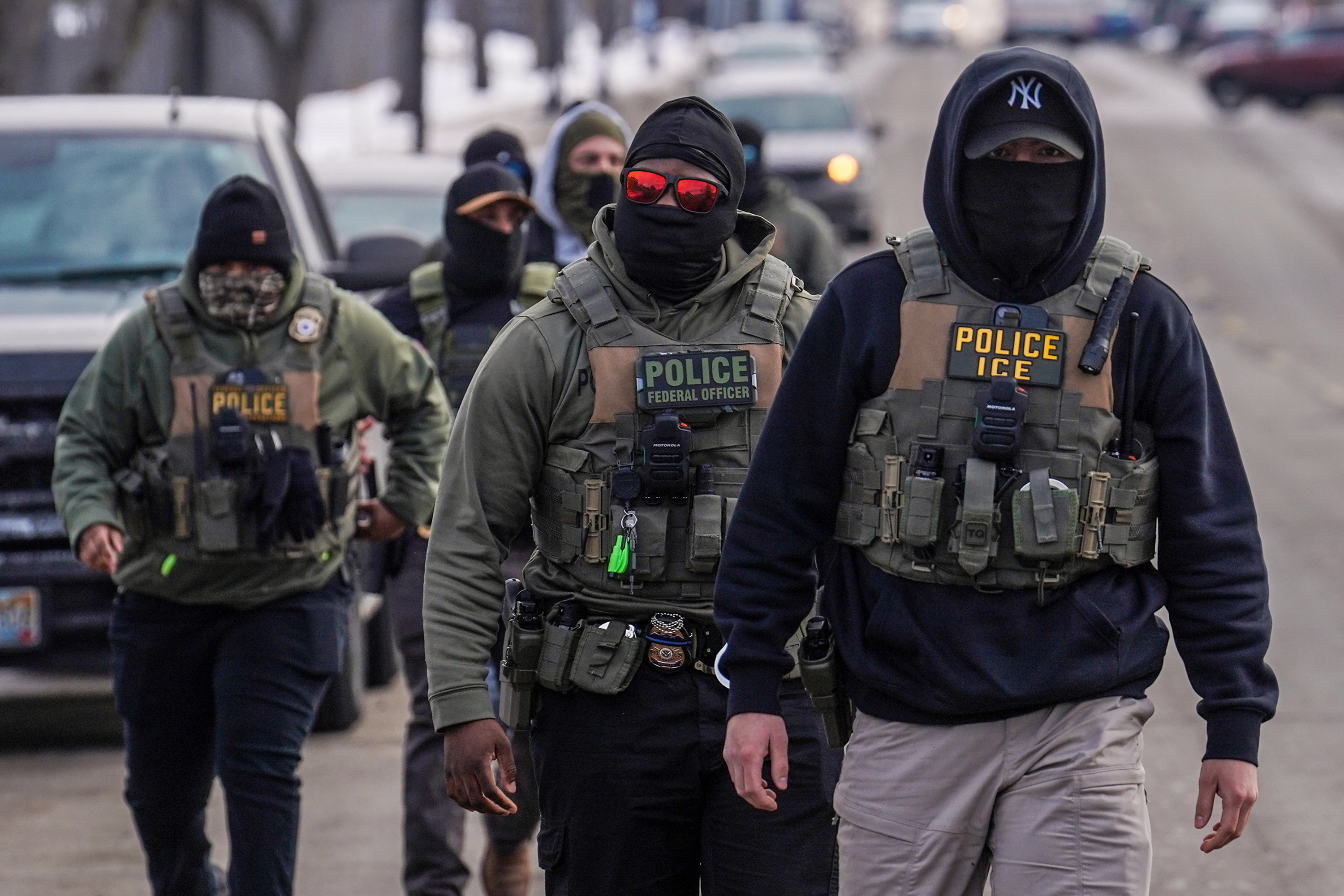
U.S. Immigration and Customs Enforcement’s budget has grown dramatically during President Donald Trump’s second term, with some of the windfall flowing to our region.
Since January 2025, ICE has awarded more than $17 million in contracts to vendors in the Philadelphia area, according to local data compiled by The Appeal.
More than half of that spend is for a contract with a firearms manufacturer in Montgomery County.
Another ICE vendor? The Philadelphia Parking Authority.
Falling membership and excessive salaries for certain staff spurred the sudden takeover of District Council 21, one of Philly’s most influential labor councils.
Local plasma donation businesses are booming, as more people turn to them to make ends meet.
Jake’s & Cooper’s Wine Bar in Manayunk will close 39 years to the day after it first opened.
Last weekend’s 17th Naked Bike Ride in Philadelphia happened to coincide with another semi-nude event — the inaugural “Go Topless Day.”
Cheers to Charlene M. Wiltshire who correctly guessed Sunday’s anagram: Jon Turteltaub. On Friday, the director of the National Treasure films announced to a live audience in Philly that there will be a third installment in the franchise. Turteltaub said the U.S. charged political climate was a contributing factor to the two-decade-long pause between movies.
Photo of the day
Pencils are sharpened in the first grade classroom of teacher Lauren Cucinotta at Fanny Jackson Coppin Elementary Tuesday, Aug. 18, 2026 as she preps for the start of the school year on Aug. 24 for the School District of Philadelphia. Scene Through the Lens runs online every Saturday and in print on Monday on page B-2. There is a template in Roxen. This sentence runs at the top of the photo in print: More of photographer Tom Gralish’s visual exploration of our region can be seen in his blog at Inquirer.com/sceneontheroad.Tom Gralish / Staff Photographer
📬 Your ‘only in Philly’ story
This week’s “only in Philly” story comes from reader Marian Ronan, who describes a surprising way she connected with another Philadelphian in New York City:
A while back, a priest visiting my Jesuit parish church in Manhattan said in his sermon that he was from Philly, but that he now says “water” instead of “wooder.”
On the way out, I told him that I was from Philly and that I only say “wooder” when I have had too much to drink. To which he replied, “Me, too.”
Have an ‘only in Philly’ story to share? We’re looking for personal anecdotes about what makes you feel connected to the city. Think: an experience that could only happen in Philly; something that made you fall in love with the city; or something that makes you proud to call it home. Email us a few sentences for a chance to be featured in the Monday edition of this newsletter.
👋 Thank you for starting your week with The Inquirer! See you tomorrow.
By submitting your written, visual, and/or audio contributions, you agree to The Inquirer’s Terms of Use, including the grant of rights in Section 10.
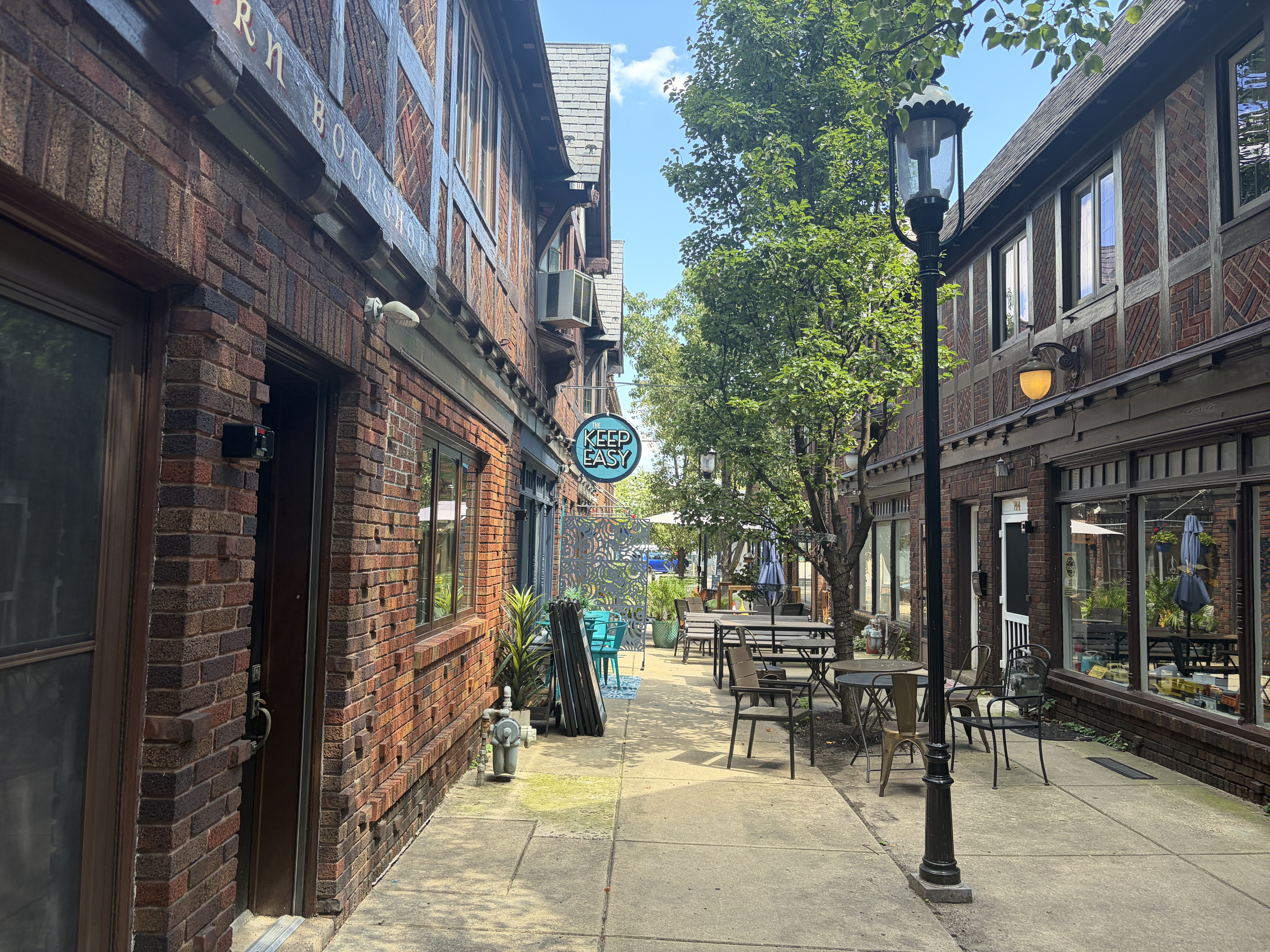
It looks like a street that belongs in its namesake English city, but the secluded, bricked Yorkway Place instead sits near the heart of Jenkintown, Pa.
For years, locals say, the pedestrian walkway drew few pedestrians: Offices and empty storefronts offered little reason to stroll along the 1930s Tudor-lined path, which runs into Route 611.
“I still meet people today who don’t even realize it’s there,” said Ross Abel, a Jenkintown resident who bought a Yorkway Place building this year that now hosts a cafe.
Unusual bar concept sparks alley renaissance
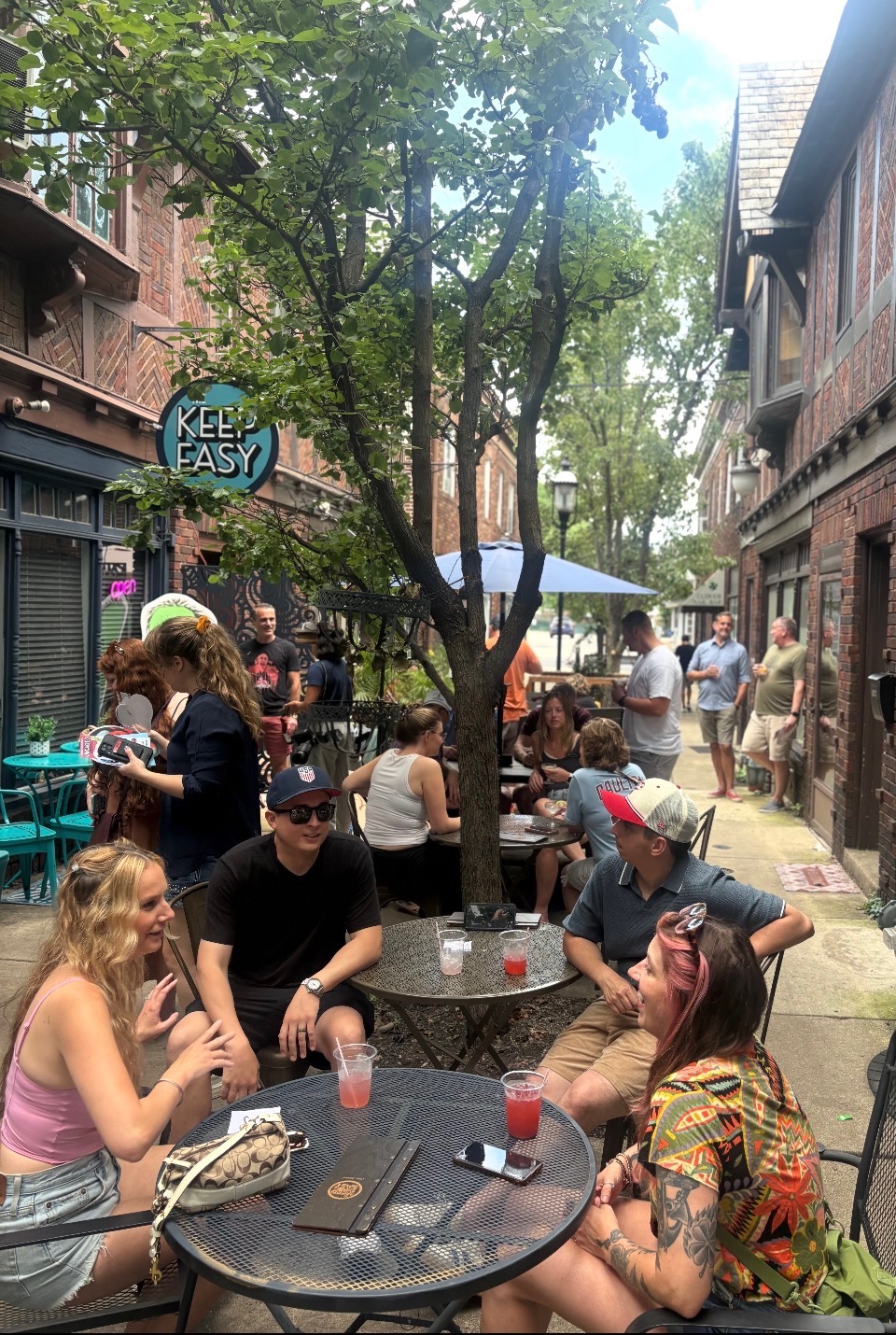
The tide began turning in 2023 when Melissa Hager turned her herb and tea store into a meadery, the Keep Easy, with her partner, Mike O’Donnell. While the Herb Shop had struggled, the bar took off.
Yorkway Place in Jenkintown, June 2026.Mel Hager
“That might’ve been the catalyst,” said Borough Manager George Locke. “The secret was getting that foot traffic in there.”
After the Keep Easy came Carminati Creamery, a gelato shop from Glenside, bringing a kid-friendly option to the alley.
The ice cream store “is the first thing that drew us in,” said Jenkintown Mayor Gabe Lerman, who has school-aged children. “Whatever we do for dinner, we can just walk up to Carminati’s.”
The Lore Café, an upscale, all-day coffee shop, added morning visitors to the scene. That’s what gave Jackie Botto the confidence to move Capricorn Books into Yorkway Place.
“We took a gamble,” Botto said. “I did not plan for it to be so busy.”
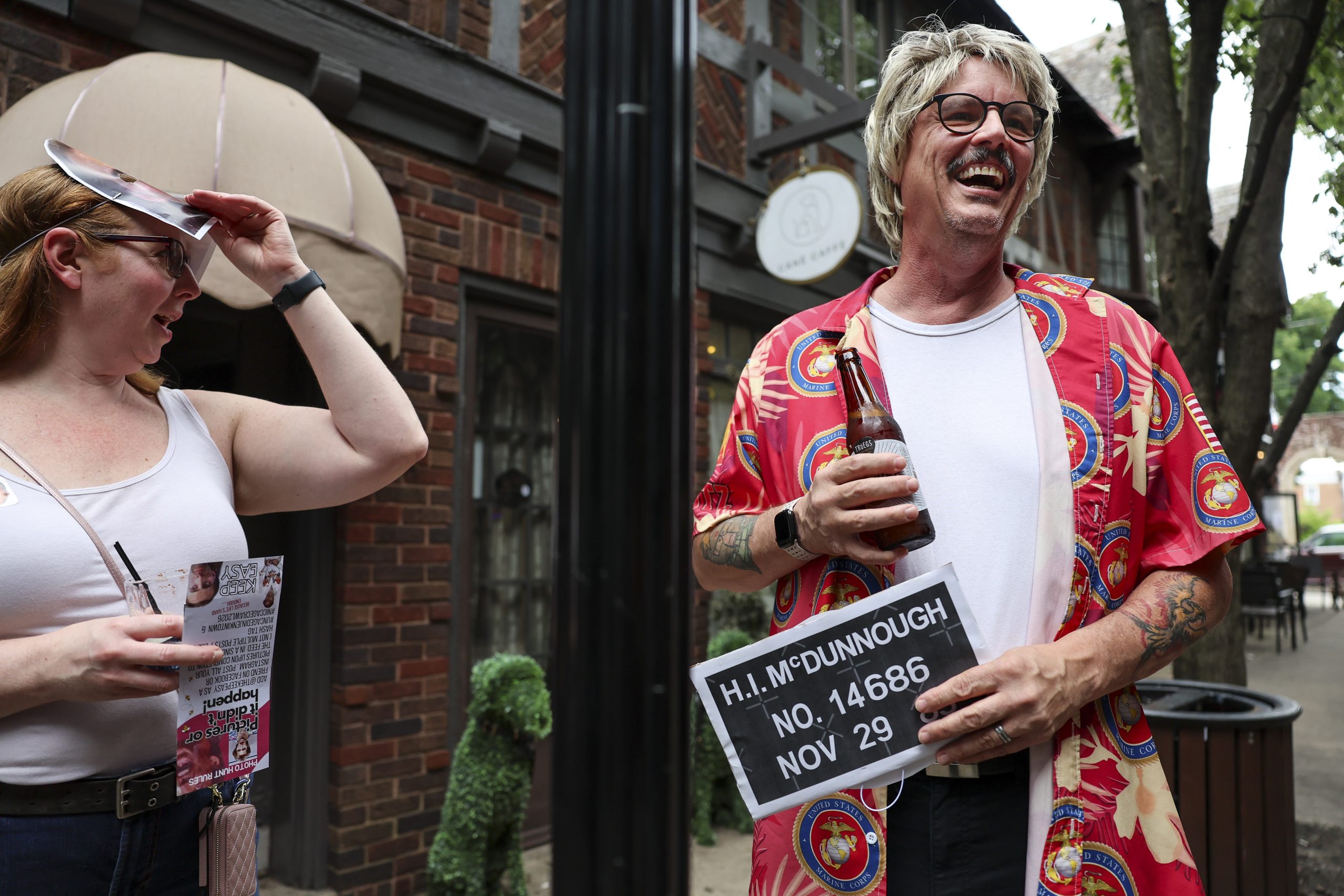
Themed events have attracted more newcomers, from a Nic Cage bar crawl to Jenkintown Festivus. Capricorn participated in the annual Philadelphia Bookstore Crawl, typically the store’s biggest day of the year, at their new Yorkway Place location for the first time this past weekend.
Vicky Hutz and Mike Hutz, of Huntington Valley, speak with a reporter at the Keep Easy during the Nic Cage cocktail crawl on Sunday, June 28, 2026, in Jenkintown, Pa. Participants gathered to celebrate actor Nicolas Cage with Cage-themed cocktails, movie screenings, and “Cage matches.”
Personalized support helped local businesses
Personalized, direct support has helped bring more small businesses to Jenkintown, locals say.
The borough started helping owners secure sewer permits from the state several years ago, Locke said. Each permit is “20 to 40 hours of my time.”
“It’s a tough process,” he said.
As for filling Yorkway Place, “It’s been Mel,” Botto said, who’s been reaching out to potential owners about vacancies.
“I was texting everyone I know,” Hager, the meaderist, said.
Lerman said Jenkintown also recently added free 20-minute parking spots, which helped stores throughout the town.
And many of Yorkway Place’s business owners live in the borough, the mayor said: “They’re all invested in being good stewards and in having a place you can feel good about sending your kids with a few bucks to get a gelato, or a book.”
Jenkintown alley to see new stores in 2026
Several more businesses are set to arrive in Yorkway Place in the coming months.
In September, insect taxidermist Kat Smith is opening an art supply, stationery, and craft cafe.
A game room and bottle bar is slated to open above Keep Easy in October.
And a record store, Smelly’s Vinyl Vibes, is also coming this fall.
“This is such a cool little street,” Abel said. “All these new shops are helping people to discover it.”
This suburban content is produced with support from the Leslie Miller and Richard Worley Foundation and The Lenfest Institute for Journalism. Editorial content is created independently of the project donors. Gifts to support The Inquirer’s high-impact journalism can be made at inquirer.com/donate. A list of Lenfest Institute donors can be found at lenfestinstitute.org/supporters.
Universal Health Services Inc. has long dominated as the nation’s largest provider of behavioral health services through its network of 182 hospitals and 110 outpatient facilities.
Last week, the King of Prussia company added a new dimension, completing the acquisition of Talkspace Inc., a virtual behavioral health company, for $835 million. It was UHS’s biggest deal in 15 years.
“We look at this as a real significant moment for healthcare,” UHS CEO Marc D. Miller said in an interview Tuesday. “It’s not simply a transaction for the company, but creating something in behavioral health that hasn’t existed.”
UHS’s goal is to create what Miller described as a new mental health continuum of care — including an AI agent introduced in June with human oversight and immediate intervention by licensed clinicians for safety if needed.
Talkspace’s network of 6,000 therapists conducted 933,000 treatment sessions with patients covered by insurance or employee assistance plans in the first half of this year. It had an additional 5,000 active patients who paid directly for the service during that period, according to Talkspace’s quarterly report.
The New York-based company reported $123.4 million in revenue and a $7.8 million net loss for the first six months of 2026.
UHS’s behavioral health arm had $3.9 billion in revenue and $773 million in profit before taxes in the six months that ended June 30. Philadelphia-area facilities include Friends Hospital in Philadelphia, Horsham Clinic in Ambler, and KeyStone Center in Chester.
UHS also owns the largest behavioral health company in the United Kingdom. Including its 30 acute-care hospitals, UHS’s six-month revenue totaled $9.1 billion.
The Inquirer spoke with Miller about how Talkspace is expected to complement UHS’s current business. This interviewhas been lightly edited for length and clarity.
What made Talkspace attractive to UHS?
By acquiring Talkspace for UHS, we’re creating the industry’s first nationally scaled end-to-end connected continuum in all of behavioral healthcare. Nobody has what we now have. For example, you can go to Talkspace to get treatment on your phone through the app, access therapists wherever you are, whatever’s comfortable for you. The vast majority are patients that UHS never would have touched.
Now, they’re going to know about UHS, so it would be natural that if they need excess care after they’ve had some care with Talkspace, they’re going to immediately be referred to all of the different options that UHS offers. On the flip side, we’re now going to have this Talkspace option after somebody’s either in one of our more intensive outpatient programs or an inpatient, so we can quickly say, as part of your aftercare, you might want to go to Talkspace, which is a subsidiary of UHS.
The concept makes sense. How do you make it work?
It’ll be totally integrated. Most of the insurers that they’re contracted with we’re contracted with, so there won’t have to be huge changes. There are some different contracts, and there will certainly be some things to work out, and there are some small pockets where they’re with somebody that we’re not. But for the most part, that’s not a big concern.
As far as the referral networks, we’re just doubling what we have. So there’s the current referral networks that go into UHS. There’s the current referral networks to Talkspace that are vastly different.
We’re now going to put this together, and we’re going to kind of double up the opportunities to both companies. It’s incredibly positive.
Talkspace’s AI agent Tee has gotten attention. Why is it different from using ChatGPT or Claude like a therapist?
Tee was purpose-built for mental health. Rather than just adapting a general purpose chatbot to a clinical context, this was built for this. That’s a huge difference. This was built by mental health experts who had safety and privacy in mind, and it was designed to complement human care.
People right now are going to ChatGPT and Claude and all these things and asking them questions that are totally disconnected, totally disjointed from any care they could be getting. If they’re not getting care, they’re really relying on something that is not expert to help them in a most serious endeavor.
Editor’s note: This article has been updated to correct UHS’s revenue and profit for the six months that ended June 30.
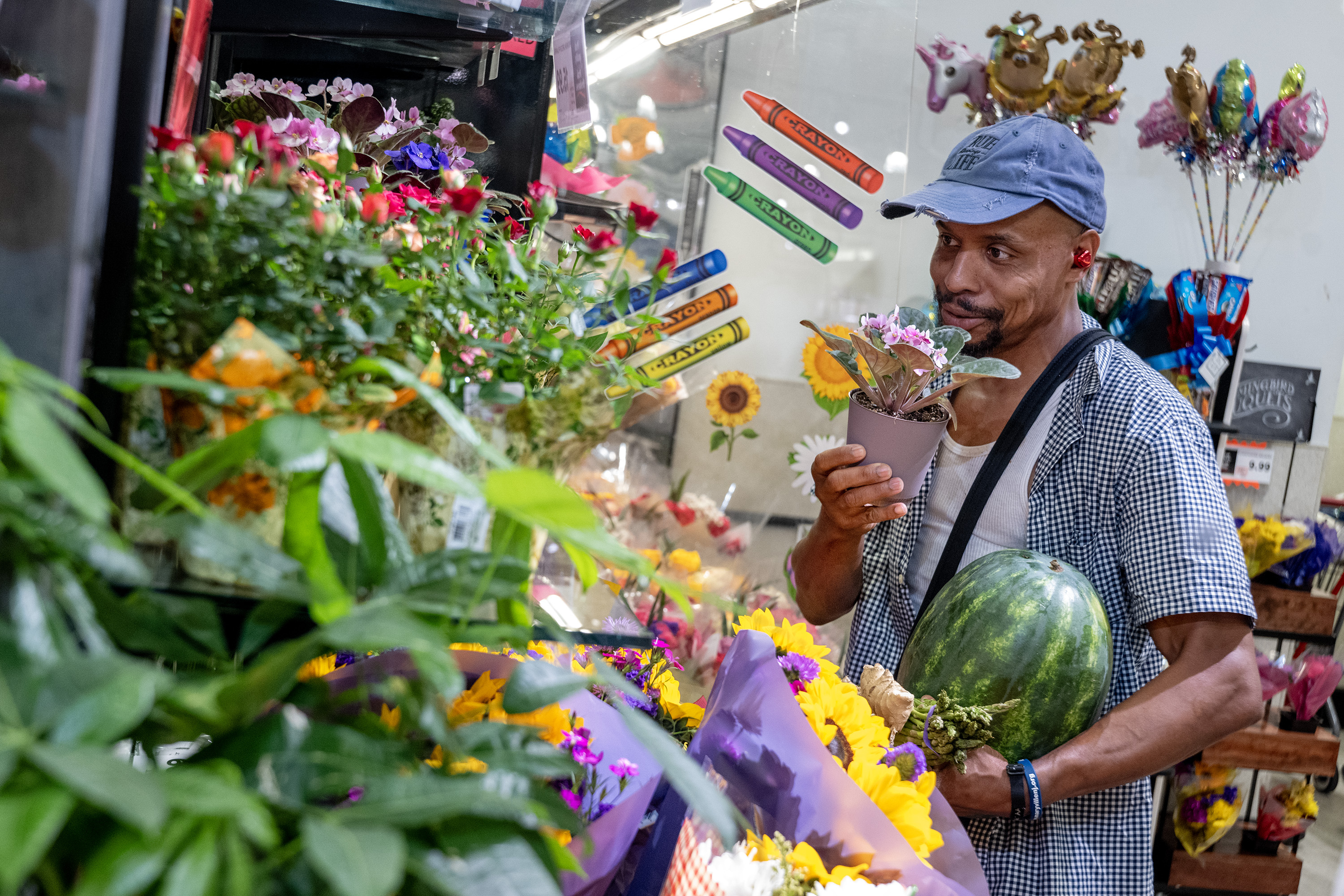
When Gregory Williams stepped into Ravitz ShopRite in Cherry Hill, he was on a mission, carefully selecting fresh fruit to add to his shopping cart.
After stocking up on strawberries, peaches, nectarines, and a pineapple, Williams moved quickly to the meat section to peruse his options.
“I’m on the healthy side,” said Williams, 29, of Camden.
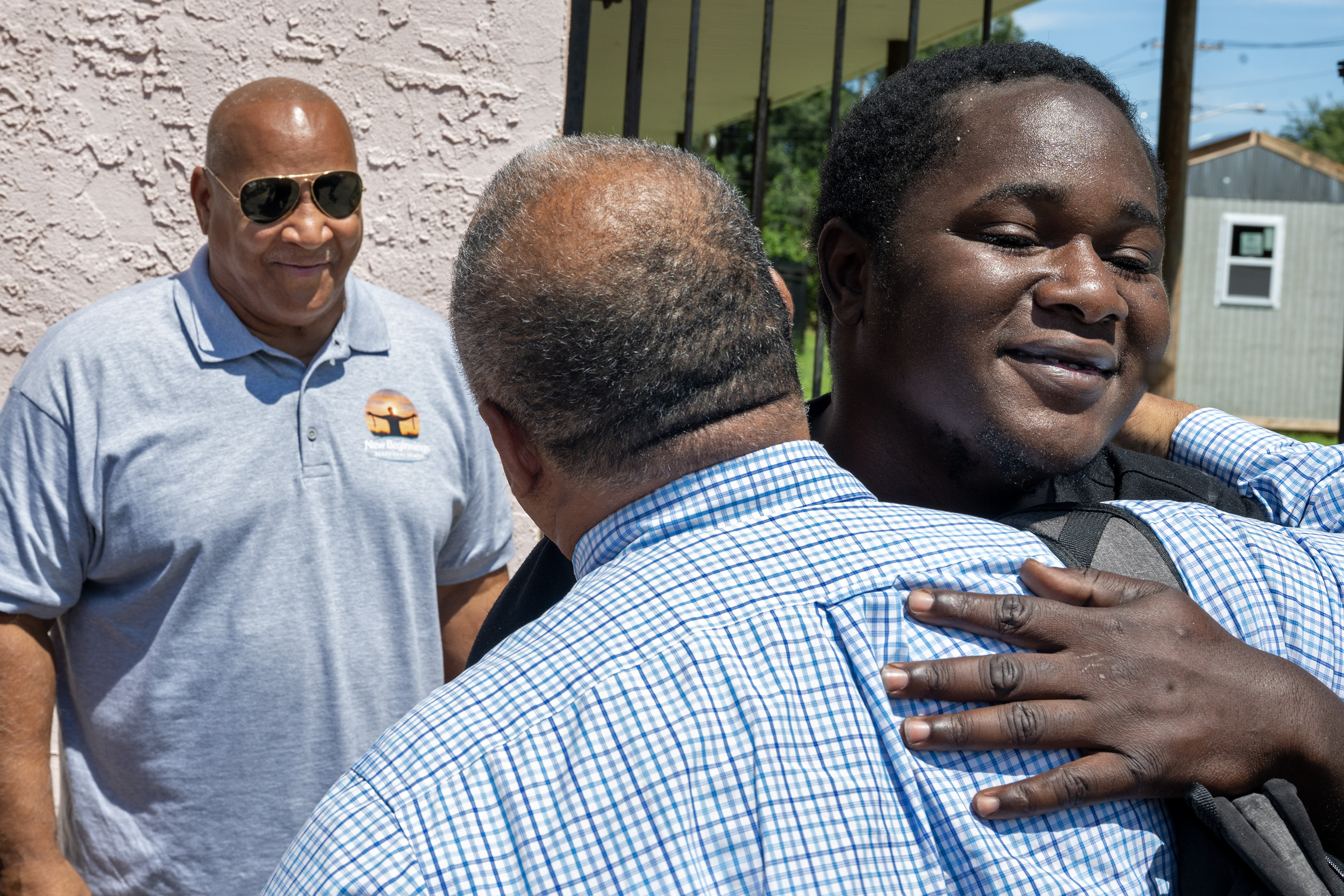
Williams got a ride recently to the ShopRite courtesy of a new program that offers free door-to-door transportation to the supermarket to Camden residents.
Camden resident Gregory “Baby Face” Williams arrives to take a van to the ShopRite in Cherry Hill Tuesday, Aug. 4, 2026. Pastor Amir Khan (left) is on a mission to help residents eat healthier, as Camden is a food desert and doesn’t have any grocery stores. With a grant from FEED NJ, Khan is picking up residents and transporting them free of a charge to the suburban store.Tom Gralish / Staff Photographer
It’s funded by a grant from Food Equity and Economic Development in New Jersey, or FEED NJ, which seeks to provide residents in food deserts like Camden and Salem with better access to fresh, affordable, and healthy food options not always available in their local community.
Camden, a nine-square-mile city of about 71,000, has not had a full-service supermarket since 2013, when the Pathmark store on Mount Ephraim Avenue closed. The city tops the state’s list of 50 food desert communities.
Those with cars or access to public transportation travel to nearby suburban communities or shop at pricey neighborhood corner stores or bodegas with fewer healthy options.
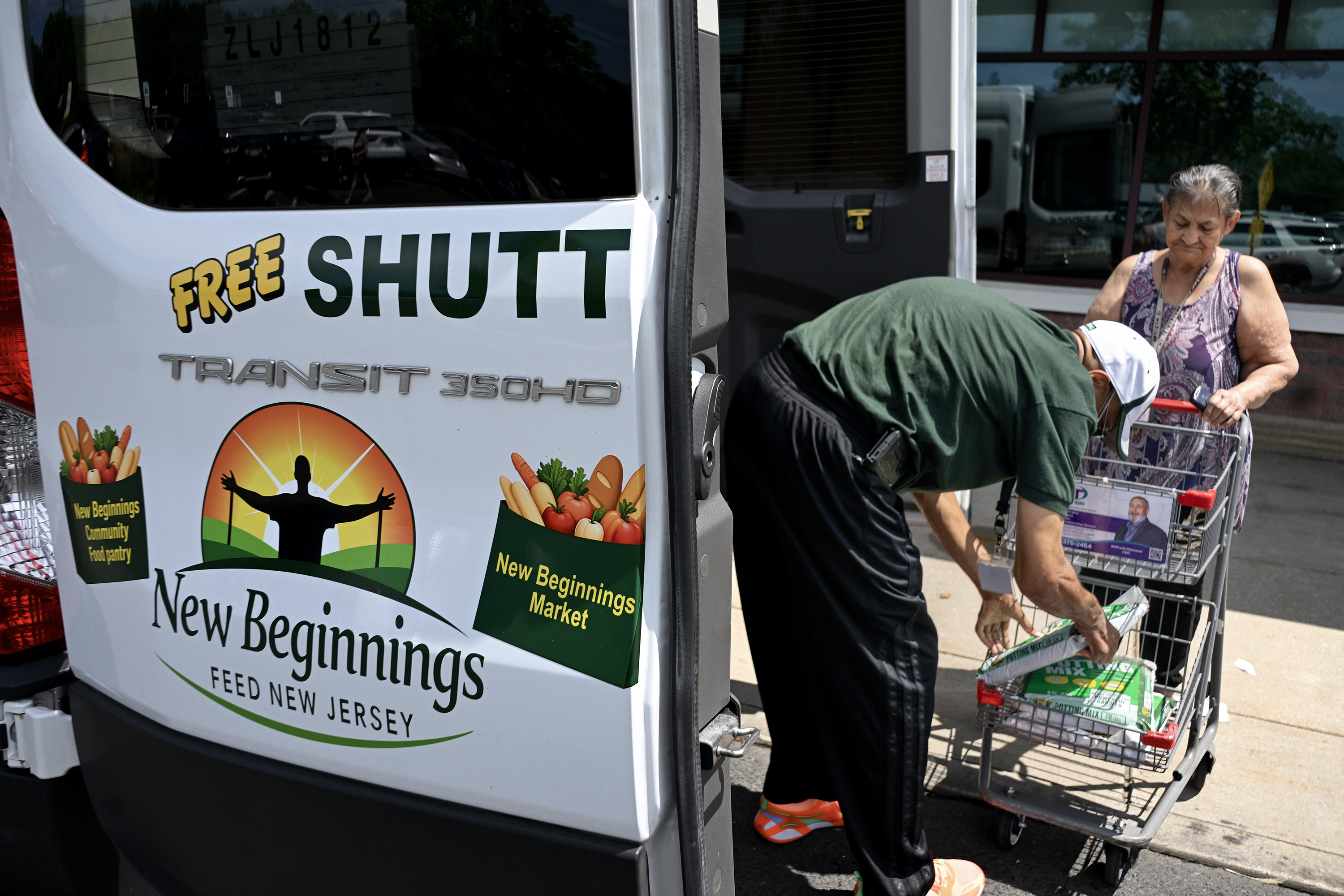
After efforts to bring a supermarket to Camden fell short, Pastor Amir Khan launched the free shuttle service with a $487,000 FEED NJ grant awarded earlier this year from the New Jersey Economic Development Authority (NJEDA). He purchased three vans to transport Camden residents to the supermarket along with equipment for a pantry.
“I knew that this was what was best for people of Camden,” Khan said. “God blesses us to be a blessing to others.”
Van driver Lonnie Watkins helps Camden resident Agripina Vega unload her cart after shopping at the ShopRite in Cherry Hill Tuesday, Aug. 4, 2026. Camden is a food desert and doesn’t have any grocery stores. Pastor Amir Khan is on a mission to help residents eat healthier. With a grant from FEED NJ, Khan is picking up residents and transporting them free of a charge to the suburban store.Tom Gralish / Staff Photographer
The grant was made through a $30 million state pilot program that awards funds for projects to improve food access and food security in the New Jersey communities most in need, said Tara Colton, chief economic security officer at NJEDA.
Nearly $9 million was awarded to projects such as urban farming and fresh markets in Camden, Colton said, and statewide, 72 organizations received grants.
“Food security is crucial to the state’s economic success,” Colton said. “We need to ensure that everyone has their basic needs met.”
Agripina Vega, 75, was happy to get transported from the Riverview Towers, a building for senior citizens in Camden. Normally, she has to wait until her daughter-in-law can pick her up.
“I love it,” Vega said, standing in front of ShopRite waiting for a ride home after purchasing meat, fruit, and dog food.
Khan operates the shuttle through his New Beginnings Behavioral Health, a faith-based nonprofit that helps unhoused people, people recovering from addiction, and returning citizens transition back into society.
In addition to the shuttle service, the center provides a community food bank and pantry. It also has several shelters, provides job training and placement, and offers mental health and drug counseling.
Khan believes his mission is “changing and transforming lives.” He encourages clients to follow a motto on a sign in the lobby that reads: “Accept what is. Let go of what was. Have faith in what will be.”
Jay Rutherford, the program’s supervisor, hopes others will learn from his life. He was released from prison in 2023 after serving 31 years for felony murder.
“I was in a bad situation,” said Rutherford, 52. He was 19 when he went to prison.
Khan said his work at New Beginnings was inspired by his father, a doctor in Camden who often provided free treatment to patients unable to pay. His goal is to help residents choose healthier lifestyles.
The shuttle service to ShopRite is available to Camden residents only, said Lorene Watkins, a director at Khan’s organization. It operates Mondays through Fridays, and occasionally on Saturdays to meet demand, she said. About 25 people are transported weekly, she said.
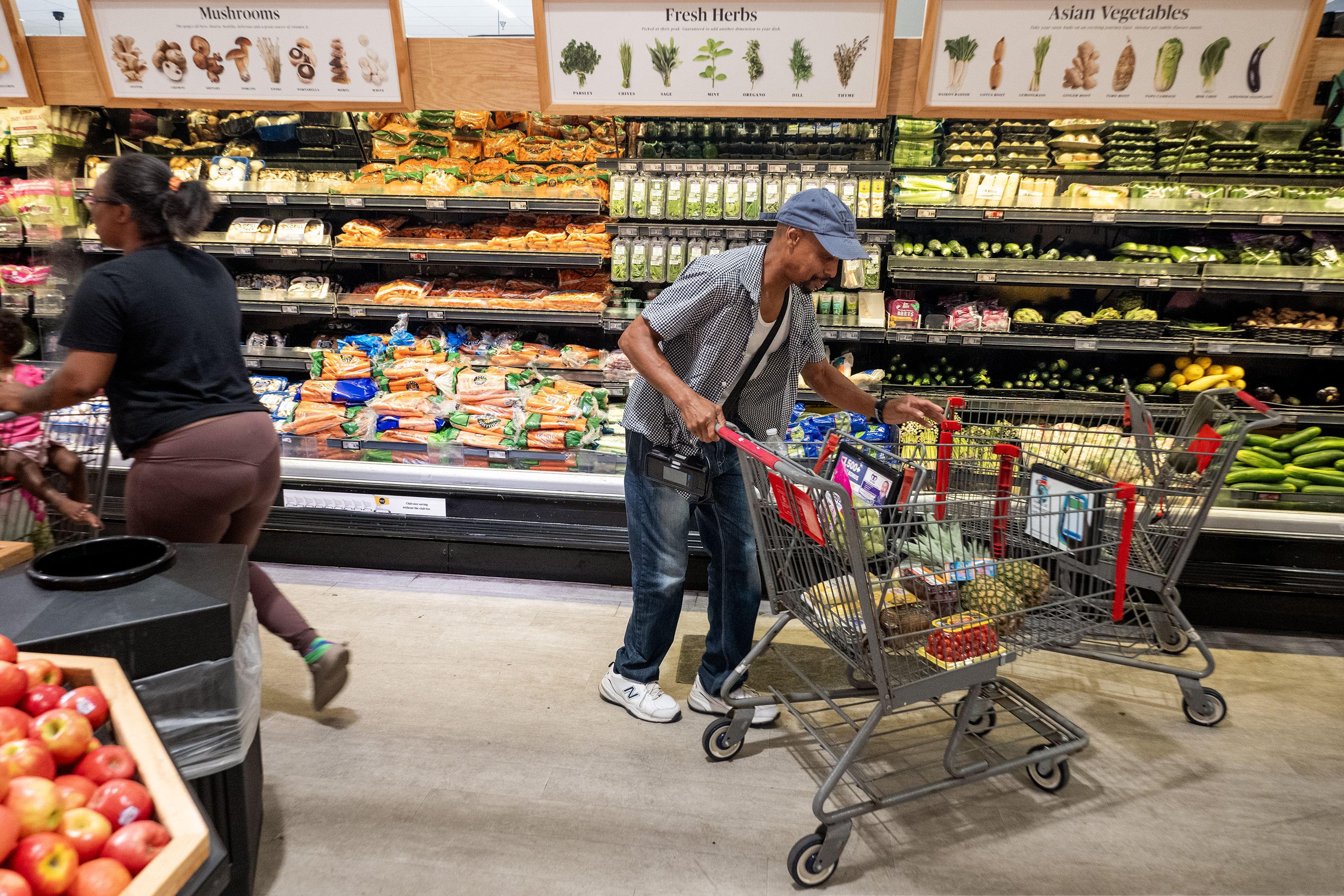
Camden resident Ryan Crews (right) shops at the ShopRite in Cherry Hill Tuesday, Aug. 4, 2026. Tom Gralish / Staff Photographer
“It’s terrible that there’s no supermarket here,” Watkins said. “These are people, too, and they should have a supermarket.”
Colton said there are “promising efforts” to eventually locate a supermarket in Camden, perhaps with a smaller footprint. Meanwhile, the state is funding food access programs to help meet the need, she said.
The state is not “giving up the goal of a full-service supermarket,” Colton said.
Watkins said a mobile market stocked with groceries will be added to the New Beginnings fleet in a few months. It will make stops around Camden and residents can purchase items from the van, she said.
Since it began a few weeks ago, the shuttle service has added stops at Walmart and Aldi stores in Cherry Hill to the routes, Khan said.
“We want to be a convenience,” he said. “Anything we can do to get people to eat healthier.”
The family-owned ShopRite supported the shuttle grant, said Jason Ravitz, vice president of operations for the Ravitz Family Markets. It has also donated food gift cards, Watkins said.
“Hopefully, people’s dollars can go further,” Ravitz said. “We were always taught you have to be there for the community.”
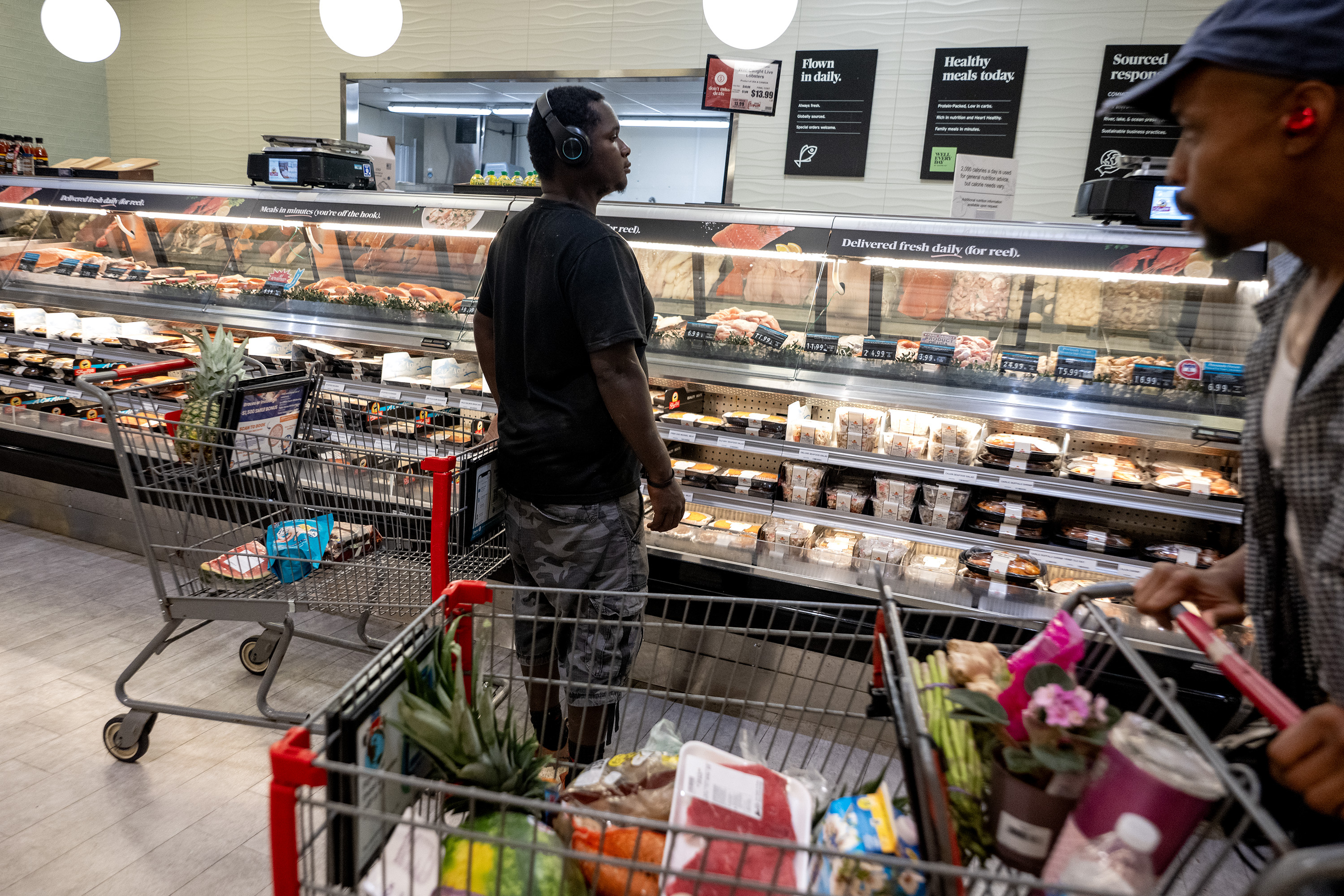
Camden residents Gregory “Baby Face” Williams (left) and Ryan Crews (right) shop at the ShopRite in Cherry Hill Tuesday, Aug. 4, 2026. Tom Gralish / Staff Photographer
First-time shopper Benjamin Moore, 33, picked up fresh fish, chicken, and dairy products. He typically shops at a corner store.
“There’s a lot more stuff here, more of a variety,” he said.
Kathy Mason, 65, made a shopping list before traveling to the store and pulled it out to make sure she didn’t forget anything. She navigated the massive store picking up items.
“I don’t have that much money at all,” Mason said. “For the whole month, it’s really tight.”
Camden resident Kathy Mason displays her shopping list at the ShopRite in Cherry Hill Tuesday, Aug. 4, 2026. Camden is a food desert and doesn’t have any grocery stores. Pastor Amir Khan is on a mission to help residents eat healthier. With a grant from FEED NJ, Khan is picking up residents and transporting them free of a charge to the suburban store.Tom Gralish / Staff Photographer
Like many of the other riders, Mason receives Social Security or Supplemental Nutrition Assistance Program food assistance benefits. They try to make healthy choices and stretch their dollars.
“Sometimes, if there is something I really want, I can’t get it,” said Williams, who receives $277 a month in food assistance. “You have to pay your bills.”
To schedule a pickup with New Beginnings Behavioral Health’s shuttle, call 856-588-0807.
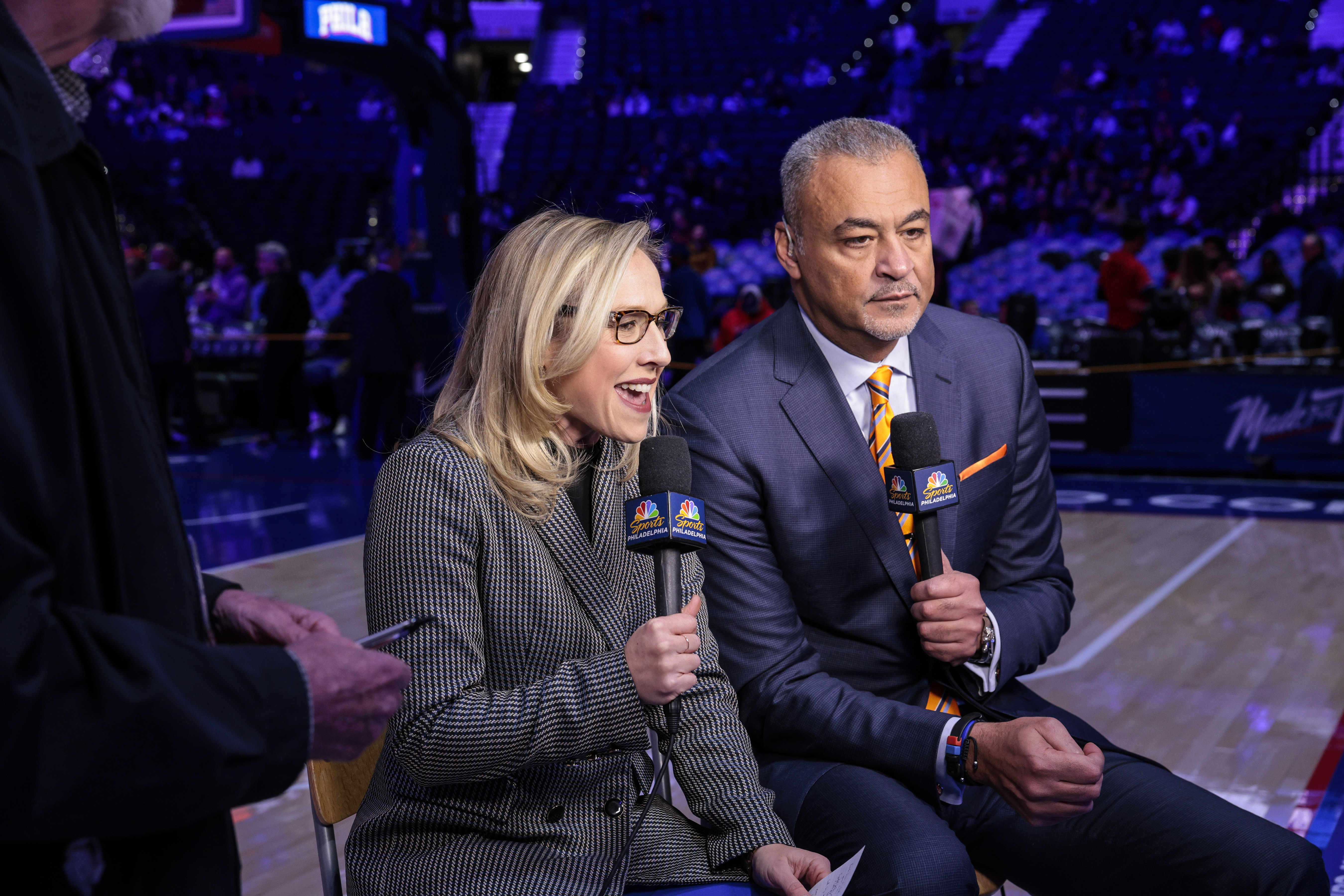
Outside of the 76ers, one of the biggest winners of the LeBron James’ sweepstakes is NBC Sports Philadelphia.
We won’t know how much of a boon James will be for the city or the network until the 41-year-old takes the court in a couple of months. A lot will depend on the future Hall of Famer’s health during his unprecedented 24th NBA season, but James has remained remarkably healthy, averaging over 62 starts a year over the past five season.
If the Sixers match expectations and James can remain on the court, NBC Sports Philadelphia can expect a big boost in viewership based on what happened at his previous stops, according to an Inquirer analysis of Nielsen data previously reported by Sports Business Journal and provided by its media reporter, Austin Karp.
Before James famously made his decision to join the Miami Heat in 2010, games on the city’s now-defunct regional sports network, FanDuel Sports Network Sun (known then as Sun Sports), averaged a 2.51 rating, roughly 40,000 households. After James joined the team, ratings nearly doubled to a 4.92. By the 2012-13 season, after James helped lead the Heat to two straight NBA championships, games were averaging a 7.14 rating on Sun Sports, nearly three times higher than before he came to town.
In 2014, James decided to leave Miami to return to the Cleveland Cavaliers. Ratings tripled on the now-defunct regional sports network, formerly known as Fox Sports Ohio, jumping from a 2.79 rating (roughly 41,000 households) before James to a 9.31 rating (roughly 139,000 households) as he led the Cavaliers to their first and only NBA championship in 2016.
In 2018, James took his talents to Los Angeles to join the Lakers, whose local TV ratings were already among the strongest in the NBA. Lakers ratings still increased 31% on Spectrum SportsNet, the highest since 2013.
NBC Sports Philadelphia averaged 86,000 viewers per Sixers game last season, according to Nielsen numbers obtained by The Inquirer. If James can provide the same spark he did in both Cleveland and Miami, you can expect upward of 250,000 fans tuning in locally to watch the Sixers on NBC Sports Philadelphia.
“I think you need a voice on the court where Alaa and Kate can’t be to give us insight, do pre- and postgame interviews, analysis, all of that,” Alexandra Matcham, the vice president of content for NBC Sports Philadelphia, previously told The Inquirer.
The only bad news for NBC Sports Philadelphia is that ratings tanked for the markets James left.
When he left the Cavaliers for the Heat, ratings in Cleveland dropped 54%. The same thing happened when he returned to Cleveland — ratings on Sun Sports in Miami dropped 28%.
After James joined the Lakers, Cavaliers’ ratings on Fox Sports Ohio dropped 58%. It remains to be seen whether Spectrum SportsNet will suffer a similar fate this season.
Just 15 of those games are exclusive to national broadcasters, including the Sixers first two games — Oct. 20 against the New York Knicks at Madison Square Garden (NBC), and the Sixers’ home opener against the Cleveland Cavaliers at Xfinity Mobile Arena on Oct. 22 (ESPN).
That means the first Sixers regular-season game that will air on NBC Sports Philadelphia will be Oct. 24 against the Milwaukee Bucks in South Philly.
NBC Sports Philadelphia will air at least 67 Sixers games this season, but the full schedule needs to be approved by the NBA before it’s released publicly. There’s also some juggling that needs to happen, since the network also broadcasts Flyers games.
The network will air all four Sixers preseason games, beginning Oct. 5 against the Knicks at Xfinity Mobile Arena, which could be the first time fans see James suit up for Philly.
Regardless of when he plays, the expectations are sky-high for the Sixers this season.
“Championship or bust,” Hall of Famer and TNT analyst Shaquille O’Neal said during a recent interview on ESPN’s SportsCenter. “I know LeBron wants to get one last one. … If they don’t win the championship, I think all those players will be very, very disappointed.”