Blog

  • Krasner’s candor problem started with his first exoneration win

    Krasner’s candor problem started with his first exoneration win

    A number of judges have called out District Attorney Larry Krasner’s office for lying and sloppy lawyering in several recent exoneration cases.

    A supervisor in Krasner’s office was disbarred last year for repeatedly lying while attempting to overturn a death penalty conviction. In June, another former supervisor was suspended from the region’s federal courts for three years for her role in attempting to mislead a judge in the same case. Last month, a former assistant district attorney said she was pressured to lie in court and instead resigned.

    But judges have raised concerns about a lack of candor dating back to the first exoneration Krasner secured after he became Philadelphia’s chief prosecutor in 2018, according to a review of judicial rulings, court transcripts, as well as internal district attorney’s office emails and other documents obtained through discovery in a lawsuit and shared with The Inquirer.

    Exoneration cases often take years to litigate. But just six weeks after Krasner was sworn in, his office vacated the first-degree murder conviction of Dontia Patterson. He was set free three months later.

    Patterson had spent 11 years in prison after being convicted in the shooting death of Antwine Jackson. Patterson’s first trial ended in a hung jury with an 11-1 vote in 2008, but he was convicted at a second trial the following year based largely on the testimony of two eyewitnesses.

    The Pennsylvania Innocence Project, along with pro bono lawyers, began working on Patterson’s post-conviction appeal well before Krasner was elected as district attorney on a promise to end mass incarceration and reexamine past cases. The focus of the group’s claim was ineffective defense counsel.
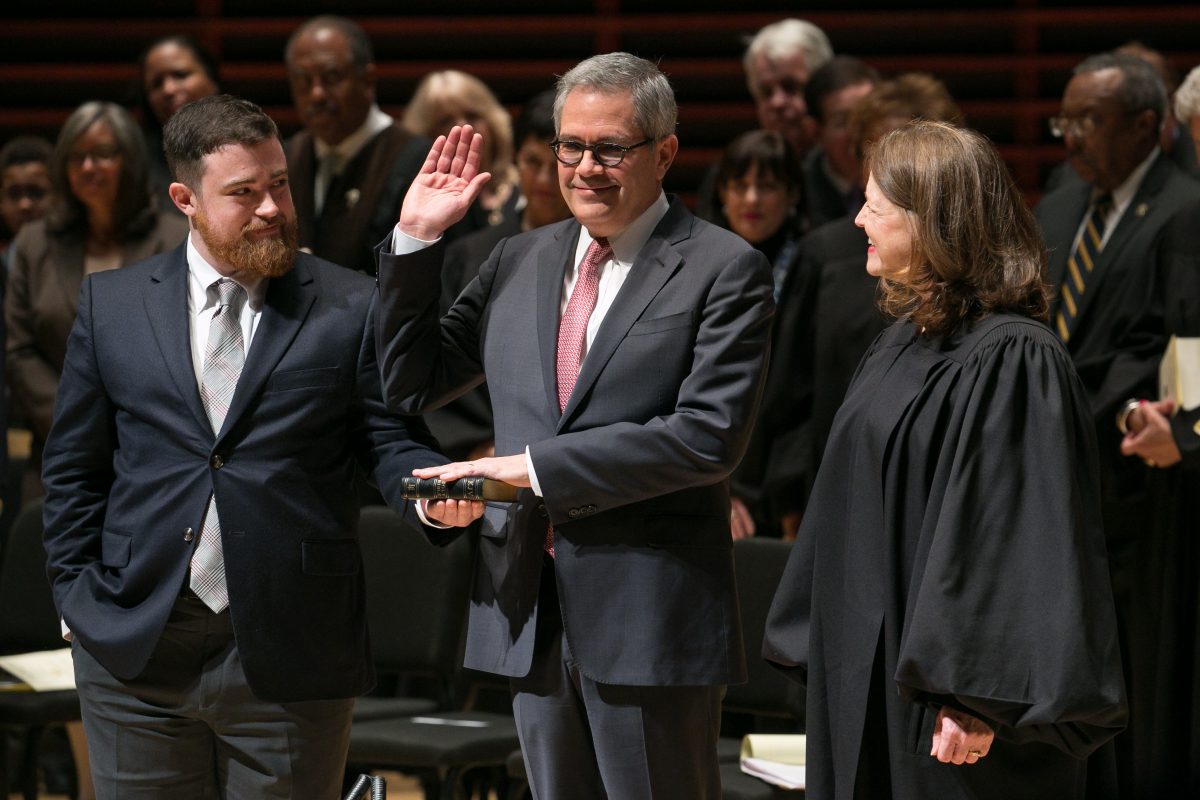
    Just weeks after he was sworn in as district attorney in January 2018, Larry Krasner secured an exoneration for Dontia Patterson, who was convicted in a 2007 murder.JESSICA GRIFFIN / Staff Photographer

    But Krasner’s office offered a bolder theory: In addition to the ineffective counsel, it claimed prosecutors working under then-District Attorney Lynne Abraham and police withheld evidence that would have bolstered Patterson’s defense.

    In May 2018, Anthony Voci, then the chief of Krasner’s homicide unit, signed a legal motion that called Patterson’s conviction “an egregious example of police and prosecutorial misconduct” and moved to drop the charges.

    Along the way, Voci began coordinating with the DA’s press officer to spread the word to the media. “I think this could be a great story for our office to tell,” Ben Waxman, then the DA’s director of communications, wrote in an email to Voci on Feb. 28, 2018.

    The district attorney’s office did not respond to requests to interview Krasner and Voci.

    Three months after Waxman’s email, in May 2018, Voci made a stirring speech in court that referenced the Declaration of Independence’s guarantees of life, liberty, and the pursuit of happiness and excoriated the former prosecutors, saying they were required to be right, sure, and fair.

    Richard Sax, the former prosecutor who oversaw Patterson’s conviction, denied any wrongdoing. He said jurors concluded Patterson was guilty beyond a reasonable doubt, and a previous appeal of the conviction was denied. He called Krasner’s exoneration of Patterson “a horrific travesty of justice.”

    Beth McCaffery, a former prosecutor who oversaw the first trial that ended in a hung jury, was offended by the attack on her character by Krasner’s office, and decided to fight to clear her name.

    Richard Sax, who oversaw the prosecution of Dontia Patterson, denied any wrongdoing in the case and called the district attorney’s office’s exoneration “a horrific travesty of justice.”David Maialetti / Staff Photographer

    McCaffery filed a Right-to-Know request in 2020 seeking access to the case file, which she believed would show she operated by the book. Krasner’s office initially denied the request, claiming the information was not public, even though it had shared the files with researchers at the New York University School of Law.

    At a hearing last year, McCaffery testified that she kept detailed notes and records of her cases that would show she acted properly.

    Voci, who signed the motion that blamed the former prosecutors, also took the stand. By then, his story had shifted.

    McCaffery’s attorney, Bryan Lentz, wanted to find out what sort of independent investigation Krasner’s office undertook before deciding to free Patterson.

    “Before signing the motion, what did you do?” Lentz asked. “What did you review personally to assure yourself of the facts in this motion?”

    Voci responded, “Virtually nothing.”

    Turns out, prosecutors didn’t interview the two eyewitnesses from the trial or the former prosecutors who tried the cases. They didn’t interview a police officer who lived near the shooting, heard the gunshots, and saw a man fleeing the scene.

    However, Voci did sit in on a PowerPoint presentation by attorneys from the Pennsylvania Innocence Project that focused on Patterson’s ineffective legal counsel, which the DA’s office largely adopted.

    In May 2018, Anthony Voci, then the chief of Krasner’s homicide unit, signed a legal motion that called Dontia Patterson’s conviction “egregious.” He later testified that he hadn’t read the document before signing it.David Maialetti / Staff Photographer

    To be sure, a case could have been made that Patterson, who was 17 at the time of the killing, should not spend his life behind bars. Or that his defense counsel was inadequate, and that eyewitness misidentifications have been found to be a major reason for many wrongful convictions.

    But Voci — who had previously criticized the prosecutors in court — testified that he didn’t believe everything he said.

    “Were you onboard with accusing Beth McCaffery of prosecutorial misconduct?” Lentz asked.

    “No,” Voci said.

    “But you signed the motion anyway, right?” Lentz asked.

    “I did,” Voci said.

    Voci revealed something even more stunning: “I didn’t draft this motion, and I didn’t review it before I signed it.”

    That would appear to violate the Pennsylvania Rule of Criminal Procedure, which makes clear that an attorney signing a motion certifies that he or she has read the document and believes the facts as stated.
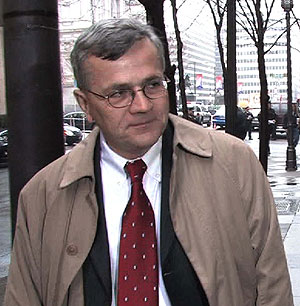
    Ed Cameron spent four decades prosecuting cases for the district attorney’s office. He questioned efforts to secure an exoneration for Dontia Patterson.Laurence Kesterson / Staff Photographer

    Ed Cameron, who spent nearly 40 years in the district attorney’s office prosecuting mainly homicide cases, sent an email to Voci at 7:36 a.m. the day after Patterson was released. He said he was “up all night” and proceeded to question the exoneration.

    “A lot of mistakes and misstatements were made in the ‘investigation’ and filing by our Office,” Cameron wrote, adding that he was never consulted about the motion to exonerate Patterson and blame the former prosecutors. After Cameron died in 2020, he was praised for his honesty and experience handling high-profile cases.

    Voci’s testimony echoes a similar issue playing out in a separate exoneration case that is before U.S. District Judge Paul S. Diamond.

    In that case, one of Krasner’s former assistant district attorneys, Jaclyn Mason, testified that the DA’s office failed to do any independent investigation in another exoneration case involving a convicted murderer and instead accepted the arguments provided by the Pennsylvania Innocence Project.

    Mason testified she signed the legal document asserting the man’s conviction should be thrown out, but didn’t independently examine all the evidence. Instead, Mason testified, she followed the orders of her supervisor, Matthew Stiegler, who she said told her, “‘If it’s good enough for the Innocence Project, it’s good enough for me.’” That case is ongoing.

    Like Mason, Voci testified that he was just following orders, and that another lawyer in the office, Patricia Cummings, wrote the Patterson motion.

    Krasner hired Cummings in January 2018 — the same month he was sworn in — to oversee the city’s Conviction Integrity Unit, which was set up to review old cases for wrongful convictions. She came from Dallas, where she started a similar unit, and reported to Krasner.

    Cummings maintained a separate role while working in Krasner’s office as a research scholar at NYU School of Law — the same place that was granted access to the DA’s case files McCaffery had requested.

    Cummings helped research and draft a 180-page report released by NYU that detailed a long history of prosecutorial misconduct in Philadelphia, an apparent conflict of interest that seemingly undermines the report’s independence.

    Cummings had an opportunity to defend Patterson’s exoneration and the NYU report at McCaffery’s Right-to-Know hearing. But when called to testify, she failed to show up. (Cummings did not respond to questions I emailed her.)

    McCaffery sued Cummings and NYU for defamation. The case was dismissed and is now on appeal in the U.S. Court of Appeals for the Third Circuit.

    Separately, McCaffery’s effort to clear her name dragged on in court for four years. In March 2024, Common Pleas Court Judge Anne Marie Coyle issued a stemwinder of an opinion that stretched for 149 pages and found Krasner’s office unfairly accused McCaffery and Sax of misconduct.
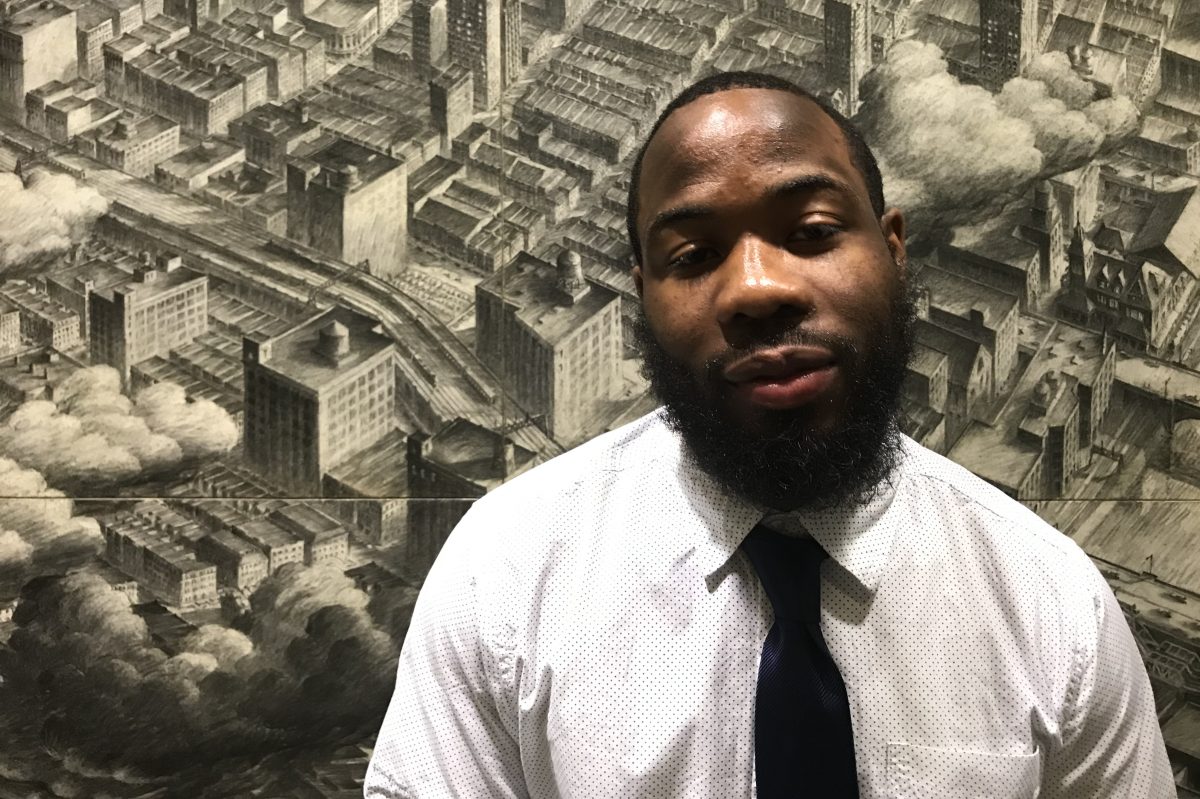
    Dontia Patterson is shown at the Philadelphia Criminal Justice Center after a hearing in May 2018, at which a judge cleared him of a 2007 murder and agreed to drop the charges.Chris Palmer

    The judge said the claims by Krasner’s office that the two former prosecutors illegally withheld evidence to secure a wrongful conviction were “intentionally and maliciously created” and “had no good faith basis.”

    Coyle listed 11 scathing findings involving Patterson’s exoneration and the efforts to fight McCaffery’s Right-to-Know request, including that Krasner’s office “misplaced and/or destroyed requested records and relevant evidence.” She found the DA’s office “dishonorably publicly maligned” McCaffery and Sax.

    The judge’s opinion echoed a recent finding by the state Supreme Court in a separate exoneration case when she found “the DA’s office demonstrated a patterned lack of candor” to the courts through “misstatements” and by “omitting salient” facts related to the post-conviction review of Patterson’s case and McCaffery’s Right-to-Know appeal.

    Coyle said a culture existed within Krasner’s office “to denigrate prior prosecutors” and “prior administrations.”

    She fined Krasner’s office $120,000 and called on an appellate court to impose more penalties. The DA’s office is appealing to the Commonwealth Court of Pennsylvania.

    After Patterson’s release, he sued the city and received $1.7 million in a settlement for his time in prison. In 2023, Patterson was arrested for selling drugs in Kensington. He struck a plea deal with prosecutors in Krasner’s office and received two years probation.

    The Pennsylvania Innocence Project stands by its efforts to exonerate Patterson.

    “Before the Pennsylvania Innocence Project agrees to take a case, we conduct a thorough, often yearslong review of the facts and the record,” Nilam A. Sanghvi, the Innocence Project’s legal director, said in a statement. “In this case, the facts pointed to Dontia Patterson’s innocence, and his exoneration was the just result. We will continue to pursue justice for our wrongfully convicted clients based on the facts.”

    Krasner, a former defense attorney, has long railed against what he considered a win-at-all-cost mentality among police and prosecutors in the city. While Philadelphia has a fraught history of overreach by officers of the law and officers of the court, the remedy for any past abuses isn’t more of the same.
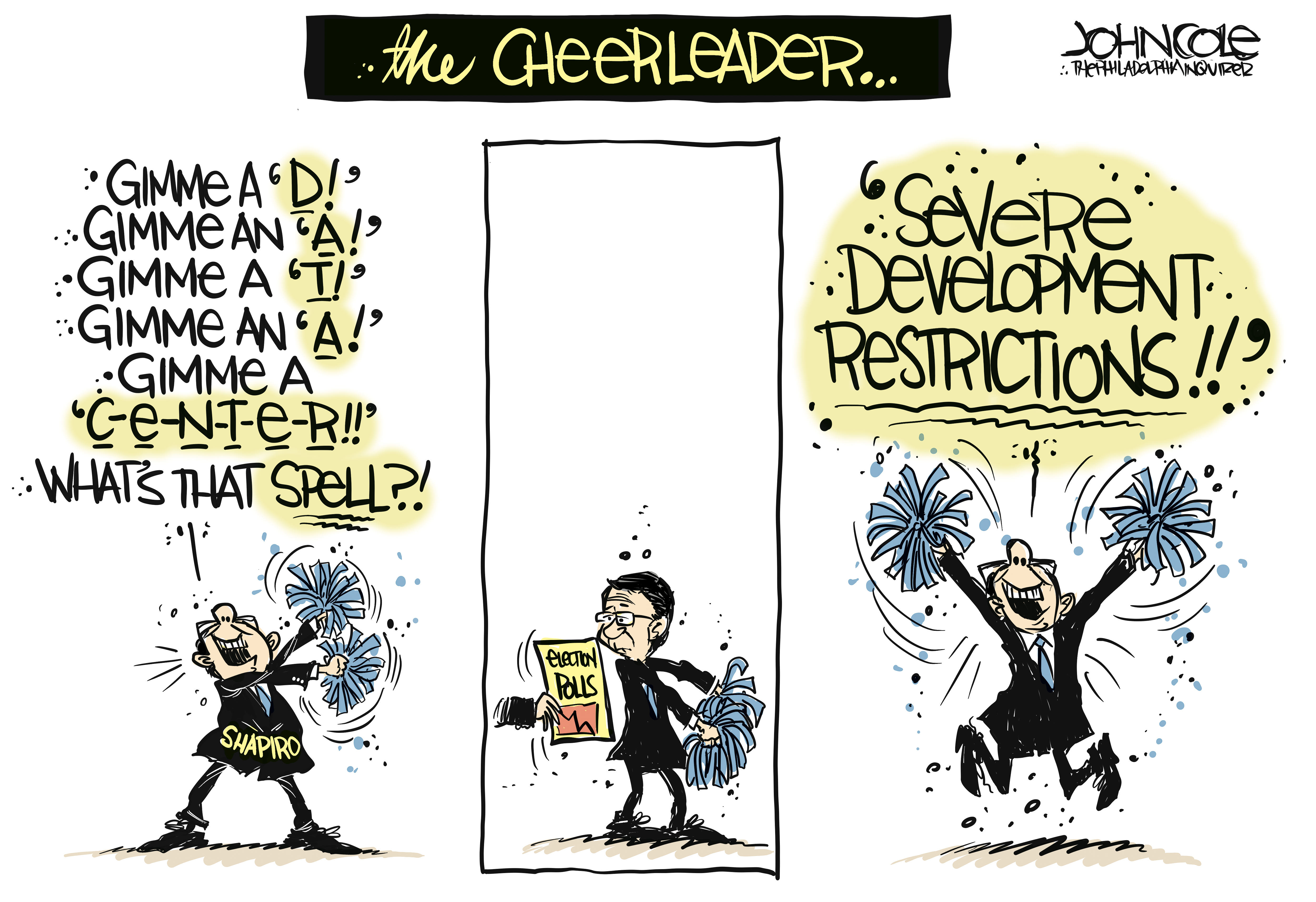
  • Server two masters | Editorial Cartoon

    John Cole spent 18 years as editorial cartoonist for The (Scranton) Times-Tribune, and now draws for various statesnewsroom.com sites.

  • A stint in Lehigh Valley allowed Andrew Painter to work ‘freely’ on mechanics and his mind. Here’s what he learned.

    A stint in Lehigh Valley allowed Andrew Painter to work ‘freely’ on mechanics and his mind. Here’s what he learned.

    When Andrew Painter was optioned to triple-A Lehigh Valley in June, he received something he sorely needed: space. Seventy-seven miles north of Citizens Bank Park, far from the scrutiny of Philadelphia, the right-handed pitcher was able to work and think.

    He could try grips, mechanical tweaks. In three straight games with the Iron Pigs, he threw three different changeups. This is not the type of thing Painter would be able to do in the big leagues, especially not in the midst of a playoff push.

    But in triple A, it was encouraged.

    “You’re able to go down there, and games don’t really mean much,” Painter said. “Obviously you’re playing to win, but it’s about development. There’s obviously a lot less stress, and you’re able to kind of freely work on things.”

    “Freely” is an apt description. Before Painter was sent down on June 18, he looked anything but free. The 23-year-old labored through each start. He struggled with command. His fastball lacked its signature rise.

    By June 17, his ERA had ballooned to 7.06 ERA.

    The monthlong hiatus to Allentown appears to have helped. It allowed the highly touted rookie to take a hard look at what worked and what didn’t, and make changes without fear of failure.

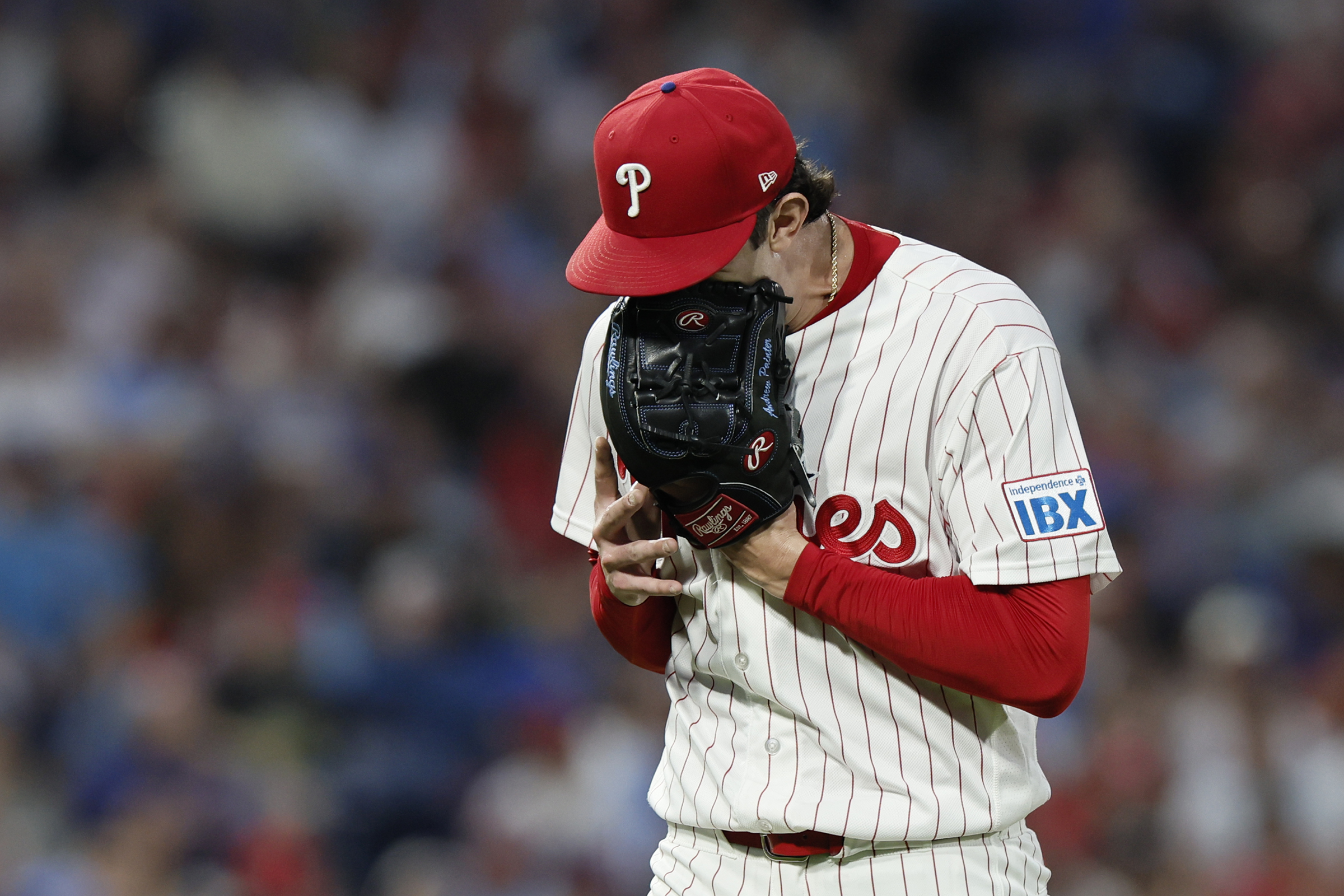
    Andrew Painter has a 3.62 ERA in five starts since being recalled from triple-A Lehigh Valley.Derik Hamilton

    The Phillies’ pitching coaches dove deep into his mechanics and unearthed some telling data points. Chief among them was the way Painter moved his lower half.

    Before, he was standing more upright, almost as if his back leg was completely straight.

    The coaches suggested that he hinge his back hip, and bend his back knee more. What might seem like a small tweak has produced notable results.

    Now, Painter is driving more toward the plate, which has improved his command. He’s moving more efficiently, which has helped him sustain velocity deeper into games.

    In the rookie’s outing on Saturday, his fastest pitch of the night — and of his young career — was his 100th. It clocked in at 99.6 mph.

    “To me it feels like it’s less effort, and I think that kind of goes to … now when I’m in the sixth inning, there’s a little bit more energy,“ he said. ”Whereas before it was kind of [like] I was reaching for everything, and those were 94s, 95s.”

    He added: “I think everything’s good when I’m just synced up, right? I feel like some guys try to throw it as hard as they can, and it ends up being slow, because they’re not in as powerful of a position.

    “For me, the moves that we worked on with the lower half, kind of allows me to just be behind the ball a little more.”

    Andrew Painter has 26 strikeouts in 27 1/3 innings since rejoining the Phillies.Elizabeth Robertson / Staff Photographer

    Another suggestion from the Phillies pitching corps was to adjust his fastball grip. Painter widened his fingers slightly, and shifted them more diagonally, so they aren’t right on top of the seams.

    “Because when I was throwing fastballs in the first half, the seams were almost taking it down, so it was killing vertical [break],” Painter said. “Whereas [my fastball] has always risen.”

    The changes haven’t just been mechanical. Those who work with Painter believe he has a different energy about him, more of a self-assured confidence. Lehigh Valley pitching coach Phil Cundari said they’ve focused on staying present; to not dwell on an inning, or even a pitch.

    Cundari is uniquely qualified to help with this. Before he joined the Phillies organization in 2023, he was a licensed psychotherapist and had his own clinical practice.

    Harvey Dorfman, the legendary mental skills coach who helped transform Roy Halladay’s career, was one of Cundari’s mentors. Halladay was introduced to Dorfman in 2001, in the midst of his lowest point in professional baseball.

    Halladay had been demoted to the minor leagues after posting a 10.64 ERA through 67⅔ innings in 2000. He was at single-A Dunedin in the Blue Jays organization when Halladay’s wife, Brandi, bought him Dorfman’s book, The Mental ABC’s of Pitching.

    That, coupled with some mechanical tweaks, guided Halladay back to the big leagues and onto a path toward the Hall of Fame. No one knows what path Painter will take, but he finds himself at a similar crossroads; humbled, at 23 years old.

    From what Cundari can see, the rookie has responded well.

    “The experience and the path that he’s had, both of those things are pretty challenging to try and overcome,” Cundari said. “But I think he’s done a great job. I think what you’re seeing right now is someone who’s much more in command. Not just of his stuff, but of his emotions, and who is in command, mentally.

    “And you’re seeing a really confident young man up there. So, outings like [Saturday] night, hopefully we’re going to see more of those.”

  • There’s one big reason to think that Andrew Painter’s transformation is for real

    There’s one big reason to think that Andrew Painter’s transformation is for real

    A little past 6 o’clock on Saturday evening, Andrew Painter delivered a couple of pitches that could have some serious implications for the Phillies. Both of them were four-seam fastballs that registered 97 mph on the gun and crossed home plate at the sternum of Cardinals leadoff hitter JJ Wetherholt. The important thing is where those pitches ended up: inside the mitt of Phillies catcher J.T. Realmuto, rather than in play, or in the seats. Wetherholt swung at both. He did not make contact with either.

    That two-pitch sequence may sound like a small thing. It mostly was, at least within the context of the game. But it was a very big thing with regard to the futures of both the Phillies and their prized pitching prospect. It was a reason to believe.

    The top-line numbers suggest that Painter is a young man in the midst of a renaissance. Since returning from a six-week stint in the minors on July 31, the 23-year-old righty has posted a 3.62 ERA with 26 strikeouts, 10 walks, and two home runs allowed over 27⅓ innings. His most recent start was his finest yet: 103 pitches, seven innings, one run allowed, eight strikeouts, no walks.

    That his season-long ERA is still 6.02 speaks to the extent of the struggles he endured during the first 14 starts of the season. It also warrants a skeptical eye. Yet the deeper you pore through the entrails of Painter’s recent performances, the more evidence you’ll find that suggests the rookie really is in the midst of a radical transformation.

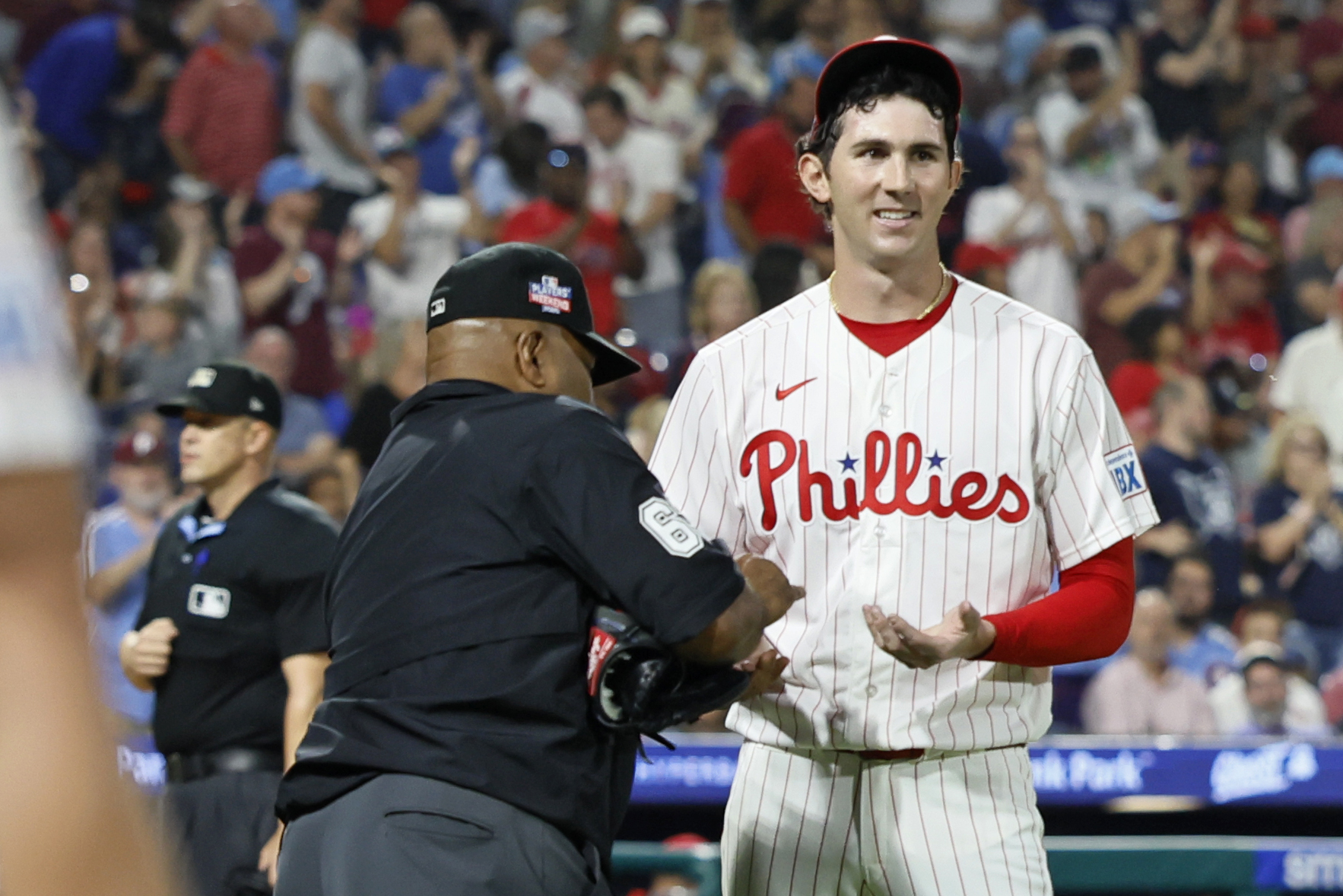
    Phillies pitcher Andrew Painter yells into his glove after striking out Cardinals slugger Jordan Walker for the final out of the sixth inning Saturday.Elizabeth Robertson / Staff Photographer

    It all starts with four-seam fastballs like the ones that prompted Wetherholt’s whiffs in the first inning on Saturday. By the end of the game, Cardinals hitters had failed to make contact on five of their 15 swings against Painter’s four-seamer. That may not sound like a lot, but consider this: In Painter’s last two starts before his demotion in June, he generated just three whiffs on 23 swings at his fastballs.

    The numbers are staggering. When the Phillies sent Painter down to the minors in June, his four-seam fastball ranked as one of the least effective in the sport. He wasn’t missing bats with it: His whiff percentage ranked 276th out of 278 pitchers who’d thrown at least 200 pitches. Opponents had 38 hits against the pitch in just 12 starts. Their .404 batting average against Painter’s four-seamer was higher than against any other pitcher’s. He ranked among the bottom 4% in slugging percentage (.763), strikeout percentage (7.65%), and wOBA (.481). Only one pitcher in the majors had a four-seamer rated lower than Painter’s per FanGraphs’ Pitch Value metric.

    Now, suddenly, Painter’s four-seamer has become one of baseball’s most difficult to hit. Of the 84 pitchers who have thrown at least 100 four-seamers since July 31, only seven have a higher whiff percentage inside the strike zone than Painter’s. Opposing hitters are making contact with just 78% of his fastballs in the strike zone. That’s lower than even Brewers fireballer Jacob Misiorowski. It is a massive difference from Painter’s 93.2% zone contact percentage in his first 14 starts. Painter isn’t generating out-of-zone swings-and-misses on the level of the Miz, but his overall contact rate still ranks in the top 25% of pitchers since July 31.

    Andrew Painter’s four-seamer has gone from liability to strength in his return to the Phillies.Monica Herndon / Staff Photographer

    It’s a lot easier to believe in real change when there is a logical explanation for it. With Painter, the four-seamer is the thing. His spin rate is up by about 6%. In his last two starts, the induced vertical break on his fastball was better than in any previous start, with an increase of about 10% over his predemotion baseline. Against the Cardinals on Saturday, he threw nine pitches at 98-plus mph, two of them at 99-plus. Sixteen of his 33 sinkers and four-seamers clocked at 97-plus mph. Compare that to his last start before his demotion, when Painter didn’t touch 98 and only reached 97 on five pitches.

    “There’s a presence out there,” Phillies interim manager Don Mattingly said. “He’s on the attack. He looks confident. Obviously, the stuff has to be good, or all that doesn’t matter if you’re not getting anybody out.”

    You saw it on Saturday. In the third inning, Jose Fermin struck out on a foul-tipped four-seamer. In the fifth, Jimmy Crooks swung and missed at a 1-2 four-seamer that registered 98.2 mph on Statcast. In the sixth, Alec Burleson swung and missed at another 98 mph four-seamer.

    Painter still has plenty of work to do to reach the level of dominance many envisioned when he was rated as one of the top pitching prospects in the sport. But the improvement is very real. Make no mistake about that.

  • Willie Lampkin made his name as a wrestling champion. Now, the 5-foot-11 guard might start for the Eagles.

    Willie Lampkin made his name as a wrestling champion. Now, the 5-foot-11 guard might start for the Eagles.

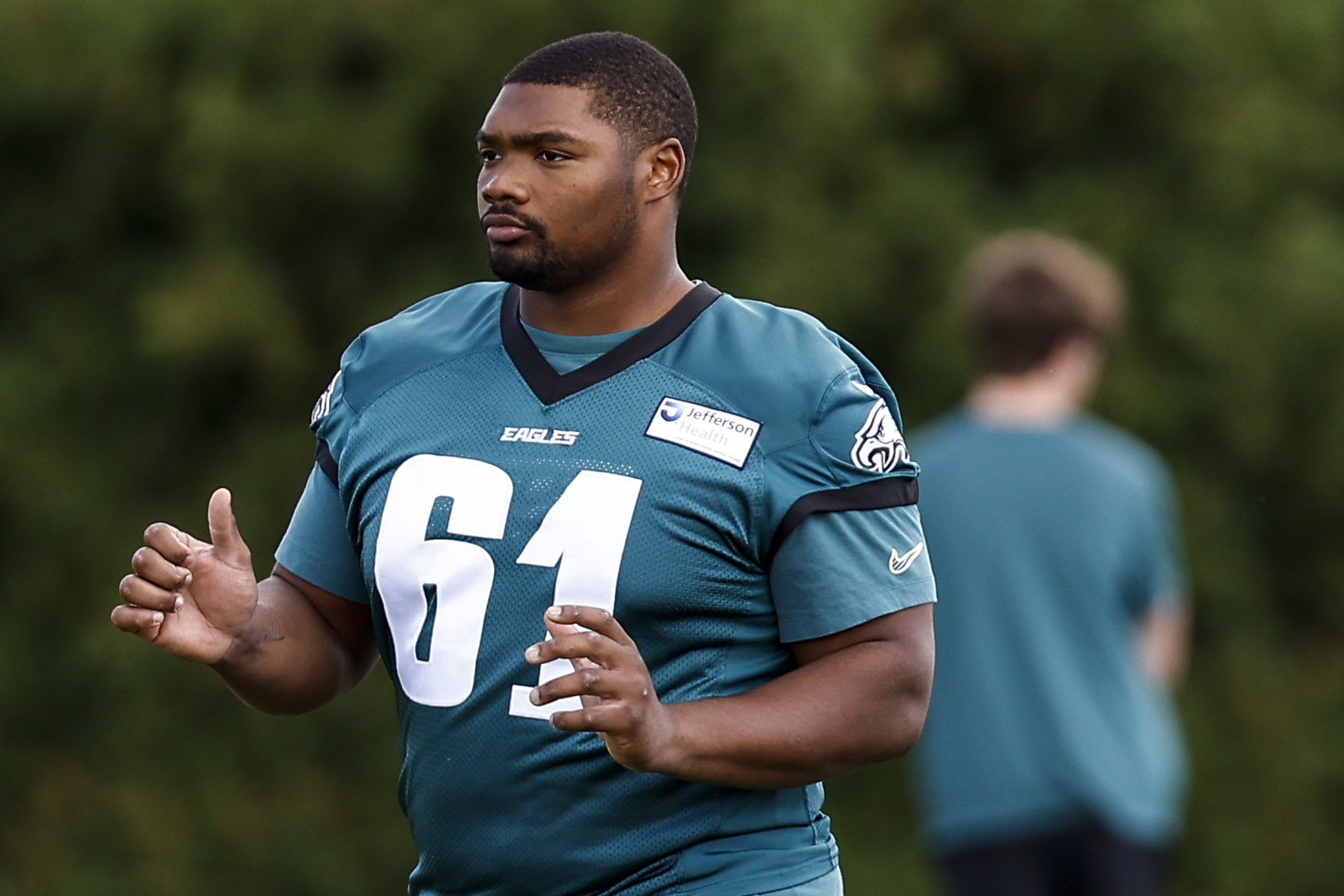
    Five plays into the Eagles’ preseason opener against the Baltimore Ravens, Willie Lampkin introduced Ravens defensive tackle Broderick Washington’s backside to the grass — and, in turn, re-introduced himself to the NFL.

    Lampkin, 24, had been hidden in plain sight for the past year. The Eagles claimed him off waivers at the end of camp from the Los Angeles Rams, who cut the 2025 undrafted free agent out of North Carolina with an injury designation due to knee and ankle injuries he suffered in their second preseason game. Two days later, the Eagles placed Lampkin on injured reserve for the remainder of the season.

    The 5-foot-11, 290-pound interior offensive lineman returned to game action for the first time in 364 days like a wrecking ball, and Broderick was his first victim.

    After snapping the ball at center, Lampkin quickly latched on to the 6-2, 315-pound defensive tackle and blocked him 10 yards downfield in pass protection before disposing of him into a pile of bodies.

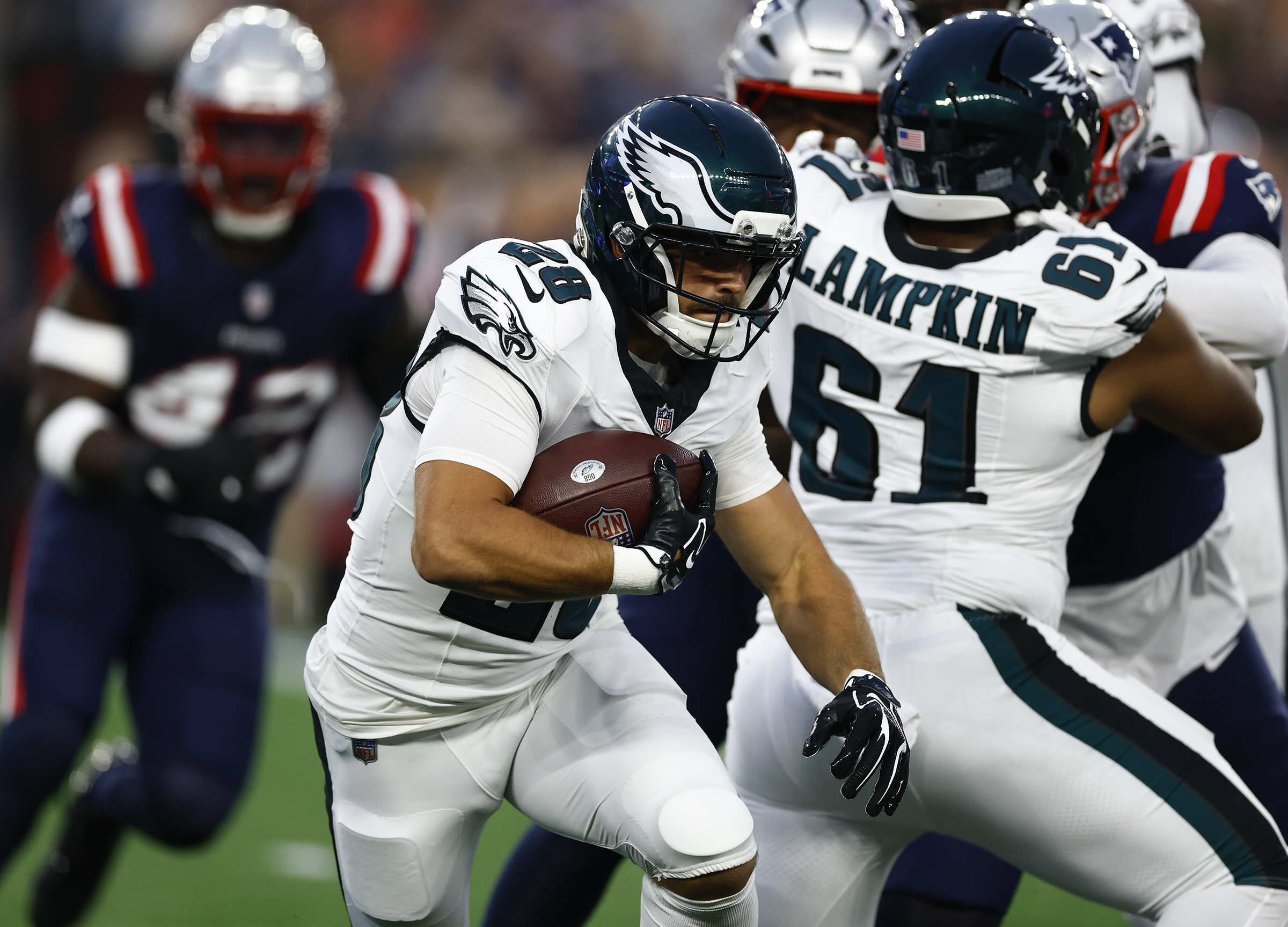
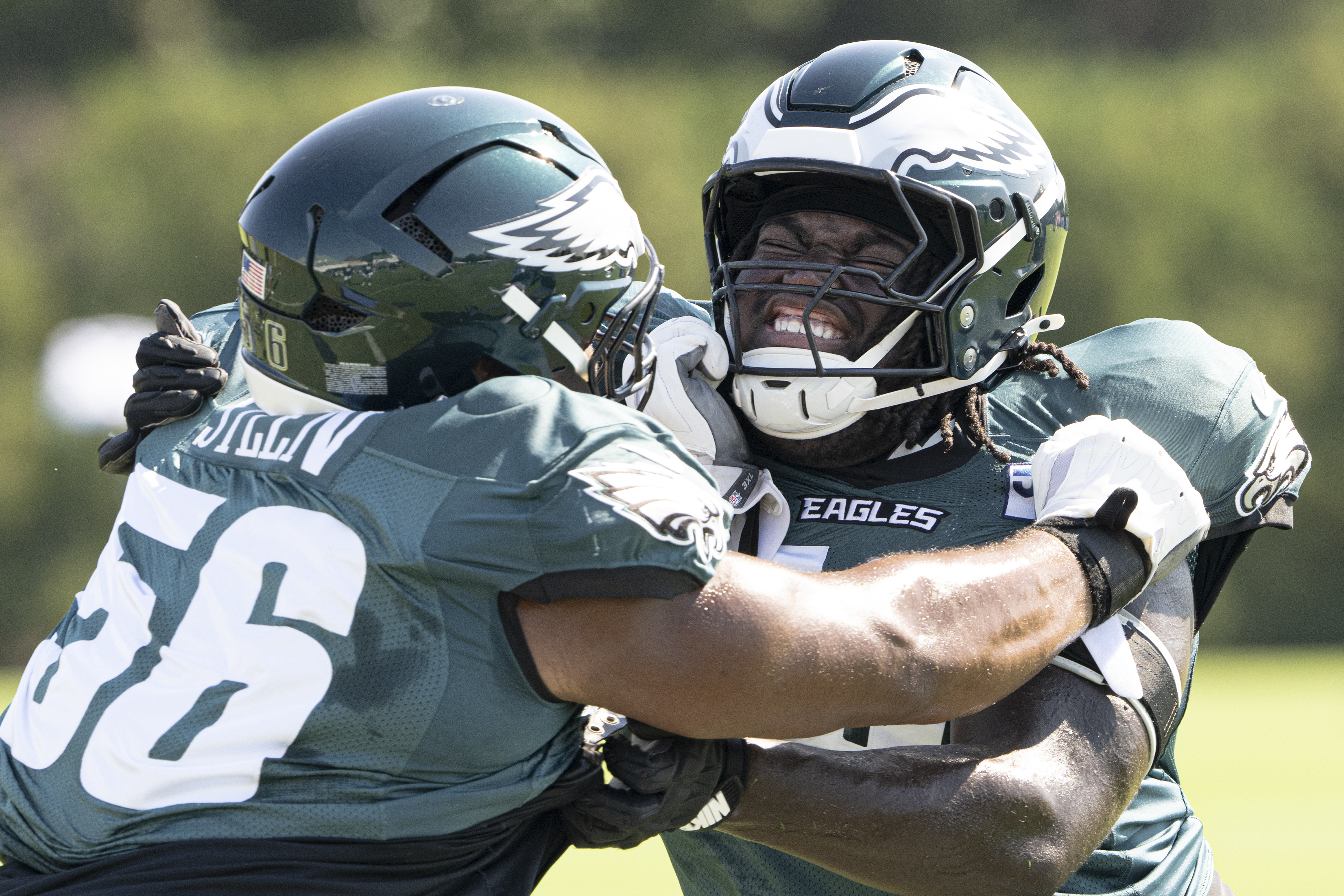
    Later at right guard, he sealed off 6-foot, 300-pound Aeneas Peebles on a Tank Bigsby run, taking him for a ride five yards downfield until the whistle before patting him on the helmet. That love between whistles never lasts longs, as his Eagles teammates know. Lampkin’s preseason excellence, which continued Saturday night against the New England Patriots, has been an extension of the effort they’ve witnessed in training camp this summer.

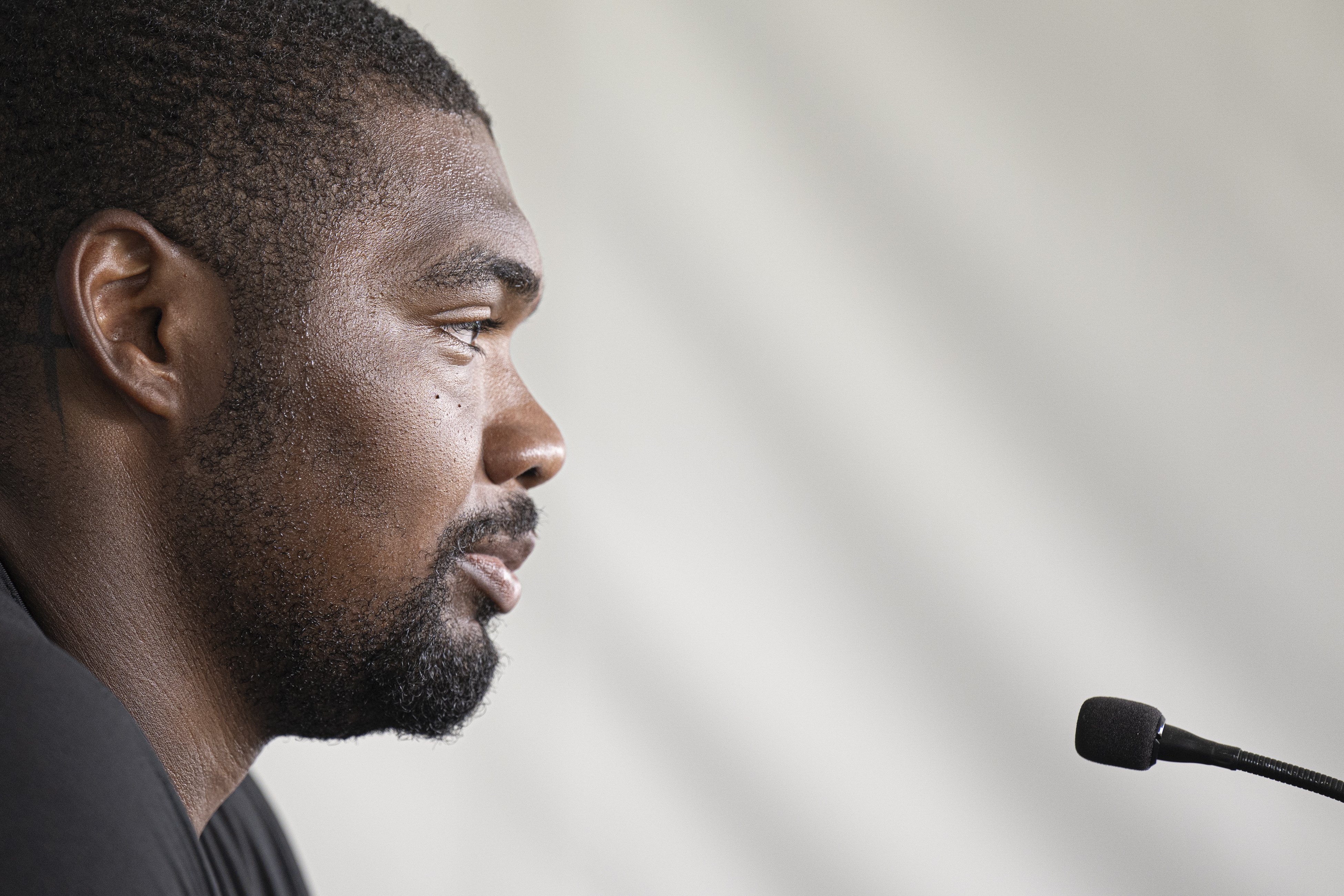
    “I call him a bowling ball of knives, ’cause he’s so short, he’s so small, he’s so stubby, but he is so quick and powerful and precise with his hands that for a taller guy like me, it gives me a lot of trouble,” Jordan Davis said. “It gives me a lot of fits. That’s one of the things that keeps me up at night with Willie.

    “He has a certain tenacity about him when he goes and plays a game.”

    That tenacity, according to Lampkin, is rooted in his wrestling background.

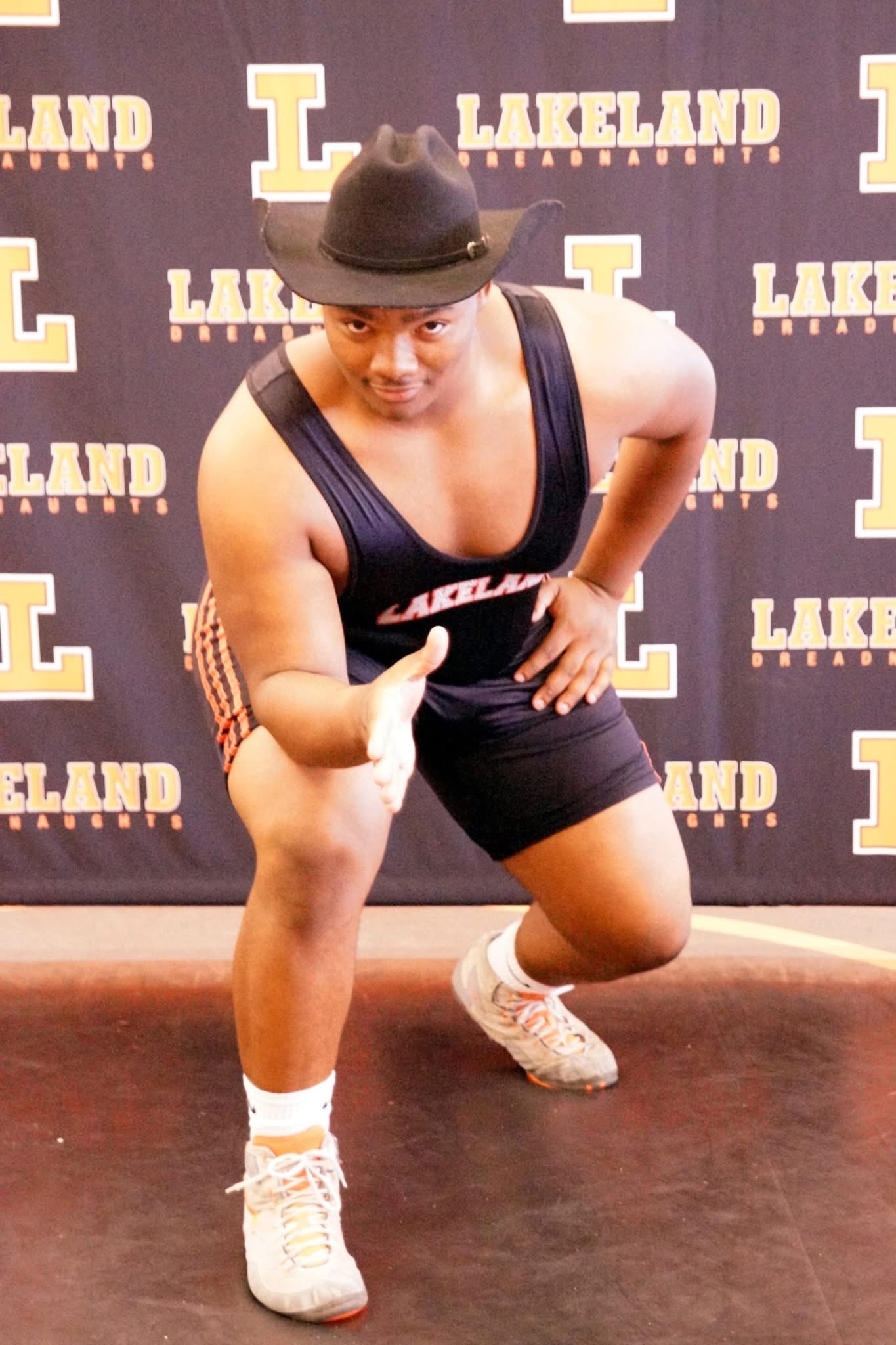
    Willie Lampkin was a star wrestler at Lakeland High School in Florida.Courtesy of Winston Phan

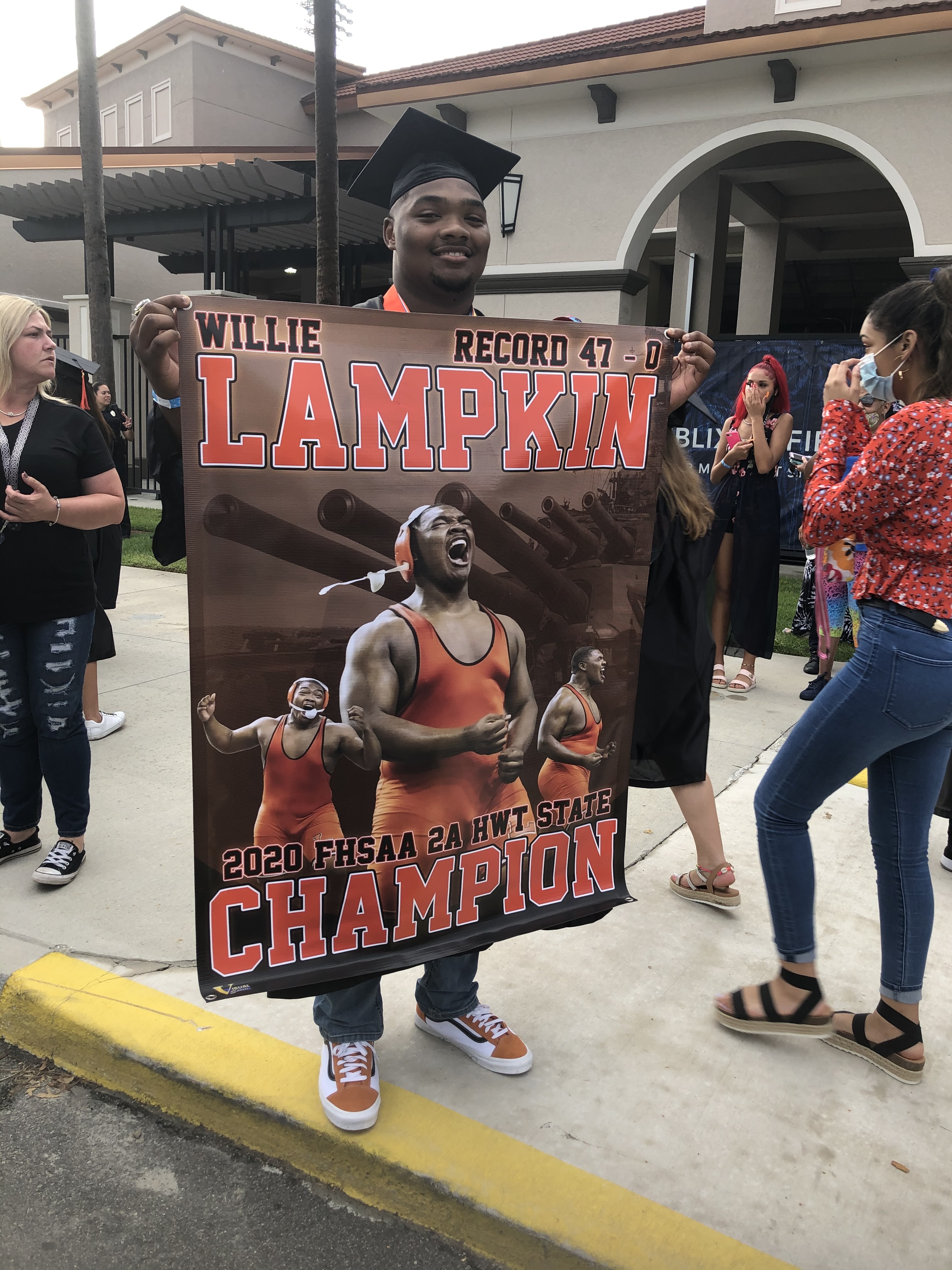
    Lampkin began wrestling as a freshman at Mulberry High School in Mulberry, Fla., a city in central Florida with a population of roughly 4,000. Within three years, he was the state tournament runner-up at heavyweight, and within four, he was a champion.

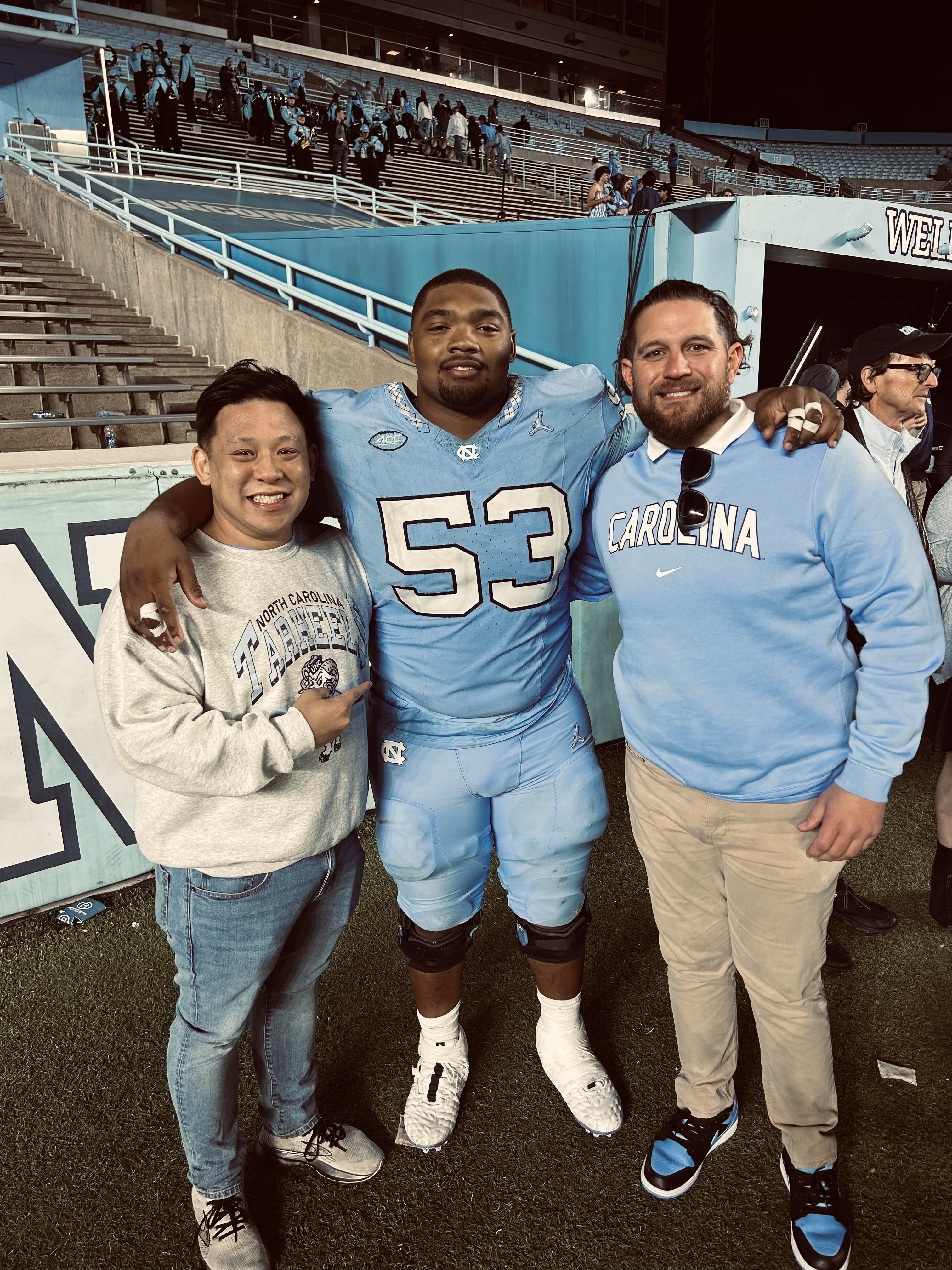
    He ultimately chose to pursue football over wrestling in college, playing three seasons at Coastal Carolina and two at UNC before moving on to the NFL as an undrafted free agent. But as he vies for a depth spot on the Eagles’ initial 53-man roster as an undersized, undrafted interior offensive lineman, Lampkin continues to channel the mentality and the skill set he cultivated through wrestling.

    “I feel like wrestling just helped me to be more gritty and just try to get after everybody,” Lampkin said.

    Wrestlers the ‘ultimate combatants to deal with misery’

    Former Mulberry wrestling coach Anthony Cerullo learned about Lampkin from Kyle Jones, one of the assistant football coaches at the school. Jones, who once wrestled for Cerullo in addition to playing football, wanted Lampkin to start wrestling, too.

    Cerullo also played both sports. He understood that wrestling taught its athletes about balance, hand usage, and body positioning — all of the fundamentals that apply to sound play in the trenches.

    He figured that Lampkin, a varsity starter on the offensive line as a freshman, was a 6-5 “behemoth” who grew faster than his peers. When he met him in line at the concession stand at a junior varsity football game, he quickly learned he was mistaken.

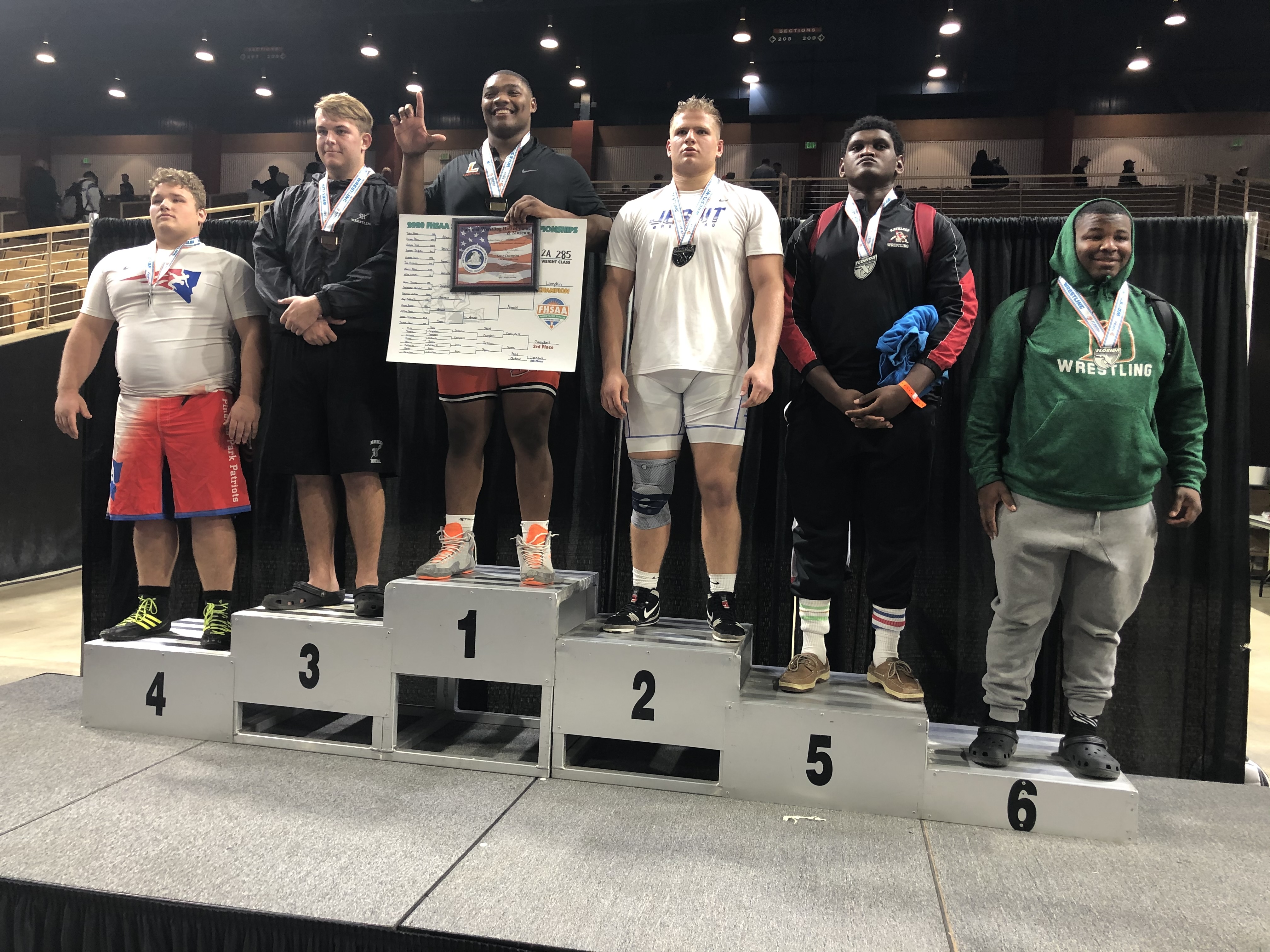
    Willie Lampkin stands atop the podium after winning the 2020 2A state wrestling championship as a heavyweight.Courtesy of Winston Phan

    He still made his recruiting pitch.

    “Coach Jones says you’re going to be on the wrestling team, and I’m the wrestling coach,” Cerullo said.

    “Ah, I don’t know about that,” Lampkin said. “He hasn’t said anything to me about it.”

    At the end of the football season, Lampkin had his exit interview with his coaches. Afterward, Cerullo grabbed Lampkin as he was leaving for the school bus. Wrestling season was already underway.

    “Hey, the wrestling room is not on the bus,” Cerullo said.

    Lampkin obliged and followed Cerullo, even though he wasn’t entirely sure why he was there. Early on, Lampkin said he stuck with wrestling because a few of his football teammates had also decided to try it out. Plus, he didn’t want to just go home at the end of the school day in the football offseason.

    Cerullo had a plan for Lampkin. In addition to the fundamentals of wrestling that would translate to football, he said he knew the O-lineman would benefit from draining practice sessions on the mat in the long term.

    “Wrestlers are the ultimate combatants to deal with misery, right?” Cerullo said. “So we have a saying as wrestlers called ‘embrace the grind.’ So that means that it’s going to suck, it’s going to be hot, it’s going to be sweaty, it’s going to be nasty. You have another person acrossfrom you for two-and-a-half hours a day that’s trying to kill you, and you have to embrace that lifestyle to be great.”

    Willie Lampkin has brought wrestling principles to the Eagles practice field. Monica Herndon / Staff Photographer

    Cerullo ensured that Lampkin got that work in by serving as his practice partner. He learned firsthand of Lampkin’s athleticism. Lampkin, a heavyweight at roughly 230 pounds as a freshman, wasn’t going to run a 4.4 40-yard dash or jump over a building. But Lampkin was ultra-competitive, which drove his desire for improvement as he figured out how to use his hands and his body to his advantage.

    He hated giving up a takedown. He hated not getting an escape. He hated losing. After all, Cerullo said, one person holding another down against their will is something to be taken personally, and Lampkin took every win for his opponent as a slight.

    At the beginning, wins in practice were hard for Lampkin to come by against Cerullo, who was 20 years his senior and approximately the same size. Lampkin would ask Cerullo to stay after practice every day to work on different sequences, takedowns, and escapes. Those requests were particularly prevalent if Lampkin didn’t get an escape during practice.

    Cerullo never went easy on Lampkin.

    “So we sat there for an hour-and-a-half one practice, and me just breaking him down to his stomach and to his face until he finally exploded up and was able to get an escape,” Cerullo said. “And then to his credit, he’s like, ‘OK, I want to do it twice before I leave.’

    “‘Like, Willie, I’ve got to go to work in the morning, buddy. I love you. I’ll see you tomorrow.’”

    It took about three weeks for Lampkin to embrace wrestling and the pain that came with it, Cerullo said. Pain turned to pride when he began to win his matches. According to Cerullo, there is something euphoric about the referee grabbing the winning wrestler’s hand at the end of the match and raising it for everyone to see.

    Willie Lampkin was unfamiliar with wrestling but embraced the grind it took to become a champion. Courtesy of Winston Phan

    Lampkin chased that feeling. He won 50 matches as a freshman, but he was one win shy of qualifying for the state tournament. That shortcoming fueled his offseason development. For the first time, he was lifting with intention to improve at both wrestling and football. He worked in the wrestling room to sharpen his skills, especially his hands.

    “Willie has very large hands, and he learned how to make an impact when he put them on you going into that sophomore year,” Cerullo said. “When he would grab you, he had intention behind it. Where before, he was kind of just placing them and being … I’d say a big baby about it to some degree. Not understanding how strong he was. Sophomore year, he definitely knew what to do with his hands and when he put them on you, he meant to put them on you.”

    Cerullo estimates that Lampkin took him down his freshman year twice in practice. In the summer leading up to his sophomore year, Lampkin took Cerullo down four times in one practice.

    “He started moving his feet much better,” Cerullo said. “I think that he understood some more of the nuances of wrestling and not to put himself in those negative positions.”

    From novice to state champion

    That year, Lampkin would qualify for the state tournament, but he was eliminated early after being pinned. He transferred from Mulberry to nearby Lakeland High School the following year, helping the football team win a state championship as a junior. But leaving Mulberry didn’t mean he was leaving wrestling behind.

    After the football season, Lampkin would lose weight quickly as he got in wrestling shape. He may have been the biggest wrestler on his team, but according to Lakeland assistant wrestling coach Winston Phan, he was a relatively light heavyweight compared to his peers. That weight class can be very one-dimensional, Phan said.

    “A lot of times, they fall on top of each other, and whoever lands on top wins, right?” said Phan, who is now the head coach of the program. “But what Willie had going for him was his technique and his ability to learn all [this] new stuff that we were able to give him and allow him to use in his matches.

    “Because people will tell you he didn’t wrestle like a heavyweight. They said he wrestled like somebody that was 106 pounds the way he knew how to do moves and the way he knew how to control somebody on top.”

    Lakeland wrestling coaches Winston Phan (left) and Michael Farley visited Willie Lampkin while he was playing college football at North Carolina in 2023.Courtesy of Winston Phan

    Phan and the other coaches would teach Lampkin a little bit of everything, even moves that weren’t typically performed by heavyweights. Among them were leg attacks, Phan said. One of Lampkin’s favorite moves that he honed in practice was a single-leg sweep. He kept it in his back pocket until he reached the first-place match at the 2A state championship his senior year.

    The prior year, Lampkin lost the state final in sudden-death overtime. He wouldn’t lose it twice. After he went 47-0 during the regular season, Lampkin faced Mason Arnold of Tampa Jesuit in the heavyweight state championship match. They were tied, 1-1, toward the end of the third period.

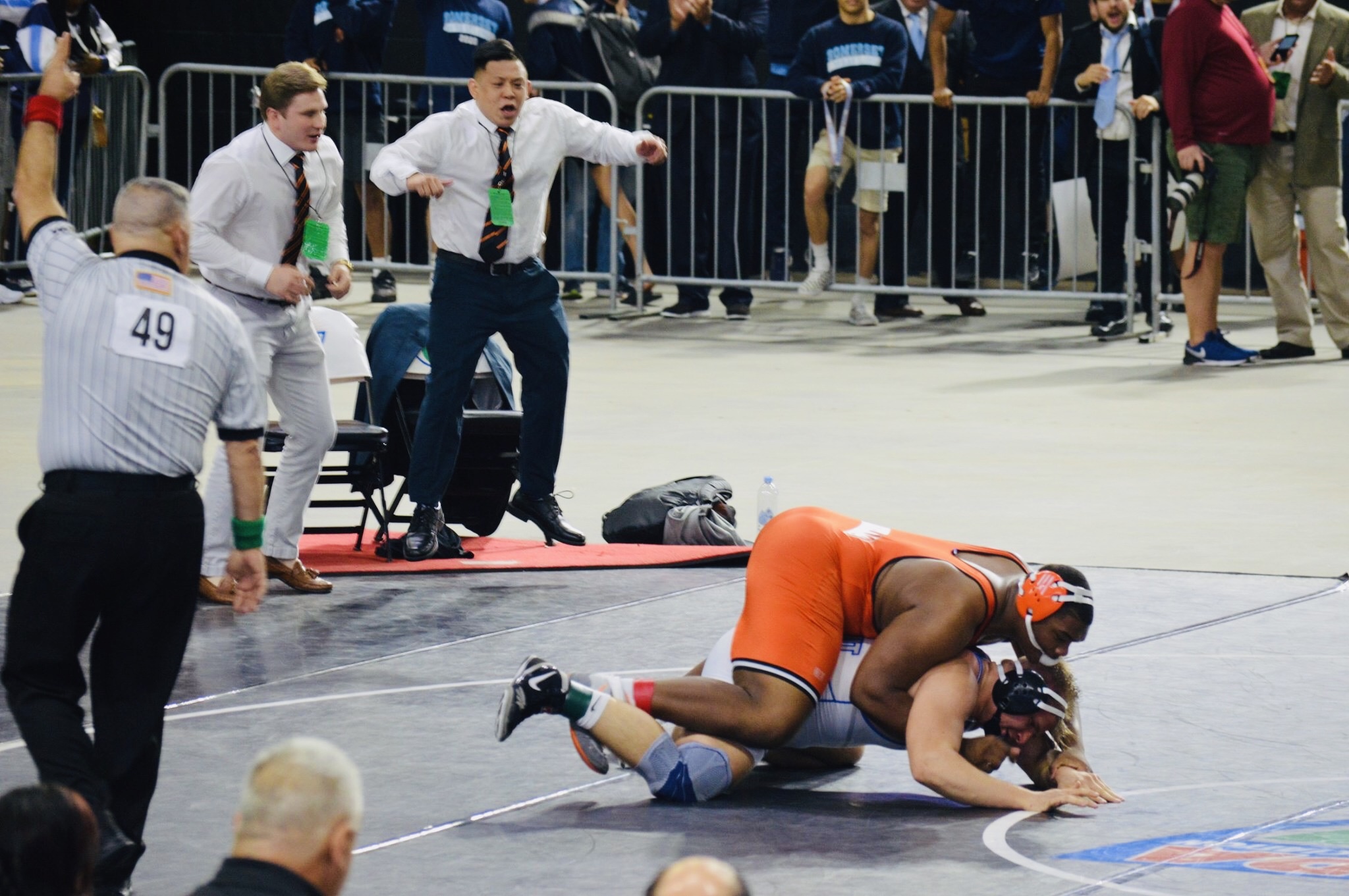
    With 34 seconds remaining, Lampkin pulled out the single-leg sweep. Lampkin swung his body around his opponent’s leg, then flung him onto his back, switching off to a double leg to take him down and go up, 3-1. Lampkin rode Arnold out until time expired. He popped up, his headgear askew, and let out a roar before pouncing on top of Phan and assistant coach Chad Kirkman near the corner of the mat.

    “It was like a potato jumping on a toothpick,” said Michael Farley, former Lakeland head wrestling coach.

    That match marked the end of Lampkin’s wrestling career. His wrestling coaches still kept in touch with Lampkin as he continued on to college and attended his games when they could.

    In some ways, the two sports couldn’t have been any different. Lampkin is one of 11 on the football field. In wrestling, he was alone against his opponent on the mat. A play in football lasts a matter of seconds within an hourslong game, while a wrestling match lasts at least six minutes over three periods. But whether Lampkin was wrestling or playing football, Phan saw the same athlete.

    “He’s not doing anything differently,” Phan said. “They call the moves different things, but in the sense of it, the name of the game is manhandling your opponent, right? And he knows that that’s what his job is, and that’s what he’s looking to do every time he steps on the line, whether it’s on a wrestling mat or on the football field.”

    Willie Lampkin took down Mason Arnold in the 2020 2A heavyweight state championship within the final seconds of the match to win.Courtesy of Winston Phan

    In both sports, he used his relatively small size to his advantage. Both Cerullo and Phan said Lampkin’s best asset was his brain, as he was capable of understanding leverage and positioning. Combine that with fast feet in a small area of space on the gridiron, and Lampkin can get his leverage and change direction quickly to seal off bigger, taller defensive tackles.

    He never lets up, either, whether he’s mustering a takedown in the waning seconds of the state title match or he’s blocking a defensive tackle into the next zip code through the whistle.

    “It doesn’t matter who’s in front of him,” Phan said. “He’s ready to take their heads off and protect the quarterback and do what he has to do to be successful on the line.”

    Farley had seen the headlines coming out of Eagles camp about Lampkin. Those labels about his size are nothing new.

    “‘Five-11′ or ‘little secret weapon,’” Farley said. “But we know that for Willie, it’s real when the pads come on, and that’s when he can show his true value.”

    After two standout preseason performances, the Eagles’ so-called little secret weapon might not be so secret any more.

  • Eagles 53-man roster projection 4.0: A few changes — and a trade — after another preseason game

    Eagles 53-man roster projection 4.0: A few changes — and a trade — after another preseason game

    It’s just about last call for roster hopefuls as Eagles training camp enters its final week.

    The team plays its last preseason game Friday night at home vs. Cincinnati, and the initial 53-man roster is due Sunday by 6 p.m.

    Only a few practices and one last audition separate those vying for a spot from knowing their fates.

    A second preseason game — this one a 24-21 Eagles loss in New England — brought a few changes to our latest 53-man roster projection. Who’s in, and who’s out?

    (Note: This is our fourth 53-man roster projection of the summer. Our first way-too-early look at the roster came in June, and we published another after one week of training camp before Volume 3 went live after the first preseason game.)

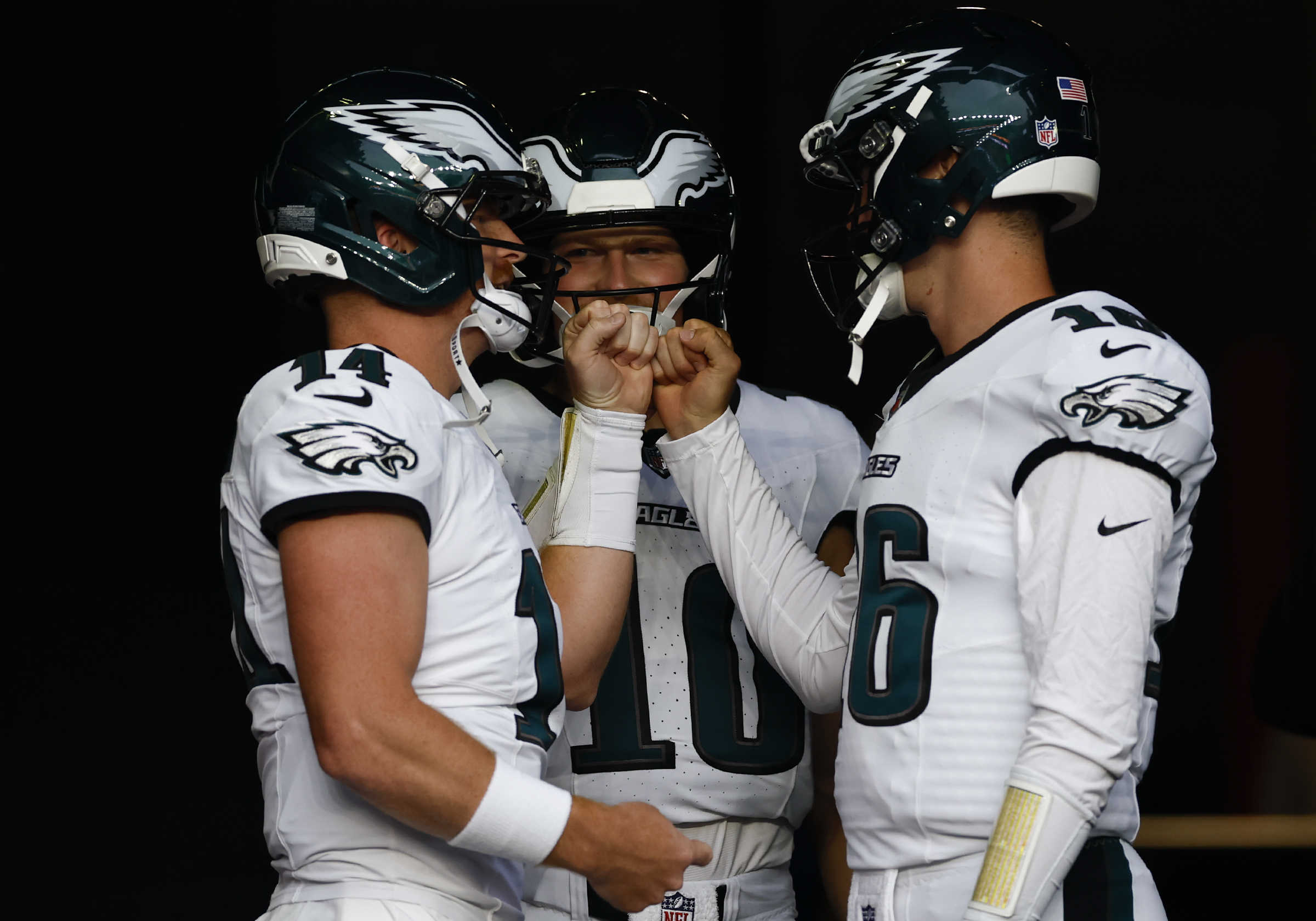
    Eagles quarterbacks (from left to right): Andy Dalton, Cole Payton and Tanner McKee prepare for Saturday’s preseason game against the New England Patriots. We don’t expect all three to be on the Eagles roster by next week.Yong Kim / Staff Photographer

    Quarterbacks (3): Jalen Hurts, Tanner McKee, Cole Payton

    Traded: Andy Dalton

    We’re sticking with the idea that one of the two quarterbacks hunting for the No. 2 job eventually will be traded, but for the first time this summer, Tanner McKee is in and Andy Dalton is out.

    McKee outperformed Dalton Saturday night in New England, and while the Eagles certainly value Dalton’s experience and his practice film much more than two shaky, shortened preseason starts, it’s hard to argue that the 38-year-old looks more viable to back up Hurts than McKee does right now.

    That being said, it actually might be Dalton who has more trade value than McKee. Will the Eagles end up flipping Dalton for the same price they paid for him (a seventh-round pick)? Maybe. This time of year, a team looking for a backup may be more likely to want Dalton as an experienced starter who may even mentor a young quarterback than they are to need McKee.

    Cole Payton hasn’t wowed, and it remains possible the Eagles keep both Dalton and McKee and cut Payton, their fifth-round pick. But for now, Payton gets the roster spot and doesn’t get exposed to waivers.

    Eagles running back Will Shipley carried the ball 11 times for 56 yards against the Patriots. We expect him to make the team’s initial roster.Yong Kim / Staff Photographer

    Running backs (3): Saquon Barkley, Tank Bigsby, Will Shipley

    Cut: Dameon Pierce, Carson Steele, Ja’Quinden Jackson

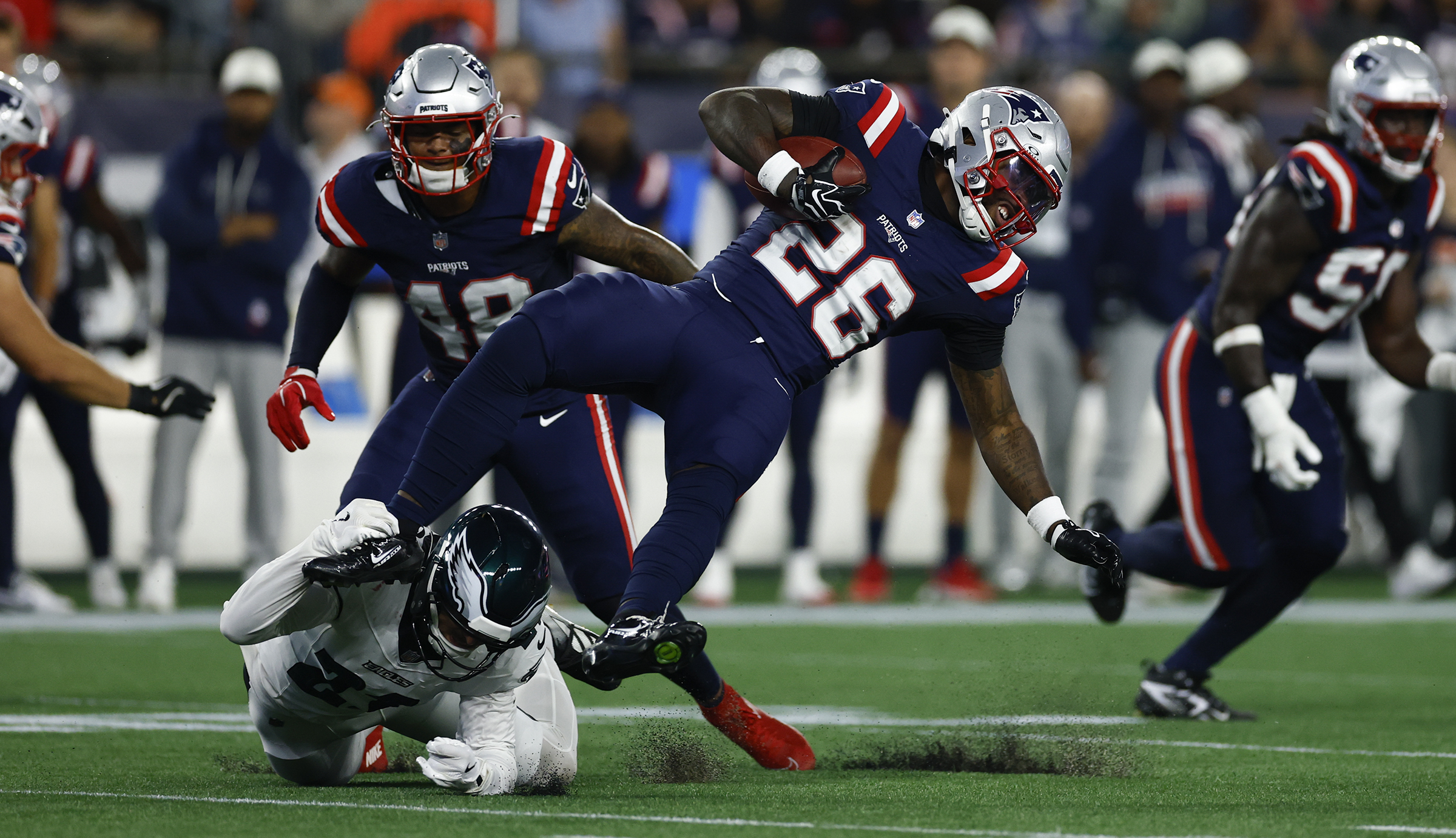
    No changes here, despite Carson Steele going full Saquon Barkley and hurdling defenders on more than one occasion Saturday night. Steele played like a guy pushing for a roster spot, but the Eagles don’t have the luxury of keeping four running backs with the way their roster is shaped.

    Eagles wide receiver Elijah Moore is on the roster bubble.Jose F. Moreno / Staff Photographer

    Wide receivers (6): DeVonta Smith, Dontayvion Wicks, Makai Lemon, Darius Cooper, Hollywood Brown, Elijah Moore

    Cut: Danny Gray, Britain Covey, Quez Watkins, Erik Ezukanma, Samori Toure, Brandon Hayes

    Could Elijah Moore get cut and come back on the practice squad with the promise to be elevated on game day? It’s possible. He’s a vested veteran and doesn’t need to pass through waivers (though he’d be free to sign with any team). But Moore has done enough to make the roster and should be rewarded for having a better camp than Hollywood Brown, the guy the Eagles gave $5 million guaranteed.

    Perhaps the Eagles use one of the two as a trade chip in the final week of camp, but they may want some extra insurance at the position considering Makai Lemon’s first NFL training camp has been marred by a hamstring injury.

    The Eagles selected tight end Eli Stowers in the second round of April’s NFL draft.Yong Kim / Staff Photographer

    Tight ends (3): Dallas Goedert, Johnny Mundt, Eli Stowers

    Cut: Cameron Latu, Grant Calcaterra, Stone Smartt, E.J. Jenkins

    Cameron Latu is the roster casualty of the Eagles keeping Moore. Latu would need to pass through waivers, but he’s done so before, and the Eagles shouldn’t have trouble getting him through to the practice squad and elevating him for Week 1.

    Eli Stowers has had a rocky camp, but the second-round pick isn’t going anywhere. His need for more seasoning, though, makes it pretty important to have a strong fourth option in the building. That could work in Latu’s favor come Sunday evening.

    Offensive lineman Tyler Steen, left, is pretty much a lock to return, but Micah Morris’ fate could be determined in the coming week.Jose F. Moreno / Staff Photographer

    Offensive line (10): Jordan Mailata, Landon Dickerson, Cam Jurgens, Tyler Steen, Lane Johnson, Fred Johnson, Markel Bell, Drew Kendall, Willie Lampkin, Micah Morris

    Cut: Jake Majors, Michael Jordan, John Ojukwu, Myles Hinton, Cameron Williams, Zeke Correll

    Willie Lampkin’s spot on the 53-man roster might be a lock at this point. The center/guard had another strong performance Saturday. Micah Morris, meanwhile, has shown some athletic traits that should keep the sixth-round pick on the initial roster.

    Jake Majors played the entire game Saturday (63 snaps) and had some good moments. Like Lampkin and Drew Kendall, he has the ability to play center and guard. But Morris beats out the 2025 undrafted free agent who landed on the Eagles’ practice squad after training camp last year.

    Eagles defensive tackle Ty Robinson had a pair of sacks in Saturday’s preseason game against the Patriots.Yong Kim / Staff Photographer

    Defensive tackles (6): Jalen Carter, Jordan Davis, Moro Ojomo, Byron Young, Ty Robinson, Uar Bernard

    Cut: Gabe Hall, Zion Wilson, David Blay

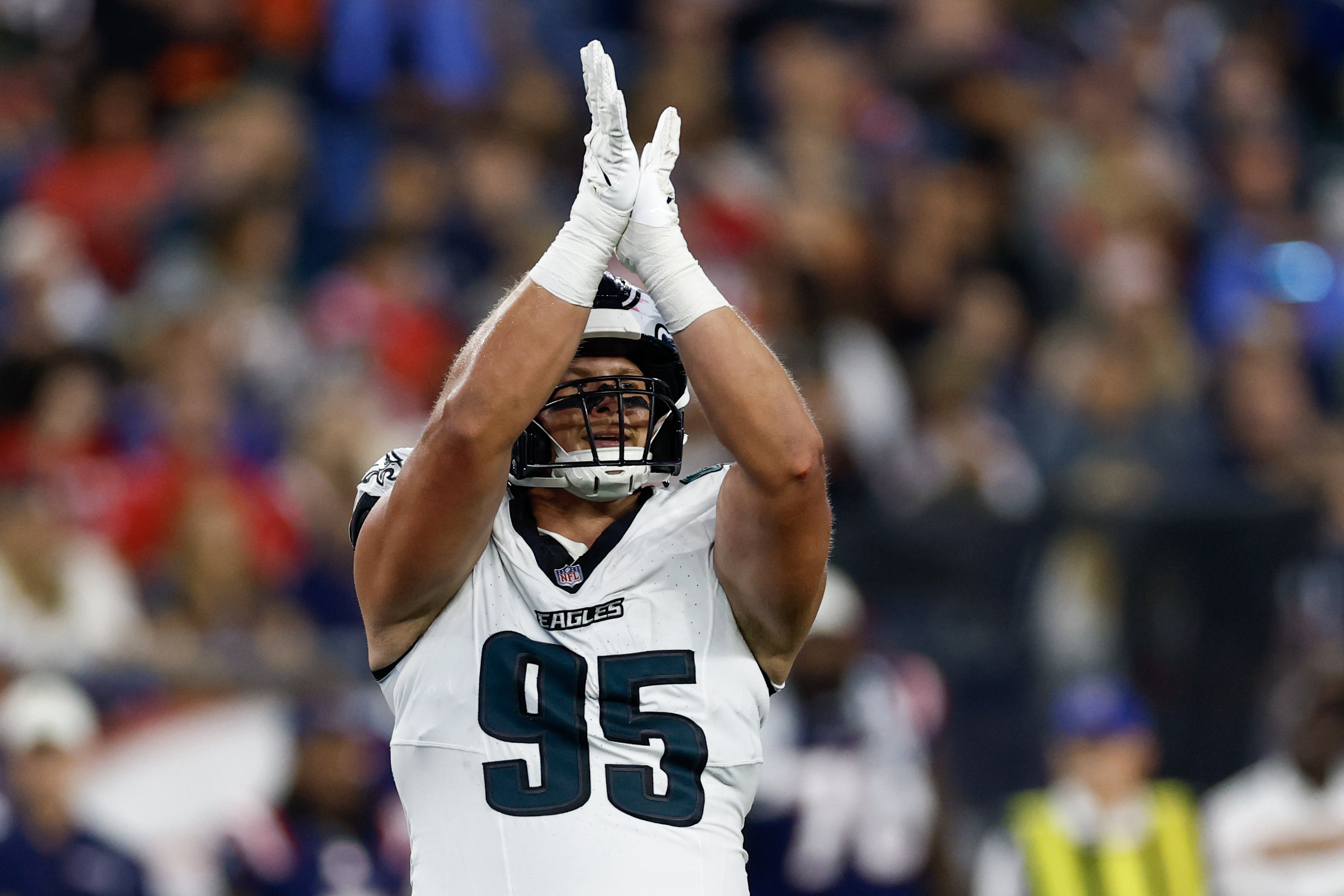
    No changes here other than Ty Robinson pulling himself off life support (Vic Fangio’s words) and pretty much locking up his roster spot.

    The 2025 fourth-round pick had two sacks Saturday and has had a strong last two weeks after working with the developmental group at the beginning of camp.

    Uar Bernard played in his second football game Saturday and notched his first tackle. He’s improved throughout his first football camp, and it remains a risk for the Eagles to expose him to waivers even though he won’t play meaningful snaps this season.

    Eagles linebacker Joshua Weru got his first sack against New England Patriots quarterback Behren Morton Saturday night.Yong Kim / Staff Photographer

    Edge rushers (6): Jonathan Greenard, Jalyx Hunt, Nolan Smith, Arnold Ebiketie, A.J. Epenesa, Joshua Weru

    Cut: Tarron Jackson, Keyshawn James-Newby, Jose Ramirez

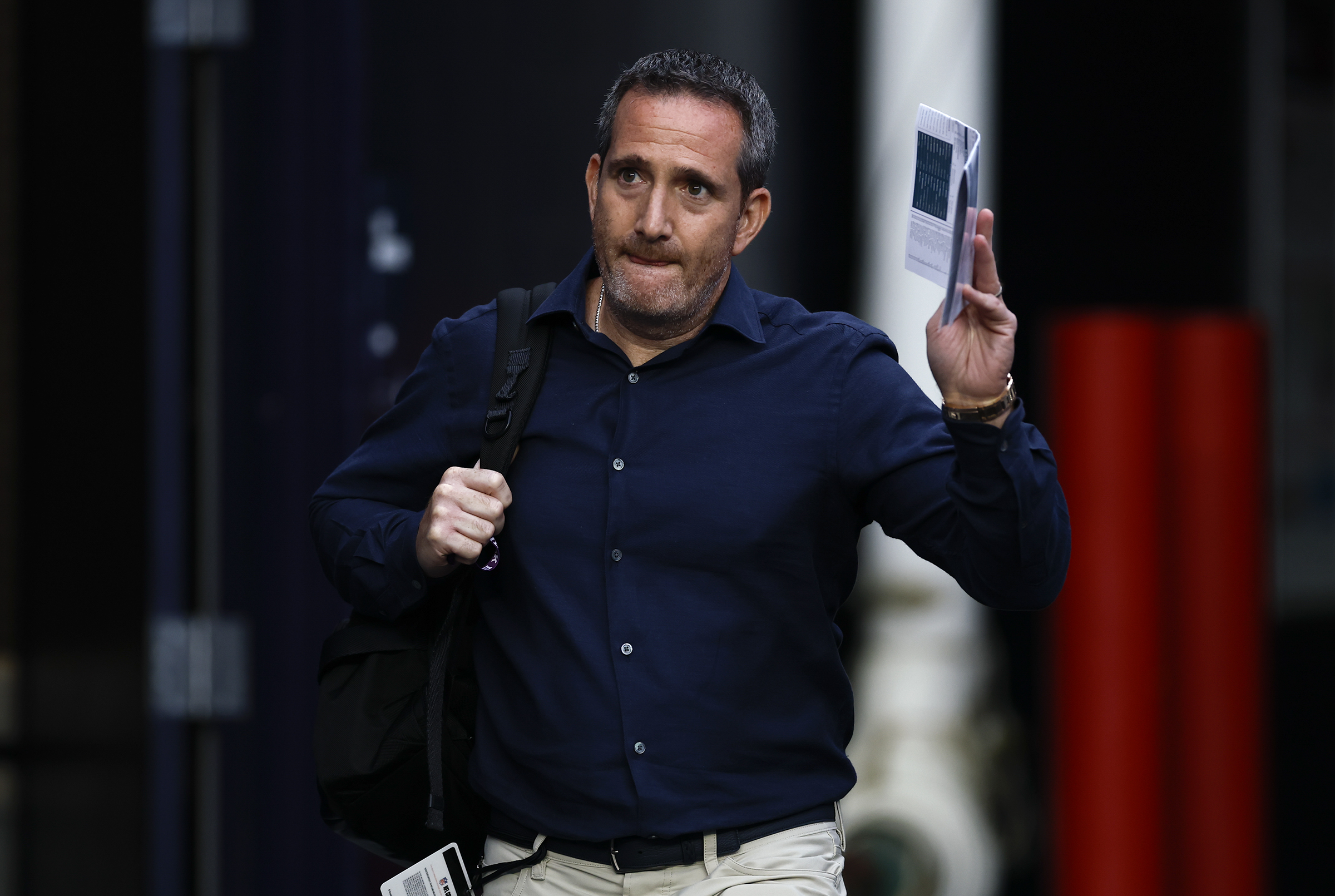
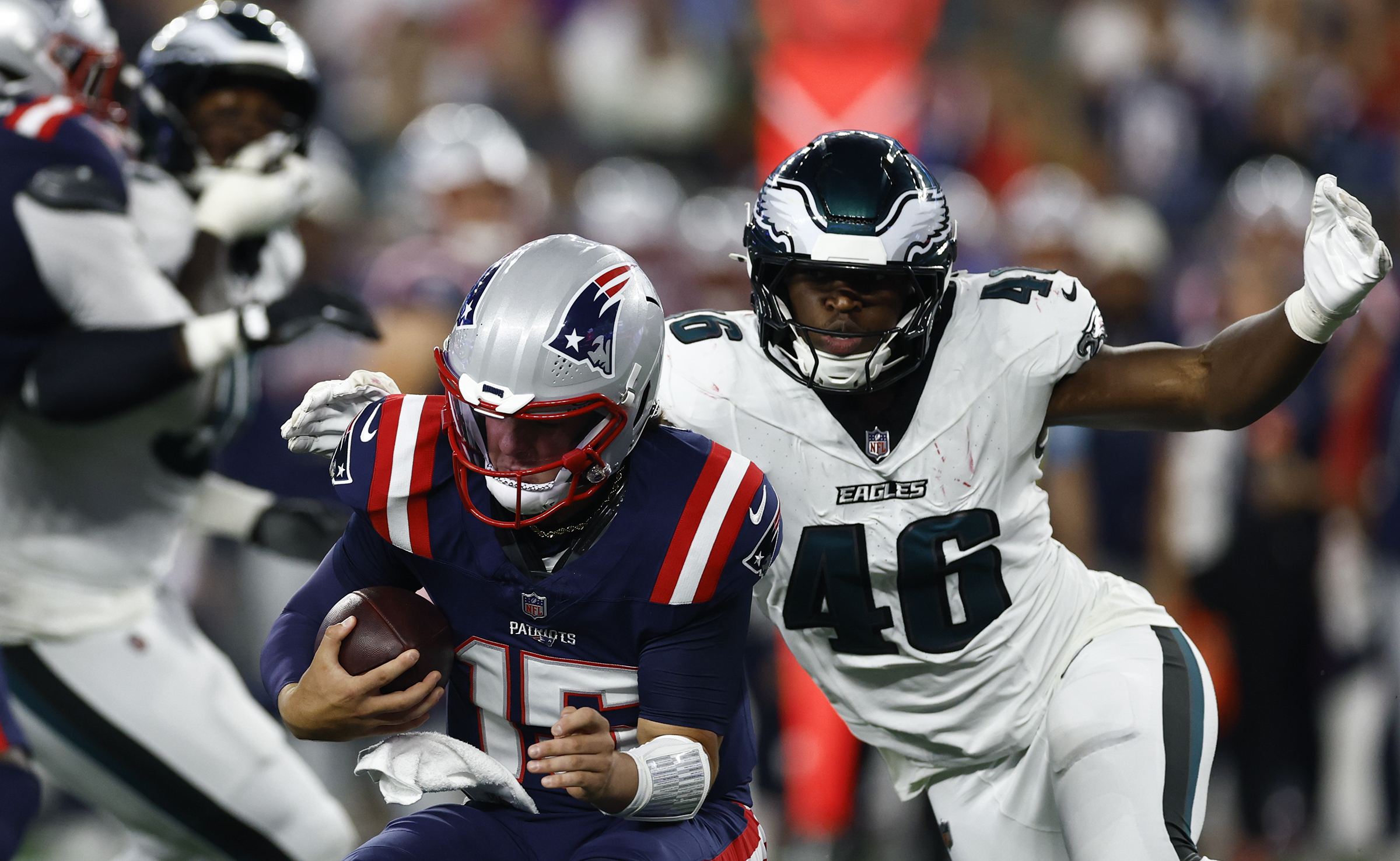
    The decision on Joshua Weru will be a fascinating one for Howie Roseman next weekend. The former rugby player one-upped his padded football debut last weekend, when he had a quarterback hit, with his first sack during Saturday’s game. He’s a flashy athlete, and there may be enough on tape out there for one of the 31 other NFL teams to make him their own project and sign him to their 53-man roster if the Eagles decide to cut him.

    Fangio expressed some concern Jonathan Greenard might not be ready to return from his pectoral injury for Week 1, though that’s still three weeks away.

    Eagles linebacker Jeremiah Trotter Jr. could be a starter on several NFL teams. Will that make him attractive in a potential trade?Yong Kim / Staff Photographer

    Linebackers (4): Zack Baun, Jihaad Campbell, Jeremiah Trotter Jr., Smael Mondon Jr.

    Cut: Chance Campbell, Deontae Lawson, Brandon George

    The Eagles have an abundance of talent here. It’s probably a toss-up between off-ball linebacker and interior defensive line in terms of which position group is their best.

    The top four are locks, though Fangio likes Chance Campbell a lot. Still, as we’ve written before during this exercise, the need for a fifth linebacker given this roster construction makes it hard to keep the former Titan.

    Could Roseman pull off a trade to make room for him? Smael Mondon Jr. has looked capable, and Jeremiah Trotter Jr. could start on some teams.

    Mac McWilliams (left) is battling Kelee Ringo for the final cornerback spot.Yong Kim / Staff Photographer

    Cornerbacks (5): Quinyon Mitchell, Cooper DeJean, Riq Woolen, Jonathan Jones, Mac McWilliams

    Cut: Kelee Ringo, Jakorian Bennett, Ambry Thomas, Shaun Wade, Tariq Castro-Fields, Isaiah Bolden

    Another spot with no changes, though there was more pause before typing Mac McWilliams over Kelee Ringo than last week. Ringo had a decent showing on the road trip to New England, while McWilliams hasn’t had the best couple of weeks.

    Ringo’s value on special teams has been well-documented, but is it worth a roster spot? We’ll see.

    We have Eagles safety Cole Wisniewski (bottom) making the roster, but that could change this week.Yong Kim / Staff Photographer

    Safeties (4): Drew Mukuba, Marcus Epps, Michael Carter II, Cole Wisniewski

    Cut: Kapena Gushiken, Andre Sam, J.T. Gray, Max Pulley

    The fourth spot here still feels like a bit of a dart throw. Cole Wisniewski returned to the practice field and saw his first game action. He had a nice tackle on special teams, which he’ll need to make a big part of his game if he’s on the roster.

    Kapena Gushiken and Max Pulley have had nice camps, Andre’ Sam has been around the team for the last few seasons, and J.T. Gray is an elite special teamer. You can make a worthy argument for any of them to get the fourth spot.

    But it’s possible the Eagles go light here and go with three safeties, especially with Cooper DeJean playing on the back end in the base package. That route probably would be good news for Ringo.

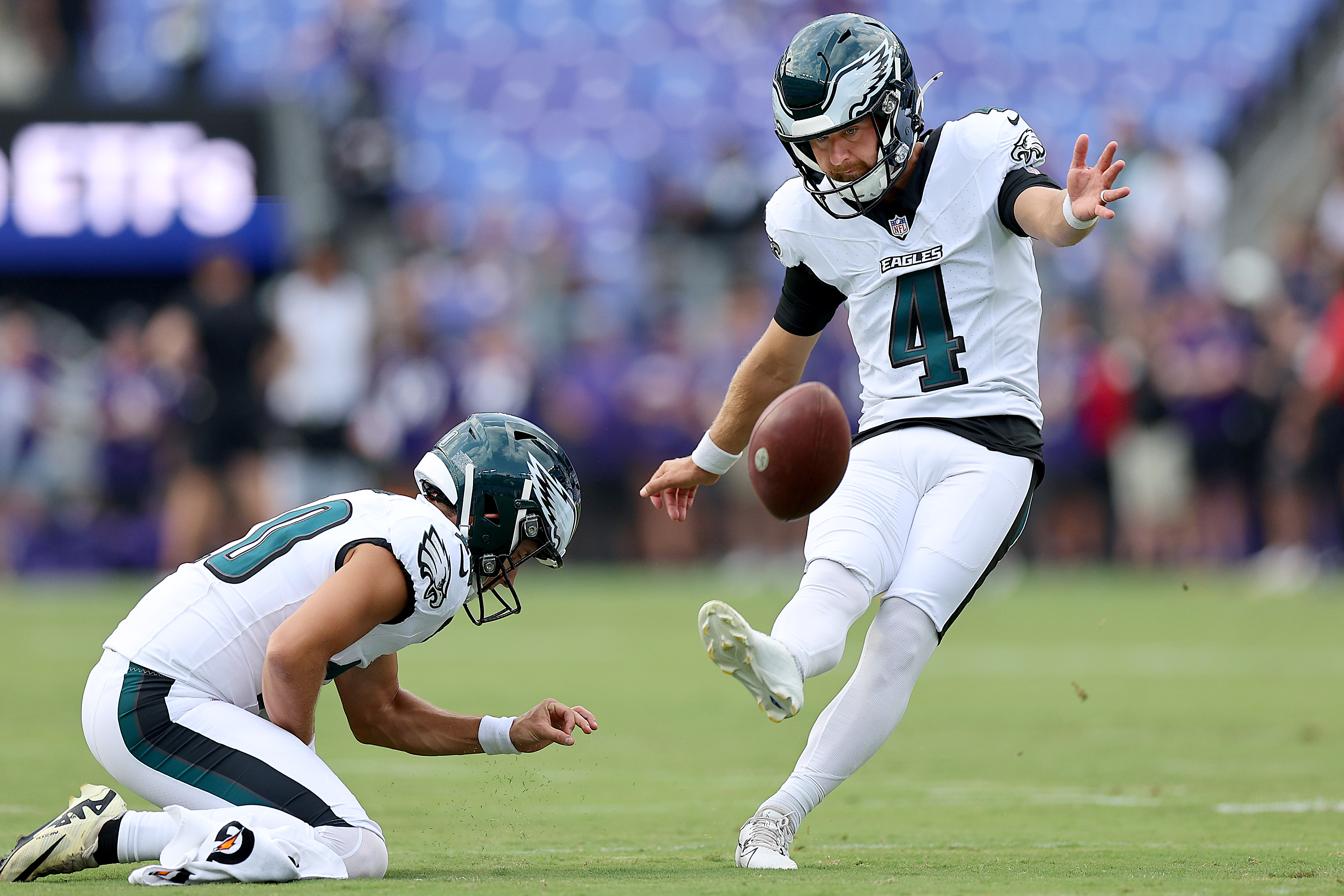
    Philadelphia Eagles place kicker Jake Elliott (right) and punter Braden Mann (left) are locks.David Maialetti / Staff Photographer

    Special teams (3): Jake Elliott (kicker), Braden Mann (punter), Rocco Underwood (long snapper)

    These are the only three specialists on the roster. It’s possible the Eagles punt — excuse the pun — on a bubble decision and cut Rocco Underwood. The team only kept Jake Elliott and Braden Mann on the initial 53-man roster last season before bringing Charley Hughlett back to the active roster a day later during a series of roster moves after initial cuts were made around the league.

  • ‘A bowling ball of knives’ | Sports Daily Newsletter

    ‘A bowling ball of knives’ | Sports Daily Newsletter

    It’s not just the pumpkin spice everything beginning to pop up on store shelves and coffee menus that’s signaling autumn’s impending arrival. It’s also the football. The Eagles are now two-thirds of the way through their preseason schedule, and by this time next week, the team’s initial 53-man roster will be set.

    One of the players vying for a spot on that roster — and doing his best so far to earn one — is interior offensive lineman Willie Lampkin. Originally signed by the Rams as an undrafted free agent, the Eagles picked up Lampkin, who missed all of last season with injuries, after he was waived by Los Angeles.

    But so far this summer, their low-risk bet on Lampkin appears like it could pay dividends, as he’s stood out in each of the Birds’ first two preseason games, including Saturday’s 24-21 loss to the New England Patriots. Even in practice, Lampkin has been causing problems for the starters he’s going up against.

    “I call him a bowling ball of knives, ’cause he’s so short, he’s so small, he’s so stubby, but he is so quick and powerful and precise with his hands that for a taller guy like me, it gives me a lot of trouble,” defensive tackle Jordan Davis said. “It gives me a lot of fits. That’s one of the things that keeps me up at night with Willie. He has a certain tenacity about him when he goes and plays a game.”

    According to Lampkin, that tenacity comes from his background as a high school wrestler. Olivia Reiner caught up with some of his former coaches, who reveal why the former state champ in football and wrestling is more than meets the eye.

    — Matt Mullin, @phillysport, sports.daily@inquirer.com.

    If someone forwarded you this email, sign up for free here.

    ❓Which sport’s skill set is the most universal? Email us back for a chance to be featured in the newsletter.

    Don’t call it a comeback

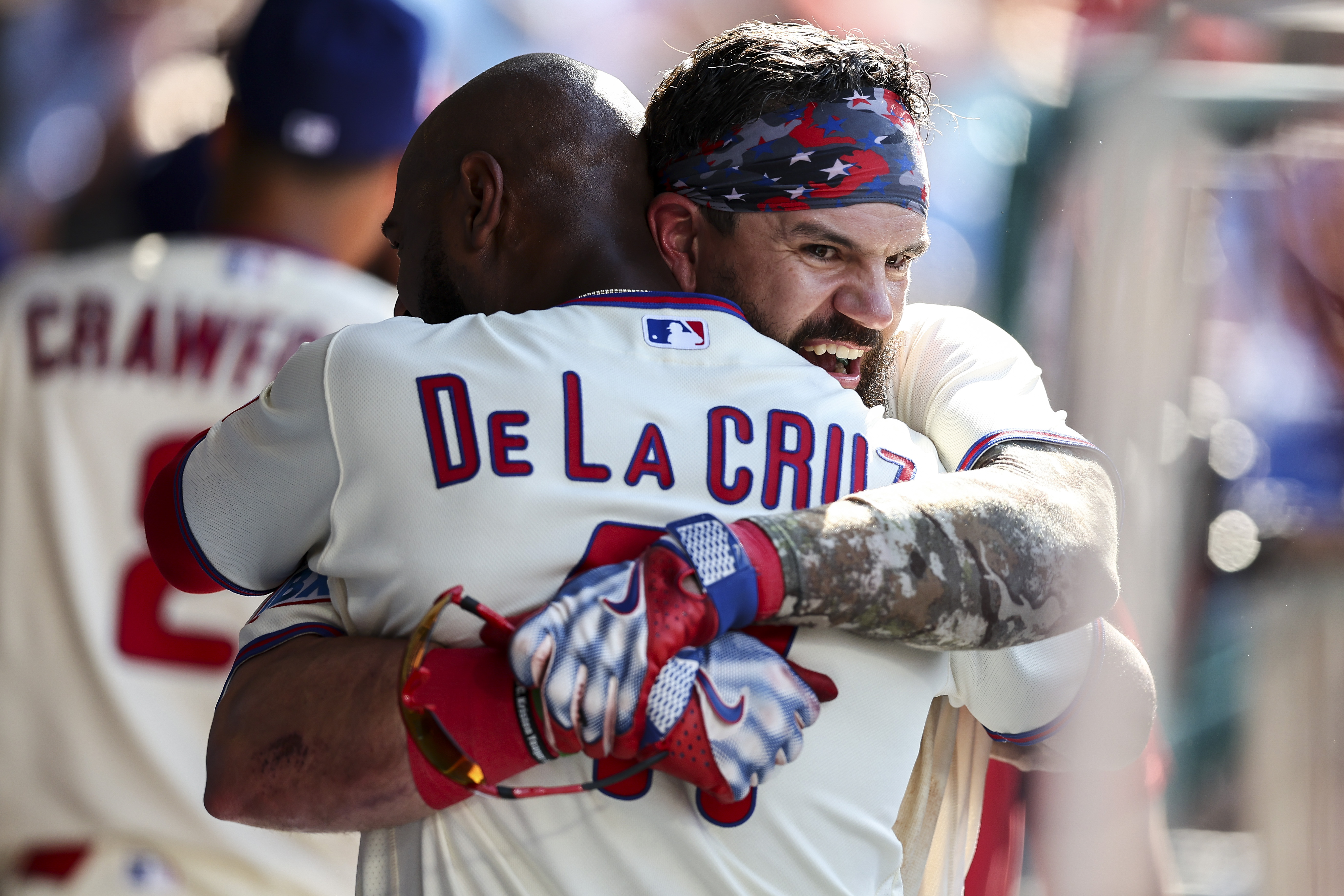
    Kyle Schwarber hugs Bryan de la Cruz beating the Cardinals on Sunday.Monica Herndon / Staff Photographer

    Referring to the Phillies’ win Sunday as merely “a comeback” would be selling it way short. The Phillies trailed by four runs and were down to their final out — but they weren’t done yet. The team strung together a walk and a trio of hits to tie the game and put the winning run on base. Enter Kyle Schwarber.

    The major-league leader in home runs fell behind 0-2, putting the Phillies down to their final strike. And even that wasn’t enough for Cardinals closer Riley O’Brien to get the job done.

    Schwarber launched a two-run walk-off home run over the batters’ eye in center field, flipped his bat — and his helmet — and gave the Phillies their ninth straight win. Schwarber’s home run was his 39th of the season, and the team’s first walk-off homer since June 2023 (also Schwarber).

    Don’t look now, but the Phillies haven’t lost since before their trip to Iowa for the Field of Dreams Game and are closing in on the Braves for the NL East lead.

    Next: Zack Wheeler and the Phillies face Logan Gilbert and the Mariners (9:40 p.m., NBCSP) as they kick off a nine-game West Coast trip.

    What we’re …

    The final countdown

    Eagles general manager Howie Roseman will be busy over the next week as he and head coach Nick Sirianni work on trimming the roster to 53 players.Yong Kim / Staff Photographer

    If any player is hoping to make a lasting impression on the Eagles’ decision-makers, he better hurry. The Birds are entering their final week of training camp and have just one preseason game remaining before the team’s initial 53-man roster is due Sunday by 6 p.m.

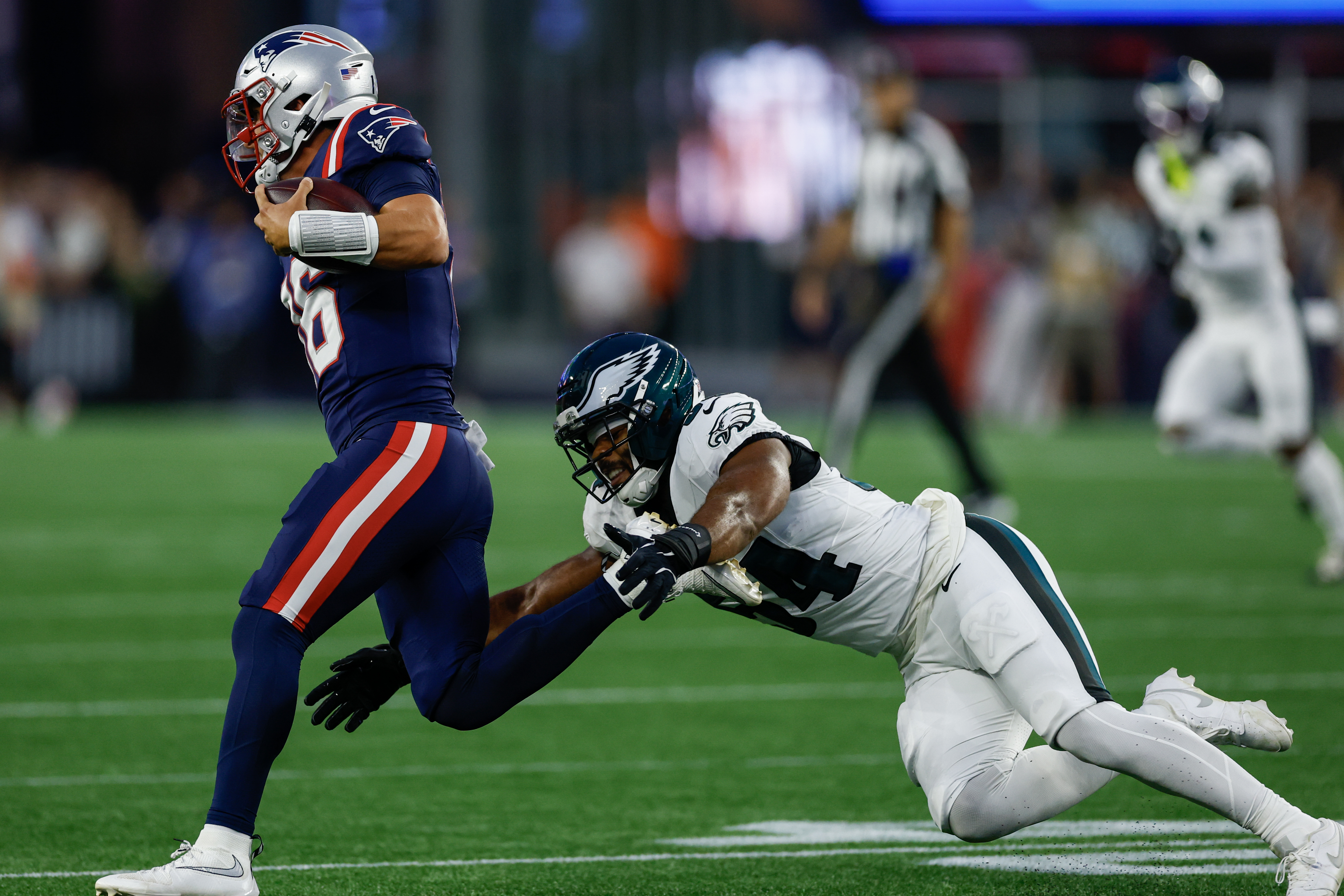
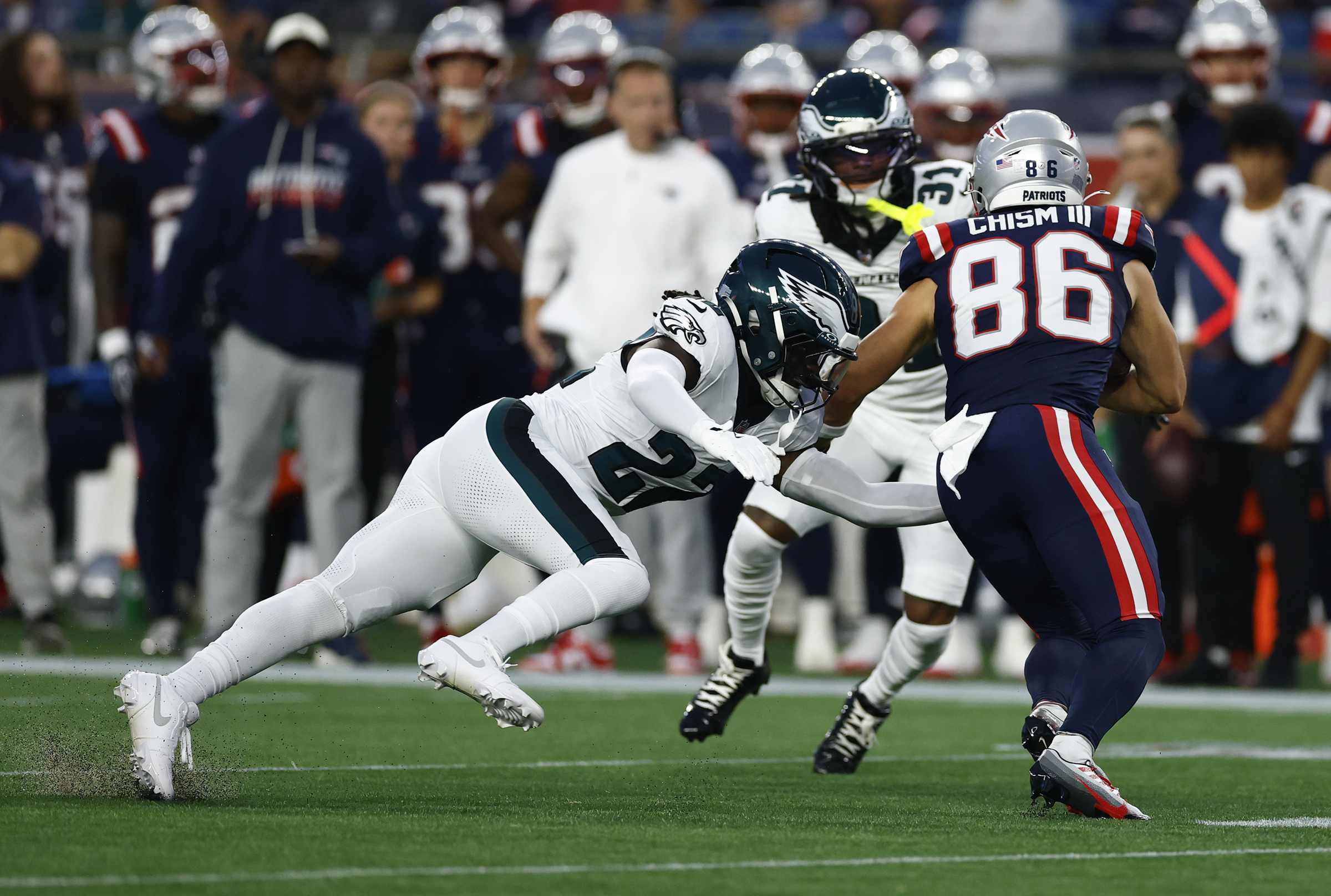
    The latest audition for roster-bubble hopefuls came Saturday night in the Eagles’ 24-21 preseason loss to the New England Patriots, which saw Tanner McKee outplay veteran Andy Dalton in the battle for the Birds’ backup quarterback job. Was it enough for McKee to jump ahead of the 38-year-old QB on our latest roster projection?

    With less than a week remaining before final cuts are due, here’s a look at who Jeff Neiburg thinks is in, and who he thinks is out.

    Next: The Eagles host the Bengals in their final preseason game Friday night at Lincoln Financial Field (8 p.m., CBS).

    A different perspective

    What will Ariel Hukporti bring to the Sixers this season? We asked someone whose been covering the former Knicks center for the last two seasons.Sue Ogrocki

    A wild Sixers offseason has finally settled, after they stunningly signed LeBron James and traded for Jaylen Brown to vault into championship contender status.

    To help Sixers fans get acquainted with the newcomers on this revamped roster, we reached out to reporters who covered those players on their previous teams.

    First up, Gina Mizell spoke with The Athletic’s James Edwards III about Ariel Hukporti and what the former Knicks reserve center brings to Philly.

    Soaking up the experience

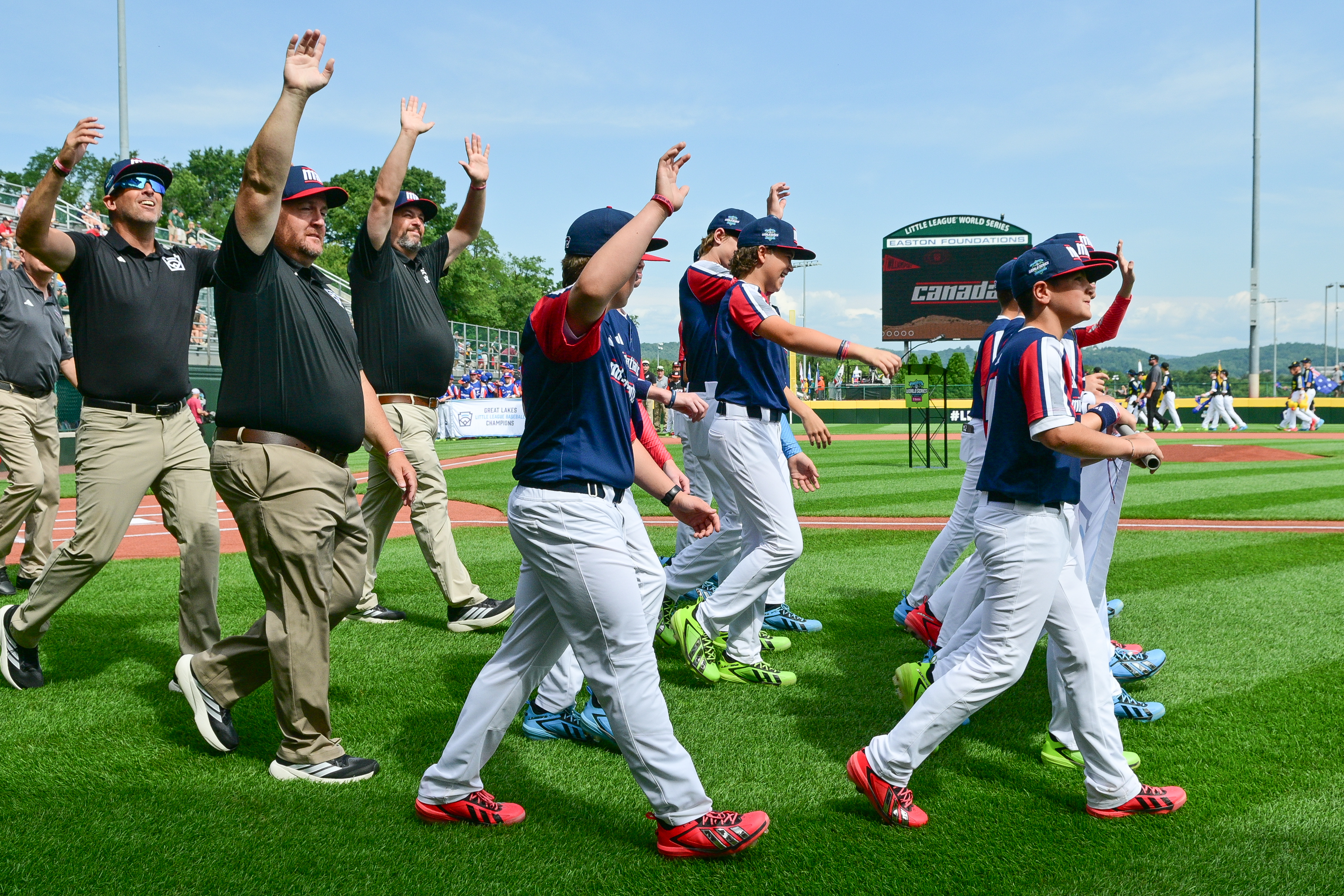
    East Side Little League from West Chester faces elimination Monday night in Williamsport.Ralph Wilson / For The Inquirer

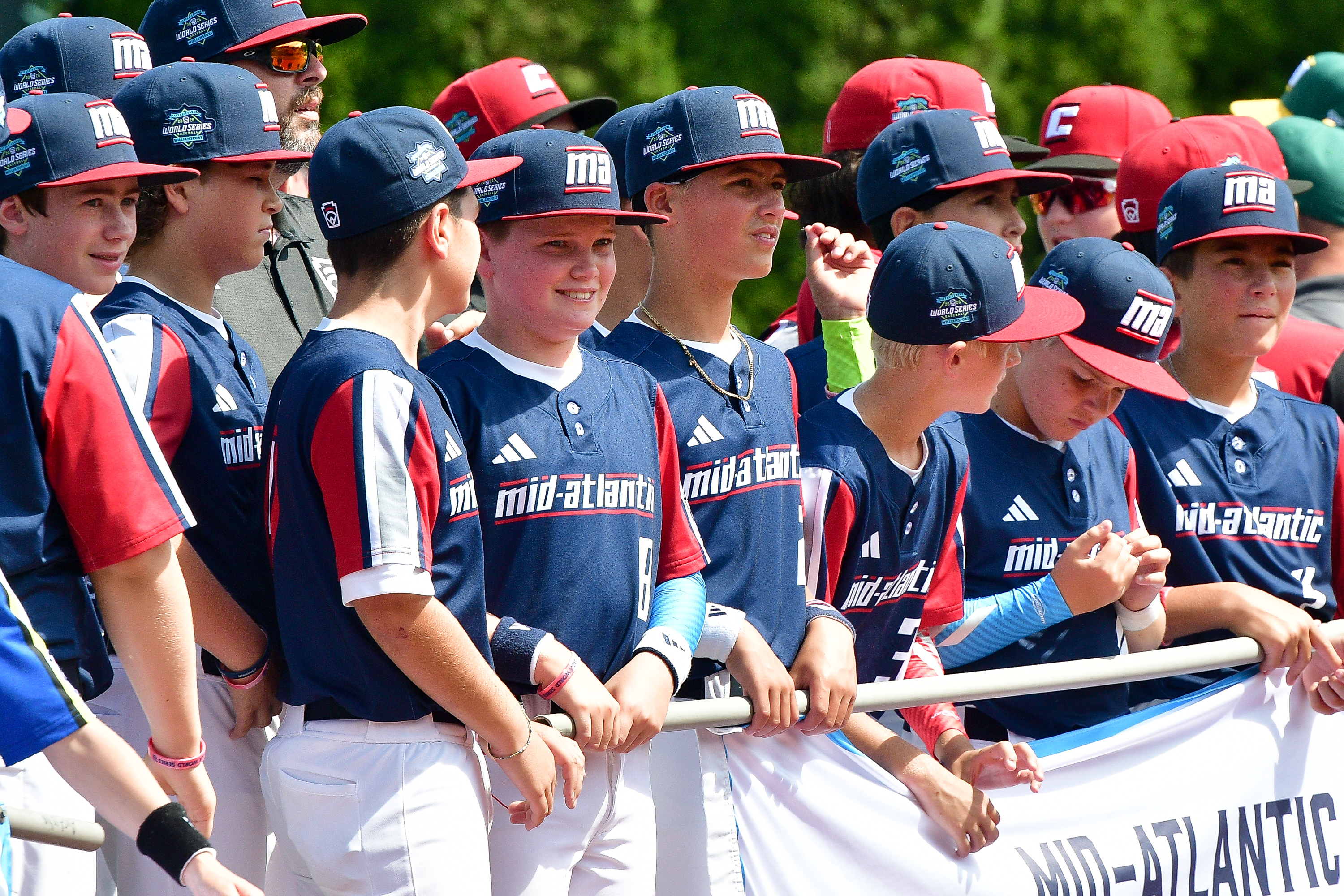
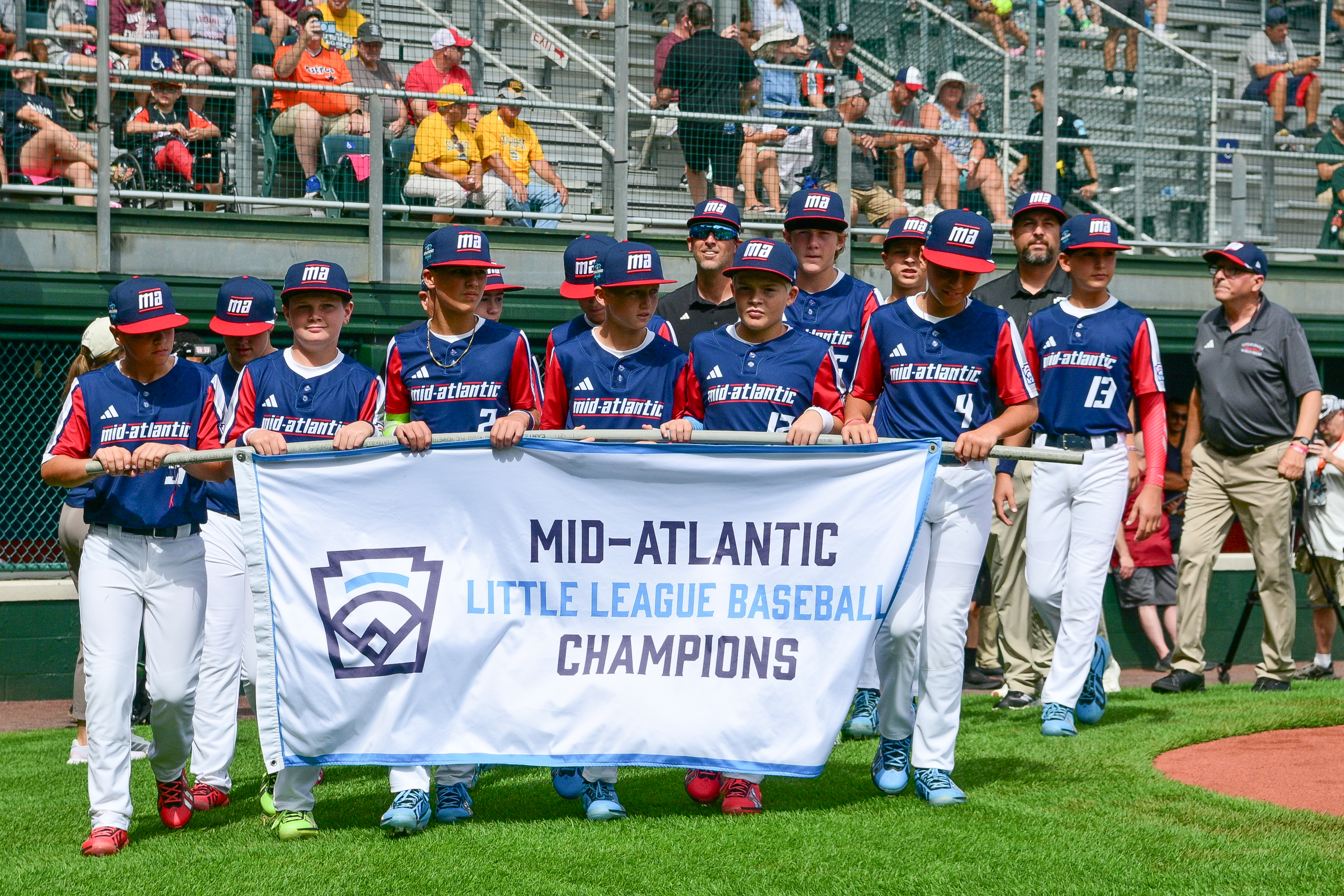
    Though off to a disappointing start after losing their opening game Friday, nothing could dampen the fun for West Chester’s East Side Little League team Sunday as they hung out with the pros alongside their teammates during the Little League World Series MLB Classic.

    Players from the Milwaukee Brewers and the Atlanta Braves came to Williamsport before their specialty game Sunday evening to sign balls, give high-fives and even play ping pong with the 12-and-under players from around the world.

    Get more details on the team’s experience.

    Next: East Side faces elimination against the team from the Southeast — Alabama’s Phenix City Little League — tonight (7 p.m., ESPN).

    David Murphy’s take

    Andrew Painter had his best start of the season Saturday night against the Cardinals.Elizabeth Robertson / Staff Photographer

    A little past 6 o’clock on Saturday evening, Andrew Painter delivered a couple of pitches that could have some serious implications for the Phillies. Both of them were four-seam fastballs that registered 97 mph on the gun and crossed home plate at the sternum of Cardinals leadoff hitter J.J. Weatherholt. The important thing is where those pitches ended up: inside the mitt of Phillies catcher J.T. Realmuto, rather than in play, or in the seats. Weatherholt swung at both. He did not make contact with either.

    That two-pitch sequence may sound like a small thing. It mostly was, at least within the context of the game. But it was a very big thing with regard to the futures of both the Phillies and their prized pitching prospect. It was a reason to believe.

    On this date

    Over 100 years ago, a pitcher was struck by lightning and finished a game against the Phillies.YONG KIM / Staff Photographer

    On Aug. 24, 1919, the Phillies were in Cleveland for what was shaping up to be a mostly ordinary game. They were facing pitcher Ray Caldwell, making his first start for the club after being waived by Boston and signing a contract in Cleveland that included one of the strangest clauses in sports history — it required him to get drunk after his starts.

    Making that clause even stranger was that Caldwell’s career had been derailed largely by drinking problems. However, on that day, Caldwell appeared to be turning back the clock, and had the Phillies on their heels through the first eight innings, allowing just eight hits.

    Like a certain character from Caddyshack, Caldwell’s impressive outing was abruptly cut short by Mother Nature — when he was directly struck by a bolt of lightning so powerful it caused his Cleveland teammates to dive to the ground and left Caldwell unconscious and electrified to the touch. Everyone thought he was dead.

    But then Caldwell rose to his feet and demanded the ball back — “I have one more out to get,” he reportedly said.

    He did just that, and picked up the win despite nearly losing his life. If there’s ever a game worth having a drink after, that’s it.

    We compiled today’s newsletter using reporting from Olivia Reiner, Jeff Neiburg, Alex Coffey, Jonathan Tannenwald, Gabriela Carroll, Matt Breen, Gina Mizell, Becca O’Reilly, and David Murphy.

    By submitting your written, visual, and/or audio contributions, you agree to The Inquirer’s Terms of Use, including the grant of rights in Section 10.

  • West Chester’s East Side Little League soaking up the Little League World Series experience despite opening loss

    West Chester’s East Side Little League soaking up the Little League World Series experience despite opening loss

    Though off to a disappointing start after losing their opening game Friday, nothing could dampen the fun for West Chester’s East Side Little League team Sunday as they hung out with the pros alongside their teammates during the Little League World Series MLB Classic.

    Players from the Milwaukee Brewers and the Atlanta Braves came to Williamsport before their specialty game Sunday evening to sign balls, give high-fives and even play ping pong with the 12-and-under players from around the world.

    “I got to play ping pong against Jacob Misiorowski and I beat him,” said Dillon DiGiulio, a first baseman and pitcher for East Side. “I was a little nervous. I was shaking.”

    A highlight for many young players during the 12-day Little League World Series is the MLB Little League Classic. Started in 2017, the event brings two MLB teams to Williamsport to play a friendly game and celebrate the youth that fuel excitement in baseball.

    East Side players were divided on who would win that night’s game, some cheering for the Brewers and some for the Braves, but they were all thrilled for the chance to talk with players they look up to.

    East Side will play a team from Alabama in their next World Series matchup.Ralph Wilson / For The Inquirer

    “My favorite part today has been getting all the signatures from the pros,” said Adam Zenis, a left fielder on the team. “We’re all really excited for the rest of the week, too.”

    East Side will get its shot at redemption Monday, playing in the elimination bracket against the Southeast Region team from Phenix City, Ala. Ahead of the game, the 12-year-olds are feeling excited and confident.

    For many of the players, though, the experience of playing in the World Series is the best part of it all, win or lose.

    “My favorite part is just getting to hang out with all the different teams,” said Colton DeGrazio, a catcher on the team. “We’ve created so many bonds with teams and people around the world that we never even knew like Japan, Korea, and I just feel like that’s probably the coolest part.”

    A loss on Monday would eliminate East Side from the tournament.Ralph Wilson / For The Inquirer

    Though many of the boys root for different teams back home, from the Mets to the Phillies, it’s clear that every kid playing at the Little League World Series loves baseball to the bone.

    “It’s just a dream come true, to be honest,” said East Side coach Bob Hennessey. “That’s every Little Leaguer’s dream. It was my dream growing up to see these boys get here and get to experience it. Nothing but amazing. I heard Colton say it’s an amazing experience to meet all these players and teams from around the world. So we’re lucky. We’re very lucky.”

  • Betnijah Laney-Hamilton has fit in quickly with the Washington Mystics, the WNBA’s biggest surprise this year

    Betnijah Laney-Hamilton has fit in quickly with the Washington Mystics, the WNBA’s biggest surprise this year

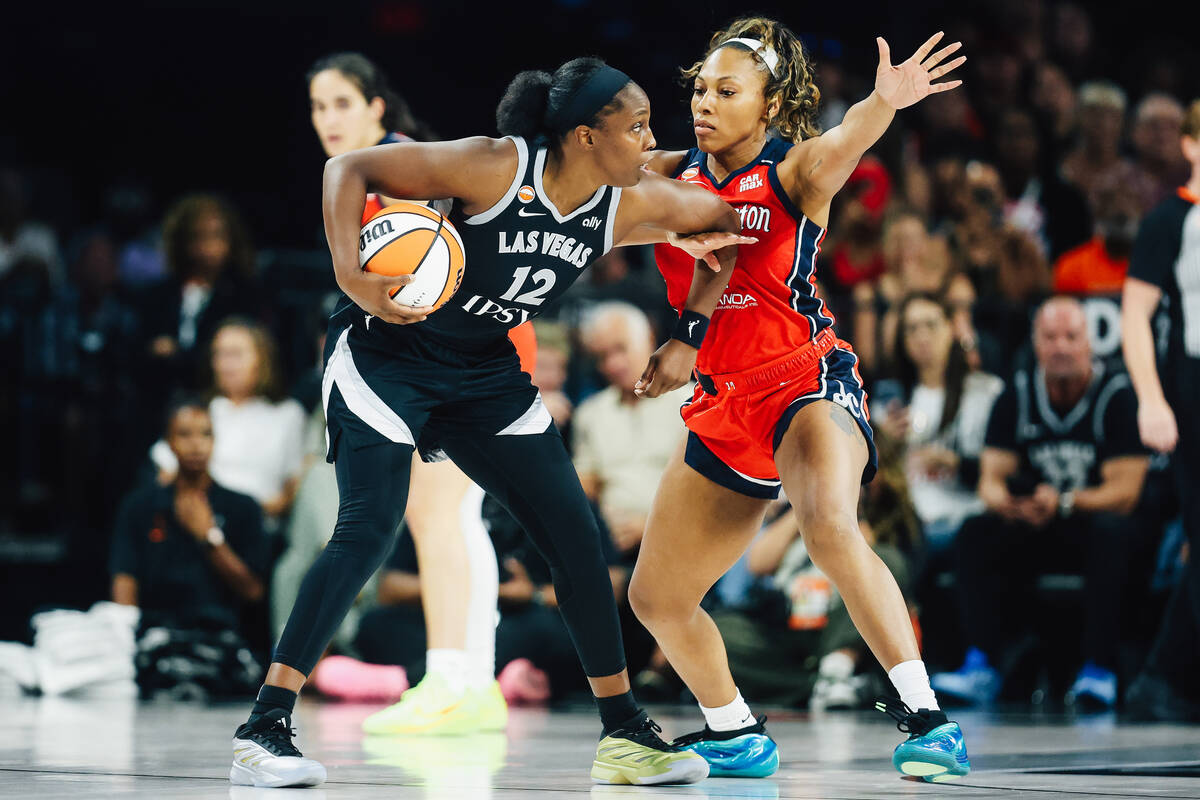
    WASHINGTON — When the New York Liberty waived Betnijah Laney-Hamilton earlier this month, it caused quite a commotion around the WNBA.

    The transaction wasn’t too much of a surprise, since her playing time had fallen sharply from years past. But the 32-year-old with roots in the Philly area was a Liberty fan favorite, and a key piece of the team’s long-awaited first title in 2024.

    Now the rest of the league had a shot to sign a former WNBA and FIBA world champion, All-Star, and first-team all-defense player with a reputation as a great teammate.

    It turned out that the moving van didn’t have to go too far. The Washington Mystics won the race to claim her, jumping at the chance to add a veteran to a team full of young promise.

    “The transition’s been pretty easy, just in terms of how everyone’s embraced me and just made it easy,” Laney-Hamilton said. “It’s nice always being able to be close to home, where my family can get here and everything.”

    That family includes her mother, Philly women’s hoops legend Yolanda Laney, who is often in the crowd at Laney-Hamilton’s home games. Washington is even closer to Yolanda’s home in Delaware than Brooklyn.

    Washington has been the biggest surprise in the league this year. On a circuit full of sizzling stars, the Mystics have a lot of good players, but not a household name yet. Still, they started the week in seventh place, and clinched a playoff spot Sunday night with a win in Portland.

    From there, they could look down at Paige Bueckers and Arike Ogunbowale’s Dallas Wings in eighth, and two marquee squads already eliminated from playoff contention: Nneka Ogwumike and Cameron Brink’s Los Angeles Sparks, and Kahleah Copper and Alyssa Thomas’ Phoenix Mercury.

    The Mystics still have a ways to go until they’re real contenders, and they showed it in last Friday’s loss to the first-place Minnesota Lynx. Though Washington battled gamely throughout, the decisive moments were the little things down the stretch: a missed shot here, a turnover there, a basket conceded on a break the other way.

    Perhaps those things will come in time for former college greats like Sonia Citron, Kiki Iriafen, and Lauren Betts as they develop in the pros. Coach Sydney Johnson can hope Laney-Hamilton’s presence alongside the team’s other veterans, Shakira Austin and Michaela Onyenwere, will help the process go even faster.

    “She’s hit the ground running here,” Johnson said. “They really respect her, they look up to her, they understand her playoff experience. She speaks with a high level of command with the players and coaches.

    For now, Johnson is simply thrilled to have her, and he does not take her easy integration for granted. Sometimes, a veteran’s arrival to a new team can upset existing chemistry. That hasn’t happened here.

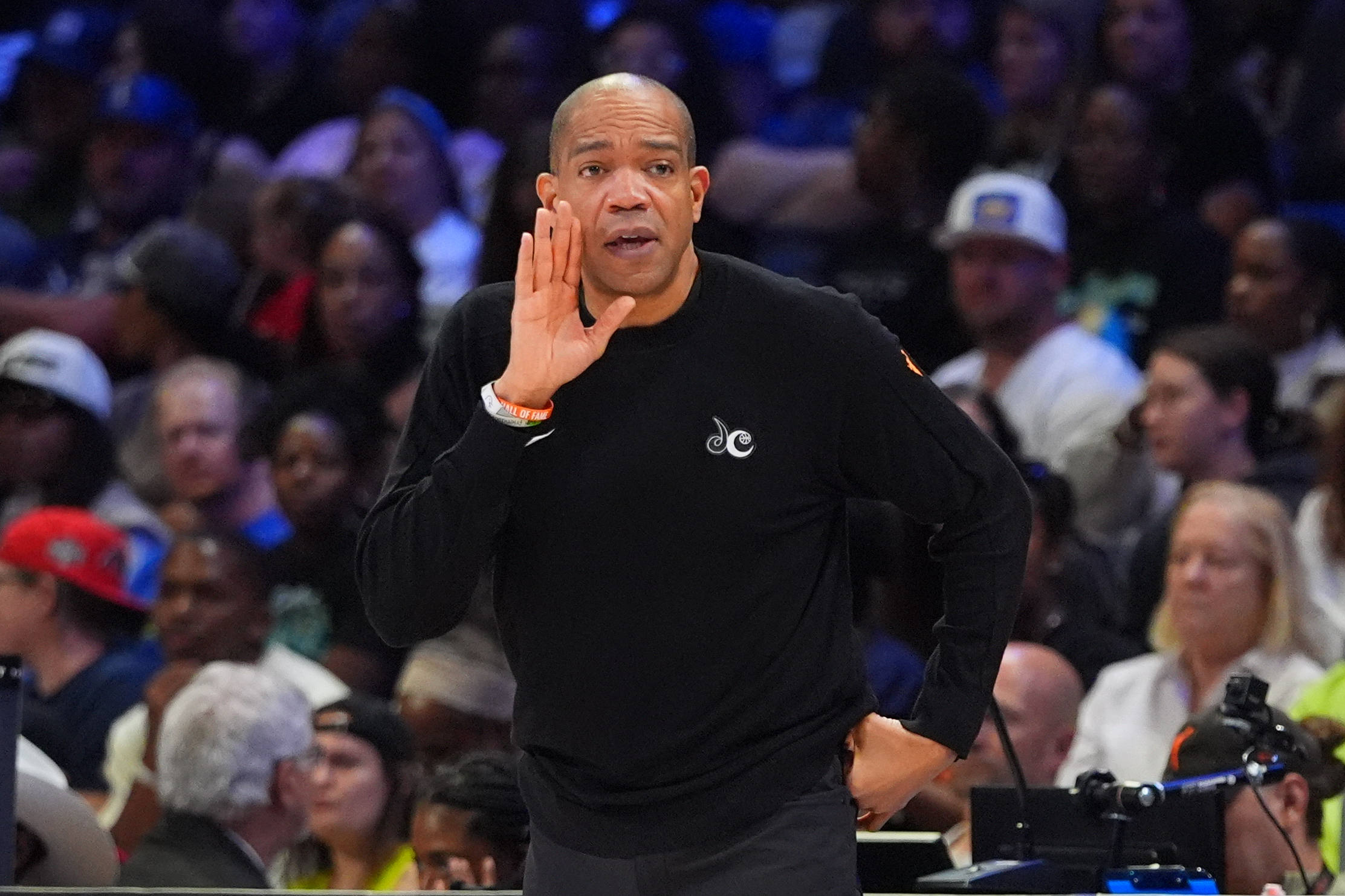
    Sydney Johnson is a leading WNBA Coach of the Year candidate thanks to the Mystics’ rise this season.LM Otero

    “I’m not a betting man, but it was a good bet,” said the second-year head coach, familiar to Philly hoops veterans from many years at Princeton. (He was the point guard in the famous 1996 NCAA Tournament upset of UCLA, and coached his alma mater to the 2011 Ivy League title.)

    “We are about toughness and togetherness,” Johnson said. “When you watch her, you watch her career, it’s pretty clear that she’s as tough as nails out there. You see her interacting with her teammates on the court, and then all the intel behind the scenes, she’s an outstanding person and a giver — she’s really giving to her team. So we felt like we got a steal, we really do.”

    Laney-Hamilton in turn praised her new teammates for “the energy, the intention behind everyone.” And she called Johnson “great,” helping with the transition then being clear about his expectations.

    The Mystics are spending this week on the west coast, with two games to come at Phoenix and one at Los Angeles before the WNBA pauses at the end of the month for the FIBA World Cup. When the season resumes, there will be just four games left to jostle for playoff positioning.

    Whatever happens along the way, it’s clear those expectations Laney-Hamilton mentioned have changed, thanks to her arrival.

  • Is Ariel Hukporti ready to become the Sixers’ backup center? A Knicks reporter weighs in.

    A wild 76ers offseason has finally settled, after they stunningly signed LeBron James and traded for Jaylen Brown to vault into championship contender status.

    To help Sixers followers get acquainted with the newcomers on this revamped roster, The Inquirer reached out to reporters who covered those players on their previous teams.

    First up is The Athletic’s James Edwards III, who covered reserve center Ariel Hukporti during his first two NBA seasons with the New York Knicks.

    Gina Mizell: Hukporti obviously did not get much playing time during his first two NBA seasons behind Karl-Anthony Towns and Mitchell Robinson. So how would you describe his game, and where did he most develop (or not develop) behind the scenes?

    James Edwards III: Hukporti is your typical “traditional” center. He runs the floor hard. He goes after loose balls. He attempts to be active defensively. I think he’s improved as a screener from Year 1 to Year 2. It’s really nerdy stuff, but a good screener does positively impact offenses.

    He isn’t unskilled, but his skills haven’t revealed themselves on the court. He doesn’t really do anything off the dribble. He isn’t a great finesse finisher right now. And while he doesn’t shoot threes, I’ve watched him shoot threes behind the scenes and the shot doesn’t look bad. I could see him trying to add the three-ball to his game with more opportunities and reps.

    GM: Were you surprised Hukporti left the Knicks in free agency? Or did you think there was a chance he would stay given Robinson’s departure?

    JE: I was surprised because I didn’t think other teams would have interest, let alone give him more than the minimum. He didn’t play many significant minutes for New York. He’s going into his third NBA season, but he’s 24. He’s had a couple knee injuries over the last few seasons. I wouldn’t have been surprised if the Knicks wanted to keep him around as the third center, but, yeah, I was surprised he got the deal he did from another team.

    GM: Simply put, is Hukporti ready to be a backup center — and a spot starter when Joel Embiid is injured or resting? He will be competing with Adem Bona for that job.

    JE: To be honest, I don’t think so, not for where the Sixers want to go. If a rebuilding team or a team without championship aspirations this season wanted to see him in that role, that would make more sense.

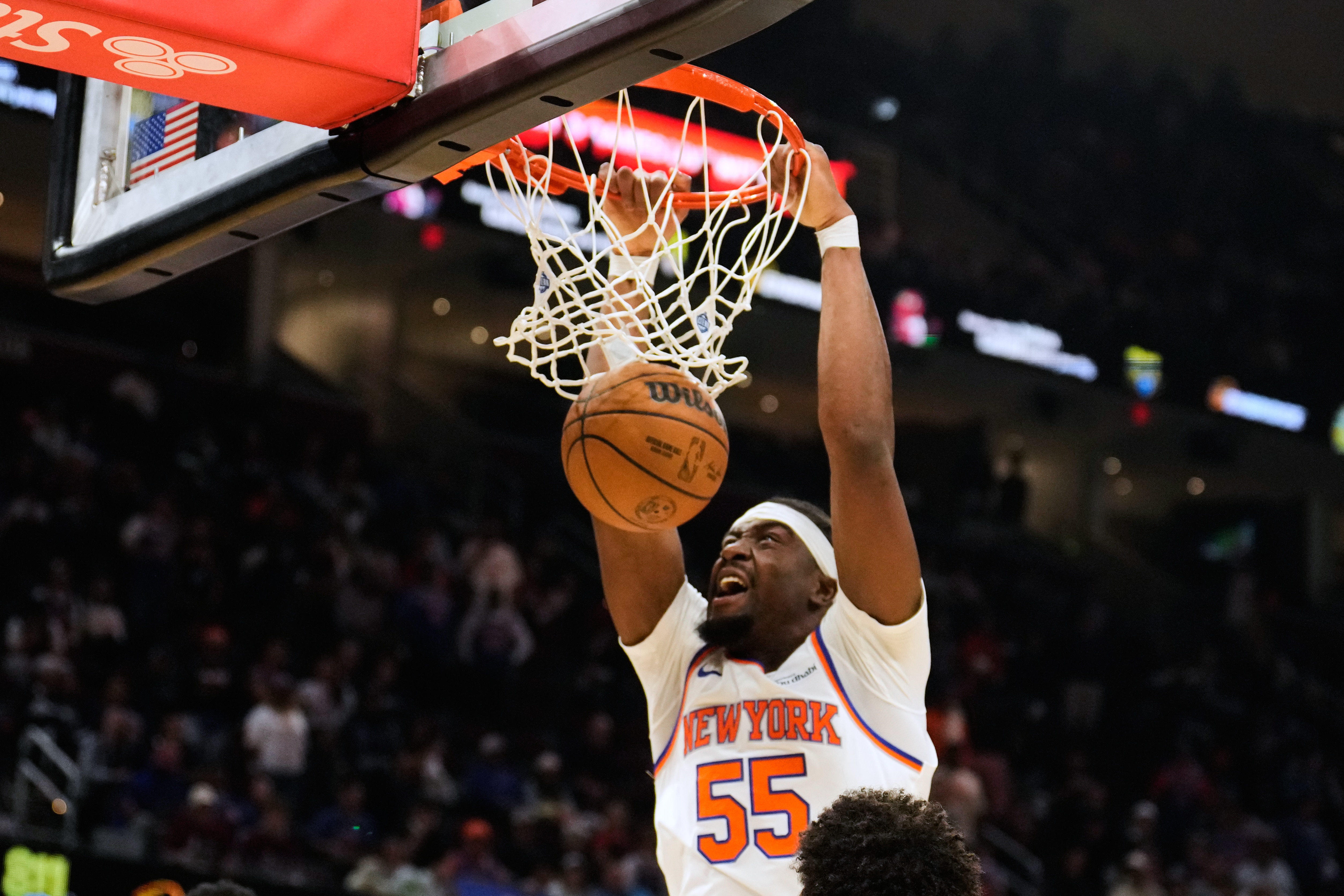
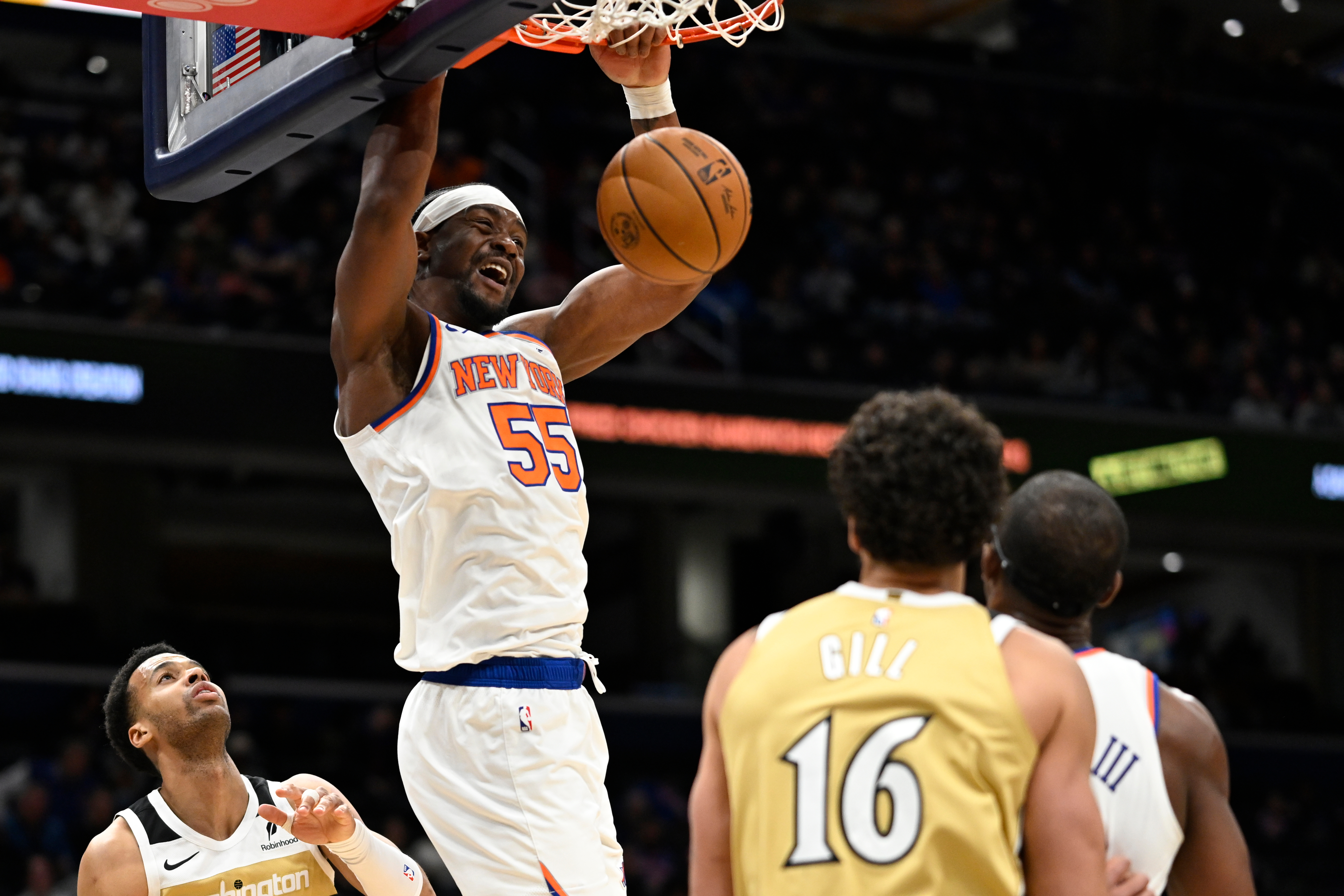
    Ariel Hukporti (55) will compete for the backup center spot behind Joel Embiid. John McDonnell / AP

    Philadelphia giving him 10-plus minutes a night … I just haven’t seen enough from him to believe that he can immediately be a reliable backup option every single night. I’m not saying that he can’t do it, but I haven’t really seen anything to suggest that he can right now. I’m rooting for him because he’s a good guy and works hard. I hope I’m wrong.

    GM: Despite the sparse playing time, what do you think Hukporti most gained/learned (on or off the floor) from being immersed in the Knicks’ championship run?

    JE: He got to be around great players and [learned] what makes them tick, how they work. He learned about standards. Hukporti played for two disciplined coaches in Tom Thibodeau and Mike Brown, both of whom had high standards.

    I also think it helps that all Hukporti knows at the NBA level is winning, which can’t be said for many Knicks draft picks between the late 1970s and today. At the very least, he’s been around a positive program and understands the inner workings of winning.

    GM: How would you describe Hukporti as a teammate and locker-room presence?

    JE: Great guy. His teammates — both veterans and youngsters — loved him, and so did his coaches. He’s not afraid to show his personality, and that was in New York where the franchise pushes players not to show their personalities. Funny guy, too. I never had a bad interaction with Hukporti and I don’t know anyone who did.