DEAR ABBY: Twenty-six years ago, I began what was supposed to be an affair with my current girlfriend, “Lacey.” I was married at the time, and when my then-wife caught me, I was told we needed only to figure out who got what out of the marriage. Believing there was no salvaging the marriage, I took what was available and stayed with Lacey.
My ex-wife moved on, and we divorced. Lacey got pregnant. After the birth of our daughter, and having become “Dad” to Lacey’s other two children, I stayed. The biological father of Lacey’s young children was deceased, so I raised them as my own, the same as my biological child.
Now, after years of regret about screwing up my marriage, I mustered the courage to contact my ex-wife via social media. We connected via a messenger app for a few days. After those conversations went extremely well, we eventually exchanged numbers.
There were lots of truths told, some good, some bad, but all in complete honesty. The conversations have been emotional and uplifting. I feel happy thinking about her and hope someday to see her again in person.
I have been unhappy with Lacey since the beginning, always regretting the screwup I made in losing my first wife. Now, speaking to her again, I feel motivated to leave Lacey. There seems to be an honest connection with my ex, and we both hint at rekindling the relationship. How do I broach this subject civilly with Lacey without ruining my relationships with all of my kids?
— SORRY IN PENNSYLVANIA
DEAR SORRY: Do not expect a civil conversation. Expect instead that Lacey will be angry, threatened and furious. It may cushion the blow to mention that you haven’t been happy for years, and that you will see that she is provided for financially in some way. (Discuss this with a lawyer beforehand.)
Explain to your grown children that you have not been happy for many years, but because you love them, you stayed with their mom until they were all adults so their lives would not be disrupted. If you do this gently and reasonably, they may listen.
A word to the wise: There is no guarantee that returning to your ex-wife will bring you the happiness you are expecting. Premarital counseling and a long courtship are essential to ensure you aren’t jumping from the fire back into the frying pan.
** ** **
DEAR ABBY: My boyfriend, “Ted,” is divorced from a woman who now has Alzheimer’s. Ted has been the only one to step up to help her through this difficult time. It takes a lot of his time and effort and weighs heavily on his mind.
I admire Ted for his loyalty to someone he once shared a life with, but now she wants him to go on a cruise with her and a couple of his relatives. Ted says she doesn’t get to travel much now, and he sees nothing wrong with this because she’s paying his way. I am not invited. I feel this goes above and beyond his involvement with her health management. When is enough enough?
— SECOND FIDDLE
DEAR SECOND FIDDLE: Ted’s kindness is admirable, but his willingness to set you aside and vacation with his ex-wife crosses a line. Tell him either you accompany him on the cruise, or he shouldn’t bother coming back from it.
ARIES (March 21-April 19). What if you lost self-blame? After all, you couldn’t possibly see what actually happened from every angle, living in your own body and mind as you do. And blame simply doesn’t help. Let it go.
TAURUS (April 20-May 20). What if you lost your self-consciousness for a moment, or an hour, and simply became more yourself instead of the version you want them to see? It’s a risk. Maybe it will feel more scary than you think is worth that risk. But the more you do this, the easier it gets.
GEMINI (May 21-June 21). What if you lost the habit of supplying every answer? A few extra minutes can reveal a better question. People admire certainty, though life often rewards the person who waits long enough to see the fuller picture.
CANCER (June 22-July 22). What if you lost the thing that is making your work take so long? Is it perfectionism? Is it a commute? Is it an unorganized environment that keeps you searching for the tools and resources you need to finish fast?
LEO (July 23-Aug. 22). What if you lost your intensity of feeling for that certain person who tends to occupy your thoughts? Perhaps it’s easier said than done, but simply holding the intent will eventually loosen up your energy to focus on what will bring greater balance and peace.
VIRGO (Aug. 23-Sept. 22). What if you lost preconceived notions of what people expect from you? You’re a generous giver. Someone wants to love you, not for what you do, but just for the person you are when you’re not doing anything at all.
LIBRA (Sept. 23-Oct. 23). What if you lost your attachment to the first draft? A painter steps away from the canvas to return again tomorrow. A carpenter measures twice. A writer goes in with a red pen. More passes can equal more depth, clarity and precision.
SCORPIO (Oct. 24-Nov. 21). What if you lost the idea that important things should feel dramatic? Most turning points look ordinary while they’re happening. The most profound statements are often understatements, or even just specific pauses. What matters most is told in a whisper.
SAGITTARIUS (Nov. 22-Dec. 21). What if you lost your version of the time frame and let things tell you how long they need? In baking you know by the smell. In gardening you know by the sprouts. In love you know by how people orient to you.
CAPRICORN (Dec. 22-Jan. 19). What if you lost your “yes”? Not every opportunity needs or deserves your participation. Time is a valuable currency. Every commitment spends some of it. You can trust your gut to tell you when a quick “no” will uncomplicate your life in the best ways.
AQUARIUS (Jan. 20-Feb. 18). What if you lost the instructions and just did it your way? By putting things together before you see how others did it, you discover the material version of your unique instincts, the true reflection of your point of view and your most innocent and natural tendencies.
PISCES (Feb. 19-March 20). What if you lost your need for the last word? Winning a conversation and winning a relationship are two different things. Some power moves actually lessen your power. Ego needs may feed the moment, but cooperation can feed the future of a relationship.
TODAY’S BIRTHDAY (Aug. 28). Welcome to your Year of Noble Works. There’s honor in the hours you put in to progress the mission. There’s magic that happens when sweat meets an excellent plan. Time off is made sweeter with the knowledge that your leisure is well-earned. More highlights: Powerful forces help you finish strong. Extremely useful prizes and avid fans. Capricorn and Aries adore you. Your lucky numbers are: 6, 33, 10, 18 and 13.
A suburban elementary school teacher was arrested Thursday and charged with making and attempting to make child pornography, U.S. Attorney David Metcalf said.
Eric Sanville, 39, of Norwood Borough, Delaware County, is a teacher at Gwynedd Square Elementary School in the North Penn School District, which is mainly located in Montgomery County, officials said.
Sanville made his first appearance Thursday afternoon in federal court in Philadelphia and was being held pending further court proceedings, Metcalf said.
Prosecutors allege that Sanville used the Snapchat social media app to separately entice two 8-year-old girls, including one living in Sweden, to engage in sexually explicit conduct to create images of those acts.
If convicted, Sanville faces a maximum sentence of 30 years in prison, Metcalf said.
The North Penn School District issued a statement saying Sanville was “immediately placed on leave, prohibited from being present on District property, and directed not to have any contact with students.”
The district said it was notified Thursday by the FBI that Sanville was arrested at his home and charged with production of child pornography.
“The authorities shared that, based on the information they currently have, there is no evidence to suggest that any students in the North Penn School District or the surrounding area were involved. They also shared that they do not believe that district technology was involved in the alleged activity,” the district said.
“We recognize that news of this nature is deeply concerning to our families, staff, and community. The safety and well-being of our students remain our highest priority. North Penn School District is cooperating fully with law enforcement and will continue to review any information provided to us,” the district said.
Sen. Cory Booker said the United States needs a “food revolution,”blaming sugary and processed food for contributing to the nation’s health woes during a South Jersey visit Thursday.
“What’s stupid is that we’re sitting here talking about the cost of healthcare and how to pay for it, but not why we need so much healthcare in the first place,” Booker said during an almost hour-long speech to the Chamber of Commerce Southern New Jersey at the Westin Mount Laurel.
The speech was one of four stops Booker made in South Jersey Thursday. The Newark Democrat also packed sandwiches at the Cathedral Kitchen community kitchen in Camden,one of the nonprofits shouldering a greater demand amid rising grocery costs and cuts to the Supplemental Nutrition Assistance Program enacted by President Donald Trump. Booker said he would try to steer federal resources to the group, and that he hopes at least one chamber of Congress will flip so Democrats can push to restore money for Medicaid and Affordable Care Act subsidies.
Butduring his speech to the chamber, Booker signaled support for one piece of Trump’s health agenda by criticizing the use of SNAP for soda. Booker, a vegan, aligns with some of Health and Human Services Secretary Robert F. Kennedy Jr.’s policies on nutrition though he vehemently opposes Kennedy’s push to scale back recommended vaccines for children.
“Sugar water companies literally, annually, make billions of dollars from SNAP payments,” Booker said after joking about Coke and Pepsi not being members of the chamber. “You all know what SNAP stands for: Supplemental Nutritional Assistance Program. Yet we allow SNAP payments to be used for that, but make it really hard for them to be used for the kind of food we want people to have abundant access [to].”
The U.S. Department of Agriculture gave the green light to nearly two dozen states — mostly Republican — to restrict people from using food stamps for sugary drinks, the New York Times reported, though just eight were actually implemented as others are in the process or have been blocked by a court ruling.
New Jersey and Pennsylvania are not among those states.
Sen. Cory Booker speaks to members of the Chamber of Commerce Southern New Jersey at the Mt. Laurel Westin.Aliya Schneider / Staff
Booker said the country should support small farmers more, and decried that the vast majority of agricultural subsidies go to “massive commodity crops” such as corn and soybeans that are used for ultra-processed foods instead of “specialty crops” like fruits and vegetables.
The ballroom podium was unnecessary for Booker, who paced on stage and juggled a microphone between whatever hand he wasn’t reaching, pointing, or otherwise speaking with.
“Think about this: A kid in Camden goes into a bodega and gets a Twinkie product cheaper than an apple because we subsidize everything in the Twinkie product and nothing in the apple,” he said.
“Or hear this: You go to a fast food restaurant and you get a $1 meal, and if you want to get a bucket of salad, it costs you $15. How can we be a system that sustains such high levels of illness?”
He told a story about meeting with a LasVegas-based business owner whose healthcare costs decreased after replacing deep fried food options for his staff with healthier choices, and shared an anecdote about a woman whose health improved after an urban farm was established in Newark, where Booker was mayor.
In an interview after his speech, Booker said he’s pushing for the restoration of programs that connect crops from small farms with people in need of food.
“New Jersey farmers are suffering with tighter and tighter margins,” he said.
Sen. Cory Booker smiles for a photo with volunteers and staff at Cathedral Kitchen in Camden.Aliya Schneider / Staff
Booker got tips on making a good peanut butter and jelly sandwich and placed ham and cheese on bread alongside volunteers at Cathedral Kitchen. He said nearby workers cracking eggs were “doing some egg-celent work” and that at first he didn’t know “what the shell” they were doing. In line with his dad jokes, he chatted about how he wants to have kids soon with his wife Alexis Lewis, whom he married last year.
Carrie Kitchen-Santiago, the president and CEO of the Camden-based organization, said 2022 set a record for demand for meals, groceries, and hygiene products, and it’s grown each year since. She said the organization mostly relies on donations and revenue from a catering program but expects the need to increase when benefits cuts are implemented later this year.
She said roughly 2% of the organization’s budget is from government funds but that it does not have any federal funding.
Kitchen-Santiago said providing nutritious meals is a balancing act.
“You want to make sure people are healthy, but also give them something they’ll eat and be culturally appropriate,” she said. “Like, we’re not going to be able to give a stuffed acorn squash. Nobody’s going to eat that. On the other hand, we might be able to do a stew that has vegetables and meat in it.”
The speech and visit to the kitchen were part of a larger swing through South Jersey by Booker while the Senate is on recess.Booker also presented a $2 million check to Inspira Medical Center in Mullica Hill to expand technologies and telehealth services — a congressional allocation from Fiscal Year 26 — and visited Salem Community College’s Glass Education Center.
His schedule on Friday includes presenting $1 million to AtlantiCare Health System and a visit to Atlantic City’s Orange Loop, a neighborhood that was designated an Opportunity Zone under a law he co-authored. He was also slated to visit the Cape May–Lewes Ferry Terminal in North Cape May and a Cumberland County farm.
The Lower Merion School District violated the constitutional right of parents to choose what content their children are exposed to online by requiring students to use internet-connected computers without safeguards or controls, seven families with school-aged children say in a federal lawsuit.
The Lower Merion school board in June repealed a technology policy that allowed parents to opt their children out of using district-issued laptops and iPads. In August, the board adopted a new technology policy that doesn’t have an opt-out option, despite continued outcry from parents.
The parents, who are part of a grassroots group called “Pencils over Pixels” that objected to the policy change, say in the suitthat their children “encounter pornography, violent images, and violent or disturbing video games through their school devices.”
In addition to the exposure to inappropriate materials, the suit says that by having AI chatbots readily available, the district’s policy can “impede learning” and “encourage cheating.”
While three of the seven families behind the lawsuit have children enrolled inLower Merion School District schools,three have withdrawn their children from the district because of the policy.Another considered enrolling their children in Lower Merion schools, but decided not to because of the device-use requirement.
The families are being represented by the EdTech Law Center and Anapol Weiss, a Philadelphia-based law firm involved in multiple lawsuits against social media companies.
Lower Merion is aware of the lawsuit, district spokesperson Amy Buckman said in a statement.
“The District denies the allegations and will respond further through the judicial process,” Buckman said.
The lawsuit says“the environment in many classrooms in the District has become like a casino. Students sometimes sit and repeatedly hit keys or the spacebar while playing repetitive online games, creating a classroom environment that is loud, chaotic, and overstimulating.”
The heated public process that resulted in the repeal of the policy was a facade, the suit says, accusing the board of making its decision behind closed doors months before the summer. According to the complaint, Lower Merion superintendent Frank Ranelli “instructed” principals to refuse to accommodate technology opt-outs despite the “plain language” of the now-repealed policy before its repeal.
The fight over technology in Lower Merion has boiled over in recent months, as parents in favor of opting their children out of technology have found themselves increasingly at odds with the school board. Two parents were banned from school board meetings for “disruptive” behavior during meetings on the technology policy, a move legal experts said may infringe on the parents’ constitutional rights.
Andrew Liddell, attorney with the EdTech Law Center, said in an interview that plaintiffs “allege profound violations of parents’ rights and disruptions of family life caused by the district’s policies.”
“Here we have a school board, or at least seven members of the school board and a superintendent, who are determined to press forward with this policy that really does harm kids,” Liddell said.
Under the policy, kindergarten, first, and second graders will no longer receive personal iPads and laptops, and in-class technology time for the youngest grades will be limited to “specific educational purposes.” Third and fourth graders will have “teacher-directed” access to devices within the classroom. Fifth and sixth graders will be issued individual devices, which will stay in the classroom unless parents want their kids to bring them home.
Seventh and eighth grade students will be permitted to take their devices to and from school but will not be penalized for not doing computer-based homework. By high school, students will be assigned individual devices to carry with them throughout the day and take home.
The complaint accuses the seven school board members who voted to repeal the opt-out policy of acting in “contravention of their proper role as public educators and leaders of the District” and “thwarting” the ability of parents to protect their children. It asks a federal judge to issue an injunction that preserves the old policy by accommodating parents who wish to decline or limit their child’s use of internet-connected devices.
“A parent’s right to make decisions regarding their children’s care includes the right to make decisions to safeguard their health, safety, and privacy,” the lawsuit says.
The lawsuit was filed as social media and technology companies are facing a reckoning over the impacts their products have on the well-being of children and youth. Meta, the parent company of Facebook and Instagram, agreed this week to pay states up to $17.1 billion as part of a settlement over claims its platforms harmed kids. Pennsylvania is expected to receive more than $500 million from the payout.
This suburban content is produced with support from the Leslie Miller and Richard Worley Foundation and The Lenfest Institute for Journalism. Editorial content is created independently of the project donors. Gifts to support The Inquirer’s high-impact journalism can be made at inquirer.com/donate. A list of Lenfest Institute donors can be found at lenfestinstitute.org/supporters.
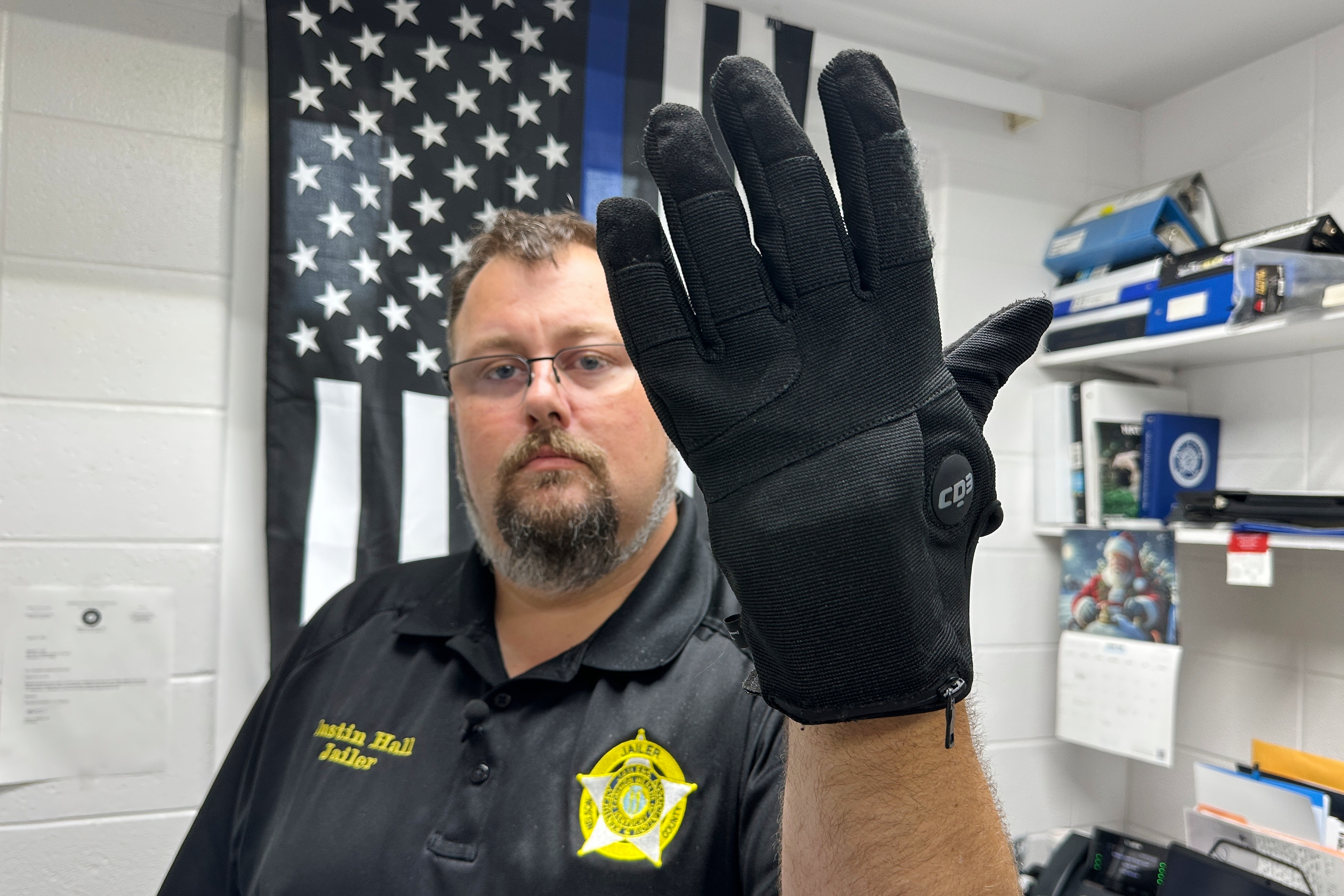
U.S. Immigration and Customs Enforcement has awarded a $16.7 million contract to purchase 6,000 pairs of gloves that can deliver painful electric shocks, saying officers would use them to control detainees and protesters who resist.
ICE moved forward with the purchase despite opposition from civil rights advocates and Democratic members of Congress, who said ICE officers cannot be trusted to use them appropriately.
A notice published in a federal database Thursday said ICE entered into a no-bid contract to purchase the gloves from Compliant Technologies LLC, a Kentucky-based firm that manufactures them. The deal includes acquiring 6,000 of the devices along with support equipment and services over the next six months.
ICE published the notice hours after a group of U.S. senators, led by Democrat Catherine Cortez Masto of Nevada, urged the agency to cancel its plan to buy the gloves. In a letter to ICE’s acting director Thursday, Cortez Masto and 15 of her colleagues in the Democratic caucus questioned ICE’s need for the devices.
“The blatant and tragic misuse of force in Los Angeles, Chicago, Minneapolis, Houston, Maine, and other locations around the country raises significant skepticism about the agency’s professional capability to safely deploy a new tool that could be used to harm Americans without cause,” the letter said.
The senators were the latest to express opposition to the plan, which became public this month when ICE published a notice outlining its intent to purchase thousands of “conductive distraction and de-escalation devices” for officers and investigators.
The devices are normal patrol gloves until an officer presses a button to activate the electrical mode. They must be applied directly to someone’s skin to produce a shock that causes pain, which is promoted as a way to gain compliance from people who are resisting. They have been used by some local jails and police departments in recent years.
ICE’s notice said officers would use them in “high-tension environments,” including while making arrests, transporting combative detainees and responding to civil disturbances outside detention facilities.
“It will be used when a subject is actively or passively resisting and an officer needs to gain control quickly to prevent injuries to both parties,” the document said.
It said that the shocks would help “maintain control over inmates and prevent aggression or escape attempts,” allow officers to handcuff people hiding their hands, and assist in crowd control. The goal would be to avoid using “more severe force,” including firearms. The notice said the gloves would be used with “approved policy, training, and accountability standards,” but it did not elaborate.
Cortez Masto and the other senators said in their letter that the device “presents substantial risks if deployed during civil arrests — even more so if it is deployed without clear limits, appropriate training, and comprehensive oversight.” They said ICE must make public details about how officers will be trained and how use of the gloves will be documented and reviewed internally to avoid misuse.
ICE’s parent agency, the Department of Homeland Security, reacted defiantly Thursday to critics of the purchase.
“Sanctuary politicians attempting to ban our federal law enforcement from any safety equipment is despicable and a deliberate attempt to undermine and endanger our officers,” the agency said in a statement.
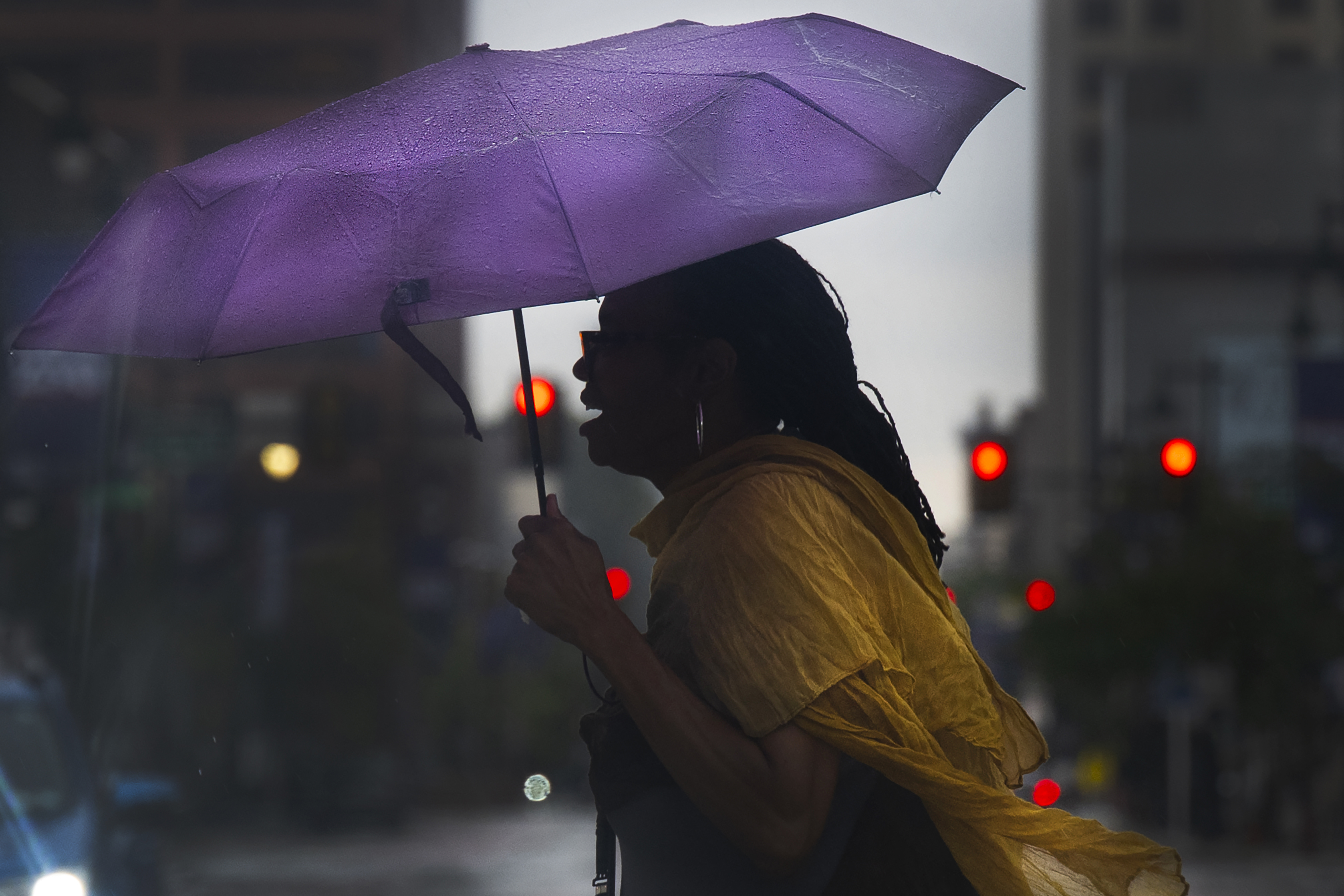
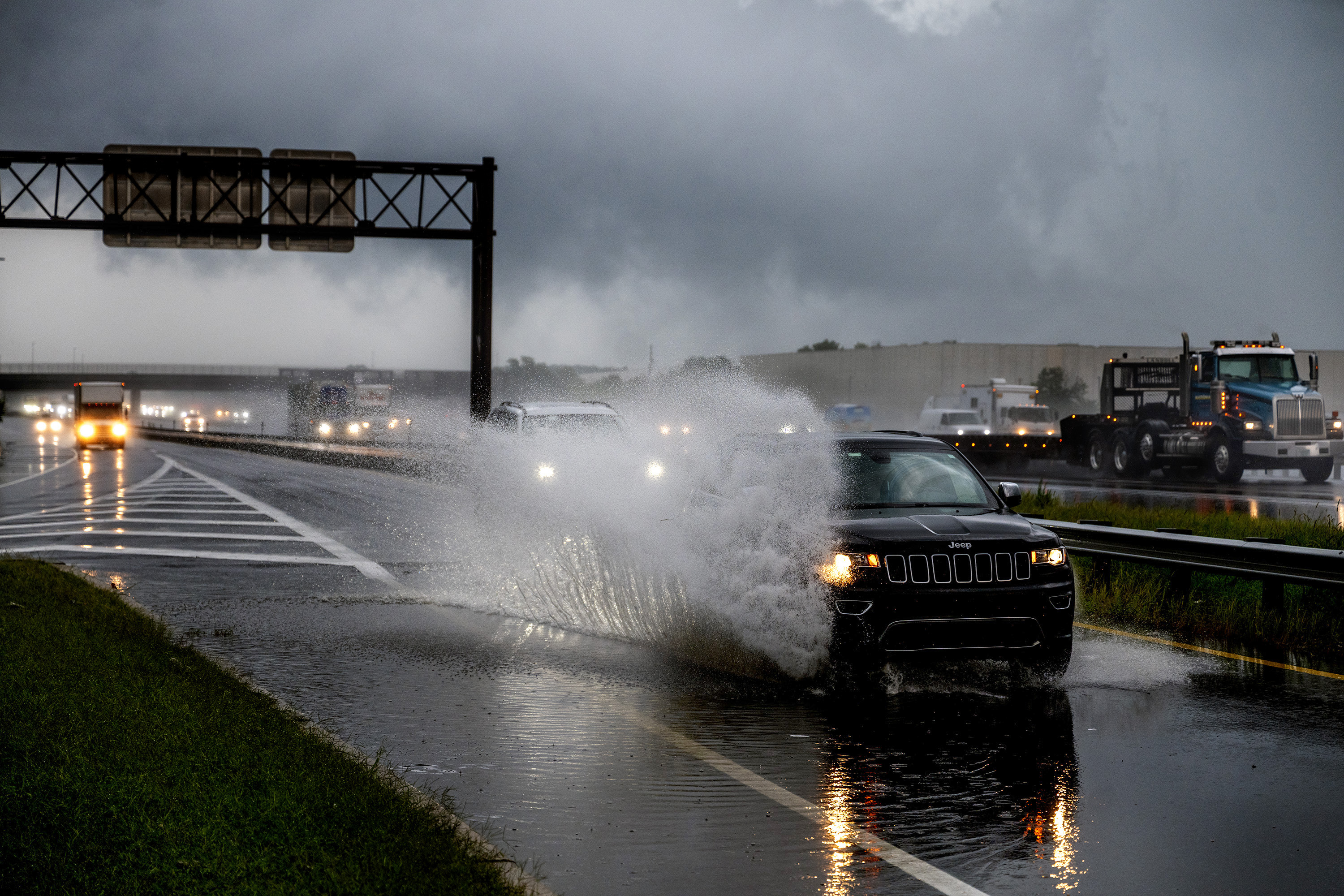
It’s been a while — about a week, actually — but fresh rounds of strong thunderstorms and flooding bedeviled the Philadelphia region yet again Thursday.
South Jersey evidently was bearing the brunt of the ferocity during the afternoon, with 5-plus inches of rain reported in Gloucester County, where flooding closed portions of Route 130.
A tornado warning had been posted in Salem County, but it was not yet known if one was sighted.
During the late-day commute, a second round of heavy rain moved into northern Chester County and central Montgomery County, prompting flood warnings.
“Multiple water rescues” were reported in Parkesburg, Chester County, the National Weather Service said, with water up to car windows. Flooding on Route 422 in East Conventry Township resulted in at least one vehicle accident.
After a couple of uncharacteristically pleasant days, pulses of moisture have returned, and the National Weather Service was warning that as much as three to five inches of rain could fall in “isolated” areas into Thursday night.
Drivers on the New Jersey Turnpike exit for the Molly Pitcher Service Area during a rain storm Thursday.Tom Gralish / Staff Photographer
Strong storms rumbled through the area late in the morning and pounded South Jersey in the afternoon.
Officially, 1.48 inches of rain was measured at Philadelphia International Airport, bringing the 2026 total to 28.84 inches, for 0.03 inches over the year-to-date normal.
(function(){function e(){window.addEventListener(`message`,function(e){if(e.data[`datawrapper-height`]!==void 0){var t=document.querySelectorAll(`iframe`);for(var n in e.data[`datawrapper-height`])for(var r=0,i;i=t[r];r++)if(i.contentWindow===e.source){var a=e.data[`datawrapper-height`][n]+`px`;i.style.height=a}}})}e()})();
Heavy rains also set off flash flooding warnings in Delaware County and in portions of Bucks County.
In addition, a severe thunderstorm watch was in effect for the entire region.
The flood watch is in effect for the city and the seven neighboring counties from noon Thursday to 4 a.m. Friday, with rain-repelling high pressure moving offshore and a warm front migrating northward.
Said Cody Snell, meteorologist with the national Weather Prediction Center in College Park, Md., “It’s a pretty typical pattern that we’ve seen before this summer.”
Indeed.
Computer model runs were suggesting that the atmosphere would not only be moist, but charged with energy, the weather service in Mount Holly said Wednesday afternoon.
The federal Storm Prediction Center in Norman, Okla., listed a 15% chance of severe storms, those with wind gusts approaching 60 mph, along the I-95 corridor. At least it made no mention of possible tornadoes — yet.
When might the storms hit the Philly region?
The likeliest window for the main events would be between 2 and 8 p.m., said Bill Deger, senior meteorologist with AccuWeather Inc. said
The sun is likely to appear after the morning rain shuts off, he said, and that would “help destabilize the atmosphere,” adding a kick to potential thunderstorms.
He expected a midafternoon round, followed by an encore in the evening.
What areas are likeliest to see flooding or severe storms?
For severe weather, all of Southeastern Pennsylvania and New Jersey areas along the Delaware River are in the storm center’s highest risk zone, which extends from the Maryland-Virginia border to upstate New York.
Along the Delaware River, Snell said, “there’s a little bit of signal for training thunderstorms.” Those are the kind to develop and not move, the kind that can wring out three to five inches.
He said the west-to-east moving storms may run out of steam by the time they get to Jersey.
However, any rains are likely to cause trouble, he said.
“Our ground can’t handle much more at this point,” said Deger, who lives in the Quakertown area and has seen the harvests of the downpours in his backyard.
“I’m mowing every four days,” he said.
Staff writer John Duchneskie contributed to this article.
KATHMANDU, Nepal — It was already too late when the call came.
Rajan Khatri, 41, a police officer, was working at his station in a mountain village in northern Nepal when a friend rang Wednesday morning to warn that a flash flood was thundering downriver in his direction. As soon as he hung up, giant waves slammed into the station.
“I cannot explain how big the waves were,” Khatri said from a hospital bed in Nepal’s capital, Kathmandu, on Thursday. “They engulfed several meters-high buildings in a fraction of seconds. It wasn’t just water. It was a combination of boulders, sand and thick sludge.”
The onslaught flung Khatri out of the building, and he lost consciousness and suffered chest injuries. Two of his colleagues survived, but four were missing on Thursday.
They were among the more than 1,400 people missing in the devastating deluge of rock, ice, trees, mud and water that blasted through river valleys on the border between Nepal and Tibet, washing away bridges, smashing homes, schools, and hydropower plants, and swallowing people who tried to run away.
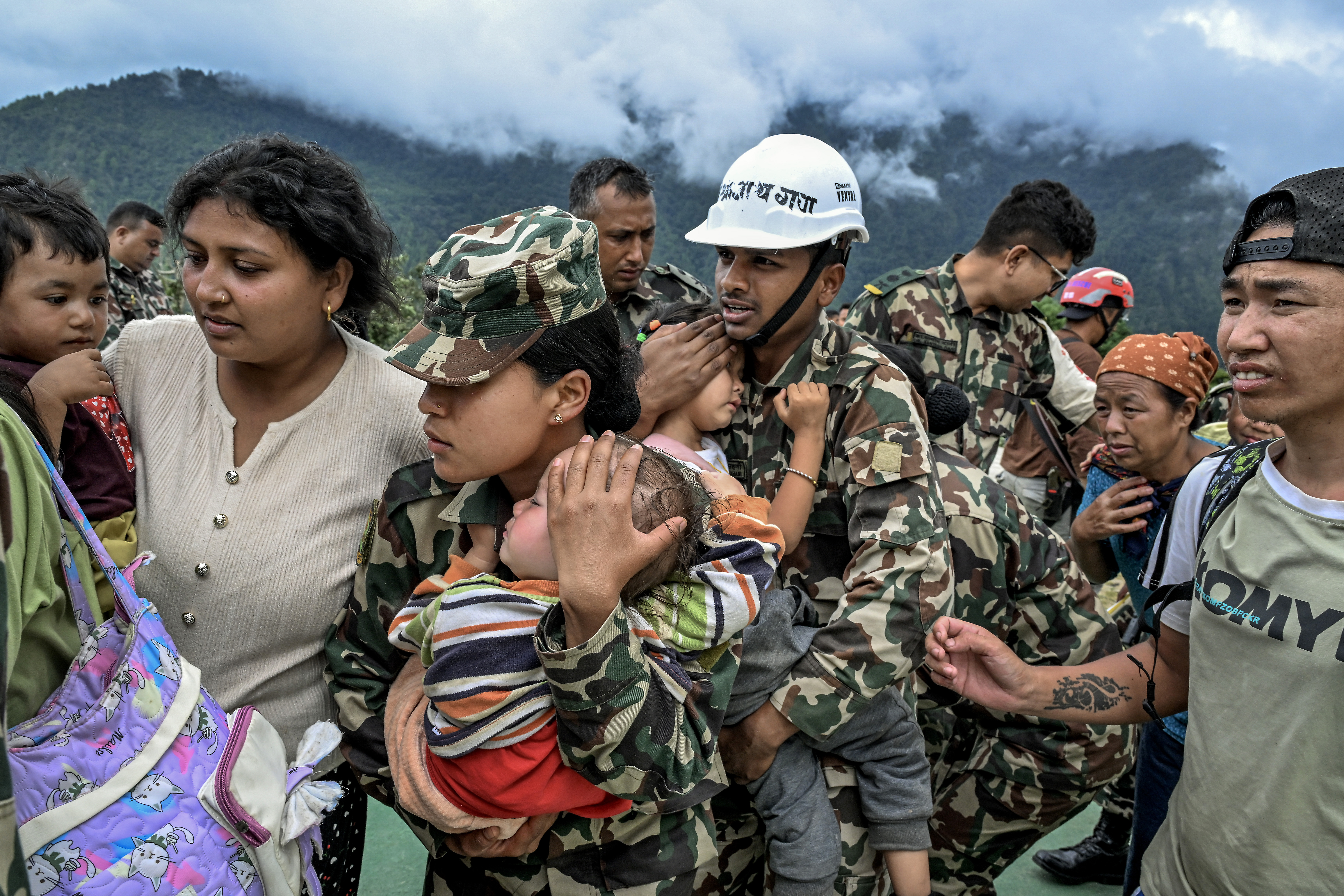
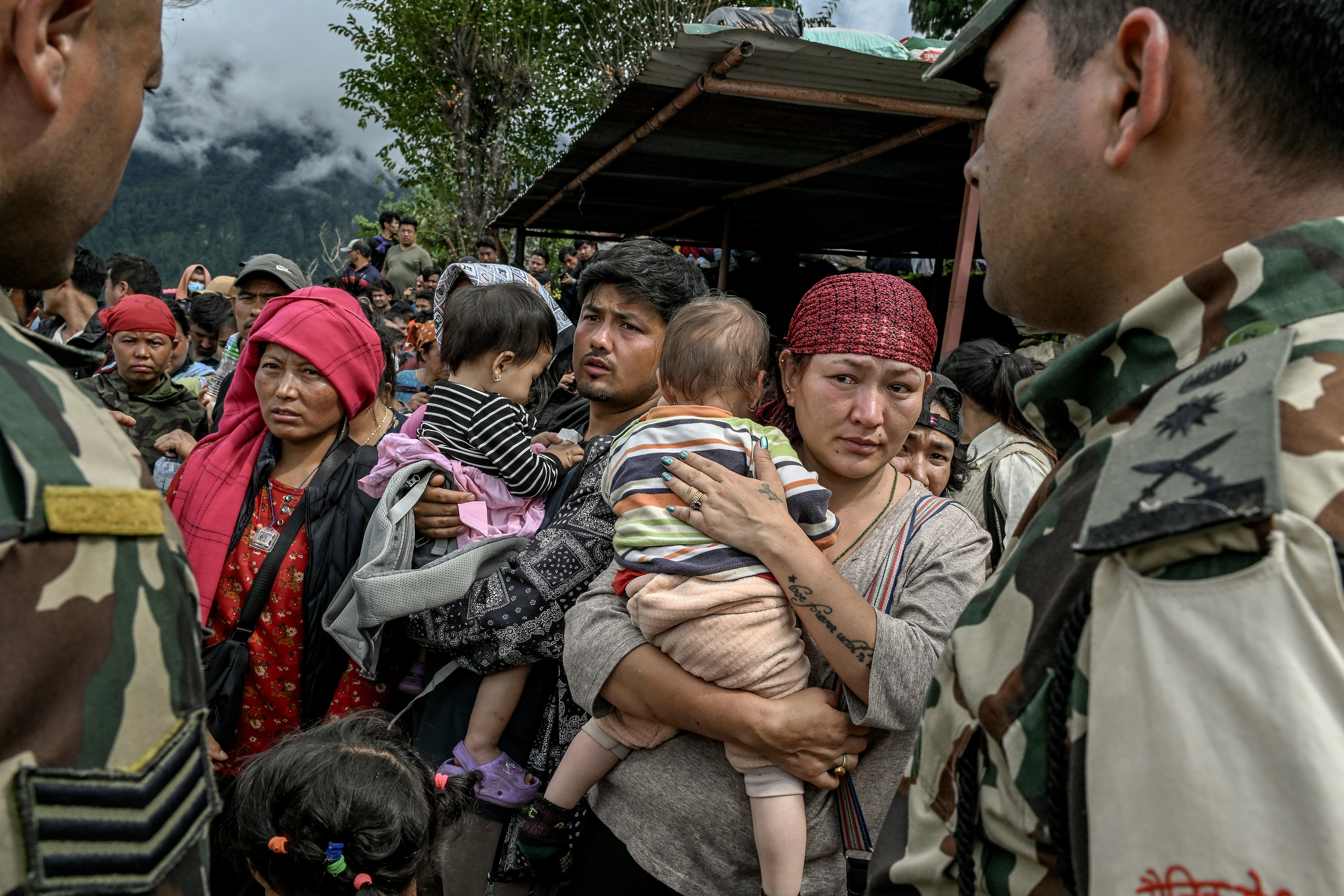
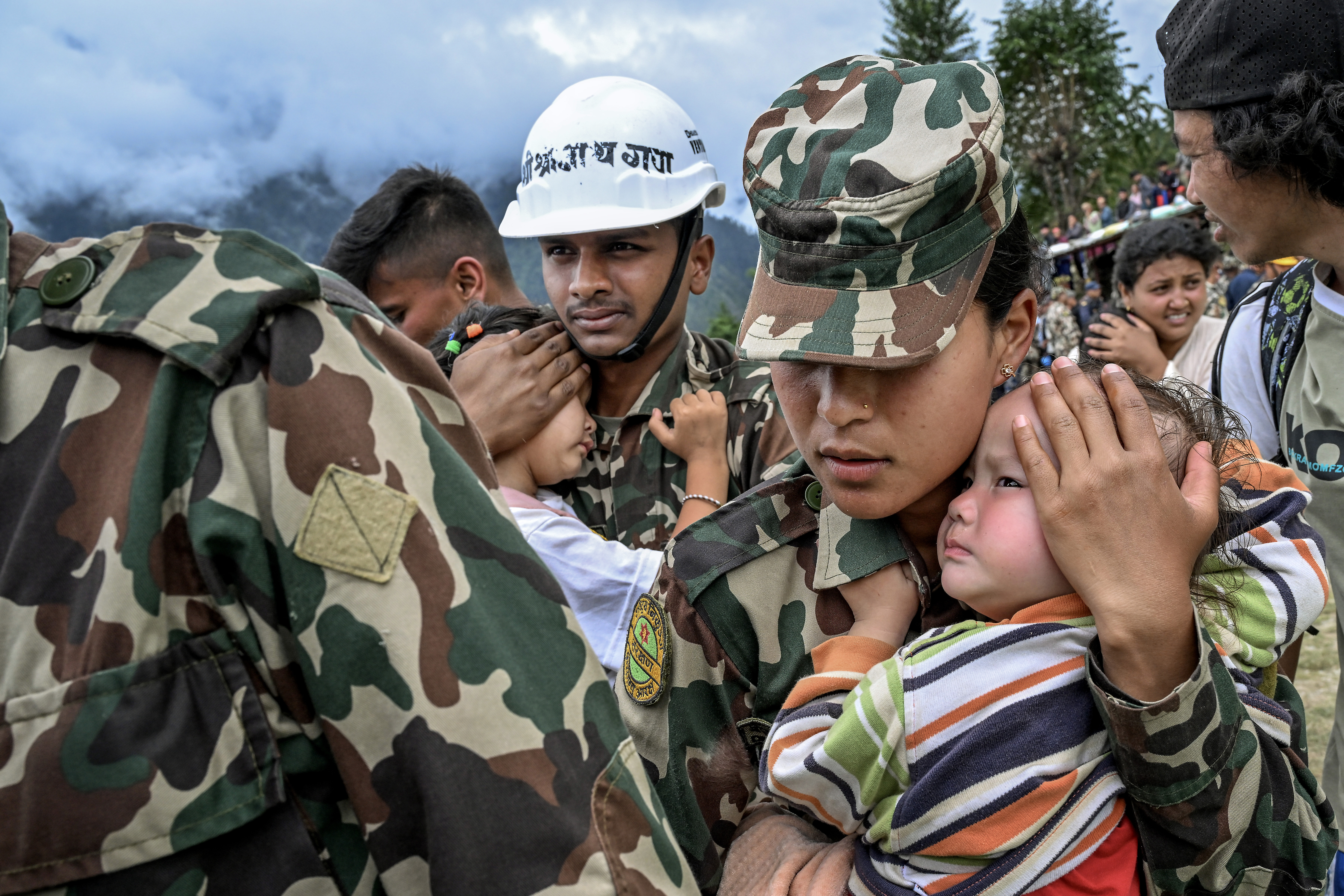
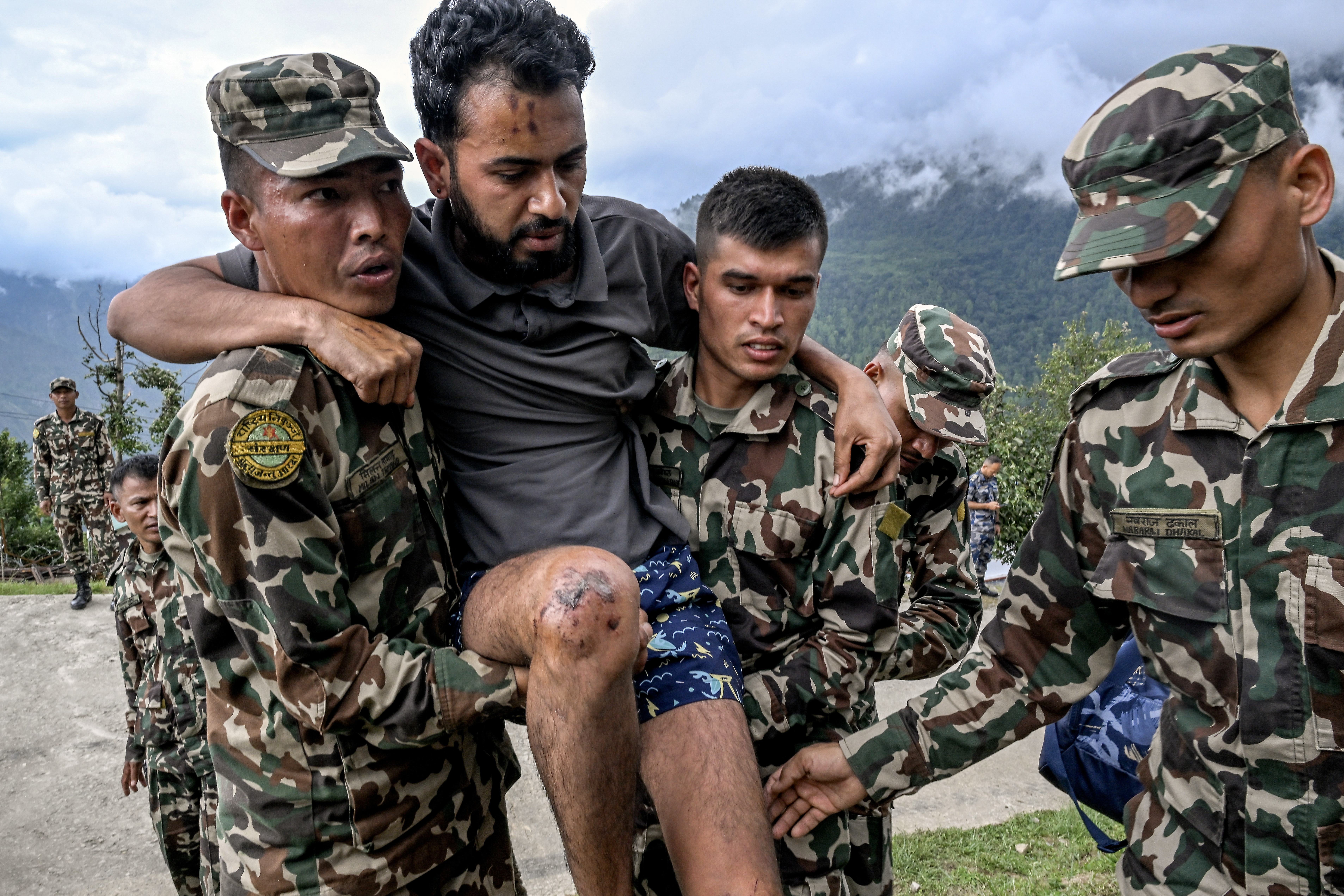
On Thursday, emergency workers climbed across steep Himalayan valleys and used helicopters to ferry shocked survivors to safety as they carried out a sprawling search for anyone who had managed to escape the flood.
Nepali officials said at least 389 people had been killed, while the authorities in China, where far less information was being released, reported three deaths in the Tibet region of China.
The death toll was expected to rise.
In Nepal, more than 900 people, including about 500 foreign visitors, were unaccounted for, the country’s disaster management agency said. The missing foreigners included at least 288 from India, as well as travelers from the United States, Australia, Britain, Canada, and Malaysia.
In Tibet, at least 558 people were missing in Gyirong County, including 260 foreigners, Chinese state media reported. China’s Foreign Ministry said 100 Chinese citizens were missing in Nepal.
The U.S. State Department said in a statement that about 90 U.S. citizens “may be impacted by the floods” and three had been rescued in Nepal. It said it was not aware of any Americans who had died.
Survivors described having almost no time to react before giant waves came roaring down the Bhotekoshi and Trishuli rivers.
Smriti Ojha, 17, said she had been getting ready for school Wednesday morning when she felt the ground shaking. She ran out of her house, believing an earthquake had struck. Then she saw the flood. She said her immediate family had survived, but four of her relatives were missing.
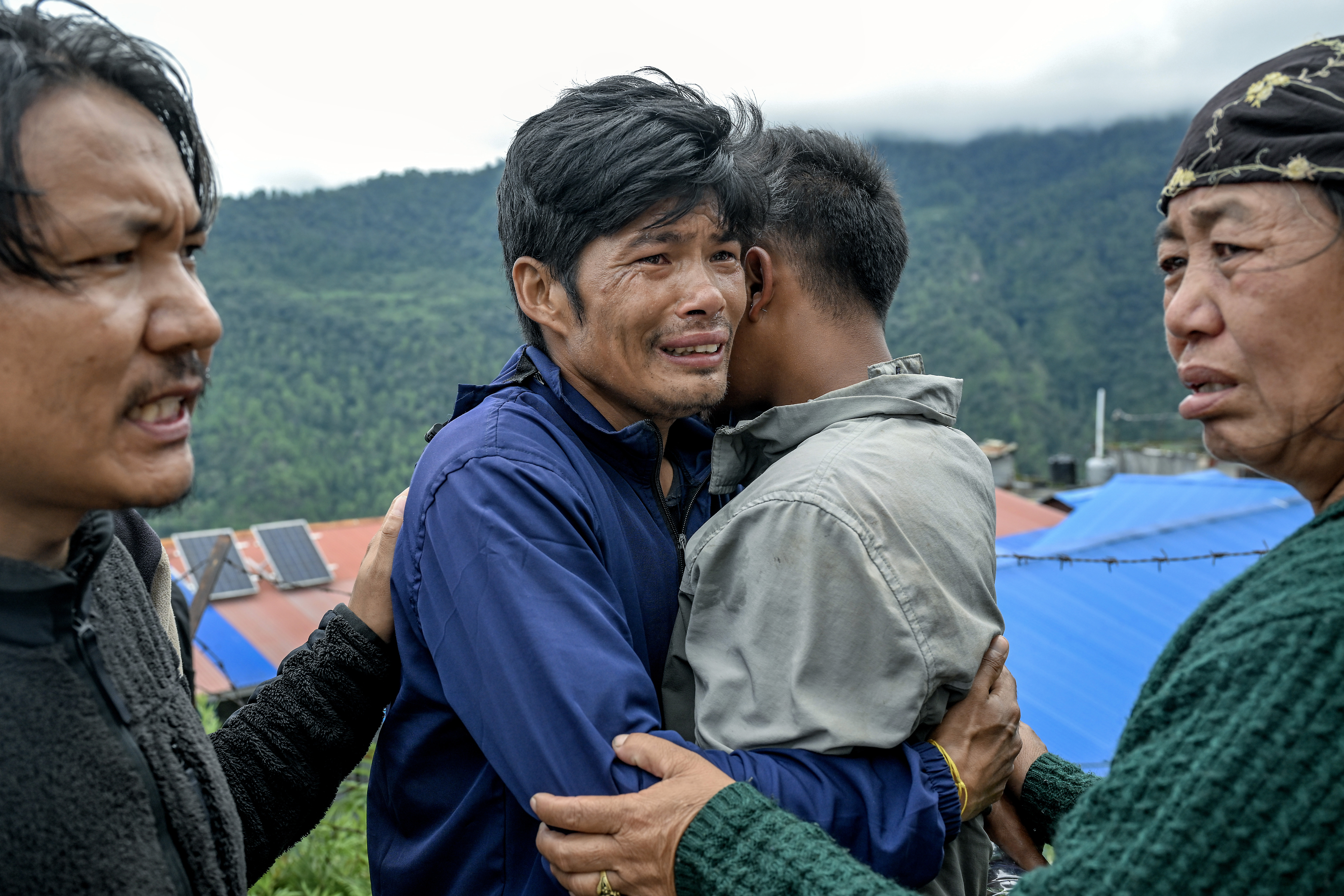
“It was terror,” Ojha said from a hospital bed in Kathmandu. “I cannot believe everything was swept away before my eyes.”
Officials and aid organizations were still assessing the scale of the destruction in the remote region, renowned for its high-altitude lakes and steep peaks.
New York Times journalists traveling with the Nepali military Thursday surveyed the devastating aftermath. One highway, near the Bhotekoshi River, had mostly disappeared. Scars on hillsides showed that in some places, the river had risen more than 650 feet during the flood.
Rescue efforts were being hampered by communication lines that had been cut and the destruction of dozens of bridges and about 25 miles of roads, Nepal’s government said.
The Nepali army’s search-and-rescue base was packed with hundreds of army personnel and survivors, some of whom wept after arriving by helicopter. The area had no electricity or phone networks after the flood, and soldiers and other rescuers were using military radios to communicate.
Nepal’s foreign minister, Shisir Khanal, called it “one of the largest natural disasters we have experienced in recent memory.”
President Donald Trump, speaking in the Oval Office, said he had offered U.S. aid to Nepal. “We are sending aid, and we’ve spoken to the leadership, and we let them know anything they want will happen,” he said.
Scientists piecing together satellite imagery and seismological data said that a high-altitude landslide coinciding with a glacial collapse most likely caused the flash flood. The collapse happened on the north face of Langtang Lirung, a Nepalese mountain near the border with Tibet, at an elevation of around 17,000 feet, scientists said.
After a huge chunk of the mountainside broke off, it sent millions of tons of rock and ice crashing into the river valleys below, said Kristen Cook, a geomorphologist at the Université Grenoble Alpes in France.
“It was a much larger collapse than we were initially able to see in the satellite imagery,” she said.
The shaking caused by the falling rock and ice was so powerful that the U.S. Geological Survey registered it at a magnitude of 5.2, as if it were a moderately powerful earthquake. Warming temperatures caused by climate change may have destabilized the glacier and rock face, scientists said, adding that it was too early to determine a precise cause.
“Earthquakes, landslides, slope failures all could happen even without climate change,” said Austin Lord, an anthropologist and senior fellow at the Stimson Center in Washington who has studied natural disasters in Nepal. “It’s just that climate change is this additional factor that increases the likelihood, scale, frequency and intensity of these events.”
Nepal has a flood warning system, but it relies on a conventional network of river and lake gauges that was not equipped to alert people to the sudden collapse of part of a mountain, according to scientists and disaster response researchers.
The river gauges are designed instead to detect slower-rising water levels that typically precede a monsoon-driven flood or glacial lake outburst, which occurs when a pool of glacial meltwater bursts its banks.
“We didn’t have the right information at the right time, so we couldn’t save more people,” said Basanta Raj Adhikari, director of Tribhuvan University’s Centre for Disaster Studies in Nepal. “The Nepalese government is very good on monsoon floods and perennial floods, but we were not prepared for this fast-moving flash flood,” he added.
The banks of the debris-choked Bhotekoshi River show signs of the giant torrent of water, mud and ice that swept through the remote river valley in the Rasuwa district near Nepal’s border with Tibet, on Thursday, Aug. 27, 2026. Emergency workers and helicopters scoured steep Himalayan valleys on Thursday in a desperate search for survivors after a torrent of water, mud and ice killed hundreds — and perhaps many more — as it swept through a river valley that runs through Tibet and Nepal. More than 1,400 people are still missing. (Atul Loke/The New York Times)ATUL LOKEPeople wait to board rescue helicopters in the disaster-stricken Rasuwa district near Nepal’s border with Tibet, on Thursday, Aug. 27, 2026. Emergency workers and helicopters scoured steep Himalayan valleys on Thursday in a desperate search for survivors after a torrent of water, mud and ice killed hundreds — and perhaps many more — as it swept through a river valley that runs through Tibet and Nepal. More than 1,400 people are still missing. (Atul Loke/The New York Times)ATUL LOKEPeople wait to board rescue helicopters in the disaster-stricken Rasuwa district near Nepal’s border with Tibet, on Thursday, Aug. 27, 2026. Emergency workers and helicopters scoured steep Himalayan valleys on Thursday in a desperate search for survivors after a torrent of water, mud and ice killed hundreds — and perhaps many more — as it swept through a river valley that runs through Tibet and Nepal. More than 1,400 people are still missing. (Atul Loke/The New York Times)ATUL LOKEThe banks of the debris-choked Bhotekoshi River show signs of the giant torrent of water, mud and ice that swept through the remote river valley in the Rasuwa district near Nepal’s border with Tibet, on Thursday, Aug. 27, 2026. Emergency workers and helicopters scoured steep Himalayan valleys on Thursday in a desperate search for survivors after a torrent of water, mud and ice killed hundreds — and perhaps many more — as it swept through a river valley that runs through Tibet and Nepal. More than 1,400 people are still missing. (Atul Loke/The New York Times)ATUL LOKEPeople wait to board rescue helicopters in the disaster-stricken Rasuwa district near Nepal’s border with Tibet, on Thursday, Aug. 27, 2026. Emergency workers and helicopters scoured steep Himalayan valleys on Thursday in a desperate search for survivors after a torrent of water, mud and ice killed hundreds — and perhaps many more — as it swept through a river valley that runs through Tibet and Nepal. More than 1,400 people are still missing. (Atul Loke/The New York Times)ATUL LOKEStructures damaged by the giant torrent of water, mud and ice that swept through a remote river valley in the Rasuwa district near Nepal’s border with Tibet are seen on Thursday, Aug. 27, 2026. Emergency workers and helicopters scoured steep Himalayan valleys on Thursday in a desperate search for survivors after a torrent of water, mud and ice killed hundreds — and perhaps many more — as it swept through a river valley that runs through Tibet and Nepal. More than 1,400 people are still missing. (Atul Loke/The New York Times)ATUL LOKEPeople wait in line to board rescue helicopters in the disaster-stricken Rasuwa district near Nepal’s border with Tibet, on Thursday, Aug. 27, 2026. Emergency workers and helicopters scoured steep Himalayan valleys on Thursday in a desperate search for survivors after a torrent of water, mud and ice killed hundreds — and perhaps many more — as it swept through a river valley that runs through Tibet and Nepal. More than 1,400 people are still missing. (Atul Loke/The New York Times)ATUL LOKEA woman is overcome as she waits for his turn to board a rescue helicopter in the disaster-stricken Rasuwa district near Nepal’s border with Tibet, on Thursday, Aug. 27, 2026. Emergency workers and helicopters scoured steep Himalayan valleys on Thursday in a desperate search for survivors after a torrent of water, mud and ice killed hundreds — and perhaps many more — as it swept through a river valley that runs through Tibet and Nepal. More than 1,400 people are still missing. (Atul Loke/The New York Times)ATUL LOKEChildren are carried to a rescue helicopter by military personnel in the disaster-stricken Rasuwa district near Nepal’s border with Tibet, on Thursday, Aug. 27, 2026. Emergency workers and helicopters scoured steep Himalayan valleys on Thursday in a desperate search for survivors after a torrent of water, mud and ice killed hundreds — and perhaps many more — as it swept through a river valley that runs through Tibet and Nepal. More than 1,400 people are still missing. (Atul Loke/The New York Times)ATUL LOKEPeople wait in line to board rescue helicopters in the disaster-stricken Rasuwa district near Nepal’s border with Tibet, on Thursday, Aug. 27, 2026. Emergency workers and helicopters scoured steep Himalayan valleys on Thursday in a desperate search for survivors after a torrent of water, mud and ice killed hundreds — and perhaps many more — as it swept through a river valley that runs through Tibet and Nepal. More than 1,400 people are still missing. (Atul Loke/The New York Times)ATUL LOKEA man is overcome as he waits for his turn to board a rescue helicopter in the disaster-stricken Rasuwa district near Nepal’s border with Tibet, on Thursday, Aug. 27, 2026. Emergency workers and helicopters scoured steep Himalayan valleys on Thursday in a desperate search for survivors after a torrent of water, mud and ice killed hundreds — and perhaps many more — as it swept through a river valley that runs through Tibet and Nepal. More than 1,400 people are still missing. (Atul Loke/The New York Times)ATUL LOKEThe banks of the debris-choked Bhotekoshi River show signs of the giant torrent of water, mud and ice that swept through the remote river valley in the Rasuwa district near Nepal’s border with Tibet, on Thursday, Aug. 27, 2026. Emergency workers and helicopters scoured steep Himalayan valleys on Thursday in a desperate search for survivors after a torrent of water, mud and ice killed hundreds — and perhaps many more — as it swept through a river valley that runs through Tibet and Nepal. More than 1,400 people are still missing. (Atul Loke/The New York Times)ATUL LOKEThe banks of the debris-choked Bhotekoshi River show signs of the giant torrent of water, mud and ice that swept through the remote river valley in the Rasuwa district near Nepal’s border with Tibet, on Thursday, Aug. 27, 2026. Emergency workers and helicopters scoured steep Himalayan valleys on Thursday in a desperate search for survivors after a torrent of water, mud and ice killed hundreds — and perhaps many more — as it swept through a river valley that runs through Tibet and Nepal. More than 1,400 people are still missing. (Atul Loke/The New York Times)ATUL LOKEA child is carried to a rescue helicopter in the disaster-stricken Rasuwa district near Nepal’s border with Tibet, on Thursday, Aug. 27, 2026. Emergency workers and helicopters scoured steep Himalayan valleys on Thursday in a desperate search for survivors after a torrent of water, mud and ice killed hundreds — and perhaps many more — as it swept through a river valley that runs through Tibet and Nepal. More than 1,400 people are still missing. (Atul Loke/The New York Times)ATUL LOKEFlooding survivors are assisted by military personnel as they walk to board a rescue helicopter in the disaster-stricken Rasuwa district near Nepal’s border with Tibet, on Thursday, Aug. 27, 2026. Emergency workers and helicopters scoured steep Himalayan valleys on Thursday in a desperate search for survivors after a torrent of water, mud and ice killed hundreds — and perhaps many more — as it swept through a river valley that runs through Tibet and Nepal. More than 1,400 people are still missing. (Atul Loke/The New York Times)ATUL LOKEChildren are carried to a rescue helicopter by military personnel in the disaster-stricken Rasuwa district near Nepal’s border with Tibet, on Thursday, Aug. 27, 2026. Emergency workers and helicopters scoured steep Himalayan valleys on Thursday in a desperate search for survivors after a torrent of water, mud and ice killed hundreds — and perhaps many more — as it swept through a river valley that runs through Tibet and Nepal. More than 1,400 people are still missing. (Atul Loke/The New York Times)ATUL LOKEAn injured man is carried to a rescue helicopter by military personnel in the disaster-stricken Rasuwa district near Nepal’s border with Tibet, on Thursday, Aug. 27, 2026. Emergency workers and helicopters scoured steep Himalayan valleys on Thursday in a desperate search for survivors after a torrent of water, mud and ice killed hundreds — and perhaps many more — as it swept through a river valley that runs through Tibet and Nepal. More than 1,400 people are still missing. (Atul Loke/The New York Times)ATUL LOKEThe banks of the Trishuli River show signs of the giant torrent of water, mud and ice that swept through the remote river valley in the Rasuwa district near Nepal’s border with Tibet, on Thursday, Aug. 27, 2026. Emergency workers and helicopters scoured steep Himalayan valleys on Thursday in a desperate search for survivors after a torrent of water, mud and ice killed hundreds — and perhaps many more — as it swept through a river valley that runs through Tibet and Nepal. More than 1,400 people are still missing. (Atul Loke/The New York Times)ATUL LOKEA young flooding survivor is carried to a rescue helicopter by military personnel in the disaster-stricken Rasuwa district near Nepal’s border with Tibet, on Thursday, Aug. 27, 2026. Emergency workers and helicopters scoured steep Himalayan valleys on Thursday in a desperate search for survivors after a torrent of water, mud and ice killed hundreds — and perhaps many more — as it swept through a river valley that runs through Tibet and Nepal. More than 1,400 people are still missing. (Atul Loke/The New York Times)ATUL LOKE
A federal judge on Thursday said actions city prosecutors took in a controversial post-conviction case could ultimately amount to perjury, conspiracy, or obstruction of justice — a stunning suggestion that inserted the threat of potential criminal consequences into a matter that has already roiled District Attorney Larry Krasner’s office.
U.S. District Judge Paul S. Diamond did not say whom he was referring to when he made that remark during an unusual hearing in his courtroom. But he raised the issue while an assistant district attorney was testifying about conversations she had with Krasner about the case, in which she said Krasner told her to “protect the office” and, by extension, violate her ethical obligations as a lawyer.
“If what they say is true,” Diamond said, “potential wrongdoing abounds.”
Diamond, as a judge, does not have the ability to file criminal charges himself. But his remarks from the bench were another new development in the case, which had already featured a host of explosive accusations about how prosecutors have behaved while determining whether a man’s murder conviction should be overturned.
And it was not the only notable moment during Thursday’s hearing.
During a full day of testimony, three prosecutors made a series of striking statements about the interoffice drama behind the case. And some of their assertions directly accused Krasner of questionable conduct.
Assistant District Attorney Katherine Ernst said Krasner repeatedly told her and others to protect the office and avoid additional scrutiny from the courts. She and colleague Steven Wildberger also said Krasner threatened “consequences” — which they believed to be potential firings — for those who resisted his preferred method of handling it.
Krasner also rejected their advice to ask the state attorney general’s office to take the lead on the matter, they said, because, according to Ernst, Krasner “hated” everyone in that office and said “everybody in that [office] is Nazis.”
And all three prosecutors said Krasner and another supervisor, Matthew Stiegler, tried to persuade them to effectively find a way to protect Stiegler’s reputation at the expense of a prosecutor he supervised, Jaclyn Mason.
As Ernst recalled it, Stiegler said he wanted to make it seem as if any mistakes in the case were “100% [Mason’s] fault and 0% his fault.”
In Ernst’s view, the events demonstrated that Krasner cared “more about the reputation of the office than competently handling this case.”
Wildberger said he was so disillusioned that he stepped down as a leader of the law division to move to a different unit because “I have lost faith in the administration of the Philadelphia District Attorney’s Office.”
The testimony from Ernst, Wildberger, and their colleague David Napiorski served as an extended rebuke of the office where all three still work. Ernst at one point acknowledged that some of her relationships in the office have become “icy.”
Ernst and Wildberger accused Krasner in court documents last month of some of the conduct they testified about Thursday.
Krasner’s office responded by saying their filings were unauthorized and “ill-informed.” He also said that he had taken steps to alleviate their concerns with how the case was being handled, and that they were in no position to comment on behalf of his office.
The prosecution at issue is the conviction of Dennis Johnson for second-degree murder. In 2009, a jury found Johnson guilty of fatally shooting Kenyatta Smith during a robbery outside a North Philadelphia convenience store two years earlier. He was sentenced to life in prison.
Johnson appealed, in part because he said his trial attorney was ineffective. And in 2022, Mason filed court documents agreeing with one of his post-conviction petitions and saying Johnson’s conviction should be overturned.
But this spring, Ernst and some of her colleagues reviewed the case and took the opposite view, saying they had discovered clear and important errors in Mason’s brief. They then took the unusual step of filing another brief to ask that Mason’s recommendation be withdrawn.
In the days after that development, Mason resigned, a decision she later said was an attempt to protect herself from what she viewed as a plot to turn her into a scapegoat.
Ernst and her colleagues denied that they were seeking to blame Mason. And in the weeks after Mason’s resignation, Ernst said, she and other supervisors got into an extended series of arguments with Krasner over how to handle the situation — which is what formed the basis of much of their testimony Thursday.
Most of the disputes concerned whether the office should recuse itself from handling Johnson’s case at all. Ernst said she repeatedly tried to get Krasner to let the attorney general’s office take over the case because the internal discussions had veered into areas of self-interest rather than the merits of the case.
Krasner consistently refused, she said. And Wildberger said Krasner once grew “apoplectic” when they attempted to memorialize their concerns in writing, because that would make their memos and emails potentially discoverable in future litigation.
Wildberger said Krasner threatened “consequences” if they continued to resist his preferred method of proceeding, which was to hire an outside lawyer to handle the matter on the office’s behalf.
But neither Wildberger nor Ernst saw that path as appropriate, and last month both signed on to a brief before Diamond saying they could no longer participate in the case because of their ongoing debates with Krasner.
Diamond paused Thursday’s hearing in the middle of Napiorski’s testimony. He plans to continue the proceedings next week.
He has not ordered Krasner to testify.
Krasner said it would violate ethical rules to comment while the hearing remains ongoing.
“As much as I would like to speak right now,” he said, “my comments will have to come at a later time.”
Two Philadelphia men were charged with attempted murder for a shooting that occurred during an alleged road-rage incident in May, Chester County District Attorney Christopher L. de Barrena-Sarobe said Thursday.
Sophay Yem, 35, and Intanon Chay, 36, who also were charged with terroristic threats and related offenses, surrendered to police, de Barrena-Sarobe said.
Yem was being held in lieu of $500,000 cash bail, and Chay was being held on $350,000 cash bail. Both men did not post bail and remained in custody at the Chester County Prison, court records show.
Thomas Kenny, Yem’s attorney, said he intended to “vigorously defend” his client against the charges.
“I am fighting this case,” Kenny said.
Patrick T. Doherty, Chay’s lawyer, said his client “denies any involvement in these crimes,” and looks forward to his day in court.
On May 12, the victim, who was not identified, contacted Tredyffrin Township police to report that his vehicle had been shot in the driver’s side door, de Barrena-Sarobe said.
The victim said he unintentionally cut off another driver on Route 202 near the Route 30 Bypass, and then the other driver followed him aggressively, attempting to force the victim’s vehicle off the road, de Barrena-Sarobe said.
The passenger in the other vehicle allegedly threw objects onto the road toward the victim’s vehicle. When the victim exited onto Route 252, he heard glass shatter and later found a bullet hole in his door, de Barrena-Sarobe said.
The driver was identified as Yem and the passenger was Chay, de Barrena-Sarobe said.
“Just because someone cuts you off does not mean you get to shoot at them. This was absurd criminal conduct that put the lives of everyone on the road that day in danger,” de Barrena-Sarobe said in a statement.