Blog

  • In 2026, like in 1770, standing armies in our cities erode freedom

    In January, Bruce Springsteen released a passionate anti-ICE ballad, “The Streets of Minneapolis,” in which he named U.S. Immigration and Customs Enforcement (ICE) “King Trump’s private army.” Dedicated to the memory of two protesters who died at the hands of armed government agents in a frigid Minnesota winter, the song invites comparisons to Paul Revere’s famous and equally passionate engraving of the 1770 Boston Massacre. Revere’s image depicts a bloodthirsty line of soldiers shooting directly into a crowd of unarmed Bostonians, killing five and injuring six more. In calling ICE a king’s private army, Springsteen drew on a long history of protest against standing armies, one built on the belief that accountability to the people and their representatives is the foundation for political liberty.

    Since the Magna Carta, Britons had been hostile to the idea of a standing or permanent army, one that existed even in peacetime, and that was paid for through taxes rather than staffed by volunteers. The 1689 Bill of Rights explicitly prohibited a standing army except with Parliament’s blessing. Within a few years, however, Parliament had softened its stance against armies in peacetime, since Britain was engaged in nearly continuous and often undeclared wars against France and Spain. In response, Britons firmed up other ground rules for a standing army: military power must always be subordinate to civilian authority, and some form of legislative consent was necessary. Without these guardrails, people feared, a monarch could simply turn his military might on his own subjects to quell dissent.

    The army could be used as a British police force, but not without complications. Magistrates and mayors regularly requested troops to come to their aid as they tried to catch smugglers and control rioting. Although a justice of the peace might occasionally be able to disperse a crowd by reading the Riot Act, those civilian authorities usually required military support. Eighteenth-century soldiers were trained for battle in the field, not to police civilians, and magistrates soon begged the war office to remove rowdy soldiers from their towns, and especially from the public houses where they were quartered.

    In 1768, the Massachusetts governor, like so many magistrates before him, asked the British War Office to send him troops in response to colonial protests against new tariffs set by Parliament. Bostonians felt deeply betrayed by the news of arriving troops. As one minister wrote: “To have a standing army! Good God! What can be worse to a people who have tasted the sweets of Liberty?” They were less concerned with the violence soldiers might bring than with the threat that a peacetime army posed to society and especially to the political rights of civilians.

    When the first two regiments of Redcoats landed in Boston Harbor in October 1768, they marched with flags flying and drums beating along the central Long Wharf into the heart of the city, where they appropriated Boston Common and Faneuil Hall as temporary campsites. Determined to demonstrate to the world that their peaceful town had no need of troops to keep order, Bostonians mostly refused to rise to the bait. For at least a while, there was nothing for the troops to do.

    Instead, the Sons of Liberty turned to the press to protest the troops’ arrival. In the year and a half that British soldiers lived in Boston, the newspapers were crammed with examples of how the very presence of a standing army could destroy every part of a civilized society, from church services (when the army band deliberately played music during the sermon) to parental authority (as young women defied their fathers to date Redcoats).

    Most of all, colonists feared the impact of a standing army on political freedom. How could a free people debate, much less protest, at the point of a bayonet? When the British army pointed its cannons at the door of the Massachusetts legislature, it was hard to escape the conclusion that a standing army was the king’s way of taking back political power. In sum, as the Massachusetts assembly complained to the governor in 1769, “establishing a Standing Army in this Colony, in a Time of Peace, without the Consent of the General Assembly of the same, is an Invasion of the natural Rights of the People.”

    The death of British protesters at the hands of soldiers was not uncommon in England, and colonists and officers alike knew that a violent clash was only a matter of time. On March 5, 1770, troops fired into a crowd of civilians in downtown Boston, killing Crispus Attucks, Samuel Gray, and James Caldwell immediately; Patrick Carr and teenager Samuel Maverick later died of their wounds. Even 256 years later, the exact sequence of events that led to the shooting is impossible to discover. Its importance for shaping the American Revolution, however, is clear.

    On the night of the shooting, the acting governor of Massachusetts rushed to the scene and was horrified to see people bleeding to death on the snow before the seat of governmental power, today the Old State House. He swore he would launch a full civilian investigation with local law enforcement, and he promised, “I will live and die by the law.”

    The governor was as good as his word. That night, the captain in charge turned himself in to the local jail, as did the men under his command. John Adams, urged by the Sons of Liberty to demonstrate Bostonians’ equally strong commitment to the rule of law, took on the defense of the British soldiers, successfully winning acquittals for most of them. Three years later, Adams reflected that defending the soldiers was “one of the most gallant, generous, manly and disinterested Actions of my whole Life, and one of the best Pieces of Service I ever rendered my Country.” And he was quite convinced that the jury verdict “was exactly right.”

    At the same time, Adams agreed that Boston should certainly “call the Action of that Night a Massacre.” In fact, he wrote, “[I]t is the strongest of Proofs of the Danger of standing Armies.” The experience of living with — and dying at the hands of — a standing army forever damaged Bostonians’ trust in the British empire.

    In 1776, Congress highlighted the Boston Massacre in its list of grievances against George III. The 11th complaint drew directly from the Massachusetts legislature’s complaint seven years earlier: “He has kept among us, in times of peace, Standing Armies without the Consent of our legislatures.” It was not the violence that so horrified colonists; it was the lack of legislative consent.

    Despite the striking parallels, the shootings of Renee Good and Alex Pretti in Minneapolis earlier this year were not just retreads of the Boston Massacre. For the Redcoats, face coverings and anonymity were not options; they had been living among Bostonians for a year and a half, becoming neighbors and sometimes even family. No one claimed the troops had legal immunity, and even the royal governor, who had requested the troops, believed in holding individual soldiers accountable for their actions.

    In those ways, the shooting in Boston defied fewer norms than the activities of ICE in Minneapolis two and a half centuries later. Even so, the Boston Massacre and its consequences were no small part of the forces that impelled colonists toward a final break with the British empire.

    Serena Zabin is the Stephen R. Lewis Jr. Professor of History and the Liberal Arts at Carleton College and the author of “The Boston Massacre: A Family History.”

    The “Road to 250” series is an initiative of Historians for 2026, a group of early American academics, public historians, archivists, and educators devoted to shaping an accurate, inclusive, and just public memory of the American Founding for the 250th anniversary.

    Made By History takes readers beyond the headlines with articles written and edited by professional historians. Opinions expressed do not necessarily reflect the views of The Inquirer.

    Made By History sponsors.Inquirer Staff
  • ⛳The area’s quirky mini golf courses | Inquirer South Jersey

    ⛳The area’s quirky mini golf courses | Inquirer South Jersey

    Good morning, South Jersey. Welcome back from the holiday weekend. Be mindful of the regional flood watch in effect until this evening, which includes Camden and Gloucester Counties as well as Northwestern Burlington County.

    To ease into the workweek, let’s start with something fun: eight local places that let you indulge in nostalgia and play a round of mini golf.

    And a record number of New Jersey students earned an associate’s degree while finishing high school.

    Plus, a former employee of Connolly Dermatology filed a lawsuit against the practice over unpaid wages, and more news of the day.

    — Taylor Allen (southjersey@inquirer.com)

    If someone forwarded you this email, sign up for free here.

    ⛳Tee up

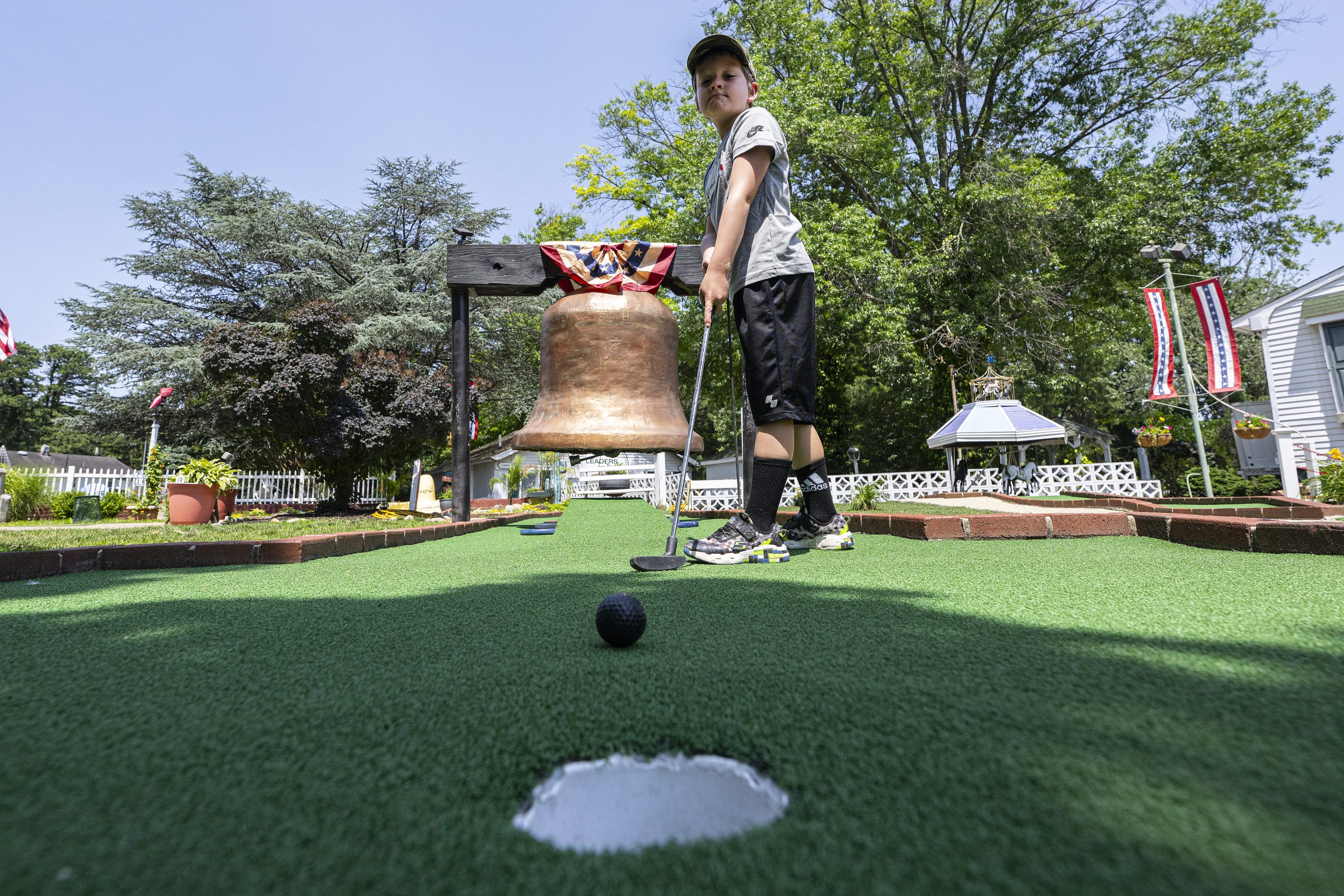
    Jose F. Moreno / Staff Photographer

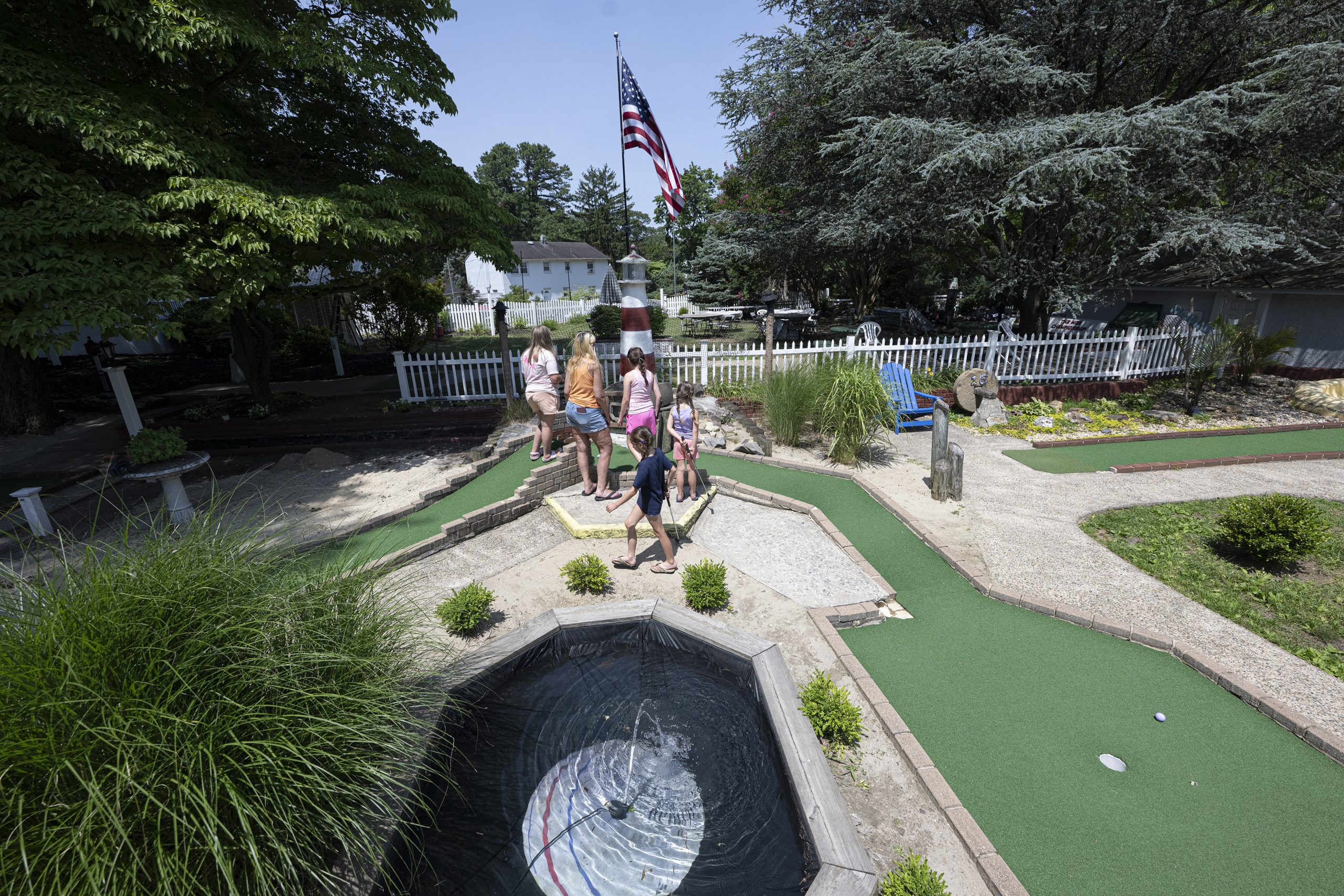
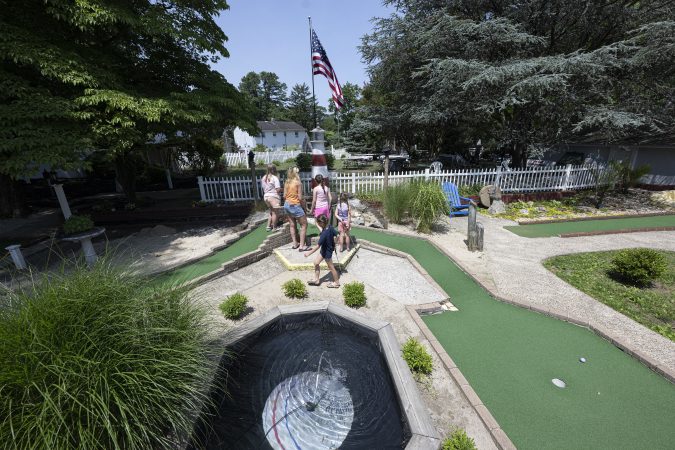
    Bring on some wholesome summer fun and break out the colorful golfballs on a putt-putt course.

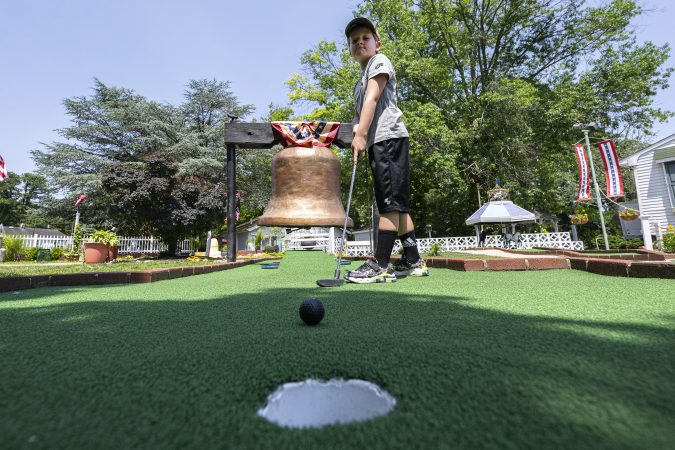
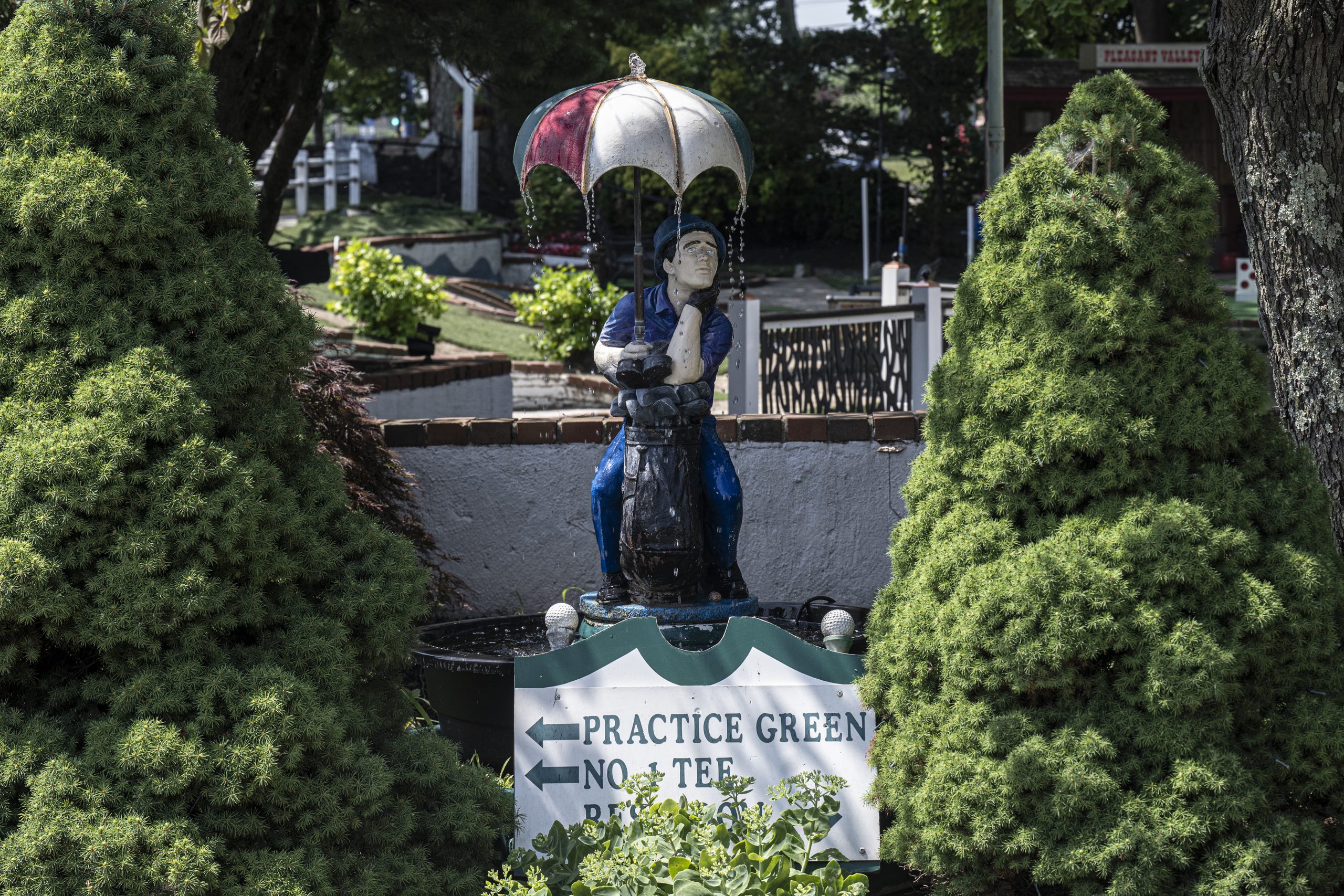
    ⛳If you’re into zany obstacles — like a fiberglass Liberty Bell or an oversized sombrero — then Pleasant Valley Miniature Golf in Voorhees could be for you.

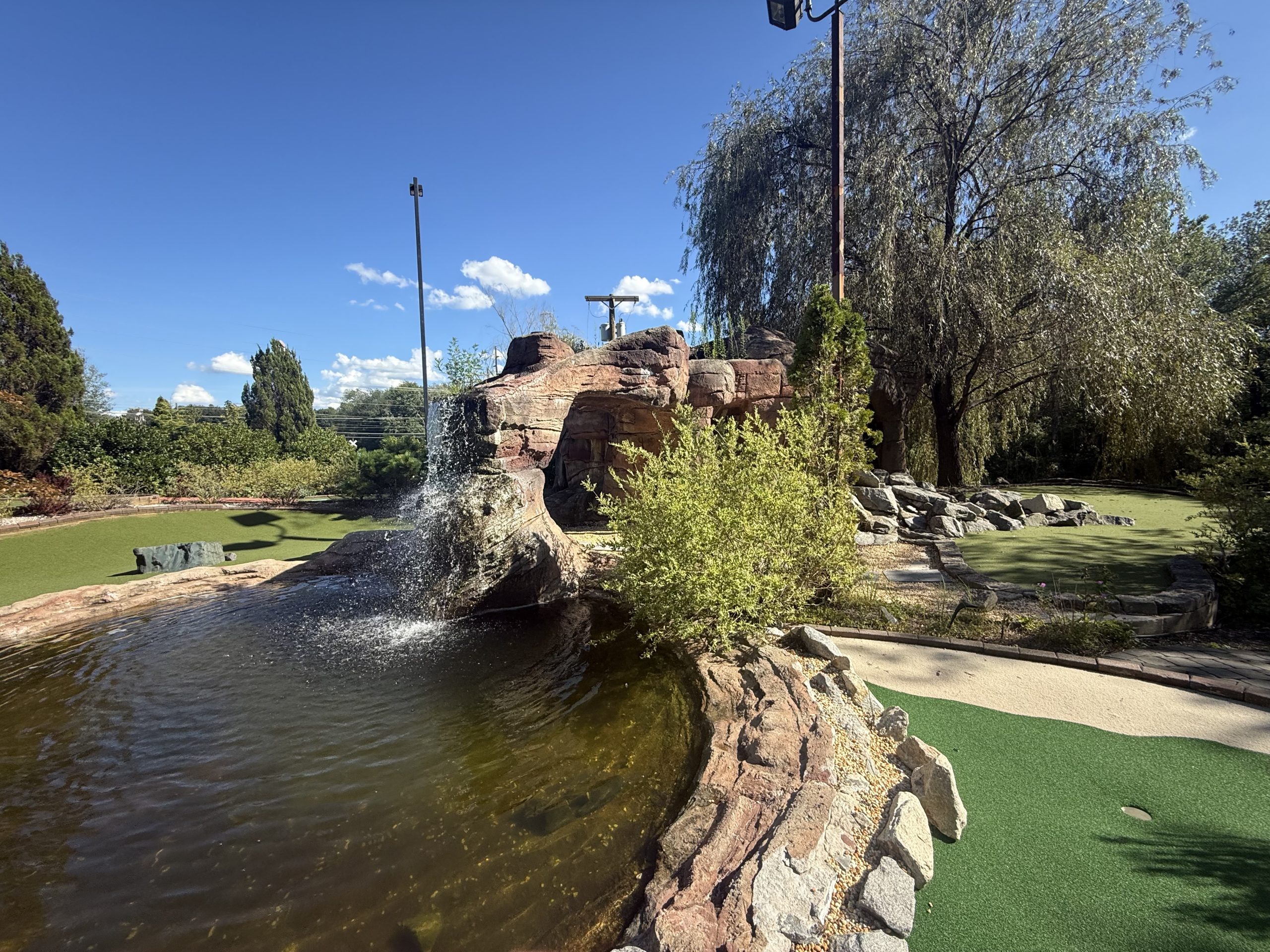
    ⛳How about a more classic experience with a waterfall? The Big Swing Golf Center in Sewell might be the right fit.

    ⛳Want to avoid the heat? There are indoor options, including Monster Mini Golf in Cherry Hill and Turnersville.

    See the full guide of the region’s mini golf courses here.

    Meet the recent high school grads with associate’s degrees

    This year, there were 376 high school students enrolled in New Jersey’s 21-county vocational-technical schools who graduated with associate’s degrees, a new record.

    Vo-tech schools have become more competitive in recent years as they attract students who want an alternative path to careers or college. If students want the latter, these schools provide an affordable option to earn credit for college-level work, saving time and money.

    🎓 The Camden County Technical Schools, which have campuses in Gloucester Township and Pennsauken, have 31 graduates.

    🎓 The Gloucester County Institute in Deptford has 17 graduates.

    🎓 Meanwhile, Burlington County Institute of Technology has students who have earned credits, but none that have earned their full associate’s degrees yet.

    The Inquirer’s Melanie Burney introduces three of the accomplished grads.

    What to know today

    • A man from Browns Mills was caught in a child trafficking sting and has been charged in Bucks County, Pa., with criminal attempt to engage or perform a commercial sex act with a minor and other related crimes, prosecutors said Thursday.
    • More than 200 patients were evacuated from Echelon Care and Rehabilitation Care in Voorhees on Saturday morning because of an air-conditioning failure during a heat wave. They were temporarily moved to Eastern Regional High School where they continued to receive care, according to 6abc.
    • Bill Wine, the Emmy-award winning film and TV critic and longtime La Salle University professor, died at 81 last week. He grew up in West Oak Lane and Cherry Hill. Wine graduated from the old Cherry Hill High School.
    • A former Marine from Sewell pled guilty to sending fake military orders and United States District Court orders to various banks in order to get financial benefits under the Servicemembers Civil Relief Act. The scheme included forging court documents and impersonating a federal protective services inspector, announced U.S. Attorney Robert Frazer on Thursday.
    • PSE&G is expected to begin the installation of a new gas main today on Haddon Avenue in Haddonfield. The crews will be expected to work through the end of August.
    • Connolly Dermatology, the skin-care practice that had 30 locations in New Jersey and Pennsylvania at its peak, is facing a lawsuit filed by a former employee over unpaid wages. Back in May, the New Jersey Department of Labor said it was investigating complaints about three weeks of missed payrolls.
    • DiBartolo’s Cakery will open inside the new Del Buono’s Pastry shop, which is under development in Westmont. The move will bring the notable cake artist Al DiBartolo back to town, according to 42 Freeway.
    • Adele Altadonna, a Camden native, shared her 100th birthday with America’s Semiquincentennial on Saturday, CBS News Philadelphia reports.

    🧠 Trivia time

    How much did Jason and Kylie Kelce’s events this year in South Jersey fundraise for the Eagles Autism Foundation?

    A) $500,000

    B) $615,726

    C) $1.26 million

    D) $1.75 million

    Think you know? Check your answer.

    What we’re…

    🛶 Taking: A canoe tour with Mick’s Canoe & Kayak in Chatsworth.

    👀 Watching: For some rescheduled dates for the various South Jersey July Fourth plans that were postponed because of last week’s heat wave.

    🍴Craving: The corned beef and pastrami at the Kibitz Room in Cherry Hill.

    📬 Your South Jersey view

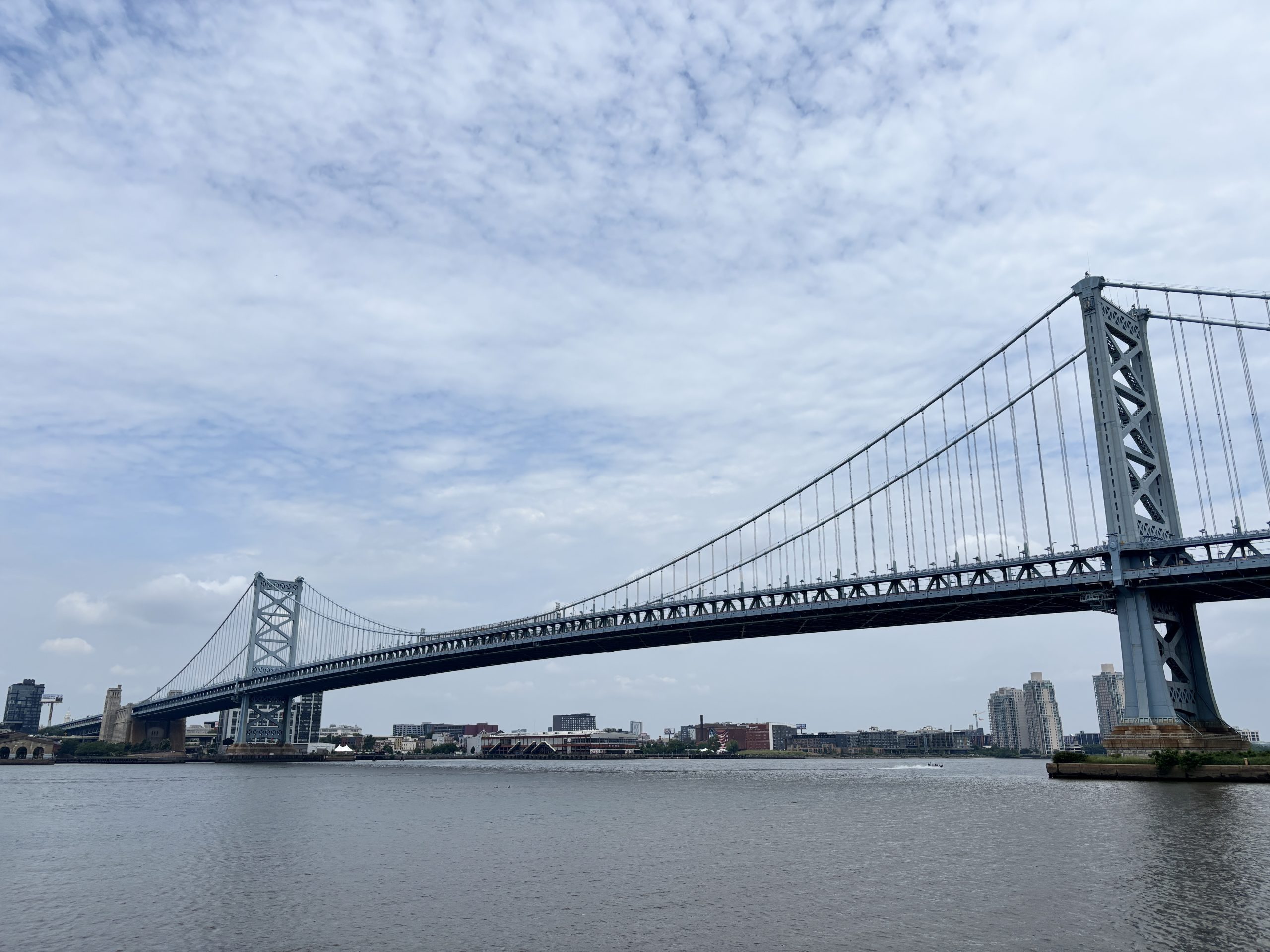
    A view of the Ben Franklin Bridge from the Camden waterfront.Taylor Allen

    The below “South Jersey view” came from reader David Epler, who shared fond memories of the Ben Franklin Bridge on its 100th birthday:

    I have been over the bridge many times over the years. I lived in downtown Camden during my first year in law school in 1975 and walked it out of boredom. My criminal law professor would run it and then have office hours with his knees wrapped in ice!

    Many years later, my bride and I started a Fourth of July tradition. We would park at Rutgers, walk over the bridge, hang out on the mall, have a beer and lunch at the Independence Beer Garden, and then hop on the speed line back to Camden. Mobility issues and age put the kibosh on that.

    The views and perspective were always great and you never knew who you might meet!

    What does your community look like? What South Jersey memory would you like to share? Submit a photo and/or a brief description for a chance to be featured in the Monday edition of this newsletter.

    🗞️ What other South Jersey residents are reading

    And that should get you started for the day. I’ll catch you tomorrow. 👋🏽

    By submitting your written, visual, and/or audio contributions, you agree to The Inquirer’s Terms of Use, including the grant of rights in Section 10.

  • A record number of N.J. students are earning associate’s degrees with their high school diplomas. Meet three of them.

    A record number of N.J. students are earning associate’s degrees with their high school diplomas. Meet three of them.

    When Jasmine Thach began high school four years ago, she wanted to balance academics and extracurricular activities to pursue her college dreams.

    By sophomore year, Thach was enrolled in her first college course. She began taking as many as five classes a semester — enough credits to obtain an associate’s degree in May from Camden County College.

    Thach picked up her second diploma when she graduated in June as valedictorian from Camden County Technical Schools in Pennsauken.

    “I knew that I could do it,” said Thach, 18, of Pennsauken. “I didn’t know how lucky I was.”

    Thach is among a record group of 367 students enrolled in New Jersey’s 21 county vocational-technical schools who graduated with associate’s degrees this year while attending high school. That amounts to 30 more than the previous year, said Jackie Burke, executive director of the NJ Council of County Vocational-Technical Schools.

    “It’s a great outcome,” said Burke. “This is really an attractive option that more people are looking at.”

    Once considered an option mostly for students to pursue skilled trades, vocational-technical schools have become increasingly competitive and are attracting students who want a different pathway to college or careers.

    In a tough economy, the vocational-technical schools make it easier and more affordable for students to earn credit for college-level work. Many have partnerships with county colleges and other nearby two- and four-year colleges, Burke said.

    “It’s a reflection of students seeing the value of getting a head start,” Burke said. “This is really a way to save on those costs.”

    Of the 367 students graduating this year, 31 are from Camden County Technical Schools, which has campuses in Gloucester Township and Pennsauken. The Gloucester County Institute in Deptford has 17 graduates. Burlington County Institute of Technology has students who earned some credits, but none who obtained the full associate’s degree. Cumberland County Technical Education Center in Vineland had the second-highest in the state, with 60 graduates.

    For the 2024-25 school year, more than 35,000 students were enrolled in New Jersey’s county-vocational schools. The schools are selective; only about 12,000 of the nearly 30,000 who apply annually statewide are accepted.

    Students may study a wide range of disciplines, from traditional vocational fields like cosmetology and construction to engineering and health science.

    Under the Early College Associate Degree (ECAD) program, counselors work with students to meet their high school requirements while earning an associate’s degree and attending some of their classes on college campuses.

    In most cases students earn credits at a significantly reduced cost or free. Students can enter four-year colleges as sophomores or juniors, amounting to big savings in time and money.

    Here are the stories of a few of this year’s graduates:

    Jasmine Thach: Wanted to help fund college

    With two siblings already in college, Thach wanted to help ease the financial burdens for her parents. She volunteered as a tutor and participated in performing arts and the newspaper club, all while maintaining her grades.

    She graduated from Camden County College with an associate’s degree in liberal arts and sciences, and from Camden County Technical Schools in Pennsauken.

    In a nod to her Cambodian heritage, she learned to play the kong thom, a traditional Cambodian musical instrument consisting of gongs, and the violin. Every Sunday she travels with her family to Arlington, Va., to take lessons, part of their quest to preserve their culture.

    Jasmine Thach as she graduated from Camden County Technical Schools’ Pennsauken campus last month. Thach, who also received an associate’s degree from Camden County College, plans to attend Johns Hopkins University as a math major.Jose F. Moreno / Staff Photographer

    While her mother and sister learned traditional Cambodian dances, Jasmine discovered a passion for music. “I have two left feet,” she quipped.

    Jasmine received a full scholarship to attend Johns Hopkins University where she plans to major in applied math and statistics.

    She wants to become an actuary and eventually obtain a doctorate and become a college professor.

    “I’m very big on math,” she said.

    Yeheira Acosta: `I’m just really grateful’

    Education has become a family affair for Yeheira Acosta, with her parents and younger sister following in her footsteps to make a better life.

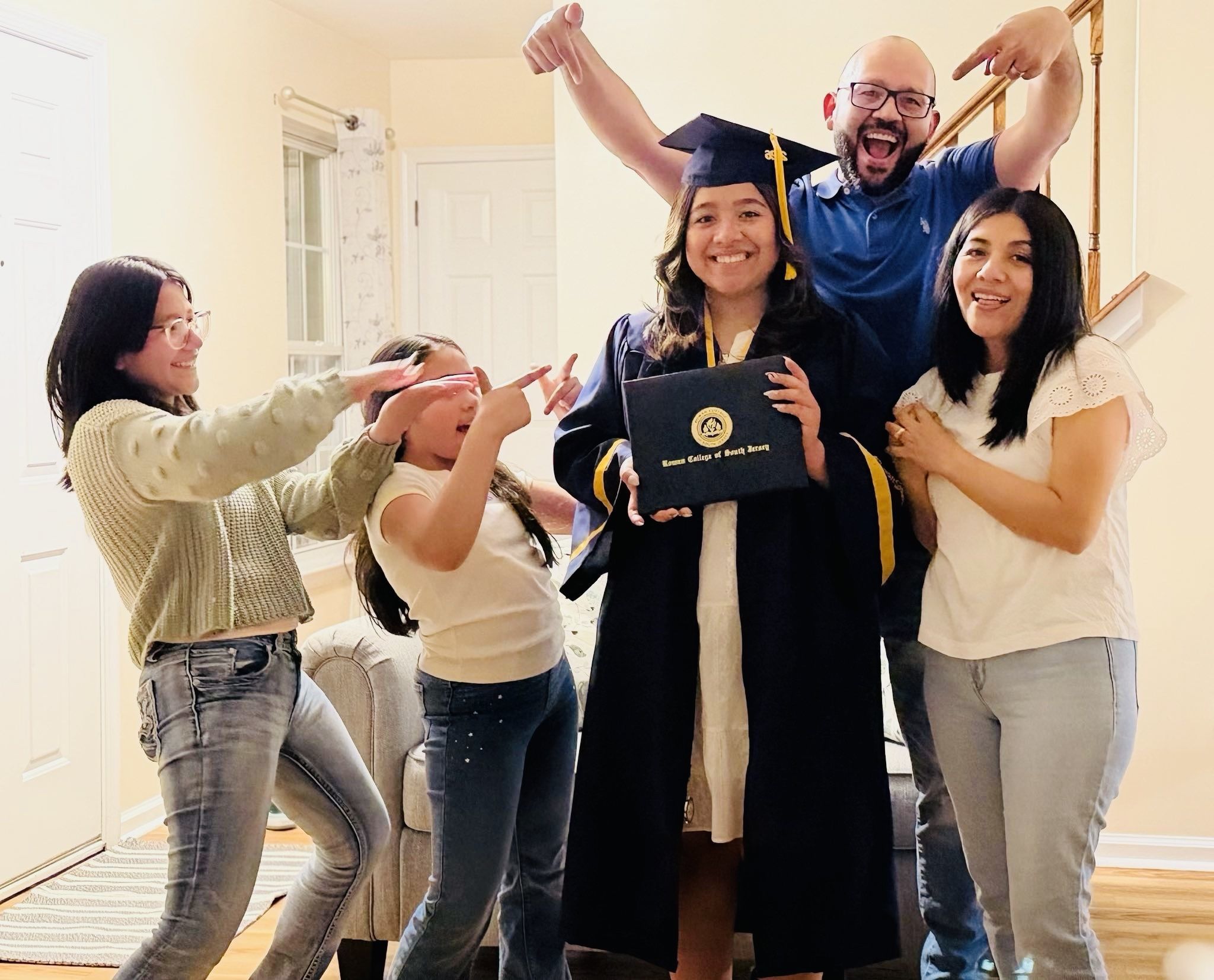
    She graduated in June from Cumberland County Technical Education Center in Vineland and picked up an associate’s degree in computer science from Rowan College of South Jersey.

    Yeheira Acosta of Vineland, N.J., (third from left) shown with her family, graduated from Cumberland County Technical Education Center and obtained an associate’s degree in computer science from Rowan College of South Jersey. She plans to attend Vanderbilt University in the fall.Courtesy of Yeheira Acosta

    A first-generation college student, Acosta has inspired her family. A younger sister is also on track to earn an associate‘s degree while in high school. Her father recently enrolled in a DeVry University online cybersecurity program, and her mother is pursuing a GED.

    Acosta, 18, of Vineland, plans to study AI at Vanderbilt University, where she earned a full ride. A Yankees fan, she wants to work in the sports industry.

    Although she is excited about the next chapter, Acosta said she will miss her family and her church, the Life of Faith in Vineland, where she provides technical support.

    “I‘m just really grateful, not everyone has the same opportunity,” she said. “I don’t take it for granted.”

    Max Yeung: An aspiring lawyer

    The youngest of three siblings, Max Yeung has set his sights on becoming a personal injury lawyer and a public service advocate.

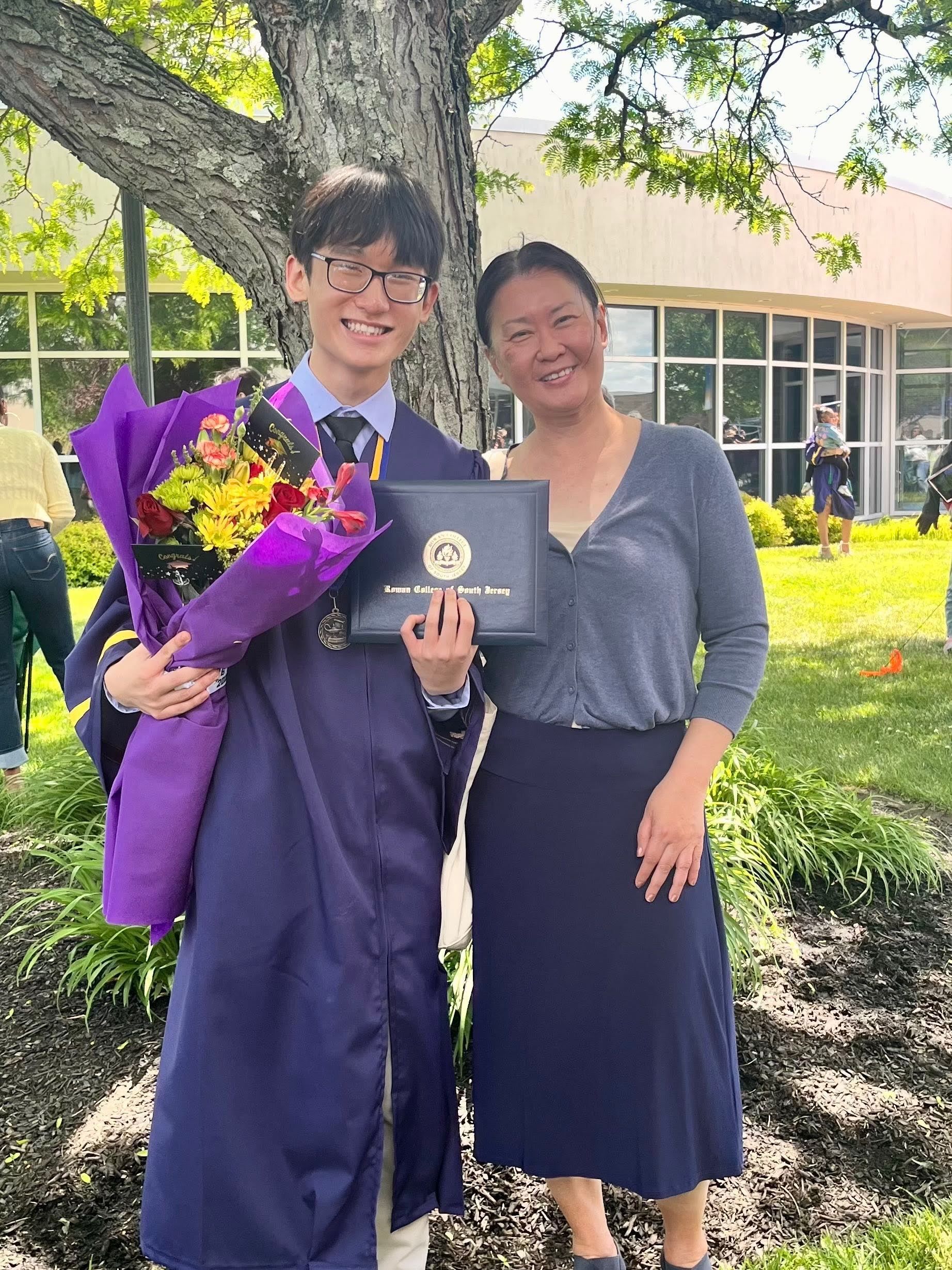
    He obtained an associate’s degree in prelaw from Rowan College of South Jersey in Sewell. Yeung said following a computer science track at the Gloucester County Institute of Technology and an internship he got along the way helped him realize that law is his passion.

    Yeung said he landed an internship at an Audubon law firm with assistance from a college professor. His top priority was completing as many credits as possible.

    Max Yeung, 17, of Sewell, poses with his mother, Li Khoo, after receiving an associate’s degree from Rowan College of South Jersey.Max Yeung

    At his high school, Yeung, 17, of Sewell, founded a nonpartisan civics group that registered students to vote. He was also president of the National Honor Society.

    “It was a lot of juggling. There were a lot of moments when I had to huddle down,” he said. “It helped me understand what the college environment looked like.”

    Yeung plans to attend Rowan University as a law justice major. Depending on how many credits transfer, he may graduate in a year or two and then hopes to attend Rutgers-Camden Law School.

  • What will Media look like in 2035? The borough is planning for diversified housing options, safer streets, and more retail

    What will Media look like in 2035? The borough is planning for diversified housing options, safer streets, and more retail

    What are the defining characteristics of Media, and how should the borough plan for the next decade?

    Those are the questions at the core of “Media 2035,” the comprehensive plan adopted by Media’s borough council last month designed to shape the next chapter of land use, housing, economic development, traffic planning, and environmental decision making in the 5,900-resident Delaware County community.

    “A comp plan is a long-term vision of how a community can look in the future,” Brittany Forman, Media’s borough manager, said.

    The 166-page plan, built on feedback from around 500 residents, is centered around four guiding principles: Preserving Media’s character, fostering inclusivity through housing diversity, preserving the environment, and becoming a more connected and less car-dependent borough.

    Municipalities in Pennsylvania are required to have a comprehensive plan under the Pennsylvania Municipalities Planning Code and must review them every 10 years.

    Media’s leaders have been tasked with stewarding a borough that has seen immense economic growth in recent decades, transforming it from a sleepy town wrought by financial disinvestment and crime to a cultural hub and destination for families settling in the suburbs. While Media’s metamorphosis has brought new residents and investment into the borough, it has also pushed the community’s limits around housing affordability, traffic, and growth.

    “We’re a victim of our success, and it’s a good thing to be a victim of your own success,” said borough Council President Mark Paikoff. “But careful planning really is helpful.”

    Here are four key takeaways from Media’s comprehensive plan.

    Media’s charm has made it a desirable, and increasingly unaffordable, place to live

    Surveyed residents said Media’s “small-town feel,” including its historic architecture, walkability, and diverse local businesses, is the borough’s most important asset. Yet the traits that make Media a great place to live have also made it a harder place to afford to stay.

    “For generations, Media has prided itself on being ‘Everybody’s Hometown,’ a motto that reflected a genuine reality: a community where wealthy professionals, hourly service workers, young families, and retirees lived side-by-side,” the comprehensive plan states, adding that economic diversity was made possible by a “varied housing stock that offered entry points for people at every stage of life.”

    As demand for walkable, transit-accessible living has surged in the Philly region, rising real estate costs are chipping away at this accessibility, creating a “severe burden” for a large segment of Media, notably seniors, teachers, nurses, and first responders, the plan states.

    Recommendations outlined in the plan include deepening partnerships with affordable housing agencies, updating the borough’s zoning code to spur housing development in key areas, and promoting non-traditional housing options like in-law suites. Officials said there’s a significant opportunity in converting underutilized office spaces into housing, as many of Media’s vacant offices are already located in former residential properties.

    Paikoff said the borough has had informal conversations with developers who are interested in both renovating older units and building new housing, though he stressed that bringing additional housing to the borough “will take some time.”

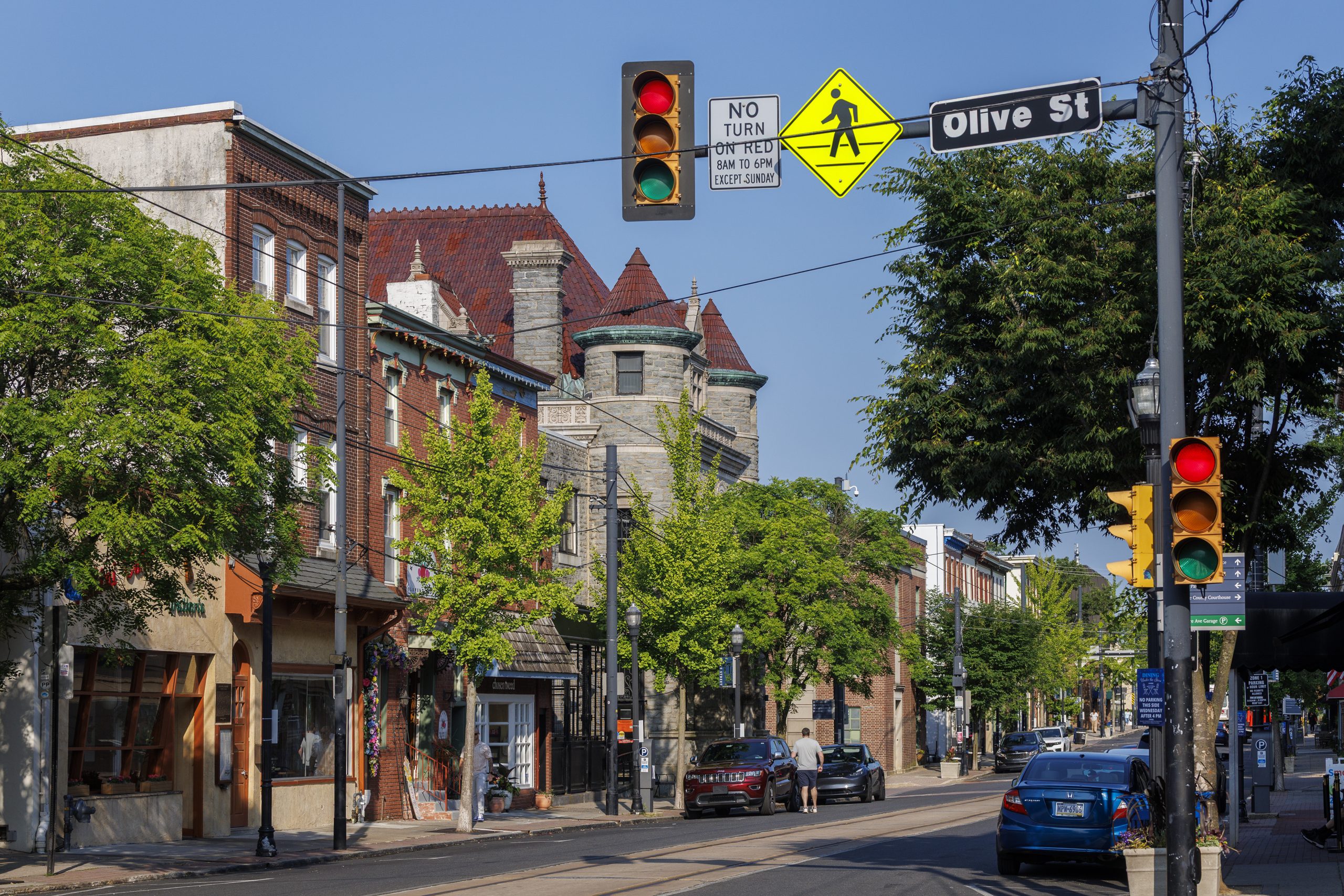
    Downtown Media on a June day. Alejandro A. Alvarez / Staff Photographer

    Media has strong transit access but ample traffic safety challenges

    Media is defined by its density. The borough’s footprint is under one square mile, and it’s a place where pedestrians, cyclists, cars, buses, and SEPTA trolleys regularly interact.

    “For a small town, I’d say we’re very sophisticated in terms of multimodal transportation,” said Forman.

    Yet Media’s density and busy streets have also created the conditions for traffic safety issues. The borough recorded eight vehicle crashes resulting in serious injury and two resulting in death between 2013 and 2024. A 2020 traffic study conducted by the borough found that drivers regularly speed, especially along Baltimore Avenue, and roll through stop signs. Media’s only bicycle infrastructure comes in the form of painted road markings. Residents expressed a desire for more crosswalks, less disruptive downtown traffic patterns, and protected bike lanes.

    Parking, too, remains a “source of friction.” The Baltimore Avenue parking garage is the anchor of the borough’s parking system, but it’s aging and requiring increased maintenance. At the same time, a surge in food delivery services has led to frequent double-parking outside of restaurants and blocking travel lanes. Media’s current parking and loading setup, the plan states, is “largely organized for a world that no longer exists.”

    The vast majority of Media’s workforce lives outside the borough

    Nearly all workers employed in Media commute from outside the borough. Of the approximately 9,800 primary jobs in Media, only 2.5% are held by residents. While Media’s accommodation, food service, healthcare, and arts and entertainment sectors have grown, its office administration, public administration, and wholesale trade sectors have shrunk. Overall tax revenues have increased in the past decade, led primarily by a growth in earned income tax revenues.

    The post-pandemic shift to hybrid and remote work has also “fundamentally altered” travel behavior in the borough, according to the plan. Twenty percent of Media residents worked from home in 2023, up from 3% in 2014, according to estimates from the U.S. Census Bureau. With fewer residents and workers commuting on a daily basis, traditional 9-to-5 traffic on SEPTA’s Regional Rail and trolley lines has shifted, following regional and national trends. Local neighborhood activity, on the other hand, has increased during the workday.

    Elizabeth Romaine, borough council vice president, said local businesses are already shifting to meet new consumer patterns, extending their hours or opening on weekdays when they would have previously been closed.

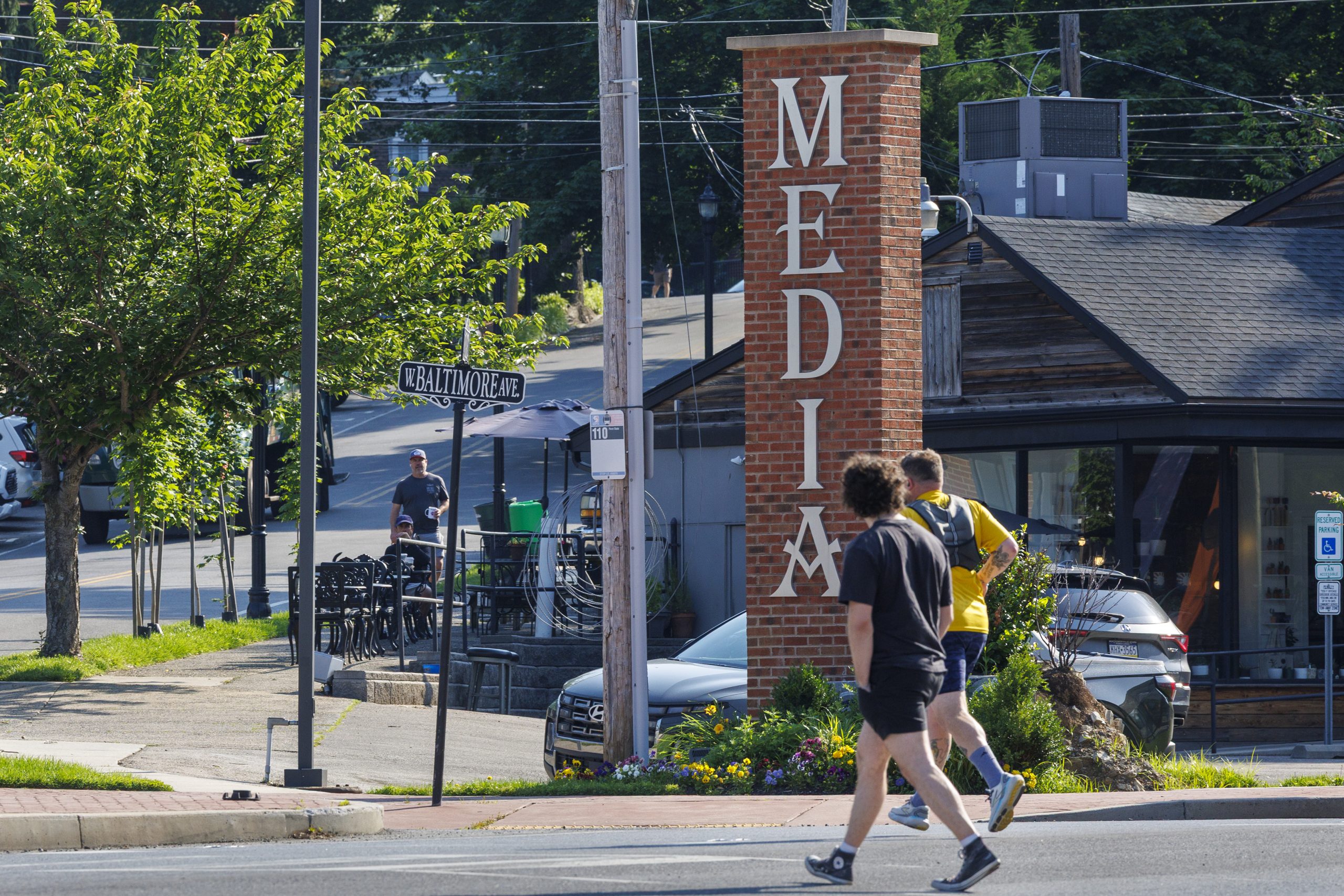
    The intersection of W. State Street and Baltimore Pike in Media. Alejandro A. Alvarez / Staff Photographer

    Residents love Media’s dining scene, but want more retail options

    Nearly 80% of surveyed residents reported satisfaction with Media’s vibrant restaurant scene, which draws diners from across the region. Media’s downtown is viewed as the borough’s “defining economic and social heart,” according to the plan.

    At the same time, residents expressed desire for a greater variety of retail, dining, and entertainment options. Non-food destinations and stores that fulfill everyday needs, specifically bakeries, clothing and home goods stores, and fitness centers, are outlined as particular areas of need.

    Romaine said Media has had some recent “retail successes,” like the opening of Sonny’s Vintage Clothing on State Street and the expansion of craft store Homesewn.

    The plan recommends increasing funding for the Media Business Authority, conducting a business-focused parking study and crosswalk inventory, and working to court new retailers. Recommendations also include enhancing programming at the Media Theatre to generate more foot traffic, deepen Media’s identity as a cultural destination, and “further solidify Media’s draw for visitors from across the region.”

    This suburban content is produced with support from the Leslie Miller and Richard Worley Foundation and The Lenfest Institute for Journalism. Editorial content is created independently of the project donors. Gifts to support The Inquirer’s high-impact journalism can be made at inquirer.com/donate. A list of Lenfest Institute donors can be found at lenfestinstitute.org/supporters.

  • 🧑‍🏫 Teachers stuck in limbo | Morning Newsletter

    Good morning, Philly! Welcome to the start of a new week.

    While Philadelphia and school district officials have celebrated a deal to save 340 classroom jobs, teachers and staff members face continued uncertainties in an already tumultuous hiring season.

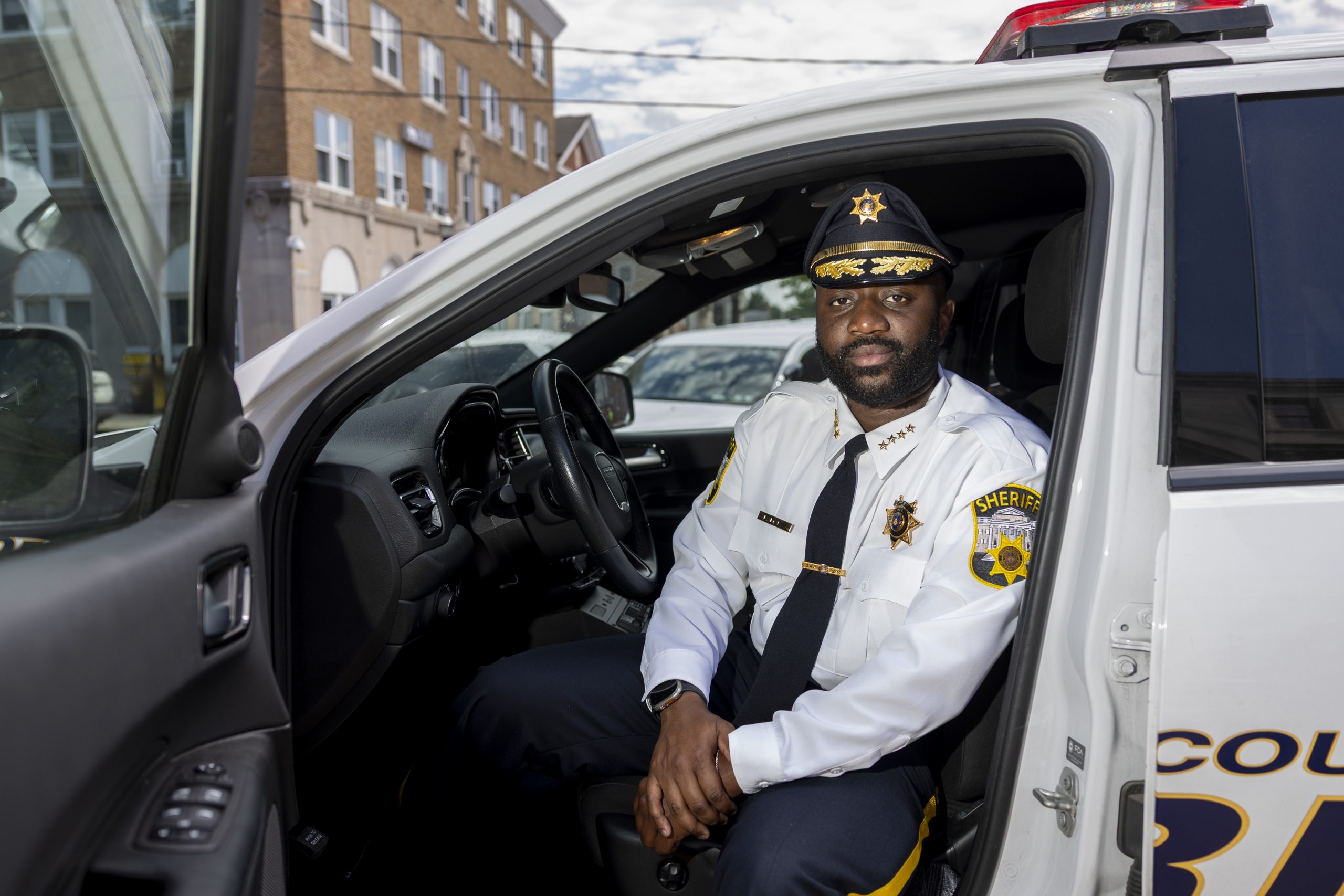
    In other news, the newly elected sheriff of Delaware County, Siddiq Kamara said he was motivated to run after his cousin, Fanta Bility, was killed by Sharon Hill police while leaving a football game in August 2021. “The people in Delaware County, I’m here to work with them,” he said.

    Plus, some Philly residents are questioning the late July Fourth fireworks, and more news of the day.

    — Sam Stewart (morningnewsletter@inquirer.com)

    If someone forwarded you this email, sign up for free here.

    ‘I’m on this roller coaster’

    When a deal was struck to save 340 classroom-based jobs in the Philadelphia School District, Mayor Cherelle L. Parker and Superintendent Tony B. Watlington Sr. declared it “Christmas in June.”

    It’s July now, but staffers still don’t have clarity on exactly who’s allowed to come back to positions that were almost cut, and how that affects vacancies systemwide.

    Monique Braxton, the school district spokesperson, said the system is “moving forward with restoring the approximately 340 school-based positions approved in the revised budget,” but that staffing the positions is separate from restoring them.

    The complex process is causing additional uncertainty for teachers and staff members, and prolonging an already tumultuous hiring season as the district deals with fallout from 17 forthcoming school closings and the back-and-forth over millions in cuts stemming from a $300 million district budget deficit.

    The Inquirer’s Kristen A. Graham has the full story.

    There’s a new sheriff in town

    Siddiq Kamara remembers standing side by side with his aunt outside of the Delaware County courthouse and calling for changes in how police are trained, after a stray bullet fired by Sharon Hill police officers killed his cousin, Fanta Bility. Three years later, Kamara’s office is inside that same courthouse.

    Kamara, 30, became the youngest sheriff in Delaware County history when he cruised to victory in November with 63% of the vote. He’s a born-and-raised Delco native who turned his family’s tragedy into a platform for improving the way community policing is carried out in his home county.

    Notable quote: “This is the greatest country in the world. Being 30, being Muslim, being a first generation immigrant, and being the sheriff of one of the biggest counties in Pennsylvania, it’s unheard of. And I don’t take that lightly.”

    In his first six months in office, Kamara has equipped all of his deputies with body cameras and beefed up recruiting efforts, including opening fitness tests throughout the county to help fill the 35 vacancies he inherited. He’s mandated de-escalation and regular firearms training for his deputies, in memory of his cousin.

    Vinny Vella has more on Kamara’s inspiring story.

    What you should know today

    • Linemen, call center workers, and other Peco employees went on strike over the weekend. The roughly 1,500 unionized workers, part of IBEW Local 614, officially walked off the job, becoming the first employees to strike in Peco’s history.
    • U.S. men’s soccer team star striker Folarin Balogun will be available to play in Monday’s World Cup round of 16 game after all.
    • University of Pennsylvania physician Anuja Dokras spent the last 14 years working to rename a common medical condition that can impact fertility in women, called polycystic ovary syndrome, or PCOS.
    • City officials have estimated that hundreds of thousands of people have flocked to the monthlong World Cup watch party, which started in mid-June and is set to run through mid-July. But last week, some Brewerytown business owners said they had yet to reap the benefits.
    • The Trump administration will not seek new bids to repair the Lincoln Memorial Reflecting Pool, Interior Secretary Doug Burgum said Sunday as he faced new questions about the troubled project and the taxpayer money involved.

    Quote of the day

    City officials originally planned for Fourth of July fireworks to go off around midnight, but because of weather delays, the show didn’t start until roughly 2:30 a.m. Some residents are questioning that choice, but the city said safety was a big factor.

    🧠 Trivia time

    Which celebrity duo was just married at Madison Square Garden with actor Adam Sandler officiating?

    A) Taylor Swift + Travis Kelce

    B) Zendaya + Tom Holland

    C) Rihanna + A$AP Rocky

    D) Kylie Jenner + Timothée Chalamet

    Think you know? Check your answer.

    What we’re …

    🤔 Wondering: Was it rude to turn down a Fourth of July barbecue because it’s 1,000 degrees outside? You asked, we answered.

    🌎 Learning: Where tourists are traveling from to visit Philadelphia for the World Cup. As it turns out, Ecuador was one country where travel surged.

    🏡 Impressed by: A man cut his rent by $2,000 a month. Within months, he had saved enough to buy his own house in Southwest Philly.

    🧩 Unscramble the anagram

    Hint: One of the Founding Fathers of the United States

    INN LANK BENJI FARM

    Email us if you know the answer. We’ll select a reader at random to shout out here.

    Cheers to Brian Lowy, who solved the last anagram: Danny’s Guitar Shop. The destination for Main Line musicians closed its doors after 17 years.

    Photo of the day

    Will Smith performs at the One Philly: Unity Concert for America on the Benjamin Franklin Parkway on Sunday.Yong Kim / Staff Photographer

    📸 One more thing: Check out what else our photographers saw over the weekend.

    📬 Your ‘only in Philly’ story

    Think back to the night that changed your life that could only happen in Philly, a true example of the Philly spirit, the time you finally felt like you belonged in Philly if you’re not a lifer, something that made you fall in love with Philly all over again — or proud to be from here if you are. Then email it to us for a chance to be featured in the Monday edition of this newsletter.

    This “only in Philly” story comes from reader Gerard Letterie, who describes pretzels and politics:

    Pretzel vendors and the occasional “pretzel boy” roving through neighborhoods in the summer were proudly part of the Philly scene in the 1960s and ’70s. My image of the average pretzel vendor changed with Frank Lomento, whose presence at his pretzel stand at the Free Library of Philadelphia and the Parkway Central Library was a familiar sight.

    My Sunday afternoons were spent at the Central Library hammering out college writing assignments. The pretzels were a midafternoon incentive. As I learned while grabbing a pretzel, Lomento was a man of opinion. In 1971, he decided to run for mayor. He had no political background. No deep pocket sponsors. No super PAC. Just a pretzel vendor cart, a Squeeze Please yellow mustard dispenser, and an iconic presence at the curbside. He had a willingness to talk politics in addition to selling you a pretzel.

    When he announced his candidacy, he propped up a cardboard sign with a handwritten message: “Frank Lomento for Mayor.” In Lomento’s opinion, what couldn’t be fixed with a pretzel (slathering of mustard optional) needed a political solution. So, he stepped up and in to the mayoral fray.

    In an unusually crowded candidate field for the ’71 Democratic mayoral primary, Frank Lomento stood out as an independent and, by some counts, a “protest candidate” alongside William J. Green III, Ira Einhorn, James E. Poole, Albert Sprague, Frank Rizzo, and Hardy Williams. Rizzo ultimately won as the machine-backed candidate, known as “the toughest cop in America.”

    Undaunted and after a time away from politics, Lomento entered the mayoral race again in 1983. He lost, but he also gathered 19,000 votes. He was a common, blue-collar guy with a presence and a message that resonated on several levels with Philly’s working-class crowd.

    Where else other than Philadelphia would you find a pretzel vendor who leveraged (both figuratively and literally) a man-on-the-street presence into a mayoral candidacy? Not once, but twice in a major American city? A regular guy with the courage to run for office. Totally and uniquely Philly. And an abiding memory of Philadelphia for me, among so many others.

    👋 Talk to you later, Philly!

    By submitting your written, visual, and/or audio contributions, you agree to The Inquirer’s Terms of Use, including the grant of rights in Section 10.

  • A cow beauty pageant honors rural Pennsylvania’s shrinking dairy industry

    A cow beauty pageant honors rural Pennsylvania’s shrinking dairy industry

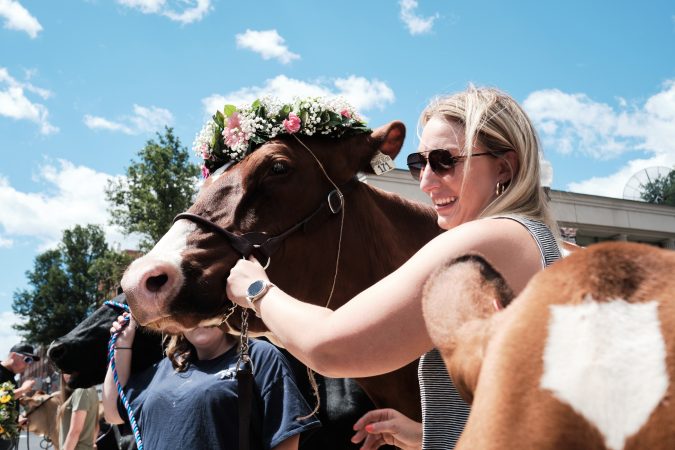
    TOWANDA, Pa. — Her full name was Cashells Jry Shakira-Red-ET — Shakira to keep it simple — and like her namesake, the big red and white Holstein had 6-foot hips that didn’t lie as she hoofed down Main Street.

    Shakira is a showgirl accustomed to winning, one of the few cows that allowed judges to place a floral crown on her head at the Bradford County dairy cow beauty pageant in Towanda on June 20, about 100 years after their last one.

    “The most beautiful dairy cow in Bradford County, folks,” said Duane Naugle, Bradford County’s community planner and the day’s emcee.

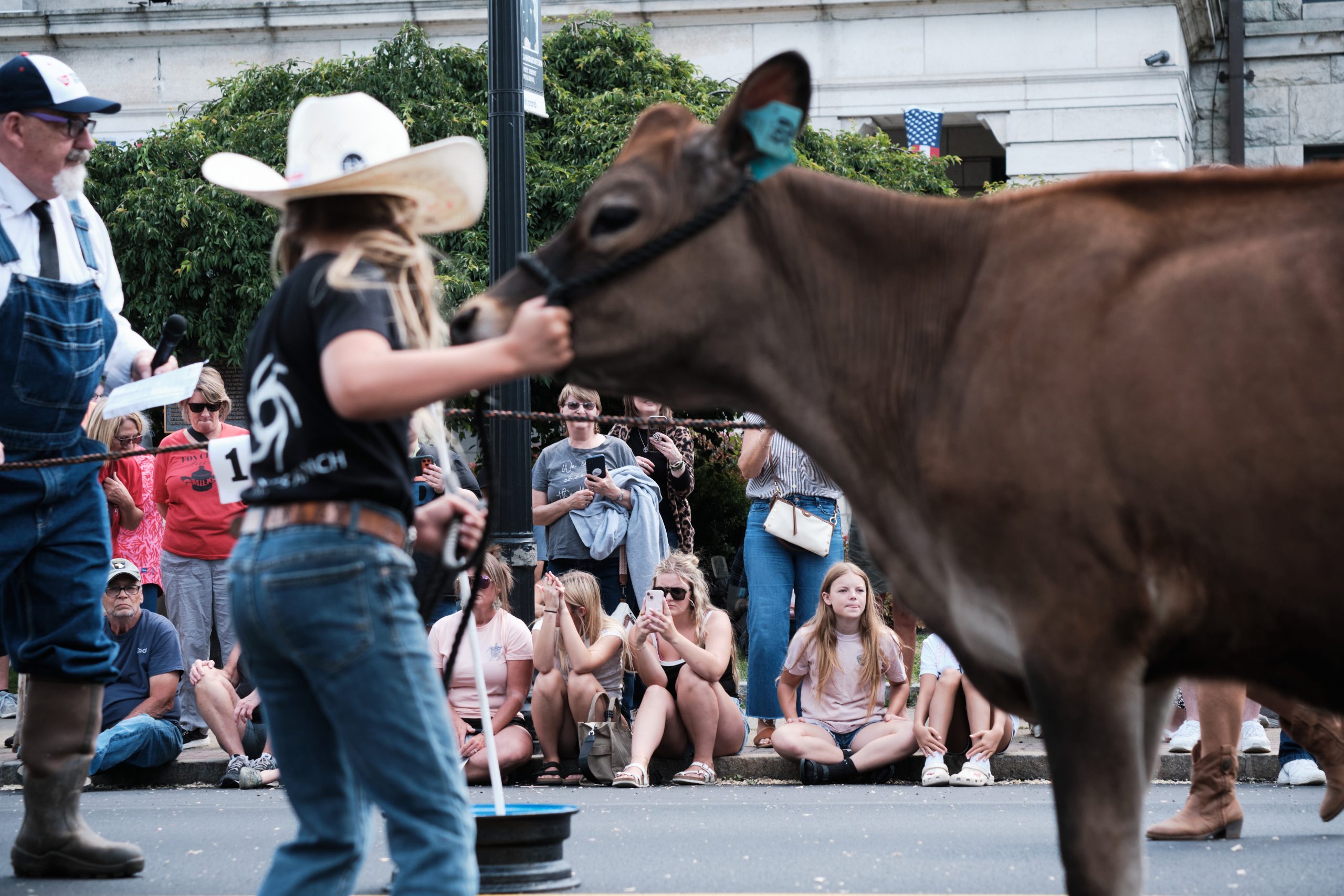
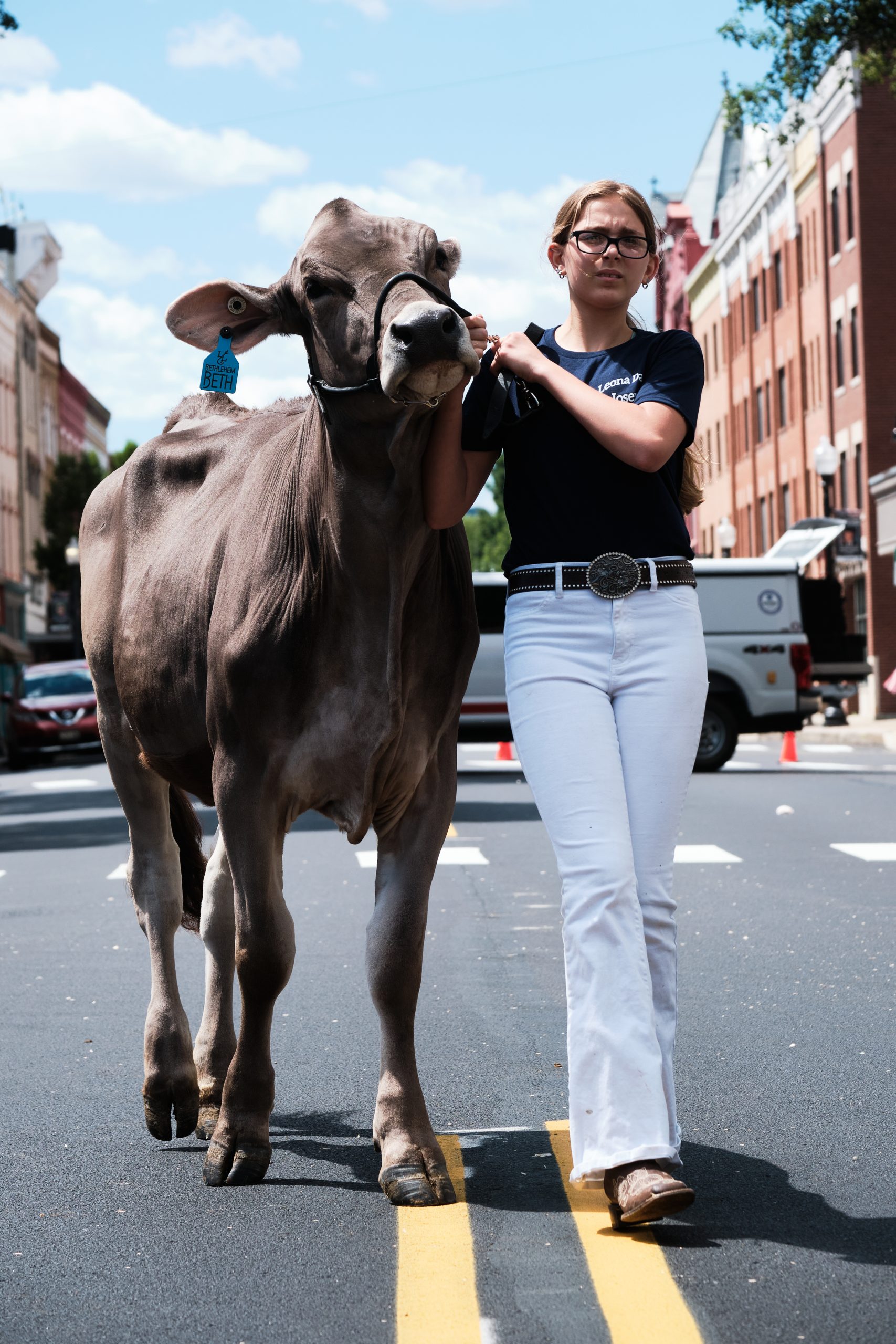
    A heifer is walked down Main St. in front of the County Courthouse in Towanda, Pa., for a cow beauty contest held on Saturday, June 20, 2026.Max Blease / For The Inquirer

    Other winners were Skylar, a Lineback heifer, and Camo, a doe-eyed Brown Swiss calf.

    “They’re my favorite breed. They’re just so dopey and docile,” Miranda Neville, a dairy farmer out of Warren Center, said of Camo. “I mean, just look at her.”

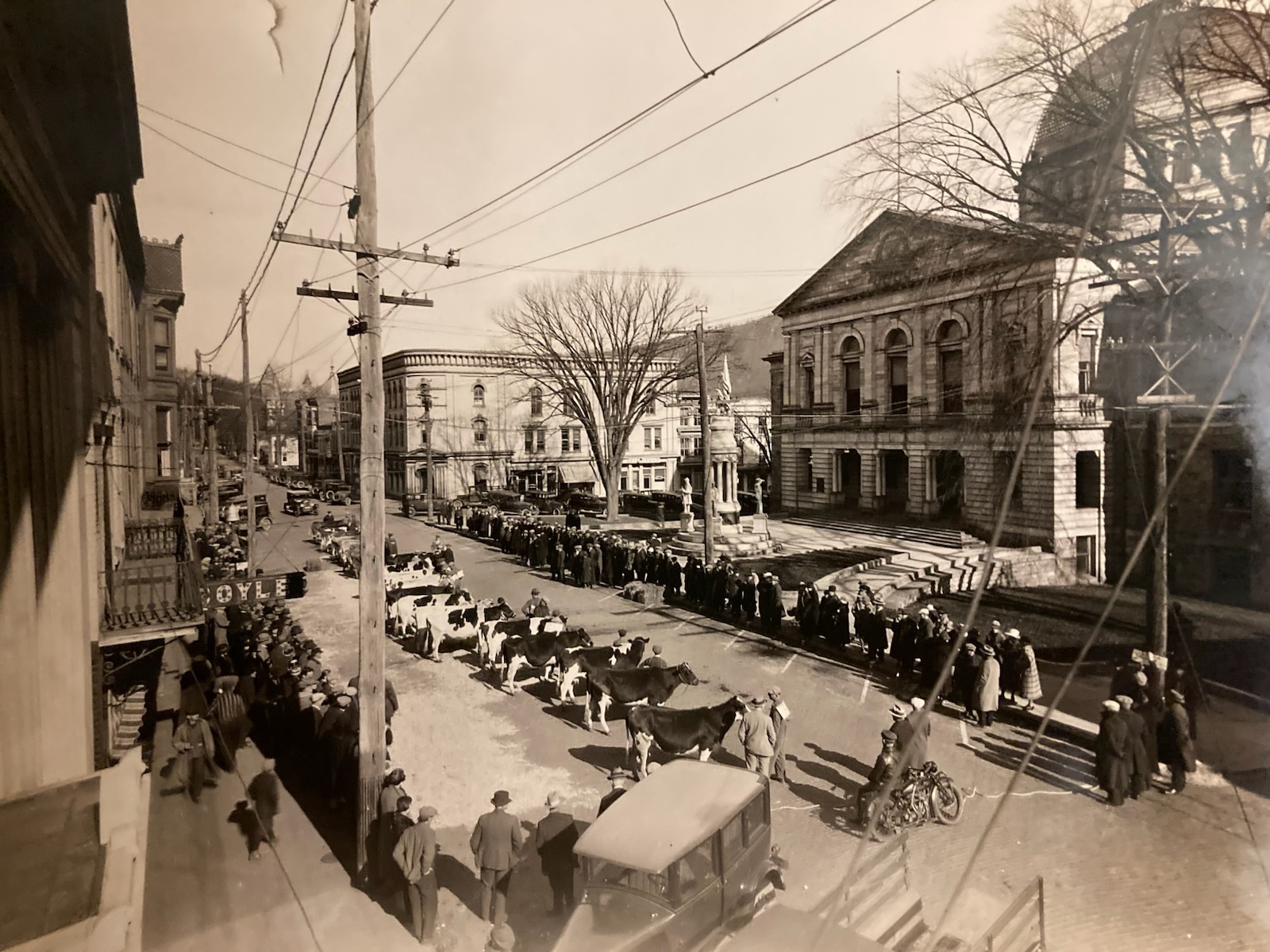
    Bradford County, population 59,600, sits about 175 miles northwest of Philadelphia in North Central Pennsylvania. County officials said they found an old, black-and-white photo of a similar beauty pageant from 1926 in the county courthouse recently.

    The 1926 event in Bradford County.Bradford County

    The purpose of that contest a century ago, organizers said, was to highlight the county’s bustling dairy industry.

    “Getting down to the main idea, it may be stated that the Chamber of Commerce has seized upon this opportunity of giving recognition to the basic industry of Bradford County — dairying,” The Daily Review newspaper wrote in 1926.

    Officials figured that old photo was a sign, a good-enough reason to get cows on Main Street as part of the county’s ongoing celebration of America’s 250th. There was also free ice cream, a cow milking contest, and other livestock to pet.

    Dixie Joseph leads her heifer down Main Street in Towanda, Pa., for a cow beauty contest in front of the Bradford County courthouse on June 20.Max Blease / For The Inquirer

    A lot has changed in dairy over the decades, as dairy farms have shuttered by the thousands, nationwide. In 2025, the USDA reported 23,609 dairy farms across the country, a 70% decrease in just 20 years.

    Earlier this year, The Inquirer chronicled the plight of a longtime dairy farm in New Jersey’s most rural county. Owners there were denied a variance to install solar panels and stopped milking shortly after.

    “We have been losing money for the last 10 years,” a young farmer there told The Inquirer.

    Henry Farley, the mayor of Sayre, Bradford County, said there were 41,311 dairy cows in the county in 1920. That number is down to 10,059 dairy cows today, he said.

    “We remain an agricultural county, and dairy is still a big part of it,” he said. “This is still rural America, and this was a great way to showcase that.”

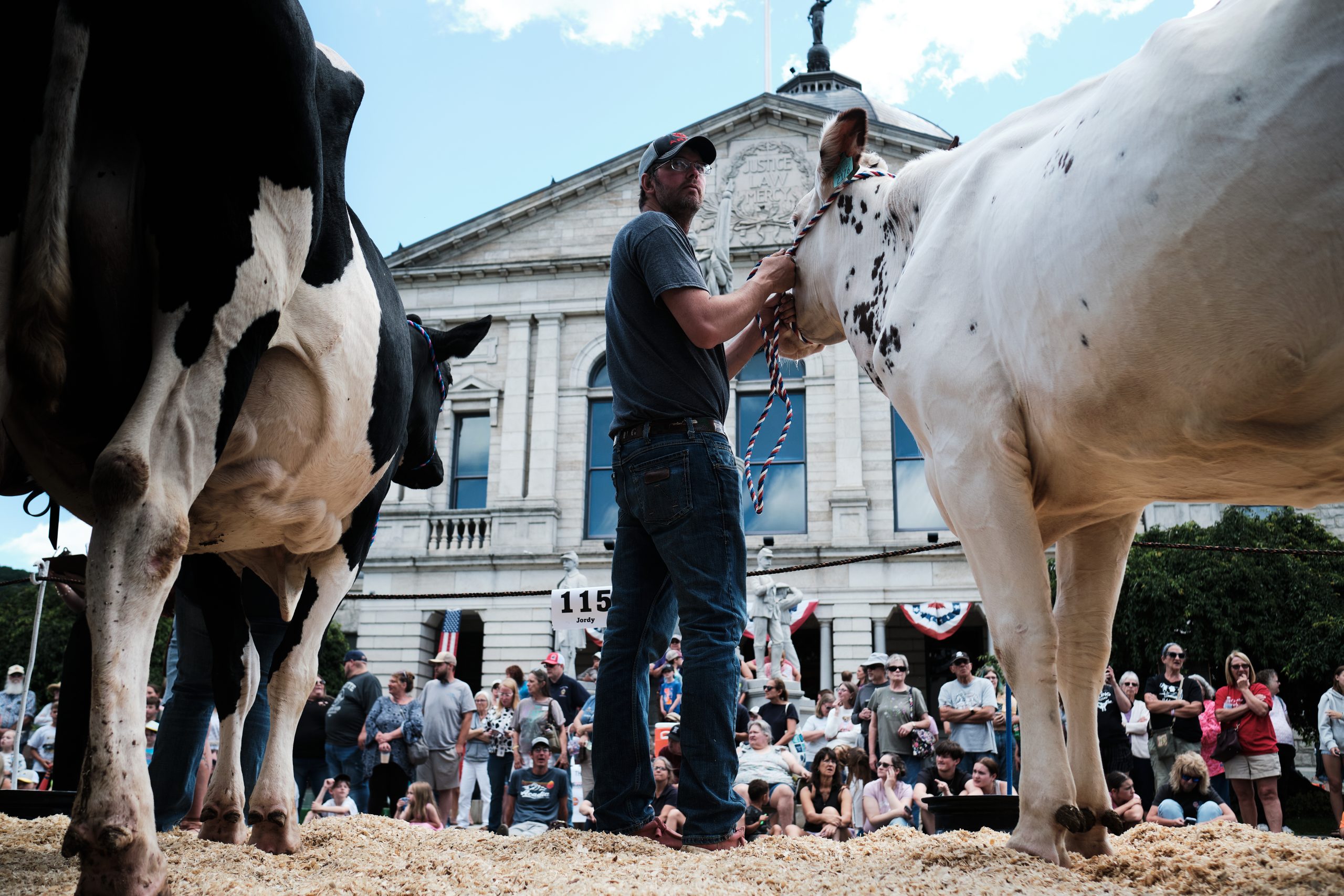
    A cow owner glances back in front of a crowd gathered at the Bradford County courthouse for a cow beauty contest in Towanda, Pa., on June 20.Max Blease / For The Inquirer

    Top employers in Bradford County include medical facilities, a mill, Walmart, and Cargill, a beef-processing plant in Wyalusing, where most major league baseballs are made from dairy cow hides.

    Many of the farmers in Towanda on June 20 owned small farms, which are the hardest to keep afloat. Most of the owners couldn’t depend on dairy as a full-time income and worked other jobs as a result.

    Many dairy farms in Bradford County have transitioned to beef, poultry, or swine.

    “Well, it’s pretty simple. Dairy prices are down, and beef is up,” said dairy farmer McKenzie Slater.

    Neville said she still milks 60 cows at her dairy, Vin-Deb Farms, but it’s not her only source of income. She also works for Bradford County’s conservation district.

    Sheyann of Campbell Farm rests on top of her calf, Norma, ahead of Bradford County’s cow beauty contest in Towanda, Pa., on June 20.Max Blease / For The Inquirer

    “We all have full-time jobs, too, along with farming,” Neville said. “That’s normal around here.”

    Even Shakira, the showgirl, still milks, producing more than 11 gallons per day. She’s just preened and washed a bit more. Her udders hung low on Main Street.

    “She’s milking pretty heavy right now,” said owner Hannah Watson, of Columbia Crossroads, Bradford County. “It’s whole milk, straight from the cow.”

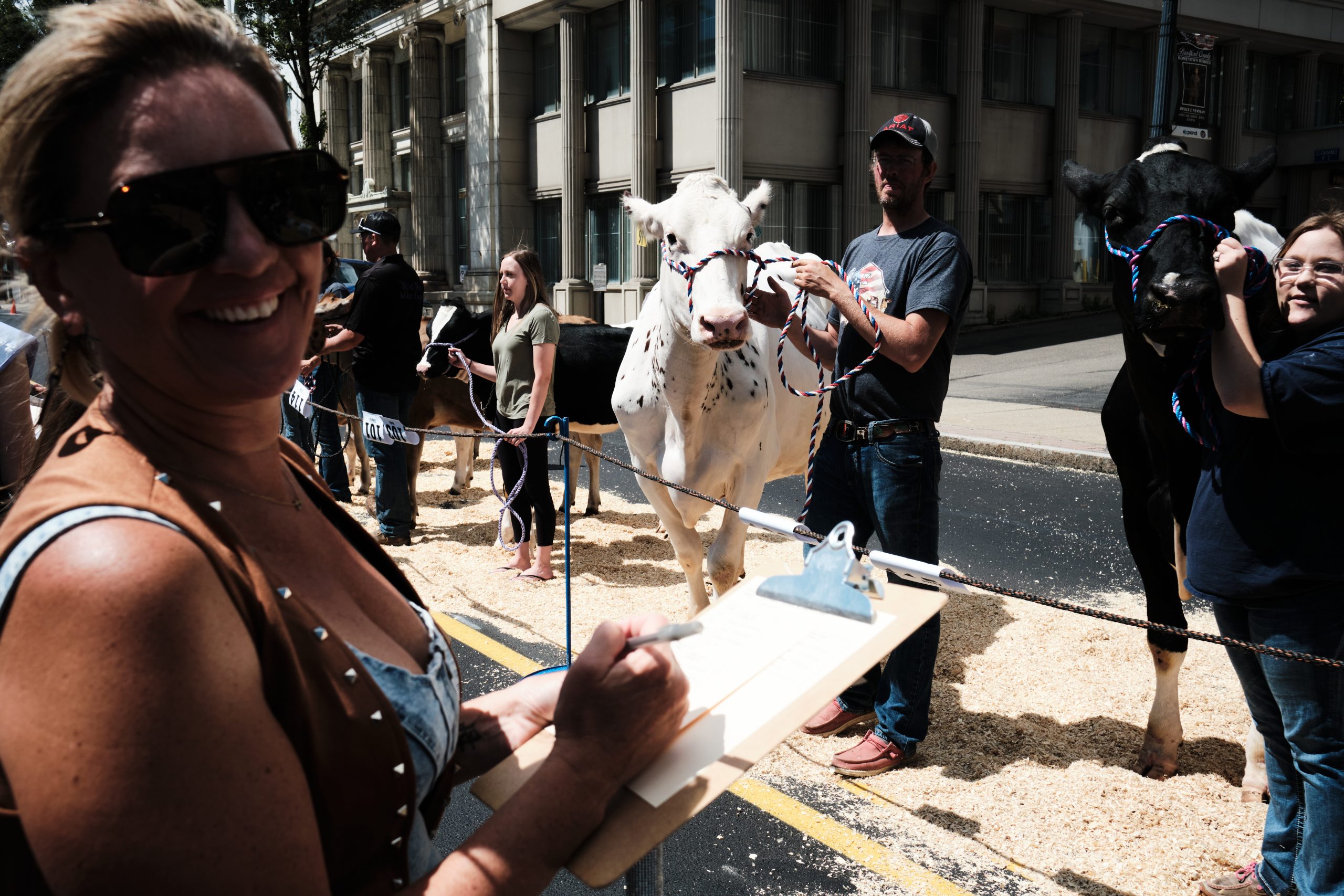
    A judge scores the cows on their beauty in front of the Bradford County courthouse in Towanda, Pa., on June 20.Max Blease / For The Inquirer
  • When the buzziest restaurants in Philly need a menu, this is the designer they call

    When the buzziest restaurants in Philly need a menu, this is the designer they call

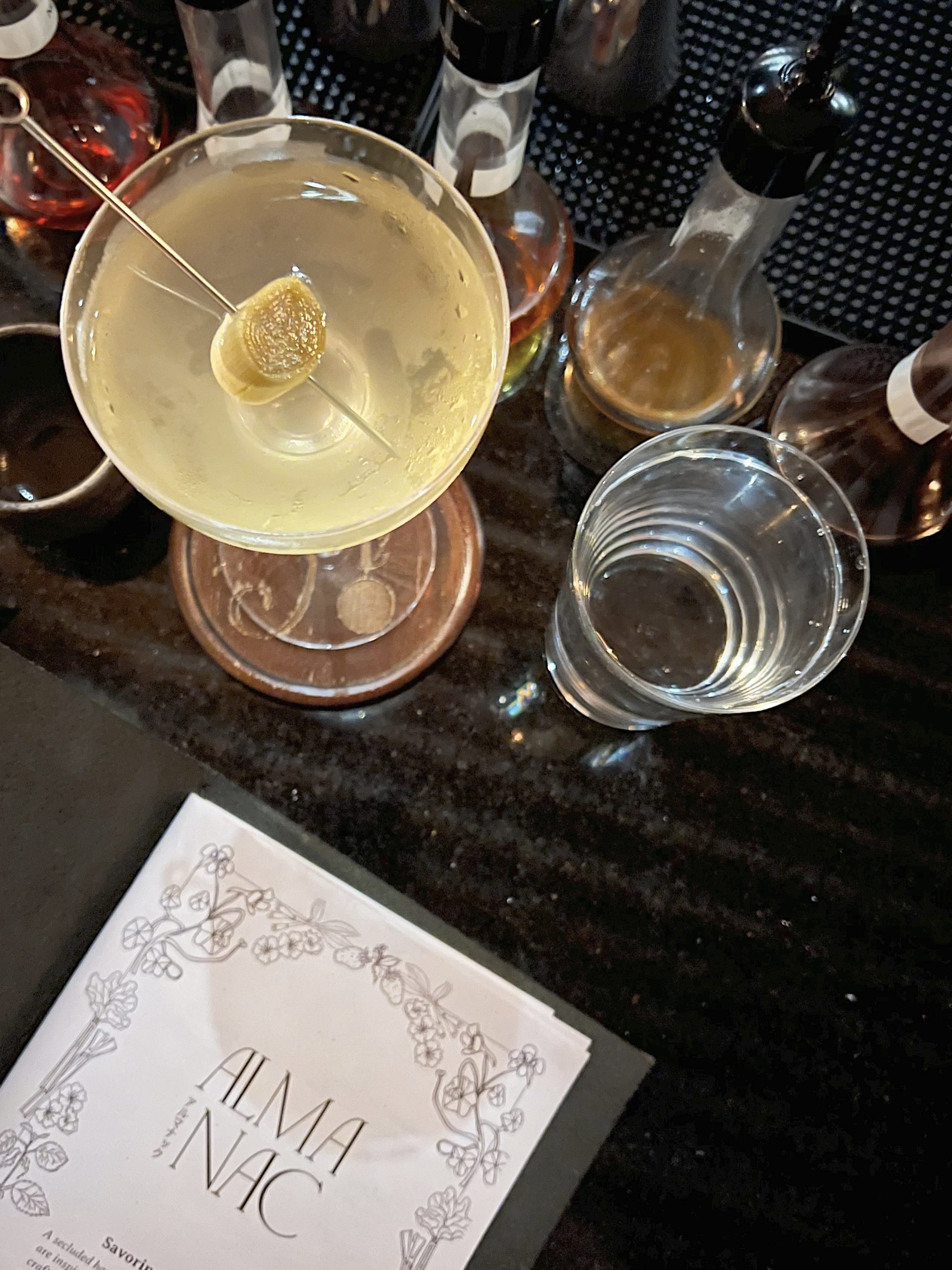
    Unless you’re paying close attention while flipping through the extensive menu at Almanac, Old City’s Japanese American cocktail bar, you might overlook some of the painstaking work that went into it. The leather-bound book’s deep green color is meant to evoke the interior of the bar. The borders of the pages hint at the seasonal ingredients that go into each cocktail, and the thin newsprint pages depicting glassware illustrations of Almanac’s complex cocktails are meant to both be a guide and evoke opening an old book.

    Kylie Silvestri is obsessed with these details.

    That’s because she is the artist and designer behind menus for some of the city’s trendiest restaurants and bars. Her roster includes Sao, Almanac, Ogawa Sushi & Kappo, Javelin, Little Coco’s, River Twice, Little Water, Habibi Supper Club and its forthcoming cafe, Slow Drinks, and the forthcoming Northern Liberties cocktail bar, Field Day. Her company, Haridelle, focuses on this meticulous hospitality branding.

    “Design is part of the holy trinity in the food service industry,” Silvestri said. “There’s the food. There’s the hospitality, and then there’s the design.”

    Almanac’s menu, designed by Kylie Silvestri.Haridelle

    Menus help set the stage for each customer’s meal, and play a big role in bringing the restaurant’s story to life.

    “The second a customer sits down — before they even taste the food/beverage — they are holding a menu in hand,” she explained. “How does the menu feel, tactilely? How does it look? It all adds to the experience and helps to tell that story. So, for me, designing them is about building the puzzle pieces together in a way that connects and relays the message eloquently, from chef-owner to customer.”

    Silvestri didn’t begin her career with a roster of small hospitality clients. She previously worked for startup groups and larger hospitality companies. In 2021, she started freelancing to build her own company, called Kylie Creative, where she developed branding for predominantly women-owned entrepreneurial businesses in the wellness industry.

    As her clientele grew, she would pick up serving shifts at restaurants in the city, including Osteria, and build connections with industry folks. Soon, a friend at the restaurant introduced Silvestri to Amanda Rucker (River Twice, Little Water), who commissioned her to design flyers for a 2022 fundraising event to support abortion access. The following year, Rucker reached out to Silvestri for branding and menu development for Little Water.

    “I naturally pivoted my design work to focus on the hospitality industry — because once you start, you never leave,” she said.

    While designing menus is just a part of her restaurant branding business, the process can take up to a month for each restaurant. There are five key steps to ensure a final product that owners are happy with.

    Sao menu, by Kylie Silvestri.Haridelle

    First, Silvestri takes time to understand the owners/chefs’ vision for the menu. Then, she determines a menu system and layout with brand fonts and drawings. Walk-throughs of the restaurant/bar (in person or via renderings if it’s not built yet) help her connect the menu design to the physical space. Once the vision is mapped out, Silvestri likes to settle down at a local coffee shop to create the menus on Adobe Illustrator and InDesign. The final step is sharing paper stock samples with owners/chefs for feedback on design and tactility.

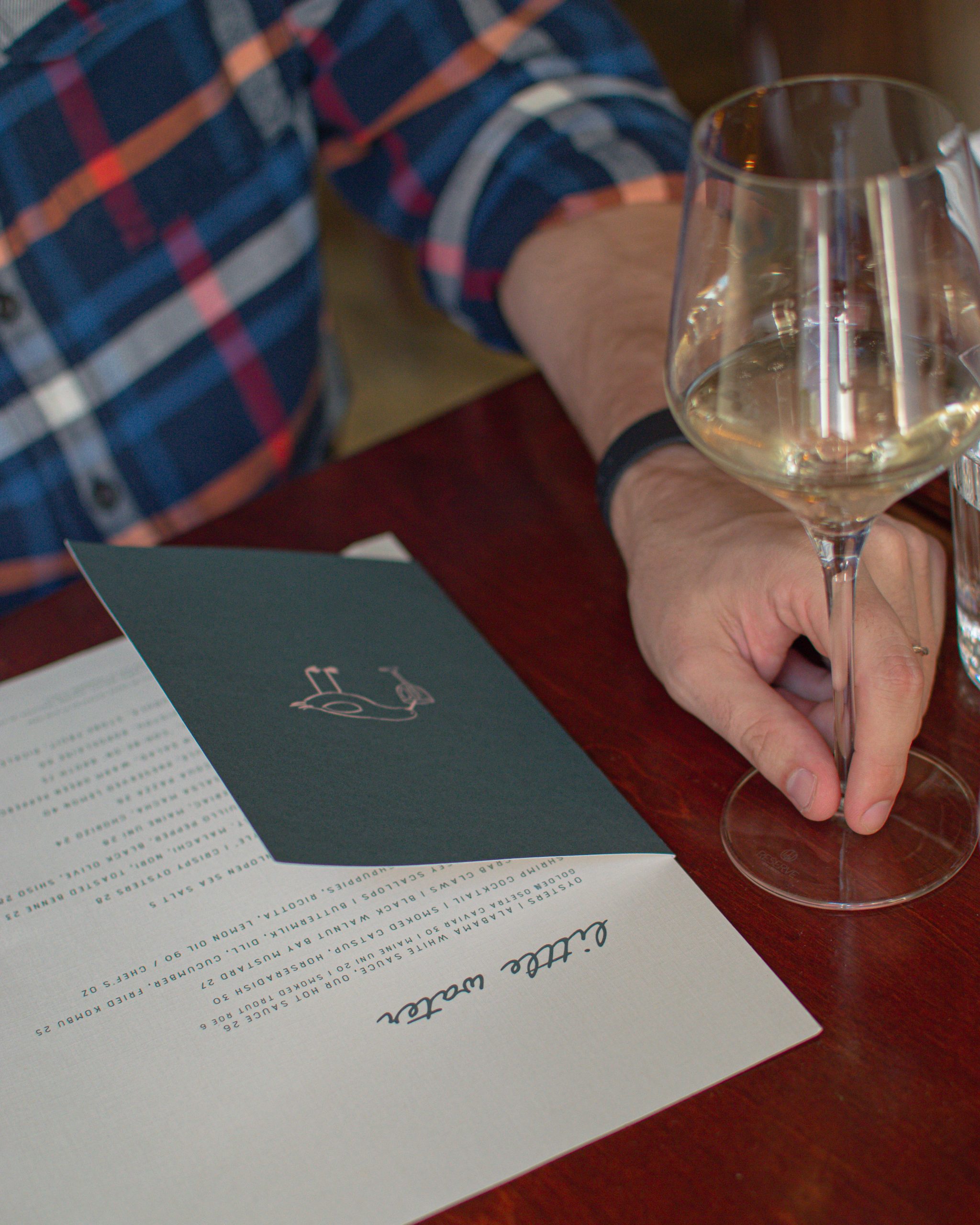
    At Little Water, the linen-textured menu was the answer to conversations surrounding technique and locale, reinforcing the feeling of the coast with dishes offering the breadth of the Gulf to Cape Cod. An illustration of a little sandpiper sipping out of a cocktail on the drinks menu showcases the personality of restaurant owners Randy and Amanda Rucker. “We tied the design to that nautical experience and having this playfulness — Randy always says that ‘We don’t take ourselves seriously; we take our food seriously,’“ Silvestri said.

    At Sao, the menu was inspired by Rachel Lorn’s family’s business down the Shore, featuring a takeout menu style that sections off the dishes in categories. There are outlines of vintage signage by Philly-based artist Darin Rowland.

    Little Water menu, by Kylie Silvestri.Haridelle

    For Habibi Supper Club and Field Day, the menus — like the restaurants — are still in development. On a recent Wednesday, Silvestri visited Field Day to chat with co-owner Katie Childs about the new bar’s branding and later chatted on the phone with Miled Finianos of Habibi Supper Club for his new cafe’s menu design.

    The menus, Silvestri explained, are “time capsules of culture, time, and space,” so every choice, from paper stock to illustration style, is made to capture that particular restaurant’s moment.

    Philly’s aim lately is on chef-owned restaurants, “or rather a focus on who is behind what,” she said, which means storytelling is more important than ever.

    “Philly’s food scene is incredibly versatile. … Each story is unique to the chef/beverage professional at the heart of the concept, making it an incredible city to work in,” she said. “I will never get tired of exploring new design styles and never feel pigeonholed to follow a specific one.”

  • The next 250 years of American science depend on ordinary persistence, and the funding to sustain it

    The next 250 years of American science depend on ordinary persistence, and the funding to sustain it

    In the sweltering Philadelphia summer of 1776, cobblers, printers, dockworkers, and farmers continued their daily labor amid political upheaval and outbreaks of disease, sustained by the belief that steady work undertaken together could shape a different future. That ordinary persistence would eventually give birth to a revolution.

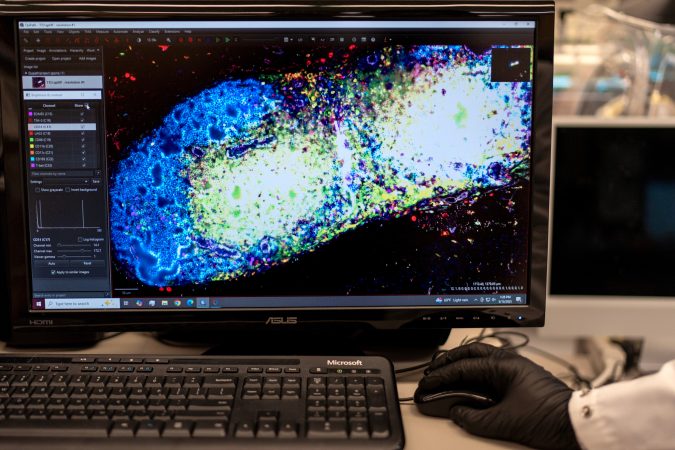
    In laboratories across the country today, that same ethic continues to stir. Researchers return each day to careful, steady work that rarely produces immediate answers but over time builds a foundation that changes what medicine can do.

    In the 250 years since independence was declared in Philadelphia, the United States has also built global leadership in scientific discovery. That leadership, however, is not guaranteed, and today, we are at risk of losing it.

    What’s at stake is best understood through the breakthroughs that sustained investment has already made possible.

    The mRNA vaccines that helped end the COVID-19 crisis emerged from decades of federally supported research that, for years, appeared uncertain and commercially impractical.

    Cancer immunotherapy, including CAR-T approaches, has demonstrated that the immune system can be redirected to attack disease in ways once thought impossible. CAR-T therapies were not the product of a single breakthrough moment, but of years spent understanding how immune cells recognize and respond to disease.

    Checkpoint blockade for cancer, which has saved more than one million lives, was the result of years of work in basic preclinical models of disease. Moreover, today we sit on the precipice of revolutionary new treatments for pancreatic cancer and other cancers driven by the gene KRAS, due to investments in fundamental science around this gene and related pathways.

    And, just recently, a child diagnosed with a rare genetic disorder was successfully treated with a customized CRISPR gene editing therapy by a team at Children’s Hospital of Philadelphia and the University of Pennsylvania.

    From humble beginnings in studies of bacterial defense systems to correcting genetic disorders in children, these approaches have their origins in federally funded basic science research.

    However, even that investment is beginning to erode. Adjusted for inflation, National Institutes of Health funding today remains below its 2003 peak, and recent budgets have struggled to keep pace with the rising cost of doing science. As resources tighten, fewer promising ideas move forward, and the pipeline of discovery narrows.

    For example, the remarkable GLP-1 class of drugs, such as Ozempic, expected to slash diabetes and obesity rates across the country, was derived, in part, from NIH-sponsored basic research on the venom of the Gila monster, a lizard native to the U.S.

    Researchers, including those at the Colton Center for Autoimmunity, are now applying ideas similar to these breakthroughs to autoimmune conditions, opening the door to treatments that are more precise, more durable, and less reliant on broad immune suppression. These include CAR-T cells for autoimmunity, advances in treatment for multiple sclerosis, and new promising research on treatments for rare but devastating diseases like retinal vasculopathy with cerebral leukoencephalopathy.

    This is the promise of precision medicine: not one-size-fits-all care, but interventions shaped by each patient’s biology.

    None of this happened by accident.

    Many of the breakthroughs now transforming medicine were built on years — often decades — of federally supported basic research, long before their practical application was clear. Nearly all of the drugs and therapies later brought forward by industry trace their origins back to federally supported basic research, undertaken long before their eventual medical or commercial value could be known.

    This is how discovery works. The most important advances often begin as hard questions in laboratories, without a clear timeline or commercial payoff.

    Scientific leadership may not always be seen as a measure of national strength, but it should be. The immune system sits at the center of many of the most pressing challenges in medicine, from cancer and infectious disease to chronic inflammation, autoimmunity, and even aging and neurodegenerative diseases. Advances in immunology are changing what medicine can do, moving us from managing disease to predicting it earlier, targeting it more precisely, and, in some cases, reprogramming the body to fight back on its own.

    Federal support for research is also an economic engine: In fiscal year 2025, NIH funding generated $2.57 in economic activity for every $1 invested and supported more than 390,000 jobs nationwide.

    Demonstrators hold signs in support of the NIH during a “Stand Up For Science” rally in Washington, D.C., on March 7.Tierney L. Cross

    That progress is neither automatic nor inevitable.

    If the United States pulls back from long-term investment in research, talent, and scientific institutions, innovation will slow, discovery and drug development will move overseas, and America risks losing its preeminent place as a scientific leader. Federal research support reflects a national decision that knowledge serving the public good is worth sustaining even when the payoff is distant.

    Ordinary persistence means carrying on in the face of uncertainty and hardship, continuing the work even when progress is slow, and success is not assured. It is a tradition woven deeply into the country’s history: The belief that steady effort, sustained over time, can lead to lasting change.

    As we mark the nation’s founding in the city where it began, we should also make a shared pledge for the next 250 years: to recommit to that fundamental ideal of sustaining the patient, collective work of discovery.

    In Philadelphia, that tradition helped shape the nation’s founding. The next 250 years of American science will require the same ordinary persistence still practiced every day in laboratories, clinics, and classrooms across the country.

    E. John Wherry is director of the Colton Center for Autoimmunity and the Institute for Immunology and Immune Health at the University of Pennsylvania’s Perelman School of Medicine, where his research focuses on harnessing the immune system to better understand, treat, and prevent disease.

  • Your guide to South Jersey’s mini golf courses

    Your guide to South Jersey’s mini golf courses

    Mini golf is an underrated nostalgic summer staple. The rainbow array of golf balls, the sun-bleached artificial turf, the tilting windmills, and fiberglass volcanoes will transport you right back to childhood, melting ice cream cones and all.

    It’s easy to find Putt-Putt courses dotted up and down the boardwalks of the Jersey Shore, but South Jersey has its fair share of miniature fareways, too. Many offer more than just mini golf, with homemade ice cream, arcade games, amusement park rides, and driving ranges for adults. Two courses are indoors, for big fun even when the sun isn’t shining.

    Tee up a great summer on these miniature links:

    Big Swing Golf Center

    Open year-round, weather permitting

    Big Swing boasts not one but two mini golf courses. (For the second, “Go left at the volcano,” the attendant tells me.) Both are light on props and heavy on banks, curves, hills, elevation gains, and drops, making for some genuinely tricky shots.

    Best hole: No. 8 on the waterfall course starts at the top of a hill, with three options to get to the bottom, including two mystery chutes — one that could land a hole in one, and another that spits out on a separate landing.

    Other amenities: Golf simulator, golf lessons, driving range

    Price: $7 per adult for both courses, $6 for children 12 and under

    📍312 Salina Rd., Sewell, N.J. 08080 📞 856-553-6723, 🌐 bigswinggolfcenter.com

    Monster Mini Golf

    Inside Monster Mini Golf in Cherry Hill, N.J.Courtesy Monster Mini Golf Cherry Hill NJ

    Year-round

    Don’t let a rainy day (or a brutally hot one) stop you from hitting the links. Monster Mini Golf offers 18 holes of spooky-themed, indoor, glow-in-the-dark golf, with locations in Cherry Hill and Turnersville. Black light illuminates the dark interior, which is decked out with weird Jersey scenes rendered in glowing paint, and monstrous animatronics that come to life as you move around the course.

    Best hole: Tie between hole No. 8, which is presided over by an enormous, glowing talking skull and No. 9, where players can spin a wheel to add a random, extra challenge to their turn, like playing with one arm behind their back or with their eyes closed.

    Other amenities: Arcade, mini bowling alley, laser maze, laser tag (at Turnersville location only)

    Price: $10-14 for mini golf

    📍2040 Springdale Rd., Suite 300, Cherry Hill, N.J. 08003, 📞 856-393-5500, 🌐 monsterminigolf.com/locations/us/nj/cherry-hill

    📍 1 Shoppers Lane, Blackwood, N.J. 08012, 📞 856-302-5240, 🌐 monsterminigolf.com/locations/us/nj/turnersville

    Pleasant Valley Miniature Golf

    Players play rounds at Pleasant Valley Miniature Golf on Route 73 in Voorhees on June 30, 2026.Jose F. Moreno / Staff Photographer

    April 1 to Halloween

    Opened in 1972 and now run by the son of the original owner, Pleasant Valley is a throwback mini golf course with all the wacky obstacles you could dream of. The fiberglass Liberty Bell and giant sombrero, built by the owner, have been there since the 1970s. Guest-favorite hole No. 12 features three gophers driving classic cars in circles. Conveniently located on the way to Atlantic City, it’s got a classic charm you won’t find at every course.

    Best hole: “The sombrero,” owner Brian Whelan says. “It’s very difficult, very easy to have the ball fly out of the sombrero. Big risk, big reward there.”

    Other amenities: Ice cream and water ice

    Price: Before 6 p.m., $10 for adults, $9 for kids 10 and under and seniors; after 6 p.m., $12.50 for adults, $10 for kids and seniors

    📍 93 Rt. 73, Voorhees, N.J. 08043, 📞 609-314-1214, 🌐 pvminigolf.com

    Voorhees Golf Land

    March 1 to the weekend after Thanksgiving

    Previously known as the Golf Farm, Voorhees Golf Land reopened last year under new ownership after a yearlong closure. In addition to 18 holes of mini golf, Golf Land sports the region’s only pitch-and-putt course. That’s 18 holes of golf that are just 20 to 50 yards long, “not quite the size of a par three,” owner Diana Hennefer says, so it’s a great option for people who don’t have the time or mobility to play a full round of golf, or who just want to practice their short game.

    Best hole: No. 18 has a wishing well in the middle. “It’s probably the trickiest one,” Hennefer says. “It’s also the prettiest, most picturesque one.”

    Other amenities: Pitch-and-putt course

    Price: Mini golf: $8 for adults, $6 for kids; pitch and putt: $15 for adults, $10 for kids

    📍 801 Haddonfield Berlin Rd., Voorhees, N.J. 08043, 📞 856-630-0977, 🌐 voorheesgolfland.com

    Serene Custard and Miniature Golf

    A water feature at Serene Custard and Miniature Golf in Vineland, N.J.Courtesy Ari Dendrinos

    Come for the challenging, hilly course, and stay for the vintage custard stand serving homemade ice cream. Built in 1959, Serene Custard still boasts its original mid-century signage and is celebrating its 67th season this year. The 18-hole mini golf course is a newer addition, featuring tough terrains and lush landscaping. “You sort of don’t even feel like you’re in South Jersey when you’re on the course,” owner Ari Dendrinos says.

    Best hole: No. 9 takes place entirely within a huge man-made cave.

    Other amenities: Custard stand serving ice cream, water ice, and some savory snacks

    Price: $6 for children, $8 for adults

    📍 2336 N. West Blvd, Vineland, N.J. 08360, 📞 856-692-1104, 🌐 serenecustardandgolf.com

    The Funplex Mount Laurel

    Spring break to mid-October

    The Funplex at Mount Laurel has way more than just mini golf. There’s a waterpark, indoor and outdoor rides, a bowling alley, and more. But don’t sleep on the two mini golf courses, Adventure Cave and Lost Lagoon, both of which offer 18 holes of obstacles, including a few multilevel designs.

    Best hole: At No. 19, if you get a hole in one, your next game is free.

    Other amenities: Waterpark, indoor and outdoor rides, bowling, arcade games

    Price: $42 on weekdays and $49 on weekends for access to all attractions; $46 and $54 when purchasing at the gate

    📍 3320-24 NJ-38, Mount Laurel, N.J. 08054, 📞 856-273-9666, 🌐 thefunplex.com

    Jersey Devil Golf & Fun Center

    May to October, honor system year-round

    The Jersey Devil wants to ensure you never have to miss a mini golf fix. Despite the posted hours, this course operates on the honor system, making putters and golf balls available every day, all year round, so you can play even when no one is working. Just drop $5 in the box at the first hole to enjoy putting on these long greens, which provide a challenge to kids and adults alike.

    Best hole: Hole No. 12 features a sharp bend and splits in two before converging.

    Other amenities: Driving range, picnic area with cornhole, and firepits

    Price: $8 for adults, $7 for 6- to 16-year-olds, free for 5 and under

    📍 276 Rte 73 S, Hammonton, N.J. 08037, 📞 609-704-9007, 🌐 jerseydevilgolf.com

    Pleasant Valley Miniature Golf is shown on Route 73 in Voorhees, N.J. Tuesday, June 30, 2026.Jose F. Moreno / Staff Photographer
  • Before Auston Trusty scored a World Cup goal, he ‘put the work in’ at Penncrest High and Nether United

    Before Auston Trusty scored a World Cup goal, he ‘put the work in’ at Penncrest High and Nether United

    Auston Trusty plays centerback for the U.S. men’s national team, a position that doesn’t lend itself to scoring. But when he fired a goal against Turkey in the group stage finale of the World Cup, William Hall wasn’t surprised.

    The University of Richmond junior was well-acquainted with Trusty’s shot. He’d seen it dozens, if not hundreds, of times, standing in the net at Chester Park in Wallingford, Pa.

    It was the spring of 2020. Hall was 14 years old, an incoming freshman at Strath Haven High School, and Trusty was 21, a starting defender on the Colorado Rapids. COVID-19 had, pushed back the MLS season, and Trusty was at home in his native Media, Pa.

    He still needed to train, but there were few options available. So, the professional athlete decided to return to where it all began: Chester Park, home of youth soccer club Nether United, now 1776 United FC.

    Trusty had played under coach John Waraksa for six seasons, two years above his age group, before going to the Philadelphia Union Academy in 2013. Hall was on Nether United’s U-15 team when the pandemic hit.

    The teenager would often train with his teammates at Chester Park, and one day in late April or early May, Trusty showed up. They ran through warm-ups, then L-shape passing drills, then finishing drills, then shooting drills.

    Hall was the only goaltender present, which put him in the unenviable spot of having to defend against a world-class athlete. It didn’t go well for the teenager.

    Unlike players Hall’s his age, Trusty moved with a quicker pace and a harder strike. The ball would curl into the corner rather than launching straight ahead.

    Auston Trusty (center) made his return to the Philly area in November as part of the U.S. men’s national team group that faced Paraguay at Subaru Park. Jonathan Tannenwald

    “He would just pound them into the net, over and over,” Hall said. “I would say if he shot 20 shots, he’d probably make 18. Maybe hit the post on one of them. And I could scrape a hand on the last one.”

    Trusty continued coming back to Chester Park, training with Hall and a group of local players five or six times that spring. It was a thrill for the teenager then, but now, those moments mean even more.

    The “Delco-head,” as national team goalie and Wayne, Pa. native Matt Freese calls him, has made an imprint on the sport’s biggest stage. His goal against Turkey on June 25, which came in the third minute, was the second fastest in U.S. World Cup history.

    It was not only Trusty’s first international goal, but the first men’s World Cup goal scored by a player born in the Philadelphia region.

    “The group chats were going crazy,” said Hall. “But I think my first thought was, ‘I played with a player who just scored in the World Cup. That is insane. I saved his shot as a young kid.’”

    Others throughout the Delaware Valley soccer community felt similarly. Paul Norris, who coached Trusty as a freshman at Penncrest High School, said he became emotional just hearing his name and hometown during the roster reveal.

    As was the case with Nether United, Trusty was playing far above his weight at Penncrest. Even as a 14-year-old, he was starting alongside players who were much older and bigger than he was.

    “What people laugh at now is he plays professionally as a defender,” Norris said. “But at the time, he had obviously a lot of skill, and we had him as a striker. And he was our second leading goal scorer that year.”

    For the last 25 years, Norris has worked both at Penncrest and at Springton Lake Middle School, where he taught Trusty physical education. He still sees that lanky kid when he’s roaming the defensive line for Team USA (even though that kid now stands at 6-foot-3, 172 pounds).

    So does Waraksa. The 1776 United coach has known Trusty since he was 8 and was at his World Cup debut in Seattle against Australia on June 19. He was down the shore, in Ocean City, N.J., watching with friends and family when the Media native scored his first goal.

    U.S. men’s soccer defender and Media native Auston Trusty (left), poses for an image with his former youth soccer coaches and his former club head coach John Waraksa (center).Courtesy / John Waraksa

    It brought Waraksa back to 2013, when Trusty scored in Nether United’s state cup final against Lehigh Valley.

    “Lehigh had won the last five state championships at our age group,” the coach said, “so he stepped up, even two years young, in a state cup final. I mean, who does that?”

    Trusty found himself in some challenging situations with Nether United. Waraksa put him on a high back line, but even from an early age, he took to it. Once the centerback realized he could compete amid a more advanced style of play, his confidence only grew.

    And as he continues to represent his country, that confidence is as high as ever. Norris is still coaching varsity soccer at Penncrest, and for the past few years, he’s shown his players clips of Trusty back when he was playing for the Philadelphia Union.

    In addition to his time with Nether United, Trusty was also groomed in the Philadelphia Union’s academy and played for its first team. JOSE F. MORENO / Staff Photographer

    A lot has happened since then. In 2022, Trusty signed with Arsenal. He returned to Europe in 2023, signing with Sheffield United, and in 2024, he penned a five-year-deal with Celtic.

    But Norris now has the best Auston Trusty highlight reel of all, one that is “slightly updated” from his Union days. And with Penncrest’s preseason rapidly approaching, the coach can’t wait to show it off.

    “We try to remind the kids that this was somebody who was local,” Norris said. “This was not that many years ago. These are things that somebody who was in this school, and in the seat that you may be sitting in, has done.

    “You’re all capable of it. It’s just a matter of, do you want to put the work in for it?”