WASHINGTON — President Donald Trump arrives at an awkward moment for his presidency on Friday as the U.S.-Israel war against Iran reaches the six-month mark, a notable milestone for a conflict that the Republican leader repeatedly assured Americans would be a “little excursion” lasting a matter of weeks.
The war isn’t over, though Trump claims that through bombs and blockade, he has already devastated Iran’s leadership, military and economy.
And this week his administration said it would turn its focus to increasing economic pressure — rather than military action — to try to finish off Iran. The shifting strategy centers on threats to punish any country or entity that continues to conduct business with Tehran.
The turn to using sanctions as the cudgel of choice comes as the administration weighs diminished munitions stockpiles after months of war, sparking concerns that the prolonged conflict could undermine U.S. military readiness in other parts of the globe.
“They’re not paying their troops. They’re in deep trouble. They have very little capacity,” Trump told reporters Thursday. “We don’t want to speak to them. We’re not looking to meet or anything,” he said.
It’s unclear how — or if — Trump will address the six-month anniversary of a conflict that has already cost the United States more than $37.5 billion and done damage to his popularity ahead of critical November elections for his party. The president is spending Friday in Houston, where he’ll honor the Artemis II NASA crew for their 10-day mission around the moon earlier this year.
Trump is declaring ‘mission accomplished’ — a phrase that hurt a Republican predecessor
On its face, the moment is complicated for the “America First” leader who fiercely criticized his White House predecessors for wasting American taxpayer money and U.S. troops’ lives in Middle East conflicts and vowed on the campaign trail to keep the military out of “endless wars.”
But Trump has bristled at suggestions that this war — in which no American troops have deployed into Iran — can be compared with the yearslong wars in Iraq and Afghanistan in which more than 7,000 Americans were killed.
His Republican predecessor, President George W. Bush, was widely mocked for a 2003 speech aboard the USS Abraham Lincoln beneath a White House-produced banner that read “Mission Accomplished.” It came to symbolize a premature declaration of victory for the Iraq War, which would go on for nearly nine more years. More than two decades later, there are still U.S. troops stationed in Iraq.
Trump’s war has stretched on far longer than he told Americans it would. It didn’t stop him from sharing a social media post this week declaring “MISSION ACCOMPLISHED 2026.” The AI-generated image features Trump against a backdrop of U.S. fighter jets, a warship and American flags above smaller images of Bush and former Iranian Supreme Leader Ayatollah Ali Khamenei, who was killed in an Israeli strike in the opening salvos of the war.
Trump has consistently emphasized that the U.S. and Israel campaign has been devastating for Iran’s navy and air force. Iranian officials have said the country has suffered $270 billion in direct and indirect damage. Israeli military strikes in the first weeks of the war wiped out much of the theocratic government’s leadership structure, including Khamenei.
But Iran has found leverage through its own strikes in the critical Strait of Hormuz, where relatively few vessels carrying oil and liquefied natural gas are risking passage. Trump again declared Thursday that the “Strait of Hormuz is open,” saying 24 vessels passed through a day earlier. That’s a fraction of the roughly 130 vessels that passed through the vital waterway daily before the war began.
Trump is showing little interest in talks
Mediators Qatar and Pakistan continue to press for a diplomatic off-ramp from the two sides. Qatar’s prime minister, Sheikh Mohammed bin Abdulrahman Al Thani, was in Tehran on Thursday to discuss a proposed plan between Iran and Oman to boost traffic through the Strait of Hormuz.
But in Washington, Trump has shown little interest in getting back to the preliminary deal reached in June that aimed to reopen the strait and launch talks about Iran’s nuclear program. That deal fell apart within weeks after Iran started attacking ships.
At the same time, Trump says the U.S. effort to economically choke off Tehran is working, with a U.S. naval blockade preventing Iranian oil from making it to market as the trickle of vessels carrying oil from other Gulf nations pass through.
“We have control and we have the blockade,” Trump said. “Iran is not getting anything. Nothing is going through.”
Iran is badly battered, but has a history of showing resilience
There’s no doubt that the strikes combined with decades of international sanctions have battered Iran, said Aarathi Krishnan, a geopolitical risk analyst at RAKSHA Intelligence Future.
But as Trump tries to turn to a new chapter in the war, Krishnan argues the Republican may be misguided in concluding that more pressure on Tehran — which has spent decades adapting to international economic sanctions — will produce the political outcome he wants.
Indeed, Iran’s economy in the run-up to the start of the war was mired in surging inflation, according to the International Monetary Fund. National income per person had fallen from about $8,000 in 2012 to $5,000 in 2024, according to World Bank data.
But Tehran has also shown resilience, selling discounted oil and establishing opaque shipping and financial networks, Krishnan said.
“This administration has completely underestimated the Iranian resolve,” Krishnan said. “This is not new to the Iranian regime.”
Trump must decide how far he’s willing to go with sanctions
Richard Goldberg, who served as a senior adviser on Iran at the National Security Council during Trump’s first White House term, argues that Iran now finds itself in “uncharted waters” if the administration follows through with a truly biting campaign to pressure Iranian trade partners.
“What we should be seeing is an attempt to seal off every escape hatch the regime has left,” said Goldberg, who is now at the Foundation for Defense of Democracies, a hawkish Washington think tank. “Use the economic power of the United States to layer a naval blockade with an air and land embargo while dropping the hammer on anyone who gives the regime access to hard currency — whether that’s in the Middle East, China or even Europe.”
But it remains to be seen how far the administration is willing to go.
Treasury Secretary Scott Bessent this week unveiled a campaign the White House calls “Operation Economic Outcast,” but only issued warnings to nations to cut trade and has yet to announce any secondary sanctions. Bessent told reporters the administration wanted countries to have a chance to shift away from Iran before it was too late — and acknowledged there was economic risk to the U.S., too, in moving ahead.
China, which is Iran’s biggest trade partner and oil buyer, responded by expressing its opposition to “illegal unilateral sanctions.”
Pressed Thursday about why he wasn’t already sanctioning Chinese banks, Trump offered a cryptic response.
“Who said I’m not? You don’t know if I’m doing it,” Trump said. “I don’t have to announce everything, do I?”
KATHMANDU, Nepal — Rescuers pulled out survivors caked in dark brown mud and helicopters lifted stranded people to safety Friday as Nepal and China raced to respond to catastrophic flash floods that killed more than 500 people and left more than 1,500 missing.
Nepal’s disaster management authority said the death toll there rose to 538, and that more than 3,700 people have been rescued. Nepali police later put the number of deaths higher at 547.
Meanwhile there was little information on survivors on the Chinese side, where the death toll rose to five Friday as state media showed evacuations of villages and leaders’ efforts to direct the relief response.
China’s state media previously said 558 people were missing. Across the border, Nepal’s disaster management authority said Friday that 977 people were still unaccounted for. Hundreds of them were foreigners in the area to work, trek or make a pilgrimage to a sacred peak.
Authorities warn of further flooding from a new lake
Nepali police issued a fresh alert Friday after receiving information that a dam on the Tibet side has burst. Security personnel and rescue and relief workers were told to stay on high alert and immediately move to a safe location if necessary.
It is unclear if the dam bursting is related to flooding concerns over a barrier lake that formed after the initial flash floods, high up in the Chinese side of the Himalayan mountains. Chinese broadcaster CCTV said the lake was at an elevation of 2,950 meters (9,680 feet.)
Nepali and Chinese authorities earlier warned of further flooding from the barrier lake, which was already overflowing. They urged people in potentially affected areas to move to safer ground.
Nepal police spokesperson Abi Narayan Kafle told The Associated Press that the rescue operation was continuing but with high alert. “It hasn’t stopped,” he said.
Although the new lake is located more than 10 kilometers (6 miles) from Gyirong Port, the hard-hit border crossing with Nepal, rescue workers heading to the disaster zone were ordered to stop temporarily Friday morning owing to concern the lake would overflow.
Some 680 rescuers eventually reached the hardest-hit area at Gyirong by foot and via rafts after much effort. Some were dropped down from drones flown to the area, CCTV footage showed.
Thousands of people have been evacuated, others await rescue
Nepali Army rescuers were working to help people trapped in a hydropower tunnel in Rasuwa, part of the Upper Trishuli-1 Hydropower Project.
Video from the scene show rescuers helping the man, covered in dark brown mud, out of the tunnel by pulling and pushing. He was one of likely dozens trapped in the tunnel.
Army spokesperson Brig. Gen. Raja Ram Basnet told the AP the focus was on survivors.
“It is complicated to find the entry and exit points of the tunnel because everything has been covered by mud,” Basnet said. “Our first priority is rescuing the stranded people.”
Nepal’s disaster management authority said 3,253 people had been airlifted by helicopter from the disaster area. Survivors, including injured people, were taken to Kathmandu and other locations.
Some felt the ground shake, then saw a ‘black storm’
Scientists who’ve studied satellite images said bedrock underneath a glacier high in the Himalayan region had collapsed, taking part of the glacier with it. The rockfall was so extreme that it reached a magnitude 5.2 seismic measurement. The rocks and melted water then swelled the rivers in the valleys below, causing a torrent of water that swept buildings, bridges and earth downstream in Tibet and Nepal.
Customs officer Karbir Gaire was among some of the survivors in Timure, the closest Nepalese village to the border with China, where some 1,500 people had lived.
Gaire reached his office around 8 a.m. Wednesday and was working on his computer when he first felt the ground shake.
“Right after the shake, I noticed a black storm coming towards us,” he recalled from Kathmandu, where he is back with family. ”We all immediately started running out, and within a few seconds, we were climbing uphill on the opposite side of our office building. I think those 10 or so seconds saved some of us.”
Gaire doesn’t remember exactly how many people were in the office when the disaster struck, but 15 colleagues have gone missing. “It was like a Hollywood movie scene. I don’t call it a flood, it was a tsunami.”
Families around the world hope for news of loved ones
Nepal’s tourism board has said that among the missing are more than 500 foreigners.
About 90 Americans were unaccounted for. U.S. President Donald Trump said the flooding was terrible to see, and he told reporters in the Oval Office he offered to provide Nepalese leaders “anything they want.”
Rajan Tamang, a restaurant owner in New York City, said he learned from family in Kathmandu that his mother and sister were among those who died, while many other relatives and friends remained missing.
“My family was just waking up, and they didn’t even get any information, and suddenly this flood came. Some of them are missing, some of them lost their life and only a few is alive,” he told the AP after a vigil in New York.
Some of the missing may have been on a pilgrimage to Mount Kailash in Tibet, a sacred site for Hindus, Buddhists and others.
Vishnuram Ramaswamy, who works at a private company in the southern Indian city of Puducherry, said that he last spoke to his mother and two sisters who were on that pilgrimage Wednesday morning. It was a highly anticipated trip, something his mother had always wanted to do, he said.
“My mother said they were on their way towards the border area and said they’ll reach their hotel and call us,” he said. While he’s in touch with government officials, and the travel agency, there’s been no news.
“This was the last we spoke to them. They have been unreachable since.”
When hundreds of Upper Merion residents came to a township planning meeting in the spring of 2026 to oppose construction of five proposed data centers in King of Prussia, they discovered that, according to the developer, they had little recourse. The plans were code compliant, Brian J. O’Neill of MLP Ventures claimed. They required no rezoning, no variances — and no vote from township officials.
Yet, the residents didn’t just roll over. Instead, they set about organizing. A petition against the proposal garnered roughly 18,000 signatures — a majority of the township’s population. After an intense three-month campaign against the plans, the township Board of Supervisors rejected them in August. O’Neill vowed to appeal, and accused the board of violating state and local planning codes (which they denied), so the fight may not be over.
The board’s action reflected how fierce blowback across the country has politicians across the ideological spectrum rushing to limit data center construction. Both Texas Republican Gov. Greg Abbott and Pennsylvania Democratic Gov. Josh Shapiro recently placed limits on data center construction.
As the campaign against data centers proceeds, opponents can learn from the experiences of towns caught up in the high-tech manufacturing boom of the mid-20th century. That history shows what happens when residents disagree with politicians on these initiatives. And, while not every locality will succeed in stopping a data center, what residents build in these campaigns can outlast the fight itself.
In the 1950s and 1960s, city councils throughout the San Francisco Bay Area eagerly courted technology industries to build campuses in their cities. Officials in these places saw high-tech as the future of American industrialization. They hoped that these new facilities would become an economic boon for their cities and sought to capture new tax dollars from businesses and new residents. Some places, like San José, went so far as to give land to companies like IBM without following the usual avenues for development.
Cities weren’t the only ones that saw high-tech industry as the economy of the future. Stanford University, under the guidance of administrators who had worked in scientific research during World War II, saw high-tech research and development as an engine for economic growth for the university. They developed new programs around electrical engineering and electronics research, created industry-university worker programs that allowed employees to enroll in Stanford classes and encouraged students to found their own companies.
In 1954, Stanford used a piece of its vast landholdings to create the Stanford Industrial Park (later, Stanford Research Park), which attracted the likes of Fairchild Semiconductor and Kodak, alongside companies founded by one-time Stanford students such as Varian Associates and Hewlett-Packard. Business developers at the university were right: within a decade, the new office park was generating millions of dollars of new revenue for the university.
In 1960, the university and City of Palo Alto announced that the Ampex Corporation planned to build an office campus in the research park outside Los Altos Hills. The city council had already approved rezoning the land for light industry, and the plan appeared poised to proceed.
Neighboring residents, however, were not so keen on the university’s plans. Stanford neglected to consider the impact of the development on the local communities. Residents expressed concern about increased traffic and smog, as well as the potential environmental degradation of the pastoral foothills. They were also irritated by Stanford’s seemingly smug attitude toward community relations.
Through community and alumni networks, residents formed the Citizens Committee on Regional Planning (CCRP) to organize resistance to the Ampex plans. Within a month, CCRP organized community meetings, editorials and letter writing campaigns so forceful that Stanford University President Wallace Sterling referred to the event as the “Battle of the Hills.” One resident expressed dismay to Sterling, noting that “we now have smog, congestion, and acres of asphalt where we once had fresh air and freedom of movement in a beautiful countryside — one of the finest climates on earth!”
Hundreds of letters in opposition to the planned construction poured into the Sterling’s office: within four months of announcing the plan, nearly 400 such letters had reached the university president. Meanwhile, residents flooded the letters-to-the-editor section of the Palo Alto Times with opposition to the plan.
Made By History sponsors. FOR USE ON MADE BY HISTORY STORIES ONLY.Inquirer Staff
In response, the university’s business manager, Alf Brandin, took to the pages of the newspaper to cast the university as a reluctant developer, writing that Stanford was “doing everything we possibly can to produce income” to support the university’s mission. Stanford also pushed back against criticism by reminding residents of the role the university had played in preserving open spaces — in the form of its campus lands — and in encouraging economic development that benefited the community.
When the letter and editorial campaigns failed to budge Stanford, residents turned to their next tool: the referendum. In June, five months after Stanford announced its plans, organizers began circulating petitions throughout Palo Alto calling on the city council to rescind its decision to rezone the land for industry and allow residents to vote on the issue. Four days before the rezoning ordinance became official, organizers filed a petition with the city clerk with 2,000 signatures, double the amount required to force a vote.
Placed on the ballot that November, the Stanford lands were now in the hands of residents. A “yes” vote would keep the city council’s rezoning in place and allow Ampex to proceed with construction, while a no vote would kill the development.
The debate continued to play out in the pages of the Palo Alto Times. The newspaper’s editorial board came out in favor of Stanford’s plans, arguing that residents’ concerns over the loss of a foothill overlooked the way in which Stanford’s landholdings “constituted a free park” for Palo Alto and its surrounding communities.
This sort of argument proved persuasive. In November, the referendum to stop the construction lost in a close vote. Stanford’s grassroots campaigning had helped to convince voters to bless the construction plans.
Yet, this win proved to be a pyrrhic victory. The yearlong political campaign had spooked Ampex, which decided to build its new facilities elsewhere.
Ultimately, the neighbors won in another way as well: their campaign against the Ampex development had created a durable organizing network. Those involved in the fight continued organizing against high-tech development plans, forming new conservation and environmental groups and galvanizing networks that successfully shaped future decisions and plans.
Within five years, new waves of conservation-minded city council candidates displaced their more developer-friendly predecessors. High-tech developers now had to contend with the concerns of communities.
The successors and offshoots of the high-tech entrepreneurs and companies who propelled the rise of high-tech industry in California in the 1950s and 1960s are now building data centers. Residents in Pennsylvania, California, Texas, Virginia, Nevada, Nebraska, Ohio and elsewhere have come out in heavy opposition to their plans, concerned over their footprint, water use, electricity needs and taxes. They see these downsides as outweighing the economic benefits and new jobs that boosters promise the data centers will bring to communities — O’Neill released an economic impact study claiming that building the King of Prussia data centers would have created 10,000 construction jobs and more than $55 million per year in local tax revenue.
States and counties across the United States have passed moratoriums on data center construction while congressional and gubernatorial candidates find themselves taking a stand on the issue as well. Congress is also getting involved. Among the most forceful proposed efforts is California Rep. Ro Khanna’s Data Center Bill of Rights, which seeks to establish zoning restrictions, require independent environmental and economic impact statements for any project, and protect residents from higher utility bills.
The history of the fight over high-tech industry in the 1950s and 1960s suggests that those crusading against data centers may not win the short-term fight. Residents and local governments might find the economic arguments of data center backers persuasive just as pro-development arguments won over the voters in Palo Alto decades ago. Yet, even when they fail in the short term, these campaigns might spook companies and can seed organizing networks that will shape local development for years to come.
Made by History takes readers beyond the headlines with articles written and edited by professional historians. Opinions expressed do not necessarily reflect the views of The Inquirer.
It’s an all-day party. It’s considered one of the best summertime days in Philadelphia. And it’s finally back after a decade.
The prestigious Cycling Class returns this weekend, attracting spectators and cycling enthusiasts from all over the city.
⏱️ The Classic kicks off Sunday and runs from 8:30 a.m. to around 4:45 p.m. The (free!) Fan Fest, located at the Iroquois Sculpture area by the Art Museum, will be open the entire weekend, from 10 a.m. to 5 p.m. Saturday and 8 a.m. to 5 p.m. Sunday.
🚃 Consider public transportation to get to your spectating spot, as no parking is available and road closures and restrictions will be in effect. Don’t know where to go to watch the action unfold? We have you covered with our picks of the best spots, and information on nearby SEPTA stations.
🚴 You could also bike to your spot. Organizers recommend riding to the course via the Schuylkill River Trail. Free bike valet parking is available at the Fan Fest and Lemon Hill.
Schuylkill River Trail organizers are celebrating the completion of a nearly one-mile connector in Montgomery County that gives cyclists a clear 70-mile path from Philly to Reading.
Last week, Barbara B. showed us a massive mushroom sprouting from a cherry tree trunk. She followed up with more details:
“I am not a forager but just appreciate odd and mysterious appearances in nature. Though from what I read about it, this fungus is probably in the process of destroying the tree from the inside.”
Yikes. I recently noticed a similar fungus, brick reddish brown in color, growing at the base of a tree in my neighborhood. I wondered if the same thing might be happening there …
📥 How about you, dear reader? What are you doing or seeing out there? I want to hear from you. Send me an email with any recent or past stories in nature (and pictures, if you have them). You may see it featured right here.
🎤 My colleague Jason Nark reports on rural communities far from city life. I’m passing him the mic for his latest dispatch out of Cumberland County, New Jersey.
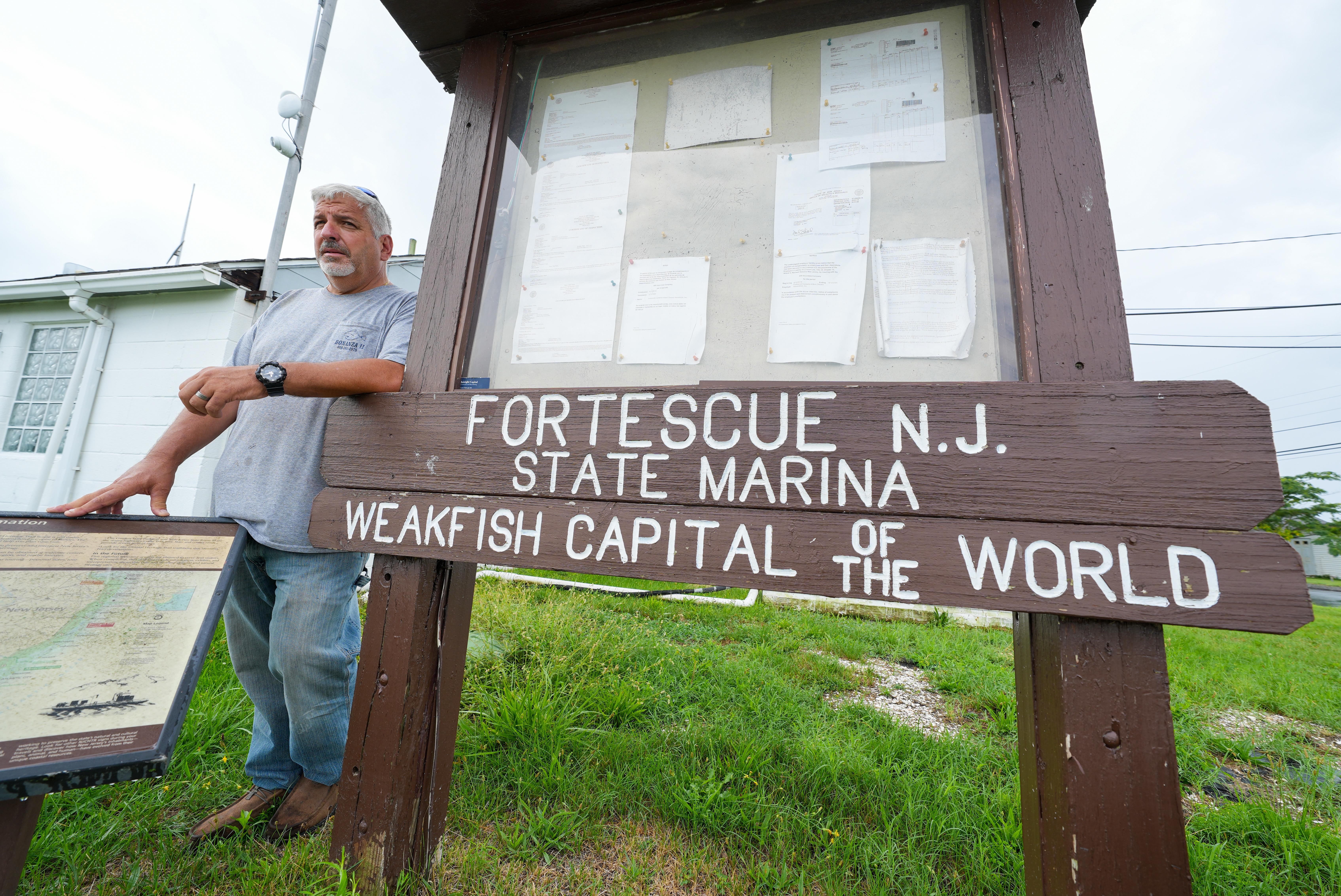
Taxidermy and weathered photos line the walls at Higbee’s Bait and Tackle in Fortescue, artifacts from bygone days when the sleepy Delaware Bay town was truly the “weakfish capital of the world.”
The taxidermy is a dusty, 12-pound “tide runner,” the nickname fishermen bestow on the biggest, trophy weakfish, a member of the drum family with a tan, often iridescent body and a reputation for fighting hard on a fishing line. The black-and-white photo shows a single fisherman standing beside his catch, about 30 weakfish of various sizes.
Tide runners are unicorns today, a rarity on New Jersey coasts and across the bay, in Delaware. Catch limits enacted by state fisheries would prevent a single fisherman from catching dozens of fish today, though most would be happy with one legal keeper they could fry up in lemon and butter.
Fishermen have plenty of theories about where all the weakfish have gone. They blame dolphins and dogfish for gobbling up the young; nuclear power plants; the rise of other popular game fish, like striped bass; and offshore seafood trawlers. — Jason Nark
🦁 A moment of silence: May Makini the African lion rest in peace.
🌃 An activity: Bring a picnic blanket and kick back at Philly’s Magic Gardens (Saturday, $30), and at Clark Park for the Ethiopian Day celebration (Sunday, free).
A calming view
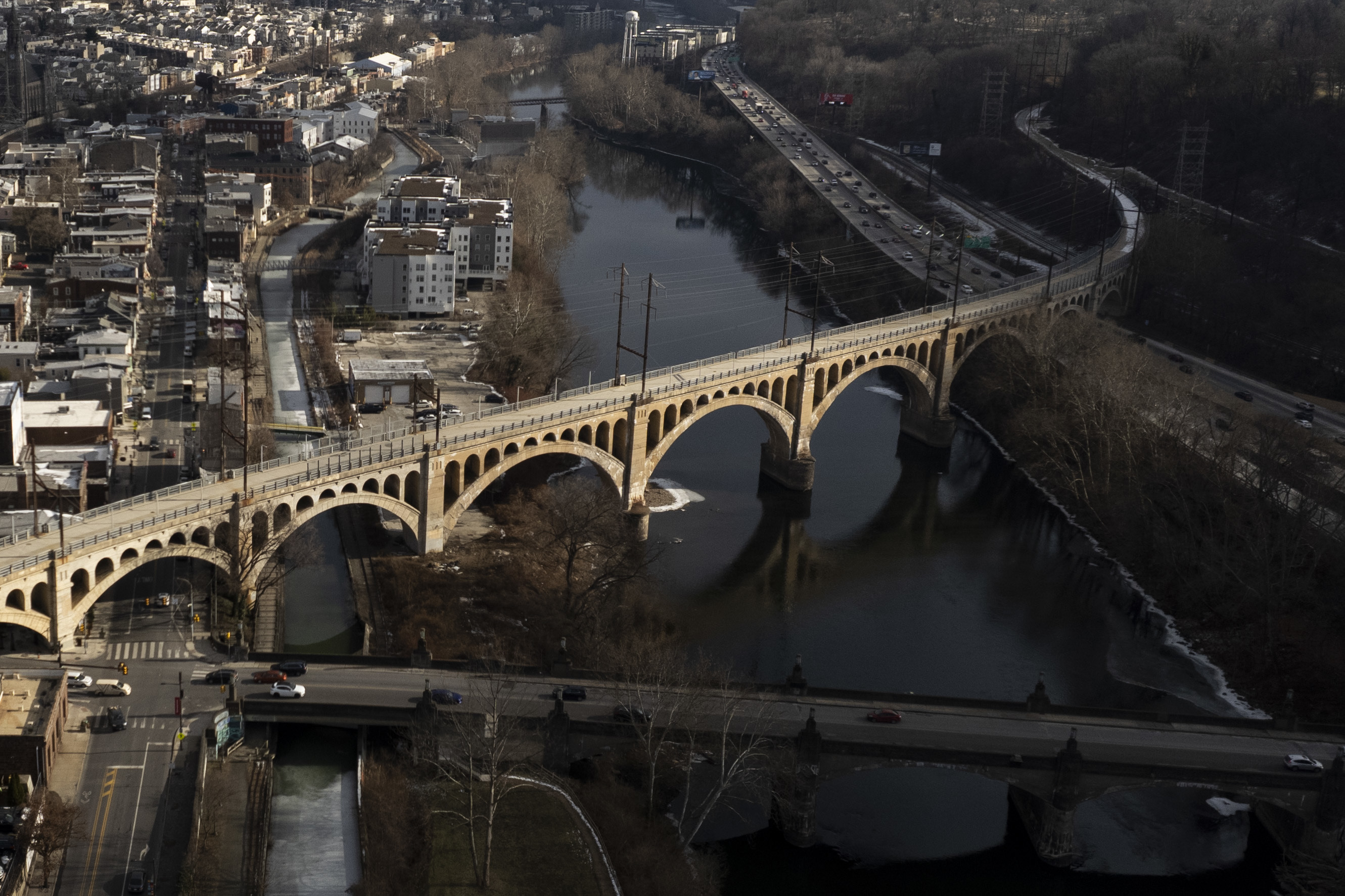
Breathe in…and breathe out. I took this during a short hike on Monday.Paola Pérez
Here’s the Wissahickon River, as seen from the Orange Trail portion of this loop that starts from Bells Mill Road East. (Turns out cast and crew of HBO’s Task were filming season two in the park that day, which explains why Bells Mill Road West was closed.)
😊 Nature calls.
Editor’s note: This has been updated to reflect
By submitting your written, visual, and/or audio contributions, you agree to The Inquirer’s Terms of Use, including the grant of rights in Section 10.
Freedom Fuel stations quietly popped up in South Jersey earlier this summer — and then were less quietly touted by the White House for prices that were lower than other gas stations.
In early July, gas at some Freedom Fuel stations was $3.47 a gallon. The 47 was a nod to President Donald Trump.
But it turns out before the White House shouted them out, the owners of six South Jersey Freedom Fuel locations had been fined hundreds of thousands of dollars for a variety of environmental violations.
Along with the six Freedom Fuel stations, those fined include 11 others, all owned by asset manager Blue Owl Capital and operated by a Cherry Hill developer and his brother.
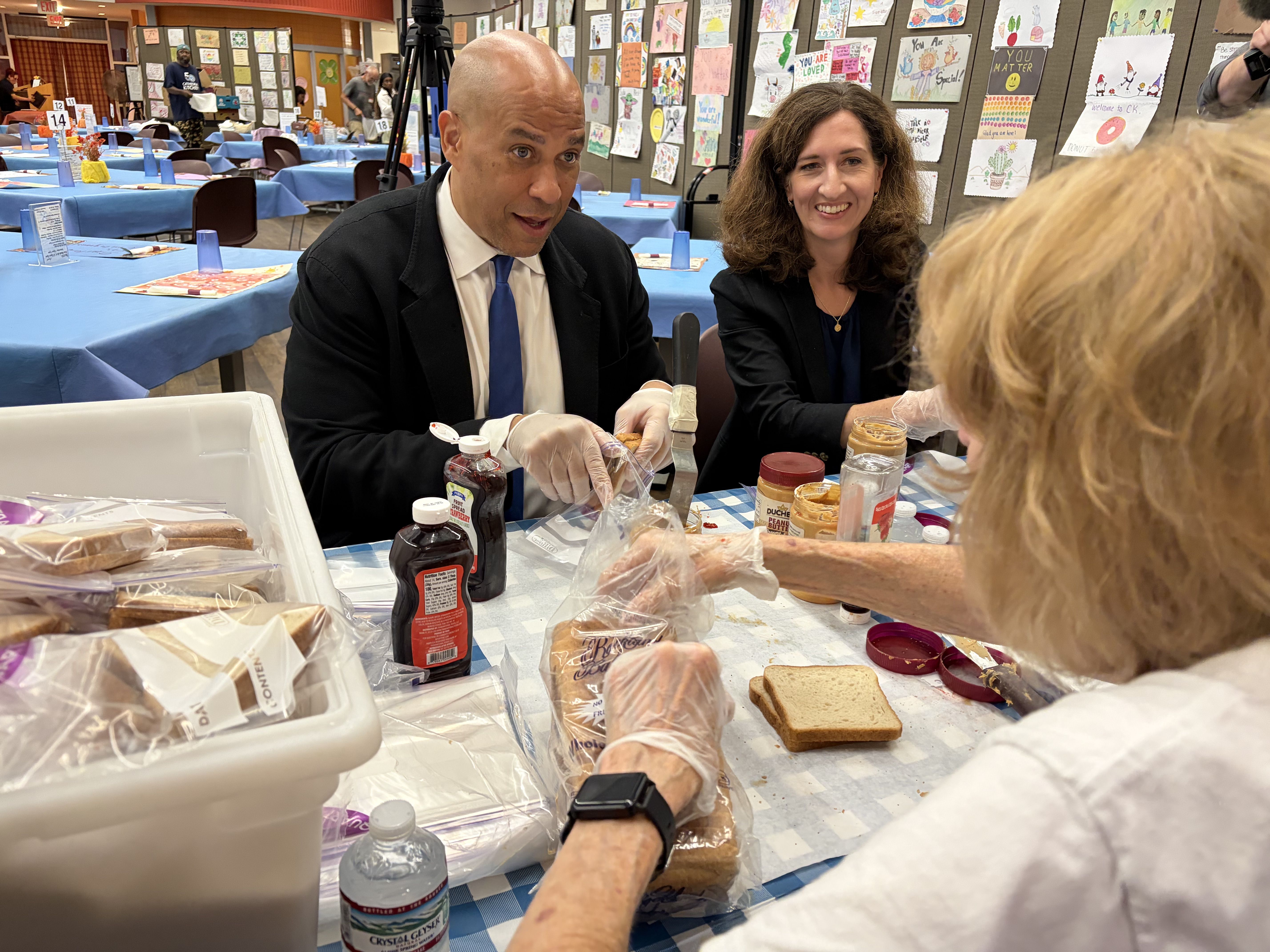
The United States needs a “food revolution,” Sen. Cory Booker said during a swing through South Jersey Thursday.
“What’s stupid is that we’re sitting here talking about the cost of healthcare and how to pay for it, but not why we need so much healthcare in the first place,” the New Jersey Democrat said during a speech for a Chamber of Commerce Southern New Jersey luncheon at the Westin Mount Laurel.
The country should better support small farmers, Booker said, while he decried that the majority of agricultural subsidies go toward crops that are turned into ultra-processed foods, rather than fruits and vegetables.
He also visited Cathedral Kitchen in Camden, where he packed sandwiches alongside the nonprofit community kitchen’s volunteers.
A Camden man suffering a serious and ultimately fatal asthma attack was turned away at Cooper University Hospital during the height of the COVID-19 pandemic. The hospital secretly paid his family $15 million, NJ.com reports.
Some Jersey towns squandered millions of dollars of opioid settlement funds that were meant for drug prevention and education, as NJ.com uncovered.
Clover Meat Market in Burlington Township closed recently but has already reopened under new ownership, according to the Courier-Post.
A Monmouth County farm planned a Dolly Parton corn maze months ago. With her death, it has taken on new meaning. The owners posted a photo of it on Instagram.
Not many advocated bringing bars or liquor stores to Ocean City, but there was some sentiment for BYOB.
The best case for remaining dry:For years I wanted BYOs but lately the old charm of this town seems to be drifting away. I have little doubt that the OC would lose its unique identity. It should remain a dry town.
The best case for BYOB: I think it would be nice if Ocean City was at least a BYOB. So many wonderful restaurants, but we just don’t go for that exact reason.
What do you think? Do you prefer it to stay as is or do you wish you could at least bring a bottle of wine to a restaurant? Let us know what you think by replying to Down the Shore.
📸 Photo of the week
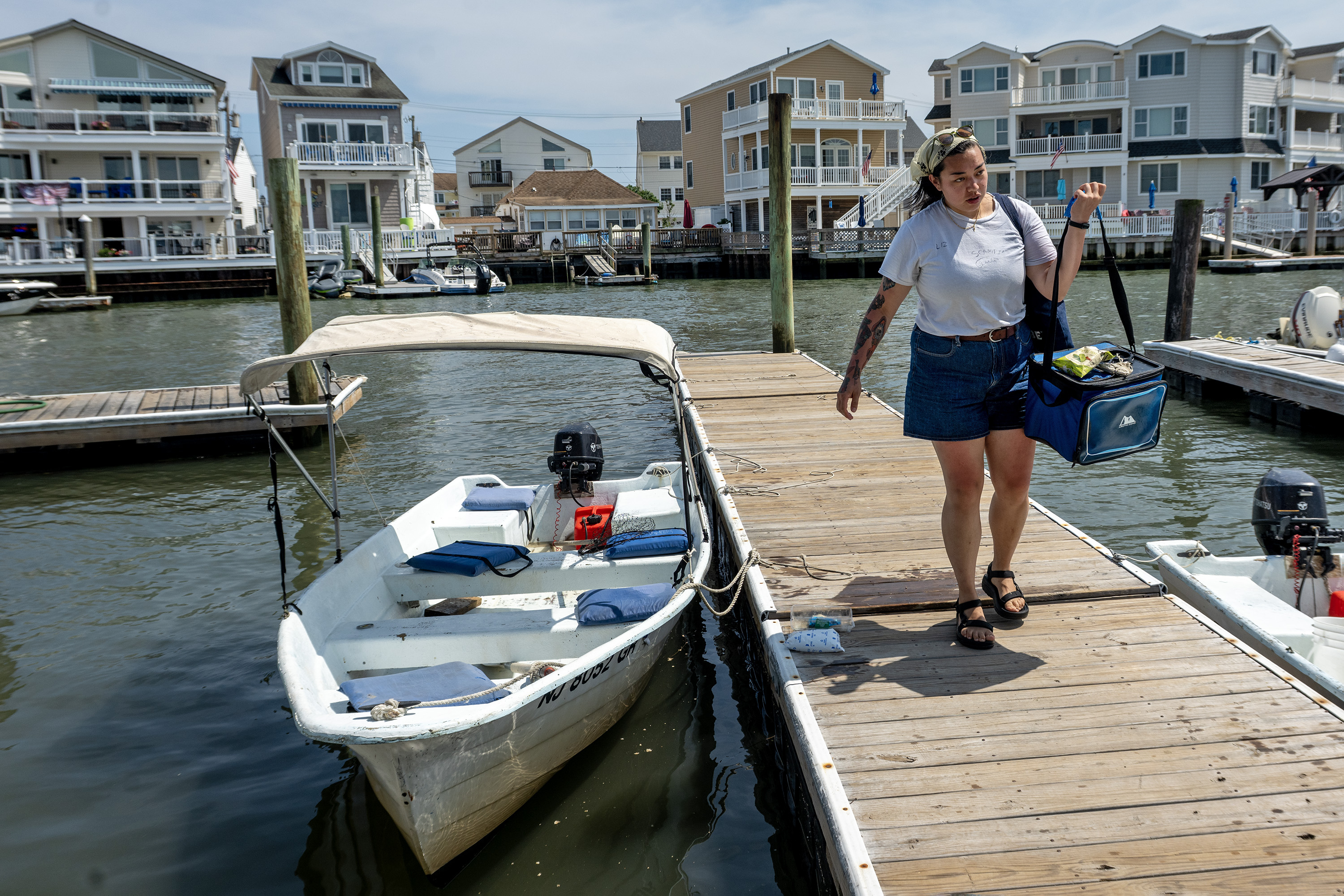
Chef Liz Grothe of Scampi returns to the dock in Sea Isle City after an afternoon of crabbing at the Jersey Shore on Sunday, Aug. 2, 2026.Tom Gralish / Staff Photographer
A federal judge suggested Thursday that actions taken by District Attorney Larry Krasner’s office could amount to crimes.
Those comments came during an explosive hearing over the office’s handling of a 2009 murder conviction.
In 2022, attorneys in the DA’s office filed court documents saying they supported overturning the old murder charges.
The attorney who submitted that recommendation on behalf of the DA’s office later testified that she did so only at the request of her supervisor, and that she had been encouraged to lie about aspects of the case.
A different prosecutor, Assistant District Attorney Katherine Ernst, testified Thursday that after she petitioned the court to withdraw the earlier recommendation, she was pressured and threatened by Krasner.
“If what they say is true,” U.S. District Judge Paul S. Diamond said during Ernst’s testimony, “potential wrongdoing abounds.”
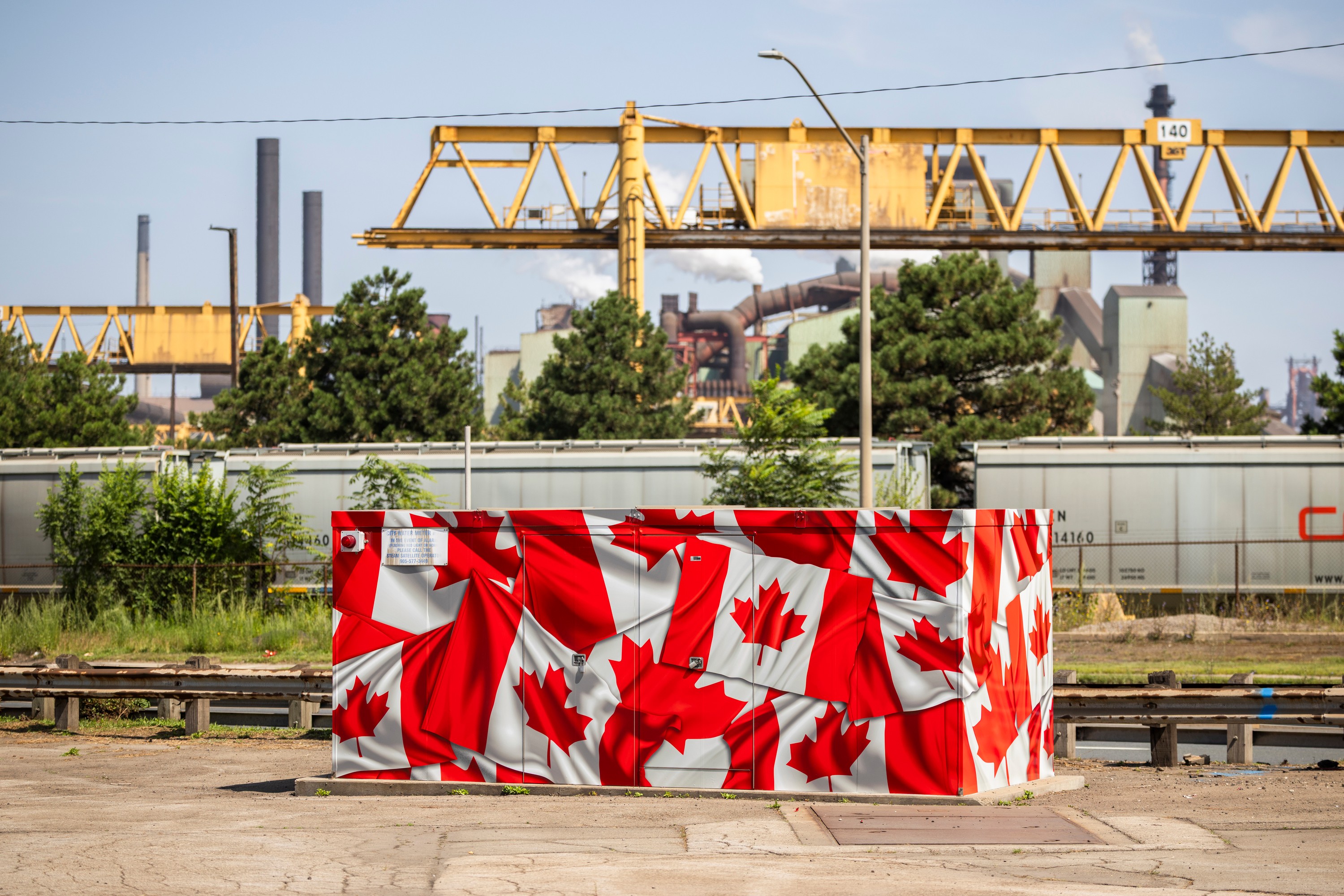
That means new tariffs by our northern neighbor will hit some companies in the commonwealth particularly hard.
Exports like raw aluminum, lumber, and passenger vehicles will all face tariff rates of 25% to 50% as the trade war between the two countries escalates.
A few other key figures in this story:
💵 $13.4 billion. The value of Pennsylvania goods exported to Canada last year.
🛍️ 16%. The proportion of that total trade volume that will be subject to higher Canadian tariffs, according to an Inquirer analysis.
Pennsylvania’s youngest voters disapprove of President Donald Trump at a higher rate than any other age group, fueled by their pessimism over the economy, a new Inquirer/New York Times/Siena poll has found.
Seven families have sued the Lower Merion School District over its new technology policy, which no longer allows parents to opt their children out of using district-issued devices in the classroom.
The Philadelphia School District is making a full-court press to get its vaccination rates up, with plans to offer vaccine clinics at some schools, amid a statewide measles outbreak.
Police recovered a gun — and interviewed the man accused of firing it — in their investigation into the shooting of an off-duty police officer in Southwest Philadelphia on Aug. 16.
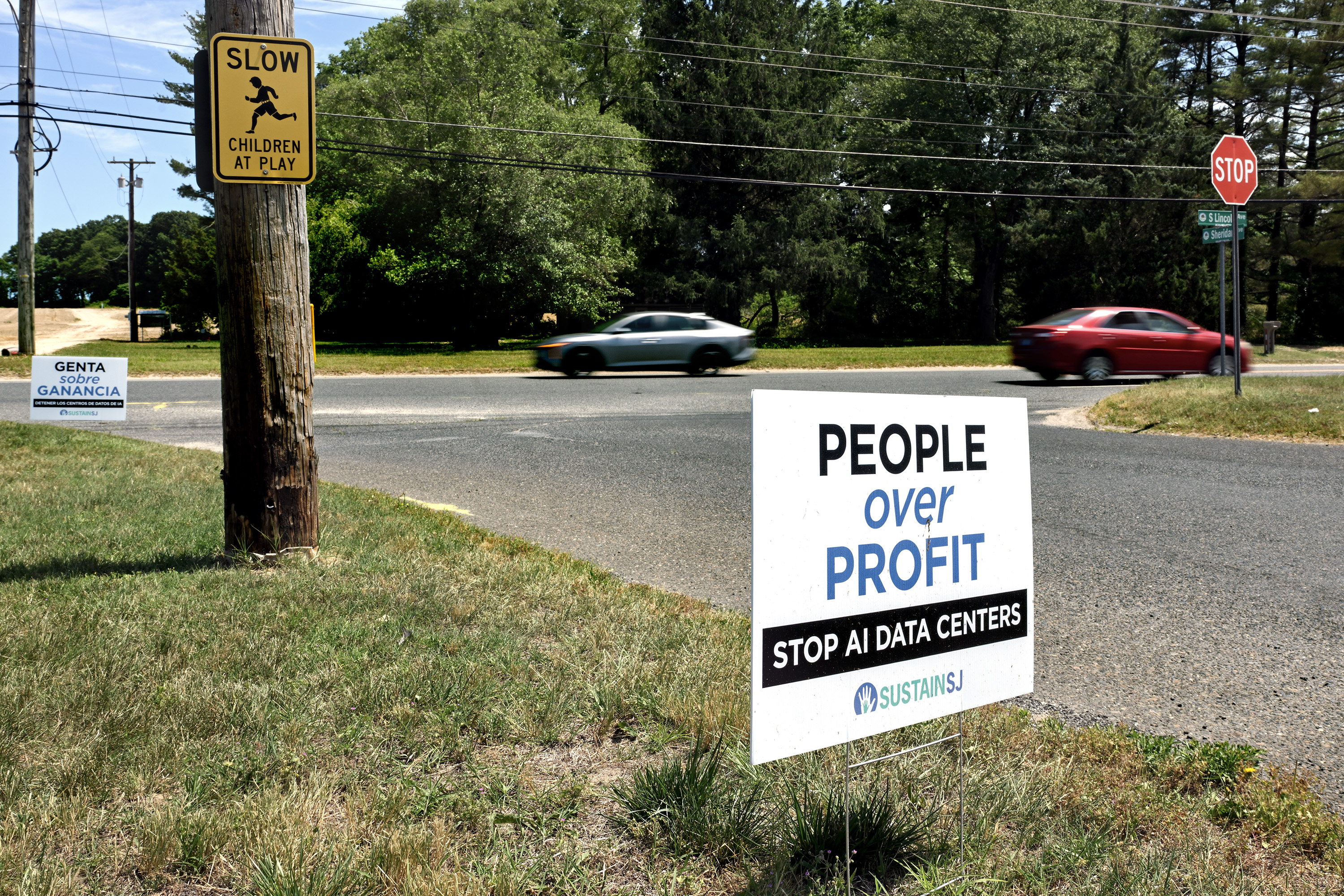
Developers of a data center in East Whiteland Township in Chester County have been hit with a second stop-work order in as many months, this time for failing to document that they have “sufficient water” for the project.
Earlier this month, National Treasure director Jon Turteltaub stopped by a Philly screening and celebration of the film. While there, Turteltaub revealed that a scene inside this venue was cut from the film’s final version:
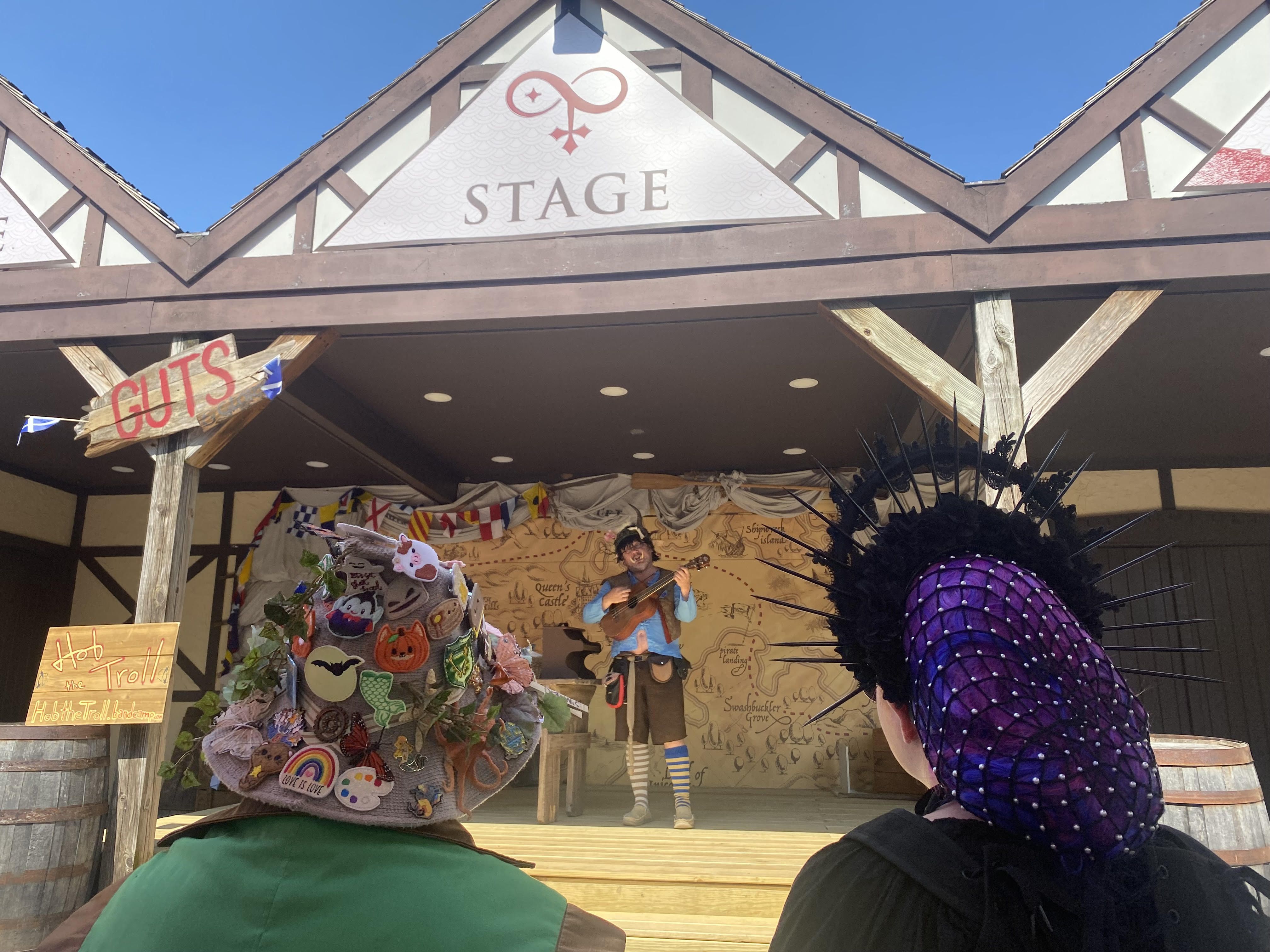
🗡️ Dressing up for. Get your lances and chain mail ready — it’s time, once again, for the Pennsylvania Renaissance Faire.
🛟 Boarding. For the first time in more than 15 years, cruise ships are departing from our area, heading for destinations in the Caribbean, New England, and Canada.
🥖 Debating. Do sesame seeds belong on a cheesesteak roll? Some of the city’s biggest purveyors are split, The Inquirer’s Mike Klein writes.
🧩 Unscramble the anagram
Hint: This week, the HBO crime drama Task was reportedly spotted filming for its second season in this Philadelphia neighborhood.
Get your lances and chain mail ready — it’s time, once again, for the Pennsylvania Renaissance Faire.
Spanning 35 acres of the Mount Hope Estate and Winery in Manheim, the faire draws around 200,000 guests annually and features dozens of costumed cast members, loads of era-specific food and drink, and enough drama to fill a scroll or two.
The faire is open Saturdays and Sundays from through Oct. 25, with tickets on sale now.
This year’s storyline centers on Queen Elizabeth, whose journey to Mount Hope has made waves in that it’s expected to conclude with a decision: Who will the queen take as a spouse?
As the faire’s website teases, “candidates are put forward, choices are made, sides are taken, [and] conflicts, resolutions, and hijinks ensue.”
Here’s everything you need to know before making the trek to Lancaster County:
Dates & times for the 2026 Pennsylvania Renaissance Faire
The faire is held Saturdays and Sundays through Oct. 25, rain or shine. Gates open at 11 a.m. and close at 8 p.m. — though merchants close at 7 p.m.
📍 2775 Lebanon Road, Manheim, Pa. 17545
🕒 Aug. 16–Oct. 26, Saturdays and Sundays, 11 a.m.–8 p.m.
Schedules for the 2026 Pennsylvania Renaissance Faire
“Daily Writs” — or individual weekend schedules — are available on the festival website.
A series of special events — including a pub crawl, a “Bard’s Breakfast,” and a pair of escape rooms — are also scheduled, though additional tickets are required.
Joe Penn portrays Sheriff Jacob Perry at a previous iteration of the annual Pennsylvania Renaissance Faire.Ron Fary
Tickets to the 2026 Pennsylvania Renaissance Faire
Tickets are available through the Renaissance Faire’s online ticket sale website, parenfaire.com. Prices vary by age and date.
Through Sept. 13: $38.95 for ages 12+; $21.95 for ages 5-11.
Sept. 19-Oct. 25: $42.95 for ages 12+; $23.95 for ages 5-11.
Children 4 and under are free.
Discounted tickets are available for those in the military, law enforcement, fire and EMS, medical workers, government employees, and educators. Discounted “sunset tickets” — with admission after 4 p.m. — are also available.
“Royal Hound” tickets, which admit dogs pending the approval of registration, are $8 per animal.
Tickets can only be purchased through the event’s website.
The Pennsylvania Renaissance Faire runs on Saturdays and Sundays from now until Oct. 25 in Lancaster County.
Themed weekends at the Pennsylvania Renaissance Faire
Each weekend features a different theme, a schedule is found here, with a activities ranging from costume contests to scavenger hunts to trick-or-treating.
More than 100 years later, record-keepers call it baseball history.
The game
On Aug. 25, 1922, a windy-day matchup between the visiting Philadelphia Phillies and the Chicago Cubs accounted for 49 runs, the most ever recorded in a Major League Baseball game.
That record remains unbroken.
“Cubs and Phillies hooked up in what was advertised as a baseball game,” The Inquirer noted, “but which turned out early to be a comic opera to the tune of base hits.”
More than 7,000 fans turned out for the Friday matinee, which started well enough: The Cubs jumped to a one-run lead, but a series of Cubby errors put the Phils up by three in the second inning.
But the Phillies would not lead again for the rest of the game.
The Cubs scored 10 runs in the second inning, and 14 in the fourth.
The Phillies put up six runs between the third and fifth innings, eight runs in the eighth inning, and six more in the ninth, but could not fully catch up.
When the basepath dust had settled, the two teams accounted for 51 hits, and 49 runs, “which established a new world’s mark for modern baseball,” The Inquirer noted.
The teams also set records for most runs in one inning (14), number of at-bats by one player in one inning (3), number of hits by a team in one inning (11), and the season record for number of runs scored by one team over nine innings, besting the previous record of 19.
The Philadelphia baseball club got some measure of revenge more than 50 years later, beating the Cubs in a 10-inning slugfest at Wrigley Field, 23-22, on May 17, 1979. Their combined 45 runs counts as the second-most runs ever scored in a game.
Think you know your news? There’s only one way to find out. Welcome back to our weekly News Quiz — a quick way to see if your reading habits are sinking in and to put your local news knowledge to the test.
Question 1 of 10
What city was the 22-year-old man accused of menacing pedestrians near City Hall while wearing a Halloween mask earlier this month arrested in this week?
CorrectIncorrect. XX% of other readers got this question right.
Zymire Hughes was being held at the Clark County Detention Center awaiting extradition proceedings after being arrested Tuesday in Las Vegas, the U.S. Marshals Service said.
Question 2 of 10
Pennsylvania Attorney General David Sunday announced this week that he’s suing the parent company of this social media platform for allegedly failing to protect children from addiction:
CorrectIncorrect. XX% of other readers got this question right.
The suit alleges that Snap Inc., owner-operator of Snapchat, does not properly warn users of the addictiveness of its features and does not protect children properly from compulsive use. This comes after Sunday announced a lawsuit against TikTok over the same issue earlier this month.
story continues after advertisement
Question 3 of 10
On Dec. 6, the Keswick Theater will host a large-scale holiday charity concert to honor this late musician:
CorrectIncorrect. XX% of other readers got this question right.
On Dec. 6, at the Keswick, Philly musicians will host the Philly Busk — a holiday concert inspired by Glen Hansard’s beloved Christmas Eve busking in Dublin to help unhoused people. Ticket information and a lineup for the event have yet to be announced. All of the proceeds from the Philly Busk will benefit Project HOME — one of the city’s largest nonprofit housing agencies — and the Irish Center of Philadelphia, a Mount Airy cultural hub founded in 1958 to preserve Irish heritage, music, and dance.
Question 4 of 10
Last weekend’s Naked Bike Ride coincided with the inaugural observation of another event in Philly:
CorrectIncorrect. XX% of other readers got this question right.
It was a pure coincidence that the Naked Bike Ride aligned with the inaugural “Go Topless Day” in Philly earlier that day. Go Topless Day had a clear agenda: Roughly a dozen bare-chested picketers gathered in LOVE Park at noon, before marching around City Hall with a police escort, chanting, “free your breasts, free your mind,” to stir action around what protesters described as the legal hypocrisy that allows men to be shirtless in public but not women.
story continues after advertisement
Question 5 of 10
This common allergen source is expected to peak in Philly next week:
CorrectIncorrect. XX% of other readers got this question right.
The recent rain rally has been a boon to the Philadelphia region’s plant life and, unfortunately for the legions of the allergic, the beneficiaries include the homely and ubiquitous tormentor commonly known as ragweed.
Question 6 of 10
Which two Philly restaurants landed on Bon Appétit’s Best New Restaurant list?
CorrectIncorrect. XX% of other readers got this question right.
Honeysuckle, Omar Tate and Cybille St. Aude-Tate’s fine-dining restaurant in North Philadelphia, and Sao, Phila and Rachel Lorn’s East Passyunk oyster bar, were among the 19 establishments that made the cut. They joined restaurants in New York City, San Francisco, Chicago, Seattle, Nashville, and Birmingham, Ala., and more.
Question 7 of 10
Food reporter Mike Klein noted in a recent article that a certain type of food is booming across Philly — and the rest of the country. What is it?
CorrectIncorrect. XX% of other readers got this question right.
Since the beginning of 2025, nearly a dozen bagel shops have opened or leased space in Philadelphia and its suburbs, bringing new locations from local operators as well as fast-growing out-of-town brands that see the region as fertile ground for expansion.
Question 8 of 10
Why is the Landmark Ritz Five closed?
CorrectIncorrect. XX% of other readers got this question right.
The theater at 214 Walnut St. was found in violation of several city codes in March, and the theater failed a follow-up inspection on Aug. 11, according to a city online portal. A city notice posted to the theater doors on Wednesday said the theater needed to obtain an electrical permit and install a fire alarm system.
Question 9 of 10
Olivia Li is one of the Curtis Institute’s most promising new students — and she’s quite young. How old is she?
CorrectIncorrect. XX% of other readers got this question right.
Li is 7 years old. Only 13 other students in Curtis' century-plus existence have been under the age of 10. Li is believed to be the youngest student to study there since 1950.
Question 10 of 10
National Treasure director Jon Turteltaub stopped by Philly’s screening and celebration of the film. While there, Turteltaub revealed a scene inside this venue was cut from the film’s final version:
CorrectIncorrect. XX% of other readers got this question right.
A scene that didn’t make the cut took place when Abigail and Riley are chased through Center City. “As Riley’s being chased, he cuts into a strip club and he runs through the strip club to get away,” Turteltaub said. “So my idea was he runs in and no one’s in there and it’s just some guy vacuuming and [Riley] says, ‘Well, that was disappointing,’ and keeps going.”
Your Results
You have skipped .
You scored XX out of 10.
The average reader scored XX out of 10
Seems like you’ve been skimming more than reading there, buddy. There’s always next week.
You’ve read some articles (or made some educated guesses) but we wouldn’t come to you first for our local news recaps. Better luck next week!
Do you work here? You’re a local news stan with the latest updates on Philly happenings. Your friends definitely ask you for summaries on what’s going on and it shows.
The seeded roll is a staple of Sarcone’s Bakery.Michael Klein / Staff
The seeded-roll question is part of the crowded field of never-settled cheesesteak disputes: Which cheese is correct? How finely should the beef be chopped? Should the onions be diced, sliced, or chopped?
Tourists vs. locals
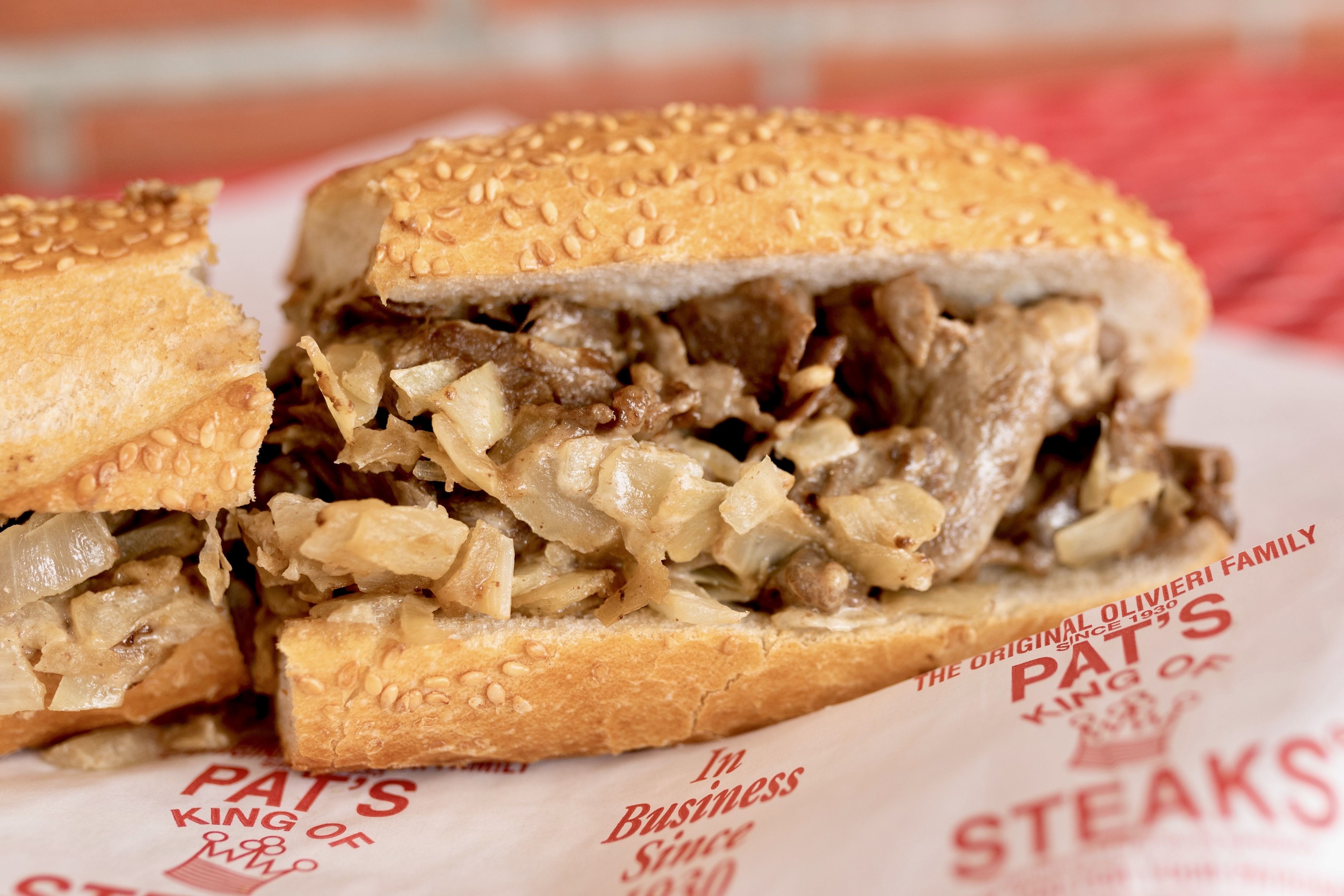
Earlier this month, Jim’s began offering seeded rolls as an option for the first time since it opened in 1976. Pat’s, which made news in February when it began offering them after 96 years of plain rolls, abandoned the experiment after only a few weeks.
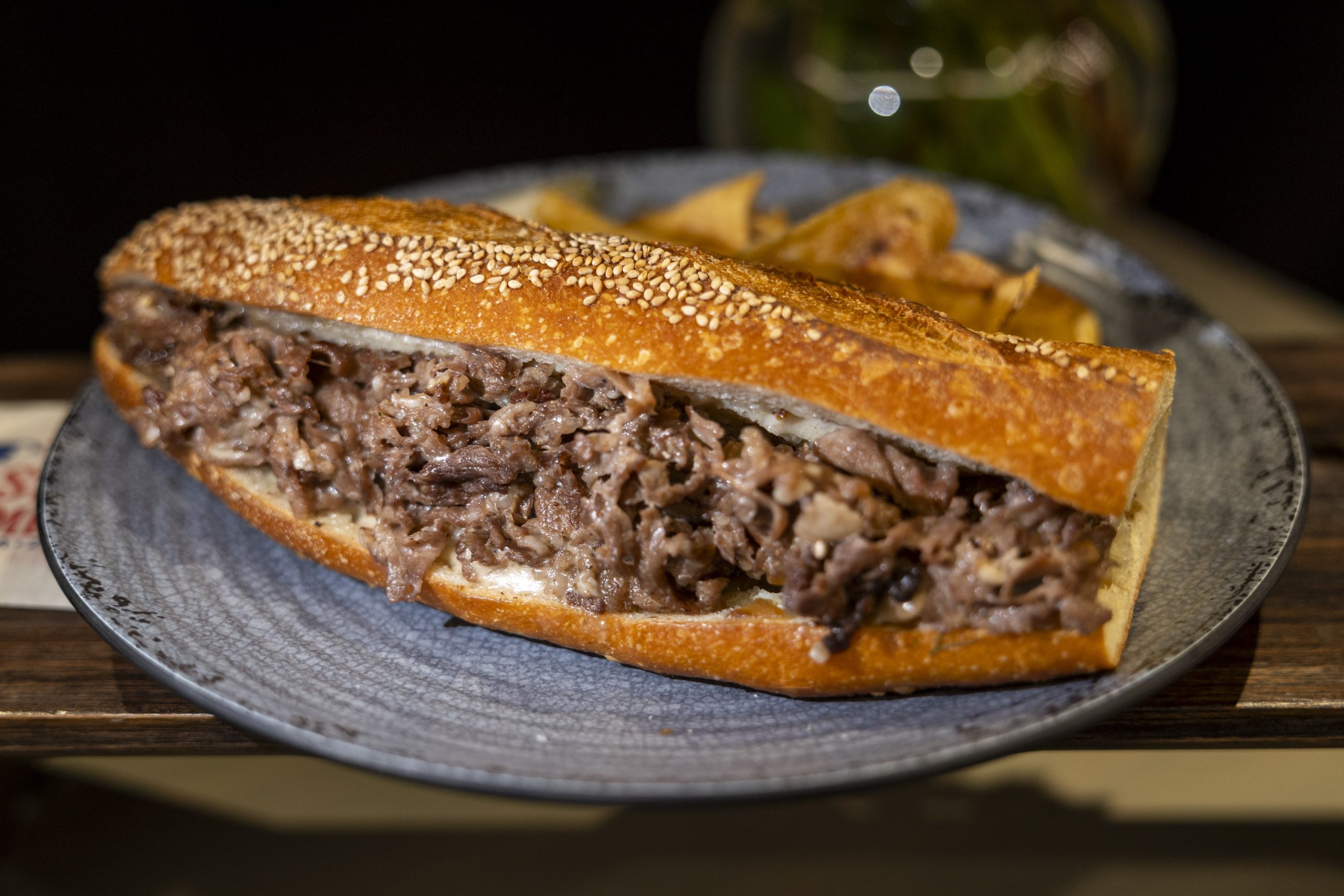
Seeded rolls tend to be crustier, and the toasted sesame adds a faintly nutty flavor. Plain rolls are generally softer and milder, putting more emphasis on the beef and cheese.
At Jim’s, owner Ken Silver said he added seeded rolls to his Liscio’s bread order to give customers a choice. “For the most part, it’s a tourist thing,” Silver said. “Our local base is almost all plain.”
Silver said Jim’s made the change “for the same reason we added chicken and Cooper Sharp [cheese]. People expect it from what they see on social media.” Overall so far, he said, seeded is outselling unseeded, 6 to 1.
At Pat’s, those expectations did not translate into sales.
A cheesesteak on an unseeded roll at Jim’s South Street.Matt Rourke
Owner Frank Olivieri began offering seeded rolls in February, shortly after the death of his father, Frank P. Olivieri, who had resisted changes. The younger Olivieri initially said the limited-time offering would likely be permanent.
It lasted a month.
“If I got in 400 [seeded rolls] a day, by the end of the day, I was throwing out 390 of them,” Olivieri said. “Not that I’m the barometer to judge everybody else by or what influencers think you should eat, [but] not everybody who comes to Pat’s Steaks wants the [seeded] rolls.”
How the old guard rolls
Pat’s recently switched its bread supplier from Aversa to Corropolese, and offers plain rolls only now.
Geno’s Steaks, across Passyunk Avenue, also has been firmly seedless since Joey Vento opened the shop in 1966. “It’s never crossed my mind,” said Geno Vento, who took over after his father’s passing in 2011. “We have our customer base, and I don’t feel that we need to change the roll [baked by Liscio]. I feel like it’s more of a trend right now. And they might put [cheesesteaks] on rye bread next. You never know.”
Geno’s concession to the new generation is Cooper Sharp, which the shop buys in sauce form and heats up — as an option.
At the old-school Dalessandro’s in Roxborough, owner Steve Kotridis said he began offering seeded rolls a few years ago “when it became a fad,” though he estimated that only 3% of customers order them. Dalessandro’s uses a softer Amoroso roll for cheesesteaks and a sturdier, seeded Aversa for hoagies, both with and without seeds.
For newer cheesesteak shops, however, the seeded roll has become all but de rigueur — a style that predates social media but has been amplified by it. Famously, Donkey’s Place in Camden has served its distinctive cheesesteaks on poppy-seeded round rolls for more than 80 years.
Louis Sarcone Jr. at the century-old Sarcone’s Bakery credits Bobby Toner of the now-closed JR’s Deli with helping establish seeded bread as a hoagie standard in the 1980s, after Toner began buying Sarcone’s seeded loaves.
Sarcone said Primo Hoagies, founded in South Philadelphia in 1992, spread the style widely as it expanded into a 120-unit chain. Sarcone supplied Primo for years before it started using parbaked rolls supplied by another bakery.
By 2024, Sarcone said, 90% of the rolls he baked were seeded, up from 75% a decade earlier.
John Bucci Jr. said John’s Roast Pork began serving cheesesteaks on seeded rolls in 1987, after its supplier, Vilotti, went out of business. Bucci’s father, who was terminally ill, left the choice of a new bakery to his son. “JR’s had started making their hoagies on seeded bread, so, I figured, why not try [it] on a cheesesteak?” Bucci said.
John’s initially bought its seeded rolls from Carangi and later switched to Sarcone’s.
Now a cheesesteak roll
The seeded roll’s rise as a defining feature of the modern Philadelphia cheesesteak came later, accelerated by Angelo’s Pizzeria.
Owner Danny DiGiampietro, whose wife is Louis Sarcone’s niece, used Sarcone’s seeded rolls when he opened the first Angelo’s in Haddonfield in 2013. After moving Angelo’s to Ninth and Fitzwater in 2019, DiGiampietro began baking his own bread.
As Angelo’s fame grew, its crusty, sesame-seeded rolls — an image widely broadcast on social media and emulated by other shops — helped define the newer-generation cheesesteak.
Del Rossi’s cheesesteak is served on a house-baked seeded roll.
At Del Rossi’s, owner Nish Patel said cheesesteak orders were roughly split between plain and seeded rolls when he took over in 2020. Since he began baking his own rolls in 2024, virtually all have gone out on seeded bread.
“We barely get any requests for unseeded,” Patel said.
The contrast with Pat’s could hardly be sharper. There, Olivieri said, almost nobody wanted the seeded option.
Jim’s now finds itself somewhere in between — offering the roll that has come to signify a Philadelphia cheesesteak to many, while continuing to sell mostly plain rolls to its longtime clientele.
“People expect it from what they see on social media,” Silver said.