Blog

  • 🎃 Seasonal decor wars | Morning Newsletter

    🎃 Seasonal decor wars | Morning Newsletter

    Saturday is here, with sunny skies and a high near 83.

    As the seasonal creep visibly accelerates, some are unsure how to cope. Inquirer staffers discuss a reader’s issue with a neighbor’s “early” Halloween display in the heat of summer.

    Plus, we have news on a possibly significant discovery in the sprawling investigation into Raymond Horsch’s home in Olney, a persistent tire-dumping problem, and our report card for this week in Philly stories.

    — Paola PĂ©rez (morningnewsletter@inquirer.com)

    If someone forwarded you this email, sign up for free here.

    What you should know today

    The seasonal creep Grinch

    This week’s question is: My neighbor has started decorating for Halloween. There are six skeletons in the yard, jack-o-lanterns hanging around the whole front of the house, fake tombstones that have punny names (I.P. Freely), and I know a lot more is coming. Halloween is more than two months away and it’s still 90 degrees outside. Is it too early for this or am I being a Grumpy Gus?

    Inquirer columnists Stephanie Farr and Elizabeth Wellington joined forces for this one, touching on everything from First Amendment rights to the philosophical motivation behind putting up decorations in the first place.

    Farr, who is already looking forward to Christmas, said she has a neighbor with a 12-foot skeleton up year-round, and wondered if living right next door would make her feel compelled to say something. Wellington, who can relate to feeling annoyed by the autumn-rushers, suggests a simple solution: acceptance. “I think we McGrinches have to grin and bear it,” she said, suggesting self-care tactics to deal with it.

    Read their full conversation here. Need advice, or want to share your thoughts? We want to hear it. Email us here.

    One viewpoint

    In this week’s Shackamaxon, Inquirer columnist Daniel Pearson unpacks a judge’s move to impose supervision on the beleaguered Philadelphia Sheriff’s Office and its processing of deeds after property auctions.

    “While it is good to see someone holding the sheriff accountable for once, a temporary babysitter is only a partial solution,” Pearson writes. “The office should be abolished.”

    Read on for his perspective on the department’s years of dysfunction, along with other takes on data center confusion and the city’s most recent property valuations.

    ❓Pop quiz

    Restaurateur Bruce Cooper will close his landmark restaurant Jake’s this fall after nearly 40 years in Manayunk.

    What was the name “Jake’s” a reference to?

    A) Cooper’s dog

    B) Cooper’s then-wife Helena’s nickname

    C) Cooper’s late great-great-grandfather

    D) All of the above

    Think you know? Check your answer.

    đŸ§© Unscramble the anagram

    Hint: Downingtown-based brewery

    CROWING BREVITY

    Email us if you know the answer. We’ll select a reader at random to shout out here.

    Cheers to Rosemary Farley, who correctly guessed Friday’s answer: Center City. Crews for the HBO crime drama Task were spotted filming in the neighborhood on Tuesday, and have been shooting around the region all summer.

    We were there

    How hard can it be to climb the Manayunk Wall?

    With the highly anticipated revival of the Philadelphia Cycling Classic this weekend, we asked a former pro (Carlos Rogers) and a complete novice (sports reporter Ariel Simpson) to make an attempt at the most iconic ascent in American cycling.

    See how they fared along the steep incline.

    Somewhere on the internet in Philly

    đŸ§č AlleyGators, a citywide cleaning program, seems to be going well. Have you filed a request and seen any difference in your neighborhood? Let us know.

    🧀 We love superlatives. Someone is on the hunt for the best cheesesteak egg rolls in Philly. Another is claiming the finest bathroom, which appears to be at 12 Steps Down. My favorite comment: “this is a dark souls toilet but i mean that as a compliment.”

    🚮 Like many others, John Carpenter and Julia Heberle of Roxborough are thrilled that the Cycling Classic is returning this year. They’ve been fans of the race since they moved to the area in 1988, and plan to do all they can to make this year feel like a party.

    đŸ‘‹đŸœ Have a good one. I’ll catch up with you again tomorrow.

    By submitting your written, visual, and/or audio contributions, you agree to The Inquirer’s Terms of Use, including the grant of rights in Section 10.


  • Penn Medicine reported a $337 million operating profit for the year ended June 30

    Penn Medicine reported a $337 million operating profit for the year ended June 30

    The University of Pennsylvania Health System had $337 million in operating profit in fiscal 2026, up from $247 million the year before, the Philadelphia nonprofit reported to bond investors Friday.

    “We saw good growth in several of our clinical programs that helped us to generate the operating performance,” Julia Puchtler, the health system’s chief financial officer, said in an interview.

    That’s money “we’re going to be able to reinvest in the academic missions and in our clinical programs and our workforce,” she said.

    Here are more details:

    Revenue: Penn’s total revenue rose 13.7%, to $13.6 billion from $12 billion the year before. Revenue from patient care accounted for $11.4 billion of the total in fiscal 2026, according to Penn’s report to bondholders.

    Outpatient cancer care and outpatient surgeries by urologists and ear, nose, and throat doctors stood out as areas of growth, Puchtler said. On the inpatient side, neurosciences and transplants had notable increases, she said.

    Expenses: For the first time since 2021, the average length of time a patient spent in the hospital fell below 6 days. Longer stays have higher expenses, even though hospitals generally don’t get paid more for them.

    The average in fiscal 2026 was 5.93 days, from 6.14 days the year before. That looks like a small decline, but it adds up when spread over the health system’s more than 161,000 admissions in the year. The reduction helped Penn reduce expenses relative to revenue. It also freed capacity for more patients, Puchtler said.

    In employee benefits, Penn had an additional $20 million in expenses because it aligned retirement plans across the system, Puchtler said.

    Notable: Penn refinanced about $300 million in debt last month at a lower interest rate. That means the health system will save $28 million in interest payments over the next 9 or 10 years, Puchtler said.

  • New Jersey outpaced most other states in typical housing wealth in a national study

    New Jersey outpaced most other states in typical housing wealth in a national study

    The typical homeowner in New Jersey has one of the highest levels of housing wealth in the country, according to a study by LendingTree, an online loan marketplace.

    The state was one of the top five where homeowners reported having the most home equity in the first quarter of the year, according to an analysis of more than 965,000 anonymized inquiries for home equity loans and home equity lines of credit submitted through LendingTree.

    Home equity shoppers in New Jersey reported having a median of about $295,000 in equity, meaning half had more and half had less. The Garden State tied with Washington state in the rankings, but New Jersey had a slightly higher share of homeowners with at least $200,000 in equity — almost three in four shoppers.

    Home equity, also referred to as housing wealth, is the difference between how much a property is worth and how much the owner owes on their mortgage. Equity increases when home values rise and/or owners pay down their mortgage. It’s money that belongs to the owner, but it’s not the same as having cash, noted Matt Schulz, LendingTree’s chief consumer finance analyst.

    “Accessing [equity] generally means selling the home or borrowing against it, and borrowing comes with costs and risks,” Schulz said in a statement. Equity fluctuates with the market. Before borrowing against a home, owners should verify how much equity they have and how much the loan will ultimately cost. And they shouldn’t borrow more than they need, he said.

    Property owners take out loans and lines of credit against a home’s equity to do things like consolidate debt, pay for school, and repair or renovate the home.

    How equity compares

    Home equity shoppers in Hawaii reported having the most housing wealth — a median of about $425,000, according to the LendingTree analysis. More than 80% of these homeowners had at least $200,000 in home equity.

    California came in at second for median housing wealth — about $350,000.

    (function(){function e(){window.addEventListener(`message`,function(e){if(e.data[`datawrapper-height`]!==void 0){var t=document.querySelectorAll(`iframe`);for(var n in e.data[`datawrapper-height`])for(var r=0,i;i=t[r];r++)if(i.contentWindow===e.source){var a=e.data[`datawrapper-height`][n]+`px`;i.style.height=a}}})}e()})();

    Pennsylvania ranked 34th. Home equity shoppers on LendingTree’s platform reported having a median of $180,000.

    Of the 50 states, West Virginia and Iowa were tied for last place. Home equity shoppers in these states reported having a median of about $130,000 in equity.

    Differences among states “are a reminder that the home equity story can look very different depending on where you live,” Schulz said.

    “For some homeowners, their house can provide a huge financial cushion,” he said. “For others, there may be far less wiggle room.”

    But in total, U.S. homeowners “are sitting on an extraordinary amount of housing wealth,” Schulz said.

    Across the country, households had $34.9 trillion in home equity as of the first quarter of 2026 — $48.7 trillion in real estate assets and $13.8 trillion in mortgage debt, according to LendingTree’s analysis of Federal Reserve data.

  • These 109-year-old friends say this is the secret to their longevity

    These 109-year-old friends say this is the secret to their longevity

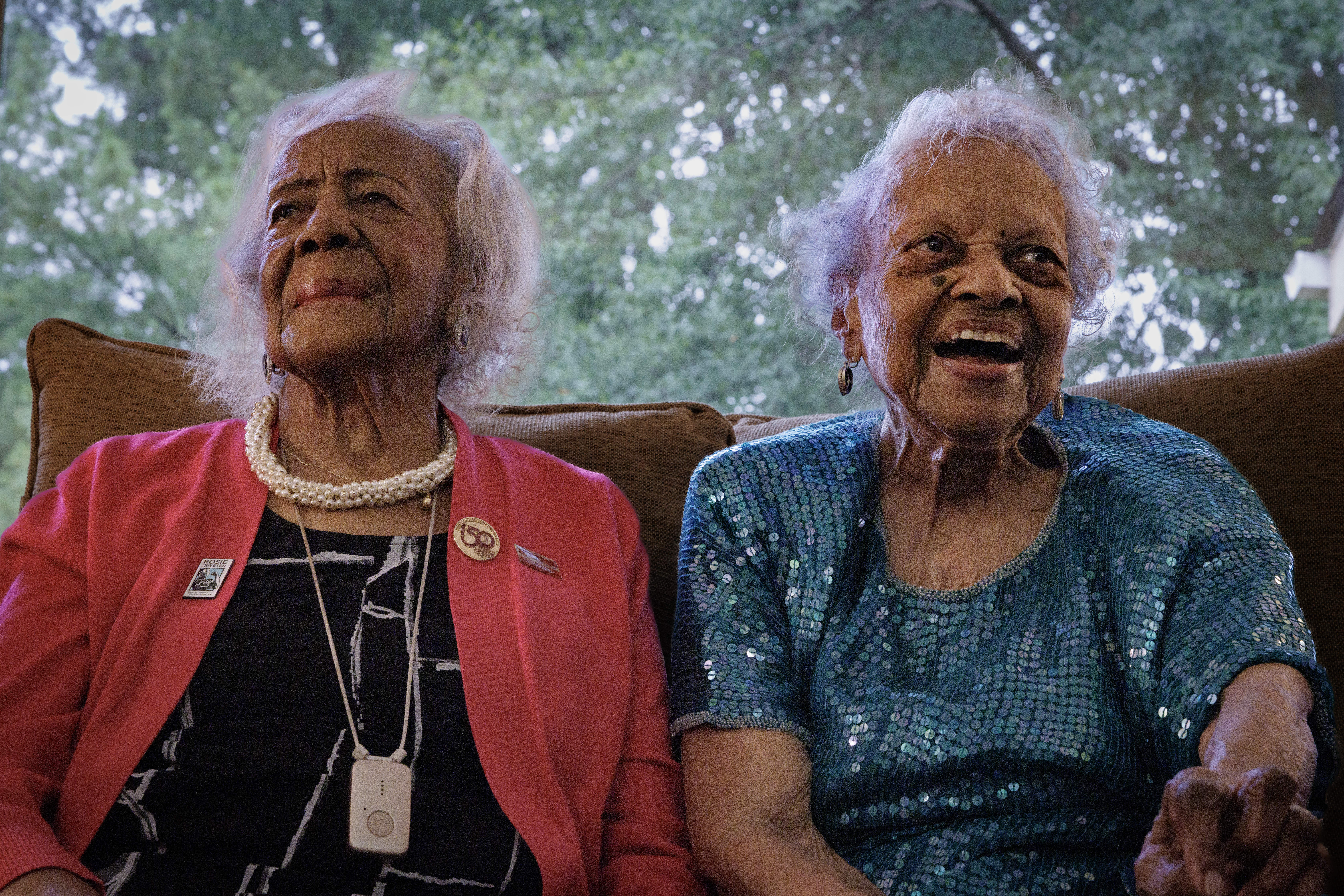
    Dorothy Boggess starts every day the same way: with exercises in her kitchen.

    She plugs in an old boom box and hits play on the “Cha Cha Slide.” Then she stands with a hand on the counter, swinging one leg and then the other back and forth. When DJ Casper asks how low she can go, she bends her knees and sinks her hips and shimmies, laughing. On her shelf is a mug that says “109 and fabulous.”

    Reaching this age puts Boggess in an exclusive club. Just 0.03% of Americans live into their 100s. But Boggess is lucky enough that one of them is her friend of more than eight decades, Velma Long.

    Long celebrated her 109th birthday this month by inviting Boggess to church with her. (Long went to Boggess’s church for her 109th birthday, in May.) Both wore sensible shoes on their birthdays this year, but Long’s daughter noted that her mom was dancing in heels on her 100th birthday.

    Called to serve

    In the early 1940s, Boggess was in Atlanta studying social work when she decided to come to Washington to join the war effort.

    Both Boggess and Long were “Rosie the Riveters” — women who joined the workforce during World War II to help fill the factory lines, shipyards, and offices vacated by the young men sent overseas.

    “It was very exciting,” Boggess said. “I didn’t know anyone at all in Washington, D.C.” She took the train up, and a friend of a friend picked her up from Union Station, bringing her along on an errand in Baltimore before taking her home.

    “That was really exciting — to go to a whole other state. Of course, now we know Baltimore is nowhere. But to me, that was a really big deal,” Boggess said, laughing.

    Both Boggess and Long went to work as clerk typists for the government — Long for the Navy and Boggess for what was then called the War Department, earning a salary of $1,440 annually. They met their husbands through work, and their respective romances started with lunch dates.

    “We used to walk over to the Interior Department at lunchtime because it was not segregated,” Boggess said. “The food was better.”

    It was soon after that Boggess and Long met each other and became fast friends. Their husbands were cousins and were very close, so nearly every date was a double date.

    “My husband loved her husband,” Boggess said. “We spent a lot of time together and traveled everywhere.”

    Boggess and her husband were very involved in the civil rights movement, and her home is full of mementos from that era. At the time, she didn’t realize she was helping make history.

    “I was just having fun,” Boggess said.

    In the late 1990s, The Washington Post ran a story about women known as “The War Girls” for their role in World War II, but the piece referred only to white women. Boggess wrote a letter to the editor correcting the record, and it ran in the paper the following month.

    Friendship and humor

    For more than 80 years now, Boggess and Long have lived near each other in and around D.C. When they were younger, they went to exercise classes together and threw parties for the kids’ birthdays in Boggess’s backyard. It’s harder to get together as often now, but they check in by phone almost every day.

    “We’ve both lost so many close friends,” Boggess said. “It’s amazing that we’re still functioning.”

    They exercise and eat well, but when asked about the secret to their longevity, they say it’s being social. And while they’ve made many friends through church and their kids and grandkids (Long has a great-great-granddaughter, age 4), there’s something different about a friend who has known you since you were 23.

    “They’ve been friends for years,” said Kenneth Boggess, Boggess’s son. “They are close, and they can relate to one another.”

    Dorothy Boggess still makes Long laugh like no one else. But they stay engaged with the world outside, too.

    “I go out with my daughter a lot,” Long said. “She always insists that I come along. I say, ‘I’m really too old.’ She says, ‘No, you’re not. People love to see you — to see a person that’s your age.’”

    “All my friends say she’s their mom, too, now,” said Long’s daughter, Phyllis Valentine, 78.

    Both Long and Boggess have been involved with their churches, neighborhoods, social clubs, and sororities. They stay as active as possible, and Boggess learned to swim later in life, at age 69, which she said is her proudest accomplishment.

    “All I can say is I’m very proud of her,” Kenneth Boggess said of his mom. “I’m proud of the people who have supported her.”

    Both Dorothy Boggess and Long have traveled extensively since retiring from careers in social work in the 1970s: Boggess has a list of the countries she’s visited on the wall in her basement, in alphabetical order, from Argentina to Turkey. Places Long loved the most were Bermuda, Montreal, and Hawaii.

    “She loves to fly,” Valentine said of her mom. Valentine brought Long to Texas last year for a celebration at Long’s college marking the school’s 150th anniversary. “As we were descending into Austin, she was looking out the window just like a little kid. And I asked her, I said, ‘What are you thinking about?’ She said, ‘I just never thought I’d get to come back.’”

  • The Jersey Shore bakery that helped Dominic Sessa transform into Anthony Bourdain

    The Jersey Shore bakery that helped Dominic Sessa transform into Anthony Bourdain

    Before he played Anthony Bourdain in the coming-of-age biopic Tony, Dominic Sessa’s first brush with fame was as an Ocean City, N.J., doughnut guy.

    Tony, which opened in theaters nationwide last Friday, is an origin story. It depicts Bourdain decades before he would become the executive chef of French brasserie Les Halles and eventually a prolific travel journalist, best known for shows like A Cook’s Tour, No Reservations, and Parts Unknown.

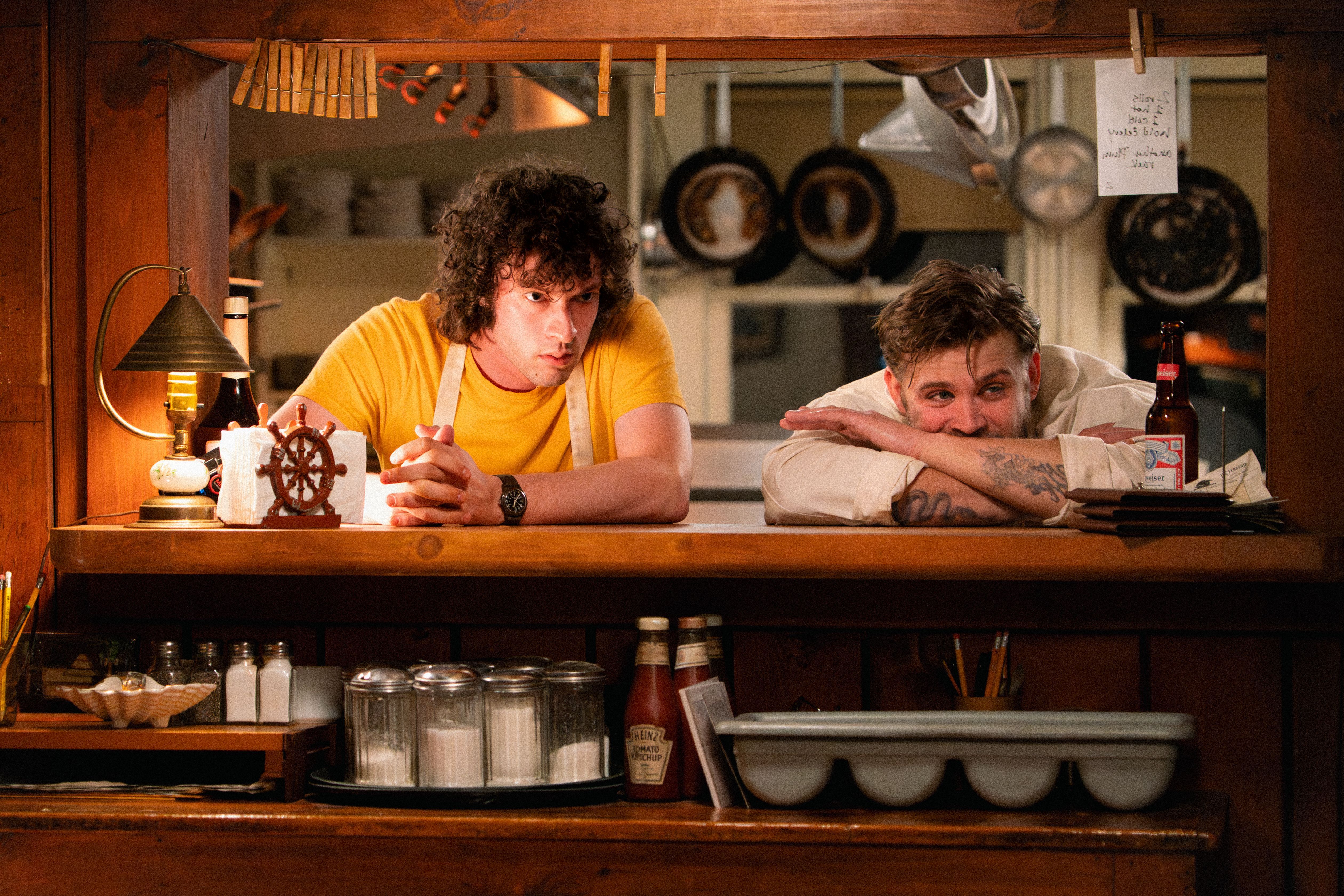
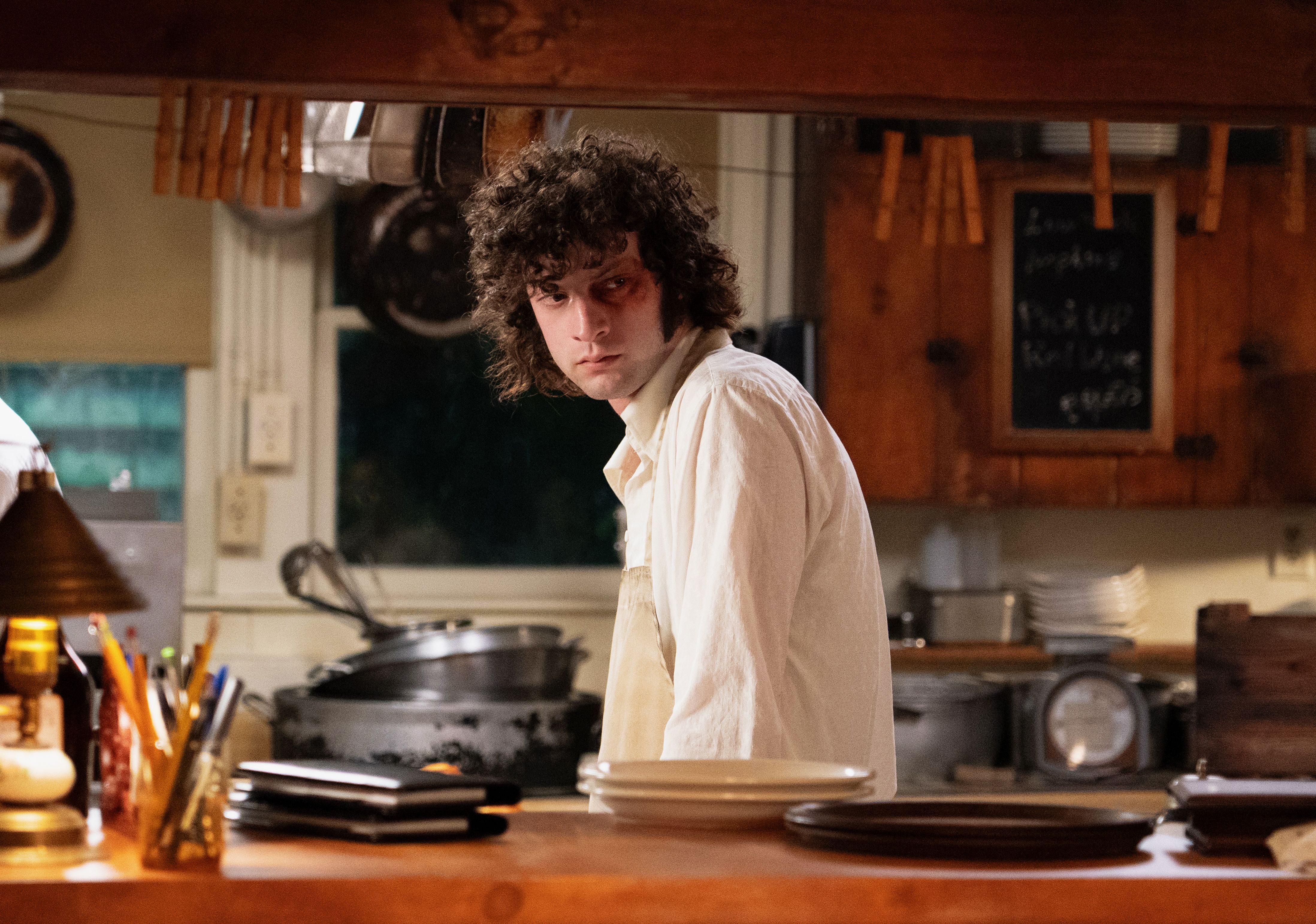
    Dominic Sessa (left) as Anthony Bourdain with Leo Woodall as a renegade cook in “Tony.”A24

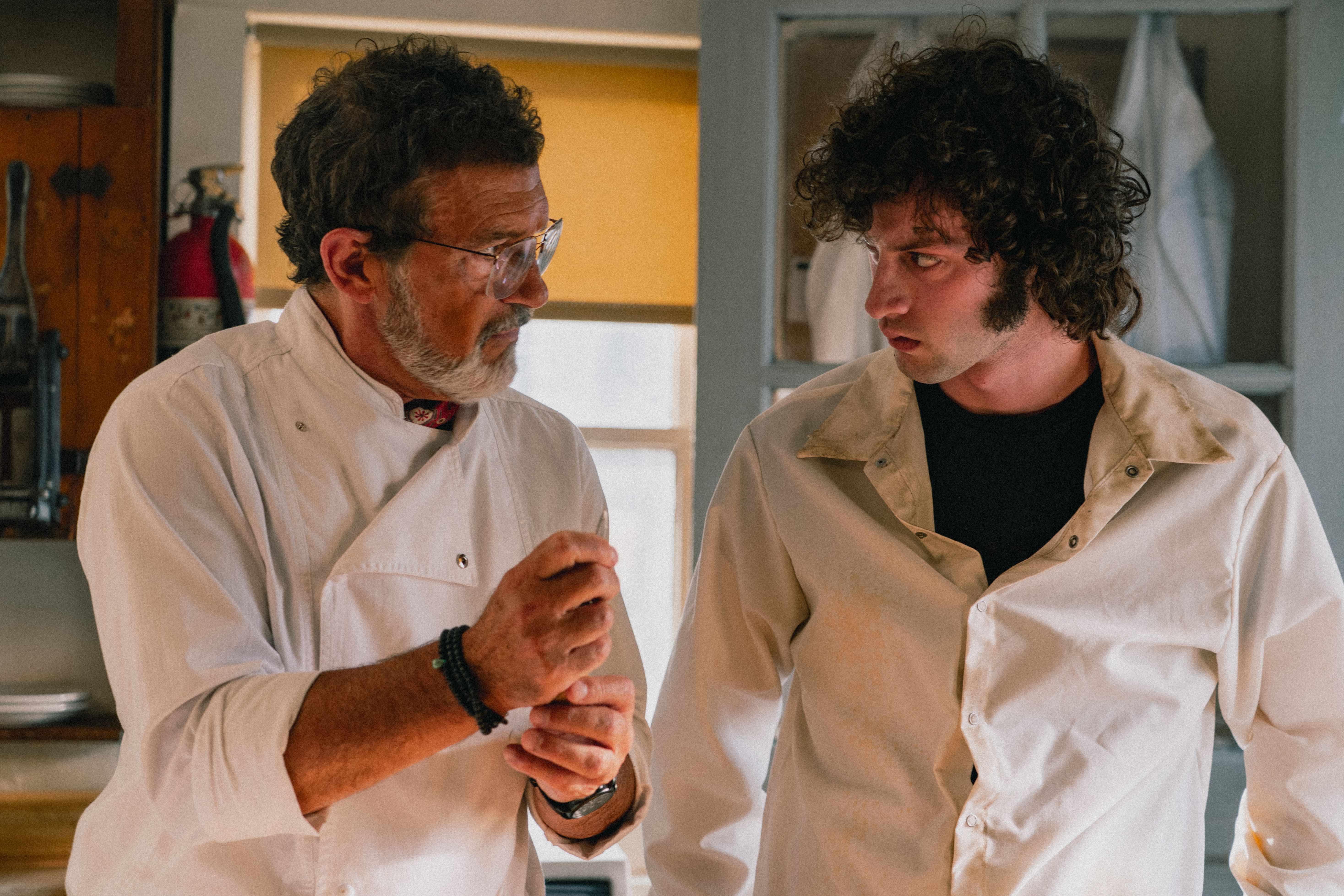
    In the film, Sessa portrays a 19-year-old Bourdain in the summer of 1973, when he found himself in Provincetown, Mass., desperate to get his would-be wife, Nancy Putkoski (Emilia Jones), to fall in love with him after losing out on a writing fellowship. A tough-yet-kind chef (Anthony Banderas) gives Bourdain a job as a dishwasher at the Flagship, a no-nonsense seafood shack where Bourdain grows from bumbling dishwasher into something resembling a cook.

    The film draws heavily on chapters of Bourdain’s best-selling memoir Kitchen Confidential, in which Bourdain romanticized a crew of talented, if aimless, line cooks and their exploits.

    “They drank everything in sight, stole whatever wasn’t nailed down, and screwed their way through floor staff, bar customers, and casual visitors like nothing I’d ever seen or imagined,” Bourdain wrote with palpable admiration.

    It’s a feeling that Sessa, 23, knows well.

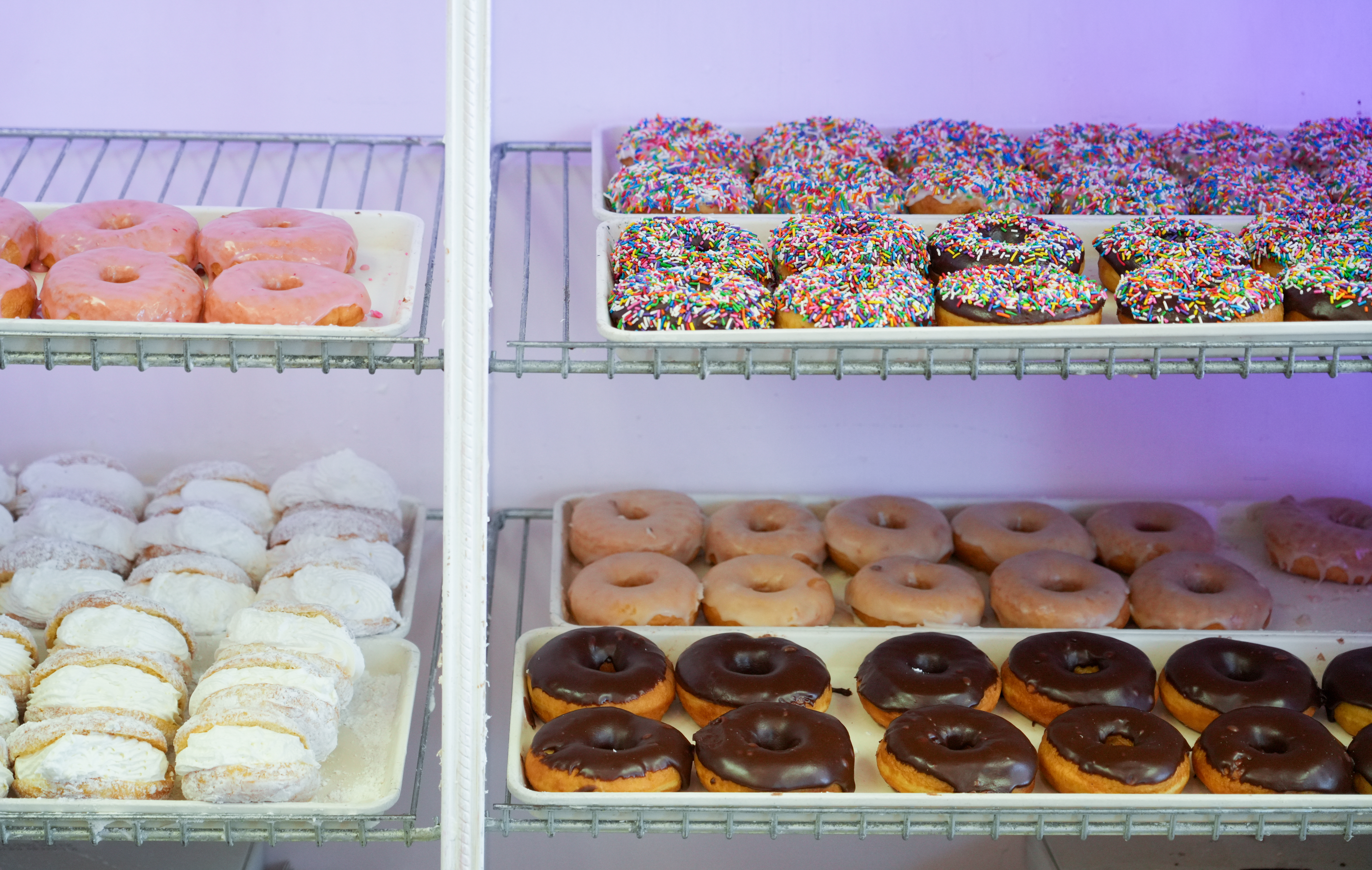
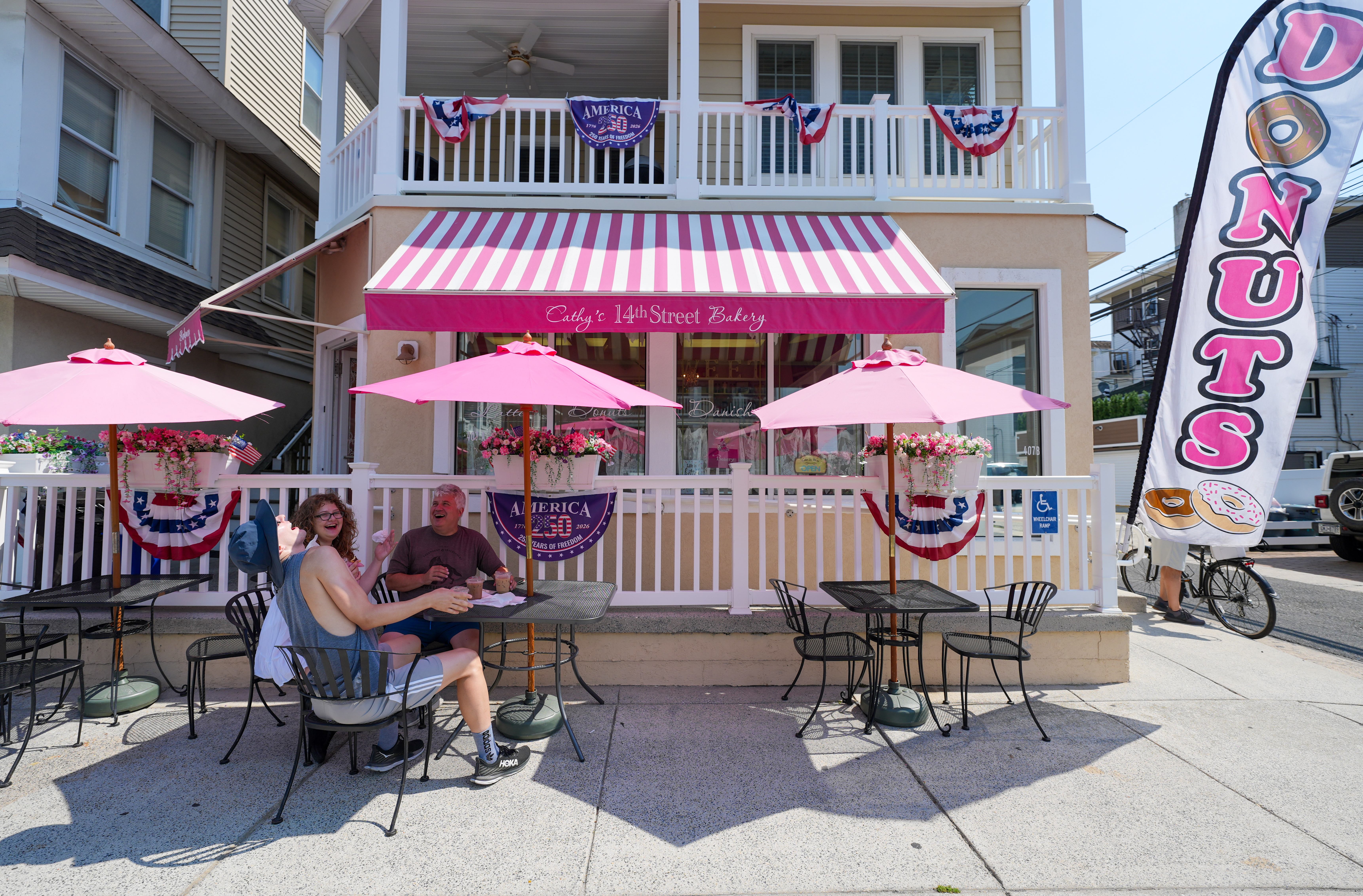
    Born in Cherry Hill, Sessa grew up in Egg Harbor Township and Ocean City, where he spent four summers working in the kitchen at Cathy’s 14th Street Bakery, a pink-and-white storefront that serves thousands of doughnuts a week.

    When Sessa started as a dishwasher there in 2016, he was 13. By the time he worked his last shift in 2019, he had worked his way up to full-fledged baker, responsible for opening the shop and preparing batches of Cathy’s famous powdered and cream-filled doughnuts from scratch.

    “I’ve hired a lot of great kids, but there are some who don’t get it,” said Cathy Greene, the bakery’s owner. Sessa “was really a natural.”

    Cathy Greene, owner of Cathy’s 14th Street Bakery in Ocean City, N.J., fills a box with doughnuts for a customer on Aug. 13, 2026. Former Cathy’s dishwasher and junior baker Dominic Sessa plays Anthony Bourdain in the new A24 biopic “Tony.”Tim Hawk / For The Inquirer

    Sessa doesn’t remember taking to it so easily. And yet, like Bourdain, he kept coming back.

    “When I first started there, it was miserable — especially at that age, waking up super-early and making batches of dough. I was just lazy and didn’t feel like finding another job,” Sessa told The Inquirer. “But every summer I’d come back and Cathy would teach me something new 
 The experience was one of the things that taught me how to work hard.”

    Tyler Greene, Cathy’s son, flips doughnuts in a deep fryer at Cathy’s 14th Street Bakery in Ocean City, N.J., on Aug. 13, 2026. Tim Hawk / For The Inquirer

    Doughnut summers

    Admittedly, frying doughnuts at a family-run bakery did not entirely prep Sessa for the fictional kitchen he’d step into as a teenage Bourdain. In Tony, the Flagship is full of cocaine, dirty jokes, and smashed dishes. Cathy’s, by contrast, was basically Disney World.

    Still, Sessa said the job helped him understand what motivates chefs to endure grueling hours and nonstop kitchen injuries. Like Bourdain, the actor was a self-styled troublemaker, nearly getting kicked out of his South Jersey high school before earning a hockey scholarship to Massachusetts’ prestigious Deerfield Academy, where he would eventually be discovered by director Alexander Payne and land his breakout role as a boarding school kid in 2023 Christmas comedy The Holdovers.

    Cathy’s kept him disciplined.

    Sessa used to clock in at the bakery at 4:30 a.m. to prep the day’s first doughnuts, rolling out and aerating one batch of dough while minding another batch as it proofed. In between, he’d fry up a third.

    Tyler Greene rolls out the dough for donuts at Cathy’s 14th Street Bakery in Ocean City, N.J., on Aug. 13, 2026. Former Cathy’s dishwasher and junior baker Dominic Sessa plays Anthony Bourdain in the new A24 biopic “Tony.”Tim Hawk / For The Inquirer
    A variety of doughnuts are for sale at Cathy’s 14th Street Bakery in Ocean City, N.J., on Aug. 13, 2026. Former Cathy’s dishwasher and junior baker Dominic Sessa plays Anthony Bourdain in the new A24 biopic “Tony.”Tim Hawk / For The Inquirer

    At its busiest, Greene said, Cathy’s sells between 1,200 and 1,400 doughnuts a day. Sessa drew on the rush — and the high stakes — while acting in Tony.

    “I related to the integrity working in a kitchen demands,” he said. “If I didn’t show up on time, everything would be messed up, and everyone would know it was [because of] me.” Plus, there was “something so gratifying” about placing doughnuts in the display case and watching customers snap them up.

    Antonio Banderas (left) as a chef-mentor with Dominic Sessa as Anthony Bourdain in “Tony.”A24

    Greene said Sessa shined when it came to the rhythm of baking and could manage the flow of the station about as well as she could. When they’d roll out dough side by side, Greene would quiz him on three-digit by three-digit multiplication. Sessa, she said, always answered correctly “off the top of his head.”

    “He was a real smart kid,” Greene said.

    Things didn’t always run smoothly. Once, Sessa recalled, he nearly ruined the bakery’s trash cans by throwing out a batch of dough with too much yeast in it. He had gotten away with the mistake — until the dough proceeded to nearly quintuple in size. “It was billowing out of the cans, on the ground, seeping into the kitchen,” said Greene. “It was pretty funny.”

    The stress of the job didn’t detract from Sessa’s favorite part: small-town notoriety.

    Passersby love to peer into Cathy’s kitchen from the street. “Kids were always interested in watching the guy who rolls the doughnuts out,” Sessa said. “It made me feel like a celebrity.”

    The outside of Cathy’s 14th Street Bakery in Ocean City, N.J., on Aug. 13, 2026. Former Cathy’s dishwasher and junior baker Dominic Sessa plays Anthony Bourdain in the new A24 biopic “Tony.”Tim Hawk / For The Inquirer

    Drinking on the beach and baking hungover

    As much as Tony spins a hero’s journey for a young Bourdain (who ends the movie — spoiler — by enrolling in culinary school), it also foreshadows his struggle with substance use.

    Dominic Sessa as Anthony Bourdain in “Tony.”A24

    Bourdain, who died from suicide in 2018 at 61, had spoken candidly about his addiction to heroin and cocaine before getting sober in the 1980s. In Tony, we see the fledging chef try cocaine for the first time at his dishwashing station at Flagship with Sal (Leo Woodhall), a hard-partying coworker who relishes in showing Bourdain his favorite vices.

    Sessa’s Ocean City summers followed a similar pattern. Before The Holdovers, the actor was crossing the causeway to buy booze at Circle Liquors in Somers Point.

    “All of my friends were doing the same thing” as Bourdain in Tony, Sessa said. “We would just work so we could get paid enough to buy alcohol, drink on the beach all night, go into work hungover, sleep it off after our shift, and do it all over again the next day.”

    “We were all under 18 so we felt invincible,” Sessa said. ”It was paradise.”

    Cathy Greene, owner of Cathy’s 14th Street Bakery in Ocean City, N.J., fills a box with donuts for a customer, on Aug. 13, 2026. Former Cathy’s dishwasher and junior baker Dominic Sessa plays Anthony Bourdain in the new A24 biopic “Tony.”Tim Hawk / For The Inquirer

    Antics aside, Greene is proud of the role her bakery played in helping Sessa get into character (even if she hasn’t seen Tony yet). She just isn’t sure about cashing in on his star power. “I don’t want to be the one who is like, ‘Oh, I had Dominic Sessa here,’” Greene said. “But it’s pretty cool.”

  • O’Brien’s Water Hole in Manayunk provided much-needed hydration to racers on ‘The Wall’ for 20-plus years

    O’Brien’s Water Hole in Manayunk provided much-needed hydration to racers on ‘The Wall’ for 20-plus years

    Suzanne Edinger has lived in Pelham, Ala., since 2002, but a few months ago she began to receive an onslaught of messages from Philadelphians hundreds of miles away.

    Most were Manayunk residents. Edinger’s family members reached out. Former neighbors reached out. Old classmates and friends reached out, tagging Edinger in photos and videos on Facebook.

    They all had the same question.

    “‘Is O’Brien’s Water Hole gonna be back?’” Edinger said. “He would be tickled to death. We’d probably have to come up there for a month if he was still around.”

    The “he” is Edinger’s late father, Bill O’Brien, longtime steward of 320 Lyceum Ave. When the Philadelphia Cycling Classic came to town in 1985, its route ran right past his brick twin house.

    Bill O’Brien was beloved by friends, neighbors and annual revelers at the bike race.provided by Suzanne Edinger

    While this might not seem notable for a 14.4-mile race, O’Brien’s stretch was unique. He and his wife, Evelyn, were located right in the middle of the notorious hill known as the Manayunk Wall, scaling 250 vertical feet.

    It became a pivotal point of the competition, 800 yards that could make or break a cyclist. So, the maintenance man did what he’d do for any struggling stranger: He tried to help them out.

    Throughout the first iteration of the Classic, O’Brien stood in his yard with a hose in one hand, a beer in the other, dousing bikers as they rode by. This setup didn’t last long; O’Brien realized it would impede his Budweiser consumption, and race organizers wanted an option for cyclists to avoid the stream.

    Undeterred, the North Philadelphia native headed to his workshop in search of a solution. He quickly found one. By 1986, he’d connected a single shower head to his hose, lightly spraying water atop the riders.

    By 1987, he’d added another shower head. The year after that, O’Brien moved his hose alongside his fence, so spectators wouldn’t trip over it.

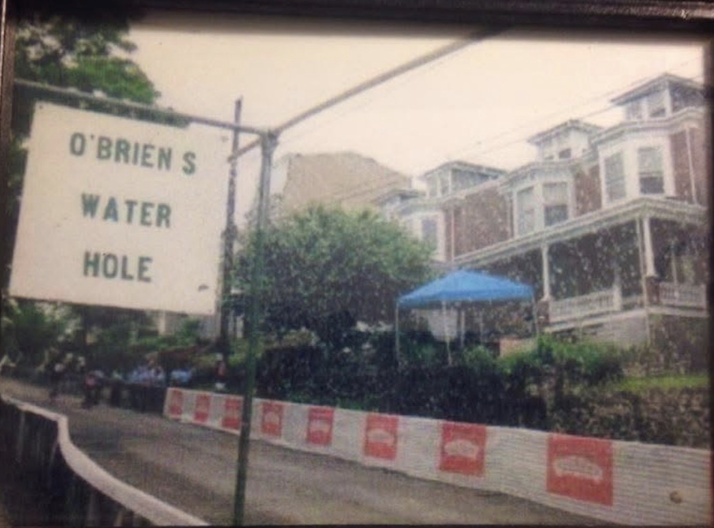
    A white wooden sign with kelly green font dangled from the pipe: “O’Brien’s Water Hole.”

    He built on this tradition over 23 years. Every version would be better than the last: a few more shower heads, “O’Brien’s Watering Hole” T-shirts, a Manayunk-themed banner, hung high above the street.

    The O’Brien Water Hole became a key party spot for racegoers.provided by Suzanne Edinger

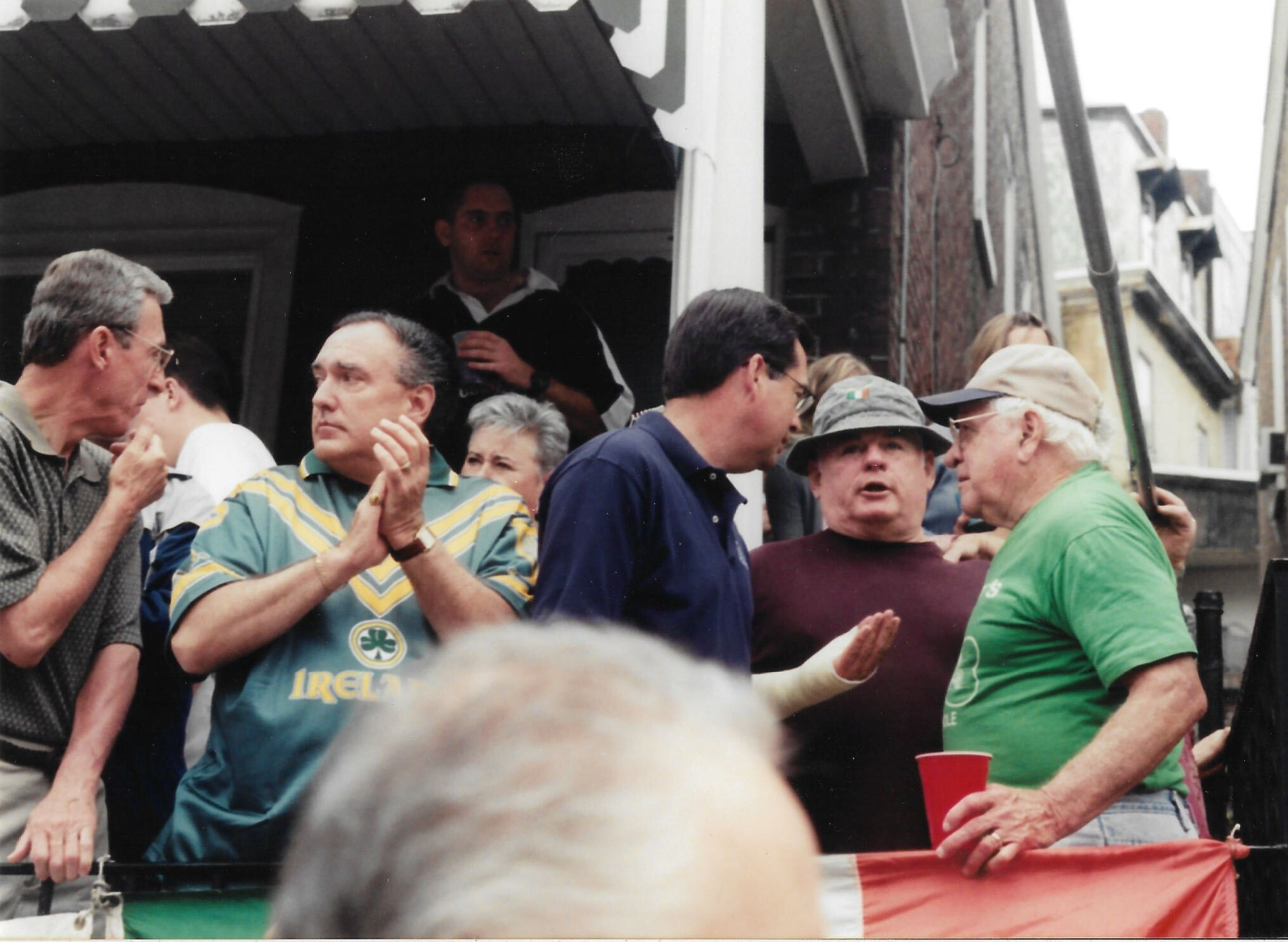
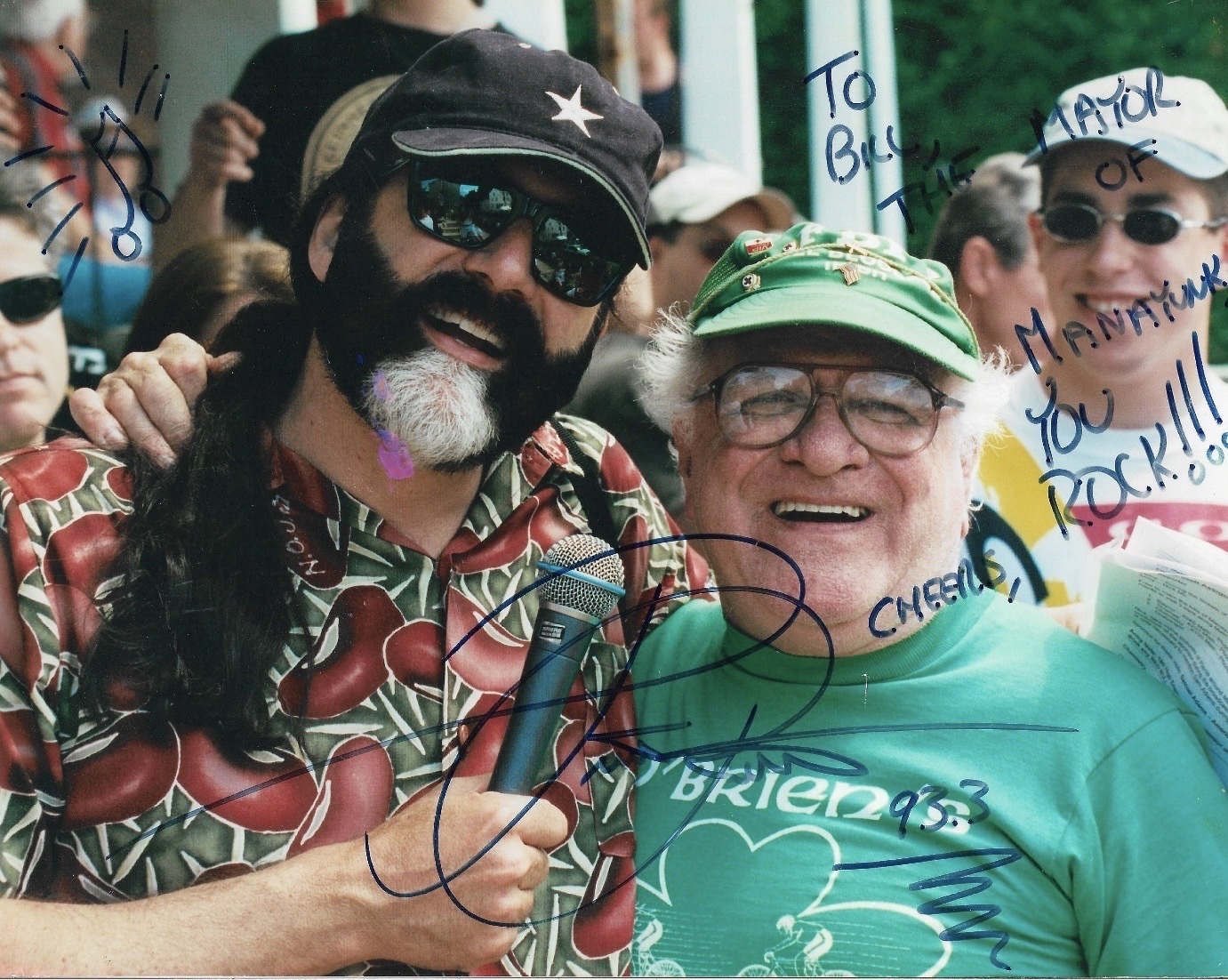
    On race day, his house would be packed with people, some of whom O’Brien knew, and many he didn’t. But “The Mayor of Manayunk” was unfazed.

    “Every year he ordered more kegs, and mom had more burgers, and she needed a bigger bowl of potato salad, and an extra bowl of beans,” Edinger said. “And he fed off of that. He just thought it was great. They saved [money] all year.

    “‘I need to get plates.’ I’m like, ‘Mom, it’s February.’ ‘June will be here before you know it!’ So, it was always buying a little of this and that, when the budget permitted.”

    The O’Briens moved to Alabama for work in 2008, and Bill died in 2019. But the lore of his Water Hole has endured.

    And on Sunday, when the Philadelphia Cycling Classic returns for the first time in a decade, locals will remember the small Irishman with the big imagination.

    “You couldn’t help but think of him when the race came up,” said O’Brien’s former next-door neighbor, Marty Costello. “Because it was his thing.”

    The community’s handyman

    O’Brien was raised with seven siblings on West Thompson Street, near the Church of the GesĂș. Craftsmanship ran in his family; O’Brien’s father learned the trade from his father, who worked as a cabinet maker and carpenter in County Tipperary, Ireland.

    The lessons Bill absorbed as a child served him for the rest of his life. After he and Evelyn moved to 320 Lyceum Ave. in 1961, the handyman refurbished pianos.

    He then worked in carpentry, and then at a paper mill, before getting a job in maintenance for the Sisters of Mercy in Merion in the early 1970s. Evelyn was hired to operate the convent’s old-school switchboard a few years later.

    The O’Briens stayed on with the Sisters of Mercy for three decades. Even amid a spiritual sanctuary, the couple showed the same fun-loving spirit they’d eventually bring to the Water Hole.

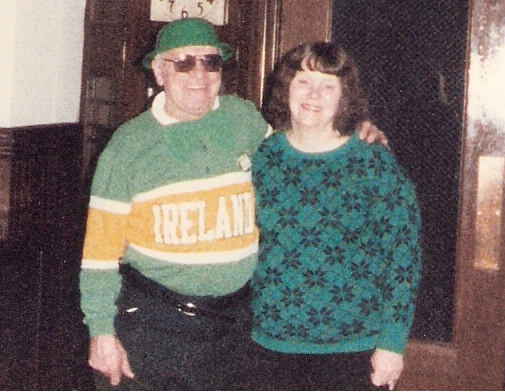
    On St. Patrick’s Day, Bill would dress up as a leprechaun, with high white socks, a green sweater, and a little black pot of gold in hand. He and Evelyn would dole out chocolate coins to sick nuns receiving medical care on the property.

    Bill and Evelyn were shocked to learn that word of The Water Hole had reached all the way to Ireland.provided by Suzanne Edinger

    The sisters loved it.

    “Those nuns were the first in line at both of their funerals,” Edinger said.

    Bill wasn’t raised in Manayunk but embraced his neighborhood wholeheartedly. He ran the grade-school CYO at St. John the Baptist for over 20 years, taking local kids on annual ski trips to get them out of the city.

    The Irishman could easily repair a leaking sink or a broken roof at his own house, but also made a point of helping neighbors with their needs, too. Before Marty Costello moved next door to the O’Briens, his grandmother, Concetta Pompizzi, lived in the same building.

    In the 1980s, Bill fixed the railing on her front porch, a renovation so sturdy it lasted 35 years.

    “Everybody loved Uncle Bill,” said O’Brien’s nephew, Patrick. “If he wasn’t your uncle, you still called him Uncle Bill.”

    O’Brien’s handiwork and hospitality were well-known within Manayunk. But after the advent of the Water Hole, he became a much more prominent figure.

    Longtime WMMR-FM host Pierre Robert, who died last year, was a frequent visitor to Bill O’Brien’s spot on the Manayunk Wall.provided by Suzanne Edinger

    Every year, local reporters would flock to the brick twin house to interview him; Pierre Robert of WMMR was a regular visitor. This happened so often that friends began placing bets on how many TV appearances O’Brien would make in a given weekend.

    On a typical race day, the family would welcome hundreds of people to their home. One neighbor, Gerry Boyle, said he met tourists from as far as Italy, Austria, and Germany. Policemen regularly stopped for sodas and waters, race officials for food and refreshments.

    Despite all the chaos, the event was a testament to a community’s love. O’Brien never worked alone. The night before the Classic, locals would drop off kegs of beer.

    Dennis Kelly, a friend who lived a few blocks away, would bring doughnuts to make sure Bill had something to eat before he started drinking. Cousins would stand on ladders, hanging banners and flags across Lyceum Avenue.

    The work that went into assembling the Water Hole went on even after Bill and Evelyn O’Brien had left Manayunk.provided by Suzanne Edinger

    Boyle would arrive at 6 a.m. on race day to set up the shower pipes. Fitzpatrick Funeral Home would lend its nearby parking lot to O’Brien’s friends and family.

    An artistically inclined nun at the Sisters of Mercy even designed an “O’Brien’s Water Hole” T-shirt, written in Celtic font.

    One of Edinger’s cousins wore it on a trip to Ireland years later. A passerby recognized the name.

    “They’re like, ‘Oh, we see that on TV,’” Edinger said. “‘We know O’Brien’s Water Hole.’ It was just crazy. And that was a story that [my dad] just thought … that was it. His name had reached the motherland.”

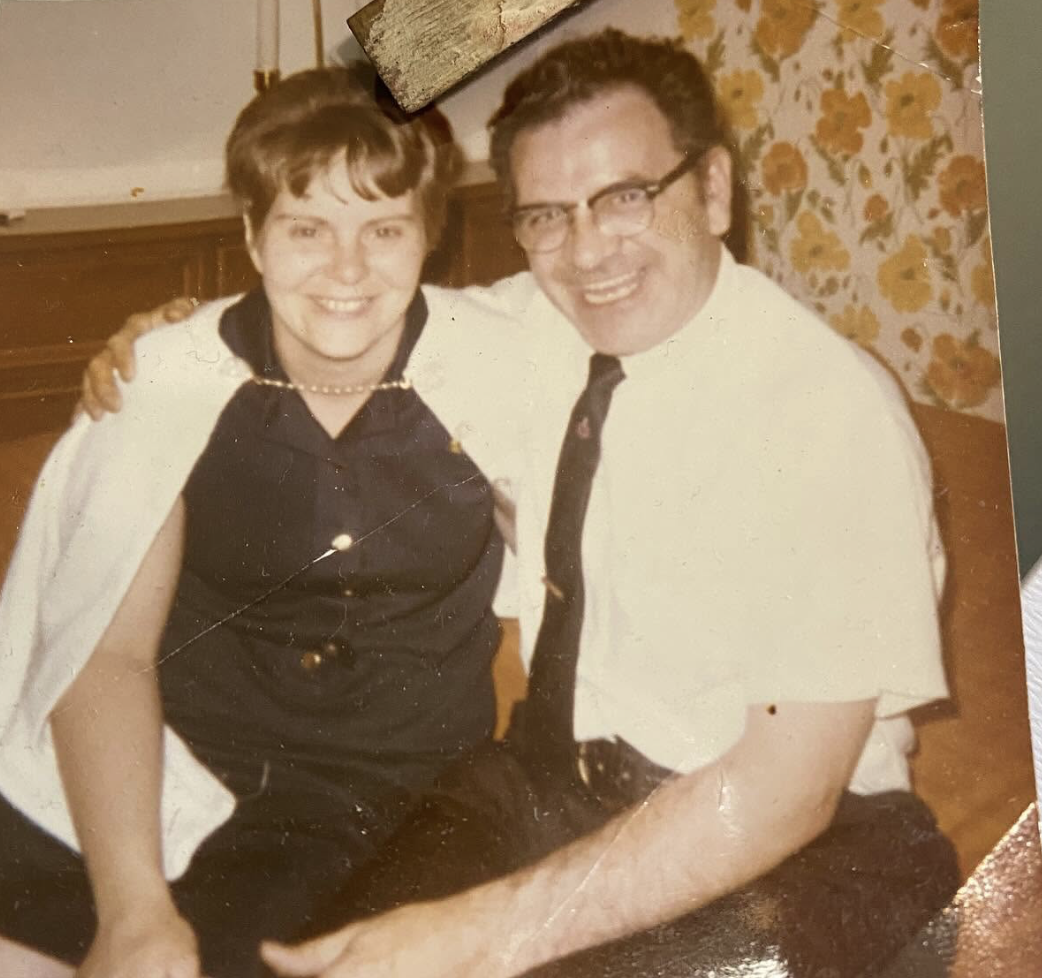
    Bill O’Brien and his wife, Evelyn, around 1970.courtesy of Suzanne Edinger

    Continuing the tradition

    After the O’Briens moved out in 2008, two friends, Gary Brett and Dan White, bought the property. They did so with the intention of keeping the Water Hole alive, and the Irishman was more than happy to assist.

    He left them with his four shower heads attached to a pipe and walked the men through his setup with the hose and the fence. Brett and White put their own spin on it, adding spray nozzles to create more of a mist than a shower.

    Just like O’Brien, the friends would host a party on race day. But it wasn’t the same without the handyman, and locals would often ask for him.

    “All the time,” Brett said. “Every year. I mean, every single year. Like it could’ve been five years after he moved out, and they’re like, ‘Is Bill here?’”

    The two men continued this tradition until the race was canceled in 2017 due to a lack of funding. O’Brien died of a stroke two years later, while visiting family in Phoenixville. He was 85.

    When his body was transported from the viewing at Fitzpatrick Funeral Home to Mass at St. John the Baptist, the driver took a special route. Instead of turning onto Manayunk Avenue, she chose to stay on Lyceum, trudging up the hill, and pausing right outside No. 320.

    The cars behind the hearse did the same, bidding a final farewell to a house that was a home for so many. It’s unclear whether the current owners will create a Water Hole of their own on Sunday.

    But even if they don’t, locals will be thinking of the man who always showered his neighbors with water and warmth.

  • How the war in Iran is redrawing the global energy map

    How the war in Iran is redrawing the global energy map

    Six months after U.S.-Israeli strikes disrupted Middle Eastern fossil fuel production and turned the Strait of Hormuz into a naval battleground, the world is getting a fuller picture of how the Iran war has reshaped the economics of energy.

    A handful of new reports show how, by dramatically raising fossil-fuel prices, the conflict has also been pushing governments, companies, and consumers toward renewable energy, with a clear set of winners and losers emerging.

    Global fossil fuel importers have paid more than $330 billion in extra costs — an amount equal to Finland’s 2025 gross domestic product — since the war began on Feb. 28, according to data from the Centre for Research on Energy and Clean Air (CREA), a Helsinki-based nonprofit. Meanwhile, higher energy prices have been a boon to a handful of oil- and gas-producing countries outside the war zone.

    Economies that had moved to ditch fossil fuels prior to the war have withstood the crisis better, too. In China, for example, renewable energy projects added since 2020 allowed the country to avoid nearly $8 billion in fossil fuel imports between March and July, CREA estimated.

    These transformations could eventually have an effect on the environment: Overall, global greenhouse gas emissions were relatively contained during the first half of the year, inching up just 0.2% compared with the same period a year earlier, according to an early analysis of emissions through mid-year 2026 by the nonprofit Climate Trace.

    “Renewables continue to grow. That does seem like good news,” said Ting So, lead analyst for Climate Trace. But he added that the volatility of disruptions in the Strait of Hormuz makes it hard to predict long-term trends.

    Winners: Clean tech and non-Gulf fossil-fuel producers

    China has emerged as a beneficiary of the realignment, leveraging its dominance in green technology manufacturing at a time when soaring oil and gas prices are boosting interest in solar panels, batteries, and electric vehicles.

    Since the start of the conflict, China has logged five consecutive months of record clean tech exports measured in dollar terms, according to BloombergNEF. In July, Chinese carmakers sold more than half a million EVs and plug-in hybrids to overseas markets, a roughly 150% increase from a year earlier.

    Oil-and-gas producers in North and South America have also reaped windfall profits. As buyers shunned Gulf suppliers, fossil fuel companies in the U.S., Canada, and Latin America ramped up production.

    While a ceasefire could erode wartime supply premiums, researchers expect some of these market shifts to persist. “The boost to Latin America’s mining sector could remain,” said Rafael Rabioglio, a BNEF analyst, in the report. As high fuel costs accelerate global electrification, demand for critical minerals such as copper and lithium will benefit major producers including Chile and Peru in the long term.

    Losers: Gulf states and import-dependent regions

    In the Persian Gulf, drone strikes and explosions have damaged key facilities, including Saudi Arabia’s largest oil refinery and a key liquefied natural gas export terminal in Qatar. Coupled with shipping bottlenecks, initial export losses across the Gulf averaged nearly $2 billion per day in March, according to an estimate from Rice University.

    Beyond lost revenue, the war also damaged as much as $58 billion worth of energy infrastructure, which requires costly repairs, according to an April estimate by consulting firm Rystad Energy. The conflict also threatens to stall the region’s transition into a greener economy. “The war has driven up the cost of debt in the region, undermining clean power project economics in the near term,” BNEF analysts said in their report.

    Import-dependent economies like Japan and South Korea, meanwhile, are suffering collateral damage. The two Asian nations, which depended on shipments through the Strait of Hormuz for most of their oil supplies prior to the Iran war, had no choice but to absorb higher fuel prices. In Africa, where many countries are net importers of refined oil products, the soaring prices have fueled a broader economic crisis. Ethiopia, for instance, recently experienced currency sell-offs, forcing the country to draw down billions of dollars in its foreign exchange reserves to defend the weakening birr.

    Accelerated transition

    The burden of higher energy prices has fallen disproportionately on developing economies. Poorer nations spent an additional 1% of their GDP absorbing the price shock, CREA found. That’s more than double the economic drag experienced by wealthier states.

    As they seek to break up with fossil fuels, African nations are scrambling to add renewable energy. The region as a whole imported 37% more solar equipment from China in the first half of 2026 than in the same period last year, BNEF data showed. The current boom has spread across the entire continent, from South Africa to Nigeria and the Democratic Republic of the Congo and Egypt.

    “In countries where consumers are not being well shielded from higher fuel prices, they are moving very quickly to adjust their energy consumption pattern,” said Ethan Zindler, a BNEF analyst.

    That same trend is also happening across developing Asia. For instance, in the Philippines — where initial fuel shortages prompted the government to mandate a four-day workweek to save on energy — demand for solar products has surged. In March, the country’s imports of Chinese solar equipment jumped 262% year-over-year.

    EV adoption has accelerated, too. Monthly EV sales almost doubled in the Philippines and Indonesia in June and July compared with the same period in 2025, according to BNEF. In India, monthly passenger EV sales reached 30,000 units in those two months, up from fewer than 20,000 units last year.

    In the first half of 2026, slight emissions reductions by China and the U.S., the world’s largest polluters, were balanced out by increases in India and Brazil, the Climate Trace analysis found.

    At the same time, fears that this year’s energy-market disruptions would lead to a major near-term increase in coal-fired power did not become a reality, according to the results. Instead, over the first six months of the year, renewable energy actually expanded more quickly, Climate Trace’s So said.

    “That’s a positive development that maybe not everyone thought” would happen, he said.

  • Which member of the Sixers’ Big 5 will have to sacrifice most?

    Which member of the Sixers’ Big 5 will have to sacrifice most?

    The 76ers are entering the 2026-27 season with an embarrassment of riches. LeBron James, Jaylen Brown, Tyrese Maxey, Joel Embiid, and VJ Edgecombe have formed a group that president of basketball Mike Gansey dubbed the “Big Five.”

    They’ve said and done the right things this summer, from team workouts during the offseason to discussing their willingness to give for the greater good.

    During a recent interview, Maxey was asked about Edgecombe potentially needing to sacrifice in his second season. Maxey rejected the idea and said every player on the team will need to take a step back. But that made The Inquirer wonder: Who will sacrifice the most this season?

    With that in mind, our Sixers team offers insight on who will need to embrace the most change in order for this star-studded roster to succeed.

    Chris Hine, Sixers beat writer: Joel Embiid

    Never in his NBA career has Embiid had a usage rate below 32.9%, the statistic that calculates how often a team’s possessions end with the player generating a shot attempt, committing a turnover, or going to the free-throw line. Everyone else in the Sixers’ starting lineup has had fluctuations in their usage throughout their careers, while Edgecombe posted a usage rate of 20.1% as a rookie. Brown won a championship in 2024 alongside a higher-usage player in Jayson Tatum, while James had a career low in usage last season while ceding possessions to Luka Dončić and Austin Reaves with the Lakers.

    In other words, Embiid hasn’t often had to play in the NBA while not being the focal point of the offense or having the ball in his hands a lot. That likely will have to change this season. The seven-time All-Star center will have to make adjustments on how to impact the game more offensively while taking fewer shots and using the gravity he draws to generate good looks for his teammates.

    Joel Embiid and LeBron James first played together as teammates in the 2024 Olympics. AFP via Getty Images

    If his 2024 Olympics performance alongside James is any indication, though, Embiid has shown he is willing to do that in the name of winning. Perhaps a lower usage rate in games also equates to less wear and tear on his body over the course of the season and will allow him a better chance of being in peak form come playoff time.

    One of the luxuries for this Sixers team is that anyone in the starting lineup is capable of carrying the team at any given moment, on any given night. There will still be nights on which Embiid does that, but perhaps not as much as he has had to throughout his career.

    DeAntae Prince, Sixers editor: Tyrese Maxey

    Maxey was selected with the No. 21 pick in the 2020 NBA draft as a backup point guard to provide support for Ben Simmons and Shake Milton. During the subsequent regular season, he also played fewer minutes than Seth Curry and Furkan Korkmaz.

    Let that sink in.

    Of course, he did provide a few flashes that postseason and had a breakout of sorts in his second season, but the expectation still wasn’t for Maxey to become an All-NBA-caliber player. That changed in his fourth season, when he averaged 25.9 points, 6.2 assists, and 3.7 rebounds and was named an All-Star (alongside Embiid) and Most Improved Player.

    Since then, Maxey has become the franchise, making good on the nickname Embiid gave him early in his career. Now an All-NBA player and two-time All-Star, Maxey served as his team’s unquestioned leader for the past two seasons as Embiid and Paul George struggled to stay on the court. This offseason brought about more change with the additions of James and Brown, and no player on the roster will experience a bigger change to their existence than Maxey.

    What does all that mean for him? He will be asked to share more than ever since becoming a star with the Sixers. He will share the ball, leadership responsibilities, and accolades. He will be point guard for a new “Big Five″ in Philly after finishing fifth in NBA scoring at 28.3 points and maintaining a 28.6% usage rate, which sat among the top 30 players in the league last season. Brown, at 35.1%, was third behind Dončić and Giannis Antetokounmpo. James wasn’t far behind Maxey at 27%.

    Add that Brown, a former Eastern Conference and NBA Finals MVP, was tasked with helping lead the Sixers by Harris Blitzer Sports & Entertainment president of sports Bob Myers and that James, one of the best players in NBA history, has been lauded for his ability to lead since he was a teenager. It will be Maxey’s job to keep Brown, James, and Embiid happy and continue to nurture the development of Edgecombe. Still, after getting the keys to the franchise, Maxey will need to hand a piece of it back.

  • The Phillies believe again, goodbye to Dolly, and ‘National Treasure 3’ is finally real | Weekly Report Card

    The Phillies believe again, goodbye to Dolly, and ‘National Treasure 3’ is finally real | Weekly Report Card

    Kyle Schwarber and whatever the hell that ninth inning was: A+

    For eight innings last Sunday, the Phillies did absolutely nothing. Four hits, zero runs, down 4-0, and two outs in the ninth. The Cardinals had their closer on the mound, and everyone could reasonably start thinking about dinner.

    Then Edmundo Sosa cleared the bases with a double, Bryan De La Cruz tied it, and Kyle Schwarber hit a baseball 459 feet into dead center to end the game.

    Six runs, all with two outs, and we ended the game with a 6-4 win, sweeping the Cardinals. Nine straight victories. The kind of finish that had Scott Franzke yelling “It’s over!” on the radio, Tom McCarthy doing the same on TV, and John Kruk apparently deciding there was nothing he could add to the situation.

    Michael Barkann called it maybe the greatest regular-season finish he’s ever seen, which could sound like postgame exaggeration until you realize the Phillies hadn’t won a game after trailing by four or more with two outs in the ninth since 1983.

    This team lost 10 straight games in April, and now has swept three straight series for the first time in 16 years and is suddenly breathing down Atlanta’s neck. Please let this happy chaos continue.

    Dolly Parton performing on her “Pure & Simple Tour” at the Mann Center in June 2016. (Photo by Owen Sweeney/Invision/AP)Owen Sweeney/Invision/AP

    Patti LaBelle and Dolly Parton’s acrylic duet: A+

    Dolly Parton was 80, had been famous for nearly 60 years, and somehow belonged to everybody — country fans, drag queens, kids getting free books, your mom, your grandma, anyone who ever owned a rhinestone.

    Philly got its share of Dolly, from the Spectrum to the Mann and Atlantic City, where she once joked she’d keep performing until she dropped dead mid-song, “high heels to heaven.” But the clip we’ll keep replaying is her and Patti LaBelle in 1987, two icons in enormous hair and sparkly gowns, using their acrylic nails as percussion while singing “Short’nin’ Bread.” It looks less like television than two of your aunties got bored at a wedding reception and decided to put on a show.

    She once said she hoped that long after she was gone, people would look back at her career and say, “Damn, that was good.”

    And damn, Dolly. It was.

    Back to school without the heat: B

    There are certain signs that fall is coming in Philadelphia: Kids go back to school, the Eagles start playing games that count, and someone you know sets mums out on their porch.

    And, for once, the first day of school didn’t come with a 95-degree forecast.

    That matters in Philly, where 52 district schools still aren’t fully air-conditioned and hot days can mean early dismissals or remote learning. Nothing eases a parent back into the school-year routine quite like dropping a kid off and then finding out you need to leave work to pick them up three hours later.

    The district did eliminate half days this year, so families have one less factor contributing to scheduling chaos.

    And this week’s cooler mornings have been enough to make us start thinking about sweatshirts, football, and maybe opening a window at night. But next week’s forecast has temperatures creeping back toward the 90s, so it looks like we still have a wait.

    People gather on Independence Mall for an outdoor screening of the 2004 film “National Treasure” in Philadelphia on Friday, Aug. 21, 2026. The screening was part of Philadelphia’s first National Treasure Weekend.Erin Blewett / For The Inquirer

    ‘National Treasure 3’ is finally happening: A-

    It has been nearly 20 years since Nicolas Cage last went hunting for treasure, which is an absurd amount of time to leave a man who once stole the Declaration of Independence without another important American document to steal.

    But National Treasure 3 is finally real. Director Jon Turteltaub broke the news at Philadelphia’s first National Treasure Weekend. (Where else should this announcement happen?)

    The original movie filmed some of its most memorable scenes here, and Philadelphia has spent the two decades since happily accepting National Treasure into the local canon. Benjamin Franklin signed the Declaration of Independence, and Nicolas Cage stole it.

    There’s a script, Cage is expected back, and Turteltaub says they’re trying to bring back the rest of the cast.

    No word yet on whether Philly makes it into the third movie, but after hosting an entire weekend in its honor, we better get robbed again.

    The Honey Butter Hoe Cake at Sao on Wednesday, Nov. 26, 2025 in Philadelphia.

    Philly restaurants make another national list: B+

    At this point, a national food publication naming Philadelphia restaurants among the best in the country is less breaking news and more a recurring calendar event.

    This time it’s Bon AppĂ©tit, which put Honeysuckle and Sao on its list of 19 best new restaurants in America. They join spots in New York, Chicago, San Francisco, and the other cities we’re apparently required to compete with every time somebody makes one of these lists.

    We could pretend to be surprised, but both restaurants already have plenty of hardware — and attention. Honeysuckle is Michelin-recommended, while Sao comes from Phila and Rachel Lorn, whose first restaurant, Mawn, remains one of the hardest tables to get in town.

    So yes, another national publication has discovered that Philadelphia is very good at restaurants. We’ll take the nod and act appropriately impressed.

    Philadelphia Police released an image of a masked man who had been harassing people in August 2026. The suspect, a 22-year-old man, was arrested in Las Vegas. (Philadelphia Police Department via The New York Times)PHILADELPHIA POLICE DEPARTMENT

    The masked menace has been caught: A

    Remember the guy in the creepy Halloween mask who spent a morning terrorizing people around City Hall? Well, he made it all the way to Las Vegas before the U.S. Marshals caught up with him.

    The whole thing was bizarre even by Philly standards: A man in a cracked-doll mask allegedly spent half an hour chasing and scaring people, including asking one jogger if she was “ready to die.” One woman was injured trying to get away. Then he apparently packed his bags and left town.

    There are plenty of characters around City Hall already, and we did not need one who looked like he wandered off the set of a low-budget horror movie.

  • The anti-headshot

    The anti-headshot

    Among the most common types of newspaper photo assignments, I have a least favorite: a portrait of someone being interviewed by a reporter. Or being interviewed by a bunch of reporters. (Don’t worry, this is not a half-empty glass gripe. Keep reading, it’s actually a positive post.)

    On TV they’re called “talking heads” and in still photos they’re “headshots.” But they’re not really heads. Their sole purpose is to show viewers/readers what a person looks like. A face.

    Attorneys arrive for a press conference after filing a civil lawsuit Mar. 19, 2024.Tom Gralish / Staff Photographer

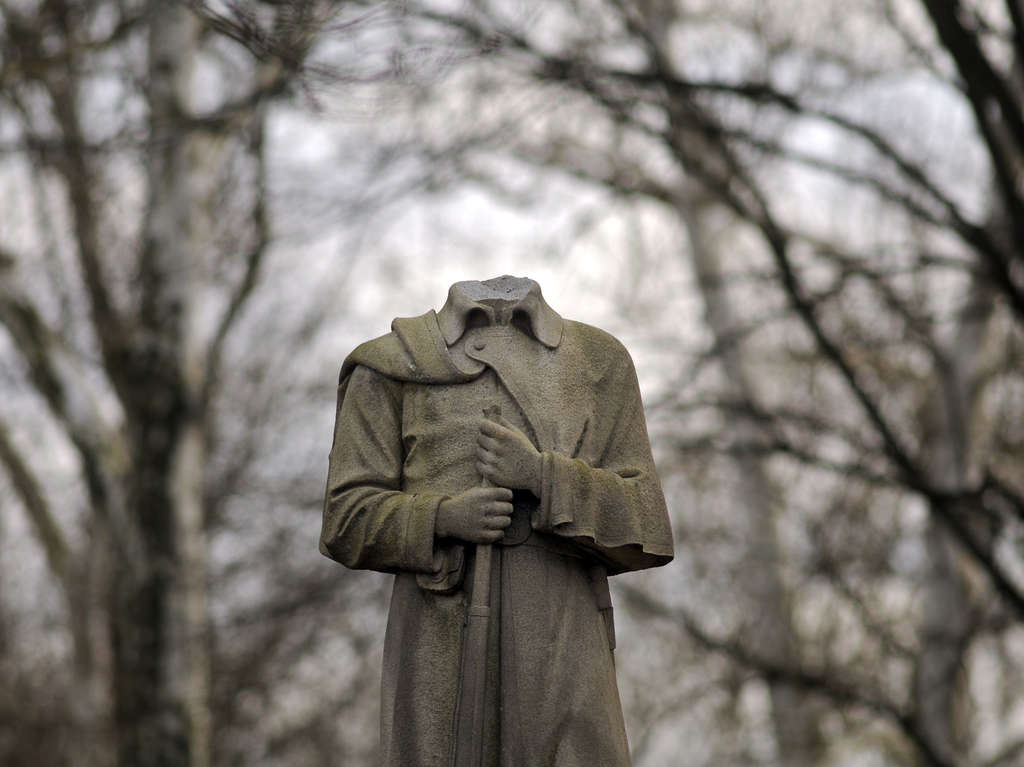
    A while back, possibly while focused on a person standing behind a bank of microphones, my mind wandered and I started to think about different ways of photographing the press conference. Call it an anti-headshot.

    That evolved into something I continued, collecting unconventional views of non-faces.

    A vandalized Civil War memorial in Bridgeton, N.J., Jan. 31, 2012.Tom Gralish / Staff Photographer
    Major League Lacrosse team practice at PPL Park in Chester Aug. 23, 2013.Tom Gralish / Staff Photographer
    A fan of all Philly teams shopping for Sixers merchandise and jerseys Aug. 25, 2026.Tom Gralish / Staff Photographer

    At some point, maybe with more press conference daydreaming, I wondered what if
 Say the images ended up on an art gallery wall? A highfalutin critics might say something like “the work is a meditation on our identity and desire to be seen. Gralish turns the idea on its head (no pun intended), showing us images that conspire against the countenance, and therefore, counter the very premise of a portrait.”

    If I weren’t having fun with photography I would have stopped doing it decades ago.

    My “funnest” assignment this week? My colleague Peter Dobrin’s sweet story of a musical prodigy, and what it takes to get into a top music conservatory while still in elementary school.

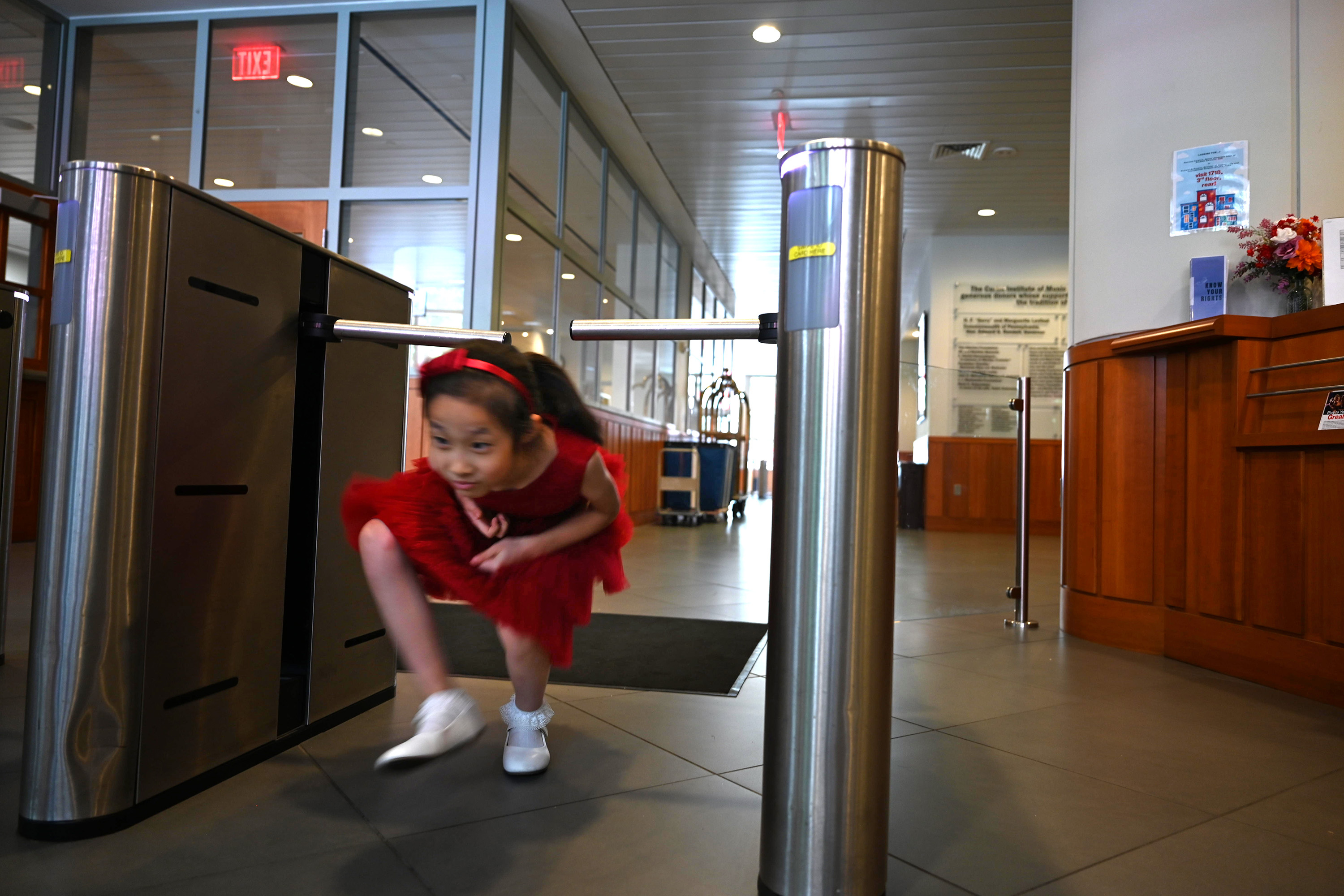
    Seven year-old pianist Olivia Li with her stuffed panda in the lobby of the Curtis Institute. She began studying the piano at age four and will receive a full-tuition scholarship to the prestigious institution. On the wall is a Norman Rockwell painting of Curtis founder Mary Louise Curtis Bok Zimbalist (1877–1970).Tom Gralish / Staff Photographer

    As is often the case with businesses and institutions, the public relations department always has ideas of how to pose the picture — usually with their sign, name or logo prominent. After photographing the young pianist playing — with an extender to reach the piano’s pedals — I just watched her as we toured the conservatory.

    I prefer letting things unfold in front of me, anticipating what a person might do. Sometimes it works, and sometimes it doesn’t. I wondered how Olivia would pass though the security entrance. I guessed correctly — but used too slow a shutter speed. But, my glass was still half full. I had plenty of good photos (even one that likely made Curtis happy — with their name displayed).

    Having just one person to focus on is a joy, but I also love photographing when there are lots of people and lots of action at events or gathering. The difficulty for me is just dealing with the visual overstimulation. Sometimes there is just too much going on.

    Over the years, I have learned how to cope. I try to find one or two people in the crowd, meet them, and let them get used to me and to being photographed. Then I watch for them throughout the rest of the time I’m there. Sometimes even arriving early.

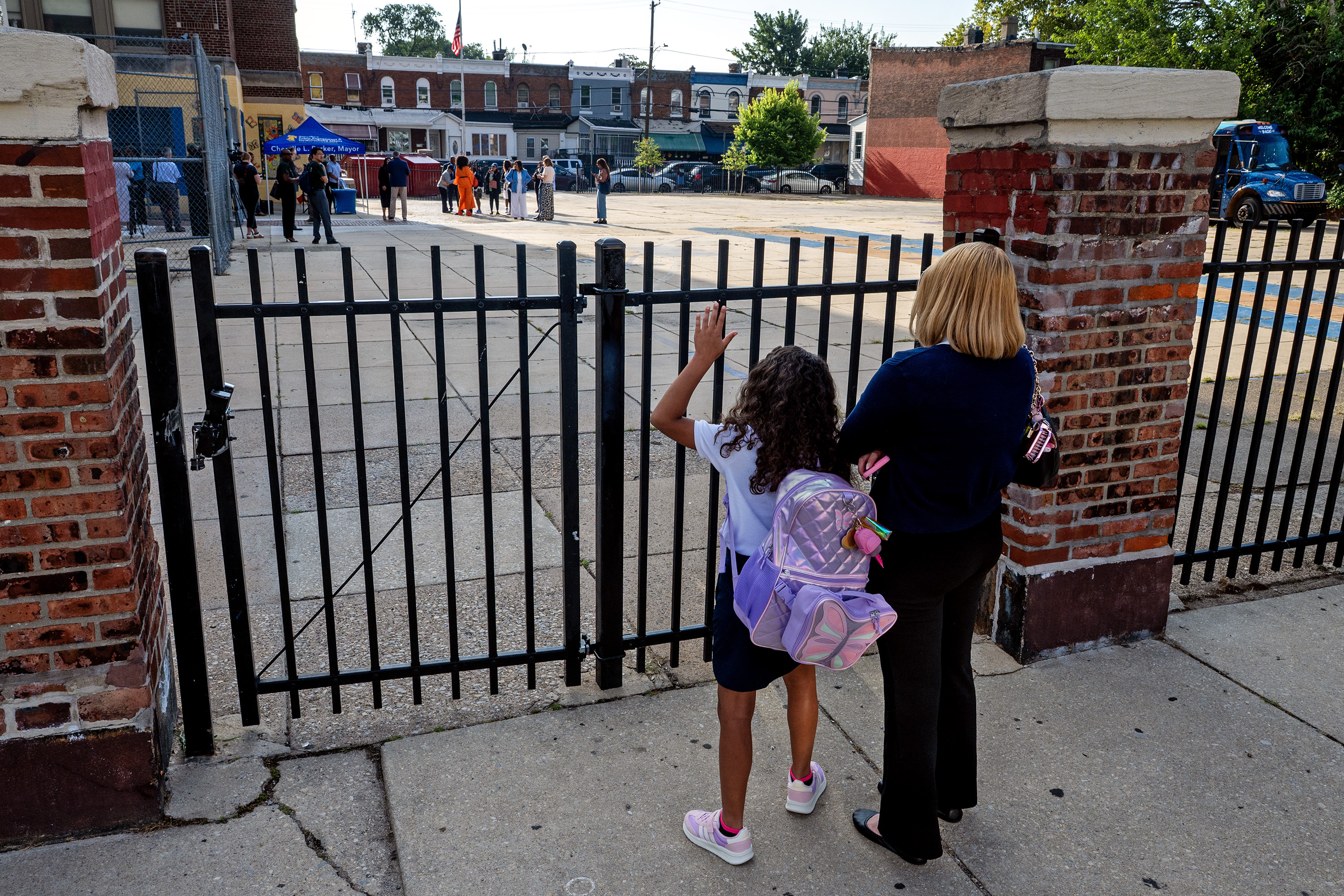
    Tanisha Ortega and her daughter Ahlaura Conley, 7, are the first to arrive, before the gates even open getting an early start on second grade at McClure Elementary Aug. 24, 2026 on the first day of school in the Philadelphia.Tom Gralish / Staff Photographer

    That way, no matter how distracted I get as my head is spinning around while I keep turning to see things happening all around me and missing other photos while I write down names, I always have those first folks I can return to.

    That brings me back to the photo at the very top. I had noticed officials looking out of a window of the district’s bus on its annual Back-to-School Celebration visit to schools all around Philadelphia.

    But I knew I had my photo when Superintendent Tony B. Watlington Sr. (at far left in the photo) started to gather everyone together for a group photo outside the bus and the president of the principals union showed up in the window. (She then left the bus to join in the photo.)

    Since 1998 a black-and-white photo has appeared every Monday in staff photographer Tom Gralish’s “Scene Through the Lens” photo column in the print editions of The Inquirer’s local news section. Here are the most recent, in color:

    » SEE MORE: Archived columns and Twenty years of a photo column.