Blog

  • This educator just gave away his 5 millionth book — and will give away thousands to Philly and N.J. teachers this year

    This educator just gave away his 5 millionth book — and will give away thousands to Philly and N.J. teachers this year

    Inside a cavernous warehouse just off I-295 in Cherry Hill, Larry Abrams spread his arms, gesturing to the sea of industrial-size cardboard boxes that surrounded him.

    “We’re sitting on a rocket ship,” said Abrams, a third-generation teacher.

    Abrams’ rocket ship is composed of books: thousands and thousands of them — picture books and out-of-date science textbooks, cookbooks and battered novels. He sees them as a way to change kids’ life trajectories.

    The BookSmiles van and a staffer’s car parked outside of BookSmiles new warehouse in Cherry Hill.Elizabeth Robertson / Staff Photographer

    To date, BookSmiles, the nonprofit Abrams started out of his garage in 2017, has distributed five million books. It just outgrew its third location, expanding into a 14,000-square-foot space in Cherry Hill that is formally opening next week.

    Book banks are not a new idea. But Abrams believes he’s got the secret sauce.

    “We’re the only book bank in America that does this — we actively trade pallets of grown-up books for pallets of upcycled gently used children’s books,” Abrams said. “Never before has there been a low-cost way to get so many beautiful, upcycled books into the homes and hands of kids who need them the most.”

    ‘It’s simply about lack of book access’

    Abrams served in the Navy — he was stationed on an aircraft carrier during the Persian Gulf War — and managed a copy shop. Then he settled into a career as an English teacher, working first in Moorestown, then in Lindenwold.

    “I thought, ‘Why do most of the Lindenwold kids in my ninth-grade class read at a third- or fourth-grade reading level?’” Abrams said. “It’s simply about lack of book access. It’s not fair that some kids grow up with no access to books, and other kids have everything.”

    Abrams thought long and hard about how to change that equation. What if he redistributed books from wealthy and middle-class communities to the places that didn’t have them?

    BookSmiles founder Larry Abrams works in the loading dock area of BookSmiles’ new Cherry Hill warehouse on Friday, Aug. 28, 2026.Elizabeth Robertson / Staff Photographer

    He put out a social media call for children’s books, and got thousands.

    There is no market for reselling used children’s books online, Abrams found — you can’t sell them and make any kind of money. So the BookSmiles concept developed.

    Now, people from all over New Jersey and Pennsylvania donate books — any kind of books, from old encyclopedias to nearly new novel series. The BookSmiles team (at first, just Abrams himself; now, it’s 11 people and a growing corps of volunteers) sorts through every single book.

    The organization gets books in myriad ways: from folks dropping off what they salvage after cleaning out a bookshelf to donations of entire estates of books. BookSmiles accepts library discards and scrap paper, too.

    Adult books, old textbooks, and kids’ books that are not in excellent condition are sold, not for cash, but for gently used children’s books that are distributed directly to teachers, daycares, and other nonprofits that get them in kids’ hands.

    ‘There’s a low-cost way to raise test scores’

    BookSmiles grew so significantly that Abrams retired from teaching and now works full-time as executive director.

    But his educator hat is always on. Research shows that access to books, and books in children’s homes, is a powerful determinant of kids’ educational outcomes and economic success.

    “This comes from a place of me being a teacher, and seeing there’s a low-cost way to raise test scores,” said Abrams, dipping his hand into a cardboard box and fishing out an old dictionary that will end up being recycled for paper.

    BookSmiles founder Larry Abrams among boxes of childrens books ready for young readers in BookSmiles new Cherry Hill warehouse on Friday, August 28, 2026.Elizabeth Robertson / Staff Photographer

    The largest share of BookSmiles’ books moves out through its “Teacher Take” program. Teachers pay a nominal fee — BookSmiles asks for $35 annually — and can then take hundreds of books multiple times a year, either for classroom libraries or for distribution.

    BookSmiles also sponsors “Fair Book Fairs,” where schools get enough books for every child to take home at least three volumes at no cost.

    Schools that serve predominantly students from economically disadvantaged backgrounds are asked to kick in just $200 to get a Fair Book Fair. Others pay a little more.

    In 2025, BookSmiles gave away half a million books to teachers and kids in Philadelphia schools. Another 500,000 went to New Jersey teachers and schools, and the remainder, about 250,000, were sent overseas.

    With libraries often on the chopping block in low-wealth school systems — Philadelphia had fewer than five people working as full-time, certified school librarians last school year — classroom libraries are key, and teachers often need resources to build them.

    “We can hook them up,” Abrams said. “I can’t give them school supplies, but I can give them books.”

    Book joy

    Abrams still gets struck by moments of “book joy” when he looks at the Teacher Take room, or the massive room of books waiting to be sorted or moved out.

    “It’s almost like walking into Willy Wonka’s world, but it’s not candy, it’s books,” he said. “Sometimes, you can’t tell the difference between what Barnes & Noble is selling and what we’re giving away.”
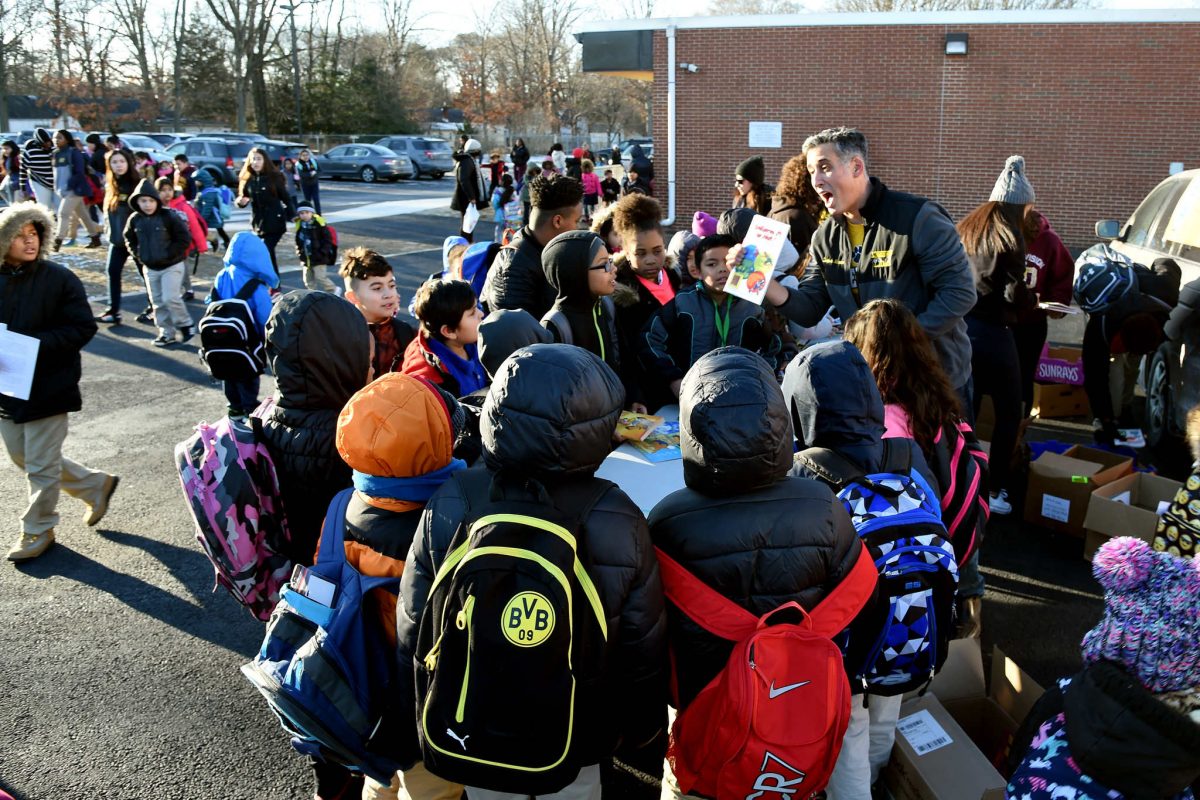
    Larry Abrams shows BookSmiles books to Lindenwold Elementary School students in the nonprofit’s early days. This file photo is from 2018.TOM GRALISH / Staff Photographer

    BookSmiles’ new space, across the street from the PATCO Woodcrest station, just off I-295, is a level up for the organization. It will allow BookSmiles to move from distributing 1.3 million books per year to five million books per year, and can accommodate more volunteers.

    Abrams, like many, is thinking of Dolly Parton a lot these days.

    The music icon and humanitarian, who died Tuesday, was an inspiration for BookSmiles and a mentor to him, though he never met her.

    Parton began her Imagination Library, a program that sends free books directly to children’s homes, as a tribute to her father, who never learned to read.

    “I don’t know if I’ll ever get to 300 million books,” Abrams said. “But we know that if books are in the home, children will be more successful academically. We know that access to books changes equations.”

    BookSmiles, 100 Melrose Ave., Cherry Hill, N.J., accepts book donations and volunteers. Its Teacher Take program resumes soon.

  • This Appalachian memoir author is running as a Democratic contrast to JD Vance

    This Appalachian memoir author is running as a Democratic contrast to JD Vance

    CLIFTON FORGE, Va. — Veterans flock to a law office in this old railroad town for help wrestling with the feds over healthcare. Across the mountains in Waynesboro, families who can’t afford groceries spend hours waiting outside the food pantry. Up in Monterey, the town economic development director works for free because budgets are thin.

    Beth Macy writes it all down, still chasing stories across Appalachia after 40 years as a newspaper reporter and author of books including Dopesick, an exposé about Big Pharma’s contributions to the opioid crisis that became an Emmy-winning Hulu miniseries.

    After the memoir Hillbilly Elegy catapulted JD Vance to prominence as an authentic child of the Rust Belt and Appalachia, Macy is leaning on her own roots and her writing about the region to jump into politics. But her long-shot bid for a House seat as a Democrat in a bright red Virginia district positions her as a kind of anti-Vance.

    In an essay in the New York Times shortly before Vance was elected vice president, Macy faulted him for fearmongering about immigrants and turning his back on the public institutions that helped him escape poverty.

    “I’m coming at it from the perspective of an old-school mountain Democrat,” Macy said in a recent interview. “Let’s make it safe, let’s protect working people.”

    The two writers hail from Ohio hometowns only 60 miles apart: Middletown for Vance and Urbana for Macy. Both are the product of dysfunctional families and economic hardship. But Vance went on to the Ivy League and venture capital, urging the downtrodden to take personal responsibility for their prospects in life.

    Macy, 62, published her own life story last year in Paper Girl, which examines the same terrain as Hillbilly Elegy but comes to very different conclusions.

    Macy, who put down roots in Appalachia and spent decades writing about the region’s struggles for Virginia’s Roanoke Times newspaper, believes Vance blames poor people for their own plight. She sees outside forces working against the region going back generations, including the opioid makers who falsely claimed that their drugs were not addictive, and government policies driving the offshoring of manufacturing jobs.

    Campaigning with pad and pen in hand, Macy says she aims to “connect pain to policy,” and she criticizes both major parties for a system that fails those in need. The message was warmly received on a recent campaign swing, and many voters were thrilled to meet Macy, who made sure the Dopesick show was filmed partly in the district.

    But after years of division stoked by culture wars, folks who came out to see Macy the celebrity are not sold on casting a ballot for someone with a D after her name.

    “Exactly the issue she has to overcome here — and I’m not sure how — is that an awful lot of people vote by just the R or the D, as simple as that,” said Robin Sullenberger, who spent two decades as a supervisor in Highland County and stopped by a recent Macy campaign appearance in Monterey. The supervisor jobs are nonpartisan, but Highland County — Virginia’s least populous county — has picked a Republican for president in every election since Alf Landon in 1936.

    Macy is running against Republican incumbent Ben Cline in Virginia’s bright-red 6th District, a New Jersey-sized stretch of mountains and valleys that stretches from Winchester in the north to Roanoke in the south.

    The nonpartisan election handicapper Cook Political Report rates the district as “Solid Republican.” Cline, seeking his fifth term, beat his 2024 Democratic challenger by 28 percentage points and outperformed Donald Trump, who won by 24 points.

    “I know that her liberal positions on the issues appeal to some sections of the Democrat base, but to compare her to JD is to suggest that her message may sell here,” Cline said in an interview. “It’s not selling here in the Shenandoah Valley, in the Roanoke Valley. There are common-sense conservative values here.”

    Macy is navigating a tricky path within her party. She repudiates the recent rise of democratic socialists and also blames establishment lions such as President Bill Clinton for the NAFTA trade deal that she says wrecked the region’s economy.

    She depicts her campaign as focused on practical solutions: addressing the “immigration disaster” through humane treatment and clear paths to citizenship; providing affordable healthcare through Medicare-for-all; aiding farmers by ending tariffs; taxing billionaires.

    Macy has raised more money than Cline as of July 15, at $1.7 million compared with his $1.4 million, according to analysis by the nonpartisan campaign finance site Virginia Public Access Project. Almost all of her donations have come from individuals, while Cline has received more than $400,000 from GOP political action committees, according to VPAP.

    Macy didn’t get involved in politics until last year, when friends in Roanoke — the blue-leaning city in Southwest Virginia where she lives with her husband — convinced her she had the name recognition to challenge Cline.

    At the time, Macy was fine-tuning the manuscript of Paper Girl, which is part memoir and part hard-eyed examination of what’s become of her hometown. Macy grew up poor with an alcoholic father and a mother who took any job to provide for the family. Community support helped them get by, and federal Pell grants enabled Macy to go to college and pursue a career in journalism.

    Returning to Urbana, Macy wrote about finding a town hollowed out by poverty and drug addiction. The sense of community, she says, has been replaced by a divisive strain of Christian nationalism and MAGA-fueled anger toward anyone seen as an outsider. A place once proud of its heritage helping enslaved African Americans seek freedom on the Underground Railroad is now peppered with Confederate flags.

    A central figure in the book is a transgender young man struggling to get by in the community. Macy is deeply sympathetic to LGBTQ+ people because one of her two grown children is in a same-sex marriage and the other is nonbinary.

    An editor pushed her to end the book with a strong statement about political solutions. “Basically, elect better people to office, people who will do the most good for the most people,” Macy said. “I didn’t think it would be me.”

    Campaigning still feels odd to a journalist who spent years striving to be nonpartisan. She habitually takes notes, asking everyone she meets for their phone number and the spelling of their name. If she fills up a notebook, she’ll bum another from anyone nearby.

    Macy says stories are the heart of her campaign: her own family member who died young after refusing two organ transplants because the donors had received the coronavirus vaccine. The farmer who can’t afford diesel fuel for his tractor because of the war in Iran. The sheriff who can’t get emergency calls because his mountainous county has only one cell tower.

    And, everywhere, the families who have lost loved ones to painkillers that were promoted as safe.

    “I don’t care if you’re Republican or Democrat or moderate. We’re people. We’re Americans,” Macy told a group of Democrats at a fundraiser outside Harrisonburg — like other college towns, a blue island in the district. Her message was simultaneously that President Donald Trump’s policies are making problems worse and that people can fix them by overcoming political divisions.

    “We’re not going to win this thing,” she said, “without meeting people in the middle.” She claimed incremental success, but for offbeat reasons. One business owner told Macy he’d vote for her because he didn’t like the way Trump disrespected Rob Reiner after his tragic death, she said; another Republican was going to switch after seeing Trump post an image of himself as Jesus that appeared to be AI-generated.

    “I’ll take it,” Macy said.

    In Clifton Forge, where the exteriors were shot for Dopesick several years ago and where actor Michael Keaton was seen in local restaurants, the economy has struggled for decades since the Chesapeake & Ohio Railroad shifted jobs elsewhere.

    Kristen McConnell sees desperation every day in her law practice focusing on veteran healthcare and disability issues. Solving problems is harder, she said, because of politics.

    “Everybody wants healthcare, everybody wants childcare, everybody wants a livable wage,” McConnell said, but if a Democrat talks about those subjects, it is viewed as socialism.

    “People don’t understand that these things they use every day are the things that they’re railing against,” she said.

    On a sizzling Friday at the end of July, Macy greeted people at a monthly downtown festival, as booths along the closed-off streets sold baked goods, homemade jewelry, hot dogs, and barbecue.

    John and Charlotte Waugh from nearby Covington set up folding chairs with a good view of the Bart Chucker Band, a local favorite alt-country group. John Waugh, 65, retired from a manufacturing job, is a big fan of Trump. Charlotte, 64, a retired educator, is not.

    John has read some of Macy’s work, he said, and thinks she’s right on the money in diagnosing the region’s problems. But while his wife plans to vote for her, he will not.

    “It’s more not just her — it’s the whole Democratic Party,” he said, saying that Democrats want boys to play girls’ sports. “I got granddaughters.”

    Up the street at her consignment shop, Jennifer Oeltjen, 75, stayed open late to take advantage of the happy festival crowd. She was thrilled when Dopesick was filming there. The crew bought clothes from her for costumes, she said, and she remembers watching a night shoot when black-clad production assistants scurried around like ninjas.

    A longtime Republican, Oeltjen worries that people nowadays expect too much help from the government. While she does not approve of the way Trump talks, she said the Democrats she sees on Fox News spend too much time battling him. She also cannot square pro-transgender policies with her religion.

    Oeltjen has read Macy’s work and watched her speak to local groups. “She’s a good person,” Oeltjen said. “If I were going to vote for a Democrat, it would be Beth.”

    But that’s not likely, she said, even though she knows very little about Cline. She intends to vote Republican this fall.

  • Far-right British provocateur Milo Yiannopoulos has been deported after his immigration arrest in US

    Far-right British provocateur Milo Yiannopoulos has been deported after his immigration arrest in US

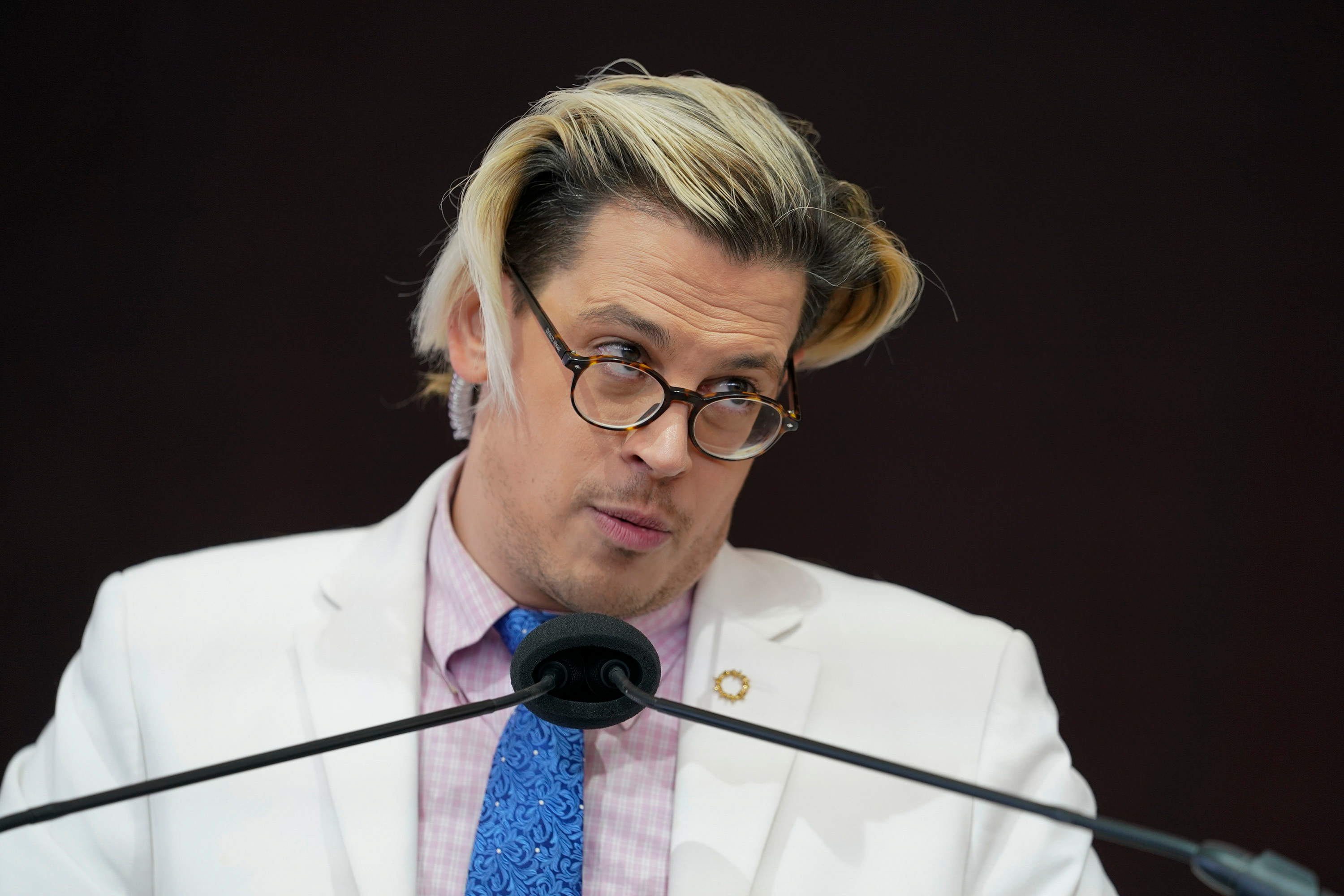
    British far-right commentator Milo Yiannopoulos has been deported back to the United Kingdom after his arrest by American immigration authorities, U.S. officials said Saturday.

    The U.S. Department of Homeland Security said Yiannopoulos was returned to his home country on Friday after being accused of overstaying after entering the U.S. legally in May 2019. An immigration judge had issued a final order of removal on July 22 after he failed to show up for an immigration hearing, a Homeland Security spokesperson said.

    Yiannopoulos was arrested Thursday at Louis Armstrong New Orleans International Airport in Louisiana and detained by Immigration and Customs Enforcement.

    “He chose to overstay his welcome in violation of our nation’s laws,” a Homeland Security spokesperson said in a statement.

    Yiannopoulos and his representatives did not respond to requests for comment. He has not posted on his X social media account since Thursday.

    Yiannopoulos is a well-known champion of conservative causes and has frequently taken provocative public positions criticizing feminism, Islam, and immigrants. He has been especially supportive of President Donald Trump’s immigration crackdown.

    “Zero immigration for the next 20 years. No ifs, no buts,” Yiannopoulos wrote on X last year.

    The British national has most recently worked for the rapper Ye, formerly known as Kanye West, who performed in New Orleans on Friday evening.

    Yiannopoulos rose to fame in the early 2010s as an incendiary writer for the conservative website Breitbart News. He resigned from the company in 2017 after a video of him endorsing pedophilia resurfaced online. He later apologized for the remarks and said he himself was a victim of sexual assault as a minor.

    Yiannopoulos’ arrest on Thursday comes amid a nationwide uptick in detentions as part of Trump’s immigration crackdown.

    Far-right conservative activist Laura Loomer swiftly took to social media to applaud Yiannopoulos’ arrest after years of public feuding between the two personalities.

    “I was the first person to report on the fact that Milo was in the U.S. illegally where he incited violence against President Trump and worked for Marjorie Traitor Greene,” Loomer wrote on X.

    Controversy around Yiannopoulos ballooned in 2017 when he carried out what he called his “Troll Academy Tour” across college campuses nationwide. Fights broke out when some students protested Yiannopoulos’ appearances and accused him of hate speech, while others celebrated him as a champion of free speech. Around that time, Buzzfeed reported on Yiannopoulos’ cozy relationships with self-proclaimed white nationalists.

    In recent years, Yiannopoulos continued to work in the orbit of conservative activism. In 2022, he was an intern for former U.S. Rep. Marjorie Taylor Greene, according to the Washington Post. He subsequently ran the short-lived 2024 presidential campaign for Ye.

    Most recently, Yiannopoulos has worked as a spokesperson for Ye, who has been beset by controversy of his own following antisemitic comments that the rapper has since apologized for. The Washington Post reported Saturday that two sold-out Ye concerts in St. Petersburg, Russia, were canceled in part because of his history of such remarks.

  • Trump cannot deport students for criticizing Israel, judge rules

    Trump cannot deport students for criticizing Israel, judge rules

    SAN JOSE, Calif. — Citing the importance of the First Amendment, a federal judge in California says the U.S. government is unconstitutionally silencing critics of Israel’s war in Gaza and others as part of the Trump administration ‘s quest to deport noncitizens who it says disrupted college campuses while expressing their views.

    Judge Noël Wise, in a ruling Friday, delivered a victory for the student newspaper at Stanford University, which has said some international students were afraid to speak out because of the deportation threat.

    The decision largely piggybacks on findings from nearly a year ago by a U.S. district judge in Boston, who ruled that the Trump administration violated the Constitution when it targeted people who are not citizens for deportation solely for supporting Palestinians and criticizing Israel.

    Wise wrote that the freedoms of speech and the press are “foundational to America’s enduring democracy.” The judge cited free-speech and vagueness flaws that violate the First Amendment and Fifth Amendment as she struck down portions of the provisions that the federal government follows regarding deportations.

    Wise cited retaliation in March 2025 by U.S. immigration authorities against people who engaged in speech supporting the Palestinians and against Israel’s actions — which a growing number of experts, including those commissioned by a U.N. body, have said amount to genocide. The judge also cited retaliation against people who were critical of Charlie Kirk after the Turning Point USA co-founder was assassinated last September.

    “Tomorrow, or perhaps even today, targets may include anyone in the United States who exercises their freedom of speech to simply express opinions the government does not like,” the judge in San Jose said.

    “This downward spiral is antithetical to our Constitution that recognizes our right to speak freely,” she added. “Here you can simultaneously hate the content of a person’s speech and love the country that cherishes the freedom to allow it. Zealous protection of our Constitutional right to free speech is a provocative demonstration of our country’s powerful lack of fear.”

    The Justice Department did not respond Saturday to a message seeking comment on the decision.

    Conor Fitzpatrick, an attorney with the Foundation for Individual Rights and Expression, which brought the lawsuit, praised the ruling.

    “In America, free speech doesn’t just belong to the people who say things the government agrees with,” Fitzpatrick said in a release.

  • The Delaware psychiatrist who testified in the Lindsay Clancy case has resigned from Nemours, the health system said

    The Delaware psychiatrist who testified in the Lindsay Clancy case has resigned from Nemours, the health system said

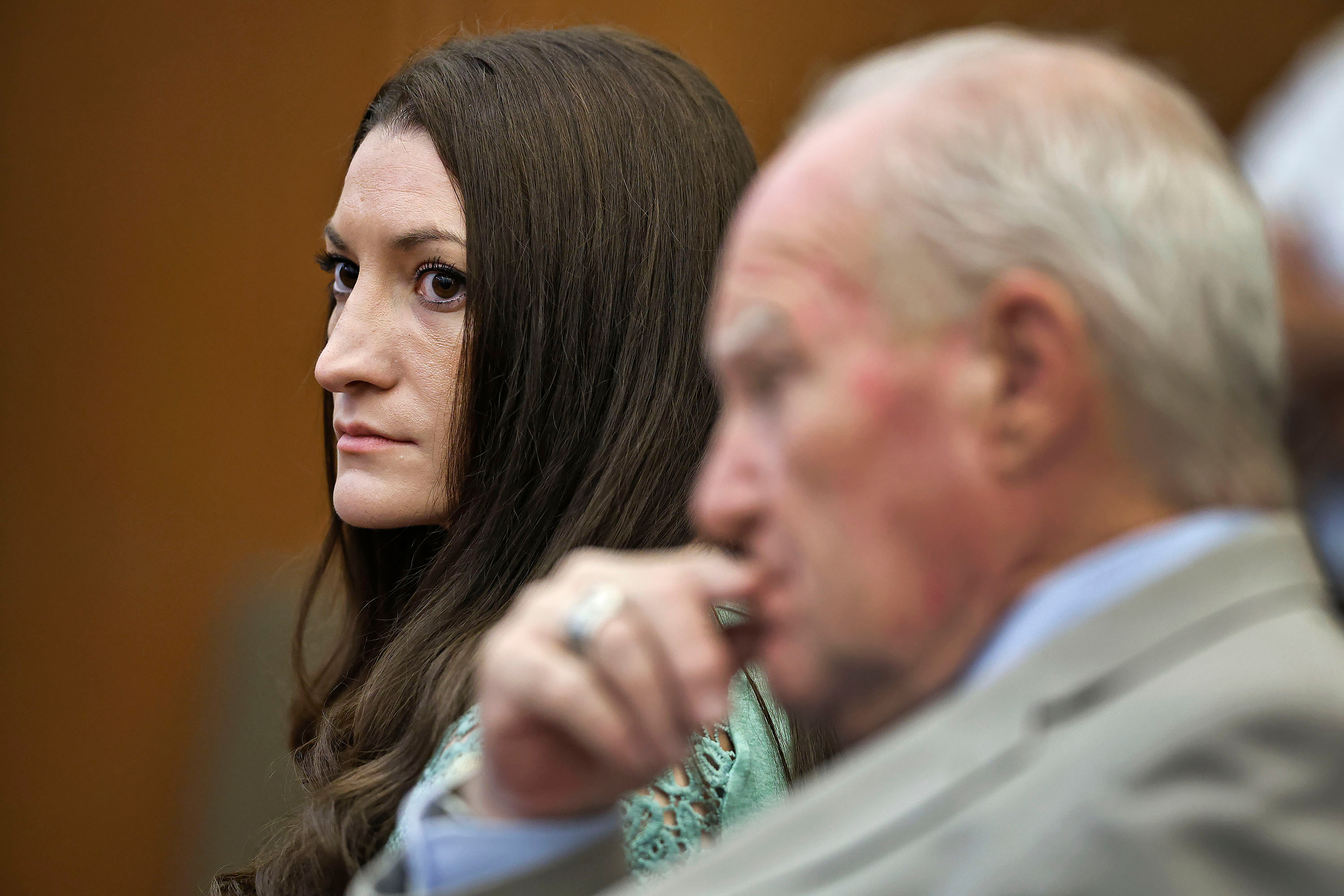
    A psychiatrist with Nemours Children’s Health in Delaware resigned his position after he began testifying in the nationally watched murder trial of Lindsay Clancy in Massachusetts, the health system said in a statement Friday.

    Avram Mack testified on Friday, Aug. 21, and Monday, Aug. 24, as a prosecution rebuttal witness in the case against Clancy, 36, whose lawyers have argued was experiencing postpartum psychosis when she killed her three young children in 2023.

    “Dr. Avram Mack is no longer employed by Nemours Children’s Health, he resigned on Monday, August 24th,” Shelley Meadowcroft, a Nemours spokesperson, said in an email.

    Meadowcroft declined to comment further on “confidential personnel matters.”

    Mack could not be reached for comment Friday.

    CT Insider, which is covering the trial, reported that Mack’s resumé submitted during the trial listed him as a psychiatrist at Nemours Children’s Health since 2023.

    Mack testified that he interviewed Clancy before the trial and did not notice any episodes that he would diagnose as bipolar, the Connecticut-based news site reported.

    Mack also testified that Clancy having some odd thoughts, including fear that someone would take her children, was normal, CT Insider reported.

    Kevin Reddington, Clancy’s defense attorney, reportedly sparred with Mack over the doctor’s experience working with adults, the definition of “postpartum,” and technical questions related to postpartum depression and psychosis.

  • ‘Immense’ devastation as Nepal continues search for 2,400 missing in floods

    ‘Immense’ devastation as Nepal continues search for 2,400 missing in floods

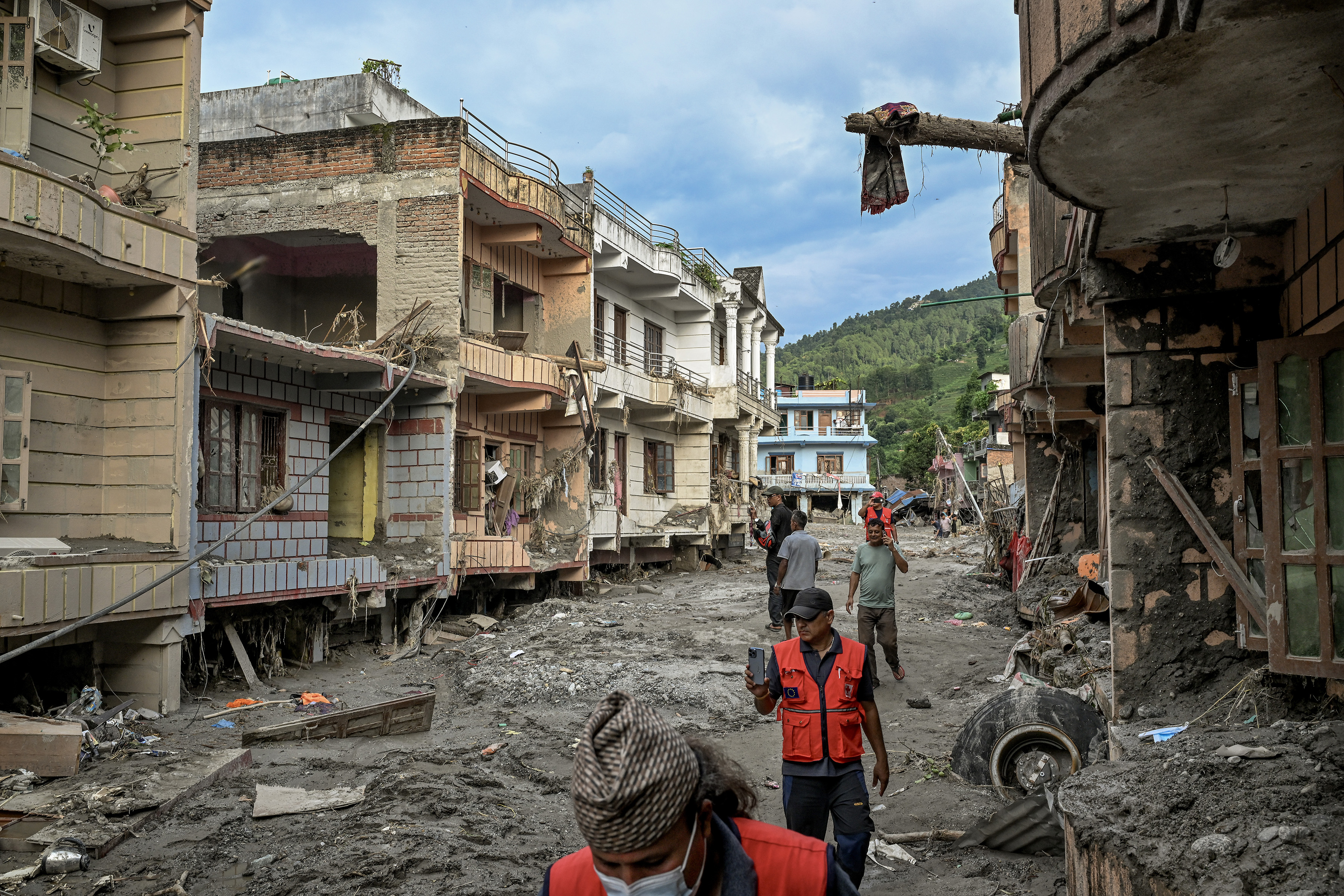
    KATHMANDU, Nepal — Entire towns wiped out. Roads, bridges, and communication lines washed away. In just a matter of moments, tens of thousands of people were left devastated and disoriented as catastrophic floodwaters tore through the tranquil Himalayan valley.

    Four days later, as the rescue efforts in Nepal and neighboring Tibet continued Saturday, the staggering scale of the flood’s devastation was coming into focus.

    The official count of missing people jumped to more than 2,400, more than double the figure from a day before. The death toll rose to at least 675 and was expected to keep climbing. Morgues in several of the towns downstream from the deluge have been overwhelmed by the number of bodies, with officials forced to improvise makeshift arrangements.

    “In living memory, we haven’t seen a mountain hazard event like this,” Kamal Kishore, the United Nations’ top official for disaster risk reduction, said Friday. “The impact on lives, livelihoods, buildings, infrastructure, bridges, hydroelectric projects, power generation is really immense.”

    The recovery will be daunting.

    Nepal is one of the poorest countries in the world. Its economy, long stagnated, is heavily reliant on the tourism industry and the remittances its workers send from abroad.

    The catastrophe comes amid a shortfall in global humanitarian funding, as some of the largest traditional donors, particularly the United States under President Donald Trump, have pulled back from international aid in recent years.

    The United States, for example, has announced that it will contribute $500,000 to the rescue effort — a fraction of what it had promised in the days immediately after a devastating earthquake hit Nepal in 2015. Sri Lanka, still emerging from its own economic crash, has pledged $1 million.

    The limited pledges so far do not bode well for funding the reconstruction effort, said Pradeep Gyawali, a former foreign minister.

    “The contrast with the 2015 earthquake is staggering, when Nepal struggled even to manage the huge volume of relief materials that arrived from around the world. Assistance came almost immediately, and on a much larger scale,” he said. “This time, however, the response has been much weaker.”

    The small Himalayan nation also remains highly susceptible to climate change. Scientists have long warned about potential flooding from the lakes that melting glaciers have formed in the mountains. Even in normal years, smaller floods related to monsoon rains cause mudslides and block roads, straining the country’s vulnerable infrastructure.

    The threat of fresh flooding hangs heavy over the rescue and relief efforts.

    China reported Friday that a barrier lake, created when the landslide that started Wednesday’s deluge blocked the river system, had begun overflowing in Tibet, near where the floods originated. Nepali authorities issued repeated alerts downstream, and police officers hurried through nearby towns with megaphones, asking people to move to higher ground. China’s state broadcaster, CCTV, later reported that the risk of a breach at the barrier lake had “gradually decreased,” though the threat of another flood remained.

    Much of the rescue effort on the Nepali side of the border appeared focused on several hydropower plants that were swept away by the torrent of water and debris. Army rescue teams rushed to recover workers from the muddy tunnels in dramatic scenes.

    In a sign of how uncertain the situation remained, hundreds of workers from those plants had not been counted among the initial missing tally, Nepali officials said in explaining the sudden jump in the number of missing.

    The threat of flooding temporarily paused the rescue efforts in Tibet on Friday. But on Saturday, Chinese rescue workers resumed their search efforts, looking for survivors near the Gyirong border crossing between Nepal and Tibet, CCTV reported. The footage showed firefighters combing the leveled site, tapping on the ground with shovels and shouting, “Is anyone there?”

    The government in Nepal, which swept to power this year on the back of Gen Z protests, is trying to assert control and restore order in the face of the overwhelming tragedy.

    Balendra Shah, the 36-year-old prime minister, has not addressed the nation but has been seen visiting the sites of destruction and leading meetings to coordinate the country’s response.

    His government has deployed more than 30,000 security forces for rescue and recovery efforts. Possibly drawing on lessons from the response to a previous natural disaster in the country, which was criticized as chaotic and disorganized, authorities this past week initially declined foreign rescue teams.

    But by the end of Friday, news media in Nepal reported that the government was easing that restriction.

    On Saturday, Shisir Khanal, Nepal’s foreign minister, said the country was seeking support for tunnel rescues, with an Indian team already in the country and two teams from China also coming. He said the government also required outside help with forensic capabilities, and teams that can help identify bodies with DNA sampling.

    More than 7,000 people had been rescued by late Saturday, many of them pulled out of flooded villages in helicopters before being sent to hospitals and relief camps, where they have been given meals and medical help.

    Soon, the focus will have to shift to rebuilding. But for those who survived the surging waters — losing loved ones, livelihoods, and homes — a path to recovery may seem distant. It is unclear whether many survivors will be able to return home or if they will need to resettle elsewhere.

    The damage has also been particularly heavy at the site of hydropower projects built along the Bhotekoshi and other rivers downstream. Tens of miles of roads and more than 40 bridges have been destroyed.

    Initial government estimates in Nepal have put the cost of physical damage at more than $1.3 billion, and the country’s finance minister has predicted that recovery efforts could run into “a few billions.”

    This article originally appeared in the New York Times.

  • 37 killed near Kyiv as Russian drone blitz exposes air defense gap

    37 killed near Kyiv as Russian drone blitz exposes air defense gap

    KYIV, Ukraine — For several terrifying days, air raid sirens have wailed nonstop in Kyiv, Ukraine’s capital, as waves upon waves of armed Russian drones surged into the city, straining its limited air defenses and exhausting a population worn down by years of war.

    This latest stage of Russia’s air campaign has targeted warehouses and shopping centers, and on Saturday, the Ukrainian authorities said that a strike on a facility just outside Kyiv had killed at least 37 people.

    The strike, which took place late Friday, caused huge secondary explosions that engulfed an entire suburban area in plumes of smoke. The Ukrainian authorities did not say what the facility was, but their comments suggested it was a warehouse with ammunition.

    President Volodymyr Zelensky of Ukraine said on Saturday that a criminal investigation was already underway into the management of the warehouse, which is near private homes and a facility for older adults and people with disabilities. The capital region will observe a day of mourning on Sunday, officials said.

    An ammunition depot in another area outside Kyiv was destroyed last month, killing several people and prompting a separate investigation into the decision to store dangerous arms in civilian areas.

    “Making the same mistakes for the fifth year of the full-scale invasion is criminal negligence,” Serhii Koretskyi, Ukraine’s prime minister, said on Saturday. “And all those responsible, without exception, must face severe punishment so that such situations do not happen again.”

    Ukraine is struggling to counter the onslaught of Russian drones, many of which are powered by jet engines that allow them to fly at nearly 400 mph.

    The latest drone campaign has coincided with Ukraine’s dire shortage of Patriot interceptor missiles, the only weapon the country has that can shoot down ballistic missiles.

    Russia has seized on that gap in Ukraine’s arsenal this summer. Civilians are bracing for the possibility that waves of Russian drones are intended to wear down air defense units before an even larger ballistic attack in the coming days.

    In the past, Russia often launched daytime waves of reconnaissance drones before combined drone and missile attacks overnight. But the droves of armed drones that now swarm the capital daily suggest that Russia is using a new tactic to spread fear and anxiety.

    Most shops and restaurants remain open in Kyiv, but the constant attacks have caused major traffic jams and delays on the metro system. They could also significantly complicate plans for students to return to school on Tuesday.

    This article originally appeared in the New York Times.

  • Pat McQuaide is Villanova’s starting quarterback — for now. Here’s a look at the legal fight over his eligibility.

    Pat McQuaide is Villanova’s starting quarterback — for now. Here’s a look at the legal fight over his eligibility.

    On Aug. 2, Katie LeGrand, Villanova’s senior associate athletic director for compliance, penned a letter to the Patriot League Policy Committee, urging the conference to grant quarterback Pat McQuaide eligibility for the upcoming season.

    LeGrand wrote that “Pat has fought hard to stay positive throughout his collegiate experience. He is the epitome of the word resilience, something that many youth may lack in today’s society.”

    McQuaide’s resilience would continue to be tested over the coming weeks, as the Patriot League maintained that McQuaide would not be eligible.

    Still, there was a chance McQuaide, who continued to practice with the team, could suit up for Villanova’s opener against league rival William & Mary. That chance became a reality hours before kickoff on Friday.

    On Friday, Cuyahoga County (Ohio) Common Pleas Court judge Timothy P. McCormick granted an emergency preliminary injunction that named the Patriot League as a defendant, clearing McQuaide to be eligible for league contests. Despite the quick turnaround, Wildcats coach Mark Ferrante opted to start McQuaide against the visiting Tribe.

    “Yeah, we found out [Friday],” Ferrante said. “And once we found out, there really was no hesitation. I mean, if it was 6 o’clock and a 6:03 kickoff, he probably would have rolled out there. If it was two hours before, if it was yesterday, [McQuaide would start]. The plan was, get the other guys reps. But if it happens, we’ll roll Pat out there. And he’s had a lot of practice under his belt.”

    Villanova lost, 35-32, to William & Mary after squandering a 10-point lead in the game’s final minute. McQuaide passed for 270 yards and a touchdown but threw three interceptions, including a pick with 9 seconds remaining that set up the Tribe’s game-winning field goal.

    “We made a lot more mistakes than they did,” Ferrante said. “Turnovers, penalties. Never comes down to one play, but unfortunately, it came down to one play.”

    Although he struggled, McQuaide’s return was welcomed by his teammates. Last season, after being named the starter days before the season opener, McQuaide emerged as a team leader. During his first year on the Main Line, the Ohio native led Villanova to an FCS semifinal — the team’s best finish since 2010. If McQuaide had not been able to play Friday, senior Robert Russo or freshman Nolan DiLucia was expected to receive the starting nod. Neither has completed a pass in college.

    “It’s kind of just second nature, having a guy like Pat back in the locker room,” junior running back Ja’briel Mace said. “Especially back in the offense, really helpful. … Finally get back to the flow of things.”

    Villanova quarterback Pat McQuaide threw for 270 yards and a touchdown but was picked off three times on Friday.Yong Kim / Staff Photographer

    For the foreseeable future, McQuaide is expected to stay on the field for Villanova. It remains to be seen if the Patriot League will appeal Friday’s preliminary injunction or if the conference will take additional steps to bar his participation.

    The league previously denied McQuaide’s eligibility on Aug. 4, despite a preliminary injunction by McCormick, and then rejected Villanova’s appeal on Aug. 22. The NCAA supported the conference’s barring of McQuaide, contending that as the Patriot League was not “served process and is not a defendant” in the original lawsuit, the initial preliminary injunction could not be applied to the conference.

    Patriot League commissioner Jennifer Heppel, the liaison for the Patriot League Council of Presidents executive committee that denied the appeal on Aug. 22, attended Friday’s game.

    The question around McQuaide’s eligibility pertains to his season at Mississippi Gulf Coast in 2022. Villanova, which submitted the waiver request to the NCAA on behalf of McQuaide, argued that the COVID-19 pandemic led to McQuaide’s single season at the junior college. McQuaide contends the pandemic stunted his development in high school, which led to him walking on at Kent State. After one year redshirting with the Golden Flashes, he transferred to Mississippi Gulf Coast.

    In its original eligibility waiver, the school described the move as a “necessary bridge rather than a choice to ‘use’ an additional season.” Additionally, juco programs are not under the purview of the NCAA, but seasons spent at that level have counted toward student-athletes’ eligibility in past decisions.

    After one season at Mississippi Gulf Coast, McQuaide played two seasons at Nicholls State before transferring to Villanova.

    This year will mark McQuaide’s sixth in college. He earned his undergraduate degree from Nicholls State and a master’s in higher education and leadership from Villanova. In court documents, McQuaide contended that he is aiming to complete a certification in public administration at Villanova this year, with the goal of becoming an NFL general manager.

    The battle between Villanova and the Patriot League over McQuaide’s eligibility comes during the program’s first year in the conference. The Wildcats announced last summer that they would leave their football conference of 18 seasons, the Coastal Athletic Association, to join the Patriot League. Unlike the Patriot League, the CAA supported McQuaide’s eligibility for this season, according to McQuaide’s attorney, Richard Hamilton Jr.

    “[McQuaide] had a letter of support from the conference, the old CAA,” Hamilton said. “He had a letter of support from the president of the university and from the athletic department, all supporting the waivers.”

  • Governor joins push to rename airport for Dolly Parton

    Governor joins push to rename airport for Dolly Parton

    An effort to rename Nashville International Airport for Dolly Parton has exploded since her death Tuesday.

    More than 150,000 people, including singer Sheryl Crow, had signed an online petition for the change as of Friday afternoon, and now Gov. Bill Lee of Tennessee has backed the effort.

    Tributes have poured out globally since Parton, the country music superstar, actor. and philanthropist, died at 80 after a battle with cancer. She is especially beloved in Tennessee, her home state, where vigils, singalongs, and tribute performances have taken place.

    “We want the love, acceptance, and good times that Dolly espoused to be what people experience when arriving in Tennessee for the first time, or coming home,” said Lydia Popovich, a 49-year-old comedian and lifelong fan. She started the petition last year with the photographer Dan Dion, and the number of signatures has more than doubled since Parton’s death.

    “Dolly represented the best of Tennessee, and the best of what we can be as human beings,” Popovich added. “Who doesn’t want to be ‘departin’ from Parton’?”

    The airport has already leaned into celebrating the city’s roster of music stars and celebrities, featuring outposts of the Country Music Hall of Fame and Museum, the Grand Ole Opry, and some downtown music venues. The outpouring of support for a Dolly Parton rebranding has not gone unnoticed by local and state lawmakers.

    Lee, a Republican, said Friday that he would put a proposal before the state-run airport authority at its next meeting, in September, to rename the airport. He did so, he said, after consulting with Parton’s team.

    “At a place where Tennessee welcomes the world, it is fitting that Nashville International Airport would bear the name of our state’s favorite daughter and greet travelers with the enduring legacy of Dolly’s music, generosity, faith, and kindness,” Lee said in a statement.

    The Metropolitan Nashville Airport Authority, which oversees the airport and controls its name, has rules that prohibit naming any property after a person who has not been dead for at least two years. The policy also dictates that the honoree should have contributed to aviation in Tennessee or made a “substantial personal contribution” to the airport authority.

    The Sept. 17 meeting will also include discussions about changing the naming policy in order to accommodate plans to rename the airport for Parton, Lee’s office said in a statement.

    Since Parton’s death, the authority has received several inquiries about renaming the airport, a spokesperson said.

    There were also questions about whether Tennessee politics would add to the bureaucratic tangle: Local and state leaders are battling over who oversees the airport. The Republican supermajority in the General Assembly approved a law this year giving the state power over major municipal airports. Nashville leaders have challenged the law and refuse to recognize the state-controlled authority.

    The General Assembly does not convene again until January. But lawmakers stressed they were considering a number of ways — including airport renaming — to commemorate a figure who is broadly cherished in the state.

    “We will work with legislative leaders, as well as the Parton family, to find the most fitting way to honor Dolly’s extraordinary legacy in a manner that will reflect her and her family wishes,” Speaker Cameron Sexton, a Republican, said in a statement.

    At least one state senator, Jessie Seal, also a Republican, has proposed legislation naming Sept. 25 as “9 to 5” Day, in honor of Parton’s famous anthem.

    The United States already has numerous airports named in honor of performers and athletes: Louis Armstrong New Orleans International Airport; John Wayne Airport, in Orange County, Calif.; and Louisville Muhammad Ali International Airport in Kentucky among them.

    Only a few U.S. regional airports or airport facilities are named solely for women. Examples include Amelia Earhart Memorial Airport in Atchison, Kan., and Barbara Jordan Terminal at Austin-Bergstrom International Airport in Texas.

    Major international airports rarely change names. The most recent example, Palm Beach International Airport in Florida was renamed President Donald J. Trump International Airport in July.

    Nashville International has only had its current name since 1988. The airport opened in 1937 as Berry Field — after Col. Harry S. Berry, a World War I veteran who ran the Works Progress Administration in Tennessee — and still uses the three-letter code BNA.

    Fans have also called on the General Assembly to revive a previous effort to honor Parton with a statue on the state Capitol grounds in Nashville — one she politely rebuffed at the time.

    “Somewhere down the road several years from now, or perhaps after I’m gone, if you feel I still deserve it, then I’m certain I will stand proud in our great state Capitol as a grateful Tennessean,” she wrote on Instagram in 2021.

    This article originally appeared in the New York Times.

  • Trump administration asks Supreme Court to uphold ban on transgender troops

    Trump administration asks Supreme Court to uphold ban on transgender troops

    The Trump administration has asked the Supreme Court to allow the U.S. military to fully enforce its ban on transgender service members, setting up the latest test of the administration’s policy priorities in front of the court.

    The justices are expected to consider whether to review the legality of the administration’s ban this fall and, if they accept the case, could schedule oral arguments during the Supreme Court’s term that begins in October.

    A few days after returning to office, Trump issued an executive order banning all trans troops and characterizing transgender identity as a “falsehood” that “conflicts with a soldier’s commitment to an honorable, truthful, and disciplined lifestyle.”

    The ban was one of a series of actions by the administration targeting transgender rights. The president also directed government agencies to withdraw federal funding from schools that allow transgender athletes in girls’ and women’s sports.

    The Defense Department implemented Trump’s military order in February 2025, effectively forcing trans troops out of the military.

    “No more dudes in dresses,” Defense Secretary Pete Hegseth announced then.

    Transgender service members quickly sued. About 4,200 openly transgender people were in the military last year, according to government court filings — about 0.1% of the armed forces. They worked as infantry platoon leaders, pilots, nuclear engineers, doctors, intelligence analysts, police, and other key professionals.

    A series of lower-court rulings have protected a group of transgender troops who challenged the ban from being discharged while litigation continued. But last May, the Supreme Court’s conservative majority agreed in a separate case to generally allow the administration to dismiss troops while litigation continued.

    Solicitor General D. John Sauer urged the justices in a filing Thursday to reverse the lower courts on a permanent basis and defer to the nation’s military leaders by upholding the Defense Department’s “considered military judgment” that accommodating trans troops would undermine “military effectiveness and lethality.”

    “The authority of the U.S. military to determine who may serve in the nation’s armed forces is a matter of exceptional importance,” he wrote, pushing back on lower-court rulings that said the administration’s policy was discriminatory.

    In the past year, many transgender service members have left the military voluntarily rather than face uncertainty and possible harm by contesting the new policy. Hundreds of others have stayed, insisting that their cases be considered individually by military retention boards consisting of fellow service members. Discharge has generally been a foregone conclusion, given the president’s order.

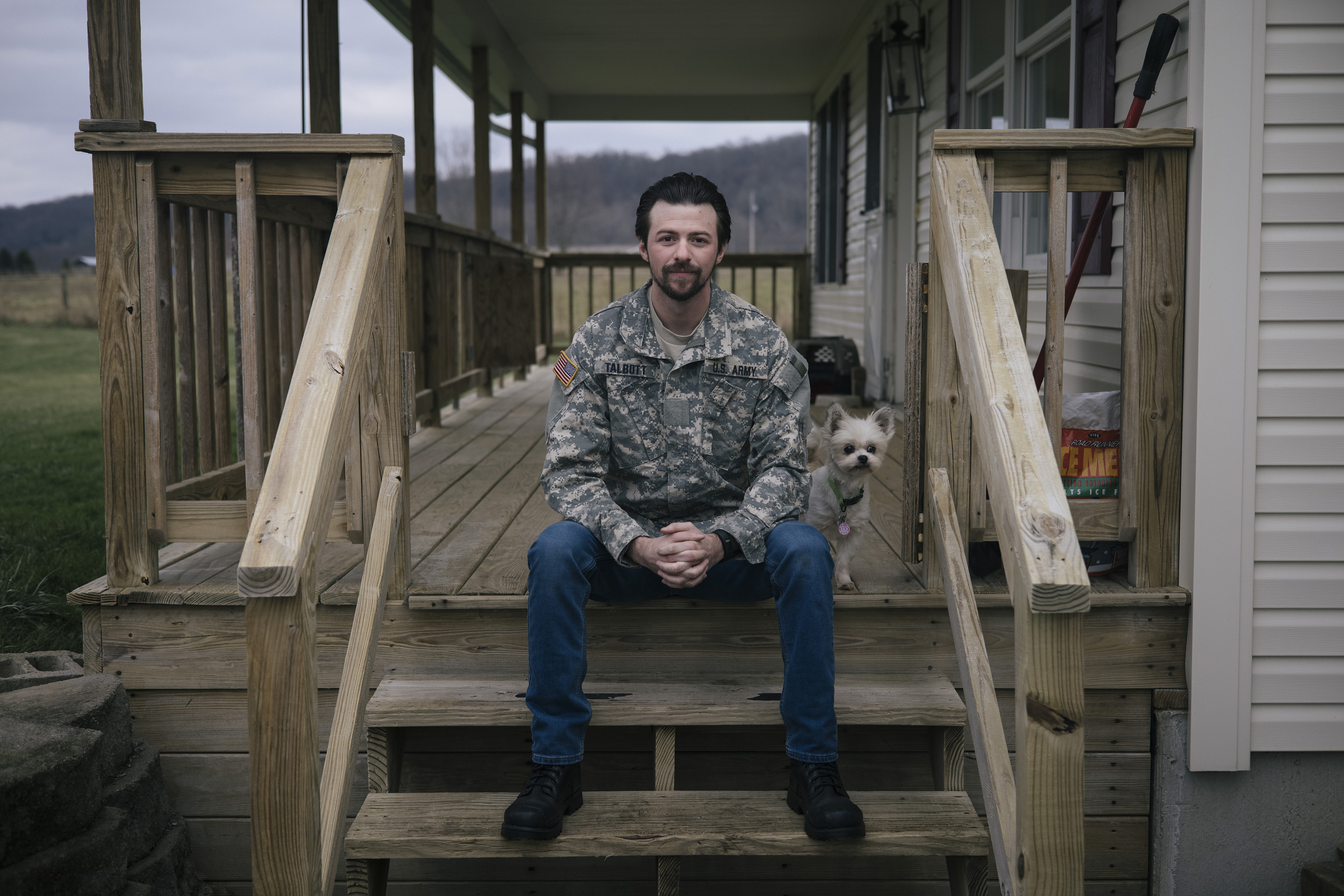
    The 28 challengers in the case before the justices are led by Nicolas Talbott, a second lieutenant in the U.S. Army Reserve. The group claims the policy unfairly and illegally directs hostility and prejudice against a group of people.

    In a 2-1 decision in June, the U.S. Court of Appeals for the District of Columbia Circuit sided with the group, but its lawyers have asked a lower court to extend protections to all transgender troops.

    The policy seemed to be “driven by the bare desire to harm a politically unpopular group,” wrote Judge Robert L. Wilkins, who was joined by Judge Judith W. Rogers.

    Judge Justin R. Walker dissented, saying courts do not have the power to make such decisions about the military: “The Constitution assigns that authority to Congress and the commander in chief,” he wrote.

    In the meantime, the 28 service members have been in limbo, still technically in the military but on leave, according to their lawyers.

    Attorneys for the service members urged the justices Friday to deny the administration’s request and allow the case to first go to trial in January. The service members are meeting the military’s standards and the government should not “kick out thousands of highly trained, skilled, and decorated troops based on nothing but hostility,” Jennifer Levi, GLAD Law’s senior director of transgender and queer rights, said in a statement.

    When the Supreme Court first dealt with the issue on an emergency basis last May, the majority did not explain its reasoning, as is common when the court issues emergency orders. The court’s three liberal justices — Sonia Sotomayor, Elena Kagan and Ketanji Brown Jackson — said they would have kept Trump’s policy on hold.

    In his first term, Trump also announced a transgender ban, but two federal judges blocked the policy.

    The Supreme Court lifted those injunctions in 2019 by a 5-4 vote, allowing a revised ban to take effect while legal challenges moved forward. The cases were dropped after Trump left office, and President Joe Biden rescinded the ban.

    This article originally appeared in the New York Times.