Blog

  • The real reason the colonists declared independence

    The real reason the colonists declared independence

    This month marks the 250th anniversary of the Declaration of Independence, an anniversary well worth celebrating. It is not, however, the anniversary of the start of the American Revolution. That began on April 19, 1775, with the battles of Lexington and Concord Bridge. It took over a year of fighting to convince colonists to accept that the time for compromise, for reconciliation, for any kind of reversion to the previous state of existence — for half-measures — was gone and the only path forward was independence.

    That’s where Thomas Paine and Common Sense played a role. Since his arrival in Philadelphia in 1774, Paine had watched American politicians try to reason with England, hoping to reshape the relationship with George III and with Parliament, rather than to sever it. It did not work. “Why is it that we hesitate?,” Paine asked his readers. “From Britain we can expect nothing but ruin.”

    Paine wrote Common Sense at the end of 1775 — between when the Revolution began and when the colonists declared independence — and he wrote specifically to convince the colonists to break their ties with England. “Nothing can settle our affairs so expeditiously,” he told his readers, “as an open and determined declaration for independence.”

    In the winter of 1775-1776, a growing number of colonists were ready to meet the British Army on the battlefield. The colonists and the British government had been at odds with each other for a decade, fighting over taxes and over jurisdiction. The government in London, though, seemed only to be pushing things further to the brink, especially when they began stationing soldiers in Boston.

    Still, and much to Paine’s chagrin, through the rest of 1775 most colonists thought that declaring independence was a step too far. Three months after the fighting began, when the Continental Congress set out to explain the “causes and necessity of taking up arms,” they tried to assure “our friends and fellow-subjects” in the British Empire that “we mean not to dissolve that union which has so long and so happily subsisted between us, and which we sincerely wish to see restored … We have not raised armies with ambitious designs of separating from Great-Britain, and establishing independent states.”

    Five months later, when Paine wrote Common Sense, he still worried that “the sentiments contained in the following pages, are not yet sufficiently fashionable to procure them general favor.” And so, Paine made a case not just outlining England’s crimes, but also explaining why they had rendered any sort of half-measure or compromise impossible.

    We tend to associate the lead-up to the American Revolution with the colonists’ complaints about British taxes and duties, which certainly led to disputes about jurisdiction and the relative authority of the crown and the colonial governments. We also remember the catch-phrase of the era, “no taxation without representation.

    Those debates and those issues, though, were not part of Common Sense. Paine focused on what, for him, was Britain’s unforgivable crime: setting the British Army against the colony’s own citizens. “The independancy of America,” Paine wrote, “should have been considered, as dating its æra from, and published by, the first musket that was fired against her.”

    This was a point that Paine returned to again and again.

    “No man was a warmer wisher for reconciliation than myself before the fatal nineteenth of April 1775.” But once he learned that British troops had attacked the people of Lexington and Concord, he knew that “a new era for politics is struck; a new method of thinking hath arisen. All plans, proposals, & c. prior to the nineteenth of April … are like the almanacks of the last year; which, though proper then, are … useless now.” As for King George II, “I rejected the hardened, sullen tempered Pharaoh of England for ever; and disdain the wretch, that with the pretended title of father of his people can unfeelingly hear of their slaughter, and composedly sleep with their blood upon his soul.”

    Made By History sponsors. FOR USE ON MADE BY HISTORY STORIES ONLY.Inquirer Staff

    Paine’s message was clear: setting troops against the people demanded resistance. And this message was the key to getting the colonies to unite and declare independence. The disputes about taxes and jurisdiction went back to 1765. The colonists’ leaders had fought British policies on every issue, without ever wanting to stop being a part of the British Empire. But now that the British had sent their own army against the colony’s British citizens, Paine’s calls for independence found an eager audience among American readers.

    When Paine wrote of moderates calling for reconciliation with England, he urged them to think closely about the violence which the British Army had inflicted on the colonists, and if that level of violence had made reconciling impossible. “Tell me,” he wrote, “whether you can hereafter love, honour, and faithfully serve the power that hath carried fire and sword into your land?”

    In January 1776, his answer was no. In July 1776, that became the Continental Congress’s answer, as well — colonists from New Hampshire to Georgia were united enough in their horror at the British army’s violence that they declared their independence not as 13 colonies, but as 13 united states.

    This concern about state-sanctioned violence resonates again today. Paine’s reference to British soldiers as “Highwaymen and Housebreakers” brings up images of agents from U.S. Immigration and Customs Enforcement barging into homes without warrants and dragging out their terrified inhabitants.

    In 2026, there is no foreign power from which we can declare independence, but as state violence persists, so too does the legacy of resistance by colonists who heeded Paine’s call to reject Britain’s “long and violent abuse of power.”

    The “Road to 250” series is an initiative of Historians for 2026, a group of early American academics, public historians, archivists, and educators devoted to shaping an accurate, inclusive, and just public memory of the American Founding for the 250th anniversary.

    Noah Shusterman is associate professor of history at the Chinese University of Hong Kong. He is the author most recently of Armed Citizens: The Road from Ancient Rome to the Second Amendment.

    Made by History takes readers beyond the headlines with articles written and edited by professional historians. Opinions expressed do not necessarily reflect the views of The Inquirer.


  • Look what’s happened to brunch! | Let’s Eat

    Look what’s happened to brunch! | Let’s Eat

    Philly chefs are leading a brunch renaissance, and we’re here for it.

    Also in this edition:

    • Shore winners: Craig LaBan shares his favorite new restaurants from LBI to Margate.
    • Two trends: Aperitivo, that European-style late-afternoon cocktail break, is replacing happy hour here. Also, local bakeries are aiming to boost their cool factor by offering TikTok-famous dot cakes.
    • Frosé tips: On the drink’s 10th anniversary, wine writer Marnie Old explains which wines work.

    — Mike Klein

    If someone forwarded you this email, sign up for free here.

    Look what’s happened to brunch!

    A new age of brunch has arrived in Philadelphia, borne on the menus of chefs who are taking this long-forgotten meal seriously — but not too seriously. Kiki Aranita shows you where they’re not only breaking eggs but new ground.

    Craig LaBan’s favorite Shore restaurants, Part 2

    🍴 Craig LaBan’s Jersey Shore restaurant reviews continue, as he shares his 2026 findings from Long Beach Island south to Margate. The gochujang carbonara and Oaxacan meatballs at the out-of-the-way Iron Room in Atlantic City, shown above, are examples of “pure fusion fun.” Catch up with Craig here.

    🍴 Where else to try: Last week in Part 1, Craig showcased seven new restaurants and an ice cream shop, all on the mainland.

    🍴 What’s next: Visit Inquirer.com on Saturday morning for Part 3, in which Craig reviews 11 spots from Ocean City south to Cape May, where he found 24-karat gold atop cacio e pepe risotto.

    Trend alerts: Aperitivo and dot cakes

    Aperitivo, a Euro drinking tradition, is overtaking happy hour as a Philly thing. Alisha Miranda writes that more bars are embracing late-afternoon menus with lower ABV cocktails and salty snacks meant for grazing.

    When dot cakes hit TikTok, local bakeries weren’t sure the sprinkle-covered dessert would amount to much. Olivia Prusky writes that some shops are even outselling cupcakes as owners race to decide which viral food trends are worth chasing.

    How do you choose the right wine for frosé, the summertime cocktail staple? Marnie Old explains.

    Meet the menu maker

    When Philadelphia’s buzziest restaurants need a beautiful menu design, they call Kylie Silvestri. The creative process is like “building the puzzle pieces,” as she told Hira Qureshi.

    A week of top chefs at River Twice

    River Twice (1601 E. Passyunk Ave.) will revive its annual Christmas in July dinner series for a fifth year, bringing a different guest chef into the South Philadelphia restaurant each night from July 21-25. Chef Randy Rucker will begin the run with 2026 James Beard Award finalist Omar Tate and Cybille St. Aude-Tate of Honeysuckle (shown above) on July 21, followed by 2026 James Beard Emerging Chef semifinalist Frankie Ramirez of Amá (July 22), Vetri Cucina’s Jacob Rozenberg and Michal Shelkowitz (July 23), Shola Olunloyo of Studiokitchen (July 24) and 2025 Beard nominee Emmanuel Chavez of Houston’s Michelin-starred Tatemó (July 25). Randy and Amanda Rucker created the series to showcase chefs during an otherwise quiet stretch of the city restaurant calendar. Details here.

    The best things we ate last week

    The food team’s travels took us to South Philly for hand-rolled Italian noodles, to Chinatown for saucy Northern Chinese noodles, to Ambler for watermelon gazpacho, and to Atlantic City for a perfect dirty gin martini served with a blue-cheese stuffed olive and a sidecar of gummy worms.

    Scoops

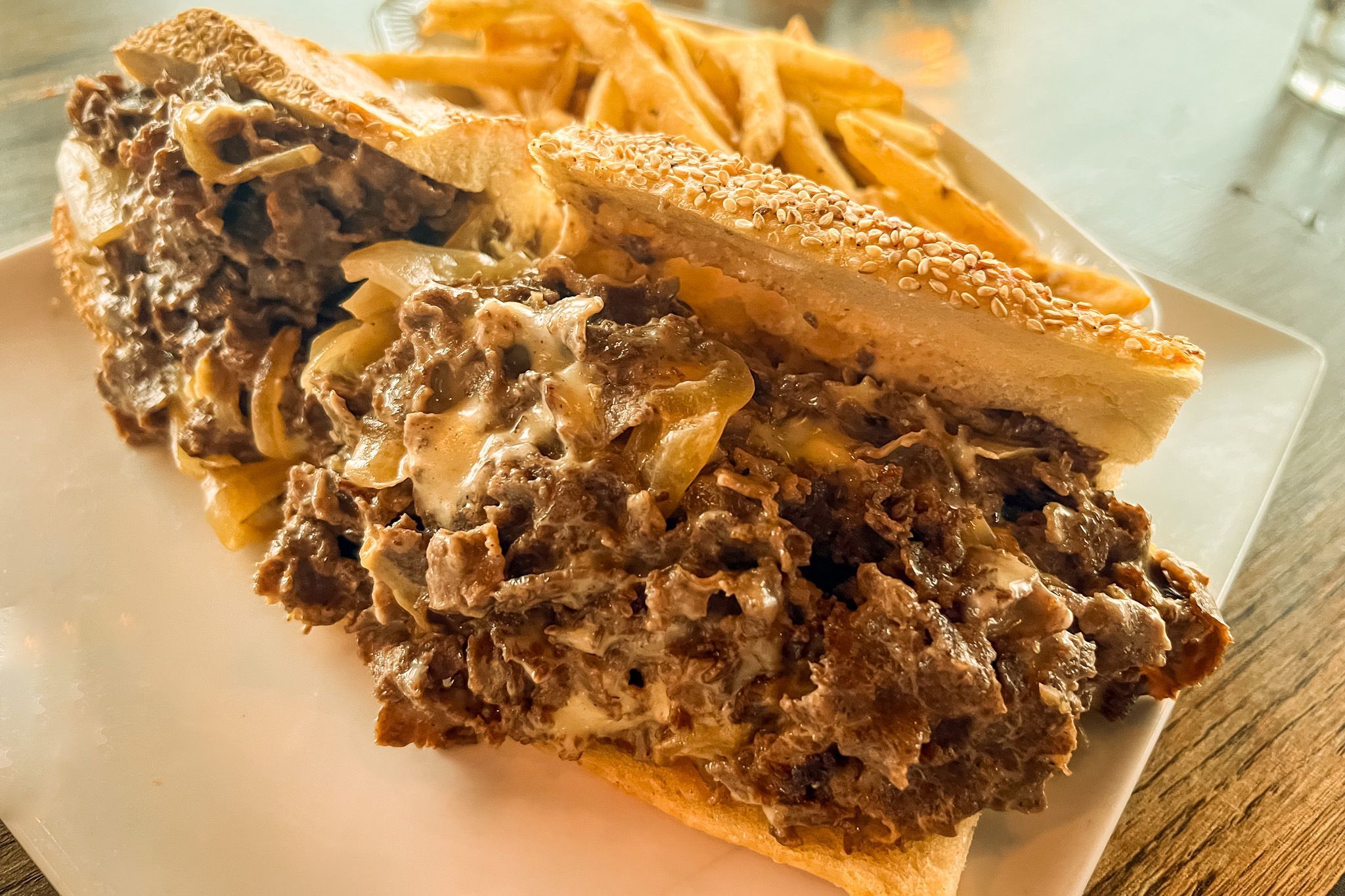
    The Iron Oven in Southampton is planning its second location, taking the former home of Ross & Co. and Bernie’s Pub at 58 S. York Rd. in Hatboro. Sports-bar owner Alex Nalbandian thinks big: At 16,000 square feet, it’s 50% larger than his Bucks County original, which opened in 2018 on the former site of Kenny’s Bar. This Iron Oven will add a full bakery in the cellar while maintaining its phone book-size menu of 120 items. Star is a knife-and-fork-able cheesesteak (shown above) that overstuffs a pound of beef into a house-baked roll. Nalbandian said he is targeting an October opening.

    At Emmett, the James Beard-nominated Mediterranean restaurant in Kensington, things are looking up. Owners Julian van der Tak and chef Evan Snyder are opening a second restaurant on the second floor. Read on for the first word about Jean, a 15-seater centered on a hearth.

    Restaurant report

    The roster of women bartenders who opened their own bars in South Philadelphia expands yet again. Last week, I told you about Liv Arterbridge and Gina Piccari opening the festive Mylar Bar later this summer at Ninth and Morris Streets. This week, Sam Ahern opened Lillian’s, a cozy bar/bistro across town at 19th and Mifflin. (She’s shown above, with bar manager Avdo Babic.) “I wanted something that felt like you were hanging out in somebody’s house,” said Ahern, who has set up a basic menu (try the toasts) but will rely on a series of guest chefs in the kitchen. Read on for the details.

    Burrito Feliz’s shift from food truck to brick-and-mortar restaurant takes effect Sunday at 4403 Chestnut St. in University City. Miguel Nolasco is partnered with South Philly’s Brewery ARS to offer cans to go, as well as canned beer and margaritas for on-site consumption.

    Briefly noted

    Sarcone’s Bakery will add baseball-inspired branding next week in an All-Star Game tie-in. Apparel company ’47 Brand will take over the South Philly landmark at 758 S. Ninth St. on Monday and Tuesday with a pop-up featuring limited-edition Sarcone’s x ’47 hats and T-shirts, available with the purchase of select bakery items including tomato pie and bread, plus an on-site heat press where customers can customize gear with exclusive patches. Hours: 11 a.m.-5 p.m. both days.

    Culinary Collective, which runs commercial kitchens for culinary entrepreneurs, is teaming with Irv’s Ice Cream on an ice cream series. Each week from July 11-Aug. 7, a collective member or two will be featured in a flavor, including Mac Mart, Arsenal Coffee Roasters & the Cake Vault, Midnight Pasta, and Guilty Good Pastries. Flavors will be available for one week at Irv’s shop at 932 E. Passyunk Ave. Schedule is here.

    Starr Restaurants has settled with the National Labor Relations Board over union-busting allegations at St. Alselm, its steakhouse in Washington, D.C.

    Baby’s Kusina & Market in Brewerytown, which had taken a walk-in sales hit during the FIFA festivities, now says it’s temporarily closed by a flood caused by a burst pipe. Takeout is expected to resume at the end of the month as its first step back; follow its socials.

    Crazy Sushi at 1837 Chestnut St. has closed after 14 years with the sale of its building, as noted on Rittenhouse Ramblings.

    ❓Pop quiz

    Little Susie’s, the fast-growing mini-chain, offers 12 varieties of pie, plus coffee, at its five walk-up windows. One early pie flavor attempt was a dud and has never been sold. What was it?

    A) cannoli

    B) pork roll

    C) mushroom Swiss

    D) peanut butter and chocolate

    Find out if you know the answer.
    Ask Mike anything

    Will Pizzeria Cusumano in Collingswood ever open? — Anthony C.

    Apparently so. Back in September 2021, I reported that South Jersey pizzaiolo Sal Cusumano was planning an artisan pizzeria in a building at 872 Haddon Ave. in Collingswood. (Same article included word that Tacconelli’s Pizzeria was planning a new location in Haddon Township, and it opened in February 2023!) Zoning issues and construction tacked on years to Cusumano’s project, and now, he says, it’s down to fine-tuning the flours. He now says August.

    When Franklin Fountain first opened, they made an absolutely delicious ginger ice cream — basically vanilla with bits of ginger in it. Then it went away. If you know any place else that sells it, please let me know. — Caroll D.

    As a ginger-phile, I’ve been searching, too, but cannot find a comparable vanilla-ginger mix. Franklin Fountain owner Eric Berley told me that he would revive the combo (last offered pre-pandemic) someday at the Old City shop. More immediately, he is developing a combo of ginger with chocolate with Franklin sister store Shane Confectionery; there’s no release date.

    Flavors change frequently. I see that the Owowcow Creamery locations in the northern burbs are dipping blackberry ice cream infused with thyme and candied ginger. The Cloud Cups locations in Kensington sell pineapple lemon ginger gelato. Malai in Rittenhouse doesn’t offer ginger, per se, but does infuse its ice creams with spices such as cardamom and mace. Perhaps Wecklerly’s will revive its ginger sesame crunch. The week-old Moment Gelato, which replaced Black Turtle Coffee just off Rittenhouse Square at 129 S. 18th St., plans to make a ginger flavor soon. Send me your ginger ice cream tips, and I’ll share with the group next week.
    📮 Have a question about food in Philly? Email your questions to me at mklein@inquirer.com.

    By submitting your written, visual, and/or audio contributions, you agree to The Inquirer’s Terms of Use, including the grant of rights in Section 10.

  • After the flood | Inquirer South Jersey

    After the flood | Inquirer South Jersey

    Good morning, South Jersey.

    New Jersey Gov. Mikie Sherrill visited Camden on Tuesday to thank first responders the day after thunderstorms caused intense flooding — and to promote her fight against data centers.

    And experts are saying poverty is impacting three times as many state residents than what’s recorded in official federal measurements.

    Plus, a man allegedly tried to buy a Pokémon card worth $24,000 with fake cryptocurrency in Marlton, and more news of the day.

    — Taylor Allen (southjersey@inquirer.com)

    If someone forwarded you this email, sign up for free here.

    Gov. Sherrill’s post-storm visit

    Gov. Sherrill visited Camden a day after what local officials call the worst flooding they have ever seen in the city.

    American Red Cross workers have been providing cleaning supplies, snacks, and water as residents navigate the aftermath. No injuries had been reported, but there were more than 1,000 calls to emergency services, and 14 people were rescued from the flooded streets.

    Sherrill urged residents to report damage through the Office of Emergency Management so the state knows how much federal assistance to request.

    She also thanked the first responders and touted her recently signed legislation aimed at data centers, which she said would help prevent strain on the power grid during future storms.

    The Inquirer’s Aliya Schneider has more details about her visit and legislation.

    Experts say state poverty is higher than official federal figures

    According to the federal government, 859,000 New Jersey residents are living in poverty, based on the latest statistics available.

    But a new report from Poverty Research Institute of Legal Services of New Jersey (PRI), a legal aid nonprofit, says the figure is closer to three million.

    People who live at or below the federal poverty line qualify for assistance such as SNAP, Medicaid, and school meals. The issue, according to experts, is that even people with incomes twice the poverty rate still need help when considering the actual costs of housing, childcare, food, and healthcare. It doesn’t help that New Jersey has the third-highest cost of living among states.

    “Life’s a struggle,” said one Camden resident whose family makes just enough to be above the federal level. “I would say this feels below the poverty line.”

    The number of meals that the Food Bank of South Jersey has distributed to Burlington, Camden, Gloucester, and Salem Counties has increased by more than a third over the last four years to compensate for rising food costs.

    According to PRI, the following are the true poverty rates:

    • Burlington County: 27.2%
    • Camden County: 38%
    • Gloucester County: 29%

    Reporter Alfred Lubrano has the story.

    What to know today

    🧠 Trivia time

    What is the Rutgers-Camden mascot?

    A) The Scarlet Raptor

    B) Sir Henry, the Scarlet Knight

    C) The Scarlet Raider

    D) The Prof, Whoo RU

    Think you know? Check your answer.

    What we’re …

    🎤 Remembering: When Taylor Swift was sighted and then swarmed by fans on Long Beach Island. (Congrats to her and Travis Kelce for getting married over Fourth of July weekend.)

    🎧 Listening: To Beyoncé’s first new song in two years, “Morning Dew (Donk).”

    🏠 Viewing: A spacious and simple home overlooking Rancocas Creek in Delanco. (Is your house a Haven? Nominate your home by email — and send some digital photographs — via properties@inquirer.com.)

    🧩 Unscramble the anagram

    Hint: 🌊 Runs through four states

    ARRIVAL WEEDER

    Email us if you know the answer. We’ll select a reader at random to shout out here. Cheers to Joe Galliera, who solved last Wednesday’s anagram: Walt Whitman. This bridge connects South Philadelphia with Gloucester City.

    🏡 On the market

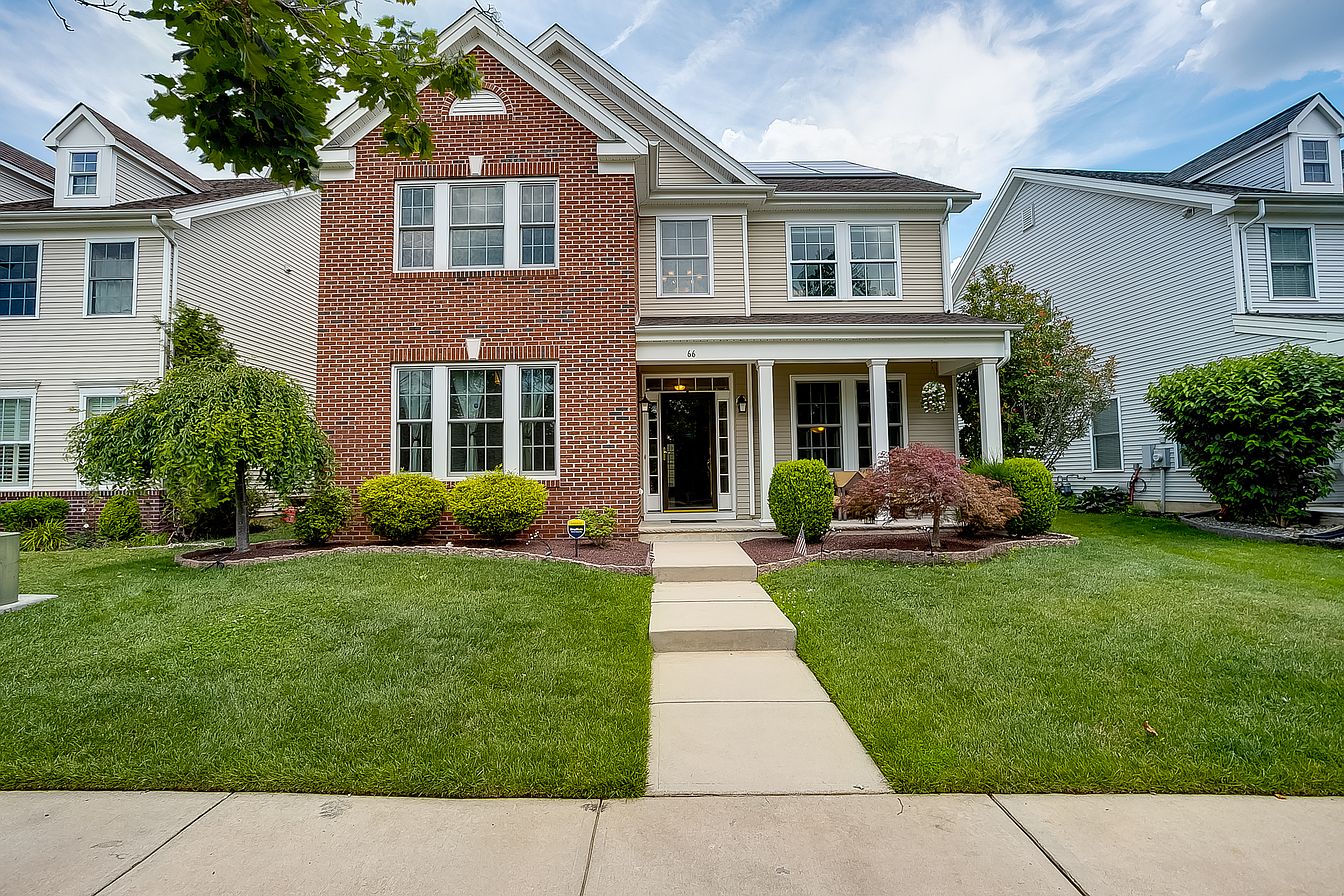
    This four-bedroom in Chesterfield allows for an abundance of natural light

    This home comes with a two-car garage, a wide driveway, and a front porch.Resonate Media | Courtesy of Christopher Twardy/Berkshire Hathaway Home Services Fox & Roach Realtors

    The spacious main level of the four-bedroom and 2.5-bath home includes a formal living room, a dining room, a powder room, a family room, and an office. The house was built in 2008 but the kitchen was upgraded in 2025 with stainless steel appliances, granite countertops, and breakfast bar seating.

    All four bedrooms are upstairs. The primary suite has large closet space and a renovated en suite bath with a Jacuzzi tub.

    See more photos of the property here.

    Price: $750,000 | Size: 3,018 SF | Acreage: 0.13

    I’ll have more news for you tomorrow. See you then! 👋🏽

    By submitting your written, visual, and/or audio contributions, you agree to The Inquirer’s Terms of Use, including the grant of rights in Section 10.

  • Federal legislation would increase pathogen testing for infant formula following botulism cases

    Federal legislation would increase pathogen testing for infant formula following botulism cases

    A 2-month-old Bucks County infant was struggling to swallow and could hardly hold his head up.

    He was diagnosed last month with infant botulism, a rare, potentially deadly infection that affects the nervous system and can lead to paralysis.

    The family and their lawyer believe the baby, now recovering at home, ingested the bacteria that causes the infection from an infant formula subsequently recalled by its manufacturer, Nara Organics, over contamination concerns.

    Federal legislation proposed this spring could protect babies by requiring formula manufacturers to test for more pathogens. The bill, HR 7867, is awaiting hearings in the House Committee on Energy and Commerce.

    “I want responsible manufacturers, responsible industry partners, who say we know there is a risk of this and we’re going to be ahead of the game,” said U.S. Rep. Madeleine Dean, a Montgomery County Democrat and cosponsor of the bill.

    When asked for comment on the proposed legislation, Nara Organics pointed to safety protocols posted on its website saying the company exceeds the U.S. Food and Drug Administration’s current requirements.

    The New York-based company said it voluntarily recalled all of its infant formula on June 13 “in an abundance of caution,” after the FDA and the Centers for Disease Control and Prevention reported three cases of infant botulism in babies who had consumed Nara formula.

    As of July 6, a fourth case had been confirmed, and FDA testing identified the botulism-causing bacterium C botulinum in some of the company’s formula, according to an update posted on the company’s website.

    Nara Organics did not comment directly on the proposed regulations. When asked for its position on the legislation, the Infant Nutrition Council of America, which represents manufacturers, said its members “share the goal of ensuring families have access to safe, high-quality infant formula.”

    “Infant formula is among the most highly regulated foods in the United States, and INCA supports science-based, risk-based improvements that strengthen infant formula safety,” the organization said in a statement.

    The push to bolster regulations comes several years after federal regulators and lawmakers started looking more closely at infant formula safety in 2022, when a massive recall for a non-botulism bacterial contamination left shelves bare for months.

    But two recent infant botulism outbreaks linked to formula show the inadequacy of the steps that companies are already taking, said Bill Marler, a Seattle-based food safety lawyer who is representing Erica and Micky Goldfin, the Yardley couple whose son developed botulism after being fed Nara Organics formula.

    “We need to do more to protect these kids,” Marler said.

    A dangerous infection

    Infant botulism occurs when babies ingest C botulinum in foods or dust and dirt particles. The bacteria’s spores colonize in the large intestine and release a toxin that affects the nervous system.

    Symptoms include changes in facial expressions, such as smiling less, slow feeding, constipation, and low energy. Untreated, the toxin can spread and cause paralysis, making it hard for babies to breathe and eat.

    Infants are at greatest risk of illness because their digestive systems are still developing and less able to fight off infection.

    Nationally, 181 cases of infant botulism were reported in 2021, the most recent year for which CDC data are available.

    The Goldfins’ baby, identified by the initials W.G. in court records, spent two nights in the intensive care unit at the Children’s Hospital of Philadelphia, where he was treated with BabyBIG, the botulism antitoxin that is manufactured by the California Department of Public Health. The medication’s antibodies bind to the toxin and neutralize it, improving symptoms within 48 hours.

    On June 6, he returned home, where he is feeding well again, and regaining movement in his arms and legs. He is receiving weekly physical therapy for developmental delays in his gross and fine motor skills, according to the lawsuit.

    Testing challenges

    Federal regulators began looking more closely at infant formula in 2022, after Abbott Nutrition issued a massive recall over concerns of non-botulism bacterial infections.

    Abbott temporarily shut down one of the largest formula manufacturing plants in the country while it investigated the cause of the contamination, leaving families scrambling to find the formulas they relied on for their infants and medically fragile children.

    Pinpointing the exact source of contaminants can be challenging.

    The bacteria that causes botulism, for instance, could have been present in the Nara Organics’ powdered milk formula, in dust that settled on the packages during transportation, in the water used to mix it, or on the hands of those preparing the food, said Molly Potter, a senior clinical dietitian with Nemours Children’s Health in Delaware.

    According to its website, Nara Organics tests its formulas throughout the manufacturing process, first testing raw ingredients, then during production, and again with the final product.

    The tests the company uses include so-called sulfite-reducing clostridia (SRC) enumeration, which a leading international food-safety group recommends for identifying spores of the bacteria that causes infant botulism.

    But research published in June in the medical journal Frontiers in Microbiology found that SRC enumeration testing suggests that test wasn’t sufficient to consistently detect the bacteria.

    Researchers from IEH Laboratories & Consulting Group, a Washington-based firm that specializes in laboratory testing and analysis for the food industry, worked with ByHeart to analyze its infant formulas that had been linked to at least 28 cases of infant botulism this year and last.

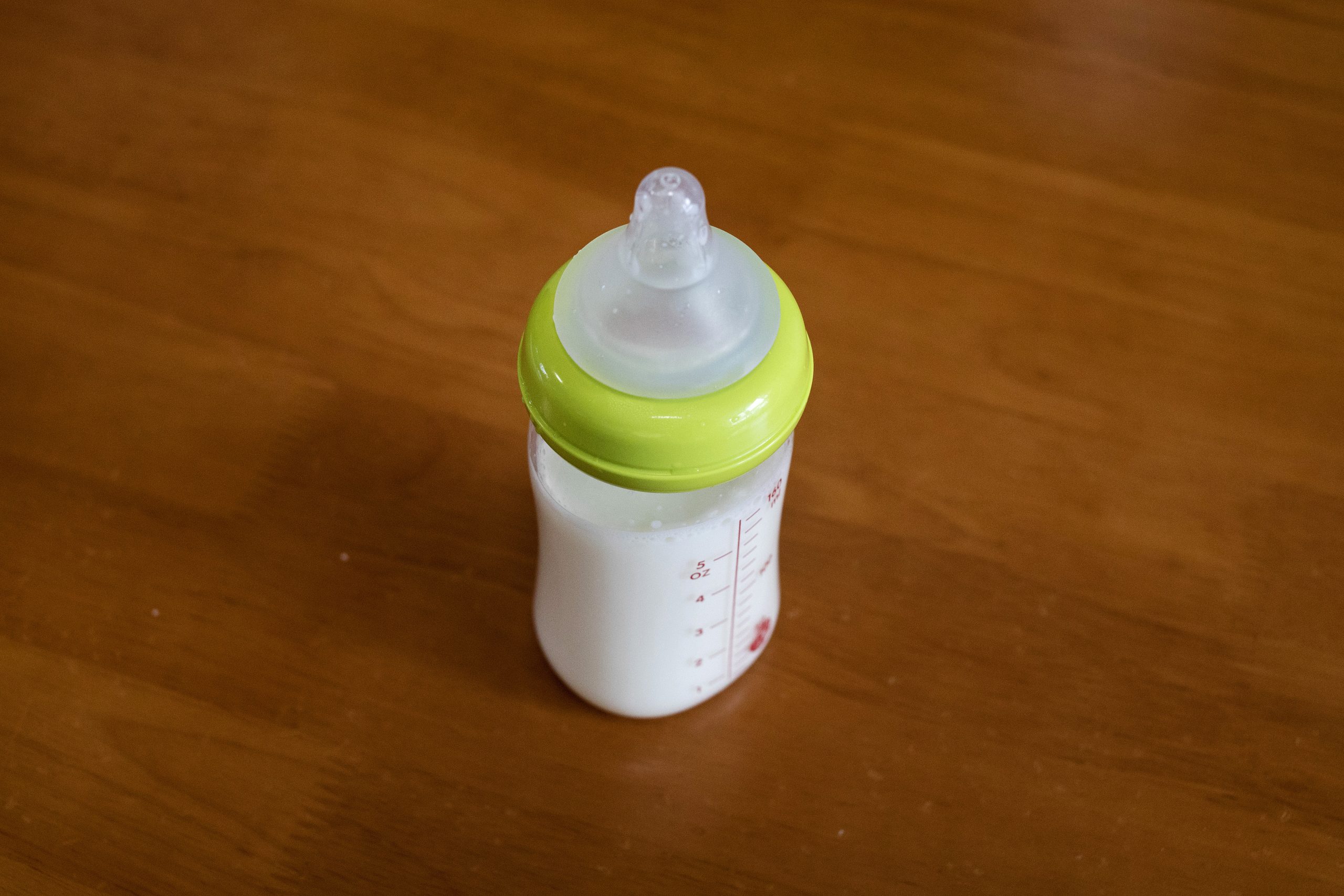
    A bottle of milk prepared from infant formula.Giulia Marchi

    Improving safety

    Dean said she hopes the proposed legislation will open up more conversation about how best to improve infant formula safety.

    The bill tasks the FDA with developing a list of pathogens that formula companies should test for, and working with manufacturers to begin any tests they aren’t already doing.

    The FDA would also set a schedule for how often manufacturers need to test for the new list of pathogens.

    Under the legislation, companies would be required to report contamination results within a day, and retain records of positive test results.

    Dean is among more than two dozen lawmakers to sign on as cosponsors. Rep. Jefferson Van Drew, who represents South Jersey’s 2nd District, is one of two Republican cosponsors.

    Potter, the Nemours dietitian, said she hopes increased testing will help families feel more at ease.

    In the meantime, parents can reduce the risk to their children by only purchasing formula from reputable stores, checking expiration dates, and storing powdered formula canisters properly. Caregivers should make sure to mix formula in clean equipment, and wash their hands before preparing and feeding it to a baby.

  • After years of delay, a Francisville apartment building is under construction

    After years of delay, a Francisville apartment building is under construction

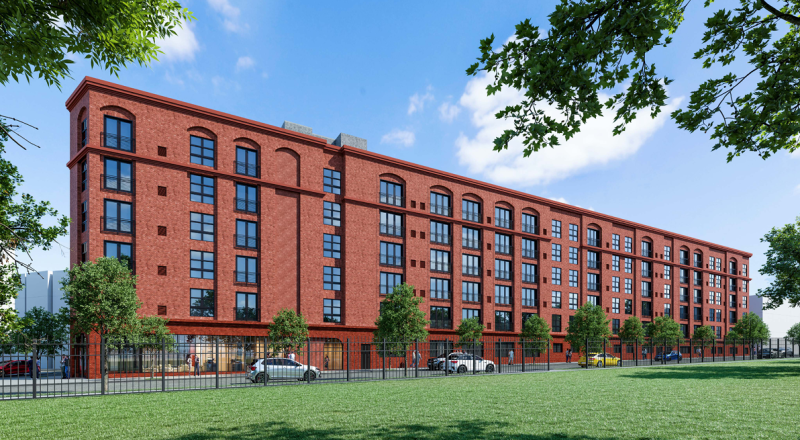
    North Philadelphia’s Francisville is getting an apartment building at 801 N. 19th St. after years of delay and a complex change in ownership.

    The six-story project, clad in red brick, will include 110 apartments and 49 underground parking spaces. The foundations are built, and construction is underway.

    The project sits on an oddly shaped lot between 19th Street, Cameron Street, and Wylie Street, which neighbors call “the triangle lot.”

    The property used to be owned by the Exton-based Hankin Group, which secured building permits for a 115-unit apartment building during the pandemic.

    Hankin sold the property in 2021. Now two different townhouse projects are being developed on the site, one by West Philadelphia-based Guy Laren.

    The apartment project is being built under the name of Cameron Square Partners LLC, which is registered at a West Philadelphia property owned by Laren.

    On the Department of Licenses and Inspections website, violations for “walkway not provided” and a failure to post permits are being appealed by the Philadelphia-based developer, contractor, and property manager Vicintas.

    Laren did not respond to a request for comment. Vicintas confirmed it is the general contractor and future property manager for the apartment building but did not reply to an interview request.

    Hankin’s building permit is old enough that the Philadelphia Planning Commission decided it has to go through an advisory-only Civic Design Review process again, five years after its first go-around.

    The new iteration of the project is different from what Hankin proposed, with 110 instead of 115 apartments but larger layouts. It has a new architect, too, with Philadelphia-based Harman Deutsch Ohler Architecture replacing global firm NORR.

    “The new owner wanted some bigger units, so we’re down five units, and we increased the height by five feet, and then we redid the entire facade,” said Rustin Ohler, a principal with the firm.

    The new plans call for 40 one-bedroom apartments and 35 two-bedroom units, with the remainder mostly being larger studio units known in the industry as “junior one-bedrooms.”

    The apartments will have “more square footage, not necessarily more bedrooms,” Ohler said. “The previous design had a lot of studios. This is more ones and twos [bedrooms], and they’re a little larger than your average new construction coming to the market.”

    Parking has been reduced from 52 to 48 spaces, although the development team plans to expand the number of spaces by automating the garage.

    Such a system would eliminate the need for people to enter the facility, depending on mechanical systems to distribute and receive cars and allowing for a much larger parking capacity.

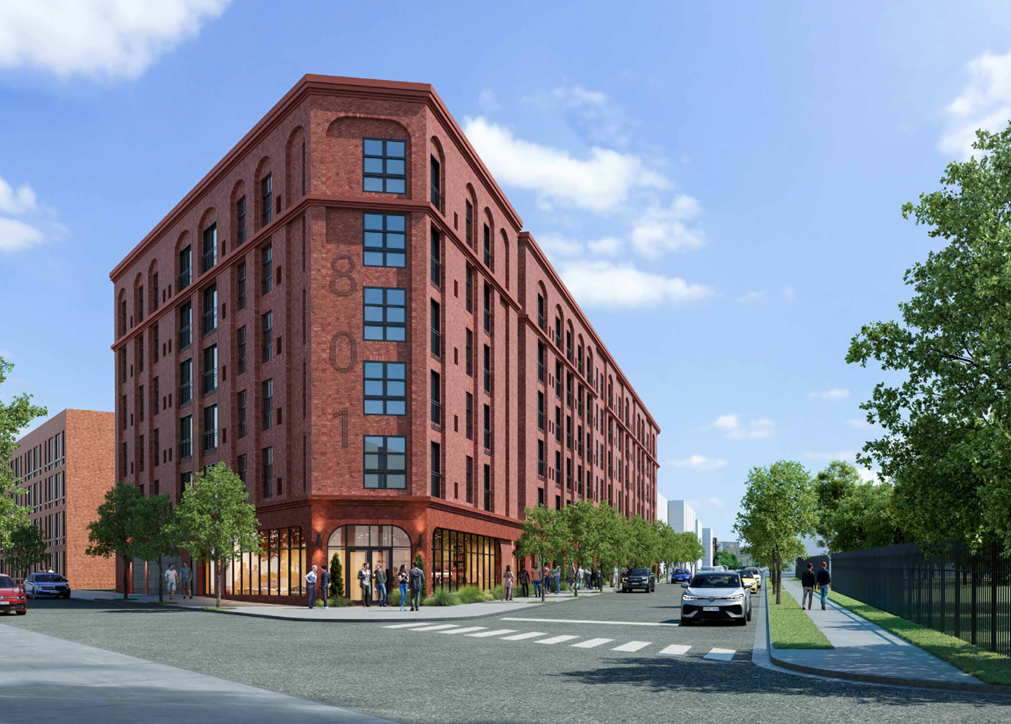
    The latest design for the new apartment building at 801 N. 19th St., with an articulated brick identifier spelling out “801.”Harman Deutsch Ohler Architecture

    The apartment building contains no retail but will have amenities including a gymnasium and a narrow roof deck, including a dog park, that is set back from the edge so it is not visible from the street.

    At a June meeting of the Civic Design Review committee, a representative of the United Francisville Civic Association criticized the amount of parking in the project, the increased height, the roof deck, and the new building materials.

    “What was originally approved was a five-story building,” said the representative, whose name was obscured in a recording. “This is now a six-story building, and it really towers above. It just adds a lot more height to the building based on the surroundings.”

    At the June and July meetings, however, Ohler noted that the three projects on the triangle lot are already under construction and that the apartment project is hemmed in by the bordering townhouse developments.

    That restricts what changes could be made to the architecture and layout of the project, despite community concerns.

    A new rendering of the apartment building shows the roof deck broken into smaller chunks, to cut down on large crowds making noise and separated from the edges of the building by newly proposed solar panels.Harman Deutsch Ohler Architecture

    The development team increased “the garage ceiling height in order to accommodate future stacked mechanical parking, which would potentially double our number of cars that we could have,” Ohler said.

    Since the June meeting, the development team also added darker brick spelling out “801,″ as an identifier on the building’s south-facing facade and entrance.

    Ohler noted that the roof deck has been broken up into four separate pockets to prevent large groups of residents from congregating. It also was pushed back from the street to accommodate neighbor concerns.

    “The roof decks have been designed to be centered into the building, so that nobody can get near the edge,” Ohler said. “And we did add the solar panels, there’s no way for anybody to get near the edge, so that would address their concerns of sound from the roof deck.”

  • Philly area’s housing market is ‘weird’ right now, agents say

    Philly area’s housing market is ‘weird’ right now, agents say

    Brenda Beiser knows firsthand how difficult buying a home in the Philadelphia area can be. She’s not only a Redfin real estate agent, but she’s also an empty nester who wanted to downsize.

    Her six-bedroom house in Mount Airy sold right away when she put it on the market in May. But she decided not to buy a replacement.

    “I went for a rental because I didn’t really want to compete with everyone who’s trying to get into a smaller house,” Beiser said. “A lot of people who are in their 60s and would have traditionally downsized into a smaller house just aren’t doing it. They can’t find a place to go.”

    Brenda Beiser, a Redfin real estate agent in the Philadelphia area, decided not to buy another home when she sold her Mount Airy house, because she didn’t want to enter the region’s competitive housing market.Courtesy of Brenda Beiser

    The Philadelphia region has a housing supply problem, just like large swaths of the country, and that’s impeding both repeat and first-time buyers. Inventory is particularly low across the Northeastern United States, where construction has not kept up with demand. In the beginning of this year, Zillow predicted that the Philadelphia metropolitan area would be one of the country’s 10 most-competitive housing markets of 2026.

    Home supply, however, has also ticked up a bit in the region compared with last year, and homes are staying on the market a bit longer before they sell. For the four weeks ending June 21, the region was in the top five markets with the highest annual increase in new home listings, according to a Redfin analysis of the 50 most-populous metropolitan areas.

    “The market’s encouraging,” said Jake Markovitz, president of the board of directors for the Greater Philadelphia Association of Realtors. “It’s certainly more balanced than it has been the last four, five years.”

    Erin Thompson, CEO of the Montgomeryville office with Keller Williams and leader of the Erin Thompson Team, agrees. She said buying and selling is “ebbing and flowing but trending toward a more stabilized market.”

    “Although I feel like I’ve said that twice in the recent past, and then it’s gone bonkers,” she said.

    The region’s market is a mixed bag.

    Some homes are sitting for a while, and some owners are at risk of selling properties for less than they bought them for a few years ago. Other homes have inspired five or more buyers to compete against each other, hiking up prices, said Markovitz, an associate broker with the Karrie Gavin Group at Elfant Wissahickon Realtors.

    This Graduate Hospital home went under contract last month a few weeks after it was listed for sale.Courtesy of Jake Markovitz

    “As an example, I’m seeing more inventory in Chestnut Hill than I have in a long time, which is giving buyers a little bit of power,” he said. But if the right property hits the market, it will go fast.

    He’s seen the same happen in neighborhoods such as Graduate Hospital and Fishtown.

    Because of strong demand for homes in the region, “I just don’t think we’ll see any major shift in prices coming down,” he said.

    ‘Weird’

    Markovitz and Thompson both used the same word to describe the recent real estate market: weird.

    They said housing activity isn’t always following time-tested rules.

    Philadelphia homes that sat on the market for months last fall, typically a busy season, suddenly went under contract in the winter, typically a slow one.

    A house that sits on the market for 30 days that a buyer thinks can be theirs at a lower price can suddenly attract two other buyers at the same time. And now they all need to be ready to pay more.

    Housing markets have always been hyperlocal, with buyer demand varying from neighborhood to neighborhood and block to block. But now, “it’s almost like a property-by-property basis,” even for comparable homes, Thompson said.

    Owners bound by ‘golden handcuffs’

    Even with recent upticks in home listings, the region’s housing supply is nowhere near enough to meet demand.

    “Most people are anticipating this year will continue to be a little tough,” Thompson said, “and then next year we’ll start to see some more inventory.”

    Markovitz said homeowners who bought properties five years ago with 3% or 4% mortgage interest rates are still experiencing “some sticker shock” from current rates, which lately have been averaging about 6.5% for a 30-year, fixed-rate mortgage.

    “Those people, even if they’re ready to leave, are kind of bound by their golden handcuffs,” not wanting to sell and then have to buy a home at a higher interest rate, he said.

    But for many homeowners, “the reality of the market has set in a little bit,” he said. “Where people were sort of hoping, wishing that rates would come back down, they’re not.” And life events such as births, deaths, and job moves mean that people need to sell their homes.

    This recently sold Graduate Hospital home has skyline views from the roof deck.Courtesy of Jake Markovitz

    And buyers show up to purchase them.

    Thompson said she was nervous when she listed a Phoenixville home for sale during Memorial Day weekend, when many homebuyers might be traveling. But a lot of people came to see it, and the seller ended up with seven offers and a final price that was well over what they expected.

    Buyers, however, aren’t accepting just anything. They are more selective and less likely than in past years to skip home inspections. If sellers want to get the highest price, they have to prepare their properties for sale, agents said.

    Homes, and especially kitchens and bathrooms, need to be up-to-date, and central air-conditioning is a plus, said Annette Collier, owner and real estate broker at Able Real Estate, based in West Philadelphia.

    “That’s what buyers are looking for, and I don’t think they’re willing to settle,” said Collier, who works in the city and surrounding areas. “I find that less buyers want to do any renovations. Most buyers want a move-in-ready situation.”

    Homebuyers want updated kitchens, like this one in a Graduate Hospital home that recently sold.Courtesy of Jake Markovitz

    And sellers need to be realistic about how much they can get for their home.

    “If you overprice by even just a little bit,” Thompson said, “you’ll end up sitting.”

    Buyers ‘ready to pounce’

    Generally speaking, buyers now have more time to make decisions than they did last year, since homes are staying on the market longer.

    But, in some submarkets, especially in Philadelphia’s collar counties, “there’s so much demand that certain houses are just going to fly off the shelves,” said Beiser, who works in Philadelphia and surrounding areas.

    “I have some buyers in the suburbs, and they‘ve kind of stopped looking because it’s too challenging,” she said.

    This home in Upper Merion Township is listed for sale for $699,900 by agent Erin Thompson.Jacob Schroeder, Left Bank Real Estate Photo Services

    Beiser has been working with a couple with children who live in Philadelphia but want to move to the suburbs. Each spring for the last three years, her clients make a plan to try to find their next home. But every year, they decide that continuing to live in the city is more convenient than facing competitive markets in which they’re expected to skip home inspections to win a property, Beiser said.

    Thompson has seen a growing trend of frustrated buyers putting in offers above the asking price even when they’re not facing direct competition. One client recently went under contract on a Fishtown home they had immediately put an offer on.

    “They came in aggressive, because they’d just lost out on a house, and they’d been looking for a while,” she said. “You have these buyers who are scarred and tired, so they’re coming in more aggressive.”

    Thompson tells buyers to make sure they’re as prepared as possible before starting their home search.

    “You have to be ready to pounce the second [a home] comes to the market,” she said.

    This home on the market in Upper Merion Township spans more than 2,800 square feet and has three bedrooms.Jacob Schroeder, Left Bank Real Estate Photo Services
  • This week, Philly’s chefs and bartenders are gathering black walnuts for spirits, cookies, and sausages

    This week, Philly’s chefs and bartenders are gathering black walnuts for spirits, cookies, and sausages

    Right now, black walnuts look like small neon green tennis balls clustered on a branch. Their interiors are creamy and gelatinous.

    Danny Childs, the founder of Slow Drinks — who is currently in the midst of opening his first cocktail bar, Field Day — uses black walnuts in this state for black walnut nocino, a variant of the bittersweet Italian liqueur known as amaro. “When I make amari in general, it’s always a way to showcase a certain place at a certain time,” said Childs, who forages his black walnuts from a running trail in Merchantville.

    “When you’re making nocino, you pick them in June,” Childs said. “The knife can easily pierce the black walnut, as the actual nut hasn’t formed yet. It’s still a jellylike substance.”

    Childs uses 151 proof vodka from Devil’s Springs in New Jersey to macerate his walnuts. His black walnut nocino is also on the menu at Almanac, featured in its cocktail the Juban District. It’s blended with Japanese whiskey, scotch, vermouth, Okinawan Kokuto brown sugar, and bitters. It’s funky and savory, and sweet without being cloying. And it has become a classic cocktail on Almanac’s menu.

    And so, the Almanac team has also just gone foraging for black walnuts.

    At Field Day, Childs’ black walnut repertoire will expand. “We’re going to start using the walnuts in other ways after nocino this year — to infuse wine to make nociato, and then use them to make black walnut miso.” He’s working with fermenter Jamaar Julal, previously of Honeysuckle, on these projects.

    Danny Childs picks black walnuts in Merchantville.Katie Childs

    Look closely, and you’ll start to see black walnuts everywhere, from shortbread cookies at Ellen Yin’s Bread Room to Randy Rucker’s sauces for seafood at Little Water.

    Crisped up in a pan, the Heavy Metal Sausage’s mortadella, inlaid with cubes of smoked pork jowl and hard toasted black walnuts, emits a heady aroma of pork and socks. It is funky, distinctive, and heavenly; it tastes milder than its scent, like uncured bacon that had nestled next to a blue cheese for a few days in the fridge.

    Pat Alfiero, Heavy Metal’s co-owner and butcher, sources shelled black walnuts from Ian Brendle of Green Meadow Farm in Gap, Pa., who has about 100 black walnut trees on his property. Brendle also functions as a middleman, shuttling nutmeats processed just south of Pennsylvania to chefs.

    Jamaar Julal, Field Day’s director of fermentation, picks black walnuts in Merchantville.Katie Childs

    “To me, black walnuts are unique, like pawpaws. If you had a hundred people eat them, half would like them and half would hate them. Pawpaws have the same unctuous floral perfume as black walnuts,” said Brendle, who now sells five to 10 pounds of shelled black walnuts every week, twice as much as when he started selling them two decades ago.

    “They’re a misunderstood tree nut, for sure. But any nut or plant that can be foraged sustainably should be consumed. Anytime you can consume something that doesn’t require immense amounts of water or makes a negative impact is a step in the right direction,” said Brendle.

    Black walnut trees are found in dense thickets in Fairmount Park, and on practically every farm and expansive backyard in and around Philadelphia. They’re native to the Mid-Atlantic, like hickory nuts and pecans. They swath the East Coast, growing as far north as the border with Ontario and as far south as Florida.

    Every part of the black walnut contains juglone, which is toxic to many other plants, but perfectly safe for humans and animals to consume. For many gardeners and homeowners, black walnuts are a nuisance, staining hands if you gather them without gloves on, as well as the asphalt driveways on which they fall. The nuts get caught in lawn mowers and can also be dangerous projectiles, falling from great heights — the trees can grow up to 80 feet tall — denting car roofs and unlucky heads.

    If nuts could talk, black walnuts would say, “No one likes us, we don’t care.”

    For Alfiero, Brendle, and the others, there is an urgency to using black walnuts. Nut farming is water intensive, and the almond industry in California has repeatedly come under scrutiny for its groundwater consumption. The walnuts in a typical supermarket are the Persian or English variety. In the U.S., 99% of them also come from California. It takes about 26.7 gallons of water to grow an ounce of English walnuts.

    “We’ve created so many problems for ourselves in the world, simply by being spoiled and being able to purchase, say, pistachios at the store. People grow almonds and other nuts in places that don’t naturally have a lot of water. We’ve created a market for things that don’t make sense,” said Jeremiah Langhorne of the Dabney in Washington, one of the chefs responsible for the black walnut’s current popularity on menus up and down the Northeast Corridor.

    While the nuts, shelled and toasted or raw, may not be as snackable as the more common English varieties, they have a wide range of uses among Indigenous populations.

    In Braiding Sweetgrass, Robin Wall Kimmerer, a member of the Citizen Potawatomi Nation, wrote, “The hickories, black walnuts, and butternuts of our northern homelands have their own specific names. But those trees, like the homelands, were lost to my people.”

    Though Native Americans carried black walnuts and other related nuts with them as they were displaced, “The federal government’s Indian Removal policies wrenched many Native peoples from our homelands. It separated us from our traditional knowledge and lifeways, the bones of our ancestors, our sustaining plants,” Kimmerer writes.

    Native peoples were divorced from their trees, and now, chefs, distillers, and foragers are trying to form new bridges with the same wild trees.

    How to use black walnuts throughout the year:

    Early spring to summer: Gather the leaves

    “Use the leaves in early spring when they’re just the size of squirrel’s ears,” said Robert Gustafson, a Virginia-based specialist in wild foods. This is when they can be blended and fermented into sauces.

    “Our entire goal is to find what grows well around us, and be receptive to working with it,” said Isaiah Billington, who along with Sarah Conezio, is the co-owner of Keepwell Vinegar and White Rose Miso, based in Dover.

    “Our black walnut bay sauce is like a Worcestershire sauce with a base made from our own apple cider vinegar,” said Billington. The recipe was unearthed from a cookbook first published in 1879 and adapted by Langhorne. It’s aged for a year with ginger, garlic, horseradish, and black walnut leaves, which Billington harvests himself. The leaves give the sauce a mildly bitter, herbal flavor. Billington had become enamored with the sauce while working at the Dabney, which now purchases it from Keepwell instead of making it in house.

    Early fall: Recognizably walnuts

    “This is harvest season for storehouse wild foods,” said forager Heather McMonnies, who collects the nuts using an apple picker. “This is the same time you’d collect chestnuts or hickory nuts.”

    Late fall: Clogging up people’s driveways

    Gardeners and homeowners are annoyed by them as far north as Canada. Making use of them culinarily can keep tons of them out of landfills.

    Winter: Cheers!

    It’s time to crack open that black walnut nocino that started in the summer and drink it.

    Late winter and early spring: Tap the trees

    “My kids got tired of homemade maple syrup and well, I have black walnut trees, and we may as well tap them and see what we get,” said McMonnies. After boiling 40 gallons of sap, sweet and molasses-like in color, she produced one gallon of black walnut syrup, incredibly light in structure and composition, with a tinge of the nut’s signature funk.

    Black walnuts are divisive, but so is Stilton cheese, durian, fermented tofu, and any number of delicious things. Does divisiveness make black walnuts any less distinguished?

  • 🏠 Kensington gets pricier | Morning Newsletter

    Welcome to Wednesday. It should be a mostly sunny day with a high near 83.

    Our main read analyzes new city assessments that show increases in several changing neighborhoods, with Kensington leading the increase in property values.

    And the last Philly-area Rite Aids shuttered for good nearly a year ago. We looked into how their sites have been repurposed.

    Plus, a new flight route fills the void at PHL left by Spirit Airlines, and more news of the day.

    — Paola Pérez (morningnewsletter@inquirer.com)

    If someone forwarded you this email, sign up for free here.

    The cost of change

    Low-income neighborhoods near gentrifying areas saw the sharpest jumps in property values compared with the rest of the city, according to an Inquirer analysis of new assessment data.

    And as Philadelphia ramps up efforts to address long-standing problems in Kensington, valuations there have climbed faster than in any other neighborhood.

    Steepest increase: The median assessment of single-family residential properties in Kensington rose by 15% from the 2025 to 2027 tax years. Citywide, there was a 3% increase.

    What the data show: It’s a further sign that market pressures in higher-income areas are pushing into pockets of the city that have long been primarily home to Black and brown working-class residents.

    Notable quote: “I’m going to do whatever I have to do to make sure that residents who have lived in that community can stay there, can raise their families there,” said City Councilmember Quetcy Lozada, a Democrat who represents the 7th Council District, which includes parts of Kensington.

    Inquirer reporters Anna Orso, Yueyang Tang, and Lizzie Mulvey dive into the data and explain how a popular city tax break plays a role.

    Also: The housing market in the Philly area is “weird” right now, agents say. Here’s why.

    Reborn from Rite Aids

    After years of turbulent finances, the pharmacy chain called it quits, but its presence still lingers across the Philly region.

    While a few defunct Rite Aids are empty and overgrown, other buildings are getting new life as daycares, dollar stores, and other facilities.

    Here are a few examples of what now fills — or what could become of — the vacant spaces:

    🏈 In Center City, a sports retailer opened its first location in the heart of Philadelphia.

    🏋️‍♂️ In South Jersey, some sites are becoming fitness centers.

    🧼 In Delco, one could become a township’s first (and only) car wash.

    Consumer reporter Erin McCarthy takes us inside former Rite Aids to see how they have found new commerce.

    What you should know today

    Quote of the day

    We can thank Afro Sheen founder George E. Johnson for “The Sound of Philadelphia,” columnist Elizabeth Wellington wrote last spring. The haircare pioneer died on Monday.

    🧠 Trivia time

    Bryce Harper loves putting Philly on his feet, and his latest cleats from Under Armour are no exception.

    What do they pay tribute to?

    A) Rocky

    B) Cheesesteaks

    C) SEPTA

    D) Pretzels

    Think you know? Check your answer.

    What (and whom) we’re …

    ☕ Noting: New and forthcoming businesses in Ardmore.

    🍦 Curious to try: A new Graduate Hospital ice cream shop that’s all about big flavors and little wins.

    🏫 Featuring: The educator helping to guide Philly families and staff through the district’s plan to close and modernize schools.

    🍅 Learning about: South Jersey farmers’ creative efforts to bounce back from a destructive spring freeze.

    🎤 Wondering: Will the city be refunded for Christina Aguilera’s canceled July Fourth concert set? The mayor’s office isn’t saying.

    🧩 Unscramble the anagram

    Hint: In a galaxy far, far away …

    RAW TSARS

    Email us if you know the answer. We’ll select a reader at random to shout out here.

    Cheers to Bob Allmond, who solved Tuesday’s anagram: Scott Franzke. Nick Piccone built a social media following for posting clips of the sportscaster’s radio calls during Phils games. His hustle gives a radio broadcast new life.

    Photo of the day

    Taylor Davis watches the first half of the United States and Belgium World Cup knockout stage game watch party at Union Yards.Yong Kim / Staff Photographer

    One viewpoint to go: The USMNT’s 4-1 loss to Belgium on Monday night was “cosmic payback” and an embarrassing end to the World Cup for the home country, writes sports columnist Mike Sielski.

    👋🏽 That’s it for now. Thanks for starting your day with us.

    By submitting your written, visual, and/or audio contributions, you agree to The Inquirer’s Terms of Use, including the grant of rights in Section 10.

  • Thousands of Medicare beneficiaries thought their drug plan was free. Then they lost it.

    Thousands of Medicare beneficiaries thought their drug plan was free. Then they lost it.

    Jude Pare and his partner, Diane Tix, live in rural Minnesota until temperatures dip below freezing, when they take refuge in Arizona for the winter. While away, their mail is forwarded. But Pare, 77, said he didn’t receive any warning from his Medicare prescription drug plan that his $0 monthly premium was about to increase.

    So he didn’t know he had a bill to pay. After he and Tix returned home to Minnesota in April, they got a letter from Wellcare, the insurer that provided his drug plan, saying his coverage had been terminated after three months of unpaid premiums totaling $28.80. Under Medicare’s rules, he can’t enroll in a plan again until the fall, for coverage beginning in 2027.

    Pare takes Xarelto, a blood thinner that reduces his risk of strokes, blood clots, and pulmonary embolism. “He could bleed to death without it,” Tix said. A 90-day supply of the drug costs about $1,800 using a coupon from GoodRx, a discount drug website, she said.

    Pare is among tens of thousands of Medicare beneficiaries who were on Wellcare’s Value Script drug plan who will likely go without prescription drug coverage for the rest of the year because they didn’t pay premiums for three months.

    Next year, thousands more people in 32 states, including Pennsylvania and New Jersey, and Washington, D.C., who are enrolled in zero-premium drug plans from Wellcare and other insurance companies may find themselves in the same situation if their premiums go up and they don’t realize it, according to a KFF Health News analysis of drug plan data. Premiums and other changes for 2027 will be unveiled in September.

    Going without medication can be life-threatening, especially for Medicare beneficiaries. Nearly 90% take one or more prescription drugs, according to the Centers for Disease Control and Prevention. Almost half live with four or more chronic health conditions that can cause functional or cognitive impairments.

    Congress added prescription drug coverage to Medicare in 2003. But the coverage is administered by commercial insurance companies, which compete fiercely with one another for the business of about 56 million Medicare beneficiaries enrolled in drug plans.

    Zero-dollar or very low monthly premiums have helped make Wellcare’s Value Script the best-selling stand-alone prescription drug plan in Medicare, with nearly 6 million customers across the U.S., according to government data. But in 26 states and Washington, D.C., some Value Script members who didn’t have to pay a premium last year were caught off guard by increases in 2026.

    After a two-month grace period — which Wellcare extended to three — Medicare drug plans can drop customers who don’t pay their premiums, no matter how small the amount. Some members who lost their coverage in Nevada, for example, owed as little as $8.10 for three months, according to a KFF Health News analysis of Medicare drug plan data.

    Wellcare terminated coverage for about 140,000 Value Script beneficiaries in April, according to a person with knowledge of the matter who was not authorized to speak publicly about it and feared reprisals at work for doing so. About 40,000 of the people who were dropped may be able to enroll in new coverage immediately because they have low incomes and receive financial assistance through a program Medicare calls “Extra Help.”

    Multiple state officials said they had heard the same disenrollment figures, including Nevada’s insurance commissioner, Ned Gaines, who chairs the National Association of Insurance Commissioners’ senior issues task force; Rebecca Gouty, director of the State Health Insurance Assistance Program in West Virginia; and Tim Smolen, director of Washington state’s Statewide Health Insurance Benefits Advisors. The West Virginia and Washington initiatives are part of the federally funded State Health Insurance Assistance Program, or SHIP, which provides free, unbiased help navigating Medicare.

    Surprise bills

    The Centers for Medicare & Medicaid Services, which oversees Medicare drug plans, declined to provide the number of Value Script members who lost coverage due to unpaid premiums. “The agency does not publicly provide plan-specific disenrollment figures or state-level breakdowns related to the non-payment of premiums,” Christopher Krepich, a spokesperson, said in a written statement to KFF Health News.

    Centene Corp., Wellcare’s parent company, also declined to provide disenrollment numbers.

    “We recognize how disruptive a loss of coverage can be and are committed to helping members understand their options,” said Sarah Baiocchi, senior vice president for specialty and prescription drug plans at Centene. She acknowledged that “some members in our Value Script plan experienced a premium for the first time, or for the first time in several years.”

    Baiocchi said all Value Script members received a CMS-required annual notice of changes in September, before the premium increases took effect.

    A version of the booklet sent to members in two states and Washington, D.C., is 21 pages long. The new premium is mentioned on pages 3 and 8, along with changes to out-of-pocket costs and how to find updates on covered drugs and network pharmacies.

    The company also informed members about 2026 premium changes through phone calls, text messages, regular mail, or email, Baiocchi said.

    Wayne Bennett lost his Medicare drug coverage because he didn’t pay the premium, which was free last year but — without his knowing — went up this year. “Medicare should be doing something about this so that we can go ahead and get coverage now,” he says. (Wayne Bennett)Wayne Bennett

    People who are dropped are not able to reenroll or join another drug plan until the start of the open enrollment period this fall for coverage beginning Jan. 1, unless they qualify for an exception, Krepich said. And because they will have gone without coverage for at least 63 days, they could be hit with a permanent late-enrollment penalty that increases every year for the rest of their lives.

    “Medicare should be doing something about this so that we can go ahead and get coverage now,” said Wayne Bennett, 74, who lives in Durham, N.C.

    In May, he found out that Wellcare had canceled his Value Script plan because he hadn’t paid his $3.60 monthly premiums. He takes nine prescription drugs to treat his blood pressure, glaucoma, chronic obstructive pulmonary disease, and other health problems. He filled most of his prescriptions — including several at no cost — before he lost coverage. He doesn’t know what he’ll have to pay when his supply runs out.

    Gouty, the West Virginia program head, said many Medicare beneficiaries arrange for their monthly drug plan premium to be automatically deducted from their Social Security benefits, and that many likely thought that choice remained in place until they changed it.

    “They didn’t realize that when the plan was a zero premium in 2025, that stopped the Social Security premium deduction and they would have had to reelect it for 2026,” Gouty said.

    In other words, even if they mistakenly thought the premium was still zero, Medicare beneficiaries would have needed to somehow allow Social Security to make deductions — something the agency doesn’t do — or set up a payment plan through their bank or credit card in case payment was necessary.

    “That sounds goofy,” Tix said.

    Centene’s Baiocchi blamed the Social Security Administration for the problem: “We believe this was a key driver of non-payment disenrollments and subsequent complaints.”

    Spokespeople for the agency referred questions about the matter to CMS.

    Krepich said legal requirements for drug plan enrollment and disenrollment limit what CMS can do to help beneficiaries who lose coverage for not paying their premiums.

    ‘Pretty upset’

    Now that Pare has no prescription drug coverage, his doctor replaced his blood thinner medication with a much less expensive drug that should be just as effective. Pare paid $111 for four other medications that used to be free under his Value Script plan. He hasn’t had to refill four more prescriptions yet and doesn’t know what they will cost, Tix said.

    If Wellcare members knew about the premium increases, they could have set up direct billing or an automatic payment plan early this year before the payment grace period ended April 1. But they would have been able to fill prescriptions during the grace period, so if they didn’t see Wellcare’s notices, they likely assumed there was no problem with their coverage.

    Bennett, the North Carolina man, said Wellcare used to send him text messages with health tips and reminders when it was time to pick up a prescription. He didn’t know his premium had increased from $0 to $3.60 until it was too late.

    “I was pretty upset,” he said, when he called the company. “The premium wasn’t that much, and I was ready to pay it right off the bat. I had my credit card out ready to make the payment.”

    The customer service representative wouldn’t let him pay because his coverage had been canceled, Bennett said.

    Hoping to restore it, Bennett called Senior PharmAssist, a Durham nonprofit that advises Medicare beneficiaries and is one of more than 2,200 SHIP sites across the country. He was told he must wait until January to restart his drug coverage, said the group’s executive director, Gina Upchurch.

    He doesn’t qualify for the “Extra Help” low-income subsidy or meet other CMS criteria for a special enrollment period, which would allow him to change drug plans during the year. CMS typically allows midyear switches for beneficiaries who, for example, move out of their plan’s service area, experience a natural disaster, or get help paying for drugs from a state program.

    Senior PharmAssist was able to help one of its participants join another drug plan after she lost Value Script coverage because she is in North Carolina’s pharmacy assistance program for people with HIV/AIDS and has limited income, Upchurch said.

    A further exception allows any Medicare beneficiary to enroll at any time in a drug plan that has earned five stars, the top grade in Medicare’s performance ratings. However, there are no five-star Medicare drug plans available to the general public. Only two insurers offer five-star plans, and only for retirees from certain employers. Their combined enrollment is about 8,700 as of June 1, according to the insurers.

    But Upchurch, with more than two decades of Medicare expertise, doesn’t blame beneficiaries for not paying attention or for assuming Wellcare’s messages were bogus. Older adults are particularly vulnerable to identity theft and other scams and are often advised to ignore junk mail and calls from telemarketers.

    Since Value Script members such as Bennett continued to get their prescriptions filled during the payment grace period, “why wouldn’t they think this was a scam?” Upchurch asked. “They are constantly bombarded by people selling them something that’s illegitimate or trying to scam them.”

    KFF Health News is a national newsroom that produces in-depth journalism about health issues and is one of the core operating programs at KFF — the independent source for health policy research, polling, and journalism.

  • What will become of St. Peter’s Village? | Inquirer Chester County

    What will become of St. Peter’s Village? | Inquirer Chester County

    Hi, Chester County! 👋

    The quaint St. Peter’s Village is heading to auction this fall, leaving many wondering what its future holds. Also this week, Bluebird Distilling has debuted a new renovation and expanded its offerings, plus the county has reported its first measles cases this season.

    If someone forwarded you this email, sign up for free here.

    Historic St. Peter’s Village is headed to the auction block

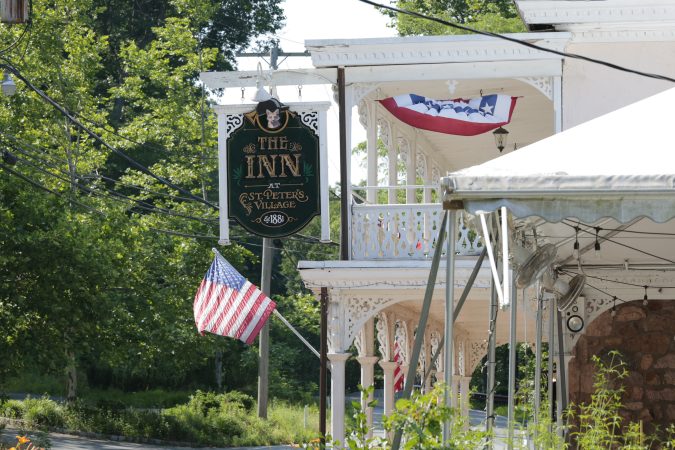
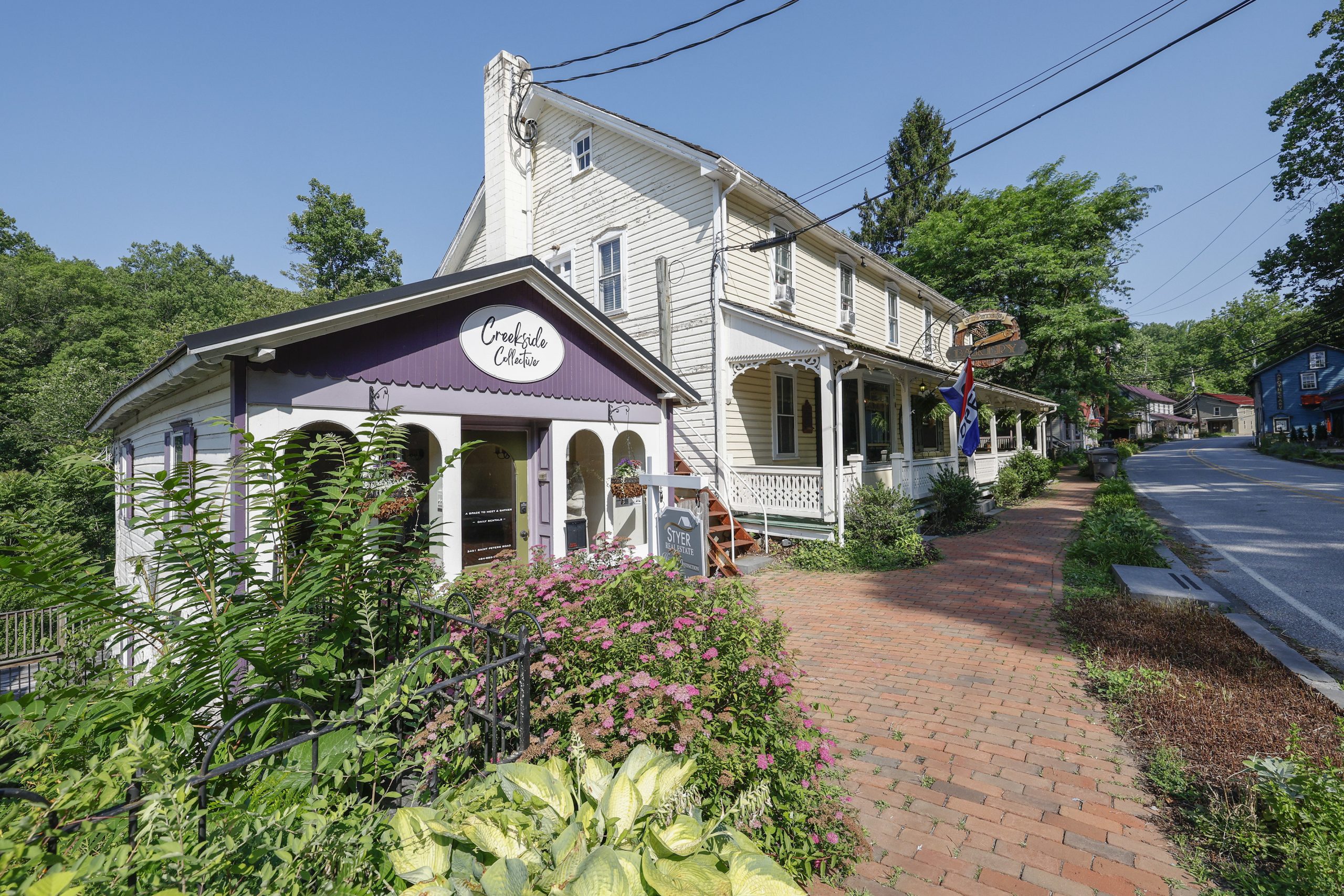
    The entirety of the 83-acre St. Peter’s Village will be sold at auction this September. Steven M. Falk / For The Inquirer

    The future of St. Peter’s Village hangs on the auction block, where it will be sold this September to the highest bidder.

    The entirety of the 83-acre historic village in the northwest of Chester County is up for sale in what is a decidedly unusual offering. That includes 121 homes and 13 historic and commercial village buildings.

    As the bidding nears, some are expressing concerns over its future, while others are hopeful for revitalization.

    The Inquirer’s Brooke Schultz explores what could become of the picturesque community.

    Bluebird Distilling adds pizza to the menu after $2.2M renovation

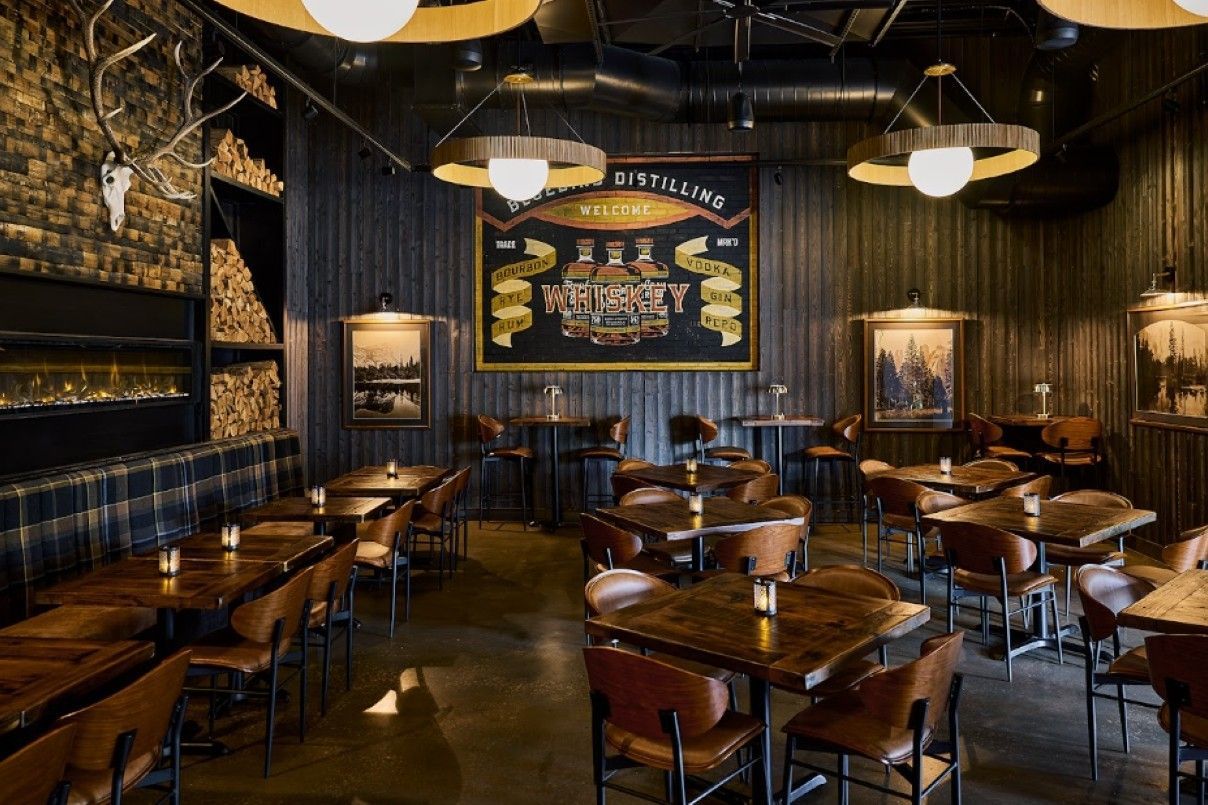
    The dining room at Bluebird Distilling and Dough House was expanded as part of a larger renovation. Ed Newton

    Popular Phoenixville distillery Bluebird Distilling reopened yesterday with a new look and fresh menu items following a $2.2 million renovation.

    Now known as Bluebird Distilling & Dough House, the concept offers a “neo-Neopolitan” pizzeria and restaurant, in addition to an expanded bar, dining room, and bottle shop.

    The idea to add pizza came after owner Jared Adkins started taking classes to learn the art.

    Read more about the expansion and what else you can expect at the new iteration.

    📍 Countywide News

    💡 Community News

    • In case you missed it, last week the developer of a proposed East Whiteland data center was ordered to temporarily stop work that disturbs the soil. Here’s why.
    • North Coventry Township’s zoning board is scheduled to discuss an application for a Sheetz at 1395 S. Hanover St. and several neighboring parcels tomorrow at 7 p.m.
    • Oxford Borough council is hosting a meeting tonight at 7 p.m. to discuss potential changes to its police services as it weighs its finances.
    • Phoenixville-based Christian school the University of Valley Forge has been warned it could lose its accreditation and been given until Sept. 1 to prove it should keep its status.
    • In other higher-ed news, longtime Immaculata University president Barbara Lettiere plans to retire next summer after leading the school for a decade.
    • Spring City is relocating its borough hall and police department to temporary offices today as work continues on the new municipal building. The borough office will temporarily be located at 2 Riverside Dr., with borough meetings taking place at Liberty Fire Company’s social building, while the police will temporarily be at 7 Riverside Dr.
    • Lit Fitness is taking over the former ImpactFit in Exton at 35 E. Uwchlan Ave. There’s no timeline yet for the official transition.
    • Ash Park reopened yesterday in Coatesville after undergoing a yearlong overhaul. The updated 9.3-acre park has a new pavilion, an expanded playground, new water fountains and lighting, an expanded basketball area, and meadows.
    • French and Pickering Creeks Conservation Trust has preserved 34.9 acres in North Coventry Township, adding to the 13,700 acres it’s conserved nearby.

    🏫 Schools Briefing

    • Octorara Area School District has named Nancy Young as its director of special education and student wellness.

    🍽️ On our Plate

    • Longwood Garden’s 1906 is the lone Chester County restaurant to earn honors in this year’s Wine Spectator Restaurant Awards. The magazine recognizes establishments with wine lists offering what it deems interesting selections that are “appropriate to their cuisine” and “appeal to a wide range of wine lovers.” It recognized 1906 — which Inquirer food critic Craig LaBan recently called one of the best restaurants in the suburbs — for its selection of wines from California and France.

    🎳 Things to Do

    🎙️ Sound of Summer Free Concert Series: Pop-rock artist Olivia Rubini headlines this week’s show. ⏰ Wednesday, July 8, 6:30-8:30 p.m. 💵 Free 📍 Anson B. Nixon Park, Kennett Square

    🎭 Ain’t Misbehavin’: This summer musical will transport audiences back to the Harlem Renaissance. ⏰ Select days from Wednesday, July 8-Sunday, Aug. 16, times vary 💵 Prices vary 📍 People’s Light, Malvern

    🎹 Tredyffrin Township Summer Concert Series: Hear party music from the ‘60s through the ‘90s when The O’Fenders takes the stage. ⏰ Thursday, July 9, 7 p.m. 💵 Free 📍 Wilson Farm Park, Wayne

    📽️ Blobfest: This year’s three-day festival is circus-themed and kicks off with a screening of the film and the run-out. Other events include a ball, “dinner en blob,” and screenings of other films. ⏰ Friday, July 10-Sunday, July 12, times vary 💵 Prices vary 📍 The Colonial Theatre, Phoenixville

    🍖 KS-Que BBQ Festival: Sample local barbecue as teams compete for bragging rights. ⏰ Saturday, July 11, noon-5 p.m. 💵 $25 📍 The Creamery, Kennett Square

    🎶 Eagleview Summer Concert Series: American rocker Sophie Gault will headline the upcoming show. Local Americana band Lazy Villains will also perform. ⏰ Tuesday, July 14, 7-9 p.m. 💵 Free 📍 Eagleview Town Center, Exton

    🏡 On the Market

    An 18th-century Phoenixville home with an impressive primary suite

    The home dates back to the late 1700s.Michael Eckstrom/MJE Photographic | Courtesy of Marie Dezarate Sales Group

    Dating back to the late 18th century, this updated five-bedroom Phoenixville home is replete with preserved period elements like millwork and fireplaces. The first floor has a family room, living room, office, and a kitchen with an exposed stone wall and radiant heated brick floors. It opens onto a sunroom with space for dining and lounging that overlooks the woods of Pickering Creek Preserve. The primary suite features exposed beams, its own sitting room, and a bright bathroom with skylights. There’s an open house Saturday from noon to 2 p.m.

    See more photos of the property here.

    Price: $880,000 | Size: 3,281 SF | Acreage: 2.5

    🗞️ What other Chester County residents are reading this week:

    By submitting your written, visual, and/or audio contributions, you agree to The Inquirer’s Terms of Use, including the grant of rights in Section 10.

    This suburban content is produced with support from the Leslie Miller and Richard Worley Foundation and The Lenfest Institute for Journalism. Editorial content is created independently of the project donors. Gifts to support The Inquirer’s high-impact journalism can be made at inquirer.com/donate. A list of Lenfest Institute donors can be found at lenfestinstitute.org/supporters.