Blog

  • Zack Wheeler, Phillies shake off rough first inning to complete sweep of Angels

    Zack Wheeler, Phillies shake off rough first inning to complete sweep of Angels

    ANAHEIM, Calif. — One fastball missed in. Another missed low, and a third missed way high.

    As Zack Wheeler issued a leadoff walk to Angels outfielder Wade Meckler to start Sunday’s series finale, it appeared his recent troubles with command were back in full force. And when Los Angeles loaded the bases before the Phillies’ ace right-hander could secure an out, things already teetered on disaster.

    But Wheeler found a way to battle back. It helped that Moisés Ballesteros chased a splitter down and outside to end a seven-pitch at-bat with a grounder up the middle. So did the fact that shortstop Trea Turner was in the perfect position to field it, touch second, and fire to first for a key double play.

    “I think it just kind of settled him down, because those first few batters he wasn’t as sharp, and he looked really good in the bullpen,” said catcher J.T. Realmuto. “So I knew that once he got that double play, got out of it, I felt pretty confident that he was going to be himself today.”

    The Phillies conceded one run on the play, but the first inning suddenly seemed much more manageable. And that turned out to be the only run Wheeler allowed as he went on to complete six innings in the 5-2 win over the Angels. Backed by another go-ahead home run from Edmundo Sosa, the Phillies pulled off the three-game sweep in Anaheim.

    It wasn’t exactly perfect. Wheeler didn’t appear to have much command of his splitter throughout, and he issued three total walks. But he turned in six innings for the first time in more than a month as he posted a solid start to build upon, outside of the first three batters of the game.

    “You know what he can be and what he can do, and this was a good start to head in that direction,” said interim manager Don Mattingly.

    In his first seven starts after the All-Star break entering Sunday, Wheeler had a 7.18 ERA. His previous outing in Seattle had marked a new low, as he was charged with eight runs in four innings.

    In the four days since then, Wheeler has been submerged in data and charts. He and the Phillies examined his biomechanics to try to identify what has been going wrong on a deeper level than just looking at traditional film.

    “They have the balls of your joints, where you can see the smallest little difference,” Wheeler said.

    What they found was that Wheeler’s glove was placed 2 inches further down in Seattle than it has been all year. And a graph of his glove placement over the season showed that it had been trending in that direction in the second half.

    “So, what do we do? Just bring that front arm up a little bit, and go from there,” Wheeler said. “And you kind of got to sync everything else up off of that. Getting that front arm up, not kind of over-rotating, shooting towards the third-base on-deck circle. … Getting that weight over the back leg, and being more direct, rather than the rotational.”

    It was actually the first pitch of the fourth inning — a fastball that Christian Moore took for a called strike — where Wheeler thought something clicked. It felt like the timing of everything had fallen into place.

    Realmuto thought Wheeler’s four-seam fastball had more life again, and his curveball was also effective. In total, he allowed four hits, sidestepping a leadoff double in the third. Derek Hill helped him out with that, laying out to catch a line drive in center field and rob Ballesteros of a hit.

    Wheeler started to tire in the sixth and wound up walking consecutive batters with two out. His pitch count had crept into the triple digits, but Mattingly decided to give him a shot to finish the inning himself against Angels right-handed hitter José Siri. Wheeler won another seven-pitch battle by going back to his curveball, which Siri whiffed on for Wheeler’s sixth strikeout.

    Realmuto helped his batterymate by delivering the Phillies’ first hit and run of the game in the third. He sent a game-tying homer to the rock formation in left-center field of Angel Stadium.

    The veteran catcher typically sits out on day games that directly follow night games, as part of the 35-year-old’s workload management. Realmuto caught 10 innings in Saturday night’s win.

    But so long as he’s healthy, Realmuto wouldn’t typically miss catching a Wheeler start, no matter what happened the night prior.

    “Other than the heat today, yeah, body felt fine,” Realmuto said. “We’ve done a good job this year, I think, of mixing my off days in at the right times. It’s time to go, because it’s that time of year where it’s time to start chasing the division.”

    The Phillies’ offense mostly slumbered against lefty Yusei Kikuchi after Realmuto’s homer, until Sosa’s second big swing of the series. He followed up his go-ahead grand slam on Friday with a go-ahead solo home run in the seventh inning, turning on a splitter inside and depositing it over the left field wall to break the tie.

    With Jonathan Bowlan and Jhoan Duran both unavailable — Bowlan had pitched two nights in a row and Duran pitched two innings Saturday — the Phillies were down their go-to high-leverage bullpen arms. Alex McFarlane, José Alvarado, and Orion Kerkering split the job in relief.
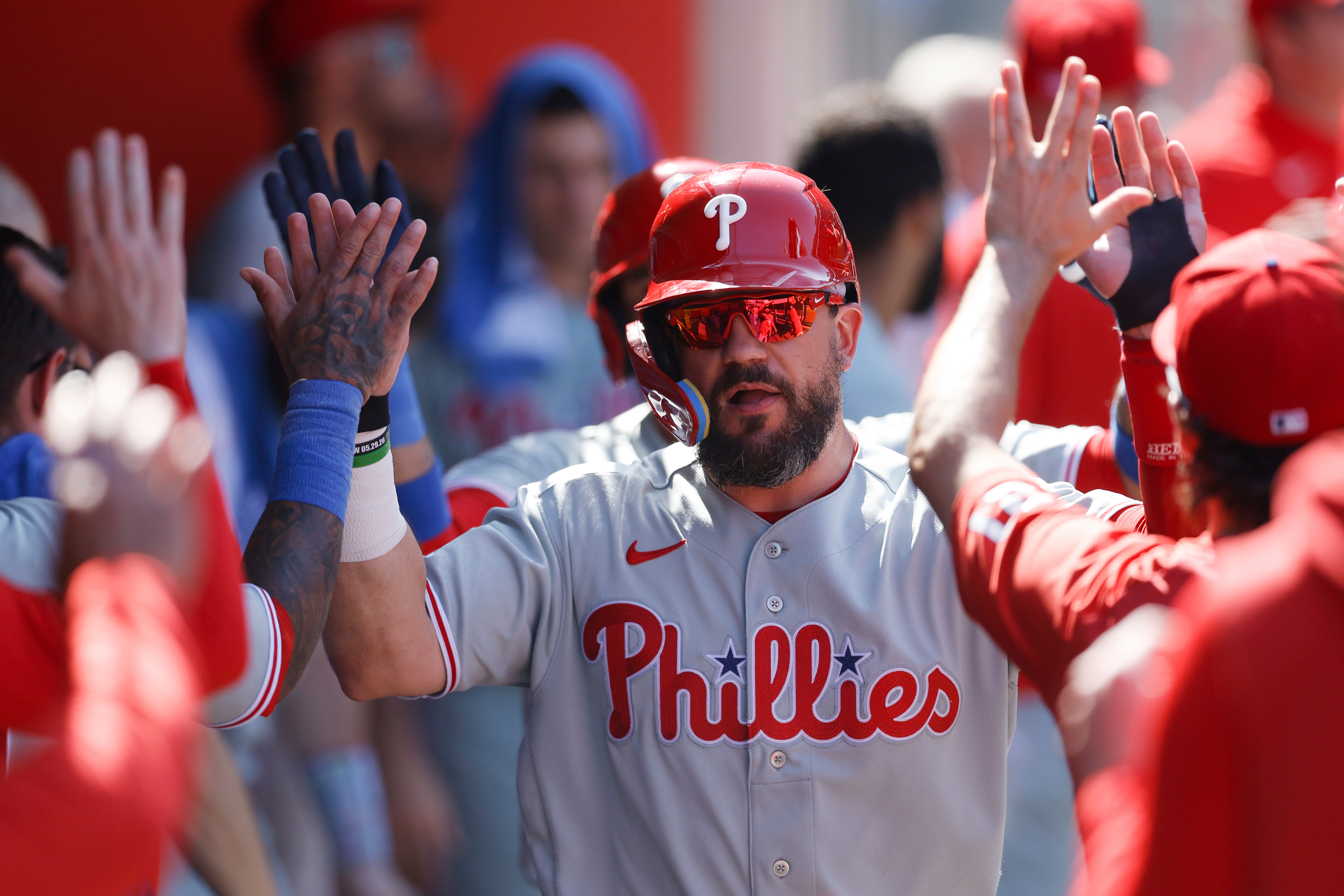
    Kyle Schwarber is greeted by teammates after scoring during the eighth inning against the Los Angeles Angels on Sunday.Caroline Brehman

    Another late outburst against the Angels bullpen gave the pitching staff some breathing room. Kyle Schwarber began the eighth-inning rally with a walk, before a Turner single and another walk to Alec Bohm loaded the bases.

    Luis Arraez pinch-hit for Sosa against right-handed José Fermin, and drove in a run with a sacrifice fly to left field. Brandon Marsh cashed in another run with a pinch-hit single. In the ninth inning, the Phillies tacked on one more with an RBI double from Bryce Harper.

    McFarlane recovered from a leadoff walk for a scoreless seventh. Alvarado secured two outs in the eighth, but left two runners on for Kerkering after back-to-back singles.

    Kerkering did his job, securing a groundout from the right-handed Siri to end the threat. He returned for the ninth and conceded a run but ended the game with a strikeout.

    It ensured that Wheeler was credited with his first win since July 12. He knows one start doesn’t necessarily mean the struggles are completely behind him, but he feels he has taken a step toward getting back to himself.

    “He’s close. I’m sure he would tell you the same,” Realmuto said. “He felt closer to it today than he did his last start. And I know he’s working hard on it. We have all the faith in the world.”


  • Italy’s Chiara Consonni wins women’s race, Germany’s Tim Torn Teutenberg takes men’s title at Philadelphia Cycling Classic

    Italy’s Chiara Consonni wins women’s race, Germany’s Tim Torn Teutenberg takes men’s title at Philadelphia Cycling Classic

    After a 10-year hiatus, the Philadelphia Cycling Classic brought crowds in from every corner of the city to watch some of the world’s most talented cyclists compete.

    They were not disappointed. Both the women’s and men’s classics saw competitive races, coming down to the final meters. Italian cyclist Chiara Consonni placed first in the women’s classic, and Germany’s Tim Torn Teutenberg won the men’s classic.

    Women’s classic

    After finishing first in the women’s classic, Consonni did not have much time to celebrate. The Italian professional cyclist had a flight to catch.

    “I’m coming home and [will] focus on the last effort for the season,” said Consonni, who competed for Canyon-SRAM. “It was a really long season. Philadelphia was in my plan from the beginning. I’m really happy to be here and do this race. And for sure, winning is always something great.”

    Following a crash in the race’s final mile, Consonni made a late push to overtake Canadian cyclist Alexandra Volstad. Consonni finished the 62-mile race in just under 2 hours, 35 minutes. Volstad placed second and Ella Sabo, a native of California, came in third.

    This is Consonni’s third major race this month, having already competed in the Tour de France and Tour of Britain. The former boasts more impressive inclines but neither European race features a flat route. Consonni felt that both races prepared her for the steep inclines she faced in Philadelphia.

    “The climb made some action and also something that the people can watch, something different than the flat race,” Consonni said.

    “It’s my first time here, first time doing this race after a lot of years,” Consonni added. “I think the organization was amazing by my side. I hope this race will increase year by year and a lot of European teams can come and play for the victory.”

    From left, second-place finisher Alexandra Volstad of Canada, of EF Education-Oatly, winner Chiara Consonni of Italy, of Canyon-SRAM zondacrypto, and third-place finisher Ella Sabo of the United States, of Virginia’s Blue Ridge TWENTY28, celebrate on the podium after the Philly Cycling Classic on Sunday.Jose F. Moreno / Staff Photographer

    Men’s classic

    After crossing the finish line, Teutenberg did a victory lap. Pumping his arms in the air, the German cyclist was overcome with joy after winning what he described as a “technical race.”

    In the final mile, he broke away from the pack alongside British cyclist Robert Donaldson and another German competitor in Jonas Rutsch. Teutenberg was able to create distance from the two, finishing the 120-mile race in just under 4 hours, 21 minutes.

    From left, second-place finisher Ronald Donaldson of Jayco AlUla, winner Tim Torn Teutenberg of Germany of Lidl-Trek, and third-place finisher Jonas Rutsch of Lotto-Intermarché celebrate on the podium after the men’s race at the Philly Cycling Classic on Sunday.Jose F. Moreno / Staff Photographer

    “We had some people that we left in front of me, so I tried to get a bit of shelter behind them, it was a bit of a cat-and-mouse [game] waiting,” Teutenberg said. “And then I don’t know … I just went, [with] all I had.”

    Although he had never competed in Philadelphia, Teutenberg had heard about the race from his aunt, Ina-Yoko Teutenberg — who placed first in the classic four times between 2007 and 2012.

    “It was a super good atmosphere today,” Teutenberg said.

    A ‘dream come true’

    Kim Stoveld, a Philadelphia native, took an unconventional route to participate in the women’s classic.

    The former University at Buffalo swimmer did not pick up competitive cycling until the onset of the COVID-19 pandemic. Six years later, the 37-year-old competed in her hometown race, placing 71st with a time of 2:37:59.

    “I watched this race in 2013, 2014, ’15, and ’16 when it was still going on, and I was just getting into cycling,” Stoveld said. “And then to be on the other side of it, 10 years later, is just like a dream come true. Just absolutely amazing.”

    One reporter asked Stoveld what her advice would be to young women looking to take up cycling.

    “If I can do this good in my late 30s, picking it up at 30, you as an 8-year-old getting into sports will dominate,” Stoveld said. “Please keep riding your bike.”

    On the men’s side, Robin Carpenter gave Philadelphians another local cyclist to cheer on. The 34-year-old, who competed in Classic before its hiatus, finished 43rd with a time of 4:27:59.

    Like Stoveld, Carpenter has plenty of experience with The Wall. Carpenter grew up in Manayunk and learned to master the steep incline at 11. As he made it through the final lap in his neighborhood, Carpenter spotted his family cheering him on from the sidewalk.

    “I always know exactly where they’re going to be because it’s always just down the street from the house I grew up in. On the last lap, my wife Anna was holding the baby over the barrier.

    “[There] is no better atmosphere in the United States than Philly for cycling, in my opinion. It’s so cool to have it back. I’m so grateful to everybody who was involved.”

  • 2 women found dead in Ogontz neighborhood in an apparent murder-suicide, police say

    2 women found dead in Ogontz neighborhood in an apparent murder-suicide, police say

    Police said two women were found dead inside a home on the 1600 block of Conlyn Street in the Ogontz neighborhood on Sunday afternoon in what is being investigated as a murder-suicide.

    Police did not release the identities of the women.

    Officers responded to the scene around 1:50 p.m., after a gunshot was heard from inside the home, police said. A “barricade” was declared and ended about an hour later, police said.

    Two adult women were found inside the home and pronounced dead at the scene by medics.

    Police said preliminary information indicated that it was a murder-suicide. The relationship between the women has not been established and the motive was unknown. An investigation is ongoing, police said.

  • Eagles reveal 53-man roster, keep four quarterbacks amid cuts

    Eagles reveal 53-man roster, keep four quarterbacks amid cuts

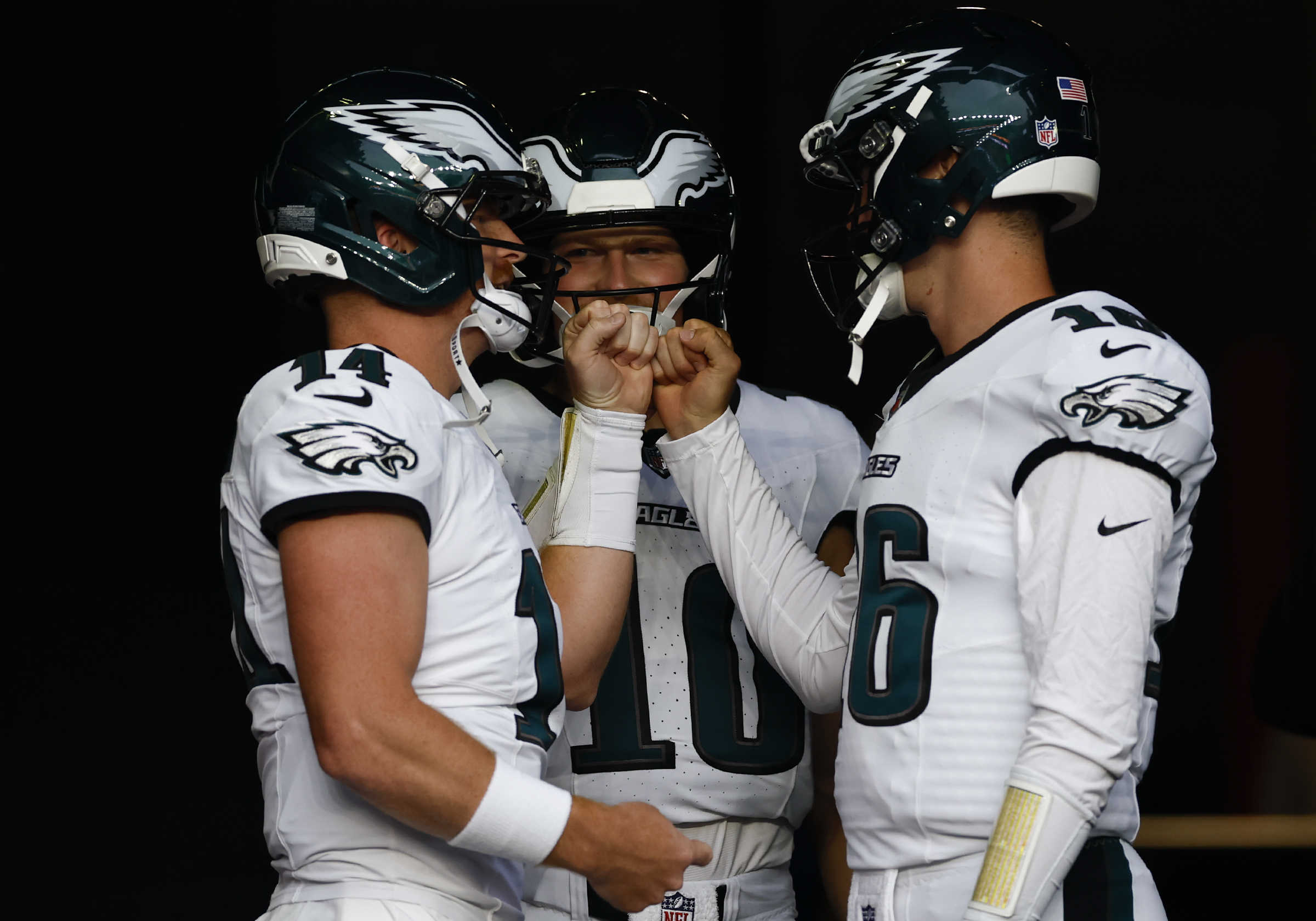
    The Eagles will carry four quarterbacks on the initial 53-man roster to start the season.

    All three depth quarterbacks behind Jalen Hurts in training camp — Tanner McKee, Andy Dalton, and Cole Payton — made the cut when the Eagles announced the active roster out of camp at the 6 p.m. Sunday deadline.

    McKee, the 2023 sixth-rounder out of Stanford, and Dalton, the 16-year veteran trade acquisition, competed in camp and the preseason for the top backup job behind Hurts. Neither quarterback separated himself significantly in the competition, and their inclusion on the initial 53 reinforces the lack of clarity regarding the victor.

    “I feel good about both guys,” coach Nick Sirianni said after Friday night’s preseason finale against the Cincinnati Bengals. “I feel like it’s a good room and I feel good about Cole [Payton] and the things that he can do as well and be able to develop. I feel good. I view it as a good thing that I feel good about both those guys, and our staff feels good about both those guys.”

    The initial 53 is initial for a reason — the Eagles will continue to rework the roster as Week 1 approaches on Sept. 13.

    Meanwhile, Jonathan Greenard, the 29-year-old outside linebacker who has been sidelined throughout training camp with a strained pectoral muscle, made the initial 53-man roster. Had the Eagles placed him on the Physically Unable to Perform (PUP) list with a designation to return, he would have had to miss at least the first four games of the season.

    Neither Uar Bernard nor Joshua Weru, products of the International Player Pathway program, made the initial 53.

    The Eagles cut three of their 2026 draft picks — Bernard; Cole Wisniewski, the seventh-round safety out of Texas Tech; and Keyshawn James-Newby, the seventh-round outside linebacker out of New Mexico. If the Eagles want to sign them to the practice squad, they must clear waivers first, as would Bernard and Weru.

    Elijah Moore and E.J. Jenkins are among the depth skill players on offense who made the team. Moore, the 26-year-old receiver, joined the Eagles in free agency after spending the 2025 season with the Buffalo Bills and the Denver Broncos. Jenkins, the 27-year-old tight end, has spent about 2½ seasons with the Eagles (a portion of 2023, all of 2024-25), primarily on the practice squad.

    Howie Roseman began trimming the roster on Saturday, the day after their final preseason game. Those cuts on offense included RB Carson Steele, WR Quez Watkins, WR Samori Toure, OL Michael Jordan, OL Myles Hinton, CB Shaun Wade, TE Stone Smartt, RB Dameon Pierce, WR Britain Covey, WR Danny Gray, C Zeke Correll, WR Erik Ezukanma, TE Cameron Latu, OL Jake Majors, RB Jordan Mims, OT John Ojukwu, WR Tahj Washington, and OT Cameron Williams.

    On defense, the Eagles cut Bernard, Weru, Wisniewski, James-Newby, OLB Tarron Jackson, DB Maximus Pulley, DT Gabe Hall, CB Ambry Thomas, DT Zion Wilson, CB Shaun Wade, S Jaylen Mahoney, ILB Chance Campbell, DT David Blay, CB Isaiah Bolden, DB Kapena Gushiken, ILB Deontae Lawson, OLB Jose Ramirez, and S Andre Sam (injured).

    The Eagles also placed cornerback Jakorian Bennett and tight end Grant Calcaterra on injured reserve (designated for return). They must miss at least the first four games of the season.

    Here is the Eagles’ initial 53-man roster:

    Quarterback (4)

    Jalen Hurts, Cole Payton, Andy Dalton, Tanner McKee

    Running back (3)

    Saquon Barkley, Tank Bigsby, Will Shipley

    Wide receiver (6)

    DeVonta Smith, Makai Lemon, Dontayvion Wicks, Hollywood Brown, Elijah Moore, Darius Cooper

    Tight end (4)

    Dallas Goedert, Johnny Mundt, Eli Stowers, E.J. Jenkins

    Offensive line (10)

    Lane Johnson, Jordan Mailata, Cam Jurgens, Landon Dickerson, Tyler Steen, Willie Lampkin, Drew Kendall, Markel Bell, Fred Johnson, Micah Morris

    Interior defensive line (5)

    Jalen Carter, Jordan Davis, Moro Ojomo, Ty Robinson, Byron Young

    Outside linebacker (5)

    Nolan Smith, Jalyx Hunt, Jonathan Greenard, Arnold Ebiketie, A.J. Epenesa

    Inside linebacker (4)

    Zack Baun, Jihaad Campbell, Jeremiah Trotter Jr., Smael Mondon Jr.

    Defensive back (9)

    Quinyon Mitchell, Riq Woolen, Cooper DeJean, Andrew Mukuba, Marcus Epps, Michael Carter II, Kelee Ringo, Mac McWilliams, Jonathan Jones

    Specialist (3)

    Jake Elliott (kicker), Braden Mann (punter), Rocco Underwood (long snapper)

  • Don Mattingly isn’t worried about the Phillies’ recent baserunning mistakes: ‘That’s going to happen now and then’

    Don Mattingly isn’t worried about the Phillies’ recent baserunning mistakes: ‘That’s going to happen now and then’

    ANAHEIM, Calif. — The Phillies’ series against the Angels this week has had several sloppy moments on the base paths.

    Although they wound up winning both times thanks to late rallies, the Phillies gifted Los Angeles four outs at either third base or home plate across the first two games of the series. Even so, interim manager Don Mattingly doesn’t think there is an overarching concern about the team’s baserunning that needs to be addressed teamwide.

    “I think it’s something that’s going to happen now and then,” Mattingly said.

    Instead, he has been having individual conversations on a case-by-case basis. For example, Mattingly said he spoke to Derek Hill about the play on Friday night that led to Bryan De La Cruz getting tagged out at home.

    With De La Cruz on second and Hill on first, Kyle Schwarber laced a single to right field to advance both runners. De La Cruz initially pulled up after rounding third, but Hill was running with his head down and didn’t see the stop sign from third base coach Anthony Contreras. He continued toward third base, forcing De La Cruz to then try to score, or else get doubled off.

    De La Cruz was tagged out easily at the plate, costing the Phillies a potential run and ending the inning.

    “I talked to D-Hill about it,” Mattingly said. “AC was stopping him from the beginning of that play; D-Hill has got to keep his head up. So that’s nothing more than just the technique of baserunning.”

    Derek Hill missed third base coach’s stop sign on Friday night and it led to Bryan De La Cruz getting tagged out at home.Yong Kim / Staff Photographer

    Mattingly said he didn’t have as much as an issue with the aggressiveness from Trea Turner and Bryce Harper on Saturday that resulted in outs. In a game the Phillies were leading 1-0 at the time, Turner was picked off attempting to steal third, while Bryce Harper was tagged out attempting to steal home.

    “Being aggressive is fine. Harp’s is to me, not a bad play either,” Mattingly said. “Just from the standpoint of [Alec] Bohm’s in a bad count, he’s 0-2, so it’s worth taking a shot. And third base is way back, so that one I don’t mind.”

    Later in the game, though, Brandon Marsh handed the Angels the first out of the 10th inning by attempting to advance to third on a grounder to shortstop. That play was a mistake both he and the Phillies would like to have back.

    “The Marsh one’s just principles of you’re not going on any ball that’s in that spot,” Mattingly said. “You’re in scoring position already. If it’s to his left, I’d feel a little better about it, but it’s kind of right at the guy, and it wasn’t really a tough play. It was a pretty easy play.

    “I know it looks like over the last couple days, it looks bad … but in general, I think two of them are OK, and one of them’s D-Hill not looking up, and the other one’s just bad baserunning.”

    Day off for Arraez

    Second baseman Luis Arraez was out of the lineup for Sunday’s series finale against the Angels for a regular day off, according to Mattingly.

    “Felt like it was the right time,” Mattingly said.

    Bryson Stott moved back to second base, while Edmundo Sosa drew into the lineup at third. It was just the second time Arraez was out of the starting lineup since the Aug. 3 trade that brought him to Philadelphia. The second baseman also sat on Aug. 23 against the Cardinals due to low body cramping, but he later appeared in that game as a pinch-hitter.

    Luis Arraez is out of the lineup for Sunday’s series finale against the Angels.Elizabeth Robertson / Staff Photographer

    In addition to giving Arraez a break, Mattingly wanted all three of his right-handed bench bats — Sosa, Hill, and De La Cruz — to start against Angels lefty Yusei Kikuchi.

    To open an infield spot for Sosa, Mattingly also considered giving Turner a day off. But Turner was coming off back-to-back multihit games after an ice-cold start to the road trip, and Mattingly did not want to halt any potential momentum.

    Extra bases

    Aaron Nola (5-10, 5.03 ERA) is scheduled to start Monday’s series opener in Arizona. Brandon Pfaadt (7-1, 3.51) is set to take the mound for the Diamondbacks.

  • New speed cameras in West and North Philadelphia will start warning drivers on Monday

    New speed cameras in West and North Philadelphia will start warning drivers on Monday

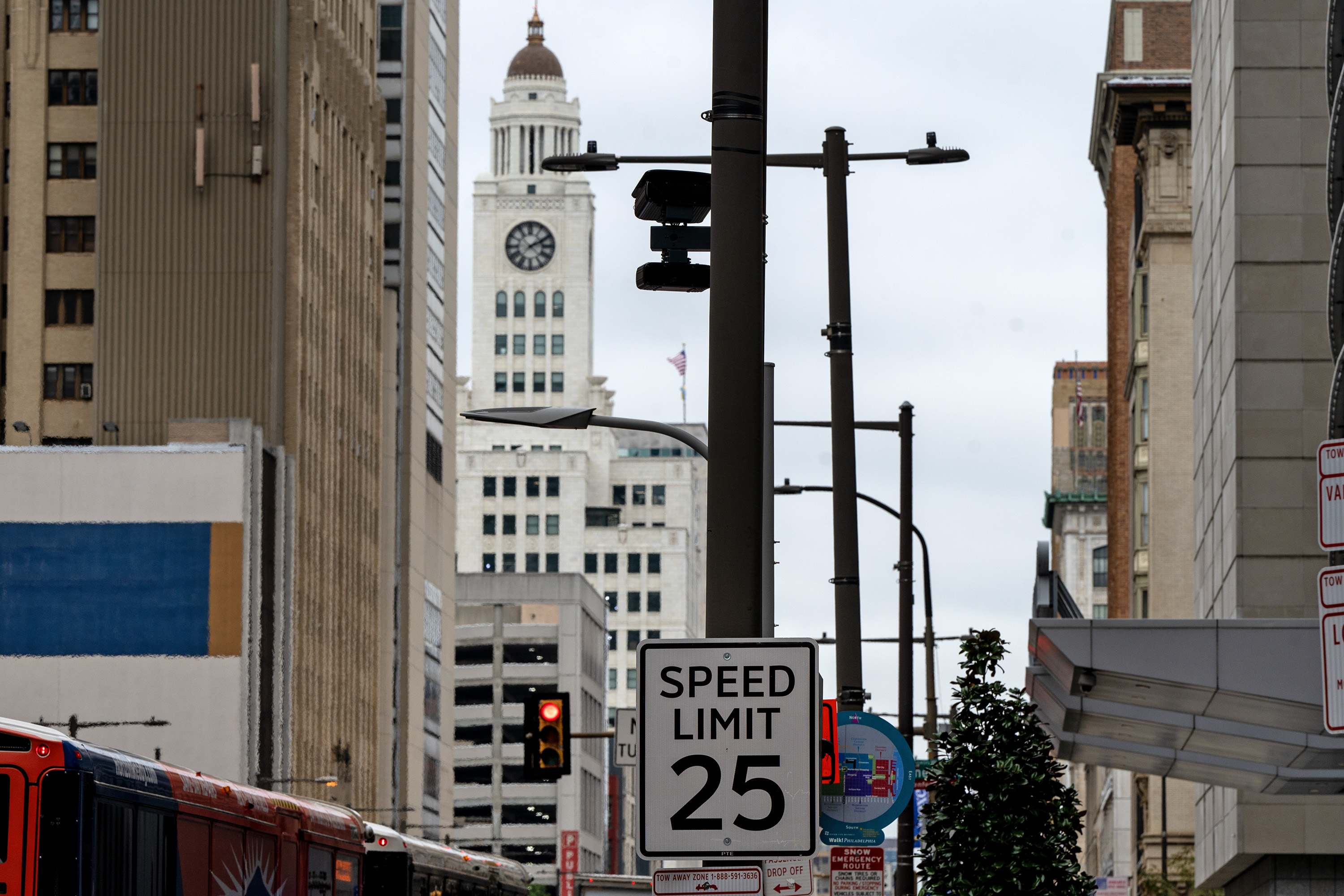
    Drivers who are found speeding on portions of Route 13 monitored by new automated cameras will begin receiving warnings on Monday morning.

    The 60-day warning period is part of the rollout of new traffic safety measures that city officials hope will reduce traffic deaths. The efforts are part of Vision Zero, which aims to cut traffic deaths in Philadelphia to zero.

    The newly installed cameras are stationed along Route 13 in West Philadelphia and parts of North Philadelphia.

    The Route 13 corridor — identified by the city as a particularly dangerous stretch of road — spans Baltimore Avenue in West Philadelphia, Hunting Park Avenue in North Philadelphia and Roosevelt Boulevard in the Northeast before leaving the city by way of Frankford Avenue.

    A 60 day warning period for newly installed speed cameras goes into effect on August 31, 2026 on the yellow part of Route 13.City of Philadelphia

    The city pointed to earlier installments of speed cameras along Roosevelt Boulevard, which cut speeding by 95% and sharply reduced crashes and fatalities since being installed in 2020, according to state data. Those cameras, which started as part of a pilot program, became permanent in 2023.

    “Our goal is to continue saving lives,” said Gabe Roberts, acting executive director of the Philadelphia Parking Authority, in a statement.

    Drivers who travel more than 11 mph over the posted speed limit will eventually be ticketed, with fines starting at $100 and rising to $150 for those driving more than 30 mph over. Ticketing will begin October 30.

    For now, drivers recorded speeding will receive warnings in the mail.

    The revenue from the speed camera tickets goes towards other traffic safety improvements across Philadelphia, according to the city’s Office of Transportation and Infrastructure Systems.

    The city said there are now 80 automated cameras in total; the new ones follow those installed along Broad Street, Frankford Avenue, and Roosevelt Boulevard.

  • Dozens evacuated from Grand Canyon after flash flood hits creek leading to the Colorado River

    Dozens evacuated from Grand Canyon after flash flood hits creek leading to the Colorado River

    FLAGSTAFF, Ariz. — A major flash flood at the Grand Canyon forced the evacuation of dozens of people and swept large boulders, metal structures and other debris into the Colorado River that runs through it, the National Park Service said.

    The flooding in Bright Angel Creek, which flows into the river, happened Saturday afternoon and has left the park service seeking information about 15 people who may be missing or unaccounted for. Torrents of water wiped out footbridges over the creek and significantly altered the landscape, widening the creek bed and creating what appeared to be a new river rapid.

    As the park service tries to account for everyone in the area, it is asking anyone with details about people hiking or camping there to get in touch. It said it was working with the Arizona Department of Public Safety to continue evacuations Sunday.

    “This is a reminder of what a dynamic and active landscape Grand Canyon is,” said Jack Schmidt, director of the Center for Colorado River Studies at Utah State University.

    Popular tourist spots including the Bright Angel Campground, Phantom Ranch and parts of the North Kaibab trail remained closed on Sunday while park officials surveyed the damage, the park said. Rafting trips on the Colorado River also have been halted for now.

    More than 60 people were evacuated from Phantom Ranch, which has a historic canteen and dorms, and is a common spot for rafters to get off and on the river. More evacuations were planned Sunday, the park said. No injuries have been reported.

    Erica Viola said she was at Bright Angel Campground when the rain started Saturday afternoon, and she and about 50 other hikers watched the creek rise and then debris start to flow by, including what looked like a bunkhouse. The group was taken by helicopter to safety, ending her adventure two days early, she said.

    About half an inch to 1 inch of rain fell within about 30 minutes in the rocky area where there’s a steep drop in elevation, said National Weather Service meteorologist Justin Johndrow in Flagstaff.

    “Most of it ran off instantly,” Johndrow said.

    He said the flooding happened on the north side of the Grand Canyon, where Bright Angel Creek comes from the North Rim down to the Colorado River, dropping around 6,000 feet.

    More rain and thunderstorms were possible for the area into Monday.

  • U.S. forces strike Iranian rocket launchers on the Strait of Hormuz in first military action in weeks

    U.S. forces strike Iranian rocket launchers on the Strait of Hormuz in first military action in weeks

    WASHINGTON — U.S. forces struck Iranian rocket launchers on the Strait of Hormuz in the first military action in a month on Sunday, according to a U.S. official, breaking a lull in fighting during an intermittent war that has lasted more than six months.

    Forces with the Revolutionary Guard Corps were observed preparing to launch rockets with sea mines into the strait, according to the official, who spoke on condition of anonymity to detail sensitive military movements.

    The U.S. military last week completed clearing sea mines from the strait’s international shipping routes.

    Semiofficial news outlets in Iran reported sounds of explosions near Larak island on the strait. The Guard in a statement carried by Iran’s state broadcaster noted “the martyrdom and injury of several of our fighters and compatriots.”

    The statement said the attack will “result in punishment of the aggressor.”

    The fighting comes just days after the Trump administration said it would turn its focus to increasing economic pressure — rather than military action — to try to end its war with Iran. The shifting strategy centers on threats to punish any country or entity that continues to conduct business with Tehran.

    The turn to using sanctions as the cudgel of choice comes as the administration weighs diminished munitions stockpiles after months of war, sparking concerns that the prolonged conflict could undermine U.S. military readiness in other parts of the globe.

    As the conflict grinds on, Trump’s talk of finding a quick end to the war also appears to be fading. He stressed last week that he’s “not in a hurry” to get Iran back to the negotiating table, and he continues making the case that the Islamic Republic’s leadership is on the ropes.

    Trump has consistently emphasized that the U.S. and Israel campaign has been devastating for Iran’s navy and air force. Iranian officials have said the country has suffered $270 billion in direct and indirect damage. Israeli military strikes in the first weeks of the war wiped out much of the theocratic government’s leadership structure.

    But Iran has found leverage through its own strikes in the critical Strait of Hormuz, where relatively few vessels carrying oil and liquefied natural gas are risking passage. Iran still has enough drones and missiles to fire at vessels transiting the vital energy waterway, through which 20% of the world’s oil normally flows, effectively controlling much of the traffic in the strait.

    Trump has repeatedly declared that the “Strait of Hormuz is open,” saying 24 vessels passed through last week. But that’s a fraction of the roughly 130 vessels that passed through the vital waterway daily before the war began.

    Earlier on Sunday, a multinational coalition overseen by the U.S. Navy said commercial traffic through the strait remained at “reduced levels.” And a monitoring agency run by the British military said an unknown projectile struck a tanker ship on Saturday north of Khasab, Oman, in the strait.

    The United Kingdom Maritime Trade Organization said the ship had been moving inbound and no casualties or environmental impact had been reported. It cited unspecified military authorities. There was no immediate claim of responsibility.

  • In one Nepal district, flood catastrophe is measured in bodies and burial trenches

    In one Nepal district, flood catastrophe is measured in bodies and burial trenches

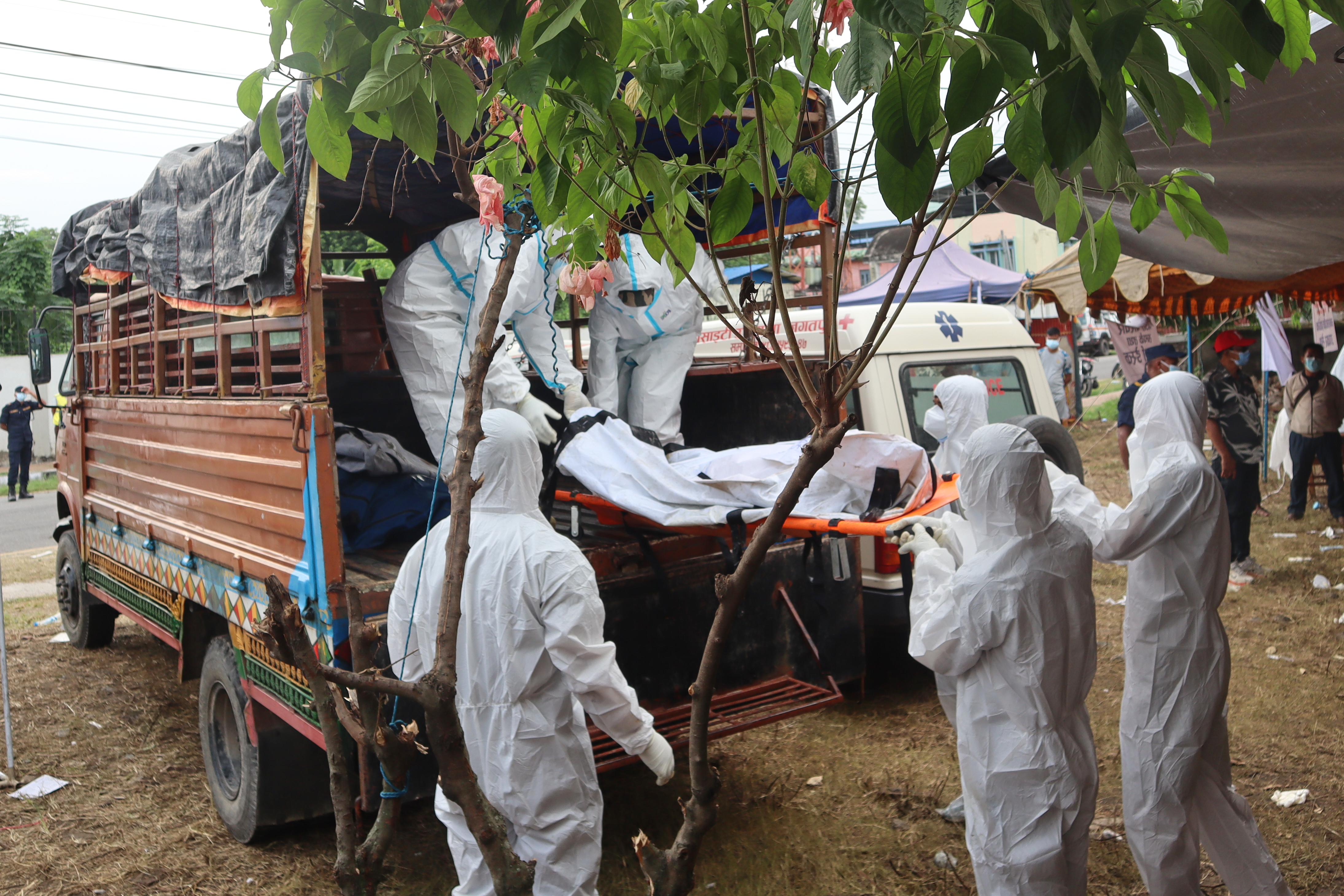
    KATHMANDU, Nepal — The devastating flash floods in the Himalayan region swept so many people downstream that authorities in one Nepalese district have begun burying bodies in temporary graves before they can be identified, prompting accusations that Hindu funeral traditions are being ignored.

    In south-central Nepal’s Chitwan district, the scale of the catastrophe was evident in some 250 bodies awaiting identification and the hastily dug trenches for their temporary burial following Wednesday’s catastrophic floods and mudslides, which killed at least 800 people and left more than 3,000 missing in Nepal and Tibet.

    The bodies were carried hundreds of kilometers downstream by the Bhotekoshi River from the flood’s epicenter before being recovered in Chitwan.

    Authorities carried out a temporary burial of about 100 victims on Saturday, officials said, as forensic teams struggled to cope. A convoy of vehicles carrying bodies entered a lush, forested area as an excavator dug a wide trench in the red earth while officials and media looked on.

    Anil Thapa, a police inspector coordinating the handling of the bodies, said another 50 bodies were having DNA samples taken ahead of their likely burial Sunday.

    Authorities preserve the DNA samples, photograph distinguishing facial features and record other identifying details, Thapa said. The bodies are assigned a reference number to help families claim them later.

    Thapa said many of the bodies had remained submerged in floodwaters for about four days and were already decomposing by the time they were recovered.

    Across the region, homes, vehicles, and farm tractors still lay partially buried in mud.

    Limited forensic infrastructure and inadequate morgue capacity in the district further strained efforts to manage the overwhelming number of bodies recovered from the disaster, officials said.

    High humidity and sweltering heat accelerated decomposition, compounding the challenges as health experts warned that leaving the remains exposed could increase the risk of disease.

    Fresh landslides in the area on Sunday closed the main highway linking the capital city of Kathmandu and Chitwan, a day after it partially reopened, complicating efforts to move bodies and relief supplies.

    As survivors grappled with the aftermath, criticism of the burials mounted. Some residents said the dead had waited days for their last rites and were denied dignity in death. Families still waiting to locate missing relatives and some public figures questioned whether authorities moved too quickly.

    The issue is particularly sensitive in Nepal, a predominantly Hindu nation where the dead are traditionally cremated.

    Ruby Chaudhary, who has two missing relatives, said the burials should not proceed without families’ consent.

    “The dead deserve to be treated with dignity,” she said. “Our tradition is to cremate them on the riverbank, surrounded by their immediate family.”

    A former prime minister, Baburam Bhattarai, said it was inappropriate to dispose of unidentified bodies before search and rescue operations were complete and without broader consultation with families of the missing.

    If morgues were insufficient, authorities could have mobilized emergency resources to set up temporary morgues or secure cold storage facilities, he said in a social media post Saturday night.

    Officials said the burials were a temporary measure necessitated by health concerns and limited capacity.

    “People are worried that this could be a permanent burial, but it is only temporary management,” Thapa said. “If someone is able to verify the identity later using the available information, they can take back the body and perform the appropriate funeral rites.”

    Amrit Bahadur Rai, Nepal’s foreign secretary, said the temporary burial of unidentified bodies was carried out in line with internationally accepted disaster-management protocols, including those of the International Committee of the Red Cross.

    “Families can match records later, and will be allowed to exhume (the remains later) for necessary rituals,” Rai said at a news briefing in Kathmandu.

  • Azriel Blackman, airline mechanic for 80 years, dies at 100

    Azriel Blackman, airline mechanic for 80 years, dies at 100

    Azriel Blackman’s love of aviation did not lead him into daring adventures in the air but into ensuring that aircraft were sound to fly.

    For 80 years, he was a plane mechanic working mostly at American Airlines — a record-breaking career in which he wielded wrenches, screwdrivers, and other tools like bucking bars on everything from Sikorsky flying boats built in the 1930s to modern jets like the Boeing 747.

    “He could do anything with his hands, and he was infatuated with the workings of an aircraft,” his son, Mitchell, said in an interview. “It captivated him.”

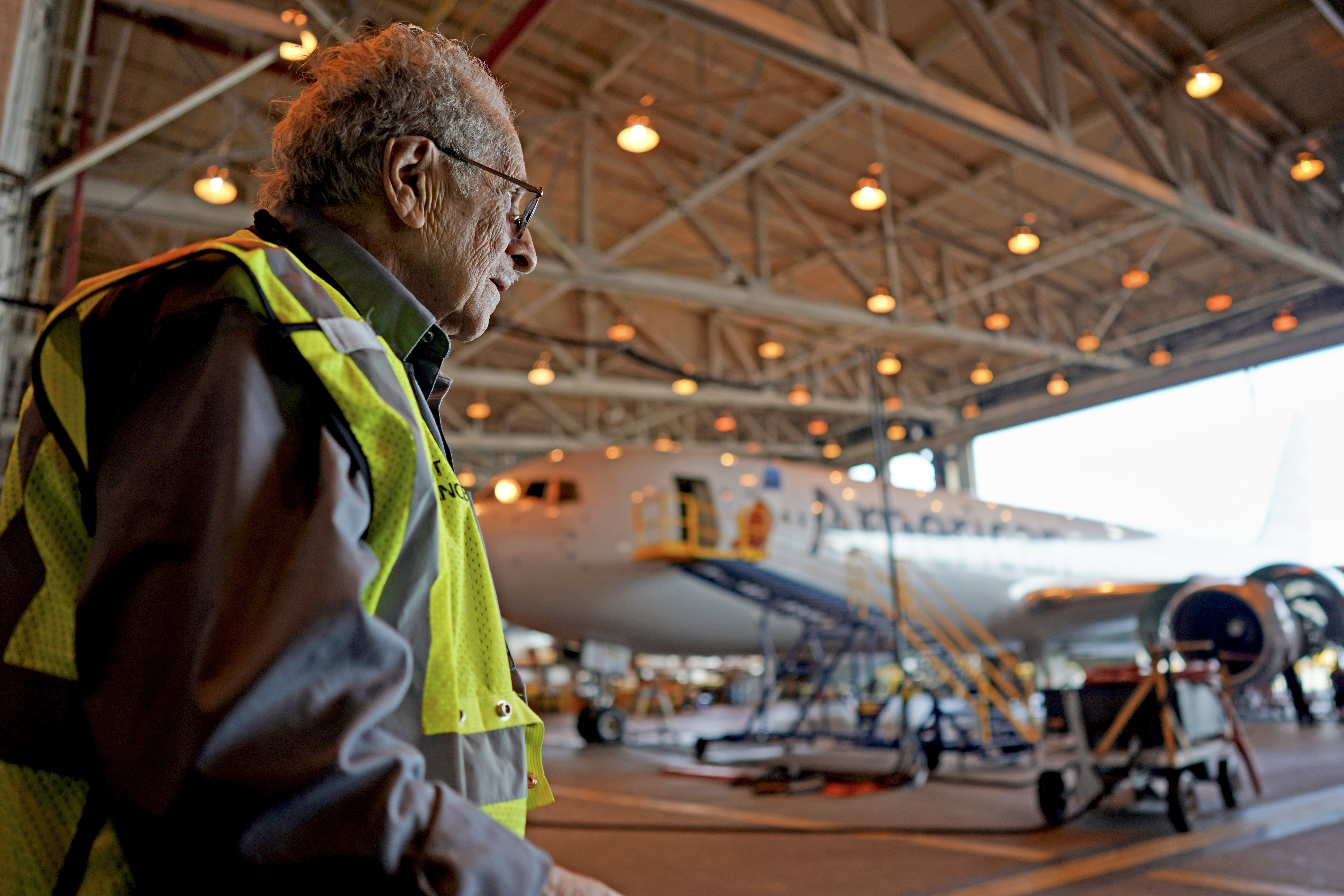
    In 2012, on Mr. Blackman’s 70th anniversary at American, the airline commissioned a mural of him at the maintenance hangar where he worked at John F. Kennedy International Airport in New York. It depicts him at the center, wearing his yellow vest, surrounded by four airplanes from his past and present.

    In 2017, his 75th anniversary was commemorated by Guinness World Records, which cited him for having the longest career as an airline mechanic. That same year, American dedicated a Boeing 777-200 in his name.

    “Every day, the job is different,” Mr. Blackman, a maintenance crew chief since 1960, told the New York Times in 2017. “You’re not doing the same thing repetitively, and that’s good. If, in my journey around the hangar I see something I can help on, I do that.”

    Mr. Blackman, who was known as Al or Blackie, died July 24 at a nursing home in Queens. He was 100.

    Four years ago, his son said, Mr. Blackman fell at work, broke two vertebrae in his neck and suffered a traumatic brain injury. Spinal cord damage led to a loss of mobility.

    Azriel Blackman was born in Manhattan on Aug. 30, 1925, and grew up in Brooklyn. His father, Aaron, a tailor, was from Russia, and his mother, Mary (Goldberg) Blackman, who managed the home, was from Poland.

    In 1942, Mr. Blackman graduated from Aviation High School, which was then in Manhattan and is now in Long Island City. He was 16 when he was hired as an apprentice in the sheet-metal shop at American Export Airlines (which was later acquired by American Airlines) at New York Municipal Airport — LaGuardia Field (now LaGuardia Airport). His skills in the shop enabled him, for the rest of his career, to mold parts needed to fix aircraft.

    The first aircraft he worked on was the amphibious Sikorsky flying boat. He serviced more than a dozen kinds of planes over the next eight decades, including the Douglas DC-3, the Convair CV-240, the Lockheed Constellation, the Boeing 377, and the McDonnell Douglas MD-80.

    After enlisting in the Army, he served in the Korean War, repairing helicopters for Mobile Army Surgical Hospitals. Following his discharge in 1952, he returned to American at LaGuardia, then moved as a crew chief to New York International Airport, better known as Idlewild Airport, in 1960, three years before it was renamed for President John F. Kennedy.

    “Behind-the-scenes aircraft mechanics, when they succeed, you don’t hear about them, because they’re not glamour jobs,” said Gary Santos, a mechanic who started working at American in 1988. “To have a career as long as his is just mind-boggling.”

    Mr. Blackman’s love of airplanes continued in volunteer work on his days off, like helping to restore aircraft for an ongoing project at Floyd Bennett Field in Brooklyn and a Sikorsky flying boat at the New England Air Museum in Windsor Locks, Conn., near Hartford.

    By 2017, Mr. Blackman’s age led to restrictions on his ability to perform some physical tasks that might injure him, and he was supervised by a crew co-chief. At first, he objected to the limitations but eventually accepted them.

    Even though Mr. Blackman’s job had become more paperwork than mechanical, his experience remained important to American.

    “He represents a valuable institutional memory that says, ‘This is how we do it at American,’” Robert L. Crandall, the president of American from 1980 to 1998, said at Mr. Blackman’s 75th anniversary ceremony. “He’s the guy who sits with the new kids at lunch and passes it on.”

    Wayne Hanna, an aircraft maintenance technician whose father was Mr. Blackman’s crew chief in the 1950s, said that, for the past few years, a group of mechanics visited Mr. Blackman at his home to celebrate his birthday, including his 100th last year.

    “He was older than American Airlines,” he said in an interview. The company has been celebrating its 100th anniversary this year, noting the first flight of Robertson Aircraft, one of the dozens of small airlines that combined in 1930 to form American Airways; it became American Airlines in 1934.

    In addition to his son, Mr. Blackman is survived by a granddaughter. His daughter, Adrienne Larrain, died in March. His wife, Dolores (Cooperstein) Blackman, whom he married in 1954, died in 2011.

    In 2012, American honored Mr. Blackman’s tenure by flying him around New York City in a restored, propeller-driven DC-3, part of the airline’s fleet that carried passengers between the mid-1930s and the late 1940s. He sat in the cockpit as it flew along the Hudson River, over Central Park, and past the former site of Aviation High.

    “He was taken aback by all of that,” his son said. “He didn’t really know how to accept praise of that magnitude. In his mind, he didn’t feel he had done anything extraordinary. He loved going to work. He considered the people he worked with family, and it was enjoyment to him. That was his real reward.”

    This article originally appeared in the New York Times.