FLAGSTAFF, Ariz. — More rain and thunderstorms were possible Monday at the Grand Canyon following a major flash flood that left one person dead and about 15 others missing or unaccounted for, with scores of visitors evacuated and the only water pipeline for tourists and residents destroyed.
Emergency water restrictions that began Monday prevented tourists from staying overnight at lodges and hotels within the park. Year-round residents were asked to conserve water.
A flood watch was in effect. Visiting the Grand Canyon — a crown jewel of the national park system — can be particularly dangerous in the summer because of the risk of flash flooding that accompanies the monsoon, or rainy season. Clear days can give way quickly to thunderstorms and downpours.
“With deep monsoonal moisture in place and already saturated soils in some locations, an elevated risk of flash flooding will be in place through Monday,” the National Weather Service said early Monday.
The body of a 46-year-old man was recovered Sunday evening near Crystal Rapids along the Colorado River, the National Park Service said without providing additional details.
The flooding Saturday in Bright Angel Creek, which flows into the river, led to more than 60 people being airlifted from the depths of the canyon. The park service asked anyone with details about hikers or campers still unaccounted for to get in touch. The Arizona Department of Public Safety helped with additional evacuations Sunday.
“These measures are crucial for ensuring the safety and sustainability of water resources,” the park said in a statement.
Parth Desai was hiking through a narrow passage in Bright Angel Canyon with fellow physicians and a park ranger when heavy rain started falling Saturday.
“We saw the creek flood, waterfalls coming up out of nowhere, boulders, mud, landslides happening everywhere,” he said.
Later, as they made their way toward Phantom Ranch, a colleague shouted “Up, Up, Up, Up!” as a 4-foot (1-meter) debris wall headed toward them and they ran up into a patch of cacti, he said. They were rescued by helicopter late Saturday after making it to the Phantom Ranch area, he said.
Torrents of water wiped out footbridges over the creek and altered the landscape, widening the creek bed and extending an existing river rapid or creating a new one. The flood was a major blow to an enduring effort to modernize the pipeline that serves 6 million visitors a year and roughly 1,600 residents of Grand Canyon Village.
“Heaven help us if the whole thing down there at the bottom has to be reconstructed,” said Jack Schmidt, director of the Center for Colorado River Studies at Utah State University. “Where are they going to get the money?”
Halting overnight stays at the park because of a lack of water is rare, although the pipeline frequently has failed over the years. While the Grand Canyon has large storage tanks for potable water on the South Rim, they won’t be refilled while the pipeline is out of service.
A $208 million rehabilitation of the pipeline and upgrades to the associated water delivery system started in 2023, with the park service calling it a crucial investment to ensure the park can meet the needs of residents and visitors. The project was expected to be completed next year.
BIDUR, Nepal — Rajendra Dawadi was inside his classroom when the school’s accountant rushed in with a warning: Floodwaters were racing through Nepal’s Trishuli Valley, tearing apart homes, bridges and entire villages.
Then a teacher received another warning by phone. Moments later, a parent arrived to take her child home. The danger had not yet been confirmed, but Dawadi had little time to act. He rang the school bell and ordered his students and staff out of the building and toward higher ground.
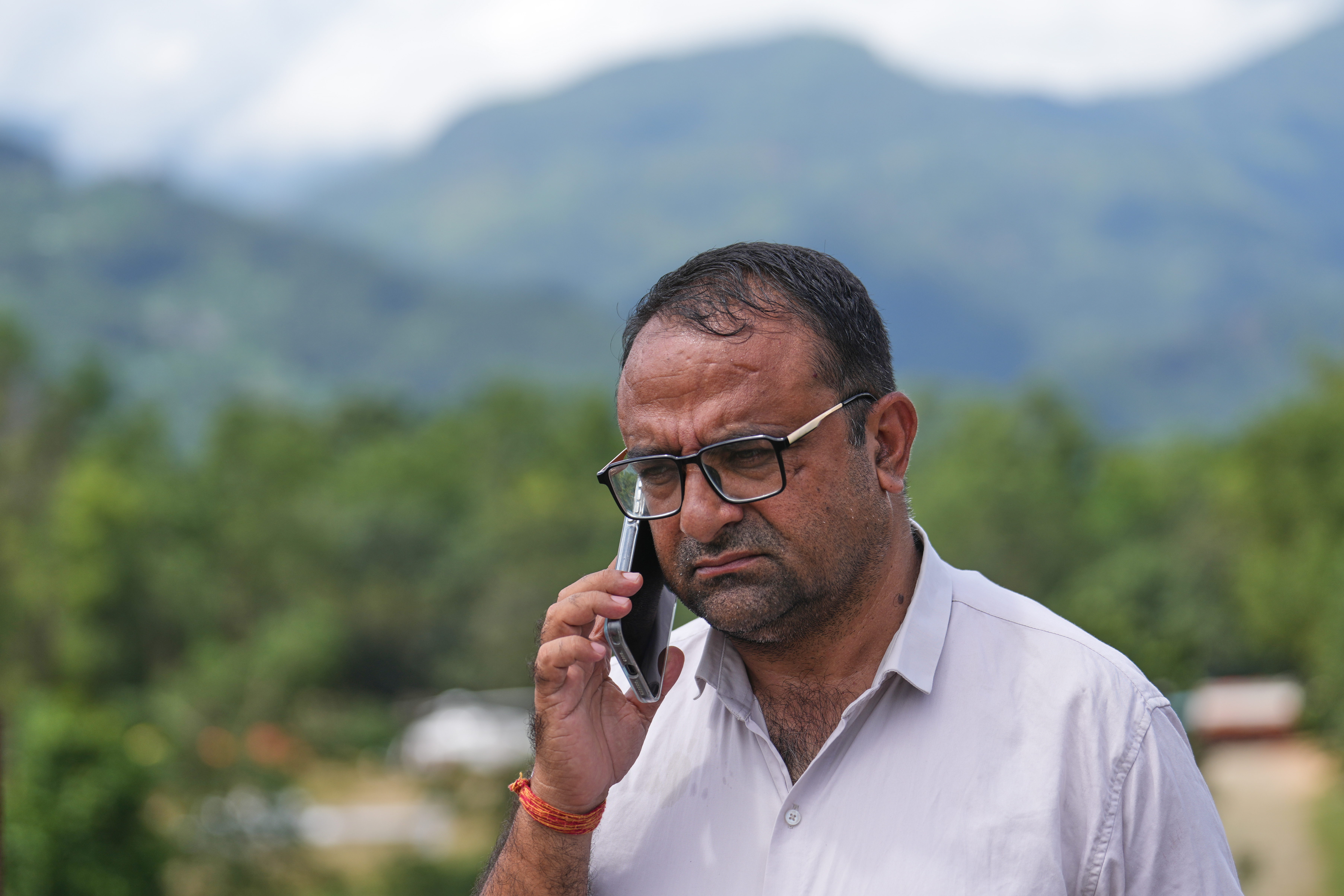
“I immediately decided to stop … school and (get the children out),” he told The Associated Press.
As he followed them to a nearby hill, the floodwaters rose behind him. From the safety of the hillside, he turned to watch the school where he had once been a student — and where he had spent years teaching — disappear beneath a torrent of water, mud, boulders and debris. Two staff members could not make it and remain missing.
Dawadi’s decision to evacuate the school saved at least 900 students from last week’s devastating flash floods in Nepal, unleashed after a glacial collapse in the Himalayas. The disaster killed over 900 people across Nepal and China, while more than 4,700 remain missing.
As Nepal grapples with the catastrophic natural disaster, Dawadi’s story has emerged as a striking example of foresight and courage.
The Tribhuvan Trishuli Secondary School in the Trishuli Valley of north-central Nepal had 1,643 students. At least 900 were on campus that morning, while some students were still making their way to school. Dawadi ordered those already there to leave and called bus drivers, telling them to only stop at safer places.
One bus, packed with students, had already reached the school when Dawadi told the driver to turn back, he said. The bus crossed a newly constructed bridge and, moments later, the old bridge beside it collapsed.
For Dawadi, the scale of the destruction has become personal, as the school had been both his workplace and a large part of his life.
“I have no words. I got education from that school. And I gave education at that school,” he said.
The destruction of Dawadi’s school was not an isolated loss.
Across northern Nepal, the floods have left thousands of children without classrooms, disrupted their education and raised fears that the disaster could cost them months of schooling. Charity group Save the Children said in a statement that at least 69 schools in northern Nepal have been completely destroyed, putting the education of nearly 19,000 students at risk.
Dawadi’s quick thinking and swift response during the disaster have been hailed as an act of heroism. When he returned to the site of the school days later, parents embraced him as they thanked him for saving their children.
“Their parents hugged me, they cried with me,” he said. “They were emotional.”
Student Suvina Tamang, 14, said the school’s three-story building was swept away shortly after all the students had been evacuated.
“I will thank him when I see him” for saving my life, she said.
But Dawadi is reluctant to accept the role of hero. For him, rescuing his students was his responsibility. Now he says, students will need psychological counseling. Then, lessons must begin again, even if the school must temporarily relocate.
His appeal to the Nepalese government is simple: rebuild the schools and get children back to classes.
After hours of wandering and waiting in the late August heat of the nation’s capital, the hundreds of thousands gathered for the 1963 March on Washington were welcomed with a program announcement by the march’s architect, labor leader A. Philip Randolph. In his signature baritone, he announced, “Permit me to present to you to sing the national anthem, Miss Camilla Williams.”
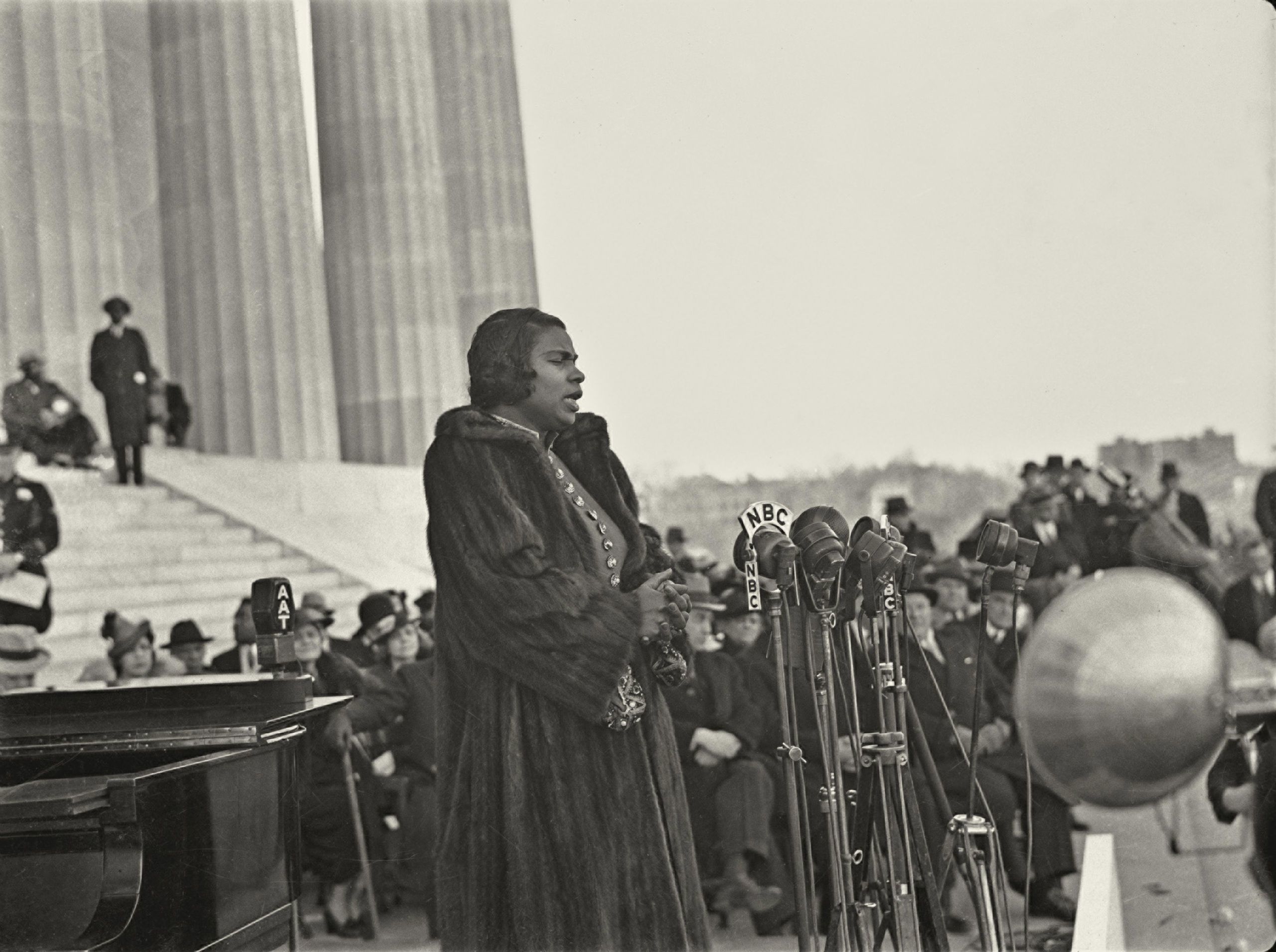
More than a few marchers may have shared a puzzled glance. The march leaflets offered that none other than the diva Marian Anderson would open the day’s program of 18 speakers and songs. The march’s planners and crowds alike would have remembered Anderson’s historic 1939 Easter Day concert. At that time, Anderson had been barred, like all African American performers, from taking the stage at Constitution Hall — the Daughters of the American Revolution venue. With support from first lady Eleanor Roosevelt and Interior Secretary Harold Ickes, however, Anderson sang instead at the Lincoln Memorial before an interracial crowd.
Marian Anderson singing at the Lincoln Memorial on Easter Sunday, 1939.World History Archive / Alamy Stock Photo
The moment elevated the Philadelphia native beyond her status as a pioneer in opera and made her a symbol of a nascent civil rights struggle. In the estimation of the march planners in August 1963, there was none other than Anderson who could set the right tone for a day fueled by idealism, as well as calls to action.
But that Wednesday afternoon, the contralto was stuck in the monstrous traffic surrounding the National Mall, and Randolph, likely in consultation with his lieutenant, Bayard Rustin, called forward Camilla Williams, Anderson’s protégé.
By 1963, Williams had also fought hard to establish herself in the racist and exclusionary world of opera. Born in Danville, Va., in 1919, she landed in Philadelphia after her local community raised funds to help her continue her music education up north. When she arrived in the city, she paid the bills by selling concessions at a movie theater, while she trained with some of Anderson’s former teachers. Williams, an early recipient of a Marian Anderson Scholarship, eventually debuted at the New York City Opera in Madame Butterfly and later lent her voice to a recording of George Gershwin’s Porgy and Bess.
A seasoned performer, she opened the program for the 1963 March on Washington. The substitute rose to the occasion, and the crowd responded with the first of several rounds of rapturous applause and shouts that roiled across the rows of NAACP chapter members dressed in their church outfits, young rebels in denim, and clergy in full vestments. Eventually, traffic cleared, and Anderson arrived, as well, making her way to the multi-microphoned platform to sing “He’s Got the Whole World in His Hands” to an adoring audience.
Anderson and Williams were two of only four women whose voices were heard by the marchers that day. Most accounts of the March on Washington focus on Martin Luther King Jr.’s “I Have a Dream” speech, and to a lesser degree, John Lewis’ controversial and fiery address about the slow pace of social change in America. Sixty-three years later, the voices and vision of several key women of the march have yet to be fully recognized and appreciated.
The march was born from the struggles of Black labor organizers who understood the importance of taking up the problems of racial caste and class together, not separately. Randolph and Rustin, with political theorists, leftist activists, and labor organizers, had conceptualized the March on Washington during World War II to pressure the federal government to desegregate the military and provide fair employment opportunities for Black workers. At every turn, Randolph consulted and relied on female comrades who shared his leftist political inclinations, including legal scholar Pauli Murray, pacifist Pauline Myers, labor organizer Maida Springer, longtime National Council of Negro Women leader Dorothy Height, as well as Anna Arnold Hedgeman, the only woman on the march’s New York-based planning committee.
By the time of planning for the 1963 march, men dominated — men led all the supporting organizations, and the programming committee resolved to schedule speakers based on those groups. Despite their decades-long commitment to the March on Washington Movement, the women of the march were never able to pierce the ranks of executive leadership, nor serve as spokespeople for the larger civil rights struggle. As the movement gained steam into the 1950s and 1960s, male religious leaders — like King — and institutional heads calcified an image of who was leading.
Made By History sponsorsInquirer Staff
With weeks to go before the assembly, however, organizer Hedgeman argued for a last-minute addition to the schedule. She sought to honor Black women who had struggled in the many fights to desegregate schools, eradicate Jim Crow laws, and secure voting rights. In an appeal to her colleagues, Hedgeman argued, “In light of the role of Negro women in the struggle for freedom and especially in light of the extra burden they have carried … it is incredible that no woman should appear as a speaker.” Her chastening confrontation was met with no resistance, but the depth of her frustrations was never fully recognized. A hastily planned tribute would have to do.
In the end, her recommended “Tribute to Negro Women Freedom Fighters” barely scratched the surface, offering just a nod to the depth and breadth of leadership and passion so many Black women offered the freedom movement.
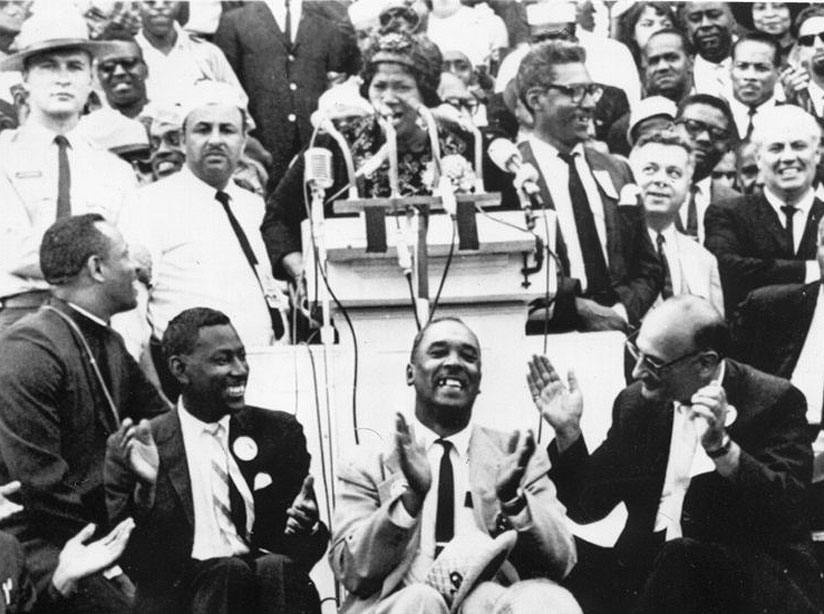
The crowd heard directly from Daisy Bates, coordinator of the school desegregation battle in Little Rock, Ark., in 1957, and from gospel great Mahalia Jackson, a personal friend to King. Their words and lyrics soared. Bates pledged that Black women would “sit-in … kneel-in, and … lie-in, if necessary, until every Negro in America can vote.”
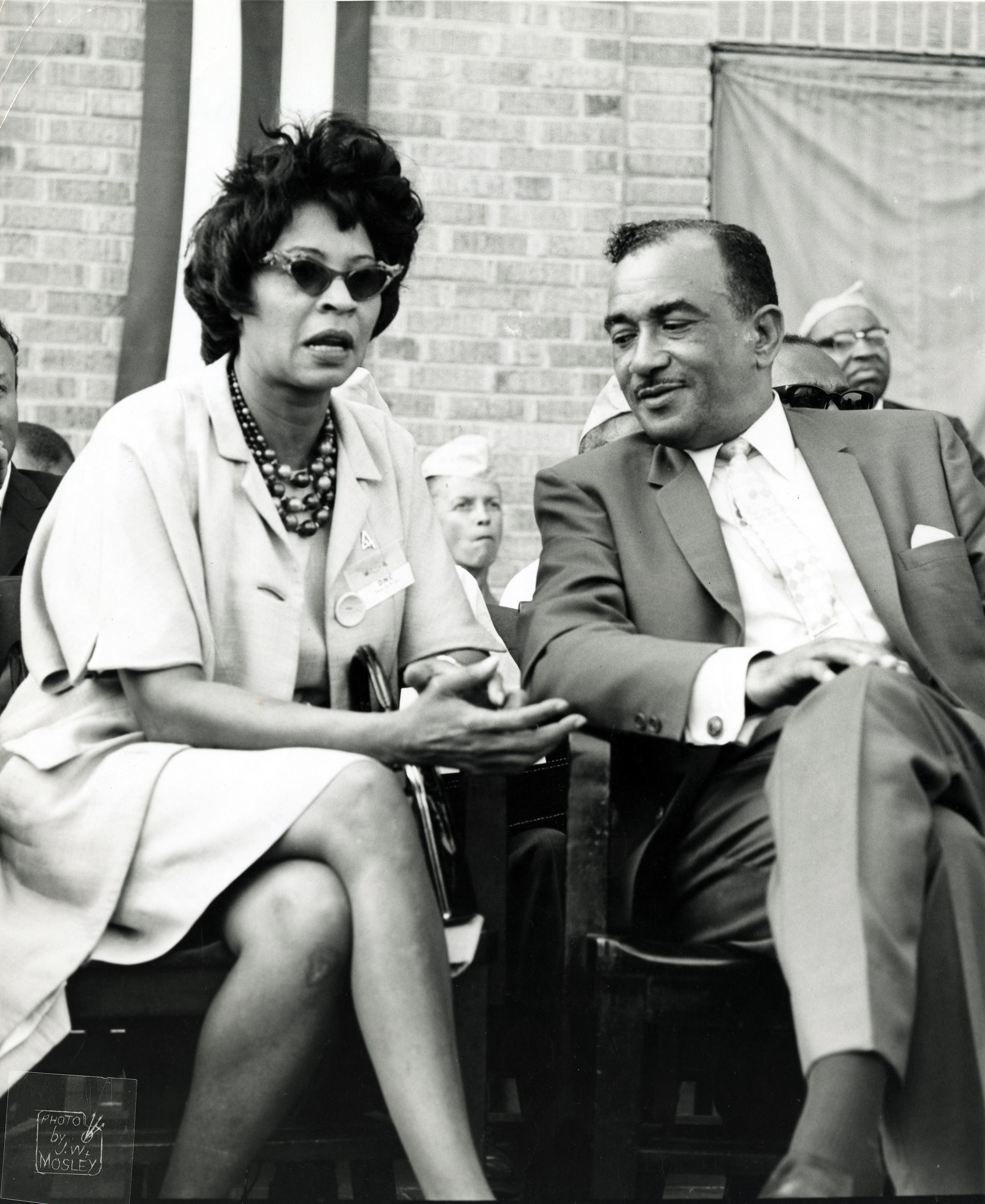
Cecil B. Moore and Daisy Bates at the 1964 Democratic National Convention in Atlantic City.Photo Credit: John Mosley Collection, Courtesy Charles L. Blockson Afro American Collection, Temple University Libraries, Philadelphia, Pa.
Jackson was prompted to deliver an encore, and as she sang the gospel hit “How I Got Over,” the dignitaries behind her closed their eyes and swayed to the beat.
I’m gonna thank him for heart felt religion
I’m gonna thank him for a vision
I’m gonna sing hallelujah
Oh, shout all my trouble over
But three female singers, one speaker, and one “tribute” didn’t begin to convey the contributions of Black women to the movement. In truth, Black women often struggled against the choke hold of racism and sexism they faced in local and national organizations, and their relative absence on the stage of the march spoke to a deeper silencing.
Each year, the anniversary of the March on Washington is marked by remembrances that venerate Dr. King even as they fail to recognize the depth of his message. The speeches that day touched on a range of issues: a still-prescient critique of automation, exposure of police brutality, advocacy for work training to reduce unemployment, as well as a higher federal minimum wage.
But there was more to it than that: It was an inspiring day, but also, for Black women involved in the struggle, a disappointing day. Remembering the march, as a movement and as an event, we can remedy the silences by learning about the women who, through their music and their intellect and their leadership, allow us to keep dreaming.
Made By History takes readers beyond the headlines with articles written and edited by professional historians. Opinions expressed do not necessarily reflect the views of The Inquirer.
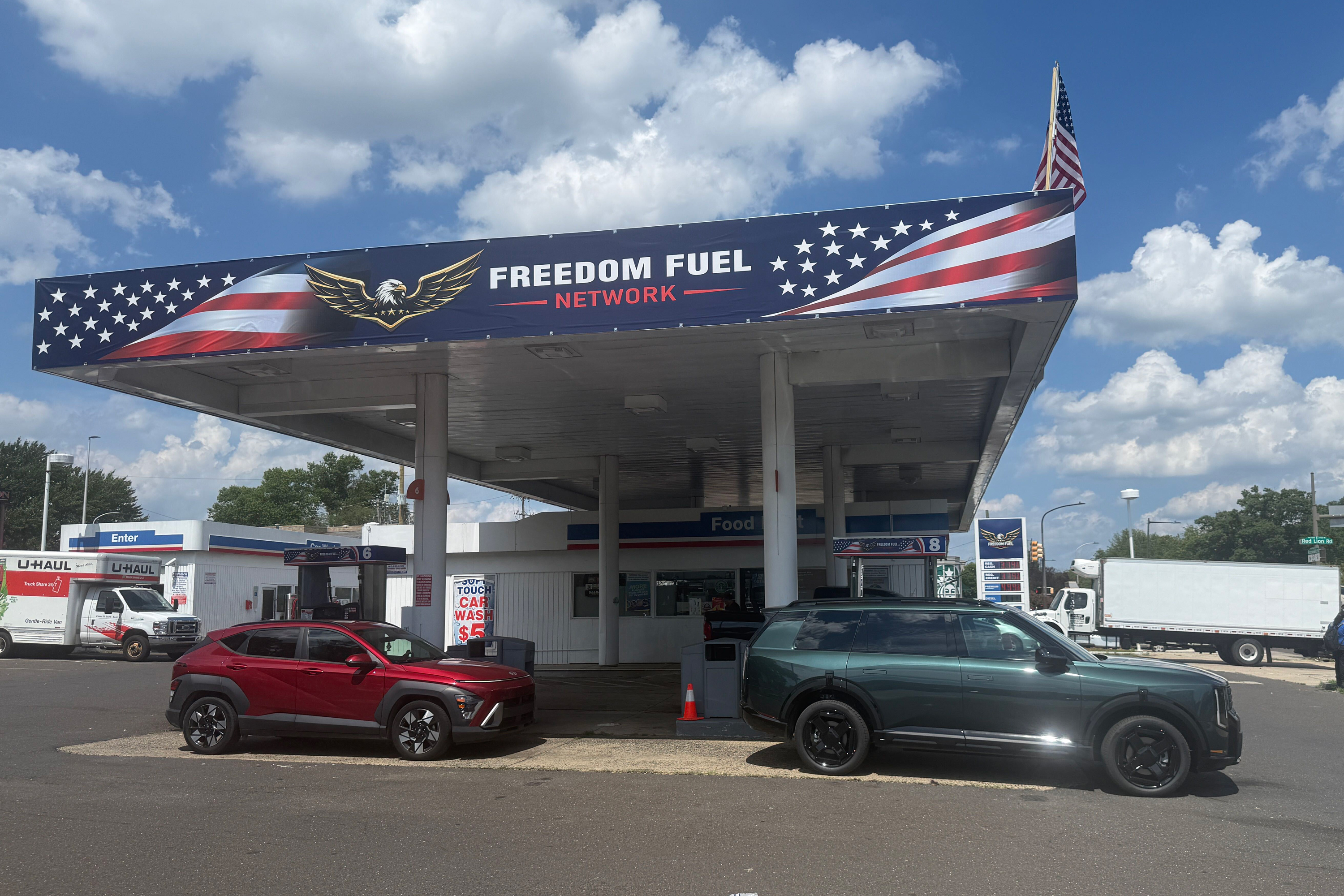
Mansfield Oil Co. of Gainesville Inc. filed a civil suit in federal court alleging it provided $4 million worth of gasoline to multiple Freedom Fuel gas stations for which it was never compensated.
The suit goes on to claim that the fuel in question is at least one of the reasons why the network has been able to sell gas cheaply. Freedom Fuel has been promoted by President Donald Trump.
According to the suit, KRSM president Syed Kazmi, requested and took 1.12 million gallons of gasoline and then sold it to several stations that are part of the Freedom Fuel Network without ever paying for it.
Kazmi and his brother, Cherry Hill developer Shamikh Kazmi, are connected to at least eight of the Freedom Fuel’s 29 locations.
A Philly-based federal appeals court on Friday ruled that ICE’s controversial policy mandating detention for nearly all undocumented immigrants is unlawful. The ruling took immediate effect in Delaware, New Jersey, Pennsylvania, and the U.S. Virgin Islands.
According to the Gloucester County Prosecutor’s Office, a Paulsboro man was sentenced Friday to more than three decades in state prison for sexually assaulting an underage girl in 2023.
Cherry Hill native and actor Dominic Sessa who plays the title role in the A24 Anthony Bourdain biopic, Tony, spent four summers working at a bakery in Ocean City. He pulled from that experience to help him get into character.
The typical homeowner in New Jersey has one of the highest levels of housing wealth compared to other states. It made the top five states where homeowners report having the most home equity.
Gov. Mikie Sherrill signed legislation Friday that permanently allows the sale and delivery of to-go alcoholic beverages.
Asianfresh Food Market in Cherry Hill announced its soft opening on Thursday and its grand opening on Sept. 12, 42 Freeway reports.
🧠Trivia time
Which former Disney star performed in Atlantic City last Friday?
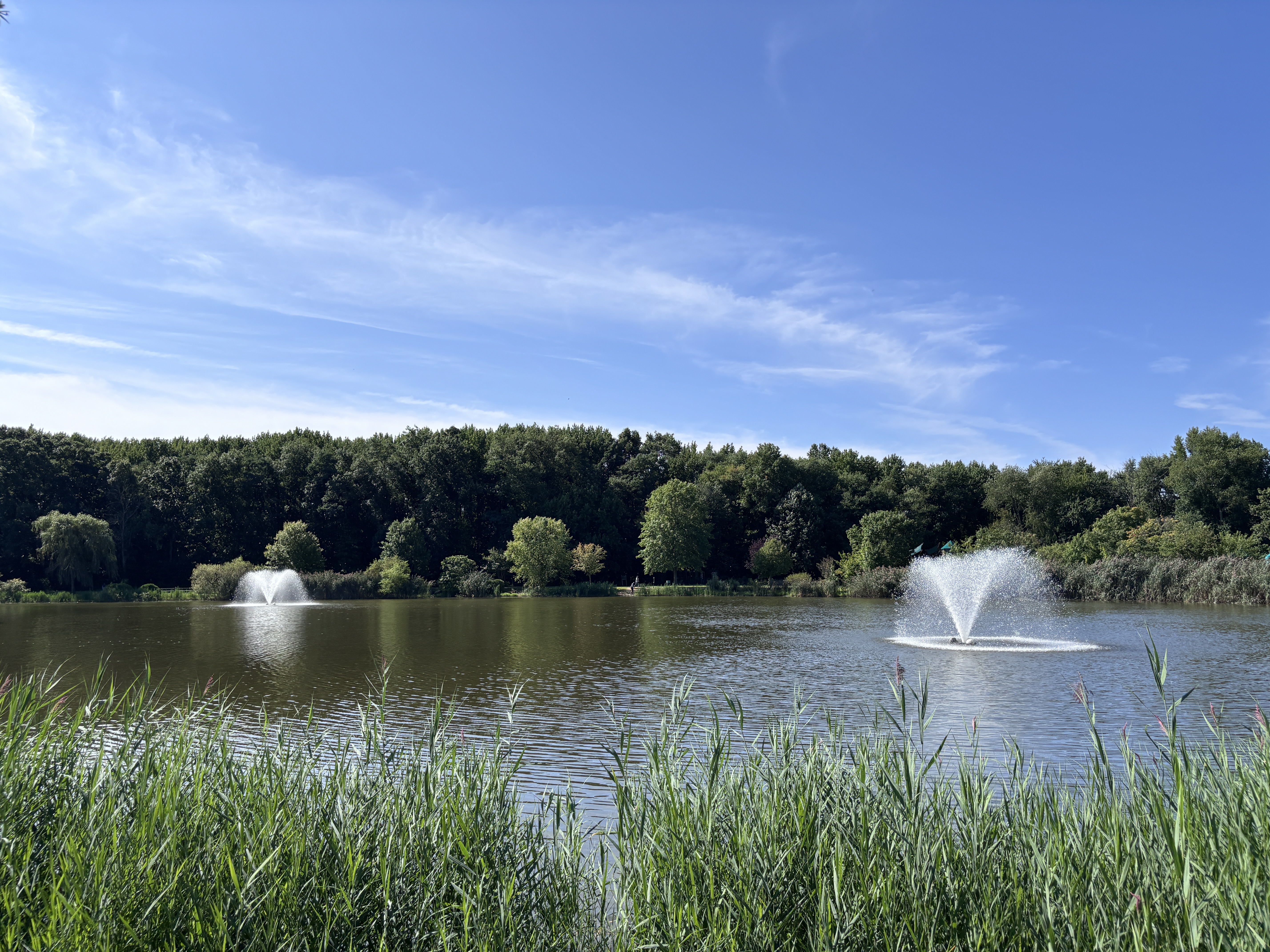
The fountains run on the lake at Laurel Acres Park in Mount Laurel during an August afternoon.Taylor Allen
The popular Laurel Acres Park in Mount Laurel always brings a crowd typically on the weekends with its baseball fields, natural trails, playgrounds, and more.
What does your community look like? What South Jersey memory would you like to share? Submit a photo and/or a brief description for a chance to be featured in the Monday edition of this newsletter.
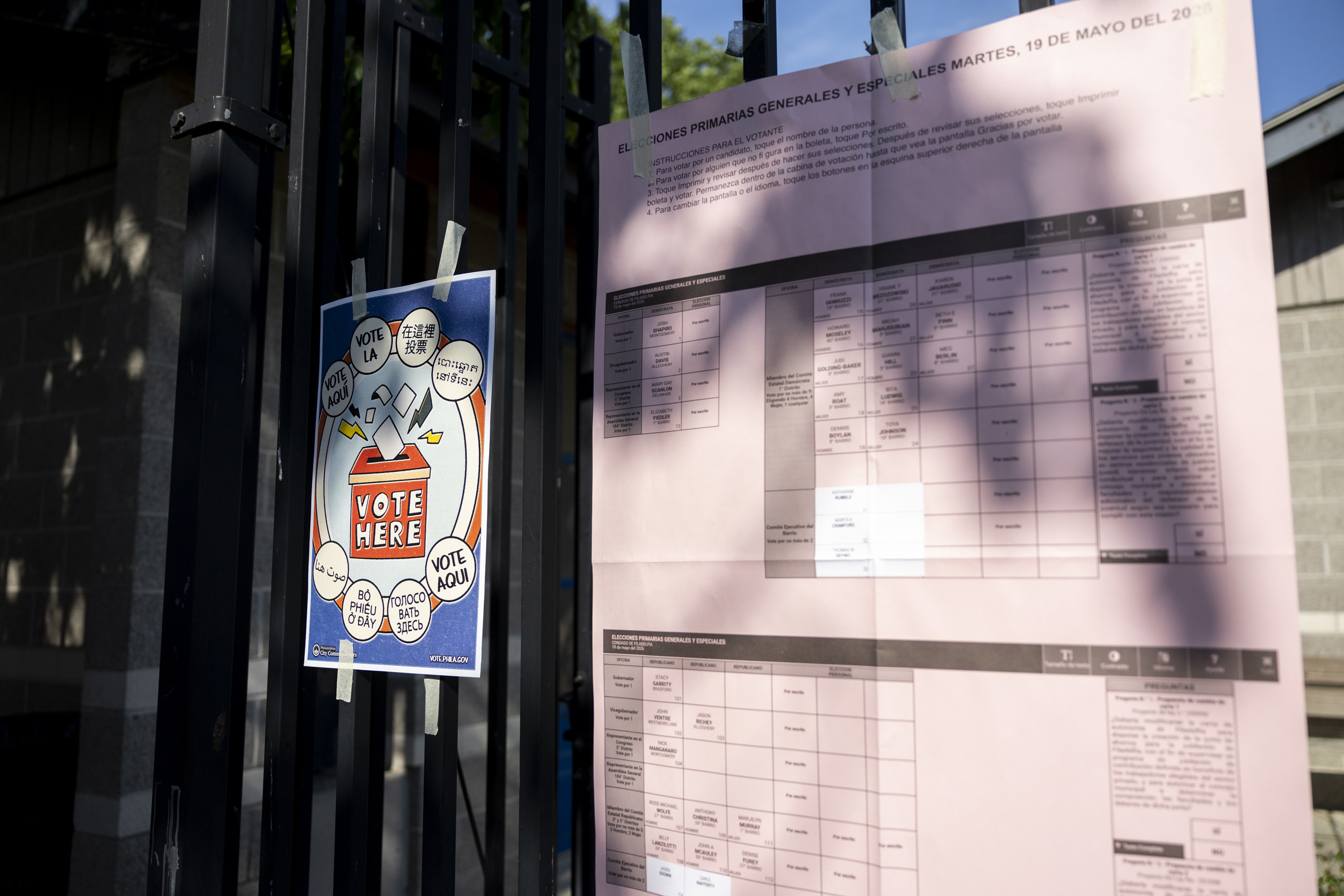
This summer, the U.S. Supreme Court overturned a federal limit on campaign spending by political parties, allowing them to spend freely on their chosen candidates while coordinating with their campaigns.
Philadelphia elections experts told The Inquirer they’re still figuring out how this decision could affect local races.
One possibility? In Philly, a majority of voters are registered Democrats, which means some hotly contested races are primaries pitting establishment Democrats against members of an insurgent, progressive wing of the party. With this new decision, the party-backed candidates could gain an edge.
During a crackdown against Venezuela’s opposition party in 2019, Jhon Perez Romero said he received an order he could not follow.
Perez Romero worked for Venezuela’s national intelligence agency, and his decision to defy his superiors led him to be branded a traitor.
Fearing he could be killed or thrown in jail for life, he fled his home country, eventually applying for asylum in the United States. He settled in York, Pa., and married a U.S. citizen.
Today, he sits in an immigration detention center in Central Pennsylvania, after being arrested during a routine check-in with ICE.
Councilmember Jeffery Young Jr. intends to move forward with a limited renovation of Cecil B. Moore Library in North Philly, despite community support and funding for a more comprehensive plan.
Fans packed roadsides across Philly yesterday for the first Philadelphia Cycling Classic in a decade, basking in the return of an event dubbed “the people’s race.”
🏋️♀️ Discovering. Forget beach bodies. Inquirer food writer Kiki Aranita found Philadelphia sushi chefs hit the gym — together — so they stay fit enough to hoist 280-pound tunas at work.
🚽 Covering. Reporter Jason Nark traveled to Dushore, Pa., to witness an unusual event commemorating the town’s founding: outhouse racing.
🚲 Considering. “The prospect of living without a car can seem a little like trying to swim without arms and legs,” writes Inquirer architecture critic Inga Saffron. Still, with the price of gas spiking, she shares tips for driving less.
🧩 Unscramble the anagram
Hint: He plays Anthony Bourdain in the new biopic Tony.
Cheers to Meg Berlin who correctly guessed Sunday’s anagram: Nikil Saval. The state senator recently told The Inquirer about his “perfect day” in the city, which involves buying fresh tortillas, strolling down Fabric Row, and playing a game at the Philadelphia Museum of Art inspired by the Surrealists.
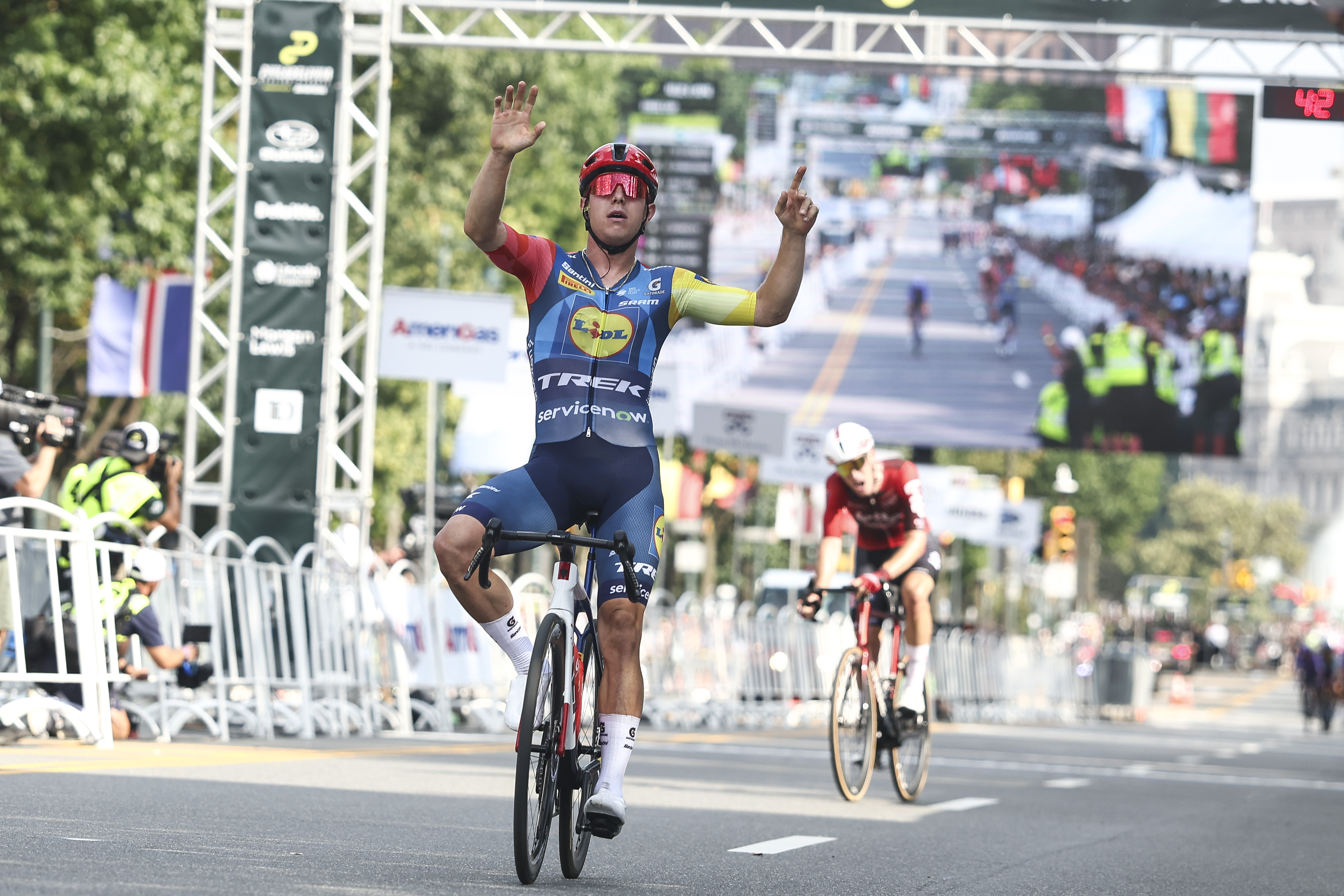
Tim Torn Teutenberg crosses the finish line to win the men’s race in the Philadelphia Cycling Classic on Sunday, Aug. 30, 2026 in Philadelphia.Monica Herndon / Staff Photographer
📬 Your ‘only in Philly’ story
This week’s “only in Philly” story comes from reader Michael Leibrandt, who describes the feeling of shared anticipation the approaching NFL season brings. It has been edited for length.
That Unmistakable, August Eagles Feeling.
… Each August, when the North America light begins to change, slowly drifting us from summer into fall — like most Philadelphians — that feeling finds me again. It builds during the anticipation of the August heat, escalates through Training Camp and the NFL Pre-season, and reaches a peak right before opening day and stays at that passionate level through the chill of February.
Being obsessed with the Eagles in Philadelphia isn’t a cause for therapy — but rather — a tradition handed down for nearly a century directly like a scene from Silver Lining’s Playbook. The great generation saw Steve Van Buren run in the snow to the team’s first NFL Championship in 1948, our Dads saw Chuck Bednarik stop Green Bay’s Jim Taylor in 1960, and we got to see Super Bowl wins in 2018 and 2025 (and almost another in 2023) … it all began in the heat of August.
When that feeling found us, once again.
Have an ‘only in Philly’ story to share? We’re looking for personal anecdotes about what makes you feel connected to the city. Email us a few sentences for a chance to be featured in the Monday edition of this newsletter.
👋 Enjoy the last day of August!
By submitting your written, visual, and/or audio contributions, you agree to The Inquirer’s Terms of Use, including the grant of rights in Section 10.
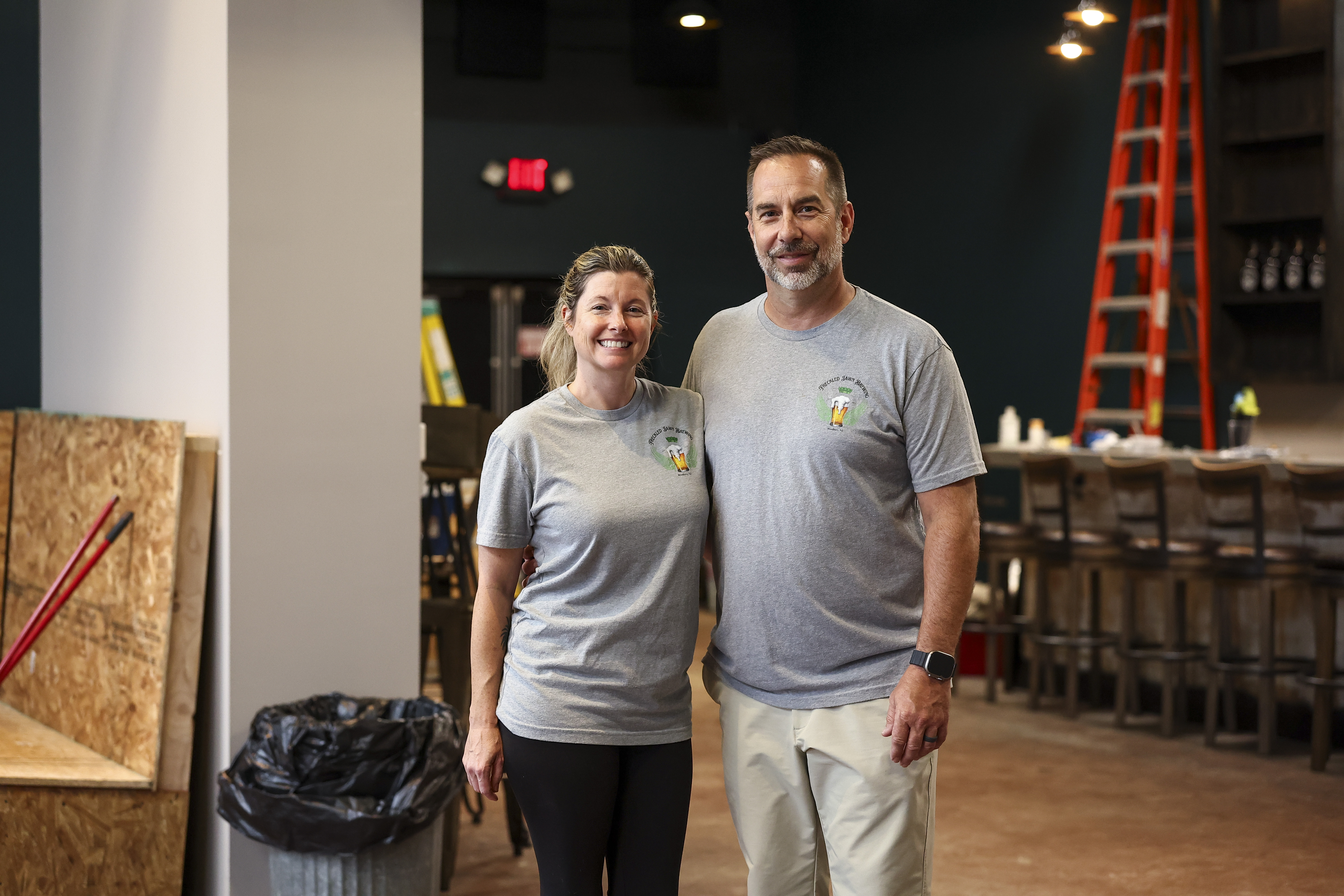
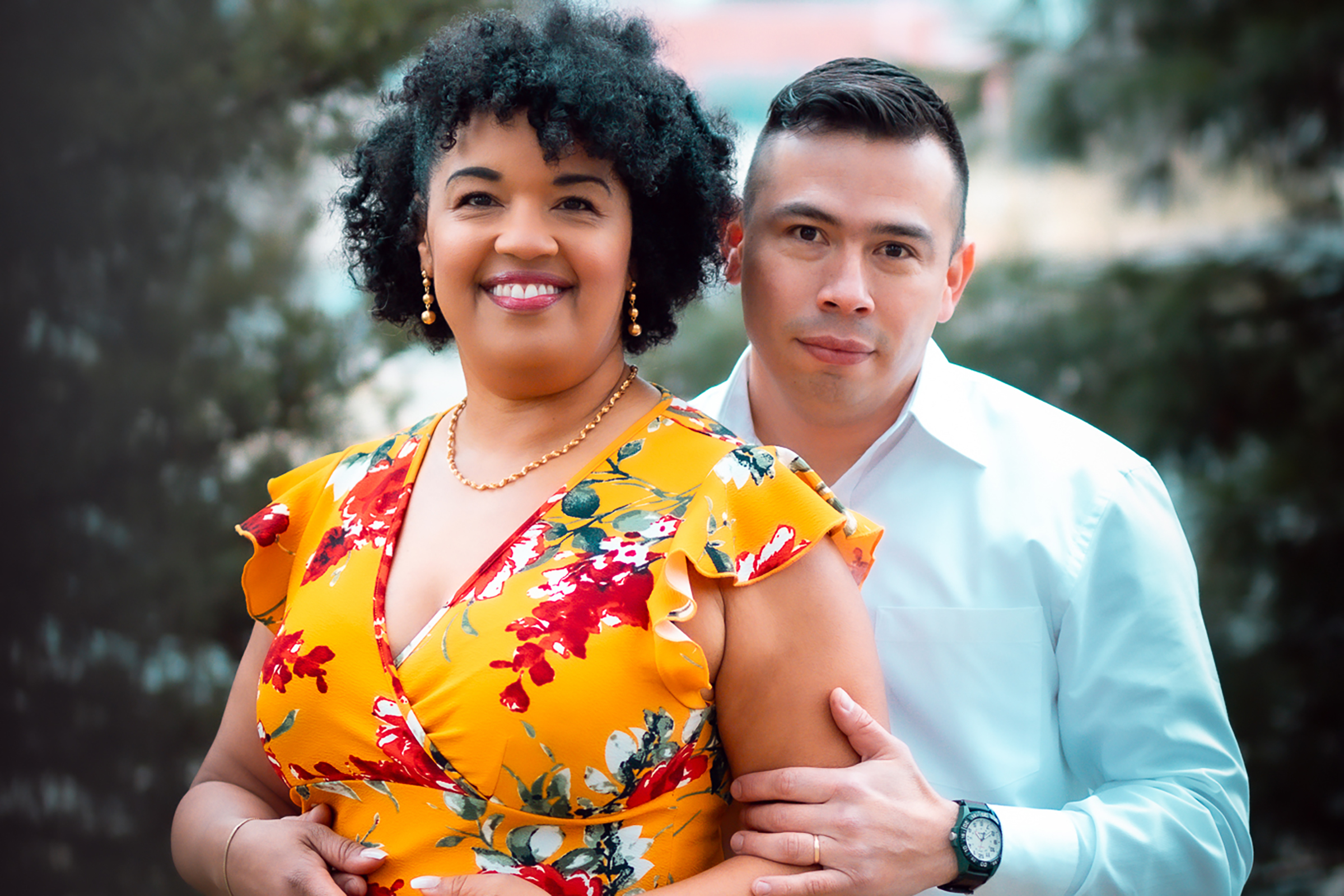
Woodbury residents John Wagner and Colleen Gibson never planned to own a brewery.
But when the husband-and-wife duo heard that their local drinking spot, Eight & Sand Beer Co. at 1003 N. Evergreen Ave., was up for sale last September, Wagner said they didn’t want to see a place so close to home shut down for good. They spoke with their neighbor, Woodbury’s former mayor Peg Hertrich, who connected them with the 10-year-old brewery’s owners.
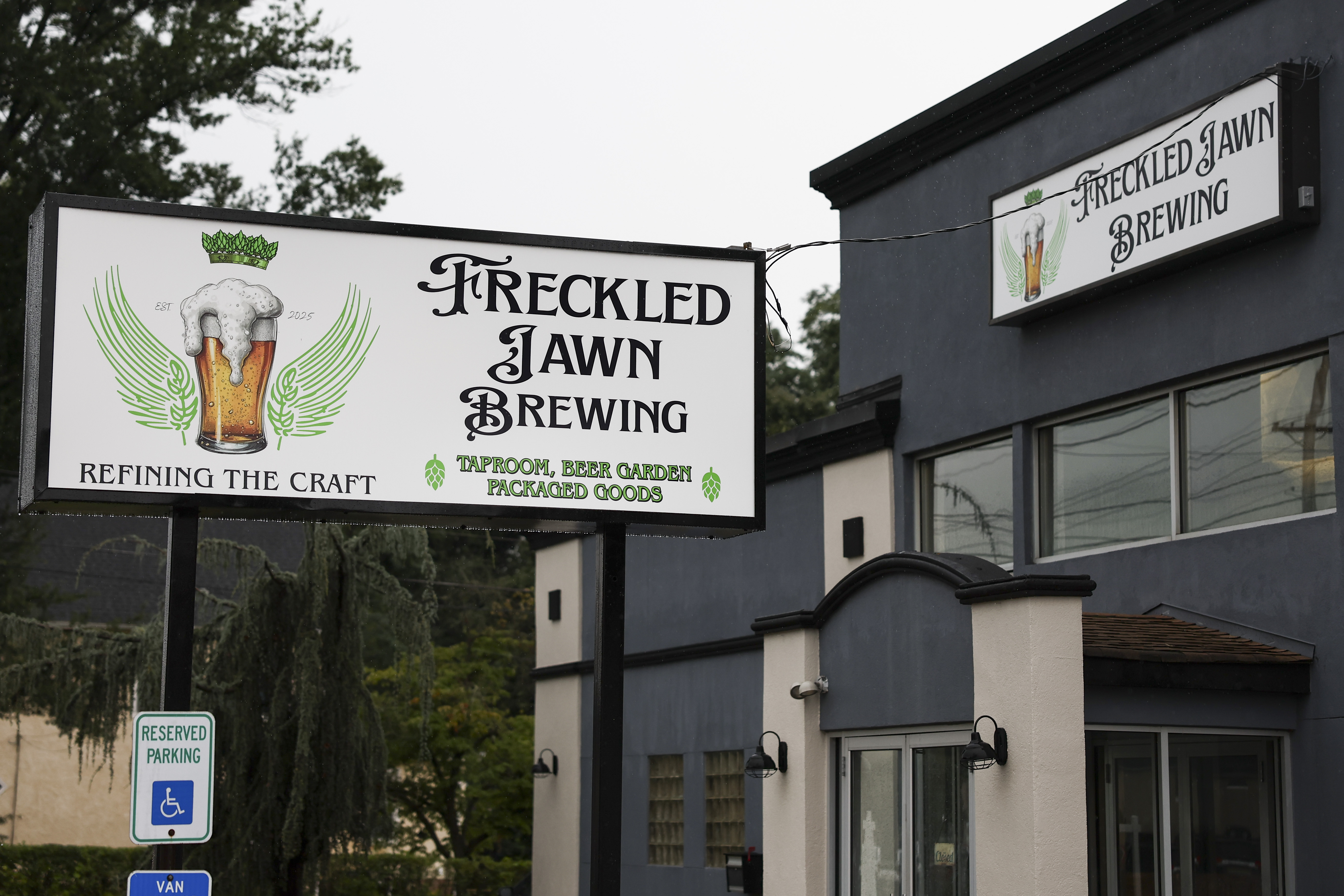
The exterior of the new Freckled Jawn Brewing on Thursday, Aug. 27, 2026 in Woodbury, NJ.Monica Herndon / Staff Photographer
“We never got an answer or a reason why not… so here we are,” Wagner, 53, said. “Fast forward almost a year later, and we’re getting ready to open.”
The couple, together for 12 years, officially closed on the 4,300-square-foot brewery (that includes the brewhouse) in Gloucester County in early August, months after Eight & Sand closed. The $730,000 sale, Wagner said, included brewery equipment and a vacant lot behind the building, which will help the couple expand the property’s beer garden come spring.
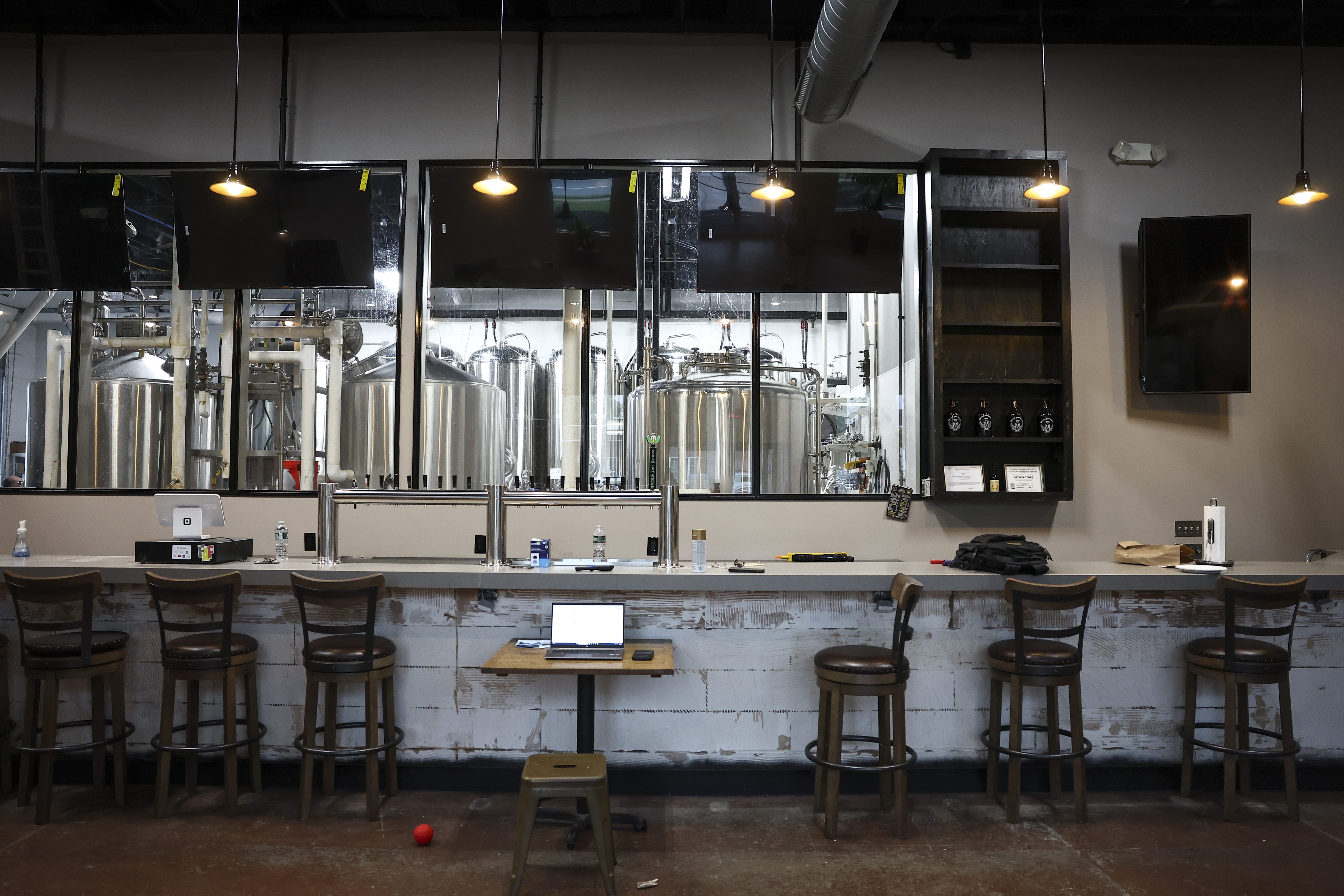
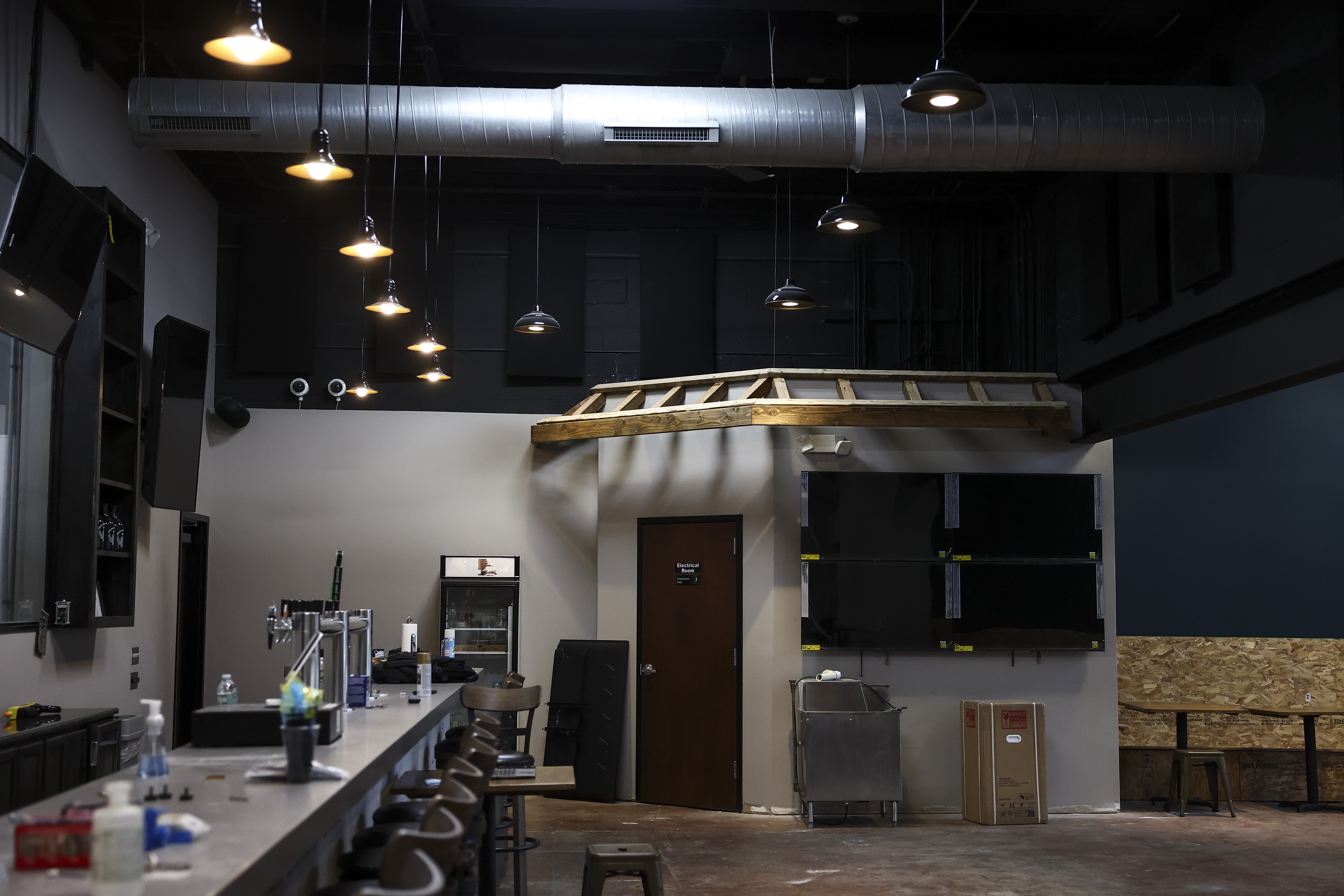
The in-progress interior of Freckled Jawn Brewing.Monica Herndon / Staff Photographer
Wagner and Gibson hope to open Freckled Jawn Brewing in the first week of October. An official date will come in the next couple of weeks, as they continue $40,000 of renovations and add new furniture to make the space feel less industrial and more inviting. Details will include leather and wood accents, an electric fireplace, dim lighting, and hopefully a touch of Philly sports.
“I just want the community to have somewhere they can go that they’re excited and proud to have in the neighborhood,” Wagner said.
The new brewery acquired Eight & Sand’s liquor license within 17 days of closing on the property, Wagner said, so Freckled Jawn has been clear to brew beer since Aug. 21.
The in-progress interior of Freckled Jawn Brewing on Aug. 27, 2026, in Woodbury, N.J.Monica Herndon / Staff Photographer
Three years ago, before their recent venture, the couple installed a basement bar in their South Jersey home for friends and family. They like to host St. Patrick’s Day parties.
They affectionately called the bar “Freckled Jawn Tavern,” Wagner’s 2 a.m. brainchild. The name was inspired by Gibson’s own freckles and the way she pronounces her husband’s name, John, as the multipurpose Philly term “Jawn,” a symptom of her Jersey accent. The new brewery kept it.
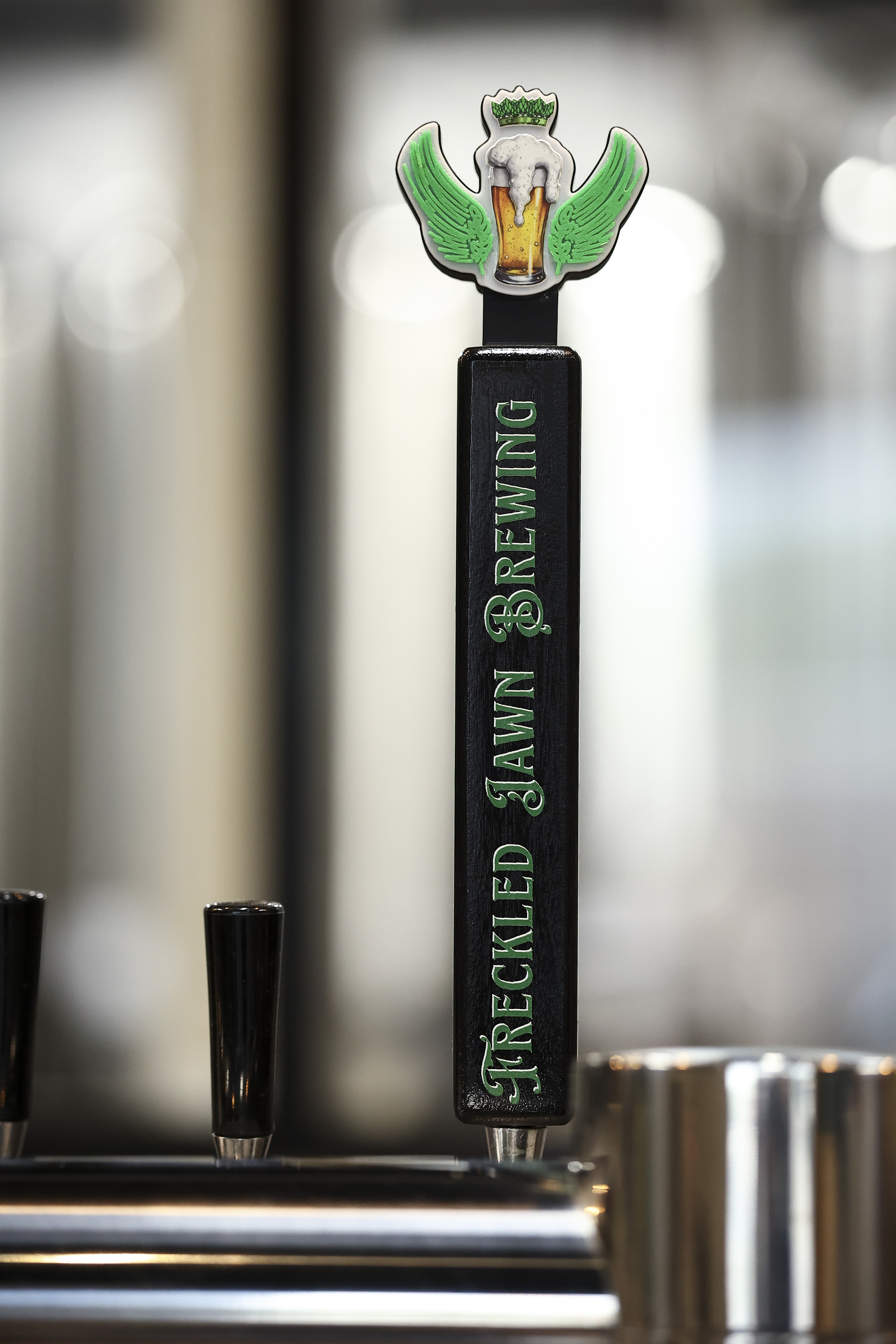
A Freckled Jawn Brewing tap in the in-progress brewery.Monica Herndon / Staff Photographer
“He calls me his ‘freckled jawn’ because I’m his anything and everything,” Gibson, 44, said.
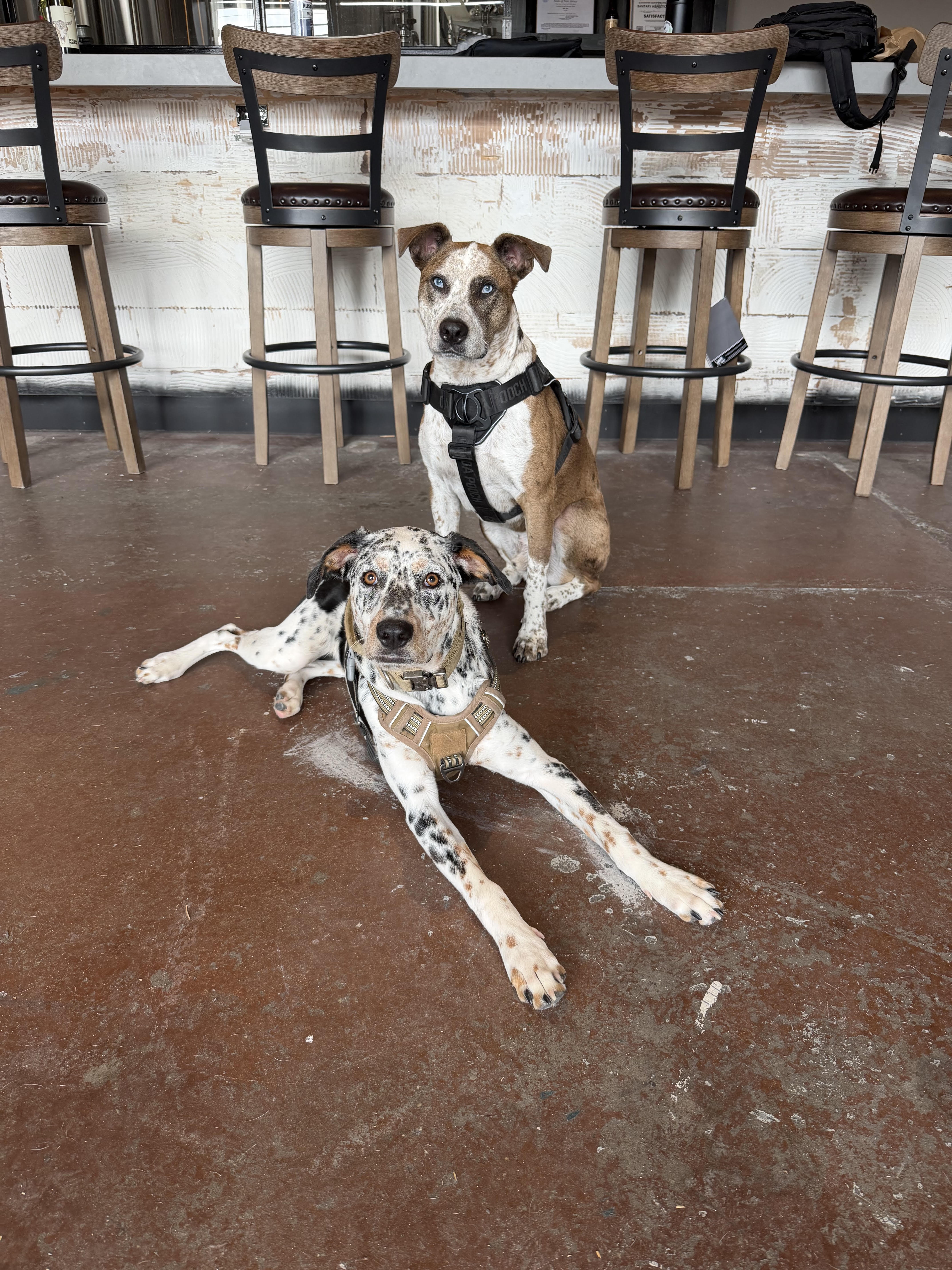
Plus, the couple has two freckled dogs, Neo and Trinity, adoptees named after The Matrix characters, who will be welcome in the brewery’s pet-friendly beer garden when it opens next year.
Neo (top) and Trinity (bottom) are the unofficial mascots of Freckled Jawn Brewing in Woodbury, Gloucester County, set to open in October 2026.Colleen Gibson
The brewery’s indoor tasting room has capacity for 77 people, while the expanded patio area will fit between 150 to 200 people, Wagner said.
Wagner and Gibson plan to run the brewery while continuing their jobs as managers in supply chain distribution and in transportation, respectively, in the Philly region, Gibson said. They’ll manage a staff under 10 to start, which will include some of their children, and head brewer Matt Karg.
The in-progress interior of Freckled Jawn Brewing.Monica Herndon / Staff Photographer
Karg, 37, moved to Philadelphia with his partner in July to be closer to family, and the head brewer position happened to open at the perfect time. He started brewing when he got out of the U.S. Coast Guard and went to North Carolina’s Asheville-Buncombe Technical Community College to learn brewing, distillation, and fermentation.
He previously brewed for Hickory Nut Gorge Brewery in Chimney Rock, North Carolina, before the spot was destroyed by Hurricane Helene in 2024, and then for Hi-Wire Brewing in Asheville. He said he’s eager to introduce people to Freckled Jawn’s Oktoberfest beer, made just in time for the fall opening.
“The New Jersey brewing scene is a close-knit community, which we’ve learned and loved. But everyone knows everyone,” Wagner said. “They almost know every brewer, so it’s exciting that nobody knows this guy.”
Ready for something new, Karg said his hope for the brewery is simple.
“Good beers and a good environment to sit and hang out for awhile,” he said.
The brewery started on an Oktoberfest lager, Wagner said, since it takes the longest to brew. Freckled Jawn will also serve a light lager, an IPA, a blonde ale, and a stout.
“We’ll continue to expand,” Wagner said. “But we don’t want to wait too long to open.”
Freckled Jawn Brewing’s hours will be 4 p.m. to 9 p.m., Monday through Thursday; noon to 10 p.m., Friday and Saturday; and noon to 7 p.m. on Sunday.
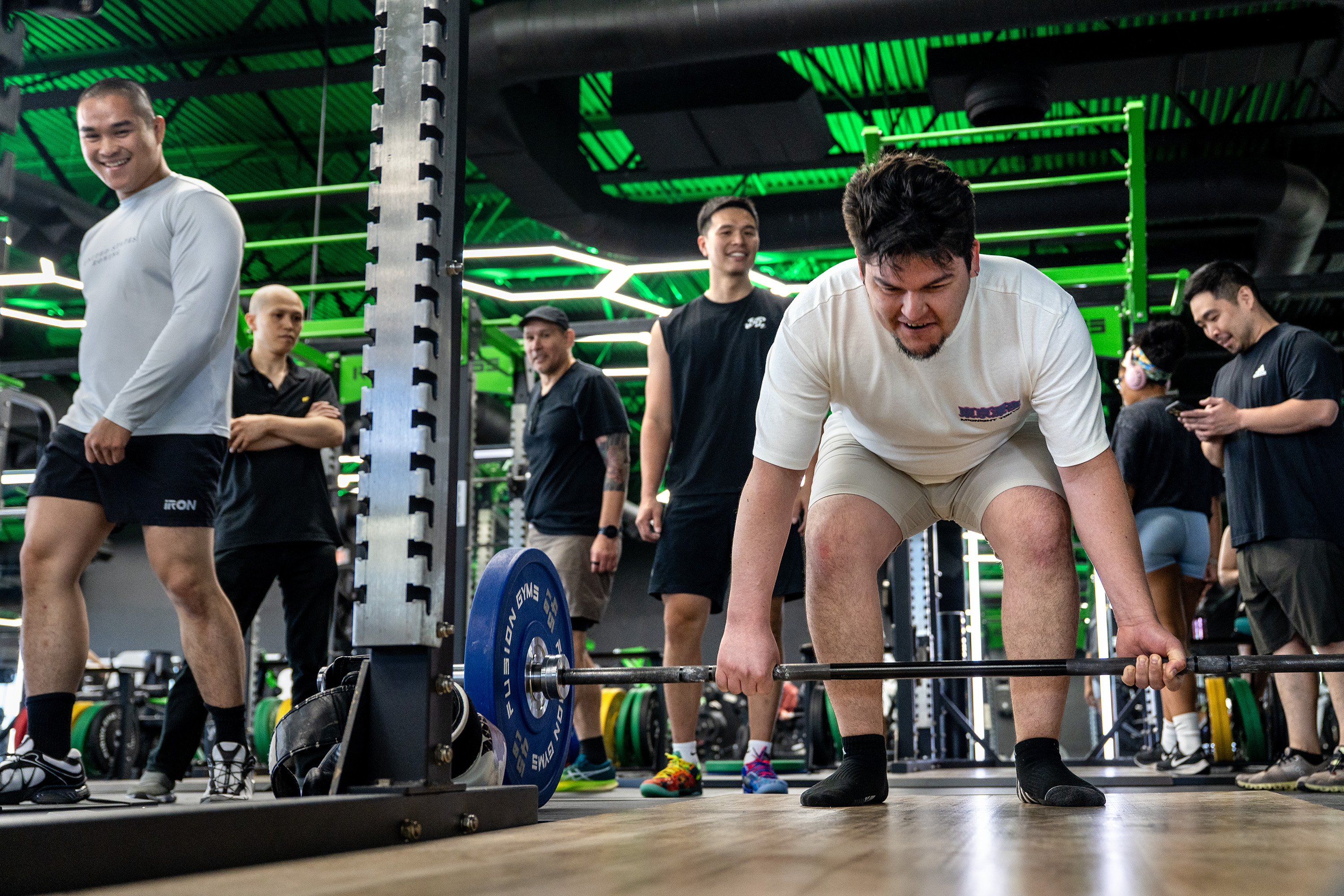
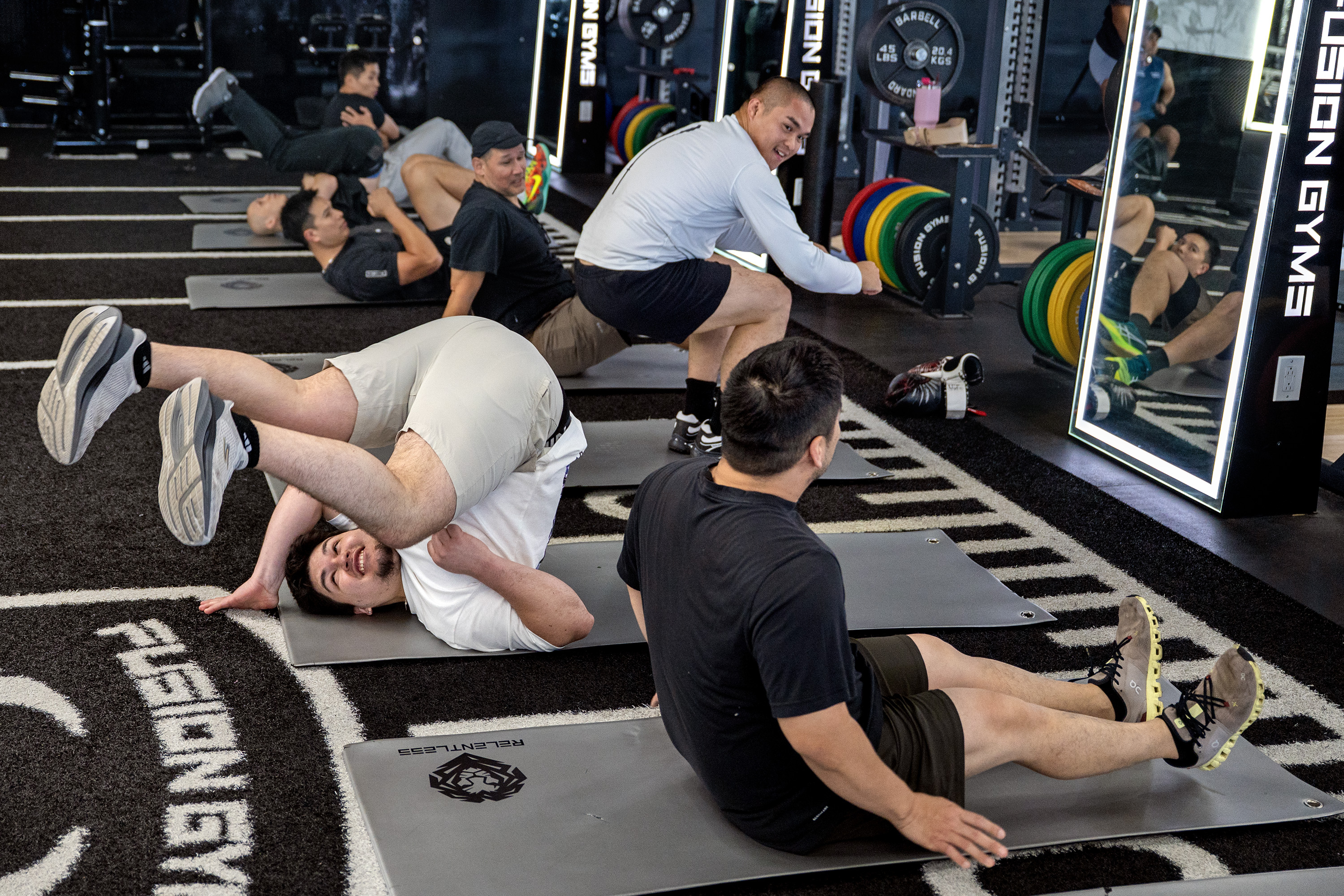
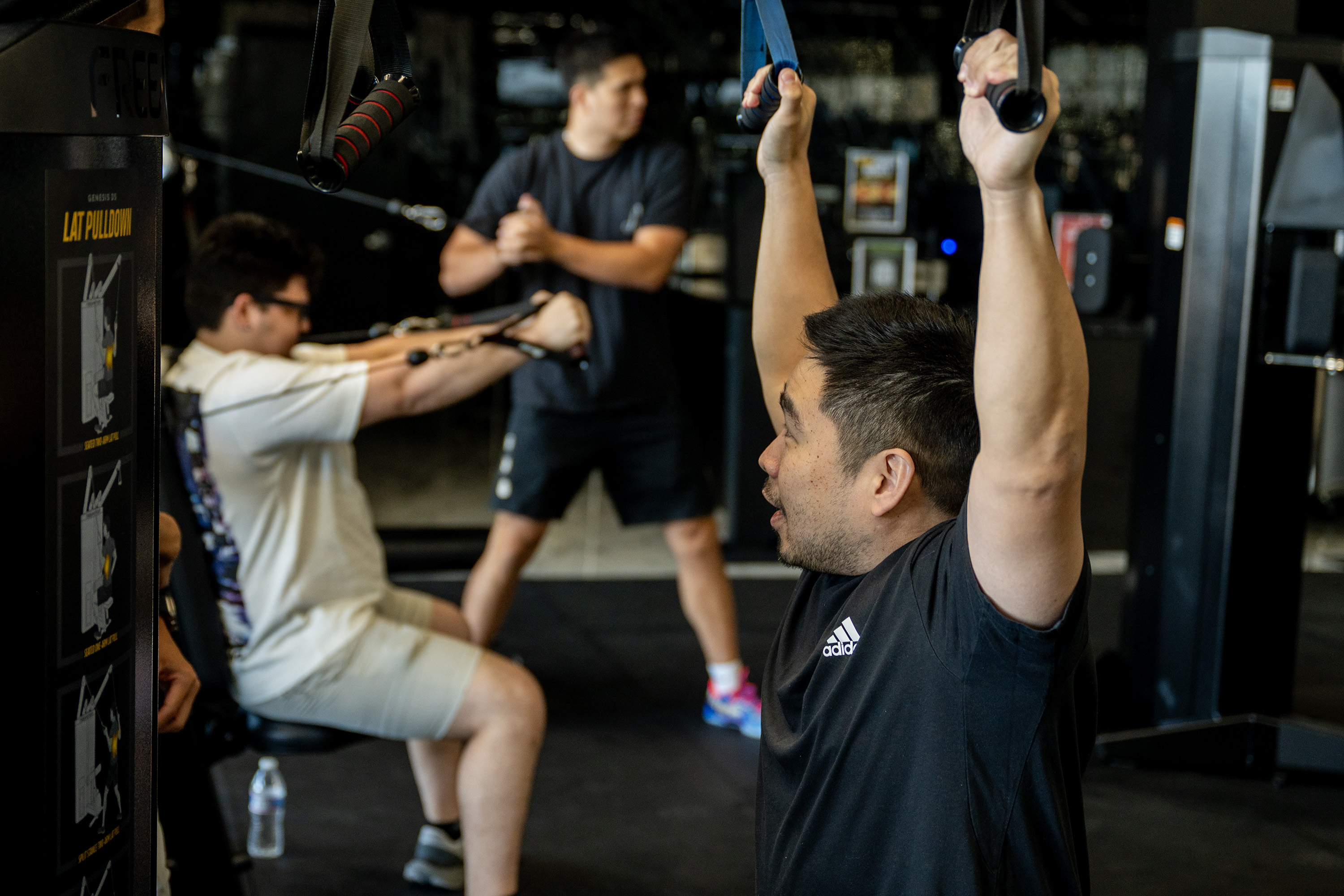
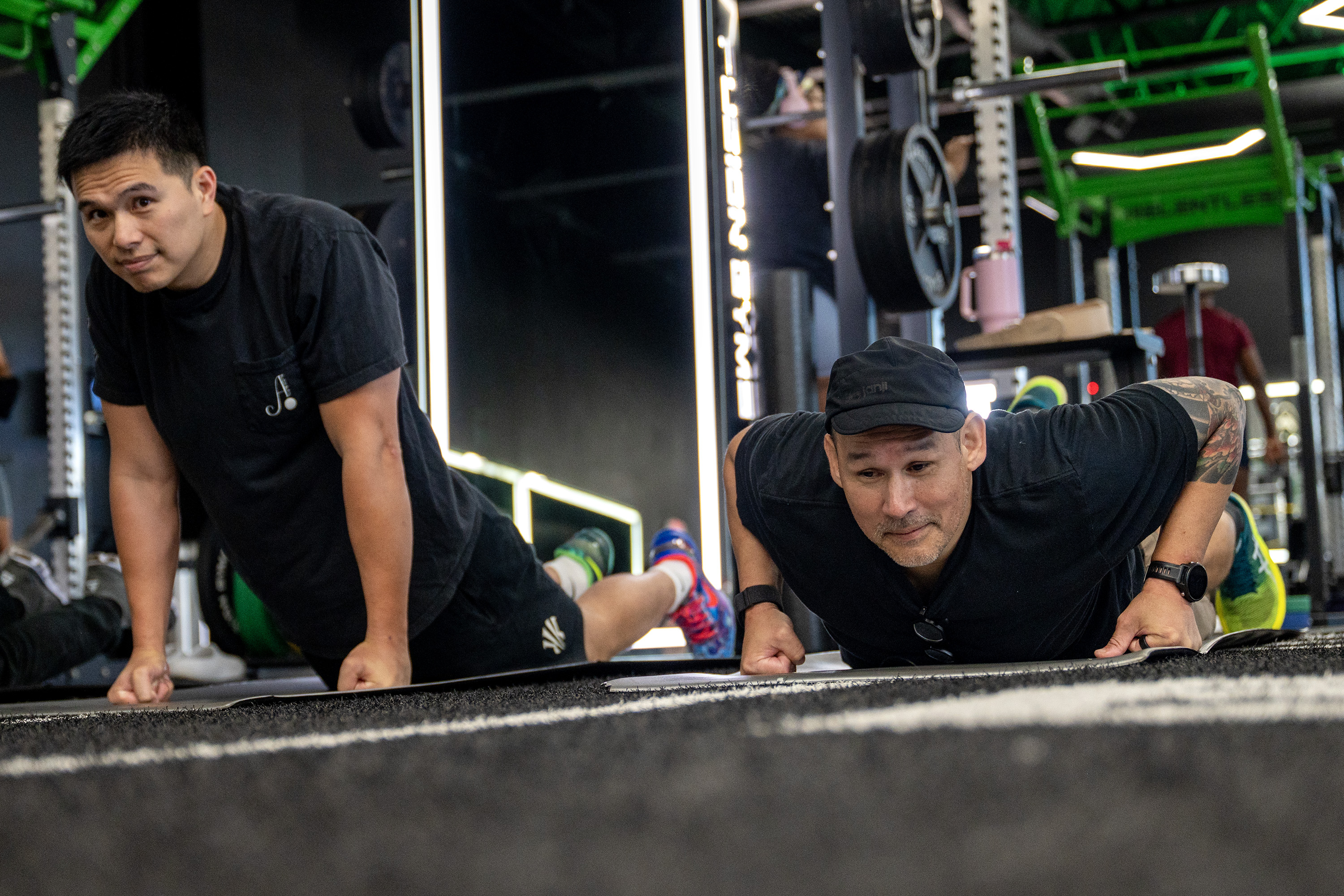
One of Fusion Gyms’ five locations is in a strip mall in deep South Philly, sandwiched between a children’s clothing shop and a wig store. In the neon-green glow of the gym’s bright lights, seven Philly sushi chefs stretched on rubber mats, preparing to lift weights set to be as heavy as a fully grown bluefin tuna.
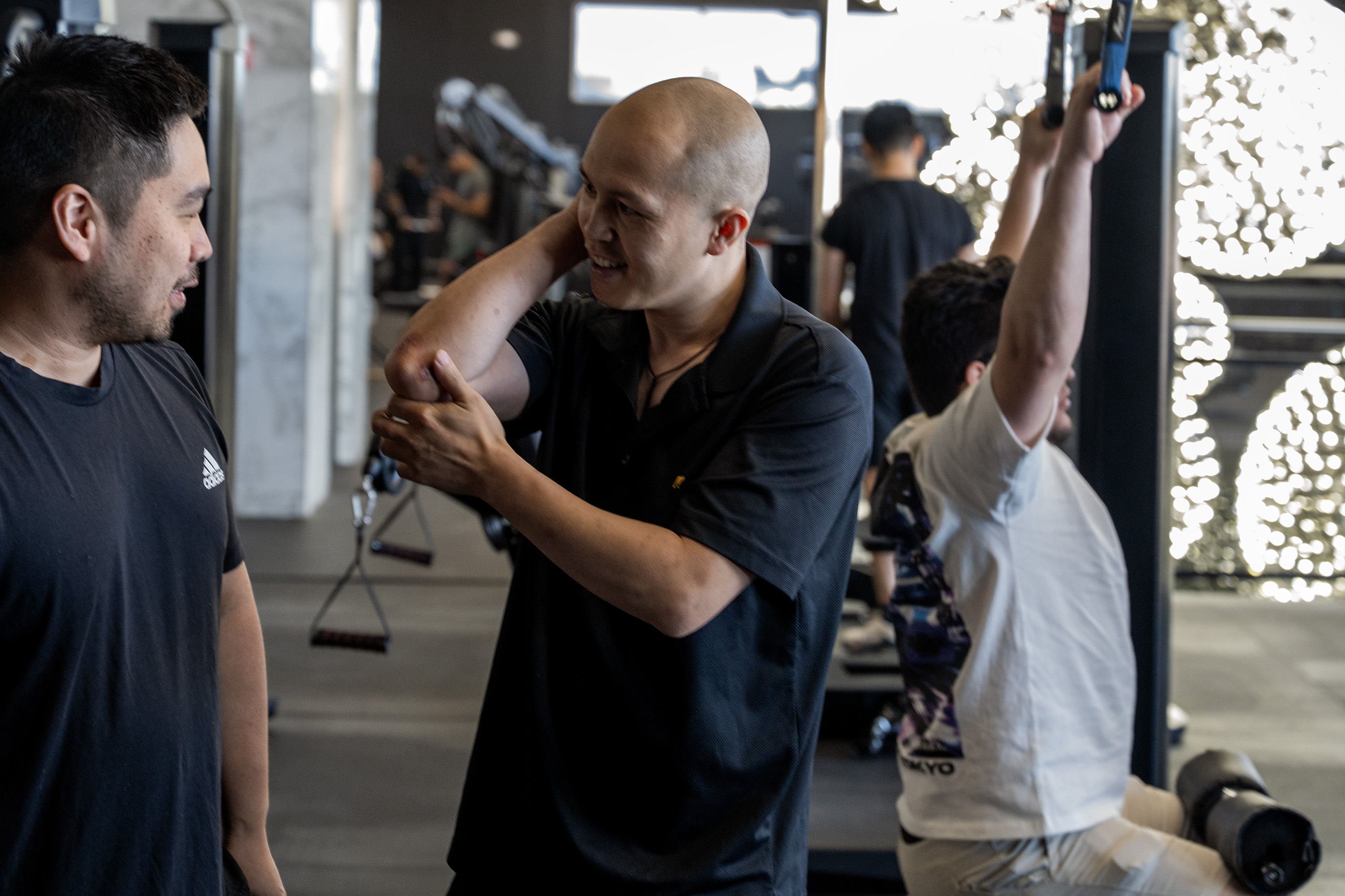
The crew — usually just four or five chefs — meets regularly on weekday mornings, loosely led by Albert Zheng, 34, and Dan Santana, 40, who co-own and run Kiku Sushi in South Philadelphia. (Zheng also owns Javelin in Fairmount and is a partner in the upscale Old City omakase restaurant Ogawa.)
Zheng and Santana are there every weekday. The other chefs drop in weekly or monthly. They exercise to stay fit for their physically demanding jobs, but also just to hang out with each other.
On a recent Tuesday morning, a larger-than-normal group gathered, including chefs from Kiku, Ogawa, and Javelin, as well as Kichi Omakase and Yanaga Kappo Izakaya, which houses the omakase counter 637 Sushi Club.
Sushi chefs work out at Fusion Gyms in South Philadelphia in August. They get together regularly, trading both exercise tips and fish intel. From front to back are Dan Santana; Carlos Wills, Joseph Nguyen, Kevin Yanaga, Albert Zhang, Cai Li, and Alex Jiang.Tom Gralish / Staff Photographer
They also count among their crew sushi chefs from Sagami and Nakama. “We’re less consistent in summer, when our kids are home from school,” Zheng said. “During the school year, we drop the kids off and meet at the gym right after.”
They work out for two, sometimes three hours at a stretch. “The third hour is usually our jaw workout,” joked Zheng. “And it takes longer when there are more people.”
As they wove through Fusion Gyms’ open-floor plan, they compared ingredient lists andtraded tips about good restaurants and where to get salmon for a better price. These are regular topics ofdiscussion, along with mise en place and sourcing.
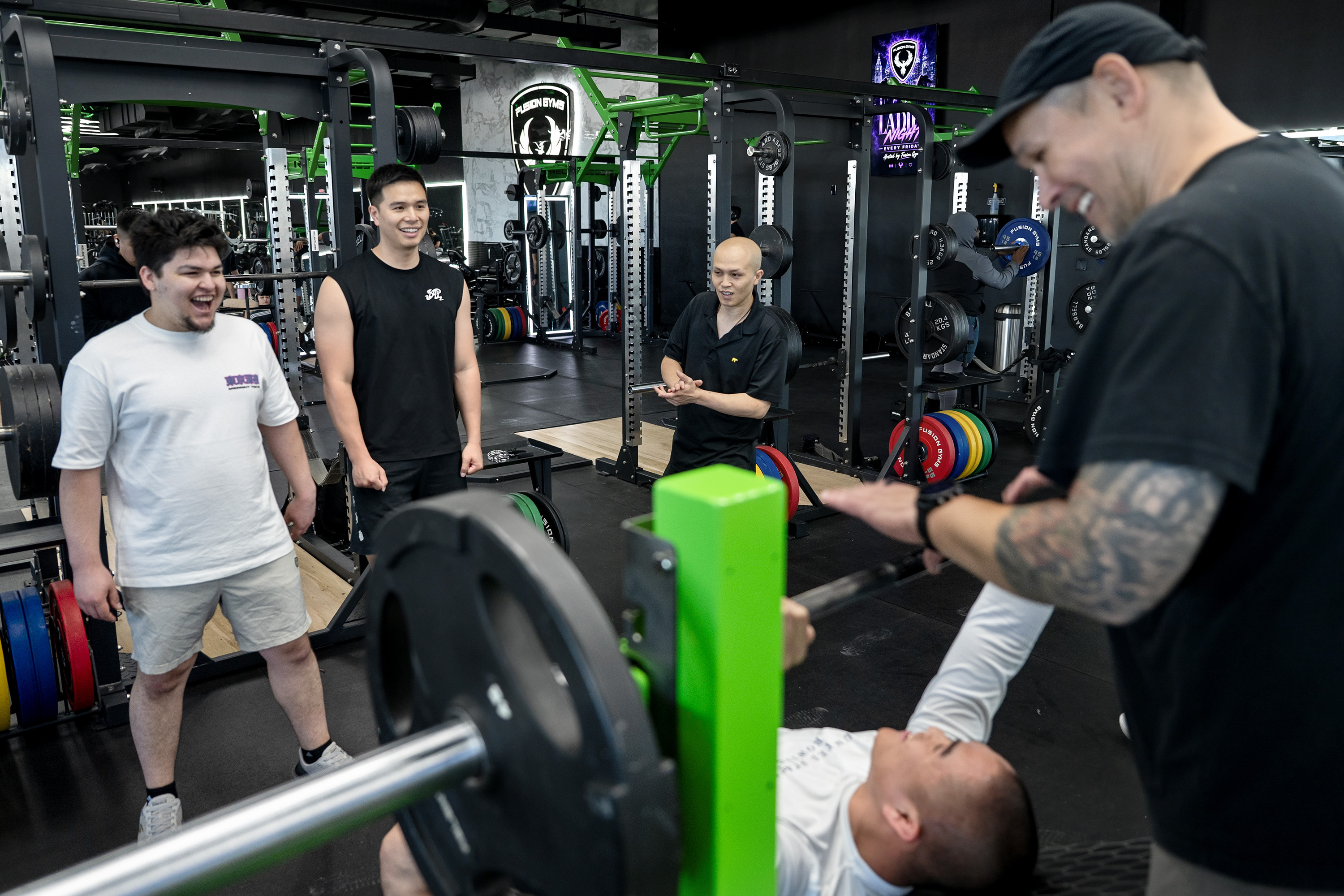
Sushi chefs work out at Fusion Gyms in South Philadelphia in August. They get together regularly, trading both exercise tips and fish intel. Clockwise from left: Carlos Wills, Albert Zheng, Alex Jiang, Kevin Yanaga, and Joseph Nguyen (on bench).Tom Gralish / Staff Photographer
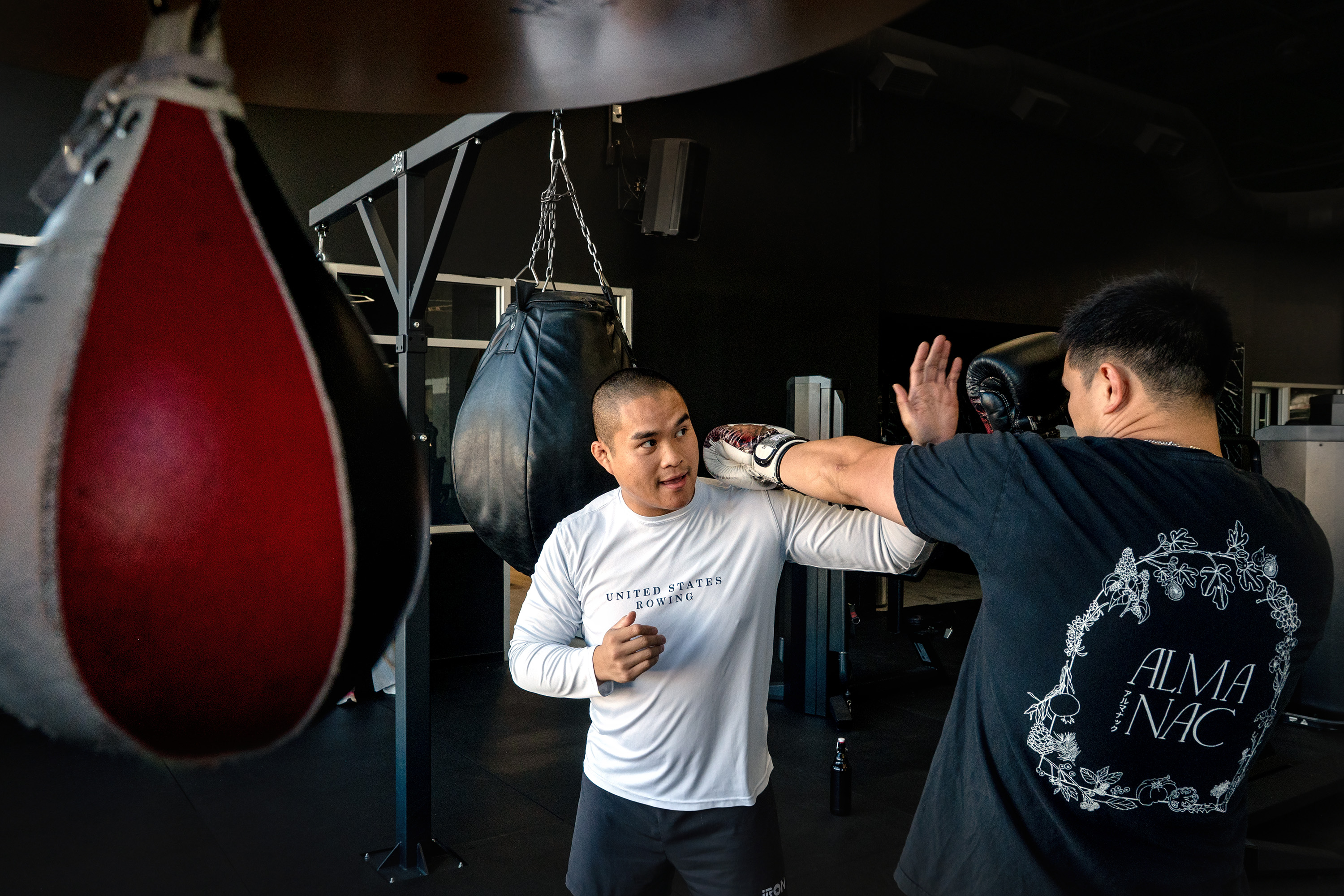
Kevin Yanaga, 55, and Joseph Nguyen, 27 — partners in 637 Sushi Club’s Oma Cafe, which pairs fish with coffee — coached the others through Muay Thai moves while trying to convince the other chefs to join them on a November trip to Vietnam for a three-day Oma Cafe pop-up. “I need help prepping,” said Yanaga.
Sushi chefs work out at Fusion Gyms in South Philadelphia. They get together regularly, trading both exercise tips and fish intel. From front to back are Dan Santana, Carlos Wills, and Albert Zheng.Tom Gralish / Staff Photographer
At one point, Carlos Wills, 26, who helms the omakase counter at Ogawa, pulled up a list of available ingredients sent by his buyer from Japan’s Toyosu Market, the world’s largest wholesale seafood market, and showed Yanaga the $500 tray of uni and $55 60-sheet packet of nori that he was considering ordering once he was done working out.
On this Tuesday, the chefs were also drinking some of the world’s most expensive coffee, brewed by Nguyen. “It’s Orange Geisha and it’s expensive because it’s so rare and it takes half a pound of beans for me to brew one bottle,” explained Nguyen, who also owns and operates the Coffee Connoisseur Club. The Instagram-based subscription club sources beans from Nguyen’s plots in Vietnam and small farmers in South America. “This is a $250 bottle of coffee,” Yanaga interjected.
“I’m getting kumquat, jasmine, and orange notes coming from it,” said Nguyen. “I like saba [mackerel] paired with this, as the fattiness of it pairs with the bright citrusy notes. Saba with a little bit of wasabi.”
There was no saba in sight as Nguyen held a punching bag while Zheng jabbed, gently coaxing him on where to aim his punches. He did the same for Alex Jiang, 42, from Kichi Omakase. “We have a heavy jab over here!” he proclaimed.
Sushi chefs Joseph Nguyen (left) and Albert Zheng work on boxing at Fusion Gyms.Tom Gralish / Staff Photographer
When the crew moved on to bench-pressing, Wills said, “You can tell people this is how I prepare to lift a tuna.”
As Wills sat back on the weight bench and lifted the bar, he said, “This is a 60-pound tuna.”
The sushi chefs spot one another and cheer each other on: “One more! Half a tuna more! You’re very strong!”
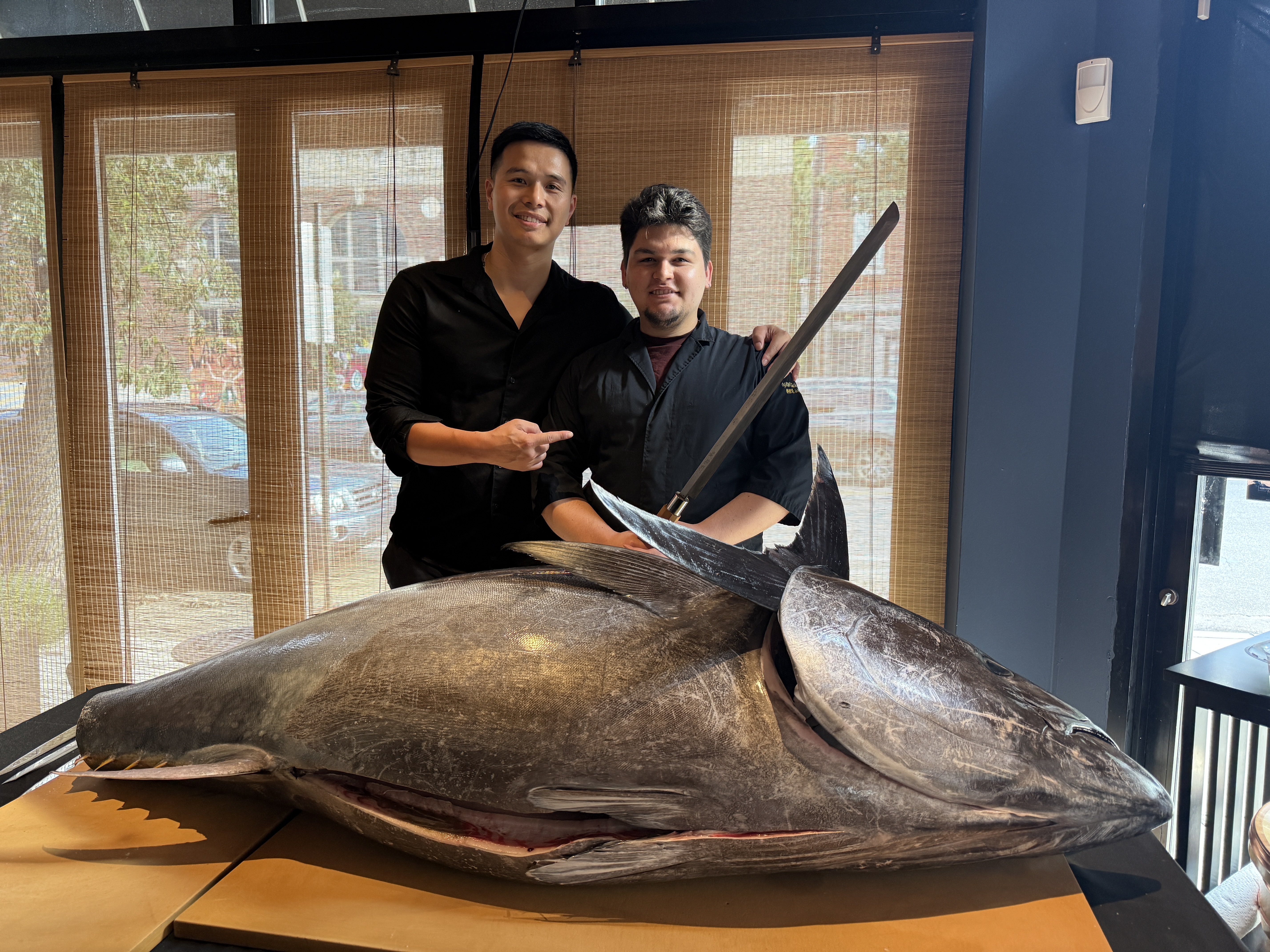
“I thought about bench-pressing the 281-pound tuna we brought into Javelin for the tuna breakdown last week,” said Zheng. “But it was so slippery.”
Sushi chefs like Albert Zheng and Carlos Wills say they work out to stay in shape for lifting fish like this 281-pound Spanish bluefin tuna at Javelin in Fairmount.Kiki Aranita / Staff /
“When we get a tuna like that, it takes eight of us to lift it,” said Yanaga.
“We got a Spanish bluefin last week,” said Wills. “It was $23 per pound, so just over $6,600. Pretty cheap. The Japanese ones are $31 per pound right now.”
“Who wants to do a whole tuna?” asked Zheng as he and Santana added more weights on to a bar for a round of dead lifts.
Nguyen steps up and dead lifts 315 pounds. “We’re hiring him for the next tuna breakdown,” said Wills.
Sushi chefs (from left) Dan Santana, Alex Jiang, and Carlos Wills work out at Fusion Gyms.Tom Gralish / Staff PhotographerSushi chefs Albert Zheng (left) and Kevin Yanaga work on planks at Fusion Gyms in South Philadelphia.Tom Gralish / Staff Photographer
In fact, the chefs do often join up for tuna cuttings, helping one another out even if they aren’t in business together.
But mostly, the crew keeps one another accountable at the gym, welcoming each other even if weeks or months pass between workouts.
Once the coffee was consumed and their muscles were spent, the chefs dashed off in different directions, to their respective sushi counters.
BOSTON — Closure is a fickle concept, whether in relationships, friendships and even sports fandom.
When something ends, closure isn’t guaranteed, and people often have to move on from traumatic or life-altering moments without it.
The deep bond between a city, its people, and its sports heroes is a phenomenon with few parallels in life, especially those who have won championships and been as ingrained in their communities as Jaylen Brown was for 10 years with the Boston Celtics.
But rarely do those connections end without some sort of breakup, which can lead to hurt feelings and confusion. As Brown said recently, “I just threw my phone across the room” when he heard the Celtics were trading him to Philadelphia for Paul George and draft picks.
His life and the lives of Celtics fans all over Boston became a lot different, and the trajectory of his new franchise changed, since that move also led LeBron James to pick the Sixers as his next and potentially final basketball home.
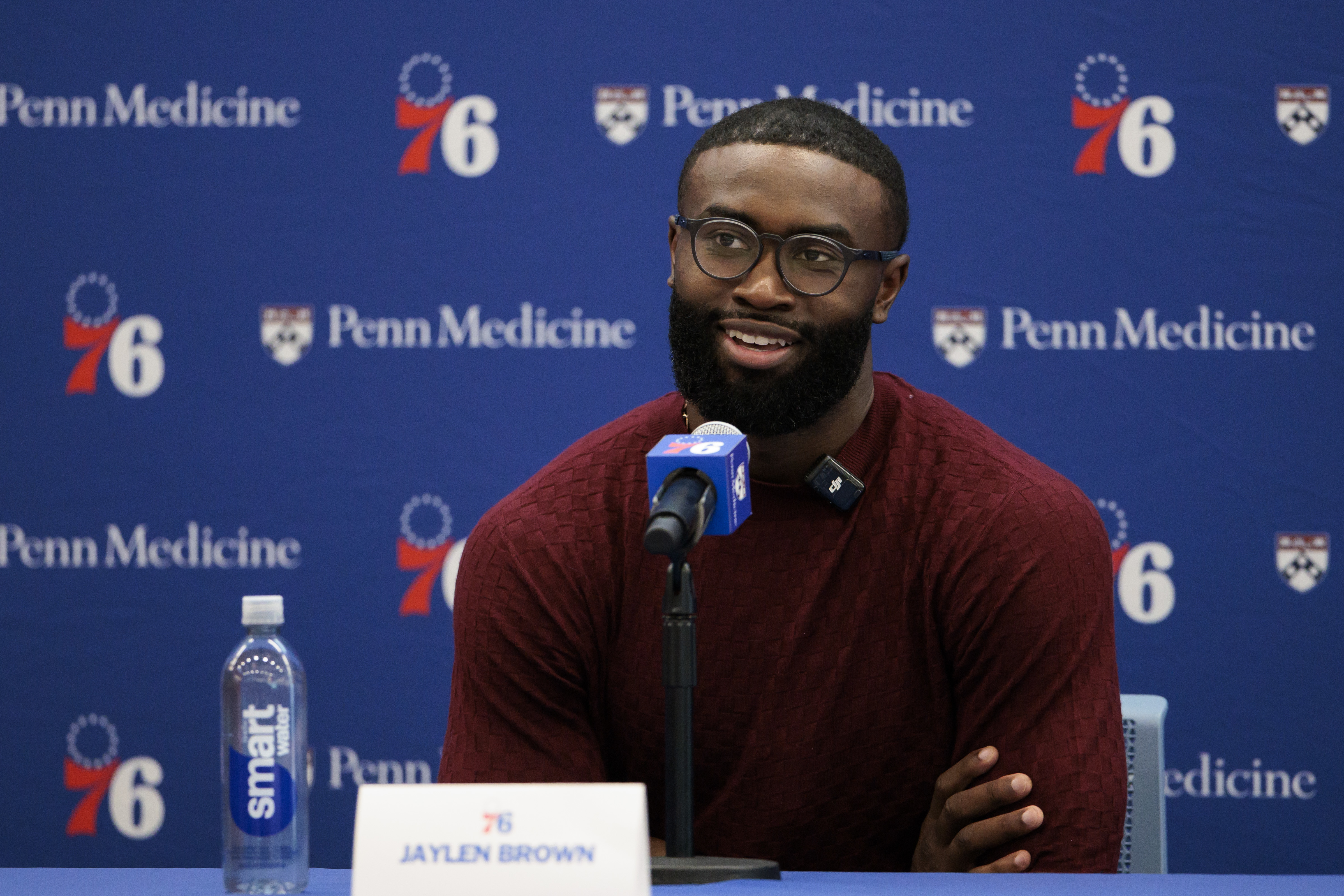
But before Brown officially gets going in Philadelphia when training camp starts with Media Day on Sept. 28, he had one bit of business to take care of in Boston — saying thank you. Brown did that Sunday with a block party and concert in Boston Common, which he titled the 741 Frequency Fest. He didn’t say much — he only addressed the crowd briefly two times — and he joined rapper A$AP Ferg for a performance of their collaboration “Just Do It.”
“I ain’t got too much to say because I’m at a loss for words,” Brown said. “I’m seeing all these people out here and I love each and every one of y’all. … I’ve been in this city for close to 10 years. I said I was gonna go to war for this city when I first got here.”
To Brown, that extended beyond the court, with city and state officials coming to offer Brown the key to the city and a commemorative street sign that said “Jaylen Brown Way.”
“Every minute that he has, he poured into the city,” Boston mayor Michelle Wu said. “We’re never going to let you forget us.”
Upon entering the Common, a large poster said “Thank you, Jaylen. Love, the city of Boston.” Fans could take a marker and sign the wall or write a message to Brown.
Here in Boston today, writing about the block party Jaylen Brown is throwing for the city. pic.twitter.com/SngbNaL1um
One such fan was Roberta Hayes-Bautista, a California transplant who has lived in Boston for over two decades and cited Brown’s commitment to the community, specifically with significant amounts of his money, as why Brown is “one in a million.”
“Gut punch,” Hayes-Bautista said of the trade. “I don’t think you’ll ever be able to replace him. This right here, who’s ever done this before? Nobody.”
Hayes-Bautista was referring to the block party in front of her. For most of the afternoon, it was a relaxing day in the park, with a DJ providing music from the stage where Brown and artists like Lil Jon and Lil Baby would eventually perform. The stage also displayed the Larry O’Brien Trophy Brown won with Boston in 2024, along with his Eastern Conference Finals and NBA Finals MVP trophies.
Fans stood behind barricades about 15-20 feet from the stage from around 1:30 p.m. waiting for Brown to come out. Food trucks lined the pathways, and there were a few different basketball games around the Common. In the meantime, fans flowed in to take advantage of a book bag giveaway, haircuts, and manicures. Cloud cover hid the sun and made for a comfortable afternoon.
That allowed Mary Vincent, who said she is a Celtics season-ticket holder, to come out with her family and greyhound Sangria, who was dressed up in a Celtics shirt. Vincent wanted to come out and support Brown even as she is recovering from a knee replacement.
She said she plans on giving up her season tickets and wasn’t buying the Celtics’ reasoning for trading Brown. Celtics President Brad Stevens said multiple times last month that trading Brown would give the team more “optionality” into the future. That wasn’t much of as an excuse to Vincent and the thousands of people who showed up Sunday.
“There was nothing wrong with the team. I think we had another possibility of winning another championship,” Vincent said. “I thought we would keep Jaylen Brown and Jayson Tatum through their whole careers. It was such a shock to me. I was grief-stricken.”
Hence why Brown felt a unique day like Sunday was necessary, a part of the processing of the trade for him and for fans.
Brown showed up to the event around 4 p.m., and mostly stayed quartered off from the crowds either on stage or behind it, except for one stretch of time when he walked down Charles Street as fans followed behind him. As the event wrapped up around 6:15 p.m., local and state officials made presentations to Brown, who was moved by the gestures.
“When I first got to Boston, none of this I imagined,” Brown said. “My grandma and my mom taught me to just dive into my community, so I was expecting nothing like this.”
A couple of the people who spoke on stage said they hoped Brown might make this party a regular thing. But those words sounded like people stating that they’ll still hang out after a break up, knowing that likely won’t be the case. There will still be more finality to Brown’s departure the first time he sets foot on the TD Garden floor in a regular-season game wearing a Sixers jersey. That day, slated for Jan. 21, is still about five months away. It won’t be easy for anyone involved.
“I don’t even know what to say,” Brown said. “I don’t do stuff for recognition, but I’m so grateful it’s so many people here. The feeling is mutual. Just know, Boston, I love you.”
Thinking our way through the least climactic day on the NFL schedule. . .
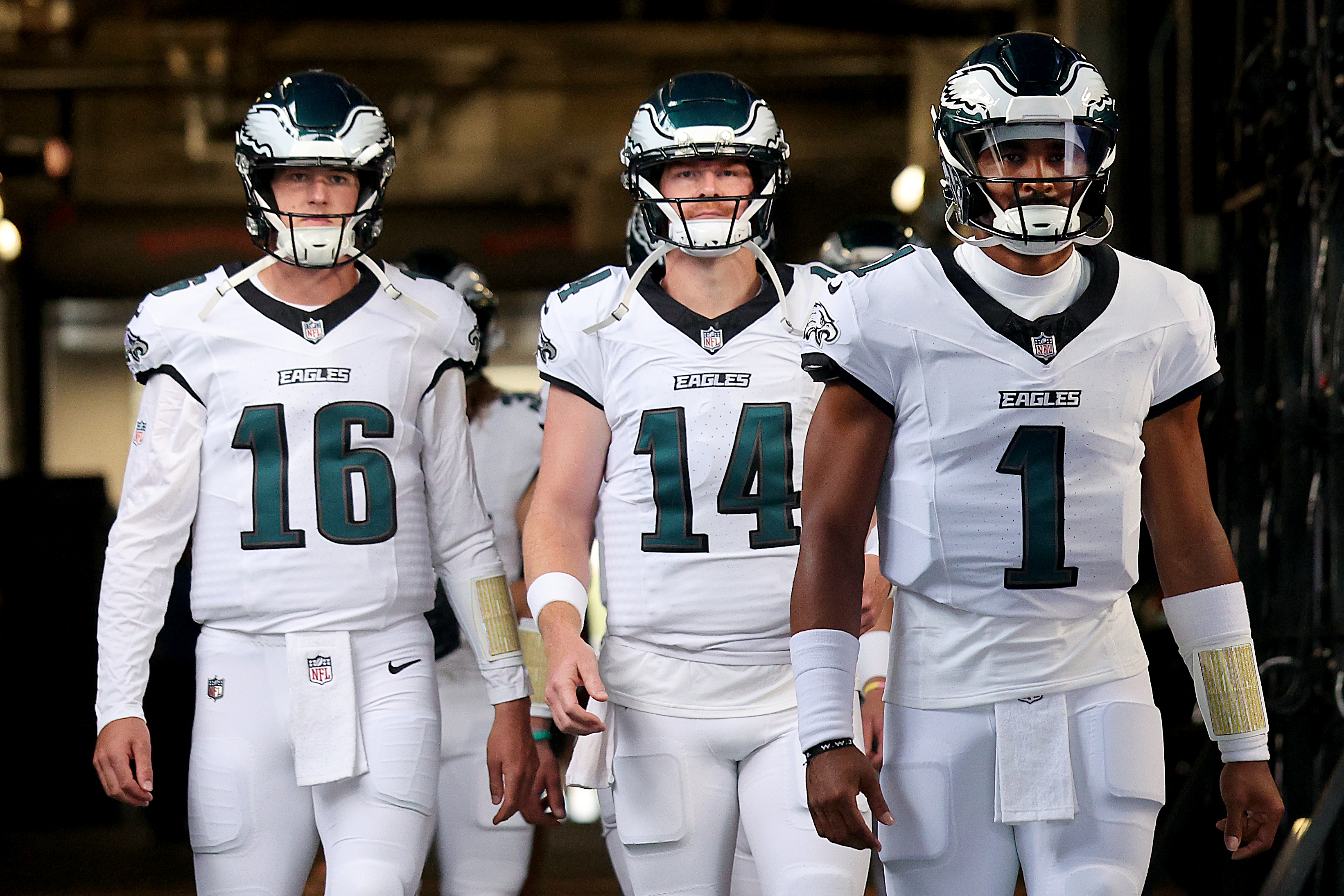
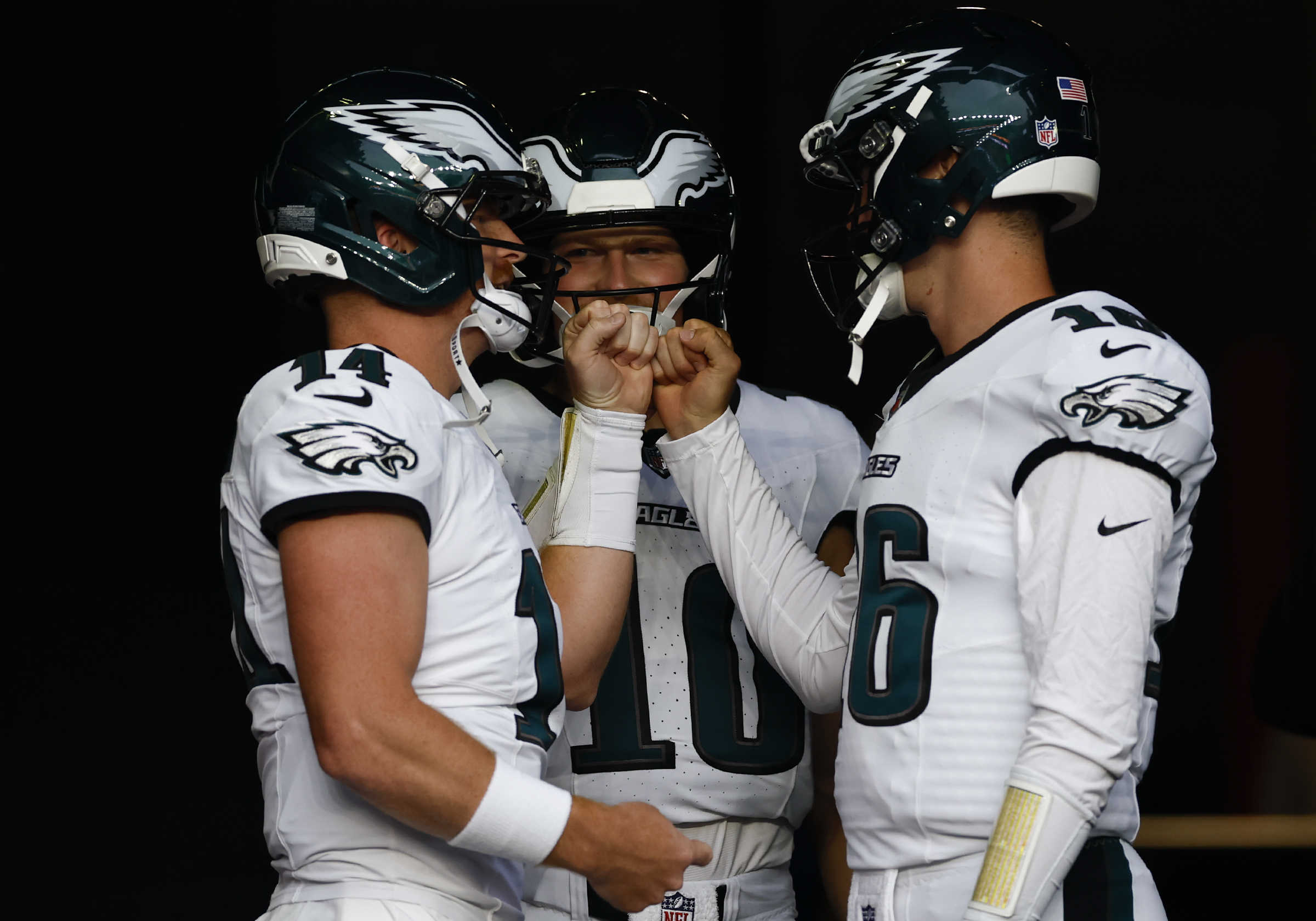
The Eagles backup QB discourse has been a thrill ride over the last couple of years. We’ve gone from nothing-less-than-a-second-round-pick-for-Tanner-McKee to the Eagles trading for Andy Dalton to both-these-guys-stink to the Eagles keeping both quarterbacks plus rookie Cole Payton on their initial 53-man roster.
The only meaningful takeaway isn’t really a takeaway at all. More so, it’s a reminder of the longest-standing conventional wisdom in the game. In a league where half the teams don’t have a capable starting quarterback, nearly every team is going to have worse than that as its backup quarterback. It’s silly to suggest that the Eagles could have a better backup quarterback if only they looked outside of McKee or Dalton. What you see is what you get.
The devil is in the definition, as always. Gardner Minshew and Kenny Pickett were at the extreme upper end of capability among backups. Minshew has posted a .500 or better record in both of his seasons where he made at least 12 starts. Pickett (somehow) is 16-11 in his career. Yet, in their combined three seasons as Jalen Hurts’ backup, the Eagles lost three of the four games in which they attempted at least 16 passes.
Virtually every team in the NFL will be screwed if its starting quarterback goes down for an extended period of time. The only somewhat reliable exceptions are those teams that have invested significant draft capital or significant cap dollars in the No. 2 man on the depth chart. Nick Foles was an outlier. Even then, the Eagles were paying him more than triple what they are paying McKee and Dalton.
Eagles quarterbacks (from left to right) Andy Dalton, Cole Payton and Tanner McKee are all on the roster … for now. Yong Kim / Staff Photographer
The Eagles are at a point in their competitive and financial cycle where they can’t afford to be throwing around that Chase Daniel cheddar. The trade for Dalton was a workaround somewhat similar to the trade for Pickett. He is in the second-year of a two-year, $8 million extension, but the Eagles are responsible for a fraction of it.
In a best-case scenario, they get a backup QB who has shown the ability to, at the very least, give a team a chance at remaining relevant through a short- or medium-term absence. Dalton is just 2-6 in his starts since going 6-8 as a 35-year-old with the Saints in 2022.
But all of those starts were in relief of Bryce Young, who is just 14-30 himself over that span. That would be the equivalent of an additional three to four wins over 17 games compared to Dalton. Such a pace could be the difference between sneaking into the playoffs and giving up on the season for a team like the Eagles, who are expected to win 10-12 games with an upside well beyond that.
The actual calculus of Dalton versus McKee versus keeping both is far too marginal to be conveyed in an expository sentence. At such a minuscule level, the expected value between the lines must be compared to a variety of factors outside of the lines, including the expected value in practice or the film room of Player X versus Player Y.
That the Eagles have decided, at least for the moment, to keep both Dalton and McKee speaks to their regard for both. Ultimately, that regard, and the factors that compose it, will need to be weighted against the value of the additional roster spot that one of them will occupy. The real question isn’t Dalton versus McKee. It’s the other versus the lineman or defensive back or linebacker who isn’t currently on the roster because of them.
On that note. . .
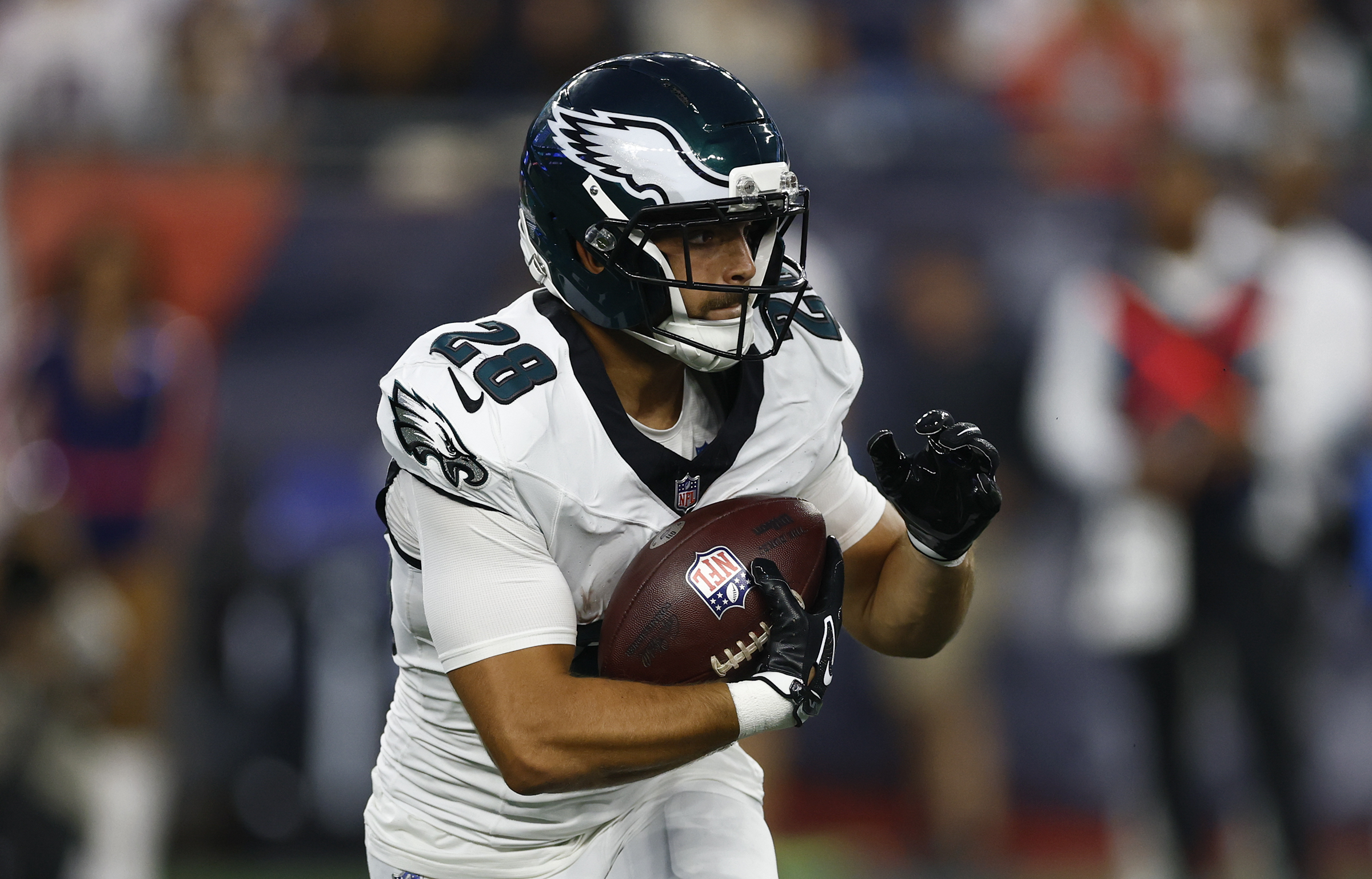
Dollar for dollar, the biggest improvement the Eagles could make to their roster would be adding a running back who can do something different than Saquon Barkley and Tank Bigsby. Unless Will Shipley is that guy.
Will Shipley has caught only nine passes with the Eagles.Yong Kim / Staff Photographer
The most glaring anomaly on the Eagles roster is one that hasn’t gotten much attention over the last couple of years. Very few teams in the league have a less diverse running back room than they do. For the sake of the argument, let’s reduce it to a generalization that is overly broad and thus not entirely accurate. The Eagles don’t have a complement to Saquon Barkley, at least not one you’d classify as “pass-catching” or “change-of-pace.”
Unless Will Shipley is that guy.
I don’t necessarily think they need such a guy. I’m not even sure that such a guy would be attainable even if they thought they needed him. All I know is that they don’t have him. And, also, that his absence is worth contemplating for a team that should be looking for creative ways to distribute the touches that previously went to A.J. Brown.
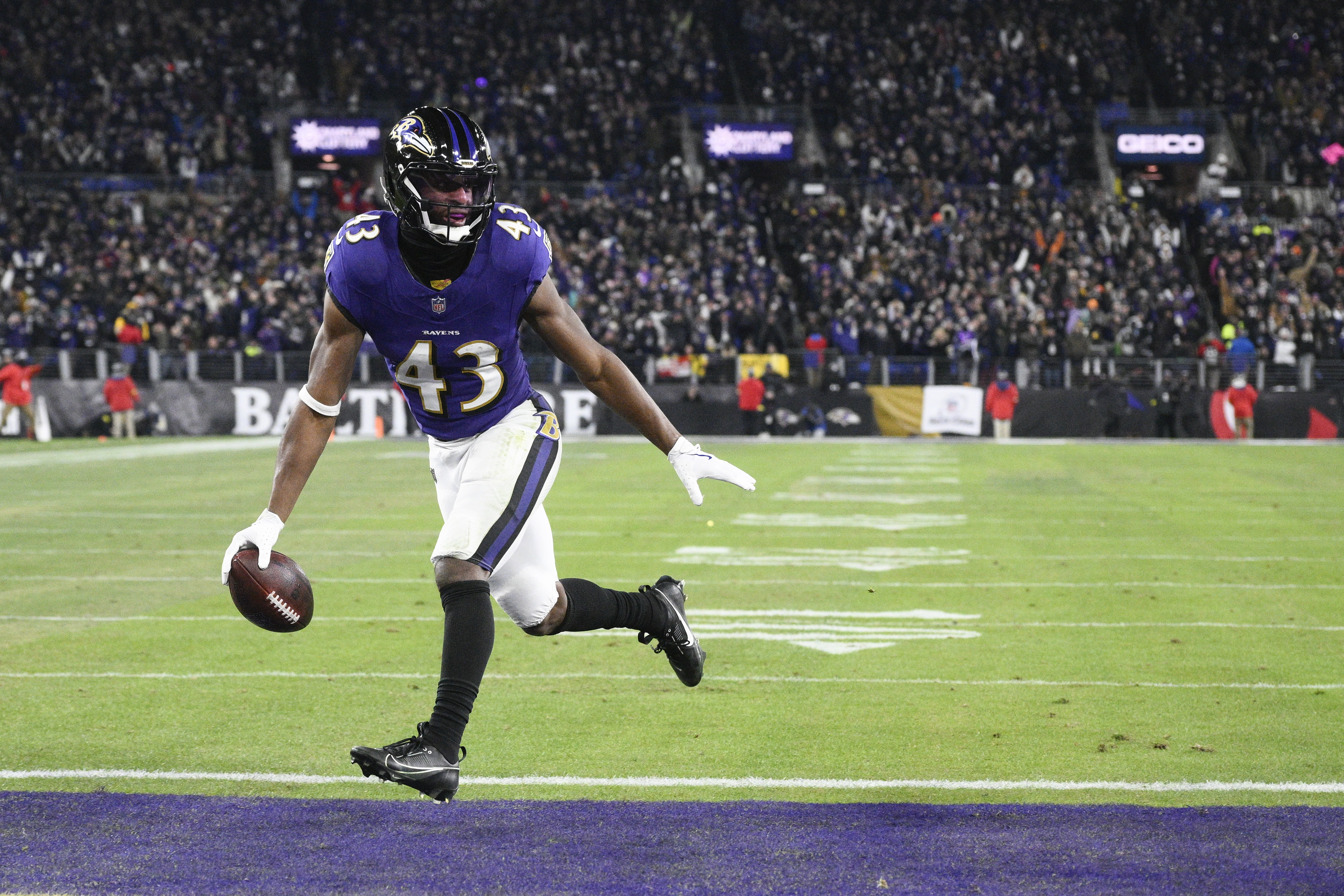
The Ravens’ Justice Hill is the guy I think of when I think of a guy the Eagles could use. Two years ago, he touched the ball 89 times and gained 38 first downs with an average of 6.9 yards per touch. To put that in perspective, Bigsby gained 17 first downs on 61 touches with an average of 6.2 yards per touch in 2025. Meanwhile, Shipley has touched the ball a total of 57 times in the two years since the Eagles drafted him in the fourth round. That, with 13 first downs and 3.9 yards-per-touch.
Justice Hill caught 21 passes for the Ravens in 2025.Nick Wass
Is it a big thing? Maybe not. But it’s certainly an area where the Eagles can improve. Last season, they were one of only four teams in the NFL who didn’t have multiple running backs catch at least 10 passes. That’s not necessarily a bad thing. The Rams scored the most points in the league without a traditional pass-catching running back.
But the Eagles are clearly bucking convention in their backfield. We don’t even need to compare them to the rest of the league. Just look at their recent history. Even in 2024, when Barkley led the league with 345 rush attempts and 2,005 yards, Kenny Gainwell managed to catch 16 passes for 116 yards while carrying the ball 75 times for 290. Gainwell and Boston Scott were both members of the 2022 Super Bowl team. Go back to 2017. Think about Corey Clement’s touchdown catch.
The modern NFL game is all about mismatches, both between and within personnel groups. Tight ends are in vogue because they thrive on those margins. While Shipley brings top-end speed, he has yet to display the feel, shiftiness or receiving chops that would make him a competitive advantage in a dedicated package. Bigsby is the ideal back-up to Barkley, a power runner who you’d be comfortable handing off to 15-20 times a game. But he has 11 receptions in three NFL seasons. It just feels like the Eagles are missing an element.
If you have ever considered giving up your car, now is the time.
There’s the price of gasoline, which has shot up by more than 35% since President DonaldTrump launched the war against Iran in February. Even if you never start the ignition, simply owning a car will now set you back an average of $8,000 a year in insurance, maintenance, and loan payments.
And those are just the immediate costs. As a major source of greenhouse gases, cars contribute significantly to climate change, which is already pushing up the price of food and everyday purchases.
So, let’s say you’re ready to ditch your money pit on wheels. Then what?
I’ve been struggling with this question since I moderated a panel this spring with Sarah Goodyear and Doug Gordon, the duo from the popular podcast The War on Cars, who just published a rousing call to arms, Life After Cars: Freeing Ourselves from the Tyranny of the Automobile. The event, held at the capacious Resurrection Philadelphia church in Center City, was sponsored by Philly Bike Action and 5th Square Advocacy, two groups dedicated to promoting alternatives to driving.
Resurrection’s sanctuary was packed — with the converted. When Goodyear and Gordon asked the audience who had traveled to the event by car, only a few sheepish hands went up.
While their bookdoes a great job of detailing the ways cars “ruin everything,” there is little in it to help the car-dependent kick the habit. The problem is, most people have no idea where to start.
Even in the Philadelphia region, which has better-than-average transit and cycling infrastructure, the prospect of living without a car can seem a little like trying to swim without arms and legs. How will you take the kids to sporting events, look after elderly parents, and buy groceries without a vehicle? Our local transit services — SEPTA, NJ Transit, and PATCO — don’t serve every nook and cranny of the region and don’t run as frequently as they should.
Like everything else in America these days, the debate over the role of cars in our daily lives tends toward extremes. Philadelphia urbanists can sometimes come off as unsympathetic, as if they expect people to go cold turkey and swap their vehicles for bikes and SEPTA. Meanwhile, the pro-car lobby keeps insisting, against the evidence, that the car-free life is not practical outside a few transit-rich neighborhoods, like Center City.
But who says it has to be all or nothing?
‘Habituate walking’
My advice: Keep your car — for now, at least — but look for opportunities to get around by other means. Walk to the grocery store. Ride a bike to dinner at a nearby restaurant. Think of these excursions as a trial run. Once you feel comfortable, take the train or bus to work. You may never give up your car permanently, but you will save a bundle on gas and maintenance, reduce congestion, and boost your step count.
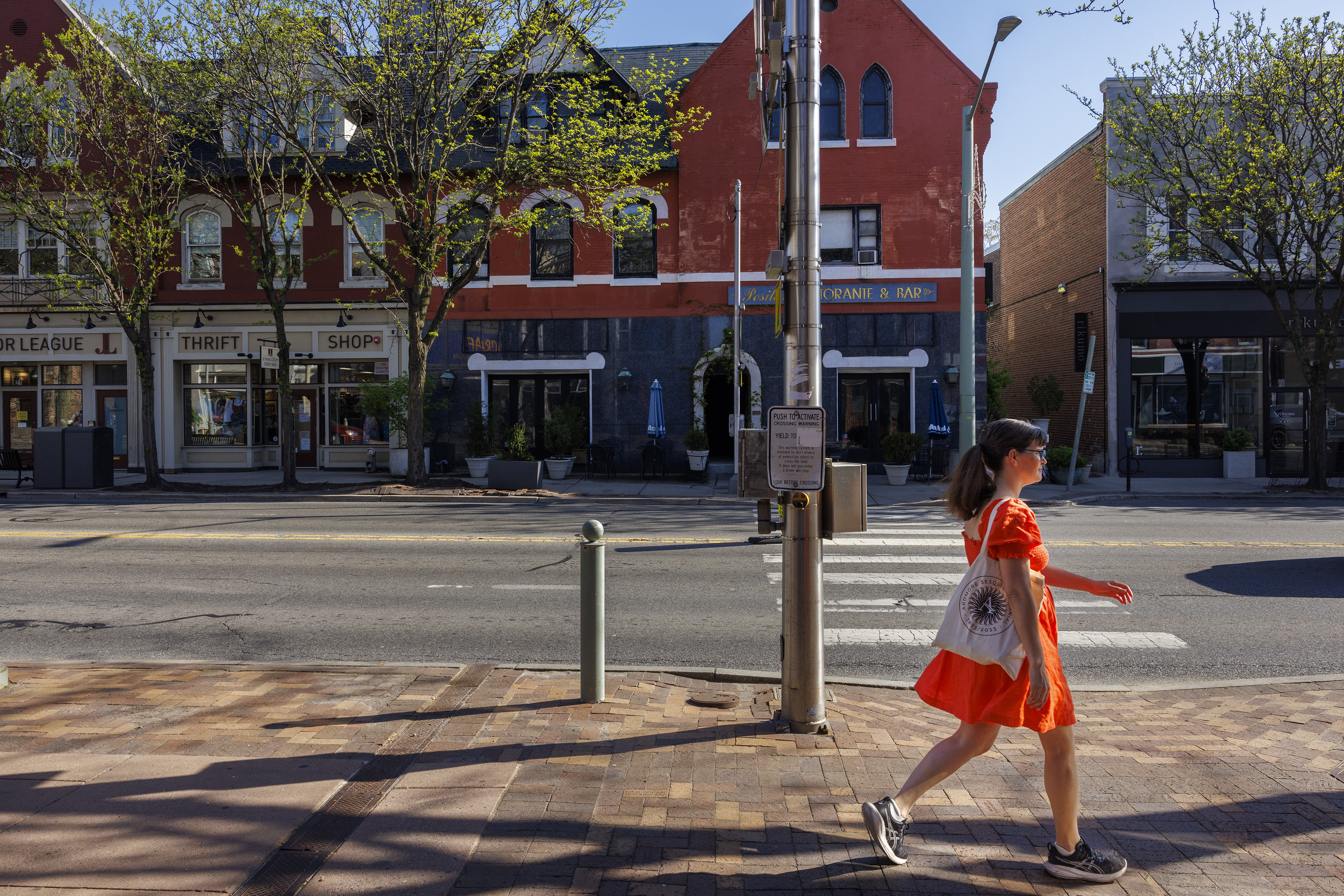
That’s how Jane Murray started weaning herself from the car. The Ardmore resident, who now runs a popular Instagram account called @Janewalksardmore, first began taking long walks as a way toexperience her Main Line town on a deeper level. To give shape to her Instagram project, she decided to visit every block in Ardmore and document her travels.
Jane Murray walks along Lancaster Avenue in downtown Ardmore, as part of a project to to walk every street in the Main Line town.Alejandro A. Alvarez / Staff Photographer
The more she walked, the more comfortable she felt leaving her car at home. She now wheels a “granny cart” to Trader Joe’s, a 15-minute walk from her house. Not long ago, she hopped a SEPTA bus to meet friends for quizzo in a pub a few towns away. At the end of the night, she took an Uber home.
Murray’s kids still have to take a bus the four miles to their middle school and she drives them to distant sporting events, but makes a conscious effort to “habituate walking” into her routine. Before leaving the house, she checks her transit apps to see if she can get to her destination without driving. Sometimes, she mixes it up: When she’s running errands, she’ll drive part of the way, then walk the last few blocks. Her Instagram has inspired her neighbors, who pepper her for tips about safe walking routes.
A mobility menu
Living in America without a car is often portrayed as a hardship, something that people on the margins are forced to endure. But, for me, living without a car has been a joy.
I didn’t know what to expect when I impulsively decided to get rid of my aging clunker 30 years ago after being presented with an expensive repair bill. Before then, I had rarely taken taxis or splurged on Amtrak to visit family in New York. Since I would no longer have to pay for car insurance, I promised to allow myself those indulgences. My husband and I were living in Center City, which certainly made our experiment more doable. (I should mention that I was pregnant at the time. I took a taxi to and from the hospital.)
Besides saving a lot of money, not having a car has liberated me in ways I never could have imagined. Bike lanes were virtually nonexistent in Philadelphia in the ’90s; today my bicycle is my main form of transportation. Thanks to the city’s mostly flat terrain, I can easily cycle to interviews and events in far-flung neighborhoods. My ride is equipped with side baskets, allowing me to do my grocery shopping by bike. When my destination is beyond biking distance, or when I have to look presentable, I’ll take SEPTA or reserve a Zipcar from the local car-sharing company. In a pinch, I can always summon an Uber, a Lyft, or a taxi. I still walk a lot, and it’s no exaggeration to say I run into people I know on every outing.
The key here is to think of mobility as a menu of options, rather than a car/no-car binary. While low-speed electric bikes have made it easier to cover long distances, not everyone can, or wants to, bike. Even transit can be daunting for a novice. The fear of crime also deters some people from using SEPTA, even though serious incidents have fallen dramatically in the last decade.
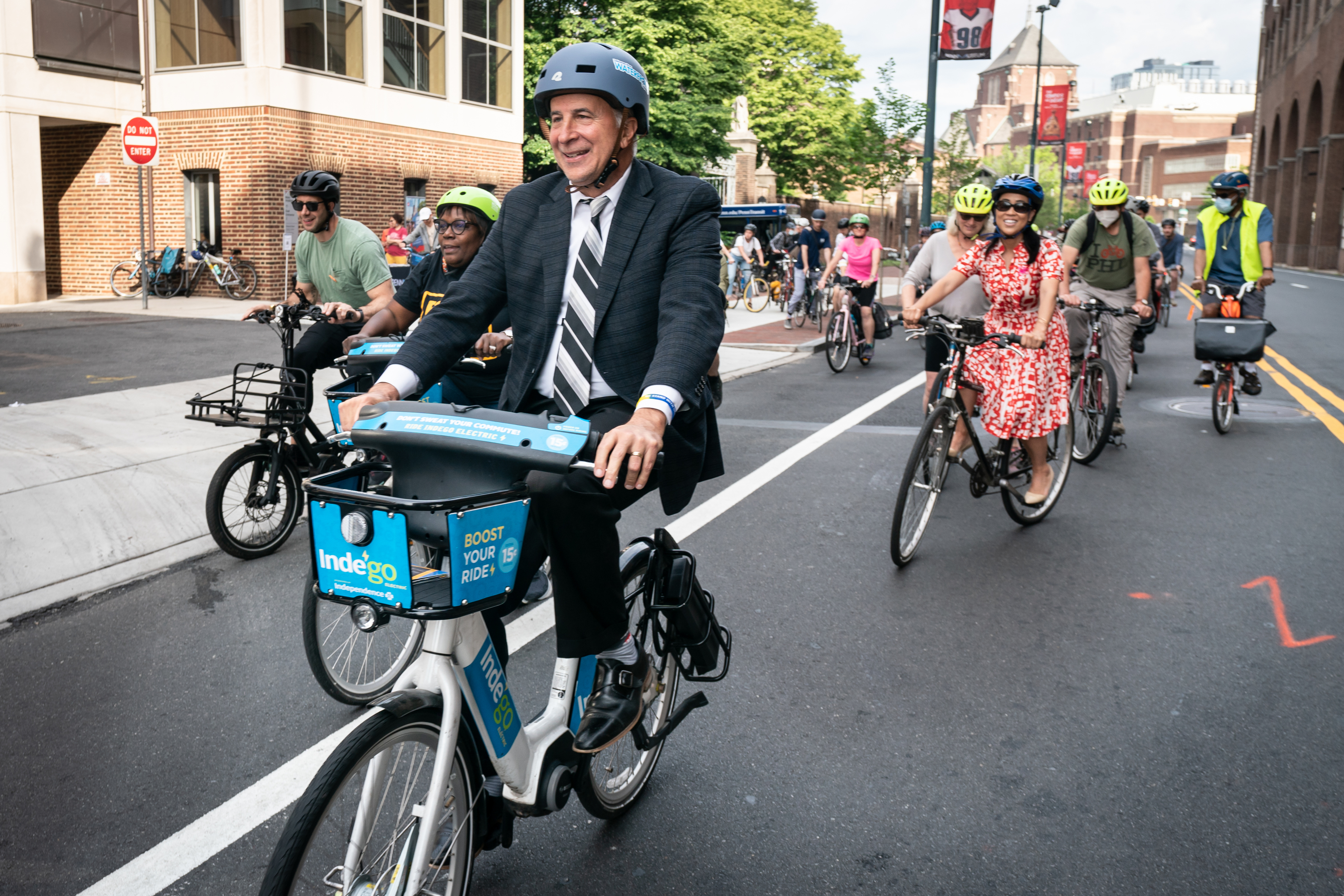
In 2022, Councilmember Mark Squilla (center), former Eagle Connor Barwin, Councilmember Kendra Brooks, and Councilmember Helen Gym took part in a Bike to Work Day event sponsored by the Bicycle Coalition of Greater Philadelphia to promote cycling as a means of transportation.JESSICA GRIFFIN / Staff Photographer
Eden MacDougall vividly remembers his trepidation when he started commuting from Langhorne, in Bucks County, to Temple University on SEPTA’s Regional Rail. “I kept thinking, how will I know it’s my stop?”
By the time MacDougall graduated in 2022, he was a super-commuter. To get to his new job at Mastery Charter School, where he is an AmeriCorps reading instructor, he had to use three forms of transportation: He started his day by biking two miles from his home to the Langhorne station. After taking a SEPTA train to Fern Rock, he changed to the Broad Street subway, getting off at Erie. The trip took an hour and 45 minutes, but MacDougall, who never learned to drive, loved it. “I’d open up my book and read the whole way.”
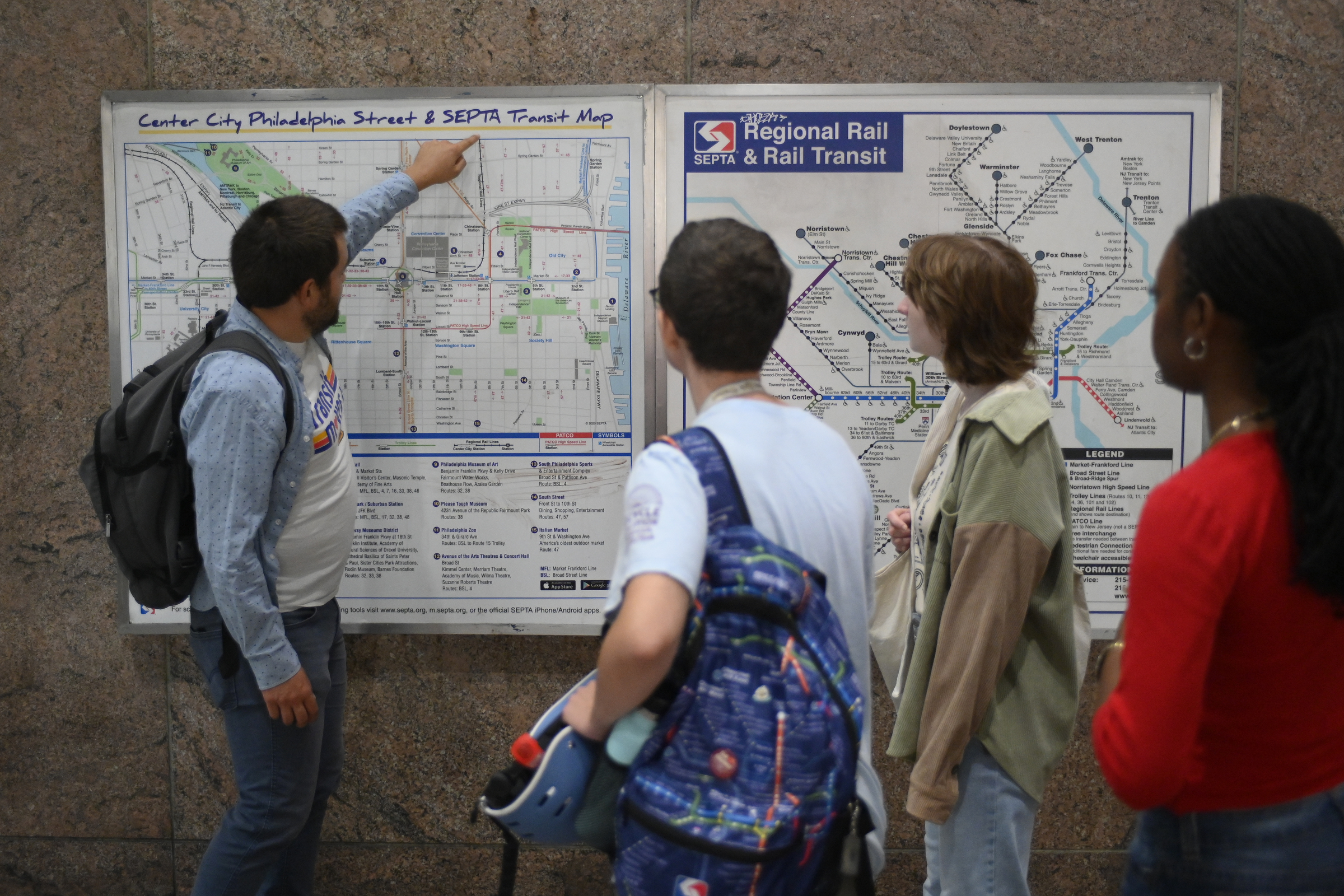
Stephen Bronskill, coalition manager for Transit Forward Philadelphia, shows incoming Temple University students how to navigate SEPTA during a tour organized at the start of the new semester. Bastiaan Slabbers / For The Inquirer
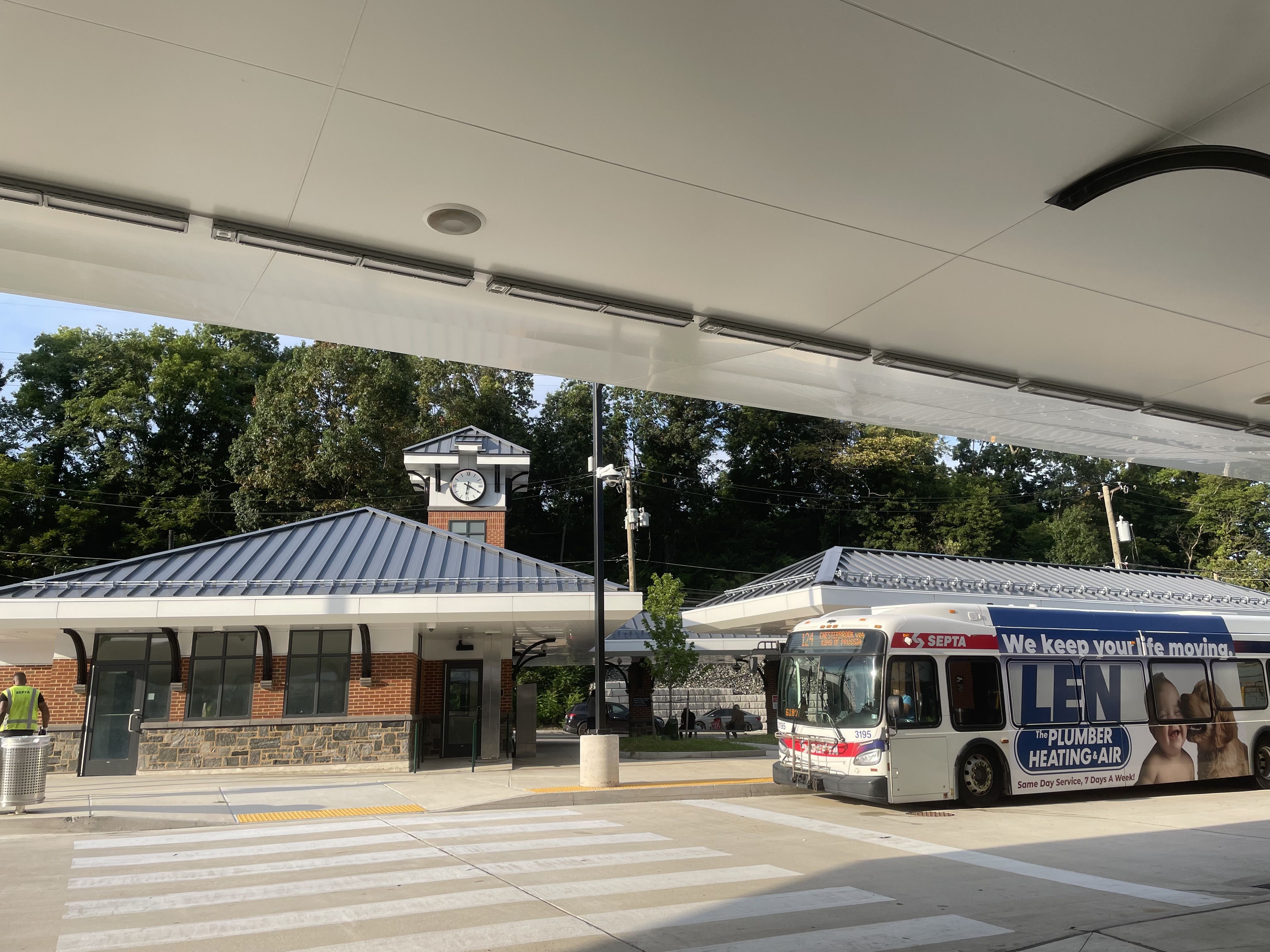
Now he lives in Philadelphia and volunteers as an instructor for Transit Forward Philadelphia and the Bicycle Coalition of Greater Philadelphia, which run Saturday tours to help people feel more confident riding SEPTA. Although the events provide practical advice, like how to use a transit app, they’re intended to be fun excursions. MacDougall recently shepherded a group from Roxborough to the Clark Park farmers market, showing them how to change from the Route 9 bus to a West Philadelphia trolley. Along the way, the group got to see SEPTA’s efficient new Wissahickon Transit Center on Ridge Avenue, where 11 bus routes converge.
The two groups, which have been lobbying the state legislature to help SEPTA secure much-needed state funding, started the Saturday tours as an extension of their advocacy work. They believe the exposure to SEPTA’s system can help reset public perceptions.
SEPTA’s new Wissahickon Transportation Center on Ridge Avenue in Manayunk is a major upgrade for the city’s bus riders. The sprawling, $50 million station opened in January 2026 and allows 5,000 passengers a day to switch between 11 bus lines. (photographeed Aug. 2026)Inga Saffron / For The Inquirer
“People had a lot of negative experiences during the pandemic,” Julio Rodriguez, the Bicycle Coalition’s policy director, told me. So, when SEPTA announced it was implementing its long-awaited schedule changes this summer, the transit advocates saw a chance to change the conversation.
Helping SEPTA boost ridership isn’t their only goal, however. Because they believe fewer cars will make Philadelphia a safer, more livable city, they’re organizing similar outings to get people comfortable with bike commuting.
Changing habits
Even while these advocates are gaining adherents, many skeptics remain convinced people will never give up their cars.
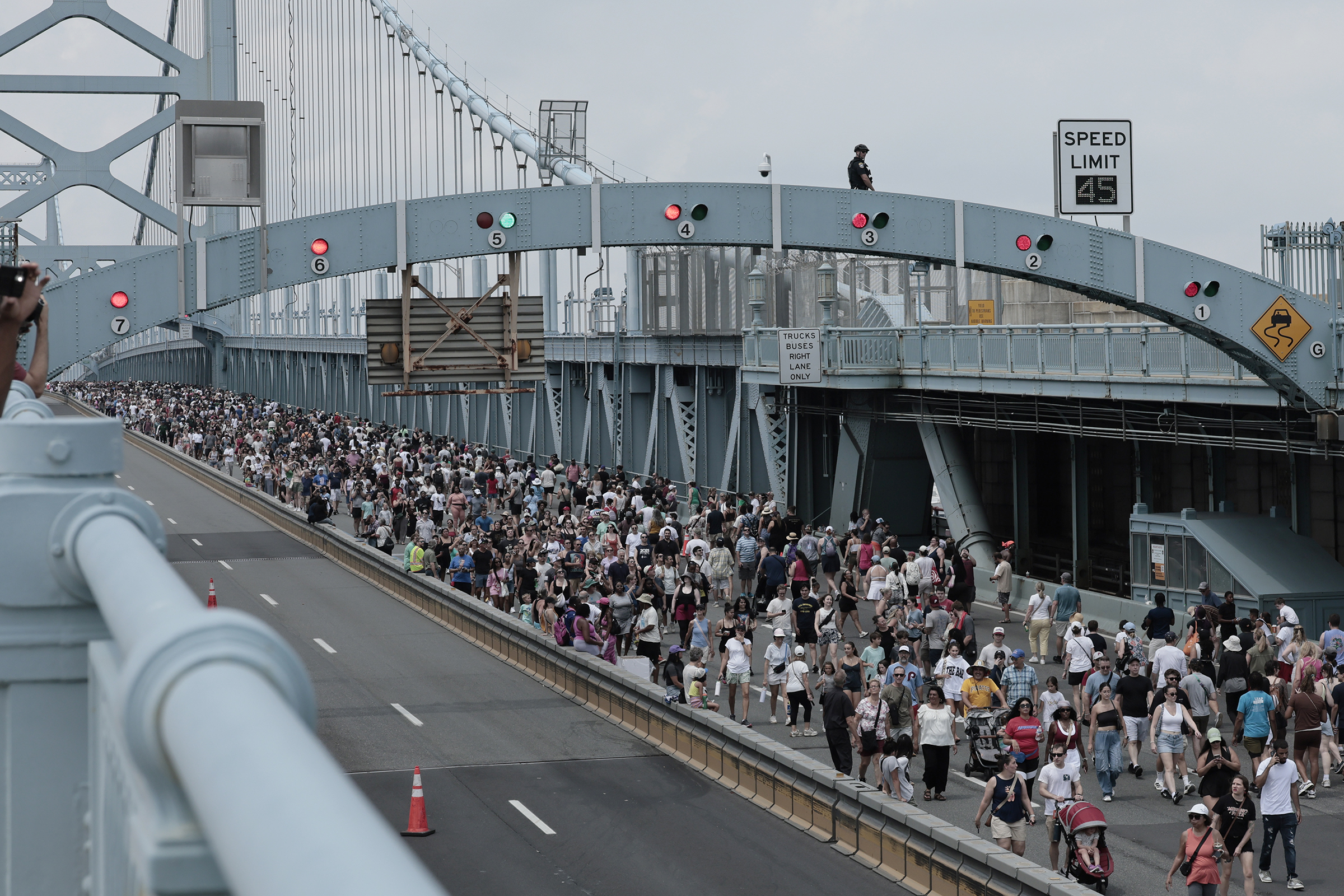
But the public’s cheerful response to this summer’s car-free celebrations around Philadelphia suggests that habits can change. Almost 600,000 people converged for World Cup watch parties at Lemon Hill in Fairmount Park during the 39-day FIFA Fan Festival — even though parking was banned. After the games ended, I saw hundreds of people streaming along the Schuylkill River Trail to 30th Street Station, a distance of 1.5 miles. Thousands took transit, rode bikes, or walked to the Ben Franklin Bridge to celebrate its centennial in July.
Thousands of people took transit, biked, or walked on July 11 to parade across the Ben Franklin Bridge to celebrate the 100th anniversary of its opening.Elizabeth Robertson / Staff Photographer
For people who switch to alternative forms of transportation, the payback is immediate. But Philadelphia and the region also have much to gain from having fewer cars racing through the streets: cleaner air, less noise, more casual social encounters with neighbors, and less wear-and-tear on infrastructure
The impact on climate change is a different story. Individual actions can only do so much to slow the dramatic shifts in global weather. It’s also a frustrating chicken-and-egg situation. People won’t see car-free living as truly feasible until there is intensive government investment in transit, bike infrastructure, and pedestrian safety.
Until that happens, carry a fare card, sign up for car-share, install a transit app on your phone — and don’t forget to wear ahelmet.