Blog

  • White House directed Patel to oversee investigation involving Times reporting

    White House directed Patel to oversee investigation involving Times reporting

    WASHINGTON — The White House directed FBI Director Kash Patel to oversee a leak investigation into reporting by the New York Times about security issues with the new Air Force One, leading to a flurry of subpoenas to several Times reporters Friday night, according to people with knowledge of the situation.

    Patel scuttled a planned trip to Chicago and spent roughly eight hours at the White House on Friday, running the investigation from there rather than FBI headquarters — a major departure from historical practice. Patel also briefed senior administration officials on the investigation, two people said. The people spoke on the condition of anonymity to describe sensitive internal discussions.

    The White House’s deep involvement in the case came after officials said President Donald Trump was enraged about the coverage of the Qatari-donated plane, which the Times reported Thursday lacks the same defensive countermeasures of the previous Air Force One.

    Trump flew on the new jet to a NATO meeting in Turkey this past week but was forced to change to the old plane when he departed because of Secret Service concerns, as the Times reported Wednesday.

    Patel’s role in the investigation, in close coordination with top administration officials, reflects a further dismantling of the wall that had separated the White House and the FBI in previous administrations. The government’s effort to immediately seek information from journalists, when such cases are typically centered first on identifying potential internal wrongdoing by officials, comes as the Trump administration has intensified pressure on news organizations.

    In response to a request for comment, Steven Cheung, the White House communications director, said, “President Trump is laser focused on helping the American people and keeping them safe. That will always be his priority.”

    Emily Covington, director of the Justice Department’s Office of Public Affairs, sought to downplay the unusual nature of the subpoenas, some of which were delivered late Friday directly to the doors of the reporters’ homes.

    “Every administration has addressed the crime of leaking national security information,” she said in a statement. “To the extent that we have to investigate breaches of national security, that’s something that we will continue to do.”

    She added: “To be clear, reporters are not the targets. Those leaking classified information are.”

    Ben Williamson, an FBI spokesperson, said in a statement: “Director Patel and White House officials agreed to meet on Friday at the White House to brief an ongoing matter. While we would not comment further, other speculative reporting regarding the nature of the meeting is absolutely false.”

    One person briefed on the conversations said that Patel had his own concerns about the type of information publicly disclosed about the plane. Another person said that Patel went to the White House of his own volition to oversee the investigation.

    Trump had sought the rapid retrofitting of the Qatari-donated 747 after he learned that two new Boeing planes that were supposed to replace the aging ones used as presidential aircraft would be delayed for years.

    Trump has basked in the luxury of the new plane, which is more than a decade old but has the kind of opulent furnishings the president prefers. He has repeatedly described the Qatari jet as cost free to the United States. But in reality, hundreds of millions of taxpayer dollars were spent to upgrade its security systems. Officials have said that he plans to take the plane with him as a donation to his presidential library when he leaves office.

    While Trump has said the Qatari plane was upgraded with the necessary security “bells and whistles,” the Times reported Thursday that it lacks the defensive countermeasures that were security features of the old model, including its advanced antimissile capabilities.

    Experts said the absence of the capabilities creates a potential risk when Air Force One is flying overseas, not only for the president but for the large entourage of White House staff members, Secret Service officials, journalists, and guests who fly aboard.

    After the Secret Service urged him to fly the old Air Force One out of Ankara, Turkey, Trump announced that he was making a swap in aircraft. In a post on social media, he claimed that he was taking the older plane to the United Kingdom for “old time’s sake” and that he wanted to show the new jet to U.S. troops on a military base there.

    Once he landed at Mildenhall Air Force Base in England, he walked from the older plane to the Qatari-donated jet, which transported him back to the United States.

    When the Times and other news organizations began reporting this past week on the security issues with the new plane, the president was livid, according to an official with knowledge of his comments who was not authorized to discuss the matter publicly.

    Before the Times’ first article was published, a senior official at the FBI contacted a reporter and a senior editor to ask that the article be held, calling it an issue of national security. The FBI official declined to explain the security issue. The official also asked the Times to disclose its sources for the article. The newspaper refused to do so.

    On Friday, after Patel left the White House, he posted a message on social media confirming that he had been there, and said that “the fake news will find out why soon.”

    That night, 48 hours after the Times had published the first article on the new plane, its reporters were served with subpoenas demanding that they provide evidence before a grand jury Wednesday.

    In a statement, David McCraw, the Times’ top newsroom lawyer, said: “This brazen act should be seen as nothing more than an attempt to prevent the public from knowing what is happening in their country by intimidating journalists from doing their jobs.”

    The rapid escalation of the case is a sharp departure from past national security leak investigations. Typically, officials first seek to establish how many people have had access to the information that was made public. Depending on the size of that group, prosecutors then attempt to determine ways to eliminate potential suspects from the list. In past leak cases, such efforts have often been abandoned if the pool of potential leakers is simply too large to scrutinize.

    Historically, the Justice Department has sought to subpoena reporters only as a last resort after other reasonable options have been exhausted.

    The Trump administration has pushed for a number of leak investigations, several of which have been conducted by federal prosecutors in the Eastern District of Virginia. Those efforts, which included subpoenas to reporters from the Wall Street Journal and the Washington Post, foundered in the face of resistance from a federal judge, according to multiple people familiar with the matter. Federal prosecutors withdrew them last month.

    The subpoenas issued to Times reporters Friday were from a different jurisdiction, the Southern District of New York, and were sought by Jay Clayton, the U.S. attorney in Manhattan, who was recently nominated by Trump to serve as the director of national intelligence.

    The subpoenas seek the reporters’ testimony on the same day Clayton is set to face a Senate confirmation hearing for his new post. The same day, Todd Blanche, the acting attorney general, is set to take part in a confirmation hearing to serve as attorney general on a permanent basis.

    This article originally appeared in the New York Times.
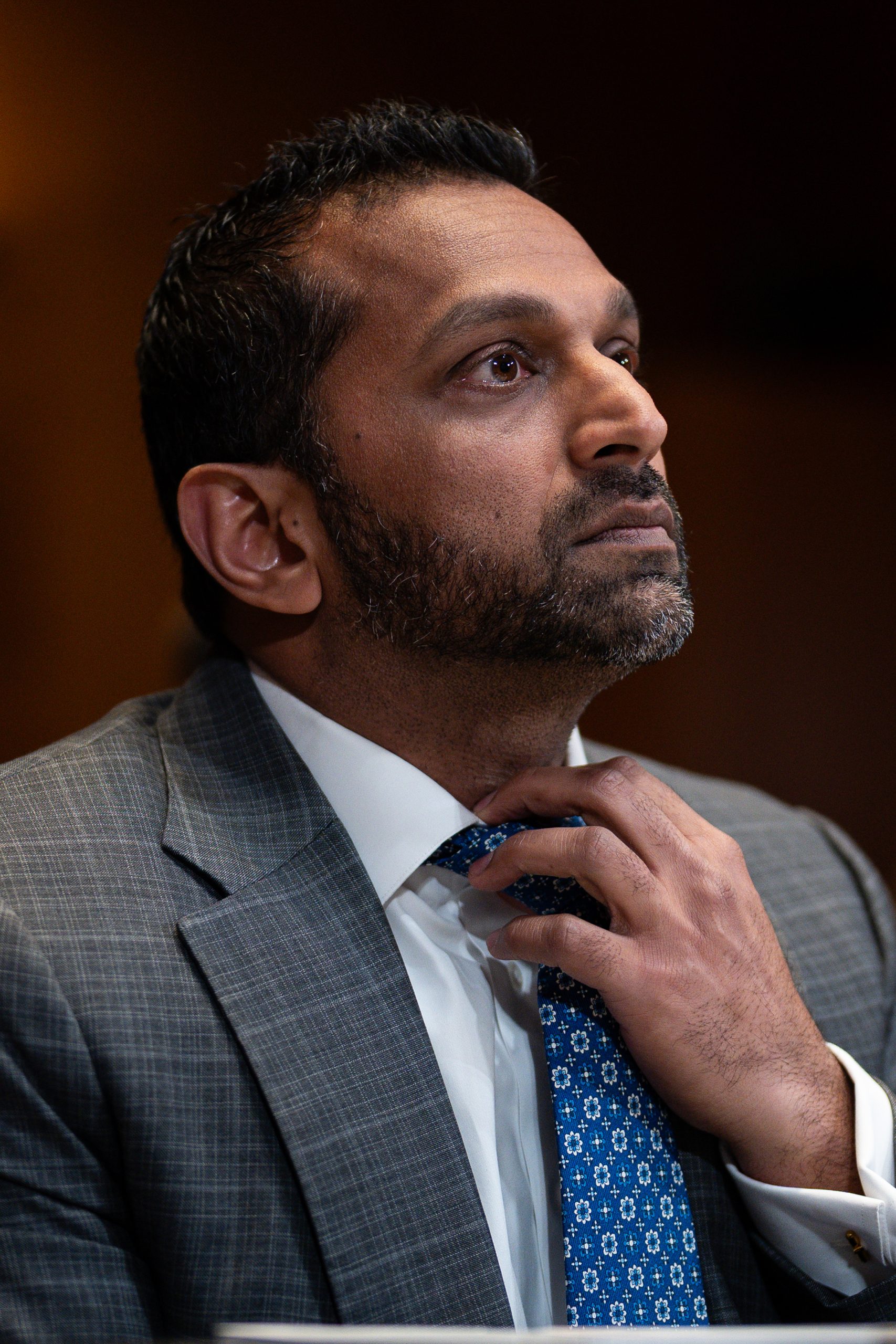
    FILE — FBI Director Kash Patel on Capitol Hill in Washington, on May 12, 2026. The White House directed Kash Patel, the F.B.I. director, to oversee a leak investigation into reporting by The New York Times about security issues with the new Air Force One, leading to a flurry of subpoenas to several Times reporters Friday night, according to people with knowledge of the situation. (Tierney L. Cross/The New York Times)TIERNEY L. CROSS
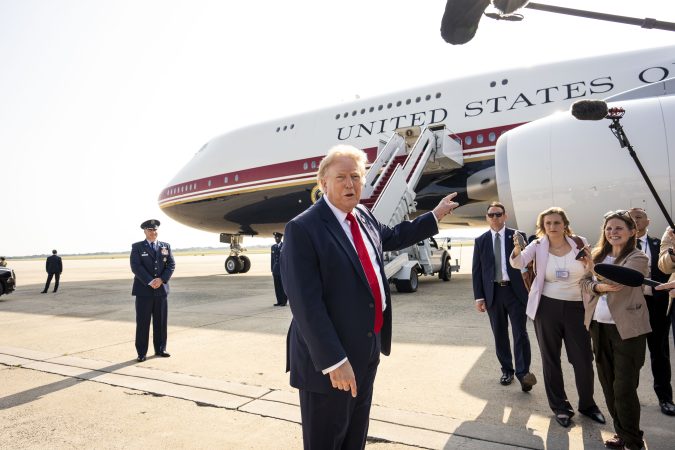
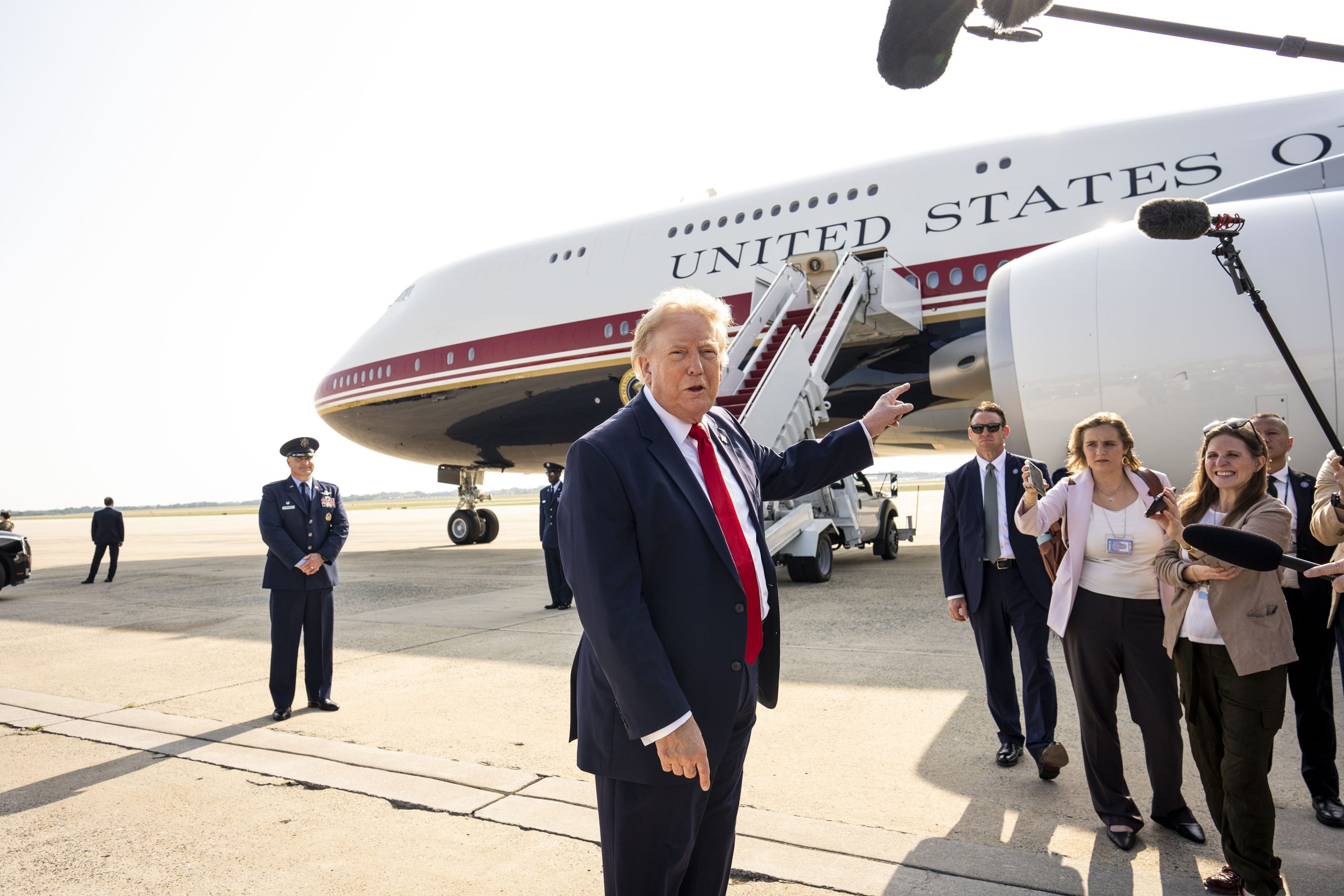
    FILE — President Donald Trump prepares to board the new Air Force One at Joint Base Andrews, Md., Wednesday, July, 1 2026. The Trump administration issued subpoenas on Friday to several journalists for The New York Times, after the news outlet reported this week on security concerns involving President Trump’s new Qatari-donated Air Force One. (Doug Mills/The New York Times)DOUG MILLS
  • Judge ends Jan. 6 case against Proud Boys with warning about Trump pardons

    Judge ends Jan. 6 case against Proud Boys with warning about Trump pardons

    A federal judge on Friday night granted the Justice Department’s request to dismiss the seditious-conspiracy case against four top members of the Proud Boys who led a violent mob into the U.S. Capitol on Jan. 6, 2021.

    But in his ruling, U.S. District Judge Timothy J. Kelly gave a stark warning about President Donald Trump’s efforts to lift penalties against those who instigated and carried out the storming of the Capitol. The attack — by the mob seeking to overturn Trump’s loss to Joe Biden in the 2020 election — left more than 140 police officers injured and caused an estimated $3 million in damage.

    The judge indicated he was wiping out the Proud Boys’ charges — against Ethan Nordean; Joseph Biggs; Zachary Rehl, former leader of the Philadelphia Proud Boys; and Dominic Pezzola — under protest, saying legal precedents left him no choice but to accede to the request by the Trump administration’s prosecutors.

    “As the Court has said many times, the attack on the Capitol on January 6, 2021 was a perilous event,” wrote Kelly, who is a Trump appointee.

    “It was an attack on people, including police officers, many of whom were injured. It was an attack on a coordinate branch of government — Congress — that the Founders saw fit to give a place of primacy in Article I of the Constitution. And it was an attack on the Constitution’s mechanism to facilitate the peaceful transfer of power from one president to the next.”

    The Jan. 6 riot followed a rally where Trump repeated his false claims that he won the 2020 election. As rioters rampaged through the Capitol, lawmakers were forced to evacuate, delaying the certification of Biden’s victory for hours.

    Friday’s ruling wipes out some of the most serious criminal charges from the riot, cementing Trump’s bid to unravel the largest Justice Department investigation in U.S. history.

    Trump pardoned nearly all the rioters — more than 1,500 — who were charged by the Justice Department in the wake of Jan. 6. But that blanket pardon, issued on the president’s first day in office last year, did not extend to about a dozen leaders and prominent members of two extremist groups behind the violence, the Proud Boys and the Oath Keepers.

    Those defendants were convicted of carrying out a seditious conspiracy against the United States or related offenses. Trump initially commuted their prison terms, stopping short of a full pardon. But this year, while those cases were being appealed, Justice Department officials filed legal papers to vacate the convictions altogether.

    The D.C. Circuit federal appeals court granted that request in May. U.S. Attorney Jeanine Pirro, a Trump ally who serves as the top federal prosecutor in D.C., then filed motions to dismiss the underlying charges in U.S. district court.

    Kelly said in his opinion on the Proud Boys case that judges are constrained to dismiss charges once prosecutors ask to drop them.

    Under Supreme Court precedent, prosecutors have “exclusive authority and absolute discretion to decide whether to prosecute a case,” and they may drop charges “in the interests of justice” even after defendants have been convicted.

    The moves by the Justice Department were unusual — prosecutors rarely ask to throw out guilty verdicts — and Pirro’s office initially did not give detailed reasons for scrapping the highest-profile cases related to the Jan. 6 attack.

    In a brief court filing, a prosecutor in Pirro’s office wrote only that the government “has determined in its prosecutorial discretion that dismissal of this criminal case is in the interests of justice.”

    Proud Boys leader Enrique Tarrio separately had his conviction vacated and charges dismissed last year, also at the Justice Department’s request. Tarrio, who had been convicted of organizing members of his group, was not present at the Capitol on Jan. 6.

    Pezzola was acquitted at trial of the seditious conspiracy charge but convicted of assaulting a police officer and other offenses from the riot.

    “We took the worst they threw at us the raids, the solitary, the lies and we stood tall,” Tarrio posted on X after the ruling was issued Friday night. “Trump dropped the pardons and now the rest is crumbling. Justice is SERVED!”

    Before dismissing the set of charges against the Oath Keepers, U.S. District Judge Amit P. Mehta, an appointee of President Barack Obama, asked Pirro’s office to supply detailed reasons for its request. Mehta has not yet issued a ruling on the Oath Keepers’ charges.

    A prosecutor, G.A. Massucco-LaTaif, said Trump’s blanket pardon proclamation also directed the Justice Department to drop all pending charges stemming from the Jan. 6 attack. Prosecutors can no longer put any Jan. 6 defendants on trial and judges cannot effectively impose any prison time, he wrote in a court filing, because the presidential proclamation would immediately kick in to prevent those outcomes.

    “In any event, the public’s interest in a trial of these defendants has already fully vested,” Massucco-LaTaif wrote. “This Court presided over two public trials of the charges in this indictment. … Dismissal of these cases with prejudice will not erase this public record.”

    The president and top officials in his administration have moved aggressively to recast and minimize the threat posed by the mob of Trump supporters on Jan. 6.

    Earlier this year, the Justice Department acknowledged that it had deleted reams of news releases it had posted online, which detailed the prosecutions of those charged in the riot.

    The Washington Post identified several webpages that led to error messages, including news releases about the arrest and conviction of Tarrio and other rioters whose convictions were undone by Pirro. The Justice Department said in a social media post that it was erasing what it considered “partisan propaganda.”

    “We are proud to reverse the DOJ’s weaponization under the Biden administration,” the department posted on its rapid-response account on X. “We will do everything in our power to make whole those who were persecuted for political purposes. This includes stripping DOJ’s website of partisan propaganda.”

    Copies of hundreds of those news releases, which had been hosted on the website of the U.S. attorney’s office for D.C., have been archived by an independent website, the Internet Archive’s Wayback Machine.

    A spokesperson for Pirro did not say who ordered the deletions or how many releases were affected, referring questions to Justice Department headquarters. A searchable database of all charges and convictions stemming from the Jan. 6 investigation was taken offline by the Justice Department last year.

    Pirro has denounced political violence in other cases, such as the incident this year in which a lone gunman allegedly tried to assassinate Trump during the White House correspondents’ dinner, but routinely declines to take questions about the Jan. 6 riot at her public appearances.

    She has also pursued Trump’s perceived political foes with shaky allegations of misconduct, including then-Federal Reserve Chair Jerome H. Powell as well as six Democratic lawmakers who angered the president by posting a video on social media reminding U.S. service members that they could refuse illegal military commands. A grand jury refused to indict the six Democrats, and Pirro closed the investigation into Powell after failing to find evidence of a crime.

    In addition to the pardons, commutations, and court filings seeking to dismiss cases, Trump appointees have fired many of the FBI officials and prosecutors who investigated the attack.

    The Justice Department has also taken steps to vacate the conviction of Stephen K. Bannon, a former Trump adviser who was convicted of contempt of Congress for defying a subpoena related to Jan. 6. And the department has stopped defending a similar conviction for Peter Navarro, a top trade adviser to the president who is appealing his case.

    The Trump administration had announced plans for a $1.776 billion fund to provide payments to people who claim they were unfairly targeted by law enforcement, and dozens of Jan. 6 rioters said they intended to apply for a cut of the money. The payments would have been funded by taxpayers, raising bipartisan concerns in Congress. A federal judge issued an injunction blocking the “Anti-Weaponization Fund” from being established, and Trump administration officials have said that effort is dead.

    In dismissing the Proud Boys’ seditious conspiracy charges, Kelly invoked remarks from President Ronald Reagan’s first inaugural address in 1981 describing the peaceful transfer of power as a miracle of self-governance.

    “President Trump’s views about the prosecution of those who attacked the U.S. Capitol on January 6 — whether those views are based on fact or fiction — are well known, as is his intention to extend clemency to them through the Executive Order,” Kelly wrote in the opinion.

    “Moving forward, if this Nation’s experiment in self-government is to last another 250 years, the American people — no matter their partisan preferences — will have to act together to preserve, protect and defend that miracle through our constitutional framework,” he wrote.

  • Whistleblowers accuse Kennedy Center of contracting flaws under Trump

    Whistleblowers accuse Kennedy Center of contracting flaws under Trump

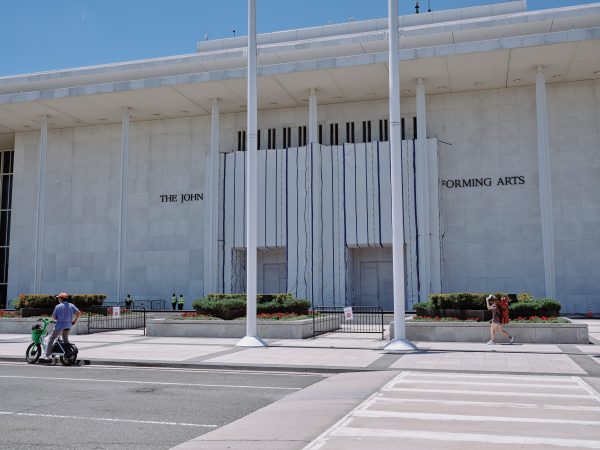
    As the John F. Kennedy Center for the Performing Arts prepares for major renovations, former project managers there have sent Congress internal documents that they say show how the institution bypassed government contracting norms in work carried out under President Donald Trump.

    The documents — sent to a Senate and a House committee last month by lawyers for unidentified clients referred to as whistleblowers — detail how vendors were selected for work without competitive bidding under rationales that are depicted as flawed.

    In one case, a center official described a company chosen for flooring work as the “only identified firm on the mid-Atlantic seaboard that maintains a fully vertically integrated model, vital for acoustic continuity, architectural uniformity, and operational agility.”

    In a letter to the committees, lawyers for the former project managers say their clients question whether the business, located in South Carolina, was the only one available that was qualified to do the flooring work.

    The letter says the center’s decision to skip bidding in another case was designed to help meet deadlines important to the president, such as the Kennedy Center Honors in December, which he hosted.

    “Renovations were rushed to meet the deadlines driven by the president’s desire to host official events at the center,” the letter says. “Federal contracting laws and regulations were ignored.”

    A statement from the Kennedy Center defended its practices, saying that the institution operates with rigorous financial oversight and that the assertions by the whistleblowers that contracting standards had been bypassed were incorrect.

    “As America’s cultural center, the institution makes every decision guided by responsible stewardship and an unwavering commitment to its patrons and the nation it proudly serves,” Roma Daravi, a spokesperson, said in a statement. “We remain fully committed to transparency and to delivering the critical improvements that will preserve this institution for generations to come.”

    Liz Huston, a White House spokesperson, responded to the allegations by accusing past management of allowing the center to fall into disrepair.

    “President Trump did what Democrats wouldn’t,” she said in a statement. “After decades of neglect, he committed the bold leadership and proper resources to fix the Kennedy Center and start the renovations of the finest performing arts facility in the world.”

    Trump, a developer by trade, has taken an intense interest in remaking the center, helping to secure $257 million from Congress last year for renovations. In one case cited in the letter, a new bathroom floor in one of the center’s three presidential boxes was ordered torn up last year and redone after the White House complained about the beige color of the tiles. (The email’s subject line was “tile emergency,” alongside a red siren emoji.)

    “This is a big undertaking for my department to remove the floor tile that was just installed,” the Kennedy Center’s operations and maintenance director replied in a March 2025 email, noting that the beige tiles had been approved by a White House designer.

    In a response email, a White House official confirmed the directive to replace the beige tile with white. (The work was unrelated to the South Carolina flooring company.)

    The center said in a statement that the changes were a standard design adjustment that caused “zero unnecessary burden on the taxpayer.”

    The White House decided to remodel the presidential boxes days after Trump took over as chairperson of the center’s board, according to the documents sent to Congress. The plans included gold plumbing fixtures in the bathrooms, gold covers for electric outlets, marble baseboards, and the tile flooring paid for by the White House, with much of the labor provided by the center.

    The 82-page submission to Congress was made under a law designed to protect federal employees who disclose allegations of wrongdoing from retaliation. The lawyers who sent it, David Seide and Dana Gold, work for a nonprofit that represents government whistleblowers.

    Sen. Sheldon Whitehouse (D., R.I.), the top Democrat on the Environment and Public Works Committee, which received the submission, wrote to the Kennedy Center on Thursday demanding information related to the renovations. Whitehouse, an ex officio member of the center’s board, said the submission raised “serious questions” about whether public funds were being spent properly.

    Nothing in the submission suggests that the firms selected without bidding have any personal ties to Trump or his family, or that the vendors played any role in the decision-making process under which work was awarded.

    Reached by phone, Kent Rogerson, who runs the South Carolina flooring company, declined to comment, citing a nondisclosure agreement.

    Although the Kennedy Center is run as a nonprofit, it has, like Smithsonian museums, traditionally followed federal contracting rules because its building is federal property. But the documents include a new policy, adopted in November, that states the center was exempt from federal rules and replaces them with new procedures.

    Compared with federal contracting regulations, the new policy relaxes the requirements under which sole-source contracts can be awarded, according to several government procurement experts, by adding to the rationales for when it is permissible. Under the policy, contracts can be awarded without bidding when “circumstances beyond the center’s control require an immediate award” or “the requirement is unique or has a compelling business interest.”

    The center said in its statement that it had confirmed with the Office of Management and Budget that, as an independent entity, it was not bound by federal contracting regulations and that it had updated its procurement policy to be both fair and agile when making renovations.

    Trump announced that the center would be shuttered for two years for the project, starting around Independence Day. But a federal judge temporarily blocked the closure after finding that the center’s board, composed largely of the president’s aides and allies, had not properly scrutinized his plan before approving it. The White House statement on Friday accused the judge of being “radical” and allowing the center to remain in disrepair.

    Kennedy Center officials have described renovations to address problems such as water leaks and outdated equipment as urgently needed. The president has said the work would elevate a “dilapidated” building to the “highest level of Success, Beauty, and Grandeur.”

    The administration’s contracting practices have been under scrutiny. The Lincoln Memorial Reflecting Pool project, for example, has been carried out through multiple no-bid contracts. To exempt the project from competitive bidding, administration officials said it needed to be finished in time for the country’s 250th birthday celebrations.

    One contract cited by the former Kennedy Center managers was valued at $4.4 million and awarded last fall for work that included painting the building’s exterior gold columns. Trump has taken issue with their “fake gold color,” and internal documents said they should be repainted white before the Kennedy Center Honors.

    The painting was done by Cypress Painting Systems, a company in Maryland that has done work under prior administrations. But lawyers for the former project managers reported that the work began before any contract had been awarded.

    The contract was later awarded, they said, to a company that primarily works as a furniture dealership, Washington Office Interiors, which used Cypress as its subcontractor.

    The interiors company had been hired through a Small Business Administration program that enables “socially and economically disadvantaged” companies to receive sole-source contracts in some settings. Whitehouse, in his letter, said it appeared that the contract was configured this way because Cypress did not have the same certification that would enable it to receive a sole-source contract through that program.

    In its statement, the Kennedy Center said the contractual arrangement had fully complied with all Small Business Administration guidelines.

    Barbara Barry, who runs Washington Office Interiors, said in an email that she was not authorized to discuss the contract but that her company had been providing construction and furniture services to federal agencies since long before Trump was elected.

    Robin Mertz, president of Cypress Painting, deferred questions to the Kennedy Center.

    Cypress Painting also installed Trump’s name on the building’s marble facade, under a separate arrangement. The name was removed in June by order of a federal judge, and the center is in the process of appealing.

    Matt Floca, the center’s executive director, has denied that the columns were painted simply to satisfy the president. He has said that the center’s leaders had long wanted to address structural degradation and “mismatched paint jobs,” and that hiring subcontractors is standard practice.

    “This is not just a random action,” Floca testified at a court hearing this year. “It was something that we had been planning for before this leadership was in place.”

    Floca has also attested to the special qualifications of Low Country Flooring of Pawleys Island, S.C., the flooring company that was selected without competition to provide services to the Kennedy Center for five years, according to the documents provided to the committees.

    The purchase agreement, not a formal contract, outlined work worth up to $8 million in restoring and replacing hardwood flooring.

    The business has assisted on high-profile projects in Washington, including work on the Supreme Court and the Andrew W. Mellon Auditorium near the National Mall, a federal building used for galas and conferences.

    The center said that the company was selected after what it described as exhaustive market research and that it was capable of purchasing directly from timber mills to avoid markups on materials.

    Last year, on a trip to Washington before the company was selected, its representatives posted photos of themselves and Trump at the Kennedy Center on Facebook.

    In one photo, Jamie Lambert, who helps run the company, is shown praying with Trump inside the center’s concert hall. His colleague, Rogerson, commented on the image online.

    “He asked,” Rogerson wrote, “and the president said of course.”

    This article originally appeared in the New York Times.
  • Jayson Conner, 48, and Jeffrey Newman, 58, die; gave thousands of backpacks to those in need

    Jayson Conner, 48, and Jeffrey Newman, 58, die; gave thousands of backpacks to those in need

    NEW YORK — Jayson Conner and Jeffrey Newman, a Queens couple who spent years walking the streets of New York and handing out tens of thousands of backpacks filled with supplies — toiletries, socks, notebooks — to people in need, died within days of each other.

    Mr. Conner, 48, died from a heart attack at their home in Queens on June 28, his daughter, Jewlia Conner, said.

    Mr. Newman, 58, died four days later, on July 2, according to his brother Glenn, who did not provide a location or cause.

    Mr. Conner and Mr. Newman began their efforts in 2018 with a few armfuls of backpacks. By 2026, they and almost 40 volunteers had distributed more than 180,000 packs to people living on the streets of Manhattan.

    Once a week, a few dozen people would gather at a rental space in Queens, and Mr. Conner and Mr. Newman would lead them in organizing items into more than 100 backpacks that were loaded onto a moving van.

    They would then drive the van to Manhattan, and over the next several days the volunteers would fan out, backpacks slung over their shoulders. Mr. Conner and Mr. Newman trained the volunteers on the best way to approach and engage with people who might be experiencing extreme physical or emotional pain — or might just want to talk to a friendly face.

    “It was fascinating to see how well they managed to communicate with people on the streets,” Kristina Kashtanova, who began volunteering with them in 2020, said in an interview. “They taught me how to be a better human and how to talk to people who were so different from me.”

    Giving away the backpacks was initially a side project of their nonprofit, Together Helping Others, which provided a range of social services. In moving from place to place, they discovered, homeless people often lacked something as simple as a container to hold their belongings. What people in that situation needed, the two men figured, were sturdy backpacks.

    They announced the idea on social media, and within three days nearly 100 backpacks had been donated, along with countless supplies. They called the program Backpacks for the Street.

    In loading up the backpacks, they gave significant thought to what homeless people might actually need — like Slim Jim beef-jerky sticks, because even people without teeth could suck on them for protein. Every flashlight they distributed came with fresh batteries. In the winter, they included wool socks.

    “We take what we do very seriously,” Mr. Newman told ABC News in 2020. “We’re not making little goody bags. We’re really thinking out what it is people need the most. It’s a labor of love.”

    During the pandemic, when shelters were believed to be hot spots for viral transmission, the need for the backpacks became more acute.

    “The city has great programs for the homeless, but there are many reasons why someone might not want to go to a shelter right now,” Mr. Newman told Good Morning America in 2020. “Every bag we deliver can go a long way, especially during this crisis.”

    In addition to requesting monetary donations, they listed specific supplies that people could donate on the organization’s Amazon wish list.

    Kashtanova said that she and other volunteers were discussing how to continue the program but that no decisions had been made yet.

    For Mr. Conner, the effort was personal; he had experienced sexual abuse, drug addiction, and homelessness himself.

    “It was soul-crushing,” he said on the Backpacks for the Street website. “You never know where you’ll find respite day after day, or if you’ll eat or find warmth.”

    Jayson Conner was born on July 4, 1977, in Stockton, Calif. He attended culinary school and worked at restaurants.

    His marriage to Leslie Manfre ended in divorce.

    Mr. Conner began using drugs and doing sex work to pay for them, a spiral that led to a two-year period of homelessness that continued after he moved to New York.

    He and Mr. Newman met in 2004 and began dating. Mr. Conner found work at restaurants but did not get clean until 2015.

    Along with his daughter, he is survived by a son, Andrew.

    Jeffrey Lawrence Newman was born on Sept. 27, 1967, in Ardsley, a village in Westchester County, N.Y. His father, Ted, was a real estate investor and restaurateur; his mother, Joyce (Fishkin), managed the home and, after the family moved to Florida, served as the first female president of the Jewish Federation of Broward County.

    Mr. Newman graduated from Florida International University in 1991 with a degree in communication and media studies.

    Along with his brother Glenn, he is survived by his parents; another brother, Ric; and a sister, Beth Newman.

    Before starting the nonprofit organization, Mr. Newman worked as a journalist for ABC News and as a financial consultant, and was the founding president and CEO of Out.com.

    One Thanksgiving in the late 2000s, he and Mr. Conner volunteered at a soup kitchen run by a church in Brooklyn.

    “The pastor said she thought it was wonderful that we wanted to do this but that Thanksgiving gets a lot of volunteers,” Newman told the New York Amsterdam News in 2018. “What she needed were people for the other 364 days of the year. We were sold.”

    After eight years of working at the soup kitchen, they decided to start their own organization.

    “Everything about the backpack is about hope,” Mr. Newman told Fox News in 2020. “We understand that it’s not going to cure homelessness; we don’t pretend it’s going to cure homelessness. But it does say to somebody, ‘Hey, you know what? We care.’”

    This article originally appeared in the New York Times.

  • Sen. Lindsey Graham, Trump critic turned ally and foreign policy hawk, dies after a brief illness

    Sen. Lindsey Graham, Trump critic turned ally and foreign policy hawk, dies after a brief illness

    Sen. Lindsey Graham, a longtime Republican lawmaker from South Carolina who went from being one of Donald Trump’s harshest critics to positioning himself in the front ranks of the president’s most deferential supporters, died Saturday. He was 71.

    The senator had a remarkable political trajectory that included election to the House in the 1994 Republican takeover, a high-profile role as an impeachment manager against President Bill Clinton, a Senate career featuring foreign policy hawkishness and bipartisan collegiality, and a prominent position as a confidant of President Donald Trump who epitomized Trump’s capture of the Republican Party.

    On Sunday, the Associated Press reported that a statement from Sen. Graham’s office said the Medical Examiner of the District of Columbia’s preliminary findings are the senator died of aortic dissection due to arteriosclerotic cardiovascular disease. That is an aorta rupture stemming from hardening of Sen. Graham’s arteries. A final report will be issued later.

    Over his more than three decades in the House and the Senate, Sen. Graham became nationally known because of a near-constant presence in the news media, where his folksy manner and talent for a good quote put a soft edge on his sometimes hard-line views. On Sunday, he was scheduled to have made what would have been his 64th appearance on NBC’s Meet the Press, following his return from a trip to Ukraine.

    The senator also had a talent for winning elections despite regular attacks from the right and the left. Last month, Sen. Graham won the South Carolina Republican nomination over five challengers in his pursuit of a fifth Senate term, avoiding what many had anticipated would be a runoff and placing him on a glide path to reelection in his deeply Republican home state.

    In celebrating his primary win, Sen. Graham paid tribute to Trump, whom he had in 2016 called “a nut job” unfit to be commander in chief. “I want to thank the big guy, God. Trump comes later. Mr. President, you’re not far behind God, but we’re going to start with him,” he said in the June speech.

    Although Sen. Graham was criticized throughout his political career as a shape-shifter and attention-seeking opportunist, there were some areas in which he was steadfast. Among them was his advocacy of a hawkish foreign policy, often as an ally of Sen. John McCain (R., Ariz.), a longtime friend.

    Sen. Graham championed using the U.S. military and government money to support global allies and confront foreign adversaries, supporting the wars in Iraq and Afghanistan and condemning the withdrawal of troops from both countries.

    Sen. Graham had also pushed both the Biden and Trump administration to provide greater support for Ukraine in its fight against Russia’s invasion. A staunch ally of Israel, Sen. Graham had pressed Trump toward war with Iran and warned him against making a premature deal.

    Israeli Prime Minister Benjamin Netanyahu, speaking Sunday morning on Fox News, praised Sen. Graham as “a great friend” to Israel. “He was absolutely clear. He didn’t bend to fashion, the winds of fashion. He knew who the good guys were, and he knew who the bad guys were. He never confused the two,” Netanyahu said.

    In a social media post written in the predawn hours Sunday, Trump also lauded Sen. Graham — among the few who managed to make it into the president’s good graces after having denounced him — as “one of the greatest people and Senators I have ever known” and “a true American Patriot.”

    A childhood growing up behind a bar

    Lindsey Olin Graham was born on July 9, 1955, in Central, S.C., a town in Pickens County that gets its name for being the midway point of a rail line between Charlotte and Atlanta.

    The future senator grew up in the rooms behind the Sanitary Cafe, a pool hall, restaurant, bar, and liquor store owned by his parents, Millie and Florence James “F.J.” Graham. While his father, also known as “Dude,” tended bar for the millworker clientele, the son racked balls and answered phones.

    He would later say jokingly that he learned everything he really needed to know about politics there, often having to tell a wife who called looking for her husband, “He says he’s not here.”

    The first member of his family to attend college, Sen. Graham set his sights on a military career, joining the ROTC at the University of South Carolina, although a bad ear and his dismal math scores got in the way of his ambition to become a pilot.

    He was still a student when his plans for the future suffered a bigger disruption. His parents died within two years of each other, leaving him to provide for his 13-year-old sister, Darline, who went to live with an aunt and uncle with Sen. Graham as her guardian. After graduating from law school, Sen. Graham legally adopted her, so that she would be eligible for his military benefits.

    “You assume everything’s going to be like Ozzie and Harriet — that doesn’t mean it’s going to turn out that way,” he told the Washington Post in 1998. “So here I’ve got a teenager on my hands. She’s turned out great in spite of me. I was probably a nut. I never let her date. I smelled her clothes if she smoked. I listened in on her phone calls. I was probably pressing too hard, just ’cause I felt such responsibility for her.”

    For her part, Darline Graham Nordone would later describe Sen. Graham as “a brother, a father, and a mother rolled into one.” She survives Sen. Graham, who never married.

    As a newly minted lawyer in 1981, Sen. Graham joined the Air Force’s Judge Advocate General staff, spending four years as a prosecutor and defense attorney in Europe. His defense of an Air Force pilot accused of marijuana use brought him national attention when he was featured in a CBS 60 Minutes report on the Air Force’s faulty drug-testing procedures.

    Upon leaving active duty in 1989, Sen. Graham returned to South Carolina and entered politics. After two years in the state legislature, he was elected to the U.S. House in the Republican wave of 1994, when the GOP recaptured the House after decades in the wilderness.

    The junior member of the House Judiciary Committee enjoyed a star turn as a House manager in Clinton’s 1999 impeachment trial in the Senate chamber. “Where I come from,” he drawled as he described a phone call the president had made to White House intern Monica Lewinsky, “You call somebody at 2:30 in the morning, you’re up to no good.”

    Meanwhile, his military career had continued. He was a member of the South Carolina Air National Guard, called to active duty stateside during the 1991 Persian Gulf War. He joined the U.S. Air Force Reserves in 1995, retiring 20 years later as a colonel. During that time, he did numerous stints in Iraq and Afghanistan, and was the first sitting member of the Senate in decades to do military duty in a combat zone.

    Sen. Graham’s growing celebrity helped propel him when a South Carolina Senate seat opened up in 2002 with the retirement of 100-year-old Strom Thurmond. Sen. Graham won it, in what became the most expensive Senate race in state history.

    Once in the Senate, Sen. Graham became known for working across the aisle and developed a friendship with then-Sen. Hillary Clinton (D., N.Y.) — an unlikely one, given his recent history as one of her husband’s impeachment managers. The two traveled together frequently and co-sponsored legislation.

    Sen. Graham’s independent reputation was boosted by his closeness to McCain, whose presidential candidacy he supported during the bitter 2000 South Carolina GOP primary against the eventual winner, George W. Bush. McCain, the ultimate political maverick and one who shared Sen. Graham’s interventionist foreign policy views, referred to his colleague as “my illegitimate son.”

    As a result, Sen. Graham, like McCain, periodically found himself at odds with the Bush administration. When a scandal broke over torture allegations at Abu Ghraib, a prison run by the U.S. military in Iraq, he demanded accountability up the chain of command. “What are we fighting for?” Sen. Graham asked at a hearing. “To be like Saddam Hussein?”

    On Sunday, Bush issued a statement lauding Sen. Graham as “a knowledgeable Senator who understood how the world works and how important America’s international engagement is to resist tyranny.”

    Hillary Clinton, the Democrats’ 2016 presidential nominee, would later express dismay over Sen. Graham’s transformation during the Trump era. In 2019, she told radio host Howard Stern that he had been someone she “admired and liked enormously” before he became a devotee of Trump, whose bullying, name-calling approach to politics was abhorred by Democrats.

    “I saw him as somebody who, you know, had been working to try to figure out what he believed and how he could do things,” Clinton said. “It’s like he had a brain snatch, you know?”

    From Trump antagonist to Trump loyalist

    In 2015, Sen. Graham announced what would become a quixotic campaign for president.

    Outside of his views on foreign policy, he was seen as a moderate Republican. A year before, he had survived an effort by the tea party movement and right-wing commentators to force him out of office. They branded him “Flimsy Lindsey” and “Grahamnesty” over such apostasies as working with Democrats on climate change and immigration, where he supported widening a path to citizenship for undocumented people.

    “I want to be president to protect our nation that we all love so much from all threats foreign and domestic,” Sen. Graham said in announcing his candidacy. “So, get ready. I know I’m ready.”

    He and Trump, who was running his first and ultimately victorious presidential campaign, clashed often on the debate stage, and Trump at one point gave out Sen. Graham’s personal cellphone number on television, after Sen. Graham called him a “jackass.” As it turned out, the senator was the wrong candidate for the moment in a party that was turning toward Trump’s brand of nativist populism. Sen. Graham left the race in December 2015, before the first votes were cast.

    He subsequently endorsed former Florida governor Jeb Bush and, later, Sen. Ted Cruz (R., Texas), only to see their campaigns go down in flames against Trump.

    Once Trump was in office, Sen. Graham’s began cozying up to the new president, looking past Trump’s demeaning of the Vietnam heroism of Sen. Graham’s friend and idol McCain, who had been a prisoner of war for 5½ years and was diagnosed with deadly brain cancer in 2017.

    Sen. Graham insisted his evolution on Trump was based on acceptance, not opportunism. “I said he was a xenophobic, race-baiting religious bigot,” he told CBS News in 2018. “I ran out of adjectives. Well, the American people spoke, and they rejected my analysis.”

    He and Trump bonded over golf outings, and Sen. Graham constantly fed the president’s famous appetite for flattery.

    “I think Lindsey likes the president a lot more than he thought he would,” Steve Largent, a former congressman and confidant of Sen. Graham, told New York Magazine in 2018. “I think Lindsey feels a little bit like the adult in the room, speaking with the president. … There’s something about, I’m not going to say innocence, but the president’s affability as well as his naiveté that Lindsey is drawn to.”

    Sen. Graham wavered after the Jan. 6, 2021, riot at the U.S. Capitol by Trump supporters seeking to overturn the result of the 2020 presidential election, after Trump did little to stop the violence.

    “Trump and I, we’ve had a hell of a journey — I hate it to end this way. Oh my God, I hate it. From my point of view, he’s been a consequential president, but today … all I can say is count me out. Enough is enough,” Sen. Graham said at the time.

    Still, Sen. Graham did not join seven other Republican senators the following month in voting to convict Trump of inciting an insurrection after he was impeached by the House.

    With the resurrection of Trump’s political career during the 2024 election cycle, Sen. Graham quickly made his way back into the fold. Last month, with his primary approaching, the senator made his pitch to South Carolina voters by noting that he had Trump’s endorsement: “If you want somebody who can go to Washington to help him, I’m your best choice.”

  • Can child wealth-building programs disrupt cycles of poverty in Philly?

    Can child wealth-building programs disrupt cycles of poverty in Philly?

    Michelle “MiMi” Gravley changed addresses frequently during her childhood in the 1990s, but rarely with a moving truck.

    With her belongings in boxes and plastic bags, she would often find herself lodging at others’ houses in rooms her single mother could afford to rent. So it meant the world to Gravley, herself a single mother, last fall when she bought her first house, a rowhouse in North Philadelphia.

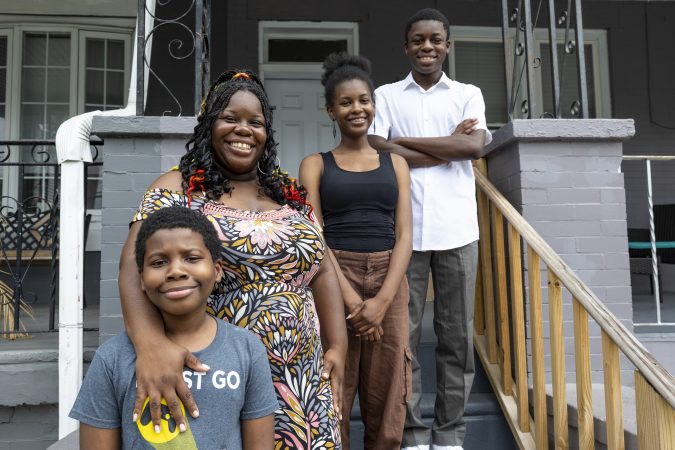
    Gravley, 38, is no longer battling housing instability. But she has spent much of her adult life poor, including nearly two decades straight of government assistance, and wants a different fate for her three children. So she’s looking at wealth — specifically her house and her high-yield savings accounts — as something that can help her children avoid poverty as adults.

    “I just want them to be OK,” Gravley told me, referring to her daughter, Buttons, 17, and her sons, Chippy, 14, and Boots, 11. “And when they have their kids, their kids is OK. And just, just breaking up generational curses.”

    Gravley is one of the parents I spoke with recently in the Philadelphia area who wants to help their children build wealth to break the cycle of poverty in their families. Their goal is to bequeath something — whether it be modest savings or a piece of real estate — to help counter the pull of intergenerational poverty.

    They face long odds: Only 16% of children who spend at least half their childhood poor go on to be economically successful, one study found. But there are emerging ideas and policies designed for children that some believe could improve those odds.

    I’ve been a business reporter for more than a decade, with a keen interest in how wealth is built and deployed. I’ve had conversations with people from across the economic spectrum, from workers earning minimum wage to C-suite executives and billionaires. I closely follow developments about wealth and personal finance. And lately, I’ve been noticing growing momentum and innovation around wealth-building policies for children — some of which could impact the children or grandchildren of people like Gravley.

    In my reporting, two relatively new wealth-building programs stand out. The first is baby bonds, which are government-run trust funds designed to benefit poor children. The other program is Trump Accounts, which are private investment accounts available to all children that allow nonprofits, philanthropic groups, and other entities to target contributions at low-income zip codes. Each has its pros and cons.

    Because the creation of baby bonds and Trump Accounts are relatively recent developments (Connecticut approved the first statewide baby bond program in 2021; Trump Accounts were launched this year), there aren’t yet any long-term studies that directly assess their impact on poor populations. But advocates of early wealth accounts, as they are often called, point to supporting evidence from similar initiatives, including Education Savings Accounts. They also argue that structural changes in the economy necessitate a new kind of social contract with America’s young people.

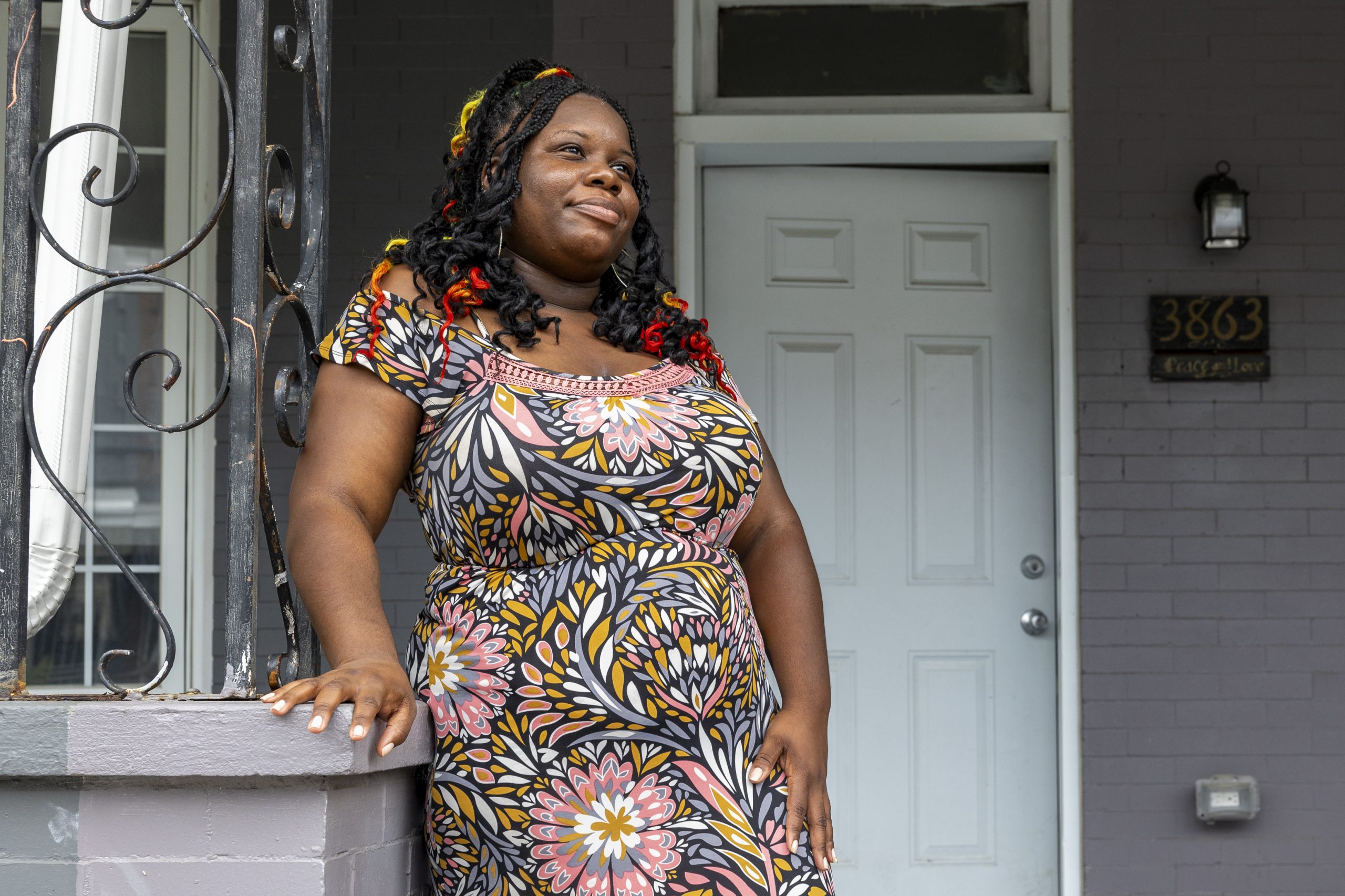
    Of her children’s financial future, MiMi Gravley says, “I just want them to be OK.”Aidan T. Gallo / Staff Photographer

    “Younger generations face economic headwinds that older generations have not — student loans, unaffordability of housing, starting a family, probably declining Social Security benefits,” said Ray Boshara, a senior policy adviser with the Aspen Institute and Washington University in St. Louis who helped design the framing for Trump Accounts and a similar precursor plan by former Sen. Bob Casey, 401Kids.

    He added: “They face a transformed economy. So part of the real purpose of Trump Accounts, I think, is … to give them start-up capital at age 18 to counter these economic headwinds.”

    Gaining steam

    Across the country, efforts rooted in baby bonds or Trump Accounts are either active, forthcoming, or undergoing serious consideration.

    Twenty-two states and the District of Columbia have enacted or are considering some kind of legislation related to baby bonds. Only three jurisdictions have passed them (Connecticut, California, and Washington, D.C.). There are even private-sector baby bonds pilot programs underway.

    The framework for baby bonds was proposed in a 2010 paper by Darrick Hamilton, founding director of the Institute of Race, Power and the Political Economy at the New School, and William Darity Jr., an economist and social scientist at Howard University and Duke University.

    Connecticut launched its CT Baby Bonds program in 2023. It automatically enrolls children whose births are covered by Medicaid. The idea is straightforward enough: When participants turn 18 and complete a financial literacy course, they can claim at least a five-figure sum that can only be used for specified wealth-building activities, such as buying a home or starting a business.

    Trump Accounts, also known as 530A accounts, were signed into law last year and took effect this month. Children who are enrolled in the program by their parents could potentially receive $1,000 from the U.S. government. When the enrollee turns 18, the account becomes a traditional IRA and can be used for a variety of purposes, though the tax consequences are lower if used for postsecondary education, a first home, or retirement.

    Unlike baby bonds, Trump Accounts were not specifically designed for poor children. And one criticism is that wealthier families will likely contribute more than poor families, which would worsen wealth inequality. But what’s notable about them is that they allow third parties such as employers or philanthropists to contribute cash or stock directly to children in low-income neighborhoods.

    For instance, the Dell family pledged funds for every American child in specific zip codes, while the Dalio family and financier Brad Gerstner pledged funds to children in Connecticut and in Indiana, respectively.

    Attention in the Keystone State

    It’s still early, but for now, the idea of helping poor children build a foundation of capital for the future appears to be drawing bipartisan interest. And in Pennsylvania, policymakers have started paying attention.

    “Baby bonds have been a topic of a lot of focus because we all want to make sure that we are creating long-term economic mobility and really breaking the cycles of financial insecurity early,” said State Rep. Morgan Cephas, a Democrat whose district covers West Philadelphia. “So these are some models that we’ve been looking at … and are absolutely looking to do more.”

    State Rep. Martina White, a Republican whose district covers Northeast Philadelphia, said Trump Accounts can be a “great tool for working families” and planned to look further into the concept of baby bonds.

    Her initial preference, she said, would be to model baby bonds like a college endowment, in which the funding source for the program would come from interest or investment earnings, as opposed to directly from taxpayer dollars.

    “I think that the fact that more legislative bodies and governments are looking into ways that we can provide the tools for working families to build their wealth — I think that’s phenomenal, and we should be doing more of that,” White said. “But also helping make sure that government is getting out of the way, too.”

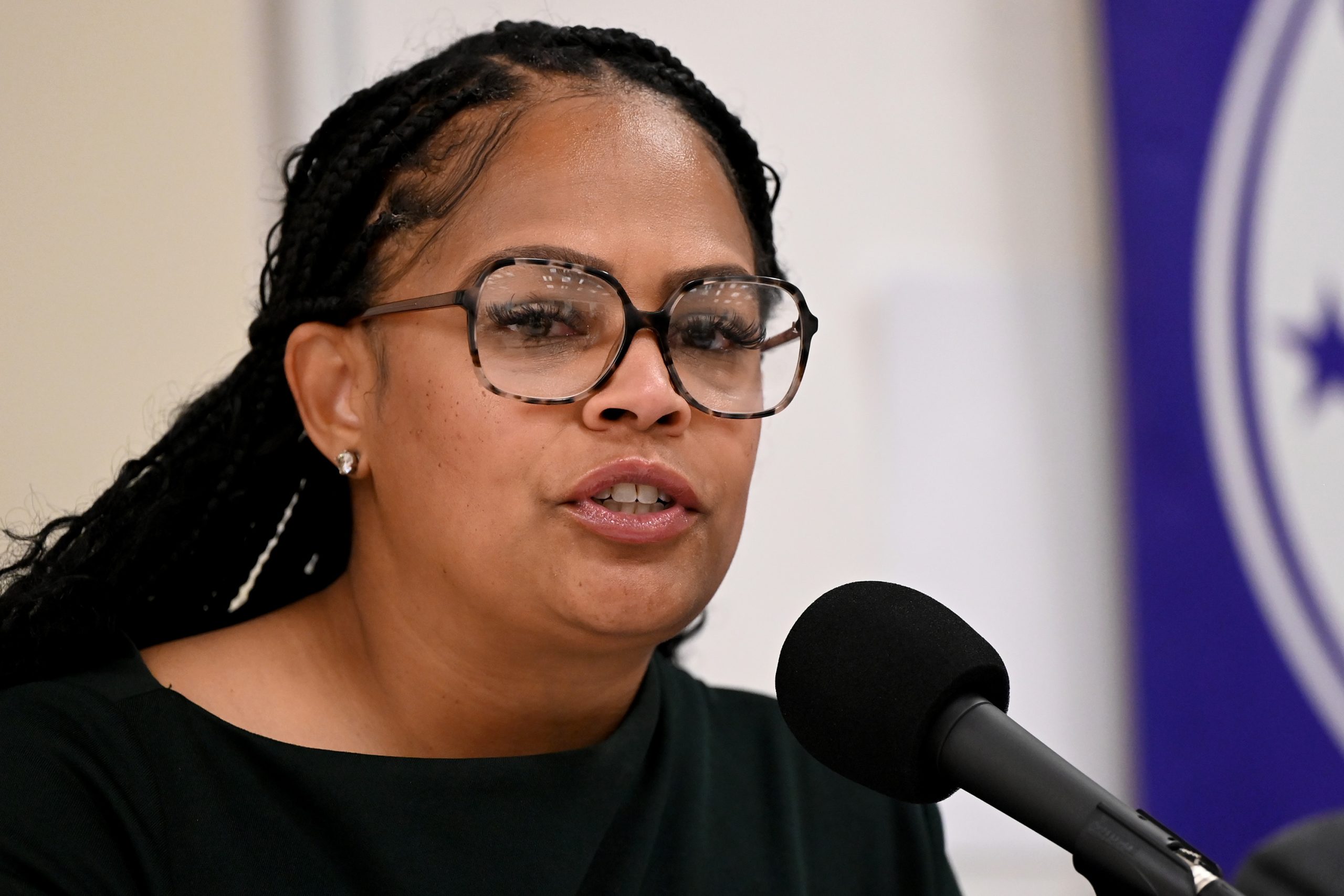
    Democratic State Rep. Morgan Cephas said baby bonds have been a focal point for her party “because we all want to make sure that we are creating long-term economic mobility.”Tom Gralish / Staff Photographer

    Although baby bonds haven’t been proposed in Pennsylvania’s legislature, the state does have an early wealth initiative through its Keystone Scholars program, which puts $100 into an account that Pennsylvania students can use toward their education costs.

    Pennsylvania also passed a law, effective next school year, requiring high school students to take a personal finance course.

    In Philadelphia, there aren’t any initiatives specifically targeting wealth building for children. But there are programs that aim to advance overall wealth access and accumulation. One of the latest is Philly Saves, which, upon implementation, would give workers a way to save for retirement if their current jobs don’t offer retirement plans.

    Last month, Sens. John Fetterman and Dave McCormick made a joint appearance in Nicetown, where they urged parents to sign up for Trump Accounts. Fetterman seemed to anticipate that some listeners might be dubious about the program and presume it is politically partisan because of its name.

    “Do not fall into that political trap,” Fetterman said. “This isn’t some radical thing. … Do this for your child.”

    Even if early wealth initiatives arrive soon in Pennsylvania, it may be too late to have a big impact on older children because the accounts need time to grow.

    For Gravley, that means early wealth policies could impact her children but will likely yield larger sums for her future grandchildren. Gravley said she welcomes them as long as there’s some kind of financial literacy involved.

    “If you give these children … $10,000 with no instructions, good luck with that,” she said. “It has to be instructions with it, but I think it could be a big stepping stone.”

    The case for early wealth building

    Darity, the social scientist who helped conceive the idea for baby bonds, said early wealth accounts will have different maximum outcomes based on their design, even if they each grew at 1% above the inflation rate.

    For instance, the baby bonds plan he coauthored would turn $60,000 into $72,000 over 18 years at that growth rate (no annual contributions allowed). A federal baby bonds plan proposed by New Jersey Sen. Cory Booker ($1,000 deposit; maximum yearly government contributions of $2,000) would grow to about $41,000 at those terms. For Trump Accounts, a $1,000 deposit and maximum yearly private contributions of $5,000 would grow to $100,000 in 18 years.

    While Trump Accounts have the highest growth potential, low-income families who don’t have thousands to contribute annually won’t have “a transformative sum of money at the end of the 18 years,” Darity said.

    Because both programs are still so new, we’re decades away from seeing the results of any long-term studies on the efficacy of baby bonds or Trump Accounts once participants reach adulthood. But research into other programs suggests that external interventions in wealth building can have positive outcomes.

    For instance, a long-term study of Oklahoma’s SEED OK program found that newborns who randomly received $1,000 in state funds had, by age 14, higher educational expectations, greater social-emotional development, and more family-contributed savings for college compared with those who didn’t.

    A 2015 global study of roughly 10,000 households found that asset interventions — like giving impoverished families an income-producing asset, cash assistance, and skills training — had positive economic outcomes well after the program stopped.

    Those findings are part of a growing body of evidence from other asset-building experiments that “already points in a consistent direction,” said William Elliott, founding director of the Center on Assets, Education, and Inclusion at the University of Michigan.

    That direction, Elliott said, indicates that early wealth accounts should be a pillar of a new social contract with Americans — especially in an age when higher education debt can stall wealth creation.

    “The current policy setup strongly favors those who already have wealth,” Elliott said. “And so you don’t have meritocracy happening. To get there, you can’t just give [people] a job anymore, because there’s a gap between wages and productivity. You also have to give them some wealth to make their effort and ability pay off.”

    During an appearance in Nicetown with Sen. Dave McCormick, Sen. John Fetterman urged parents to sign up for child wealth-building accounts.Tom Gralish / Staff Photographer

    The landscape in Philadelphia

    There are more than 300,000 Philadelphians living below the poverty line, according to Pew Charitable Trusts — that translates to about $33,000 annually for a family of four. While the poverty rate here has declined to 19.7% from 26% over the past decade, Philadelphia still has the second-highest poverty rate among large U.S. cities.

    Other figures show the prevalence of low-income households in our city.

    About 44% of full-time workers in the Philadelphia region earned enough for a living wage for their family size in 2025, down from nearly 55% in 2021. The living wage for a single adult with no children in Philadelphia is $23.34 per hour, or about $48,500 a year, according to the Living Wage Institute.

    Gravley, the only worker in her household of four, makes about $40,000 annually.

    Raising Pennsylvania’s minimum wage above $7.25 may help workers locally; all of the commonwealth’s neighboring states have higher wage floors. But it could also be untenable for some small businesses.

    For Gravley, her home is an asset that could help her family long term, but there’s little it can do to improve her economic prospects today. Despite holding three degrees — an associate in culinary arts, an associate in early childhood education, and a bachelor’s degree in leadership and organizational change — she still regularly grapples with the challenge of making ends meet.

    As a program coordinator at Strawberry Mansion High School, Gravley said her expenses are usually about $2,200 per month, which means she typically has about $100 per month for the high-yield savings accounts she manages for herself and her children.

    At one point she invested in the stock market but pulled out because she didn’t understand it.

    It’s been this way for more than a decade for Gravley. As a recipient of Supplemental Nutrition Assistance Program and Medicaid benefits, she is making enough to cover needs, but financial security and financial growth for her family appear largely out of reach.

    “[Welfare] helps, but it’s nothing programmed to get me out of the food stamp thing. Because you tell me to get the degrees and get the better job, and I’m trying to do that, or I did that, and it’s still not enough money. So where is the money?”

    Jared Council is a business journalist based in Philadelphia. He was part of a team at the Wall Street Journal recognized as a finalist for the 2022 Pulitzer Prize in explanatory reporting for a series about the 1921 Tulsa Massacre. He is currently a program manager at Every Voice, Every Vote, a civic information and engagement program at the Lenfest Institute for Journalism.

    The Inquirer is one of two dozen news organizations powering the Philadelphia Journalism Collaborative. Follow us at @PHLJournoCollab. This article is part of a national initiative exploring how geography, policy, and local conditions influence access to opportunity. Find more stories at economicopportunitylab.com.

  • At Ankara summit, tantrums aside, Trump finally awakens to Ukraine’s tech brilliance

    At Ankara summit, tantrums aside, Trump finally awakens to Ukraine’s tech brilliance

    When dealing with President Donald Trump at a NATO summit, the European allies resemble desperate adults hovering around an unruly child who is clutching fireworks and matches.

    So it was a relief that, despite his usual juvenile tantrums and threats at this week’s Ankara, Turkey, gathering — and his erratic behavior toward Iran — the president mostly kept his powder dry.

    Indeed, POTUS had an unprecedented adult moment with Ukraine’s President Volodymyr Zelensky. Trump finally recognized Kyiv’s stunning technological prowess in the production of drones that can now reach deep into Russia (some adviser must finally have convinced him that Ukraine had winning cards the United States lacked).

    Trump actually heaped praise on Zelensky, in stark contrast to his shameful efforts in the past to humiliate the Ukrainian leader, saying he was “courageous” and had done “an amazing job” on the battlefield.

    The president finally granted Zelensky’s years-old request to let Kyiv produce American Patriot missiles — the only available Western weapons capable of stopping the ballistic missiles Russia is using against Ukraine.

    However, that’s the end of the good news.

    The U.S. president’s ill-informed, incompetent, and, frankly, juvenile behavior on foreign policy, combined with his visible aging, presents a clear and growing danger to U.S. security. With his garbled and error-filled speech, his omnipresent ego, and his constantly shifting positions, he has become a global embarrassment.

    Trump’s ineptitude helps our adversaries, from Tehran to Moscow to Beijing to Pyongyang.

    Nothing shows this more clearly than Trump’s belated shift on Ukraine. Mind you, I offer two cheers for the dawning light, but how can anyone count on follow-through when the president changes his positions like he changes shirts?

    Even if Trump keeps his word on the licensing of Patriot technology, setting up the complex production process is a lengthy operation that would probably take at least a couple of years (he hasn’t even bothered yet to notify the U.S. producers of Patriot interceptors, RTX and Lockheed Martin).

    Similar licensing of Patriot missiles was only granted before to Germany and Japan, and it has taken them each years to scale up. I am confident that savvy Ukrainian techies can do so faster. But they need those interceptors right now, when Vladimir Putin is raining down ballistic missiles on Ukrainian cities because he knows they have no defense.

    European allies, who need their own Patriots to defend against Russia, are willing to risk giving Kyiv more if the United States will pledge to backfill their needs quickly. Trump has made no such pledge, claiming they are in short supply in the U.S.

    That is true, but do you know why? The U.S. and Gulf allies have wasted years’ worth of U.S. production of Patriot interceptors during the Iran war. They used hundreds, possibly thousands, of Patriots that cost $2 million to $4 million each to shoot down $30,000 Iranian drones.

    Trump keeps hinting that the U.S. is interested in Ukrainian drone technology, but has still not taken up Zelensky’s offer to trade Ukrainian drone skills and wider joint production in return for Patriots.

    POTUS claimed in Ankara that U.S. drone producers are building new factories for interceptors that will be up and running quickly “in the not-too-distant future.”

    Bluster, bluster, bluster.

    Lockheed, which produces the most advanced interceptor, the PAC3, has publicly announced its goal of producing 2,000 of these marvels a year … by 2030. That is a tiny fraction of what is needed.

    Yet, this week, still short of drones and drone interceptors for the U.S. military, Trump announced at the Ankara summit that the ceasefire with Iran is ending. He appears to be plunging into a renewal of the Iran war. He is stuck in a trap of his own making because he relied only on his gut before entering the conflict.

    POTUS never imagined that Tehran would respond to his attack alongside Israel by closing the Strait of Hormuz, even though he was warned by his military and civilian advisers. Then he claimed, totally contrary to the facts, that he had concluded a “peace deal” and started paying off the ayatollahs with billions in advance by letting them sell oil again. Now he is threatening a new war, which he clearly doesn’t want and for which he doesn’t have the proper weapons.

    Trump knows he cannot win from the air. And, unless he is ready to invade Iran or occupy parts of that country indefinitely — which would be a disaster — he has trapped America into accepting some form of Iranian control over the strait.

    That is why, in Ankara, with the rage of a spoiled child, Trump cursed the Iranians (whom he had praised only weeks ago) and pouted: “I’m not sure I want to make a deal. Let’s just finish the job.” This is not the language of a leader. This is the insincere threat of a 6-year-old throwing food at the wall to see if it sticks.

    What is so terrifying about Trump is not his threats, which our allies and adversaries alike now tend to ignore, but his total incapacity to think in strategic terms. He talks big — “Iran cannot have a nuclear weapon” — but has no strategy on how to achieve this.

    And even when recognizing Ukraine’s achievements, he insisted that “President ​Putin wants [this war] to end. I will tell you that very strongly.” If he really believes this, at this late date, he definitely lives in an infantile fantasy world.

    As a result, there is a huge risk that he will drag America into an uglier quagmire in Iran.

    And he will throw away the chance that he, himself, helped create by pushing Europe to rearm: the opportunity to work with a stronger Europe and bolster NATO’s role positively to counter Russia, China, and Iran.

    Lost in fantasy, he drives America’s allies away.

    Ukraine will try to stay on his good side, but will proceed to revolutionize unmanned warfare in cooperation with Europe, and possibly, eventually, with Washington.

    And U.S. adversaries like Iran will choose whether to take advantage of Trump’s childishness or try to assassinate him in revenge, helped by his own fecklessness. Fear of that latter possibility was what made the Secret Service insist Trump fly back from Ankara on the original Air Force One, rather than use one of his vanity projects, the upgraded luxury gift plane from Qatar, which had not been secured sufficiently to protect against possible attack.

    Trump had insisted at first on luxury over security. Even when it came to his own safety, the child in him could not be curbed.

  • U.S. airlines are redesigning travel around their highest-paying passengers

    U.S. airlines are redesigning travel around their highest-paying passengers

    They may arrive at the same destination, but two passengers on the same flight can have strikingly different travel experiences.

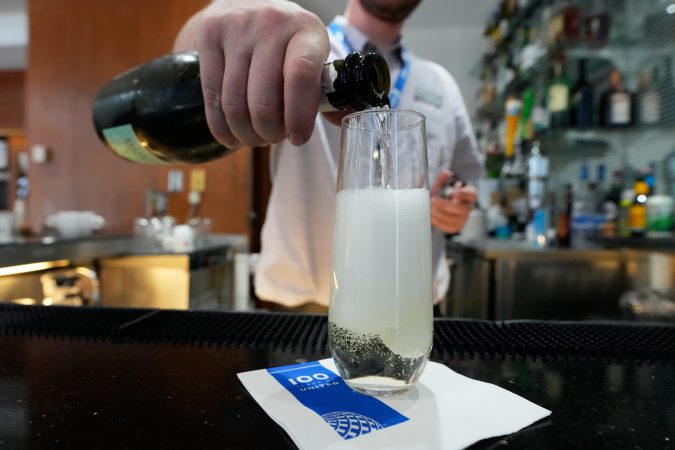
    One traveler breezes through a priority security lane and heads straight to an invite-only lounge for craft cocktails and a chef-prepared meal before boarding early. A flight attendant offering a glass of champagne and a warm hand towel welcomes the passenger to a spacious seat at the front of the plane.

    The other traveler stands in a line at every step — security screening, a café selling $16 sandwiches, a crowded gate — then boards with one of the final groups, hoping there’s still room for a carry-on in the overhead bin before folding into a cramped middle seat. After the cabin lights dim, sleep comes in fragments, and a travel pillow does little to ease a stiff neck.

    The contrasting journeys are no accident. Since the COVID-19 pandemic, the largest U.S. airlines have pulled out all the stops to court premium passengers who are willing to pay for comfort, convenience and exclusivity. Budget-conscious travelers may notice a widening gap between the back of the plane and up front as the carriers increasingly build their businesses around selling first-class, business-class, and premium-economy seats.

    “We can’t win by trying to provide the cheapest. We have to be able to win by providing the best,” Delta Air Lines CEO Ed Bastian said in a recent Fortune podcast interview.

    The strategy embraced by Delta and rivals American Airlines and United Airlines marks a notable evolution for an industry that spent decades making air travel more accessible. Now, the nation’s largest carriers are reconfiguring aircraft to expand premium seating, designing new fleets with larger premium cabins, and investing billions in amenities that extend the top-tier travel treatment beyond their jetliners.

    But United CEO Scott Kirby has pushed back on the idea that the industry has become solely focused on chasing big spenders. He said United’s premium investments are part of a broader strategy to boost the experience of every traveler, pointing to initiatives such as seatback entertainment and improvements to the airline’s mobile app.

    “We’re investing nose to tail for all customers,” Kirby said last month on financial firm Morgan Stanley’s Exceptional Leaders podcast.

    Premium cabins have become airlines’ most valuable real estate

    The premium playbook didn’t emerge overnight.

    Airlines used to fill empty first-class seats mainly by giving their most loyal frequent flyers free upgrades. Delta rewrote the rules in the early 2010s by using sophisticated pricing tools to offer more of those seats to coach passengers who were willing to pay a little more, said Henry Harteveldt, president of travel advisory firm Atmosphere Research Group.

    The strategy unlocked demand airlines hadn’t fully recognized, encouraging more travelers to trade up and laying the groundwork for today’s broader premium push.

    “Travelers could and would pay for noticeably more comfort, noticeably better service, noticeably more amenities, if the price was right,” Harteveldt said.

    Then came the pandemic. When business travel collapsed and Zoom replaced many corporate trips, airline analysts wondered whether carriers would once again have to lure travelers with cheap fares. Instead, eager leisure travelers proved willing to splurge on premium seats and perks, convincing airlines that demand extended well beyond the traditional business road warrior, Harteveldt said.

    That confidence has only grown. Premium demand is now a fixture of quarterly earnings calls, with airline executives regularly touting premium revenue as they compete for higher-spending travelers.

    “When you think about what’s different and what’s changed over the last 10 or 15 years, the premium products used to be loss leaders, and now they’re the highest-margin products,” former Delta president Glen Hauenstein said last summer. “That’s really the headline.”

    Analysts say premium cabins — a category that expanded with the introduction of premium economy seats featuring more legroom and amenities at a fraction of the cost — now generate a disproportionate share of airline revenue compared with the space they take up on commercial aircraft.

    On heavily trafficked transatlantic routes, business-class tickets can bring in nearly as much revenue as fares and fees paid by passengers in the much larger economy cabin, according to an analysis by consulting firm McKinsey & Co.

    Airlines are competing with chef-designed menus and high-end skin care

    The premiumization of air travel has become impossible to miss, even for travelers who only get a glimpse through an airport lounge door or while walking down an airplane aisle.

    Delta’s new first-class lounges resemble upscale restaurants, with open kitchens plating dishes such as hamachi crudo, cocktail bars serving made-to-order drinks, soundproof relaxation pods, and outdoor decks overlooking the tarmac.

    American has partnered with the James Beard Foundation to refresh its lounge menus with dishes like Thai basil and chili crispy shrimp. The airline also redesigned its newest Boeing 787-9 Dreamliners for long-haul international flights around individual business-class compartments with sliding privacy doors, lie-flat seats longer than a standard twin mattress and amenity kits that might include a celebrity facialist’s brand of sheet masks and under-eye patches.

    American Airlines’ premium in-flight seats on the airline’s Boeing 787-9 planes.Courtesy of American Airlines

    United’s newest business-class cubicles add oversized 27-inch entertainment screens, caviar service, luxury skincare products, and multicourse dining on long-haul international services. The airline said its revamped menus “feature flavors and dishes” inspired by cities across its network.

    “Marie Antoinette would feel very comfortable on any of the big three airlines these days,” said William J. McGee, senior fellow for aviation at the American Economic Liberties Project. “But instead of saying, ‘Let them eat cake’ in the back of the plane, she would say, ‘Let them eat Biscoffs.’”

    Air travel is getting more stratified as fuel costs increase fares

    The airlines’ pursuit of higher-paying passengers shows no loss of momentum. On board Delta’s next-generation Airbus A350-1000 aircraft arriving in 2027, nearly half the cabin will be devoted to premium seating. American has said it plans to expand premium cabins by 50% by the end of the decade.

    Yet the new era of luxury in the skies is unfolding alongside a very different reality for other U.S. travelers as broader inflationary pressures have added to the strain on household budgets.

    New York-based travel adviser Mary Auteri said more of her clients are “experiencing sticker shock” as fares and add-on fees have gotten more expensive since the Iran war broke out and pushed up the price of jet fuel, one of the largest operating costs for airlines.

    A group of friends in their 20s recently asked Auteri to price out flights to the sugar-white sand beaches of Punta Cana, a resort town in the Dominican Republic. After she sent them an itinerary, they said they had found what looked like the same flights on Google Flights for more than $100 less.

    But the cheaper fares were basic economy tickets that excluded seat assignments, checked bags, and flexibility to change plans. Once those costs were added back in, the trip no longer fit their budget.

    Baggage fees, seat-selection charges, and other add-on costs fall heaviest on economy travelers, McGee said. For wealthier travelers, those fees may amount to little more than an inconvenience. For budget-conscious travelers, they can determine whether a trip happens at all.

    “The idea that we’re all created equal? Not in the airlines’ eyes,” McGee said. “Not by any means.”

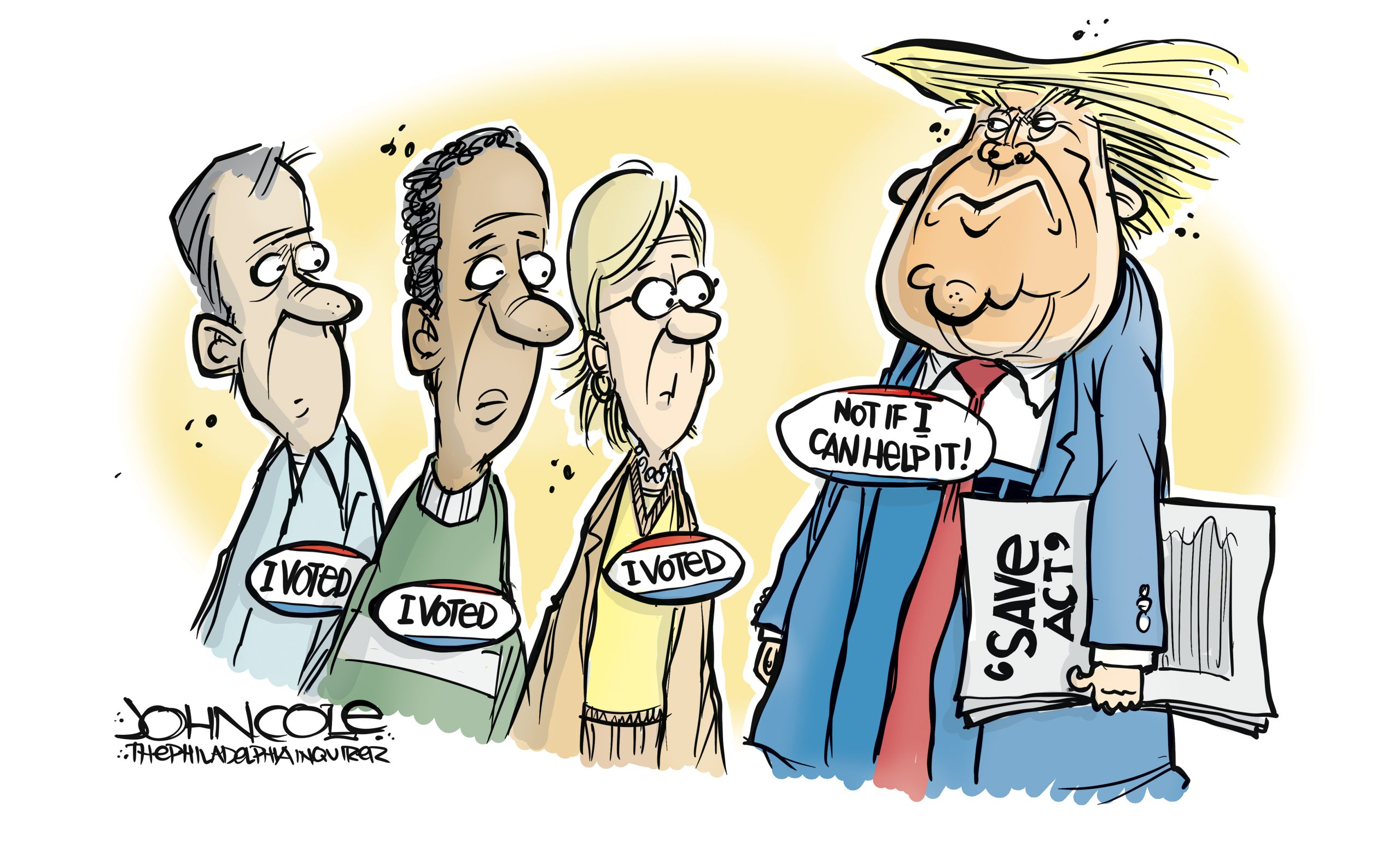
  • Election denial | Editorial Cartoon

    John Cole spent 18 years as editorial cartoonist for The (Scranton) Times-Tribune, and now draws for various statesnewsroom.com sites.

  • 🐶 The art of finding lost dogs | Morning Newsletter

    Rise and shine, Philly. We’re promised mostly sunny skies with a high near 85.

    Our Sunday read is about a Delco woman who spends her free time locating stubbornly lost dogs in the Philly area.

    And a local business got its start by making dinners for doctors. Now it’s selling thousands of meals a week.

    — Paola Pérez (morningnewsletter@inquirer.com)

    If someone forwarded you this email, sign up for free here.

    Closing in on canines

    They call her the Delco Dog Detective, but her real name is Colleen Bell, and she has a true passion for tracking down pups in distress in the Philadelphia region.

    By Bell’s estimates, she has recovered nearly 1,000 dogs over the last 14 years, using her own unique methods to accomplish the mission.

    Two years ago, Bell created the nonprofit GoodBoy Dog Recovery to facilitate the growing costs of the operation. But she’s not in it for the money or fame, reports The Inquirer’s Dana Munro.

    “She does it purely for a love of the game, the thrill of the hunt, the satisfaction of capturing a petrified pup, and the fulfillment of reuniting it with a frenzied family,” Munro writes.

    In Bell’s own words: “We never stop until we catch the dog.”

    Read the full story here.

    ‘Bursting at the seams’

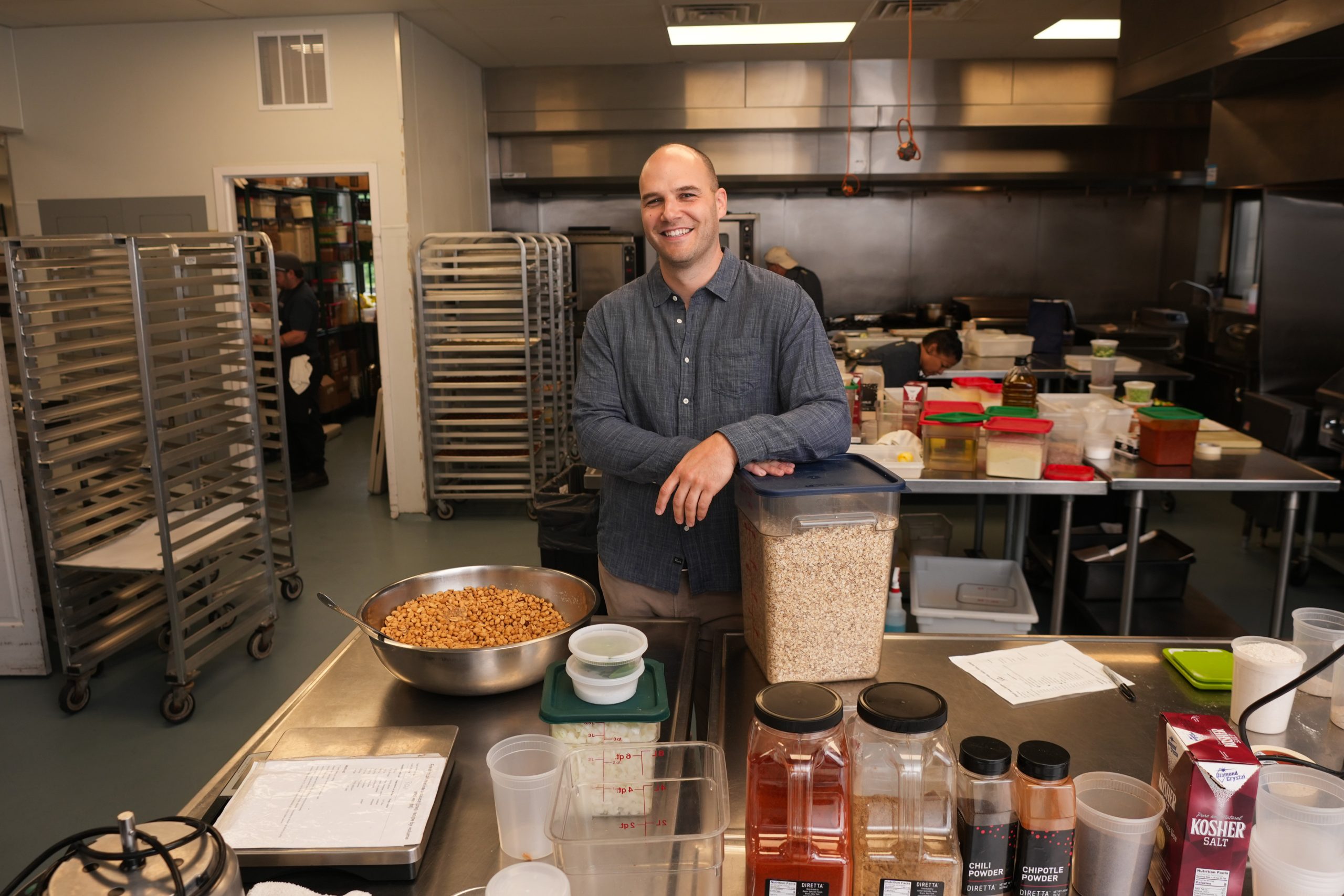
    Home Appétit traces its humble beginnings to a Center City apartment in 2013. This year, the meal delivery company is on track to rake in $10 million in revenue.

    🛒 What it does: Brings roughly 16,000 to 20,000 fully prepared meals a week within a 50-mile radius, according to founder and CEO Lee Wallach.

    🛒 Next up: A move to a former catering facility in East Falls in September. It’s currently operating out of a space off City Avenue in West Philly.

    Business reporter Ariana Perez-Castells has the story on why Home Appétit grew as some competitors fizzled.

    What you should know today

    This week in history

    🎤 Here’s Tommy Rowan with a look back at the legalization of bingo in Pennsylvania.

    Despite its proliferation across charitable events and senior centers, bingo is considered gambling.

    And it wasn’t always legal.

    But on July 10, 1981, Republican Pennsylvania Gov. Dick Thornburgh signed the Bingo Law.

    It was time to crack down on the ping-pong-ball pullers. Read on for the full story.

    ❓Pop quiz

    Despite the blowout loss, the USMNT-Belgium World Cup game drew more than:

    A) 65 million viewers

    B) 100 million viewers

    C) 50 million viewers

    D) None of the above

    Think you know? Check your answer.

    What we’re …

    🧅 Mesmerized by: Kibbeh nayyeh at Suraya, among the best things we ate this week.

    ☕ Loving: How the World Cup provided a sense of community at a University City coffee shop.

    🧳 Packing for: The perfect Jersey Shore weekend in Sea Isle and Strathmere.

    🏰 Admiring: The distinctly Philadelphia Victoriana architecture of an 1891 building that looks like a castle, a cathedral, and a factory.

    🌉 Learning: Before the Ben Franklin Bridge opened 100 years ago, Pennsylvania wanted to make it toll-free.

    🧩 Unscramble the anagram

    Hint: French soccer star

    INKY MAPPABLE

    Email us if you know the answer. We’ll select a reader at random to shout out here.

    Cheers to Jimi Ogunneye, who correctly guessed Saturday’s answer: Patti LaBelle. “The Godmother of Soul” will sing “The Star-Spangled Banner” at the MLB All-Star Game. But she won’t be the only local performer.

    One more All-Star story: We looked into how baseball’s midsummer celebration has transformed into a major-league merchandising machine.

    Photo of the day

    Amanda Caroccio (right) thought owning a home was out of reach for her as a single mom to 8-year-old Guiliana. She’s proud of her home in Haddonfield. “Purchasing this home has been one of the greatest accomplishments of my life,” said Caroccio.Allie Ippolito / For The Inquirer

    🎶 Today’s song goes like this: “Nothing I can say / A total eclipse of the heart.” Grammy-nominated Welsh pop star Bonnie Tyler died last week. She was 75.

    One more musical thing: An old-fashioned Battle of the Bands is coming to Philly.

    👋🏽 That’s it for now. Thanks for reading, and enjoy the rest of your weekend.

    By submitting your written, visual, and/or audio contributions, you agree to The Inquirer’s Terms of Use, including the grant of rights in Section 10.