The WNBA’s Los Angeles Sparks have plucked their new general manager from the 76ers front office.
The Sparks are hiring Blue Coats general manager Ariana Andonian for the role, a source confirmed.
Andonian came to the Sixers under former president of basketball operations Daryl Morey. Though she’s only 31 years old, she has had an extensive career working in college and the NBA, including stints under Morey with the Sixers and under Memphis Grizzlies general manager Zach Kleiman. She also consulted for Duke’s program while earning a graduate degree from the school, according to an Inquirer profile of Andonian from 2025.
The job will bring Andonian, a Los Angeles native who grew up a Lakers and Kobe Bryant fan, closer to home. Andonian first met Morey while in college at Southern Cal when she gave his daughter a tour of the USC campus and later joined the family for lunch.
After that meeting, Andonian earned an internship with the Houston Rockets when Morey was the general manager there. She began as a scout and was coordinating the team’s college scouting group by age 23. A 2017 story from Bleacher Report cited her as the league’s only female scout at the time.
Andonian’s career went from there to Duke, where she led the team’s high school scouting group while completing her MBA. She cites former coach Mike Krzyzewski and current coach Jon Scheyer as mentors.
“It was almost like I had to tell her when she had to stop watching video,” Morey told The Inquirer of Andonian in 2025. “ … She picked up things quick and fit into a group.”
Even by rock and roll standards, the egos and drama within Tuna and the Rock Cats are something to behold.
Sometimes, in the middle of a show, the band’s lead guitarist — St. Claude — will decide that he’d prefer to play Christmas music, and begin performing “Jingle Bells.”
Roux, on clarinet, is a prodigy. But Annie, who plays the chimes, can be volatile; sometimes, if it gets too hot during a show, she’ll simply lie down onstage, refusing to continue.
“Annie also plays guitar,” says Samantha Martin, the band’s founder. “But she wants to beat up the keyboard player, and we can’t have brawls onstage.”
Behind the meowsic
Despite this artistic anarchy — or perhaps because of it — Tuna and the Rock Cats have become an extremely hot ticket. Billed as the world’s only all-cat band, the Georgia-based group has been selling out venues across the country for years — strumming guitars, pawing piano keys, and batting at chimes from Seattle to St. Louis.
When those quickly sold out, a fifth show was added.
Eli Milton Gizmo (Name Pending) handles drums for the band. Samantha Martin describes the cat as “not the brightest, but he’s very pretty.”Photo courtesy of Weekly Whiskers
Martin, a former wildlife educator, has been directing this Meowtly Crüe for about two decades, in addition to training animals for TV and film.
Early in her career, she gravitated toward “misfit” animals: snakes, spiders, rats. (“Rats will never let you down,” she explains.) But then she eventually met Tuna, a cat “so brilliant I said, ‘Let’s give this cat thing a try.’”
The band’s first show was in 2006, at an art gallery in Chicago. The group had only three members then, but when people heard there was a troupe of cats ready to perform, they lined up to get in.
The show, Martin says, was “horrible.”
Which is to say, it went fabulously.
“People loved that the show was horrible,” Martin says. “They love the fails more than the successes.”
Since then, she’s taught an array of cats to “play” a variety of instruments, some better than others. During performances, Martin joins the band onstage, giving visual and verbal cues — she mimes a tapping motion when she wants a cat to paw its instrument, for instance — and doling out treats for a job well done.
How are the Rock Cats, musically?
That depends who you ask.
While their commercial success is undeniable, critical acclaim has been mixed. One reviewer, in Seattle, described the group’s style as “an unpredictable assortment of instrument clanging,” adding that “rarely does it sound like the cats are playing the same song, let alone an actual, fully realized piece of music.” Another bemoaned the fact that, at a Christmas-themed performance, the band did not actually play much holiday music — though this critique seemed a bit harsh.
They are, after all, cats.
On the road
Tour life is not all bottle-service and Fancy Feast.
Packed onto their tour bus at any given time are Martin, tour manager Ashley Murnan, tour assistant Amanda Fenick, feline care coordinator Willie Zamora, roughly 15 cats, and a chicken named Cluck Norris, who plays the cymbal.
While the cats largely have the run of the bus, “the humans have a six-foot, coffin-sized bunk in a drawer,” says Murnan. Earlier on their current tour, in Baltimore, their generator — which powers the entire bus — went out for two weeks, putting them 10 days behind schedule.
And this is to say nothing of the challenge inherent in managing 16 distinct personalities — a mixed bag of climbers, swatters, and what have you.
“The band is chaos,” says Martin. “They’re all over the place.”
She never misses a show.
Martinhas performed with a broken foot, with cancer, and with a voice so raspy it could hardly be heard through her microphone. Once, she paid to have the band’s broken-down tour bus towed from Wisconsin to Chicago in order to get to a show on time.
“It was a $2,000 tow,” she says, “but we made it.”
Twix is one of three guitarists for the (mostly) all-cat band, Tuna and the Rock CatsPhoto by David Soder (Courtesy of Rock Cats Rescue, Inc.)
Despite the drama, Martin adores the cats, all of whom were once orphans, rescues, or strays. When they’re not touring, they live with her in Georgia, where she cooks them fresh chicken and salmon and turkey. (Martin also runs a nonprofit — Rock Cats Rescue, Inc. — that partners with local organizations to get cats adopted.)
Even Miki — her impossibly apathetic trumpet player who was found abandoned in a discarded Huggies box — has stolen her heart.
“They put a roof over my head,” she says. “Granted, it’s leaky and the gutters are falling off.”
Some romantic rendezvous end in heartbreak, others in a $400 million lawsuit.
But that’s the fall out from the breakup between Oona Sperr, the daughter of the Please Touch Museum founder and a prominent Philadelphia architect, and an oil-tycoon from Texas.
In a tell-all lawsuit, Sperr, 64, accused billionaire Sid Bass of breaking financial promises he made to her throughout their relationship.
The New York City-based interior designer and Bass “lived together in a loving, committed relationship” since 2014 and “were very happy as a couple,” the suit says. The oil scion, has a net worth of $4.4 billion, promised Sperr that she would always be cared for financially and would receive ownership interest in his properties, according to the complaint.
The 84-year-old began declining physically and cognitively in 2023, the suit says. He previously suffered three mini-strokes, signs of Parkinson’s disease appeared in a brain scan, and his excessive drinking worsened his tremors, the complaint says.
Around that time, Althea Viafora Kress entered the picture.
Viafora Kress pursued Bass since late 2022 under the pretext that she needed advice on how to invest money she inherited, the suit says.
“Unbeknownst to Oona, Viafora Kress began grooming Sid and, at some point, achieved her goal of a coercive relationship with him, with devastating consequences for Oona and Sid’s partnership,” the complaint says.
After breakfast in September 2024, the suit says, Bass broke up with Sperr with two sentences: “I want a separation. You are to pack and leave.”
Sperr suspected that there was another woman, and in the following weeks she came to learn about Bass’ relationship with Viafora Kress.
Immediately after the breakup, the suit says, Bass promised his former paramour a lump-sum payment of $50 million, the smallest of their New York homes, another property of her choosing, continued staff support, and care for her mother, the 96-year-old founder of the Please Touch Museum, Portia Sperr.
These terms were less than Bass originally promised her, the complaint says. But in the following months, the commitment narrowed further.
Sperr received a “maintenance agreement” via email from Bass’ lawyer in January 2025 that included a commitment for annual payments of $5 million for 10 years, denied her ownership of any home, and declined to pay for her mother’s care, among other things, the suit says. The agreement was also accompanied with a nondisclosure agreement.
“In other words, what Sid was now proposing was that Oona … should be forced to depend entirely on Sid’s increasingly unpredictable whims, or, even more troubling, on the preferences of Viafora Kress,” the lawsuit says.
The Inquirer was unable to reach Bass and Viafora Kress, who are both named defendants in the lawsuit, which was filed in the Southern District of New York.
While a $400 million breakup is more than most could wrap their head around, it’s par for the course for Bass, the suit says.
The billionaire previously had two extremely expensive divorces.
Bass divorced his first wife, Anne Hendricks Bass, in 1988, leading to settlement that cost him $200 million to $500 million, the suit says. And in 2011 he divorced Mercedes Bass in an agreement that would allow her to sustain an “ultraluxury lifestyle,” according to the complaint.
“This is a case about broken promises,” Roberta Kaplan, Sperr’s attorney, said in a statement. “Oona is the woman who spent a decade making Sid’s life convenient — abandoning her career, managing their shared homes and affairs, caring for him through his serious illnesses — all because Sid agreed that he would take care of her and her 96-year-old mother no matter what.”
While Sperr comes from a more modest upbringing relative to the son of an oil dynasty, her family has a legacy of its own in Philadelphia.
Her father, Otto Sperr, was a prominent Rittenhouse Square architect. He died in 1998.
Portia Sperr was a Montessori educator who still lives in Philadelphia, the suit says.
Oona Sperr moved to Philadelphia when she was 2, and went on to graduate from the Baldwin School in Bryn Mawr. She then moved to New York to study architecture and embarked on a career as an interior designer.
But she abandoned that career after meeting Bass, opting to take care of him, their homes, and daily obligations because of a promise that she would never need to support herself or her mother independently.
“Sid has breached his promises by refusing to provide Oona with the property interests and financial support he agreed she would receive,” the suit says, “in exchange for her years of devotion to their partnership and her enormous contributions to the life they built together.”
Tom Corcoran, 82, of Philadelphia, retired president of the Delaware River Waterfront Corp., founding president and former chief executive officer of the old Cooper’s Ferry Development Association in Camden, former business administrator for the city of Camden, onetime Peace Corps program director in West Africa, mentor, and poetry enthusiast, died Sunday, Aug. 30, of complications from dementia at his home in Center City.
Born in Chicago and a graduate of Loyola University Chicago, Mr. Corcoran earned a master’s degree in public administration at the University of Pennsylvania’s Wharton School in 1975 and never strayed far from the Delaware River after that. He spent 25 years, from 1984 to 2009, as president and CEO of the Cooper’s Ferry Development Association on the Camden waterfront, and eight years, from 2009 to 2017, as president of the Delaware River Waterfront Corp. in Philadelphia.
He championed what he called “the two cities, one waterfront strategy” and was especially adept, former colleagues said, at political maneuvering and marshaling funds and projects. Former colleagues on both sides of the Delaware called him “a tireless public servant,” “a visionary urban planner,” and an “economic development strategist with short-term practicality and long-term vision.”
In Camden, Mr. Corcoran added more than $550 million of investments to the waterfront area and oversaw the development of what is now the Freedom Mortgage Pavilion, the Adventure Aquarium, Wiggins Waterfront Park, the Riverlink Ferry, several office buildings, and other projects. Another New Jersey developer called him a “cult figure” among state lawmakers.
Mr. Corcoran talks at City Hall in 2011 about creating a string of parks along the Delaware River.Akira Suwa / Staff Photographer
He said education as well as development was key to building a strong local economy and told The Inquirer in 2006: “Until Camden has a good-quality education system, we’re not going to be able to attract families with school-age children back to the city.”
Dana L. Redd, former Camden mayor and current president and CEO of Camden Community Partnership, said on Facebook that Mr. Corcoran often slept on a cot in his Camden office and left daily handwritten messages that his project managers called “love notes.” Redd said: “He challenged a generation of urban leaders to think bigger, believe in Camden, and dream about what the city could become.”
In Philadelphia, he initiated the Race Street and Washington Avenue pier parks, the Spruce Street Harbor Park, a miles-long bike and walking trail, and the I-95 overpass park to reconnect Center City with its waterfront. “The more we look at the concept of one waterfront, two states, the more opportunities we’re going to find,” he said when he left Camden for Philadelphia in 2009.
When he retired in 2017, he said: “Instead of swinging for the fences, we decided we would hit singles and doubles and bunts and sacrifices, steal bases, and do whatever we could. Eventually, we thought, we’d always get back to the center.”
Mr. Corcoran (left) shakes hands with then-Mayor Michael Nutter in 2009 after joining the Delaware River Waterfront Corp. Alejandro A. Alvarez / Staff Photographer
Longtime colleague and friend Bill Hankowsky said: “It is truly unique that a single individual could have the vast impact across two facing waterfronts in the center of one of the country’s major urban metros.”
Earlier, Mr. Corcoran served nine years, from 1975 to 1984, in Camden city government, rising from administrative aide to business administrator. In 2001, he earned a Good Neighbor Award from the Camden County chapter of the American Red Cross for his “integral role in the revitalization of the city.”
In the 1960s, Mr. Corcoran joined the Peace Corps after college and spent seven years in Africa building dams and wells with local farmers. He spoke French and the local African language, and rose to program director.
“What an exemplary life he led,” a former Peace Corps colleague said in a tribute, “without fanfare or drama and always with service to others.”
Mr. Corcoran (right) led visitors on a tour of the Washington Avenue pier park in 2014.Viviana Pernot / Staff Photographer
Off the waterfront, Mr. Corcoran was enthralled by poetry and his Irish heritage. He liked to recite lines from Ulysses and other poems, and sing songs from the old country.
“He was a true Renaissance man who had a remarkable vision for communities and people,” a former colleague said. Former colleague John Grady said: ”Tom was a giant, unassuming, persistent force for the local community.”
Thomas Patrick Corcoran was born May 13, 1944. He earned a bachelor’s degree in political science at Loyola in Chicago and rode camels to work in Africa during his time in the Peace Corps.
He met Robin Lowey at a dinner society event, and they married in 2003, and lived in Camden and Philadelphia. They enjoyed traveling and dining together, and hashing over world affairs.
Mr. Corcoran and his wife, Robin Lowey, married in 2003. Courtesy of friends
In 2009, he said he often peered through a telescope at the Philadelphia waterfront from his home in Camden and wondered how he would develop Penn’s Landing. “He’s the one who brought together the business leaders and was able to steer through difficult political waters,” then-Camden County freeholder Jeffrey Nash said in 2009.
His wife said: “He was a kind and generous gentleman. He was a good, nice person.”
In addition to his wife, Mr. Corcoran is survived by three sisters, a brother, and other relatives.
Services were held Thursday.
Donations in his name may be made to the Caplan Caring Difference Fund at the Penn Memory Center, Office of the Treasurer, Box 71332, Philadelphia, Pa. 19176.
Mr. Corcoran spent seven years in the Peace Corps after college. Courtesy of friends
With the relocation, set to start in two to three years, the discount retailer says it will invest a total of $370 million in the city. The company plans to keep warehouses in Burlington County, including on the site of its current headquarters, where it has been based for more than half a century.
Here’s what else to know about the big numbers related to Burlington’s move to 3151 Market St.
What does it cost to move to Schuylkill Yards?
$370 million: What Burlington plans to spend on the move
$240 million: How much Burlington is paying for the 441,000-square-foot building, according to a Thursday SEC filing by Brandywine Realty Trust. That’s about $544 per square foot.
$130 million: How much Burlington plans to spend on “design and development of the space, creating an HQ built for collaboration and the modern needs of Burlington’s corporate workforce,” a spokesperson said.
$223 million: What Brandywine had spent on 3151 Market, as of June 30, according to its latest earnings report.
(function() { var l = function() { new pym.Parent( ‘burlington-move__graphic’, ‘https://media.inquirer.com/storage/inquirer/ai2html/burlington-move/index.html’); }; if(typeof(pym) === ‘undefined’) { var h = document.getElementsByTagName(‘head’)[0], s = document.createElement(‘script’); s.type = ‘text/javascript’; s.src = ‘https://pym.nprapps.org/pym.v1.min.js’; s.onload = l; h.appendChild(s); } else { l(); } })();
$168 million: How much Brandywine estimates it will get from the sale. The company said in an SEC filing that it has a $57.3 million mortgage on the building that will be repaid at closing, which is set for later this month.
96%: The vacancy rate at 3151 Market, which was completed in 2024.
Burlington Stores’ future new home at 3151 Market St., in Philadelphia. Jessica Griffin / Staff Photographer
What government incentives are going to Burlington?
$30 million: How much Burlington is set to receive in grants from Pennsylvania.
$8 million: What the City of Philadelphia plans to invest in Burlington’s move, including a $7 million forgivable loan and $1 million for a year of free SEPTA passes for employees.
How much of Burlington’s workforce is coming to Philly?
1,500: Number of Burlington employees the company plans to move from New Jersey to Philadelphia, starting in late 2028 or early 2029
500: Number of hires Burlington plans at its new headquarters in the next five years
0: Number of layoffs Burlington has planned as a result of the headquarters relocation
Inquirer reporter Joseph N. DiStefano contributed to this article.
BUENOS AIRES, Argentina — Argentine President Javier Milei escalated his country’s dispute with Britain over the Falkland Islands on Thursday, vowing new measures to halt an oil project near the British-controlled archipelago and praising U.S. President Donald Trump for saying Washington could reconsider its neutral stance on the islands’ sovereignty.
Milei cast Trump’s comments as proof that his close relationship with the U.S. president — criticized by political opponents as overly deferential — was paying dividends.
“The United States is considering this change in position because it knows that Argentina has a reliable partner, aligned with Western values, in a strategically important position that can be a valuable ally in the decades to come,” Milei said in a nationally televised speech.
The Argentine leader then announced sweeping actions aimed at stopping the development of the deep-sea Sea Lion oil project, about 140 miles north of the islands, where British company Rockhopper Exploration and Israel’s Navitas Petroleum plan to begin drilling in the coming months and start pumping oil in 2028. Argentina considers the project an illegal exploitation of resources in waters it claims as its own.
He threatened tougher sanctions against companies involved in the offshore drilling and announced new funding for a naval base in Argentina’s southernmost province of Tierra del Fuego to bolster the country’s military presence near the islands, known in Argentina as the Malvinas.
“Argentina will not stand idly by,” Milei said. “Any further advance on the Malvinas Islands will be considered a violation of our national security.”
U.K. Defense Secretary Wes Streeting said Britain’s commitment to the Falkland Islands was “unshakeable.”
“Milei’s statement overnight tells us more about domestic politics in Argentina than it does about the Falkland Islands,” Streeting wrote on X.
Milei’s efforts to refocus attention on the Falklands are a striking turn for a leader who has faced criticism at home for warming ties with Britain and professing admiration for Margaret Thatcher, the British prime minister detested in Argentina for leading the campaign to retake the archipelago during the 1982 Falklands War.
The two-month conflict, which killed 649 Argentine troops, 255 British service members, and three islanders, remains a sore point in Argentina over four decades later.
The sovereignty claim is enshrined in Argentina’s constitution and frequently invoked as an expression of national identity, from banknotes to World Cup soccer chants. It is also one of the few causes that cuts across the country’s stark political divides, giving Milei, who is up for reelection next year, a welcome political opening as his approval ratings slip and the economy sputters.
“We can argue about my style. We can disagree over fiscal or exchange-rate policy,” Milei said. “But there are causes that rise above any political difference. The Malvinas is one of them.”
Some were skeptical.
“He wants to use the legitimate sovereignty claim over the Malvinas Islands to regain ground ahead of the election year and serve U.S. interests in its dispute with Britain,” said Nicolás del Caño, a leftist opposition lawmaker.
Trump questions U.S. support for British sovereignty
Argentina maintains that it inherited sovereignty over the islands from its former colonizer, Spain, and that Britain has illegally occupied them since 1833. Britain rejects that claim, citing the islanders’ desire to remain a British overseas territory.
For decades, successive U.S. administrations have remained neutral on the competing claims while recognizing Britain’s de facto administration of the islands. Any departure from that position would be a major diplomatic affront and inflame already high trans-Atlantic tensions.
On Monday, Trump stirred concern in Britain when asked whether his administration was reviewing its stance on the decades-old dispute. “I always review every position,” he replied. “That’s just one of many.”
Then, in an interview aired Thursday with British broadcaster GB News, Trump dodged directly answering a question about whether the U.S. would “come to the aid” of Britain in another conflict over the Falklands. Instead, he repeated past complaints that Britain had not provided sufficient support for the U.S.-led bombing campaign against Iran.
“Your country was not there to help me,” Trump said, recalling Britain’s former prime minister, Keir Starmer, telling him the country did not have ships to contribute to the campaign. “It was pretty sad, the whole thing.”
The Trump administration has floated the Falklands as leverage before: An internal Pentagon email leaked in April first raised the prospect of Washington reconsidering its position on the islands as one possible way to punish NATO allies that declined to join the U.S. war on Iran.
His comments forced Downing Street to insist that Britain would not yield sovereignty over the Falklands.
“Sovereignty rests with the U.K., and the islanders’ right to self-determination is paramount,” British Prime Minister Andy Burnham’s spokesperson, Tom Wells, said earlier this week, pointing to a 2013 referendum in which the roughly 4,000 people living in the Falkland Islands voted overwhelmingly in favor of remaining a British overseas territory.
Milei rallies Argentines around the flag
Under pressure from Argentina’s populist opposition, which accuses him of neglecting Argentina’s sovereignty claim, Milei has grown more vocal on the Falklands as plans for large-scale oil production around the islands raise the economic stakes of the dispute.
In his speech, Milei warned that the Sea Lion project could usher in a broader Falklands oil boom, enriching the islands with resources Argentina claims as its own and further entrenching Britain’s presence.
“If we allow it, we will be creating an incentive for the British government to deepen the occupation of the islands and the exploitation of our resources,” Milei said.
He vowed to fast-track sanctions against companies involved in oil projects around the islands and extend penalties to suppliers, shareholders, and directors. His proposed legislation could also bar companies tied to such projects from operating or signing contracts in Argentina.
Despite slashing public spending elsewhere as part of his austerity drive, Milei also pledged more money to build a naval base in Tierra del Fuego and upgrade Argentina’s telecommunications capabilities there to strengthen the country’s presence in the South Atlantic.
“A poor country without armed forces can hardly make effective progress on its sovereignty claims,” he said.
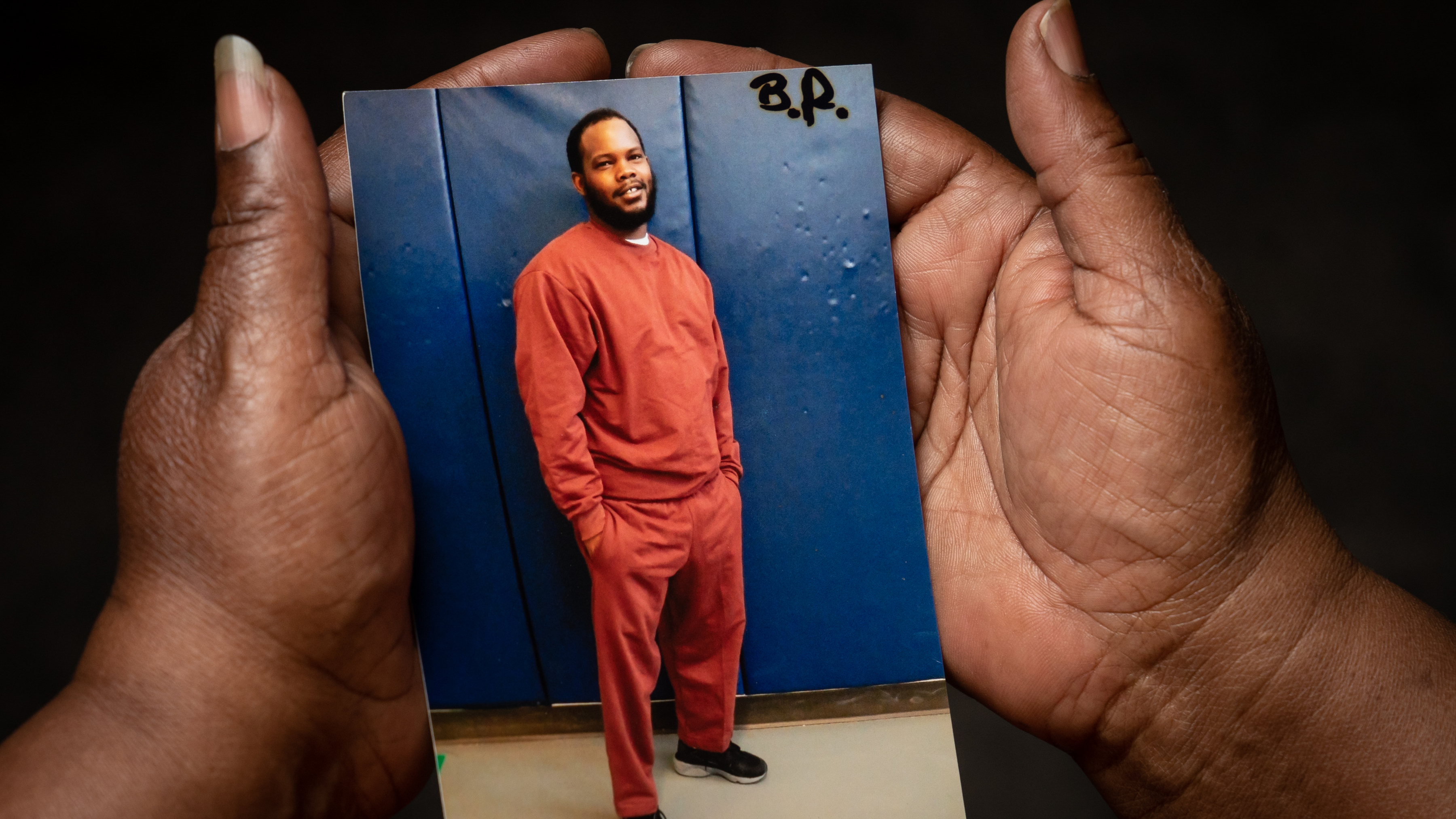
A man serving life in prison for a 2010 first-degree murder conviction will be released from prison after pleading no contest to lesser crimes for his role in a fatal North Philadelphia shooting.
Rasheem Hall, 42, was granted the right to a new trial in April after a judge agreed with his defense attorney that prosecutors had withheld evidence that could have aided Hall’s ongoing effort to appeal his conviction.
They said prosecutors’ main witness had been an unreliable jailhouse informant who had recanted statements he’d made about Hall’s involvement in the 2007 shooting that left 34-year-old Ronald Kennel dead.
Rather than retry the case, however, prosecutors agreed to conditions Friday that allowed Hall to plead no contest to aggravated assault and a firearms violation. During the hearing, Common Pleas Court Judge Diana L. Anhalt approved a sentence of nine to 18 years in prison in exchange for Hall’s plea.
Because he had already served that time in custody, he could be released as early as Friday afternoon, she said.
Hall’s family members reacted to the news with a mixture of smiles and tears.
“I’m just happy for Rasheem, I’m just happy for his family,” Hall’s defense attorney, Robert Gamburg, said after the hearing.
The development comes as District Attorney Larry Krasner’s office faces scrutiny of its handling of post-conviction cases. Last week, a federal judge said actions city prosecutors took in another case could amount to perjury, conspiracy, or obstruction of justice.
Friday’s hearing ended a yearslong campaign by Hall to appeal his conviction.
That effort centered on issues with Deric Williams, an informant who was recorded on a jailhouse phone line telling his mother he had wrongfully implicated Hall in the crime and that he had tried, unsuccessfully, to recant his statements to detectives.
Earlier this year, Gamburg told a judge prosecutors had failed to hand over that recording of Williams to Hall in 2013 during his appeal, though prosecutors contended that jurors had heard similar remarks from Williams at Hall’s 2010 trial.
Judge Rose Marie DeFino-Nastasi sided with Hall, saying that in addition to the phone recording, emails between prosecutors with details of their relationship with Williams should have been turned over to his defense team.
On Friday, Assistant District Attorney Trey Flynn told Anhault that while prosecutors accepted Hall’s plea, they stood by their earlier assertions about the case.
He said prosecutors would have told jurors that Hall and another man, David Satchell, only fired guns during the May 20, 2007, incident after being shot at by another person first.
Hall’s gunfire struck a bystander, Charlene MacDonald, in the leg, Flynn said.
“It was individuals firing at Hall who actually struck Ronald Kennel, who was standing behind them,” Flynn said.
Still, prosecutors would have argued that Hall was responsible for Kennel’s death via transferred intent, Flynn said. The legal theory holds a defendant responsible for injury or death based on their intent to harm, regardless of who was actually affected.
Flynn said he had spoken with Kennel’s brother “at length” about prosecutors’ decision to accept Hall’s plea. And he said District Attorney Larry Krasner agreed with the decision as well.
Outside the courtroom, Hall’s family members were moved to tears by his imminent release and return home for the first time since his early 20s.
“It’s been almost 19 years,” said Hall’s father, Ronald. “He’s got a daughter, he’s got nieces, nephews. People that passed away. It’s a lot of time lost, time you can’t get back.”
Ronald Hall said his son only learned of the opportunity to plea to lesser charges last week, and that the gravity of the news is still fresh.
President Donald Trump threatened Friday to halt a broad swath of U.S. trade unless the Federal Reserve slashed interest rates, issuing a sweeping ultimatum that could prove costly to the economy if he were to carry it out.
The Fed is a politically independent institution, and it has long kept rates steady as it tries to tame years of persistent inflation. Trump’s demand risked undermining that work, while choking off commerce in ways that could harm American families and businesses.
The president delivered his threat on a day that began on a positive note for the White House. Hiring figures showed that employers added about 162,000 jobs in August, evincing a labor market that has weathered a range of shocks under Trump — from the global trade war he commenced last year to the war with Iran that has intensified recently.
On social media, Trump heralded that development before seizing on it to issue his demands. He called on the Fed to reduce borrowing costs to “the LOWEST RATE of any country in the World.”
The Fed has kept rates steady since December as it tries to discern whether recent economic turbulence represents a short-term problem or a longer-term driver of higher prices. In fact, policymakers have actually signaled that they are considering whether to raise rates as soon as this month, after failing for more than five years to bring inflation down to the central bank’s 2% target.
But Trump insisted Friday that the U.S. economy was “STRONG” and, as a result, could afford to lower borrowing costs. Such a move could actually worsen inflation. But absent a cut, Trump signaled that he could interrupt global trade.
“LOWER THE RATE OR I’LL STOP TRADING WITH COUNTRIES WITH WHICH WE HAVE A DEFICIT, which the U.S. Supreme Court, in its ridiculous and very costly Tariff decision, strongly acknowledged ‘the President’ has an absolute right to do,” Trump said.
The list of countries with which the United States has a trade deficit is lengthy, including its neighbors, Canada and Mexico, nations in the European Union, and others including China, according to federal data. That represents a substantial amount of the goods bought and imported by American families and businesses.
Globally, the U.S. trade deficit in goods and services rose to its biggest gap in 16 months in July, data released this week showed. Some economists see that activity as a sign of strength for the United States, one caused in part by surging domestic demand for the electronics that help to power artificial intelligence. But Trump disagrees and has sought to apply substantial tariffs globally in the hopes of driving down the imbalance.
“The Fed Board, with its great new leader, must get smart — BE PATRIOTS for a change,” the president said. “High interest rates put the U.S.A. at a very unfair disadvantage, and I won’t allow that to happen!”
Trump’s remarks were his latest attempt to pressure the Fed, even after securing the confirmation of his handpicked chair, Kevin Warsh. The president has made no secret about his views on monetary policy or the lengths he is willing to go to achieve them, even targeting — and trying to oust — Fed officials who do not share his stance.
The Fed’s decision on interest rates later this month hinges in part on inflation data coming out next Friday. Investors started to ratchet up bets about a possible increase after Warsh signaled in a speech last week that he was open to the idea. He did not explicitly call for a rate increase.
Other top policymakers this week conveyed different degrees of urgency around the need to raise rates.
On Thursday, Christopher J. Waller, a governor, said that a “hot” report on inflation from the Bureau of Labor Statistics would compel him to support a rate increase. But if there was further evidence that inflation was not getting worse, he said he would be inclined to hold rates steady.
“What’s the cost of waiting one meeting? Hiking 25 basis points one meeting right now is not going to bring the CPI down to 2%,” Waller said, referring to the bureau’s Consumer Price Index. “You want to take a chance to see if disinflation continues, but I’m not taking a big chance on it.”
Michael S. Barr, a Fed governor, said Tuesday that if inflation data showed continued signs of progress, then the Fed could afford to take more time to assess if rate increases are needed.
“However, if inflation appears not to be moderating sufficiently, then I think we should act decisively to raise rates,” Barr said.
Denmark and four other European Union countries agreed Friday on a model for “return hubs” in non-EU nations and hope to begin sending migrants to the facilities as early as 2027, an official said Friday.
The announcement, made after a one-day meeting in Copenhagen, is the latest development in an effort by EU states to send people whose asylum requests have been rejected to third countries outside the bloc.
“We are moving forward toward what is actually a fundamental transformation of the common European migration and asylum system,” said Morten Bødskov, Denmark’s minister of immigration and integration.
He briefed reporters alongside counterparts from Germany, the Netherlands, Austria, and Greece. The five countries have been negotiating with governments mainly in Africa over potential sites, pioneering the initiative for the whole of the EU.
Human rights groups have criticized plans to deport migrants to centers or prisons in third countries, arguing that European nations cannot guarantee their rights will be respected there.
Bødskov rejected the idea that “return hubs” were a euphemism for detention and deportation centers and said the International Organization for Migration and the U.N. Refugee Agency would monitor the centers.
“We are not talking about camps, we are talking about opportunities, for a new chance for irregular migrants who cannot return to their own country today and who have no legal grounds to be in our countries,” Bødskov said.
The UNHCR told the Associated Press that it “has not been approached with details of such a proposal,” and therefore “cannot comment on the specific arrangements being discussed or on what any potential role for UNHCR might entail.”
IOM told AP that no decision had been made on IOM’s potential role in return hubs. “Discussions remain exploratory,” and IOM had provided only “technical advice to some EU Member States on safeguards and operational considerations.”
“We have consistently underscored that any such initiative must comply with EU regulatory and legal frameworks, protect migrants’ rights, respect partner countries’ interests, and ensure individuals’ access to meaningful, sustainable solutions,” an IOM spokesperson said in an emailed statement.
Return hubs abroad would be first for EU migration policy
Although the ministers did not specify which third countries were being considered, Bødskov said they expect to reach their first deal by early 2027.
He acknowledged that the concept of return hubs was mocked only a few years ago and deemed incompatible with EU and international law.
EU laws, however, have changed due to public and political pressure for tougher measures against irregular migration.
European lawmakers voted in June to allow member states to set up centers outside the EU on their own or in small coalitions, and to send rejected asylum seekers there instead of to their home countries.
“This is something new and it’s groundbreaking,” said Bart van den Brink, the Netherlands’ minister of asylum and migration.
Rwanda in negotiations with European nations
In early August, a spokesperson for the Rwandan government said it “was natural” for her government to negotiate with European countries and others to potentially host asylum seekers who are not allowed to live elsewhere.
Speaking to Royal FM Kigali, Rwandan government spokesperson Yolande Makolo cited an emergency transit mechanism established in Gashora in 2018 for people evacuated from Libya, who could stay there until they were resettled in third countries.
Makolo said one of the ideas discussed was to offer a “safe place” where people who have nowhere else to go could get medical care, training, and rest while their asylum applications were processed, until they could go back home if safe or get resettled to yet another country.
“We want to be part of a solution to a big global problem,” Makolo said.
It remained unclear what countries in negotiations with EU nations would gain in return for taking Europe’s rejected migrants.
Rights groups concerned about enforcement of law outside EU
Migrant rights groups have criticized European efforts to set up migrant centers abroad where it may be difficult to monitor and enforce human rights.
In an emailed statement, the Council of Europe Commissioner for Human Rights, Michael O’Flaherty, said “vague assurances of compliance with human rights law are not enough.”
“States need to commit to the guardrails necessary to prevent setting up human rights black holes,” he said.
The European ministers in Copenhagen emphasized the new hubs would abide by European and international law.
Van den Brink, the Dutch immigration minister, said technical talks and missions to potential partner countries would be used “to gain more insight into the human rights situation and the living conditions of the refugees.”
“Because we want to do this in a European way, in line with our values and international law and human rights at its core,” he said.
Brussels-based rights group PICUM condemned the meeting in Copenhagen.
“EU leaders may call these centers an ‘innovative solution,’ but outsourcing migration control is an old tactic to simply move people out of sight and evade human rights obligations,” director Michele LeVoy said.
Dylan Drake Williams knew the girl he had befriended on Snapchat was 15. But that didn’t stop him, federal prosecutors said Friday, from asking her how badly she wanted to be kidnapped, and whether she would be his “sex slave.”
And Williams, an airman stationed at Dover Air Force Base, eventually followed through, according to court filings. He drove to the girl’s Falls Township home Aug. 20, instructed her to leave her phone behind and delete some of the incriminating text messages, and took her to his home, where, the girl told police, he raped her.
Williams, 27, has been charged in U.S. District Court in Delaware with coercion and enticement, transportation with intent to engage in criminal sexual activity, and travel with intent to engage in illicit sexual conduct. Prosecutors in Bucks County have filed a parallel case, in which he faces similar charges, including unlawful contact with a minor and corruption of minors.
He also faces a third, separate investigation in Kent County, Delaware, where he is charged with rape.
Williams will remain in federal custody ahead of a detention hearing later this month, according to court records. Neither his federal attorney, Conor Wilson, nor the attorney representing him in Bucks County, Ellis Klein, returned calls for comment.
The girl told police she began messaging Williams in April, according to the affidavit of probable cause for his arrest. He knew she was underage, she said, but asked her to send him explicit photos of herself, which he returned in kind.
Eventually, Williams arranged to meet the girl in Bucks County, and drove to a basketball court not far from her home, the affidavit said. There, Williams coerced the girl to perform a sex act in his car.
Afterward, the two continued to exchange sexually charged messages. In early August, Williams asked the girl if he could see her again, telling her he wanted “to take ownership” of her and was planning to drive to her home to pick her up in the middle of the night.
As they planned the meeting, the girl, fearful, asked Williams if he was going to kill her, but he reassured her, telling her he genuinely liked her, and that she “was brave for doing this.”
Before dawn on Aug. 20, the girl left her home through her bedroom window and walked to Williams’ nearby car. Per his instructions, she had left her cell phone behind.
Her parents, finding her phone and reading some of the text messages the two had exchanged, called Falls Township Police. Detectives there were able to identify Williams through his Snapchat account, and find that he was enlisted at the Dover base.
Meanwhile, Williams drove the girl more than 100 miles back to Delaware, where he hid her in the basement apartment he was renting. The girl later told police he forced her to have sex, ignoring her complaints that she was in pain.
When police arrived at the base, Williams admitted that the girl was at his home, and that he had sex with her.
He said he knew that getting caught would ruin his life, and said he preferred the death penalty, because he “was too much of a coward to take his life,” the affidavit said.