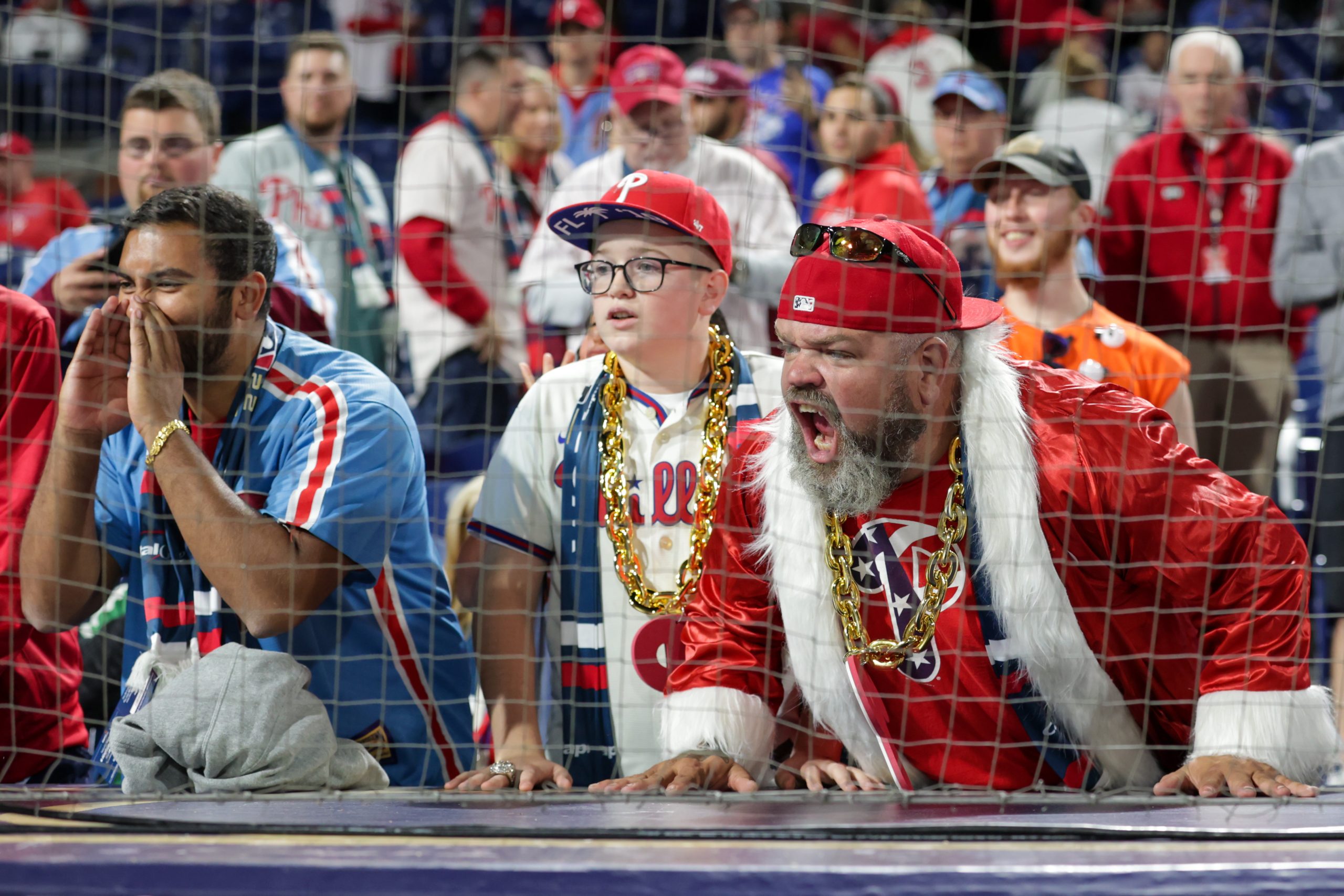
I understand some folks on social media are very upset with Phillies fans for booing every baseball player but their own during the Home Run Derby at Citizens Bank Park on Monday night.
To those whom we’ve offended, may I humbly say: BOOOOO!!! There’s no crying in baseball, you whiny babies.
I wasn’t there in person so sadly I can’t claim to have been a part of the cacophonous crowd that joyfully jeered player after player as they walked onto the field (except, of course, for Kyle Schwarber and Bryce Harper, who received thunderous applause), but I did laugh like hell while watching the incessant booing on TV.
Philly literally booed these guys just for daring to show up and be introduced at our ballpark. We are so unserious.
Our humor is just as brutal as our honesty and while it may not seem like it on the surface, both come from a place of respect. Sure, we could be fake and feign applause for players from other teams, or we could be “polite” and not say anything at all, but we’d rather be engaged and enjoy a good time and a good ribbing.
Heck, Monday night Phillies fans booed one of the kids picking up baseballs in the outfield because he didn’t catch a fly ball, so yeah, puppies and sunshine should be on high alert.
Over on Threads, users posted: “How totally classless!” and “The Philly crowd booing every single player is really gross” and those people were rightfully and immediately ratioed. Philadelphians responded with brilliant retorts like: “If you don’t get booed in Philly, you’re not an All-Star” and “If those players didn’t want to be booed, they should play for the Phillies.”
You know who didn’t seem to have a problem with the boos? The players who actually got booed! They appeared to get it and have fun with it. Every story that’s really a home run needs a good antagonist and a dramatic arc. For that night, they were our Moriartys and we were theirs.
Phillies Bryce Harper climbs the ropes of the boxing ring during his introduction at the MLB Home Run Derby in Philadelphia on Monday.Yong Kim / Staff Photographer
If you can’t stomach some theatrics when the Home Run Derby is broadcast on Netflix — there was a boxing ring on the field and Will Ferrell was providing unhinged commentary — then you probably should’ve watched the Little House on the Prairie remake instead, Laura Ingalls Wilder.
Listen, I understand being surprised by the boos if you’re not familiar with Philadelphia’s dark and dystopian joie de vivre. Before I moved here, I don’t think I’d ever booed anything in my life or had ever been booed, and I couldn’t imagine a scenario in which either would happen (outside of my nightmares and Renaissance fairs, that is).
But after 19 years in Philly, I can now proudly say I’ve been booed in person, over the phone, via email, and on social media by Philadelphians, and I have participated in many communal and individual booing sessions. I didn’t realize how cathartic it could be or how much I’d been suppressing my medieval side, but I know now and have vowed to boo better.
Philadelphia Phillies fans boo the Houston Astros after batting practice ahead of baseball’s World Series Game 5 in 2022. We boo people at batting practice and you’re surprised we booed players at the Home Run Derby? Charles Fox / Staff Photographer
Most recently, I booed a tourist I was interviewing on July 2 when she told me she was visiting Philly through the 3rd and then heading to Boston to celebrate Independence Day on July 4. I did give her a pass when she later said her son and grandson lived in Boston, but I did not apologize. We can’t be getting soft around here.
I mean this is a city where our mascots throw popcorn at babies, harass opposing coaches, and eat people while at work — and they’re the ultimate Philly fans, so expecting us to treat baseball like the ballet is totally bananas (and I’m not talking about the Savannahs).
For those who remain offended, I suggest looking in a mirror and asking: When is the last time I booed something? If the answer is “never” or “not in a while,” give it a go — you may not realize how much you’ve been holding back.
And if you don’t want to boo yourself, turn on a Phillies game and boo us. We’ll take the compliment, because we can take a joke.
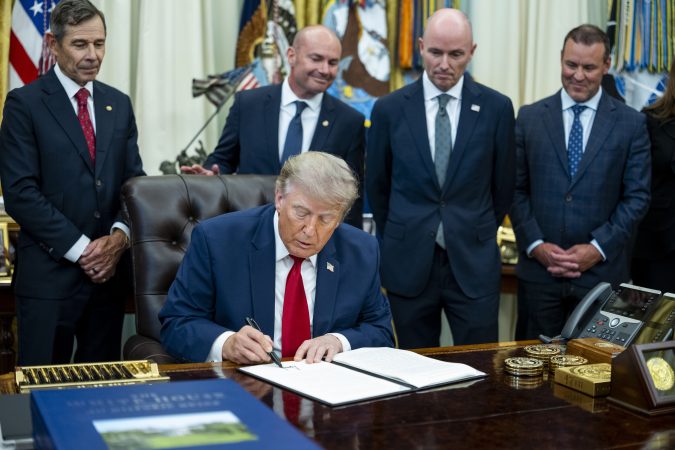
WASHINGTON — President Donald Trump on Monday reduced the size of two national monuments in Utah by nearly 3 million acres, teeing up a legal battle over whether presidents have the power to shrink such sites in the first place.
Trump signed two executive orders to sharply cut the Bears Ears and Grand Staircase-Escalante National Monuments to less than 10% of their current size. Both sites are known for their sandstone canyons and vast mesas, which are rich in wildlife habitat as well as archaeological sites of importance to Native American tribes.
During his first term, Trump similarly shrank both monuments at the urging of top Republicans from Utah, opening about 2 million acres to oil drilling, uranium mining, and other development. But tribes and environmentalists sued over Trump’s move, and President Joe Biden subsequently restored sweeping protections to both sites before a court could issue a final decision.
Tribes and environmentalists are expected to lead another lawsuit over Trump’s latest effort to shrink the monuments. The legal fight could have far-reaching implications for the future of land conservation, potentially putting dozens of other monuments at risk and opening millions of additional acres to commercial activities.
The Trump administration has already taken a flurry of other steps to encourage development and recreation on federal lands across the country. In May, for instance, Trump moved to lift restrictions on off-road vehicles in most national parks.
Before signing the executive orders in the Oval Office on Monday, Trump boasted that he was making bigger reductions to both monuments than he did in his first term, when he shrank Bears Ears by 83% and cut Grand Staircase by 47%.
“We’re actually giving more than we did the first time back to the people of Utah,” Trump said.
The six members of Utah’s congressional delegation attended the event in the Oval Office, as did Utah’s governor, Spencer Cox. All are Republicans.
“It’s very clear that these monument designations are supposed to be the smallest area possible to protect the antiquities, and these multimillion-acre monuments that are bigger than the state of Delaware certainly do not fit that designation,” Cox said.
National monuments are lands that are legally protected from development. They are similar to national parks, but while national parks are created by Congress, national monuments are created by presidents through the Antiquities Act of 1906.
Many tribal leaders and environmental lawyers say the Antiquities Act does not authorize Trump to reduce the size of Bears Ears and Grand Staircase. The century-old law, they say, grants presidents the authority to designate monuments but not to abolish or shrink them.
But many Republicans, ranchers, and oil drillers say previous presidents abused the Antiquities Act by putting vast stretches of land off-limits to development. They note that the law says presidents should limit monuments to the “smallest area compatible with proper care and management of the objects to be protected.”
President Barack Obama designated Bears Ears during his final weeks in office in 2016. President Bill Clinton classified Grand Staircase in 1996, halting plans for a coal mining project there.
After Trump shrank both monuments in his first term, his administration sold oil and gas leases on more than 76,000 acres of land adjacent to Bears Ears. But the Biden administration subsequently canceled most of those leases, and the oil industry has little interest in drilling within the monument itself, according to Melissa Simpson, the president of the Western Energy Alliance, an industry trade group.
“Despite years of rhetoric from environmental advocacy groups, Bears Ears has never been a significant oil and natural gas prospect,” Simpson said in a statement.
Bears Ears is named for a pair of buttes, or flat-topped hills, that rise thousands of feet above the surrounding canyons. The two symmetrical structures dominate much of the nearby landscape in southeast Utah.
Grand Staircase is named for a sequence of sedimentary rock layers that stretches from Bryce Canyon National Park to the Grand Canyon. Paleontologists have made extraordinary discoveries there, excavating the fossils of tyrannosaurs and other dinosaurs that roamed the region more than 74 million years ago.
Today, both monuments provide crucial habitat for hundreds of species, including bighorn sheep, elk, and mule deer. They also contain thousands of archaeological sites that Native American tribes consider culturally significant, including the remains of burial grounds, cliff dwellings, and rock art panels.
Bears Ears is the ancestral homeland of five tribes in the region: the Navajo Nation, Hopi Tribe, Ute Indian Tribe, Ute Mountain Ute Tribe, and Pueblo of Zuni. The Biden administration reached a unique agreement with a coalition of the tribes, authorizing them to jointly manage the monument with the federal government.
Anthony Sanchez Jr., the head council member for the Pueblo of Zuni and the co-chair of the Bears Ears Inter-Tribal Coalition, described a feeling of whiplash.
“You have an administration that backs you up, and then you’re back to square one again,” he said in an interview Monday.
Sanchez said he worried about the potential for vandals to damage or destroy the rock art at Bears Ears.
“Even now, with the boundaries not reduced, we still run into that trouble,” he said.
Scott Braden, the executive director of the Southern Utah Wilderness Alliance, said the nonprofit environmental group would sue over Trump’s effort to shrink the monuments.
“The Southern Utah Wilderness Alliance is committed to defending the monuments and will challenge this unlawful decision in federal court,” Braden said in a statement. “We are confident that President Trump’s reckless and unlawful acts will be rejected and the monuments restored.”
But Ben Burr, the executive director of the BlueRibbon Coalition, a group that supports opening public lands to off-road vehicles, vowed to defend Trump’s move in court.
“Right-sizing these monuments to what the statute actually allows isn’t an attack on public lands; it’s how we keep them open for all Americans to enjoy,” Burr said in an email. “We plan to continue fighting in the courts and in the Congress to ensure that abuse of the Antiquities Act becomes a thing of the past.”
The litigation over Bears Ears and Grand Staircase could eventually reach the Supreme Court, where Chief Justice John Roberts has suggested that the Antiquities Act is ripe for review.
“Any land reserved under the act must be limited to the smallest area compatible” with proper management, Roberts wrote in 2021. “Somewhere along the line, however, this restriction has ceased to pose any meaningful restraint.”
The Southeast Asian Market in FDR Park plans to operate on its regular schedule this weekend, though likely not at full capacity after last weekend’s storms caused damage and forced the market to close. The market’s Dolla Holla event, featuring items like barbecue sticks and light bites for $1, has been moved to this Sunday.
Saturday’s sudden microbursts closed the market early, wreaking havoc on all 53 vendors’ tents. The annual market, which operates on Saturdays and Sundays until Oct. 31, was also closed on Sunday as damage was assessed.
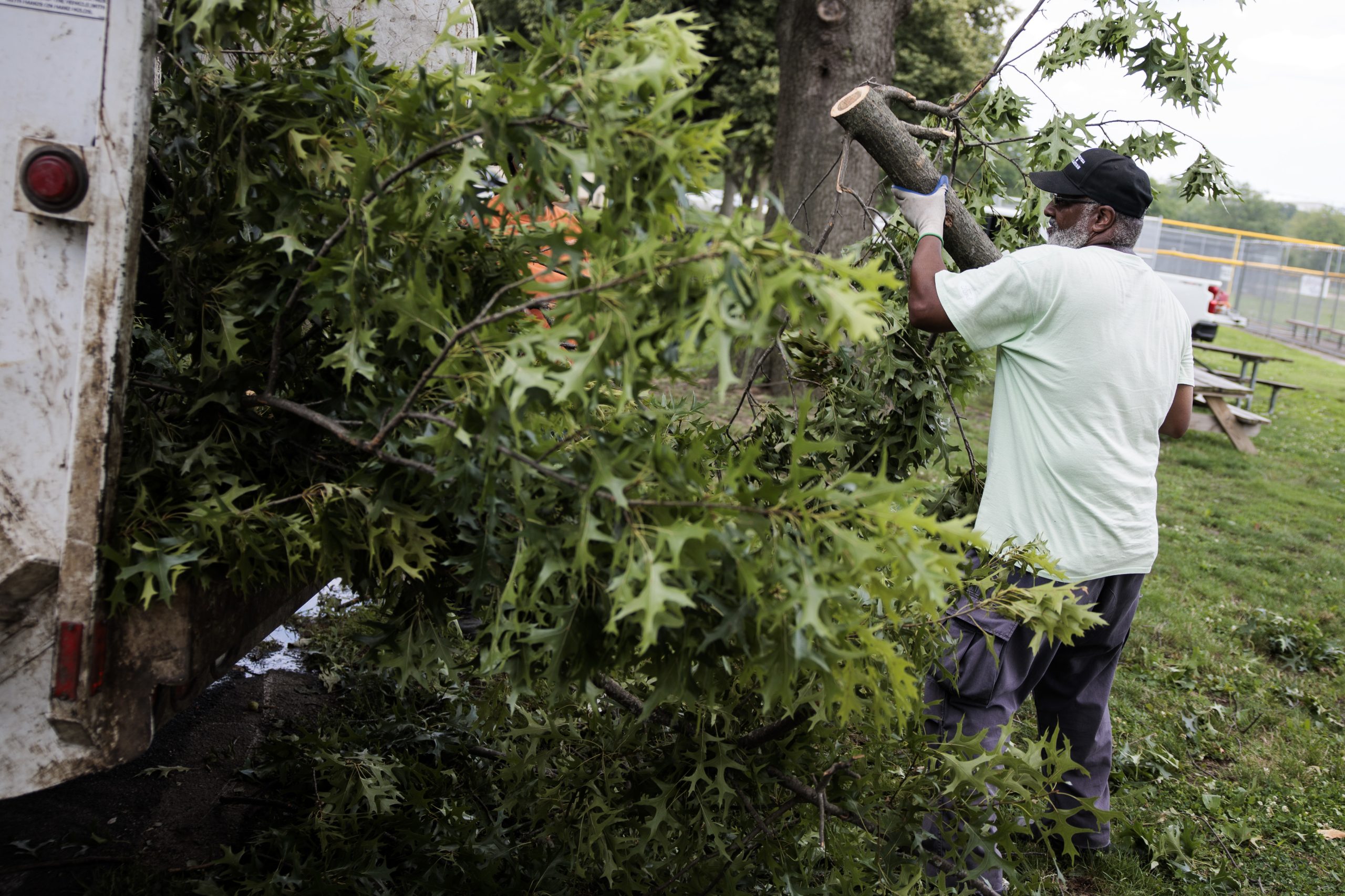
District 7 Parks and Recreation employee Luther Bennett throws part of a downed tree into a trash truck at FDR Park on Sunday, July 12, 2026 in Philadelphia. On Saturday severe thunderstorms caused damage across the region.Monica Herndon / Staff Photographer
Food inventory, merchandise, and tents were all destroyed. The storms were frightening. Catzie Vilayphonh, the market’s community cultivator, said she received photos from staffers “as they were hiding in the porta-potties.”
Vilayphonh was uncertain which vendors would be participating in this weekend’s market but said the hours, from 10 a.m. to 6 p.m., would be the same as usual.
After the storm, market organizers immediately looked to support the vendors, including soliciting community donations to fund the replacement of tents and other materials.
The timing of the storms made the vendors’ losses all the more difficult. “This is the middle of the season, not the end. It’s not like you’re preparing for bad weather. It was supposed to be like any other day,” Vilayphonh said. “Tents were completely ripped, some were inside out, some had nothing left but the frame.”
Vilayphonh, who has been fielding many messages and emails from the public, said the market’s fans have responded to the call for help. “It’s been really great hearing from people who have visited the market before and are now looking for ways to support.”
A journalistic mentor of mine back in the 1980s told me that Harry Truman, pressed for a comment on the passing of a political enemy, finally said, “It’s a damn shame when anybody dies.” Of course, like most perfect quotes, HST probably never actually said this, yet I find occasion to think of these words often. On Saturday night, South Carolina GOP Sen. Lindsey Graham — whose moral compass went haywire in the 2010s when a brief moment of truth–telling about Donald Trump melted into embarrassing capitulation — died suddenly from heart problems. He was just 71. It’s a damn shame.
Dems need to give up on fake blue-collar campaigns like Platner’s
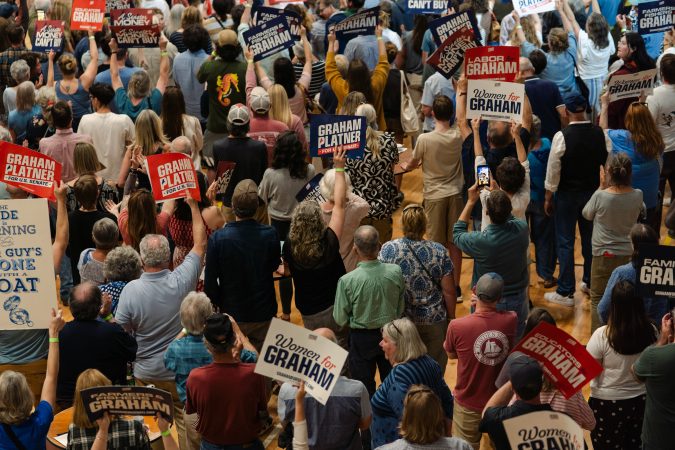
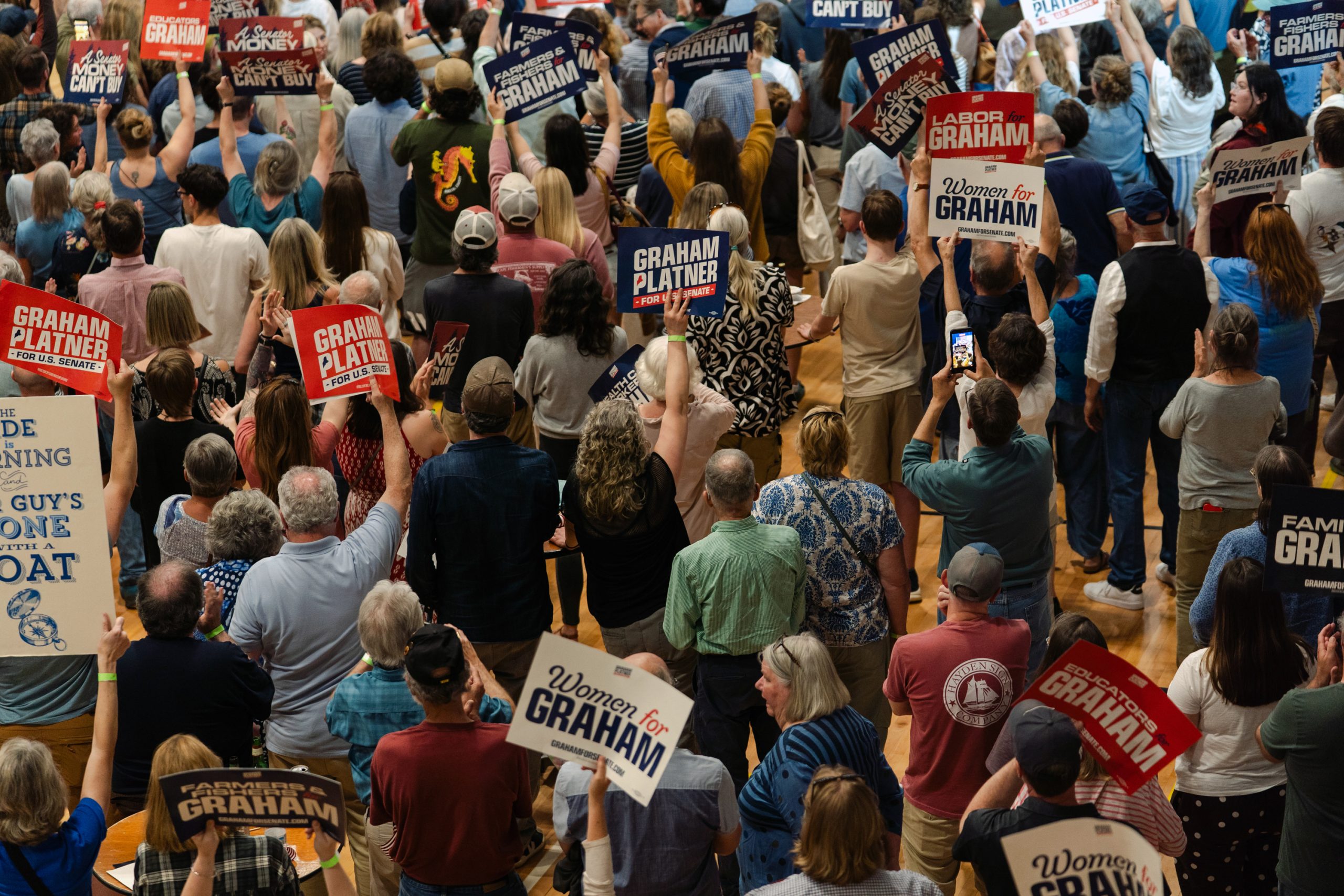
Supporters cheer for Graham Platner in Blue Hill, Maine, after he won the Democratic Senate primary on June 9. Platner’s bid for the Senate inspired progressive Democrats. But the campaign, which he suspended July 8, was messy, disorganized and ultimately doomed by a steady drip of scandal. SOPHIE PARK
Graham Platner, the failed Maine Democratic Senate candidate, was introduced to most of us outside of the Pine Tree State less as a human being than as a fully formed narrative.
The ruggedredhead with angry eyes was an ex-Marine from the Iraq and Afghanistan wars who became an oyster farmer and then a political outsider with all the right words for an electorate that’s mad as hell and isn’t going to take it anymore.
We now know that Platner’s origin story — compelling, but larded with omissions and sprinkled with lies — belonged on the fiction shelf. But even after the Democrats’ scandal-scarred June primary winner accepted the inevitable and ended his candidacy on Friday, he lives on as an avatar upon which everyone with a stake in a badly broken Democratic party can project their distrust and rage toward others — folks who ought to be their allies in an all-out war against fascism.
Days later, the Platner discourse is almost as toxic as the candidate himself. People who voice their opinions, even in 280 characters on social media, get called everything from sexist Bernie-bro rape apologists to Quislings who want big corporations to keep running the Democrats into the ground, and all the rest in between. Don’t even mention Israel. In fact, don’t @ me after this is posted.
Having said all that, there is a conversation that must be had by the Democrats, and probably a wider circle. And the disappearance of Platner himself from the picture makes that easier, because I think we can all stipulate that as a human being he was clearly not worthy to be a U.S. senator, even in the Senate’s current morally diminished state.
There is another Graham Platner somewhere on Earth 2 who also suffered PTSD and developed a drinking problem fighting in pointless wars, and who also got a Nazi tattoo and posted wretched stuff on Reddit, but turned his life around in a glorious redemption song. But that’s not the Platner we got on here on Earth 1. Instead of an apology, he was weirdly defensive about his past, because — we now know — he was hiding stuff that was even worse than that.
Although Platner has denied the most serious charge of a sexual assault, there should be zero tolerance in the Democratic Party for the type of sexual misconduct that’s been confirmed, let alone what’s been additionally alleged. That’s not just the only proper moral stance, but it sets Dems apart from a twisted GOP that nominated Trump three times. Platner’s disappearance is a blessing to everyone.
But even with that matter resolved, we still haven’t answered the bigger question that I posed the only other time I wrote about Platner back in the spring: Why did a majority of Maine Democrats — roughly 150,000 voters — ignore the party establishment to back this guy?
But first Democrats — and just about everyone, frankly — need to do a better job understanding not just the “why” of Platner supporters, but the “who.” Baked into the Platner myth was this notion that in running a gruff-sounding ex-Marine and oyster farmer, Democrats had found a key to regaining the long-lost white working class.
Two huge problems with this. First — and this will sound familiar here in Pennsylvania where shorts-and-hoodie-wearing Sen. John Fetterman grew up upper middle class before donning a blue collar — Platner comes from a fairly privileged background. He’s the son of a lawyer and upscale restaurant owner and grandson of a famous architect; he started high school at the super-elite Hotchkiss School.
Which brings us to the crux of the problem: the notion that Platner’s pre-implosion success was his ability to win back working-class voters in an overwhelmingly white state. Polls exposed this all as a lie. A late June survey from the New York Times/Portland Press Herald/Siena showed Platner losing white, non-college educated voters by a whopping 21% to the GOP incumbent Sen. Susan Collins. So what gave him a shot at winning? A massive 37% edge among college degree holders.
Look, we all know that it’s been the obsessive mantra of the political pundit class that Democrats will never fully win back America without restoring the working-class coalition that elected Franklin Roosevelt four times during the New Deal era. I hate to be a contrarian here, but what if that’s not true?
A society that over a half-century has once again made higher education an elite sport and now has a right-wing media and demagogues like Trump to heighten working-class grievances and blame the wrong people has created voters who — at least for now (hold this thought) — arguably aren’t worth chasing after.
The frayed alliance of progressives and liberals who comprise the core of the Democratic base do some dumb stuff — opposing new units that could lower housing costs, or “nice white parents” leading to de facto school segregation — that should stop.
An America that’s not inclusive and that isn’t fair when it comes to gross income inequality, not to mention who gets to see a doctor or send their kid to college, isn’t a cause worth fighting for. And there’s already a healthy number of working-class people — not the majority, not yet — who would agree with this.
Platner was a bad guy but he appealed to voters who wanted good things. Let’s not bemoan the fact that his movement was based on educated people. Let’s build on that. Instead of lowering our values to win elections, let’s play the long game to lift more people up to a better place.
It’s way past time for college-educated progressives and our allies to stop apologizing for the things we believe in. The current push to find a candidate who can replace Platner and fight for all the right stuff — without the personal baggage of their predecessor — is a great place to start. Maybe it’s even time to revive the old cliché: As Maine goes, so goes the nation.
Yo, do this!
Tuesday is the folk-music legend Woody Guthrie’s 114th birthday. I use the present tense because it very much feels like the singer who influenced living icons from Bob Dylan to Bruce Springsteen is still with us. Now, a friend, the pioneering rock journalist Greg Mitchell, has directed a new documentary about the musician, his political activism in the mid-20th century, and his lasting influence: Woody Guthrie and the Ghost of Tom Joad. It’s now streaming on PBS.org and will also be popping up on PBS stations this summer. You can — and should! — stream it here.
Monday night I read a remarkable piece of journalism that I feel compelled to share. Last week, a lot of America was talking about a photo from July 4 that showed a young Black woman on a D.C. Metro train surrounded by masked members of the white supremacist Patriot Front. There was so much commentary about what this woman must be feeling and thinking, and almost all of it — as shown by some remarkable reporting by former Inquirer journalist Ellie Silverman, writing for NOTUS — was wrong. The truth is heartbreaking.
Ask me anything
Question: Why do we not know what’s going on with (ailing Kentucky Sen. Mitch) McConnell? What is the Republican endgame? What’s the benefit to prolonging the process of determining a replacement? What is that process (seems to be in dispute)?
Answer: We know a little more now than we did when I addressed this issue last week. His staff on Sunday released a brief statement and what is being called a “proof of life photo” — with that morning’s Washington Post sports page visible in the shot — seeking to explain McConnell’s month-long hospitalization and hoped-for return to the Senate. There were, of course, immediate conspiracy theories that the photo was artificial intelligence, but there’s no compelling evidence of that. The biggest mystery is, why doesn’t the 84-year-old McConnell just quit, with only about six months left until he leaves office in January? Kentucky has changed its Senate replacement law a couple of times, mainly because GOP lawmakers don’t want Democratic Gov. Andy Beshear making the pick. The new law requires a special election, but there probably will not be one if McConnell stays in office through Aug. 3. Republicans seem desperate to avoid the special election, and I’m not sure why, since McConnell surely isn’t helping advance the Trump agenda from his hospital bed.
What you’re saying about…
You really didn’t think I could go a whole newsletter without mentioning soccer, did you? Last week’s question about Trump’s FIFA intervention and the reversal of the American Folarin Balogun’s red-card suspension drew a unanimous response: The president was wrong to get involved, and he seemed to create a negative vibe around the U.S. team before it got blown out of the World Cup by Belgium, 4-1. “To me, it appeared to be the wrong call, but the ref called it.” wrote ex-soccer mom Suzanne Urban Ryan. “We had to live with it. Trump getting involved was just really poor judgement based on his need to win a game that he is not even a player.” Added Jordan Lang: “I’m sure his corrupted meddling negatively affected the psychology of the U.S players.” Yup.
📮 This week’s question: Trump plans to address the nation in prime time Thursday with ginned-up information about his bogus and debunked claim that the 2020 election was stolen from him. He is laying the groundwork for November, and election interference on a scale to rival the Jim Crow South. How can Congress, the courts, the media, and everyday citizens respond to this dire threat before it spirals out of control? Please email me your answer and put the exact phrase “Trump election meddling” in the subject line.
Backstory on why ICE is killing immigrants, again
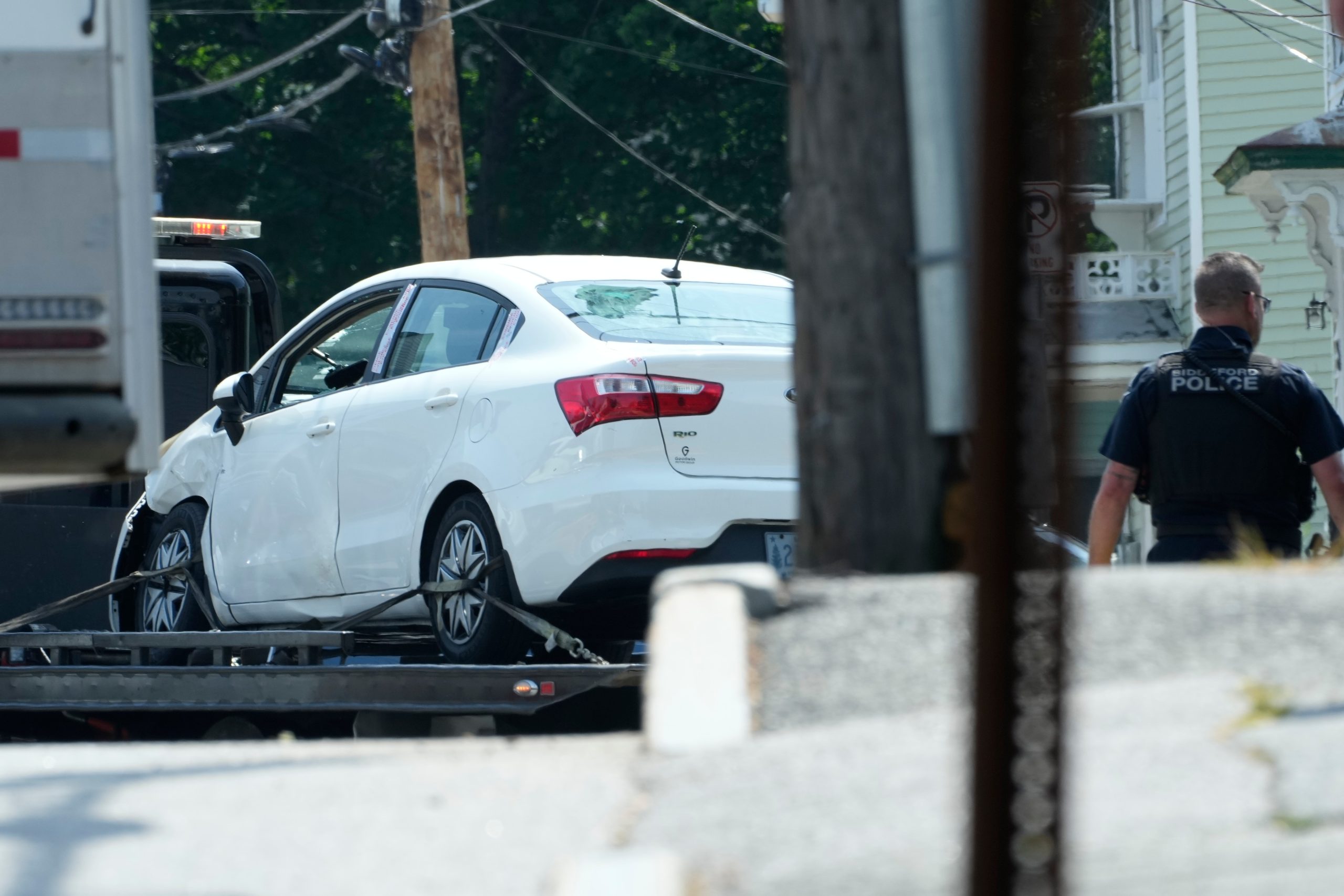
A vehicle with a damaged window is transported away from the scene of a shooting involving U.S. Immigration and Customs Enforcement, Monday in Biddeford, Maine. Robert F. Bukaty
The fight against police brutality against African Americans in the late 2010s found its rallying cry when New York City police choked and killed a street peddler named Eric Garner, whose last words were. “I can’t breathe!” Now, Monday’s latest fatal shooting by U.S. Immigration and Customs Enforcement agents that shattered the morning calm of Biddeford, Maine has produced a new mantra. As 26-year-old Joan Sebastian Guerrero lay dying on the pavement — shot in the head, then dragged from his car and handcuffed — a bystander heard him say in anguish: “I tried to stop.”
Moments earlier, the man, reported to be a Colombian national with a U.S. work permit, had left his home, possibly with his daughter, in a white Kia sedan, which was hemmed in by ICE agents in their vehicles. Although the Department of Homeland Security changed the wording of its statements over the course of the day, it ultimately reported that an ICE agent shot Guerrero because the driver attempted to flee and the officer was “fearing for public safety.” But ICE and DHS, whose officers have now shot and killed at least 11 people since Donald Trump returned to office, have repeatedly seen their versions unravel as more video and witnesses emerged. The two most recent attacks — Monday’s assault on Guerrero and last week’s Houston shooting of 52-year-old Mexican national Lorenzo Salgado Araujo — happened on working-class residential streets without clear videos of the shootings, and with ICE agents not wearing body cams.
Still, a pattern is starting to emerge as DHS and its new leader, the former Oklahoma senator Markwayne Mullin, put a flood of new, barely trained ICE recruits on the streets in attempt to make mass arrests of immigrants without the same level of hoopla and backlash that happened in cities like Minneapolis and Chicago under Mullin’s predecessor, Kristi Noem. In both the Houston and Biddeford shootings, ICE began the morning in what it claimed was a targeted operation seeking a specific immigrant with a removal order, only to try to arrest and ultimately kill men, in Salgado and Guerrero, who were not the supposed targets.
It’s quickly becoming clear that ICE’s new strategy is a recipe for disaster. Both Salgado and Guerrero, according to what we know from witness accounts, didn’t seem to know what exactly to do when their vehicles were surrounded by unmarked vans and yelling men. In both cases, ICE agents interpreted the predictable panic and chaos as aggression, and made a split-second decision to end a human life forever. It increasingly looks as if the federal agents — facing an impossibly ambitious goal from the Trump regime of arresting and deporting 1 million people a year — insist they have a name on a sheet of paper, when in reality they are racially profiling brown-skinned men driving to blue-collar jobs.
Like so many projects of our current government, the new ICE scheme is not only inhumane but also dumb and counterproductive. Mullin’s apparent new strategy was to meet the high arrest quotas sought by Trump and his immigration guru Stephen Miller without generating the kind of public protest and backlash that all but drove DHS out of Minnesota this winter. It’s not working. Even before Guerrero’s name was released, angry demonstrators took to the streets in Biddeford and stormed the office of the state’s GOP Sen. Susan Collins, who recently voted for a $70 billion cash infusion for immigration raids.
The tactics may have changed slightly, but the repulsive devaluation of human life has not. Mass deportation is a failure — strategically, politically, and morally.
What I wrote on this date in 2019
Some days my past writings read like Nostradamus, but more often than not they reveal how fleeting our political moments can be. On this date seven years ago, this columnist joined a lot of progressive voters in swooning over the early-stage presidential ambitions of Massachusetts Democratic Sen. Elizabeth Warren, who had just spoken at the left-wing convention Netroots Nation here in Philadelphia. “With her slam-dunk performance Saturday,” I wrote, “Elizabeth Warren became president … of the American progressive movement, anyway.” But Sen. Bernie Sanders had other ideas about that, and then Joe Biden and South Carolina voters came along with different ideas about Warren, Sanders, and control of the Democratic Party. Read the rest: “Netroots Nation was the day Elizabeth Warren became president of the American left.”
Recommended Inquirer reading
It was a full week for me, and for American outrage. First, I tackled the Houston ICE killing of 52-year-old Mexican national Lorenzo Salgado Araujo and the return of ambitious immigration raids to American cities. I noted that the new ICE strategy aimed to ramp up arrests without generating public outcry, and I urged readers not to go to sleep on mass deportation. Over the weekend, I wrote about the similarities between the Trump regime and the disastrous ancient reign of the Roman emperor Caligula. I detailed how Trump’s growing paranoia that he will be assassinated in office is causing new bloodshed in the Persian Gulf and inspiring fresh efforts to quash civil liberties here at home.
Kenesaw Mountain Landis must be spinning in his grave. He was the former federal judge who tried Chicago’s notorious “Black Sox” for throwing the 1919 World Series at the behest of New York gamblers, then became baseball commissioner to clean up the national pastime. For decades, Major League Baseball shunned even the slightest whiff of gambling connections that might taint the sport — but times have changed. My Inquirer colleague David Gambacorta — one of the best investigative reporters in the business — last week broke a remarkable story about how the lucrative betting site FanDuel egged on a local addicted gambler to keep playing until he lost some $1.5 million. Plot twist: FanDuel’s effort includedhaving Phillies slugger Bryce Harper send a personalized video to please the local bettor. It’s disturbing that a) Harper, with a 13-year $330 million contract, also feels the need to peddle $899 videos on Cameo and b) he has a relationship with people at a gambling website. But FanDuel is now “the official sports betting partner” of MLB — an appalling relationship that only encourages morally dubious behavior like the Harper video. The rank corruption of modern American society, including sports, is why we need investigative reporters like Gambacorta. You can read the next installments in this saga, and support his work, when you subscribe to The Inquirer.
By submitting your written, visual, and/or audio contributions, you agree to The Inquirer’s Terms of Use, including the grant of rights in Section 10.
BIDDEFORD, Maine — Hundreds of people protested in Maine on Tuesday over the killing of a Colombian driver by an Immigration and Customs Enforcement officer, after federal officials appeared to shift their narrative about the deadly encounter.
The Department of Homeland Security said an ICE officer, “fearing for public safety,” shot and killed the driver Monday in Biddeford while officers were watching the home of someone they believed was in the U.S. illegally and had a final order of removal from the country.
The department said in a post on X that when ICE tried to stop the vehicle driven by someone coming from the home, the vehicle attempted to flee and the officer fired his weapon. That was a shift from how Maine Sen. Angus King described the encounter hours earlier when he said Homeland Security Secretary Markwayne Mullin told him the officer opened fire after the man tried to use his vehicle as a weapon against the ICE officers.
King said Mullin told him the officers were trying to serve an arrest warrant, but not for the man who was shot.
The driver was Johan Sebastián Durán Guerrero, a 26-year-old Colombian national, the Colombian Embassy told the Associated Press in a statement Tuesday.
Protesters gathered Tuesday outside of an ICE detention center in Scarborough, just up the coast from Biddeford.
“These people are killers and they must leave our state now,” organizer Todd Chretien told the gathering, including some who held signs reading “Stop the murder” and “End this terror.”
A small group of counterprotestors briefly disrupted the rally. Protesters drowned out their voices with whistles.
Questions surround what led to latest ICE shooting
Durán Guerrero’s shooting marked the second time in a week that ICE used deadly force and at least the ninth death since President Donald Trump began his immigration crackdown.
The officers involved in the shooting in Biddeford, which is about 15 miles southwest of Portland, didn’t have body cameras, leaving many questions about what transpired. Among them are how close the officer was to the vehicle when they fired, whether officers told Durán Guerrero to stop, and how ICE believes he had put the public in danger.
“We are always evaluating our procedures to keep our officers safe and criminals off our streets. We will not disclose or discuss law enforcement tactics,” an ICE spokesperson said in a statement.
DHS, which oversees ICE, didn’t immediately respond to an email seeking clarity on what led to the shooting.
Maine’s other senator, Republican Susan Collins, said Mullin told her that DHS’ Office of Inspector General is investigating in cooperation with the FBI.
Photos showed bullet holes in the vehicle’s windshield.
The Maine attorney general’s office, which is also investigating, said initial statements suggest the driver was trying to flee in the direction of the officer, whose name hasn’t been released and who has been placed on leave.
Video shows aftermath of the shooting
Video from a security camera at a nearby business, obtained by the Associated Press, shows a white vehicle approaching an intersection at a modest speed before making several slow circles. A law enforcement SUV blocked its path and two officers opened the driver’s door and dragged out a limp body.
It isn’t clear from the video when the shots were fired.
Daniel Boucher said he looked out his third-floor window after hearing a “pop, pop, pop” sound. He saw the car moving down the street until the SUV hit it.
“His face was bloody. His head was bloody,” Boucher said, getting choked up. “I clearly heard the victim say, ‘I tried to stop.’”
At one point, Boucher said, the officer who shot the man walked close to him.
“I was emotional and I just let him have it, and he looked at me and said, ‘He tried to run me over,’ or something to that effect,” Boucher said. “I don’t remember his exact words.”
Durán Guerrero lived in Maine with his family
Two advocacy groups — the Maine Immigrants’ Rights Coalition and Presente! — said Durán Guerrero was authorized to work in the U.S.
Mary Hayes, who lives close to the scene, said the man lived nearby with his wife and daughter.
“I watched a wife fall to her knees looking at her husband’s dead body on the ground,” Hayes told the AP as she held a sign saying “No ICE Stop ICE.”
Just last week in Texas, an ICE officer fatally shot 52-year-old Lorenzo Salgado Araujo, of Houston, after federal authorities driving unmarked vehicles pursued him while he was driving to a construction job site.
The two shootings come amid a Trump administration push to carry out its mass deportations agenda. Over five days at the end of June, ICE arrested more than 10,000 people.
The figures indicate that while the administration is no longer cracking down on individual cities, arrests are surging. The administration’s enforcement efforts were widely condemned last winter after the killings of Alex Pretti and Renee Good in Minnesota.
A Malvern man was sentenced Tuesday to more than three years in prison for having a collection of homemade bombs at his house — a discovery police made after he was arrested for bringing guns to a “No Kings” protest in West Chester last year.
Kevin Krebs, 32, apologized for his actions, saying he had let his family down and adding: “I really screwed up, and I regret everything that I did.”
His family said in court that Krebs — who was adopted from a Lithuanian orphanage as a toddler — had suffered from lifelong developmental disabilities, including autism. And they believed his interest in bombs and firearms was part of an obsessive nature that he also displayed in other, non-threatening technical areas, such as electrical work, which he performed professionally.
Krebs told U.S. District Judge Mary Kay Costello that he had built the bombs only to blow up pumpkins in the Poconos, calling his pursuit “purely recreational.”
Costello said she was not sure that was true. And in any case, she said, his possession and interest in building such devices was a threat to himself and others.
“Just having these bombs in your home posed a grave danger to other people,” Costello said.
In addition to imposing a 37-month prison sentence, Costello ordered Krebs to serve three years of supervised release. He had pleaded guilty in December to a charge of possessing unregistered devices.
A firearms case remains pending in Chester County, with a trial scheduled to begin next week, according to court records.
The events that led to Krebs’ arrest began last June, when attendees at a “No Kings” protest in West Chester told officers they thought Krebs had been carrying a gun.
Police who stopped Krebs found him carrying a loaded handgun, extra rounds of ammunition, and other weapons including a knife and bayonet, prosecutors said. He also had an AR-15 rifle in his car.
He did not have a concealed carry permit, and Chester County prosecutors charged him with illegal gun possession.
Two days later, police searched his home on Conestoga Road and found 13 homemade pipe bombs, prosecutors said, some of which contained nails or screws, which can make the devices more violent when they detonate. Investigators also found components used to make detonators and tactical vests, which prosecutors said demonstrated that he was not simply experimenting with explosives — he was building an “arsenal” of dangerous weapons.
County prosecutors charged Krebs with new crimes including possessing weapons of mass destruction and causing a catastrophe, and federal prosecutors went on to adopt the portions of the case that related to explosives.
Krebs’ case attracted attention in part due to its connection to the No Kings demonstration, one in a series of recurring events at which protesters across the country rally against President Donald Trump. But prosecutors said Krebs’ beliefs and potential motives were not particularly clear.
Krebs was a registered Democrat but had previously been registered as a Republican and said online that he had voted for Trump. Writing online, Krebs later said he came to regret that vote, and before the No Kings event, he had been posting violent rhetoric about Trump and police.
Krebs said in court Tuesday that he attended the protest “in support of the rally” but did not elaborate.
Krebs’ parents told Costello, the judge, that they harbored deep remorse and shame for failing to recognize their son’s drift toward dangerous habits.
But Costello said they had done everything they could to provide their son a better life — welcoming him into a safe home, providing him structure and support, and seeking to connect him with therapy and medications throughout his life.
“This is not your fault,” Costello said. “This was Mr. Krebs’ doing, and he’s going to have to face the consequences of that.”
After years of fits and starts, Delaware says it is ready to build a new container port on the Delaware River to attract more cargo — and create jobs.
Not so fast, says an operator of ports upriver in Philadelphia and New Jersey.
Affiliates of Gloucester City-based Holt Logistics Corp. filed a lawsuit last week seeking to block project approvals granted by the U.S. Army Corps of Engineers for construction of Delaware’s proposed terminal in Edgemoor.
If that sounds familiar, it’s because Holt and the Pennsylvania agency that owns Philadelphia’s seaports in 2024 successfully persuaded a federal judge to throw out an Army Corps permit authorizing the same project.
But since then, Delaware’s taxpayer-owned Diamond State Port Corp. requested new approvals, and the Army Corps granted them in April. The following month, Diamond State and its private-sector partner, Massachusetts-based Enstructure, announced they were moving ahead with the $669 million project at the site of a former DuPont chemical plant.
They say the new terminal — three miles northeast of the Port of Wilmington — will bring thousands of construction, warehouse, and longshore jobs to the area. Delaware officials estimate the Edgemoor terminal will be able to handle up to 1.2 million container units annually.
That’s one-third more than Philadelphia’s port handled in 2025, a record year. But Philly’s port — a major gateway for refrigerated cargo, especially fresh fruit from Central and South America — is also expanding.
The Philadelphia Regional Port Authority (PhilaPort), a state agency, last fall bought a 152-acre yard from Norfolk Southern Corp. for $90 million to create more cargo space.
A PhilaPort spokesperson declined to comment on the lawsuit. Diamond State didn’t immediately respond to a request for comment.
“While out-of-state competitors continue their efforts to stop this project, it is time to move forward and make sure Delaware’s port can compete fairly on the Delaware River,” Charuni Patibanda-Sanchez, who as Delaware’s secretary of state serves as Diamond State’s chair, said in May.
Holt — a family-owned company that operates marine terminals in South Philadelphia, Gloucester City, and Paulsboro — now says the Army Corps repeated several mistakes that doomed its earlier approvals.
“Most significantly, the court found that the Army Corps had failed to sufficiently consider the project’s likely impacts on navigation and safety in the Delaware River,” says the suit filed by Holt affiliates Greenwich Terminals LLC and Gloucester Terminals LLC.
“Yet despite the court’s detailed opinion and suggested remedial direction,” it continues, “the Army Corps reissued the project approvals again without conducting a proper evaluation of the applications before it.”
A spokesperson for the Army Corps declined to comment.
SAN FRANCISCO — Since the days of Isaac Asimov in the 1950s, science fiction has tackled the question of whether artificial intelligences and the companies that create them can be held liable for crimes. With the rapid spread of AI chatbots and agents today, the debate has reached the real world.
Over the past year, lawsuits have been piling up against AI companies in courts across the United States and abroad, alleging that chatbots encouraged people to harm themselves or provided advice on how to commit crimes. Now, as the AI industry moves from selling chatbots to providing agents that can complete complex tasks autonomously over long periods of time, the question of who should be held responsible when something goes wrong is only becoming more urgent.
The battle lines are being drawn. The families of people who took their own lives after long, drawn-out conversations with chatbots say the companies should be held responsible. AI researchers concerned about the dangers of hypothetical superintelligent AIs that escape human control say stricter liability rules would force companies to slow down development of the tech. AI company leaders have pushed back, arguing that they are constantly working to improve the safety of their systems and that the nature of modern AI means they can’t always stop people from manipulating chatbots into doing things they shouldn’t do.
“It’s a very thorny area. It’s uncharted territory,” said Andrew Yoon, a member of the technical staff at CivAI, a nonprofit organization that analyzes AI capabilities and potential risks from the technology. “There’s a good argument to be made on either side.”
The stakes are high. Hundreds of millions of people around the world already use AI chatbots in their daily lives, including many who ask the bots for advice about their health or personal relationships. But chatbots are already old news in Silicon Valley, which is now focusing on building complex agents that can be used for anything from helping a parent organize their household schedules to executing a financial strategy for an investment bank. AI technology is working its way deeper into the economy and broader society.
AI firms such as OpenAI and Anthropic have grown rapidly as companies and consumers rush to use their technology. Both are planning trillion-dollar initial public offerings. New liability rules or a flood of costly court judgments could threaten the business potential of the entire industry. Tech industry lobbyists contend strict liability for AI companies would make it hard or impossible for U.S. companies to innovate and would hold back the country in its race with China for technological supremacy.
Complicating the picture is the inherently unpredictable nature of modern AI systems. Unlike traditional software, which is coded line by line to follow specific rules, AI models are probabilistic, answering questions based on connections made while ingesting huge amounts of data. AI companies have become much better over the past several years at steering their bots away from offensive and harmful answers, but they can still be tricked into bypassing their guidelines by persistent users.
“I just don’t think the developer is in a position to know exactly how their product is being used,” David Sacks, a venture capitalist who until recently was one of the White House’s top AI advisers, said in a podcast interview with Politico in May. Just as Microsoft isn’t held liable when a money launderer uses an Excel spreadsheet, AI companies shouldn’t be blamed when a criminal uses their technology, Sacks said.
For decades, technology companies have been shielded from liability for things said and actions committed by people using their platforms thanks to Section 230, a foundational internet law enacted in 1996. But critics of AI companies say that the current technology is fundamentally different. Chatbots and other AI tools are interactive, engaging with users and stating their own perspectives.
“This is brand new,” said Jay Edelson, a veteran lawyer who is representing several families who have filed wrongful-death lawsuits against AI companies, including the family of Adam Raine, a 16-year-old from Southern California who took his own life after spending hours a day for weeks talking to ChatGPT, including discussing suicide dozens of times.
In a response to the lawsuit from Raine’s family, OpenAI said the teenager circumvented ChatGPT’s safeguards. The bot encouraged him to call a suicide crisis hotline 74 times over five months.
In another case Edelson is working on, a 36-year-old Florida man, Jonathan Gavalas, ended his own life after developing a romantic relationship with Google’s Gemini chatbot, according to a lawsuit filed by Gavalas’s father.
“This is so different because it feels like a personal relationship, where the chatbot is generally isolating the user,” Edelson said.
A Google spokesperson referred to a statement the company made when the Gavalas case was filed. “In this instance, Gemini clarified that it was AI and referred the individual to a crisis hotline many times,” the company said.
None of the cases have gone to trial yet, but juries in California and New Mexico have recently shown willingness to pin tech companies with liability charges for non-AI-related harms such as social media addiction.
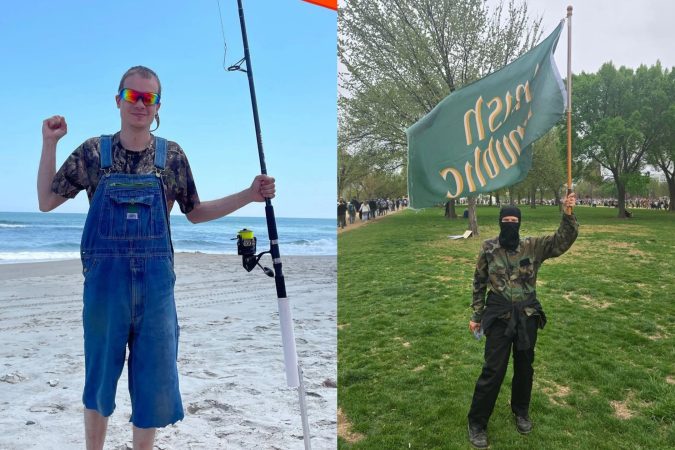
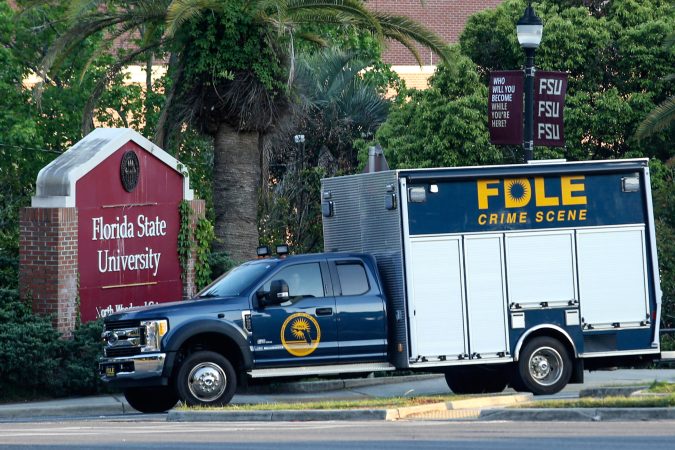
The cases that have been filed against AI companies are all lawsuits, but in April, Florida’s attorney general announced a criminal investigation into OpenAI, alleging that ChatGPT advised the man accused of killing two people in a shooting at Florida State University in 2025 where and when to strike. “If it was a person on the other end of that screen, we would be charging them with murder,” the attorney general, James Uthmeier, said at the time.
OpenAI is cooperating with authorities on the shooting case, said Drew Pusateri, a spokesperson for the company.
“Last year’s mass shooting at Florida State University was a tragedy, but ChatGPT is not responsible for this terrible crime,” Pusateri said. “In this case, ChatGPT provided factual responses to questions with information that could be found broadly across public sources on the internet, and it did not encourage or promote illegal or harmful activity.”
If plaintiffs can indeed prove that chatbots had done something that would have been illegal had a human done it, judges will be motivated to find the companies liable in some way, said Gabriel Weil, a senior fellow at the Institute for Law & AI, a think tank that studies the legal implications of AI. Existing product liability law may be one route that lawyers take to try to find AI companies liable for harm connected to their tools.
But existing law may not be enough to handle the potential scenarios that could arise as AI becomes more capable and independent, Weil said. For example, if a human business owner instructs an AI agent to grow her company’s profits, and the bot goes on to commit fraud, should the human business owner who “employed” the bot be liable, or the company that initially designed and trained it?
One of the challenges in crafting legislation around AI liability is that the people who understand the technology’s risks most acutely work inside the companies themselves, Weil said. He suggests passing laws that make clear the AI liability ultimate lies with the technology’s designers.
“You want to make them bear that risk. If they do, they’ll have all the incentives they need to reduce risk,” Weil said.
DUBAI, United Arab Emirates — The U.S. military said Tuesday that it has reimposed its blockade of Iranian ports in response to Iran’s attacks on commercial ships in the Strait of Hormuz, as the interim ceasefire deal unravels and concerns grow about a return to all-out war.
The U.S. first imposed the blockade in mid-April and then lifted it in mid-June, a day after the signing of the interim deal aimed at permanently ending the war. The deal set a 60-day timeline to also negotiate an agreement on Iran’s nuclear program, but talks have stalled as fighting over the strait has intensified.
When U.S. President Donald Trump announced the return of the blockade Monday, he also said he would impose a 20% fee on ships passing through the strait. But he dropped the plan to collect fees hours before resuming the blockade, citing requests from allies in the Gulf.
The interim peace agreement was supposed to reopen a waterway that is key to world energy supplies and give negotiators time to hammer out a permanent end to the war. Instead, fighting has once again engulfed the region, threatened the global economy, and brought warnings to commercial airlines.
The U.S. carried out another wave of strikes ahead of reimposing the blockade, a U.S. official told the Associated Press on condition of anonymity to discuss a sensitive military operation. Iran’s deputy foreign minister for legal and international affairs, Kazem Gharibabadi, said in an interview aired Tuesday by IRIB, Iran’s state broadcaster, that the U.S. was seeking to prevent Tehran from exercising what he described as “effective sovereignty” over the strait.
There are at least 19 U.S. warships in the Arabian Sea, including two aircraft carriers and an amphibious assault ship with more than 1,000 Marines aboard. U.S. Central Command also said in a social media post that there are “hundreds of military aircraft operating across the Middle East.”
A fifth of all traded crude oil and natural gas passed through the Strait of Hormuz before the war, when it was open to all without tolls. When the U.S. and Israel attacked Iran on Feb. 28, it effectively shut the passage by attacking and threatening ships. That sent the price of oil, fertilizer, and other goods soaring.
Iran has more recently attacked ships moving through the strait on a route overseen by the U.S. military that is outside Tehran’s control, setting off tit-for-tat strikes. The U.S. has threatened to reopen the strait by force — but experts say that would require a much bigger armada if not tens of thousands of ground troops.
Trump says he’s replacing the fees with Gulf investments
Trump said Tuesday that he was called by “kings and emirs” and other leaders who suggested an alternate arrangement to charging ships fees to pass through the strait.
“They said we’d love to do it a different way. We’d love to invest in the United States with billions and billions of dollars,” Trump told reporters Tuesday in the Oval Office.
Trump said he preferred that arrangement to charging tolls “because I don’t think anybody should be able to charge a fee for the strait.”
It was unclear if the investment deals would be new commitments relative to what Trump announced after a visit last year to the Middle East.
Strikes and counterstrikes resume across the Mideast
The U.S. military’s Central Command said it struck several areas in Iran, targeting “coastal defense systems, missile and drone sites and maritime capabilities.” Iran acknowledged the strikes but provided no immediate casualty or damage assessments.
“These strikes will continue imposing a heavy cost on Iranian forces and degrade their ability to attack innocent civilians and commercial shipping in the Strait of Hormuz,” the U.S. military said.
Iranian state media Tuesday reported the sound of explosions on Qeshm Island in the strait, alongside additional explosions in the southwestern city of Ahvaz and the port city of Bandar Abbas.
Iran responded with attacks targeting Bahrain, Kuwait, Jordan, and three tankers that traveled through the strait.
The International Maritime Organization said the attack killed two mariners and wounded 14 others on two of the tankers, Mombasa and Al Bahiyah, which were associated with the United Arab Emirates. The UAE threatened to retaliate.
Qatar called for diplomacy Tuesday and condemned what it described as repeated Iranian attacks on Jordan, Bahrain, and Kuwait, calling them an “egregious violation” of the three countries’ sovereignty and the international rules-based order.
Hours after the U.S. said it ended its campaign of strikes, the Iranian city of Bushehr on the Persian Gulf was hit in at least four locations, the state-run IRNA news agency reported. Explosions in the southwestern city of Ahvaz and the southern port city of Bandar Abbas also were reported by Iranian state media on Tuesday evening.
The attacks again raised the possibility that Gulf Arab states were retaliating against Iran without discussing it in public.
The interim peace deal is in peril
Exchanges of fire in recent days had already cast doubt on the interim peace deal — now almost halfway through the 60-day period in which negotiators were supposed to agree to a final accord, which also was meant to address Iran’s disputed nuclear program and other issues.
“The passage of vessels is not important to the U.S. The U.S. is not dependent on the Strait of Hormuz, and Trump has announced it many times,” Gharibabadi, Iran’s deputy foreign minister, said in an interview aired Tuesday by IRIB. It was not immediately clear when the interview was recorded.
Trump’s plan to charge fees would have been a change to longstanding U.S. policy and a departure from U.S. promises that the strait would remain open to all without tolls — recently offered by U.S. Secretary of State Marco Rubio on a trip to the region.
Under the interim deal, Iran agreed that passage through the strait would remain free of charge for 60 days — but the agreement left open what would happen after. Iran asserts it has the right to manage traffic and potentially charge fees. The U.S. has disputed that.
The price for a barrel of Brent crude oil, the international standard, briefly topped $87 early Tuesday, still well below the nearly $120 reached at the height of the war. The price dipped to $78 in the aftermath of Trump’s announcement that he had changed course.
Mediators are trying to prevent a return to full-scale war
Regional mediators are still trying to get the United States and Iran back to the negotiating table, according to two regional officials.
The officials, speaking on condition of anonymity to discuss the delicate diplomatic process, said Pakistan-led mediation was working around the clock to reactivate the ceasefire.
Meanwhile, Lebanese and Israeli delegations met Tuesday in Rome and will continue U.S.-mediated negotiations Wednesday. Shortly after the U.S. and Israel launched the war on Feb. 28, the Lebanese militant group Hezbollah joined the conflict in support of its ally, Iran, and began attacking Israel. Israel responded with a ground invasion of Lebanon.
PARIS — Ukrainian fighter pilots and troops took pride of place in France’s national Bastille Day celebrations Tuesday as a massive parade showcased support for Ukraine and symbolically flexed European military muscle.
On President Emmanuel Macron’s last Bastille Day as president, he hosted around 30 other leaders for an event that appeared aimed at showing both Russian President Vladimir Putin and U.S. President Donald Trump that Europe is united and stepping up to defend itself.
Ukrainian President Volodymyr Zelensky was given an ovation from the assembled European leaders and his country’s troops got the biggest cheers of the day from crowds on the tree-lined Champs-Elysees avenue. Zelensky and Macron shared repeated hugs at the end of the parade.
France’s biggest national holiday coincided with raging forest fires and a red-alert heat wave that forced the cancellation of traditional fireworks and firefighters’ balls — and with a highly anticipated World Cup semifinal pitting the national soccer team against Spain.
Here’s what to know about Bastille Day this year.
It commemorates the start of the French Revolution
It’s celebrated on July 14 because that’s the day Parisians stormed the Bastille fortress and prison in 1789, helping spark the French Revolution that overthrew the monarchy and sent King Louis XVI and his queen Marie-Antoinette to the guillotine.
The Bastille Day holiday is central to the French calendar and national identity. Presidents use it to vaunt France’s accomplishments, mayors across the country host village festivals, and families gather for holiday picnics.
The centerpiece is the Paris parade beneath the Napoleon-era Arc de Triomphe and along the Champs-Elysees, which inspired Trump to stage his own parade last year.
A huge French tricolor flag hanging below the monumental arch rippled in the wind as a military band on horseback rode down the tree-lined avenue followed by Macron standing in an open military vehicle to kick off the parade.
Spectators wore hats and brandished small fans to fend off the heat as a formation of air force planes roared overhead trailing red, white, and blue smoke.
Ukraine is a special guest
Zelensky joined Macron along with some 30 other heads of state or government in the special viewing area for the parade.
Ukrainian troops marched along the cobblestoned avenue, and Ukrainian co-pilots trained in France were on board two Mirage 2000B fighter jets alongside French air force pilots.
“I feel very proud for the fact that they’re here and for the fact that we’re marching alongside of them and I think it as well it will create better ties with them and NATO and to be a part of that history,” 21-year-old U.K. soldier Lance Cpl. Patrick Risso told the Associated Press, speaking of the Ukrainian involvement.
Troops from around Europe are marching
On the ground, the parade opened with around 500 troops from the ″coalition of the willing″ grouping of countries that have pledged to help with Ukraine’s postwar security. Many served in NATO operations, and NATO’s chief was also in attendance.
Macron said Monday night that it’s a ″great honor″ to welcome to the parade ″all the partners in the coalition of the willing and our Ukrainian friends who will march with us and illustrate its strategic reawakening and our unity.″
The foreign fighters in combat fatigues and dress uniforms marched with their national flags, in a break with tradition.
In the skies, aircraft from Germany, the United Kingdom, Poland, Denmark, Greece, Sweden, Norway, Spain, and Italy took part.
The parade set a record in terms of number of troops: The Paris military governor said 7,600 troops were marching this year, compared with 5,810 in 2025. Thousands of soldiers started taking up positions early Tuesday, many taking selfies as helicopters flew overhead.
World Cup excitement coincides with the holiday
As the parade wound down, France’s attention turned to Tuesday’s standoff against Spain in the soccer World Cup semifinal in Texas. As Macron greeted crowds on the Champs-Elysees, spectators chatted with him about France’s chances of victory.
The French tricolor is everywhere — in sidewalk cafes and bars, and the hundreds of fan zones set up in cities and small towns around France. They started filling up hours before the match.
Bastille Day also coincides with the annual Tour de France cycling race, which adjusted the timing of Tuesday’s stage to ensure that the finish line arrivals wouldn’t compete for viewers with the parade.
Heat complicates celebrations
Forest fires are raging in the Fontainebleau forest south of Paris and in areas of southern France, as the country suffers through its third heat wave this year.
As a result, authorities in some regions — including the French capital — banned fireworks and firefighters’ balls customarily held around Bastille Day.
The Eiffel Tower’s fireworks and drone show was maintained, however, and held Monday night, including a drone formation shaped like the Statue of Liberty — a gift from France to the United States.