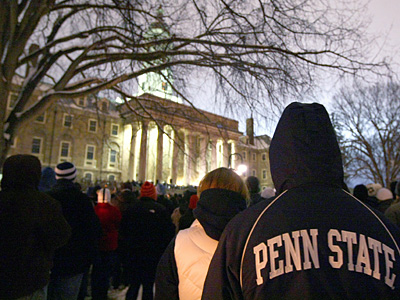
A Pennsylvania State University board of trustees committee on Thursday voted to recommend a 2.5% tuition and room and board increase for undergraduates on the University Park campus in 2027-28.
That’s a larger increase than the 2% tuition hike already approved for 2026-27. Penn State sets its costs a year ahead of time; rates for 2026-27 were set last year.
Meanwhile, in-state undergraduates at the Commonwealth campuses would see no tuition increase for the fifth consecutive year and smaller increases for room and board than those at University Park.
The full board will vote on the proposed rates on Friday.
Under the plan, undergraduate freshmen and sophomores at University Park would pay $21,400 in annual tuition for 2027-28, up $522 over last year.
For those out-of-state, the annual tuition rate would rise 4% to $46,356, up $1,782.
Room and board for both would rise 2.5% to $15,896 annually, which the university said was its lowest increase in the last nine years.
The proposed tuition increases will raise $59 million in additional revenue, said Sara Thorndike, senior vice president for finance and business.
While the proposal was passed unanimously by the committee, several board members raised questions.
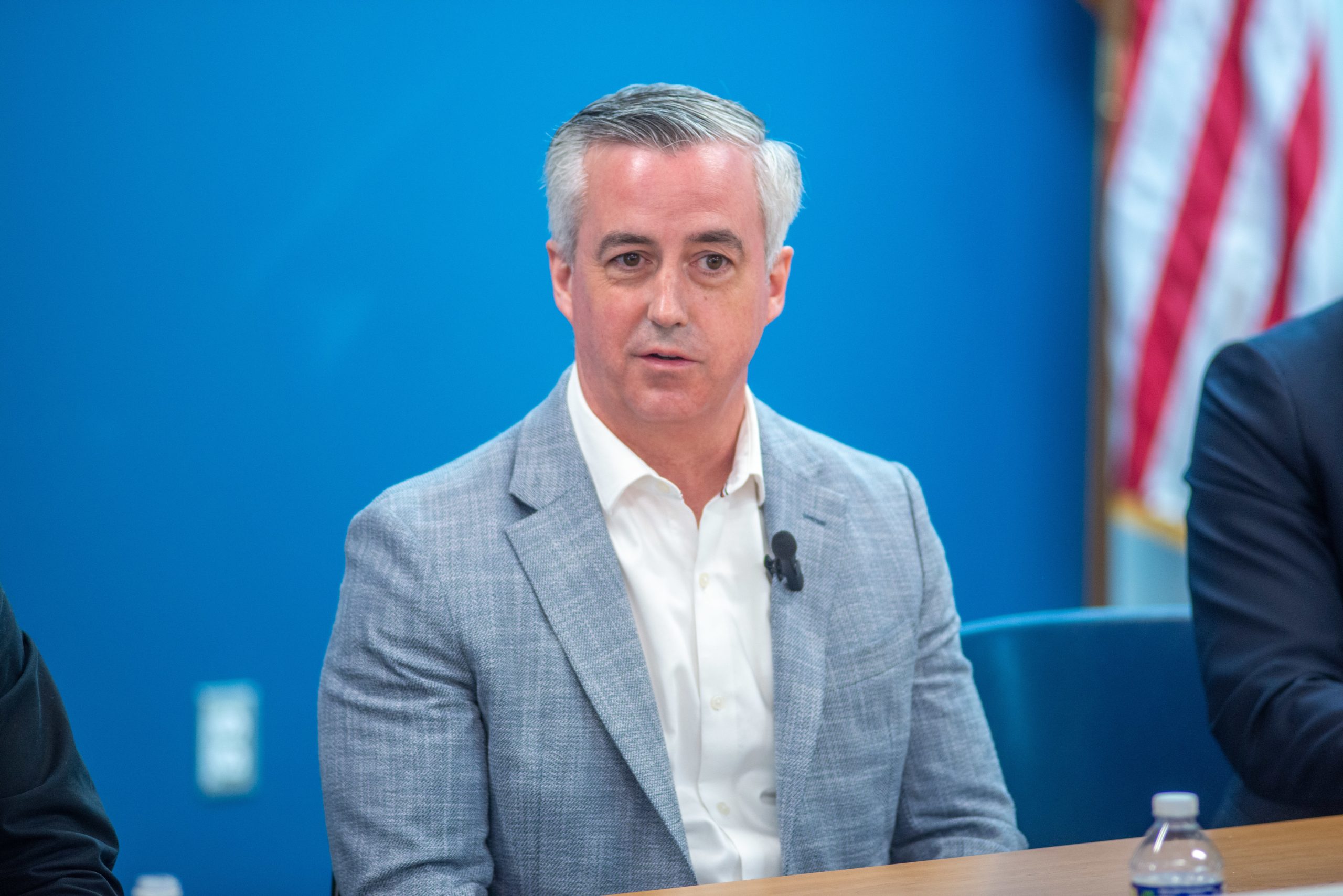
“I’m going to reluctantly support the tuition increase,” said board member Brandon Short. “We’re dealing with an existential crisis, and it’s not unique to Penn State that the cost of education is increasing at a … faster rate than what people think the value of a college diploma is … We all hold our noses and vote for the increase, but at some point, it’s not an easy answer, but we’ve got to come together and figure it out.”
The university needs to make tough decisions and engage in “outside-the-box” thinking, he said.
“Doing the same thing over and over again and expecting different results is the definition of insanity,” he said.
Thorndike said the university has been cutting costs and continues to look for more efficiencies as it maintains a balanced budget.
“We’re doing individual unit budget cuts,” she said. “We’re doing budget cuts associated with inflation, finding new revenues, and then asking for a modest tuition increase, so it’s a combination of all of those things to get to this point.”
New board member Joseph S. DeRenzo questioned if in-state tuition increases could be kept lower at the expense of larger hikes for out-of-state students, or if larger increases could be charged for high-demand degrees in business and engineering.
“Our out-of-state rates are actually very similar or high compared to our peers, and we’re already seeing an impact again on how much they’re discounting compared to what we’re discounting and how that’s affecting enrollments,” Thorndike said. “If we start to see a decline in out-of-state enrollments, that will not help us be able to keep our in-state rates low. It will actually have the opposite effect.”
Thorndike also said that tuition revenue is projected to be $37 million under budget this year because of lower enrollment at the Commonwealth campuses, as well as international and graduate enrollments.
Other local colleges also are raising tuition. The Pennsylvania State System of Higher Education, which oversees 10 universities including West Chester and Cheyney, last week raised tuition 4.3% — the largest percentage increase in a decade. Also last week, Rutgers University increased tuition 3% for in-state and out-of-state students, which the school touted as its lowest increase in four years. Meals and housing on average were increased 4%.
And Temple University voted to raise tuition an average 3.4% for both in-state and out-of-state students.
The 2027-28 budget includes a 3% pool for merit-based salary increases for employees and 4% for graduate assistant stipends, the university said.
Undergraduate tuition for students from out of state would increase by 4% at University Park and 1% at the Commonwealth campuses.
As for graduate students, those in-state at Commonwealth campuses would pay a 1% increase in tuition and 2% for those out of state. At University Park, in-state students will see a 2% hike and out-of-state students 4%.
A police officer in Chester County was “legally justified under Pennsylvania law” when he shot a 40-year-old man who allegedly stole his police vehicle and attempted to hit the officer with it last month, the District Attorney’s Office said Thursday.
Joshua McFadden, who was shot in the shoulder by the East Coventry Township officer, was charged Thursday with aggravated assault, robbery of a motor vehicle, burglary, possession of methamphetamine, and related offenses.
Court records did not show a lawyer representing McFadden, who is listed as a Pottstown resident. The officer who shot him was not identified.
“Following a comprehensive review of the evidence, investigators determined that the officer’s use of force was legally justified under Pennsylvania law,” the Chester County District Attorney’s Office said.
On the afternoon of June 22, North Coventry Township police went to a Lowe’s Home Improvement store to investigate a prior retail theft. They saw a suspect, later identified as McFadden, exiting the store, according to an investigative report released by District Attorney Christopher L. de Barrena-Sarobe.
McFadden entered his vehicle, a Silver Infiniti QX30, and was approached by a detective for questioning, the report said. “Am I going to jail?” McFadden allegedly asked before starting his car and fleeing the parking lot.
The North Coventry police did not pursue McFadden, the report said.
McFadden allegedly crashed into another vehicle on Pennsylvania Route 724 and ran into the woods on foot.
A uniformed North Coventry officer responding to the crash tried to catch McFadden and allegedly heard McFadden threaten to shoot the officer, the report said. The officer lost sight of McFadden in the woods.
Police later learned McFadden allegedly entered the home on the 200 block of Pearl Street and demanded a glass of water and the use of the homeowner’s phone to call his wife, investigators said. He left when a family member arrived and told him to leave.
That evening, an East Coventry Township police officer saw McFadden in the area of Kline and Lindberg Avenues and exited his vehicle to stop him.
After a short pursuit in the neighborhood, McFadden allegedly made his way back to the police officer’s patrol vehicle and attempted to steal it, the report said.
The officer returned to his vehicle from the front and McFadden allegedly “hit the gas” and “revved the engine.” The patrol vehicle moved forward and the officer fired one shot, the report said.
“Pennsylvania law makes clear that police may use deadly force to protect themselves and others from death or serious bodily injury,” the report said
During the immediate search and investigation that day, police learned that McFadden had active warrants.
McFadden allegedly told police later that he had used methamphetamines about two hours before he first encountered the police, according to the affidavit of probable cause.
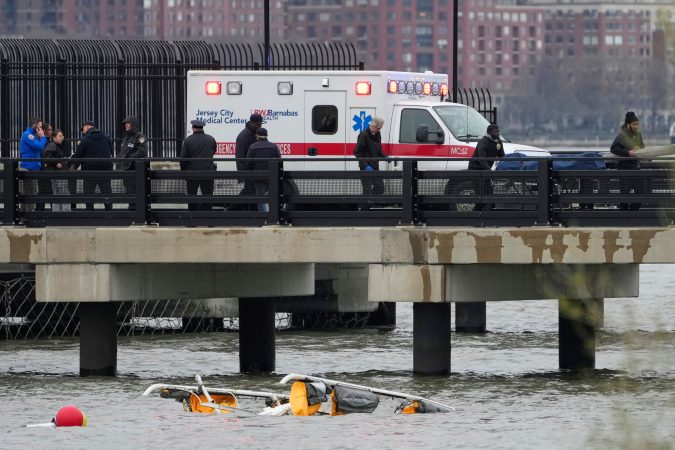
The remains of several geese were found on a New York City sightseeing helicopter that crashed into the Hudson River last year and killed 6 people, investigators said Thursday, strong suggestions that multiple bird strikes contributed to the tragedy.
Reports from the National Transportation Safety Board were not final and do not identify a definitive cause of the crash. But they describe evidence that supports bird strikes before the helicopter plummeted into the river on April 10, 2025.
The Federal Aviation Administration has said that helicopters are especially vulnerable to bird strikes because they fly at low altitudes. Strikes can be devastating.
“It seems pretty clear to me that the breakup of that helicopter was precipitated by several bird strikes,” said aviation safety expert Jeff Guzzetti, a former federal crash investigator, who read the key findings. “Not just one but several — and birds of a different feather.”
He noted damage to the aircraft’s horizontal stabilizer, a key part of the helicopter.
“Without it, the helicopter could become very unstable and difficult to fly,” Guzzetti said.
The victims of last year’s accident included a Siemens business executive from Spain, his family and the pilot, Seankese Johnson, 36, a U.S. Navy veteran who received his commercial license in 2023.
Passengers Agustin Escobar, 49; his wife, Mercè Camprubí Montal, 39; and their three children, Victor, 4; Mercedes, 8; and Agustin, 10, all died.
The crash renewed safety concerns about the popular sightseeing flights and prompted New Jersey’s governor to ask for additional restrictions on nonessential helicopter flights.
Remains of several geese were found on the helicopter’s rotors and left horizontal stabilizer. One witness told the NTSB that just minutes before the crash a large flock of geese took flight in the area.
“The geese were big and there were many of them. When the helicopter went bang, I immediately thought it was a bird strike,” the witness told NTSB investigators.
The Smithsonian Institution’s Feather Identification Lab identified remains from different breeds of geese on the wreckage, including a female Canada goose, which can average nearly 8 pounds.
Guzzetti said it’s reasonable to conclude “the pilot is not culpable here.”
“Birds are everywhere, and pilots have limitations with their eyesight,” he said.
The report, however, noted that a control panel switch to turn on pulsing lights to help deter birds was missing. The tour company’s former chief pilot said the light system was not mandatory during daylight rides, according to investigators.
The NTSB has investigated 24 helicopter bird-strike crashes in the past 25 years, including three fatal ones. Helicopter pilots are encouraged to try to avoid areas where birds are known to be present and fly slower to minimize the potential damage from an impact.
The “Miracle on the Hudson” highlighted the danger of bird strikes when a US Airways jet hit a flock of birds and lost power in both engines shortly after takeoff in 2009. Pilot Chesley “Sully” Sullenberger was hailed as a hero after he landed the powerless plane in the Hudson River and all 155 people on board were rescued.
In last year’s crash, the helicopter took off from a downtown heliport that afternoon and flew north along the Manhattan skyline before heading south toward the Statue of Liberty. Less than 18 minutes into the flight, parts of the aircraft were seen tumbling into the water.
Rescue boats circled the submerged aircraft within minutes of impact and recovered the bodies from the water. Later recovery crews hoisted the mangled Bell 206L-4 helicopter out of the river for investigators to examine.
New York Helicopter Tours shut down after the crash, and the FAA issued an emergency order to ground all the company’s flights after learning it had fired its operations director minutes after he had agreed to suspend flights during the investigation.
The FAA said at the time that it suspected the firing was retaliation for a safety decision.
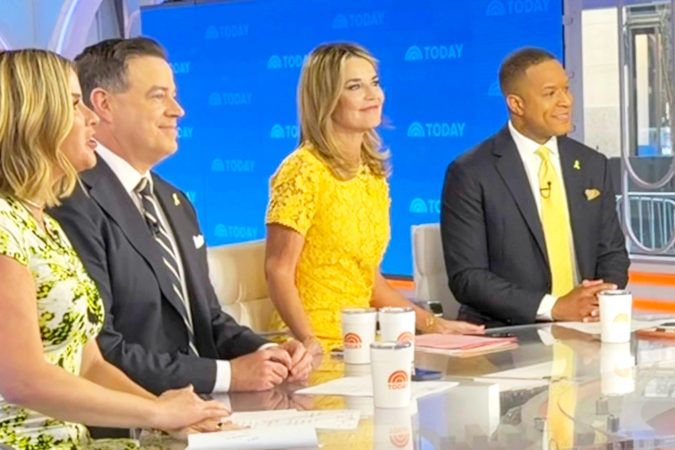
Craig Melvin, the Today anchor, chased away a man who had sneaked past security at 30 Rockefeller Plaza in New York, where NBC is headquartered, on Thursday and managed to approach Melvin near the show’s Studio 1A, the New York Police Department said.
Melvin, who has been with the network since 2011, alerted security, and the man was arrested by police.
“There was no altercation, and no one was injured,” NBC said in a statement, adding, “We are reviewing the incident and our security protocols and remain committed to providing a safe and secure environment for everyone who works at and visits our studios.”
The security breach happened right before 9 a.m., during the middle of the Today show broadcast, a department spokesperson said, when a man entered the lobby and headed through gold doors on the first floor and went upstairs. He encountered Melvin, who chased the man back through the lobby in an encounter that lasted between 8 and 10 seconds, the police said. The man was detained by Rockefeller Center, and then arrested by a police officer “without incident,” the department said.
Officers were alerted to a “disorderly individual” inside 30 Rockefeller Plaza, the midtown Manhattan building that also includes several NBC studios, such as Studio 8H, where Saturday Night Live is filmed. Officials have not yet identified the man who was arrested.
In an Instagram post Thursday afternoon, Melvin said he was “doing just fine” and thanked “so many of you” for reaching out after the security incident. “I’m looking forward to seeing you tomorrow morning on @todayshow.”
Melvin has had a variety of roles since joining NBC. He first became a news anchor on “Today” in 2018, and last year was promoted to a full-time host, replacing Hoda Kotb in one of the most high-profile roles in broadcast television. He had also been a host on MSNBC.
He recently sat down for an interview with former first lady Jill Biden about the release of her new book, during which he pressed her about former President Joe Biden’s fitness for office.
With control of the U.S. House on the line in November, Pennsylvania’s swing-district candidates are stocking up their war chests for a critical election — but one Democrat is lagging behind his counterparts.
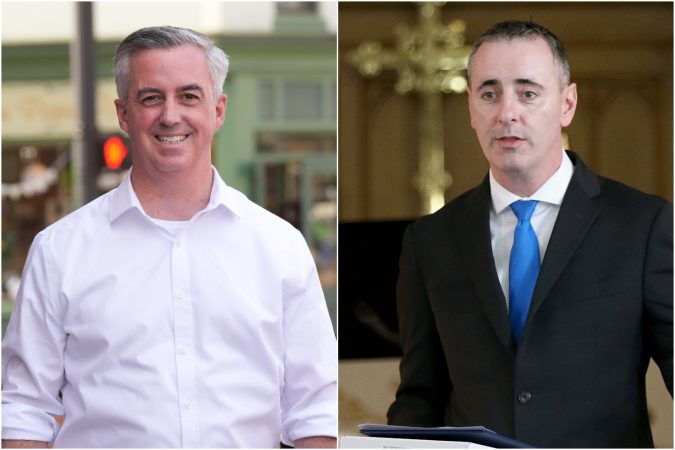
Bucks County Commissioner Bob Harvie, who is challenging longtime incumbent Republican U.S. Rep. Brian Fitzpatrick in the 1st Congressional District, raised almost $552,300 between April 30 and June 30, according to new campaign finance reports filed Wednesday, putting him at a little over $2 million raised since he launched his campaign in April 2025.
But Harvie’s sum for this two-month period is almost half a million less than Fitzpatrick, and roughly $915,000 on average less than the other Democratic candidates.
Fellow swing–district Democrats Bob Brooks, Paige Cognetti, and Janelle Stelsonall outraised the Republican incumbents in the 7th, 8th, and 10th Districts respectively, each gathering more than $1 million during this two-month period, a sign national Democrats say is proof of their strength in these competitive Pennsylvania seats.
The reporting period covers the final weeks before the May 19 primary and the six weeks that followed.
Bucks County Commissioner Bob Harvie hosts a veterans roundtable on May 4 at Middletown Township Building in Langhorne.William Thomas Cain / For The Inquirer
The Bucks County Republican has been tough to beat, thanks to his name recognition and ability to garner support from voters across the political spectrum, but Democrats believe Harvie’s roots in the county, and his electoral record as county commissioner, make him their strongest candidate to date.
(function(){function e(){window.addEventListener(`message`,function(e){if(e.data[`datawrapper-height`]!==void 0){var t=document.querySelectorAll(`iframe`);for(var n in e.data[`datawrapper-height`])for(var r=0,i;i=t[r];r++)if(i.contentWindow===e.source){var a=e.data[`datawrapper-height`][n]+`px`;i.style.height=a}}})}e()})();
And their outlook on the race hasn’t budged. Democrats believe all four swing district Democrats will be successful in November but understand it will take continued investments, including more money, to get all of them across the finish line.
Bucks County’s 1st Congressional District “is a winnable race, and Democrats should be all in on investing in Harvie so that he can help take back control of Congress,” said Dan McCormick, Harvie’s campaign manager, in a statement.
He also added that Harvie doesn’t “take a dime” of corporate PAC money.McCormick did not comment on the contrast between Harvie’s fundraising and that of his counterparts in the other targeted districts.
“Fitzpatrick sees the same polling we do, that’s why he’s busy lighting his money on fire lying about Bob,” McCormick said.
Fitzpatrick began funding ads against Harvie before the May 19 primary, underscoring the significance of Harvie’s challenge in a year Republicans are expected to lose seats nationally. Fitzpatrick’s campaign spent nearly $2 million between May and June, compared with about $360,000 in spending by Harvie’s campaign.
Both parties are targeting the seat, which includes all of Bucks and a sliver of Montgomery County, as they battle to secure control over the U.S. House.
In a pre-primary report that covered April 1 through 29, Harvie had raised about $107,000, in addition to his stockpile reported Wednesday. Fitzpatrick raised $246,000 during that same period.
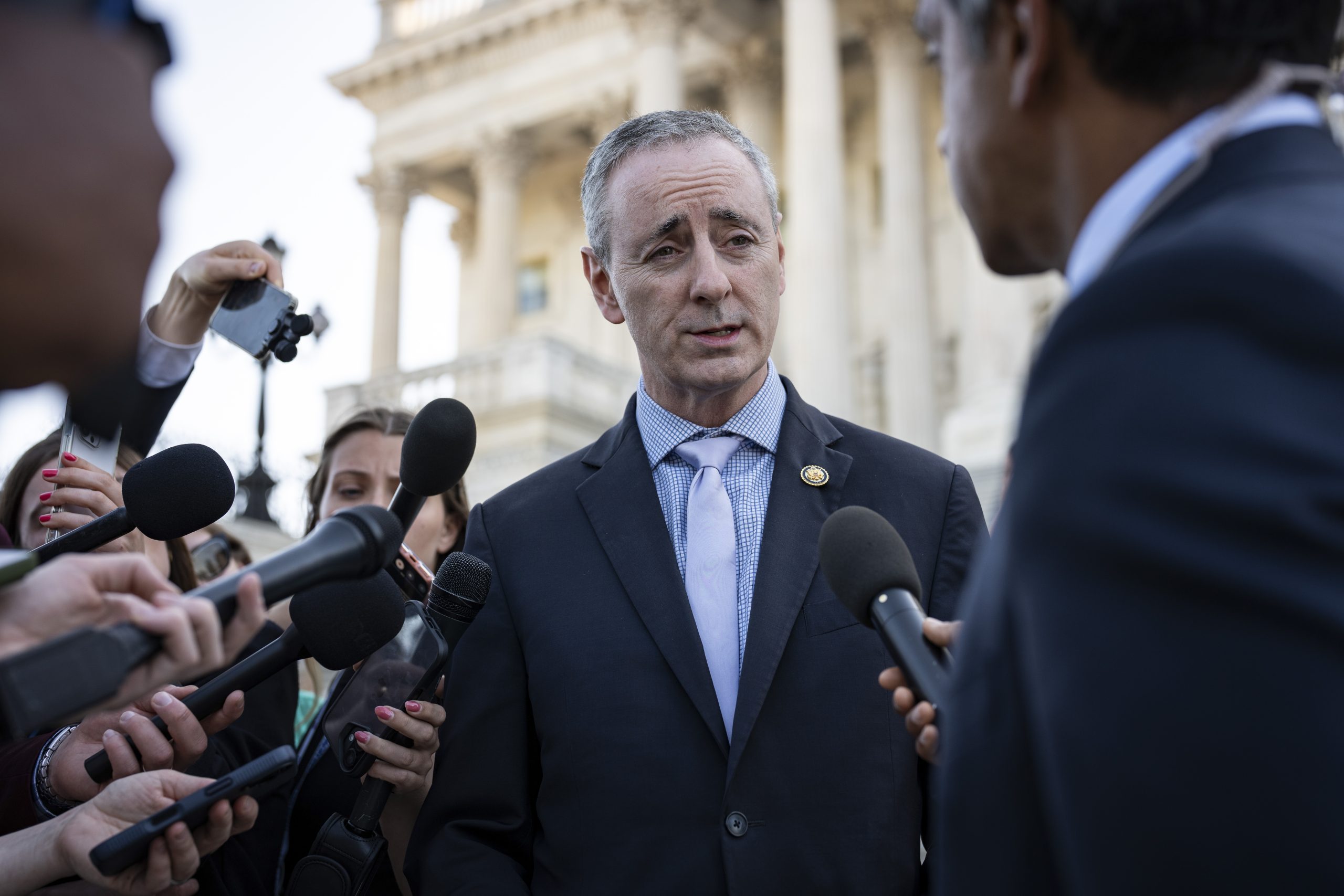
Rep. Brian Fitzpatrick (R., Pa.) speaks to reporters June 3 after the House passed an Iran war powers resolution.Haiyun Jiang
The nonpartisan Cook Political report has rated the 1st Congressional District as “likely” Republican, and the three other swing districts are considered toss-ups.
In a high stakes election year — and with popular Pennsylvania Gov. Josh Shapiro at the top of the ticket and a sinking approval rating for President Donald Trump — Harvie’s fundraising numbers at this point are mostly on par withthe last Democrat to take on Fitzpatrick.
Former challenger Ashley Ehasz, who ran against Fitzpatrick in 2022 and 2024, raised more than $767,000 during this period two years ago, bringing her campaign total to $2.1 million as of June 30, 2024.
Brittany Crampsie, a Democratic strategist in Pennsylvania, said donors may be doing “a little bit of hedging” their spending for Harvie at the moment, waiting to see more information on Shapiro’s poll numbers, Trump’s approval rating, and the national mood before investing more in the 1st District.
“Democratic donors absolutely want to beat Fitzpatrick,” Crampsie said. “We want to control Congress by large margins. But PA-1 is an expensive race. I mean, you might want to be looking at a little bit more information.”
The 1st and 7th Congressional Districts are part of the expensive Philadelphia television market, meaning both Harvie and Brooks will be competing for airtime.
Brooks, who is taking on freshman Republican U.S. Rep. Ryan Mackenzie in the Lehigh Valley, has raised $2.3 million over the entire span of his campaign — getting a boost this period after winning a competitive primary — but it’s not too far off from Harvie’s $2 million total haul.
Christopher Nicholas, a GOP consultant who grew up in Bucks County, said that Harvie is not just in a competition against Fitzpatrick, but also with the three other Democratic contenders in Pennsylvania.
“If you’re some official at the DCCC, and you say ‘Let’s see, get me the report on Pennsylvania,’ and you see this, where is Harvie going to be in the rankings? Is he going to be moving up or moving down? I think that’s a pretty easy question to answer,” Nicholas said.
Eli Cousin, a spokesperson for the Democratic Congressional Campaign Committee, emphasized that Pennsylvanians are wholeheartedly behind all four candidates who he says are “on the front lines of our path back to the House majority and will shake up a broken Washington in order to put Pennsylvania families first.”
Donors still have a lot of time to realize that Harvie is “the right candidate” and to contribute to TV and other ad spends that will come later this summer into the fall, Crampsie said. Some may already be writing checks to the Democratic Congressional Campaign Committee and other Democratic aligned-issues to support their cause of flipping the House blue.
“Fitzpatrick has won several times after being called the number one target, and stakeholders may be less likely to oppose him publicly and want to put their money into spending for Harvie that’s not necessarily into PAC spending … but I don’t think that it’s a sign that people are not supporting Harvie,” Crampsie said.
But even in the races where Democrats are outraising incumbents victory isn’t guaranteed in districts where Republicans have previously managed to prevail despite a cash disadvantage.
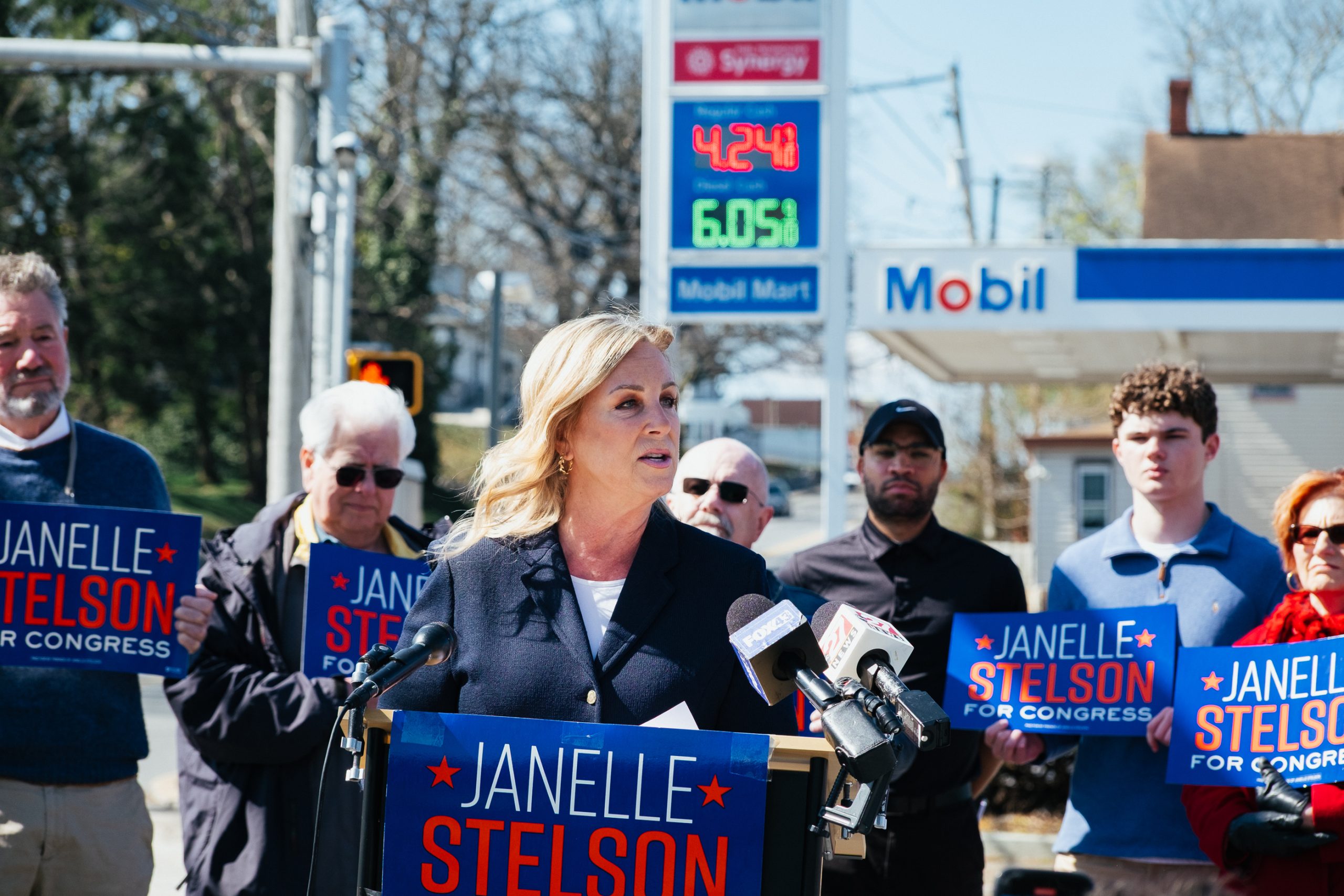
Janelle Stelson, running to represent Pennsylvania in Congress, campaigns at a gas station. Michelle Gustafson
In 2024, Stelson raised about $6.5 million during the entire cycle, roughly $2.1 million more than Republican U.S. Rep. Scott Perry, and still lost. Republicans are hoping Perry can prevail again when they have a rematch in November.
And Republicans see other signs of hope in these races despite Democrats’ momentum. For example, Mackenzie has more than $2.9 million cash on hand, roughly $1.9 million more than Brooks.
“Republicans remain in a strong position to defend our House majority after excellent quarters by our incumbent Members across Pennsylvania,” Reilly Richardson, a spokesperson for the National Republican Congressional Committee, said in a statement.
An Inquirer staffer’s interview notes came into the possession of the New Jersey Attorney General’s Office during an investigation that led to the high-profile, and recently abandoned, racketeering indictment against South Jersey power broker George E. Norcross III.
News organizations typically treat unpublished reporting material as confidential and often fight government demands for it in court.
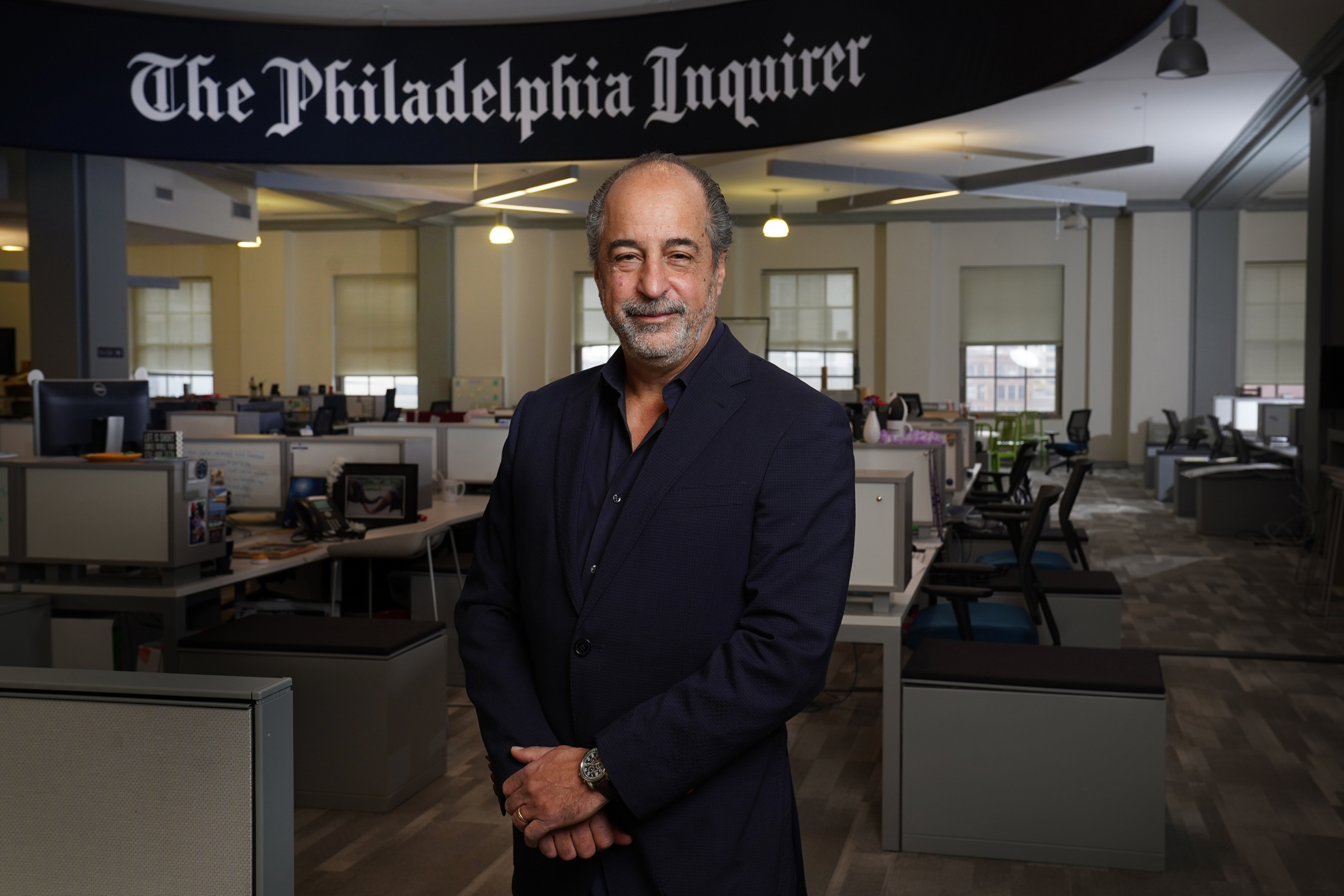
Inquirer editor and senior vice president Gabriel Escobar on Wednesday confirmed that state investigators had obtained interview notes typed in 2019 by Nancy Phillips, who currently edits the Justice and Injustice Team. The Inquirer “did not turn over notes to state prosecutors” and was never subpoenaed by authorities for them, Escobar wrote in a note to the newsroom.
“We do not definitively know how the notes ended up with the state, but we do know it was not from us,” Escobar said in response to questions from an Inquirer reporter.
A person with firsthand knowledge of how the notes came into the possession of the authorities said Phillips had shared the notes with someone outside The Inquirer.
“Nancy Phillips shared the notes with a third party. It was not for the purpose of sharing the notes with authorities. It was for her own edification,” said the source, who is not an Inquirer employee and requested anonymity due to ongoing litigation threats related to the case. “The state did not receive the notes from Nancy Phillips directly.”
A second source with direct knowledge of the evidence discovery file related to the Norcross investigation said the interview notes were included in an electronic file titled “Stier Documents.”
Edwin Stier, a former state and federal prosecutor in New Jersey, has been quoted previously in The Inquirer, including as part of its coverage of Norcross. He is mentioned elsewhere in the discovery file, said the source, who spoke on the condition of anonymity because he was not permitted to publicly discuss the discovery material.
Stier declined to comment on why his name appears in the evidentiary documents.
Phillips declined to comment, saying she was “not comfortable talking about the process of newsgathering.”
Gabriel Escobar became The Inquirer’s top editor in 2020.JESSICA GRIFFIN / Staff Photographer
Escobar — who joined The Inquirer in 2007 as metropolitan editor and was appointed its top editor in 2020 — declined to respond to questions about whether Phillips shared the notes with anyone outside the newsroom, including Stier. Escobar did not respond to a request for a phone interview and instead answered questions in writing.
‘False and outrageous’
BigTrial, a blog authored by former Inquirer reporter Ralph Cipriano, first reported on Wednesday that the 10-page typed interview notes were in the state’s hands. Norcross’ legal team obtained the notes from the state through evidence discovery, and Norcross is considering a lawsuit against the state for malicious prosecution, BigTrial reported.
The notes do not indicate the name of the author but appeared to summarize August 2019 meetings between a journalist and longtime Cherry Hill mayor Susan Bass Levin, who shared information critical of Norcross, according to the BigTrial report. Bass Levin is the former president and CEO of Cooper University Health System’s Cooper Foundation, where Norcross serves as a board member.
“I have never seen the notes,” Bass Levin said. She declined to comment further.
An Inquirer reporter was not able to obtain a copy of the notes. Escobar said he did not have a copy of them.
Cipriano’s report claims that there are “only a couple possible explanations” for how prosecutors obtained the notes: The Inquirer supplied the notes in response to a subpoena; or Phillips was “voluntarily helping the investigators trying to pin a racketeering indictment on Norcross and associates.”
Cipriano included no evidence to support either claim.
In his email to the newsroom, Escobar wrote that Cipriano’s theories amounted to “unfounded and irresponsible speculation.”
“Speculation that Nancy Phillips, who has a long and distinguished track record as a reporter and editor, was working with state prosecutors is both false and outrageous,” Escobar wrote. “When we learned that state investigators had the notes, we conducted an inquiry and determined that the material was not provided to them by The Inquirer.”
He declined to give further details.
(Escobar recused himself from involvement in this story, as did the reporters and editors who led The Inquirer’s coverage in 2019 of the investigation into Norcross.)
Asked whether Phillips or any other staffer had faced discipline after the internal inquiry, Escobar wrote: “We do not comment on personnel matters.”
Norcross spokesperson Dan Fee said Norcross’ legal team was not aware of how the state obtained the notes.
The New Jersey Attorney General’s Office declined to comment.
The Norcross investigation
New Jersey state prosecutors, led by then-Attorney General Matthew Platkin, in 2024 indicted Norcross and five others in a racketeering case centered on alleged corruption in economic development tax breaks for projects connected to Norcross in Camden.
Beginning in 2019, Inquirer reporters Andrew Seidman and Catherine Dunn wrote a series of articles on the tax break deals and the investigation into Norcross.
Norcross spokesperson Fee said Seidman told him at the time that Phillips was not involved in the coverage. Phillips had a longtime romantic relationship with the late New Jersey billionaire Lewis Katz, who clashed with Norcross when both were co-owners of The Inquirer in the early 2010s.
The combination of the notes and subsequent stories in The Inquirer indicate that Phillips had not just met with Bass Levin but also passed her notes to the reporters covering the story, showing that Phillips did play a role in coverage of Norcross, Fee said.
Fee said Wednesday that Escobar’s statement “confirms the two most important things in the BigTrial story: Nancy Phillips’ notes ended up in the hands of prosecutors and that despite her bias against George Norcross being clear and known, Phillips was part of the reporting on stories involving him.”
He called on Inquirer leadership to conduct a “public investigation” and questioned whether “there will be some effort to cover everything up.”
Cipriano’s report quoted brief portions of the notes, including that Bass Levin suggested requesting certain public records, and that an Inquirer reporter later requested those records.
Escobar’s note to the newsroom Wednesday said that Phillips “was not directly involved in the [Norcross] coverage but served as a conduit for information only she could access.”
“Nancy has established a network of sources in her long career, and the information she has been able to gather has aided our journalism across many fronts,” Escobar wrote. “In 2019, she was approached by a source who was offering unique insights on a significant and running story. Nancy conducted an interview, typed up the notes, and then shared them with two Inquirer reporters who were working on the story.”
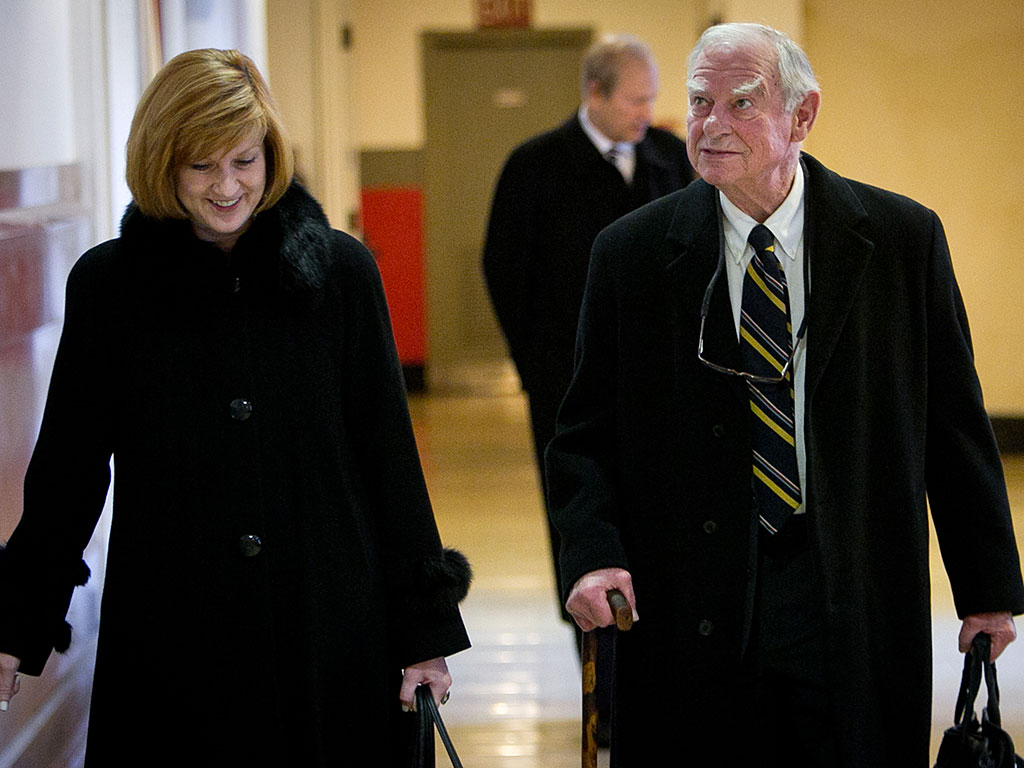
Inquirer staffer Nancy Phillips walks alongside H.F. “Gerry” Lenfest, the newspaper’s late owner. ALEJANDRO A. ALVAREZ / Staff Photographer
Cipriano, Norcross, and Phillips each have complicated Inquirer tenures.
Cipriano, who was fired from The Inquirer in 1998, sued his editor for libel following a dispute over his coverage of the Archdiocese of Philadelphia. The suit was settled in 2001 with both sides declining to disclose the terms of the agreement, according to a New York Times report. Cipriano frequently criticizes The Inquirer’s coverage and its reporters and editors on his blog.
Norcross was a co-owner of The Inquirer from 2012 to 2014, a tumultuous period in which he battled with Katz over control of the company.
And Phillips, who scored legendary scoops as a crime reporter and now edits the Justice and Injustice Team, was involved in a relationship with Katz during his public fight with Norcross.
Katz and cable mogul-turned-philanthropistH.F. “Gerry” Lenfest ultimately prevailed in the dispute over who would own The Inquirer. Katz died in a 2014 plane crash, just days after he and Lenfest bested Norcross in an auction organized to settle the ownership matter. (The Inquirer since 2016 has been owned by the Lenfest Institute for Journalism, a nonprofit endowed by its namesake before he died in 2018.)
Camden coverage
Escobar, who did not become The Inquirer’s top editor until a year after Phillips’ meeting with Bass Levin, said that he “did not have firsthand knowledge” of any arrangement barring Phillips from involvement in Norcross coverage.
“But I could see a situation where a judgment call was made that placed priority on gathering information in a limited way,” Escobar said.
He added in a separate response: “Gathering information from all quarters on a story always yields better and more complete journalism and, as the [newsroom] note says, this particular source was in a position to know and would only provide it to Nancy.”
At the time of the 2019 interview, Phillips was a deputy regional editor overseeing reporters covering the Pennsylvania and New Jersey suburbs. In that role, Phillips would not normally be involved with stories concerning the Norcross investigation, which was handled by reporters from the politics and business desks.
In a statement, Seidman noted that Norcross and the Camden tax breaks became a matter of public debate in the spring of 2019 and that he and Dunn began their reporting in May of that year — three months before Phillips met with Bass Levin.
“Our reporting was based on interviews, emails, bank documents, property records, appraisals, and other government documents,” Seidman said. “I stand by it 100%.”
Dunn, who left The Inquirer in 2022 and has been a reporter at Barron’s for about four years, declined to comment.
Fee said he repeatedly disputed Seidman’s and Dunn’s coverage of Norcross, including an October 2019 article Cipriano highlighted regarding a land deal in Camden.
The Inquirer publishes corrections when it discovers that its reporting contained factually inaccurate information. No corrections were made to the 2019 article.
Former Inquirer editor John P. Martin, who was the lead editor on that story, said he and the reporters “talked at length with Mr. Norcross’ spokesman and several lawyers representing him.”
“At no point, to my recollection, did Nancy Phillips offer input, advice, editing help, ask questions, or even engage in small chat about that story or any involving Mr. Norcross,” said Martin, who is now with Bloomberg.
Escobar concluded his note to the newsroom by saying the episode offered “an important lesson.”
“The information we gather in the course of reporting should always be safeguarded,” he said. “And no matter how well established a source-reporter relationship is, each interaction should establish clear parameters for the use of the information.”
Asked for clarity on how those comments related to prosecutors obtaining Phillips’ notes, Escobar wrote: “The notes ended up with the state so something went awry. That part of the message is intended as a general reminder and not specific to the circumstances.”
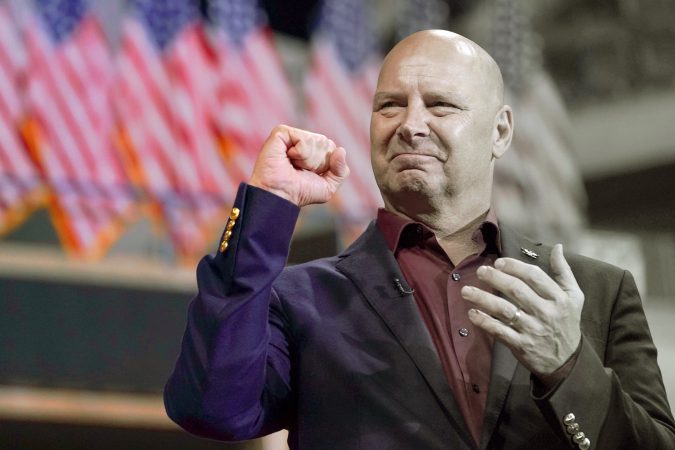
WASHINGTON — Doug Mastriano, the far-right Pennsylvania lawmaker whom President Donald Trump nominated to become the U.S. ambassador to Slovakia, refused to tell senators during his confirmation hearing on Thursday whether he believes all American political leaders should be Christian.
A key Trump ally during the president’s attempt to overturn the 2020 election, Mastriano also rejected claims that he is a conspiracy theorist who assisted in the Jan. 6, 2021, attack on the U.S. Capitol.
And while he said he regretted some of his past statements about the Holocaust and his associations with individuals considered antisemitic, he repeatedly pushed back on Democratic senators’ concerns about his fitness for the role.
“I’ve never been involved in conspiracies,” he said during a heated exchange with U.S. Sen. Tim Kaine (D., Va.), who at different points referred to Mastriano as “gullible” and someone who needs to “look in the mirror a little bit.”
The Republican state senator from Franklin County is a retired U.S. Army colonel who deployed three times to Afghanistan after 9/11 and previously served in Eastern Europe.
He was the Republican nominee for Pennsylvania governor in 2022 with Trump’s backing, but he lost to Democrat Josh Shapiro by nearly 15 percentage points. Mastriano’s nomination for the ambassadorship came as his supporters were promoting him as a write-in candidate for governor ahead of the May Republican primary, in which Treasurer Stacy Garrity was unopposed.
U.S. Sen. Dave McCormick (R., Pa.), who pushed for Mastriano’s nomination and chaired his confirmation hearing during the Senate Foreign Relations Committee hearing Thursday, said Mastriano’s military career made him “highly qualified” for the role.
“This position needs a leader with strategic judgment, intimate knowledge of NATO’s inner workings, and firsthand experience working alongside our allies with an unwavering commitment to advancing America’s interest,” McCormick said during the hearing. “Doug brings that experience, and I’m confident that he’ll represent the United States with great professionalism and integrity.”
Mastriano also leaned on his experience, which he said involved planning operations in the Baltic states and fending off Russian aggression. He said he hoped to strengthen America’s relationship with Slovakia and encourage the country to contribute to Ukraine’s defense.
But Democrats on the committee said they had serious concerns about both Mastriano’s past comments on foreign policy and a range of other issues — including an ideology that has been described as Christian nationalist.
U.S. Sen. Jacky Rosen (D., Nev.) said Mastriano had spoken often about his Christian identity and his belief that the separation of church and state is a “myth.” Rosen, who is Jewish, asked Mastriano to look her in the eye and say whether all U.S. political leaders should be Christian.
Mastriano said that he believed “religious liberty applies to every American” and that it was “why our country was founded.” After Rosen said it was “deeply problematic” that he would not say America is a pluralistic nation where leaders do not need to be Christian, Mastriano responded, “I will look you in the eye and repeat even simpler language” — though he did not answer the original question.
“We are absolutely a pluralistic society and I have worked for non-Christians in the military and the government, and I’ve had them working for me,” Mastriano added.
Rosen also questioned him about previous comments comparing abortion and his loss to Shapiro in the 2022 Pennsylvania governor’s race to the Holocaust.
“There was a social media post that I would not post today,” Mastriano said, calling any comparisons to the Holocaust “unwise.”
Asked about his associations with Andrew Torba, founder of the online platform Gab, which has been used to share extremist and antisemitic views, Mastriano said he “immediately” returned a campaign donation from Torba and cut off advertising on the platform when he learned about the Gab founder’s views.
“You can denounce your past associations with antisemites. You can point to your support of Israel,” Rosen said. “But for me, I’m not sure that either excuses you or erases your record.”
U.S. Sen. Jeanne Shaheen (D., N.H.) questioned Mastriano while displaying a giant poster with his picture and a 2018 quote in which he said European Union leaders were “political, diplomatic enemies of the United States of America.”
She said staff who had interviewed him recently had also quoted him as saying he believed the European Union was a “rising rival comparable to China and that it would eventually create a standing army to challenge the United States.” Visibly frustrated during her questioning, Shaheen said that the EU should be treated as allies, not rivals, and that Mastriano “should absolutely know better.”
The most contentious exchange came between Mastriano and Kaine, who started by saying that he respected the nominee’s military service and that the nomination brought him “a real sense of sadness.”
“You’ve associated with antisemites and Holocaust deniers. You’ve associated with 9/11 conspiracy theorists. You’ve made comments about foreign leaders that are not diplomatic in quality. And you and I share a very special day in American history,” Kaine said. “We were both here on Jan. 6, 2021.”
Mastriano was Trump’s top ally in Pennsylvania as the president contested his 2020 election loss to Democrat Joe Biden. He worked both publicly and privately to contest the vote, and he was near the Capitol on the day that a mob broke in to stop the certification of the results. The Republican lawmaker was not charged with a crime related to any of those activities, which he reminded Kaine about on Thursday.
“That is incorrect,” he said as Kaine pressed and said he had been at the Capitol to overturn the results. “I was here to hear the president. I was here with my wife to hear the president of the United States speak. We didn’t do anything illegal. We came, we saw, we left.”
Asked if he would say, now, that Biden had won the election, Mastriano said only that Biden had been certified as the winner — a phrase that other Trump nominees have used in nomination hearings and that Democrats have described as a pre-negotiated script to appease a president who still stands by the fraudulent claims.
“Conspiracy theorists generally are gullible people. They might have master’s degrees and Ph.D.s, and you’ve got them,” Kaine said to Mastriano, referring to his degree in history.
“I don’t know what you’re talking about, senator,” Mastriano said, denying that he subscribes to conspiracy theories as the two talked over each other.
Kaine said Mastriano could claim, if he wanted, that he only held a public hearing on the 2020 election — an event in Gettysburg that helped spread false claims that there was widespread fraud in the election — but he could not erase his record.
“No, sir, there’s no erasing,” Mastriano said. “Facts are stubborn things.”
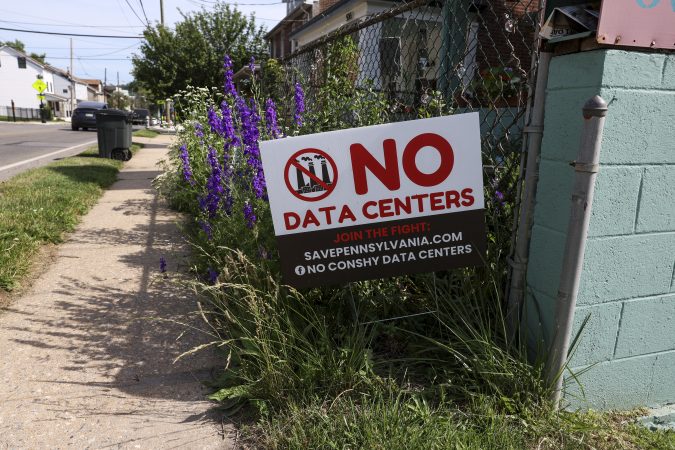
An information-only presentation about data centers before the Philadelphia Planning Commission provoked a firestorm of controversy Thursday, with more than a dozen community groups and other activists rejecting the idea of bringing this energy-intensive use to the city.
Demand for data centers has soared in recent years, as tech companies have invested heavily in artificial intelligence products that require vast amounts of computing power.
Data center foes, who dominated the public comment section of Thursday’s presentation, repeatedly called for a moratorium akin to the policy recently enacted in New York State.
“Data centers are a hot topic in land use around the country,” said Amy Boyd, a city planner who presented the research to the commission. “Staff wants to stay up to date on this issue, so that when the topic becomes more pressing in our city, we can be prepared.”
Thursday’s presentation is not a reaction to a particular proposal. Instead, the Planning Commission presented research on the employment, energy, and health effects of data centers, the current state of zoning law in the city, and what parts of Philadelphia could accommodate them.
The Planning Commission found there are only two sites in Philadelphia that could accommodate the largest size of data center, the kind currently being built to support the artificial intelligence boom. Any other possible sites would require consolidating properties and changing zoning.
One possible location is the former refinery site in South Philadelphia known as the Bellwether District, 3143 W. Passyunk Ave., which contains 1,300 acres of mostly undeveloped land zoned for industrial uses and has long been rumored as a potential data center site.
The other possible site is 2600 Grant Ave., a city-owned property by the airport in Northeast Philadelphia.
The idea of municipally owned land being used for a data center drew protests from citizen attendees of the commission meeting.
But policymakers emphasized that the presentation was just meant to highlight parcels that were large enough to accommodate the use — and were not meant to indicate support for such an idea.
“We are not currently considering that site. We have not been asked to consider that site,” Octavia Howell, director of the Planning Commission, said about the Grant Avenue property.
“We were strictly looking at industrial land that is of a size that could be attractive … to someone who is looking at Philadelphia and curious about data centers,“ Howell said. “There is no proposal that this research is responding to.”
Boyd’s presentation noted that Philadelphia already hosts eight smaller data centers from an era when they were not such a controversial topic.
These include 365 Data Center, which operates at 3701 Market St. in University City, and 4775 League Island Blvd. in the Navy Yard. At 25,000 square feet, that South Philly building is only a quarter of the size of the smallest contemporary “hyperscale” data centers.
Boyd’s presentation also emphasized the amount of resources that are required to keep huge, new data centers going.
A Meta data center in Covington, Ga.DUSTIN CHAMBERS
She reported that data centers are now among the 10 largest water-consuming industries in the United States and use 4% of the nation’s electricity — with that figure expected to grow to 12% by 2035. Local energy providers have had to make large capital investments to accommodate the industry.
Boyd noted that many of the jobs and tax benefits to data centers take place during construction, when up to 1,500 well-paid union workers are employed.
Afterward some well-paid positions will still exist, including tech and maintenance staff, but she found that data centers employ only one worker per 5,000 square feet — roughly 13% of the jobs that would be expected in a standard warehouse of a similar size.
But Planning Commissioner Pat Eiding said he thought that might undercount the job-creation potential.
“I don’t know if it considers the amount of maintenance that goes on in these critical facilities,” said Eiding, former head of the Philadelphia AFL-CIO. “As we go forward, I’d like to see research on how many man hours are needed for maintenance and keeping a facility going.”
Public response to the Planning Commission’s report was wholly oppositional to data centers. No one spoke in favor.
Potential health effects were highlighted, and many speakers expressed concern that the amount of electricity used by potential centers would likely be powered by fossil fuels.
Others expressed concerns about surging electricity costs, as capital improvements are paid for by increased consumer costs.
“It’s what’s causing people to not be able to pay their bills,” said Linnea Bond, environment and health education director at Physicians for Social Responsibility Pennsylvania. “It’s a huge health issue, and it’s a huge affordability issue.”
The Planning Commission staff emphasized that data centers are not currently specifically regulated in Philadelphia’s zoning code and suggested the possibility of a new law creating a specific category for them.
While talk of a potential data center moratorium swirled around City Council earlier this year, only two nonbinding resolutions have been passed related to the topic so far.
One from Councilmember Rue Landau called for hearings on data centers, which have not been held yet. Councilmember Isaiah Thomas held hearings late last year about rising energy costs, citing data centers as one of the driving forces.
DUBAI, United Arab Emirates — The United States intensified its strikes against Iran on Thursday, hitting targets farther north and firing into a ship the U.S. accused of trying to break its naval blockade on the Islamic Republic. Iran retaliated by launching missiles and drones at U.S. allies in the region, and warned its attacks may escalate.
The interim ceasefire agreed to last month has collapsed, and the region has endured days of back-and-forth attacks by the U.S. and Iran as they battle for control of the Strait of Hormuz. Iranian officials say U.S. strikes have killed more than 35 people and wounded over 300 others.
For the first time in this latest round of violence, strikes also reached into areas around Iran’s capital, Tehran, showing a widening set of targets for the Americans. The U.S. launched a second wave of strikes late Thursday, saying it was aiming to “further degrade” Iran’s military capabilities.
When the U.S. and Israel launched the war on Iran on Feb. 28, Tehran effectively closed the strait to shipping traffic, a move that sent the price of oil soaring and gave Iran major leverage in negotiations.
Col. Ebrahim Zolfaghari, a spokesperson for the Iranian military’s Khatam al-Anbiya Central Headquarters, threatened that Iran could launch widespread attacks on “all the infrastructure in the region” if the U.S. acts on President Donald Trump‘s repeated warnings that America could hit Iranian bridges and power plants.
“Under no circumstances and in no way will we allow America, as a foreign and extraregional country, to interfere in the Strait of Hormuz,” he added. “This is Iran’s invincible red line.”
Both the U.S. and Iran launch attacks as blockade is reimposed
Iranian state media said the U.S. strikes Thursday hit around Tehran and Semnan province, home to Iran’s ballistic missile production and space program. State media also reported strikes around the provinces of Hamedan, Hormozgan, Khuzestan, Lorestan, Markazi, and Sistan and Baluchestan, as well as on Iran’s Qeshm island, near the Strait of Hormuz.
Seven people were wounded in a U.S. strike that hit the Allah-Akbar Hill residential neighborhood in the port city of Bandar Abbas, according to Iranian state media. Two more people were wounded in a U.S. attack on the Bandar Abbas railway junction station, state media said.
And just west of Bandar Abbas, witnesses reported that two bridges were struck in a U.S. attack, killing two people and wounding four others, state media said.
An attack on Greater Tunb Island targeted Iranian defense and missile sites, U.S. Central Command said.
Greater Tunb Island is one of three small rocky islands that sit at the confluence of the Persian Gulf and the strait. The islands — seized in 1971 by Iran from what would become the United Arab Emirates — help the Islamic Republic exert significant control over the strait.
The U.S. military also said it disabled a Curacao-flagged oil tanker as it sailed toward Iran’s main oil export terminal, firing a missile after the ship “ignored multiple warnings.”
Another American strike Wednesday targeted a barracks for Iran’s 388th Mechanized Infantry Brigade, which operates tanks and armored vehicles, in Sistan and Baluchestan province, Iranian state television reported. The report said seven were killed in the attack, including conscripts and career soldiers.
Iran retaliated Thursday with missile and drone attacks on Bahrain, Jordan and Kuwait, authorities in those countries home to U.S. forces said. There was no immediate acknowledgment of damage or casualties from the attacks.
Iraqi Prime Minister Ali al-Zaidi condemned an overnight drone attack in Iraq’s semiautonomous northern Kurdish region. The drone, which authorities said had been intercepted, came during his trip to the U.S. in which he said Iraq would work to disarm non-state armed groups, including those backed by Iran.
A drone separately targeted a tanker Thursday in the Persian Gulf off the coast of Basra in southern Iraq, the state-run INA news agency reported. No casualties were reported.
Trump says a peace deal is still possible
The latest round of fighting is focused on the Strait of Hormuz, as Iran attacks ships using a U.S.-controlled route through the vital waterway.
Week-to-week cargo shipments through the strait dropped by almost a quarter at the beginning of the month, according to Maritime data firm Lloyd’s List Intelligence. And that was before the recent surge in tit-for-tat attacks.
Given the risks, some oil shippers are transiting the strait with their location devices turned off, but many are just staying put, Lloyd’s said Thursday. A growing amount of the region’s energy is being shipped through pipelines, but not nearly enough to offset the decline in shipping through the strait.
The price for Brent crude oil, the international standard, traded above $85 a barrel on Thursday, more than 15% higher than the price before the war, but still well below the nearly $120 reached at the height of the conflict.
Rising prices pose a particular challenge to Trump and his Republican Party, which hopes to retain control of Congress in elections in November.
The U.S. reimposed a naval blockade on Iranian ports Wednesday.
“They don’t like what we’re doing, and they do want to settle. We’ll find out whether or not we settle with them, or we just finish it off,” Trump said Wednesday at the U.S. Army War College in Carlisle, Pa.
Pakistan’s Foreign Ministry on Thursday said efforts were still underway to bring the U.S. and Tehran to the negotiating table but acknowledged that was becoming increasingly difficult.
Trump said on social media that Tehran made a goodwill gesture by releasing an American citizen wrongly detained in Iran since 2024. He did not release further details. Human rights lawyer Jared Genser released a statement identifying the detainee as his client Dena Karari, a U.S.-Iranian citizen who runs a nonprofit and was charged with espionage.
Iran did not immediately acknowledge the release, and her case was not publicly known, as sometimes happens with detentions in the Islamic Republic.
ATLANTA — President Donald Trump’s teleprompter operator is on unpaid leave after reports that he used his inside knowledge to make bets about the president’s speeches on the online prediction market Kalshi, the White House said Thursday.
The firm’s enforcement chief said Kalshi contacted federal regulators about bets allegedly made about what the president would say in public addresses.
White House press secretary Karoline Leavitt said the president is aware of the situation, which she described as “unfortunate” and “a disgrace.”
“The White House has extremely strict ethical guidelines with respect to issues like this,” Leavitt told reporters, saying the aide is on unpaid leave.
ABC News reported Thursday that Gabriel Perez, who has been operating Trump’s teleprompter since 2016, used his inside knowledge to win more than $100,000 betting on what the president would say in big speeches, including the State of the Union address earlier this year.
Robert Denault, Kalshi’s lawyer and head of enforcement, said on X that the “Kalshi surveillance team promptly flagged, investigated and referred these trades” to the U.S. Commodity Futures Trading Commission that has regulatory authority over such matters.
His statement did not name Perez.
“We have been assisting regulators on this matter and provided all evidence that we collected, as we do with any referral,” Denault added.
ABC based its report on multiple sources who have knowledge of the matter but spoke on condition of anonymity to discuss the details.
The ABC report described suspicious activity on Kalshi’s “Mentions” market, in which users can place bets on what phrases and specific words might be used in public speeches. Kalshi recently began requiring users to disclose their place of employment, and the platform’s policy prohibits betting based on information that users gain because of their job.
On Thursday, his media company announced it would charge for special high-speed access to Truth Social posts, including possibly his own affecting national security and financial markets.
In his most recent financial disclosures, Trump reported making $1.2 billion from his crypto businesses in 2025, raking in profits while his investors suffered losses in marketplaces that Trump has sought to shield from tighter federal regulation.
Trump got more than $500 million from his World Liberty Financial business selling new crypto products, including “governance tokens,” according to the required annual disclosure report with the Office of Government Ethics. It also showed another crypto business, CIC Digital LLC, took in more than $600 million from sales of souvenir-type “meme” coins stamped with his face. Both the tokens and the coins have plunged in value since the sales.
The president has also profited from merchandising deals and high-dollar political and official events at his properties, significantly increasing his net worth since returning to power.
Trump’s aides have stood by his personal and family business practices.
“The president is abiding by all conflict-of-interest laws that are applicable to the president,” Leavitt said earlier this year. It’s “absurd for anyone to insinuate that this president is profiting off of the presidency.”