Blog

  • Navy failed to protect pilots from brain injury, House report says

    Navy failed to protect pilots from brain injury, House report says

    As concerns mounted that the extreme physical strain of flying fighter jets was causing brain injuries in pilots, and may have led to the death of a number of career aviators, the Navy did almost nothing.

    It didn’t even study its pilots to understand if it had a problem.

    That is one of the numerous findings in a harshly critical report released Tuesday by the powerful House Oversight Committee. The report said that because the Navy had repeatedly failed to act, Congress should pass legislation requiring the military to create a specific program to study and care for the brain health of all aviators.

    “Despite credible warnings, external reporting and internal awareness, the Navy has yet to determine whether the very conditions that define naval aviation may also be causing long-term harm to the pilots who endure them,” the report said. “Instead, it has relied on a system designed to respond to visible injuries, while leaving potential cumulative damage largely unexamined.”

    Naval aviators are repeatedly exposed to body-crushing forces as they catapult off aircraft carriers and pull high G-force turns in training. The Navy has never studied how those forces over time affect the human brain, which contains 100 billion neurons in a network with a consistency similar to Jell-O.

    A number of career pilots have raised concerns that those repeated exposures may cause brain injuries that slowly accrue over years of service and lead to debilitating mental health problems.

    “Landing on a carrier is like a car crash. In my career I’ve been in hundreds of car crashes,” said Matthew Buckley, a former TOPGUN pilot who after 15 years of flying struggled with headaches, mood swings, and suicidal thoughts. He later started an organization to help the many other pilots he encountered who were experiencing similar problems.

    “I’m almost shaking, I’m so furious,” he said after learning about the findings of the House committee. “People have died. We know we have a problem. And you’re telling me someone needs to call for legislation to have the admirals do their jobs? It’s insane.”

    In 2024, the New York Times published an investigation showing that three pilots who all had symptoms consistent with brain injuries died by suicide in an 18-month span, and that a dozen current and former pilots were struggling with similar issues.

    In the following months, Rep. James Comer (R., Ky.), who heads the House Oversight Committee, formally demanded to know how the Navy was responding to the problem.

    The report released this week said the Navy had barely responded at all: It had not done a formal investigation to see if fighter jets were causing injuries. It had not put monitoring in place that might detect injuries. And it had no plans to offer expanded brain health services to its aviators.

    While the Navy has done extensive research on the immediate health effects of flying fighter jets, it has never looked at the long-term impacts. Because the Navy had no evidence of a brain-injury problem, its medical officials maintained that no problem existed. It continued to do so even as Navy doctors started sending pilots who were experiencing issues to a civilian neurologist.

    When that neurologist raised concerns to the Navy in 2020 that he was seeing a pattern of brain injury, he said it stopped sending him patients.

    Internal documents reviewed by the House committee showed that a few years later, when three career pilots who flew the Navy’s F/A-18 Super Hornet died by suicide, several Naval officers grew deeply concerned.

    In 2024 a Navy doctor and former pilot conducted an informal survey of pilots and found widespread mental health issues that were often going untreated. His report rippled through the pilot community, and a Navy captain soon sent the report to several admirals.

    “Feedback from the bro-network is that this is a hot topic … and it is affecting retention of our senior aviators,” the captain wrote. “The suicides may, or may not, be linked by common causes. But we will not know until we choose to study this problem.”

    The committee said no study took place.

    Instead, Naval leaders blamed the crisis on stubborn barriers to seeking mental health, including pilots not coming forward out of fear that they might be grounded. The Navy tended to blamed individuals for not seeking help. The House report found no evidence that leaders considered that the problem could be caused by its jets.

    The Navy’s elite TOPGUN fighter jet school saw things differently.

    In 2024 it surreptitiously set up a brain health program, known as Project Odin’s Eye, to monitor its top flyers, modeled on a program created by the Navy SEALs. TOPGUN did not alert the larger Navy to the suspected problem, or inform other fighter wings, the report said.

    Navy leadership knew nothing about Project Odin’s Eye until the Times wrote about its existence in December 2024.

    After the Times published its investigation, top Navy leaders pushed Navy medical experts on whether flying was causing brain injuries, according to the report. In a bit of circular reasoning that seemed pulled straight from the novel Catch-22, the experts said the Navy had never studied the problem, so there was no hard evidence that it existed. And since there was no hard evidence that existed, there was no reason to study it.

    “The medical team argued that because there was no evidence, there would be no need to investigate further,” the report noted.

    The House committee was particularly critical of that decision because, it said, the Navy was “well equipped” to study the issue, and already had an extensive aviation physiology research and monitoring program that could easily add a brain health study.

    The Navy, by its own estimate, could conduct a long-term study of brain health for 1,000 pilots for $3.9 million — about the cost of training one pilot to fly.

    Instead, the Navy chose to do nothing, the report said.

    “In sum, the Navy’s response to the committee reveals a paradox: A well-funded and expansive research enterprise that has nonetheless failed to address a consequential question in aviator health,” the report said. “Given the Navy’s substantial investment in human capital, failing to allocate comparable resources to understanding risks and protecting that investment, particularly in terms of long-term health, is unfortunate.”

    The committee recommended that Congress step in and require a comprehensive program that would create a frontline brain healthcare program for all pilots, modeled on Project Odin’s Eye.

    The committee also called for requiring the Defense Department to track catapult takeoffs and high G-force maneuvers in aviators’ medical records, and conduct a comprehensive study of the cumulative effects over time, including after pilots leave the military.

    This article originally appeared in the New York Times.
  • Temple terminates $55 million gift from school’s largest donor amid federal investigation into his company

    Temple terminates $55 million gift from school’s largest donor amid federal investigation into his company

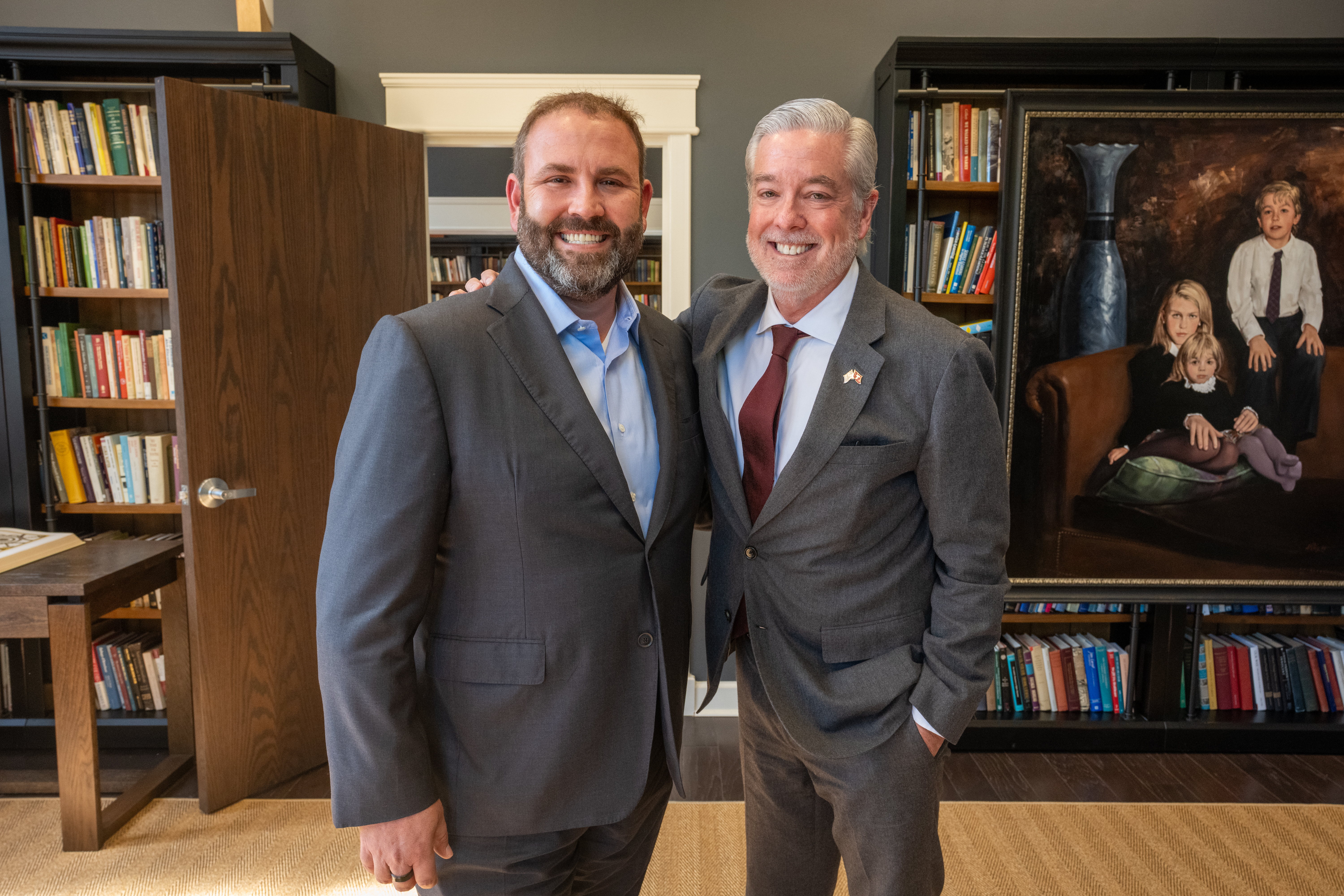
    Temple University will terminate a $55 million gift — the largest donation in the school’s history — from alumnus Christopher M. Barnett, whose company is under federal criminal investigation over allegations of money laundering, wire fraud, and other crimes.

    Barnett, a behavioral healthcare business leader whose company, ABA Centers of America, provides services to children with autism, has resigned from Temple’s board of trustees, Temple president John Fry said Tuesday.

    The gift, largely intended for Temple’s College of Public Health, was announced with much fanfare last October, but none of the payments had yet been made to Temple under the gift agreement schedule, Fry said.

    The decision to terminate the gift was mutual, Fry said, and came as Barnett is “recovering from a life-threatening medical event.” Particularly difficult was that the federal allegations concern healthcare fraud and the gift was intended for the public health college, the president said.

    “We have to think about our values,” Fry said in an interview Tuesday. “We have to think about our reputation. Given the nature of the allegations, we felt that the best thing to do was to separate ourselves from this … as painful as that is.”

    Fry said that he became aware of the allegations Thursday from recently unsealed court documents in the case and that Temple reached out to Barnett, who resigned from the board Saturday. Temple decided to announce its intention to terminate the gift after the board of trustees got a briefing on Monday, Fry said.

    The College of Public Health will no longer bear Barnett’s name, nor will the dean’s title in the College of Liberal Arts or an “essential needs hub” that Temple recently opened on campus to help improve student success, Fry said.

    Barnett has not been charged. He “strenuously denies” the allegations and intends to “vigorously defend” against them, Fry and Mitchell L. Morgan, chair of the board of trustees, said in a message to the campus community, but the university “believes the actions outlined here are necessary.”

    “After careful deliberation we believe that moving forward with the gift would not be in the best interest of Temple,” Fry and Morgan said.

    Barnett’s company did not immediately respond to a request for comment Tuesday.

    What federal investigators are looking at

    Federal investigators in December obtained a search warrant for Barnett’s Microsoft accounts, as well as those of other company executives, court records show. The warrant application, unsealed in July in federal court in New Hampshire, says evidence suggests ABA Centers of America billed insurance companies for unnecessary treatments and falsified records to justify the higher reimbursement.

    The federal investigation and documents were reported last week by Behavioral Health Business, an industry publication.

    The warrant was the second a federal judge in New Hampshire approved last year as part of the investigation by the Department of Health and Human Services’ Office of Inspector General.

    Investigators allege that Barnett executed the scheme through a web of interlinked companies he founded, including ABA Centers of America, ICBD Holdings, and Exact Billing Solutions. His archived biography on ICBD Holdings’ website, which was removed in recent days, said Barnett is “actively involved” in the companies and served as the chairman of ABA Centers of America.

    The company misrepresented the location in which services took place to get the higher reimbursement costs, investigators said, and “billed for services that did not qualify as legitimate medical treatment, such as when a client is napping or watching television,” according to the affidavit accompanying the warrant request.

    ABA Centers of America was a “giant billing mill,” one former employee told federal investigators, according to court records. ABA has affiliated companies providing services in Pennsylvania, including in the Philadelphia area, and New Jersey.

    Barnett, who has no medical training, personally set minimum hours of treatment for patients and gave bonuses to employees who billed according to those goals, emails obtained by investigators show.

    The fraudulently obtained payments funded Barnett’s “lavish lifestyle,” which included a fleet of rare cars, a lease for a $20 million waterfront home in Fort Lauderdale, Fla., and a $9.95 million private jet decked out with Hermès goods, according to court records.

    A brochure for the private jet Christopher Barnett purchased using funds ABA Centers of America fraudulently obtained, according to federal investigators.Court records

    The autism-services provider also faces multiple civil lawsuits, including a suit over allegations of inflated billing practices in Florida. A federal judge overseeing that case said last month that if evidence produced in the litigation corroborates the allegations, “ABA Centers have engaged in criminal conduct.”

    Historic contribution and its impact on Temple

    Barnett’s historic contribution to Temple was announced last October, less than a year after Fry became president of the university. Barnett met with Fry before Fry took the helm at Temple in November 2024, the president said, and Barnett joined the Temple board in May 2025.

    About $20 million of Barnett’s gift was targeted for an autism center at the public health college. Fry said Tuesday that initiative now would have to be “rethought.” The essential needs hub will continue, and Fry said he will seek another donor to support it.

    Barnett had made other, smaller gifts previously, Fry said, and Temple will be reviewing those. He did not elaborate.

    When announcing the gift, Barnett told The Inquirer how he initially had been rejected by Temple but bought a plane ticket and showed up unannounced at the office of the director of transfer admissions, waiting hours until she finally agreed to see him.

    “I said I need you to take a chance on me, and if you do that, I promise you I will graduate with a 4.0 and I’ll be a prominent alum and I’ll give back to the university,” Barnett said in an interview last October.

    Barnett’s gift surpassed the $27.5 million given by philanthropists Sidney and Caroline Kimmel earlier that year. That gift now stands again as Temple’s official record.

    “I believe in Temple University,” Barnett, who has homes in Fort Lauderdale and Philadelphia, said in October. “Temple took a chance on me when the odds were uncertain. And it helped shape who I am and what I’ve been able to do for my communities.”

    Temple officials on Tuesday indicated Barnett was continuing to think about Temple.

    “Mr. Barnett has expressed a desire to avoid any negative impact on Temple and, in keeping with such desire, has cooperated with the university through this difficult process,” Fry and Morgan said.

    Fry acknowledged the loss of the gift would be disappointing to students, faculty, staff, and alumni at the public health college. And it is a gut punch to the university at a time when the school has been making cuts to close a budget deficit and dealing with enrollment declines.

    “This is clearly a setback,” Fry said.

    But he noted that even without Barnett’s gift, the university experienced the biggest fundraising year in its history in fiscal 2026, taking in $159 million.

    “This action does not diminish the philanthropic momentum and strength of Temple,” Fry and Morgan wrote in the campus message.

    The university will look at its practices for accepting gifts, Fry said.

    “We will go back and we’ll scrutinize ourselves over this, and, if there are practices we need to tighten up, we’ll tighten up those practices,” he said.

  • As the Union push for the playoffs, Ryan Richter is ‘never going to be excited about being in ninth place’

    As the Union push for the playoffs, Ryan Richter is ‘never going to be excited about being in ninth place’

    As he left Subaru Park on Saturday night, Union interim manager Ryan Richter thought about something he’d said in his news conference after the 2-0 win over CF Montréal.

    Looking ahead to Wednesday’s home game against FC Cincinnati (7:45 p.m., FS1, Fox Deportes, Apple TV), Richter called the matchup a chance “to show that we can compete with the next level of teams in the Eastern Conference.”

    He wasn’t wrong in how he described his team or the opposition. But it struck him, just as it struck people who heard the remark, that for a long time before this year, the Union were at that next level.

    The proof is well-known: Supporters’ Shields in 2020 and ‘25, the Eastern Conference regular-season title in 2022, and the most regular-season points of any team in MLS from 2019 through the first half of 2024.

    Last year’s Supporters’ Shield was the second in Union history.Elizabeth Robertson / Staff Photographer

    Even today, the Union are still one one of just two teams that have amassed more than 400 regular-season points since the start of 2019, and to have averaged more than 50 points per season. (Using both figures accounts for expansion teams that have joined the league in that time.)

    That serves as a reminder of why the rest of the league is looking over its shoulder as the Union fight their way up the standings. They enter Wednesday’s game with a 7-10-6 record (27 points), edging Red Bull New York for ninth place and the last playoff spot on a tiebreaker.

    “I thought about this after Saturday [when] the question was, ‘Is there a boost being in a playoff position?’” Richter said in his news conference Tuesday afternoon. “And then I thought about it more.”

    By the time he sat down at the microphone, he had his answer.

    Union fans celebrating after Danley Jean Jacques (right) scored the opening goal in Saturday’s win over CF Montréal.Elizabeth Robertson / Staff Photographer

    “I’m never going to be excited about being in ninth place,” he said. “Because I’ve seen the levels that this club has hit over the last seven, eight years, and [was] lucky enough to be a part of a couple of those really special seasons. And that’s the target that we set as a club, as a team: We want to be competing for home playoff spots, competing for Supporters’ Shields.”

    There’s a full round of games leaguewide Wednesday, so everything will get thrown up in the air again. The Union could rise as high as seventh with a win, or fall as low as 12th with a loss.

    “That’s the level that we want to be competing at, and there’s not going to be celebrations for just getting into a playoff position,” Richter said. “So we need to continue to push, and the opportunity with Cincinnati at home shows that’s where we are competing. And that’s what we have to be ready [for], to show up and play a really good game to make that kind of statement.”

    Richter will not be alone in casting the Cincinnati matchup as a measuring-stick moment. Many Union fans will too, as will a growing number of watchers leaguewide. The visitors are led by midfield playmaker Evander, who would likely have a league MVP award by now if not for Lionel Messi; and striker Kévin Denkey, who has 15 goals in 27 games across all competitions this year.

    But the defense behind them has allowed 51 goals this season, the second-most in the East and third-most leaguewide. That’s why Cincinnati stands sixth in the conference (8-7-7, 31 points), even as it is seen as among the league’s upper class.

    “It’s hard to win against good teams, and we have to be at a really good level ourselves to be able to compete in the game the way that we want to, and the way that we believe we can,” Richter said. “So, it’s a great opportunity for us to show against a good team in Cincinnati that we’re at that level, and we can compete against that level of team in MLS.”

    window.addEventListener(“message”,function(a){if(void 0!==a.data[“datawrapper-height”]){var e=document.querySelectorAll(“iframe”);for(var t in a.data[“datawrapper-height”])for(var r,i=0;r=e[i];i++)if(r.contentWindow===a.source){var d=a.data[“datawrapper-height”][t]+”px”;r.style.height=d}}});

  • Trump threatens Canadian jetmaker Bombardier, which has an extensive U.S. footprint

    Trump threatens Canadian jetmaker Bombardier, which has an extensive U.S. footprint

    U.S. President Donald Trump has threatened to ban the sale of aircraft from Canada’s Bombardier unless it manufactures planes in the United States.

    The maker of private jets in response pointed out that major components for its planes, from wings to engines, are produced in the U.S. and that its supply chain relies heavily on U.S. companies.

    Since Canada-U.S. trade talks collapsed on Aug. 21, Trump and his administration have unleashed a barrage of tariffs, threats, and personal attacks portraying Canada as weak and dependent. Canada retaliated Tuesday with tariffs on about $20 billion worth of U.S. goods.

    “NO MORE SELLING BOMBARDIER IN THE UNITED STATES! Their products aren’t good enough!” Trump said in a social media post Monday. “If they want our Market, they must build here, and stop treating America like a ‘piggybank.’”

    Bombardier said in a statement that the American aerospace industry is a “clear winner on trade and exports.” It said it creates tens of thousands of jobs both directly and through its supply chain.

    Bombardier’s supply chain includes about 2,800 U.S. companies in 47 states, it said. Among other things, wings for its business jets are made in Texas and flight control components are produced near Los Angeles. Honeywell, a major U.S. aerospace manufacturer, makes engines for Bombardier’s Challenger jets in Phoenix, and Collins Aerospace makes avionics and communications equipment in Cedar Rapids, Iowa.

    “Bombardier values its great partnership with American companies and its U.S. employees. Our plan is to continue to invest in our people, our customers, and the communities in which we operate across the country,” it said.

    Bombardier has significant operations in Kansas, where Republicans have held a solid grip on both U.S. Senate seats for a century. Trump won the state by about 16 percentage points in 2024. Both senators said they had contacted the White House to express concerns about the threat to the Canadian company and its potential impact on Kansas workers.

    “I reached out to the Trump administration to make certain the President is aware of the significant contributions of Bombardier to Kansas and the importance of its presence in Wichita to many Kansas workers at Bombardier and in the Bombardier supply chain,” Sen. Jerry Moran wrote in a social media post.

    Moran promised to continue working to ensure that the planemaker’s manufacturing operations remain in Kansas.

    Sen. Roger Marshall voiced the same support in a social media post Tuesday, saying, “I’m going to fight to keep Bombardier’s over 1,200 Kansas jobs. I’ve already taken that concern inside the Oval Office.”

    Earlier this year, Canadian Prime Minister Mark Carney announced that his government would buy six early-warning radar planes from Sweden’s Saab and Bombardier, rather than from U.S. aircraft makers. The Saab planes use Bombardier’s Global 6500 aircraft platform, supporting Canadian manufacturing. They have 20% U.S. content. The alternatives would have been U.S.-made E-7A Wedgetail surveillance aircraft made by Boeing or the Aeris X, made by L3Harris.

    The Canadian government is reviewing plans to buy U.S. F-35 fighter jets. Saab has proposed making its Gripen fighter jet in Canada.

    Bombardier is one of Canada’s oldest and most well-known manufacturers. The company was founded by Joseph-Armand Bombardier, an inventor and entrepreneur from rural Quebec who started out making snowmobiles and other snow-going equipment in the 1930s.

    Over its long history, it entered and left the train-making business and expanded for a time into making regional and commercial aircraft. But it sold off those parts of its business as it restructured to focus on making private business jets.

    The company has also spun off parts of its business that made snowmobiles and other recreational equipment.

  • Radnor drops plans to turn an old veterinary hospital into a local district court

    Radnor drops plans to turn an old veterinary hospital into a local district court

    Radnor Township has abandoned plans to purchase a shuttered veterinarian’s office and convert it into a local courthouse following pushback from neighbors.

    The township has canceled plans to acquire 405 W. Wayne Ave., the former home of St. George Hunt Memorial Veterinary Hospital, following a “thorough review of the site and vital feedback” from residents regarding infrastructure, traffic, financial issues, and “neighborhood compatibility,” according to a statement released Thursday.

    Radnor’s board of commissioners “remains committed to fiscal responsibility and to ensuring that civic developments properly align with the character and practical needs of our residential communities,” the statement read.

    The township had set out to purchase the Wayne building and convert it into Radnor’s magisterial district court, which, due to a struggle to find a local home, has been located in Newtown Square for the last three years. Officials said the township would purchase the building for $1.45 million and convert it into a courthouse, then lease it back to Delaware County, which would pay Radnor back over the course of 10 years. Bringing the district court back to Radnor would cut down on travel time and costs for residents and law enforcement officers, township officials said.

    Magisterial district courts typically handle minor criminal cases, landlord-tenant disputes, traffic cases, and civil cases involving amounts up to $12,000.

    Commissioners at a July meeting said that the township had looked extensively for a commercial space to house the district court and that the Wayne location presented the most realistic option. The former veterinary hospital was selected for its parking availability, commercial zoning, and price.

    The proposal faced considerable pushback from residents, who said a courthouse would be a poor fit for the largely residential neighborhood. Many warned of traffic concerns, a lack of parking, and the safety of holding court proceedings in an area with children and families. Some called the plan “ridiculous” and “not appropriate.”

    While the former veterinarian’s office is no longer on the table, “the fundamental need to find a suitable home for our local court remains,” the township’s statement read.

    The commissioners plan to host a public information session to provide information about the magisterial district court, the court’s day-to-day operations, and the reasoning for bringing the court back into the township’s bounds. No date or time has been set for the meeting.

    This suburban content is produced with support from the Leslie Miller and Richard Worley Foundation and The Lenfest Institute for Journalism. Editorial content is created independently of the project donors. Gifts to support The Inquirer’s high-impact journalism can be made at inquirer.com/donate. A list of Lenfest Institute donors can be found at lenfestinstitute.org/supporters.

  • LSU cracks top 10, Michigan falls out of AP Top 25, Penn State moves up to No. 16

    LSU cracks top 10, Michigan falls out of AP Top 25, Penn State moves up to No. 16

    LSU jumped back into the top 10 in the first Associated Press Top 25 college football poll of the regular season on Tuesday, Oregon slipped out of the top five and Michigan fell out of the rankings altogether after it needed a second-chance Hail Mary try at home to beat Western Michigan.

    Ohio State remained No. 1 by a wide margin entering its showdown with No. 4 Texas on Saturday. The Buckeyes received 46 first-place votes from the voting panel of 69 writers and broadcasters. The other 23 first-place votes were divided among six teams.

    Georgia, Notre Dame, Texas, and Indiana each moved up one spot with Oregon going from No. 2 to No. 6 following a 34-27 win over Boise State as a 25.5-point favorite. Miami, LSU, Mississippi and Texas A&M rounded out the top 10.

    Defending national champion Indiana received the second-most No. 1 votes, with eight. LSU got five, Notre Dame four, Oregon three, Texas two, and Miami one.

    LSU’s promotion bumped Oklahoma out of the top 10. The Sooners shut out UTEP 51-0 and will take a No. 11 ranking into their visit to Michigan. That matchup lost some luster in light of Michigan’s slogging offensive performance against Western Michigan, a game the Wolverines won 13-12.

    In and out

    Virginia rode an impressive Week 0 win over North Carolina State to a No. 25 ranking. It’s the first time since 2005 the Cavaliers have been ranked in a first regular-season poll. They finished No. 16 in the final Top 25 last season but received just one vote in the preseason poll.

    Michigan went from No. 16 — where Penn State moved up to from No. 18 — out of the Top 25. It’s first time since at least 2008 that a team ranked so high was bounced after a win. Kansas State went from No. 17 to unranked after holding off North Dakota of the Football Championship Subdivision last year.

    Full rankings

    1. Ohio State
    2. Georgia
    3. Notre Dame
    4. Texas
    5. Indiana
    6. Oregon
    7. Miami
    8. LSU
    9. Ole Miss
    10. Texas A&M
    11. Oklahoma
    12. Alabama
    13. Texas Tech
    14. USC
    15. BYU
    16. Penn State
    17. SMU
    18. Tennessee
    19. Washington
    20. Utah
    21. Iowa
    22. Houston
    23. Missouri
    24. Louisville
    25. Virginia
  • Smithsonian’s secretary to resign as Trump tries to rule the institution

    Smithsonian’s secretary to resign as Trump tries to rule the institution

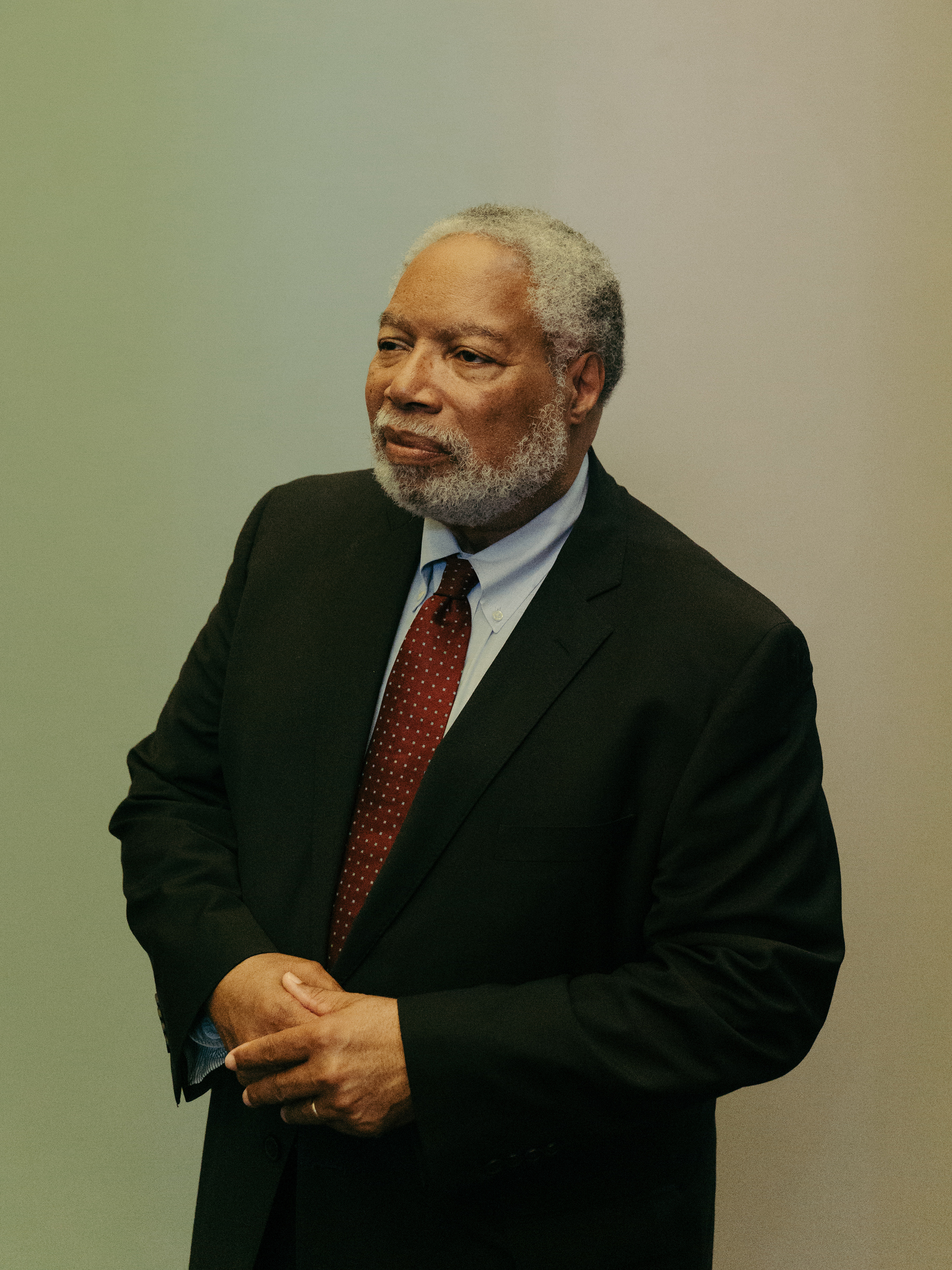
    After a seven-year run marked most recently by attacks from the Trump administration, Lonnie Bunch III announced Tuesday that he was stepping down as secretary of the Smithsonian.

    The White House has escalated its criticism of how the Smithsonian presents American history and values, prompting concern from some about what they see as an assault on the institution’s autonomy and commendation from others for reining in an organization they view as overtaken by liberal bias.

    In an interview, Bunch, 73, said it was not the pressure that had led to his departure.

    “It was really just saying, now’s the time,” he said.

    “I’m a fighter,” he added.

    At the same time, he acknowledged the strain of the role.

    “I have to be honest, it has been stressful,” he said. “And at a certain point, I’d like to wake up in the morning and not look at my cell phone.”

    In a statement, Chief Justice John Roberts, who serves as the Smithsonian’s chancellor, said that Bunch had “pursued excellence in the telling of our nation’s story” and that the Smithsonian had “benefited greatly from his wisdom, vision and leadership.” The Smithsonian said Bunch was expected to depart at the end of the year.

    For more than a year, Bunch has tried to balance diplomacy and openness to criticism with a determination to resist a White House push to present what President Donald Trump calls “patriotic” history. Some admire how Bunch has managed to quietly hold the line against the White House. Others believe the Smithsonian has shown too much deference to Trump and even engaged in self-censorship.

    Last year, painter Amy Sherald withdrew her blockbuster show at the National Portrait Gallery over a disagreement about how the museum would display her portrait of a transgender Statue of Liberty.

    But Bunch said he had no regrets. “My goal has been to win, not to make me feel good,” he said. “To win — to protect the Smithsonian — there were times I would fight, make clear what the red lines were. And there were other times I let things go.”

    Bunch, a widely respected historian who previously oversaw the creation of the National Museum of African American History and Culture, said his next chapter would most likely include teaching or a fellowship.

    Created by Congress as a trust in 1846, the Smithsonian has long been viewed as independent of the executive branch. Its governing Board of Regents must now appoint a new leader in the face of withering attacks from the administration.

    The 17-person panel, led by Roberts, includes six members of Congress, split along party lines; nine private citizens; and Vice President JD Vance. The terms of three citizen members have recently expired, and the names of replacement nominees have not made it to Congress, an unusual holding pattern that appears to be evidence of the shadow war over control of the Smithsonian.

    In the short term, Bunch seemed to have sufficient board support to stay on. But he has indicated that he is weary of the fray and ready for some form of retirement.

    “When you’re Black in America, you’ve got to figure out how to get through, right?” he told the New York Times in May. “You’ve got to figure out how to build allies, when to stand firm, when to bang the table. So in some ways, all of that prepared me for this moment.”

    “But do I wish I was in it?” he continued, referring to scrutiny by the Trump administration. “Of course not. Good Lord, I wish that I was doing my goodbye tour.”

    Over nearly 40 years in various roles at the Smithsonian, Bunch developed a reputation as a soft-spoken diplomat adept at raising money and dealing with public officials. As the institution’s first Black secretary, he has at times been a forceful voice on issues of race, particularly after the 2017 white nationalist rally in Charlottesville, Va., and in the wake of George Floyd’s murder in Minneapolis in 2020.

    Trump did not pay much attention to Washington’s cultural organizations in his first term but has made them a focus of his second, including through his efforts to govern, close, and renovate the John F. Kennedy Center for the Performing Arts. The Smithsonian has been forced to respond to White House demands or risk potential cuts to its $1 billion budget, which is largely funded by the federal government.

    Last month, in a letter to the board, Doug Burgum, the interior secretary, and Vince Haley, a senior White House adviser, made the stakes clear.

    “The Smithsonian enjoys support from executive departments and agencies,” the letter said. “Those executive departments and agencies cannot in good conscience continue to support the Smithsonian under current leadership.”

    The president’s attempt to overhaul the Smithsonian began last year with an executive order that accused the institution of promoting “narratives that portray American and Western values as inherently harmful and oppressive” and called for an end to spending on exhibitions or programs that “degrade shared American values, divide Americans based on race or promote programs or ideologies inconsistent with federal law.”

    After the White House demanded that the Smithsonian turn over information about the content of its exhibitions, Bunch reasserted the institution’s independence while saying that materials had been submitted in an effort to be “transparent.”

    The board adopted a resolution that called for its 21 museums to review their content for partisanship or bias. But the administration began its own review of exhibitions, wall text, and social media to assess “tone, historical framing and alignment with American ideals.”

    Trump has been unrelenting in his criticism, posting on social media that “the Smithsonian is OUT OF CONTROL, where everything discussed is how horrible our Country is, how bad Slavery was, and how unaccomplished the downtrodden have been — Nothing about Success, nothing about Brightness, nothing about the Future. We are not going to allow this to happen.”

    The president also announced online that he was dismissing the director of the National Portrait Gallery, Kim Sajet, calling her “a highly partisan person, and a strong supporter of DEI.” (The Smithsonian insisted it controlled personnel matters, but Sajet resigned, citing the institution’s best interests.)

    The White House pressure reached a new pitch this year with a July 4 report about the National Museum of American History that accused its director of “radical activist ideology” and the museum of undermining “faith in American institutions.”

    Many historians expressed serious concern about the report, but some conservatives applauded it, joining Trump in arguing that exhibits had become overly focused on race, identity, and injustice.

    “Hardworking Americans don’t want their taxpayer dollars dedicated to Marxist indoctrination,” Sen. Mike Lee (R., Utah) wrote on social media.

    After the report, Anthea Hartig, the museum’s director, came under fire at two congressional hearings. Then Trump ordered warning signs and exhibits installed to convey his view that the museum did not accurately reflect American history. The signs have yet to materialize.

    Bunch said it had been difficult to have his colleagues attacked by the administration. “I have always tried to protect people,” he said. “So I’ve always said, ‘Let the most of the weight fall on me. They don’t deserve it.’ We’re in a time when people are being hurt.”

    His priority has been “How do I always make sure that we put the Smithsonian in the strongest position?” Bunch said. “That we articulate what we believe in, the importance of nonpartisanship and scholarship?”

    When Bunch became the leader of the African American museum in 2005, that institution remained a distant dream.

    He worked with Congress to fund it and attracted big-name donors including Oprah Winfrey. He appointed Republicans such as Laura Bush and Colin Powell to the board and won support by arguing that the museum should recognize the horrors of slavery and the struggle for civil rights while celebrating historical Black achievements. Bunch said the museum needed to tell “the quintessential American story” of progress.

    It opened to great fanfare in 2016 and was the Smithsonian’s fourth-most-popular destination last year, with 1.6 million visitors. Bunch ascended to the Smithsonian’s top job in 2019.

    In the spring, Bunch said he was proud of what the Smithsonian had achieved under his leadership despite the barrage of Trump attacks. “Nothing can take that away,” he said. “So I’m trying to make sure I don’t let this moment steal my joy.”

    This week, he spoke of how important it was for the Smithsonian to continue to explore the country’s past in all its complexity. “Americans are an amazingly brave people, who have accomplished so much,” he said. “They’ve got to be brave enough to face their own history.”

    “To me, that is essential,” he continued. “And I will stand against wind and tide to prevent history from being erased, softened, and made palatable. That’s wrong.”

    This article originally appeared in the New York Times.

  • More than 200 Jefferson Health nurses to vote on unionizing

    More than 200 Jefferson Health nurses to vote on unionizing

    Nurses at three Jefferson Health facilities want to unionize under the Pennsylvania Association of Staff Nurses and Allied Professionals, saying their effort addresses safety and quality-of-care concerns.

    Nurses at Jefferson Bucks Hospital filed paperwork with the National Labor Relations Board for an election to form a new union chapter at the hospital that, if approved, would represent 170 staff members.

    In a separate filing, nurses at Jefferson Health — Center One, a primary care and outpatient facility in Northeast Philadelphia, and Willowcrest, a skilled nursing center at Jefferson Einstein Philadelphia Hospital, are seeking membership in the existing nurses’ union at Jefferson Einstein Philadelphia. If approved, the move would add 43 nurses from Center One and Willowcrest to Einstein Nurses United.

    The organization efforts would bring more than 200 Jefferson Health nurses into union chapters affiliated with PASNAP.

    At a news conference outside Jefferson Bucks Hospital in Langhorne Tuesday, nurses said they wanted to organize because hospital administrators have not heeded their concerns that understaffing, heavy workloads, and insufficient resources could harm patients and lead to staff burnout.

    “Jefferson Bucks nurses are being asked every day to do more with less and less, and it’s getting harder and harder to feel like our concerns are actually being heard,” Ashley Bupp, an emergency room nurse at Jefferson Bucks Hospital, said in a statement.

    Jefferson Health accused PASNAP, which represents some 11,000 nurses and other healthcare professionals across Pennsylvania, of “promoting a narrative that serves its organizing efforts and ultimately, its own bottom line.”

    “PASNAP has once again relied on a predictable campaign of misleading claims and public attacks designed to generate headlines rather than constructive solutions,” the nonprofit health system said in a statement. “Jefferson remains focused on supporting our nurses, caring for our patients, and meeting the healthcare needs of the communities we serve.”

    Kiersten McCalmant, a nurse at Jefferson Bucks Hospital, said she and her colleagues were inspired to organize by the nurses at Jefferson Einstein Philadelphia Hospital.

    Einstein Nurses United, which represents nearly 1,200 nurses, signed a new contract earlier this year that gave nurses raises, strengthened staffing, and included protections against forced shift rotations.

    “We saw what a great contract they had already, and the fact that they were able to stand together and win improvements, and protect what they already had,” McCalmant said in a statement. “We thought, if nurses at Einstein can bargain with Jefferson and be successful, why can’t we?”

  • Lindsay Clancy’s attorney makes public plea for Trump pardon

    Lindsay Clancy’s attorney makes public plea for Trump pardon

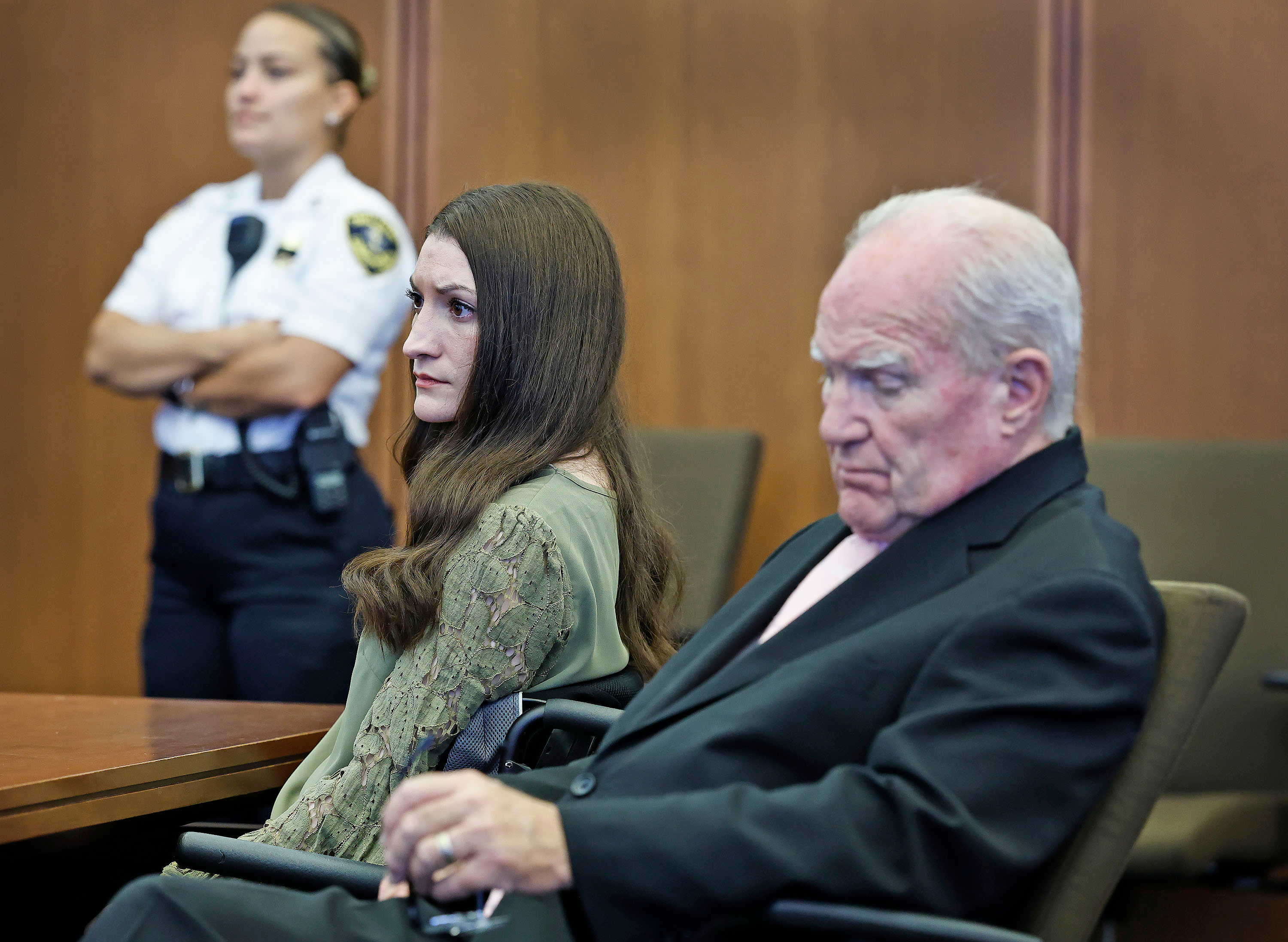
    An attorney for Lindsay Clancy, the 36-year-old Massachusetts mother who admitted to killing her three children, said he hopes President Donald Trump would consider a pardon for his client after the high-profile murder case ended in a mistrial last week.

    “Mr. President, I would hope that you would consider this young lady, the type of person she is, what she’s been through, and consider a pardon,” Kevin Reddington said Tuesday on Good Morning America.

    The president cannot pardon state-level crimes, and Clancy’s case is being tried in state, not federal, court.

    Governors can grant clemency for state crimes; under pressure from Trump, Colorado Gov. Jared Polis (D) in May reduced the state prison sentence of former county clerk and election conspiracy theorist Tina Peters, who was convicted for a scheme to copy her county’s election computer system.

    Asked about the trial and pardon request, the White House referred the Washington Post to Trump’s comments on Friday in which he described the case as a “horrible tragedy.”

    “It’s a terrible situation. Look, she did a horrible, horrible, thing. Can’t be worse,” he said. “But you’ll find out what the price to pay is. There’ll be a price. It’s going to be mental institution or jail or something.”

    Reddington also said he hoped he would “be able to work something out that would be acceptable to both sides,” after a mistrial was declared on Friday. Prosecutors have not said whether they will seek another trial.

    Clancy’s case captured the public’s attention and became a cultural touch point, putting postpartum mental health issues in the spotlight. She had said she killed her three children by strangling them at home in 2023, and the jury was asked to decide whether she should be held legally responsible for her actions. Reddington had argued that she was suffering from postpartum psychosis at the time, which prosecutors disputed.

    The jury was dismissed after failing to reach a unanimous decision after deliberations hit nearly 40 hours following a trial that stretched more than six weeks.

  • Travel chaos at U.K. airports as over 600 flights canceled due to air traffic control issue

    Travel chaos at U.K. airports as over 600 flights canceled due to air traffic control issue

    LONDON — More than 600 flights were canceled on Tuesday due to a technical issue in Britain’s air traffic control system that caused disruptions at major airports across the U.K., the flight monitoring website Flightradar24 reported.

    Britain’s National Air Traffic Services said a problem had been identified in its flight processing system and engineers were urgently working on the issue, which affected flights across the U.K.

    In an update, it said it had “implemented a fix and our flight system is starting to recover.”

    At least 625 flights to and from U.K. airports, including London Heathrow, were canceled, affecting services operated by multiple airlines, including British Airways, EasyJet, KLM, and Lufthansa, according to Flightradar24.

    Some passengers took to social media to complain about being stuck on the tarmac for hours, before their flights were eventually canceled. Many expressed frustration about a lack of communication from airlines.

    The affected airports included Stansted and City in London, as well as those in Manchester, Birmingham, Gatwick, and Scotland. They warned passengers to check the status of their flight with their airline.

    Budget airline EasyJet said some of its flights were “unable to operate” and that the system failure caused “delays to flights across Europe.”

    Heathrow’s website showed that many short-haul flights departing for European destinations had been canceled or delayed.

    It was not immediately clear what caused the technical problem.