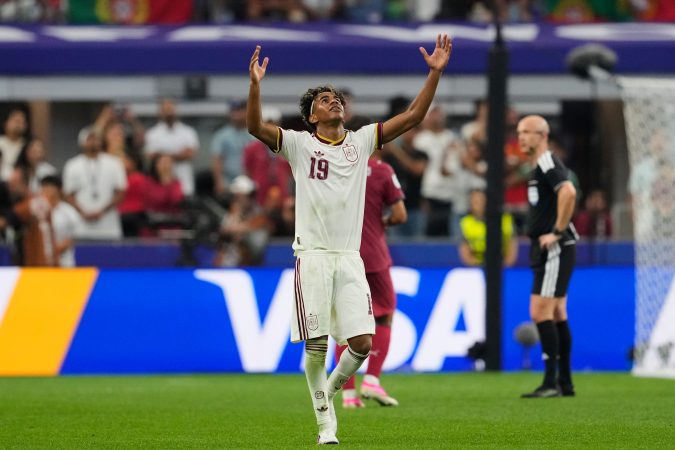
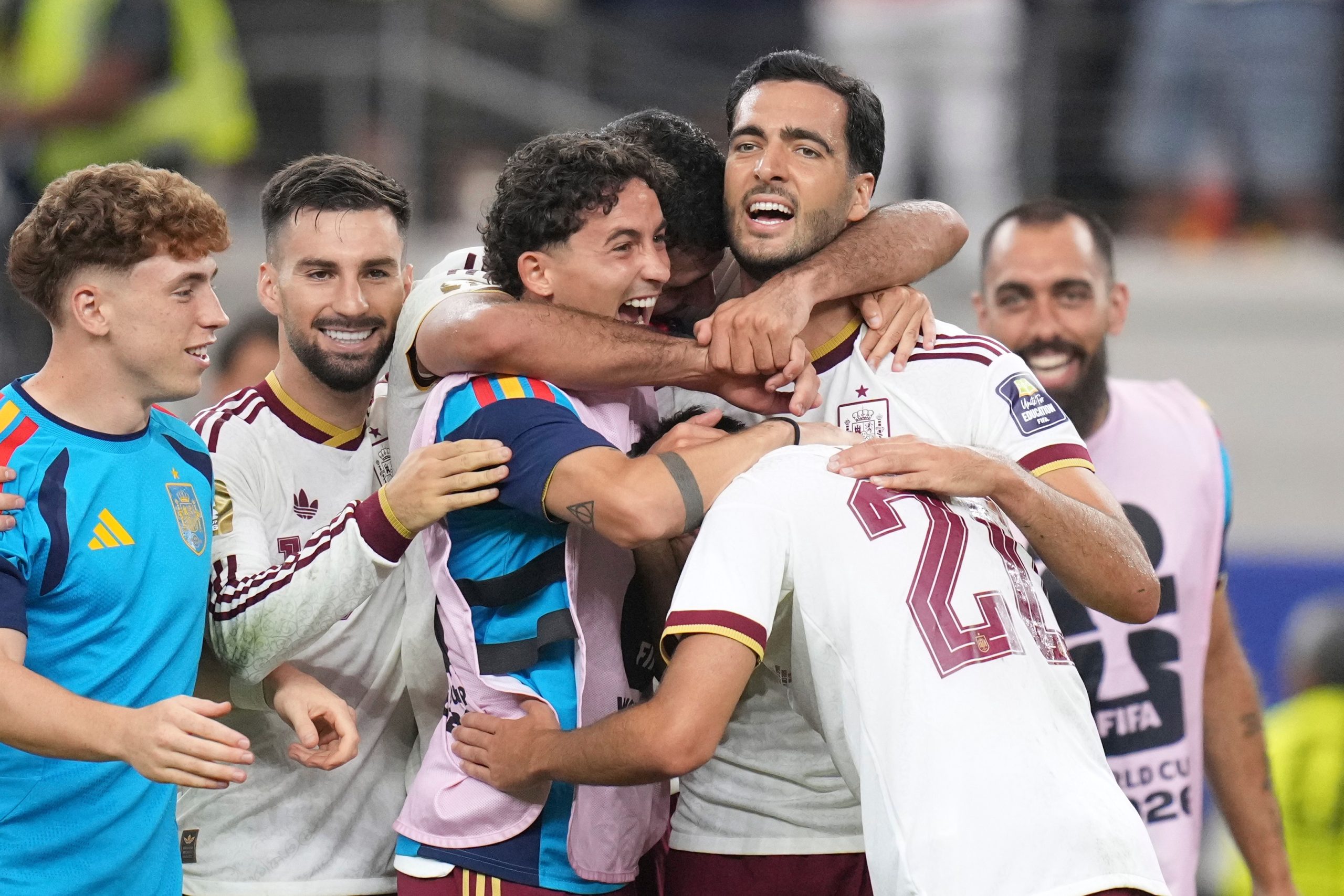
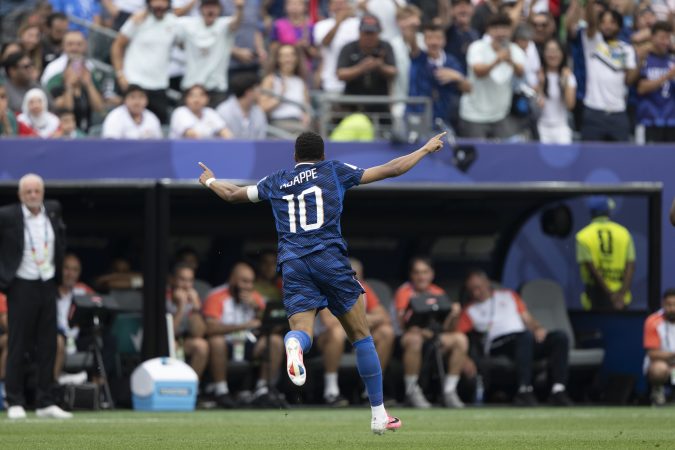
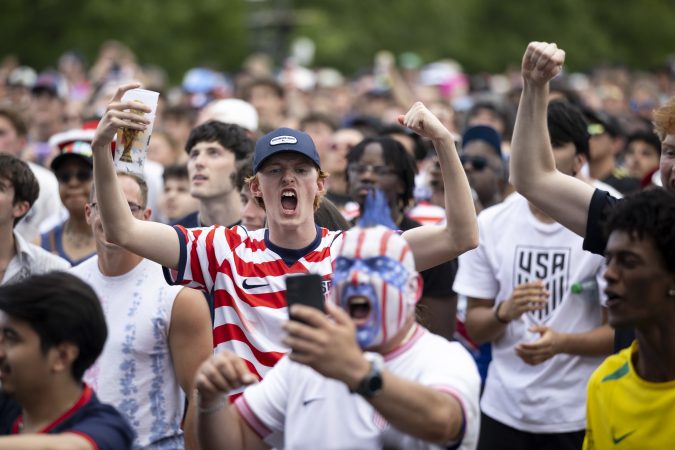
The final game of what has been a World Cup to remember — particularly on the pitch — pits Spain against Argentina for arguably the greatest prize in all of sports.
But it will once again create a new chapter in the longstanding argument that South American soccer is on par, if not better than, European. Europe is widely regarded as the continent that is the class of the sport, despite Argentina’s dominance on the world stage, with many of its players being stars on the world’s best clubs.
When the two converge on the Meadowlands for Sunday’s finale (3 p.m., Fox29), it will mark the first time a European champion has played a South American champion in a World Cup final. Spain, winner of the 2024 European championships, hasn’t lost a match in any competition since June 2025, and features one of the world’s best players in 19-year-old sensation Lamine Yamal.
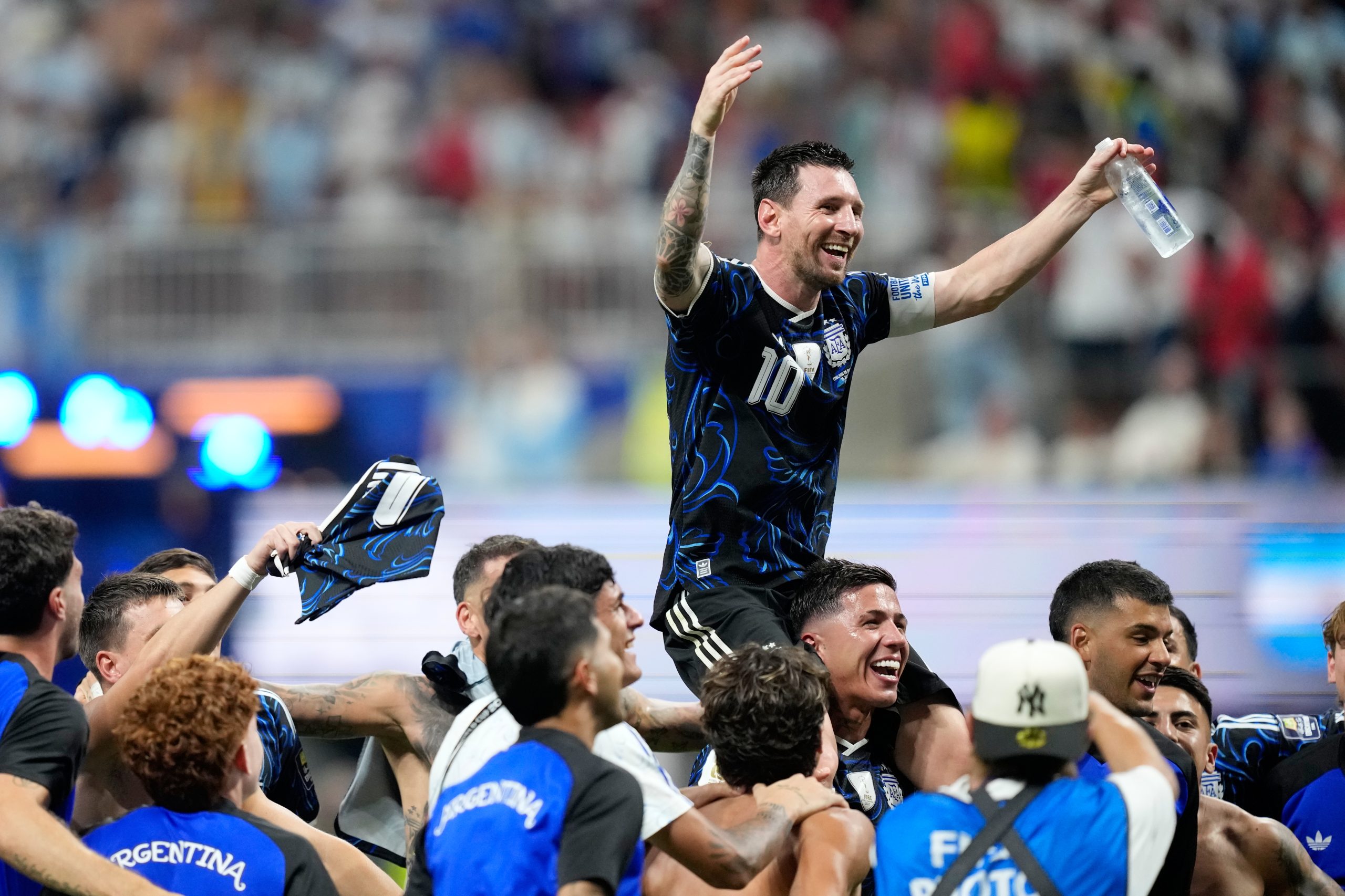
Lionel Messi (top, center) celebrates with his Argentine teammates at the end of the World Cup semifinal against England on Wednesday.Rebecca Blackwell
On the other side, you have an improbable run to the final led by 39-year-old Lionel Messi, the catalyst in three consecutive late winners to thrust Argentina, the reigning world champions, back into soccer’s biggest spotlight.
Oddsmakers have given the slight edge to Spain, which has been near-flawless down the stretch, highlighted by the absolute clinic they conveyed in their 2-0 win over France in Wednesday’s semifinal. But Argentina has shown fight to lift themselves to late victories against Cape Verde, Egypt, and England, the latter a pair of matches in which they trailed until the game’s final moments.
Analyzing both, The Inquirer’s team of soccer writers offer their predictions of which nation will be raising the FIFA World Cup Trophy after 90 minutes (or 120 minutes, plus penalties) ahead of Sunday’s final.
You can frame Argentina’s semifinal win over England in two ways. Either it was an all-time choke job by the Three Lions, or more proof of how Argentina’s mental force is like nothing else in the sport right now.
But there’s only one way to frame Spain’s win over France: total domination. While I don’t expect this game to go quite like that, I do expect La Roja to be ready for what Argentina will throw at them. And because of that, I expect the better team to prevail.
Prediction: Spain 2, Argentina 1
The Spanish national team hasn’t lost a match since June 2025, winning 17 matches in international competition since.Eric Gay
What a treat. The first 48-team World Cup may have lacked knockout-stage upsets, but it managed to produce the highest-quality semifinal round imaginable, which set up a meeting of two global giants in the final.
Spain has looked like a complete force of nature all tournament, aside from a draw in the group stage against Cape Verde. Its ability to move the ball and build through possession allowed it to smother France in the semifinal. If the Spanish can repeat that performance against Argentina, it may be too much for La Albiceleste to overcome.
But let’s not count out Messi’s magic quite yet. Argentina has rarely looked like a perfect side in this tournament, but in three of their four knockout stage games, the Argentines have managed to defy logic and reason to find a win when they need it most.
I think Spain is the better team, but who am I to pick against a team of destiny?
Prediction: Argentina 2, Spain 1 (after extra time)
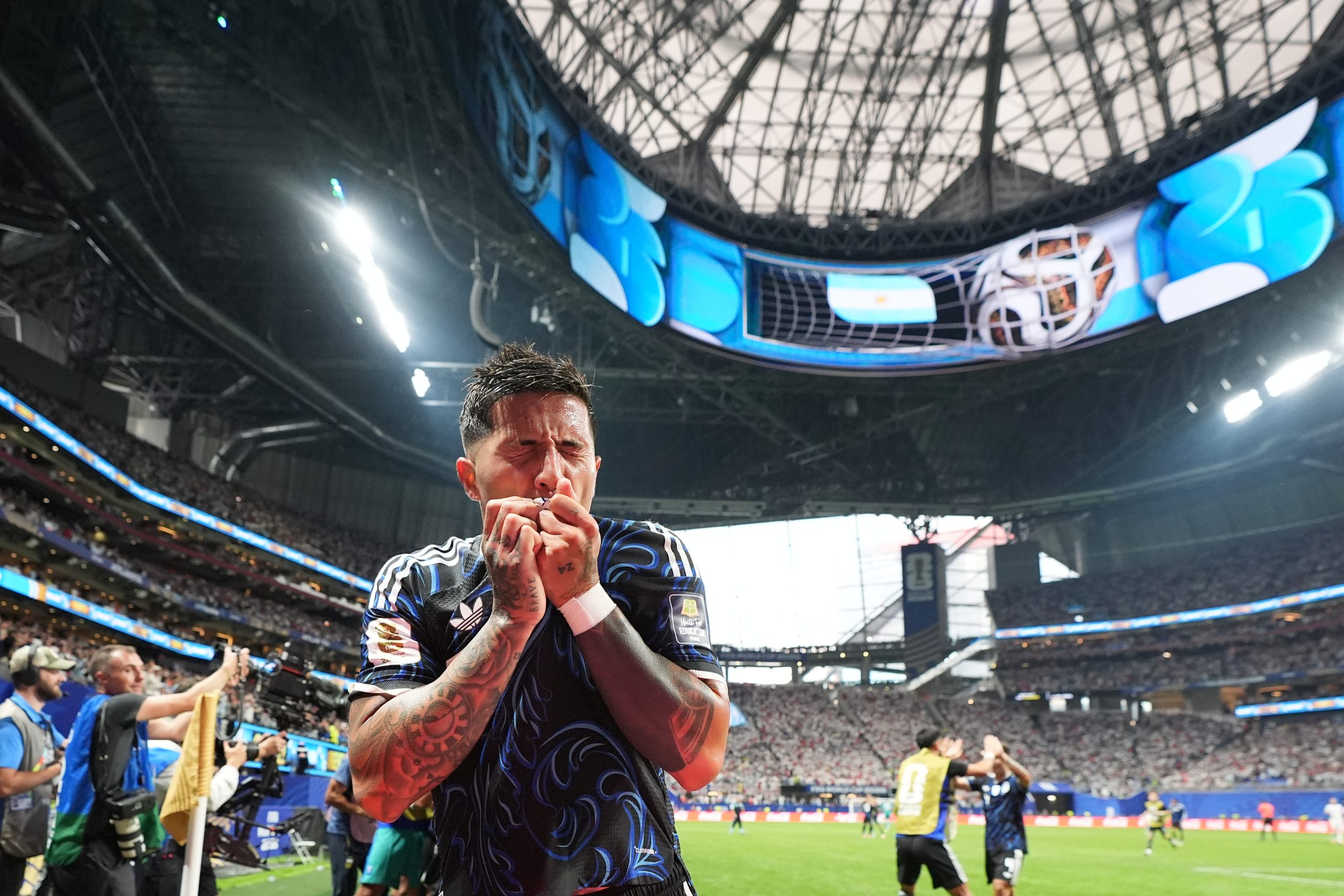
Argentina’s Enzo Fernandez celebrates after scoring his side’s first goal during the World Cup semifinal against England. Fernandez was also the hero in the team’s quarterfinal win against Egypt. Rebecca Blackwell
Any way you choose to pore over this matchup, one thing continues to come back to the forefront: You can’t count out Argentina. One of the things Spain does exceptionally well is keep its shape defensively, forcing attacking teams to thread the needle in La Roja’s final third every time.
Even the best players in the world can’t sustain that type of perfection in their offensive play consistently to give Spain fits. That’s why it was so shocking that of all the teams that were able to crack the code, it was tiny Cape Verde in its first World Cup ever, as it kept Spain’s backline on its toes in addition to exhibiting one of the greatest defensive displays we’ve seen in the World Cup.
Coincidentally, Argentina just so happens to have the best player in the world at age 39 in Messi, who is surrounded by a supporting cast that has been equally solid. Argentina comes in waves, and it comes down to whether Spain can weather that storm defensively. We know Spain can since it did so against a high-powered French side that bullied its way to the semifinals.
The real question is: Can Argentina do it again?
Prediction: Spain 2, Argentina 2 (Spain wins in penalties, 5-3).
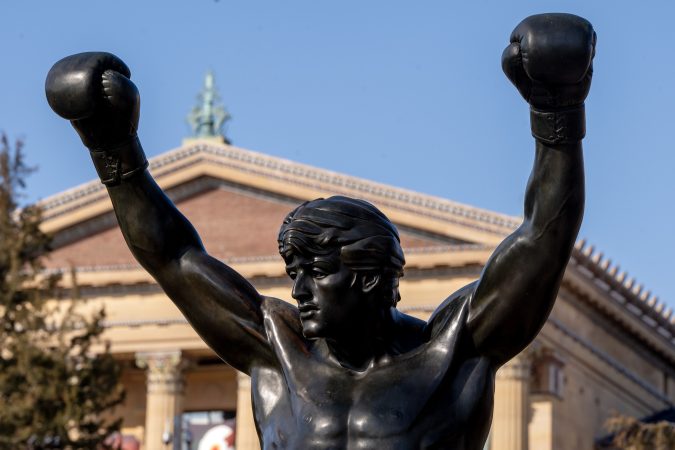
The trailer gives us the full Rocky nostalgia package: the meat locker, the Art Museum steps, the original score, and Stallone refusing to let anyone else play the boxer he created. It could all be unbearably corny (it probably is).
And yet, when that music kicks in, you kind of want to run up some steps.
Philadelphia already has three Rocky statues and has spent 50 years treating a fictional boxer like a founding father. Somehow, this movie may make us love him even more.
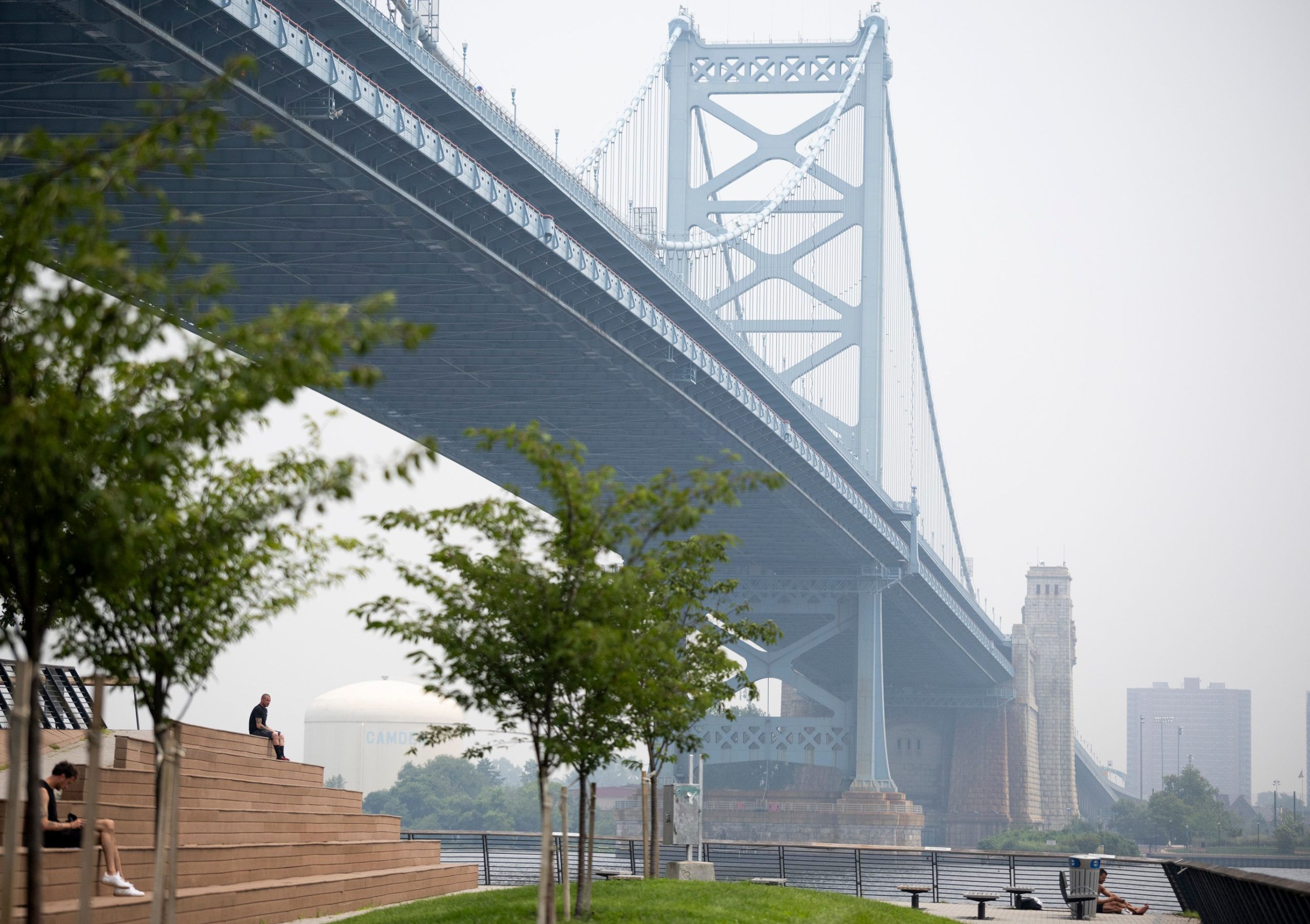
John Burns Jr., of Grays Ferry, sits at the Cherry Street Pier amid wildfire smoke from Canada on Thursday.Tyger Williams / Staff Photographer
Going outside: F
First, the heat index soared into the triple digits. Then Canadian wildfire smoke rolled in.
This week, simply stepping outside came with a list of disclaimers. Don’t exercise, limit your time outdoors, keep kids inside. People with asthma, heart disease, and other health conditions were urged to avoid going out altogether. The Phillies even moved up a game because the air quality wasn’t safe enough.
Summer in Philadelphia is supposed to mean block parties, concerts, long walks, baseball games, and dinners outside. Instead, this week felt like the weather was actively negotiating against every plan you tried to make.
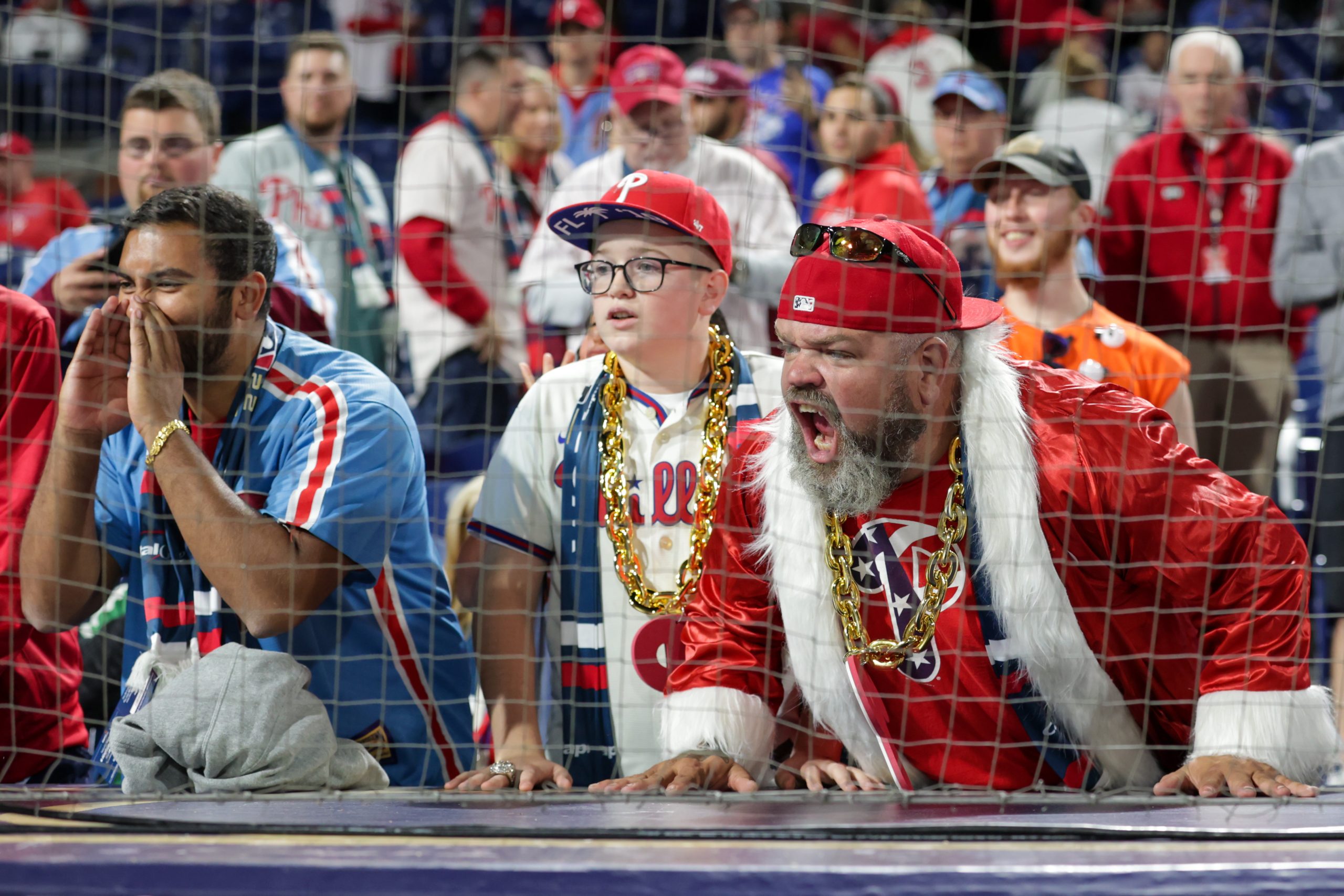
Philadelphia Phillies fans boo the Houston Astros after batting practice ahead of baseball’s World Series Game 5 at Citizens Bank Park on Thursday, Nov. 3, 2022, in Philadelphia.Charles Fox / Staff Photographer
In Philadelphia, booing isn’t always about hate. Sometimes it’s acknowledgment or respect, but mainly it’s just our way of making sure everyone knows they’re in our house. The louder the boos, the bigger the moment.
People acted like Phillies fans had violated some sacred baseball etiquette, when in reality they were giving the rest of the country exactly what it came to see.
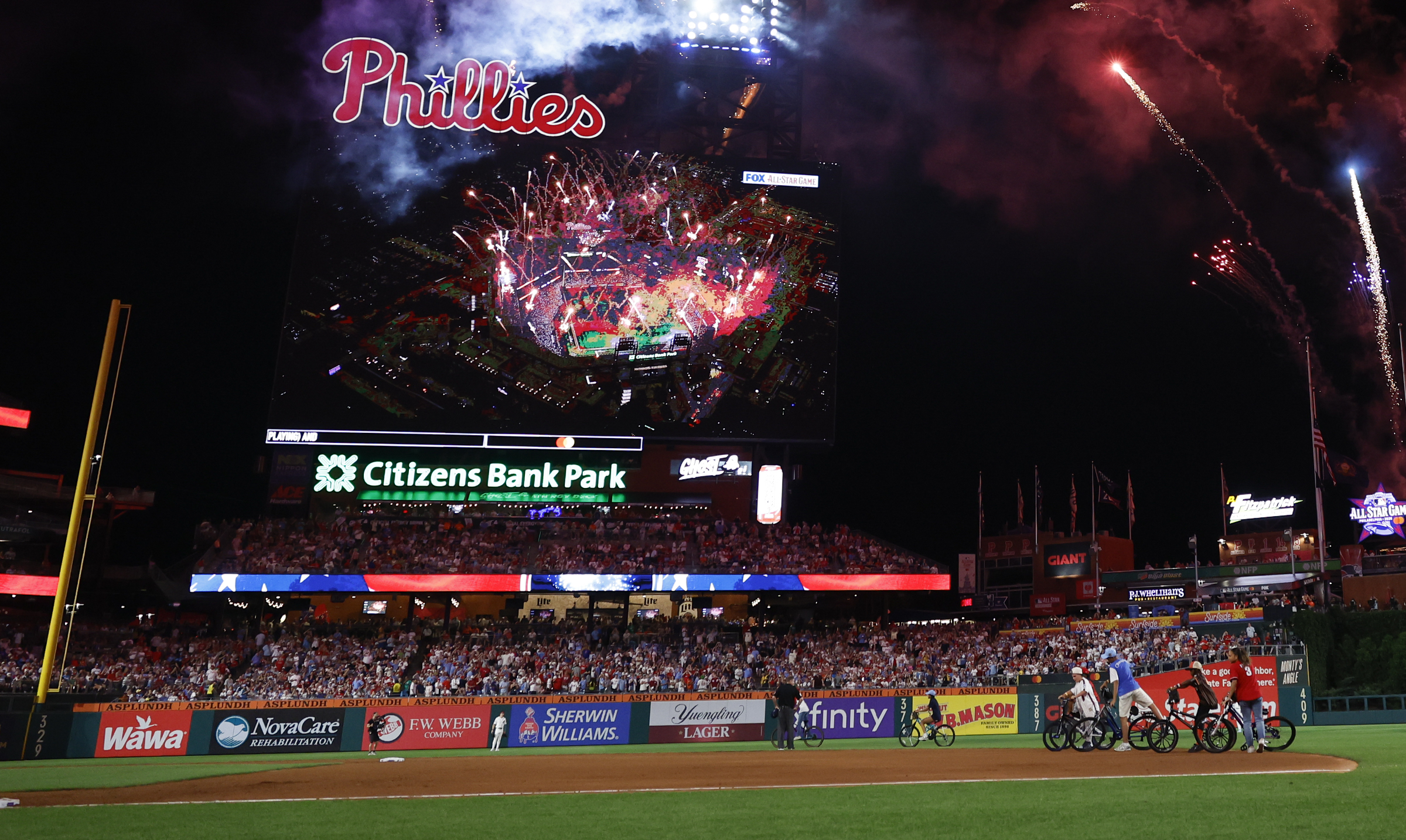
Kids on bikes ride on Citizens Bank Park with fireworks during the MLB All-Star Game on Tuesday, July 14, 2026 in Philadelphia.Yong Kim / Staff Photographer
Citizens Bank Park spent two nights showing off on baseball’s biggest stage, and by the end of the All-Star Game, players from around the league were saying what Phillies fans have believed all along. Freddie Freeman called it his favorite place to play. Others raved about the atmosphere, the crowd, and the city itself.
For years, The Bank has lived in the shadow of baseball’s older cathedrals — Fenway, Wrigley, Dodger Stadium. It doesn’t have ivy-covered walls or a century of history. What it does have is 43,000 people who treat a Tuesday in May like Game 7 of the World Series and somehow crank it up another level when the spotlight gets brighter.
So the All-Star Game wasn’t just a showcase of baseball’s best players, but also a showcase of one of baseball’s best ballparks.
Professional food critic meets professional critics: A
Millions of people know him as @ChefReactions, the social media creator who makes a living critiquing food videos. Philadelphia, meanwhile, has thousands of self-appointed cheesesteak critics who do it for free. It was an inevitable friendship.
Around here, telling you exactly what we think isn’t considered rude. It’s our version of customer service.
A $5 ride to the Shore: A
We miss you, Megabus.
Pacifico’s new $5 Shore Shuttle, offering round-trip rides from Philadelphia to the Jersey Shore on weekends, feels like it belongs in 2014, not 2026. Sure, this one comes with a beer sponsor, a swag bag, and a very specific schedule, according to Philly Voice. And yes, anyone who’s ever ridden a too-good-to-be-true bus deal has probably spent an unexpected hour in a Walmart parking lot wondering whether they’d ever make it home.
That’s part of the adventure.
If someone else wants to deal with the gas, tolls, Parkway traffic, and parking while you spend less than the price of a Wawa hoagie, that’s a pretty good deal — especially in this economy.
NEW YORK — When Spain played France in the World Cup semifinals on Tuesday, there were 32 players on the field and 20 more across the respective benches.
At the final whistle, the reigning European champions had reminded the world that soccer is a team game. Spain didn’t just win 2-0; it delivered the most comprehensive performance of the tournament against the most prolific attacking team in the tournament field.
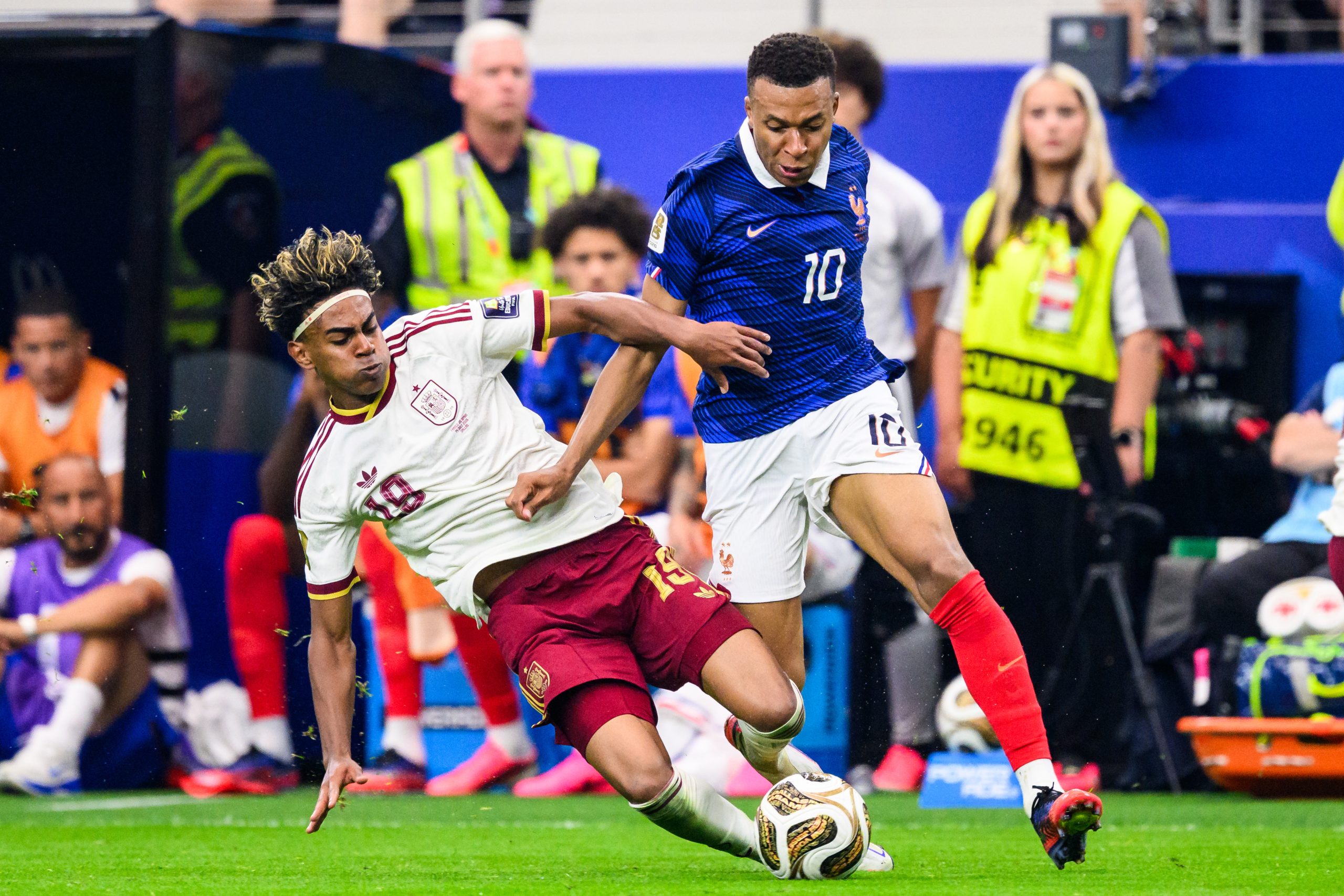
But before the game, the hype was about individuals, and for good reason: It was the first World Cup meeting of France’s Kylian Mbappé and Spain’s Lamine Yamal. For as many stars play in World Cups, there hadn’t been a semifinal matchup with that much individual sizzle in decades.
The framing was justified. And in a country that loves star power, it was a sign of how far this World Cup has broken through in America.
Lamine Yamal (left) battles France’s Kylian Mbappé in the FIFA World Cup semifinal match between the two teams on Wednesday.Tom Weller
Before Lionel Messi and Cristiano Ronaldo became the sport’s standard-bearers, the only men’s soccer players who’d really made it here were Pelé in the 1970s and David Beckham in the 2000s — the latter more for reasons off the field than on it.
Now Messi and Ronaldo aren’t the only household names. At least five more from beyond American shores have reached that level of notoriety before any American player: France’s Mbappé, Spain’s Yamal, England’s Harry Kane and Jude Bellingham, and Norway’s Erling Haaland.
As Messi gets set to face Yamal for the title on Sunday in the Meadowlands (3 p.m., Fox29, Telemundo 62), it’s worth taking a moment to step back and realize how that’s another sign of soccer’s growth here.
Falling for France
Mbappé was the closest to being a household name in the U.S. of the quintet. Thanks to his back-to-back World Cup final runs with France (including the 2018 title) and a big stage in the Champions League, both his national team and Paris Saint-Germain jerseys became big sellers in the U.S. At almost any youth soccer clinic you’d come across, even around Philadelphia, you’d almost certainly see a few kids with his shirt.
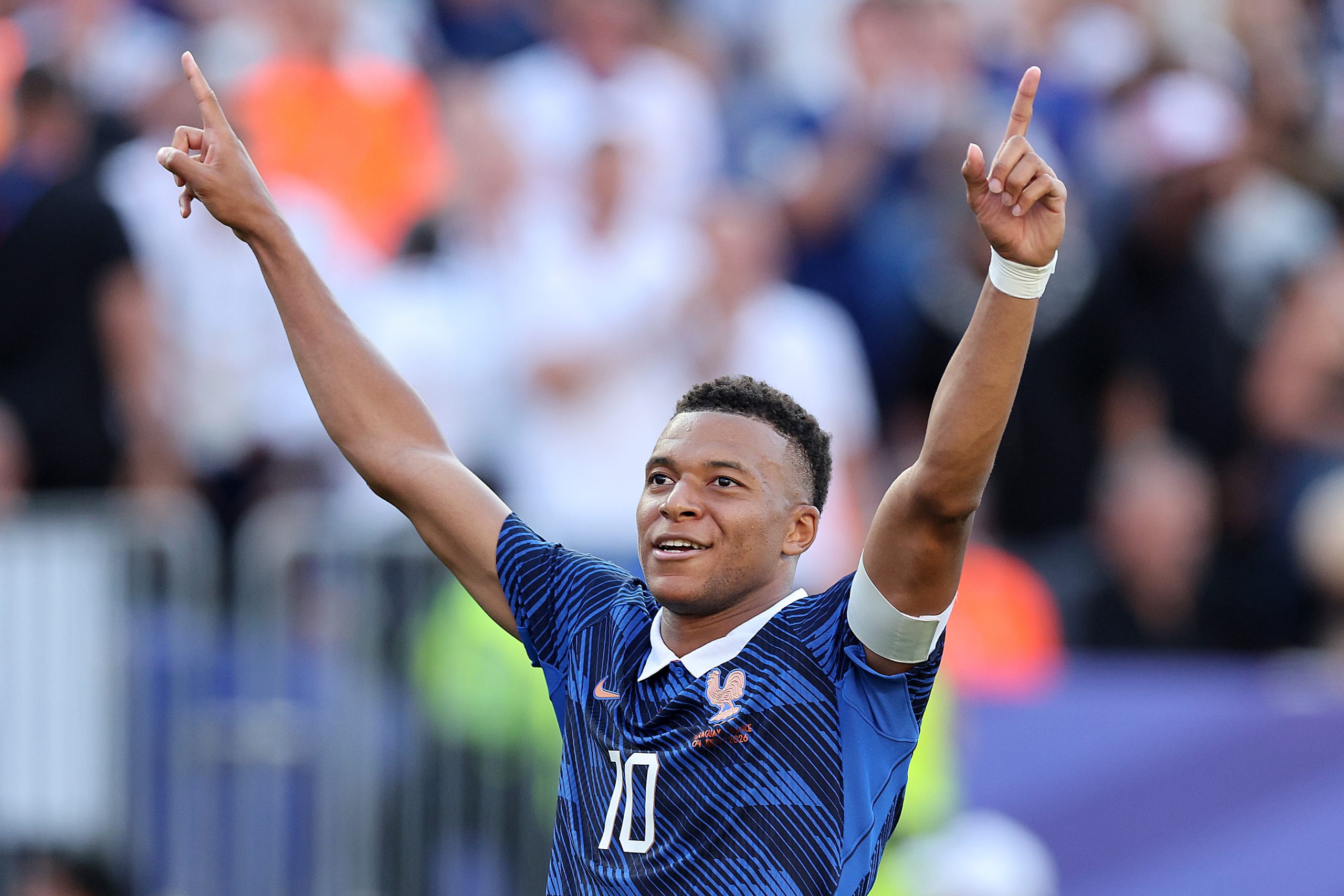
Kylian Mbappé celebrates scoring what proved to be France’s winning goal against Paraguay on July 4 in Philadelphia.David Maialetti / Staff Photographer
His status rose further when he moved to Spanish superpower Real Madrid in 2024. And when he arrived at the World Cup to captain the tournament’s most star-studded team, he was immediately a marquee attraction. Philadelphia saw that up close: He scored in both of France’s games here, including one of the tournament’s best goals against Iraq.
You could see that without even watching the France-Spain game itself. (And given how badly it went for him, Mbappé might prefer you didn’t.) All it took was being in the seating bowl when the video board showed him getting off France’s bus at the stadium. A massive roar went up from a crowd that had only just started to make its way in.
French journalists weren’t surprised, especially those who know American sports culture. A conversation on Radio France’s pregame show was an example: One of the analysts said Mbappé “isn’t just the symbol of the French team to America, he’s the symbol of all of France.”
Or take the scene a day earlier at France’s practice, in the lush surroundings of Southern Methodist University’s sports complex. Though the field was surrounded by covered fences, a cluster of kids still shouted Mbappé’s name in hope he’d stop by.
Alas, they couldn’t see how far away he was. But as he spoke about in Philadelphia before the France-Iraq game, he knows how big a deal he is here, and he likes it.
“The United States is a country that has a different culture from ours in Europe,” he said. “It’s true that I’ve always liked its culture, where ambition is limitless and where no one is afraid to say what they want to do and what they can do. It’s not like that everywhere, but it is here.”
So was his manager. Didier Deschamps saw often how popular Les Bleus are in the land of red, white, and blue.
“When we went out when we could, yes, I heard it, that we’re an enjoyable team,” he said that day in Dallas. “We’re enjoyable because we’ve won games, too. But even if the most important thing is results, with the attitudes, we’ve seen a lot of photos of the moments we’ve left camp, videos shared of the group interacting, and so on.”
And when French fans didn’t travel here in huge numbers, Americans packed the stands instead. Deschamps understood the bigger picture.
“It’s something that we appreciate, and all the better if it helps the development of soccer in the United States,” said Deschamps, one of only three men’s players to win the World Cup as a player (1998) and coach (2018). “We gain from the support of the public, which we obviously have in France, but to have it here in the United States too is something that we very much appreciate.”
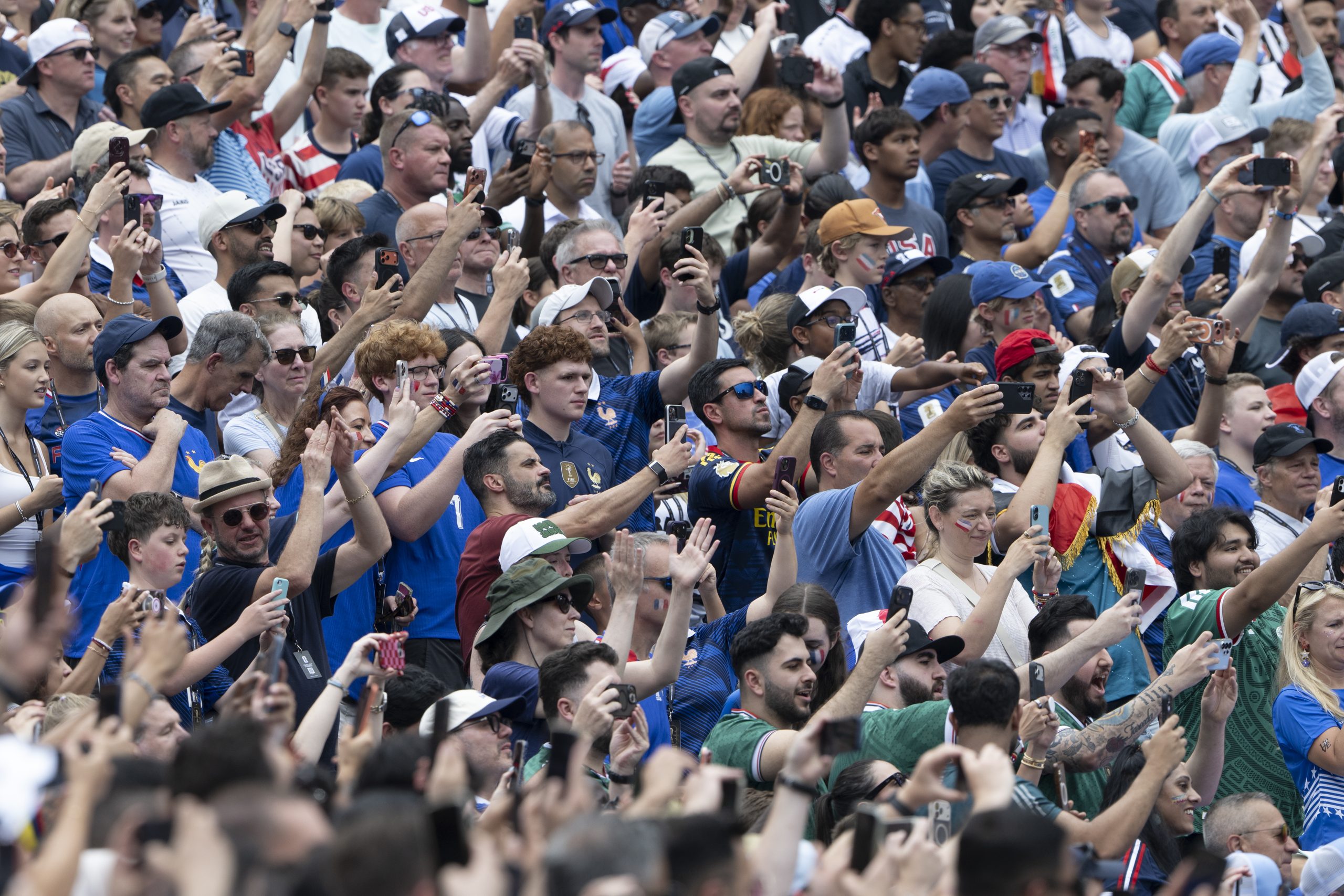
France fans, whether from there or from here, in the stands for Les Bleus’ group game against Iraq in Philadelphia.Jose F. Moreno / Staff Photographer
He even drew a smile from the American media when he said: “I know that there are five major sports here, and soccer today hasn’t quite made it — apart from women’s soccer.”
Deschamps meant it in terms of trophies won, referring to a U.S. women’s team that won its last World Cup in France in 2019. But just as he was in the stands when the Americans beat the hosts in an all-time game, he has had a front-row seat to soccer’s wins in this summer’s sports popularity contest.
All but one of France’s games so far have drawn TV audiences of over 10 million viewers combined between Fox and Telemundo, led by just under 23 million for each of the semifinal and the July 4 quarterfinal in Philadelphia. Fox’s audience alone for the semifinal was just over 13 million — far bigger than the 8.8 million who watched the same channel’s broadcast of baseball’s All-Star Game a few hours later.
‘Well-known in Chattanooga’
Yamal entered this summer as the sport’s top young phenom, already a three-time La Liga winner with Barcelona and a European champion with Spain in 2024. Soccer fans knew about him when the World Cup kicked off, especially younger ones who play the sport’s video games — a huge entry point for kids — and follow him on Instagram.
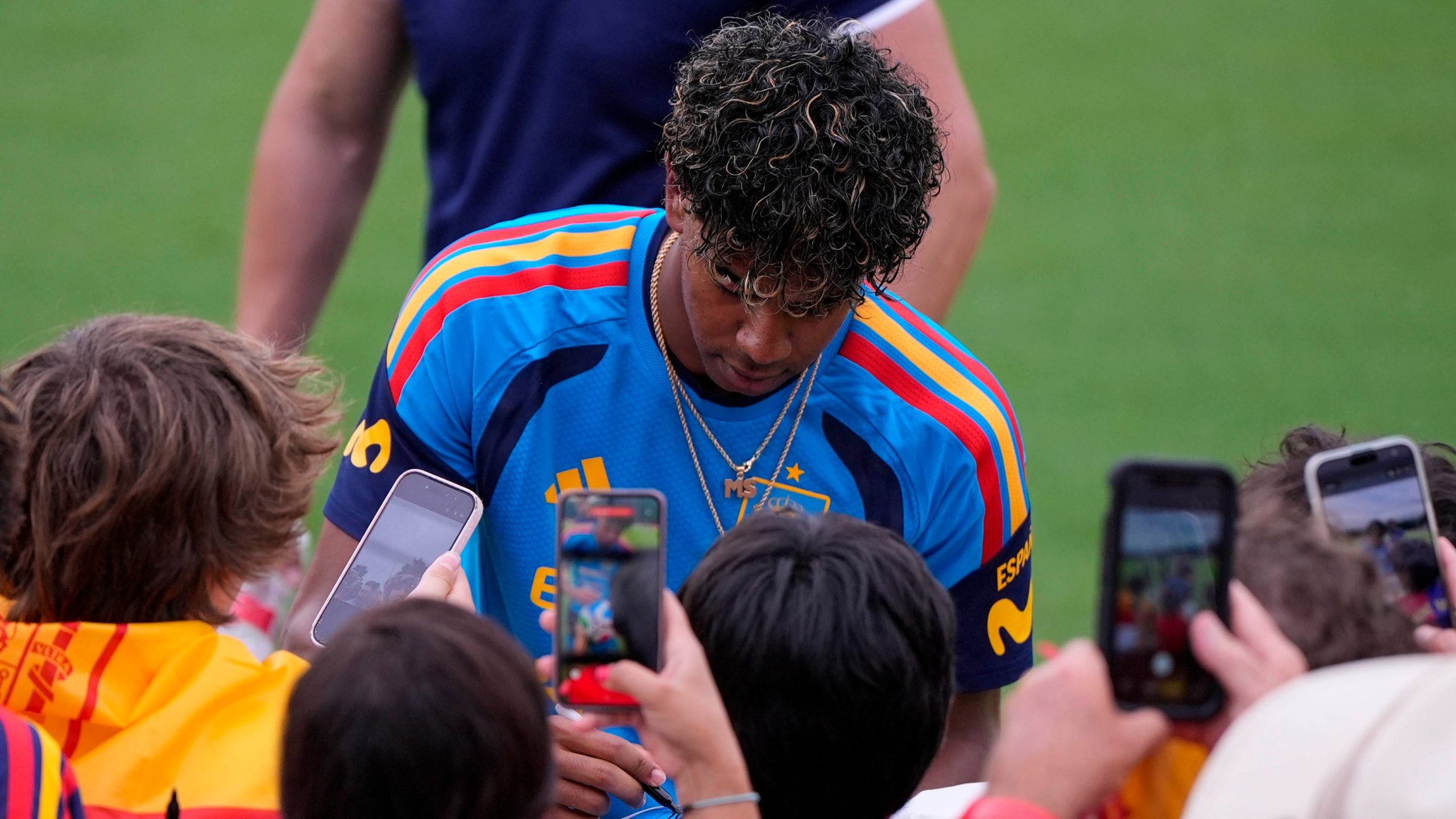
Lamine Yamal signing autographs for kids at Spain’s World Cup base camp in Chattanooga, Tenn.Mike Stewart
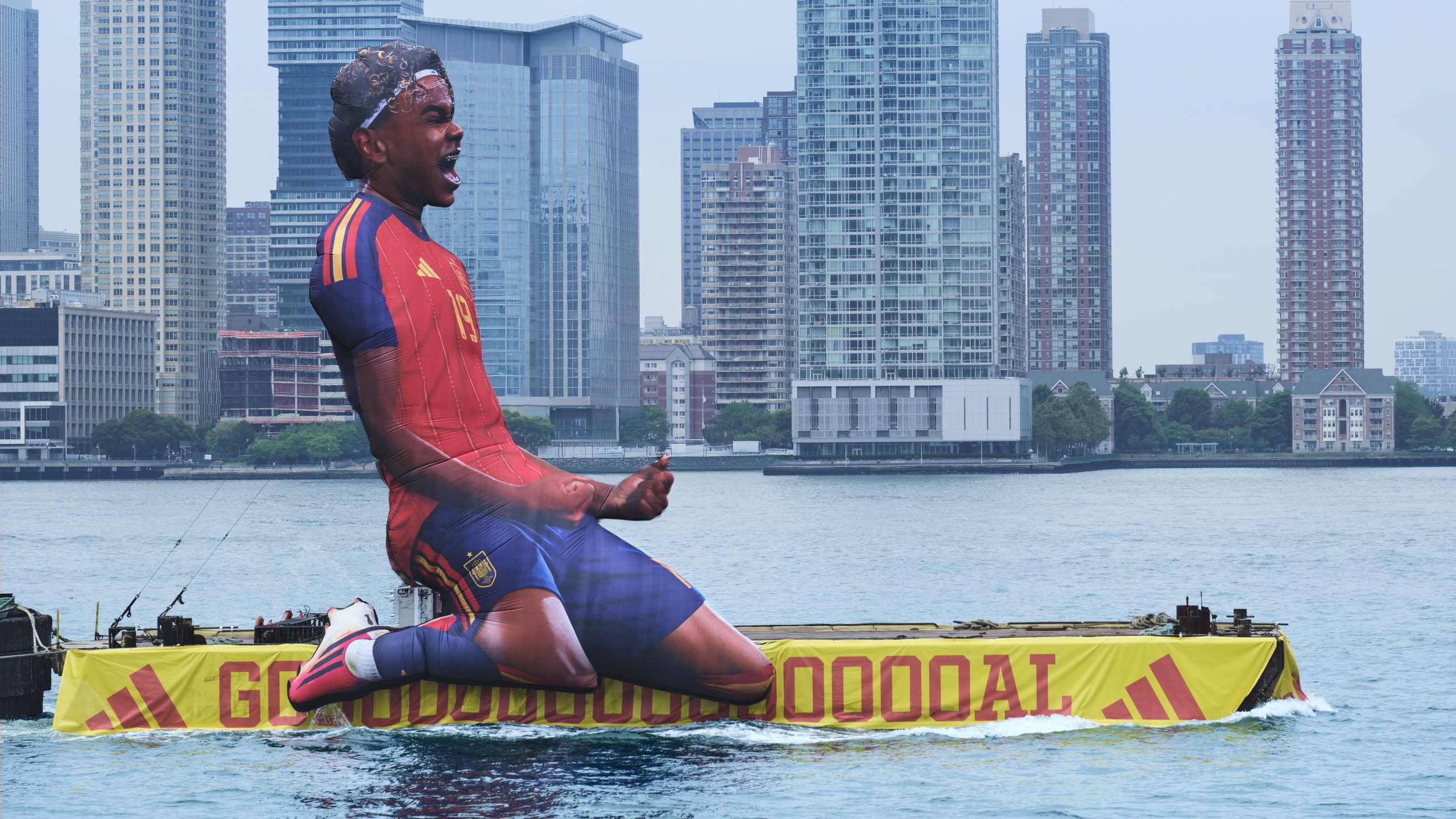
A big sponsorship deal with Adidas meant Yamal was all over the company’s pretournament marketing, just as much as Messi, a longtime client of the apparel giant. A few days after Yamal scored his first World Cup goal, on June 21 vs. Saudi Arabia, Adidas constructed a huge cutout of him celebrating, and sent it parading on a barge in New York’s East River.
And was it Yamal’s idea or someone else’s that he wore a Yankees cap as he left the stadium on Tuesday? Whoever it was, you can be sure he knew where he was headed: to the Big Apple for Sunday’s title clash in the Meadowlands.
But he isn’t just known in New York. Or in Atlanta, where Adidas put up big billboards as Spain played two of its group games there.
“Soccer has given me the opportunity to be well-known in Chattanooga, for example, which is something very beautiful,” Yamal said of the Tennessee city where La Roja had its base camp. “I never could have imagined that I’d go out for a walk in a town in the United States and be recognized. So I value it a lot. I know where I come from, and each day I’m proud of what I’ve achieved.”
A few days after Lamine Yamal scored his first World Cup goal, Adidas stuck a huge cutout of him celebrating on a barge in New York’s East River.adidas
Kane and Bellingham’s status here is helped by being English. The former gained from the Premier League’s huge commercial presence here, as a legend of Tottenham Hotspur before moving to Germany’s Bayern Munich in 2023. He’s also a big NFL fan, which opened more American doors for him as the league grew its presence in London.
Bellingham took a different path. He played just one professional season in his home country before moving abroad, and it was at second-tier Birmingham City. Then he spent three years at Germany’s Borussia Dortmund, and Real Madrid bought him from there in 2023 for over $110 million.
You don’t go to the world’s most famous club for that kind of money unless you’re already a star or soon to become one. But for a long time, you couldn’t get the full status in England unless you played in the Premier League. As a result, Bellingham has sometimes been seen as a kind of outsider in his home country.
Over here, he is simply a star. Though the Premier League is the most popular European circuit in the U.S., Real Madrid is the most popular club team — as Philadelphia saw firsthand last summer. When Real played here last summer in the Club World Cup, there were a lot of Bellingham’s jerseys in the sellout crowd. Now, this summer has made him even bigger.
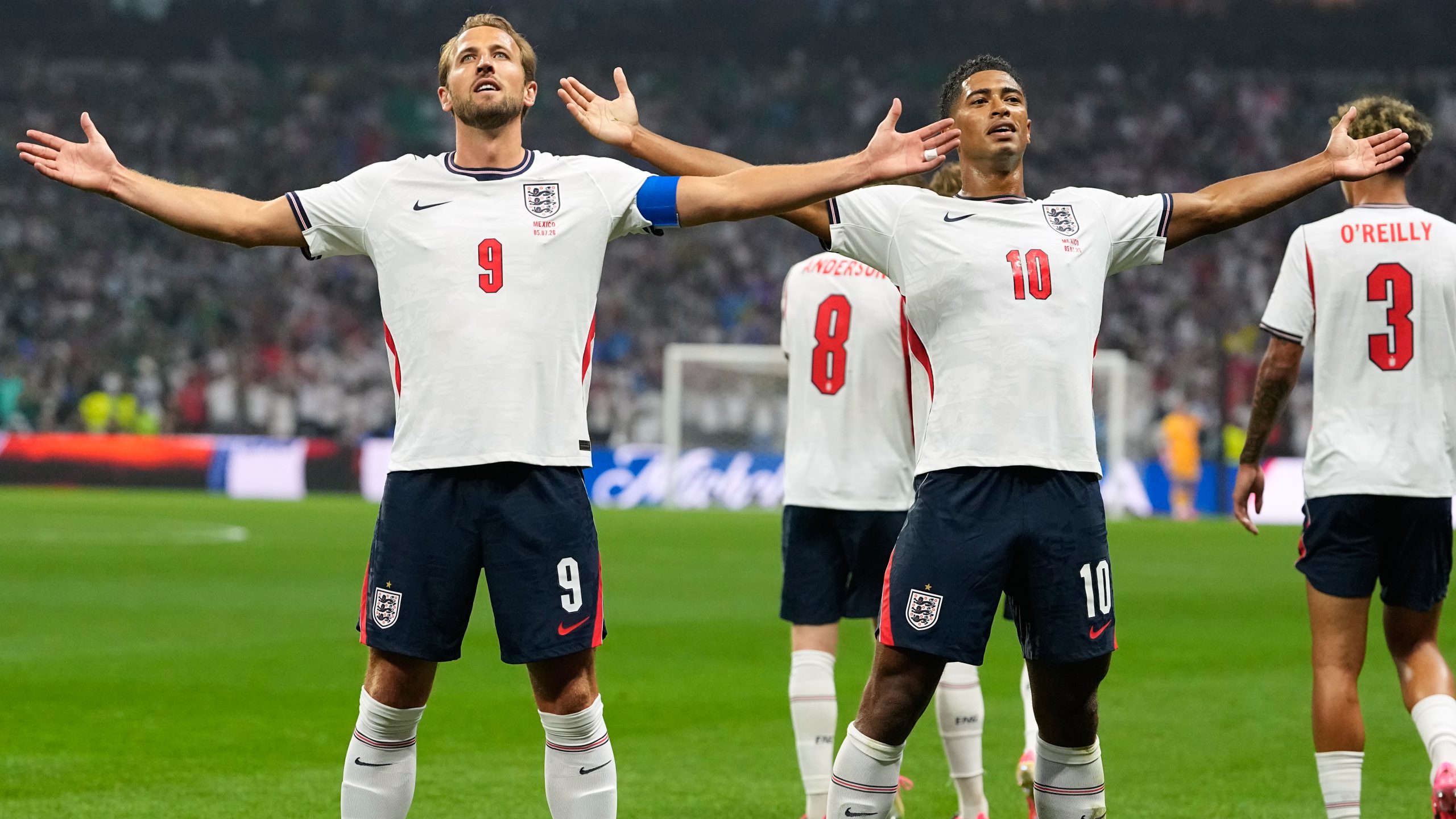
Harry Kane (left) and Jude Bellingham celebrate teaming up for one of England’s goals against Mexico, in a game that drew over 46 million TV viewers in the United States.Natacha Pisarenko
Haaland’s popularity, meanwhile, is mostly a product of the Premier League’s power. Not entirely, to be sure: His first spotlight came at Dortmund, including when the Bundesliga returned to action before other leagues amid the pandemic.
His fame skyrocketed after moving to Manchester City, where he has piled up 112 goals in 132 games and won two Premier League titles and a Champions League trophy. Combine that with the club being the Premier League’s dominant force for nearly a decade, and the odds are if you know someone with a City jersey, it has Haaland’s name on the back.
Until this summer, his resumé lacked one big line: playing at the World Cup. It is now filled in with style: seven goals in six games, leading Norway fans’ ‘Viking Row’ chant, and a love of American culture. He went to a western goods store in Dallas, posed for photos in a cowboy hat and boots, and left with a stuffed raccoon.
Finally, there’s Messi. Major League Soccer has made piles of money from his presence here, and stands to make piles more from his playing a World Cup final in America’s biggest market. Any remaining belief that Miami was a retirement destination vanished when he led Argentina’s stunning 2-1 comeback win over England in Atlanta.
“To see him reach a final like this, at his age, 39, is incredible,” Scaloni said. “He is history and legend, along with this entire group of players who have given us such wonderful years. Even though we might always believe an Argentine futbolista is capable of achieving greatness, actually doing it is incredibly difficult.”
There are days when it feels like MLS’s marketing team focuses on Messi too much. But a lot of people think the league actually hasn’t done enough to spotlight his presence (and Argentina and Inter Miami teammate Rodrigo de Paul) this summer.
That is for getting into later. For now, Messi will play a World Cup final in the country he has come to call home on Sunday, and he will face a player he has known for a long time.
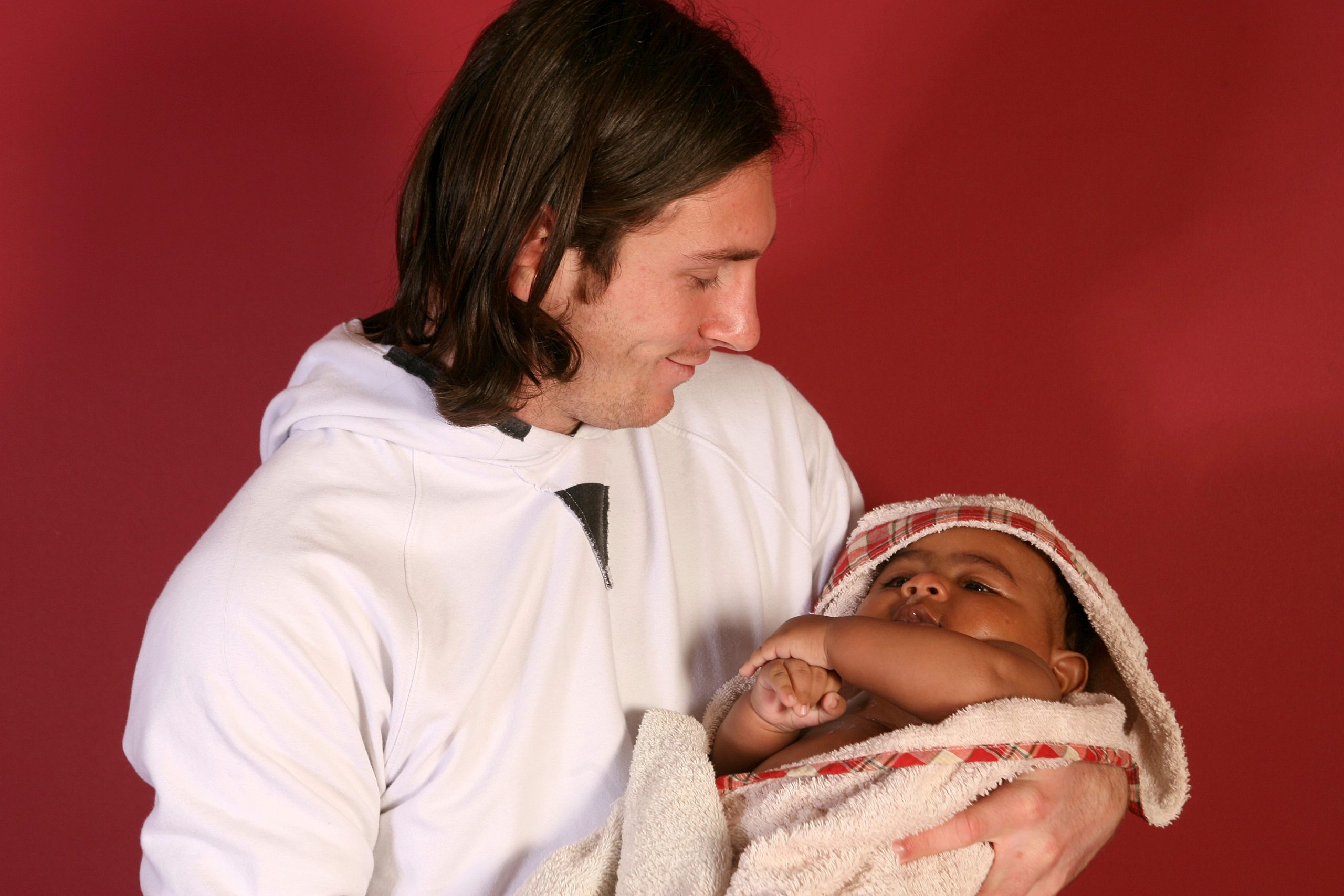
How long? When Yamal was a baby, Messi played for Barcelona, as he did for many years. In 2007, the Yamal family won a raffle to have a photo shoot with Messi, organized by a local newspaper and UNICEF. Thus was Messi pictured holding a baby Yamal, and washing him in a bathtub.
One of the famous photos of Lionel Messi holding a baby Lamine Yamal in 2007.Joan Monfort
Sure, they couldn’t really have known each otherback then. But fans the world over hoped they’d someday see a Messi vs. Yamal game with real stakes.
Many fans hoped for it here in America, too, even as others hoped for England or France to make the final instead. Now it’s here, and the marquee at the Meadowlands is ready for a show.
The World Cup, the PGA Championship, and the Major League Baseball All-Star Game, the most daunting events in this Summer of Sports Celebration, are finished here.
Philly is undefeated.
“This summer proved what we have always known: Philadelphia is built to host world-class events,” said Mayor Cherelle L. Parker. “Our city shined on the national and international stage.”
It was hot, and it was rainy, but hey, that’s Philly in July. At least the big three events didn’t have to deal with the current wildfire smog.
Think about it. So many things could have gone wrong.
There could have been embarrassing incidents involving the Department of Homeland Security, ICE, and other complications involving our suddenly inhospitable visitation policies in the United States.
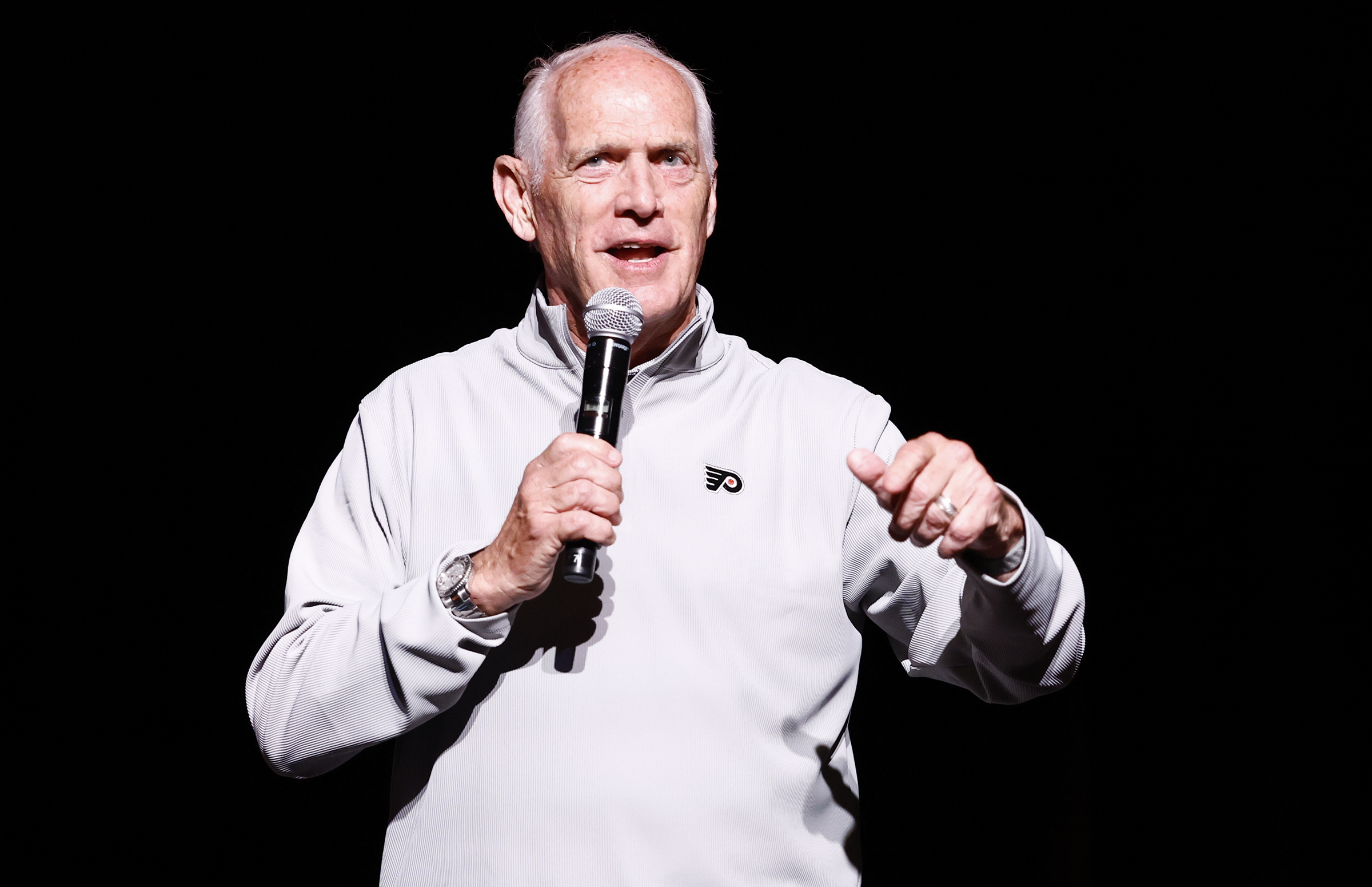
“Worry number one was, with the influx of all of these people from all over the world into the city, making sure it was a peaceful experience for them,” said Dan Hilferty, the Flyers’ governor and CEO of Comcast Spectacor, who also served as co-chair of Philadelphia Soccer 2026 and is a Philly-area native.
Chairman & CEO of Comcast Spectacor and Governor of the Flyers Dan Hilferty said this summer’s local events gave him “real hope” in troubled times. Yong Kim / Staff Photographer
It was peaceful, Hilferty said, relieved.
“We live in troubled times, not only in America but around the world. Sports can be a soft diplomacy effort,” he said. “To see people come to our city and us, as Philadelphians, welcome them with open arms — people of different faiths, different races, different nationalities — commingling in a peaceful and exciting environment … I witnessed that. It gave me a real hope for a more friendly future.”
There could have been incidents on the streets of Philadelphia — crime or intimidation or boorishness — that would further entrench stereotypes about American cities, especially East Coast cities, and especially Philly. Nope.
There could have been incidents in the golf crowds, the soccer crowds, and the baseball crowds. Nope. Local cops, state police, and private security kept cool and kept everyone in line.
There could have been massive traffic problems, vociferous price gouging, public transportation disasters. On the whole, however, there was none of it. Hotels and short-term rental agencies offered reasonable options, some of them including public transportation vouchers in the rental price. Smart routing and parking rules kept cars at the sites flowing. And Philly subway rides stayed at $2.90 a pop while New York and New Jersey charged almost 10 times their normal fares. It might have taken a while to get onto the Broad Street Line after matches, but fans were patient, and the trains ran on time.
“SEPTA really stepped up big,” Hilferty said.
Philadelphia and its surrounding area, on the 250th anniversary of the signing of the Declaration of Independence, was glorious.
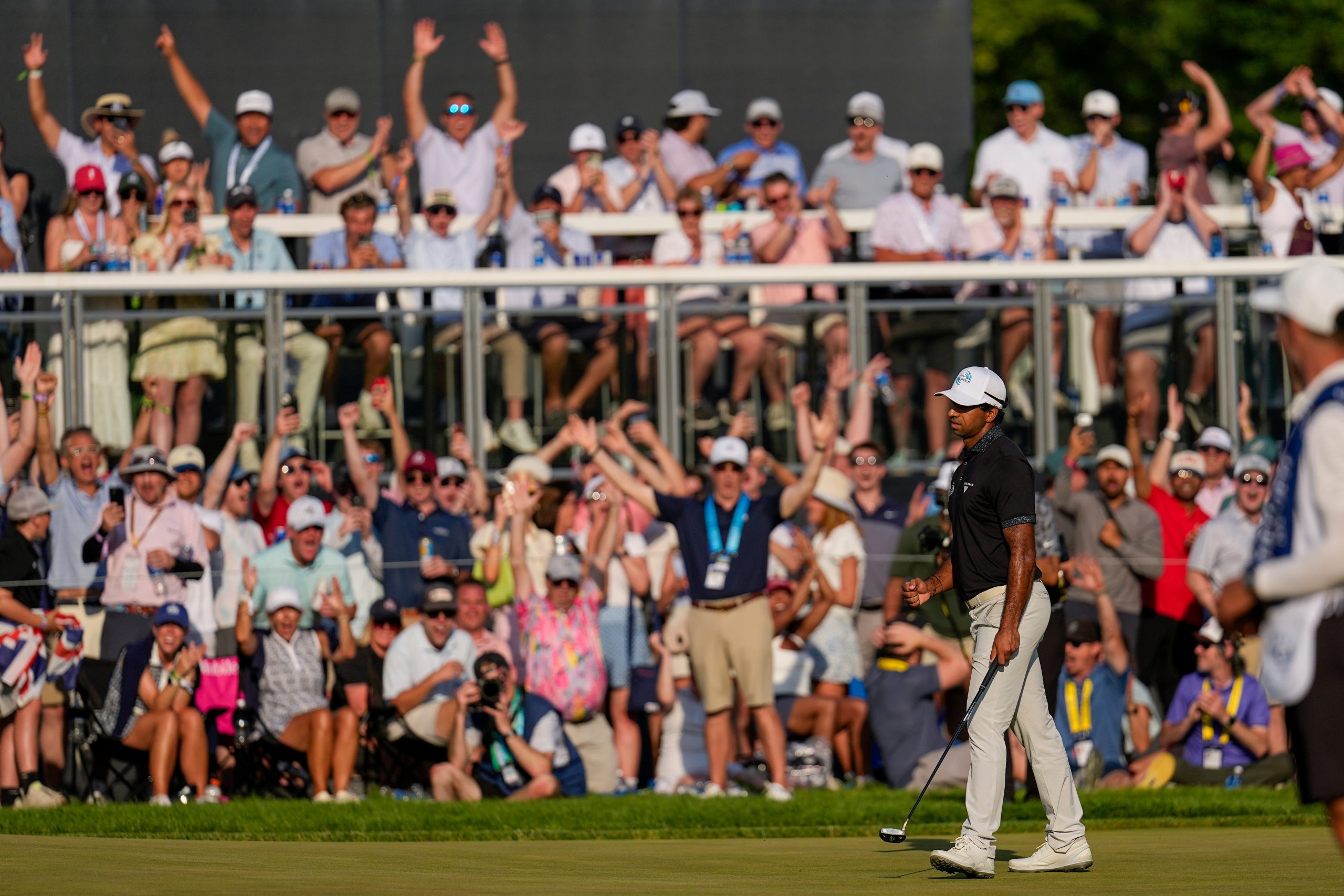
Aaron Rai’s PGA Championship triumph at Aronimink was worthy of celebration, as was the success of the event itself. Carolyn Kaster
Aronimink Golf Club stood strong as a major-championship venue, and, just as critically, Philly golf fans made the obnoxious New Yorkers at Shinnecock and Bethpage Black look bestial by comparison. Actually, there was no comparison: Philly golf fans once again proved to be the best in the country.
“The crowd had great energy.” That was from Scottie Scheffler, Texas native and Cowboys fan, who had been heckled mercilessly in his opening round. “It was all in good fun.”
The World Cup, the biggest event in Philly since the Sesquicentennial Exposition held 100 years ago, in which 10 teams played six games in a span of 21 days — including Iraq, a country with which the U.S. has a recent war history — held the largest possibility of calamity. There was none.
Philadelphia, its law enforcement, its public transport, its politicians, and, more than anything else, its businesses and residents, literally could not have acquitted themselves better. From the specially installed pitch at Lincoln Financial Field (renamed Philadelphia Stadium for the World Cup), to the neighborhood restaurants and bars, to the sites at the South Philly sports complex that accommodated visitors, to the Lemon Hill Fan Festival that sometimes had crowds of 50,000, all you heard were stories of camaraderie and welcome.
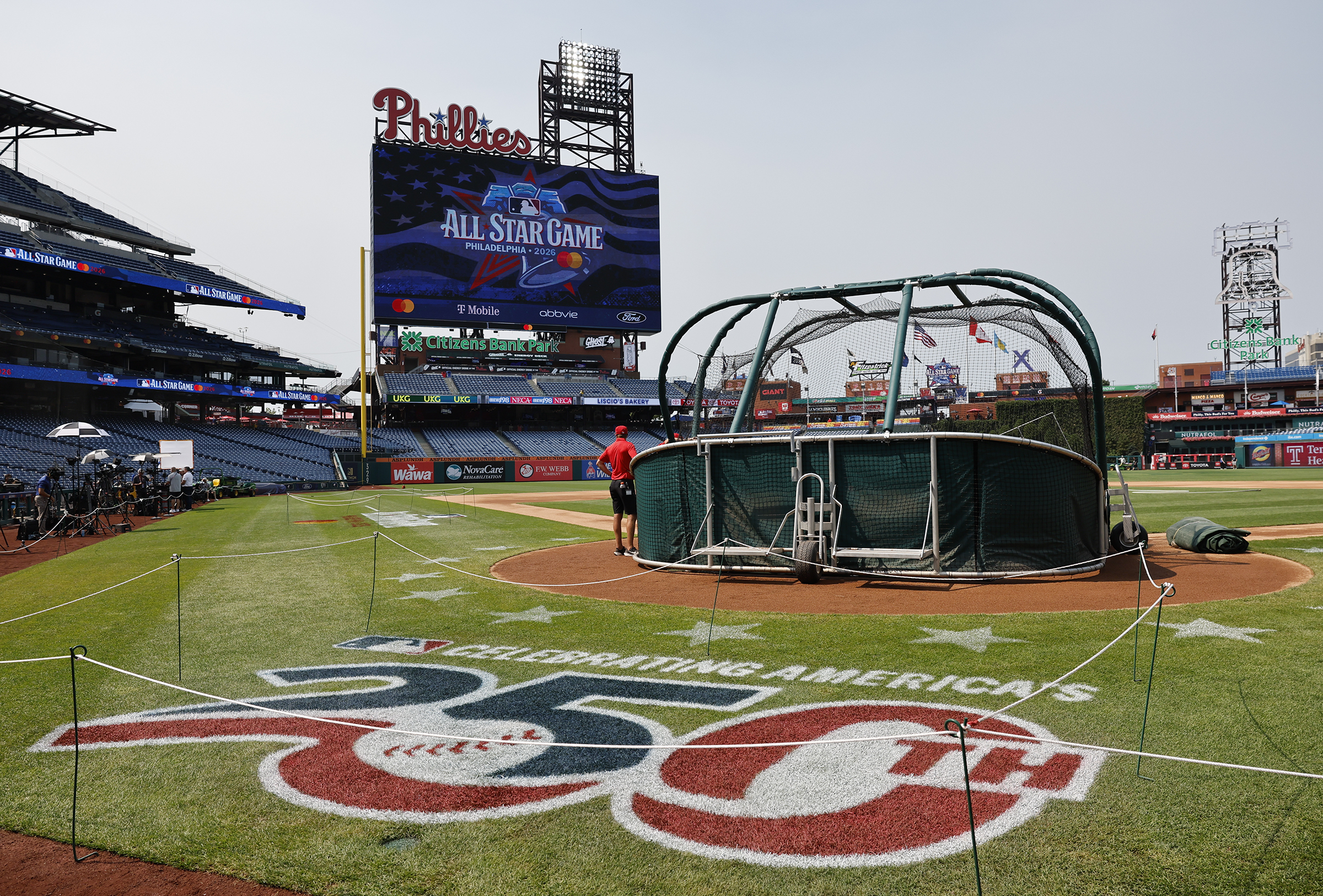
And, finally, this past week, MLB and the Phillies collaborated on five days of celebration capped by two nights of baseball magic that not only went off without a hitch but, really, incorporating the pomp and pageantry, were without compare. The key moment: The Sandlot interlude.
For five minutes after the fourth inning Tuesday, 10 kids joined 10 players on the field as fireworks exploded and Ray Charles sang “America the Beautiful” from the scoreboard screen, a tribute to a scene from the 1993 kids’ baseball movie The Sandlot. It even got to me, and I don’t like the movie or fireworks.
The game itself wasn’t great, but the Home Run Derby on Monday was superb. It was almost everything the Phillies could have wished for.
“Together, these were not simply successful events,” said Phillies CEO John Middleton, also a Philly-area native. “They were defining moments that elevated both Major League Baseball and the City of Philadelphia, leaving a legacy that will endure for years to come.”
The MLB All-Star Game was a culmination of the city’s summer of big events. Yong Kim / Staff Photographer
David Montgomery, the late Phillies CEO who dreamed of having Citizens Bank Park host the midsummer classic in the middle of this special summer, surely is smiling down from above.
It’s hard to overstate how unlikely it was that all of these events went off without an appreciable glitch. I’ve worked with the PGA of America, with FIFA, and with MLB. They are not particularly streamlined, seamless organizations. Combine the balkiness of those organizations and the history of glitches and missteps in Philadelphia’s past, there always was a chance that things might go haywire here this summer.
But between Pennsylvania’s state government, local municipalities and city governments — more than 40 entities in all — and the golf course, the baseball team, and the guy who runs the Flyers, anyone who watched or attended the big three events should know that the efforts on a local level cannot be credited too much.
“People came from across Philadelphia, our region, the nation, and the world, and, by every measure, they experienced the very best our city has to offer,” Mayor Parker said.
Now, as the World Cup final in North Jersey closes down these 10 weeks of spotlight — there will be one more watch party at Lemon Hill in Fairmount Park, 2 p.m. to 8 p.m. Sunday for the Spain-Argentina final — the folks in charge and the folks they represent can breathe sighs of relief and stick their chests out, proud of the concept, the planning, and the execution of a summertime run such as the region has never seen.
To be fair, incidents and accidents at other World Cup sites in the U.S., Canada, and Mexico were virtually nonexistent. But few venues faced the unique logistical and cultural challenges you get in Philadelphia.
The bigwigs made sure to monitor the situation.
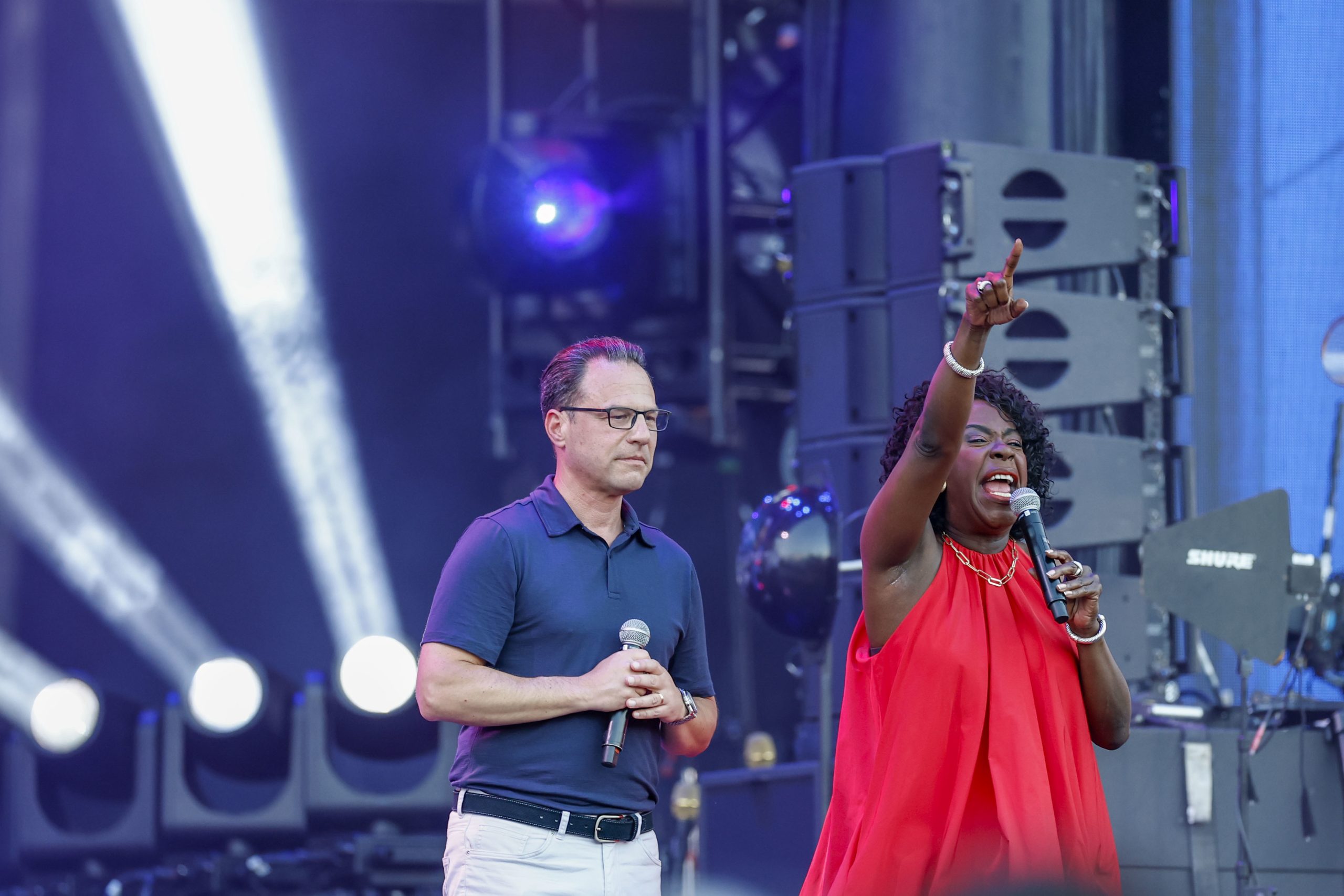
Pennsylvania Governor Josh Shapiro and Philadelphia Mayor Cherelle L. Parker celebrated the city’s big events along with their constituents and visitors from all over the world. Yong Kim / Staff Photographer
Mayor Parker went to Lemon Hill and commingled with Mexico soccer fans. She, Gov. Josh Shapiro (a Montco native), and the owners kept running into each other at the various events, their attendance less choreographed appearances than invested fandom and stewardship. They wanted to make sure everything was OK.
Before the first World Cup match in Philadelphia, Hilferty and his wife, Joan, walked across the parking lot from his office at the Xfinity Mobile Arena to the Stateside Live! open-air bar. There, they saw Ecuador fans in yellow jerseys exchanging partisan chants with orange-clad Ivory Coast supporters — then exchanging cellphones so they could take pictures for each other.
Ivory Coast won the match. The fans shared drinks in the parking lot and subway rides home.
“After the first match,” Hilferty said, “I felt really good.”
Birthdays are a funny thing. When you’re young, they are all about getting older. You can hardly wait for the next one.
Then, somewhere along the way, they’re not. Suddenly, big league baseball players, your doctors, and bosses are all younger than you.
Eventually, getting older becomes key again. You want to see more birthdays.
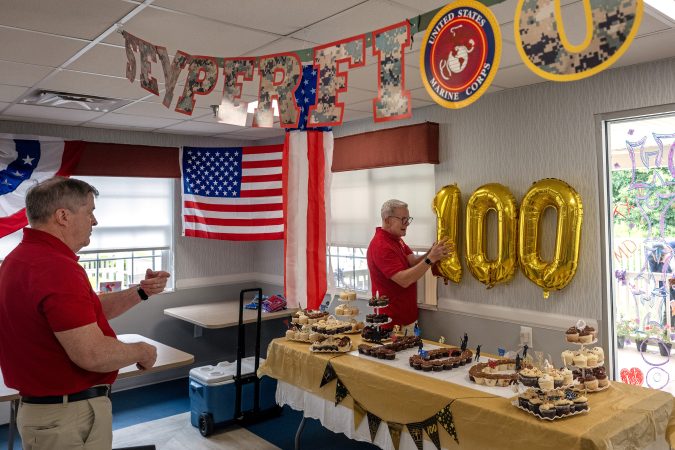
This week I celebrated a birthday of my own, and also photographed a World War II veteran celebrating his 100th. I also photographed church services for an upcoming story on a South Jersey town a century after it was incorporated as the first Black self-governing municipality north of the Mason-Dixon Line.
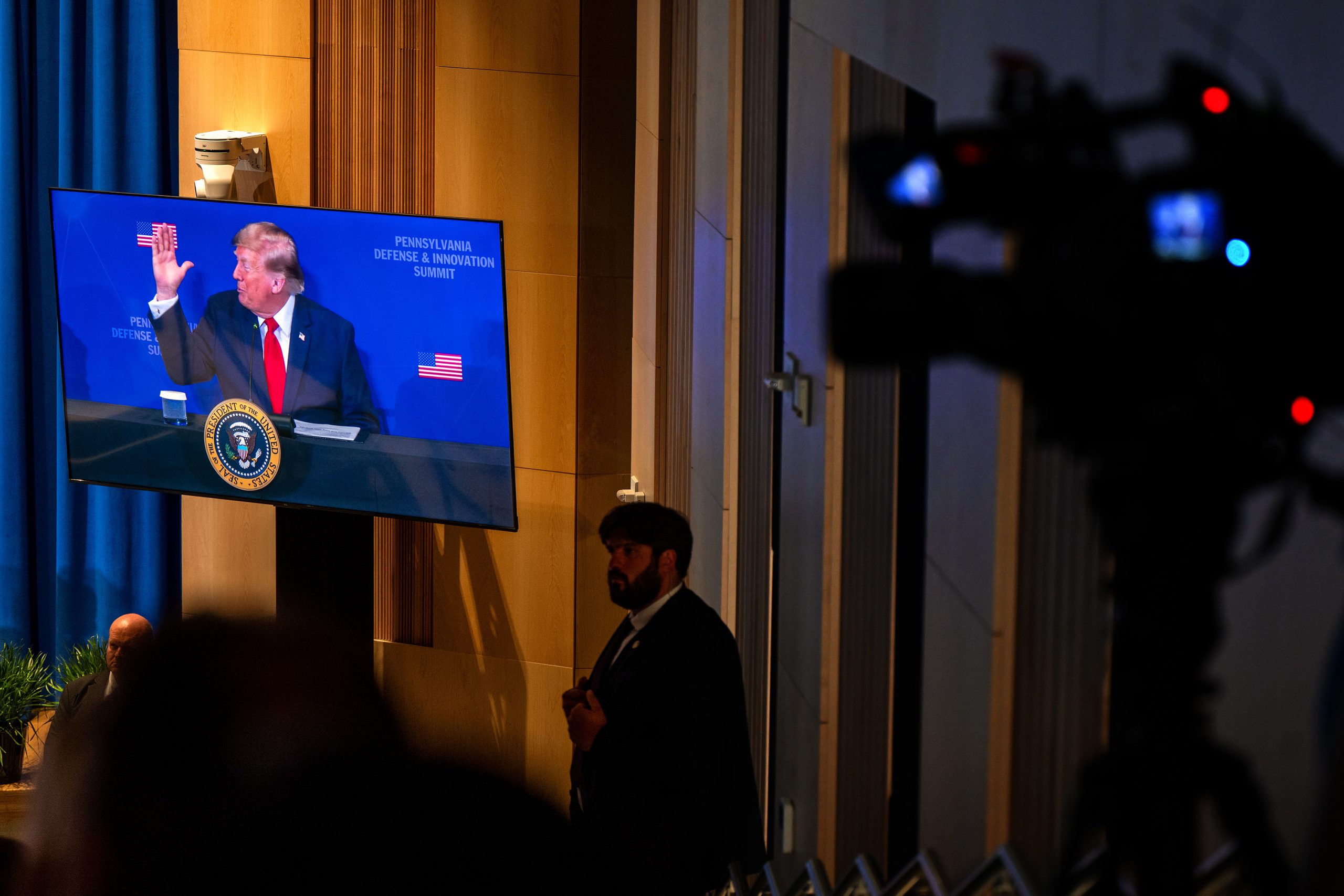
President Donald Trump is seen on a monitor as he appears at a Defense and Innovation Summit hosted by U.S. Sen. Dave McCormick at the US Army War College in Carlisle Wednesday, July 15, 2026.Tom Gralish / Staff Photographer
And I photographed a president, who unlike most of my coworkers and the folks I usually photograph, grew up before the internet and listened to music as it transitioned from Tony Bennett and Perry Como to Bill Haley & His Comets and Elvis.
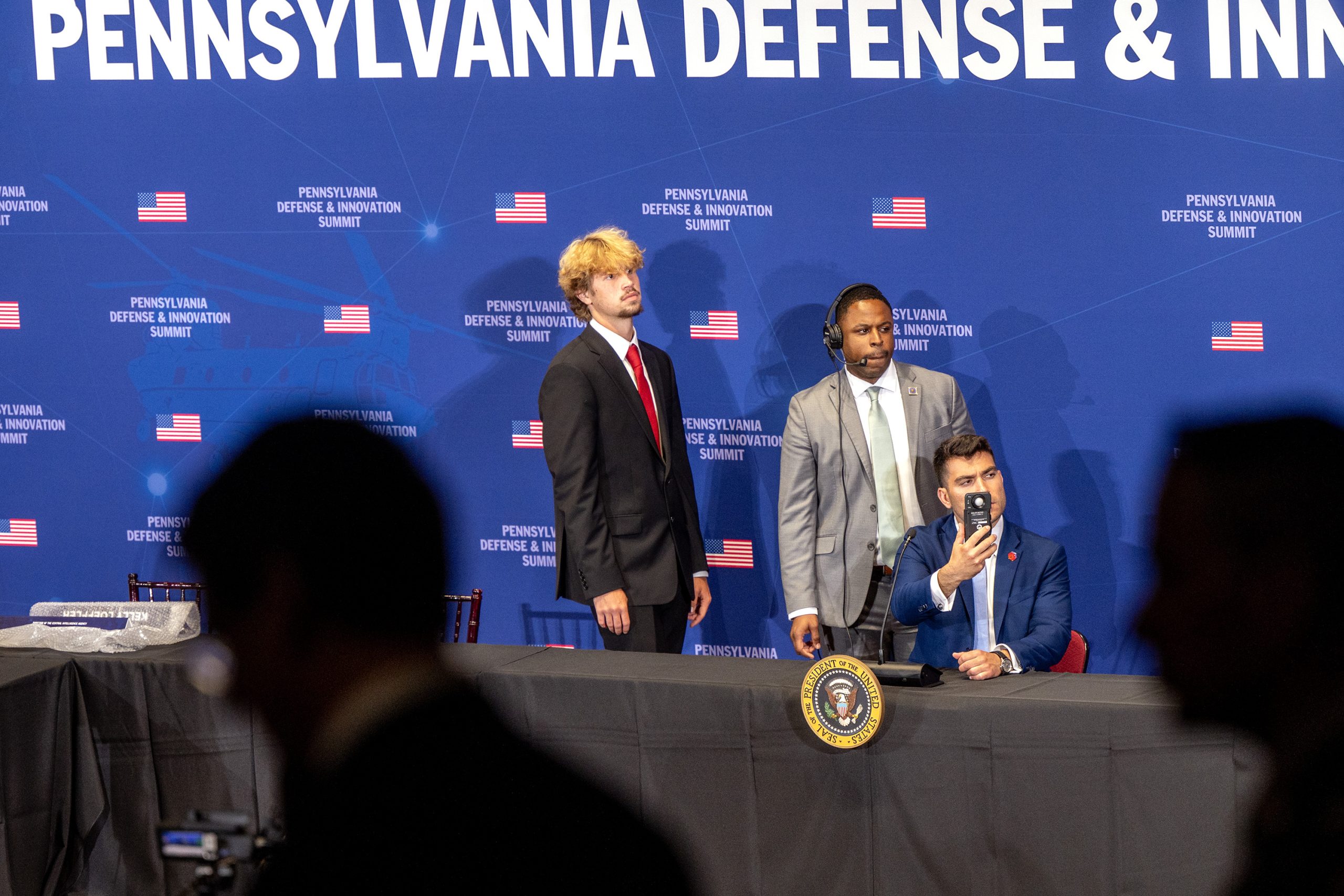
Technicans prepare the lighting and microphones before President Trump appears at the Summit.Tom Gralish / Staff Photographer
One of the ways I marked by birthday was by visiting the Main Line Camera Club as their guest speaker. Meeting people who appreciate photography is one of the things that keeps me young. That along with the joy I get from making and sharing photos.
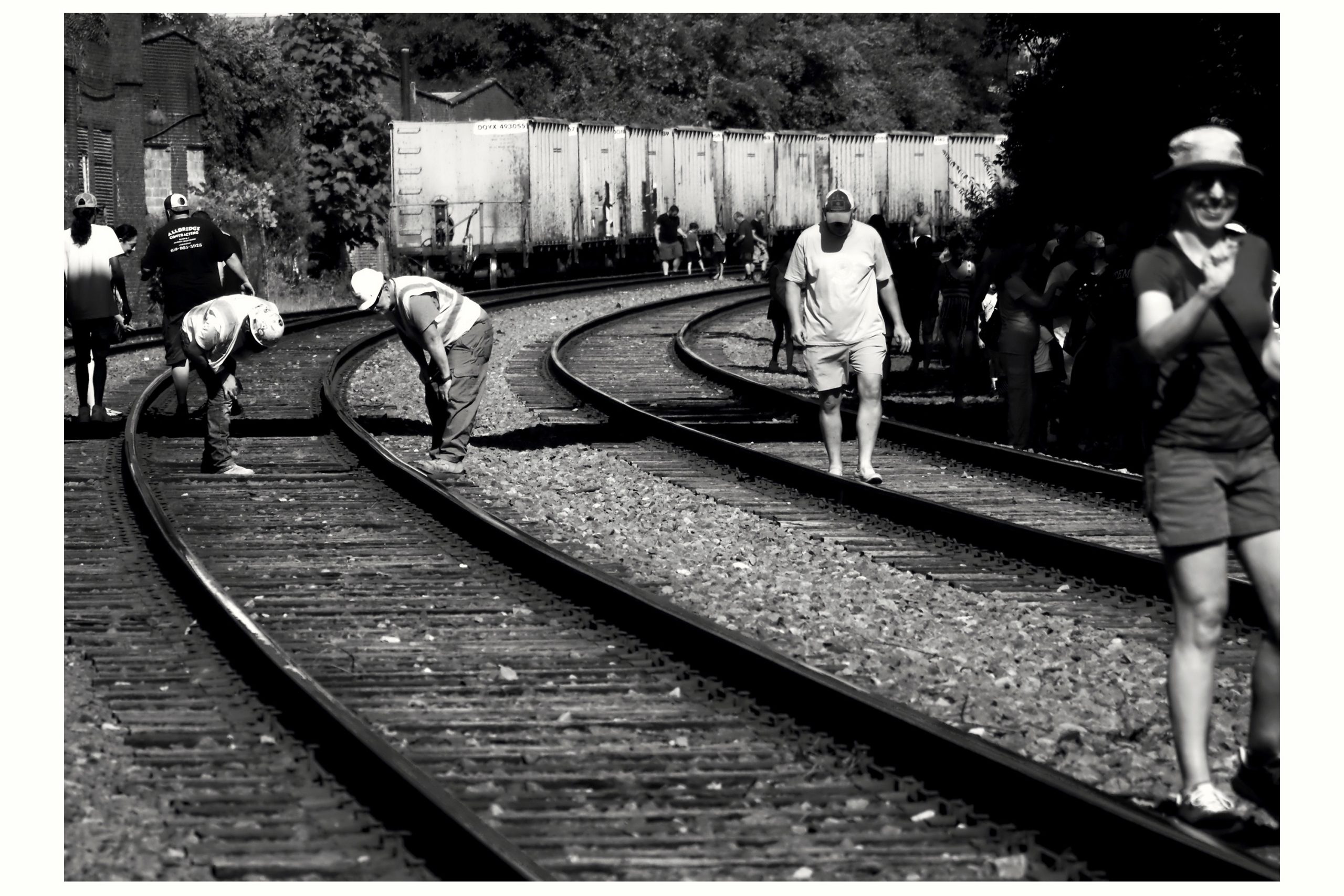
They had many good images but one that stood out for a “different” photo that Jeffrey Benne took during the recent visit by Union Pacific’s famed Big Boy No. 4014, the world’s largest operating steam locomotive. My colleague Monica Herndon also photographed the big engine that could, but until I saw she was headed to Reading, I had no knowledge of it.
After Googling, my social feed exploded with videos and photos of the train along its historic coast-to-coast tour to celebrate America’s 250th. I even heard traffic reports on KYW radio as it approached Philadelphia that weekend begging drivers to quit being foolish by stopping on the Schuylkill Expressway and getting out of their cars to photograph it passing by, being a bunch of train “foamers” (a term I just learned this week).
Benne arrived in Bridgeport, Pa. 45 minutes before Big Boy’s arrival, staking his claim “on a piece of ground then played with the settings on my gear to get a good shot,” with just about 45 seconds to get it passing by.
Afterward, he said he noticed the crowd searching the tracks and realized they were looking for smooshed coins, having set regular coins on the track minutes before. “I should have done that myself,” he said.
Growing up, my friends and I did that, and usually had little luck finding our own “smooshed” pennies.
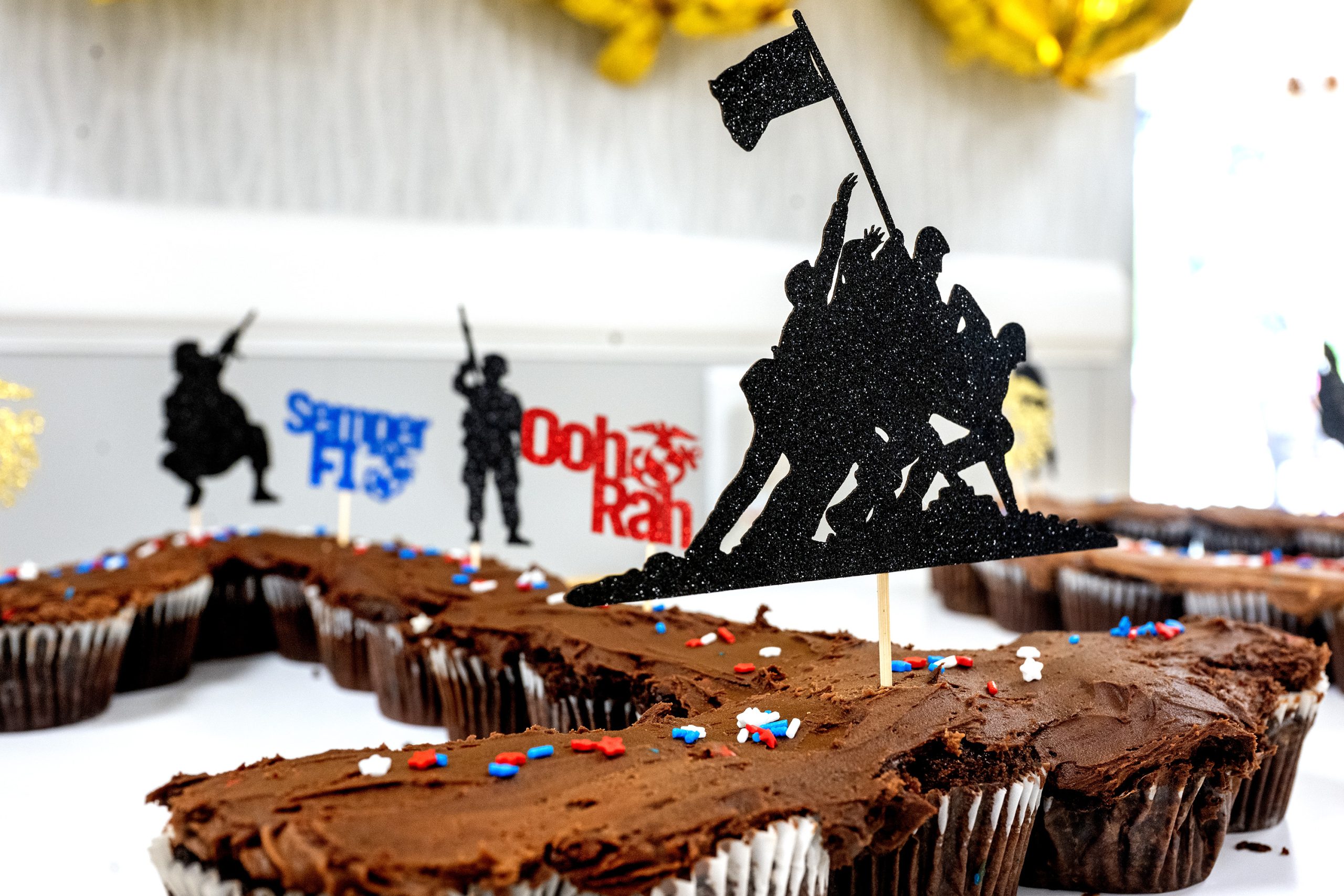
Cupcakes – including one with a topping depicting the iconic Joe Rosenthal photo of U.S. Marines raising the flag at Iwo Jima – at a 100th birthday party for WWII Marine veteran Stephen Anderson.Tom Gralish / Staff Photographer
Pat Dailey, setting up the birthday party in the photo at the top, founded the Tun Legacy Foundation, a nonprofit that supports veteran causes, Masonic charities, and educational scholarships. They are also rebuilding and reestablishing an authentic reproduction of the original Tun Tavern building in Philadelphia. The Tun, constructed in 1693, was the first documented lodge in North America and the birthplace of the U.S. Marine Corps in (1775).
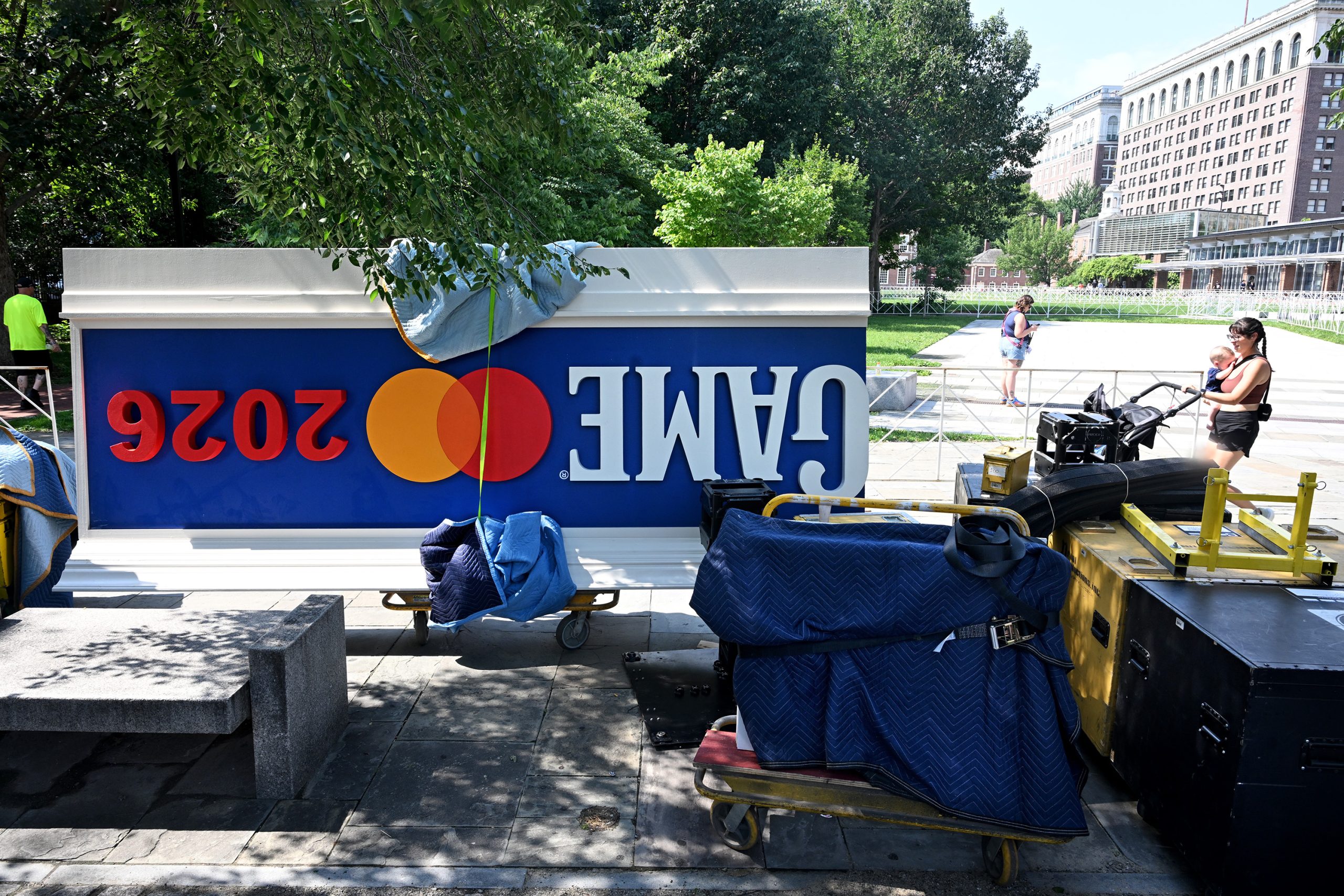
Photographing workers setting up for the Red Carpet on Independence Hall was my only contribution to our coverage of Philly’s hosting the MLB All-Star Game for the first time in 30 years (I did cover THAT game).
Preparations are underway on the Mall at Independence National Historical Park Monday, for the All-Star Red Carpet Show on Tuesday.Tom Gralish / Staff Photographer
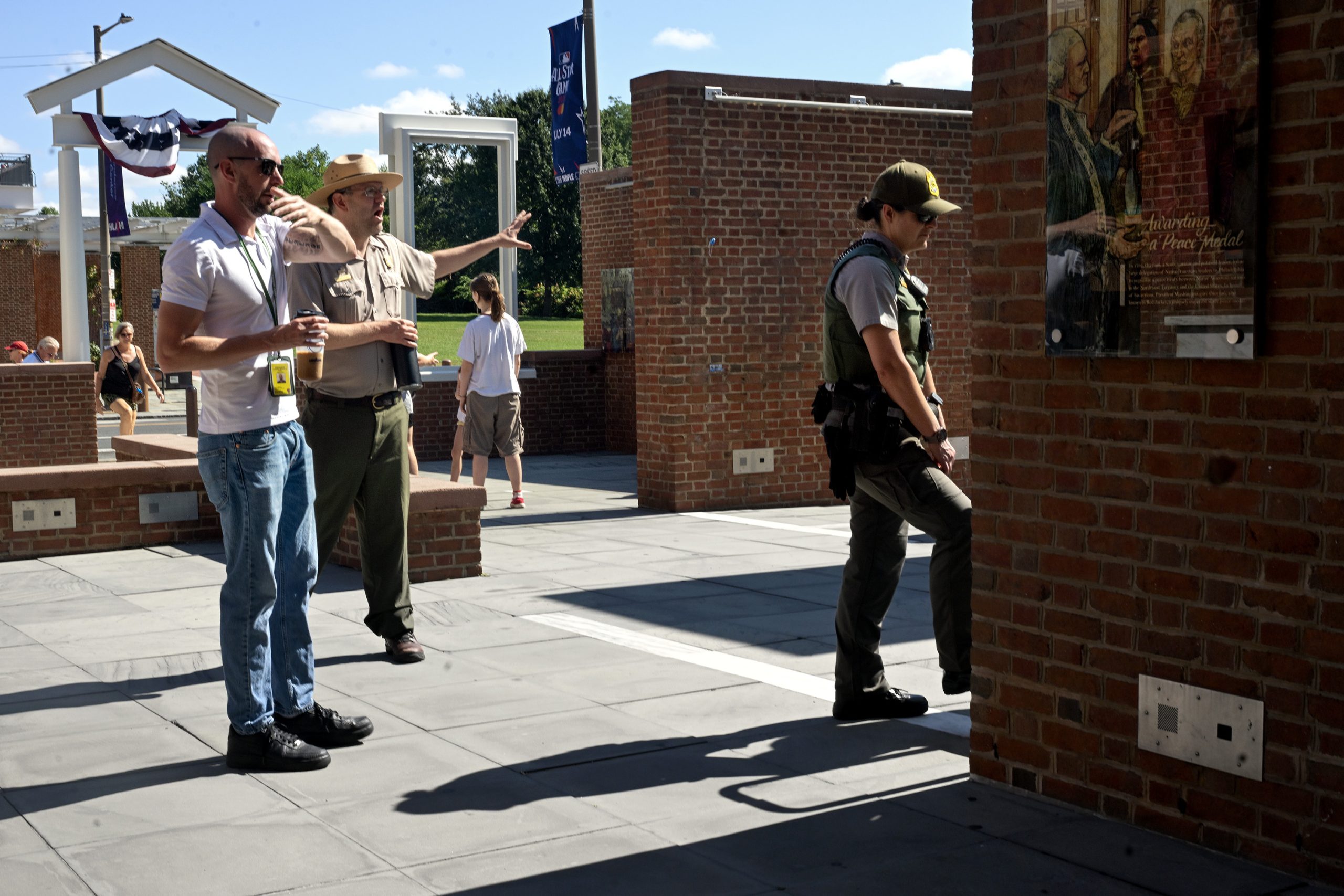
I made the Independence Mall prep photo during an early morning check-in on the President’s House site, something I have been doing for months.
There was nothing new on the site that morning, since I had found National Park Service employees a week earlier taking photos and measurements, and looking under, behind, and above the panels. They told me they were “just looking around” and not there to install the new Trump administration panels after a federal appeals court gave the go-ahead just before the Fourth of July weekend.
A National Park Service employee along with a NPS ranger and NPS police officer visit the President’s House site Wednesday, July 8, 2026. Tom Gralish / Staff Photographer
But unlike the original January removal and the subsequent court-ordered return months later, they did it in the middle of the night, avoiding public scrutiny.
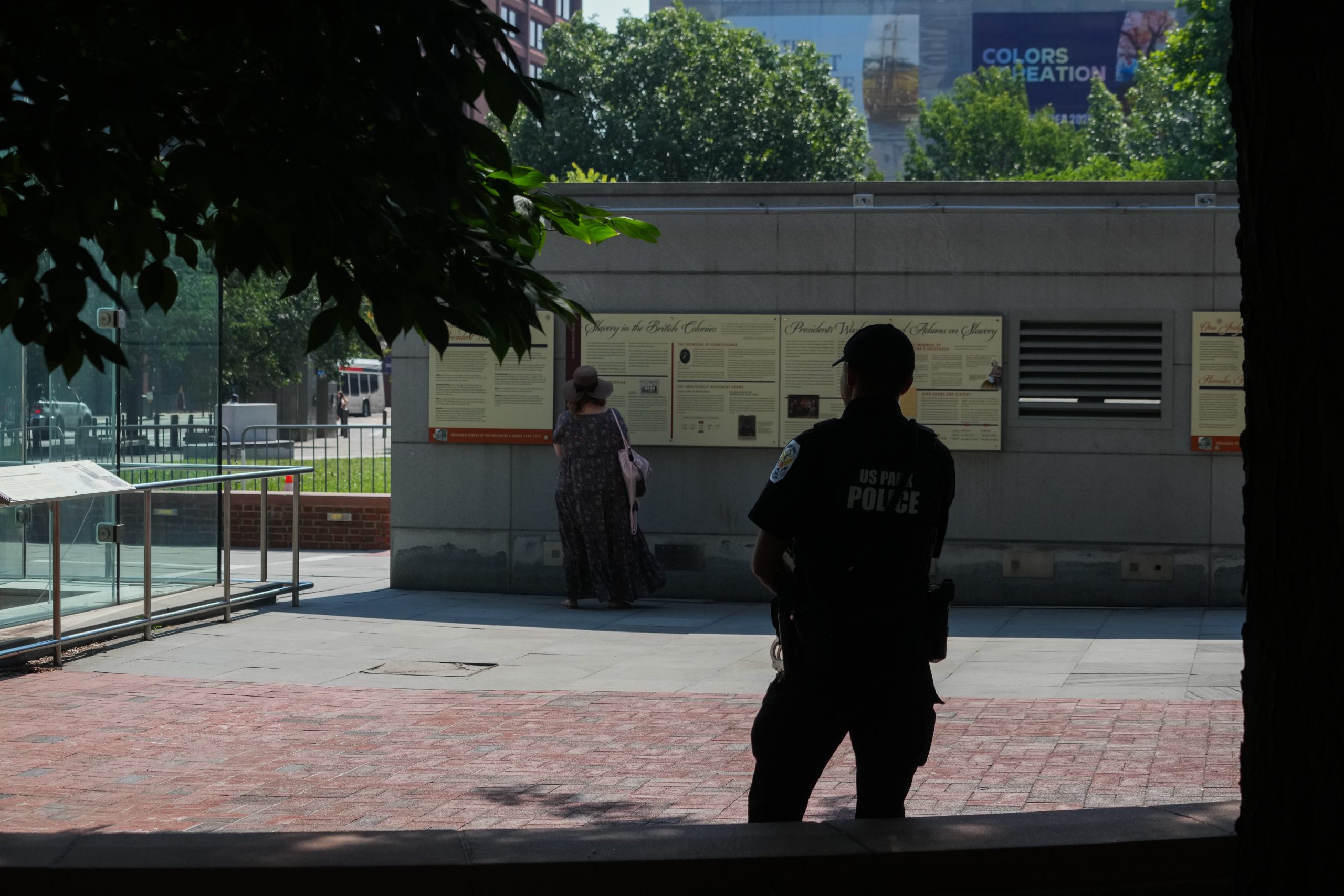
A U.S. Parks police officer and a visitor at the President’s House site Wednesday, July 15, 2026 after new panels were installed.Jessica Griffin / Staff Photographer
Since 1998 a black-and-white photo has appeared every Monday in staff photographer Tom Gralish’s “Scene Through the Lens” photo column in the print editions of The Inquirer’s local news section. Here are the most recent, in color:
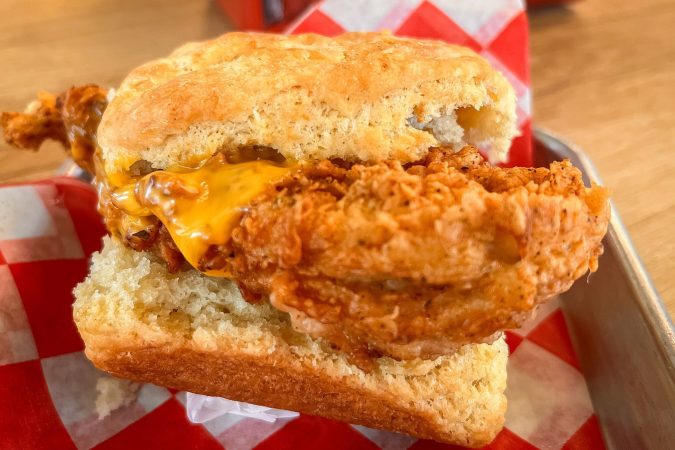
Two great new moves by Tara Finder at the Biscuit Lady’sPlymouth Meeting location: later hours on weekends (till 8 p.m. for dine-in or takeout) and a chicken biscuit sandwich that’s only available after 2:30 p.m.. The Maddie J is 5 ounces of crispy fried chicken juiciness, a slice of American cheese, and a swipe of house Buffalo sauce. There’s a huge crunch and a zingy kick, but keep your plate handy because the light, flaky biscuit can barely contain all that goodness. It’s the perfect late-day counterpoint to morning specialties, such as the smash burger with bacon, fried egg, and jalapeño pimento cheese (Don’t Go Bacon My Heart) and the cheesesteak riff with ribeye, Cooper sharp, egg, and onion (the Stella). The Biscuit Lady, 115 Plymouth Rd., Plymouth Meeting, 484-243-6957,visitthebiscuitlady.com
— Michael Klein
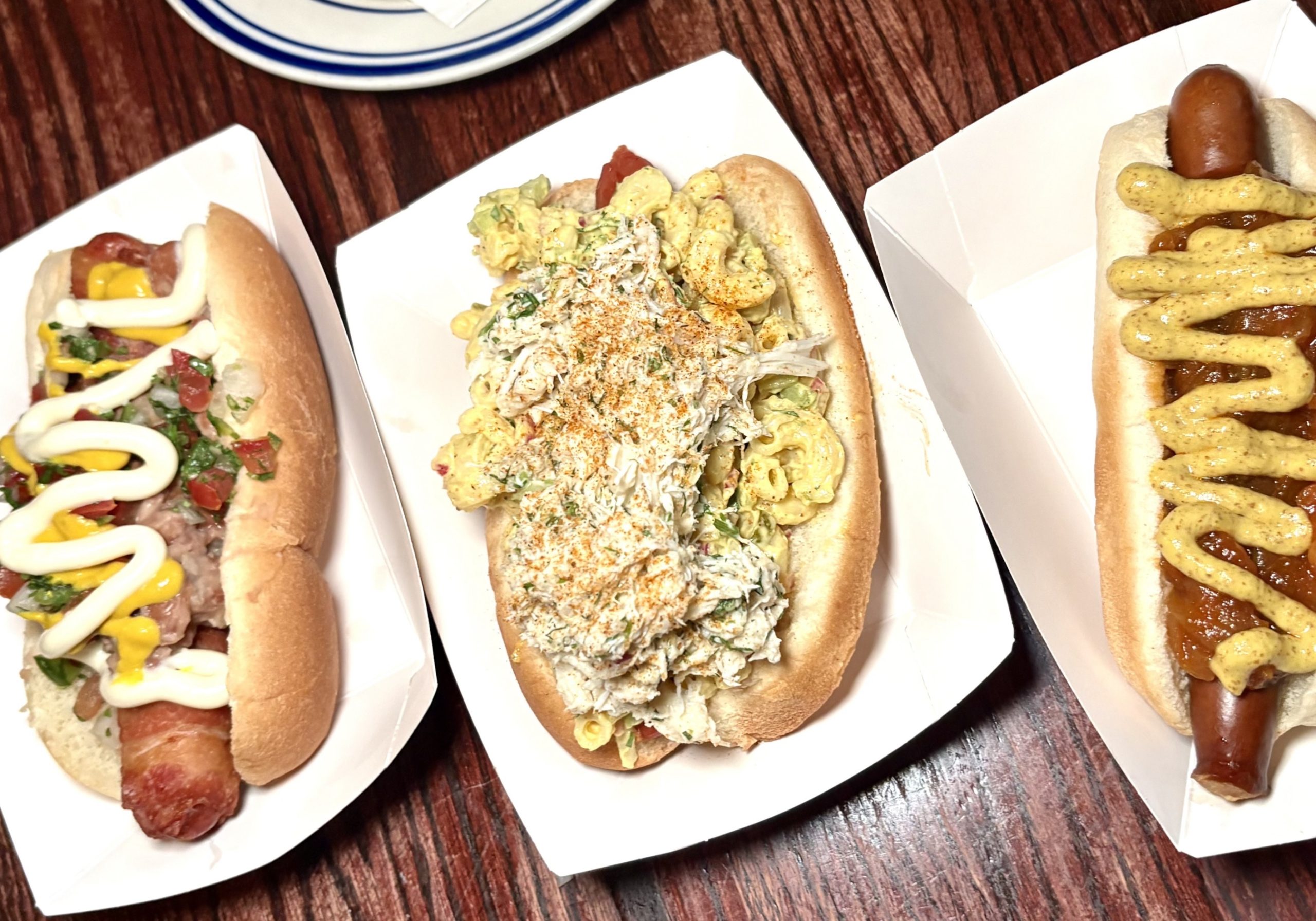
Three weekly specials from Royal Tavern’s July-only hot dog menu. From left: a fried Diamondback Dog wrapped in bacon with salsa and beans, an Old Bay Bomber topped with Old Bay macaroni salad and crab, and Barrel It Up The Bronx topped with onion sauce and brown mustard.Craig LaBan / Staff
Dog Days hot dog specials at Royal Tavern
If you grew up in a hot dog culture like I did, devouring every Coney I could find in metro Detroit, the snap of the natural casing on Royal Tavern’s bespoke wieners is a flashback revelation. The Bella Vista bar’s third annual Dog Days of Summer event is in full throttle through the end of July, and they’re not serving skinless franks — the industrial norm — here. The taut-yet-delicate resistance on these artisanal links unleashes a savory rush of meaty juice, the pureed pork-beef blend harboring a balanced soupçon of coriander, garlic, and applewood smoke.
Royal Tavern chef Nic Macri — whose butchery chops are still intact from his charcuterie run with La Divisa at Reading Terminal Market — began Dog Days two years ago as a labor of love to boost the bar’s typical summer doldrums. He ended up selling over 5,000 dogs that first July, then 7,000 in 2025, limiting it once again to the month due to the logistical challenge of transforming his small kitchen into a temporary frankfurter factory. This year, the restaurant aims to hit 10,000. To do so, Macri has turned to Happy Valley Meats to co-pack its proprietary recipe with responsibly-raised meats.
But the creative challenge is still considerable: Four new preparations are unveiled every Monday for five weeks, pairing different techniques (steamed, chargrilled, fried, griddled) with an array of flavor toppings. No modifications allowed. I was charmed by the Baltimore-themed picnic of a dog last week topped with Old Bay macaroni salad and a scoop of fresh crab. But the purist in me kept returning to the Bronx-inspired steamer topped with saucy onions and brown mustard that still allowed that quality link to shine. There will be new cast of dogs next week themed to the World Cup, then a final quad dog bracket to bring it home, culminating in all 24 returning July 31 to celebrate a month of memorable wiener studies. The chef insists it will then be time to return to the fall programming of burgers, smoked beef, and fish sandwiches, no matter how much I plead our case: If Macri hasn’t turned Philly into a true hot dog town by then, no one can.
Royal Tavern, 937 Passyunk Ave., 215-389-6694, royaltavern.com
— Craig LaBan
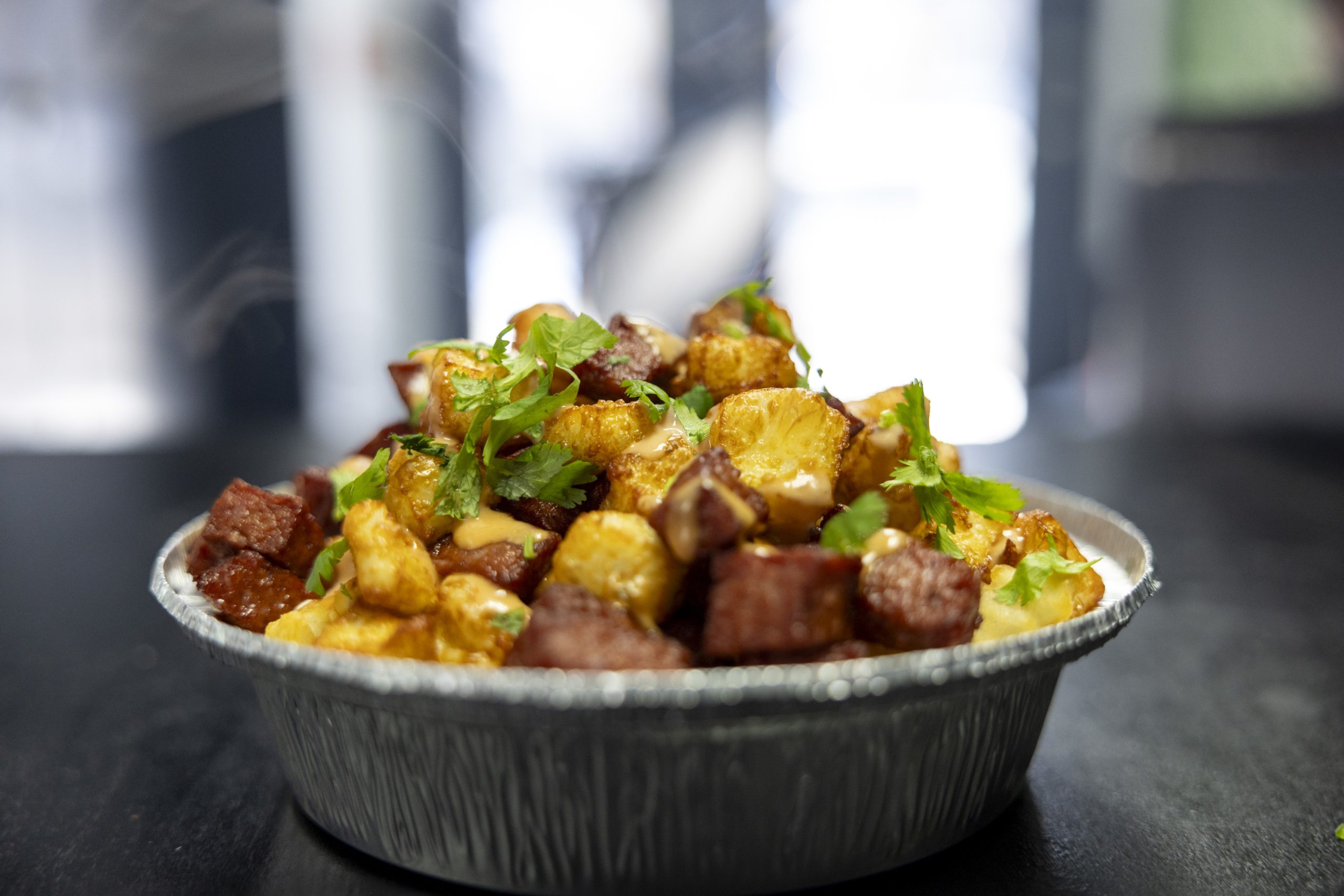
Loaded fries at El Sazón R.D., 1030 N. Second St.Tyger Williams / Staff Photographer
Loaded fries at El Sazón R.D.
El Sazón R.D. in Northern Liberties only serves three things: smash burgers, empanadas, and fries — all with a Dominican twist. Luckily, it does them extremely well. The smash burgers have a crisp, lacy edge and come topped with queso de freir, a fried slab of slightly salty white cheese that elevates the sandwich from just a burger into something I’d wait in line for.
The limited menu’s true hero, however, are the loaded fries. The dish is a decadent play on salchipapas — a street food ubiquitous across Latin America that combines fries with cut-up hot dog links — that comes with cubes of queso de freir and two hefty drizzles of tangy mayo-ketchup. The franks are juicy enough that they pop in your mouth, while cubing and frying the white cheese basically renders them into delectable cheese curds. Beware, though: These fries are very heavy, a meal in and of themselves that I often have to follow up with a nap. El Sazón R.D., 1030 N. Second St., 917-920-1316, elsazon-rd.com
— Beatrice Forman
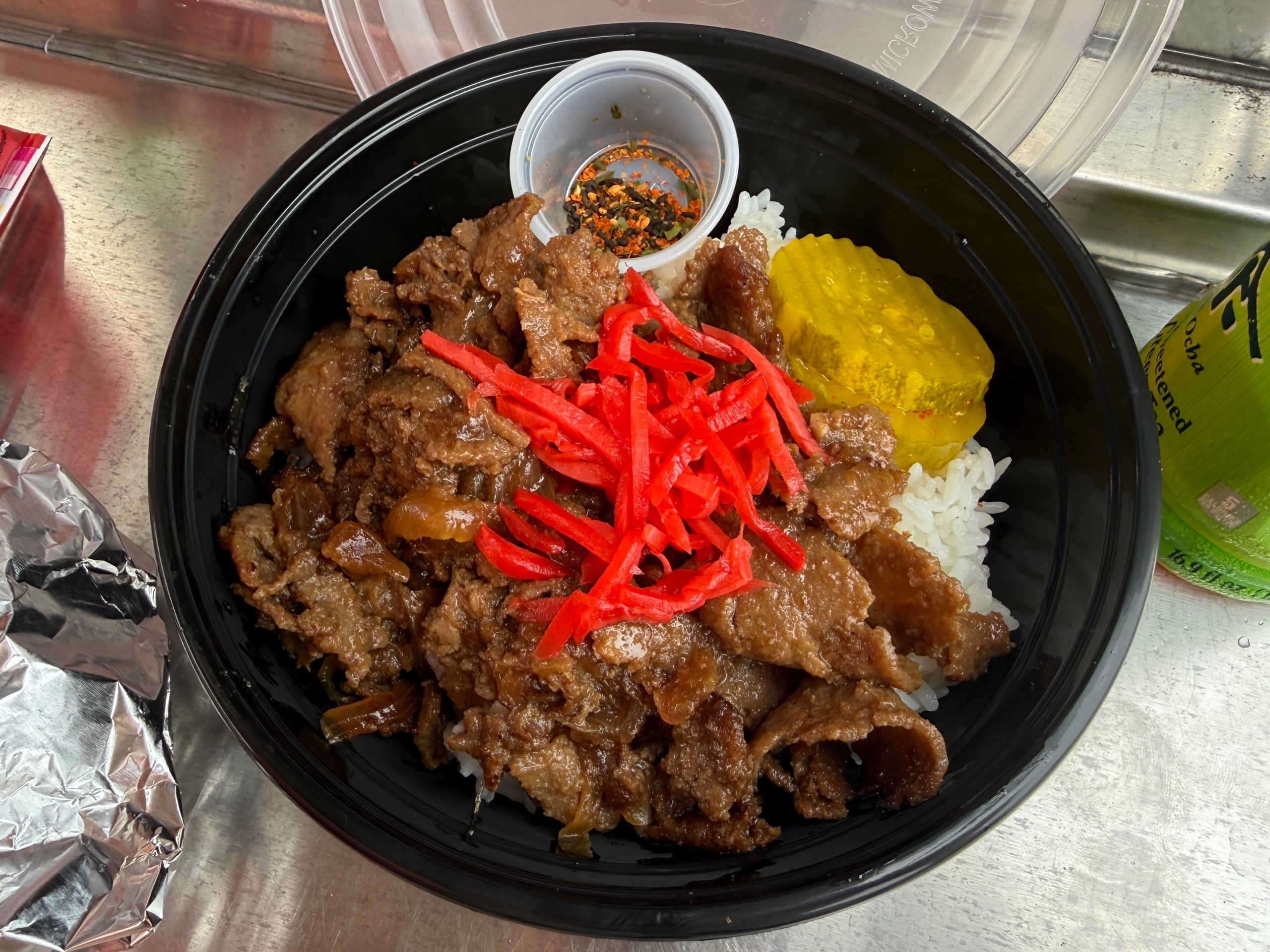
Gyu-don at Haha’s Kitchen, a food cart that typically parks at 471 N. Seventh St. in Spring Garden.Kiki Aranita /
Gyu-don at Haha’s Kitchen
When Shikoku, Japan, native Shiho Utsunomiya first came to Philadelphia in 2000 and tried a Philly cheesesteak, she exclaimed, “This is a gyu-don! Well, the meat is anyway.” Eighteen years later, she began serving a chipsteak-based gyu-don at her food truck, Haha’s Kitchen (“Haha” means “mother” in Japanese), which typically parks in Spring Garden. The $10 bowl has tremendously tender beef, laced through with sweet, slow-cooked onions and decorated with a neon pink crown of pickled ginger. Served over steamed kokuho rice, it’s decadent and filling, and perhaps one of the best lunch deals in town.
It’s also a marvel to watch Utsunomiya doing absolutely everything in the cart, from taking orders to preparing a large menu that encompasses American lunch standards like Italian sausage and hot dogs to chicken karaage, onigiri, and of course, this magnificent gyu-don. The best part of lunch may be witnessing how her cheerful but fierce independence comes to bear in the small kitchen. Utsunomiya worked at the now-closed Hikaru in between bearing and raising children, “but it’s very difficult to have kids and work in a restaurant kitchen,” she said. You should also grab one of the $3.50 tuna mayo onigiri for later. Generously sized and lovingly made, it tastes like a Japanese mother tucked it into your lunchbox. Haha’s Kitchen, 471 N. Seventh St., instagram.com/hahas_kitchen
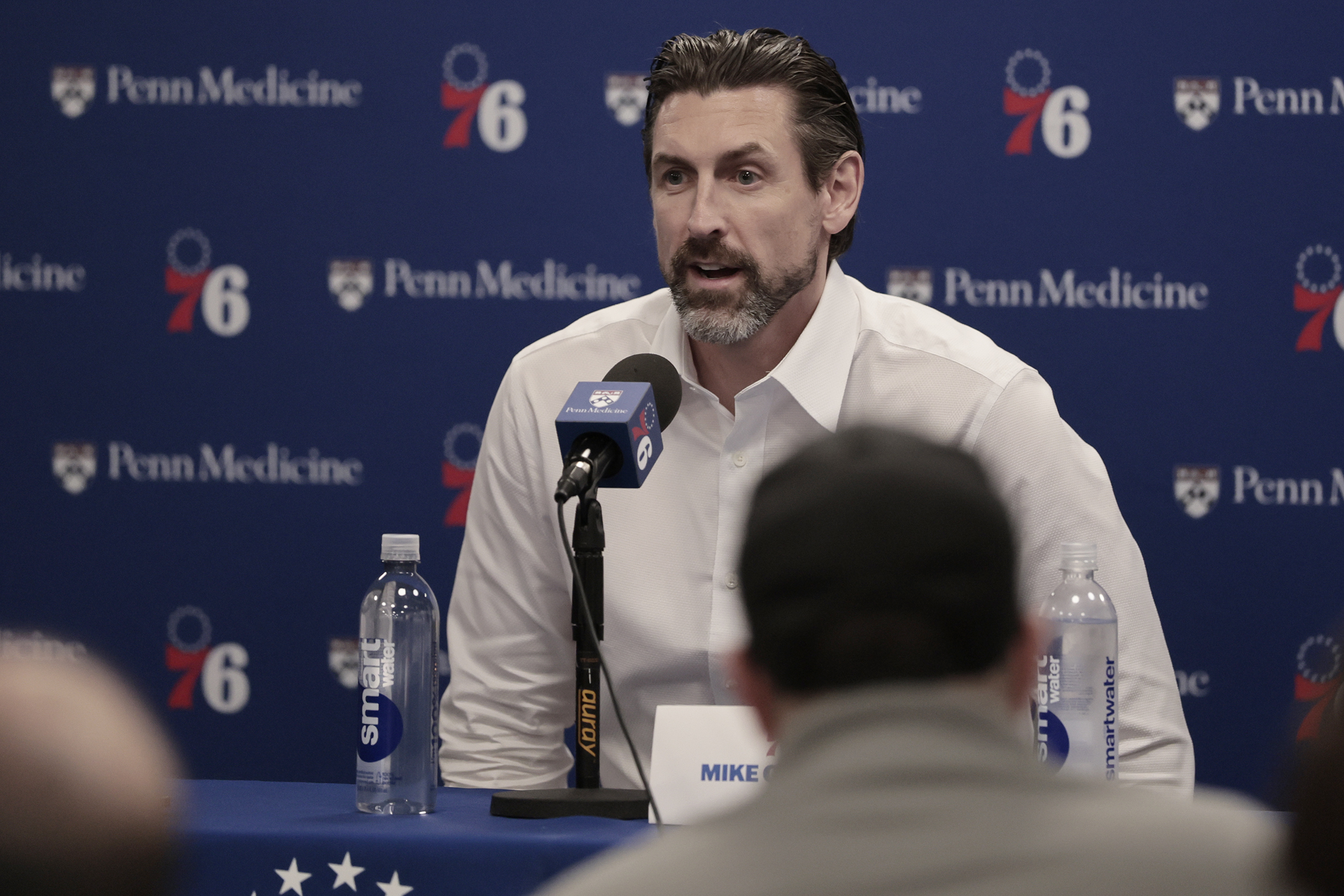
Steve Gansey was playing with his son a few weeks ago, as ESPN hummed in the background, when he heard something unusual. It was Kendrick Perkins, talking to his NBA Today cohosts, about a photo that recently went viral.
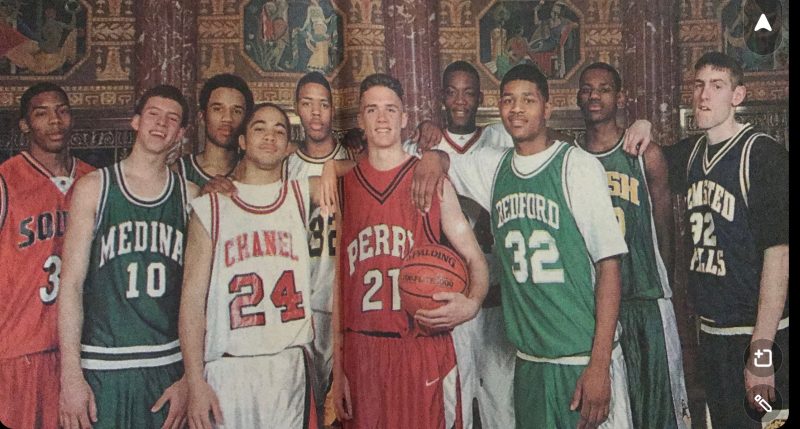
It was taken in 2000, and was on the front page of the Cleveland Plain Dealer’s sports section. Ten high school basketball players from Northeast Ohio stood side by side, in their respective jerseys.
The group had been voted by coaches and athletics directors as the best players in the region. There was Maverick Carter and Chester Mason (“Chet the Jet”) toward the left. Brian Swift was closer to the middle, alongside Mike Patrick.
But what caught the commentators’ attention was to the far right: future Sixers president of basketball operations Mike Gansey, of Olmsted Falls High School, alongside future Hall of Famer LeBron James, of St. Vincent-St. Mary.
Gansey was a junior at the time; James was a freshman. Steve Gansey, Mike’s younger brother, posted the photo on X on July 1, with an eyeball emoji, promptly setting the Sixers fan base ablaze with speculation.
Before long, it received hundreds of retweets. Sixers fans sent Gansey direct messages asking if he had any information on whether James would consider coming to Philadelphia.
“I’m getting DMs like ‘Hey if you make this happen, free cheesesteaks,’” Steve said. “And I’m like, ‘OK, alright, cool!’”
The post eventually reached the NBA Today crew. As the younger Gansey held a Sheriff Woody doll in one hand, and a Buzz Lightyear doll in the other, he overheard the panel referring to him.
“Perk goes, ‘Gansey’s little brother posted this picture,’” Gansey said. “And I’m like, ‘Uh oh. Mike’s going to be [ticked].’”
Mike was not upset. The younger Gansey, who coached for 14 years (seven as head coach) in the NBA G League, asked if his brother wanted him to delete the photo. The Sixers executive said, “No dude, it’s cool.” But he certainly wasn’t as enthusiastic as Sixers fans.
“Mike is a very humble person,” Steve said. “He doesn’t like attention and all that. I just think it’s one of the coolest pictures, and it’s not just Mike and LeBron.
“There are some unbelievable basketball players in that Cleveland, Akron, northeast Ohio area. I’m glad they’re getting some love, too.”
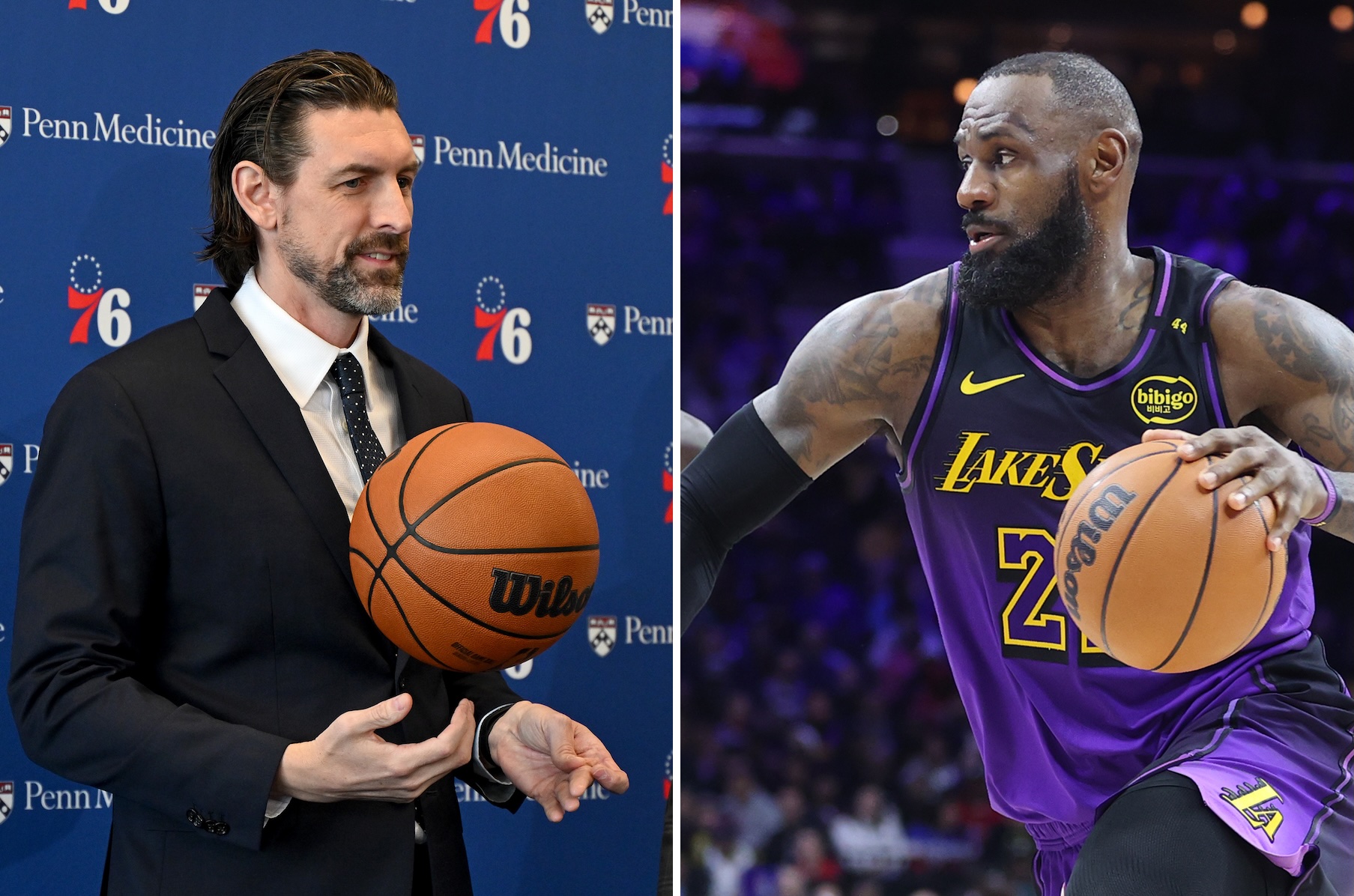
Sixers president Mike Gansey (left) and NBA star LeBron James both played high school basketball in Ohio, where James beat out Gansey for Mr. Basketball Ohio in 2001.Tom Gralish and Charles Fox / Staff Photographers
Steve has long teased his brother about his run-in with the future Hall of Famer. When Mike was working in the Cleveland Cavaliers’ front office, his brother would joke that he’d make T-shirts with the photo printed on the front.
Mike’s response: “No. Do not do that.”
Steve also sent the photo to Koby Altman, Cleveland’s president of basketball operations, who worked closely with Gansey in the Cavaliers’ front office.
“Koby loved it,” Steve said. “He laughed. He said, ‘Oh I know, we’ve talked about it a couple times.’”
The truth is that James and Gansey never competed against each other on their high school teams. Olmsted Falls and St. Vincent-St. Mary were in different regions.
Olmsted Falls, which is on the west side of Cleveland, was grouped with schools in northwest Ohio, closer to Toledo. St. Vincent-St. Mary’s is south of Cleveland, and often played schools in the Akron-Canton area.
It is possible they overlapped playing AAU ball, but if they did, Steve didn’t hear about it. Coincidentally, the elder Gansey also played AAU ball against former Eagles and current Green Bay defensive coordinator Jonathan Gannon, who is also from the Cleveland area.
“He went to St. Ignatius,” Steve said. “Mike battled him.”
Despite their lack of competitive overlap, James and Mike Gansey shared a mutual respect. Over the years, Gansey frequently referred to the future Hall of Famer as the “greatest of all time.”
And James thought highly of the future executive, too. One time, when Gansey was playing in Europe, and James was in the midst of his first stint with the Cavaliers, the two brothers went to a game at Quicken Loans Arena (now Rocket Arena).
Gansey knew some of Cleveland’s players, from training with them during the summer, and went down to the tunnel to say hello.
“And we were probably 100 feet from where LeBron and his people were talking,” Steve recalled. “Someone said, ‘Ganz is over there.’ And LeBron totally walked the opposite way of where he was going, and went to dap up Mike, to say, ‘What’s up, hey man, how you doing?’ Just a quick hello.
“It just shows you the respect. And I was like, ‘Man, Mike, he really walked 100 feet over here, and just dapped you, and walked directly right back. That’s pretty cool.’ And Mike’s like, ‘Yeah, yeah, he’s a great guy,’ and that was it. I’ll always remember that.”
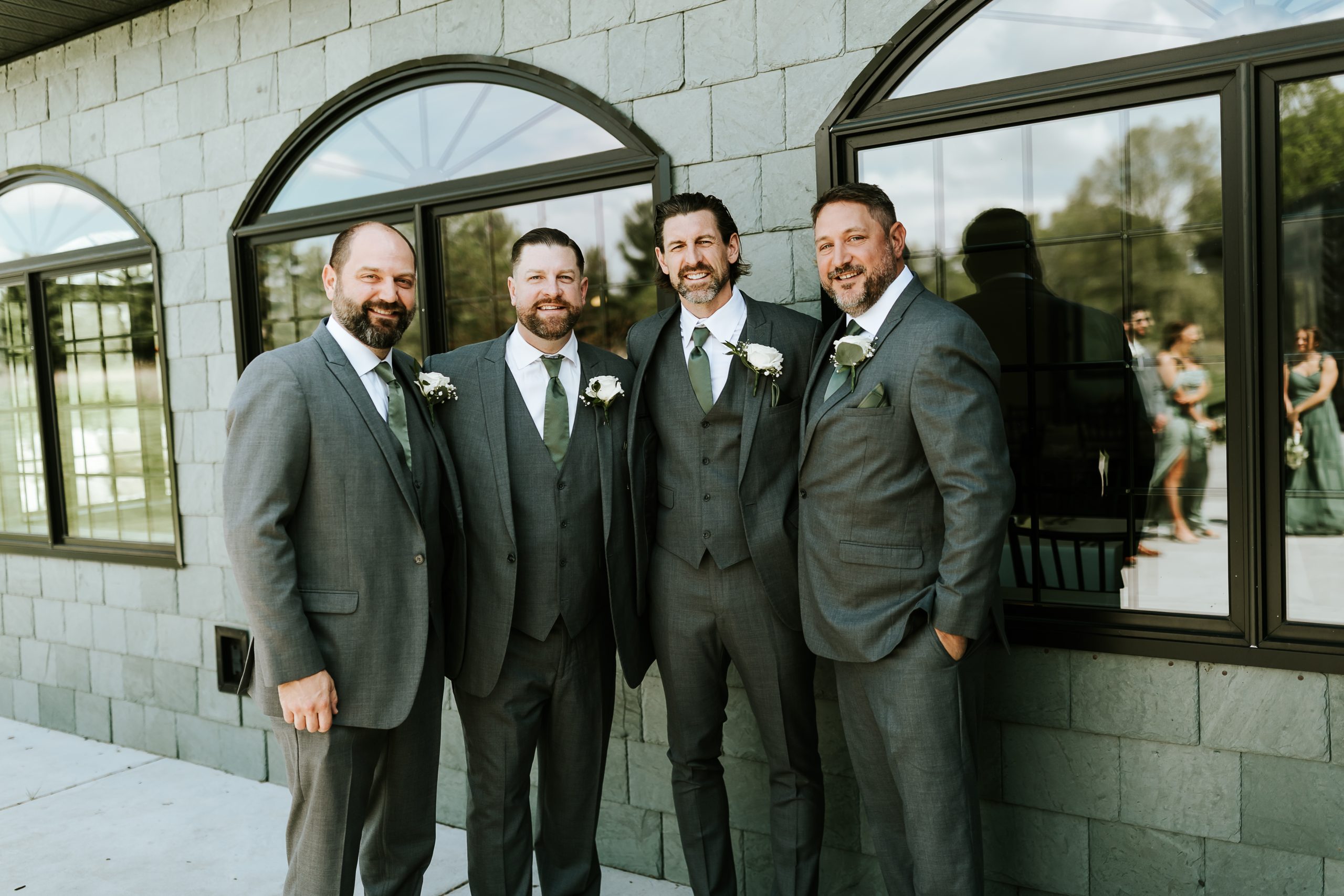
Steve Gansey (left center) is the younger brother of Sixers executive Mike Gansey (right center).Courtesy of Steve Gansey
The Sixers president of basketball operations isn’t the type to brag about any of this, or even mention it. He has never been one for the limelight. His high school coach, Pat Donahue, described him as a team player, almost to a “fault.”
If anything, he was the opposite. There were times when Donahue would have to talk to Gansey, midgame, to encourage him to take more shots. Even in AAU, competing with players who were trying to get the attention of college schools, he was very much team-first.
“He very rarely came out and said, ‘OK, I’m gonna hit five threes in this game to try to get the coach from Duke to pay attention to me,’” said Donahue. “He was more, ‘Hey, I’ll pass to this guy,’ or ‘I’ll do this, I’ll get some rebounds and help the team win.’ And he’s always been that way.”
Despite the future executive’s selfless style of play, he finished his high school career with 1,909 points, which is still the boys’ basketball all-time record at Olmsted Falls. Donahue felt bad that his pupil wasn’t able to reach 2,000, and mentioned this to him after his senior season.
“I walked up to him and I said, ‘Mike, I’m sorry, 90 more points, or whatever it was,’” Donahue said. “‘I could have gotten you that by doing stuff for you.’ And he goes, ‘Coach. I don’t care. That doesn’t mean anything.’ And that’s just the way he is. It didn’t mean anything to him.”
Gansey’s professional basketball career was short-lived. He had a short stint in the D-League (now the G League) and played in Germany, Italy, and Spain for a few years. But that experience was not for naught.
Those who know Gansey best say he was quietly studying the players around him, through an entirely different lens. As his teammates thought about how to attack opponents, the future executive was pondering roster construction and player makeup.
Mike Gansey was hired as the Sixers’ president of basketball operations last month.Elizabeth Robertson / Staff Photographer
When he reached the Cavaliers’ front office, he was well acquainted with the NBA. But that didn’t keep Gansey from his meticulous preparation. He would attend Summer League games with Donahue in Las Vegas, bringing a big notepad to scribble down thoughts during games.
“He’d be at every Summer League game, and he would sit there,” Donahue said, “and this is before he was the [general manager] of the Canton [G League] team. He would watch every summer league game. Every one.
“And he would sit there with his notebook, and he would just take notes about the players. I don’t even know how much say he had in what the Cavs did. He just wanted to be prepared.”
His little brother and the former Olmsted Falls coach say that in Gansey, the Sixers are getting a hardworking executive who keeps his head down but is aggressive, just like he was as a player.
And so far, his Philadelphia tenure is off to a promising start (with the exception of a Phillies mishap in June).
“Oh, he loves it,” Steve said. “He loves it. He loves the city, loves everyone embracing him. Mike felt really bad about that no-hitter he jinxed, but I joked with him, ‘I think you made up for it a little bit.’
“I mean, time will tell, but you got them off your back at least. So, that’s pretty impressive, even though you haven’t played any games yet.”
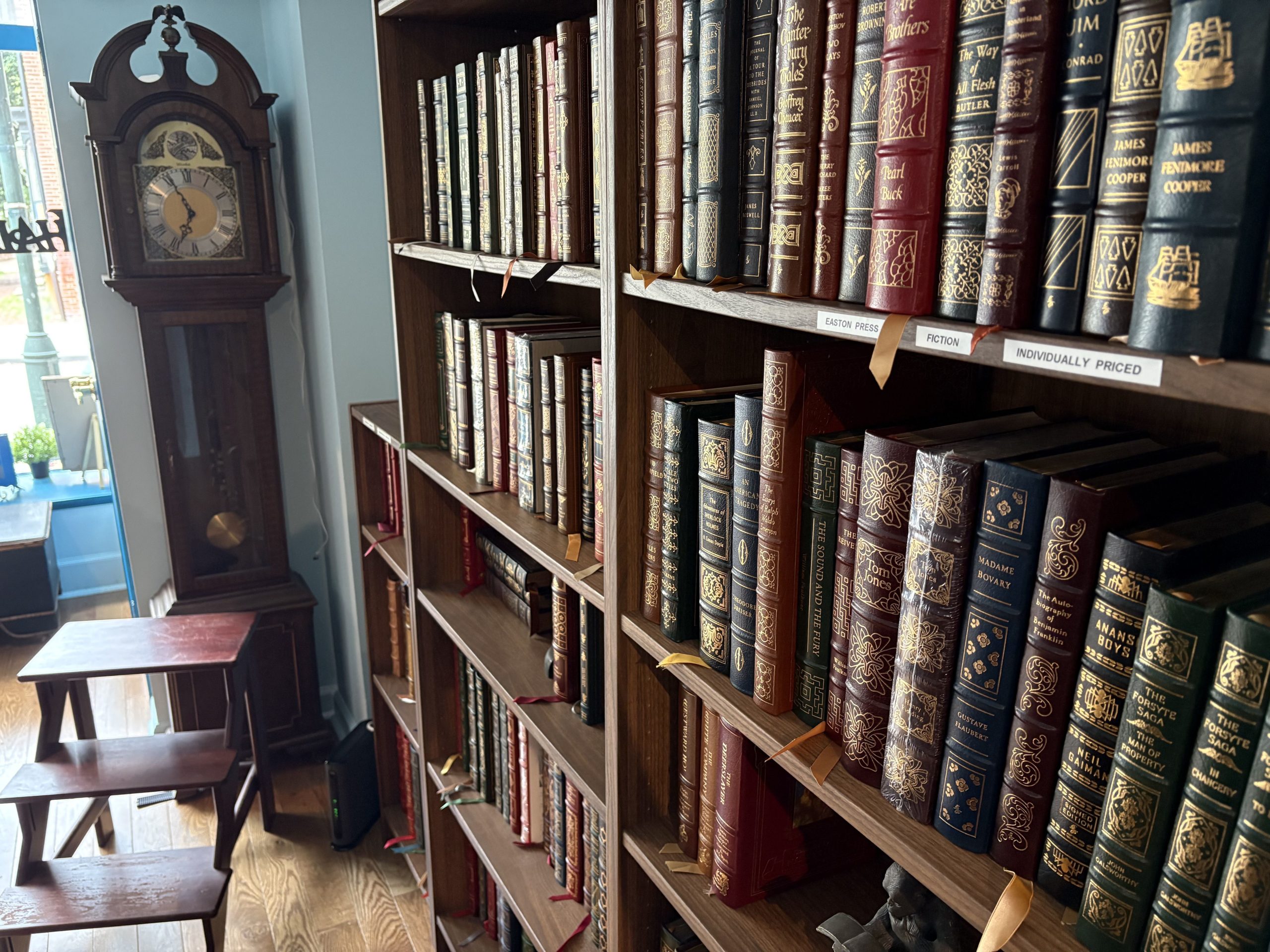
It looks like the antiquarian bookstore of your dreams: a cozy corner storefront, the shelves lined with leather-bound and gilt-edged books. A poetic name is painted on the front window in retro gold letters: Whales & Windmills.
But this new shop in the 1200 block of Pine Street isn’t quite what it seems. The books are old, and surely beautiful. Owner Yaoguang Jiang, however, was aiming for something more specific when she opened the doors in May.
While the volumes in the front room look decidedly 19th century, many in fact are reprints from the middle or late 20th century — books like The Scarlet Letter or The Great Gatsby in handsome Franklin Library editions, or an Easton Press reprint of The Canterbury Tales.
Inside of Whales & Windmills, the bookstore at 1220 Pine St.Peter Dobrin
“What I’m really trying to be is something between a rare bookstore and a used bookstore,” says Jiang.
Antiquarian book dealers may charge hundreds or thousands of dollars for first or early editions of certain titles. But these later editions at Whales & Windmills, while often beautifully bound and embellished with illustrations, might go for $15 to $30 (sometimes more, sometimes less).
“I don’t want to sell super-rare books because it’s counter to my purpose, which is to get people to read books,” says Jiang, a former Penn neuroscience research associate.
Among the many authors currently represented in the shop’s fancy-binding front room are John Galsworthy, James Fenimore Cooper, Pearl Buck, and Louisa May Alcott.
In another room there are traditional used-bookstore paperbacks and hardcovers by Alice Munro, Jane Austen, Saul Bellow, and many others, some for $2 or $3 each.
“We want to be on the one hand curative, selective, but on the other hand approachable. So we want books that are pretty and have another 50 years of shelf life, but not cost-prohibitive,” says Jiang.
Her own favorites?
“Shakespeare is pretty high on the list.”
On her Instagram, she admits to an N. C. Wyeth obsession.
About the bookstore’s name, Jiang says the idea came from a joke her husband made involving Moby-Dick and Don Quixote.
“In the beginning when I started the online business and had zero followers, those were the only two books I could reliably sell.”
The name Whales & Windmills carries another kind of literary resonance.
“It’s in the theme of Pride and Prejudice, Sense and Sensibility — but whimsical.”
It sends the message that the shop deals in classic literature, “but we don’t take ourselves too seriously.”
An artifact from a little known colonial-era massacre
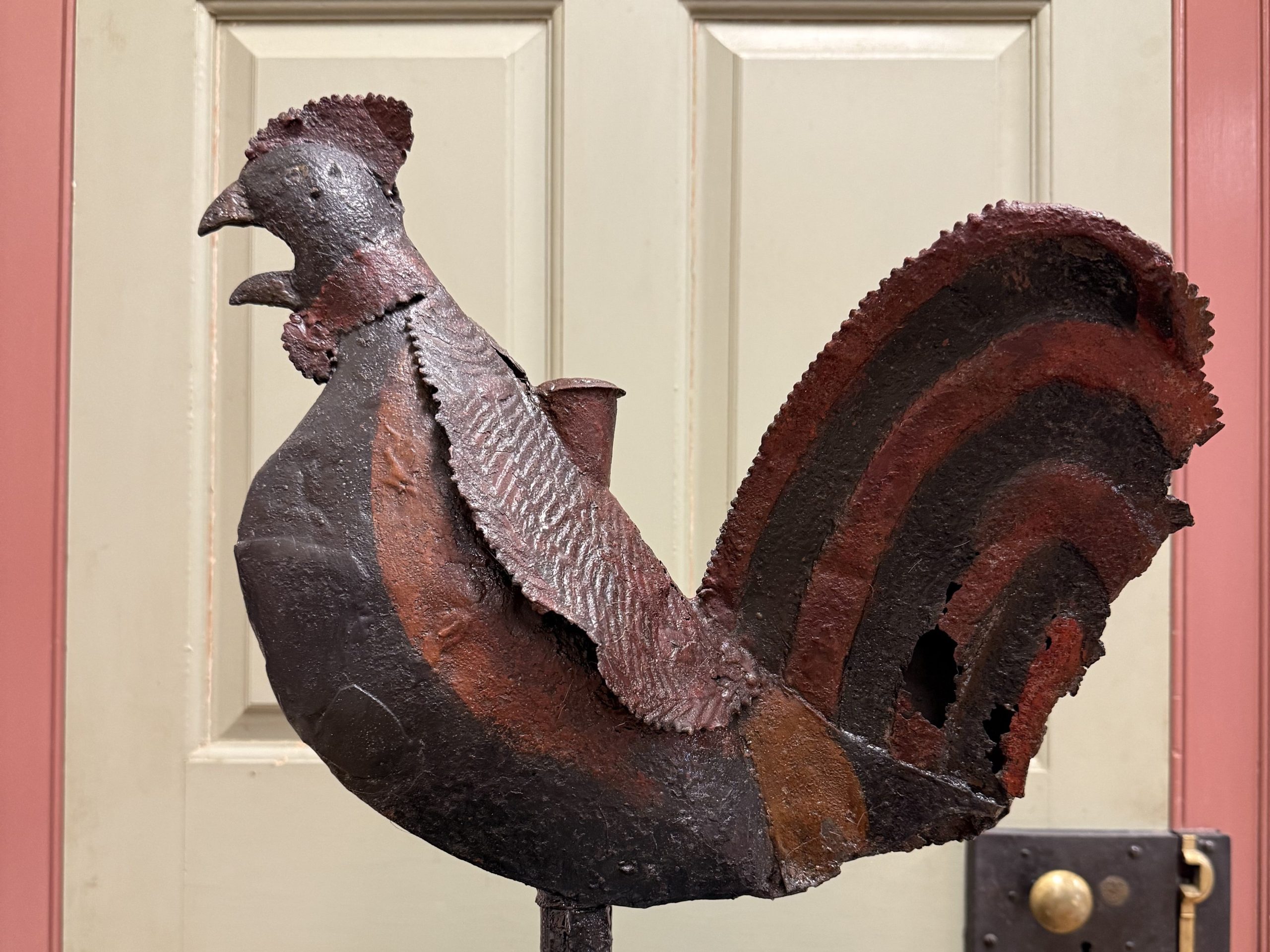
A centuries-old rooster-shaped weather vane greets visitors at the Historic Germantown Visitor Center’s new rotating exhibit, “Rebellion and Remembrance in Freedom’s Backyard.” Its metallic feathers are worn from age. Just below the bird’s comb is a scratch that Historic Germantown’s executive director Tuomi Forrest surmises has been repaired.
It’s how the scratch came to be that I find chilling.
The weather vane was once on top of Germantown Presbyterian Church. It was damaged during the Paxton Boys’ Massacres in 1763 amid the turmoil of the French and Indian War. It is a part of Historic Germantown exhibit honoring America’s 250th birthday.Kaila Temple
Historians suggest it came from rocks, stones, or perhaps even gunshots lobbed at the Germantown Reform Church on Market Square by the Paxton Boys, a violent group of revolutionaries who wanted to wipe Indigenous people from Pennsylvania.
In December 1763, a mob of settlers from Paxtang Township, about 100 miles northwest of Philadelphia, murdered 20 unarmed Susquehannock Indians in Lancaster County. A month later, hundreds of these “Paxton Boys” marched toward Philadelphia to harass and kill more Indigenous peoples. Ben Franklin halted the march just outside of Germantown.
The weather vane is part of a rotating exhibit examining Germantown’s place in the Revolutionary War. But it’s also a visceral reminder that when hate goes unchecked and is allowed to linger, it can be explosive.
The Historic Germantown Visitor Center is located at 5501 Germantown Ave. “Rebellion and Remembrance in Freedom’s Backyard” runs through December.
— Elizabeth Wellington
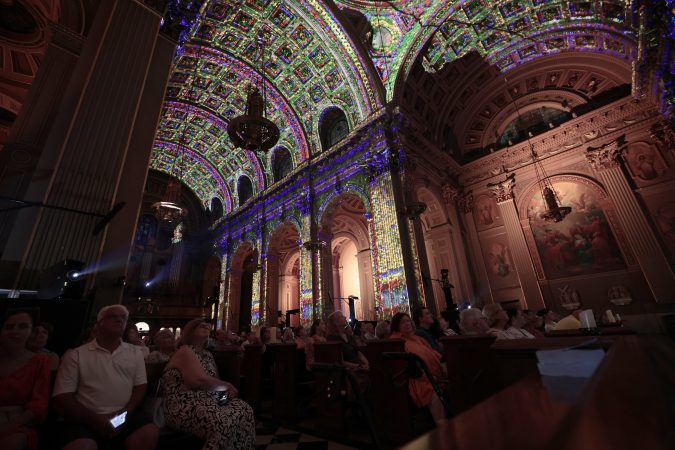
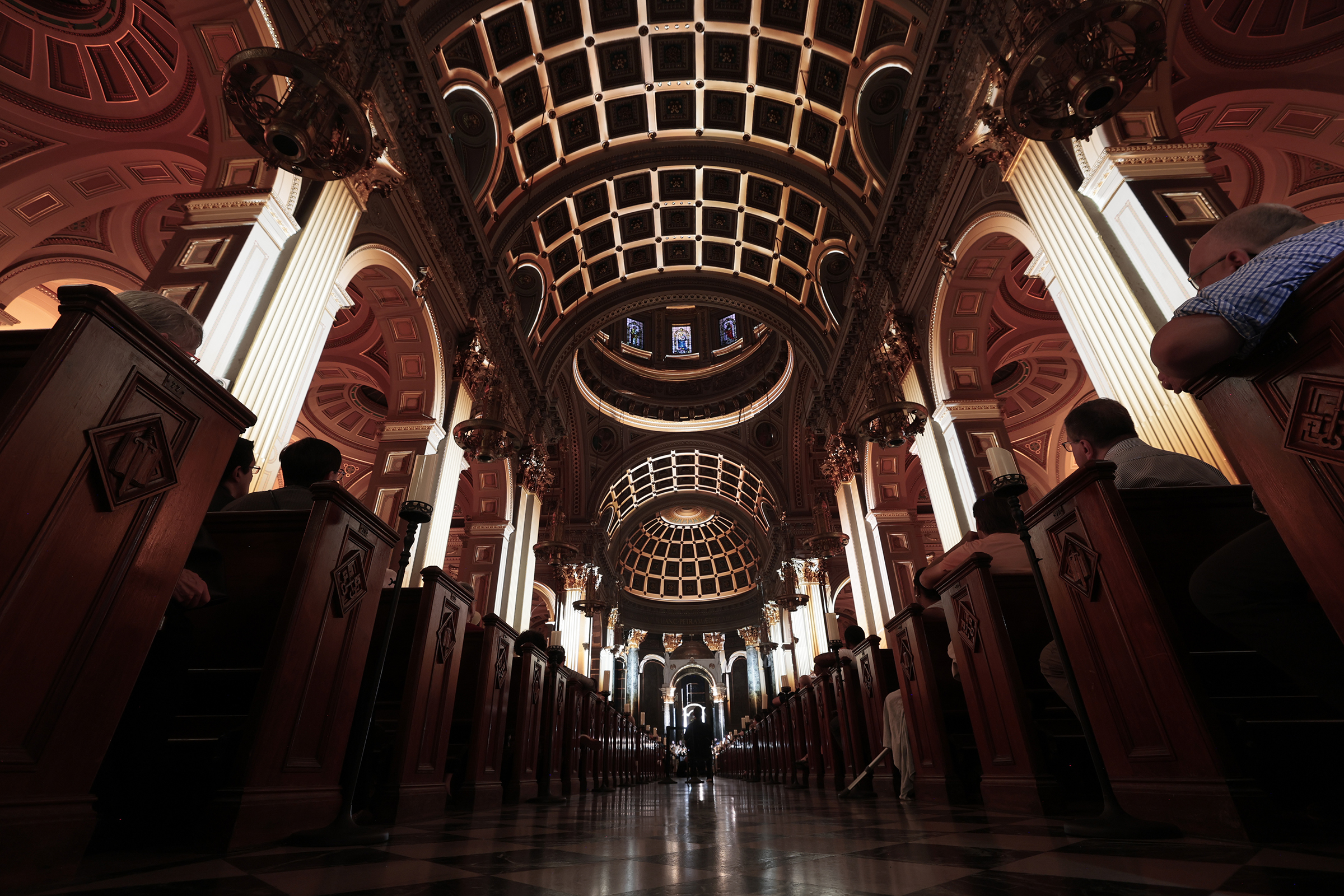
The opening night performance of “Luminiscence Philadelphia: An Immersive Celebration of Light, Music and Story” lights up the interior of the Cathedral Basilica of SS. Peter and Paul in Philadelphia on June 11, 2026.Elizabeth Robertson / Staff Photographer
At “Luminiscence Philadelphia,” time, history, and music converge inside the Cathedral Basilica of SS. Peter and Paul.
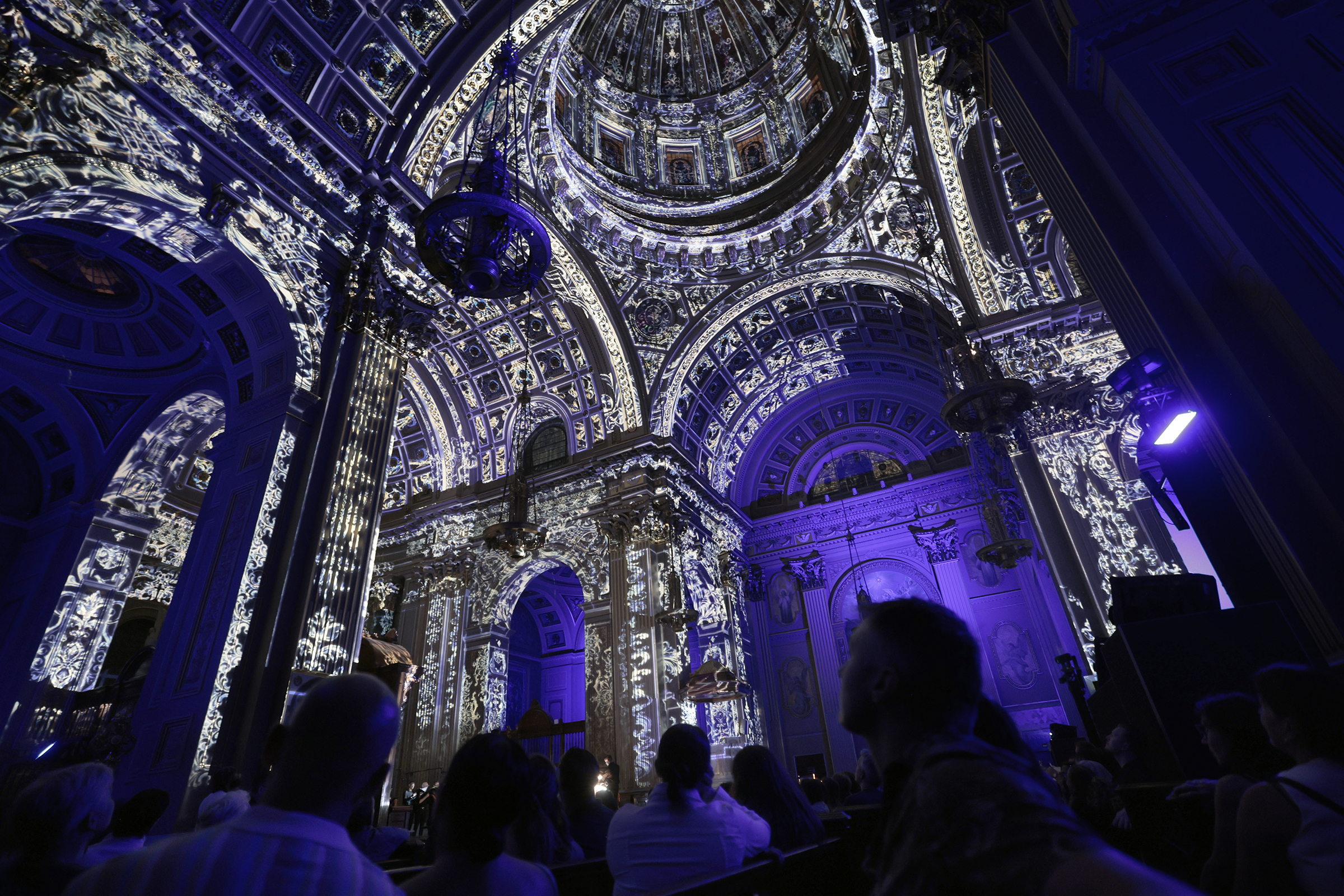
The church’s barrel arches, Corinthian columns, and copper dome are bathed in atmospheric hues and kaleidoscope imagery. Its walls transform into a singular canvas, filled with dreamscapes that stretch from the altar to its entrance doors.
Across the 45-minute show, produced by Banijay Americas Live, there are scenes of a glimmering palace, a starlit sky, a garden of falling blossoms, and angels resting in the heavens — all reminiscent of Italian Renaissance paintings.
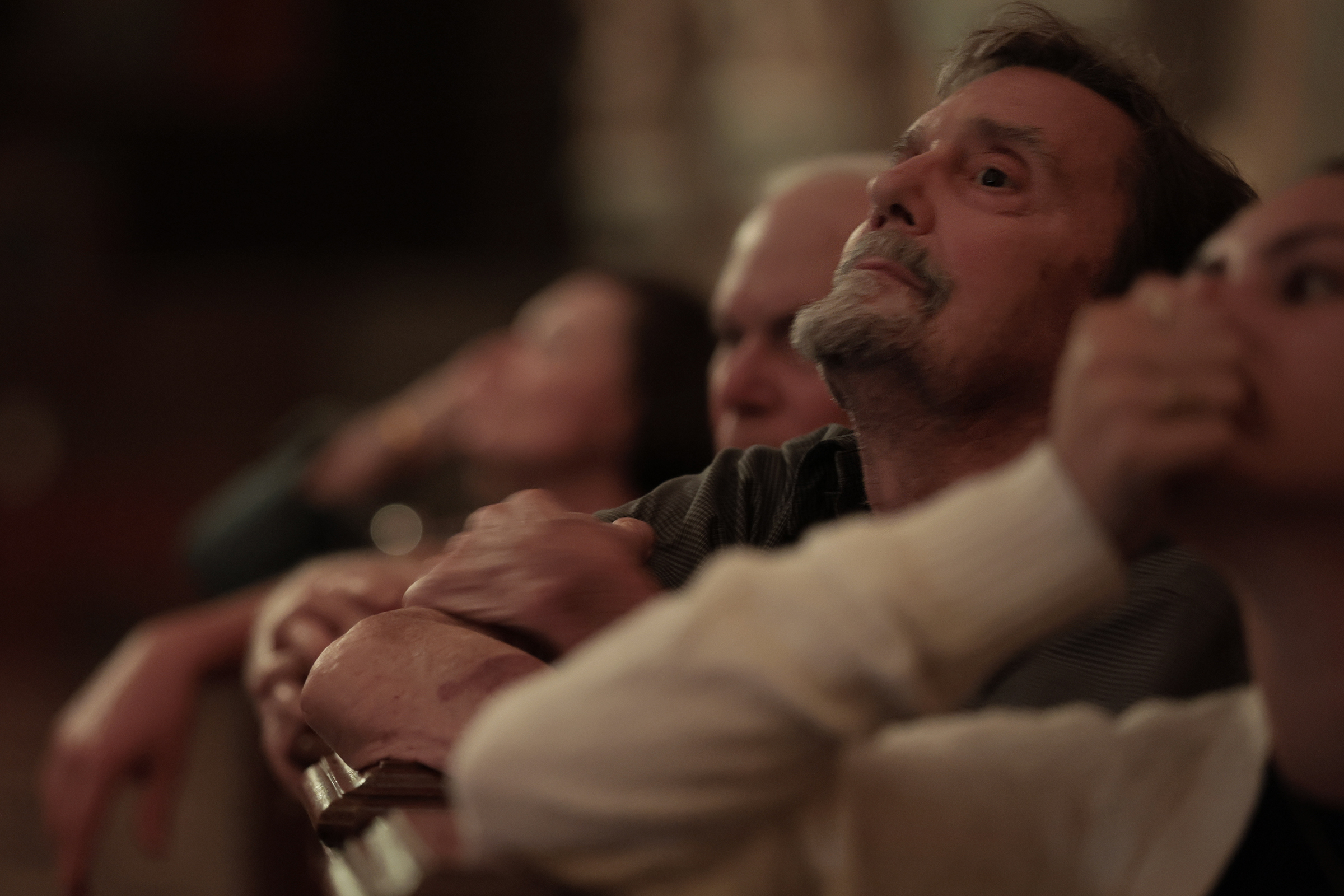
Joseph Blanch of Havertown watches the opening night performance of “Luminiscence Philadelphia: An Immersive Celebration of Light, Music and Story” at the Cathedral Basilica of SS. Peter and Paul in Philadelphia on Thursday, June 11, 2026.Elizabeth Robertson / Staff Photographer
Each vista is shaped by 25 high-definition projectors and 360-degree video mapping. As viewers lift their heads from the church’s pews, they are struck by a full panorama of colors, elevated by a blend of orchestral works.
Beethoven’s “Ode to Joy” and Claude Debussy’s “The Sunken Cathedral” blare from the church’s sound system, while human silhouettes walk along the walls. Their shadowy presence adds to the show’s visual depth.
The opening night performance of “Luminiscence Philadelphia: An Immersive Celebration of Light, Music and Story” lights up the interior of the Cathedral Basilica of SS. Peter and Paul in Philadelphia on June 11, 2026.Elizabeth Robertson / Staff Photographer
On select nights, there are live choir and orchestra performances. Yet, even with prerecorded music, the experience is still deeply immersive. The narration, however, can be distracting. It’s difficult to make out what’s being said, other than references to the church’s formation and the nation’s 250th celebration.
But what’s clear is Luminiscence’s allure. It’s an audio-visual experience that aims to enliven basilicas and cathedrals, with respect to their religious significance and architectural wonder. And with its unfurling inside the mother church of the Archdiocese of Philadelphia, it successfully melds these distinct worlds – the sacred and the luminary.
“Luminiscence,” the Cathedral Basilica of SS. Peter and Paul on 1723 Race St., is open most Wednesday to Sunday nights into August. luminiscence.com/philadelphia
— Earl Hopkins
What is the true value of a dollar?
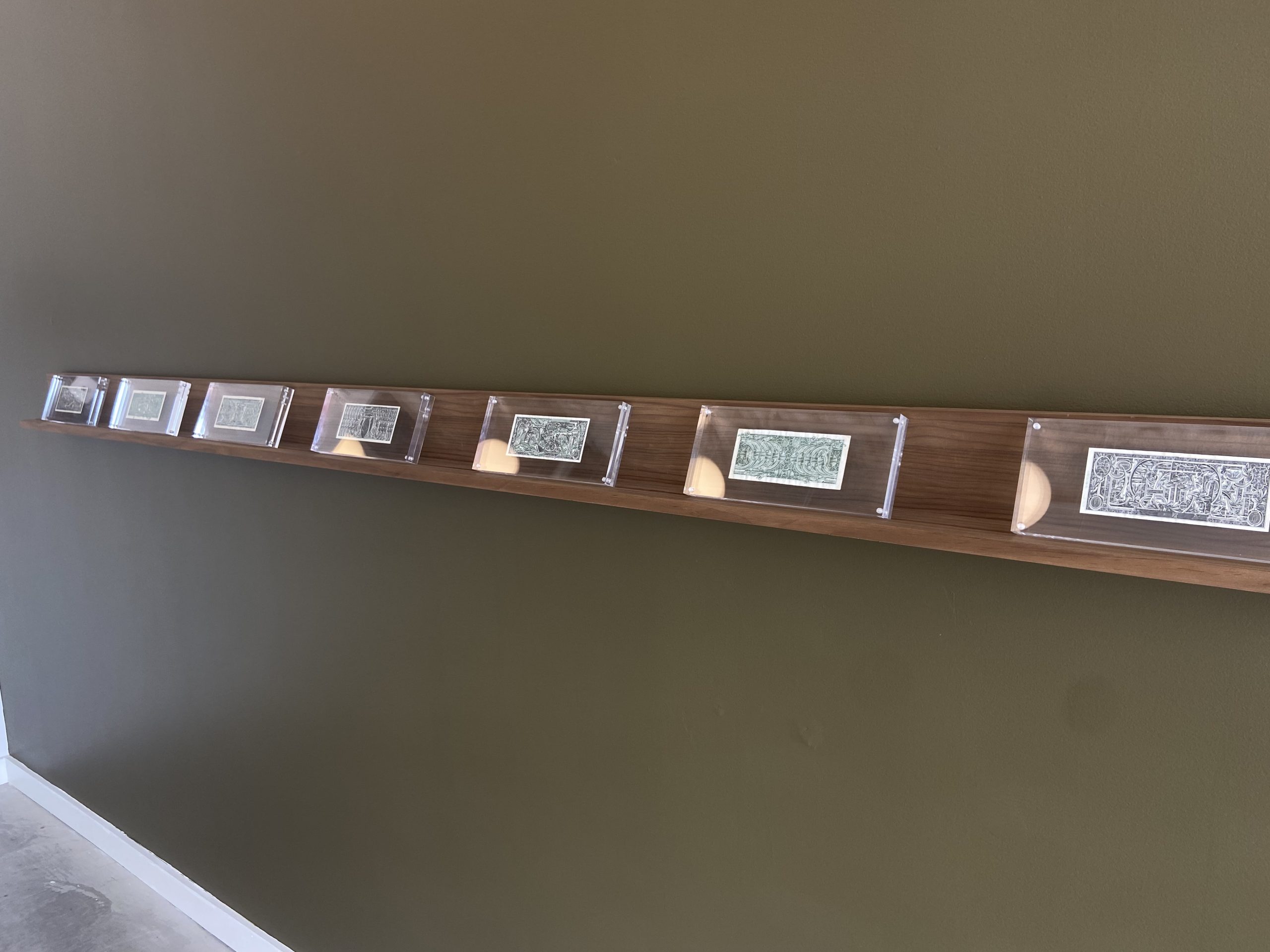
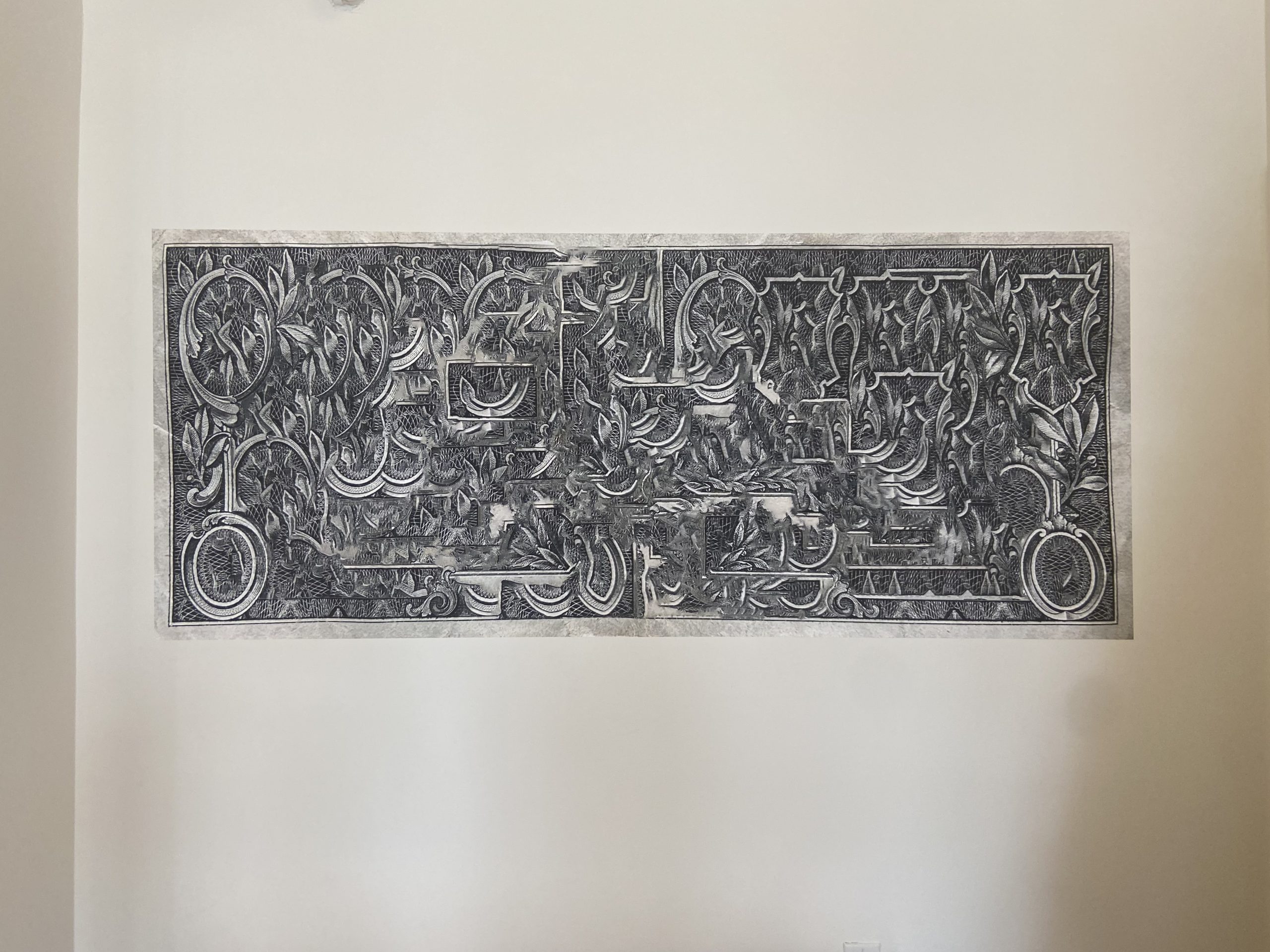
A wall of artist Kaitlin Pomerantz’s “Rewilded Dollars,” featuring reworked collage designs.Morgan Ritter
A U.S. dollar today doesn’t just represent currency. Artist Kaitlin Pomerantz shows that it also represents centuries of capitalism overriding the importance of the planet.
Pomerantz’s new exhibit “(de)growth” in Studio 105 at Ray Philly exhibits the dollar bill in a more ecological fashion. On one wall of the exhibit hang several dollar bills that look normal from afar, but up close, are completely reworked.
A large prototype of artist Kaitlin Pomerantz’s “Rewilded Dollar” hangs at the entrance of the exhibit. It is a digital collage on adhesive vinyl.Morgan Ritter
Pomerantz eliminated any symbols of political power from the dollar bill, cutting them up and collaging them to highlight the environmental aspects that exist on the dollar bill. Rather than the ecosystem being taken over by capitalism, “(de)growth“ imagines a world where nature reclaims itself.
Included in the exhibit are living plant installations placed in deliberately fractured ceramic pots, showing the damage we have already done to the environment, but that it can still regrow.
A collection of ceramics and living plant installations, representing artist Kaitlin Pomerantz’s emphasis on the importance of ecological growth.Morgan Ritter
It was nice to walk around the exhibit, imagining a world where the U.S. government places emphasis on protecting the environment and valuing the natural world around us. That being said, feelings of melancholy soon followed, remembering how damaging the ecological impact from capitalism has been.
Pomerantz powerfully calls out how political domination has caused government powers to lose sight of what’s really important.
It’s easy not to think about the meaning behind the design of the dollar bill. Pomerantz’s vision of changing it to be centered around the planet offers an almost optimistic perspective of what could be valued someday if oppressive systems are dismantled.
“(de)growth” by Kaitlin Pomerantz, is on view through Aug. 2 at Studio 105 at Ray Philly, open Wednesday through Sunday from noon-6 p.m.
— Morgan Ritter
An earlier version of the article had an incorrect name of the exhibition at Ray Philly. It is called “(de)growth.”
NEW ALBANY, Ohio — In a brightly lit Manhattan office above a fragrance laboratory, Mary Testa-Gough brought a white strip of paper to her nose and inhaled. Two perfumers’ assistants awaited her verdict, as if the fate of a multibillion-dollar olfactory empire depended on it.
“Smoky,” Testa-Gough said. “Mossy. Woody. But it feels unfinished.”
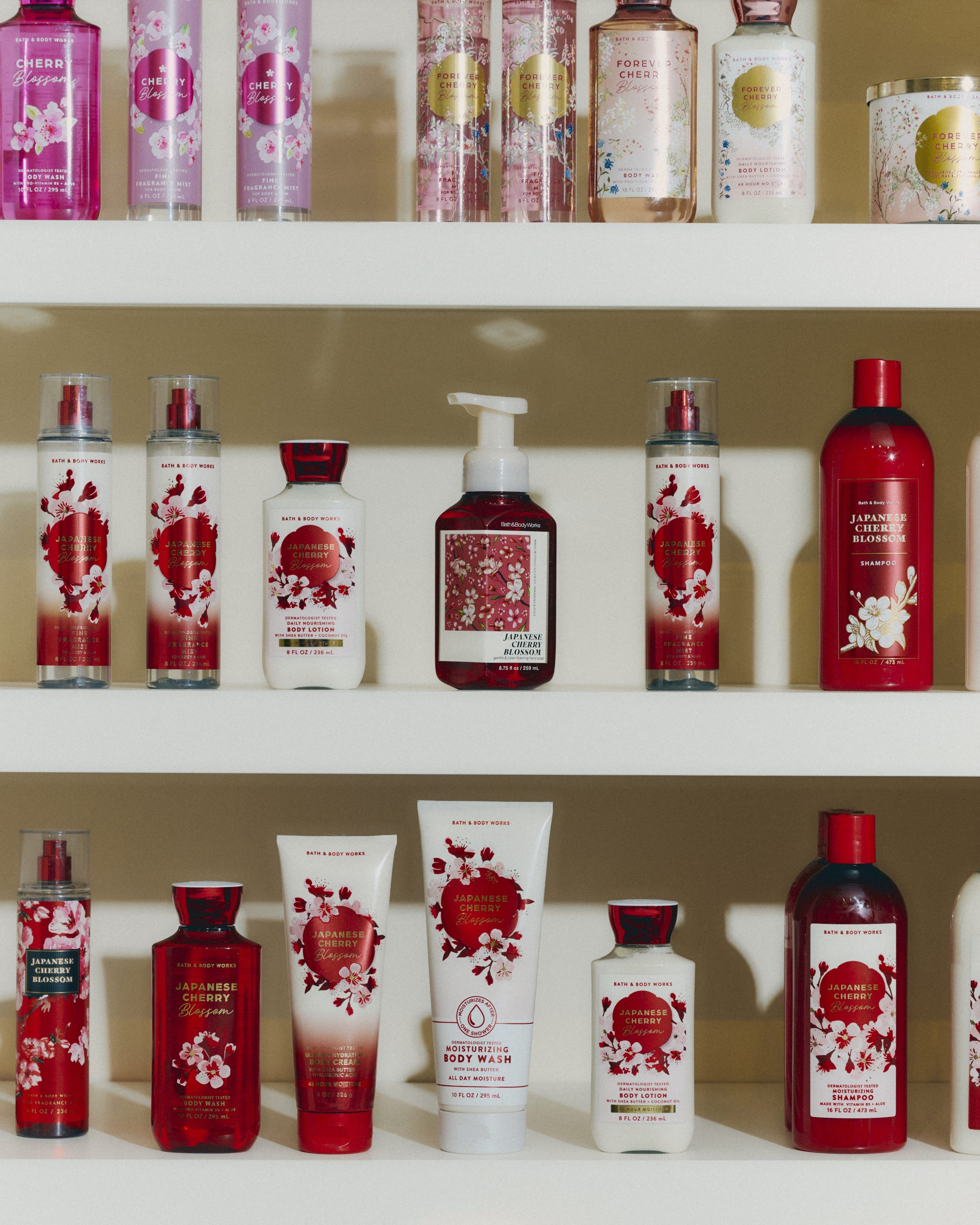
As the chief “nose” for Bath & Body Works, Testa-Gough is in charge of finding the next Japanese Cherry Blossom. That single scent has generated more than $1.5 billion in sales over the last 20 years, filling millions of homes with the aroma of Asian pear, white jasmine, and basmati rice.
The Japanese Cherry Blossom scent has generated $1.5 billion for Bath & Body Works over the last 20 years.VINCENT TULLO
The fragrance — which emanates from candles, air fresheners, lotions, and body mists — has been a bestseller since it debuted in 2006. It’s so popular that the retailer celebrated its 20th anniversary with an ad campaign and new packaging this past spring as part of a broader expansion strategy to help bring in new customers.
Sales at Bath & Body Works slipped to $7.3 billion last year from a pandemic-era peak of $7.8 billion, pushed down by competitors marketing on TikTok and consumers increasingly suspicious of chemicals in fragrances.
To fight back, CEO Daniel Heaf unveiled a plan in November that included marketing “iconic” fragrances online as stand-alone brands and offering products on Amazon. Bath & Body Works will also begin selling some of its products at hundreds of Ulta Beauty stores this month.
They’re coming out with new products. Testa-Gough has high hopes for Watermelon Whirl and Tangerine Twirl — which are among the scents being released this week in a new product line promoted by actress and singer Hilary Duff.
Nobody knows for sure why some scents become classics, while others fall into the discount bin. Despite all the money spent on marketing and focus group testing, some scents still fall flat while others invoke such intense loyalty that customers rant on social media when they can’t find them in a store.
That’s why the company has invested millions of dollars in being able to quickly manufacture and distribute more candles, lotions, air fresheners, and body mists when customers fall in love with a particular scent. In 2011, for instance, Bath & Body Works stopped buying plastic bottles from China and began sourcing from Axium Packaging, a plastics container manufacturer that built a factory near the Bath & Body Works headquarters in New Albany, Ohio.
Kdc/one, the contract manufacturer that mixes fragrances into foaming soaps, lotions, and gels, also built a plant there, helping to cut the time to market for some products to weeks from months.
“It was a massive unlock to be more responsive to what the customers are buying in the store,” said Nicholas Whitley, Kdc/one’s CEO.
The birth of ‘Beauty Park’
Since 2008, Bath & Body Works has consolidated its number of strategic suppliers to about 50 from hundreds. It offered long-term contracts to vendors who agreed to build factories in New Albany, creating an industry cluster that is now known as Beauty Park.
“Fifty-percent of our whole supply chain came from China” in 2008, recalled Toby Thunberg, who handled supply chain logistics for Bath & Body Works at the time and now works for Axium, the bottle maker. Today, 85% of the supply chain for Bath & Body Works hails from North America, according to Susanna Zhu, chief procurement and supply chain executive at Bath & Body Works; of that, 55% is in Beauty Park.
Beauty Park was the brainchild of retail mogul Les Wexner, founder of L Brands, which owned Bath & Body Works, Victoria’s Secret, and Abercrombie & Fitch. Wexner said in 2007 that the global supply chain for the fragrance business was too cumbersome, according to Thunberg. At the time, the company searched for inexpensive plastic bottles from China. They had to be ordered months in advance, making it impossible to quickly restock best-selling scents, he said.
Inspired by an apparel hub in India where Victoria’s Secret suppliers turned around underwear orders quickly because they were all clustered in the same area, Wexner envisioned factories surrounding the company’s headquarters in New Albany, where he owned vast tracts of land.
It was a radical pitch. The proposed site was a pig farm 17 miles from the nearest railway, leaving his own staff and vendors deeply skeptical. Wexner flew his team and key suppliers to India to witness the hyper-efficient ecosystem firsthand, Thunberg recalled.
Today, the tightly integrated hub allows Bath & Body Works and its core suppliers to work together more closely — shrinking lead times to weeks, from months. During the pandemic, the company was able to quickly pivot to making hand sanitizer and experienced its best year on record.
Today, Bath & Body Works and its core suppliers have an almost familial relationship, even though the companies also make products for other customers.
“They are an extension of ourselves,” said Stephen Smith, a supply chain senior executive at Bath & Body Works.
Those informal bonds make it easier to create new products together, according to Alan Malter, associate professor at the University of Illinois Chicago, who has studied the impact of industry clusters on innovation.
“If you are just going to have a contract manufacturer in the cheapest place you can find, you will probably be innovating less with them,” he said. “It will be more of a relationship where you are giving them instruction, and say ‘Make this.’ It is less of a partnership.”
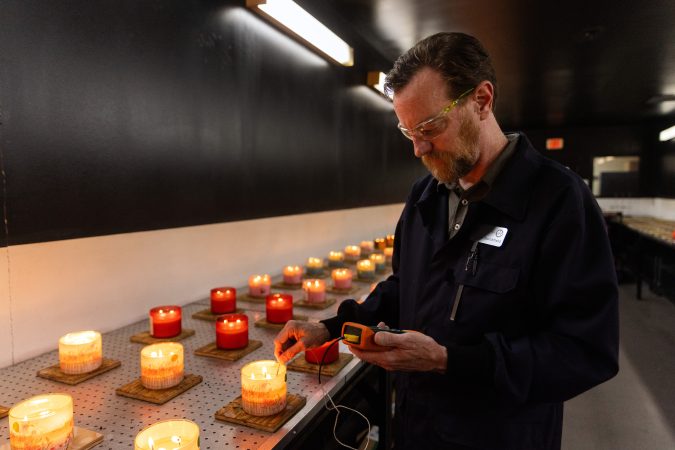
One afternoon this spring, Zhu popped into Alene Candles, a key supplier in Beauty Park that pioneered the three-wick candle with Bath & Body Works. She chatted briefly with technicians in the burn lab who measure the soot content and height of flame from candles in every batch.
Then she stopped by the laboratory at Kdc/one and thanked the technicians who helped develop a daily moisturizing hand soap that had been flying off the shelves.
She wanted to know if they were working on anything new.
How a fragrance is born
The search for a new iconic fragrance begins in New York, where master perfumers at major fragrance houses, like DSM-Firmenich, compete to get on the shelves at Bath & Body Works by crafting new aromas based on themes that Zhu brings them.
They create dozens, if not hundreds, of different scents — inspired by ideas like Mother’s Day or the joy of spring. They fine-tune them, based on feedback from Testa-Gough (the “nose”). Later in the process, focus groups are paid to smell them as well.
Mary Testa-Gough (right) the chief “nose” for Bath & Body Works, tests a fragrance at DSM-Firmenich, a major fragrance house, in New York on April 20, 2026.VINCENT TULLO
In the past, fragrances were made by boiling spices for hours or pressing oils out of flower petals. Today, the process is often more high-tech.
For instance, to create the Milk Bar Birthday Cake collection, molecules were collected from the steam of a freshly baked cake at the popular New York bakery chain, then analyzed and recreated in a lab.
With the Japanese Cherry Blossom, whose real petals hardly have a scent, the fragrance was more of a perfumer’s fantasy.
Harry Fremont, a master perfumer at DSM-Firmenich who is best known for creating Calvin Klein’s CK One, designed a cherry blossom-inspired scent in 2006 for Bath & Body Works. Camille McDonald, the creative force behind Bath & Body Works at the time, asked him to make it more complex, so it would appeal not just to mall-loving teenage girls but also their mothers.
“She said, ‘I want to make something different with it to elevate the brand, to make it more sophisticated,” said Fremont, who is now retired. “She said, ‘I want to make our Shalimar,’” a reference to the famous perfume created by Jacques Guerlain in 1925.
Fremont added sandalwood, musk, and molecules that smell like basmati rice when it cooks. “Maybe it’s a bit too sophisticated,” McDonald told him after a round of focus group tests. He added back top notes of apple and pear, and it became the company’s top-selling fragrance of all time.
An ebullient stock market, huge bets on artificial intelligence, and an open regulatory environment have fueled one of the biggest six-month booms in dealmaking in years.
Through the end of June, there were about $3.2 trillion in global deals, a 45% jump from a year earlier, according to Dealogic, a data provider. That was the most spent on dealmaking over a half-year period in at least a decade.
The frenzy heavily favored large companies, with 44 deals announced that were larger than $10 billion, including takeovers and large-scale fundraising in the private markets. Those blockbusters pushed the overall value of deals higher even though the total number of transactions fell about 1% from last year, as companies with less financial firepower or those more vulnerable to geopolitical uncertainties stayed on the sidelines.
Executives of many large companies, however, have brushed aside the uncertainties posed by tariffs and the war in the Middle East to pursue takeovers that are more likely to be approved by regulators under the Trump administration than they were during previous administrations.
Many companies “perceive they have a window in which to attempt to affect something transformational, and now is really the time to try to do it,” Matt McClure, a global co-head of investment banking at Goldman Sachs, said in an interview.
Bankers insist this time is different from previous booms, such as the record-low-interest era of the COVID-19 pandemic, the leveraged buyouts of 2007, and the dot-com bubble in the 1990s.
The companies driving this year’s dealmaking surge are among the world’s largest and best-funded, and many of them are aiming to transform their business by doing big mergers, rather than making smaller acquisitions.
Some of this activity is propelled by a need to simply keep pace in an economy dominated by only a handful of giant corporations. Consider that companies need to be about twice as large to enter the S&P 500 as they did five years ago. Exxon Mobil, once the most valuable company in the United States, is about one-eighth the size of the largest of the so-called Magnificent Seven technology companies.
“The definition of scale keeps moving, so companies need to be bigger and bigger, and big companies need to do bigger and bigger deals to have an impact,” said Ben Wilson, a co-head of North America mergers and acquisitions at J.P. Morgan.
NextEra’s $118 billion deal for Dominion Energy, which was announced in May, would create a utility giant aimed at supplying the increasing amounts of electricity needed to power artificial intelligence. SpaceX’s $60 billion acquisition last month of Cursor, a start-up that makes code-writing software, is aimed at helping Elon Musk’s rocket company build its AI models.
Typically, companies are reluctant to take on big deals in times of turmoil. Disruptions in oil supplies because of the war with Iran and the White House’s open hostility toward America’s biggest trading partners in Europe show no signs of abating. Questions also persist around the AI build-out, such as the costs for computer chips, supply constraints and potential delays on when these AI companies might reap profits.
“What makes the current boom a little counterintuitive is it appears to be associated with maybe not unprecedented, but top-quartile-level uncertainty and volatility,’’ said Jonathan Knee, a Columbia Business School professor and senior adviser at the investment bank Evercore.
The deal activity has been a boon for banks, too, with details likely to emerge when they announce earnings next week. Bank of America expects its investment banking revenue in the latest quarter to be up 28% from a year earlier, while JPMorgan Chase expects a 10% increase, according to a research note from Jefferies.
Not every company has joined the party. In all, 21,727 deals were announced this year, down slightly from 21,997 at this point last year. Some of that decline can be attributed to the challenges facing private equity. Companies owned by private equity firms made up 24% of the overall deal value, according to Dealogic, down from about 34% in 2024 through 2025. Many of these firms are grappling with the uncertain values of the software companies they acquired before AI posed a threat to them, making them difficult to sell.
“So far this year, it’s just not been quite at the pace the market originally anticipated,” McClure said.
Initial public offerings during the first half of the year were dominated by larger companies bent on powering the race for AI and those in defense technology.
Madison Air Solutions, a cooling company that serves data centers, raised $2.23 billion in an IPO, and Cerebras, a Silicon Valley maker of AI chips, raised $5.55 billion. And, of course, SpaceX raised more than $75 billion, in the largest-ever initial public offering.
These offerings helped boost the value of IPOs in the United States to $155 billion, the most since 2021, when a flurry of so-called blank check vehicles stampeded into public markets.
Bankers say the door for other offerings related to AI remain open. SK Hynix, a South Korean memory chipmaker, is set to raise $28 billion in a U.S. listing this week.
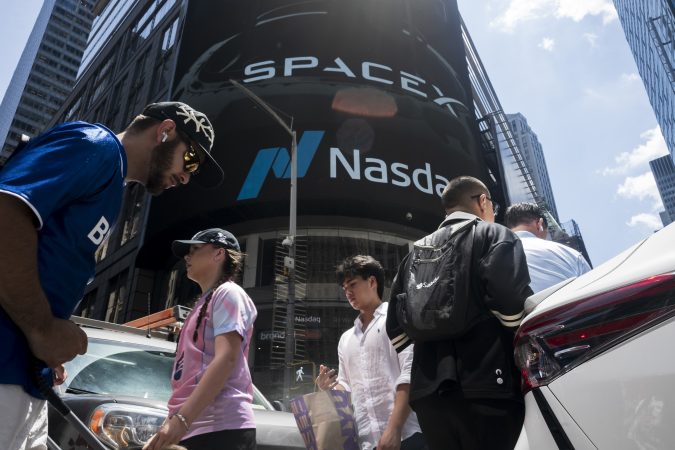
But the first weeks of trading for SpaceX shares have been volatile. With its IPO price of $135 a share, it opened at $150 in its first minutes of trading June 12. It closed just above $135 on Wednesday, and was trading at less than $133 on Thursday.
Questions about whether demand will ultimately justify enormous spending on AI continue to swirl over the markets, along with other uncertainties including the war in the Middle East and inflation. Shares of the Magnificent Seven helped lead the S&P 500 through its best second quarter in six years, even as shares of those companies fell roughly 9% in June.
Still, Kennedy said, “I do think the AI theme will continue to drive activity through the end of the year.”