Blog

  • LeBron James to miss Monday’s game vs. the Nets

    LeBron James to miss Monday’s game vs. the Nets

    LeBron James will miss the 76ers’ game at the Brooklyn Nets on Monday for sciatica management, according to the NBA’s injury report.

    The Sixers are on the second night of a back-to-back, after beating the Indiana Pacers at home Sunday afternoon. James, who turns 42 years old next month, also missed Thursday’s victory over the Toronto Raptors to manage the same lower back condition.

    Joel Embiid, who missed Sunday’s win to manage plantar fascia in his right foot, is listed as questionable to play against the Nets. The former MVP also briefly left Thursday’s win over Toronto after inadvertently knocking knees with a Raptor while setting a screen, but returned to action and totaled 20 points on 7-of-17 shooting, four rebounds, and three assists.

    James’ absence comes one day after he moved into third place on the NBA’s all-time assists list by recording 11 in Sunday’s win. He is averaging 15.1 points, 7.2 rebounds, and 6.9 assists in 11 games played in his first season as a Sixer.

    Backup center Adem Bona (spine) and reserve frontcourt player Dominick Barlow (back) remain out for Monday’s game. After the Sixers’ visit to Brooklyn, they next play Wednesday at the Orlando Magic.

  • With the midterms behind them, lawmakers must now confront the cost of destroying nature

    With the midterms behind them, lawmakers must now confront the cost of destroying nature

    Tatiana Der Avedissian is a communications and sustainability expert. She is the founder of Mereweg, England’s first blue economy cluster and a member of Leading Women for the Ocean.

    The midterm elections in the United States have changed the balance of power in Washington. And among the most pressing issues facing the new Congress, one deserves far more attention than it usually receives: Why do the world’s governments help pay for the destruction of the natural systems that sustain us?

    All over the world, governments are subsidizing policies that harm our forests, fisheries, and other resources at a rate that dwarfs the spending to protect them, according to the World Bank. This is far from just an environmental catastrophe; it is an economic calamity. Old policies that are no longer tenable are still being maintained despite the fact they no longer make economic sense.

    Why care?

    Why should ordinary people care about biodiversity? After all, most of us have enough to worry about without counting species, and in the United States today even the word “diversity” is contentious. But you don’t have to love nature to depend on it.

    Pennsylvania offers a prime example. In Philadelphia, where the Schuylkill and Delaware rivers shape the city’s geography, flooding is already an expensive reality. The city estimates that damage from a single major storm in 2021 exceeded $1.3 billion. Healthy wetlands, forests, and floodplains help absorb rainfall and reduce the damage such events can cause. Protecting these natural defenses is an economic investment that can save taxpayers billions.

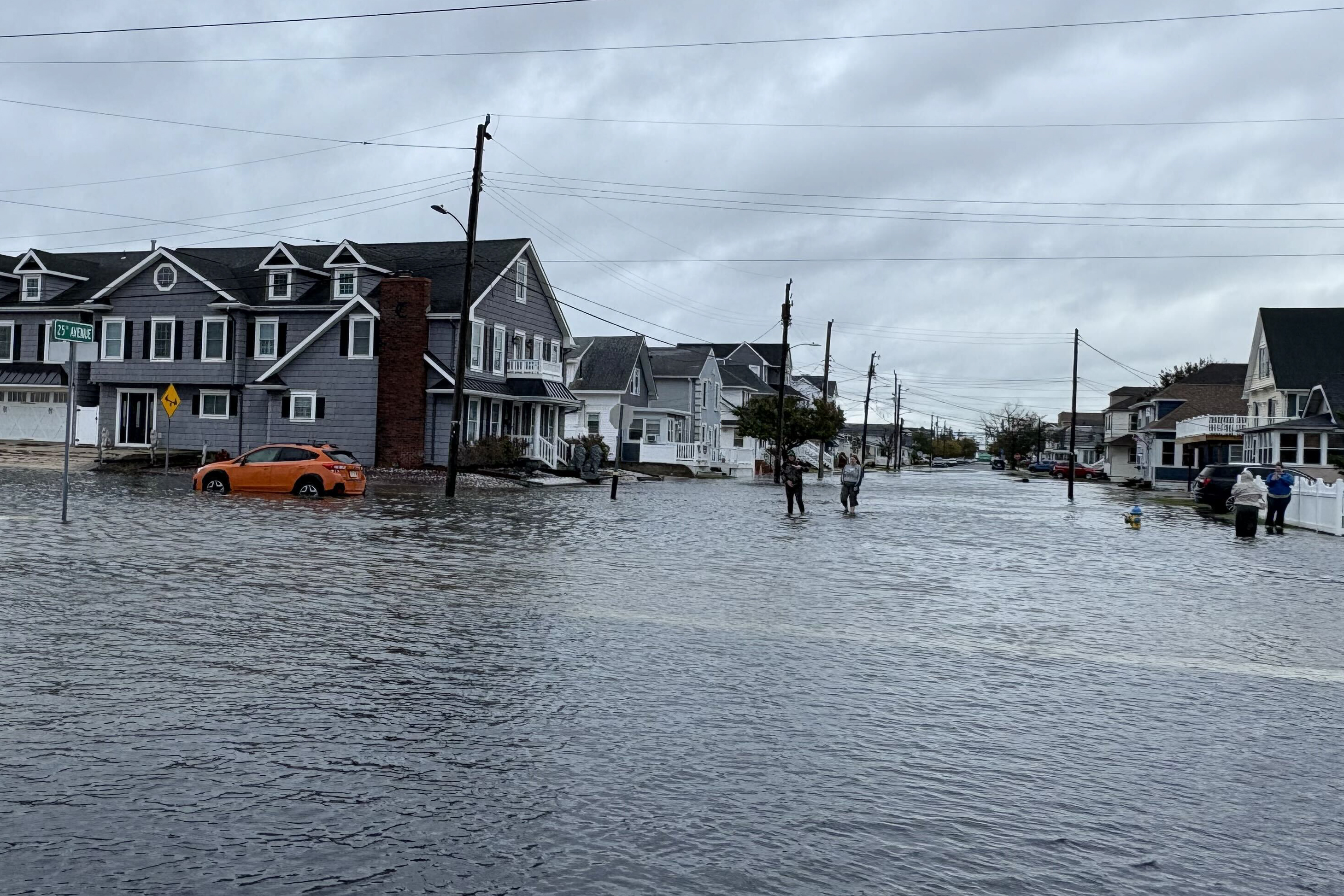
    Flood waters brought by a nor’easter in Wildwood, N.J. in September.Brett Sholtis / Staff

    When forests and wetlands are damaged, communities lose protection from floods and access to reliable sources of clean water. When bees and other pollinators disappear, crops suffer. When fisheries decline, families lose food and jobs. The costs show up in grocery bills, water supplies, and livelihoods. The Trump administration has shown little enthusiasm for international environmental cooperation, but this is a problem that deserves attention across party lines.

    That is why the recent United Nations biodiversity conference, COP17, which took place last month in Yerevan, Armenia, matters well beyond the circle of environmental experts who participated in it. Governments have already promised to protect more of the planet’s land and waters and repair damaged ecosystems, but will they actually do it and pay for it? The answer will affect families and businesses far from the conference halls.

    Studies have shown that funding and protection efforts are falling short of governments’ own promises. The World Bank estimates the cost of failing to aggressively protect the environment at $2.7 trillion by 2030. This is about food, health, work, and the security of our communities.

    The scale of this self-inflicted damage is staggering. According to a United Nations Environment Programme report released in January, governments worldwide provided $2.4 trillion in environmentally harmful subsidies in 2023 dealing with fossil fuels, agriculture, water, transport, and construction. Such economic incentives encourage excessive resource consumption, over-intensive farming, and the destruction of habitats. Meanwhile, the world invested just $220 billion in nature-based solutions in 2023. Including private sector financing, money flowing into the activities that damage nature outweighed the investment in protecting it by roughly 30 to 1.

    Destructive policies

    The United States offers a particularly troubling example. The Trump administration has made weakening environmental protections a central element of its economic agenda. In July, it narrowed protections under the Endangered Species Act, making it easier for logging, mining, and drilling operations to proceed in wildlife habitats. The administration presents such measures as removing obstacles to growth, yet forests, wetlands, and functioning ecosystems are productive economic assets, supplying clean water, protecting communities, and sustaining agriculture. Policies that encourage their destruction transfer costs from businesses to taxpayers, families, and future generations.

    The U.S. should be leading the effort to counter these incentives. Instead, its government is moving in the opposite direction. Paradoxically, the administration last week unveiled the new America First Seafood Strategy to try to protect the American fisheries industry, which demonstrates that officials understand the economic imperative of protecting livelihoods.

    War makes the danger to our environment even more immediate. Research on the Persian Gulf shows that attacks, oil spills, and chemical contamination can damage coral reefs, mangroves, and other marine habitats, with consequences for aquaculture and the water supplies of countries that depend on desalination. Pollution does not stop at a border. Protecting shared ecosystems requires cooperation even among governments that disagree on almost everything else.

    Focus on oceans

    The oceans offer a particularly urgent test of whether governments intend to turn promises into reality. Much of the world’s biodiversity work has focused on land, but our oceans demand equal attention. Three priorities stand out: integrating the new High Seas Treaty into global biodiversity efforts, protecting 30% of the planet’s land and seas by 2030, and ensuring that marine protected areas are more than “paper parks,” where destructive practices such as bottom trawling, a destructive method that affects our sea floor to catch fish and other marine species living close to the seabed, can still take place.

    We also need better marine spatial planning, too. Governments must balance offshore wind farms, aquaculture, undersea cables, and shipping routes with genuine conservation, rather than allowing one activity to undermine another. And Indigenous peoples and coastal communities must have a meaningful voice in these decisions, not merely be consulted after the fact. Their livelihoods and futures are directly at stake.

    Gary Wilcox with the American Indian movement blesses and cleanses environmental advocates and protesters at the Dade-Collier Training and Transition Airport on Tamiami Trail E, Ochopee, Fla., on June 28, 2025. Mike Stocker

    Governments must stop subsidizing the destruction of the natural systems on which their economies depend. This cannot be left to environmental policy makers alone. It requires a collective governmental effort including leaders in agriculture, finance, trade, and infrastructure to recognize that maintaining healthy ecosystems are just as vital to long-term prosperity as roads or power grids.

    COP17 concluded with the adoption of the Yerevan Pathway, a roadmap for accelerating global biodiversity protection through 2030. The conference also announced nearly $2 billion in new biodiversity financing and strengthened conservation commitments, although significant challenges remain in meeting global targets.

    What to do

    All of that is useful, but governments need to make practical commitments: Stop rewarding environmental destruction and commit significant funding toward biodiversity. The commitment secured so far, $1.8 billion, does not come close to the amount needed, which is $700 billion annually to fully protect global ecosystems. To achieve this, international cooperation is needed because nature crosses borders, whether politicians like it or not.

    Individual citizens have a role, too. We can press elected officials to treat healthy land and water as essential rather than a luxury or afterthought. We can reconsider the brands we buy, support organizations doing serious, science-based restoration work, and demand greater accountability for how public money is spent.

    The midterms have created a new political reality in Washington, but they have not changed the economic realities confronting America and the world. Whether Democrats and Republicans can agree on environmental policy is another matter. Yet protecting fisheries, securing water supplies, preserving productive farmland, and preventing costly natural disasters should not be understood as exclusively partisan objectives. They are fundamental economic interests.

    The incoming Congress has an opportunity to scrutinize subsidies that reward environmental destruction, examine the long-term costs of weakened protections, and demand that public spending reflect the true economic value of healthy ecosystems. The Trump administration, meanwhile, has an opportunity to demonstrate that its commitment to American prosperity includes protecting the natural assets on which that prosperity depends.

    You do not have to be an environmentalist, or belong to any particular political party, to insist that governments stop paying to destroy what keeps us alive. After the midterms, that is a question both parties should be prepared to address.

  • Jill Scott leads the Philly Grammy parade with five nominations

    Jill Scott leads the Philly Grammy parade with five nominations

    Philly’s own Jill Scott garnered five Grammy nominations for music from her album To Whom This May Concern. Sabrina Carpenter, Questlove, Yannick Nézet-Séguin, Christian McBride, and Adam Blackstone are among the other Philadelphia-area artists up for awards at the 2027 Grammys.

    British singer-songwriter Raye is the surprise leader with 11 nominations, tying Beyoncé for the most ever. The singer, born Rachel Keen, is up for three major awards: album of the year for This Album May Contain Hope and record and song of the year for “Where Is My Husband!”

    Nearly all the top nominees are women at this year’s awards, which will be held in Los Angeles on Feb. 7. Rosalía has nine nominations; Ella Langley, Miranda Lambert, Phoebe Bridgers, and Olivia Rodrigo have seven each; and Olivia Dean, Bruno Mars, and Leon Thomas have six each.

    Along with Scott, artists with five nominations include Taylor Swift, Geese, Jesse Welles, Don Toliver, and Lainey Wilson.

    Jilly from Philly is up for best R&B performance for “Pressha”; best melodic rap performance for “To B Honest,” featuring JID; best traditional R&B performance for “Beautiful People”; best R&B song for “Pressha,” which was written with Blackstone and Vincent Tolan; and best R&B album for To Whom This May Concern.

    Carpenter, who grew up in Quakertown in Bucks County, is up for two awards, but she can’t win them both because they’re in the same pop duo/group performance category. Her collab with Madonna “Bring Your Love” is going against a team up with Swift on ”The Life of a Showgirl.”

    Berks County native Swift’s five nods include album of the year for The Life of a Showgirl, in which she’s battling Raye as well as Olivia Dean, Langley, Mars, Rodrigo, Bridgers, and Rosalía. Swift’s “The Fate of Ophelia” is up for record of the year, in competition with Langley, Mars, Rodrigo, Raye, and Rosalía with Bjork and Yves Tumor, plus Tame Impala and Jennie.

    In 2022, Roots drummer Questlove won a music film Grammy for his directorial debut, Summer of Soul. This year, he’s trying to win again for his Earth, Wind & Fire doc To Be Celestial vs. That’s the Weight of the World.

    Raye performs at the Greek Theatre in Los Angeles on May 12, 2026. Andrew Park

    Two Philly artists are nominated for best jazz performance. The Baylor Project, the married couple of Jean and Marcus Baylor, is in the running with “Good Life — Tamron Hall Main Title Theme,” from Temple grad Hall’s daytime talk show.

    They’re vying against a version of Hoagy Carmichael’s “I Get Along Without You Very Well (Except Sometimes),” from Southwest Philly native Christian McBride, with Gilad Hekselman, Nicole Zuraitis, and Dan Pugach.

    In best opera recording, Philadelphia Orchestra music director Séguin is nominated for conducting the Metropolitan Opera Orchestra in Bates: The Amazing Adventures of Kavalier & Clay.

    Philadelphia choir the Crossing is nominated in the best choral performance category for Farming, a collaboration with composer Ted Hearne. It’s the 12th nomination for the group conducted by Donald Nally. The group has won four Grammys — in 2018, 2019, 2023, and 2025.

    Philly string trio Time for Three is nominated along with Joyce Didonato for best engineered album, classical, for Puts: Emily — No Prisoner Be. And Marin Alsop, who is the Philadelphia Orchestra’s principal guest conductor, is nominated for Cline: Color Field, with the Baltimore Symphony Orchestra.

    In the best rock song category, Philly’s Alex G. is nominated for cowriting Bridgers’ song “Lost Boys.” The competition includes Bruce Springsteen’s anti-ICE protest song “Streets of Minneapolis.”

    Bruce Springsteen at the “Land of Hope & Dreams” tour stop at Xfinity Mobile Arena in Philadelphia on May 30. He’s up for a Grammy for “Streets of Minneapolis.”Elizabeth Robertson / Staff Photographer

    Other nominations of note: Dolly Parton is up for three posthumous awards, including two for country duo/group performance, plus another for reading her book Star of the Show: My Life on Stage in the audio book, narration, and storytelling category.

    Comedian Wanda Sykes, who lives part time in Media in Delaware County, is up for Best Comedy Album for Legacy, against Nikki Glaser, Trevor Noah, Jeff Ross, Fred Armisen, and Dave Chappelle.

    This year’s list of best new artist nominees is strong, with microtonal polka-dot-mask-wearing Canadian duo Angine de Poitrine (who play Franklin Music Hall on Friday), indie quartet Geese, record-breaking country star Langley, electro-pop sensation Slayyyter, powerhouse British vocalist Sienna Spiro, rapper Toliver, indie pop singer Remi Wolf, and retro-soul siblings the Womack Sisters.

    After being broadcast on CBS for more than half a century, this year’s Grammy s, which will be held at the Crypto.com Arena, will be shown on ABC and streamed on Hula and Disney+. The great majority of the 100 awards will be given out in a pre-telecast ceremony streamed on YouTube and on Grammy.com.

    This combination of images shows performers, (from left), Raye, Rosalía, Ella Langley, and Olivia Rodrigo. Uncredited
  • Tower Health reported a $4 million operating loss in the three months ended Sept. 30

    Tower Health reported a $4 million operating loss in the three months ended Sept. 30

    Tower Health posted a significantly smaller operating loss in the three months that ended Sept. 30 compared to the year before, despite flat to lower patient volumes, the Berks County nonprofit reported to bondholders Friday.

    The latest quarterly loss was $4 million, down from $16 million last year.

    “Tower Health’s first quarter fiscal year 2027 results reflect continued progress in strengthening our financial position and transforming how we serve our communities,” the organization said in a statement.

    In addition to Reading Hospital in West Reading, Tower owns Pottstown Hospital in Montgomery County and Phoenixville Hospital in Chester County. It also oversees management of St. Christopher’s Hospital for Children in Philadelphia, which it owns in a joint venture with Drexel University.

    Here are more details:

    Revenue: Tower reported $522 million in total revenue, up 4% from $501 million last year. Reading Hospital accounted for virtually all of the gain, with a 10% revenue increase to $416 million from $378 million. Revenue at Pottstown Hospital fell to $23 million from $33.5 million, following cuts there in the last two years. At Phoenixville Hospital, revenue was relatively flat at $47.6 million this year, compared to $46.8 million a year ago.

    Patient volumes: The revenue gain and the improved operating result happened despite a decline in overall admissions, surgeries, and physician visits compared to a year ago. Only outpatient surgeries rose, but the 2% gain (all at Phoenixville) was more than offset by a 13% drop in systemwide inpatient surgeries.

    Notable: Tower’s report to bondholders mentioned several investments at its hospitals, including enhanced maternity care in Phoenixville, a 20,000 square-foot emergency department expansion in at Reading Hospital, and the launch of 24-hour pharmacy, which is said is the only one in its core Berks County market.

  • Trump’s stake in Nvidia grew to as much as $62 million before scandal broke out

    Trump’s stake in Nvidia grew to as much as $62 million before scandal broke out

    Nvidia’s former CEO Jensen Huang enjoyed extraordinary access to President Donald Trump, traveling with him on Air Force One on his last China trip. Trump allowed the world’s dominant artificial intelligence chip company to sell some of its advanced chips in China, and Commerce Secretary Howard Lutnick held off on restricting a company suspected of diverting Nvidia chips there.

    Meanwhile, Trump benefited from Nvidia’s success.

    Trump, whose portfolio has logged tens of thousands of stock trades in his second term, reported trades this year that suggest he held between $13 million and $62 million in Nvidia stock as of the end of August, according to a Washington Post review of his financial disclosures. The actual value range was probably higher because Nvidia’s share price rose between the end of 2025 and the end of August. Because of reporting lags, the disclosures do not yet show trades from the two most recent months. The figure is dramatically higher than the $615,000 to $1.3 million in Nvidia shares that Trump had at the end of 2024.

    Trump has rejected calls to divest his stocks. The White House has described how his portfolio is managed in two ways. It has said the president’s assets are held in a trust managed by his children. White House spokesperson Davis Ingle also previously told the Post that third-party financial institutions independently manage the portfolio, copy recognized indexes such as the Schwab 1000, and make all investment decisions. Nvidia is among the largest companies in such indexes, so a portfolio that copies them would hold Nvidia among its biggest positions.

    In response to questions about this article, the White House said in an unsigned statement, “The President does not pick or trade individual stocks. Independent financial managers handle his portfolio.”

    Huang resigned as Nvidia’s chief executive last week after acknowledging that he had an affair with an executive at Megaspeed, a Singapore-based Nvidia customer. U.S. officials suspect the woman of spying for China, and the Commerce Department had been investigating whether Megaspeed breached U.S. export restrictions.

    In December, Trump announced that Nvidia could sell its H200 chips to approved customers in China, with 25% of the revenue going to the U.S. government.

    In June, Sen. Elizabeth Warren (D., Mass.) asked Treasury Secretary Scott Bessent whether the Securities and Exchange Commission should investigate Trump’s Jan. 6 purchase of as much as $1 million in Nvidia stock a week before the Commerce Department formalized easing export restrictions affecting the company. Bessent suggested that if Congress wanted to ban individual stock trading, it should start with lawmakers.

    The investments have drawn scrutiny from government ethics watchdogs and Democrats, who are likely to take a closer look at Trump’s trades and Lutnick’s interests once they take control of the House and Senate next year amid broader Nvidia investigations. But ethics attorneys also cautioned that there is no evidence that conflict-of-interest laws have been broken.

    The president is not subject to the federal criminal conflict-of-interest statute that prohibits members of the executive branch from participating personally and substantially in official government matters that affect their own financial interests or the financial interests of their spouses or minor children. Lutnick is subject to that law, as well as an ethics rule that bars federal employees from using their office for the private gain of relatives, said Jessica Tillipman, an associate dean at George Washington University Law School.

    That doesn’t mean that the president, his cabinet, or their families can’t trade stocks.

    “It just gets at the overall problem of allowing government officials to trade stocks,” said Zach Everson, research director for Public Citizen’s Trump Accountability Project. “The American people should never have any doubt that government officials are acting in their best interest and not the best interest of the officials’ portfolios.”

    Democrats, including Senate Minority Leader Chuck Schumer, have also expressed interest in Nvidia’s donation to Trump’s White House ballroom project, made months after the government agreed to allow it to sell chips to China. The company did not disclose the amount, but the Post reported last month that the donation was $25 million and that Nvidia had asked to remain anonymous. A company spokesperson said the company donated “independent of business interests.”

    Lutnick’s oversight of Nvidia has drawn criticism inside the administration. Bessent blamed Commerce on Friday for not restricting Megaspeed, which is suspected of rerouting Nvidia’s chips to China. Other agencies had wanted to for months, “but Commerce has the pen,” Bessent said. Nvidia has said that allegations that Megaspeed diverted chips were investigated and debunked last year.

    A former administration official told the Post that Trump had directed Lutnick three times to pursue restrictions on exports of Nvidia’s most powerful chips, most recently earlier this month. Lutnick resisted, saying it would spark a trade war with China, the official said. Another person familiar with Lutnick’s views said he supported trying to make China reliant on American AI hardware, a view Huang also promoted. Commerce did not respond to the Post’s requests for comment.

    The New York Times reported Sunday that Cantor Fitzgerald, the Wall Street firm that Lutnick led for decades and that his sons now run, has done business with data center companies in Southeast Asia that serve Chinese customers and could be affected by export rules Lutnick’s department is drafting. Among them is Bitdeer, which is building a data center in Malaysia; Cantor also holds a stake in Bitdeer through its investment in Tether, a cryptocurrency company, the Times reported. A Commerce spokesperson told the Times that Lutnick makes policy decisions in the country’s best interest and does not discuss department business with his sons.

    Lutnick does not directly own Nvidia stock, according to his required financial disclosures. His most recent, covering 2025, shows his largest holdings are in money-market funds that hold Treasurys and in index funds that track the S&P 500, which like most broad stock funds include Nvidia.

    The disclosure he submitted in December 2024, before his confirmation, lists no stock in Nvidia or other chip companies. Most of his wealth was tied up in Cantor and companies it controls.

    In an ethics agreement signed before his February 2025 Senate confirmation, Lutnick promised to sell his stake in Cantor. He also agreed to stay out of government matters that could affect its finances until he did, unless he obtained a waiver.

    He stepped down as Cantor’s chairperson and chief executive when the Senate confirmed him and in May 2025 signed agreements to sell his interests at a fixed price, his disclosures show. From that day on, any gains or losses on the stakes belonged to the buyers, according to a White House ethics waiver. The sales closed in October 2025.

    While the sale was pending, the waiver allowed Lutnick to take part in broad policy matters that could affect Cantor, such as giving speeches and receiving briefings, but barred him from matters involving the firm directly and from meeting with its representatives. It did not mention export controls and expired when the sale closed.

    Lutnick sold control of the firm to trusts controlled by his son Brandon for $200,000 in cash, according to Cantor’s filings with the SEC. Who bought the rest of his stake, and for how much, is less clear. Cantor has said the stake went mainly to trusts for his adult children. The waiver lists the buyers as Cantor itself and two outside investment firms, 26North and Oak Hill Advisors. But in May 2025, Lutnick also signed a sale agreement with another family trust, which now owns at least half of the firm’s equity, according to a filing by a Cantor-owned investment firm. Cantor has not disclosed what that trust paid.

    A lien filed in New York the day after the sale closed gives a Tether company a claim on all of the trust’s assets. A Cantor spokesperson told Bloomberg News, which first reported Tether’s loan to the trust, that the purchase was funded through “multiple sources, multiple companies, and multiple trusts at market rates and market prices,” and declined to say whether the loan helped pay for it.

    The waiver had said that no one whose financial interests the law attributes to Lutnick would gain or lose from the stakes. Under the federal conflict-of-interest law, that group includes a spouse and minor children, but not adult children.

    When the Senate confirmed Lutnick, the firm named Brandon Lutnick as chairperson and his brother Kyle as executive vice chairperson.

    Howard Lutnick’s 2025 disclosure lists $192,013,507 in partnership distributions from Cantor, which the form describes as a tax distribution handled in accordance with his ethics agreement.

    Cantor does hold Nvidia shares. In its most recent quarterly report of stock holdings to the SEC, filed in August, it listed about 1.8 million Nvidia shares as of the end of June, worth about $362 million at the time. But it holds them mostly to serve customers, such as hedge funds that want to bet on a stock’s price without buying it.

    Cantor’s filings show that for most of its Nvidia holdings, it also bought “options” — a kind of insurance on the stock price — that pay off if Nvidia’s price falls. If Nvidia’s price goes up, much of the gain goes to the clients making those bets. If it declines, the insurance covers much of the loss.

    In the firm’s filing for the end of June, Nvidia ranked third among its holdings, behind two other chip companies, Marvell Technology and AMD. Those shares were similarly paired with options to insure against price drops.

    Stan Neve, a spokesperson for Cantor, said in an emailed statement that the Nvidia shares in its filings are tied to “client swap transactions,” the deals that let clients bet on a stock’s price without owning it. He said they are “common in institutional markets.” Apart from those, he said, Cantor has had only small and occasional investments of its own in Nvidia.

  • Philly taxpayers may help fund Academy of Natural Sciences by end of the year, City Council members say

    Philly taxpayers may help fund Academy of Natural Sciences by end of the year, City Council members say

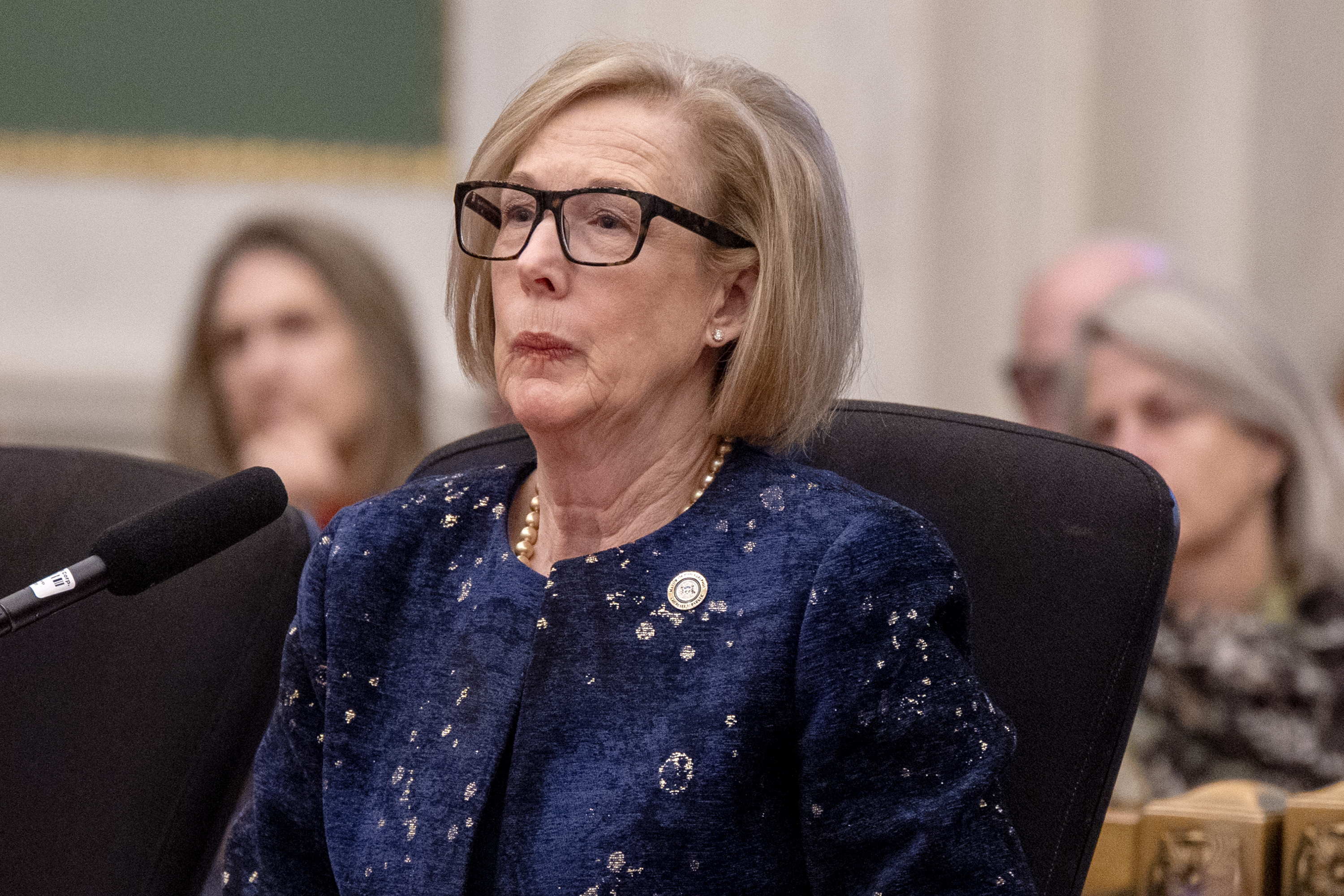
    Philadelphia City Council members said Monday that they want to commit taxpayer dollars by the end of this year to help reopen the shuttered Academy of Natural Sciences museum.

    City Councilmember Isaiah Thomas, the chair of Council’s Committee on Legislative Oversight that has been probing the museum’s closure, said during a hearing Monday that lawmakers want to “put the money on the table” to provide recurring revenue to the Academy over a “three to five year period.”

    Thomas did not specify an amount. Officials with Drexel University, which has provided financial support to the Academy since 2011, have said that the school can no longer afford the $5 million a year needed to sustain the public museum, which closed its doors in September.

    “I think we should stop dancing and just do it,” Thomas said.

    It was not immediately clear where the money would come from. Thomas mentioned the city’s $982 million fund balance, or the amount of money left over in the city’s general fund at the end of the fiscal year. That money is intended to be the city’s financial cushion, and the state board that monitors Philadelphia’s finances has warned of a looming structural deficit and significant uncertainty about future federal funding.

    Setting aside city money for the Academy by the end of this year would require Council members to work quickly. There are only three sessions remaining on the calendar this year, and legislation must be read in two sessions before it can be passed. That means a proposal must be introduced by early December to meet that timeline.

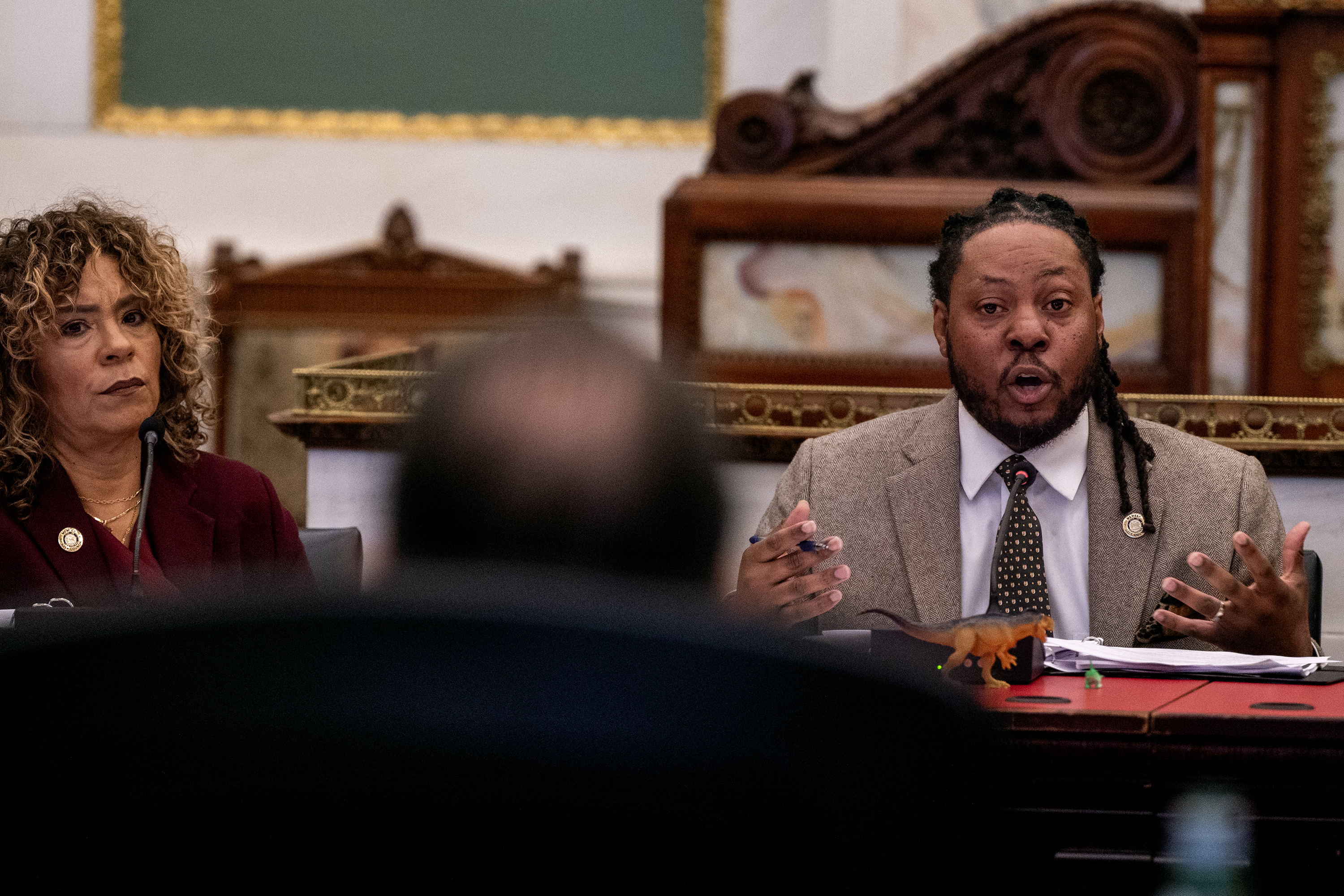
    Councilmember Jeffery Young, Jr. questions Drexel President Antonio Merlo (foreground) during the hearing on Monday. Councilmember Quetcy Lozada is at left.Tom Gralish / Staff Photographer

    Typically, the city sets its budget in the spring after the mayor unveils a budget proposal and then negotiates with Council for months. However, lawmakers can use a midyear transfer process to reconcile accounts, and some members have pushed to use that procedure to fund their priorities outside the typical budget season.

    It’s unclear whether Mayor Cherelle L. Parker, who could sign or veto any funding legislation, would support pulling money from the city’s coffers to support the Academy.

    Deputy Mayor Patricia Wellenbach — who is serving as a senior adviser to Drexel and the Academy — said that, because Drexel and the Academy remain locked in negotiations over their own affiliation agreement and may separate, she “wouldn’t know what to say to people about how much to invest” or which entity would manage the funds.

    She said she was not aware of any discussions in Parker’s administration to put city money into the museum.

    “That is very disappointing,” Councilmember Rue Landau responded.

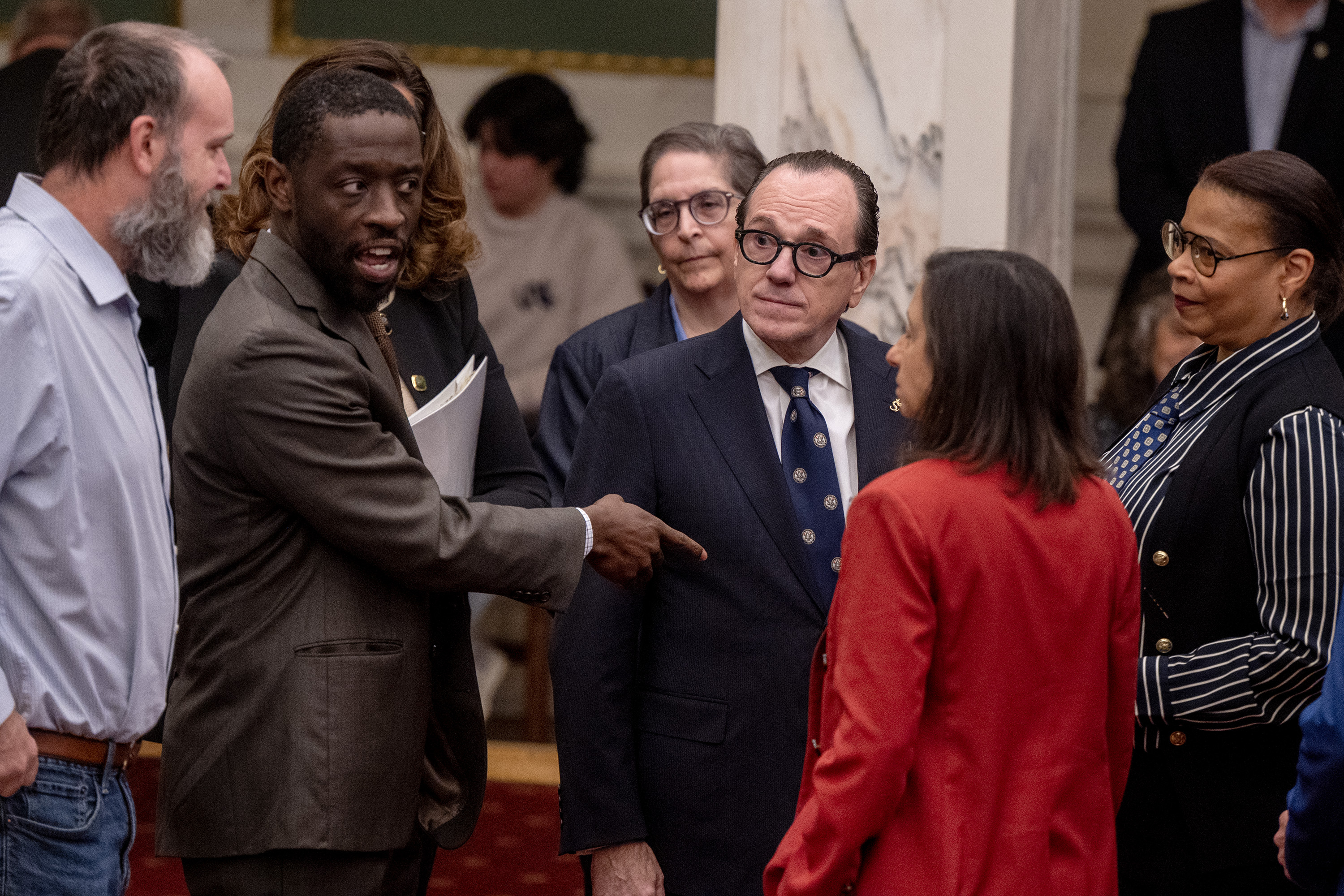
    Councilmember Isaiah Thomas (left) talks with Drexel president Antonio Merlo (center) after he arrives for Monday’s hearing.Tom Gralish / Staff Photographer

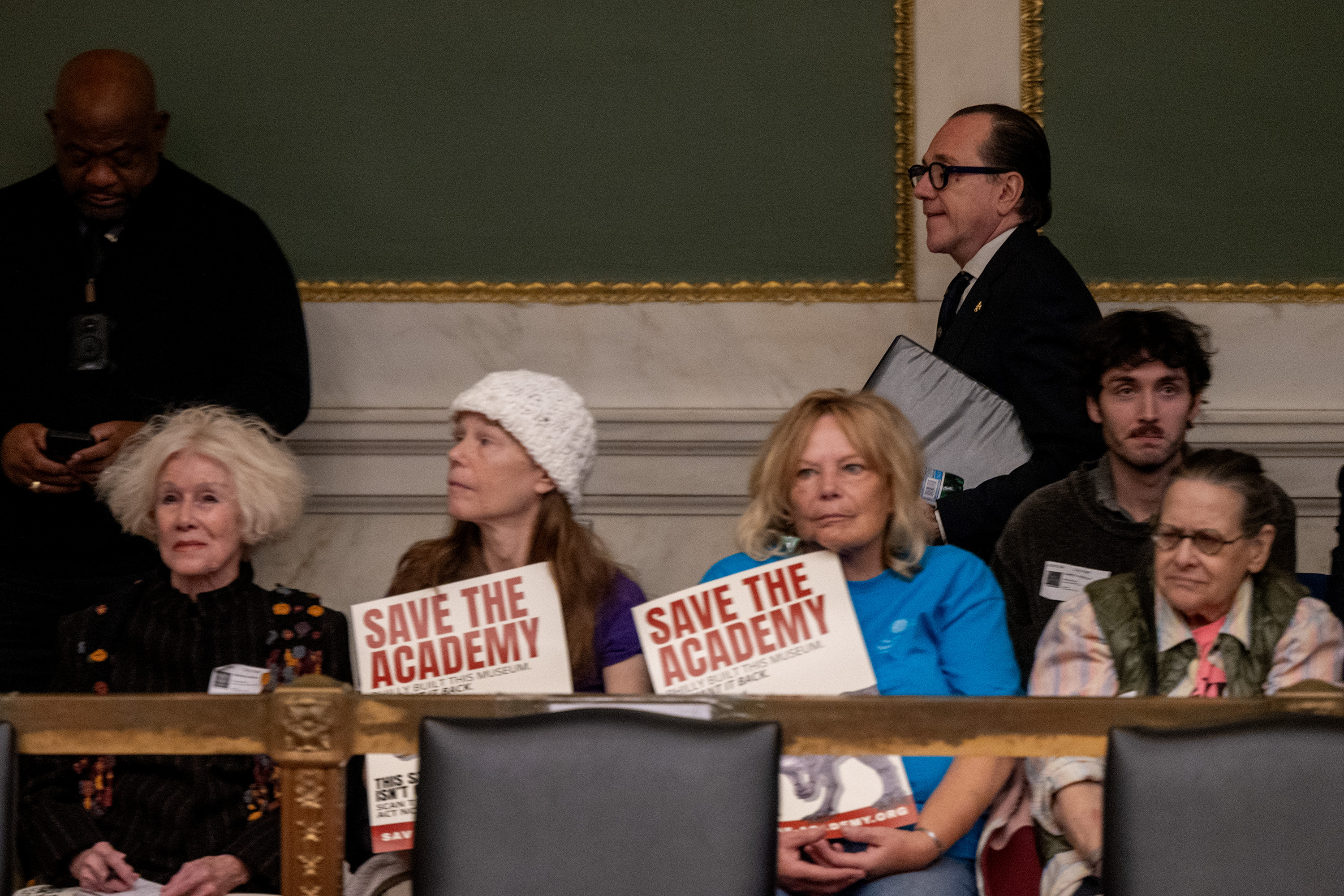
    The developments came during a tense hearing in Council about the closure of the museum, the second public hearing that the city’s legislative body has held on the matter, which has become one of the biggest issues in City Hall this fall. Several Council members, all of whom are facing reelection in the spring, have strenuously advocated for the museum to reopen and believe the city can foot at least part of the bill.

    During the first hearing last month, Council members were incensed that Wellenbach and Drexel president Antonio Merlo and did not appear to testify. The committee took the rare step of issuing subpoenas to both to appear on Monday.

    Councilmember Jeffery Young Jr., who represents the district where the public museum is located, criticized Parker’s administration on Monday and insinuated that the mayor was behind Wellenbach’s failure to show at the hearing last month.

    “You would not just not show up unless others who you may report to made that decision for you,” Young said.

    Deputy Mayor Patricia Wellenbach testifies before a hearing by City Council’s Committee on Legislative Oversight on Monday.Tom Gralish / Staff Photographer

    He also slammed the administration for producing hundreds of pages of subpoenaed records related to the closure less than two hours before the hearing started on Monday.

    A spokesperson for the mayor’s office did not immediately respond to a request for comment.

    Members also complained that they were not alerted to the plan to close the museum before it was announced, saying that they could have considered a funding mechanism earlier this year.

    Suzanne Biemiller, the chair of the Academy’s board of trustees, said that the board notified Parker’s office — as well as officials in Gov. Josh Shapiro’s administration — in late 2025 that Drexel was looking to renegotiate its financial support for the Academy.

    But Council members said they weren’t made aware of threats to the Academy’s viability until after the museum closure was announced publicly nearly a year later.

    City Councilmember Nina Ahmad asked Wellenbach if there was anything to preclude Council from allocating money to the museum while negotiations between Drexel and the Academy are still underway.

    “I don’t know that there’s anything to preclude us,” Wellenbach responded, “but that would be a decision that Drexel would have to make.”

    However, Wellenbach emphasized that her role in the museum negotiations has been “narrow” and will end on Dec. 31. She said she was brought in to be a “stabilizing force” while the Academy and Drexel worked to hire a full-time director to fill the role.

    And, Wellenbach said, she was not charged by the mayor with reopening the museum to the public.

    “That is, again, fully unfortunate,” Landau said.

  • Trump bristles at criticism over grounding of planes, blaming old tech and Biden for the problems

    Trump bristles at criticism over grounding of planes, blaming old tech and Biden for the problems

    WASHINGTON — President Donald Trump bristled Monday at suggestions he’s been too focused on White House building projects, and that they might have distracted him during the nationwide grounding of all planes, even insisting, “You don’t see me on a scaffold.”

    Speaking publicly for the first time about the air traffic snarls caused by a router issue in the aging air traffic control system as he left the White House for his trip to Asia, Trump got defensive during a lengthy — sometimes testy — exchange with reporters.

    He faulted old technology and Democrats for the incident that caused upheaval at the country’s airports — especially his predecessor, President Joe Biden. “I don’t take any responsibility” for Friday’s ground stop, Trump said, explaining his Transportation Secretary Sean Duffy was in charge.

    “What you saw on Friday was very, very old equipment that had a heart attack,” the president said. He later noted, “Incredibly, everybody was safe. Nobody was hurt. No crashes, no nothing” but, referring to his administration’s efforts to make improvements, he added, “the only responsibility should be, for 40 years they should have done this.”

    Trump was silent on the chaos until Sunday, when he posted on social media blasting his Democratic predecessor and asking Congress for more money to cover the cost of system improvements.

    His blame-shifting, as well as congressional Democratic finger-pointing. follow a familiar pattern of Trump seeking to say others were a fault during major crises — and underscore political divisions that could widen when Democrats take control of Congress in January, with scrutiny of his administration accelerating.

    The problems with aging equipment at the FAA date back decades, well before even the first Trump administration, and past efforts to modernize the system have come up short. The last major effort to overhaul air traffic control, called NextGen, started in 2003 and consumed more than $15 billion over the years.

    Trump says he spends ‘very little time’ on White House overhaul

    On Monday, when pressed about his priorities, the president spent far more time defending his extensive efforts to mold the White House to his own, often gold and gilded tastes than he did talking about his administration’s response to the ground stop.

    “I spend very little time” on building projects Trump said, adding, “You don’t see me on a scaffold.”

    He said the large granite helicopter landing pad he had built on the South Lawn had received “great reviews” and had replaced broken stone walkways and common areas. He also defended the sprawling ballroom being erected, which is larger than the rest of the White House, saying it “fits like a glove.”

    “See this stone? Get your cameras on it,” he commanded of reporters on the South Lawn. “This stone was badly broken.”

    Pressed further, he told a reporter, “You’re so pathetic,” then continued that he had “a responsibility to make sure the symbol of our country is in decent shape.”

    The president suggested that the White House had previously had broken windows and columns that were “in horrible condition,” even though the extensive damage he described wasn’t visible before he ordered so many building projects.

    Asked further about who was funding so much work, Trump responded, “This doesn’t cost money. This is peanuts.” The full extent of the costs of his many projects is unknown.

    Trump also sought to justify the unusually personal role he’s taken in the parade of building projects at the White House, telling a reporter, “This is called talent. You don’t have talent”

    Trump administration seeks additional funding

    Duffy, who made the decision Friday to ground the planes, has also pushed Congress for billions more dollars to upgrade a system he said had been neglected for decades.

    Duffy said the problem began when a federal contractor was replacing a section of old copper wire with new fiber wire, causing the system to overload.

    The Federal Aviation Administration said in a statement that “excessive data” was flooding the system “at a rate of 1,000 connection attempts every 4 to 5 seconds.” That deluge created instability with “aircraft communications and radar feeds,” the agency said.

    Duffy said on Sunday that billions of dollars are needed to build new architecture for the network and said companies — including AT&T, Verizon, and Lumen — are ready to deploy it as soon as the money is there.

    Upgrading the nation’s air transportation system is an effort that Congress has dedicated significant sums to in recent years.

    Under Biden, Congress approved a massive infrastructure bill that included $25 billion over five years for airport and air traffic control infrastructure improvements. Much of that money went to airport projects like new runways and taxiways and updated terminals.

    After Trump returned to the White House in 2025, a Republican-led Congress approved $12.5 billion in 2025 to modernize the FAA’s air traffic system.

    The Trump administration said the money would provide critical updates to outdated radar systems and traffic control centers, some dating back to the 1960s. Republicans used the same bill to allocate $170 billion for Trump’s immigration crackdown, border security, and immigration enforcement.

  • Pa. could suspend IBX, Highmark, Jefferson contract terminations for up to six months, but can’t force a deal

    Pa. could suspend IBX, Highmark, Jefferson contract terminations for up to six months, but can’t force a deal

    The Pennsylvania Insurance Department last week detailed its plans to intervene in the contentious contract negotiations between Highmark, Independence Blue Cross, and Jefferson Health to ensure patients continue receiving care if the parties don’t have new agreements by Dec. 31.

    The first step would be to suspend the contract terminations for up to six months and then schedule public hearings to investigate the reasons for the terminations, the department said in letters sent Friday to the CEOs of Highmark, Independence, and Jefferson.

    The department, however, cannot force the insurers and the Philadelphia region’s largest health system to reach a deal under Act 94 of 1975, which gives regulators the right to take the planned steps. Jefferson also owns Lehigh Valley Health Network, which stretches from Allentown north. That’s an area where Highmark has a large share of the insurance market.

    The department is regularly hearing from Pennsylvania residents worried about continued access to their doctors next year, the letters said.

    “The fear of not being able to continue to see an existing provider, or wondering how to find a new location for one’s next scan or preventive service will take place, is very real,” insurance commissioner Michael Humphreys said in the letters, which the department provided to The Inquirer.

    The letters ask for lists of the Jefferson locations that accept Highmark and Independence insurance, information on how the parties are handling appointments and preauthorization for next year, and contract negotiation updates every week starting Nov. 25.

    It’s not unusual for contract talks to go down to the wire, but the negotiations between Jefferson and Highmark and Independence Blue Cross have been more public than most. Both Jefferson and Independence have advertised their positions to sway public opinion.

    Highmark and Independence said they continue negotiating.

    “We remain focused on our members and on negotiating an agreement with Jefferson Health that preserves access to quality care at an affordable cost. Consistent with the Commonwealth’s focus under Act 94 on consumer protection and continuity of care, we will continue working toward a resolution that shields our members and customers from unsustainable cost increases,” Independence said in an email.

    Highmark provided a similar statement: “We remain focused on reaching a fair agreement with Jefferson Health. Our priority is to ensure access to quality, affordable care for the people we serve.”

    Jefferson, which is also negotiating a new contract with Horizon Blue Cross Blue Shield of New Jersey, said in its statement to The Inquirer:

    “We welcome the commissioner’s engagement and support a transparent, independent analysis of the issues at the center of these negotiations. We’re hopeful in finding a sustainable approach that protects patients’ access to the physicians, hospitals and specialized services they depend on.”

  • Flyers takeaways vs. Oilers: Cam York turns a corner, power play goes 0-for-8

    Flyers takeaways vs. Oilers: Cam York turns a corner, power play goes 0-for-8

    Returning home after a five-game, 11-day road trip, the Flyers faced an Edmonton Oilers squad they lost to in overtime on Wednesday. That was a highly competitive game that the Flyers could easily have won.

    Sunday’s rematch was similar, and while the Flyers lost 5-2, the score didn’t tell the full story. Here is one positive and one negative from the game.

    The Good: Has Cam York found his game?

    Slowly but surely, it is starting to feel like Cam York is returning to form. He has been better at closing out plays, blocking shots, and stepping up recently; however, in the past two games, with Rasmus Ristolainen returning, his ice time dipped, and he averaged under 13 minutes a night.

    On Sunday, he had his best game of the season, playing 18:16. York was back on the second power-play unit with Oliver Bonk a healthy scratch, and helped create two goals — one at five-on-five and one at four-on-four — getting an assist on one, and posting season-highs in shots (three) and plus-minus (plus-2). He was on the ice for a weird Vasily Podkolzin power-play goal, but that does count toward plus-minus.

    “It has been a difficult start to the year for me. I haven’t liked my game. Just felt like tonight, I guess, in a good way, giving a little bit less of an eff,” said York.

    “It sounds weird, but I feel like that just allows me to play with more confidence, and I’ve consistently felt like if I can just get the ball rolling a little bit, get a little momentum going for myself, that will help me and allow me to play with a little more confidence.”

    York, 25, was in command, first slicing through Edmonton’s defense before centering a puck that Cole Knuble knocked in for the Flyers’ first goal. On Noah Cates’ four-on-four goal, he joined the rush and tried to get a shot off before responsibly staying high just in case as his unit scored.

    According to Natural Stat Trick, at five-on-five, York entered the game with a 44.1% Corsi For Percentage, while the Flyers were outscored 15-5, including nine from high-danger spots when he was on the ice. Sunday, he was No. 2 on the team, behind his partner Simon Benoit, with a 68.8% Corsi For Percentage; it was 71% across all strengths, and he had three individual shot attempts and three individual scoring chances.

    “It’s been a frustrating start, but I know that when I play like that, I’m a really good player in this league, and just need to do it on a more consistent basis,” York said. “But I’ve been trying. It’s just been a little bit of a struggle, but felt like I got to it a little bit tonight, and just want to continue to build off that.”

    The Californian is coming off one of his best seasons, collecting a career-best 22 assists and plus-5 while averaging five seconds shy of his career high in ice time (22:32). However, in 15 games this season, York has just two assists and is minus-9 while averaging his lowest ice time (19:43) since 2022-23.

    “I played with Yorkie for a long time … when he’s got confidence and a little bit of room up top, he’s a special player,” said Trevor Zegras, who was teammates with York at the U.S. National Team Development Program.

    “He does so many things that nobody would ever see,” Zegras added. “Like going back for a puck with two guys on him, getting banged into the wall like every night. He’s blocking big shots every game, body taking a beating. So for him, when he’s feeling good, and he’s moving his feet, and he’s making plays like that, he’s pretty much doing it all for us.”

    Cam York (right) celebrates with Cole Knuble after setting up Knuble for the Flyers’ first goal on Sunday.Yong Kim / Staff Photographer

    Two seasons ago, York missed 13 games with a shoulder injury, his longest disruption since becoming a full-time NHL player. He acknowledged that he underestimated what missing a month would do to his game and his rhythm.

    Earlier this season, York missed eight games due to an upper-body injury. In the five games York played before the injury, he had the worst Corsi For Percentage among the regulars at five-on-five and was on the ice for seven goals against.

    “I don’t want to make any excuses,” he said when asked if the injury in October stalled his season. “I just haven’t played good enough. Pretty plain and simple. But you never want to miss time, obviously. But I think tonight was a step in the right direction.”

    The Bad: Piling on the missed opportunities

    Missed opportunities have been a recurring theme for the Flyers.

    According to NHL stats, the Flyers have missed the net 281 times. They have had the second-most shots blocked (389) and have put the 10th-most shot attempts toward the net (1,219).

    Those numbers don’t track how many times they’ve shot the puck right into the goalie’s midsection or pads. It doesn’t count the giveaways, like Travis Konecny’s early in the third period of a one-goal game that directly led to Leon Draisaitl’s NHL-leading 20th goal.

    And it doesn’t include the fact that the Flyers had eight power plays Sunday and couldn’t find one goal despite 22 shot attempts, 12 shots on goal, 16 scoring chances, and 10 high-danger chances.

    “Us going 0-for-8 is not great,” Zegras said. “A couple of those could drop and it’s a different story. But it didn’t. I thought we played a great game five-on-five. I’d like to see a couple go in on the power play, for sure.”

    The Flyers dominated in shot attempts, especially around the crease, with 80% of the high-danger chances.Natural Stat Trick

    Konecny called the game frustrating, especially since the Flyers had a chance to win.

    They had 63.6% of the shot attempts and 65.1% of the scoring chances. The Flyers had 24 high-danger chances to the Oilers’ six and 74.5% of the expected goal share (5.71 expected goals). The only part that mattered, however, was that the Flyers had 28.6% of the goals.

    “[Oilers goalie Tristan Jarry] had a good game, but I just think it’s those greasy goals, like Knubes’ goal,” Cates said. “It’s just getting bodies there, and crashing, and sometimes pucks just went right through us, or whatever it was. Just got to find a way to finish those chances, and arrive when the puck’s getting there, or whatever it might be; pistoning, and switching off with someone in front of the net to get free for that half second to score a goal.”

  • Habitat for Humanity is rehabbing 16 former Germantown Settlement homes for sale

    Habitat for Humanity is rehabbing 16 former Germantown Settlement homes for sale

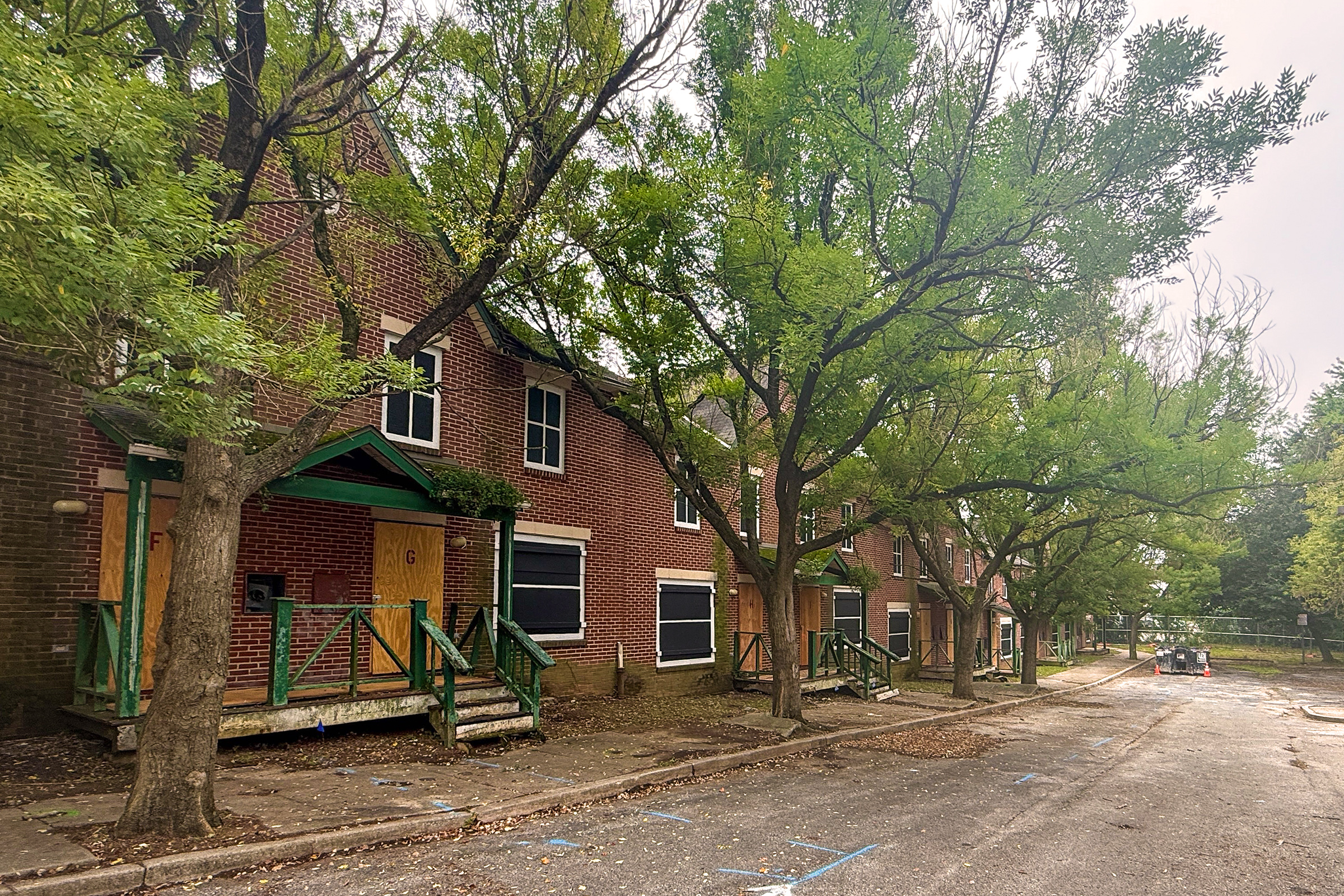
    Pamela Bracey’s neighborhood in Northwest Philadelphia has been haunted by the legacy of the disgraced nonprofit Germantown Settlement for a long time.

    The politically connected organization acquired dozens of properties throughout Germantown but then imploded in scandal and bankruptcy and finally shuttered in 2010.

    For 16 years, its buildings have sat vacant, deteriorating, and magnets for crime.

    On Nov. 9, Habitat for Humanity Philadelphia broke ground on a $3 million renovation of 16 former Germantown Settlement homes on 60–74 E. Collom St.

    “It’s been a horror,” Bracey said. “It’s just good that a property that was lying vacant for so long and was just being trashed and vandalized and [attracting] violence is now going to be brought back into Germantown so we can move forward.”

    The houses have three bedrooms and 1½ bathrooms. Habitat for Humanity estimates that the redevelopment will be complete in three years, when the homes will be ready for sale to new owners.

    They will be sold to income-restricted households, making 80% of area median income — or roughly $98,000 for a family of four.

    “To give you a sense of what that means, these are meant to be affordable to a nursing assistant, a teacher’s aide, a bus driver for the school district,” said Corinne O’Connell, CEO with Habitat for Humanity of Philadelphia.

    Her organization has had its eye on these 16 homes for years because they are of a relatively recent vintage. They were built in 1993, which means they are suitable for the group’s practice of using volunteer construction labor.

    “There’s no lead paint. There’s no asbestos in them, so there is very little environmental hazard remediation that we have to do,” said Ed McColly, director of real estate for Habitat for Humanity Philadelphia. “That then also lends itself really well to volunteer engagement, which is part of Habitat’s DNA.”

    Some work tearing out moldy drywall is already underway.

    “Now we’re really able to see the guts of the building underneath, and they’re in really good shape,” McColly said.

    In June, the nonprofit acquired the homes from the Philadelphia Housing Authority, which in 2024 was given control of 121 properties that had been owned by Germantown Settlement.

    Habitat for Humanity workers rehabbing one of the homes.Courtesy of Carey Porter

    Seventy-nine of the remaining properties will be redeveloped for rental housing by PHA, with work already begun on a handful of the scattered site homes.

    A 17-unit senior apartment building will be constructed at 6657-59 Blakemore St., and nine other properties will have for-sale homes built on them.

    Many of the other former Germantown Settlement properties are in much worse shape than the Collom Street homes being redeveloped by Habitat for Humanity. PHA president Kelvin Jeremiah says many have been heavily vandalized, with all the copper wiring stripped out.

    “We just couldn’t understand why it took so long for these properties to be renovated,” Bracey said. “There are other properties around that will still need to be done, but at least these 16 will be done, so that’s an improvement.”