Blog

  • Mideast oil producers step up plans to bypass the Strait of Hormuz

    Mideast oil producers step up plans to bypass the Strait of Hormuz

    Before the war in Iran, roughly 15 million barrels of Persian Gulf oil were shipped each day through the Strait of Hormuz. Within a few years, much of that oil could bypass the strait.

    As Iran’s chokehold over the strait drags on and oil prices surge, countries across the Gulf are planning to spend billions of dollars to build pipelines enabling them to redirect more supplies to ports along the Red Sea and the Gulf of Oman.

    At least seven major pipeline projects are under construction, in the planning stage or being discussed as possibilities, according to government officials, oil companies and analysts. The war has been a wake-up call for Gulf oil producers, who are determined to become less dependent on a transit point that hugs Iran’s coast.

    But alternatives to Hormuz are also vulnerable to disruption. Yemen’s Iran-backed Houthi rebels said early Thursday they had attacked two Saudi oil tankers in the Red Sea, a key alternative route to the strait for Saudi oil exports.

    Some alternative routes will take the oil on longer and more expensive paths to market. Regardless, producers have realized that relying so heavily on the Strait of Hormuz “is no longer a prudent long-term strategy,” said Victoria Grabenwöger, senior research analyst at data firm Kpler.

    The Red Sea and Gulf of Oman have become vital alternatives to Hormuz

    The effective shutdown of the Strait of Hormuz would have been an even greater shock to the world economy were it not for a pipeline Saudi Arabia built in the 1980s amid fears that Tehran would disrupt shipping through the strait during the Iran-Iraq war.

    The Saudis’ East-West pipeline carries oil across the desert nation from a processing facility in Abqaiq to the city of Yanbu on the Red Sea coast. Once there, it is loaded onto tankers that head either south to the Arabian Sea or north to the Suez Canal.

    The United Arab Emirates has been sending more oil to the port of Fujairah, which abuts the Gulf of Oman, about 145 kilometers (90 miles) south of Hormuz.

    Combined, the two pipelines had spare capacity of about 3.5 million to 5.5 million barrels per day before the war began, according to the U.S. Energy Information Administration. The two pipelines are now running near full capacity.

    More oil could begin flowing through a UAE port by next year

    The state-owned oil company of Abu Dhabi, one of the UAE’s seven emirates, is accelerating construction of a $3 billion, 300-kilometer (200-mile) pipeline to Fujairah. That pipeline, which will run parallel to an existing one, aims to increase oil supplied to Fujairah by more than 1.2 million barrels a day.

    The project, which started before the war, is now reportedly about halfway completed, according to Kpler. The pipeline is intended to be completed by early 2027, but Kpler says mid-2027 is more likely given the need to expand the port at Fujairah.

    The ambitious timeline “has only become feasible against the backdrop of the Strait of Hormuz blockade,” Kpler’s Grabenwöger said.

    Plans to pipe more oil to Turkey and Syria will take longer

    In Iraq, officials are ramping up plans to develop alternative export routes for southern oil fields around Basra. Iraq is so dependent on the Strait of Hormuz that it has had to scale back production.

    The Iraqi government, which gets some 90% of its revenues from oil sales, has been pursuing pipeline projects with U.S. companies. One would take supplies from an oil terminal in Basra — through which more than 3 million barrels were exported daily before the war — to the port of Ceyhan in Turkey, along the Mediterranean Sea.

    That pipeline would also have a branch extending to the Mediterranean port of Baniyas in Syria. Some 2 million barrels a day of oil could ultimately flow through the pipeline to Baniyas, which the U.S. State Department has called “a critical energy corridor.”

    Iraqi officials have also held discussions with Jordan on advancing long-discussed plans for a pipeline that would carry oil from Basra to Aqaba. From there it would be exported via the Red Sea or the Suez Canal to Asia and beyond.

    The new pipelines will add time and costs — and are also vulnerable to attacks

    Taken together, the new projects to bypass Hormuz could carry an added 3.8 million barrels of oil a day by the end of next year, and 7.3 million barrels per day by the end of 2028, according to analysts at the investment bank Goldman Sachs. The projects would mean some 60% of the Gulf’s total prewar exports of 23 million barrels a day could bypass Hormuz if needed, the analysts said.

    Pipelines from the Persian Gulf to the Mediterranean Sea send oil in the wrong direction to help Asian countries that relied on exports through Hormuz, requiring a much longer trip around the southern tip of Africa.

    Any additional supplies piped from Saudi Arabia to the Red Sea will also be vulnerable to attacks by Houthi rebels in Yemen, as Thursday’s attacks show; the rebels have successfully disrupted shipping before at the Bab el-Mandeb Strait, which connects the Red Sea to the Gulf of Aden.

    That oil could also be sent to the Suez Canal instead to reach the Mediterranean. But the canal cannot accommodate the industry’s largest tankers, which hold up to 2 million barrels per vessel and are often the most cost-efficient way to transport oil long distances.

    And pipelines themselves are not immune to attack. The Saudi East-West pipeline was shut down by a Houthi drone strike in May 2019.

    Meanwhile oil pipelines don’t help with the disruption to supplies of liquefied natural gas, or LNG, carried by ship. About one-fifth of the world’s LNG — much of it from Qatar and headed for Asian customers — transited the strait before the war.

  • Trump poised to restart tariff campaign, using provision on forced labor

    Trump poised to restart tariff campaign, using provision on forced labor

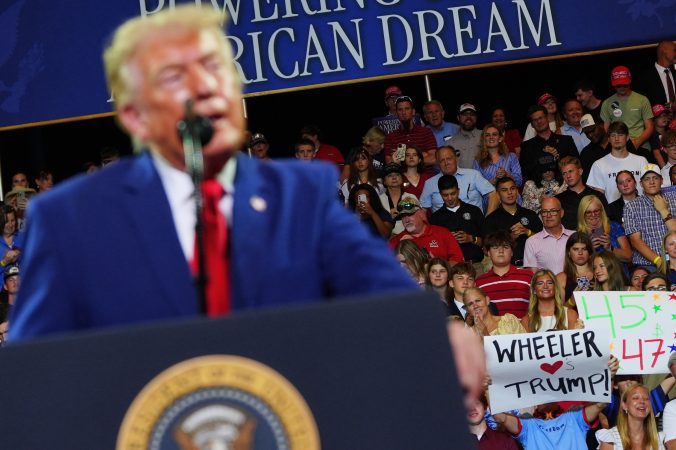
    The Trump administration is expected as soon as this week to introduce permanent new tariffs to replace the temporary import penalties it imposed after the Supreme Court earlier this year abruptly upended President Donald Trump’s trade strategy.

    The first batch of new tariffs is expected to affect 60 nations that the administration said in June were importing goods produced using forced labor, putting higher-paid American workers at a disadvantage.

    Nations that do not prohibit such goods would face tariffs of 12.5%, while those that have such laws but fail to enforce them would be hit with 10% levies, under a proposal that Jamieson Greer, the president’s chief trade negotiator, made public last month. The president could adjust those numbers before taking final action on what are called “Section 301” tariffs.

    Those tariffs would fill the gap left by the scheduled expiration at 12:01 a.m. Friday of a stopgap measure that Trump introduced in February after the nation’s high court invalidated levies he imposed last year under the 1977 International Emergency Economic Powers Act.

    In response, Trump used a different legal authority to levy a 10% tariff, limited to just 150 days. Now those tariffs are lapsing.

    Forced to start his tariff campaign anew, Trump appears eager to pull every lever of trade power he can identify, using laws considered less vulnerable to challenge than the rushed approach he employed last year. Some are well-established weapons in major laws dating to 1962 and 1974. Others, like his use this week of an untested 1930 law to challenge Canada, reflect his unquenchable desire to test legal limits.

    “The specific authorities this administration is using have changed but the trade strategy has not,” Greer told the Senate Finance Committee on Wednesday.

    Indeed, the president’s goal of greater domestic manufacturing has remained constant since he entered the political arena more than a decade ago. Through tariffs, he aims to encourage manufacturers to invest in new American factories rather than import foreign products.

    In his Senate testimony, Greer said the administration is making progress. The trade deficit through the first five months of the year is down by almost 4%, according to Commerce Department data. The United States is exporting more merchandise and — rather than buying foreign consumer goods — is importing machinery needed to equip new factories that will employ American workers, he said.

    The administration has used tariff pressure to secure 10 so-called reciprocal trade arrangements, which pried open some foreign markets while cementing in place higher U.S. tariffs. Broader trade and investment accords have been reached with the United Kingdom, Japan, and the European Union.

    “They’ve gotten a number of trade agreements that they otherwise would not have,” said Blake Harden, managing director of Washington Council EY, a consultancy. “The way that they used [the International Emergency Economic Powers Act] really resulted in commitments by trading partners that the U.S. has been seeking for quite some time, both on tariffs and nontariff barriers.”

    Yet U.S. factories employ 75,000 fewer workers than when Trump returned to the White House. And despite administration denials, tariffs are aggravating inflation, according to a recent study by the Federal Reserve Bank of Dallas. Without tariffs, the Fed’s preferred inflation measure would have risen at an annual rate of 2.3% in March, instead of its actual 3.2% figure, the Dallas bank said.

    Meanwhile, Trump’s insistence on using the International Economic Emergency Powers Act (IEEPA) to impose his initial round of tariffs in April 2025 — which permitted him to take immediate action — has had far-reaching consequences. After the Supreme Court disallowed his use of the law in February, the administration was required to refund tariffs it had illegally charged importers, an amount the Cato Institute estimated at more than $170 billion. Through the end of June, the government had paid out more than $71 billion, U.S. Customs and Border Protection told a federal judge this month.

    As Trump has sought to rebuild his tariff wall, he has turned instead to Section 301 of the Trade Act of 1974. In addition to pursuing the forced-labor tariffs, the administration is probing 16 nations it says deliberately maintain excess production capacity, leading to a global glut of low-cost products. Some of the largest U.S. trading partners — including China, the European Union, Japan, Mexico, South Korea, and India — subsidize manufacturing at the expense of U.S. producers, the administration says. New levies could result from that probe within weeks.

    The latest flurry of tariff activity began with the imposition earlier this month of 25% tariffs on Brazilian goods, which the administration said was a response to Brazil’s “unfair” trade practices.

    On Tuesday, the president took to social media to announce a 100% tariff on imported generic drugs, effective Aug. 1, 2028, and rising to 200% one year later.

    And on Monday, he cited an untested 1930 trade law to threaten 50% tariffs on Canadian products, which would take effect in 30 days.

    In addition, the Commerce Department has a number of open investigations under Section 232 of the Trade Expansion Act of 1962, which authorizes the president to impose 25% tariffs on national security grounds.

    And Trump could get new tariff powers under a Russian sanctions bill in the Senate that would empower him to levy 100% tariffs on major importers of Russian oil. Business groups such as the National Foreign Trade Council oppose the provision, fearing that Trump would stretch those powers in unforeseeable ways. China, India, and the EU could be at risk of punishing trade taxes if the legislation is approved.

    The administration’s renewed legal maneuvering will arm the president for future trade negotiations, including ongoing talks over revisions to the U.S.-Mexico-Canada Agreement, and equip him to respond when domestic industries seek protection, said John Veroneau, a U.S. trade negotiator under President George W. Bush.

    “The steps they’re taking to get their legal house in order does not necessarily mean that they’re gearing up for massive levels of new tariffs. I think it does suggest they need to get their legal house in order and want to have flexibility to act in targeted ways as they see fit,” Veroneau said.

    Still, this month’s spate of tariff news has left importers and foreign governments scrambling to keep pace.

    “There’s a little bit of whiplash in terms of keeping track of the various duties on Brazil, France, Russia, Canada, you know, the hits just keep on coming,” said Jake Colvin, president of the NFTC, which represents companies such as Coca-Cola, Google and IBM. “It feels like the administration is trying out every tool in its toolbox to come up with new tariffs.”

  • U.S. on track to have historically low number of homicides in 2026, report says

    U.S. on track to have historically low number of homicides in 2026, report says

    LOS ANGELES — Data collected from 30 American cities showed an 18% decrease in the homicide rate from 2025 compared to the same period in 2026, translating to about 215 fewer homicides this year, according to a new report from the independent Council on Criminal Justice.

    Should the trend continue, it would push the annual homicide rate to the lowest levels in over a century once final numbers are released at the end of the year.

    The report, released Thursday, tracked 13 crimes and recorded drops in nine of those categories, including carjackings, residential burglary, and aggravated assaults. There was a small jump in shoplifting, domestic violence incidents, sexual assaults, and drug offenses over the same period between 2025 and 2026, the report showed.

    Experts say the broadly positive changes are exceeding expectations, improving on baseline crime rates from before 2020 and the COVID-19 pandemic, which brought historic surges in violence.

    Democrats and Republicans across the country have tried to capitalize on the positive developments during a competitive midterm election year. But the trends documented in the report carry through in cities with leadership across the political spectrum.

    That suggests the most significant factors contributing to the improvements are taking place nationwide and are not specific to a single local public safety measure, said Adam Gelb, the president and CEO of the Council on Criminal Justice, a nonpartisan think tank for criminal justice policy and research.

    “Murder and other crime rates are falling across the map in cities with different political leadership, different housing and economic conditions, different policing and prosecution and violence reduction strategies and different levels of federal enforcement activity,” Gelb said.

    The council collects data from police departments and other law enforcement sources. Some of the report categories include data from as many as 36 cities, while others include fewer cities in their totals because of tracking gaps or differences in definitions for specific crimes.

    Notably, Gelb said that a significant number of violent crimes were less deadly: There was a 23% drop in the lethality of the crimes committed, which is measured by the share of serious violent crime that is fatal.

    Many of the non-violent crimes tracked in the report also saw declines, including a 13% drop in residential burglaries year over year and a 50% drop in burglaries compared to pre-pandemic levels in 2019. At the same time, reported shoplifting bucked the trends of other property crimes, showing a 5% increase. And while there was a small increase in drug offenses, those were still lower than pre-pandemic levels.

    Roughly a third of the 30 sampled cities defied average homicide rate declines across the country, recording an increase in deadly violence from the first half of 2025 to the same period in 2026. That includes Norfolk, Va., which saw a 64% increase in homicides, and San Francisco, which saw a 55% increase. The number of cities that saw a longer-term increase was far smaller: Only Norfolk, Austin, Pittsburgh, and Minneapolis experienced more homicides in 2026 than in the same period in 2019.

    Philadelphia has recorded 96 homicides so far in 2026, a 23.8% decline from the same period in 2025. If the current pace continues, Philadelphia is on track to record fewer than 200 homicides for the first time since the 1960s, a remarkable turnaround from just five years ago, when nearly three times as many people were killed.

    There are many factors that could impact why a location sees increases or decreases in certain crimes when another doesn’t, according to John Roman, director of the Center on Public Safety and Justice at the National Opinion Research Center from the University of Chicago.

    Roman said that conservative politicians affiliated with President Donald Trump will point to intensified immigration crackdowns and the deployment of the National Guard in cities like Los Angeles and Memphis, whereas liberal politicians might point to former Democratic President Joe Biden’s public safety legislation that strengthened background checks on firearm sales.

    But ultimately, Roman said, the best explanations transcend specific administrations. That ranges from decreased drug usage and therefore fewer purchases from illegal markets, which are often linked to violence, to an influx of federal funding for localities after the pandemic that was spent on social programming.

    Those programs, Roman said, often funded jobs like teachers and social workers who primarily work with “young people who are the highest risk of violence and victimization.”

    While both Gelb and Roman concurred that there wasn’t a single reason, Gelb said the outcomes should be studied for future insights and celebrated.

    “This is one of the most significant public safety developments in decades. It means lives are being saved, families are spared trauma and communities are regaining stability,” Gelb said.

  • Inflation is a policy choice | Expert opinion

    Inflation is a policy choice | Expert opinion

    Ask most Americans to name their number-one financial problem, and you’ll get the same answer: the high and rising cost of living.

    Consumers have rarely been as glum, with the collective psyche weighed down by higher prices for gasoline, groceries, and other goods and services. Voters also appear to be in a bad mood in the lead-up to the midterm election, as most polls show they aren’t happy about having to pay so much more for nearly everything.

    The frustration is well-founded. Inflation has now exceeded the Federal Reserve’s 2% target for five years running. It is currently roughly double that, depending on the measure. And even if inflation fell back to target tomorrow, prices aren’t rolling back. There’s no easy fix to the damage done to family budgets.

    So, which way is inflation going from here? To answer that, it helps to be clear-eyed about what is driving it. And the uncomfortable truth is that it is mostly about economic and foreign policy.

    Start with tariffs. The effective tariff rate on goods coming into the country has more than tripled since the trade war began just over a year ago. And they may go higher, given the recently announced tariff hikes on goods imported from Brazil and Canada. By my calculation, the higher tariffs added nearly half a percentage point to inflation last year and will add at least a couple of tenths more this year, as businesses pass the costs along to you. That is a policy choice.

    Then there is immigration. Net foreign immigration into the U.S. has collapsed to less than half its historical norm, and the foreign-born workforce is shrinking outright. Fewer workers in construction, agriculture, food processing, and elder care mean higher costs in exactly the industries where affordability problems bite hardest. That, too, is a policy choice.

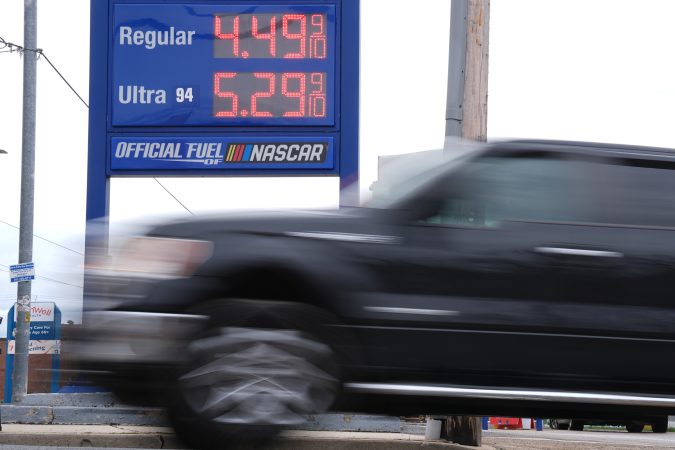
    And then there is the Iran war. Iran’s closure of the Strait of Hormuz produced the largest disruption to global oil production in history, and the price of a gallon of regular at my local Wawa jumped from less than $3 before the war to as much as $4.50. All told, the war has cost the U.S. economy over $150 billion — upward of $1,100 per household. That is foreign policy showing up at the gas pump and grocery store.

    What makes this so frustrating is that without the higher tariffs, the severe immigration restrictions, and the war, inflation would be a little over 2% — essentially at the Fed’s target. We are suffering uncomfortably high inflation due to the policy choices we are making.

    The good news is that, beneath the policy shocks, disinflation (slowing inflation) is already at work. The job market is soft — painful if you’re looking for work, but it means wage growth has moderated and there is no 1970s-style wage-price spiral brewing. Landlords are cutting deals on new leases as vacancies rise, signaling slower rent increases. Vehicle prices are also going nowhere, as the run-up in prices during the pandemic has made buying a car unaffordable for many.

    Even here in the Philadelphia region, where eds and meds keep the job market steadier than elsewhere in the country, paychecks are barely keeping up with prices. Not the stuff of an inflationary spiral.

    Bond investors, who put their money where their mouths are on the inflation outlook, agree. Their inflation expectations, after spiking when the war broke out, have settled back to levels consistent with the Fed’s target. If investors, businesspeople, and consumers believe that inflation will not be a problem down the road, they will behave accordingly, and it is less likely to be.

    And as I wrote in my Inquirer column in May, the Kevin Warsh-led Fed appears committed to doing whatever it takes should that change. Worries that the Fed would lose its independence from the President and lower interest rates for political and not economic reasons have eased.

    So, which way inflation? It has likely peaked. If the Iran war continues to wind down, tariffs do not rise materially further, and no other geopolitical hot spot boils over, inflation should moderate back toward the Fed’s target over the next year or two, without the Fed having to raise interest rates.

    But notice how much work “if” is doing in that sentence. In a world where the U.S. is pulling away from its trading partners and allies — and they are pulling away from us — disputes that drive higher inflation will become more commonplace. Adding to the concern is that the global institutions used to resolve those differences, ranging from the World Trade Organization to NATO, have been marginalized.

    And that is the point. The high inflation began because of the unavoidable. Think the pandemic. But increasingly, it is something we are doing to ourselves. High inflation is a policy choice. So, as it turns out, is low inflation.

  • Is buying a home still the way to wealth? Some young Americans aren’t sure.

    Is buying a home still the way to wealth? Some young Americans aren’t sure.

    The fast-rising costs of owning a home have some young Americans questioning whether buying a house is still a good investment.

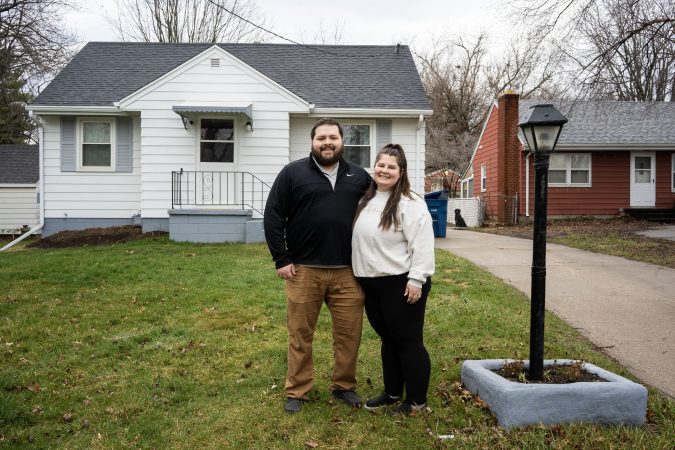
    Take Tony Zhang, 34, who bought a $950,000 townhouse in Irvine, Calif., in 2021 and says he now regrets it. The supply-chain manager says investing his down payment of roughly 30% in the stock market instead would have left him with a portfolio worth as much as $1 million today.

    “Had I just taken my down payment and bought Meta, Nvidia, or any growth stock, I probably wouldn’t even be working my 9-to-5,” he said. Even with a more conservative investment that mirrored the S&P 500, he estimates he’d have an extra couple of hundred thousand dollars. In the meantime, renting a comparable two-bedroom apartment in his area would be about $800 cheaper than his $4,300 monthly housing costs, which don’t include maintenance.

    Zhang is among many people under 40 who feel that homeownership isn’t the wealth-building tool it used to be. Less than a quarter of Americans aged 18 to 39 say buying a home is a very good investment, compared with 38% of those over 60 years old, a recent survey by the Pew Research Center found. A further 38% of under-40s see property as a “somewhat good” place to park their money.

    A separate survey by the Federal Reserve Bank of New York found the proportion of under-50s who consider housing to be a “very good” investment had fallen to about 16% in February, from about 25% five years earlier.

    Broadly speaking, homes are a worse investment for first-time buyers today because wages haven’t kept up with surging prices and ownership costs, said Susan Wachter, a professor of real estate and finance at the University of Pennsylvania’s Wharton School.

    The median sale price of a U.S. home jumped 53% to $379,000 in the six years to May 2026, Zillow data show, while borrowing costs more than doubled. Those who can afford to buy face outlays including property taxes, insurance, and maintenance bills, which cost the average U.S. homeowner $15,979 in 2025 — a 4.7% increase from the previous year, while household incomes rose just 3.8% over the period.

    More than half of U.S. homes also lost value last year — the highest share since 2012, according to Zillow, when the effects of the global financial crisis were still playing out.

    “Younger Americans’ more negative view on homeownership reflects the economics of their lived experience, ” said Wachter. “They face an affordability problem and they don’t get the returns.”

    Almost nine in 10 Americans agree that buying a home is harder for young adults today than it was for their parents’ generation, the Pew research found.

    That said, only 16% of survey respondents aged under 40 went as far as saying a house is a bad investment. Owning a home can provide families with stability and, for those who can afford to hang onto it, a source of intergenerational wealth. Returns vary widely based where a homeowner buys their property and how long they own it, noted Pew senior researcher Richard Fry.

    “It’s a complicated calculation and probably one of the most expensive things young adults will ever buy,” he said. “It’s not a one-size-fits-all answer.”

    Even those who snag a deal on a property can find the math gets complicated.

    Atalyia Ferrara, a 28-year-old teacher, bought a $230,000 four-bedroom Philadelphia townhouse in July 2021 with a $1,485 down payment, thanks to the city’s Keystone Home Loan Program. Her monthly mortgage and taxes have gone up just $335 a month since then, but the maintenance costs have forced her to dip into her savings instead of building a nest egg. She’s already poured more than $28,000 into home improvements, with another $25,000 for electrical repairs looming.

    Ferrara now works in neighboring New Jersey and says the house has become a money pit in an inconvenient location. She and her husband are considering selling so they can rent in an area with better access to work and childcare.

    “I bought the house at 23, just trying to get my foot in the door of building equity,” said Ferrara. “Instead, I’m stuck with a house that’s kept me where I’m at and paying thousands for repairs.”

    Zhang, in California, is planning to stay put until his 8-year-old daughter goes to college, hoping to cash in on his home’s appreciation down the line. After that, he plans to sell up and “rent for sure.”

    Still, he can’t help but think of what he could have made in the short term on a different investment.

    “Just looking at how the stock market has performed, the opportunity cost of putting that money into a home has absolutely screwed me over,” Zhang said.

  • EU hits Google with $1 billion fine over its Play app store and search

    EU hits Google with $1 billion fine over its Play app store and search

    BRUSSELS — The European Union on Thursday hit Google with a fine of 890 million euros ($1 billion) after it said the technology behemoth broke digital antitrust regulations by setting up Google Play and its ubiquitous search engine to corral consumers towards its own services and apps to the detriment of competitors.

    It was the latest major crackdown on Big Tech by Brussels, which has led the world in reining in some of the world’s largest companies from Silicon Valley to Beijing.

    Google had recently lost its appeal of a $4.5 billion antitrust fine imposed by the EU for throttling competition and reducing consumer choice through the dominance of its mobile Android operating system.

    The European Commission, the bloc’s executive branch and highest antitrust enforcer, said it was acting in the interest of consumers after running an antitrust investigation of Google.

    “The best products should succeed because they’re better, not because they’re owned by the company running the search engine. And European consumers have a right to be told by app developers where to sign up to the best offers, even when the app store owner does not get a cut,” said Teresa Ribera, the commission’s Executive Vice President for Clean, Just and Competitive Transition.

    Google’s President of Global Affairs Kent Walker blasted the fine as “product degradation driven by a small group of self-serving complainants” that will have a negative impact on European businesses and consumers.

    He said that the EU’s Digital Markets Act forces Google “to strip away real-time search features Europeans love — like instant pricing and direct availability for hotels, flights, and restaurants — and dismantle safety protections on Google Play.”

    Brussels has ratcheted up the pressure on U.S. and Chinese tech giants despite the risk of incurring the wrath of President Donald Trump, who has lashed out at the 27-nation bloc’s digital regulations and vowed to retaliate if American tech companies are penalized.

    The EU describes the world’s seven tech giants — Amazon, Apple, Google parent Alphabet, Meta, Microsoft and TikTok owner ByteDance — as “gatekeepers” that control access for consumers.

    “In the EU, businesses have the right to compete fairly. Gatekeepers have the obligation to ensure a level playing field and consumers the right to choose for cheaper alternative offers,” European Commission spokesperson Thomas Regnier said.

  • Millions are being bet on LeBron’s next team. The NBA told regulators that sort of market shouldn’t exist.

    Millions are being bet on LeBron’s next team. The NBA told regulators that sort of market shouldn’t exist.

    LeBron James has spent two decades turning every move into a major event. This time, he’s not the only one who stands to get paid.

    More than $245 million in trading volume tied to where James will play next has accumulated on prediction markets, including more than $200 million alone on Kalshi. The Miami Heat is the favorite, followed by the Cleveland Cavaliers, Golden State Warriors and Philadelphia 76ers.

    The enormous sum is striking not simply because so much money is riding on one athlete’s choice. James and a small circle of family members, agents and team executives will determine the outcome, while a larger group of assistants, communications employees, contractors, reporters and others could learn it before the public.

    That is precisely the sort of market the NBA has told federal regulators should not exist.

    “Markets relating to officiating, injuries, league disciplinary actions, player or team transactions, or fan actions should be prohibited,” Dan Spillane, the NBA’s executive vice president and assistant general counsel, wrote in an April letter to the Commodity Futures Trading Commission (CFTC), the federal agency that regulates derivatives, including prediction markets. “These markets are readily susceptible to manipulation and/or improper use of confidential information and have a negative effect on perceived game and league integrity.”

    Prediction markets allow users to buy and sell contracts tied to real-world events, with prices generally reflecting the market’s estimate of an outcome’s likelihood. A contract trading at 50 cents typically pays $1 if the event occurs and nothing if it does not. Trading volume measures the total value of the contracts bought and sold, not the amount committed by users.

    Prediction markets offer contracts on nearly anything, but sports have become one of their biggest draws, inviting comparisons to the legal sports-betting industry that has exploded since 2018 and stirred controversy along the way.

    The companies resist the sportsbook label, describing their products as federally regulated event contracts and their customers as traders, not bettors. But to consumers, the basic proposition can look much the same: Put money behind a predicted outcome and profit if it occurs. The distinction is blurry enough that FanDuel and DraftKings now advertise during sporting events that their own prediction markets are available in California and Texas — two enormous states where conventional sports betting remains illegal but prediction-market trading is permitted.

    The sudden ascent of prediction markets has lawmakers, courts and regulators scrambling to determine whether sports contracts are financial products or just another form of gambling. Meanwhile, the industry’s popularity is soaring, especially among sports fans. Monthly trading volume on Kalshi and Polymarket, its two largest platforms, reached nearly $24 billion as of April, according to a data analysis by the Pew Research Center, which found that sports traders are more active and spend more than those trading on any other single subject, including cryptocurrency and politics.

    James is not the first athlete whose free agency has become tradable. But his prolonged decision has pushed the practice into a new frontier, turning a private personnel choice into a market with the scale and volatility more commonly associated with a presidential election or championship game.

    Nothing else in sports free agency has come close. On Kalshi, a market involving Kawhi Leonard attracted about $760,000 in trading volume, while one involving Bronny James, LeBron’s son, generated $395,000. Markets involving baseball outfielder Kyle Tucker and NFL edge rusher Jaelan Phillips drew $157,000 and $46,000, respectively.

    And in James’s situation, his destination is merely the main event.

    Traders can also put money on whether he will announce his decision before Sunday; which conference he will join; whether his next contract will be worth more than $12.5 million; and even who will break the news of his landing spot: James, his agent, NBA Insider Shams Charania of ESPN or perhaps a member of James’s family.

    After lamenting sports betting for decades, professional sports leagues have spent the past decade navigating their evolving relationship with sportsbook gambling, striking lucrative sponsorship and data agreements while trying to prevent players, coaches and other insiders from wagering on their sports.

    Their relationship with prediction markets is developing unevenly. The NBA and NFL have sportsbook partners but no prediction-market partners. Major League Baseball has partnered with Polymarket, while the NHL has agreements with Polymarket and Kalshi.

    Those relationships do not necessarily grant leagues veto power over the contracts or exchange offers. But they provide a direct channel to raise integrity concerns and press those exchanges not to list subjects considered especially vulnerable to manipulation.

    “By engaging in this community, we are able to work together to create clear boundaries with the goal of mitigating risk while providing fan engagement opportunities,” MLB Commissioner Rob Manfred said in a March statement.

    NBA Commissioner Adam Silver said this spring that the league had maintained an open line of communication with Kalshi and Polymarket and was not necessarily opposed to a licensing or data agreement.

    “We’re watching closely the uptick in the amount of sports activity that’s happening on those platforms,” Silver said. “We aren’t necessarily averse to entering into licensing deals with them. But again, the league’s number one role is to ensure the integrity of the competition.”

    The NBA has asked the CFTC to prohibit markets involving player transactions, injuries, officiating and disciplinary decisions. The league also urged regulators to require exchanges to consult leagues before introducing new sports contracts, share trading information with league investigators and block athletes and other prohibited insiders from participating.

    While traditional sportsbooks are largely barred by state regulators from taking bets on James’s free agency, prediction markets face no such restrictions. The CFTC requires exchanges to police cheating and manipulation but generally lets them launch new contracts after effectively vouching that the offerings comply with federal rules. The agency can later review, challenge or halt them.

    In guidance issued in March, the CFTC said sports contracts are generally less susceptible to manipulation when their outcomes depend on the combined performance of many participants over an extended competition. It highlighted greater concerns when the result rests on the actions of one person or a small group — the defining feature of a free-agent decision.

    Carl Kennedy, an attorney at Katten Muchin Rosenman who specializes in financial markets, told a House Agriculture subcommittee Tuesday that “the commission has been signaling” skepticism toward contracts whose outcomes can be influenced by a single person. The CFTC’s March advisory warned of heightened manipulation risks when a contract turns on the actions of one individual or a small group, and a proposed rule issued in June went further.

    Kalshi chief executive Tarek Mansour has argued that prediction exchanges already possess safeguards comparable to traditional financial markets.

    “As a regulated financial market by the CFTC, we have the same rules as the Nasdaq and the NYSE and we have the same mechanism of enforcement,” Mansour said earlier this year on CNBC’s “Squawk Box.”

    Yet when asked during the same appearance to consider who should be allowed to trade with advance knowledge of an event, Mansour articulated the ambiguity facing the industry.

    “What is information, and what is insider information?” he said.

    That ambiguity is not merely theoretical. Federal prosecutors charged an active-duty Army soldier with using classified information about a U.S. operation involving Venezuela to profit on Polymarket. Kalshi disciplined a MrBeast editor who traded on markets involving videos before they were released. And a White House teleprompter operator was placed on leave amid allegations that he used advance access to President Donald Trump’s prepared remarks to trade on which words the president would say.

    Polymarket recently partnered with Chainalysis, a blockchain analytics company, to monitor trading activity and flag patterns that might indicate someone was acting on nonpublic information. But James’s free agency also illustrates a harder problem: Market-moving information can surface through an ordinary mistake, without any suspicious trade at all.

    On Tuesday night, the Miami Heat posted a link on its YouTube channel to a scheduled live stream titled “LeBron James Introductory Press Conference.” The link was subsequently deleted, and a team spokesperson said the video had been produced preemptively in case James signed with Miami and was mistakenly made public.

    Miami’s implied probability on Kalshi quickly rose from about 37 percent to 47 percent. By Wednesday afternoon, Miami was trading at roughly a 50 percent probability, compared with 27 percent for Cleveland, with similar prices on other platforms.

  • đŸ–ïž Overstuffed Sea Isle | Down the Shore

    đŸ–ïž Overstuffed Sea Isle | Down the Shore

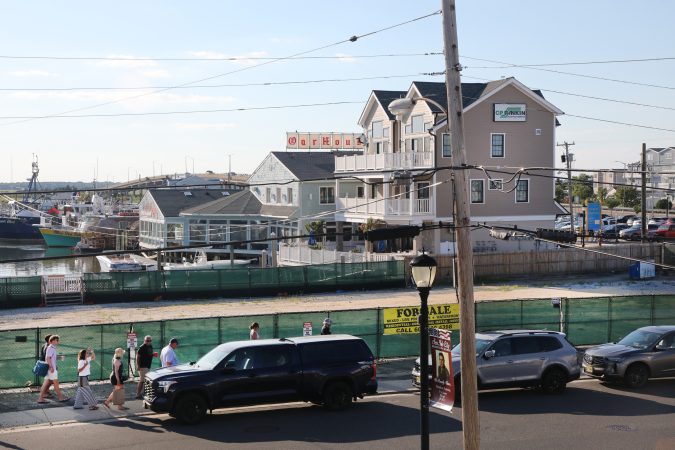
    Is Sea Isle City becoming Avalon (which already became Stone Harbor, which is basically the Hamptons)?

    I wrote about Delco’s favorite Shore destination, about how changes in visitor routines, upscaling, development, and new construction have transformed Sea Isle block by block.

    Some like it (like the Kelces, apparently, who are patiently on the wait list for the Sea Isle Yacht Club, at No. 78 of 251).

    Some don’t, like many Sea Isle loyalists who have been priced out and have watched the town change around and without them.

    Is that so different from what’s happening in other Shore towns?

    If you haven’t already, read my story here.

    Here’s a sampling of reaction to the piece:

    Jack Fleming, who splits his time between Sea Isle and L.A., says he loves living in a place people come to vacation and be happy in, with family-owned businesses like Dalrymple’s, Braca Cafe, and Basilicos.

    • “My wife and I had the good fortune to buy our home at 34th & Central in 1985. I was 35 and my wife was 33. Can you imagine two 30-year-olds being able to do that today? I do feel bad that isn’t possible in today’s day and age. Certainly, things have changed; I hate some of these housing monstrosities. Those changes aside, I love Sea Isle and consider ourselves absolutely blessed to call it home.”

    Bernadette Mastrogiovanni wrote that her in-laws purchased a large house in Sea Isle in 1946, and sold in 1997 after her husband’s 100-year-old grandmother passed away.

    • “We saw what the future of Sea Isle was becoming many years ago when the quaint little cottage next door was sold, demolished, and converted into a QUADRUPLEX!”

    Brian Smith thinks the city should focus on using its land for a parking garage.

    • “As a 45-year-old ‘shoobie’ to Sea Isle, your article was spot on. Sea Isle is trying its darnedest to become Avalon. More upscale and ritzier, pricing riffraff like myself out. But what they’ve done, in my opinion, has made ridiculous decisions with the real estate available to the city.”

    Another reader, who said he waited two years on the Yacht Club wait list, said he felt the story didn’t ring true.

    • “What shore point town in NJ have (real estate) prices not risen dramatically since COVID? I don’t know of any. Sea Isle is a popular family town and has always been crowded with limited parking on big summer weekends forever! The same as it was (50) years ago when my wife vacationed with her family in Sea Isle.”

    📼 Are changes in Shore towns like Sea Isle a good thing? Does the Shore feel like the Shore of your childhood? Should that matter? Can’t Shore towns be allowed grow up?

    Let me know what you think by replying to this email and I’ll include your most interesting responses in a future letter.

    âŹ‡ïž Keep scrolling for news, what to do, your thoughts on dress codes, a Shore memory, trivia, and my thoughts about a $5 doughnut.

    🧐 Have ideas or news tips about the Shore or this newsletter? Send them to me here.

    🌞 After some wild weather last weekend and again on Tuesday, this weekend’s forecast looks lovely. The ocean has warmed up quite a bit from the low 60s to around 75.

    — Amy S. Rosenberg (Find me at @amysrosenberg, or on Instagram at @amysrosenberg. 📧 Email me here.)

    If someone forwarded you this email, sign up for free here. Join our text group, the Shore Line, here.

    Shore talk

    đŸŒȘ Tornado warnings were issued in Cape May and Atlantic County on Tuesday, and there was a waterspout sighting in Cape May Point that the National Weather Service has confirmed came on shore briefly as a tornado.

    🏱 The Brigantine Citizens Alliance wants to know why commercial land continues to be rezoned residential.

    📾 Rosie O’Donnell and family were posting photos from Long Beach Island.

    💰 Strathmere, one of the last free beaches in South Jersey, is considering beach tags.

    đŸ›» Jeeps took over the Wildwood beaches, and Bob Kelly was there.

    đŸ‡ș🇾 U.S. Sen. Andy Kim said he’d secured $1 million in funding for Cape May’s Harriet Tubman museum.

    đŸ€ Two children died after a family boat hit a buoy in Barnegat Bay.

    What to eat/What to do

    🌊 Watch the newly-renamed Chief Rod Aluise Atlantic City Lifeguard Classic at 6:30 p.m. Friday at the Albany Avenue beach.

    đŸïž Tour New Jersey’s islands along the Delaware River.

    🍋 Check out Nuso Cucina, the pretty new Italian restaurant in A.C.’s Orange Loop.

    🍝 A.C.’s extremely popular Cafe 2825 completed its expansion, but it’s still near-impossible to get through to make a reservation.

    đŸ„‚ The least dry day in this dry town’s summer, Ocean City’s Night in Venice, is upon us!

    🚮 Bike from the Ben Franklin Bridge to the Shore.

    đŸ„™ Attend this weekend’s annual Lebanese Festival at Our lady Star of the Sea in Pleasantville.

    🚌 Take a $5 ride from Philly to the Shore courtesy of Pacifico.

    đŸ© Sample a $5 donut from Sonny’s House of Donuts in Margate. I did. I’ve seen some grumbling about the price and if you’re getting a dozen or more, paying $4 or $5 each does add up. I tried a $5 Bavarian cream, and what I’ll say is, they’re big and can be shared. I still lean toward the $1.50 still-warm plain or cider donut found at Brown’s in Ocean City. The winner of the $5 sugar bomb category, for my money, is the Sesame Semolina Sugar Cookie from Ventnor’s Florida Cuts.

    Shore snapshot

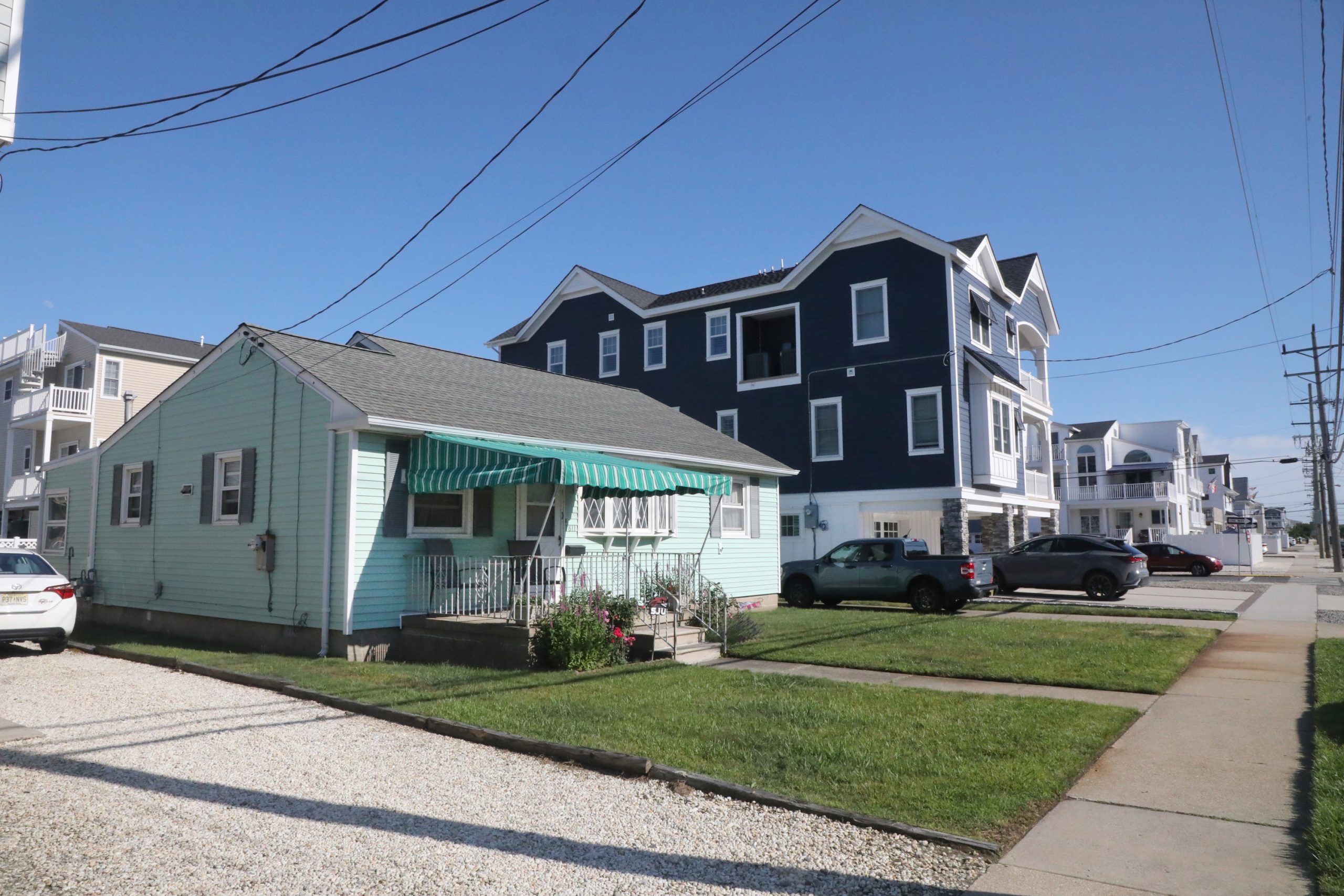
    Smaller bungalows are becoming harder to find as they are replaced by larger construction, like here at 79th Street, in Sea Isle City, on June 24, 2026.Vernon Ogrodnek / For The Inquirer

    👗 Your thoughts on: Shore dress code

    Last week we raised the question of how to dress at the Shore, how casual, how intentional, how repetitive?

    Discreet reader “R from Cape May” has this advice:

    Wear what you want at the actual beach, but step it up if you are going for drinks or dinner at a nice establishment. Rule of thumb: If they have cloth napkins, dress to impress. In Cape May, many restaurants are a little more upscale; no flip-flops or hoodies. Guys — invest in a few nice outfits — shirts with collars and a pair of nice loafers. Ladies — summer dresses and cute sandals. Don’t forget a pedicure (both of you). If you are spending $20+ on a cocktail and $40+ on an entree, dress like you can afford it. No one wants to be publicly shamed by the (cringe- inducing) self-appointed shore social secretary Lady Whistledown.

    OK then!

    🧠 Trivia time

    Maureen Farrow was first with the correct answer to last week’s question about which two Shore towns never rebuilt their boardwalks after the 1944 hurricane: Beach Haven and Stone Harbor.

    This week’s question:

    This sweaty bar in Avalon closed 39 years ago this summer and featured the Greaseband on Sunday nights.

    Was it:

    A. The Bongo Room

    B. Maloney’s

    C. Jack’s Place

    D. Fred’s Tavern

    If you think you know the answer, email us here. First one with the right answer gets a shout-out.

    Any and all memories of this establishment encouraged!

    Your Shore memory

    Joe Farley titled this memory “Breathtaking.”

    The first time my grandson, Iggy, really saw the ocean, he was absolutely stunned. About twenty of us were staying at a large condo in Bethany Beach. We were a force in our caravan of pickup trucks packed to the hilt. We followed the highway to the parking lot where you have to deflate your tires so you wouldn’t get stuck in the sand; then a bumpy ride over dunes.

    I kept my eye on Iggy, who was about four. He was handed a raft which he hugged to his chest, then stumbled in the sand looking for where to set it. He dropped it next to my beach chair, turned toward the roaring ocean and froze. He looked out at the relentless waves splashing onto the shore and uttered his famous often-repeated line:

    “Wait a minute — does this go on all day?”

    📬 Send us your Shore memory! In 200 words, tell us how the Shore taps into something deep for you, and we will publish them in this space during the summer.


    By submitting your written, visual, and/or audio contributions, you agree to The Inquirer’s Terms of Use, including the grant of rights in Section 10.

  • How 6,600 noncitizens got registered | Inquirer South Jersey

    How 6,600 noncitizens got registered | Inquirer South Jersey

    Good morning, South Jersey.

    Our main story explains how 6,600 noncitizens in the state were registered to vote ahead of the 2024 election — and what happens next.

    And Audubon has a new history museum that covers more than a century of the borough’s past.

    Plus, the National Weather Service in Mount Holly confirmed there was a tornado as Tuesday’s storms swept through the state, and more news of the day.

    — Taylor Allen (southjersey@inquirer.com)

    P.S. Drop your burning questions about the region for Curious South Jersey. The answers might end up in our team’s reporting, and of course, in this newsletter.

    If someone forwarded you this email, sign up for free here.

    đŸ—łïž ‘Accountability starts now’

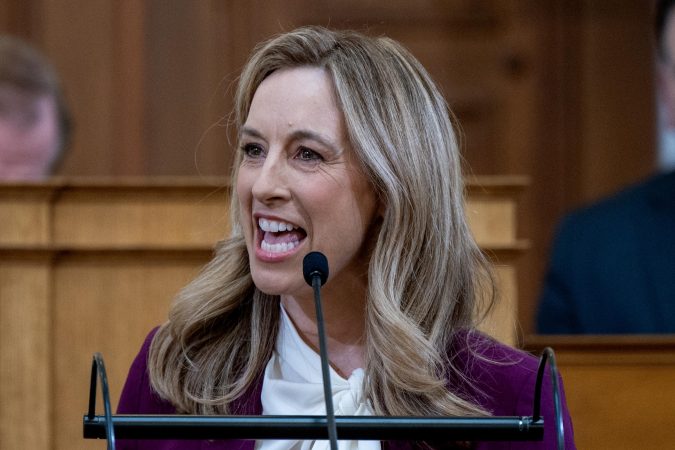
    Gov. Mikie Sherrill disclosed Tuesday that 6,600 noncitizens between June 2023 and June 2024 were illegally registered to vote, and fewer than 400 of those cast a ballot.

    đŸ—łïž How did this happen?

    New Jersey allows automatic voter registration when a citizen gets a driver’s license at the Motor Vehicle Commission unless they decline. According to Sherrill, the noncitizens who were improperly registered answered no when asked on a keypad if they were citizens, but were registered anyway through a software error.

    đŸ—łïž What’s next?

    Sherrill said she ordered an investigation, and ordered noncitizens to be removed from voter rolls.

    For more answers — like how President Donald Trump’s administration is responding — see reporter Aliya Schneider’s latest.

    Plus: Within hours of Sherrill’s disclosure, the Department of Justice sent an updated request for New Jersey’s voter database and said it’s to ensure more noncitizens aren’t registered to vote.

    Audubon’s new history museum

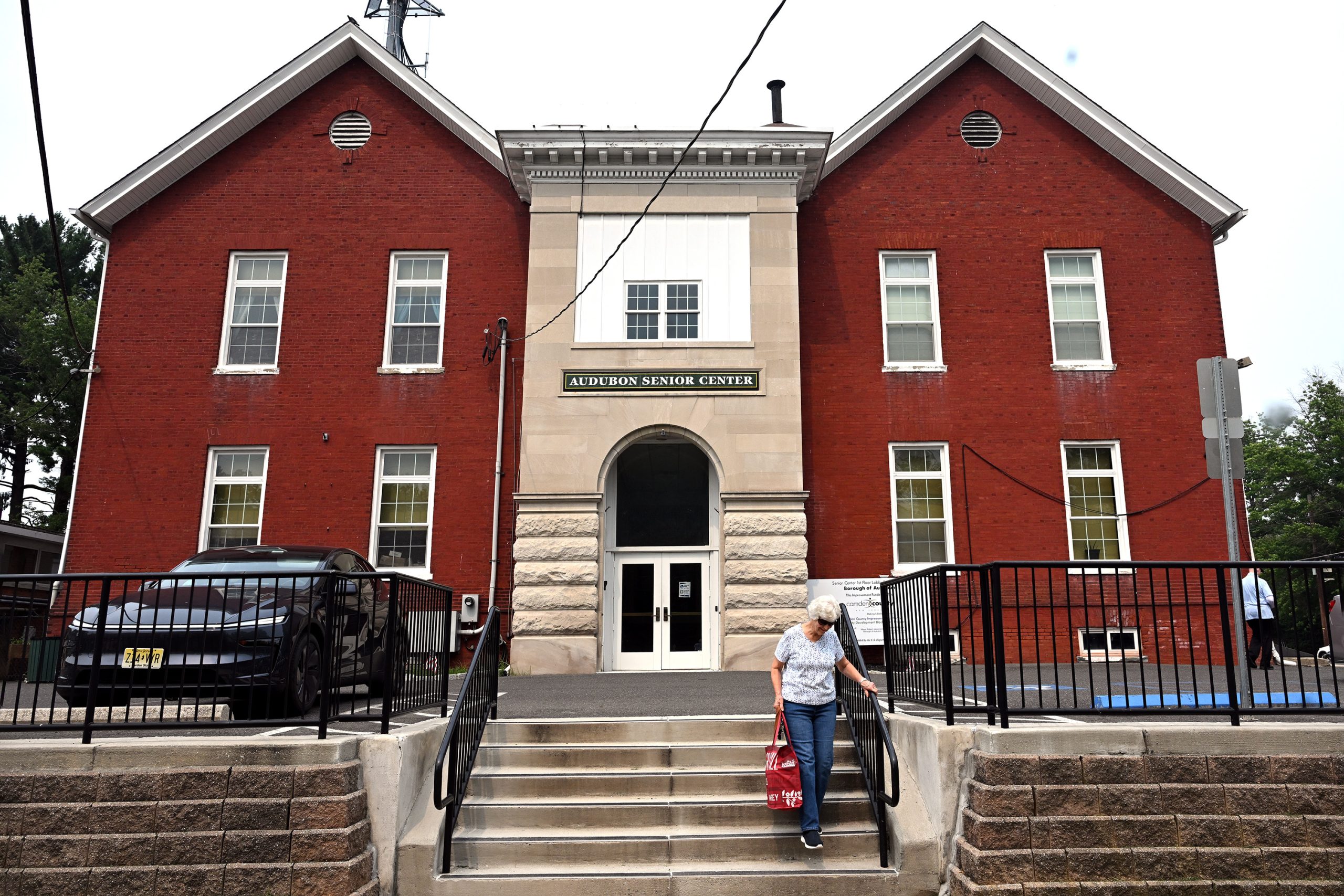
    Camden County’s newest museum invites visitors to peruse items that cover more than a century of Audubon.

    The Audubon Borough Historical Society museum on the second floor of the Audubon Senior Center boasts a collection made up of donations from residents, including a few from historical society members.

    Items include a Monopoly board based on the borough, outdated land-use maps, and memorabilia featuring NFL star and Audubon High alum Joe Flacco.

    Starting Aug. 8, the museum will be open for two hours on the second Saturday of every month.

    The Inquirer’s Sarah Nicell has the sneak peek of the standouts on display.

    What to know today

    đŸ—“ïž The best things to do this week

    🚜 Burlington County Farm Fair: The 80th annual fair returns for five days, featuring agricultural exhibits, games, competitions, rides, various food vendors, and more. ⏰ Daily through Friday, July 24, from 2-10 p.m.; Saturday, July 25 from noon-10 p.m. đŸ’” Pay as you go 📍 1990 Jacksonville Jobstown Rd., Columbus

    đŸŽ” Swedesboro’s Food Truck Festival & Dancing in the Park: Enjoy food trucks and live music from The Company. Bring your own lawn chair. ⏰ Thursday, July 23, 7-10 p.m. đŸ’” Pay as you go📍 Auction Park, 101 Leahy Ave., Swedesboro

    đŸšČ Spellbound Century: South Jersey’s largest summer cycling event is back for its 12th year. Participate or spectate as bikers ride various routes that pass local horse farms and historic towns. ⏰ Saturday, July 25, 6 a.m.-4 p.m. đŸ’” Free for spectators; rider registration is $75 📍 1 Park Dr., Mount Holly

    See more event listings here.

    🧠 Trivia time

    The South Jersey bakery Two Sweet Boutique made a treat based on inspiration from which two celebrities?

    A) Taylor Swift and Travis Kelce

    B) Jason and Travis Kelce

    C) Nick and Joe Jonas

    D) Bruce Springsteen and Jon Bon Jovi

    Think you know? Check your answer.

    What we’re 


    🧁 Hoping: “Little treat culture” is here to stay.

    🏀 Checking: The Bron-O-Meter to see if LeBron James will join the Sixers. Based on the latest info — and vibes — we’re at a maybe!

    🍮Touring: The Anthony Bourdain New Jersey food trail.

    Thanks for reading all the way through, and for starting your morning with The Inquirer. I’m off to grab my first cup of coffee. ☀

    By submitting your written, visual, and/or audio contributions, you agree to The Inquirer’s Terms of Use, including the grant of rights in Section 10.

  • Going in on a South Philly garage | Real Estate Newsletter

    Going in on a South Philly garage | Real Estate Newsletter

    It all started with a property listing sent to the group chat as a joke.

    A 3,000-square-foot garage in South Philly was listed for sale for $380,000.

    Three longtime friends and self-described “motorheads” dreamed about what they could do with that much space.

    And that could have been it. But the friends couldn’t stop thinking about the property. So they decided to stop dreaming and actually buy it.

    We have the story of how these classic vehicle enthusiasts came to be the owners of a South Philly garage.

    Keep scrolling for that piece and more in this week’s edition:

    — Michaelle Bond

    If someone forwarded you this email, sign up for free here.

    A garage dream realized

    In January, we told you about three friends who bought a communal house together in Mount Airy.

    Now, we’re bringing you the story of three friends who bought a property not to house themselves, but to be a home for the vintage vehicles they’re restoring.

    The men had been doing what they could to continue their passion projects, but none of the space workarounds they found were ideal for their collection of cars, trucks, motorcycles, and bicycles.

    Last spring, they found their slice of heaven: a windowless garage with no heating or air conditioning, a rusted beer fridge, and a bathroom with no walls.

    The garage is within a mile and a half of each of their homes, which means the friends are over there all the time.

    Keep reading to see the vehicles they’re working on and learn how they made their garage dream a reality.

    📼Have you ever gone in on a piece of property with a friend? Tell us about it.

    A church will become apartments

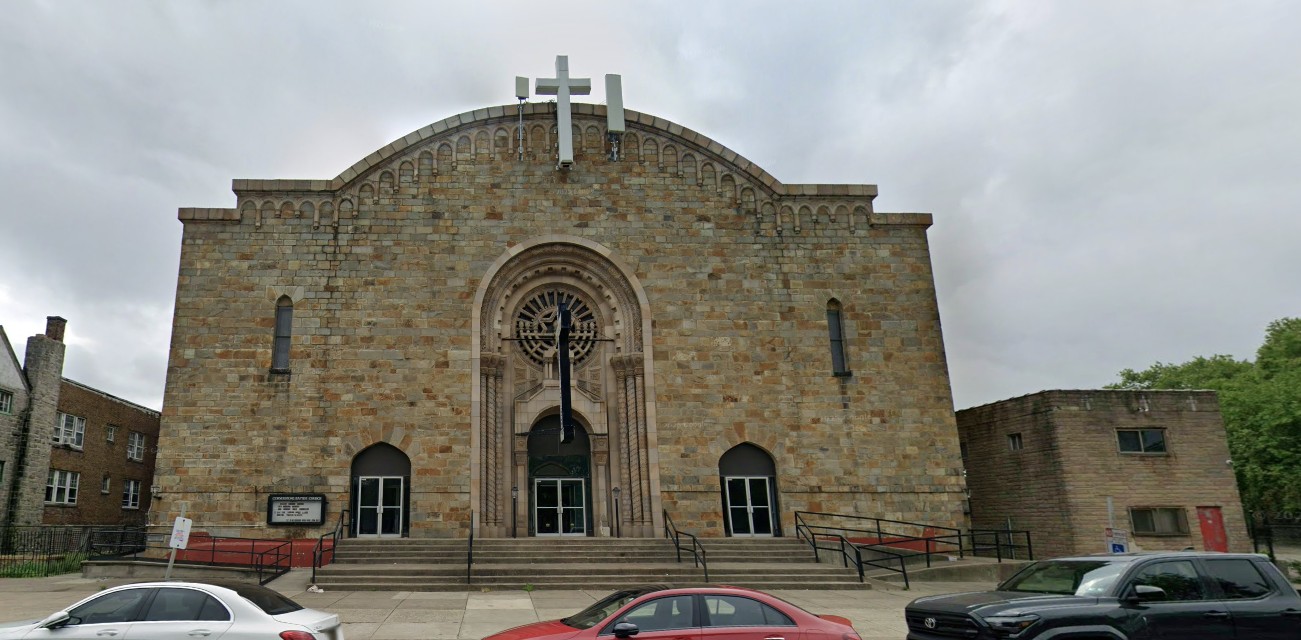
    A century-old building in Strawberry Mansion was originally a synagogue. Until recently, the property was a Baptist church. Now, it’s getting ready for its latest transformation.

    The former Cornerstone Baptist Church on the edge of Fairmount Park has joined the growing list of Philly religious sites that are being turned into homes.

    After the congregation shrank and the church couldn’t keep up with repairs, the building was sold for $1.9 million to a Philly-based developer. The company plans to build apartments and offer them only to renters making below certain incomes.

    A company official says Strawberry Mansion has been underappreciated by the real estate industry.

    “Obviously [Strawberry Mansion] had some economic disinvestment over the second half of the 20th century, but a lot of people are waking up to the sense that neighborhoods like this are not being made every day anymore,” he said.

    The redevelopment project will be partially funded by TD Bank as part of federal requirements that banks invest in neighborhoods that historically have been subjected to redlining and other systemic discrimination.

    Keep reading to learn more about the redevelopment plans for the former church and see why residents have some concerns.

    The latest news to pay attention to

    Home tour: Kid-friendly in Spring Garden

    We’re adding a dose of cuteness to your day with our latest home tour. This week’s piece features the home of Lana Shapiro, who is “almost 3″ and was making a pretend meal in the backyard when we came to visit.

    When her parents, Maddy and Andrew, bought their rowhouse in Spring Garden in 2022, the yard was not kid-friendly. The Shapiros removed the brick that was everywhere and added a cement patio and synthetic grass.

    The space is filled with furniture and colorful plants. Andrew repaired and power-washed the fence that surrounds the yard.

    A cement dividing wall still has some stubborn white paint that refused to be be power-washed away. So the Shapiros embraced the wall as it is, and it’s become a focal point of the yard.

    Inside the home, one of the Shapiros’ renovations was to add a vestibule, the classic rowhouse feature we highlighted this spring.

    Peek inside the family’s home and learn about its toddler-specific features.

    📊 The market

    Across the Philadelphia region in June, the number of home sales grew from last year. And so did the typical sale price.

    The supply of homes for sale was up too, but not enough for us to escape a yearslong truth: there’s more demand than supply in many areas across our region.

    According to the multiple listing service Bright MLS, in the Philadelphia metro area in June:

    đŸ”șThe number of closed home sales was 4% higher than at the same time last year.

    đŸ”șThe number of pending sales was up roughly 7% from last year.

    đŸ”șThe median sale price hit a new record high for June for the region — $430,000.

    đŸ”șThe number of active home listings at the end of the month was more than 12% higher than last year. But home supply is still only about half what it was before the pandemic.

    Our limited inventory means we won’t see home prices drop in any kind of meaningful way anytime soon.

    đŸ“· Photo quiz

    Do you know the location this photo shows?

    📼 If you think you do, email me back.

    Last week’s quiz featured a photo of the President’s House at Independence National Historical Park.

    A few readers recognized the site. Shout-out to Bruce H. for being the first to answer.

    ―

    Did you know that the Delaware River has roughly 123 islands? They’re owned by governments, corporations, and private individuals.

    Some are pretty much just a sandbar, but others span hundreds of acres. Some are used for camping or birding, but most aren’t being used at all.

    Take a flight up the Delaware and learn about the river’s islands in this fascinating interactive story.

    And enjoy the rest of your week.

    By submitting your written, visual, and/or audio contributions, you agree to The Inquirer’s Terms of Use, including the grant of rights in Section 10.