Blog

  • U.S. health officials move quickly to deploy medical AI despite concerns

    U.S. health officials move quickly to deploy medical AI despite concerns

    The Trump administration is accelerating efforts to make artificial intelligence an integral part of medical care in the United States, throwing the resources and support of the federal government into projects that deploy AI agents to diagnose and prescribe treatments to patients.

    The multifront effort at the Department of Health and Human Services (HHS) has raised concerns among some officials over the last few months that change is moving too quickly, with inadequate evidence of the technology’s safety and effectiveness, according to people who have been involved the discussions. They also worry about outsized influence of Silicon Valley investors that have previously played little role in federal health policy.

    Vinod Khosla, a billionaire Silicon Valley venture capitalist whose son has a healthcare AI company, has been particularly influential in conversations with top health department officials, according to people close to the matter. Those officials include Mehmet Oz, head of Medicare and Medicaid. Chris Klomp, who faces a confirmation hearing this week to be the second-in-command at the health department, said on a podcast in May that the use of AI in patient care was the “holy grail” in the agency’s quest to improve the nation’s health and reduce costs.

    Khosla has predicted for more than a decade that AI would largely replace doctors. “It’s over for doctors, human doctors,” he said at a July AI startup event. “AI is just going to be better.”

    In an interview, Khosla trumpeted Curai Health, his son’s company, which he has backed financially, saying it could offer an AI primary care provider that could give underserved people rapid access to care. “CMS seems to be very excited,” Khosla said, referring to the Centers for Medicare and Medicaid Services.

    Concerns about the dangers of AI, and calls to regulate it, have erupted in recent days as some top executives of AI labs have called for slowing the pace of development. In medicine, doctors are increasingly relying on AI for help with administrative tasks, but the prospect of AI taking over physician roles in assessing and treating patients is unnerving to some.

    Models meant to render care independently to patients “are not ready for primetime,” said John Whyte, CEO of the American Medical Association, the nation’s largest physicians organization.

    He said the evidence that Khosla and others have cited as showing AI’s superiority to doctors — including in a recent essay in an American Medical Association publication whose authors included Khosla and his son, Neal — was not convincing and largely based on simulations.

    “AI in health should not be driven by the tech industry,” Whyte said. “It should be driven by the clinical community. And right now, what we have going on is that tech is the tail wagging the dog.”

    Grace Davis Jamison, a health department spokesperson, said the department was taking a “responsible, evidence-based approach” to AI deployment and “expanding its use as the evidence demonstrates value.”

    “HHS is embracing cutting-edge American innovation, including AI as a practical tool, to better serve patients, families, and clinicians as we work to Make America Healthy Again,” she said in a statement.

    As part of the effort, federal health officials are working on developing a new payment category for Medicare, the federal health program that covers more than 60 million older Americans, to reimburse companies for AI software that supports medical care or diagnosis. Medicare officials have urged private insurers covering about 165 million Americans to reimburse for “technology-supported care,” including some AI projects, if they improve care and cut costs.

    The Food and Drug Administration has approved more than 1,500 medical devices that include AI to perform discrete tasks, such as spotting a tumor or a blood clot. But the agency does not have rules built to address newer models, such as chatbots or so-called agentic AI that perform tasks that a doctor would do, such as prescribing a drug. Jamison said the FDA was examining how its rules should change to keep up with AI systems “that operate with greater autonomy.”

    Still, Medicare officials are moving an array of pilot programs forward without FDA approval. Medicare has allowed more than 200 companies to try out pilots that can include AI.

    Through a program aligned with the Medicare effort, the FDA has rejected many of those applicants but has allowed the use of four otherwise-unapproved AI models that meet safety criteria and appear likely to benefit patients. They include a project that offers talk therapy with an AI chatbot to Medicare beneficiaries with depression or anxiety.

    The FDA is still discussing how it should regulate complex AI models that change over time and perform actions like prescribing. The task is daunting. The agency would have to manage the risks of large-language models; one was already accused of giving “dangerous” medical advice to a man who delayed care for a life-threatening blood clot.

    It would also have to contemplate whether AI doctors could go rogue in a manner akin to the OpenAI agents that coordinated a hacking campaign on a company called Hugging Face. Robert F. Kennedy Jr., the health secretary, has publicly acknowledged the risks, but said during a congressional hearing in April that AI was “going to revolutionize medicine.”

    “AI is very dangerous potentially,” he said at the hearing. “But it also has the capacity to bring really great things to humanity, particularly in the realm of human health.”

    One of his sons, Finn, started a venture capital fund this year that says it “builds and invests in generational health companies” and was reported to have solicited funds to invest in healthcare AI.

    Last year, Finn Kennedy worked for 8VC, a venture capital firm run by Joe Lonsdale, a billionaire ally of President Donald Trump’s; the younger Kennedy coauthored articles at the firm, saying that AI doctors “won’t work for free,” suggesting that the companies that create the technology should be paid. He laid out the federal overhaul needed to deploy them, which included appointing a person at the FDA to focus specifically on artificial intelligence.
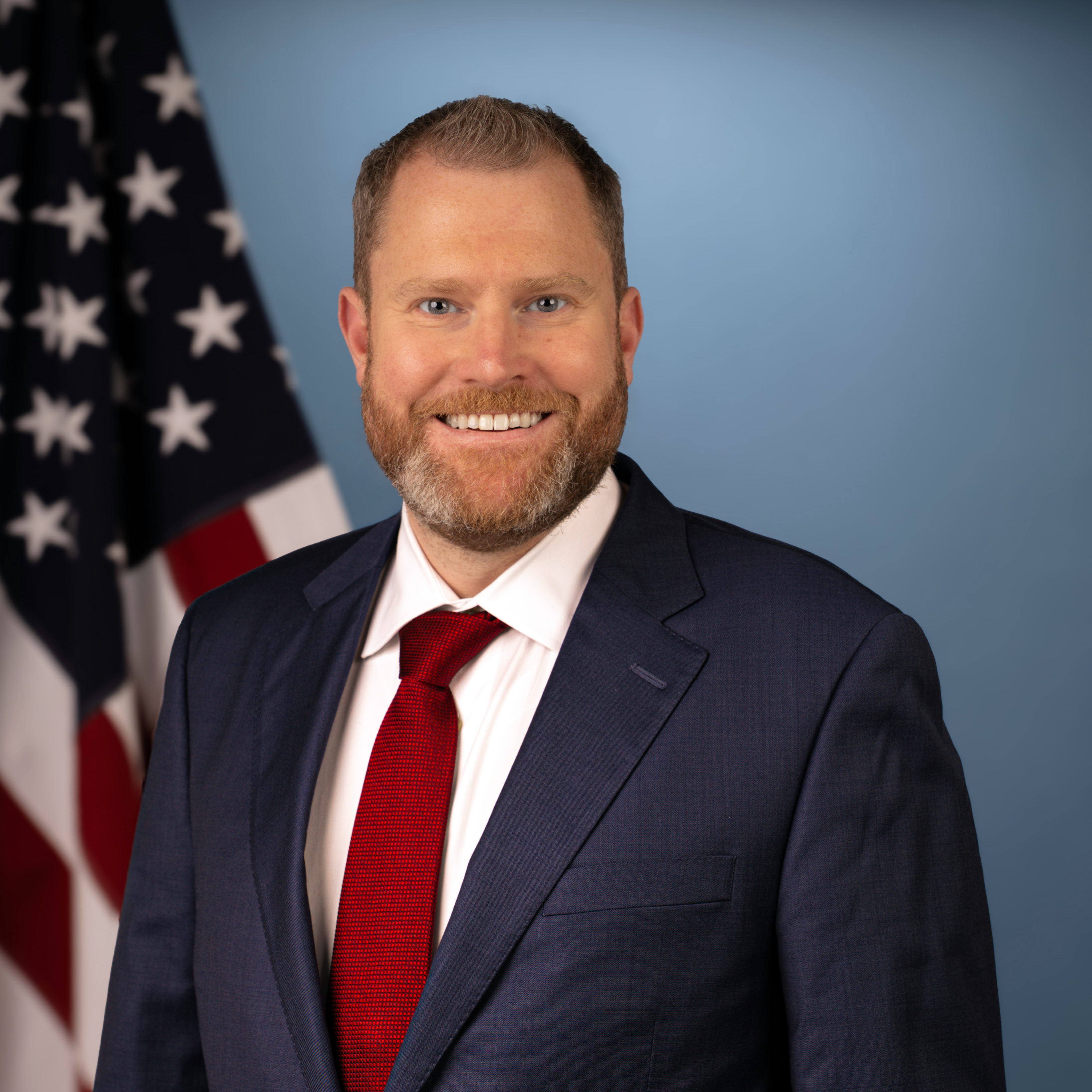
    Jared Seehafer, an FDA official with Silicon Valley ties, proposed a plan to centralize artificial intelligence oversight at the health department or in the FDA commissioner’s office. U.S. FOOD AND DRUG ADMINISTRATION

    Last week, the health department did just that, announcing that it had elevated Jared Seehafer, a former tech entrepreneur, to a newly created post of deputy commissioner for technology and artificial intelligence. Seehafer, a political appointee who has been at the agency about a year, has been described by people who worked with him as wanting to pare back the agency’s oversight of medical AI.

    Seehafer’s appointment drew notice in Silicon Valley investment circles. “Great choice from the HHS team,” Sebastian Caliri of 8VC, who cowrote the AI articles with the younger Kennedy, posted on the social platform X. Lonsdale, his boss, whose venture capital firm has invested in medical AI, wrote: “Excited to see the right talent going in.”

    Seehafer began working at the FDA after he sold his startup that provided software to help companies comply with FDA rules. Soon he began to clash with Marty Makary, then the agency’s commissioner, and with the director of medical devices, whose division oversees software that directs patient care.

    Seehafer proposed a plan to centralize AI oversight at the health department or in the FDA commissioner’s office, raising concerns that decisions would be more influenced by the tech sector than by medical considerations, according to people familiar with the plan who were not authorized to discuss it publicly.

    The plan met with resistance from Michelle Tarver, the top medical devices official overseeing AI software, favoring leadership from expert scientists with a focus on patient safety.

    Makary, who had been outspoken about the influence of Silicon Valley investors, then got word that health department officials wanted him to fire Tarver, according to people with knowledge of the matter. He refused.

    The FDA said in a statement, “The work, expertise and involvement of career staff is a vital component of FDA successfully delivering public health for the American people.”

    The statement added that Seehafer “has nothing but respect for Dr. Tarver” and her division’s “long history of facilitating innovation while ensuring the safety and effectiveness of medical devices.”

    Within the administration, conversations about AI in medicine have continued, including on whether to pay AI doctors operated by tech companies and startups as much as 60% to 80% of what human doctors earn for the same service, according to a person involved.

    A demonstration of a Limbic AI mental health app in London on Sept. 10, 2026. Jeremie Souteyrat

    Other projects offer payment based on whether they demonstrate benefits to patients and cost savings to Medicare. One of them is from the company Limbic, offering cognitive behavioral therapy to Medicare beneficiaries who were diagnosed with depression or anxiety.

    The company, which was backed by the elder Khosla, was selected by the FDA to participate in a Medicare AI pilot.

    In it, an AI counselor, which has a female voice and uses the name “Hope,” offers an hourlong session each week with check-ins as needed. A study by company scientists and engineers that was published in the journal Nature Medicine found that clinicians who were unaware if they were reviewing a therapy transcript led by a human or a chatbot concluded that the Limbic AI outperformed humans and a general chatbot.

    Ross Harper, Limbic’s CEO, said that one clinician would supervise thousands of AI therapists.

    “It is a moral issue to get this out into the hands of people who can’t access care,” said Harper, who holds a doctorate in computational neuroscience. He added: “We have to remind ourselves: What are we comparing this against? We’re comparing it against no treatment, a long wait list.”

    Another medical AI pilot with about $60 million in funding is moving forward at the health department’s Advanced Research Projects Agency. Haider Warraich, a former FDA official and cardiologist, said the Advocate project is meant to ultimately deploy autonomous AI to manage care for heart failure patients, giving them access to a chatbot that can prescribe and manage medications.

    Warraich said the project was inspired by his experience as a cardiologist managing heart failure patients during the COVID-19 pandemic. He said his team had routine phone contact with patients, many of whom were afraid to enter the hospital and catch the virus, and found that patients improved with the regular check-ins.

    He said the AI effort, put into practice by teams at Stanford University and Duke University, among other groups, would include remote monitoring or wearable sensors linked to the AI, which could adjust medications if a patient’s condition began to deteriorate. (Given current laws and rules, a doctor will oversee the AI.)

    The goal, he said, “is to really bring safe and effective clinical AI to the bedside, and build a regulatory pathway for this technology, so that we can really help unlock the potential of this technology — not just for heart failure, which is our main focus, but really for all conditions.”

    Dr. Haider Warraich, a former FDA official and cardiologist, says his health department pilot project is meant to ultimately deploy autonomous artificial intelligence to manage care for heart failure patients, giving them access to a chatbot that can prescribe and manage medications.Sophie Park

    Other companies accepted into Medicare’s pilot programs include Slingshot AI and Devoted Health, organizations backed by Andreessen Horowitz, a venture capital firm that has heavily supported Trump.

    Neal Khosla’s company, Curai Health, was selected by Medicare and has an application pending with the FDA to deploy its autonomous AI primary care doctors. In a prepublished study by company scientists and engineers, his team found that clinicians concurred with the AI doctor’s diagnosis about 91% of the time across about 2,300 cases. However, in three cases, the AI suggested a telehealth visit in situations where a human doctor advised an urgent or emergency evaluation.

    Given the promise to vastly expand affordable care, the younger Khosla said he was surprised by the vitriol generated by the recent editorial that he and his father and Ezekiel Emanuel, vice provost for global initiatives at the University of Pennsylvania and a health policy official in the Obama administration, wrote with Abe Baker-Butler in a JAMA journal. The article argued that autonomous AI outperformed human doctors in several areas and would be in widespread use by 2030.

    Emanuel said that he got feedback from peers reminding him of the role doctors play in consoling patients. Overall, he said the response has been about “40% supportive.”

    This article originally appeared in The New York Times.

  • Wayne Gretzky coming to Stateside Live! with his TNT colleagues; Ross Tucker shines amid Tony Romo drama

    Wayne Gretzky coming to Stateside Live! with his TNT colleagues; Ross Tucker shines amid Tony Romo drama

    “The Great One” is coming to Philadelphia to kick off the NHL season, and he’s bringing a few friends with him.

    TNT is renting out Stateside Live! and bringing it’s full NHL studio crew — including Hall of Famer Wayne Gretzky — for the Flyers’ opening night matchup against the Pittsburgh Penguins (Sept. 30, 7:30 p.m.), the latest edition of their Battle of Pennsylvania rivalry.

    Liam McHugh will host the festivities beginning at 6 p.m. He’ll be joined by TNT analysts Henrik Lundqvist, Anson Carter, Paul Bissonnette, and Gretzky, who signed a multi-year extension with Turner Sports last year.

    Gretzky joined TNT as a hockey analyst in the 2021-22 season after it secured its media rights deal with the NHL. He appears on TNT’s coverage infrequently, but is there for all the major events, including the Winter Classic and the Stanley Cup playoffs.

    TNT’s NHL studio crew (from left) Wayne Gretzky, Paul Bissonnette, Liam McHugh, Anson Carter, and Henrik Lundqvist.Turner Sports

    “This city lives and breathes sports, and the passion of Flyers fans creates an incredible atmosphere that you can feel the moment you arrive,” said McHugh. “We’re excited to bring NHL on TNT back on the road, celebrate the start of another season, and give fans a front-row seat to all the energy, intensity, and personalities that make this sport so special.”

    It could be a busy night in South Philly. In addition to the Flyers’ opening-night game, it’s possible the Phillies could be hosting a wild-card game.

    The Orange and Black will certainly be a hot commodity. After last season’s surprising playoff run, 19 of the Flyers’ 84 games will be featured on national broadcasts, third-most in the league behind the Penguins and Boston Bruins.

    TNT is scheduled to get nine of those, including two matchups against the Washington Capitals in what could be Alexander Ovechkin’s final NHL season.

    Ross Tucker shines amid Tony Romo CBS drama

    Eagles preseason announcer Ross Tucker will call Sunday’s Eagles-Commanders game on CBS.CBS

    Ross Tucker shined in his debut in CBS’s No. 2 booth Sunday, which he’ll remain a part of for at least the next few weeks.

    CBS announced its broadcast schedule for Weeks 2 and 3, and the Wyomissing native and former NFL offensive lineman will continued to be paired with veteran play-by-player Ian Eagle.

    On Sunday, Eagle and Tucker will call a Week 2 matchup between the Jacksonville Jaguars and Denver Broncos. In Week 3, the pair will broadcast an AFC North battle between the Cincinnati Bengals and Pittsburgh Steelers.

    Tucker, who also serves as the Eagles preseason announcer, impressed fans and critics Sunday during CBS’s broadcast of the Buffalo Bills’ narrow win against the Houston Texans.

    Early on, during a failed fourth-down run by Josh Allen, Tucker was quick to note offensive lineman Dion Dawkins “took too big of an angle” on Texans cornerback Kamari Lassiter, allowing him to undercut the block and make the play.

    “The Bills would have had it if Dawkins could have sealed that block,” Tucker said.

    Later in the game, when a pass went right through the fingertips of Texans receiver Xavier Hutchinson, Tucker pointed out the often-overlooked difficulty in making that type of catch.

    “That’s a tough spot to catch a football, right above your helmet, because your arms are restricted a little bit by the shoulder pads,” Tucker said. “It’s one of the tougher places to catch than you would think.”

    Going unmentioned in CBS’s announcement of its upcoming schedule was Romo, the former Dallas Cowboys quarterback who remains suspended after pleading no contest to operating a vehicle while intoxicated. J.J. Watt will remain in the No. 1 booth alongside Jim Nantz for at least the next two weeks.

    The network has yet to respond to Romo’s statement tjat he plans to return to CBS “in time,” leading to speculation the network might be looking to part ways with its highly paid top NFL analyst.

    “What feels on the horizon is the use of the morals clause and other language in Romo’s contract to try to reach a settlement on the final $72 million on his contract,” wrote The Athletic’s Andrew Marchand. “It could end up in a legal fight to determine how much Romo will receive to leave.”

    Quick hits

    Hall of Famer Drew Brees is in his second season with Fox as a color analyst. Tyler Kaufman
    • Hall of Fame quarterback Drew Brees will call his first Eagles game Sunday when the Birds take on the Tennessee Titans on Fox. Brees was run out of NBC in 2022 after a bad performance calling his first NFL game — a wild-card game — but has since rebounded in his second year with Fox.
    • Phillies announcer Tom McCarthy will miss a handful of games on NBC Sports Philadelphia over the next few weekends due to his NFL schedule for CBS. He’s slated to call Browns-Buccaneers in Week 2 and Texans-Colts in Week 3 alongside former Colts and Seahawks running back Robert Turbin.
    • Former Penn State football coach James Franklin is coaching Virginia Tech this season, and after Monday’s win against Old Dominion, he really wanted to know how Baltimore Sun reporter Michael Howes was doing.
    • 97.5 The Fanatic program director Scott Masteller is retiring following a 45-year career, the last three spent in Philly. Masteller’s last day will be Dec. 31, and it’s unclear where the station will turn after that. The last few years have seen a number of notable departures, including John Kincade, Anthony Gargano, and Mike Missanelli, who was unceremoniously dumped last year.
  • Trump slams Supreme Court for rejecting his push to restrict mail ballots

    Trump slams Supreme Court for rejecting his push to restrict mail ballots

    WASHINGTON — President Donald Trump on Tuesday went after the Supreme Court after it rejected his push to restrict mail-in voting in this year’s midterms, saying justices who opposed him were “not the people I interviewed.”

    His social media missive was just the latest in a long history of Trump assailing justices, particularly those he had nominated, who ruled against him on his administration’s most prominent initiatives. The president has been publicly furious with the Supreme Court over its decisions against restricting birthright citizenship and his ability to issue tariffs unilaterally.

    On mail-in voting, the Trump administration had made a last-minute push to have the U.S. Postal Service play a central role in deciding who would be able to receive a ballot. But state election officials argued there was not enough time to make the changes for the Nov. 3 midterm elections — and said their systems were already secure and accurate.

    The court ruled late Monday in an emergency order that the restrictions would most likely lose in court, at least for this year’s election.

    “The Court’s inability and unwillingness to do the right thing for our Country will go down, in a very negative way, in the annals of History,” Trump wrote in a lengthy social media post Tuesday. “This Supreme Court is bullied and cajoled by the Radical Left into making decisions that have set America back at least a hundred years.”

    Justices Sam Alito and Clarence Thomas publicly dissented from the order, and Trump on Tuesday called them “legends both.” Trump has nominated three of the justices on the Supreme Court — Neil Gorsuch, Amy Coney Barrett and Brett Kavanaugh.

    “These are not the people I interviewed to serve on the United States Supreme Court, they are merely a shell of their original selves,” Trump said. He asserted that the court “is costing the United States Trillions of Dollars with shockingly bad rulings that are of such magnitude that it won’t be easily possible for our Country to recover or heal.”

    The president has a lengthy track record of attacking judges, often very personally, who issue decisions that go against his wishes, and Trump has long viewed his legal appointments as owing loyalty to the person who nominated them to the bench.

    So as Barrett, Kavanaugh and Gorsuch ruled against Trump at varying points over the years, the president has not hesitated to go after them publicly, while praising them if they sided with him in a case.

    Yet this court, led by Chief Justice John Roberts, has ruled in favor of Trump on several of his priorities, most notably the 2024 decision from the court’s conservative majority that said former presidents are presumptively entitled to immunity for all official acts. That paved the way for Trump to run for reelection without threat of a criminal trial that year.

    Trump has opposed mail voting and falsely blamed it for his 2020 election loss. A report by the Brookings Institution published in 2025 found that mail voting fraud occurred in only about four cases out of every 10 million mail ballots cast.

    Roughly a third of voters use mail ballots, and mail voting has already begun in some states. The decision allows states to continue sending out mail ballots under the same processes they’ve used for years.

    On Tuesday, Trump also complained that the decision took too long to issue.

    “It is not easy for me to write this criticism of the United States Supreme Court – it will likely cost me dearly for years to come – but I feel it my obligation and duty, as President, to do so for the America we love!” Trump said.

  • How Philly-area businesses use employee bonuses to reward performance

    How Philly-area businesses use employee bonuses to reward performance

    As we enter the last quarter of this calendar year, many businesses are budgeting for pay raises in 2027. Most of my clients — and many other small businesses — also offer bonuses, which can provide extra financial incentives to employees.

    According to HR consulting firm Korn Ferry, the average pay raise is expected to be about 3.3% next year. Professional services firm Marsh says raises should be about 3.5%.

    Given the current rate of inflation, this may barely seem enough to cover the cost of living. But base pay isn’t everything, and bonuses can be a great motivator.

    Here is how several area businesses use this tool.

    Employees ‘write their own ticket’

    At the Pest Rangers, a pest control company based in Hanover Township, CEO Jeff King utilizes several bonus and incentive plans, all with the aim of rewarding workers for reliability, customer service, and sales.

    “Our technicians receive baseline bonuses for punctuality, weekly truck inspections, and avoiding customer complaints,” he said. “Employees who sell recurring pest-control plans share a monthly bonus pool based on their portion of total sales.”

    The company also offers sales commissions and production bonuses with no cap on earnings, he said.

    The company’s “raving customers” program rewards employees who receive exceptional customer feedback, King added. The company paid more than $18,000 in these bonuses in 2025, including more than $6,000 to its top technician.

    “This method we’ve formulated allows the employee to write their own ticket. If you want to go above and beyond, you’re being recognized for that behavior,” he said. “We put money directly into the employees’ pockets, rather than spending on traditional marketing.”

    Lowering costs while paying good managers what they’re worth

    Chickie’s & Pete’s, the popular Philadelphia-based restaurant chain, offers several bonus programs, but focuses its rewards primarily on managers and supervisors.

    “We award managers for things like developing hourly employees into supervisors and managers, training incoming managers at designated training locations, and keeping labor and food costs within quarterly budget targets without hurting customer service,” said vice president of operations Peter “Pete” Ciarrocchi III.

    “Our plans were designed to help retain the staff that we have and also providing consistent quality services to our families,” he added.

    Bonus plans have helped to reduce the company’s labor costs, Ciarrocchi said, but managers make 20% more on average since the restaurants started giving bonuses.

    Chickie’s & Pete’s restaurant in South Philadelphia.MONICA HERNDON / Staff Photographer

    Bonuses rewarding consistency

    Werner Bus Lines in Phoenixville uses targeted bonus programs that are tied directly to the results or behaviors the company wants from each department.

    For example, sales employees get paid based on bookings and mechanics get a bonus for punctuality.

    “I tried to think about the systems I could design where my employees and the company are happy,” Werner’s president Heath Ochroch said. ”I asked what was the actual behavior that I wanted to see more of in each of these departments and that would be the common thread.”

    Jamie Turner, founder and president of Acclaim Autism, focuses bonus programs on the people providing services.

    Acclaim Autism’s “frontline workers,” who help provide behavior analysis and therapy, among other services, can earn up to $300 in bonuses per month, Turner said.

    “Their bonuses are primarily based on consistently completing scheduled patient-facing hours, maintaining continuity and routine for patients, and meeting quality and compliance standards,” he said.

    Turner said it’s critical for their employees to be incentivized to provide consistency in their patient-facing hours, “which our patients need on a regular routine basis.”

    Using discretion to reward less quantifiable contributions

    Many firms I know like to pay once-a-year bonuses based on management’s discretion.

    Employees at PayUSA, a King of Prussia-based payroll processing firm, receive an annual year-end bonus based primarily on their individual performance. President and CEO Christian Hoyt said most established employees receive a bonus equal to at least one week’s salary, with a larger multiple for stronger performers. The largest bonuses are up to 2.5 times the employee’s weekly pay.

    “The basic idea is to recognize a full year of hard work with an additional week or more of compensation,” he said. “If an employee worked really hard for 50 weeks, let’s pay them for 53.”

    At Newtown-based JS Benefits Group, an employee benefits consulting firm, all 26 employees are eligible for discretionary bonuses, which can be as much as 5% of their salary, or about 2.5 weeks’ pay. Founder and CEO Jennifer Schaefer said there is no fixed formula.

    “We generally consider three principal factors: the company’s overall performance, the employee’s individual contribution, and the employee’s years of service,” she said.

    Schaefer deliberately keeps the bonuses discretionary because conventional productivity measures do not capture every valuable contribution. She considers how employees serve clients, support colleagues, solve problems, and strengthen the company’s culture.

    “A formula can measure revenue, but it can’t always measure the employee who quietly solves problems, earns a client’s trust, or makes the entire team better,” she said.

  • The cult-favorite ceramic dinnerware from ‘The Bear’ holds a pop-up sale in Philly

    The cult-favorite ceramic dinnerware from ‘The Bear’ holds a pop-up sale in Philly

    On the first morning of the Jono Pandolfi dinnerware pop-up in Philly, a woman FaceTimed her best friend from the center of the studio, documenting the shelves of turquoise and yellow and persimmon salad plates. A man cradled a 4-ounce, birch white creamer made of toast-colored clay.

    Pandolfi is the designer behind the handmade plates and cups in some of Philly’s most well-regarded restaurants, including Southwark, River Twice, and Vetri Cucina.

    Based in North Jersey, Pandolfi started his eponymous company in 2004 and has since become famous in the (niche) world of high-end plateware. He crafted the espresso and cappuccino cups for Eleven Madison Park and recently designed five new shapes for chef Daniel Humm’s forthcoming West Village restaurant. (Usually, “I only release one new shape every few years,” he said.)

    Even Carmy on HBO’s The Bear uses Jono Pandolfi dinnerware.

    A price list for the Philly pop-up. Tyger Williams / Staff Photographer

    The 10-day Philly pop-up, held at an Olde Kensington apartment complex, offers pieces at deep discounts. Some are overstock from restaurant orders or one-off commissions with special colors and shapes. Others are seconds, pottery with small cosmetic flaws. One of the best-selling pieces is the Alaska bowl — a “pasta-sized bowl,” as Pandolfi calls it — which normally sells for $57 and is on sale for $28.

    “If you need to make 100 dinner plates for a customer, you have to probably fire 120,” Pandolfi, in black jeans and a magnetic name tag reading “Jono, Founder,” said in an interview at the Philly sale. The pop-ups are a way to sell off the extras. Some are stamped with the labels of the restaurants that originally commissioned them.

    Founder Jono Pandolfi poses for a portrait at his Philly pop-up. His dinnerware has become a cult favorite. Tyger Williams / Staff Photographer

    The sale runs daily 11 a.m. to 7 p.m. through Sept. 21, at 1525 N. American St. Studio #109. Reservations are available online, though people can also just walk in.

    The first day drew pottery enthusiasts and devoted home chefs, as well as fans of The Bear, from across the city. Customers pored over a crumpled seconds sale-price list on the main table, and the studio echoed with the gentle thunk of pottery being lifted, examined, and restacked.

    “I’m always looking for beautiful things to collect,” said Julia Jacob, 38, an interior designer living in South Philly. She is planning to host family in her new home for the first time this Thanksgiving and wanted clean white plates to make the food look good.

    One of Pandolfi’s golden rules is that his beautiful dinnerware cannot upstage beautiful food. He likes working within the confines of what chefs want from their dishes: They must be minimalist, durable, dishwasher-safe. The company churns out 1,000 such pieces a day from a studio in Union City, New Jersey.

    Alex Nguyen, of South Philly, examined a salad plate at the pop-up. Tyger Williams / Staff Photographer

    “It feels like you’re buying something that’s not made at Target,” said Soumya Dayananda, 50, an attorney who lives in Society Hill. She was considering salad plates in four colors, as well as turquoise dinner plates.

    Susan West, 41, carried a large serving tray, a medium serving tray, two bread plates, and three small bowls, all in vibrant yellow.

    “I don’t need anything,” she said. She couldn’t justify buying all new dinner plates — but these were for hosting. For cheese, for olives! She liked the rustic look of the pottery, and the way it lent itself to showing off unfussy food. She was almost ready to check out when she spotted a small red-and-green-banded plate on a shelf by the register.

    “I’m very tempted by this for Christmas cookies. But I’m like, that’s ridiculous.” She paused to consider the plate. “Should I get one? This is where I spiral.”

    The pop-up is being held at a 500-square-foot studio at 1525 N. American St.Tyger Williams / Staff Photographer

    Some customers returned multiple times in a single day.

    Catherine Pelletier, 60, a designer on the Main Line, had learned about Jono Pandolfi after researching the dinnerware on The Bear. She has since been to Pandolfi’s pop-ups in New Jersey and New York.

    She arrived at the Philly studio sale right when it opened, and bought serving platters and dip bowls for herself. Then she left. But her friend asked if it wasn’t too much trouble, could she return, and pick up a few things for her? So Pelletier came back and ended up purchasing serving trays and bowls for her friend as well.

    The “tiki cups” on sale at the Philly pop-up. Tyger Williams / Staff Photographer

    Maryam Mahdavi, 64, and a collector of pottery, was eager to talk shop with Pandolfi, but she also recognized she had a lot to do. She had dragged her husband to the pop-up, and now he was enchanted by the shiny green tiki cup, a nearly foot-high mug with a face like an Easter Island statue. (“I don’t want that,” Mahdavi said, before magnanimously agreeing to buy it for her husband.)

    She stared down the studio’s central table, piled high with bread plates and pasta bowls and ramekins and square-sided salad plates originally designed for chef April Bloomfield’s Tosca Cafe in San Francisco. She had no more time for small talk.

    “Now,” she said, “I gotta focus.”

  • ‘Culture wars’ can matter deeply

    ‘Culture wars’ can matter deeply

    Trans rights, trad wives, and a testosterone-fueled military: these hot-button topics generate intense emotions in online spaces and cable-news panels, driving the culture wars that energize MAGA warriors. Culture wars focused on gender issues have been especially heated during the Trump era, but they are not new. Indeed, gender-based culture wars have long been a feature of democratic systems, particularly during times of political upheaval.

    Consider the example of France in the 1790s. The French Revolution of 1789 led to a change of government from one ruled by an absolutist monarch to one where (some) men could vote for their governing bodies. With the introduction of a new electoral system in 1791, suffrage and regular elections became part of the system and ambitious politicians needed constituents to vote for them.

    Rapid political and social change, including the debate over who qualified as citizens with the right to vote, generated both movements for change and a sense of impending disorder. Urban workers and peasants demanded the vote, as did some women. Dissatisfaction with the government’s response led to increasing violence, including riots and the overthrow of the monarchy in August 1792. The constitution that came into effect in June 1793 — after the creation of the French First Republic and the execution of King Louis XVI — granted universal male suffrage, including for workers and peasants. But it refused the same political rights to women.

    Still, representative government brought legal changes that benefited women. In the fall of 1792, the National Convention legalized and made divorce quite easy, a change vehemently opposed by church authorities. In the years that followed, more women than men sued for divorce under the new laws, reflecting their desire for greater autonomy. At the same time, adjustments to inheritance laws made it possible for women to demand a fair share of their family’s material goods, in many cases interfering with previous settlements that had disproportionately favored sons over daughters.

    While many French men and women approved of these transformations as promoting greater fairness, those disadvantaged by the changes expressed their outrage at the disruption to longtime religious and economic practices anchored in traditional ideas about gender. Conservatives were especially unhappy about restrictions on the ability of husbands to discipline a wayward wife or of fathers to direct the family’s resources toward an eldest son. His diminished patriarchal authority had profound implications for familial relations.

    Uneasiness about these cultural shifts intensified as war broke out in 1792, followed by civil war within France itself, triggered by resistance to what many saw as unacceptable attacks on their way of life. Opposition to the revolutionary government was particularly strong in western France, where religious sentiment and an attachment to the king and traditional hierarchies fueled resistance to government “meddling.”

    The Terror — an effort by the radical Jacobin government, with the support of the newly empowered lower classes, to clamp down on dissent by executing anyone perceived as a threat to the unity of the nation — was an attempt to impose order. But it instead created panic and paranoia along with a sense that giving power to the lower classes and women gave rise to chaos. The closure of women’s political groups along with the execution of several prominent women, including political activist Olympe de Gouges and the former queen Marie Antoinette, in the fall of 1793 was a response to those fears. The Terror’s end, with the execution of Maximilien Robespierre and his closest collaborators in July 1794, led to the creation of a new regime that promised to restore order: the Directory, a conservative republican government established by a new constitution in 1795.

    But the culture wars continued, fueled by fights over gender and family issues. While the new constitution significantly curtailed the power of lower-class men — the franchise was restricted to wealthy male property owners — many legislators were still committed to the egalitarian goals of the revolution and thus unwilling to overturn all previous social legislation. However, the visibility and perceived political and cultural influence of women became a flash point as critics continued to debate changes to divorce and inheritance laws that benefited women. Politicians and journalists blamed divorce as a root cause of social disorder; a woman who could threaten to leave her husband undercut his masculine authority and disrupted families.

    Writer and cultural critic Louis-Sébastien Mercier offered a harsh critique of the divorce law in 1797, asserting that “Friends of law and order, sensible people recognize that it opened the door wide to licentiousness and moral depravity, already so widespread.” Politicians demanded divorce law reform on behalf of their voters, decrying its “disastrous and scandalous effect.” French newspapers printed polemical essays and letters to the editor on the topic and reported on legislative debates.

    Purported sexual misbehavior also generated concern. Between 1794 and 1799, legislators and social critics complained about the shamelessness and political meddling of elite women who wore revealing clothing and pursued the pleasures of life beyond the home. The argument was that the changes in inheritance laws gave them access to resources that financed their independent and luxurious lifestyles, attending balls and hosting salons. One politician decried the consequences of female independence, which, he believed, led inexorably to adultery, warning, “Establish the independence of the mother, and you will render all paternity uncertain.”

    Made By History sponsors. FOR USE ON MADE BY HISTORY STORIES ONLY.Inquirer Staff

    Eventually, Napoleon Bonaparte took advantage of France’s disorder and cultural anxieties to establish male authoritarian rule. Defenders of Napoleon and his November 1799 coup d’état pointed to the political and social chaos of the Directory, exacerbated by the corrupting influence of ostensibly licentious women on weak men who had shown themselves incapable of exercising control over their families and the government. Napoleon believed this as well. It was high time that strong, “manly” men — preferably those with military credentials — took control of the government and their families. The Napoleonic Code of 1804 made getting a divorce more onerous, at least for women, whose ability to initiate divorce proceedings was severely limited (divorce would be outlawed entirely in 1816), and it tightened husbands’ control over their wives and family resources.

    The lesson? Deriding the power and potential liberty that sexual freedom and divorce offered women became a way to critique a society that empowered a more diverse citizenry. But in reality, perceptions of “chaos” and proposed solutions creating “order” through “traditional” values was — and still is — about restoring power to older regimens and hierarchies. It can also be cruel, limiting choices and freedoms. Perceived disorder is a powerful force for constraint; the desire for fairness is a powerful force for change.

    Christine Adams, a former American Council for Learned Societies and Andrew W. Mellon Foundation fellow at the Newberry Library, is professor of history at St. Mary’s College of Maryland and author of “The Creation of the French Royal Mistress” with Tracy Adams.

    Made by History takes readers beyond the headlines with articles written and edited by professional historians. Opinions expressed do not necessarily reflect the views of The Inquirer.

  • NATO jets shoot down drone over Lithuania and Russian ship fires flares at Danish helicopter

    NATO jets shoot down drone over Lithuania and Russian ship fires flares at Danish helicopter

    VILNIUS, Lithuania — NATO fighter jets shot down a drone that entered Lithuanian airspace overnight, officials said Tuesday, the day after the head of the alliance said strikes close to its territory would only increase its support for Ukraine in the war against Russia’s full-scale invasion.

    Military officials in Lithuania, a NATO member, said the incident marked the first time that a drone had been shot down in its airspace. Authorities didn’t comment on the drone’s origin or purpose, saying further investigation was needed, but two senior officials said the device was likely carrying explosives.

    Officials in other NATO countries, including Germany, Denmark, the United Kingdom, and Poland, have in recent weeks accused Russia of involvement in acts such as drone incursions, sabotage, arson, and surveillance of defense facilities and in plans to use a drone carrying explosives to attack an airport.

    Separately, Denmark said Tuesday that one of its air force helicopters was fired on with flares as it was carrying out surveillance of a Russian frigate in the Baltic Sea.

    Strikes close to NATO territory showed Russian President Vladimir Putin’s “desperation and also his desire to sow fear and terror,” NATO Secretary-General Mark Rutte said Monday. He spoke after a Russian drone struck a railway line near the Ukraine-Poland border on Sunday shortly after senior visiting officials passed through.

    Rutte pledged to bolster the 32-nation alliance’s own defenses along its long eastern border with Russia and with Belarus, a Russian ally.

    Ursula von der Leyen, head of the European Commission, said the incidents in Lithuania and Denmark were not isolated but “part of a broader pattern of Russian aggression and provocation against Europe, testing our readiness and our resolve.”

    “Russia will find our resolve only growing stronger,” she said.

    Drone found to be carrying explosives

    The drone downed Tuesday in Lithuania fell near the village of Pratkūnai, about 60 miles west of the capital, Vilnius, and near the Kaunas Reservoir, Lithuania’s National Crisis Management Center said Tuesday.

    Vilmantas Vitkauskas, head of the crisis center, told Lithuanian public broadcaster LRT that the drone most likely entered from Belarus. It remained in Lithuanian airspace for about 30 minutes and flew along the outskirts of populated areas before being intercepted, he said.

    Writing on Facebook on Tuesday, Lithuanian Defense Minister Robertas Kaunas said an explosive device was detected on the drone and neutralized by bomb-disposal experts.

    Menacing drones have repeatedly loomed over the skies of Lithuania, which shares borders with Belarus and the Russian exclave of Kaliningrad.

    In May, residents of Vilnius were told to take shelter, and the president and prime minister were taken to safe locations during an alarm over drone activity near the border with Belarus.

    Stray Ukrainian drones have also previously crossed the border into Baltic airspace, including in May, when a NATO fighter jet shot down a Ukrainian drone over southern Estonia.

    Meanwhile, Denmark accused Russia of firing flares at one of its air force helicopters in connection with “routine photographic coverage” of a Russian frigate in waters off the port of Gedser in the Baltic Sea.

    “This is completely unacceptable,” the Danish Foreign Ministry wrote on X, saying that the Russian ambassador was summoned over the incident.

    Russia’s ambassador to Denmark, Vladimir Barbin, said it was “not the first time” that Danish air force helicopters “carried out dangerous maneuvers near Russian warships.”

    He said the Danish helicopter conducted “provocative actions against the Russian frigate.”

    The Kremlin declined to comment Tuesday, with presidential spokesperson Dmitry Peskov saying that he did not have details.

    Kyiv says it’s ‘ready to support de-escalation’

    In Ukraine, Russian drone strikes continued across the country following a social media post from U.S. President Donald Trump on Monday that Russia and Ukraine had agreed “not to hit” each other’s energy infrastructure.

    Trump didn’t offer details on the purported agreement. Previous efforts to broker even a partial ceasefire have repeatedly fallen apart within hours, with both sides accusing the other of violations.

    Ukrainian President Volodymyr Zelensky said late Monday that Kyiv was “ready to support de-escalation” if the United States could ensure “Russia is genuinely ready to stop this war.”

    But Zelensky said Tuesday in a statement that Moscow had continued to attack Ukraine’s energy sector, logistics, and critical infrastructure, and that Kyiv responded by striking an oil refinery in Syzran, a city in western Russia.

    “There is no alternative to ending this war. And all forms of pressure on Russia must create the right diplomatic conditions,” Zelensky said.

    The Kremlin said Tuesday that it considered Trump’s proposal for a ceasefire on energy infrastructure to be “a good idea.”

    However, it stressed that strikes on Russian oil refineries were not the root cause of global supply issues for gas or diesel.

    “The core problem lies in the export of petroleum products to global markets,” Peskov said. He said that countries instead needed to guarantee safe navigation for oil tankers and lift global sanctions on Russian oil.

    The Kremlin’s comments contradict those of Trump, who on Sunday called on Zelensky to halt strikes on Russian oil refineries and claimed that such attacks had caused a global shortage.

    “Mr. Zelensky has to do one thing. He has to stop knocking out diesel fuel in Russia,” Trump told reporters, following news on Friday that diesel prices in the U.S. had soared past an average of $6 a gallon.

    “We spoke to Mr. Zelensky about it. There are plenty of other targets. Don’t hit diesel fuel, because that’s hurting, that’s hurting the world,” he said.

    Ukraine’s State Emergency Service said Tuesday that Russian strikes on Kyiv had killed one person and wounded seven other people since the start of the day, with attacks carried out on the capital’s gas stations.

    Two more people were killed in separate Russian strikes in the Ukrainian cities of Sloviansk and Kramatorsk, the emergency service said.

    Elsewhere, Russian forces shot down 222 Ukrainian drones overnight, Russia’s Defense Ministry said Tuesday.

    A “massive” Ukrainian drone attack sparked several fires in the Russian city of Taganrog, regional Gov. Yuri Slyusar said. He said on Telegram that two apartment buildings and three private homes had been damaged, as well as an educational institution, agricultural warehouses, and a site belonging to Russian e-retailer Ozon.

    Zelenskyy said Tuesday that Kyiv’s forces had targeted a drone-production facility in the city.

    Ukrainian parliament votes to dismiss prosecutor general

    In other developments, Ukraine’s parliament voted to dismiss Ruslan Kravchenko from the post of prosecutor general Tuesday.

    Kravchenko submitted his resignation on Sept. 7 amid an investigation into corruption in his office, though no notice of suspicion was issued against him. Zelensky had suspended Kravchenko from the post the day before. Kravchenko had served as prosecutor general since June 21, 2025.

    Repeated corruption scandals have hurt Zelensky’s approval ratings.

  • Federal Reserve is expected to raise its benchmark rate, defying Trump’s demands

    Federal Reserve is expected to raise its benchmark rate, defying Trump’s demands

    WASHINGTON — The Federal Reserve is widely expected to lift its short-term interest rate Wednesday for the first time in three years to fight stubbornly high inflation, a move that would put the central bank at odds with President Donald Trump’s support for a cut.

    A quarter-point increase in the Fed’s rate, currently about 3.6%, isn’t guaranteed because Fed Chair Kevin Warsh doesn’t provide the signals about next moves that his predecessors did. Still, most analysts and economists expect a hike after a speech two weeks ago at the Fed’s annual conference in Jackson Hole, Wyoming, in which Warsh argued that the Fed had not yet achieved its goal of putting inflation in check.

    A rate increase would throw another sharp shift into a volatile period for the economy and financial markets. As recently as March, the Fed had forecast it would cut its rate once this year. But with the Iran war flaring up again and causing sharp increases in oil and gas prices, inflation is likely to remain higher than the Fed’s 2% target for even longer.

    “I don’t see any end to the war in Iran right now,” Kristin Forbes, an economist at MIT’s Sloan School, said. “Given what everyone has been through in the last few years of high inflation, consumers are more sensitive, companies are more sensitive, they raise prices faster … The risks are much more on more persistent inflation than it falling quickly.”

    Surging investment in AI data centers has also been accelerating inflation and contributing to higher longer-term interest rates, though now leading companies are discussing slowing the technology’s development.

    All eyes are on interest rates before the midterms

    The Fed’s potential rate hike comes just seven weeks before the midterm elections in which high prices and affordability have taken key roles. Trump has demanded that the Fed cut rates, a move that isn’t on the table, and on Sunday the president said, “the United States is so strong we should be paying the lowest interest rate in the world.”

    Trump repeatedly attacked Warsh’s predecessor, Jerome Powell, in harshly personal terms, upending decades of tradition in which presidents treated the Fed as independent.

    Kevin Hassett, Trump’s top economic adviser, said Sunday on CNN that Trump “100% respects the independence of Kevin Warsh.”

    Yet at the same time, Hassett suggested in a Fox News interview that the Fed shouldn’t hike so close to the midterms.

    “I’d be wary of a rate hike … I think if you want an independent Fed, then one thing the Fed does is it stays out of the way of elections,” Hassett said.

    Financial markets expect that Warsh and the central bank will brush off such warnings. Traders now see a 90% chance the Fed will hike Wednesday, according to futures prices. That figure jumped after Friday’s inflation report showed that prices remain stubbornly high and core inflation, which excludes volatile food and energy, picked up in August from the previous month.

    After that report, and Warsh’s tough talk on inflation late last month, most economists argue that Warsh will have to hike rates or risk undermining his credibility with financial markets. Longer-term interest rates, such as those on the 10-year and 30-year Treasury bonds, could spike if he doesn’t hike, as they did after a Fed meeting in late July when Warsh failed to convince markets he was willing to lift rates if needed.

    “At the end of the day the Chair’s repeated stern warnings on inflation intolerance risk institutional credibility absent some action to back it up,” Michael Feroli, an economist at JPMorgan Chase, wrote in a preview of the Fed’s meeting.

    A rate increase could raise other questions

    Some members of the Fed’s interest-rate setting committee still expect inflation, outside of food and energy, to fade over time and may not feel a rate hike is necessary.

    But Warsh has not made that argument. Instead, in his Jackson Hole remarks, he said recent inflation reports “do not tell me that underlying trends have improved,” adding that if such improvement wasn’t seen soon, “we have work to do.”

    Ironically, by boosting Fed credibility, a rate hike could hold down longer-term interest rates that consumers pay for things like mortgages and auto loans. Some of the recent spike in mortgage rates has likely reflected concerns among investors that the Fed wasn’t committed to fighting inflation. Investors typically demand higher yields to own bonds when inflation is elevated.

    Still, if the Fed does increase its rate Wednesday, then Warsh will face a new set of questions: How many hikes will the Fed implement? How effective will they be in reducing inflation when much of it stems from higher oil prices, something the Fed can’t control? What will they do if an AI slowdown threatens to slow the economy, which would typically get the central bank to cut rates?

    Matthew Luzzetti, chief U.S. economist at Deutsche Bank, said it is rare for the Fed to lift its key rate just once, which is likely to have little impact on the economy, and so multiple hikes are likely.

    But how the Fed characterizes possible rate increases on Wednesday could give clues to its next steps, he said. For example, if Warsh suggests the Fed is unwinding the three cuts it made in late 2025 — when it feared that unemployment was rising — that would suggest two more hikes would be needed.

    Alternatively, Warsh could portray a hike as an act of “risk management,” Luzzetti said, with the Fed expecting inflation to cool but hiking rates to essentially ensure it falls. That could point to possibly just two increases.

    Warsh has resisted providing such guidance so far. But Wall Street traders expect three hikes — in September, December, and March — according to futures prices.

  • AI companies buoyed the U.S. economy. What happens if they slow down?

    AI companies buoyed the U.S. economy. What happens if they slow down?

    U.S. investors face a novel question as warnings grow about the potential dangers of artificial intelligence: Is it bad for business and Americans’ stock wealth if AI leaders slow down the technology to avoid catastrophe?

    Prominent technology moguls including the CEOs of ChatGPT-maker OpenAI and its rival Anthropic have said such a slowdown is necessary to tame the risks of expensive or deadly threats such as cyberattacks from out-of-control AI.

    Technology stocks wilted Monday as investors focused on the ripple effects of any new AI controls. A self-imposed or government-ordered slowdown of AI development could douse enthusiasm for the expected initial public offerings of OpenAI and Anthropic and dent the AI boom that is boosting U.S. economic growth, corporate profits, and the stock portfolios of millions of Americans.

    Ed Mills, a Washington policy analyst with the financial firm Raymond James, said AI-related companies have soared in stock market value as though there’s little risk of regulatory speed bumps to the technology. He said he’s spent the past week encouraging investors to take seriously a potential surge of AI regulation.

    “The data center policy debate is going to seem quaint” compared to the coming showdown over AI regulation, Mills predicted. “Part of that process is going to cause investors to potentially re-evaluate the worth of these [AI] models and these companies.”

    It’s plausible that little changes with how AI companies operate, some policy and technology analysts say. But the worries reflected on Wall Street underscore how much the nearly four-year-old AI boom is built on faith over facts.

    The bull case for AI is that the trillions of dollars being spent to develop AI technologies and distribute them through data centers will reorder American life and unleash untold profits and economic growth. If AI development or corporate usage of AI slows, it could push the potential payday from the titanic AI bet even further into the future.

    President Donald Trump noted the potential economic costs of an AI slowdown in one of several Truth Social posts Monday in which he attacked AI leaders backing the concept.

    “When, in the History of Business, did anyone see the Leaders of an Industry call for Regulation that, if strongly implemented, will drive them into oblivion and bankruptcy?,” he wrote. “AI, and Data Centers, will be the Greatest Economic Development Engine in History ­­- Bigger than Oil, Gold, Diamonds, or even the Internet.”

    The Nasdaq stock index, considered a proxy for the investor enthusiasm for technology companies, fell Monday after a weekend of AI doomsday discussions. Multiple factors roiled markets, but analysts noted that prices of some companies heavily dependent on the AI boom, including computer chip maker Nvidia and Elon Musk’s rocket-and-AI company, SpaceX, dropped significantly.

    Asian shares fell slightly Tuesday, with South Korea’s Kospi index down nearly 1% as Samsung and SK Hynix extended declines.

    One of the biggest questions is what happens to planned initial public offerings by the two leading AI start-ups, Anthropic, which makes the Claude chatbot, and OpenAI. The companies have been collectively valued at close to $2 trillion by investors and are widely expected to jump significantly in worth when they list shares on public markets. (The Washington Post has a content partnership with OpenAI.)

    Dario Amodei, CEO of Anthropic, warned about AI’s potentially catastrophic downsides, but he is also hoping to sell investors on an optimistic vision of AI as his company prepares for an initial public offering.Markus Schreiber

    Dario Amodei, the Anthropic CEO who has long warned about AI’s potentially catastrophic downsides, now faces a contradiction partly of his own making.

    He is simultaneously warning publicly that technology from Anthropic and its peers could be dangerous to human life and economic prosperity — while also hoping to sell investors on an optimistic vision of a profitable, glorious AI future.

    It is “unprecedented” for a company preparing an IPO to offer a dueling narrative like that, said Nick Smith, a senior analyst at the research firm and IPO stock index Renaissance Capital.

    He and other financial experts said it’s not unusual for companies to be candid about navigating concerns and regulatory scrutiny of contentious products, including from pharmaceutical and gene-editing companies.

    But Smith said that it raises red flags for people buying a company’s stock when its top executive “notes issues that could cause real problems for the company, and more importantly calls for a slowdown in its technology’s development.”

    Anthropic’s IPO could come as early as this fall, according to reporting by Reuters. The company has said that the listing will “depend on market conditions and other factors.”

    Eddie Best, a partner at the law firm Willkie Farr & Gallagher who advises companies on IPOs, said he doubts that a potential industry slowdown or speculative fears of AI-caused extinction would derail Anthropic’s IPO.

    He did say, though, that he and other corporate lawyers have been playing a “nerdy game” about whether AI end times could appear in the “risk factors” section of Anthropic’s IPO pitch document for investors. These are usually boilerplate legalese about the large and small potential roadblocks to a company selling its stock to the public.

    Some technology companies already warn investors that AI could get them into hot water, though none appear to stray into the human extinction territory of Amodei’s weekend essay.

    Google’s annual financial report says that “some uses of AI will present ethical issues and may have broad effects on society.” Risk factors from Microsoft outline the possibility that people could get hooked on using AI as companions.

    Best said he couldn’t imagine lawyers crafting a doomsday scenario in the Anthropic IPO pitch document.

    “I don’t really see a risk factor that says our product could blow up the world,” Best said.

  • Trump’s effort to assert control over elections continues, despite court loss

    Trump’s effort to assert control over elections continues, despite court loss

    WASHINGTON — The Supreme Court dealt President Donald Trump a major blow Monday when it blocked his executive order to restrict mail ballots. But Trump’s battle to assert control over the election process is far from finished.

    The stymied attempt to have the U.S. Postal Service screen mail ballots was just one piece of a broader effort involving the full power of the federal government to take more control of state-run elections.

    Just days before the Supreme Court blocked Trump’s mail ballot order, the Justice Department sent threatening letters to at least 30 top election officials across the country, escalating a fight to gain access to private voter data and election records.

    Federal agents are scouring voter rolls managed by states for noncitizens, despite a lack of evidence of widespread fraud. Trump’s homeland security secretary recently pushed for an investigation into whether a commonly used voting machine can be trusted, casting doubt on digital voting systems.

    “This is far from over,” said Benjamin Hovland, who was ousted from the independent, bipartisan Election Assistance Commission by the Trump administration this year.

    Hovland acknowledged that the Supreme Court’s decision mitigated “real-world impact” on voters and election workers, particularly since voters in some states have already begun to mail in their ballots. But he said Trump’s actions were alarming.

    “What you’re seeing is using the apparatus of government, using federal agencies, using taxpayer dollars, to push that narrative that only undermines confidence in our democracy and ultimately hurts voters and election officials,” Hovland said.

    Trump argues that he is trying to secure the integrity of the vote, but his claims of widespread fraud in the election system have been investigated and debunked repeatedly, and critics say his actions needlessly sow doubt about the outcome of the vote.

    The White House did not immediately respond to requests for comment.

    There are stark differences between now and Trump’s first term, when his attempts to undermine the election results in 2020 ran into stiff pushback not only from the courts but also from his own government officials. In his second term, Trump has surrounded himself with loyalists willing to turn his obsession over the country’s election systems into a blitz of federal actions. He has also installed election deniers in key posts.

    The Supreme Court’s decision Monday did, however, add to a string of mounting losses for Trump, who said this year that he wanted to “take over” and nationalize elections. Even before the Supreme Court decision, two lower court judges ruled that Trump’s changes to mail-in balloting were most likely illegal and should not be imposed so close to the November elections.

    Trump administration lawyers had urged the Supreme Court to step in and clear the way for its plan to use the Postal Service to screen ballot envelopes after they are submitted by state elections officials. The new rules would require states to submit lists of voters approved to receive mail ballots. The Postal Service would then deliver mail ballots only to the voters on the lists.

    In addition to the loss Monday, Trump’s other attempts to pressure states over the election process have faced legal setbacks.

    The Justice Department has sued 30 states for unredacted voter lists, which include personal information such as driver’s license numbers and partial Social Security numbers.

    They have lost 23 of those cases. Decisions are pending in the rest.

    The federal actions, as well as the various court decisions, have caused alarm among local election officials and voters, according to election experts.

    This month, the chief election officials in seven Republican-controlled states filed a brief to the Supreme Court, arguing that with less than two months until Election Day, it was too close to the midterms to make any major changes to the election process.

    Some states including North Carolina, Delaware and Alabama had already mailed out their ballots, even before the Supreme Court issued a final decision.

    “Attempting to implement the rule now will almost certainly lead to mistakes, delays and confusion for both voters and election officials,” the brief stated.

    But it was not just the pending Postal Service rule that has caused confusion and upended coordination among local election officials and the federal government.

    The administration has also asked the Supreme Court to intervene to allow it to move forward with an effort to build citizenship lists by merging data from various agencies, including the Department of Homeland Security and the Social Security Administration. A lower court has so far blocked the use of that tool, which administration officials argue is needed to verify citizenship for voting, among other purposes.

    In July, Markwayne Mullin, the homeland security secretary, threatened election officials in a speech and said they could face prison time if they did not comply with the Trump administration’s efforts to change election policies. Officials in the Justice Department officials have also explored whether they could bring criminal charges against state or local election officials if the administration determined they had not sufficiently safeguarded their computer systems.

    The Federal Emergency Management Agency, which sits under the Homeland Security Department, is demanding that states change the way they conduct elections or risk losing tens of millions in federal terrorism-prevention funds.

    Kimball W. Brace, the president of Election Data Services, an organization that works with local governments on election preparedness, said he did not expect the Supreme Court decision to stop Trump’s broader effort to pursue his election grievances.

    “I don’t anticipate people on the Republican side not wanting to continue and push their side of the story as much as possible,” Brace said.

    Distrust of the election process among voters is growing as the November elections approach. A survey from The Associated Press and the NORC Center for Public Affairs Research and USAFacts showed that only 34% of U.S. adults trust government certifications of election results “a great deal” or “quite a bit,” down from 40% in 2024.

    Trump has also gutted the government’s election security infrastructure. Experts warn that his cuts to agencies tasked with coordinating election security with state governments could reduce visibility into foreign influence campaigns and cyberattacks.

    Brace said all the executive actions have fueled pressure on local election officials.

    “They don’t want to deal with this crazy pressure that various interests and various individuals have pushed on the election administration,” he said.

    This article originally appeared in The New York Times.