Blog

  • McConnell faces growing questions about absence nearly six weeks after fall

    McConnell faces growing questions about absence nearly six weeks after fall

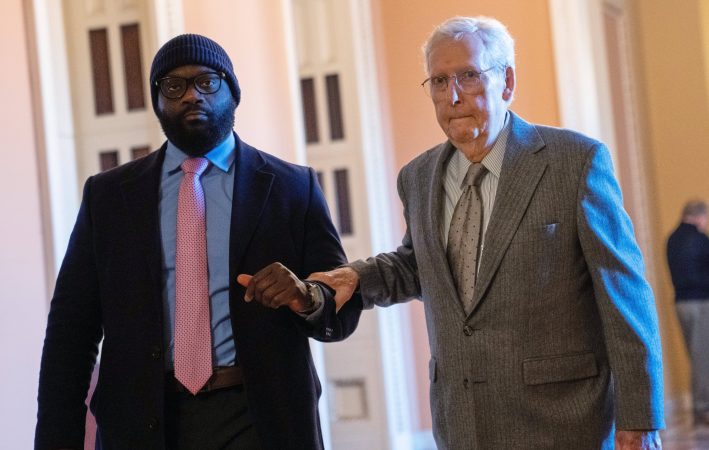
    Sen. Mitch McConnell (R., Ky.) is facing growing calls to be more transparent about his health nearly six weeks after he was hospitalized.

    McConnell, 84, has been absent from the Senate since he said he suffered a fall June 14. His office shared a photo of McConnell holding the Washington Post on July 12, and McConnell said in a statement that he had left the hospital and moved to a rehabilitation center — but he did not say when he planned to return, offering only that he would not “be able to return to the Senate floor to vote quite yet.”

    Those scant details have not quieted rampant rumors and online speculation about McConnell’s condition.

    Kentucky Gov. Andy Beshear (D) said last week that he had heard nothing from McConnell since he was hospitalized, despite sending a letter seeking an update on his condition. He urged McConnell to call into a news station for a few minutes or put out a short video to reassure his constituents.

    “When you’ve been in a hospital for a month and you’ve missed all the votes … you owe your boss, like anybody else out there who works, an explanation of what’s been going on and when you’ll get back,” Beshear said.

    Scott Jennings, a longtime McConnell ally who worked on some of his reelection campaigns, urged McConnell on Thursday to “routinely update his constituents on how he’s doing” and be transparent about the work he’s doing while recovering. He said he expected McConnell to share an update on how he’s doing in the coming days.

    “Truthfully, I think a little transparency on the front end here would have saved him a whole lot of grief,” Jennings told CNN’s The Arena with Kasie Hunt. “But that didn’t happen and they are where they are now.”

    David Popp, a McConnell spokesperson, said McConnell has continued to work during his absence.

    “The Senator continues to meet with staff regarding Senate and Kentucky business, including discussions on defense appropriations, foreign policy, the farm bill, constituent services, and constituent federal grant requests,” Popp said in a statement to the Washington Post. “As the Senator continues to improve in rehab, we will be sure to keep you updated.”

    McConnell said July 12 that he did not break any bones when he fell and did not suffer a heart attack, a stroke, a hemorrhage, or a concussion, but he has said little else about what happened to him.

    Popp referred to McConnell’s earlier statement when asked when McConnell might return to the Senate or whether he planned to attend Tuesday’s funeral for Sen. Lindsey Graham (R., S.C.), his longtime colleague, at Washington National Cathedral.

    McConnell said in his statement that “folks of my generation often hesitate to share the vulnerability that comes with growing older.”

    “Even in the public eye, I feel that same instinct — I can’t help it,” he said.

    McConnell spent 18 years as the Republican leader in the Senate before stepping down early last year. He remained in the chamber to serve the final two years of his term, which ends in January.

    Rep. Andy Barr (Ky.) won the Republican primary to succeed McConnell in May and is heavily favored to win his seat in November. The Senate is scheduled to be in session for only 10 more weeks during McConnell’s term as senators head home to campaign ahead of the midterm elections.

    McConnell’s absence has narrowed Republicans’ edge in the Senate, giving them an effective 52-47 majority as long as he is absent.

    Senate Majority Leader John Thune (R., S.D.) and Sen. John Barrasso (Wyo.), the No. 2 Senate Republican, said earlier this month that they had spoken with McConnell, but some other Republican senators have raised questions about McConnell’s absence.

    Earlier this month, Sen. Ron Johnson (R., Wis.) cast doubt on the legitimacy of the photo that McConnell shared of himself — only to dismiss his comments later, saying he was just repeating a rumor he had heard. (The Post reviewed the photo’s metadata and found it appeared it was taken July.)

    “It’s not fun watching anybody age,” Johnson told reporters. “We’re all hoping Mitch recovers fully and comes back. I haven’t talked to him, so I have no knowledge.”

    Last week, Sen. Josh Hawley (R., Mo.) wished McConnell a speedy recovery but also suggested he should disclose more about his condition.

    “At a certain point you do have an obligation to your constituents and the country to tell them what’s going on,” Hawley told Fox News, saying he felt “totally in the dark” about McConnell’s status.

    McConnell is hardly the first senator to be away for an extended stretch at a time while ailing or in recovery.

    Sen. John Fetterman (D., Pa.) was absent for two months in 2023 while seeking treatment for depression. Sen. Dianne Feinstein (D., Calif.) missed votes for nearly three months that year while battling shingles and faced calls to resign. She returned to the Senate but died months later.

    Sen. John McCain (R., Ariz.) did not vote during his final eight months in office before he died in 2018. And Sen. Mark Kirk (R., Ill.) did not vote for nearly a year after suffering a stroke in 2012. He released videos of himself relearning how to walk before returning to the Senate and served out the rest of his term.

    Lester Munson, Kirk’s chief of staff at the time, said Kirk was able to keep working even though he was not in the Capitol voting.

    Kirk worked with Sen. Bob Menendez (D., N.J.), for instance, on an amendment to a defense policy bill to tough sanctions on Iran. Senators in both parties — includes Sens. Dick Durbin (D., Ill.), Jon Tester (D., Mont.) and Joe Manchin III (D., W.Va.) and McConnell — stepped up to help Kirk’s office carry on, Munson said.

    “I think people kind of just assume — not really correctly — that if the senator’s in the hospital or something like that, that they can’t do their job,” Munson said. “That’s not entirely true. There’s obviously some things they can’t do … but a lot of other things continue to be carried on.”

    Kirk did not have to contend with social media speculation about his health and other online pressures in the same way that McConnell has, Munson said.

    The prediction market Polymarket, for instance, allows users to bet on whether McConnell will vote in the Senate by July 31. (The odds stood at 11% Friday evening.)

    McConnell is also much better-known than Kirk or other senators who have had extended absences from the chamber. His decades of service should earn him some grace while he recovers, Munson said.

    “As far as I’m concerned, this guy has given so much to the Senate over time and therefore so much to America, God bless him,” Munson said. “He’s got all the latitude in the world to deal with this problem.”


  • Once forgotten, Franklin Square is celebrating 20 years as a revitalized hub for Philly’s families and fun

    Once forgotten, Franklin Square is celebrating 20 years as a revitalized hub for Philly’s families and fun

    Birthday hats. Bubbles. Birds. Butterscotch Krimpets. A Benjamin Franklin reenactor singing “Happy Birthday.”

    That was the fanfare Saturday morning as Franklin Square, the once-forgotten green space at Sixth and Race Streets, celebrated a milestone: This July marks 20 years since the square’s dramatic revitalization, which transformed it from a dusty and dim outpost to a destination for family-friendly fun.

    The pomp and hordes of young children playing with sidewalk chalk, kazoos, and streamers amid the daylight remnants of the annual Philadelphia Chinese Lantern Festival were far removed from the Franklin Square of yore, when it was publicly described as part of the city’s “skid row.”

    “It did not look good,” Amy Needle, president and CEO of Historic Philadelphia Inc., said of Franklin Square’s image in the early aughts. “It was really neglected. … There was no reason to go there.

    “And I think we all saw the potential.”

    Franklin Square (originally dubbed North East Publick Square and later renamed in honor of Benjamin Franklin) dates back to 1682, when William Penn designed Philadelphia. Penn anchored the city around a quintet of parks that would become Franklin Square, Washington Square, Rittenhouse Square, Logan Square, and Centre Square (City Hall).

    An undated watercolor of Franklin Square.Courtesy of Historic Philadelphia, Inc.

    While Franklin Square’s 7½ acres may have been heavily used by Philly’s earliest settlers because of its proximity to the Delaware River, its condition started to decline in the early 20th century, when broad swaths of homes on the park’s perimeter were razed to make way for the on-ramps to the Ben Franklin Bridge and, later, the Vine Street Expressway and I-95 feeder, according to The Inquirer’s archives. The park’s greenery was replaced by a brick desert, and the isolation and inaccessibility led to disarray.

    Famed urban theorist Jane Jacobs said of Franklin Square: It was “where the homeless, the unemployed and the people of indigent leisure gather amid the flophouses, cheap hotels, missions, [and] second-hand clothing stores.” Occasionally, tai chi groups and area daycares used the expansive lawns and shady respite, after brushing away debris and drug paraphernalia, according to Needle.

    “It was a dump,” recalled Keith Owens, 69, of Cherry Hill, who was visiting Saturday with his family. “I just remember it was not a place you went to.”

    By the early 2000s, a movement to reinvent the square gained traction, coinciding with the opening of the National Constitution Center, a new flood of tourists to the long-vacant “third block” of Independence Mall between Arch and Race Streets, and a residential housing boom. The effort, led by Historic Philadelphia and then-Gov. Ed Rendell, sought to to revamp Center City’s “most underutilized” square footage and enhance tourists’ trips between Old City destinations, The Inquirer wrote at the time.

    The rehab included fixing the 1800s fountain and installing lighting, new playground equipment, a carousel, and an 18-hole miniature golf course featuring Philadelphia iconography — landmarks that set Franklin Square apart from other, “passive” parks like Rittenhouse or Washington, according to Needle. Although the park is owned by the city, it is operated and maintained by Needle’s group.

    “We had to have attractions there and give people a reason to go there,” she said. “We wanted to create experiences.”

    Union mason (Local 592) Ronald Valenciano of Upper Darby works on fresh concrete around the new fountain being restored in Franklin Square on July 10, 2006, even as the brand-new Philadelphia Park Liberty Carousel (rear) is unveiled to the press. The fountain and carousel were two of the highlights of the renovated park, which will opening later this summer. Once the carousel-making capital of the world, Philadelphia will once again have working Merry-go-Round within city limits. The Philadelphia Park Liberty Carousel is one of the highlights of the new Franklin Square, which reopened later that summer.Tom Gralish / Staff Photographer

    In the years since, the square has added the cherished Chinese Lantern Festival and a Square Burger eatery; meanwhile, the adjacent PATCO station reopened after nearly 50 years, new apartment complexes are being erected, and the restrooms were renovated for the first time since the Bicentennial in 1976. Now, Historic Philadelphia is raising funds to redo the playground and recently received a $1 million boost from the state to do so.

    “I just feel like it’s exploding — every time we come back, there’s more stuff here,” attendee Brooke Duane said.

    “And the bathrooms, which are great.”

    Despite living in Chester County, Duane — who said she staged her maternity photos at the square and celebrated her nephew’s birthday there — finds herself routinely coming back.

    For 22-year-old Sabrina Owens, Franklin Square stands as a testament to the importance of investing in public spaces: “With so many diminishing third spaces … to know that this is here, and it’s such a revamped space, and it’s very welcoming, is very encouraging.

    “It’s a good sign for the city.”

    When asked about the Franklin Square of the future, Needle said she hopes it “continues to be a wonderful public space for people.”

  • Wisconsin’s capital city cancels signature events, grapples with fallout from police shooting

    Wisconsin’s capital city cancels signature events, grapples with fallout from police shooting

    MADISON, Wis. — A police shooting in Wisconsin’s progressive capital city this week put the spotlight on persistent and deep racial divisions, prompting cancellations and other changes to popular summertime events as protesters said they were determined to continue public pressure for change in Madison.

    Corey Ruiz, who is identified as Black or Latino in Wisconsin court records, was shot and killed by a Madison police officer on Wednesday after a brief scuffle at an intersection in the city’s most liberal neighborhood just yards away from a popular 52-year-old food co-op.

    It marks the third time since 2012 that Madison police have shot and killed someone in the same neighborhood. The shooting has sparked renewed calls for police reforms and forced the city to once again reckon with calls from the Black community to address racial justice issues.

    Pressure from protesters, and sympathy for their cause, has also led to the cancellation or disruption of many of Madison’s signature summertime events.

    “Our community has spoken loud and clear: this is NOT business as usual,” Black activist Clyde Mayberry posted on Facebook on Friday amid a string of cancellations. “Your decisions have helped ensure that this city continues to acknowledge the pain, the loss, and the call for accountability.”

    Protesters took to the streets hours after the shooting, disrupting a popular Wisconsin Chamber Orchestra outdoor concert at the state Capitol that attracts about 30,000 every week in the summer.

    The scene captures a familiar divide in Madison, a city that is more diverse than the state overall but still 70% white. Protesters, many of whom were Black, stood over white concert attendees sitting at tables near the stage that cost as much as $1,800 to rent for the night.

    Concert organizers canceled the event.

    Threats of a protest on Thursday led the city to postpone the grand opening of a new public market, just a few blocks away from where the shooting occurred. A popular neighborhood festival near the shooting called AtwoodFest, scheduled to begin on Saturday, was also canceled in the face of potential protests.

    “Our community and our Marquette neighbors witnessed another horrific officer-involved shooting just blocks from our festival grounds, leaving us in deep pain and justified anger,” organizers of the festival wrote. “In acknowledgment of what has happened far too often in our community and our country as a whole, this year’s AtwoodFest, themed ‘The Heartbeat of the Neighborhood,’ is canceled.”

    And on Saturday, the popular downtown farmers market that attracts about 20,000 people each week around the Capitol building shut down nearly four hours earlier than usual in solidarity with protesters.

    “We mourn with our community,” market organizers posted on social media. “And we agree — business cannot proceed as usual.”

    A handful of protesters showed up at the Capitol as vendors were breaking down their booths at around 10 a.m.

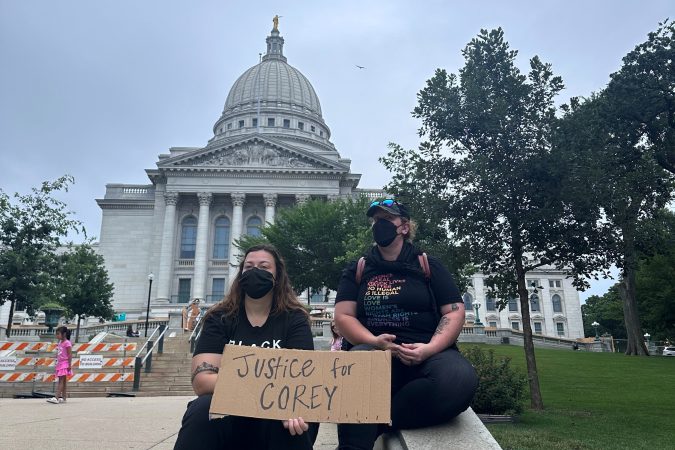
    “No one should be thinking this is just another Saturday,” said Reba Bergmann, who sat with Lilly Nimmer holding a sign that said “Justice for Corey.”

    “It’s not life as normal,” Nimmer said. “We should be more mad. We should stand up for what we believe in.”

    Charles Alt, 30, supported the decision to close down early.

    “It’s important to keep focus on the real tragedy, which is that someone got killed,” said Alt, who was shopping at the market. ”Missing some market time, that’s sad, but that’s not what’s important.”

    But Rodney Hathaway, who was visiting Madison from Milwaukee, was caught off guard by the market’s early closure.

    “It’s ridiculous,” he said. “This is peoples’ livelihoods. It’s just unfortunate. We have such a short summer season for these people to sell their wares.”

    Investigations into the shooting continue. Civil rights attorney Ben Crump, who represents the Ruiz family, said on Friday at a new conference in the Capitol that the officer who fired the shots should face criminal charges.

    Madison Police Chief John Patterson, who is white, has tried to calm tensions, even allowing protesters to overtake a news conference that he was leading along with the mayor inside the police department’s downtown headquarters on Thursday.

    Patterson took questions from angry protesters, one of whom held a sign just feet away from the chief that said “corrupt cops deserve to die too.” After one protester hurled an insult at Patterson, the chief calmly responded, “I appreciate you being here.”

  • France and Spain battle wildfires as more than 250,000 people are forced to flee homes

    France and Spain battle wildfires as more than 250,000 people are forced to flee homes

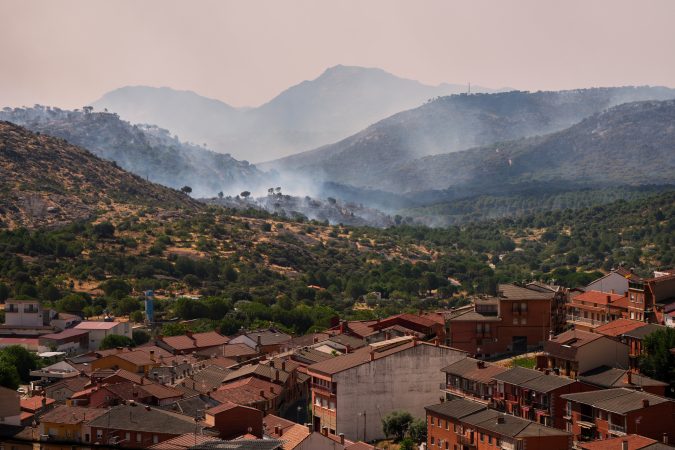
    LEGE-CAP FERRET, France — France sent a hulking military cargo plane to dump tons of flame retardants as it battled raging wildfires on Saturday and slashed the final stage of Tour de France to redeploy security personnel to the blazes that forced tens of thousands of people to flee their homes.

    The giant A400M transporter swooped in low, its long plume of ochre-colored retardant trailing over drought-hit woodlands in the southwest as fire crews on the ground fought flames that authorities feared could spread toward the wine region city of Bordeaux.

    Race organizers and the Paris police department announced a truncated 21st and final stage on Sunday for the three-week Tour, France’s most famous annual sporting event, reflecting the immense strain that two large fires in the southwest are causing for emergency services.

    Tour riders will race Sunday inside Paris, rather than starting from Thoiry, west of the capital, on a circuit of 55 miles — down by a third from the 82.5-mile route that had been planned. Part of the race’s security detail will instead “reinforce the response efforts in the areas affected by the wildfires,” according to the statement announcing the ”exceptional measures made necessary by the situation.”

    Including some 70,000 people evacuated in central Spain, wildfires in southern Europe this week have displaced more than 250,000 people.

    Shifting winds raise concerns for Bordeaux

    With winds expected to shift in a west-to-east direction on Saturday afternoon, potentially driving flames closer to Bordeaux, fire crews and authorities were digging trenches, using retardants, and taking other blaze-blocking steps, French Interior Minister Laurent Nunez said, predicting a “long and very difficult” battle.

    He said the fire was about 20 miles west of the city and lost some of its intensity overnight. The prefect of the Gironde region that includes Bordeaux said the blaze grew into “a firestorm” on Friday after igniting earlier this week and cautioned that it “remains dangerous” even though firefighters were making progress.

    The government mobilized soldiers to join fire crews and was rushing in 1.5 million face masks to protect against choking smoke.

    Authorities ordered people between the fire and Bordeaux to evacuate, including from parts of the city’s western suburbs and other towns and villages.

    Prime Minister Sébastien Lecornu described the fires as unprecedented and said the Gironde blaze became so strong on Friday that it had begun generating its own winds. Firefighting teams were being reinforced with the addition of hundreds of soldiers, and breathing masks to filter out potentially noxious smoke particles were being rushed to those exposed, Lecornu said.

    In Bordeaux, authorities took in thousands of evacuees, offering them food and shelter in an exhibition center, and the city’s mayor said it could be equipped to welcome as many as 10,000 people if that became necessary. The city’s airport said it remained open but that its bus and tram services were suspended.

    Evacuation orders were sent with special alerts to mobile phones, instructing people to leave, Gironde prefect Sophie Brocas said. She said the fire had destroyed about 140 homes in the region.

    The magnitude of the wildfires caught authorities off guard

    The French military A400M transport plane, specially converted for firefighting, was a heavyweight new tool in the battle. It joined at least 18 other water- and retardant-dropping aircraft and helicopters that Nunez said were deployed in the Gironde region, working in rotation in the smoke-filled skies.

    The virulence of the French and Spanish wildfires, fueled by high temperatures and the long-term effects of climate change, caught fire crews and authorities off guard.

    Firefighters in Spain said the blazes spread so fast and violently that they could not be tackled head on. In France, some people even fled by boat when flames swept through tourist towns on the Atlantic coast.

    “We’ve never seen anything like this,” said Javier Organista, a resident of El Tiemblo, west of Madrid, where fire charred a famed chestnut grove. “When we saw the flames coming into our town, surrounding us, leaving us with practically no way out, all the neighbors joined together to try to stop its advance.”

    “It’s just really sad,” he said.

    Climate change supercharges fires

    Spain deployed 2,600 firefighters, police, and other emergency personnel to two blazes west of Madrid, backed by 19 water-dumping aircraft and helicopters.

    France deployed 1,400 firefighters to the Gironde fire and hundreds of others to another wildfire further south in the Landes region. Dozens of firefighters suffered injuries, authorities said, but no deaths were reported in either country despite scenes of panic as townsfolk fled by car and police went door to door to tell people to leave.

    Successive heat waves that hit unusually early and hard this year, baking Europe with record-shattering high temperatures, have turned forests and scrublands into tinderboxes.

    Fires have burned 130,000 hectares of forest already this year in Spain, up from an annual average of 100,000 hectares over the past decade, Spanish Prime Minister Pedro Sánchez said Saturday as he visited a command post west of Madrid.

    He said more favorable weather Saturday offered “a window of opportunity” for fire crews to bring the blazes under control. Madrid’s regional government said the fires decreased in intensity as winds and temperatures dropped.

    Other European nations were helping, with Italy, Greece, the Netherlands, Portugal, Croatia, the Czech Republic, Sweden, Slovakia, Germany, and Switzerland already providing or expected to deploy water-dumping planes and helicopters to the Spanish and French fire fronts.

  • Heat dome expands across the central United States, creating dangerous conditions for millions

    Heat dome expands across the central United States, creating dangerous conditions for millions

    WASHINGTON — Dangerously hot weather will expand across much of the central United States this weekend and into next week, pushing temperatures above 100 degrees Fahrenheit from Dallas to North Dakota with roughly 70 million people facing heat advisories.

    A heat dome, where atmospheric conditions trap heat, will create sustained high temperatures and accumulating discomfort. Overnight low temperatures aren’t expected to come down enough for people to have much chance to recover, allowing heat stress to build as the bad weather lingers, forecasters said. The high humidity will make it feel even worse.

    A huge stretch of the country will endure the oppressive midsummer weather. It will stretch from the desert Southwest to the Gulf Coast, reaching up into the Midwest and Great Plains. Some records around the Denver area may be broken, forecasters said. Temperatures are expected to be 10 F to 15 F above what’s normal.

    “It looks like it is going to be pretty much stationary in that position as we go through the week,” said Bob Oravec, meteorologist with the National Weather Service.

    Places under a National Weather Service extreme heat warning included western Nebraska, where temperatures Saturday and Sunday were forecast to reach 108 F.

    At the Museum of the Fur Trade near Chadron, Neb., there were fewer visitors than usual for this time of year. Meanwhile, fur hats and pelts in the gift shop weren’t selling so hot.

    “I’m sure no one would be willing to wear it on a day like this,” said museum employee Hannah Lovelace. Loose-fitting, period-correct fabric shirts, on the other hand, remained popular sellers among folks headed to historical frontier reenactments called rendezvous, she said.

    The region’s heat was forecast to continue through the week, with temperatures topping 100 F even in normally moderate areas of Montana and Wyoming.

    There might be some relief in the central United States toward next weekend, but even that might be temporary, said Oravec.

    Some areas will be spared. The Mid-Atlantic and Northeast should avoid the extreme heat, as will much of the Pacific Northwest.

    This is the latest miserable stretch of weather during a summer that has already had a lot of it. The eastern United States endured an unbearably hot early July that forced communities to cancel Independence Day celebrations and disrupted the country’s 250th anniversary. Another heat wave in mid-July hit the Southwest and Great Plains. It’s not just the United States. A heat wave in June devastated Europe; France recorded at least 5,700 more deaths than usual during that period.

    This heat dome will be dangerous. Children and the elderly, along with those with medical conditions, are especially at risk of serious conditions including heat stroke. The basics are important: People should seek out air-conditioning or a cooling center and make sure they drink enough water and limit time under the direct sun.

    The weather will shift somewhat through the week with the worst pockets of heat becoming particularly severe across Texas and parts of the Gulf Coast by Wednesday.

    It can be difficult to know exactly how climate change contributes to particular events in real time. But rising carbon dioxide levels from burning fossil fuels makes it more likely that hotter weather becomes more frequent and extreme, according to Andy Pershing, chief program officer at Climate Central, a climate change communications nonprofit.

    “We are experiencing exactly what the climate models in the 1990s said we should experience now. That is more frequent, more severe heat waves, bigger temperature anomalies, more humidity, higher overnight temperatures,” Pershing said. “These are all part and parcel of the climate story.”

  • Israel detains over 70 suspects following deadly violence in the West Bank

    Israel detains over 70 suspects following deadly violence in the West Bank

    NABLUS, West Bank — Israel’s military said it detained over 70 suspects across the occupied West Bank overnight and on Saturday, a day after troops deployed across the territory following violence that left two Israeli soldiers and four Palestinian villagers dead.

    Soldiers remained in the village of Tell, in the northern West Bank, where Friday’s clashes were centered. Palestinians described searches that included raids of a hospital in the city of Nablus, one of the territory’s most violent areas.

    Palestinians in the West Bank have faced violence as Israel’s hard-line government, dominated by settler leaders and supporters, has overseen a surge in settlement construction over the past four years. The international community overwhelmingly considers the Israeli settlement construction illegal and an obstacle to peace.

    Soldiers make arrest during raid at West Bank hospital

    “More than 50 armed soldiers and officers stormed the hospital, terrifying the patients,” Ghassan Barkat, director of Nablus Specialty Hospital, told journalists. He said soldiers on Friday detained, bound, and insulted staff and patients, raided hospital departments, and arrested a seriously injured man, Ali Hussein Ali Ramadan.

    “This should not happen in a healthcare institution,” said Barkat, adding that women and children were present.

    An Israeli military statement did not mention the hospital, but it said over 300 locations were searched and what it described as affiliates of the Hamas militant group, arms traffickers, “terrorists,” and others were detained.

    The circumstances of Friday’s events remained unclear, but Israeli media reports and interviews with local Palestinian officials suggested a group of settlers entered Tell and were confronted by residents fearful of an attack. The village is off-limits to Israelis as part of Area B under the 1993 Oslo Accords.

    The Palestinian Health Ministry said Israeli soldiers shot and killed four Palestinians in Tell, while the military reported the deaths of two soldiers, one of them a settler in a local defense squad. Two other Israelis and four more Palestinians were wounded, health officials said.

    The Israeli military on Saturday said it detained 11 suspects in Tell.

    Over 80 Palestinians were arrested across the territory, said Amin Shuman, president of the Palestinian higher commission for the affairs of prisoners, calling the arrests “an attempt to impose collective punitive measures and retaliatory policies” against Palestinian citizens after Friday’s events.

    More than 700,000 Israelis live in the occupied West Bank and east Jerusalem, territories captured by Israel in 1967 and sought by the Palestinians for an independent state along with the Gaza Strip.

    Israeli strikes kill at least 4 in Gaza

    Israeli strikes on Saturday killed at least four Palestinians and wounded at least 15 others across Gaza, according to Palestinian health officials.

    In the southern city of Khan Younis, an airstrike killed a man and a woman, whose bodies were taken to Nasser Hospital, the hospital said.

    In northern Gaza, a strike on a vehicle in the Jabaliya area killed one person and wounded two others, according to officials at Shifa Hospital, where the casualties were taken.

    A strike on a motorbike in Gaza City’s Sheikh Radwan neighborhood killed the director of the area’s police force, according to the Interior Ministry and Shifa Hospital.

    A strike in the central Gaza refugee camp of Nuseirat wounded three people, according to the Belgian field hospital, which received the casualties.

    And Israeli drones struck the vicinity of Al-Aqsa Martyrs Hospital in the central city of Deir al-Balah, wounding 10 people, the hospital said. Chaotic scenes unfolded as severely wounded men covered in blood were rushed into the hospital by bystanders.

    Israel’s military said it struck a member of Hamas’ military wing near Al-Aqsa hospital. The military did not immediately respond to a request for comment on the other strikes. Militants have carried out shooting attacks on troops, and Israel says its strikes are in response to that and other violations.

    While the heaviest fighting has subsided since a fragile ceasefire took hold in October following two years of war between Israel and Hamas, Israeli forces have carried out repeated airstrikes, killing at least 1,191 Palestinians, according to Gaza’s Health Ministry.

    The ministry, part of the Hamas-led government, maintains detailed casualty records that are seen as generally reliable by U.N. agencies and independent experts. It does not give a breakdown of civilians and militants but says women and children make up most of the dead.

    Five Israeli soldiers have been killed since the ceasefire.

    The Oct. 7, 2023, attack by Hamas-led militants on Israel killed some 1,200 people and saw 251 taken hostage, sparking the war. Israel’s retaliatory offensive in Gaza has killed more than 73,317 Palestinians, including those killed since the ceasefire, Gaza’s Health Ministry said.

  • Houthis fire missiles and drones at Saudi Arabia in response to strikes on a Yemeni city

    Houthis fire missiles and drones at Saudi Arabia in response to strikes on a Yemeni city

    CAIRO — Yemen’s Iran-backed Houthi rebels said Saturday that they fired missiles and drones at Saudi Arabia in response to Saudi airstrikes on the strategic Red Sea city of Hodeida, in an escalation over vital shipping routes in the Middle East while the United States and Iran vie for control of the Strait of Hormuz.

    Brig. Gen. Yahya Saree, the Houthis’ military spokesperson, said in a recorded statement that the attack targeted facilities in the Red Sea cities of Yanbu and Jizan that belong to Aramco, the world’s largest oil company.

    Saudi Arabia’s civil defense said alerts sounded multiple times early Saturday in both cities, but the kingdom didn’t comment further.

    There were no reported strikes overnight in Iran, in an apparent break from nearly two weeks of consecutive nights of U.S. attacks.

    Red Sea escalation further threatens global shipping

    The Houthis have said they would close the Bab el-Mandeb Strait to Saudi-linked shipping in retaliation for the kingdom’s blockade on Yemen and a recent attack on the international airport in Yemen’s rebel-held capital, Sanaa.

    “Nothing short of ending the aggression and lifting the blockade, otherwise, it’s all illusion and mirage,” Mahdi al-Mashat, head of the Houthi-led Supreme Political Council governing rebel-controlled territories in Yemen, said of what it would take for the Houthis to not blockade the Bab-El-Mandeb.

    That strait, at the southern tip of the Arabian Peninsula, is a vital shipping chokepoint connecting the Red Sea to the Gulf of Aden. Around 12% of the world’s trade, including a quarter of its container traffic, passes through the narrows.

    The Houthis targeted two Saudi oil tankers in the Red Sea this week. In response, Saudi Arabia struck Hodeida, the Saudi-led coalition opposing the rebels said Saturday. The strikes late Friday hit the port and the state-run telecommunications corporation, injuring two people, said Anees al-Asbahi, a spokesperson for the Houthi-run health ministry.

    The Saudi-led coalition said it didn’t hit the port but struck “legitimate military targets” in Hodeida province that “were linked to threats to commercial vessels in the Red Sea.”

    Iran’s foreign minister, Abbas Araghchi, called for “diplomacy and dialogue” to solve the Yemen conflict without “military confrontations” in an interview published Saturday by the state-run newspaper called Iran.

    Iran condemns Ukrainian attack on commercial vessel

    “Iran had a peaceful night,” Hossein Kermanpour, a spokesperson for Iran’s Health Ministry, posted on X.

    U.S. Central Command didn’t immediately respond to a request for comment. Unlike the previous 13 nights, it didn’t announce new strikes.

    But Iran’s foreign ministry condemned what it called a Ukrainian attack Saturday on an Iranian commercial vessel in the Caspian Sea, saying one person was killed and another was hurt and calling it an act of aggression. In a separate statement, Araghchi said he spoke with European Union foreign policy chief Kaja Kallas about it and that Tehran demanded a response.

    Ukrainian President Volodymyr Zelensky earlier said on X that Ukraine “achieved very strong results with long‑range strikes in the Caspian Sea — including vessels used in military cargo shipments involving Iran.”

    While efforts at mediation between the U.S. and Iran continue, Israeli Prime Minister Benjamin Netanyahu plans to travel to the United States next week and meet with President Donald Trump in Washington on Tuesday, his office said Friday. They last met in Washington in February, weeks before they launched the war.

    Over 7,000 people have been killed, including in Lebanon

    A tenuous ceasefire that halted major operations for weeks has seemed to unravel this month. The U.S. accused Iran of striking three ships in the Strait of Hormuz and responded by striking dozens of targets in Iran, which retaliated by firing at U.S.-allied Gulf Arab states.

    The U.S. military has renewed its blockade of Iran’s ports. Iran’s Revolutionary Guard has advised residents of neighboring countries to stay away from bases with U.S. troops.

    The war has killed more than 3,400 people in Iran, according to its Health Ministry. Eighteen U.S. service members, 24 civilians in Israel, and smaller numbers of civilians including foreign workers and mariners have been reportedly killed across the region.

    In Lebanon, more than 4,000 people have been killed since Iran-backed Hezbollah militants fired at Israel in support of the Islamic Republic two days after the war began and Israel responded with strikes and ground forces. Thirty-eight Israeli troops have also died.

  • Democrats pick new Senate candidate in Maine in aftermath of Platner debacle

    Democrats pick new Senate candidate in Maine in aftermath of Platner debacle

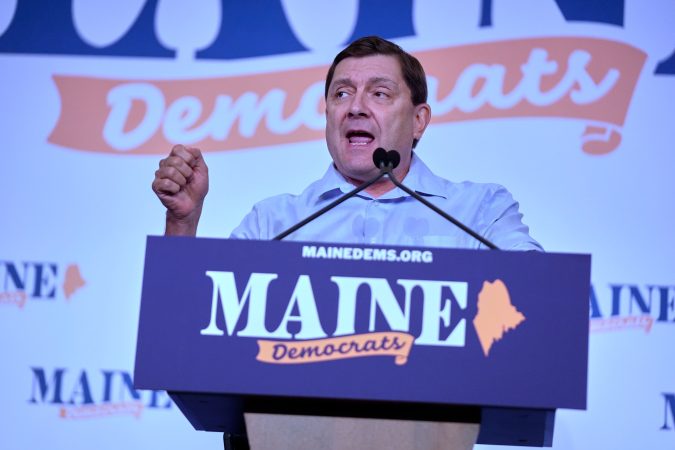
    BANGOR, Maine — The Maine Democratic Party formally selected Troy Jackson as its new Senate nominee on Saturday, ending three tumultuous weeks that nearly derailed the party’s quest to unseat veteran Republican Sen. Susan Collins.

    With just 101 days remaining until the November election, Democrats must now unify a party riven by the spectacular collapse of Graham Platner’s campaign following a sexual assault allegation and refocus attention on the long-indomitable Collins, whose defeat is key to long-shot Democratic hopes of retaking control of the U.S. Senate.

    Accepting the nomination from a convention center in downtown Bangor with a 31-foot-tall statue of Paul Bunyan outside, Jackson repeatedly framed the election not as a partisan fight but an opportunity for the working class to stand up to a creature of Washington who had grown more loyal to her corporate benefactors than her constituents.

    “This movement is not from the left. It’s not from the right,” he said, as supporters waved “Retire Susan” signs in the crowd. “It’s from the bottom — and we are growing.”

    Jackson is a 58-year-old logger and former leader of the Maine Senate who aligned with Platner and Sen. Bernie Sanders (I., Vt.) during an unsuccessful run for governor this year.

    He won the nomination by commandeering the progressive movement that had propelled Platner. Jackson’s supporters swept the delegate selection process for a hastily organized convention to choose Platner’s replacement, compelling most of Jackson’s rivals to drop out ahead of the meeting Saturday in Bangor.

    Jackson’s challenge is to forge a broad coalition that can win in November, including the independent and crossover Democratic voters who have helped Collins hold on for five terms in an increasingly blue state.

    Jackson has his own vulnerabilities — including a long history of opposing abortion rights and a temper that undercut his legislative leadership in Augusta — that could hurt his appeal with women voters who have been critical to Collins’s victories. He has also been reluctant to align with the national Democratic Party, which could provide critical resources in a marquee race.

    Ahead of the convention, Democratic-leaning voters in Bangor remained wary of Jackson but highly motivated to beat Collins.

    “Progressives and Democrats are often put in this position where we have to vote for whoever is put up against the greater evil,” Molly Wunderli, a 36-year-old graphic designer, said Friday as she left the library downtown.

    An unenrolled voter who considers herself to the left of the Democratic Party, Wunderli expressed frustration that Platner was not properly vetted and about the rushed process to choose his replacement, which put the decision in the hands of just 600 people. But given the stakes, she said there was no question she would vote for Jackson in November.

    “I hope he’s as advertised,” Wunderli said. “I’m always worried now about the other shoe dropping.”

    The campaign has been clouded since the beginning by a bitter ideological battle among Democrats. While the national party establishment recruited Maine Gov. Janet Mills to run, the progressive base in Maine rallied around Platner, a combat veteran and oyster farmer whose populist outsider platform electrified liberal voters.

    Mills’ candidacy fizzled before the June primary, even as Platner was beset by an escalating series of scandals that he largely attributed to poor mental health following his military service: old social media posts dismissive of sexual assault, a tattoo resembling a Nazi symbol, sexually explicit text messages he sent to other women after he married, and allegations by ex-girlfriends who described volatile relationships with him. Efforts by national Democrats to push Platner aside only infuriated his supporters, and he won the nomination handily last month.

    Then came an accusation of sexual assault from a woman Platner used to date, which he has denied. Under pressure from allies and threats from national Democrats to withhold financial support, Platner withdrew on July 10, setting off a scramble to find a new Democratic candidate.

    That was demoralizing for progressive Democrats like Percy Williams, a 29-year-old middle school English teacher from Bangor. She was excited not only by Platner’s policies but also a persona that she believed carried a wide appeal in Maine.

    “Some of my family members are Republicans, and they liked him because he talks like them,” Williams said.

    While she had hoped Secretary of State Shenna Bellows, another unsuccessful gubernatorial candidate this year, would replace Platner, Williams said she came around on Jackson because “he’s the best that has a shot at actually winning.”

    The Platner scandals still cast a pall over the race — and Collins will inevitably try to tie Jackson to the man with whom he shared such close political ties.

    A Republican super PAC released its first ad on Saturday, highlighting Jackson’s temper and history of clashing with female colleagues. “Troy Jackson is like Graham Platner, but worse,” the narrator warns.

    Jackson never mentioned Platner during the convention, but he did nod to the concerns about his anger. He was introduced by a former state legislator he once fought with, who praised his passion. Jackson told reporters later that “I do wear my heart on my sleeve,” but he always apologized to “anyone that I may have argued with that I might have went too far.”

    But even Democratic voters unenthusiastic about Jackson are furious at Collins. A common criticism is that Collins, who presents herself as a moderate who will stand up to President Donald Trump, only breaks with him on votes that she knows Republicans will win anyway.

    “She’s had multiple opportunities to be a Margaret Chase Smith and stand up for what’s right,” said Frank Bragg, an 85-year-old retired physician, referencing the former Maine senator who delivered a famous floor speech in 1950 denouncing McCarthyism. “And she’s just gone along with Trump.”

    Bragg pointed to Collins’ support of the Save America Act, a Trump priority that would require photo identification to vote and roll back most mail voting, despite Maine overwhelmingly rejecting a similar ballot measure in November.

    A Republican-turned-Democrat who once supported Collins in her early elections, Bragg said he appreciated what the senator had done for Maine, “but it’s also about standing up for the country.” He will vote for Jackson in November, though Bragg considers him “sort of another machine politician. It’s a bit of the same old, same old.”

    With his nomination essentially sewn up before the convention, Jackson has already begun consolidating Democratic support in Maine and shifting his message to attacking Collins.

    He secured endorsements from most of his opponents for the Senate nomination ahead of Saturday, as well as from Hannah Pingree, who defeated Jackson in the gubernatorial primary in June. Social media accounts for his campaign are pumping out posts slamming Collins for her closeness to the Trump administration and for confirming to the Supreme Court Brett M. Kavanaugh, who provided a decisive vote to overturn the constitutional right to abortion.

    But an ongoing rift with national Democrats could complicate the campaign. Despite his extensive history in elected office, Jackson is, like Platner, running as a disrupter — emphasizing his roots in conservative northern Maine while favoring progressive policies to rein in corporate power, expand healthcare access, and dismantle U.S. Immigration and Customs Enforcement, the controversial federal agency involved in a fatal shooting in Biddeford this month.

    Jackson told the New York Times this week that, if elected, he would not support Sen. Chuck Schumer (N.Y.) continuing as Democratic leader of the Senate. He also expressed doubt about accepting help from Schumer, who has thus far declined to endorse Jackson, in the general election.

    That could be an enormous handicap for Jackson, who is not a prolific fundraiser. Conservative groups have already lined up tens of millions of dollars to defend Collins.

    Elizabeth Hannigan, a 33-year-old data analyst from the Bangor area, recalled seeing a Collins ad nearly every commercial break during the World Cup, touting all of the money she’s brought home to Maine. Hannigan said she worries whether Jackson will have enough time to mount a victorious campaign.

    She wants Jackson to “get the national party behind him, not just the Sanders wing.” Hannigan, who considers herself to the center of the Democratic Party, said it would provide a signal of trust; she does not want to elect another Sen. John Fetterman (D., Pa.), a onetime progressive champion who has increasingly broken with his party since he arrived in Washington in 2023.

    “I want someone who will vote with the general Democratic agenda,” Hannigan said.

  • Trump’s insult-laden speech to press dinner draws mostly stunned silence

    Trump’s insult-laden speech to press dinner draws mostly stunned silence

    President Donald Trump attacked a slew of journalists and some of his favorite political foils at a slimmed-down redo of the White House correspondents’ dinner on Friday, comparing one female reporter to a transgender social media star, mocking politicians’ physical appearances, and bringing his audience to mostly stunned silence for more than an hour before pulling out a red Trump 2028 cap and declaring he was running for another term.

    Three months after a gunman exchanged fire with authorities outside the first correspondents’ dinner, throwing the event into chaos, Trump addressed reporters even as he embraced an aggressive stance that favors targeting journalists to root out leakers in his administration.

    Trump veered on and off his prepared script for the evening, at one point calling it a “fricking stupid speech.”

    The fraught event put the president on the dais with reporters who have covered him aggressively. Trump rarely speaks to audiences that aren’t packed with his supporters, leading to an unusual dynamic in a ballroom of reporters who are professionally bound to maintain poker faces.

    Some of his first jokes drew laughs, including one that acknowledged the interrupted first run of the meal.

    “I hope that everyone finally got to enjoy their entire, very delicious beef tenderloin, very special beef. And I want you all to know that Bobby Kennedy, who’s right here, personally ran over the cow with his car,” he said.

    But the tone quickly shifted to a far more caustic attack on his favorite foils, including some of the reporters in the room. The bitterness was sharper even than some of his political rallies, where attacks on his enemies are leavened with boasts of his accomplishments. On Friday, he had little to sell, and a lot to complain about.

    He said that he had once mixed up CNN reporter Kaitlan Collins, whom he said “never smiles,” with a transgender social media personality, Dylan Mulvaney, after he called the 34-year-old cable news star a “young, attractive woman.”

    He said he planned to host twice-weekly fights at the White House.

    “We will have sloppy Chris Christie, one of the sloppiest human beings, fighting,” Trump said to silence. “I could mention the governor of Chicago, but I’m going to mention instead Jerry Nadler. Oh my God! They’re fighting for a big piece of cheesecake, big fat piece of cheesecake.”

    Then he told a joke about Sen. Adam Schiff (D., Calif.).

    “I hate some people,” he said to groans. “He’s a liar, and I called him watermelon head because he has the largest head I’ve ever seen with the smallest neck, pencil neck. How does that make a fat, ugly head on a little pencil neck?”

    Commerce Secretary Howard Lutnick laughed at that one, putting his hand on his forehead.

    “This night is all about the First Amendment. Tonight was a full display,” CBS chief White House correspondent Weijia Jiang said after Trump finished talking. As the outgoing president of the White House Correspondents’ Association, Jiang led the event. She complimented Collins and a Wall Street Journal reporter whom Trump also attacked during his speech.

    The speech took place as the administration has stepped up its legal pursuit of journalists who report on subjects that the White House views as national security threats, with Trump saying Friday that he believed journalists were legitimate targets for investigation.

    A federal judge offered a withering takedown a day earlier of the Justice Department’s effort to subpoena New York Times journalists over their reporting about security concerns around a new, Qatari-gifted Boeing 747 the president has been using as Air Force One. Trump was unrepentant.

    “We’re not after journalists. We’re after leakers. We’re after people that are cowards, people that are unpatriotic, people that are treasonous in many cases,” Trump said in the Oval Office a few hours before the correspondents dinner. “And the way you find them is through the journalists. When the journalists probably know they shouldn’t write, they shouldn’t be giving information out like that.”

    He said that even though the Justice Department withdrew the subpoenas on Thursday, “we have a long way to go with that case,” suggesting that the New York Times reporters’ legal peril was not over.

    Trump had offered mixed messages about his plans for a dinner that traditionally has involved presidents giving lighthearted speeches that poke fun at themselves and at the people who cover them.

    In the event, he offered a mix of barbs directed at the press and his political opponents, with a few toward his own administration.

    “We’ll do a little ripping, if you don’t mind,” he said, saying that “this place is the really largest group of Trump derangement syndrome people ever put together at one time.”

    He said that the speech he had originally planned to deliver, “I’m telling you, I had something. I was going to go after you.”

    Media critics have long questioned the White House correspondents’ dinner, which was first held in 1921, saying that it is an overly cozy moment of socializing between the president and reporters who cover the White House. Trump skipped the event during his first term.

    Trump acknowledged that Friday’s speech was his first to the annual dinner. And he joked that he didn’t plan to do it again, unless the event was renamed the “Trump White House Correspondents’ Dinner” — a line he delivered with a chuckle, before later saying that he planned to come next year.

    Trump came to the dinner once before, as the guest of the Washington Post during the Obama administration. President Barack Obama mocked Trump that year over his questioning of Obama’s citizenship. Many analysts have credited that moment with sparking Trump’s decision to run for president, but Trump said Friday that wasn’t true, and that he had enjoyed the moment because of all the attention.

    Before the president took the stage, he was confronted with reporters whom he has attacked and who have won awards for aggressive coverage of his administration.

    He greeted one of the lead Associated Press reporters who was kicked out of the White House press pool because the outlet refused to relabel the Gulf of Mexico to Trump’s preferred “Gulf of America.”

    He shook the hands of a team of Wall Street Journal reporters who won an award for their coverage of his connections to convicted sex offender Jeffrey Epstein. He shrugged his shoulders and smiled as CNN anchor Wolf Blitzer recounted how he had sued the Journal for $20 billion and how one reporter was forced to relocate her family because of threats against them.

    Then he greeted Tyler Pager, a New York Times reporter who was served with a subpoena this month for his coverage of security issues around Air Force One.

    The Society of Professional Journalists called this week for the White House Correspondents’ Association to use the dinner to condemn the Trump administration’s attacks on journalists.

    “We believe it is hypocritical to celebrate the First Amendment in front of the man who relentlessly attacks it,” the group said in an open letter.

    Trump never delivered the speech he planned for the April 25 dinner at the Washington Hilton before it was interrupted by a gunman who attempted to storm the basement ballroom where the dinner was being held. Cole Tomas Allen, 31, has been charged with attempting to assassinate the president, and an FBI special agent said in an affidavit that Allen had set an email to be sent to friends and family with “targets, prioritized from highest-ranking to lowest.”

    Trump acknowledged the risks around the event, saying, “It was not easy finding shoes to go on with your bulletproof vest, which many people didn’t want to wear, because they’d rather die than look 20 pounds heavier. … They put one on me. I said: ‘Are you sure? I’m not wearing this.’”

    Security was high at the event, which was held at the Waldorf Astoria in downtown Washington. Trump’s family company operated that venue as the Trump International Hotel during the president’s first term, then sold their lease on the property in 2022 for $375 million.

    The guest list had shrunk to fewer than 700, a stripped-down affair with attendees including mostly just the journalists who cover the president, rather than the more than 2,500 — including government officials, political operatives, and mostly B-list celebrities — who attended in April.

    But many of the original tensions remained.

    In the hours following the April shooting, Trump was unusually conciliatory toward reporters, making an appearance in the White House briefing room still dressed in his tuxedo as he took questions from many of the reporters who had been at the dinner earlier in the evening.

    But that tone dissipated by the next day, when he called CBS News anchor Norah O’Donnell “a disgrace” after she read excerpts from the alleged gunman’s manifesto to him.

    Since then, his administration has returned to attacks on the press.

    Trump last week called for stripping broadcast licenses from networks that didn’t air his primetime speech about election integrity. And the Justice Department this month issued the subpoenas to New York Times journalists who had reported on security concerns surrounding the luxury Boeing 747 that the Qatari government gifted for use as Air Force One, seeking their phone records in pursuit of leaks.

    One element of the dinner was consistent with April: Entertainer and magician Oz Pearlman was once again on the program, a selection that sidesteps the politics of humor. This time he guessed correctly that acting attorney general Todd Blanche had $85 in his pocket.

  • Grading Mike Gansey’s transformational first offseason as Sixers president

    Grading Mike Gansey’s transformational first offseason as Sixers president

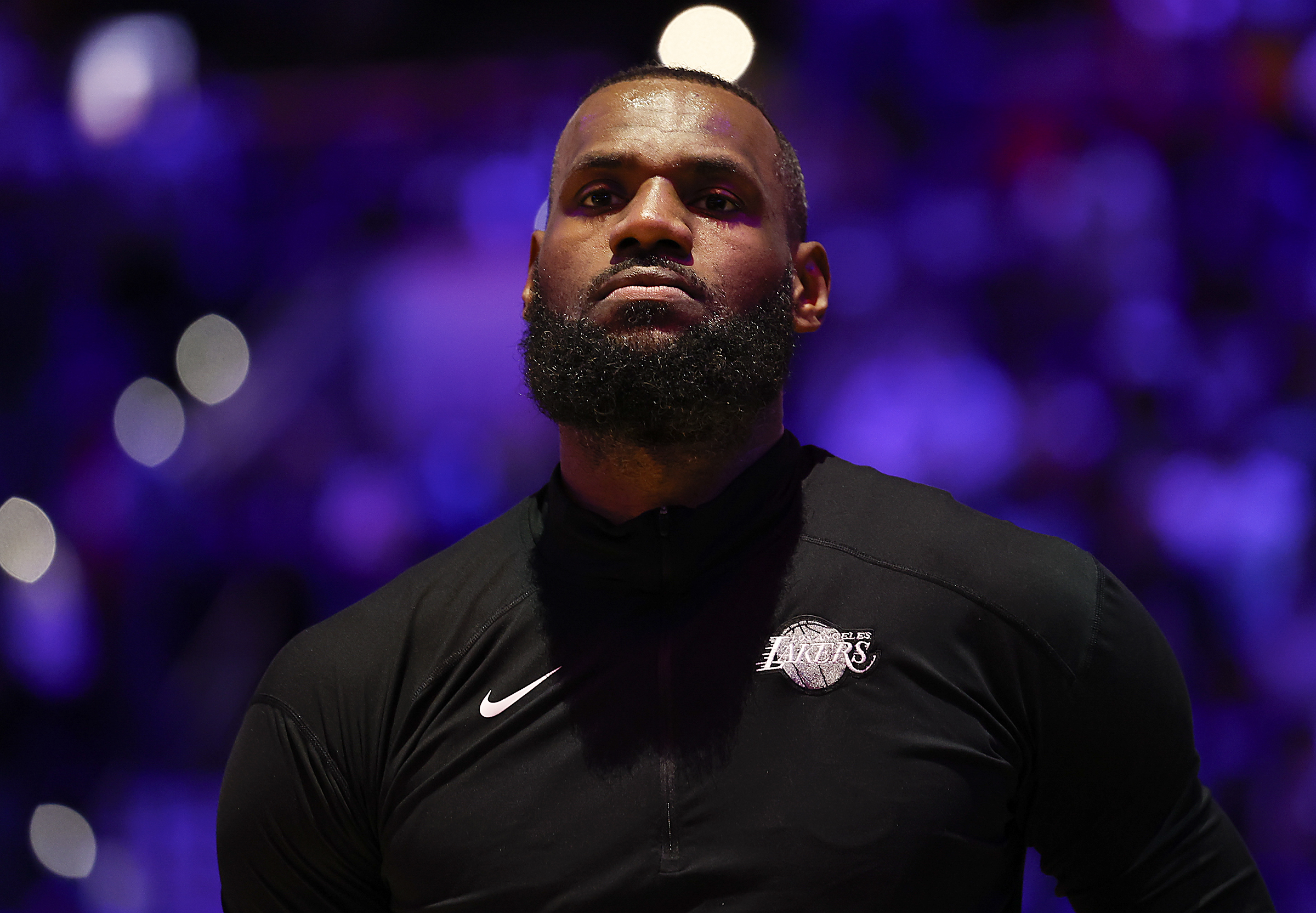
    The 76ers became the talk of the sports world Friday, when LeBron James announced he would sign with the team to finish out his illustrious NBA career.

    Some final roster tinkering still must occur before training camp begins in late September. The Sixers need to waive one player — likely Dalen Terry or Jabari Walker, who are on nonguaranteed contracts — to get under the first apron hard cap to sign James. Chris Haynes also reported that veteran guard Kentavious Caldwell-Pope intends to reunite with James in Philly upon reaching a buyout agreement with the Memphis Grizzlies, which would require another Sixer to be waived or traded. They also have one more two-way contract slot available.

    But James’ addition means the bulk of business is finished. In short, it has been a heck of a first offseason for new president of basketball operations Mike Gansey. Entering the summer, the Sixers appeared to be locked into their top-heavy roster, given that Joel Embiid and Paul George’s max contracts were viewed as difficult to trade. Instead, the front office executed a blockbuster deal for an All-NBA wing, secured an all-time great on a veteran minimum deal, and added role players who now put the Sixers in the contender tier.

    How does it all grade out, player-by-player? Here is a breakdown:

    LeBron James: A

    James, arguably the best player of all time, decided to join the Sixers because he believes in the title potential of the roster already in place.

    Though the 41-year-old will play more of a complementary role here than when he was a perennial MVP candidate in his prime, he still has All-Star capabilities after averaging 20.9 points, 6.1 rebounds, and 7.2 assists in 60 games last season with the Los Angeles Lakers.

    LeBron James picked the Sixers over a number of suitors, including the Golden State Warriors, Miami Heat, and Cleveland Cavaliers. Yong Kim / Staff Photographer

    The Sixers will most value his playmaking, basketball IQ, and experience building a championship culture with all of his three former teams in the Cleveland Cavaliers, Miami Heat, and Lakers.

    To call landing James on two-year, $8 million contract a “steal” — especially when his two former NBA stops were options as sentimental career-enders — is the understatement of understatements.

    Jaylen Brown: A+

    Even before adding James, the Sixers already had pulled off a stunner when they acquired Brown from the Boston Celtics for George and four draft picks.

    Brown is coming off his best individual NBA season, averaging 28.7 points, 6.9 rebounds, and 5.1 assists and finishing sixth in MVP voting while fellow star wing Jayson Tatum was sidelined for months following Achilles surgery. Brown also is a strong perimeter defender. But how will he readjust to being one of multiple premier scoring options, joining James, Tyrese Maxey, and Embiid?

    Brown does come with a massive contract — and will be eligible for a one-year extension Sunday — which keeps the Sixers’ cap sheet top-heavy for the foreseeable future. But that the Sixers could turn George’s deal — which was even more of an albatross, given his age and injury history — into Brown shocked the NBA.

    Dean Wade: A

    Remember when it looked like Wade would be the Sixers’ primary free-agency addition? He was the team’s primary target entering June 30, before things turned wild.

    The 6-foot-9 Wade is a quintessential role player — especially on this team — as a stout defender who can space the floor but does not need the ball in his hands. He initially was projected as the Sixers’ starting power forward before James joined, but now he’ll bolster a bench unit that needs it.

    Anfernee Simons: B

    Getting Simons on a more-than-reasonable two-year, $12.5 million contract with a player option also was a shrewd move.

    The 27-year-old guard is a dynamite high-volume three-point shooter who fits the “instant offense” off-the-bench archetype. His smaller 6-foot-3 frame does make him a defensive liability, particularly in potential lineups with Maxey or rookie Labaron Philon Jr. Simons also was a teammate of Brown’s for part of last season with the Boston Celtics.

    Ariel Hukporti: C

    Hukporti’s NBA potential largely is unknown — or at least untapped.

    The athletic 7-footer was the New York Knicks’ third-string center behind Karl-Anthony Towns and Mitchell Robinson, and averaged only 9.1 minutes in 79 games across two seasons.

    Backup center remains the Sixers’ biggest positional weakness, with Hukporti, Adem Bona, and Johni Broome the options to fill that role after the departure of veteran Andre Drummond. And though Embiid is optimistic he has figured out how to manage his surgically repaired left knee, one still must assume he will miss a chunk of games. That means one of those reserves will need to reliably slide into the starting spot.

    Labaron Philon Jr.: B+

    Perhaps Philon slipping to the Sixers at No. 22 in the NBA draft was the first sign of the buzzy offseason to come.

    Many evaluators projected the former Alabama guard as a lottery pick, and ESPN expert and longtime coach Fran Fraschilla said Philon had the potential to be the best point guard in a deep draft class at that position.

    Philon flashed that gutsy shotmaking, crafty ballhandling, and ability to distribute during Las Vegas Summer League. And now he will have more ability to develop on this star-studded roster.

    Caleb Love and Rayan Rupert: B

    Both players will begin the season on two-way contracts, designed to split time between the Sixers and the G League’s Delaware Blue Coats.

    Love is an aggressive — and streaky — scorer coming off his rookie season with the Portland Trail Blazers. Rupert boasts an impressive 7-foot-2 wingspan, but has rarely gotten meaningful minutes in three NBA seasons spent with the Blazers and Grizzlies.

    The Sixers have a history of identifying talent with two-way deals. Walker, Terry, and Dominick Barlow were converted to standard contracts last season.