Blog

  • Neil Pierre earns first start as Union top Seattle Sounders to win second-straight game

    Neil Pierre earns first start as Union top Seattle Sounders to win second-straight game

    A first-half goal from Milan Iloski propelled the Union to a 1-0 win over the Seattle Sounders on Saturday evening at Subaru Park.

    Iloski finished a long feed from Frankie Westfield in the 31st minute, giving the Union (3-10-4, 13 points) an early lead that held for their second win in as many games since returning from the international break for the FIFA World Cup.

    Westfield led Iloski into the 18-yard box with a pass from the right sideline near midfield. The ball bounced once before Iloski finished the chance with a right-footed volley that looped over the head of Andrew Thomas.

    Iloski has scored in each of the Union’s matches since the club’s return to play. He’s scored a team-leading 10 goals in all competitions this season, seven of which have come in his last five matches.

    “It feels nice to do my job,” Iloski said of his goal streak. “I think I should honestly have five or six from the first two games [back]. As much as I’m happy that I scored two goals and scored in back-to-back games and that we won, I try to do more and hold myself to a higher standard.”

    Ryan Richter, managing his second game since taking over as interim head coach in May, repeated his lineup from Wednesday’s win over Red Bull New York against the Sounders (7-6-3, 24 points), with one notable exception.

    Neil Pierre earned his first start for the Union against Seattle, taking Japhet Sery Larsen’s spot at center back. The 18-year-old, who spent the first half of 2026 on loan at Danish side Lyngby, came on as a substitute and scored his first goal in the Union’s 3-1 win over New York on Wednesday.

    Sery Larsen injured his hamstring during Wednesday’s match, but he was healthy and available to come off the Union’s bench for Saturday’s win.

    Richter said his decision to start Pierre was based on his effort in training and the Union’s upcoming crowded schedule. Between the Leagues Cup and MLS play, the Union will play eight matches in August.

    “With the stretch of games that we have coming up, if we lose a key player for that stretch, it gets pretty difficult for us,” Richter said. “[Pierre] deserved to play. By the way he performed in training, by the way he performed in the last game. It just made sense, with the timing of everything, to start [Pierre] tonight, and I think he proved that was the right decision.”

    Pierre looked comfortable in his first MLS start. He was responsible for five recoveries and four clearances, and he started the play that led to Iloski’s goal.

    “[Pierre] did a good job,” Richter said. “He won his duels. He was organized. He was focused. He played a subtle game. It was quiet for him. That’s a good thing for a centerback.”

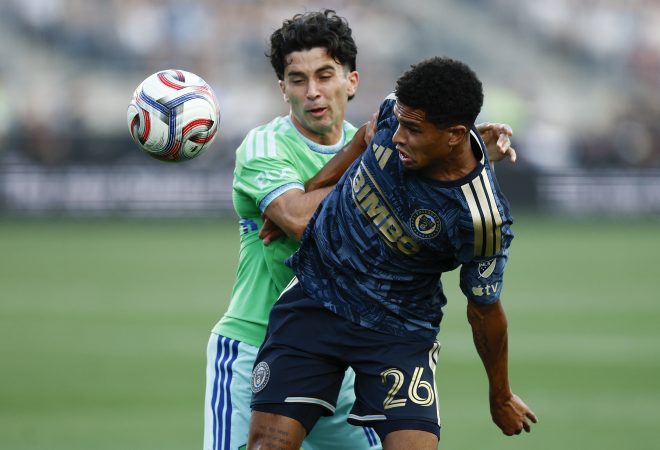
    Iloski’s goal was the focal point of the first half, but another dramatic moment came when Seattle’s Stuart Hawkins collided with Cavan Sullivan in the 26th minute.
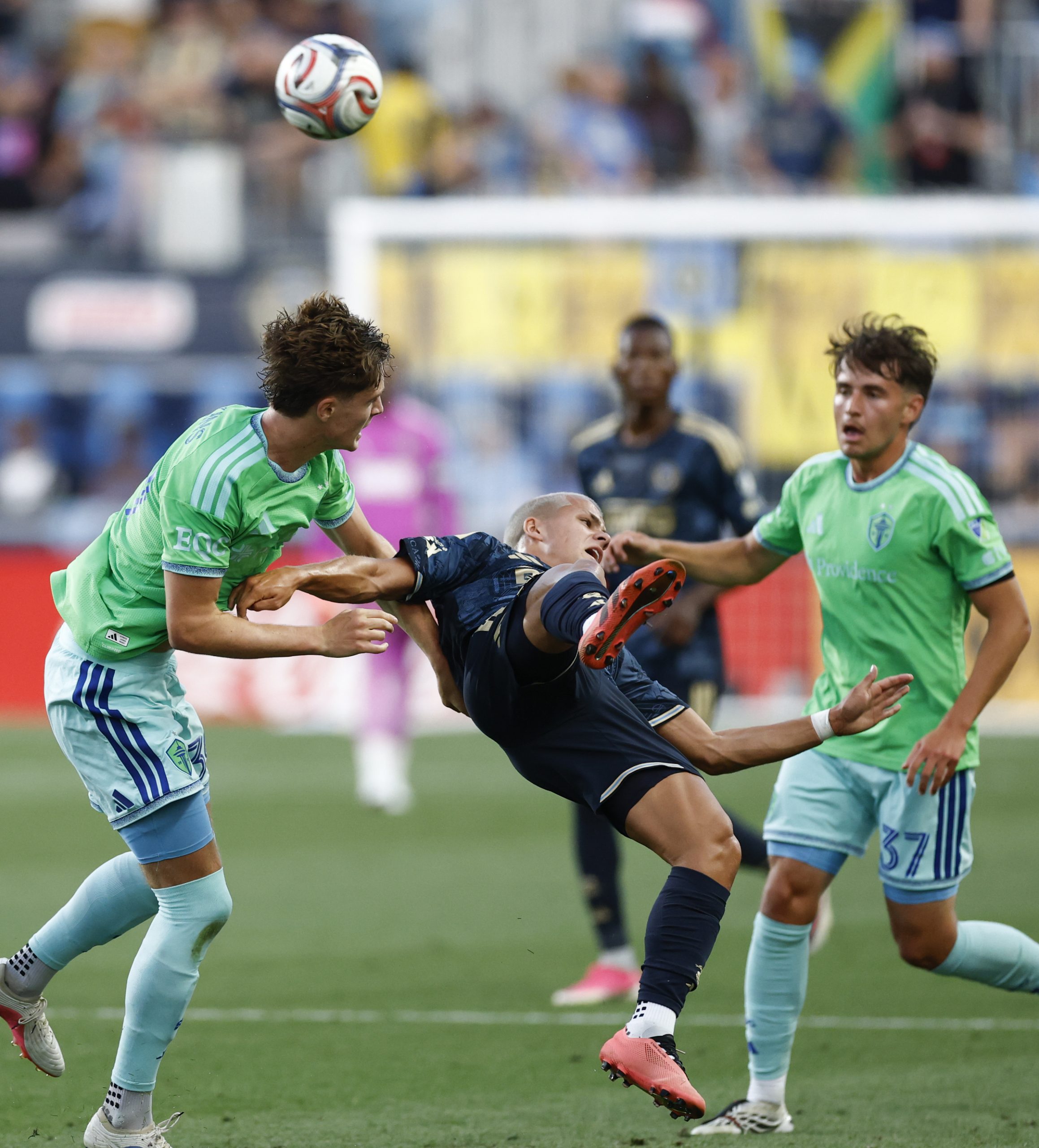
    Union midfielder Cavan Sullivan gets taken down by Seattle Sounders defender Stuart Hawkins during the first half on Saturday.Yong Kim / Staff Photographer

    The two American teenagers collided near midfield as Sullivan tried to control a long throw-in from Kai Wagner, who made his 200th MLS start on Saturday.

    Sullivan hit the pitch before popping back up to exchange words with Hawkins. Both parties walked away from the incident without a caution, and the Union were awarded a free kick that Seattle cleared away.

    Seattle logged two shots in the first half, but Nathan Harriel provided a crucial block on one of them.

    Harriel chased down Osaze De Rosario as he broke away on a Seattle counter-attack in the 18th minute. As De Rosario turned to shoot on Andre Blake’s net, Harriel slid in and blocked De Rosario’s shot out for a corner.

    The Union outshot a shorthanded Seattle team, 16-8. Blake needed one save to secure his third clean sheet of the season.

    It looked like Iloski had scored a second goal in the 64th minute, but he was ruled offside after racing past the Sounders’ defense and pushing the ball across the goal line.

    Richter made his first set of changes shortly after Iloski was caught offside, bringing on Quinn Sullivan and Ezekiel Alladoh for Bruno Damiani and Indiana Vassilev in the 65th minute.

    Another switch came in the 80th minute, with Jesús Bueno replacing Danley Jean Jacques in midfield.

    Richter’s final change of the night came in the 89th minute, with Alejandro Bedoya coming on for Cavan Sullivan to help close out the match’s final moments.

    After spending the international break with the league’s worst record, back-to-back wins under Richter have lifted the Union off the bottom of the Eastern Conference standings.

    The Union now sit nine points behind the playoff cutline with 17 games to go.

    “It’s two wins, but at the same time, we’re still in second-to-last place,” Harriel said. “We’re nowhere near where we want to be at, but sometimes you have to take it one game at a time, which we’re doing. But the momentum is great. The vibes are great. Everyone’s performing on the training ground and then on the weekends here at home, which is important.”

    The win is the Union’s first over Seattle since 2018, and their first home win over the Sounders since 2017.

    Up next

    The Union return to Subaru Park to face last-place Atlanta United next Saturday (7:30 p.m., Apple TV).

  • Phillies’ main weaknesses before trade deadline on display in a 3-1 loss to the Yankees

    Phillies’ main weaknesses before trade deadline on display in a 3-1 loss to the Yankees

    Nine days before the trade deadline, the discussions continued on the executive level of Citizens Bank Park about the Phillies’ most advisable strategy to improve the roster.

    The debate surely got more robust Saturday night.

    Go ahead and take your pick of the Phillies’ most pressing need: a back-end starting pitcher, a right-handed bat, another late-inning reliever. The answer is there aren’t any wrong answers. Not after each shortcoming was exposed again in a 3-1 loss to the Yankees.

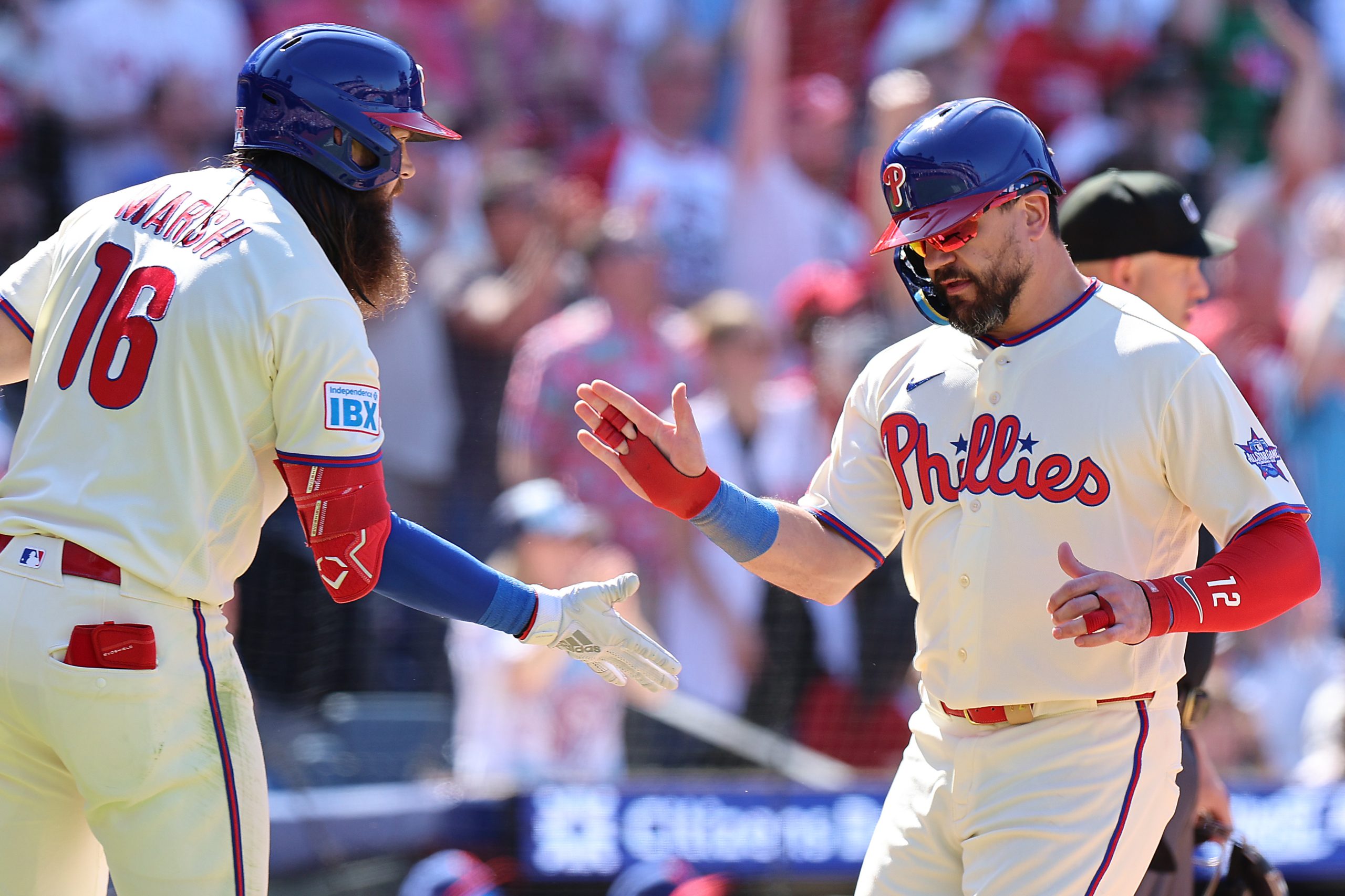
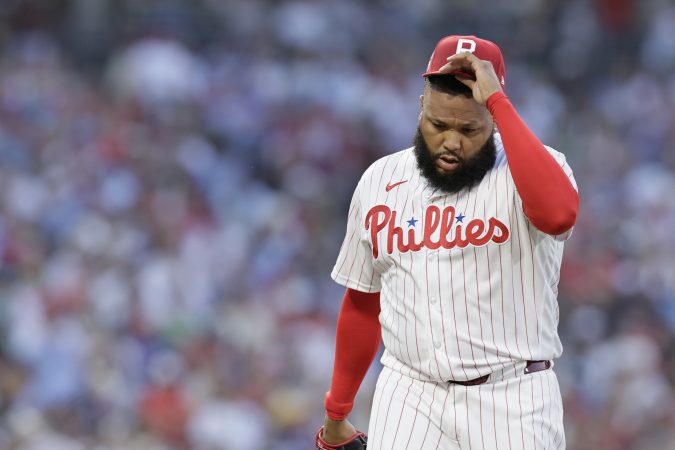
    In losing their fourth consecutive game — and falling to 2-6 since returning from the All-Star break (slumber?) — the Phillies were silenced again by a left-handed starter. They lost their 11th game in a row from the No. 5 starter spot. And struggling lefty José Alvarado gave up a late home run.

    Oh, and for good measure, they backed the statistical evidence that they’re the worst defensive team in baseball with two errors from third baseman Alec Bohm and a pivotal two-out pop fly to shallow left field that went through shortstop Trea Turner’s hands.

    “I tried getting there as best I could,” said Turner, who couldn’t come up with a back-to-the-infield basket catch that preceded Cody Bellinger’s go-ahead single. “It’s just kind of an awkward angle. You don’t want to overrun it or start judging it when it’s kind of behind you. But, yeah, I thought I had a shot. Just couldn’t come up with it.”

    Once the Phillies fell behind, they couldn’t come back. They managed only seven hits, six against Yankees lefty starter Ryan Weathers despite loading the lineup with right-handed bats.

    (Side note: The Phillies are tied for last in the majors with a .278 on-base percentage from their right-handed hitters.)

    At 56-49, the Phillies remain in position for the second National League wild card. But they have the look of a team that needs the kick-start that an active trade deadline can provide.

    Tick, tock, Dave Dombrowski.

    “Yeah, it hasn’t been our best,” Turner said. “We know that we want to play better. I think it’s just kind of going back to what Donnie [Mattingly] said early on when he got the [managerial] job: ‘It’s just three hours of competing, and don’t let your foot off the gas.’

    “I don’t think it’s a lack of effort, but I think we need to get that back a little bit.”

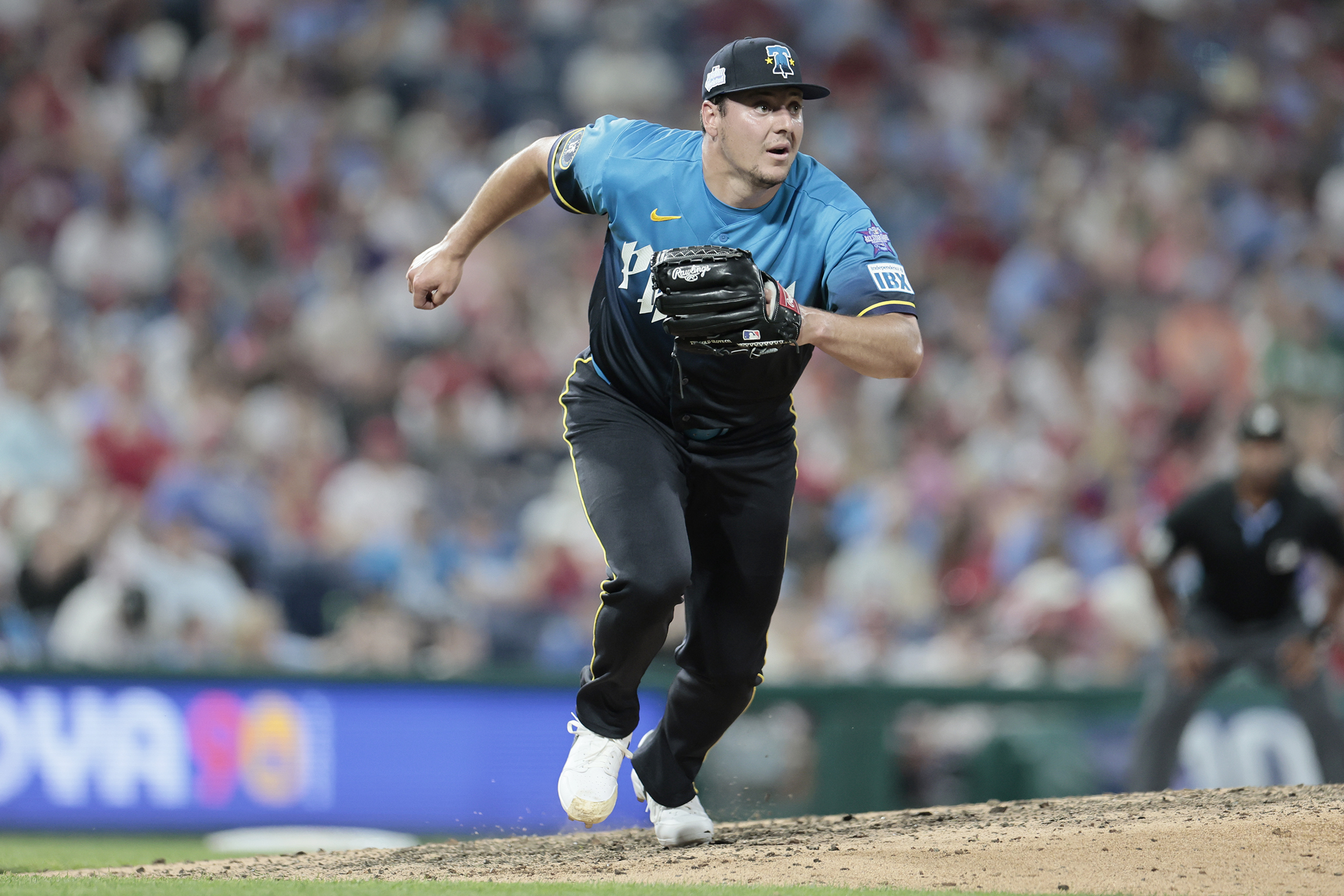
    The Yankees took the lead in the sixth inning against the underbelly of the Phillies’ bullpen, which followed 32-year-old righty Brian Keller after three innings as a bulk pitcher in his major league debut. (More on Keller shortly.)

    Mattingly called on lefty Kyle Backhus, just back from triple A, to face a left-handed pocket of the Yankees’ order. Backhus walked Austin Wells, then struck out Ryan McMahon and dangerous Ben Rice.

    On came Seth Johnson for a righty-on-righty matchup with Paul Goldschmidt, who hit the bloop into shallow left field.

    “When it went up, I thought it was going to be an out,” Mattingly said. “It was deeper than I thought. It’s a player making an over-the-shoulder catch, so it’s not a routine play or anything like that. I felt like Trea was there. But I think it’s a play Trea probably thinks he can make.”

    The Phillies are now 5-21 from the No. 5 spot in the rotation. In their latest attempt to solve the fifth-starter riddle, they opened with lefty Tim Mayza for two innings before bringing in Keller.

    It actually worked.

    Well, kind of.

    Phillies third baseman Alec Bohm misjudges a foul ball in the sixth inning vs. the Yankees on Saturday.Elizabeth Robertson / Staff Photographer

    Mayza retired six batters in a row, then handed over a 1-0 lead. And although Keller gave up a game-tying two-out homer to Austin Wells, he acquitted himself well by allowing just the one run on two hits in three innings.

    Keller’s story is improbable. A former 39th-round pick (the draft is only 20 rounds now), he kicked around the Yankees’ farm system for most of seven years in the minors before going to Japan, where he made only three starts before blowing out his elbow. He had Tommy John surgery, missed two seasons, and hooked on with the depth-deprived Phillies on a minor league contract in May.

    And now, this.

    “It was amazing,” Keller said. “Dream come true. You picture it over and over. You picture it going well; you picture it going poorly, unfortunately. But I’m glad it turned out all right. I was surprisingly calm out there. Yeah, just really happy.”

    If only it ended as well for the Phillies, who haven’t won a series against team with a winning record at the time since June 22-25 in Washington. Their last winning series against a team currently in playoff position was June 5-7 against the White Sox.

    At least they will have Cristopher Sánchez on the mound Sunday night to try to avoid a sweep.

    “When you hit a stretch where you’re not playing good, you’re running into some good teams and you’re not scoring, it makes it tough,” Mattingly said. “It doesn’t mean we can’t beat them, right? It just means we got to get going again.”

  • An off-duty Philly cop is a suspect in a Northampton County homicide

    An off-duty Philadelphia police officer is a suspect in a homicide in Northampton County, according to the Philadelphia Police Department.

    Police said Saturday that they are aware that the off-duty cop — identified as Kenroy Cummings — was involved in a shooting in Allen Township.

    Shortly before 2 p.m. Friday, Pennsylvania State Police responded to the report of a domestic incident on the 1200 block of Old Gate Road.

    At the scene, police discovered a 27-year-old man suffering from gunshot wounds. He soon died at a local hospital. After a brief car pursuit, the suspect returned to the scene, and surrendered to investigators.

    “The Philadelphia Police Department’s Internal Affairs Bureau has been notified and has initiated the appropriate administrative investigation,” said a department spokesperson.

    Pennsylvania State Police have not yet announced any charges in the investigation, or details on the victim. A coroner said Saturday that out of respect for the family’s privacy, the victim’s identity would not be released until after the autopsy.

  • Who’s behind the orange signs around Philly criticizing rogue developers?

    Who’s behind the orange signs around Philly criticizing rogue developers?

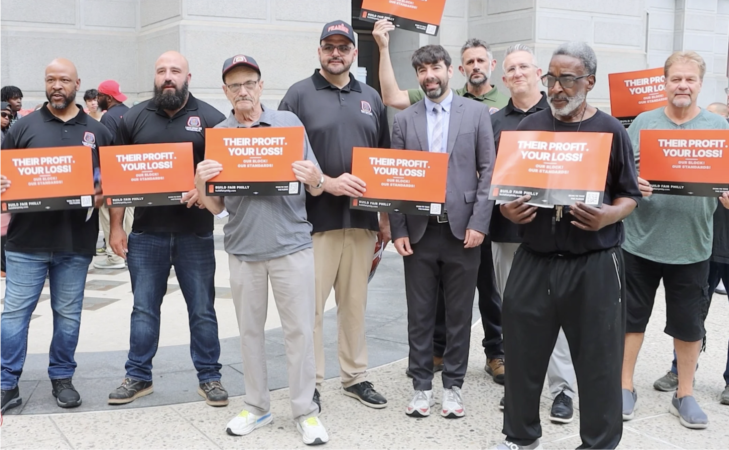
    In May, Passyunk resident Peter Kim found a vivid orange flyer on his door that read, “Their Profit. Your Loss!”

    The messaging on the material inveighed against shoddy and irresponsible real estate development, without naming any particular company or specific foe.

    It encouraged residents to sign the Build Fair Philly pledge and attend registered community organization (RCO) meetings, which developers have to hold in advance of large projects or a zoning change.

    Kim is a pro-housing advocate, and after checking out the website he at first thought that some new antidevelopment political organization had come to town.

    “While on the surface, the talking points sound reasonable, I think because I’ve become so conditioned to NIMBY [not in my backyard] groups finding any reason to oppose new development, I just assumed this campaign was from some NIMBY anti-housing group,” Kim said.

    But Build Fair Philly’s website lists as its address 1803 Spring Garden St., which is the Philadelphia headquarters for the Eastern Atlantic States Regional Council of Carpenters until its forthcoming move to the Navy Yard.

    The Carpenters, like the rest of Philadelphia’s building trades unions, are generally pro-development. After all, the more projects — especially big ones — that get built, the more their members work.

    “[I] was surprised to learn it’s the Carpenters union because, obviously, they’re not anti-housing,” Kim said.

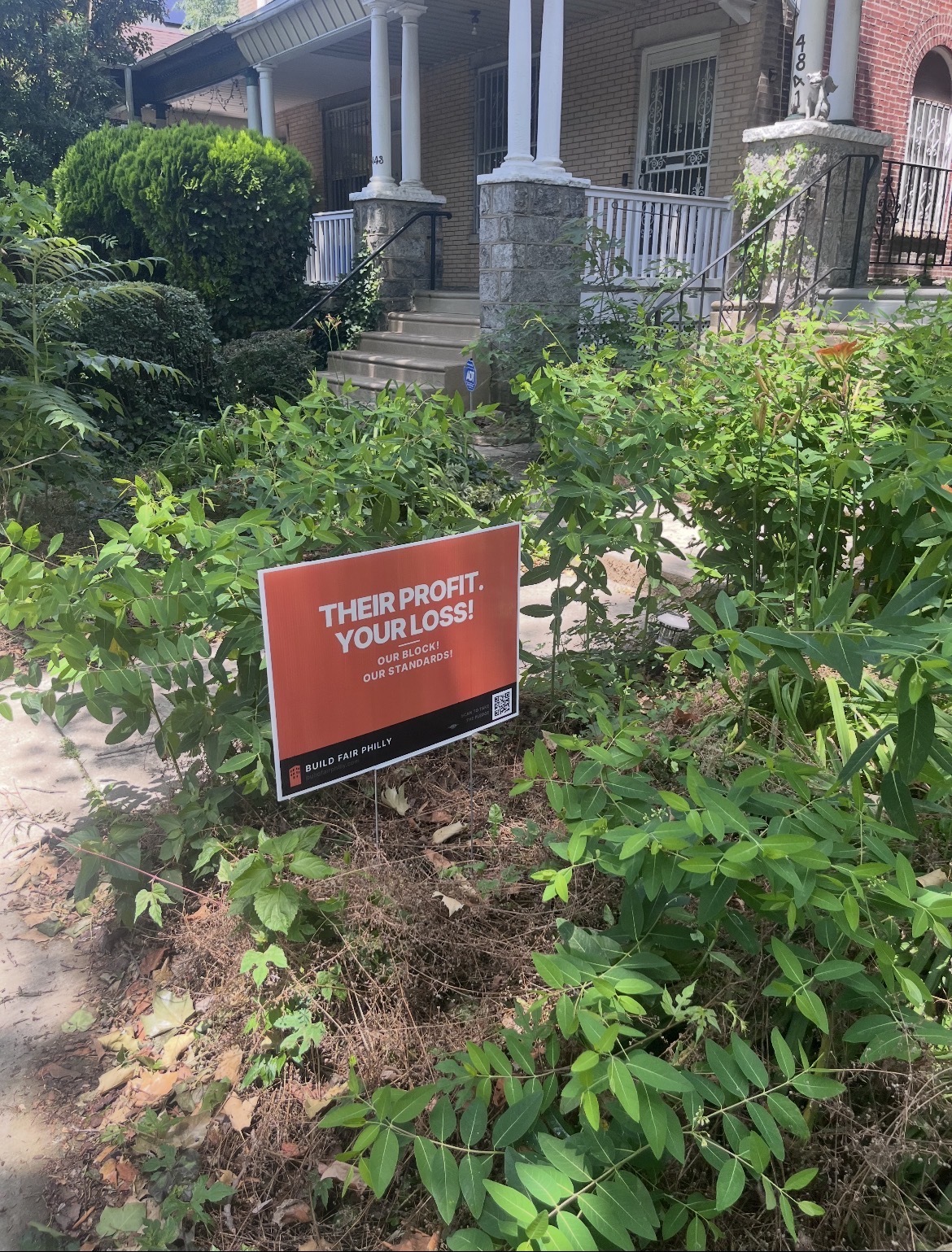
    In recent months, conspicuous orange Build Fair Philly lawn signs have been popping up on rowhouses and lawns around Philadelphia, decrying harmful real estate development. (Another common message: “Our block! Our standards!”)

    A Build Fair Philly sign in West Philadelphia.Zoe Greenberg

    The campaign’s sponsor is not listed on its material, leaving many recipients wondering what the notices are about.

    In an interview, leaders of the Carpenters said that the Build Fair Philly campaign is an attempt to raise popular consciousness about irresponsible construction — which Philadelphia’s rowhouse neighborhoods are very familiar with.

    “We are not against development; if anything, we want more development,” said James Hocker, assistant executive secretary-treasurer with the Eastern Atlantic States Regional Council of Carpenters.

    “But we want more responsible development, development that’s built in a fair way that is creating opportunities,” Hocker said. “We want to see licensed contractors on these projects. We want to see contractors that are paying their workers a responsible wage.”

    The Carpenters say Build Fair Philly is an effort to give community members a way to get involved in a campaign to better regulate the construction industry, forging alliances with community groups to ensure quality building and get pro-labor laws enforced.

    The move comes amid a difficult environment for Philadelphia’s building trades unions. (The Carpenters are not part of the Philadelphia AFL-CIO or the Philadelphia Building and Construction Trades Council.)

    After interest rates spiked in 2022, construction slowed. The commercial sector, which is most likely to employ union labor, has taken a hit from the remote work-induced cessation of new office construction. That is part of why the trades fought so hard on behalf of the proposed, then abandoned, 76ers Center City arena.

    Mayor Cherelle L. Parker’s $800 million housing initiative will create work for the unions. But a lot of the funding — like the signature Turn the Key program — goes into rowhouse construction and rehabilitation, which labor has largely ceded to nonunion, often immigrant, workers.

    There also are not many public works projects currently in the pipeline, and longtime fonts of trades work like the Philadelphia Housing Authority are less reliable sources of employment.

    The website Unionstats.com shows a steady downward trend in union representation in the Philadelphia metropolitan area’s private construction market since the pandemic.

    “I think it’s part of a general campaign by unions in the Northeast to reverse their declining market share,” said Stephen Jacob Smith, executive director of the Center for Building in North America.

    “Exactly what they have in mind as the mechanism, I do not know,” Smith said of the Carpenters. “They have a bunch of political levers, and I don’t know which of them they’re trying to pull with this.”

    But Hocker says the effort is not only about winning more work for the Carpenters members. It is also about holding contractors and developers accountable for not hiring in the city.

    After all, the building trades unions have been criticized for having memberships that do not represent the demographic makeup of Philadelphia. Why are developers not getting attacked if they are also not doing representative hiring?

    “We want development that’s going to create opportunities, whether it’s union or nonunion, for individuals that live in the city of Philadelphia,” Hocker said. “We feel that the development that happens in these communities should reflect what the community looks like. It shouldn’t be a bunch of out-of-state license plates.”

    Build Fair Philly’s Instagram account includes footage of a rally with City Council members, including Quetcy Lozada, Jeffery Young, and a cigar-wielding Jimmy Harrity.

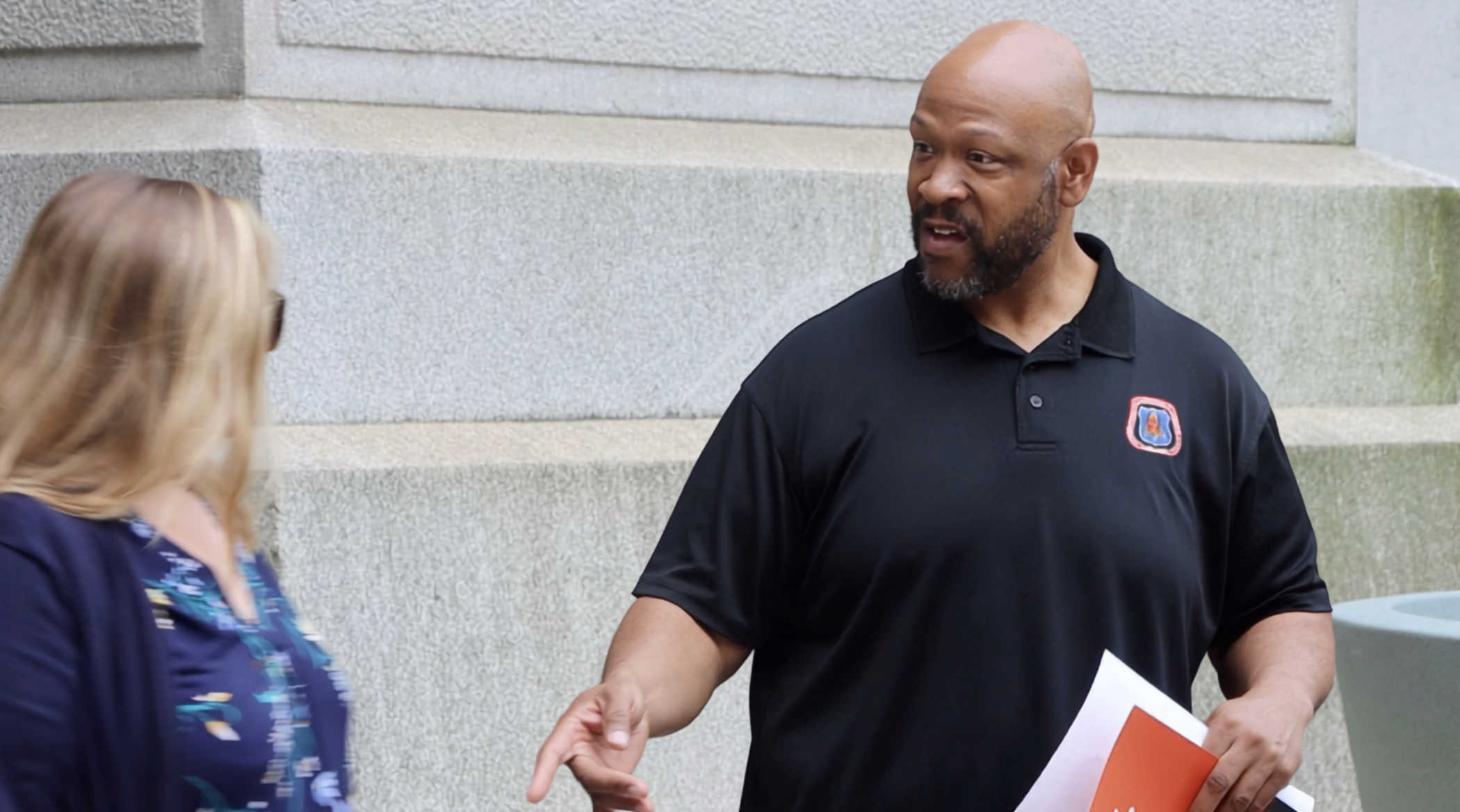
    Eastern Atlantic States Regional Council of Carpenters senior council representative Joseph Lockley talks about Build Fair Philly outside of City Hall.Eastern Atlantic States Regional Council of Carpenters

    But the union leadership says that the campaign is not necessarily about passing new legislation — which many other trades have successfully won before — but about getting the city to enforce the regulations that are already on the books.

    “We’re not asking for elected officials or anybody in any kind of position to create new laws and policies,” said Joseph Lockley, senior council representative for the Carpenters. “These are laws, policies, and procedures that are already in place that are just not being pushed and enforced, or even prioritized.”

    As of early July, the Carpenters said, they had already had 10,000 people sign on to Build Fair Philly’s pledge. “I believe Philadelphia’s development should be safe, fair, and built for all of us — not just for investors and insiders,” it reads.

    They had distributed 6,536 signs and canvassed 17,537 people, knocking on doors and interacting with people on the street.

    They have also put up nine billboards attacking Post Bros., a major Philadelphia developer. (“Philly’s Worst Neighbors. Stop Post Brothers,” the signage reads.)

    A variety of contractors that work with the Carpenters are currently in a legal dispute with Post over the company’s large apartment development at Broad Street and Washington Avenue.

    The Carpenters Union’s Build Fair Philly campaign billboard across from I-95 on Richmond Street. The union hopes the campaign will rally community members to push back against shoddy development.Aidan T. Gallo / Staff Photographer

    As part of the canvassing effort for Build Fair Philly, the Carpenters have been engaging with community members to hear about their experiences of development in the city. They said they are using that information to formulate the next steps for Build Fair Philly.

    “This is also a social justice issue,” said Mungu Sanchez, deputy political director for the Carpenters.

    “This is about fairness and this is about making sure that we’re organized with other community groups who also care about growth and care about making sure that communities are able to have the same options and the same sort of resources that every American should have,” Sanchez said.

  • All-Star outfielder Brandon Marsh relegated to platoon role (for now) as the Phillies seek more production against lefty pitching

    All-Star outfielder Brandon Marsh relegated to platoon role (for now) as the Phillies seek more production against lefty pitching

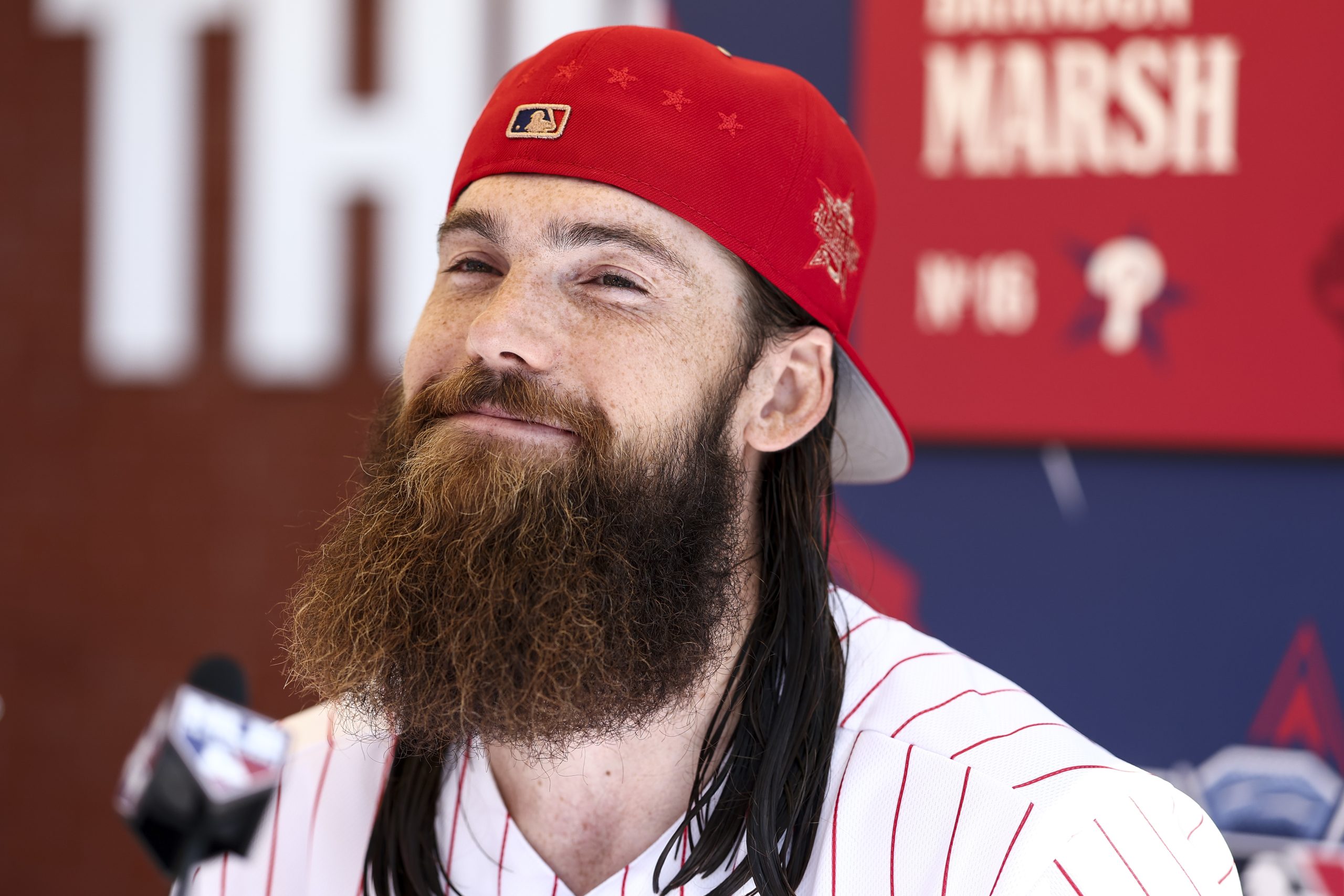
    Brandon Marsh started the All-Star Game last week.

    Now, he’s longer starting every day for the Phillies.

    Marsh wasn’t in the lineup Saturday night against the Yankees, the second time this week that he sat out against a left-handed starting pitcher. It could be an uncomfortable situation, so interim manager Don Mattingly met with Marsh to explain his reasoning.

    “Honestly,” Mattingly said, “you have to look at the numbers at some point.”

    And these are Marsh’s numbers against lefties: .233 batting average, .645 OPS.

    So, Marsh insists he will do what he’s done for most of his career and set aside his ego for a manager who wants to play the matchups. In this case, it meant staying ready to replace righty-hitting Edmundo Sosa in left field or Bryan De La Cruz in right once the Yankees lifted lefty starter Ryan Weathers.

    “The way I look at it is I’m a baseball player, and I play for Don Mattingly and for the Phillies,” Marsh said. “I’ve got nothing but love and respect for him. I’ll ride for him. I’ll die for him. And if he wants De La [Cruz] to go run out there and take the nod in left field, then that’s what’s going to happen. And I hope De La Cruz hits three homers tonight.”

    Phillies outfielder Brandon Marsh played in his first All-Star Game this month.Monica Herndon / Staff Photographer

    It’s imperfect to run three platoons in the outfield. But for now, and unless the Phillies acquire a righty-hitting upgrade before the Aug. 3 trade deadline, Mattingly seems intent on mixing and matching.

    Against righties, Marsh will play left field, with rookies Justin Crawford in center and Gabriel Rincones Jr. in right. Against lefties, Mattingly is using Sosa in left, Derek Hill in center, and De La Cruz in right.

    Clearly, though, there’s room for an upgrade. Entering the weekend, the Phillies had a .302 on-base percentage against left-handed pitching, tied for 26th in the majors. Collectively, their right-handed hitters were reaching base at a majors-worst .276 clip.

    If the Phillies can add a right-handed bat, they may be better able to tolerate Marsh’s struggles against lefties.

    “I do believe that he’s going to be a guy that can be an everyday guy,” Mattingly said. “Something we talked about is understanding how to hit lefties and what you need to do. Understanding ball movement, what do you want to hit, where does [the swing] have to start. He’s a guy that, honestly, at the big league level has really not had the opportunity to continue to do that.

    “But at some point, we’re trying to win games. We need to be better against lefties. Again, I do feel like he’s going to be that guy that could play every day, but right now, it’s just not showing up in the numbers.”

    Brandon Marsh (left) has picked Phillies teammate Kyle Schwarber’s brain about having more success as a left-handed hitter against lefty pitching.David Maialetti / Staff Photographer

    Marsh was showing some improvement against lefties early in the season. Through June 25, he was 21-for-77 (.273) and slugging .429. Since then, he’s 3-for-26 (.115) and slugging .231.

    In the ninth inning Tuesday night, he huddled with Kyle Schwarber before facing Dodgers lefty Tanner Scott. He wound up cueing a ball to third base, which led to a game-ending double play after bad baserunning by J.T. Realmuto.

    But Schwarber, who had little success against lefties earlier in his career, has been a resource for Marsh, who said he has gained a better understanding for how lefties want to attack him.

    “He’s able to relate to players like me, guys who are following his footsteps,” Marsh said. “He can tell us everything that’s going on in his head to help us out.”

    It hasn’t translated into better overall numbers, but Marsh said he’s confident that his approach against lefties is improving.

    “I feel more comfortable against them for sure, just with the reps that I’ve gotten this year and the work we do in the cage and stuff like that,” he said. “Definitely a lot more room for improvement. Really just got to keep the head down and grind, but definitely a lot better than years prior.”

    For now, though, it seems he’ll be watching most lefty starters from the bench.

    Phillies reliever Brad Keller is expected to get a second opinion on his torn elbow ligament Tuesday from orthopedic surgeon Keith Meister in Texas.Elizabeth Robertson / Staff Photographer

    Bullpen shuffle

    Although injured reliever Brad Keller will fly to Texas on Monday for a second opinion from orthopedic surgeon Keith Meister, Tommy John surgery remains the likeliest outcome.

    The Phillies will continue to seek a late-inning reliever before the deadline to replace Keller.

    In the meantime, Kyle Backhus was recalled from triple A to give Mattingly another lefty in the bullpen against the Yankees and next week in Miami and Baltimore. Hard-throwing Alex McFarlane and fellow righty Max Lazar were optioned to triple A for Backhus and righty Brian Keller, called up to make his major league debut after an opener on Saturday night.

    Extra bases

    The Phillies placed lefty reliever Tanner Banks (forearm strain) on the 60-day injured list to clear a 40-man roster spot for Brian Keller. … The Phillies acquired lefty-hitting outfielder Kam Misner from the Royals for cash and optioned him to triple A. Misner, 28, is a .206 hitter with five homers in 253 major league at-bats. Switch-hitting outfielder Steward Berroa was designated for assignment to get Misner on the 40-man roster. … Mikal Bridges, NBA champion with the New York Knicks and notable Phillies fan, was on the field and in the clubhouse before the game. … Cristopher Sánchez (12-4, 2.71 ERA) is scheduled to start the series finale on Sunday Night Baseball against Yankees righty Will Warren (7-4, 4.00).

  • LeBron James explained why he picked the Sixers. Here are four other factors that may have helped.

    LeBron James explained why he picked the Sixers. Here are four other factors that may have helped.

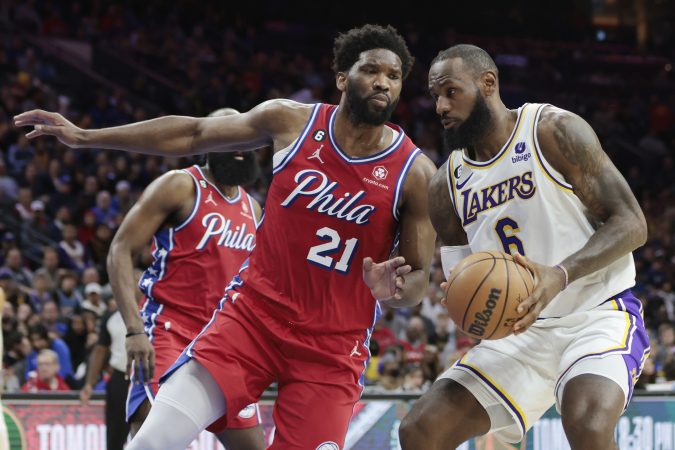
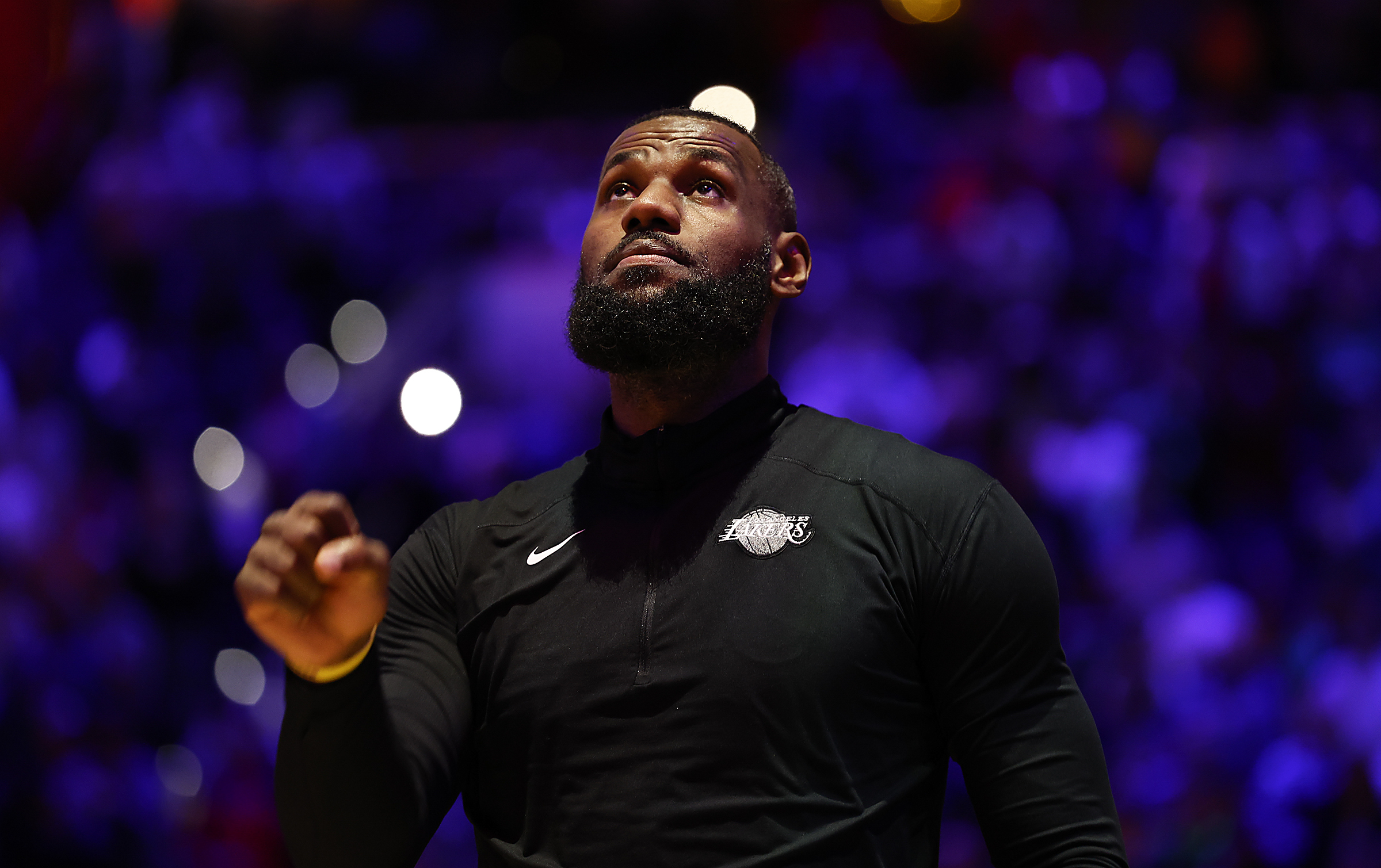
    LeBron James explained in great detail his decision to join the 76ers on a two-year, $8 million deal.

    There were many layers to consider, including money, family, and legacy. James shared that he pondered retirement and thought he was “done when the season ended.” He also called this his last decision, which meant he needed to see several factors to feel like he was selecting the right team for the final years of his career.

    Picking the Sixers makes sense from that framework. Even before the news broke Friday, the Sixers were considered competitors in the Eastern Conference. Of course, James’ addition raises those expectations and the pressure is on to get the task done with him in Philly.

    So what were the things that made James so sure about the Sixers? Here’s a look at potential contributing factors to James picking them over suitors like the Golden State Warriors, Cleveland Cavaliers, and Miami Heat:

    The Tyrese Maxey relationship

    Rich Paul, Klutch Sports’ CEO and James’ agent, made it clear that Tyrese Maxey was a major reason the Sixers landed the NBA legend. Maxey, who also is a Klutch client, slipped in the 2020 draft and was drafted by the Sixers 21st overall out of Kentucky.

    Since then, the point guard has developed into an All-Star and All-NBA talent. He entered this summer as the Sixers’ unquestioned leader on and off the court and now will have company with James and Jaylen Brown, who was acquired in a trade earlier this month. And while Maxey has been described as James’ “little brother,” it didn’t hurt that he averaged 28.3 points, 4.1 rebounds, and 6.6 assists last season.

    Win-ready roster

    The Sixers entered this summer in dire straits. While they had advanced from the play-in to upset the Celtics before a second-round exit, the reality was that they were stuck with a top-heavy roster. With Maxey, Paul George, and Joel Embiid on max deals, the majority of their salary-cap space was dedicated to three players, which is an unenviable place to be with league’s more punitive luxury tax.

    Then, as Paul said, “everything changed” when the Sixers traded George and acquired Brown, who is fresh off his most productive NBA season. He averaged 28.7 points, 6.9 rebounds, and 5.1 assists, while leading the Boston Celtics to the playoffs as former running mate Jayson Tatum recovered from an Achilles injury. New president of basketball operations Mike Gansey and the Sixers front office added Dean Wade and Anfernee Simons to complete a roster centered on Brown, Embiid, Maxey, VJ Edgecombe, and rookie Labaron Philon Jr.

    The Sixers were expected to compete in the East as constructed. And James pushed those expectations over the edge.

    LeBron James adds even more firepower to an already potent Sixers lineup.Yong Kim / Staff Photographer

    Trustworthy front office

    After parting ways with Daryl Morey, the Sixers changed how they approached the front office. They took on a more egalitarian approach, with Bob Myers as Harris Blitzer Sports & Entertainment president of sports, Mike Gansey as president of basketball operations, and Jameer Nelson as executive vice president of basketball operations.

    All three architects of the Sixers’ new-look roster have relationships with James and Paul. Gansey and James played high school basketball in Northeast Ohio in the same era and shared time in the Cavaliers organization. Myers, who ran the Golden State Warriors to four titles, was a respected rival of James’ — Golden State won three titles over his Cavaliers, while Cavs won in 2016. Myers also is friends with Paul and appeared on his Game Over podcast. Nelson, a former St. Joseph’s star, was an NBA contemporary of James. A source close to James also told The Inquirer on Friday that James has known Sixers co-owner David Blitzer for many years.

    Those are deep roots. So while the Sixers might not have seemed like the obvious choice, the people in the franchise’s driver’s seat have run in the same circles as James and his confidants over the last two decades.

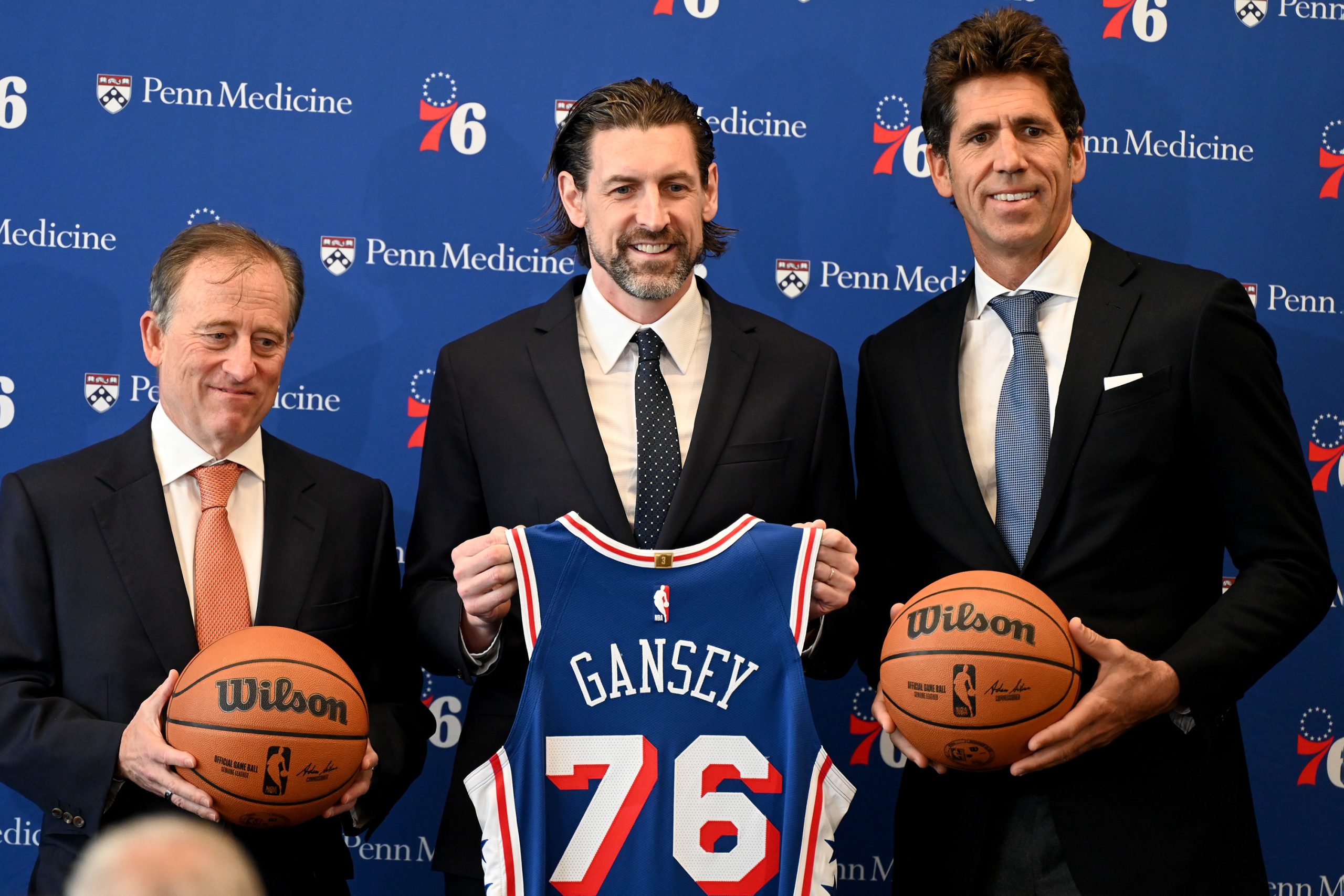
    Mike Gansey (center), pictured with Harris Blitzer Sports & Entertainment president of sports Bob Myers and Sixers managing partner Josh Harris, played high school basketball in Northeast Ohio in the same era as LeBron James.

    A new challenge

    The prevailing thought was that James would land with the Cavaliers or Heat, bookending his career with one of the teams on which he won three of his four NBA titles. But shocking free agency decisions aren’t new for James. No one expected him to leave the Cavaliers for the Heat, and his adventure in Los Angeles seemed even less likely. So this decision to join the Sixers and take on a new challenge follows a theme.

    There’s also the chance to make history in Philly. James led Cleveland to its first sports title in 52 years when the Cavs won in 2016. He rescued the Heat after they fell on hard times and struggled to put a team together around Dwyane Wade. And he provided the Lakers a return to glory after they had gone a decade without a title. He can do that again in Philly. The Sixers haven’t won a title since 1983 and haven’t advanced past the second round since 2001. James even said it himself.

    “I believe I can help make the Philadelphia 76ers a championship team,” James wrote, “and I am so excited to energize a new fan base and start this incredible journey one last time.”

  • Five people in a South Philly basement studio are making a whole lot of indie music

    Five people in a South Philly basement studio are making a whole lot of indie music

    Between them, artists on the Historic New Jersey record label — which, despite its name, is headquartered in South Philadelphia — have released dozens of full-length albums and EPs since the start of the decade.

    That’s a whole lot of indie music in a wide range of styles coming out of a South Philly basement studio, all demonstrating an old-school dedication to craft that prizes first-class songwriting above all else.

    And it’s all being created by a small group of close friends who moved to Philadelphia as adults. They all contribute to one another’s records and play in one another’s bands.

    The Historic NJ collective core consists of just five musicians, four of whom gathered in their subterranean studio for an interview on a recent summer day.

    Emily Moales records as Star Moles — a self-described “sci-fi DIY Wi-Fi band.” She has a new album with a cheeky title that nods to AC/DC called Highway To Hell. It’s one of the most acclaimed releases of the year.

    Kevin Basko is super prolific as Rubber Band Gun, and is the label’s founder and producer. He also teams with his housemate Moales in the brash Hot Machine, which he compares to Gorillaz, “like a fake band, something we can have a little more fun with.”

    And siblings Sam and Louise Sullivan are a folk-pop duo whose third album, Love & Devotion, released this week. It moved pop culture magazine Paste to call them “the next great family band.”

    Drummer and comedian Jem Seidel, who keeps the Historic NJ beat in the studio and onstage, is the fifth core member of the collective.

    Musician Emily Moales, who records as Star Moles, inside the Historic NJ studio in South Philadelphia on July 10.Aidan T. Gallo / Staff Photographer

    ‘The song comes first’

    Moales, 27, is a New Hampshire native who started making music with Basko — a Berklee College of Music grad who has toured as a member of indie band Foxygen — after they met online in 2017.

    Basko, 34, grew up in Monmouth County in Central Jersey, where he came up with the Historic NJ moniker.

    He was intrigued by Moales’ imaginative ‘70s style folk rock. “She reminded me of Stevie Nicks,” he says and admits he initially clicked on her Twitter profile because she used a Barbra Streisand photo as her profile picture.

    “There was an instant sense that we were on the same page,” Moales recalls. It took only a week to record their first work together, the Star Moles album Camelot, in 2018. Two weeks before the pandemic began in 2020, Moales and Basko moved to Philly, a city where he had made friends while working as a touring musician.

    The cover image to Star Moles’ album “Highway To Hell.”Historic New Jersey

    The Sullivans grew up in Portland, Ore., and New York, raised by music loving parents who schooled them in Woody Guthrie, Richard and Linda Thompson, and traditional Irish music.

    Sam Sullivan, 35, who lives in Germantown, moved to Philly in 2016 to take a job teaching English literature at Germantown Friends School, where he still works. His sister, 30, followed a few years later and has also taught at GFS, but is now focused on music and her ceramics business.

    In 2022, Basko messaged the Sullivans on Instagram after seeing a video of the siblings performing in a West Philly backyard. They soon joined the Historic NJ song-making family.

    “We all share a philosophy, you know?” said Moales, who’s worked retail and food service jobs since moving to the city, including at sustainable general store Good Buy Supply. “All of us here, we’re just truly songwriters at heart. We hold the song as holy, above everything.”

    “The vibe comes later,” Basko said. “The song comes first.”

    Once assembled, the Historic NJ crew began quietly — and quickly — making music under the radar.

    The Sullivans’ debut album Papier Mâché, which includes “Holy Philly,” an ode to their adopted hometown, came out in 2023. Star Moles’ Snack Monster, inspired by Andreas Capellanus’ 12th-century treatise Rules of Courtly Love, was released last year.

    Basko makes music at a dizzying pace. The multi-instrumentalist who cites Todd Rundgren as a “musician producer” role model has a staggering 84 releases available on his Bandcamp page. Listeners are truthfully advised: “There’s something here for everyone.”

    He’s also made music for TV shows like Walker and Superman & Lois. And he welcomes clients like Brooklyn violinist Marji Shemanski, who was due in for a session later the day of the interview.

    Kevin Basko, a multi-instrumentalist, producer, and engineer, sits with his dog Jones, 5, inside the Historic NJ studio in South Philadelphia. Basko and Moales were both collaborators for Louise and Sam Sullivan’s newest release “Love & Devotion.”Aidan T. Gallo / Staff Photographer

    People are getting hip

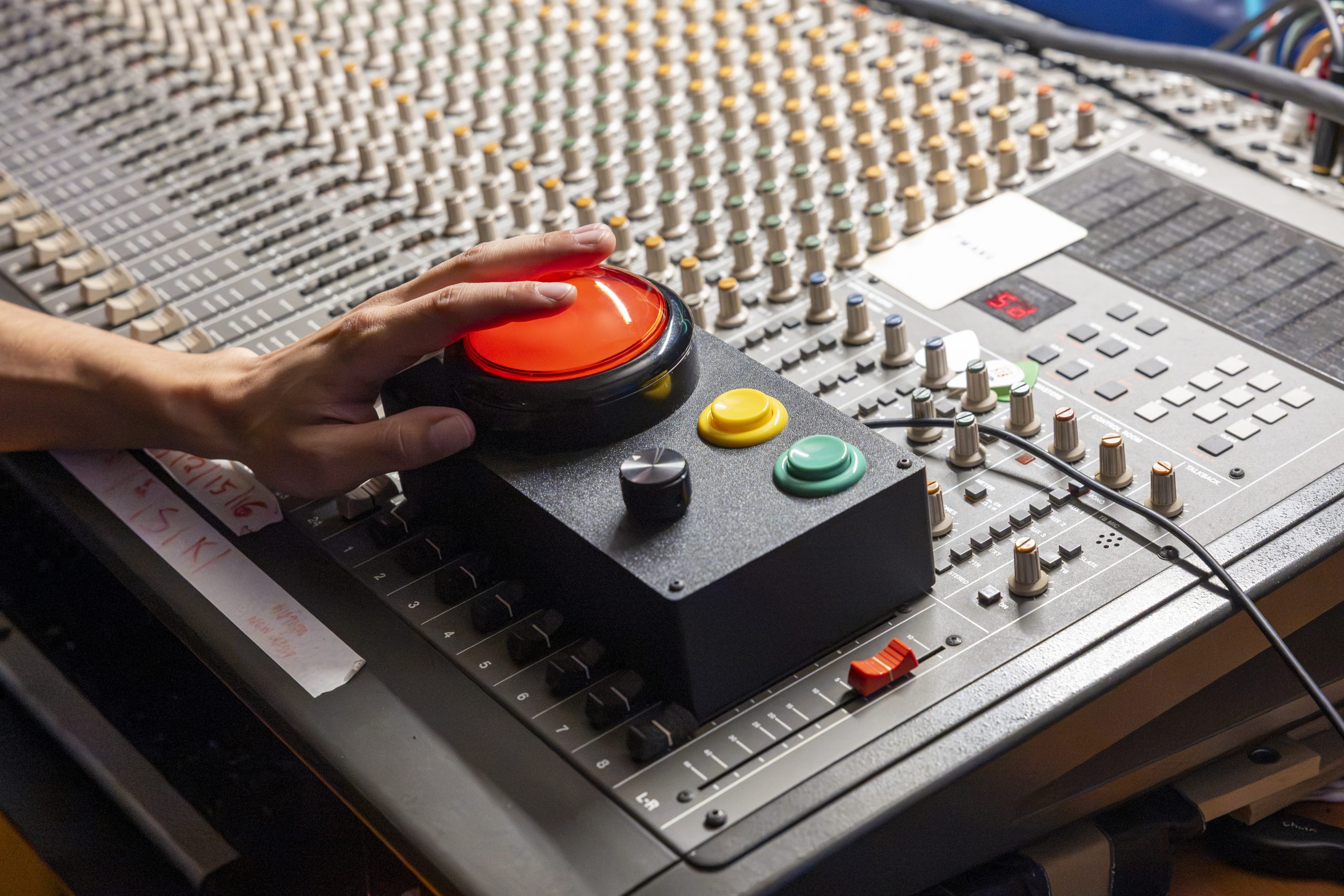
    “There’s all this great stuff happening, with people getting hip to what we’ve been doing, said Basko, speaking while sitting cross-legged in front of a control board with a custom made big red button that he presses to start recording sessions with dramatic flair.

    Jones, his pint-size Boston terrier, sits in his lap. The carpeted room is full of old-school analog recording equipment, with a kitschy guitar-shaped lamp illuminating posters from three Muppets movies.

    “But there’s no greater feeling when a second ago we didn’t have it, and a minute later, we do. Prince talks about that. People don’t know what they’re missing when they don’t have that experience of creation,” Basko said.

    People are definitely getting hip to Historic NJ. Highway To Hell is a unanimous best-of-2026 pick by taste-making sites like Stereogum and Brooklyn Vegan. The album, which came out in February, will be rereleased by a larger, yet-to-be-announced indie label this fall.

    “Emily’s leading the pack in terms of pure industry success,” said Basko. “I keep making the joke that she’s falling into the volcano in a ceremonial way, into an industry that isn’t always kind. It’s like [Indiana Jones and the] Temple of Doom.”

    The artwork for Sam and Louise Sullivan’s new album “Love & Devotion.”Historic New Jersey

    The spotlight is also shining on the Sullivans, who have sung together all their lives.

    “Our dad really loved music,” Louise Sullivan said. “He wanted his family to play music. They would give us a song to learn and we would sing it at the end of dinner.”

    “Like Pete Seeger songs, or the Watersons, or ‘Here We Come A-wassailing,’” said Sam.

    “Or Kirsty MacColl,” added Louise. “Sam would play mandolin and I would sing.”

    Sam Sullivan calls himself “a failed poet.” He had never written songs before moving to Philadelphia. But while planning to work on graphic arts projects, he played guitar instead and started putting words to music.

    “Sam is one of the most brilliant songwriters I’ve ever heard,” said Basko. “I’ve been trying to be a songwriter my whole life. So for Sam to be just ‘Oh I started just a few years ago’ is mind-boggling.”

    “I’m not really a musician,” said Sam Sullivan.

    Kevin Basko clicks his big red record button inside the Historic NJ studio in South Philadelphia.Aidan T. Gallo / Staff Photographer

    Last year, Jeff Tweedy of Wilco put the Sullivans’ album Sweet Enough on his 10 best list, calling it “really beautiful, well-crafted folk-pop” with “guitar parts I find really fun to learn.”

    That led to a high profile gig at Wilco’s Solid Sound Festival in North Adams, Mass., last month, which turned into a coming-out party for the collective.

    The Sullivans played a stripped-down set inside Mass MoCA, the contemporary art museum where the festival is held, as well as a crowd pleasing outdoor show, backed by their Historic NJ compadres.

    “It went great,” said Louise Sullivan. “We rocked our little hearts out,” her brother added.

    An elusive band

    Opportunities to see the Historic NJ groups perform live are scarce. In May, the whole crew banded together and played a two hour show at Johnny Brenda’s.

    Star Moles’ last solo show was on Friday, opening for Hannah Cohen at 118 North in Wayne. And the Sullivans have one gig that requires a road trip: opening for Iron & Wine in Lowell, Mass., on Aug. 7.

    The siblings would love to become a touring band, but will have to wait, probably till next year when Sam has the summer off from teaching.

    Emily Moales (center), known as Star Moles, passes a guitar to long-time collaborator Kevin Basko inside the Historic NJ studio in South Philadelphia. Louise Sullivan is on the right.Aidan T. Gallo / Staff Photographer

    Meantime, there’s music to be made.

    On a whiteboard in the Historic NJ studio, Basko and Moales worked out the track listing for the next Rubber Band Gun album, due next month. And Sam Sullivan was working up songs for another release with his sister, which they hope to release by year’s end.

    “We want to play shows,” said Louise Sullivan. “But you have to make music to play shows, and I feel like that’s the thing we love to do.”

    Everyone nods in agreement.

    “We want to make the next thing already. That’s what’s invigorating. That’s what’s going to last.”

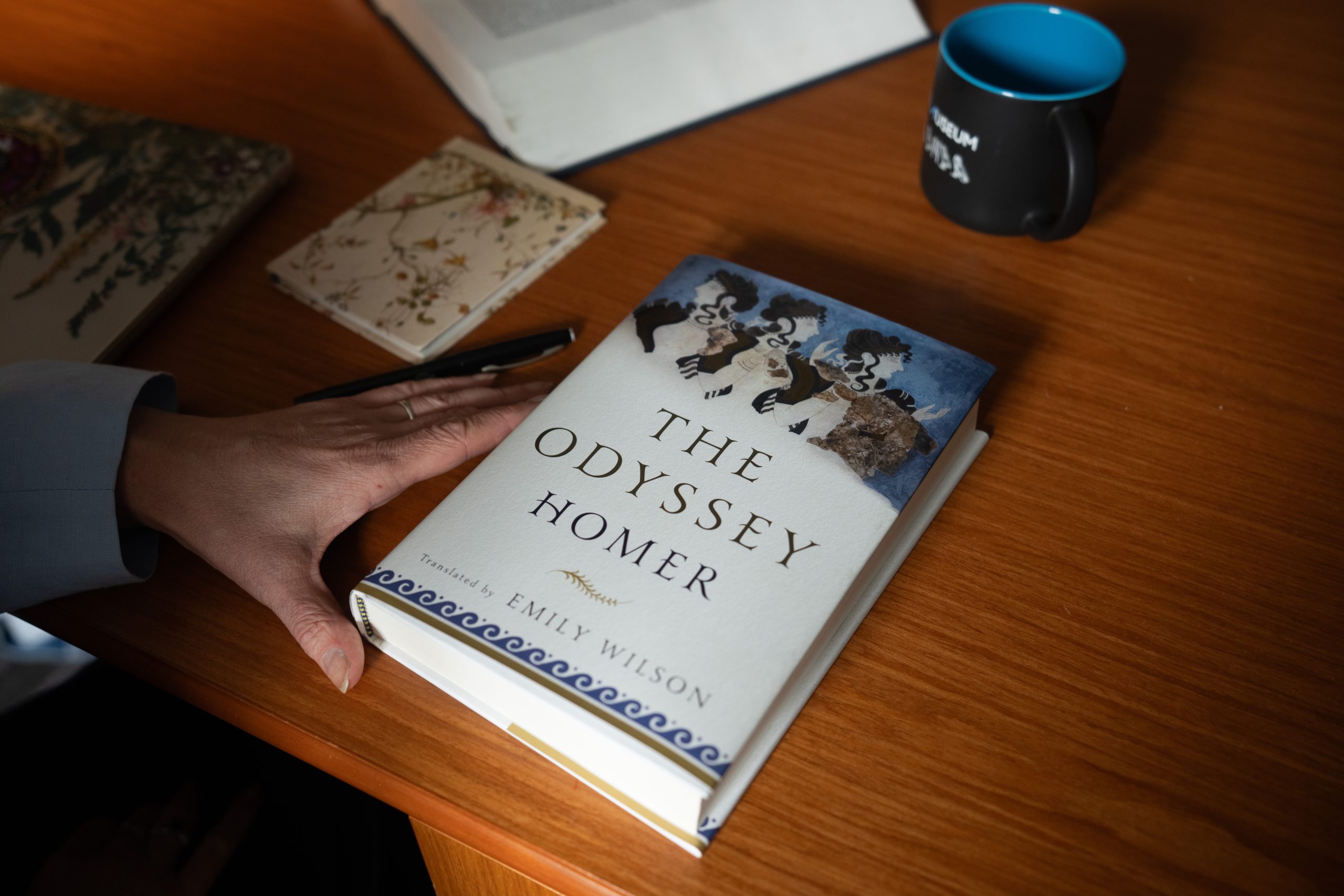
  • A Penn professor thought she’d sell 1,000 copies of her ‘Odyssey’ translation. She sold more than a million, thanks to Christopher Nolan.

    A Penn professor thought she’d sell 1,000 copies of her ‘Odyssey’ translation. She sold more than a million, thanks to Christopher Nolan.

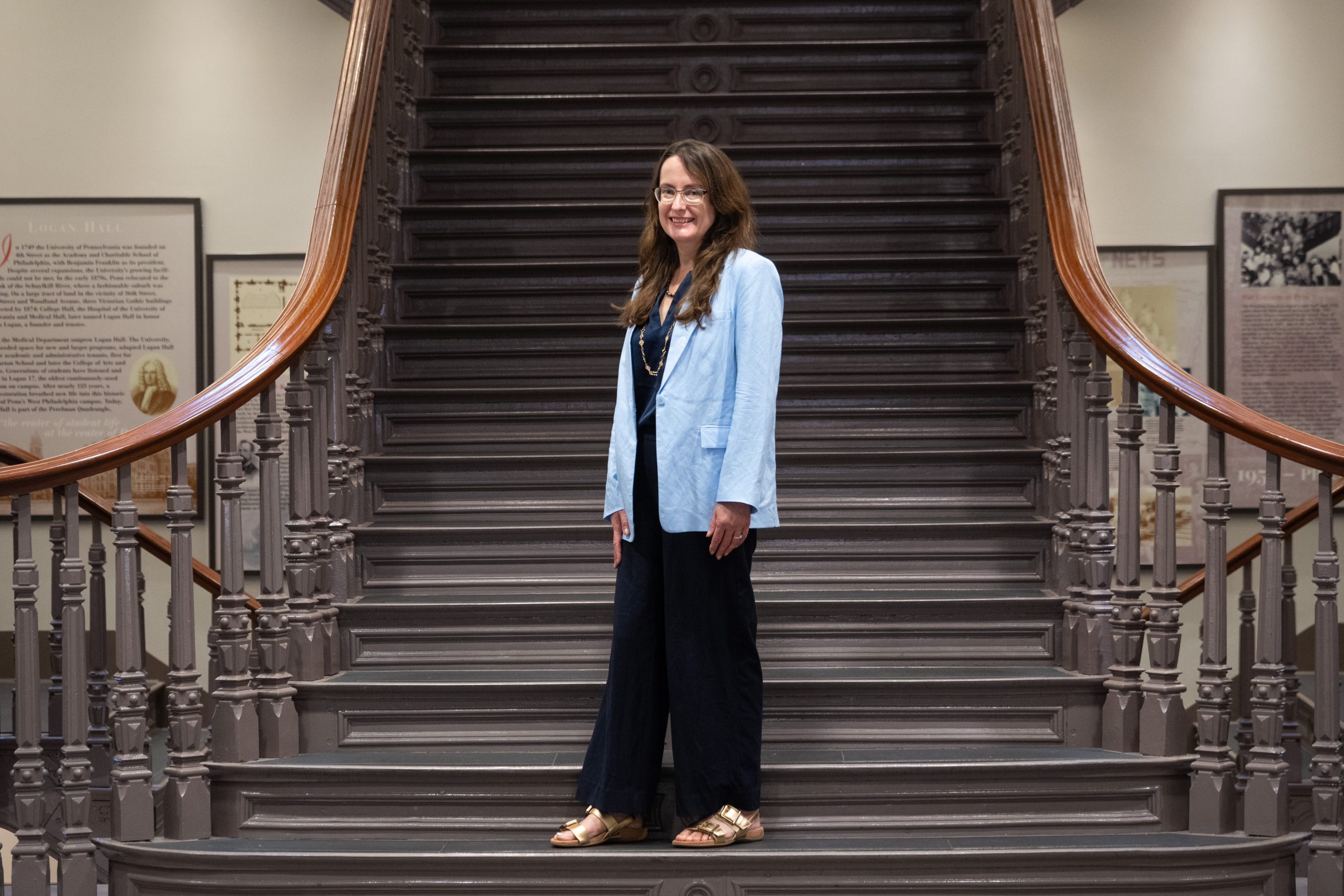
    Classics scholar Emily Wilson was in Greece’s Costa Navarino last year when she heard the news that would change her life: Filmmaker Christopher Nolan was planning to release a star-studded adaptation of The Odyssey, the epic poem that Wilson had spent years painstakingly translating from Homeric Greek into English.

    Nolan’s film crew, Wilson learned, had just left the Greek town where she was now staying. As she walked along the beach, the University of Pennsylvania professor imagined what scenes of adventure had been conjured on the ground where she stood.

    The seductively scary sirens calling out to Odysseus? The giant Cyclops who eats his men? (Spoiler alert: It was the latter, shot at Nestor’s Cave in nearby Messenia.)

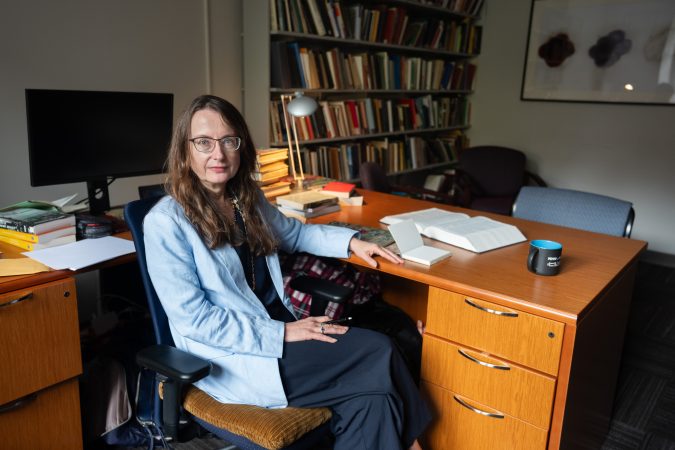
    Professor Emily Wilson, in her office at the University of Pennsylvania, in Philadelphia, July 4, 2026.Jessica Griffin / Staff Photographer

    Nolan’s film was a thrilling prospect for the classicist who made her name penning a quick-paced and strikingly contemporary translation of the nearly 2,700-year-old story for modern audiences. While the Oppenheimer director wrote his own version for the big screen, along with partner-collaborator Emma Thomas, he has cited several translations, including Wilson’s, as references.

    “It’s great that there’s going to be a whole new wave of people who may not have thought much about The Odyssey, may not even be familiar with the narrative, who may then get excited about it, because Christopher Nolan is a big name,” said Wilson, who lives in West Philly with her partner, David Foreman, a Swarthmore College administrator, her two younger daughters, Psyche and Freya, their cats, Pumpkin and Spice, and their dog, Pepper. (Her eldest daughter, Imogen, just graduated from Temple University.)

    This image released by Universal Pictures shows, from left, Anne Hathaway as Penelope, and Tom Holland as Telemachus, in a scene from “The Odyssey.” (Melinda Sue Gordon/Universal Pictures via AP)Melinda Sue Gordon

    The Nolan bump is already in effect: The Odyssey made $263.7 million globally on opening weekend, and it has been hailed as a total triumph for the filmmaker behind Inception and Interstellar. The cast features Nolan regulars like Matt Damon (Odysseus), Anne Hathaway (Penelope), Robert Pattinson (Antinous), and Elliot Page (Sinon), as well as Tom Holland (Telemachus, son of Odysseus and Penelope), Zendaya (Athena), John Leguizamo (Eumaeus), and Lupita Nyong’o (Helen of Troy/Clytemnestra).

    But even before the red carpets and glitzy media tours, Wilson saw a surge of interest in her 2017 translation. Last year saw a significant increase in book sales following the film announcement, and those numbers have continued to rise into 2026, said Louise Brockett, head of communications at W.W. Norton & Co., Wilson’s publisher.

    Professor Emily Wilson, in her office at the University of Pennsylvania, in Philadelphia, July 4, 2026.Jessica Griffin / Staff Photographer

    As of July 2 this year, total sales reached a major milestone: “In 2026, notably, domestic sales across all formats surpassed 1,000,000 copies,” Brockett wrote in an email.

    For Wilson, the overwhelming response has been stunning to witness. Long before The Odyssey again seized the zeitgeist, she took on the project with rather low expectations of readership.

    “I remember being very much aware that most retranslations maybe sell 1,000 copies if you’re lucky … you’re going to work very, very hard on it for five years, and then maybe a tiny number of people will read it — and of course I thought it was still worthwhile,” said Wilson, who first became enamored with Greek mythology as a child growing up in Oxford, England.

    Her book was a success, lauded for its compelling storytelling and accessible, modern language; it led to her being named a prestigious MacArthur “genius” fellow. With its release, Wilson also earned special recognition that initially surprised her: She was the first woman to publish an English translation of The Odyssey.

    This image released by Universal Pictures shows director Christopher Nolan on set of “The Odyssey.” (Melinda Sue Gordon/Universal Pictures via AP)Melinda Sue Gordon

    “I used lots of translations of Homer in my teaching, and it hadn’t actually occurred to me that they were all by men. It was only once that became the headline about my translation that I then looked back at it, and realized how there is a pattern here,” she said.

    But that distinction does not quite resonate with her. While classical studies still tend to be male-dominated, Wilson said, literary studies feature many women scholars in classics who have made major strides in scholarship across generations before her.

    “So I guess I partly want to push back against the idea that it’s completely unique to be a woman in classics, because it certainly isn’t,” she said. “There are many other women classicists, and I don’t want the headlines to serve as a way of erasing their work. It makes me really uncomfortable.”

    Professor Emily Wilson, at the University of Pennsylvania, in Philadelphia, July 4, 2026.Jessica Griffin / Staff Photographer

    She doesn’t think her translation is inherently feminist because she has earned the title of “first.” A better example of a feminist retelling, for her, is Circe, Madeline Miller’s popular fantasy novel adaptation of several Greek myths, including The Odyssey. (Miller’s book focuses on the perspective of the eponymous witch who turns men into animals, played by a chilling Samantha Morton in the Nolan film.)

    Still, Wilson’s translation provided new language that stripped away some of the previous translators’ gendered biases: For instance, when the poem mentions the servant women in Ithaca who cater to Penelope’s suitors, other translators called them “sluts” and “whores,” but Wilson eschewed those derogatory terms and instead opted for “slaves” and “house girls.”

    That nuance, however, was lost when Nolan’s Odyssey became a proxy for culture wars on the internet. Scores of mostly male critics decried Nolan’s casting decisions as inaccurate for racist and transphobic reasons (many claim Helen of Troy, portrayed by Nyong’o, cannot be a Black woman).

    Director Christopher Nolan, left, and Emma Thomas pose for photographers upon arrival at the premiere of the film ‘The Odyssey’ on Monday, July 6, 2026, in London. (Photo by Scott A Garfitt/Invision/AP)Scott A Garfitt

    Wilson herself has become a target for much of the outrage, too — so much so that she added a contact form to her website specifically marked for “misogynistic trolling” alongside the other button for “kind words and praise.”

    She has brushed off the noise, though, and kept working at her craft with little regard for the haters who believe The Odyssey is meant to portray only one demographic.

    From more than two decades of teaching, she knows they are simply wrong because these myths hold universal power.

    “It is really exciting to see just how many young people, especially young women, are fired up about ancient literature and classics in a new way,” she said. “It’s a whole wave of current classical scholarship and books for the general public that are showing that these texts are not just for men, not just for white people, not just for any particular modern demographic. … This is a subject that anyone from any background can engage with.”

    Wilson’s teen daughters have been swept up in the Nolan excitement, too. After Zendaya was pictured holding her book, Wilson’s daughters were thrilled.

    “There’s nobody cooler than Zendaya, obviously, so now I’ve made it,” she said, laughing.

    Beyond all the film news, Wilson is now hard at work on another translation of The Odyssey with different parameters than her first; primarily that it will be longer. Maybe Nolan’s film will spark some new ideas.

    Her next release, Crossing the Wine-Dark Sea: Journeys Through Ancient Literature, comes out this fall. It is a series of essays about her translation process and the work of connecting modern audiences with ancient literature.

    It can serve as a blueprint for anyone else eager, like her and Nolan, to take on an epic challenge.

    The headline and the article were updated to reflect updated information from the publishing house. The book’s all-time sales surpassed 1 million in 2026.

  • How the lighthearted social media trend of teen takeovers took a serious turn

    How the lighthearted social media trend of teen takeovers took a serious turn

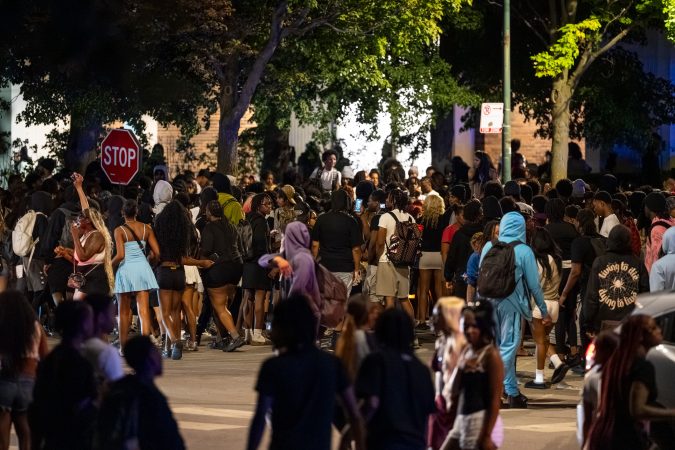
    When Damarion Spann, 18, saw an Instagram flier calling for a massive gathering on a beach near downtown Chicago, he immediately wanted to go. Thousands of others joined him that night on the sand, blasting music and dancing.

    The cultural trend of so-called teen takeovers has popped up across the U.S. in recent years, influencing local policing and national politics. The events, often hyped online and captured in videos on social media, have led to shootings, theft, and vandalism. City officials and police are concerned about an increase over the summer, and are under pressure to prevent similar gatherings or to punish those who participate.

    Over the July 4 holiday weekend, several thousand young people converged in two spots in Raleigh, N.C., police said. Nine people, including an adult who was not part of the gatherings, were shot and wounded.

    There were also takeovers in Pensacola, Fla., where a 19-year-old was shot and killed; and Newport Beach, Calif., where more than 400 were arrested after the police chief said teens launched “explosive mortars and other projectiles” at officers ordering them to disperse.

    But Spann and other teens say that the events are largely misunderstood. They point to formal curfews or limits on group size at malls and movie theaters that have made it harder for teens to gather, exacerbating a feeling of disconnection they trace back to remote learning during the coronavirus pandemic.

    How cities are tracking the social media trend

    Communities and police across the country are trying to identify organizers, fine parents of those involved, and impose curfews.

    In Detroit, officials say they “thwarted” 19 gatherings so far this year by monitoring time and location changes as young people coordinated across social media, said Teferi Brent, director of the Mayor’s Office of Neighborhood and Community Safety.

    “We have eyes on all the behaviors and activities of those who have expressed interest in trying to take over and we have done a good job of being way ahead of the curve and being able to prevent a lot of these things,” Brent said.

    Alderperson Jessie Fuentes, who chairs the Chicago City Council’s subcommittee on youth employment, said her office has tried to find solutions that don’t rely exclusively on police and instead coordinate with parents and community members to prevent conflict or crimes.

    Blue Island, a south Chicago suburb, has taken another tack: to fine parents or guardians and use the funds to cover cleanup after events. That might include debris left behind or other damages like cars dented from scores of teens clambering over them while fleeing police.

    Other places have taken harsher approaches, as in Florida, where state officials said prosecutors can apply racketeering laws, typically targeting criminal gangs or organized crime, if takeovers appear to be facilitated by “an organized network.”

    But some have pushed back on the idea that the threat of harsh legal punishment could prevent the gatherings in the first place.

    “What we know about adolescent brain development is that the stakes are not going to be what prevents a young person from engaging in risky behavior,” said Melissa Milchman, the executive director for the nonpartisan organization the Coalition for Juvenile Justice. Milchman added that mass arrests often ensnare those who are going for innocent fun without preventing others from breaking the law.

    Teens say there aren’t safe spaces for them to gather

    For Spann, the recent media attention on the events has largely failed to capture the appeal to young people.

    “You feel like a young person who has freedom, who’s not being held to something,” said Spann, who is Black. At the event he went to, he was able to catch up with people he hadn’t seen since 8th grade.

    He said that the events are a direct result of a cascade of school closures across Black neighborhoods over the past couple of decades in Chicago. To deter people from gathering even at basketball courts, where there were sometimes fights, officials have removed the nets. Spann said that his mom, who grew up in the same neighborhood, frequently talks about how much easier it used to be to hang out outside without a fear of gun violence.

    When Spann goes to malls in more affluent areas with his mostly Black group of friends, shoppers often stare and security guards question them. To avoid scrutiny, Spann and his friends sometimes sneak into outdoor shopping centers or areas downtown in smaller groups at staggered times.

    By contrast, in the same spaces, Spann said, “If I’m with my white friends, I feel like I belong.”

    Despite the physical dangers that come with takeovers and the threat of getting a ticket or even arrested, the allure is strong, according to Jeffrey Bernstein, a psychologist and author.

    “The kids still do it because they feel like it’s their second family,” which he said “really takes over as their primary sense of connection.”

    “They’re getting things from their peers that they can’t get from their parents.”

    Some cities have tried to meet that need head-on, instead of cracking down with law enforcement.

    In St. Louis, officers have started to bring some teens to community centers instead of jails so their parents can pick them up, and in Baltimore, officials have tried leaning on public schools to provide alternative programming. In Chicago, Spann received a $11,000 grant from the city and partnering nonprofits to host an event for his peers at the end of the summer, in an effort to give his community more places to gather.

    What cities are doing to address teen takeovers

    In April, Daveion Page, a 16-year-old in Detroit, was bored. He turned to his phone, creating a post on social media promoting a teen takeover. Hundreds of teens soon flocked to a site downtown and fights broke out by the end of the night. At another takeover in May, a 14-year-old was shot and wounded.

    After the Detroit event in April, Page told reporters that he didn’t intend for the takeover he organized to result in violence.

    “I just wanted to get out of the house, have fun, enjoy time with my family and my homeboys and my homegirls, too,” said Page, who was flanked by Detroit Mayor Mary Sheffield and other city officials at a news conference.

    He told city officials that young people might respond if there were more safe places to gather.

    Before the takeovers, there were already plans to use $1.5 million from the city’s budget for summer programming and to support violence prevention programs. In response to the takeovers, the city has launched an office of youth affairs, met and listened to students at schools, and created a youth advisory board comprised of teens and young adults.

    “We have brought them to the table and made them a part of our structure in regards to identifying what the needs and concerns are of the young people in the city,” Brent said.

    In Detroit, a late-night basketball league has formed as an alternative hangout spot for teens and young adults. Jerseys and sneakers are provided by the city.

    “This league just helps me find something to do,” Cameron Chandler, 21, said while playing basketball at the recreation center.

    He’s never participated in a takeover, but recently after practice, he stumbled on one near his home.

    “There were a lot of cops and some people got arrested,” Chandler said. “You just have to think, ‘that could easily be me.’”

  • More health workers strike as Ebola cases in Congo near 3,000, including over 1,300 deaths

    More health workers strike as Ebola cases in Congo near 3,000, including over 1,300 deaths

    BUNIA, Congo — Health workers at an Ebola treatment center in eastern Congo went on strike on Saturday, demanding their pay. The walkout disrupted care for patients in the epicenter of the country’s rapidly growing outbreak.

    The number of confirmed cases of Ebola in Congo has reached 2,973, including 1,309 deaths, according to government data released on Friday in what authorities say is the fastest-growing outbreak on record.

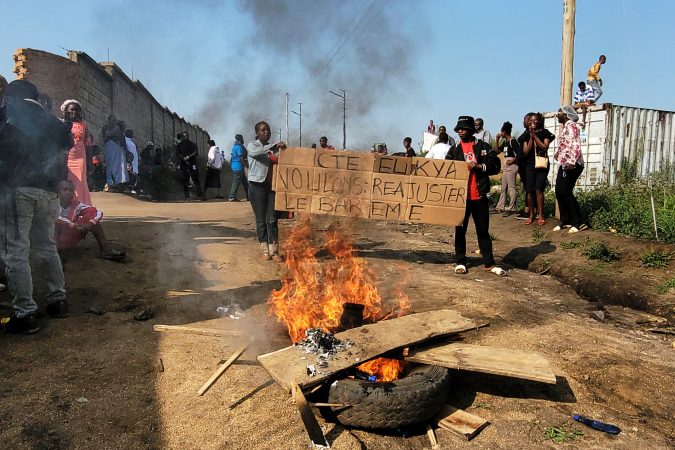
    The Elikya Ebola Treatment Center in Bunia, Ituri province, came to a standstill after doctors, nurses, and security staff stopped work.

    About a hundred health workers protested outside the treatment center on Saturday. They said the unpaid bonuses were undermining morale and disrupting patient care, and called on Congolese authorities to resolve the backpay so they could resume their work.

    “We need to be paid, because in the meantime the disease is spreading at the treatment center,” Martin Bolombi, one of the health workers on strike, said.

    “I’ve already had five people die who are still inside there. A solution must be found for us,” he added.

    In a statement issued Friday, staff said they had unanimously voted to strike until “concrete solutions” were found to resolve “two months of unpaid performance bonuses.”

    The strike comes a day after Congo’s Prime Minister Judith Suminwa came to Ituri, touring major treatment hubs in Rwampara and Mongbwalu, to assess the outbreak response. During her visit in Mongbwalu, she faced urgent demands from healthcare personnel protesting payment issues.

    Adelard Lufungula, operations manager for the Ebola response, said Saturday the payment issue is “being resolved,” with workers now paid via mobile money instead of cash, and that the backlog “should be cleared” in the coming days.

    Last week, health workers at Bunia General Hospital, the region’s largest medical center, had already gone on strike over unpaid salaries. Some told the Associated Press they had not received any payment since they started work at the onset of the outbreak.

    The World Health Organization says more than 100 healthcare workers have been infected since the beginning of the outbreak.

    The Central African nation has been battling the Ebola outbreak caused by the rare Bundibugyo virus since May 15. A total of 766 patients remain in isolation or in hospitals, while 540 have recovered so far, according to data from Congo’s Ministry of Health.

    The eastern province of Ituri accounts for nearly 90% of confirmed cases.

    The outbreak continues to spread faster than health officials can track despite an expanding response. A key challenge is that patient zero has yet to be identified in the outbreak, while displacement from armed conflict and illegal mining in the region have made it difficult to trace thousands who have come in contact with infected individuals.

    The response is also hampered by a funding gap, attacks on health centers, an ongoing conflict in eastern Congo, and mistrust among local communities.

    There is also a lack of approved vaccines or treatments for the Bundibugyo virus, unlike the more common Zaire virus, for which there is a vaccine and which was responsible for most of Congo’s past 16 outbreaks of the disease.

    Enrollment in a highly anticipated study of two possible Ebola treatments recently started in Ituri.

    WHO says the global risk of the outbreak spreading outside Central Africa is low, noting that Ebola spreads through direct contact with the bodily fluids of an infected person rather than through the air, making it much harder to spread than respiratory viruses.