Blog

  • With the World Cup’s afterglow still on him, Danley Jean Jacques resumes his key role for the Union

    With the World Cup’s afterglow still on him, Danley Jean Jacques resumes his key role for the Union

    When Danley Jean Jacques stepped back on to the field in a Union game on Wednesday, it had been just under a month since his first trip to a World Cup with Haiti ended.

    But for as much as happened after that — 52 of the tournament’s 104 games, plus Major League Soccer’s return to action — the afterglow hadn’t fully faded yet. Nor does it need to for the first active Union player to play in a World Cup.

    Jean Jacques will have that title forever. And at least until 2030, he’ll be the only active Union player to have played in a game on the world’s game’s biggest stage.

    “I take great pleasure from representing my country in a World Cup,” he said. “We know how much glory there is in a World Cup. It’s great to have played in one.”

    Jean Jacques also gets lifetime membership in one of the sports world’s most famous clubs: people who have played in a World Cup. Whether just one game, his three, or Lionel Messi’s record 34, all can say they’ve had the honor.

    The memories will last a long time, not just for him but the nation’s fans. After Haiti was unable to play a home World Cup qualifier because of domestic unrest, the diaspora showed up to Philadelphia, Boston, and Atlanta in big numbers: a sea of blue that came through loud and clear to fans worldwide.

    “It’s been a long time since we played in front of our home crowd,” Jean Jacques said of a drought that has endured for over five years. “During the World Cup, we had the good luck to play in front of our fans. It feels great to see Haitians cheering on their team, because I know they are thirsty for it. They need that, to see the team play in front of them. It really feels good.”

    They also got to see Les Grenadiers put in a fighting effort. Though the team lost all three games, there were two goals to savor in the finale against Morocco, including a contender for goal of the tournament from Wilson Isidor.

    And there was the chance to play against Brazil, not just a soccer superpower but a team that has a proud soccer history with Haiti specifically — with the cherry on top for Jean Jacques of it being in Philadelphia. Though Haiti lost the game 3-0, he got to tussle with stars including Vinícius Júnior, at one point leaving the Real Madrid winger down on the deck after a challenge.

    “I say thanks to the fans who came out to support me and my country,” Jean Jacques said. “It was a pleasure to play in a stadium that was full like that, and the fans were fully behind us. They give their all, and we give our all for them, too.”

    He lamented that “unfortunately, the result of the game didn’t go our way, but on the field, we made sure to give our absolute best, and I want to thank the fans for spurring us on.”

    He also offered a hope that “the best is yet to come,” for Haiti and himself. That might be a tough ask in a Union context this season, with the team facing a big deficit in the standings. But MLS is eternally forgiving, with nine teams from each conference making the playoffs.

    Danley Jean Jacques (right) left superst Vinícius Júnior on the ground after a collision during the Brazil-Haiti World Cup game in Philadelphia.David Maialetti / Staff Photographer

    “My teammates gave me a warm welcome back,” Jean Jacques said. “Honestly, it feels good to be back here and to start back up with the club again. … My goal for the rest of the season is to stay focused, give the maximum for the team, help the team win, and try to climb the standings too.”

    Saturday’s 1-0 win over the Seattle Sounders marked just the halfway point of the regular season in terms of games played. It also marked a second straight win for the Union for the first time this year, raising their record to 3-10-4 (13 points).

    Jean Jacques was quietly effective, as he often is. In 80 minutes, he registered two tackles, two clearances, three defensive recoveries, four duels won from eight contested, and 28-of-32 passing including five passes into the attacking third.

    Three days earlier, he was more active in the 3-1 win over Red Bull New York: 12 defensive recoveries, five interceptions, two tackles, four duels won from six contested, and 25-of-32 passing including nine passes into the final third.

    “When he’s at his best, to me he’s one of the best midfielders in the league,” interim manager Ryan Richter said Saturday night. “We’re getting, from what I see in the first two games [of his tenure], a really good version of him.”

    He asked Jean Jacques to “keep working the way you are, keep being a positive influence with your teammates. If this team’s going to be good, Danley has to be one of the best players, and he has been in these first two games.”

    As a little extra psychological boost, the Union now aren’t the worst team in MLS anymore. Atlanta United, coincidentally the team that will come to Chester on Saturday (7:30 p.m.), took over that mantle with a 4-1 blowout loss at New England.

    Jean Jacques promised that the team is “going to do everything we can to make the playoffs,” and said spirits are high despite the scale of the task.

    “It’s good for the team, good for the mindset and morale,” he said. “It had been a long time since we won, but now we’ve got that winning feeling back. So we need to keep that going for the rest of the season.”

  • Wayne’s new sourdough bakery got its start in a Main Line living room

    Wayne’s new sourdough bakery got its start in a Main Line living room

    In early 2025, John Goncher knew it was time to get out of his living room.

    That’s where the ex-CFO and Rosemont resident was singlehandedly baking some 700 loaves a week for his sourdough startup, Wild Yeast Bakehouse. Between mixing and proofing dough, packing all his product, working weekend markets, and dropping bread at a couple hundred subscribers’ doorsteps, Goncher was running on fumes. Even his smartwatch knew it.

    “My little watch told me, ‘You’re averaging more sleep this year.’ I went from three hours and 10 minutes to three hours and 20 minutes over the year,” Goncher said over a recent interview at Wild Yeast’s newly opened brick-and-mortar bakery in Wayne’s Eagle Village shopping center.

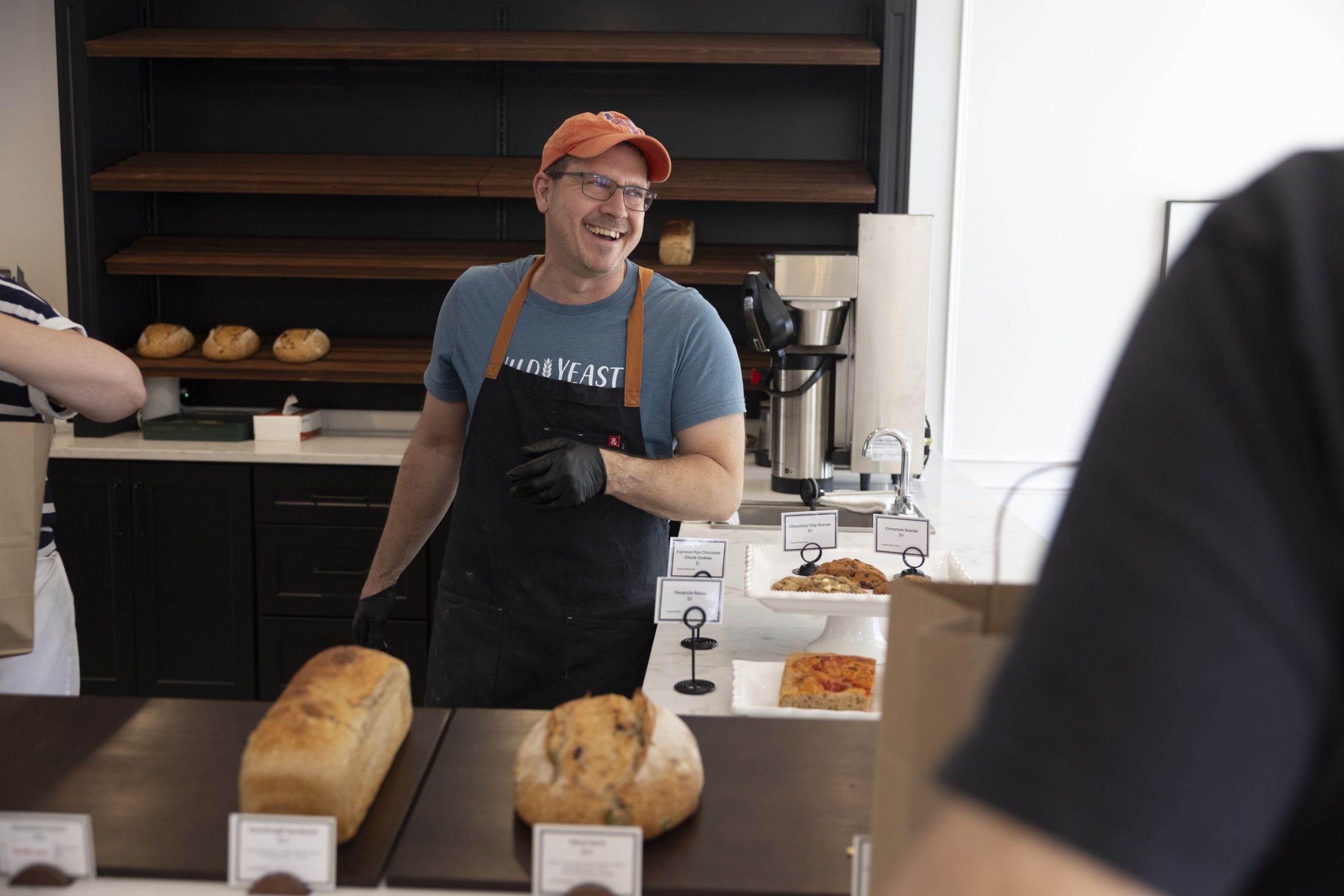
    Owner John Goncher, chatting with D’Arcy Lyness and her husband, Larry Richard, of Wayne, Pa., who discovered the Wild Yeast Bakehouse yesterday and came in to buy some bread on Wednesday, July 22, 2026.Tyger Williams / Staff Photographer

    Sandwiched between two well-established Main Line restaurants (Autograph Brasserie and The Silverspoon), Wild Yeast officially opened July 18. It joins Wayne’s burgeoning food scene: Notable newcomers include the splashy Maison Lotus, Main Line darling Johnny’s Pizza, and boutique wine bar Nature’s Vin.

    The bakery is open Wednesday through Sunday, selling a variety of sourdough loaves, from kid-friendly cinnamon-raisin and sandwich bread to olive herb and oat porridge boules. You can also score Gryphon coffee, whole-grain Castle Valley Mill flour, and Wild Yeast’s own sourdough focaccia, cookies, and scones for now. (More discard-fueled pastry projects are in development.)

    With crown molding picture boxes, a cozy-chic sofa, and a sunny window seat, the bakery has a living room vibe — perhaps not surprising given Goncher once dreamed of baking out of his living room forever.

    The inside of Wild Yeast Bakehouse in Wayne, Pa., on Wednesday, July 22, 2026.Tyger Williams / Staff Photographer

    It was in early 2025 that Goncher first started looking at spaces to move his cottage business, which he started in 2021 after leaving a career in finance. Thanks to a combination of farmers market traffic and media attention, his business had ballooned. He was baking bread for half a dozen wholesale clients and nearly 250 monthly subscribers, plus a sell-out crowd at the Media farmers market.

    Keeping up with that demand meant maintaining a brutal schedule seven days a week. Goncher would roll into his living room shortly after 2 a.m. and bake until 6 a.m. The meat of the day consisted of readying and making deliveries (or working the market), followed by afternoon and evening dough prep. Most nights, he went to bed at 11 p.m. Meanwhile, he was turning away new business.

    “I said to my wife, ‘It either has to contract or it has to really grow,’” Goncher remembered. “We have to move out and do something with it.”

    D’Arcy Lyness and her husband, Larry Richard, of Wayne, Pa., picking out some bread at Wild Yeast Bakehouse on Wednesday, July 22, 2026.Tyger Williams / Staff Photographer

    Goncher initially considered spaces in Bryn Mawr — “I was looking close to home, because [I had a] 10-second commute, I figured under 10 minutes would be ideal” — but shifted his sights elsewhere when he learned Malvern’s Buttery would be opening a new location there. He looked at leases in Ardmore as well before landing on the bustling Eagle Village complex, which numbers home and clothing boutiques, a florist, a barre studio, and Main Line Mahjong among its varied tenants.

    “This place [gets] constant traffic,” Goncher said.

    Goncher inked the lease on the stone-faced storefront at 503 Lancaster Ave. last November. He spent six months renovating it, working with the same architect and builders who renovated his own home. The 1,500-square-foot space features a retail counter and small seating area, and is subdivided by large picture windows that overlook a roomy, well-lit kitchen destined to be used for evening baking classes.

    The outside of Wild Yeast Bakehouse in Wayne, Pa., on Wednesday, July 22, 2026.Tyger Williams / Staff Photographer

    Offering classes is one aspect of growth the brick-and-mortar space allows for, Goncher said. But it will also enable him to take on more subscribers and wholesale accounts in the near future, expand Wild Yeast’s offerings, get more involved in the Main Line community — and, hopefully, reclaim a whiff of work-life balance.

    Wild Yeast now has six employees, including an operations manager, a delivery driver, and three other bakers besides Goncher.

    Fresh oat porridge at Wild Yeast Bakehouse in Wayne, Pa., on Wednesday, July 22, 2026.Tyger Williams / Staff Photographer

    The additional hands have already helped Goncher get a little more sleep — “my goal is [to work] 5 [a.m.] to 6 [p.m.], I’m 3 to 9:30 as of yesterday” — not to mention most of his living room back. He’s looking forward to what a new chapter holds for Wild Yeast.

    “I was ready to have this stop being about me,” Goncher said. “I want it to to be something that starts to have a life of its own.”

    Wild Yeast Bakehouse. Hours: 9 a.m. to 3 p.m. Wednesday through Sunday; 503 W. Lancaster Ave., Suite 1105, Wayne; 610-672-6884; wildyeastbakehouse.com

  • 👑 Welcome, King James | Sports Daily Newsletter

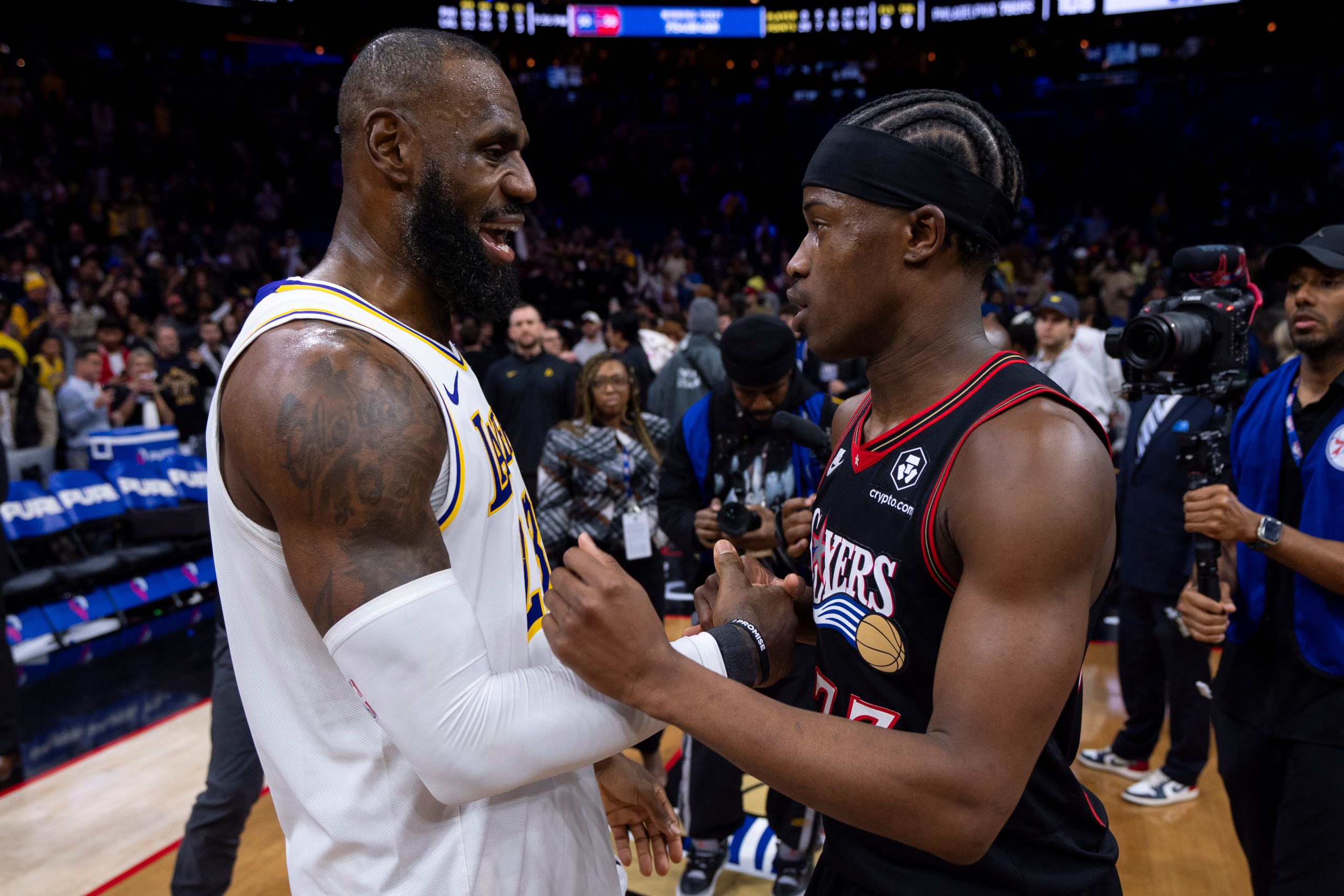
    Are you still in disbelief? Have you asked yourself several times this weekend, “Is LeBron James really a 76er?”

    Yup, it wasn’t a dream. On Friday, the King announced that he was coming to Philadelphia on a two-year, $8 million contract — which he officially signed on Sunday — for his final stop in the NBA. What a way to enter the weekend.

    James is coming here with the intention of winning a championship, and viewed the lineup of Joel Embiid, Tyrese Maxey, VJ Edgecombe, and newly-acquired Jaylen Brown as his best chances of achieving that.

    But of course, there were other factors in his decision, including money, family, and legacy. But why the Sixers instead of the Golden State Warriors, Cleveland Cavaliers, or Miami Heat? The Inquirer’s DeAntae Prince gives us four reasons.

    As much as this was James’ free-will decision to come here, we also have to give Mike Gansey his flowers. It’s been a heck of an offseason for the new president of basketball operations.

    Because of him, the Sixers are now viewed as legitimate championship contenders.

    Friday’s news had the whole city raving. From Gov. Josh Shapiro to fans playing basketball at Schuylkill River Park, the excitement over James’ decision was unreal.

    — Isabella DiAmore, @phillysport, sports.daily@inquirer.com.

    If someone forwarded you this email, sign up for free here.

    ❓What was your reaction to hearing LeBron James was signing with the Sixers? Email us back for a chance to be featured in the newsletter.

    Never too late

    Brian Keller delivers the first pitch of his major league career in the third inning vs. the New York Yankees on Saturday at Citizens Bank Park.Elizabeth Robertson / Staff Photographer

    Brian Keller didn’t know if he’d ever get to wear a baseball jersey again. After 10 years, two countries, and multiple surgeries — one of which he paid for out of pocket — Keller’s baseball future looked dim. But his decade-long journey led the 32-year-old to making his big league debut on Saturday.

    And the Phillies kept Keller on the roster as they still try to figure out what to do with the fifth-starter spot. Maybe they’ll turn back to Andrew Painter, who had two solid starts this week for triple-A Lehigh Valley.

    Meanwhile in South Philly, the Phillies’ snapped a four-game losing streak thanks to five RBIs from Bryson Stott and four from Alec Bohm. Scott Lauber provides a full recap.

    What we’re…

    👕 Seeing: Unauthorized LeBron James merch was up for grabs outside Citizens Bank Park and down the Shore this weekend.

    🎧 Listening: To the Game Over podcast hosted by James’ agent and Klutch Sports CEO Rich Paul, where he explained why James picked the Sixers.

    🏀 Remembering: The first time James visited Philly was in 2002, then a national high school superstar playing at the Palestra.

    🤔 Wondering: Fans gathered at Marsha’s to watch the WNBA All-Star Game. Will they become Philly fans when the team tips off here in 2030?

    Training camp guide

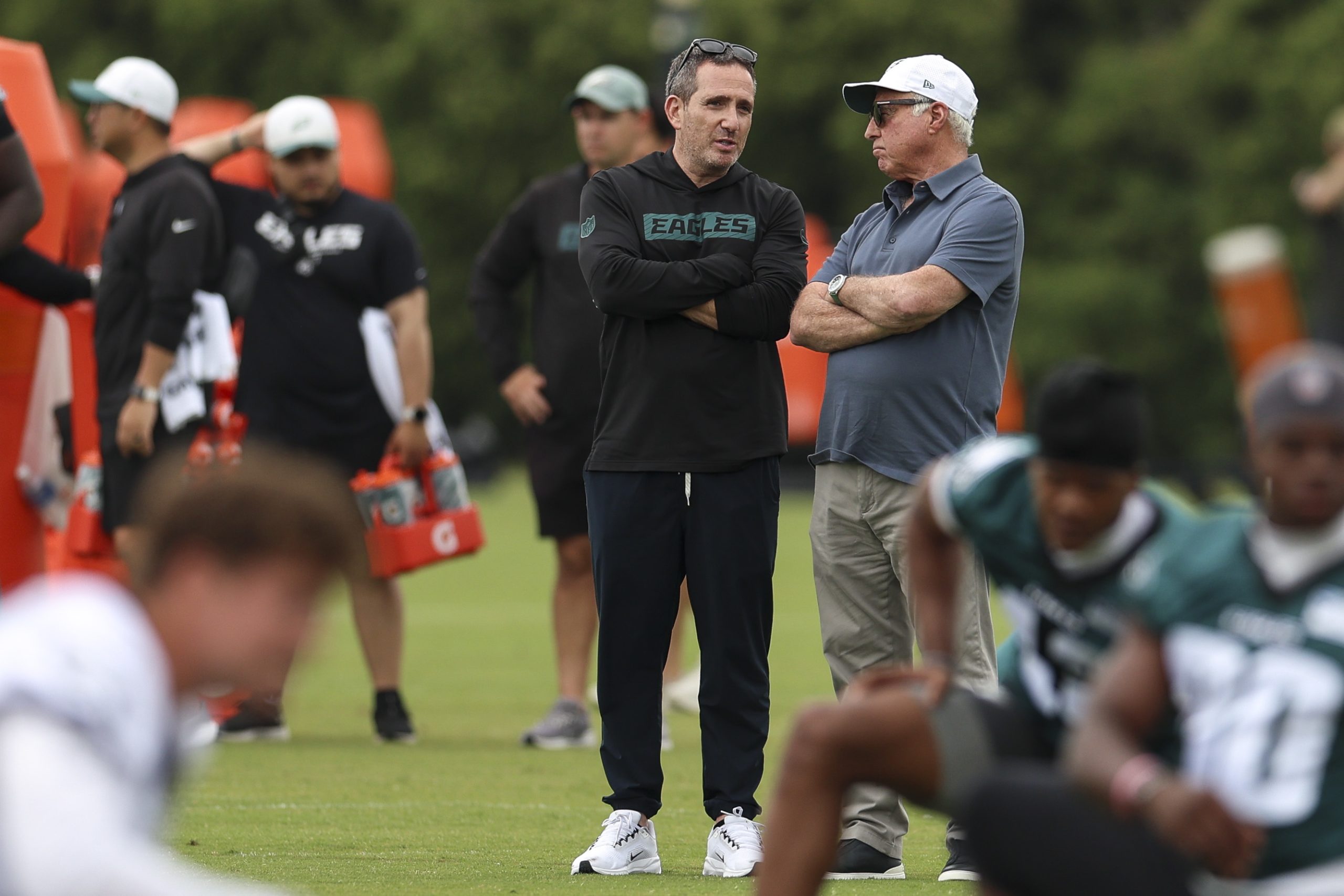
    Eagles general manager Howie Roseman (left) talks with owner Jeffrey Lurie during mandatory minicamp in June.Monica Herndon / Staff Photographer

    It was a significant offseason for the Eagles. First came Kevin Patullo’s firing. Now, 34-year-old Sean Mannion is Patullo’s replacement. There were also other positional coaching changes and notable player departures.

    As we get ready for the first day of training camp on Tuesday, here’s a complete recap of all that’s happened since the Eagles lost their wild-card playoff game to the 49ers in January.

    An unfulfilled promise

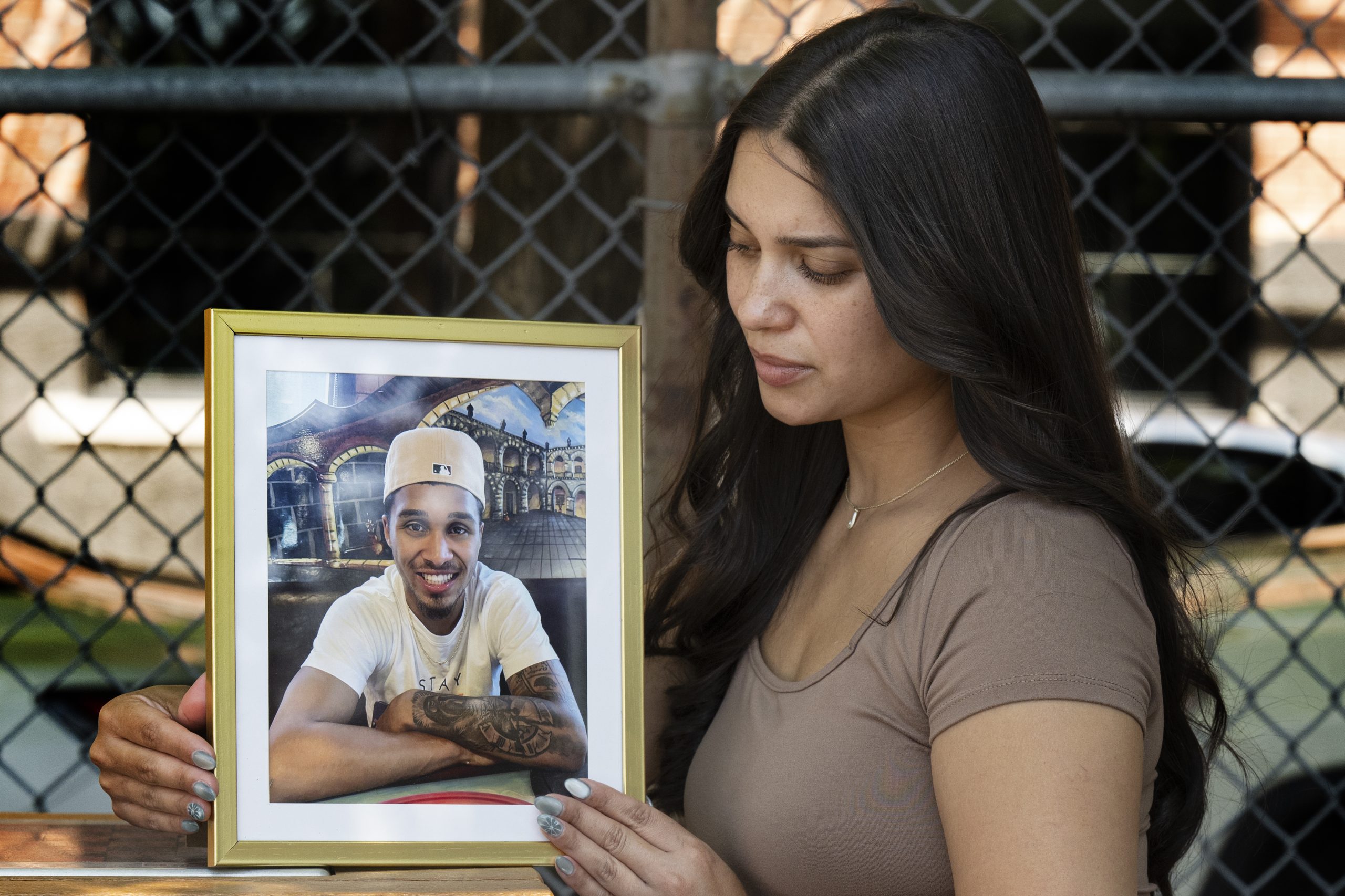
    Emelissa Gonzalez holds a portrait of her late son, Jadin Aviles, at Towey Playground near her home.Jose F. Moreno / Staff Photographer

    Jadin Aviles didn’t play basketball in front of a packed Palestra, but he did become a “street legend” in North Philadelphia. The community is now trying to keep his caring spirit alive.

    On May 12, Aviles died after a pickup truck hit him while he was riding his moped in a bike lane on Aramingo Avenue. He had just turned 20. It is a devastating loss that friends and family have struggled to deal with.

    As North Philadelphia celebrates his past, and mourns his unfulfilled promise, they continue to point to Aviles as proof that a life built on kindness and respect can be a life well-lived, no matter how it ends.

    Looking to reset

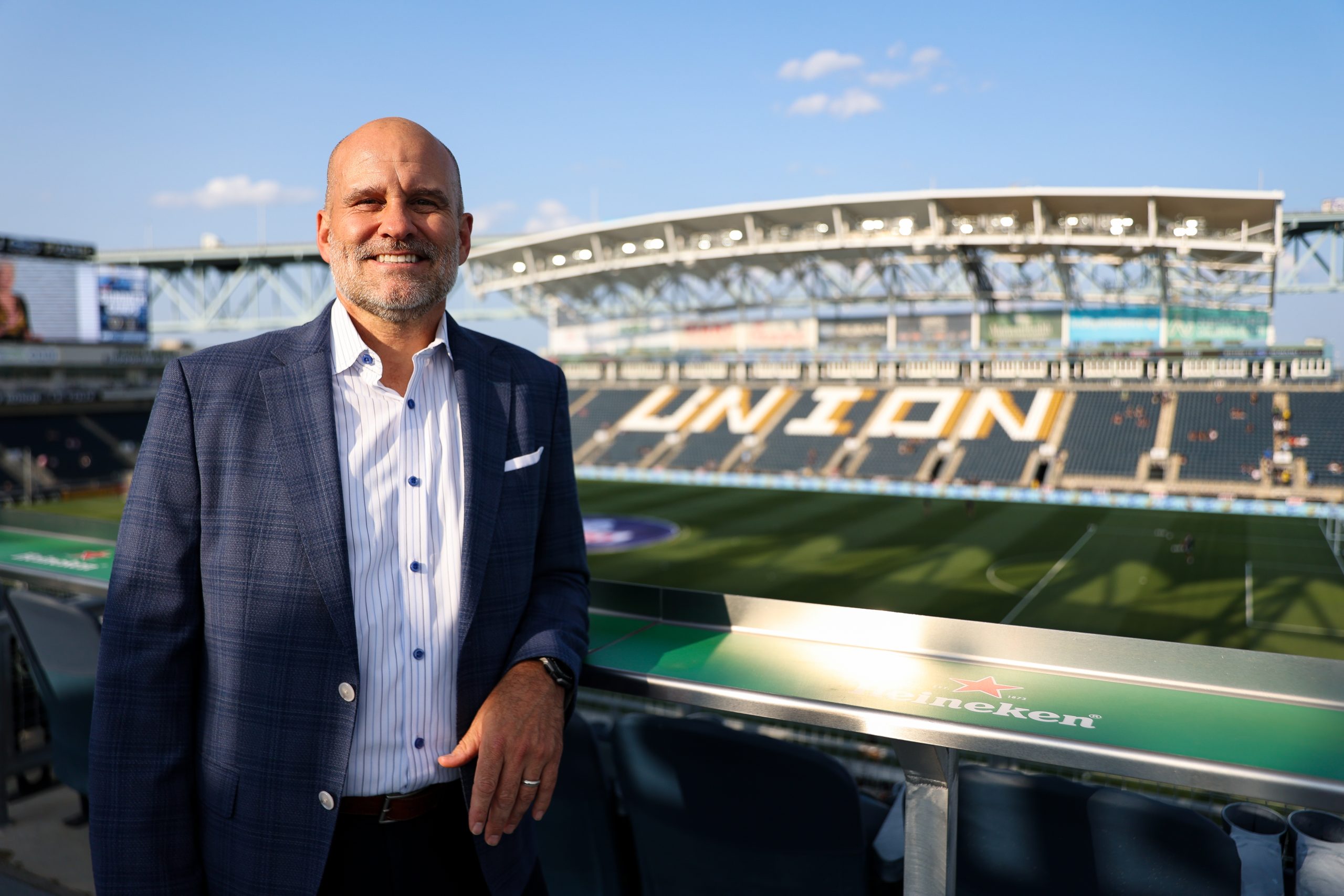
    Tim McDermott has been through the highs and lows of the Union since coming aboard as its chief business officer in 2016 and making the jump as team president in 2019.Isaiah Vazquez / For The Inquirer

    The Union limped into MLS’ World Cup break with issues both on and off the field, having won just one game and mired in the drama of its head coach losing a locker room and its sporting director undergoing league-mandated sensitivity training.

    Now it’s time for a reset. Union president Tim McDermott spoke to The Inquirer about what they plan to do with it.

    And with his World Cup afterglow, Danley Jean Jacques has resumed his key role and was quietly effective in the Union’s back-to-back wins over New York and Seattle.

    David Murphy’s take

    Everybody assumed LeBron James wouldn’t pick the Sixers because they were the Sixers.Chris Szagola

    In hindsight, James actions seem perfectly reasonable. This wasn’t attention-seeking behavior. It was the private torment of a man who was about to choose to move from Los Angeles to Philadelphia. But it is deeper than that.

    The significance of James’ signing with the Sixers is that he had every reason not to, writes columnist David Murphy.

    We compiled today’s newsletter using reporting from Gina Mizell, DeAntae Prince, David Murphy, Matt Breen, Scott Lauber, Jeff Neiburg, Alex Coffey, Conor Smith, Natie File, Nick Vadala, Jonathan Tannenwald, Maggie Prosser, and Kerith Gabriel.

    By submitting your written, visual, and/or audio contributions, you agree to The Inquirer’s Terms of Use, including the grant of rights in Section 10.

    Thanks for getting your morning started with me. We’ll be back in your inbox on Tuesday. — Bella

  • How to keep your home safe without an expensive security system | Expert opinion

    How to keep your home safe without an expensive security system | Expert opinion

    Do you have good dead bolts on all your doors? Strong latches on your windows? Are you diligent about keeping doors and windows locked? Have a barky dog?

    If you can answer “yes” to the first three questions, you’re way ahead when it comes to home security (and get extra credit for the dog). Despite what thriller movies might suggest, most burglars enter homes by simply opening unlocked doors or windows — or pushing and kicking locked ones until they open.

    Very few pick locks or circumvent alarm systems. Intruders prefer empty homes, visual obscurity, silence, easy entry, and quick exits. So your primary objective when planning home security is to beef up your locks and latches and maintain good security habits.

    You can also DIY your own system by using home security components controlled by a smartphone app or similar interface. Dozens of companies now sell security system components that can easily connect to smart home hubs.

    All this competition and choice means lower prices. You don’t have to pay a home-security service $750 to $3,000 for a professionally installed system plus $1,500 or more each year for monitoring. Instead, for $400 or less, you can assemble a basic DIY system and then pay as little as $200 per year to have it monitored — or nothing at all if you monitor it yourself.

    Keep in mind that many people get annoyed by the alerts that self-monitoring requires and end up turning them off or not replacing batteries if they run out. If this will be you, don’t waste your money on the tech.

    Here are some simple steps to secure your home.

    1. Secure the perimeter. Make your doors and windows as difficult to penetrate as possible. Although intruders prefer unlocked doors and windows, many can quickly and almost silently pry open locked ones. Some break a pane of glass so they can reach in and unlock the window or door.

    Double-hung windows, for example, can be secured by screwing together the two frames.

    Solid-wood doors are much sturdier than hollow ones. Many homeowners in high-crime neighborhoods install metal bar doors.

    2. Get a security audit. Most police departments provide free advice and will send someone to evaluate your home for weaknesses.

    3. Lose lousy locks. Key-in-the knob locks are inadequate. Install good deadbolt locks on all your exterior doors. The locks on sliding glass doors are notoriously flimsy — many doors can be lifted right off their tracks. Numerous how-to videos online can show you how to make yours more secure, or you can pay a locksmith to install reinforcements.

    4. Keep valuables out of sight. Place articles of value out of the view of your front door or front windows. Stash cash and expensive jewelry in unlikely places — for example, in a large envelope or among many paper files. Select containers no one will accidentally discard.

    5. Rent a safe-deposit box. A box may be inconvenient, but it provides a level of security against theft and fire that cannot be duplicated at home for less than several thousand dollars.

    6. Keep your landscaping in check. Doors and windows hidden by garages, bushes, fences, and trees are attractive targets for intruders who prefer to invade unseen.

    7. Light it up. Many burglars will flee if they activate an outdoor light connected to a motion detector.

    8. Keep track of your keys. An AirTag key chain is a good idea if you’re forgetful.

    In addition to improving your home’s physical security:

    • Evaluate your insurance. Consider adding replacement-cost coverage to your homeowners insurance policy for your personal property. If burglars clean out your home, this coverage could save you thousands of dollars. If you own expensive jewelry and other similar items, consider taking out additional policies.
    • Get to know your neighbors. Neighborhood watch groups are one of the most effective ways to protect all the homes in your neighborhood. At the very least, get to know your neighbors and share information on your not-at-home schedules and vacation plans, so everyone can look out for suspicious activities.
    • Keep up appearances. Because most burglars strike when no one is home, make sure your house always appears occupied. Leaving on lights and a TV helps. If you go on vacation, work with neighbors or friends to prevent mail from piling up and to keep your yard maintained.

    Still want a professionally installed system?

    If you decide to go pro, you’ll want a company that ensures your system is effective, convenient, and unobtrusive; minimizes false alarms; and controls costs.

    Have several companies come to your home to propose systems and quote prices. When Checkbook’s undercover shoppers collected proposals from companies for a specific alarm system and three years of monitoring, they were quoted prices ranging from $2,200 to $4,200.

    Read the contract before you sign. Some companies make it very difficult for customers to switch monitoring services by refusing to provide programming codes or to reset systems to their default modes. Choose a company willing to contractually agree to provide you with programming codes.

    Discuss payment terms. The more you can pay after the job is complete, the better.

    Delaware Valley Consumers’ Checkbook magazine and Checkbook.org is a nonprofit organization with a mission to help consumers get the best service and lowest prices. It is supported by consumers and takes no money from the service providers it evaluates. Until Sept. 5, readers can access Checkbook’s home-security ratings and advice free at Checkbook.org/Inquirer/home-security.

  • A new streaming documentary tells the story of America’s founding through the eyes of Black Philadelphians

    A new streaming documentary tells the story of America’s founding through the eyes of Black Philadelphians

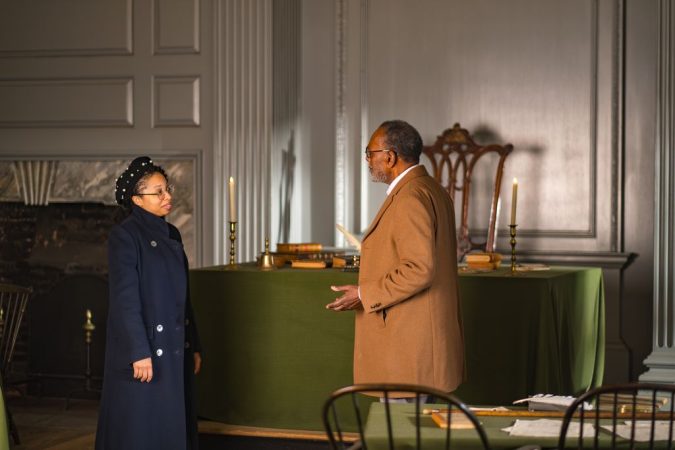
    It’s a story about America’s founding that doesn’t begin in a Philadelphia state house — but on a rancid English slave ship sailing for Pennsylvania shores. It’s a story about the bustling slave auctions that once occupied the cobblestones outside the Old London Coffee House, while patriots plotted insurrection inside the Old City shop. A story about countless Black Philadelphians who sacrificed their own lives to a yellow fever epidemic — nursing dying victims and hauling the dead — to prove their worth to white Philadelphia residents.

    Becoming American: Philadelphia’s Story, a new documentary now streaming on PBS.org, tells the story of Philadelphia and the creation of America through the lens and experiences of Black Philadelphians.

    “At its core, this film is about people,” said executive producer Oliver St. Clair Franklin. “Those whose stories have too often gone untold — and the city that brought them together.”

    While telling the story of America’s founding in its 250th year, the film stays firmly rooted in colonial Philadelphia neighborhoods, and the lives of lesser-known activists and artisans who shaped the republic — and the age.

    People like Anthony Benezet, a French-born abolitionist who formed the African Free School out of his Chestnut Street home in 1770. Cyrus Bustill, a Revolutionary-era brewer and baker, who helped found the Philadelphia Free African Society. And the soaring lives of Richard Allen and Absalom Jones, pioneering Philadelphia abolitionists and rights leaders, both born into slavery.

    “I wanted to tell the story that would connect African Americans to the founding era,” said Franklin, 80, scholar and former chief arts and cultural official for the city of Philadelphia. “In the process of doing this film, I realized that it will connect a lot of people to the founding because it’s a story of resistance and resilience.”

    Franklin, who grew up in Baltimore, attended Lincoln University before earning a bachelor’s of philosophy in economics from Balliol College at University of Oxford in 1970. For years, he served as Philly’s chief British delegate.

    Produced jointly with Bear House Media, a UK-based television production company, the film explores the nation’s origins through the racially diverse melting pot of colonial Philadelphia — its first makeshift capital and meeting points of cultures, ideas, and identities. And home to a vibrant free Black community fighting on the front lines for America’s freedom — and their own.

    “I couldn’t have done this film 50 years ago,” said Franklin, crediting recent decades of research into the experiences of Revolutionary-Era Black Americans. “It makes it possible to tell a really coherent story — a human story — that touches everybody.”

    In his film, bursting with Philly voices like historians Kelli Racine Barnes, a Mellon humanities postdoctoral fellow, and Emma Lapsansky-Werner, a visiting professor of history at Haverford College, those human stories are often about ordinary Philadelphians. Free, enslaved, Native, and immigrant people all doing extraordinary things for freedom.

    “We focus on the lesser-known stories of individuals, whose dreams and challenges we explore at the ground level,” he said.

  • Here’s what the ‘Star Wars’ experience coming to the Franklin Institute will look like

    Here’s what the ‘Star Wars’ experience coming to the Franklin Institute will look like

    A long, long time ago (Friday) in a galaxy far, far away (California), representatives of the Franklin Institute and Lucasfilm released details about the science museum’s upcoming world premiere exhibit, Star Wars: The Experience, during a panel at San Diego Comic-Con.

    From getting frozen in carbonite next to Han Solo to walking through Queen Amidala’s throne room, the 18,000-square-foot exhibition will feature a variety of interactive elements and displays across several interconnected galleries, according to a news release.

    The immersive fan experience, which debuts in February, is timed to coincide with the 50th anniversary of the first film released in the sci-fi saga, Star Wars Episode IV: A New Hope.

    During the “Making of Star Wars: The Experience” panel at Comic-Con — which was moderated by Ashley Eckstein, who voices Ahsoka Tano in Star Wars’ animated series — official renderings and details about the exhibit were released for the first time.

    An artist’s rendering of what “Queen Amidala’s Throne Room” will look like at the upcoming exhibit, “Star Wars: The Experience,” at the Franklin Institute in 2027.Courtesy of MDSX

    According to the news release, displays and interactive features of Star Wars: The Experience will include:

    • “Queen Amidala’s Throne Room”: In an exhibit dedicated to costume design in the Star Wars galaxy, guests will walk through a room of “suspended fabric and projection” resembling the queen’s throne room while surrounded by Star Wars costumes, costume art, and stories from the franchise’s costume designers.
    • “Wireframe Worlds”: In this gallery, fans will get a look at the blueprint and sketch designs behind some of Star Wars most famous sets and vehicles. The display will be anchored by a wireframe TIE fighter and surrounded by diagrams of Star Wars spaceships.
    An artist’s rendering of the “Wireframe Worlds” gallery at “Star Wars: The Experience,” which is coming to the Franklin Institute in February 2027.Courtesy of MDSX
    • “Carbon Freeze Capture”: Billed as a “dramatic, photo-ready moment,” this display will feature a full-scale Han Solo encased in carbonite flanked by two stations where visitors can undergo their own “carbon freeze sequence.”
    • “50 Years of Star Wars”: More than 90 rare and vintage Star Wars action figures and prototypes from Kenner, Hasbro, and other manufacturers will be featured in a gallery about premium collectibles.

    The Franklin Institute previously announced that a variety of rare artifacts used in the films — like Darth Vader’s costume and Darth Maul’s lightsaber — will be on display, along with various robots and aliens from the universe, like R2-D2 and Grogu.

    Guests will also be equipped with RFID technology to interact with some of the displays and strengthen their alliance with the force, “culminating in a personalized finale moment,” the release said.

    A promotional image for “Star Wars: The Experience,” which premieres February 2027 at the Franklin Institute.Courtesy of MDSX

    Lynwen Brennan, copresident of Lucasfilm, called the exhibit a “testament to five decades of innovative storytelling.”

    “As we mark the incredible milestone of the 50th anniversary of Star Wars, we wanted to develop something truly extraordinary — a space that honors both the visionary pioneers who built this galaxy, and the remarkable fan community at its heart,” Brennan said in the release.

    Tickets for the experience, which runs from February to September 2027, go on sale in November. Following its run at the Franklin Institute, the exhibit will embark on a five-year tour of North America.

  • Meet Jenkintown’s new superintendent, whose background ranges from Sixers reporter to Russian translator

    Meet Jenkintown’s new superintendent, whose background ranges from Sixers reporter to Russian translator

    After the sudden departure of Jenkintown’s longtime superintendent in April, the school district’s new CEO started work this month, and she already has plans.

    “I’m really excited once the year starts to really dive in and go into classrooms,” Brea D’Angelo said last week, “and get the narrative out to the community of the incredible things that are happening. … I’m really looking forward to being the communicator of those types of things.”

    D’Angelo used to be a professional communicator: She went to Rider University for TV and radio and then took a reporting job covering the Sixers at WBCB radio in Levittown.

    “I had the opportunity to go into the locker room and interview players,” D’Angelo said. “What I started realizing was that I wasn’t making a difference.”

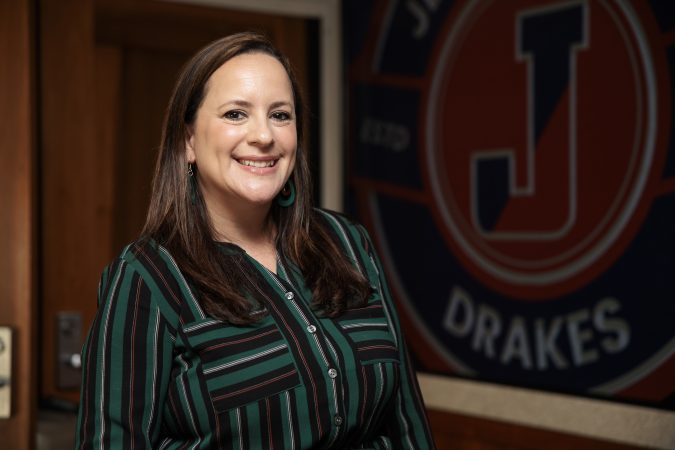
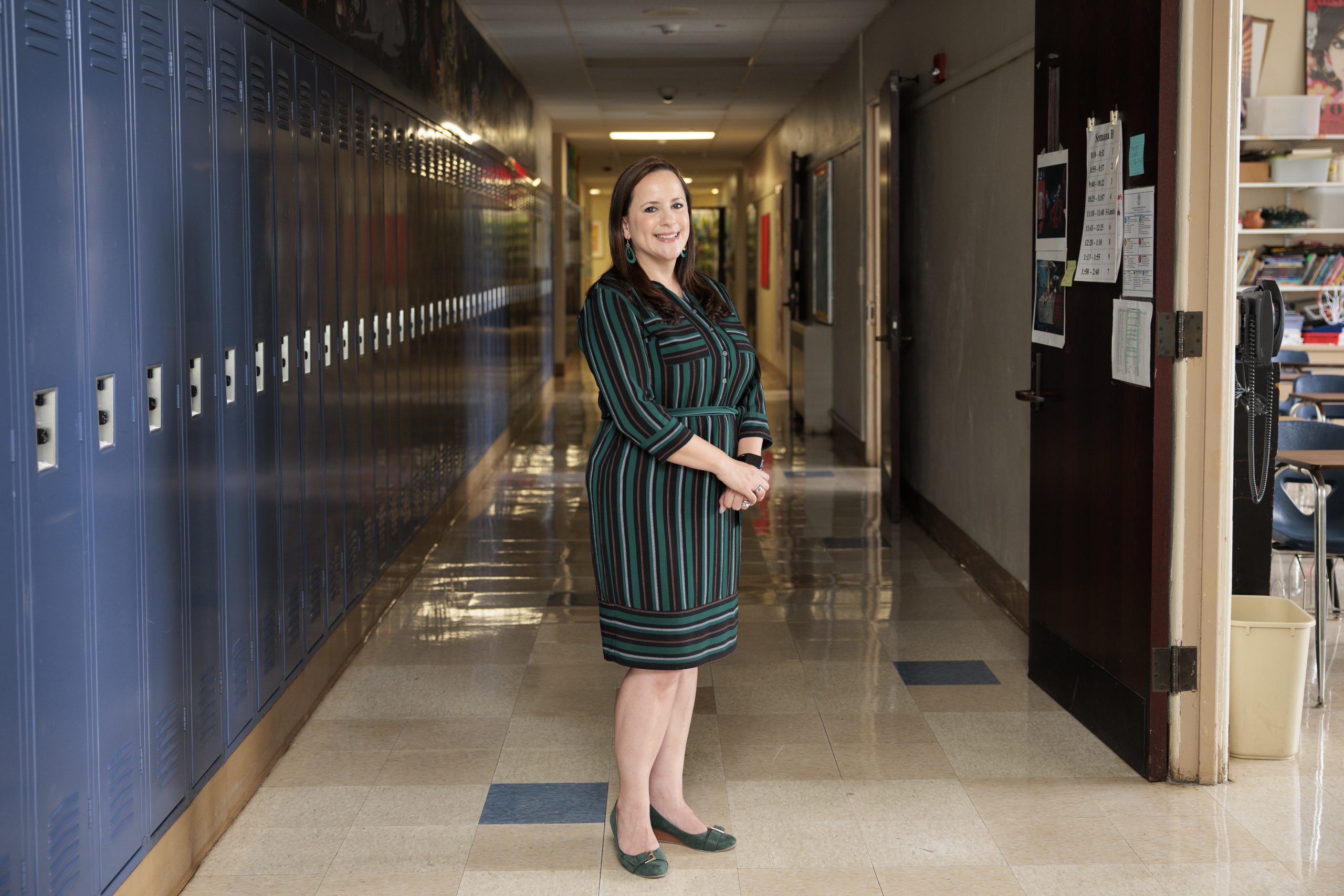
    New superintendent Brea D’Angelo poses for a portrait at Jenkintown High School on Wednesday, July 22, 2026, in Jenkintown. D’Angelo comes to the Jenkintown School District from the Hatboro-Horsham School District.Monica Herndon / Staff Photographer

    From Sixers to secondary education

    She switched from communications to education, starting as a special education assistant in the Lower Moreland Township School District and spending seven years as a secondary school teacher there before working her way up as an administrator in the Hatboro-Horsham School District, where she spent more than 12 years and still lives with her husband and teenage daughter.

    D’Angelo chose to teach English — a subject she came to love as a reluctant reader who learned the joy of books from a teacher when she was about 15.

    “[She] really took an interest and was like, ‘You just haven’t found the right thing to read yet,’” D’Angelo said, and helped her find early favorites, such as Of Mice and Men. “You want teachers to be that for someone.”

    Her plans as superintendent include a return to publishing, of sorts.

    “I’m going to do a newsletter that comes out monthly, from me,” D’Angelo said. “I just want our story to get out there and to show what an incredible place we really are.”

    Jenkintown finds comms pro to replace superintendent

    Jenkintown’s last superintendent, Jill Takacs, had announced her retirement for Aug. 31 this year before leaving early, in April, for an administrator job in New Jersey.

    Takacs’ departure came after an email from a retiring principal leaked to the public last fall that outlined concerns with Takacs’ management style, including a ”lack of transparency,” outgoing Jenkintown Elementary principal Christopher Jahnke wrote. Takacs was on leave shortly afterward.

    But some locals said they had already had concerns about Takacs’ communication with parents in Montgomery County’s smallest school district — particularly amid the universally quick-shifting plans and procedures of the COVID-19 era.

    Jenkintown’s school board appears to have taken that note, highlighting D’Angelo’s narrative chops as a reason for hiring her.

    “The board decided to hire Dr. D’Angelo due to her combination of leadership, team building, and communication skills,” board president Carolyn Riley said. “She struck the right balance between expertise and a ‘friendly but firm’ quality.”

    Riley also highlighted the new superintendent’s experience with special education and facilities management — critical for the steward of Jenkintown’s 103-year-old high school building.

    But the district’s new chief storyteller also knows what communication barriers feel like: D’Angelo grew up hearing both English and Russian, but had to pick up much more Russian as a child to interact with her Ukrainian grandmother.

    Those skills came in handy when Ukrainian refugees arrived in Hatboro-Horsham, and D’Angelo was enlisted to help families get settled.

    “I fell into it because I was pretty much the only Russian speaker on the staff,” D’Angelo said. ”I can’t even imagine fleeing my home, going to a place not speaking the language. … That was really something that I pride myself in, being able to connect with these families and support them.”

    Public relations is often a struggle for public schools, which must balance legally required disclosure with legally required secrecy, especially for personal details about individual students and staff — details like the circumstances surrounding Takacs’ departure.

    D’Angelo, who earned her Ph.D. from Gwynedd Mercy University, hopes that being fully transparent from the beginning with information she is allowed to share will help residents trust her on topics she cannot say much about.

    “I’m OK with being vulnerable in certain situations,” D’Angelo said. “When you build that strength with community members, with staff, with families — there’s a bit more understanding when I go silent on certain things, knowing it’s not because I don’t want to say it; it’s because I can’t.”

    Perhaps sports will be one of those topics: A diehard Philadelphia football and basketball fan (“I bleed green for the Eagles,” she said), D’Angelo already attended a Color Day this year, but she refuses to say which team is better.

    “I will be rooting for Blue and Red all the time, or I’ll be purple,” the new superintendent said. “Yeah, it’s gonna be one of those.”

    This suburban content is produced with support from the Leslie Miller and Richard Worley Foundation and The Lenfest Institute for Journalism. Editorial content is created independently of the project donors. Gifts to support The Inquirer’s high-impact journalism can be made at inquirer.com/donate. A list of Lenfest Institute donors can be found at lenfestinstitute.org/supporters.

  • Trump wants to give U.S.-Iran talks ‘some space’ as he weighs escalation, aide says

    Trump wants to give U.S.-Iran talks ‘some space’ as he weighs escalation, aide says

    President Donald Trump wants to give ongoing talks with Iran “some space” as he considers whether to escalate attacks, the U.S. ambassador to the United Nations said Sunday.

    Mike Waltz’s comments came as the U.S. military paused its bombing raids on Iran over the weekend after 13 consecutive days of heavy strikes and warnings by Trump of an even more aggressive bombing campaign.

    On Friday, Trump emphasized ongoing talks between the United States and Iran in an Oval Office appearance. The day prior, he had told Axios that he is “considering a massive attack. Bigger than ever before. I am close to making a decision.”

    When asked Sunday on NBC’s “Meet the Press” whether the U.S. has decided against ramping up attacks on Iran, Waltz said: “I wouldn’t go that far at all.” He said Trump is keeping “all options on the table.”

    “What the president is doing right now, as we’ve seen all along, is giving some talks some space,” Waltz said, adding that discussions are ongoing “on every level,” both technical talks and between governments.

    Waltz pushed back on reports that the decision to back away from escalation was driven in part by concerns within the Trump administration about depleted U.S. munitions.

    “The U.S. military, and I’ve verified this every which way, has everything that it needs to conduct this campaign” effectively, he said.

    Though the Pentagon has dismissed concerns about U.S. stockpiles, Pentagon officials have expressed far greater anxiety in private, according to current and former officials, arguing that the military desperately needs more money to replenish munitions, including to deter China and Russia.

    Waltz said one diplomatic challenge in negotiations is that those on the Iranian side are “divided.” He said that “there’s internal fighting,” with some seeking guidance from the supreme leader and others who “want to move in a different direction.”

    Still, the ambassador warned that Iran should “take the president very seriously. … The U.S. military is locked and loaded. In fact, more assets have gone into the region.”

    Despite the pause in U.S. strikes, the conflict with Iran has widened amid new turmoil in the Red Sea. Yemen’s Iran-backed Houthi rebels asserted responsibility for strikes Saturday on oil facilities belonging to the Saudi state oil company, Aramco, in the Red Sea towns of Yanbu and Jazan.

    The Houthi strikes could add to the pressure on global oil markets, which are already under severe strain amid disruptions caused by the closure of the Strait of Hormuz.

    On Sunday, Iranian state-affiliated media reported that an oil tanker exploded after hitting a mine in the strait.

    In a separate incident, Iran’s Foreign Ministry accused Ukraine of attacking a commercial Iranian vessel in the Caspian Sea on Saturday and killing a sailor.

    In a Saturday statement on Telegram, President Volodymyr Zelensky said Ukraine has had “good results” with long-range strikes on Russian targets, including in the Caspian Sea. He said targets included a warship and vessels involved in the transportation of military cargo linked to Iran.

    Iran’s Foreign Ministry on Sunday summoned Ukraine’s chargé d’affaires in Tehran over the attack. Iran’s assistant foreign minister, Manouchehr Moradi, said in the meeting that it amounted to an act of aggression, Iranian state media reported.

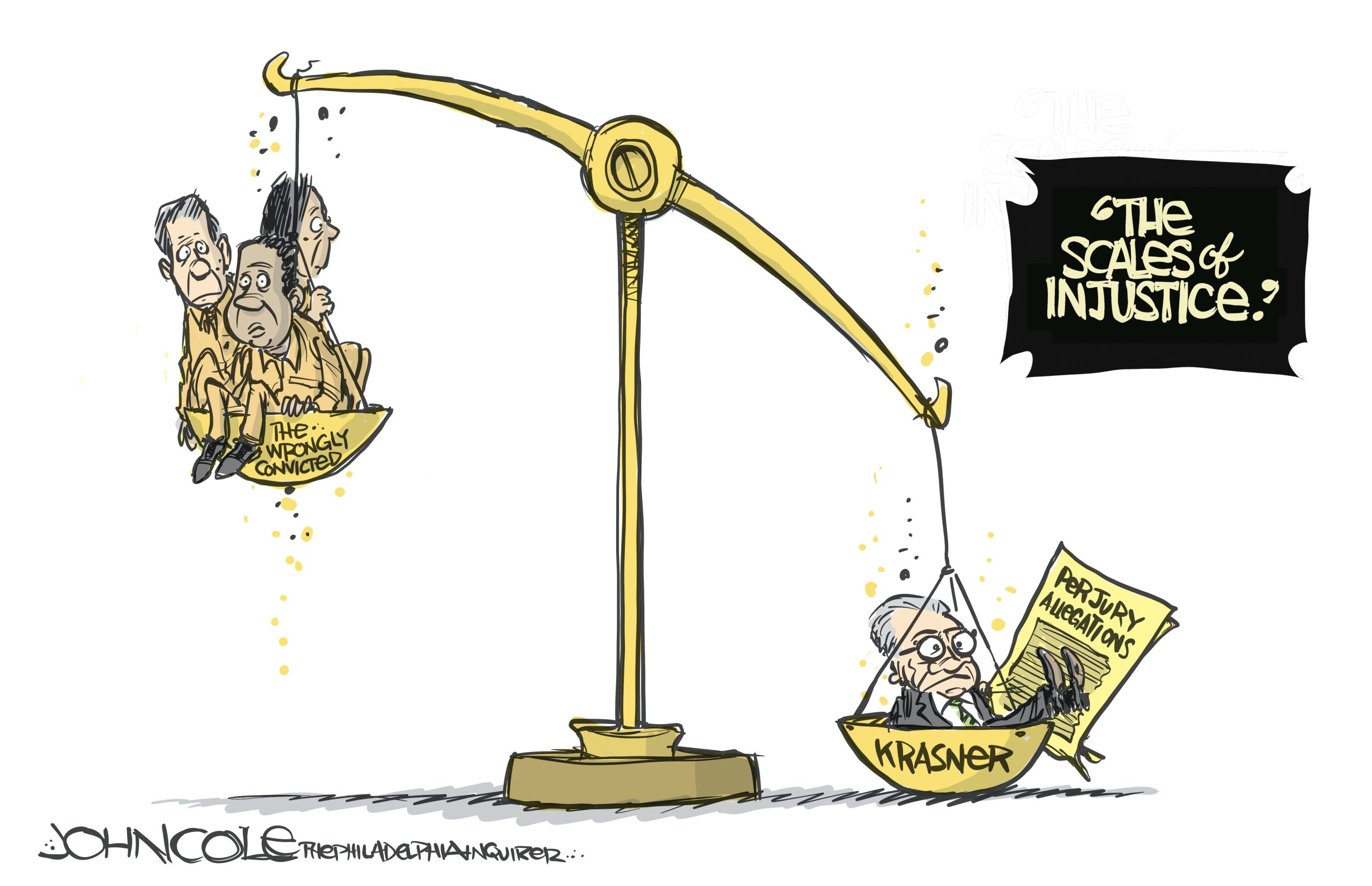
  • Out of balance | Editorial Cartoon

    John Cole spent 18 years as editorial cartoonist for The (Scranton) Times-Tribune, and now draws for various statesnewsroom.com sites.

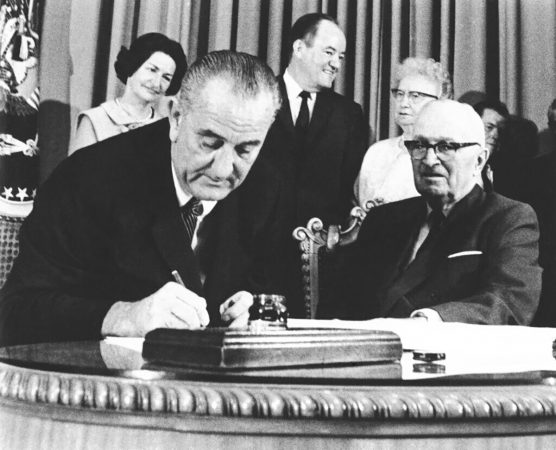
  • Medicare was one of the most successful civil rights laws in history

    Medicare was one of the most successful civil rights laws in history

    When Americans think of the seminal Civil Rights legislation of the 1960s, they think of laws like the 1964 Civil Rights Act and the 1965 Voting Rights Act. Yet, there is one piece of historic 1960s legislation that unleashed a powerful civil rights tool that rarely gets remembered as “civil rights” legislation: Medicare.

    Hospitals desegregated — some almost overnight — worried that they would get cut off from Medicare funds. “White Only” signs came down, white-only facilities and segregated wards admitted patients without regard to race and Black clinicians received admitting privileges.

    And yet, a racial healthcare crisis persists. Over the past two decades, Americans have made no progress in narrowing racial disparities in medical care, although we know more about them today than ever.

    Black patients are less likely than white patients to receive pain medication, emergency cardiology care, lung cancer surgery, a kidney transplant, an appropriate mental health diagnosis and end-of-life home hospice care. Black people are disproportionately hospitalized for psychiatric services, excessively diagnosed with schizophrenia and more likely to have amputations. Surgery is more likely to kill Black patients, including children, than white patients, and Black mothers are three times as likely to die in childbirth as white mothers.

    These disparities remain after accounting for other characteristics that influence health.

    The history of Medicare, which turns 60 this year, offers a suggestion of how to rectify some of these problems. The desegregation of hospitals didn’t come when experts recognized that they were segregated, or even when courts declared such practices unlawful. Instead, the changes came when the government required hospitals to do better, verified compliance and withheld Medicare funding when they failed.

    This transformation forged by Medicare was as unexpected as it was abrupt.

    Hospitals, especially in the South, had been segregated before the Civil Rights Act. The federal government didn’t formally even document the practices and, in many cases, willfully ignored them.

    Title VI of the 1964 Civil Rights Act aimed to address this problem. It prohibited discrimination in federally funded institutions. Medical school-affiliated hospital facilities, which received much of their funding from federal government training and research grants, quietly began taking steps toward integration. Yet, at all other facilities, passage of the law changed little.

    Nationwide, but most dramatically in the South, Black patients continued to struggle to get care. Hospitals still hung “White” and “Colored” signs, separated patient records by race and shunted Black patients into basements or separate buildings, if they’d treat Black patients at all. Black women continued to give birth in dangerous conditions. Sometimes, while in labor, they had to solicit care from multiple white-only hospitals or facilities with limited beds for Black patients until one perhaps admitted them.

    Civil rights organizations filed hundreds of Title VI complaints. Yet, the federal government had no staff assigned to enforce compliance. As a result, the complaints accomplished very little.

    There were also several other impediments preventing progress. While healthcare facilities had long received federal funds through programs like the Hill-Burton Act, which paid for the construction of segregated hospitals, mostly in the South, Washington could not easily claw back federal dollars that had already been distributed to hospitals. Further, Title VI had no built-in enforcement mechanism. The Johnson administration, which in its first two years had been consumed with passing and implementing an array of ambitious legislation like the Civil Rights Act and the Voting Rights Act, was faced with going after individual hospitals on a case-by-case basis.

    Everything changed after Congress passed Medicare in 1965. Urged on by civil rights organizations, John Gardner, secretary of the Department of Health, Education, and Welfare (HEW), announced that to receive Medicare dollars, hospitals must comply with the Civil Rights Act. The new health insurance program covered 19 million seniors and promised to pay billions to healthcare facilities — but only if they complied. To Gardner, it was an unprecedented enforcement tool.

    HEW devised a process for determining compliance. Federal workers would inspect facilities. Were patients admitted and assigned the first bed available, regardless of race? Did hospitals extend admitting privileges to Black doctors? Were there disparities between their patient population’s racial composition and that of their service area?

    Made By History sponsors. FOR USE ON MADE BY HISTORY STORIES ONLY.Inquirer Staff

    Hospitals clearly in compliance would receive Medicare dollars. Others clearly out of compliance would not.

    Gardner did not have enough HEW staff to dispatch to inspect the nation’s 4,000 hospitals. So he put out a call for federal employees willing to volunteer in his department and conduct inspections. Over 1,000 came forward including tax accountants, veterinarians and scientists.

    In April 1966, civil rights movement activists trained them. Some violations would be obvious. That included “whites only” signs above entrances, bathrooms and in cafeterias, racially separate medical records and infants segregated by race.

    But trainers warned that hospital administrators might disguise a facility as integrated for the visit. Some did. One put a white administrator in a patient gown in a room with a Black patient. Another placed four comatose patients, each a different race, next to each other.

    Doing the “HEW shuffle” of fixing signs and shifting a few patients was insufficient, the inspectors explained. Facilities needed to be race-blind.

    The combination of a strict standard coupled with inspections worked.

    In three months, nearly all hospitals ended formal segregation and had been Title VI-certified as Medicare providers. After July 1, hospitals that had not been certified as Title VI compliant — those that lagged transforming their facility or refused on principle to do so — could not provide care for Medicare patients.

    The lives of Black people in the South radically changed. Before the intervention Black infants below the Mason-Dixon line died at twice the rate of whites. By 1971, however, Black infant mortality halved, largely because they more readily received care for treatable conditions and their mothers had access to hospitals for the first time.

    Yet, even as Medicare proved enormously successful in erasing formal segregation, racial stratification patterns remained apparent in hospitals throughout the U.S., exacerbated by residential segregation and referral networks systems.

    Ironically, we know this from Medicare itself. The program has long served as a tool for researchers to investigate disparities in healthcare: beneficiaries share a common insurance which makes it easier to isolate inequities.

    And racial separation persists among Medicare patients. Black Medicare patients are disproportionately treated at hospitals with fewer resources and worse outcomes. In some hospitals, certain teams treat only Black Medicare patients. Other teams treat only white ones.

    Starting in 2003, Medicare Advantage expanded the enrollment of Medicare recipients in commercial insurance alternatives. In Medicare Advantage, the federal government pays insurance companies fixed amounts for each enrollee and the companies then manage benefits. These programs, separate and unequal, also expose racial double standards.

    Even within the same Medicare Advantage plan, care is worse for Black and poor enrollees. Black enrollees tend to have worse follow-up care and chronic disease management than white enrollees. Additionally, they experience higher rates of preventable hospitalizations than white beneficiaries and are more likely to be readmitted.

    The 60th anniversary of Medicare should remind us that our greatest advance in health equity came from enforceable commitments to providing equal care, regardless of race. Racial disparities in healthcare can be eliminated if the federal government requires compliance — and then enforces it.

    For hospitals and physicians in 1966, equal treatment suddenly became a condition of financial survival. The immediate gains Black patients received suggest that if the federal government required healthcare systems and insurers to make real, measurable progress toward addressing racial health disparity, it would produce immediate and significant gains once more.

    The question is whether Americans — and their government — are willing to demand such accountability as they did 60 years ago?

    David Barton Smith is emeritus professor of health management and policy at Temple University. He was the recipient of a Robert Wood Johnson Health Policy Research Investigator Award and is author of three books and numerous articles related to this topic.

    Leila Morsy is an economic justice research fellow at the Legal Defense Fund Thurgood Marshall Institute and a senior lecturer at Flinders University. She is writing a book about the history of the exclusion of Black doctors and its contemporary consequences.

    Made by History takes readers beyond the headlines with articles written and edited by professional historians. Opinions expressed do not necessarily reflect the views of The Inquirer.