Blog

  • Banking on Ball: Recruiting is the third rail in the Philadelphia area’s high school sports

    Banking on Ball: Recruiting is the third rail in the Philadelphia area’s high school sports

    Second in an occasional series.

    The sound inside the locker room was already overwhelming, Father Judge’s coaches and players shouting and singing after their 52-46 victory over Archbishop Wood in the Philadelphia Catholic League boys’ basketball semifinals last February. And every time someone opened the door to exit, the noise in the room rose, because a sold-out Palestra crowd was now roaring over the night’s second game: Neumann Goretti vs. Bonner-Prendergast.

    Still, the kid who had been the primary cause of the celebration, the 6-foot-4 senior guard who had made the night his, was calm. Derrick Morton-Rivera had scored 27 points on an array of three-pointers and pull-up jumpers, leading the Crusaders back from an early 16-point deficit.

    “Playing in front of 10,000 people every year, there’s nothing like it,” Morton-Rivera, now a freshman at Temple, said after the game. “I never knew about the PCL until my eighth-grade year. That’s when I learned.”

    How did he end up at Judge?

    The coaches “recruited me,” he said.

    Father Judge graduate Derrick Morton-Rivera after he sank a three-point shot during the 2026 Catholic League boys’ championship.Elizabeth Robertson / Staff Photographer

    With that one verb, recruited, Morton-Rivera touched the live wire that crackles among coaches, parents, administrators, and players throughout the high school sports scene in Pennsylvania. House Bill No. 41 — a measure that would allow the PIAA to create separate postseasons, one for public schools and one for private, parochial, and charter schools — passed the Pennsylvania State House of Representatives in April. And of all the factors that play into the longtime dispute over whether boundary and non-boundary schools should compete against each other for championships, none generates as much heat and controversy as recruiting.

    “It’s two different worlds,” longtime Lower Merion boys’ basketball coach Gregg Downer said. “If you don’t put massive talent out in basketball or football or soccer or lacrosse, you’re going to get run over.”
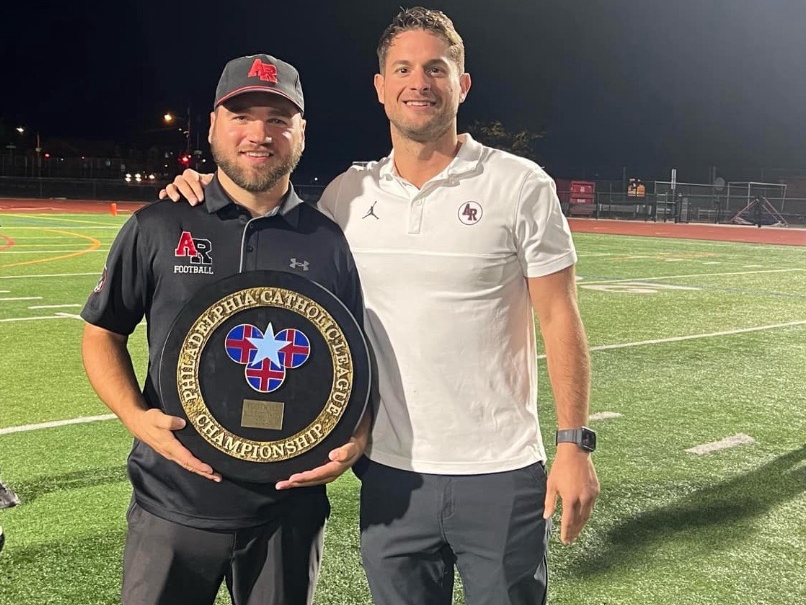
    Mark Ostaszewski with Archbishop Ryan athletic director Joe Zeglinski after the Raiders won the Catholic League Blue Division title in 2024.Courtesy of Archbishop Ryan

    ‘Philly is Philly’

    Since the Catholic League joined the PIAA in 2008, just one of its coaches, Archbishop Ryan football coach Mark Ostaszewski, has been suspended for recruiting violations. At a January 2025 football camp, Ostaszewski asked a student from the Bensalem School District if he wanted to apply to Ryan. District 12, the association’s umbrella for the Philadelphia Catholic and Public leagues, banned Ostaszewski for a year; he has returned to his role this season.

    Locally, recruiting accusations often put programs from District 12 at odds with those from District One, which comprises schools in Philadelphia’s suburbs. And that confirmed example is tame compared to the more intense efforts that coaches have allegedly made to coax athletes to their programs.

    A former basketball standout who graduated recently from a District One public school and his father told The Inquirer on the condition of anonymity that, while the student was in eighth grade and throughout his high school career, representatives from three Catholic League programs pursued him. One head coach offered him free tuition, a stipend, and the use of an apartment near campus. The coach also had his team’s star player send several direct messages on Instagram to the player in an attempt to persuade him to attend the school.

    Another program had an assistant coach and a parent take the player’s father out to lunch twice, telling him at both meals that he would not have to worry about paying any tuition for his son. The third program’s head coach told the father that, if his son helped the team win the Catholic League championship, a booster would provide a house for the player. Each of the three schools were located between 15 and 35 miles from the player’s home.

    Gregg Downer has spent three decades as the Lower Merion boys’ basketball coach.CHARLES FOX / Staff Photographer

    “They can twist this however they want,” Downer said. “These kids are targeted because they’re good at sports. I could list 50 examples of kids who have been recruited.”

    Morton-Rivera’s path to Father Judge captures the murkiness of the entire issue. Jim Meredith, a 1992 Judge graduate who became its president in late July, noted in a recent interview that while in eighth grade, Morton-Rivera had visited the school and taken its entrance exam — and that he grew up and lived in Lawncrest, just a mile-and-a-half from Judge.

    “I can say with full confidence that we’re following PIAA rules and regulations,” Meredith said. “We’re trying to put out an excellent product for our school and our students. Part of that is making sure we adhere to the guidelines that are prescribed to us.”

    When asked how Morton-Rivera ended up choosing Judge, head coach Chris Roantree pointed out that Morton-Rivera’s background and family history made it natural for him to consider attending a school with a strong basketball program. D.J. Rivera, his father, finished his high school career in 2006 as Neumann Goretti’s all-time leading scorer before playing Division I ball at St. Joseph’s and Binghamton.

    Father Judge coach Chris Roantree noted that Morton-Rivera’s background and family history made it natural for him to consider attending a school with a strong basketball program.Elizabeth Robertson / Staff Photographer

    “Philadelphia basketball is a very small community,” Roantree said. “There are different relationships that everybody has. When somebody shows interest in us, we sell the school. When we bring guys in, we show them our career-pathway center. We show them our academic center. …

    “Ultimately, ‘recruiting’ is a very broad thing. It’s going to be questioned because we’re a Catholic and private school. He’s within a mile or two of the school. To me, that’s no different from [a public-school coach] talking to someone from a Plymouth Whitemarsh middle school or an Abington middle school. He’s not a transfer. We didn’t aggressively go after him like that.”

    Under Article VI, Section 11 of its bylaws, the PIAA forbids “recruiting [that] is materially motivated in some way by an athletic purpose. Recruiting for athletic purposes is directly contrary to fundamental interests of PIAA and its member schools, and any school engaged in such conduct should do so with the expectation that it will be treated harshly upon proof of such conduct.”
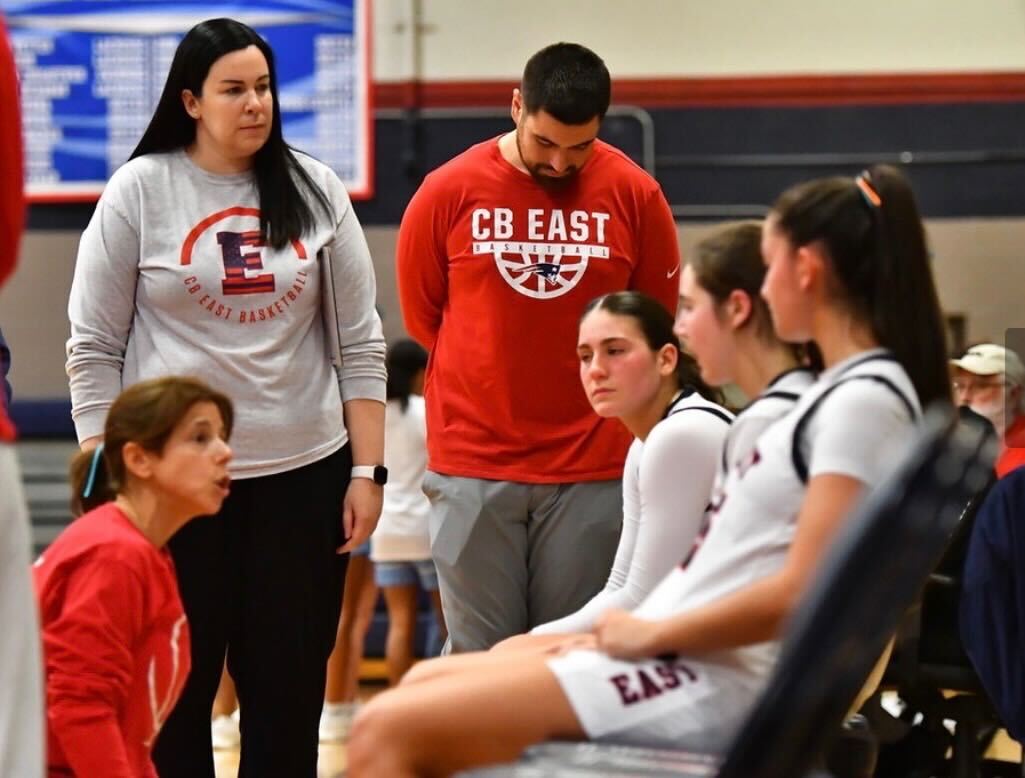
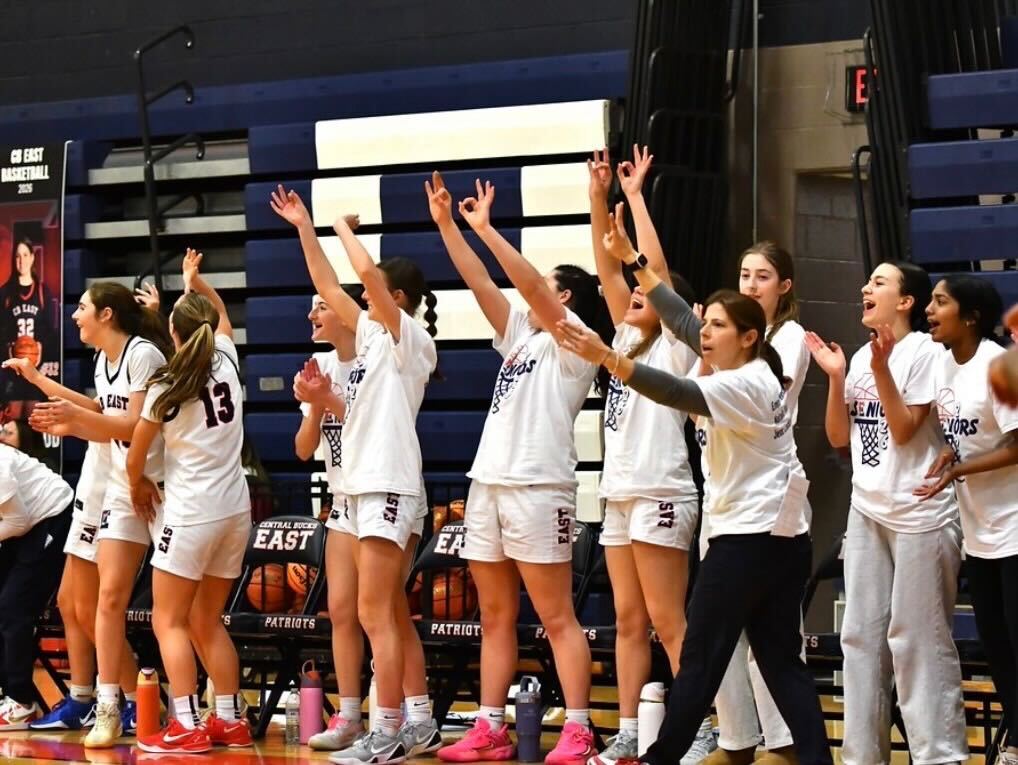
    Liz Potash retired earlier this summer after 13 years as Central Bucks East’s girls’ basketball coach.
    She said, “If I wanted to recruit, I wouldn’t be a public-school coach.”

    As clear as that excerpt might seem, determining whether a student’s decision to attend a particular school was “materially motivated” by athletics requires hard and fast evidence, such as text or direct messages between a coach and the athlete, said Sean Kelly, District One’s vice chairman.

    If a principal or athletic director files a formal complaint charging an opposing program with violating PIAA bylaws, the association’s corresponding district committee will hold a hearing on the matter.

    “Sometimes I’ll get a call from a coach or an AD or somebody who’s associated with one of the schools who says, ‘Hey, this is what we’re hearing. We’re hearing Student A is going to go to this school,’” Kelly said. “I just ask them, ‘What evidence do you have? Are you saying they’re just transferring, or are you saying they’re being recruited?’ We take some time to make sure we pump the brakes because people get very sensitive and very emotional.”
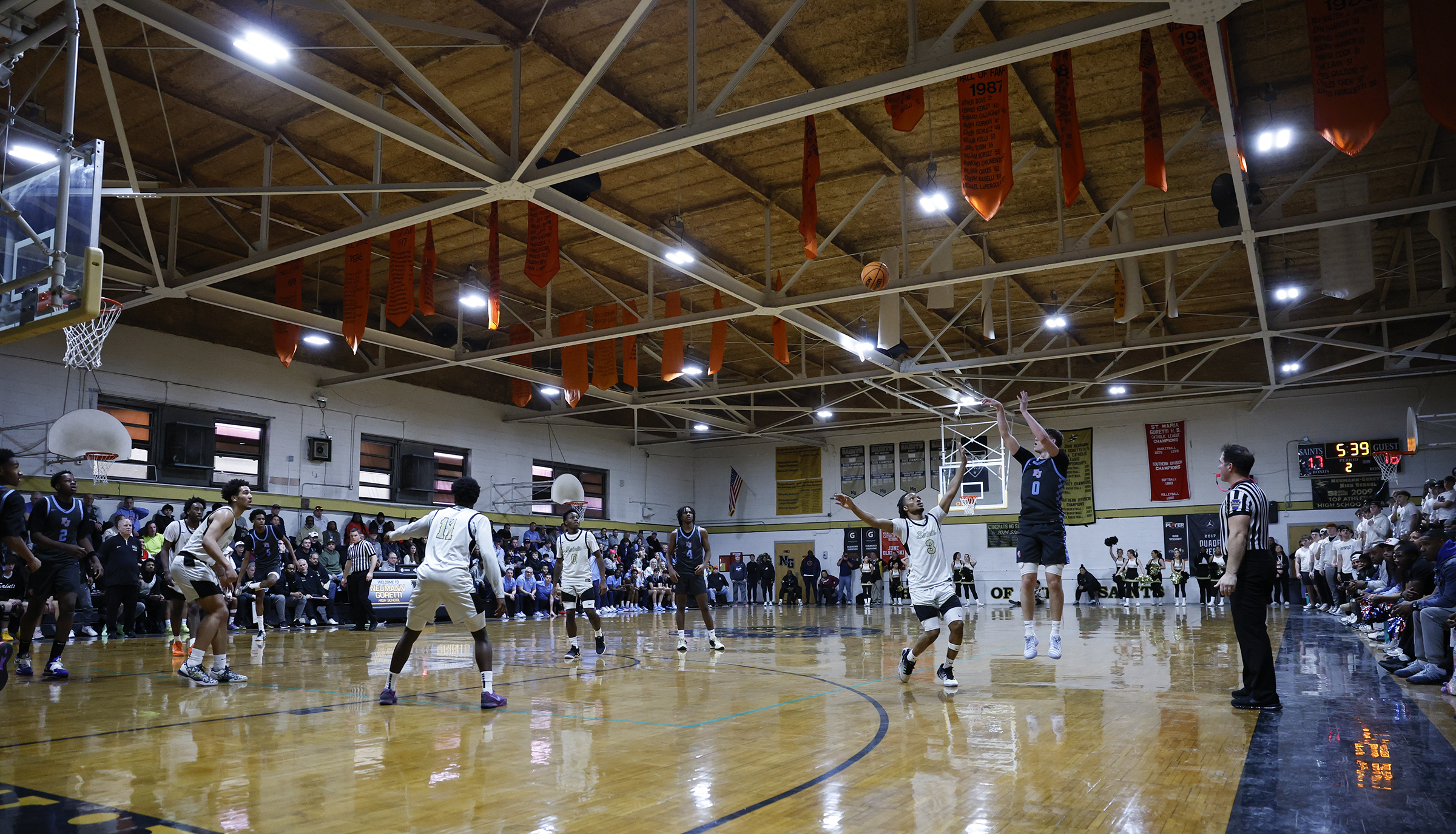
    Neumann Goretti and Father Judge boys’ basketball play in South Philadelphia on Feb. 1, 2026.Yong Kim / Staff Photographer

    Article VI, Section 11 applies to both boundary and non-boundary schools, but suburban public school coaches bemoan what they see as an inherent imbalance in the system: To play a varsity sport at a public high school, a student must live in that school district. But private, parochial, and charter schools, such as those in the School District of Philadelphia and the Archdiocese of Philadelphia, can draw their students from anywhere. Too many of those institutions, several District One coaches said, bend the rules to do it.

    “It’s just not fair,” said Joe Dempsey, who has been the boys’ basketball coach at Spring-Ford High School in Royersford since 2021. “They have the ability to go and get players, to which I say: Let them do that. If they want to go play in that sandbox, let them go.”

    Dempsey had previously coached at La Salle College High School for 27 years, including 14 as the program’s head coach. At CYO games, he would see a promising seventh or eighth grader, he said, then approach the player’s parents without talking to the player.

    Joe Dempsey previously coached at La Salle College High School for 27 years.

    “La Salle made it very clear: Don’t step over the line. Don’t get us in trouble,” Dempsey said. “Once a couple of schools took the gloves off, the pressure came. The pressure was on me at La Salle. I went to the administration: ‘Are you looking around the Catholic League? I can’t just sit on my hands and wait on some wonderful 6-foot-7 kid who can pay a lot of tuition and go to school with all boys and get bused here. It ain’t going to happen by accident.’”

    That archdiocesan schools compete for students within District 12’s open-enrollment landscape only complicates matters further. Consider one example: Bonner-Prendie, nestled in Drexel Hill in Delaware County, won the 2024 PIAA Class 4A football championship. Of the top six zip codes from which the school drew students that year, five were within Delco, and the other was just nearby — the Overbook section of Philadelphia — according to Steve Clement, the chief administrative officer of the archdiocese’s Office of Catholic Education.

    How many of its football players did Bonner-Prendie recruit, if any? How many did it have to recruit, given the school’s proximity to West Philadelphia? And if a school such as Bonner-Prendie draws students from the city or St. Joseph’s Prep draws them from Camden — less than five miles away — how different is that from the dynamic at a public school in an especially large district?

    “The reality,” Clement said, “is that these schools are still serving the areas they were intended to serve.”

    Similarly, parents can and do contact the School District of Philadelphia to ask what high schools would best fit their children’s skills and interests: maybe sports, maybe drama, maybe career and technical education. Starr Davenport, the district’s director of finance for athletics, said she frequently fields phone calls from parents of rising ninth graders who ask her about the quality and array of athletic programs at a particular school, and she is happy to answer their questions.

    “It’s not a recruitment strategy,” Davenport said. “It’s just transparency. When they want to know, it means they’re trying to find their school home. That selection process seems equitable because we’re not putting it out there, ‘Go to this school if you like football.’ But if a parent or student-athlete inquires, we are definitely transparent in terms of the full gamut of what is offered at a school.”

    As for making competition across the state and the Delaware Valley more equitable — that is, giving boundary schools a better chance of beating non-boundary schools — it doesn’t matter much whether gifted athletes who already live within the city’s borders attend public or non-public schools. As long as it stays in Philadelphia, that talent will reveal itself in the results one way or another.
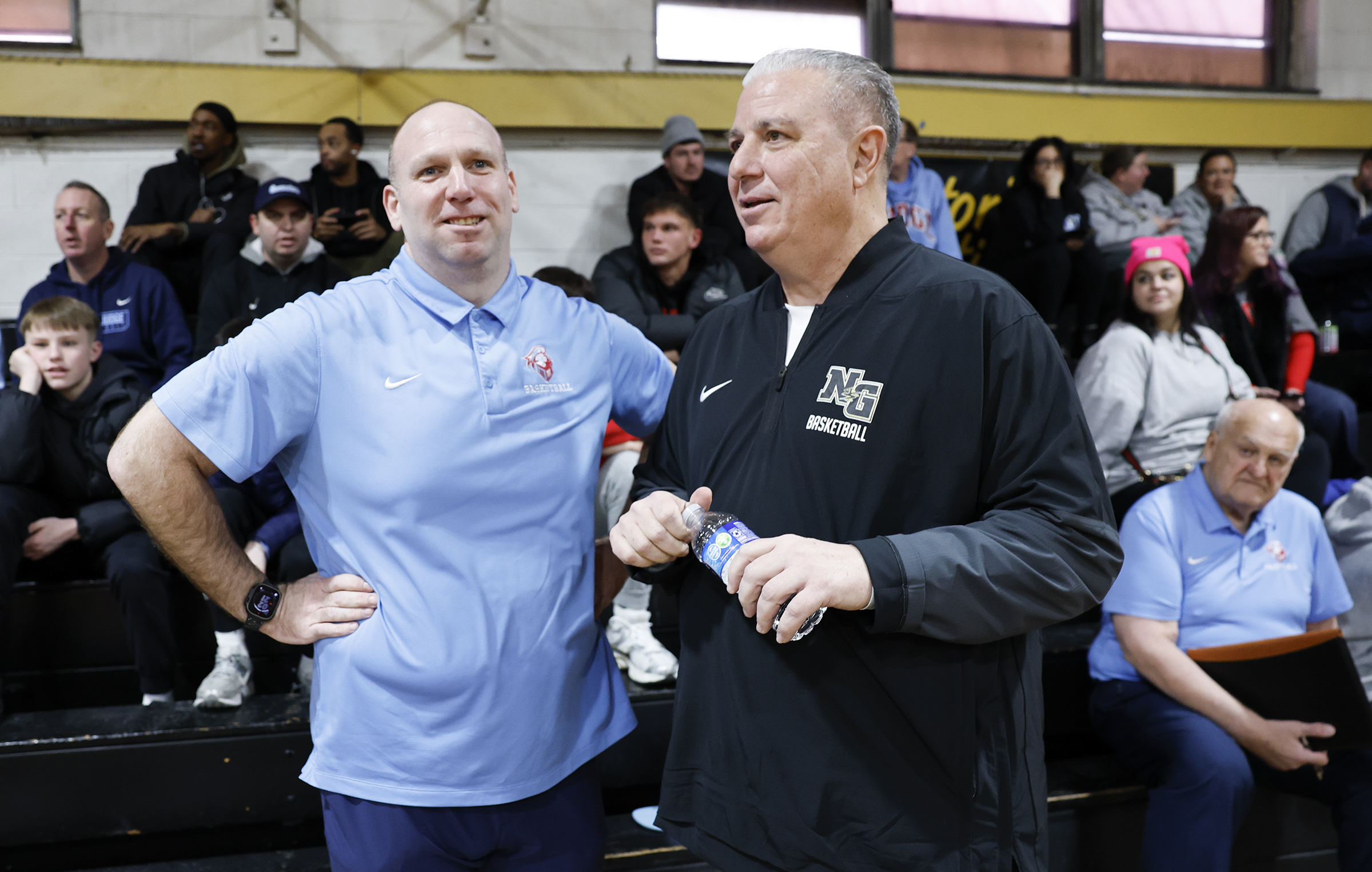
    Neumann Goretti head coach Carl Arrigale (right) meets with Father Judge head coach Chris Roantree before the two teams played each other in February 2026.Yong Kim / Staff Photographer

    “Here’s the thing: Philly is Philly,” Roantree said. “So if you want all the Philly kids to go to public schools, they’re still going to dominate. There are six, seven, eight, 10 good teams in the Catholic League. If they’re in the playoffs, they’re going to make some noise” in the state tournaments.

    The primary complaint among suburban public school coaches and administrators, of course, is that non-boundary schools don’t limit themselves to drawing talent from the city or the neighborhoods that surround them. To some public-school coaches, the notion of recruiting is an alien concept, one they wouldn’t consider if for no other reason than they or the athletes’ families would have to make the necessary arrangements for the athletes to live within district boundaries — say, finding a long-lost aunt whose house was within walking distance of a school bus stop.

    Liz Potash, who retired earlier this summer after 13 years as Central Bucks East’s girls’ basketball coach, said she never sought out players to refill her program’s talent pool. “If I wanted to recruit, I wouldn’t be a public-school coach,” she said. “I’m not going to beg an eighth grader to come to East.”

    But another coach might.

    “Everyone’s doing it,” said Daniel DiBerardinis, who spent 11 years as a Catholic League athletic director — six at Roman Catholic, five at St. Joe’s Prep — before becoming Penn Charter’s AD last year. “Public schools are recruiting. They recruit. People move to different zip codes all the time.

    “I’m not going to put any school on blast, but I know intimate situations — I know families who got an address to be a part of a district. I’m not going to say any schools, but I do know it happens. The rules are super-gray, and people are always going to find workarounds.”

    Father Judge takes on Archbishop Wood during in the Catholic League boys’ basketball semifinal at the Palestra on Feb. 18, 2026.

    Technicalities

    Football, boys’ basketball, girls’ basketball: It’s within the worlds of those three sports that the debates and bickering around recruiting are the loudest and have the most relevance. Rep. Scott Conklin, a Democrat who introduced House Bill No. 41 and represents the 77th district, in State College, all but admitted that the bill was aimed at stopping private, parochial, and charter schools from recruiting — and from continuing to move into the next frontier: wielding sponsor dollars or name, image, and likeness deals to entice athletes.

    “Technically, yes, public schools could cheat,” he said in a phone interview. “But we know how difficult that is. I’m 67 years old, and I can win the high-jump competition — technically. But we all know it’s never going to happen.”

    In that Palestra locker room back in February, Roantree snickered at the mere mention of the subject. “Everybody says it’s an unfair advantage,” he said. “What I say is, every kid’s got a dream of playing Division I, and there are a lot of coaches in our league who can make that happen. We don’t have to recruit as much as kids want to come and play for us.”

    Four days later, behind a team-high 14 points from Morton-Rivera, Father Judge beat Goretti to win its second straight PCL championship. The Crusaders advanced to the semifinals of the PIAA Class 6A tournament, where they lost to a city rival, Imhotep Charter, which then lost in the championship game to Harrisburg’s Central Dauphin.

    A public school.

  • South Jersey highways have seen hundreds of fatal crashes in the last 6 years. Here are the most dangerous spots.

    South Jersey highways have seen hundreds of fatal crashes in the last 6 years. Here are the most dangerous spots.

    Even in an age where driving is as safe as it has ever been, hundreds of people still die on New Jersey roads each year.

    Across South Jersey, an analysis shows, there are seven corridors that are particularly problematic — stretches where four or more people have died in crashes in the last seven years.

    The Inquirer analyzed about 330 fatal crashes across South Jersey’s limited-access highways, which led to more than 360 deaths between 2019 and July 2026, according to New Jersey Department of Transportation data.

    Drive north along I-76 to Philly or take Route 42 south to the Shore, and you will likely cross one of South Jersey’s most dangerous sections. The interchange where I-76 meets Route 42 and I-295, in Camden County, has recorded some of the highest rates of fatal accidents in the region, as city commuters, long-haul truckers, and beachgoers navigate a snarled intersection.

    (function() {
    var l2 = function() {
    new pym.Parent(‘risk_corridors_map_4’,
    ‘https://media.inquirer.com/storage/inquirer/projects/innovation/arcgis_iframe/risk_corridors_map_4.html’);
    };
    if (typeof(pym) === ‘undefined’) {
    var h = document.getElementsByTagName(‘head’)[0],
    s = document.createElement(‘script’);
    s.type = ‘text/javascript’;
    s.src = ‘https://pym.nprapps.org/pym.v1.min.js’;
    s.onload = l2;
    h.appendChild(s);
    } else {
    l2();
    }
    })();

    I-76 in South Jersey runs five lanes wide in both directions and spans only three miles, but each mile has seen fatalities. And within a 1.3-mile stretch, 10 fatal crashes occurred, more deaths than on any other highway segment. On the mile of I-295 leading up to the I-76 merge, four fatalities occurred.

    “There are a whole bunch of reasons why, around intersections, you have crashes,” said Chris Pollard of the Delaware Valley Regional Planning Commission.

    Highways like I-76 with tricky merges, heavy congestion, and sharp bends are more likely to be fatal than calmer sections of road, Pollard said. When cars go around curves or merge at high speeds around other, slower-moving vehicles, accidents are more likely.

    “It’s often based on the geography of the road,” Pollard said.

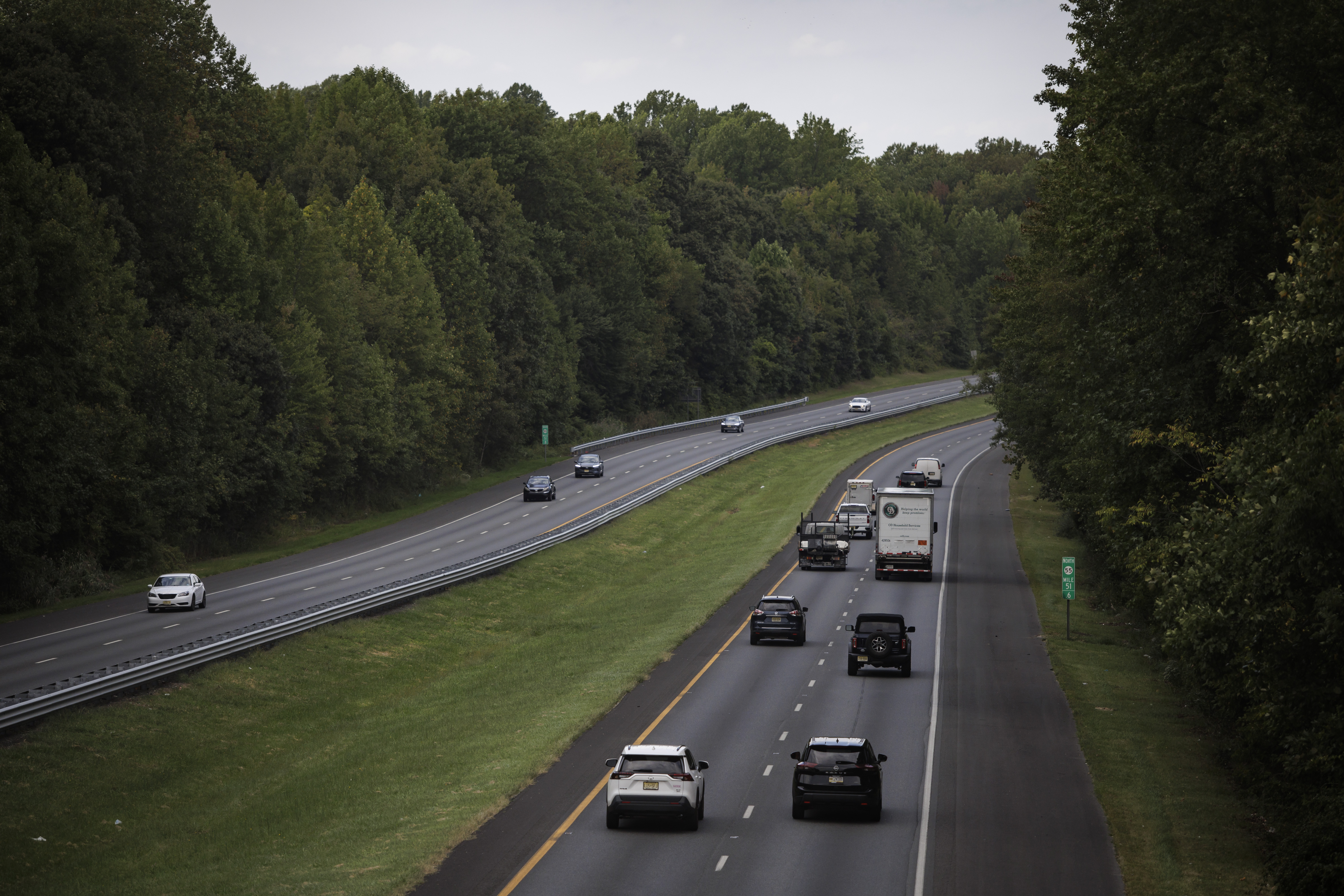
    I-76 in Camden County near the I-295/I-76/Route 42 Interchange construction on Thursday, Sept. 17, 2026 in Bellmawr, NJ.Monica Herndon / Staff Photographer

    Distracted driving played a role in nearly half of South Jersey’s fatal car crashes, contributing to more than 140 deaths, while alcohol was a factor in more than 75 fatal accidents.

    Other dangerous hot spots in South Jersey include a mile stretch of I-295 in Oldmans Township, Salem County, where seven fatal crashes occurred, a half-mile stretch of the New Jersey Turnpike in Mount Laurel Township, Burlington County, with four fatal crashes, and a 0.6-mile stretch of I-676 before the Ben Franklin Bridge, with four fatal crashes.

    (function() { var l = function() { new pym.Parent( ‘sj-crashes3__graphic’, ‘https://media.inquirer.com/storage/inquirer/ai2html/sj-crashes3/index.html’); }; if(typeof(pym) === ‘undefined’) { var h = document.getElementsByTagName(‘head’)[0], s = document.createElement(‘script’); s.type = ‘text/javascript’; s.src = ‘https://pym.nprapps.org/pym.v1.min.js’; s.onload = l; h.appendChild(s); } else { l(); } })();

    A recent call for safer highways

    A string of fatal crashes on one of South Jersey’s safer highways this summer has legislators asking questions.

    Since July, four crashes have killed five people on Route 55, a 40-mile freeway that runs from Cumberland County up to the Route 42 entrance in Deptford.

    In response to the string of crashes, Assemblyman William Moen, a Democrat in the New Jersey Legislature, cosigned a letter with eight other politicians to NJDOT, urging the department to examine how Route 55’s design could have led to the deaths.

    Moen’s social media post about the highway reached more people, about 200,000, than any post he has made in his decade as an elected official, he said. The interactions showed him the public wants answers, too.

    “There’s always that question of, ‘Could there be things that are being used on other highways that the state operates that simply aren’t in place on Route 55?’” Moen said.

    Unlike some of the region’s more complex roadways, Route 55 is only two lanes, and has few, if any, sharp bends.

    Still, 46 people have died on the highway between 2019 and this July. One 0.64-mile-long segment of Route 55, by Mantua Township, Gloucester County, has seen a high volume of fatal crashes, four total, in recent years. That included a crash that killed a Bridgeton resident in a wrong-way crash in July.

    As a result of the letter, NJDOT is in talks with legislators to “identify safety improvements needed along the corridor,” according to Steve Schapiro, an NJDOT spokesperson. Miranda Toner, Moen’s spokesperson, said the assemblyman has since been briefed by NJDOT on the matter and has received an official letter from the department outlining plans for Route 55.

    Route 55 near the Pitman Road overpass on Thursday, Sept. 17, 2026 in Pitman, NJ. NJ DOT sent a letter to concerned legislators about Route 55 in Gloucester County, saying new safety improvements would be added.Monica Herndon / Staff Photographer

    In January 2025, the legislature approved the New Jersey Target Zero Commission, created to eliminate “all traffic fatalities and serious injuries” on public roadways by 2040.

    Part of that law required NJDOT to track the state’s fatal crash data through its High-Injury Network, which flagged one-mile segments of public roadways with seven or more fatal or serious-injury crashes between 2021 and 2023. Since NJDOT updates the map every three years, recent crash data will not be available there until 2028.

    No segments of Route 55 are currently featured on the network, but various miles of roadways throughout Camden, Gloucester, Burlington, and Cumberland Counties made the list.

    Schapiro said 90% of state-maintained, one-mile segments on the High-Injury Network, which includes 88 locations, are currently undergoing projects, and the rest will start safety projects, too. Plus, the department regularly uses its data to identify high-risk areas, crash patterns, trends, vulnerable populations, and driving times.

    Correction: This story was updated to correct the Gloucester County municipality with the high-fatal-crash corridor on Route 55.
  • Eagles vs Titans Week 2 Preview

    Eagles vs Titans Week 2 Preview

    The Eagles hit the road for Week 2 to take on the Tennessee Titans. After opening the season with a 24-22 win over the Commanders, Philadelphia looks to build momentum as Jalen Hurts, Saquon Barkley and the Eagles offense face a Titans defense looking to bounce back from a Week 1 loss to the Jets. Plus, the latest on Landon Dickerson’s injury, key matchups and what to watch for when the Eagles take the field in Nashville.

  • Letters to the Editor | Sept. 17, 2026

    Letters to the Editor | Sept. 17, 2026

    We need a doctor

    As a former healthcare professional, I applaud The Inquirer’s continuing coverage of the measles outbreak in Pennsylvania.

    Even before his appointment, Robert F. Kennedy Jr. promoted pseudoscience built on anecdote and apocrypha. He holds no medical degree, and his elevation was a political payoff from Donald Trump — the same president who endorsed Kennedy’s specious claim that autism was caused by Tylenol. Now, because of Kennedy’s anti‑vaccine fearmongering, a disease virtually eliminated 25 years ago is making a resurgence, with cases now surpassing the totals from 2025.

    While the vaccine guidelines supported by Gov. Josh Shapiro are endorsed by preeminent public health researchers, Mr. Kennedy has muddied people’s minds with false flags of political overreach.

    The flu season is upon us. How many will turn away from vaccination, clinging to some politicized belief that they have the “right” to distrust validated medical science? It is a regrettable legacy for the Kennedy name — one that risks associating it not with public service, but with the resurgence of preventable diseases.

    Richard O’Connell, Philadelphia

    Building bridges

    What is wrong with a representative who is willing to cross party lines when they agree with the other party’s position? Isn’t this what we want them to do to reach a compromise to get things done instead of this stalemate we currently have?

    We need more representatives like John Fetterman, not fewer. He should be praised, not criticized.

    Robert Mattern, Wilmington

    Expand imagination

    As board chair of Arts Holding Hands and Hearts, I want to draw attention to an extraordinary milestone in our community: More than 11,500 children in Chester County are now registered for Dolly Parton’s Imagination Library. Thousands of others in the Philadelphia metro area are currently enrolled through local library systems and funding partners. This number represents far more than books — it represents hope, opportunity, and the belief that every child deserves the chance to dream more, learn more, and be more.

    To honor Parton’s life, along with the announcement that Sept. 25 will be “Give Like Dolly Day,” Pennsylvania has an opportunity right now to expand this impact statewide. Senate Bill 459, which would support the statewide expansion of the Imagination Library, is currently before the legislature. I urge readers to contact their state senators and ask them to vote yes on SB 459. This is not a political issue — it is a commitment to our children’s futures.

    I also call on Gov. Josh Shapiro and leaders across Pennsylvania to champion this effort. Dolly Parton has shown what is possible when we invest in children without hesitation or division. We should follow her example and ensure every child in our commonwealth has access to the tools, support, and opportunities that early literacy provides.

    Our kids are ready. Our communities are ready. Now we need our leaders to be ready, too.

    Doug Doerfler, Kennett Square

    Join the conversation: Send letters to letters@inquirer.com. Limit length to 150 words and include home address and day and evening phone number. Letters run in The Inquirer six days a week on the editorial pages and online.

  • Dear Abby | Hornswoggled husband prepares to cast wife aside

    Dear Abby | Hornswoggled husband prepares to cast wife aside

    DEAR ABBY: My husband (80) and I (72) have been married 25 years. This is the second marriage for both of us. Until three years ago, I felt I had a wonderful relationship with his family, so it’s hard to deal with what he’s done to me and my relationships with them. A new daughter-in-law, “Jean,” who has a granddaughter, “Sophie,” has fostered a secret relationship between my husband and this child, who is now 4. I was shocked when they came over on his birthday last year and Sophie was all over him, calling him grandpa, etc. It was apparent what had been going on. I felt humiliated at being excluded but said nothing, as I had been looking forward to getting to know the child. I believe Jean has her eyes on my husband’s money. I suspect he used our joint checking account to buy a life insurance policy with this little girl as a beneficiary. I believe Jean thinks my husband (and I) should foot the bill for Sophie’s college education.

    Now my husband wants a divorce. We’ve had some rocky years due to his health, but this takes the cake. This DIL is greedy and brazen. My husband did not want his son to marry her in the first place, but she had a plan. I have done nothing wrong (though he accuses me of cheating), and it is heartbreaking that his family is ghosting me. How do you fight a liar?

    — ILL IN ILLINOIS

    DEAR ILL: Dealing with a manipulator like Jean can be a nightmare. If you haven’t consulted a divorce lawyer, do so now, and make sure the insurance policy is the first thing you mention. A lot of your story is Jean’s word against yours, but if such a policy was created without your knowledge, your husband could be in big trouble. It may be of utmost interest to your attorney.

    ** ** **

    DEAR ABBY: My oldest son, “Mitch,” from a previous marriage, passed away six months ago. He had five children and two grandchildren. Admittedly, I hadn’t been the most attentive grandparent over the years. I got along well with them, but I wasn’t always around because I was raising my own family. Since Mitch’s death, I haven’t heard a word from any of them. His kids are grown; the youngest is 24. Mitch’s wife has made it known that I am not needed in their lives. She said she needs time and space. I’m respecting that, but I’m not happy that I don’t get to see one of my great-grandsons. Should I force the issue and show up at her door one day? I don’t want to alienate them, but it’s becoming obvious that I’m out of their lives forever. These are sad times. I miss my son as much as they do, but they don’t care about me.

    — DOWN AND OUT IN INDIANA

    DEAR DOWN AND OUT: You mentioned that you “weren’t the most attentive” grandparent over the years. Did this include forgetting them on birthdays, Christmas, graduations and so forth? If the answer lies between “maybe” and “yes,” then it shouldn’t be surprising that your grandchildren learned to do without you in their lives. Allow me to offer this suggestion: Rather than show up unannounced, it might be more effective to reach out to them individually.

  • Horoscopes: Thursday, Sept. 17, 2026

    Horoscopes: Thursday, Sept. 17, 2026

    ARIES (March 21-April 19). One piece of your life will click into place today, and the rest of the day will go a little better because of it. A solved problem at work may give you more patience at home, or the other way around.

    TAURUS (April 20-May 20). You’re still getting to know someone. Social media posts, dating profiles and resumes project one image. Reputation sheds a more objective light, and some interactions produce another take entirely. Each angle informs, but none tell the whole story.

    GEMINI (May 21-June 21). Because you really want the best for the group, you’re trying to see projects with a more communal eye, blurring the benefit of any particular individual in hopes you can sense the overall good. You’ll have some success with this.

    CANCER (June 22-July 22). The reason you pause before making even a seemingly small choice? You know how small things escalate, sometimes delightfully so. Once upon a time, you said, “I’ll try the …” and that isolated moment has informed a hundred other decisions.

    LEO (July 23-Aug. 22). Each mind makes its own pictures. Light comes from the outside, but the appearance of it comes from the inside. Today, you’ll have an entirely different impression of things than the next person, and it’s important to say your version.

    VIRGO (Aug. 23-Sept. 22). In Greek cosmogony, khaos was the gaping space before the formed universe. When you witness a bit of chaos today, think of it not as the dismantling of order or the breakdown of a system but instead as the moment before creation.

    LIBRA (Sept. 23-Oct. 23). Your opinion of yourself can change by the minute, but it’s better for the work at hand if you stick to one confident stance today. You know what you can do and you can be unwavering in that knowledge. Now’s the time.

    SCORPIO (Oct. 24-Nov. 21). There is a powerful pleasure in knocking down something that is smug, showy or acting superior. Today, a puffed-up claim may give you the opening. One well-placed joke may make your point and get a laugh from the right people.

    SAGITTARIUS (Nov. 22-Dec. 21). Music has no practical purpose, and neither do most of the best things from candy to kisses. Devote some of the day to the impractical and purposeless things that make life delicious.

    CAPRICORN (Dec. 22-Jan. 19). You’ve reason to be confident about your route, although it may not be something you can prove on paper yet. You can trust your gut today — good, because you won’t have time to wait around for the perfect instruction.

    AQUARIUS (Jan. 20-Feb. 18). Of course we can only see what’s on the surface of others, but you wouldn’t for a second believe that’s all there was. You’ve never met a “shallow” person in your life. There’s always more, and your deep respect for this will inform today’s decision.

    PISCES (Feb. 19-March 20). There are some things you’d rather not think about, but it’s not particularly helpful to ignore the entire chapter of life because of a few bad paragraphs. Memories can hurt, but they can also give you comfort, strength and a new plan for going forward.

    TODAY’S BIRTHDAY (Sept. 17). In your Year of Creative Competence, you pour your innate genius into tangible forms, mastering craft and expanding the reaches of what’s possible. Projects, relationships, career and home thrive inside your vision. More highlights: You’ll publish, you’ll take part in an unforgettable event that will repeat for years, and you’ll make big sales and domestic upgrades for better daily living. Libra and Leo adore you. Your lucky numbers are: 20, 5, 14, 29 and 3.

  • Philly’s political parties can now spend unlimited amounts in coordination with their candidates

    Philly’s political parties can now spend unlimited amounts in coordination with their candidates

    Political parties in Philadelphia can now spend unlimited amounts of money in coordination with their chosen candidates, according to a new board of ethics policy approved Wednesday.

    The policy, which was prompted by a recent U.S. Supreme Court decision, has the potential to dramatically increase the power of parties in Philly politics.

    For instance, in next year’s city elections — when Mayor Cherelle L. Parker and all 17 City Council members will be up for reelection — the candidates endorsed by the Democratic City Committee could be able to access major financial advantages over their Democratic primary rivals, if the party chooses to coordinate with them.

    Candidates are still bound by the city’s strict campaign finance rules limiting the size of donations to their campaigns — no more than $3,700 per year for individual donors, and $14,800 for organizations — and prohibiting them from coordinating with independent expenditure committees, or outside groups that spend money on candidates’ behalf.

    But endorsed candidates will now be the only primary contenders allowed to coordinate with a group that has no restrictions on how much money it can collect: the party. The candidates, for instance, will be able to work with the party on messaging strategy, the timing of TV ads, and where to deploy door-knocking canvassers.

    While the policy does not allow donors to require that parties spend their money on particular candidates, endorsed politicians with deep-pocketed backers can encourage donors to contribute to the party, with the understanding that the party will ultimately decide how the money is spent.

    The Philadelphia Council members inside the caucus inside City Hall in Philadelphia, Pa on Thursday, June 11, 2026.

    The impact of the new policy will depend on how aggressively candidates, parties, and donors seek to take advantage of it. But it has the potential to steer power in some elections back toward the city’s Democratic establishment after a period in which labor unions, special interest groups, and progressive super PACs have become increasingly influential.

    “This Supreme Court ruling is going to have the effect of shifting power back to political parties and away from independent expenditures in a lot of ways,” said Philadelphia elections lawyer Adam Bonin.

    In National Republican Senatorial Committee v. Federal Election Commission, the Supreme Court in June overturned limits on how much money parties could spend in coordination with candidates, citing parties’ free speech rights. The 6-3 decision, with the conservative justices in the majority, was widely seen as the latest in a series of cases that have demolished longstanding rules around money in politics.

    But the NRSC case centered on a law related to general elections for federal office, and it was not initially clear whether the Philadelphia Board of Ethics would determine the ruling applied to local elections and to primaries.

    The board, in a 4-0 vote with member Nelson Diaz absent, approved a policy that answered both of those questions affirmatively, meaning local political parties are now able to coordinate with their chosen candidates in primaries.

    In deep-blue Philadelphia, where Democrats hold a 7-1 voter registration advantage over Republicans, the party’s primary contests usually determine the outcomes of elections.

    In next year’s elections, progressives are hoping to make gains in Council, and Parker is aiming to secure a second four-year term. So far, Parker has attracted one announced Democratic primary challenger, former city official Shania Bennett. No Philadelphia mayor has lost reelection since the Home Rule Charter was adopted in 1951.

    The new policy holds that the party can only coordinate with its nominees in general and special elections. In primaries, the ethics board will allow the parties to set their own rules for determining their preferred candidates that they can coordinate with. The Democratic City Committee determines its endorsements by holding a vote among its ward leaders.

    The policy, meant to clarify the city’s rules in advance of next year’s municipal elections, is temporary. The full details of the new rules will be fleshed out in regulations the board will tackle in the coming months.

    Philadelphia Democratic Party Chairman Bob Brady on May 18, 2026.

    Democratic City Committee Chairman Bob Brady said the party was “still reviewing the new guidelines.”

    “Protecting constitutional rights remains a priority of the Democratic Party, especially the right to participate in our democratic process,” Brady said in a statement. “We will continue the work to ensure that the final implementation of these policies and laws will right the wrongs that have too long infringed on First Amendment rights.”

    To be sure, there are significant roadblocks for candidates hoping to benefit from the new policy. In crowded primaries, for instance, the Democratic City Committee often declines to endorse when a majority of ward leaders fail to coalesce around one candidate. And the candidates and parties would have to find donors willing to give large sums knowing that they cannot control how the money will be spent.

    Additionally, Bonin said, the new policy may still be more restrictive than what the Supreme Court decision appears to have envisioned because the board is seeking to maintain many of the city’s existing campaign finance rules.

    “They are doing it in a way in which, initially, it seems they’re trying to change their rules as little as possible, while still recognizing they need to act,” he said.

    The policy could also have an impact on elections for the two seats on Council that are set aside for minority-party or independent candidates. Republicans held those seats for about 70 years before Councilmembers Kendra Brooks and Nicolas O’Rourke of the progressive Working Families Party won them in the last two election cycles.

    City Council candidates Kendra Brooks and Nicolas O’Rourke celebrate after the Working Families Party declared victory at their election night gathering at Roar Nightclub in Philadelphia, Pa. on Tuesday, Nov. 7, 2023.Monica Herndon / Staff Photographer

    Before Wednesday, it appeared possible the ruling could create an uneven playing field, with the Republican City Committee being allowed to coordinate with its nominees while the Working Families Party was unable to do so because it is not a major political party under state law.

    The language of the board’s approved policy, however, effectively gives the Working Families Party the same rights as the Democratic and Republican Parties because it fielded candidates in the most recent municipal election.

    Republican City Committee chairman Vince Fenerty celebrated the ethics board’s decision.

    “I’m very happy,” Fenerty said. “It will make our candidates be able to interact with other groups easily, and hopefully it will be a good day for the Republican Party of Philadelphia when we can have good funding to be victorious in some municipal elections.”

    A Working Families Party spokesperson said this summer that the party opposed the Supreme Court’s attacks on campaign finance law, but did not rule out the possibility of the progressive group taking advantage of any new policy.

  • Eagles wide receiver Hollywood Brown was ‘surprised’ by lack of playing time in Week 1 win

    Eagles wide receiver Hollywood Brown was ‘surprised’ by lack of playing time in Week 1 win

    Hollywood Brown did not see the field during the Eagles’ season-opening win over the Commanders on Sunday.

    The veteran wide receiver, who signed a one-year, $6.5 million contract as a free agent this offseason, said he was “surprised” by the decision and mostly offered short responses when asked about it after Wednesday’s practice.

    “No conversations [about his workload] leading up to it, but, I don’t know, I just come to work and when my opportunity come, be ready for it,” Brown said.

    Is he confident that an opportunity will come?

    “That I don’t know,” Brown said. “I just got to come to work. If it do, it do. If it don’t, it don’t.”

    Coach Nick Sirianni was asked about Brown’s snap count on Monday and said it will change moving forward. The Eagles coach knows the 29-year-old can create space with his speed and playmaking skills and acknowledged he’s been a decent fit in Mannion’s offense.

    Jalen Hurts and Hollywood Brown (right) shown in training camp on Aug 7.Jose F. Moreno / Staff Photographer

    “So, with [Sunday’s game], we have our rotations that we’re doing, you know, Hollywood could obviously help us,” Sirianni said. “We obviously want to get him into the football game because his speed is real. It just didn’t work out that way [Sunday]. … But we know that Hollywood can help us win football games, and his speed is real, and, quite frankly, just from my end, we want to get him into the football game, right?”

    Does it make Brown feel any better that Sirianni made those comments one day after the game?

    “Nah, no, it don’t,” he said. “But I’m not dwelling on it. I’m ready for next week.”

    Brown has bounced around the NFL after a strong start to his career. The No. 25 overall pick by Baltimore in the 2019 draft peaked in 2021 when he finished with 91 receptions for 1,008 yards and six of his 33 career touchdowns.

    He was traded in April 2022 to the Arizona Cardinals, where he played two seasons, then spent two years with the Kansas City Chiefs, where he battled injuries.

    He had an up-and-down preseason with the Eagles, but said he feels comfortable in Mannion’s offense.

  • Brandon Marsh has struggled to make adjustments, and it’s broken his breakout season

    Brandon Marsh has struggled to make adjustments, and it’s broken his breakout season

    WASHINGTON — Two months ago, Brandon Marsh was the starting right fielder for the National League in the All-Star Game.

    Really. That happened.

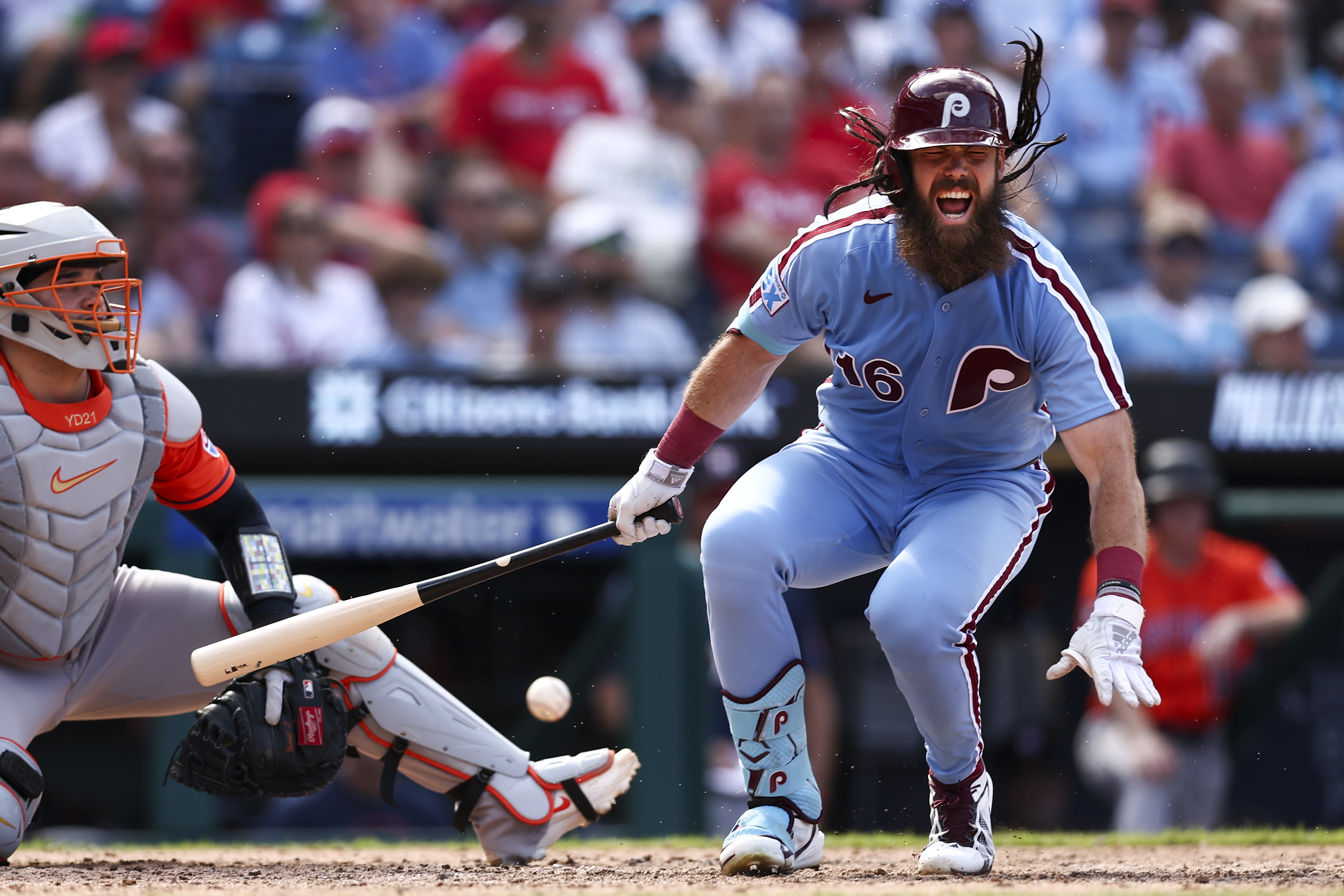
    Since then, Marsh has been among the worst hitters in the league. Benched against left-handed pitchers, the long-haired, bushy-bearded Phillies’ outfielder batted eighth here Wednesday night after playing every day and hitting cleanup for much of June and early July.

    “I just think [teams] have made an adjustment to him, and then we’ve got to make it back,” interim manager Don Mattingly said. “And we haven’t been able to do that.”

    It has broken Marsh’s breakout season.

    Consider this: After a two-hit game July 1 against the Pirates, Marsh was batting .319 with an .881 OPS. He dragged a .176 average and .470 OPS since then into the series finale against Nationals lefty opener Jared Simpson.

    Marsh’s success has always been rooted in his batting average on balls in play. Among all players with at least 2,000 career plate appearances, Marsh ranks sixth all-time with a .360 average on balls in play. Three of the top five are Hall of Famers (Ty Cobb, Rogers Hornsby, and Billy Hamilton); a fourth in Joe Jackson.

    But as Marsh’s profile rose, teams began attacking him differently. In particular, Mattingly noted that Marsh has seen fewer pitches in the strike zone in the second half, especially early in counts.

    The two months since his start in the All-Star Game have been a struggle for Brandon Marsh.Monica Herndon / Staff Photographer

    Not coincidentally, his batting average on balls in play plummeted from .396 through July 1 to .221 since then.

    “Marsh is sitting back there at some point, and they’re probably not doing a ton of homework on him,” Mattingly said. “They’re attacking him. Whatever. He starts being aggressive early. He’s doing damage. He’s getting his hits. All of a sudden, he’s hitting .330 and he’s on the All-Star team, and it’s like, ‘Maybe we ought to do a little more work on this guy.’ Right?

    “At some point, he’s aggressive, [so] they’re going to be less likely to throw you strikes and get you to chase a little more. And then we’ve got to make the adjustment to back down maybe the aggression. Be aggressive when you swing, but it doesn’t mean you’re swinging at everything.

    “You see adjustments all the time, and I think that’s what’s happened basically.”

    In any case, after assisting Bryce Harper and Kyle Schwarber in carrying the offense for much of the first half, Marsh’s production has all but disappeared at a time when the Phillies need it.

    Phillies interim manager Don Mattingly plans to deploy a bullpen game Friday or Saturday in New York.Yong Kim / Staff Photographer

    Where’s the depth?

    Rather than recalling triple-A starter Alan Rangel to fill the rotation vacancy created by Jesús Luzardo’s sore left shoulder, the Phillies will opt for a bullpen game Friday (or maybe Saturday) in New York and then likely again next week at home.

    “It’s nice to have, say, a bulk guy, which probably is 45 to 60 pitches,” Mattingly said. “If you’re able to do that, you’re not using one guy to get [each of] those innings for you instead of three [pitchers total], which leaves you in a better shape the next day. I’m not sure.”

    In that case, why not call up Rangel, effectively the No. 6 starter?

    “I’m sure we’re probably more comfortable with the guys that we have,” Mattingly said.

    Rangel, who started Wednesday night in triple A, was 0-3 with a 5.88 ERA in seven games (three starts) earlier this season. He had a 10.23 ERA in his last five triple-A starts.

    Andrew Painter threw a between-starts bullpen session and likely will start Saturday with an extra day of rest. But if the Phillies need to use several relievers Thursday night, Painter could start Friday on regular rest.

    Mattingly noted that the Phillies have 10 relievers in the bullpen because of expanded rosters. So, although they lack a true bulk reliever, they can piece together a game.

    When the Phillies scratched Luzardo last Saturday night in Atlanta, lefty Tim Mayza completed three innings in only 31 pitches. He could be the choice to start against the Mets.

    Mattingly seemed to rule out veteran left-hander Nestor Cortes, who gave up two runs on three hits and struck out three batters on 32 pitches in 1⅔ innings Tuesday night in triple A. Cortes, 32, signed with the Phillies last month after biceps tendon surgery after last season.

    “Everything is a possibility, right?” Mattingly said. “But he’s not really built at this point.”

    Phillies top prospect Aidan Miller made his first career start at third base Tuesday night in a playoff game for double-A Reading.George Youngs/Reading Fightin Phils

    Extra bases

    Reading won 21-4 (you read that right) in the opener of the double-A Eastern League semifinal, with the best-of-three series moving to Hartford on Thursday night. Top prospect Aidan Miller made his first career start at third base and went 1-for-5 with three strikeouts; 22-year-old shortstop Bryan Rincon finished with two hits and five RBIs. … Aaron Nola (6-10, 4.69 ERA) is slated to start at 7:15 p.m. Thursday in New York against Mets righty Nolan McLean (11-9, 3.24).

  • Bucks County DA demands business records from alleged slumlords

    Bucks County DA demands business records from alleged slumlords

    After hearing more horror stories about a dilapidated rental property that was condemned in April, Bucks County District Attorney Joe Khan said this week that his office has filed an amended civil complaint against the landlords and is demanding their business and financial records dating back to 2013.

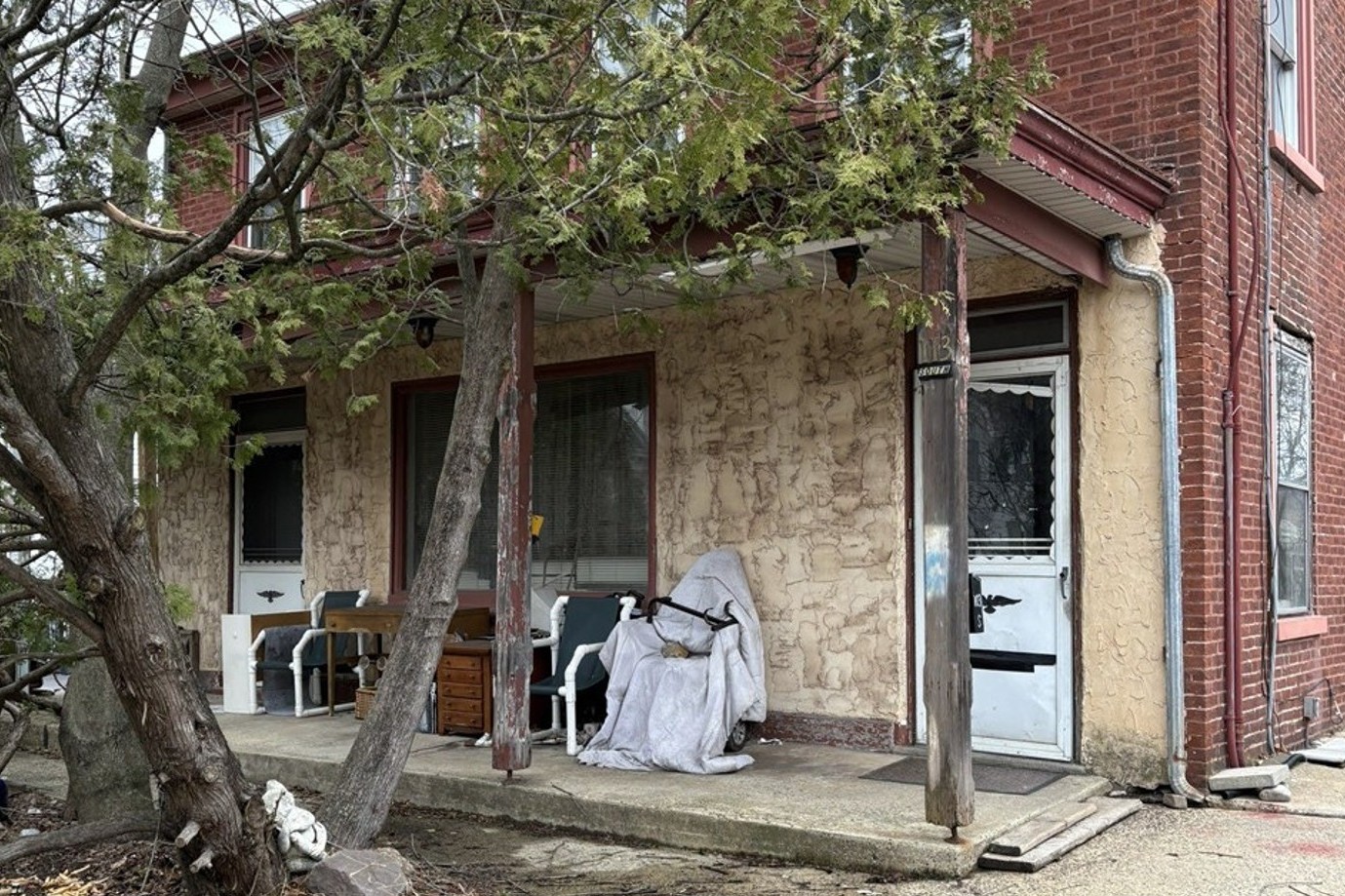
    In April, the property on the 100 block of South Main Street in Dublin Borough was declared unsafe and six tenants were effectively evicted, though they received county assistance to secure replacement housing.

    Since then, a total of 13 former tenants — including a mother and her 11-year-old child — have complained about the conditions they endured, including years of not having a functional heating system for the building, Khan said.

    The 35-page amended complaint names Richard Goetter, Ronald Goetter, and their fictitious business entity, R & R Enterprises, as defendants.

    Richard Goetter could not be reached for comment on Wednesday. A person answering a phone number listed for Ronald Goetter in Arizona said he had died recently and declined to comment further.

    Richard Goetter, who was described in the amended complaint as going to the property every Friday to collect rent payments, “has made no effort to make these affected tenants whole” since the district attorney’s office filed its lawsuit in April, the complaint said.

    Additional tenants have come forward, “each sharing the same or similar descriptions of the disrepair, dangerous conditions, and lack of heat” going back to at least 2020, the complaint said.

    “Defendants demanded rent and tenants unfairly paid full rent for a property that did not meet the most basic standards of habitability week after week, month after month, year after year,” the complaint said.

    Khan said his office filed the civil complaint in Bucks County Court using the Pennsylvania Unfair Trade Practices and Consumer Protection Law to hold the landlords accountable.

    The former tenants included a 63-year-old with an amputated leg who lived on the second floor with a roommate and required daily assistance.

    The tenant had to provide their own space heater, and paid $230 a week for rent to Richard Goetter when he showed up on Fridays, the complaint said.

    “Defendants’ business model profits by forcing vulnerable, low-income tenants to make an impossible choice between staying in an unsafe and unsanitary building today or risking imminent eviction and homelessness tomorrow,” the complaint said.

    The alleged violations at the property date back to at least 2013, when a building inspection report said the property had no building-wide heat, the complaint said.

    In 2024, Richard Goetter pleaded guilty after the Bucks County Health Department allegedly documented a rodent problem at the property, the complaint said. In 2016 and 2018, the agency received reports of alleged problems about a mice infestation and a toilet.

    The building allegedly had black mold in the community bathroom, a large piece of plywood covering a hole in the floor of one of the bathrooms, rodent and cockroach infestations, and the overwhelming odor of human waste.

    Khan said on Monday that his office is now pursuing the business and financial records of the defendants dating back to 2013.

    Prosecutors are demanding “ownership documents, tax returns, insurance policies, rent payment records, and evidence of any taxpayer-funded emergency rent relief or nonprofit aid the business received since 2013,” the district attorney’s office said.

    Prosecutors also are demanding “all written messages between the business partners regarding broken equipment, needed repairs, tenant evictions, and local code violations,” the district attorney’s office said.

    “In the more than five months since we filed our action in court, R & R Enterprises has done nothing to make these tenants whole,” Khan said in a statement Monday.

    “It’s now time to open up this business’ financial records to show where the money is so that we can help these victims recover and move on with their lives,” Khan said.