Blog

  • First-year Penn coach Rick Santos makes major starting quarterback decision before season begins

    First-year Penn coach Rick Santos makes major starting quarterback decision before season begins

    Penn freshman quarterback Miles Teodecki hesitated when he extended his hand for a handshake. His palm and fingers were covered in a thick coat of white chalk, to give him a better grip on the football. Though he had just ended nearly five hours of team practice, his freshly dusted hands looked like he was about to throw for the first time that day.

    On Monday, Penn coach Rick Santos announced that Teodecki would be the starting quarterback, reversing the August decision to start junior Karson Siqueiros-Lasky.

    “Those two have battled all camp,” Santos said ahead of Saturday’s season opener at Bucknell (3 p.m., ESPN+), “and honestly it was one of the hardest decisions I’ve had as a coach.”

    Santos is entering his first season as head coach after Ray Priore stepped down in November, capping an 11-year tenure that included Ivy League titles in 2015 and 2016. Last season’s stars — quarterback Liam O’Brien and wide receiver Jared Richardson — are at Cincinnati and Duke, respectively, following their graduation from Penn.

    Many questions loom over this new team, and the Ivy League preseason poll placed Penn fourth. Not that Santos cares.

    “In ’22 at New Hampshire, we won the [conference] championship and we were picked ninth out of 13 team[s],” said Santos, who was the head coach at his alma mater from 2022 to 2025, “So at the end of the day, that’s up for the media to talk about and decide what they think. … The rankings matter at the end of the year, so that’s what we got to focus on one week at a time.”

    Anyone’s name can stand out on the team’s blank slate, and Santos found that Teodecki, Penn’s highest-rated recruit since 2000, fit what he and his staff had been looking for.

    “He’s very competitive. He’s got a moxie about him and a confidence, and we’re excited to see him going game day,” Santos said.

    Teodecki, who’s from Austin, Texas, was thankful for the opportunity.

    “First off, just got to thank God,” he said. “I got to thank Coach Santos and the coaching staff for believing in me, giving me this chance. I got to thank my teammates for supporting me and going out there doing their jobs, putting trust in me, allowing me to trust in them. I’m fired up for the opportunity.”

    Santos said he’s been “encouraged with the senior leadership” on the team, which includes captains Siqueiros-Lasky and senior defensive back Josh Narcisse, and Narcisse noted that relationships have been built across all levels.

    “[The coaches have] been really intentional with getting to know each of us on a personal level outside of football,” he said, “And as a player, I can say that goes a long way when it’s Friday night, the lights are bright, you look to the sideline, you want to see people that have your back on and off the field.”

    For Narcisse, that’s the identity of this year’s team.

    “I think a lot of old Penn teams were more individualized, and it was about what this guy or this guy is going to do any given Saturday, but now when you watch the team, you’re going to be more focused on, ‘What is our defense going to do? What is our offense going to do? How are they going to handle themselves on special teams?’” he said.

    Even with the change in starting quarterback, Santos and Teodecki were quick to say that the plays remain the same, regardless of who is under center.

    “We have two bona fide studs at quarterback, two guys that can start at this level, two guys that are good enough to lead us to a championship,” Santos said. “So I would expect both of them to play at some point this year, but we decided to give Miles the nod for the opener.

    “There [are] no solidified jobs here. Every single day you need to earn the right to be on the field.”

    “Confidence through preparation” seems to be the motto of the Santos era. The team hits the field every day at 6:15 a.m. — “We want to get up before the enemy and get a bunch of work in while everyone’s still sleeping,” Santos said — and has been methodical in watching film, running plays, taking notes, and adopting the right mindset.

    “I feel 1,000% confident, not only in my own ability, but also our game plan and what our coaches have dialed up for us to be able to make plays and be successful on Saturday,” Narcisse said.

    The defense this year, he said, would be “fast, violent, relentless.”

    Santos said the defense is “really smart, instinctual in terms of being able to diagnose presnap reads and what the opposing team offense is doing. … And then ultimately when you get to the opener, it’s about how well we tackle.”

    Even while the team seems poised and eager to kick off a new chapter this Saturday, Teodecki admits that “there’s a little bit of nerves; if you’re not nervous, that either means you don’t care or you just — you really don’t care.”

    After practice ends at 11 a.m., he chalks his hands and throws the football with a teammate for a few extra minutes.

    “We’re blessed to play this game, and we get to play this game,” Teodecki said.

  • Zack Wheeler delivers seven scoreless innings in Phillies’ shutout of the Nationals: ‘They’re all must-win’

    Zack Wheeler delivers seven scoreless innings in Phillies’ shutout of the Nationals: ‘They’re all must-win’

    WASHINGTON — Most of the Phillies were already gone from the clubhouse to catch the team bus. But for the benefit of any stragglers, Kyle Schwarber took it up an octave.

    “It’s going to be a grind,” he said here the other night. “It’s not like it’s guaranteed.”

    Not even when it should be a walk in the park — or lots of walks in Nationals Park. Not for these Phillies. Not with 10 games left and a playoff spot still to be clinched.

    Case in point: Wednesday night. The Phillies knocked a rookie opener from the game after six batters. They worked seven walks through four innings, including four in the first — and 13 in all, their highest total in a game in … checks notes … 22 years.

    And yet they ground out only a 3-0 victory over the Nationals behind seven workmanlike innings from old reliable Zack Wheeler, once again the most effective and healthiest of the Phillies’ Big Three starters.

    “It’s win games and get in the playoffs at this point. So they’re all must-win,” said Alec Bohm, who drove in the first run with a bases-loaded single and reached five times (two hits, three walks). “We just want it in our control. We win, then it’s in our control. If we don’t win, we’re scoreboard watching and who knows what can happen.”

    Cue the nightly check of the playoff race:

    • The Phillies (84-68) remained a half-game behind the (85-68) Cubs for the top National League wild card. The Phillies were one game clear of the Padres (83-69) going into Thursday’s games for the second wild card.
    • With any combination of six victories or Diamondbacks losses, the Phillies will clinch a wild card.
    • Chicago, which holds a tiebreaker over the Phillies, is off Thursday. The Phillies will begin a four-game series in New York against the out-of-contention Mets, who have played better after a brutal first half.

    Got all that? Good.


    NL wild-card standings

    window.addEventListener(“message”,function(a){if(void 0!==a.data[“datawrapper-height”]){var e=document.querySelectorAll(“iframe”);for(var t in a.data[“datawrapper-height”])for(var r,i=0;r=e[i];i++)if(r.contentWindow===a.source){var d=a.data[“datawrapper-height”][t]+”px”;r.style.height=d}}});


    The Phillies are struggling to reach base at last month’s majors-leading clip. But even they couldn’t avoid taking what the Nationals gave them in the first inning, chiefly enough walks to score twice.

    And Wheeler took it from there.

    One day after Jesús Luzardo went on the injured list with an inflamed left shoulder and Cristopher Sánchez gave up five runs on eight hits in a loss, Wheeler was in command against the Nationals, third in the majors in runs despite being headed for their seventh consecutive losing season.

    Wheeler said he sought to exploit the young Nationals by throwing pitches off the plate early in the count “to try to use their aggressiveness against them.” It worked. He held them to four hits (three singles) and completed seven innings in 91 pitches.

    “I threw a lot of first-pitch balls, but that was kind of on purpose just to see if I could get weak contact,” Wheeler said. “If I was going in, I was trying to throw it off the plate. If I was going away, I was trying to make them chase a ball or two off the plate.”

    Luis Arraez doubled in Bryce Harper for insurance in the seventh inning. Arraez reached four times, including his first three-walk game since 2024. Maybe it all gets the offense refocused. Maybe it was one game.

    Say this: Bohm has hoisted his average above .250 for the first time since the third game of the season. He’s batting .293 against lefties, including .500 since the beginning of August.

    “I was in a pretty deep hole early on,” Bohm said. “For me, it was focusing less on what’s my batting average today and more on let’s go out and try to win a game today. Because the numbers are what they are. Can’t really do much about it at this point, so let’s try to go help the team win and contribute in some way.

    “Getting lost in that for a while, they’ve found their way back to, I guess, more of the norm for myself.”

    Alec Bohm (right) is batting .293 against lefties, including .500 since the beginning of August.Nick Wass

    It’s a mature outlook for a player who has often been criticized for immaturity. But it’s undoubtedly the correct one in the second-to-last week of the season.

    At this late juncture, interim manager Don Mattingly is still trying to bring order to the bullpen. He put the lead in the unsteady hands of lefty José Alvarado, who sidestepped a one-out walk by getting dangerous James Wood to line out and Daylen Lile to fly out.

    Jhoan Duran, who hadn’t pitched in five days, went to a full count on the leadoff batter in the ninth before striking him out. He popped up CJ Abrams to win a seven-pitch duel before ending the game with a strikeout.

    The whole thing was imperfect. The Phillies went 1-for-10 with runners in scoring position. They left 13 on base. They became the first team since the Tigers on June 8, 1955, to walk at least 13 times and score three runs or less in a nine-inning game.

    “I look at it as, we won tonight,” Mattingly said. “That’s what I look at. No matter how we do it, we got the win. So, that’s really what matters at the end of the day.”

    Indeed. And in winning for only the second time in six games, they crossed Game 152 off the calendar in their quest to just get into the playoffs, reset everything, and take their chances.

    “After losing [Tuesday] night, we had to come out here with a win today,” Wheeler said. “I was just trying to do the best that I could and at least split.”

    It wasn’t easy, even though the Nationals tried to make it so. And it isn’t about to get easier, just as Schwarber warned.

  • Peter Max, trippy artist of counterculture era and beyond, dies at 88

    Peter Max, trippy artist of counterculture era and beyond, dies at 88

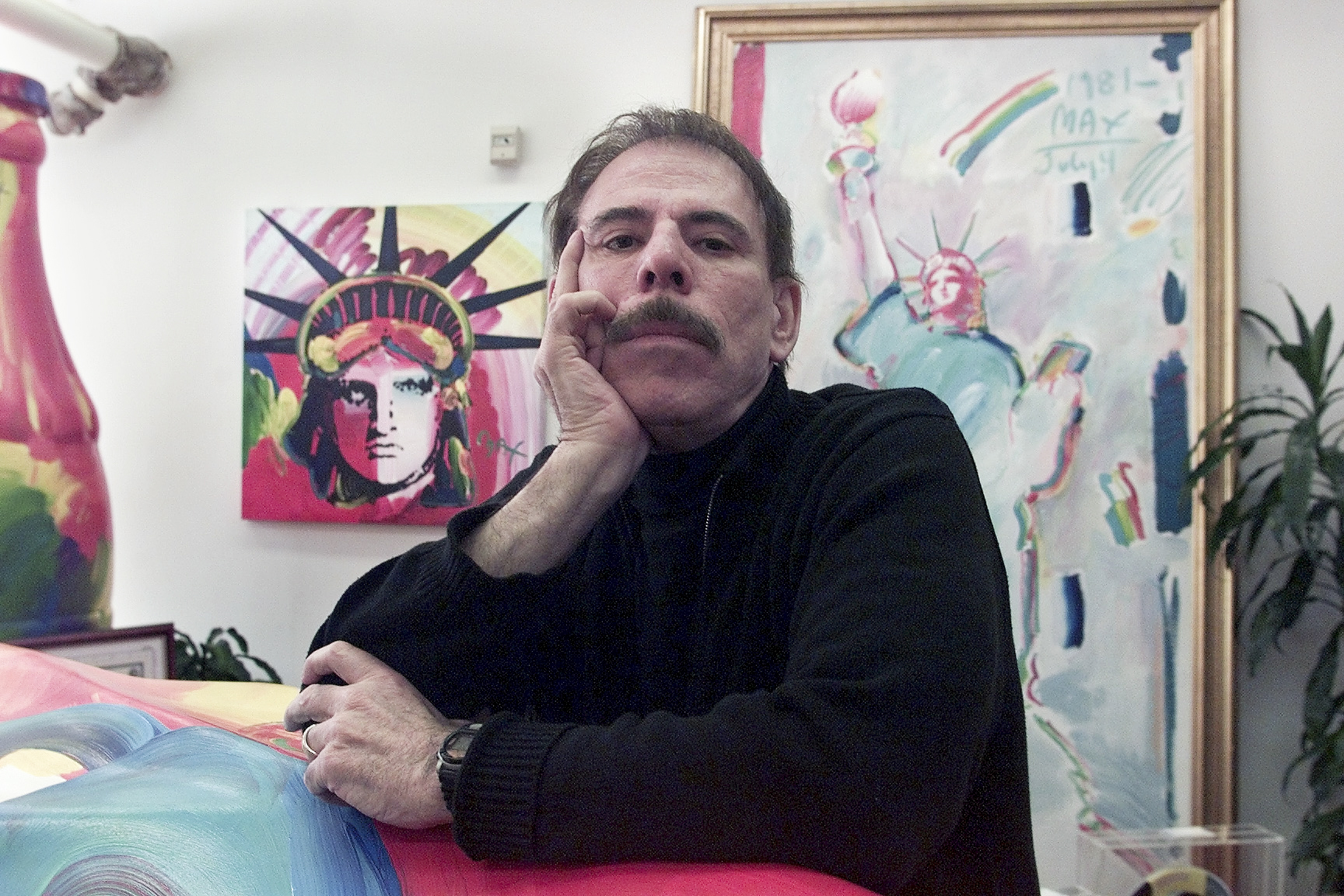
    NEW YORK — Peter Max, whose trippy posters of Day-Glo flowers, butterflies, rainbows, stars and planets sold by the millions and expressed the blissed-out exuberance of the countercultural 1960s, died Monday in New York City. He was 88.

    The death, at a hospital, was confirmed by his son, Adam Max. He had long suffered from dementia.

    Mr. Max, a vegetarian and a teetotaler who expanded his consciousness through yoga, not drugs, was one of the most visible and successful artists of his time, selling posters in the millions.

    His simple graphic images, brightly colored and infectiously happy, lent themselves to a long list of licensed commercial products, from sheets and glassware and shower curtains to airplanes and, on one occasion, a stamp for the Postal Service.

    Incorporating art nouveau, op art and psychedelic motifs, Mr. Max’s designs offered instant visual gratification and a cheery endorsement of the generational politics of love, joy and universal consciousness. His “panopticon” images repeated visual elements in tight formation, producing a kaleidoscope effect that recalled Easter mandalas.

    His “cosmic jumper,” a young man in bell bottoms traversing the globe in giant strides, became an emblem of modern youth, eager to explore the far reaches of inner and outer space. Barefoot and surrounded by puffy clouds and chubby birds, the jumper appeared on the 10-cent stamp commissioned for Expo ’74, the conservation-themed World’s Fair in Seattle.

    In The Universe of Peter Max, a memoir published in 2013, he wrote: “My cosmic art subjects were always euphoric: Himalayan sages levitating under a shower of flowers beside snowcapped mountain peaks; faces and flowers exploding into a symmetrical cosmic butterfly; mirrored lakes and waters with a cascade of stars and planets; flowers in perpetual states of organic growth, begetting blossoms. My inspiration came from the new youth movement in America and in return spoke to it.”

    Peter Max Finkelstein was born Oct. 19, 1937, in Berlin, where his father, Jakob, was in the import-export business and his mother, Salla (Zeisel) Finkelstein, had been a fashion designer before her marriage. With the rise of Nazism, the family moved to Shanghai, where Jakob set up as a pearl merchant. Peter attended an English-language school and spent much of his spare time talking to monks at the nearby Buddhist monastery.

    As the Maoist revolution gathered strength, the Finkelsteins moved again, this time to Haifa, in Israel, where Peter learned Hebrew and, infatuated with the stars and planets, took special courses in astronomy at the Technion, the Israel Institute of Technology.

    In 1953, the family emigrated to New York, settling in Bensonhurst, Brooklyn, where Peter attended Lafayette High School. He had taken private art lessons in Israel, and, at the urging of a classmate, signed up for summer classes at the Art Students League in Manhattan after high school graduation. Abandoning his rather vague plan to pursue astronomy as a career, he threw himself into art.

    Initially he painted as a realist, then dabbled in abstraction and finally concentrated on commercial art. Riverside Records gave him his first assignment, to design the LP sleeve for The Blues Piano Artistry of Meade Lux Lewis, released in 1962. His moody, vaporous portrait of Lewis at the piano won a gold medal at the annual exhibition of the Society of Illustrators.

    With Tom Daly, he formed a design company that quickly found favor with advertising agencies and book publishers. Within two years, Daly & Max Studio had collected more than 60 awards for its book jackets, album covers and other work, but Mr. Max, feeling constrained, left in 1965. For two years, he lived in virtual seclusion in his duplex apartment on Riverside Drive, turning out thousands of drawing and ideas.

    In 1967, he applied some of his new concepts to the Tin Lizzie in midtown Manhattan, a theme restaurant that he decorated with paisley wallpaper, photographic collages of Charlie Chaplin film scenes and an actual Model T Ford.

    His advertising posters for local shops began to attract special attention. Young customers called up the job printer, Security Printing Company, asking for a poster to hang in their rooms. Denton Stein, the company’s owner, went into partnership with Mr. Max to create Peter Max Posters, which sold 25 of the artist’s designs, in millions of copies, to book stores, head shops and department stores.

    As his popularity grew, Mr. Max began doing commercial posters for the American Cancer Society, the Peace Corps, and the United Nations. The 3,000 posters and 40,000 flyers he printed for a gathering in Central Park on Easter 1967 inadvertently gave the event its name. The words “Be In,” in large letters, followed by “Central Park on March 31,” were read as a noun, not a verb in the imperative mood.

    In 1968, a transit advertising company commissioned Mr. Max to design posters for buses, streetcars and subways in 10 major cities. “I am bringing art to the people where the people are,” he told Time magazine. “Now they don’t have to go to galleries and see paintings on a wall.”

    General Electric approached him to design a clock. He followed up with a line of linens for J.P. Stevens and shirts for Van Heusen. Through the half dozen businesses bearing his name, he entered into licensing agreements with more than 70 companies.

    “You provide the cash, the production and the selling,” he told Business Week in 1968. “I’ll furnish the ideas and the designs — and we’ll split the profits 50-50.” When Life magazine put Mr. Max on its cover in 1969, the headline read “Peter Max: Portrait of the Artist as a Very Rich Man.”

    Mr. Max was everywhere. He was not, however, involved with the 1969 Beatles film Yellow Submarine, often assumed to be his work, in part because he often took credit for it. The film’s art director was Heinz Edelmann, sometimes called the German Peter Max.

    By the 1970s, Mr. Max was in a rut. He shut down his studio and again went into seclusion. “I stopped cold,” he told People magazine in 1976. “I was repeating myself creatively. I had filled myself with being everywhere, doing everything. I had had it.”

    Gradually, he reemerged. For the American Bicentennial, he accepted a commission from the Swedish company ASEA to produce the book Peter Max Paints America, a collection of paintings and drawings honoring each of the 50 states.

    That same year, he produced a series of bilingual “Welcome to the United States” signs posted at more than 200 crossings along the Canadian and Mexican borders. Initially rejected by the Customs Service as implicitly endorsing the ’60s drug culture, they were finally put up in 1978.

    He designed the logo for MTV in the 1980s and the official poster for soccer’s World Cup in 1994. In 1999 he decorated a Boeing 777 for Continental Airlines to commemorate NYC 2000, the official millennium celebration in New York. In 2015, the Rock & Roll Hall of Fame commissioned him to do a poster for its annual induction ceremony.

    By then, he was already struggling with dementia. Yet the Peter Max brand flourished, boosted by the artist’s relationship with Park West Galleries, a Michigan-based company that sold Mr. Max’s work at cruise-ship auctions. Sales on a single voyage could reach $2 million, and in 2018, Mr. Max’s studio, ALP Inc. — named for its three owners, Peter Max and his two children, Adam and Libra — recorded a profit of more than $30 million.

    The artist’s production methods became the subject of widespread speculation. Friends reported that Mr. Max could no longer paint and merely signed his work, which was made, in prodigious quantities, by a small army of assistants.

    They were overseen by Adam Max, who was ousted from his father’s business in 2019 by his daughter, Libra Max, and the artist’s court-appointed guardian, who were concerned that Mr. Max was being exploited. Libra Max took over her father’s studio, fired many of his assistants and business associates, and set about restoring his reputation through galley and museum shows that showcased his earlier work.

    Mr. Max’s first marriage, to Elizabeth Nance, with whom he had two children, ended in divorce. In 1997, he married Mary Balkin, who was 30 years his junior and whom he randomly met on a Manhattan sidewalk a year earlier. “Hi, I’m Peter Max, and I’ve been painting your profile my entire life,” he reportedly said upon first seeing her.

    She died by apparent suicide in 2019, amid her husband’s worsening dementia and an extended legal dispute with her stepson over the handling of Peter Max’s art and wealth.

    Mr. Max is survived by Adam and Libra Max.

    For his legions of fans, Mr. Max would always remain an avatar of the 1960s counterculture in its happiest, most innocent phase. Whatever the year, and whatever the occasion, his work always breathed the spirit of the 1960s. When the De Young Museum in San Francisco organized an exhibition in 2007, the title said it all: “Peter Max and the Summer of Love.”

    “Just as The Beatles had the music, I had the images,” he told Crain’s New York Business in 2007. “Kids would buy the posters and look at them as they listened to the music. It was like their MTV.”

  • U.N.-backed experts cite possible U.S. war crimes in Iran strikes

    U.N.-backed experts cite possible U.S. war crimes in Iran strikes

    GENEVA — Human rights experts commissioned by the U.N.’s top human rights body say they have found “reasonable grounds” to believe the United States committed war crimes in two strikes in Iran, including on a school in the southern city of Minab. They also accuse Iran’s theocratic government of carrying out crimes against humanity against its own people in a report published Thursday.

    The report, while not binding, adds to international evidence gathered about crimes in the war in Iran, and could eventually be used in efforts to reach justice in international courts.

    The fact-finding mission on Iran, chaired by jurist Sara Hossain of Bangladesh, is made up of independent experts and was created in 2022 by the Human Rights Council, the U.N.’s top human rights body, which is based in Geneva.

    The experts were expected to present their findings on Monday to the council, which is made up of 47 U.N. member countries.

    The team says the U.S. launched ‘indiscriminate’ attacks

    The international fact-finding mission says its findings on U.S. war crimes center on a pair of U.S. airstrikes that killed at least 178 civilians, including women and children.

    At the start of the U.S.-Israeli war against Iran in February, at least one U.S. missile hit the Shajareh Tayyebeh school in Minab, according to an Associated Press investigation. There has been no final accounting of what happened.

    Iranian state media have said 168 people were killed in the strike, most of them children.

    “Following the United States and Israeli attacks on 28 February, the mission found reasonable grounds to believe the United States committed the war crime of launching indiscriminate attacks resulting in the loss of life or injury to civilians or damage to civilian objects,” a U.N. statement about the team’s findings said.

    The U.S. State Department did not immediately respond to a request from The Associated Press seeking comment.

    In their report, the experts concluded that “the building of the school was the intended point of impact” and the resulting damage wasn’t the result of an errant strike or collateral damage from an attack on a compound of Iran’s Revolutionary Guard next to the school.

    The Trump administration has yet to directly accept responsibility or release the findings of a Pentagon investigation into the school bombing.

    The U.N.-backed team based its allegations on two strikes — one involving Tomahawk missiles that hit the “clearly identifiable” school, and another in which Precision Strike Missiles dispersed tungsten pellets over a “clearly identifiable sports complex and residential area” in the southern city of Lamerd, also on Feb. 28.

    The U.N.-backed team said 22 civilian men and women were killed. U.S. Central Command has denied responsibility for the strike on Lamerd.

    Experts cite ‘crimes against humanity’ by Iran’s government

    The team found that killings by state security forces in Iran have occurred on a “staggering scale,” and civilians faced “gross human rights violations and crimes against humanity committed by their own government.”

    Iranian security forces carried out “violent repression” over the last two years by firing assault rifles into crowds, beating protesters and arresting healthcare workers, among other things, the team said. Detainees faced torture, and were deprived of legal counsel, leaving their families “in the dark” about their whereabouts, the experts said.

    The Tehran government intensified the use of the death penalty, and said more than 70 people – including five women and three boys – remain at “imminent risk of execution,” they added.

    “The report concluded that many of these gross violations amount to crimes against humanity — including murder, imprisonment, torture, and other inhumane acts committed as part of a widespread and systematic attack on civilians,” the statement said.

    Both the U.S. and Iran should provide reparations, they say

    The experts said the United States and Iran should halt all rights violations and crimes, and provide “full reparations to victims.”

    The report, built on a “victims-centered approach,” was based on interviews with 73 people both inside and outside Iran, along with documentation, satellite imagery, photographic and video material and information from “credible” organizations and experts, the experts wrote.

    The ongoing conflict that has driven people from their homes in Iran as well as an internet shutdown and a lack of full cooperation from the two governments partially impeded the team’s efforts to get information.

    Nearly three dozen requests from the experts for information from Iran’s government went unanswered, they said, as have requests in June to the U.S. government for information and meetings with officials.

  • House approves sweeping Russia sanctions bill, sending it to Trump

    House approves sweeping Russia sanctions bill, sending it to Trump

    WASHINGTON — The House on Wednesday passed a broad package of sanctions targeting Russian officials and key pillars of its economy as lawmakers look to deprive President Vladimir Putin of the financial resources needed to wage the war against Ukraine.

    The bill is named after the late Sen. Lindsey Graham of South Carolina, who spent more than a year negotiating it. The measure was approved in a 262-159 vote and now heads to President Donald Trump to be signed into law.

    The legislation represents the most ambitious effort to support Ukraine since Trump’s return to the White House and would break nearly two years of relative gridlock on the issue following a 2024 emergency aid package. Ukrainian President Volodymyr Zelensky has been pushing for the bill’s passage and made a direct appeal to senators shortly before they passed it last month.

    The measure sanctions Russian officials, banks and a shadow fleet of tankers that keeps Russian energy moving. It also directs Trump to impose up to 100% tariffs on the top five importers of Russian oil or natural gas, with an exception for countries that import less than 15% of Russia’s natural gas exports and have taken significant steps to reduce those imports.

    “These countries have a choice to make about whether they will continue to sustain Putin’s aggression,” Rep. Michael McCaul (R., Texas) said.

    Democrats are divided on the legislation

    Supporters said the tariff provisions are aimed at deterring China and India from purchasing Russian energy, but critics of the bill said they fear Trump will use the legislation to target allies in the European Union and elsewhere. Americans, they warned, would pay the price for such tariffs through higher prices at the cash register.

    “This president has always said he loves tariffs,” Rep. Gregory Meeks (D., N.Y.) said. “And we know the history of what he’s done with reference to tariffs to our European allies, and our allies everywhere.”

    Democrats were divided on the bill, despite overwhelming support in the caucus for aiding Ukraine. Rep. Steny Hoyer (D., Md.) told colleagues they can’t control what the president does, but they can stand up and declare where they are on the war.

    “If we fail to pass this bill, there will be cheers in the Kremlin and tears in Kyiv,” Hoyer said.

    But Rep. Don Beyer (D., Va.) predicted Ukraine supporters would come to regret voting for the bill.

    “Yes they will be able to say ‘we stood with Ukraine’ in the immediate aftermath,” Beyer said. “But when Donald Trump hits our allies with new tariffs and waives sanctions on Russia, the propaganda victory for Putin will be lasting, and the damage will be embedded in U.S. law.”

    Democratic leader Hakeem Jeffries of New York, speaking in opposition to the bill, said Democrats would continue to support the Ukrainian people until victory is won, “but this bill does not provide a path to secure that.”

    In all, 58 Democrats broke with Jeffries and voted for the bill, while 152 voted against it. Among Republicans, 203 voted yes while seven voted against it.

    Speaker Mike Johnson (R., La.) celebrated the vote and highlighted the additional tariff power it provides the president.

    “For too long, Putin has bankrolled this devastating war with money and resources from countries willing to look the other way, and today, that ends,” Johnson said.

    Getting Trump on board has been a long process

    Congress has struggled to ensure the flow of U.S. funding and munitions to Ukraine as Republican support for spending billions of dollars more on the effort has waned. Trump routinely derided the Ukraine aid while campaigning for the White House and insisted that, if elected, he would quickly end the war launched by Moscow’s February 2022 invasion.

    It took Graham essentially a full year to bring Trump on board with the Russia sanctions package. Eventually, Trump gave a nod to the bill after it included his push for a five-year extension of existing sanctions on Iran. Republicans speaking on the House floor in advance of Wednesday’s vote were overwhelmingly supportive of the package.

    Rep. French Hill (R., Ark.) acknowledged Democratic criticism that tariffs could be used aggressively on smaller U.S. allies, but said it was time to deliver a resounding message to the Kremlin: “End this war, get out of Ukraine, focus on rebuilding your shattered international reputation and your destroyed economy.”

    The Senate overwhelmingly passed the bill by a vote of 86-11 last month, but momentum slowed in the House. Republican leadership focused on other priorities, namely bills designed to put Democrats on defense going into the midterms. Meanwhile, a chorus of key Democratic lawmakers voiced alarm about the bill’s tariff provisions.

    Passage of the bill in the House came on the final day that the chamber is expected to be in session for votes before the Nov. 3 elections.

    After the vote, a group of Republicans and Democrats from the House and Senate celebrated the vote at a rare bipartisan press conference.

    Democratic Sen. Richard Blumenthal of Connecticut, who wrote the bill with Graham, said he hopes the sanctions will help force Putin to the negotiating table and end the war.

    “To Vladimir Putin — we have your number,” Blumenthal said. “And to Ukraine — you are not alone.”

    Leading up to the vote, Zelensky took to social media urging the House to pass the bill. He said during war it is sometimes better to “make a not-so-perfect decision than to do nothing.”

    “And this is a very important historical moment for the United States. The bill must be passed, voted on, and supported,” Zelensky said on X. “Beyond that, strong decisions from the U.S. Administration are important. Personal decisions by President Trump. I very much hope we will see that.”

  • Why RFK Jr. and Trump can’t be trusted on measles vaccine safety

    Why RFK Jr. and Trump can’t be trusted on measles vaccine safety

    A brouhaha recently broke out among Pennsylvania’s governor, the new head of the CDC, Health and Human Services head Robert F. Kennedy Jr., and various health agencies in the state about whether two infant deaths in Lancaster County, Pa., were caused by the measles. And now more measles-related deaths are further complicating the dispute.

    Two facts are important to keep in mind.

    One is that with a total of nearly 700 measles cases across 36 counties so far this year, maximum information from the Pennsylvania Department of Health about the deaths — particularly the deaths of the infants in Lancaster County — is needed in order to prevent further harm.

    And two, nothing the federal government has to say about measles is trustworthy.

    On Aug. 26, Kennedy told reporters, “We’re doing a better job than any country in the world at controlling the measles outbreak.” He made the same claim in congressional testimony earlier this year, arguing that measles is surging worldwide and the outbreak here is simply part of a global problem.

    It isn’t.

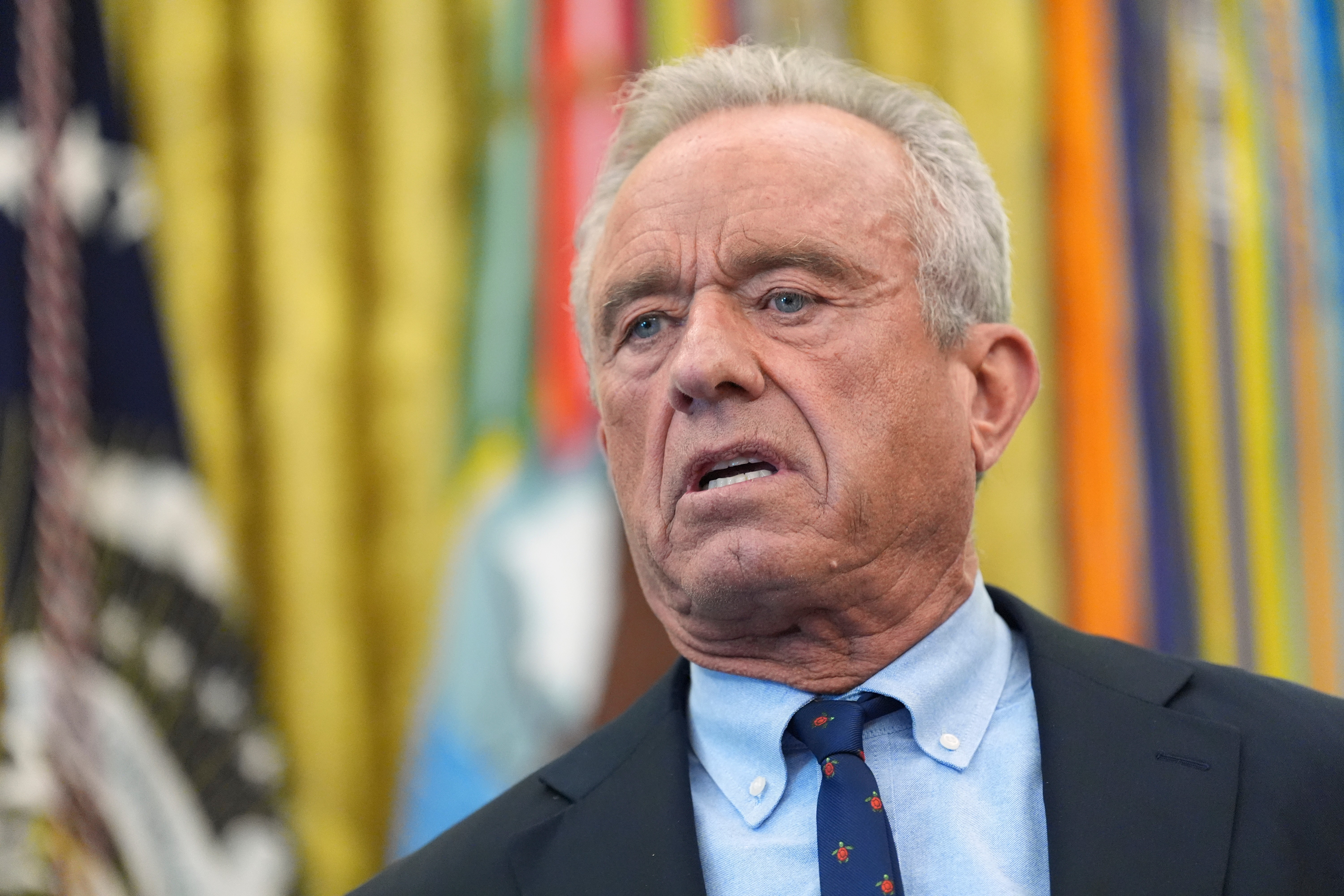
    Health and Human Services Secretary Robert F. Kennedy Jr. speaks during a meeting to sign an executive order about vaccines in the Oval Office last month.Jacquelyn Martin

    Kennedy is not telling the truth. His anti-vaccine efforts, along with President Donald Trump’s unhinged attacks on the measles, mumps, and rubella (MMR) shots — given in two doses to kids before entering kindergarten — have set off a 35-year high incidence of the disease in the U.S.

    What is causing the rapid return of measles is a never-before-seen decline in vaccination rates. This has led to an explosion in measles cases that is, contrary to Kennedy’s assertions, worse than in many other countries.

    Let’s look at the numbers.

    So what is going on elsewhere?

    The WHO European Region cut measles cases by 73% between 2024 and 2025. The U.S. saw an increase: 2,289 cases in all of 2025, and 3,294 already in 2026 — the highest number since 1991.

    Cases are falling in Canada and flat in the U.K. Furthermore, our rate of measles per million people is much higher than Japan’s or Australia’s.

    Why are we doing so poorly?

    Kennedy blames measles coming in from other nations. So does U.S. Rep. Byron Donalds, a Republican from Florida who is running for governor. He keeps pointing to “rampant illegal immigration” during the Biden administration for measles outbreaks.

    Those claims are based on misinformation and bigotry about foreigners.

    A total of 16 measles cases have been reported among international visitors to the United States, whereas 95% of U.S. cases this year are outbreak-associated — meaning they reflect domestic spread.

    Ninety-five percent of those cases occurred in unvaccinated or unknown vaccination status individuals.

    While some cases do have travel-related origins, the spread of measles is a domestic policy failure caused by falling vaccination rates. Other countries have tourists and immigrants, too — but only the U.S. is continuing to see rapidly increasing infection rates.

    Jessica Early holds a vial of the combination measles, mumps, and rubella (MMR) vaccine at Prisma Health Pediatrics in Greer, S.C., in March.Mary Conlon

    In the United States, kindergarten MMR coverage has slipped from 95.2% to 92.4%, with vaccine exemptions at a record 4.2%. In some states, the coverage is as low as around 75% — creating perfect conditions for the spread of the highly contagious disease.

    Our national leaders keep pouring inaccurate fuel on the epidemic.

    They suggest autism is a risk from the measles vaccine, that the combined MMR vaccine is lethally dangerous, that kids get too many shots, and that the MMR shot is losing efficacy every year. None of that is true.

    What is true is that measles is a dangerous disease that can cause seizures, immune problems, pneumonia, deafness, or contribute to deaths. Each case can cost as much as nearly $60,000, including the public health response.

    We can’t fight this preventable plague using incorrect data, misinformation, and outright lies. America’s kids deserve so much better.

    Arthur Caplan is a retired professor of medical ethics, soon to be moving to Medford, N.J. Samuel Howard is an undergraduate student at the School of Humanities and Sciences at Stanford University.

  • Carney embraces a proposal for Canada to become the European Union’s first associate member

    Carney embraces a proposal for Canada to become the European Union’s first associate member

    STRASBOURG, France — Canadian Prime Minister Mark Carney on Thursday embraced the prospect of his country becoming the European Union’s first associate member, saying closer ties with Europe were meant to ensure no country could control Canada’s markets, impair its sovereignty or undermine its freedoms.

    The remarks came after U.S. President Donald Trump suggested the proposed arrangement could be a “hostile act” and threatened heavy tariffs on Europe if he judged its intentions to be unfriendly.

    In a speech that repeatedly extolled cooperation between Europe and Canada, Carney told the European Parliament that he welcomed European Commission President Ursula von der Leyen’s proposal, unveiled Wednesday.

    He acknowledged that “associate membership” remains to be defined and outlined what he was proposing: deeper Canada-Europe integration across trade, defense, critical minerals, artificial intelligence, energy, space, research and financial services to make both sides less vulnerable to economic and geopolitical pressure.

    “I am not proposing a third bloc in order to become a great-power rival — only with better manners,” he said. “We do not seek power to dominate others.”

    Carney said the goal instead is to build Canada’s resilience so that no country can control its markets, undermine its sovereignty or dictate its choices.

    The prime minister received an ebullient welcome when he walked into the chamber, with many lawmakers approaching him to shake his hand and ask for selfies — and a standing ovation after he spoke. One parliamentarian had donned a Canadian hockey jersey.

    For generations, Canada built its economy around integration with the United States. Trump’s tariffs, demands for economic concessions and repeated talk of making Canada the 51st state have pushed Ottawa to reduce its dependence on the United States and seek a far deeper economic, security and political relationship with Europe.

    Europe offers Canada another path

    Von der Leyen proposed making Canada the EU’s first associate member — a status that does not currently exist in the bloc’s treaties and would have to be created. She said Europe wants to take its relationship with Canada to “the highest level possible.”

    Carney, sitting in the front row of the European Parliament chamber, nodded and rose to embrace von der Leyen as lawmakers gave the proposal a standing ovation.

    Von der Leyen said Canada and the EU should move beyond their existing free trade agreement and create an “Alliance for the Future” encompassing a “common prosperity and economic security space.”

    Carney will host EU leaders for a Canada-EU summit in Montreal on Oct. 29-30, where the two sides are expected to discuss the proposed new relationship in more detail.

    Canada sends roughly 70% of its exports to the United States, making it highly exposed to Trump’s tariffs. Ottawa has retaliated and rejected demands Carney says threaten Canadian sovereignty. Europe took a different path, shelving retaliation and accepting tariffs of up to 15% on most EU exports to the U.S.

    Carney has rallied ‘middle powers’

    Carney has repeatedly urged middle powers to resist that kind of economic coercion. At the World Economic Forum in Davos in January, he warned that when countries negotiate alone with a dominant power, “we negotiate from weakness. We accept what is offered.”

    Trump rebuked him the next day.

    Jonathan Wilkinson, Canada’s ambassador-designate to the EU, said Wednesday that Canada is not seeking full EU membership because that would require surrendering some sovereignty. Instead, Ottawa wants “to get as close as we possibly can” to Europe while increasing Canada’s independence.

    Exactly what associate membership would mean remains to be negotiated.

    Canada has already taken a major step. This year it became the first non-European country to join the EU’s 150-billion-euro ($173-billion) SAFE defense procurement program, giving Canadian companies access to joint procurement as Europe increases defense spending.

    The two sides have also discussed closer cooperation on energy, critical minerals, artificial intelligence and digital trade.

    “The policies and rhetoric of the Trump administration are clearly pushing both Canada and the EU to imagine a world without strong U.S. leadership and to act accordingly,” said Daniel Béland, a political-science professor at McGill University in Montreal.

    Nelson Wiseman, a professor emeritus at the University of Toronto, said Carney’s handling of Trump has heightened European interest in the Canadian leader.

    “Carney’s shrewdness in dealing with Trump has captured Europe’s attention,” Wiseman said.

    Washington will be watching

    Wiseman said Europeans have long regarded Canada as a country that understands the United States particularly well because of their deep economic and political ties. Carney’s willingness to resist Trump rather than quickly accept Washington’s demands has reinforced that perception, he said.

    Béland said Carney may avoid naming Trump on Thursday while leaving little doubt about the target of his broader argument.

    “He knows that, beyond Europe, the world will be watching, including the White House,” Béland said.

  • House passes bill taking aim at data center electricity costs

    House passes bill taking aim at data center electricity costs

    WASHINGTON — The House on Wednesday overwhelmingly passed a bipartisan bill that encourages state utility regulators to insulate consumers from rising energy costs tied to data centers, as members of Congress rush to address a voter outcry over the rapid advance of artificial intelligence.

    It was unclear whether the legislation, introduced by Reps. Gabe Evans, R-Colo., and Kathy Castor, D-Fla., would have its intended effect. The bill would direct state utility regulators to consider adopting federal rules requiring data centers to cover any higher costs associated with their large-scale power use. But under current law, Congress cannot force state regulators to follow federal standards when they are setting electricity rates.

    Still, as the boom in data center construction has become a potent issue in November’s midterm elections, lawmakers in both parties have been eager to have a legislative achievement that they could cite on the campaign trail. It would still have to pass the Senate and be signed by President Donald Trump before it could become law.

    Across the country, Americans in both parties are concerned about rising electricity prices and water use. Data centers, the large complexes of servers that are crucial to powering AI development, have become the most visible avatar of voters’ fears over the growth of AI and the power of big tech companies.

    That issue took on new political urgency this week, after concerns over the safety of AI emerged into wider view and key tech leaders began calling for a slowdown in the pace of development.

    Lawmakers in both parties have called on Congress to impose guardrails on AI, though there is no clear bipartisan consensus on how to do so, and Trump has rejected calls for regulation. Speaker Mike Johnson said Tuesday that he and the president would convene a meeting with AI executives at the White House next week.

    When asked about their plans to address the issue, some House Republicans pointed to the utility legislation, which does not address AI safety concerns. The measure mirrors a voluntary pledge that tech executives made at the White House this year, when they promised to shoulder a larger share of the energy costs associated with data centers.

    “It makes sure that the ratepayers are protected as you’re building out AI infrastructure,” said Rep. Steve Scalise of Louisiana, the No. 2 Republican. “That it’s got to be supported by the local community, and that it’s not going to adversely impact ratepayers.”

    Wednesday’s vote, 417-3, reflected the increasingly bipartisan nature of the data center backlash and a growing concern among Republicans that they are particularly vulnerable on the issue after their signature domestic policy bill included tax breaks that benefited developers of data centers. It also marked a turnabout from just a year ago, when almost all House Republicans backed a version of that measure that put a moratorium on any state regulation of AI, though the provision was later stripped by the Senate.

    With the House leaving town Wednesday until after Election Day, this week was lawmakers’ last chance to pass a bill showing they were responsive to voters’ concerns about data centers.

    Evans, who introduced the utility bill, is among the most politically vulnerable Republicans in the House. It is unclear whether the Senate will take up the legislation before October, when it is scheduled to recess until after November’s elections. Its version of the bill was put forward by Sen. Jon Husted, R-Ohio, who is in a competitive race in which Democrats have sought to make data centers a central issue.

    A poll conducted this month by The New York Times and Siena University found that 61% of voters said they opposed the construction of data centers and were about split on which party was better positioned to address it, with a considerable bloc saying they did not know which side to trust.

    When Republicans last year passed their sweeping tax and spending cut bill, they expanded significant tax advantages for businesses for research costs and new investments. They also adjusted a tax break program meant to encourage development in poorer areas so that it would incentivize more development in rural areas.

    Democrats have argued that those provisions have helped technology companies looking to build new data centers, and they have accused Republicans of being indifferent to voters’ worries that such construction is raising their electricity costs and changing their neighborhoods.

    “Unfortunately, these very real concerns are repeatedly swept to the sidelines, minimized or ridiculed by President Trump and Republican congressional leaders,” said Rep. Frank Pallone Jr., D-N.J.

    Some Republicans have argued that regulations on AI would hinder America’s ability to stay ahead of China in developing the technology. On the House floor, Evans presented his bill as a way to allow for data center development while ensuring that states had a mechanism to address implications for communities.

    The bill, he said, “keeps costs low for Americans and helps us build the energy backbone required to compete and win in the AI race.”

    This article originally appeared in The New York Times.

  • Our most fatal highway stretches | Inquirer South Jersey

    Our most fatal highway stretches | Inquirer South Jersey

    Good morning, South Jersey.

    Hundreds of people die on state highways every year. Based on fatal-crash data, an Inquirer analysis shows the most dangerous areas in South Jersey.

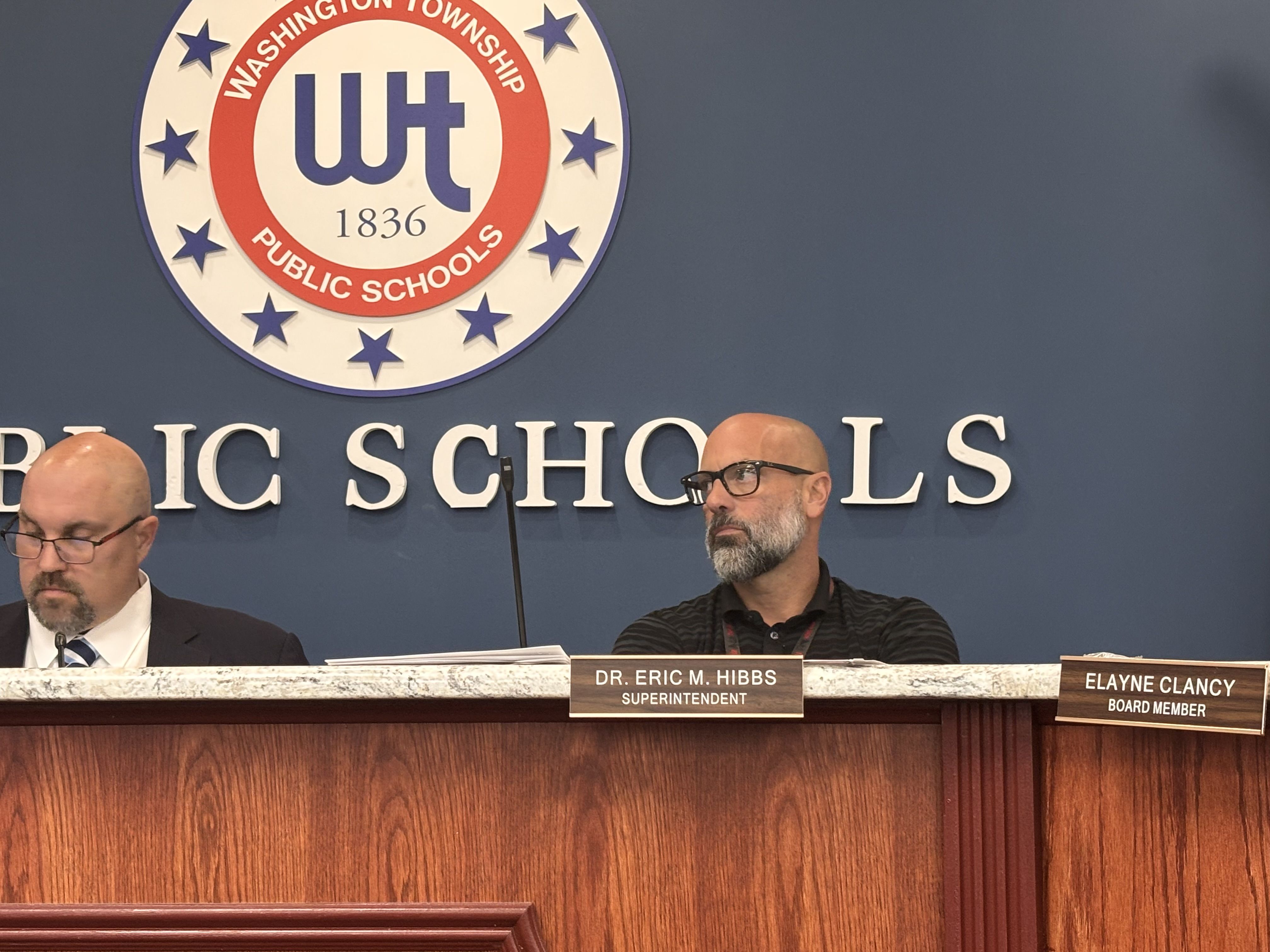
    And the Washington Township school board decided not to renew its contract with its superintendent — and denied his $27,000 merit pay for the fourth time.

    Plus, Clementon voters rejected a $13.5 million bond referendum, and more news of the day.

    — Taylor Allen (southjersey@inquirer.com)

    P.S. Send your questions about the region to Curious South Jersey. The answer could turn into a story and then show up in this newsletter.

    If someone forwarded you this email, sign up for free here.

    Digging into our region’s fatal-crash data

    A string of four crashes that killed five people on Route 55 this summer has inspired calls for safer highways.

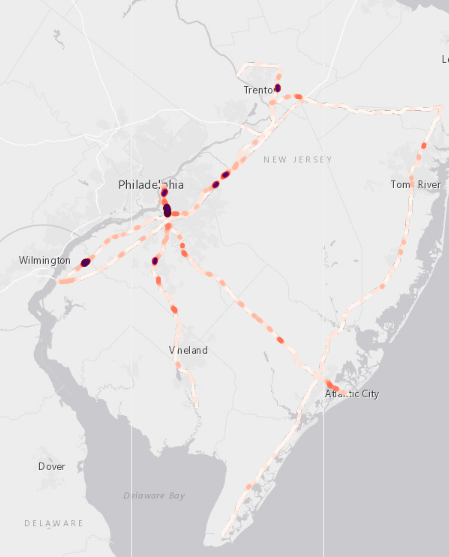
    After analyzing seven years of NJDOT data about 330 fatal crashes that led to more than 360 deaths across the region’s highways, the Inquirer found seven stretches that are particularly precarious.

    The area where I-76 meets Route 42 and I-295 in Camden County tops the list. Commuters, Shore-goers, and truck drivers traverse the intersection. Within a 1.3-mile stretch, it has the more deaths than any other corridor.

    Reporters Sarah Nicell and Lizzie Mulvey share more data, and the latest on the recent efforts to make highways safer.

    There won’t be a new contract for Hibbs

    Washington Township decided it will not renew its contract with schools Superintendent Eric Hibbs, after a 5-4 board vote this week.

    That means Hibbs, who has led the district since 2023, will be out after his current contract expires in June.

    The board also denied a motion to award him $27,000 in merit pay, the fourth time Hibbs requested the performance-based bonus.

    These decisions come after months of legal fights between the board and its superintendent.

    Meanwhile, he still has a pending whistleblower lawsuit against several members of the board.

    Reporter Melanie Burney provides a full recap of the meeting, as well as an overview of the contentious relationship among the school leaders.

    What to know today

    • Investigators in the Camden County Prosecutor’s Office are calling a Wednesday incident in which a brother and sister died in Pennsauken a murder-suicide.
    • Clementon voters rejected a $13.5 million bond referendum that would have raised property taxes to fund an early childhood center for preschoolers. Another vote in Cinnaminson for a referendum of $76 million is still too close to call.
    • The Pennsauken Township school district has agreed to pay $93,000 to settle a lawsuit alleging a school staffer uttered racial slurs to a Black middle school student, NJ.com reports.
    • The candidates running for Cherry Hill’s board of education in November agreed during a forum this week that funding for the school budget is among its biggest challenges, according to 70and73.
    • The students of a Lindenwold elementary school will pivot to remote learning at least through Monday after a fire damaged the building Tuesday night.
    • Warehouse construction on the site of a shuttered golf course in Chesterfield Township hasn’t started despite getting the necessary approval nearly two years ago.
    • The Athletes for Vets Foundation and UrbanPromise Camden will host an event in Camden on Friday to provide sneakers, backpacks, and school supplies to children. Derek Faulkner, former Eagle and founder of Athletes for Vets, leads the initiative.

    🗓️ The best things to do this week

    🏍️ Cruise Night: Start your weekend plans early with the season’s last Cruise Night featuring food trucks, a car show, and live music. ⏰ Thursday, Sept. 17, 5-8 p.m. 💵 Pay as you go 📍 Burlington City Waterfront Promenade, Burlington

    🎶 XPoNential Music Festival: The annual WXPN festival returns with headliners Dawes, Portugal. The Man, and Little Feat. South Jersey melodic rock quartet Te Vista will play on Friday. ⏰ Friday, Sept. 18-Sunday, Sept. 20, various times 💵 Various prices 📍 Wiggins Park, Camden

    🪲 South Jersey GreenFest: Throughout the weekend, families will get the opportunity to listen to educational discussions, try treats made of edible insects, see prehistoric fossils, and explore bug walks. ⏰ Friday, Sept. 18-Sunday, Sept. 20, various times 💵 Free/included with museum admission 📍 Edelman Fossil Park & Museum, Mantua

    See more event listings here.

    🧠 Trivia time

    Matt Cord, the longtime voice of the Sixers, is coming back for one final season. He retired in May after how many years as the public address announcer?

    A) 30

    B) 28

    C) 25

    D) 20

    Think you know? Check your answer.

    What we’re …

    🦅 Anticipating: Eagles-themed $1 mini art prints that will soon be available through vending machines at Lincoln Financial Field.

    🏀 Eyeing: The design of Jaylen Brown’s new 3D-printed shoes.

    💭 Wondering: What will the plot be for a third National Treasure movie?

    That should get you started for the day. I’ll catch you tomorrow. 👋🏽

    By submitting your written, visual, and/or audio contributions, you agree to The Inquirer’s Terms of Use, including the grant of rights in Section 10.

  • Reparations for a down payment | Real Estate Newsletter

    Reparations for a down payment | Real Estate Newsletter

    Charmira and Quincy Pilgrim had wanted to become homeowners for a decade. But saving money was impossible with a growing family, job losses, and jobs that didn’t pay enough.

    The Pilgrims were finally able to start saving at the end of last year and found a home they wanted to buy in West Oak Lane this spring. But they were thousands of dollars short for their down payment and closing costs.

    What finally turned their homeownership dream into a reality was an assist from a Quaker congregation in Germantown.

    Keep scrolling for that story and more in this week’s edition:

    • Downtown housing boom: Center City is a major driver for Philadelphia housing, with room to grow, report says.
    • Home renos gone wrong: A contractor who’s accused of defrauding homeowners in three local counties is a former South Philly cop with a history of citizen complaints and lawsuits.
    • Cozy but dated: This first-time homebuyer bought a “granny special” in South Philly.
    • Property revival: Peek inside this Doylestown property that has two homes.
    • Market update: Scroll to see what local homebuyers and sellers were up to last month.

    — Michaelle Bond

    If someone forwarded you this email, sign up for free here.

    Reparations for homebuying

    When Charmira and Quincy Pilgrim bought their home, the money they got to help cover their down payment and closing costs came from an unusual source.

    Most first-time homebuyer grants are funded by governments, mortgage lenders, or nonprofits. But the Pilgrims’ grant was funded by a group of Quakers in Germantown.

    Green Street Friends Meeting is helping Philadelphians become homeowners with $10,000 grants to overcome a common barrier to homebuying: the up-front cost.

    The grants are part of the congregation’s racial justice plan to redistribute wealth to Black residents in the Germantown area as a form of reparations.

    In 2021, Green Street pledged to spend $50,000 a year for 10 years as part of its reparations work. Members said they were spurred by a moral calling and the realization of just how much money the congregation had sitting in unrestricted reserves.

    Keep reading to learn more about the Quakers’ housing work.

    Center City drives housing

    Downtown is a hot spot for home construction in Philly.

    Two in five homes built in a recent 18-month period were built in greater Center City, according to Center City District, a business improvement organization.

    More than 4,000 homes were completed in greater Center City — defined as the area from Girard Avenue to Tasker Street and from the Schuylkill to the Delaware River — last year and in the first half of this year.

    Center City District says there’s still plenty of room to build a lot more homes on properties in the area. Parking lots, for example.

    Greater Center City remains a destination for newcomers and established Philadelphians alike. One in eight Philly residents lived there last year.

    Keep reading to learn why home construction in Center City matters for the rest of Philadelphia.

    The latest news to pay attention to

    Home tour: Two homes in Doylestown

    Nate Reuther has two homes on his 1.3-acre property in Doylestown: a purple Cape Cod that spans 1,200 square feet, and a tiny home in the form of a 13-by-6-foot tractor trailer.

    He lives in the tiny home when he rents the main house as an Airbnb for part of the year.

    Reuther has spent years renovating the house. He’s gutted most of the rooms, replaced the roof, and created a bedroom with a plant nook.

    Reuther is a landscape designer and built the garden behind the house from scratch. That included tearing down an existing deck and creating a sculpture garden.

    Beyond a meadow of native wildflowers sits the tiny home, which Reuther picked up from a Camping World store in Virginia.

    Peek inside the property Reuther revived.

    📊 The market

    In August, homebuyers in the Philly region had more choices than last year. New home listings and the overall supply of homes on the market were up.

    But those increases didn’t do much for sales or affordability, especially since mortgage interest rates “have remained persistently high this summer,” said Lisa Sturtevant, chief economist at the multiple listing service Bright MLS.

    “With home prices still rising in most markets, some homebuyers are simply hitting an affordability ceiling,” Sturtevant said in a statement. “Others are waiting for more certainty in both the economy and the housing market.”

    In the Philadelphia metro last month, according to Bright MLS:

    🔺The median sale price was $425,000 — up about 5% from the same time last year.

    🔻New pending home sales were down 3% from last year.

    🔺The market added 6,500 new listings, up roughly 5% from last August.

    🔺The number of active home listings was up about 14% from the same time last year.

    📷 Photo quiz

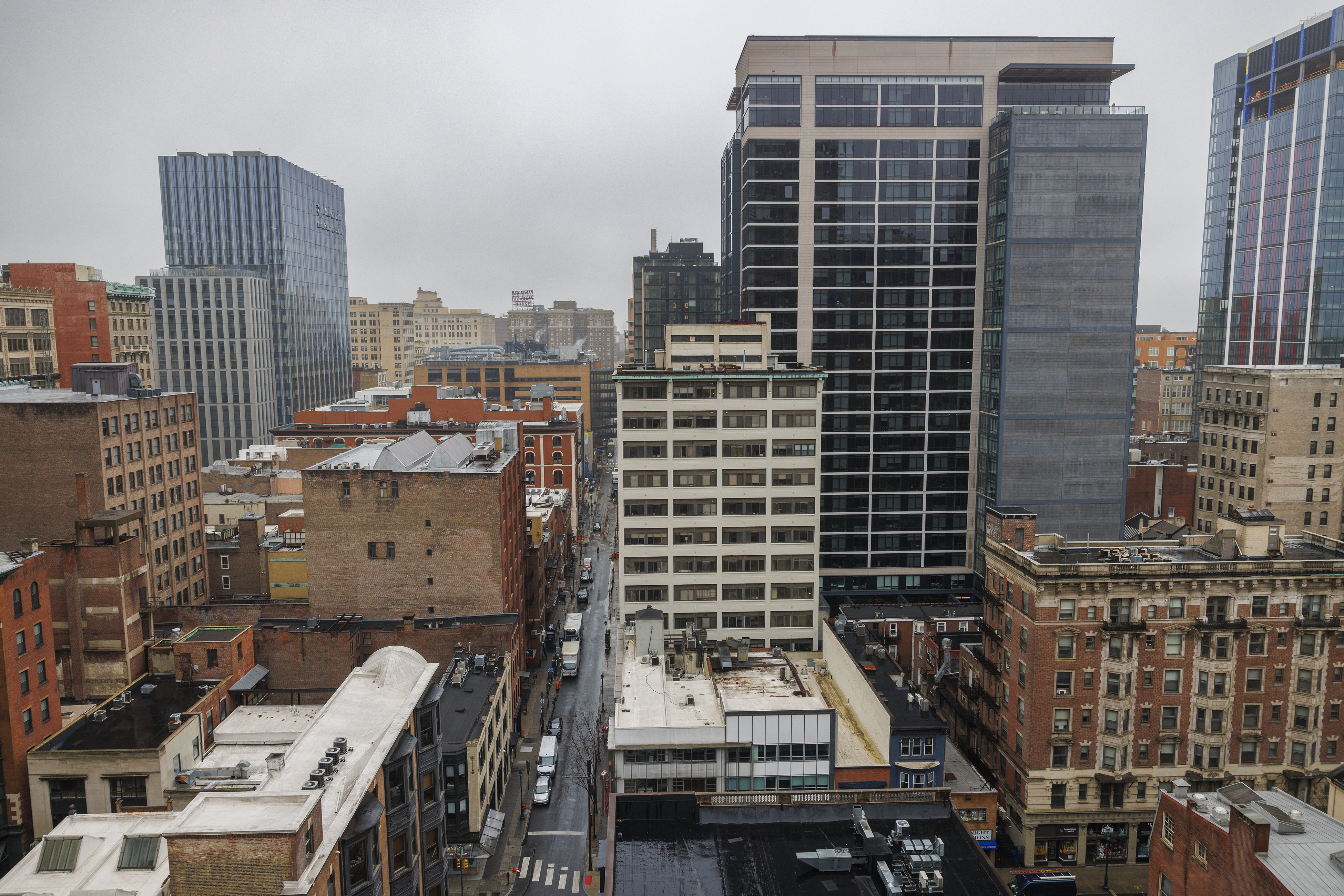
    Where was this photo taken?

    📮 If you think you know, email me back.

    A lot of you were confident but wrong in your answers to last week’s photo quiz. I wasn’t trying to trick you, but two neighboring buildings on the Parkway do look similar.

    The quiz featured a photo not of the Free Library but of the former Family Court building.

    Shout-out to Jay S. and Susan T. for knowing that. As they noted, the building has been empty for a while, and several plans for redevelopment have fizzled.

    ―

    A project that actually happened was the construction of the Philadelphia Ballet’s new home on North Broad Street. The organization is celebrating the grand opening over the next three days.

    But architecture critic Inga Saffron says she’s frustrated with the new building. She said the ballet has repeated “the architectural mistakes of an earlier generation of cultural venues.”

    Keep reading to see what she means.

    And enjoy the rest of your week.

    By submitting your written, visual, and/or audio contributions, you agree to The Inquirer’s Terms of Use, including the grant of rights in Section 10.