Blog

  • Trump wants smarter computers, dumber people | Will Bunch Newsletter

    Occasionally, I get to share good news in this space. Wu Shaoping — the Chinese dissident who fled to America but was detained by U.S. Immigration and Customs Enforcement after a Central Pennsylvania traffic stop — was freed from ICE’s Moshannon Valley Processing Center Friday night, not long after my column dropped and a couple of members of Congress pressed for his release. His asylum case is still pending. I’ve learned there’s actually a lot more to this story — stay tuned.

    If someone forwarded you this email, sign up for free here.

    The Trump regime is shifting billions from college into AI. That’s no accident.

    People take photos near a John Harvard statue on the Harvard University campus in 2024 in Cambridge, Mass.Steven Senne

    The U.S. government has become pretty stingy when it comes to finding money for human beings — just ask any struggling single mother in Mississippi needing food stamps, or a physician in Africa waiting on vaccines that no longer arrive through American foreign aid programs.

    But Washington always seems to have an open wallet for computers.

    In fact, the very first one — ENIAC (Electronic Numerical Integrator and Computer), constructed right here in Philadelphia on the University of Pennsylvania campus as World War II came to an end — was funded by the U.S. Army Ordnance Corps at a cost of about $7 million in today’s dollars. Over the years, billions of dollars in federal funding would fuel key moments in the Computer Age, including the creation of the internet, which was also a Pentagon project.

    Still, there was something chilling about last week’s report from the White House Office of Science and Technology Policy that called for a surge in research aid in one area: computers and robots using artificial intelligence, or AI. The nuts-and-bolts of the paper — “Science: A New Golden Age” — highlighted a new, more-than-$5 billion commitment for an AI-in-science program called the Genesis Mission.

    But the White House paper also called for a radical shift in the way the federal government pays for science, with a massive move of $200 billion away from funding research and basic science at top universities — the system that has thrived since the time of ENIAC — and toward individuals and more directly applied AI projects, including those at private tech companies.

    Goodbye, John Harvard. Hello, Claude.

    “This plan raises profound concerns about the future of publicly funded science,” the top union leaders for educators — Todd Wolfson of the American Association of University Professors (AAUP) and Randi Weingarten of the American Federation of Teachers (AFT) — said in a joint statement last week. “It does nothing to make anyone healthier or safer, and it isn’t what Americans want.”

    Wolfson, Weingarten, and other critics of the new science scheme from the Trump regime say it unravels long-standing protections for academic freedom and transparency on campuses in favor of a process that’s ripe for political interference. “This is a defining moment for American science,” the educators wrote.

    Indeed, while the federal funding gains for AI are still mostly theoretical, the cuts for research projects on college campuses across the United States have been underway since Donald Trump took office in January 2025, and the impact has already been dramatic.

    The playing field is complex, but a recent deep analysis by the Brennan Center for Justice found that the Trump administration successfully froze about $3 billion in previously approved grants for scientific research, is imposing a scheme to slash an additional $4 billion, and issued a budget proposal calling for a whopping $44 billion additional reduction.

    The analysis noted that “these midstream freezes and cancelations have ripple effects far beyond the nominal dollars involved, prompting layoffs, interrupting careers, and destabilizing the budgets of research universities.”

    Of course, federal research grants have been just one front in the Trump regime’s much wider war against the basic foundations of higher education in America, with the MAGA movement seeing college campuses as bastions of liberal indoctrination that should be restored as narrow, beer-drenched pipelines for ambitious white men. This “war on woke” includes attacks on university diversity programs, steep barriers for international students, and the abandonment of college debt relief.

    But now it feels like the White House is stating the quiet part out loud: The bigger goal is simply to build smarter computers, even if that means humans get dumber. Intelligent robots still don’t vote in elections, after all, but poorly educated people do.

    Ironically, the regime’s rationale for spending our tax dollars on making AI more powerful regurgitates a Cold War mentality that, on the surface, sounds like the reasons behind decades of massive college research funding and programs like the space race of the 1960s or the nuclear arms buildup: to stay one step ahead of the communists — this time in China.

    The difference between then and now is that after World War II, Washington made a conscious effort to fund basic science and free inquiry as a way to distinguish the United States from the rigid planned economy of our then-biggest adversary, the Soviet Union. Now, the White House seeks to copy Beijing’s centralized planning. Can we truly promote science without lifting up the actual scientists?

    Trump’s “Golden Future of Science” feels more like an extremely narrow wind tunnel. The irony is that many of today’s politicians in both parties see higher education as mainly workforce development, even as corporate recruiters say what they really want are more broadly educated critical thinkers. In other words, the AI era actually screams out for a boost for the humanities like literature or philosophy — the types of majors that are getting crushed in the Trump era.

    An epic battle is looming between those obsessed with a new nuclear arms race around AI — especially the Silicon Valley billionaires who stand to gain and who, not coincidentally, have heavily funded the second coming of Trump — and a public that doesn’t want our communities ruined by noisy, energy-guzzling data centers that aim to take away our jobs while making reading a lost art.

    A government scheme to build better computers while rendering humans obsolete used to be the stuff of dystopian science fiction. Maybe we can keep it that way before it’s too late.

    Yo, do this!

    • About once a year or so, I write, “Yo, actually maybe don’t do this.” Last weekend, I ventured out of my underground lair to join every other American in devoting three hours to Christopher Nolan’s The Odyssey. To say I was underwhelmed would be, well, an understatement. The movie was a funeral for the now totally lost art of movie dialogue, amid a plot that meandered from gouge-your-one-eye-out boring to bursts of incomprehensible violence. It was a metaphor — Troy was My Lai, apparently — that got terribly lost at sea. But I do feel there’s something happening here. First the World Cup, now this mediocre whale of a motion picture: Americans are desperate to be a part of something, anything, that is bigger than our politics.
    • Regular readers know I’m a huge fan of the CNN modern history documentaries they now call the Decades Series, but the original format of politics, TV, and music did have gaping holes. A few years ago, they backfilled with a series on The Movies of our post-World War II world. Now, finally, Decades in Sports arrives on CNN with back-to-back episodes (presumably the 1960s and ‘70s) on Sunday night at 9 p.m. I can’t wait. Spoiler alert: Havlicek stole the ball.
    • Another thing you may have noticed is that Rep. Ro Khanna, who meandered west after Council Rock High School in Bucks County and became the congressman from Silicon Valley, is something of a friend of the newsletter. He’s back in our area frequently, and he’ll be at Philadelphia’s Parkway Central Library on Tuesday at 6 p.m. to deliver a special speech: “America at a Crossroads: A Vision for the Future on our 250th Anniversary.” He’ll talk about his background growing up here as the son of immigrants and the need for economic freedom that ends gross corruption and inequality — go check it out.

    Ask me anything

    Question: Who should be DNC [Democratic National Committee] chair? And does it matter? — Martha (@marthagrant.bsky.social) via Bluesky

    Answer: It does matter. Despite everything else that’s happening in the world right now, one of the more revealing stories of the last week was the New York Times article about Democrats in disarray, focusing on embattled DNC chair Ken Martin, who before the 2024 election was the state leader in Minnesota. Under Martin, the party is sliding deeper in debt, and there are complaints about an abrasive personal style, the botched “autopsy” of the 2024 election, and the Democrats’ muddled message. A change should be made as soon as possible. Hopefully, party leaders could rectify the mistake of not picking Wisconsin’s more skilled ex-party chief, Ben Wikler. The problem is that, under the constant assault of GOP fascism, Dems need to fix this plane while it is flying at 37,000 feet.

    What you’re saying about …

    There was an excellent response to last week’s question about what a future Democratic president should do on Day One to erase the stench from two Donald Trump presidencies. I wish I could reprint all the suggestions, but recurring themes included a rapid purge of any Trump holdovers, abolishing ICE and related immigration raiders, and a speedy effort to prosecute the many wrongdoers. The two most frequent suggestions included major reform of the judiciary, from fixing the mangled immigration courts to ethics reform, and definitely an expansion of the U.S. Supreme Court. Mark Cohen suggested two more federal appeals courts and then “assign a Supreme Court justice to each one, bringing a total of 13 justices to the Court for fixed term of 18 years.” Another theme was erasing Trump’s various renovations to the District of Columbia. The ex-congressman Joe Hoeffel wrote, “Strip all the cheesy gold out of the Oval Office.”

    📮 This week’s question: Speaking of Democrats, some top party officials like House Minority Leader Hakeem Jeffries seem to think the November election is primarily about “affordability.” That seems to miss the bigger moment, but I’m curious: What pithy message would you like to see Dems run on this fall? Please email me your answer and put the exact phrase “Democratic message” in the subject line.

    Backstory on the Gen Z revolution rocking India
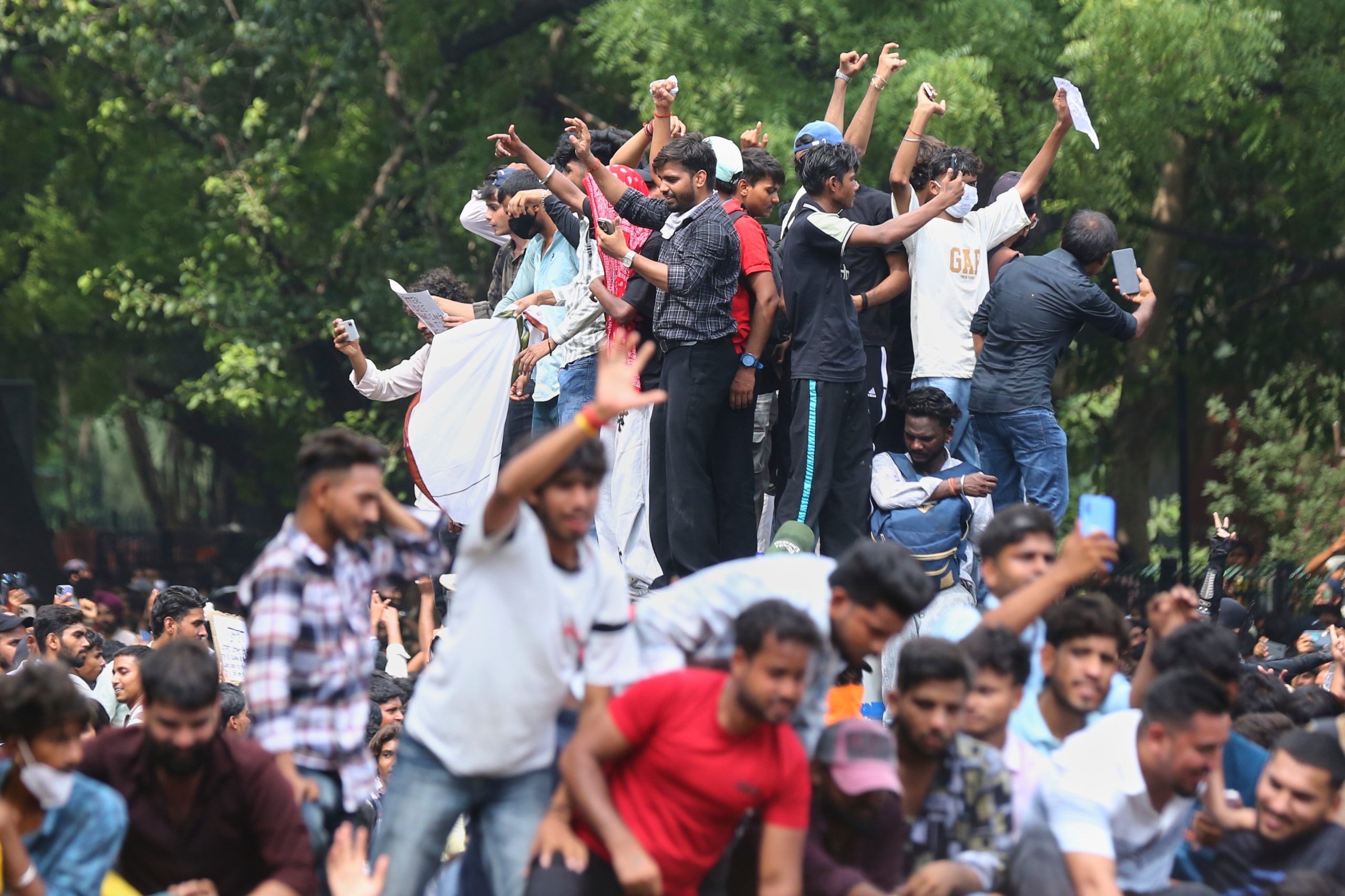
    Protesters participate in a demonstration demanding educational reforms as part of the Cockroach Janta Party’s ongoing protest movement in New Delhi on July 25.Vipin

    Last October, I wrote a column, with great interest and enthusiasm, about a growing revolution of Gen Z 20-somethings that was taking place across the global south — from Madagascar to Peru to Nepal, and elsewhere — who were fed up with the political corruption of grown-ups and threatening to topple governments. I wondered if this very online youth activism might spread to the United States or other more developed nations, but over the coming months, the momentum for these protesters and their Japanese anime pirate flags seemed to fade. The so-called Gen Z revolution looked like a historical footnote.

    But it turns out that the embers of youth unrest were still smoldering, and this summer they have reignited in a big way in the world’s largest — if deeply flawed — democracy: India. And as is so often the case, the spark was something nobody saw coming: a nationwide exam for entrance to medical school taken by roughly two million students, which the government moved to scrap after allegations that some of the questions had leaked. Some young people who’d studied for months for the exam took to the streets in protest, and — as so often happens — a repressive police response only caused these demonstrations to get bigger. So did a comment from India’s chief justice, who described young, unemployed Indians as “cockroaches.”

    That gave the protests a name when Abhijeet Dipke, a 30-year-old graduate of Boston University, posted on the social media platform X that he was starting the “Cockroach Janta Party” — a wordplay on the Indian authoritarian-minded leader Narendra Modi’s Bharatiya Janata Party. Incredibly, this “CJP” has seen its protests — calling successfully for the resignation of the education secretary and for other deeper reforms, using tactics such as sit-ins and hunger strikes — spread to some 30 cities while clogging the streets of the capital, New Delhi. The movement has become arguably the biggest threat to Modi’s strongman rule since the leader’s ascension in 2014.

    All of which raises the same question I posed last fall: Could it happen here? In one sense, it already has. On Friday, about 500 Indian students and other members of the U.S.-based diaspora gathered under a statue of Mahatma Gandhi in Manhattan’s Union Square to express support for the “cockroaches” of their native country. Meanwhile, the kind of pressures that caused India’s youth to erupt — government meddling in higher education, diminished job prospects in a time of rising AI, to name two — are also found in the United States. Young people almost never protest over the same stuff that riles up their parents, as shown by the gray hairs that have populated the No Kings rallies against Donald Trump. When lightning strikes, it will probably be something as unexpected as a college entry exam. But thunderstorms are definitely in the forecast.

    What I wrote on this date in 2019

    A culture of death permeates the Donald Trump regime, from the doomed fishing boats of the Caribbean to an Iranian girls’ school to the scores now dying in immigration detention cells. But this is not exactly new. The seeds were planted in the first Trump presidency, when his attorney general, William Barr, led a push to revive the death penalty for federal prisoners in a big way. On July 28, 2019, I asked: “What took the American Caligula so long to bring back the spectacle of executions to electrify the masses (but not the prisoners … they’d be lethally injected) and juice his 2020 reelection campaign? Indeed, the five executions are scheduled around the Christmas holiday, presumably to remind us of its pagan roots.”

    Read the rest: “The cruelty is the point as AG Barr, Trump return to death penalty barbarism.”

    Recommended Inquirer reading

    • In 2026, I’ve been very focused on the individuals whose world has been turned upside down — or, in some cases, ended prematurely — by the horrors of life in these authoritarian United States. Last week, I took a deep dive into the story of Wu Shaoping, a Chinese dissident who fled his likely detainment by Xi Jinping’s regime and made it to Pennsylvania with his wife and teen daughter, only to get arrested at a traffic stop, turned over to U.S. Immigration and Customs Enforcement, and detained. The outcry may have had something to do with ICE’s release of Wu shortly after the column ran. Over the weekend, I wrote about the police killing of Corey Ruiz in Madison, Wisc. — noting that the shootings of civilians by cops have only increased since the massive George Floyd protest marches of 2020. I urged an end to the new numbness about police violence in America.
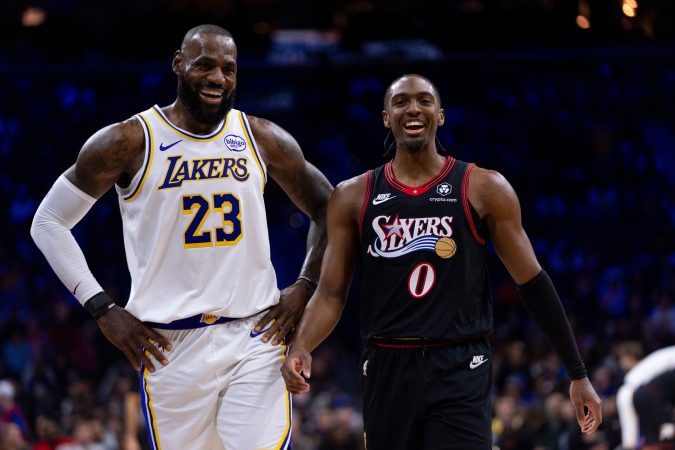
    • You didn’t really think I could make it all the way through the newsletter without mentioning the face that launched 1,000 hot takes: basketball king LeBron James. He stunned not just the sports world but America’s founding city by announcing Friday that he is taking his aging but still considerable talents to South Philadelphia, hoping to grab one last title with a completely revamped 76ers. Has there been any other story since then? The Inquirer has told you about the first time James played at the Palestra, his new uniform (No. 23), the speculation over how he will (or won’t) gel with the rest of the Sixers, the speculation over where he might live, his relationship with Tyrese Maxey and Joel Embiid, and on and on and on. Just wait until he actually takes the court this fall! Actually, don’t wait. Subscribe to The Inquirer today, slam dunk the paywall, and read every story from now until the hoped-for parade down Broad Street.

    By submitting your written, visual, and/or audio contributions, you agree to The Inquirer’s Terms of Use, including the grant of rights in Section 10.


  • Trump wants to use the FCC to silence Philadelphia’s 6abc. We must reject this attack on the First Amendment.

    Trump wants to use the FCC to silence Philadelphia’s 6abc. We must reject this attack on the First Amendment.

    A pending FCC broadcast license review now targets eight ABC television stations owned and operated by the Walt Disney Co. — among them WPVI Philadelphia, known to most viewers as 6abc. It has been said that “all politics is local.” Here in Philadelphia, this truism has applied with growing frequency to clear and present threats to the First Amendment — recently in our public parks and monuments, and now on our airwaves.

    In 1934, years before the advent of commercial broadcast television, the Federal Communications Commission was established by an act of Congress to help govern the burgeoning American radio industry.

    Among its roles, the FCC now regulates the granting of broadcast licenses, controlling which television stations can or cannot access a finite spectrum of public airwaves. Both by law and by long-standing precedent, broadcast license review is typically an independent, pro forma exercise. Before the current administration — under 14 previous presidents, seven Democrats and seven Republicans — the television licensing process had been largely nonpartisan, and operated in the public interest.

    In fact, the need for broadcasters using public airwaves to operate broadly in the public interest is the very definition by which the FCC is meant to grant television station licenses. The FCC is required to renew a broadcast license if it finds that “the station has served the public interest, convenience, and necessity.” Philadelphia’s 6abc and its 55-year-old Action News programming embody this principle.

    Unfortunately, under President Donald Trump, the FCC has become — unabashedly — a partisan attack dog rather than the guardian of the public interest.

    On May 29, the FCC launched the first stage of a potential challenge to the licenses of ABC-owned and operated stations around the country, including 6abc, Philadelphia’s leading local news broadcaster and a strong pillar of our community. The FCC ordered eight ABC stations — in New York, Los Angeles, Chicago, Houston, San Francisco, Raleigh-Durham, N.C., and Fresno, Calif., as well as Philadelphia — to submit renewal applications years before their original renewal dates, which range from 2028 to 2031.

    This is just one of many fronts in a long-running battle between the Trump administration and a broad array of independent media that has cost the American news industry time, money, and, too often, operating independence at a moment of extraordinary need for a free press. The challenge to ABC broadcast licenses has its most recent origins in the political harassment of late-night talk show host Jimmy Kimmel and the daytime program The View, each periodically critical of the president and other government officials on both sides of the aisle.

    FCC Chairman Brendan Carr is the administration’s front man in the ABC case. Carr, you may recall, tried to intimidate ABC, its affiliate stations, and Kimmel some months ago, referring, like a mob boss, to “doing it the easy way or the hard way.” This license renewal harassment, which will cost Disney shareholders millions in legal fees, is presumably the “hard way.”

    By law, the government’s filing allows public comment for either renewal or denial of ABC’s licenses. You can make your views known, quickly and easily, here: FCC Submit an Express Comment. Responses to the request for comments are due by Wednesday.

    We in Philadelphia know that 6abc is an especially inappropriate target for accusations of not operating in the public interest. The station is a longtime ratings leader for news programming serving a geographically broad and politically diverse footprint. It has, for decades, produced consumer interest, investigative news, and community-oriented programming that speaks truth to power of all stripes.

    At the Lenfest Institute for Journalism, of which I am chief executive, we have worked with 6abc on nonpartisan election coverage (Every Voice, Every Vote) and on fundraising for Philadelphia-area residents in need (Philly Gives). Executives at 6abc have always offered their help, their production skills, and their unrivaled broadcast audience for free — in the public interest.

    This month, we celebrated America’s national freedom and independence, born here in Philadelphia. Let it not be a summer in which Philadelphia’s leading local television broadcaster is, with impunity, threatened with the loss of its right to broadcast freely and independently.

    Jim Friedlich is CEO and executive director of the Lenfest Institute for Journalism, the nonprofit, noncontrolling owner of The Inquirer. @jimfriedlich

  • The Philly region is under a flood watch Tuesday and Wednesday with strong storms expected

    The Philly region is under a flood watch Tuesday and Wednesday with strong storms expected

    With over a half-foot of rain measured already, what has been Philadelphia’s wettest month since March 2024 is very likely to become significantly wetter.

    The National Weather Service has posted a flash flood watch effective from 8 a.m. Tuesday until 2 p.m. Wednesday for rain totals up to 3 inches, with downpours of 1 to 2 inches an hour possible.

    The national Storm Prediction Center on Tuesday morning listed a 15% chance of severe storms, those with wind gusts approaching 60 mph, for the entire region, with an outside shot of tornadoes. The Weather Prediction Center has a 40% chance of flooding downpours.

    Some appetizers — localized downpours — popped up Monday afternoon, prompting flood warnings for Philly and neighboring sections of Montgomery County, and parts of Gloucester and Atlantic Counties in New Jersey.

    Floodwaters swamped downtown Hammonton, Atlantic County, with “numerous” cars stranded on the roads, the weather service reported. The Pennypack Creek in Northeast Philly crested above “minor” flood stage.

    Moth-ball-size hail pelted Chestnut Hill, and hail twice that size was sighted in Williamstown, Gloucester County, and in the vicinity of Washington Crossing State Park on the Jersey side of the Delaware River.

    Storm coverage on Tuesday is expected to be far more extensive, and potentially more disruptive, with a “few tornadoes” possible, the weather service warned.

    Storm activity is likely to linger into Wednesday, said Mike Lee, meteorologist in the weather service’s Mount Holly office, with more showers in the forecasts for Thursday.

    What time the storms will arrive in Philly

    Late July still is very much the lottery-ball season for damaging downpours, and that again likely will be very much in evidence this week. Rainfall totals in the last 30 days have ranged from 137% of normal in Gloucester County to 79% of normal in Montgomery County, according to the Middle Atlantic River Forecast Center.

    Thunderstorms are possible as early as midmorning, but expect “repeated rounds” during the afternoon, said Matt Benz, senior meteorologist with AccuWeather Inc.

    The highest probability for severe storms, those with wind gusts near 60 mph, would be in South Jersey and Delaware, although they could nose into Philly, said the weather service’s Lee.

    The storms could continue well into the night, and additional rains are expected Wednesday afternoon.

    The rain totals again are likely to vary widely; however, a general 1 to 2 inches is expected across the region.

    Whatever happened to the drought?

    It hasn’t gone anywhere — yet.

    All of New Jersey and Chester County remain under state-declared drought warnings. In the latest interagency U.S. Drought Monitor update, conditions in the entire region remain from “abnormally dry” to severe drought.

    All that may change by week’s end.

    Through Sunday, officially 6.37 inches of rain habr been measured at Philadelphia International Airport this month. That is the highest monthly precipitation total since March 2024.

    July’s rains have ended a run of 16 straight months of below-normal precipitation in Philly.

    Said Benz: “It’s an old saying that all droughts end on a flood. That’s kind of what we’re seeing right now.”

  • Lawmakers mourn Lindsey Graham ahead of his funeral at Washington National Cathedral

    Lawmakers mourn Lindsey Graham ahead of his funeral at Washington National Cathedral

    The body of Sen. Lindsey Graham (R-South Carolina) arrived at the Capitol in Washington on Tuesday morning following his sudden death on July 11, as lawmakers from both parties gathered to commemorate his life.

    The ceremony in the Capitol Rotunda kicks off two days of mourning for Graham, who died at 71 after three decades in Congress, including more than 23 years in the Senate. A team of military body bearers brought his body into the Capitol in recognition of Graham’s service in the Air Force.

    A funeral service at which President Donald Trump is set to speak is scheduled Tuesday afternoon at Washington National Cathedral.

    Fox News host Sean Hannity and Emillie Roberts, one of Graham’s nieces, are also expected to speak at the funeral. Tony Perkins, a politically involved pastor who leads the Family Research Council; Marjorie Dannenfelser, a prominent antiabortion activist; and the Rev. Franklin Graham are scheduled to give readings.

    A second funeral service will be held Wednesday in Columbia, South Carolina, with a procession from the State House to First Baptist Church. Graham will be buried in a private ceremony in Pickens County.

    The Senate is preparing to take up legislation that Graham had championed to impose new sanctions on Russia and its allies to help Ukraine in its war effort. Graham worked for more than a year to pass the bill and announced the day before he died that the White House had agreed to support it.

    Sen. Darline Graham (R-South Carolina), Graham’s sister, whom South Carolina Gov. Henry McMaster (R) appointed to replace Graham in the Senate, introduced a revised version of the bill with Sen. Richard Blumenthal (D-Connecticut) days after taking office. The Senate is set Tuesday evening to take the first procedural vote on the legislation, renamed the Lindsey O. Graham Sanctioning Russia Act of 2026.

    Graham’s funeral also coincides with Tuesday’s filing deadline in the Republican primary for his Senate seat.

    Darline Graham, whom Trump has endorsed, is running for the seat, along with Reps. Ralph Norman and Russell Fry; former South Carolina governor Mark Sanford; and Mark Lynch, a businessman whom Graham defeated in the Republican primary in June, among others.

    Graham was the first sitting senator to die to since Dianne Feinstein, the California Democrat who died in 2023. Feinstein was 90 and had been ailing.

    Graham was a singular figure in the Senate. He was willing to work with Democrats even as he forged a close relationship with Trump. He was the Senate’s most aggressive foreign policy hawk, pushing Trump to take a harder line on Iran and Russia – but he won the respect of Democrats who vehemently disagreed with him.

    “I had a million disagreements with Lindsey on these very issues, but I kind of valued the fact that he always placed a real importance on the role of America in the world,” Sen. Tim Kaine (D-Virginia), a leading critic of the war in Iran that Graham strongly supported, told reporters Monday. “Fewer and fewer senators take that on as part of their job description.”

  • The Phillies must go through the Dodgers. To do it they’ll need to find a lefty reliever at the trade deadline.

    The Phillies must go through the Dodgers. To do it they’ll need to find a lefty reliever at the trade deadline.

    Whatever the prediction models say about the Phillies’ chances to win the World Series — 5.8%, according to FanGraphs; 1.5%, from Baseball Reference — let’s agree on one thing.

    The road will probably run through the Dodgers.

    It’s not only that the two-time defending champs are playing at a 102-win pace. They’re also finally getting healthy. With Edwin Díaz and Kiké Hernández due to return this week and Blake Snell soon to follow, who needs the trade deadline?

    At last check, five of the Dodgers’ seven best healthy hitters bat from the left side. The thought of running through a gauntlet of Shohei Ohtani, Freddie Freeman, Max Muncy, Kyle Tucker, and Dalton Rushing in the late innings has made one lefty reliever especially popular in trade talks leading up to Monday’s 6 p.m. deadline.

    Remember the name: Adrián Morejón.

    “Everybody” is asking the Padres about Morejón,“ a major league source said, “especially in the National League.” The 27-year-old pending free agent has a fastball that averages 99.4 mph and a 27.4% strikeout rate to go with a 3.20 ERA.

    Oh, and he has allowed one homer to a left-handed hitter (old friend Mickey Moniak of the Rockies) in the last two seasons.

    As constituted, the Phillies are a tough matchup for the Dodgers, especially in a seven-game series, because of lefty starters Cristopher Sánchez and Jesús Luzardo. Los Angeles gets considerably more production from the left side of the plate (.809 OPS) than the right (.720).

    But the Phillies’ best lefty reliever is José Alvarado, who has a 6.00 ERA despite allowing only one run in his last seven appearances. While team officials cite underlying metrics, such as batting average on balls in play (.412) and expected ERA (3.66), to claim that Alvarado has been unlucky, he also has given up a higher-than-usual rate of line drives and fly balls.

    Phillies lefty reliever José Alvarado entered the week with a 6.16 ERA in 44 appearances.Jose F. Moreno / Staff Photographer

    Tim Mayza, a groundball pitcher with his best strikeout rate (24.2%) since 2023, is the second lefty. He has an 8.68 ERA this month. Beyond that, Tanner Banks is out until at least mid-September with a strained left forearm.

    So, it would make sense for Morejón to top the Phillies’ list of deadline targets, though it remains unclear if he will even be available.

    The Padres are among the NL’s biggest underachievers, with a 53-53 record. But after sweeping the Marlins last weekend — aided by 2⅓ hitless innings from Morejón — they were two games out of a wild-card spot. And their last six games before the deadline are against the woeful Rockies and Giants.

    With a good week, the Padres could buy — or stand pat, at least — and take their chances with Morejón and star closer Mason Miller at the back of the bullpen. If they stub their toe again, moving Morejón’s expiring contract could be among their first trades.

    The Mets have two veteran lefties who are eminently available. And Brooks Raley (2.09 ERA) and A.J. Minter (2.45) auditioned for scouts against the Dodgers last weekend.

    Raley, 38, got three outs, including Ohtani, on seven pitches in the seventh inning Sunday, two days after giving up back-to-back hits to Tucker and Teoscar Hernández and a sacrifice fly to Ohtani. Minter, 32, allowed a two-run homer to Tucker in the eighth inning Friday.

    Both lefties will get traded. But would the out-of-contention Mets deal them to a division rival?

    The Red Sox paid a high price last weekend to acquire righty-hitting infielder Curtis Mead from the Nationals.Rick Scuteri

    The price for right

    In a one-for-one swap of major leaguers last Saturday night, the Red Sox acquired infielder Curtis Mead from the Nationals for Connelly Early, a 24-year-old lefty starter with six pitches and five years of club control.

    At first blush, three rival scouts said Boston overpaid.

    But it also appears to be indicative of the market for right-handed bats, with demand far surpassing supply. Mike Trout and Byron Buxton don’t seem inclined to waive no-trade protection; the Orioles have pending free agent Taylor Ward and a losing record but remain in wild-card contention. The Reds were listening on Spencer Steer before putting him on the injured list with a sprained wrist that may end his season.

    Nationals president of baseball operations Paul Toboni told reporters he was “not really expecting to consider anything for Curtis” until the Sox came with a “pretty darn aggressive” offer. Red Sox chief baseball officer Craig Breslow said it was “incredibly uncomfortable” to deal Early but called it a “need-for-need-type trade.”

    There isn’t a team that needs a right-handed bat more than the Phillies, last in the majors in on-base percentage (.280) and OPS (.640) from the right side of the plate.

    One option: the Royals’ Lane Thomas, who hits lefties and would be a platoon option with Brandon Marsh or perhaps Gabriel Rincones Jr. The Phillies looked into Thomas two years ago before he got traded to the Guardians.

    The Phillies had a scout in San Francisco over the weekend. The Giants are reportedly open to moving Heliot Ramos, more of an everyday solution. But given that he’d come with three years of club control, an overpay might be required to land the 2024 All-Star.

    Mets righty Clay Holmes is scheduled to make his second minor-league start Tuesday night in his return from a leg fracture.Jessie Alcheh

    Searching for Holmes

    With rain in the forecast Tuesday in the Northeast, the Mets relocated righty Clay Holmes’ minor-league rehab start to a low-A game in Florida.

    It will be heavily scouted.

    The Phillies dispatched a scout to Syracuse, N.Y., last week for Holmes’ first start in his recovery from a fracture in his right leg. If he’s healthy, the 33-year-old closer-turned-starter could help the Phillies in the rotation in the final two months of the regular season before possibly shifting to a late-inning role in the postseason.

    Giants lefty Robbie Ray (1.71 ERA in his last 10 starts) and Blue Jays right-hander Kevin Gausman (4.51 ERA) could also be on the move. Like Holmes, they are pending free agents.

    Two rival team officials theorized that the Phillies could reduce the prospect return for a pitcher such as Ray or Gausman by taking on the remainder of the salary. Both are owed about $8 million through the end of the season.

  • Musk’s SpaceX tumbles back to Earth, dragging Tesla stock down with it

    Musk’s SpaceX tumbles back to Earth, dragging Tesla stock down with it

    It seemed to be only good news for Elon Musk and investors in companies he oversees.

    SpaceX had marked a record-setting IPO, Musk was the first trillionaire in history, and the rocket company vaulted to an all-time high of more than $225 per share.

    That was last month. Since then, their fortunes have shifted.

    Musk has shed hundreds of billions in wealth, demoting him from trillionaire status, and SpaceX’s stock price has been cut practically in half. The stock closed at $116.41 a share Tuesday in trading on Nasdaq. On top of that, electric vehicle maker Tesla has lost about 18% of its value over the past week, in part after falling short of its quarterly earnings expectations, as investor patience for its artificial intelligence and robotics bets has worn thin.

    Musk cheekily nodded at the situation in a post on X on Friday.

    “(Former) Trillionaire,” he wrote.

    But while the world’s richest person could become a trillionaire again with a few big up days in the market, the challenges for SpaceX are deeper. It’s a new era for a company that was once on a glide path, that seemingly could do no wrong on its way to a historic $75 billion initial public offering.

    For SpaceX, “one of the benefits of being private is that there wasn’t a market to weigh in on and evaluate business decisions,” said David Meier, senior investment analyst at the Motley Fool. “Being publicly traded means everything will be evaluated and information transmitted through market prices. So every SpaceX launch, every Starlink decision and every xAI decision will be scrutinized by the market,” he added, referring to the company’s satellite internet service and artificial intelligence arm.

    Case in point: After SpaceX aborted a launch because of engine issues this month, the company faced another problem — a plummeting stock. SpaceX’s IPO documents had touted its plans to establish a colony on Mars and put data centers in space.

    Then SpaceX was dealt its latest setback in propelling Starship off the ground. The company is trying to power its data center and exploration bets by using a roughly 400-foot rocket to carry out missions including taking humans back to the moon.

    But the program has been marred by reliability concerns and repeated explosions. While SpaceX has proved its ability to put satellites and even people into orbit, much of its success has been built off of earlier and less capable launch vehicles. The company ultimately conducted a successful flight test on Friday, after what it said were issues with four of the rocket’s engines during the aborted launch the prior week, but the questions about Starship’s overall viability remain.

    “The future of the company is riding on the ability to make Starship work. … They essentially have a very successful pickup truck that can move things across town,” said Clayton Swope, deputy director of the Aerospace Security Project and senior fellow at the Center for Strategic and International Studies, a nonprofit focused on policy research in areas including defense and geopolitics. “What they’re trying to do is switch to a freight train and get the economies of scale [of] something of that magnitude.”

    Meier, the Motley Fool analyst, said the “sharp sell-off” has been surprising to him.

    “One possible explanation is that investors had the time to digest the financials and believe the valuation is too risky,” he said. In the lead-up to its stock debut, SpaceX disclosed it had a record of significant losses, including at least $13 billion since the beginning of 2023.

    Things have hardly been rosier on the other side of the Musk empire, at Tesla. Battling what he said was an illness on the company’s earnings call, Musk tempered expectations about Tesla’s performance, saying the electric vehicle company would be spending heavily to fuel its ambitions. Tesla reported a decline in profits compared with the same quarter a year earlier, despite 26% higher revenue than during the same period last year.

    As Tesla has shifted away from the auto business that propelled its meteoric growth — making it the world’s most valuable car company — investors have clamored to see results from its new direction: a pivot toward robotics and what the industry calls “physical AI,” driven by products such as its forthcoming Optimus humanoid robot. Musk delivered little news of significance on those bets, sending that company’s stock sinking as well.

    “We’re investing a lot in growing the core business and really preparing for the future,” Musk said. “This is a massive [capital expenditure] year, but I’m confident that all the things that we’re investing in will yield incredible returns.”

    “I’m a little under the weather here, a bit ill, so if I sound a little off … I’m a little bit ill today,” Musk said later on the call.

    Tesla’s declines and the larger consolidation of Musk’s empire have fueled speculation that it could be absorbed into SpaceX. Musk did little to quell that speculation on the call.

    “Obviously we can’t talk about combining companies and that kind of thing on an earnings call, it’s got to be done with the appropriate process,” Musk said after citing increasing overlap between the two companies, before turning a question about a theoretical merger to the company’s general counsel.

    For SpaceX, meanwhile, there is little relief on the horizon, analysts said. Gene Munster, managing partner at Deepwater Asset Management, said the company is feeling the strain of looming lockup expirations, where people who acquired shares at low prices are suddenly able to sell their stakes. Until that is resolved, he said, SpaceX is likely to continue facing challenges.

    “It’s like a crushing unknown,” he said. “Typically what happens is the stock keeps going down, down, down until the lockup [resolves].”

    Swope, the senior fellow at the Center for Strategic and International Studies, said the public scrutiny on SpaceX could, however, have benefits. He said a publicly traded SpaceX could be even more attentive to risks.

    “I think we all know there is a bit of showmanship to how SpaceX and Elon Musk do business,” he said. “If anything, I guess I could see maybe this will attenuate some of that showmanship a bit and it will be more cautious.”

  • LeBron James has been working out with Tyrese Maxey for years. Is this their first time as teammates?

    LeBron James has been working out with Tyrese Maxey for years. Is this their first time as teammates?

    LeBron James isn’t waiting to get to work with his new teammates.

    On Monday morning, basketball trainer Chris Johnson posted a slideshow of James and Tyrese Maxey working out together, which appears to be from a recent session.

    On Friday, it was announced that James would be signing a $4 million contract with the Sixers for this season, with a player option for the next. The move was officially announced by the Sixers on Monday.

    While James and Maxey will get to share the court this upcoming season, the two have a well-documented relationship off the court. The Kentucky alum is represented by Rich Paul, a longtime friend of James who built the Klutch Sports agency with LeBron as his very first client. Since getting drafted in 2020, Maxey and James have worked out together on many occasions.

    James has also thrown significant praise the 25-year-old’s way.

    “Every morning, 5 a.m., we’re in the gym, 5:30, whatever, in the gym. And you just see his dedication,” James said in January on the Mind the Game podcast, which he hosts alongside two-time MVP Steve Nash. “Shows up on time, on target, every single day. A guy who just loves the game and is taking full advantage of the opportunity in Philly.”

    There are plenty of reasons to believe that Maxey’s presence was a large factor in James signing in Philadelphia. At the onset of free agency, Paul sat with Max Kellerman on their Game Over podcast to break down James’ prospective landing spots across a whiteboard. With little information available, many fans heavily parsed every detail of the whiteboard for potential clues.

    What stood out most was that Tyrese Maxey was the only player to have a star next to his name.

    Maxey’s actions proved that James’ supposed desire to team up with the two-time All-Star was not one-sided. ESPN’s Shams Charania reported that Maxey and Joel Embiid were both instrumental in recruiting James.

    Following the signing, Maxey took to TikTok to express his excitement. “I’m like Coach Cal,” the caption read, referring to longtime college head coach John Calipari, who recruited Maxey to Kentucky.

  • The Small Business Administration is offering new grants and up to $10 million in financing

    The Small Business Administration is offering new grants and up to $10 million in financing

    Despite a significant reduction in its staffing, the Small Business Administration (SBA) has been sharply focused this year on reorganizing internally, going after COVID fraud, and — of high importance to many small businesses — providing more financial resources, particularly grants, guarantees, and loans.

    For example, the agency is offering new supply chain grants. Launched last week, these grants — a total of 20 for up to $500,000 each — are targeted at helping small businesses address supply chain constraints and increase production.

    Companies and nonprofits can apply if they are eligible in a variety of industries that deliver technical assistance, industry engagement, supplier development, or similar services so that small businesses can reshore more of their purchasing or manufacturing.

    The deadline for proposal submissions is Aug. 7.

    Increased loan availability to $10 million

    The SBA offers various loan and loan guarantee options, with its two most popular being the Section 7(a) and Section 504 programs. These programs can help fund equipment, property, and other capital costs — including the purchase of a business — through guaranteed loans made available by their network of qualified financial institutions.

    Each program allows a maximum of $5 million in financing, but this month the agency announced it will allow qualified borrowers to combine the programs to create a maximum $10 million in potential financing.

    Sherwood Robbins, who runs Seedcopa, a firm specializing in SBA financing that has offices in Exton and Wilmington, says he’s very optimistic about the program.

    “Just about any business or industry can benefit from this new way to combine the SBA 504 and SBA 7(a) loan programs,” he said. “When used correctly and for the right projects, small businesses now get access to larger loan limits across the two SBA loan programs for their growth and expansion.”

    Grocery and manufacturing guarantee loans

    In March, the SBA said that it was making a special effort to provide financing for small businesses that produce, process, distribute, and sell food by increasing the loan guarantee they offer to their member banks issuing loans for up to 90% from the current 75% level.

    That same month, the agency said that it would provide the same additional guarantees for small manufacturers to help them expand facilities, hire workers, and increase production.

    In addition, the SBA recently expanded its International Trade Loan eligibility to include small businesses across the food supply chain, including those in the agriculture, production, and logistics industries.

    “Being able to do 90% financing versus 80% or 75% financing lets businesses hold on to that critical cash so that they can invest in other parts of their business,” said Tom Pretty, head of SBA Lending at TD Bank, which has dozens of locations in the area. “Because of the SBA guarantee, a lender may be able to lend more aggressively against accounts receivable, inventory or other assets and provide a larger line to help a customer grow more quickly.”

    Manufacturing grants

    In May, the agency announced the availability of up to $50 million in grants to as many as 10 eligible applicant organizations. The grants could go toward training, technical assistance, and support “they need to grow, reshore critical supply chains, and help secure America’s position as a global manufacturing powerhouse for generations to come,” said SBA administrator Kelly Loeffler.

    Under this program, eligible U.S. small businesses in industries such as aerospace, industrial machinery and equipment, construction equipment, metal fabrication, and robotics would get access to free business courses, hands-on training, and one-on-one consulting. The deadline for this year’s program was June, but the program will likely be back, so watch for opportunities to apply.

    New working capital loans

    The agency announced last year that it would provide new working capital loans to eligible companies under its existing 7(a) program that could be used for financing receivables and other working capital needs beyond the program’s traditional objective of financing equipment and property.

    The working capital loans come at a higher interest rate than a traditional 7(a) loan but are still much lower than what most credit cards and private lenders charge. In February the agency announced that $150 million in credit was extended under the new program.

    Pretty advises his customers to use these loans when borrowing needs fluctuate or they are taking on large contracts where funding can help with payroll, inventory, and other costs.

    “Unlike a standard 7(a) term loan, the working-capital program revolves, so the business draws funds as needed and pays interest only on the amount being used,” he said. “It’s like having a credit-card limit without remaining fully borrowed all the time.”

    Your business may be eligible for these programs, so it’s important to discuss with people who are familiar with what would best for you. This can include an SBA banker, an expert from SCORE, or a local Small Business Development Center office.

    “When used correctly for the right projects, small businesses can really benefit by getting access to these programs for their growth and expansion,” Robbins said.

  • Trump’s war on the media is really a war on the truth | Editorial

    Trump’s war on the media is really a war on the truth | Editorial

    Donald Trump’s attacks on the media are really a war on the public’s right to know.

    His goal is to delegitimize critical reporting that exposes the chaos, corruption, and incompetence within his administration, distract from reality, energize his base, and establish himself as the sole arbiter of the truth.

    The problem is the president is a habitual liar. He has told tens of thousands of mistruths during his time in public office, and bends the facts to fit his skewed version of events.

    In his second term, this warped version of reality is virtually guaranteed. Trump has surrounded himself with pathetic yes-men who do whatever he demands and tell him what he wants to hear. The absurd theater of fawning bureaucrats praising the president during cabinet meetings resembles a spoof of a George Orwell novel.

    Trump declared the U.S. won the war in Iran in March, and again in April, May, and June, but the fighting continues. He claims the economy is great, but nearly half of all Americans said they are worse off financially. He continues to falsely claim the 2020 election was stolen, and spread repeated lies about the upcoming midterm election.

    But facts are stubborn. So rather than confront the truth, Trump tries to discredit the media. He labels stories that portray him in a negative light as “fake news.”

    The president has long called the media the “enemy of the people” — a phrase used by dictators, including Josef Stalin and Adolf Hitler.

    Trump’s response to stories that expose his misdeeds — like dodging taxes — is to file a lawsuit. He has sued the New York Times, the Wall Street Journal, the Washington Post, and other media companies.

    Most of Trump’s suits get thrown out. But some media companies have capitulated. Paramount paid Trump $16 million to settle a lawsuit against 60 Minutes that legal observers said was frivolous. ABC paid $15 million to settle a defamation suit that was also considered weak.

    After constant complaints by Trump, Paramount-owned CBS canceled Stephen Colbert’s comedy show, which frequently poked fun at the president.

    More recently, Trump threatened to revoke the broadcast licenses of ABC and NBC over petty issues, such as not showing his embarrassing speech claiming election fraud.

    At the president’s urging, the Federal Communications Commission is reviewing the license held by the Philadelphia ABC affiliate known as WPVI, or 6abc. The public has until Wednesday to express comments about the effort, which appears to be a clear attack on the First Amendment.

    The Times has been a frequent target of Trump’s. After the paper reported on security problems involving the $400 million airplane the Qatari government gifted to Trump, the U.S. Department of Justice subpoenaed the journalists who broke the story to intimidate the free press and chill leaks within the administration.

    The subpoenas were withdrawn just before Trump was set to speak at the White House Correspondents’ Association dinner — where he continued his attacks on the news media.

    Of course, the media is as imperfect as the men and women who work in it. But the founders understood that the free press plays a vital role in democracy by informing the public, holding leaders accountable, and providing a forum for debate.

    That is why the First Amendment — which guarantees freedom of speech, freedom to protest, and freedom of religion — remains a cornerstone of our democracy and civil society.

    But Trump’s attacks on the media have helped erode public trust in journalism, accelerated partisan divides, and reduced faith in democratic institutions.

    Amid all the confusion, Trump has enriched himself while the country has become divided and weakened.

    The independent press will do its best to report the truth, but it is up to voters to hold those in power accountable.

  • France evacuates 4,000 people as heat threatens wildfire fight

    France evacuates 4,000 people as heat threatens wildfire fight

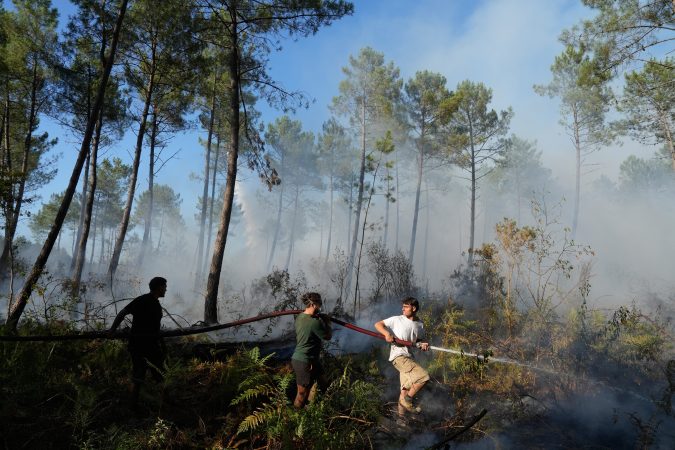
    LEGE-CAP FERRET, France — French authorities ordered nearly 4,000 people evacuated Tuesday from tourist sites on France’s Atlantic coast as returning heat threatened firefighters’ fragile hold on a vast wildfire west of Bordeaux.

    The order underscored a wildfire emergency of exceptional scale across southwestern Europe.

    Fires in France and Spain have forced roughly 330,000 people to evacuate. Spain braced for its fourth heat wave of the summer, with several blazes still out of control, including its largest on record.

    Firefighters held the French blaze in check through a calm night, bringing flare-ups near coastal dunes under control and keeping the burned area unchanged at 162 square miles.

    Authorities described the Gironde fire as stabilized, not fixed, meaning it could still spread again as temperatures rose and humidity fell.

    The precautionary evacuation order covered campsites, holiday villages, tourist residences and leisure parks around the resort of Lacanau, including Lacanau Ocean and both shores of Lacanau lake, Gironde regional authorities said.

    “We are at a point of fragility,” Eric Brocardi, spokesperson for France’s national firefighters federation, told BFMTV on Tuesday. “We will continue attacking this fire despite the forecast rise in temperatures.”

    France’s national weather service placed Gironde under a yellow heat warning from midday Tuesday, forecasting inland temperatures of 33 to 35 Celsius (91 to 95 Fahrenheit). Southeast winds were expected across Gironde, with westerly sea breezes along the coast.

    More than 448 square miles have burned across France this year, according to the Interior Ministry.

    Europe is the world’s fastest-warming continent, heating at more than twice the global average, according to the European Union’s Copernicus climate service and the World Meteorological Organization.

    Western Europe recorded its hottest June on record, with extreme heat and widespread dryness contributing to the spread and intensification of fires in France and Spain, Copernicus said.

    The Gironde blaze has been raging since last week and has proven wildly unpredictable, transforming at times into a self-feeding firestorm. It has burned an area four times the size of Paris and prompted the evacuation of 220,000 people.

    Officials warned that smoldering vegetation, rising temperatures and falling humidity could produce fresh outbreaks along the vast perimeter.

    Military engineers and forest-fire prevention crews resumed work early Tuesday on firebreaks designed to prevent the flames from spreading. Authorities said 103 kilometers (64 miles) of firebreaks had been completed.

    A total of 93 firefighters have been injured, the prefecture said.

    The A63 highway remained partly closed, while rail traffic south of Bordeaux was suspended except on the route toward Toulouse.

    Thousands return as second fire stops advancing

    In neighboring Landes, thousands of evacuees were allowed home after a separate wildfire stopped advancing. The fire had displaced more than 30,000 residents and vacationers.

    “The fire is fixed, which is good news in the Landes,” French President Emmanuel Macron said Monday evening. Regional authorities said that meant its advance had been stopped and there were no new fire starts.

    About 15,000 people were authorized to return home Monday night in Sanguinet, Parentis-en-Born and some parts of Biscarrosse.

    Residents of Biscarrosse’s aviation village and a large campground were among those allowed back, although several other neighborhoods remained inaccessible.

    The return marked a significant step for communities evacuated as flames swept through forests and tourist areas during the height of the summer vacation season.

    Authorities warned that the Landes fire was not extinguished.

    Residual hot spots, wind and drought could cause flare-ups, and surveillance and damping-down operations were expected to continue for days or possibly weeks.

    Spain braces for worsening conditions

    Hundreds of firefighters backed by military emergency brigades and water-dropping aircraft continued battling several major wildfires in Spain.

    Spanish Interior Minister Fernando Grande-Marlaska said Tuesday that nonstop work through the night left him “reasonably positive,” but warned that conditions could deteriorate as temperatures rose again.

    Spain’s national weather service said the country was bracing for its fourth heat wave of the summer, with temperatures expected to exceed 104 F in some areas.

    Authorities have evacuated about 79,000 people and ordered another 30,000 to remain in their homes. The government declared a national emergency over the fires.

    The greatest concern remained two large fires that had at times come close to merging into a single blaze in wooded hills about an hour’s drive west of Madrid.

    Another fire in the eastern province of Castellón also forced mass evacuations.

    A fire burning through hilly, rural terrain in Ávila, west of Madrid, has become Spain’s largest on record, scorching more than 193 square miles, the government said.

    “Look at how the valley is burned. Look at the houses, the people,” said David Gonzalez, a 48-year-old gardener who used his van to deliver supplies to firefighters in Ávila.

    “We are feeling a lot of anger and helplessness. It’s something inhuman,” he said.

    Fires have burned 590 square miles this year in Spain, Ecology Minister Sara Aagesen said.

    Spanish Prime Minister Pedro Sánchez has called for a national pact to fight wildfires, saying climate change is making them worse.