Blog

  • Phillies insist they’re ‘not scared of anyone’ after Dodgers make big move for Tarik Skubal

    Phillies insist they’re ‘not scared of anyone’ after Dodgers make big move for Tarik Skubal

    BALTIMORE — Bryson Stott was back in his room at the Phillies’ hotel here late Saturday night when the news came across his phone.

    Tarik Skubal was traded …

    … to the Dodgers.

    Gulp?

    “No, I mean, you don’t say that,” Stott said Sunday — a.k.a., Trade Deadline Eve — before the Phillies wrapped up a series against the Orioles. “Everyone’s trying to get better. You’re not scared of anyone or anything like that. As a competitor, you’re not like, ‘Oh great, they got him.’”

    Sure, but the road to the World Series in the National League was always going to run through the Dodgers. And the two-time defending champs just landed the two-time reigning Cy Young winner in the other league.

    “It’s a little shocking with [the Tigers] being still in it,” Kyle Schwarber said. “That was the weird thing to me. Maybe they just know something that none of us know and they just wanted to do something. I guess it was what they thought was the best quote-unquote deal.”

    OK, to be clear: This isn’t simply a case of the rich getting richer. In addition to being a financial goliath, the Dodgers have the third-best farm system in the sport, according to Baseball America’s midseason rankings, with seven top-100 prospects.

    The Phillies’ system ranks 29th and was labeled Sunday by one rival talent evaluator as “weak.” Zyhir Hope, a 21-year-old outfielder and the centerpiece of the three players headed to Detroit, is the No. 55 prospect in baseball and the sixth-best in the Dodgers’ system. He would likely be the Phillies’ top prospect.

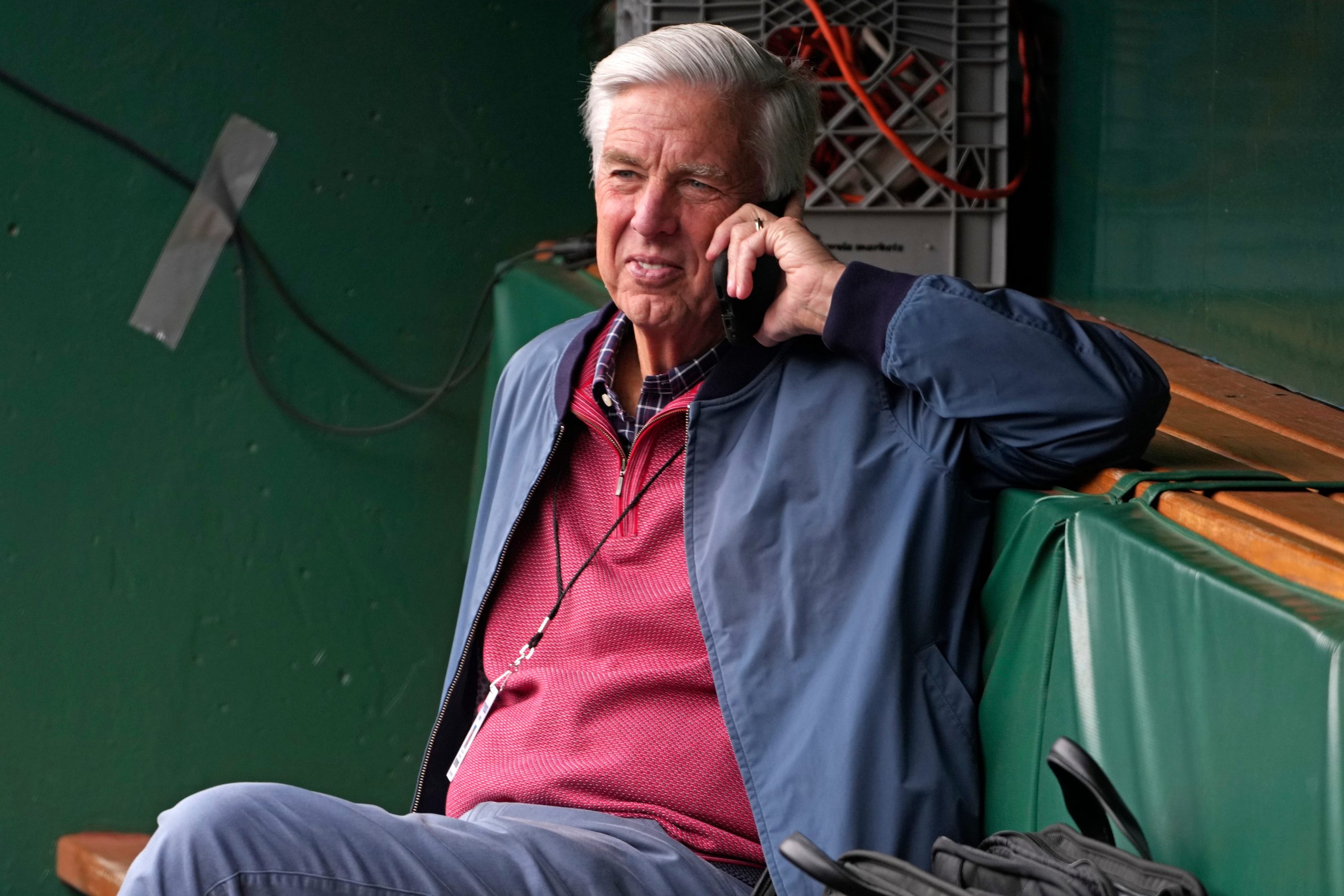
    Phillies president of baseball operations Dave Dombrowski is working the phones to try to add players before Monday’s trade deadline.Gene J. Puskar

    So, no, the Phillies couldn’t put together a package to compete with the Dodgers for Skubal. Besides, they need a late-inning reliever and a right-handed bat, in addition to a starting pitcher. It puts Dave Dombrowski in “a tough spot,” as one NL team official said, because he has multiple holes to fill and few high-level prospects to cash in.

    Unlike the Dodgers, who led the NL West by 10 games entering play Sunday, the Phillies aren’t a shoo-in for the postseason. Although they were in possession of the final NL playoff spot, they led the Padres by only one game and the Marlins by 1½.

    Asked for his reaction to Skubal-to-the-Dodgers, interim manager Don Mattingly joked, “What happened?”

    “No, we’ve got enough issues just taking care of our own business,” Mattingly said. “If we get to them, we’ll deal with it then.”

    If the Phillies do get to the postseason, they’re viewed across the sport — even within the Dodgers’ front office — as a tough matchup, especially in a seven-game series, because of their starting pitching. Cristopher Sánchez and Jesús Luzardo, in particular, are left-handed; the Dodgers are far more productive from the left side of the plate (.811 OPS) than the right (.721).

    Last year, the Dodgers won two one-run games to edge the Phillies in the division series and expressed relief to have advanced. But that was before Skubal, who will join Yoshinobu Yamamoto, Blake Snell, Justin Wrobleski, Roki Sasaki, Tyler Glasnow, Emmet Sheehan, and maybe Shohei Ohtani in the Dodgers’ bottomless stable of starters.

    It only makes the challenge more formidable.

    “You know how good they are and how good we are,” Stott said. “I think our starters match up with anybody in the league. Obviously I think everyone would love a guy like [Skubal]. I’m sure there were other teams involved, too, and that’s who [the Tigers] went with. Can’t fault them.”

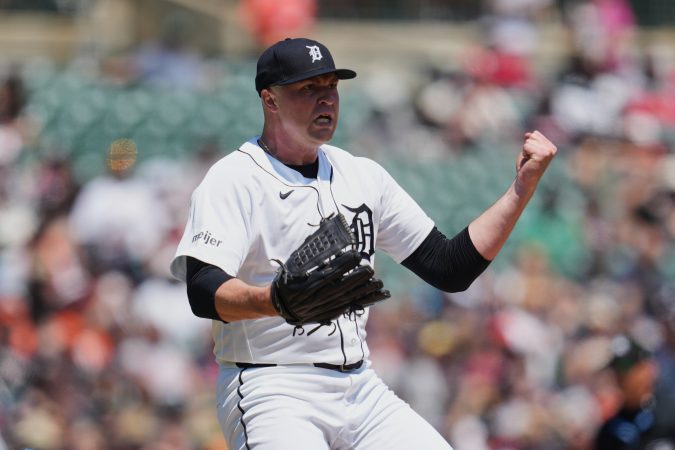
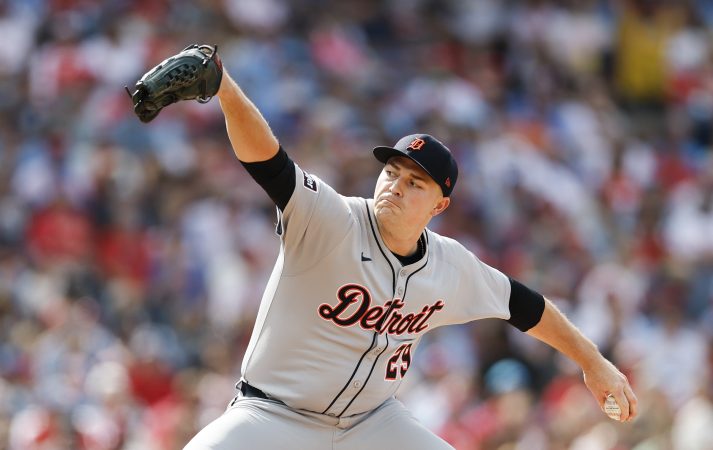
    In three career starts against the Phillies, Tarik Skubal has a 2.37 ERA and 22 strikeouts in 19 innings.Paul Sancya

    The Phillies faced Skubal three weeks ago in Detroit and scored two runs in five innings of a 5-0 victory behind Wheeler. In three career starts against the Phillies, the hard-throwing lefty has a 2.37 ERA and 22 strikeouts in 19 innings.

    Schwarber, who played with Skubal on Team USA in the World Baseball Classic, recalled facing him for the first time in spring training in 2022.

    “I was like, ‘Oh [crap], this kid’s throwing 100,’ you know, with a hard-breaking ball and then the good changeup,“ Schwarber said. ”I was like, ‘Well, the kid’s got some good stuff.’ And then to see where he developed to, the picture of where he is now.

    “So, yeah, good trade for [the Dodgers], right? I don’t think anyone would look and say, if they traded for that caliber of a starting pitcher, that they would be upset.”

    But Schwarber said the Phillies won’t like their chances against the Dodgers any less if they get to face them in the playoffs.

    “Everyone always talks about their payroll. That hasn’t guaranteed them anything,” Schwarber said. “It’s worked out these last two years. But you kind of go back, I remember when I was with Chicago, [the Dodgers] won the West for how many years? I mean, 2020 was their first championship.

    “I think one of our biggest things is that we’ve got to make it there, right? And if we match up with them again, anyone can beat anyone.”

    The Dodgers made their big move. Dombrowski has two more days to come up with a counter.

    Aidan Miller had a spinal procedure in early June to treat a back conditionJose F. Moreno / Staff Photographer

    Extra bases

    Backup catcher Rafael Marchan (knee) could play in minor-league games later in the week, according to Mattingly. … Top prospect Aidan Miller, who had a spinal procedure in early June to treat a back condition, is “back to playing catch,” according to a source. … The Phillies return home Monday night. Aaron Nola (3-9, 5.61 ERA) is scheduled to face the Nationals, who haven’t named a starting pitcher.

  • Trump says Gulf leaders’ input weighed heavily in decision to hold off on ordering new Iran strikes

    Trump says Gulf leaders’ input weighed heavily in decision to hold off on ordering new Iran strikes

    WASHINGTON — U.S. President Donald Trump said Sunday he decided to hold off on ordering American forces to carry out new strikes against Iran at the urging of Gulf allies Qatar, Saudi Arabia, and United Arab Emirates.

    The U.S. president added that a plan was in place for U.S. forces to carry out “the biggest attack since World War II” on Sunday. But he decided to scrap the plan and give diplomacy more time to play out after hearing from key Gulf leaders — including Saudi Crown Prince Mohammed bin Salman — as well as at the request of unnamed Iranian officials.

    “I said to the crown prince, ‘What would you rather do? Would you rather us do this or not?’” Trump told reporters on Air Force One as he flew back to Washington after spending the weekend at his golf club in Bedminster, N.J. “They said we would much prefer a deal as opposed to an attack, because you don’t know where these attacks lead.”

    Trump and the crown prince spoke on Saturday before the U.S. president announced in a social media post that Mideast allies had reached the “perimeters” of a deal to end the 5-month-old war.

    It was another turnabout for Trump, who a day earlier said he’s “losing faith” in negotiations with Iran and offered the ominous warning that the U.S. military “will be hitting them very hard.”

    Trump on Sunday reiterated that the emerging deal would include a reopening of the Strait of Hormuz, the critical waterway where about a fifth of the world’s energy flowed before the start of the war, and would resolve U.S. concerns about Iran’s nuclear program.

    Iran has repeatedly attacked vessels attempting to transit through the Strait of Hormuz without its authorization as part of its conflict with the U.S.

    And Iran’s Foreign Ministry spokesperson Esmail Baghaei said on Sunday that the Strait of Hormuz “will in no way return to the status it was before February 28th,” the day the war started.

    On a call with Iranian state TV, he added that Iran is discussing shipping through the strait with Oman, on the other side of Hormuz, but that there’s no current talk about reopening the crucial waterway.

    Trump has announced halts to strikes on Iran on several occasions since the United States and Israel attacked Iran on Feb. 28, only for things to unravel and fighting to resume again.

    Iran’s defense minister said on X that the country was “neither surprised nor passive” following Trump’s announcement and said Iran remains alert in the face of concrete threats from the U.S.

    While Iran’s leaders appear united in a war strategy signaling strength and endurance, a struggle for control seems to be brewing within the theocracy’s leadership between those who oppose all negotiations with the U.S. and others who count on military pressure to win at the negotiating table.

    Latest proposal would bring sides back to negotiations

    Trump on Sunday said he expected negotiations to resume “tomorrow afternoon” but did not detail who would be involved in such talks.

    A regional official said the proposal announced by Trump over the weekend calls for the U.S. and Iran to return to negotiations and continue working out many of the issues that have stymied prior progress on the deal.

    The official, who is involved in the mediation efforts, said the proposal calls for reopening of the Strait of Hormuz and halting attacks across the region, including by Iranian-backed militias in Iraq on the Arab Gulf countries and Jordan.

    The U.S., in exchange, will end its naval blockade on Iran and allow Tehran to export its oil as stated in the tentative ceasefire deal, he said.

    No deal has been reached yet, but mediation efforts are underway, said the official, who spoke on condition of anonymity because he wasn’t authorized to talk to the media.

    Trump said that Israel is joining his commitment to end the war by implementing the ceasefire deal reached in June. Israel did not publicly comment on the announcement.

    Saudis are concerned about Iran’s retaliation

    Prince Mohammed, the kingdom’s de facto leader, raised concerns about the U.S. potentially escalating the conflict when he spoke with Trump by phone on Saturday.

    The call was “candid and constructive,” according to a person briefed on the call who was not authorized to comment publicly and requested anonymity.

    The crown prince conveyed that an escalation in fighting could have a severe impact on the global economy if Tehran responded to a new U.S. bombardment by targeting some of the United States’ Gulf allies.

    The call happened before Trump’s social media announcement, the person said. The crown prince sought clarity from Trump on what potential new action he was weighing to take against Iran.

    Saudi officials, the person added, have underscored in their engagements with the Trump administration that the kingdom — as well as fellow Persian Gulf energy titans the United Arab Emirates and Qatar — are in a good position to defend against further potential Iranian attacks, but that Kuwait could be more vulnerable to attacks by Iranian-backed militias in Iraq.

    Trump suggested that his conversation with the Saudi crown prince weighed heavily in his decision to halt his plans to carry out strikes on Iran.

    “It would have been disastrous for them. And they didn’t want us to do it,” Trump said. ”And frankly, Saudi Arabia didn’t want it either. They thought that a deal is imminent.”

  • Sen. Bernie Moreno says former son-in-law Max Miller should not serve in the House

    Sen. Bernie Moreno says former son-in-law Max Miller should not serve in the House

    WASHINGTON — U.S. Sen. Bernie Moreno said his former son-in-law, U.S. Rep. Max Miller, should not be serving in the House and should “seek professional help” as Miller defended himself against allegations of domestic abuse in a live video on X on Sunday.

    Moreno, who has been publicly restrained in recent months as the bitter custody dispute has played out between Miller and his daughter Emily, said in a lengthy post: “If there are any basic standards of character required to hold elected office, Max Miller fails them. He should not serve in the House of Representatives.”

    Moreno wrote that Miller “needs serious psychological help. He is a danger to my daughter, and I hold my breath every minute he has custody of my granddaughter.”

    Miller, who has been endorsed by President Donald Trump, said Sunday that he will remain in his race for reelection before a Wednesday deadline to replace him. Democrats have seen a new opportunity in the northeast Ohio congressional seat as the Republican incumbent has faced mounting pressure over the domestic abuse allegations in a bitter and drawn-out custody battle with his ex-wife.

    “I’m not dropping out of this race and I’ll win in November,” said Miller, who denied abusing his former wife and his daughter.

    Asked on Sunday evening if Miller should resign, Trump said that “so far it’s accusations.”

    “I’ll be looking at it,” Trump said.

    Scrutiny of Miller has escalated in recent weeks

    Accusations against Miller, who was a White House adviser during Trump’s first term, have been public for years but have recently drawn increased scrutiny as back and forth in the case has escalated.

    Emily Moreno has said that Miller scalded, hit, and threatened her while they were married. Miller denied those allegations in the video, as he has in the past.

    “It’s incredibly upsetting,” Miller said, as he went through a list of the allegations.

    Miller also said he had nothing to do with a broken collarbone on their 2-year-old daughter that led Emily Moreno to contact authorities. The pair, who were married in 2022 and finalized their divorce last year, have presented different theories about how the injury occurred, according to court filings and police reports detailed in an article in July in the magazine Mother Jones that first revealed the child’s injury.

    Miller accompanied his announcement with the release of a voluminous cache of investigative and court documents, as well as audio and video clips, related to the custody dispute.

    Spokesperson for Miller’s ex-wife says video was ‘shameful’

    A spokesperson for Emily Moreno, Stefan Mychajliw, said Sunday that the video was “shameful.”

    “No loving parent would have ever used their daughter as a PR pawn to save their own political career,” Mychajliw said. “Miller can lie and spin on X, but he cannot do so under oath in a court of law. We are confident that justice will prevail in court.”

    Sen. Bernie Moreno’s statement on Sunday came after he had declined to comment on the specific allegations for months. Last week, a spokesperson issued a statement saying the senator “will not litigate these matters in the media or respond to baseless public attacks.”

    “Senator Moreno’s top priority is the safety and well-being of his daughter and granddaughter,” said the spokesperson, Reagan McCarthy.

    Potential GOP candidates eye Miller’s seat

    The senator’s statement was prompting some hand-wringing behind the scenes in his home state, where Trump-endorsed candidates like Miller typically win with ease.

    Miller’s Democratic opponent, Brian Poindexter, said no one facing such accusations “belongs in the halls of power.”

    State Rep. Mike Dovilla, a U.S. Navy veteran and former presidential appointee to the Office of Personnel Management, and Kevin Coughlin, a former state senator and representative who ran for the U.S. House in 2024 and 2026, were among Republicans whose names were being floated should Miller drop his fall House bid, according to a high-ranking Republican who discussed the sensitive subject on condition of anonymity.

    Democrats have recently called on Miller to resign, requested a congressional ethics investigation, and suggested more help could be directed in the fall toward Poindexter.

    Miller won reelection two years ago with just over 51% of the vote.

  • Inside the week that tested Anthony Fauci, as GOP lawmakers push for his jailing

    Inside the week that tested Anthony Fauci, as GOP lawmakers push for his jailing

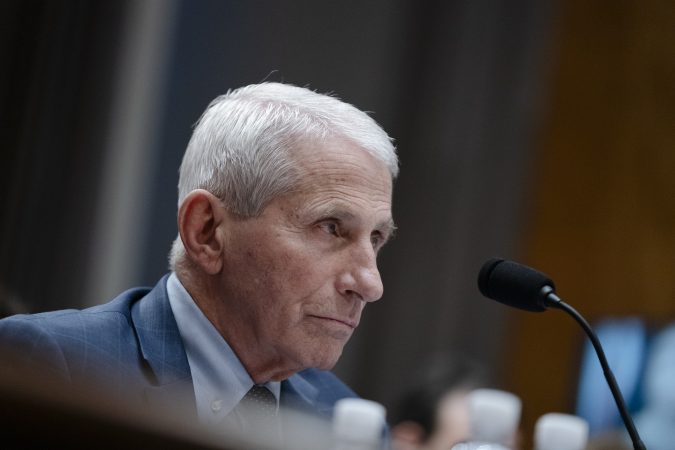
    Anthony Fauci didn’t know Rand Paul had his diary, let alone that the GOP senator was going to release it, his friends said.

    So last Saturday — after the Kentucky lawmaker had publicly shared years of Fauci’s private reflections, on everything from fighting COVID-19 to attending “A-list” events — Fauci went to another party.

    There, at a birthday celebration for former White House chief of staff Ron Klain, Fauci mingled with friends and former Biden administration colleagues. They cheered and toasted him, apparently unaware that his critics were combing through documents that would kick off one of the most fraught weeks of his decades-long career.

    For a few hours, Fauci was back inside a familiar Washington.

    Then reality intruded. His longtime critics now control congressional committees, the health agencies where he spent his career, and the Justice Department that could ultimately decide whether to prosecute him. After years of promising to hold Fauci accountable for the government’s pandemic response, they are flexing their power to try.

    The past week offered the clearest glimpse yet of what that reckoning could look like.

    On Monday, Health Secretary Robert F. Kennedy Jr., a longtime Fauci foe, bragged about his department’s monthslong efforts to scour 11 government servers to reassemble Fauci’s diary and turn it over to Paul. On Wednesday, Fauci faced hours of questions from Paul and fellow Republican senators at a congressional hearing Fauci and his allies believe was designed to entrap him. He invoked his Fifth Amendment right not to testify more than 100 times.

    President Donald Trump, who said he watched the “whole thing,” criticized Fauci after the hearing but sidestepped questions about whether he should be prosecuted.

    The effort has exposed the difficulty of settling, six years later, the bitter disputes that made Fauci one of the pandemic’s most polarizing figures. Paul and other Republicans say newly obtained records have raised fresh questions about Fauci’s conduct. Several senators accused him of misleading Americans during the coronavirus pandemic and pressed him on whether he engaged in a cover-up of the virus’ potential origins.

    But some of the central allegations have been investigated before, and even some Republicans involved in those inquiries question how much the new material adds. Fauci denies claims of a cover-up, and his allies say he is stuck in a Kafkaesque nightmare. Their fears were accentuated after a former Fauci aide was arrested in April after he privately bragged about concealing emails.

    The pressure on Fauci, 85, is intensifying. More lawmakers are preparing to challenge him. Paparazzi lurk outside his door, and death threats persist. Clips of Fauci refusing to answer questions have become memes, sparking jokes on ESPN and mockery in conservative media. The scrutiny recalls the darkest days of the pandemic — except now, rather than the government marshaling its resources to defend Fauci, he is paying for his own security.

    Paul’s committee is set to vote Wednesday on whether to hold Fauci in contempt of Congress, a measure expected to pass with Republican support. Paul has said they will immediately refer the matter to the Justice Department for prosecution.

    “I think he’ll be remembered more like a mafia don than a great scientist,” Paul, the chairperson of the Senate’s government oversight committee, told podcaster Benny Johnson after last week’s hearing.

    Peter Staley, a former adversary turned longtime friend, said Fauci is trying to stick to his routine, taking power walks with his wife and seeing patients at Georgetown University’s hospital.

    “He’s not crumbling,” Staley said, invoking “Brooklyn tough,” an expression he said Fauci often uses. “I’m worried for his safety. I’m not worried for his mental state.”

    This story is drawn from interviews with 17 friends, critics, and former colleagues of Fauci, as well as current administration officials, lawmakers, and congressional aides. Through a spokesperson, Fauci declined to comment.

    Fauci, who led the National Institutes of Health’s infectious-disease work, emerged from the COVID-19 pandemic as the face of the government’s response. That perch gave him access to elite social circles, won him accolades, and made him a worldwide celebrity — fame that has carried a bitter aftertaste.

    He has since been blamed for myriad pandemic-related policies, including decisions that others made but he amplified, such as the CDC’s recommendation to stay 6 feet apart to minimize virus risks. Activists and lawmakers have said they want to hold Fauci accountable for students’ learning loss, workers’ lost jobs, and other harms resulting from COVID-related shutdowns.

    Some past colleagues have been happy to see Fauci face difficult questions. Several said that his diary shows that Fauci — who details his interactions with reporters and celebrities — was too seduced by his media coverage. They also criticized his efforts to work with NIH grantees to be nominated for prizes, which were detailed in another batch of documents released by Paul.

    “This is the Fauci I knew being exposed to the world,” said Chris Meekins, who served as a senior health official in the first Trump administration, and battled with Fauci about vaccine and funding priorities before the pandemic.

    Others say Paul and his allies are only seeking to embarrass and damage Fauci after years of battling with him, often in contentious showdowns in the Senate. Paul has contended that last week’s hearing was part of his investigation into the pandemic’s origins, including whether Fauci tried to conceal a possible laboratory leak that may have sparked the outbreak.

    “We learned nothing from that hearing,” said Ashish Jha, who led the nation’s COVID response under Biden and worked closely with Fauci. “Nothing about the important issues. Nothing about how to prevent the next pandemic. And this kind of vilification will scare people away from public service.”

    Paul has also said that Fauci’s diary has produced new revelations about his shifting thoughts on the virus’ origins and risks. But the diary generally hews closely to Fauci’s 2024 memoir, On Call, and his other past interviews and testimony.

    Fauci also sat for 21 hours of interviews with a GOP-led subcommittee in 2024, where he discussed the possible origins of the coronavirus, his private conversations about whether a laboratory leak sparked the outbreak, and other controversial matters. The subcommittee pressed Fauci on whether his agency had inadvertently sparked the pandemic by funding risky coronavirus research in China, a claim he has persistently denied.

    “The journal should have been produced back in 2023 but sitting here in 2026 I am not sure what the entries add to the debate,” Mitch Benzine, who was the GOP subcommittee’s staff director and led the questioning of Fauci, wrote in an email. “Some of the information is new and does add color to Dr. Fauci’s thoughts through the pandemic, but the findings are no different than what we found years ago.”

    The subcommittee’s investigation led to one of Fauci’s former aides being arrested earlier this year, an event referenced by Paul and seen as a potential harbinger for Fauci. Justice Department officials say David M. Morens skirted public records laws and hid his communications to thwart inquiries into the origins of the coronavirus pandemic. Fauci has distanced himself from Morens, saying he knew nothing about his actions.

    Marc Short, who served as Vice President Mike Pence’s chief of staff, clashed with Fauci over COVID restrictions in 2020 and felt the doctor’s advice was frequently wrong. But Short said Fauci’s role in the early coronavirus response is now being distorted, noting that local leaders had significant leeway over how and when to reopen schools and businesses under the Trump administration’s “federalist” approach.

    “He’s been made a scapegoat for public health officials who made the wrong decisions,” Short said, recalling a 2020 conversation in which the doctor laid out their different responsibilities.

    “‘My job is to tell people how not to get infected. It’s your job to consider all the other factors,’” Short recalled Fauci saying.

    Fauci was a prominent Washington figure, if not a household name, during his nearly four decades leading NIH’s infectious-disease institute. He was repeatedly summoned to the White House to advise presidents about how to handle virus outbreaks and held up as a model for generations of scientists.

    Fauci attracted national attention in the 1980s for his work on HIV/AIDS, which initially drew fire from activists such as Staley, who protested outside his office — with mock coffins and an effigy of Fauci — castigating him as a bureaucrat who was doing too little to save lives.

    But Fauci won over those critics, convincing them of his sincerity. He also rose in esteem, with scientists and politicians — including many prominent Republicans — touting him as an example of what government could accomplish.

    Asked in a 1988 presidential debate to name an inspiring hero, Vice President George H.W. Bush singled out Fauci for his work fighting AIDS. Twenty years later, Bush’s son, President George W. Bush, awarded Fauci the Medal of Freedom for his work as an architect of PEPFAR, a worldwide AIDS relief program credited with saving tens of millions of lives.

    Entering 2020, Fauci had kept a diary on his work computer for years — a nightly ritual in which he tracked his day, his dealings, and his media appearances as material for a planned memoir, allies said.

    Then came the coronavirus, which would kill millions around the world, and transform Fauci’s life. He emerged as the government’s spokesperson across two administrations, initially hailed by Republicans as well as Democrats and seen as a reassuring figure. Trump bestowed one of his highest compliments: Fauci was good on TV.

    But as the pandemic stretched on, Fauci’s pessimism and encouragement of strict measures rankled Trump and other administration officials. Parents grew frustrated with school shutdowns. Conservative media increasingly turned on the doctor, and by late 2020, Trump was entertaining chants of “Fire Fauci” at campaign rallies.

    “I didn’t mind him, I didn’t find him to be bad personally, as a person,” Trump told Fox & Friends last week. “But I didn’t agree with what he was saying or what he was doing.”

    Still, Trump awarded Fauci a commendation for his work on Operation Warp Speed, the president’s successful initiative to accelerate development of coronavirus vaccines, before leaving office in January 2021.

    The incoming Biden administration, meanwhile, elevated Fauci as President Joe Biden’s chief medical adviser — a political job for the longtime civil servant. Fauci had significant sway over that administration’s coronavirus policies and personnel.

    He left government at the end of 2022, wary of looming GOP investigations, and with dwindling popularity.

    “It is clear that even with Pro bono considerations that this is going to cost me a lot of money since the GOP has promised that they would make my life miserable and blame me for virtually everything that happened bad to the country during the pandemic,” Fauci wrote in his diary in November 2022.

    A few months later, Biden issued Fauci a preemptive pardon on his final day in office. That afternoon, Trump returned to the presidency and swiftly elevated some of Fauci’s critics to key government positions.

    Kennedy, who wrote a book about Fauci that the doctor considered slanderous, runs the health department. Jay Bhattacharya, whom Fauci dismissed as a stooge in his diary, now runs NIH. Some of Fauci’s adversaries, such as Trump’s economic adviser Peter Navarro, also rejoined the White House and other agencies.

    Trump has said he will not challenge Biden’s pardon of Fauci, but the doctor still faces legal peril. The pardon does not cover events after it was issued on Jan. 20, 2025, and Fauci and his allies worried that if he misspoke at any point to Paul’s panel, he would face perjury charges — a concern that triggered his invocations of the Fifth Amendment. And while Biden’s pardon protects Fauci from federal criminal investigations into his time involved in the nation’s coronavirus response, it did not rule out state prosecution. Florida’s attorney general last week announced a new investigation into Fauci.

    Benzine, the former House GOP staffer, said he expects Paul’s committee to find Fauci in contempt this week.

    “What comes next is unclear,” Benzine wrote in an email. “What is clear, is that this is not over for Dr. Fauci.”

    Many Americans have moved on from the depths of the pandemic. Fauci’s neighborhood was once dotted with signs reading, “Thank you Dr. Fauci.” They have long been taken down, and none were newly visible the day after last week’s hearing.
  • Ryan Richter’s courage is rewarded with a stunning late comeback win for the Union

    Ryan Richter’s courage is rewarded with a stunning late comeback win for the Union

    It felt almost strange to have a game with some stakes in it at Subaru Park for the first time in a while. But the Union’s two-game winning streak coming into Saturday night gave Atlanta United’s visit the shine of a must-win contest.

    They’re all must-win in theory, of course, if the Union want to mount a charge toward the playoffs. Still, it mattered that Atlanta specifically was the visitor this time: the team the hosts climbed over last weekend to finally get out of the basement.

    For 95 minutes, it seemed the Union were going to not just lose, but lose badly. They’d been a man up since the 26th minute, yet Atlanta scored far-too-easy goals in the 30th and 66th.

    Even after Milan Iloski’s terrific backheeled flick in the 73rd cut the deficit, there were so many more heaves into the box that had no end product against the visitors’ massed defense. It was bad enough that Bruno Damiani only had one shot in his 71 minutes, but it was far worse that he didn’t even contest some of those crosses — the kind of play that’s supposed to be his bread and butter.

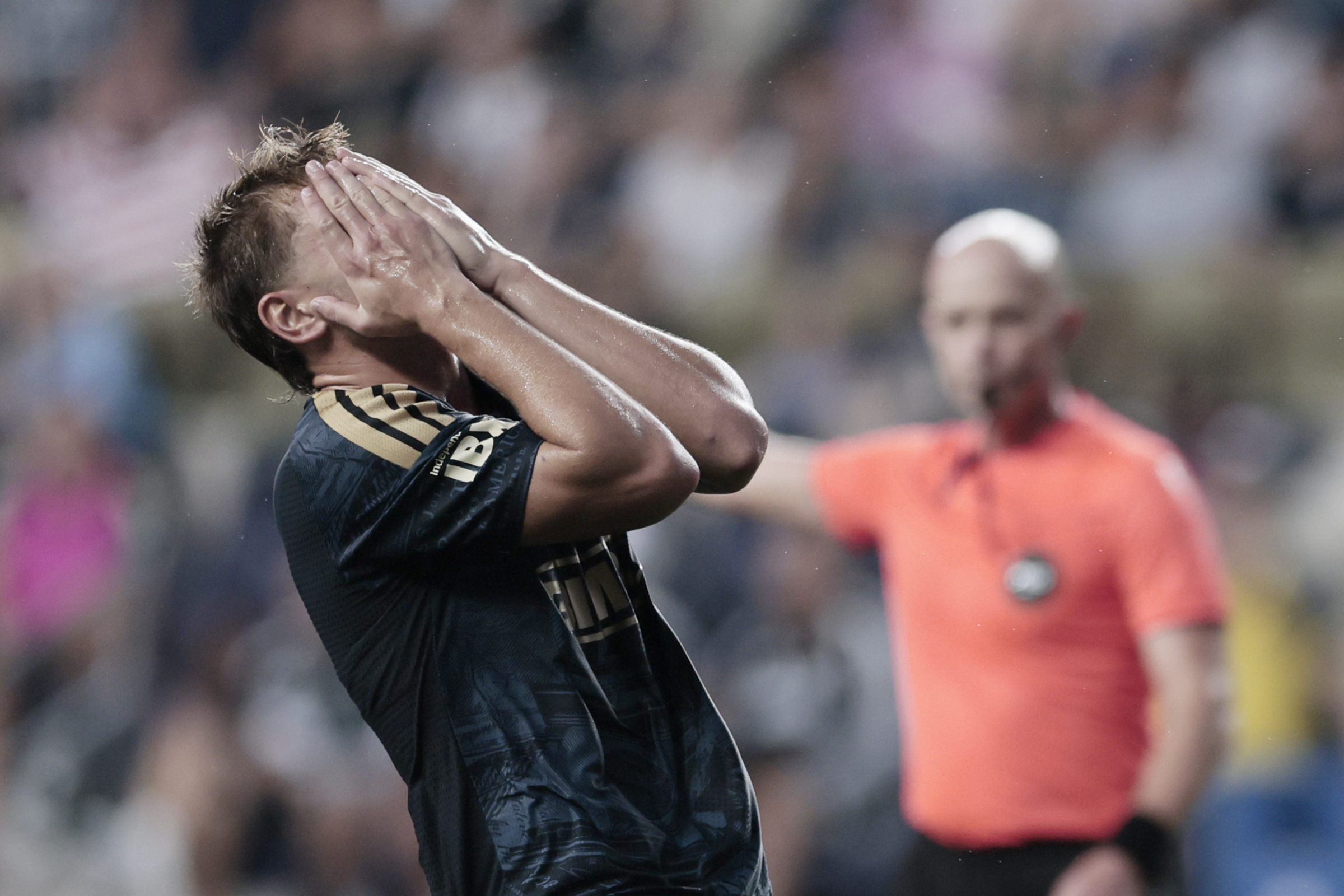
    Bruno Damini laments one of the Union’s many missed opportunities before their late comeback.Elizabeth Robertson / Staff Photographer

    There was, though, one reason to wonder if the Union might be capable of a comeback. Damiani’s departure came as part of not just a double-substitution, but a major tactical change by interim manager Ryan Richter. He gambled on switching from the usual 4-2-2-2 to a 3-4-1-2, withdrawing Nathan Harriel and leaving 18-year-old Neil Pierre as the only true centerback — flanked by outside backs Kai Wagner and Frankie Westfield.

    Players win and lose games more than anyone else, especially in soccer with its limited substitutions. But this time, coaching had a genuine impact. The wave of attacks finally broke Atlanta down, as Pierre jumped for the equalizer in the 86th and Ezekiel Alladoh volleyed in the winner 80 seconds later.

    For once, Subaru Park was stunned in a good way. And Richter had made a point to people wondering if he should have the job long-term.

    “In these games — to me at least — home games in MLS, you have to go for the win,” he said. “It’s not satisfying to go for the tie. One point at home is not enough to make the push that you want throughout a season. So, in all these whenever we’re in this situation, it’s us trying to go for the win.”

    One part Richter wouldn’t say, understandably: assume Bradley Carnell wouldn’t have done it. Maybe a lot of managers wouldn’t have. But the point about Carnell needs to be made, because the Union’s bad record wasn’t the only reason to fire him. His stubbornness mattered too.

    When Richter was given the job, fans rightly wanted to know if he’d be as rigid. The initial hints were he might not go entirely as far, but was pretty committed, along with sporting director Jon Scheer.

    Then Saturday happened. If the Union had lost, you’d be reading here about how the shine was off now. A little of it is anyway, because this game re-exposed this roster’s flaws despite the final score.

    For now, though, a win is a win. The celebrations on the field and in the stands were the real thing.

    “It’s a risk because you’re just basically saying you’re going to deal with one-v-one situations for the rest of the game,” the manager said. “You’re going to sometimes deal with a two-v-one situation where it’s a direct ball, and if you don’t win the header, it’s trouble. But also, just from a physical perspective, if you want to put someone there, it’s Neil when it’s a direct ball out, or it’s a situation where it’s a one-v-one that he has to win — you trust his physicality in all those moments.”

    But Richter was willing to try, and he was rewarded.

    “It’s also taking a chance, that part is clear,” he said. “It’s taking a chance to try to go for the goal, and maybe it goes the other way, but it’s a risk that we have to take, because we needed to make that push at the end.”

    Wagner, who’s now playing for his third manager at Subaru Park, knew what it meant.

    “If I would be honest, this guy has some balls,” he said. “It showed a lot of character from him.”

    Union manager Ryan Richter watches the action in the second half at Subaru Park on Saturday.
    Elizabeth Robertson / Staff Photographer

    It also matters a lot that Alladoh finally scored his first goal in a MLS game, after 16 league appearances without one. The only previous tally for the Union’s most expensive all-time signing came in the Concacaf Champions Cup rout of Trinidad’s Defence Force.

    “I mean, what a goal to score, what a moment to score it,” Richter said. “I think he can put himself in position to probably get easier goals than that. Happy for him, proud of him, and hopefully he takes a lot of confidence from this going forward, and shows a little bit of the talent that he has and what he can do to contribute to this team.”

    The 20-year-old striker has been a man of few words throughout his time in Chester, and was again Saturday.

    “The feeling in that moment was happiness, because it was my first [league] goal,” he said.

    But Wagner had a lot to say, and it was clear he was speaking on behalf of many players.

    “It’s hard for a striker to come as the record [signing] — you come in, you have a lot of pressure on your mind already,” he said. “It’s hard to come to a new country. It’s always hard to adapt so fast … I hope that’s a door-opener for him.”

    When Alladoh was told of those remarks, he gave thanks.

    “That means so much for me, because I think everybody believes in me,” he said. “They know what I can do.”

    The Union still have a long way to go in the standings. Saturday’s results put them 13th in the Eastern Conference (4-10-4, 16 points), seven points back of ninth-place D.C. United for the last playoff spot. It will be a while before that changes, because the scene now shifts to three straight games in the Leagues Cup group stage.

    But a three-game winning streak is grounds for a moment of optimism. Especially after a night when, for so long, it seemed like there was only going to be frustration.

  • Coyotes take over abandoned housing development, vexing neighbors

    Coyotes take over abandoned housing development, vexing neighbors

    WEST HOLLYWOOD, Calif. — In a region where the demand for housing outpaces its supply, a pack of coyotes have made a vacant construction site their home.

    For months, residents in the dense West Hollywood neighborhood say they have complained about the coyotes. At night, the coyote howls echo through the development keeping residents awake. During the day, some dog owners say they worry about the safety of their furry companions.

    In late July, the neighborly dispute became a local spectacle after news outlets reported on the coyotes’ home, dubbed by a neighbor as the “coyote condos.”

    Over the next week, the block was flooded with onlookers and reporters and even a helicopter trying to capture an image of the coyotes from above. With all the attention, the pack was coming out as early. The howls came later and later into the night.

    “It’s kind of like a cacophony of howls,” neighbor Collin Newman said, describing how the structure amplifies the coyotes’ cries in every direction. Newman, who has lived in the neighborhood for ten years, captured the howls from across the street. “If you’ve ever seen The Lion King, imagine a pack of hyenas in the middle of the wilderness. And there’s no escape.”

    Neighbors say the site has been vacant for years. Already under construction in 2018, the development faced opposition from neighbors and the West Hollywood Planning Commission, according to an article from WEHOonline.

    The city of West Hollywood said construction on the unfinished 22-unit condominium building was halted in 2024. It sits in a densely populated block of shoulder-to-shoulder apartment buildings, over a mile from any open wild space.

    Across Los Angeles, coyote sightings are common. While some generally avoid human contact, others can lose their fear of humans and pose a risk, especially to dogs and cats.

    “The scary part is when we walk the dogs.” Jesus Zavala, a neighbor, said while walking his Chihuahua, Zoe. “They can just come out and grab dogs, especially the small ones.”

    But after four or five months the coyotes are now commonplace, Zavala said, and he is no longer nervous to take Zoe out at night. Many that walk their dogs in the neighborhood look unbothered. The fire hydrants and street signs are all fully utilized.

    Under a full moon late Thursday night, the only howls came from curious onlookers hoping to get a glimpse of the pack.

    “Look!” a family walking their dog said and pointed to a room on the third floor, where all they could see was the outline of a coyote. Soon it retreated into the shadows.

    One car of people waited over an hour to hear the coyotes.

    The city of West Hollywood follows a coexistence plan that favors nonlethal practices to reduce harm to humans. The city said they are requiring the property owners to swiftly retain a wildlife control expert and take next steps. The owners did not return a request for comment.

    Newman said he hopes there will be a resolution that makes people feel safe but also points out that there are a handful of other vacant structures in the area. First there were unhoused people squatting, now there are coyotes.

    “As far as I’m concerned, it’s theirs,” Newman said of the coyotes, “They’re the ones occupying it, living in it. They might have been paying rent. They probably got a good deal on it because it’s been just sitting there.”

  • A humbling trade for Phillies as Dodgers leverage farm brilliance to add Tarik Skubal

    A humbling trade for Phillies as Dodgers leverage farm brilliance to add Tarik Skubal

    Nobody wants to admit it, but the Dodgers deserve Tarik Skubal. They landed him the old fashioned way. They drafted, developed, traded, and signed their way to a circumstance where they could trade a highly valued outfield prospect for three months of service that will only pad their odds of completing a three-peat that they were favored to accomplish anyway.

    That’s what you should focus on. The dignity of the deal. Not the Dodgers’ myriad other competitive advantages. The endless payroll. The creative accounting. The market size, location, and glitz. None of them matter as much as the fundamentals. The Dodgers are simply better at identifying and nurturing talent than any other organization. To focus on anything else is to give your own organization a pass.

    The Dodgers traded for Skubal because they could.

    They had four outfielders ranked among the 40 best prospects in the game, for crying out loud. Three of them were at double A already. Their big league outfield already includes young breakout star Andy Pages in center field and Kyle Tucker in right. Not only do they have high-end prospects that other teams want, they can afford to trade some of them. In fact, they almost have to trade some of them.

    From 2021 through 2026, the Dodgers had 22 players appear on at least one of the major national Top 100 lists. The Phillies had eight during the same time span. Only two teams in the majors had fewer than the Phillies. Only three teams in the majors had more than the Dodgers.

    General managers and scouting directors tend to roll their eyes any time they end up on the wrong side of the Top 100 math. These lists don’t come close to providing an expert-level understanding of a team’s farm system. They are prone to politics and groupthink and statistics without context. All of which is true. But you can’t argue with the market.

    The centerpiece of the Skubal trade is a good example of the Dodgers’ skill in this prospect thing. It’s also a good example of why it isn’t too early to expect more out of Dave Dombrowski’s farm system.

    Let’s start at the beginning …

    • February 2020 — Dodgers acquire Mookie Betts for two top-50 prospects, neither of whom is Gavin Lux, who enters the season as a consensus top-five prospect.
    • January 2022 — Dodgers sign Dominican outfielder Josue De Paula for $400,000 in international bonus money.
    • March 2022 — Dodgers enter season with six Top 100 prospects, including Michael Busch. Dodgers initially drafted Busch at No. 31 in 2019, four picks after the Cubs took college pitcher Ryan Jensen.
    • January 2023 — Dodgers sign Venezuelan outfielder Eduardo Quintero for $297,500 in international bonus money.
    • January 2024 — Dodgers trade Busch to Cubs for Zyhir Hope in what was basically a prospect-for-prospect deal.
    • January 2025 — Dodgers trade Lux to Reds for outfielder Mike Sirota and a competitive balance pick, which they use on outfielder Charles Davalan.
    • January 2026 — Hope, Sirota, Quintero and De Paula all enter season as Top 100 prospects. Davalan is ranked as the No. 7 prospect in the Dodgers organization and a potential 2027 Top 100 prospect.

    That’s a tidy snapshot of what makes the Dodgers the Dodgers. It isn’t just drafting and development. It’s knowing when to trade your own guys. It’s knowing who to trade for. It’s knowing how to spend international money. Look, a lot of those 22 Top 100 prospects have yet to turn into stars. Josiah Gray, Bobby Miller, Gavin Stone, and Keibert Ruiz are some of the names. But all it takes is one Pages or (potentially) Dalton Rushing to turn into a homegrown star.

    The Dodgers landed Tarik Skubal the old fashioned way.Paul Sancya

    With one day to go before the MLB trade deadline, Phillies fans again are looking to a highly variable and often prohibitively expensive market to remedy roster holes that will never truly be solved without an adequate farm system. Imagine plugging someone like Pages into the lineup. Imagine if Andrew Painter had Justin Wrobleski’s pitching line. More often than not, trade deadlines are won and lost long before they arrive. The losers are the desperate teams. The winners are the ones who can outbid anybody but do not need to unless a game-changing deal comes around.

    The Dodgers just struck such a deal. In adding Skubal, the two-time defending AL Cy Young winner, they have blunted the one competitive advantage the Phillies might have in a series. Even if Shohei Ohtani is unable to return to the mound this season, L.A. will still be able to go toe-to-toe in the first two games of a series.

    Skubal vs. Cristopher Sánchez in Game 1.

    Yoshinobu Yamamoto vs. Zack Wheeler in Game 2.

    Beyond that, the Dodgers could have some combination of Wrobleski, former AL Cy Young winner Blake Snell, and 2025 postseason standout Tyler Glasnow, the latter two of whom are expected to rejoin the rotation off the IL in the near future. Plus, whatever they can get out of Ohtani, another former Cy Young winner.

    The Dodgers’ big league depth is overwhelming. Their payroll has a lot to do with that. But a big payroll is no match for elite-level decision-making. Right now, that’s the Dodgers’ greatest competitive advantage.

  • We are overlooking the most critical element of public health for Americans: feeling stuck

    We are overlooking the most critical element of public health for Americans: feeling stuck

    Tracy Chapman’s “Fast Car,” a ballad about a dead-end life, made the Billboard Hot 100 twice, nearly 40 years apart. As a doctor, I’m not surprised. “Fast Car” is about someone trying desperately to move up in life even as obstacles mount — bleak job, insufficient finances, family obligations, and increasing isolation. The song endures because it validates the experience of millions of Americans.

    I hear versions of “Fast Car” every time I set foot in the hospital as a general internist. My patients tell me stories about how, no matter how hard they work, the path to a better future slips farther away. It inevitably comes up as the reason they feel sick. My patients even have a name for their condition: they feel stuck.

    The more I listened, the more I realized this wasn’t just an individual problem. We’ve reached our 250th anniversary as a stuck country.

    I’ve been documenting what our research group has come to call “stuckness” for a decade. It’s more than poverty, loneliness, or a lack of opportunity. Stuckness emerges when real barriers in our jobs, finances, relationships, health, neighborhoods, and politics coalesce to keep people from having a real shot at success and happiness. It is a feeling and a reality that reinforce each other, robbing us of hope, generating chronic stress, and making it harder to move forward.

    As one young man, stuck with dwindling job prospects, mounting debt, and few close relationships, said: “I’m not hopeful. I may not make it past the age of 35 if things continue this way.”

    My patients are right to identify stuckness as the biggest threat to their health. Yet, our country hasn’t found effective ways to fix it. Part of the issue is that when people tell us they are stuck, we believe it can be solved by self-help books, a positive attitude, or the latest wellness fad.

    The bigger issue is that we haven’t really understood the problem.

    My colleagues and I at the research nonprofit Opportunity for Health decided to change that. In a recent survey, we asked working-age adults across America whether they felt stuck. We found that more than one in five respondents — representing about 40 million adults — strongly felt stuck. Nearly half of the people taking our survey felt at least somewhat stuck. Stuckness was most common among lower-income Americans, but one out of 10 of the richest or most educated Americans felt stuck, too.

    Respondents got stuck because of job or financial challenges, worsening conditions in their neighborhood, social isolation or fraying relationships, or because of a sudden illness or disability. Once any one of these challenges set in, others quickly piled on.

    A health problem leads to lost work, creating financial strain that weakens relationships, and the resulting hopelessness and stress further damage health. That cycle helps explain why people who felt strongly stuck were five times more likely to report being in poor health than those who didn’t feel stuck at all.

    While our survey covers only a single year — no one had bothered to ask about it before — other data show that stuckness has grown over time.

    That tracks with what I hear from my patients. The likelihood that low-income Americans can move up the economic ladder has fallen since at least the 1980s. So has the share of Americans who are able to leave neighborhoods that aren’t working for them in search of new opportunities.

    Using economic survey data, the fraction of working-age Americans facing multiple challenges — whether unemployment, a work-limiting disability, low household income, social isolation, or being moored in place — rose from 14% in the late 1980s to 24% today, writes Atheendar S. Venkataramani.Lynne Sladky

    Based on my calculations using economic survey data, the fraction of working-age Americans facing multiple challenges — whether unemployment, a work-limiting disability, low household income, social isolation, or being moored in place — rose from 14% in the late 1980s to 24% today.

    Stuckness also shows up more often in our culture. In the more than three decades bookending the appearances of “Fast Car” on the Billboard Hot 100, the share of songs mentioning feeling stuck rose from one out of every 100 to one out of every 20 — and that doesn’t include Chapman’s hit or other songs by Bruce Springsteen or Garth Brooks that describe stuckness without using the term.

    It is not a coincidence that the rise in stuckness coincides with our flatlining life expectancy. We are getting sicker despite the trillions of dollars we throw at healthcare. My patients wouldn’t find that surprising: they aren’t asking for more medicines or tests. They just want to get unstuck.

    Because stuckness arises from a cascade of factors, solutions must do two things: prevent people from falling into those slumps and help them escape when they do.

    That means ensuring that work once again provides a pathway to security through fair wages, ample opportunities to develop new skills, and ensuring that new technologies like AI expand rather than replace human potential.

    It means investing in communities that have been left behind, building up local economic capacity and infrastructure so that every corner of America has the basic tools for people to thrive.

    Because stuckness arises from a cascade of factors, solutions must include investing in communities that have been left behind and building up local economic capacity and infrastructure, writes Atheendar S. Venkataramani.Jose F. Moreno / Staff Photographer

    It means making healthcare, childcare, paid family leave, and other basic supports reliable foundations that keep temporary setbacks from becoming permanent ones.

    Finally, we shouldn’t ignore growing concerns about affordability or the economy. We shouldn’t make it harder for people to access safety net programs like Medicaid and the Supplemental Nutrition Assistance Program (SNAP), as the administration is now doing, because they can help our neighbors escape stuckness.

    And we shouldn’t make it harder for people to weigh in at the ballot box to seek the wider changes that will improve their lives on how to get their communities unstuck.

    The solutions to stuckness will vary across regions. We will need to argue productively, try, fail, and try again to get it right. One of the most shocking findings from my team’s research is that stuckness touches us all: even richer Americans are less healthy when people in their communities get stuck. There’s a reason for that. When millions get stuck, we collectively become less productive, angrier, and more divided.

    Now that our country has turned 250, we face a critical choice. We can keep pouring resources into treating the consequences of stuckness or we can confront its causes.

    My patients already understand this distinction. They know that what makes them sick is not simply a disease. It is the growing feeling that no matter how hard they try, their future remains limited and bleak. If we want a healthier America, we need to build a country where effort once again leads somewhere.

    Atheendar S. Venkataramani is a physician and professor of medical ethics and health policy at the University of Pennsylvania. He is the founding director of Opportunity for Health and is a senior fellow at the Penn Leonard Davis Institute of Health Economics.

  • Dodgers land Cy Young ace Tarik Skubal in a blockbuster deadline deal

    Dodgers land Cy Young ace Tarik Skubal in a blockbuster deadline deal

    WEST SACRAMENTO, Calif. — The Los Angeles Dodgers have acquired the biggest prize on the trade deadline market, getting two-time reigning AL Cy Young Award winner Tarik Skubal from the Detroit Tigers on Saturday night.

    Skubal got the news during the Tigers’ 8-6 win over the Athletics and was emotional after the game as he prepared to leave the team that drafted him in 2018 and developed him into a star to join the two-time defending World Series champions.

    “I’m excited to be a Dodger,” he said. ”I’m excited to get down there and meet all those guys and chase three championships in a row. That’s hard to do, so I’m so excited to a part of that. But it’s a lot of different emotions. Definitely kind of a roller coaster a little bit.”

    Skubal is the latest star to join the high-priced roster for the Dodgers that already has big-name players like Shohei Ohtani, Yoshinobu Yamamoto and Mookie Betts. If everyone is healthy, he could be part of a rotation with Ohtani, reigning World Series MVP Yamamoto, fellow two-time Cy Young Award winner Blake Snell and Tyler Glasnow. The Dodgers lead the majors with a 3.36 ERA from their starting pitchers and now add Skubal to the mix.

    The Dodgers are in first place in the NL West and were already the favorites to become the first team to three-peat since the New York Yankees from 1998-2000 before adding Skubal. They began the season with a $323.3 million opening-day payroll for their 40-man roster and a $163.7 million tax for a $487.1 million total. They will pay Skubal about $9.5 million for the remainder of the season.

    ESPN first reported the deal and said the Tigers would receive three minor league prospects in right-handers River Ryan and Brady Smith and outfielder Zyhir Hope.

    Skubal is eligible for free agency after the World Series. He has a $32 million salary, a record total in arbitration, after the team offered $19 million, and is expected to sign a massive contract in the offseason.

    The 29-year-old lefty said in July that it was his preference to finish the season with the Tigers and to compete for a World Series championship, which has eluded the franchise since 1984. Skubal took the loss in the decisive Game 5 of the division series against Cleveland in 2024 and then got a no-decision in a 15-inning loss to Seattle in Game 5 of the division series last year.

    He said it was “very tough” to leave the Tigers having fallen short of the goal of winning a title.

    “Ever since that ’24 Game 5, the failure that I experienced on the mound, I’ve used that as fuel to try and bring a World Series to the city of Detroit. I truly did,” he said. “That whole offseason I’ve never been more motivated and then go in and we lose Game 5 again. That failure kind of sparks some more motivation, just to dig deeper and see how good you can truly be. The goal was always to win a World Series for the city, for the organization that took a chance on me. It’s tough. I love all those guys in there. They’re some of my best friends.”

    Detroit planned to contend again this season, bolstering the Skubal-led rotation by giving two-time All-Star pitcher Framber Valdez a $115 million, three-year contract in free agency and retaining three-time All-Star infielder Gleyber Torres with a $22 million deal.

    The Tigers, though, got off to a rough start and are currently 2½ games out of the last wild-card spot in the American League.

    “It’s crazy. Going into the season, this isn’t what I planned on doing,” Skubal said. “But circumstances change, situations change, and I’m very appreciative of everything the Tigers have done for me.”

    They bounced back in June and most of July to get into playoff contention with Skubal leading a rotation and three All-Stars in the lineup: rookie infielder and Delco native Kevin McGonigle, catcher Dillon Dingler and outfielder Riley Greene.

    With a chance to possibly persuade management to keep Skubal by improving its playoff positioning, Detroit lost ground by dropping four of its last five games at home, including Skubal’s last start that was made even more memorable by a late-inning collapse.

    The Tigers led Baltimore 7-0 after six innings Wednesday and lost 10-9 in 12 innings. Skubal started the game, recorded his 1,000th career strikeout and was cheered at every opportunity by a crowd of 34,406.

    “I’ve watched this guy rise to the top of the sport,” manager A.J. Hinch said. “He’s carried us a lot. I’ll forever be grateful that our paths crossed and the things that he did for this organization and for a couple of playoff teams. His presence, his work ethic, his example, his dominance. There’s so much to go through, it’s hard to capture in one quote or kind of one setting. But I’m very grateful that I was able to manage him for the time that I did.”

    Skubal is 7-5 this season with a 2.79 ERA and 116 strikeouts in 96⅔ innings. He is 61-42 with a 3.04 ERA over seven seasons, all in Detroit. In two postseasons, Skubal is 2-1 with a 2.04 ERA in six starts.

    Skubal had a minimally invasive surgery on May 6 to remove a loose body from his pitching elbow and returned to pitch on June 13.

    “The way the surgery went is exactly how it was supposed to go,” he said in July.

  • Do recent Philadelphia restaurant closings signal trouble for the industry?

    Do recent Philadelphia restaurant closings signal trouble for the industry?

    Philadelphia restaurants Hiroki, La Calaca Feliz, and the Lodge by Two Robbers have announced their departures in the last week.

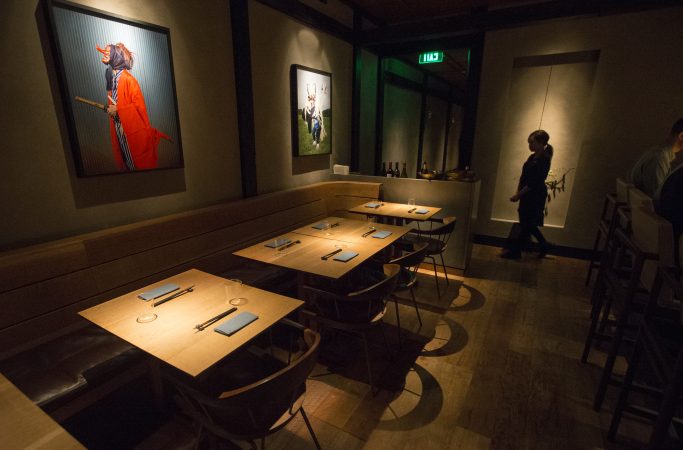
    The latest announcement was Hiroki, sushi chef Hiroki Fujiyama’s serene omakase room behind Wm. Mulherin’s Sons in Fishtown, which posted Friday that Aug. 8 would be its last service.

    In an interview with The Inquirer, David Grasso, a principal in owner Method Co., called the closing “a strategic repositioning rather than a retreat from fine dining” and added that the decision was driven by a desire to stay ahead of customer preferences and culinary trends, not by problems with the restaurant or a broader pullback from fine dining. Method is planning to open a new concept — so far undetermined — in the space on Lee Street next year.

    Method also has several new fine-dining concepts planned for other markets. Fujiyama, former head sushi chef at Morimoto, remains involved with Method, including a Detroit project called Hiroki-San, Grasso said.

    La Calaca Feliz’s last day at 2321 Fairmount Ave. in Fairmount was Saturday. Owner Brian Sirhal, who opened the Mexican cantina 15 years ago with fellow Garces alumnus Tim Spinner, said its lease expired. Sirhal owns Cantina Feliz in Ambler, while Spinner’s holdings are Taqueria Amor and Riptide Tavern, side by side in Manayunk.

    The Lodge by Two Robbers Spirits Co. is the second tasting room/restaurant concept from the Philadelphia-based hard seltzer-turned-vodka soda maker.Jenn Ladd / Staff

    The Lodge, the Bella Vista offshoot of Fishtown’s Two Robbers at 11th and Fitzwater Streets, announced on social media Thursday that its last call would be Aug. 9 after barely a year. The post said it would operate as a pop-up and private-event space “for a period of time.” Vivek Nayar, who founded Two Robbers as a hard-seltzer business with his twin brother, Vikram, said they decided to focus on scaling their wholesale beverage line and running their Fishtown location.

    These closings do not necessarily point to an industry in retreat. More often, such changes reflect the constant reshuffling of a business in which closures and openings tend to move in tandem. Many of these addresses already have suitors or redevelopment plans, and there is never a shortage of projects in the pipeline.

    Latin mainstay Mixto in Washington Square West closed July 12 after 24 years. Lori Penrose, owner of the former South Philadelphia sports bar Toll Man Joe’s, purchased the property at 1141 Pine St. She hopes it will open in late August.

    Besides falafel, Goldie is known for tehina shakes.TIM TAI / Staff Photographer

    Four Center City Federal Donuts & Chicken locations and three Goldie falafel eateries are bowing out, as founders Michael Solomonov and Steve Cook announced July 14. In the city, only the FedNuts shop at Seventh Street and Fairmount Avenue remains, as well as the Goldie at 1911 Sansom St.

    Pita Pocket Eatery in Cheltenham Village wrapped a 15-year run on July 23.

    The Langhorne Hotel, a landmark bar and restaurant in Langhorne Borough, closed July 18 after 54 years under the Asta family. New owners Joe and Megan Kontz told the Bucks County Courier Times that they plan to spruce it up, change the name to honor the town’s original name (Four Lanes End), and open late this year.

    A series of chain restaurants have shut down recently, including the Perkins in Drexel Hill, the Cracker Barrel in Downingtown, the Miller’s Ale House in Springfield, Delaware County, and the Brio Italian Grille locations in Marlton and Cherry Hill.