Blog

  • Holocaust archives were dedicated to a curator whose family story sparked a lifelong quest to preserve history

    Holocaust archives were dedicated to a curator whose family story sparked a lifelong quest to preserve history

    For decades, Donald Wittenberg spent much of his free time scrupulously documenting how the Holocaust affected people in the Philadelphia region and educating people to prevent anything like it from happening again.

    Now, the archives of the Holocaust Awareness Museum and Education Center (HAMEC) in Elkins Park are dedicated to Wittenberg, who died in March at age 79.

    “In these more than difficult times, Don’s efforts will go on, and we will always appreciate those efforts,” HAMEC board president Chuck Feldman said to family and friends gathered at the museum Sunday.

    Attendees listen to the dedication ceremony at the Holocaust Awareness Museum and Education Center on Sunday, Aug. 2, 2026, in Elkins Park. The Archives for Holocaust Education were dedicated in honor of longtime curator Donald Wittenberg.Monica Herndon / Staff Photographer

    Feldman estimated that with Wittenberg’s guidance, the museum and its educational programs have reached 400,000 young people in Pennsylvania and beyond.

    Feldman said he had known Wittenberg since 1970, when they were young members of the Northeast Independent Democrats, helping to elect Milton Shapp for Pennsylvania governor.

    Back then, the museum was in the basement of Yaakov Riz, who survived five years in a Soviet labor camp only to learn that 83 of his family members died in the Holocaust, Feldman said.

    Though Riz was the museum’s founder, Wittenberg — a public school teacher and administrator — helped build it into what it is today, Feldman said.

    “Don found artifacts through the local community, whose owners were looking for a respectful and impactful resting place,” Feldman said.

    Wittenberg’s wife, Bonnie, said his motivation was partly personal. On his father’s side, most of Wittenberg’s family died in the Holocaust. Wittenberg wanted to know who they were, and who may have survived.
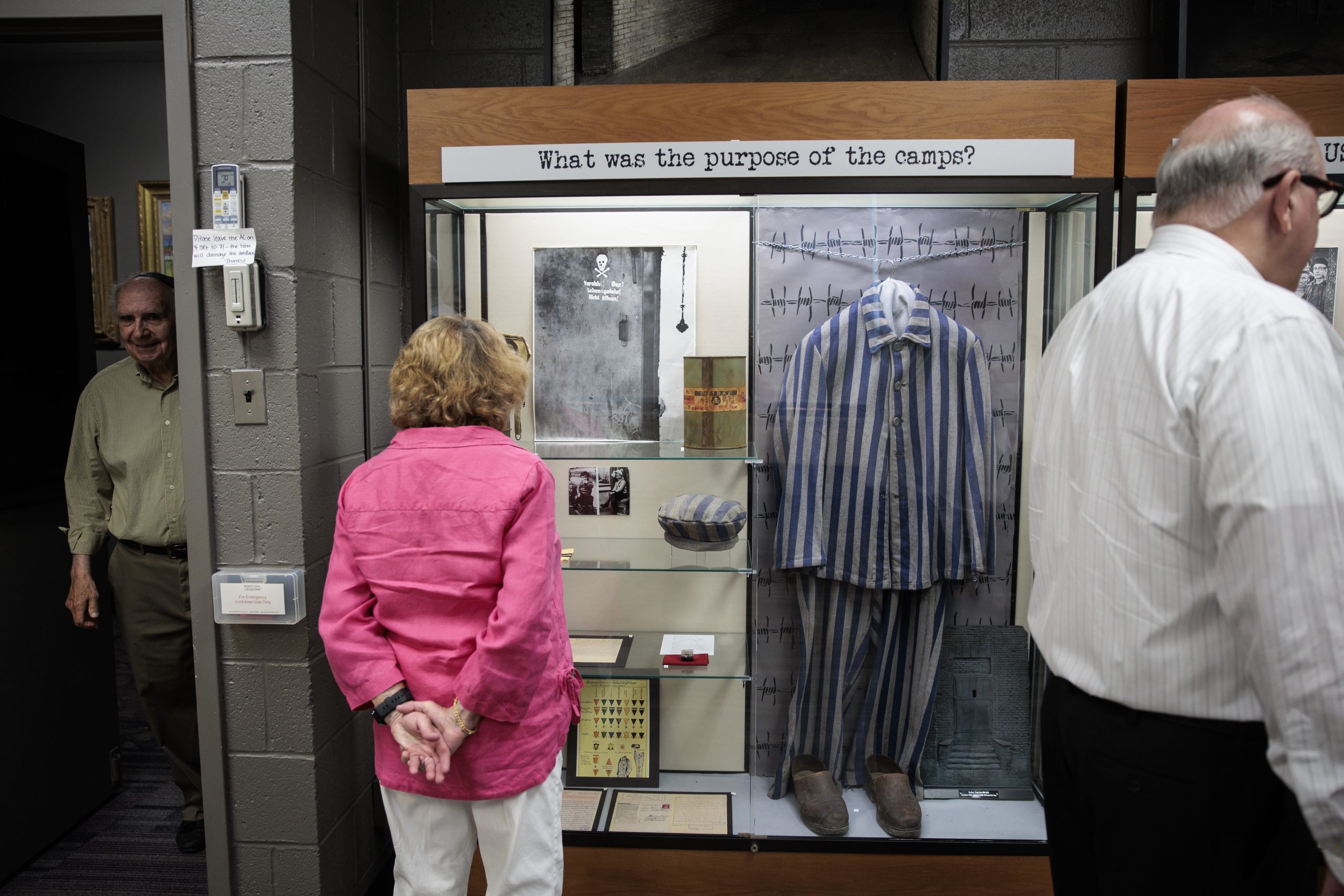
    Visitors browse the exhibits during the archives dedication ceremony at the Holocaust Awareness Museum and Education Center.Monica Herndon / Staff Photographer

    “He was like a detective. He was trying to solve mysteries,” Bonnie Wittenberg said.

    One example: Her husband became obsessed with finding where a distant relative had been buried. She wasn’t sure if he ever found out, but unanswered questions like this one often drove his research.

    This curiosity marked his conversations with the many Jewish families who over the years came to him with their own family stories. “He wanted to tell the story right,” she said.
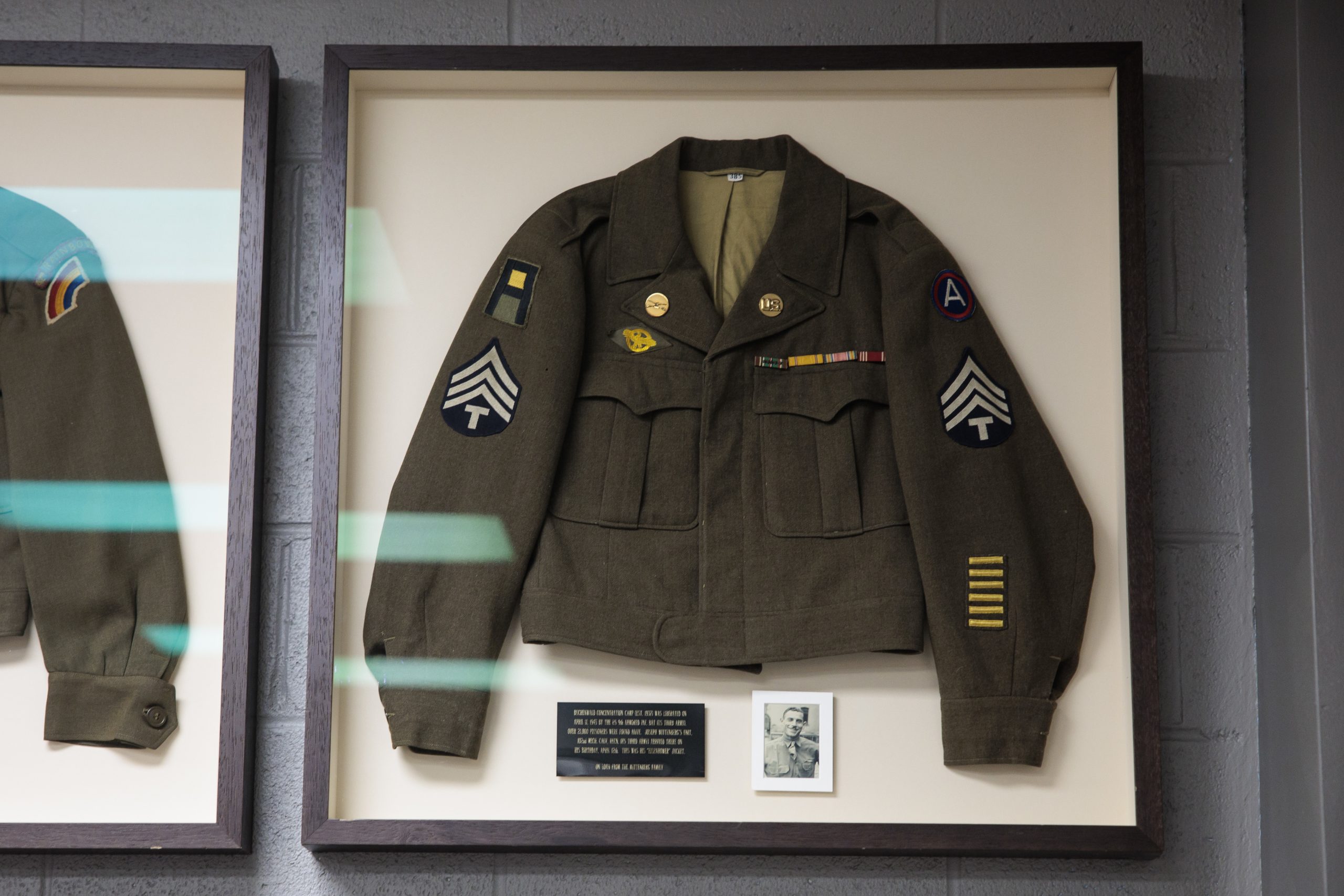
    Joseph Wittenberg’s Army jacket worn during the liberation of the Buchenwald Concentration Camp, on display during the dedication ceremony at the Holocaust Awareness Museum and Education Center on Sunday, Aug. 2, 2026, in Elkins Park. The Archives for Holocaust Education were dedicated in honor of his son, longtime curator Donald Wittenberg.Monica Herndon / Staff Photographer

    Wittenberg’s search for his ancestors continued a journey begun by his own Hungarian-born father, Joseph Wittenberg, said Donald’s son Steven Wittenberg.

    Joseph Wittenberg served in the U.S. Army during World War II, “and when the war was over, he went back searching for his family, but he couldn’t find them,” Steven Wittenberg said.

    After Joseph died, Donald Wittenberg found personal journals and war trophies that revealed more about his family and his father’s military service, he said. He learned his father had been in Normandy on D-Day plus one and had seen combat.

    One item, a Nazi flag taken from Nuremberg’s city hall and signed by Joseph Wittenberg’s comrades in the U.S. Army 102nd Cavalry Regiment, is now on display in the museum. So is Joseph Wittenberg’s Army service coat, which Steven and his brother Jan remembered wearing when they were children.

    A photograph of Donald Wittenberg and a commemorative plaque were placed during a dedication ceremony at the Holocaust Awareness Museum and Education Center on Sunday, Aug. 2, 2026, in Elkins Park. Monica Herndon / Staff Photographer

    These objects, and the stories they tell, offer lessons for people today, Steven Wittenberg said: “The survivors are starting to pass away, and so you need to document that.”

    Donald Wittenberg carefully chose every artifact in the museum, said Jacob Dupre, a Holocaust historian who worked as Wittenberg’s assistant and who will be taking over as curator. Dupre noted that there were no images of death on display — a choice Wittenberg made.

    Wittenberg did include evidence of Nazi atrocities in the display, however. Tom Brennan of Oreland acquired a canister that once held Zyklon B, a gas used to kill people. Brennan noted that the shape of the puncture holes in the canister were the size of a standard-issue German soldier’s knife.

    Other artifacts spoke to the resilience of those imprisoned in the camps, such as a tiny six-sided die made of bread dough.

    A Nazi flag from Nurenberg during the dedication ceremony.Monica Herndon / Staff Photographer

    One poignant item, a handmade birthday card passed between two concentration camp prisoners, was translated from German to read, “Whom the stork brought in May / the sun smiled on him.”

    The poem-like text of the card, written more than 90 years ago, concluded with the lines, “Everything on Earth will change / when we’re all home again.”

    Such messages of hope and endurance, found throughout the museum, still have something to teach people today, said HAMEC CEO Fabulous Flores. The museum tracked the yearslong process from the Nazi’s hate campaign against Jews to the end of World War II.

    “We talk a lot about empathy,” Flores said. “When antisemitism is on the rise, when one group is targeted for hate, everyone is at risk.”

  • Hundreds of thousands line Amsterdam canals for the annual Pride boat parade

    Hundreds of thousands line Amsterdam canals for the annual Pride boat parade

    AMSTERDAM — Hundreds of thousands of people lined Amsterdam’s canals on Saturday to watch the city’s canal boat parade, the highlight of an annual Pride festival that this year comes just a week after a deadly attack on a Pride event in Berlin.

    Openly gay Dutch Prime Minister Rob Jetten, dressed in a white shirt, black life vest, and gold necklace, waved to crowds as he sailed in a small boat through the colorfully decorated parade of 80 vessels, waving to participants and spectators as techno music pumped from speakers along the route.

    The colorful floating parade came a week after the Berlin attack left one person dead and 29 injured. A suspect, Abdul Ballout, was suspected of driving a van into a crowd near the festival Saturday night before apparently stabbing others with a machete in what authorities believe was an Islamic extremist attack. Ballout was shot and killed by police during a confrontation on Sunday in a suburb of the city, authorities said.

    Jetten, the first Dutch prime minister to ever take part in the boat parade, said in a video posted on X that the event was more important than ever because worldwide the freedom and security of the LGBTQ+ community “is under pressure with new discriminatory legislation, lack of safety on the street, or last week’s terrible attack in Berlin.”

    Amsterdam Mayor Femke Halsema said in the aftermath of the German attack that authorities in the city would “where necessary take extra measures that visitors will hopefully notice as little as possible.”

    Motorboats carrying police officers cruised the canals and a helicopter hovered overhead as Saturday’s parade got underway.

    The Berlin attack also cast a shadow Saturday over Hamburg’s Pride parade, one of Germany’s biggest, where increased security was noticeable as dozens of trucks made their way through Germany’s second-biggest city.

    Police and organizers said about 300,000 attended, compared with about 260,000 people last year, German news agency dpa reported. Hamburg’s police chief said earlier this week that roughly twice as many officers as last year would protect the event.

    The boat parade is the traditional highlight of Amsterdam’s Pride. This year it coincides with a World Pride celebration that also is being hosted by the Dutch capital.

    Rod Lugtenburg, 55, from Toronto, said he came to Amsterdam for World Pride. He stood on the city’s famous Skinny Bridge wearing a T-shirt emblazoned with a rainbow maple leaf as the boats passed.

    “For me, it’s about acceptance, being able to be who you are,” he said.

    “I have Dutch heritage and I have always loved the fact that the Dutch have been leading the way” in acceptance and rights for the LGBTQ+ community. “And Canada is right behind them, so I’m very proud.”

    The joyful event happened against a backdrop of rising reports of verbal and physical assaults on members of the LGBTQ+ community in the Netherlands, which has long been considered a haven of tolerance. On Friday, a court in Amsterdam convicted a man of using discriminatory language at a Pride event in the city earlier in the week. He was ordered to do 40 hours of community service.

    Boats taking part in the parade included vessels representing the Dutch government ministries, the military, and police as well as LGBTQ+ organizations and clubs.

    The Netherlands LGBTQ+ rights group COC, which is celebrating its 80th anniversary this year, had a boat in the parade carrying a manifesto calling for progress in the fight for human rights for LGBTQ+ people in the Netherlands. It also carried a portrait of activist Marsha P. Johnson, who took part in the Stonewall rebellion when patrons at the New York inn of that name resisted a police raid on June 28, 1969. The raid helped usher in a new, militant phase of the movement for gay rights.

    Another boat carried two giant inflatable likenesses of U.S. President Donald Trump and his Russian counterpart Vladimir Putin. The two figures, dressed in Delft blue and white costumes and each clutching a tulip, leaned toward one another for a kiss, in the style of pottery figurines that are a staple of tourist souvenir stores throughout the Netherlands.

    The group that created the boat said on its website said they re-imagined the symbol of love and unity “not to provoke, but to pause power for a moment and highlight something human.”

  • Moscow mayor calls deadly bomb attack on restaurant a ‘terrorist act’

    Moscow mayor calls deadly bomb attack on restaurant a ‘terrorist act’

    Moscow mayor Sergei Sobyanin on Sunday called a bomb attack on a restaurant in the capital the day before a “brutal terrorist act,” but did not say who was responsible.

    The blast on Saturday evening at the Balzi Rossi, an upscale Italian establishment in central Moscow, killed three people, including the woman bomber, Russian state media said, citing local officials.

    “Yesterday, a brutal terrorist act was committed in Moscow that claimed human lives. The victims are currently in the city’s hospitals, where they are receiving all necessary care,” Sobyanin wrote on social media Sunday.

    He added that a probe into the attack was underway. “Those responsible for committing this crime will certainly be found and will face the punishment they deserve,” he wrote.

    At least 21 people were wounded when the explosive device detonated at the restaurant on Kudrinskaya Square, the National Anti-Terrorism Committee said late on Saturday, according to Russian state news agency Ria Novosti.

    A woman attempted to smuggle the bomb into the establishment, but a security guard refused to let her in before the bomb exploded, reported Ria Novosti. The Moscow Investigative Committee said on Saturday evening the attack was still being investigated.

    As of early afternoon on Sunday, there was no further information from Russian authorities, and no one had publicly claimed responsibility.

    According to Ria Novosti, the restaurant was closed for a private function on Saturday evening.

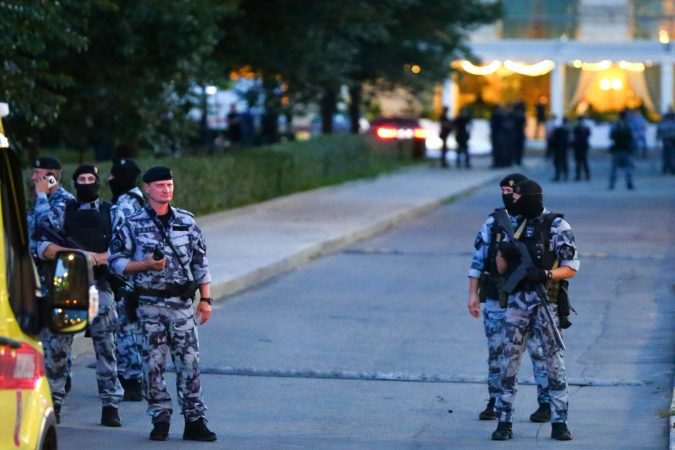
    Footage released by Russian state media showed heavily armed law enforcement officers, several ambulances, and other emergency vehicles at the site.

    Earlier this year, Russia’s Federal Security Service announced that authorities would tighten security around senior military and government officials, after a series of assassination attempts in Russian cities that followed the Kremlin’s full-scale invasion of Ukraine in February 2022.

    So far, Russian authorities have not drawn any connections between Saturday’s blast and these earlier attacks or the war in Ukraine.

    Russia previously said Kyiv was behind a car bombing in Moscow last April that killed Lt. Gen. Yaroslav Moskalik, a deputy head of the main operational department in Russia’s General Staff. Ukraine did not publicly claim responsibility.

    But Ukraine’s SBU security service earlier said it had organized the killing in December 2024 of Lt. Gen. Igor Kirillov, who headed the Russian military’s nuclear, biological, and chemical protection forces.

    Kirillov was killed by a bomb hidden in a scooter outside his apartment building in Moscow, a day after Ukraine’s security service leveled criminal charges against him.

    Among other prominent victims of bombing attacks in Russia were Daria Dugina, the daughter of influential nationalist thinker Aleksandr Dugin, and Vladlen Tatarsky, a well-known pro-Kremlin military blogger.

    Kyiv denied involvement in the attack on Dugina, and did not respond to Russian accusations that it was behind Tatarsky’s death.

  • Rob Mac and Wrexham fans take over Subaru Park: ‘It’s just Philly but across the world’

    Rob Mac and Wrexham fans take over Subaru Park: ‘It’s just Philly but across the world’

    Subaru Park looked a tad different on Sunday morning. The navy blue, gold, and signal blue jerseys that would typically decorate the Union’s stadium were replaced by pools of red and white jerseys as it became a temporary home to Wrexham A.F.C.

    The football club based in Wrexham, Wales, finished its three-game United States tour in Chester, with a preseason friendly against Sunderland.

    Here’s everything you missed from the Wrexham takeover:

    Wrexham goalkeeper Arthur Okonkwo grabs a corner kick by Sunderland on Sunday.David Maialetti / Staff Photographer

    The gang takes on Pongadelphia

    With one large pong cup remaining, the Always Sunny star Rob Mac, a Philly native and co-owner of Wrexham alongside Ryan Reynolds, grabbed a soccer ball, lined up his shot, let it go — and missed.

    “Right on line,” Mac said. “ I mean that was right on line.”

    Ahead of the game, Mac joined former Wrexham players Ben Tozer and Ben Foster on Team Wrexham Lager for Pongadelphia, a large beer pong game that was a nod to the Always Sunny Flipadelphia, competing against Team Garage Beer, which featured Eagles kicker Jake Elliott, Jim Cramer, and Fit Dad CEO.

    Surrounded by dozens of Wrexham fans, Team Wrexham Lager took the lead early and never looked back — the same couldn’t be said about Wrexham A.F.C., who suffered a 1-0 loss to Sunderland.

    But no matter the result, Sunday’s game was a full-circle moment for Mac, who took over the team in 2021. Before the game started, a prerecorded message was displayed on the jumbotron to all the fans in attendance.

    “I got into football … it was when I first heard the opening song from the Sunderland ‘Til I Die docuseries,” Mac said. “When I heard it, I immediately thought of my grandfather who worked over at the shipyards, just over there.

    “And just like the shipyard workers and Sunderland, were the coalminers of Wrexham, were the construction workers who built Liberty Place and the Ben Franklin Bridge. What I love so much about this game is that you can be Sunderland, Wrexham, or Philly, or any working-class town in the entire world and still discover that same connection to each other through a game that mirrors our biggest ups and downs.”

    A passionate fanbase that travels

    Passionate. Caring. Friendly. Amazing. Family.

    These were the words used to describe Wrexham’s fanbase. And all of that was on display Sunday. Wrexham fans traveled from New York, Pittsburgh — and even as far as Okinawa, Japan — to watch the team in action.

    Tessa Michael, 46, joined the team on their three-game tour, flying from Japan to Tampa to New York to Pennsylvania to watch the team.

    “Like most American fans I got into it from watching Welcome to Wrexham,” Michael said. “Now, I’ve been out on every summer tour. I’ve been out to Wrexham. This is my second one now where I’ve done all three games.”

    Tessa Michael, 46, (second from right), of Okinawa, Japan, watches “Pongadelphia,” an oversized beer pong game before the Wrexham and Sunderland match.David Maialetti / Staff Photographer

    After watching Welcome to Wrexham, a documentary following the club, which was released in 2022, she instantly fell in love with the fanbase.

    “Honestly it’s the people,” Michael said. “It’s the people of the town. They have great stories. They’re just like any town in America. You go to any sports town in Pennsylvania, in Florida, in Virginia or even out West, anywhere, they have the same struggles. They’ve dealt with the same things. They’re very relatable and the town is what keeps you a Wrexham fan.”

    Michael has tried to bring the Wrexham fandom with her to Japan, her home for the last two years, but she’s found it to be more difficult with games airing between 11 p.m. and midnight — something she doesn’t seem to have an issue with.

    “I’m staying up and watching them,” Michael said.

    Wrexham to Philly crossover

    The Welcome to Wrexham documentary led to many new eyes on the team — making them one of the most popular teams in the English Football League, famously owned by both Mac and Reynolds.

    “It definitely helped this team,” said 31-year-old Chester native Evan Voicheck. “When you have two people that have an insane amount of money that are willing to put it into something they care about, then it helps.”

    Voicheck, who wore a Wrexham scarf, two red-and-white chains, and the Wrexham mascot around his neck, also became a fan through the Welcome to Wrexham documentary.

    The fanbase is so passionate, it reminds him of Philly sports fans.

    A Union and Wrexham fan shows their support during the Wrexham vs. Sunderland match on Sunday.David Maialetti / Staff Photographer

    “Just like us in Philly,” Voicheck said. “Wrexham, from what I’ve seen, it’s just Philly but across the world. It’s like a family. Everybody here knows each other. And if they don’t, then they will at the end of the day.”

    Although Voicheck made the comparison to Philly sports fans, Buffalo native John Kania, 49, compared them to the Bills.

    “Being from Buffalo, we’re very similar to what Wrexham is,” Kania said. “It’s a small — used to be a much bigger city, and just kind of went down in the drain. We have the Bills, like Wrexham has their football team. There’s a natural connection there.”

    However, there is one glaring difference between Wrexham fans and American football fans.

    “Everyone here is so friendly and nice,” said Chad Bemiller, of Derry, Pa. “It’s almost like a college football atmosphere here. Everyone is happy here and I don’t think we have that here with the NFL.”

    Rob Mac and his wife, actress Kaitlin Olson (center), watch the match between Wrexham vs. Sunderland on Sunday.David Maialetti / Staff Photographer

    Wrexham will start the season against Cardiff City on Aug. 17, as they prepare to make another push for the Premier League. And 14-year-old Logan Bemiller, who went to a Wrexham soccer camp in Long Island last year, has high hopes.

    “I think we can get a promotion,” Logan said.

  • 2 killed when firefighting helicopters collide near Athens as Europe’s wildfire emergency rages

    2 killed when firefighting helicopters collide near Athens as Europe’s wildfire emergency rages

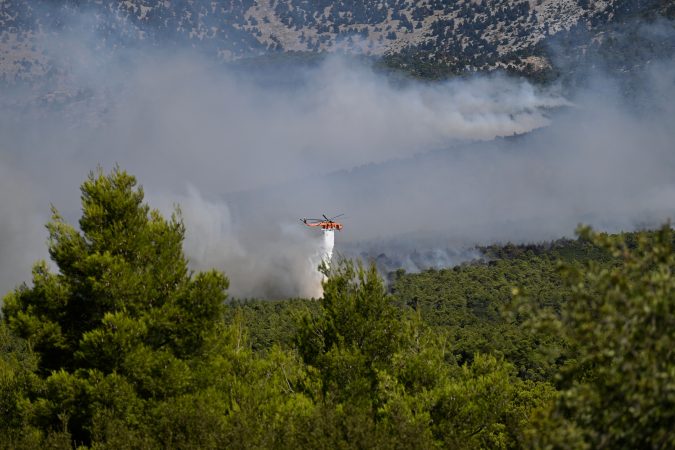
    ATHENS, Greece — Two Greek firefighting helicopters collided in midair on Sunday as they were battling a wind-driven wildfire west of Athens, sending one aircraft crashing to the ground. Two crew members, a Greek and a Danish national, died in the crash.

    The collision laid bare the danger at the most volatile front of Europe’s wildfire emergency. Strong winds drove flames deeper into the region of the Greek capital and forced fresh evacuations, France guarded a still-burning scar four times the size of Paris, while Spain’s major fires stopped advancing.

    Greek Prime Minister Kyriakos Mitsotakis expressed “sorrow for the tragic accident” and extended condolences to the families of the firefighters killed in the crash.

    “The loss of the Greek coordinator and the Danish pilot at the time they were attempting the major fire in Porto Gremeno fills us all with grief,” Mitsotakis said in a statement.

    The aircraft were Bell helicopters operating over the Psatha area west of Athens, each with a two-person crew. Foreign firefighting and helicopter crews are often deployed in Greece to help tackle wildfires during the country’s hot, dry summers.

    The two crew members who were recovered alive were a Greek and a British national.

    The flames had spread rapidly, threatening communities and an industrial district as violent gusts prevented firefighting aircraft from collecting water from the sea. The blaze carried a grim resonance in a region where the 2018 Mati wildfire killed 104 people, Europe’s deadliest blaze this century.

    Farther west, containment brought no end to the emergency. France’s largest wildfire remained held within its perimeter after forcing 224,000 people to flee in what may have been the country’s largest civilian evacuation outside wartime.

    Hot spots still burned within a 162-square-mile scar, thousands remained unable to return home, and nearly 3,000 firefighters were deployed against the Gironde megafire and a second, still-uncontained blaze in Provence.

    Together, fires in France and Spain have driven roughly a third of a million people from homes and vacation sites, emptied communities at the height of the European summer, and stretched emergency services across simultaneous disasters.

    Record damage underscores Europe’s growing wildfire threat

    The mass evacuations in France and Spain are the latest measure of a wildfire threat growing across Europe.

    The continent entered 2026 after its worst fire year on record, with more than 3,860 square miles burned in 2025. Over the past four decades, wildfires have been linked to nearly 800 deaths across much of Europe, according to the European Environment Agency.

    Europe is the world’s fastest-warming continent. It has warmed more than twice the global average since the 1980s, according to the European Union’s Copernicus Climate Change Service.

    Human-caused climate change made the extreme fire-weather conditions behind this year’s French blazes at least twice as likely, scientists at World Weather Attribution found in a rapid analysis conducted while the fires were still burning.

    Gale-force winds cripple aerial assault near Athens

    Nearly 500 firefighters and 23 aircraft were deployed in Greece, but gale-force winds drove flames through dry forest and crippled the response, preventing some aircraft from reaching the sea to collect water.

    Authorities ordered the evacuation of Kandili, Agia Skepi, and Toutouli as smoke rose over the mountains. Crews were particularly concerned about Porto Germeno, a seaside community on the Gulf of Corinth.

    The fire began Friday near Agios Vasileios before sweeping toward Porto Germeno and into the forested mountains west of Athens. Firefighters evacuated 254 people by sea Friday and another 12 Saturday — often the last escape route when fire and smoke cut the few roads from coastal communities.

    Wildfire meteorologist Theodore Giannaros estimated the blaze had affected 15 to 19 square miles, though authorities had issued no official figure.

    Elsewhere in Greece, flames threatened homes on Kefalonia, forcing evacuations from inland communities as aircraft made water drops over the Ionian island. Firefighters battled another blaze near Nea Tenedos on the peninsula of Halkidiki.

    Earlier this week, two firefighters died fighting a fire on Crete, while a third was killed on the Peloponnese.

    “A pristine forest, a paradise, was surrendered to the hands of the fire,” local farmer Minas Tzortzanis said Saturday. “There are no words to explain what has happened. Destruction. Total destruction.”

    France holds off renewed flames

    In southwestern France, the Gironde megafire remained held within its perimeter Sunday but continued to burn after scorching 162 square miles of forest in 10 days.

    “The fire is now fixed, which does not mean that the fire is extinguished,” the Gironde prefecture said, using the French firefighting term for a blaze whose advance has been stopped.

    The region remained under France’s highest red forest-fire alert. Dry conditions, soaring temperatures around Bordeaux, and afternoon winds threatened to rekindle the flames.

    In Le Porge, local officials said about 150 homes were destroyed. Mechanic Matthieu Plessis returned Saturday to the ruins of a house that had been in his family for seven generations.

    “There are places I don’t even recognize anymore,” he said. “You don’t even know what was here anymore, or who lived where.”

    Firefighters from Ukraine, Lithuania, and French Polynesia were expected Sunday and Monday to reinforce the operation.

    Provence fire stops advancing but remains uncontained

    In southeastern France, nearly 1,500 firefighters battled a separate blaze in the Var department that tore through about 7 square miles in little more than a day.

    The Gros Bessillon fire was stabilized Sunday after its perimeter held overnight, but it remained uncontained. Some 2,500 people were evacuated as flames threatened nearby communities.

    It was the fourth major fire to strike central Var since July 19. A smaller blaze near Brignoles earlier in the week forced actor George Clooney and his family, along with about 700 other residents, to evacuate before it was brought under control.

    Prime Minister Sébastien Lecornu said France’s fires were generally under control but warned that conditions remained volatile. He appointed a national coordinator to oversee reconstruction in fire-ravaged areas.

    More than 452 square miles have burned across France this year.

    Spain’s deadly fire siege eases

    Spain’s major fires — which have killed at least 13 people, produced the country’s largest recorded wildfire, and prompted a national emergency — were no longer advancing on Sunday.

    In Zamora province near the Portuguese border, more than 20 ground and aerial units guarded the perimeter of the Fermoselle fire against flare-ups in the rugged Arribes del Duero landscape. Most evacuees had returned home, according to local media.

    Spanish Prime Minister Pedro Sánchez has called for a national pact to confront wildfires, warning that climate change is making them increasingly destructive.

  • How a ‘perfect storm’ spread fire, heat, and smoke across the Northern Hemisphere

    How a ‘perfect storm’ spread fire, heat, and smoke across the Northern Hemisphere

    Chicago and New York choked under orange and white skies. Madrid and Bordeaux had flames licking at their doorsteps. Vast forests, rural communities, and ranchlands full of livestock in Canada and Oregon have burned — and all in the month of July alone.

    Major wildfires and their massive, suffocating plumes of smoke blanketed vast swaths of North America and Europe, in some cases combining with intense heat waves that exacerbated flammable conditions and contributed to human misery.

    According to a wildfire smoke analysis by the Washington Post, about 20% of Northern Hemisphere land area — covering around 7.5 million square miles — experienced moderate or greater concentrations of black carbon, the soot particles released by wildfires, at some point during July.

    That included large swaths of North America — stretching into the Arctic Circle — as well as Western and Southern Europe and parts of Russia.

    Against the backdrop of a changing climate, July has illuminated what it can look like when severe weather, at heightened frequency and intensity, combines to form a hellish landscape. Like 2023 and 2024, this summer is the latest chapter in the Northern Hemisphere’s fiery era, as wildfires become more frequent and intense and oppressive heat and smoke harming the health of millions become increasingly normal.

    “It was like the perfect storm of very hot conditions with strong winds that fanned these fires,” said Dmitri Kalashnikov, a climate postdoctoral researcher at the University of California at Merced, referring to the flames he saw explode in Minnesota and Ontario in mid-July. Heavy smoke from those fires made its way through the Midwest and the East Coast in subsequent weeks, temporarily making cities there among the most polluted in the world.

    “That direct clear linkage of big heat wave, lots of fire, then lots of smoke impacts was kind of a wow moment for me,” Kalashnikov said.

    In some cases, this sprawling smoke lingered over densely populated cities for days, causing poor air quality that spread toxins and increased the risks of asthma attacks, heart disease and strokes.

    “There is no safe level of exposure to wildfire smoke,” said Ze’ev Gedalof, a forest ecology expert at the University of Guelph in Ontario. “We just need to expect that this is the new normal.”

    Cities such as Cleveland, Denver, Detroit, Milwaukee, New York, and Philadelphia all experienced at least four days with moderate or higher smoke concentrations during July. In Baltimore, Minneapolis, and Portland, Ore., the tally was three moderately smoky days, while D.C. and Boston had two each.

    In Canada, Calgary, Edmonton, Montreal, Ottawa, Toronto, and Winnipeg all experienced three to five smoky days, while Spain’s Madrid had three and France’s Bordeaux had four.

    And across many of these cities, fire and smoke were not the only summer scourge.

    Many of the fires occurred in areas that have recently experienced record-breaking temperatures from towering heat domes. The heat and dryness that spike as a result of these powerful areas of high pressure can drive wildfire risks. A recent study by Kalashnikov and other researchers at UC Merced found that from 2001 to 2024 more than 40% of the area torched by fires in the western United States had burned during or in the immediate aftermath of a heat wave.

    “The conspicuous overlap between record-breaking warmth, dryness, and/or low snowpack and these fires is simply not a coincidence. The scientific evidence linking increasingly extreme fire weather, as well as increasingly extreme wildfires themselves, to climate warming is clear,” wrote climate scientist Daniel Swain in a series of posts on social media about the conditions across the hemisphere.

    Several factors could be behind this summer’s many heat domes.

    Changing jet stream wind patterns, partly linked to El Niño and a marine heat wave in the Pacific, may be playing a role, as could an unusual cold blob of water in the North Atlantic. The jet stream has been arcing up and over both the United States and Western Europe, with heat domes bubbling underneath.

    But a heat dome doesn’t make a wildfire.

    “There will not always be extreme wildfire outbreaks when exceptional heat and dryness occur, that is true,” Swain added in one of his posts. “But such conditions greatly raise the ceiling on what is possible in a warming world — and sometimes, as is happening now, that increased potential will be realized.”

    In recent days, firefighters have made progress in containing blazes across the two countries; in the region around Bordeaux, authorities have now allowed nearly 150,000 people back to their homes, Reuters reported, to begin a recovery.

    “Considering the damage to the ecosystems and the livelihoods, communities affected are going to need support from authorities for a very long time,” said Maria Alcazar Castilla, the deputy regional director for the Red Cross in Europe. “There’s people that need to build their homes, to recover livelihoods, etc. All that, in economic terms, is extremely expensive.”

    Some parts of the world have always been vulnerable to fire. Canada has enormous ranges of dense boreal forest — roughly the size of the United States west of the Rocky Mountains — with few roads and scant human population. That kind of forest has evolved to burn in order to rejuvenate, said Jen Beverly, a wildfire researcher at the University of Alberta — but now has grown susceptible to more extreme fires.

    “The forest don’t change quick enough to be able to reflect in the data like that. That means it’s climate change,” Beverly said.

    Around 14,500 square miles of Canada have burned through July 31 this season — already above the 10-year average, although not on pace to match the extreme fire seasons of 2023 and 2025.

    The intense conditions generated by July’s wildfires include the fire in Bordeaux that created its own thunderstorm. The phenomenon, known as a pyrocumulonimbus cloud, occurs when the intense heat of a wildfire sends a column of hot air and smoke high up into the atmosphere, where it cools and condenses into a cloud. The resulting thunderstorm, with high winds and lightning strikes, can further fan the flames.

    “It might last for one to three to four hours, and all the while it’s connected to that fire source. And at the same time, the fire is being altered and energized by that storm that it generated,” said Mike Fromm, a meteorologist at the U.S. Naval Research Laboratory. “So it’s a feedback loop.”

    Now, the American West is bracing for more of the same.

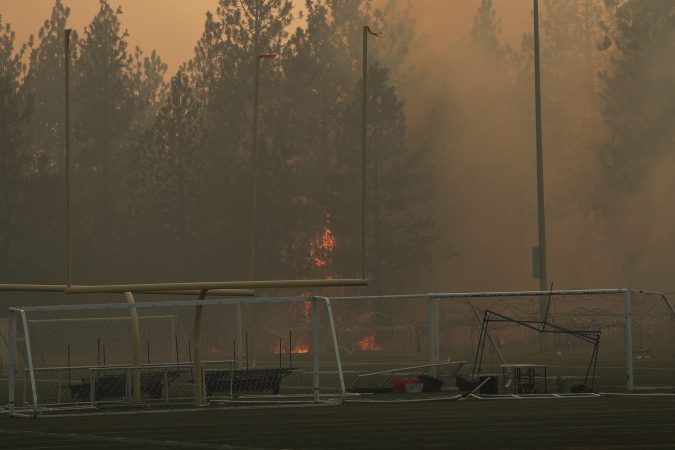
    A fast-moving wildfire driven by strong winds and high temperatures swept across northwest Spokane on Saturday before jumping the Spokane River and prompting the evacuation of thousands of people.

    In California, Arizona, and Nevada, a new heat dome that settled over the region this weekend was expected to send temperatures up to 115 degrees Fahrenheit in cities like Phoenix, and another bout of extreme heat could expand across the country in the days to come.

  • The smell of death surrounds Donald Trump’s regime, from Guatemala to Pittsburgh

    The smell of death surrounds Donald Trump’s regime, from Guatemala to Pittsburgh

    Ooh, that smell

    Can’t you smell that smell?

    Ooh, that smell

    The smell of death surrounds you

    — Lynyrd Skynyrd, “That Smell”

    The United States government might wash its hands of any responsibility for the more than 700,000 human beings who’ve been deported since Donald Trump returned to the White House some 18 months ago, but it doesn’t take Sherlock Holmes to determine who’s to blame for the blood stains that have been left behind.

    Last month, police outside the city of Retalhuleu in southwestern Guatemala found Nixon Giovanni Pérez Paz, 43, and his wife, Glendy Marisol González de la Cruz, dead in a sugar cane field. They’d been bound, gagged, and then executed by gunshots, with their 14-month-old daughter crying next to her mother’s lifeless body.

    When Trump took office in January 2025, the couple was living in a suburb of St. Louis — working essential jobs and raising their three daughters while seeking to become legal residents of a country that had offered refuge from rampant crime and poverty back home in Guatemala.

    The dream turned into a nightmare with one traffic stop in April 2025, as Pérez Paz was driving to work. Although a subsequent NPR investigation found just one permanent mark on his record — a paid $200 fine for driving without a license — Pérez Paz was swiftly deported by U.S. Immigration and Customs Enforcement (ICE). González de la Cruz had an active asylum application, but after struggling to support her kids while working two jobs, she decided to return home voluntarily.

    The couple was murdered only weeks after they reunited in Guatemala.

    “If immigration hadn’t picked up my brother, my sister-in-law would still be alive, and the children wouldn’t be going through this sorrow,” the dead man’s brother, Ronaldo Pérez Paz, told People magazine. “Unfortunately, immigration — the [U.S.] government — doesn’t see that. It makes no difference to them.”

    No, it doesn’t. Nor did anyone with that government see the humanity of Daphy Michel, a 31-year-old Haitian asylum-seeker with a history of mental health struggles. She ended up in immigration custody after an arrest and was dumped by ICE agents at a Pittsburgh bus stop wearing summer clothes during a brutal February cold snap. She was found dead three days later, and a medical examiner has ruled that Michel’s death was a homicide.

    “I believe that we need to observe all our brothers and sisters as neighbors,” Jaime Martinez of the Pittsburgh immigrant rights group Frontline Dignity told the Guardian, invoking the golden rule that was shattered by Trump’s cruelty-is-the-point regime.

    The smell of death permeates the so-called brain trust of American militarism that decided back in February — for reasons still unfathomable — to bomb Iran back into the Stone Ages, in an on-again, off-again campaign in which it seems the collateral damage is the point.

    An undated photo of Daphy Michel, an asylum-seeker from Haiti who died March 2 in Pittsburgh, in the wake of her release from federal custody.Michel Family via AP

    Last week, according to a deep analysis by the New York Times, U.S. forces dropped a massive, 2,000-pound bomb in the middle of a dense residential neighborhood on Iran’s Qeshm Island along the contested Strait of Hormuz, pulverizing a family’s home.

    The 3:40 a.m. blast killed Zahra Jafari, her husband, Qeysar Jafari, a taxi driver, and their son Sina, according to Iranian news agencies, who said two other children were rescued alive from the rubble.

    Less than halfway through Trump’s second presidency, his strongman rule is increasingly becoming a death cult. The stench of immoral indifference to the humanity of anyone not part of the MAGA movement is spreading as fast as the COVID-19 virus that helped bring an end to Trump’s disastrous first presidency.

    I realize I’ve probably overused my lifetime quota for invoking one of the greatest four minutes of filmmaking I’ve ever seen, but yet again I am reminded of Martin Scorsese’s brilliant montage in Goodfellas as dead bodies pile up in parked Cadillacs or on freezer-truck meat hooks in the wake of a huge armored-car heist. It’s a testament to the greed, brutality, and senseless violence of the mob life.

    Today, I can’t help but hear the mournful piano coda from “Layla” as I watch the corpses of Trump’s recklessly lethal rule wash up on Caribbean beaches near the driftwood of their obliterated fishing boats, or inside the bombed sanctuary of an Iranian girls’ school, or from medical neglect inside ICE’s growing gulag archipelago.

    The nattering nabobs who scoff at the notion that the United States — whose president on Saturday posted an AI photo of him kissing Jesus on a golden cross wrapped in the American flag — has sunk into fascism because there are no Auschwitz-style death camps just don’t get it.

    Whether it’s ICE agents firing bullets into an immigrant’s car, or deportation flights that dump their passengers back into the gang violence they thought they’d escaped, or ending the programs that saved millions of kids in Africa from malaria, the Trump body count is already into the thousands, and it grows every day of his warped presidency.

    The statistics matter, but you can’t put a number on the rank immorality of an utter disregard for whether people who don’t look like you live or die. Whatever the Trump death toll turns out to be, this stain on the American soul is never coming out.

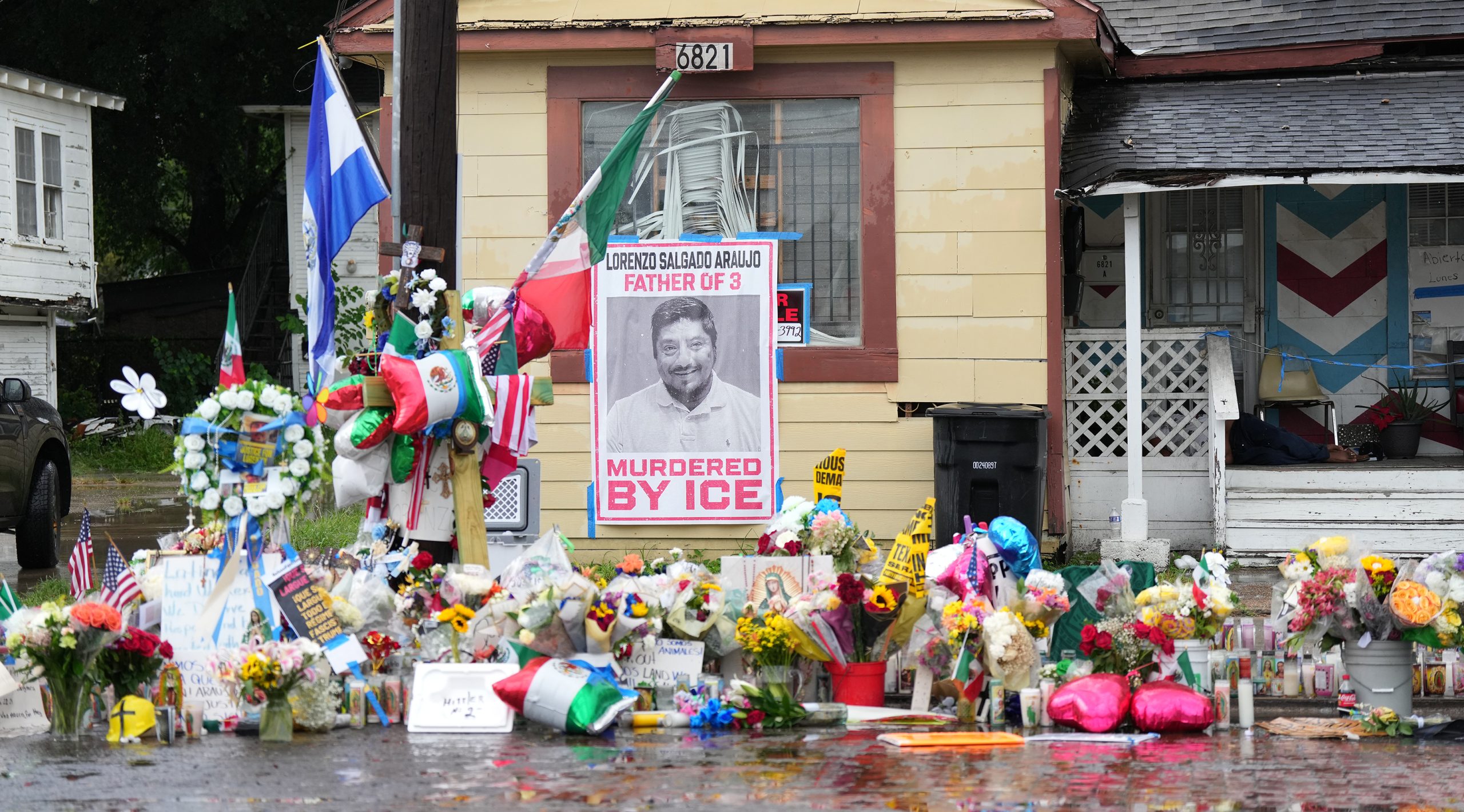
    There are rings of death in Donald Trump’s America. There are the direct attacks that jolt the conscience — the notorious fatal shootings by immigration agents of immigrants such as Lorenzo Salgado Araujo and Johan Sebastián Durán Guerrero and protesters such as Renee Good and Alex Pretti, the pointless wars that bombed the Iranian school in Minab or an apartment building in Venezuela, and the boat attacks on vaguely alleged smugglers off South America that have killed more than 200.

    But there’s also an outer band of gross neglect or indifference to human life that has led to scores of additional deaths, including the more than 50 people — some who’d complained of medical conditions that were ignored — who’ve died in ICE custody since Trump returned to office, or the unknown number who’d faced murder or poor medical care after deportation to the trouble-laden nations they’d tried to escape.

    A memorial at the site where Lorenzo Salgado Araujo was fatally shot by ICE agents in Houston last month is seen July 13.Karen Warren

    Then there’s the biggest — and most abstract — ring of all. It’s difficult to agree on an exact count, let alone bring accountability, for what researchers say is a wave of death — 600,000 people, mostly children, according to one Boston University study — that has resulted from the decimation of the U.S. Agency for International Development (USAID). And what will become of the domestic surge of preventable diseases such as measles under a government whose top health official is a notorious critic of vaccines? At what point does bad policy become depraved indifference?

    Death is contagious. In Ecuador, prosecutor Alexandra Bravo was investigating the U.S. drone strikes that destroyed three of her homeland’s fishing boats when a gunman on a motorcycle assassinated her and her sister. There’s no evidence that the United States has any direct responsibility for her death, but there’s every reason to believe she’d still be alive if this Trumpian death cult had not destabilized the planet.

    The MAGA movement thrives on a brand of white supremacy that pumps up its adherents by dehumanizing everyone around them. And when people are stripped of their humanity, the Ten Commandments seem to no longer apply to their tormentors. It’s hard to reach Trump’s promised goal of one million deportations every year unless the deportees are just a number — not a mom, or a dad, or a cherished neighbor.

    A bad president can be replaced every four years. A killing spree screams out for immediate action. We need to take whatever steps are possible right now to stop this rogue government before tomorrow’s headline about the next Nixon Giovanni Pérez Paz or Daphy Michel.

    The stench of death has already become unbearable.

  • Several states report cyberattacks as spy agencies suspect Iran is targeting water

    Several states report cyberattacks as spy agencies suspect Iran is targeting water

    Federal authorities are warning that critical infrastructure systems in the United States could be at risk after at least seven states reported cyberattacks that interrupted their water or wastewater operations last week.

    According to a joint alert from the FBI and the Environmental Protection Agency, “malicious cyber actors” have been remotely tampering with some water systems’ internet-connected programmable logic controllers, or PLCs, causing loss of water pressure and flooding.

    The warning, issued Thursday, comes after U.S. intelligence officials said Iran was likely behind a coordinated cyberattack on more than 30 municipal water systems in Minnesota. Experts have also warned for years that the U.S. water industry, which has resisted regulation efforts, has been vulnerable to cyberattacks.

    Intelligence agencies have not definitively concluded that Tehran was responsible for the disruptions in Minnesota, but the hack follows urgent warnings by federal cybersecurity officials that Iran for months has been targeting internet-exposed devices that control operations at water, wastewater, and energy facilities in the U.S. In July, federal cybersecurity authorities specifically warned that Iranian hackers were exploiting vulnerable PLCs.

    President Donald Trump has blamed Minnesota’s government, not Iran, for that attack. The FBI did not respond to a request for comment Friday about whether it believed Iran was responsible, saying the agency and others were “fully engaged to protect critical infrastructure.”

    The Post reported Thursday that intrusions have been noted at several water and energy systems across the country since shortly after the war began on Feb. 28.

    Federal authorities have not identified which states were affected in recent hacks. Outside of Minnesota, Michigan and South Dakota have also reported attacks. However, experts said it is likely many more states are affected, given that the brand of PLCs targeted — Rockwell Automation/Allen-Bradley — is widely used.

    “We only have one internet and it’s the same equipment for all these victims. … Theoretically, you should see these [vulnerabilities] in all 50 states,” said Joshua Corman, a public safety and resilience expert at the Institute for Security and Technology.

    To date, the cyber attackers have employed “low sophisticated tactics” to hack into internet-connected PLCs, often ones with weak or nonexistent credentials, according to Alec Davison, an analyst with WaterISAC, an information sharing program with the government intended to strengthen security. The hackers have subsequently modified passwords to lock out operators and disconnect controllers, he said in an email.

    “This has led to boil water notices and forced utilities into sustained manual operations,” Davison wrote.

    The risk is that cyberattackers tampering with PLCs could change the “logic” or software of a system so that an operator might not detect an issue with, say, dangerous levels of chemicals.

    A July 22 advisory issued by the Homeland Security Department’s Cybersecurity and Infrastructure Security Agency noted that the FBI and CISA have observed Iranian hackers tampering with the PLC’s logic software, “allowing systems to enter unsafe conditions without notifying operators of the anomalies.”

    “Operators see normal displays. No alerts fire and the process can enter an unsafe condition without anyone knowing,” said Kurt Gaudette, head of intelligence for Dragos, a cybersecurity firm that specializes in protecting critical infrastructure.

    Experts widely agreed that water infrastructure in the United States has been uniquely vulnerable for more than a decade. Of the roughly 151,000 water plants in the United States, about one-third service residential communities year-round. But only about 420 water plants participate in WaterISAC to try to improve cybersecurity across the water sector.

    “We have under half a percent paying attention to cybersecurity,” Corman said. “U.S. water is incredibly prone. We’ve been prey, we just didn’t have predators with an appetite for water, but that’s over.”

    Another issue is that many small- and medium-size utilities are using third-party integrators or contractors to configure the security settings on their systems, and these contractors are using default credentials and weak passwords.

    Compounding the problem, the water industry has also resisted efforts to be regulated for cybersecurity. After the Biden administration tried to impose cybersecurity audits of water utilities in 2023, some water industry groups and three states — Missouri, Arkansas, and Iowa — sued, causing the EPA to roll back its standards.

    Nate George, the mayor of Braham, Minn., which experienced a hack last week that caused the town’s plant to briefly go offline, said in a statement on Saturday to the Washington Post that cities such as his need more resources to comply with mandates to ensure their utility systems and infrastructure are safe.

    “I would actually argue it falls mostly on states that mandate local governments make certain upgrades to their utility systems or other infrastructure but fail to provide the funding to pay for it or maintain it,” said George, a Republican running for state auditor in Minnesota.

    Cybersecurity threats to the water sector, however, are only expanding.

    Trump, at a meeting with cabinet officials at Camp David on Friday, waved off the suggestion that Iran was involved in the Minnesota attack — and in turn blamed its officials, a frequent political target.

    “I blame it on Minnesota because they’re grossly incompetent,” Trump said at the cabinet meeting. “I would blame it on Minnesota and the governor, the corrupt governor of Minnesota. Iran’s got bigger problems than worrying about Minnesota.”

    Gov. Tim Walz (D) pointed the finger at Iran as well as at Trump.

    “Trump knows exactly who is responsible for this attack, and knows that other states were hit too,” Walz wrote on X. “This is what modern warfare looks like, and it further illustrates there’s no plan to win a war with Iran.”

  • Suspect in shooting at Idaho restaurant died from self-inflicted gunshot wound, police say

    Suspect in shooting at Idaho restaurant died from self-inflicted gunshot wound, police say

    TWIN FALLS, Idaho — The suspect in a fatal weekend shooting at an In-N-Out Burger restaurant in southern Idaho died of a self-inflicted gunshot wound, police said Sunday.

    Investigators are confident that 24-year-old Chad Williams acted alone during the shooting Saturday in Twin Falls, Police Chief Matthew Hicks said at a news conference. In all, three people died and seven others were injured at the recently opened restaurant.

    Authorities said two of the injured were treated at a hospital and released, three were listed in stable condition, and two were in critical condition.

    Hicks said an off-duty state trooper and an armed citizen both fired back and diverted the gunman. “We believe their actions helped drive the suspect away from the scene, preventing further casualties,” the chief said.

    One of those killed was an employee, the fast-food chain’s owner said.

    “My heart is broken, my chest is heavy, my eyes burn from the tears I’ve shed. We lost one of our beautiful Associates tonight,” In-N-Out owner Lynsi Snyder said in a statement released early Sunday on social media. “In-N-Out will be mourning with the families and praying for them as they tread through a very painful season.”

    The FBI on Sunday encouraged the public to submit images and videos related to the shooting.

    The In-N-Out had opened just about a week earlier, on July 24, as part of the California-based company’s recent expansion to Idaho.

    Authorities are notifying victims’ relatives

    Snyder did not identify the worker. Officials were still trying to notify relatives of victims and so were not yet releasing the names, ages, or other details about the people hurt in the shooting, Twin Falls spokesperson Josh Palmer said Saturday.

    Police who responded to the shooting found the body of the suspected gunman in an area near the restaurant, Palmer said. He did not know if the suspect was included in the fatality count.

    Palmer said investigators were interviewing witnesses to the shooting. The restaurant is in a busy shopping plaza, and hundreds of people were in the area when it happened around 2 p.m.

    Witnesses describe chaotic scene

    Lane Koehn, 34, said he was at a stoplight near the In-N-Out when he saw a person with an AR-style rifle emerge from the drive-thru. A man with a pistol started firing at the shooter.

    He then saw someone in an In-N-Out uniform drag a person, also wearing a uniform, bleeding from a gunshot wound to her chest across the parking lot. The employee, Koehn, and the man with the pistol stayed until paramedics arrived for her.

    “She was pretty bad off, but I don’t know. I hope she made it,” Koehn said.

    Koehn said he was told by police to evacuate because the shooting was still active.

    He said the shooter fired at least three or four rounds and it was not clear whether or not anyone in particular was targeted.

    Video taken by a driver from across the street captured a shooter, who appeared to be dressed in black, walking up to a white car carrying a long rifle, opening the driver-side door and popping the trunk. The person then walked to the trunk and reached inside. At that point the driver who shot the video left quickly, fearing that the man might be getting more weapons.

    Twin Falls resident Haley Dodaro, 43, and her mother went to In-N-Out for lunch Saturday afternoon. While waiting in the drive-thru line, they saw people running across the road and workers bolting out of the restaurant. At first, Dodaro thought there might have been a fire, but then a man directing traffic in a reflective vest said there was a shooter.

    “So that’s when we knew there was a shooting. People were running out crying and screaming. It was very scary,” Dodaro said in a text message to The Associated Press.

    Employee told people to get down

    Nayeli Rodriguez, 40, of Burley, was inside waiting for food with her daughters when she heard shots from the kitchen. An employee said it was a shooting and told people to get down. Rodriguez said an older man tried to protect her and her daughters, and they were among the last to run outside.

    “We were trying to get as far as we could and some angels let us in their car,” Rodriguez said, also via text message. “I left my car there in the parking lot.”

    Police said multiple people were taken to St. Luke’s Magic Valley Medical Center. Hospital spokesperson Taylor Marschner said in a statement that it was “working closely with law enforcement and emergency responders as they manage the situation.”

    Twin Falls, a city of about 56,000 people, is about 130 miles southeast of Boise and about 75 miles north of the Nevada border.

  • Israel says it has serious concerns with Hamas disarmament deal

    Israel says it has serious concerns with Hamas disarmament deal

    TEL AVIV, Israel — Israel has shared “serious security concerns” with the White House regarding the proposed disarmament deal with Hamas, an Israeli official said Sunday in what were some of the first public comments since U.S. President Donald Trump announced the agreement.

    Doron Spielman, spokesperson for the Israeli Prime Minister’s office, told the Associated Press that Israel’s intelligence assessment is that Hamas remains committed to rebuilding its military rather than genuinely demilitarizing. He said the Israeli military would not withdraw from Gaza — where it controls more than 60% of the territory — before Hamas disarms.

    “Our assessment is that if we redeploy before Hamas is truly disarmed, it will quickly expand its presence throughout Gaza, rebuild its terrorist infrastructure, once again threaten Israeli communities, and seek to carry out another Oct. 7-style attack,” he said, referring to the Hamas militant attack on Israel in 2023 that triggered the war in the Gaza Strip.

    “Disarming means physically giving up the weapons. Nothing less,” Spielman said.

    His comments come days after Hamas said that it would begin disarming as part of the U.S.-brokered ceasefire signed nine months ago to end the nearly three-year-long conflict. It marks a potential breakthrough in ending the conflict, but many hurdles, conditions, and long timelines remain.

    Hamas says it has agreed to disarm but obstacles remain

    Trump’s 20-point ceasefire plan calls on the militant group to surrender its weapons and destroy its vast network of tunnels. It also envisions Israeli forces withdrawing from Gaza, the arrival of a new technocratic Palestinian government, deployment of an international security force, and the rebuilding of the battered Palestinian enclave.

    Hamas disarming has been a sticking point and has deadlocked negotiations for months. In announcing the deal on social media on Thursday, Trump said it would be carried out in “carefully structured phases.”

    A copy of the agreement obtained and verified by the AP said that all weapons held by the Hamas-run police will be transferred to the U.S.-backed Palestinian technocratic committee, known as the National Committee for the Administration of Gaza, upon its arrival in the enclave. It’s not clear when that would happen since it is contingent on other steps.

    A process to decommission and store heavy weapons and to dismantle military production sites and tunnels will begin after the arrival of the Palestinian committee and the deployment of international forces. The process will be linked to a phased Israeli withdrawal, according to the agreement.

    The areas Israel controls in Gaza have been mostly destroyed and depopulated. Most of the territory’s 2 million Palestinians are in the other part, where hundreds of thousands live in squalid tent camps and destroyed neighborhoods.

    Israel appears unlikely to pull back significant forces or make other concessions ahead of its October elections. Prime Minister Benjamin Netanyahu faces a tough reelection battle, with his far-right coalition partners urging him to keep up the pressure on Hamas and leave forces in Gaza, and opponents accusing him of failing to prevent the Oct. 7, 2023, attack.

    Hamas-led militants attacked Israeli communities then, killing around 1,200 people, mostly civilians, and taking 251 others hostage. Israel responded with a punishing military offensive that has killed more than 73,000 people, according to the Gaza Health Ministry.

    The ministry, which was part of the recently dissolved Hamas-run government, maintains detailed records viewed as generally reliable by U.N. agencies and international organizations. It does not distinguish between civilians and militants but says women and children make up around half of all fatalities.

    Israel warns Hamas is rearming

    While Spielman said Israel greatly appreciates Trump’s commitment to its security and to finding a durable resolution, the government’s position on disarmament is based on detailed intelligence saying that Hamas continues to rearm, recruit fighters, and rebuild its military capabilities.

    It’s unclear what exactly Israel conveyed to the White House. Two people with knowledge of the deal told the AP that Israel had communicated its issues with it to former British Prime Minister Tony Blair, who’s part of the Trump-led Board of Peace. One of them said that among the points Israel wanted was freedom to conduct military operations in Gaza. They spoke anonymously because they were not authorized to speak to the media.

    Israel continues to strike Gaza

    Since the ceasefire was signed last October, Israel has continued striking Gaza, saying it’s targeting Hamas and its infrastructure.

    Overnight Saturday and into Sunday evening, Israeli strikes killed at least 17, including children, local hospitals said. A strike on a residential apartment in southern Gaza killed three family members, including their 4-year-old child, according to Nasser hospital, where the bodies arrived.

    The Israeli military said the overnight strikes and those on Sunday afternoon had targeted Hamas military operatives.