Blog

  • Letters to the Editor | Aug. 3, 2026

    Letters to the Editor | Aug. 3, 2026

    Future focused

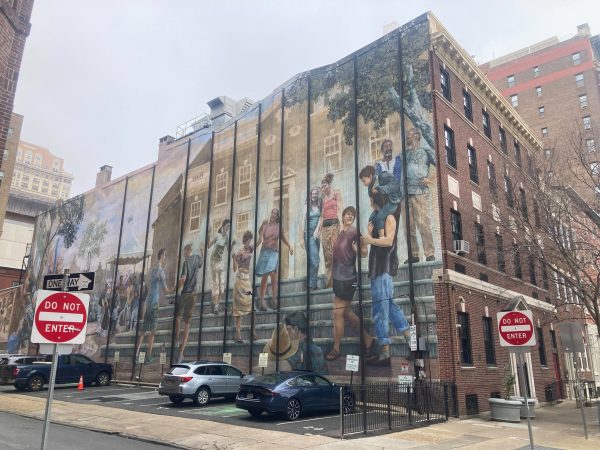
    Inga Saffron’s recent column about the William Way LGBT Community Center overlooked the mission guiding our plans for the future.

    Our responsibility is to create an accessible home equipped to serve our community while allowing William Way to remain in the Gayborhood. Throughout this process, we continue to provide essential programs, arts and cultural initiatives, community connections, and support.

    The article dismissed the extensive planning that informed this direction. Our board voted unanimously after more than a year of evaluating options, engaging stakeholders, and studying the financial realities of preserving the existing building.

    At a time when LGBTQ+ people and institutions face renewed threats, our community needs safe and welcoming places to find support, connection, and belonging. As plans for 1315 Spruce St. continue to evolve, William Way remains focused on creating an accessible and lasting home that will be here for our community now and for generations to come.

    Laura Ryan and Dave Huting, co-board chairs, William Way LGBT Community Center Board of Directors

    …

    Inga Saffron’s column reminds us that tearing down the William Way LGBT Community Center’s longtime home would mean losing much more than a building. Since relocating to 1315 Spruce St. in 1996, William Way has become one of Philadelphia’s key LGBTQ+ landmarks, where generations have found support, services, culture, history, and community.

    There is no disagreement on the need for more services, better accessibility, or affordable housing for LGBTQ+ seniors. These are important goals, even if housing has not historically been part of the center’s mission. However, the public has yet to see why those goals require demolition, or if preservation and reuse options have been thoroughly considered.

    This should not be viewed as a choice between affordable housing and LGBTQ+ history. Philadelphia has shown that historic buildings can be updated for modern needs. William Way deserves the same consideration, and a creative preservation approach could preserve the best of the existing structure while allowing a modern addition.

    The Preservation Alliance is urging William Way’s board to pause irreversible actions, publicly review reuse options, and organize meaningful community meetings before making final decisions. The future of William Way should involve the community, not just be handed down to it.

    Paul Steinke, executive director, Preservation Alliance for Greater Philadelphia, and former, William Way Board co-chair (2016—2020)

    Who knew?

    I read your editorial about John Fetterman’s threat to quit the Democratic Party with incredulity. Just how were Southeast Pennsylvania voters to know anything about Candidate Fetterman when The Inquirer seemed reluctant to ask him any substantive questions during his campaign? Your coverage of his Senate race that year was highly dependent on quotes from his staff and postings on Twitter. The most we learned was that he was pro-union, advocated for the decriminalization of marijuana, and supported abortion rights. Beyond that, nada.

    Even toward the end of his campaign, after meeting with the Inquirer’s Editorial Board, the paper stated “However, Fetterman was often vague in describing specific policies or the role he hoped to carve out in the Senate as he spoke for nearly 30 minutes with The Inquirer’s Editorial Board and two reporters.”

    Don’t pretend voters knew John Fetterman when The Inquirer could have done a much better job of letting us know who he was.

    Paul Withington, West Chester

    Protesting protesters

    Citizens Bank, in its news release announcing its winding down of lending to private prison firms CoreCivic and The Geo Group, notes that this is “a business decision based on changed commercial circumstances.” Yet, it goes on in the release to extensively castigate activists who protested its lending practice, saying “Citizens has been disappointed that the activists have dragged it into what is largely a political matter.” If, in fact, theirs was purely a business decision, then why does Citizens feel the need to lash out against those who protested this lending practice in support of our immigrant neighbors? Methinks the bank doth protest too much.

    Louis Pilla, King of Prussia

    Altered reality

    In 2019, Donald Trump used a black Sharpie to change the path of a hurricane to match his earlier tweet. Now he has taken a metaphorical Sharpie to American soldiers who died in the Iran war. He changed the number of dead from 18 to 14, claiming the last four died after a ceasefire was declared. Next he will be sending FBI agents armed with black Sharpies to gas stations around the country, slashing the price of regular gas from $4.09 a gallon to $3.09 a gallon. At long last he will make good on his campaign promise to solve the affordability crisis.

    Gary Goldman, Newtown

    Contrasting legacies

    On Tuesday, President Donald Trump eulogized Sen. Lindsey Graham at the National Cathedral, stating that Graham “was truly hawkish. He never saw a war that he didn’t like.”

    At roughly the same time, I was attending a Memorial Mass for the Feast of Blessed Stanley Rother, an Oklahoma-born priest and martyr, at the Basilica of the National Shrine of the Immaculate Conception, also in Washington — where I heard a very different message.

    On July 28, 1981, a brutal right-wing Guatemalan government death squad assassinated Father Rother in the church where he pastored Indigenous people attempting to improve the quality of their impoverished lives.

    Rother’s message remains that our lives be like his life of human sacrifice and inspiration always in the pursuit of peace and understanding.

    Reggie Regrut, Phillipsburg

    History’s lessons

    Your editorial on how President Donald Trump can find a way out of his failed Iran war raises several good points, the most significant one being that Trump’s obvious failure to support the NATO alliance and our European allies has destroyed the possibility of multinational diplomacy. You also argue rightly that simply withdrawing from the Obama-era international agreement that convinced Iran to avoid building nuclear weapons was a mistake. I would add that the killing of Iran’s top leader, the Ayatollah Ali Khamenei, only angered and even emboldened the country.

    Unfortunately, you neglect one all-important fact about the prior nuclear agreement — it did nothing to curtail Iran’s proxy forces that menace its neighbors, including our ally Israel. This threat alone justifies pressure on Iran beyond that which produced the prior agreement. You also ignore past history, which rhymes with what is happening now.

    In 1979, Iran had our hostages. Today, they hold the Strait of Hormuz and the world’s oil supply. While Jimmy Carter got Iran close to releasing the hostages, what brought that episode to a close was the election of Ronald Reagan and the Iranians’ realization that he was likely to treat them aggressively rather than stopping at diplomacy. Further, it looks as if Iran is simply stalling against our unilateral negotiations at this time. It’s hardly a sure thing that multinational negotiations would do much better.

    Some experts have opined that having our military forcibly open and patrol the strait is the only leverage we have in the present situation. The only way out of this nightmare may very well prove to be escalation rather than continuing the present failed course, and past history suggests strongly that this is so — a probability that The Inquirer’s Editorial Board needs to consider.

    John Baxter, Toano, Va.

    Join the conversation: Send letters to letters@inquirer.com. Limit length to 150 words and include home address and day and evening phone number. Letters run in The Inquirer six days a week on the editorial pages and online.
  • Dear Abby | Husband is carrying the world on his shoulders

    DEAR ABBY: I have been with my wife for 17 years. We have three daughters. She doesn’t work, doesn’t have a driver’s license, doesn’t clean and rarely cooks. I often find myself so frustrated at her lack of commitment to the family that I drink and go to bed after I cook dinner. I work 60 hours a week to provide for our family and am not receiving any help from my wife. I don’t know what to do. I do all the shopping and take the girls to dance three days a week (which means I have to leave work early). It causes bad arguments. What can I do to motivate her to change?

    — DOING EVERYTHING IN NEW HAMPSHIRE

    DEAR DOING EVERYTHING: You state that your wife doesn’t work, doesn’t drive, doesn’t clean and rarely cooks. What does she do all day? Is she watching television? Taking drugs? Is she so depressed she can’t get out of bed?

    You should not be carrying the whole load yourself, but drinking and going to bed are not the answer. Ask your doctor or health insurance company for a referral to a licensed psychotherapist who can help you unravel this mess. Nothing will change until you do.

    ** ** **

    DEAR ABBY: My daughter added her girlfriend to our family group chat last December. Now the girlfriend is accepting invitations from family members that weren’t meant for her. Granted, she has been dating my daughter for more than five years, but none of us like her or feel comfortable around her. We’re afraid to say anything due to our love for our daughter. How do we get her off the family group chat and stop her from being so invasive in our lives without hurting our daughter?

    — CLOSING RANKS

    DEAR CLOSING RANKS: No matter what you do about the group chat, the end result will have to be a conversation with your daughter about the fact that her girlfriend is not welcome at certain family gatherings. Are you willing to have that talk and face the consequences? If not, it might be best to learn to get along with the girlfriend and remember that most people do not get to pick their in-laws. If you are determined that excluding the girlfriend is the way to go, start a new group chat and emphasize to your daughter that this one is for immediate family only.

    ** ** **

    DEAR ABBY: When my husband passed away, his sister “Enid” and her husband, “Fred,” did not attend his funeral. Their grown son and daughter with grown children of their own also missed the funeral. They claimed Fred had a doctor’s appointment. This made a total of 10 people unable to come to the funeral. We all live in the same area, so there was no traveling involved. What is your opinion about me being upset?

    — BOTHERED IN THE EAST

    DEAR BOTHERED: First, please accept my deepest sympathy for the loss of your husband. You have a right to be upset about Enid, Fred and their family skipping your husband’s funeral. A doctor’s appointment can usually be rescheduled. Funerals are a different matter. The fact is, they chose to withhold their support from you, which was thoughtless, bordering on cruel.

  • Horoscopes: Monday, Aug. 3, 2026

    ARIES (March 21-April 19). You hesitate before pressing send. You almost put the phone down instead of making the call. You stand in the doorway for a second longer than necessary. Then you do the thing anyway, and the day changes from there.

    TAURUS (April 20-May 20). Some responsibilities feel heavier than lead because they are new and you’re still learning or because you’ve carried them too long. Either way, you rise to the occasion. You’re on a streak now and don’t intend to break it today.

    GEMINI (May 21-June 21). Anything “too perfect” is widely considered to be uncool. Excellence comes with a bit of damage, a quirk, or at least a strange story. That’s how people know it’s real.

    CANCER (June 22-July 22). Your confidence becomes contagious. People leave conversations with you believing more is possible than they did an hour earlier. They start making plans before they reach the parking lot.

    LEO (July 23-Aug. 22). Relationships improve, not that they were ailing so much as ready to become something even more fitting for your life. Both people are ready to be more helpful, communicative, comfortable and fun.

    VIRGO (Aug. 23-Sept. 22). You’ll encounter people who seem apathetic to the things that really matter to you. They won’t care more just because they’re told to. They’ll care more when they finally see why it’s important.

    LIBRA (Sept. 23-Oct. 23). You focus on what people do well instead of keeping score of their every mistake. You aren’t excusing bad behavior. You’re making room for people to keep growing. You treat them with dignity and they see themselves as dignified.

    SCORPIO (Oct. 24-Nov. 21). Sure, you’re as emotionally independent as the next person, which is to say, you’re susceptible to influence. Catching vibes is only human. That’s why it’s crucial to surround yourself with people who embody the moods and values you want for yourself.

    SAGITTARIUS (Nov. 22-Dec. 21). Problems sometimes fix themselves. They can also become nonissues because people get used to them. Real problems persist. They demand your attention until it’s impossible to ignore them. If it’s not really a problem, it fades into the scene.

    CAPRICORN (Dec. 22-Jan. 19). In a world governed by the second law of thermodynamics, entropy is ever-present. So, perfect balance is either mythic or momentary. It’s why you appreciate those brief moments when everything happens to line up.

    AQUARIUS (Jan. 20-Feb. 18). Just when you think you know how things run, you’ll discover inconsistencies, new routes and rollercoaster-like loops. That’s why you no longer assume you’ve seen it all. You leave a door open for new possibilities to walk through.

    PISCES (Feb. 19-March 20). Like the parent of a tantrum-throwing toddler in a public venue, you may momentarily concede to inconvenient and unreasonable demands just to keep the action rolling along without drama. But this will be addressed at a more opportune time.

    TODAY’S BIRTHDAY (AUG. 3). It’s your Year of the Noble approach. You’ll serve the higher cause, protect the vulnerable and bring out the goodness in others. Life will be full of allies who appear exactly when needed. More highlights: A fortunate investment pays at year-end, beyond expectations. A beautiful place becomes part of your routine. A special relationship becomes so solid, it’s hard to imagine living without it. Libra and Capricorn adore you. Your lucky numbers are: 14, 3, 20, 17 and 50.

  • Eastern Washington fires have burned 600 structures and forced the evacuation of 60,000 people

    Eastern Washington fires have burned 600 structures and forced the evacuation of 60,000 people

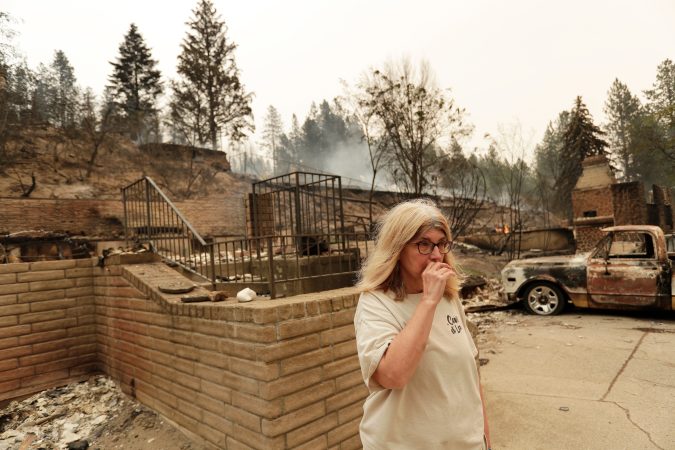
    Wildfires in eastern Washington state forced the evacuation of 60,000 people in the Spokane area while destroying at least 600 homes, businesses, and other structures, authorities said Sunday.

    The fires in and around Spokane, the state’s second largest city, burned about 8.2 square miles over the weekend and were among dozens of wildfires across the Western U.S. that stretched the ability of federal, state and local agencies to fight them.

    A total of about 390 square miles has burned across the state, and some of the fires, including those in the Spokane area, have not been contained.

    No one hurt or unaccounted for — so far

    Fire and law enforcement officials said there had been no reports of injuries or people unaccounted for — but they stressed it was early in the response effort.

    Officials also said that the evacuees in Spokane included patients at its U.S. Veterans Affairs hospital.

    Video from the Spokane area showed buildings on fire, black smoke billowing up near neighborhoods, and the smoking ruins of homes, with only chimneys still standing. Several officials expressed concern that the area does not appear likely to get a break in coming days from the weather, which is expected to remain dry.

    “We are not out of danger,” U.S. Sen. Maria Cantwell said during a news conference with federal, state and local officials in Spokane. “The next couple of days will be challenging.”

    Investigators had yet to determine how the blazes started.

    Grassland in flames in parts of Idaho, Oregon

    Spokane was hardly the only place struggling to contain fires.

    Crews using bulldozers and helicopters continued for a 10th day to fight a fire that has burned nearly 525 square miles of grassland in western Idaho and eastern Oregon. The area is home to cattle ranches, and authorities said the fire is threatening more than 600 homes and 800 other structures.

    The weather in the area was expected to remain sunny — and dry — well into the week, with temperatures rising to more than 90 degrees Fahrenheit on Wednesday. Officials say the fire was caused by lightning.

    The National Weather Service issued warnings about the air quality in eastern Washington, eastern Oregon, western and central Idaho, and western Montana. It issued red flag fire warnings for parts of Utah and Montana and western Nebraska, and extreme heat warnings for the southern parts of Arizona, California, and Nevada and northern Montana.

    High winds make it hard to fight fires in Spokane area

    While temperatures Sunday in Spokane were forecast to remain below 80 F, wind gusts from 35 mph to 45 mph were expected by the afternoon, said Benjamin Cossel, public information officer for the federal response team from California called in Saturday night to deal with the fires.

    “We have weather working against us, and we have terrain working against us,” Cossel said.

    There were three fires in the Spokane area: the Old Trails Fire, the Fairview Fire, and the Meadowview Fire. Washington Gov. Bob Ferguson declared a state of emergency Saturday, and the National Weather Service issued a “particularly dangerous situation” red flag alert for eastern Washington.

    Cossel said that as it gets warmer during the day, cool air that’s closer to the ground and keeping winds at bay will rise, allowing those winds to move through the area. The Spokane River cuts through the city of about 229,000 people, and there are steep canyons on both sides that channel the wind.

    “They push the fire through the canyons, up, up the slopes, and then outside the slopes and around,” he said. “It’s very, very hilly, very, very steep slopes, a lot of canyons that create really turbulent, really challenging sort of wind scenarios.”

    Spokane sets up shelter for impacted residents

    Authorities in Spokane set up a shelter at the city’s main convention center. About 400 people were staying there, officials said Sunday.

    Spokane County Commissioner Chris Jordan said relatives of his were in an area affected by the fires and that they don’t know if their home is still standing. He said he spoke with them as they were leaving the home.

    “They’re in their car and all they can see is smoke everywhere, and it was incredibly scary for so many people,” he said during the news conference.

    Heather Rosenstrater, president and CEO of Avista Corp., the area’s electric and natural gas utility, said about 10,000 people were without power Sunday, down from a peak of 30,000. Avista needs to repair two transmission lines, she said, so it’s possible that demand for electricity over the next few days could cause outages.

    Meanwhile, several larger fires continued to burn in less populated areas northwest of Spokane, including one about 80 miles from the city that has burned about 210 square miles. Another fire in eastern Oregon, about 70 miles to the northwest in the Stinkingwater Mountains, has burned about 336 square miles.

    “The whole northwest is heavily impacted right now,” said Keila Vizcarra, the spokesperson for the federal team from California handling what’s been named the Big Grass Fire in western Idaho and eastern Oregon.

  • Bryan De La Cruz powered the Phillies’ win over the Orioles. Could he be a trade deadline alternative?

    Bryan De La Cruz powered the Phillies’ win over the Orioles. Could he be a trade deadline alternative?

    BALTIMORE — Last year, on the eve of the deadline, the Phillies completed a massive trade for star closer Jhoan Duran during a rain delay.

    They had two downpours Sunday to make another splash.

    No such luck.

    There’s still time. Club executives have until 6 p.m. Monday before they must put down their pencils and live with the rosters they’ve built, at least for the duration of the season. And so, Dave Dombrowski keeps working the phones.

    In the meantime, Bryan De La Cruz is giving the Phillies something to think about.

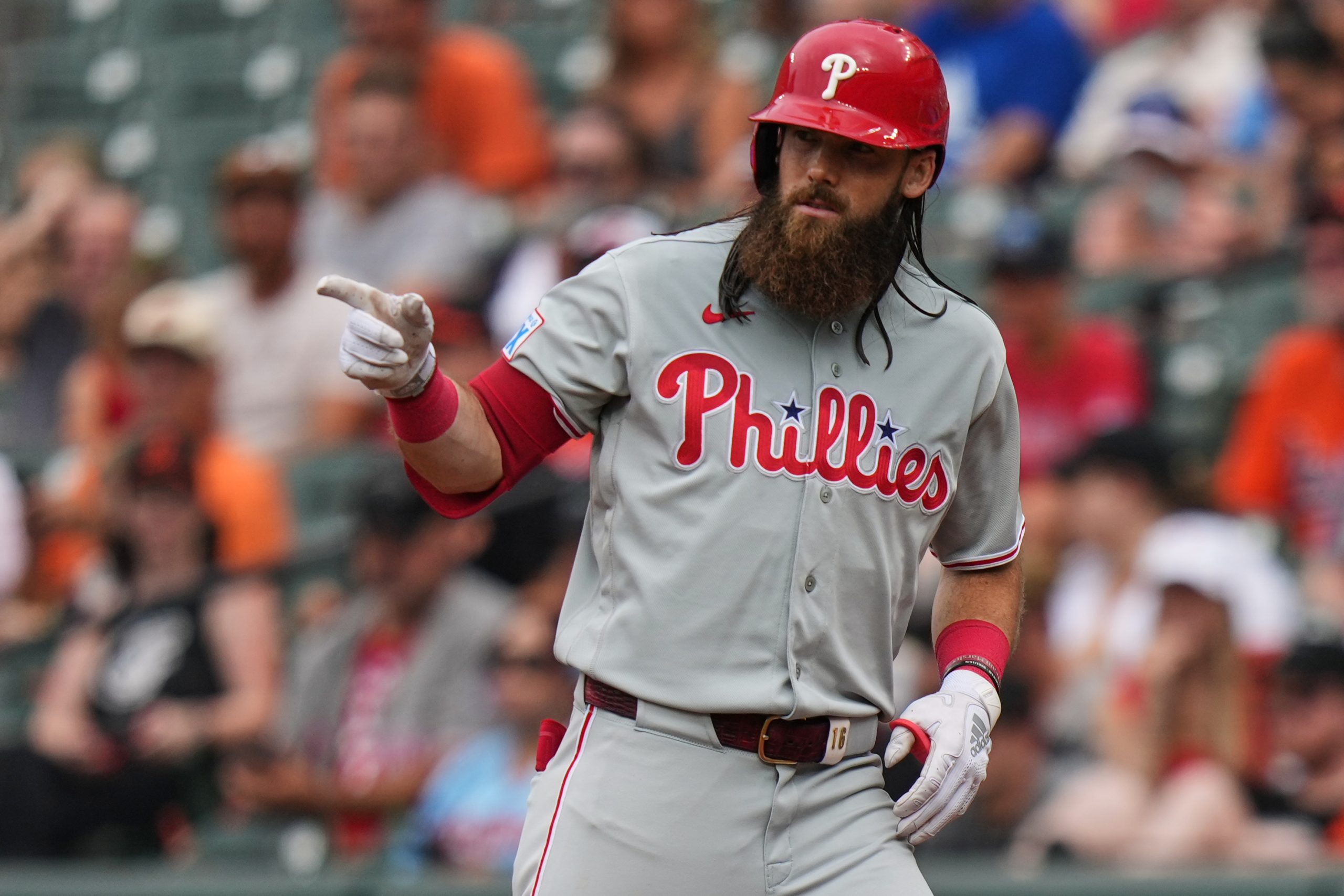
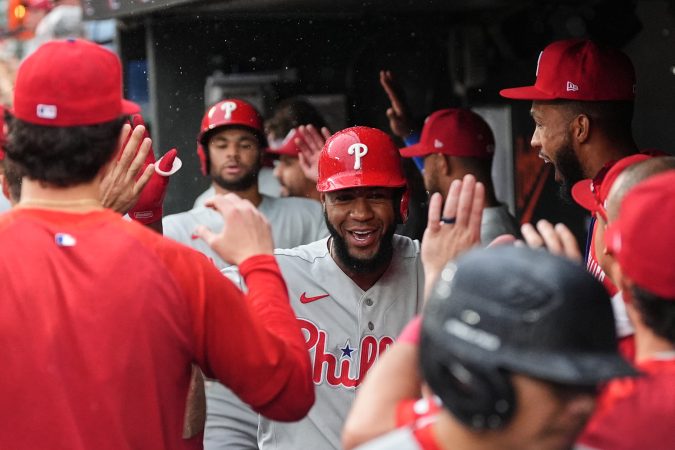
    A veteran outfielder who finally got called up two weeks ago after 3½ months in triple A, De La Cruz crushed a two-run homer in the third inning of a rain-interrupted (twice) 8-0 thumping of the Orioles that was shortened to six innings after a second midgame downpour.

    Make it back-to-back victories for the Phillies after four consecutive losses. And make it nine hits and six RBIs in 20 at-bats for De La Cruz since his arrival.

    Impressive? Sure. Enough to call off the Phillies’ search for a right-handed bat? Probably not. But it might alter it.

    “I mean, we played against him a lot, obviously seeing him in Miami,” said Bryce Harper, who homered in the fifth inning in between the rain. “He’s always got a good swing, good pop. Good to see him swinging that well.”

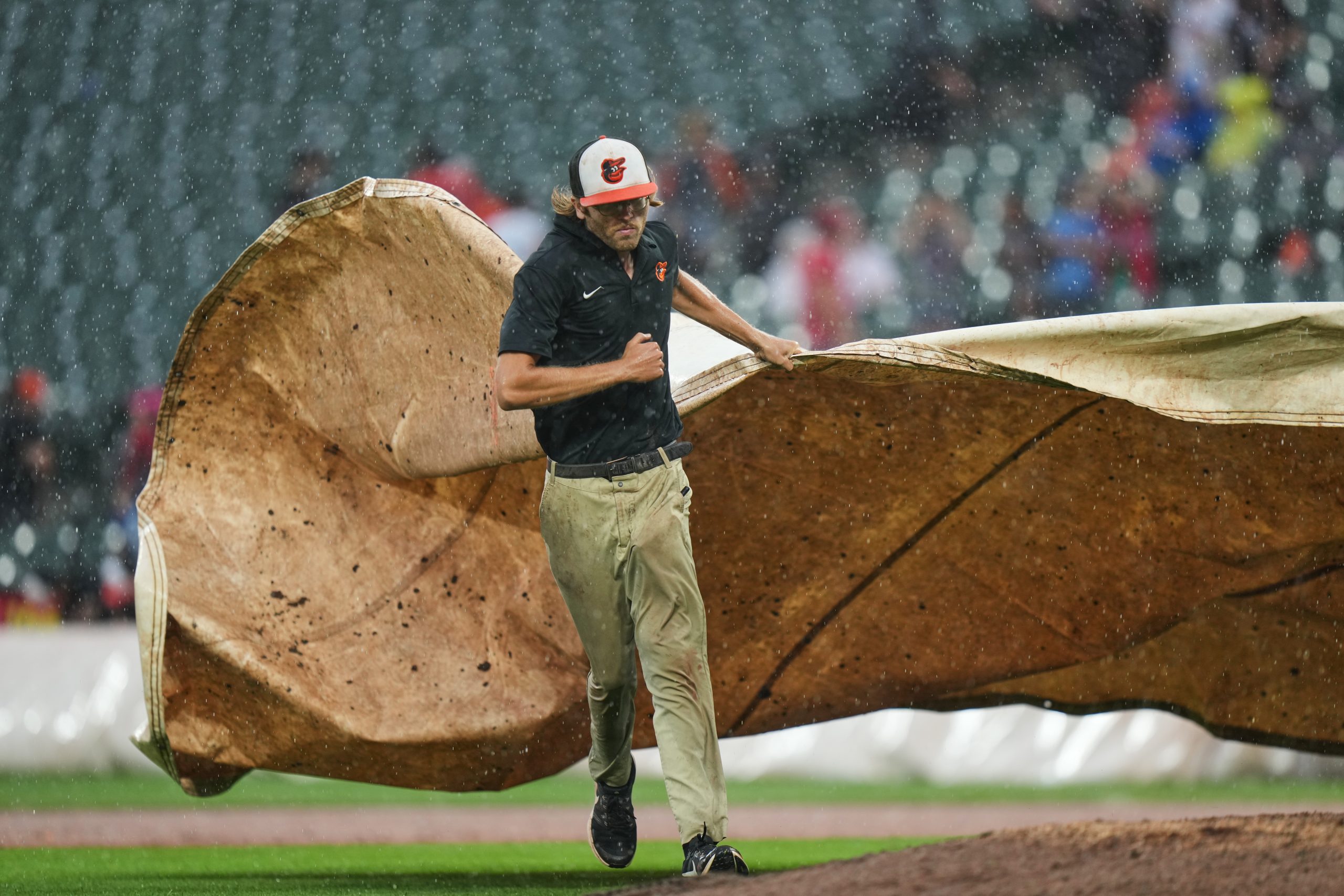
    The Orioles’ grounds crew was busy Sunday with two rain delays in the middle of an 8-0 Phillies victory that was shortened to six innings.Stephanie Scarbrough

    Speaking of sights for sore eyes, six days after Zack Wheeler’s fastball velocity nosedived in his worst start of the season, his heater climbed back to 96 mph and sat at 94-95. All along, interim manager Don Mattingly claimed he wasn’t concerned; Wheeler dismissed Monday night in Miami as merely a bad day.

    But still, given his importance to the whole thing, team officials were relieved to see Wheeler look like Wheeler.

    If only he got to do it for more than two innings.

    “It is what it is,” said Wheeler, who retired six of seven batters on 32 pitches, then said he threw another 40-something pitches under the stands during a 1-hour, 49-minute rain delay. “I’m not frustrated, really. I felt good. I felt better than the other day.”

    As a group, the Phillies said the same after rebounding from getting swept in Miami by taking two of three from the Orioles.

    By Monday evening, they hope to feel even better.

    Dombrowski convened more than a dozen executives, analysts, and scouts in Baltimore for the weekend. They continue to pursue a right-handed bat, a late-inning reliever, and a starting pitcher, according to multiple league sources.

    Given the supply in an extreme seller’s market, the bat may be the hardest thing to find. The Reds’ Spencer Steer and the Giants’ Casey Schmitt might have been options if they hadn’t gotten injured. The Phillies were interested in the Royals’ Lane Thomas before he got traded to the Braves late Saturday night.

    The Phillies got an up-close look at the Orioles’ Taylor Ward over the weekend. But Baltimore is straddling the buyer-seller fence, as president of baseball operations Mike Elias said Friday, and might choose to hold on to Ward, even though he’s a pending free agent.

    Other possibilities include the Angels’ Jo Adell and the Dodgers’ Alex Call.

    Then, there’s De La Cruz, a 29-year-old righty-hitting outfielder with 60 homers as a replacement-level player in a winding major league career. He wasn’t called up from triple A until after the Phillies gave looks to Otto Kemp, Felix Reyes, and lefty-hitting Gabriel Rincones Jr.

    “It’s a dream come true, really,” De La Cruz said through a team interpreter. “I spent the last three or four years playing against this team, so being a part of it, it’s just really fun. I’m just thankful and grateful for the opportunity.”

    Mattingly was De La Cruz’s first major league manager with the Marlins in 2021. As a rookie, De La Cruz batted .297 with five homers and a .783 OPS.

    Upon getting called up after the All-Star break, De La Cruz started mostly against lefties. Lately, Mattingly has given him at-bats against righties, too, leaving Rincones as an odd-man out.

    “De La’s been good, right?” Mattingly said. “He’s just solid. And he’s been that guy that, parts of his career, it’s like been really good.”

    If anything, De La Cruz’s production may compel the Phillies to widen their search to include a left-handed bat, such as Blue Jays center fielder Daulton Varsho. Outfield remains the easiest place to add a hitter, but if they trust De La Cruz, they could shift to Giants second baseman Luis Arraez, a move that would require a reshuffling of the infield.

    Brandon Marsh singled as part of a two-run fourth inning in the Phillies’ rain-shortened 8-0 victory over the Orioles.Stephanie Scarbrough

    Or they could reserve their biggest swing for pitching help. The Phillies had a scout in Brooklyn on Sunday to watch Mets righty Clay Holmes, who is coming back from a leg fracture. As a former closer and now a starter, Holmes could help deepen the rotation before shifting to the bullpen in the playoffs.

    In any case, De La Cruz could create additional options.

    “I can’t control what the team wants to do or doesn’t want to do, or if they make a move,” De La Cruz said. “I can’t control that. What I can control is what I do on the field, and I think that’s something that I’ll be focusing on.”

    The Phillies couldn’t control the weather in the finale against the Orioles. Mattingly said the forecast he received before the game called for the rain to hold off until 3 p.m. It started almost 90 minutes earlier, and by the third inning, with the Phillies leading 2-0 on De La Cruz’s homer, puddles began forming in the infield. The conditions were unplayable.

    And by the time the first wave of rain tapered off and the field was prepared, too much time had elapsed for either team to bring back their starting pitcher.

    ″I know they’re trying to make the best decision, but that was a little frustrating,” Mattingly said. “At the end of the day, it worked out.”

  • Police issue a warrant for a suspect in the Delco Walmart shooting

    Police in Darby Township, Delaware County, have identified a suspect in a shooting at a Walmart in which an employee was injured.

    An arrest warrant has been issued for Armani Tyrell Waite, who is wanted on attempted murder, aggravated assault, reckless endangerment, and other weapons charges.

    The incident unfolded on Friday evening, after an argument broke out between two customers inside a Walmart on MacDade Boulevard in Glenolden.

    Police believe Waite opened fire inside the store, discharging more than five rounds and striking an employee in the calf.

    Officers later recovered the weapon at the scene. The employee was hospitalized and listed in stable condition.

    Public records list addresses for Waite in Southwest Philadelphia and Clifton Heights. An online resume states that he worked as a package handler for FedEx.

    Police believe Waite is armed and dangerous, and cautioned members of the public not to approach him. Individuals with information regarding his whereabouts were asked to call 911.

  • Some Philadelphians have turned to farmers’ markets as the cyclosporiasis outbreak continues

    Some Philadelphians have turned to farmers’ markets as the cyclosporiasis outbreak continues

    Procoro Jeronimo, 45, went to his yearly physical in late June. Doctors told him to lay off the bread and replace it with lettuce.

    The professional baker was wary, aware that lettuce was linked to an ongoing outbreak — caused by the single-celled parasite cyclospora — causing explosive bowel movements.

    Wanting to stay healthy for his five children, he caved, finding solace in not hearing about specific cases in Philadelphia.

    A week later, mid lettuce bite, Jeronimo learned that not only was Pennsylvania officially added to the CDC list of the states affected, but also that the outbreak was linked to now-recalled Taylor Farms iceberg lettuce sourced from central Mexico and sold at grocery stores, as well as Taco Bell and other restaurants.

    “That was it,” Jeronimo said. “It stopped feeling safe.”

    The family ditched their grocery store produce section for the vegetable and fruit stand at the Dickinson Square Farmers’ Market in the city’s Pennsport area.

    “It’s hard, because most of our food, like pozole, includes lettuce,” Jeronimo said, checking tomato ripeness in front of farmer Bruce Santino’s stand Sunday morning.

    “Lettuce is cheaper at the grocery store; I went from paying $8 to $10 per month for lettuce to paying $20. I guess that is the price for mental peace,” he added.

    Jeronimo is not the only one willing to pay more for the feeling of safety. South Philly resident Marie Abbondanza, 42, also abandoned her grocery store produce to walk with her toddler and shop at the farmers’ market.

    “We are choosing to get all of our produce from the market because we don’t want to get sick and we want to support the local farmers,” Abbondanza said. “[Grocery stores are] really expensive and their produce isn’t really good, so if we have to pay a little bit more and the quality is better, it’s enough for me.”

    So far this year, Pennsylvania health officials confirmed at least 45 cases of cyclosporiasis. That number already surpassed the 40 cases the state experienced in 2025, but still below the 87 reported in 2024.

    In the last two to three weeks, Dickinson Square Farmers’ Market has seen the volume of visitors increase by about 15%, said Ben Bergman, 48.

    Bergman helps oversee Dickinson Square as well as four other farmers’ markets citywide.

    “It looks to be a little safer here because the food is grown closer to you,” Bergman said. “It has less opportunity to become infected with something.”

    The increase is being seen by the operators of other farmers’ markets.

    According to Bridget Palombo, director of healthy food access programming at the Food Trust, it’s not automatically the case that farmers’ market produce is safer.

    “It all depends on the processes that people follow,” Palombo said. “But there seems to be more trust in the products when people can speak to those growing it and bringing it to the market.”

    The Food Trust operates three year-round markets, three seasonal farm stands, and multiple pop-up markets citywide. Seeing an uptick in foot traffic makes Palombo believe that transparency is a big reason behind the feeling of safety Philadelphians are finding in farmers’ markets.

    Farmers’ market visitors get to ask the farmers where their food comes from, what kind of pesticides they used (if any), and how it was harvested.

    That transparency does come with a stiffer price tag.

    Farmers’ markets are opportunities to purchase directly from producers, allowing the local farms to charge the full, fair cost of production, where corporate farms can cut corners, Palombo said.

    “Lettuce from the local farmer has probably traveled only a fifth of the time in and out of cold storage; it’s touched fewer hands; and they are paying their staff livable wages, giving them breaks, and treating them in humane ways,” Palombo said.

    At the Dickinson Square Farmers’ Market, farmer Bruce Santino, 38, said he can attest to the care that goes into all of his produce, and how despite the cyclosporiasis outbreak and the uptick in clientele, his business has tried to keep prices steady.

    Four people work at his Mullica Hill, Gloucester County, farm, planting and harvesting all kinds of peppers, tomatoes, corn, melons, squash, and leafy greens.

    “Only eight hands touch your food, and we harvest the day before the market to get the freshest, highest-quality product,” Santino said.

    When they ran the numbers on how much lettuce they would need for this year’s season, they were not expecting a higher demand due to cyclospora.

    “As a farmer it’s been tough, because every year you have a crop plan and you do the math of how much you are going to need, then when something like this happens you have to produce as much as you can for the demand,” Santino said.

    He was planting and selling 1,200 to 1,500 heads of lettuce per week. Three weeks ago, the business sold almost $1,000 worth of lettuce in one day, he said. But as the staff were planning on upping their production, a couple of days with 100-degree weather fried the lettuce left in the field.

    “The little that actually survived was too bitter to harvest and we don’t want to put a bad name on our product, so we prefer to go without it,” Santino said.

    His business has already started replanting and plans to produce 30% more lettuce to keep up with the demand. But Santino will keep his price at $3 to $5 per lettuce head.

    “I hope we can retain this after the parasite gets taken care of,” Santino said. “I hope people feel safer coming to the local farmers’ market and I hope they taste the difference and stay with us.”

  • Iran’s leaders show a united front over the war but are divided over what the goal is

    Iran’s leaders show a united front over the war but are divided over what the goal is

    CAIRO — With escalating attacks against U.S. bases and its allies over the past week, Iran’s leaders are showing considerable unity over their war strategy: hanging tough, determined to show Iran can endure more than America and its allies can.

    But within the leadership, there are sharp differences over what the endgame should be.

    On one side, the ultra-hardliners who oppose any negotiations with the United States are pressing for total victory in the war. Known as the “Paydari” movement — Persian for “stability” — they are hard-core ideologues who want to enforce the Islamic Republic’s control over society.

    On the other, those who support President Masoud Pezeshkian and powerful parliament speaker Mohammad Bagher Qalibaf — who doubles as Iran’s chief negotiator — see military pressure as a way to win a negotiated deal with the United States. This camp is also spurred by concern over the economic toll Iran is suffering from the war and the need to adapt to social change in the country.

    “Negotiation is a political tool and a complement to military action to force the enemy to a point of compulsion and extract real concessions,” an adviser to Qalibaf, Mahdi Mohammadi, wrote on his Telegram channel Thursday.

    The unusually open rivalry within the theocracy’s leadership points to a struggle for control over Iran’s postwar future. A huge question mark is where the new supreme leader, Ayatollah Mojtaba Khamenei, stands. Reportedly injured in the strike that killed his father in the opening minutes of the war on Feb. 28, Khamenei remains in hiding, and both sides have claimed his support.

    Iran is determined to show strength

    In a boost for Qalibaf and Pezeshkian, the ceasefire deal reached with the U.S. in April received strong backing in Iran’s top leadership body, the Supreme National Security Council. Twelve of its 13 members approved it, including senior figures in the Revolutionary Guard and the military.

    The lone vote against the deal is widely believed to have come from Saeed Jalili, the most prominent figure in the Paydari movement.

    But the ceasefire crumbled as the two sides trade strikes and as Iran presses for control over passage through the Strait of Hormuz, which before the war carried a fifth of the world’s traded oil and gas. Iran was also frustrated that financial promises under the deal — including the release of billions of frozen assets — didn’t materialize, and now the American blockade is back in place.

    With no benefits from the deal, “there’s no serious division” in the leadership over how to respond, said Ali Vaez, Iran project director at the International Crisis Group.

    They believe U.S. President Donald Trump “only understands the language of force, and therefore, they would have to gain the upper hand in order to compel him to deliver,” Vaez said.

    The hard-liners are pressuring Iranians

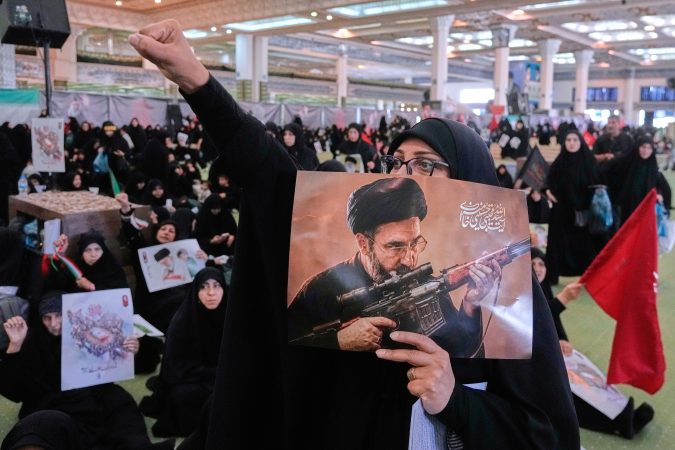
    The funeral for slain Iranian supreme leader, Ali Khamenei, earlier this month appeared to show the strength of the ultra-hardline Paydari. Crowds called for revenge on the U.S. and Israel for the war. Videos showed mourners in Tehran welcoming Jalili, while Pezeshkian was greeted at one point with insults and cries of “Death to the compromiser!”

    The ultra-hardliners have used nightly rallies and their control of state television, known by the acronym IRIB, to drum up opposition to negotiations. At rallies and on TV, speakers have portrayed Iran as headed for total victory and denounced those who compromise with the Islamic Republic’s archenemy, the United States.

    State television cut off a June 30 live broadcast with Qalibaf as he discussed negotiations with Washington. Earlier this month, it cut off broadcasting a speech by Pezeshkian to businesspeople seconds after he said that the elder Khamenei had given permission for renewed U.S. talks before his death.

    Pezeshkian and his camp have pushed back, portraying IRIB as dividing the country at the time of war. The president accused the broadcaster of making it like “the military are on one side, and the government is on another side.”

    Last month, the president’s media office condemned state television for what it described as “censoring” the president and other government heads, signaling an open rift.

    The hard-liners have sought to press their influence in other ways. In past weeks, authorities shut down cafes in central Tehran that were popular with residents during the ceasefire. Videos on Iranian social media showed many women at the cafes flouting mandatory veiling laws, and crowds mixing freely.

    The closures were brief but signaled that “religious extremist parties” were showing their influence, said Mohamad Ali Abtahi, a reformist cleric and an aide to former President Mohammad Khatami, who is still widely considered to be the leader of Iran’s reformist groups.

    While Jalili’s supporters are a minority they are influential, said Vali Nasr, professor of international affairs and Middle East studies at Johns Hopkins University.

    “They have a lot of money. They have a lot of power. They have put a lot of people in the bureaucracy” and developed connections in the Revolutionary Guard, Nasr said.

    The pragmatists say the public must be heard

    The more pragmatic camp argues that maintaining unity during the war requires addressing the public’s unhappiness over the economy as well as political and social repression. This, as Iran’s currency continues to slide, inflation spirals, and unemployment rises. A final agreement with the U.S. could bring Iran a huge windfall with the lifting of sanctions and the return of billions in assets.

    Small flashes of impatience with the war have emerged. In July, over 250 former lawmakers, clerics, professors, and other public figures signed an anti-war petition warning of the costs of the conflict. “We believe that the overwhelming majority of the Iranian people want peace and the right to a decent life,” the statement read. Others have spoken out against stepped-up executions of protesters following wide-scale anti-government protests in January.

    A top reformist party that assisted Pezeshkian’s presidential campaign warned that the war’s domestic toll was “undermining internal social cohesion.” That brought a rebuke from Tasnim, a news agency close to the Revolutionary Guard, which said the statement amounted to blaming Iran for a war started by the United States.

    In mid-July, the president’s son and influential adviser, Youssef Pezeshkian, posted a series of messages about the need to balance realistic military aims with a weak economy. Referring to the decades of sanctions and confrontation with the West, he said Iran has “been prevented from growing and has suffered greatly. It has become sick.”

    Both sides are looking to what happens after the war

    Ultimately, both sides are jockeying for power after the war, given the unusual uncertainty brought on by the change in the supreme leadership. Abtahi, the reformist cleric, said Mojtaba Khamenei’s real views are still not known, so while some believe he could be more radical than his father, others see the potential for him to bring moderate change.

    The supreme leader, because of the power invested in him, could act as a “brake” to restrain the more extremist factions, Abtahi said. But over time, the confrontation with more radical factions could grow more dangerous “if that brake isn’t used.”

  • A democratic socialist in the White House? Activists are thinking big.

    A democratic socialist in the White House? Activists are thinking big.

    CHICAGO — Officially, the summit for democratic socialists across the country here over the weekend was taking place in a hotel conference facility.

    But on Friday night, the real action was at a corner bar two miles away, where dozens of members of the Democratic Socialists of America crammed into a patio in the middle of a summer storm.

    As the rain poured down, two DSA leaders put it bluntly: If they wanted Rep. Alexandria Ocasio-Cortez (D) to run for president — and if they wanted the DSA to endorse her — it was time to start now.

    “We’re in the moment of the presidential question,” Katie Sims, an electoral organizer in Ithaca, N.Y., said at the “DSA for AOC” gathering. “Doesn’t it just make sense now?”

    That was, for many, the question looming over the Democratic Socialists of America’s summit, right in the middle of the group’s most consequential summer ever.

    A self-dubbed big-tent group that was essentially dormant a decade ago, the DSA has ballooned into one of the largest and most disciplined operations on the U.S. left.

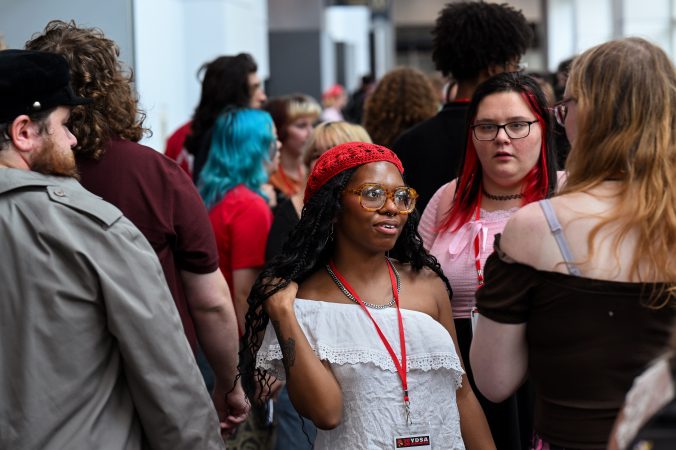
    The Chicago summit hosted about 600 dues-paying members who flew in from across the country to attend workshops and swap organizing strategies as their group faces greater momentum — and greater scrutiny — than ever before.

    After its members helped elect Zohran Mamdani mayor of New York, DSA-backed candidates won a string of Democratic primaries this summer in deep-blue cities. The victories intensified a broader fight with centrist Democrats, some of whom signed on to a pledge declaring themselves “capitalist, not socialist.”

    If upcoming primaries in Michigan and Missouri go their way, some speculated, the democratic socialists might be able to start their own small caucus on Capitol Hill.

    “Before, we were putting our shoes on, or lacing our shoelaces,” said John Lewis, an engineer in New Orleans who serves as a member of the DSA’s National Political Committee, the group’s top decision-making body. “Now we’re getting ready to run.”

    What’s not totally clear is for what — or, with whom at the helm.

    The DSA’s 120,000 members are supposed to make decisions democratically, and there is still broad disagreement about whether and how the group might make an endorsement for the White House.

    Divisions often arise over key questions: Should the DSA work within the Democratic Party or break from it? Should they back only the most committed socialists or also support those who might stray from their platform sometimes?

    In the case of Ocasio-Cortez and the 2028 Democratic primary, a potential endorsement is a test of how flexible it might be to take its message on a national stage.

    Ocasio-Cortez, who was not at the Chicago summit, became one of the DSA’s first two members elected to federal office when she won her initial race for Congress in 2018. But her failure to adhere to the group’s red lines on the war in Gaza prompted the national DSA to withdraw its endorsement two years ago.

    She has also publicly declined to support abolishing the Senate, a moon-shot goal for the DSA, in favor of more targeted moves like ending the filibuster.

    Lewis, a member of the Marxist-Leninist “Red Star” caucus within the DSA that has repudiated Ocasio-Cortez, said he expected her to run. She is active in the DSA’s New York chapter and has since shifted again on some Israeli-Palestinian issues, he pointed out.

    But his former chapter was split apart by a similar endorsement question in 2020, and he cautioned against a “paper endorsement” that might fall flat with the DSA’s base.

    “It has to be something that people can deeply believe in,” he said, “and someone that people deeply trust to do this.”

    Palestinian poetry and engineered conflict

    In the halls of the hotel conference center in Chicago, an independent bookstore sold titles on mass incarceration, Palestinian poetry and theories of engineered conflict. Chapters set up tables offering T-shirts to “Melt ICE” and stickers to “stop arming Israel.”

    Similar messages appeared on DSA members themselves. Some wore green “Groundwork” hats, for the environmentally minded group within the DSA that advocates for working within the Democratic Party. Others had coffee mug tattoos to rep their allegiance to the Marxist Unity Group — MUG for short.

    At one workshop on Friday morning, the standing-room-only crowd was instructed to break out into small groups with a prompt: what they didn’t think was possible beforehand that feels attainable now.

    In the back corner, a group of three from New York, California, and Kentucky went around introducing themselves — the name tag for each “comrade,” as some call themselves, lists only first names and last initials.

    The woman from New York answered the prompt by mentioning Ocasio-Cortez. (DSA members, aside from those in elected office or on the NPC, were instructed not to talk to reporters at the conference, and that member declined to share their last name for privacy reasons.)

    “We’ve all known Alex. We’ve all organized with her over the years,” she said. “This is the first time in 10 years I feel like she has a real shot at the presidency.”

    Like many other DSA members at this summit, Ocasio-Cortez worked on Bernie Sanders’s 2016 presidential campaign. The future New York congresswoman was, of course, still years away from making it to Congress and nearly a decade away from the minimum age to run for the White House.

    If the DSA had previously functioned as a home for some politically frustrated millennials, it grew into much more than that. A series of galvanizing events over the last few years — Trump’s reelection, the war in Gaza, Mamdani’s victory — have ballooned the DSA in size, with more than 140 chapters around the country.

    Some have been wrapped into each chapter’s social events. Others were drawn in by local causes or campaigns.

    The ability to put all those people to work — out knocking doors and phone-banking voters — is what has made the DSA an electoral force in some cities.

    Sims, who leads the DSA’s national electoral strategy, said chapters carefully decide if they have the capacity to boost a candidate before endorsing them — or sometimes recruiting them. Only those candidates endorsed by local chapters go to national leaders for a possible endorsement later on.

    To beat campaigns with more money, Sims said, “we really got to put our feet where our mouth is.”

    Still, debates over how exactly to put that electoral strategy into practice have roiled the DSA in recent years.

    Some of the more staunchly Marxist factions hold a harder line against candidates who don’t always talk about being a socialist or adhere to all parts of the group’s platform. Other caucuses, like Groundwork and Socialist Majority Caucuses, which dominate the New York chapter, may be more open to putting resources behind such DSA members.

    There’s an added challenge with congressional candidates like Will Lawrence and Abdul El-Sayed in Michigan, who have not formally adopted the DSA label or received the group’s backing — perhaps intentionally — but back platforms that resemble those of democratic socialists.

    A presidential endorsement would amplify that debate — and do so across every DSA chapter.

    The DSA’s 2020 endorsement of Sanders followed intense internal discussion, though participating members ultimately approved it.

    “Everybody is well aware that everything we’re doing right now as DSA is either setting us up or not setting us up to be serious political players in the 2028 election,” said Frances Gill, a Los Angeles psychiatrist and NPC member.

    Summit participants were slated to hold a closed-door discussion on whether and how to endorse later in the weekend.

    Alex Pellitteri, a union organizer in New York City who is leading the DSA’s “presidential exploratory group,” compared the upsides to Mamdani’s citywide race in his hometown.

    Before the campaign, the DSA’s New York chapter — by far its largest, making up about 1 in 8 of the group’s members — had largely only supported campaigns in its strongest bases of support in Brooklyn and Queens.

    Part of the argument for endorsing Mamdani’s mayoral campaign was to get its muscular canvassing operation into parts of the city where they had never knocked a door. Backing a presidential candidate, he said, could enable the group to do the same across the country.

    But there are still questions over what that might look like — and risks.

    Some people who want to sketch out a “model of co-governance” for SIOs — socialists-in-office — at the presidential level before endorsing. Others want to reconcile an endorsement with the group’s platform, formally dubbed the “national program,” which advocates for replacing the presidency with a parliamentary system.

    And then there’s the reality that Ocasio-Cortez could very well choose not to seek out the White House.

    At the “DSA for AOC” event at an off-site bar on Friday night, a fellow comrade came up to Sims to ask the second question on everyone’s mind: Is there anyone else they’d want to encourage?

    Sims paused and thought for a second.

    “Well,” they said, “no one.”

  • ‘Sopranos’ actor Vincent Pastore, known for playing mobsters and tough guys, dead at 80

    ‘Sopranos’ actor Vincent Pastore, known for playing mobsters and tough guys, dead at 80

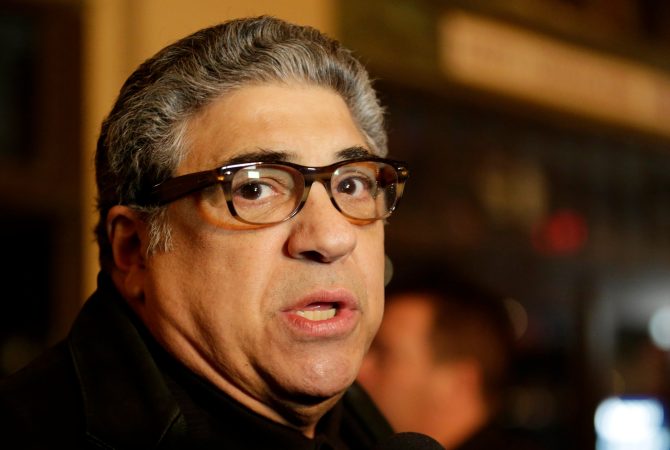
    NEW YORK — Vincent Pastore, a veteran actor who played mobsters and tough guys, and was best known for portraying Salvatore “Big Pussy” Bonpensiero on The Sopranos, has died. He was 80.

    Bob McGowan, who managed Mr. Pastore since his run on The Sopranos, told the Associated Press that he learned of his death Saturday from another client and actor on the show, Vincent Curatola.

    He said Mr. Pastore was found in his home on New York’s City Island after not being heard from for a few days.

    McGowan said he had been trying to reach Mr. Pastore about a possible job.

    “He was the most loyal client, and he always gave to charity,” McGowan said, “and he was the kind of guy who would help anybody, which is rare in my business.”

    Robert Attermann represented Mr. Pastore for more than 30 years, before his time on The Sopranos. While Mr. Pastore will be remembered as “Big Pussy,” he was so much more, Attermann said in an email to the AP.

    “Vinny was one of the kindest, most generous people I have ever known,” Attermann said. “He treated everyone with warmth and respect, never turning down a fan who wanted a photograph or an autograph. He genuinely appreciated the people who supported him and always made them feel valued.”

    Attermann said Mr. Pastore loved being an actor and was passionate about his craft while always encouraging young actors, “taking the time to offer guidance and support whenever he could.”

    Michael Imperioli, a longtime friend and collaborator, said on Instagram that it seemed as though he had known Mr. Pastore forever.

    “We did lots of work together and traveled all over the USA as well as Italy and Australia. Lots of good times. Lots of laughs,” Imperioli said. “Vinny was a kind-hearted brother who cared deeply about his family and friends. I will miss him always.”

    Mr. Pastore appeared in movies dating back to the 1980s including roles in big films such as Goodfellas and Awakenings, both in 1990.

    He often played gangsters. And it was one of those roles he is best known for: his 30-episode run as Bonpensiero, the friend of Tony Soprano who becomes an FBI informant.

    Mr. Pastore was born in the Bronx and grew up in suburban New Rochelle, N.Y. He enlisted in the Navy during the Vietnam War and later attended Pace University, according to his biography on IMDb.

    He is survived by his daughter, Renee Pastore.