Blog

  • Philly school district promotes some administrators, changes principals elsewhere. Here’s a rundown.

    Philly school district promotes some administrators, changes principals elsewhere. Here’s a rundown.

    Superintendent Tony B. Watlington Sr. has announced a flurry of Philadelphia School District shifts in recent weeks, from promotions and principal changes to additional responsibilities for some of his senior officials.

    Changes are common at this point in the school calendar, but this year is particularly busy. The district’s 113,000 students return to school August 24.

    The changes include:

    A new human resources chief

    Kristy Baldwin was named chief talent officer. Baldwin had previously held the position on an interim basis. The district has cycled through a number of talent executives during the Watlington administration.

    Baldwin is the former longtime human resources executive in Prince George’s County, Maryland, where she was credited with lowering teacher vacancies and recruiting a more diverse educator workforce.

    Watlington, in a release, said Baldwin was “battle-tested” and collaborative.

    “Dr. Baldwin brings a wealth of experience and knowledge to the district, as well as a demonstrated track record of effectively staffing schools with high-qualified teachers, increasing the number of Black and Latine educators, and working with union leaders,” Watlington said.

    Baldwin officially in her new role on July 27, and will be paid $235,000.

    Changes in assistant superintendents, salaries announced

    Also announced last week was a new role for Kahlia Johnson, who had worked as deputy chief of talent management and recruitment selection. Johnson, the former principal of Overbrook High, is moving to become interim assistant superintendent for a network of district high schools. Johnson will be paid $197,302.

    Johnson replaces Noah Tennant, who was previously announced as associate superintendent for secondary schools. Tomás Hanna, who was associate superintendent for secondary schools, moved over to become associate superintendent for student life and school operations. Hanna will be paid $221,658 per year, and Tennant’s salary will be $215,202.

    In other recent changes that the district identified in recent weeks, Brenda Elliott was named deputy superintendent of academic services. Her salary is $285,488.

    Michael Farrell, chief academic officer, is paid $221,658. Nathalie Nérée, chief of special education, diverse learners and wellness, has a salary of $221,658. Nyshawana Francis-Thompson, senior adviser for strategic initiatives and innovation, is paid $208,627.

    Jamina Clay, assistant superintendent of school management and organization, makes $197,302. Kelly Espinosa, assistant superintendent for Learning Network 4, makes $197,302.

    Interim assistant superintendents Wilfredo Ortiz and Lucy Feria, who will run Learning Networks 8 and 9, respectively, will also be paid $197,302 annually.

    Additional responsibilities for Watlington deputies

    Two of Watlington’s top deputies are also taking on additional responsibilities.

    Alexandra Coppadge Wright is now supervising the operations, external and community affairs departments. Coppadge Wright, the chief of communications and customer service, was already supervising the Office of Communications, Office of Customer Service, and the Family and Community Engagement Office.

    Sarah Galbally, Watlington’s chief of staff, will add the School Transitions Office to her portfolio. Galbally also handles Board Relations, Government Relations, Grants Development, Strategic Partnerships, and Strategic Planning.

    Both Coppadge Wright and Galbally are paid $225,096 annually.

    Naima DeBrest, a spokesperson for the district, said in a statement that the changes were necessary as the district remains “focused on balancing the budget while recruiting and appointing talented individuals who have a demonstrated track record of improving student outcomes, as we continue to drive towards becoming the fastest-improving, large urban school district in the nation.”

    Principal changes

    A number of district schools have new principals. They are:

    Adaire Elementary, Amanda Strain. Strain had been principal of Waring Elementary.

    Bridesburg Elementary, Louis Depa. Depa had been assistant principal at Pennell Elementary.

    Clemente Middle School, Regina Barr. Barr had been assistant principal at Bluford Elementary.

    Edison High, Albert Sniezevage. Sniezevage had been assistant principal at the school.

    Benjamin Franklin Elementary School, Ryan Sullivan. Sullivan had been assistant principal at Penrose Elementary.

    Heston Elementary, Kamia Smith. Smith had been assistant principal at Heston.

    Lawton Elementary, Michelle Todd-Coleman. Todd-Coleman had been assistant principal at Forrest Elementary.

    Memphis Street Academy, Wayne Diggs. Diggs had been assistant principal at Mastbaum; Memphis Street Academy is reverting back to district control after being a charter school for years.

    Northeast High, Andrew Lukov. Lukov had been principal of Southwark Elementary, he also has experience as a Northeast assistant principal.

    Southwark Elementary, Mason Luksch Wilson. Luksch Wilson had been assistant principal at Elkin Elementary.

    Bayard Taylor Elementary, Claire Charles. Charles had been assistant principal at the school.

    Tilden Middle School, Jessica Culp. Culp had been assistant principal at Comegys Elementary.

    Waring Elementary School, Cathryn Anderson. Anderson had been assistant principal at Bache-Martin Elementary.

    Philadelphia principals are typically paid between $153,296 and $172,636 annually, with salaries set by union contract. Principals are represented by the Commonwealth Association of School Administrators, Teamsters Local 502.


  • Myanmar’s detained former leader Aung San Suu Kyi has rare meeting with International Red Cross

    Myanmar’s detained former leader Aung San Suu Kyi has rare meeting with International Red Cross

    BANGKOK — Myanmar’s detained former leader Aung San Suu Kyi met with the International Committee of the Red Cross’ representative in the capital on Monday, the military-backed government said, a rare moment of contact with the outside world for the Nobel laureate who has been held out of public view since the military seized power in 2021.

    Two photographs published with the announcement showed Suu Kyi shaking hands with Arnaud de Baecque, the ICRC’s representative to Myanmar, and meeting with him in a wood-paneled room.

    The Presidential Press and Information Bureau, which released the photographs, said the meeting was held Monday morning but did not disclose the location of the meeting or provide details about what was discussed.

    The ICRC confirmed in a statement on Monday that one of its delegates visited Suu Kyi under its standards and procedures for visiting people deprived of liberty, and spoke with her in private, but it did not disclose details of the discussion.

    The organization said it continues to engage with all relevant actors to maintain and expand its access to places of detention in Myanmar.

    Two other photographs showed Suu Kyi cutting a pink birthday cake bearing the inscription, “Happy Birthday Aunty Suu,” suggesting they may have been taken during a celebration for her 81st birthday in June.

    In the photos, Suu Kyi appeared relaxed and was smiling. She did not show any obvious signs of ill health, although her physical condition could not be independently assessed from the images.

    The release came as calls are growing from other countries, including Myanmar’s fellow members of the Association of Southeast Asian Nations, for access to or engagement with Suu Kyi as part of efforts to resolve the country’s political crisis.

    Kim Aris, her younger son living in London, and Myanmar democracy activists have been waging an online campaign to demand evidence his mother is alive and well.

    In a statement sent to the AP, Aris welcomed the reported ICRC visit, saying it could mark the first positive development concerning his mother in more than five years.

    “This may be a first step, but it must not be the last,” Aris said.

    He thanked governments, the international community, and supporters for standing with his family and backing his campaign to seek proof of his mother’s well-being, while stressing that he had not yet received independent confirmation of her condition.

    He said he hoped the visit would lead to direct family contact and her eventual release together with all political prisoners.

    Suu Kyi was detained Feb. 1, 2021, when the army seized power from her elected government. She has not been seen publicly since then, and the last official photo of her released was in April, when she was moved from prison to house arrest and her sentence was reduced as part of a prisoner amnesty for a Buddhist holiday.

    The country’s military leaders, who have faced sanctions and widespread international isolation since seizing power in 2021, have sought to project a return to normalcy by holding a 2025 election and increasing engagement with regional neighbors.

    However, critics say the transition to a nominally elected government largely composed of former generals and holdovers from the previous military-led government has done little to change the military’s grip on power.

    Nay Phone Latt, a spokesperson for the opposition National Unity Government, said the ICRC’s meeting with Suu Kyi shouldn’t be taken as a real move to address human rights or democracy issues.

    “Since, from the outset, a country’s leader was wrongfully arrested and imprisoned by finding faults where there were none, she must be released without any conditions,” he said.

  • Philly parents will be able to track some school buses in real time — for the first time ever

    Philly parents will be able to track some school buses in real time — for the first time ever

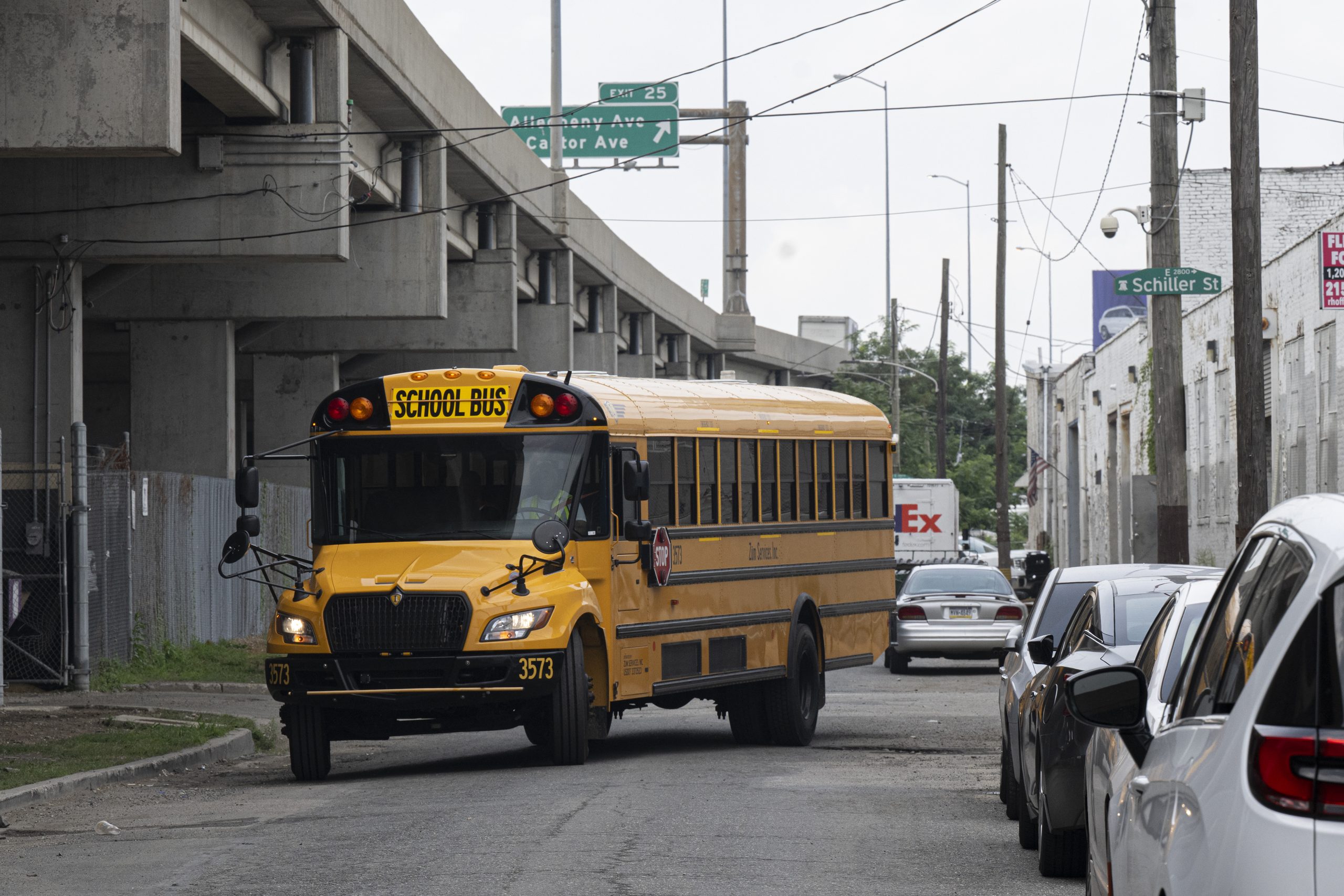
    Coming soon to some Philadelphia school bus stops: technology that allows parents and schools to track their kids — and their buses — via an app, in real time.

    That represents a sea change for families on up to 200 yellow bus routes throughout the city.

    Most Philadelphia school buses are decidedly analog — some companies still provide written turn-by-turn directions for drivers, rather than equip buses with GPS. Families generally have no information on when their buses might show up.

    A school bus driven by Aaliya Horn is reflected in the rearview mirror during a training session aboard one of the Philadelphia School District’s new school buses in Philadelphia on Tuesday, July 28, 2026. The district’s new bus vendor is introducing high-tech buses equipped with air conditioning, onboard cameras and GPS technology that allows parents to track their children’s buses in real time.Jose F. Moreno / Staff Photographer

    But the district recently selected Zum Inc., a Silicon Valley-based tech-and-transportation company, as one of its vendors, awarding it part of a massive $483 million contract for yellow bus services through 2031. Zum, which runs routes in 18 states and 6,500 districts nationwide, including Los Angeles Unified, Kansas City, Mo., Howard County, Md., and Boston, will operate at least 200 Philadelphia routes, though exact figures and contract totals have not yet been settled.

    With its new, five-year contracts, awarded in April, the district dropped Durham School Services, a longtime vendor that had experienced some service and other issues amid a national bus-driver shortage.

    Students who live more than 1.5 miles from their assigned school are eligible for free transportation from the district.

    The school system transports only a fraction of its own elementary school students via district-owned yellow buses; the rest of the routes are serviced by providers that now include Zum.

    Philadelphia students in grades seven through 12 who are eligible for transportation to school are issued SEPTA passes.

    Zum, which has hired a number of former Durham drivers, is hoping to attract workers with competitive pay — drivers’ hourly rate starts at $30 per hour, and bus monitor pay at $20 per hour — and benefits.

    Route assignments have not yet been announced, so it is not clear which yellow bus routes will have Zum buses.

    What’s different about Zum?

    Zum officials promise a different experience before students even step onto a bus, said Missy Lash, the company’s senior location manager for Pennsylvania.

    “It’s comfort — but it’s also technology,” Lash said.

    Families whose children are assigned to Zum routes will be encouraged to download a free app that gives them real-time notifications and information about their child’s bus — who the driver is, when the bus will arrive, when their child is dropped off at school and arrives at the bus stop in the afternoon.

    Bus driver Aaliyah Horn drives her bus during a training session aboard one of the Philadelphia School District’s new school buses in Philadelphia on Tuesday, July 28, 2026. The district’s new bus vendor is introducing high-tech buses equipped with air conditioning, onboard cameras and GPS technology that allows parents to track their children’s buses in real time.Jose F. Moreno / Staff Photographer

    The tablet computer mounted at the driver’s fingertips provides directions, but also the location of each individual student’s pickup point and, if families choose to share them, student photos that help drivers identify whom they are picking up.

    When they step onto the bus, children either scan Zum-provided IDs or provide their names, which the driver types in. Once they do, parents receive a notification — your child has been picked up.

    “They’ll also get a notification when my child gets dropped off at school,” or if there’s traffic and the time of pickup or arrival is adjusted, Lash said.

    On the comfort piece, all Zum buses are air-conditioned — not a given system-wide. Only buses that transport students with disabilities must have guaranteed air-conditioning.

    That is a big upgrade for drivers and students, said Nicole Dukes, who worked as a driver and trainer with another bus company in Philadelphia for six years before switching over to Zum, where she will train drivers.

    “Just the buses themselves make you want to come to work,” said Dukes, who lives in North Philadelphia. “I never had air-conditioning on a bus.”

    The technology is also a plus, Dukes said — “it’s great to have that for the parents to keep an eye on their children,” and having tablets providing directions is a serious improvement over her old system.

    “We had turn-by-turn sheets, and if you had to go a different way, you had to call dispatch, who had a map,” Dukes said.

    School district officials say that while no district yellow buses have had tracking capability for parents, Everdriven, which provides some alternative district transportation services, like vans, does allow families to track their vehicles.

  • Nolan Smith Jr. calls arrest for speeding ‘unacceptable’: ‘I represent the Eagles no matter where I go’

    Nolan Smith Jr. calls arrest for speeding ‘unacceptable’: ‘I represent the Eagles no matter where I go’

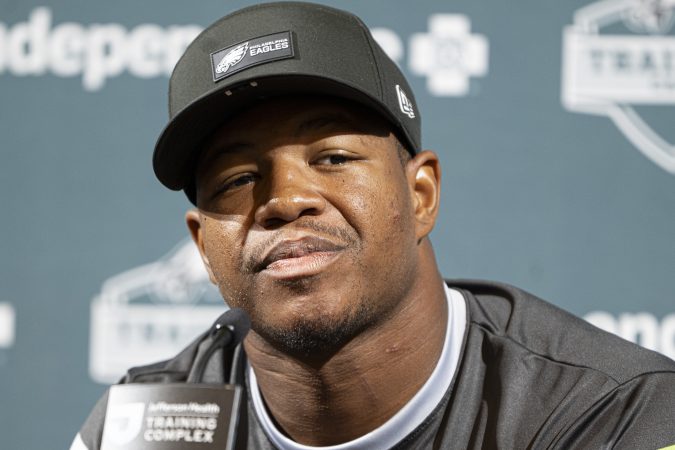
    Speaking publicly for the first time since his May 15 arrest in Twiggs County, Ga., for speeding and reckless driving, Eagles edge rusher Nolan Smith Jr. called his actions “unacceptable.”

    Smith was caught traveling 135 mph in a 70 mph zone, an incident that came four years after Smith was arrested in Barrow County, Ga., for speeding in a construction zone while driving on a suspended license.

    “I apologized to the organization, and I’ll make that apology now,” Smith said Monday after Eagles practice. “I represent the Eagles no matter where I go, Georgia, Florida, it doesn’t matter. That’s one of the ones that I own up and I apologize for. It’s just like that. We make mistakes and it can’t happen again and that’s unacceptable. I did apologize to Howie [Roseman], I did apologize to Mr. Lurie, and I can’t let my teammates down like that. They hold me to a different accountability on and off the field.”

    Smith, 25, said “nothing came from” the May arrest. A court date was originally set for July 14, but Smith would not need to appear in court if he paid the associated fines. After his 2022 arrest, Smith was accepted into a pretrial diversion program as part of a plea negotiation.

    Eagles linebacker Nolan Smith Jr. apologized for his offseason arrest on Monday. Monica Herndon / Staff Photographer

    Smith is coming off an injury-plagued 2025 season with the Eagles. After undergoing surgery to repair a torn triceps following the Super Bowl, an aggravation in Week 3 forced him to miss five games. Smith called last season “frustrating” and said “all offseason I was just thinking about 18, just make it through the 18 [weeks].”

    Smith said he is feeling stronger now and even put on a few pounds of muscle.

    The Eagles remade their edge rushing corps in the offseason. Smith and Jalyx Hunt are the two returning players from last year’s roster. The depth chart has a new player at the top in Jonathan Greenard, who is expected to miss the majority of training camp with a pectoral injury. Greenard’s absence has meant a lot more first-team work for Smith, who may end up behind Hunt in the pecking order when the group is at full strength.

    Greenard, Smith said, brings a little bit of the Brandon Graham “aspect” to the unit. “OGs bring a different mindset,” Smith said. He has picked Greenard’s brain about the new Eagle’s playing past and players he previously played with. Behind the top trio on the edge are Arnold Ebiketie and A.J. Epenesa, who complete what could be a pretty versatile group.

    Nolan Smith had his season derailed at times by injury issues a season ago. Monica Herndon / Staff Photographer

    Smith had just three sacks in 12 games last season after 6½ in 16 games in 2024. The Eagles elected to pick up Smith’s fifth-year option in late April, the same day they did the same for their other 2023 first-round pick, Jalen Carter. Smith’s salary on the fifth year in 2027 will be just over $13.7 million, but he is slated to be a free agent after next season and it’s unclear if he’ll be extended by the Eagles before then.

    Smith called the option being picked up by the Eagles “just another year to play football and showcase my talents.”

    “Down by down, play by play, just play football, play free,” Smith said. “It’s a game you loved as a kid, it was taken away from me for six weeks last year, and I’m just happy to be able to play. Kind of just think about what my mama used to tell me: ‘You don’t make no plays, you don’t eat.’”

  • Trump says new talks are ‘last chance’ for Iran to forge deal and avoid escalation of U.S. strikes

    Trump says new talks are ‘last chance’ for Iran to forge deal and avoid escalation of U.S. strikes

    WASHINGTON — President Donald Trump said Monday that newly planned talks with Tehran are the “last chance” for Iran to forge a deal and avoid an escalation of U.S. strikes on the country.

    Trump, speaking at the Oval Office, said he expects negotiations that will reopen the Strait of Hormuz and create a pathway for Iran to address United States’ concerns about it’s nuclear program will begin in the next day or two.

    The Republican president said, “The first phase is the opening of the straits. The second phase will be the denuclearization.” Trump says that ”will take a little while.”

    While Trump has reveled in the U.S. military decimating layers of Tehran’s leadership and devastating its air force and navy, Iran is betting it can outlast Trump as he faces diminished stockpiles of munitions and the difficulty of executing a war that is unpopular with the American electorate ahead of November’s midterm election.

    Trump said he decided to hold off on ordering American forces to carry out new massive strikes against Iran at the urging of Gulf allies Qatar, Saudi Arabia, and the United Arab Emirates.

    He said that a plan was in place for U.S. forces to carry out “the biggest attack since World War II” on Sunday. But he decided to scrap the plan and give diplomacy more time to play out after hearing from key Gulf leaders — including Saudi Crown Prince Mohammed bin Salman — as well as at the request of unnamed Iranian officials.

    Earlier Monday, Trump had raised doubts about the prospects of negotiations after the Iranian Foreign Ministry said Tehran announced it is not currently holding negotiations with the United States.

    “Iranian Leadership is unbelievably duplicitous!” Trump fumed on his Truth Social platform.

    Critics see Trump reaching for a reset button in this pattern

    Trump may still come to the conclusion that a massive escalation in the conflict with Iran is necessary.

    But critics say his hesitation also might reflect an unspoken understanding inside the administration that U.S. military might alone may not be enough to compel Iran to back down and bring an end to a now monthslong war that Trump had earlier downplayed as a weekslong excursion.

    “I think what we’re seeing here is a president who has an approach that’s just rather erratic,” said Sen. Mark Kelly, an Arizona Democrat on the Senate Armed Services Committee, on CBS News’ Face the Nation. “At this point, he’s trying to get us back to February. And I think if he could — if he had a big reset button he could hit — he would certainly take that option.”

    There have been several moments over the course of the conflict when Trump has demonstrated his proclivity for the bellicose only to back off at the last minute, while declaring his threats spurred progress:

    In early April, the United States and Iran agreed to a two-week ceasefire in an announcement that came less than two hours before a deadline Trump had set for Tehran to capitulate or face attacks on bridges and power plants — strikes he said would mean “a whole civilization will die.”

    After days of dire threats against Iran, Trump announced on May 18 he was holding off on a major planned military strike because “serious negotiations” were underway, crediting Gulf allies for persuading him to show restraint.

    Then in June, Trump threatened to hit Iran “VERY HARD” and seize Iran’s energy base on Kharg Island to “assume total control of their Oil and Gas Markets,” he wrote on social media, only to call off the strikes in a later post after claiming that peace negotiations had progressed with high-level Iranian leaders.

    Left unsaid by the president was that such an endeavor would require U.S. troops on the ground in Iran — a risky proposition politically for a president who campaigned on avoiding foreign entanglements and criticized past administrations for getting bogged down in endless wars.

    Call with Saudi crown prince affected Trump’s decision

    With this latest episode, Trump suggested that Saudi Crown Prince Mohammed bin Salman played a particularly important role in him turning away from escalating the fight.

    The U.S. president spoke by phone with the de facto leader of the kingdom on Saturday before announcing he was halting strikes that he later boasted would have been one of the biggest U.S. operations since World War II.

    The crown prince conveyed that an escalation in fighting could have a severe impact on the global economy if Tehran responded to a new U.S. bombardment by targeting some of the United States’ Gulf allies, according to a person briefed on the call who was not authorized to comment publicly and requested anonymity.

    Saudi officials, the person added, have underscored in their engagements with the Trump administration that the kingdom is in a good position to defend itself against further potential Iranian strikes — as are fellow energy titans Qatar and the United Arab Emirates — but that Kuwait could be more vulnerable to attacks by Iranian-backed militias in Iraq.

    As Trump threatens escalation, Republicans face tough polling

    Trump has insisted that November’s midterm elections aren’t shaping his approach to the conflict that’s spurred unease across the global economy.

    But it’s certainly on the minds of his fellow Republicans.

    About two-thirds of U.S. adults say the war with Iran, which began Feb. 28, has not been worthwhile, according to polling from the Associated Press-NORC Center for Public Affairs Research published last week. That includes the vast majority of Democrats and independents, as well as about 37% of Republicans.

    One of Trump’s most outspoken allies on Capitol Hill suggested on Sunday the administration needs to modulate its approach on Iran.

    Louisiana Sen. John Kennedy said on NBC’s Meet the Press that the debate in Washington has lost perspective on the devastation the U.S. military has inflicted on Iran since the start of the war.

    Still, the Republican lawmaker acknowledged that further escalating the conflict could lead to a further surge in already elevated energy prices and “a lot of inflation for the American people.”

    Kennedy made the case that tightening sanctions and targeting Iran’s nuclear program — rather than escalating the conflict — might be the best bet for the moment.

    “They’re all hellish choices,” Kennedy said. “But for the moment I’d maintain the status quo.”

  • Cheltenham High’s hazing scandal isn’t the outlier you think it is

    Cheltenham High’s hazing scandal isn’t the outlier you think it is

    Here we go again. Another high school football team. Another hazing assault. Another round of shock, outrage, and canceled games.

    That’s what I thought when I read about the charges that have been filed against six students and four coaches in connection with what the authorities said were a pair of hazing assaults on a Cheltenham High School football player. Of course, I was outraged that several teammates stomped on his groin and chest with their cleats and poked at his buttocks with a broomstick, according to Montgomery County prosecutors.

    But I wasn’t surprised. And you shouldn’t be, either.

    Put simply, hazing is as American as apple pie. When an incident like this happens, everybody expresses shock and dismay. Legal charges are filed, coaches are fired, and games are canceled. And then we go back to hazing again.

    Most Americans probably associate hazing with college and — especially — with fraternities. But in a 2009 survey of over 11,000 university students, 47% reported they had experienced hazing in high school. All told, an estimated 1.5 million high school students are hazed each year.

    That means it’s people you know, in the communities where you live.

    In 2004, a grand jury reported that three Long Island football players attending a summer camp in Wayne County, Pa., had inserted pine cones and golf balls into teammates’ anuses. The assaults were part of a long history of hazing at the camp, where coaches “displayed a lack of common sense and accountability,” the report said.

    At a July 29 news conference, Montgomery County District Attorney Kevin Steele announces multiple charges in connection with two assaults in the Cheltenham High School locker room that injured a 15-year-old football player.Tom Gralish / Staff Photographer

    In 2014, Central Bucks West High School in Doylestown acknowledged that rookie football players had been forced to grab other players’ genitals. They were also led into the shower with towels over their heads, which the players called “waterboarding.”

    In 2015, seven football players at Sayreville High School in Middlesex County, N.J., were charged with grabbing teammates’ buttocks and digitally penetrating one of them.

    In 2016, prosecutors said football players at Conestoga High School in Berwyn had penetrated a freshman player with a broomstick as part of a hazing ritual called “No Gay Thursdays.” And in 2022, football players at Wall Township High School in Monmouth County, N.J., were caught on video holding a student’s legs apart and, yes, assaulting him with a broomstick.

    Are we seeing a pattern here? Most high school hazing involves verbal — not physical — abuse. But the most violent episodes happen on sports teams, which also have the highest rate of hazing.

    And they’re also the most likely to generate criminal charges. In Cheltenham, six players have been charged in connection with the assaults on their teammate. And four coaches face charges of endangering the welfare of a child and conspiracy for allegedly trying to cover up the incident.

    That’s necessary and appropriate, but it’s not enough. Hazing is illegal in 44 states and the District of Columbia, and it happens anyway. Clearly, our laws aren’t deterring it.

    The football practice field and stadium at Cheltenham High School.Tom Gralish / Staff Photographer

    Ditto for our educational efforts. When reports of hazing surface, school officials pledge to conduct anti-hazing training for coaches and students. And they release statements declaring that hazing will not be tolerated, in any form.

    But their message is falling on deaf ears. So it’s time to change the messenger to someone whom kids will really hear: the hazers themselves. If you haze somebody, you should be required to speak to other students about it.

    It’s happened before. After a Virginia Commonwealth University student died of alcohol poisoning in a fraternity initiation in 2021, six students who pleaded guilty to hazing him agreed to travel to universities around the country to discuss the tragedy and the role they had played in it.

    We could — and should — demand the same thing from high school hazers. Plea agreements in hazing episodes often require guilty parties to perform community service. What could be a better service than speaking at student assemblies and other public events about the problem of hazing?

    In the Cheltenham incident, two 18-year-old football players were charged as adults — one with assault and conspiracy, the other with false swearing for being untruthful to police. The four other players were under 18 and were charged as juveniles.

    I don’t know what penalties they should receive. But here’s what I do know: The rest of the school would discover a lot more about hazing if the six students were required to speak about it. And maybe, just maybe, we could start to shift the culture around this destructive behavior.

    When hazing is reported at a high school, local officials condemn the incident and inevitably declare that “this is not who we are.” In fact, it’s exactly who we are. We haze. So let’s hear from the people who do it, about why they haze and what they have learned. We can all learn something from them.

    Jonathan Zimmerman teaches history and education at the University of Pennsylvania. He is the author of “Schooling Citizens: How Education Can Save Democracy,” which will be published next spring by the American Philosophical Society Press.

  • Washington state fires destroy hundreds of structures and force Spokane-area residents to evacuate

    Washington state fires destroy hundreds of structures and force Spokane-area residents to evacuate

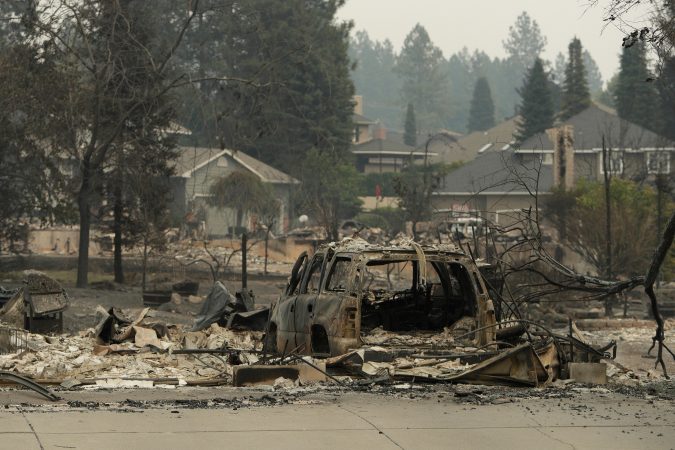
    SPOKANE, Wash. — Light winds and lower temperatures were in the forecast Monday to help firefighters battle wildfires in eastern Washington state that destroyed at least 600 structures and forced the evacuation of 60,000 people in the Spokane area.

    The fires in and around Spokane, the state’s second-largest city, burned about 12.5 square miles by Monday morning and filled the sky with smoke and haze. They were 0% contained, Courtney James, a spokesperson for the Washington State Department of Natural Resources, said.

    No major injuries or deaths were reported by Monday, though authorities were checking for missing people, said Cpl. Mark Gregory, a spokesperson for the Spokane County Sheriff’s Office.

    “Initially, we had approximately 290 missing person reports, and at this point we have cleared all except 14,” Gregory said. “These may not all be specifically associated with the Spokane Complex Fires.”

    The wildfires were among dozens across the Western U.S. that are stretching the ability of federal, state, and local agencies to fight them. At least 390 square miles have burned across Washington.

    Homes, cars, possessions lost in flames

    Entire Spokane neighborhoods lost homes. Chimneys that somehow withstood heat and flames were still standing like lone sentinels, symbols of what was there just a few days earlier.

    Online efforts to help people swiftly popped up as friends of fire victims posted numerous appeals for money, clothes, and basic necessities. Kory and MacKensie Aspaas were away with their children when the disaster hit.

    “They are coming back from being out of town to a life that’s been completely wiped out,” friend Kali Butler said.

    Officials said Sunday that the evacuees in Spokane included patients at its U.S. Veterans Affairs hospital. Investigators had yet to determine how the blazes started.

    The weather forecast for Monday called for cooler temperatures and light winds, but no rain.

    “We are not out of danger,” U.S. Sen. Maria Cantwell said Sunday. “The next couple of days will be challenging.”

    Grassland in flames in parts of Idaho, Oregon, Utah

    Spokane was not the only place struggling to contain fires.

    Crews using bulldozers and helicopters continued for a 10th day to fight a fire that has burned nearly 525 square miles of grassland in western Idaho and eastern Oregon. The area is home to cattle ranches, and authorities said the fire is threatening more than 600 homes and 800 other structures.

    The weather in the area was expected to remain sunny and dry well into the week, with temperatures rising to more than 90 degrees Fahrenheit on Wednesday. Officials say the fire was caused by lightning.

    In central Utah, a massive blaze more than doubled in size over the weekend and was nearly 57 square miles by Monday morning. More than 100 cattle have been killed, according to local law enforcement.

    Officials called the fire “catastrophic” as heavy winds helped flames jump containment lines.

    The fire is moving north toward Fillmore, a town of about 2,600 people and the seat of Millard County. Mandatory evacuations were ordered Sunday evening for the southern portion of Fillmore.

    The National Weather Service issued warnings about the air quality across the Northwest. It issued red flag fire warnings for parts of Utah and Montana and western Nebraska, and extreme heat warnings for the southern parts of Arizona, California, and Nevada and northern Montana.

    Spokane sets up shelter for impacted residents

    In Spokane, about 400 people were staying at the city’s main convention center, which was turned into a shelter, officials said.

    Spokane Public Schools opened a free emergency drop-in camp for children on Monday. Trials at the county court were pushed to Aug. 10.

    Meanwhile, several larger fires continued to burn in less populated areas northwest of Spokane, including one about 80 miles from the city that has burned about 210 square miles. Another fire in eastern Oregon, about 70 miles to the northwest in the Stinkingwater Mountains, has burned about 336 square miles.

    “The whole northwest is heavily impacted right now,” said Keila Vizcarra, the spokesperson for the federal team from California handling what’s been named the Big Grass Fire in western Idaho and eastern Oregon.

  • Hundreds of migrant children are stranded in Spain’s Ceuta after mass crossing

    Hundreds of migrant children are stranded in Spain’s Ceuta after mass crossing

    CEUTA, Spain — The teenage girl made it through the waves to Spanish territory. Her little brother did not, drowning in the Mediterranean, while their mother disappeared in the chaos when tens of thousands of people surged through the breakwater, trying to leave Morocco behind.

    The tragic story of a 17-year-old from Tangier is representative of the plight of many of the more than 800 minors who four days after the collective push by migrants into Ceuta face a scary present and an uncertain future.

    She told an Associated Press photojournalist how she and her family joined the massive crowd that tried to swim around a border fence to reach the Spanish territory on Thursday. Like many, she said, they did so seeking better opportunities. The AP is withholding her identity because she is a minor in a vulnerable situation.

    She described how she saw Spanish police pull the body of her 8-year-old brother from the water.

    She made it to the shore but became separated from her mother, and has spent the last four days on her own. She said some locals gave her food and some clothing, with one woman taking her into her home so she could bathe. She then went to a center for youths run by the government for some help, but found it was full.

    “I saw people stepping on the dead,” she said through a translator since she doesn’t speak Spanish. “Now we are children begging on the street.”

    She is one of some 860 minors who remained in Ceuta on Monday after crossing over, according to local officials. AP journalists saw other minors asking for food.

    Those minors now make up a large part of the 3,000-5,000 migrants who have avoided expulsion from Ceuta of the original 60,000 who came across. Spanish authorities confirmed 72 people died, mostly in the water, during the crossing. Morocco reported 11 deaths which are not included in the Spanish total, the Spanish interior ministry said.

    Minors must be cared for under Spanish law

    Spanish law says that adult migrants can apply for asylum. If rejected, they will face expulsion procedures. The bar is normally very high for Moroccans to be granted humanitarian protection.

    Migrant minors who are unaccompanied by adults, however, are supposed to be granted protection and taken care of by Spanish authorities.

    An AP journalist witnessed Spanish soldiers escorting an unaccompanied Moroccan boy who was crying and begging not to be sent back to Morocco. A few yards before reaching the border, and due to pressure from local residents who insisted he was a minor, as well as the presence of the media, a lieutenant colonel in the Spanish Army stopped the repatriation and transferred the boy to the Spanish Civil Guard.

    Most of the Moroccan adults have either voluntarily gone home or were pushed back by Spanish police. Among those who remain in Ceuta are significant numbers of people from other countries, including Sudanese fleeing their war-torn country, Palestinians from Gaza, and Afghans, as well as people from several African nations.

    The city’s migrant center with a capacity for 600 people is completely full. Food is scarce among the migrants, according to reporting by AP journalists.

    “The strategy is that hunger, thirst, and exhaustion forces these people to finally decide to voluntarily return to Morocco,” said local migration activist Ramsés Mohamed Azumik of Asociación Elín.

    Many migrants sleep or rest on the beach or hills surrounding the speck of Spain. In the hazy distance, mainland Europe, their ultimate goal, lies across the sea.

  • A Bensalem school bus aide groped a special-needs student, police said

    A Bensalem school bus aide groped a special-needs student, police said

    A school bus aide for the Bensalem Township School District groped a special-needs student and filmed the assault with his cell phone, police said Monday.

    Ali Khan, 62, was charged late last week with corruption of minors, endangering the welfare of a child, indecent assault, and related crimes after the 14-year-old girl’s parents contacted police.

    In a statement, interim Bensalem Township Superintendent Victoria Velazquez said Khan was removed from duty after the district was notified of the police investigation.

    The district is cooperating with police and has initiated an internal investigation, she said.

    Khan remained in custody, in lieu of 10% of $500,000 bail, court records show. There was no indication he had hired an attorney.

    The girl told police that Khan on Thursday touched her inner thigh while she was sitting next to him on a bus heading to Bensalem Township High school, according to the affidavit of probable cause for his arrest.

    Before the assault, she said, Khan blocked her path and forced her to take a seat on the bus next to him. He fastened her seat belt for her, the affidavit said, and while doing so put his face close enough to hers “to kiss her.”

    During the ride to her home, Khan intentionally dropped a pen and, while bending down to retrieve it, pointed his cell phone’s camera between her legs, the affidavit said.

    Surveillance footage from the bus showed that the girl closed her legs to prevent Khan from touching her, but that he pulled her legs apart to continue touching her. At one point during the assault, police said, Khan put his hands in his pants and appeared to touch himself.

  • N.J. GOP sees momentum for voter ID law after governor’s comments in favor

    N.J. GOP sees momentum for voter ID law after governor’s comments in favor

    Republican lawmakers say they’re hopeful the governor’s new comments expressing support for voter ID legislation could push long-stalled bills toward hearings when the Legislature returns to Trenton in the fall.

    “I absolutely think this should be one of the top priorities when we come back into session,” said Sen. Michael Testa (R., Cumberland). “There absolutely needs to be a discussion, and the people of New Jersey deserve that discussion to be had.”

    Gov. Mikie Sherrill, a Democrat, said last week during an appearance on News 12 that she would support a voter ID law in New Jersey if legislation reached her desk.

    “Certainly if that was the law passed here, I would support that,” she said, responding to a viewer’s question. “I don’t have a problem with voter ID.”

    Sherrill’s comments come on the heels of her revealing that thousands of noncitizens were registered to vote via the state Motor Vehicle Commission, and fewer than 400 of them cast ballots. The revelation led to a new round of voter fraud complaints from Republicans in New Jersey and nationwide, while the Trump administration demanded information about the voters in question. Sherrill declined to share that data and has said the state is conducting an independent investigation.

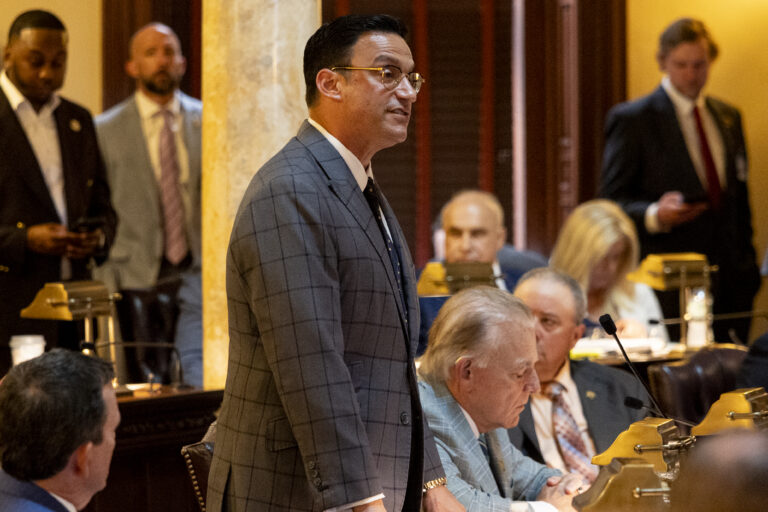
    Sen. Parker Space.Hal Brown/ New Jersey Monitor

    Sen. Parker Space (R., Sussex) is a sponsor of a bill that would require voters to show identification to cast ballots, including a driver’s license, a Real ID, or a passport, among others, and those without them would have to show utility bills in their name, a mortgage or rental statement, or two pieces of mail from a government agency or utility company. Any voter who does not show these would be subject to a challenge.

    Space said he was encouraged by the governor’s remarks that his bill — which has been introduced three times since 2022 but has never advanced to a committee hearing — could finally be posted for a vote.

    “Hopefully she stands by her word and we can get the Legislature on board,” he said.

    He noted that the issue hasn’t historically been a priority for Democratic legislative leadership, which decides which bills advance.

    Assemblyman Gerry Scharfenberger (R., Monmouth) has sponsored the bill in the lower chamber since 2022. He said he proposed legislation with more options for voters besides showing just photo identification because he thought it would get some support from Democratic lawmakers, though he concedes that has not worked so far.

    The new voter registration issue, Scharfenberger said, shows the “walls are closing in, as far as the Democrats being able to avoid this issue.”

    “There’s no way they can avoid addressing this. If I could be a little bit of a forecaster here, I think the more information they find out about the motor vehicle issue, the more those numbers are going to grow,” he said. “It’s become too much with the public psyche, and I think we’re going to have to address it with solid legislation, and not just token tweaks here or there.”

    Testa said he was “pretty shocked” to hear Sherrill’s comments on supporting voter ID, but “pleasantly surprised.”

    He’s the co-sponsor of a voter ID bill that would require a voter to show one of four forms of photo ID: a driver’s license, a Real ID, an identification-only card issued by the Motor Vehicle Commission, or a U.S. passport. He said it’s easier to train ballot workers on how to validate just these forms of ID.

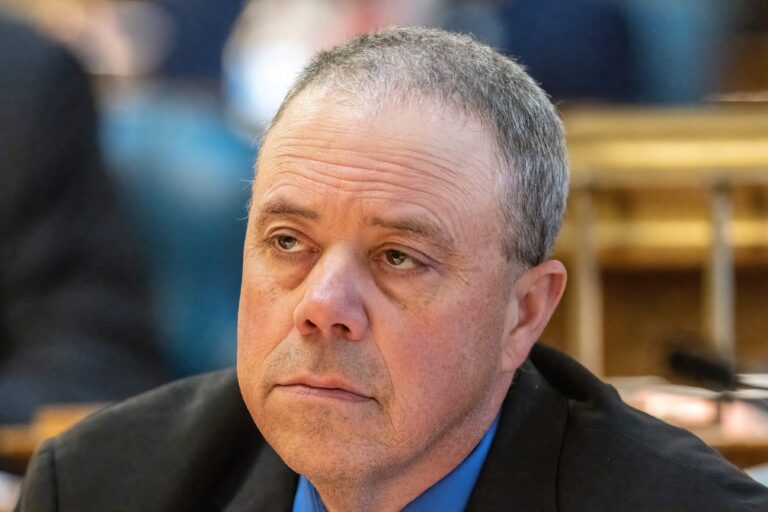
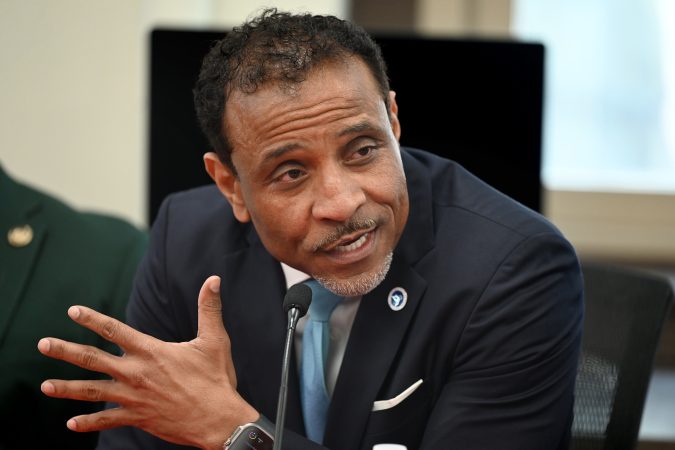
    Sen. Michael Testa Jr.Anne-Marie Caruso/New Jersey Monitor

    “We’ve done everything in this state to be able to allow individuals to vote by mail, to expand the time period for vote by mail, to give people more locations to go vote — and I don’t necessarily have a major problem with any of these modalities for people to vote — but if you’re going to vote on Election Day, you should have a photo ID,” he said.

    A spokesman for Senate President Nicholas Scutari (D., Union) did not respond to a request for comment. A spokesperson for Assembly Speaker Craig Coughlin (D., Middlesex) declined to comment.

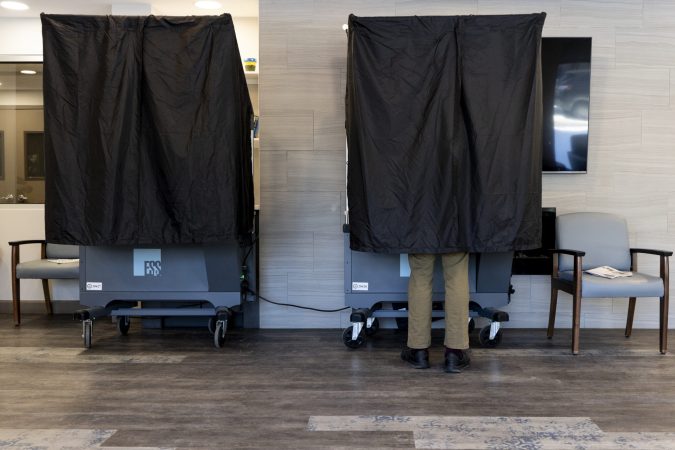
    Thirty-six states have laws requiring voters to show some form of ID at the polls, and eight of those strictly require photo ID.

    But voting rights groups say there are decades of studies showing certain communities are less likely to have access to photo ID. Liza Weisberg, supervising attorney of the American Civil Liberties Union of New Jersey, said people who are homeless, young voters, and communities of color are the “most likely to face disenfranchisement.”

    She called Sherrill’s comments on voter ID a “moment of concern.” Seven advocacy groups — including the ACLU, New Jersey Institute for Social Justice, and the League of Women Voters — sent Sherrill a letter Friday urging her to reject voter ID legislation outright.

    They noted that state law already requires people to provide a driver’s license number or their Social Security number to register to vote.

    Weisberg said the recent voter registration news doesn’t justify implementing voter ID, noting the newly registered voters in question represent a “small fraction” of the state’s voters, with an even smaller group actually casting a ballot. Sherrill initially said about 6,600 people who identified themselves as noncitizens at the Motor Vehicle Commission were added to the voter rolls, and later said about 2,000 of them may indeed be citizens. The state has 6.7 million registered voters.

    “I really hope that there is not an effort to continue using this event to justify voter suppression efforts that really don’t have anything to do with it,” Weisberg said.

    Republicans dismissed arguments that voter ID laws disproportionately burden low-income, elderly, minority, and young voters. They noted multiple reasons people need to show photo ID, like renting a car or applying for food stamps.

    Testa called the disenfranchisement argument “very, very pompous,” saying it suggests that voters could be “ill-equipped or too stupid” to obtain a photo ID. Scharfenberger called it “the most racist position I’ve ever heard,” and Space said those arguments “pander to the far left and liberal media.”

    This story originally appeared on New Jersey Monitor.