Blog

  • Two cyclospora-related deaths reported in Michigan

    Two cyclospora-related deaths reported in Michigan

    Two people have died in connection with the cyclospora outbreak in Michigan, state health authorities announced Monday, the first deaths reported in the multistate outbreak.

    The people who died had “significant underlying health conditions” that may have been affected by the intestinal illness and dehydration, the state health department said, adding that no more information would be provided on the cases.

    Deaths from the illness caused by the microscopic parasite are uncommon in the United States, and it is generally not life-threatening, according to Michigan’s health department. The state has reported more than 11,200 cases and nearly 200 hospitalizations.

    Public health officials are investigating an outbreak of cyclospora infections linked to iceberg lettuce in nine states, and Taylor Farms has recalled iceberg lettuce sourced from central Mexico. Federal officials are also investigating outbreaks and illness in 36 other states that are not related to this specific outbreak.

    The shredded iceberg lettuce was served at Taco Bell restaurants in nine states and was sourced to a single supplier in Mexico, Taylor Farms de Mexico. The fast-food chain has said that as of July 17, it completed removing all of the affected lettuce from restaurants and its supply chain. At least 1,947 cases and 98 hospitalizations have been linked to this specific outbreak.

    At least 6,707 people have been infected with the parasite in outbreaks across the country, according to the Centers for Disease Control and Prevention.

    Taylor Farms has said it has voluntarily recalled all iceberg lettuce grown in central Mexico that was identified as the potential source of one of the recent cyclospora outbreaks. Anything currently on shelves is not the affected product, the company said in a July 17 notice.

    The company also has said it has commissioned independent experts to conduct a top-to-bottom review of food safety processes and protocols in its central-Mexico facility, where as of July 18 the company said it has temporarily suspended production of all products.

    Cyclospora is generally transmitted when infected feces contaminate food or water, and it’s unlikely to be transmitted person-to-person. It usually takes roughly a week before a person gets sick after they are infected, though this period can range from two days to two weeks or more. The parasite typically causes watery diarrhea with frequent bowel movements. The illness is treatable, and doctors can prescribe antibiotics to help.

    It’s difficult to trace the source of the parasite because of the lag before symptoms appear. The CDC is aware of more than 11,500 additional cases that haven’t been confirmed by a lab and need more investigation, such as ruling out international travel.

  • Two childhood friends grew up to become top chefs. Now, they’re opening a ‘punk French’ restaurant together in Manayunk

    Two childhood friends grew up to become top chefs. Now, they’re opening a ‘punk French’ restaurant together in Manayunk

    After nearly four decades of friendship and two careers that took them in different directions, chefs Arthur Cavaliere and Justin Bogle are working together.

    The Roxborough natives and best friends since third grade, both 45, have signed a lease for the former Winnie’s Manayunk space on Main Street near Roxborough Avenue, where they plan to open a new restaurant in late fall. Though they are keeping most details, including the name, under wraps, they describe the project cryptically as a “punk French” restaurant inspired by the neighborhood that helped shaped them.

    The former Winnie’s at 4266 Main St. in Manayunk.Alejandro A. Alvarez / Staff Photographer

    For both, the restaurant represents the fulfillment of a dream they have shared since they started cooking together as teenagers.

    “Artie and I have been best friends since grade school,” Bogle said. “We always had this vision, this pipe dream, that someday we would join forces and do something together.”

    The two met at Shawmont Elementary in Roxborough and got their start in the late 1990s working for chef Derek Davis at his string of restaurants then on Main Street. Their careers soon diverged.

    Cavaliere is a longtime consulting chef. Among the gems he created was the shatteringly crispy chicken at the former Bar Poulet at 20th and Walnut Streets. He came up through Philadelphia kitchens including El Vez and Parc, where he was executive chef, and headed to chef Michel Richard’s orbit in Washington, before opening In Riva, Black Squirrel Pub & Haunt, and Foghorn in East Falls. He left that partnership last year.

    Chef Arthur Cavaliere’s fried chicken was a signature at Bar Poulet, which was open in 2021-22 at 2005 Walnut St. Michael Klein

    Bogle, who attended Walnut Hill College, cooked at Striped Bass and Alma de Cuba before heading to New York, where he became one of the youngest American chefs to lead a two-Michelin-starred restaurant at Gilt. In 2013, he returned to Philadelphia to open Avance — the successor to Le Bec-Fin — and after its 2014 closing joined Garces Group as corporate executive chef. He later returned to New York, where he spent years with Union Square Hospitality Group, most recently as executive chef of Manhatta.

    Family drew him home after nearly two decades in New York.

    “I knew I needed to give my kids a backyard,” Bogle said. “Raising three kids in a two-bedroom apartment wasn’t the goal for me.”

    Avance, led by Justin Bogle, had a 10-month run after Le Bec-Fin’s closing at 1523 Walnut St.David M Warren / Staff Photographer

    He left Manhatta last spring, relocated his family to the area last August, and immediately resumed planning with Cavaliere. They spent the past year evaluating Main Street locations before settling on the former Winnie’s, which closed last November.

    “When the right space presented itself, it was a no-brainer,” Bogle said.

    The partners are keeping quiet about the menu, name, and design while they refine the concept. Bogle will oversee the kitchen and said the long-term plan extends beyond a single restaurant. “We have goals and aspirations to do more than just this,” he said.

    Chef-owner Arthur Cavaliere at In Riva in 2013. Working the pizza oven at rear is sous chef Biff Gottehrer, now at Ripplewood, the Refectory, and Izzy’s.David M Warren / Staff Photographer

    If construction and permitting stay on schedule, they hope to open in November. If delays push the project into December, they are likely to wait until after the new year.

    Cavaliere said the concept is rooted in “friendship, memory, and the neighborhood that raised” them.

    “Their decision to invest in Manayunk is another testament to the strength of the neighborhood and the continued momentum of its dining scene,” said Veronica Blum of MPN Realty, who brokered the lease with Alex Charen. “It’s especially rewarding to help bring operators of this caliber to a community that values independent concepts.”

    For Bogle, returning to Main Street with the friend he has known since childhood carries a significance beyond opening another restaurant.

    “For us to come back to where it all started, plant our roots there, and have some fun — it has been a goal for a long time,” he said. “We’re just really excited about the opportunity.”

  • Artifacts from Gillian’s Wonderland Pier are still up for sale

    Artifacts from Gillian’s Wonderland Pier are still up for sale

    The vintage Gillian’s Wonderland Pier Canyon Falls Log Flume Bathing Guy is still up for grabs, with a $2,000 price tag.

    So is the 12-by-6-foot fiberglass Haunted Dark Ride Skeleton head, including the top hat and the skeletal hands that once gripped the front of the ride, for $8,500.

    Nearly two years after the iconic Ocean City, N.J., boardwalk amusement park closed down, and with the future of the site still uncertain, 20 of the kitschy and spooky disembodied artifacts from Wonderland remain unsold at Obnoxious Antiques in Burlington.

    Vintage Gillians Wonderland Pier Canyon Falls Log Flume Bathing Guy, priced at $2,000 at Obnoxious Antiques.Obnoxious Antiques

    John Polito of Obnoxious Antiques said the massive skeleton head and hands are the work of Bill Tracy, a noted and hugely influential creator of dark ride amusements.

    Much of the other work is the creation of former Wonderland staff artist Wayne Seddon.

    The relics were part of three truckloads hauled off for sale in late 2024 after the park shut down.

    The rotating Wonderland Pier letters sold for $10,000, and Obnoxious Antique’s website lists dozens of other pieces that have already sold, ranging from a Haunted House Moonshine Drunk Weasel to a Smiling Pier Lobster in a Trap to the Dark Ride Devil in a Cage. The sale prices are not listed.

    Polito is hoping another Halloween season will tempt buyers for the skeleton and the other dark ride props for sale, including a pair of coffin speakers ($600), an animated man in a closet ($1,150), and a spider automaton ($750).

    A pair of vintage Gillian’s Wonderland Pier Haunted Dark Ride Haunted House Mechanical Circus Clowns, priced at $1,750 for the pair at Obnoxious Antiques.Obnoxious Antiques

    Polito said about half the sold objects were sold to out-of-state buyers, but the other half “went back to Ocean City,” including the Monkey Band, which is on display with other Wonderland artifacts in the Boardwalk food court as a “Wonderland Pier Museum.”

    Some of the exterior figurines were bought by nearby Storybook Land in Egg Harbor Township.

    Polito says the $8,500 price tag for the skeleton and hands “is a steal,” and notes that they would be perfect for a committed Halloween house decorator.

    He estimates it cost $20,000 to create.

    “It’s heavy,” he said. “They would have to commit to it and they would have to really want it.”

    Ed Frischkorn, 30, holding the log flume miner from the now-defunct Gillian’s Wonderland Pier he purchased at Obnoxious Antiques in Burlington, N.J.Amy S. Rosenberg / staff

    Over objections from some nearby residents, Ocean City Council recently voted to designate the former Wonderland site at 600 Boardwalk in need of rehabilitation and will now negotiate with developer and owner Eustace Mita, who has proposed a seven-story luxury hotel on the site.

    Mita bought the site from Mayor Jay Gillian, who made the decision to close the beloved amusement park his family had owned for 65 years in October 2024.

    Mita’s original proposal called for restoring the Ferris wheel and historic carousel, and preserving several iconic kiddie rides from Wonderland.

    John Polito of Obnoxious Antiques with one of the men in the tub from the log flume ride at the now-defunct Wonderland Pier in Ocean City, N.J. Polito purchased three truckloads of relics that are now for sale at his warehouse on Route 130 in Burlington N.J.Amy S. Rosenberg / staff
  • Senate Republicans join in rebuking White House over science funding

    Senate Republicans join in rebuking White House over science funding

    Senate Republican leaders unveiled a spending bill Sunday that would temporarily block President Donald Trump from implementing a rule change that would give political appointees sweeping power over hundreds of billions of dollars in federal grants.

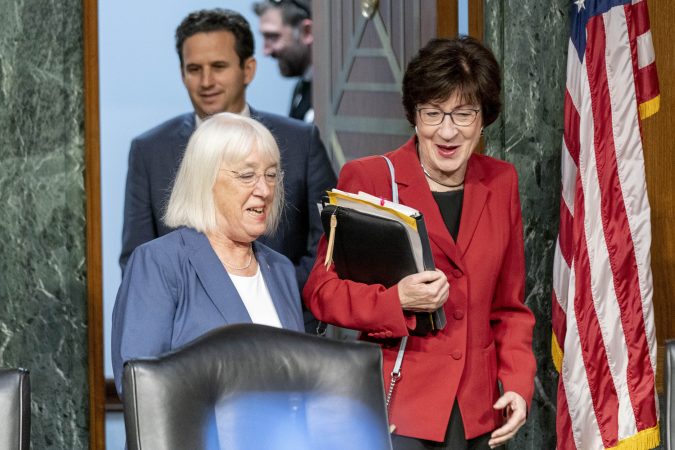
    The provision was tucked into a bipartisan measure to fund the government through Dec. 11 that was negotiated by Senate Appropriations Committee Chair Susan Collins (R., Maine) and Vice Chair Patty Murray (D., Wash.) and reviewed by Senate GOP leaders. It marks another notable rebuke of the president by senators from his own party.

    In a statement, Collins said she is “pleased” the provision was included in the spending agreement. She also said the White House rule change has the “potential to politicize grants and harm small, rural communities, families, and biomedical research.”

    The rule change, released in May by the White House Office of Management and Budget, would give political appointees more power over discretionary grant funding, diminishing a system created after World War II that calls on independent peer reviewers — experts in the field — to determine whether scientific proposals are worthy of federal funding.

    It would require political appointees to review grants before they’re awarded to ensure they advance the president’s priorities and do not support projects the administration opposes, including those that “fund, promote, encourage, subsidize, or facilitate” diversity, equity, and inclusion principles or “deny the biological reality of … the sex binary.”

    It also would give agencies the power to end grants at any time, to further restrict collaboration with researchers in China, Russia and certain other foreign countries, and to add new requirements for foreign researchers working in the United States. The rule would not apply to disaster recovery grants or some grants awarded by Congress through law, including block grants.

    Trump administration officials say the rule would add needed oversight to federal grant-making, ensuring federal funds aren’t wasted or misused. OMB officials did not immediately respond to a request for comment late Sunday, but have said that the Biden administration used federal grants to promote a “far-left” agenda.

    OMB said it planned to finalize the rule by Oct. 1. If the Senate’s funding extension were approved by both chambers, it would block OMB from implementing the rule, at least until the measure expires on Dec. 11.

    Collins urged OMB to withdraw portions of the rule in early July. Dozens of Democratic lawmakers — along with GOP Sen. Lisa Murkowski (Alaska) — have raised similar concerns. Murray and Rep. Rosa DeLauro (D., Conn.), the top Democrats on the Senate and House Appropriations Committees respectively, celebrated the provision in statements Sunday.

    The new OMB rule would “only give Trump the greenlight to take even more federal funding hostage,” said Murray, who worked with Collins to craft the Senate spending measure. Murray said she pushed for a provision that would have permanently killed the OMB rule but was rebuffed by her Republican colleagues.

    When OMB announced it this spring, the proposed rule change drew widespread outrage from scientific researchers, who say it could end U.S. scientific dominance by subjecting research institutions to political meddling, introducing new instability to federal funding, limiting foreign collaboration, and pushing away talented researchers.

    Trump administration officials have said they wouldn’t use the rule to blindly slash scientific funding. OMB Director Russell Vought said during a congressional hearing last month that the administration doesn’t intend to cancel grants “in a heartbeat.”

    But “when we find something that’s problematic that our policy officials would not have caught, we need to be able to turn it off,” Vought added, citing as an example an NIH subgrant given from a U.S.-based nonprofit to the Wuhan Institute of Virology, the Chinese laboratory at the center of suspicions about the origins of COVID-19.

    Last year, the Trump administration canceled hundreds and froze thousands of federal grants to projects they argued did not align with administration priorities. It unleashed chaos within research institutions, scientists said, prompting layoffs and upending projects.

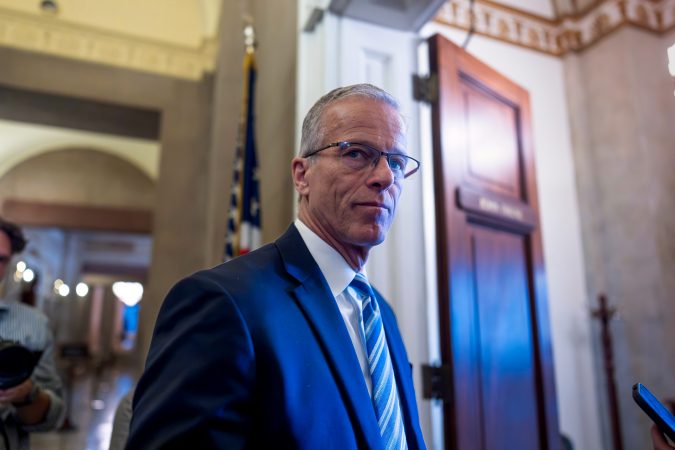
    Senate Majority Leader John Thune (R., S.D.) has said he aims to pass the spending bill before the Senate leaves town Friday for a monthlong recess. The government would shut down at the end of September if the measure — or one like it — is not approved.

    It was unclear Sunday whether the GOP-controlled House would support the measure as written. The House returns from its own monthlong recess on Aug. 31. Spokespeople for Speaker Mike Johnson (R., La.) and Republican House appropriators did not immediately respond to requests for comment.

  • Senate GOP rushes to pass budget bill, avoid shutdown ahead of midterms

    Senate GOP rushes to pass budget bill, avoid shutdown ahead of midterms

    Senate Republicans are racing to complete a lengthy to-do list before leaving town Friday, including approving a stopgap spending bill aimed at averting a government shutdown before the Nov. 3 elections.

    In addition to the stopgap budget bill, Senate Majority Leader John Thune (S.D.) is working to confirm 74 of President Donald Trump’s nominees and faces pressure to advance a $95 billion package that would provide fresh cash for the Iran war and inflation-battered farmers.

    Whatever senators don’t accomplish this week is likely to be pushed to September, when Congress is scheduled to be in Washington only briefly before hitting the campaign trail.

    The stopgap budget bill is up first, with a procedural vote that was expected late Monday. Appropriations Committee Chair Susan Collins (R., Maine) and Sen. Patty Murray (Wash.), the lead Democratic appropriator, worked jointly on the bill, which would extend government funding through Dec. 11.

    The measure differs in important ways from a version of the bill passed by the House: It incorporates White House requests to maintain funding for housing and nutrition programs through the fall, and it would extend an expiring authorization for veterans’ healthcare.

    Additionally, it would temporarily block the White House Office of Management and Budget from adopting a rule that would give political appointees sweeping powers to cancel hundreds of billions of dollars in federal grants.

    Rep. Rosa DeLauro (Conn.), the lead Democrat on the House Appropriations Committee, said in a statement Sunday that the Senate bill marks “a clear improvement” over the House bill, which she and most House Democrats opposed.

    If the Senate approves it, the House could take the measure up when lawmakers return at the end of August. Unless Congress acts, the government is set to run out of funds on Oct. 1.

    Senate Republicans are also facing a long list of presidential nominees at an array of agencies, including the Departments of State, Energy, Treasury, and Justice. The Senate could also confirm Todd Blanche as attorney general if the two Republican senators who have blocked his confirmation vote to advance it Tuesday.

    Late Sunday, Blanche issued a written order formally rescinding the Trump administration’s proposal for a $1.8 billion fund for people who claim they were victims of political prosecutions — a step toward breaking the impasse.

    Blanche said the revision came as part of an agreement with Senate Judiciary members including Sens. John Cornyn (Texas) and Thom Tillis (N.C.), who had threatened to vote against his nomination over concerns about the fund. The order came one day after Trump threatened in a Truth Social post to revive his push for the payout fund if Blanche is not confirmed.

    The Judiciary Committee has scheduled a critical vote Tuesday on Blanche’s nomination.

    Elsewhere, the Senate is expected to easily approve legislation to impose new sanctions on Russia, which would allow the Trump administration to levy up to 100% tariffs on the top five purchasers of Russian oil and natural gas. The measure, which was championed by Sen. Lindsey Graham (R., S.C.) before his sudden death last month, advanced last week on a strong bipartisan vote.

    And Thune has said the chamber would vote on an industry-backed cryptocurrency bill that would establish federal authority over digital assets. But the measure faces opposition on a variety of fronts, including from Democrats, who are demanding tougher ethics provisions to limit Trump’s ability to profit from his family’s crypto businesses.

    Possibly the tallest order for Republicans this week is finalizing a framework for a budget package to speed cash to farmers and the Pentagon. Using a complex process known as reconciliation, GOP lawmakers could sidestep a Democratic filibuster and pass the package with Republican votes.

    For the strategy to work, Senate Republicans would need near-unanimous support in their caucus. But several GOP senators have expressed opposition.

    “We’re taking a hard look at it,” Thune told reporters last week. “And at the moment, as I’ve said before, we’re probably not there.”

    Last month, the House passed a $95 billion budget framework that includes $73 billion for defense, $12 billion in aid for farmers and $10 billion for election-related measures, which House Republicans hope to use to impose elements of the Save America Act — a top Trump priority. That bill would require voters to prove their citizenship when registering to vote and to show a photo ID at the polls.

    Trump has demanded that the Senate stay in session until the election provisions pass, but Thune has said repeatedly that the bill cannot pass the Senate, even under reconciliation. Tillis, for one, has said he would not support it.

    Meanwhile, multiple GOP senators have expressed other concerns with the House framework for reconciliation, including Sens. Lisa Murkowski (Alaska), Bill Cassidy (La.), and Collins.

    Senate Armed Services Committee Chairperson Roger Wicker (R., Miss.), who has argued for closer to $300 billion for defense, told the Washington Post on Thursday that he is pushing for the higher amount. But a bigger package risks the support of fiscally conservative Republicans, who are already balking at adding $95 billion to the nation’s $39.8 trillion debt.

    Senate Budget Committee Chair Ron Johnson (R., Wis.) said the White House would need to directly request the additional funds for defense. Still, Johnson said he was “pretty optimistic” that the Senate would advance a budget framework before leaving town.

  • Trump overhaul could gut Head Start preschool standards, leaving states to set the rules

    Trump overhaul could gut Head Start preschool standards, leaving states to set the rules

    WASHINGTON — President Donald Trump’s administration is planning a dramatic overhaul of Head Start that would gut its quality standards, upending the hallmarks of the early education program for impoverished children, two people familiar with the deliberations said.

    Head Start, established in the 1960s to help fight poverty, has long been considered by experts to be a gold standard early learning program. Its regulations, which stretch more than 100 pages, outline requirements on everything from child-to-teacher ratios and child health screenings to family engagement.

    Trump’s Republican administration would replace those regulations with around a dozen pages of rules, leaving most of the specifics up to state and local law, said the people familiar with the deliberations, who spoke on the condition of anonymity to discuss information that was not yet public and because they feared reprisal.

    In a post on X on Saturday night, the Department of Health and Human Services, which oversees Head Start, said to expect a rule to be published this week. The administration “remains committed to strengthening Head Start by preserving federal investment in the program while advancing reforms that expand access, increase local flexibility, reduce unnecessary administrative burden, and ensure services are delivered effectively to children and families in need,” department spokesperson Emily Hilliard said Monday in an email.

    The draft rules would require more documentation from parents who are homeless or unemployed, the people familiar with the deliberations told the Associated Press. An early version of the proposal also would have barred parents who are in the United States illegally from enrolling their children, even if the children are U.S. citizens. It’s unclear whether those provisions will make the final draft.

    Head Start, which operates in all 50 states, has long enjoyed robust bipartisan support. But some prominent conservatives in recent years have called for its elimination, saying the federal government should get out of the education business at every level. Deregulating the program would deliver a win for them and aligns with the Trump administration’s goals of scrapping rules it views as onerous or unnecessary.

    Head Start is designed to target poverty, experts say

    Head Start serves more than half a million low-income babies, toddlers, and preschoolers nationwide. For families that qualify, it offers free preschool and screenings to identify developmental delays. It also offers supports for families.

    If the changes take effect, they could make Head Start unrecognizable, said Khari Garvin, who ran the Office of Head Start under Democratic President Joe Biden.

    “We’d have the carcass of Head Start,” Garvin said. “You might have a program that’s called Head Start, but in substance it will not be.”

    The proposed rules were originally reported in the Bulwark.

    Tommy Sheridan, deputy director of the National Head Start Association, said the organization has yet to see the proposed rules. But he said the potential for a massive overhaul has left the organization on edge.

    “We’re very anxious,” Sheridan said. “When it does come out … we’ll be ready to fight back where we need to fight back.”

    Still, he emphasized that Head Start centers might not be impacted for months, if the rules get on the books at all. Once the proposal is made public, federal law requires the administration to give at least a month for the public to weigh in on it. Then, once finalized, it may take more time for the rules to take effect. There’s also the potential for a lawsuit to halt implementation.

    Current rules cover dental screenings, staff-to-student ratios

    Head Start was created as part of President Lyndon B. Johnson’s War on Poverty and targets the myriad challenges that low-income households face. It serves children and adults alike, coaching parents on reaching their goals, connecting them with services, and even employing them.

    Head Start operators, which include school districts and nonprofit organizations, are required to provide medical, dental, and vision screenings for children and to monitor them for developmental delays. There’s also a curriculum framework and prohibitions on physical and emotional abuse of children.

    Many of the features that make Head Start distinct from mainstream preschools are spelled out in 122 pages of performance standards. The Trump administration’s proposal would toss most of that rule book and replace it with a much shorter version that eliminates or loosens many requirements, the people familiar with the proposal said. But the proposal also calls for some new regulations, such as requiring all instruction in English.

    Requirements around staff-to-student ratios and safety standards would be erased. Operators instead would be instructed to follow local and state laws, which are often far more permissive. And the new proposal also says nothing about suspensions and expulsions, the people said, making it easier for programs to kick out kids with disabilities who are difficult to educate.

    Jody Smith, a lead teacher for a Head Start program south of Seattle, said she’s seen firsthand how critical many of the requirements are, especially the ones for engaging with families and screening kids for disabilities. Smith was a high school dropout and a young mother when she enrolled her first child in Head Start, where she was encouraged to go back to school and inspired to become a teacher. Later, Head Start helped diagnose her youngest child with autism.

    Without Head Start, “I would have probably stayed as a poverty line,” Smith said. “And I don’t know that we would have gotten as far in life as we have.”

    Head Start has faced several threats

    The numerous standards are key to preparing Head Start kids for kindergarten, said Ruth Friedman, who helped President Barack Obama’s administration draft the regulations now in jeopardy.

    “If the administration strikes down those standards, it would set back our nation’s educational goals and our efforts to reduce poverty, and it is explicitly prohibited by the Head Start law itself,” Friedman said.

    Head Start, which has enjoyed robust bipartisan support for decades, has faced several threats since Trump took office last year. Project 2025, a conservative policy blueprint authored by the official who is now Trump’s budget chief, called for the federal government to get rid of the program altogether. Last year, in a draft budget, the administration proposed exactly that, saying: “The federal government should not be in the business of mandating curriculum, locations, and performance standards for any form of education.” After public outcry, Health Secretary Robert F. Kennedy Jr., whose department oversees Head Start, told Congress the program’s funding was safe.

    Funding for the program was disrupted not long after Trump took office, leading some programs to have to shutter temporarily. It was once again halted after a government shutdown in October that led some centers briefly to close their doors.

    Earlier this year, Trump officials also erased a Biden-era rule that mandated raises and greater benefits for Head Start employees. When the rule went in to effect in 2024, Head Start teachers, the majority of whom have bachelor’s degrees, earned less than $40,000 a year on average.


  • The Frank Rizzo statue is repaired, and the search for a new location is underway

    The Frank Rizzo statue is repaired, and the search for a new location is underway

    In the case of Frank Rizzo, out of sight does not always mean out of mind.

    The former mayor and police commissioner died 35 years ago. A 10-foot bronze statue reminded Philadelphians of his presence for decades, until civil rights protests in 2020 culminated in the monument’s removal from public display.

    It might have lost its prime spot outside the Municipal Services Building, across from City Hall. But, six years later, the statue remains a subject of interest, leaving reader JJ Cutuli to ask Curious Philly, The Inquirer’s forum for questions about the city: “Where is the Frank Rizzo statue, right now?”

    The short answer? Now that repairs have been made, the search for a new home is on. Here’s how we got here.

    » ASK US: Have something you’re wondering about the Philly region? Submit your Curious Philly question here.

    The last thing Cutuli heard on the Rizzo statue saga was that it was set to be returned to the Frank L. Rizzo Monument Committee, after a settlement was reached with the Philadelphia Art Commission last summer.

    “I am very much against the statue, against the man, against what it all represents,” Cutuli said. “But sweeping it under the rug or sending it to a scrap yard might take away the opportunity to deal with the issues that it represents.”

    Rizzo has long been a controversial figure. During the 1960s and 1970s, he was accused from different fronts in the city of having allowed police to function with little oversight, putting people of color in a vulnerable spot.

    Between 1970 and 1978, police shot civilians at a rate of one per week, according to an Inquirer investigation. That led critics to condemn Rizzo as a racist, and protesters even put a Ku Klux Klan hood on the statue’s head in 2016.

    “The statue is a deplorable monument to racism, bigotry, and police brutality for members of the Black community, the LGBTQ community, and many others. The treatment of these communities under Mr. Rizzo’s leadership was among the worst periods in Philadelphia’s history,” then-Mayor Jim Kenney said in a statement in 2020, when the city removed the statue overnight.

    For supporters, however, the South Philly native was a beacon of Italian American pride whose tough approach on crime could have been misunderstood.

    “He was a brute in some respects. But it wasn’t racist,” George Bochetto, an attorney for the Frank L. Rizzo Monument Committee, told The Inquirer in 2016. “It was law and order, it was crime, and I think he got a bad rap, frankly.”

    The agreement left the committee with an $80,000 payment from the city for damages caused to the statue during its removal.

    “They put it on the back of a flatbed truck and a piece of the base broke off so they had to replace that base,” Bochetto said. “There were also a lot of scratches and gouges on the body of the statue, which had to be repaired too.”

    The bronze Rizzo has been at a foundry undergoing “expensive five-figure repairs,” Bochetto said.

    Restorations are now done, according to the lawyer. The next frontier is finding a new home for the Rizzo statue.

    As part of the 2025 agreement, the statue should be displayed on private property, and in a way that makes it “not visible from the public right of way,” the agreement states.

    An exception can happen if the committee gets approval from Mayor Cherelle L. Parker or the managing director. Bochetto said that’s something the committee is working on. Bochetto did not describe locations being considered for the statue.

    The city did not reply to a request for information. So, the status of the monument’s home remains uncertain.

    Controversy aside, Bochetto said, it’s important to recognize that the statue is part of Philadelphia’s history.

    “People say that symbols like this from the past are a part of our history and that is true,” Cutuli said. “But as part of history perhaps these things do have a place in museums or perhaps they don’t, perhaps the story and the facts can exist without the statue.”

  • In letter to cousin RFK Jr., health advocate warns of threats to disability care

    In letter to cousin RFK Jr., health advocate warns of threats to disability care

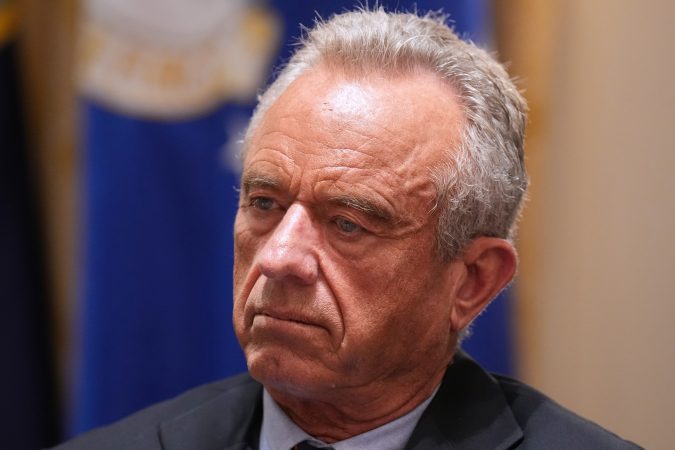
    In a letter to Health Secretary Robert F. Kennedy Jr. and acting attorney general Todd Blanche, the chairperson of the Special Olympics — who is also Kennedy’s cousin — called on the administration to reverse course on a Justice Department memorandum that could narrow federal protections for disability care.

    The letter by Tim Shriver joins a recent outcry from lawmakers and disability advocates who have warned that the June memo, which called for reinterpreting a key Supreme Court ruling on disability rights, could shrink access to home- and community-based care services that hundreds of thousands of Americans with disabilities rely on to receive care without being placed in institutions — a cause that members of the Kennedy family have supported throughout their political careers.

    “This is something that is in some ways the central passion of our family,” Shriver told the Washington Post. “And I hope and believe that Secretary Kennedy understands that.”

    The Health and Human Services Department and Justice Department did not provide a comment by the time of this article’s publication.

    The memo comes as patients and caregivers brace for Medicaid cuts from President Donald Trump’s tax bill, which are also expected to hamper disability services.

    “Many people with intellectual and developmental disabilities are already worried about whether the Medicaid-funded supports and services they rely on will be there in the future,” Shriver wrote in the letter sent to Kennedy and Blanche last week and shared with the Post.

    Shriver, a longtime disability rights activist, said he sent the letter in his personal capacity. He has led the Special Olympics, which organizes sporting competitions for children and adults with intellectual disabilities, since 1996.

    The Justice Department memo, issued in mid-June by its Office of Legal Counsel, argued for a looser reading of the Supreme Court’s 1999 decision in Olmstead v. L.C., viewed as a landmark case for disability rights. The Supreme Court ruled that it was discriminatory to institutionalize people with disabilities when they can and want to receive community-based services instead.

    “Olmstead is what created the tools to require states to provide community-based services,” said Alison Barkoff, a professor of health law and policy at George Washington University and a former HHS administrator during the Biden Administration.

    Advocates argue that those services can be more cost-effective than institutional care and better enable people with disabilities to work and remain connected with their families and communities. Around 4.5 million Medicaid enrollees receive home- and community-based care, and hundreds of thousands more are on waitlists for the services each year, health policy research organization KFF estimated in 2024.

    “These programs are the difference between a full life and … tragic mental illness, loneliness, depression, isolation, humiliation,” Shriver told the Post.

    The Kennedy family has been closely involved in efforts to promote disability rights. President John F. Kennedy signed a major mental health bill in 1963 while in office and alongside Sen. Robert F. Kennedy — the health secretary’s father — pushed to shift disability care away from institutionalization and toward community-based services. Eunice Kennedy Shriver, a sister of President Kennedy and Tim Shriver’s mother, founded the Special Olympics.

    The Trump administration has scrutinized home- and community-based services for fraud and argued that some states poorly oversee their home-based care programs. Advocates are also concerned that states newly strained by cuts to Medicaid could slash support for home- and community-based services.

    The Justice Department memo would make it easier for states to do that, opponents have said. It argued that Olmstead does not require states to provide home- and community-based care for people with disabilities and that the federal government is not authorized to enforce such a mandate. It conceded that such an opinion is “out of step with the common understanding of that decision within the federal courts.”

    Groups including the American Civil Liberties Union, American Association of People with Disabilities, and Center for Public Representation denounced the Justice Department’s position. Democrats in Congress urged the department to rescind the memo.

    While the Justice Department’s opinion doesn’t change the law, it could indicate that the department will step back from enforcing Olmstead, advocates said.

    “It provides a signal that the Department of Justice and the U.S. Department of Health and Human Services are stepping back from that commitment to community integration,” said Lydia Dawson, the vice president of government relations for ANCOR, a national association of private community providers.

    Shriver said the Trump administration’s stance threatened decades of hard-fought progress for disability care.

    “I am hopeful that you will help ensure that our country continues moving forward rather than backward on the promise of inclusion,” he wrote to Kennedy and Blanche.

  • Mauricio Pochettino stays on as USMNT manager, and promises things won’t stay the same

    Mauricio Pochettino stays on as USMNT manager, and promises things won’t stay the same

    Mauricio Pochettino has signed a new contract to remain the U.S. men’s soccer team’s manager through the 2030 World Cup, U.S. Soccer announced Monday morning.

    “I really believe that this is an exciting situation and moment for soccer in the USA,” Pochettino said in a roundtable talk with The Inquirer and other media outlets. ”After 18, 19 months working with the objective that was only the World Cup, now [the goal is] to start in a fresh way with a different approach, trying to create a different philosophy, different idea of what we need to do.”

    U.S. Soccer initiated talks on a new deal in late spring, with the understanding on both sides that it would be contingent on success in the summer. After the tournament, both sides took a few weeks, then returned to the table and finished the deal.

    “They really believed in us before the start of the World Cup,” Pochettino said, “and that, I think, is another positive point for us.”

    Mauricio Pochettino (center) talking with players and staff after the U.S.’ loss to Belgium that knocked them out of the World Cup.Nick Didlick

    The 54-year-old Argentine arrived in late 2024, hired through this year’s World Cup. He accomplished most of what he had set out to achieve, raising standards for players by challenging the big stars to shake off their past complacency.

    When the biggest moment came, Pochettino oversaw the first U.S. men’s team to win two group games at a World Cup since 1930, and the first knockout-round win since 2002. That led to an unprecedented wave of fan support across the country, and Pochettino seemed to be genuinely inspired by it.

    “The magic thing that happened during the World Cup, in the connection with the people, of course with the whole organization and everything, was a key point to make that decision” to return, he said.

    But a blowout loss in the round of 16 meant he wasn’t able to take the program any farther than it had gone before.

    Mauricio Pochettino applauding the fans after the Belgium game.Abbie Parr

    Pochettino said Monday that he believes “that gap with the best teams the world is not too big. I think if we will be capable to do things in a different way, to reduce that gap, I think it’s possible.”

    The distance includes some of the hardest yards to cover in the sport. So there were serious questions to ask. And to his credit, he answered them pretty directly.

    Will he last all four years?

    The first question was how much change Pochettino wants to enact, especially with a new generation of young players ready for a shot at the senior squad. He said he is ready for quite a bit.

    “I don’t want to think, and that you believe, that it is a continuity of the last 18 months or 19 months that we were working there‚” he said. “The good thing is that we have the experience and the knowledge about the players that were working with us. And of course, now [we] open the pool to bring, players that were playing in the last year or now they are playing more in MLS, but also for players that maybe we didn’t have time to assess during that process that was a very compact and very short period.”

    Quinn Sullivan (second from right) is one of many young players with Union ties whom Mauricio Pochettino has called up so far. Cavan Sullivan could easily be on the radar for the next four years.Jonathan Tannenwald

    Pochettino added: “It’s going to be key, it’s going to be important, to provide the young kids that we really believe have the potential to arrive in 2030, in four years, to start to work. And to start to know [them], and set up the principle that we expect from them.”

    Another big question, one that a lot of fans have in particular: Will Pochettino actually stay here for the duration of his deal? If he continues to do well here, European clubs will no doubt continue to call. It was no secret before and during the World Cup that there was interest, and he was looking.

    “For us, every time that we sign a contract, it’s to go to the last day of the contract,” he said. “If now we sign a four-year contract, we need to think to arrive there. And we signed the contract because we really believe that we are going to be four years there.”

    But he also acknowledged the obvious: “Nothing is sure — in life, but it’s less in fútbol.”

    “Four years’ time is a really long period,” he said. “You never know what can happen in soccer. Today, people really love you, but in X time maybe that feeling changes.”

    Maurio Pochettino (right) giving instructions to former Union defenders Auston Trusty (left) and Mark McKenzie at a practice during the World Cup.Jonathan Tannenwald

    Will he make the U.S. his home?

    Another big question is how much time Pochettino and his staff, all of which is also returning, will spend in the United States vs. Europe. They were all based in the latter for the first term, usually only crossing the Atlantic for national team game windows.

    He isn’t alone on that count, to be sure. Argentina manager Lionel Scaloni has reached two straight World Cup finals with a home base in Spain, and Canada manager Jesse Marsch doesn’t live full-time in that country.

    But there are some optics in the U.S. that aren’t the same in other countries.

    This summer’s long-term impact on growing soccer’s fan base here is still to be seen. The NFL and NBA will no doubt take back their pieces of the spotlight in the coming months (we’ll see about baseball’s piece if there’s a work stoppage), so a U.S. coach might have to do more publicity work than was needed heading into a tournament on home turf.

    Mauricio Pochettino and his longtime top assistant Jesús Pérez (left).Jonathan Tannenwald

    There are also the practical benefits of the senior national team manager spending more time at the national training center in suburban Atlanta, where many youth national team coaches and backroom staff are based.

    Put it all together, and it would be nice to see Pochettino and his staff be public presences at more MLS games, and at some of the big youth clubs and events around the country.

    “Now [that] we finish with the negotiation and the agreement, I will consider it to move to the USA, of course, because that process is four years,” Pochettino said. “I think I have no problem, and all the coaching staff, we don’t have any problem to move to the USA.”

    That felt significant to hear.

    Toni Jiménez (right) is the goalkeeper coach in Mauricio Pochettino’s dedicated group of assistants.Jonathan Tannenwald

    And one for the bosses

    The last big question goes to U.S. Soccer’s leadership — including the big-money private equity donors who are once again paying Pochettino’s salary. By rehiring him, they are sending an implicit signal that he is better than any American candidate. Do they actually believe that?

    None of the top brass were made available to take questions from the media before Monday’s announcement. There were only statements from president Cindy Cone and CEO JT Batson. (Nor have they said anything about the scandal around FIFA president Gianni Infantino, despite repeated requests for comment.)

    “Mauricio has built a culture where players trust the group, trust the process and trust each other,” Cone said. “That culture, and the staff who helped build it, are exactly what we want to continue investing in for the men’s national team now and for the future. We are also excited about the experience and perspective Mauricio and his staff can bring across U.S. Soccer as we strengthen our pathways and seek to impact the broader soccer landscape in the United States.”

    Batson said: “We know we have a lot of work to do to achieve our clear ambitions, including competing to win men’s World Cups and having soccer become the most played sport in every community.” And he was pretty clear that he believes Pochettino is the person for the job.

    “I couldn’t be more excited that Mauricio and team are committed to partnering with all of us to do the hard work to bring those ambitions to life,” he said.

    Mauricio Pochettino (left) speaks with JT Batson during the U.S. men’s team’s pre-World Cup training camp at the national training center in May.Jonathan Tannenwald
  • Phillies trade for Mets left-handed reliever Brooks Raley

    Phillies trade for Mets left-handed reliever Brooks Raley

    In a move to reinforce the bullpen, the Phillies turned to … the Mets?

    On the heels of a larger trade for second baseman Luis Arraez and reliever Caleb Kilian from the Giants, the Phillies acquired lefty reliever Brooks Raley from the Mets for minor league right-hander Luke Gabrysh and outfielder John Spikerman.

    Raley, 38, has a 1.96 ERA in 41⅓ innings for the Mets. A pending free agent, he figures to slot into the bullpen alongside fellow lefties José Alvarado and Tim Mayza and righties Orion Kerkering and Jonathan Bowlan as the primary pieces in the bridge to closer Jhoan Duran.

    All along, the Mets appeared to be a source for the Phillies to find relief help. The Mets are among the few aggressive sellers in the marketplace and already moved relievers A.J. Minter (to the Twins) and Huascar Brazobán (to the White Sox). They also have gotten offers for Luke Weaver, who is under contract for 2027, and closer-turned-starter Clay Holmes.

    Right-handed pitcher Nolan Hoffman was designated for assignment to make room for Raley on the Phillies’ 40-man roster.

    This is a developing story.