Blog

  • Family of the man who died in ICE custody in N.J. calls for release of medical records and closure of Delaney Hall

    Family of the man who died in ICE custody in N.J. calls for release of medical records and closure of Delaney Hall

    The family of an immigrant from El Salvador who died in ICE custody in New Jersey on Tuesday outlined a list of demands for state and federal officials that they said would bring justice after his death.

    Edwin Jeovanny López Cornejo, 41, whose family said he had been living in the U.S. for two decades, died in ICE custody on Saturday after having a medical episode at Delaney Hall in Newark. The privately run ICE facility has been the subject of complaints of poor conditions, ongoing protests, and the site of clashes between federal officials and elected Democrats.

    “On the same day, we were both dead, the only difference was his heart stopped beating,” his 12-year-old daughter Ashley López said at a news conference held outside the Reformed Church of Highland Park on Tuesday streamed by Cosecha New Jersey, an immigrant-rights group. “I am going to grow up without a father. They did not even let me see him one last time before he died.”

    “We had so many plans, we will never do them, because they are heartless monsters,” she added.

    López Cornejo’s family members have accused ICE of neglecting to provide proper medical care to him, an accusation the federal agency denies. His mother María Cornejo questioned whether ICE gave her son his medicine for high blood pressure, diabetes, and seizures. He was detained in Plainfield in North Jersey on June 18.

    ICE said Monday evening that López Cornejo’s cause of death was pending further medical review, but Sen. Andy Kim shared later that night that he died of a heart attack and cardiac arrest. Kim said López Cornejo already had a habeas corpus case calling for his release due to his medical issues.

    (function(){function e(){window.addEventListener(`message`,function(e){if(e.data[`datawrapper-height`]!==void 0){var t=document.querySelectorAll(`iframe`);for(var n in e.data[`datawrapper-height`])for(var r=0,i;i=t[r];r++)if(i.contentWindow===e.source){var a=e.data[`datawrapper-height`][n]+`px`;i.style.height=a}}})}e()})();

    While speaking at the news conference, Danilo López, the brother of López Cornejo, called for an independent investigation of the incident by New Jersey Attorney General Jennifer Davenport, a release of his brother’s medical records by the facility’s owner GEO Group and ICE, the closure of the detention center and the release of all those detained. He also asked Gov. Mikie Sherrill to open an investigation into health protocols at the center.

    “I know that there’s nothing that will bring my brother back but if we feel our pain now maybe we can avoid other deaths,” Danilo López said in Spanish.

    Davenport’s office said Tuesday it “can neither confirm or deny an investigation at this time.”

    Sherrill has called for the shuttering of Delaney Hall amid a broader battle over President Donald Trump’s immigration crackdown. Her administration is in various court fights with Trump’s administration, including one attempting to gain access to Delaney Hall for a full state health inspection.

    Activists have repeatedly called for Delaney Hall to shut its doors but the Trump administration has made clear it’s not closing the facility anytime soon as it holds a crucial role in the president’s mass deportation operation.

    U.S. Rep. Analilia Mejia, a progressive Democrat who represents a North Jersey district, said at the news conference that she’s spoken to people inside Delaney Hall during oversight visits who say they’re being denied their medication and proper medical care.

    “We must all use this moment to lift our voices and say not one more,” said Mejia, whose opposition to ICE was a key part of her platform to succeed Sherrill in Congress.

    A spokesperson for U.S. Rep. Bonnie Watson Coleman, a Central Jersey Democrat, said her office gets calls from families saying their loved ones aren’t receiving their medication and are getting moldy food inside the facility.

    Trump officials and allies have denied there are issues inside Delaney Hall, including U.S. Rep. Jeff Van Drew, a South Jersey Republican who, prior to this incident, visited the facility and called it clean and “well-run” with “medical care, recreation, and other basic services.”

    ICE said it provides “comprehensive medical care” to people in the facility, including 24 hour emergency care.

    “While in custody, Lopez-Cornejo received proper medical care and was seen by medical professionals,” the federal agency said in a statement.

    Danilo López said that his brother had told him over the phone that he had to fill out a form to just get Tylenol at Delaney Hall and it could be days before he received it.

    María Cornejo accused ICE of lying about giving her son proper medical attention.

    “I just want justice for my son and for my granddaughter who is going to grow without a father,” she said in Spanish.

    Danilo López said Tuesday he didn’t know why his brother was detained because he had a valid work permit, but ICE said López Cornejo was arrested by the U.S. Border Patrol “for illegally entering the United States without inspection” in August 2006 and was sent back to El Salvador that October before returning without permission.

    López Cornejo’s daughter, Ashley, said Tuesday that “no one is illegal on stolen land,” a common refrain from immigrant rights activists.

    Her mother, who was not named, called the incident the result of a systemic failure.

    “From the bottom of my heart I feel the system failed Edwin,” she said in Spanish. “Failed my daughter, failed me as a mom, and failed all those other kids who are suffering like my daughter is.”


  • Iran and Oman make progress on a deal to reopen the Strait of Hormuz, officials say

    Iran and Oman make progress on a deal to reopen the Strait of Hormuz, officials say

    CAIRO — Iran and the Gulf Arab state of Oman have made progress toward a deal to reopen the Strait of Hormuz, a potential breakthrough that could help wind down the war in the Middle East, regional officials said Tuesday.

    Under the emerging agreement, ships would enter the Persian Gulf through an Iranian-controlled route and exit through a route controlled by Oman, with service fees charged for providing security and preserving the maritime environment, two regional officials told the Associated Press.

    They said negotiations are still underway and that the final agreement could take a different form, with any deal linked to lifting the U.S. blockade on Iran’s ports. The officials spoke on condition of anonymity to discuss the sensitive negotiations unfolding behind closed doors.

    Any agreement formalizing Iran’s control of the strait would mark a significant strategic victory for Tehran. For that reason, the U.S. could seek to block the deal by refusing to lift the blockade. The strait was an open international waterway before the U.S. and Israel attacked Iran on Feb. 28.

    A U.S. official familiar with the negotiations said that any “temporary” routes established through the strait would not involve approvals by Iran or charges. The official, who was not authorized to comment publicly and spoke on condition of anonymity, said the U.S. remains committed to returning to the status quo in which “no party controls the lanes or the ability to transit through them.”

    U.S. President Donald Trump is under mounting pressure to end an unpopular war that has driven up gas prices ahead of midterm elections and drawn down U.S. supplies of some munitions. In recent days, he has again whipsawed between threatening massive strikes and voicing support for diplomatic efforts.

    In an exchange with reporters on Monday, Trump reiterated his public stance that he’s opposed to tolling in the strait. “I’m not going to let them charge,” Trump said. “Anybody’s going to charge, we’ll charge.”

    U.S. and Iranian officials confirm progress without giving details

    Iranian Foreign Ministry spokesperson Esmail Baghaei said the bilateral talks with Oman are focused on “establishing safe inbound and outbound shipping lanes,” routes that “uphold sovereign rights while also addressing the national security considerations of both Iran and Oman.”

    “The final results of these negotiations will be announced once concluded,” he added, in remarks carried by Iran’s state-run IRNA news agency.

    U.S. Secretary of State Marco Rubio, speaking to reporters at the State Department, said, “There’s been progress made in those talks, but not finality yet. We’re hoping that will happen very shortly.”

    Rubio has previously ruled out any deal that would give Iran control over the strait, saying last month that it would create a “very dangerous precedent” for other parts of the world.

    Treasury Secretary Scott Bessent told CNBC that “there is a chance we may have a deal today or tomorrow to open the strait and move towards a more normalized position in this conflict.”

    Asked whether there would be tolls for movement through the strait, Bessent said: “I think it would be freedom of movement.”

    The potential agreement between Iran and Oman was first reported by the New York Times.

    Cargo ship reports strike in Strait of Hormuz

    Meanwhile, a cargo ship reported being “hit by an unknown projectile” in the strait off the coast of Oman, the United Kingdom Maritime Trade Operations Center said, without providing further information on the ship, including what flag it was sailing under or whether it was carrying cargo.

    The ship sustained damage, according to British maritime security firm Ambrey, which did not elaborate.

    In recent weeks, Iran had repeatedly attacked ships using a route running close to Oman that is overseen by the U.S. military and intended to bypass Tehran’s control.

  • The Danube River’s water is dropping so low that World War II ships are emerging

    The Danube River’s water is dropping so low that World War II ships are emerging

    PRAHOVO, Serbia — Water levels on the Danube River, the second longest in Europe, have dropped so low because of drought that the hulks of dozens of World War II German battleships are emerging into view.

    They are a curious distraction from the summer heat crisis. The Danube’s record low water levels also have forced power plants to the brink of shutting down, and governments across Central and Eastern Europe are taking steps to conserve electricity.

    In the middle of the river separating Serbia and Romania near the Serbian port of Prahovo, a rusty hull is now visible along with a broken mast where the Nazi flag used to fly.

    The ships, some still laden with weapons, belonged to Nazi Germany’s Black Sea fleet that the Germans deliberately sank as they retreated from Romania and as Soviet forces advanced deeper into Europe near the end of the war.

    Historians say up to 200 German warships were scuttled in September 1944 near Prahovo in the Danube gorge as they came under Soviet fire. The idea behind the deliberate sinking was to slow down the Soviet advance in the Balkans. But Nazi Germany surrendered months later, in May 1945.

    The sight of the old warships is a reminder that the Serbian government, with European Union financial support, has long been trying to do something about them. Some were removed from the river by Communist Yugoslav authorities, but most have remained because of the explosives they carried.

    Now, however, authorities are trying to keep traffic moving on the Danube, which flows through 10 nations, as the dropping water levels create dangerous conditions. Experts have linked the unusually hot weather to global warming and other factors.

    Krsta Brandic, a Prahovo resident, said the low water levels have almost stopped ship traffic: “As you can see, the (big) ships can’t pass anymore.”

  • U.S. Soccer still isn’t saying much about the ongoing Gianni Infantino FIFA scandal

    U.S. Soccer still isn’t saying much about the ongoing Gianni Infantino FIFA scandal

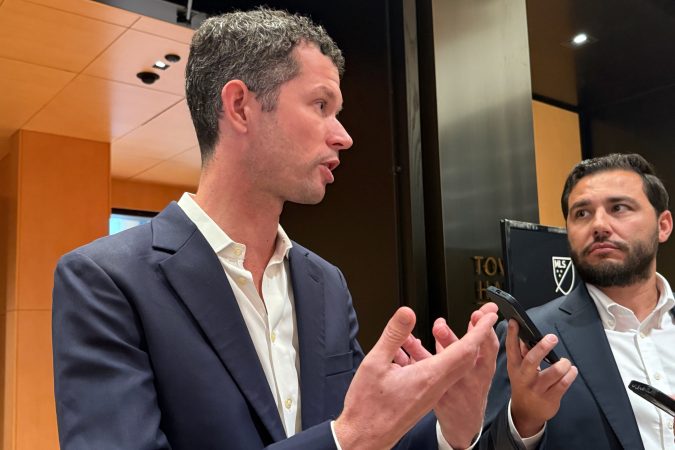
    NEW YORK — U.S. Soccer Federation CEO JT Batson was among the VIPs at Larry Berg’s introduction as Major League Soccer’s next commissioner on Tuesday. After the event, Batson took questions from the media. But that didn’t mean he offered detailed answers to all of them.

    That was particularly true when questions about FIFA president Gianni Infantino came up.

    “As we shared publicly, we supported Concacaf’s statement on Friday with regards to FIFA Forward Enterprises,” Batson said, referring to Infantino’s plan to sell shares in a new FIFA private company — including to Josh Kushner, whose brother’s father-in-law is U.S. President Donald Trump.

    That “support” was a mere one-sentence post on X: “U.S. Soccer stands with Concacaf and its members.” It was attached to Concacaf’s post with its statement that formally “rejected” Infantino’s plan.

    Batson said nothing about Concacaf’s latest statement on Sunday, which said “a comprehensive reckoning with this presidency is imperative.” Those words hit hard in the soccer world.

    “We have a board meeting in September where, among many topics, one of [them] is thinking about what the best future is for global soccer,” Batson said. “There’s so much more opportunity to grow soccer in more communities around the world, and to do it in a way where those communities are healthier, where they’re more sustainable, and everyone around the world is more connected. We’re looking forward to that discussion, and I don’t anticipate a whole lot of communication ahead of that.”

    What happens if the issue is forced with Infantino before then? Europe’s soccer governing body UEFA could call for an extraordinary FIFA Congress to try to overthrow FIFA, and might get Concacaf’s help in doing so.

    The Guardian reported Tuesday morning that all 41 of Concacaf’s member nations sent letters endorsing Infantino’s reelection before the World Cup, but “many are now giving serious con­sideration to withdrawing them.”

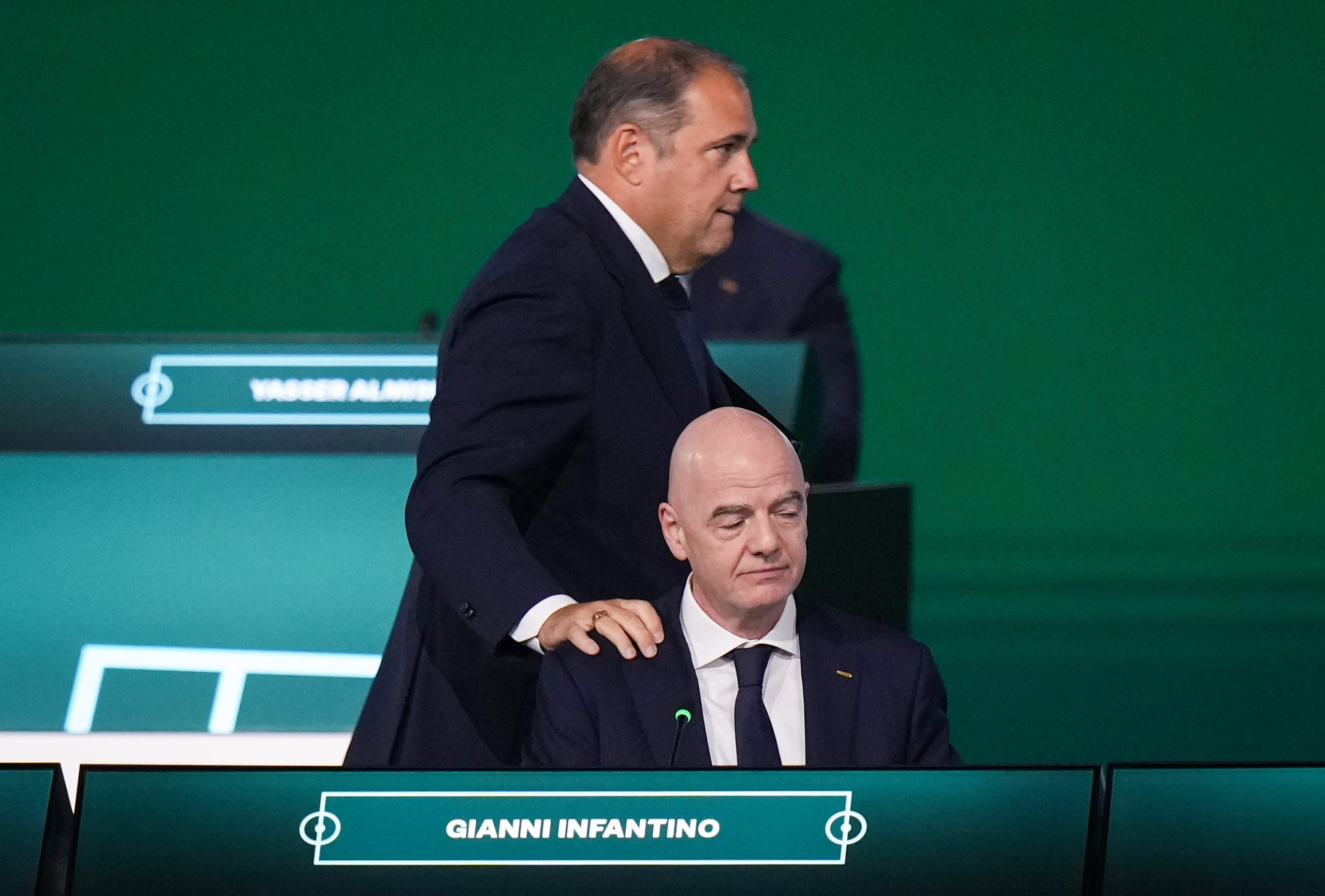
    Concacaf president and FIFA vice president Victor Montagliani (top) with FIFA president Gianni Infantino at the FIFA Congress in Vancouver, British Columbia, in April.Darryl Dyck

    The report further said U.S. Soccer specifically “is understood to be deeply unhappy with Infantino,” with the backlash over President Trump’s intervention on Folarin Balogun’s red card a key point. But “given the political sensitivities,” the report added, U.S. Soccer “may not feel able to take him on.”

    When Batson was asked if U.S. Soccer wrote such a letter and might withdraw it, he answered: “I haven’t seen that story, so it’s hard for me to comment on it.”

    He was also asked whether U.S. Soccer would back Concacaf president Victor Montagliani if he runs against Infantino, which looks increasingly possible. Batson didn’t answer that question directly.

    Current MLS commissioner Don Garber was asked his opinion of it all, not just as the MLS’ leader but as a member of U.S. Soccer’s board.

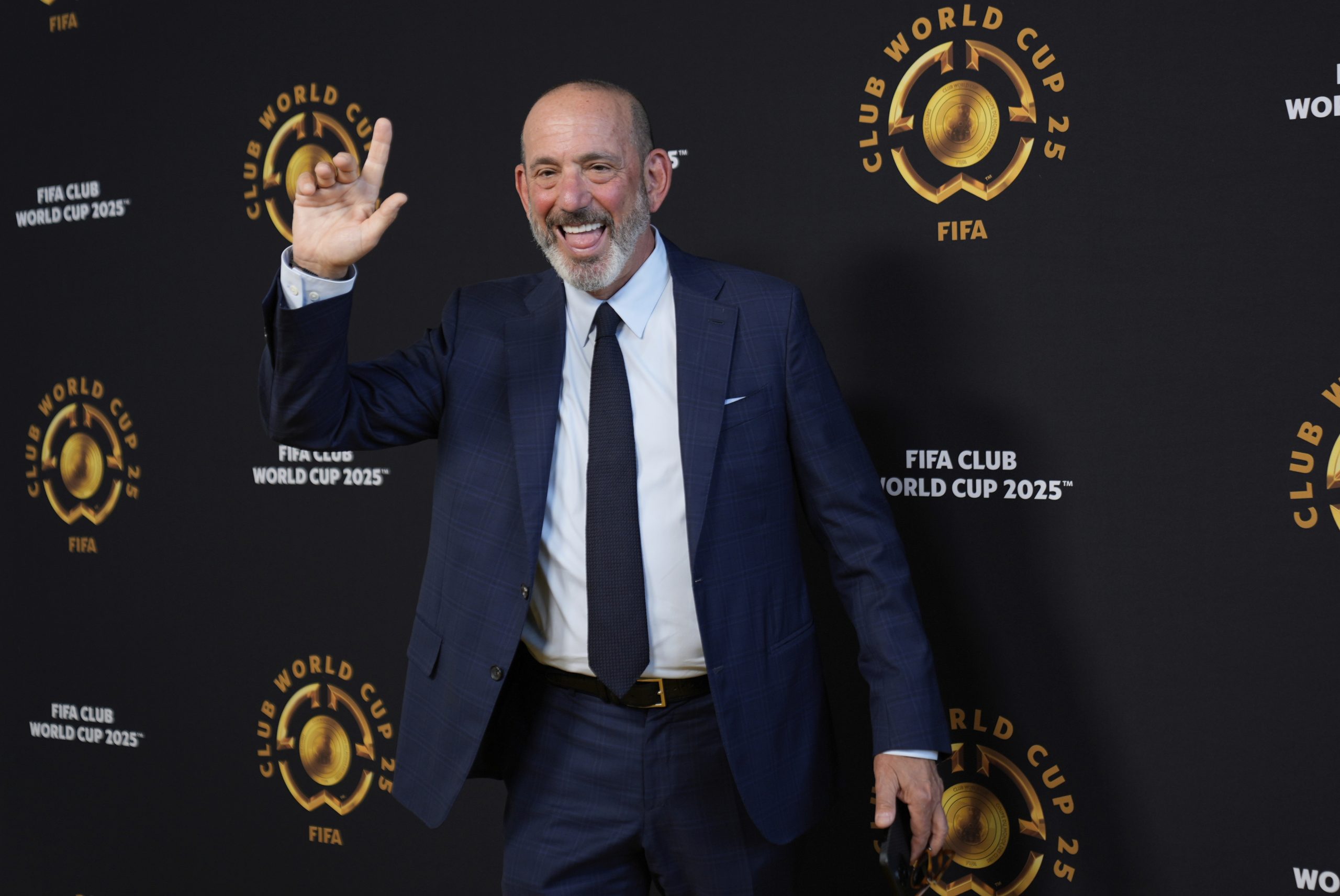
    MLS commissioner Don Garber at last year’s Club World Cup final.Pamela Smith

    “I’m going to wait for JT and Cindy [Cone, U.S. Soccer’s president], who I have a lot of faith in, and see what they want or don’t want to do,” he said. “But I haven’t spent any time thinking about it. I’m still reveling in the beauty and joy of the World Cup, disappointed that there’s negativity, but this is an issue that’s going to have to be addressed — but it’s going to be addressed by others.”

    Garber spent plenty of time in Infantino’s orbit leading up to this summer, including when three MLS teams played in last summer’s Club World Cup. But he claimed he had no inside knowledge of Infantino’s privatization plan.

    “I found out when everybody else did by reading it on social media,” he said. “And I’ve been focused on today, and our Leagues Cup which starts [this week]. I have no information, and probably no more or no less than anybody else in the world.”

    Batson on Pochettino’s return

    The mood was different when it came to Mauricio Pochettino’s new deal for a second term as the U.S. men’s soccer team’s manager.

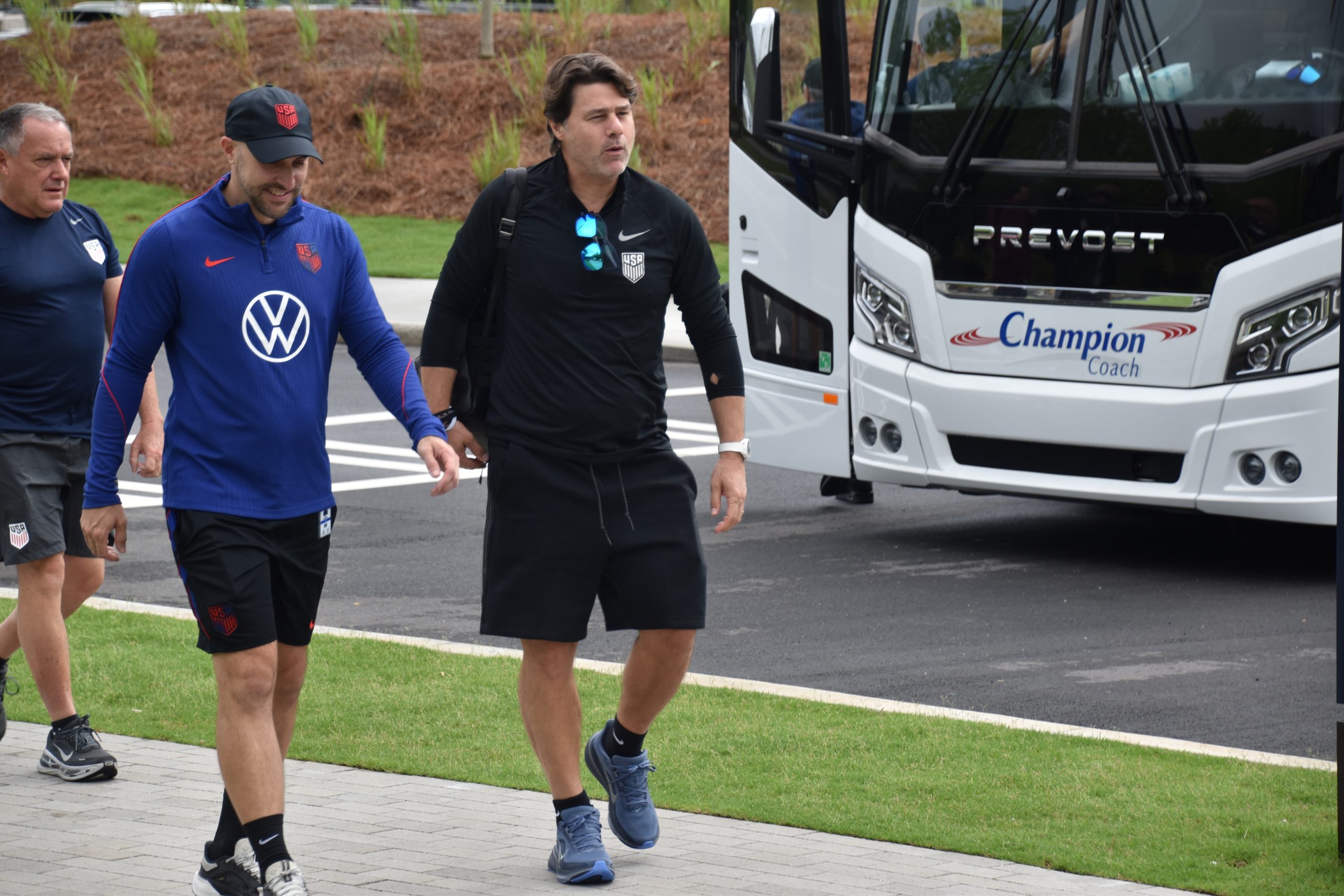
    Mauricio Pochettino (left) with JT Batson during the U.S. men’s team’s pre-World Cup training camp.Jonathan Tannenwald

    Contract talks started well before the World Cup, as Batson acknowledged when the U.S. team’s World Cup training camp kicked off in late May. An extension offer was put on the table back then, but both sides agreed to wait to see how the tournament played out.

    After the Americans were eliminated in the quarterfinals on July 6, both sides took a breather for a bit. But once they started talking again, it didn’t take long for a deal to get done.

    “We’re super excited that Mauricio and his staff are joining us for this next project,” Batson said. “We signed the contract Sunday, we announced it Monday, and at 7 a.m. this morning Eastern time, I was on with Mauricio, and Jesús [Pérez, Pochettino’s top assistant], and Dan [Helfrich, U.S. Soccer’s chief operating officer], about all the planning and everything around the next steps. They’re pumped, we’re excited, and we’re ready to get going.”

    Batson confirmed an ESPN report that there are “mutual protections” in Pochettino’s deal, which runs through the 2030 World Cup, in case he doesn’t see it all the way out.

    Mauricio Pochettino (center) has agreed a new deal to stay on as the U.S. men’s soccer team’s manager through the 2030 World Cup.Jonathan Tannenwald

    That is an unusual phrase, certainly not as simple as “a buyout.” But it feels like an implicit acknowledgment that European clubs might pursue Pochettino, and that the summer of 2028 might be a natural separation point if the circumstances are right — especially if the U.S. plays in the 2028 Copa América with South American teams.

    “Of course there are protections for both sides in this,” Batson said. “They were incredibly thoughtful, it was very straightforward, and we’re excited for the next four years.”

    Asked to put a dollar figure on it, Batson only said “it’s material.”

    If Pochettino does leave in the summer of ‘28, Steve Cherundolo would have an easy move over from the Olympic squad — mostly an under-23 age group — to the senior team.

    Steve Cherundolo played for the U.S. national team for many years, and was Los Angeles FC’s manager from 2022-25.Michael Wyke / AP

    But Batson believes Pochettino might stay for the whole term.

    “I know from the moment we announced Mauricio, there were lots of folks skeptical that they actually were committed, and that they cared about soccer in this country, and they wanted to do all the things necessary to make us successful as a men’s national team, but more broadly as U.S. Soccer,” Batson said. “I’m incredibly excited that folks now are getting — obviously this summer, they got to see — the Mauricio and staff that we all knew, and of course now we’re seeing with their very long-term commitment to U.S. Soccer.”

  • Leonardo DiCaprio and Jeff Bezos lead $200M project to save 100 of globe’s most threatened species

    Leonardo DiCaprio and Jeff Bezos lead $200M project to save 100 of globe’s most threatened species

    LOS ANGELES — Foundations funded and co-founded by Leonardo DiCaprio and Jeff Bezos have launched an initiative committing $200 million to revive 100 of Earth’s most threatened species, including endangered lemurs, salamanders, pangolins, pigs, and echidnas.

    DiCaprio’s Re:wild and the Bezos Earth Fund are leading the Phoenix Species Project, the groups announced Tuesday. They call it the largest single fund in history dedicated exclusively to recovering critically endangered species.

    DiCaprio has for years been developing the idea of a major concerted effort to help species whose habitats and future existence are threatened by climate change.

    In 2021, he and Re:wild co-founder Wes Sechrest, a biologist who serves as the organization’s CEO, met with the Amazon-founding mega billionaire Bezos and his wife, former TV news reporter and host Lauren Sánchez Bezos. He serves as chair and she as vice chair of the Bezos Earth Fund.

    The meeting led to a series of conversations with local governments, environmental groups, and Indigenous people on how best to reverse the decline of their most vulnerable species. Those conversations eventually led to the Phoenix Species Project.

    Animals the initiative is seeking to sustain include:

    – The golden-crowned sifaka, a lemur from Madagascar

    – The Hickory Nut Gorge green salamander, a lungless tree-dweller that lives only in a small canyon in North Carolina.

    – The Visayan warty pig, endemic to islands in the Philippines.

    – Mexico’s Cozumel harvest mouse, which lives only on an island off the Yucatán Peninsula.

    – The pink land iguana, found only on Wolf Volcano in the Galápagos Islands.

    – The Malayan pangolin, also known as the Sunda pangolin, native to Southeast Asia.

    – Tanzania’s pancake tortoise, named for its flat, flexible shell.

    – The starry night harlequin toad, known and named for its black-and-white evening sky appearance, found only in the mountains of Colombia.

    – Attenborough’s long-beaked echidna, a monotreme, or mammal that lays eggs, from New Guinea named in honor of the 100-year-old naturalist and narrator-of-nature David Attenborough.

    The project’s goals include giving long-term sustenance to successful but fleeting smaller efforts.

    “We’ve protected the golden-crowned sifaka for years on a budget that would never match what this species deserves, but letting it go extinct was never an option,” Tiana Andriamanana, executive director of Association Fanamby, one of the groups getting a grant from the initiative, said in a statement. “This funding, this global platform, and technical support change what is possible.”

  • Chipotle pulls jalapeños from some restaurants as health officials investigate salmonella outbreak

    Chipotle pulls jalapeños from some restaurants as health officials investigate salmonella outbreak

    CHICAGO — Chipotle Mexican Grill said Tuesday that it had removed jalapeños from some of its restaurants after determining the peppers could potentially be tied to a salmonella outbreak public health officials are investigating.

    In a brief statement, Chipotle maintained that the “health and safety of our guests and employees is our highest priority” — and that it had pulled the jalapeños out of an abundance of caution and “replaced them with product from different growers” in all locations where a previous common lot had been distributed.

    The company did not specify where the initial peppers came from but noted that the jalapeños in question were sent across multiple states to several retailers.

    The Minnesota Department of Health on Tuesday confirmed that it was investigating a salmonella outbreak tied to several Mexican-style, quick-service restaurants — with jalapeños as the suspected source. Officials identified 110 cases in the state. Chipotle made up the majority of those where they were able to reach affected consumers for an interview — who ate at the chain between mid-June and mid-July — but not all.

    “Based on all the evidence so far, the food that made people sick was served at other restaurants as well,” Carlota Medus, senior epidemiologist supervisor in the MDH’s Health Foodborne Diseases Unit, said in a statement.

    Medus said Chipotle had been cooperative over the course of the investigation — and that given the measures the company put in place, his department was not concerned about the chain at this time. Still, he said it was “too soon for us to know if the outbreak is ongoing” and that it’s possible contaminated food is being served elsewhere.

    MDH noted that other states are contributing to the investigation, without elaborating further. On the federal level, the Food and Drug Administration is conducting the traceback probe — covering but not limited to jalapeños.

    The FDA on Tuesday confirmed it initiated its traceback investigation “of multiple ingredients” on July 22, in response to a cluster of salmonella illnesses identified by both state officials and the Centers for Disease Control and Prevention. In a statement, the agency said it appreciated Chipotle’s cooperation and that it would “provide additional information if and when there is an actionable public health update.”

    The CDC did not respond a request for further comments Tuesday afternoon.

    Symptoms of salmonella poisoning include diarrhea, fever, severe vomiting, dehydration, and stomach cramps. Most people who get sick recover within a week. Infections can be more severe in young children, older adults, and people with weakened immune systems, who may require hospitalization.

    Shares of California-based Chipotle Mexican Grill plunged nearly 10% on Tuesday.

  • Five Below investors are alleging securities fraud in a class action

    Five Below investors are alleging securities fraud in a class action

    A federal judge in Philadelphia ruled Monday that a lawsuit alleging discount retailer Five Below defrauded investors can move forward as a class action on behalf of numerous shareholders.

    U.S. District Judge Gerald Austin McHugh’s 34-page order handed a win to the lead plaintiffs, two Arkansas public employee retirement plans. The pension funds say that for more than a year, Philadelphia-based Five Below misled investors about its ability to identify and stock popular products — a skill company executives referred to as their “secret sauce.”

    Once investors learned the full extent of the company’s challenges in July 2024, Five Below’s stock price plummeted, wiping out almost $8 billion in shareholder value, the suit says. The company’s CEO resigned around that time.

    The Arkansas Public Employees’ Retirement (APER) and the Arkansas Teacher Retirement System say they lost more than $5 million combined due to the alleged fraud.

    McHugh granted their motion asking him to certify a class of people and entities who bought Five Below stock between December 2022 and July 2024.

    “We are pleased to be able to represent the interests of these public pension funds, where teachers and other public servants were invested in this company and lost a considerable amount of money,” Michael Dell’Angelo, executive shareholder and general counsel of Philadelphia-based law firm Berger Montague, said in a statement.

    “Our clients lost millions of dollars after they relied on the exaggerated expectations set by this retailer,” he said.

    Five Below has 1,800 stores in 44 states and says most of its products are priced between $1 and $5, many of them aimed at children and teens. The company didn’t respond to a request for comment. Attorneys for Five Below and two other defendants — former CEO Joel Anderson and chief operating officer Kenneth Bull — didn’t respond to requests for comment.

    The defendants have denied the allegations in court papers.

    “Being honest with the market about the pitfalls of a business strategy as they are learned in no way reveals advance knowledge that the approach would fail, and failing to make accurate predictions does not amount to securities fraud,” Jay A. Dubow and Erica H. Dressler of the Philadelphia firm Troutman Pepper Locke LLP wrote in a court filing last year.

    The suit alleges that despite management’s repeated assertions that Five Below could identify and capitalize on trends, the company in fact “did not operate with any real ability to stock its stores with in-demand products.”

    Nevertheless, Five Below told investors it planned to triple its number of locations and double its sales based on this “trend-right” strategy, the suit says. The “plan was abruptly throttled down” shortly after Anderson, the CEO, resigned in July 2024, according to the complaint.

    Even as Five Below’s problems with product assortment, inventory, and expansion dragged on its operating performance, executives falsely blamed shoplifting, the suit says.

    The company eventually allegedly admitted its shortcomings in a series of disclosures to investors, with executive Bull conceding in late 2024 that Five Below had “lost our way.”

    While investors suffered losses, Bull and Anderson sold more than $9 million in Five Below shares during the period in question, “while also receiving incentive compensation valued at over $10 million based on the inflation in the company’s share price,” the suit says.

    The company has since rebounded, with executives citing the popularity of games and viral toys, as well as artificial-intelligence tools that help with inventory.

  • Runaway online rumors sparked frantic rush by migrants to the Spanish territory of Ceuta

    Runaway online rumors sparked frantic rush by migrants to the Spanish territory of Ceuta

    FNIDEQ, Morocco — It started with Instagram posts that suggested Spain’s border with Morocco was opening up. Then came Facebook users tracking coast guard patrols and TikTok videos showing where to swim.

    After many shares and comments, thousands of Moroccans became convinced that Europe was suddenly within reach.

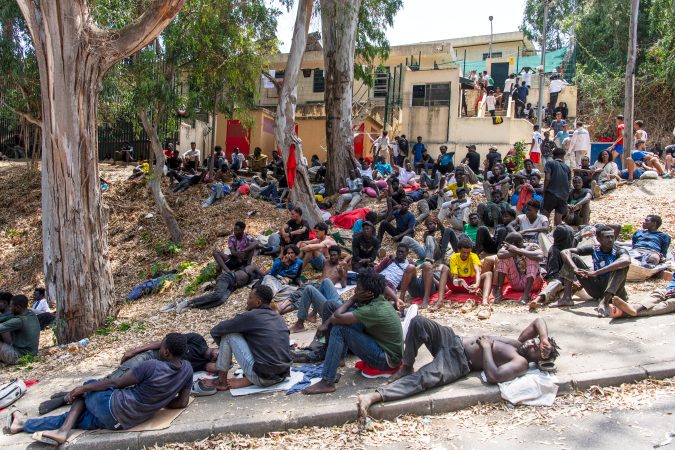
    Within hours, young people began heading toward the border with the Spanish territory of Ceuta in North Africa. Packed buses rolled into the neighboring Moroccan city of Fnideq. Regional trains filled up. Taxis did too.

    By the time authorities reacted, some 72,000 people had reached Ceuta in just a few days, the largest migration surge between Morocco and Spain in years. More than 80 migrants died on both sides of the border, including some who drowned and others who were killed in a stampede, authorities said.

    Nearly all of the surviving migrants soon returned, but the fallout from last week’s events will linger.

    Rumors started online

    In the northern Moroccan city of Larache, about 93 miles from Ceuta, three friends watched a video posted by an Instagram account called Haraga Ceuta claiming the border would be open. Haraga refers in Moroccan dialect to young migrants who destroy their identification papers and try crossing illegally into Europe.

    The post convinced Anas Amrani, Yahya Harak, and Ismail Atik that it was worth risking the journey.

    For migrants hoping to reach Spanish territory, the most common route begins in Fnideq, where many attempt the roughly 3-mile swim around the border breakwater. Others leave from the nearby village of Belyounech.

    One TikTok video mapped the exact route swimmers should follow.

    On Facebook groups such as Fnideq Bab Sebta, users shared screenshots from vessel-tracking platforms to identify moments when coast guard patrols appeared lighter. Some sought advice on using inflatable boats. Others advertised wetsuits for sale.

    “I saw online that the border was open, and I decided to go,” said 17-year-old Omar Danbor from Fnideq, walking back exhausted along the coast.

    It’s unclear who was behind the claims that the border was open or who operated many of the social media accounts, several of which were deleted soon after the crossings. The Associated Press contacted several accounts but received no response.

    The surge to Ceuta touched a political nerve in Europe, and the European Union is investigating what happened. The EU’s migration commissioner expressed concern Tuesday about online disinformation but didn’t identify a specific culprit.

    Chaos unfolded at the breakwater

    As migrants reached the shores of Ceuta, mass chaos erupted at a narrow concrete breakwater where many tried to climb onto land.

    According to multiple migrants interviewed by AP, people rushed to scramble over the slick rocks at the same time, pushing and climbing over one another. Several said they saw people knocked back into the water and forced beneath others, leaving them unable to resurface as migrants sought to reach land.

    “I stepped on the face of a dead man while I was climbing out. I hope God forgives me and all those whose bodies were found,” said Lahcen Kalouch, a Moroccan migrant who reached Ceuta before returning home distraught.

    At least 72 people died on the Spanish side of the border. Another 11 died on the Moroccan side.

    Tens of thousands of migrants have since returned to Morocco, either after being expelled or leaving by choice because of a lack of shelter, food, and water in Ceuta.

    Some misinterpreted Spain’s new migration measures

    Some migrants misunderstood recent legal developments in Spain, including Prime Minister Pedro Sánchez’s immigration regularization measures and a court ruling limiting authorities’ ability to immediately return migrants who swim into Ceuta.

    Sánchez’s recent efforts to regularize migration were meant only for people already living in Spain prior to Jan. 1, the majority of whom hail from Latin America and entered Spain legally but overstayed their visas. But some in Morocco misinterpreted his policy, believing they would be allowed to stay. That belief spread online.

    “Pedro Sánchez is a liar. He told us if we came, we would get jobs and papers, but they sent us back,” said Adam Assil, a migrant from Casablanca, even though Sánchez never made such a promise.

    While attempts to reach Ceuta are common, migration activists said this episode was different because of the way rumors snowballed online, encouraging thousands of people to head toward the territory at the same time instead of in smaller, scattered groups.

    Failures happened on both sides of the border

    Moroccan authorities said the migration wave was not spontaneous. The Interior Ministry blamed the “exploitation of the digital sphere” and “the spread of misinformation.” Officials offered no evidence but said an investigation had been opened. Spain’s government made similar statements.

    Ceuta officials said they had warned the Spanish government of a surge in arrivals before the massive crush on Thursday. The Spanish Interior Ministry said Monday that it had not received “any report or warning regarding the mass arrival of people in Ceuta,” and it praised cooperation with the Moroccan authorities in sending most of the migrants back.

    “Nobody addressed how these individuals managed to breach the border,” said Mustapha Azaitraoui, a Moroccan geographer specializing in migration dynamics. “If a large group of people can cross the border under these circumstances, it suggests a broader security issue that has yet to be acknowledged publicly.”

    Migrants reject government claims of smuggling

    Both Morocco and Spain blamed the Ceuta crisis on human smugglers and trafficking networks, saying organized criminal groups encouraged the mass crossings.

    But returning Moroccan migrants interviewed by AP largely rejected that explanation.

    “No one smuggled me there. I wanted to go of my own free will, but that country is not worth all this sacrifice,” Kalouch said.

    “There are no mafias. The border was open, and I crossed. But now I regret it,” said Danbor, his clothes still wet after making the journey back.

    The Spanish Interior Ministry said investigations into smuggling networks are ongoing and noted that Spain and Morocco have carried out joint operations against trafficking groups. The Moroccan Interior Ministry did not respond to questions about smuggling networks.

    Several politicians and experts have suggested it would be impossible for so many to cross without Moroccan complicity. A high-ranking Moroccan diplomat appeared to push back against that.

    “It would be reductive to say that Morocco should have used force to stop the migrants,” said the diplomat, who spoke on condition of anonymity because the issue is highly sensitive in Morocco. “We are not Europe’s police.”

    The lack of jobs is a key factor

    Morocco’s economy is projected to grow by 4.5% this year, boasting major factories, advanced ports, and ambitions to become a regional hub for the car industry.

    Yet for many young Moroccans, that transformation has not translated into stable work. Youth unemployment remains high, with 37% of people ages 15 to 24 out of work. Among university graduates, unemployment stands at nearly 20%. The dream of migration is often reinforced by stories of relatives who left and returned with cars, new clothes, and foreign currency.

    One of those who breached the border was a 16-year-old who grew up a few dozen miles from Ceuta. Europe had always seemed a dream close enough to see, yet impossibly far.

    So when he saw a post on Facebook suggesting the border was open and thousands were making it across, he joined the rush.

    Days later, he was back in Morocco, crying as he asked strangers for money for a taxi home.

    “They fired tear gas at me and beat me with batons. There’s nothing for me there,” said the teen, who spoke on condition of anonymity out of fear of being stigmatized following his failed border crossing attempt.

    “I just wanted to provide for my mom,” he said, wiping his tears.

  • Todd Blanche’s nomination for attorney general clears critical hurdle after deal with GOP holdouts

    Todd Blanche’s nomination for attorney general clears critical hurdle after deal with GOP holdouts

    WASHINGTON — Acting Attorney General Todd Blanche cleared a critical hurdle Tuesday in his bid to be confirmed to the post after swaying Republican holdouts on a Senate committee to advance his nomination for a floor vote.

    The Senate Judiciary Committee voted 12-10 along party lines in support of the nomination of President Donald Trump’s former personal attorney, who has aggressively pushed the Republican administration’s priorities since taking over from Pam Bondi in April.

    The vote followed a deal struck late Sunday between Blanche and two Republican senators — John Cornyn of Texas and Thom Tillis of North Carolina — who had been threatening to block his confirmation over the settlement of Trump’s lawsuit against the Internal Revenue Service regarding the president’s leaked tax returns.

    The full Senate could vote later this week on Blanche’s nomination. If all Democrats oppose him, Blanche can only afford to lose two Republican votes if Sen. Mitch McConnell of Kentucky, who was hospitalized after a fall, does not return before then.

    Cornyn and Tillis backed Blanche’s nomination after the Justice Department confirmed in writing that it wasn’t moving forward with a $1.8 billion fund to compensate Trump allies who believe they were prosecuted for political purposes, which the administration announced as part of the settlement.

    After days of negotiations, Blanche issued an order Sunday evening confirming “beyond any doubt, that there is no Fund.”

    Democrats complain about the fund

    Democrats say Blanche’s order doesn’t go far enough to prevent the Trump administration from reviving the fund after the acting attorney general’s confirmation and have called for legislation to permanently bar it.

    The order also doesn’t stop the administration from compensating Trump allies — including people who attacked the Capitol on Jan. 6, 2021 — through a previously established process that allows people to file claims for damages if they believed they were wronged by the government.

    The fund “can easily be revived with a new order from the Department of Justice 15 minutes after Mr. Blanche is confirmed as attorney general,” said Dick Durbin of Illinois, the top Democrat on the committee.

    Cornyn and Tillis had also pressed for clarification on a separate part of the settlement that would grant Trump and members of his family immunity from tax audits.

    Under the deal, the Justice Department clarified in writing that the tax audit immunity agreement applies only to claims open at the time of the settlement and does not protect Trump from examination of future tax filings. It also makes clear that only the parties that brought the lawsuit — Trump, two of his sons, and the Trump Organization — are covered by the tax agreement.

    Cornyn said his reasons for backing Blanche go beyond the deal struck Sunday, adding that he believes the Justice Department needs a “stabilizing force” at the helm.

    “The Department of Justice does not need a temporary, unconfirmed nominee as our nation’s top law enforcement official. Trump needs someone in this role, as well, with a strong legal mind,” Cornyn said.

    Blanche’s independence has been called into question

    Blanche has faced intense scrutiny regarding his ability to maintain independence from the White House, the Justice Department’s pursuit of the president’s political foes, and the agency’s handling of files related to disgraced financier Jeffrey Epstein’s sex trafficking investigation.

    But it was the settlement of Trump’s $10 billion lawsuit against the IRS that threatened to derail Blanche’s nomination, forcing a delay in the committee vote last week amid pressure from the two Republican senators, who are not returning to Capitol Hill after their terms end in January.

    Republican Sen. Chuck Grassley, who chairs the committee, said Tillis and Cornyn’s demands were “common sense.” Grassley said the senators’ concerns about the “Anti-Weaponization Fund” and the IRS settlement were shared by many other lawmakers, including himself.

    “I’m grateful that they as well as Mr. Blanche and the White House worked in good faith to solve them, formally rescinding the fund, clarifying the scope of the release of claims has put this issue to bed once and for all,” Grassley said.

    Trump’s lawsuit has been sharply criticized because of the highly unusual way it was handled, with the president challenging an agency overseen by the executive branch he leads. A judge last month slammed the case as an improper exercise in self-dealing and referred one of Trump’s attorneys who filed it for potential disciplinary action.

    Blanche was an important figure for Trump’s defense

    Blanche, a former federal prosecutor and key member of Trump’s defense team as the Republican battled four indictments, arrived at the Justice Department last year as deputy attorney general. He was elevated to acting attorney general following Bondi’s failure to meet Trump’s demands to successfully prosecute his perceived political opponents.

    While Blanche insisted he wasn’t auditioning for the permanent post, he moved swiftly to accelerate investigations into Trump foes and advance other White House priorities, drawing condemnation from critics who say he has not shed his title as Trump’s personal lawyer.

    Shortly after Blanche took the top post, the Justice Department moved to indict longtime Trump adversary James Comey, the former FBI director, on charges of threatening the 47th president by posting a social media photograph of seashells in the numerical arrangement of “86 47.”

    Comey’s lawyers have accused the Justice Department of misleading judges, submitting documents containing false statements, and withholding key facts to bring what the defense described as a politically motivated prosecution.

    Blanche separately appointed Joseph diGenova, a former Justice Department prosecutor from the Reagan administration, to oversee a Florida-based investigation into whether former law enforcement and intelligence officials conspired over the last decade to undermine Trump.

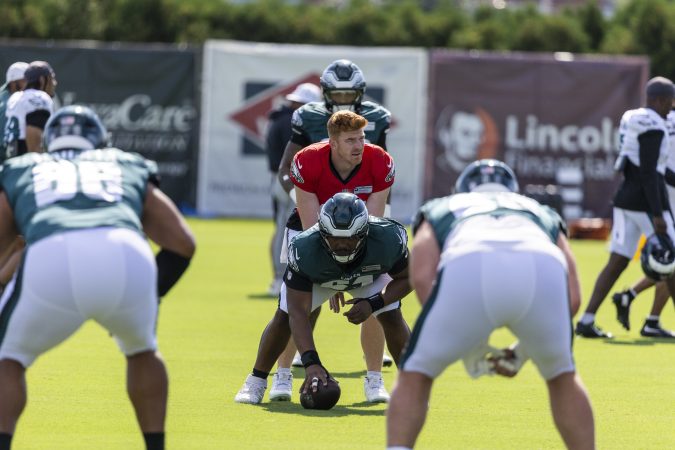
  • Andy Dalton and Tanner McKee are in a competition for QB2 duties. And they’re trying to embrace it.

    Andy Dalton and Tanner McKee are in a competition for QB2 duties. And they’re trying to embrace it.

    Sixteen years into his NFL career, Andy Dalton has seen just about everything. But this training camp — his first with the Eagles — is unlike any Dalton has participated in before.

    Dalton, 38, is competing with incumbent Tanner McKee to back up Jalen Hurts. That isn’t a new phenomenon for Dalton. He hasn’t been a full-time starter since 2019, his ninth and final year with the Cincinnati Bengals, the team that drafted him 35th overall in 2011.

    What is unfamiliar, however, is that Dalton doesn’t know when it’s his turn to take reps with the second-string offense in team drills. Neither does McKee. Both quarterbacks wait for orders from their coaches before one or the other joins the huddle.

    At first, Dalton had questions about how they would split reps. Now, he’s accepted the surprise element of their current situation, which is reminiscent of game days for the backup quarterback.

    “I was joking with Tanner, I was like, ‘This is just real life right here,’” Dalton said Tuesday. “‘You don’t know when you’re going to be going in.’”

    It’s been an offseason of surprises for Dalton, who was traded to the Eagles after spending the last three seasons with the Carolina Panthers. He had never been traded before. He only had experience choosing to sign with teams in free agency, including the Dallas Cowboys (2020), Chicago Bears (2021), New Orleans Saints (2022), and Panthers.

    Still, Dalton said he is “excited” to be in Philadelphia and to play in the new Sean Mannion-led offense. But the scheme isn’t entirely new to him. Dalton has experience in similar offenses that were also offshoots of the Kyle Shanahan/Sean McVay coaching tree, namely Zac Taylor’s first year with the Bengals in 2019 and the past two seasons with Dave Canales and the Panthers.

    Andy Dalton (right) knows some of the principles of the Sean Mannion offense from his time working alongside Zac Taylor (left) in Cincinnati. Wilfredo Lee

    There are some similarities among the three systems. Dalton pointed out their shared emphasis on quick decision-making and pure-progression passing. He also noted that Mannion’s offense requires its quarterbacks to use a cadence that Dalton has learned in the past.

    “Everybody’s got their own little variation of it,” Dalton said of the broader offensive scheme. “But for me, I feel very comfortable in this offense.”

    The trade may have come as a surprise to Dalton, but McKee expressed an understanding of Howie Roseman’s rationale behind the move.

    Yes, McKee was the primary backup last season, a role that was hardly threatened in camp by Dorian Thompson-Robinson (who is now playing in the UFL) or Kyle McCord (who is in camp with the Green Bay Packers). McKee has generally fared well in his handful of preseason and regular-season outings over the last two years, save for his lone start in 2025 — a 24-17 loss to the Washington Commanders in Week 18 — in which he primarily played with backups.

    However, McKee acknowledged Roseman’s objective to strengthen the roster every season.

    “I don’t think you can be surprised whenever they bring in somebody or there’s competition, because in the NFL, there’s always going to be competition,” McKee said Tuesday. “They’re trying to improve the roster every year, and so anybody that they can bring in to make you compete or make you earn your spot, that’s definitely what everybody wants.

    “And for a player, it’s great. It is great to have somebody to push you and to make you better. The stakes in practice are a little bit higher, and so it makes it fun.”

    Tanner McKee has been focused on trying to learn things from the veteran Andy Dalton, even as both vie for the same job. Tyger Williams / Staff Photographer

    McKee is embracing Dalton’s presence, especially his knowledge of the offense. In practice on Tuesday, for example, the 26-year-old quarterback was on the field for a play that broke down. Later on, McKee said he went to Dalton for insight on how he would’ve read the play given the defensive coverage.

    “It is great having that overall wisdom, I guess you could say, of just the experience that he’s had to talk through things,” McKee said. “It really does make each other better, and that’s exactly what everybody wants when we have competition, is to make the Eagles organization better.”

    The lessons McKee has learned aren’t limited to firsthand experiences on the field. Because he is splitting second-string reps, unlike last year’s training camp, McKee is forced to take more mental reps from the sideline while Dalton is on the field.

    McKee likened that experience to practices during the season, when Hurts is commanding the majority of the snaps. Those mental reps can be valuable, too, he explained.

    “Sometimes, you learn from mistakes, but a lot of times you have to learn from mistakes of other people as well,” McKee said. “And so paying attention on the sideline, watching film, all those things are just a little bit more important when you’re not getting as many.”

    The two depth quarterbacks will soon take their competition to the next level when preseason begins. The Eagles open their exhibition slate against the Baltimore Ravens on Aug. 15.

    Each player will make his case for the backup role. Dalton may not have the starting job he once held down at the outset of his career, but he has approached his role as a backup with the same level of preparation and attention to detail.

    Most importantly, he hasn’t lost his love for the game and all of the surprises that come with it.

    “There’s nothing else like this,” Dalton said. “So I’m trying to soak it all in as much as I can. Trying to get the most out of the game because obviously once you’re done, you’re done.”