Blog

  • Window closes for Ohio GOP to replace Rep. Max Miller on the ballot

    Window closes for Ohio GOP to replace Rep. Max Miller on the ballot

    Rep. Max Miller, the embattled Ohio Republican who faces accusations of domestic violence from his ex-wife, appears almost certain to remain on the ballot in November after a key deadline in the process to replace him passed Saturday.

    Miller, who denies any wrongdoing, has resisted growing calls to drop his bid for a third term and resign from Congress.

    Under Ohio law, the deadline to fill a vacancy for the November general election is Monday at 4 p.m. But there are earlier steps in the process that seemingly would have necessitated Miller withdrawing already.

    Most notably, the leaders of the local Republican parties in all four counties that are part of the district must meet to choose the replacement nominee. The statute requires that the chairperson from the most populous county provide at least two days’ notice to participants to convene the meeting.

    That means Miller would have had to withdraw his candidacy by Saturday to leave enough time for the selection process before Monday’s deadline. He did not.

    A spokesperson for Ohio Secretary of State Frank LaRose (R), who oversees elections in the state, said the office could not confirm that interpretation of the law because of the potential for litigation.

    If Miller were to end his campaign after Monday, his name could still be removed from the ballot until 70 days before the November election — that deadline is Aug. 25 — but there would be no Republican nominee for the office.

    Some Republican officials, fearful of putting a conservative-leaning seat at risk as the GOP fights to hold its narrow House majority, have maneuvered to pressure Miller to drop out of the race. Withdrawing after he won the Republican nomination for Ohio’s 7th Congressional District would have allowed local GOP officials to select a replacement.

    Following their divorce last year, Miller’s ex-wife, Emily Moreno, accused him in court filings of throwing hot water on her from a pan of eggs he had just cooked, once holding a gun to her head, and hurting their daughter, who suffered a fractured collarbone in February. Miller claims his ex-wife fabricated those allegations because she is mentally ill, which she denies.

    Public scrutiny of the abuse accusations increased in recent weeks after Moreno filed for a new restraining order, leading Miller to post a lengthy video statement online in which he blamed a custody battle for souring their relationship and vowed to press ahead with his reelection.

    Last Sunday, Sen. Bernie Moreno (R., Ohio), Emily Moreno’s father, broke months of silence about the situation, calling Miller “a danger” who is unfit to serve in Congress and urging him to step aside.

    That set off a scramble over Miller’s fate. Some Senate colleagues, including Sen. Jon Husted (R., Ohio), and conservative organizations in Ohio joined Moreno to push Miller to end his campaign and resign from Congress.

    But prominent Republicans, including President Donald Trump and House Speaker Mike Johnson (R., La.), have stood by Miller. Most of his GOP colleagues in the House refuse to discuss the allegations against him.

    Privately, Republican campaign officials express little concern about losing Miller’s seat because of the conservative tilt of this area stretching south from the Cleveland suburbs.

    The Washington Post interviewed dozens of voters in the district this week and found that the scandal was barely registering.

    Many were unfamiliar with the accusations against Miller, and even those Republicans who had heard were largely wary of wading into what they considered a family matter and reluctant to abandon the congressman. Only a handful of conservative voters told the Post that they were even open to considering his Democratic opponent, Brian Poindexter.

  • Blanche’s confirmation fight was tough. Being Trump’s AG may be tougher.

    Blanche’s confirmation fight was tough. Being Trump’s AG may be tougher.

    With his bruising confirmation battle behind him, Todd Blanche will soon be sworn in as the Senate-backed head of the Justice Department.

    But the hardest part may be what comes next.

    Blanche, President Donald Trump’s former criminal defense lawyer, will officially assume the title of attorney general and take command of an agency he has led on an acting basis since April.

    But he will do so under competing pressures from a president intent on seeing his enemies put on trial, a federal judiciary increasingly skeptical of those efforts, and a Republican-led Congress harboring growing doubts about Blanche’s ability to say “no” to his boss.

    The Justice Department’s career staff has been ravaged by firings, departures, and low morale over the past year and a half, as its traditional independence from the White House has evaporated. And its to-do list has only grown longer, including stepped-up efforts to prosecute fraud, illegal immigration, and violent crime while pursuing the sweeping, politically charged investigations of foes that the president has demanded.

    Blanche acknowledged those challenges and the difficulty of meeting Trump’s expectations as he spoke to reporters ahead of his confirmation last week.

    “It’s not as if I remain blissfully unaware of what will happen if I am confirmed,” he said. “When President Trump talks about what he expects this department to do to make this country safe, I don’t think the American people should look at that as some sort of threat to me or warning to me. He wants this country to be safe.”

    But as Blanche assumes his new role, now with the imprimatur of Senate backing, walking a tightrope between satisfying Trump and fulfilling an attorney general’s obligations to the rule of law is likely to only grow more perilous.

    Over the next several months, the Justice Department is expected to make a number of charging decisions in sensitive cases of keen interest to the president.

    Prosecutors in Florida have been at work for months on what Trump allies have referred to as a “grand conspiracy” investigation of former Obama- and Biden-era officials, including former CIA director John Brennan, who they say engaged in a long-running scheme to violate the president’s civil rights through efforts to undermine his presidency — allegations Brennan denies.

    Meanwhile, department investigators continue to seek evidence to back Trump’s unproven assertions that the 2020 election was stolen, that there exist broad left-wing conspiracies to oppose his second-term agenda, and that his critics, including former FBI director James B. Comey, deserve to be put in prison.

    Despite concerns raised by lawmakers about Trump’s role in those probes, Blanche has repeatedly defended the president’s “right” to intervene in Justice Department business — a significant departure from long-standing norms.

    “If we have discussions where we have to talk about a case and whether we’re going to charge a case or whether we have charged a case, that’s OK,” Blanche told reporters last week. “I’m not concerned about that.”

    The Senate’s 50-49 vote to confirm Blanche early Saturday came in spite of reservations expressed by some Republicans over the growing politicization of the department under Trump.

    In casting the pivotal votes, Sens. John Cornyn (R., Texas), Thom Tillis (R., N.C.) and Bill Cassidy (R., La.) each said they worried about Blanche’s ability to put the interests of the American people above those of his former client.

    But each said Blanche had provided them with personal assurances that had assuaged their doubts about his ability to effectively counsel Trump when the president’s instincts run contrary to the rule of law.

    “I am realistic that President Trump can be unrelenting,” Cassidy said Friday, but added: “This will be true no matter who the attorney general is. And this is the rationale for having a Senate-confirmed attorney general with more leverage to push back.”

    Yet, even as Blanche was making those promises to the senators last week, Trump continued to pick at some of the very issues that had stoked lawmakers’ concerns.

    He threatened to revive the controversial proposal for a nearly $1.8 billion fund to compensate those who claim they were victims of political prosecutions, casting doubt on Blanche’s pledge to Congress that the fund was officially dead.

    He insisted the U.S. attorney in D.C., Jeanine Pirro, should refile cases that she withdrew against four people previously accused of damaging the Lincoln Memorial Reflecting Pool, even after she determined that there was no evidence to support the charges and that a government contractor was to blame for the damage.

    And, in a letter this week, the White House revived its efforts to oust Lisa Cook from the Federal Reserve Board over unproven allegations of mortgage fraud, despite a Supreme Court ruling in June blocking that move and the fact that the Justice Department has not filed any charges despite months of investigation. Cook has denied any wrongdoing.

    Publicly, Blanche has pointed to the unique relationship he built with Trump while defending him against the four criminal cases he faced in his years out of office, saying it gives him a base of trust from which to advise the president on issues tied to the Justice Department.

    But Blanche has also acknowledged that he can only do so much.

    “President Trump trusts me to give him counsel,” he said during his confirmation hearing in July. “Counsel does not mean a ‘yes man,’ and that’s true in my case like it should be in any attorney general’s.”

    He added, though, that “the Department of Justice, like every single department in the executive, is part of the executive” branch.

    Current and former members of the department’s career workforce have said they, too, once hoped that Blanche could serve as a moderating check on Trump’s most aggressive impulses, only to see those expectations dashed.

    When he was confirmed last year as the Justice Department’s No. 2 official, under then-Attorney General Pam Bondi, Blanche brought to the job experience as a federal prosecutor in Manhattan and, later, as a partner at a prestigious law firm.

    Career officials said they expected that background had instilled in Blanche a recognition of the department’s tradition of independence and respect for the rule of law.

    Their optimism quickly faded, they said, as Blanche publicly embraced Trump’s calls for disruptive change in the department and pursued legally questionable cases against the president’s rivals.

    Behind the scenes, Blanche has at times demonstrated a willingness to gently push back against the president, though not always with success.

    The Washington Post reported last year that he joined Bondi in advocating to save the job of Erik S. Siebert, the former U.S. attorney for the Eastern District of Virginia, who concluded in September that there was insufficient evidence to charge two top Trump targets — former FBI director James B. Comey and New York Attorney General Letitia James — with crimes.

    Trump ousted Siebert anyway, replacing him with Lindsey Halligan, who secured the indictments Trump wanted against both. Those cases were later thrown out by a federal judge who ruled Halligan had been appointed illegally.

    And on Wednesday, as Trump suggested Pirro’s job could be in jeopardy over her decision to withdraw the Reflecting Pool cases, Blanche offered her his full endorsement.

    “Judge Pirro is doing a great job, and our city, Washington, D.C., is a lot safer in no small part to her effort and the prosecutors’ efforts that she works with,” he said.

    Still, Blanche added: “Hypothetically, if the president chose to fire a U.S. attorney, he’s allowed to do that because he’s the president of the United States.”

    The same applies to attorneys general — and Trump’s relationships with those who have previously occupied the role under him have been famously fraught.

    He fired Jeff Sessions two years into his first presidential term, following months of acrimony over Sessions’s decision to recuse himself from the Justice Department’s investigation of Russian interference in the 2016 presidential campaign — a move that cleared the way for the appointment of special counsel Robert S. Mueller III.

    William P. Barr, Trump’s second Senate-confirmed attorney general, resigned after publicly contradicting Trump’s claims about the 2020 election being stolen.

    Trump fired Bondi in April over frustrations with her slow pace and limited success in bringing cases against his adversaries.

    Blanche, speaking to reporters soon after the president chose him to replace her, contemplated that he, too, could one day find himself on the wrong end of Trump’s expectations.

    If that day comes, Blanche said at the time, he would thank the president for the opportunity to serve, adding: “I will say, ‘Thank you very much. I love you, sir.’”


  • Netanyahu rejects Trump-backed Gaza plan for Hamas disarmament, Israeli withdrawal

    Netanyahu rejects Trump-backed Gaza plan for Hamas disarmament, Israeli withdrawal

    TEL AVIV — Israeli Prime Minister Benjamin Netanyahu rejected a U.S.-backed plan Sunday for Hamas to lay down its weapons in Gaza in exchange for Israeli withdrawal from the territory — a proposal President Donald Trump recently touted as a breakthrough toward ending the conflict there.

    Netanyahu, at the start of a government meeting, said that “Israel does not accept the 15-point document” and that an Israeli withdrawal will be carried out only after “genuine disarmament, not fictitious disarmament.” His demands included that the Palestinian militant group give up all weapons: “Heavy weaponry, lighter weaponry, all weaponry,” he said.

    Israel is “talking with the Americans about this issue,” Netanyahu said. “They have ideas, some of which are acceptable to us and some of which are unacceptable, and we know how to stand firm against these things.”

    Hamas said in a statement Sunday that it reaffirms its commitment to the 15-point plan that it agreed on with the Board of Peace, calling on parties to help ensure its implementation. However, the militant group and Israel disagree as to which should come first: Israeli withdrawal or Hamas disarmament.

    “The existence of Israel and the security of all Israeli citizens are not up for negotiation. We stand firm on these interests,” Netanyahu said in his remarks Sunday. “Unlike all those who lecture us, we do what needs to be done for Israel’s security, and we can and know how to stand our ground, even against our best friends when necessary.”

    The Board of Peace, the State Department, and the White House did not immediately respond to requests for comment.

    Netanyahu’s stance on the Hamas deal was another setback for Trump’s efforts to address Middle East conflicts.

    With Trump’s unpopular war on Iran now in its sixth month, comments from Iranian officials Saturday cast further doubt on an end to hostilities that have driven up global oil prices and dragged down the president’s approval ratings.

    Iranian officials on Saturday laid out a list of demands they are seeking from the United States in exchange for reopening the Strait of Hormuz, including withdrawing U.S. forces from the region, paying war damages, and lifting sanctions.

    Former defense secretary Mark Esper told ABC News’s This Week that Iran’s aggressive demands showed that they have been “emboldened” and feeling “confident about their position in the world.”

    However, in an interview with Axios on Sunday, Trump suggested that pressure on Iran was building because of the toll that U.S. strikes and a naval blockade have taken on its economy.

    Trump said the U.S. is “only semi-negotiating” with Tehran and “low-keying it.”

    “We are just watching Iran with its huge inflation and the fact they have no money,” Trump told Axios’ Barak Ravid, “It will work out. It always works out. It’s like a chess game.”

    The Hamas plan was unveiled on July 30 by Trump’s Board of Peace. It gave Hamas and Israel two weeks to agree on a timetable and process for implementing the disarmament of Hamas and the withdrawal of Israeli forces from Gaza.

    There was almost immediate disagreement on the order in which each should happen. Hamas said Israel must end its military campaign in Gaza as a first step; Israel’s position has been the complete disarmament of Hamas and removal of weapons from Gaza as a prerequisite. That disarmament would see Hamas surrender its weapons, which would be held by the National Committee for the Administration of Gaza, run by Palestinian technocrats.

    Trump, in announcing the plan late last month, said on Truth Social that the Board of Peace — a group that was set up in the aftermath of the 2025 deal to release the remaining hostages that Hamas seized during the Oct. 7, 2023, attack on Israel — “reached a HISTORIC agreement for the COMPLETE DISARMAMENT of Hamas and all other armed groups in Gaza.”

    He called it “a monumental step toward lasting PEACE and SECURITY.”

    Israeli Finance Minister Bezalel Smotrich said in a video on X, “There is no Hamas in Gaza, that is the goal of the war, and we are committed to it.” He added that “the IDF cannot withdraw a single millimeter from the Gaza Strip … prior to the disarmament of Hamas.”

    The 15-point plan also “shall create appropriate conditions for a credible pathway towards achieving Palestinian self-determination and statehood,” the framework states.

    But Netanyahu on Sunday reiterated: “As long as I am prime minister, a Palestinian state will not be established.”

  • Rich Paul tees off, Jaylen Brown shows love, and more from Tyrese Maxey Friends & Family Weekend

    Rich Paul tees off, Jaylen Brown shows love, and more from Tyrese Maxey Friends & Family Weekend

    Tyrese Maxey is from Texas, but he has made Philadelphia his new home. Each year, the point guard hopes to give back to the community that has watched him “become a man.”

    “I grew up here,” said Maxey, who’s entering his seventh season with the 76ers. “My daughter [3-month-old Marvel] is going to grow up here. … And I appreciate all the love and support that the Philly people, the Philly fans, the Philly community has [given] to me — and not just for myself, but my foundation as well, my family. They’ve really gotten behind what we’re trying to do here, and I’m nothing but grateful for it.”

    One way he’s fulfilling his mission of giving back and leading by example is through the Tyrese Maxey Friends & Family Weekend. The three-day event features a Night of Giving dinner, a celebrity golf tournament, and a 1% Skills basketball camp, with proceeds benefiting the Tyrese Maxey Foundation and its mission to strengthen families and communities.

    Here’s a look behind the scenes at the third annual weekend:

    Night of Giving

    At the Vie by Cescaphe venue on Broad Street, basketball-themed centerpieces lined the tables, a mural of Maxey with the words “1% Better Every Day” decorated the left wall, and the two-time All-Star stood with new Sixer Jaylen Brown.

    Brown stopped by Maxey’s Night of Giving dinner after his introductory news conference at the Francis J. Myers Recreation Center and throwing out the first pitch at the Phillies game earlier that day.

    “JB did say a lot of things in his presser that meant a lot to our team already,” Maxey said. “We talk a lot already, that’s like unheard of, you know what I’m saying, for a group of guys who haven’t really met together at one time. Talking, joking around in the group chat, talking about him skydiving. That’s all fun and games and I think the camaraderie is there. … And like I said, we have a lot of guys who like to do this community stuff as well. That’s a big thing. It’s going to be a big thing for our community in Philadelphia.”

    Tyrese Maxey defends one of the many kids who attended his 1% Skills Camp last weekend.Tyger Williams / Staff Photographer

    The Night of Giving dinner featured a silent auction that included items like a signed Joel Embiid jersey, a custom Tyrese Maxey rug, signed Mike Tyson boxing gloves, and a signed Boston Celtics Jayson Tatum jersey. Maxey said the dinner was the perfect way to kick-start a weekend devoted to giving back to the community.

    “I think [the Night of Giving] is extremely special because you can do a lot of fellowship here, do a lot of talking, do a lot of networking,” Maxey said. “And then it’s like all of us coming together. Everybody in this room is a piece of making the foundation special. And a piece of making this community special. And that’s something that we really do appreciate.”

    Celebrity golf tournament

    Fans drove past the first hole of The Union League Golf Club at Torresdale and yelled out to Klutch Sports CEO Rich Paul as Maxey and LeBron James’ agent practiced his swing before teeing off at the celebrity tournament.

    “Only in Philly,” Paul responded as he proceeded to take his first swing of the day.

    Kentavious Caldwell-Pope, another new Sixer represented by Klutch Sports, followed with a swing of his own, slicing the ball to the left of the fairway.

    Also among the more than 70 participants at the third annual tournament were Brandon Graham, Justin Edwards, Labaron Philon Jr., Dominick Barlow, and Jabari Walker. Brown was also in attendance after making an appearance at Eagles training camp earlier in the day.

    “He showed up to the Night of Giving, he showed up to the golf tournament,” Maxey said. “I said, ‘Look man, anything you want to do, let me know. I’ve been here for the last seven years so whatever you want to do, I’m pretty sure I have some type of connection with my team, the foundation. And we’re going to get it done.’

    “That makes me even more happy that somebody wants to come right in and he’s done the whole city tour, I feel like. He’s been everywhere. … That’s just love, man. I think the city is going to be glad to have him.”

    Since Maxey was drafted by the Sixers in 2020, he has remained a pillar in the community — giving back to the community through the Maxey Friends & Family Weekend, his annual Thanksgiving Turkey Drive, awarding scholarships and hosting school supply drives through his foundation, a nonprofit organization founded in 2021 with a mission to give the youth skills to become the next generation of leaders in the community.

    Tyrese Maxey interacts with the kids attending his 1% Skills Camp at Penn Charter on Saturday.Tyger Williams / Staff Photographer

    1% Skills Camp

    As Maxey prepared for 1% Skills Camp, a free youth basketball camp for kids ages 7-12, one of the kids asked him, “How much younger are you than LeBron?”

    Maxey responded, “probably like 30 years.”

    The William A. Graham Athletics & Wellness Center at Penn Charter had more than 200 kids participating in drills and competitions led by Maxey and local coaches.

    “Honestly, the biggest thing is just the love and the support,” Maxey said. “ … I always talk about getting 1 percent better not just in basketball but with life in general.”

    Since becoming a father, Maxey has a new perspective on the 1% Skills Camp.

    “It just makes me want to be more involved,” Maxey said. “Especially going through the experiences of a three-month-old. I’m just grateful. Grateful to be a father. Grateful to be someone who can protect her, watch her grow up, and try to be a loving person in her life.”

    After the camp, Maxey said he planned on competing in a pickup game with some of the camp directors — a task that was going to be a little difficult after a full day of golfing.

    “I took like three, four holes off to go check on Marvel, it was getting too hot for me,” Maxey said. “I’m more of a front-nine, back-nine guy. But 18 — I’m feeling it today, honestly. I’m old now. I’m 25, got to get to stretching a little bit and do a little foam rolling, maybe. Can’t just roll out of bed and go dunk anymore. No, I’m just playing.”

  • Pentagon presses defense firms to build weapons as Iran war depletes stocks

    Pentagon presses defense firms to build weapons as Iran war depletes stocks

    The Pentagon is asking the U.S. defense industry to rapidly escalate the production and delivery of weapons, including munitions that are in extreme shortage due to the war with Iran, according to a Defense Department memo obtained by the Washington Post.

    Deputy Defense Secretary Steve Feinberg wrote to industry leaders on Wednesday, saying they had no more than 21 days to submit plans to “drive significantly faster, more aggressive delivery schedules and/or increased production for critical capabilities,” according to the memo, which is previously unreported.

    “Yearslong development cycles are not acceptable,” Feinberg wrote. “We must dramatically accelerate our program schedules and expand our production capacity now.”

    The directive comes as the weapons shortage has been a source of tension between President Donald Trump and the Defense Department, two people familiar with the issue recently told the Washington Post. It is also the latest in a series of actions the Pentagon and the White House have taken to address an issue that may largely remain unsolved until a gridlocked Congress releases additional defense spending, according to industry experts.

    Trump on Thursday said that the United States has “massive amounts” of munitions, posting on Truth Social that “large amounts are being manufactured and shipped to the U.S. as needed.”

    Feinberg’s note comes after efforts by the White House to enlist the defense industry to unlock military funds.

    In late July, legacy defense contractors and Silicon Valley weapons startups were summoned to the White House to meet with Trump’s chief of staff, Susie Wiles, Defense Secretary Pete Hegseth, Office of Management and Budget Director Russell Vought and White House Legislative Affairs Director James Braid, according to three people familiar with the event, who spoke on the condition of anonymity to discuss sensitive matters.

    In the meeting — which included firms such as Lockheed Martin, Northrop Grumman, Boeing, autonomous weapons firm Anduril, and data analytics company Palantir — company executives were asked to directly lobby lawmakers to increase defense spending through congressional reconciliation, the people said. Fox News earlier reported this meeting.

    The Pentagon has in recent months announced several “framework agreements” with the largest U.S. defense contractors and emerging startups to increase its supply of both low-cost munitions and sophisticated air defense weapons, like the Terminal High Altitude Area Defense (THAAD) and Patriot missile interceptors.

    These framework arrangements are legal, nonbinding contracts between the U.S. government and private sector partners that signal the Defense Department’s intent to purchase weapons but rely on congressional funding to become final, industry experts said.

    “They are agreements to agree, and so they’re not contracts,” said Tom Karako, director of the Missile Defense Project at the think-tank Center for Strategic and International Studies. “Almost nothing has been contracted, and that’s the problem.”

    “Working directly with industry leaders to accelerate production is not new. It has been the clear intent of the President and this Secretary from the start,” Pentagon chief spokesperson Sean Parnell said in a statement.

    He added that the Feinberg memo “is real” and “will inform the fiscal year 2028 budget submitted to Congress for funding, and it is entirely consistent with our ongoing push to rebuild the defense industrial base.”

    An empty arsenal

    In the first month of the Iran war alone, the U.S. fired off more than 850 Tomahawk cruise missiles and more than 1,000 Patriot and THAAD interceptors, the Post previously reported. The U.S. also used more than 1,300 of the Army’s tactical ballistic missiles in the initial weeks of fighting.

    As of last week, the global inventory of Patriot missiles has fallen from 2,200 before the war to fewer than 827, and THAAD missiles from 452 to fewer than 278, according to an analysis by CSIS.

    The depleted U.S. stockpile of munitions and defense systems has increased the risk to U.S. service members and forced the White House to back away from escalating attacks, the Post previously reported.

    The Pentagon has made efforts over the past few months to increase its weapons supply. On Aug. 3, the Defense Department announced a framework agreement with Northrop Grumman and Lockheed Martin to increase production of the Patriot Advanced Capability-3 (PAC-3) and THAAD missiles. Last week, the Pentagon awarded Lockheed Martin a contract worth up to $58.6 billion to triple production of PAC-3s by 2030.

    In May, the Pentagon announced several framework agreements with defense tech companies, including Anduril, Castelion, CoAspire, Leidos, and Zone 5, to “aggressively expand” the U.S. military’s strike capabilities and purchase their low-cost missiles. The department in late June also hosted leaders from various Silicon Valley startups, indicating they will be crucial in resupplying the U.S. with weapons.

    Speaking in November at the National War College in Washington, Hegseth outlined his vision to overhaul the Pentagon’s acquisition process in partnership with U.S. industry to ensure it can operate on a wartime footing.

    “American industry and its innovative spirit are begging to be unleashed to solve our most complex and dangerous warfighting problems,” he said. “We need to get out of our own way, out of your way, and enter into real partnership with you rather than overprescribe and decelerate your natural progress.”

    ‘The dilemma’

    The Pentagon has brought in former Silicon Valley business leaders such as former Uber executive Emil Michael to serve as the Defense Department’s under secretary for research and engineering, and to overhaul the defense innovation and procurement process.

    But moving forward with the Pentagon’s framework agreements to purchase weaponry, crucial to Defense Department strategy to expedite acquisition, depend on congressional passage of a $1.15 trillion defense spending bill, which remains deadlocked as Democrats object to massive spending increases.

    “That’s the dilemma, that’s the danger,” Karako said. “This really, really critical thing is in jeopardy because of congressional inability to appropriate.”

    In the memo, Feinberg said the Defense Department is “fundamentally shifting how [it] develops, produces, and fields military capabilities to meet current and future challenges.”

    Feinberg deemed several weapons programs critical and “under consideration for acceleration or increased procurement” during the 2028 fiscal year budget review. It included the Next Generation Interceptor missile defense program, the National Advanced Surface-to-air Missile System, a mobile air defense radar system, an advanced pilot training system, and a space-based system for missile tracking.

    The Feinberg memo tasked “industry leaders” to plan for “accelerated delivery” that would “provide the fastest production schedule to deliver projected orders and increase capacity.”

    It also asked defense firms to “propose specific capital investments and facility expansions … to support the Department’s commitment to higher volume, sustained orders,” Feinberg added.

    “Address how we will collaborate as partners and demonstrate your willingness to put skin in the game,” he wrote.

    Karako said some defense contractors are spending their own money to fund production costs while Congress is in gridlock and framework agreements await approval. But he said that comes with a risk for industry.

    “It’s a little bit of a gamble because they’re sticking their neck out,” he said. “They’re publicly traded companies, and you’re not supposed to really stick your neck out on a promise.”

  • Making the invisible visible: Betye Saar’s legacy lives on in Philadelphia

    Making the invisible visible: Betye Saar’s legacy lives on in Philadelphia

    Los Angeles-based artist Betye Saar died on July 26, just days short of her 100th birthday. A champion of the advancement of all underserved and underrecognized female artists, her assertive and sometimes combative spirit mirrored that of other African American artist-activists of her generation, such as Elizabeth Catlett and Samella Lewis, who fought racism and the oppressive nature of an arts ecosystem that fostered white male dominance.

    While Saar’s glowing presence will be missed, she leaves a legacy of art that is connected to Philadelphia in both actual and symbolic ways.

    Saar spent time here as a visiting artist in printmaking at Philly’s Brandywine Workshop and Archives in 1989, and again in 1992, when she was also a recipient of the organization’s Lifetime Achievement Award.

    Across seven decades, her creative efforts in assemblage and printmaking foretold the evolution of what art is or could be — by contributing to an evolving medium and studio practice that relied upon salvaging memories and emotions embedded in discarded, everyday objects and materials.

    Betye Saar, “Extreme Times Call for Extreme Heroines,” 2017, on display at the New York Historical in New York in June. LUIS CORZO

    Saar described herself as a scavenger: always looking down in order to find useful materials for her artmaking. At flea markets and swap meets, Saar would source images that portrayed African Americans in grotesque and negative narratives, which she would then use and recontextualize in her art assemblages and prints.

    This process of “scavenging” also informs the two mixed-media prints she created at Brandywine, LA Sky with Spinning Hearts (1989) and Mystic Sky with Self-Portrait (1992).

    Betye Saar’s “Mystic Sky With Self Portrait,” 1992, which she created when she was a visiting artist at the Brandywine Workshop and Archives in Philadelphia.

    Saar and her contemporaries, Catlett and Lewis (who were also visiting artists and Brandywine Lifetime awardees), experienced long, impactful careers during which high recognition came extremely late. This was an indicator of the market’s exclusionary agenda and inability to grapple with and comprehend their artistic talent and messaging. Despite the market and cultural biases and professional disadvantages of being people of color, women, and mothers (Saar’s daughters, Alison and Lezley, are also artists), they demonstrated a vision of social responsibility and aesthetic investigation highlighted by quality craftsmanship.

    Betye Saar and her daughter, Alison, at the Brandywine Workshop and Archive Awards Gala in 1992 at the Penn Museum.James O'Neal

    While Catlett’s and Lewis’ work in a variety of media focused on figurative art in the modernist tradition, all three can be described as social realists because of their dedication to sharing their life experiences and those of other African Americans. The themes of their art reflect ethnic identity and pride, while also conveying social messages — resistance and resilience. Collectively, they made the invisible visible.

    In the present cultural and historical environment, where censorship by politicians and uncertain economics place extraordinary demands on individual artists and the institutions that serve them, the commitment of community-minded artists seeking social justice is most reflected in the art and activism of women in the arts. These include major curator-historians such as Leslie King Hammond and Deborah Willis (raised in Philly), as well as young scholars such as Tatiana Reinoza at the University of Notre Dame and Imani Roach and Heather Hughes at the Philadelphia Museum of Art — all affiliated in some manner with Brandywine.

    Institutions such as the National Museum of Women in the Arts in Washington, D.C., the Sackler Center for Feminist Art at the Brooklyn Museum, and Philly’s own Colored Girls Museum are centers for cultural exchange and discourse about the role of art and narratives being shared through the contemporary expressions of female artists.

    Saar and other female artists of her generation in places like Cuba, Mexico, and other nations in Latin America, Africa, and Asia have been among the leaders demanding greater empowerment of women in the arts and culture sector, and society as a whole.

    What connects the legacy of African American female artists with the struggle for social justice, women’s rights, and financial equity is the global struggle among women for political and economic empowerment. The COVID-19 pandemic and #MeToo movement have highlighted the disparities women face in gaining assistance and recognition. Attacks on abortion rights and the mass removal of undocumented immigrants, especially women with children, have exacerbated efforts to afford greater respect and opportunity for women in general.

    In the United States, the 1960s Civil Rights Movement opened the door to advance the women’s rights and human rights movements. Today, women make up the majority of students on college campuses (56%). The employment population ratio for women was 54.4% as of June. Women hold 155 seats combined in the U.S. Senate and the U.S. House of Representatives. There are 14 female governors, and — following a national trend — Philadelphia has elected its first female mayor, notably an African American.

    While the statistics show progress, women, especially artists, think globally and connect globally. Advancement of women in the visual arts has been marked by the increase in women of all ethnic backgrounds receiving art history degrees with a focus on diverse art across the globe. Many now research and lecture on the diasporas of Africa, Asia, and Latin America, and how cultures move through migration patterns. Their art, writings, and instruction demonstrate how contemporary art exists within a global community with transnational identities.

    Saar’s legacy endures through the great art she left the world to enjoy and to engage with its profound social commentary.

    But in addition to that material legacy, her resilient spirit and passion to create — in a space that was not welcoming to mothers, women of color, or professionals who sought to disrupt the status quo — are qualities to emulate. Her spirit lives on in the City of Brotherly Love in the growing generation of female leaders of local museums and galleries building collections of art created by women.

    Allan L. Edmunds is an artist, a retired educator and arts administrator, and the founder of the Brandywine Workshop and Archives. Haeley Green is an AUC Collective intern at Spelman College in Atlanta.

  • Trump struggles to tell the truth about the economy as Americans struggle to make ends meet | Editorial

    Trump struggles to tell the truth about the economy as Americans struggle to make ends meet | Editorial

    With his approval ratings hovering at near record lows, President Donald Trump took a rare trip to the West Coast to convince voters not to trust their own wallets, because the economy is better than ever.

    Never mind that since he took office last year, Americans have been forced to spend more on food and rent. That utility prices are soaring while Trump slashed renewable energy alternatives. Or that thanks to his tariffs, the average price of a new car jumped 10%, while his failed war in Iran boosted gas prices by more than 30%.

    To borrow a phrase from the last inept White House occupant who tried to buck up the masses amid a calamity: “Trumpie, you’re doing a heck of a job.”

    To show hardworking Americans that the billionaire president feels their pain, Trump first attended a GOP fundraiser at a golf resort he owns in Rancho Palos Verdes, an affluent coastal city near Los Angeles, where a round of golf on the weekends can cost $800 or more. Tickets to the fundraiser ranged from $15,000 to $150,000.

    From there, Trump headed to a casino in Las Vegas, where he gave a speech on the economy aimed at working families.

    Nothing signals economic prosperity like the backdrop of folks mindlessly pumping money into a slot machine, or hoping to dig out of debt with the next roll of the dice — especially coming from a guy who made millions while bankrupting his now-defunct casinos in Atlantic City.

    Trump’s Vegas speech was a yawning rehash of rhetoric touting the stock market (when only about half the country owns equities) and tax cuts in his costly Big Beautiful Bill, while mixing in the usual mistruths and dismissing the high prices squeezing many Americans struggling to make ends meet.

    “We’re having some fake inflation because of the fuel,” he told the casino crowd.

    But it was in between the two stops where Trump provided a more revealing window into how he really thinks and talks, previewing his economic message in a friendly Fox News interview rife with non sequiturs, sentence fragments, and illeisms.

    “In the economy, Trump is at 42%, I shouldn’t be at, we have the greatest economy maybe in the history of the world for any country,” he said.

    Fox News personality Trace Gallagher pointed out that gas prices were up 30%, and that he recently paid $6.27 for a gallon of gas in California.

    Even amid the muddle, Trump had a ready response for that: shift the blame. “It’s a little different thing — because they charge taxes on gas. Every time, every time it goes down, they take taxes. I mean, they’ve done a terrible job in California.”

    Trump then promised gas prices would soon be under $3 a gallon once the three major oil companies — which have been making roughly $400 million a day since the Iran war began — lowered prices.

    “I think we’re going to have it coming down,” he said. “The oil companies have to start going. You know, they’re making too much money, and they’ve got to start lowering it. But we’re going to be down into the threes and maybe the twos pretty soon, per gallon.”

    Gallagher then teed up a softball question so Trump could address the reason he schlepped across the country in the first place: “You’re here to talk about the economy. What’s your big message?”

    “So, tariffs have been incredible. We’ve taken in hundreds of billions of dollars,” Trump said, ignoring the fact the government has had to refund most of the duties, which the U.S. Supreme Court determined were improperly collected. “I think if there’s anything, I’d say our country is rocking and rolling. We’ve never been this successful.”

    Well, one person in America has definitely never been this successful. As a public servant, Trump made more than $2 billion last year on a lot of murky deals.

    No wonder then that by the president’s grading curve, the economy is fine. Just ask him.

    “The food, groceries, it’s all coming down. We’ve done a great job,” he said. “I think we should be given an A+ on the economy.”

    Voters can submit their own midterm grades on Election Day.

  • 🎧 Our summer ’26 playlist | Morning Newsletter

    Good morning. We’re promised some sunshine and a hot high near 94.

    It’s that time of year where one definitive track takes the throne as “Song of the Summer,” but we’re not going to play that game. Instead, we’re curating the season’s sounds in one playlist.

    And if LeBron James ends up living in New York while playing for the Sixers, he wouldn’t be the first to make that commute.

    Scroll along for these Sunday stories and more.

    — Paola Pérez (morningnewsletter@inquirer.com)

    If someone forwarded you this email, sign up for free here.

    Put your headphones on

    Slayyyter performs during the first weekend of Coachella Valley Music and Arts Festival in April.Amy Harris

    What’s a summer without a soundtrack?

    Pop critic Dan DeLuca has us covered with a curated mix of 30 songs, annotations included. They’re not individually ranked, though, and instead highlight a wide range of the season’s sounds.

    Here’s a sampling:

    💥 “CRANK” by Slayyyter, serving in-your-face electro-pop.

    🎸 “Can’t Be Wrong” from Low Cut Connie, “perhaps the catchiest earworm yet,” as DeLuca put it.

    🎤 “Nightmares to Dreams” by Meek Mill, a sequel spin on the unofficial Philadelphia anthem.

    Find our full playlist here.

    P.S. What’s your song of the summer? Let us know if we missed your favorite(s).

    If I could add some of my own, I’d throw in “Too Easy” by Tinashe, “Sun Has Set” by beabadoobee, and “Do It” by underscores (she’s opening for Charli XCX in Philly this fall!).

    The New York-Philly trailblazer

    NBA insiders have said that LeBron James may live in New York City while playing for the 76ers.

    If it turns out to be true, he’d be following in the footsteps of another player who had to make the trek to and from Philly in a Sixers jersey.

    In the 1960s, Wilt Chamberlain spent most nights in New York, regularly making the drive in luxury cars up and down the turnpike. Friends recall he would burn rubber with his “heavy foot.” (LeBron would probably use a helicopter, though, so he has Chamberlain beat there.)

    A New York “magnet,” Chamberlain owned a popular club in Harlem and lived in Manhattan. His choice of residence became a point of contention every time he missed a practice, though.

    In 1965, with just a few weeks left in the regular season, then-Sixers owner Ike Richman had Chamberlain move in with him and his family in Elkins Park.

    Sports features writer Matt Breen has the full story.

    What you should know today

    This week in history

    🎤 Here’s Tommy Rowan with a look back at the racially tense transit strike that required an Army intervention.

    On Aug. 1, white transit workers with the Philadelphia Transit Co. had gone on strike over the hiring of Black trolley operators.

    Black workers were now being given operator jobs, graduating to higher pay and better conditions than in their previous jobs in mechanics and labor.

    On Aug. 5, 1944, President Franklin D. Roosevelt dispatched about 5,000 U.S. Army troops to Philadelphia to intervene in the ugly transit strike.

    It marked one of the first major federal interventions amid the fight for civil rights.

    Read on for the full story.

    ❓Pop quiz

    Luxury homes are getting more expensive in the Philly area, but they’re still selling fast.

    Homes that sold for at least _ meet the “luxury” threshold.

    A) $975,000

    B) $3 million

    C) $1.15 million

    D) $2.5 million

    Think you know? Check your answer.

    What we’re …

    🧠 Trying to crack: This week’s round of Pillars, The Inquirer’s new word game.

    🍝 Loving: The sheer variety of foods Phillies fans bring to Citizens Bank Park, from lucky tuna salad to fanny pack meatballs.

    ✏️ Hearing: Most Philly school principals believe the district is moving in the right direction, but they also express frustration on various fronts, according to a new survey.

    😋 Savoring: The spanakopita at Stina.

    🪑 Disarmed by: A pair of sassy chairs at Museum of Art in Wood.

    🧩 Unscramble the anagram

    Hint: A long troubled building on Independence Mall

    TUB HEROES

    Email us if you know the answer. We’ll select a reader at random to shout out here.

    Cheers to Judy Pidgeon, who correctly guessed Saturday’s answer: Lauren Cohan of The Walking Dead fame. She is the third most-searched Cherry Hill-born celebrity on Wikipedia.

    Photo of the day

    La Shonda Williams and her children, 12-year-old Isaac, 9-month-old Xymia, and 5-year-old Xylo, with pediatrician Daniel Taylor, at the Center for the Urban Child in St. Christopher’s Hospital for Children.Jessica Griffin / Staff Photographer

    Pediatricians at CHOP and St. Christopher’s prescribe books to young children as part of a program to boost literacy. Organizers plan to expand it statewide.

    🎶 Today’s song sounds like this: “I need to laugh, and when the sun is out / I’ve got something I can laugh about.” The Beatles’ Revolver turned 60 last week.

    👋🏽 Thanks for reading, and have a great day.

    By submitting your written, visual, and/or audio contributions, you agree to The Inquirer’s Terms of Use, including the grant of rights in Section 10.

  • Should you drink Philly’s tap water?

    Should you drink Philly’s tap water?

    If you live in Philly and want to know information about your tap water quality, start with the latest consumer confidence report, which is required to be produced annually by every community water system in the country. Most people never read them, but the reports provide essential information about drinking water quality.

    Like other large water systems, the Philadelphia Water Department publishes this information online, including the most recent 2025 drinking water quality report. The report provides an overview of Philly’s drinking water from source to tap. It reports that levels of approximately 100 regulated contaminants all meet federal standards.

    As an interdisciplinary scientist and engineer, I study drinking water infrastructure and how science gets translated into policy and decision-making.

    While the Philadelphia Water Department report is a good place to start, knowing what it tells you and where there may be gaps requires some background on how drinking water is regulated.

    How drinking water gets regulated

    In the U.S., drinking water is regulated under the Safe Drinking Water Act, which set limits for just over 20 contaminants when it became law in 1974.

    Subsequent amendments and regulatory processes have brought the total to about 100. That’s still a small number compared to the approximately 700 disinfection byproducts, the tens of thousands of chemicals in commercial use in the U.S. today, or other contaminants of emerging concern.

    While not all of these compounds end up in drinking water in amounts that can harm public health, the U.S. Environmental Protection Agency’s regulatory process is designed to be reactive, not proactive.

    Before setting a limit, the EPA must demonstrate that a contaminant may cause adverse health effects, that it occurs at levels that are a public health concern, and that regulation would meaningfully reduce risk.

    This process is repeated contaminant by contaminant, though a single glass of tap water may contain dozens of trace contaminants at once. The EPA has recently moved partly toward regulating mixtures of contaminants. The 2024 federal PFAS rule set individual limits for six PFAS compounds and also regulated four of them as a mixture. However, proposed changes to the 2024 federal PFAS rule include rescinding the mixture provision.

    Goals versus limits

    Federal drinking water standards involve two numbers for each contaminant. The maximum contaminant level goal, or MCLG, is the concentration at which the contaminant is believed to pose no significant risk to health in people who drink that water every day for 70 years.

    For chemicals classified as possible human carcinogens, MCLGs are typically set at a level where drinking the water daily for 70 years would cause one additional cancer case per 1 million people above the background rate.

    However, MCLGs are nonenforceable. Enforceable drinking water limits, also called maximum contaminant levels, or MCLs, are often higher than MCLGs because they take cost and feasibility into account.

    Levels of forever chemicals

    Two forever chemicals, PFOA and PFOS, deserve attention first. Both are types of perfluoroalkyl and polyfluoroalkyl substances, commonly called PFAS. PFAS are a family of synthetic chemicals widely used in consumer products. They persist in the environment and accumulate in the body.

    The 2025 report from the Philadelphia Water Department shows Philly’s highest reported levels of PFOA at 6.1 parts per trillion, or ppt, and PFOS at 4.6 ppt. Both are above the new federal limit of 4 ppt.

    But Philly remains in compliance. Meeting the federal limit is not required until 2029, and the EPA has proposed extending that deadline to 2031.

    The levels are well below Pennsylvania’s limits of 14 ppt for PFOA and 18 ppt for PFOS.

    Encouragingly, the Philadelphia Water Department is expanding its capacity to remove PFAS systemwide using powdered activated carbon. Small-scale tests have shown that powdered activated carbon can be effective for removing PFOA and PFOS, though effectiveness in real treatment conditions depends on dosing, contact time, and other factors.

    Lead, disinfectants, and sodium

    Lead in drinking water comes from lead leaching into the water from service lines leading from the water main to your house or from plumbing inside your home. Lead can cause serious health problems, and it accumulates in the body.

    As required by the Lead and Copper Rule, the Philadelphia Water Department’s treatment includes corrosion control that forms a protective coating on the inside of pipes. This reduces the amount of lead that leaches into drinking water from lead service lines. Homes built before a 1986 federal ban on lead pipes and solder carry the most risk, as do homes with lead service lines. More recent brass fixtures could legally contain small amounts of lead until 2014.

    The Philadelphia Water Department is required to collect samples from homes in Philly with lead service lines every three years. Testing in 2025 showed 90% of sampled homes were at or below 2 parts per billion, or ppb. That’s well under the 15 ppb EPA action level. But testing results ranged from 0 to 21 ppb, meaning some homes with lead service lines had measurable lead in their water.

    The maximum contaminant level goal for lead is zero because no safe level of childhood lead exposure has been determined.

    Chemical disinfection keeps water safe across Philly’s 3,000 miles of pipe but produces byproducts linked to increased cancer risk. These byproducts form when the disinfectant, in this case sodium hypochlorite, reacts with organic matter remaining in the water after treatment. Levels rise the longer water sits in the pipes.

    The Philadelphia Water Department’s 2025 annual averages were 51 ppb total trihalomethanes and 41 ppb haloacetic acids – both well under federal limits of 80 and 60 ppb, respectively. However, individual samples exceeded those limits. This suggests some homes further out in the distribution system may experience elevated levels.

    Finally, sodium levels are a concern for people with sodium-restricted diets, including those with hypertension, heart failure, or kidney disease. The American Heart Association recommends that people in these groups limit sodium intake to 1,500 milligrams per day. Depending on which plant serves you, Philly tap water carries 4 to 44 milligrams of sodium per 8-ounce glass. Over eight glasses a day, that’s roughly 30 to 350 milligrams, or up to nearly 25% of the recommended daily limit.

    What you can do

    Reducing your household exposure to drinking water contaminants isn’t difficult.

    A carbon filter certified to NSF/ANSI Standard 53 will measurably reduce disinfection byproducts, PFOA and PFOS, and lead. A certified carbon filter for a pitcher, faucet, or refrigerator works well to reduce levels in drinking water; reverse osmosis does more, but it costs more and wastes water.

    In addition, if your home has a lead service line or older plumbing, the Philadelphia Water Department recommends running cold water from the tap for 3-5 minutes when it has been unused for more than six hours before drinking or cooking with it. This flushes out water that has been in contact with plumbing.

    The Philadelphia Water Department offers free lead testing of tap water on request. The Centers for Disease Control and Prevention and EPA recommend that children at risk for lead exposure should have their blood lead levels assessed.

    Sodium is a different case: Standard carbon filters don’t remove it, but an ion-exchange pitcher, such as ZeroWater, or a reverse osmosis system will.

    Christine Kirchhoff is an associate professor of civil and environmental engineering and law, policy, and engineering at Penn State University.

    Reprinted from The Conversation.

  • Our Songs of Summer playlist feat. Charli XCX, Beyoncé, Taylor Swift, the Rolling Stones, and Kurt Vile

    Our Songs of Summer playlist feat. Charli XCX, Beyoncé, Taylor Swift, the Rolling Stones, and Kurt Vile

    This is the sun-baked time for irresistible hooks and big brash beats. This is the season when pop culture experts aim to pronounce that just one ubiquitous recording is this year’s unifying, definitive Song of the Summer.

    I’m not going to play that game — or not exactly, anyway. The 30 songs annotated here are all songs of the summer of 2026, many of them by big name artists and rising stars formidable enough to be widely considered on most Song of the Summer short lists.

    But the songs gathered here — by pop stars, singer-songwriters, hip-hop heroes, country singers, and indie rock bands — are not ranked. Instead, they’re arranged as a playlist of sometimes ebullient, sometimes bummed out tunes that aim to convey a wide range of what the summer of 2026 sounds like, with plenty of Philly artists worked into the mix.

    Put on your headphones.

    Charli XCX, “SS26”

    “Spring Summer ’26,” Charli XCX sings, sounding cheerful setting the mise-en-scène for her new album Music, Fashion, Film. “When the world is gonna end, no hope for any of it.” Rather than a BRAT summer — that was 2024 — this is a reinvention song for a season of disaffection. She opens her U.S. tour in Philly on Sept. 11.

    Ella Langley, “Choosin’ Texas”

    For such a pop juggernaut, the charms of “Choosin’ Texas” are surprisingly subtle considering how big the song has become. The traditional country-leaning Lone Star State singer’s single, about a spurned lover drinking Jack Daniels alone, has topped the Billboard Hot 100 pop chart for 17 weeks, the longest winning streak by a woman artist ever for a nonholiday song.

    Country singer Ella Langley’s record-breaking single is “Choosin’ Texas.”Columbia Records

    Madonna, “School”

    Summer school is in session on Confessions II with Madonna proclaiming she’s hungry to learn as well as teach. Her impressive sequel to her 2005 album Confessions On A Dance Floor returns to her comfort zone with producer Stuart Price.

    Beyoncé, “Morning Dew (Donk)”

    Beyoncé also wants to go back to school, “and have my locker full of pictures of you,” she sings on a track whose origin dates to 2013. But the song was not officially released until July 4. It’s also old-school and sultry in an R&B sense, with a remix that features a Jay-Z guest verse.

    Olivia Dean, “So Easy (To Fall In Love)”

    British pop-soul singer Olivia Dean’s The Art of Loving came out in 2025, but her ascendance in America is ongoing. This bossa nova is a cool, welcome summer breeze that brings to mind Astrud Gilberto.

    Low Cut Connie, “Can’t Be Wrong”

    Perhaps the catchiest earworm yet from Adam Weiner’s South Philly rock and soul party and protest band. “Gettin’ naked in the afternoon, or maybe later underneath the moon … Oh, baby, you know it can’t be wrong.” Can it?

    Meek Mill, “Nightmares To Dreams”

    “Dreams and Nightmares,” the 2012 rager that has become an unofficial Philly anthem, gets a sequel, with a cameo from Pennsylvania Gov. Josh Shapiro in the video. Not equal to the original, but not bad.

    Stella Lefty, “Boston”

    Stella Lefty’s country hit makes the cut despite its title. And who can be mad at Boston after they traded Jaylen Brown to the Sixers to pave the way for LeBron James? But seriously, this song by Lefty, the daughter of billionaire Eric Lefkofsky, interpolates Noah Kahan’s “Stick Season” and is seriously catchy.

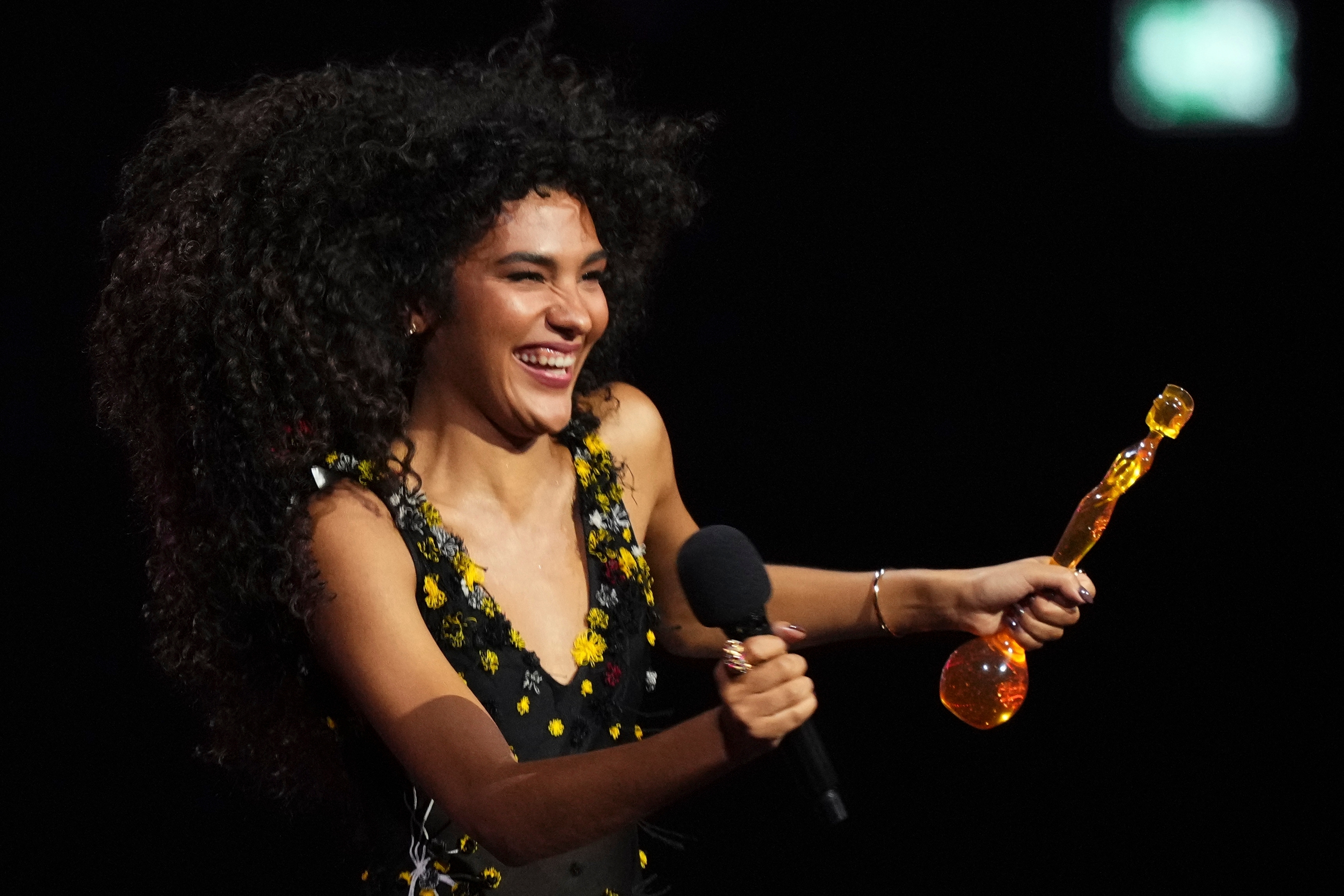
    Olivia Dean wins the Pop Act award during the Brit Awards 2026 in Manchester, England, Saturday, Feb. 28, 2026. (Photo by Scott A Garfitt/Invision/AP)Scott A Garfitt

    Taylor Swift, “I Knew It, I Knew You”

    This Toy Story 5 song’s arrangement, by Swift and Jack Antonoff includes banjo and mandolin, and has been characterized as country. Which means that between Swift, Lefty, Langley, and Morgan Wallen, last week’s Top 5 songs on the Billboard charts were all country for the first time.

    Phoebe Bridgers, “Lost Boys”

    Antonoff is also involved with this single about Peter Pan syndrome from Bridgers’ forthcoming album Lost Weekend, due Aug. 14. Philly indie savant Alex G. coproduces and boygenius’ Lucy Dacus and Julien Baker sing backup.

    Flight of Mavis, “Tonight’s the Night”

    This nugget from the Philly jangle pop band’s Mavis Sing Mavis is not a Neil Young cover but a song for music lovers. “Tonight’s the night,” Frank Brown sings, “I’m going to see my favorite band.”

    Philly band Flight of Mavis’ new album is “Mavis Sings Mavis.”

    Olivia Rodrigo, “The Cure”

    The Cure is one of Olivia Rodrigo’s favorite bands. This single from You Seem Pretty Sad for a Girl So in Love is not about Robert Smith, however. It’s a gem about a guy who will never be “the cure.” Rodrigo plays Xfinity Mobile Arena on Nov. 7 and 8.

    Hurry, “Moving After You”

    It’s hard to choose among Hurry songs, because Philly songwriter and guitarist Matthew Scottoline’s tunes all tend to captivate with melodic grace and wistful vibes. This one includes a cameo from Teenage Fanclub’s Gerard Love.

    Paul McCartney, “Days We Left Behind”

    Speaking of wistful, Macca looks back fondly on his pre-Beatles Liverpool boyhood on this charming centerpiece on The Boys of Dungeon Lane.

    Eric Bazilian, “Better Times”

    This song from the coleader of Philadelphia rock institution the Hooters is part of the “Philly Anthems” project of WXPN-FM (88.5). The sturdy tune strikes a hopeful note, with a hint of desperation: “Better times better come soon.”

    Twisted Teens’ new album and single is “Florida Water Blues.”Courtesy of the Artist

    Twisted Teens, “Florida Water Blues”

    Gnarly, country-flavored New Orleans garage rock band Twisted Teens look for meaning beyond “a hundred beers of solitude” in this winning title track from their new album.

    Sam and Louise Sullivan, “Love & Devotion”

    On last year’s Sweet Enough, Philly folk-pop sibling band Sam and Louise Sullivan sang of “Jealousy & Envy.” They’re on the lookout for nicer things on the title track to their new album.

    Kacey Musgraves and Miranda Lambert, “Horses and Divorces”

    Texas country singers Musgraves and Lambert had a beef dating back to 2011, when Lambert beat Musgraves to recording her own “Mama’s Broken Heart.” Now, the two horsewomen have made up, bonding over shared life experiences.

    Billy Strings, “Mill Town Flood”

    An original song from the country jam band multi-instrumentalist that tells a fictional tale about his real hometown of Muir, Mich. From So Much For Goodbyes, due Aug. 28.

    Rapsody, “Apple Juice”

    “Got a jones for you, sweet tooth, like sugar in my apple juice.” North Carolina rapper Rapsody goes deliciously neo-soul on this single from God Gotta Afro & Gold Hoops, due Aug. 28.

    Tyla performs during the Global Citizen Festival in 2025, in New York. (Photo by Charles Sykes/Invision/AP)Charles Sykes

    Tyla ft. Zara Larsson, “She Did It Again”

    A peppy, percolating team up of South African singer Tyla and Swedish pop star Larsson, drawing inspiration from early 2000s Britney Spears.

    Theodora, “Miss Kitoko”

    French Congolese singer Theodora — also known as Boss Lady — mixes Afro-pop and electronic elements with a verve that transcends language barriers.

    Ca7riel & Paco Amoroso, with Anderson .Paak, “Ay Ay Ay”

    Argentine experimental pop duo Ca7riel & Paco Amoroso’s collaborators on the Free Spirits album include Jack Black and Sting. On this exuberant track they mix in R&B and funk with beat savvy songwriter .Paak.

    Slayyyter, “Crank”

    With Charli XCX getting self-reflective this summer, Slayyter is picking up the in-your-face electro-pop slack. TikTok aided this screamy song’s success with clips of graduates yelling “Crank It!” upon receiving their diplomas.

    Slayyyter performs during the first weekend of Coachella Valley Music and Arts Festival in April.Amy Harris

    Tame Impala, with Jennie, “Dracula”

    Yes, Kevin Parker of Tame Impala’s vampiric concoction is lightweight stuff. But isn’t that what summer is for? And K-pop sensation Jennie boosts its exuberant groove.

    Ariana Grande, “Hate That I Made You Love Me”

    With the Wicked star announcing that she’s pulling back from public life, many observers are convinced that this single is about her fans and the prison of fame. Perhaps. In any case, its chilly tone and refusal to serve up a happy ending make for compelling listening.

    Steve Lacy, “The Feeling”

    The internet guitarist struggled to find an audience for his genre-splicing music before “Bad Habit” from his 2022 album Gemini Rights. He’s back in top form with this woozy song from his return album Oh Yeah?

    Weird Nightmare, “Might See You There”

    Power pop fun from the side project of Alex Edkins of Canadian punk-pop band Metz that doesn’t waste a note, at just over 2 minutes.

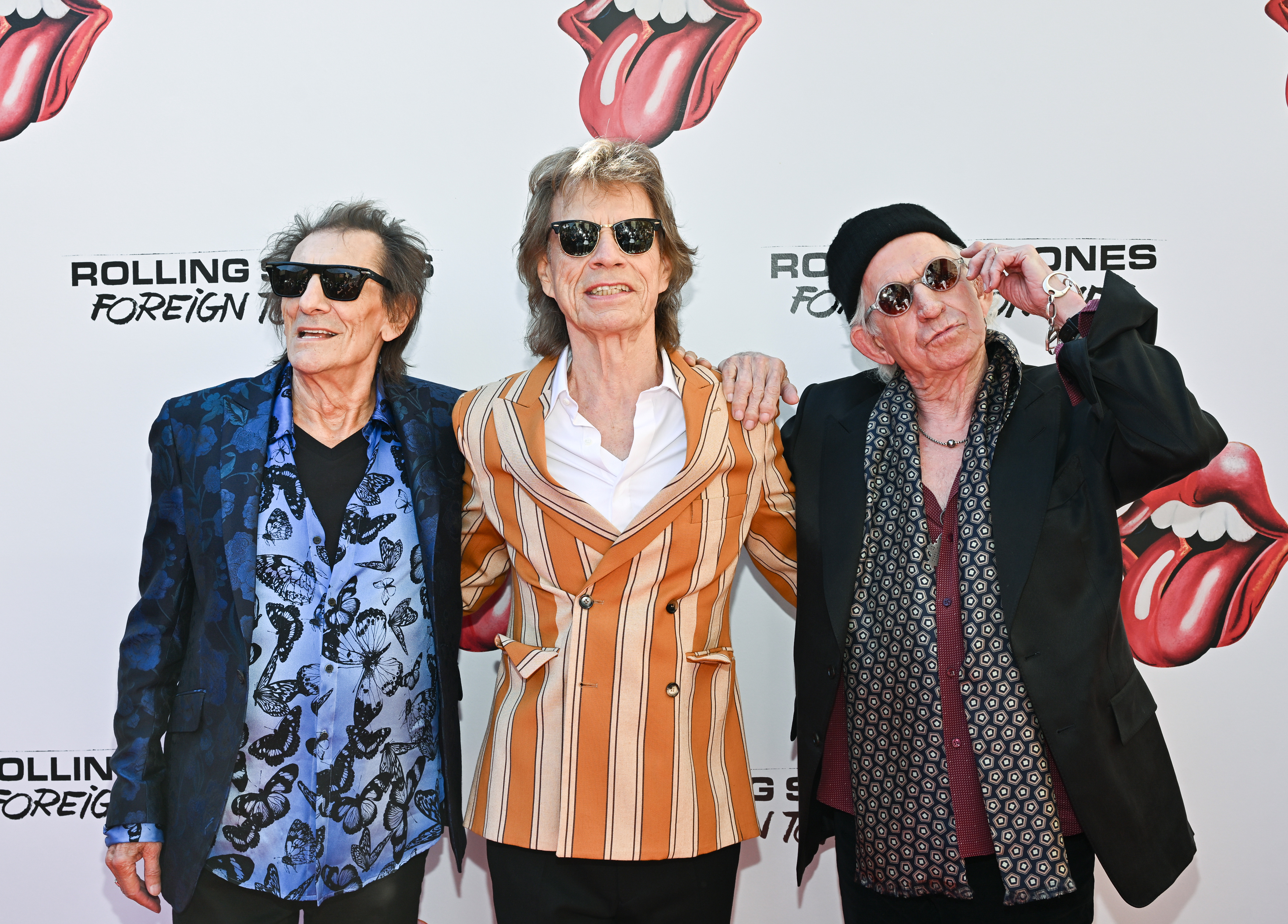
    Ronnie Wood, left, Mick Jagger and Keith Richards attend The Rolling Stones “Foreign Tongues” album launch event on Tuesday, May 5, 2026, in New York. (Photo by Evan Agostini/Invision/AP)Evan Agostini

    Rolling Stones, “Rough and Twisted”

    Is Foreign Tongues, the new Rolling Stones album, their best since … 1986’s Dirty Work? 1981’s Tattoo You? Whatever Stones fans decide, there’s no denying the octogenarians’ sound has energized, particularly on this feisty opener.

    Kurt Vile, “Zoom 97”

    The grabby single on Vile’s new 215 proud Philadelphia’s Been Good To Me is the hyped up “Chance To Bleed.” This second single, however, is more quintessential KV. It’s a song for a lazy summer afternoon, riding a lovably, languorous groove, as zigzagging his way down Lincoln Drive makes Vile “feel I can fly — for a while.”

    Philly alt-rock star Kurt Vile outside the Silk City Diner on Sunday, May 24, 2026 in Philadelphia.Yong Kim / Staff Photographer