Blog

  • Letters to the Editor | Aug. 10, 2026

    Letters to the Editor | Aug. 10, 2026

    History’s warning

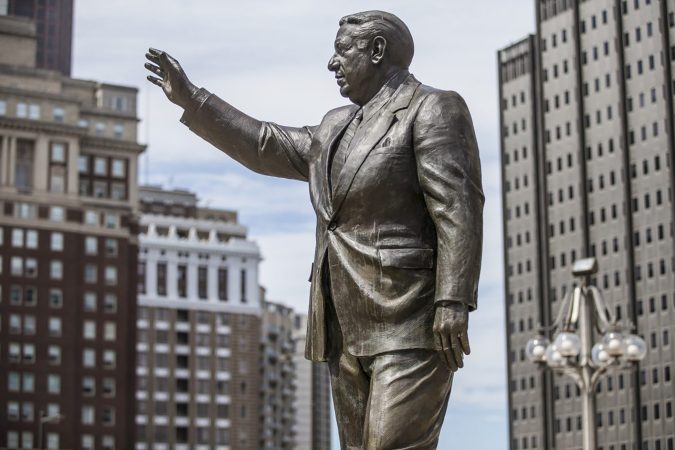
    As we learn more and more details about how the current administration in Washington is crude and uncivil, I read with great interest your article about finding a new location for the refurbished statue of Frank Rizzo. I was reminded of how Rizzo’s coarse and divisive leadership style in Philadelphia in the 1970s mirrors much of what we see coming out of the White House today.

    My memories of Rizzo — leading a violent police force, imposing budget cuts that affected poor neighborhoods the most, and proudly wearing his thinly disguised racism — made me wonder how many other Philadelphians, especially those who worked in a spirit of unity and practiced civility, might deserve a statue of their own. Why would we extol the achievements of this man whose rise to the top was actually not much different from that of the country’s current leadership?

    Perhaps the best place for the statue is in a museum that talks about the lessons we are learning about bullying, and how to foster more effective leadership and community-centered public safety. But to see a huge statue of this man anywhere else in the city — as if he’s the best Philly has to offer — feels so wrong.

    Joan Broadfield, Chester

    Transparency, please

    As a Philadelphia public school parent, I trust the adults in our schools to keep my sons safe and act with integrity. It is disturbing that Frankford High School principal Michael Calderone was reassigned to another school without any public accounting for credible accusations that he violently assaulted a handcuffed student, routinely screamed at staff and students, and demanded teachers submit fraudulent grades.

    If there was no misconduct, then Mr. Calderone and the district should have no qualms about sharing the results of the investigation. Parents deserve transparency regarding the outcomes of serious abuse and misconduct investigations.

    Tony B. Watlington Sr. likes to boast of fast-improving test scores, but shielding those with well-documented misconduct creates a toxic culture that erodes trust in Dr. Watlington and his leadership team — among parents, taxpayers, and Harrisburg alike, three partners he needs more than any principal or their union.

    Andrew Stober, Philadelphia

    Conflicted counsel

    Todd Blanche’s nomination to become the nation’s next attorney general has now moved out of a Senate committee, when he should instead be facing the Supreme Court of his home state for disbarment. He violated every provision imaginable under the Code of Professional Responsibility. The $10 billion lawsuit filed against the Internal Revenue Service by his former client and current boss, Donald Trump, had no merit and should have been opposed by the U.S. Department of Justice. A motion to dismiss would almost certainly have been granted by the assigned judge, on several grounds, including the statute of limitations. Even after the lawsuit was dismissed, that department’s lawyers, under Blanche’s leadership, negotiated an unwarranted settlement. When a few senators whose votes were needed balked at the settlement, Blanche continued to negotiate with them, as they were ostensibly representing the government while he represented the interests of Trump, the plaintiff in the matter in which Blanche’s legal client, the U.S., was the defendant. Blanche represented both sides of a dispute, the epitome of a conflict of interest. This should be disqualifying, but won’t be to the MAGA senators.

    Neil Mittelman, Warminster

    Join the conversation: Send letters to letters@inquirer.com. Limit length to 150 words and include home address and day and evening phone number. Letters run in The Inquirer six days a week on the editorial pages and online.

  • Horoscopes: Monday, Aug. 10, 2026

    ARIES (March 21-April 19). Don’t drive yourself so hard that you hurt the tools you’re working with, including your own healthy body and mind. Rest is part of the work. You know you’ve done enough for today when continuing would make tomorrow harder.

    TAURUS (April 20-May 20). What you want today you won’t want a month from now. It’s like a craving. Served timely, it’s so delicious — but far less so when the craving has passed. To have the experience before your interest wanes, put it on the fast track.

    GEMINI (May 21-June 21). The right conversations reflect your strengths and sharpen your ideas. But how do you find the “right” ones and avoid the rest? Head toward the people who make you think bigger, laugh harder and stay longer.

    CANCER (June 22-July 22). Your imagination is wild, but your practical sense is as poised as you need it to be. What a winning combination. Today, you can use it to turn a long shot into a real plan with exciting potential.

    LEO (July 23-Aug. 22). You’re a dreamer with a vision and a leader with a mission. Lately, it happens to be a rather lighthearted and fun mission, and that could be why you so easily gain the cooperation of peers.

    VIRGO (Aug. 23-Sept. 22). While biting off more than you can chew is a choking hazard, nobody said you couldn’t use a knife. Your project management skills are top-notch. Cut the challenge into smaller pieces and enjoy the feast.

    LIBRA (Sept. 23-Oct. 23). New voices and unfamiliar places will widen your view. You’ll discover that people halfway around the world have already solved a problem you’ve been puzzling over. You’ll give credit where it’s due and put your own spin on it.

    SCORPIO (Oct. 24-Nov. 21). You know you’re working at the right pace when it doesn’t hurt to imagine doing the same thing again tomorrow and the next day and the next. You don’t have to hurry. You only have to keep going.

    SAGITTARIUS (Nov. 22-Dec. 21). The current situation isn’t perfect, but it beats repeating the old chapter. You’ve learned too much, built too much and become too interesting to circle back now. Keep facing forward toward the next surprise.

    CAPRICORN (Dec. 22-Jan. 19). What works for someone else might be wrong for you, but you’ll get closer to the right thing by investigating it anyway. And the good news is, options abound. With a little persistence, it’s only a matter of time before you find a good fit.

    AQUARIUS (Jan. 20-Feb. 18). You can tell a lot about people by what they consider exciting. If someone’s favorite hobby is stirring the pot, leave them to it. You’ll have much more fun with your own favorite hobbies and a “no-drama” policy.

    PISCES (Feb. 19-March 20). It feels good to be generous with the appreciative, but often the ones who most need generosity are incapable of appropriate expressions of gratitude because they’re too busy surviving. Real generosity doesn’t depend on applause.

    TODAY’S BIRTHDAY (Aug. 10). If you think you know a lot of people now, buckle up for your Year of the Social Swirl. The introductions will keep multiplying until your network of friends and professionals becomes massive, useful and so interesting. More highlights: VIP treatment becomes normalized. Your talents merge into a rewarding new role. You can count on love to be constant and buoying. Virgo and Aquarius adore you. Your lucky numbers are: 9, 21, 3, 18 and 44.

  • Dear Abby | Cruise with friends could wind up far from paradise

    DEAR ABBY: My husband and I have friends who are kind, intelligent and warm. However, as we have spent more time with them, “Phyllis’” compulsive talking has become a real problem for us. She hijacks whichever one of us is sitting next to her and starts a monologue that goes on and on.

    Phyllis doesn’t even look at the person she’s talking to and doesn’t hear when you try to interject anything. She has said she’s hard of hearing and does wear a hearing aid, but I believe the problem is more than a hearing deficit.

    The dilemma is they have booked a cruise with us. We didn’t ask them to, but when I mentioned we were going, they thought it would be fun. The thought of having dinner together every night and being subjected to this is going to put a distinct damper on what is a rare vacation for my husband and me.

    Is there any way to not offend them and have more give-and-take in the conversation?

    — DREADING IT IN OREGON

    DEAR DREADING IT: You or your husband need to make clear to this couple well before the ship sets sail that you signed up for this cruise because you want to spend time alone together, meet new people and make new friends, which is why you will not be able to dine with them every night or participate in every activity with them. Period.

    ** ** **

    DEAR ABBY: My wife of 48 years recently died, and my stepson put some artificial flowers on her grave. I was surprised to see this when I visited on the eight-month anniversary of her death. Both my wife and I always considered artificial flowers tacky and not appropriate for cemeteries, even though lots of people decorate grave sites with them.

    I haven’t said anything to him about my feelings about plastic flowers, but I would like to prevent more of them from being placed when these fade away. How can I ask him to not put any more plastic flowers on the grave, or should I just ignore it? I’m less likely to visit her grave when these flowers are there.

    — MOURNING IN ALABAMA

    DEAR MOURNING: Your stepson may not realize how his mother felt about plastic flowers, so mention it to him the next time you talk. If he doesn’t visit his mother’s grave often, he may not realize that they have been removed, which I suggest you do if seeing them would discourage your visits.

    ** ** **

    DEAR ABBY: I’ve been married for 40 years, but it’s a platonic relationship with no communication on his part. I must run the household, make sure bills get paid and be responsible for everything — whatever life throws at us. My health is waning, and I’m concerned for my future. I have tried talking, counseling, etc., to no avail. What do I do?

    — FED UP IN UTAH

    DEAR FED UP: Because, after 40 years, you are finally fed up enough that you might actually do something about it, I’m suggesting some sessions with a different counselor than the one you have been seeing. You stated that you are the one who takes care of the house, pays the bills, etc. Has your husband been earning the money? If so, then you might also benefit from interviewing several attorneys about what your options might be if you no longer wish to carry the whole load alone.

  • Union bounce back with 3-1 win over Liga MX’s Necaxa in Leagues Cup group stage match

    Union bounce back with 3-1 win over Liga MX’s Necaxa in Leagues Cup group stage match

    The Union cruised to a 3-1 win over Liga MX side Necaxa in the second game of the club’s Leagues Cup run Sunday evening at Subaru Park.

    Cavan Sullivan, Nathan Harriel and Bruno Damiani all scored for the Union to claim a win over former Union striker Julián Carranza’s Necaxa, the Union’s first win in the Leagues Cup since 2024.

    The win gives the Union three points in the Leagues Cup table, but their 1-0 loss to Cruz Azul on Thursday is likely to prevent them from being one of four MLS teams to advance to the knockout stage of the competition.

    “It was really important for us to bounce back from the loss at home, and make sure that doesn’t turn into a streak,” Union interim manager Ryan Richter said. “It was great. The way they responded, the way that we started the game, and then ultimately to get the result was really important.”

    Sullivan created Harriel’s third-minute goal with an individual run toward the center of the attacking third. Sullivan rolled a pass to Harriel, who beat Necaxa’s Luis Jiménez with a strike from the right edge of the 18-yard box for his second goal of the season.

    Neil Pierre was shown a yellow card in the 11th minute for making excessive contact with Matias Espindola while contesting a ball near midfield. Espindola needed attention from Necaxa’s training staff, but the midfielder was able to continue.

    Damiani added a second for the Union in the 12th minute, finishing a cross from Harriel inside the penalty area.

    Jovan Lukić initiated the play from the Union’s back line, weighting a long ball to a streaking Harriel down the right wing. Harriel collected the pass in stride before turning and sending a low, driven cross into the danger area.

    Damiani got on the end of Harriel’s cross and put it past Jiménez for his second goal of the season.

    “It was a good feeling,” Damiani said of scoring his first goal since May. “A little bit of release. … Just a little bit of taking the pressure out of my head, especially.”

    After taking a 2-0 lead into the half, Sullivan tacked on a third goal for the Union in the 53rd minute. Indiana Vassilev lofted a cross into the center of the 18-yard box that Sullivan collected with his chest and finished with a left-footed half-volley.

    Sullivan’s goal was his fourth of the season across all competitions, and his first since scoring against Orlando City in May.

    “I think the thing that I was most proud of was the type of goal that it was,” Richter said of Sullivan’s goal. “It wasn’t the special one where you beat three players and you curl the ball in the top corner, it was [getting] to the right spot at the right time and [putting] the ball in the back of the net. He has the special goal in him, but that’s how he’s going to score a lot of goals at this level.”

    Vassilev was shown a yellow in the 59th, and Ryan Richter made his first set of changes shortly after.

    Richter made a quadruple swap in the 60th minute, bringing on Milan Iloksi, Quinn Sullivan, Frankie Westfield and Jesús Bueno for Ezekiel Alladoh, Sullivan, Kai Wagner and Danley Jean Jacques.

    Japhet Sery Larsen was shown a yellow in the 64th minute for a dangerous challenge on Necaxa’s Ricardo Monreal.

    Malik Jakupovic entered the game for Damiani in the 73rd minute, marking the first appearance for the 17-year-old striker since a May 9 loss to the New England Revolution.

    Espindola pulled a goal back for Necaxa in the 79th minute. He caught Sery Larsen and Pierre out of position on a run and launched a right-footed shot that beat Andrew Rick.

    Espindola’s goal was the only stain on an otherwise impressive night from Rick. Rick made eight saves in his second Leagues Cup start as Richter rested usual starter Andre Blake.

    Carranza had a quiet return to Subaru Park, where he spent three seasons scoring goals for the Union. The Argentine striker took two shots for Necaxa, but neither were on target.

    Up next …

    The Union host Santos Laguna in their third Leagues Cup game at Subaru Park on Thursday (7 p.m., Apple TV).

    After finishing Phase 1 of the Leagues Cup, the Union will return to MLS play against New York City FC at Yankee Stadium on Sunday (7 p.m., Apple TV).

  • Lawnside embraces its past as the South Jersey community celebrates its 100th incorporation anniversary

    Lawnside embraces its past as the South Jersey community celebrates its 100th incorporation anniversary

    After Lawnside became the first incorporated African American municipality in the Northeast, the South Jersey community became a center for Black culture.

    It attracted visitors from across the region drawn to its thriving churches, jazz scene, nightclubs, amusement park, shops and gathering spaces, and barbecue stands.

    A century later, Lawnside has embraced its past as the first Black self-governing municipality, and while it has changed with the times, it also has preserved its rich history that traces its roots to the 18th century.

    “It is quite a history. It’s a big deal,” said Linda Shockley, president of the Lawnside Historical Society. “I love the idea of Lawnside.”

    Lawnside launched a centennial celebration earlier this year to commemorate its milestone anniversary with activities that included a scholarship luncheon, a Juneteenth celebration, and a barbecue cookout. More events are planned for later this year.

    And on Sunday, as they have for more than 150 years, descendants of one of Lawnside’s oldest families, the Still family, met for their annual gathering.

    The tiny community of about 3,200 residents was established on March 23, 1926, when Gov. A. Harry Moore signed legislation incorporating the Borough of Lawnside.

    Best known as a stop on the Underground Railroad, Lawnside was previously known as Snow Hill. Peter Mott, a freedom fighter, used his three-story home to help enslaved people escape.

    During its heyday, Lawnside was a popular destination for Black people who traveled there to shop, attend church, and socialize, said Shemele Jordon, a professional genealogist. The town had its own schools, businesses, and doctors. Because of segregation, many could not go elsewhere, she said.

    “It was a place where African Americans came from all over,” said Jordon. Professional athletes from Philadelphia traveled there for haircuts, she said.

    Over the years, the landscape has changed in the 1.4-square-mile town, located about 13 miles southeast of Philadelphia. Most of the attractions — like Lawnside Park which had a Ferris wheel, a baseball stadium, and picnic areas — have been replaced with developments and retail spaces.

    The demographics have changed, too, although Lawnside remains an independent and self-governed predominantly Black community that maintains close ties to its past. The population is about 70% Black, 20% Hispanic, 5% white, and 1% Asian.

    Lawnside remains a close-knit community where just about everyone knows everyone else, said Mayor-elect Michael Harper. Growing up, three generations of his family lived there. Now, his five adult children reside in Lawnside, he said.

    “I counted it a blessing that I knew my family my entire life,” said Harper, 63, who recently retired as the Camden fire chief. “We’re going to try to keep this legacy going.”

    Family reunion

    The Still descendants on Sunday had a catered barbecue meal, shared family stories and songs, and walked a short red carpet runway.

    “I love to see gatherings like this,” said Jill Samuels, 72, of New Rochelle, N.Y. “This country tries to divide us. It’s important for families to stay together.”

    Her mother Ola Bass, 99, a former Philadelphia schoolteacher, was the oldest person at the gathering. She was born on Nov. 23, 1926 in a house in Lawnside built by her father.

    “I wake up each morning and I say, ‘Lord, am I still here?’” she said.

    Said her daughter: “There’s a reason the Lord still wants her here.”

    They were among the nearly 200 people who attended the reunion at the Wayne R. Bryant Community Center. Earlier, they attended services at Mt. Zion United Methodist Church, the family’s church, and where a family member, the Rev. Clifford Still, is the pastor.

    “It’s just been a part of the reunion,” said Winifred Still Davis, one of the reunion planners. “That’s where we started.”

    The reunion began in 1870, and for many years mostly consisted of church services and dinner at Mt. Zion. Later, it became a picnic held in a family member’s backyard.

    On Sunday, family members reenacted the first reunion, a gathering of 10. They set up a table with formal place settings.

    “We have to remember the ancestors. We walk on their shoulders,” said Valerie Still. “They can’t erase our history as long as we stay united.”

    That history also has a strong spiritual foundation.

    The `mother church’

    At the historic Mt. Pisgah African Methodist Episcopal Church on Warwick Road, the faithful from Lawnside and neighboring communities still worship on Sundays. The oldest church in town, it also has played a role in the borough’s religious life..

    The church began as Methodist prayer meetings held in homes around 1792. Philadelphia Bishop Richard Allen formed an A.M.E. church that became Mount Pisgah.

    It is the second-oldest A.M.E. church in New Jersey and was where the Rev. Jarena Lee became the first woman in the denomination allowed to preach.

    Although its membership has declined in recent years, Mt. Pisgah remains a cornerstone. It is considered the “mother church” that birthed other worship houses in Lawnside and elsewhere.

    “This is my home away from home,” said Ava Rhem, 76, of Pine Hill, a member since 2005. “The nucleus of our family is our faith.”

    On a recent Sunday, the Rev. Josiah Haggins preached an upbeat message: “Fix your face,” taken from the biblical story of Cain and Abel, to about 30 parishioners.

    Haggins delivered a call-and-response sermon that at times brought the congregation members to their feet answering in affirmation. A keyboard player and a drummer pounded spiritual melodies.

    The church is one of three Lawnside sites on the National Register of Historic Places. The others are the Peter Mott House and Mt. Peace Cemetery, a resting place for Black Civil War veterans.

    “It’s a foundation of our lives,” said Chere Munderville, 52, of Sicklerville. “There’s so much going on in this world that you need fellowship.”

    Haggins, a native of Jacksonville, Fla., was appointed the pastor in 2022. He was unaware of Lawnside’s history when he moved there with his wife, Rochelle, also a pastor, and their three children, but has embraced its traditions.

    “Pastoring is the greatest privilege that God has trusted me,” Haggins said. “I just want to try my best to honor that.”

    And, of course, so much of Lawnside’s history is about history, itself.

    Teaching history

    On a recent tour, the students in the Lawnside Underground Railroad Camp listened intently for two hours as they viewed an exhibit about Lawnside on display at the Camden County Historical Society in Camden.

    Jordon, the exhibit’s curator, guided them through the exhibit showing them old photographs and artifacts chronicling the centennial anniversary. Lawnside was located on unincorporated land known as Centre Township when Black residents settled a boundary dispute to form the borough, she said.

    “This is 1926 — Black people standing up for themselves. Let’s hear it for the Black people,” she said, drawing applause.

    The free youth camp, in its fifth year, is the first-of-its kind sponsored by the historical society to teach middle school students about the Underground Railroad.

    They learned about historic sites and slave auction block sites in Camden. At the end of the five-day camp, they made craft, visual arts and poetry projects to show what they learned.

    Stacey Johnson, 13, a rising ninth grader at Sterling High, said his mother signed him up for the camp. He initially didn’t want to attend, but was happy that he did.

    “It gives me a better insight on Black history,” said Johnson, of Somerdale. “It was nice to least learn about it.”

    James Whitworth, 12, a rising seventh grader at Lacey Township Middle School in Ocean County, the only white student in the camp, said he learned about the camp from a friend. His mother transported him daily the 50-plus miles from Ocean County.

    “I just wanted to learn more about Black history. It just seemed interesting,” said Whitworth. “It’s been a nice experience.”

    Angela McNeil, of Lawnside, said she knew the camp was a good experience for the four children she signed up when she heard them another room singing “Wade in the water,” a Negro spiritual they learned at camp.

    “It’s important for them to understand their past and know their history,” said McNeil.
  • This may be one of the most mysterious parts of a total eclipse

    This may be one of the most mysterious parts of a total eclipse

    On Wednesday, a total solar eclipse will plunge a swath of Greenland, Iceland, and Spain into a sudden midafternoon darkness. A deep twilight azure will descend over the landscape. Venus will shine as daylight disappears.

    But the most stunning spectacle will be as scientifically valuable as it is visually scintillating: the corona, or the sun’s atmosphere.

    The corona is the outermost part of the sun’s atmosphere. It’s normally obscured by the sun’s brightness. It’s never visible from Earth unless the sun’s light is somehow extinguished. That can happen only during a total solar eclipse. (The northern portion of the United States, from Alaska to North Carolina, will see only a partial eclipse.)

    The corona is beautiful. It radiates millions of miles into space, appearing as hairlike silver tendrils blowing away from the sun. The light is sculpted by the sun’s ever-evolving magnetic field; it traces currents of the solar wind. Witnessing it is magical.

    But despite advances in science, the corona remains mysterious. Heliophysicists, or scientists who study the sun, still aren’t sure why it’s so hot. The visible surface of the sun, known as the photosphere, is about 10,000 degrees Fahrenheit. But the corona? About 1.8 million to 5.4 million degrees.

    “It’s a fundamental question that we’re still working on,” said Jon Linker, a heliophysicist and the president of Predictive Science, a group that models the sun’s magnetic field. “It’s called the coronal heating problem. I think to a large extent that we know that heating is coming from the solar magnetic field itself, and that also ties into how the solar wind is accelerated.”

    The solar wind carries high-energy particles and magnetic energy toward Earth. That can have implications for terrestrial navigation systems, satellites and aviation.

    “On a very large scale, [magnetic fields] get twisted up, and we see flares and coronal mass ejections,” Linker said. Coronal mass ejections, sometimes nicknamed “solar storms,” are akin to shock waves in the solar wind. Strong coronal mass ejections interact with Earth’s magnetic field, often producing widespread displays of the aurora.

    But on the small scale, Linker said, contortions in the sun’s magnetic field help to dissipate heat, potentially making the corona hotter.

    “The field is also getting braided and twisted and things, and that leads to current sheets that can then dissipate heat,” he said.

    That’s why scientists are anxiously awaiting this latest eclipse, eager to get a glimpse of — and document — the intricacies of the corona. In the meantime, Linker’s team has built an ultracomplex model to predict what the corona will look like.

    After all, as the sun’s magnetic field changes, so does the shape of the corona.

    “We model that with what are called the magnetohydrodynamic equations,” Linker explained, likening the process to how meteorologists use weather models. “But [solar magnetism] equations are actually far more complex, and have more surprises and difficulties.”

    The sun’s magnetic field is most complicated every 11 years, at the peak of the solar cycle. During what’s known as solar maximum, the sun is blotted in sunspots, or bruiselike discolorations that spew magnetism. The more sunspots, the more chaotic the magnetic field and the wonkier the corona.

    The last solar maximum was in late 2024. We’re now in the descending phase of the solar cycle, but there are still lots of sunspots.

    “We’re still in a phase of the sun that is very active” Linker said. “I think it’ll probably still have more of a structure … with perhaps some [streamers] that are a little bit more pronounced.”

    That’s exactly what Linker’s model depicts — the north and south poles of the sun’s magnetic field are visible, but lots of loops and hairlike streamers fan out in all directions. That should make Wednesday’s eclipse memorable.

    In the meantime, Linker is looking forward to watching the eclipse in — of all places — the town of A Coruña, Spain. That’s where a cosmology, or solar physics, conference will be running from Monday to Friday.

    A Coruña translates to crown, or corona, and the town is in the heart of the path of totality.

  • Derek Hill delivers walk-off hit to lift Phillies past Blue Jays in extra innings

    Derek Hill delivers walk-off hit to lift Phillies past Blue Jays in extra innings

    It was a day for the old-timers, more than 60, from all eras in Phillies history. They stood along the third-base line, heard their names called, and waved to the crowd, a nod to bygone glory.

    Then, for the next 3½ hours, the Phillies applied their modern touches.

    There were Schwarbombs (two, actually), dominance from one of the Three Aces, and yes, because these are the 2026 Phillies, a melt-like-ice-cream eighth inning in which a reliever vaporized a three-run lead.

    And then they won anyway, in spite of themselves.

    Let the record show that the Phillies capped a sultry Sunday with two runs in the 12th inning of a sweep-averting 7-6 victory over the Blue Jays. Bryson Stott punched a game-tying single through the right side before Derek Hill drove in J.T. Realmuto with a bases-loaded single under diving shortstop Andrés Giménez.

    “I think you just look at the box score, you take the win, and you move on,” said Jesús Luzardo, who piled up 12 strikeouts in seven innings before the Jays blooped Orion Kerkering to death in the eighth. “Obviously a lot of ups and downs. At times you might be frustrated with it. I think the last three days have been a real grind, and we take the win and just move on.”

    In other words, it was imperfect.

    But it’s what these Phillies do.

    When they support Luzardo, Zack Wheeler, or Cristopher Sánchez by bopping balls over the fence, they win more often than they lose. It’s a decent recipe for October, if they get there. (They came into Sunday tied for the last National League wild card, but only one game ahead of the Padres.)

    Also, assuming the bullpen doesn’t mess it up. The scar tissue from the last few Octobers remains, even if the cast of characters is largely different.

    Now, almost three-quarters of the way into a 14-game stretch without a day off, the bullpen is on fumes. José Alvarado was unavailable Sunday after giving up two runs in the eighth inning the night before. Jonathan Bowlan, the most effective setup option, was down, too, interim manager Don Mattingly said.

    And the bullpen is about to get even thinner. Caleb Kilian, acquired from the Giants at the trade deadline, tweaked a muscle in his left side on his second-to-last pitch of the 12th inning and will be evaluated Monday.

    “I was kind of lobbying to go even farther,” said Luzardo, who has a 2.25 ERA and 119 strikeouts in 100 innings over his last 16 starts. “Our bullpen’s been grinding. They’ve been great for us all year. Obviously tough stretch. We haven’t really had an off-day lately. Just trying to take that load off them doing what we can as starters.”

    So, never mind that Kerkering allowed seven runs in his previous nine appearances. He was the choice to inherit a 5-2 lead built on Kyle Schwarber’s first homers since July 18, a span of 78 plate appearances.

    This time, Kerkering got two quick outs before allowing back-to-back singles, Ernie Clement’s RBI double off the left-field wall, and a two-run single from Giménez.

    The exit velocities on those hits: 70.1, 70.6, 87, and 64 mph.

    “It’s crazy what’s going on [in that inning],” Mattingly said. “But we hang in there. It’s nice for our club.”

    Kyle Schwarber rounds the bases after hitting a two-run home run during the third inning against the Blue Jays on Sunday.Monica Herndon / Staff Photographer

    Once the game lurched into extra innings, both teams had chances to win.

    In the 10th, Alec Bohm was booed after popping up to the catcher with a runner on third base and one out. In the 11th, pinch-running Garrett Stubbs tagged up on a fly ball and got thrown out at the plate by Jays right fielder Nathan Lukes. The Phillies challenged, contending that catcher Alejandro Kirk blocked the plate, but the call stood.

    After the Jays took the lead in the 12th, Realmuto set up the winning rally with his first bunt attempt in … checks notes … 11 years. But he got it down perfectly and reached on a single to move autorunner Luis Arraez to third base.

    “I love that bunt,” Mattingly said. “Talking to [bench coach] Dusty [Wathan], when [Realmuto] hit outside, he would bunt first all the time. And he’s like, he felt like he was one of our better bunters. To not do it there felt uncomfortable.”

    Stott singled in Arraez, and after the Jays loaded the bases with one out to set up a double play, Hill came through.

    “I think we always need a win like this,” said Hill, who raised his arms and got sprayed with water after rounding first base. “It don’t matter if you’ve lost 10 in a row or won 10 in a row. I think this galvanizes the team. These gritty wins, they go a long way at the end.”

    Maybe. We’ll see.

    For now, the Phillies (63-56) packed up the harder-than-it-needed-to-be victory — and a 4-3 homestand — and headed out on a weeklong road trip to St. Louis and Minnesota, with a Thursday detour to the Field of Dreams Game against the Twins in Dyersville, Iowa.

    Phillies alums line up on the field during the Alumni Weekend festivities at Citizens Bank Park on Sunday.Monica Herndon / Staff Photographer

    “It’s just trying to find a way to win a game at the end of the day,” Schwarber said. “I feel like that was kind of an example today. To keep fighting and find a way to finally get that job done, that’s what it’s about.”

    And so, especially on days like this, when the ghosts of 1980 and 2008 are standing there in plain sight, the question is unavoidable: Years from now, will this vintage of Phillies be remembered as champions or close-but-no-cigars for former tobacco magnate owner John Middleton?

    Let’s revisit that question in a few years, shall we?

  • Scientists race to save Florida’s coral reef as El Niño heats the ocean

    Scientists race to save Florida’s coral reef as El Niño heats the ocean

    The waters off the coast of South Florida were already growing warm by late June — ominously warm to Ken Nedimyer and other scientists and conservationists still scarred by a devastating 2023 marine heat wave that led to the worst mass coral bleaching event on record in the state.

    Nedimyer, technical director for the nonprofit Reef Renewal USA, and other colleagues kicked into gear. They moved dozens of vulnerable elkhorn and staghorn corals from offshore nurseries into deeper, cooler water. They took other specimens to onshore labs, where temperature-controlled systems will offer refuge until ocean temperatures return to safer levels.

    “It was like Noah’s ark,” Nedimyer, weary from a late night spent off Key Largo, monitoring corals during their annual spawning, said of the recent effort. “Keeping them alive is our main focus right now.”

    Three years after a blistering marine heat wave created a full-blown emergency along the only living coral barrier reef in the continental United States, researchers determined to protect coral species from extinction are taking steps to be better prepared as another potentially scorching summer unfolds.

    The National Oceanic and Atmospheric Administration has warned that the most intense El Niño event in 150 years is contributing to exceptionally warm waters. Already, the agency has issued an “alert level 2” for parts of the Florida Keys, meaning there is a risk for reef-wide bleaching and mortality, particularly among heat-sensitive corals. An even higher alert level could soon follow.

    Climate models predict that perilously warm seas could linger into fall, and the stress on corals could continue.

    “The temperatures we are seeing right now are basically mimicking what we saw at this same time in 2023,” said Cynthia Lewis, director of the Florida Institute of Oceanography’s Keys Marine Laboratory. “It’s the calm before the storm.”

    For Lewis and others who work on coral conservation, the memory of that catastrophic marine heat wave and the damage it inflicted on Florida’s roughly 360-mile-long reef — the third largest on the planet — looms large.

    “It was traumatic. It was horrible. I’ve never seen anything like it in my life,” Lewis said, recalling the monthslong frenzy to rescue and rehabilitate as many stressed corals as possible in land-based labs around the state.

    Coral bleaching is a stress response. It occurs when heat upends a coral’s metabolism, causing it to turn white as it expels the symbiotic algae that provide it with nutrients and color. Prolonged bleaching, which scientists say rising sea temperatures is making more frequent and severe around the globe, can lead to mortality.

    That is what happened along much of Florida’s reef in 2023, one of multiple bleaching events the region has faced in the past decade. Underwater temperatures reached 93 degrees in some spots, more than five degrees above normal.

    A NOAA-led study published last year found that around the Florida Keys and Dry Tortugas, the event left ecologically critical elkhorn and staghorn corals functionally extinct — at least 98% of their colonies died. Along southeastern Florida where cooler sea temperatures remained, mortality was lower but still nearly 40%.

    Derek Manzello, coordinator of NOAA’s Coral Reef Watch program, later described the episode as “unprecedented,” saying it “started earlier, lasted longer, and was more severe than any previous event in that region.”

    The ripple effects are shaping how scientists around the state are responding.

    “Everybody who experienced that in 2023 has a little PTSD from it,” Lewis said. But, she added, “I think we are better prepared mentally and physically, as well as structurally.”

    At her laboratory on Long Key, that preparation has meant the recent completion of a new temperature-controlled system, which added 20 more seawater tables to support coral restoration. Each is equipped with the machinery needed to keep rescued corals thriving until they can be returned to the reef.

    “It’s keeping them as happy as possible, keeping them growing so they can propagate,” Lewis said.

    Meanwhile, a group of 11 of the state’s leading coral conservation and restoration organizations recently announced an effort to team up during what could prove to be another record-breaking summer for ocean temperatures.

    In recent days, dive teams from the groups have headed out repeatedly into the waters near Key Largo to collect coral eggs and sperm before transporting them to a temporary laboratory set up by Mote Marine Laboratory at nearby John Pennekamp Coral Reef State Park.

    The effort is part of a NOAA-funded partnership to collect, fertilize, and grow a more resilient generation of elkhorn and staghorn corals. Many of the corals selected for the effort survived the crippling 2023 heat wave, making them among the most heat-tolerant in Florida’s waters.

    “We have the parents of the corals of the future, if we just take care of them,” Nedimyer said.

    Katey Lesneski, research and monitoring coordinator for a NOAA program created to restore iconic reefs throughout the Keys, said other scientists will soon experiment with a different approach, placing shading structures above corals off Big Pine Key to try to reduce the sunlight and heat they receive.

    “This is the first real field trial during an actual bleaching event,” she said. “This is a perfect opportunity to test this new intervention.”

    The approaches unfolding all along the reef matter more than ever, say advocates who are intent on preventing another disaster like the one in 2023.

    “Nobody is giving up,” said Lewis, because so much is at stake.

    The sprawling reef, she said, protects the state’s coastline against hurricane-fueled storm surges. It attracts tourists that boost the economy and supports fisheries. The reefs are also “are an incredibly diverse ecosystem of all kinds of plants and animals and fish,” she said.

    For all those reasons, Nedimyer said, the long days and significant investment he and many others have put in to prepare is worth it.

    “The outcome if we do nothing,” he said, “is pretty clear.”

  • Pilots of helicopter that crashed while fighting wildfire in Utah are dead, officials say

    Pilots of helicopter that crashed while fighting wildfire in Utah are dead, officials say

    Two helicopter pilots who crashed while they were fighting a wildfire in Utah are dead, officials confirmed Saturday.

    The pilots were killed when their Sikorsky Skycrane helicopter went down Friday morning, according to the Sevier County Sheriff.

    The helicopter was among those fighting a fire in the Fishlake National Forest. The crash ignited a new fire that spread to connect with the existing blaze, which has now scorched nearly 174 square miles.

    Officials did not identify the pilots but said they were employed by Helicopter Transport Services, which was contracted by the U.S. Forest Service.

    Initially officials said they were unable to reach the crash site because of the fire. Then, on Saturday, crews were able to enter the area and confirmed the deaths, according to the Sevier County sheriff and coroner.

    The National Transportation Safety Board will investigate once its team can examine the wreckage. It will likely take the NTSB a year or more to determine the cause.

    Numerous fires also were burning in other parts of the West, including one that closed part of Mount Rainier National Park in Washington.

    The National Park Service shut down access to the Sunrise and White River areas of the park after a new wildfire burned less than a third of a square mile. Firefighters were working to gain control of it.

    Larger fires near Spokane, Wash., have now burned more than 15.6 square miles, but firefighters constructed more than 75 miles of containment line to help control those flames.

    Elsewhere in Oregon, hot and dry conditions helped an uncontrolled fire spread beyond 30 square miles.

    Firefighters were still trying to identify the best places to set up containment lines around the Wrights Spring fire as they mourned the death of 47-year-old Jason Ensign, who was killed while operating a bulldozer for a timber company. The blaze grew rapidly Thursday and cut off Ensign’s escape route.

    And north of the border in British Columbia, more than 20,000 people had to evacuate ahead of another fast-moving wildfire.

  • Boat capsizes in New York Harbor, woman and 5-month-old baby die

    Boat capsizes in New York Harbor, woman and 5-month-old baby die

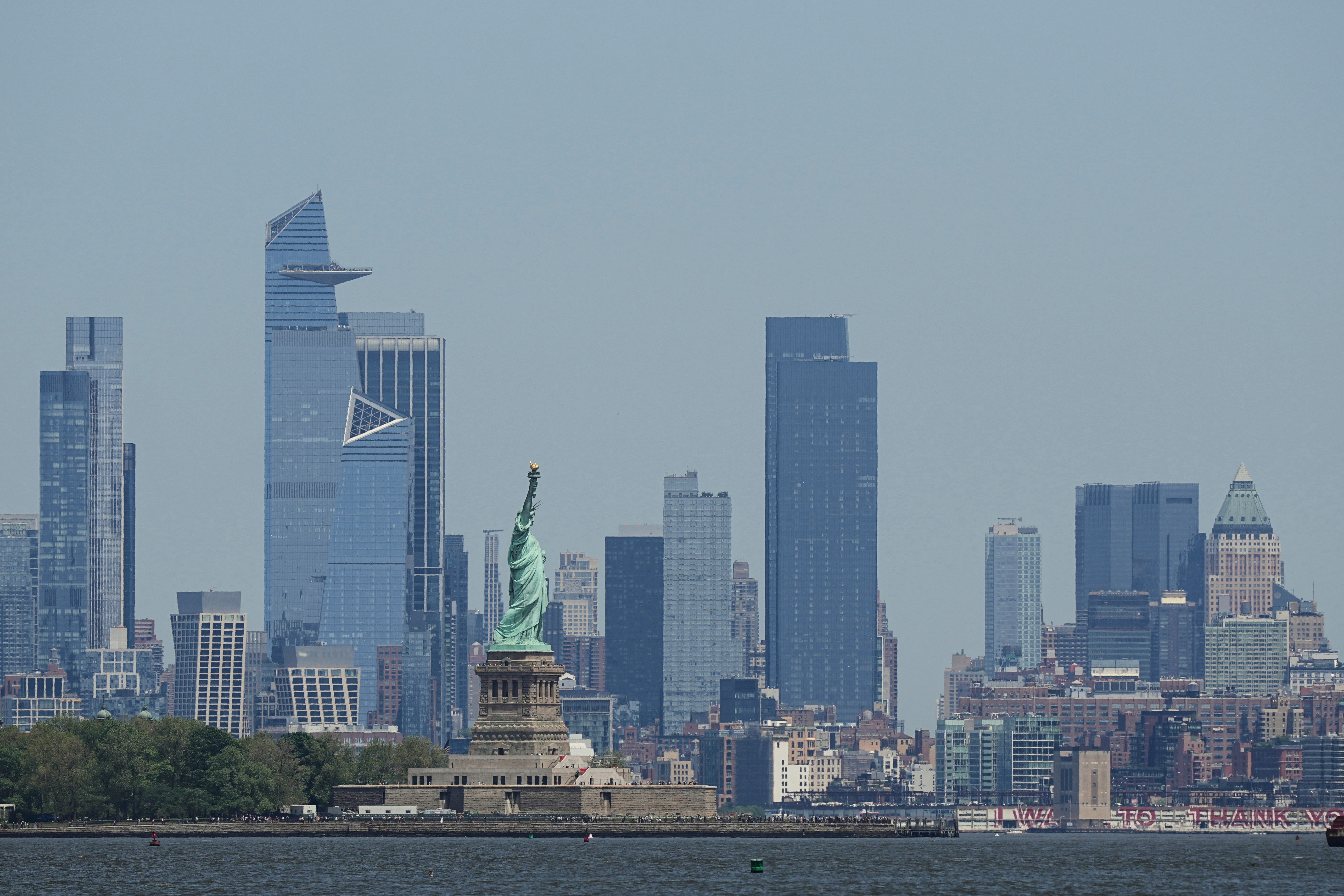
    NEW YORK — The operator of a boat that capsized in New York Harbor, killing a mother and her infant daughter, is facing criminal charges and authorities are investigating whether the vessel was an illegal charter, the U.S. Coast Guard said Sunday.

    The 22-foot Bayliner speedboat overturned around 10:25 p.m. Saturday near Liberty Island, home to the Statue of Liberty, the U.S. Coast Guard said.

    Twelve people were rescued from the water before police arrived, and police divers later located the 27-year-old woman and 5-month-old girl in the water. Both were taken to a hospital where they were pronounced dead. According to the Coast Guard, the others were in stable condition.

    “We are deeply saddened by the tragic loss of life last night, and our thoughts are with the victims’ family and loved ones during this incredibly difficult time,” said Captain Doreen McCarthy, the Coast Guard Sector New York Commander. “We are extremely grateful for the heroic, swift actions of our partner agencies and Good Samaritan vessel who assisted in rescuing survivors from the water.”

    Manuel Hernandez, 46, of New York, has been charged with 13 counts of reckless endangerment, police said. No phone number for him could be found Sunday, and the case had not yet been entered into online court records.

    The victims’ identities have not been released pending notification of family, police said Sunday.

    McCarthy said Coast Guard investigators are working with police to investigate and are committed to holding lawbreakers accountable. According to the Coast Guard, an illegal charter is any passenger-for-hire vessel operation that lacks Coast Guard credentials, safety equipment, and inspection certificates.