Blog

  • Trump officials propose new scrutiny of food additives and ingredients

    Trump officials propose new scrutiny of food additives and ingredients

    WASHINGTON — U.S. health officials on Monday proposed a rule change that would require food manufacturers to notify regulators before introducing new ingredients or additives into processed or packaged foods.

    The proposal would change a decades-old policy that advocates have called a regulatory loophole, blaming it for allowing thousands of unvetted ingredients into the U.S. food supply.

    Under the proposed rule from the Food and Drug Administration, companies would have to document and submit their safety findings for new ingredients, giving regulators the opportunity to investigate if they see a potential safety risk. Currently companies can decide for themselves if an ingredient or additive is “generally recognized as safe” and there is no requirement for companies to notify or submit evidence to the FDA, although some do.

    “Shifting to a mandatory notification system closes a decades-old information gap, giving the FDA the comprehensive visibility needed to enhance postmarket safety,” acting FDA Commissioner Kyle Diamantas told reporters on Monday.

    The FDA will take comments on the proposal for 120 days.

    Consumer advocates who have long pushed for changes said FDA’s proposal should require more than giving advance notice about new ingredients.

    “It must also include strong, science-based safety standards and thorough, independent FDA review before chemicals are allowed in our food,” said Melanie Benesh of the nonprofit Environmental Working Group.

    Scrutiny of ultraprocessed food continues, but with few details

    In a separate move, the FDA said it completed work on the federal government’s first-ever definition of ultraprocessed food, but did not release any details or the proposed language. The agency said it has submitted the definition to the White House for further review.

    Health advocates consider an official definition of ultraprocessed food a key step toward bringing greater scrutiny to packaged foods that are blamed for multiple chronic health problems afflicting Americans. A government-backed definition could pave the way for more federal research and, eventually, possible labeling or other restrictions on processed foods.

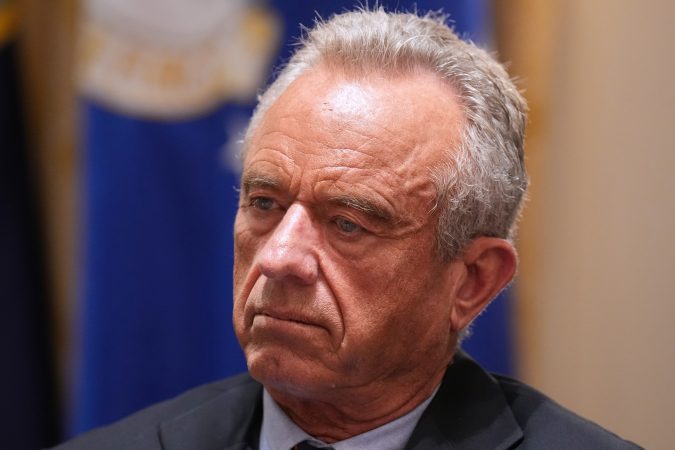
    Neither of Monday’s announcements is likely to immediately impact American diets, which are packed with fats, sodium, and sugar and are blamed for a host of chronic diseases such as obesity, diabetes, and heart disease. But both initiatives are considered top priorities for Health Secretary Robert F. Kennedy Jr., who entered government vowing to crack down on artificial colors, additives, and other ingredients.

    “These two actions will change how the federal government oversees what’s in our food and how we understand the foods that Americans eat,” Kennedy said at an event Monday at HHS headquarters.

    Ultraprocessed foods are made using industrial processing and additives, colors, preservatives, or other ingredients not found in home kitchens. The foods include sugary cereals, sodas, chips, frozen pizzas, and other grocery items.

    Scientists have been working to define and classify processed foods for well over a decade. But sweeping definitions come with downsides. They can be often applied to foods like whole grain bread, yogurt, and granola that are all highly processed but still considered nutritious. Some recent efforts to define ultraprocessed foods include carve-outs for foods that meet nutrition standards, despite having processed ingredients.

    FDA proposal would bring new insights on additives

    In the U.S., an estimated 10,000 additives are allowed in food, including thickeners, preservatives, and packaging ingredients.

    Consumer advocates have long argued that many of those ingredients have never been properly vetted because of the FDA’s policy allowing manufacturers to certify for themselves that new additives are “generally recognized as safe,” or GRAS.

    FDA’s Diamantas stressed Monday that the new policy would not require all new ingredients to undergo FDA review. He said that type of mandatory review would need to be enacted by Congress to rewrite FDA’s food authorities.

    “What we’re doing is requiring companies that utilize the pathway to notify us of their conclusions so that we have greater visibility into those conclusions and consumers have awareness,” Diamantas said.

    Under the proposal, the FDA would be expected to review new ingredient submission within 180 days. If FDA regulators have safety concerns they could request additional information from manufacturers or request that they delay introducing the ingredient.

    Kennedy said the Trump administration would ask Congress to grant FDA additional powers over food ingredients.

    “Congress needs to give FDA the additional tools it needs to keep pace with the changing food supply and protect the American people,” Kennedy said.

    Rule change in the 1990s created what advocates call a loophole

    Any substance intentionally added to food is supposed to undergo formal review — unless the additive is considered safe. Since the late 1950s, the government recognized that many common ingredients in foods, such as spices and vinegar, were widely consumed and understood to be safe for consumption.

    The FDA policed the GRAS exemption for years, but it took time and resources. Starting in 1997, the FDA began allowing companies to independently determine that a new additive is safe based on publicly available scientific evidence and the consensus of qualified experts.

    However, the list of products deemed GRAS by companies grew to include many synthetic and natural additives, all incorporated into the food supply without independent review.

    The process has created a “secret GRAS loophole,” according to the consumer advocacy group Center for Science in the Public Interest, that “undermines the integrity of our food safety system.”

    Food industry officials contend their internal reviews of additives are as rigorous as the FDA’s own processes.

  • Eagles kicker Jake Elliott ‘extremely confident in myself’ after struggling during 2025 season

    Eagles kicker Jake Elliott ‘extremely confident in myself’ after struggling during 2025 season

    Eagles special teams coach Michael Clay doesn’t think Jake Elliott fell out of love with football, but he did see a kicker last season whose body language was that of a player who was being hard on himself.

    It is an isolating position. The snap and hold need to go well, sure, but so much rests on the swing of an NFL kicker’s leg, and the precision with which his foot hits the ball, that any decrease of their confidence level can lead to poor results.

    Elliott, the team’s primary kicker since 2017, had one of his worst seasons in 2025. He went 20-for-27 on field goal attempts. That 74.1% conversion rate was his second-worst season-long performance, barely edging out his 73.7% (14-for-19) effort in 2020. Elliott converted 93.8% of his field goals in 2023, which included a 7-for-8 mark on kicks of 50-plus yards. But the two seasons that followed have not been particularly good. Elliott is 48-for-63 over his last two regular seasons, and that 76.2% clip rates as one of the worst marks for a primary kicker in the league.

    Elliott may have lost confidence in himself, according to Clay, but the Eagles maintained confidence in their kicker. Elliott, 31, is the only kicker in camp and, barring an injury or the unforeseen, will enter his 10th season as the team’s kicker.

    Asked Monday his reaction to the team sticking by him, Elliott said he loves playing for the Eagles and is happy to still be in Philadelphia, but …

    “You’re always competing,” he said. “There’s 32 of these jobs in the world, so you’re always competing with everybody.”

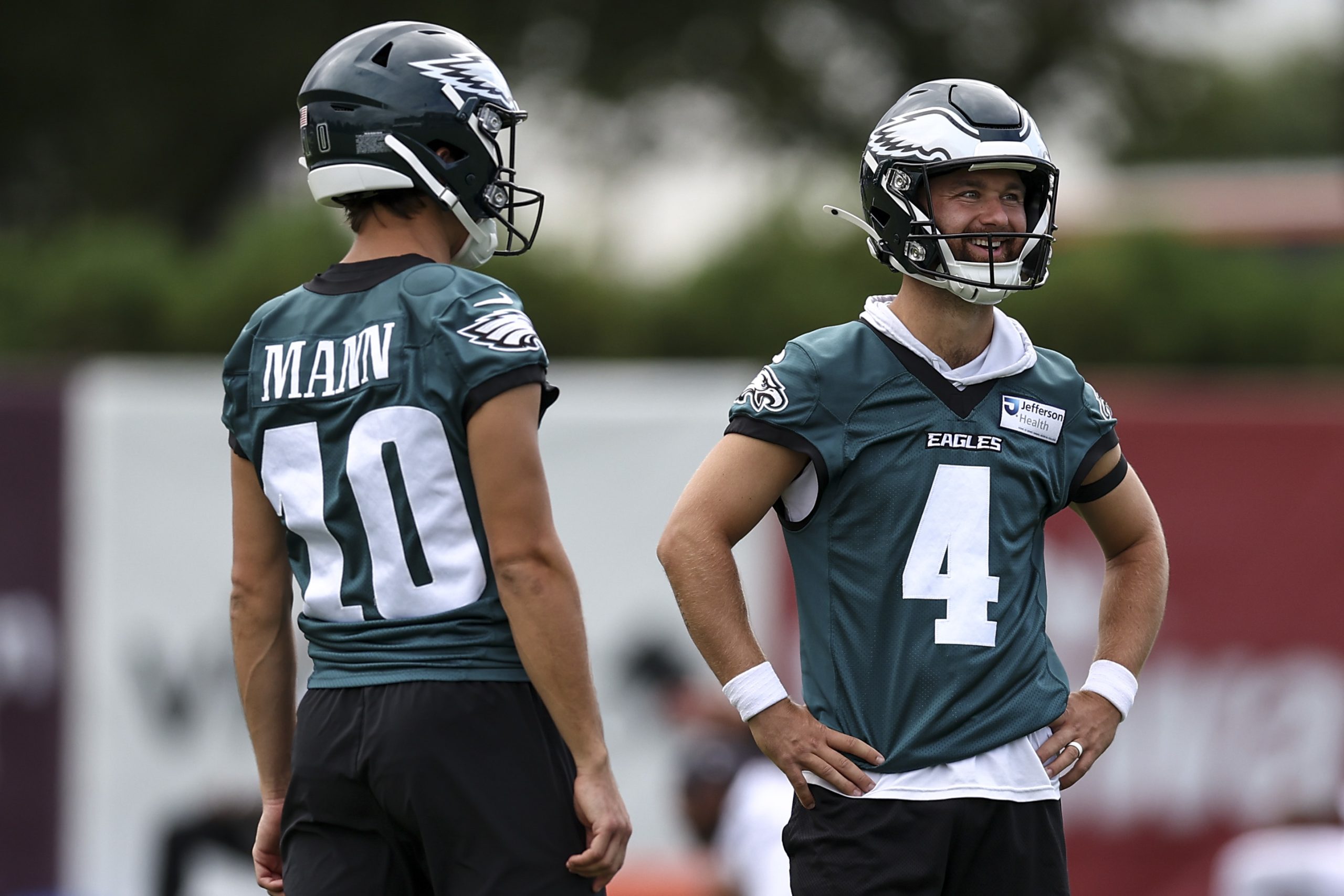
    Jake Elliott (right) is trying to shake off a 2025 season that was below his usual standard. Monica Herndon / Staff Photographer

    The competition is mostly with himself. Elliott said he took his normal approach to the offseason despite coming off one of his worst seasons. He looked back at what happened in 2025 — “We played in a lot of really windy games last year,” he said — and tried to learn from it.

    He spent his offseason here. The deep dive into 2025 results found issues with kicking in the wind, so Elliott would do his best to replicate the wind whenever he could. Lincoln Financial Field presents winds that tend to blow into the kicker and left to right, Elliott said, so if he could find that wind, he would. He kicked on high school fields that were particularly open and susceptible to higher winds. He kicked at Penn’s Franklin Field, where the wind swirls.

    Elliott showed up at training camp feeling good, and Clay said he noticed.

    “You never want to see them kind of get out of sorts in terms of their body language,” Clay said last week. “So, for me and him to have our own personal talks, I think he’s done a really good job since then in terms of his body language, being better and not necessarily getting down on himself on things he can’t control. Control what you can control. If you’re able to be on top of that, there’s going to be things in life you can’t control. You’re not going to be able to control mother nature. You’re not going to be able to control the distance we put you out there.”

    Jake Elliott remarked on the impact of windy conditions on his 2025 season, but also missed kicks in better weather like in Los Angeles. Yong Kim / Staff Photographer

    Elliott didn’t lose his love for football, he said Monday. It was a fair question considering Clay remarked in May that Elliott had to “fall in love with the game again,” but the crux of the coach’s comments were about Elliott finding his confidence again.

    “A confident kicker is a dangerous kicker,” Clay said in May.

    Said Elliott: “I’ve always loved the game. I always will love the game. I don’t think that’s necessarily in question. It’s just, how can you be better?”

    That’s what the offseason was about, refining his contact and dialing in on his ball flight.

    The result?

    “I’m extremely confident in myself right now,” Elliott said. “I feel like I’ve had a great offseason, I’m putting together a good camp, I feel like I’m striking it best I have in a while. Every day is a new day. Just trying to build on it.”

  • Workers at Quaker Valley Foods in Northeast Philly on strike over pension dispute

    Workers at Quaker Valley Foods in Northeast Philly on strike over pension dispute

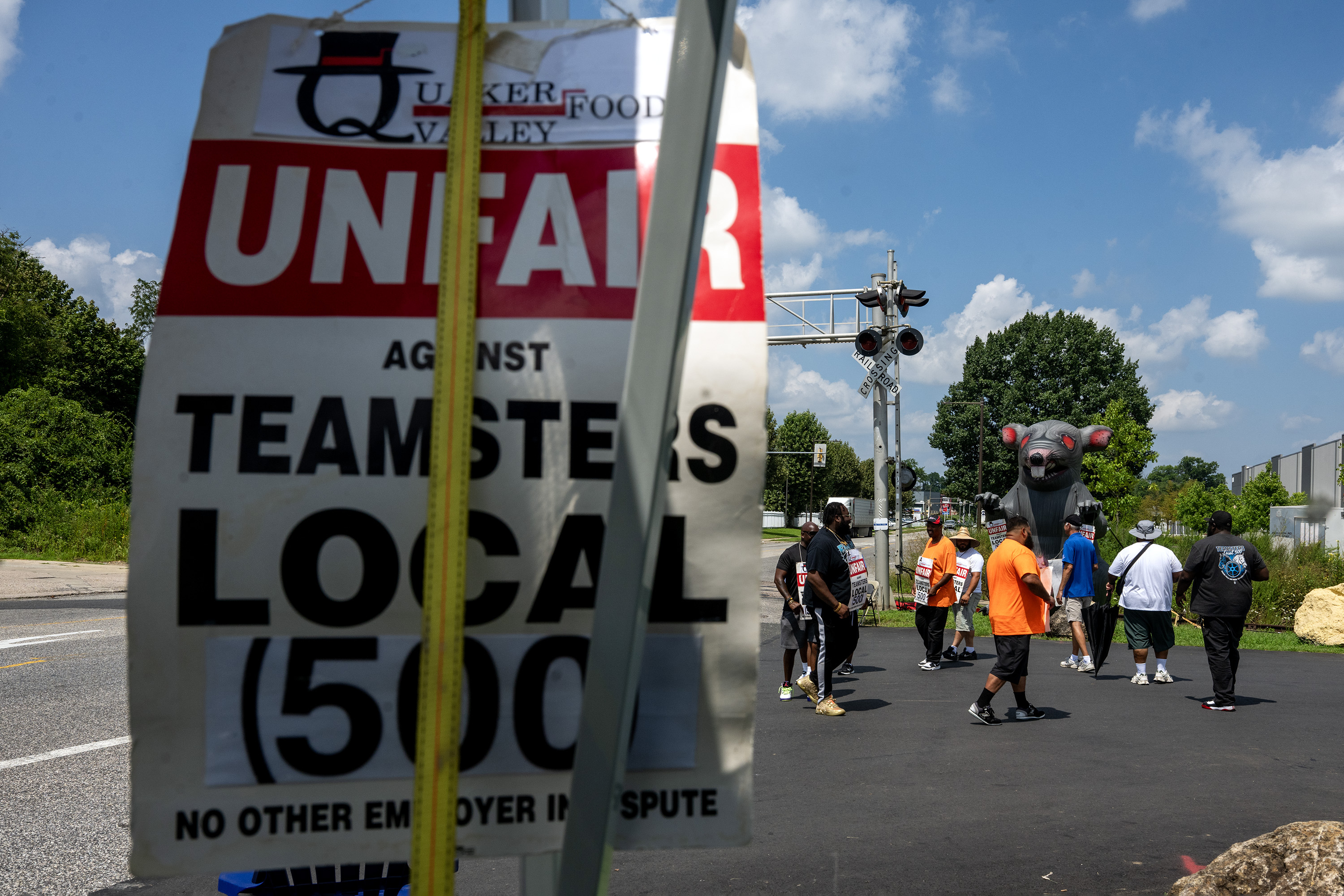
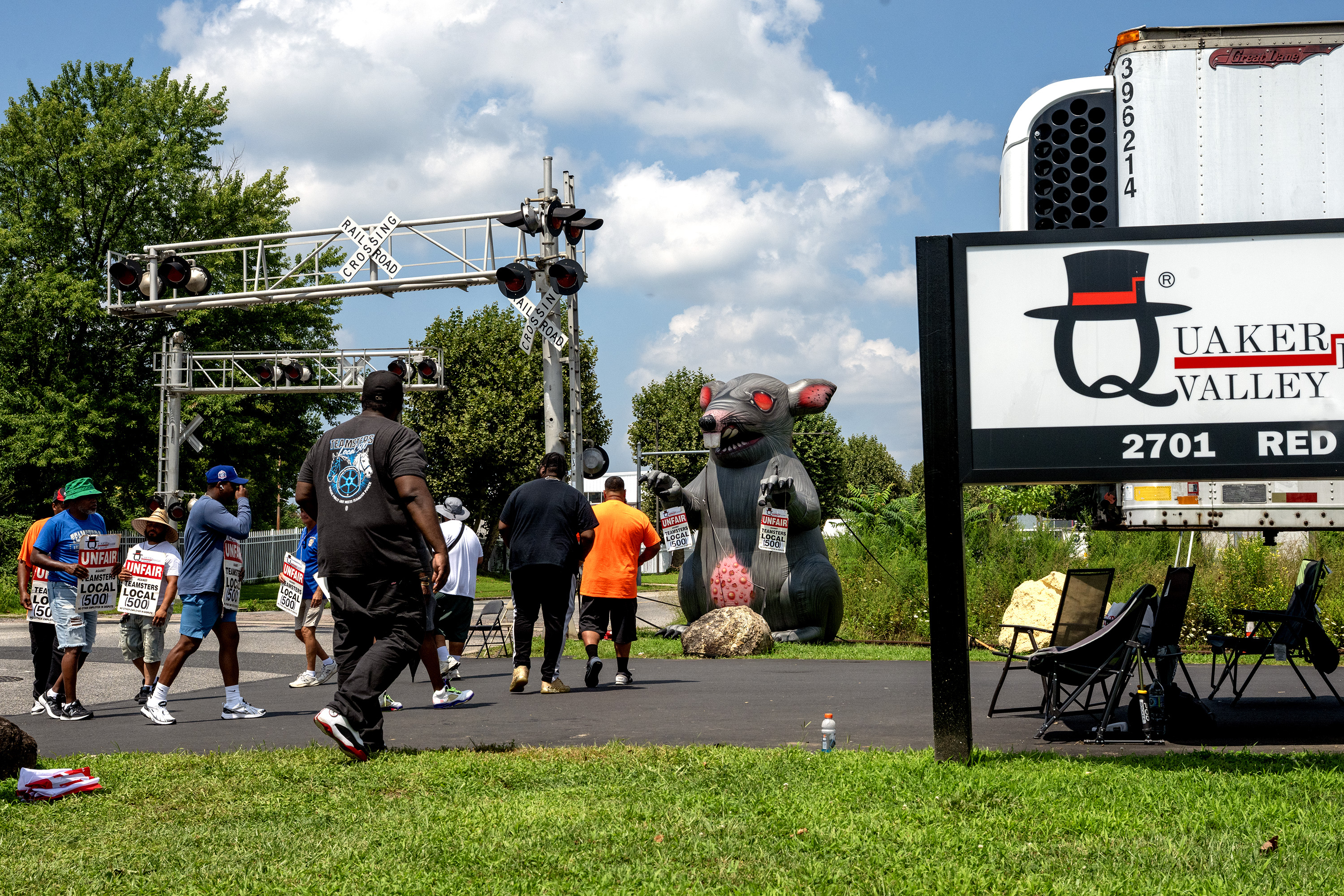
    A labor strike in Northeast Philadelphia stretched into its fourth day Sunday after a food distributor failed to meet truck drivers’ demands for a pension plan.

    Members with Teamsters Local 500 have been picketing around-the-clock at Quaker Valley Foods’ warehouse since Wednesday night, according to union officials.

    The union represents about 70 Quaker Valley employees, including roughly 35 truck drivers whose contract expired Aug. 1. They have said they will not return to work until the food distributor agrees to administer a pension plan as part of a new five-year contract.

    In an emailed statement, Quaker Valley Foods said it “cares deeply about its employees and their welfare and remains committed to reaching an agreement with the union.” The company said it presented a “generous contract settlement” with “significant and unprecedented wage increases and provides enhanced retirement benefits for our workers and their families.”

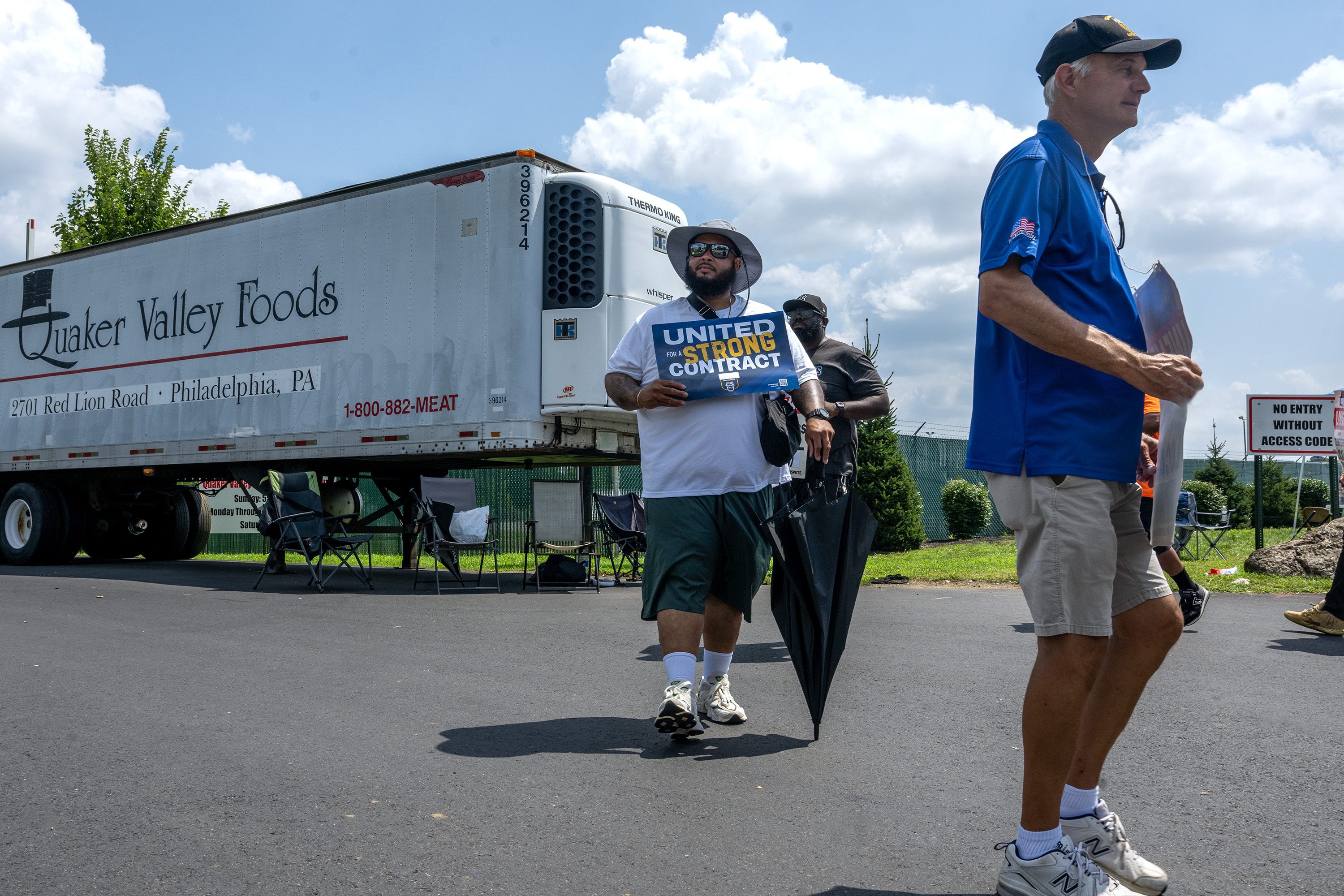
    On Sunday afternoon, about a dozen union members were stationed outside Quaker Valley’s Red Lion Road facility, braving blistering heat and humidity as passersby honked car horns in solidarity.

    According to labor leaders, the drivers’ union has been vying for a pension in recent contract negotiations, which they believe would provide more security than the company’s 401(k) retirement plan. However, management earlier this week issued a steadfast refusal, Local 500 president Doug Edwards said.

    Picketers walk outside the Quaker Valley Foods warehouse in Northeast Philadelphia on Sunday, Aug. 9, 2026. Teamsters Local 500 members are on strike demanding the food plant administer a pension plan.Tom Gralish / Staff Photographer

    “These are hardworking guys, and many of them have been here for a long time,” Edwards said, noting that many of the workers drove food deliveries into New York City during the COVID-19 pandemic without personal protective equipment.

    “These guys risked everything to get food out to people, and now it’s time that the company should give us guarantees in our retirement,” he said.

    Edwards said members rejected a prior contract deal that did not include a pension plan; as of Sunday afternoon, he said the union had not heard from the company.

    Quaker Valley distributes meat, deli, and specialty foods along the East Coast. The company said it had “implemented contingency plans across the business during this time and will continue working to meet the high standards our customers and vendors have come to expect.”

    Doug Edwards (right), president of Teamsters Local 500, and Juan Lafuente (left), a Quaker Valley driver for 12 years and shop steward, join the picket line outside the Quaker Valley Foods warehouse in Northeast Philadelphia Sunday, Aug. 9, 2026. Union members are on strike demanding the food plant administer a pension plan.Tom Gralish / Staff Photographer

    Shop steward Juan Lafuente, who has worked for Quaker Valley Foods for 12 years, said the union is striking for its future security. At 40, he’s worried about the state of Social Security and whether traditional retirement funds will sustain him for a lifetime.

    “We want to retire here,” he said, “we’re not trying to grab money and run — we’re trying to stay. You got a whole bunch of guys who are going to commit the rest of their lives to this company and make it grow.

    “All we ask for is a pension.”

  • PennDot to repair deteriorating steel beams on University Avenue Bridge

    PennDot to repair deteriorating steel beams on University Avenue Bridge

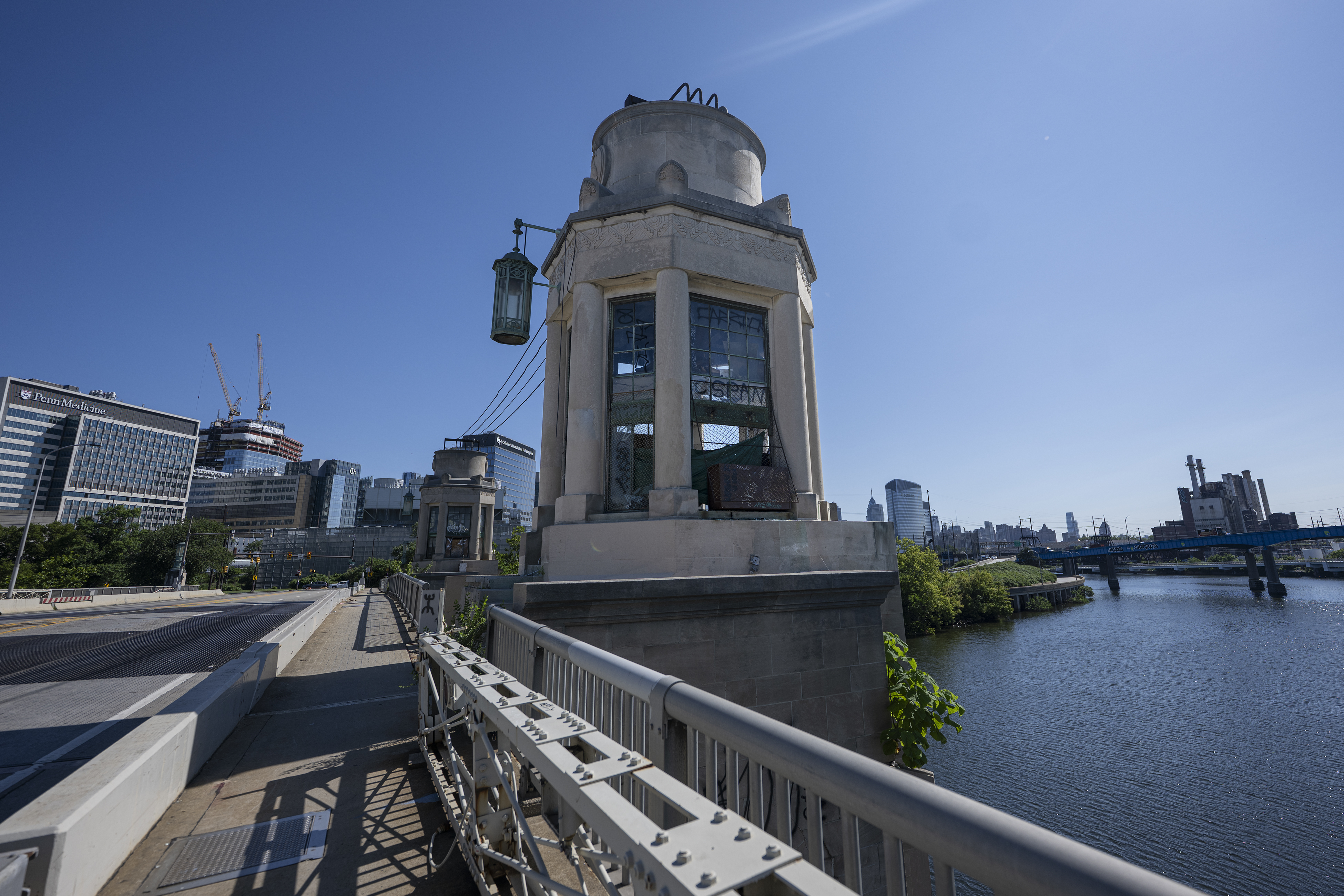
    The University Avenue Bridge will soon receive structural repairs, and some of its architectural details will be secured from further vandalism, but a full-scale restoration of the historic span isn’t happening anytime soon.

    PennDot is slated to begin work on the drawbridge Aug. 17, the agency announced Monday. Pedestrian and vehicular traffic will be partially impeded for the duration of the job.

    A routine inspection in March of the Paul Philippe Cret-designed structure turned up deterioration in some of the steel members, said PennDot assistant district executive for assets Kerri Cutright, “and we were a little concerned, and so that’s why we’ve initiated these repairs.”

    The goal is to move the drawbridge from “poor” to “fair” condition, said Cutright.

    In addition, plans call for the installation of 8-foot-tall chain-link fencing in front of the two operator’s houses on the east side of the bridge to deter vandals.

    Work is expected to continue through Dec. 15.

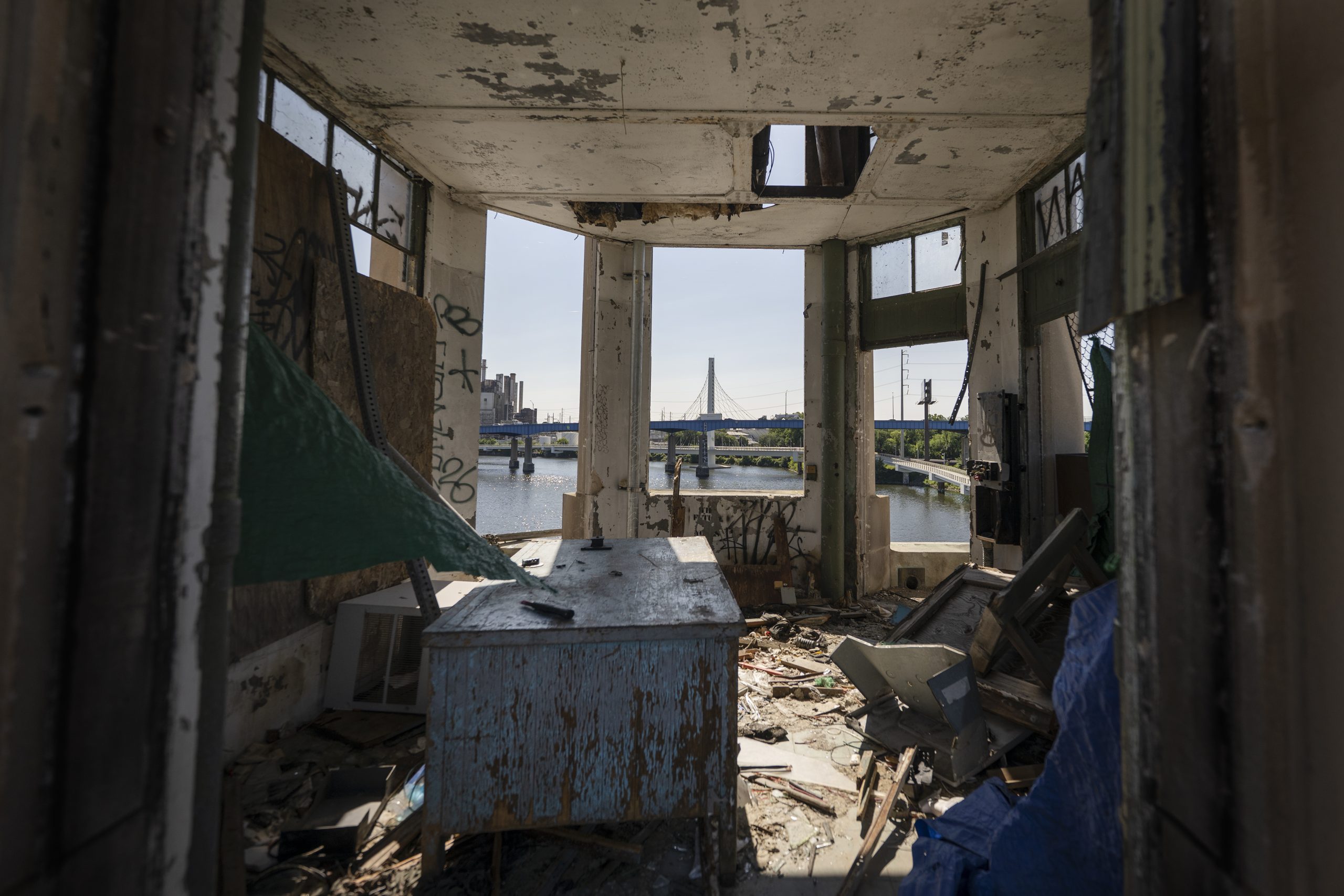
    Broken windows and vandalism are visible inside one of the operator’s houses on the University Avenue Bridge on July 23.Jose F. Moreno / Staff Photographer

    The project, estimated to cost about $2 million, leaves unaddressed the needs of some major features of the bridge, which was built around 1930. It will not bring back the bridge’s ability to raise its leaves, though the work won’t prevent restoration of that function in the future. The 10 elaborately detailed lighting fixtures will not be returned to working order as part of the job.

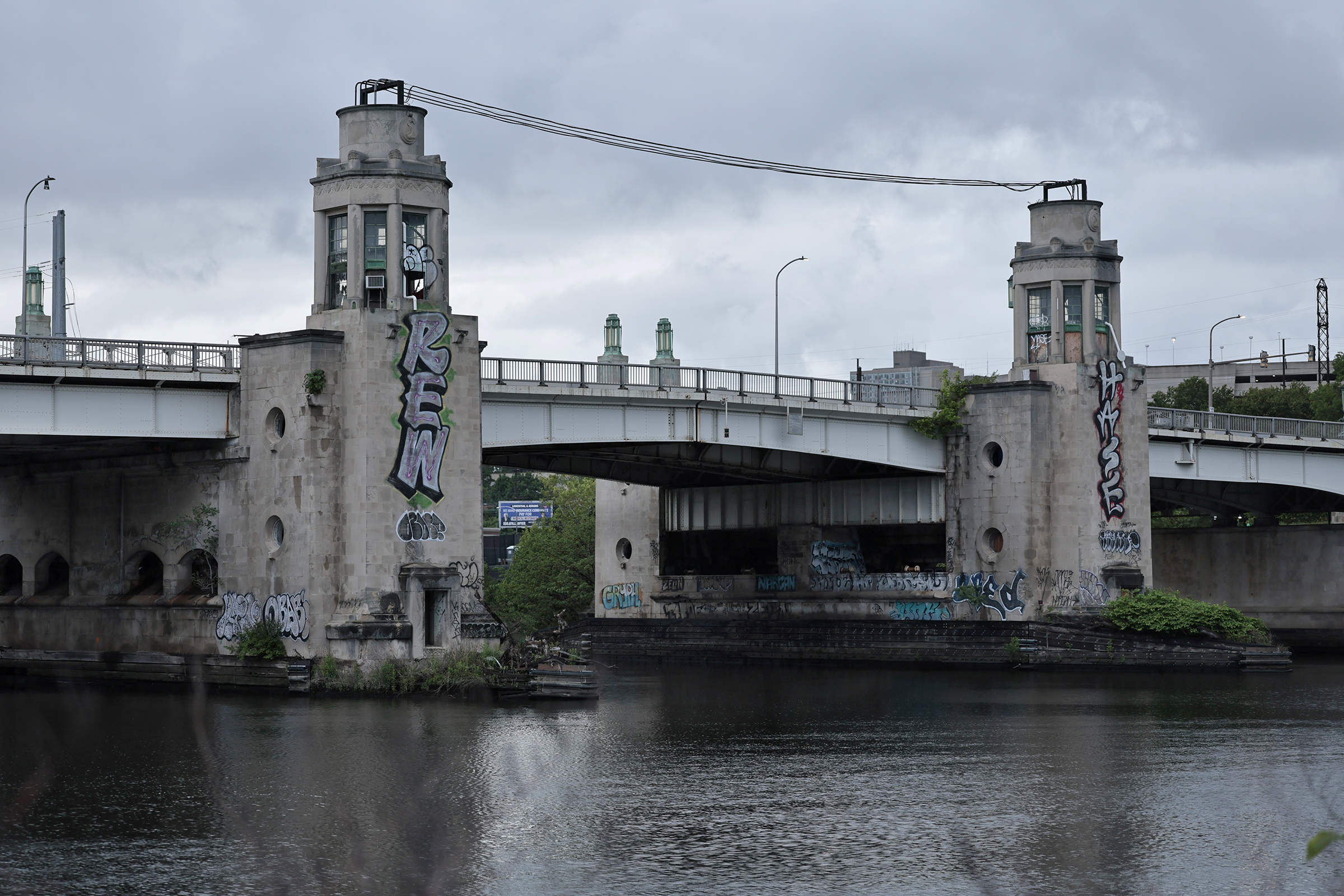
    Graffiti has marred the bridge in several places, most noticeably on the Center City-facing sides of the operator’s houses, but there is no immediate plan to clean up the scrawls.

    “At this time, graffiti removal is not in the scope, but it is being explored in the near future,” said PennDot spokesperson Brad Rudolph.

    Graffiti on the University Avenue Bridge, seen from the Schuylkill River Trail, on May 21.Elizabeth Robertson / Staff Photographer

    Vandalism and deterioration on the bridge linking West Philadelphia and Grays Ferry have attracted sporadic public attention for decades. The Inquirer highlighted the conditions last September, with another article in June, and other news outlets have called for the bridge’s stabilization and restoration. A recent change.org petition advocating that it be protected from further damage collected hundreds of signatures.

    “Without intervention, these unique design elements risk permanent loss,” the Preservation Alliance for Greater Philadelphia wrote in its magazine, which lists the bridge as one of the city’s places to save.

    “We welcome PennDot’s attention to the University Avenue Bridge and the planned work to address some of its most urgent deficiencies. This is a positive first step, especially after years of visible deterioration, but it should not be the end of the effort,” said Paul Steinke, executive director of the Preservation Alliance for Greater Philadelphia. “The bridge is one of Philadelphia’s most distinctive historic spans, and it deserves a broader rehabilitation plan that addresses its historic features, long-term condition and role as a public gateway between neighborhoods.”

    The repairs at hand will address the structural elements beneath the bridge’s deck. The bridge uses a girder floor beam stringer system to carry the load, said Cutright, and the deterioration will be addressed with plating, cleaning, and repainting, and some steel members may be replaced.

    Vandalism and the elements have damaged the two operator’s houses on the Center City-facing side of the bridge. They will be cleaned out and sealed, and a chain-link fence will be installed in front of the two structures to deter trespassers.

    Lane closures will reduce vehicular access to one lane in each direction during construction. Two of the bridge’s four lanes will be closed all day every day, with two lanes left open (one in each direction) through mid-December. The work will begin with closing the two lanes closest to the operator’s houses, and moving all traffic to the other side. Then, in a couple of months, the closure pattern will flip.

    The bridge carries more than 36,000 vehicles per day, according to PennDot, and the agency expects significant backups during construction. Pedestrian access will be permitted on the side of the bridge opposite from where work is being conducted.

    A fish and other details adorn the operator’s houses on the University Avenue Bridge.Elizabeth Robertson / Staff Photographer

    Cutright said that while PennDot would like to restore the bridge, the cost is estimated around $50 million, and no funding is currently lined up for an effort on that scale.

    Even if funding were in place now, a major rehabilitation would be a long way off. Planning and construction would take five years or more, she said.

    “It’s a beautiful bridge, and I would imagine that if we were to do a major project that we would want to restore it to its former glory.”

  • Trump picks longtime aide Will Scharf as new top White House lawyer

    Trump picks longtime aide Will Scharf as new top White House lawyer

    President Donald Trump has named Will Scharf as the next top White House lawyer, replacing David Warrington, who is “going on to the Private Sector,” Trump wrote in a social media post Sunday.

    The change in the office of White House counsel will take place Sept. 1.

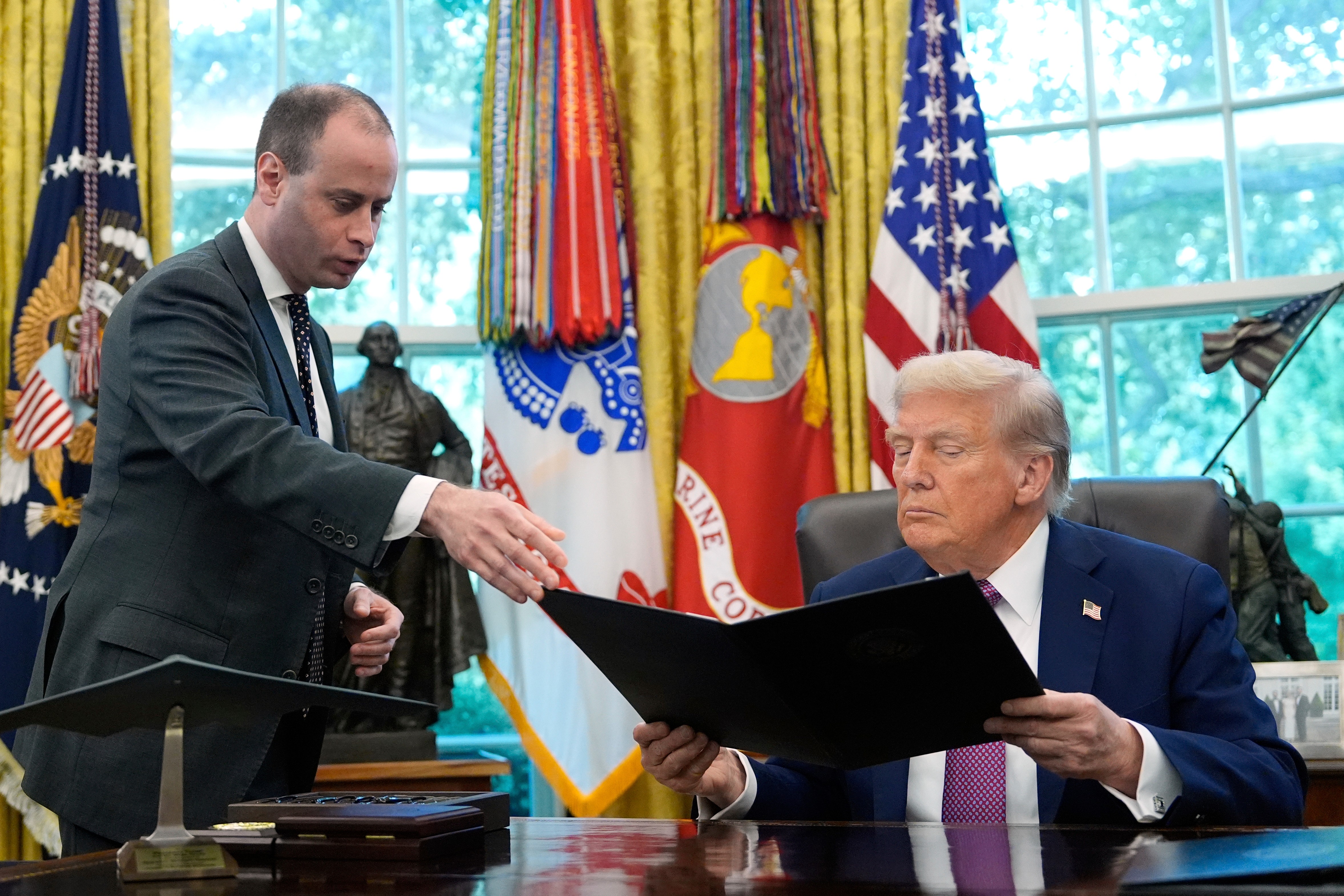
    Scharf, currently the White House staff secretary, is perhaps best known as the lawyer frequently standing over Trump’s shoulder in the Oval Office when he signs executive orders and explaining their details.

    Before that, Scharf, 40, was an unsuccessful candidate for Missouri attorney general in 2024, who also worked as one of Trump’s personal lawyers.

    “I know Will well! He previously represented me in numerous cases, including at the Supreme Court, during the Biden Administration’s corrupt and illegal campaign of Weaponization,” Trump wrote on his Truth Social website.

    Trump added that Warrington did “a truly outstanding job” as counsel. The change is the latest example of Trump White House staff — many of whom have had longer tenures than aides in Trump’s first term — increasingly leaving the administration in recent months.

    Before being brought on at the White House, Warrington served as Trump’s campaign general counsel during the 2024 election, after joining Dhillon Law Group, the firm owned by current Assistant Attorney General Harmeet K. Dhillon. There, he represented controversial Trump allies like Michael Flynn and Sebastian Gorka.

    Scharf has also served since last year as the chairperson of the National Capital Planning Commission, a low-profile federal agency charged by Congress with overseeing federal construction projects in the Greater Washington region. In that role, Scharf has expedited several of Trump’s handpicked projects, including the president’s planned White House ballroom, which the commission approved in April.

    Scharf has also sped up the commission’s reviews of Trump’s planned triumphal arch, which is expected to be approved by the commission at its next public meeting in September.

    Trump, who is seeking to complete the projects before he leaves office in January 2029, has cheered the commission’s swift approvals. The commission historically has taken much longer to review significant changes to the White House and new monuments around Washington.

    In his role as the commission’s chairperson, Scharf has also argued that the planned 250-foot-arch and other federal projects should not be subject to a federal law that restricts most construction in Washington to a maximum height of 130 feet, a position echoed by the Trump administration but opposed by historic preservationists.

  • A Lancaster County man pleaded guilty to fraud after the feds accused him of running a $400 million Ponzi scheme

    A Lancaster County man pleaded guilty to fraud after the feds accused him of running a $400 million Ponzi scheme

    A Lancaster County man pleaded guilty Monday to defrauding investors in his ATM businesses out of more than $400 million, a long-running scam that federal authorities have characterized as a Ponzi scheme.

    Daryl Heller, 56, of Lititz, was indicted last year after prosecutors said he deceived thousands of people who had invested in several businesses he owned that he used to buy and operate ATMs.

    As he sought to raise money for his firms, prosecutors said, Heller promised investors guaranteed monthly returns, which he said would be the result of operating the ATMs. And he also courted investors by using forged or fraudulent financial documents to inflate the purported health of his businesses, prosecutors said.

    Once Heller got cash infusions, prosecutors said, he used them to pay back old investors. He also spent some of the money on personal expenses or business debts.

    The scheme began to fall apart in 2023, when one of his companies, Paramount Management Group, began struggling to raise new money. Several months later, prosecutors said, Paramount stopped making payments to its older investors.

    Heller later filed for bankruptcy protection — which remains pending — and the U.S. Attorney’s Office in Philadelphia indicted him last August.

    In all, prosecutors said, Heller raised about $770 million from 2,700 people between 2017 and 2024, causing his investors to lose about $400 million. (Heller’s attorneys said Monday that they don’t agree with that number and plan to dispute it in court before he is sentenced.)

    Heller said little in court beyond responding to routine legal questions while pleading guilty to a securities fraud charge. He declined to comment after the hearing.

    U.S. District Judge Catherine Henry is scheduled to sentence Heller in December. He faces a maximum sentence of 20 years in prison.

  • Flyers loan forward Jack Berglund to Färjestad BK of the Swedish Hockey League

    Flyers loan forward Jack Berglund to Färjestad BK of the Swedish Hockey League

    The Flyers announced on Monday that they loaned forward Jack Berglund to Färjestad BK of the Swedish Hockey League (SHL) for the duration of Färjestad BK’s 2026-27 season.

    A second-round pick in 2024 and one of the Flyers’ top center prospects, Berglund played 40 games with Färjestad BK last season, netting seven goals and adding five assists.

    The 6-foot-4, 217-pound left-hander also captained Sweden’s World Juniors team in January, leading to a gold medal while scoring 10 points in seven games, three of which were goals.

    The 20-year-old forward signed a three-year entry-level contract with the Flyers on April 9, making his AHL debut with the Lehigh Valley Phantoms two days later.

    Berglund scored one goal in his five games in the AHL.

    “It was a great experience,” Berglund said about his AHL experience during the Flyers Development Camp in June. “It’s a different type of game with the small rink, for example, and different type of systems, and all of that… So I think it was, it was fun to like to get to play those games and get to know how it is over here.”

    Berglund will continue his development overseas with the Färjestad BK season slated to start on September 19, while the Flyers will be in the midst of their training camp.

    Flyers rookie camp will begin Sept. 11, with main camp beginning Sept. 17.

  • At least 111 dead, buildings collapsed after 7.4-magnitude earthquake shakes western Colombia

    At least 111 dead, buildings collapsed after 7.4-magnitude earthquake shakes western Colombia

    CALI, Colombia — A powerful 7.4 magnitude earthquake struck western Colombia on Monday, killing at least 111 people, damaging hundreds of buildings, and leaving many trapped under debris while their loved ones and rescue workers searched through rubble.

    Colombia’s President Abelardo de la Espriella, who reported the death toll, said at least 87 people were injured and around 1,600 buildings were damaged, including at least 61 that completely collapsed. He declared an emergency to expedite funding for the quake recovery while saying he would visit the disaster zone.

    “We aren’t going to leave people alone. They are in our hearts and we are going to tend to people with our full determination,” he said.

    The epicenter was in San Jose Del Palmar, a community of about 4,800 people in the Choco region about 250 miles west of Bogota, the U.S. Geological Survey said. The quake also was felt in neighboring Ecuador and Panama, though minimal damage was reported there.

    The quake ravaged cities across western Colombia, including Pereira, Quibdo, Cali, and Manizales.

    In the country’s third-largest city, Cali, search teams and civilians picked through the remains of destroyed buildings, passing large pieces of concrete and other rubble down a long line of volunteers. The desperate scene brought memories of the searches still ongoing in neighboring Venezuela weeks after that country was devastated by two powerful earthquakes.

    Most powerful quake recorded in Colombia this century

    Colombia’s Geological Service said Monday’s quake was the strongest recorded in Colombia “in the 21st century,” and that it was followed by 21 less powerful aftershocks.

    Colombia’s Pacific region around the quake’s epicenter lies along the Ring of Fire, the line of seismic faults encircling the Pacific Ocean where most of the world’s earthquakes occur. The Pacific, particularly the Choco region, is one of the poorest regions in the country. Nestled in the dense jungle, much of Choco is only reachable by boat or plane, which may pose a problem for authorities in assessing the wider toll.

    Jorge Moncayo, a 64-year-old taxi driver in Cali, said he saw plumes of dust shoot up across the city as buildings collapsed. Residents and rescue workers were searching the rubble for survivors.

    “My entire house shook. I’ve never lived through such a powerful earthquake,” he said. “We’re thanking God we’re alive.”

    Local authorities said the death toll included at least 40 people who were killed in the Risaralda region, where the hard-hit city of Pereira is located, as well as 27 people in the Valle del Cauca region, where Cali is located, including three children. Authorities also confirmed nine people killed in Choco, two in the Caldas region, and a 73-year-old in the Antioquia region. It was not immediately clear where the other 32 people died.

    Authorities said flights were suspended in the airports of Manizales, Quibdo, Armenia, Cartago, Buenaventura, and Pereira as they assessed damage.

    The earthquakes left many in the Andean nation unnerved after two back-to-back quakes devastated neighboring Venezuela in late June, destroyed hundreds of buildings, and killed more than 5,000 people.

    Little was known about the extent of the damage in Choco, a remote region where officials reported dozens of injured people and damaged buildings but few other details. Phone signals were out in many parts of region’s capital, Quibdo. The town closest to the earthquake’s epicenter, San Jose del Palmar, has no airport, and is located on top of a mountain ridge along a highway linking the cities of Cali and Pereira.

    In Pereira, further south in the coffee-producing mountains of Colombia, photos and videos published by local media showed pieces of the airport ceiling falling down on travelers taking shelter and screaming. In the city, people were shown running through rubble and plumes of dust. Pereira’s mayor, Mauricio Salazar, told a local radio station that more people were trapped under “a massive quantity of collapsed buildings.”

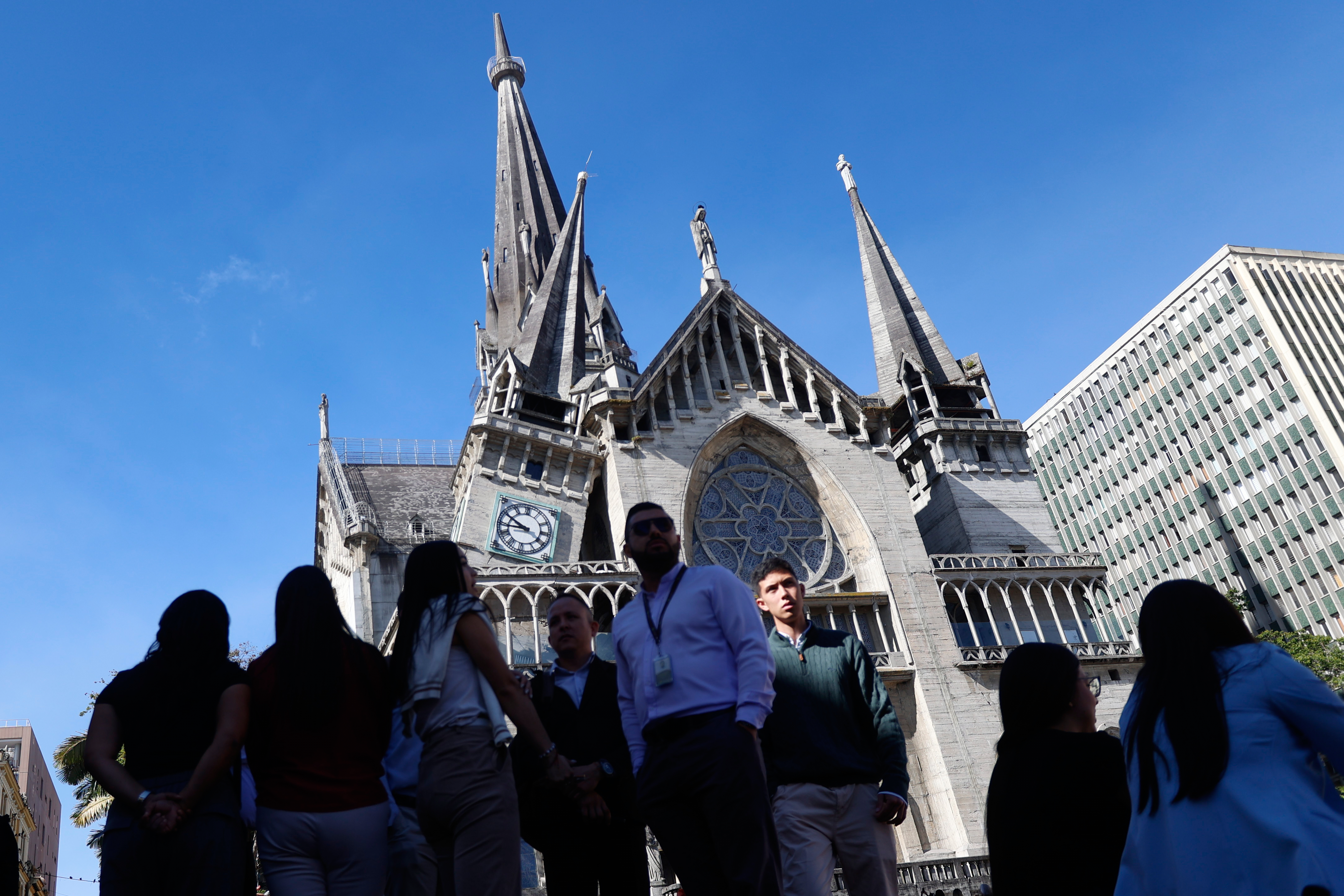
    In nearby Manizales, one of the towers of the neo-Gothic cathedral collapsed and fell on the nave. Mayor Jorge Eduardo Rojas asked residents to stay outside in case of aftershocks.

    In Cali, a city of 2 million people, Mayor Alejandro Eder said that residents were trapped in at least 19 buildings that had collapsed.

    Powerful quakes rare in Colombia, smaller quakes common

    Small earthquakes, known as “temblores,” are common in central and western Colombia, but those above 6.0 magnitude are rare. In 1999, a 6.2 magnitude quake near the city of Armenia killed more than 1,100 people.

    Colombia’s newly inaugurated president said Monday that he had personally taken charge of the government’s response to the emergency.

    “You are not alone. The state is present and taking action,” he said.

    Response to the earthquake presents the first major challenge to de la Espriella, a Trump ally who was sworn in as president over the weekend.

    Messages of support rolled in from leaders across the Americas, including Mexico, Brazil, Ecuador, El Salvador, and the United States.

    “The Trump administration is closely monitoring the large earthquake that struck Colombia and stands ready to support the people of Colombia,” U.S. Secretary of State Marco Rubio wrote in a post on X.

    A number of countries offered aid, and the U.N. deputy spokesperson, Farhan Haq, said, “We stand ready to help as needed.”

  • The Union are likely to miss the Leagues Cup knockout stage. What did these matches reveal?

    The Union are likely to miss the Leagues Cup knockout stage. What did these matches reveal?

    Despite looking impressive in a 3-1 win over Julián Carranza’s Necaxa side, the Union still have a slim chance of advancing to the knockout stage of the Leagues Cup.

    The top four teams from the MLS after three Liga MX vs. MLS matches will go on to the knockouts alongside the top four Liga MX performers.

    Sitting on three points after two matches, the Union are not mathematically eliminated from advancing, but they would need a lot of help to jump from tied for 10th to inside the top four on the final match day.

    Next is the Union’s assumed Cup finale against Santos Laguna at Subaru Park on Thursday (7 p.m., Apple TV). If the Union aren’t going to advance or hoist a trophy from their Leagues Cup run, what can they bring back with them into the MLS schedule?

    The most obvious answer is rest. While interim head coach Ryan Richter said the team plays to win, the selection for Sunday’s match allowed for some rotation.

    With qualification to the knockout stage already a long shot, Milan Iloski was able to sit with the substitutes for the second time this season before playing the final 30 minutes.

    Frankie Westfield did the same, coming off the bench for the third time this season.

    If the Union are mathematically eliminated by Thursday’s match against Santos Laguna, Richter could use that game as an opportunity to dig into his expanded 30-man Leagues Cup roster and rest some key players.

    Union’s Kai Wagner kicks the soccer ball against Necaxa during a Leagues Cup group stage game on Sunday.Yong Kim / Staff Photographer

    The top candidates for a night off includes Kai Wagner, who’s played 420 of a possible 450 minutes since returning from Birmingham City in July, Danley Jean Jacques, Jovan Lukić, and Nathan Harriel.

    “We probably will know exactly where we’re at by [Thursday],” Richter said after Sunday’s match. “You have to take your decision on how to approach the game. And it will be a little different. That’s the reality of it.”

    Richter will also hope to have gathered more information about his personnel and how it fits together by the time the Leagues Cup ends.

    With the Union on a solid stretch since their return from the FIFA World Cup, it would be easy to forget that Richter has only coached five matches at the professional level.

    The Leagues Cup has allowed Richter to see how his players perform in competitive, physical matches.

    “We can try different things,” Richter said. “Try some players that you might not use in a league game to see exactly where they’re at, and see if they have a role that they can play in the first team.”

    The Cup has allowed Richter to continue to tinker with his tactics, too. When the Union were in need of a goal late against Cruz Azul, Richter shifted his team to the same formation that sparked its three-goal comeback against Atlanta United in MLS play.

    “Even though we didn’t get the goal, I think it was a tactic we could use again if we’re chasing a goal at the end of the game,” Richter said. “It’s trying some new things. I don’t know the team [perfectly].

    “I don’t know the players, everything about them yet, so it’s still trying to learn a little bit about what the best fit is, in what moment of a game, and who you can rely on for a role, and what role guys can carve out for themselves.”

    Union interim head coach Ryan Richter greets player Cavan Sullivan during a second half substitution on Sunday.Yong Kim / Staff Photographer

    If the Union are lucky, their performances might hold up once they get back to league play. While the goal never came, Richter’s squad played an impressive second half against Cruz Azul.

    The Union never looked back after jumping out to an early lead over Necaxa, something the club has struggled to do for much of the first half of the season.

    It’s also a good sign that three different Union players other than Iloski scored. Sunday’s win was the Union’s eighth outing with three or more goals scored, and the third without Iloski on the scoresheet.

    Cavan Sullivan and Bruno Damiani both broke scoreless streaks, with the latter punching in his second goal of the season.

    As the team tries to pull itself back into the playoff picture, Damiani is hoping that the club’s Leagues Cup run will give it a boost once it returns to league play.

    “We need to focus now on the Leagues Cup, but then when it’s over, let’s go back to MLS and let’s go back to the things we did well,” Damiani said. “Most of the principles are the same. It changed the competition, but not us.”

  • Former Phillie Gary Matthews to be inducted into Negro Leagues Hall of Game

    Former Phillie Gary Matthews to be inducted into Negro Leagues Hall of Game

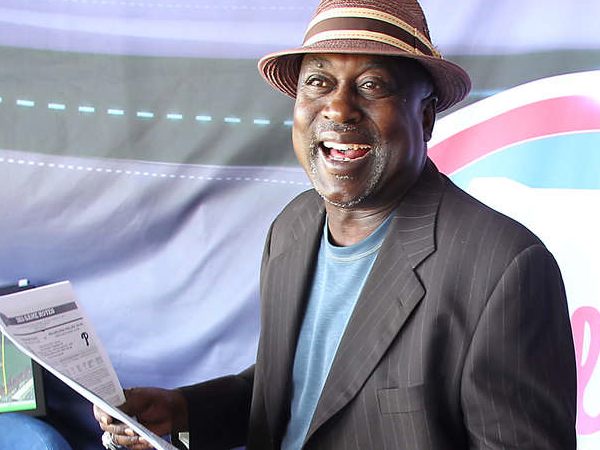
    Former Phillies left fielder Gary Matthews will be part of the Class of 2026 inductees into the Negro Leagues Baseball Museum’s Hall of Game.

    Matthews, 76, will be joined by Ralph Garr, Reggie Smith, and Andre Thornton in the Class of 2026, which will be inducted in a ceremony on Sept. 26 at the Gem Theater in Kansas City.

    Matthews played 16 major league seasons, including three with the Phillies, from 1981-83.

    Matthews was the National League Championship Series MVP in 1983, after helping the Phillies beat the Los Angeles Dodgers with a .429 batting average, three home runs, and eight RBIs in the series. In his more than 400 games with the Phillies, Matthews had a .279 batting average (.281 for his career).

    Nicknamed “Sarge,” Matthews was a first-round draft pick in 1968 by the San Francisco Giants. He also played for the Atlanta Braves, Chicago Cubs, and Seattle Mariners. He won National League Rookie of the Year in 1973.

    Matthews served as a color analyst for the Phillies broadcast team from 2007 to 2013, alongside Harry Kalas and Chris Wheeler during some of his career.

    His son, Del Matthews, who works as the Senior Vice President of Baseball Development for MLB, said his family made the trip to Kansas City to see his father’s best friend, Dusty Baker, receive the honor, which was an “unforgettable experience.” Now, to see his father enshrined alongside Baker and Jerry Manuel, Cito Gaston, and Willie Randolph, Del Matthews said is “profoundly meaningful to [their] entire family.”

    “My father loved this game, but more than that, he believed in opening doors for those who came after him,” Del Matthews said. “We are forever grateful to [President of the Negro Leagues Baseball Museum] Bob Kendrick, who has worked with us at Major League Baseball to teach our young development players about the legacy, grace, and history of the Negro Leagues. The Negro Leagues Baseball Museum ensures that the sacrifices, brilliance, and stories of these men continue to inspire generations to come.”

    Garr played 13 seasons with the Braves, Chicago White Sox and California Angels. Smith played 17 seasons with the Boston Red Sox, St. Louis Cardinals, Los Angeles Dodgers and Giants. Thornton had a 14-season career with the Cubs, Montreal Expos and Cleveland.

    The second annual JL Wilkinson “Innovator” Award is being presented to longtime sports journalist Rob Parker.

    The Hall of Game, established by the museum in 2014, honors former major league greats who embodied the spirit and signature style of the Negro Leagues.