Blog

  • Sizing up the 2028 Democratic presidential contenders

    Sizing up the 2028 Democratic presidential contenders

    The Democratic field for president is still wide open and unsettled. The very early list includes former presidential candidates, governors, senators, House members and celebrities. While no one on this list has officially declared, some candidates have been more open than others about wanting to run.

    Ahead of November’s midterm elections, the field is starting to take shape as a major debate roils the party: Is the surging progressive movement helping or hurting Democrats’ chances to take back the White House in two years?

    Some Democrats argue it’s time to embrace bold, progressive policies to boost their party’s popularity among working-class voters. Others think centrists will stand out.

    “I think Democratic voters are going to get incredibly pragmatic when it comes to 2028,” said John Anzalone, who served as the chief pollster for President Joe Biden’s winning 2020 campaign.

    Here’s how the field is shaping up. (This is our fourth ranking so far. Our most recent ranking of potential Republican candidates is here.)

    The standouts

    Jon Ossoff, Wes Moore, Raphael Warnock and other newish names: The Democratic base seems hungry for new leaders right now. Ossoff, the 39-year-old Democratic senator from Georgia, is fitting that bill in a big way. He’s getting millions of views for his sharp social media posts and campaign speeches that mercilessly criticize President Donald Trump.

    “This is the cruelest and most arrogant group of people who have ever ascended to high office in modern American history,” Ossoff told supporters in July.

    He is running for reelection in Georgia, and his race will be one of the most competitive in the country.

    Other Democrats point to Ossoff’s fellow senator from Georgia, Raphael Warnock, as a potentially strong contender. (Warnock is not up for election in November.)

    “For the first time since Obama, there’d be a candidate that unites the progressive Democratic lane and Black voters,” Texas-based Democratic pollster Nancy Zdunkewicz said.

    Moore, the first-term Maryland governor and only sitting Black governor, is described by some Democrats as young and vibrant.

    “Ossoff is currently on fire,” Anzalone said, “and Moore is also the type of guy who could really catch fire.”

    Kamala Harris: This summer, Democrats recommended South Carolina vote first in the 2028 Democratic nominating process. That boosts Black voters’ representation in picking the nominee and Harris’s fortunes, given the former vice president and 2024 nominee is probably the candidate on this list with the most support among Black women. She’s been rallying voters for the midterm elections by touting her “controversial” plan to abolish the electoral college and add justices to the Supreme Court. “They are ruthless! We need to be ruthless too,” she said recently of Republicans. Some Democratic insiders don’t see her as a viable candidate, given she lost to Trump.

    Gavin Newsom: The other California Democrat on this list aside from Harris has used his position as governor of the largest Democratic-run state to consistently oppose Trump. This summer he announced he and his wife were under federal investigation. (The Post has reported prosecutors are looking into potential tax crimes related to a nonprofit Newsom’s wife is linked to.) Newsom framed it as a compliment: “He’s coming after me because I’m considering running for president,” Newsom said of Trump.

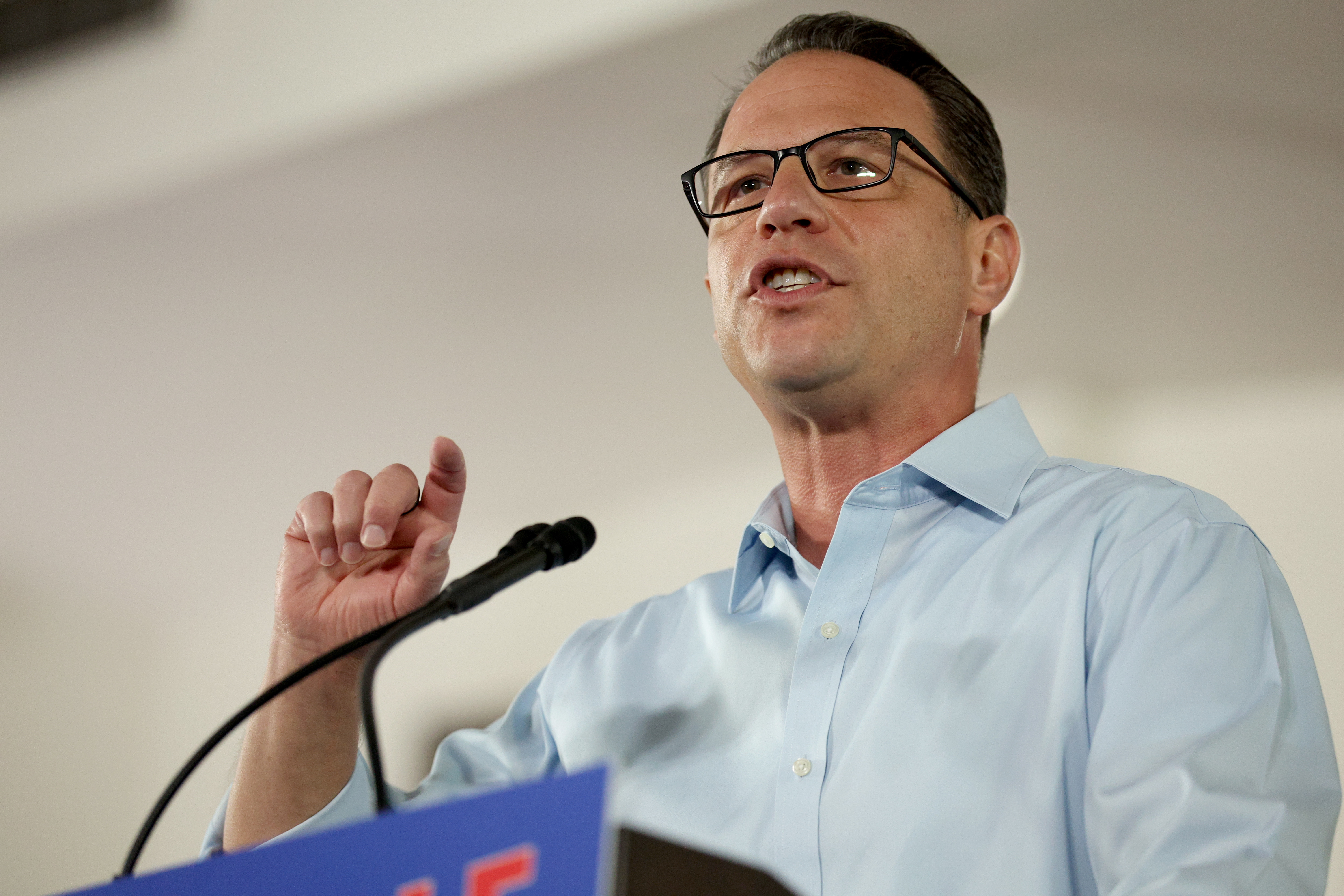
    Josh Shapiro: The popular Pennsylvania governor has had a relatively low-profile summer compared to other candidates on this list. He appeared in a music video. He has declined to take sides on the progressive-versus-centrist split in the party (at least for now). His breakout moment may be coming. He’s up for reelection in November and is trying to help Democrats take back control of the House by helping his party win four of the most competitive races in the nation, all in his state.

    Alexandria Ocasio-Cortez: Democratic socialists are having their own moment. After helping elect New York City’s mayor earlier this year, they and the broader progressive movement ousted longtime members of Congress in deep blue cities and won a hard-fought primary in Michigan. Ocasio-Cortez, a congresswoman from New York, was one of the first members of the Democratic Socialists of America to win federal office, and she’s an obvious pick for the broader progressive movement to get behind if she runs for president. She hasn’t ruled it out, though she could also run for Senate.

    Mark Kelly: The senator from Arizona has emerged as a forceful pushback against his party’s turn to the left. He’s also a candidate some Republicans say scare them: He’s a former astronaut (at a time when astronauts are cool again) and an astronomical fundraiser from a swing state.

    Pete Buttigieg: President Joe Biden’s transportation secretary is cited by Democrats as one of the party’s best messengers and another young candidate who can catch fire. Despite not currently holding office, he’s near the top of several polls of Democratic primary voters.

    The middle of the pack

    Any other number of governors: JB Pritzker, the billionaire governor of Illinois, has urged his party to focus more on economic issues than Trump: “You don’t win elections talking to the public about democracy,” he said.

    Kentucky’s Democratic governor Andy Beshear has been pitching himself as someone who can turn rural America against Trump. When Sen. Mitch McConnell (R-Kentucky) was hospitalized for weeks without many updates, Beshear demanded McConnell prove his “capacity to serve” or resign his seat.

    Jared Polis is on his final year as governor of Colorado. He’s a wealthy businessman who has received some credit for turning a reddish state more blue. He recently shocked his party by commuting the prison sentence of former election official Tina Peters, who was convicted on charges tied to Trump’s efforts to stay in power after losing the 2020 presidential election.

    No longer on our list is Gretchen Whitmer. This year marks her final term as governor of Michigan, and she’s repeatedly indicated she’s not interested in running.

    Any other number of U.S. senators: Sen. Cory Booker of New Jersey is a fiery presence in the Senate. Last year he broke the Senate record for the longest individual floor speech. This month, in a committee hearing he declared Republicans’ food stamp cuts as “effing ridiculous.”

    Sen. Elissa Slotkin of Michigan, one of the few women on this list, served combat tours as a CIA analyst and represents a swing state. She’s crisscrossing the Midwest to connect with voters. The centrist could play an interesting role in trying to help left-wing Democrat Abdul El-Sayed win the state’s other Senate seat in November.

    Sen. Chris Murphy of Connecticut has been a prominent Democratic voice on foreign policy for many years. Like many candidates on this list, he’s been critical of Israel’s violence in the Gaza Strip. He also made headlines recently saying he’d support a “bad deal” with Iran to end the war.

    “There’s only a couple of Democrats that are thinking of running for president that have won red states,” Sen. Ruben Gallego of Arizona said recently. “I’m one of them. There’s only a couple of Democrats that can speak to working-class America, especially Latino men. I’m one of them.”

    Rahm Emanuel: The former Chicago mayor was previously President Barack Obama’s chief of staff. Emanuel is leaning hard on policy. He outlined a proposal for Israeli-Arab peace while traveling to Israel last month. Back home, he’s proposed a national social media ban for children, a mandatory retirement age for federal politicians and judges, and bringing back accountability systems for teachers.

    Ro Khanna: The congressman from California has the eye of some progressives for being one of the first voices in the House to speak out against Israel’s military action in Gaza, for playing a leading role in bringing the Justice Department’s Jeffrey Epstein files to light, and for being willing to regularly go on Fox News.

    The dark horses

    A celebrity or other political figure: ESPN commentator Stephen A. Smith is considering a run as a centrist. United Auto Workers president Shawn Fain is popping up as a possibility among some on the left.

    Democrats I’ve talked to say to leave room for surprise candidates. “There may be someone running we’ve never thought of,” Anzalone said.


  • Record El Niño to give Earth a preview of its warmer future

    Record El Niño to give Earth a preview of its warmer future

    This year’s record-smashing El Niño will do more than just shift and enhance patterns of heat, extreme rainfall and drought around the world.

    It will also give the planet a preview of the late 2030s.

    That’s because this El Niño will act like a climate time machine, temporarily pushing global temperatures to levels that might not otherwise be reached for another decade or so.

    According to an analysis by climate scientist Zeke Hausfather that was shared with The Washington Post, there’s around a 95 percent chance that 2027 will become Earth’s hottest year on record — soaring past the last record in 2024 — because the combination of El Niño and climate change could spike global temperatures to around 1.76 degrees Celsius (3.17 degrees Fahrenheit) above preindustrial averages.

    Described as “stunning” by Hausfather, who researches and analyzes the climate for Stripe, Carbon Brief and Berkeley Earth, this value would be so far above the warming trend of the last decade that it could bring global temperatures to levels not otherwise expected under that trend until around 2037.

    “I’m not sure folks have realized just how crazy the second half of 2026 and 2027 will be for global temperatures — on the back of a record-smashing El Niño event,” wrote Hausfather on X.

    It’s currently close to a coin flip whether or not 2026 would become the warmest year on record, according to Hausfather’s analysis, which considers the average of several different temperature datasets. It’s possible that 2026 sets a record in some, but not all, of these datasets.

    Jim Hansen, director of the Program on Climate Science, Awareness and Solutions at Columbia University, said he expects 2026 to become the warmest year, but to only hold that crown until 2027 exceeds it.

    There is a much stronger signal for record warmth in 2027 because increasing air temperatures caused by El Niño lag slightly behind increasing ocean temperatures.

    A global temperature of 1.76 degrees Celsius above preindustrial levels in 2027 would be about 0.29 degrees Celsius higher than what’s expected based on the warming trend of the past decade.

    According to Hausfather’s temperature predictions for next year, the middle 50 percent of forecasts range from 1.67 degrees Celsius to 1.85 degrees Celsius above the preindustrial average.

    At the high end of that range, global temperatures in 2027 would jump roughly 13 years ahead of the recent warming trend, reaching levels that might otherwise become typical around 2040. The low end would represent a 7-year-boost, to around 2034.

    Hausfather said that this El Niño event is happening on top of a “strong acceleration in the rate of warming associated with continued emissions of greenhouse gases.”

    Both Hausfather and Hansen also mentioned that decreasing atmospheric aerosols — which have historically offset some warming — are contributing to the acceleration in warming.

    Although Hausfather expects 2028 to be cooler than 2027, he added that “human emissions are adding a permanent El Niño worth of heat to the climate system each decade.”

    In other words, global temperatures in 2027 will take a big but temporary upward stairstep, and they are unlikely to permanently continue at or above those levels for now.

    These temperature increases will also have consequences for atmospheric water vapor. Because the water vapor-carrying capacity of air increases at a rate of 7 percent per degree Celsius, it’s possible — if not likely — that 2027 also sets a new global moisture record, surpassing 2024. In 2025, The Post mapped the planet’s rising moisture zones and showed how they are closely connected to an increasing risk for rainfall extremes.

    The role of El Niño

    During El Niño, huge stores of ocean heat from the western Pacific spread eastward, eventually reaching the west coast of South America. Thunderstorm activity shifts with that warmth, transferring heat from the ocean and pumping it high into the atmosphere. Winds and atmospheric circulation then redistribute that heat beyond the tropical Pacific and around the globe, raising global temperatures.

    That’s why strong El Niño events often appear as an upward stairstep in long-term plots of global temperatures.

    But this El Niño isn’t just going to be strong. Boosted by the planet’s long-term warming trend, it’s probably going to dwarf the six strongest that came before it in 2015, 1997, 1982, 1972, 1888 and 1877 — the latter contributing to a global famine that caused 3 to 4 percent of the global population to perish.

    Ocean temperatures in the central equatorial Pacific, where El Niño’s strength is measured, have already broken records for 75 days straight.

    That streak isn’t expected to end anytime soon.

    Temperatures in the equatorial Pacific Ocean may surge more than 4.0 degrees Celsius above average (7.2 degrees Fahrenheit) by December, breaking the previous record by more than a degree Celsius.

    The Post is tracking these records on a regular basis — and mapping the potentially significant weather ripple effects — in an El Niño tracker.

    Those weather effects will vary from place to place.

    But the temperature spike will briefly push the entire planet into its warmer future.

  • Democratic socialism has been rising in the U.S. for over 50 years

    Democratic socialism has been rising in the U.S. for over 50 years

    The Democratic primaries leading up to the midterm elections in November have so far been a high point for the American left. Building on the momentum produced by Mayor Zohran Mamdani’s election last year, three insurgent congressional candidates on the left won their primaries in New York City in June. Two of these candidates were endorsed by the local chapter of the Democratic Socialists of America (DSA), while the third ran with Mayor Mamdani’s strong support. Weeks later, a DSA-endorsed candidate defeated a longtime Democratic member of Congress in Colorado. And although the Democratic U.S. Senate nominee from Michigan, Abdul El-Sayed, did not seek DSA’s endorsement, he won on a platform similar to those of several DSA challengers — including the candidate who unseated the Democratic incumbent in the state’s 13th Congressional District on the same night.

    These advances for democratic socialists, along with numerous victories at the state and local level, have spooked establishment Democrats protective of their positions — as well as moderate-to-liberal commentators worried about the party’s chances in November. A new and alien force, they claim, has entered the Democratic Party, displacing its traditional constituencies and candidates.

    Except nothing could be further from the truth. DSA’s strategy is not new, and democratic socialists made inroads in the Democratic Party decades ago.

    There are many historical moments to which we can trace the origins of the present democratic socialist moment, but 1973 may be the most pertinent. That year, a new democratic socialist organization sought pragmatic ways to engage with electoral and party politics, racking up achievements that have been long overlooked.

    In the early 20th century, the Socialist Party of America, founded in 1901, ran its own candidates in U.S. elections, famously Eugene V. Debs in 1912 and 1920, and Norman Thomas between 1928 and 1948. But by the 1960s, members of the party disagreed about how to achieve a democratic form of socialism during the Cold War. In general, the American left was undergoing tumult and conflict, with the emergence of the New Left, associated with the student movements of the ‘60s. The Vietnam War and nationwide urban crises added more pressures, and Nixon’s defeat of George McGovern in 1972 brought the party to a breaking point.

    The 1972 election exposed fault lines within the Democratic Party and within the Social Democrats, USA (SDUSA), the successor organization of the Socialist Party. Most SDUSA members were militantly anti-communist and believed McGovern’s foreign policy agenda was tantamount to appeasement of global communism. Organized labor was also not enthused, and the AFL-CIO refused to endorse the Democratic nominee.

    In 1973, the public intellectual and social activist Michael Harrington broke with SDUSA and founded the Democratic Socialist Organizing Committee (DSOC), taking with him a number of prominent leftists as well as labor leaders who dissented from the AFL-CIO’s neutrality in 1972. Harrington had come up in the anti-communist Old Left and clashed with Tom Hayden at the famous 1962 Students for a Democratic Society convention in Port Huron, Mich. Figures associated with this Old Left like Harrington and Dissent editor Irving Howe (who joined DSOC) rejected the New Left’s tactics as well as what they saw as its most extreme elements, including supporting revolutionary movements in Cuba, China, and the Middle East that were not democratic.

    But while DSOC was to the right of this New Left, they were decidedly to the left of the Democratic establishment. They believed that neither the mainstream of the labor movement nor the liberals in the Democratic Party, both tainted by support for the Vietnam War, would be able to mobilize the broad center-left coalition necessary to expand economic opportunity in the 1970s as the long postwar boom entered into crisis.

    DSOC, in Harrington’s words, sought to be “the left-wing of the possible” in the Democratic Party, and pursued what he and socialist leader Bayard Rustin called “realignment.” (Rustin himself, however, did not join Harrington’s new group.) Building on alliances with allies in the labor movement, DSOC sought to shape the Democratic Party at a time when the liberal accomplishments of the 1960s were coming under threat. As Harrington’s biographer Maurice Isserman writes, “Michael and his comrades were doing for liberalism what it could not seem to do for itself, which was to set forth a coherent response to the conservative attack on the welfare state.” This took the form of, for example, the Democratic Agenda conferences that DSOC held in Washington. At these confabs, DSOC brought together activists, elected officials, and progressive labor leaders to apply pressure on Democrats on issues ranging from full employment to universal healthcare to affordable housing.

    DSOC participated in Democratic Party midterm conventions, electing delegates and working the room to influence the party platform. Both the party establishment and the “New Democrats,” an insurgent group of centrist, market-oriented Democrats elected in the wake of Watergate, opposed them. But DSOC found allies among traditional liberals like Sens. Ted Kennedy (D., Mass.) and Hubert Humphrey (D., Minn). They also gained allies in Congress who were willing to affiliate with the organization, including Reps. Ron Dellums (D., Calif.) and John Conyers Jr. (D., Mich.), leading members of the Congressional Black Caucus.

    The 1976 nomination of Jimmy Carter, a moderate Democrat from Georgia, was a disappointment to Harrington and DSOC. But it was during the Carter administration that its strategy began to bear some fruit.

    The economic crisis of the 1970s had hit poorer and minority communities especially hard, producing disproportionately high unemployment rates. In response, civil rights activists like Coretta Scott King promoted the Humphrey-Hawkins bill, named after sponsors Sen. Humphrey and Rep. Augustus Hawkins (D., Calif.), that committed the federal government to achieving full employment, with the creation of new public sector jobs as a last resort. The Carter administration was reluctant to get behind this effort, fearing that more spending would fuel inflation, and Harrington and DSOC played a key role in the coalition to pressure the president into supporting the measure. Although the bill was watered down by the time it reached Carter’s desk — the mandate it imposed on the administration lacked teeth — the campaign for a full employment bill demonstrated the promise of the realignment strategy.

    At the start of the Reagan administration, DSOC merged with the New American Movement, a post-New Left formation, to form DSA. This attempt to heal the wounds of the 1960s with those on the New Left who now accepted working within the Democratic Party, however, foundered on the shoals of the 1980s. Historical circumstances, particularly hyperinflation, meant that the Democratic Leadership Council, an organization of the “New Democrats,” ended up pushing the Democratic Party to the right on issues like support for public programs, taxation, and urban crime, rather than DSA moving the party to the left, as Harrington envisioned.

    Made By History sponsorsInquirer Staff

    It would take a new economic crisis, that of 2007, and its aftermaths to revive democratic socialism in mainstream politics, in the form of Bernie Sanders’ 2016 presidential campaign. Following Trump’s election, many volunteers for Sanders joined DSA in 2017, where they found both an organization and a strategy with which to continue their work. In 2018, DSA member Alexandria Ocasio-Cortez shocked the establishment by ousting the high-ranking incumbent Rep. Joe Crowley from his House seat in Queens. While some in the DSA membership do not favor working within the Democratic Party, the organization, through its local chapters, has continued the realignment strategy favored by Harrington and DSOC in the 1970s.

    The victories of democratic socialists in Democratic primaries echo the 1970s in an important respect. Then, as now, Democratic leaders in Congress struggled to respond to a right-wing movement intent on drastically reshaping American society in its image. With the Cold War now in distant memory, American democratic socialists have been much more successful in filling the leadership void and capturing the discontent of Democratic primary voters. But they are nevertheless building on the political and strategic foundations of those who came before them.

    Abe Silberstein is a doctoral student in the joint program in history and Hebrew and Judaic studies at New York University. He is researching socialism and Jewish politics during the Cold War. He is also a member of DSA in New York City.

    Made By History takes readers beyond the headlines with articles written and edited by professional historians. Opinions expressed do not necessarily reflect the views of The Inquirer.

  • Prescription drug prices record sharpest drop in more than 60 years

    Prescription drug prices record sharpest drop in more than 60 years

    Prescription drug prices recorded the biggest year-over-year drop in more than 60 years in July, a startling reduction experts chalked up to an array of factors, including more generics and discount GLP-1 weight-loss drugs.

    While overall costs for medical services continued to rise, prices for medicinal drugs fell 2.7% over the 12 months ending in July, the largest annual drop on record, according to Bureau of Labor Statistics data released Wednesday. Prescription drugs, part of the medicinal drug category, fell by 3.1%, the steepest annual decline since March 1963.

    The White House took credit for the good news, saying President Donald Trump’s efforts to slash drug prices were working. Some experts said a Biden-era policy that requires Medicare to negotiate prices for some popular prescription drugs is more likely to be driving down costs.

    The drop in prescription drug prices is one of the few bright spots in the U.S. Consumer Price Index, which provides a snapshot of inflation. “Just what the doctor ordered!” Renaissance Macro, an investment research company, posted to X on Wednesday.

    Inflation has been running high for more than five years, sparked by the economic disruptions of the coronavirus pandemic and Washington’s response to it. More recently, prices have been rising because of energy pressures fueled by the war with Iran.

    Prescription drug prices, on the other hand, have slid sharply over the past six months, Renaissance Macro said, at a seasonally adjusted annual rate of 6.6% — “the sharpest six month drop on record.”

    While the results are stark, teasing out the cause is complicated, independent experts said.

    President Donald Trump has long pledged to bring down prescription drug prices, and the White House made the case Wednesday that the president’s pricing agreements with drug companies and a new initiative, the direct-to-consumer site TrumpRx, are responsible for the lower prices.

    “No president in modern history has been able to drastically reduce prescription drug prices across the board except for President Trump,” White House spokesperson Kush Desai said in an email. “This is a direct result of the President’s willingness to push the envelope with bold policies that actually put Americans and America First.”

    White House officials pointed particularly to the costs of GLP-1 weight-loss drugs, which Trump calls the “fat drug.” TrumpRx, which launched earlier this year, offers GLP-1 drugs for as low as $150 for a starting dose. And under a Medicare pilot program that the administration launched in July, drugmakers Novo Nordisk and Eli Lilly agreed to charge the government just $245 a month for their products, Wegovy, Zepbound, and Foundayo.

    Monthly prices charged to insurance companies previously had topped $1,000. Trump and the drug companies began negotiating last year and announced the rough outlines of the deals in November.

    “In a matter of months, we got up and running these discounts in a way that they were meaningful for American patients,” said a White House official, speaking on the condition of anonymity because administration staff are not authorized to speak publicly.

    But bigger trends in the GLP-1 marketplace were already driving down prices independent of Trump’s negotiations, according to experts on drug pricing. Spotty insurance coverage for Wegovy and Zepbound for weight loss has produced enormous demand for lower consumer prices. And cheaper compounded drugs have posed genuine competition for the brand-name companies, adding even greater downward pressure.

    Richard Frank, a senior fellow at the Brookings Institution and a professor emeritus of health economics at Harvard University, said he doubts Trump’s initiatives are behind the drop in drug prices.

    “If I was a betting guy on what mattered most, it would be probably stuff around the Inflation Reduction Act,” Frank said, adding that Trump’s efforts “wouldn’t be where I’d place my money.”

    The Inflation Reduction Act was a signature accomplishment of former President Joe Biden, a sprawling measure enacted in 2022 that aimed to lower prescription drug prices by requiring Medicare, the federal health program for the elderly, to begin negotiating the prices it pays drugmakers for an array of popular and costly prescription drugs.

    The first price reductions took effect at the beginning of this year. Using 2023 prices as a benchmark, the Centers for Medicare and Medicaid Services has estimated taxpayer savings of $6 billion from that first round.

    The Trump White House argues that the Inflation Reduction Act gets too much credit for lowering prices, in part because it took four years to take effect.

    Stacie Dusetzina, a health policy professor at Vanderbilt University, said the Inflation Reduction Act is a more plausible contributor to the decline in prices than Trump’s initiatives.

    While only 10 drugs have had their prices negotiated so far, they are commonly used ones “and their prices would likely be reflected in the prescription drug index,” she said via email. TrumpRx, on the other hand, covers “a limited number of branded drugs,” Dusetzina said, and “aside from GLP1s, they may not be high enough volume to be included.”

    Dusetzina said another Trump policy — most-favored-nation pricing, which ties U.S. prices to lower ones paid abroad — could not explain the drop in prices either, “as the models that are supposed to use this form of pricing haven’t even launched.”

    The Bureau of Labor Statistics category for prescription drugs does not track what drug companies charge. It tracks how much a pharmacy actually receives when it fills a prescription. That means it includes a customer’s payment at the counter plus whatever is paid by their private insurance or by Medicare Part D, the program that pays for drugs picked up from a pharmacy.

    A drop in this index does not necessarily mean drugmakers have cut their prices. It can also reflect insurers and Medicare striking better deals or people switching to cheaper drugs.

    Which brings up another, less glamorous source of lower prices: generics. When a brand-name drug loses patent protection, BLS waits about six months, swaps the brand in its sample for the cheaper generic and records the difference as a reduction in price.

    A wave of blockbuster drugs lost exclusivity over the past year, and Dusetzina said that could be pushing the index down — “especially if the drugs were commonly filled.”

  • Chatbots are doing the work of Congress with little oversight

    Chatbots are doing the work of Congress with little oversight

    The amendment was one of hundreds filed this summer to an annual defense bill making its way through Congress. Along with her proposed change, Rep. Anna Paulina Luna’s office had sent a summary of what it would do.

    But the first line made no sense.

    “increasing example specific factors. Identical to H.R. 100 (118th Congress).11:25 AM????Claude responded:”

    One of Luna’s staffers had copied a chatbot’s answer — time-stamp and all — and pasted it into the public record of the National Defense Authorization Act.

    As a screenshot of the garbled text circulated on social media, the Florida Republican was nonchalant.

    “Not a shocker,” she wrote. “Most staff use it.”

    Asked later about the incident, Luna went further. “A lot of staff will use ChatGPT, Claude, Grok. I personally like Grok better, but my staffer prefers Claude,” she told The Washington Post. “I’m not gonna knock him for that. There’s nothing illegal about him doing a summary.”

    Across the Capitol, lawmakers and staffers are using artificial intelligence to write speeches and news releases, sort constituent mail, prepare questions for congressional hearings and draft amendments.

    Even as politicians are debating how to govern AI for the rest of America, Congress has already settled how it will use the technology: quickly, broadly and with little oversight.

    Both chambers have cleared members and staff to use chatbots — Copilot, ChatGPT, Gemini and, in the House, Claude — for official work, with more under review. The House bought 6,000 Microsoft Copilot licenses last year and encouraged staff to use them.

    Having someone else put words in a lawmaker’s mouth is nothing new. For almost as long as Congress has existed, staffers have been ghostwriting speeches for their bosses. But a speechwriter can be summoned or fired. Chatbots are products built by the tech companies lawmakers are in charge of regulating.

    Amid the rapid adoption of AI on the Hill, lawmakers face a key question: How much of their responsibilities are they willing to hand over?

    Interviews with more than two dozen lawmakers and staffers — some of whom spoke on the condition of anonymity to discuss internal operations — along with internal House and Senate policies obtained by The Post, show that the institution has left that question largely unanswered. The few House and Senate rules that exist are poorly understood and seldom enforced. In practice, AI use is left up to the hundreds of individual congressional offices to settle for themselves. It’s not clear how many offices have internal written policies on AI.

    And no one The Post asked knew of any instance where a staffer was formally disciplined by the House or Senate for breaking its rules.

    Luna was right. There was nothing illegal about having AI edit, spell-check — or even write — legislative materials. It wasn’t against House rules, either.

    Her staffer’s only mistake was letting Claude sign its work for others to see.

    Congress’s newest staffer

    Sen. Tommy Tuberville has found a new way to pass the long drives across Alabama: talking to ChatGPT.

    He asks it about Medicare and Medicaid, and listens as the machine’s voice talks back.

    “It’s kind of like you can sit there and talk to an expert,” said the Alabama Republican. “You don’t know whether or not they’re 100 percent correct. But they put you on the right path.”

    Rep. Mike Flood (R-Nebraska) said he consulted a chatbot while working on a bipartisan housing bill that passed this year, asking it where private equity was buying up single-family homes. Sen. Elizabeth Warren (D-Massachusetts), who has proposed stricter legislation on tech companies, uses ChatGPT to look up demographic information.

    One GOP staffer’s boss uses chatbots to generate the occasional cartoon of himself, she said with a laugh. Her explanation: “He’s a boomer.”

    But the real power users are the thousands of staffers who do most of Congress’s work.

    Earlier this year, Rep. Cleo Fields (D-Louisiana) had a town hall coming up in Natchitoches, a city in his district that his press secretary didn’t know well.

    So that aide, Sydney Broome, asked Claude for a list of TV stations in town, its newspapers, and reporters’ names and contacts. Then, she started calling each one.

    At 22, Broome is the youngest full-time staffer and only press secretary for Fields. AI saves her three or four hours of work a week, she said. Her boss does not use it at all.

    ChatGPT first emerged when Broome was still in college. Her professors, unable to stop students from using AI, urged restraint and ran their assignments through AI detection. Students could use it for research, they warned, but never to write from scratch.

    Congress has no such checks. So Broome has imposed them herself.

    She’ll use Claude to find a reporter’s email, but not to write to them. She doesn’t use it to produce anything in her boss’s name. “That’s just kind of a bit of a gray area,” she said.

    Many staffers say they are aware of AI’s limitations. The tools occasionally invent nonexistent bills. Other times, the writing is formulaic and clunky. Still, chatbots help speed up their work.

    A GOP aide in another office said he uses Copilot to write appropriations amendments. The subcommittee he works for used AI to suggest witnesses for a hearing and to help generate the questions lawmakers should ask them.

    Another Republican aide has taken AI even further. He exported all his phone contacts and text messages — years of conversations — into a personal Claude account and told it to build a database of every reporter he has ever dealt with: what he pitched them, which ones they accepted, which exchanges went badly. The chatbot auto-updates itself with each new conversation.

    Recently, his boss wanted to do a TV interview about surveillance law. The aide asked Claude whether he had ever pitched a TV booker on that topic and how it went. It came back instantly with a contact.

    Claude also runs that staffer’s office’s communications budget — the taxpayer-funded mail and ads sent to constituents. “I don’t really have to touch the data in Excel much anymore,” he said.

    The aide said he’s not sure what exactly is permitted by congressional rules. “You’re still not supposed to put constituent data into AI,” he said. “There are weird things around where the rules are. I don’t know all of them.”

    When nobody’s looking

    In 2024, the House Administration Committee convened a private, bipartisan meeting with House officers and outside AI experts to talk through how far to let AI into the legislative process. About 150 chiefs of staff attended.

    Out of it came the first AI guidance for Capitol Hill.

    Internal House and Senate policies obtained by The Post and interviews with people familiar with them show how Congress has embraced the use of AI.

    Last summer, the House bought 6,000 Copilot licenses. The tool was a natural fit for a chamber that already ran on Microsoft and a more secure way to keep congressional work inside a single system, officials believed. Starting in January, offices could sign up for access.

    They came with a major guardrail built into the system: Copilot is designed to refuse political requests. Ask it to criticize a party, politician or political group, and the machine declines.

    “I can’t create content that criticizes or condemns political parties, politicians, or political groups,” read one Copilot response shared by a staffer. “That includes writing tweets that attack Democrats, Republicans.”

    Roughly half the licenses are now in use, and House officials have extended the deal.

    The rules Congress wrote for itself are loose. Off limits under current House guidance: putting sensitive material such as constituent information into a chatbot, generating deepfakes, making personnel decisions and finalizing legislation.

    A machine may help write a bill but may not be the last hand on it. It may draft a reply to a constituent but can’t be told who the constituent is.

    In theory, a staffer breaking those rules can be stripped of access to AI tools, suspended, fired, even fined and imprisoned.

    But no one could name a single case of that happening. People familiar with House operations said they’re not aware of any enforcement action by the chief administrative officer. A spokesperson for the CAO said the office can’t comment on potential enforcement actions. A spokesperson for the Senate sergeant at arms didn’t respond.

    Catching violations largely falls on staffers, who would have to report a colleague, or themselves.

    Most said in interviews that they don’t know the rules. A former senior Republican House staffer said that his office subscribed to both ChatGPT and Claude and that staff used them however they liked. He wasn’t sure what the rules were, or whether his team followed them. “We just had a free-for-all,” he said.

    The House and Senate encourage individual offices to implement their own written AI policies. If a House office wants Copilot, in theory, it must have a policy in place.

    One reason Congress has moved so quickly to adopt AI tools is to keep pace with the executive branch, said people familiar with internal House operations. The Trump administration has spent the past year and a half pushing AI into every corner of the government.

    “If we are not keeping pace with how the executive branch is functioning,” one person said, “then we’re not performing effective oversight.”

    AI for everything

    The new frontier has left some lawmakers pondering how to proceed.

    “We want to make sure we’re using AI, and AI isn’t using us,” said Rep. Jamie Raskin (Maryland), a constitutional law professor and the top Democrat on the House Judiciary Committee.

    Sen. Elissa Slotkin (D-Michigan) recently worked with her staff on a new policy for her office. They can use AI to “enhance and streamline” work but not to generate “final products” — like floor speeches or public remarks. They have to take AI training. Nothing with personal information about constituents or the senator can be uploaded. And her office is holding unannounced “spot check” inspections.

    “We didn’t want to prohibit the use of the newest tools, but we also didn’t want absolute schlock showing up in my memos,” Slotkin said. “What I’m not willing to do is put my head in the sand and pretend that my young staff aren’t going to find new and interesting ways of doing this.”

    In recent months, one Democratic staffer said his office has been exploring something new: feeding AI his boss’s past statements so the tool can write in the lawmaker’s voice. He heard another office was pulling it off and wanted to try himself.

    In the same building, a GOP press secretary whose office has stricter AI limits said it’s unfair other offices get an advantage. “We could churn out so many op-eds if we were more comfortable with AI,” she said.

    Recently, she found her own press assistant using AI in violation of their office’s policy. “We had to have a very robust conversation about how not to use AI for things in [the boss’s] voice,” she said.

    A preview of what more rampant AI use could look like already exists in state legislatures — many of which have no rules or policies at all.

    Amber Hulse serves in the South Dakota state Senate, where money is tight and lawmakers have no full-time staff. Hulse, a Republican, uses AI for almost everything — policy research, constituent email, speeches, writing legislation.

    Lately, she said, the signs of AI’s effects are getting easier to spot.

    “It’s funny,” Hulse said, “how your ears will start to pick up on the floor someone who’s giving a speech that was very clearly written by AI.”

  • 🤳 Influenced at the beach | Down the Shore

    🤳 Influenced at the beach | Down the Shore

    The algorithm has been working overtime down the Shore, with influencers riding those waves of attention.

    There was Philly mom influencer Cait Vogel, whose video of herself walking to the beach in Sea Isle complaining about her $10,000 rental — where she still had to bring sheets, toilet paper, and her own coffee — went viral on TikTok and landed her in the New York Post (while still on vacation with her parents, she noted in a later post). She also lamented that despite her usually carefully curated posts, the one that went viral featured her in an oversized faux-bikini T-shirt.

    “Basically, we’re paying $10,000 to camp,” she said to what grew to more than 600,000 views. The post sparked debate on Jersey Shore rental prices and comparison vacations. (See our annual take on that discussion here.)

    Besides Vogel, this summer’s breakout influencers included Indy Atlantic City, who chronicles life on the Atlantic City Boardwalk, with regular updates on A.C. Batman. There’s Destiny Benway, whose amusing day in the life of a Jersey Shore lifeguard features an awkward, blurred-out interview with her beach patrol standmate, also her ex.

    And working hard with videos of himself standing in a clear and sparkling ocean in Lavallette is Jersey Shore Marcus.

    Consider me influenced; be right back after a dip in the ocean.

    Meanwhile, there’s a luau update. Last week, we talked about the Deauville Inn canceling its annual luau because of a complaint by a neighbor. The Deauville, which dates to 1881 but has been under new ownership since 2019, characterized it as a “premature noise complaint.”

    However, Upper Township’s administrator, James Van Zlike, tells me the township planning board limited the Inn in 2021 to six outdoor live musical events a year, and those are restricted to Memorial Day, Fourth of July, and Labor Day weekends. So the luau, as advertised, would have potentially been in violation of that resolution.

    Van Zlike says there was a complaint made to the township, but that the Inn canceled last week’s event on its own. Neighbors, meanwhile, are furious about the Deauville’s widely shared Facebook post, which they say unfairly puts the spotlight on them, not the Deauville. (The Deauville’s promise to give refunds and “Karen Krush” drinks to ticket holders also didn’t help.)

    📮 With time running out on Summer 2026 (but not until Sept. 7, practically Halloween), we’re pivoting from complaints and looking for solutions. What are some of the ways you would fix the Shore? Be specific! Let me know by replying to this email and I’ll include your most interesting responses in a future newsletter and possibly an Inquirer story.

    Have ideas or news tips about the Shore or this newsletter? Send them to me here.

    🌊 Forecasters like NorEaster Nick were side-eyeing Tropical Storm Cristobal way out in the central subtropical Atlantic.

    — Amy S. Rosenberg (Follow me @amysrosenberg, on Instagram at @amysrosenberg. 📧 Email me here.)

    If someone forwarded you this email, sign up for free here.

    Join The Shore Line, our text message group, where you can message us and we’ll message you back.

    Shore talk

    🐟 A dearth of Atlantic menhaden may be behind a decline in osprey offspring and some osprey deaths.

    🏖️ Strathmere residents told council they oppose the proposed $10 beach tags. “We are not an elitist community.”

    🦋 Planting native species is gaining popularity. Terri Akman explains how Jersey Shore gardeners do it.

    🚰 Cape May, Woodbine water systems were targeted in a cyber attack.

    🎡 Ocean City community groups have filed suit challenging the designation of the old Wonderland Pier as an area in need of rehabilitation.

    🏀 New York Knicks star and Philly native Mikal Bridges is fighting with Avalon’s floodplain manager over whether he can store gym equipment in his Shore house garage.

    💸 Bart Blatstein’s Showboat Hotel is under threat of foreclosure after a lender sued to recoup $13.4 million in debt.

    📈 The African American Heritage Museum of Southern New Jersey received a $100,000 donation from the Mack family to hire an executive director and move into a larger space in the Tanger Outlets in Atlantic City.

    What to eat/What to do

    🍔 Michael Solomonov of Zahav and Federal Donuts fame got maybe a bit carried away by his cheeseburger and called the Margate Burger Bar “the best restaurant in America.” (The veggie burger is great, too.)

    🍦 Richman’s Ice Cream is throwing a block party Saturday in Brigantine. Mojoz Gummicone, the first cone designed for water ice, will be there.

    🛟 The South Jersey Lifeguard Championships are Friday in Avalon, featuring the debut of the newly renamed Murray Wolf Singles Row in memory of the legendary Beach Patrol chief.

    🎸 Phish is returning to Atlantic City this fall.

    🎹 Atlantic City’s events this weekend feature a lot of musical nostalgia, including the Marshall Tucker Band at Borgata; Howard Jones, Wang Chung, the English Beat, and Modern English, also at Borgata; Widespread Panic at Hard Rock; and the Stray Cats at Ovation Hall. Melvin Seals, who played organ in the Jerry Garcia Band, will be at Tropicana.

    Shore snapshot

    David Kyle, vice president of Custom Mobile Food Equipment, in Hammonton, N.J., stands near one of his completed food carts on July 21. Douglass Creamery is a well-known candy company in Wildwood.Vernon Ogrodnek / For The Inquirer

    🧠 Trivia time

    I stumped everyone last week with the shower question. The current price for a shower at Daytrippers in North Wildwood is $7 for an adult, $3 for kids (up from $5 a few years ago).

    This week’s question: Avalon used to round up underaged drinkers in a white school bus until a judge ordered them not to. Was the bus nicknamed:

    A. The Magic Bus

    B. The Teen Tram

    C. The Sober Van

    D. The Call Your Parents Express

    If you think you know the answer, email me here. If you ever rode on this vehicle, also email me. First one gets a shout-out in next week’s newsletter.

    Ask Down the Shore

    A reader asked what effect all the teardowns of smaller cottages were having on the Shore. We asked our Shore Line texters. Here’s a sampling of the replies, lightly edited.

    • The classic old shore homes are disappearing. It is sad. Most of the new homes look alike. We should try to protect the old charm. It can’t be replicated.
    • The shore is already overbuilt and has been for years. Adding ginormous sized houses only depletes the natural resources that make the shore unique. When my family drove to the shore when I was a kid in the ’60s you could smell the sea air before you could see anything that looked like the shore on the Expressway. I remember that smell fondly (mostly) and miss it greatly. I can’t pinpoint when it stopped. It gradually decreased in the ’90s and now it no longer exists.
    • It is unrealistic to expect people not to tear down older homes. Yes there will be more traffic but maybe that will be self limiting.

    Your Shore memory

    Cathy Phillips sent us this memory awhile back. It’s just lovely, and sorry it took so long to publish it, Cathy!

    I now live near Oak Island beach in N.C. but I was practically born on the beach in North Wildwood 77 years ago. Family lore has it that I picked up a sand crab and tried to stuff it in my mouth at about nine months old. My mom struggled with seven kids living in Kensington but got us to the shore as much as she could. I have a cherished photo of her with her Mom when she was about 10 years old, circa 1920, taken around 17th Street. Her mom is in an old fashioned bathing costume. We rented old rooming houses all over when I was a kid. We’re heading to the shore now in advance of a family wedding. Love reading the stories of others both old memories and new.

    Thank you Cathy! Send us your Shore memory! In 200 words, tell us how the Shore taps into something deep for you, and we will publish them in this space during the summer.


    By submitting your written, visual, and/or audio contributions, you agree to The Inquirer’s Terms of Use, including the grant of rights in Section 10.

  • A big upgrade for Big J | Inquirer South Jersey

    Good morning, South Jersey. I’m with you for a few days from my little corner of our region. I’ve been a New Jersey resident almost all my life, and I can’t help but notice that even critics of our state like to visit our Shore towns. 🤷‍♀️

    In Camden, Battleship New Jersey will be getting a two-year, $24.25 million upgrade. Some will be on the vessel itself, while other work will improve the visitor’s experience.

    And New Jersey — along with Pennsylvania and Delaware — had more deportation orders issued in June than in any other month since 1997.

    Plus, food insecurity is way up in New Jersey, and more news of the day.

    — Ellen Dunkel (southjersey@inquirer.com)

    If someone forwarded you this email, sign up for free here.

    New-look battleship

    Battleship New Jersey is about to get another facelift, this one costing $24.25 million and involving work on and off the ship.

    The project could take about two years to complete and will make it more visitor friendly, with an expanded visitor center, double the parking, and a new event space.

    Big J, as it is known, is nearly 2½ football fields long. The World War II-era ship returned to the Camden waterfront in June 2024 after being dry-docked in Philadelphia for 78 days. At that time, it got a paint job for the first time in three decades, as well as multimillion-dollar routine maintenance and repairs.

    The Inquirer’s Sarah Nicell has more details.

    Record deportations from New Jersey

    Immigration courts in New Jersey, Pennsylvania, and Delaware are ordering people removed from the country in numbers not seen since at least 1997.

    In New Jersey’s courts, orders of removal or voluntary departure rose 47%, from 2,348 in May to 3,446 in June. (At the Philadelphia immigration court — which hears cases for most Pennsylvania and Delaware residents — orders rose 71%, from 1,230 in May to 2,105 in June.)

    The figures are the highest since at least late 1997.

    More than 46,000 removal and voluntary deportation orders have been issued in New Jersey, Pennsylvania, and Delaware since President Donald Trump’s return to office, slightly more than the total issued over former President Joe Biden’s entire term.

    Inquirer reporter Joe Yerardi has the story.

    What to know today

    • Food insecurity in N.J. has nearly doubled over four years, New Jersey Monitor reports.
    • A New Jersey resident won $500,000 in a Powerball Double Play drawing, the Courier Post reports. The person’s name and location have not yet been released.
    • This North Wildwood cottage was too small for a big family. The owner rebuilt it from scratch with the home’s history in mind.
    • The owner of Chicken or the Egg in Marlton and Beach Haven and LaScala’s Fire in Marlton and other locations has bought a Bucks County restaurant to add to his LaScala’s Fire collection. He also plans to expand the concept in Jersey.
    • A Voorhees seafood restaurant is closing after 35 years, NJ.com reports.

    🗓️ The best things to do this week

    🌭 The Glizzy Gauntlet: The hot dog eating competition is back for its third year at the board game café pdk. NINE. The contest will test both speed and endurance as contestants compete in multiple rounds to claim the title of the Glizzy Gladiator. ⏰ Saturday, Aug. 15, 11 a.m.-1 p.m.💵 Free for spectators, $20 for participants 📍 pdk. NINE, Mount Laurel.

    🎨 Collingswood Crafts & Fine Art Festival: The annual festival is back for its 20th year. The two-day event highlights the work of more than 190 artists mostly from across the tristate area. There will also be live music, various dining options, and family craft activities. ⏰ Saturday, Aug. 15, and Sunday, Aug. 16, 10 a.m.-5 p.m. 💵 Pay as you go 📍Haddon Avenue, Downtown Collingswood.

    🎉 Dominican Restoration Day Parade and Concert: Celebrate Dominican culture with a parade that kicks off at noon at Market and Fifth Streets with floats, music, and community pride. At 3 p.m., the party shifts to Wiggins Waterfront Park for live music, cultural performances, and various vendors. ⏰ Saturday, Aug. 15, and Sunday, Aug. 16, 10 a.m.-5 p.m. 💵 Pay as you go 📍Wiggins Park, Camden.

    See more event listings here.

    🧠 Trivia time

    Swedesboro was established in what year?

    A) 1638

    B) 1738

    C) 1842

    D) 2005

    Think you know? Check your answer.

    What we’re …

    🪐 Anticipating: The forthcoming world premiere exhibit, Star Wars: The Experience, coming to the Franklin Institute.

    🎶 Considering: An appreciation for country music.

    🏀 Hunting for: Tickets for the Sixers’ season opener.

    Enjoy your Thursday!

    By submitting your written, visual, and/or audio contributions, you agree to The Inquirer’s Terms of Use, including the grant of rights in Section 10.

  • Going native at the Shore | Real Estate Newsletter

    Going native at the Shore | Real Estate Newsletter

    Large groups of butterflies freak me out. I learned that the hard way as a kid during a nectar feeding incident on a field trip to the Philadelphia Zoo.

    So I personally wouldn’t want to attract the insects en masse to my home. But I know how important pollinators are and applaud homeowners who do their part to help them thrive.

    Planting native species can go a long way. At the Jersey Shore, gardeners are ditching manicured lawns and joining the growing trend that benefits the environment and wildlife.

    Read on to find out more.

    Keep scrolling for that story and more in this week’s edition:

    — Michaelle Bond

    If someone forwarded you this email, sign up for free here.

    Ditching manicured lawns

    Virginia Rettig has about 200 varieties of native plants on her Cape May property. And she runs a business that helps other Shore residents go native, too.

    She said she’s found plenty of clients who are down for the cause.

    Why plant native species? These types of plants provide habitats and food for birds and other wildlife.

    Notable quote: “There has been a lot of focus for too many years on instant gratification — pretty things that are forced to be in bloom well before nature intends,” said Pat Sutton, a working naturalist. “The focus on native plants is a focus on making sure wildlife can persist.”

    Sutton says her tiny yard feels like a wilderness. She’s recorded hundreds of species of birds, butterflies, and other pollinators.

    In some places, areas that used to be covered in native vegetation have been cleared for development. In one Shore community, residents have come together to make native plantings a priority.

    Keep reading to learn about the Jersey Shore’s native plant varieties and the gardeners who love them.

    📮Do you have a native garden? I want to see it.

    Philly region = millennial homebuying hot spot

    Making the leap from renting to owning a home hasn’t been easy for millennials.

    In prime homebuying years, folks born between 1981 and 1996 have been challenged by low housing supply, skyrocketing home prices, high inflation, expensive financing, and student loans.

    But millennials are buying properties. And the Philadelphia area has been a homebuying hot spot for the country’s largest generation.

    Millennial homeownership in the Philly region almost doubled over five years. That growth outpaced increases in every other major Northeastern metro and the country as a whole.

    Our area has a lot going for it, and a combination of features make us stand out.

    Keep reading to learn why millennial homeownership has grown so much in the Philadelphia area and how we compare to other regions.

    The latest news to pay attention to

    Home tour: North Wildwood family retreat

    Dolly Kelly initially lost out on buying her favorite house in North Wildwood. But the owner’s deal with the buyer who outbid her fell through. A few months later, Kelly moved in to the cottage.

    But it actually wasn’t her dream home. Kelly has a big, close-knit family, and she wanted her house to be a gathering place for everybody.

    She wasn’t able to add on to the century-old, 675-square-foot house. So she knocked it down and spent a year and a half building her 2,400-square-foot home. Her nephew helped her design it.

    The new house includes a covered carport, open-concept living area, and primary bathroom that feels like a spa. There’s a heated pool in the backyard.

    Peek inside Kelly’s home and her family’s retreat.

    📊 The market

    Across the region, we’re seeing a trend play out that makes sense. As home prices and mortgage rates continue to rise, the folks who can most afford to buy homes are the ones driving sales.

    In the Philadelphia metro area, the high end of the market is outperforming the market overall.

    In July, the number of homes for sale was up from last year, but the number of showings was down, according to the multiple listing service Bright MLS. First-time and moderate-income buyers were less active.

    Across the Philadelphia metro area in July, according to Bright MLS:

    🔺The median sale price was $430,000 — $10,000 more than in July of last year.

    🔻 The number of showings dropped by about 4%. But home tours in Chester County increased.

    🔺The numbers of active and new home listings were up from last year, meaning buyers had more homes to choose from. Roughly 14,200 homes were on the market at the end of July.

    🔻The number of new pending sales dropped by 4%.

    📷 Photo quiz

    Where is this Philly mural?

    📮 If you think you know, email me back.

    Last week’s quiz featured a photo of Lemon Hill in East Fairmount Park.

    Shout-out to Susan T. and Bruce R. for knowing that. As Susan mentioned, the site is currently looking rough in the aftermath of this summer’s FIFA Fan Festival.

    Enjoy the rest of your week.

    By submitting your written, visual, and/or audio contributions, you agree to The Inquirer’s Terms of Use, including the grant of rights in Section 10.

  • Trump’s vibes-based vaccine order promises to kill more kids | Editorial

    Trump’s vibes-based vaccine order promises to kill more kids | Editorial

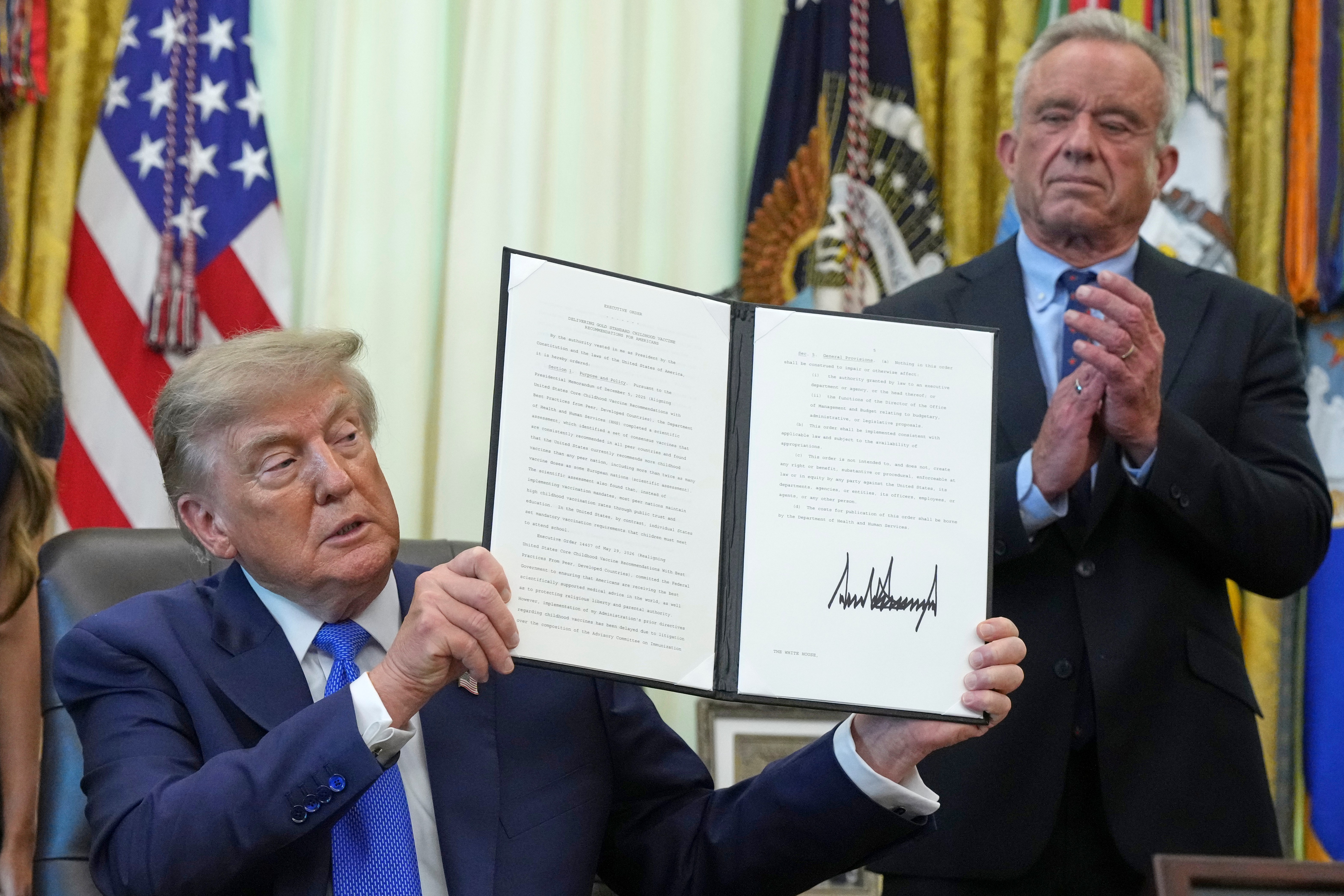
    The American Academy of Pediatrics noted this week that Donald Trump’s new “Gold Standard Childhood Vaccine Recommendations” are “not based on gold-standard science.” This is accurate but understated: They’re not based on science at all.

    The executive order, like the rest of the anti-vaccination crusade led by the president and Health and Human Services Secretary Robert F. Kennedy Jr., rests on vibes, superstitions, and folklore. It would be tempting to compare it to witchcraft if not for the risk of defaming witches.

    Trump’s directive seeks to reduce the number of vaccines recommended for children by more than a third, from 18 to 11, exposing many more to the worst outcomes of hepatitis B, influenza, and COVID-19. It also recommends that each vaccination be administered in a separate appointment, and that the measles, mumps, and rubella (MMR) shot be split into immunizations for each of the three diseases, which are not available as such in the United States.

    Reprising an earlier Health and Human Services policy that was blocked by a federal judge, Trump’s order is on dubious legal as well as scientific footing. But even if it doesn’t survive judicial scrutiny, the administration’s continued muddling of vaccination messages has obvious risks.

    Likewise, making child immunizations that much harder for working parents by requiring more appointments can only bolster the president’s remarkable success in making America measly again. More people have already contracted measles under this administration than in all the preceding years of this century combined.

    Cases of pertussis, also known as whooping cough and commonly prevented by a combination vaccine, hit a 13-year high in 2025. This year, a flu outbreak sickened hundreds of Air Force trainees and killed one after Defense Secretary Pete Hegseth made vaccinations optional. It’s all too foreseeable given Trump’s disastrous mismanagement of the pandemic, which killed more than a million Americans.

    Childhood vaccinations, meanwhile, saved more than a million lives over the past three decades. A federal study found that they also prevented 32 million hospitalizations, half a billion illnesses, and $2.7 trillion in direct and indirect costs.

    So why is the White House so determined to undermine what the Centers for Disease Control and Prevention called “one of the greatest achievements of biomedical science and public health”?

    Apart from the endlessly debunked myth that vaccines cause autism, Trump, Kennedy, and Co. seem strangely preoccupied with the number and volume of shots. This week, they claimed that the previous schedule subjected children to a total of 57 shots — or 72 or 94. The president said that entails “large amounts of, like, vats” of fluid “pumped into your child’s body.”

    That is about as medically sound as his infamous Clorox cure for COVID. The most expansive understanding of the shots required to attend school yields about 35 doses over the first five years of a child’s life. At about half a milliliter each, that amounts to a bit more than a tablespoon.

    Trump has acknowledged that his objection to the measles, mumps, and rubella shot is “based on what I feel.” Asked this week to explain his contention that the injection could be “quite lethal,” contradicting half a century of use and study of the vaccine, he replied, “What I’ve heard is that there are some people that say it is that way.”

    But no one has to believe what the president heard some people say when it comes to the lethality of measles itself: The disease has already killed two unvaccinated children on his watch. How many more will follow?

  • 💡 AI may raise your Peco bill | Morning Newsletter

    Good morning, Philly! 👋 We’re one day closer to the weekend.

    Your Peco bills could increase, thanks to new hyperscale AI data centers. The Inquirer has a full breakdown to help explain.

    And at least two women were likely killed inside the Olney home at the center of a sprawling missing persons investigation, police believe. But neither of the women had been previously linked to the case, according to investigators.

    Plus, half the 26 people charged in an NCAA gambling scandal have now pleaded guilty or admitted wrongdoing, and more news of the day.

    — Sam Stewart (morningnewsletter@inquirer.com)

    If someone forwarded you this email, sign up for free here.

    How data centers could impact your bills

    If you give a computer a task, it’s going to need electricity to perform it. The more difficult the problem, the more resources it requires. This is at the heart of the fight against the data centers behind AI — often an incredibly complex and power-hungry process.

    You might think that tech giants that build and use data centers would cover 100% of the costs. However, the knock-on repercussions of this heavy power drain could affect the amount you owe on your Peco bill.

    “Hyperscale data centers” that power AI tools consume exponentially more resources than conventional ones. To put it in perspective, in a single hour, a hyperscale 1,000,000-kW data center running at peak capacity can consume more electricity than every household in Philadelphia combined.

    These hyperscale facilities and their projected demand for power could impact three categories on your bill: generation, transmission, and distribution.

    We’ll walk through each one and explain the rest.

    ‘Graphic and dark’ discoveries

    Philadelphia police believe Maribel Fresses, who was last seen in February 2018, and Gabriella Amarando, who has been missing since September 2012, were killed inside the Olney home at the center of a missing persons investigation.

    The Wednesday announcement was the latest and most striking development in a case that has drawn national attention since police launched an investigation in June into the disappearances of two other women last seen at the home of Eugene Albert Horsch and his late father, Raymond “R.C.” Horsch.

    Authorities say the two-month search of the home involved more than 95 search warrants and surfaced an “astonishing” array of evidence: five urns of cremated remains, more than 20 containers full of unknown chemicals and oily substances, and 50 hard drives and other electronic devices holding more than 600,000 images, 70,000 videos, and 10,000 pages of writings and drawings.

    Inside one of those hard drives, authorities said, detectives found images and videos that appeared to show Fresses and Amarando alive inside the house — followed by “graphic and dark” depictions of what appeared to be their bodies. But because no bodies have been found, police say they cannot officially declare the women dead.

    What you should know today

    • Two people charged with participating in an international scheme to rig basketball games for professional gamblers pleaded guilty in Philadelphia’s federal court Wednesday — the latest development in a scandal that shook the sports world when prosecutors unveiled a sprawling set of indictments earlier this year.
    • Pennsylvania Attorney General David Sunday filed a lawsuit against TikTok and its parent company, ByteDance, on Tuesday, alleging the social media giant failed to shield children from age-inappropriate material and from over-usage of the app.
    • A former cardiac thoracic surgeon at one of Main Line Health’s flagship programs says in a federal lawsuit that he was fired after reporting a series of bad patient outcomes. He accused the nonprofit hospital system of failing to thoroughly investigate a pattern of complications among the patients of another senior surgeon.
    • As it faced parents and community members during an emotional meeting Tuesday, the Cheltenham school board laid out several steps to address concerns about the 2025 locker-room assault scandal that led to criminal charges against four coaches and six players.
    • Philadelphia police are searching for a man they say walked up to a couple sitting on a porch and opened fire late Sunday night, killing the woman and injuring the man before fleeing.
    • White House press secretary Karoline Leavitt, the youngest person to hold the role at 28 years old, will leave at month’s end, President Donald Trump announced Wednesday. Trump did not outline plans for who might replace her in the high-profile role.

    Quote of the day

    Battleship New Jersey will soon undergo another facelift through a $24.25 million redevelopment project tackling work on and off the ship. The project includes an expanded visitor center, double the parking, and a new event space.

    🧠 Trivia time

    The country’s first and last pennies were made in Pennsylvania. What city were they made in?

    A) Reading

    B) Allentown

    C) Philadelphia

    D) Pittsburgh

    Think you know? Check your answer.

    What we’re …

    🧑‍💻 Wondering: What do Gen Z workers want out of their jobs? A recent survey says they’re skeptical about what’s learned in college and want to build up more hard skills.

    🚴 Excited about: The forthcoming Philadelphia Cycling Classic! Check out some of the best spots around the city to watch the race’s return.

    🛍️ Shopping for: Antiques down the Shore. There are 11 shops we think are worth your while.

    🍝 Considering: Could Waltz, a new Italian restaurant in South Philly, be your next date-night destination? The Inquirer’s Craig LaBan believes so.

    🧩 Unscramble the anagram

    Hint: Eagles preseason announcer on NBC10 since 2019

    SORE STRUCK

    Email us if you know the answer. We’ll select a reader at random to shout out here.

    Cheers to Becky Bowlby, who solved Wednesday’s anagram: Keanu Reeves. His band, Dogstar, has reunited after a 20-year break, and they’re playing three Philly-area shows this week.

    Photo of the day

    Bryson Stott’s “Field of Dreams” cleats designed by Nxt Lvl Customs and Stadium Locker.Courtesy of Ryan Stevens

    ⚾ One last thing: Bryson Stott is expected to wear a custom pair of cleats for the Phillies’ Field of Dreams game. The design features late Phillies legends Harry Kalas, Tug McGraw, Roy Halladay, Darren Daulton, Robin Roberts, and Richie Ashburn. But forecasters warn that rain could impact the game.

    Have a good one, folks! 👋

    By submitting your written, visual, and/or audio contributions, you agree to The Inquirer’s Terms of Use, including the grant of rights in Section 10.