Blog

  • Flock unveils changes after Post report on police misuse of its network

    Flock unveils changes after Post report on police misuse of its network

    The country’s most prominent seller of automated license-plate readers said Thursday it will enact major changes in hopes of more proactively preventing abuse by police officers.

    Flock, the maker of a vast roadside camera network that maps cars’ movements into a database searchable by law enforcement, said it would for the first time start requiring officers to label every search with a criminal case number and automatically review all searches for “abnormal activity,” a previously voluntary feature that the company said was used by about a third of its 7,000 law enforcement agencies nationwide.

    Flock also said it would reduce the default setting for how long license-plate data is stored, from 30 days to seven, and give police departments more control over how their data is shared with other agencies.

    The announcement comes roughly a week after the Washington Post reported that at least 50 officers had been accused, charged with, or convicted of misusing Flock’s system and other license-plate readers to spy on people’s locations, including to stalk their girlfriends and ex-wives. Since publication, the Post has confirmed more than a dozen additional cases of license-plate-reader misuse.

    The case number and automated-review features were previously offered to agencies as optional settings. Policing experts and civil liberties advocates identified those two features in the Post report as key product shifts that could help combat misuse.

    Flock chief executive Garrett Langley said in an interview that the changes reflected the system’s “continual evolution of Flock’s responsibility to the communities we help serve.” Company executives, he said, had declined to mandate them sooner because they expected more local officials would activate the antiabuse features on their own.

    “I had this hope that local lawmakers at the state and local level would move very quickly and they’d look at the things that we’re recommending as optional and say, ‘Great, we’re going to force it.’ And they haven’t,” he said. “Instead of waiting, we said, ‘Look, we should just move faster.’”

    Max Isaacs, director of technology law and policy at the New York University School of Law’s Policing Project, said the shift was a “welcome change” but that he questioned what had taken the company so long to implement it.

    “There is no reason the system shouldn’t have been designed that way to begin with,” he said of the case number requirement. “Ultimately, though, this kind of safeguard should be required by law. It’s completely backward that we are relying on this one company to implement the kinds of things that ought to just be standard everywhere.”

    Flock, which is based in Atlanta, has installed more than 120,000 of the artificial-intelligence-enabled cameras across the U.S. since 2017. The company said the 20 billion plate scans recorded every month by its cameras have helped officers investigate 1 million crimes a year.

    Although Flock’s training guides encourage officers to use the search tool exclusively for official police work, the company only began offering agencies the option to require that officers tag every search with a criminal case number in July 2025.

    In misuse-case records reviewed by the Post, some officers frequently looked up car locations without providing any details linking the searches to legitimate criminal investigations.

    In April, Flock announced an automatic review feature, known as Audit Assistance, and said the tool would scan officers’ searches for suspicious behavior, such as repeated targeting of a single plate or bursts of searches in the middle of the night. Flock officials declined to share the criteria the system uses to look for abnormal behavior, arguing that sharing the details would help bad actors avoid detection.

    The company has announced that some officers have been charged with misusing the system following an Audit Assistance report. But Isaacs recommended treating the system with “a healthy dose of skepticism,” given that it relies on artificial intelligence, not human experts, to find suspicious conduct.

    “It’s good to see vendors developing accountability features,” he said, “but until we have some evidence that this tool does what it says it does, I don’t think we should rely on it to replace any human auditing measures.”

    Flock also said it would reduce the default length of time for how long plate scans are saved to seven days. Agencies can choose to ignore that default and increase their data-retention policies to as long as a year with prior approval from an elected official or governing body, the company’s evidence policy said.

    It also will launch a feature called Evidence Mode that will allow officers to preserve license-plate data beyond that retention window “for cases that need more time,” a company announcement said.

    Flock currently allows police departments to share their license-plate data with other agencies beyond city, county, or state lines. But as part of the changes, the company said it would begin allowing agencies to determine the types of investigations for which its data can be shared. A city could, for example, allow its camera data to be searched for violent crimes but not for immigration enforcement, the announcement said.

    Langley said he spoke to 100 police chiefs in the last week to preview the changes and that all were supportive of the shift. He argued that the cases of misuse reported by the Post showed that Flock’s long-running strategy of recording all officer searches into audit logs that agency leaders can examine to investigate misconduct helped fight abuse.

    “It’s not that people abuse Flock,” he said. “It’s that Flock actually found cops that abused their power, and I want to find all of them.”

    Flock said it was still considering additional changes, including a function that would automatically lock out officers whose activity met the “criteria for abnormal behavior” until their searches were reviewed by an agency administrator, according to the announcement.

    In some towns, however, the agency’s Flock administrators are the police chiefs themselves, and some chiefs have been fired or charged with criminal misconduct in cases of Flock misuse previously reported by the Post. Langley said he hoped that, given the “increased level of attention” to the problem, local mayors and city managers would take a more proactive role in pushing for regular agencywide audits or supervision by outside law enforcement.

    Marci Bakely, an Air Force veteran in Georgia whose police chief ex-boyfriend searched her plate hundreds of times and was charged with stalking and misuse of a license-plate reader, said in an interview that she hoped the changes would curb abuse but that she worried it was mostly a “temporary Band-Aid” to shield the company from criticism.

    “They knew before that stuff like this would happen. So now they want to wait until after it’s been brought to the public’s eye?” she said. “Now it’s a big deal, whereas before it didn’t mean anything? They weren’t worried about it, but now it’s been brought to the light.”

  • Upper Darby residents rally to save the ‘Mozino Forest’ from mixed-use development plans

    Upper Darby residents rally to save the ‘Mozino Forest’ from mixed-use development plans

    Upper Darby will consider buying a 15-acre forested property at the heart of a conservation fight after dozens of residents packed a public meeting and demanded the township look into purchasing options before rezoning the parcel for mixed-use development.

    The Upper Darby Township Council on Wednesday considered moving forward an ordinance to create a mixed-use zoning district on a tract of land between State and Township Line Roads. The tract, known by residents as the Mozino Forest, contains unmaintained forest. Though the land is private property — owned by Peter Mozino and under contract to be sold to the Rockwell Development Group — residents have long utilized it as a place to walk, hike, and commune with nature.

    Rockwell Development Group has proposed developing the property with a blend of single-family homes, townhouses, apartments, and ground-floor commercial spaces, as well as dedicated community and recreation spots and pedestrian walkways.

    Rita LaRue, Upper Darby’s director of community and economic development, said Rockwell originally came to the township with a plan to build 56 single-family homes on the site, a proposal that would be allowed under the site’s existing zoning and would not require special zoning approvals. The township then asked Rockwell to consider an alternative, higher-density plan that would combine diverse housing types, retail, and community amenities, LaRue said. Over several months, Rockwell worked with the township’s solicitor, engineer, and planning staff to bring the mixed-use zoning ordinance.

    Upper Darby officials have said putting a denser, mixed-use development on the tract, rather than the 56 single-family homes, would help fulfill core township goals by bringing in more tax revenue and adding diverse housing options.

    “We are very committed to having a mixed-use space that is not simply, you know, brick and mortar. We want it to be a place that adds to community life for everybody in Upper Darby,” LaRue said.

    At the meeting, Rockwell president Greg Lingo touted his Upper Darby bona fides, telling the crowd he was not the ill-intentioned, outside developer he had been portrayed as. The developer said he graduated from Upper Darby High School, is a taxpayer in the township, and has invested significantly in the Drexel Hill neighborhood over the years.

    Lingo said that while he understands residents’ concerns about preserving green space, the land is private property and could be developed into a residential neighborhood regardless of whether the zoning amendment is passed.

    “This isn’t necessarily a decision between open space and a future mixed-use development,” Lingo said. “This property is not open space. I’m pleased to hear that people have just been using it as open space over the years. It’s private property. It’s property that’s been neglected for as long as I can remember.”

    Lingo said he would be willing to sell the property if the township wanted to purchase it, but added that as a taxpayer, he does not “think that that’s a great use.” Lingo approximated the cost of the land at $8 million.

    There were 15 proposals to purchase the property, none of which involved maintaining it as open, green space, planning commission member Debbie Nifong said at a June 8 meeting.

    The planning commission voted 3-2 to recommend approval of the zoning change in June.

    At the Wednesday night council meeting, residents packed the council chambers, donning green shirts and spilling out into the hallway in protest of the proposed zoning change. They described tranquil walks through the Mozino Forest and warned of environmental consequences if the land were to be developed.

    “I believe that having some open space, it’s future gold in terms of urban planning,” said Dolores Lombardi, a resident and former chair of the township’s shade tree commission. “Many cities are preserving open space, and creating more. An overdeveloped heat zone is not an attractive place to live in.”

    “The whole forest is a natural sponge for our area. There will be severe downstream flooding,” said resident Gail Grant, who warned of increased stormwater runoff should the green parcel be paved.

    Residents questioned why the forested tract should be developed when the township has numerous vacant storefronts and existing corridors in need of redevelopment.

    Members of the township’s environmental advisory committee urged the council to strike down or table the zoning ordinance and said that, if given more time, they could put together a proposal for the township to purchase the land with supporting funds from local conservancies or state or federal bodies.

    They cited the $13 million purchase of the Oakwell estate in Villanova by the conservation nonprofit Natural Lands and the Wyncote Foundation. The lush estate was once slated to become athletic fields for the Lower Merion School District but was sold to the nonprofits after significant community pushback.

    The council voted unanimously to table the ordinance, citing a need for more information from both Lingo and the environmental advocates.

    “I know the administration wants to look into seeing what sources we have available to see if we can come to some type of agreement,” council member Kyle McIntyre said.

    McIntyre said he did not want to “get everyone’s hopes up” and described “two trains running parallel to each other.” While the township will “do everything in our power to possibly strike a deal” to buy the land, McIntyre said, he expressed a desire to work with Lingo to “make sure that what we’re building for this community actually does benefit it” if a sale does not happen.

    “We did learn a lot of things tonight, and I’m eager to have those conversations with the township and see where we fit in and what we can do, so that we can make a decision that’s good for everybody,” Upper Darby Mayor Ed Brown said.

    This suburban content is produced with support from the Leslie Miller and Richard Worley Foundation and The Lenfest Institute for Journalism. Editorial content is created independently of the project donors. Gifts to support The Inquirer’s high-impact journalism can be made at inquirer.com/donate. A list of Lenfest Institute donors can be found at lenfestinstitute.org/supporters.

  • Kennedy Center votes to restore Trump’s name and close for 2 years, challenging a judge’s order

    Kennedy Center votes to restore Trump’s name and close for 2 years, challenging a judge’s order

    WASHINGTON — The battle over the Kennedy Center’s future escalated Thursday as President Donald Trump’s allies on the board took new steps to commemorate him with physical changes to the iconic performing arts institution that could defy a federal court order.

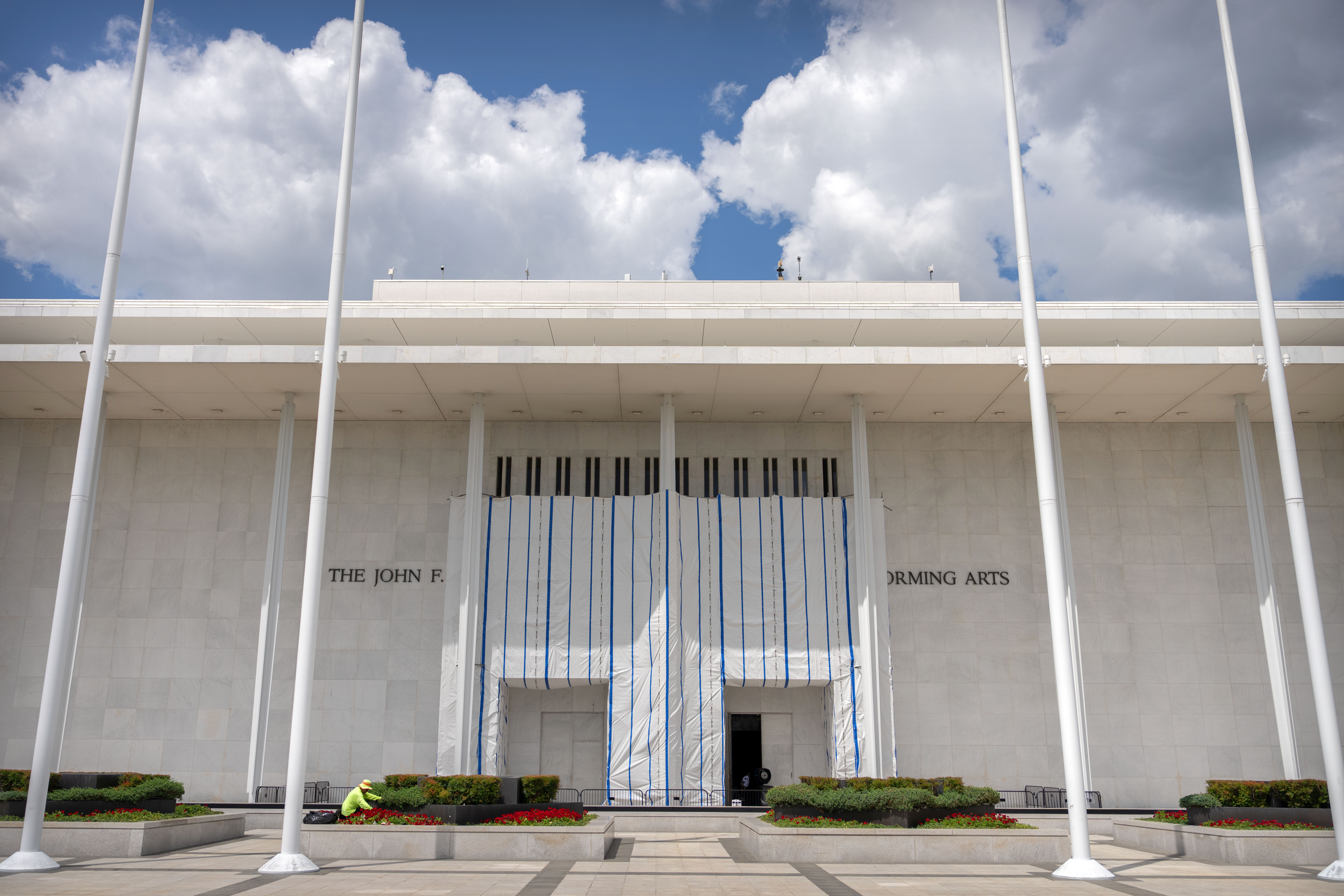
    During an hourslong meeting that was conducted virtually, the board voted to add Trump’s name to the building’s facade so it would read “The John F. Kennedy Center for the Performing Arts Restored and Renovated By President Donald J. Trump.” The plaza in front of the building would be named after Trump and most of the space at the venue would be closed for two years to allow for substantial renovations.

    The changes, described by Rep. Joyce Beatty, an Ohio Democrat who is an ex-officio board member, and her lawyers, amount to a dramatic test of U.S. District Judge Christopher Cooper. He ruled in May that letters affixed to the building that spelled out Trump’s name were added illegally and he ordered their removal, a decision that the Republican administration failed to persuade courts to overturn. At the same time, Cooper blocked a two-year closure that was set to take effect July 5, saying an earlier board vote authorizing the shuttering was “ill-informed and seemingly preordained.”

    “This latest development is a transparent effort to circumvent the Court’s ruling, and flies in the face of the statutes that Congress passed,” Beatty said in a statement. ”I will continue to fight for this treasured national monument.”

    A representative of the Kennedy Center did not immediately respond to a request for comment.

    Much of Thursday’s board meeting was expected to focus on the extent of closures required to allow for renovations that the Kennedy Center’s management says are needed to improve safety. In response to the judge’s criticism of the earlier vote, the institution’s leaders said they would provide the board with three options to consider.

    They included a complete closure or a partial closure that would allow “some continued public access and limited programming in spaces unaffected” by the work. A third option would “consider a highly limited series of phased closures to address only the Center’s most serious infrastructure needs while scheduling and maintaining a full slate of programming.”

    Ultimately, the board decided to close the building for two years while leaving the potential for some degree of programming to still happen in an outdoor space known as the Reach. The decision to move ahead with the two-year closure, in addition to the moves to memorialize Trump, could revive questions about whether the board seriously considered the full range of options.

    During Trump’s second term, the Kennedy Center has become an unlikely — and highly visible — metaphor of presidential power. While he largely ignored the institution during his first round in Washington, Trump moved quickly to oust the institution’s leadership when he returned to office in January 2025 and replaced it with a board of trustees that named him chairperson.

    His name was quickly added to the building, before coming down in June in response to Cooper’s order. The area where it once stood is now covered by a massive tarp.

    Trump’s push to remake the nation’s capital

    The Kennedy Center moves are part of Trump’s broader push to reshape the physical landscape of the nation’s capital in ways that have few modern parallels.

    He demolished the East Wing of the White House and is building a controversial ballroom in its place, though an appeals court ruled last week that construction should stop because Congress didn’t approve the project. Trump has said he will take the case to the Supreme Court.

    His remodel of the Lincoln Memorial Reflecting Pool has also stumbled after algae returned and U.S. Attorney Jeanine Pirro refuted his claims that a vandal was responsible for the damage.

    Meanwhile, Trump is planning extensive renovations of a golf course in East Potomac Park, which could significantly reduce the public’s access to running and biking paths. He is also moving forward with a triumphal arch that will sit near Arlington National Cemetery.

    Trump has derided the Kennedy Center as “rusted, rotted, and rat and bug infested” and threatened to hand the building over to Congress after Cooper rejected the closure and the addition of the president’s name to the building.

    The institution’s leadership has argued that it’s in genuine need of repair and updating.

    Matt Floca, the Kennedy Center’s executive director and chief operating officer, guided a group of journalists through the building in April, highlighting severe water damage that he said corroded steel in some places as thin as tissue paper. Some pieces of equipment, including several 800-ton chillers that help cool the building, are decades old and in need of replacement.

    At the time, Floca said he considered doing the repairs individually but insisted it was his recommendation to Trump to close the building and move forward with the renovation all at once.

    “When the president asked: ‘How do you make these projects the best? How do you make them really excellent and deliver them efficiently?’ my recommendation was you close the building and you do everything over a definite period of time, two years,” he said.

    More recently, the legal battles became the subject of barbs and jokes as comedian Bill Maher accepted the Mark Twain Prize for American Humor in late June. At the start of the program, Pamella Roland DeVos, a Kennedy Center trustee appointed by Trump, described the institution as a “national cultural center open not just for some but for every American patron who wants to experience the greatest art and expression the world has to offer.”

    “The responsibility that comes with it is one our board takes very seriously,” she said.

  • Phillies jump to Iowa and Netflix for Field of Dreams game. Scott Franzke just hopes there’s a booth.

    Phillies jump to Iowa and Netflix for Field of Dreams game. Scott Franzke just hopes there’s a booth.

    After losing two straight series, the Phillies hope to find a bit of heaven in Iowa.

    The Phillies will take on the Minnesota Twins in Dyersville, Iowa Thursday night (7:30 p.m., Netflix) in MLB’s first Field of Dreams game in four years, named after the beloved film starring Kevin Costner.

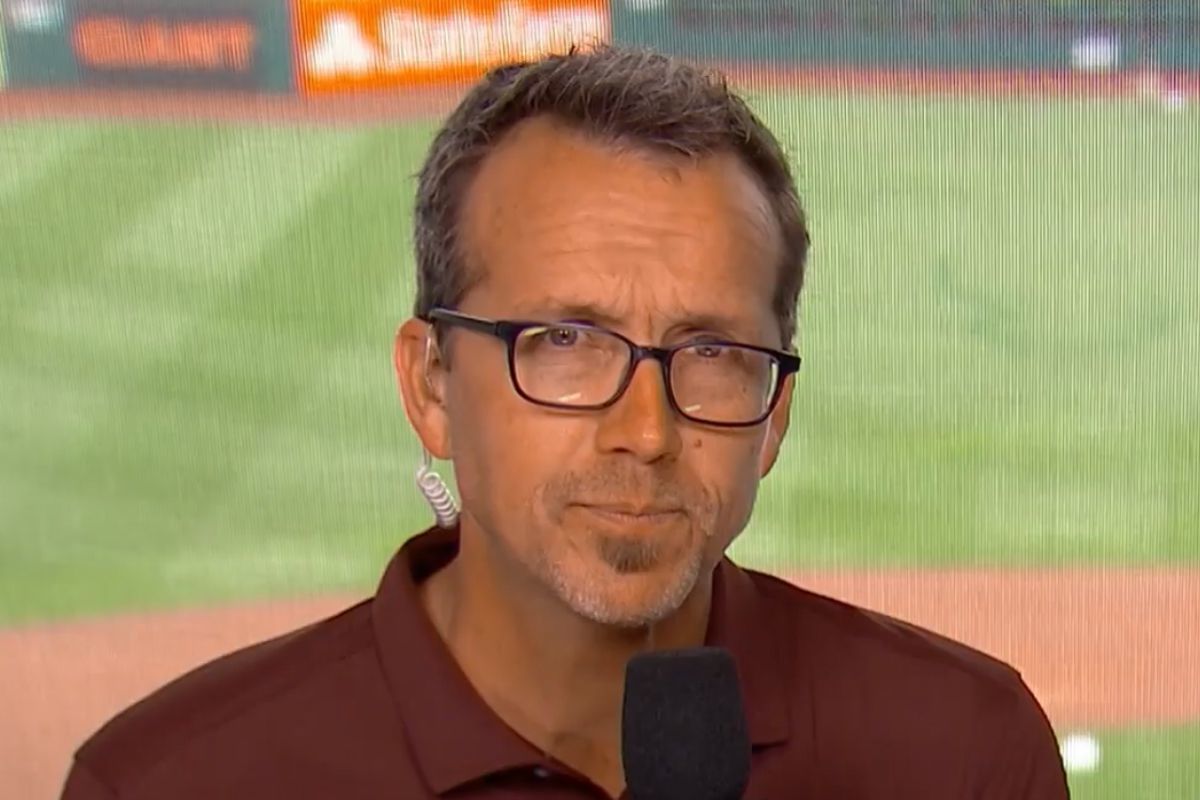
    Costner will be on hand as part of Netflix’s exclusive coverage, with veteran play-by-play announcer Matt Vasgersian calling all the action. He’ll be joined in the booth by CC Sabathia and former Phillies outfielder Hunter Pence, with Lauren Shehadi reporting throughout the game.

    Netflix’s pregame coverage will once again be hosted by Elle Duncan and feature Barry Bonds, Albert Pujols, and Anthony Rizzo. Bonds and Rizzo worked particularly well together during Netflix’s coverage of the Home Run Derby at Citizens Bank Park last month.

    Despite that, the pregame show felt overstuffed, needlessly shoehorning in Will Ferrell in an attempt to promote his new Netflix show. They took a similar approach during MLB’s opening night in March, drawing widespread criticism for the number of promos.

    Gabe Spitzer, Netflix’s VP of sports, signaled on a recent conference call that Thursday night’s approach for the Field of Dreams game might be different, noting the teams and setting make a case for “not overthinking this and not trying to do too much.”

    “It’s a game that matters for these two teams in the playoff chase, it’s an iconic venue, and we want to let that do most of the work,” Spitzer said.

    As for the Phillies, they’re certainly testing the whole “if you build it” mentality. Since the All-Star break, the team and its $321 million payroll — fourth most in all of baseball, according to Spotrac — has lost six of eight series, and slumping new addition Luis Arráez has just seven hits and one walk in 38 plate appearances with the Phillies (though he did drive in the team’s only run during Wednesday’s loss to the St. Louis Cardinals)

    If the season ended today, the Phillies wouldn’t qualify for the playoffs, missing out on the final wild-card spot to the Arizona Diamondbacks.

    At least they’ll get to sport cool 1939-inspired throwback jerseys as part of the Field of Dreams game festivities, which even include a centennial patch all teams wore that season.

    Bryce Harper sports the 1939-inspired jersey the Phillies will wear Thursday night. Daniel Shirey

    Latest weather forecast for Field of Dreams game

    They built it, but mother nature was threatening to show up.

    Earlier forecasts were seeing chances for heavy rain and thunderstorms around first pitch.

    However, it appeared the rains were backing off Thursday afternoon, said Alex Gibbs, a meteorologist with the National Weather Service Office in Davenport, Ohio, and weather prospects were brightening considerably.

    “We have a pretty good feeling,” said Gibbs (a diehard Milwaukee Brewers fan). “It looks like a good window.” He said the only concern was the potential for thunderstorms — with lightning, of course — later at night. While chances are they would hold off until the game was over, “We have to keep an eye on stuff,” he said. Timing and location of thunderstorms in summer are notoriously unpredictable, as Philadelphians are aware.

    The National Weather Service has issued a flash flood watch just south of Dyersville through Friday afternoon, but there remains a lot of uncertainty on the timing or exact location of the potential storms.

    If the game is rained out Thursday, both teams will take the field Friday, but showers are again possible in the evening, said Gibbs.

    Scott Franzke just hopes there’s a booth

    Phillies radio announcer Scott Franzke will call all the action on 94.1 WIP. NBC Sports Philadelphia

    While Netflix will exclusively stream the game, Phillies fans can still tune into 94.1 WIP to hear Scott Franzke and Kevin Stocker call all the action.

    Despite the hyped-up setting and national spotlight, Franzke hasn’t been told what to expect.

    “I don’t have any idea about the broadcast conditions. Is it a big booth or a small booth? I imagine it’s pretty small,” Franzke said. “I’m assuming there’s a booth. There wasn’t in London. We just did it from the seats.”

    Franzke said as an announcer, these event-style games are a fun diversion. But he’s not sure how the team feels about them.

    “It does create a little different wrinkle in the rhythm of the summer and the travel, and it’s not an exhibition game,” Franzke said. “There’s a lot at stake, both for us and the Twins. One game can make all the difference in the world.”

    Phillies TV announcers Tom McCarthy and Rubén Amaro Jr. were to travel with the team to Iowa, despite NBC Sports Philadelphia not broadcasting the game. They’ll call the final two games against the Twins Saturday and Sunday at Target Field in Minneapolis, but don’t expect to hear them on Thursday’s radio broadcast.

    “I think they’re just going to hang out,” Franzke said.

    One big plus is Franzke and his colleagues won’t have to rely on Porta Potties to get through the night, thanks to recent renovations that added amenities like running toilets and sewer lines.

    “I always appreciate some good indoor plumbing,” Franzke said.

    Phillies NL East standings

    window.addEventListener(“message”,function(a){if(void 0!==a.data[“datawrapper-height”]){var e=document.querySelectorAll(“iframe”);for(var t in a.data[“datawrapper-height”])for(var r,i=0;r=e[i];i++)if(r.contentWindow===a.source){var d=a.data[“datawrapper-height”][t]+”px”;r.style.height=d}}});

    NL wild card standings

    window.addEventListener(“message”,function(a){if(void 0!==a.data[“datawrapper-height”]){var e=document.querySelectorAll(“iframe”);for(var t in a.data[“datawrapper-height”])for(var r,i=0;r=e[i];i++)if(r.contentWindow===a.source){var d=a.data[“datawrapper-height”][t]+”px”;r.style.height=d}}});

    Phillies news

    Phillies slugger Bryce Harper. Yong Kim / Staff Photographer

    Upcoming Phillies TV schedule

    • Phillies at Twins
    • Marlins at Phillies
    • Cardinals at Phillies
    • Phillies at Mariners
    • Phillies at Angels
  • Luigi Mangione expected to plead guilty in federal case in UnitedHealthcare killing, AP source says

    Luigi Mangione expected to plead guilty in federal case in UnitedHealthcare killing, AP source says

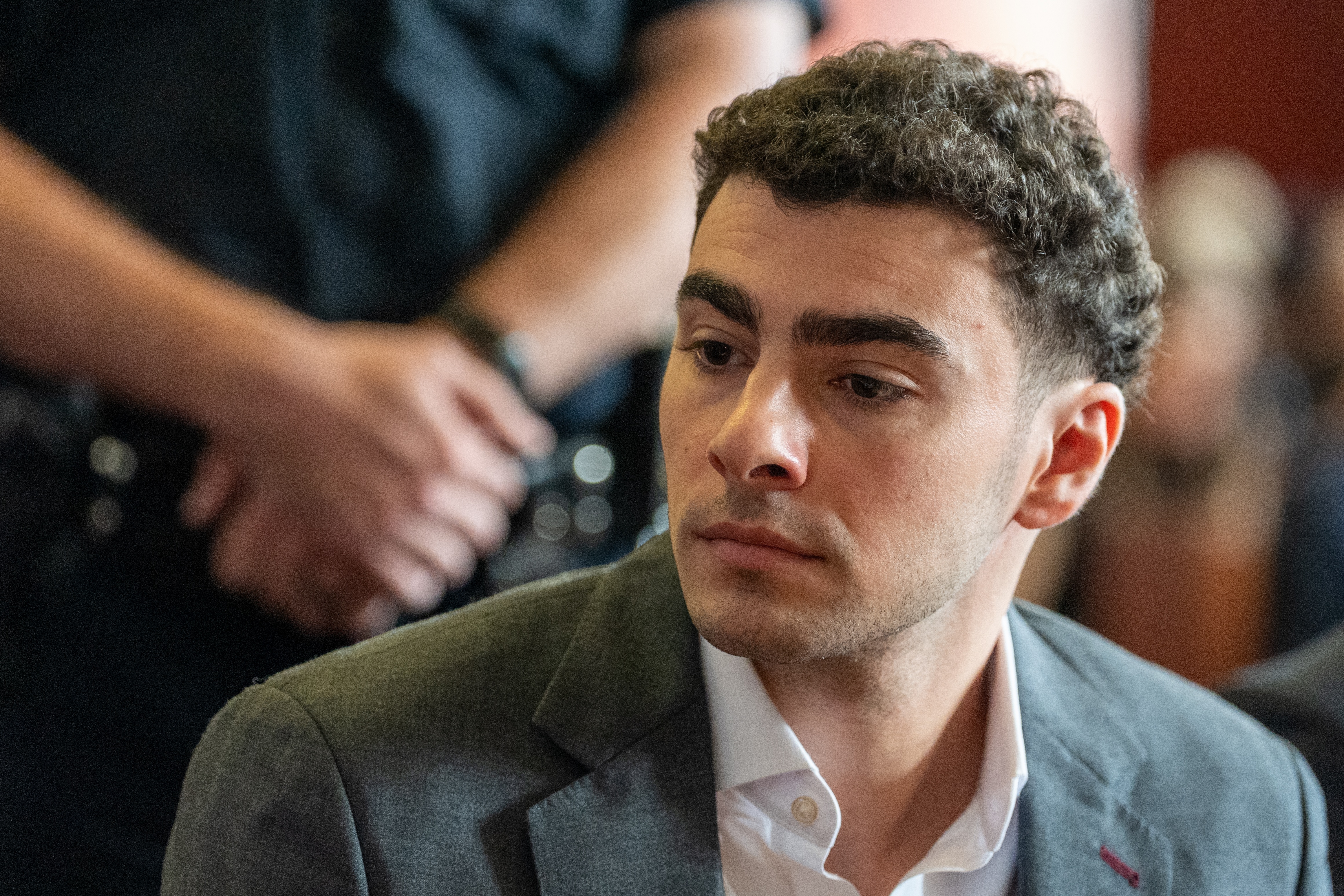
    NEW YORK — Luigi Mangione is expected to plead guilty as early as Friday in the federal case accusing him of stalking and killing UnitedHealthcare CEO Brian Thompson, according to a person familiar with the matter.

    The person, who was not authorized to talk publicly about the case and spoke to the Associated Press on the condition of anonymity, cautioned that Mangione could change his mind. If he follows through, it would be a stunning development in a case that rattled business leaders while galvanizing their critics.

    Mangione’s lawyers, and spokespeople for the Justice Department and Manhattan federal prosecutors, declined to comment.

    Mangione is accused of traveling to New York City to ambush Thompson, 50, then shooting him outside a Manhattan hotel on Dec. 4, 2024, as the executive walked to UnitedHealth Group’s annual investor conference.

    Mangione is due in court on Friday for a hastily scheduled hearing in the federal case, which involves two counts of stalking. It wasn’t clear what charge or charges Mangione is expected to plead guilty to. The hearing, in Manhattan federal court, comes as his lawyers have been talking with federal prosecutors about a possible resolution to one of two criminal cases against Mangione in Thompson’s death. Previous talks in June broke down.

    Mangione, 28, has been charged in both federal and state court in New York and still faces the possibility of a trial in his unresolved state case. Mangione’s state murder trial is set to begin Sept. 8. Both sets of charges carried the possibility of a life sentence.

    Mangione has pleaded not guilty and has spoken out publicly against the prospect of two trials, telling a judge in February: “It’s the same trial twice. One plus one is two. Double jeopardy by any commonsense definition.”

    Under New York law, a state prosecution could be barred if the federal case is resolved first, but it isn’t automatic.

    The state’s double jeopardy protections kick in if a jury has been sworn in a prior prosecution, such as a federal case, or if that prosecution ends in a guilty plea. Mangione’s cases involve different charges arising from the same course of conduct.

    Once Mangione pleads guilty, his lawyers could then ask the judge in the state case to throw out those charges on double jeopardy grounds. State prosecutors argue their case is distinct and double jeopardy shouldn’t apply.

    Mangione’s federal charges allege that he traveled across state lines by bus to stalk and kill Thompson and that he used means such as a cell phone, the internet, interstate highways, and staying at a hostel that serves out-of-state customers while planning and carrying out the attack. The state charges pertain to the killing itself, as well as firearms offenses.

    In a letter last month, state prosecutors objected to the possibility of a guilty plea in the federal case wiping out the state case.

    “Obviously, any guilty pleas in these matters must account for the seriousness of defendant’s offenses, the loss of an innocent life, the impact of those crimes on the victim’s family, and the other state interests that are implicated, including the sanctity of life principle that underpins the state homicide charges,” Seidemann wrote.

    Mangione’s apparent decision to plead guilty comes after a series of setbacks for his defense.

    In January, U.S. District Judge Margaret Garnett took the death penalty off the table but ruled that prosecutors could use items collected from Mangione’s backpack during his arrest as evidence against him.

    They included a 3D-printed pistol that investigators said matched the one used to kill Thompson and a notebook in which authorities say Mangione described his intent to kill an insurance executive.

    In June, Mangione’s lawyers said they would pursue a psychiatric defense in the state case but reversed course a day later. The defense, involving claims that he was suffering from extreme emotional disturbance at the time of the killing, isn’t allowed in federal court.

    Surveillance video of the killing showed a masked gunman shooting Thompson from behind. Police say “delay,” “deny,” and “depose” were written on the ammunition, mimicking a phrase used to describe how insurers avoid paying claims.

    Mangione, an Ivy League graduate from a wealthy Maryland family, was arrested five days later at a McDonald’s in Altoona, Pa., about 230 miles west of Manhattan.

    He has become a cause célèbre for people upset with the health insurance industry.

    An online fundraiser for his legal defense fund raised more than $1.5 million, and several dozen supporters have shown up to his court appearances, some wearing green clothing — the color worn by the Mario Bros. video game character Luigi — and “FREE LUIGI” T-shirts.

  • Cheltenham is trying to move past its football scandal. Here’s what happens next.

    Cheltenham is trying to move past its football scandal. Here’s what happens next.

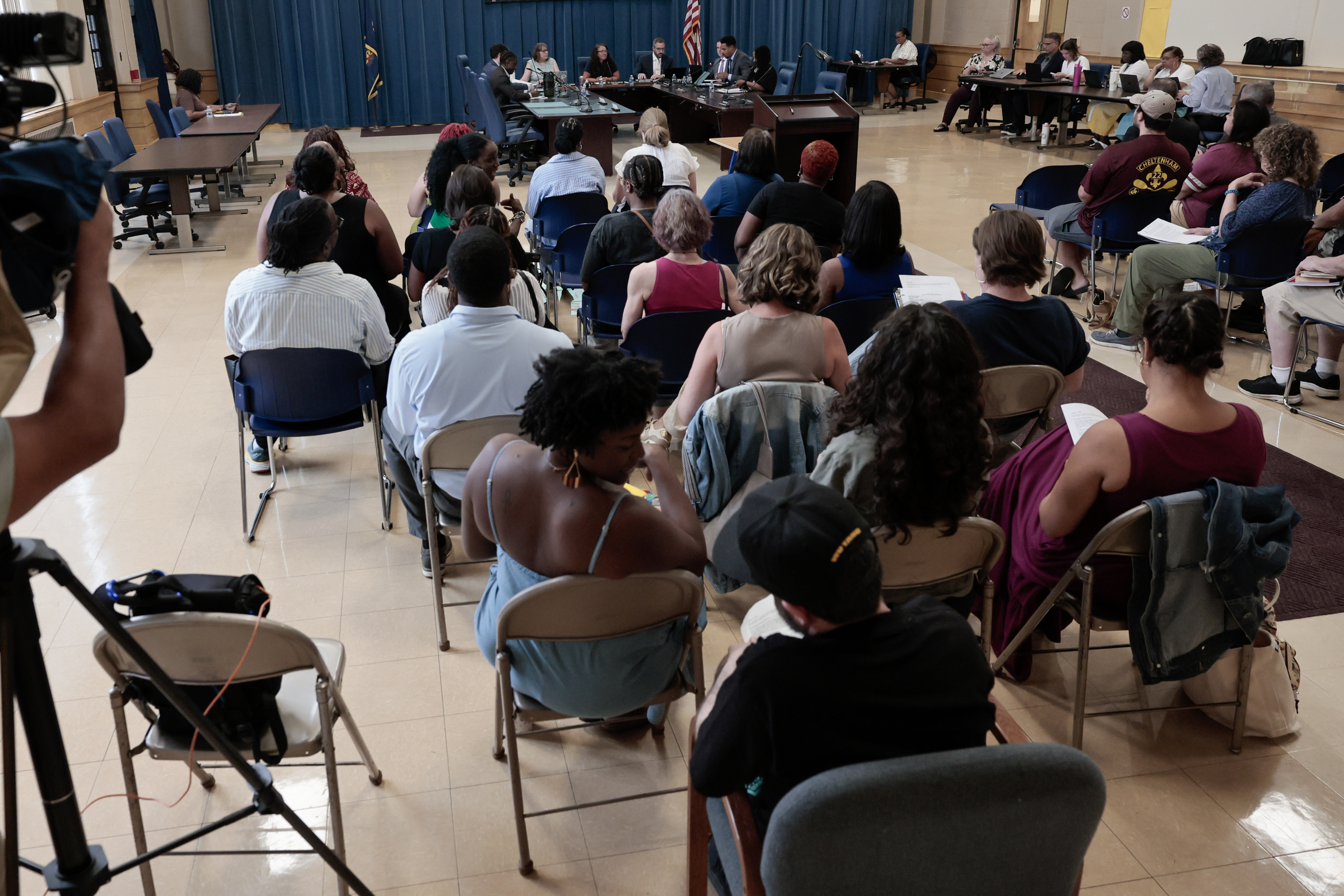
    As it faced parents and community members during an emotional meeting Tuesday, the Cheltenham school board laid out several steps to address concerns about the scandal over the 2025 locker-room assaults that led to criminal charges against four coaches and six players.

    The board announced new leadership — with plans to appoint veteran educator Chris McGinley as interim superintendent — and an independent review of district policies, with recommendations to follow in 60 days.

    But questions remain about how the board will respond to the district’s alleged mishandling of the situation, including by employees faulted in a grand jury report. Parents on Tuesday, including some who have alleged the district’s safety problems extend beyond the football program, voiced skepticism of the board’s promises.

    The district will pay former Superintendent Brian Scriven, who resigned last week, as part of a separation agreement, according to a spokesperson, but terms have not been disclosed.

    Here is what happens next as the board deals with the aftermath of the criminal charges announced two weeks ago, and the lack of confidence expressed by community members:

    A former superintendent returns

    The board said it plans to tap McGinley, a longtime educator who served as Cheltenham’s superintendent in the early 2000s, to lead the district following Scriven’s resignation.

    McGinley, who more recently worked as an education professor at Temple University, will be appointed by the board at a special meeting Tuesday at 6:30 p.m., district spokesperson Kevin Kaufman said Thursday.

    Chris McGinley, center, and Angela McIver, right, at a meeting of the Philadelphia Board of Education on Jan. 30, 2020.Charles Fox / Staff Photographer

    McGinley, who began his education career as a teacher in Philadelphia, joined Cheltenham in 1999 as an assistant superintendent, where he oversaw efforts to address the district’s racial achievement gap. He then became Cheltenham superintendent, leaving the district in 2006 before becoming superintendent two years later in Lower Merion, which he led through 2014.

    McGinley then served on the Philadelphia School Reform Commission, which oversaw the city’s schools while they were under state control. He was later named to the Philadelphia school board by former Mayor Jim Kenney, leaving the board in 2020.

    McGinley could not be reached for comment Wednesday.

    Scriven had received a new five-year contract in December. Kaufman said in an email Thursday that “the terms and conditions of Dr. Scriven’s separation agreement will be negotiated (in accordance with Dr. Scriven’s contract and applicable law) and approved publicly at a future meeting.”

    An outside lawyer’s review

    The board has enlisted Leigh Dalton, an education attorney based in York, Pa., with the Saxton & Stump firm, to review its policies and procedures and produce recommendations to the board in 60 days.

    Board president Leah Mulhearn said Tuesday that the review would “include consideration of the grand jury’s findings and how to address them.”

    None of those findings were discussed by the board Tuesday. In a scathing report accompanying the recommendation of criminal charges, the grand jury accused the district of “incompetence” while describing the actions of three employees at the high school.

    Taryn Knox (left) speaks to School Board President Leah Mulhearn and Director of Business Joshua Sweigard during the Cheltenham School Board meeting in Elkins Park on Tuesday, August 11, 2026. The school board was meeting for the first time since criminal charges against four football coaches and six players were announced, and since Brian Scriven resigned as superintendent. .Elizabeth Robertson / Staff Photographer

    The trio — labeled in the report only as Employees #1, #2, and #3 — texted one another after the mother of the 15-year-old victim reported her son’s assault on Sept. 7. One said the student had a “chip on his shoulder” from not making varsity and said he had steered the mother away from coming to the high school in person.

    The employees also indicated they trusted the head coach, Terence Tolbert, and did not believe the mother that Tolbert — who, along with three other coaches, has since been charged with conspiracy and endangering the welfare of a child — had instructed the victim not to tell his parents what had happened. The report said the district then included Tolbert in its investigation.

    Asked about the status of the three employees, Kaufman said Thursday that the district “doesn’t comment on specific personnel matters.”

    On Thursday, Cheltenham High School principal Benjamin Hammond informed families that Mark Hoff, who was vice principal at the high school last year but had been reassigned to Wyncote Elementary in July, would be returning to the high school this fall.

    The player’s mother said she initially reported her son’s assault to Hoff on Sept. 7.

    “Due to the heightened environment about student safety and culture, and acknowledging community concerns, the district has decided to continue Mark Hoff’s assignment as vice principal at Cheltenham High School,” Hammond said in a message to families, adding that Hoff would “provide stability this upcoming school year.”

    Kaufman said that Dalton’s hourly rate was $265.

    Dalton was hired by Central Bucks last year to investigate special-education abuse allegations; the district did not publicly release her conclusions.

    “While communications between counsel are privileged, the board does intend to report out on the recommendations that she makes where appropriate,” Kaufman said.

    Football is still canceled

    The board will also be reviewing all athletic programs, “top to bottom,” Mulhearn said. And there is no timetable for when football, which the district already canceled in May, will resume.

    “Football will not return until we address this, no matter how long it takes,” Mulhearn said.

    Safety changes

    Mulhearn said some safety changes were already underway. The district is “ensuring that all staff members have current criminal history and child abuse clearances on file,” she said. The grand jury report had said that at least five of the district’s football coaches last year were not up to date on clearances related to child abuse reporting requirements.

    She also said the district was “communicating and reinforcing coach expectations and plans for improved locker-room supervision.” While there was an office in the football locker room, coaches did not use it last season, leaving players unsupervised, according to the grand jury report.

    Cheltenham has “begun implementing” recommendations from an audit by the Center for Safe Schools, Mulhearn said. She also said the board had retained the Bucks County Intermediate Unit “to audit our human resources function.”

    Some parents of football players recently told The Inquirer they had urged the district not to hire Tolbert, who they said was hired as coach without an interview because he was already a teacher in the district. The district has not responded to questions about Tolbert’s hiring.

    The Cheltenham school board meeting Tuesday, Aug. 11, 2026, in Elkins Park.Elizabeth Robertson / Staff Photographer

    The criminal cases

    Three coaches and the two players charged as adults by the Montgomery County District Attorney’s Office will face a district judge at a preliminary hearing scheduled for Aug. 27. (Ralph Burnley, the fourth coach charged, has not yet been arraigned in the case, and there is no indication he has hired an attorney. He did not respond to a request for comment.)

    The four players charged as juveniles will face separate proceedings in juvenile court that are not open to the public.

    At the preliminary hearing for the other defendants, prosecutors will present evidence to the judge to support the charges through witnesses. Defense attorneys will be given the opportunity to cross-examine those witnesses and make arguments to the judge for their clients’ innocence.

    After the hearing, the judge will determine whether the prosecution has proved the validity of the charges and, if so, will send the cases to county court.

    Staff writer Jess Rohan contributed to this article.

  • Shooting of Philly couple was likely retribution for earlier killing, sources say

    Shooting of Philly couple was likely retribution for earlier killing, sources say

    The gunfire that killed a North Philadelphia woman and wounded her husband as the couple sat on their porch Sunday night may have been an act of retaliation for an earlier homicide, law enforcement sources said.

    Shariff Perry, who police say killed Michelle Wilson, 61, and shot her 67-year-old husband, is the brother of a man authorities say was killed by the couple’s son, Evans, in 2022, according to the sources.

    Authorities have not publicly disclosed a motive for the crime, but sources, who spoke on the condition of anonymity to discuss an ongoing investigation, said retribution was the likely cause.

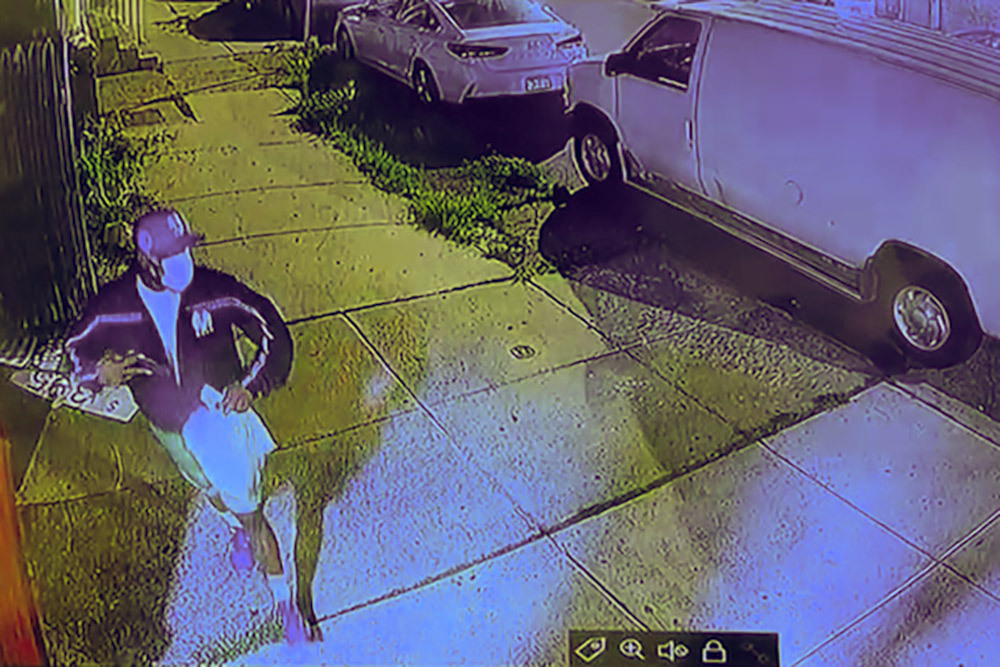
    Surveillance video obtained from a business near Wilson’s home showed a man wearing a surgical mask and a hat approach the couple’s front porch, pull out a handgun, and open fire just before midnight. Wilson was pronounced dead moments later. Her husband survived.

    On Wednesday, police identified Perry, 35, as the suspected shooter. He remained at large Thursday.

    Reached by phone, Wilson’s husband tearfully declined to be interviewed, as did his daughter.

    The Wilsons’ son, Evans, is one of three people charged in the death of James Dunbar, 20, who was shot in the head on the 2800 block of North Taylor Street, less than a mile from where the Wilsons were shot, sources said.

    Another man was also shot, but survived, police said.

    Witnesses told detectives at the time that they heard a barrage of gunshots, then saw two armed men fleeing in a Hyundai Sonata. Detectives recovered 17 bullet casings from the scene, authorities said.

    Wilson and two teenagers were charged with murder and related crimes, court records show. Wilson has pleaded not guilty and is awaiting trial.

    Wilson’s attorney, David Mischak, did not return a phone call on Thursday.

    Dunbar’s death came during a wave of crime in the city following the pandemic.

    Michelle Wilson’s killing was one of six homicides in Philadelphia between Friday morning and Sunday night, a burst of bloodshed in what has otherwise been one of the city’s least violent years in decades.

    Hours before her death, Wilson’s family had gathered for a Sunday afternoon barbecue, with children and relatives on the porch, a neighbor said. The neighbor — who asked not to be identified for fear of retaliation — said the couple were “quiet” and “friendly.”

    Police have offered a $20,000 reward for information leading to Perry’s arrest and conviction and have asked anyone with information to contact the department’s homicide unit at 215-686-3334 or its tip line at 215-686-TIPS (8477).

    Staff writer Ellie Rushing contributed to this article.

  • Philadelphia’s Colombian community rallies to help earthquake victims

    Philadelphia’s Colombian community rallies to help earthquake victims

    Joy Huertas, 33, woke up Monday morning in her Philadelphia home to multiple messages in her family’s WhatsApp group: Her parents were nowhere to be found.

    A 7.4-magnitude earthquake had struck her hometown of Pereira, Colombia, as well as other areas of the country, leaving more than 200 people dead and thousands missing.

    Huertas knew her father had a doctor’s appointment in the center of the city that morning before heading to the airport for a flight to Bogota.

    A quick look on social media showed her that Pereira’s airport had a half-collapsed roof and that the building in which the doctor worked had been reduced to rubble.

    “I started to panic,” Huertas said.

    Volunteers and rescue workers search for survivors at the site of a collapsed building, one of several destroyed during Monday’s 7.4-magnitude earthquake in Pereira, Colombia, on Tuesday.JUAN ARREDONDO

    An hour later, she managed to get hold of her brother. Her parents were safe.

    Fortunately, her father’s doctor had rescheduled his appointment to an earlier time, before the earthquake. But, with the power out and the internet connection spotty, she had not been able to contact any family members until well past noon.

    “My mom said that it felt like the land had turned into the sea, and that it went on for so long, everything around them was shaking,” Huertas said, holding back tears. “She said everyone was so scared to go back inside.”

    By Tuesday, conditions had not improved. The aftershocks had Huertas’ Pereira neighbors dragging mattresses out and sleeping in front of their homes.

    People camp out in a park on Wednesday, after after an earthquake damaged their homes.Fernando Vergara

    “Mom said it feels like being back in the pandemic because the lines to buy supplies are so long, and when your turn comes mostly everything is gone,” Huertas said. “They have no water, people are running out of food, and the trucks with supplies can’t access the area to put food back in the grocery stores.”

    Still with a heavy heart, Huertas found solace in a Wednesday night vigil organized by Acción Colombia. The Philly community nonprofit provides resources, coordinates events, and serves as a cultural bridge for the more than 8,000 Colombian nationals living in Philadelphia, as well as folks in New Jersey and Delaware.

    Dozens of people, many with Colombian flags, gathered outside City Hall to hold one another through the sense of loss. Through live music and a moment of silence to pay respect to the dead, one thing was clear: The community wanted to help.

    “We’ve come to give Colombia a hug and show our solidarity so that people find the strength to rebuild after such a catastrophic event,” said Leity Rodriguez Largo, director of Acción Colombia.

    Moved by how many people in Philadelphia reached out to the group looking to help people back home, Acción Colombia began organizing to send resources to the earthquake-affected areas.

    “Philadelphians have been wonderful. They need to know that every ounce of help counts and is appreciated,” Rodriguez Largo said.

    On Saturday and Sunday, Acción Colombia will be holding multiple events in and around Philly to collect donations. Here is how to help:

    Resources needed

    Before donating, make sure perishable items have not expired and other items have not been opened.

    • Food: Canned goods such as chicken, tuna, sardines, beans, vegetables, and fruit. Also: rice, cereal, pet food, and powdered hydration drinks.
    • Hygiene and baby products: Diapers (for all ages), baby wipes, formula, feminine hygiene products, soap, shampoo, toothpaste, toothbrushes, and deodorant.
    • Emergency equipment: First aid supplies, flashlights, batteries, work gloves, helmets, and face masks.
    • Packing tools: Scissors, packing tape, and medium boxes.

    What not to bring

    According to Rodriguez Largo, water bottles are not being accepted because they are hard to transport and can be found in areas not affected by the earthquake. Clothing items will not be accepted, either.

    Where to donate in Philadelphia

    Acción Colombia will be at these locations both Saturday and Sunday:

    5 a.m. to 3 p.m.: Amigo’s Colombian Bakery, 6216 Bustleton Ave., Oxford Circle.

    3 to 8 p.m.: Lighthouse Field/Oblea Fusion, 101 E. Erie Ave., North Philadelphia.

    Where to donate outside Philadelphia

    Donations will be collected in Malvern on Saturday, between noon and 8 p.m., near Mi Pais restaurant, 477 Lancaster Ave.

    How to volunteer

    Philadelphians who would like to volunteer to pack and classify the items are welcome to text Acción Colombia at 267-423-9020, Rodriguez Largo said.

    For monetary donations

    Rodriguez Largo recommends directly supporting groups already on the ground in Colombia. She advises monetary donations go to Manos Visibles, a nongovernmental organization helping people in the most affected areas.

    A firefighter working on rescue efforts holds a Colombian flag amid the rubble on Thursday.Ivan Valencia
  • Andrew Mukuba’s promising rookie season was cut short by injury. His resurgence is key to the success of the Eagles safeties.

    Andrew Mukuba’s promising rookie season was cut short by injury. His resurgence is key to the success of the Eagles safeties.

    To Andrew Mukuba, there is no sense dwelling on the past.

    The fractured fibula that ruined his rookie season with the Eagles in a Week 12 loss in Dallas, the demanding rehabilitation that followed, the emotional ups and downs that come with all of it, that’s all behind him, he says.

    When he hits the football field next to play a game, which could be as soon as the preseason opener Saturday night in Baltimore, he won’t be seeking any closure.

    “I feel comfortable out here despite what I had going on,” Mukuba said after practice Thursday. “I’ve already put everything behind, just focused on what’s next and what’s in front of me.”

    There still is a lot in front of the 23-year-old. The Eagles are putting a lot of trust in their second-round pick from last year’s draft. They lost Reed Blankenship in free agency and did not make major upgrades to the position group in part because they feel like Mukuba is capable of being an every-down difference maker. There were “shaky” moments during his rookie season, Vic Fangio said in the spring, but the longtime defensive coordinator felt like Mukuba was “coming on” in the five or six games leading up to his injury.

    Drew Mukuba suffered a season-ending injury on this play last season after colliding with teammate Sydney Brown late in the fourth quarter of a Week 12 loss in Dallas.David Maialetti / Staff Photographer

    What’s the biggest difference year-over-year?

    “It’s just experience, knowledge, and know-how of the defense,” Fangio said last week. “You might look and say, ‘Man, he looks quicker. He’s in better shape.’ I think it’s just the thought process [speeding] up, comfortability with the defense, and what he has to do. He’s in a little bit better shape too.”

    That part always helps, especially in the steamy conditions training camp practices come with. But Mukuba agreed that the biggest difference between this version of him and the rookie version this time last year was on the mental side of the game. His offseason was dominated by rehab. He wasn’t fully cleared for workouts during the offseason program, and a lot of his time away from the field was spent watching film and diving into the playbook.

    “In that situation, you can’t do anything but try to learn,” he said.

    He said he sees the preparation paying off in his ability to recognize plays — “letting the formation talk to you,” he said — and pick up on cues from the running backs and offensive linemen.

    “Little things I feel like rookies might struggle with coming in and having a lot thrown at you,” Mukuba said.

    The safety position is an interesting one during this Eagles camp. Mukuba is the lone constant, but he has different players next to him at times. When the Eagles are in their base defense, with just two cornerbacks on the field, Cooper DeJean has been sliding from the nickel spot to safety next to Mukuba. When they’re not in base, which is the majority of the time, Marcus Epps has seen a lot of first-team work, as has Michael Carter II, who, like DeJean, is making a transition from nickel to safety.

    It’s not out of the realm of possibility that the Eagles search for an upgrade to pair next to Mukuba before the season begins, but Fangio has expressed comfort in Epps and Carter.

    Mukuba said earlier this month that DeJean, a “natural defensive back,” was picking up his new occasional position well, but there are challenges.

    “You think differently, you play differently with the runs because you’re closer to the ball,” Mukuba said of a nickel. “Obviously with safety you’re further away from the ball. Finding right angles and trying to play in space is a little different than when you’re closer to the ball.”

    Eagles safety Andrew Mukuba intercepts a pass intended for Kansas City Chiefs tight end Travis Kelce.Monica Herndon / Staff Photographer

    Mukuba, who had 46 tackles in 11 games last season, will have some new duties thrown his way. Blankenship, who left for Houston in free agency, was the defensive quarterback who did a lot of communicating from the back. The safeties will share those responsibilities, Fangio said.

    Mukuba said his next steps for year two are to continue getting more comfortable in the NFL and keep growing in his role.

    “Trying to see how much I’ve grown from last year, trying to remove the mental errors or the little things that I was struggling with last year,” he said. “A lot of things I struggled with last year, I feel like this year I’ve overcome and I’m playing more confident and faster.

    “I feel good. I worked hard to get to this point.”

  • Cyclospora spreads through human waste – so how did it get on food?

    Cyclospora spreads through human waste – so how did it get on food?

    The nationwide cyclospora outbreak is very likely a result of sewage contamination in the food supply, according to scientific researchers and public health officials.

    The parasite’s spread can become a self-perpetuating cycle. Cyclospora is found only in humans, where it replicates in the intestinal tract, causing severe diarrhea. The organism reproduces by releasing oocysts, which are excreted in those human feces. In the U.S., feces usually end up in sewage systems.

    In many states, sewage water is treated — though not always in ways that remove or kill the oocysts — and then released into waterways and can be used to irrigate crops. The oocysts mature in the environment with warm temperatures in about a week. Then a human comes along and eats the irrigated food or drinks the water and gets sick, releasing more oocysts into sewage systems.

    I am a public health water microbiologist who collects sewage water and tests it for evidence of harmful pathogens, such as cyclospora. The first time I studied cyclospora was in the first outbreak ever documented in the U.S., a small, 45-case outbreak in Florida in 1995.

    The cause was initially suspected to be strawberries grown in California, but later it was determined it was more likely due to imported contaminated raspberries from Guatemala. That country’s raspberries were also associated with much larger outbreaks in 1996 and 1997. At the time, little was known about this single-celled protozoan pathogen.

    More than 30 years later, the largest outbreak ever recorded in the U.S. has sickened more than 22,000 people, and contributed to the deaths of two in Michigan, where I live and work. Using treated sewage to irrigate crops is common in many places, especially where groundwater and surface water are in short supply.

    What’s in wastewater

    There are two reasons researchers like me collect sewage and monitor what’s in it.

    The first is to evaluate levels of disease in a community. Measuring viruses such as SARS-CoV-2 in untreated sewage helped paint a picture of the spread of COVID-19 and the emergence of variants as the pandemic continued.

    The second reason is to determine whether and how sewage treatment removes, inactivates, or kills pathogens.

    It is not easy to measure cyclospora oocysts in sewage, contaminated water, or food. Even modern laboratory methods have trouble reliably detecting low levels of oocysts, which can still cause disease.

    Cyclospora oocysts have been found in sewage around the world. A range of studies across the world shows that they can be detected in up to 25% of sewage samples — but not all studies report how high or low the concentrations of the oocysts were. So it can be hard to say exactly how widespread it is.

    A person who is infected with cyclospora excretes somewhere between 100 and 10,000 oocysts per gram of feces for as long as 60 days. Based on what is known about other fecal pathogen excretions from patients, related to the concentrations of those pathogens in sewage, I estimate that there could be anywhere from 1 to 100 oocysts per liter in sewage.

    Our laboratory at Michigan State University is developing a method to more accurately detect this parasite even at lower levels in sewage. This type of wastewater surveillance may help determine when an outbreak is beginning to subside and where larger numbers of people are still affected. In addition, this information could allow sewage treatment plant managers to regularly monitor their discharges.

    What happens during sewage treatment?

    There isn’t clear data on how well standard sewage treatment processes reduce the numbers of cyclospora oocysts. But there is information on two other similar protozoa that also cause significant diarrhea in humans: Cryptosporidium produces an oocyst about half the size of cyclospora, and giardia produces a cyst that is similar in size to cyclospora.

    From 2001 to 2003, my laboratory studied the occurrence of those protozoa at six sewage treatment plants — one each in Arizona and California and four in Florida. All had been approved by their respective state regulators for nonpotable reuse, including irrigation of landscapes and, in some cases, crops.

    In that study, we found these protozoa in all the untreated sewage we tested, indicating there is some portion of the population that is infected and excreting their cysts or oocysts.

    The five treatment plants whose processes included disinfection with chlorine were able to get rid of a high percentage — but not all — of the protozoa in their discharged wastewater. Some cysts and oocysts remained intact, with the potential to cause disease, even in water that had gone through the entire treatment process, as it is known that wastewater chlorination does not kill these protozoa.

    From that data, it seems reasonable to assume that at least some small proportion of cyclospora oocysts also survive sewage treatment processes and are released back into the environment, where they can survive for months.

    What about reuse?

    Across the U.S., 200 billion gallons of treated sewage wastewater are used for irrigation of agricultural lands each year.

    Some of that wastewater undergoes additional filtration and disinfection for reuse before being spread directly on landscapes or crops. The volumes, however, are not readily known. And other treated sewage, which undergoes only standard secondary treatment, is discharged into rivers, streams, and reservoirs that could provide irrigation water.

    But few states regulate efforts to remove or monitor protozoa such as cyclospora in treated sewage. Filtration can remove protozoa but must be designed and operated correctly. Chlorination is not effective, but ultraviolet light does inactivate cryptosporidium and eimeria, a chicken protozoan highly related to and used as a surrogate in studies testing methods of killing cyclospora by the food safety industry.

    What is needed for better risk assessment and management?

    As floods and droughts occur routinely across the U.S. and around the world, sewage may overflow into bodies of water or be used directly on crops. That increases the risk that diseases, including protozoa such as cyclospora, which are transmitted through ingestion of fecal matter, may spread through food and water supplies.

    And because cyclospora oocysts mature in outdoor heat, it is possible that increasing temperatures, such as heat domes, could speed up their maturation, exposing more people to the infectious form of the parasite.

    Modern technology and techniques are capable of monitoring water quality, detecting harmful pathogens and eliminating them. Expanding monitoring of wastewater for protozoan diseases and other dangers can help prevent outbreaks and slow the spread of disease from sewage-contaminated water in the future.

    Joan Rose is a professor of water research and director of the Water Alliance at Michigan State University.

    Reprinted from The Conversation.