Blog

  • Perfect Game’s All-American Classic brings former major leaguers together to coach future stars

    Perfect Game’s All-American Classic brings former major leaguers together to coach future stars

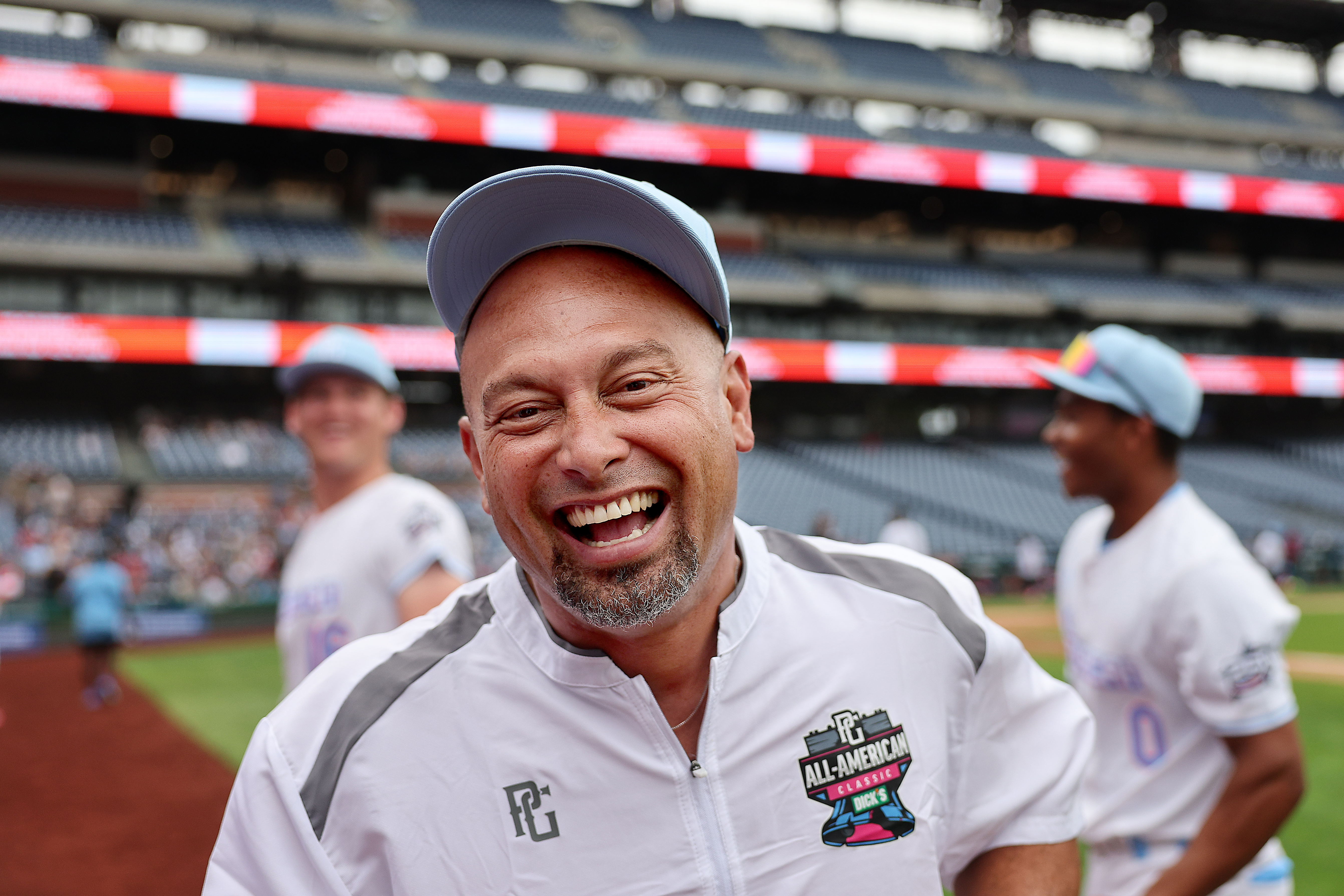
    The past and the future met at Citizens Bank Park on Sunday morning for the Perfect Game All-American Classic. Sixty of the top high school baseball players in the country took the field and were coached by former major leaguers.

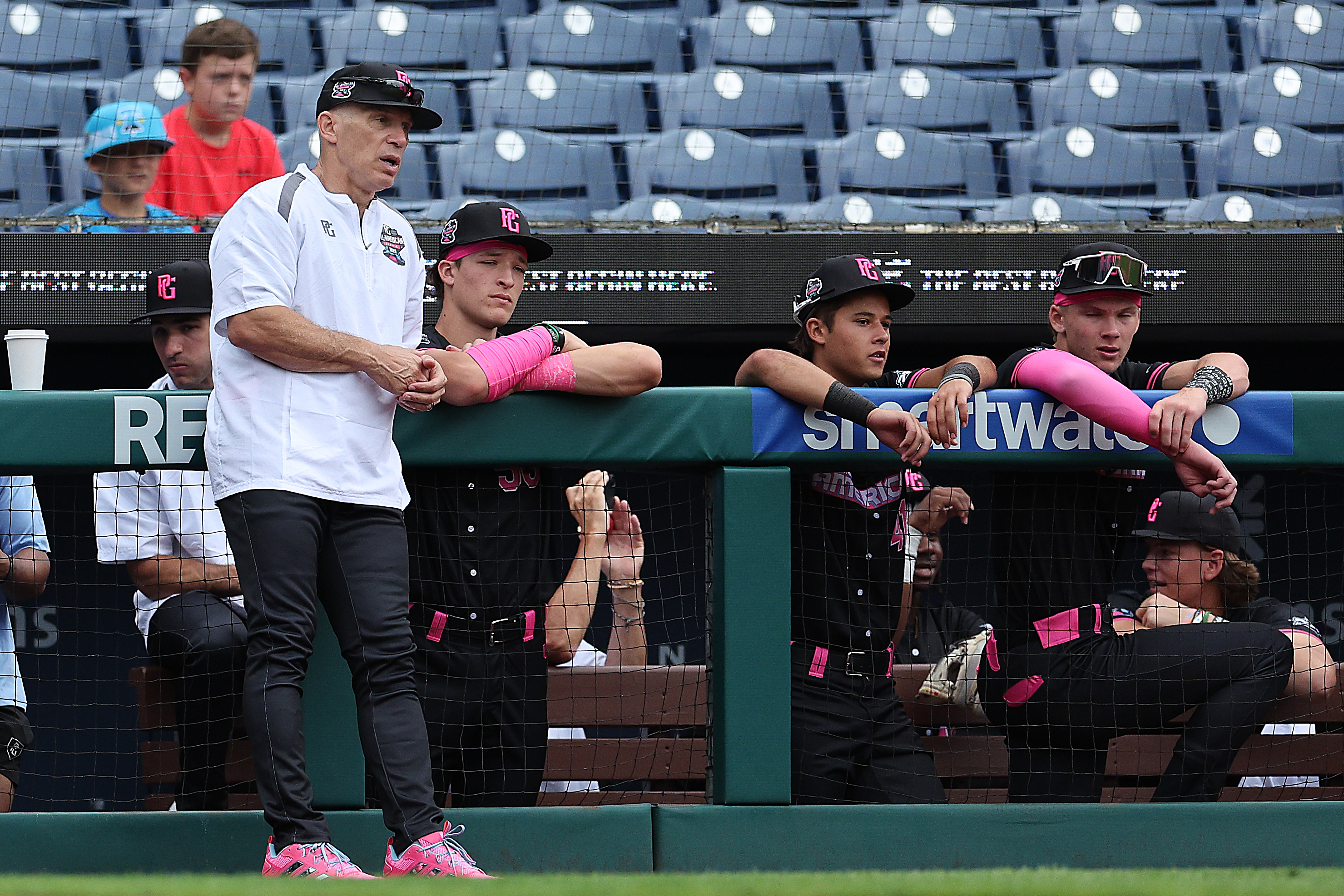
    Former Phillies manager Joe Girardi, a four-time World Series champion as both a Yankees skipper and player, served as the manager of the West team. Across the field in the first-base dugout, former Phillies center fielder Shane Victorino was the manager of the East team.

    Ultimately, it was Girardi who came out on top with an 8-3 win for the West team.

    Girardi spent 273 games as the Phillies manager starting in 2020. He went 132-141 record with a .484 win percentage before being fired early in the 2022 season. He hadn’t been back in the dugout at Citizens Bank Park since. Instead, he’s been focusing on his role as a Yankees game analyst for the YES network. He said it was great to be back in Philly.

    “I enjoyed my time here,” Girardi said. “It’s a great baseball town. People are extremely passionate. Just great to be around these young kids too.”

    Girardi was the manager of the West team for his first time back in the dugout at Citizens Bank Park after being fired in early 2022.David Maialetti / Staff Photographer

    Victorino, whose eight seasons in Philly included two All-Star selections, three Gold Gloves, and the 2008 World Series title, has spent a lot of time back in the city. During All-Star Weekend last month, he led Team Victorino to win the inaugural MLBx three-on-three tournament against Jimmy Rollins, Ryan Howard, and Andruw Jones.

    Also part of both the Perfect Game coaching staff and the 2008 Phillies were pitchers Kyle Kendrick and Tom Gordon. Milton Thompson and Ben Rivera, from the Phillies’ 1993 NL champions, joined them on the coaching staff, along with fellow ex-Phillie José Contreras. Former manager Charlie Manuel was in attendance as the honorary chairman for the first-ever Perfect Game event held at Citizens Bank Park.

    With so many players back and involved in the event, Victorino said it’s a testament to the “Phillie way.”

    “There’s something special when I came here, and I learned that through the years that there’s a way that they do it here,” he said. “To be a part of it, to be called back, and to be a part of this organization still, [with] five, six people involved in this [event] it’s always amazing.”

    Former Phillie Shane Victorino was the manager of the East team and was one of five former Phillies part of the coaching staff for the game.David Maialetti / Staff Photographer

    Fellow former major leaguers Mo Vaughn, Trevor Hoffman, Ryan Klesko, Todd Coffey, Denard Span, and Jason Phillips, and Girardi’s son Dante were also on the coaching staffs.

    For Dylan Seward, a shortstop from Corona, Calif., who is projected to be the top pick in the 2027 draft by MLB.com and is committed to Tennessee, the opportunity to play and learn under these veterans was “a major blessing.”

    “Joe’s managed some of the best players ever, so getting to pick his brain a little bit, to me, that’s how you get better,” Seward said. “Always [having an] open mind and ask a lot of questions from guys with a lot of knowledge and just really listening.”

    In line with the rest of the big names surrounding the game, Daron Sutton and former Phillies outfielder Hunter Pence called the game on PGTV.

    Pence’s nephew, Striker Pence, a 6-foot-6 two-way player also from Corona, pitched the first inning. The right-hander maxed out at 99 mph with the rest of his pitches sitting in the high 90s.

    In the fourth inning, Pence, who bats left-handed, hit a double to centerfield that brought in the first two runs of the game.

    On the East team, Brue Milner, a catcher from Tallassee, Ala., who is committed to Georgia Tech, went yard in the top of the sixth to bring in a run for Victorino’s team. Later in the inning, a base-hit from Harry Chubb Jones Jr., an Alabama pledge from Douglasville, Ga., tied the game.

    A sacrifice fly from Max Hemenway, a native of Puyallup, Wash., who’s another Tennessee recruit, gave the East a one-run lead in the top of the eighth. An RBI single from LSU recruit Sebastian Castillo, of Justin, Texas, in the bottom of the frame tied it up. Pence walked, moving Castillo to second before he stole third. A single from Ontario’s Jalen Jacobs brought Castillo home before a grand slam from another LSU pledge, Koa Romero from Des Allemands, La., ended the game.

    The talent displayed is something both Victorino and Girardi said they don’t recall possessing at 17, but it says a lot about the direction the game is heading.

    “It’s amazing the size, first and foremost, and then the ability to play the game at the level at such a young age,” Victorino said. “I think it’s pretty impressive, but again, there’s so much more for these kids to learn, so much more ahead for them.”

  • Man accused of burglarizing nearly 30 Philly stores arrested in Florida

    Man accused of burglarizing nearly 30 Philly stores arrested in Florida

    A man who police say burglarized nearly 30 stores in Philadelphia was arrested last week in Florida.

    Ravon Service, 31, was arrested Aug. 10 at a resort hotel in Kissimmee, Florida, about 20 miles southwest of Orlando, according to the U.S. Marshals Service in Philadelphia.

    Service is accused of breaking into and stealing cash from 26 stores in South and Northeast Philadelphia. According to police, he allegedly burglarized the businesses early in the morning and took the money from offices, safes, or cash boxes.

    Police had been the investigating a slew of commercial burglaries since early 2025.

    “This arrest stops a serial burglar from continuing to victimize Philadelphia businesses and brings his repeated criminal activity to an end,” Supervisory Deputy Robert Clark said in a statement.

    The Philadelphia Police Department did not immediately respond to an email Sunday seeking additional information.

    Service was also wanted in connection with other crimes in Montgomery County as well as Georgia and New Jersey, the U.S. Marshals said.

    He is currently being held in a Florida jail, where he awaits extradition back to Pennsylvania, the agency said.

  • Mark Rydell, the Oscar-nominated director of ‘On Golden Pond,’ dies at 97

    Mark Rydell, the Oscar-nominated director of ‘On Golden Pond,’ dies at 97

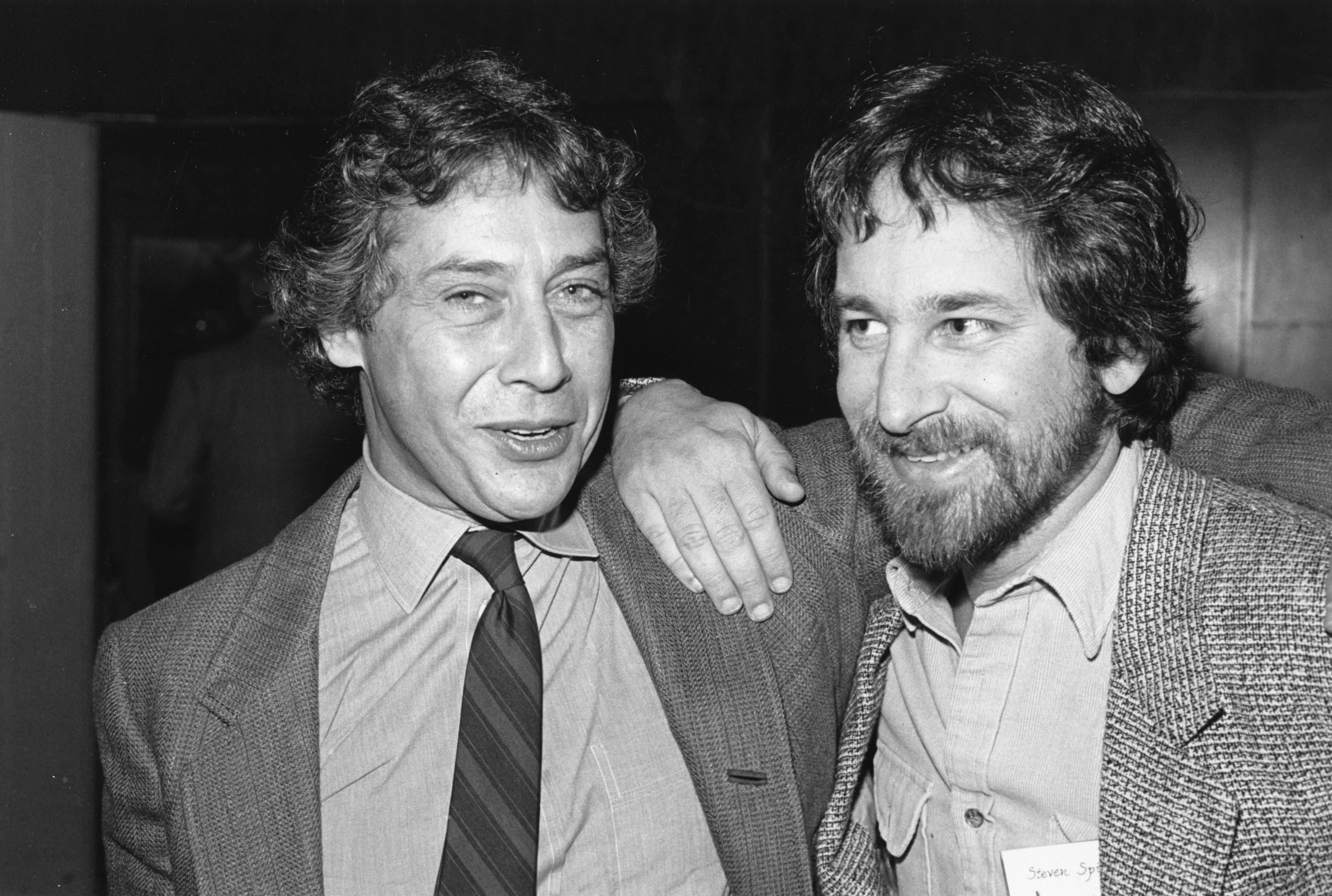
    LOS ANGELES — Mark Rydell, the Oscar-nominated director of the sentimental blockbuster On Golden Pond who worked with such Hollywood heavyweights as Henry Fonda, Katharine Hepburn, Steve McQueen, and John Wayne, has died. He was 97.

    His daughter, Amy Rydell, told the Hollywood Reporter that her father died Thursday of natural causes at a retirement community for the entertainment industry in the Woodland Hills section of Los Angeles.

    “Hard to put into words how much I loved my dad,” she posted Friday on her Instagram account. “He was truly one of a kind. Funniest and most talented person I’ve ever known.”

    ‘On Golden Pond’ earned 10 Oscar nominations

    On Golden Pond, which teamed Fonda with Hepburn and his daughter, Jane Fonda, was nominated for 10 Oscars. Henry Fonda and Hepburn won leading acting honors and the film won for screenplay, which Ernest Thompson adapted from his play of the same name. Mr. Rydell was nominated for directing but lost to Warren Beatty for Reds.

    It earned over $119 million at the box office, making it the second-highest grossing film of 1981 behind Raiders of the Lost Ark.

    On Golden Pond was Henry Fonda’s final movie role. He starred as Norman Thayer, an emotionally brittle and distant father who becomes more accessible at the end of his life after his teenage grandson spends the summer with him and his wife, Ethel (played by Hepburn), at their cottage in New England. The film’s story resembled Fonda’s real-life relationship with daughter Jane, who said working on the movie together helped resolve some of their issues. The elder Fonda died at age 77 months after winning his only Oscar.

    Mr. Rydell’s other Oscar-nominated films were The Fox in 1967, The Reivers with McQueen in 1969, Cinderella Liberty with James Caan and Marsha Mason in 1973, The Rose with Bette Midler in 1979, and The River with Mel Gibson and Sissy Spacek in 1984.

    Born Mortimer Harold Rydell on March 23, 1929, in New York City, he studied with jazz pianist Teddy Wilson at the Julliard School of Music. During a stint in the Army, he spent two years in Japan developing entertainment for military personnel. He majored in English and philosophy at New York University.

    Early acting career opposite Steiger, Cassavetes, Mineo

    He turned to acting when he won a scholarship to the Neighborhood Playhouse in New York. Among his early jobs were roles on the CBS soap operas The Edge of Night and As the World Turns.

    Mr. Rydell made his Broadway debut in Seagulls Over Sorrento with Rod Steiger. In 1956, he made his movie acting debut opposite John Cassavetes and Sal Mineo in Don Siegel’s Crime in the Streets.

    Among his film acting credits were Robert Altman’s The Long Goodbye in 1973 and Woody Allen’s Hollywood Ending in 2002.

    Mr. Rydell moved into directing television, helming episodes of Mr. Novak, Ben Casey, I Spy, The Wild Wild West, The Long, Hot Summer, The Fugitive and Gunsmoke.

    He made his feature-film directorial debut with 1967’s The Fox starring Sandy Dennis, and it was a hit.

    Two years later, Mr. Rydell directed McQueen in the comedy-drama The Reivers.

    Teaming with Sydney Pollack

    Mr. Rydell and Sydney Pollack, who became friends during their acting days, formed Sanford Productions in 1971. Among their efforts were the films Jeremiah Johnson starring Robert Redford and Scarecrow with Al Pacino and Gene Hackman, which won the Cannes Film Festival’s top honor, the Palme d’Or.

    Mr. Rydell directed Wayne in 1972’s The Cowboys. He reunited with Caan for the 1976 flop Harry and Walter Go to New York.

    He scored a major hit with 1979’s The Rose, with Midler in her Oscar-nominated role as a self-destructive rock star loosely based on Janis Joplin.

    Mr. Rydell re-teamed with Caan and Midler in For the Boys in 1991, but it wasn’t successful.

    “He was an actor of note before he became a director, and I was so lucky to have met him when I did; he taught me so much on The Rose and later on For The Boys,” Midler posted on Instagram. “Two Oscars nominations both because of him. He was the actor’s whisperer; just a few words was all it took to understand what was needed. Devoted to Meisner. So many happy memories.”

    TV movies and series among his credits

    Mr. Rydell directed the pilot of the hit ABC drama Family in 1976.

    Among his TV movie directing credits were McBride and Groom, Crime of the Century with Isabella Rossellini and Stephen Rea, and James Dean, which earned actor James Franco a Golden Globe award. Mr. Rydell also appeared in the movie as Warner Bros. chief Jack Warner.

    He directed the movies Intersection in 1994 and Even Money in 2006.

    In 2009, Mr. Rydell, Oscar-winning actor Martin Landau, and screenwriter Lyle Kessler taught a film workshop at UCLA. Mr. Rydell and Landau were co-artistic directors of the Actors Studio West, teaching and coaching actors, writers, and directors.

    “All great art rests on telling the truth,” Mr. Rydell told UCLA’s student newspaper the Daily Bruin. “The real pursuit of an artist is to tell the truth.”

    Besides his daughter, he is survived by son Christopher. The siblings, who went into acting, were from his first marriage to actor Joanne Linville. He had another son, Alexander, from his second marriage to producer Esther Rydell.

  • Violet Hensley dies at 109; Ozarks fiddler made Opry debut at 99

    Violet Hensley dies at 109; Ozarks fiddler made Opry debut at 99

    Violet Hensley, who grew up in Arkansas learning from her father how to carve and play a fiddle, and whose nearly 60-year performing career reached its peak at age 99, when she debuted at the Grand Ole Opry, died on Aug. 7 at her home in Yellville, Ark., in the Ozarks. She was 109.

    Her daughter Sandra Flagg, a guitarist, confirmed the death.

    Ms. Hensley made a clear distinction between a fiddle and a violin, even though they are essentially the same instrument. “If you can read music, you play the violin,” she told the Tulsa World in 1982. “I can’t read music, so I just play the fiddle.”

    By the time she turned 99, Ms. Hensley had performed old-time mountain music — not bluegrass, which she deemed too fancy — at the Silver Dollar City theme park in Branson, Mo., for more than 50 years; played on radio stations and at schools; recorded at least two albums, one of them, with family members, called Old-Time Hoedowns; and appeared on TV programs like Captain Kangaroo, The Beverly Hillbillies, and Live! With Regis and Kathie Lee.

    She also handcrafted 73 fiddles — she played No. 4, which she made in the 1930s — thus acquiring nicknames like “The Whittlin’ Fiddler” and “Stradivarius of the Ozarks.” She could have built more fiddles if not for time spent gardening, canning, sewing, and cutting her neighbors’ hair, she told CBS News when she was 90. To make ends meet, she was a cleaning lady at a hospital for many years.

    One wish lingered: to play at the Grand Ole Opry, the citadel of country music, in Nashville, Tenn. When another fiddler, Tim Crouch, read about that desire in Ms. Hensley’s autobiography, Whittlin’ and Fiddlin’ My Own Way (written with Randall Franks and published in 2014), he called banjo player Mike Snider, who brought her onstage at the Opry on Aug. 6, 2016.

    “This little lady was born in 1916,” he said as he introduced her, to cheers. She played “Angeline the Baker” and “Black Eye Susie” with Snider, Crouch, and other fiddle players, and received three standing ovations, Flagg, her daughter, said.

    “Man, she just tore it up,” Crouch said in an interview. “And afterward, she was the backstage star, everyone wanting her autograph and their picture made with her.” He added that her fiddle “didn’t look great, but it would shock you how good it sounded.”

    Ms. Hensley told the Springfield News-Leader, a Missouri newspaper, “I was just me. Yes, I was pleased. But it’s still just me. You don’t want to try to be somebody you’re not.”

    She performed twice more at the Opry, in 2017 and in 2018, the year she was inducted into the National Fiddler Hall of Fame in Tulsa, Okla.

    Mary Violet Brumley was born on Oct. 21, 1916, in Alamo, Ark., near Mount Ida, in the central-western part of the state. Her father, George Washington Brumley, was a farmer, and her mother, Nora (Springer) Brumley, who ran the home, died when Violet was 11.

    She observed her father making fiddles and, at 15, began to build her own, splitting, planing, and shaping wood that she found nearby. She had begun playing at 12.

    “I wanted to play the fiddle just because we didn’t have anything else to do,” she told KCPT, the public television station in Kansas City, Mo.. “We didn’t have television or radio, and Dad played, and I guess it struck me that I wanted to play.”

    After she married Adren Hensley in 1935 and began to raise their nine children, she stopped whittling and performing (she also sang and clogged) for 27 years, until she reemerged in the 1960s, winning second place in the Turkey Trot Talent Show in Yellville.

    In 1967, she began her long association with Silver Dollar City, where she fiddled onstage and demonstrated her fiddle-making skills at a crafts booth.

    “She wasn’t simply one of America’s most respected fiddle makers and musicians,” the theme park said in a statement. “She was at the heart of an Ozarks tradition that connected generations to this special place.”

    While performing at Silver Dollar City around 1999 with her son-in-law, Tim Nelson, a banjo player and guitarist, she met another fiddler, Betse Ellis, whose band was also playing at the park. Ms. Hensley’s invitation to Ellis to perform together at the park started a long friendship.

    “She was a one-in-a-million fiddler who made an impact on everyone who got to hear her,” Ellis said in an interview.

    On trips to see Ms. Hensley in Yellville, Ellis added, “She taught what I was getting wrong, and I paid more attention to how to play like her.”

    Before a concert around 2010 at the Rock House Center for the Arts in Reeds Spring, Mo., that was to have two 45-minute segments with an intermission, Ms. Hensley confided to Ellis that she was tired.

    “But she sat down to play, and we didn’t stop for three hours,” Ellis said.

    In addition to Flagg, Ms. Hensley is survived by two other daughters, Beatrice Porter and Lewonna Nelson; three sons, Marvin, R.G., and Eddie Hensley; Wilma Flagg, a family friend who came to live with her as a teenager; 32 grandchildren; 85 great-grandchildren; 29 great-great-grandchildren; and two great-great-great-grandchildren. Her husband died in 1997. Four of their sons — Calvin, Russell, and Gary Hensley, and Larry Hensley, who was stillborn — predeceased her.

    Making fiddles was one of many skills Ms. Hensley developed over her lifetime. She also made lye soap, tanned leather, broke horses, and tended crops.

    “I always say,” she told the Tulsa World, “making a fiddle is a lot easier than plowing a field with a team of mules.”

    This article originally appeared in the New York Times.

  • U.S., Canada race for deal to avert Trump’s threat of 50% tariffs

    U.S., Canada race for deal to avert Trump’s threat of 50% tariffs

    The United States and Canada are moving closer to a deal to avert the imposition of punitive 50% tariffs on such Canadian products as hockey sticks, wine, and cement, according to industry executives and trade specialists following the talks.

    Details remain fluid, and recent talks were contentious as both sides race to make a deal ahead of an early-Wednesday deadline. But the emerging accord could pair Canadian tariff concessions along with commitments on energy, defense, and critical minerals in return for the U.S. agreeing to shelve President Donald Trump’s new Section 338 tariffs and relax levies on steel and aluminum, according to those following the talks, who spoke on the condition of anonymity to discuss confidential deliberations.

    If a deal is reached, it is expected to provide momentum for the ongoing renegotiation of the North American trade deal reached in the president’s first term. An accord would also spare the administration one more legal battle over the president’s tariff powers.

    “I’m optimistic that there’ll be a resolution in full or in part that will stave off the Section 338 tariffs. That’s the trajectory we’re on,” said Dan Ujczo, a veteran trade attorney in Columbus, Ohio. “Both sides want a deal.”

    Trump’s Section 338 tariffs would apply to just 5% of the $382 billion worth of Canadian goods that the U.S. imported last year. But if they take effect as scheduled at 12:01 a.m. Wednesday, they could scupper hopes for preserving a unified North American trade bloc, industry executives said.

    The imposition of new tariffs, especially at a trade-chilling 50%, would exacerbate anti-U.S. sentiment in Canada, which is already raw after Trump’s repeated gibes about turning Canada into the 51st U.S. state. Prime Minister Mark Carney has said “all options are on the table” in terms of retaliation for any new U.S. actions.

    “You’ve now put the Canadian government, with these 338s, in a position where if we don’t do a comprehensive deal, we may just end up having to politically retaliate and we will be years away from having trade peace,” said Flavio Volpe, president of the Automotive Parts Manufacturers’ Association in Toronto.

    The once harmonious — and nearly tariff-free — relationship between the U.S. and its northern neighbor has witnessed a dizzying exchange of trade blows over the past year.

    Last month, the president invoked an untested provision of a 1930 law known as “Section 338” to threaten the new levies, saying Canada’s retaliation for his 2025 tariffs amounted to unwarranted “discrimination” against U.S. merchandise. U.S. officials also wanted to spur Canada to engage with the president’s demand to amend the 2020 U.S.-Mexico-Canada Agreement governing North American trade.

    Administration officials including Treasury Secretary Scott Bessent and Jamieson Greer, the president’s chief trade negotiator, took offense at Carney’s decision to retaliate last year, noting that only Canada and China responded to Trump’s “Liberation Day” tariffs.

    The Canadian government says it had every right to hit back after Trump raised barriers against its exports. Administration officials say the Canadian retaliation unjustly penalized three American industries — alcohol, autos, and dairy.

    Officials in most Canadian provinces including Ontario, the most populous, removed U.S. wines and spirits from government-run stores in March 2025 after Trump imposed tariffs on Canadian goods for what he said was a failure to prevent illicit fentanyl from entering the United States.

    Canada also imposed a 25% tariff on some U.S. autos in response to a similar move by Trump, fracturing an industry that routinely ships half-finished vehicles among the three North American nations before completing production.

    The president also complains that European cheeses enjoy preferential access to the Canadian market compared with similar American products shipped north.

    The current talks are aimed at averting what could prove to be a costly breakdown in trade and paving the way for the start of formal U.S.-Canada talks about refreshing USMCA.

    The U.S. began talking to Mexico months ago over possible changes to the North American trade deal that Trump negotiated during his first term. But no formal negotiations occurred with Ottawa. A deadline deal could change that.

    “Depending on the outcome, it’s either a confidence-building exercise that sets the stage for more progress on USMCA, or it’s another friction in the relationship that could spiral quickly,” said Jake Colvin, president of the National Foreign Trade Council, which represents companies such as Caterpillar, Coca-Cola, and Oracle.

    Carney has said that he wants a full settlement, not just a limited deal. Negotiators are trying to strike a balance between what Trump wants and what Canada’s domestic politics will swallow, the industry executives said.

    Along with tariffs, the two sides are discussing cooperation on energy and defense issues, including Canadian participation in Trump’s “Golden Dome” missile shield and purchases of F-35 fighter aircraft. The U.S. also wants to secure access to Canadian supplies of critical minerals, which could help reduce its dependence on China.

    A key goal for Canada is getting the U.S. to reduce its 25% national security tariffs on steel and aluminum. These Section 232 measures, named for a provision in a 1962 trade law, could become a mix of tariffs and import quotas.

    Canada could pocket a politically salient win in the form of lower tariffs on its lumber exports to the U.S. Under a routine annual Commerce Department review of antidumping duties, those long-standing taxes could drop by around 10 percentage points, executives said.

    Though Canada and the United States have long been close friends and allies, the cross-border friction has become a staple of the Trump era. Earlier this month, Trump lambasted Canadian leaders as “nasty” in a Las Vegas speech. Carney responded by applying the adjective to the two nations’ trade relationship.

    Permanently higher tariffs resulting from the collapse of USMCA would cost the U.S. economy $1 trillion over 10 years, according to an Oxford Economics study.

    “There’s a lot at stake. This isn’t theoretical. This has real-life ramifications for Americans and Canadians,” said Beth Burke, the head of the Canadian American Business Council, which sponsored the study.

  • Phillies’ Trea Turner avoids injury after fouling a pitch off his leg, but gets Sunday off vs. Twins

    Phillies’ Trea Turner avoids injury after fouling a pitch off his leg, but gets Sunday off vs. Twins

    MINNEAPOLIS — Trea Turner watched the replay before he left the ballpark here Saturday night.

    “It looked a lot worse than it was,” he said.

    Indeed, Turner left the game — and the Phillies hoping for the best — after fouling a pitch off his upper right leg in the eighth inning of a 9-1 rout of the Twins. He writhed on the ground and and got to his feet with assistance from head athletic trainer Paul Buchheit.

    But by the time the game was over, Turner was walking through the clubhouse without even a trace of a limp.

    Turner could have started Sunday, too, interim manager Don Mattingly said. But the Phillies weren’t pushing it with their star shortstop, whose legs make him one of the fastest players in the sport.

    “I don’t like taking chances with his legs,” Mattingly said. “Because he [could] end up running differently, and then he’s got a hamstring or he’s got a hip or something going on. It’s just kind of a natural, easy decision with Trea, just because you want to be more cautious with him than some other guys.”

    And so, Edmundo Sosa made a rare start at shortstop for the series finale against the Twins, with Turner available later in the game, according to Mattingly.

    In rewatching the swing from Saturday night, Turner said he was bothered more by falling hard on his right ankle than actually fouling the pitch off his leg.

    “I just couldn’t catch myself, couldn’t stop spinning and falling backwards,” Turner said. “I kind of like sat on my ankle. Watching a replay, I can see how the trainers and everyone’s like, ‘Oh no, that looked really bad.’”

    Turner has turned around his season over the last two months. At his nadir, he was batting .216 with a .595 OPS on June 15. Since then, he was batting .292 with an .841 OPS and 10 homers in 49 games through Saturday night.

    And after a rough stretch last month, his defense at shortstop has stabilized. Turner made four errors in four games — and six in 10 games — out of the All-Star break. But he has been error-free for 15 games.

    Even as the Phillies displaced three-fourths of the infield after trading for second baseman Luis Arraez, they left Turner at shortstop. Infield coach Bobby Dickerson has expressed confidence that the 33-year-old can stay at the position beyond this season.

    “He’s got to put a chip on his shoulders and say, ‘The way to quiet everybody is to make plays, to do my job and do it right and do it good,’” Dickerson said on The Inquirer’s Phillies Extra podcast. “I always talk about shortstop as the quarterback position. … We’ve got to get back to him leading as a shortstop — make plays, play it calm, let everybody breathe. That’s the only way he stays there.”

    Said Mattingly: “It seems like he’s cleaned stuff up and had better results. I think he’s just kind of stayed after it and kept working. I know he’s been doing a lot of hand [exercises], activation stuff, but just kind of continuing to work. And it has been better.”

    Phillies outfielder Derek Hill takes photos at the Field of Dreams movie site Thursday in Iowa.Yong Kim / Staff Photographer

    Hill gets a hand

    Reserve outfielder Derek Hill kept playing Saturday night after getting hit on the right hand while attempting to bunt in the fifth inning. But after the game he went for X-rays, which came back negative.

    “I think he’s good,” said Mattingly, who expected Hill to be available off the bench. “I’m sure he’s sore.”

    Hill, who plays center field against left-handed starting pitchers, has brought energy — highlight-reel defense and a few clutch hits, too — since being acquired in a trade with the White Sox for two minor leaguers on June 11. In 40 games through Saturday, he was batting .250 (21-for-84) and slugging .452 with five homers.

    With a righty on the mound Sunday for the Twins, Justin Crawford started in center field.

    Extra bases

    Backup catcher Rafael Marchan (knee) was scheduled to continue his triple-A assignment, but Lehigh Valley’s game got suspended by rain. The Phillies will gradually step up his workload behind the plate. “We’re trying to build him up to the nine-inning type of thing, and then we’ll kind of go from there,” Mattingly said. … The Phillies flew home after the game to begin a six-game homestand against the Marlins and Cardinals. Cristopher Sánchez (15-4, 2.54 ERA) is scheduled to start at 6:40 p.m. Monday night against Marlins righty Janson Junk (6-7, 4.41).

  • Senate hopeful Talarico touts his faith but some Texas Republicans call it blasphemy

    Senate hopeful Talarico touts his faith but some Texas Republicans call it blasphemy

    PLANO, Texas — Talking about Jesus is pretty routine for Texans running for office. But usually not Democrats.

    State Rep. James Talarico is changing the script, leaning into his background in a progressive Presbyterian seminary.

    It’s a playbook that has helped propel his political career. Before he was the Democrats’ hope to flip a Republican Senate seat in Texas, the state lawmaker often invoked the Bible to justify progressive policy positions in the Texas Capitol. Past floor speeches and sermons on abortion, gender equity, and religious pluralism helped give him the online platform that launched his Senate run.

    He is now making his faith a central part of his Senate campaign, telling voters “it’s time to start flipping tables” and take back faith from the religious right — a reference to the biblical story of Jesus flipping over tables in the Temple of Jerusalem to purge merchants profiting off a house of worship. Talarico boils down his core message to two commandments from the Bible: Love God and love your neighbor.

    His allies say Talarico’s approach could help win over faith-based voters in the Bible Belt’s largest state. But Talarico’s past remarks regarding the Bible have infuriated some evangelical voters, and attacking Talarico’s comments is now a regular part of his Republican opponent’s stump speech.

    “First of all, he said God is nonbinary. He also said, ‘I’m a Christian, but I hate Christianity.’ How many Christians do you know have said that?” Texas Attorney General Ken Paxton (R) recently told an audience of supporters in North Texas. “I’ve never met one.”

    Talarico, 37, and Paxton, a 63-year-old staunch evangelical Trump ally, are engaged in a competitive general election race that could be pivotal in Democrats’ attempt to retake control of the Senate.

    Texas has not elected a Democratic senator in nearly four decades, but Democrats are optimistic, given Talarico’s prodigious fundraising and novel campaign message, as well as Paxton’s past of personal and legal scandals. Public polling has had the two candidates neck and neck for weeks.

    Rep. Christian Menefee (D., Texas), a Talarico supporter who grew up in Baptist and nondenominational churches, said an appeal to faith could be a key ingredient to break the Democrats’ drought. Talarico’s openness about faith could attract Christian voters who have voted Republican in the past because they never saw Democrats address their faith publicly before, Menefee said.

    “When James came onto the scene, and this was before this race, when he worked in the teachings of the Bible into some of his opposition to bills while he’s at the state legislature, people immediately took notice,” Menefee said. “Anybody who thinks that it won’t play a role in this election has not spent much time in Texas.”

    Brooke Kemp, a schoolteacher from Arlington, Texas, said she resonated with Talarico’s emphasis on biblical teachings of caring for others rather than some of the cultural issues that have motivated the state’s religious right.

    “He has it right,” Kemp said. “I’m just practicing what Jesus told us is the tenets of my faith as a Methodist: Loving my neighbor, caring for others.”

    But conservative evangelicals have expressed dismay at Talarico’s use of biblical text to justify positions they view as morally reprehensible.

    Talarico has previously invoked the Annunciation, the biblical event when the archangel Gabriel told Mary that she would carry the baby Jesus, to justify abortion. Speaking on the Joe Rogan Experience podcast, Talarico claimed that God asked for Mary’s consent before she became pregnant with Jesus.

    He has also said during a 2021 legislative floor debate that “God is nonbinary” while opposing a bill barring trans children from participating in sports aligned with their self-identified gender. And Talarico said in 2021 that he was a Christian who hates Christianity in an expression of frustration with some elements of organized religion that peddle Christian nationalism apart from teachings of Jesus.

    “It is blasphemous,” said Republican state Rep. Matt Shaheen, a deacon at the influential Prestonwood Baptist Church. Shaheen dismissed the idea that Talarico could convert evangelicals to voting Democratic as “naive,” saying “if anything, it probably frustrates evangelicals” to see their faith misrepresented.

    Talarico acknowledges that his progressive positions, particularly his stance on abortion, put him at odds with many voters of faith. But he asserts those disagreements shouldn’t block Democrats from building coalitions with voters who are driven by the same Biblical tenets that drive his campaign.

    “People of good faith can arrive at different moral conclusions,” Talarico said on a podcast appearance last spring. Talarico noted that even though Pope Francis and Pope Leo XIV hold opposite views from him on abortion he still holds them as spiritual heroes.

    He has also walked back some of his most provocative remarks, saying he regrets some of his comments that he said could be “cringy.” He told CBS News that he called God nonbinary to emphasize that God can’t be categorized in human terms and cited Galatians 3:28, which teaches that all are equal before God, regardless of nationality, gender, or class.

    The divergent takes on Talarico can be explained in part by differences between the mainline Protestantism he espouses and the evangelical Christianity that makes up a plurality of Christian voters in Texas.

    Mainline Protestants tend to view faith as part of a pluralistic religious and social landscape that can adapt to the needs of the people it serves. Evangelicals recognize only one form of salvation — through Jesus — and the infallibility of the literal text of the Bible.

    Roughly 67% of Texas adults identify as Christian, with roughly 27% identifying as evangelical, compared to only 10% identifying as mainline Protestant, according to Pew Research Center. Catholics make up about 22% of Texas adults, making them the second largest denomination in the state.

    Evangelical voters have been some of the Republican coalition’s most reliable supporters. Nearly 70% of white evangelicals nationally approve of President Donald Trump’s performance, according to Pew.

    Paxton identifies as an evangelical and has invoked his faith throughout his time in office as a major motivator for his conservative beliefs.

    He and his wife were longtime members of the influential Prestonwood Baptist Church, and he worked at its pregnancy and family care center, which ministers to women while discouraging them from having abortions. He has also questioned the constitutionality of separating church and state and called for encouraging public school students to pray and read the Bible in school.

    “Faith is the driver of my life, and so it animates everything that I do. It animates, hopefully, how I treat people,” Paxton said. “I hope that when I’m in office, I’m thinking about what’s best for my constituents and that in the end, I’m here to represent my neighbors and do the best thing I can for my neighbors because that’s what my faith would ask me to do.”

    But Paxton has also had personal scandals that are at odds with church doctrine. Those include a spate of legal controversies, including alleged corruption involving an extramarital affair that led to his impeachment by the Texas House. (He was later acquitted by the Senate.) Paxton and his wife, state Sen. Angela Paxton, divorced in July of last year over alleged adultery.

    Angela Paxton cited “biblical grounds” for the separation, writing in a social media: “I believe marriage is a sacred covenant and I have earnestly pursued reconciliation. But in light of recent discoveries, I do not believe that it honors God or is loving to myself, my children, or Ken to remain in the marriage.”

    Ken Paxton no longer attends Prestonwood Baptist Church, the sprawling North Texas megachurch he and his wife attended together for years. When asked where Paxton now goes to church, his campaign said in a written response: “The Attorney General has been worshipping at churches in communities all across the state. Right now, our focus is on meeting Texans where they are and visiting churches throughout Texas as he continues to travel across the state.”

    Some of Paxton’s evangelical supporters say forgiving lapses in judgment is easier than looking past fundamental disagreements on doctrine.

    “I say, Here for the grace of God go I. There is nobody without a past,” said Jennie Evans, a nondenominational Christian and Paxton supporter from Dallas, reflecting the core evangelical belief that humans are all equally sinners and in need of redemption. Evans said all elected leaders have fallen short personally, but she felt Paxton’s core values still aligned with hers. Talarico’s did not, she said.

    When asked about Paxton’s past conduct, Shannon Markle, another evangelical Paxton supporter from Dallas, quoted from Romans and II Corinthians and said: “No one runs for office that is a saint. No one. Every one of us is just jars of clay. Every one of us has sinned and fallen short of the glory of God.”

    But when asked about Talarico’s interpretation of the Bible, she was much less receptive.

    “I think it is blasphemous. I think he is ignorant. But I do think that he will be judged,” Markle said. “We all will.”

  • We need to care about Trump’s CIA murdering fishermen on the high seas

    We need to care about Trump’s CIA murdering fishermen on the high seas

    One of the worst things about Donald Trump’s America in the 2020s — I know, I know, it’s hard to pick — is the return of all the horrible stuff you foolishly thought our flawed nation was done with after the reckonings of the 1970s.

    The American quagmire in Iran makes Vietnam look practically wise in comparison. Then it came out last week that the government was spying in Minnesota on what should be constitutionally protected protest activity by labor unions or environmental groups, in a callback to the notorious illegal FBI op known as COINTELPRO.

    Oh, and the CIA is murdering* people in Latin America again.

    The asterisk is for “allegedly,” based on a report last week in the Washington Post that confirmed growing suspicions about mysterious drone attacks last winter by “gringos” that struck at least three fishing boats that had sailed deep into Pacific Ocean waters from an impoverished coastal village in Ecuador.

    One of the fishing vessels remains missing, its eight crew members presumed dead. The survivors of the other attacks remain traumatized from their injuries and their subsequent interrogation by men who wore no military uniforms — but had U.S. flag patches and spoke with American accents.

    In March, the crew of the Negra Francisca Duarte II was returning to its Ecuadorian port in Manta with a fresh catch of seafood and, its sailors insist, no illegal drugs when it noticed a blue ship was trailing it on the horizon. Moments later, drones flew over the fishing craft and began dropping explosives.

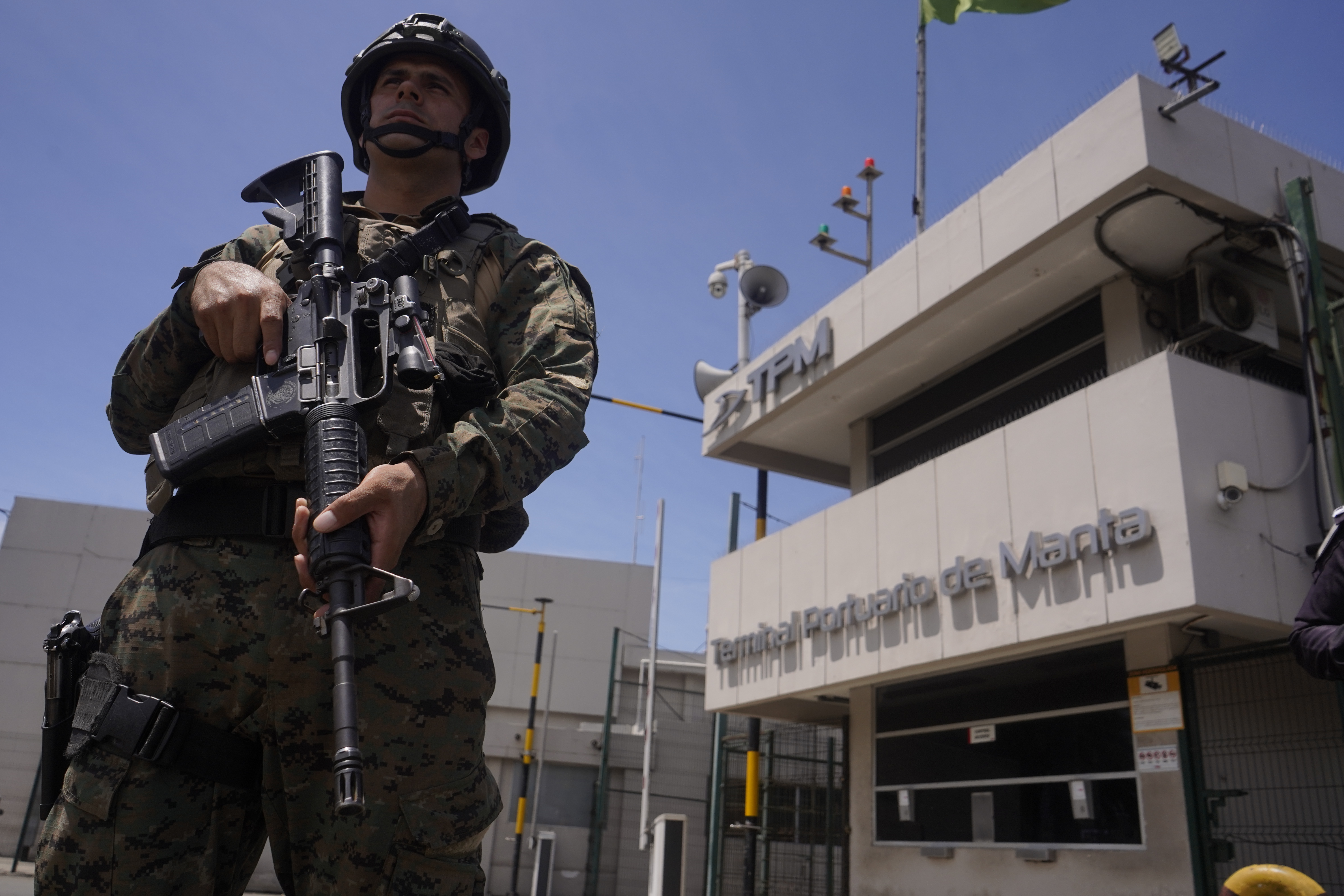
    Soldiers guard the port of Manta, Ecuador, in February.Cesar Munoz

    “The boys were there, hurt and scared. Some got a fire extinguisher to try to put out the fire, but there were too many flames,” the captain of the Negra Francisca, Hernán Flores, told the New York Times, which published the first U.S. media account of the mysterious attack. Flores said injured sailors jumped into the ocean or scrambled onto lifeboats, and all were at first relieved when the blue boat arrived to rescue them.

    Instead, according to the Times and other accounts, their ordeal was only beginning. The survivors were bound, hooded, and interrogated by the strange English speakers, who offered no medical treatment for their wounds. The boat headed north and transferred the crew members into custody in El Salvador, where officials soon released them — not charged with any crime, after the attack that nearly killed them.

    The initial Times article did not confirm whom the men were working for, but it noted extensive data showing how each of the three attacked fishing boats had been tracked by a maritime patrol plane that was registered to a UPS mailbox in Richmond, Va., and flew from Tennessee to a military airstrip in El Salvador in November.

    After the Times wrote about the three mystery boat attacks, the Post followed up with a report that the attacks were a special covert operation conducted by the CIA. These secret strikes have amplified a series of publicly acknowledged boat attacks in both the Pacific and the Caribbean by the U.S. military that have now killed more than 220 people since Trump returned to the White House 19 months ago.

    Last week’s news reports built upon research and more than 100 interviews by the group Human Rights Watch, which is troubled by the lack of both legality and morality in a partnership forged between the United States and Ecuador. This includes not only the three boat attacks but a land assault against a farm near the border with Colombia, which also found no drugs, but in which farmers said they were tortured by the Ecuadorian military.

    “The two countries’ security relationship is deepening at a moment when both governments have engaged in serious human rights violations fueled by their insistence on framing their confrontations with organized crime groups as a kind of war,” the rights group wrote.

    It’s no secret that drug cartels have enlisted some fishing boats — sometimes through desperation to boost their meager income, but often through extortion — to aid their smuggling operations out of South and Central America.

    But these alleged CIA drone strikes raise stark questions about the Trump regime’s strategy that is literally shoot first, ask questions later. Why are some sailors executed at sea when there’s not even evidence to charge the survivors with a crime? Even if some of these boats are tied to narcotics trafficking, what’s the legal and moral justification for a death sentence for low-level drug offenses?

    There’s also this: What are these extrajudicial killings even accomplishing, beyond cementing the image around the world that Trump is running a violent criminal enterprise? The Drug Enforcement Agency (DEA) has assessed that — some 230 or so lost human lives later — these U.S. boat attacks have had zero impact on reducing the flow of cocaine into the United States. That’s in part because most drugs that come into the United States by sea pass through larger commercial ports, not small fishing villages.

    Instead, the biggest impact from the military drone strikes has been the series of so-called snuff videos that either Trump or Pete Hegseth’s Pentagon has posted to social media platforms showing boats in gentle tropical waters getting blown to smithereens, in shock and awe tribute to their regime’s power to kill with impunity. But the secret, allegedly CIA attacks are not even that.

    What is even the point of this cruelty?

    I’m writing this column to honor the on-the-ground courage of Human Rights Watch and amplify the excellent journalism of Times and Post reporters — and because I’m furious that this story has drawn so little attention, and even less outrage.

    Deep into the second year of Trump’s strongman second presidency, the news media is overwhelmed by the Caligula-like craziness of his regime and its fights over matters as small as a ballroom and as big as the Strait of Hormuz, not to mention the frequent weather disasters made worse by the climate crisis the president believes is a hoax. Some maimed or missing fishermen in a tiny village on the bottom side of the planet aren’t making the cut.

    Which is probably exactly what the regime is going for. Trump and his MAGA minions would like nothing more than to numb you, me, and the rest of us to their growing archipelago of death, a bloodstained map that stretches from the icy streets of Minneapolis to a dingy detention site in Newark, N.J., and from a bomb-blasted island off Iran to the sickbeds in an African refugee camp. They want us to feel numb as their authoritarian death cult expands, and we cannot allow that to happen.

    The truth is that the United States will remain a global pariah — a pitiful, helpless giant — as long as there is no accountability for these war crimes, including, or perhaps especially, the terror perpetrated by mystery men with American flag patches on the high seas. That means public hearings, trials, prison sentences, and the kind of truth and reconciliation this nation has not seen before.

    Certainly the fishermen of Manta, Ecuador, will never forget the horrors that rained down upon them from a clear Pacific sky.

    Simon Villacreses, a 52-year-old crew member of the Negra Francisca Duarte II, told Reuters that he suffered a head injury in the assault, and remains traumatized months later. “They started pointing guns at us. They took us aboard, put hoods over our heads and tied ​our hands behind our backs,” he said of the “gringos.”

    The rattled Villacreses has not been back to sea since, telling the reporter, “Maybe I’ve given up fishing for good.” His livelihood has been destroyed by the criminal enterprise run out of 1600 Pennsylvania Avenue. Our outrage is not enough. We need to be relentless in the pursuit of justice.

  • Top U.S. commander visits aircraft carrier, discusses mental health issues

    Top U.S. commander visits aircraft carrier, discusses mental health issues

    The senior U.S. officer overseeing the war in Iran said addressing mental health concerns was a high priority for the military, days after reports emerged of burnout and poor conditions aboard USS Abraham Lincoln. But Adm. Brad Cooper also said some of the concerns that had surfaced were “old news.”

    Cooper, the head of U.S. Central Command, visited the USS Lincoln on Saturday during a Middle East tour. He called his time aboard the aircraft carrier “awe inspiring” and said he witnessed “camaraderie, teamwork, and resilience.”

    “This doesn’t mean that all is perfect,” the admiral said as he acknowledged that long stretches at sea are “uniquely challenging and tough.” He said mental health is “another aspect of individual health and requires our attention just like physical health and spiritual health.”

    The USS Lincoln’s deployment has stretched more than a month past its planned seven-month schedule. Senate Democrats have pressed military leaders on reports of food and supply shortages, water contamination, sewage problems, deteriorating morale, and attempted suicides on the ship.

    The Military Times reported last week that at least two sailors have attempted to jump overboard, with the wife of one sailor saying burnout caused her husband to try to jump.

    Defense Secretary Pete Hegseth downplayed the reports last week, saying the situation has been “completely misrepresented.” When asked Friday whether the deployment of the USS Lincoln had gone on too long, President Donald Trump dismissed that, saying it was “not nearly long enough.”

    Cooper, in a separate opinion piece Sunday in the Wall Street Journal, said that “issues related to food, hot water, and other concerns” were raised “months ago” and addressed by leadership.

    “What I found aboard the Lincoln is that many elements of those stories are old news,“ he said, referring to the issues of morale and ”operational tempo.“

    U.S. officials have confirmed that the USS Abraham Lincoln would return home soon as part of a planned rotation. The Pacific-based aircraft carrier USS George Washington is expected to replace it

    Acting Navy Secretary Hung Cao said in a statement Friday that the crew has been deployed in a combat zone for more than 200 days, carried out 10,000 sorties, and dropped 1.5 million pounds of ordnance.

    It is “also true,” Cao said, that “a small number of mental health cases” were treated with no loss of life and “meal plans were adjusted when fresh resupply was unavailable.” Calls home were also limited when the operational threat was too high, he said.

    While emphasizing that mental health is a “leadership priority” for the senior officers aboard the Lincoln, Cooper said that of the Navy’s 11 active aircraft carriers, “the Lincoln currently has among the lowest number of cases related to mental health.”

    Adm. Mike Mullen, former chair of the Joint Chiefs of Staff, told ABC’s This Week on Sunday that he spoke with Cooper after his visit and said the news that the crew members were coming home had boosted their morale.

    Mullen on ABC News said the reports of the ship’s conditions “were certainly of great concern” but that military officials are “working these issues hard.”

    “I also believe the truth probably lies somewhere in the middle,” he said.

  • The tale of Trump’s food cart escape in Ankara explains why he is losing in Iran

    The tale of Trump’s food cart escape in Ankara explains why he is losing in Iran

    The jokes about Donald Trump’s secret escape from Turkey last month via an airport catering truck are still flooding the internet. Typical mockery included AI-generated images of the president hunched inside the truck gorging himself on bags of McDonald’s fries, while making his furtive getaway.

    The jests about Trump’s transfer from Air Force One to a smaller plane via the truck — after Israeli intelligence warned a dubious CIA of a possible shoulder-fired missile attack by Iranians — may be funny. But Trump’s clandestine feint, even if it was more Maxwell Smart than James Bond, should be taken seriously.

    It serves as a chilling metaphor for why Trump’s misbegotten Iran war has gone so wrong.

    “If you’re hiding in a catering truck when you control the most powerful military in the world, you aren’t winning,” posted Ron Filipkowski, editor-in-chief of the progressive MeidasTouch Network, who wasn’t above making fun of Trump before nailing the bitter truth.

    It is mind-boggling that an American president, who flies in one of the most highly protected planes in the world, had to be smuggled onto a different aircraft because the U.S. military couldn’t guarantee his safety. It’s all the more astonishing since the old Air Force One, on which POTUS was originally departing Ankara, had a defensive system designed to defeat such heat-seeking missiles (which Trump’s preferred luxury plane gifted to him by Qatar still doesn’t).

    You may recall that it was ragged, barefoot Afghans who drove the then-mighty Soviet military out of Afghanistan in the 1980s by using shoulder-fired missiles — known as MANPADS — to take down powerful Russian attack helicopters. That’s called asymmetrical warfare, in which the weaker party uses unconventional means to offset the conventional might of the opponent.

    Ukraine is waging a complex version of asymmetrical war against Moscow, having pioneered a staggering array of drones that can destroy tanks, ships, air defenses, and military infrastructure deep inside Russia.

    Yet, Trump refuses to grasp how radically the nature of warfare has changed, enabling weaker countries to hold off stronger ones using robots, long-range air drones, and sea drones — or even updated shoulder-fired missiles.

    Trump and his secretary of defense, Pete Hegseth, seem to envision war either as a throwback to World War II, or through the blurred lens of the U.S. kidnapping of Venezuelan President Nicolás Maduro. Either you crush the enemy with massive air power, ships, and male troops brimming with testosterone, or you do a quick, one-off beheading of the enemy, bringing them under your heel.

    Neither model applies to the war on Iran.

    Trump’s original goal was supposedly to halt Iran’s nuclear program. In the 12-day Israel-U.S. war on Tehran in June 2025, Iran’s nuclear sites were hit heavily. After that, the U.S. could have tracked any rebuilding of those sites by satellite and taken necessary action while negotiating a nuclear deal. The Strait of Hormuz, then wide open to global shipping, was not an issue.

    Instead, the president abandoned promising nuclear negotiations to join a cockamamie regime change scheme proposed by Israeli Prime Minister Benjamin Netanyahu in February. Jerusalem assassinated Iran’s grand ayatollah and planned to swiftly replace him with a former Iranian president who had constantly called for the destruction of Israel.

    I once had the stamina-draining opportunity to listen up close in a small room as said former leader, Mahmoud Ahmadinejad, ranted for two hours. I can tell you that anyone who knew anything about Iran, or who listened to advisers who did, knew this plan was deeply delusional.

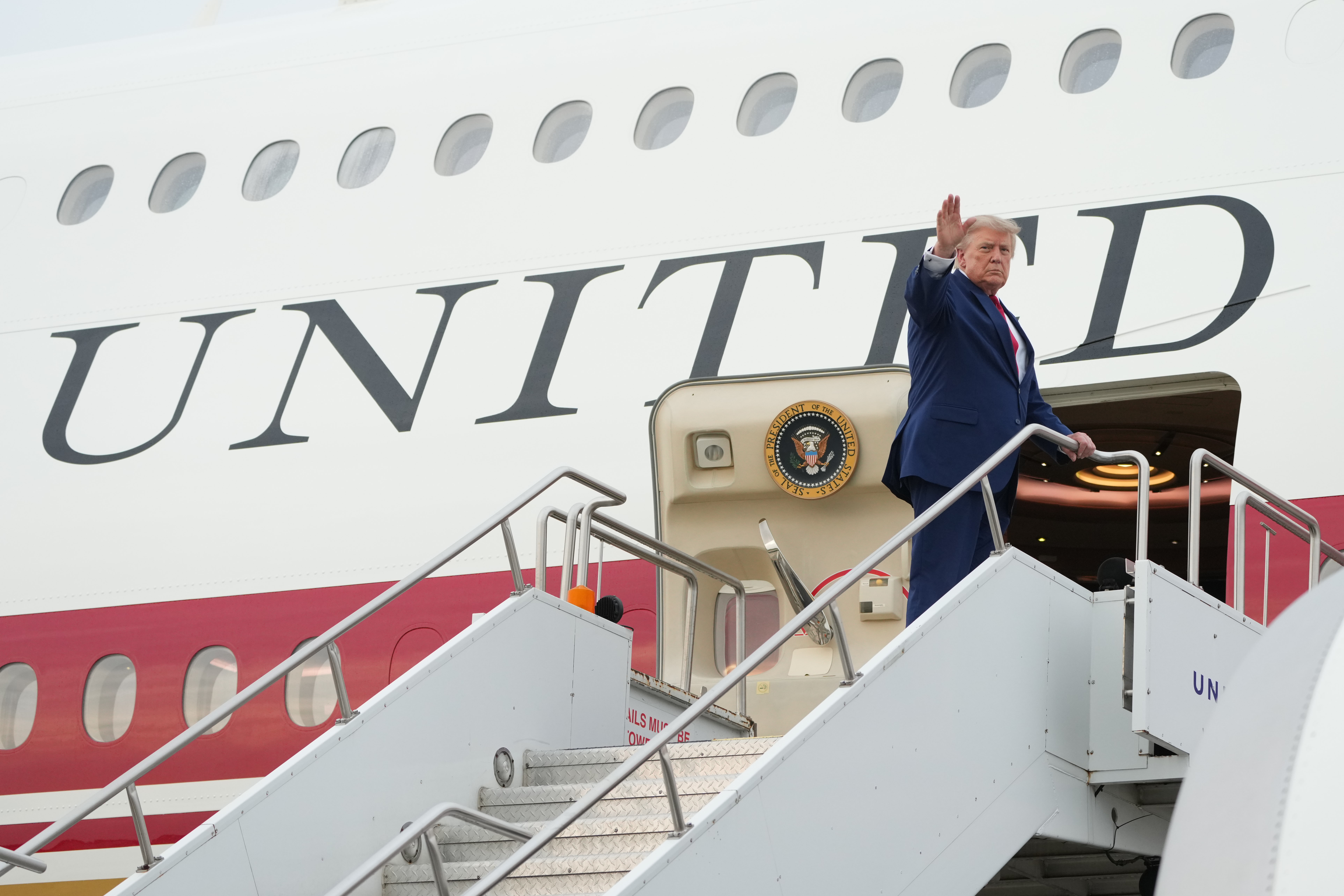
    Catering trucks are parked at Air Force One on the tarmac as the motorcade carrying U.S. President Donald Trump arrives to depart following the NATO summit at Ankara International Airport in Ankara, Turkey, on July 8.Alex Brandon

    Trump was clearly suffering from Maduro Derangement Syndrome, mistaking Iran for Venezuela. As Gen. Dan Caine, chairman of the Joint Chiefs of Staff, warned at the time, a prolonged Iran war risked swallowing the bulk of America’s long-range missile arsenal. Indeed, these weapons, which cost millions of dollars each, were wasted chasing cheap Iranian drones.

    Most dangerously, Russia, China, and North Korea have now seen that Trump’s manly U.S. Army is woefully unprepared for the wars of the future. His staggering request to Congress for a $1.5 trillion budget, an increase of 42% over the past year, doesn’t even include tens of billions in additional funding that he wants for the endless Iran war.

    Yet, that budget is clogged with massive funding of legacy items and vanity projects unsuited for future warfare but protected by members of Congress, defense companies, and Trump cronies who benefit from the projects.

    Prime among them is the 15-ship, Trump-class nuclear-powered battleship program, costing $275 billion over a 30-year span. Not only is Trump’s extravagance not needed by the Navy, but his “golden fleet” will be easy targets for the constantly evolving armada of unmanned anti-ship drones.

    You might think the painful Iran experience would have awakened Trump to the urgent need to prepare the army for drone warfare. He and his showman secretary of war talk a big game, but neither he nor the Pentagon has yet grasped the lessons of the Iran — or Ukraine — wars.

    Trump still rejects Kyiv’s offer to share drones and technology and to jointly produce the scarce Patriot interceptors. Private U.S. companies simply can’t gear up fast enough to meet the immediate need. Private U.S. investors are rushing to Ukraine to check out their innovations, but the Pentagon’s budget is still stuck in the past.

    The result is clear: As the Wall Street Journal just reported, in military exercises in Germany, Ukrainian drone units once more defeated U.S. troops and armored vehicles.

    The U.S. military knows about its continued vulnerability to drones, and how essential they are to modern warfare — and understands the value of pairing with Ukraine, the world’s leader in the technology. “You can’t get training like this in the United States,” NATO’s top military leader, Air Force Gen. Alexus Grynkewich, told the Journal.

    But Trump is still fixated on traditional military might as the road to quick victories — unlike U.S. adversaries in Tehran, Moscow, Beijing, and North Korea. Sharing technology with each other, they are advancing in the use of unmanned and unconventional weapons, leaving the U.S. behind.

    Even as he absconded in a food cart, Trump was still declaring victory in Iran, and claiming Wednesday that he has “total control over the Strait of Hormuz.” Wrong. Iran now controls that vital waterway via drone and missile attacks.

    Trump’s current “strategy” is to wait Iran out while blockading its ships, or those loading up at Iranian ports, from exiting Hormuz. Never mind the cost to the global economy or to U.S. military readiness or to American consumers at the pump.

    POTUS has few options. Lacking munitions, the U.S. can’t launch a ground war against Tehran (thank goodness). And renewed bombing will only cause Iran to bomb energy production sites in Arab Gulf states, which will drive oil prices to new heights.

    What a president with a coherent mind and any rational strategy would do is squeeze the Pentagon to reorient U.S. military production. That, however, would involve a new defense secretary and a full-court press to reorient spending toward the future. Most of all, it would require making the most of all the hard-won drone wisdom Ukraine is so willing to share.

    For that, the U.S. would need a very different person than the man in the White House. It would also require a Congress willing to challenge the president if he refused.

    And so, pending midterm elections, I believe that all the food cart jokes ricocheting around the world convey the sad reality. My favorite was one that asked, “What was the name of the operation that lured Trump into the catering truck?” The answer: “Operation Orange Chicken.”

    That’s a good punch line, but here’s the grim reality: Trump is unwilling to face the truth of his failures and incapable of devising a strategy that will keep Americans safe.