Blog

  • After 22 years away, Gargoyles gallery and vintage shop returns to South Street with all its treasures

    After 22 years away, Gargoyles gallery and vintage shop returns to South Street with all its treasures

    Behold a marvelous menagerie of Americana — a curated cornucopia of century-old curios and Victorian age sensibility.

    Stroll the sepia-toned rows of travel-worn valises and towering top hats. Cast iron railway signs and old pub mirrors. Dime store novels and Gilded Age comic strips. Handcrafted, model pond yachts and leather-worn sporting relics. Glamorous art deco advertisements and dreamlike Jazz Age prints.
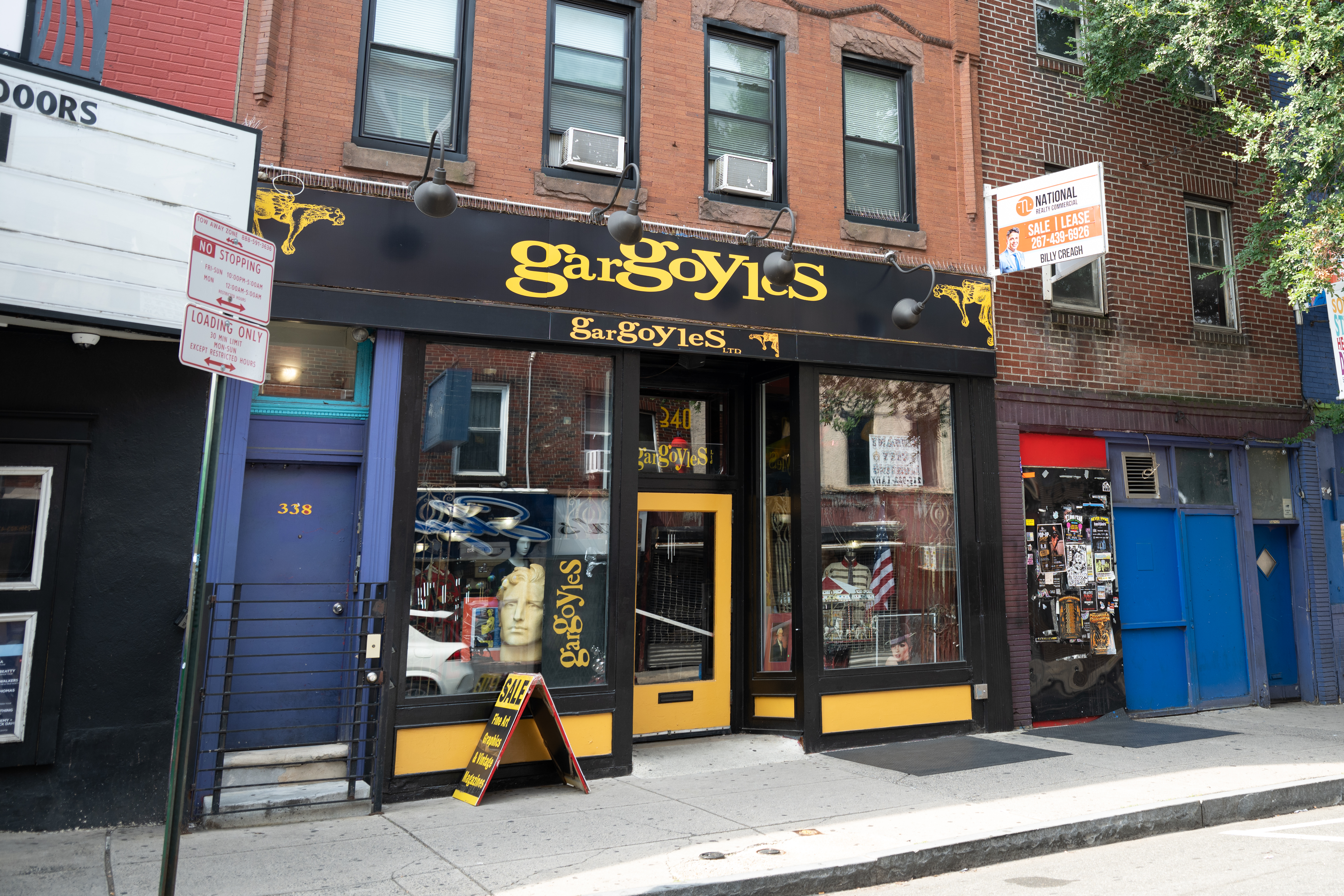
    The exterior of Gargoyles, a vintage shop at 338-340 South Street in Philadelphia, on Aug. 11, 2026.Erin Blewett / For The Inquirer

    Endless architectural embellishments, like terra cotta cupids and stone lion heads, ornamental arches, columns, mantels, and fine wooden sideboards culled from the English countryside or rescued from bygone wrecking balls.

    All of it carefully chosen and displayed for its taste and excellence by Hadassah Zuberi, 80, a lioness of architectural salvage, who for decades sold architectural vestiges, rare memorabilia, and period props to Philadelphia’s grand department stores — including Gimbels, Strawbridge & Clothier, and Wanamakers — as display furnishings.

    And all of it, once again on South Street.

    Confident of change

    In May, almost 22 years after shuttering her storied showroom — Gargoyles ltd., which she operated in a pair of South Third Street storefronts, steps off South, for nearly 35 years before closing in 2004 — Zuberi returned home to Philadelphia.

    Her store’s latest incarnation is located at 340 South St., former home of the Hurricane Alley bar, and across from the iconic Eye’s Gallery. It has quickly become a popular staple on the famed, if perpetually embattled, Philly thoroughfare that now sprouts signs of rebirth after quality-of-life issues and nuisance businesses.
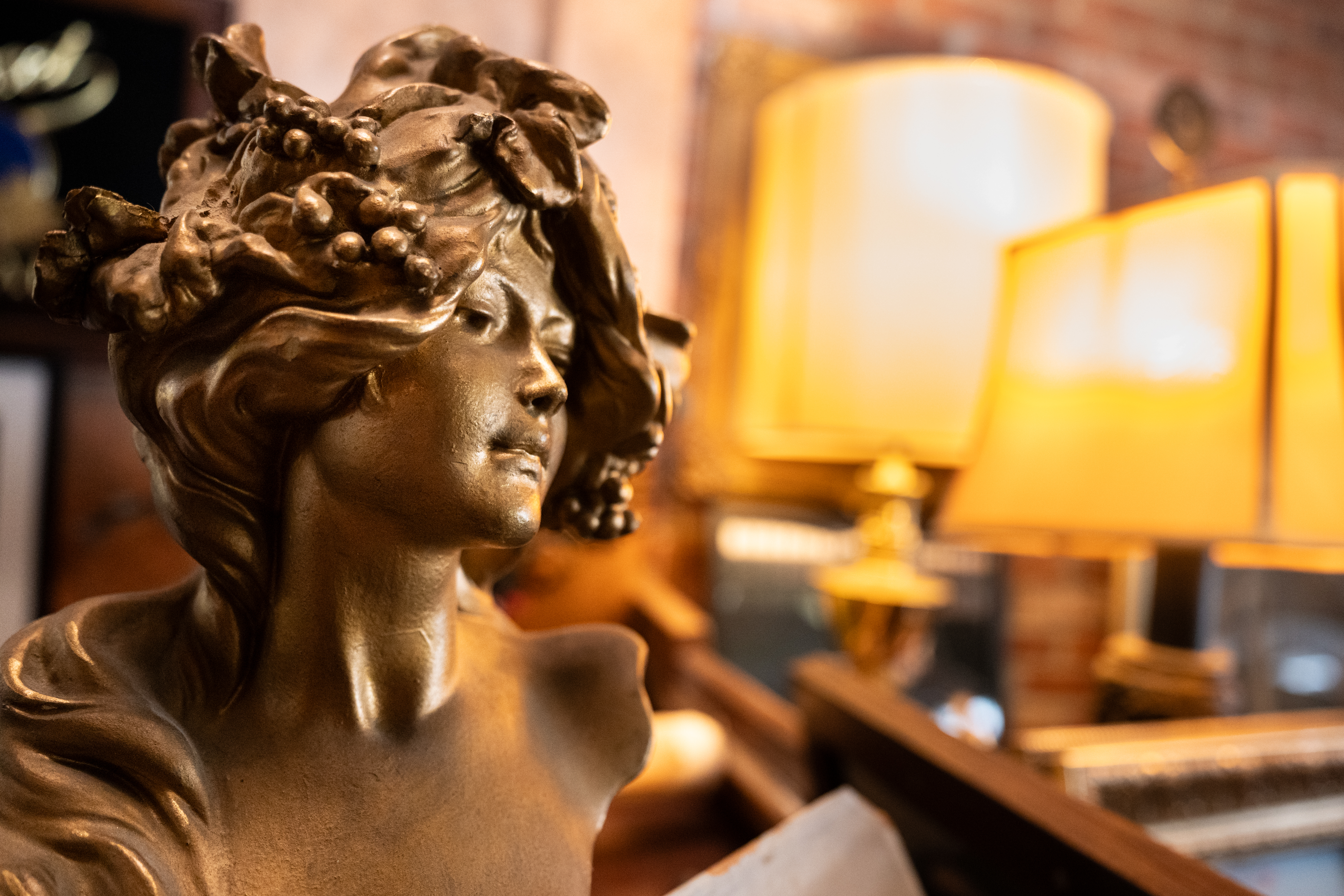
    A decorative bust is displayed among vintage furnishings for sale at Gargoyles on South Street in Philadelphia on Aug. 11, 2026.Erin Blewett / For The Inquirer

    “We’re going to elevate the character of the street,” said Zuberi on a recent afternoon, perched in her oversize leather shop chair as classical music played. “It’s been run-down. I’m confident it’s going to change.”

    Zuberi had relocated her business to the arts enclave of Kingston, N.Y, amid rising property taxes and the shuttering of national department stores.

    The move comes after Rick Milan, former owner of the legendary South Street punk store Zipperhead and now a board member of the South Street District, who owns properties on the street, including the former Hurricane Alley space, lobbied Zuberi to come back to Philly.

    A former customer, who once bought vintage ski equipment from Gargoyles as home decor, Milan serendipitously wandered into the Kingston shop during a vacation in 2024.

    “I knew right away this was the Gargoyles from Third Street,” he said. “South Street is currently going through a big vintage surge. And I really wanted to recruit Hadassah back to South Street.”

    Preserved vestiges of old Philadelphia

    More than a half century had passed since Zuberi, born and raised in Jerusalem, opened her original Philly shop, a joint venture with her first husband, Richard Serbin.

    Studying graphic design at the Bezalel Academy of Arts and Design — Israel’s oldest and most prestigious school of art, design, and architecture — Zuberi moved to Philadelphia in 1967 at the age of 21.

    At the time, Philadelphia was busy remaking itself.
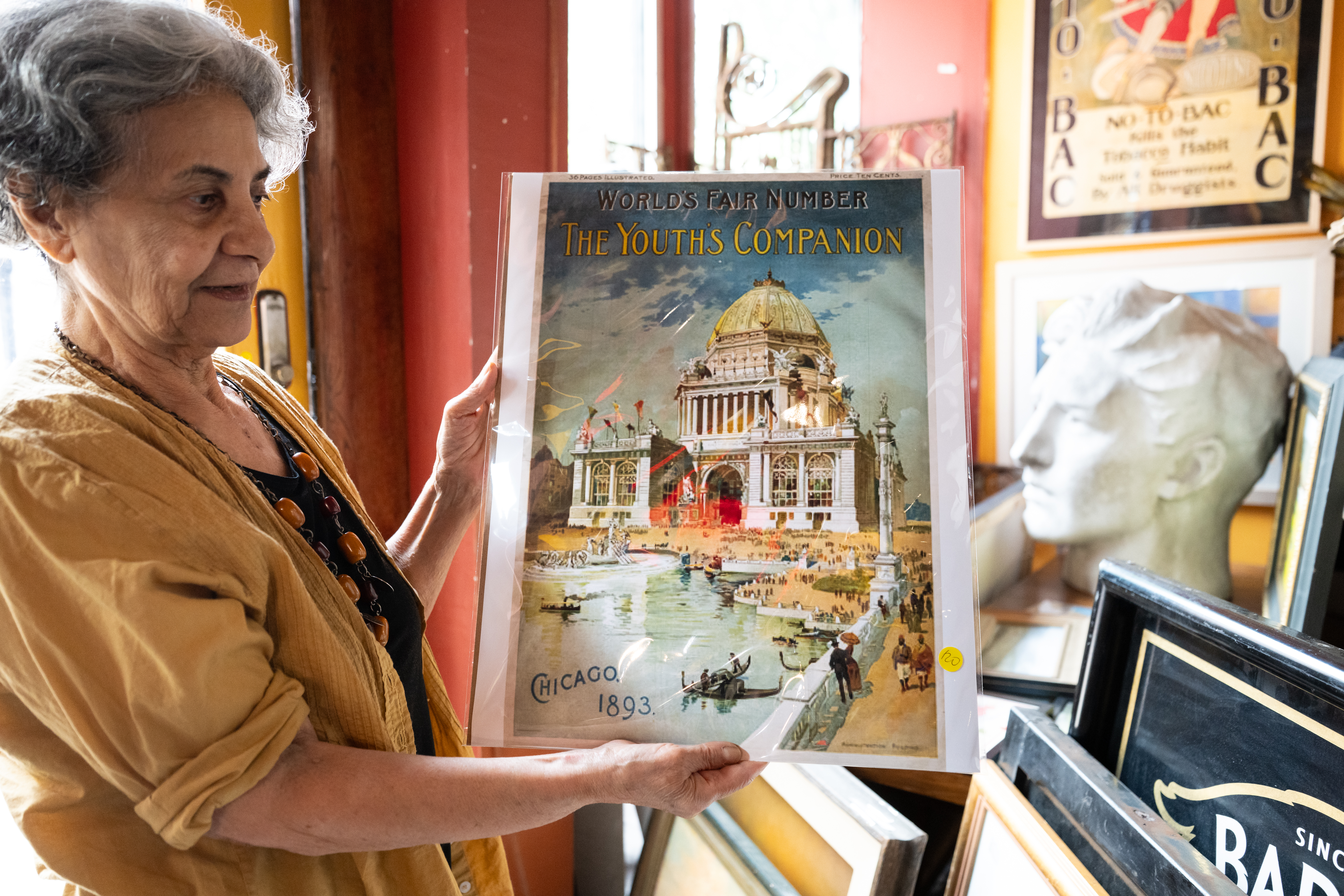
    Hadassah Zuberi displays a reproduction print of an 1893 World’s Fair issue of the Youth’s Companion magazine at her vintage shop, Gargoyles, on South Street in Philadelphia on Tuesday, Aug. 11, 2026.Erin Blewett / For The Inquirer

    “Nineteenth-century Philadelphia was falling away,” she said. “They were tearing down incredible mansions, which was criminal. They demolished some amazing landmarks.”

    Designing a home of their own, the newlyweds hired prominent Philadelphia architect Adolph DeRoy Mark and began to purchase the architectural salvage of stately Philly residences, public buildings, and churches destined for destruction. They filled the shop — massive twin storefronts at 512-514 S. Third St., which Zuberi’s father-in-law purchased for $18,000, and which is now a rowhouse — with preserved vestiges of old Philadelphia, including a specially made gargoyle.

    “We got a whole bunch of amazing ironwork and Tiffany stained glass windows,” she said. “Cherubs. Magnificent columns. We had a couple thousand door knobs that were brass and copper. Just fantastic stuff.”

    South Street to the pyramids

    Enjoying the earliest days of its renaissance by the late ‘60s and early ’70s, South Street was a near-deserted strip, an empty canvas fast filling with hippies, hipsters, and hucksters. Transforming into a stronghold of bohemia, the neighborhood was still touch and go, Zuberi remembered.

    “We had one of our employees who would go to the front door with a baseball bat because he didn’t know who was going to come in,” she said.
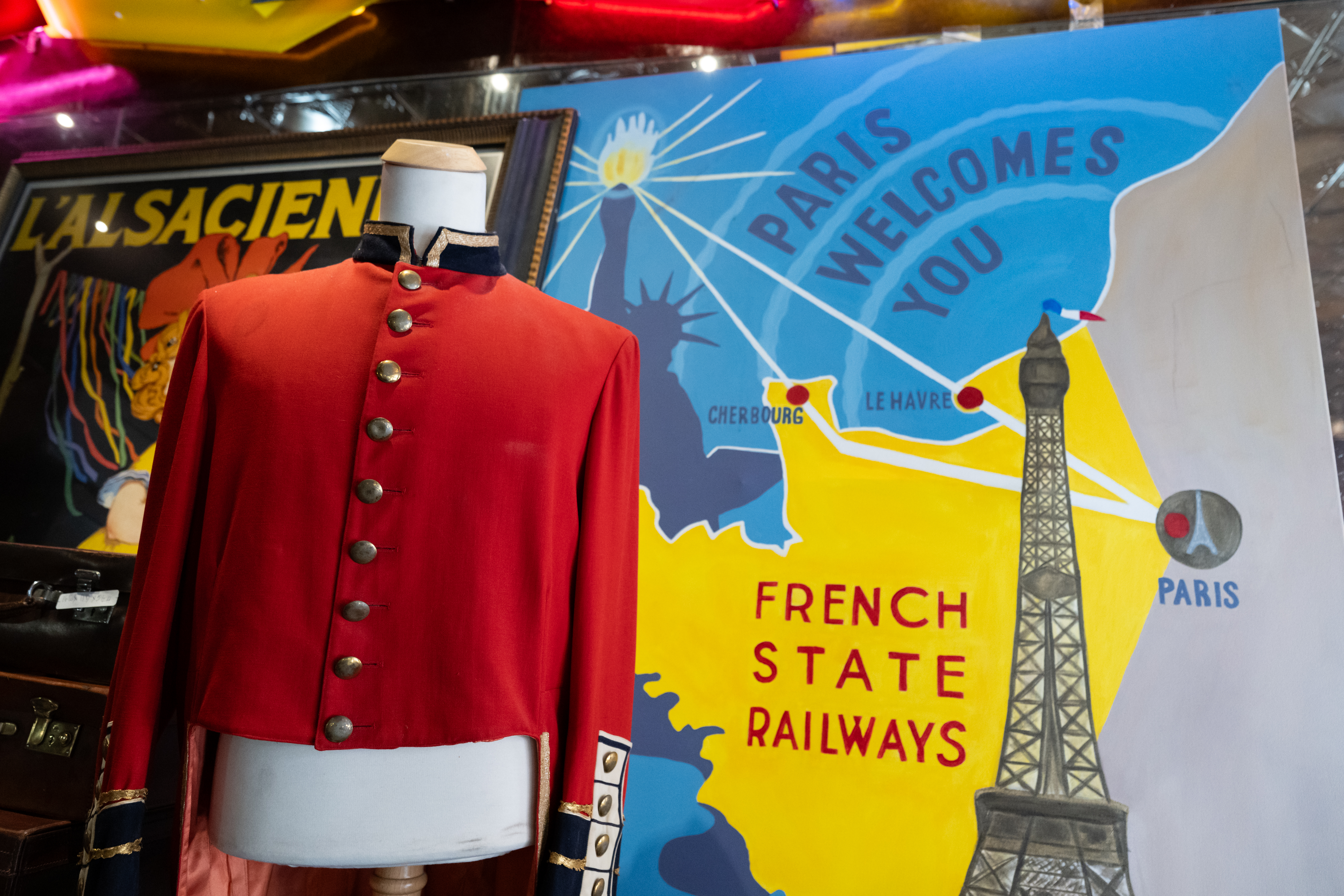
    A vintage uniform jacket and travel posters are displayed inside Gargoyles, Hadassah Zuberi’s vintage shop on South Street in Philadelphia, on Tuesday, Aug. 11, 2026.Erin Blewett / For The Inquirer

    Selling architectural remnants to restaurants and hotels — and local eateries, like Downey’s Irish Pub, Saloon Restaurant, and the Borgia Tea Room in Headhouse Square — the shop became one of the East Coast’s largest dealers in antique architectural embellishments. The couple traveled through England and Belgium, filling department store orders and printed catalogs for national chains.

    “My mother was at the pyramids in Egypt and she had a Gargoyles bag,” said a laughing Zuberi of the Philly heyday. “And someone was like, ‘Oh, I was at the store in Philadelphia.’”

    The shop outlasted her marriage. On her own in the shop, and raising children, Zuberi embraced a newfound sense of artistic freedom, buffeting her inventory with vintage memorabilia and curios she found inspiring, and more of her own artwork and paintings.

    “It was passion,” she said. “This idea that you can take anything that has some semblance of design and use it anywhere. No rules.”

    All the while, South Street rose and fell, embracing its bohemian roots and transforming into a vibrant punk and counterculture stronghold, and eventually battling corporate encroachment and abandonment.

    By 2004, developers were buying buildings for investments, losing sight of the character of the neighborhood, Zuberi said.

    “It lost its magic touch,” she said.

    Back on South Street

    “What the hell are you doing here?” she remembered Milan asking, when he happened into her Kingston store in 2024. “Listen, I want you back on South Street.”

    While Kingston brought more success from locals and New York City tourists, Philadelphia, where she still kept a home, never stopped calling.

    “I was homesick,” she said. “Philadelphia has all the culture in the world.”
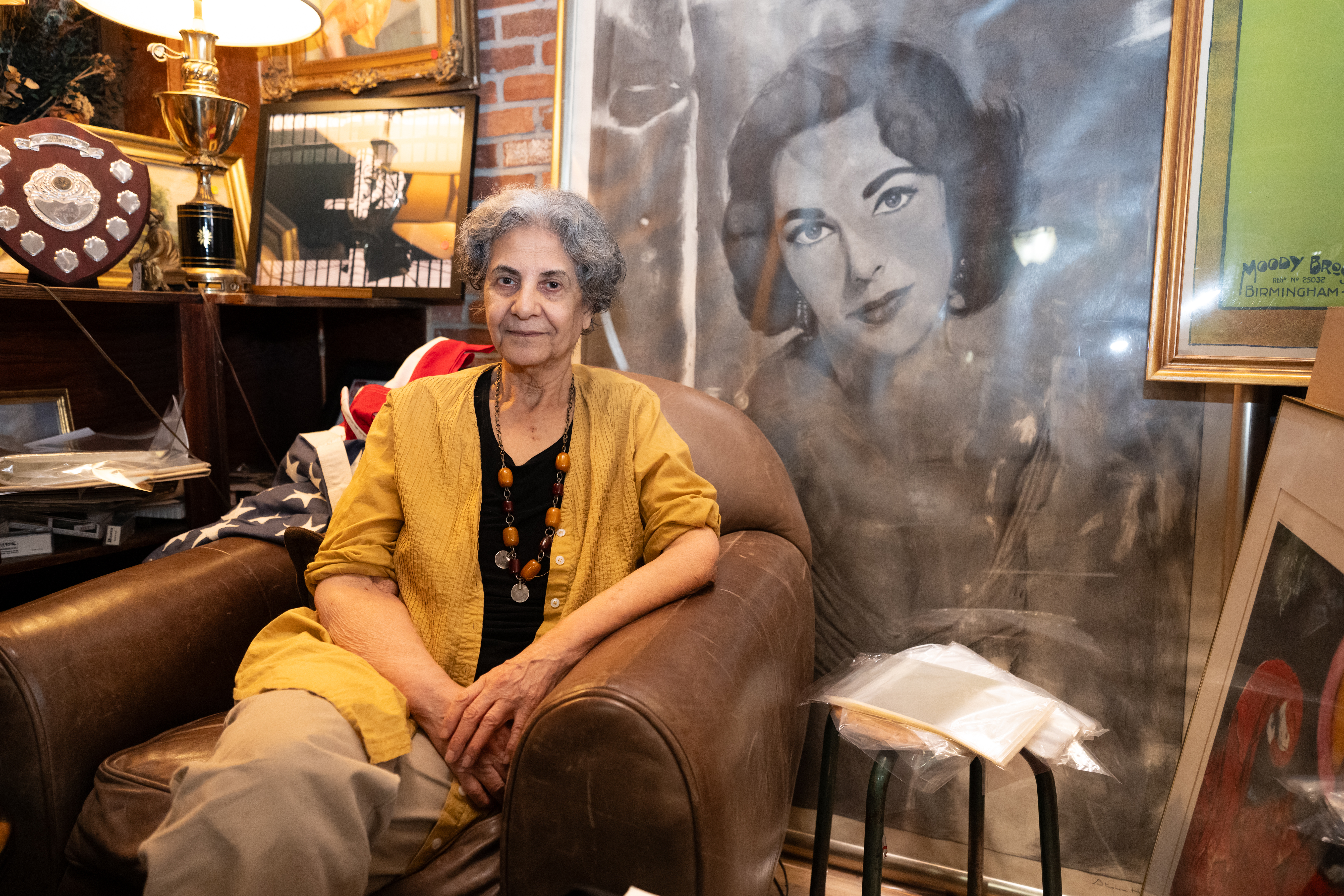
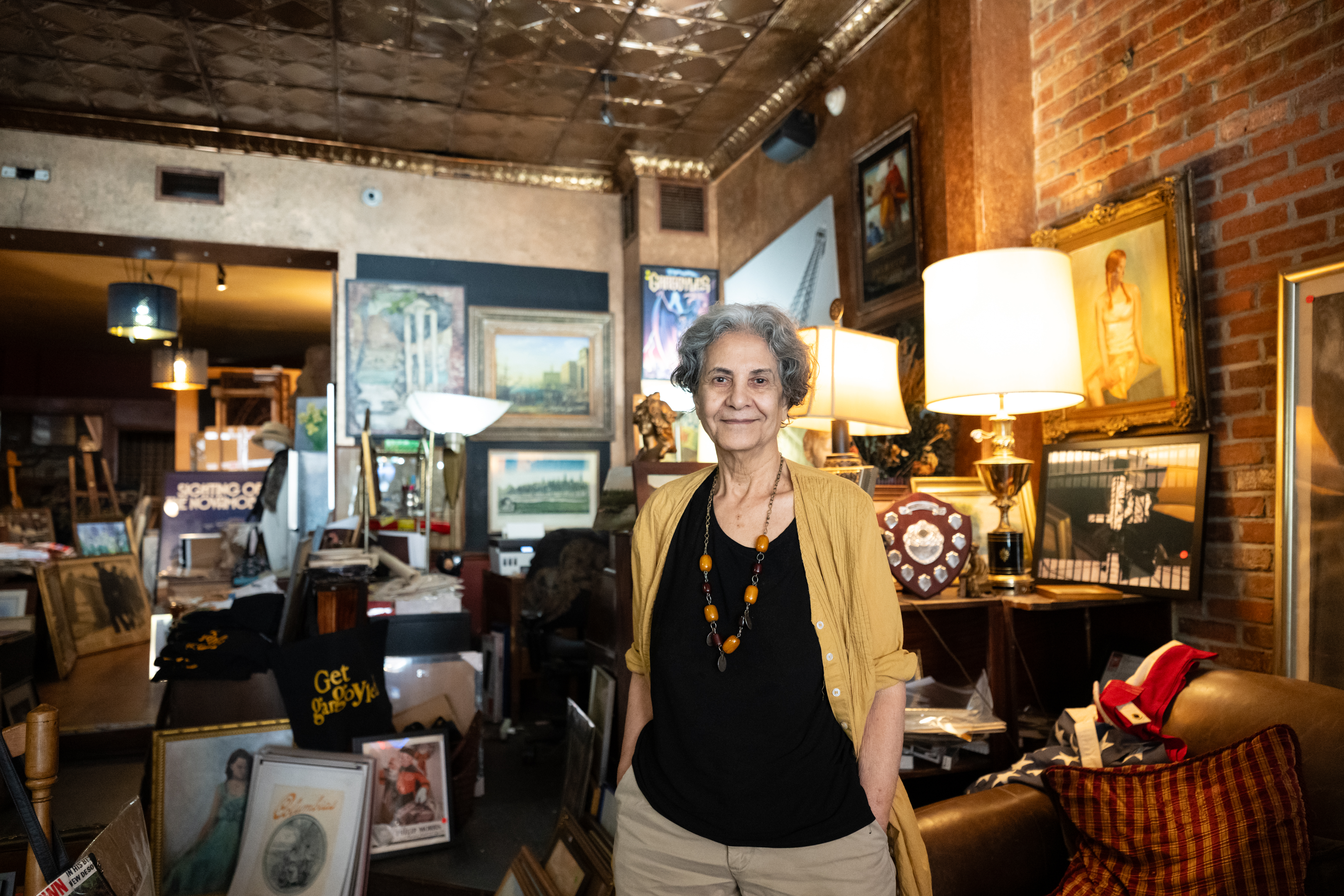
    Hadassah Zuberi, owner of Gargoyles, poses for a portrait in front of a charcoal portrait of Elizabeth Taylor at her vintage shop on South Street in Philadelphia on Aug. 11, 2026.Erin Blewett / For The Inquirer

    Earlier this year, after selling her New York building, she called Milan, who envisions Gargoyles as a one-of-a-kind legacy business that can help attract life to South Street. The Hurricane Alley space — which still includes the old wooden bar — made for a match.

    “It’s a lovely shop, and she’s a lovely woman,” he said.

    On a recent afternoon, Zuberi, elegantly reposed in her leather chair and framed by a favorite portrait of Elizabeth Taylor, warmly greeted a steady stream of customers.

    She is glad to be back in Philadelphia, surrounded by her treasures, and encouraged by the view of the changing street outside, she said.

    “This is my la la land,” she said, over the strains of a concerto playing on the speakers. “If I want to pretend the world is beautiful and everybody has taste, all I have to do is look around and avoid the rest.”
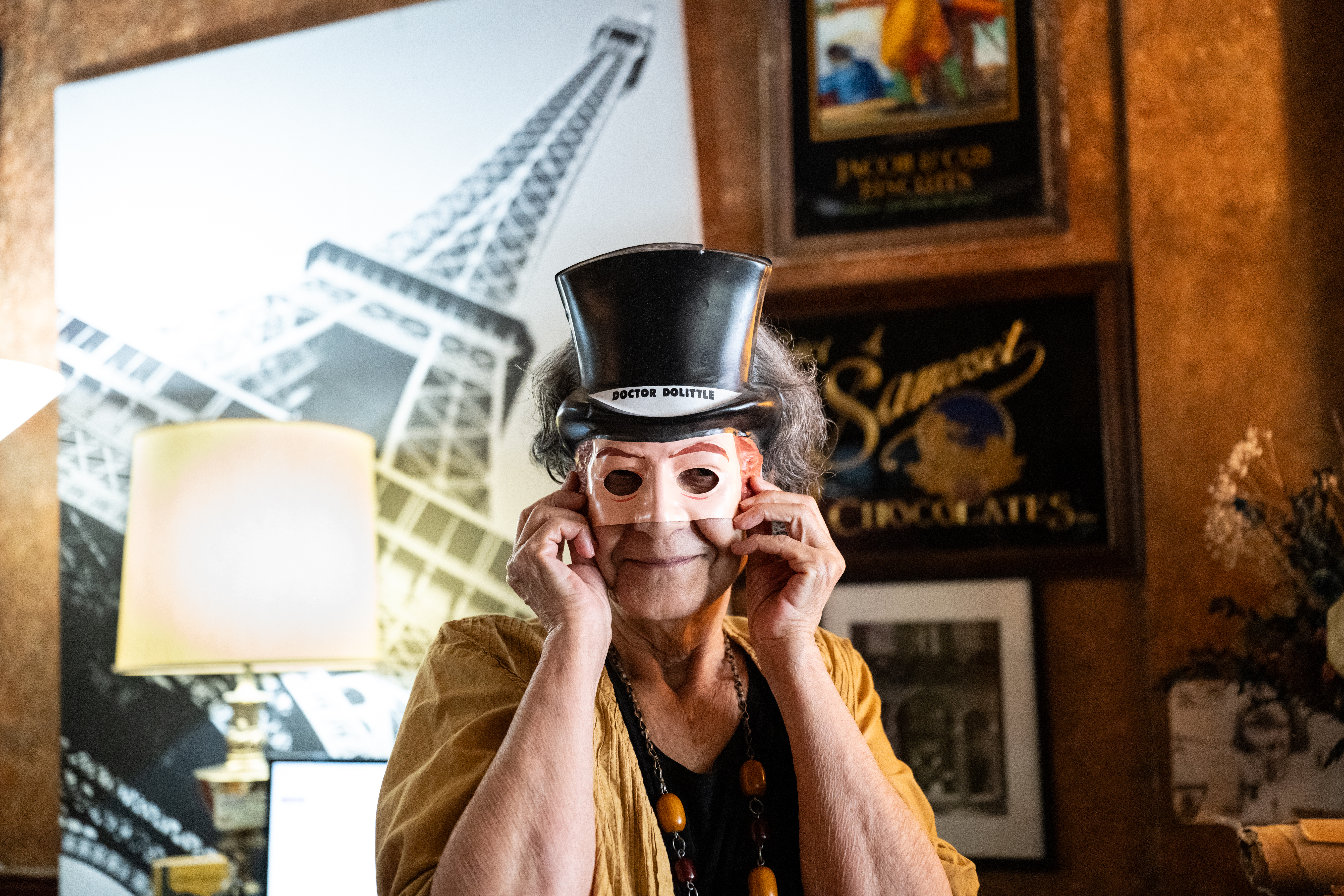

    Hadassah Zuberi, owner of Gargoyles, tries on a vintage “Doctor Dolittle” mask at her shop on South Street in Philadelphia on Aug. 11, 2026.Erin Blewett / For The Inquirer
  • Philly’s bike messengers are on call and on the move

    Philly’s bike messengers are on call and on the move

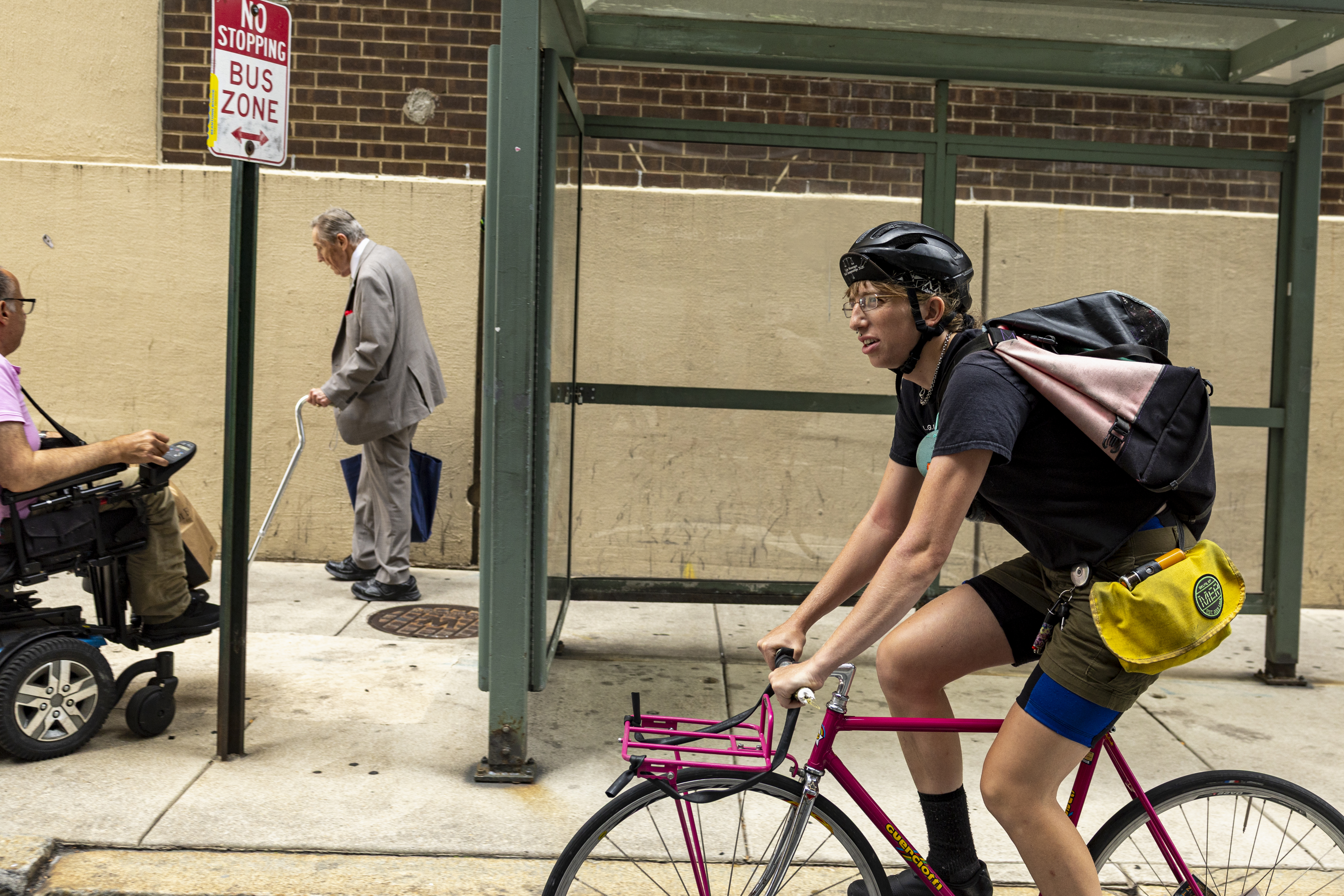
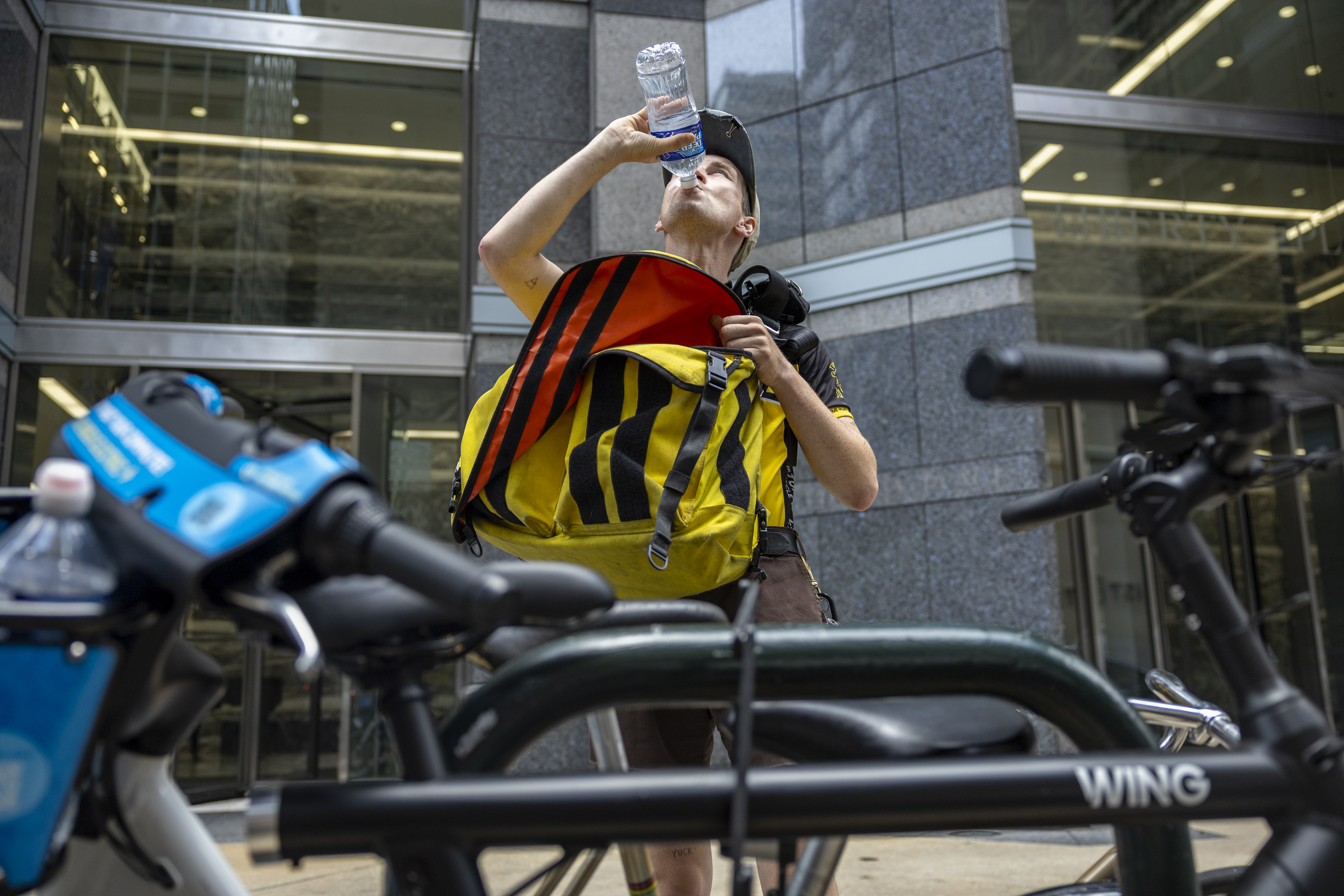
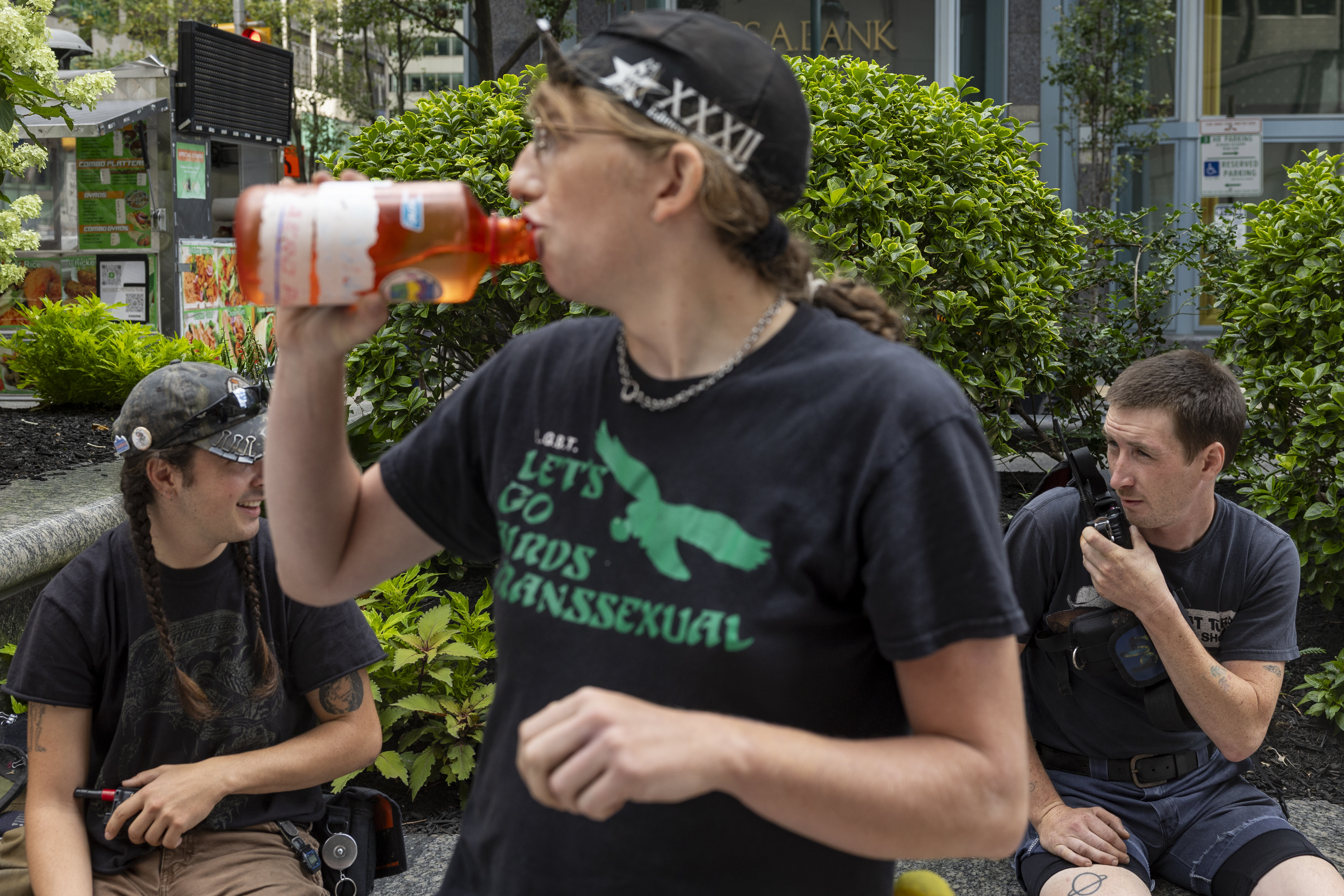
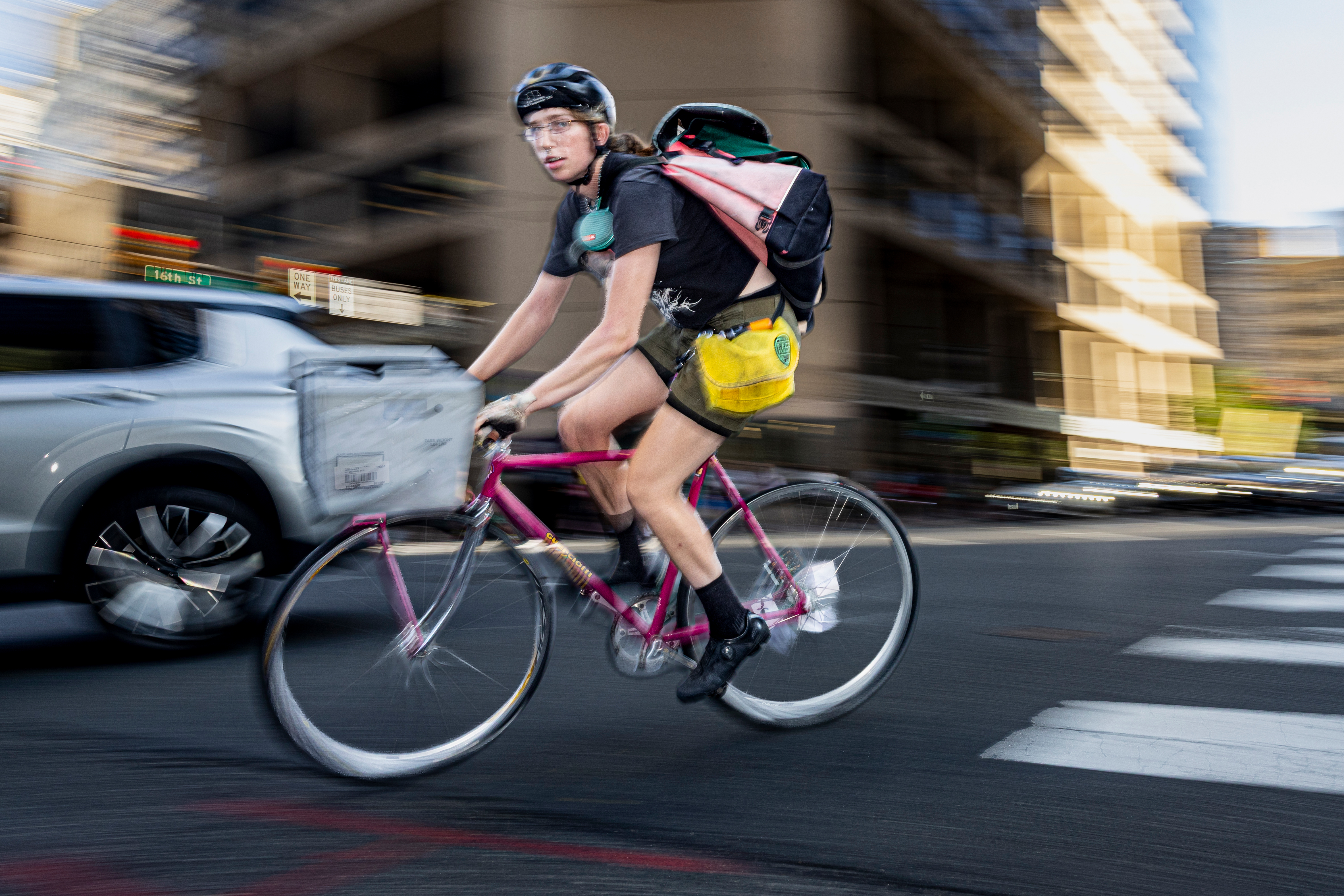
    In a world of autonomous food delivery robots and Amazon Prime, Philadelphians might be surprised to find bike messengers zooming across Center City streets, if they even know what one is. But what distinguishes the messengers from other cyclists and delivery drivers is not just the comically large bags they carry and the decked-out single-speed bikes they ride, but their ability to strategically and efficiently navigate the city. While most people rely on Google Maps, full-time bike messengers Brian Campbell, 31, and Orchid Newberger, 29, spend all day hustling through busy streets and traffic-filled intersections with addresses in hand and routes in mind. While Campbell starts his mornings in Old City delivering paystubs, Newberger finds herself riding between South Street and Spring Garden; they end up meeting at the 1700 Market plaza to catch up, smoke cigarettes, and play scratch-off tickets. They are expected to deliver legal documents for lawyers, safely transport medical samples for hospitals, and even serve people subpoenas, all while dodging motor vehicles and e-bikes. Although each dispatch could lead to a potential injury, what makes the job worth it is the freedom that the ride brings. “I’m as free as the breeze and I ride where I please,” Campbell said.

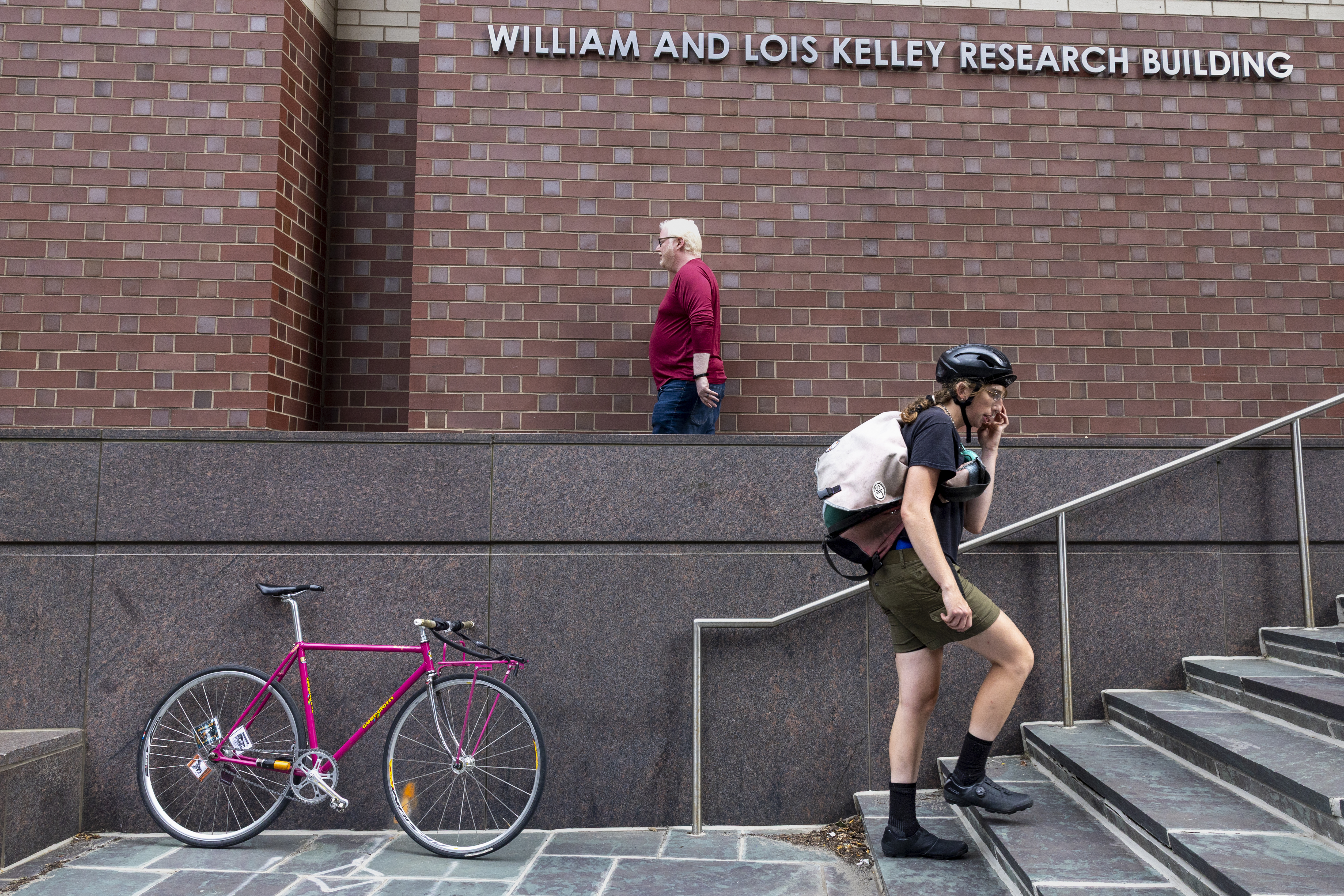
    Orchid Newberger, 29, of Fishtown, walks up the entrance stairs of the William and Lois Kelley Research Building on the University of Pennsylvania campus to pick up medical samples on July 30. Newberger graduated from Penn with bachelor’s and master’s degrees in material science engineering but found it hard to both land a job within that field and enjoy it. Newberger picked up bike courier work shortly afterward. “I spent a lot of time in school figuring out that that’s not what I wanted to do with my life.”Aidan T. Gallo / Staff Photographer
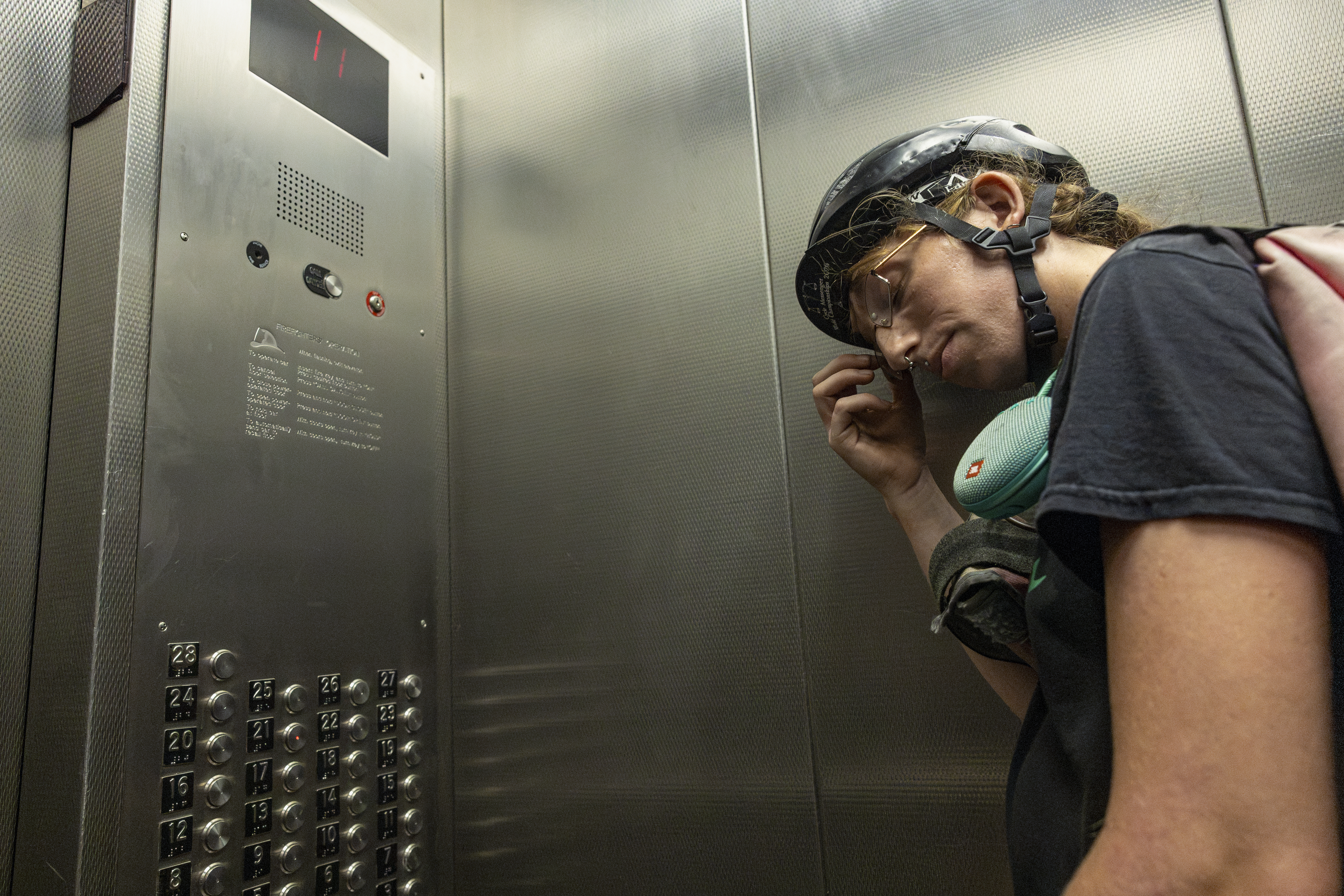
    Newberger inside an elevator at the Cira Centre building for a pickup. “This isn’t a ‘forever job,’ obviously,” Newberger said.Aidan T. Gallo / Staff Photographer
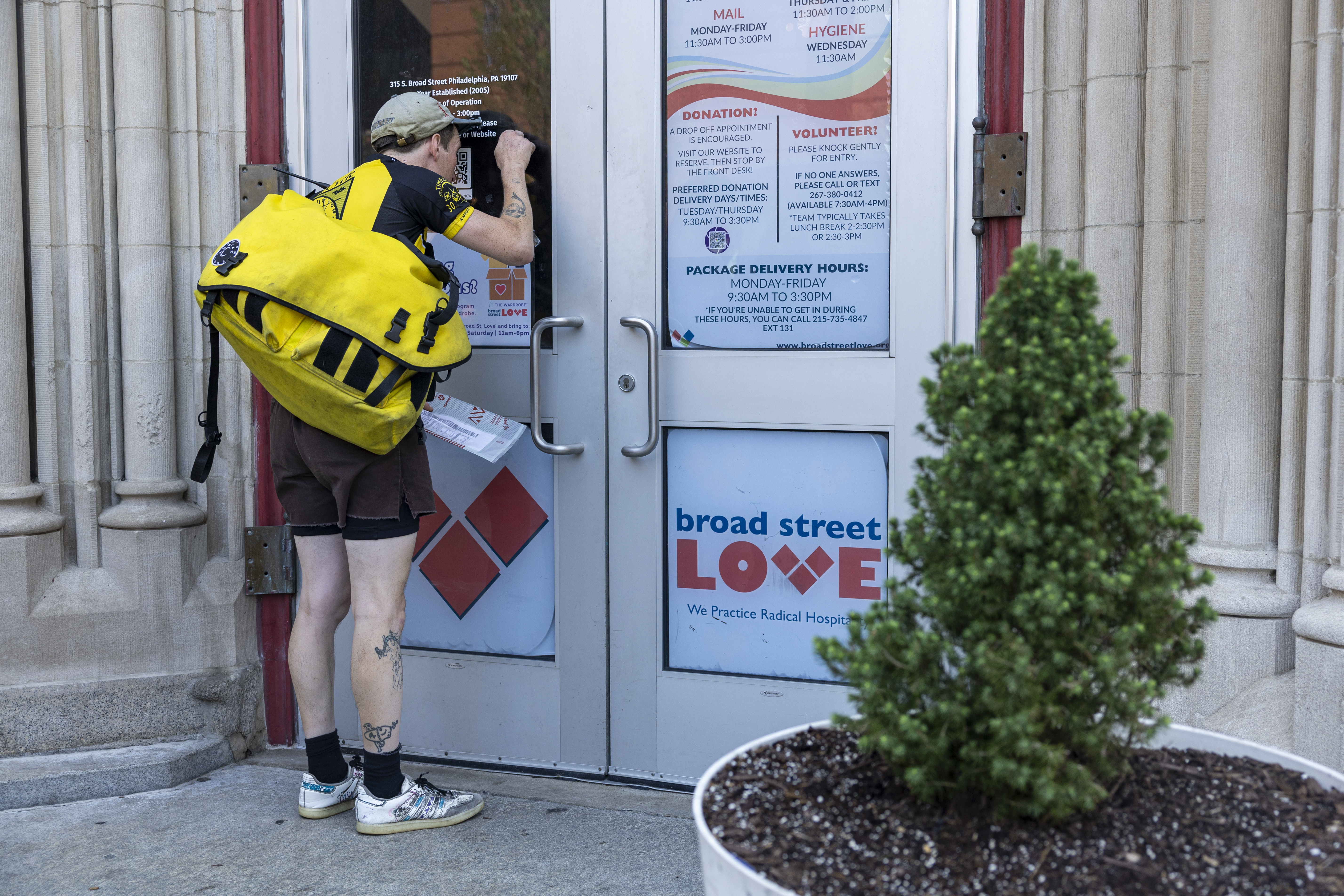
    Bike courier Brian Campbell, 31, knocks on a door at the Broad Street Love social services building to deliver payroll stubs on July 22.Aidan T. Gallo / Staff Photographer
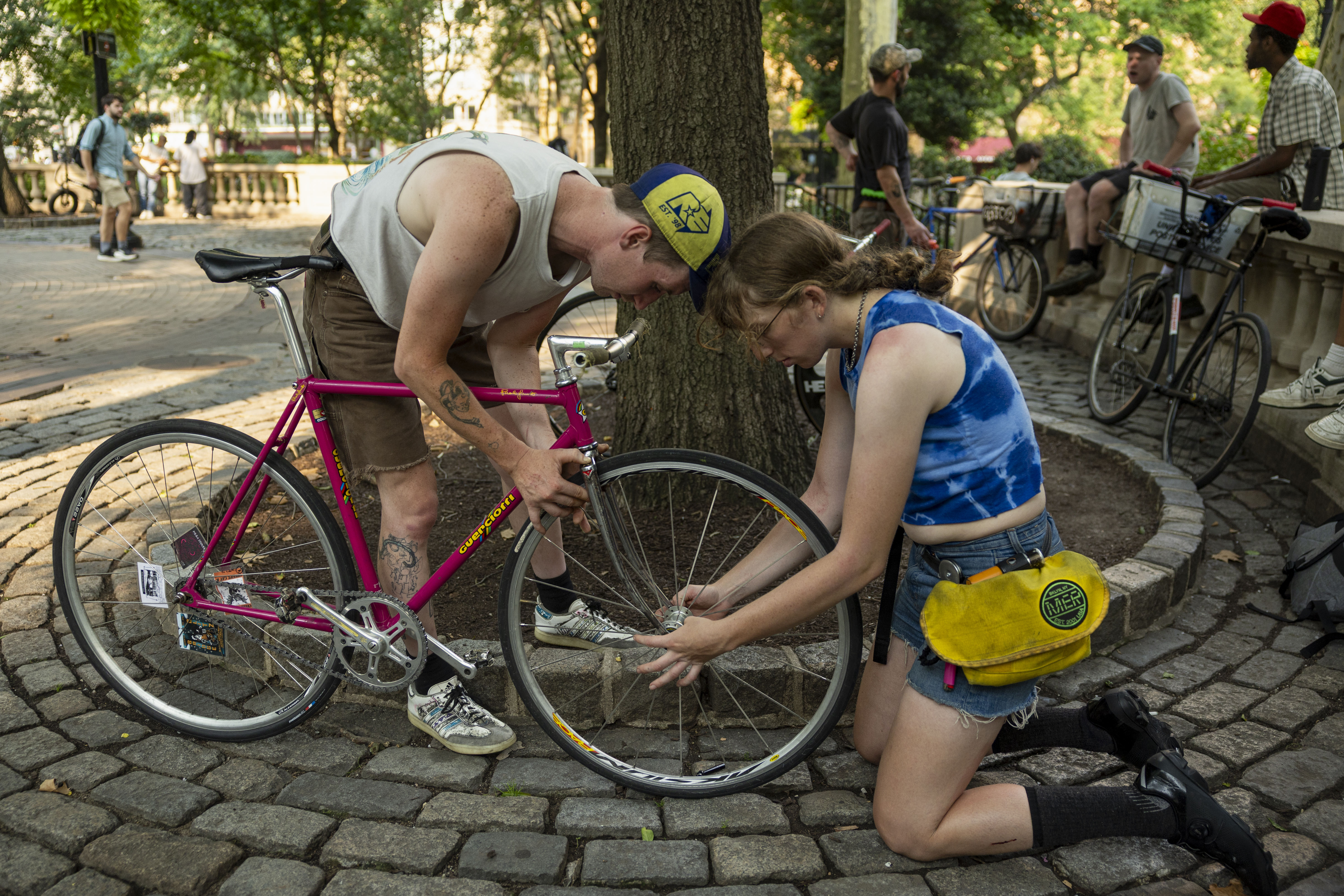
    Campbell helps Newberger adjust her bike’s front wheel at Rittenhouse Square on July 14.Aidan T. Gallo / Staff Photographer
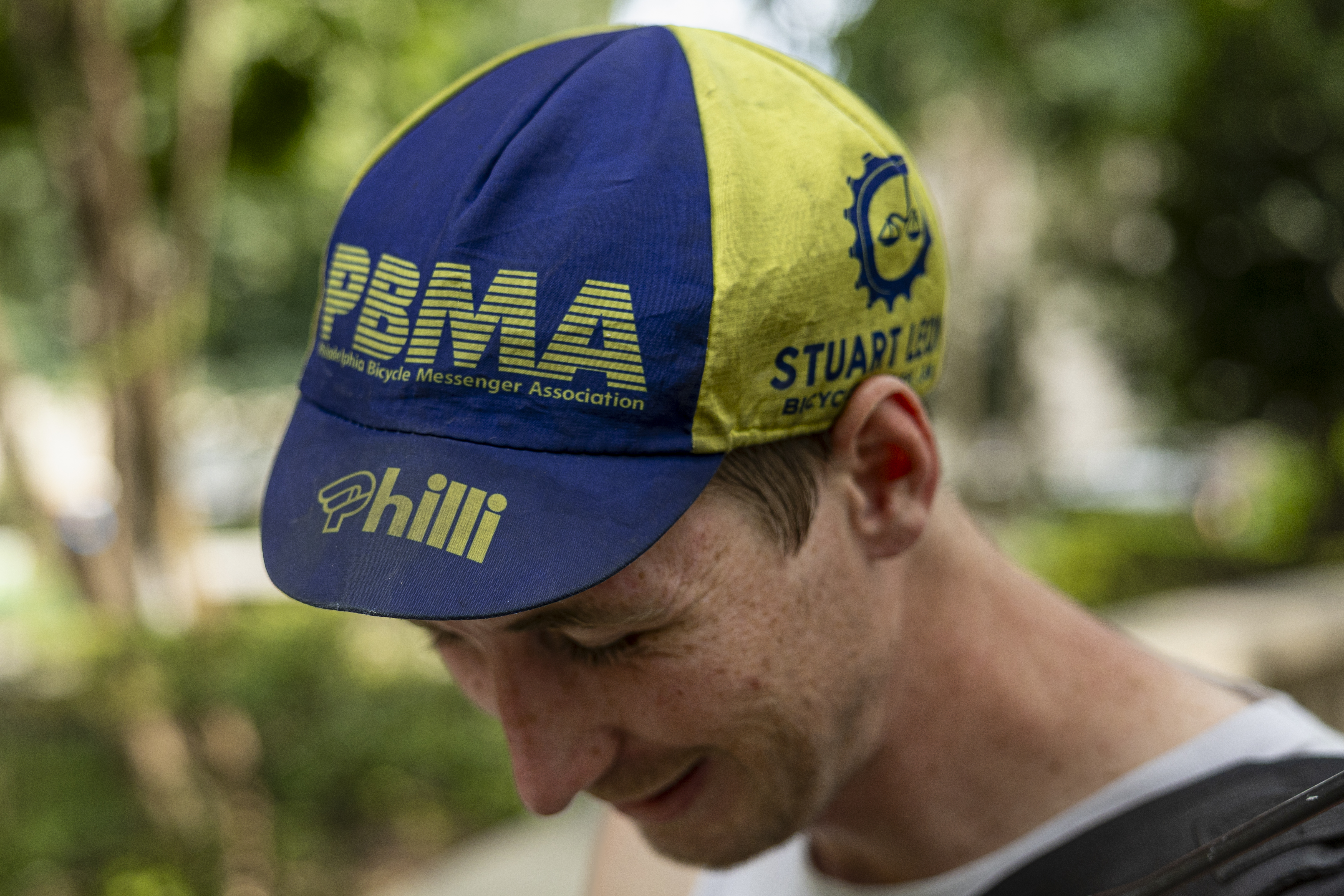
    Campbell wears a Philadelphia Bicycle Messenger Association (PBMA) cap on July 15. As many couriers ride without health insurance, PBMA provides donations to injured couriers for medical expenses. “It’d be really nice to have health insurance at a job like this, like, if I’m sick or hurt I just lose money, and that’s where PBMA comes in because we have to look out for ourselves on that front,” Campbell said.Aidan T. Gallo / Staff Photographer
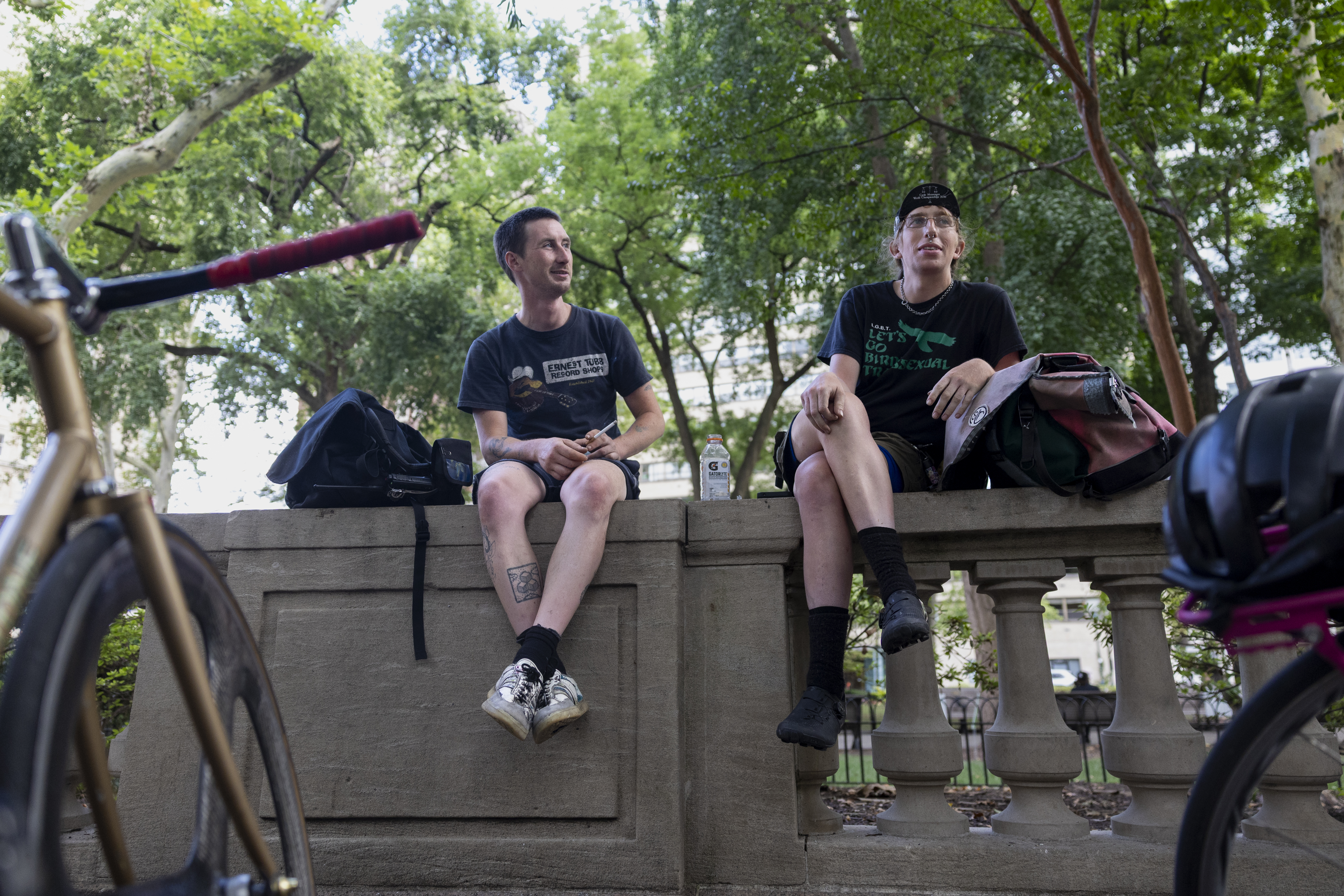
    Campbell and Newberger at Rittenhouse Square after finishing their shifts July 30. They are among many bike couriers who hang out at the park before and after work.Aidan T. Gallo / Staff Photographer
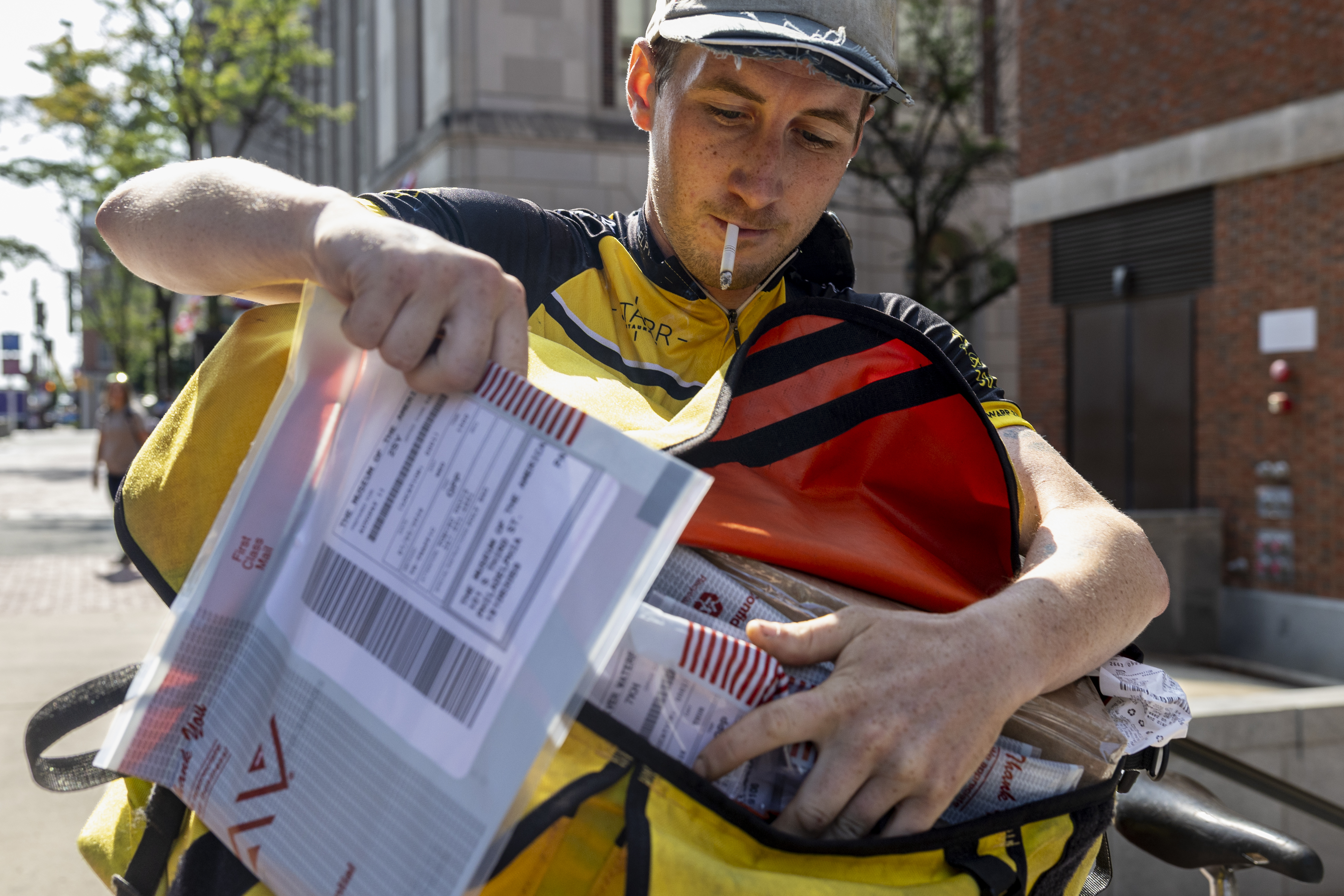
    Campbell sorts through his messenger bag to deliver payroll stubs outside the Museum of the American Revolution on July 22.Aidan T. Gallo / Staff Photographer
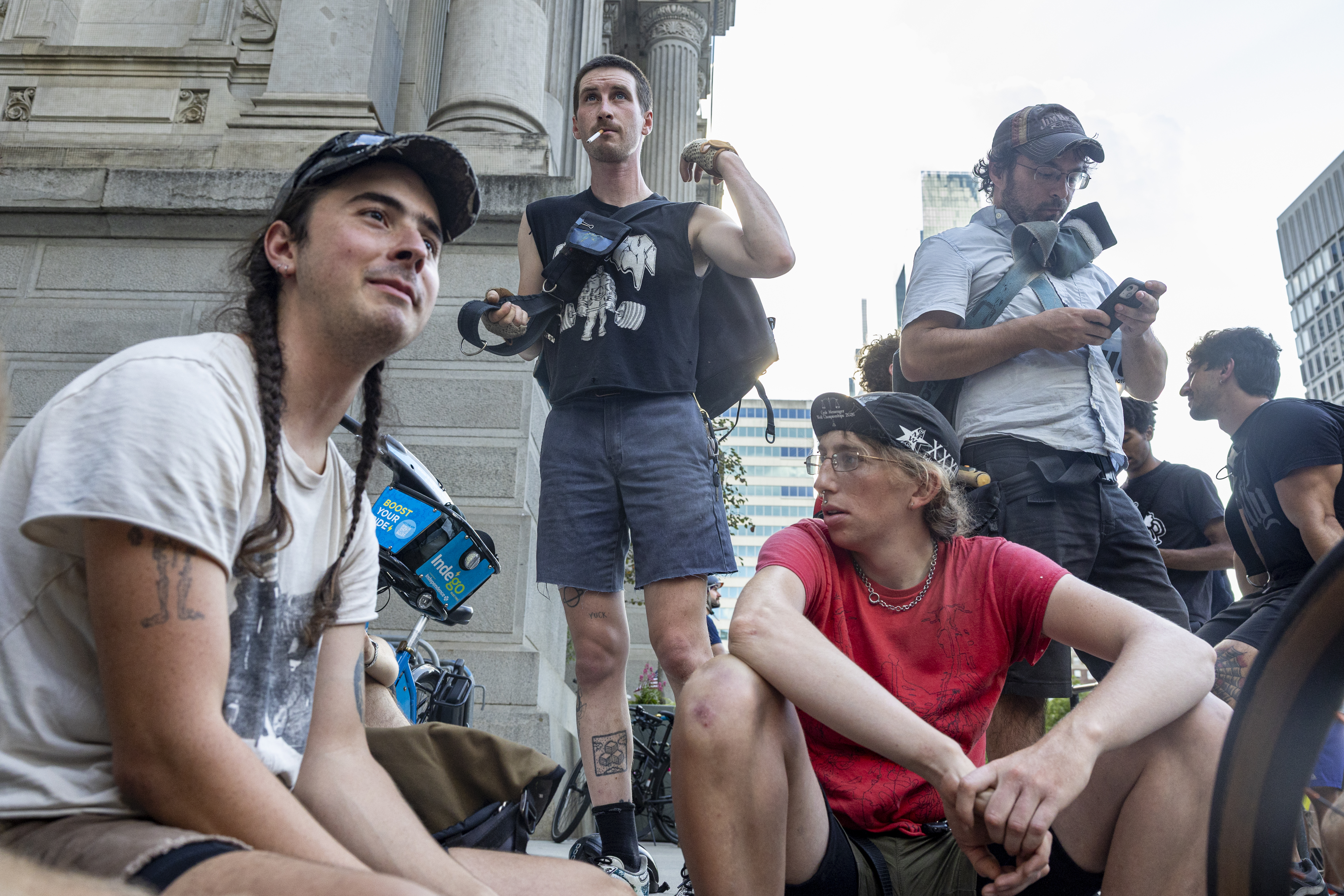
    Campbell adjusts his messenger bag alongside Artemis Darrow (left), 24, and Newberger before participating in the Critical Mass Philly event at City Hall on July 31. The evening event was held to reclaim public streets, promote cyclist safety, and advocate for better bike infrastructure.Aidan T. Gallo / Staff Photographer
    Newberger rides past a bus stop on July 30.Aidan T. Gallo / Staff Photographer
    Campbell drinks from his water bottle outside the Liberty Place shopping center before heading out for more deliveries.Aidan T. Gallo / Staff Photographer
    Newberger drinks from her water bottle while Campbell (right) listens for a dispatch from his walkie talkie at the 1700 Market Plaza on July 30. Aidan T. Gallo / Staff Photographer
    Newberger at 16th and Market Streets during her evening shift on Aug. 4.Aidan T. Gallo / Staff Photographer
  • Off-duty police officer killed in early-morning shooting in Southwest Philly

    Off-duty police officer killed in early-morning shooting in Southwest Philly

    An off-duty Philadelphia police officer, Alhassane Barry, 29, died after being shot early Sunday morning outside an after-hours lounge in Southwest Philadelphia, police said.

    Shortly before 4 a.m., police responded to a radio call reporting a shooting on the 7200 block of Elmwood Avenue, police said Sunday afternoon. Responding officers found Barry and another gunshot-wound victim at the scene, police said.

    Both victims were taken to Penn Presbyterian Medical Center, where Barry was pronounced dead around 8 a.m., police said. The other victim was in critical condition when he arrived at the hospital, said police spokesperson Sgt. Eric Gripp.

    No arrest has been made, and the motive for the shooting is unknown, police said.

    A funeral service for Barry is scheduled for Monday at a mosque in Southwest Philadelphia, about one block from where he was shot.

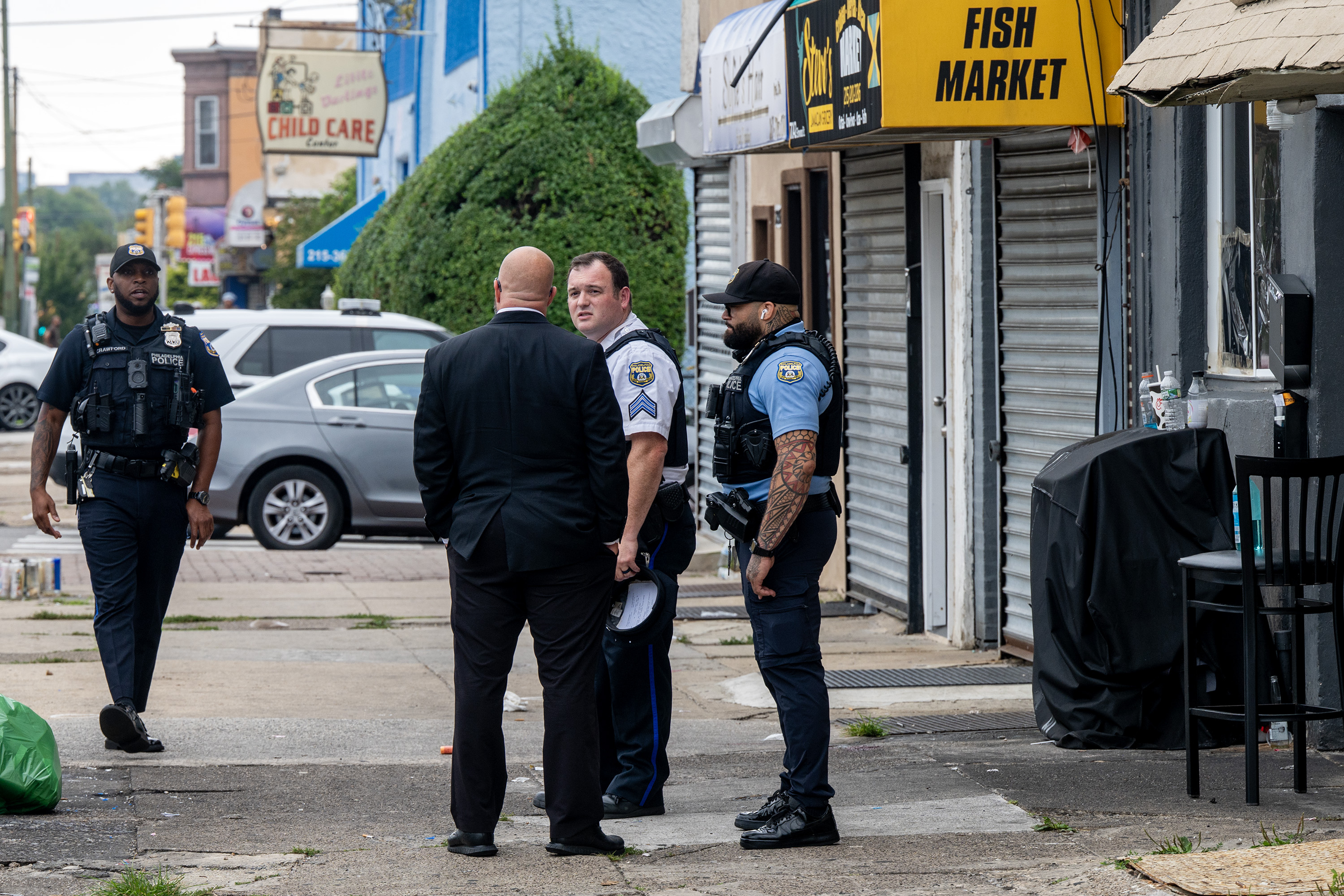
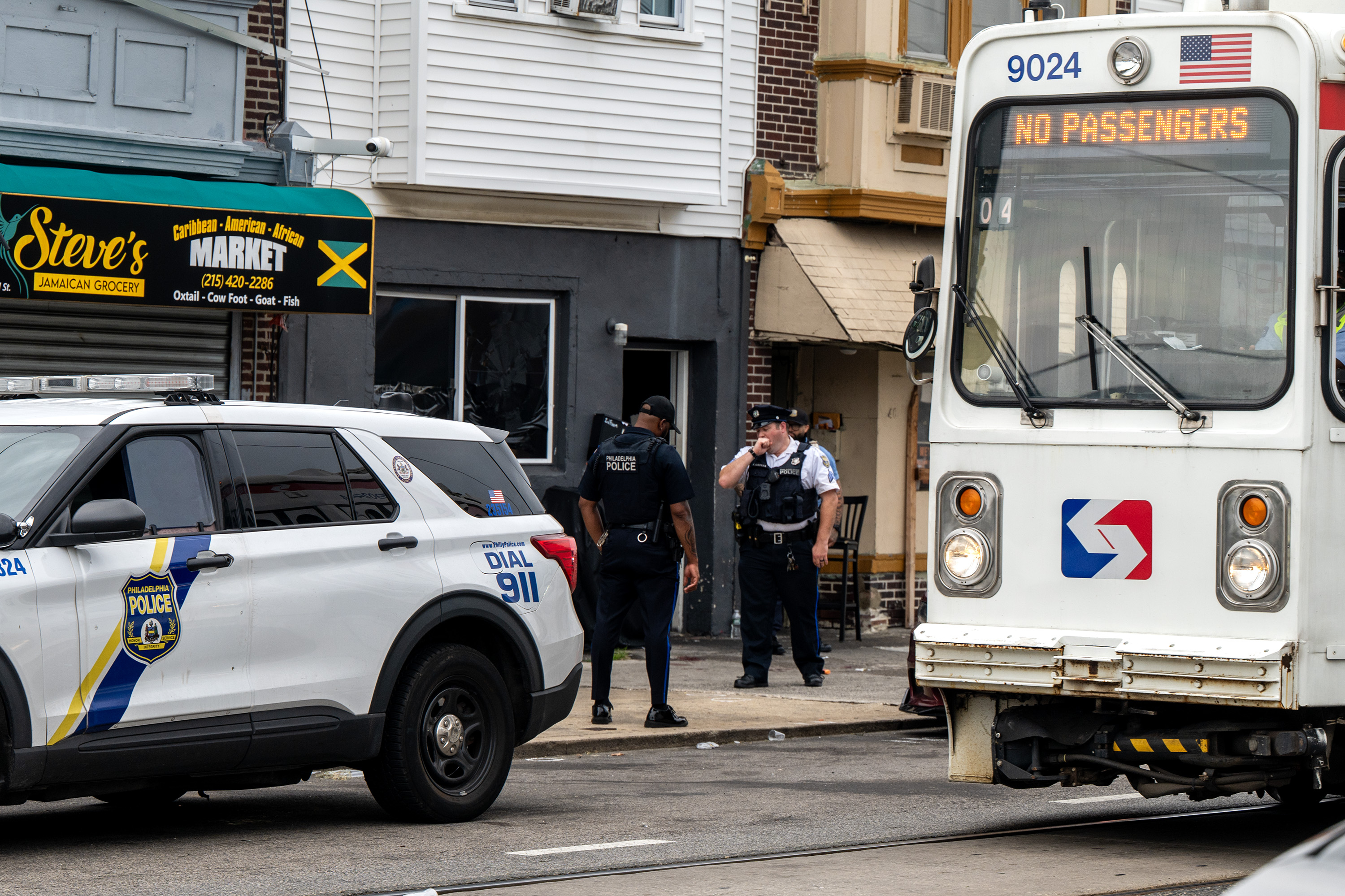
    Detectives and police officers remained on the scene Sunday morning at South 73rd Street and Elmwood Avenue.Tom Gralish / Staff Photographer

    The 29-year-old officer had been with the Police department for two years, police said Sunday, and was assigned to the 12th District, in Southwest Philadelphia.

    (function() {
    var l2 = function() {
    new pym.Parent(‘copshot_sw_philly’,
    ‘https://media.inquirer.com/storage/inquirer/projects/innovation/arcgis_iframe/copshot_sw_philly.html’);
    };
    if (typeof(pym) === ‘undefined’) {
    var h = document.getElementsByTagName(‘head’)[0],
    s = document.createElement(‘script’);
    s.type = ‘text/javascript’;
    s.src = ‘https://pym.nprapps.org/pym.v1.min.js’;
    s.onload = l2;
    h.appendChild(s);
    } else {
    l2();
    }
    })();

    This is at least the fourth Philadelphia Police Department officer to die in a shooting in the last decade, according to the Officer Down Memorial Page, a national site that tracks police deaths that occur while in the line of duty. Most recently, in September 2024, officer Jamie Roman died in the hospital nearly two months after being shot in the neck during a routine car stop.

    In the last three years, at least 18 Philadelphia police officers have been shot in 12 incidents.

    Sunday’s shooting occurred near a property neighbors and police have called an after-hours lounge. A social media account linked the address to a nightclub called “Nipsey’s Hookah Lounge.”

    A neighbor, Safiatu Keita, said while she was saddened to hear of the officer’s death, she was not totally surprised that a shooting happened there. Keita said loud parties at the property have kept her family awake until 5 a.m. and left garbage cans piled high with empty liquor bottles.

    “It’s not safe for us, because when people are drunk there, we can’t do anything,” Keita said.

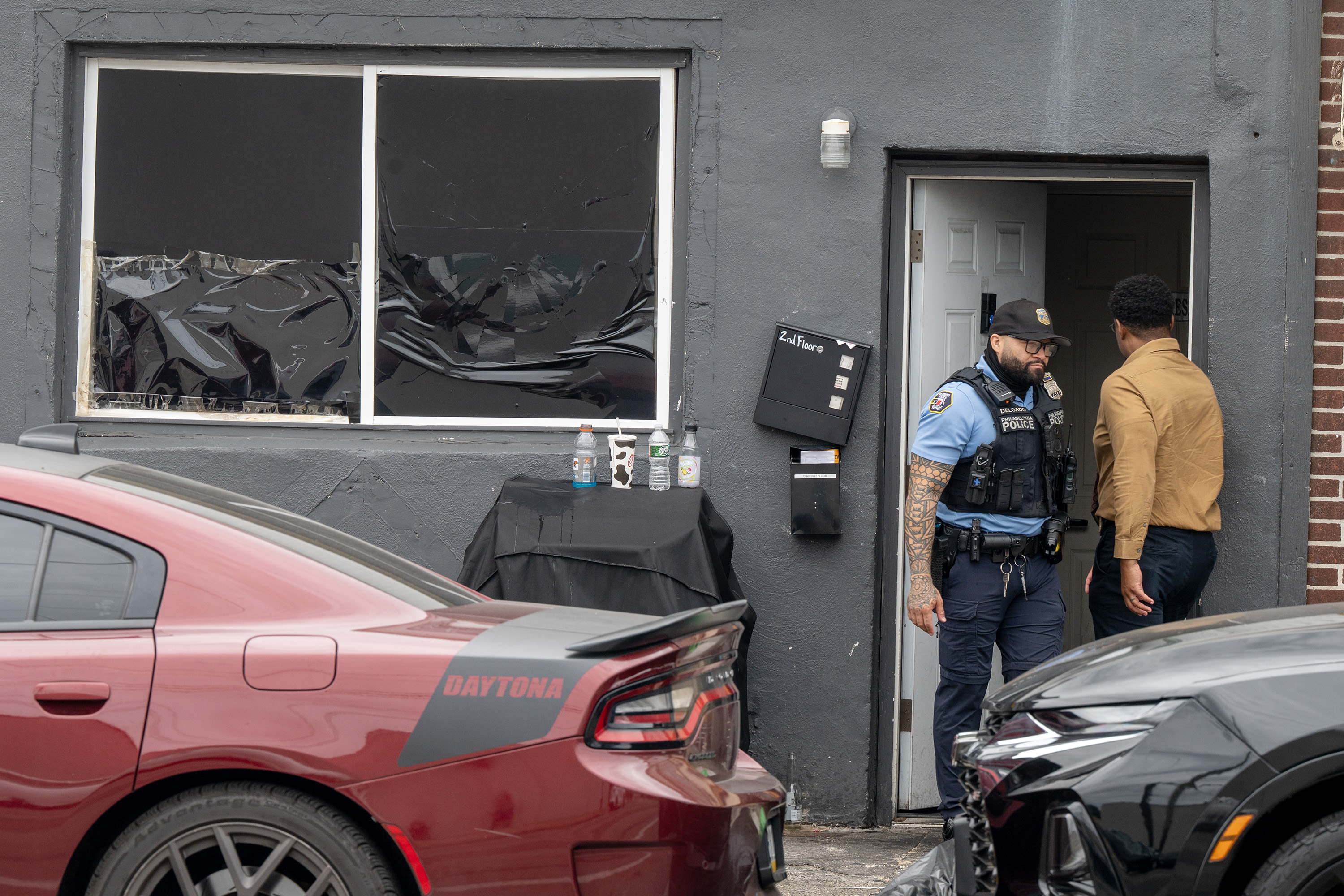
    On Sunday morning, the door of the property hung open as police stood near yellow tape closing off the block. An officer pointed out a pool of blood in front of a cooking grill on the sidewalk. White chalk circles on the street and sidewalk marked places where evidence had been identified.

    “It’s a bad day,” one officer said, when a passerby asked what happened.

    Detectives and police officers remained on the scene of Sunday’s shooting in Southwest Philly.Tom Gralish / Staff Photographer

    As detectives in suits came and went, a police lieutenant on the scene said they were working to obtain footage from security cameras on the street, which should provide more insight.

    Mayor Cherelle L. Parker said she spent time with the family at Penn Presbyterian hospital to express her profound sorrow for their loss, and offer prayers for the 12th Police District.

    “Any loss to gun violence significantly impacts us all. We will never stop working to make Philadelphia a safer city,” Parker said.

    Outside Penn Presbyterian’s emergency room entrance late Sunday morning, police vehicles blocked off a segment of the street while officers stood outside. About a dozen people walked in a solemn procession to the front of the emergency department.

    As a gurney was wheeled out of the hospital and into an ambulance, the group broke into mourning. Police saluted, and the ambulance drove away from the hospital.

    “We continue to ask the community for their prayers, we continue to pray for his family,” Philadelphia Police Commissioner Kevin Bethel said

    Bethel said anyone with information should call 215-686-TIPS.

  • How Philly’s new Broad Street planters will turn what could be a grand urban avenue into a highway

    How Philly’s new Broad Street planters will turn what could be a grand urban avenue into a highway

    Broad Street is one of Philadelphia’s great ceremonial boulevards.

    A defining urban design element in William Penn’s pathbreaking 1682 plan for Philadelphia, Broad Street intersects with Market at Penn Square, creating the armature for the colonial city that gives Philadelphia its je ne sais quoi — its unique sense of place. For out of this intersection sprang our majestic City Hall, anchoring the four original quadrants of Penn’s city, each coalescing around one of Penn’s great public squares.

    South Broad Street is a place where the city comes together. Think of the great swell of civic ecstasy that suffused the street on either of the occasions in recent years when it hosted the Eagles’ Super Bowl victory celebrations. And then there is the perennial only-in-Philadelphia Mummers Day Parade, which animates the street on New Year’s Day as glittering costumes and the strains of string bands bounce and reverberate among the canyons of South Broad.

    Still, the street struggles to invite people to linger, stroll, dine, and shop along its sidewalks on a daily basis, never matching the urban vibrancy of the great streets of the world like Fifth Avenue in Manhattan or Oxford Street in London. And it’s not for lack of trying.

    The Avenue of the Arts was created to do just this during the Rendell administration. In defining an area for the performing arts, the street soon saw the arrival of the Kimmel Center, the Wilma Theatre, and other arts-based performance spaces. And yet, the street continued to flounder as a welcoming urban place.

    Now, to be sure, South Broad has a lot going for it. One need only stand at the intersection of Broad and Walnut, surrounded by handsome towering buildings with majestic light fixtures along the sidewalk, and you have a sense of what the street was — and what it could be. The street certainly needs some TLC, but not radical surgery.

    Which makes the recent “improvements” on the block of South Broad in front of the Kimmel Center all the more perplexing.

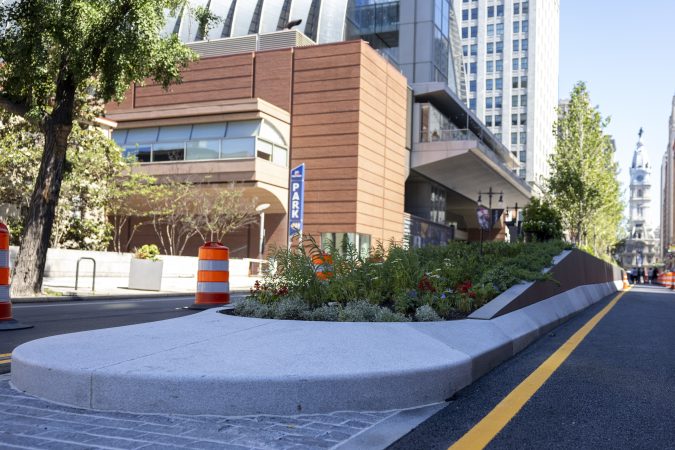
    For there, officials have unveiled a beta test for a new Avenue of the Arts streetscape project smack in the middle of South Broad Street that includes an egregious four-foot-high continuous planter with trees on top of it. All intended to increase the attractiveness of the street and thereby encourage a livelier street life.

    But therein lies the rub.

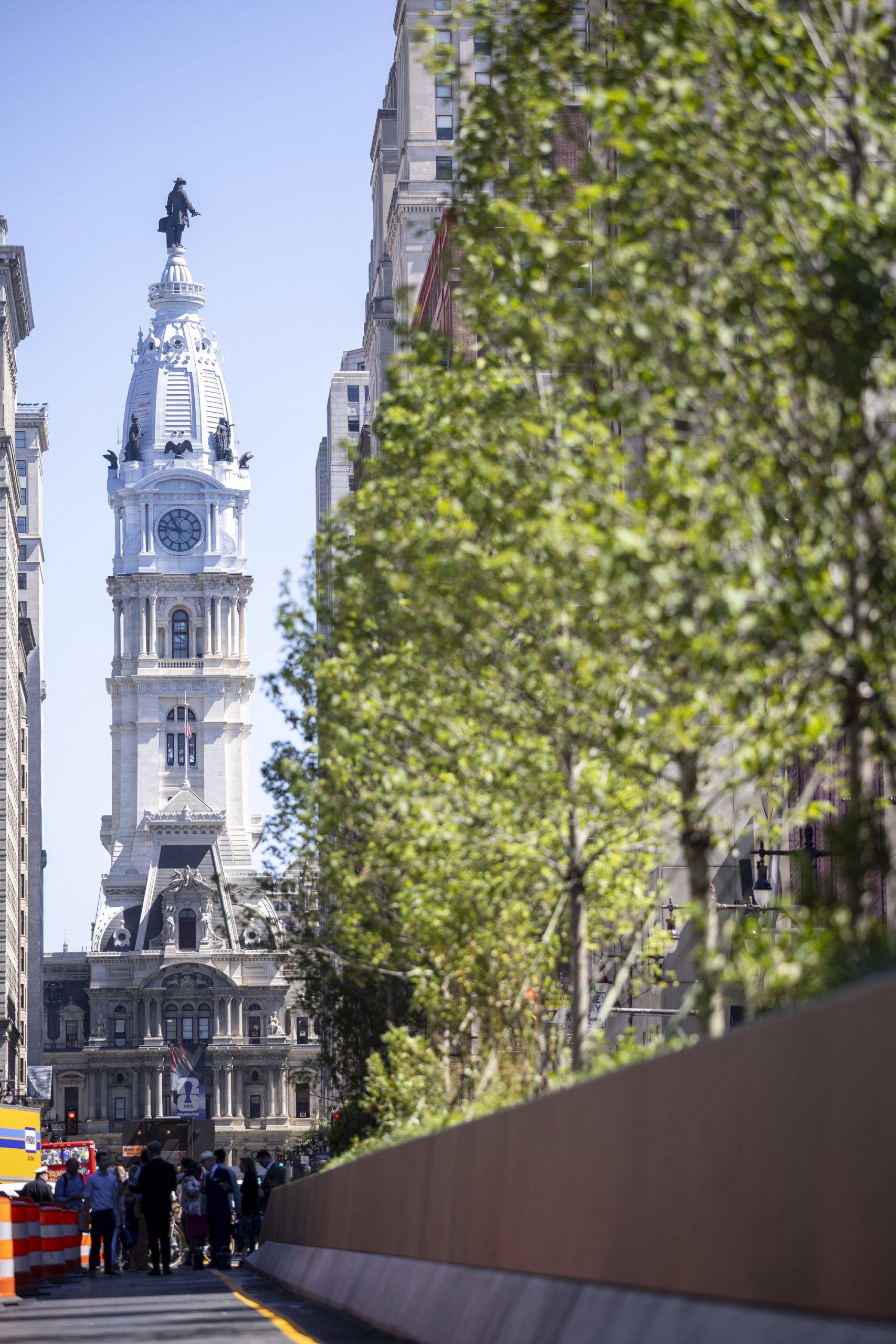
    In creating this continuous concrete highway divider-cum-planter in the center of the street, the project actually has a chilling effect on South Broad. Not only do the planter and the trees destroy the primacy of the view of City Hall tower along the street, but it reinforces the nature of Broad Street as a highway, and makes it impossible to see the other side of the street while either walking or driving. And forget about parades and festivals.

    The planters and trees destroy the primacy of the view of City Hall Tower along the street, write Alan Greenberger and Harris M. Steinberg.Tyger Williams / Staff Photographer

    We are told this is to be replicated on the street from City Hall to Washington Avenue to the tune of $150 million, or $15 million per block. Who thought this was a good idea?

    And, as if to add insult to injury, the project proposes outsized planters along the sidewalks that will further isolate the two sides of the street, crowd out whatever street life exists, and create, along with the tall planter in the center of the street, a series of cattle chutes for 10 blocks.

    Welcome to Broad Street Narrows.

    This can’t stand. The project must not be replicated along the length of the Avenue of the Arts. There are ways to integrate plantings into great streets, such as along Michigan Avenue in Chicago, but they are low in scale, do not include trees in the center of the street, and do not destroy the sensation of the street as a whole.

    And the proposed planters have got to go, as well. One could think of planting shade trees along the sidewalk offering respite from the sun and inviting people to sit along the street and have a bite to eat. The subway concourse below South Broad is extremely wide and could undoubtedly accommodate the tree roots below grade.

    The goal of increasing street life is crucial. To do so, it would be better to widen the sidewalks to allow for cafes and strolling. Street life needs foot traffic, and foot traffic is generated by people living, working, and shopping in the area, along with attending performances.

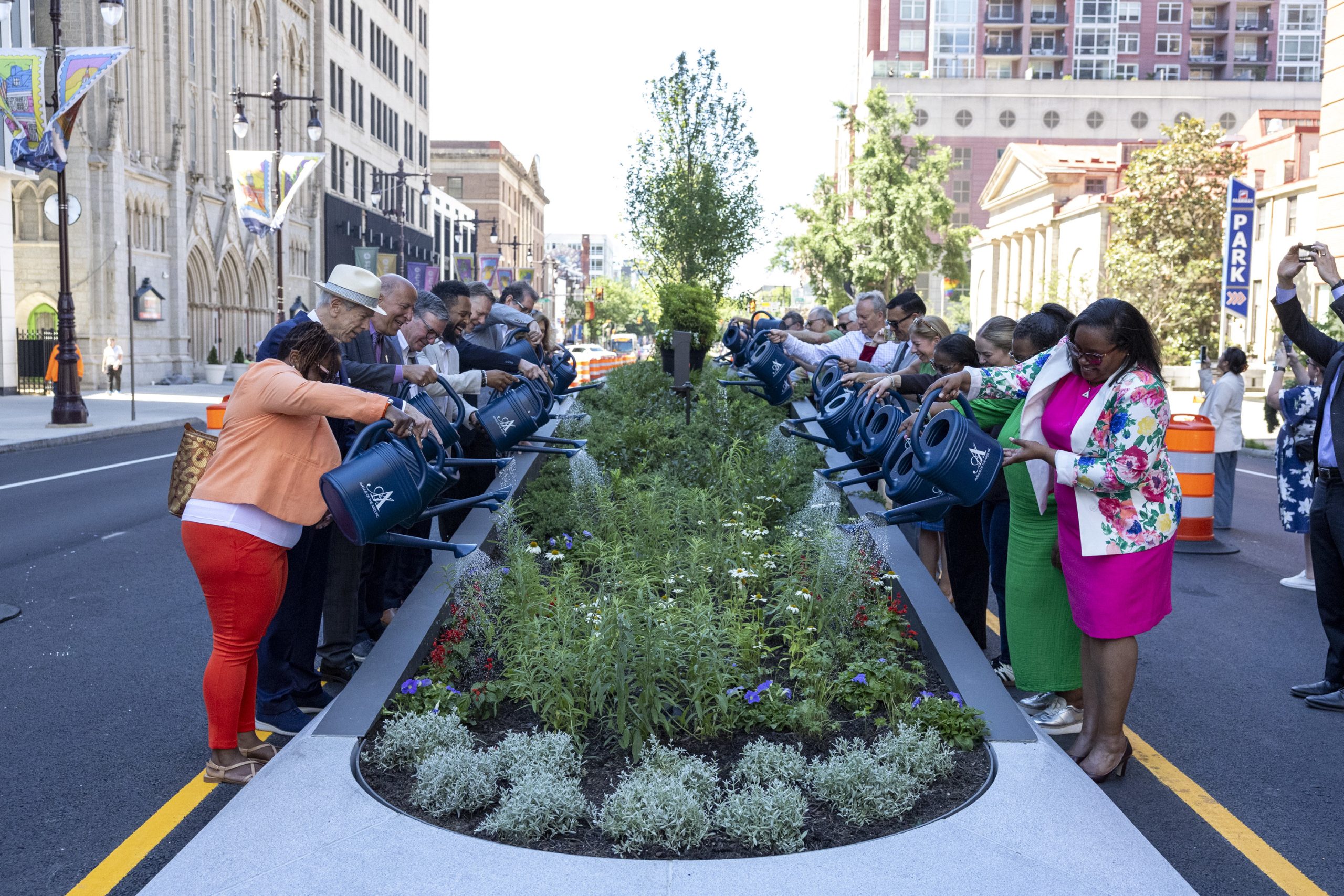
    Guests at a June ceremony to unveil one of the redesigned medians water the greenery in its planter just outside the Kimmel Center.Tyger Williams / Staff Photographer

    How is it that a street lined with hotels, residences, and offices has only one place for outdoor dining — at Arthaus? Broad Street wants bustling sidewalks, but landscaping and hardscape improvements alone will not increase street life. We learned this the hard way on the ill-fated Chestnut Street Transitway of the 1970s, and the planter fiasco should serve as a cautionary tale for the current design process for Market East.

    We must not fall prey to the false choice that in order to maximize urban vibrancy, we must sink millions of dollars solely into landscaping and other surface improvements.

    South Broad can be the best it can be with some thoughtful planning and a little gentle nurturing — it doesn’t need a Jersey barrier running down the middle of the street.

    Alan Greenberger served as deputy mayor for economic development and director of commerce under Mayor Michael A. Nutter, and chaired the Philadelphia City Planning Commission. Most recently, he served as vice president of real estate and facilities at Drexel University. He is a fellow of the American Institute of Architects. Harris M. Steinberg served as the founding executive director of PennPraxis at the School of Design at the University of Pennsylvania. He led the planning process for the Central Delaware Waterfront, which is currently guiding the development of the riverfront. Most recently, he served as the founding executive director of the Lindy Institute for Urban Innovation at Drexel University. He is a fellow of the American Institute of Architects.

  • The U.S. homeownership rate may not be as high as you think

    The U.S. homeownership rate may not be as high as you think

    Americans often think of homeownership as both a goal and a norm — after all, the U.S. homeownership rate is 65%, and as high as 75% in some states.

    But one Federal Reserve economist says that we’ve been measuring homeownership the wrong way and that U.S. adults are about as likely to rent or live in someone else’s home as they are to own their own.

    Erik Hembre says his work “should reframe the basic number we have in our head. I went from a baseline of about two-thirds of people own their homes and that’s just the way it’s always been, to: Well, it’s closer to half.”

    The difference in the standard numbers vs. Hembre’s numbers basically comes down to whether to count houses or people.

    The homeownership rate is generally given as the percentage of homes that are occupied by their owners. If there are 10 homes on a street and seven of them are owner-occupied while three are rented, that’s a 70% homeownership rate.

    Hembre, instead, came up with what he calls HPOP: the homeowners-to-population ratio. He counted up all Americans over 18 years of age, then looked at how many of them live in a home they own. The number is 53%.

    The reason Hembre’s homeownership rate is so much lower than the standard 65% national owner-occupancy rate is that many adults live in a home where the owner lives, but they aren’t the owners of the unit. If you’re living with a relative in the relative’s house or renting a room from a friend who owns the house, you don’t count as a homeowner in Hembre’s metric.

    Hembre attributed the difference to several causes. A small amount comes from roommates and from elderly parents who reside in their adult children’s homes; a bit more comes from other relatives such as siblings. The largest share by far is due to the high rate of adult children who live in their parents’ homes.

    “Younger households are becoming less likely to be homeowners. HPOP really makes that point more clear,” Hembre said.

    Overall, both HPOP and the owner-occupancy rate have fallen about 2% nationwide since 2006, but the patterns of who owns homes have changed. While adults in their 20s and 30s struggle to buy homes, the HPOP for people over 70 has risen five points since 2006, as elderly people remain in their own homes longer. “Those are kind of balancing each other out,” Hembre said.

    He also analyzed the HPOP of different groups, such as ethnic groups and married-vs.-single people. The differences indicate who is most likely to live in owner-occupied homes without being owners themselves. Married people have a 76.9% HPOP, not much lower than their 80.8% owner-occupancy rate. People who have never been married have a 17% HPOP, far below their 36.4% rate of living in owner-occupied homes. (Widowed, divorced, and separated people all fall somewhere in between.)

    For calculation purposes, Hembre treated both partners as the owners of a home if one partner owns it, for both married and unmarried couples.

    Michael Neal, a housing analyst at the Urban Institute, said Hembre’s measure avoids one of the pitfalls of standard metrics, which tend to lump everyone under the demographics of the person considered the head of household.

    “There are interracial couples where the head of household is not Black; we might be missing some families where there’s homeownership by a Black person. … Maybe there are two people who are two different age groups who are married,” Neal said. “In some cases, this can really matter for being accurate and providing accurate measures for policymaking.”

    States with expensive housing, such as Hawaii and California, tended to have the biggest differences between their owner-occupancy rates and their HPOPs.

    Dennis Shea, who leads the Bipartisan Policy Center’s housing program, found Hembre’s metric interesting but cautioned against discounting the standard measure of U.S. homeownership too much. Many of the non-homeowners tallied in HPOP, he noted, are people such as college students and nursing home patients who wouldn’t be expected to be homeowners.

    “I think it’s a useful new analytical approach that might provide insights about where people truly are in their economic journey,” Shea said. “I wouldn’t draw some drastic conclusion that somehow the true picture of homeownership in the United States has been radically changed by this new approach.”

    Hembre noted that the idea that only half of adults are homeowners doesn’t mean half will always be renters or guests in someone else’s home. “Between the ages of 18 and 70 or 80, most people do become homeowners at some point. This is about if they are at any given time.”

  • Manayunk’s evolution | Morning Newsletter

    Welcome to Sunday. Showers and thunderstorms are likely throughout the day.

    Our main read examines a riverside neighborhood in Northwest Philly as it embarks on another new era.

    And a new tool has forged a faster path to fill the ranks of Philadelphia’s police force.

    Scroll along for these stories and more.

    — Paola Pérez (morningnewsletter@inquirer.com)

    If someone forwarded you this email, sign up for free here.

    From Banana Republic to boutiques

    Manayunk has taken different shapes from its textile mill days in the 19th century to chain retailers in the 1990s. Today, you’ll find a collection of local upstarts scattered across its main corridor.

    More changes are coming, including:

    🏠 More housing. An apartment boom promises to add more than 1,800 residential units, though neighbors have concerns about traffic and parking.

    🛍️ New commerce. In the last two years, 12 new businesses have opened along Main Street, and others are on the way. Retailers have hopes that the ongoing residential development will be good for business.

    One thing is for certain: Manayunk’s future depends on neighborhood support.

    Olivia Prusky and Jake Blumgart report on what’s next for the community.

    Ranks on the rebound

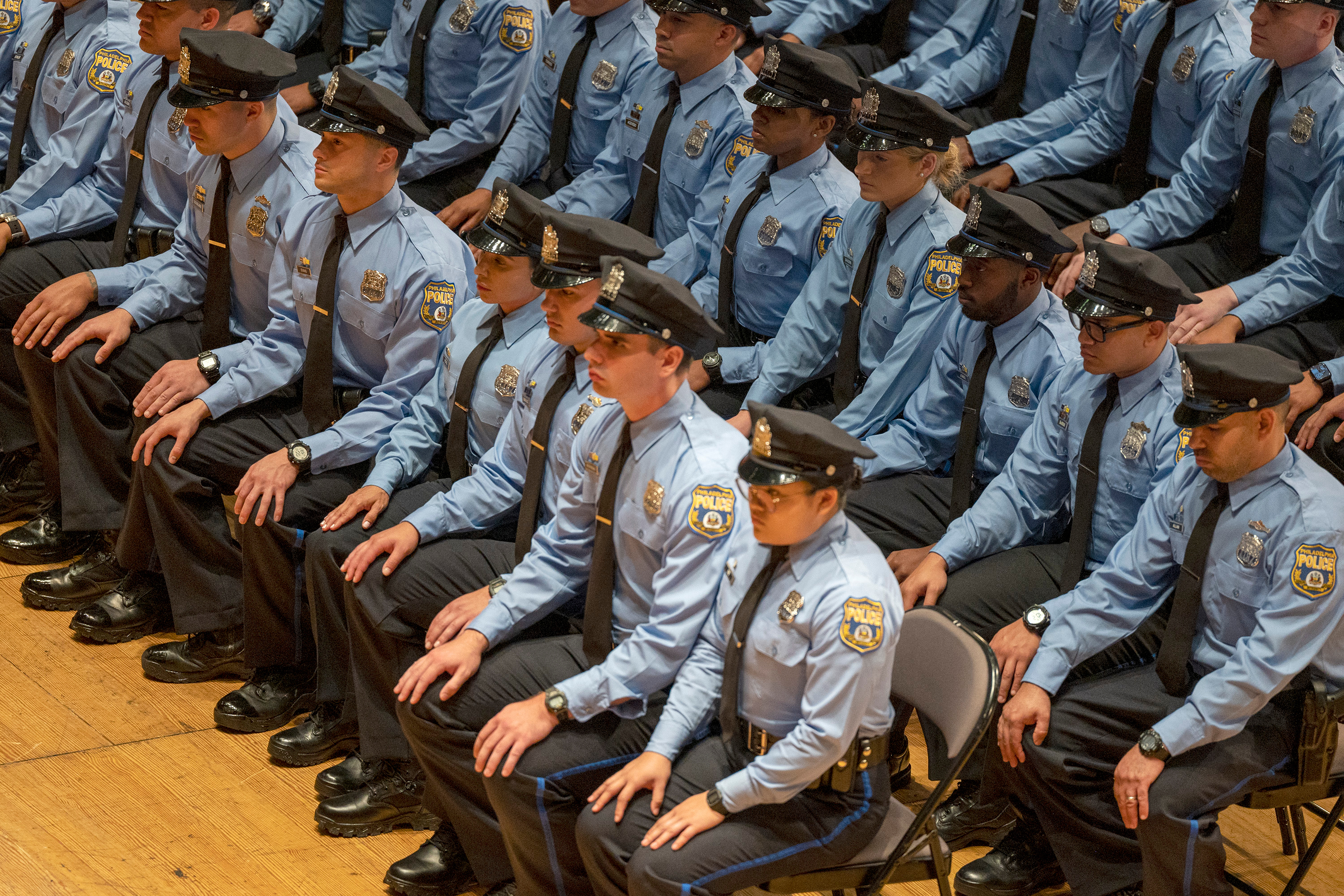
    A software called Guardian is helping the Philadelphia Police Department expedite a hiring process that once took nearly a year. Now, it can be done in less than two months.

    The department has scrapped paper applications in exchange for the system. In turn, officials are beginning to see something of a reversal from yearslong staffing deficits, according to Capt. John Walker, who oversees the police academy’s recruiting efforts.

    Justin Biedinger, a former California officer who founded Guardian Alliance Technologies, said Philadelphia is one of its largest clients. He said the service quickens hiring timelines, and provides increased scrutiny of potential candidates.

    In his own words: “With Guardian, these applicants can’t lie.”

    Jesse Bunch has the story on the technology and its impact.

    What you should know today

    This week in history

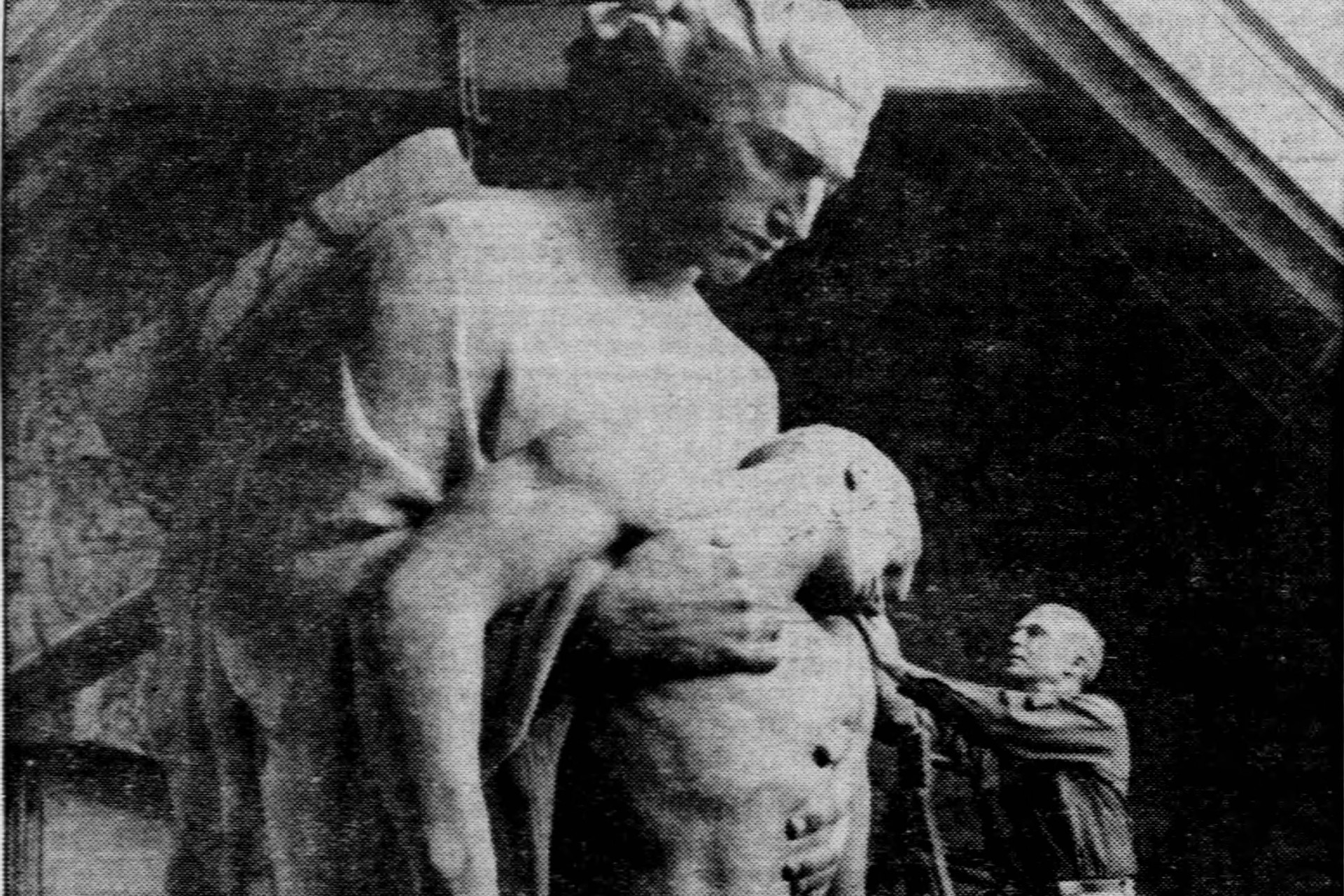
    🎤 Here’s Tommy Rowan with a look back at the work of a local “Monuments Man.”

    Not all Philadelphians who answered President Franklin D. Roosevelt’s call to action were soldiers and civilians.

    There were also artists.

    Local legends like Walker Kirtland Hancock — who would become one of the United States’ most distinguished sculptors — headed for World War II’s battlefields to try and pry Europe’s cultural treasures from the grip of the Gestapo.

    Read on for the full story.

    ❓Pop quiz

    Eagles fans are freaking out after the team teased the return of a vintage white and kelly green helmet the Birds haven’t used in decades.

    In what year did the Eagles last wear the helmet?

    A) 1991

    B) 1983

    C) 1973

    D) 1965

    Think you know? Check your answer.

    What we’re …

    🏐 Intrigued by: The tradition of competitive Amish volleyball.

    ☀️ Basking in: The abundance of the Italian Market with cookbook shop owner Catie Gainor on her perfect day in Philly.

    🍗 Savoring: Chicken roulade at the Academy Grill in Fort Washington.

    🤩 Gawking at: The inside of the iconic “Mondrian” house in Queen Village, thanks to a rare antique sale.

    🌳 Considering: The pros and cons of new planters on South Broad Street.

    🧩 Unscramble the anagram

    Hint: A Delco kid is reeling with fame after catching a piranha in a lake in this borough

    DIRK REPLAY

    Email us if you know the answer. We’ll select a reader at random to shout out here.

    Cheers to Rick Brash and Jim Diamond, who were the only readers to correctly guess Saturday’s answer: Knight Foundation. 45 affordable apartments for artists on Broad Street will be partly funded by the philanthropic organization.

    Photo of the day

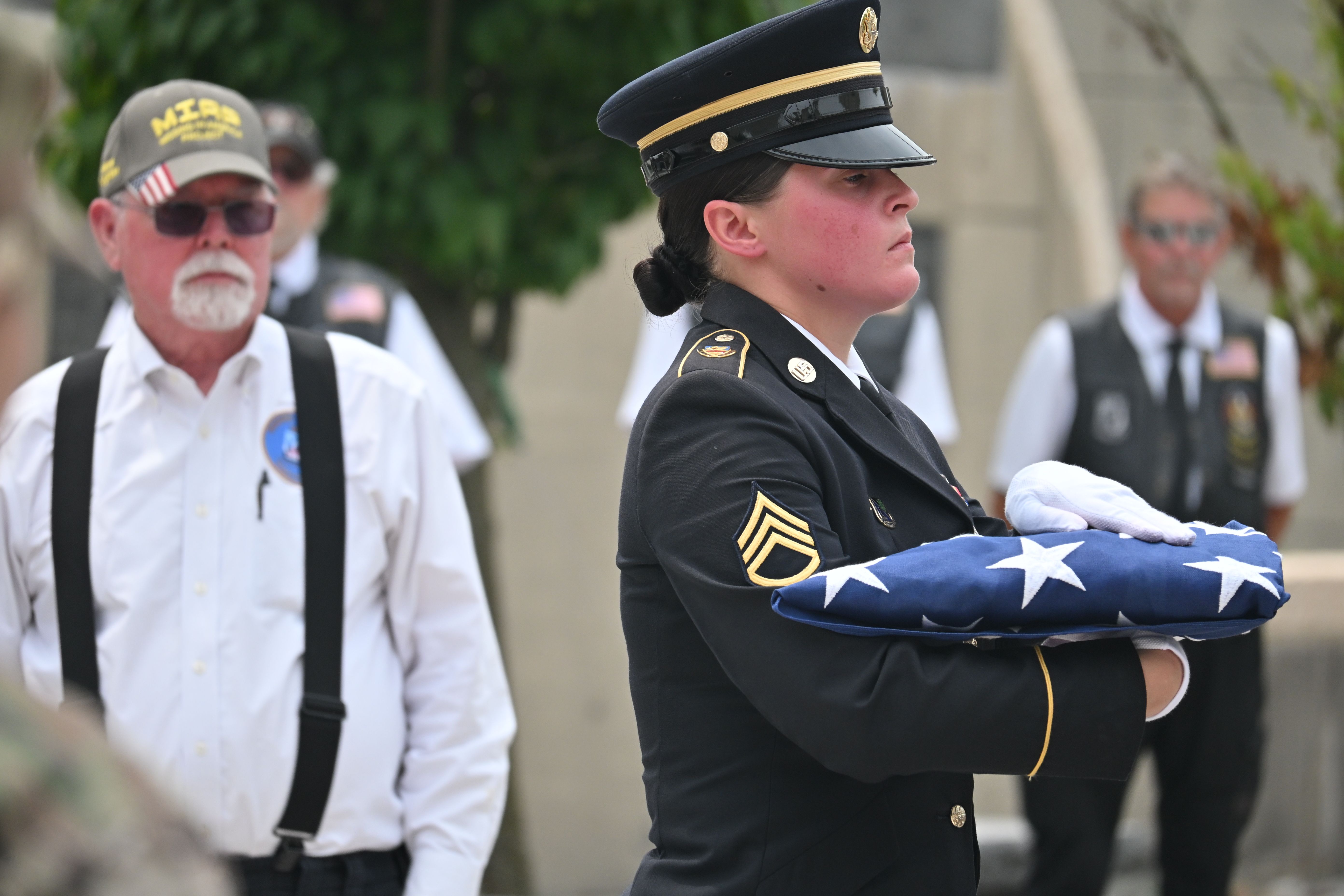
    A member of a U.S. Army honor guard carries an American flag as part of an interment ceremony for 15 military veterans whose remains were in the possession of the Delaware County Medical Examiner’s Office.Brett Sholtis / Staff

    🎶 Today’s song goes like this: “To get the good vibe, I need snow and sunshine.” Shoutout to Born at Midnite for making my week with their incredibly groovy set at Johnny Brenda’s.

    👋🏽 Thanks for starting your day with The Inquirer. Have a good one!

    By submitting your written, visual, and/or audio contributions, you agree to The Inquirer’s Terms of Use, including the grant of rights in Section 10.

  • At 125, Philadelphia’s official tall ship isn’t done riding the waves

    At 125, Philadelphia’s official tall ship isn’t done riding the waves

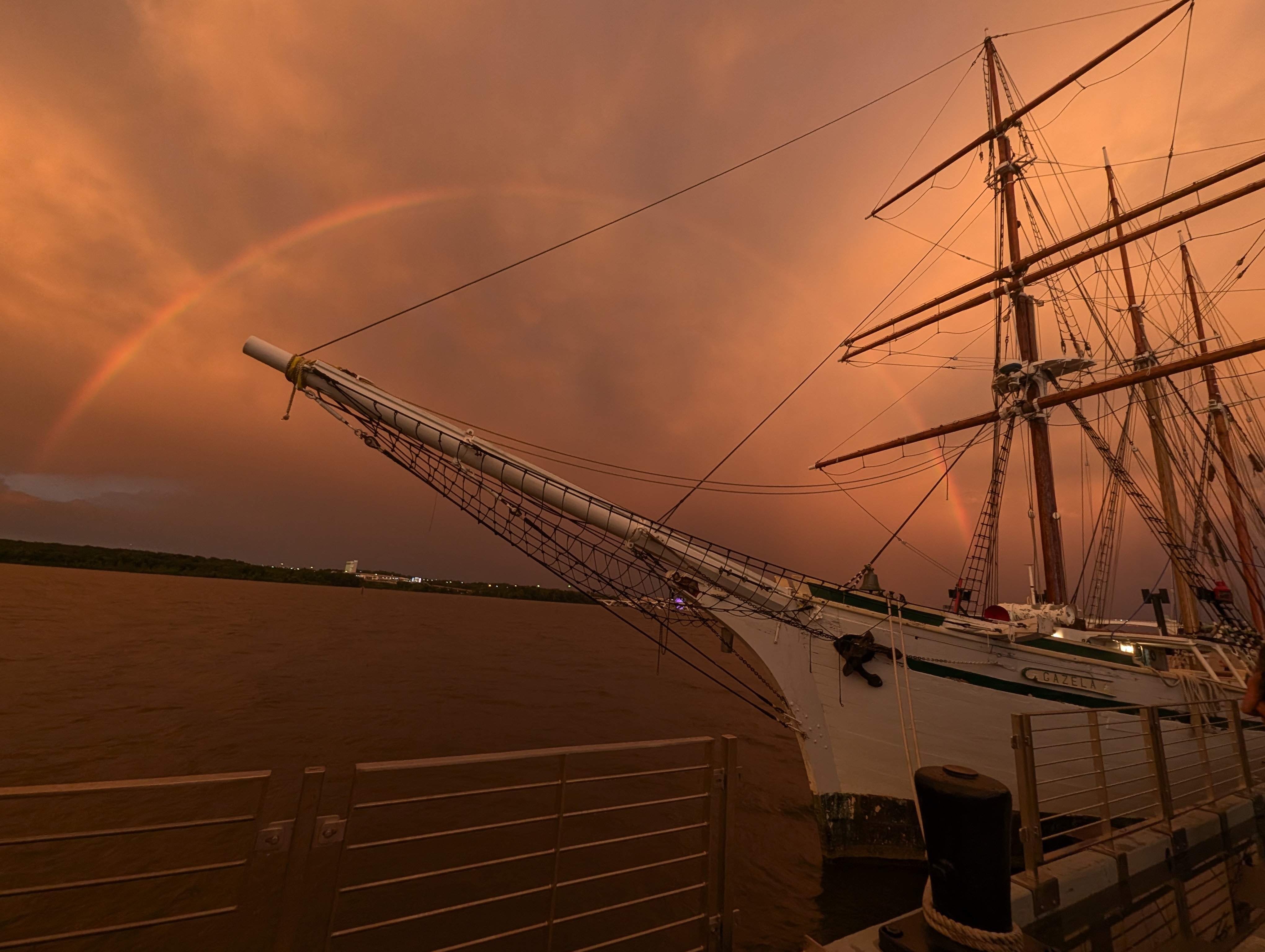
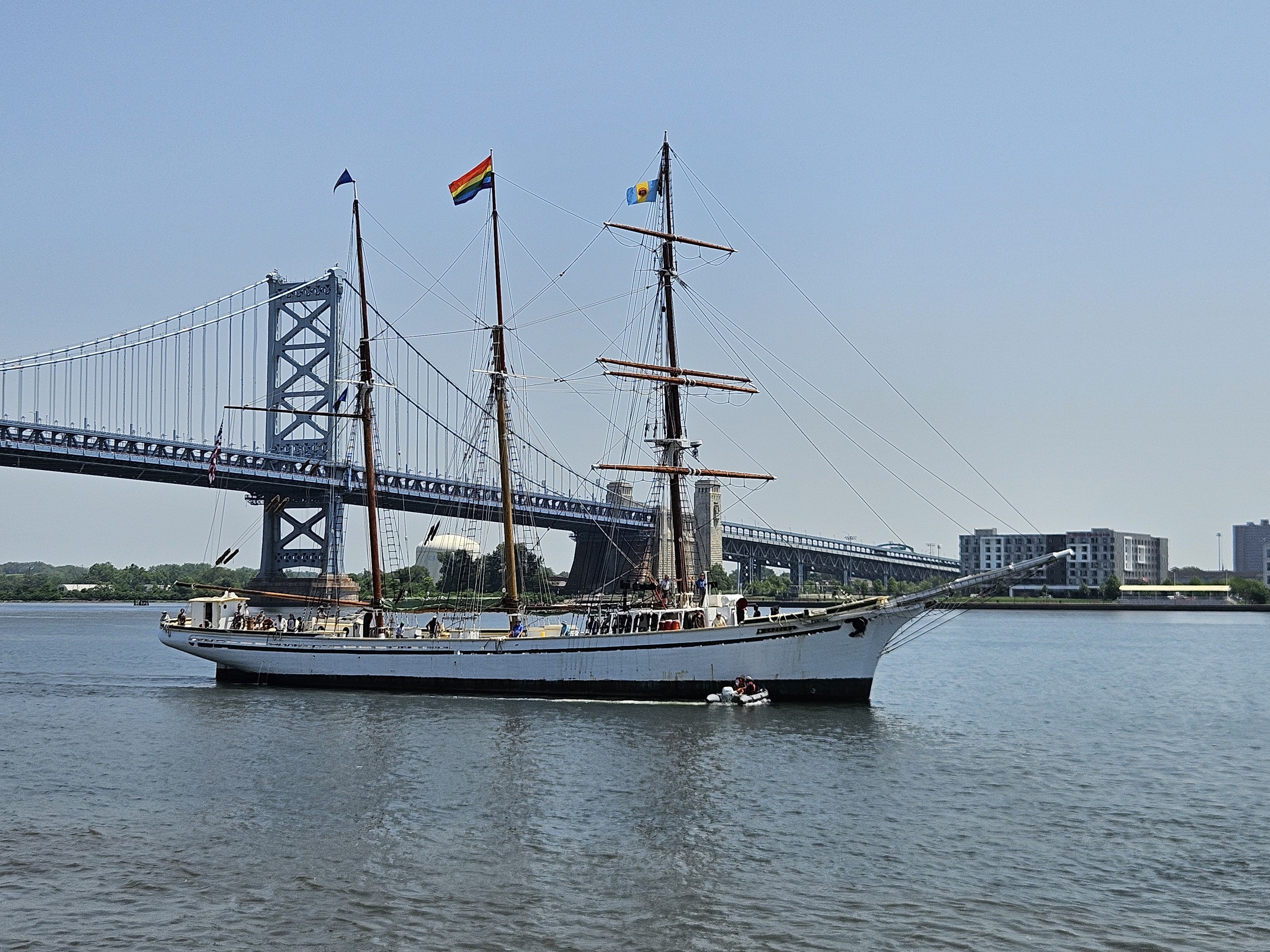
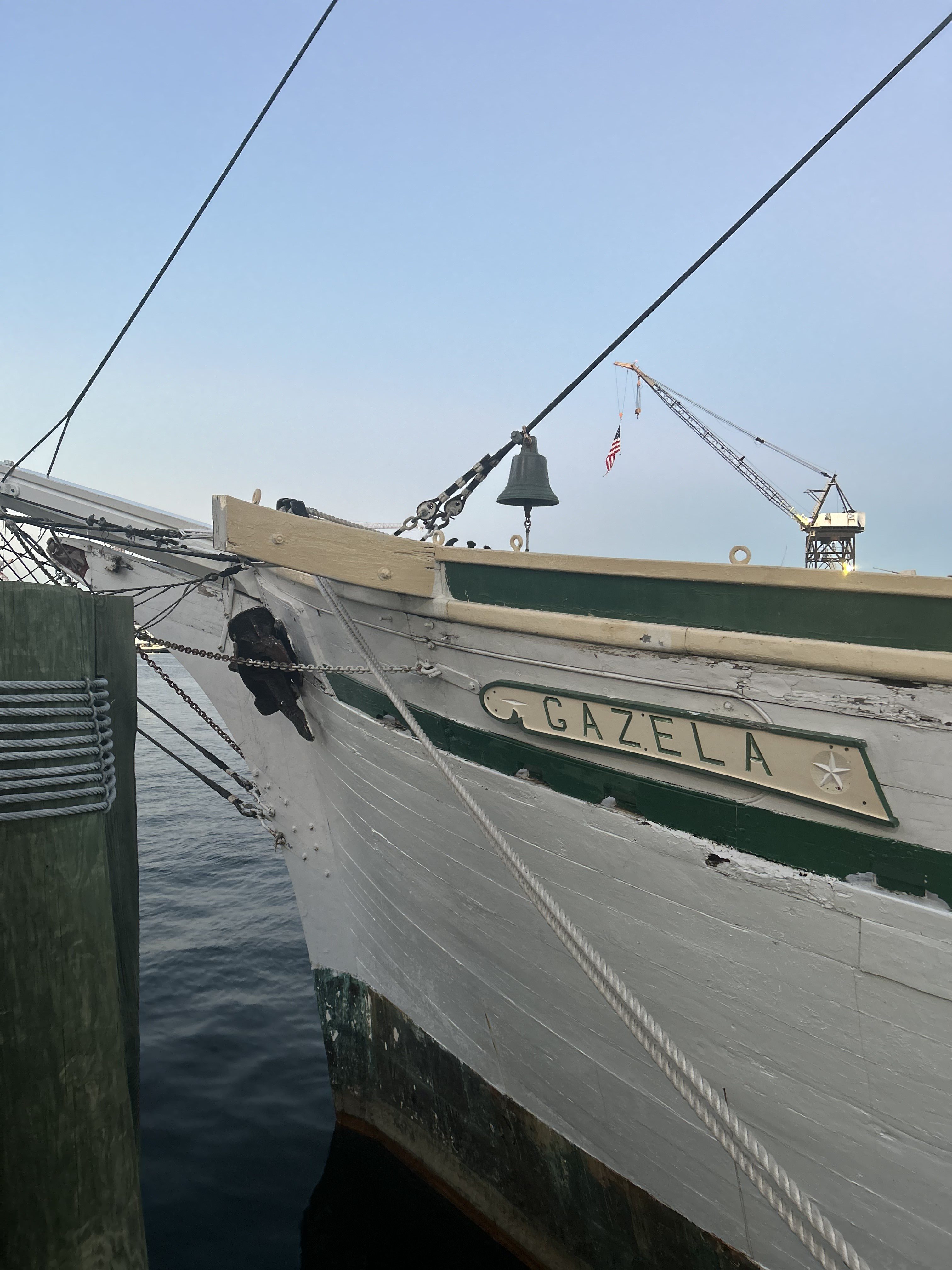
    125-year-old Gazela weighs 299 gross tons and is 177 feet tall. The ship has traveled across the Atlantic, appeared in the 1994 movie Interview with the Vampire, and was once, according to one of the ship’s longtime volunteer custodians, blessed by a group of nuns.

    It is also the official tall ship of Philadelphia, a role that requires it to take on some very serious duties. That included setting sail to Virginia’s Norfolk area, making stops at East Coast ports along the way, to represent the city at Sail250 Virginia, a celebration of the country’s 250th birthday, where the ship was one of the 60-plus visiting vessels from about 20 countries.

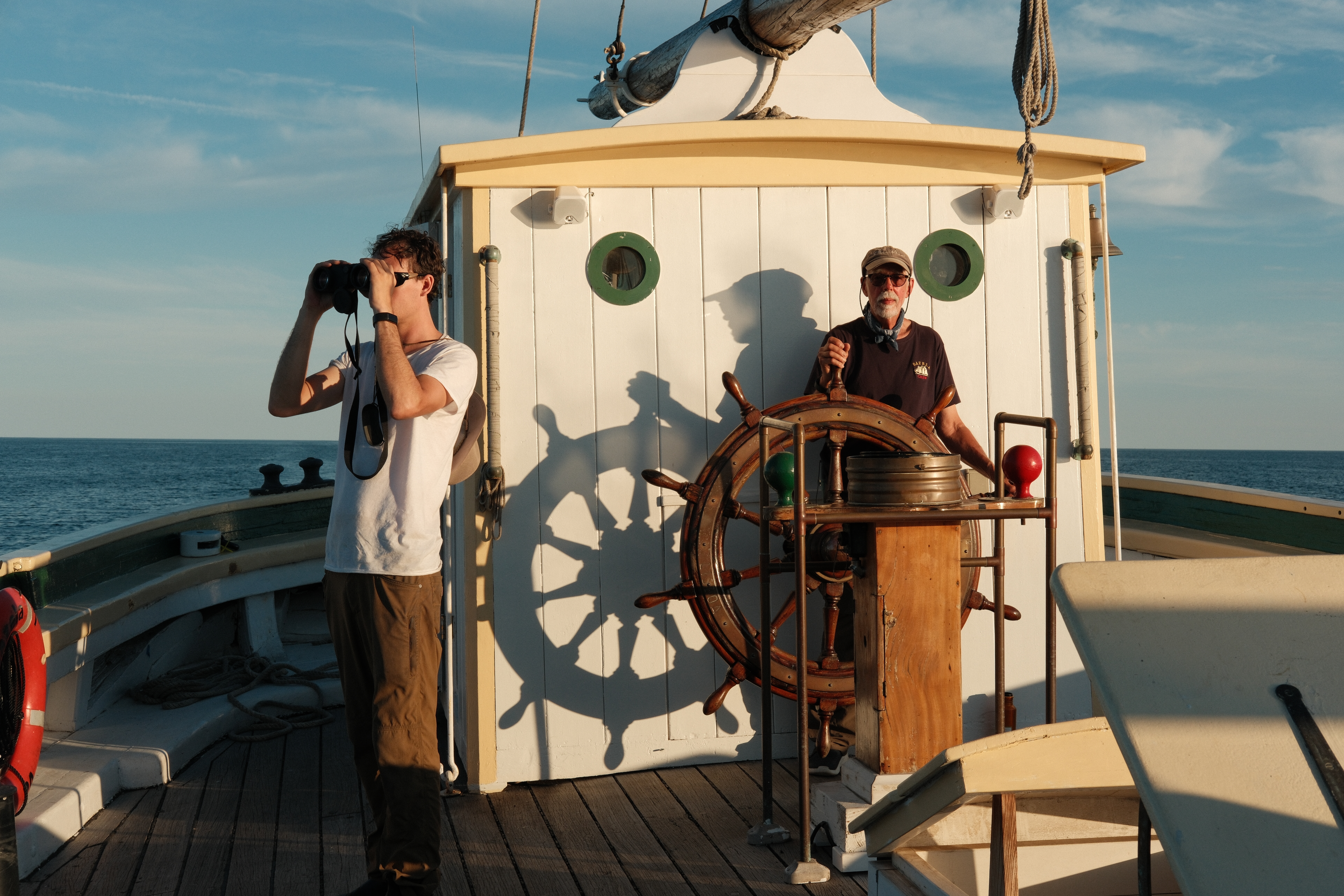
    Second mate Chris Peterson and crewmember Gary Dos Santos helm Gazela.Gael Chang Ortiz

    125 years of sailing

    Hailing from Portugal, the Gazela was first a cod fishing vessel from 1901 — when the ship was built — to 1969. During those years, the ship traveled thousands of miles, fishing off the coast of Newfoundland, and getting packed with salt and cod to bring back to Europe.

    In 1969, after a disastrous trip of horrible weather, broken gear, and a dismally low amount of fish caught, Gazela was finally laid up, putting the ship out of service. In 1971, Philadelphia philanthropist William Wikoff Smith brought the ship to the Philadelphia Maritime Museum. Just one year after arriving in America, Gazela was almost destroyed in an arsonist’s fire.

    As part of the Bicentennial celebration in 1976, Gazela participated in a race to Bermuda, where, during the last five minutes, the ship was wedged between two other vessels and nearly crushed.

    Gazela prepares to set sail from Philadelphia on June 8.Allison Grosso

    When the ship is not at sea, Gazela remains docked at Penn’s Landing, under the care of the Philadelphia Ship Preservation Guild, providing an education to tall ship enthusiasts. Groups tour the decks; volunteers learn about carpentry, knots, and ship maintenance. The ship provides a venue for the guild’s apprenticeship program and a slew of classes aiming to educate folks on building a maritime career.

    All that grit has made Gazela a true Philadelphian: scrappy and enduring, no matter what punches life lands. A proud immigrant, the ship is a symbol of both global maritime history and Philly’s specific historical importance as a shipyard.

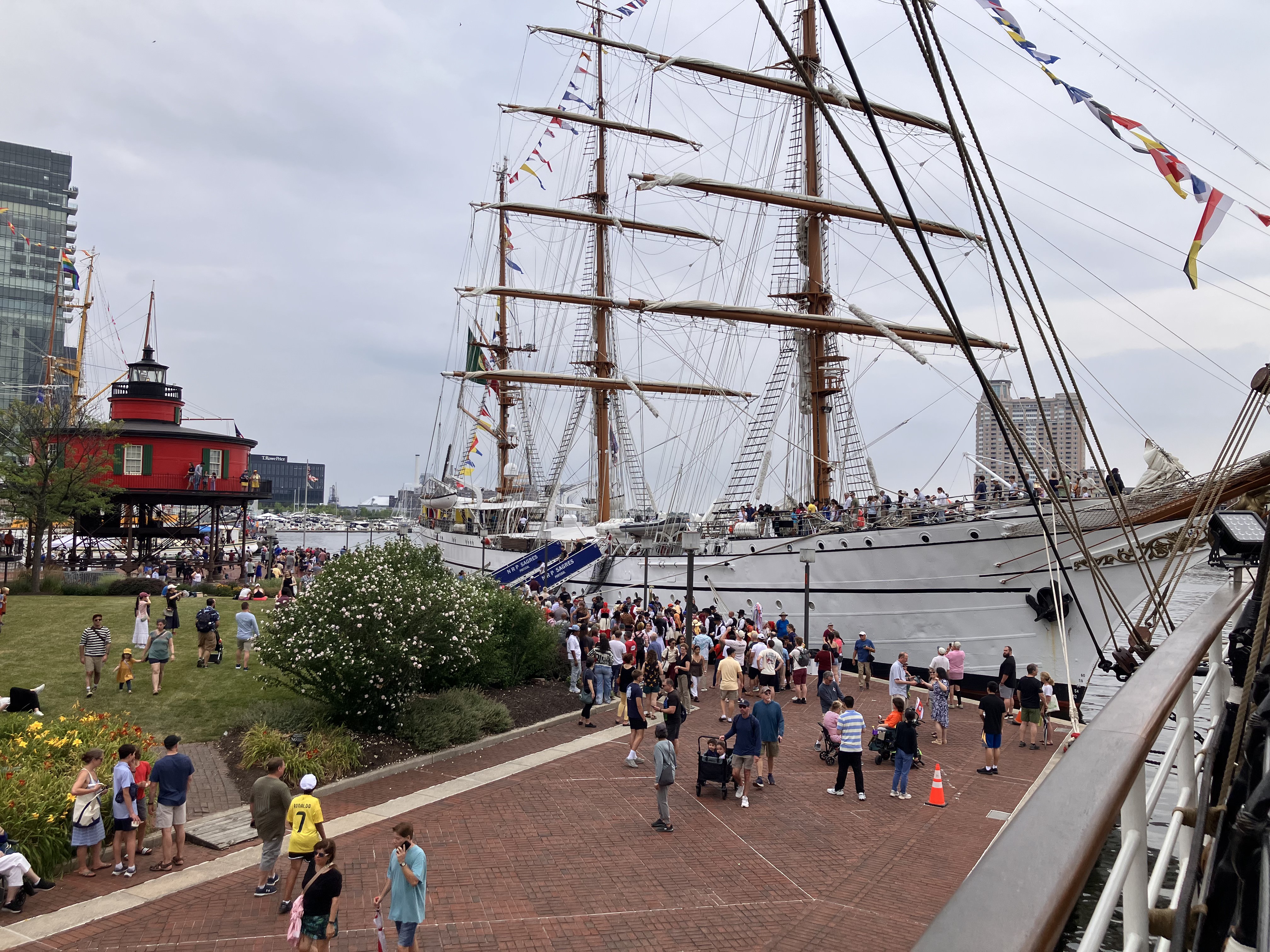
    Crowds gather to board the Portuguese naval vessel Sagres in Norfolk, Va.Alisa McDonald

    ‘We’re from Philly, what of it?’

    On June 18, David Goldman, the captain for Gazela’s trip to Portsmouth, one of the ports on their trip, stood with a slew of tall ships behind him. The ships were anchored outside of Norfolk, resting before a parade that would take them to dock alongside the city’s shore.

    “This scene could be out of the page of a book from 150 years ago. Please treat it with the reverence it deserves,” he said to the crewmembers. The Gazela stood out a little in the crowd: older than most of the other ships and a bit worn down from its century-plus of sailing. Slightly ragtag, slightly punchy.

    One crewmember referred to the ship as an “ugly duckling,” of course, with love.

    “We’re from Philly, what of it?” is the attitude that Gina Pickton, PSPG’s executive director, thinks Gazela has.

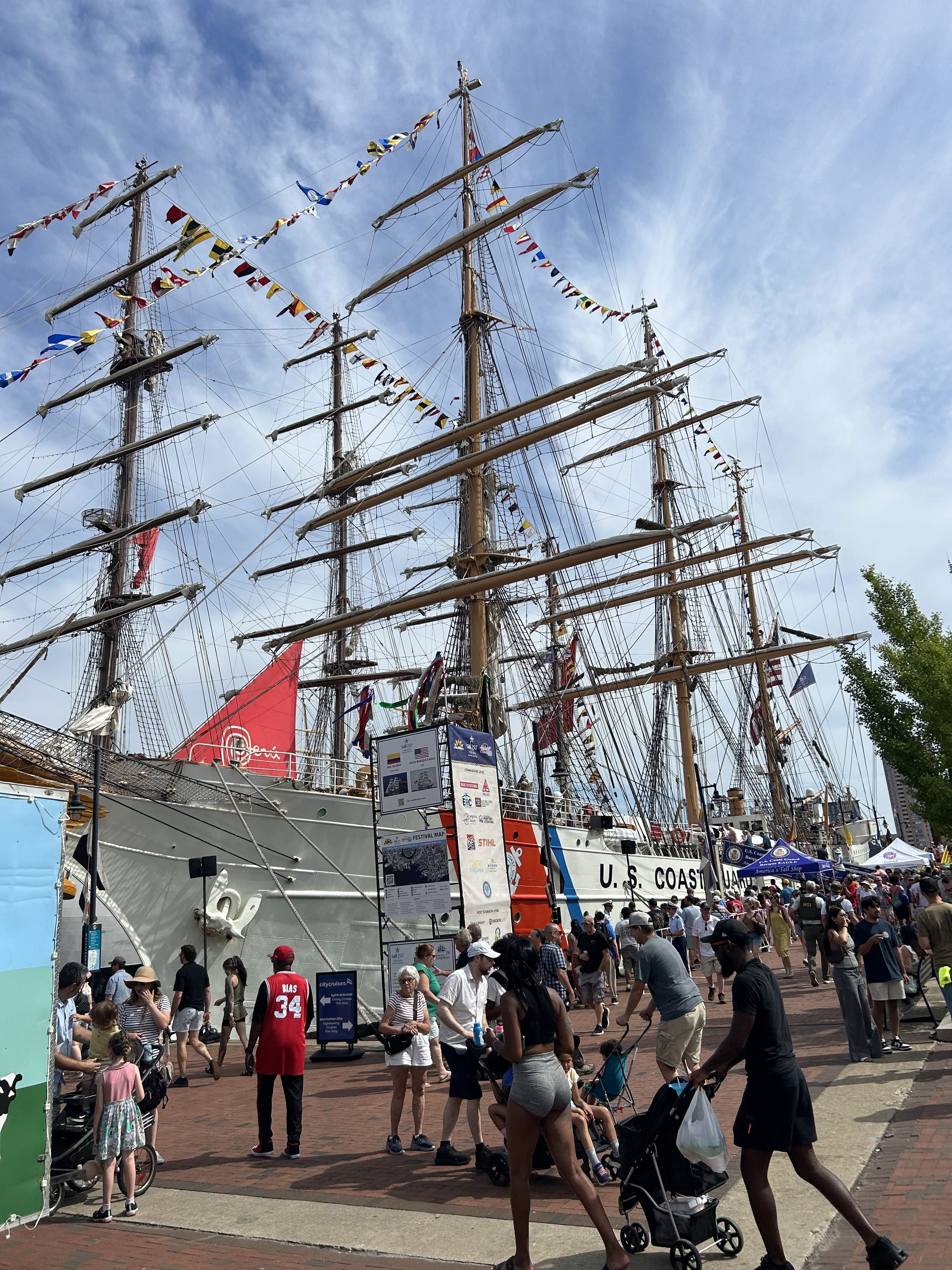
    A Coast Guard ship at port in Norfolk, Va.Isaac Pollock

    “This has not been easy, this is not a vacation,” said Allison Grosso, who manages events and communications for the guild. “Everybody on this boat feels the same way, and cares that much that we’re doing all this, because it’s that special to us.”

    Underway, the crew of 40 volunteers rotated through approximately five-hour shifts. Within each watch, a crewmember stood on lookout, checked the ship’s safety (including the ship engine — one was added in 1938 and updated in the late 20th century), helmed it, and kept it to the correct angle measured on a beautiful brassy compass.

    Bunks were stacked in threes in the focsle, with about a foot and a half of space in between, and hung in twos in the hold.

    Many of the volunteers have “land jobs” — one works at an environmental nonprofit, another attended art school, and another was in the Air Force. Some are hobbyist retirees; others, adults at the beginning or middle of a maritime career; one, a high school graduate spending as much time with the ship as he can before heading off to Temple in the fall.

    They form a tight-knit community.

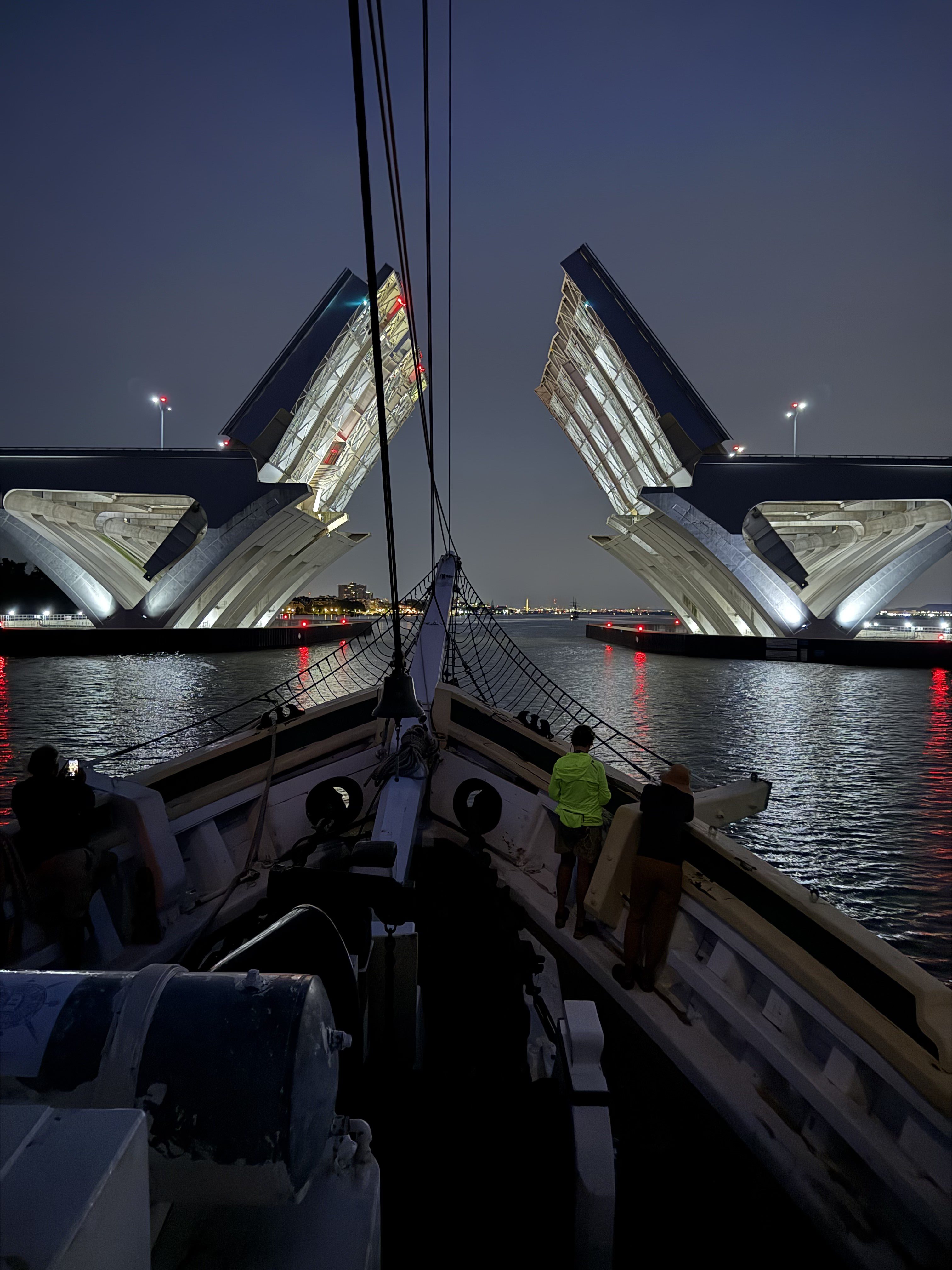
    Maryland’s Woodrow Wilson Memorial Bridge opens for Gazela’s passageStephan Botes

    “You can just step on[board], and people will be so friendly to you,” said Gael Chang Ortiz, 18. “They’re willing to teach you so much.”

    At 125, the tall ship remains an object of endless affection. While the ship was anchored outside of Portsmouth, a rowboat carrying four young men approached the ship’s flank and tossed a friendly offering of Goldfish crackers onto the ship’s deck.

    “Gazela’s still a fishing vessel!” shouted a crewmember, holding the bounty high.

    The Gazela just outside of PhiladelphiaAlex McNeil

    Documenting history

    Beyond preserving the community, the guild is working on preserving Gazela’s history — and not just by repainting the ship’s hull. Nancy Linden, the journey’s third mate, is working on an oral history project about Gazela. Chang Ortiz said he’s considering participating in Gazela’s apprenticeship program; there are PSPG members who started as volunteers and have wound up seeking full-time maritime careers.

    Gazela’s crew also thinks it’s important not only to preserve history, but to tell it truthfully.

    “Historically, sailing was an interesting pathway for both enslaved Americans as well as free African Americans to make a living,” said Maura Hackett, the chief mate for this journey and a seafarer for about two decades. “It’s really unfortunate that the first thing a lot of people think about [ships] is old white guys.”

    Gazela sits at port in Portsmouth, Va.Isaac Pollock

    “It’s hard to see yourself doing something if you’re not mirrored in the crew or the representation,” Hackett said. “I’ve had little kids come up to me and say, ‘I can be a captain too?’ And [I’ve said,] ‘Yeah, you can!’”

    After 29 days spent as much as 300 miles from home, Gazela returned to Philly.

    And as fireworks lit up the sky on July 4, the Portuguese Gazela, half as old as the ship’s adopted country, was just another Philadelphian basking under the night sky of the city it calls home.

  • Fans savor watching first-ever Women’s Lacrosse League championship: ‘Inspiring for young athletes’

    Fans savor watching first-ever Women’s Lacrosse League championship: ‘Inspiring for young athletes’

    A number of shirts that read “Everyone Watches Women’s Lacrosse” filled the concourse at Subaru Park, as fans filed in for the first-ever Women’s Lacrosse League Championship on Saturday.

    And when the Maryland Charm beat the California Palms 16-13 to claim the league’s first championship title, sparklers shot out, champagne was popped, and red, yellow, and white confetti rained down.

    Jaycie Jaskolka, a 30-year-old Philly native, chose to root for the Palms because of their pink jerseys, while handing out friendship bracelets for both teams, the Philadelphia Waterdogs of the men’s Premier Lacrosse League, and other WLL teams.

    Jaskolka said with the women’s sports history that already exists in Philly, adding the city as a stop to the WLL tour and the site for its first championship game is special.

    “It’s so cool to kind of like see history happen,” Jaskolka said. “It’s one of those things that I wish I had this when I was younger, but I’m so glad that we get to have it now. Better late than never.”

    For younger fans like Savannah Focht and Harper Willson, two 13-year old lacrosse players who traveled from Maryland to watch the Charm play, watching women pursue lacrosse professionally gives them the hope that they can too someday.

    “It’s really inspiring for young athletes, and it makes us want to work harder and motivates us,” Focht said.

    Young fans try to catch T-shirts during a break in the action at the inaugural Women’s Lacrosse League Championship on Saturday.Elizabeth Robertson / Staff Photographer

    During the game, pink and red rally towels rippled through a crowd that included U.S. National Lacrosse Hall of Famer Tina Sloan Green and two-time women’s World Cup champion and Olympian Ali Krieger. Influencer Jackie Johnston, better known on social media as “Coach Jackie” for her women’s sports content, was also in attendance.

    There were photo-ops and fan activations around the concourse, a performance from the West Powelton Steppers at halftime, autograph stations, and more to add to the excitement for fans.

    But for Charm midfielder Ally Kennedy and her teammates, the job was building up the product on the field to appeal to more fans.

    “We know if the best product is not on the field, we’re not going to win a championship, and it’s not going to grow the game either,” Kennedy said. “Goal number one is growing the game. We’re on ESPN. This was a great game, a huge game. I hope people all across the country were watching and became lacrosse fans and fell in love with the Charm.”

    Elijah Stobaugh, 23, a Bradenton, Fla. native, understood the gravity of the moment. Like Kennedy, Stobaugh and his friends have high expectations for where the league can go and how Saturday’s championship was a “major step in achieving it.”
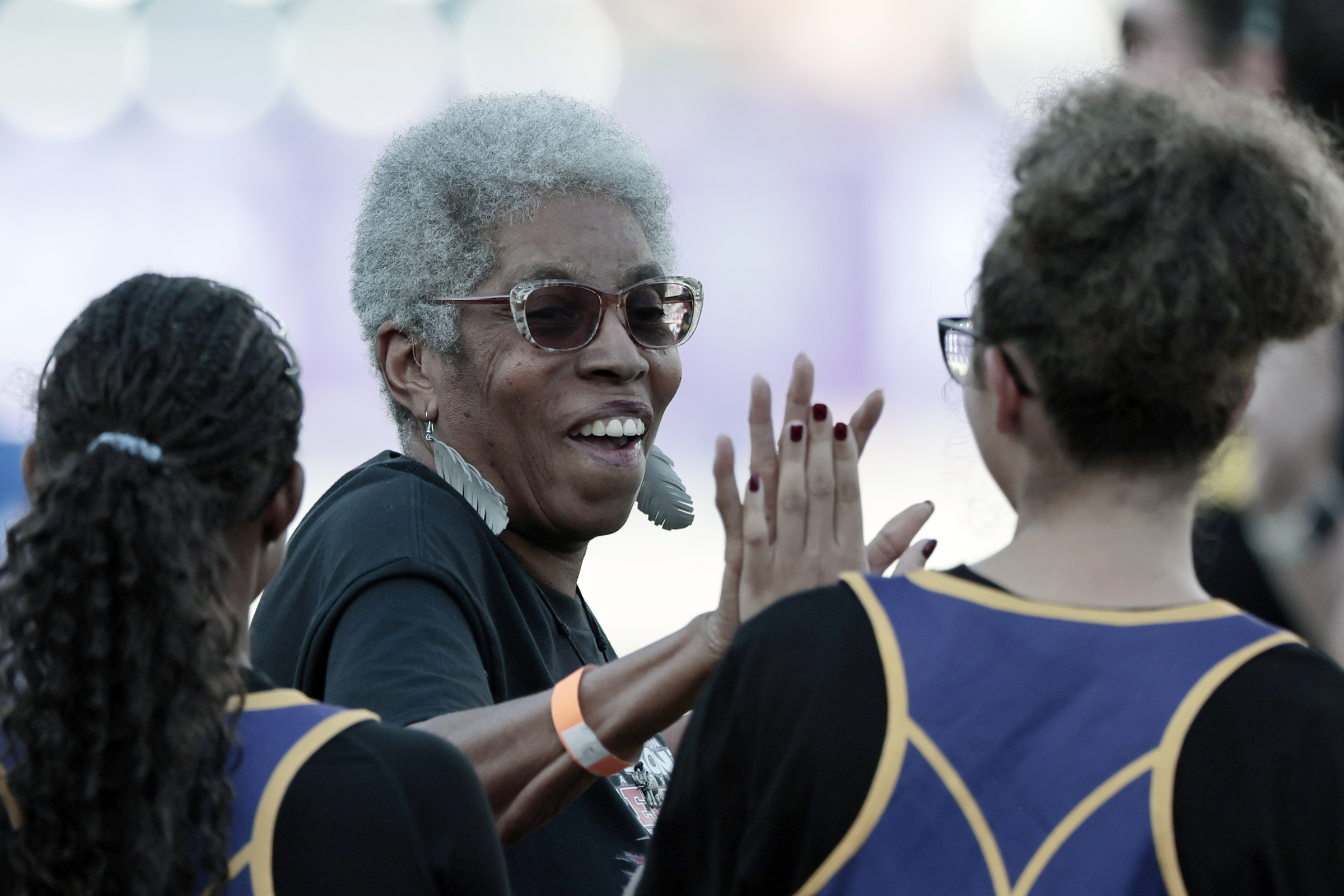
    Tina Sloan Green high fives young players after being honored before the Women’s Lacrosse League Championship game.Elizabeth Robertson / Staff Photographer

    “I can’t imagine what this league’s gonna be like in 20 years,” Stobaugh said. “So saying that I was at the first [championship] game is going to be cool 20 years from now because it’s going to be growing.”
    Waterdogs clinch top seed in PLL playoffs

    Earlier in the day, the Waterdogs had the first game in their homecoming weekend, beating the New York Atlas, 18-10, and securing the No. 1 seed and a bye to the semifinals of the PLL playoffs, which begin next weekend. Although the crowd erupted after the clock ran down on Philly’s victory, it was still the second-loudest moment during the game.

    The loudest moment came when Waterdogs attackman CJ Kirst scored his first goal of the day with a little over three minutes to go in the first quarter. Kirst’s 31st goal of the season broke the league’s single-season mark, which was previously held by the Boston Cannons’ Marcus Holman, who scored 30 goals in 10 games in 2023.

    The moment that followed, when Kirst’s teammates joined him on the field to celebrate, is when the reality of his milestone hit, he said.

    “I think that was pretty special and definitely something that I’m going to carry with me for that moment,” Kirst said. “Not really putting the ball in the back of the net, but being able to celebrate with every guy on the field.”

    Philadelphia native Jimmy Pine, 14, was just one of many fans wearing a purple Waterdogs jersey with “Kirst” on the back. Just as it was for the women’s game, Pine said fans being able to experience the PLL in person, especially Kirst’s record-breaking goal, can continue to grow professional lacrosse in the area.

    “When they see how fast people can shoot, how cool it is to make a save, or how cool it is to hit, people are gonna love it and watch it,” Pine said.

    The relationship goes both ways.

    Kirst said playing at home, seeing the purple jerseys in the crowd and the support of the fans during warmups was a cool experience and hopes Sunday’s game against the Maryland Whipsnakes to close out the regular season will draw the same crowd.

    “To have the support from Philadelphia and the sport of lacrosse to be so passionate about the Waterdogs, it truly means a lot,” Kirst said.

  • Hiding in plane sight | Editorial Cartoon

    John Cole spent 18 years as editorial cartoonist for The (Scranton) Times-Tribune, and now draws for various statesnewsroom.com sites.

  • Hiring a Philly cop once took nearly a year. A new system finishes the job in less than two months.

    Hiring a Philly cop once took nearly a year. A new system finishes the job in less than two months.

    When Capt. John Walker joined the Philadelphia police force decades ago, prospective officers rarely applied to more than one department, let alone four or five.

    Today, job candidates may apply to up to half a dozen departments before choosing where to begin their careers. And competition to hire them is fierce.

    After years of the department vying for recruits amid staffing shortages and waves of officer departures, its ranks are rebounding. And Walker, who oversees the police academy’s recruiting efforts, credits that in part to a faster and more efficient method of getting potential officers through the door.

    The department has scrapped its long-standing tradition of paper applications and is instead using software that speeds up what was once a monthslong hiring process.

    Before, getting an applicant from an introduction with hiring managers to the first day of police training could take up to seven or eight months — or sometimes a year, Walker said.

    “The process to get hired here was cumbersome,” he said. “It took almost 118 days after you applied for us to even make contact with you. That was a big problem.”

    After rolling out the software, called Guardian, the department says it is ushering recruits into the academy in as little as 54 business days — and it hopes to reduce that span even further.

    While Guardian is not solely responsible for the increase in applicants, Walker said, it has nudged the department closer to record recruitment numbers.

    In 2025, the department enrolled 468 officers in training at the police academy, the second-highest number in the 21st century.

    Captain John Walker of the Philadelphia Police Department’s recruitment and background investigations unit.John Walker

    Walker is adamant that there has been no drop in the quality of applicants. The California-based company whose software the department is relying on maintains high standards, he said, and is used by more than a thousand law enforcement agencies across the country.

    The new system has helped reverse a hiring dearth that began after the widespread protests over police brutality and racial justice in 2020 and continued through the COVID-19 pandemic and beyond.

    A year before the protests, the department was at 99% of full staffing, according to Walker. But the numbers soon began to dwindle as diminished interest in policing combined with an uptick in officers leaving the force.

    In 2021 alone, 581 of the department’s more than 5,000 officers hung up their uniforms. Officials attributed the drop to retirements, a COVID-era closure of the police academy, and strict local residency rules for prospective officers.

    While the department now stands at around 83% of full staffing, Walker said, officials are beginning to see something of a reversal.

    Recruitment drives have increased in frequency to more than several times a year, yielding between 1,000 and 2,000 applications each round.

    That is a notable step up from 2022, when the department received just 942 applications overall.

    Changing technology

    Gone are the paper applications of old.

    In their place is Guardian’s hiring portal, where prospective recruits can upload copies of their IDs, lists of references, and other documents via computer or on their phones. And the lengthy personal history questionnaires that are standard in the law enforcement industry are now available online, as opposed to requiring a trip to a local police station for paper copies to fill out by hand.

    Police recruiters, in turn, use the software to review documents, conduct video interviews, and keep track of a recruit’s medical, physical, psychological, and polygraph exams.

    The Guardian software debuted in the city in late 2023, and since then, the time it takes for prospective recruits to go from application to training at the police academy has fallen sharply, to fewer than 60 business days.

    Department officials hope to speed things up even more, to about 35 days, Walker said, but it is difficult to schedule the required medical tests and interviews quickly enough to accommodate that time frame. The department plans to hire more doctors to meet demand.

    Justin Biedinger, who founded Guardian Alliance Technologies in 2016, said that the company contracts with around 1,300 of the nation’s roughly 18,000 police departments, and that Philadelphia is one of its largest clients.

    Biedinger, a former Stockton, Calif., police officer, said the service not only has quickened hiring timelines, but also has increased scrutiny of officers who might not be cut out for a career in law enforcement.

    The software allows recruiters to see whether an applicant has been reported for misconduct by another department. And the company uses artificial intelligence to scan social media accounts for red flags such as inappropriate content, guns, or drug use.

    “With Guardian,” he said, “these applicants can’t lie.”

    To Walker, the biggest benefit of the new system has been the ability to move quickly and hire people who otherwise might have accepted jobs in other departments while they awaited word on applications to work on the Philadelphia force.

    “In today’s world, people are not going to wait a year and a half to join this profession, as I did,” he said.

    Another benefit of the automated process, he said, is making it easier for out-of-state applicants to apply, drawing candidates as far away as California, Colorado, and Missouri.

    And even if the department does not reach its goal of a 35-day timeline, Walker said, the current 55 days “is one of the best in the country. If not, close to it.”