Blog

  • How Philly distributed an estimated 1 million meals to kids this summer — and kept them busy

    How Philly distributed an estimated 1 million meals to kids this summer — and kept them busy

    Michella Crosby first noticed it a couple of years ago: The children surrounding her block in West Philadelphia were hungry — and a little bored — during the summer break.

    Once a kid in need of a meal, often getting one at her local armory, Crosby decided to do something to make sure no child went unfed.

    The 74-year-old block captain signed up to run a Playstreet last summer. Through the city-run Playstreets program, and with the support of neighbors, she closed off her block to traffic on weekdays and distributed free, nutritious lunches to children, no questions asked.

    “This is survival,” Crosby said in her second summer running a Playstreet. “We have to live. We have to be able to take care of our children.”

    Crosby is just one part of the more than 500 churches, camps, schools, recreation centers, and Playstreets in Philadelphia that offer children under 18 opportunities to do everything from crafting to sports and unstructured play during the summer. These sites have the added benefit of feeding children for free.

    The meals were paid for through the Summer Food Service Program, a federal program with funds administered by Pennsylvania.

    Providing children with a free, federally approved breakfast and lunch is a benefit many families only speak about in whispers, according to program operators. At many sites, all children are handed meals, even if they don’t need them or come with their own snacks. Coordinators say this method of meal distribution makes it so no one feels less-than for lining up during breakfast or lunch.

    This summer, the city was projected to distribute more than a million meals. A final count of meal sites will not be available until the end of the year, according to the city.

    The Inquirer visited several of these meal sites to get a glimpse of the many purposes these hubs serve and the people who make it all possible.

    Holy Innocents School summer camp

    The gymnasium is abuzz on a Tuesday with approximately 70 children ages 4 to 14.

    The pre-K children are the first to boldly rush the plastic folding table featuring a spread of small cardboard boxes topped with pints of milk.

    “There’s a line behind you,” an instructor gently reminds a little boy skipping past his classmates.

    The child spins around, offering a sheepish grin, and joins the friends he had zoomed past, giggling with glee.

    Almost every child in the room attends Holy Innocents School during the school year, said Dee D’Aulerio, director of the free all-day summer camp in Juniata Park.

    A calendar of the meals made by Nutrition Development Services for about 150 kids at Holy Innocents Catholic Church in Philadelphia, Pa., on Tuesday, July 28, 2026.Tyger Williams / Staff Photographer

    “Historically, they did have to pay a fee, but now that we’re free, it really eases the burden on the families who pay tuition to take something off their plate,” she said.

    In rapid succession, D’Aulerio personally hands every child a box that includes a ham and cheese sandwich, celery sticks, and potato salad.

    Most look past the celery, donating their untouched containers to the “share table,” where a milk crate is already overflowing with applesauce containers.

    One of the middle school boys walks up to the share box and grabs a handful of sandwiches. He tosses one to a friend and keeps the rest.

    “The kids can help themselves if they’re still hungry after eating; they’re also able to take things home with them, too,” no questions asked, D’Aulerio said. “That’s a big help, especially if there are multiple children in the family.”

    100 block of Dewey Street

    Michella Crosby won’t admit it, but she is kind of the linchpin of her block, according to her neighbors.

    She had been block captain for a decade and a member of the nonprofit ACHIEVEability, which aims to break the “generational cycle of poverty,” for 16 years. She is the person neighbors go to for help applying to city programs that can lower their tax bills.
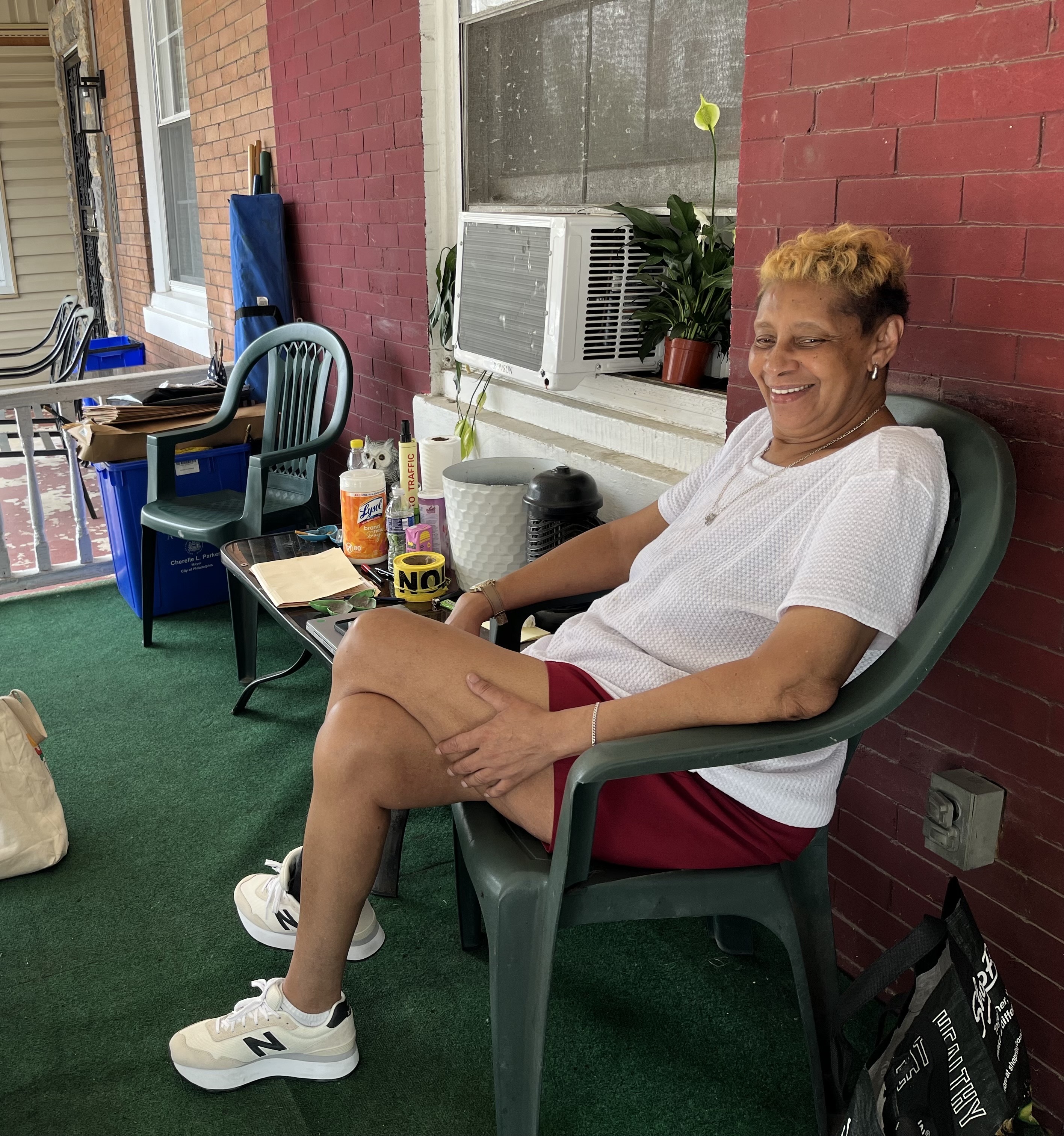
    Michella Crosby waits for children to stop by mid-August to pick up a free meal.Ximena Conde

    Last year, she started to tackle hunger in the neighborhood.

    Two children run up to Crosby’s house around 2 p.m. on a Friday, cracking open a blue cooler full of chocolate milk and apple juice. They are not from the 100 block of North Dewey Street, but they are near-daily visitors.

    “Got something to eat?” the boy asks, knowing the answer is yes.

    “I want two juices!” the girl says, pointing at a doll she is swinging around. “It’s for the baby.”

    “I got your applesauce,” Crosby says to the boy as he inspects the ham sandwich lunch. The boy is in a picky eating stage, Crosby notes.

    There were no Playstreets when she was coming up, so Crosby would head to the local armory. She only wishes she could do more for the modern-day latchkey kids who live in neighboring blocks. This summer, she has gotten faint knocks on the weekend of kids asking for food. Playstreets, however, only runs during the week.

    “As much as I would love to, I can’t give away my refrigerator,” she said, as a neighbor greets her from across the street.

    Still, she considers this summer a success, grateful that children feel safe enough to come to her for food and a chat. Their continued presence has persuaded her to continue the program.

    “As long as there’s a need for children to be fed, I’m going to do it,” she said.

    Kingdom Restoration Ministries

    Eight children were already digging into crispy grilled cheese sandwiches, fried chicken, corn, and fruit cups when Peace McClain, 35, walked into Kingdom Restoration Ministries in Olney with two of his own.
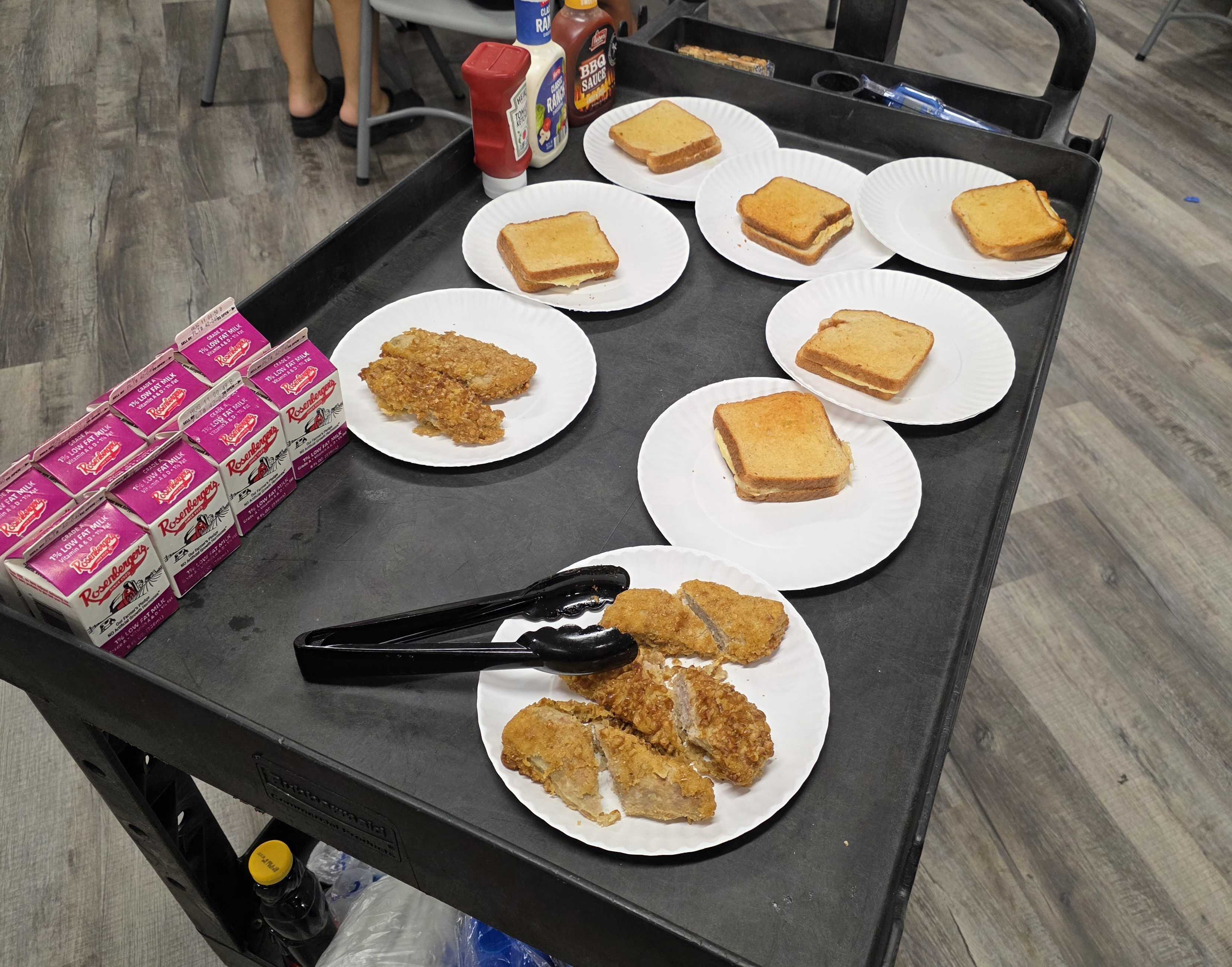
    A lunch of grilled cheese sandwiches and fried chicken is served at Kingdom Restoration Ministries in late July.Ximena Conde

    McClain keeps his kids busy with beach trips and other activities during the summer breaks, but worries they are missing out on an experience he remembers fondly: hanging out with friends freely on his block.

    “I remember summertime, going outside, and going to get free lunch from the block captain,” McClain said.

    Still, safety concerns keep McClain from letting his children too far out of his sight.

    The half-day camp he saw advertised on utility poles across the neighborhood felt like a good compromise.

    “I wanted to give them the experience to come in and meet these people because they don’t get to walk around,” McClain said.
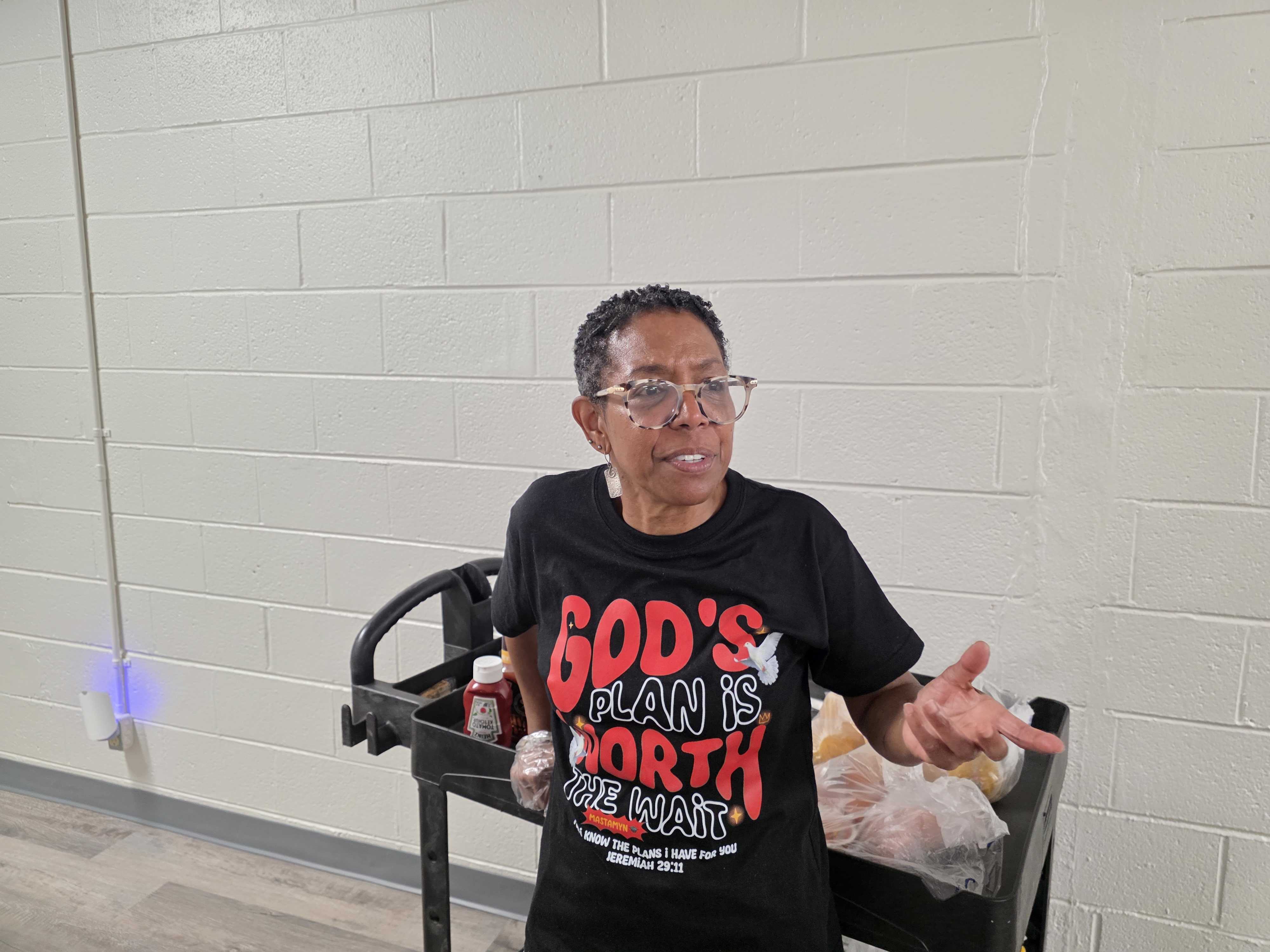
    Velvet Howard gets ready to serve a lunch of grilled cheese sandwiches and fried chicken at Kingdom Restoration Ministries.Ximena Conde

    Velvet Howard, 70, who is officially retired but is the camp supervisor for the summer, tells McClain how the camp works.

    In its first year, the camp offers half-day summer programming for children on Tuesdays and Wednesdays with breakfast and lunch included — all free. No preregistration is required, so the number of children in attendance fluctuates based on families’ summer plans. And while many of the children in attendance have some connection with the church, it is not required.

    (Left to right) Peace McClain picks up his children, Peace and Payton, from Kingdom Restoration Ministries in late July. The family was drawn by the possibility of having the children mingle safely with neighborhood kids their age, and the nutritious lunch was a bonus.Ximena Conde

    Lunchtime is almost over by the time Howard finishes answering McClain’s questions, but she encourages Peace, 10, and Payton, 8, to stick around, grab a bite, and mingle with the time left.

    “The staff was super nice here and it was really fun,” Payton said when reporting back to her father, noting she would come back. “And they had really good food.”

    The intersection of food insecurity and summer childcare

    More than 100,000 Philadelphia youth experience food insecurity, according to Laura Crandall, Philadelphia’s director of food security initiatives. In addition, close to 87,000 children under 18 live below the poverty line, according to the most recent data from the U.S. Census Bureau.

    Worries that many of these children lose access to reliable meals during the summer have long existed. But recent cuts to the Supplemental Nutrition Assistance Program, a result of the One Big Beautiful Bill Act, have exacerbated concerns.

    An estimated 45,000 SNAP recipients in Philadelphia could see benefits cut this year, according to the Pennsylvania Department of Human Services.

    As the social safety net tightens for families, summer camp enrollment has only grown more competitive.

    “Prior to the pandemic, we were already seeing that the options for families during the summer was decreasing,” said Erinn Hill, director of child nutrition programs for Catholic Charities of Philadelphia’s Nutritional Development Services, which sponsored 192 meal sites in the city this summer.

    “Camps and other programs were getting smaller, shorter, or closing. As of now, the number of sites is still not back to pre-pandemic levels.”

    The nonprofit CBS Food Program, which provides meals to Kingdom Restoration Ministries, responded to the mounting interest by delivering food to 41 partner locations in Philadelphia, close to double the number of sites it worked with last summer.

    Even so, some city partners worry food insecurity is only spreading amid the rising cost of groceries.

    At least two site operators, who asked not to be named to avoid getting in trouble, said seniors in their communities are increasingly coming to summer meal sites for food, which they are supposed to save for kids. In areas where the kids do not want the meals, operators will sometimes look the other way and let seniors take the leftovers.

    “We just can’t let our neighbors go hungry,” one site operator said.

  • Drexel grad Jeffrey Cunningham is making his mark in golf and pushing for diversity

    Drexel grad Jeffrey Cunningham is making his mark in golf and pushing for diversity

    For Jeffrey Cunningham, golf has always been more than the scores, wins, and losses.

    The Drexel alumnus started playing golf at 5 years old in Dallas. His coach, Dante Degrate, introduced him to his son Austin, another young Black golfer who was competing and winning U.S. Kids Golf tournaments. Seeing someone who looked like him playing golf made it easier for Cunningham to catch the golf bug.

    Now, the 27-year-old hopes to create the same sense of representation for the next generation.

    Cunningham graduated from Drexel in 2022 and earned a spot on the Advocates Professional Golf Association tour after finishing second in the APGA’s collegiate rankings. Cunningham returned to Philadelphia to compete at an APGA Tour event at The 1912 Club on Aug. 3-5.

    The APGA Tour provides competitive opportunities for underrepresented golfers and an inclusive future for the game. What began in 2010 as just three events has grown into a national schedule held almost every month from coast to coast.

    The APGA has provided Cunningham a place to compete, develop his game, and build a professional resume as he works toward earning his PGA Tour card.

    “The APGA Tour is definitely important for guys like me who need a place to play and get ready for qualifying school,” he said. “I don’t think what I’m doing now is possible without the APGA Tour because it gives me a chance to sharpen my game and learn more about myself to reach the highest level of the game.”

    Solomon Hughes, APGA’s chief operating officer, said co-founders Ken Bentley and Adrian Stills, the last Black player to make it through PGA Tour qualifying school for 25 years, created the organization to address the lack of access and opportunity for talented golfers from underrepresented communities.

    “Bentley and Stills started the organization really to help address access and opportunity issues for players who have the game but maybe haven’t had the resources,” Hughes said. “We give players you haven’t heard of, but certainly talented players, a chance to play and compete.”

    In 2022, Jeffrey Cunningham was the first African-American golfer to advance to the finals of the BMW Philadelphia Amateur Championship.APGA Tour

    But Cunningham sees the work of the tour extending beyond professional golfers.

    Along with the tour, the APGA has a foundation focused on empowering underserved youth through golf, education, and wellness. While in Philadelphia, the tour hosted a youth clinic for members of the First Tee of Philadelphia at The 1912 Club.

    The youth clinics are for ages 13-21, and they participate in a three-phase program focused on golf education, career development, and mental health advocacy.

    “We really want to try to give the game of golf to people who may have a background in it, but also to people who don’t,” Hughes said.

    This year, the APGA had more than 3,500 participants in the youth clinics, Hughes said.

    “Getting out in the community and educating the youth on the etiquette of the game and the culture and how to fit ourselves within the culture of the game is important for our country,” Cunningham said. “I think the game and the industry would look a lot more represented if we met at those crossroads.”

    Austin Degrate was a major influence on Cunningham’s golf journey and pushed him to compete in tournaments in West Palm Beach, Fla., where he moved to when he was 8. As Cunningham got older, he became more serious about competition and playing in college.

    After visiting Drexel, he loved the coach and program, so he decided “to take a gamble on West Philadelphia.” The difference in style of golf and wearing his North Face parka between shots in qualifying rounds during the winter was an adjustment for Cunningham, but his time in the city pushed him to be where he is today.

    “It was the best decision that I’ve made for my career because it gave me a place to play for five years and hone in my game, then get into the APGA Tour through their collegiate program,” he said.

    Cunningham said playing golf at Drexel was the “best decision that I’ve made for my career.”Drexel Athletics

    His time in Philadelphia also gave him a firsthand look at the barriers facing Black golfers.

    In 2022, Cunningham was the first African American golfer to advance to the finals of the BMW Philadelphia Amateur Championship.

    “In the city of Philadelphia, there is a large population of African Americans and Black folks who have not gotten the opportunity that I have gotten, as we can see from me being the first African American to reach the finals of the Philly Am,” he said. “It is awesome to be able to break that barrier, but we can also learn that it was 2022. … We should be pressing and doing what we can and using the right resources to make that more possible for people who look like me.”

    America is diverse, Cunningham said, and golf should reflect that.

    “The misrepresentation is something we see in all levels,” he added. “Whether it be professional golf, teaching pro level, we are not giving enough opportunities across the board to underrepresented communities.

    “It is cool to see we are on the right path, but we still have a lot of work to do, and it starts with getting the youth into the game.”

  • My husband was kicked out of hospice for dying too slowly

    My husband was kicked out of hospice for dying too slowly

    “No more operations,” he said.

    It was mid-January 2026, and my then-73-year-old husband, Mike Salmon, had just started bouncing back from a three-month ordeal of three operations related to aortic aneurysms, sepsis, and a terrifying descent into delirium tied to a stay in the intensive care unit. Now, after another potentially fatal aortic aneurysm and ambulance ride, the doctors clustered around his hospital bed said the fix involved two more major, risky operations.

    If Mike did nothing, the aneurysm or sepsis would likely kill him, they predicted. How soon? “Weeks,” one doctor said. “I’m astonished I’ve made it this far,” Mike said. So, abruptly, we were shunted onto hospice care — the dead-end spur of the American medical system.

    Hospice agencies manage care for patients expected to die within six months. They don’t provide curative procedures or drugs. Instead, they aim to help families make terminally ill patients comfortable, typically at home, as an illness reaches its inevitable conclusion. Families provide most of the day-to-day care, and 85% have suggested they are very satisfied with their hospice’s services, which include supplies of drugs and medical equipment, and visits from nurses, therapists, and aides.

    More than 1.9 million Americans were enrolled in hospice in the last fiscal year. Over 80% of those patients stayed on hospice until they died — within four weeks, on average. But each year, about 6% of patients are kicked out because a hospice doctor decides they have stabilized or improved enough that they are no longer likely to die in the next six months.

    In May, Mike joined that select group. His experience in and out of the hospice system revealed surprising lessons about how families can manage care. And getting removed from hospice revealed a little-known process that can represent a welcome respite for families like ours — but can be devastating for patients with serious chronic illnesses.

    Here’s what we learned in our four months on and off hospice.

    Check before you choose

    “Choose one.” A hospital nurse handed me a list of local hospice agencies. The sooner we signed up, the sooner Mike could go home. Stunned by the suddenness of Mike’s health emergency, I just pointed to the name at the top of the alphabetical list, assuming they were pretty much the same.

    Big mistake. Medicare sets basic standards for the hospice agencies it reimburses, but some agencies are understaffed or poorly run. Amy Tucci, president of the Hospice Foundation of America, noted that some agencies provide extra therapy, aide support, and other services.

    The problems with the organization I had chosen started immediately. Staffers were often late. They entered inaccurate medical information on Mike’s paperwork and didn’t make corrections when alerted. Medicare allows you to quit or change agencies, so I asked neighbors for recommendations.

    That was a good start, but Kristina Newport, chief medical officer of the American Academy of Hospice and Palliative Medicine, said I should also have checked the quality ratings on Medicare’s Care Compare site and the National Hospice Locator. Those sites would have alerted me to our first agency’s low ratings. Ideally, Newport said, patients or caregivers should call their area’s top-rated agencies to find those that provide the services you need, such as staff members who speak the patient’s native language, provide spiritual care that aligns with the patient’s beliefs, or are stationed nearby to arrive quickly in an emergency.

    The local, long-established nonprofit that neighbors recommended handled the transfer seamlessly. Its staff was punctual, accurate, and kind. The chef’s kiss after we switched: A nurse from the original company we chose called to say she hoped I hadn’t initiated the change because of “concerns about our care of your mother.”

    Some people get better on hospice

    Research hasn’t yet fully explored why, but some people actually see their health improve under hospice care. Studies have found, for example, that hospice patients with congestive heart failure or lung cancer live about a month longer, on average, than similar patients in the standard medical system.

    Terry Berthelot, who teaches courses on elder law and hospice care at the University of Connecticut, said many patients benefit from hospice’s careful pain management and from leaving hospitals, where they risk infection and overtreatment. Returning home allowed Mike to get up and walk without waiting hours for an overworked nurse to unplug a bunch of monitors, and to enjoy real food. Also, the hospice nurse gave him medicine to help him sleep through the night. He soon started regaining weight and strength.

    You can flunk out of hospice for not dying quickly enough

    Medicare and many other insurers pay for hospice services only for patients whom physicians certify are likely to die within six months of the most recent assessment (not the date of enrollment), so hospice staffers regularly reassess patients. Medicare audits agencies to check for fraud and demands repayment of funds provided for care of patients its auditors deem have not proved to be terminal. Hospices, good and bad, worry about their bottom lines and Medicare’s fraud audits. They may feel pressure to discharge patients who threaten the organization’s finances, even though such discharges can remove important care. “Medicare is worried about fraud and abuse, not about people not getting enough care,” Berthelot said.

    Especially for diagnoses with uncertain prognoses — such as dementia — if a patient improves or even stabilizes, hospice physicians might discharge the patient because they can no longer certify a likelihood of death within six months.

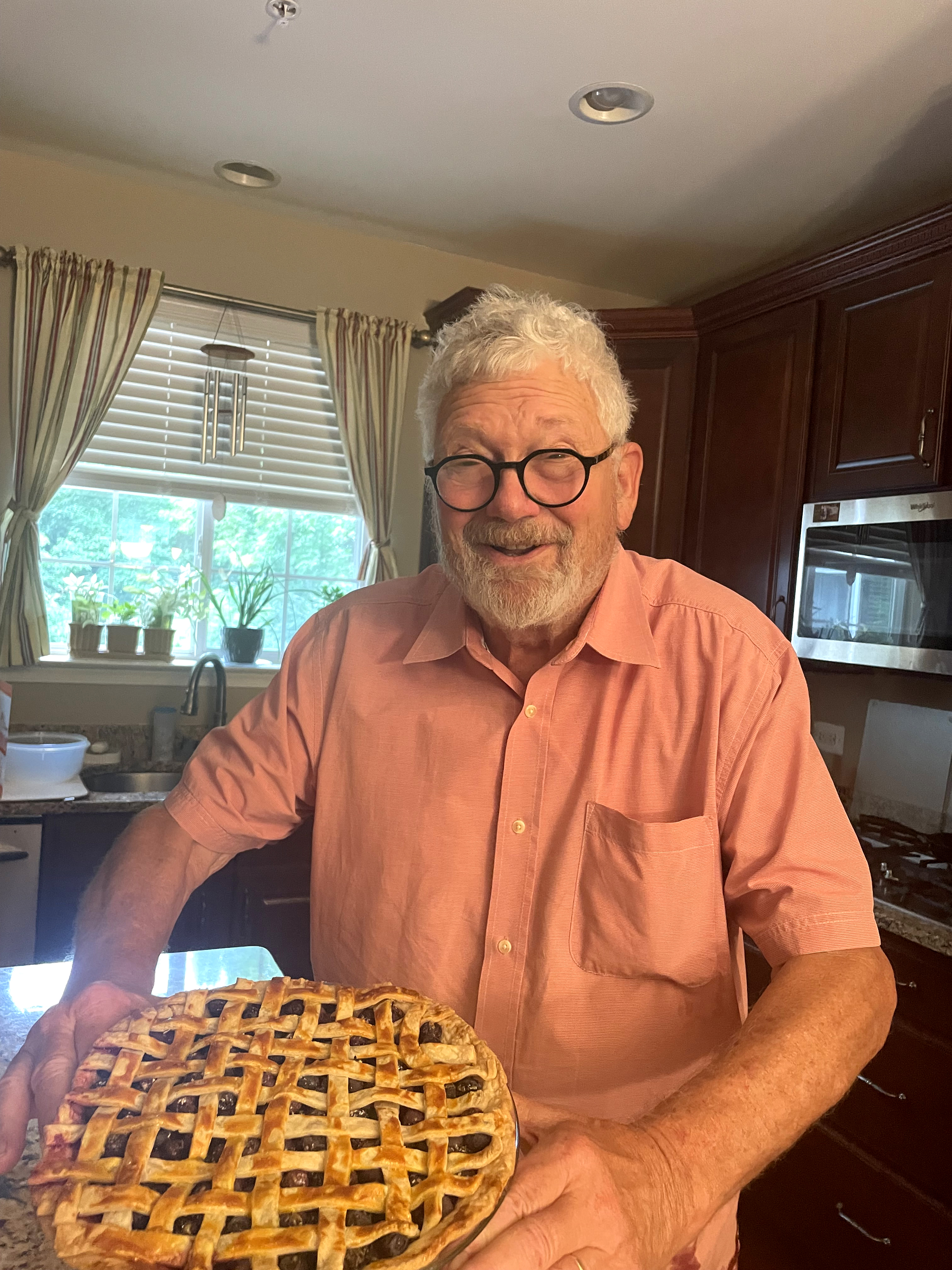
    For some lucky reason, Mike’s aneurysm and sepsis held off. By early May, his wounds had healed, and his strength had improved enough that he returned to gardening, playing bridge, and whipping up his signature lattice-topped blueberry-cinnamon pies. While we appreciated the convenience of the nurse’s visits and the drug and medical supply delivery, we realized Mike no longer needed care, so we agreed with our agency’s decision to discharge him.

    For patients suffering from more debilitating diseases, discharges can be a “nightmare,” said Krista Harrison, a hospice researcher at the University of California-San Francisco. Discharges often happen quickly. Medicare requires that patients be given a minimum of two days’ notice.

    When Harrison’s stepfather, suffering from a neurodegenerative disease similar to Parkinson’s, was discharged because his health seemed to plateau, the family scrambled to replace and pay for hospice-provided equipment such as a hospital bed and oxygen supply, and they had to quickly find and hire aides to replace the hospice aides. “Just getting his prescriptions reestablished and filled was a big deal,” she said. Her stepfather died six weeks after discharge, she said.

    Do your homework to ensure appropriate care

    Arming yourself with information about your risks and rights can help you get the hospice care you need when you need it.

    • Know your diagnosis. Discharges are unlikely for most cancer patients. But patients with dementia, heart disease, and Parkinson’s often plateau. So they are disproportionately likely to be discharged, UCSF’s Harrison said.
    • Choose a highly rated hospice. Research shows for-profit hospice agencies are more likely to discharge patients than nonprofits. Medicare’s Care Compare site will alert you to which is which.
    • Keep your own records. Caregivers who can document, say, a patient’s growing need for eating assistance can help hospice staff approve continuing care, or build a stronger appeal, UCSF’s Harrison said.
    • Keep your family doctor more informed. Doctors “don’t have the financial interest” the hospice faces and could help you dispute a discharge, Berthelot advised.
    • Appeal quickly. Hospice agencies must provide information on appealing a discharge. But you must file the appeal (online or by phone) by noon on the day before the termination date, which may mean you have only a few hours if you’ve been given the minimum two days’ notice, said Wey-Wey Kwok, a senior attorney for the Center for Medicare Advocacy.
    • Reenroll. Patients can try reenrolling in hospice at any time. Another hospice agency may take you immediately. Or you can wait until the patient’s health declines and try reenrolling with your original hospice agency, the Hospice Foundation’s Tucci advised.

    That last option is our plan. For now, Mike and I are enjoying these unexpected bonus days. But whenever fate catches up with him, Mike said, he’s comforted to know he’ll get good care from the hospice’s staff. “They’ll try to improve the quality of what time I have left,” he said.

    KFF Health News is a national newsroom that produces in-depth journalism about health issues and is one of the core operating programs at KFF — the independent source for health policy research, polling, and journalism.

  • After 50 years in Delran, this couple downsized to a Cherry Hill apartment

    After 50 years in Delran, this couple downsized to a Cherry Hill apartment

    After raising their kids in Delran, Fred and Barbara Zucker were ready to downsize from the home they had lived in for 50 years. The retired couple spent several months searching for an over-55 community, but nothing seemed quite right. In March 2020, that changed.

    “I was shopping at Nordstrom Rack in Cherry Hill and saw a sign for an open house at the Plaza Grande,” Barbara recalled.

    They toured a 1,150-square-foot apartment with two bedrooms, two bathrooms, and a den featuring a balcony with a western exposure. The apartment was on the top floor, which meant no neighbors walking overhead, and the kitchen had a gas range. There was also plenty of closet space for Barbara’s treasured shoe collection.

    Plaza Grande, which opened in 2008, is a sprawling community with 507 units within 16 buildings. Featuring lots of amenities and surrounded by shops and restaurants in walking distance, it seemed like a perfect home to the Zuckers.

    A view from the balcony at Fred and Barbara Zucker’s apartment.Allie Ippolito / For The Inquirer
    The outdoor pool at the Clubhouse at the Plaza Grande.Allie Ippolito / For The Inquirer

    While Fred and Barbara were excited to downsize, emptying the house, where they had lived for 50 years while raising their family, was no easy task.

    They had to offload most of their belongings, and with the help of a neighbor, they sold their furniture on Facebook Marketplace. Beyond Barbara’s favorite pots and pans, their televisions, family photos, and a few other keepsakes, they made a completely fresh start.

    “My stuff was 50 years old, and it was time to go,” said Barbara.

    The couple shopped at Raymour & Flanigan to outfit their new apartment, starting with a comfortable, dark gray velour couch, and matching chair and ottoman for the living room. With light pouring in from the balcony, it’s their favorite spot to relax, reading the newspaper and watching TV.

    Barbara admires family photos on display in her apartment.Allie Ippolito / For The Inquirer
    The balcony is one of Fred and Barbara Zucker’s favorite features in their apartment.Allie Ippolito / For The Inquirer

    Sliding glass doors lead to the balcony where they enjoy morning coffee, read for pleasure, or gaze at the pond below. The large, bustling community provides ample people-watching opportunity.

    The primary bedroom features creamy white furniture with bright white bedding. Family photos from special gatherings decorate the walls.

    “Family is everything,” Barbara said.

    The Zuckers prefer an uncluttered look, only keeping artwork and knickknacks that have personal meaning. Souvenirs from their travels are also on display.

    An avid cook, Barbara appreciates her new kitchen, with dark brown wood cabinets, speckled granite countertops, and a faux wood floor. The layout is roomy and the GE appliances are easy to use. She especially values the ice maker, a new-to-her luxury.

    Barbara is an avid cook, often found making soup for friends. Allie Ippolito / For The Inquirer
    The large door to the balcony lets plenty of light into the apartment’s living area.Allie Ippolito / For The Inquirer
    Fred points to a photo of his grandchildren.Allie Ippolito / For The Inquirer
    The primary bedroom features more family photos and a large window.Allie Ippolito / For The Inquirer

    “I don’t know what I was thinking for 50 years. Why I didn’t have an automatic ice maker?” she said.

    Barbara can often be found baking cakes or stirring up a pot of hearty chicken soup to share with her neighbors. Her role has become caregiver when her friends and neighbors need some TLC.

    “If somebody’s sick, I make a pot of soup,” Barbara said matter-of-factly.

    It is the development’s family-like feeling that the couple appreciates the most. Along with their neighbors, they take full advantage of the abundance of amenities the community has to offer.

    “Plaza Grande offers a resort-style experience for active adults 55+, anchored by an 18,500-square-foot clubhouse, the largest in South Jersey,” said Billy Procida, CEO of Procida Funding & Advisors, which developed the community.

    The complex features indoor and outdoor swimming pools, tennis and pickleball courts, a golf simulator, a sauna, massage rooms, and lifestyle programming.

    The golf simulator in the clubhouse at the Plaza Grande.Allie Ippolito / For The Inquirer
    The clubhouse, as seen from the outside.Allie Ippolito / For The Inquirer
    A movie room inside the clubhouse.Allie Ippolito / For The Inquirer
    The clubhouse lounge area includes elegant seating and a fireplace.Allie Ippolito / For The Inquirer

    “We’ve made good friends in the clubhouse, where we go every day,” noted Barbara. “We play cards and they have exercise classes and movies.”

    The couple has become close friends with their neighbors, taking advantage of nearby restaurants to meet for dinner. They recently traveled to Jamaica as a group.

    “Our home is a peaceful retreat for us,” said Barbara. “It is sort of like summer camp.”

    Added Fred: “We are a giant family. Every day is another day in paradise.”

    Is your house a Haven? Nominate your home by email (and send some digital photographs) at properties@inquirer.com.

  • Letters to the Editor | Aug. 19, 2026

    Letters to the Editor | Aug. 19, 2026

    AveArts 2.0

    Alan Greenberger and Harris M. Steinberg are two of Philadelphia’s most respected voices on planning and the public realm. That’s why I was surprised by how narrowly they framed AveArts 2.0.

    We agree that South Broad Street is one of Philadelphia’s great civic spaces, with potential still unrealized.

    We disagree on the new median. They suggest it reinforces Broad Street’s highway feel. I see the opposite. Six lanes of traffic were already there. The median breaks up the noise and asphalt, making a street dominated by automobiles more welcoming to people.

    Is every decision perfect? Of course not. That’s why we are building a beta block: to gather data, learn what works, and let that inform the next nine blocks rather than relying on opinion alone.

    Landscaping won’t create street life. People do. Future phases will focus on sidewalks and places to gather and linger.

    Philadelphia knows how to debate. But debate doesn’t get things built. The hard part is raising money, solving problems, bringing people together, and sticking with a big idea long enough to make it real.

    So, Alan and Harris, join us.

    Broad Street began as an audacious idea. Together, let’s do the hard work to finish it.

    Carl Dranoff, board chair, Avenue of the Arts Inc., founder and CEO, Dranoff Properties

    . . .

    Alan Greenberger and Harris M. Steinberg’s condemnation of the new Broad Street median seems remarkably premature.

    My wife and I live two blocks away and walk this stretch regularly. We knew the old median well. No one was lingering, strolling, or dining there. Today, a ribbon of trees and greenery has replaced it. To our eyes, it creates a view rather than destroying one, and has already made this heavily trafficked block feel more humane.

    More importantly, the median is only the first part of the project. The next phase will expand the pedestrian realm along the sidewalks, adding landscaping, seating, public art, and performance space — the very kind of street life the authors say Broad Street needs.

    They may ultimately prove right that elements of the design should be changed. That’s the point of building a “beta block” before extending the concept up and down Broad Street. But calling for millions of dollars of completed work to be ripped out before the rest of the block has even been built seems less like thoughtful urban planning than a rush to judgment.

    Give the trees — and the project — a chance to grow.

    Pete Sparber, Philadelphia

    Security at home

    This weekend we learned of the invasion and assault of Central Synagogue in New York and the defacing of the Weitzman here in Philadelphia.

    Pick your emotion. Anger, fear, frustration. But let’s be determined to do something rather than wallow in anguish. Let us take action. I call upon every police force to ramp up their protective response to houses of worship, both Jewish and Muslim — as we are both under assault. I call upon government bodies to make funding accessible to help secure our sites, harden them, and actively man them.

    I call upon each of us to reach out in the following ways:

    Call your legislators and demand action to support safety and security, and put their offices behind the efforts noted above. Contribute what you can in time and money to help our institutions do the important work of bringing our tradition safely to our communities.

    Last but certainly not least: Show up, go to your synagogue, and be counted. It is an act of defiance in the face of hatred; it is a concrete way to be in a community supporting our institutions.

    We cannot remain on the sidelines hoping someone will address the problems. That is our job. Now is the time to stand for what we believe in. We must not succumb to the fear that makes us cower in the shadows. Together we are stronger.

    Rabbi David Levin, president, Board of Rabbis of Greater Philadelphia

    A safer future

    On my way home from the hospital, I held my breath as a child on an e-bike careened across an intersection, directly in the path of a car trying to beat a traffic light. As a pediatrician who has seen too many broken limbs and traumatic brain injuries from crashes like this, I ran through the mental checklist of what I could do to help. I exhaled only when I heard the boy’s laughter drifting down the street; he was alive and well.

    The rise in fatal and serious crashes involving children on e-bikes is a public health priority. As The Inquirer recently reported, however, responsibility for improving safety cannot rest with parents alone — nor should grieving parents face criminal charges when their children are killed. Parents may purchase e-bikes, but they cannot control reckless drivers, inadequate bike infrastructure, or inconsistently regulated retailers.

    Individual responsibility remains important. E-bike users should meet minimum age requirements, wear helmets, and follow speed limits, just as young drivers must follow rules when operating cars.

    We need consistent regulations, safer infrastructure, and proactive safety education. Protecting children from preventable death and disability requires a shared responsibility among parents, riders, retailers, drivers, and policymakers.

    Vongai Mlambo, Philadelphia

    Grand safari?

    The guilty elephant is in the room, not in Africa. Thanks to The Inquirer’s March exposé, the shameful conduct of some members of the Montgomery County intermediate unit board — who, since 2023, have expensed $40,000 in international trips, including a 14-day African safari — has been brought to the public’s attention. No laws may have been broken, but any sense of ethics appears to have been abandoned.

    The intermediate unit serves Montgomery County children with physical, psychological, or intellectual disabilities. These are our children and our neighbors’ children. If the intermediate unit was sincerely interested in learning how economically distressed communities addressed the needs of these children, then it need not have traveled to Africa, but closer to economically distressed communities, such as Camden or East St. Louis, Ill.

    Families seeking services know how precious the available resources are. From personal experience, we know that even our local district is constrained by its budget and may resist providing services. Often, it is only through the perseverance and persistence of parents or guardians that these children ultimately receive the support they deserve under the law. Many parents become discouraged and give up. Others attend meeting after meeting, often missing days of work in order to overcome denial of services.

    Once the services are finally obtained, the professionals who provide them prove to be skilled and helpful. Their abilities make the judgment demonstrated by their board all the more troubling. The Inquirer reported that not every board member participated. Good for them. However, the safari takers, if honorable, should resign. How can we trust them with the future of our children? The board doesn’t need to travel to see elephants; the guilty elephant is right in their room. I’m grateful for the work of the investigative reporters at The Inquirer — they once again demonstrate why we need a strong, independent, local press.

    Leon S. Malmud and Elsa C. Malmud, Rydal

    Join the conversation: Send letters to letters@inquirer.com. Limit length to 150 words and include home address and day and evening phone number. Letters run in The Inquirer six days a week on the editorial pages and online.

  • Horoscopes: Wednesday, Aug. 19, 2026

    ARIES (March 21-April 19). Some people need the headline. Others need the whole story. Start with the short version and watch what happens next. The questions they ask will tell you which kind of listener you’re talking to and how much detail they want.

    TAURUS (April 20-May 20). People usually choose the path that’s most appealing in the moment. Arrange your environment so the easiest choice is also the one you want. A bowl of fruit on the counter gets eaten. A guitar on a stand gets played.

    GEMINI (May 21-June 21). Every conversation is an imperfect translation. We turn thoughts into words, then words back into thoughts. Some meaning gets lost along the way. Give each other a second chance to explain and you might discover a different story entirely.

    CANCER (June 22-July 22). You’ll be settling a question of boundaries. Everyone wants some say over their own corner of the world. Territorial disputes usually calm down when people feel heard. You’ll ask good questions before drawing conclusions.

    LEO (July 23-Aug. 22). The message in your heart feels important, urgent and larger than words. Consider that its strongest communication may be wordless. A warm welcome, a steady hand, a knowing smile or beautiful work can say everything that needs saying today.

    VIRGO (Aug. 23-Sept. 22). Sometimes the argument is about the wrong thing. Before defending your position, make sure everyone is answering the same question. Half the battle ends once people discover they’ve been talking about different problems.

    LIBRA (Sept. 23-Oct. 23). There are experiences that seem inconvenient but are nonetheless worthwhile: a crowded restaurant, a long drive, sore muscles, a second draft. You can put up with a fair amount of inconvenience when you know why you’re doing it.

    SCORPIO (Oct. 24-Nov. 21). Every conversation leaves a few loose threads. Before you assume you know what someone meant, pick up one of them and ask. A single follow-up question can spare everyone an afternoon of wrong assumptions.

    SAGITTARIUS (Nov. 22-Dec. 21). The “main character” energy is all around you today. It’s funny how lines that work on screen seldom play in the full dimension of reality, but reality can look beautiful on screen.

    CAPRICORN (Dec. 22-Jan. 19). A misunderstanding can become today’s funniest story if nobody rushes to protect their pride. Laugh first. Explain second. People forgive confusion, but they have a much more difficult time with defensiveness.

    AQUARIUS (Jan. 20-Feb. 18). It’s impossible to keep the end goal in mind if you don’t have an end goal in mind in the first place. Today feels a bit adrift. If you can’t pick a direction, start ruling things out. By declaring what you’re not into, you’ll get a clearer picture of what fits.

    PISCES (Feb. 19-March 20). Every time you say yes, you spend something valuable. Sometimes it’s cash. Sometimes it’s an afternoon. Sometimes it’s your attention. Before you spend anything today, ask yourself what you’re buying.

    TODAY’S BIRTHDAY (Aug. 19). It’s your Record-Breaking Year when you will train hard and perform at a level to surpass your previous best. Fresh inspiration and motivation give you an edge. You’ll become comfortable in unfamiliar situations. More highlights: Loved ones lavish you with respect and special treatment. Travel is a teacher. Through acts of public service, you’ll make a difference while also making golden connections. Capricorn and Gemini adore you. Your lucky numbers are: 7, 20, 33, 14 and 39.

  • Dear Abby | Calls and messages threaten racy video leak

    DEAR ABBY: A few years ago, I started receiving mysterious phone calls from a man claiming to have in his possession videos of me performing sexual acts. I do not know where he would have gotten something like that. I changed my phone number, but somehow he got my new number and started harassing me again.

    After a while, the phone calls stopped, and I haven’t received one in years. Recently, I was sent a request on Facebook by a girl with no profile information who then sent me a message saying something about a video and accosting me with sexual language. I have since deleted all my social media accounts. My question is: What if there is some video I have no knowledge of, and how do I handle it if someone decides to leak it?

    — SCARED AND EMBARRASSED

    DEAR SCARED AND EMBARRASSED: What has been happening to you amounts to harassment and blackmail. That is why you should notify the police about what has been going on. I seriously doubt that there is a video. (The whole thing is probably a scam.) If there is one and it is leaked, I recommend that you hold your head high and say to anyone who mentions it that yes, like most of the adult population in the world, you, too, have a sex life. At least then you will know who filmed it, and you can share that additional information with the authorities.

    ** ** **

    DEAR ABBY: I am 70. My sister is 68, and her husband is 80. He has kidney failure and needs 24 / 7 care. Our mother is 98. She lives independently in a condo and is mentally fully functional, but she can’t cook or do housekeeping anymore. (She has cleaning help.) My sister and I take turns making Mom warm meals, and my sister also does some light housekeeping. It takes one to two hours. My sister does this three times a week while her husband is at dialysis at a nearby facility. She also has my mother’s medical and financial powers of attorney and prefers to be the one to take care of things.

    I am in fairly good health but have some medical issues that may eventually make it difficult (or even impossible) to travel. This fall, I plan to go to Europe for three weeks. I would like to have someone come in to help my mom three times a week while I am gone. I would introduce this person ahead of time so that Mom could get to know them and I could show them what needs to be done.

    Unfortunately, Mom doesn’t want anyone other than my sister and me to care for her. My sister’s plate is already more than full, so I don’t want to add to it. Is it unreasonable of me to expect my mother to accept outside help?

    — PERPLEXED IN PENNSYLVANIA

    DEAR PERPLEXED: Your plan is not unreasonable, but it’s common for someone your mother’s age to resist change. Remind her that the clock is ticking on your travel opportunities, and emphasize that the arrangement is only temporary. Tell her you will call to check in while you’re away, and promise to bring back lots of photos and stories to share with her when you resume your normal caregiving routine.

  • Trump says U.S. and Canada have reached last-minute deal to delay 50% U.S. tariffs on Canadian imports

    Trump says U.S. and Canada have reached last-minute deal to delay 50% U.S. tariffs on Canadian imports

    WASHINGTON — President Donald Trump said Tuesday he was delaying 50% U.S. tariffs on $20 billion worth of Canadian imports after the two countries reached a last-minute deal hours before the sanctions were to go into effect.

    The announcement, which Trump made on his social media platform, buys time for more negotiations and avoids, for now, another strain in already tense relations between the historic allies.

    “I have paused the 50% Tariffs against Canada, that were scheduled to kick in tomorrow morning for a three day period, based on the fact that Canada and the U.S.A., subject to the finalization of documents, have a DEAL!” Trump posted on Truth Social less than two hours before the 12:01 a.m. Wednesday deadline.

    If they had gone into effect as scheduled at 12:01 a.m. Wednesday, Trump’s import taxes would have hit Canadian products ranging from hockey sticks to tongue depressors.

    But the political impact would likely have been bigger than the economic one. Canada had threatened to retaliate against any new tariffs with levies of its own, aggravating a trade fight between countries that sold each other $880 billion worth of goods and services last year.

    Canadian officials did not immediately respond to requests for comment Tuesday night.

    Canadian Prime Minister Mark Carney and Trump had spoken twice by phone in the past two days about the ongoing negotiations, including a call Tuesday afternoon, Carney’s office said, underscoring the last-minute push for a deal.

    Both countries had reason to step back from the brink. Nearly 72% of Canada’s goods exports last year went to the United States. And the Trump administration would be taking a risk by imposing a hefty new tariff — paid by U.S. importers who try to pass along the cost to consumers via higher prices — ahead of November’s midterm elections. U.S. voters are already frustrated with the high cost of living.

    “I don’t think either side really wants these tariffs to come into effect,’’ Ryan Majerus, a partner at King & Spalding and a former U.S. trade official, said before the delay was announced. “There’s a pretty strong push on both sides to find an off-ramp here.’’

    Trump’s approach to dealing with Canada marks an extraordinary departure from the traditionally cooperative relationship between the two countries. Trump has hit Canadian goods with tariffs — in a push to bring manufacturing back to the U.S. — and has repeatedly made inflammatory comments about turning Canada into America’s 51st state.

    Trump has made tariffs the centerpiece of his second-term economic agenda. Last year, he imposed double-digit import taxes on almost every country, justifying them by declaring the longstanding U.S. trade deficit a national emergency. The Supreme Court in February ruled that he’d overstepped his authority, striking down those tariffs and setting the stage for the federal government to pay refunds to importers.

    So Trump has looked for other legal authority to impose tariffs.

    To hit Canada, he reached back to the Great Depression, invoking Section 338 of the Tariff Act of 1930 to threaten 50% tariffs on products that account for about 5% of Canadian exports to the United States.

    Nearly a century ago, with the U.S. and world economies in collapse, Congress passed the 1930 tariff law, imposing taxes on imports from around the world. Known as the Smoot-Hawley tariffs, named for their congressional sponsors, they are notorious among economists and historians for limiting world commerce and making the Great Depression worse.

    Section 338 tariffs have never been used before.

    Section 338 authorizes the president to impose tariffs of up to 50% on imports from countries that have discriminated against U.S. businesses. No investigation is required to justify the levies. Nor is there any limit on how long the tariffs can stay in place.

    The U.S. is renegotiating a North American trade pact — the US-Mexico-Canada Agreement — that Trump strong-armed America’s neighbors into accepting in his first term. The threat of Section 338 tariffs gives the United States leverage to seek fresh concessions from Ottawa.

  • Byron Donalds and David Jolly will compete to replace Ron DeSantis as Florida governor

    Byron Donalds and David Jolly will compete to replace Ron DeSantis as Florida governor

    ORLANDO — U.S. Rep. Byron Donalds won the Republican nomination for Florida governor and former Rep. David Jolly picked up the Democratic nod in Tuesday’s primaries, setting the stage for a fall campaign to replace outgoing Gov. Ron DeSantis and decide the state’s future political direction.

    November’s election will test President Donald Trump’s grip on his adopted state and Democrats’ ability to resurrect Florida as a national political battleground. Florida has moved notably to the right since Trump’s victory in 2016, though Democrats hope to regain ground from his slumping popularity ratings.

    DeSantis, a leading conservative figure who has both clashed and collaborated with Trump over the years, is barred from running for a third consecutive term.

    Also Tuesday, progressive state Rep. Angie Nixon won the Democratic nomination for a U.S. Senate special election, defeating retired Army Lt. Col Alexander Vindman, a onetime National Security Council official who testified in Trump’s first impeachment in 2019.

    Nixon, who was heavily outspent by Vindman, will face Sen. Ashley Moody, winner of the Republican nomination, in November to fill the last two years of Marco Rubio’s Senate term. Rubio left the seat to become Trump’s secretary of state last year.

    Donalds could be a historic figure in Florida

    Donalds would be Florida’s first Black governor if he wins in November. He defeated a former DeSantis running mate, Lt. Gov. Jay Collins, political newcomer James Fishback and others Tuesday.

    The 47-year-old congressman Donalds told his supporters at a Universal Studios resort hotel that he’d heard from Republican rivals who pledged their help in winning the general election.

    “The primary is over,” Donalds said. “Tonight we put aside our differences. Tonight we are one united Republican Party.”

    Donalds described Trump’s backing as important but not determinative.

    “Obviously, he has the strongest following of anybody in our party,” he said. However, he added, “you can’t just sit back and think the president’s endorsement is going to carry you.”

    Donalds has promised to push tax cuts, overhaul Florida’s insurance regulations to lower consumer costs and seek greater price transparency from healthcare providers.

    The Democrats’ candidate for governor, Jolly, is a former Republican congressman who switched parties last year. He did not shy away from his partisan history as he addressed supporters Tuesday night.

    “To my Democratic friends, thank you for welcoming me into the party,” he said.

    Jolly’s speech detailed a platform that balances between both political parties: an embrace of capitalism and a lean government, but one that “needs to do its part to fill the gaps,” such as with education and housing.

    “As an old-school Republican, I talk about ending the culture wars not to celebrate some progressive platform,” he said, “but because I still believe in the old school Republican, Libertarian policy that government should simply stay out of your life, and stay out of your bedroom.”

    It’s the second time in a row that Democrats have nominated a onetime Republican for governor.

    Four years ago, they backed former Gov. Charlie Crist, only to see him lose by nearly 20 percentage points to DeSantis.

    Rich Chamberlin, a retiree in Port St. Lucie, said he supported Jolly in Tuesday’s primary, spurred on by attack ads against him.

    “I saw anti-Jolly ads. I said ‘OK, if they are against him, then I must be for him,’” Chamberlin said, adding it didn’t matter to him that Jolly was once a Republican.

    A progressive gets Democratic nomination for Senate

    Florida voters haven’t sent a Democrat to the U.S. Senate since 2012, and this year’s race was always going to be an uphill climb.

    Moody, a former state attorney general, was appointed by DeSantis to fill Rubio’s seat last year after he became Trump’s secretary of state. She’s now running to finish the last two years of his term.

    Moody will face Nixon, a progressive state lawmaker who scored an upset victory over the Army veteran Vindman. Nixon would be Florida’s first Black U.S. senator if elected in November.

    “Rep. Nixon ran a strong campaign,” Vindman posted on social media. “I will be standing by her side in the fight against Ashley Moody. I hope you’ll join me.

    Wasserman Schultz wins in a new plurality Black district

    In U.S. House primaries, Tuesday’s biggest contest saw longtime Democratic U.S. Rep. Debbie Wasserman Schultz defeat former U.S. Rep. Sheila Cherfilus-McCormick and others in a redrawn South Florida district.

    Wasserman Schultz, who is white, urged voters in the new, plurality Black district to help her return to Washington for a 12th term. Cherfilus-McCormick had sought a comeback after resigning earlier this year under a pending federal indictment and threat of House ethics sanctions.

    Wasserman Schultz entered a new district after DeSantis’ successful push for new congressional maps intended to boost Trump’s midterm election prospects.

    Her four Black primary opponents — including Cherfilus-McCormick — had argued that the district should have a Black representative. But the voters went with a candidate who touted long experience from serving in Congress since 2005.

    Surrounded by her campaign staff Tuesday night, Wasserman Schultz tearfully thanked voters for having confidence in her. She said she wanted to “make all of you proud, to make sure that the people we spoke to all across this district know that I will fight so they can pay their rent.”

    Republican Rep. Cory Mills is ousted by a challenger

    Former television news reporter Ryan Elijah won the Republican nomination for Florida’s 7th Congressional District, ousting the scandal-plagued Mills.

    A two-term congressman, Mills has denied allegations of domestic violence against a former girlfriend and other controversies.

    But Florida Republicans including DeSantis had abandoned Mills ahead of the primary and the congressman was not included on Trump’s final list of Florida endorsements. Elijah advances to the general election in a central Florida district that is considered reliably Republican.

  • Alec Bohm’s ‘really good rhythm’ leads Phillies’ hitting surge in 6-4 win over Marlins

    Alec Bohm’s ‘really good rhythm’ leads Phillies’ hitting surge in 6-4 win over Marlins

    Alec Bohm righted himself on second base and swiped his hand on the Phillies logo across his chest, staring back across the diamond at his dugout.

    The Phillies first baseman has been riding a hot streak at the plate for the past few weeks, and he continued it Tuesday against the Marlins by punching a slider to left-center field. The RBI double was part of a five-hit, four-run outburst in the sixth inning that put the Phillies ahead for the 6-4 win over the Marlins.

    “That low, rising liner,” said Bryson Stott, who also drove in a pair, “that’s my favorite swing of his.”

    Kyle Schwarber came a few feet foul of a three-run homer that would have turned the inning into a total bloodbath. He even completed his home run trot before the initial call of fair was overturned by replay review. Schwarber later made up for it, though, with an RBI single in the eighth inning that scored a big insurance run.

    Bohm drove in the Phillies’ first run of the game with a single in the first, and he wasn’t done after the double. He also completed an unassisted double play to help out José Alvarado in the seventh, reaching out to snag a line drive and beating Javier Sanoja back to first in one fell swoop.

    “We told him he couldn’t play in the NFL, only college, because he only got one foot in there,” Stott said jokingly. “But that was a sick play.”

    Bohm pointed to an on-field batting practice session before the Phillies’ series opener in St. Louis last week where he felt like things started to click for him offensively. Bohm sat out that game to give Bryce Harper a day at designated hitter.

    “I just felt a really good rhythm, and it wasn’t really anything I intentionally tried to do different or anything,” Bohm said. “I don’t know what it really was.”

    Whatever the cause, he felt like he carried the rhythm into the next day, and then the next day. And since the St. Louis series, Bohm has been hitting at a .500 clip. In his last eight games, Bohm has five doubles and a homer.

    “It’s a crazy game,” Bohm said. “Obviously, I would have liked to feel great all year long and do it in April, but it’s a crazy game. Just some random little thing can kind of click or whatever.”

    The sixth-inning eruption was key for the Phillies to overcome two fielding errors and five walks issued by the pitching staff.

    Through the first four innings, the only hit starter Zack Wheeler allowed was an 0-2 count homer from Griffin Conine. But he often fell behind and had seven three-ball counts, four of which resulted in walks.

    Zack Wheeler has not completed six innings in his last five starts.Elizabeth Robertson / Staff Photographer

    Two of those walks came back to bite him in the fifth. Wheeler lost the zone against Brian Navarreto and Jakob Marsee, issuing free passes to both. Xavier Edwards laced a line drive into center field for a single that scored a run. But an outfield assist from Justin Crawford, who combined with Trea Turner and Luis Arraez to catch Edwards sliding into second, limited the damage there.

    The deep counts drove up Wheeler’s pitch count, and he was lifted after 98 pitches and five innings. The Phillies right-hander has not completed six innings in his last five starts, although that includes a rain-shortened outing in Baltimore on Aug. 2.

    “That’s the frustrating part, really. It’s just not characteristic of me, and I feel like I’ve been walking too many guys the past handful of games,” Wheeler said.

    Wheeler made an adjustment after his last start that helped him get back into his legs more in his delivery. That helped his fastball, and his velocity was back to normal after losing a tick in his previous start in St. Louis. Three of his seven strikeouts came on the pitch.

    But this time, he didn’t have feel for his off-speed pitches.

    “It’s hard to pitch with one pitch,” Wheeler said. “Worked out well at the beginning, and then just kind of got sloppy toward the end.”

    Even so, Wheeler is confident he will put all the pieces together. Interim manager Don Mattingly said he wasn’t worried either, since Wheeler’s stuff was still at its normal quality, even if his command was inconsistent.

    Bryson Stott is riding a 19-game on-base streak.Elizabeth Robertson / Staff Photographer

    “I know I still got it, and there’s no question about that,” Wheeler said.

    The Marlins capitalized on throwing errors from Arraez in the sixth inning and Orion Kerkering in the eighth to score two unearned runs.

    But the offense responded. Their sixth-inning outburst started with Turner getting hit by a pitch. Arraez used his bat-to-ball skills to reach down for a slider well below the zone, flaring it into center for a single to put two on for Bohm.

    After his RBI double, Bohm scored standing up on a single up the middle from Stott. Brandon Marsh and Crawford each joined the party with singles, giving the Phillies a 5-3 lead in a game they trailed 3-1.

    “Just as a whole, it’s been a lot more of the focus of just getting on base and trying to set up the next guy,” Bohm said. “And just trying to string things together, and just get a lot of traffic.”

    That focus has led to tangible results. The Phillies collectively have a .371 on-base percentage in August, which leads baseball. Going into the All-Star break, they had a .303 marker that ranked third-worst in baseball.

    A big part of that has been Stott and Harper, who extended their on-base streaks to 19 games and 22 games, respectively, on Tuesday.

    Trea Turner sits on the ground after being hit on the wrist by a pitch in the seventh inning.Elizabeth Robertson / Staff Photographer

    Turner was hit with a fastball on the wrist in the seventh inning, but the umpires ruled that he had swung and it was deemed a strikeout instead. Turner was checked out by trainers but remained in the game.

    With closer Jhoan Duran unavailable after pitching back-to-back games, Brooks Raley delivered a 1-2-3 ninth to pick up his first save as a Phillie. He was helped out by two diving plays from Stott at third base.

    “Both those plays right there at the end were right in Bohm’s chest, so it’s always good to have a really good third baseman,” Wheeler said. “The guys also picked me up tonight. We’ve been putting together some good at-bats lately, and that’s what good teams do.”