Blog

  • Enrollment in SNAP grocery aid is dropping faster than expected

    Enrollment in SNAP grocery aid is dropping faster than expected

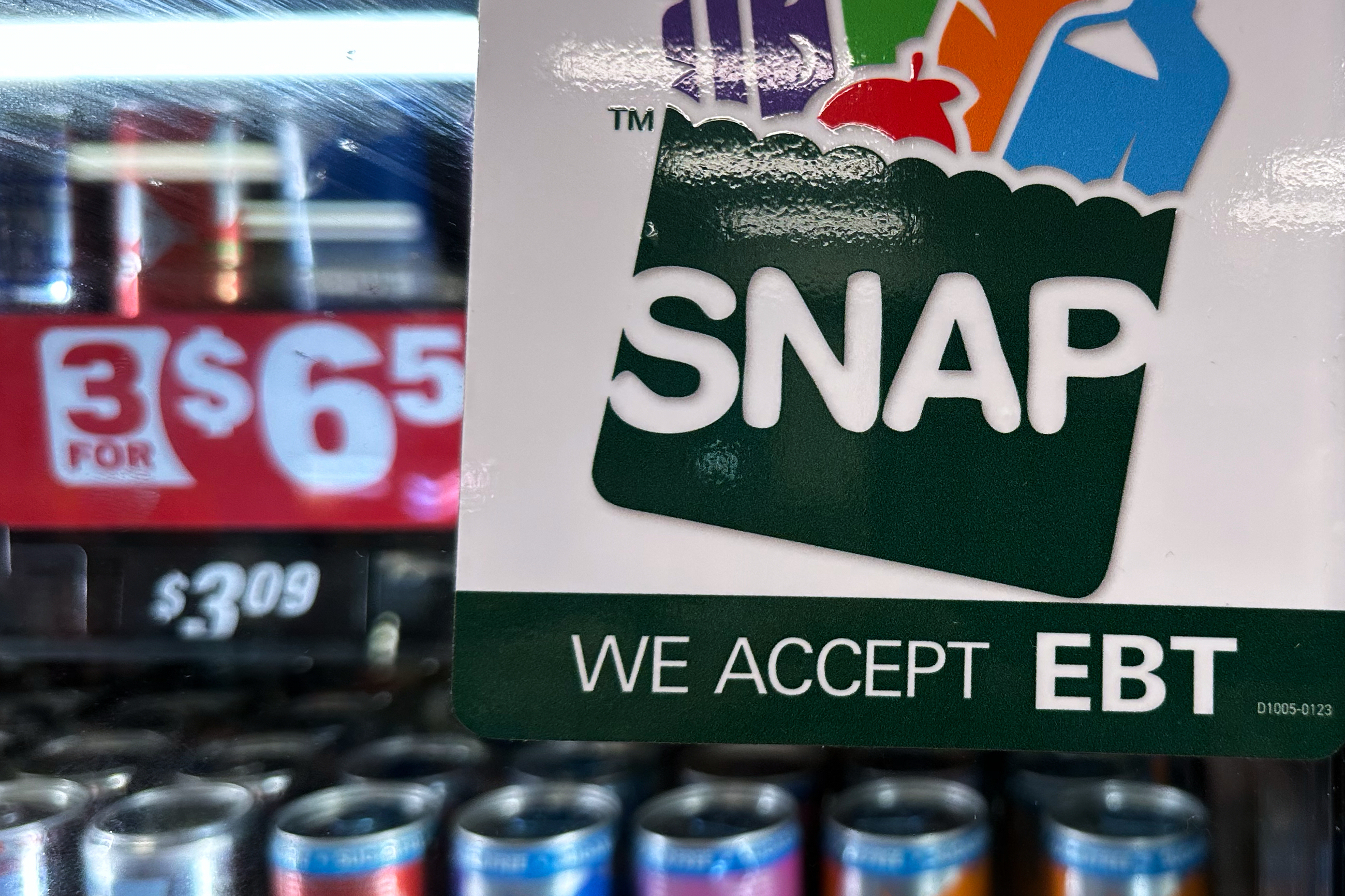
    PHOENIX — Enrollment in the biggest federally funded food aid program in the U.S. dropped by more than 13% in a 12-month span — a decline far steeper than the government estimated as work requirements and other provisions of President Donald Trump’s “big beautiful bill” take hold.

    Those losing coverage in the Supplemental Nutrition Assistance Program, or SNAP, include people who don’t meet the tightening requirements to participate, and, advocates say, some who qualify for the help but are rejected because they miss deadlines or don’t have the needed documentation handy. It’s too early to tell exactly how many fall into each group.

    It’s also unclear how many have lost coverage because some state agencies that run the programs are overwhelmed trying to keep up with changes. That was the case in Arizona, which saw the nation’s largest enrollment drop.

    Tia Fields, who analyzes social safety net policies at the advocacy group Invest in Louisiana, said the main reason she’s seeing people lose coverage is not failure to meet work requirements. “A lot of it is administrative paperwork,” she said.

    Proponents of welfare reform hope the roll reductions are driven by people earning too much to keep qualifying — a sign that policy changes are behaving as intended for a program they assert is riddled with fraud.

    “If there are people that are leaving the welfare rolls because they’re working and they’re moving forward,” said Rachel Sheffield, a research fellow at the conservative Heritage Foundation, which pushed for stricter requirements for SNAP, “that would be a step forward.”

    Arizona has had the steepest decline so far, with a 12-month drop of more than 50%, according to data compiled by the U.S. Department of Agriculture, which runs SNAP. The decline was more than 20% in Georgia, Louisiana, and Nevada — and in Florida, where the Department of Children and Families said in a statement that the decreasing number “is reflective of the state’s strong focus on advancing opportunities for Floridians and their families to achieve economic self-sufficiency.”

    Eligibility requirements are tightening

    SNAP helps more than 1 in 10 people in the U.S. buy food. Most of the beneficiaries have incomes below the poverty line. The monthly benefit, which is delivered on debit cards that can be used only for groceries, is $344 per household on average.

    Newly released federal data found SNAP enrollment fell from 42.2 million in May 2025 to 36.6 million in May, a drop of more than 13% in a year. The May data are preliminary and could be revised.

    Since 2010, the average number of monthly beneficiaries has been below 40 million for only two years — 2019 and 2020. The rolls started dropping after a recent peak of 43.3 million in October 2024. They’ve fallen much faster since implementation began last year for Trump’s “one big beautiful bill,” which cut taxes and overhauled social safety net programs.

    The expanded SNAP work requirement has now kicked in for most of the country, but it won’t begin in some places until next year.

    Many adults 54 and younger without minor children have long been required to work to get SNAP benefits. The new law requires most people who previously had been exempt from requirements to either work, volunteer, or go to school to get benefits. It now includes those ages 55 to 64, and those with children ages 14 to 17. Those 65 and older or with children younger than 14 remain exempt, as do those with health limitations. Some other groups that had been exempted from the requirement — including homeless people — no longer are.

    In February, the Congressional Budget Office projected that the new requirements and other factors would push SNAP enrollment down over the next decade, falling below 34 million by 2036. But the nonpartisan office did not expect the drop to be as fast as it’s been. By May, the number of people receiving the benefits was about as low as it was forecast to go in 2030.

    Experts expect another impact when states are required to pay part of the cost of benefits if their rate of payment errors — when recipients receive more or less than they should — is above 6%. Advocates for recipients say states may deny benefits to some people entirely rather than risk errors.

    The cost-sharing is scheduled to start in October 2027, though Congress has considered a delay.

    Changes have been hard to implement in Arizona

    In Arizona, enrollment plummeted by 55% from April 2025 to April 2026 — the biggest drop in the country, with more than 400,000 fewer people getting benefits now.

    The state said the drop was driven largely by the state’s own struggles putting new federal requirements in place.

    “Implementing the federally mandated changes triggered unprecedented call volumes and administrative hurdles, including additional verification requirements, creating real barriers for applicants,” said Brett Bezio, a spokesperson for the Arizona Department of Economic Security.

    Bezio said that hiring more staff members and introducing ways for people to submit their documents online have stemmed the enrollment drop in recent months as the state has reduced the chance for people who qualify to lose benefits.

    In Phoenix, LaDiamond Lopez lost her benefits in January, with officials telling her she needed more documentation about her income and household — something that’s needed for officials to determine whether enrollees meet work requirements.

    She’s been skipping meals and some bill payments to ensure her children have enough to eat.

    In her quest to be reinstated, she had previous employers sign forms confirming she no longer worked for them and added her children — ages 3 and 9 — to her apartment lease. She expected payments to resume in August, but she doesn’t know if they’ll last.

    “I was approved at the end of May, but now they’re asking me for more documents,” she said. “It’s a panic.”

    Other factors could be driving down enrollment

    The Heritage Foundation’s Sheffield says that some of the drop in SNAP use is likely a natural decline after peaks in the coronavirus pandemic era.

    Paco Velez, the president and CEO of Feeding South Florida, said the 22% one-year enrollment drop in Florida is driven partly by immigrants who are in the U.S. legally but fear being targeted by Trump’s immigration crackdown if they’re seeking government benefits.

    Invest in Louisiana’s Fields said SNAP enrollment declines have broader consequences. For instance, children in households that receive the benefit can be automatically enrolled in free school lunch programs or in the SNAP for Women, Infants, and Children program for low-income mothers, young children, and expectant parents if they meet the other criteria.

    “What happens when that child can’t pay for lunch?” she asked.

    Some food banks have ramped up donations to try to meet a demand that they say has risen as SNAP rolls have declined. But that isn’t expected to bridge the gap fully.

    “We’re very worried about it because we know that no other organization or program can replicate the scale and success of SNAP,” said Carolyn Vega, a policy analyst at the advocacy group Share Our Strength. “We know that schools can’t fill this gap. We know that food banks can’t fill this gap.”

  • Kensington High kids will go to Meehan after a Philly judge denies an injunction to stop the relocation

    Kensington High kids will go to Meehan after a Philly judge denies an injunction to stop the relocation

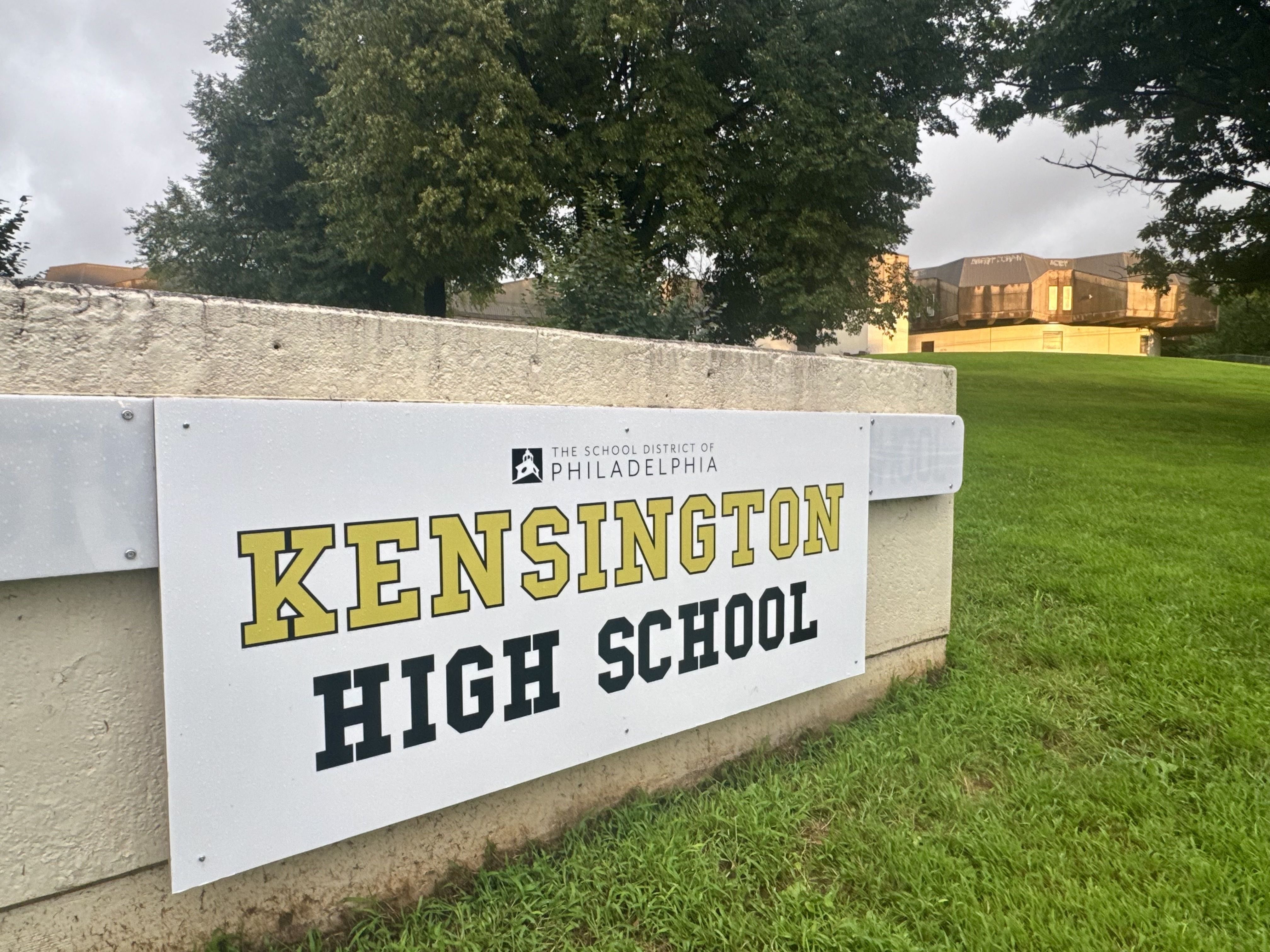
    Kensington High students can begin the 2026-27 school year at the former Austin Meehan Middle School in the Northeast, on Monday — despite a lawsuit that hoped to halt the relocation before classes begin.

    Philadelphia Common Pleas Court Judge Christopher R. Hall on Friday declined to issue an emergency injunction that would have prevented moving Kensington students to Meehan, a now-empty Northeast middle school.

    Asbestos issues rendered Kensington’s E. Clearfield Street building temporarily unusable. District officials decided to move Kensington’s 400-plus students and 90 staff to Meehan — on Ryan Avenue in Mayfair — until Kensington’s building is ready, likely in January.

    Meehan shares a campus with Lincoln High and Northeast Community Propel Academy, which are both already overcrowded.

    Harold Brown, parent of a rising sophomore at Lincoln, and Peter McDermott, a former district teacher and Mayfair civic leader, objected to the relocation, saying that moving Kensington into the Meehan space would create safety and other concerns.

    After a four-hour hearing, Hall said he did not “believe that there is evidence of an immediate and irreparable harm” if Kensington students start the year at Meehan on Monday.

    In fact, the judge said, “I think granting the injunction would throw off the Kensington families,” forcing the district to pivot to virtual instruction on short notice, which would harm students’ academics, food security and social and emotional needs.

    “The balance does not tip there,” Hall said in court.

    Hall’s ruling rests on the district meeting a 5 p.m. Friday deadline to submit a safety plan for the Kensington-at-Meehan campus. Hall and McDermott’s lawyers said they would file another injunction request.

    More police, and yellow bus service for most Kensington students

    Witnesses for both sides made their case over several hours.

    The school system rejected two alternative sites closer to Kensington — Roberto Clemente Middle School, in North Philadelphia, and Penn Treaty High School, in Fishtown — before settling on Meehan, Teresa Fleming, chief operating officer, told the judge.

    Clemente was considered the better alternative, but ultimately could not accommodate all Kensington programs. Penn Treaty didn’t meet accessibility needs for students with disabilities, Fleming said.

    And Craig Johnson, the school system’s chief safety officer, said the district is adding police officers to ensure student arrival and dismissal run smoothly.

    Kensington typically had four school safety officers; it will get a fifth full-time officer with the relocation to Meehan, and a sixth part-time officer to help with arrival and dismissal.

    Answering concerns about additional students complicating the transit situation at the Lincoln-Meehan-Propel campus, Fleming said there will be no more than 90 Kensington students traveling to Meehan by SEPTA buses.

    Just under 70 Kensington students already receive yellow bus services, and those will continue, Fleming said; an additional 250 students now live close enough to walk to Kensington, and will take yellow bus shuttles from Kensington to Meehan. The remaining 90 students, who are out of catchment for Kensington, already receive SEPTA fare cards and will continue to do so, but may also opt to use the yellow buses if they so choose.

    ‘The kids are just kids’

    Brown, on the witness stand, said he had no problem with Kensington students specifically.

    “I don’t even want to say the kids are bad, the kids are just kids, but if you have more kids, things arise,” said Brown.

    After Hall made his ruling, Michael van der Veen, a lawyer for the plaintiffs, said his clients remained concerned, despite the district’s plans.

    What if “a week from now, or a month from now, we get a shooting, a stabbing, a killing, or violence that breaks out there?” van der Veen said.

    Regardless of Hall’s rejection of the injunction, the lawsuit will continue, van der Veen said, and “we’re going to continue to look at what the legal options are.”

    William Brennan, another lawyer representing the plaintiffs, said the relocation of Kensington students to Meehan is “a neighborhood safety issue, and we’re going to do everything we can to keep the neighborhood safe.”

    Hall, during the hearing, asked Brown and McDermott’s lawyers why parents and the neighborhood groups – who also say the district is violating 2019 and 2020 community benefits agreements – did not object to other students using Meehan.

    In the past, elementary school students from Mayfair Elementary — which was overcrowded, and Thomas Holme Elementary, which needed a temporary building while its new school structure was being built — learned in the Meehan space.

    “There’s a significant difference in that they were K-8 students, and now we’re looking at 9-12 students,” said McDermott, who previously taught in the district, at Benjamin Franklin High, when it and Science Leadership Academy were relocated after construction on their shared building went awry.

    Brennan expressed skepticism that the district’s safety plan, finished a few days before students return to class, will be adequate.

    “It sounds like the plan is to drop the bomb on the neighborhood,” Brennan said, “and just hope for the best.”

  • Trump announces plan to lower beef prices, but ranchers and some Republicans are already balking

    Trump announces plan to lower beef prices, but ranchers and some Republicans are already balking

    WASHINGTON — President Donald Trump announced Friday that his administration will allow more beef to be temporarily imported into the U.S. without triggering higher tariffs, as he remains under pressure to cut costs and address affordability issues ahead of November’s midterms.

    Beef prices have climbed to record highs amid a sharp drop in the number of U.S. cattle, consistent consumer demand, and limits on cattle from Mexico, where the animals are facing a flesh-eating pest. The U.S. president has also imposed 50% tariffs on Brazil, a major beef exporter.

    The president’s plan, however, drew immediate skepticism from agricultural experts and backlash from cattle ranchers and conservative rural-state Republicans. Ranchers, normally some of the president’s biggest supporters, are enjoying some rare profitable years and worry cheap beef imports will reduce cattle prices — and with it, the incentive to increase herd sizes.

    “We all want lower grocery prices, but as I’ve said for months, we cannot do it at the expense of American producers,” Sen. Deb Fischer (R., Neb.) said in a statement. “Flooding the market with foreign beef hurts our livestock industry and undermines the long-term solution: growing the U.S. cattle herd to meet demand.”

    Sen. Tim Sheehy (R., Mont.) said in a social media post just hours after Trump’s announcement that the president’s “heart is in the right place,” but importing beef will “harm our ranching families who feed the nation.”

    The deal, Trump said, allows up to 300,000 metric tons of ground beef to be imported into the U.S. for the next 90 days without activating an “out of quota” tariff, which is a tax that goes into effect once a certain quantity of that product enters the country.

    The president said on social media that he had committed to ensuring the imported beef would be sold at 25% below current market rates, making it cheaper for American consumers. A White House official said the deal is with foreign beef exporters who have agreed to the discount on beef.

    “You don’t put America first by putting U.S. cattle producers last,” U.S. Cattlemen’s Association President Justin Tupper said in a statement. “This move will weaken our markets and gamble with food safety in the process.”

    The president’s announcement and other market interventions sacrifice “long-term stability for short term messaging,” Colin Woodall, CEO of the National Cattlemen’s Beef Association, said in a statement.

    Glynn Tonsor, a professor at Kansas State University who focuses on the cattle and beef industry, said he would like to see more details about the latest deal but that his immediate assessment was that it wouldn’t have a big effect on prices.

    That’s because 300,000 metric tons amounts to roughly 3% of what Americans eat yearly, he said. “The relative magnitude we are talking about is pretty small.”

    David Anderson, professor of agricultural economics at Texas A&M University, said he was skeptical other countries could redirect so much beef to the U.S. in such a short time period.

    “Is that even achievable?” he questioned in a phone interview.

    The White House official, who spoke on condition of anonymity to discuss a plan that has yet to be finalized, said the beef in question is lean beef trimmings that are used for ground beef production. Trump plans to sign an executive order formalizing the directive within two weeks, the official said. The administration made a push last year to buy more beef from Argentina to try to bring down prices.

    The president said Friday that his plan would help grow the U.S. cattle supply, which is the smallest it’s been in decades. Some ranchers and experts said the opposite effect was more likely.

    “Imports have been a major contributor to the decline in the U.S. cattle inventory,” said Bill Bullard, the CEO of the R-CALF USA, which represents independent cattle producers. “Using more imports today will exacerbate that decline and will prevent herd expansion.”

  • New Jersey Gov. Sherrill signs a law to protect reproductive and gender-affirming healthcare. Here’s what to know.

    New Jersey Gov. Sherrill signs a law to protect reproductive and gender-affirming healthcare. Here’s what to know.

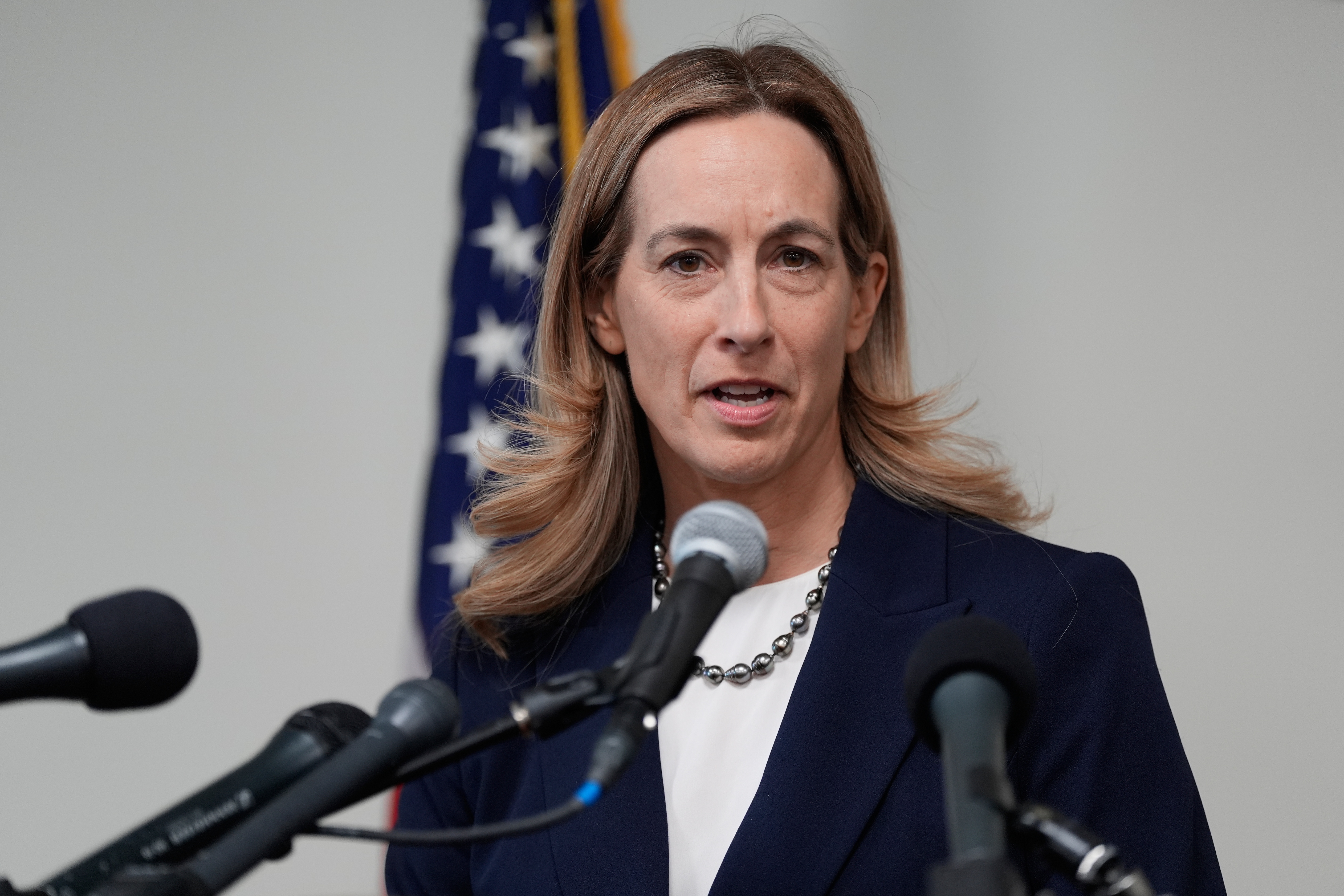
    New Jersey Gov. Mikie Sherrill signed a bill Thursday that offers greater protections for reproductive and gender-affirming healthcare — both for patients and for providers in the state — by making it a crime to intervene against such care.

    The new law strengthens existing reproductive healthcare protections and also broadens them to now include gender-affirming care. It is meant to cover residents as well as people traveling to the state.

    “This is a very big deal. It’s amazing,” said Martha Madrigal, a transgender woman who leads the Collingswood chapter of PFLAG, a national advocacy group for the families of LGBTQ+ people.

    She added that the law is a “solid declaration” that interfering with transgender rights “does not stand in New Jersey. We’re letting out an enormous sigh of relief today.”

    The legislation expands New Jersey’s shield laws by expressly including gender-affirming care in the definition of “protected reproductive healthcare services.”

    Essentially, the law creates a new crime for interfering with someone trying to access reproductive healthcare, such as an abortion, or gender-affirming care.

    It is now a fourth-degree crime (a low-level felony like shoplifting, punishable by up to 18 months in prison) to injure, threaten, intimidate, or physically block patients or providers, or to damage property in an effort to interfere with such care.

    The law would also protect providers from extradition to other states that have banned abortion or gender-affirming care for minors.

    Sherrill said New Jersey is “standing firm in defense of reproductive freedoms — including the right to choose and the right to receive gender-affirming care.”

    In comments after the signing, Sherrill referenced “attacks” and efforts to impose restrictions on access to abortion and gender-affirming healthcare by the Trump administration and Republican-led states.

    She said the transgender community has been “relentlessly attacked” by the Trump administration.

    “They’ve pulled tactics straight out of the ‘Red Scare’ playbook to restrict transgender people’s healthcare,” Sherrill contended.

    Since returning to office last year, President Donald Trump has issued orders to block federal funding for gender-affirming care for people under 19, oust transgender military personnel, and prevent transgender people from using the gender they self-identify as on passports.

    “We are not going to pay for our innocent children to undergo these barbaric surgeries and practices, which result in unthinkable and irreversible harm to their young bodies,” Trump said on Truth Social earlier this month after Medicaid ended reimbursement for hormone treatment and surgeries for minors.

    Surgeries for minors are extremely rare. And fewer than 1 in 1,000 U.S. adolescents receive medication for gender-affirming care, according to a Harvard University study released last year.

    State Sen. Teresa Ruiz (D., Essex), a chief sponsor of the bill and the Senate’s majority leader, said the bill makes New Jersey “a beacon of hope” in the nation.

    “You can’t tell us what we can read on a library shelf but want to be up in our uterus in an exam room,” she said.

    The law empowers patients and providers to take legal action against individuals who interfere with their access to or delivery of protected care.

    And it protects healthcare providers from professional penalties or adverse actions involving their medical malpractice insurance for providing care that is legal in New Jersey.

    Speaking for healthcare providers in New Jersey, Kristyn Brandi and Catherine Obando, doctors from Union who are preparing to open a clinic providing abortions and gender-affirming care, praised the law as an assurance that providers could deliver care without “risking their freedom or professional license” in the state.

    “We are grateful to know that our patients and staff will be protected from criminalization and harassment,” Brandi and Obando said in a statement as founders of the Luminosas Wellness Collective.

  • The Eagles teamed up with Philly-based fashion brand Addison Bay to design a collection ‘for the girl on the go’

    The Eagles teamed up with Philly-based fashion brand Addison Bay to design a collection ‘for the girl on the go’

    In less than a month, the South Philadelphia sports complex will be decorated in Eagles green, smoke from the tailgate grills will cover the parking lots, and the sun will beat down on the asphalt canvas as fans prepare for the home opener against the Washington Commanders.

    That means it’s time to break out your favorite game day outfits, whether that’s your lucky Jalen Hurts jersey, your favorite vintage top, a reworked masterpiece — or maybe even a new piece from Addison Bay?

    The Philly-based lifestyle brand is collaborating with the Eagles on an exclusive clothing line curated for women and designed to blend fashion and comfort.

    “It’s really, honestly, such a pinch-me moment,” said Marguerite Adzick, the founder and CEO of Addison Bay. “It definitely feels like a full-circle moment, starting the company eight years ago and then almost eight years to the day, getting to launch this collaboration.”

    The Eagles reached out to Adzick, 37, in September about a potential collaboration. When she received the call, she recalled “nearly falling out of her chair.” The collaboration felt like a dream come true for the Philly native, who grew up a die-hard Eagles fan and was named the 2004 Philadelphia Eagles Fan of the Year at 15 years old.

    “They sent me to the Super Bowl for free with one of my best friends in high school,” said Adzick, who attended Penn Charter and played lacrosse at the University of Virginia. “I’ve been a die-hard Eagles fan my entire life, and now my company gets to create clothing with the Eagles — like, truly, pinch me. This is so incredibly cool. This has been such a long time coming.”

    The collection features some of Addison Bay’s best-selling styles — including varsity quarter-zips, tanks, leggings, seamed flounce skorts, cardigan sweatshirts, and Panama dresses. Half the items are in kelly green and the other half are in midnight green.

    The collaboration between Addison Bay and the Eagles features designs in midnight green and kelly green.Addison Bay

    “A lot of the time, some of the styles that they dress female fans in, it’s pink or rhinestones, and that’s the way they make it more feminine,” Adzick said. “That’s really where Addison Bay entered the chat. We can make these styles more feminine for the consumer without adding pink and rhinestones. We can make it more feminine with the styles we choose, using the colors in the right way, adding out signature stripes and, of course, having logo detail.”

    The line follows Addison Bay’s mission to show that style and performance can coexist, with everyday pieces that move with women from morning to night.

    “We designed for the girl on the go,” Adzick said. “We truly are dressing her from 7 a.m. to 7 p.m. That doesn’t just go for Monday to Friday. It also goes for Sunday. She wants to support her team, but she also has to go to her kid’s lacrosse practice, get ready for the week, get her house clean, make dinner, watch the game. Like, talk about a multitasking woman. That’s exactly what our consumer is doing. That’s exactly what I’m doing.”

    Addison Bay’s apparel is designed for a range of activities.Addison Bay

    The collection will be available on AddisonBay.com, Fanatics.com, and in Eagles Pro Shops on Monday. For a limited time, shoppers will receive a pair of embroidered socks with each Addison Bay purchase at Eagles Pro Shops.

    “We’re super excited,” Adzick said. “I cannot wait for it to launch. I’m truly just so excited to see what the consumer thinks about everything, and I hope she loves it.”

    Fans can attend an Addison Bay event Thursday at the Lincoln Financial Field Pro Shop to celebrate the launch of the collection. There will be photo booths, light refreshments, giveaways, and more.

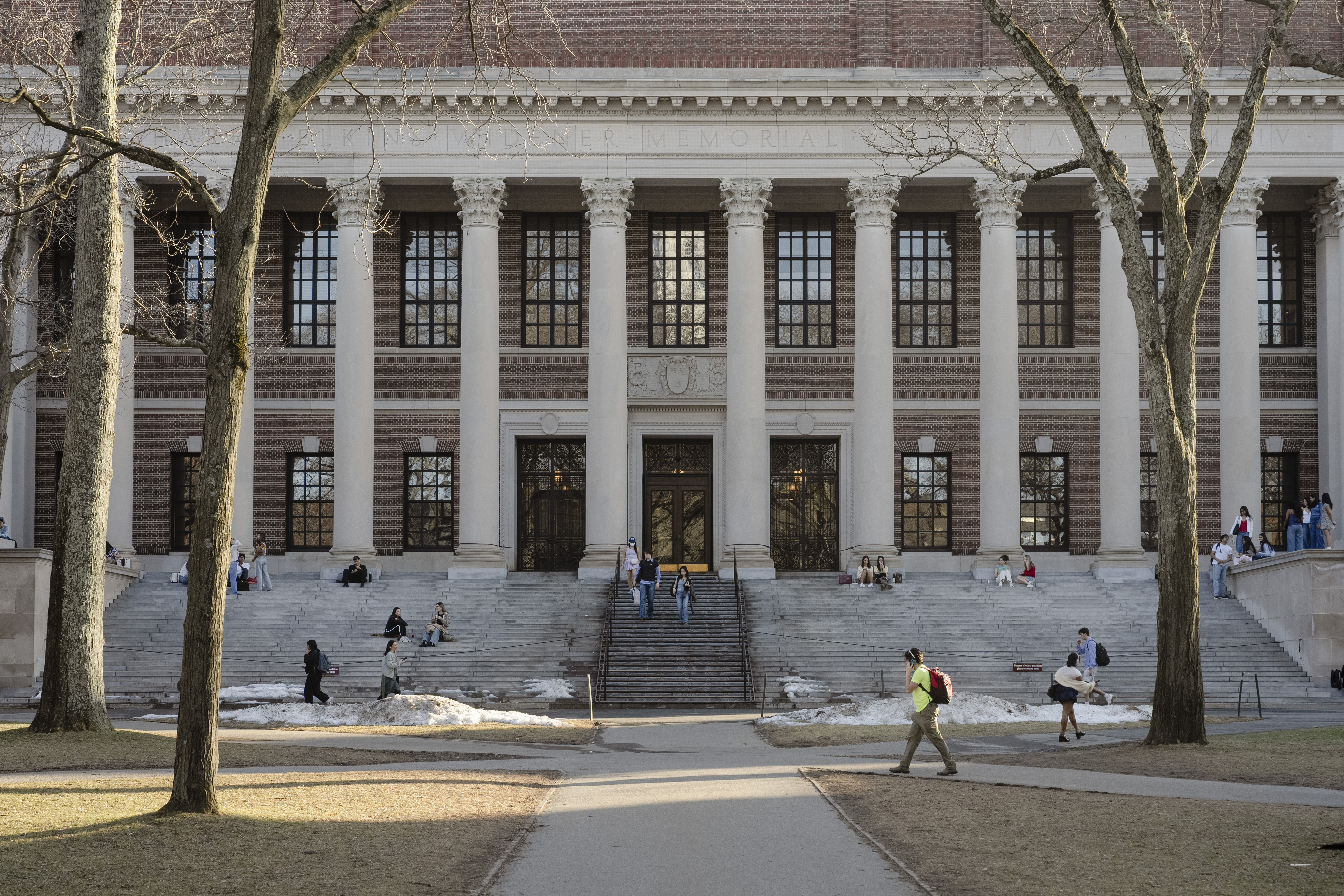
  • How Harvard’s epic fight with Trump is costing the university

    How Harvard’s epic fight with Trump is costing the university

    One of Harvard University’s biggest federal funding streams is down sharply, according to a New York Times analysis of government data.

    The declines have persisted even after a federal judge forced the Trump administration to reverse drastic cuts to the university last year.

    The funding, from the National Institutes of Health, currently lags about 18% behind the average pace of grants during the Biden administration, the analysis shows.

    Last year, Harvard successfully sued the Trump administration, after the government announced it had frozen more than $2.2 billion in 2025, from multiple federal agencies.

    But unlike then, when Trump officials made a public spectacle out of announcing the cuts, the NIH is mainly delaying, reducing, or rejecting grant requests, often leaving researchers and university leaders in the dark about what is happening.

    The reduction appears to be the latest front in the Trump administration’s on-again, off-again war with Harvard and other elite universities. It is a new, more subtle tactic that is harder to fight in court, but that could be just as damaging if cuts and uncertainty build.

    The Trump administration has targeted a number of the nation’s elite universities, accusing them of tolerating antisemitism and pursuing racial diversity in ways that flout the law, among other criticisms. Harvard — the country’s wealthiest university — has been one of the most frequent targets of federal officials.

    As the Trump administration has pulled multiple levers to try to bring Harvard and other schools to heel, Harvard has often pushed back. It was the first institution to sue the Trump administration, has won in court on a number of occasions, and has not reached a settlement with the federal government, as other prominent schools have done.

    Now, however, the university faces cuts that may be harder to counter. Last September, a judge ruled that the administration had improperly cut off funding to Harvard when it ended all of its grants in 2025, finding that the government had violated Harvard’s First Amendment rights.

    But in the ruling, the judge suggested that there were lawful means the government could pursue if it wanted to restrict Harvard’s money, should it choose to.

    That is what is happening.

    Through June 30 of this fiscal year, which began Oct. 1, the NIH provided Harvard 309 awards worth a total of $200 million. The amount is down from an average of roughly 440 awards worth $246 million for the same nine-month period in 2021-2024, according to the latest data available.

    Harvard is still one of the largest recipients of NIH funding, though it is far behind the top grantees such as Johns Hopkins, the University of Michigan, and Yale University. Other major research universities have also seen reductions in NIH funding.

    Though NIH support has slowed compared with the Biden years, the 2026 awards are outpacing last year, when Harvard’s funding was frozen. By the same point in 2025, NIH funding to Harvard was stalled at 201 grants worth $94 million.

    In recent months, Harvard’s individual schools have laid off staff. The leadership of the university’s largest division, the Faculty of Arts and Sciences, reported in an email to the division on Aug. 14 that 165 of its staff positions had been eliminated in a layoff and restructuring. The job cuts were aimed at reducing a major deficit.

    Carrie Barbash, an organizer and former president of the Harvard Union of Clerical and Technical Workers, said the final number of layoffs may change as some staff members whose jobs were eliminated consider moving into some newly designed roles.

    The current grant slowdown is not taking place evenly across Harvard. The university’s Chan School of Public Health is heavily dependent on NIH funds and has seen nearly 25% less in grant funding this year, compared with the average amount from 2021 to 2024.

    The NIH has obligated $67 million across 63 awards to Chan through June of this fiscal year; the 2021-24 average for the same time period was $90 million across more than 100 awards.

    Nancy Krieger, a professor of social epidemiology at the Chan School, said that fallout from the funding slowdown goes beyond individual projects that lost grants. More than a year of federal cuts — and legal fights over the reductions — have “shaken any sense of stability as to whether the federal government is a reliable funder,” she said.

    The school is already cutting back, with layoffs and reductions in the number of slots for Ph.D. students. “It’s not just that you lost funding, it’s that you’re reducing the size of the cohort for the next generation of researchers that you’re training,” Krieger said. “What is the knowledge lost? And what are the myriad ripple effects for the economies of the cities and towns that depend on universities as major employers?”

    Harvard has also won some rounds in its fight with the administration. Harvard’s court victories protected much of its grant money and its ability to host international students.

    A federal judge on Aug. 13 dismissed a Trump administration lawsuit against Harvard that had accused the school of tolerating antisemitism and sought the ability to deny it grants.

    Harvard’s endowment continues to ride the stock market to record highs, and the university’s steadfastness under pressure has inspired supporters and alumni who do not want it to yield to President Donald Trump.

    While Yale is in talks to perhaps become the next elite school to settle with the administration, Harvard continues to hold out. Harvard is not believed to be engaged in any serious settlement talks at this time.

    “Harvard is fighting for principles, both legal and constitutional, and doing so on behalf of the entire system of colleges and universities,” said Lee Bollinger, the former president of Columbia University. “We should all be grateful.”

    Yet, as Bollinger noted, “any litigant will inevitably pay a high price.”

    The administration has pushed the fight to Harvard on several fronts. The university is still engaged in other litigation and appeals with the Trump administration; a loss in any major case could be devastating.

    The Trump administration continues to open fresh battles. The government is proposing new budget rules that would give the administration’s political appointees more power over grants.

    White House spokesperson Liz Huston blamed the ongoing battles between the university and the administration on Harvard’s “stubborn commitment to unlawfully discriminating on the basis of race and failing to properly protect its students.”

    “Unless Harvard comes to the table in good faith, the Trump administration will continue pursuing every available legal avenue to enforce federal civil rights laws,” she said.

    Facing the uncertainty caused by lawsuits, grant slowdowns, and other pressures from the administration, Harvard and other schools are likely to continue to retrench, said Tom Gerety, a former president of Amherst College.

    “The main thing you do in uncertainty is hunker down and say, ‘What cuts can we make right now?’” he said, noting that research universities are already trimming back on Ph.D. programs.

    Tighter research budgets will mean scientists are more likely to seek jobs outside the United States, he said, while those still at American schools may be less likely to take the unconventional big swings in their research that can lead to scientific breakthroughs.

    “This is going to hurt,” Gerety said, “and it’s going to hurt a lot more in 10 years than it does now.”

    The government has pursued appeals of federal court rulings that went Harvard’s way last year.

    The two sides, as well as a number of outside parties, filed briefs this summer over last fall’s decision in the funding case. The government is also appealing a June 2025 court decision blocking the administration’s effort to stop Harvard from hosting international students. Oral arguments in that case are scheduled for October.

  • A Glen Hansard-inspired holiday busk is coming to the Keswick

    A Glen Hansard-inspired holiday busk is coming to the Keswick

    Before he died, Glen Hansard found inspiration in Philadelphia. In 2025, the Irish singer — mourned worldwide after he died at age 56 in a July motorbike crash in Dublin — began work on an unfinished Philly album, recording with local musicians at a Conshohocken studio. Before that, Hansard, who began his musical career as a street busker in Dublin, played World Cafe Live with Philly street musicians, and even donned a faux Sixers jersey performing with the Philly band Snacktime at the Met Philly. His final Philly performance, only months before his death, was in the upstairs Sanctuary at the First Unitarian Church.

    Now, Philadelphia is taking inspiration from Hansard.

    On Dec. 6, at the Keswick Theatre, Philly musicians will host the Philly Busk — a holiday concert inspired by Hansard’s beloved Christmas Eve busking in Dublin to help unhoused people.

    Ticket information and a lineup for the event have yet to be announced. All of the proceeds from the Philly Busk will benefit Project HOME — one of the city’s largest nonprofit housing agencies — and the Irish Center of Philadelphia, a Mount Airy cultural hub founded in 1958 to preserve Irish heritage, music, and dance.

    The concert — though not traditional busking, usually performed in a street or subway station — was originally planned for the Irish Center, but organizers quickly shifted to the Keswick after an outpouring of interest and support from local artists, and after the theater expressed interest in helping.

    From left: Glen Hansard, Nels Cline, and Charlie Hall at Elm Street Studios in Conshohocken in January 2026.James Farrell

    Street musicians will also play outside the theater before the concert, in the tradition of busking.

    “We realize we need a bigger space, a bigger stage,” said organizer Liz Kerr, special events coordinator for the Irish Center. “The number of people reaching out to us, offering help in any way — there’s been so much generosity. Everybody has been so positive about it.”

    For 15 years, Hansard, who fronted the Frames and won a best song Oscar for “Failing Slowly” from the 2007 film Once, hosted an annual, open-air charity music event on Dublin’s Grafton Street or outside the Gaiety Theatre. The beloved Irish tradition grew to include superstars like Bono, Sinéad O’Connor, and Shane MacGowan singing together on holiday classics like the Pogues’ “Fairytale of New York.”

    The seed of the Philly concert grew out of grief, Kerr said. And wanting to help others in Hansard’s memory. The first person Kerr reached out to was Dublin-native and Philly-based singer-songwriter John Byrne, who busked himself back in Ireland before moving to Philly. Byrne immediately agreed to play — and to help land other musicians.

    “We know the Dublin busk had meant so much to him,” said Byrne. “And Philadelphia had become a place he loved to come to. To do something like this — and have the proceeds go to a homeless charity — is just a really great way of honoring Glen Hansard.”

    Outdoor venues, like outside City Hall, were initially considered but abandoned by planners due to unpredictable winter weather. Though the musicians for the event have yet to be announced, Byrne said it quickly became clear that they will need a big stage. For the memory of Hansard — and the desire to help others in need.

    “It’s a way of bringing people together,” he said. “A way of giving them a chance to gather as a community and do something meaningful. I think we’re going to get a really good response from the music community. And I have a lot of hope that we’re going to have a really great crowd in there.”

    Planners expect to announce more details in the coming weeks.

    Kerr, also a Hansard fan, said they are thrilled to help an organization like Project HOME, a nonprofit founded in 1989 by Sister Mary Scullion that works to eradicate chronic homelessness and has a longstanding partnership with the Jon Bon Jovi Soul Foundation, in the musician’s memory.

    “Project HOME has touched so many people,” she said. “We’re just so grateful and thrilled to help them.”

  • Supreme Court chief justice allows work on Trump’s $400M White House ballroom to continue for now

    Supreme Court chief justice allows work on Trump’s $400M White House ballroom to continue for now

    WASHINGTON— Chief Justice John Roberts on Friday allowed the White House to continue construction on President Donald Trump’s $400 million ballroom project for now, as the Supreme Court considers the Trump administration’s emergency request to intervene in lawsuits over the project.

    The temporary order came hours before lower-court rulings would have forced a halt to aboveground construction of the project because Trump didn’t get congressional approval.

    It will remain in place until the Supreme Court issues a more durable decision, though the one-page document does not detail Roberts’ reasoning or indicate when another ruling will be handed down. Roberts signed the order because he oversees emergency appeals of cases filed in the capital.

    Ballroom case tests limits of presidential power

    The case is coming before the nation’s highest court as Trump, a Republican, exercises unparalleled assertions of presidential power and increasingly seeks to mold the capital in his own image.

    The administration has argued that the president has total authority to renovate the White House and other federal buildings as he sees fit and that the ballroom project must be completed due to national security concerns.

    When Trump first announced the plans for a new ballroom, he did not emphasize national security. He said the project would be funded by private donations, including from himself.

    The National Trust for Historic Preservation argues that Trump has no unilateral authority to undertake the work, which has included demolishing the East Wing. Lawyers for the preservation group accused the White House of trying to “outrun the courts” by accelerating construction.

    A spokesperson for the trust said Friday that the order from Roberts is not a final decision and the group is awaiting further action. The full Supreme Court will likely weigh in next on whether construction can continue for the potentially long duration of the lawsuit.

    Trump said his administration is grateful for Friday’s decision, writing in a social media post that the project is “under budget and ahead of schedule.”

    While litigation plays out, the ballroom is going up quickly

    The Trump administration says 65% of the work has already been completed on the planned 90,000-square-foot ballroom, where the East Wing stood before the president ordered its demolition.

    Crews are working 20 hours a day, seven days a week, on the project, where about $200 million in private donations has been spent or committed, according to court documents filed by the Justice Department.

    The work has proceeded against the backdrop of the litigation winding through the courts.

    In April, a district court judge ordered a stop to the aboveground construction of the planned ballroom. That ruling was briefly suspended, then upheld by an appeals court panel. U.S. District Judge Richard Leon in Washington allowed work to continue only belowground on bunkers and military installations. Leon was nominated by President George W. Bush, a Republican.

    Leon’s decision was upheld by an appeals court panel, as two judges appointed by Democratic presidents found the project was for Congress to decide and “not a matter for Executive self-help.” A third judge, appointed by Trump, found that the preservationist group challenging the project had no legal standing to sue.

    Solicitor General D. John Sauer picked up on that argument, calling the decision halting the work “extraordinary and unlawful.” He said the completion of the project was “vitally required by national security.”

    The Trump administration has scored a series of victories on the Supreme Court’s emergency docket, though the justices have ruled against some of the president’s signature policies after fuller review.

  • More rain is forecast for Saturday, with potential flooding into the night

    More rain is forecast for Saturday, with potential flooding into the night

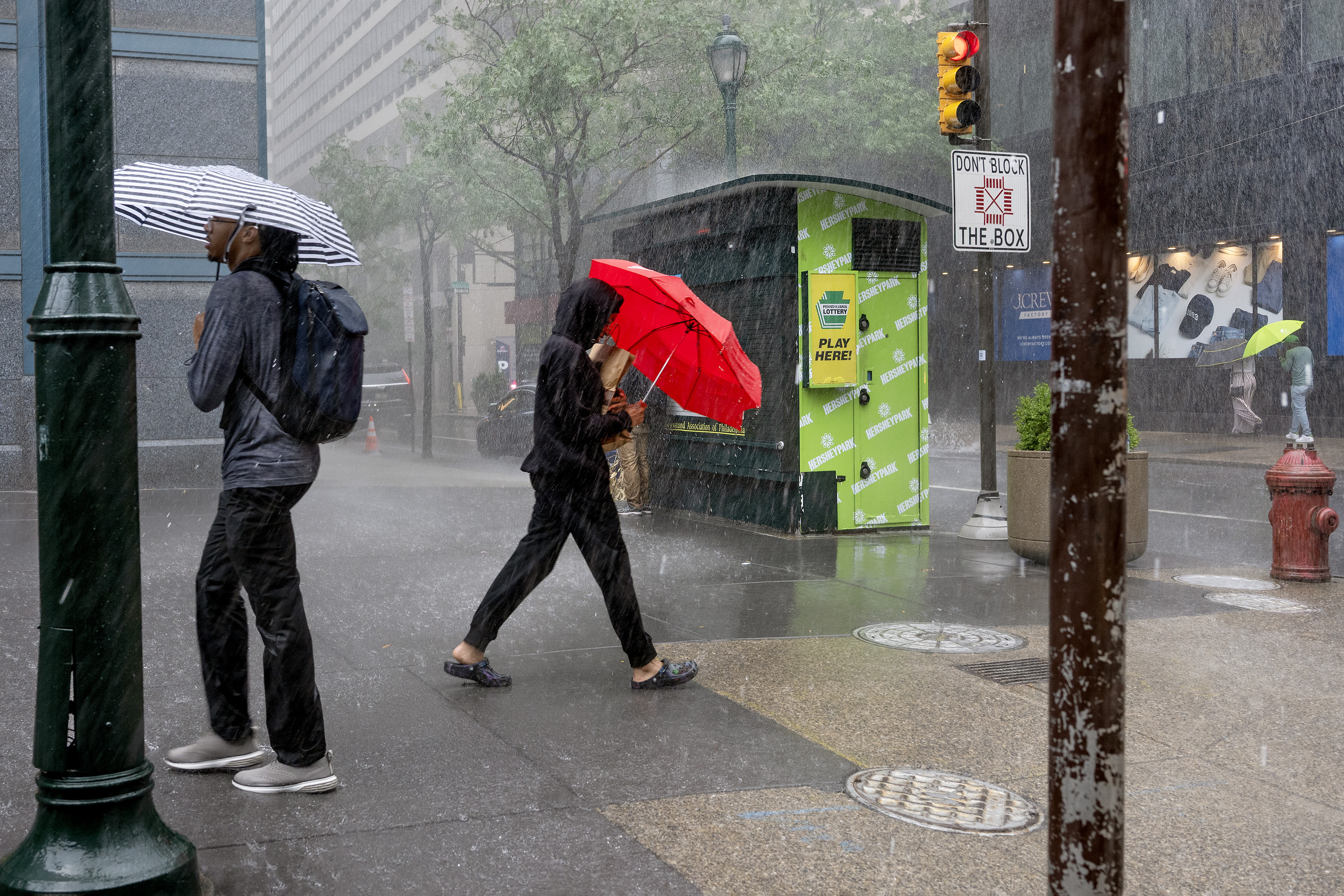
    Another round of rain showers is expected Saturday, with potential flooding into Saturday night, but it shouldn’t be as intense as last weekend.

    Multiple rounds of rain are possible Saturday, with most of the region expected to see up to an inch of precipitation, according to AccuWeather. A chance of thunderstorms will creep onto the horizon starting after 4 p.m.

    While the rain is expected to continue into the night with a chance of flooding on streams and ponds, there likely won’t be devastating flash floods, said AccuWeather meteorologist Matt Benz.

    “Certainly, just given the amount of rain that we’ve seen as of late, it doesn’t take a lot of rain to create flooding issues, so there could be some low-end flooding concerns tomorrow,” Benz said.

    Most areas across the region received over an inch of rain on Thursday, with some places getting more than three inches.

    “While a strong to severe thunderstorm can’t be ruled out completely, the threat for damaging winds/tornadoes/hail is much lower compared to what we saw Thursday,” weather service meteorologists said in a forecast discussion.

    Despite the above-normal precipitation over the summer months, the region had experienced 16 consecutive months of below-average precipitation totals leading up to June. Most of the Philadelphia region is classified abnormally dry, with parts of the suburbs in moderate drought, according to the U.S. Drought Monitor. Sunday’s rain ended the first seven-day period without measurable rain in Philly in two months.

    In addition to Thursday’s rain, a tornado touched down in Dover, Del., toppling trees that closed streets and causing widespread power outages. Power has been restored, but crews were still clearing debris from affected areas in Dover.

    Sunday brings another chance of showers on and off throughout the day, especially in the afternoon. Benz advised residents to get their errands done in the morning on Saturday and Sunday to avoid showers.

    The forecast is similar for folks headed down the Shore, as Saturday brings an increased chance of rain showers in the afternoon and evening. Sunday should be drier in the morning, but beachgoers could see a chance for afternoon rain showers or thunderstorms, Benz said.

    Fair weather is expected to return early next week.

  • Trump administration moves to strip bar association’s power to accredit law schools

    Trump administration moves to strip bar association’s power to accredit law schools

    The Trump administration’s ongoing feud with the American Bar Association has come to a head, as the Education Department threatens to strip the organization of its power to oversee law school programs across the country.

    Career staffers at the department recently recommended the ABA lose the federal recognition needed to operate as an accreditor. In a report made public Friday, staffers at the department said the ABA, which accredits nearly 200 law schools, had failed to keep both sides of its house “separate and independent,” undermining its effectiveness as an accreditor.

    The association is both an accreditor for law schools and a trade group for legal professionals. As an accreditor, ABA oversees the quality of law school education and determines whether law schools not affiliated with a university can accept federal student aid.

    President Donald Trump and other Republican lawmakers have accused the ABA of having a liberal bias and promoting diversity, equity, and inclusion, pushing a political agenda in law schools. Conservatives have also criticized the ABA, which has accredited law schools since 1952, for having a monopoly on oversight of law school education.

    The Education Department declined to comment.

    David Barker, assistant secretary for postsecondary education, told the Wall Street Journal, which first reported the recommendation, “We have said many times that accreditation, in general, operates like a cartel. When there’s no competition, accreditors feel free to inject their own political preferences, their own ideologies into the work that they do.”

    The ABA’s accreditation council chairperson, Melissa Hart, told the Washington Post the council is confident it complies with the Education Department’s requirements for accreditors and federal laws.

    “The outcomes produced by Council-accredited law schools are unmatched, and we continue the important work of accrediting law schools as our recognition process proceeds,” she said in a statement.

    The Education Department last approved the association to accredit law schools in 2021, a five-year designation that is up for review next month.

    The federal government relies on accreditors, little-known but powerful organizations, to deem colleges worthy to participate in the federal student aid program and to review educational quality.

    The report comes as the Trump administration seeks to reshape college accreditation, a system it has accused of being captured by liberal politics. The Education Department has proposed regulations to encourage intellectual diversity and increase competition among accreditors. The proposed rule also calls on accreditors and trade associations to be separate to prevent conflicts of interest.

    Tensions have simmered between the ABA and the Trump administration on multiple fronts, including in court. Top Justice Department officials have repeatedly taken aim at the legal group.

    Then-Attorney General Pam Bondi wrote to the ABA last year that the group was biased in favor of Democrats and said the administration would not allow it to help vet judicial nominees.

    Also last year, Todd Blanche — then the Justice Department’s No. 2 official, who has since replaced Bondi as attorney general — said that the agency would no longer pay for its employees to travel to the ABA’s events or allow them to even attend such functions.

    The ABA has also sued the administration, including in a case challenging Trump’s campaign to crack down on prominent law firms.

    Trump issued executive orders last year taking aim at several firms that had hired his perceived enemies or took on cases he disliked. Four of the firms that were targeted sued to fight those orders, and all of them won court orders blocking Trump’s sanctions.

    The ABA filed its own lawsuit challenging Trump’s actions, saying it had to act to protect its members “and the rule of law itself.” The case is ongoing, and a judge earlier this year rejected the Trump administration’s effort to have the lawsuit thrown out.

    An independent advisory board will meet next month to consider the Education Department’s recommendation and decide the ABA’s fate as an accreditor. A senior Education Department official will then weigh in.

    “We look forward to the opportunity to address any misconceptions and clarify the record at our upcoming hearing,” Hart said. “We’re confident the Council will address any concerns the Department may have at that hearing.”

    If the advisory board votes that the government should withdraw its recognition of the ABA as an accreditor and that decision is upheld by a senior department official, the ABA can then appeal to Education Secretary Linda McMahon.

    If McMahon denies the appeal, law schools affiliated with a university could use their school’s accreditor, while unaffiliated schools will have to find a new accreditor.