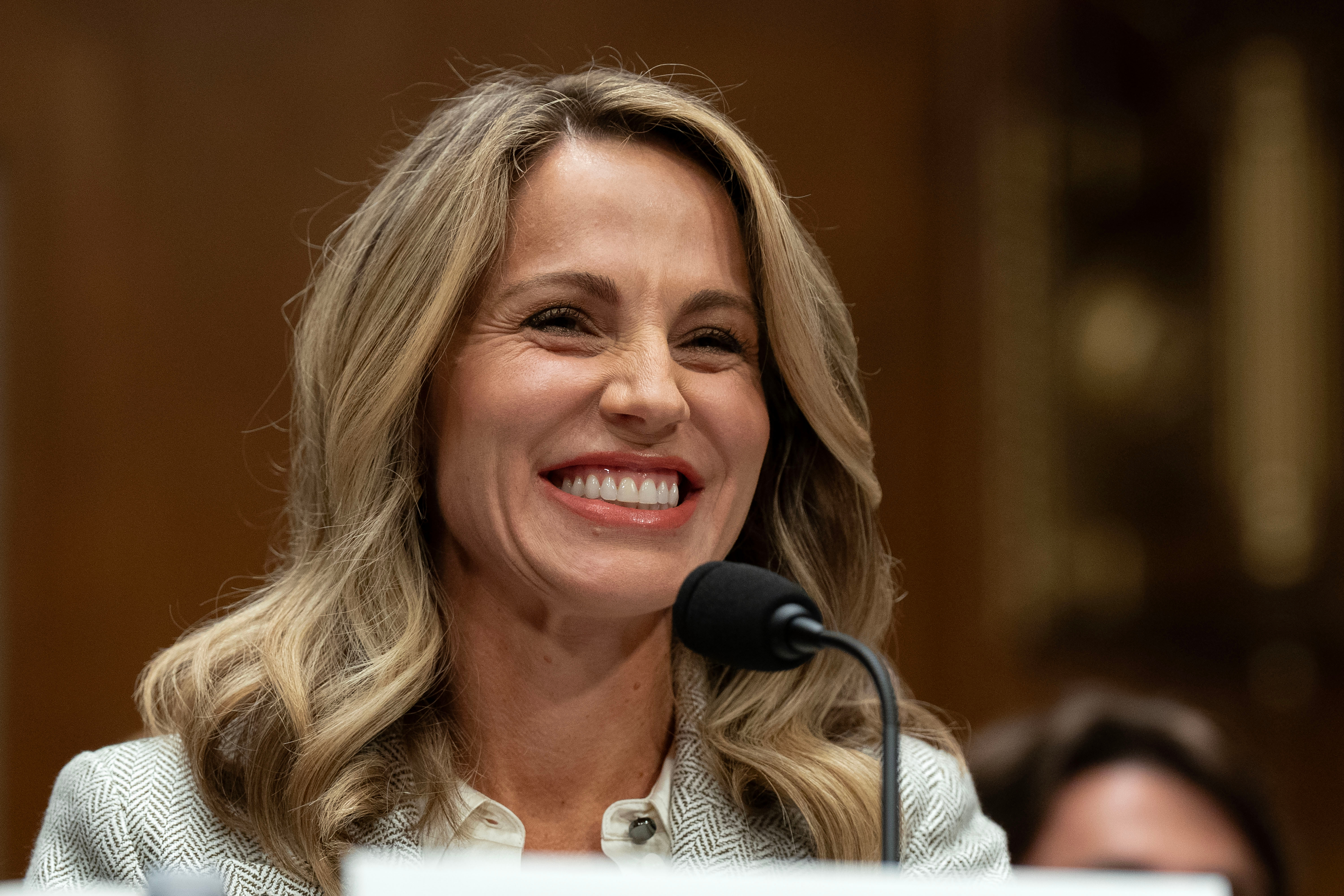
WASHINGTON — Nicole Saphier, President Donald Trump‘s third nominee for surgeon general, moved a step closer to confirmation after a Senate committee voted to advance her nomination on Wednesday.
Saphier, a radiologist and former Fox News Channel contributor, was advanced out of the Senate Committee on Health, Education, Labor and Pensions on a 12-to-11 vote to serve as surgeon general after she was grilled at her confirmation hearing earlier this month about her stance on childhood vaccines.
She expressed support for vaccines and told lawmakers she didn’t believe they cause autism. The Trump administration has sought to revisit claims about a link between vaccines and autism, although widespread scientific consensus and decades of studies have firmly concluded there is none.
Timothy Westlake, who was nominated to serve as assistant secretary for mental health and substance use at the Department of Health and Human Services was also advanced out of committee on the same en bloc vote.
It was not immediately clear when the officials would face a full Senate vote for their confirmation but they are expected to be approved.
During her confirmation hearing, Republican Sen. Bill Cassidy pressed Saphier to declare whether she believed there was a link between vaccines and autism. Saphier responded that she does “not believe childhood vaccines cause autism,” adding that “the MMR vaccine is our greatest tool for combating measles,” in response to a question by Cassidy over whether parents should give children that shot.
MMR stands for measles, mumps and rubella, and the president recently called for the shots to be spaced out, against the guidance of medical groups.
The surgeon general position carries limited policymaking power but serves as a loud megaphone as the nation’s top communicator to Americans on public health issues.
Cassidy, who led the inquiry into Saphier’s views on vaccines, ultimately voted in support of her nomination.
Sen. Bernie Sanders, the ranking member of the Senate HELP committee, said ahead of Saphier’s vote that he would vote down her nomination because in part Saphier “has questioned the need for the hepatitis B vaccine at birth, when the data science has been clear.”
“We need a surgeon general who will tell the truth about vaccines, not someone who misleads the public,” Sanders said. At her confirmation hearing, Saphier said the universal birth dose of hepatitis B was safe and effective.
Chris Klomp, who was nominated to serve as deputy secretary of the Department of Health and Human Services, was advanced out of the Senate Finance Committee last week on a 15 to 12 vote. He was questioned during the same hearing as Saphier about his duties associated with the role as the current chief counselor of the Department of Health and Human Services under the leadership of Health Secretary Robert F. Kennedy Jr. as well as about his vaccine stance.
In protesting Klomp’s nomination at the Senate Finance Committee, Sen. Ron Wyden said Klomp “tried to create the impression that he will be the adult in the room on vaccines. Yet, as we sit here today, the vaccine chaos that we’ve come to expect from Robert Kennedy’s HHS continues.”
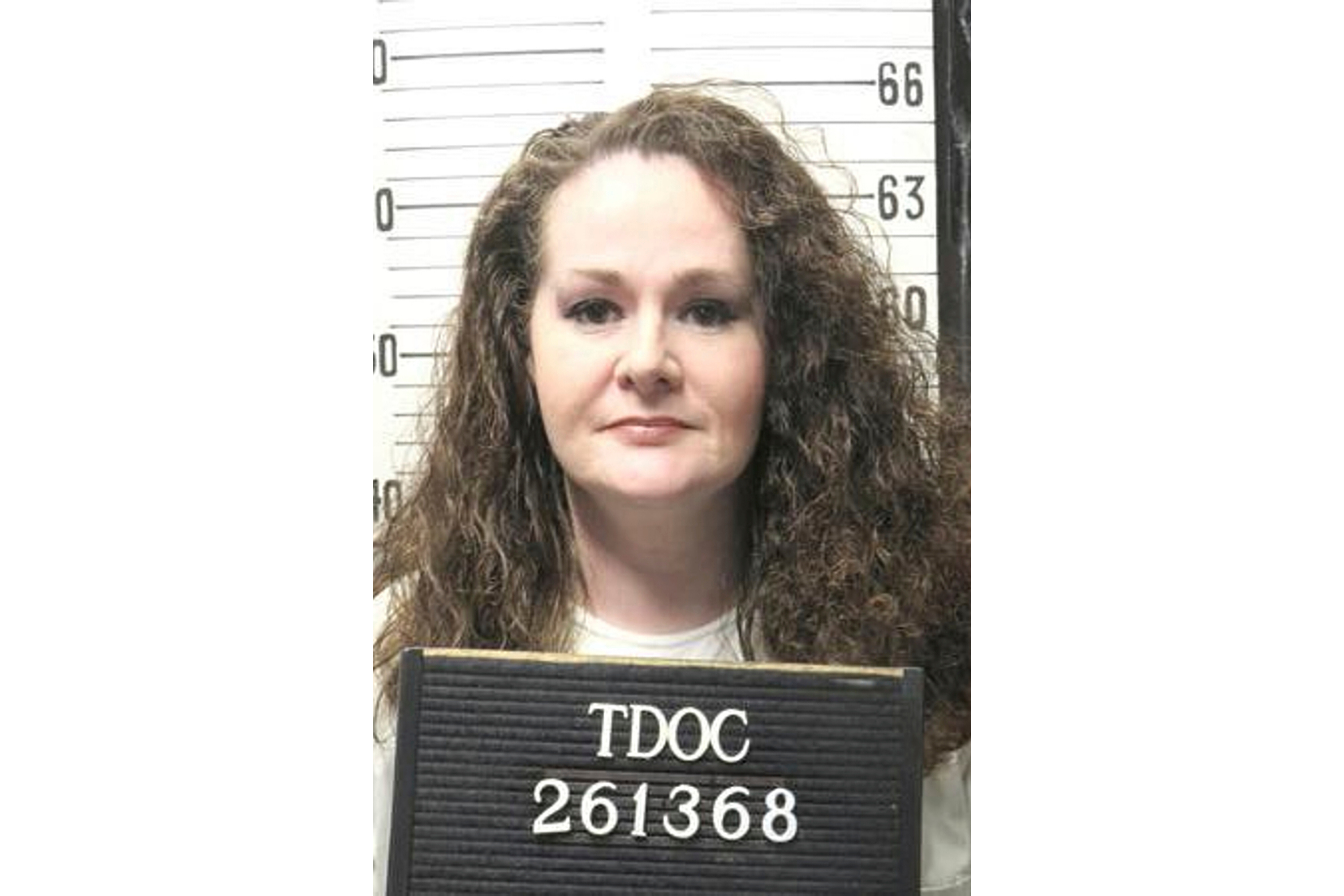
NASHVILLE — The U.S. Supreme Court is allowing the execution of Christa Gail Pike to go forward in Tennessee, overturning a last-minute stay that was issued by an appeals court hours earlier Wednesday.
Pike, 50, was scheduled to die by lethal injection in the morning, and witnesses had already gathered at the Riverbend Maximum Security Institution in Nashville when the 6th Circuit U.S. Court of Appeals voted 2-1 to issue a stay. That court said a delay was needed to consider whether Pike’s allegations of childhood sexual abuse were fully considered at her sentencing.
The Supreme Court’s three liberal justices, Sonia Sotomayor, Elena Kagan, and Ketanji Brown Jackson, dissented from the ruling. Sotomayor called the court’s decision stunning, as it clears the way for the execution to happen “before her still-pending legal challenges to her conviction can be properly considered.”
Pike, who was 18 at the time, and her boyfriend were convicted of the 1995 stabbing and beating of 19-year-old Colleen Slemmer, their classmate at a job training facility in Knoxville.
The case garnered widespread attention back then in part because a pentagram that was carved on Slemmer’s body and other elements of the crime stoked fears of Satan worship during the “satanic panic” of the 1980s and 1990s.
Decision stopping execution was swiftly appealed
After the stay was issued, Tennessee’s attorney general immediately appealed to the Supreme Court. Witnesses and media remained at the prison while the high court considered the case.
Despite the Supreme Court’s ruling, it was not immediately clear if the execution would happen Wednesday. The state’s execution order expires at midnight, according to Kelley Henry, a Nashville-based attorney experienced with Tennessee death penalty law. If time runs out, the state Supreme Court would need to set a new date.
In its appeal to the U.S. Supreme Court, the attorney general’s office wrote that halting the execution at the last moment traumatized Slemmer’s family and rewarded “abusive delay tactics” by Pike’s attorneys.
Pike does not deny committing the killing, but her supporters argue the state should consider her age at the time, her mental illness and her allegations of severe sexual abuse that included being raped from the time she was a toddler.
“It is inconceivable that in the 21st century, the criminal justice system is poised to execute a survivor of rape and child sexual abuse whose jury never had the opportunity to consider those facts in weighing the defendant’s moral culpability,” her attorneys wrote in a filing.
Pike’s case renewed debate on the death penalty for teens
As the execution date drew near, Pike’s case renewed debate over the death penalty for young offenders.
Assistant Federal Defender Stephen Ferrell said Pike’s death sentence is an outlier because other 18-year-olds in Tennessee have had such sentences vacated.
After the killing, Pike was diagnosed with bipolar disorder and post-traumatic stress disorder. In her clemency petition, she said she only wanted to fight Slemmer but killed her in a frenzied attack when she couldn’t “put the brakes on.”
“I was a mentally ill 18-year-old kid. It took me numerous years to even realize the gravity of what I’d done. Even more to accept how many lives I affected. I took the life of someone’s child, sister, friend. It sickens me now to think I had the ability to commit such a crime,” Pike said in a statement.
Victim’s mother says she is waiting for death sentence
Slemmer’s mother wants the lethal injection to go forward, saying she has waited decades to see Pike’s sentence carried out.
“Every time I think about it, I think about Colleen feeling that pain and trying to get up and run,” May Martinez told The Associated Press in a telephone interview on Saturday.
Martinez said a group helped raise money so she and her husband could travel from Florida to witness the execution. She didn’t respond to a message Wednesday after the execution was halted.
Martinez said her daughter’s age also should matter in deciding Pike’s fate.
“Not a day goes by, or a minute goes by that I do not think about Colleen. Holidays are the worst,” she said, noting that her daughter would have turned 51 earlier in September.
The killing rocked the city of Knoxville. Prosecutors said Pike, fearing Slemmer was trying to steal her boyfriend, lured her to a wooded area on Jan. 12, 1995. Pike cut Slemmer with a box cutter and beat her with a large chunk of asphalt. Shipp, Pike’s boyfriend, has admitted that he was the one who carved a pentagram, a star-shaped symbol associated with Satan, into her body.
Shipp was 17 when the crime happened and received a sentence of life in prison with the possibility of parole. Pike was the only one sentenced to death.
Executions of women are rare in the U.S.
Tennessee has not executed a woman for at least 200 years, according to Robin M. Maher, executive director of the Death Penalty Information Center. Older records can be spotty, though, so it is difficult to know precise details about the last woman who was put to death there.
Since the Supreme Court reinstated the death penalty in 1976, 18 women have been put to death, representing about 1% of all executions, according to the center.
Most recently, in 2023, Missouri executed Amber McLaughlin for a 2003 killing, in what is believed to be the first execution of a transgender woman in the U.S. In 2021 the federal government executed Lisa Montgomery, marking the first time in nearly seven decades that it put a female inmate to death.
Pike would be the 30th person executed in the U.S. this year after Florida carried out an execution on Tuesday.
Olivia Reiner and Jeff Neiburg break down the Eagles’ Week 4 matchup against the Los Angeles Rams, discussing key storylines, matchups, injury updates and what Philadelphia needs to do.
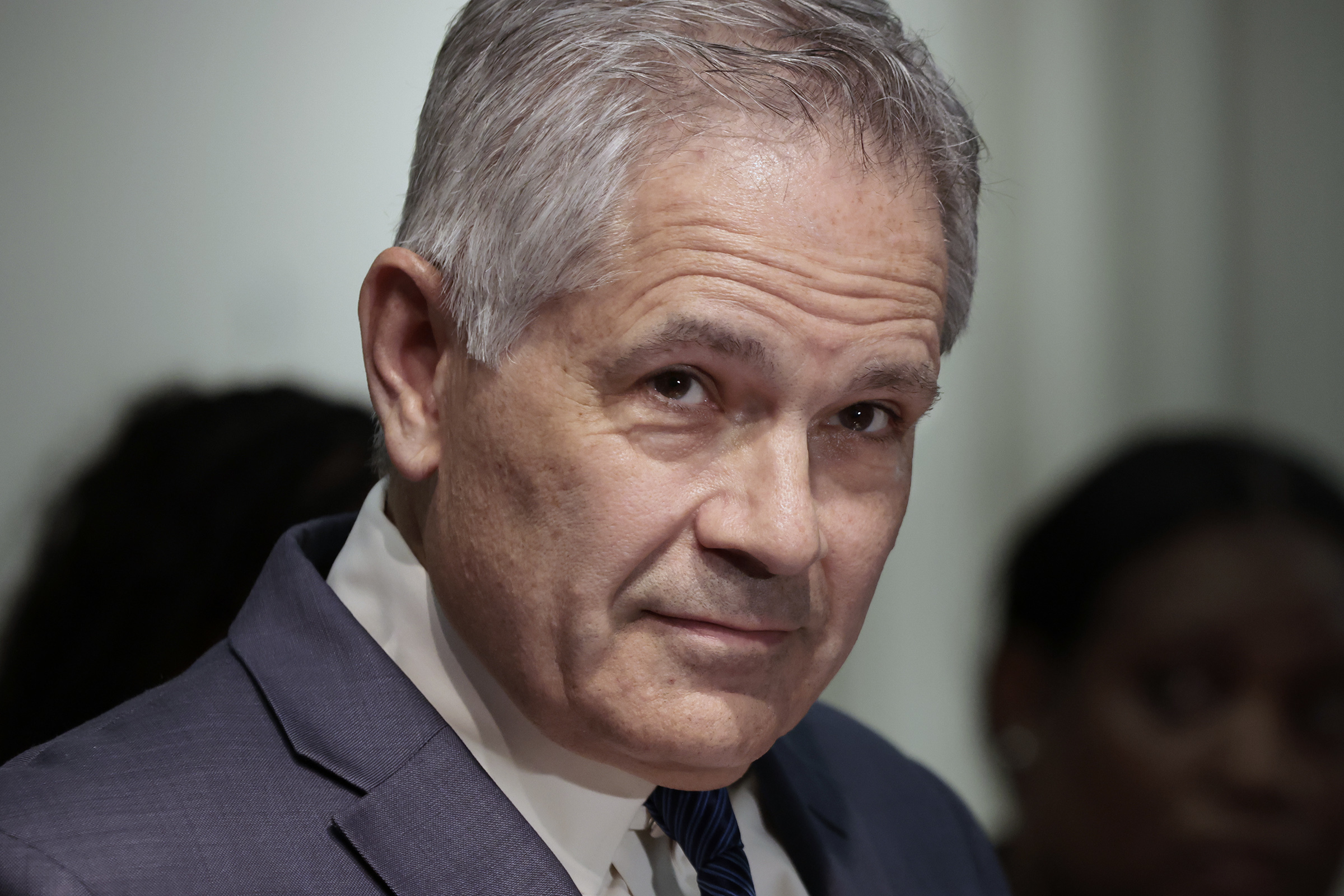
Philadelphia District Attorney Larry Krasner said Wednesday that the federal judge who accused him of potentially breaking the law while overseeing a post-conviction case had reached “baseless,” illogical, and legally unsupported conclusions — and that the judge should be removed from the case because he had acted more like “an advocate against DA Krasner” than an impartial arbiter.
In a series of documents filed in federal court overnight, Krasner took the unusual step of openly criticizing U.S. District Judge Paul S. Diamond — sometimes using strikingly pointed language.
In one brief, signed by Krasner and a subordinate, the district attorney said Diamond’s suggestion that Krasner might be guilty of criminal conspiracy relied on allegations “more closely resembling fever-dream conspiracy theories than evidence.”
Other suggestions of criminality by Diamond — which revolved around actions Krasner took while overseeing the case and his staff — were equally wrong, Krasner wrote.
“When it comes to all of these nominally-serious-but-actually-wafty accusations of criminal conduct, tempered by ‘coulds’ and ‘mights’ and ‘may haves,’ [Diamond’s] analysis rests on nothing of substance,” he wrote.
Then, in a separate nine-page letter signed only by Krasner, the city’s top prosecutor said Diamond’s “factual findings and accusatory legal conclusions twist the truth to the point of breaking in ways that defy logic and employ Orwellian language.”
And if Diamond’s assertions had been made in a setting other than a court case, Krasner said, “these accusations could be litigated as civil claims of defamation, slander, or libel.”
Finally, in a third document, Krasner and Assistant District Attorney Thomas Gaeta wrote that Diamond’s actions had been so out of line that he should no longer oversee the case. At one point, they said the proceedings had become a “circus,” with Diamond the “ringmaster.”
And they said Diamond — who was appointed by President George W. Bush, a Republican — had displayed his biases against Krasner, a Democrat, in a number of ways, including by asking improper questions of witnesses, reaching inconsistent conclusions about which witnesses were credible, and improperly blaming and discrediting Krasner for not testifying — even though Diamond had never asked him to.
Diamond’s conduct, they wrote, “provides a clear and obvious view into the type of unfair and improper proceedings and decisions [Diamond] deigned to make.”
The filings served as the latest chapter in a saga that has been marked by a series of explosive developments about Krasner’s office in recent months. The episode has also raised legal and political questions about Krasner’s future.
Most recently, in mid-September, Diamond filed a stunning memorandum in which he said Krasner and one of his top supervisors, Matthew Stiegler, may have committed crimes including conspiracy, obstruction of justice, or perjury while participating in the underlying case. Diamond also said he had referred the matter to the U.S. Attorney’s Office for potential investigation. Federal prosecutors have declined to comment.
Krasner has consistently disputed the notion that his actions were improper and appealed Diamond’s ruling, which also disqualified him and Stiegler from participating in the case moving forward.
The underlying matter is centered on Dennis Johnson’s attempts to have his 2009 murder conviction overturned; Krasner’s office had once supported that effort, but reversed course earlier this year after some of his staff discovered that a previous prosecutor had made mistakes in her handling of the appeal.
Wednesday’s filings served as Krasner’s most extensive response yet to accusations that he had committed misconduct while his staff tried to rectify those errors in court.
In Krasner’s view, the fact that his office was seeking to correct its own mistakes in open court was just one example of how Diamond’s conclusions — including that Krasner may have conspired to concoct a false cover story about the episode — “cannot logically be reconciled with each other.”
“I know many of the facts found by [Diamond] and conclusions inferred by [Diamond] are not correct from personal knowledge,” Krasner wrote. “I lived it.”
Dispute over ‘false narrative”
The roots of the controversy date to 2022, when then-Assistant District Attorney Jaclyn Mason filed a brief supporting Johnson’s bid to have his conviction overturned.
Krasner was unaware of the case at that time, he said in his new filings. But he became involved this spring, when some of Mason’s supervisors in the law division concluded that she had made significant errors in her brief, and that they needed to try to withdraw it.
Krasner approved a document alerting Diamond to the mistakes and apologizing for Mason’s errors.
Mason, meanwhile, resigned and said Stiegler — her former boss — was most at fault.
Diamond, in his Sept. 15 memorandum, said that in the aftermath of Mason’s resignation, staff in Krasner’s office discussed how the errors occurred. And in those discussions, he said, Krasner and Stiegler worked to create a “false narrative” to blame Mason, including by considering a Stiegler proposal: to review all of Mason’s old cases and find additional errors they could use to cast Mason as a “rogue” prosecutor.
Diamond said such an effort could amount to criminal conspiracy.
But Krasner, in his filings, called that conclusion “baseless,” saying Stiegler’s proposal was to review Mason’s old cases to see if there were additional errors — not to manufacture problems they could improperly attribute to her.
“Nothing in the record supports the Court’s determination that providing a broader account of their competence would have advanced a ‘false narrative,’” Krasner wrote. “They either had or had not made errors in other cases, and there was absolutely no testimony indicating that DA Krasner (or Stiegler, for that matter) suggested submitting false allegations of error.”
In addition, he said, Stiegler’s proposal was never actually pursued once other law division supervisors voiced opposition to it — further diluting any notion that Krasner was seeking to force his staff into lying to Diamond.
“Stiegler proposed a strategy that DA Krasner considered, but DA Krasner also considered and accepted the Law Division supervisors’ advice that it was inadvisable,” Krasner wrote. “This is not misconduct.”
‘Reasonable’ consequences?
Diamond, in his Sept. 15 memorandum, also took issue with Krasner threatening “consequences” for prosecutors who told the judge about another issue roiling the district attorney’s office: whether to refer Johnson’s case to the state attorney general’s office.
The law division supervisors handling the case after Mason’s resignation — Katherine Ernst, Steven Wildberger, David Napiorski, and Peter Andrews — generally agreed that was the appropriate course of action because of the inner-office drama consuming the matter. And they repeatedly urged Krasner to refer the case to avoid what they viewed as a conflict of interest.
But Krasner disagreed. And in his filings, he said that as the referral discussions took place over several weeks, he had consulted with several ethics experts who generally agreed there was no conflict necessitating a referral.
As for the threat of consequences, he said, he was not seeking to prevent his staff from telling Diamond the truth about their deliberations — which the judge later said could amount to obstruction of justice. Instead, Krasner said, he was seeking to prevent them from submitting court documents without his approval.
“That is particularly so where, as here, those pleadings are premature, legally incorrect, and unnecessary,” Krasner wrote. “It is reasonable to expect consequences for filing a pleading the District Attorney disapproves of while he is still examining the issue and determining the correct course of action.”
Seeking the judge’s recusal
In addition to disputing Diamond’s conclusions about his actions — and whether they constituted crimes — Krasner went on to say the judge should no longer oversee the case, which remains pending.
He said Diamond’s “apparent bias is evident from a number of remarkable circumstances,” all of which should lead to his removal, according to the district attorney.
One example, Krasner said, was that as Diamond questioned witnesses in his courtroom this summer about what happened in the case — including asking questions of lawyers who still work in Krasner’s office — the judge “departed from [his] role as a neutral arbiter and undertook an active inquisitorial and advocacy role.”
“The Court’s questions and assertions reflected the Court’s apparently preconceived view that the DAO’s conduct in all cases is inherently suspect,” Krasner wrote.
Diamond also made “selective credibility determinations” about which witnesses he believed and which ones he discredited, the DA wrote. And he took particular issue with what he cast as Diamond’s reluctance to criticize Mason: Krasner, in his filing, said there were “many additional reasons to question the honesty of Mason’s testimony, all of which were ignored by the Court.”
Then there was the issue of Krasner’s failing to testify.
Diamond, in his memorandum, blamed Krasner for not taking the stand. But Krasner, in his filing, said Diamond — who scheduled the hearings and set the witness list — “appears to have taken pains to avoid having DA Krasner testify.”
In any case, he said, it was improper for Diamond to assume that Krasner’s lack of testimony was somehow “concession by silence.”
Overall, Krasner said in his motion, the judge “served as a prosecutor for DA Krasner and his office,” thereby requiring his recusal from the matter.
In his nine-page letter, Krasner went even further, saying he believes Diamond should be recused “from this matter and every other matter involving the Philadelphia District Attorney’s Office for the foreseeable future.”
It was not immediately clear how Diamond might respond to such a request. On Wednesday, he said any additional paperwork on that issue must be filed within a week.
Four plays. That’s how long it took Eagles backup quarterback Andy Dalton to throw an interception after he briefly replaced Jalen Hurts on Monday.
This turnover, a major turning point in the Eagles’ 27-7 loss to the Bears, shined a national spotlight on the team’s messy backup quarterback situation.
Naturally, Nick Sirianni was asked a direct question about it in his press conference on Wednesday: “Do you feel like Andy Dalton is your backup quarterback?”
Sirianni gave a minute-long response — though he didn’t exactly answer the question.
“You know, I have a lot of faith in both of those guys,” Sirianni said. “Obviously, you know what happened in the game. We don’t want turnovers by anybody. Whether it was that [play], whether it was Jalen’s interception, whether it was Tank [Bigsby’s] fumble, that has not been our winning formula. We can’t turn the ball over. And we did in a situation and lost points from it.
“I still have faith in that entire [quarterback room]. With Tanner [McKee], I still have faith in Andy, I still like the way that Cole [Payton] is developing. And so, yeah, I still love that room.”
Minutes later, another reporter followed up: “You didn’t really answer [The Inquirer’s] question. Is there a chance Tanner might be No. 2?”
Sirianni responded, “Like I said, I answered how I wanted to … I’ve got a lot of faith in that everybody in that room.”
Sirianni is likely deflecting to keep confidence high in the quarterback room, but he didn’t exactly give Dalton a ringing endorsement.
This comes weeks after the Eagles decided to keep four quarterbacks on their initial 53-man roster. Dalton and McKee alternately struggled at times during their preseason quarterback competition, which left the Eagles in a tough spot — they didn’t have a great backup or an attractive enough trade target.
After a bad preseason showing and even worse debut, Sirianni might have no choice but to shake up the depth chart and put McKee ahead of Dalton. The 26-year-old McKee — who was once viewed as a promising prospect — threw for 263 yards, one touchdown and one interception in three preseason games.
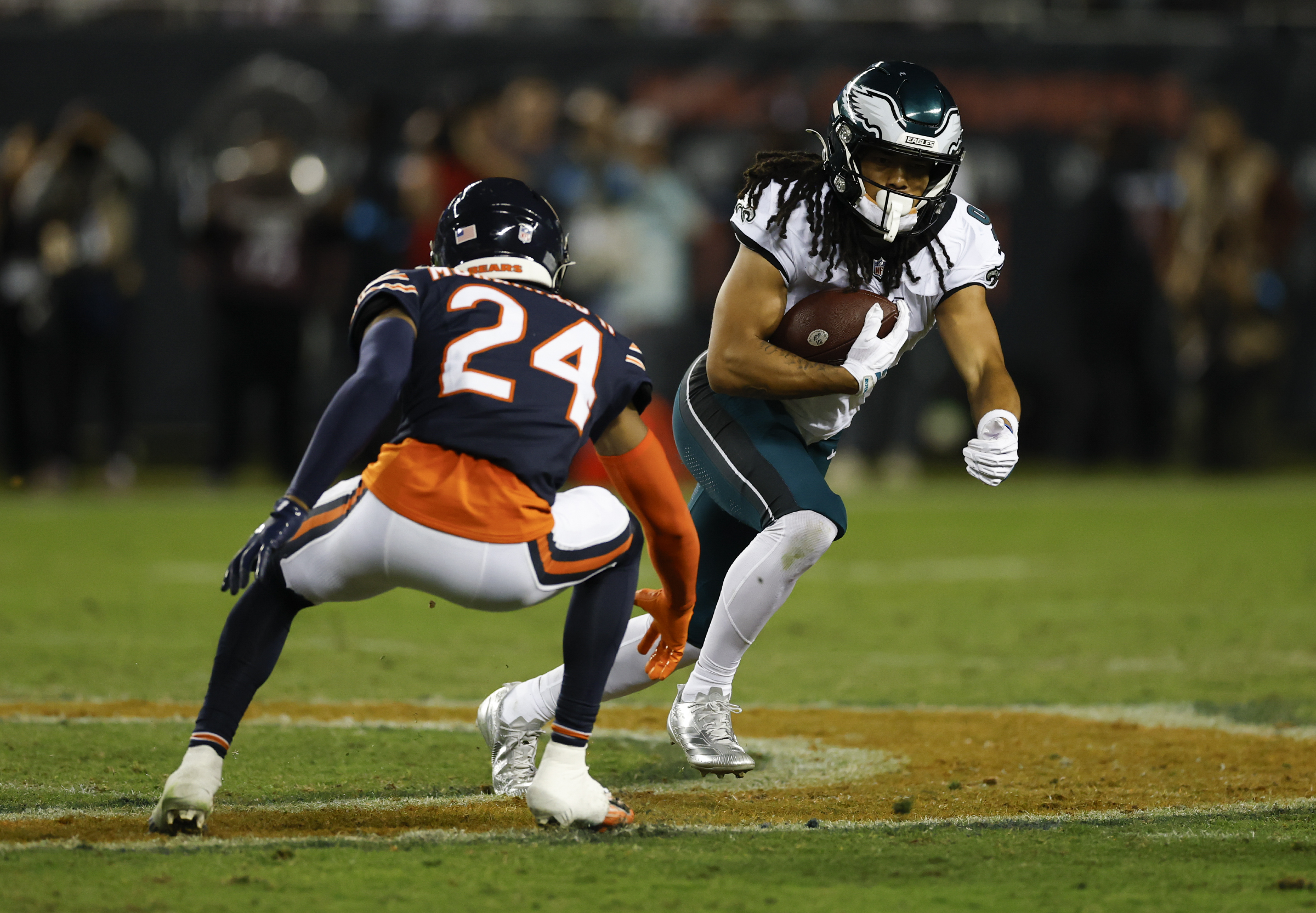
Makai Lemon had the longest reception of his young career on Monday night. Yong Kim / Staff Photographer
Is Makai Lemon improving?
Rookie first-round pick Makai Lemon has not had the best start to his NFL career. He has 38 yards on seven receptions and he’s been targeted nine times.
He’s shown glimpses — like when he snagged a career-best 19-yard catch on the Eagles’ opening drive on Monday — but he hasn’t lit up the stat sheet the way he’d like to.
Sirianni still isn’t panicking. In fact, the Eagles head coach said the 22-year-old has given him an increased comfort level.
“Makai gives you confidence as he’s getting more and more touches,” Sirianni said. “The trust has to build, obviously, in a different way. It’s got to build through practice, but it’s got to build also through the things that he consistently does on the field without the ball in his hands.
“And I think that’s what’s been good with Makai. He gives you a lot of faith that he knows what he’s doing in all situations. And when the ball starts to come to him, more chances will come to him because he consistently does his job with other factors, without the ball on his hands. And I think he’s scrappy. He is consistently on the same page and, he blocked his butt off the other day in that game and played a solid game.”
Lemon was one of college football’s top receivers in 2025, becoming the second Southern Cal player ever to win the Biletnikoff Award for most outstanding receiver in college football. He caught 79 passes for 1,156 receiving yards and 11 touchdowns in his final collegiate season.
The Eagles took him the 20th pick of the NFL draft in April, dealing with the rival Cowboys in order to move up and do so.
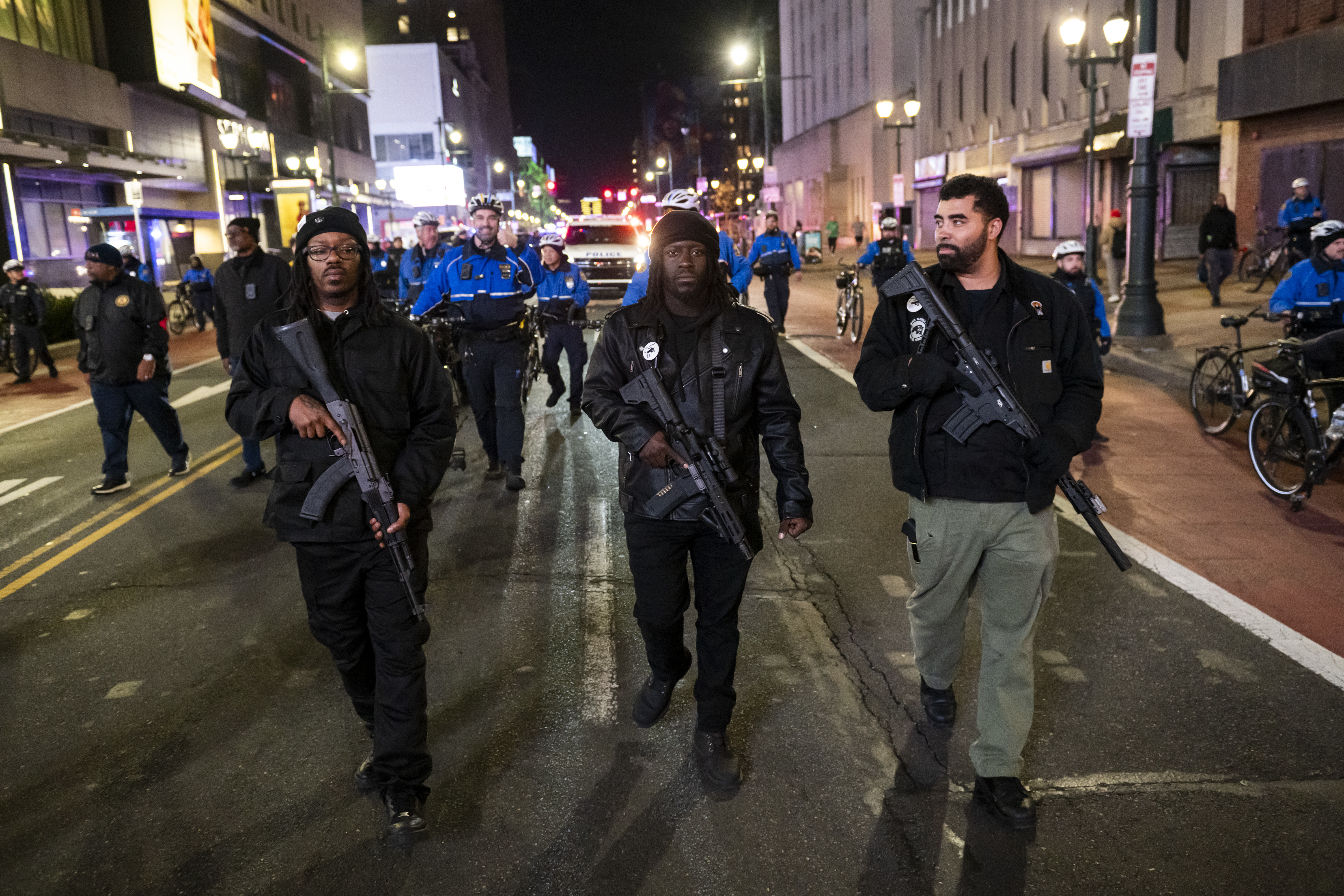
The leader of a Philadelphia offshoot of the Black Panther Party for Self-Defense was charged with a firearms crime for carrying a concealed gun without a permit in the city of Chester — and the group’s growing visibility in the Delaware County community is sparking a clash with the city’s mayor.
Paul Birdsong, who founded Philly’s Panther group, was arrested this summer during what the group says was an armed community patrol of Chester’s streets.
Birdsong had been carrying two holstered handguns, one of which police said was partially obstructed by his waistband and constituted carrying a concealed weapon, according to the affidavit of probable cause for his arrest.
Birdsong, 40, is out on bail and appeared earlier this month in Magisterial District Court, where a judge ruled he should stand trial for that crime.
The judge dismissed two counts of disorderly conduct and one count of resisting arrest stemming from the July 11 incident, court records show.
Birdsong’s arrest, as well as the arrest of another Panthers member in Chester in August, marked the latest run-in between police and the armed citizens group, which is styled after the 1960s political and militant organization. The Panthers first made headlines this winter during anti-ICE protests during which they carried assault-style weapons in Center City.
Panthers members say they are Second Amendment advocates and regularly conduct patrols in the name of public safety. They say the guns are not meant to intimidate, but to deter crime and encourage responsible firearms ownership. The group also holds weekly giveaways of food and essential supplies for those in need.
To address the Panthers’ presence, Roots and members of Chester City Council met with Birdsong and other members in a closed-door meeting on Tuesday.
Councilmembers appeared to have left the meeting with supportive views of the group. But tensions flared when Roots grew frustrated during talks and abruptly left the gathering early, according to Birdsong.
Roots declined to comment Tuesday, saying only that he had not been aware of the Panther members’ arrests. He did not immediately respond to an additional request for comment Wednesday.
A spokesperson for DOJ did not return a request for comment on the status of the investigation. A police spokesperson referred The Inquirer to the city’s law department, which declined to comment.
After the restrictions in Philadelphia, Panthers became active in Chester, where members have patrolled in the past.
In July, Birdsong was armed when he was stopped by a police officer near Barclay and West 5th Streets, according to the affidavit of probable cause for his arrest.
The officer said that he recognized Birdsong from a past encounter in Chester, and that he stopped him after seeing one of his handguns holstered “inside his right pants pocket with the majority of the firearm being concealed from view,” the document said.
Birdsong questioned why he was stopped and began to record the interaction, the affidavit said. He began to “curse and yell” when additional officers arrived, and he was detained, the document said.
In an interview this week, Birdsong disputed the officer’s account. He said that the gun was clearly visible and that he believes the enforcement was racially motivated.
“They’re arresting us as an effort on their part to bully us, to scare us,” he said.
Carrying a firearm in the open without a license is legal in Pennsylvania — but not in Philadelphia, where a license is required to carry either open or concealed.
Birdsong’s lawyer, Lyandra Retacco, said the matter would be resolved in court.
The July incident was not the only time Panthers have clashed with Chester police.
On Aug. 28, member William Ozah was charged with disorderly conduct and evading arrest after police said he ran from an officer who attempted to stop him for having a knife protruding from his pants pocket, according to the affidavit of probable cause for his arrest.
The officer used a Taser to subdue Ozah, the document said. During the chase, the officer said, Ozah tried to reach into a satchel, which he believed concealed a firearm.
After detaining Ozah, officers recovered a knife and a Bryna SD pepper-ball pistol — a less-lethal firearm that uses compressed gas to shoot projectiles filled with a chemical irritant.
He was held for court on both charges, court records show.
Meanwhile, Panthers have continued their Chester presence.
In addition to armed patrols, the group is handing out informational pamphlets to those curious about the group’s mission: to “protect and defend ourselves and our beautiful Black people,” it said.
The group had arrived, the pamphlet said, because “people reached out to us for help.”
This article has been updated to reflect comments made by Birdsong’s attorney.
The Federal Trade Commission has opened a broad investigation into the safety of artificial intelligence systems made by Anthropic and OpenAI, a senior agency official said Wednesday.
The full extent of the probe was not clear, but the FTC has wide authority to investigate unfair and deceptive practices that hurt American consumers. The official spoke on the condition of anonymity to describe an investigation that has not been made public.
The investigation could provide backing for the Trump administration’s position that existing laws are sufficient to hold artificial intelligence companies accountable, as officials seek to resist a push by some in the industry and Congress to establish a new system of regulations for the technology. The probe was first reported by the New York Post.
Andrew Ferguson, the chair of the FTC, said last week that the government should not immediately jump to adopt new rules before examining the role of existing laws and should treat the AI industry’s calls for regulations with “deep suspicion.”
“There’s no easier way for incumbents to insulate themselves from competition than to enlist Washington to come alongside them and build a wall and a moat around their existing technologies,” he said at an event hosted by news agency Reuters.
Anthropic, which makes the Claude family of AI models, and OpenAI, which makes ChatGPT, did not immediately respond to requests for comment.
Officials have been grappling for weeks with how to respond to growing alarm within the industry that the latest generation of AI systems run the risk of getting out of control. Leading companies have disclosed multiple instances of their tools getting loose on the internet, including one in which a swarm of agents from OpenAI broke into another AI firm.
Anthropic and OpenAI chief executives have proposed a coordinated slowdown to give themselves more time to focus on safety measures. OpenAI said this week it had canceled the planned release of a new model on safety grounds.
The Trump administration has said it largely falls to the industry to guarantee the safety of its own products. President Donald Trump and top AI executives enshrined that approach in a joint accord signed at the White House on Tuesday.
“I’m seeing tremendous self-policing,” Trump said at a news conference after the signing.
Still, officials have left the door open to federal enforcement actions. Vice President JD Vance said at event later Tuesday that it would be up to the Justice Department and FTC to serve as the government’s watchdogs over the companies.
“They have to build products that are safe and good for American consumers,” Vance said. “The government actually has preexisting laws on the books where if you build something that gets unleashed on the internet, that is used as a tool for cyberwarfare, then you have responsibility for the products you develop.”
BAGHDAD — U.S. forces formally withdrew from Iraq on Wednesday, ending a two-decade military presence that stoked years of devastating bloodshed and leaves behind a battered nation struggling to unshackle itself from its two most powerful, and now warring, allies.
After toppling Saddam Hussein in 2003, the brutal dictator who ruled Iraq for nearly 24 years, U.S. forces are making their second withdrawal from the country.
The U.S. invasion and subsequent occupation, which ended in 2011, left a country reeling from sectarian bloodletting and militant insurgencies that cost nearly 4,500 U.S. lives and killed more than 115,000 Iraqis, according to the most modest counts.
U.S. forces ultimately returned three years later — this time to lead the international coalition fighting the Islamic State group, the jihadi force that once seized swaths of Iraq and Syria and became notorious for its slaughter of Shiite Muslim Iraqis, public killings of hostages, and torture and enslavement of women from Iraq’s Yazidi minority.
With the end of Operation Inherent Resolve — the U.S. military’s official name for the multinational campaign against the Islamic State — the last of the 2,500 U.S. forces stationed in Iraq this year are now gone.
“The coalition successfully completed its organized withdrawal operation from Irbil,” Rear Adm. Liam M. Hulin, head of the joint task force for Operation Inherent Resolve, announced during a ceremony held by U.S. and Iraqi officials in Baghdad. Irbil, capital of Iraq’s semiautonomous Kurdistan region, hosted the last coalition base in Iraq.
“I stand before you at this historic moment, when a nation reclaims its destiny,” Hulin said, in a speech given in Arabic.
Promising that U.S. and Iraqi forces would forge new security partnerships, Hulin urged Iraq to remain vigilant, citing an Arabic proverb, “Gird yourself for the jackal with the belt of a lion.”
Physical reminders of decades of war are being erased every day. The blast walls that once snaked through Baghdad have come down. Malls, restaurants, and construction sites are buzzing in a country determined to reclaim the rhythms of normal life stolen by years of car bombs.
Iraqis’ hard-won gains look more precarious in a region convulsing from the turmoil of the U.S.-Israeli war on Iran. Iraq is struggling to navigate its critical relationships with Iran, its powerful neighbor, and with its most important ally, Washington, wary of letting the exit of U.S. troops in the country embolden Iran.
The U.S. withdrawal agreement was struck between the Iraqi government and the Biden administration in 2024. That President Donald Trump’s administration followed through with the Sept. 30 deadline — despite the war with Iran — reflects broader U.S. determination to step back from the region.
For years, there has been widespread American fatigue with so-called forever wars, as the conflicts in Iraq and in Afghanistan came to be known.
Even as Iraq commemorates the U.S. withdrawal this week with a three-day “celebration of sovereignty,” the country is under huge pressure from the Trump administration to disarm Iran-backed Shiite Muslim militias, many of which are defying state efforts to bring them under control.
The last U.S. forces leave a troubled American legacy. Iraq suffered huge numbers of civilian casualties and a cycle of sectarian violence between Iraq’s Shiite Muslim majority, empowered after years of repression by the Hussein government, and the Sunni minority, stripped of privileges it once held under his rule.
U.S. forces also committed many abuses themselves — including the torture of Iraqi detainees at Abu Ghraib and the use of private defense contractors such as Blackwater, whose extrajudicial killings of civilians fueled deep resentments over American impunity.
Despite these grievances, Iraqis have been watching the U.S. departure with a sense of trepidation.
“My wife lost her eyesight from the shrapnel of an American bullet,” said Omar al-Husseini, a photographer from Mosul, the city at the heart of the Islamic State’s self-proclaimed caliphate. “My uncle was killed by ISIS, after being paralyzed by an American bullet,” he said, using an alternative name for the Islamic State. “But today, when we speak about the Americans’ departure, our happiness is mixed with fear.”
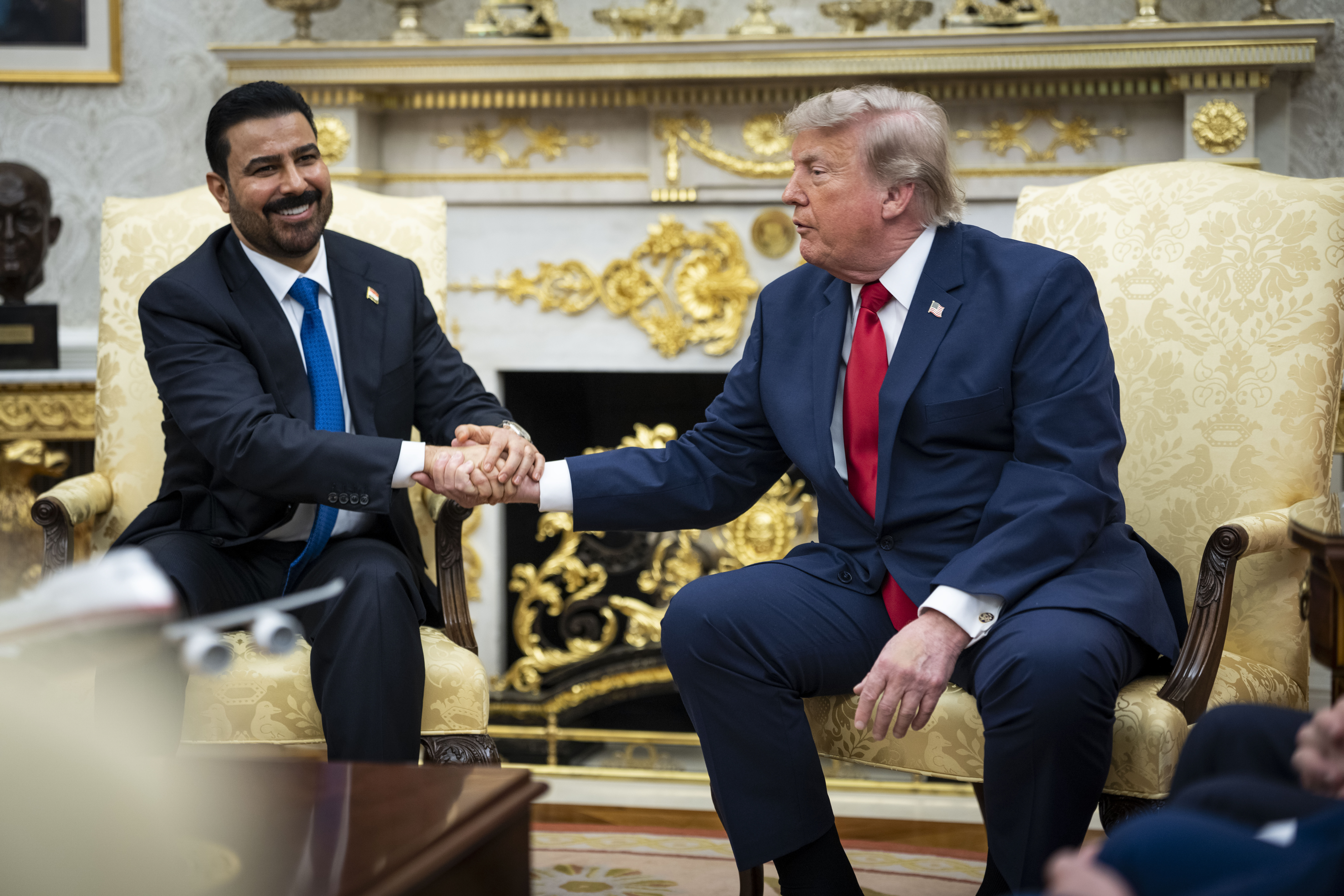
Under the leadership of the novice prime minister, Ali al-Zaidi, Iraq faces the daunting task of reining in the vast array of militias.
First established with Iranian support to fight the U.S. occupation, the militias killed hundreds of U.S. soldiers, and the sectarian bloodshed they helped foment killed tens of thousands of Iraqis. In 2014, when Iraqi Shiites mobilized to fight the Islamic State, the militias multiplied. In the years since, the thousands-strong militias have grown in power — not only through military might but also by forming political parties that deeply embed them in the state.
Al-Zaidi has pledged to bring the militias under state control by mid-2027. But it is far from clear that he can deliver. The stakes are high: Through Iraq’s U.S.-based bank account for oil payments, Washington controls the physical shipment of dollars Iraq earns and has shown itself willing to use that power after temporarily halting the flow this year.
Iran is determined to preserve the militias, which have proved to be valuable partners in launching strikes during the war, in sowing regional chaos and in inflicting drastic costs on the global economy.
In a recent New York Times interview, al-Zaidi said, “Every Iraqi today wants his country to have complete sovereignty; they want power to be exclusively in the hands of the state,” and he pledged to end “the law of the jungle.”
The unforeseen consequences of withdrawal
Many Iraqis worry how their country will fare in this struggle.
“We fear Iraq could be swallowed up,” said Ahmad al-Shammari, an employee at the Education Ministry in Fallujah, a city that came to symbolize the fragile victories of the first U.S. military presence in Iraq.
Fallujah suffered the deadliest and most destructive battles to crush insurgents during the U.S. occupation, only to become the first city to be seized as Islamic State militants swept the country in 2014.
When the U.S. forces returned to spearhead a multinational coalition to defeat the jihadi force, the struggle to rout the Islamic State reduced huge parts of Iraqi cities to rubble.
It left an untold number of dead, displaced millions from Iraq’s Sunni minority and brought many more years of sectarian strife.
The question for many ordinary Iraqis today is what unforeseen consequences this latest U.S. departure may have on their lives, whether that is a jihadi resurgence or the state’s imminent confrontation with Iran-backed militias.
“I remember what happened after the withdrawal in 2011,” said Sarkawt Ahmad, 26, a shopkeeper in northwestern Sulaymaniyah, in the Kurdistan region of Iraq. “Imagine what these pro-Iranian groups will do to us in the absence of the international coalition.”
Some regional security experts argue that it was the continued U.S. presence in Iraq that allowed Iran-backed militias to try to justify their existence and their arms.
“We can’t just shape-shift these missions from one raison d’etre to another, which is what we’ve done for 25 years,” said Adam Weinstein, a longtime proponent of U.S. forces’ ending their mission in Iraq who is the deputy director of the Middle East Program at the Quincy Institute, a research group.
At the ceremony marking the U.S. withdrawal Wednesday, al-Zaidi expressed Iraq’s thanks to the United States and to all other countries who supported the fight against the Islamic State for more than a decade.
“The conclusion of the international coalition’s mission does not mean the end of our battle against terrorism,” he said. “It marks Iraq’s transition to a phase in which it assumes full responsibility for its security and stability.”
Kurds are vulnerable under a new security order
Though both countries have pledged to maintain robust collaboration, the United States and Iraq have still not finalized plans for their security relationship moving forward. In a statement, the Defense Department said it would continue to provide “targeted training and intelligence support” to Iraq.
The last time U.S. forces left Iraq, the United States maintained one of its largest embassies in the world there. Today, the U.S. diplomatic presence is a small fraction of that, said Renad Mansour, an Iraq analyst at Chatham House, a research institute based in London.
He said the shift reflected Washington’s desire to extricate itself from the Middle East: “In the bigger picture, this shows the U.S. is no longer what it used to be — but, also, its priorities are no longer what they used to be.”
This situation has particularly unnerved Iraq’s semiautonomous Kurdistan region in the north, which saw how the Trump administration’s withdrawal of U.S. forces from Syria’s Kurdish-controlled northeast forced the region to come under central government control.
Iraqi Kurds, who began establishing sovereignty in their region through U.S. air support in the 1990s, feel the most vulnerable under Iraq’s new security order. As one of the closest U.S. security partners in the region, Iraqi Kurdistan has come under repeated attacks by Iran and its allied Iraqi militias this year.
Kurdish officials argue this reflects a serious problem for Iraqi security more broadly. “There is no air defense system neither in the Kurdistan region nor in Iraq as a whole,” said Kifah Mahmoud, an adviser to Masoud Barzani, the first president of Iraqi Kurdistan. “This creates a sense of anxiety and uncertainty.”
Baghdad’s efforts to assert its sovereignty have been repeatedly undermined in recent months by multiple incidents showing its lack of control over its sky and borders.
Most recently, Saudi Arabia accused Iraq of being the origin site of the strike that temporarily shut down its east-west pipeline, which provides 4% of global oil supplies. Iraqi officials suspect Iraqi militias facilitated an attack by Iranian operatives.
At the same time, Iraqi militias point to the fact that Israel set up covert bases in the Iraqi desert during the war with Iran. And for years, Turkish forces have controlled territory in northern Iraq, though Iraqi and Turkish officials recently announced plans for a phased withdrawal.
Such gaps in Iraqi sovereignty may become the biggest vulnerability in the government’s campaign to control the militias.
Days before the formal end of the U.S. military presence, Abu Mujahid al-Assaf, a leader from Kataib Hezbollah, one of Iraq’s most powerful Iran-backed militias, issued an ominous warning to the government if it kept complying with new U.S. sanctions against Iran.
“Let Mr. al-Zaidi and those standing behind him know: A government that does not work for the benefit of the people will be brought down through various means,” he wrote in a statement.
The militias are trumpeting the official U.S. withdrawal day not as a success of the anti-Islamic State campaign, but of their own. They announced an afternoon celebration on the streets of Baghdad on Wednesday under the slogan: “We won’t keep you.” They called the withdrawal an “occasion made possible by the blessed blood of the martyrs and the patience of the fighters in the Iraqi Islamic Resistance.”
Many Iraqis who reject the militias have painful memories of the U.S. presence in Iraq. Among them is Awatif al-Azawi, 57, who blames the United States for the death of her son, who she says was killed in the crossfire between militants and U.S. forces in their hometown, Fallujah.
“I used to love the Americans because they delivered us from the oppression of Saddam Hussein,” she said. “We unfortunately later discovered that the U.S. military’s oppression and cruelty were worse than Saddam.”
On the first night that U.S. forces no longer maintain a presence in Iraq, she said, “I will bake a cake at home, light candles and blow them out to celebrate.”
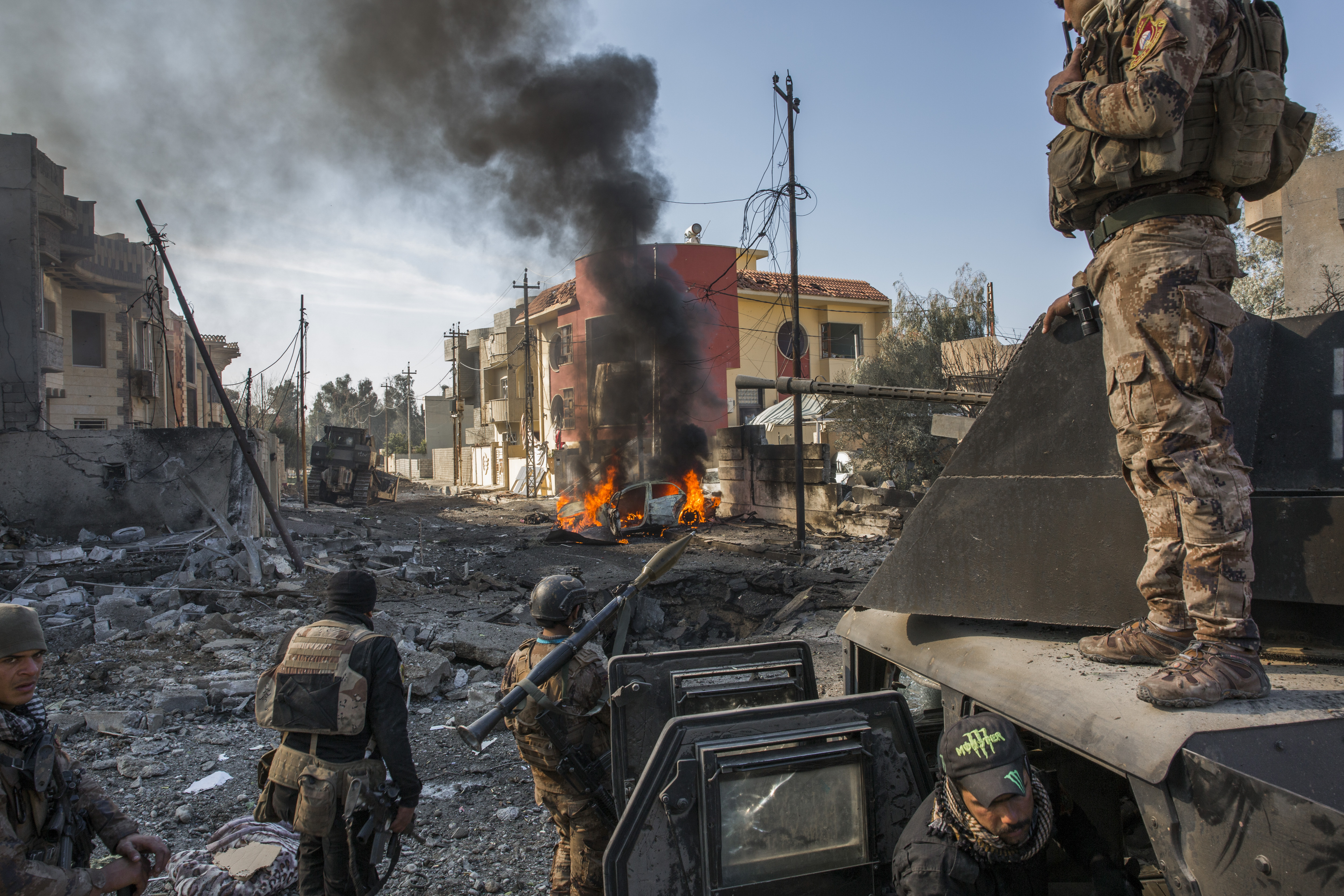
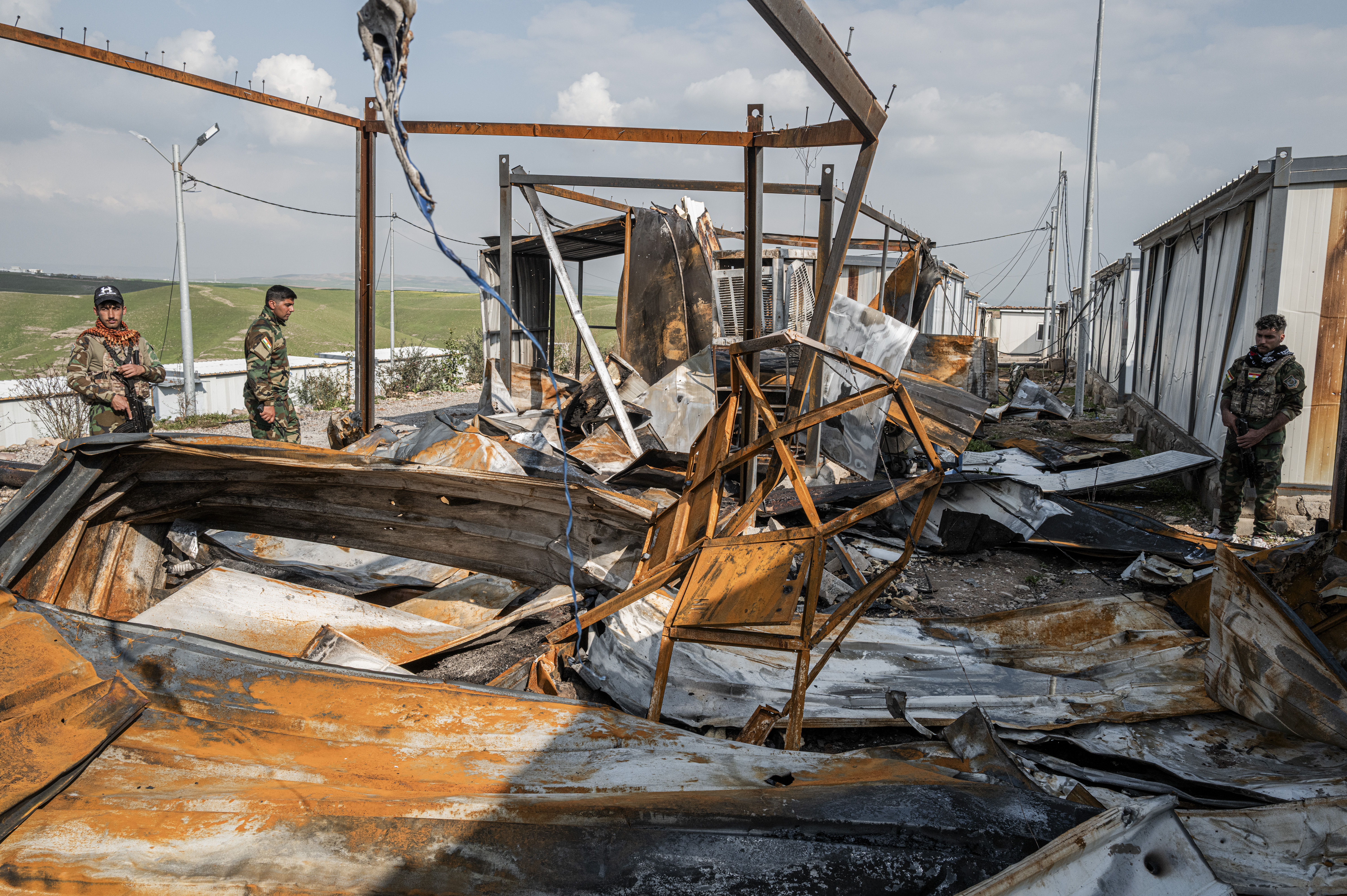
FILE — Iraqi soldiers survey the aftermath of an Islamic State suicide bombing in Mosul, Iraq, Jan. 16, 2017. Some Iraqis are celebrating the end of an American military presence that unleashed waves of bloodshed. Others fear what happens next for their country, trapped between Washington and Tehran. (Ivor Prickett/The New York Times)Ivor PrickettFILE — Fighters from the Kurdistan Freedom Party walk among destroyed buildings following an Iranian drone attack at their base in Erbil, Iraq, March 17, 2026. Some Iraqis are celebrating the end of an American military presence that unleashed waves of bloodshed. Others fear what happens next for their country, trapped between Washington and Tehran. (Daniel Berehulak/The New York Times)Daniel Berehulak
Tyrese Maxey helped bring LeBron James to Philadelphia. Now, James is helping explain how the Sixers guard influenced his decision beyond sending a few text messages.
On Wednesday, Time Magazine named Maxey to its 2026 TIME100 Next list, recognizing him among the world’s most influential rising stars. His new teammate, James, wrote the accompanying tribute.
“Tyrese Maxey gets better every season, and he’s really just getting started,” James wrote.
James pointed not only to Maxey’s development as a player, but also to his growth as a leader. He acknowledged something that has become increasingly clear since James arrived in Philadelphia this summer: Maxey played a significant role in getting him here.
Congratulations to @TyreseMaxey for being named to the TIME100 Next 2026 list, recognizing the world’s most influential rising stars! 👏
James wrote that the two have trained in the summer together for five years and said their relationship away from basketball influenced his decision to sign with the Sixers.
It is a relationship years in the making. Maxey first worked out with James before entering the NBA in 2020, and they continued training together each offseason.
Maxey had even floated Philadelphia to James during a previous free-agency period, though the possibility became much more realistic this summer after the Sixers acquired Jaylen Brown from the Boston Celtics and James decided to leave Los Angeles.
James said at Sixers media day Monday that he had a “great relationship” with Maxey and confirmed they had multiple conversations about Philadelphia before he signed.
Sixers player Tyrese Maxey visited his barbershop, Faheem’s Hands of Precision, to promote his new signature sneakers, New Balance Maxey V1s earlier this month.Monica Herndon / Staff Photographer
The latest honor among honors
The Time recognition is the latest marker of Maxey’s continued rise.
The 25-year-old averaged career highs of 28.3 points and 6.6 assists last season. He earned his second All-Star selection and started the game for the first time. He was later named third-team All-NBA, the first All-NBA honor of his career.
Earlier this month, ESPN ranked Maxey as the NBA’s No. 11 player entering the 2026-27 season — ahead of new teammate Brown, who ranked 14th, and James, who came in at No. 18. Maxey is a two-time All-Star, the 2023-24 NBA Most Improved Player, and was All-NBA third team last season.
Video: Sixers players react to being teammates with LeBron James at media day
Maxey joins another Philadelphia star who recently made the jump onto Time’s radar.
Jalen Hurts was selected for the TIME100 Next list in 2023, with Peyton Manning writing his tribute after Hurts led the Eagles to the Super Bowl and signed a five-year contract extension. Two years later, following the Eagles’ Super Bowl LIX championship, Hurts graduated to TIME’s main list of the world’s 100 most influential people, with Derek Jeter writing his tribute.
In addition to rest, healthy food, and hydration, there are a few at-home remedies that many doctors recommend to help treat the common cold.
Here are three science-backed ways to soothe your throat, calm your cough, and help you recover sooner.
Honey
Honey coats the throat and “can reduce your cough fairly significantly,” said Geeta Sood, an assistant professor and epidemiologist at Johns Hopkins University. Also, because it calms coughs, it can indirectly help sore throats. Not to mention, it has antibacterial properties.
Studies have shown that honey can reduce cough frequency and severity. Many studies have focused on children, but it’s important to note that the American Academy of Pediatrics does not recommend giving any kind of honey to babies younger than 1 year of age because it can contain bacterial spores that can lead to potentially life-threatening infant botulism. (In adults and older children, the spores can’t grow into toxin-producing bacteria.)
A review of randomized controlled trials in children showed that honey may have similar benefits as the over-the-counter cough medicine dextromethorphan and may be better than diphenhydramine, an antihistamine, at reducing the frequency of coughs. (Over-the-counter cough medications are not recommended for children younger than 4.)
And a small 2023 study found that gargling with one tablespoon of honey mixed in about one teaspoon of water helped ease pain from a tonsillectomy, a surgery to remove the tonsils.
To try it at home: You can take a teaspoon of honey a few times per day to help with your cough and sore throat. Alternatively, you can add it to hot tea or a few ounces of hot water, but it may be less effective the more you dilute it, said Sharon Bergquist, an internal medicine physician and associate professor at the Emory University School of Medicine.
Bergquist noted that taking a dose before bed to help ease your symptoms may help you sleep. “Typically, by the end of the day, people cough more as talking tends to irritate the throat and trigger more coughing,” she said.
Saline rinses
Nasal rinses — using a saline solution to clear out your nasal passages — is an at-home remedy that may help temporarily clear congestion and soothe irritated sinuses, and it comes recommended by the American Academy of Otolaryngology.
Bergquist said saline rinses can help reduce the thickness of nasal secretions, which also can help sore throats and can alleviate some of the dryness that comes with blowing your nose. “It’s not necessarily going to make nasal congestion significantly better, but I do think that it’s very soothing, especially in children where the options are probably a little bit more limited,” she said.
Small studies have shown that they may help treat nasal irritation and inflammation. One review found that nasal saline irrigation may help relieve nasal symptoms associated with upper respiratory infections.
To try it at home: Nasal rinsing can be done with a nasal irrigation device, such as a neti pot, or an over-the-counter nasal saline spray. If you choose to go with a device, you can make a homemade saline solution for it by mixing 3 teaspoons of non-iodinated salt and 1 teaspoon of baking soda, then taking 1 teaspoon of that mixture and dissolving it in 1 cup of sterile, distilled, or boiled (and cooled down) tap water. (Never use tap water unless it’s boiled; tap water can contain germs such as the “brain-eating amoeba” Naegleria fowleri.)
The ready-made saline sprays take the guesswork out of it. To use, tilt your head to the side, insert the nozzle into one of your nostrils, and spray the mist. Then repeat on the other side.
Zinc
Zinc is important for a healthy immune system and metabolism. Adult women should get eight milligrams of zinc from their diets each day and men 11 mg, according to federal health authorities. Because your body doesn’t produce zinc, you have to get it from zinc-rich foods including meat, fish, and seafood.
You may have also noticed zinc supplements, sold as over-the-counter lozenges or quick-dissolve tablets, at the drugstore. A 2024 review showed that while zinc is unlikely to prevent a cold, it may help shorten the duration of your symptoms by about two days.
Nasal sprays, however, are not recommended. After the Food and Drug Administration issued a public health advisory in 2009 about the link between some zinc nasal products and long-lasting or permanent loss of smell, many manufacturers removed zinc from their nasal sprays.
To try it at home: As with any medication or supplement, before taking zinc, consult your healthcare provider, as zinc can interact with some medications. Bergquist recommends starting zinc within the first 24 hours after you notice cold symptoms. A common daily dose used in studies is about 80 milligrams, which may be split up into multiple lozenges per day. But there are possible side effects, especially with higher doses, including an upset stomach.
In addition to these home remedies, “the motherly advice of staying well hydrated and getting good rest are going to help with recovery just as much as any over-the-counter remedy,” Bergquist said.