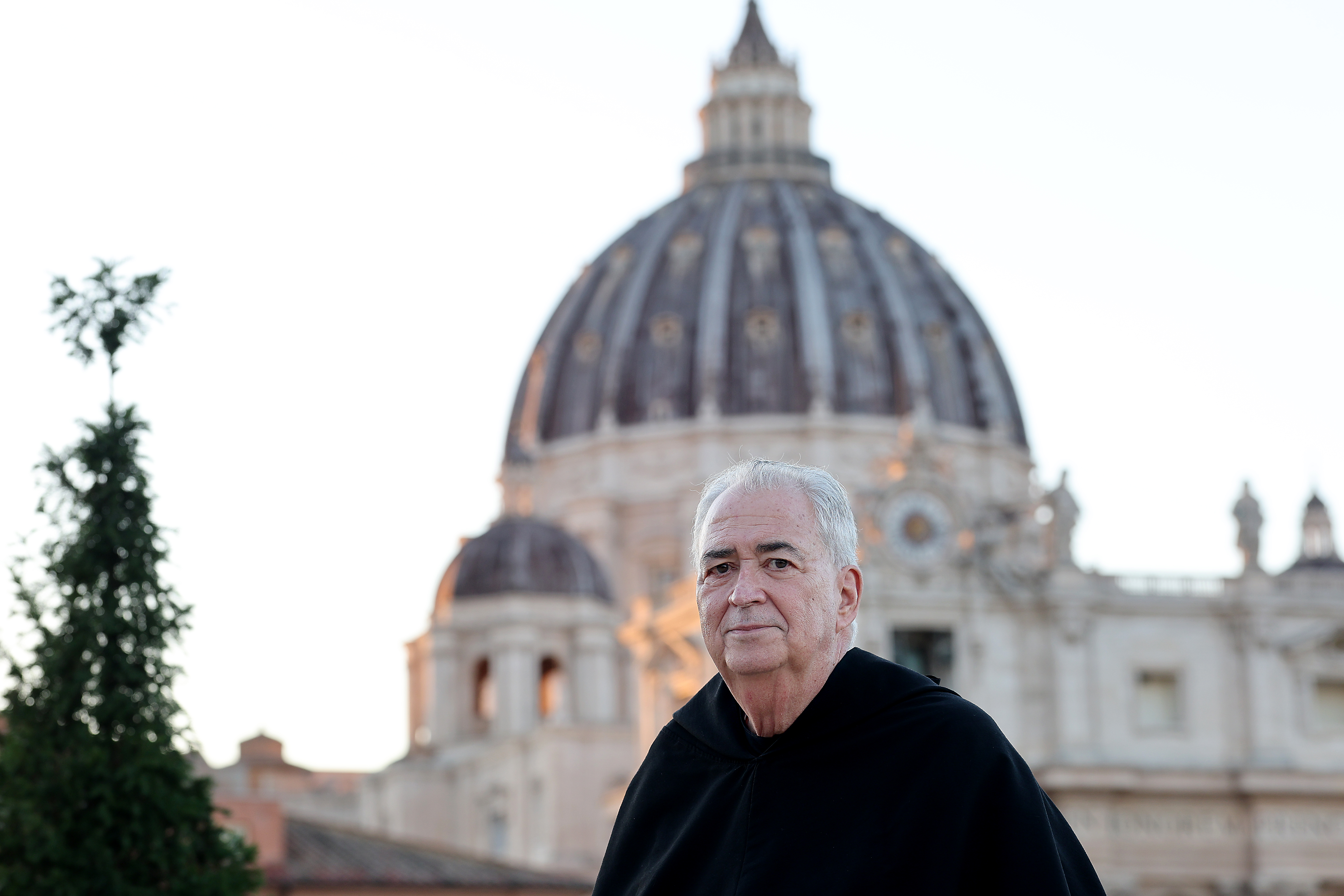
ROME — The Rev. Peter M. Donohue, Villanova University’s president, emailed his former classmate and friend last May, congratulating him on the one-year anniversary of his new position.
“It has been quite a year,” Donohue wrote to his fellow Villanova alum.
His friend — Pope Leo XIV — responded: “It has certainly been a whirlwind… God is good.”
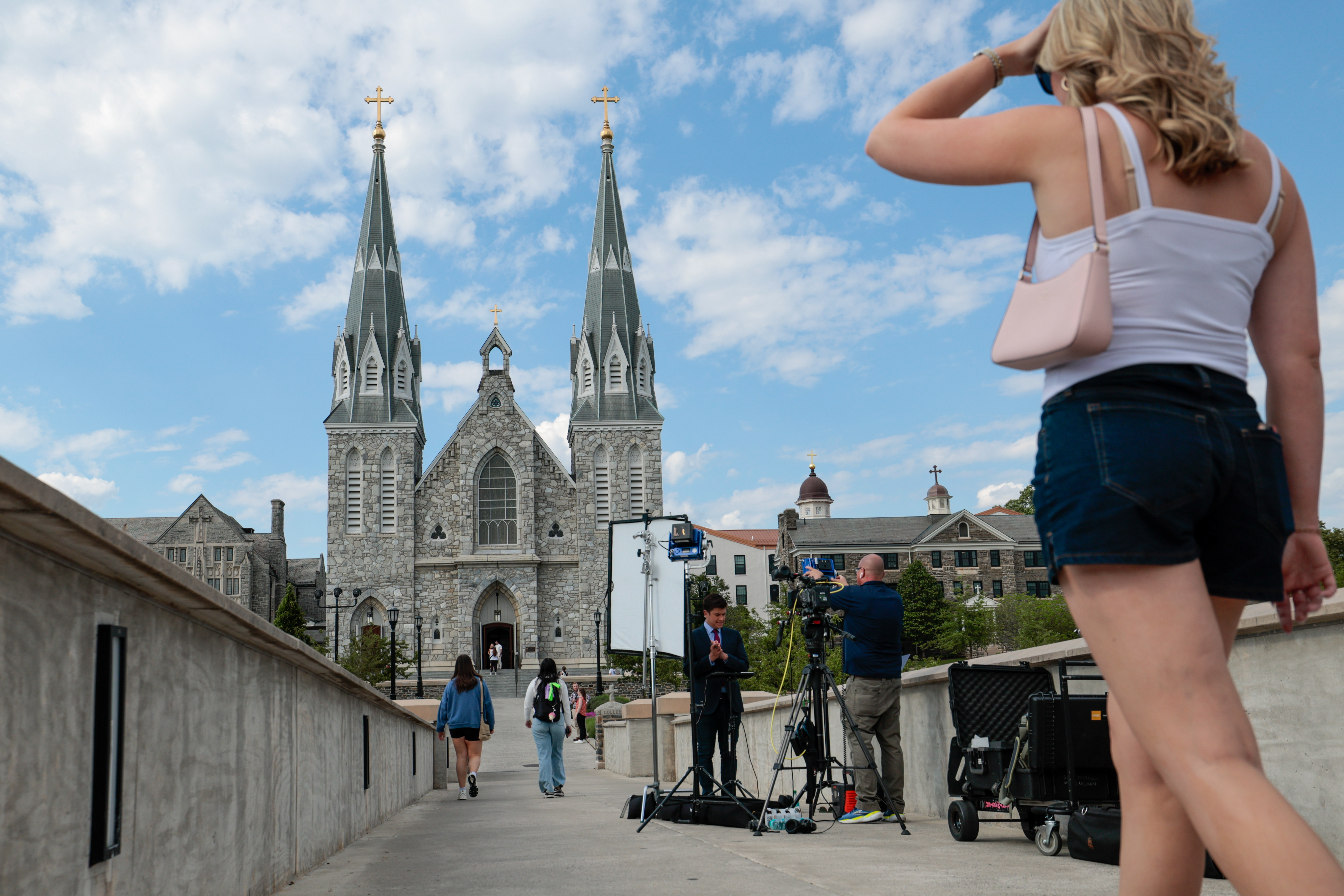
Since Leo, formerly Robert Prevost, became pope in May 2025, Villanova University has been in a major spotlight as the only U.S. college with an alumnus pope — a distinction it’s likely to keep for many generations. The pope graduated from Villanova, one of only two Augustinian colleges in the United States, in 1977.
For years Villanova has sent student interns to work in the Vatican — there are 12 this semester — and professors have taken classes to study in Rome. Three are there now.
But Villanova’s ties to Rome and the Vatican have grown substantially as a result of having an alumnus pope. The university this week is hosting an international conference on sustainability near the Vatican, which will cap off Tuesday evening with the presentation of Villanova’s inaugural sustainability medal, named for Pope Leo. The pope, 71, was scheduled to present the award, but he announced during his weekly Sunday prayersthat he would be undergoing surgery to remove a nodule from his lung. The surgery is now scheduled for Tuesday and Villanova officials were unsure who will present the medal.
On Halloween weekend, 6,000 Villanova alumni, students, and employees will travel to Rome for a doubleheader men’s and women’s basketball game. Villanova will play Notre Dame, which is only sending 1,000 folks.
Neither event would have happened there if Leo weren’t the pope, Donohue said.
“His very election has opened the door to a lot of different things,” Donohue said.
Hundreds of interview requests have poured in to Villanova and the Augustinian priests who work there and are personal friends of the pope. One graduated from Villanova the same year as him, then lived with him in Peru for 10 years, visited his apartment in Rome, and rode in the Popemobile. Another, who had lived with him for six years in Rome, vacationed with him twice since he became pope at the pope’s summer residence at Castel Gandolfo, a scenic Italian town south of Rome.
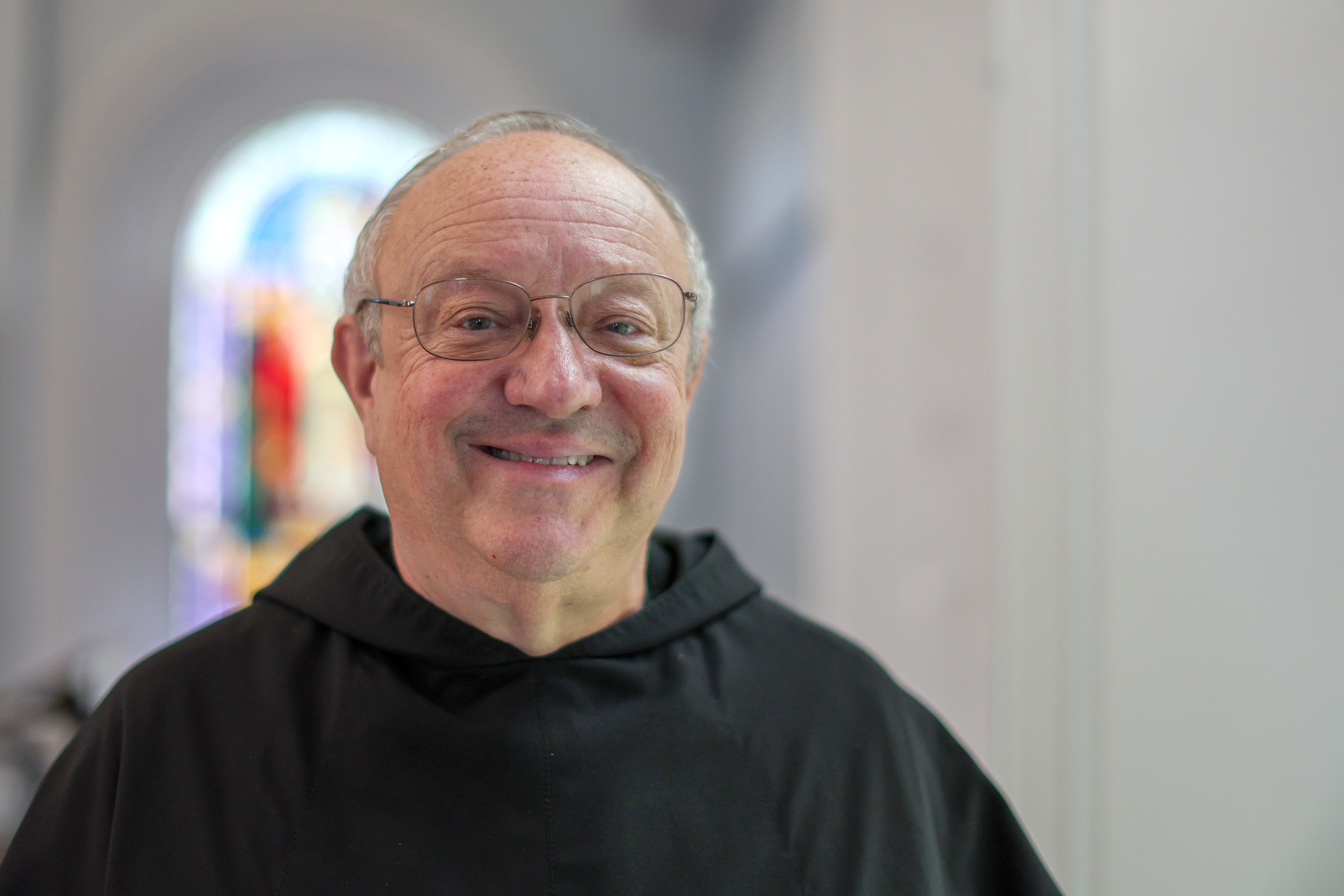
The Rev. Bernie Scianna is a long-time personal friend of Pope Leo. He works at Villanova University.David Maialetti / Staff Photographer
The Rev. Bernie Scianna, also a longtime friend of the pope and Villanova’s vice president for mission and ministry, has been to Rome five times since Pope Leo was elected and has met with him each time. He is returning for both the sustainability conference and the basketball games.
“It has put us in the limelight in the sense that you are the pope’s university,” Scianna said. “It calls us to a greater accountability in many areas, sustainability being one of them.”
More courses, events, and programming on campus are integrating Pope Leo, Villanova officials said. There’s a Pope Leo campus committee discussing opportunities for academic programs and events related to the pope.
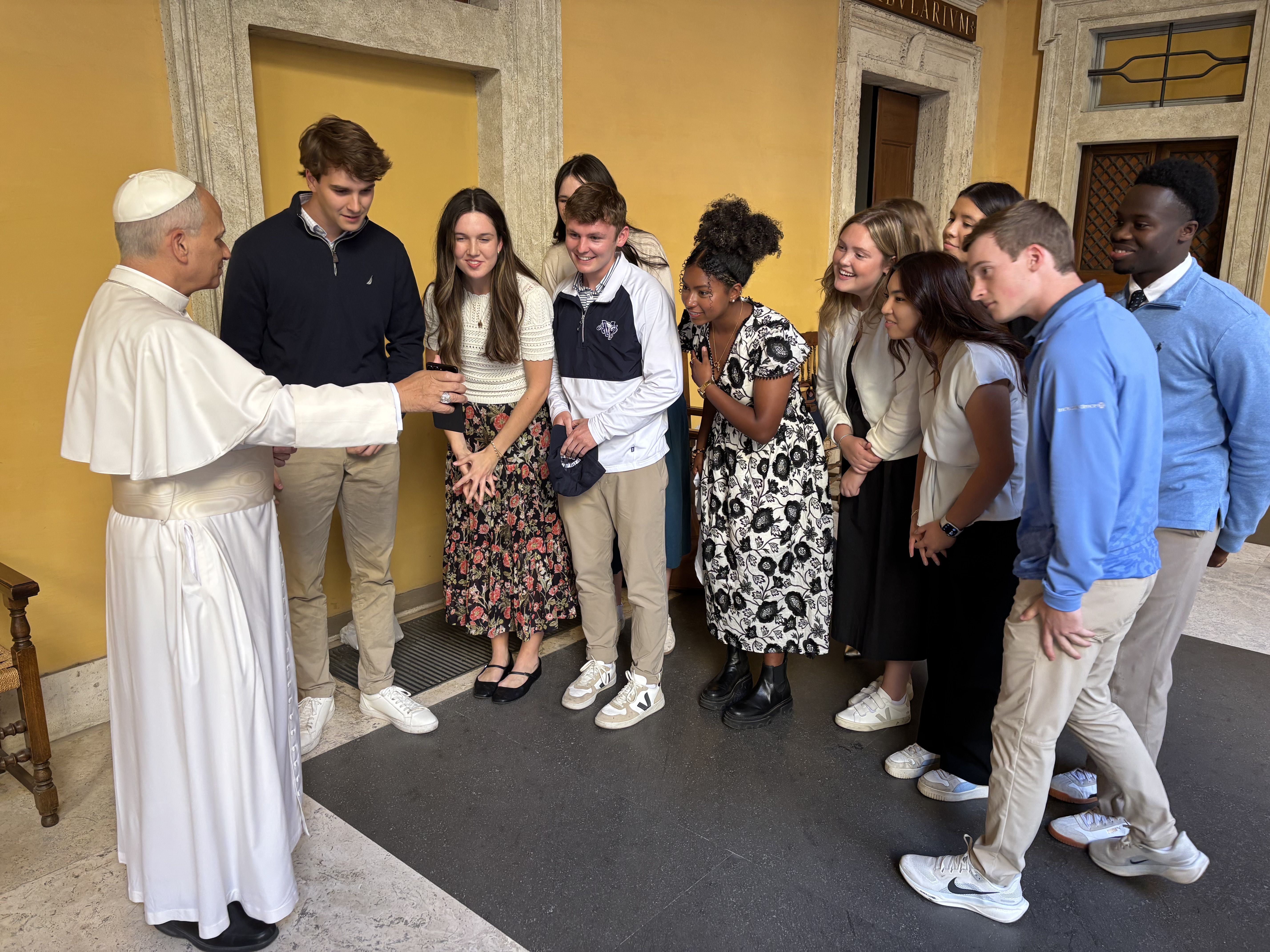
Students and faculty have gotten intimate audiences with Pope Leo. During a visit last fall, the pope chatted with students and pulled out his phone, showing them the purebred Arabian horse a Polish man had just gifted him because the donor had seen him on horseback when he was stationed in Peru decades ago, said Matthew Manion, faculty director of Villanova’s Center for Church Management, who accompanied the students.
Pope Leo interacts with Villanova University students last fall during their Augustinian Leadership Journey in which students walk in the steps of St. Augustine. Here, Pope Leo shares a photo of a horse he was gifted by a donor who had seen him riding horses in Peru where had been stationed at one time.Courtesy of Matthew Manion
And on another occasion last fall after the pope introduced a Villanova church management program for newly ordained bishops, he asked Manion and his wife to stop by for a cup of coffee afterward.
“The next thing I know there’s the Holy Father serving my wife cappuccino,” he said, signifying his “instinctive Augustinian hospitality” and “servant leadership mindset.”
Not a coffee drinker, Manion asked for tea.
“My wife’s like, if the pope offers you coffee, you drink the damn coffee,” he said.
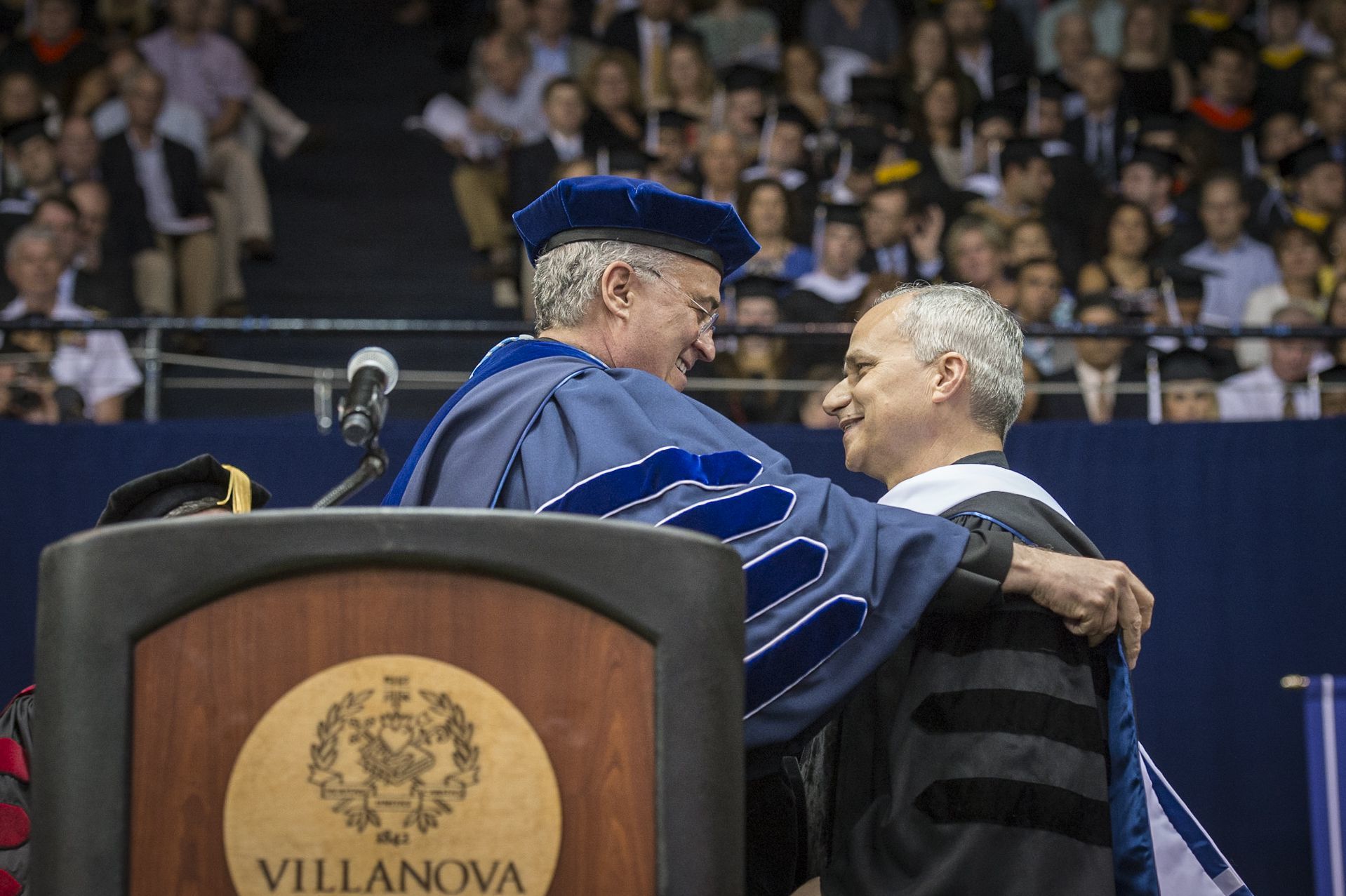
The Rev. Peter M. Donohue, president of Villanova University, presents an honorary doctorate to Robert Prevost at the 2014 commencement, 11 years before he would become Pope Leo XIV.Courtesy of Villanova University
‘The school the pope went to’
Villanova, a more than 10,000-student Catholic university on the Main Line, already was in a rarefied position in a competitive higher education market where schools are struggling with falling enrollment and financial pressures. The school has benefited from national championship basketball teams in 2016 and 2018 and the three Villanova alums who helped carry the New York Knicks to the championship this year, but also climbing applications and donations.
An alumnus pope has only enhanced its prospects.
“Every conversation I have with alumni involves Pope Leo,” said Kevin Noller, vice president of university advancement.
The last two years have been high marks for giving at Villanova, which received more than $170 million in 2024-25, the year the pope was elected, and more than $150 million in 2025-26. It’s hard to say how much is related to Pope Leo, Noller said, but “when people feel good and they feel pride… it helps in their process of making an investment.”
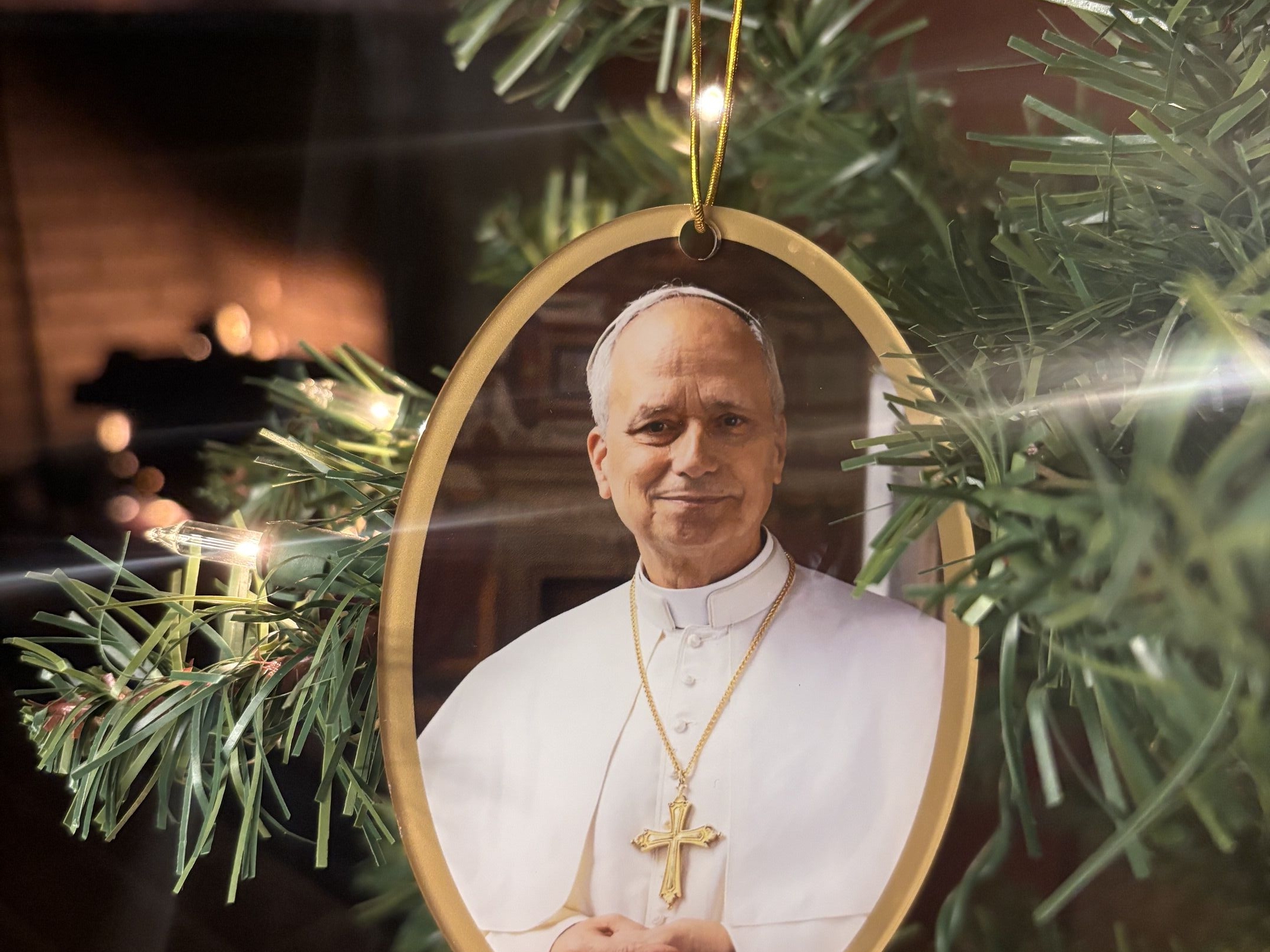
In 2025, the university created a Christmas ornament featuring Pope Leo, which helped bring in 6,150 donations to Villanova, compared to 2,400 gifts brought in by the prior year’s ornament appeal, Noller said. The 2024 ornament depicted a stained-glass detail from St. Thomas of Villanova Church.
Villanova created a Christmas ornament of Pope Leo in 2025, the year he became pope. “He approved it,” said Kevin Noller, Villanova’s vice president of university advancement. “It was our best performing ornament by a long shot.”Courtesy of Villanova University
Villanova saw about 1.1 million unique website visitors on the day the pope was selected, compared to about 65,000 on a typical day. The week after his election, the university was mentioned in nearly 50,000 news stories around the world.
The summer after the pope was elected very few admitted students fell away, what’s known as summer melt: “Who’s not going to come to the school the pope went to,” Donohue said.
The school received 28,870 applications for the fall 2026 class, nearly a 10% increase over the prior year and the highest number ever. Student visitors to campus increased to nearly 22,000 in 2025-26, up from 19,900 in 2024-25.
And Scianna said so far this year 50 people, most of them students, are planning to become Catholic and join the church on campus, up from 24 last year.
“I think that’s a lot to do with him being close to us as an American pope, but also close to us as a Villanova pope,” he said.
Donohue said it’s hard to say how much of the rising numbers can be attributed to Pope Leo, but certainly some of it. The university’s website prominently highlights the connection between the pope and Villanova. And Pope Leo is mentioned on admissions tours and during information sessions for prospective students, said university spokesperson Jonathan Gust.
“Some people say it’s the Leo effect,” Donohue said. “Pope Leo became Pope and suddenly it was ‘Let’s go look at Villanova.’”
He told Pope Leo about the impact he’s had on his alma mater.
“He said, ‘Use it wisely,’” Donohue recalled.
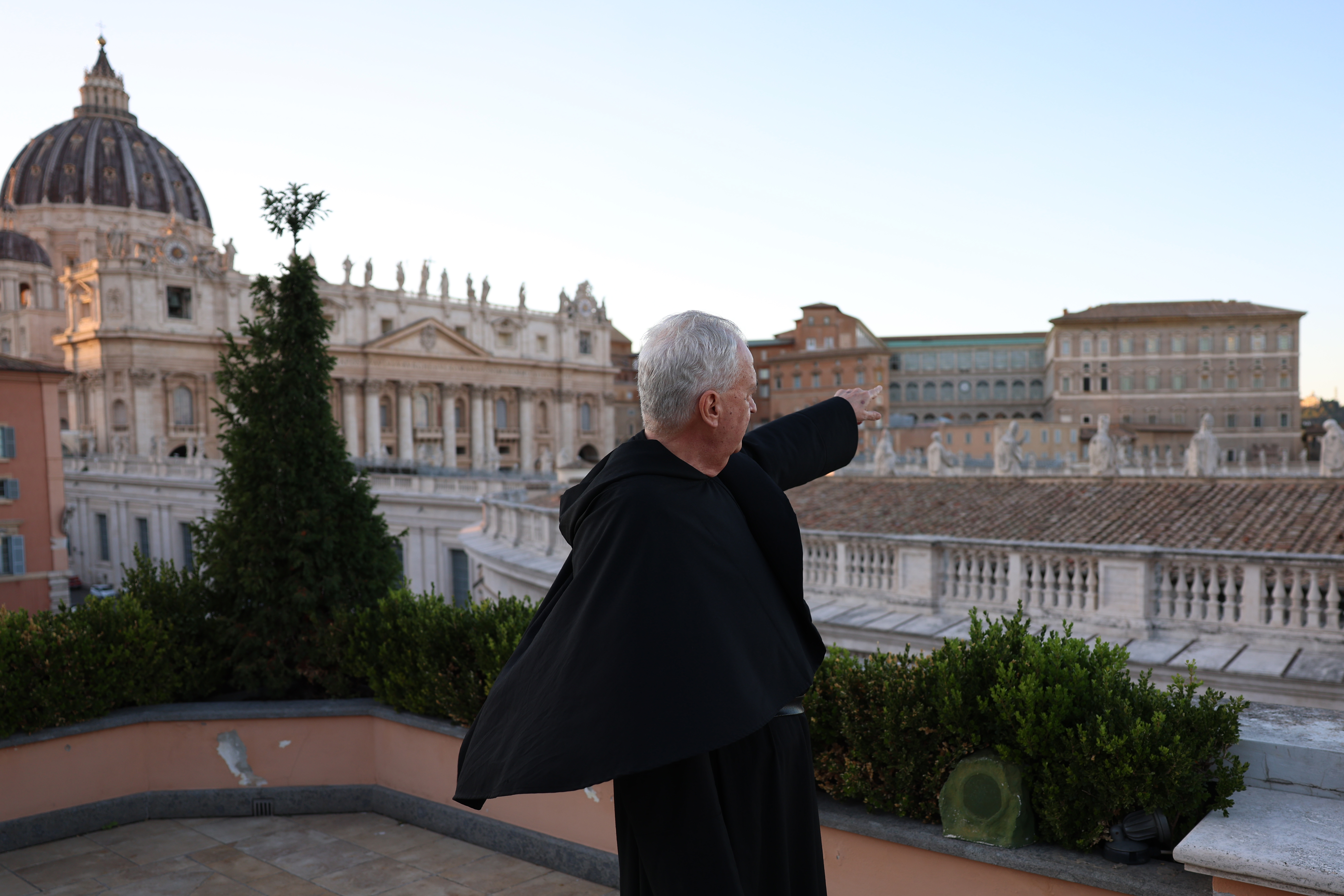
Villanova University president Rev. Peter M. Donohue points to the pope’s residence in Vatican City.David Maialetti / Staff Photographer
Prayers for Pope Leo
On Monday, Villanova opened its sustainability conference, Responding to the Cries of the Earth and the Poor, at The Patristicum, a pontifical institute in Rome under the order of St. Augustine. From its rooftopis a stunning view of Vatican City, including the very window of Pope Leo’s apartment from which he sometimes addresses crowds.
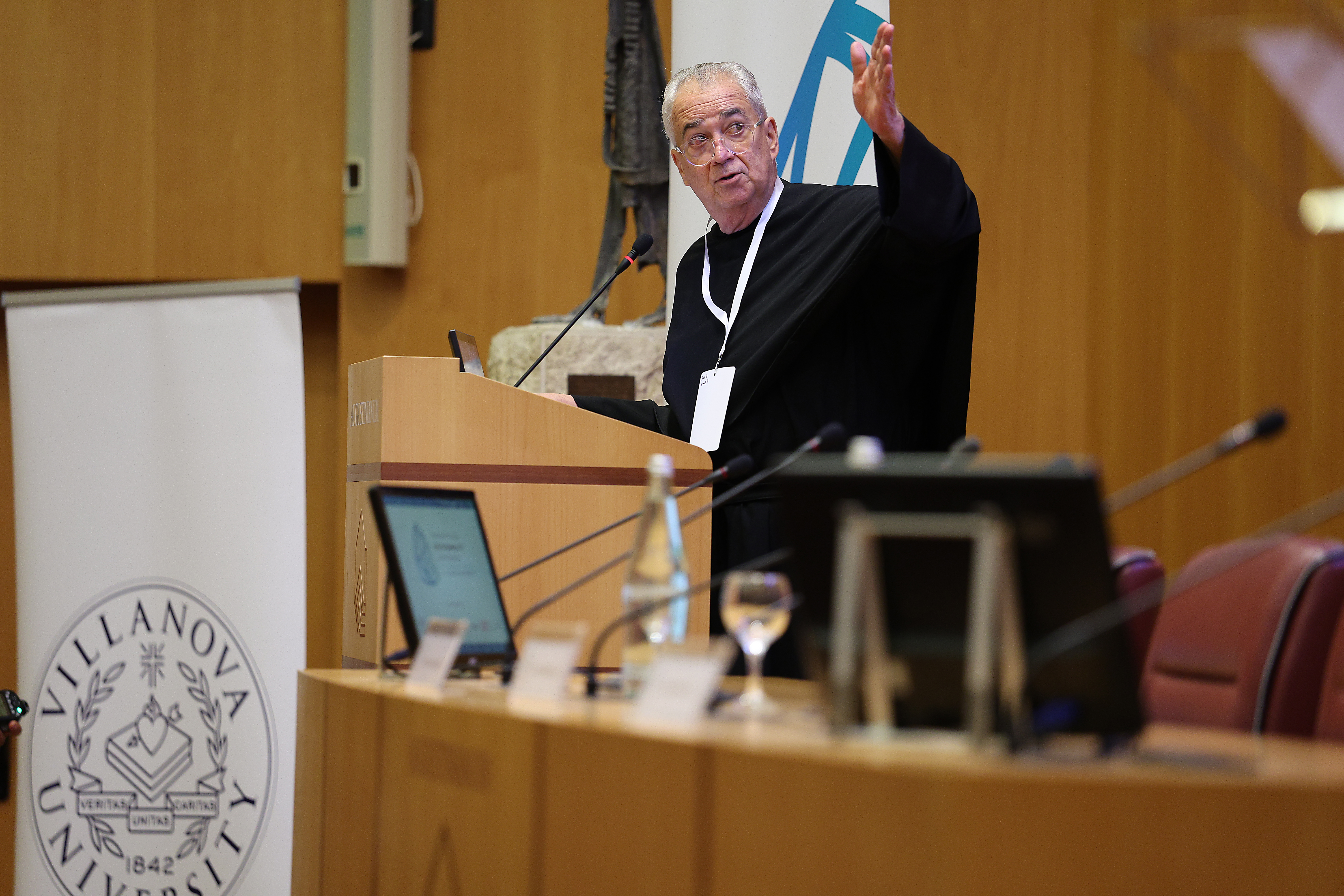
“The conference brings together voices from many disciplines, cultures, and perspectives, united by a common purpose: To address some of the most urgent challenges facing our world and to do so in a way that honors both human dignity and integrity of the individuals and creation,” Donohue told the 350 conference attendees from 30 countries, including 90 people from Villanova.
Speakers are scheduled to present over the next three days on many issues facing communities around the world, including pollution and soil contamination, illegal trash dumping, community gardens, and artificial intelligence.
But at Monday’s opening, Pope Leo’s health was front and center on participants’ minds, with speaker after speaker offering prayers for the pontiff.
“We pray that this is a simple procedure, that he is OK,” said Donohue, Villanova’s president. “May God’s healing presence be with you, Pope Leo.”
Villanova University president Rev. Peter M. Donohue speaks during opening remarks at Villanova University’s 2026 International Sustainability Conference at the Patristicum in Rome. David Maialetti / Staff Photographer
‘Proud to be a Villanova student’
In a Villanova theology classroom one afternoon last week, one student said Pope Leo’s status as an alum put Villanova on her radar and influenced her decision to apply. Another, Alexandra Abraham, a freshman from Los Angeles, said it didn’t influence her decision, but that certainly her classmates knew of Villanova because of Pope Leo.
But students were especially awed that their Italian-born professor, Massimo Faggioli, had not only written a book about Pope Leo, but had the opportunity last month to personally present it to him in Rome. And it wasn’t the first time Faggioli met Pope Leo. He also interacted with the Holy Father on another occasion in Rome last December and saw him as part of a larger group at an immigration conference that Villanova hosted in Rome last year.
Last week in Rome, I had the pleasure of sharing work on the book about Pope Leo XIV published in Italian by Morcelliana and translated into English by Liturgical Press @litpress: first on September 16 at the Italian Embassy to the Holy See, and then on September 18 during an… pic.twitter.com/wzpXl0kTMN
Faggioli, a professor of historical theology whose specialties are the church and the papacy, began writing the book after Leo was elected, knowing how consequential it is to have an American pope.
Faggioli, who has worked at Villanova for a decade, was at an event with about 30 people in Rome when he presented the pope with the book. He had never had personal interaction with a pope before Leo. Most of the popes he studied had already died.
The awe of the responsibility of writing about a pope who may read the work is heightened, he said. He plans to teach a course next year on Pope Leo.
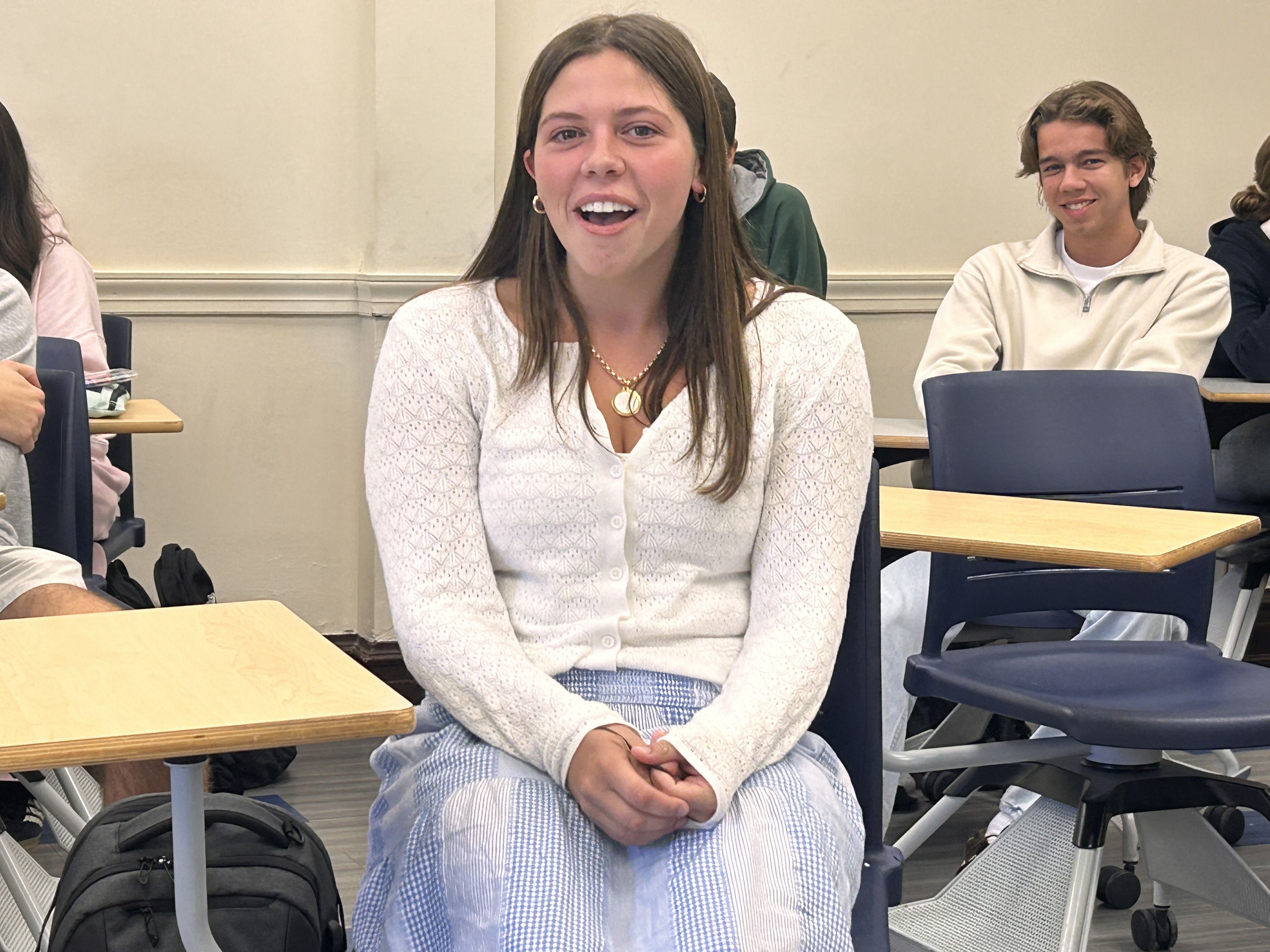
Carlie Briere, a freshman from Boston in Faggioli’s class, hopes she, too, can meet the pope. She’s Catholic and her father met a previous pope, she said, though she’s not sure which one.
Carlie Briere, a freshman from Boston who is in Faggioli’s class, hopes she, too, can meet the pope one day.Susan Snyder
“I think that that’d be a really cool experience, not only to meet him myself, but also just to, like, feel that further connection to the church,” she said.
The scene outside of Saint Thomas of Villanova church a few hours after Robert F. Prevost was named pope on May 8, 2025. He was an undergraduate math major at Villanova University in the class of 1977.Elizabeth Robertson / Staff Photographer
‘This campus went crazy’
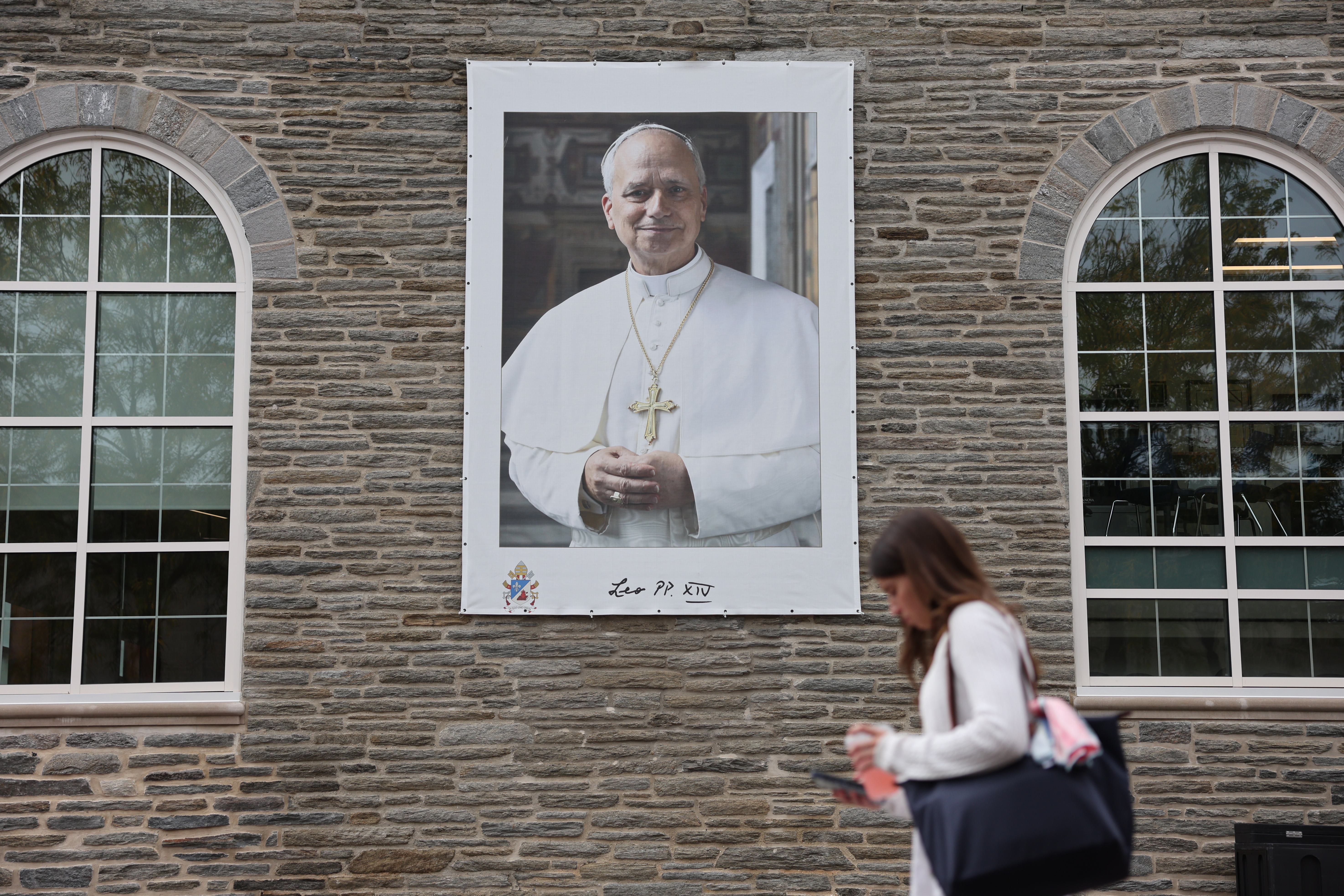
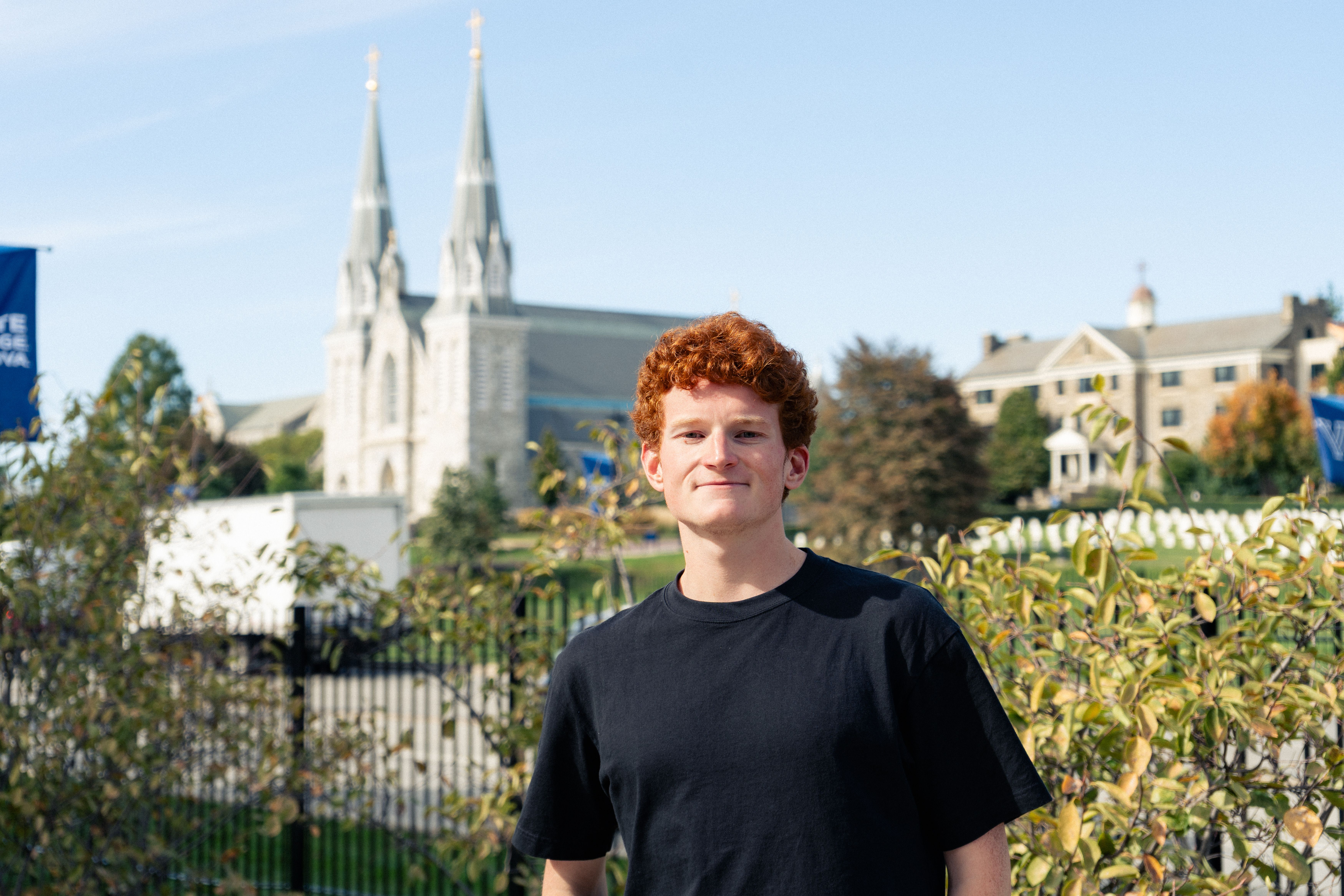
The day that Prevost was elected pope, “this campus went crazy,” said Dylan Johnson, 21, a senior from Chichester and co-editor-in-chief of The Villanovan, the student newspaper. Now, there are signs around campus of the connection, including a large banner of Pope Leo that hangs on the graduate school building. During the recent parents’ weekends, families were taking pictures in front of it, said Johnson, who is also an intern with The Inquirer’s sports department.
“I feel like it’s made students proud to be a Villanova student,” he said. “It’s like the opportunities are limitless.”
Dylan Johnson, co-editor-in-chief of The Villanovan, will go to Rome to cover the doubleheader men’s and women’s basketball games on Nov. 1. About 6,000 Villanova alumni, students, and staff are attending.Courtesy of Dylan Johnson
Having an alumnus pope has opened more opportunities for students, too, he said. He’s heading to Rome to cover the basketball games for The Villanovan and potentially be in the company of the pope.
“I couldn’t miss that,” he said.
Manion, the church management faculty director and professor, said enrollment in the master’s program has risen since Pope Leo came in. The majority of the 55 enrollees are ordained and lay leaders and church business leaders from around the world.
“We’re benefiting from the halo effect that Villanova is benefiting from,” Manion said.
The program also offers an Augustinian leadership journey for undergraduates, teaching them to live Augustinian values in business and leadership contexts, culminating in the pilgrimage in Florence, Milan, and Rome when they are seniors, he said.
Thirty of those students are in Rome this week and will stop by the sustainability conference.
Manion said the Villanova program for newly ordained bishops was actually started with the pope’s help when he was still a cardinal.
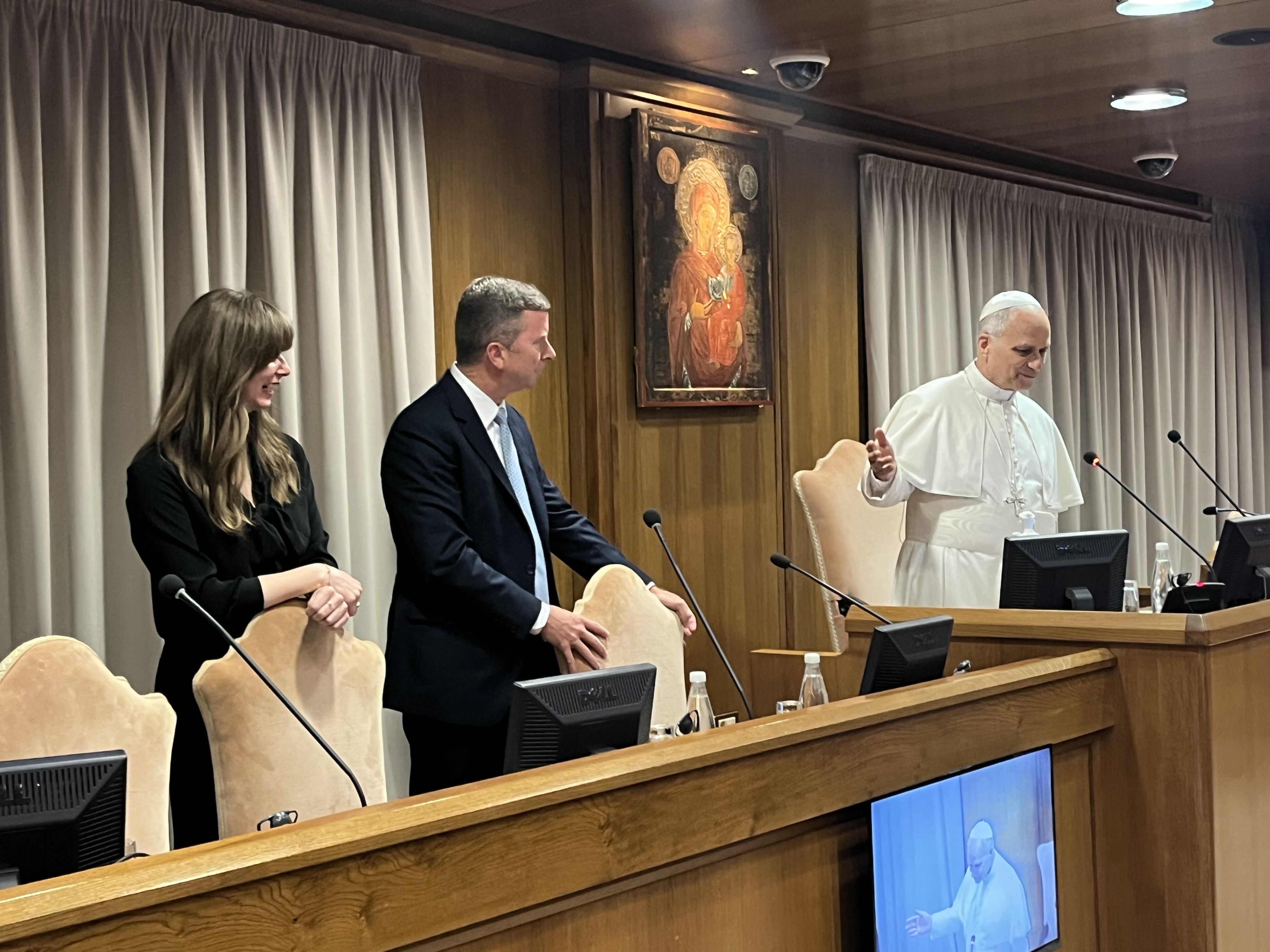
Pope Leo introduces Villanova’s program on church management for newly ordained bishops at a program in Rome, as Matthew Manion, Villanova’s faculty director of the Center for Church Management, and Chesley Turner, director of the center, listen.Courtesy of Matthew Manion
On a shelf in his Villanova business school office is a photo of Pope Leo introducing Manion and his colleague to new bishops in Rome in September 2025.
“I never thought in a million years that I’d have any interaction with the pope, let alone be collaborating with him to support his bishops,” Manion said. “You’re on stage in front of a room full of bishops in the Vatican and the Holy Father says, ‘These are our friends from Villanova and they’ve got a cool program I think you should consider.’”
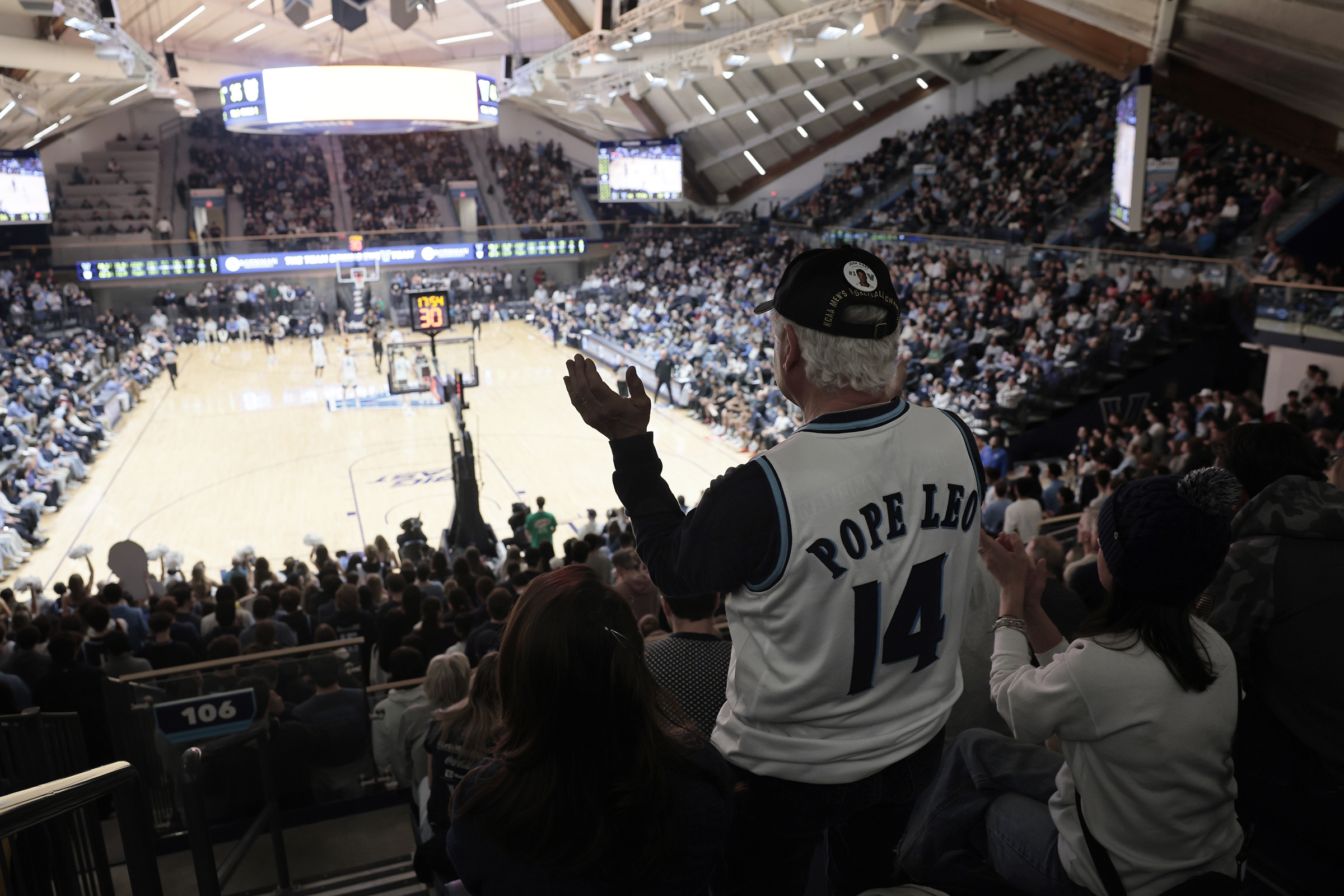
Dick Genevieve of Warminster (Villanova class of ’71) received his Villanova Pope Leo # 14 jersey from his daughters for Christmas. He wore it proudly and cheered during the Butler vs Villanova men’s basketball game at Villanova’s Finneran Pavilion on Wednesday, Feb. 25, 2026.Elizabeth Robertson / Staff Photographer
About 6,000 Villanovans will visit Rome
Donohue estimates he has exchanged 25 or so emails with the Catholic Church’s highest leader since he took the position in May 2025. When Donohue in mid-September went to Rome for the sustainability medal announcement, he met with Pope Leo for an hour.
Their relationship stems back decades.
Donohue first met Prevost when they were students at Villanova. Donohue was two years ahead of him. He got to know Pope Leo better when Prevost became prior general.
“Villanova is a major place in the Augustinian world, so there were lots of meetings here and I was president … and I had a lot of communication with him,” Donohue said.
Prevost briefly served on Villanova’s board of trustees and received an honorary Villanova degree while Donohue was president in 2014.
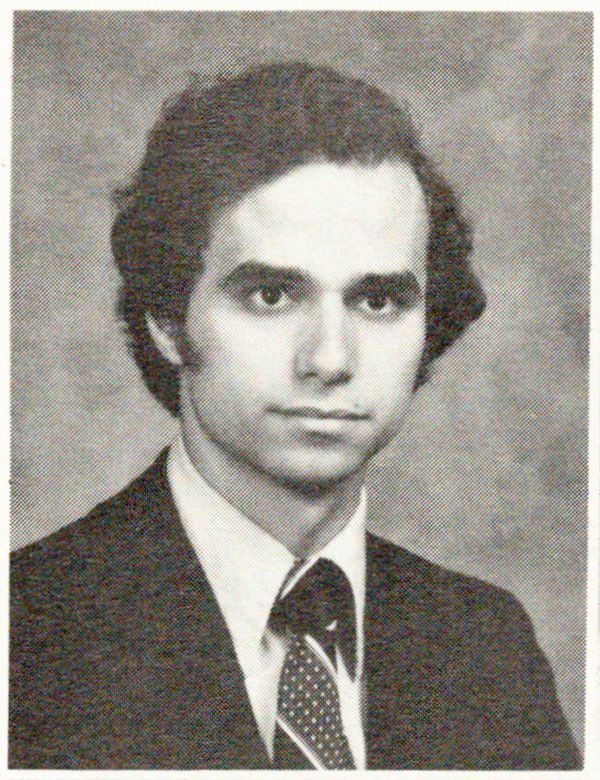
Robert F. Prevost pictured in his Villanova University Class of 1977 yearbook.Courtesy of Villanova University
Most things Donohue has asked, the Pope has granted, including having the sustainability medal in his name, he said.
Donohue contacted Pope Leo on behalf of the National Constitution Center to ask if he would accept the Liberty Medal. The pope told Donohue he couldn’t attend in person or live video but would send a recorded message, Donohue recalled.
Sometimes, the pope has said no or offered a modification. The pope told Donohue he would not attend his 50th Villanova reunion next year because it would be too difficult to fly to the United States for one event.
But the pope, Donohue said, has promised to visit Villanova when he comes to the United States, though no trips have been set.
The pope also turned down Donohue’s request to be commencement speaker via video message last May, but sent a written message to the class that Donohue read.
The promotion company setting up the basketball games solicited Donohue to ask Pope Leo to participate. The pope told Donohue he wasn’t sure. (In September, however, he said he might come, Donohue said.)
Donohue then asked if the pope would hold “an audience” with those from both schools, and he agreed, Donohue said last week. It’s now unclear though whether his health will change that. The event is scheduled Oct. 31, the day before the games. If able, the pope plans to address the crowd of 7,000 at the Vatican’s cavernous Audience Hall, Donohue said.
Villanova University president Rev. Peter M. Donohue at the Pontifical Patristic Institute Augustinianum in Rome after the opening ceremony Monday of Villanova University’s 2026 International Sustainability Conference. Behind Donohue is St. Peter’s Basilica in Vatican City.David Maialetti / Staff Photographer
“I’m amazed at the number of people going and people that are taking their entire family,” Donohue said.
Many of those at the conference had looked forward to seeing the pope present the sustainability medal, but said the pope’s health is more important.
“If we were able to meet him, that would be the icing on the cake of all time,” said Frank Falcone, a professor emeritus of Villanova’s College of Engineering. “But the cake is still there. I mean the conference is wonderful.”
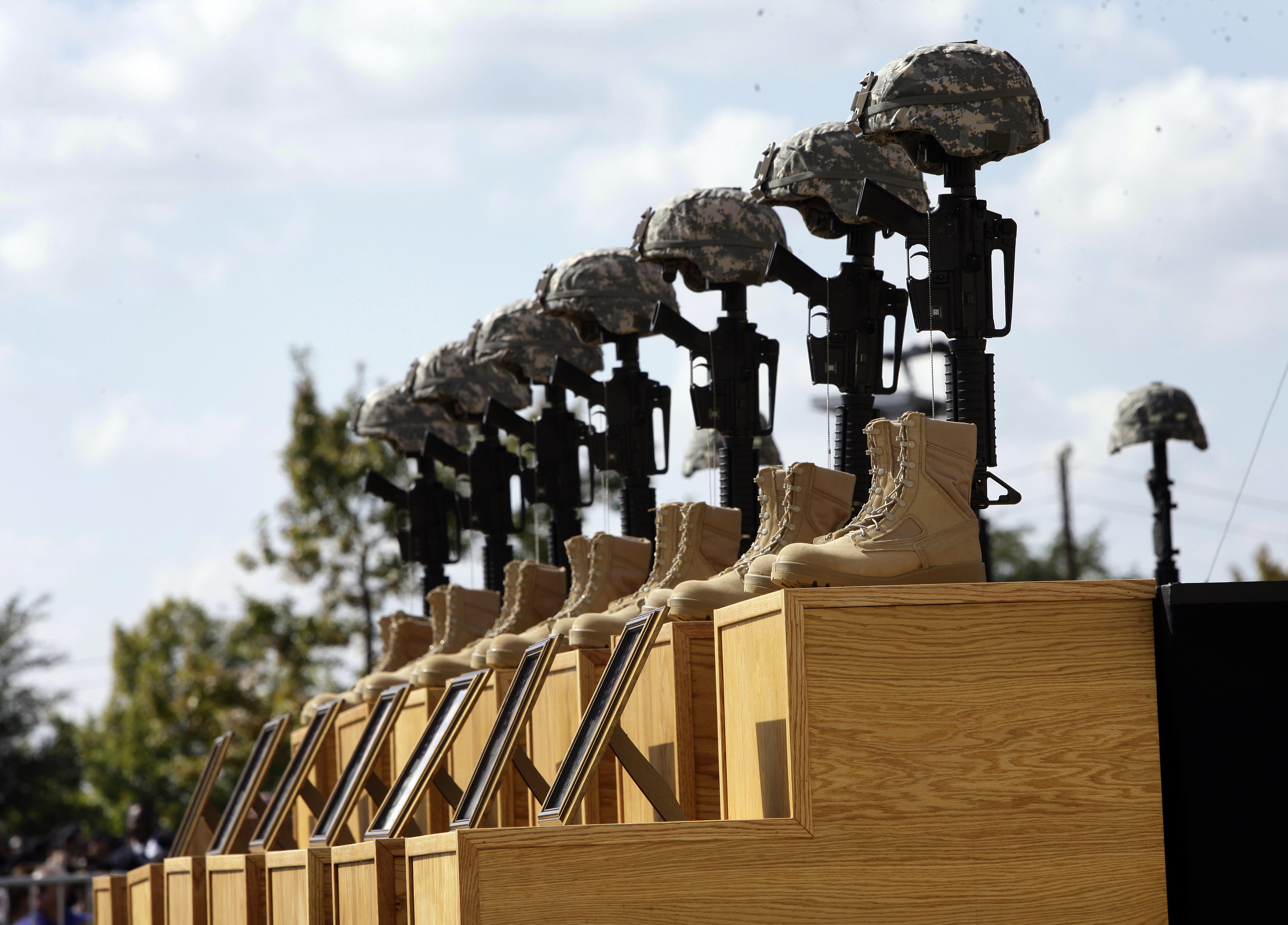
I read with great dismay that the secretary of defense is planning to livestream the execution of Nidal Hasan on Dec. 3. The last large-scale public execution, a hanging, took place in Owensboro, Ky., in 1936. Executions were moved behind closed doors because they had become public spectacles rather than a solemn display of justice. The military hasn’t executed a service member by firing squad since 1945; the best-known case that year involved Pvt. Eddie Slovik, who deserted his unit. The president has criticized Iranian officials for their public executions, but his administration has approved this one. Hasan, a former Army major who killed 13 people and injured 32 others in a 2009 mass shooting at Fort Hood in Texas, was shot in the spine during his arrest and is paralyzed from the waist down. I understand people want to see justice served, but regardless of the crime, this is the execution of a human being — not a video game to be livestreamed. Where is our decency? It is very troubling. What have we become?
Catherine Poynton, Havertown
. . .
I suppose we should not be surprised that a presidential administration that is driven by retribution and vengeance would choose to livestream the firing squad execution of a mass murderer.
I believe in capital punishment for the worst of the worst, and the criminal who perpetrated this atrocity qualifies, but I draw the line at making this a public spectacle that impressionable children could watch.
What will be next, gathering thousands of people in a town square to jeer and chant as they witness a hanging?
When Kamala Harris ran for president, she pledged that “we are not going back.” She was wrong. We have, and we will continue to go back for as long as Donald Trump and his cast of clownish federal officials are in power.
Oren Spiegler, Peters Township
Treatment interference
Doctors should be the authority on patient care. As trained professionals in our respective medical specialties, we work directly with patients and have years of experience in diagnoses and treatment plans, all of which help build relationships and trust with our patients.
So when a doctor prescribes a patient medication to treat their condition, that should be the accepted treatment plan. Unfortunately, current policy allows pharmacy benefit managers (PBMs) to limit or control patients’ access to necessary medication.
PBMs serve as middlemen between insurers and pharmacies, controlling drug prices and influencing which medications patients can receive. As a rheumatologist, many of my care plans involve prescribing specialty medication to mitigate chronic joint pain, inflammation, and mobility decline. Because of PBMs, however, my patients are forced to fight for their medications or pay higher insurance premiums, despite having a treatment plan that a medical professional has decided would be best for them.
Patients with chronic pain from rheumatic conditions shouldn’t have to delay or find alternatives to care. Let doctors do our jobs and remove PBMs from the treatment equation.
Jorge Alexis Rosario Vega,Elkins Parks
Join the conversation: Send letters to letters@inquirer.com. Limit length to 150 words and include home address and day and evening phone number. Letters run in The Inquirer six days a week on the editorial pages and online.
DEAR ABBY: I’m 34 years old and have been diagnosed with schizoaffective bipolar disorder. I have been in treatment for years with a psychiatrist and a therapist, and I take my medication daily as instructed. I do not drink or use drugs. I am committed to my mental health to prove that people like me can lead full lives. My family wants me to stay where they live forever, but I dream of moving back down south, where I lived on my own before. I loved the culture, art, weather and friends. Whenever I bring it up, they dismiss it. I think they’re afraid that I will start hallucinating again and not have a support system there.
I will be graduating soon from a master’s program in counseling, and I look at jobs online all the time. Is it wise to move away from my family with my disorder? Do I sit them down and explain that I was my happiest when I lived there and want to return? I love them and don’t want to hurt them. I think if I have a plan in place and stay on track with medication, it would be safe.
— CONFLICTED IN THE NORTH
DEAR CONFLICTED: Have you discussed this with your therapist and psychiatrist? If they both sign off on the move, your family will have less cause for concern. Bring a family spokesperson with you and have your therapist go over the support plan for your new environment. The spokesperson can then help you ease the worries of the rest of the family. If, however, your care providers don’t think it’s wise to move right now, please listen to them. Ask them to outline some milestones you can work toward to make moving south a healthier goal for the future.
** ** **
DEAR ABBY: My brother died a year ago. I have been visiting his widow, “Cheryl,” twice a month ever since. She lives an hour away and doesn’t get around very well. I drive to her house, and I treasure my time with her. She was the love of my brother’s life. My problem is my sister, “Kate.” Kate is self-centered, whiny, disruptive and generally unpleasant. I spend as little time as possible with her. I know that as soon as she finds out about them, Kate will expect to be included in my visits with Cheryl. I haven’t mentioned them, as I would rather not include her. What I would like to see happen is for Kate to come up with her own plan to visit with Cheryl. I love Kate and don’t want to hurt her, but on the other hand, I don’t want her to ruin my visits with Cheryl either. What should I do?
— BAD SISTER IN MISSOURI
DEAR SISTER: There’s no reason for you to hurt your sister’s feelings. Tell Kate you feel one-on-one visits with your brother’s grieving widow are more beneficial than overwhelming her with additional company. Then (with Cheryl’s permission) suggest that Kate call Cheryl and make some plans to visit with her on her own. If Kate argues, see if you can get Cheryl to back you up.
ARIES (March 21-April 19). You will get new information that makes you wonder if you should keep going past the gate. Look around before you proceed. Seek a sign, and you’ll see it. You’ll know exactly what it means. Trust the message.
TAURUS (April 20-May 20). You will be tempted to share something about yourself, but think twice. Do you know this person well enough? Start with a small test. Disclose something minor and see how they react before you tell them more.
GEMINI (May 21-June 21). When relationships unfold in stages, you enjoy them more. The pacing is an essential part of the experience and takes an amount of restraint. It can go slow enough to fascinate and quick enough to excite.
CANCER (June 22-July 22). Someone will ask you to make an exception, and you may want to accommodate them. Before you say yes, consider the question behind the question. What is this ask really about? Who could be helped and why do they need it?
LEO (July 23-Aug. 22). You have something new to show people, though you may feel protective of it. Choose your first audience carefully. Show it to someone who understands what you’re trying to do and knows how to give a useful response.
VIRGO (Aug. 23-Sept. 22). Someone may want to spend more time in your home or become more involved with your family. Invite them closer at your own pace. You’ll give a warm welcome, not a complete one. Parts of your life are private.
LIBRA (Sept. 23-Oct. 23). Few things in life feel better than when someone looks at you, really sees you and is able to put it into eloquent words. More and more, you are living in a way that shows people who you are and lets them adore you.
SCORPIO (Oct. 24-Nov. 21). Today there’s an impulse to lend money, share something valuable or pick up the bill. Decide early on how much you’re comfortable giving, then give that amount with an open hand and keep the rest in your pocket.
SAGITTARIUS (Nov. 22-Dec. 21). This day seems ripe for venturing and no one ventures like you. Because of this, you’ll get the most excitement for your time when you go it alone. Then you won’t have to compromise, and you’ll never wonder how it would play out if you had done it your way.
CAPRICORN (Dec. 22-Jan. 19). Ideas are coming together in your mind, but it’s too early to discuss. Wait until you’re ready. The interest of others is proof that you’re fascinating, and you’ll remain fascinating when you hold the boundary.
AQUARIUS (Jan. 20-Feb. 18). The world asks for your time, contacts, ideas or help. Just remember that you’re not obligated to give anything at all. Some people seem to expect it, but that’s a “them” thing, not a “you” thing. Only you know what really feels comfortable and right.
PISCES (Feb. 19-March 20). More people are seeing your work these days. Enjoy the attention and decide how much more you want them to know. There’s an opportunity here to create your own lore. Be imaginative. You don’t have to do it as everyone else does.
TODAY’S BIRTHDAY (Oct. 13). In your Year of the Legend, you’ll refine yours, adding chapters of whimsy and accomplishment, and overwriting the less interesting or definitive parts of your story with the experiences you will be proud to be known for. More highlights: Investments in you — your skills, your home, your appearance — will pay off. What and whom you take care of will thrive. Two awards. Taurus and Capricorn adore you. Your lucky numbers are: 5, 36, 4, 44 and 19.
Eric Lewis, the man charged with killing a Philadelphia police officer and seriously wounding another during the weekend, was charged with the murder of a 32-year-old man in West Philadelphia six years ago.
But the case against Lewis in the fatal shooting of Christopher Williams fell apart at a trial in 2023 after a series of issues with the police investigation and prosecution, according to four people familiar with the case. A judge found Lewis not guilty of the crimes, and he walked free.
Now, three years later, police say Lewis, 35, shot two Philadelphia police officers on his West Philadelphia porch early Saturday, then fired at nine other responding officers in a nearly hourlong standoff. He was later arrested by a SWAT team. In possession were a shotgun, and two handguns — one of which police said he stole from an officer he shot.
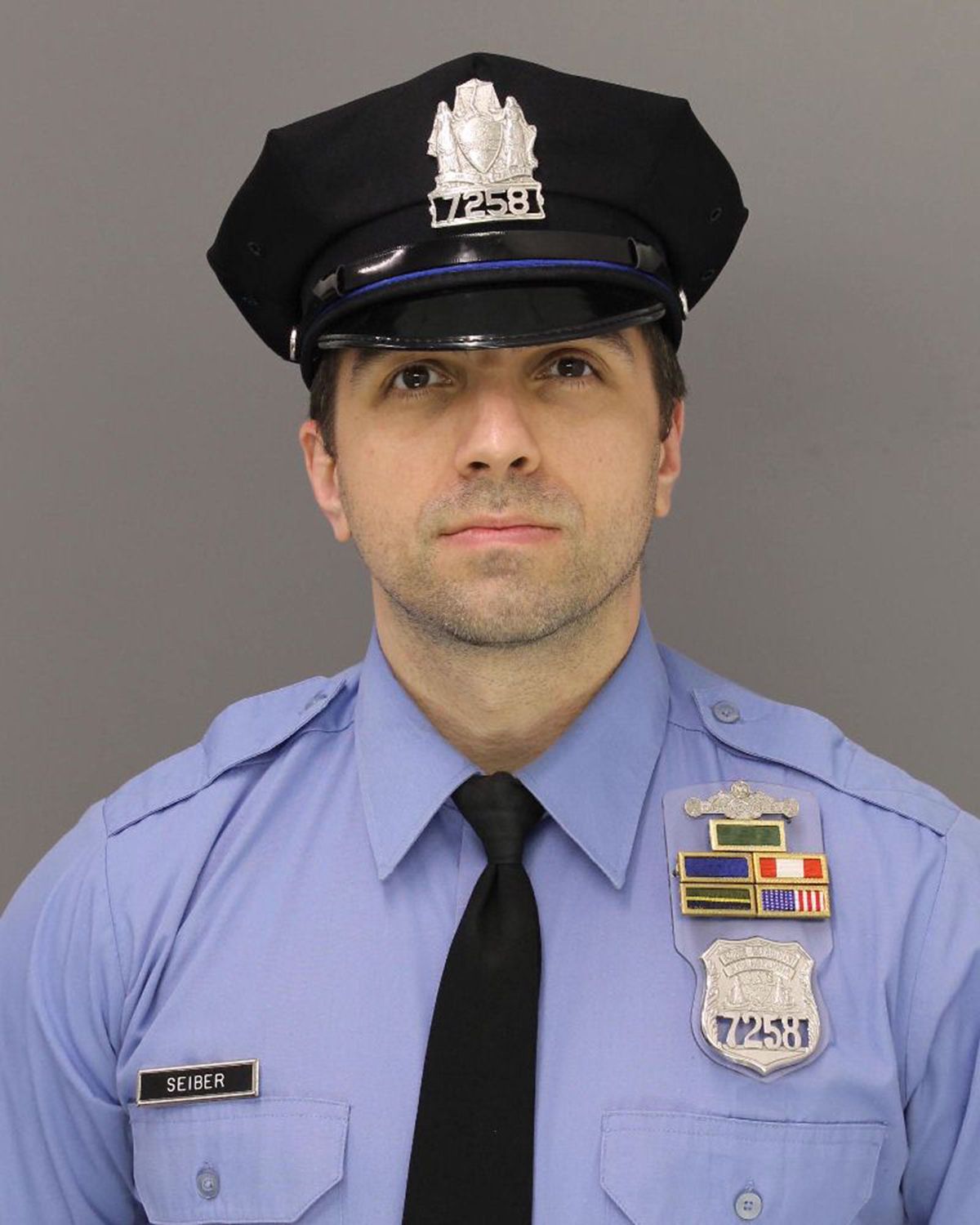
The shooting left Officer Shane Seiber, 40, a 10-year police veteran, dead hours later. His 33-year-old partner, who has nine years on the force, was shot 12 times and remains hospitalized.
Officer Shane Seiber.Courtesy of the Philadelphia Police Department
Lewis’ criminal history — particularly how he could have evaded justice in a crime that likely would have sent him to prison for decades — has come under scrutiny in the aftermath of a crime that has shattered the local law enforcement community and left Seiber’s family mourning the father of two children.
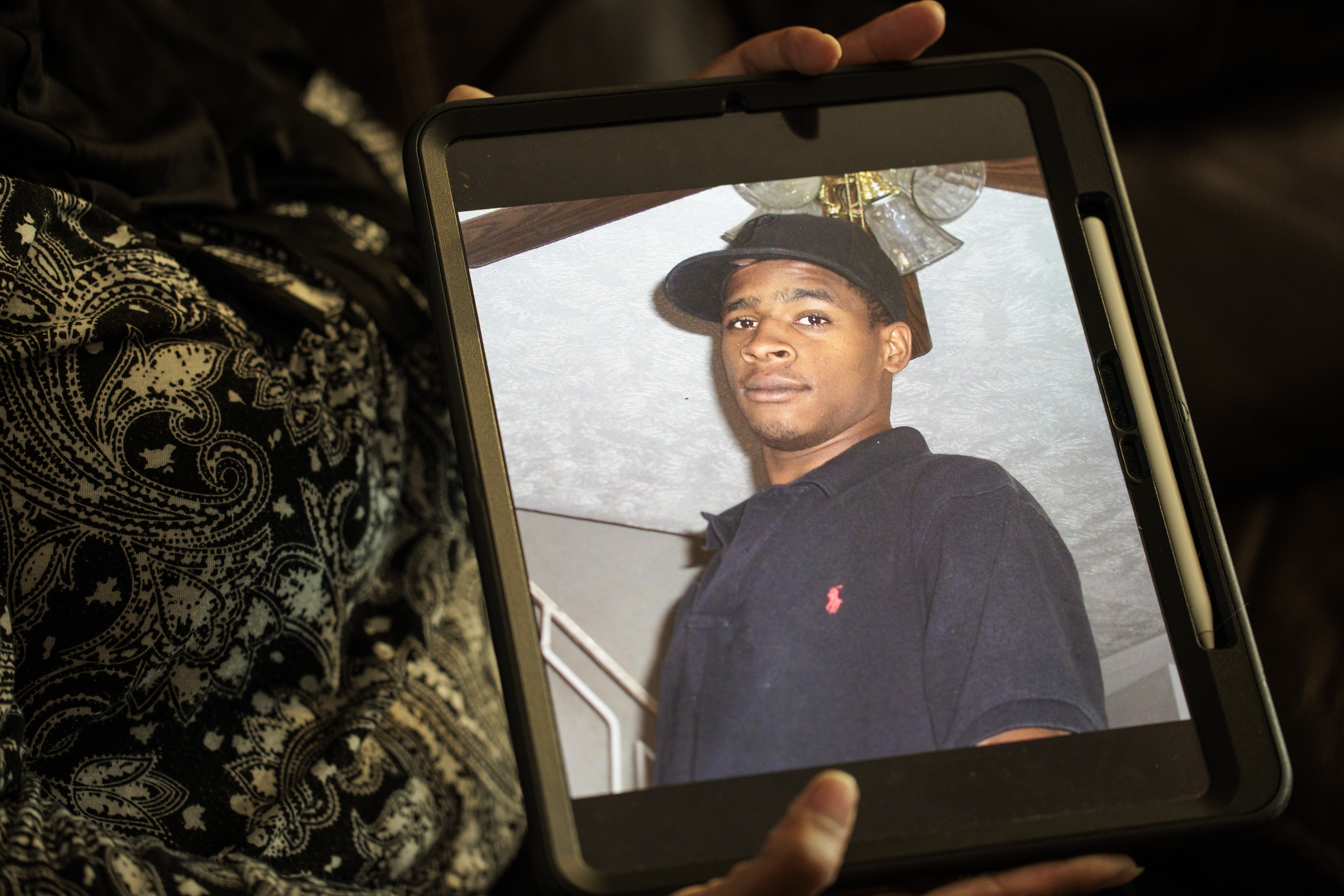
It has also reopened wounds for the family of the man Lewis was accused of killing in August 2019.
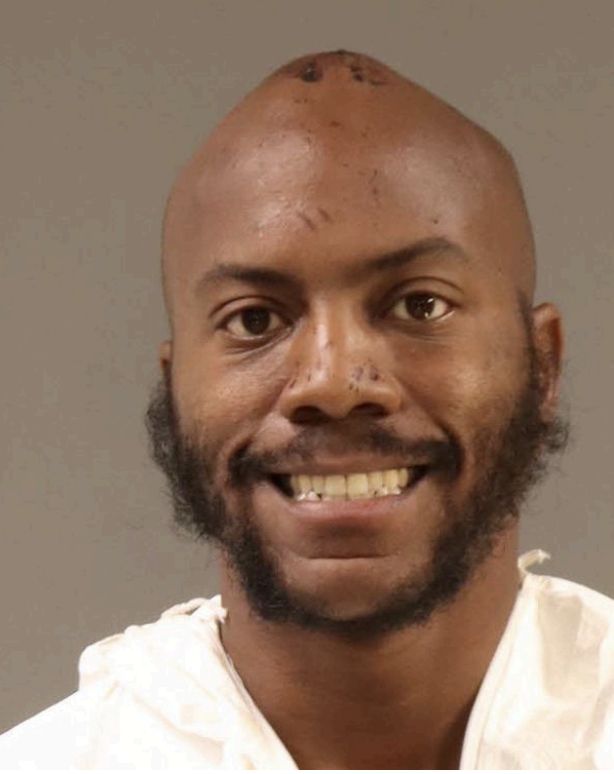
When Darlene Brown saw Lewis’ mugshot come across her phone Saturday evening, she said she screamed in shock that the man she believes killed her son had killed again.
Brown, in an interview at her West Philadelphia home on Monday, said that she is praying for Seiber’s family and that Lewis is finally brought to justice. But she also resents how her son’s case fell apart three years ago.
“These kids didn’t have to be fatherless had they done their job back in 2023,” Brown said.
“They had him in 2023,” she said. “They freed that murderer, and it took him three years to come back and do it again.”
Sgt. Eric Gripp, a police department spokesperson, said officials were reviewing Lewis’ criminal history, including the handling of the earlier murder case.
District Attorney Larry Krasner did not respond to requests for comment Monday.
Eric Lewis, charged with murder in the shooting death of police officer Shane Seiber, is shown in a Philadelphia Police Department photo.Philadelphia Police Department
A concerned judge
Lewis’ criminal convictions date back to 2012 for a series of misdemeanors, including simple assault, carrying a gun in public, and disorderly conduct.
But at least two serious cases against him fell apart at trial.
Court records show Lewis was charged in September 2020 with endangering the welfare of children, making terroristic threats, aggravated assault, and related crimes. Prosecutors later declined to move forward with the case at a trial in November 2022.
Additional details on the case were not immediately available.
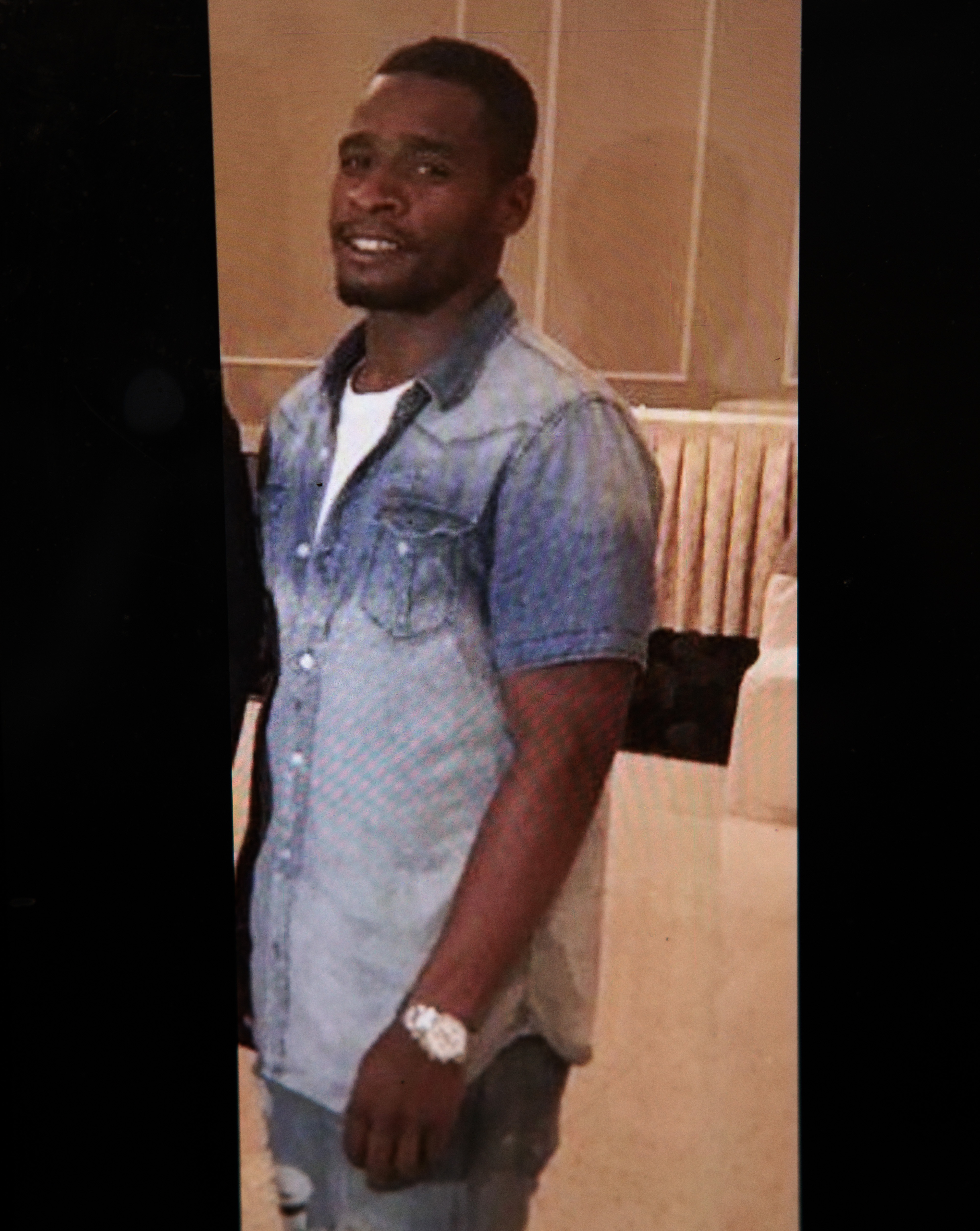
In the fall of 2020, while Lewis was jailed on a separate case, he was charged with murder and related crimes for shooting Williams on the 900 block of Fallon Street on Aug. 31, 2019.
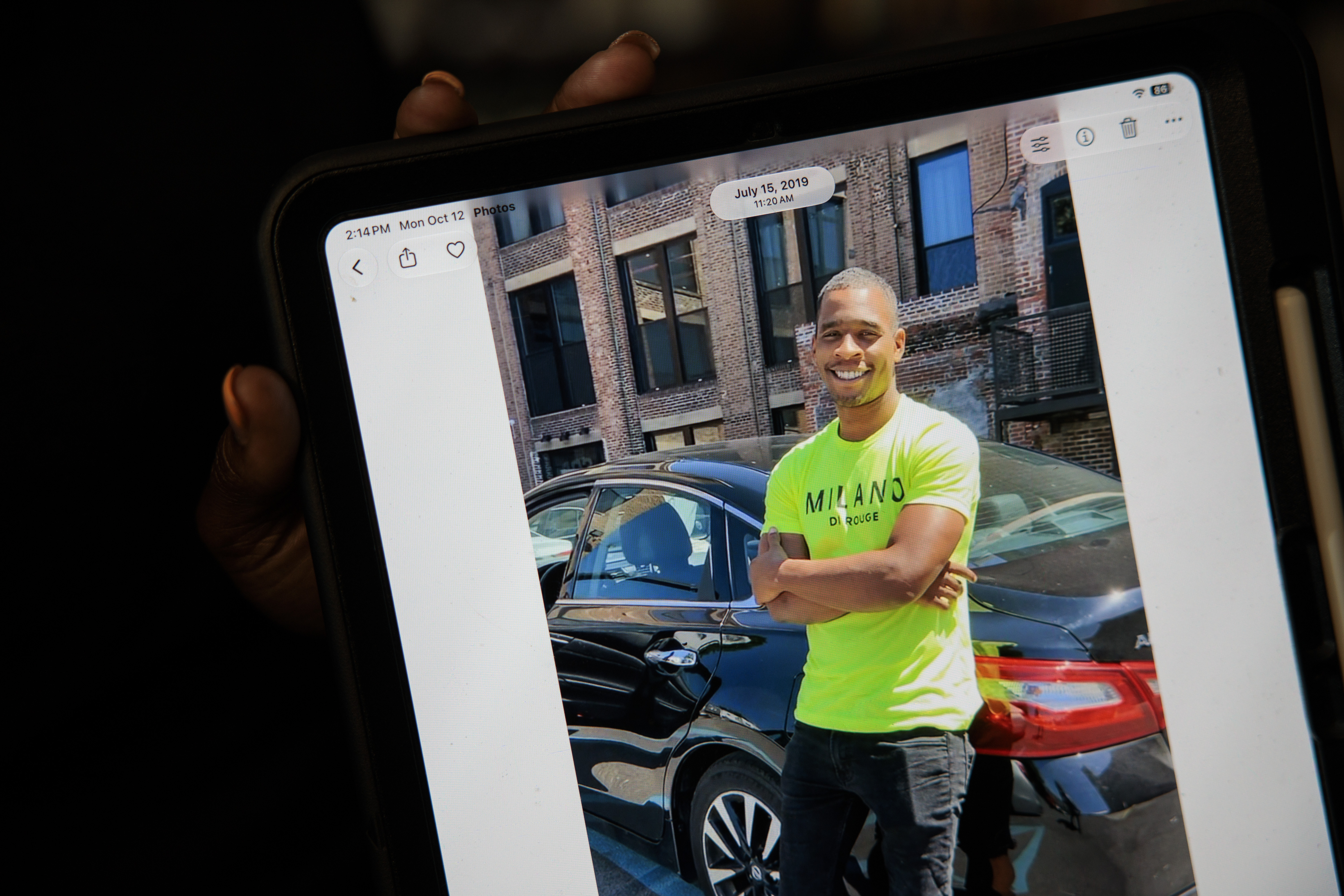
Brown said that her son, who got married one year earlier, was driving a Jeep on Fallon Street but was blocked in by a Nissan double-parked in the street. Williams, she said, honked his horn.
Christopher Williams was killed in 2019 in West Philadelphia. Monica Herndon / Staff Photographer
He exchanged words with people connected to the car, she said. Then, prosecutors said, Lewis pulled a gun and fired multiple times into the Jeep, fatally striking Williams.
A source familiar with the investigation said Lewis was identified as a suspect after a police officer from the 15th District came forward with information about the case and identified Lewis as the gunman. That officer was dating someone in Lewis’ family, according to a person familiar with the matter.
But for reasons that were not immediately clear, that officer did not testify at the April 2023 trial before Common Pleas Court Judge J. Scott O’Keefe, said the source, who spoke on the condition of anonymity because they were not permitted to speak publicly about the case.
One of Williams’ friends, who was in the passenger seat of the Jeep when the shooting erupted, later testified at trial and identified Lewis as the gunman, Brown said.
Prosecutors showed a video of the shooter’s Nissan driving in the area before the crime, Brown said. And, she said, the shooting occurred outside the home of Lewis’ mother.
But prosecutors did not present Lewis’ cell phone location records at the trial, the source said, and it wasn’t clear if the homicide detective or prosecutor on the case ever obtained or analyzed those records.
O’Keefe ruled that the prosecution had failed to prove Lewis’ guilt, and found him not guilty.
After the trial, O’Keefe spoke with the attorneys on the case and faulted the investigation, according to a source familiar with the matter.
The judge was so upset that he contacted the Police Department’s Internal Affairs Unit, three people with knowledge of his actions said.
The outcome of that internal investigation was not immediately clear.
Gripp, the police department spokesperson, said officials were reviewing the case and internal affairs records, and that the department would provide additional information at a later date.
“Our immediate focus remains on supporting Officer Shane Seiber’s family, our recovering officer and his family, and the members of this department as we navigate this devastating loss,” he said.
A moment of silence is held for fallen Philadelphia Police Department Officer Shane Seiber in Xfinity Mobile Arena on Sunday.Isaiah Vazquez / For The Inquirer
‘They had him’
Brown, 63, said she did not recall issues with the homicide detective’s testimony. She was upset, though, about how the district attorney’s office prosecuted the case, she said.
The case was transferred between at least two prosecutors, she said, before another took it over before trial.
She said the assistant district attorney was passive during the trial, and after the acquittal, she apologized but did not offer an explanation for what went wrong.
Brown said she left the courthouse devastated — but also feeling as if there was more to it that she didn’t know.
“Something was very off,” she said of the case.
“And now someone else … had to lose their life, when they had him,” said Williams’ older sister, Royce Johnson. “They had him.”
Christopher Williams was killed just a year after he got married. Monica Herndon / Staff Photographer
Williams was born and raised in West Philadelphia, and worked in construction and as a commercial truck driver. He was funny and charismatic, his family said. He gave strong bear hugs, and loved taking his many nieces and nephews for days at the pool, and going on family trips across the region — to Disney, Busch Gardens, and Atlantic City.
His family said they will never be the same.
His mother said seeing Lewis on the news has made her relive the trauma of her son’s killing all over again — the call, the hospital, the trial that left her without closure.
“Since the day I lost my son, I haven’t allowed myself to feel it,” she said. “I keep thinking that if I do, I won’t come back.”
And she couldn’t stop thinking of Officer Seiber’s wife and children, she said.
She paused and touched her face. Her eyes welled with tears, and for a moment, she allowed herself to cry.
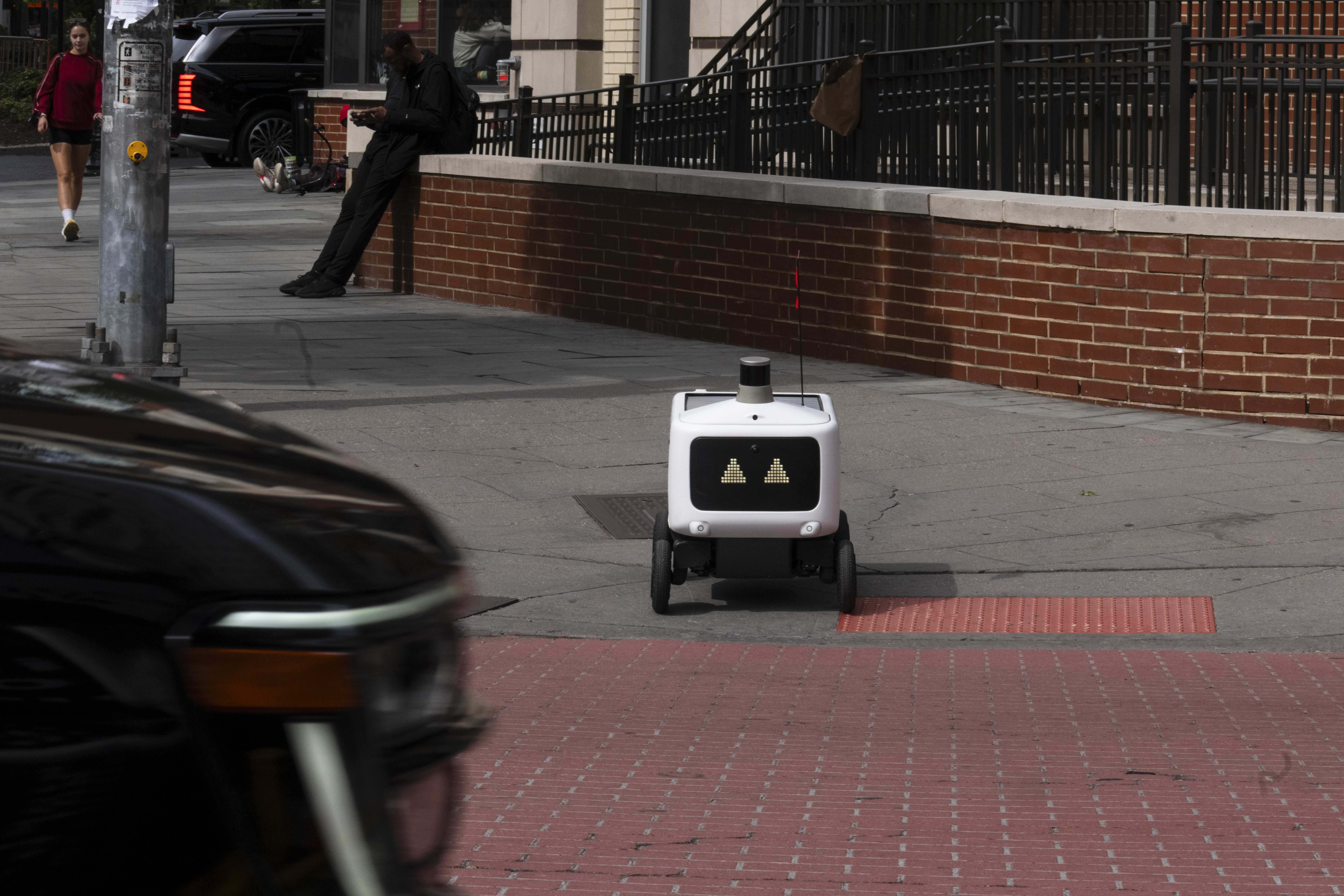
The food delivery robot was planted face down on a downtown Los Angeles sidewalk, its four wheels askew, when Jag Gonzalez came to its rescue.
Small, squat, and controlled by artificial intelligence, the machine can do most tasks on its own except stand up.
“It wasn’t my first one I’ve ever flipped over,” Gonzalez said. “I had been seeing this abuse so much.”
Gonzalez, 28, sent the robot on its way and headed to a movie, where he told friends about the rescue. But three hours later, there it was again on a new corner: the same droid, taking a beating from the Adidas-clad foot of a tottering pedestrian.
Gonzalez tried to stop the perpetrator. But the man crouched to look the robot straight in its LED eyes.
“You suck,” he said — and delivered a final kick to its midsection.
In American cities big and small, legions of similar machines are carting around takeout orders of sushi, pizza, and White Castle chicken rings and testing the question of whether humans and robots can coexist.
Early signs are not promising. Throughout 2026, Americans have kicked, tipped, and walloped the food robots — the most tangible incarnation of AI to reach their front steps.
Within the past year, a crowd in Los Angeles encircled and pounded a delivery robot; a man in Miami tried to hurl one off a bridge; another attacked one in the street; and in Sacramento, Calif., three men filmed themselves toppling and slamming a robot on the sidewalk, racking up nearly 2.5 million views on social media.
The caption? “Protecting the world from AI.”
Some attacks are vigilantism and some may be mere knuckleheadism, the thrill of attacking the defenseless. Eunisses Hernandez, a Los Angeles City Council member whose district is swarmed by robots, said the trend has a clear message.
“Because of how heightened people’s senses are to corporations and to the advancement of AI technology, people feel like this is the closest they get to some of that other than online,” she said. “People feel left behind.”
Roughly 5,000 robots deliver nationwide, mostly without incident, said Dan Ives, a partner and tech analyst at Yorkville Ives, an investment bank. Over the next three years, the number is expected to swell to 8,000, and analysts predict the industry will generate more than $5 billion in the U.S., Ives added.
More than half a million robots could be operating worldwide by 2035, according to estimates from Transforma Insights, a research firm. And they could be delivering more than food as companies forge ahead with expansion plans.
Right now, the bots aren’t exactly cash cows. Serve Robotics, one of few publicly traded operators, lost more than $100 million last year. It brought in $2.7 million. But Serve and other top companies are backed by such names as Nvidia, leader of the AI boom; Sam Altman, who helms OpenAI; Uber; and AI giant Nebius — tech heavyweights that have poured in hundreds of millions.
Through partnerships with DoorDash, Uber Eats, and other food delivery platforms, companies are operating in at least 10 metro areas. Using AI, the bots assess traffic and plan routes. They sidle up to restaurants, pop open insulated compartments, and collect orders. Some can stash up to six large pizzas. A variety of buzzes — texts, calls, notifications — alerts customers to their arrival.
With bright white circles for eyes and human names emblazoned on their sides, Serve Robotics’ droids were designed to look innocuous, said Ali Kashani, the company’s CEO.
“Vandalism and societal acceptance were very top of mind,” he added.
But looks go only so far. Some freewheeling robots have become agents of chaos, blocking ambulances, clogging walkways, colliding with trucks and trains, and along the way igniting frenzied robophobia. In Los Angeles, Miami, Philadelphia, and more, the robots have faced vandalism this past year, according to police departments and encounters shared on social media.
Intentionally damaging property is a crime, but arrests are few and statistics recording the reign of terror are scant.
At the hands of a vandal, robots are helpless, unable to call authorities. That makes it difficult for police to track abuse, said Jasmine Reilly, a spokesperson for the Philadelphia Police Department. “Unless people report it,” she said, “we won’t know anything about it.”
Several companies have human supervisors who watch from afar, aiding robots in their hour of need. A call to police is “very rare,” said Kashani of Serve. “We actually don’t want to be using police resources for this.”
Sometimes their assistance is unavoidable.
Hapless robots have wandered into peril on their own, falling down stairs, plowing through glass, and going haywire on sidewalks. At least one collided with a self-driving car. Another breached an active fire zone.
“ROBOT IS STILL ON THE SCENE,” a police dispatcher in Miami wrote in January, responding to a machine that rammed a 15-story building, shattering a window.
But robot mayhem is low on the list for officers. As Tom Saggau, a spokesperson for the Police Protective League union in Los Angeles, put it: “This is Los Angeles. If we’ve got to start worrying about that, we’re in deep” — uh — trouble.
The misadventures and misfortunes of delivery robots are well chronicled on social media — sometimes by abusers themselves. (See: @FilmTheRobotsLA across platforms).
Among the lowlights: a brutal, late-night pile-on in Los Angeles after last year’s World Series (700,000-plus views) and one humiliation in Philadelphia, where an oblivious bot rolled around with “destroy me plz” inked across what one might consider its forehead (more than 3,000 likes).
The hope of online virality can motivate abuse, said Lindsay Ouellette, a psychology professor at LaSalle University in Philadelphia who studies human-robot relations. “We know that controversial content gets clicks,” she said.
Those clicks come in part because robot abuse strikes a chord, tapping into “fear that people have around their jobs and AI taking over,” she added.
Robot couriers help restaurants cut labor costs by replacing delivery workers. But robotics companies note that they also create some jobs. Every 10 Coco Robotics droids generate one human engineering role, said Zach Rash, CEO of the Los Angeles-based company. The robots benefit communities in other ways, he added. Coco’s bots scan sidewalks, sharing data with an app that helps visually impaired people avoid obstacles.
Robotics companies said they worked with local officials and pedestrian, biking, and disability groups, among others, to ensure the machines rolled into cities smoothly.
But the robots’ ability to collect data is a flash point for some residents who, local officials said, feel watched by machines that appeared suddenly, with little regulation.
In Glendale, California., a Los Angeles suburb, Mayor Ardashes Kassakhian said the robots’ arrival was “like something out of a sci-fi movie.” In Chicago, they “emerged overnight,” said Daniel La Spata, an alderman in the city’s 1st Ward.
Kassakhian has proposed a pause on the rollout; in La Spata’s ward, residents overwhelmingly voted to block robots from expanding onto more streets. Both officials say a slew of questions must be answered: Should robots be banned from high-foot-traffic areas? Are they displacing any human jobs?
In Los Angeles, Hernandez sponsored a motion passed by the City Council last year that asks the Los Angeles Department of Transportation to examine the robots’ impact on pedestrians, accessibility, and more and to suggest improvements.
“There’s a lot of people who are disgruntled,” she said. Hernandez believes they are “recognizing what it is and vandalizing it out of frustration.”
It doesn’t take much, in fact, for some to resort to violence. In a survey of college students, Ouellette, the psychology professor, asked: What would it take for you to kick a delivery robot?
When offered $100? One in five said they would consider aggression.
Battery and bedlam aside, the robots are, to many, already a fact of life — as normal as streetlights and the robotaxis stopped at them, said Gonzalez, the Los Angeles man who rescued, momentarily anyway, the delivery bot.
Walking through downtown Los Angeles, where the robots roam, Gonzalez paused and said: “It’s the future.”
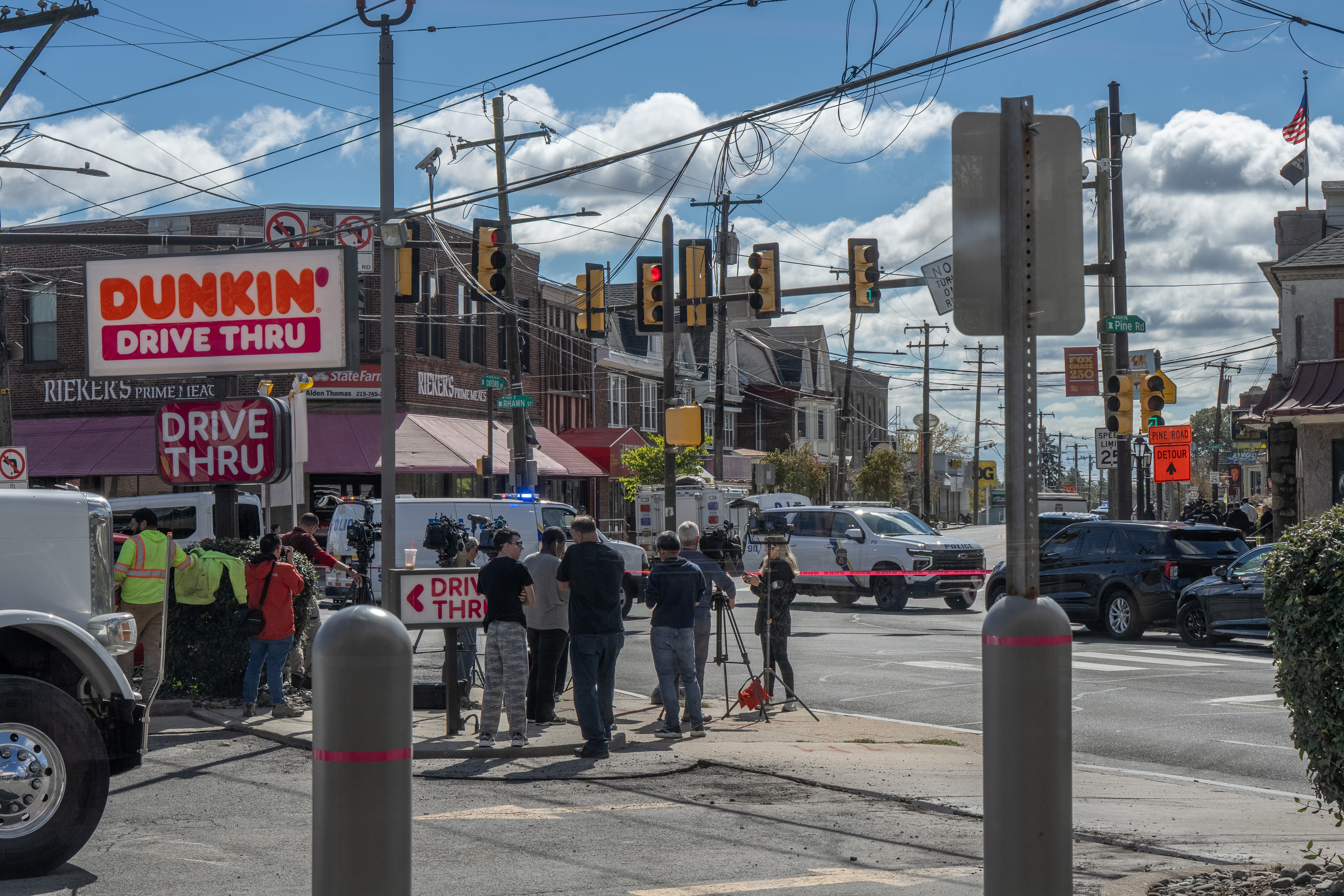
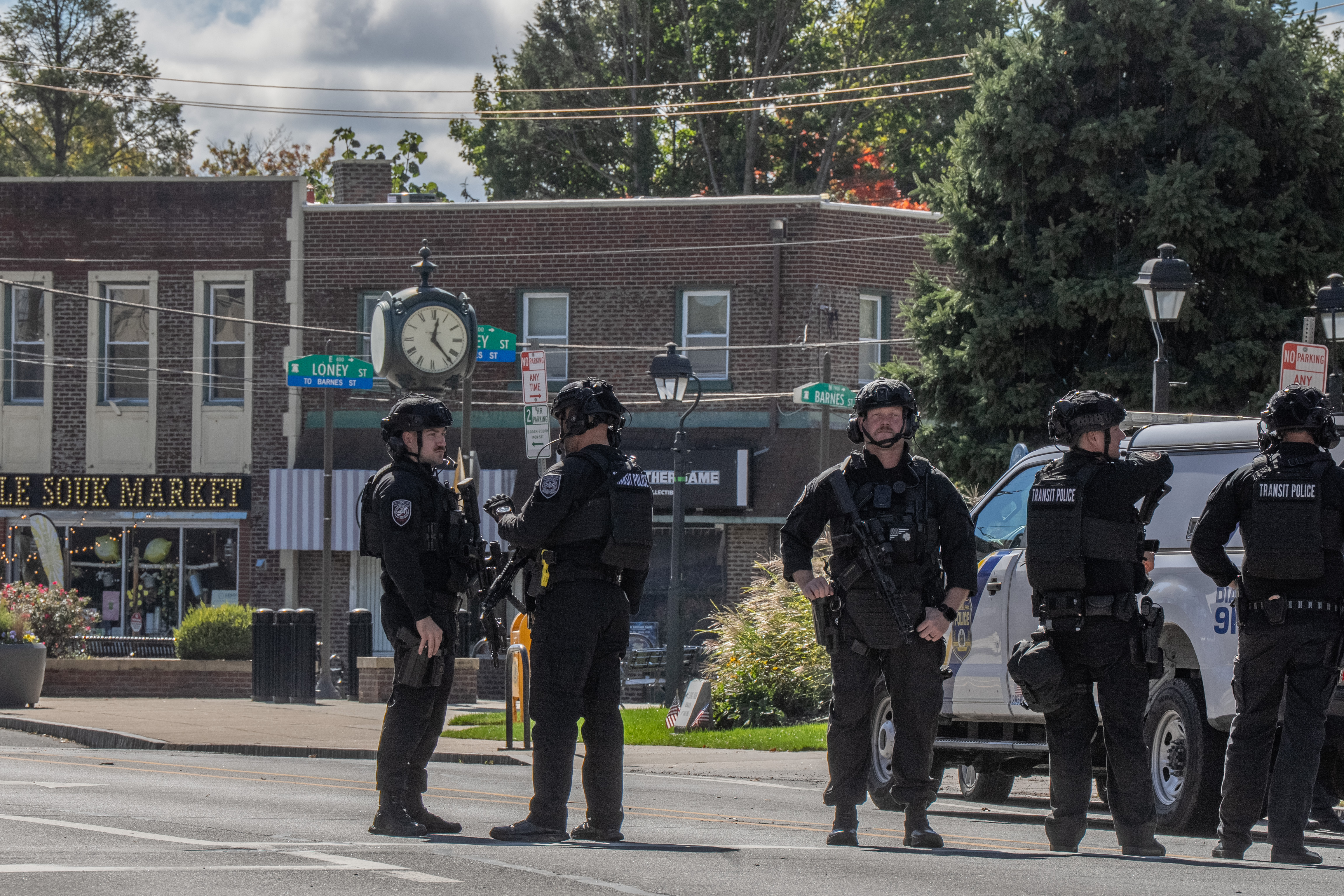
An armed man believed to be connected to an earlier double homicide — who then barricaded himself for hours inside a SEPTA bus in the city’s Fox Chase section — has died after shooting himself, police said.
The man, who was not officially identified, was transported to Jefferson Abington Hospital, where he was pronounced dead, police said. The barricade was declared over just after 5 p.m.
Shortly after 3:40 a.m., Philadelphia Fire Department responders removed two adult women from the scene of a house fire on the 8200 block of Williams Avenue in the city’s Cedarbrook section, police said.
Both women, who were not identified, had been shot, police said.
The women were taken to Jefferson Einstein Philadelphia Hospital, where they were both pronounced dead.
Around 5 a.m., a Route 18 bus pulled into the Fox Chase Loop at Oxford Avenue and Loney Street to drop off two passengers.
“At that time, there were just three people on board — the bus operator, the man who later barricaded himself on the bus, and another passenger,” SEPTA spokesperson Andrew Busch said.
“When the bus stopped for a layover at the loop, the man told the bus driver that he was not getting off the vehicle and to call the police. The other passenger exited the bus without incident and the operator did as well after calling for assistance,” Busch said.
Police in the city’s Fox Chase section near where a man barricaded himself on a SEPTA bus in Philadelphia on Monday.Jessica Griffin / Staff Photographer
The surrounding streets near the barricade were shut down, and SEPTA trains and buses were detoured away from the Fox Chase Loop transit hub.
Police said no officers were injured and the investigation was ongoing.
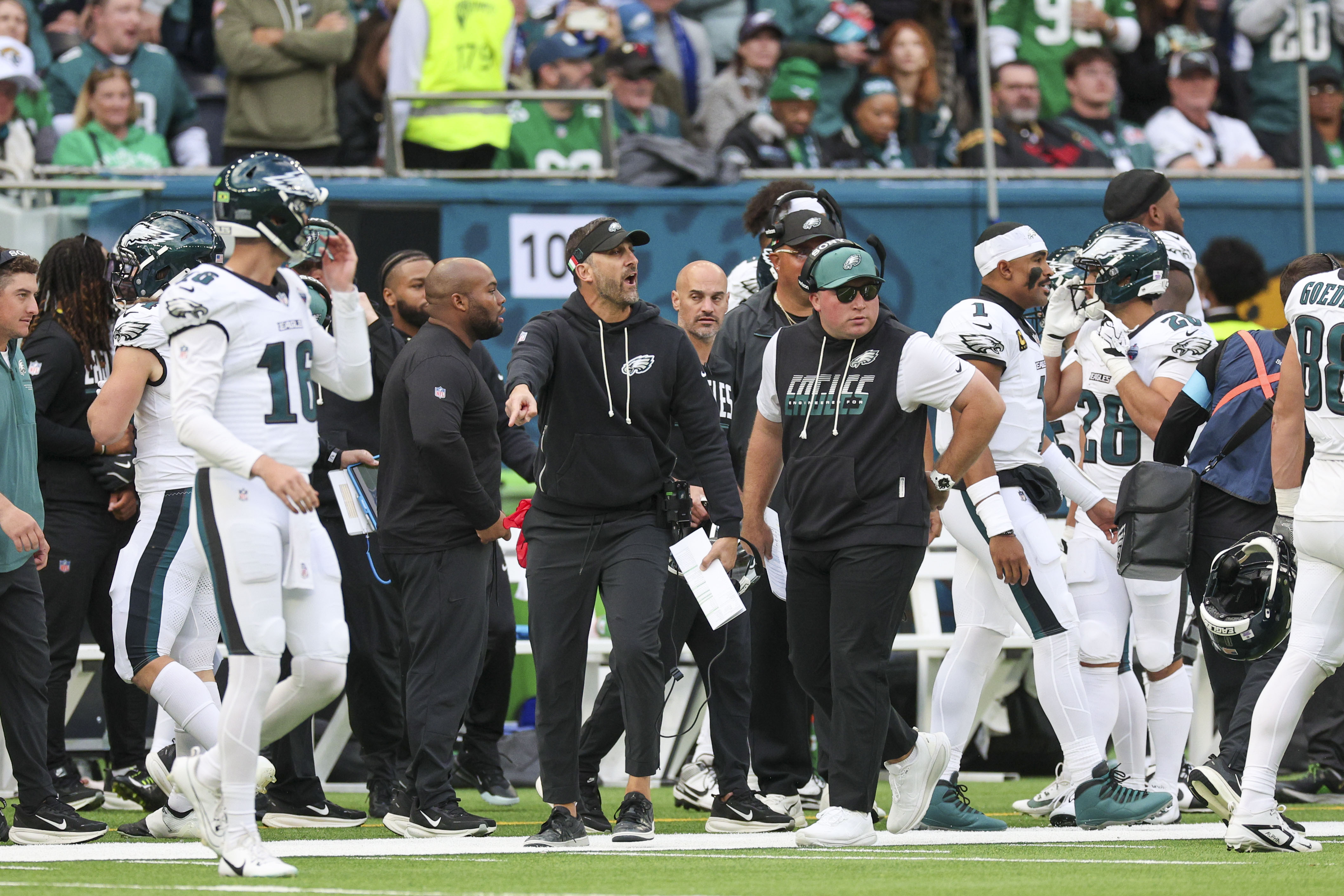
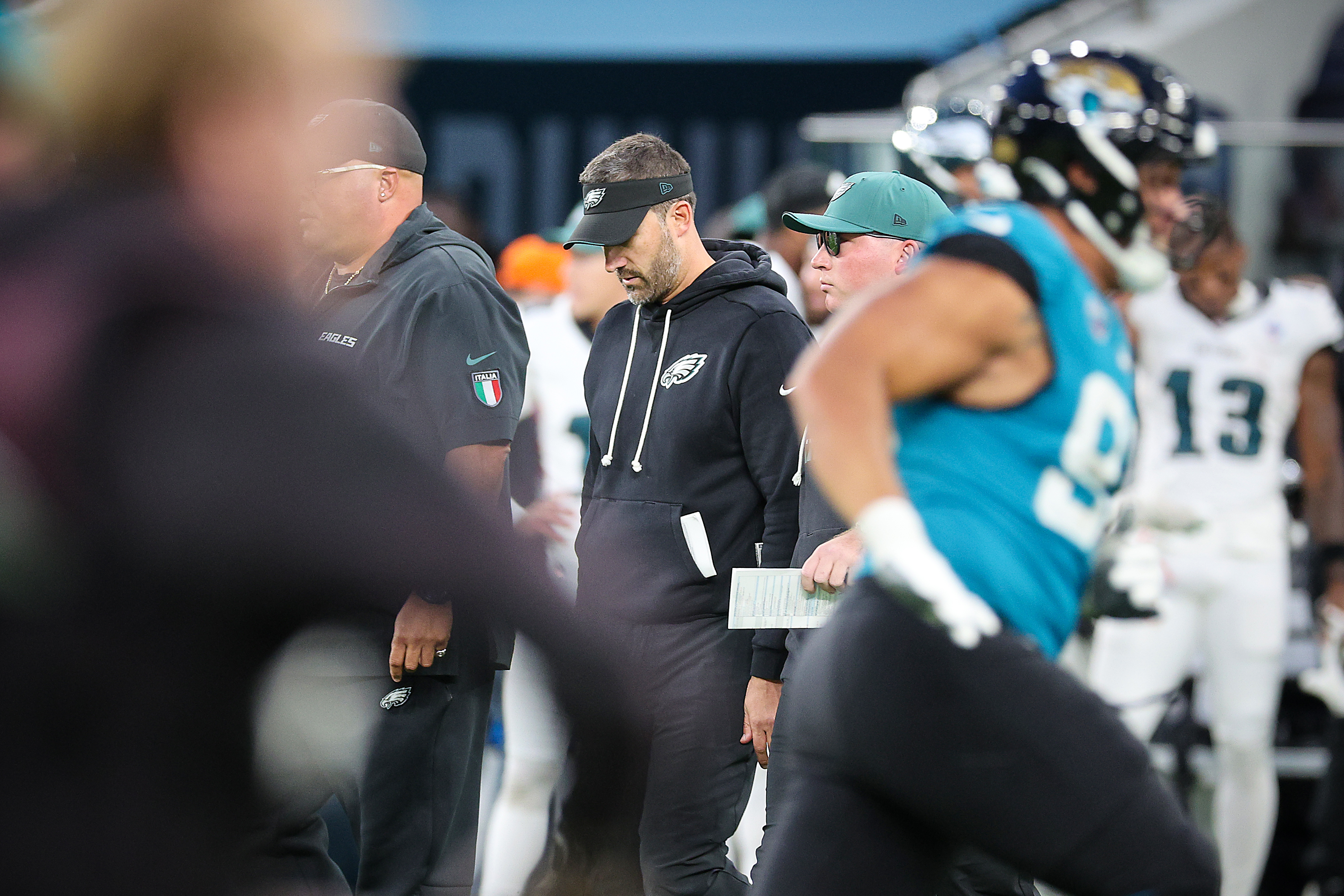
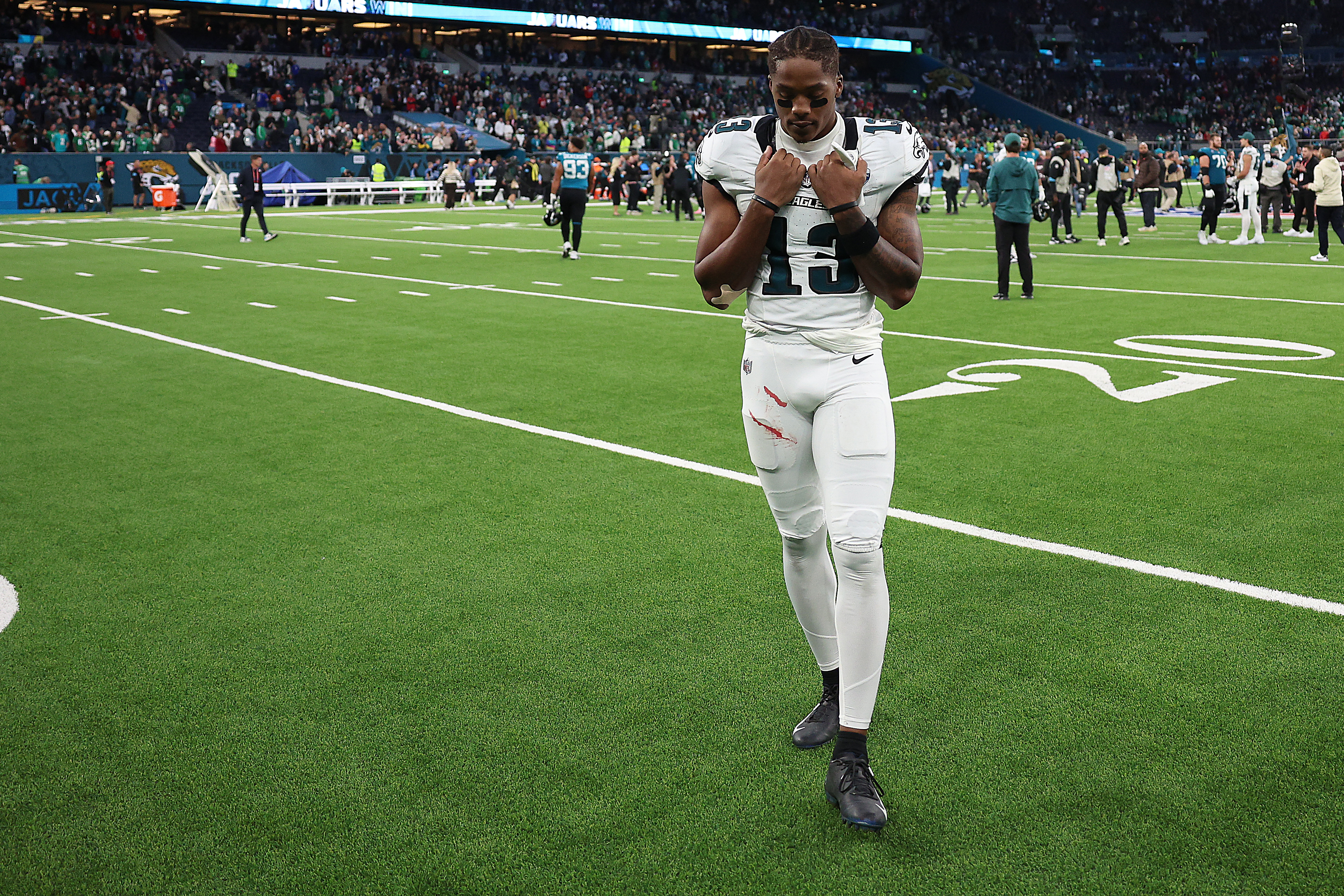
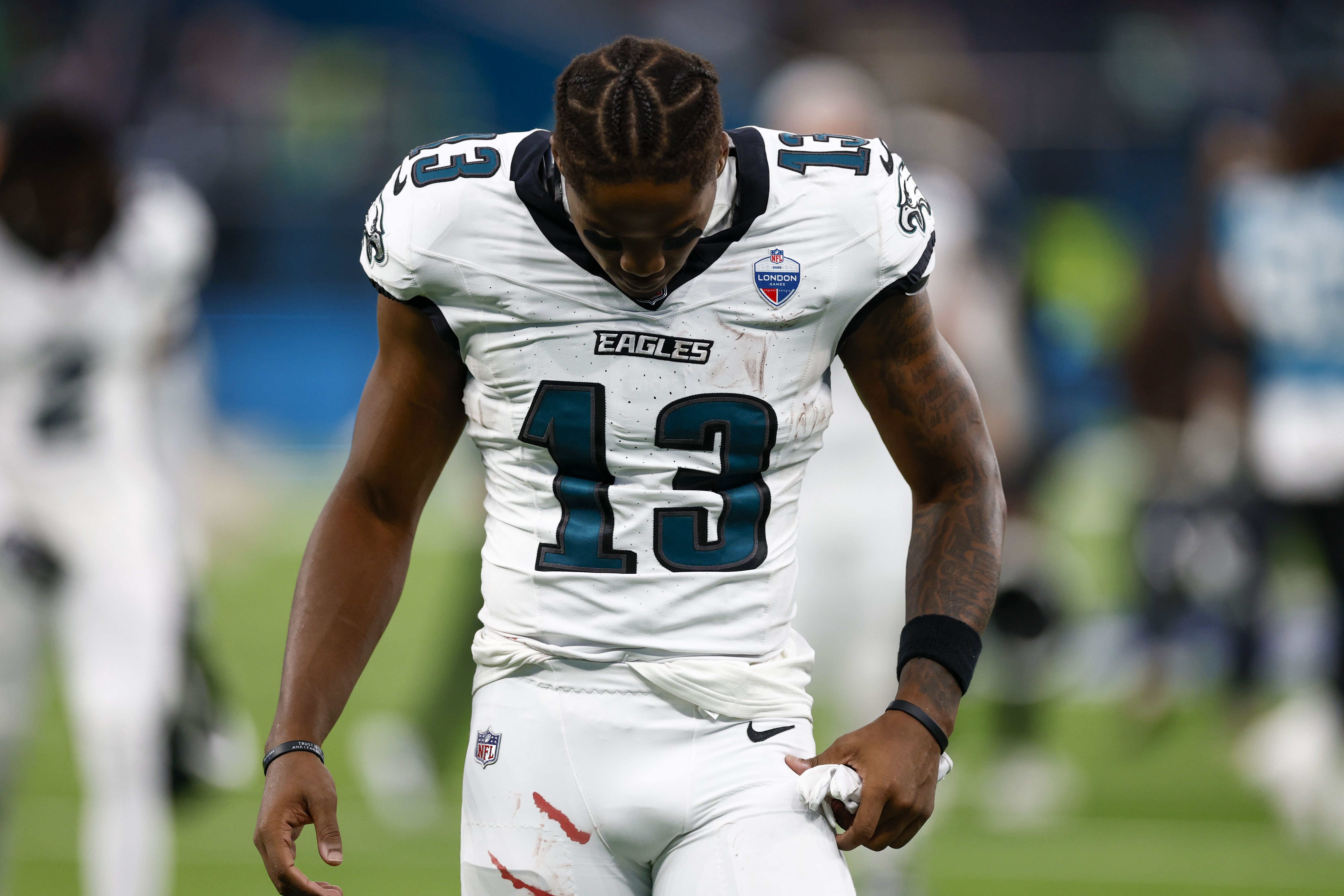
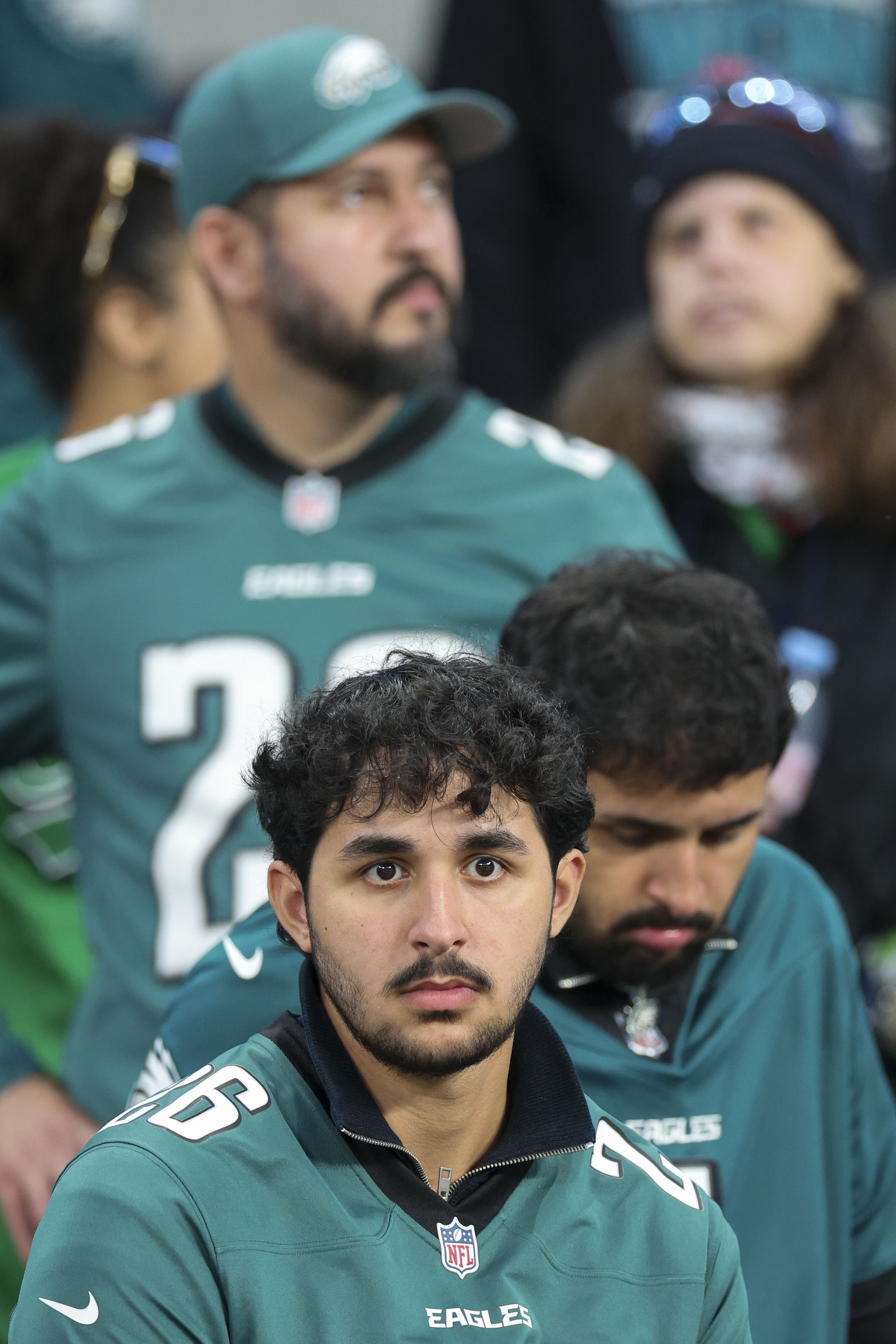
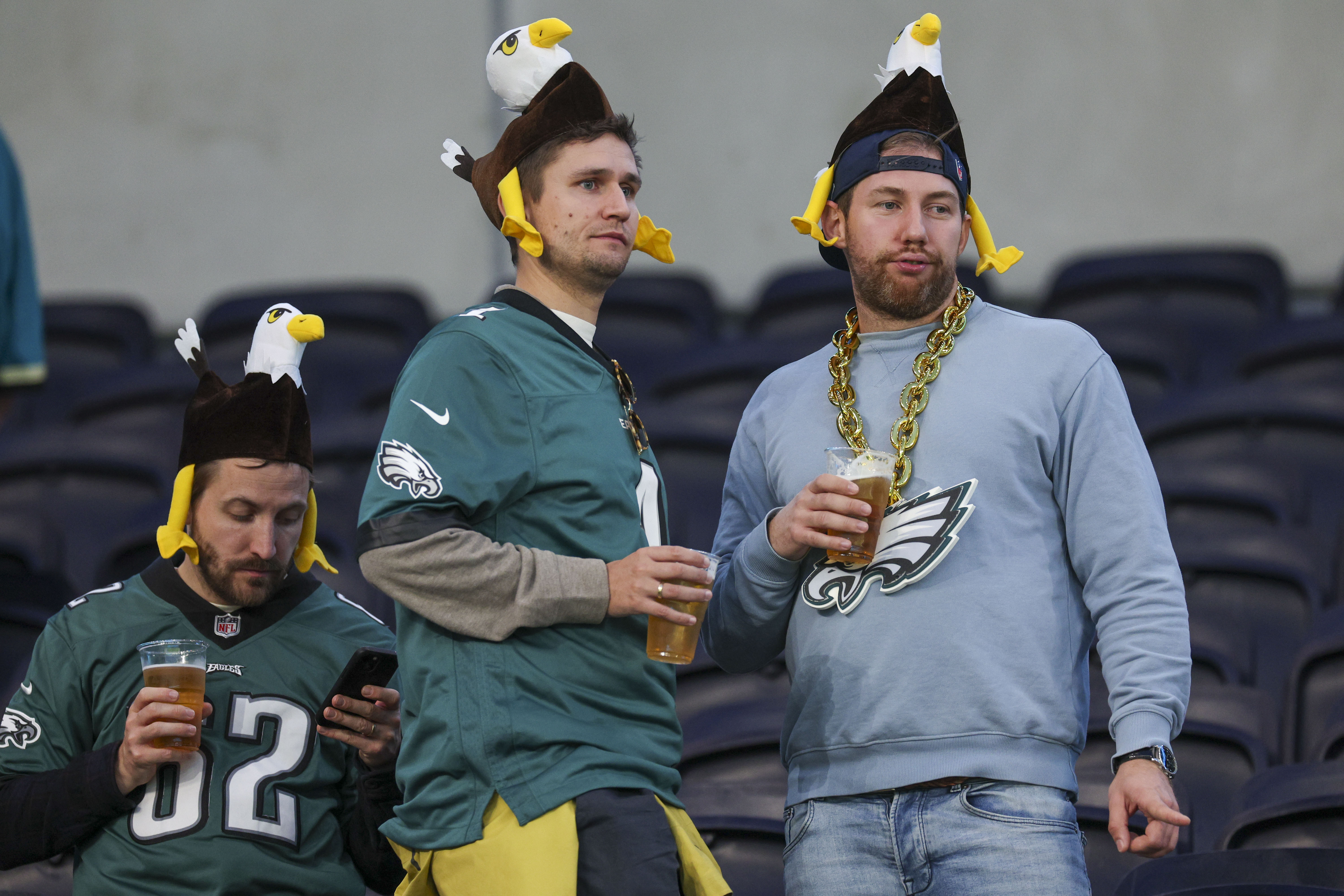
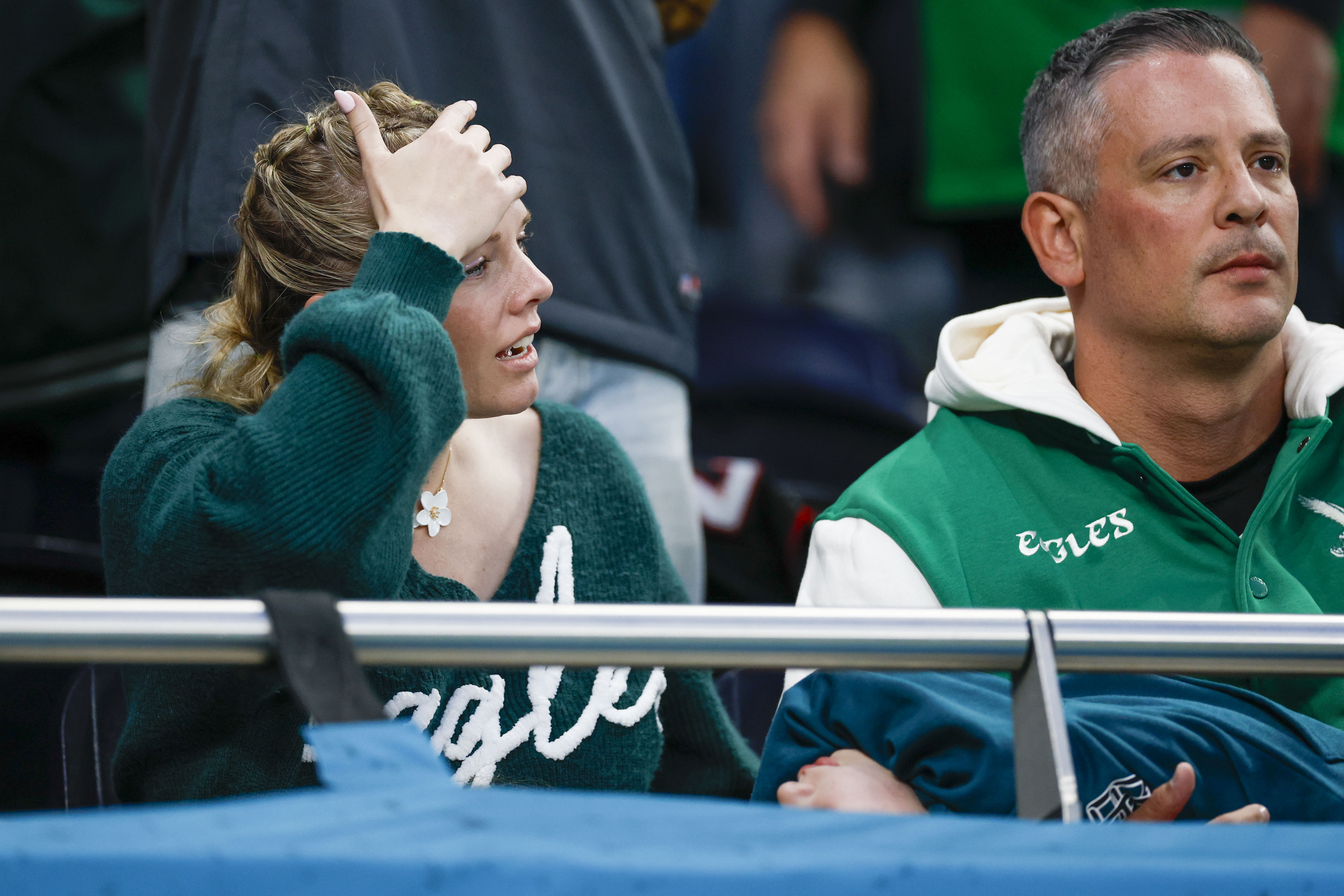
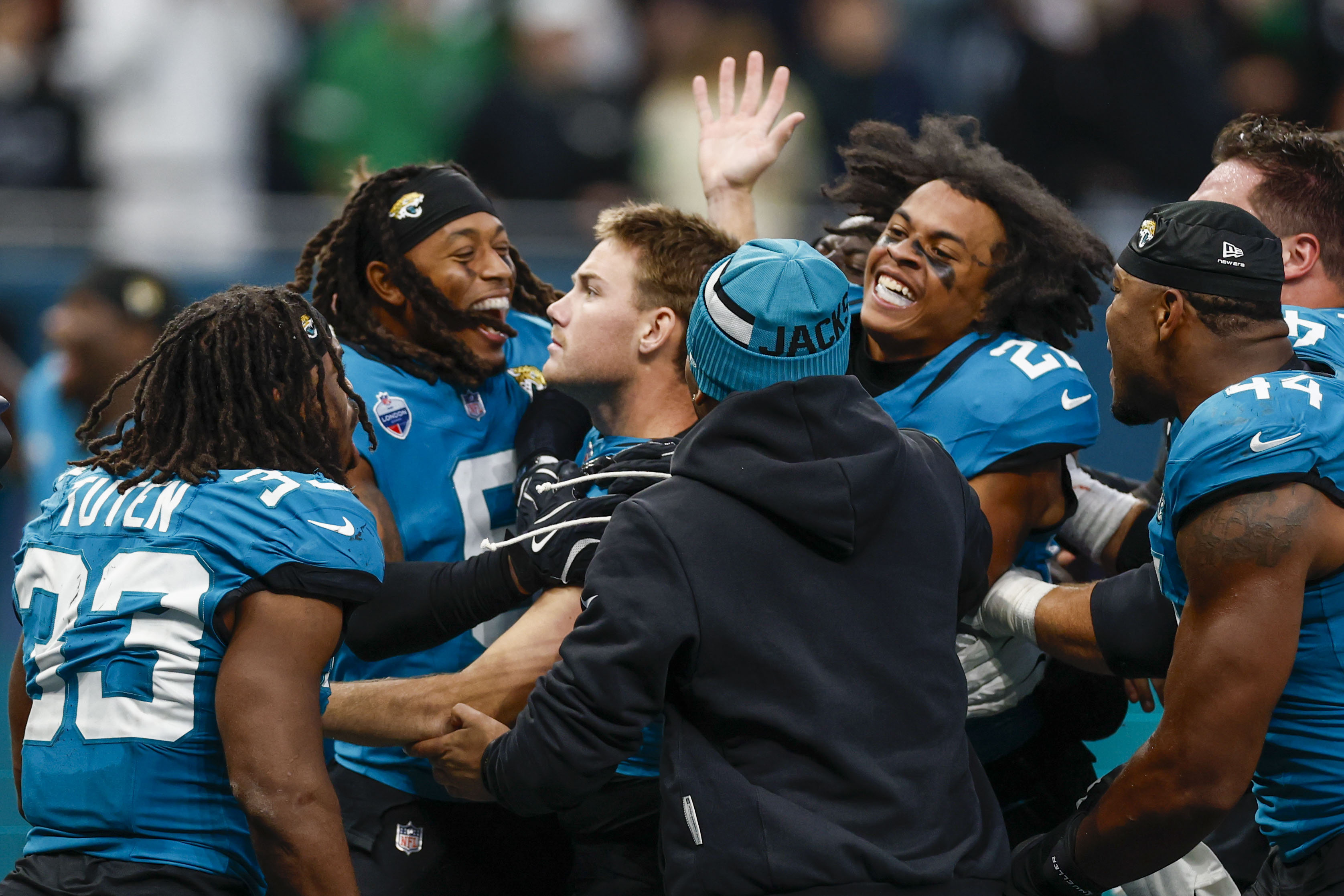
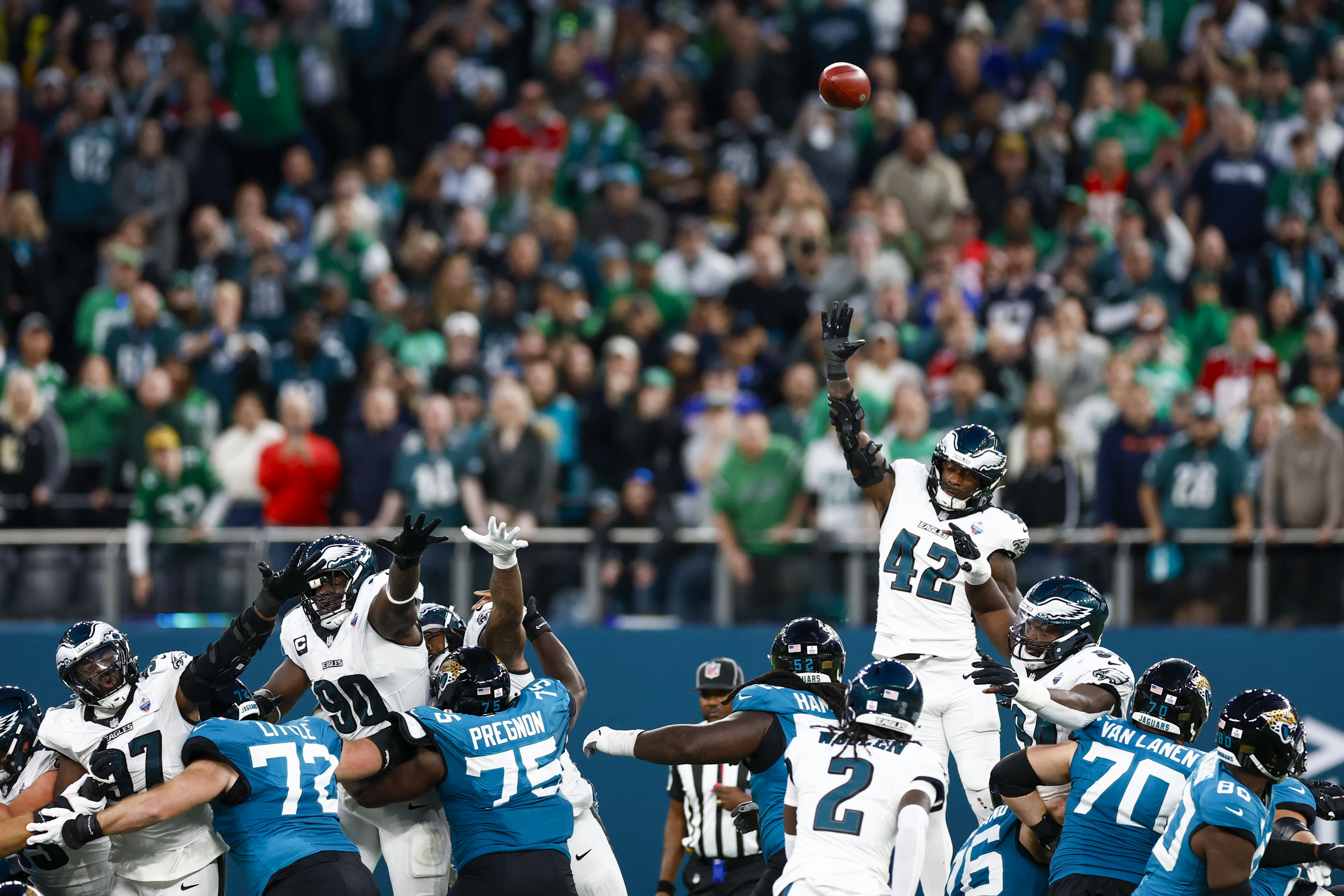
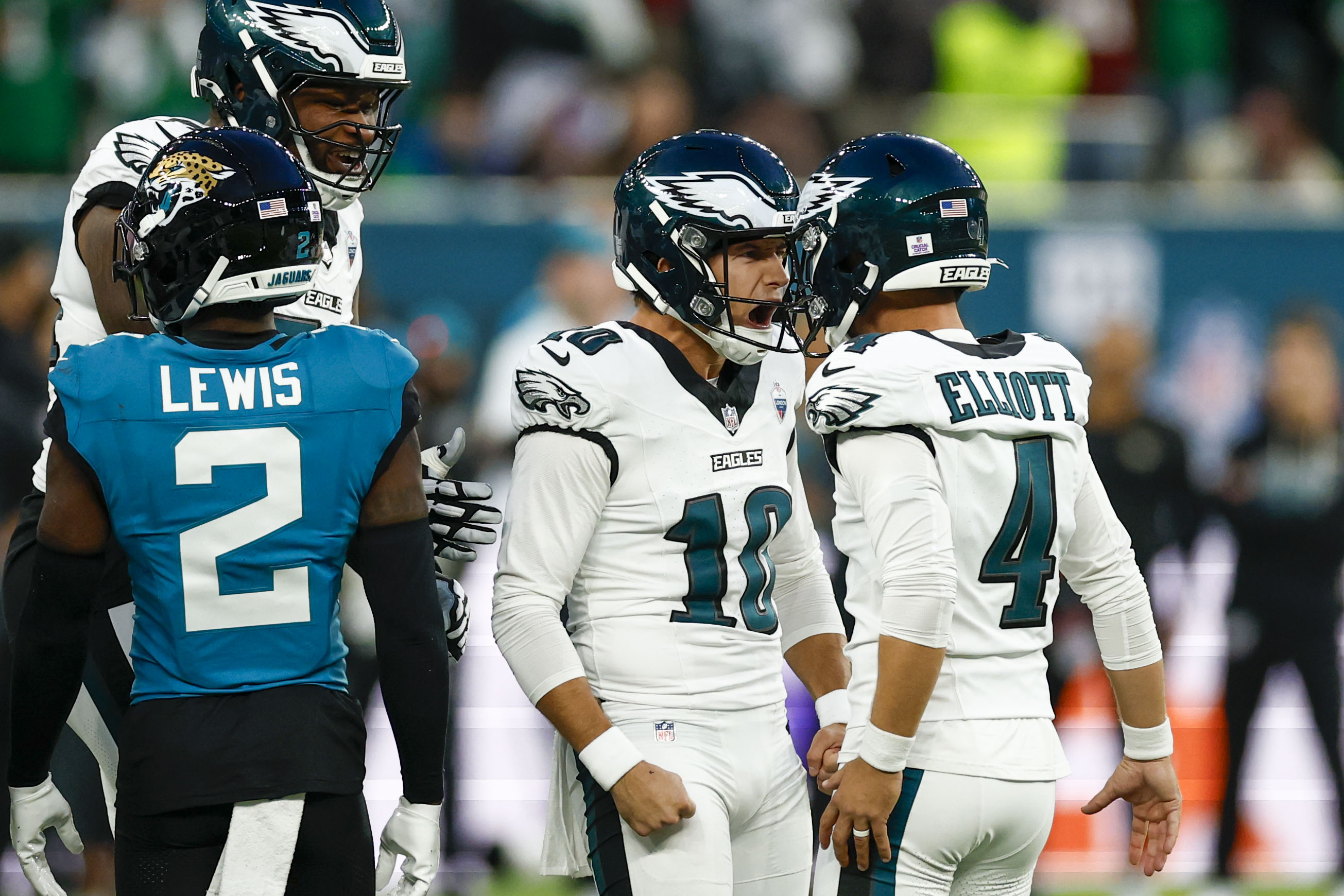
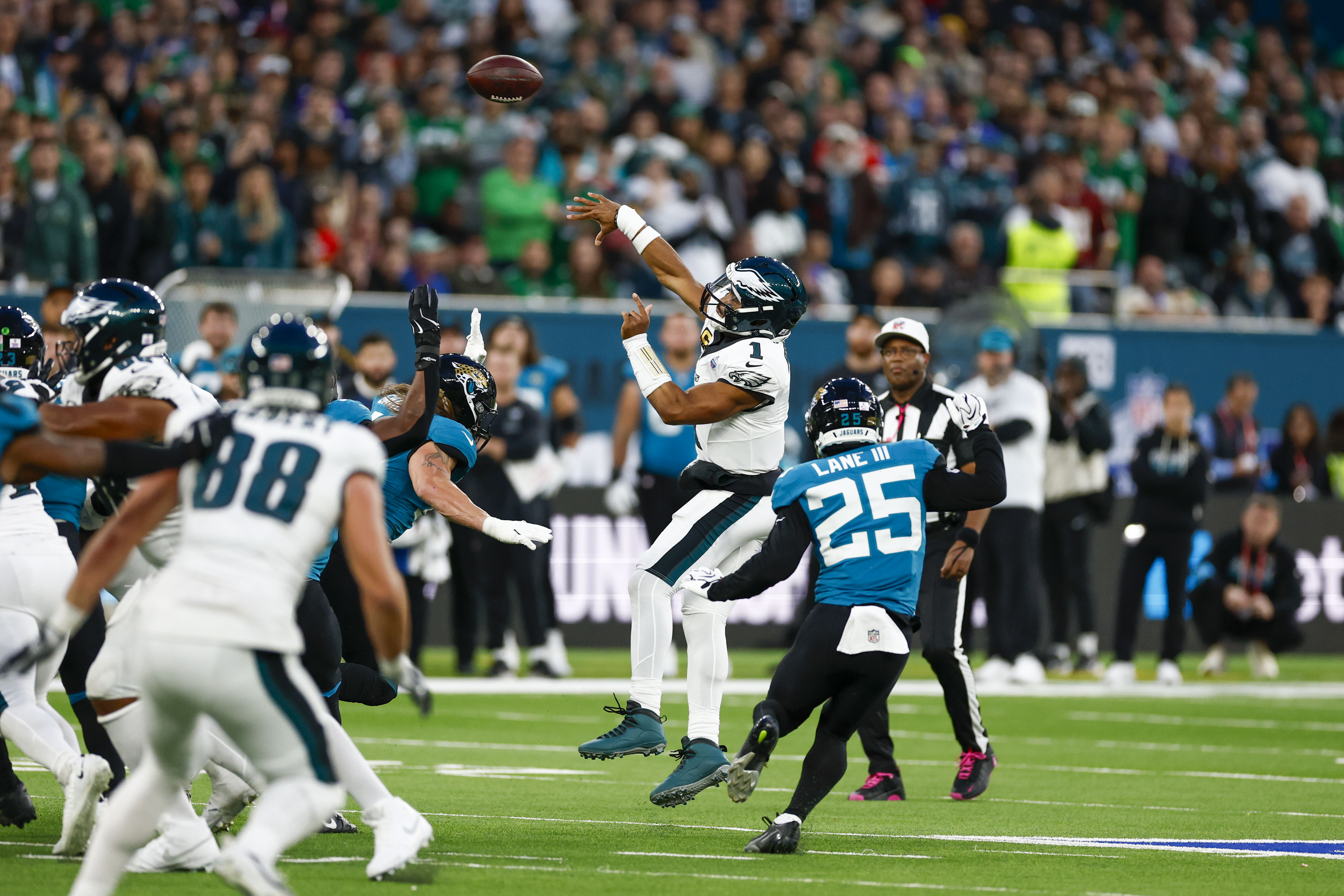
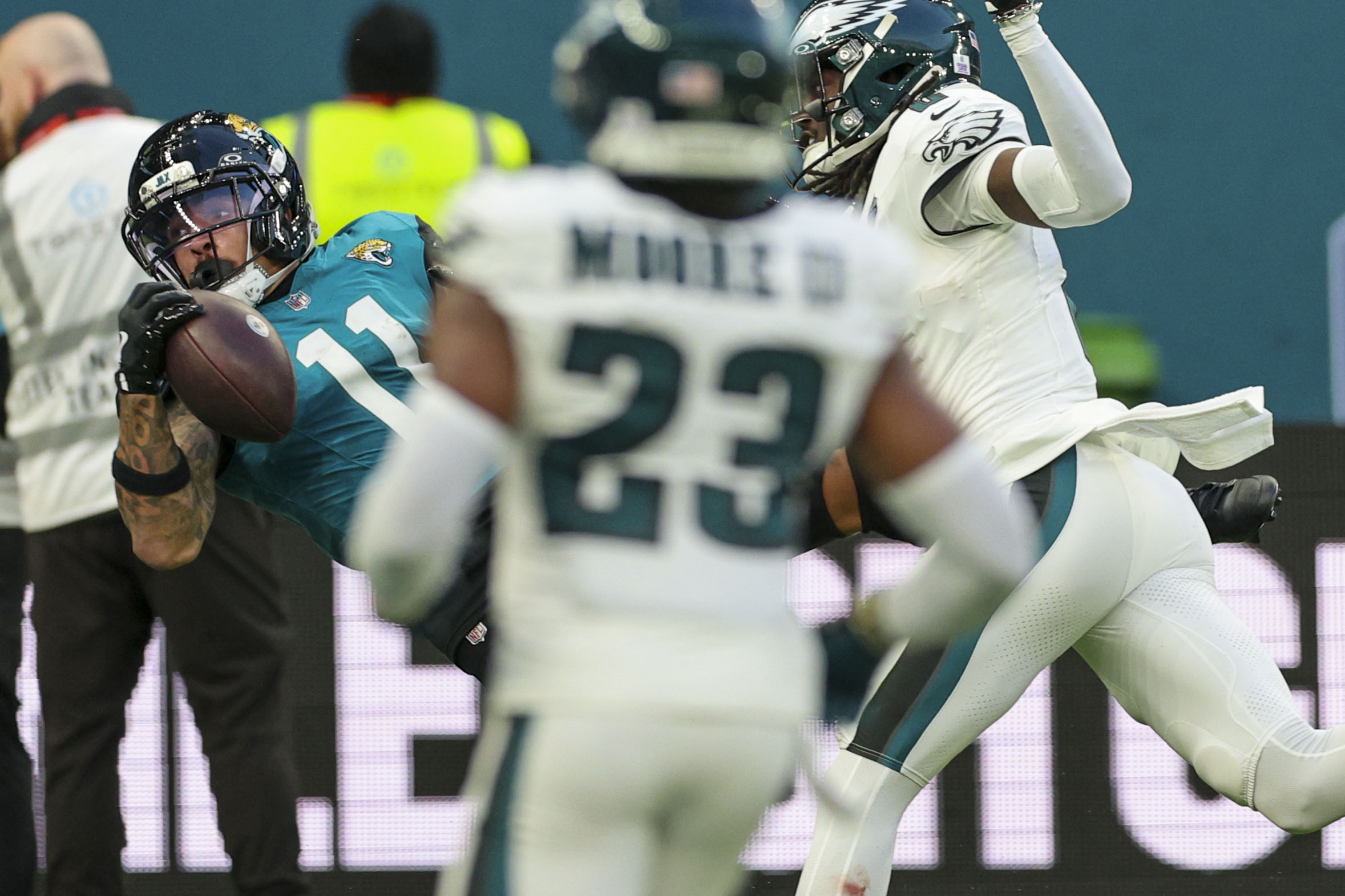
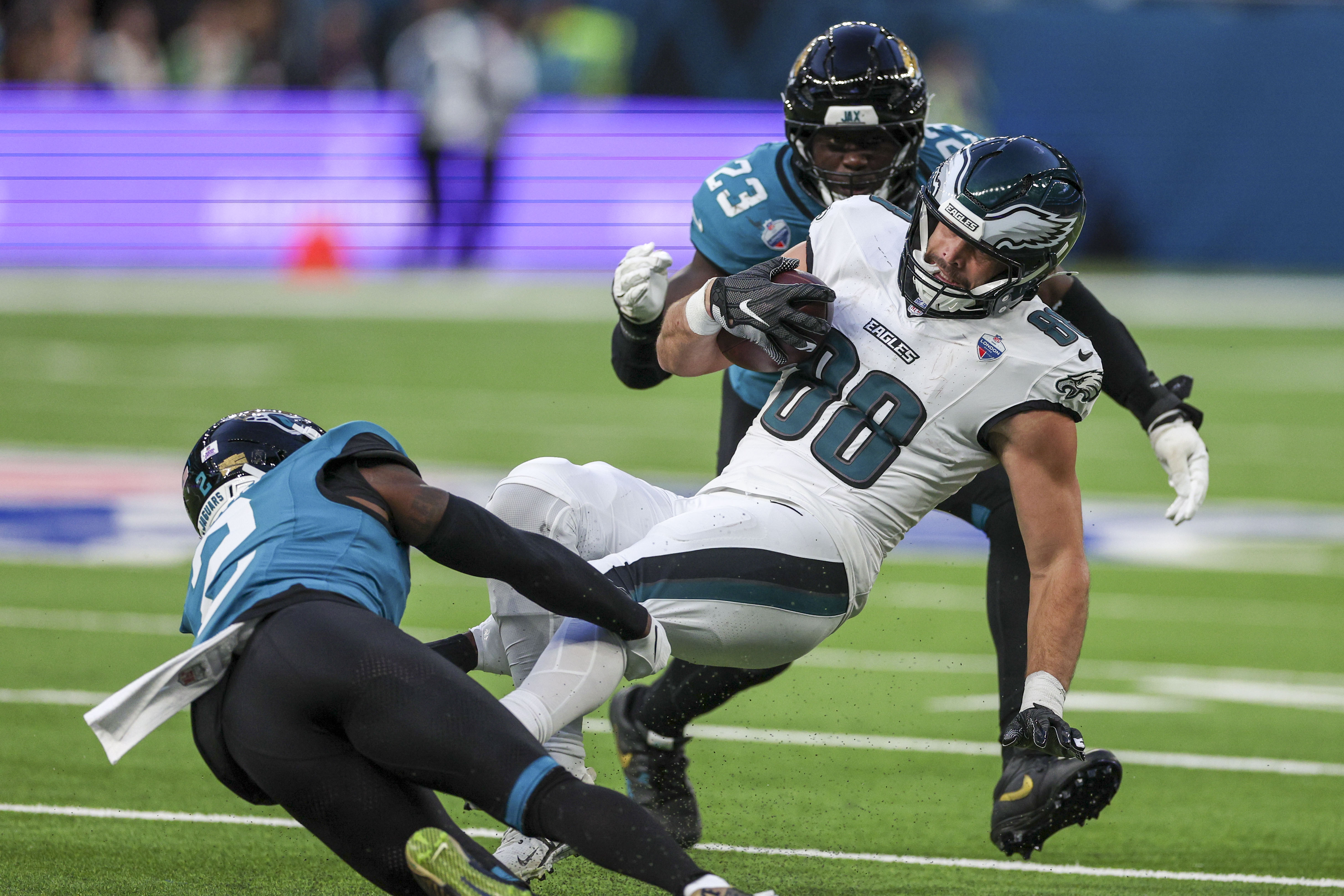
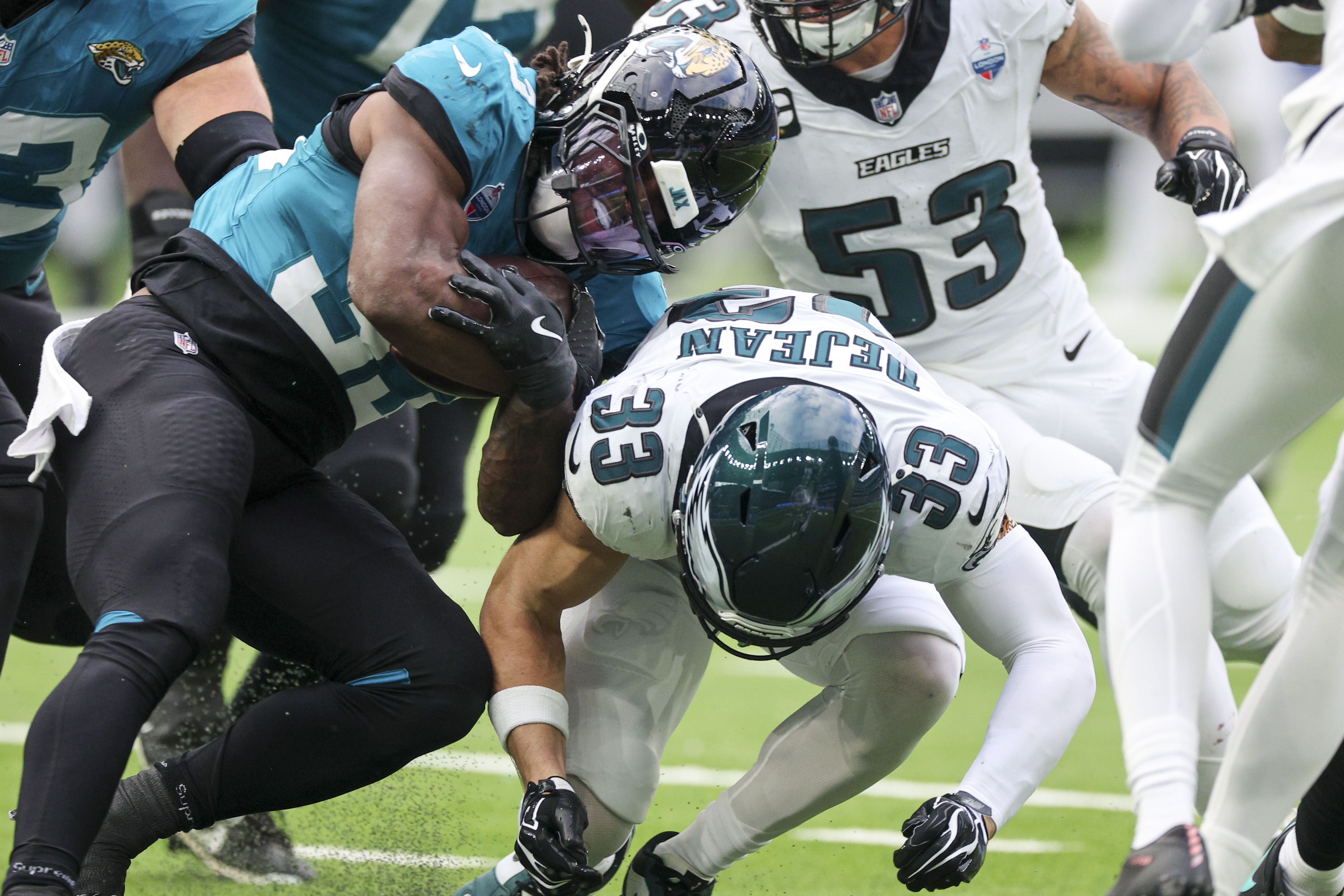
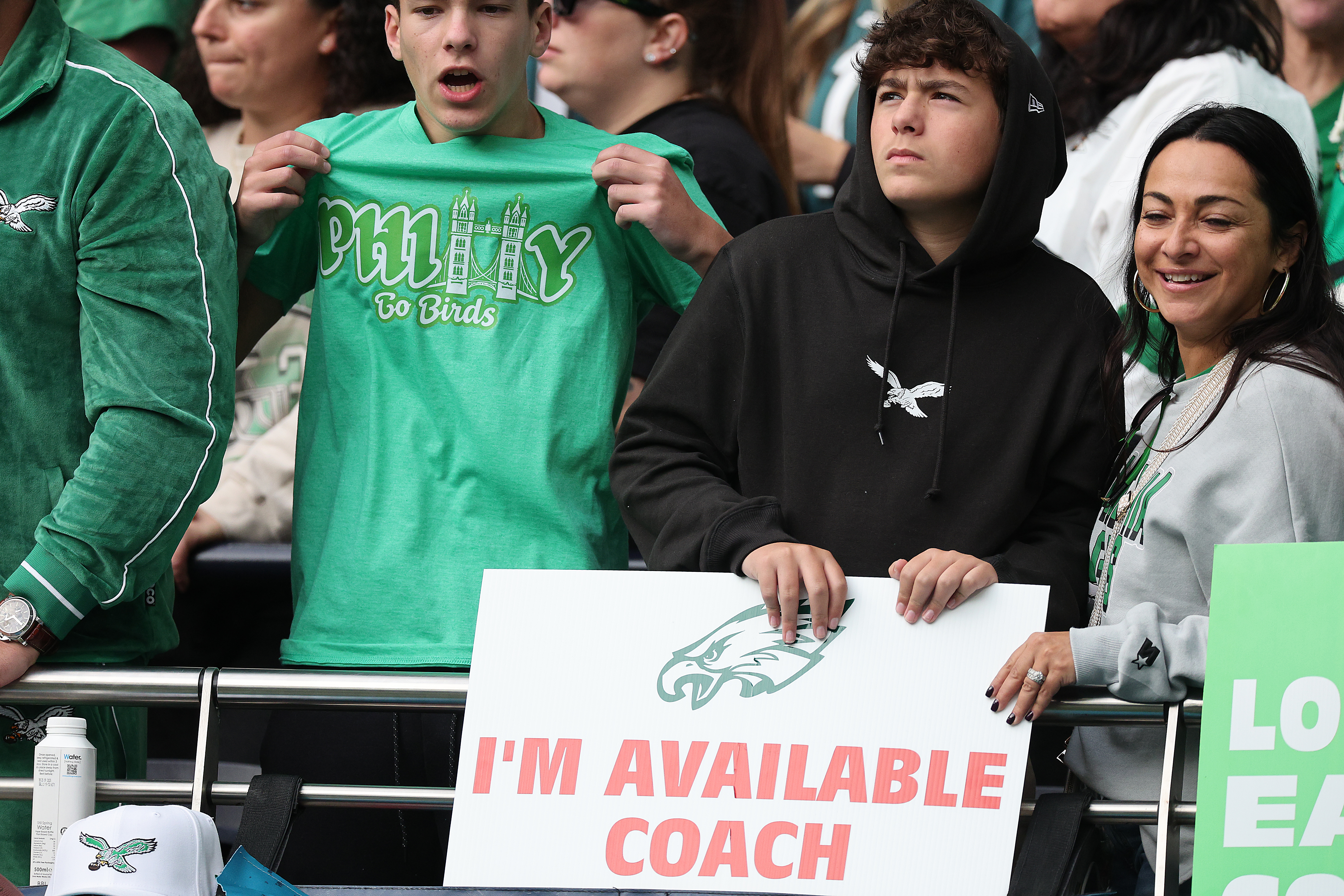
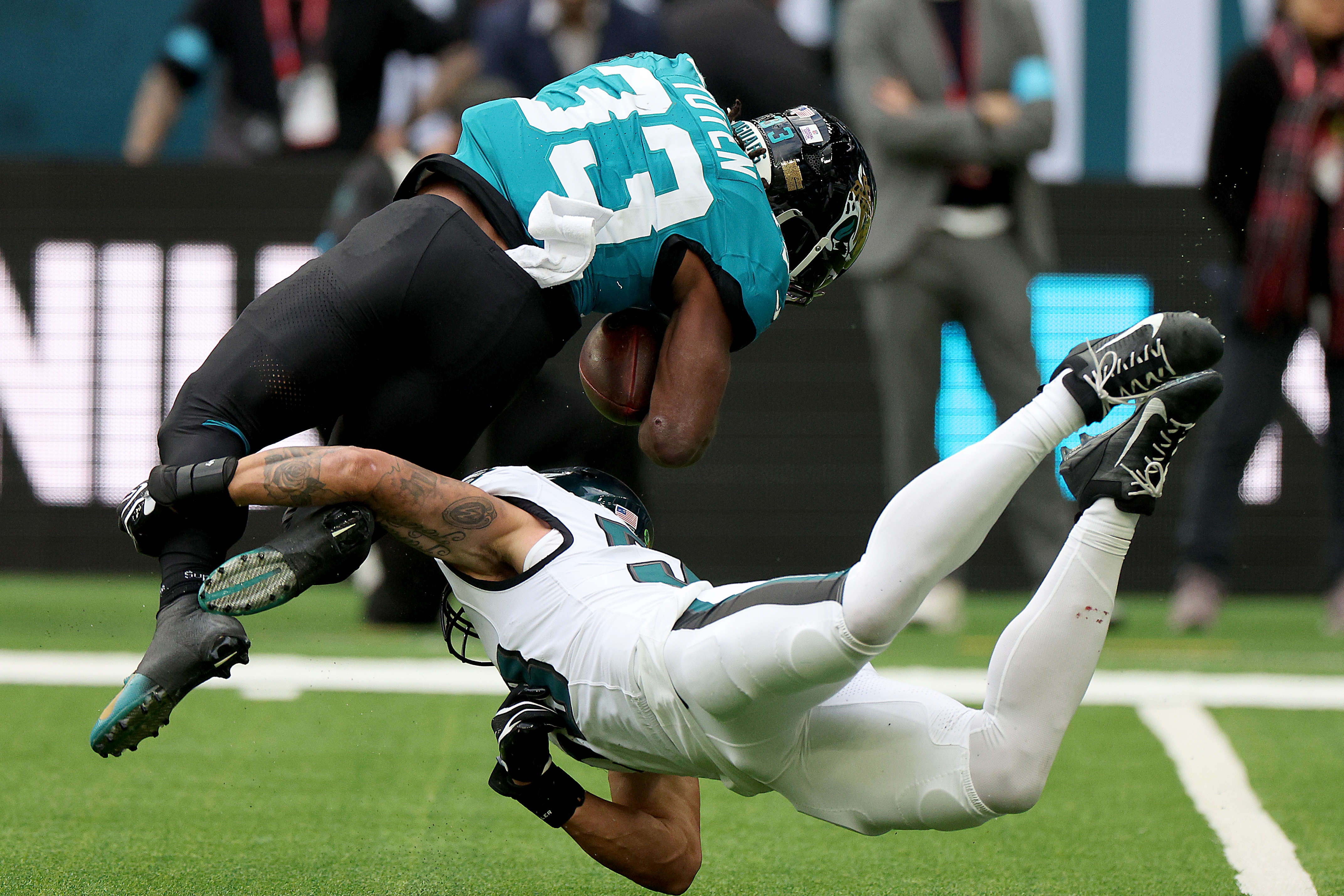
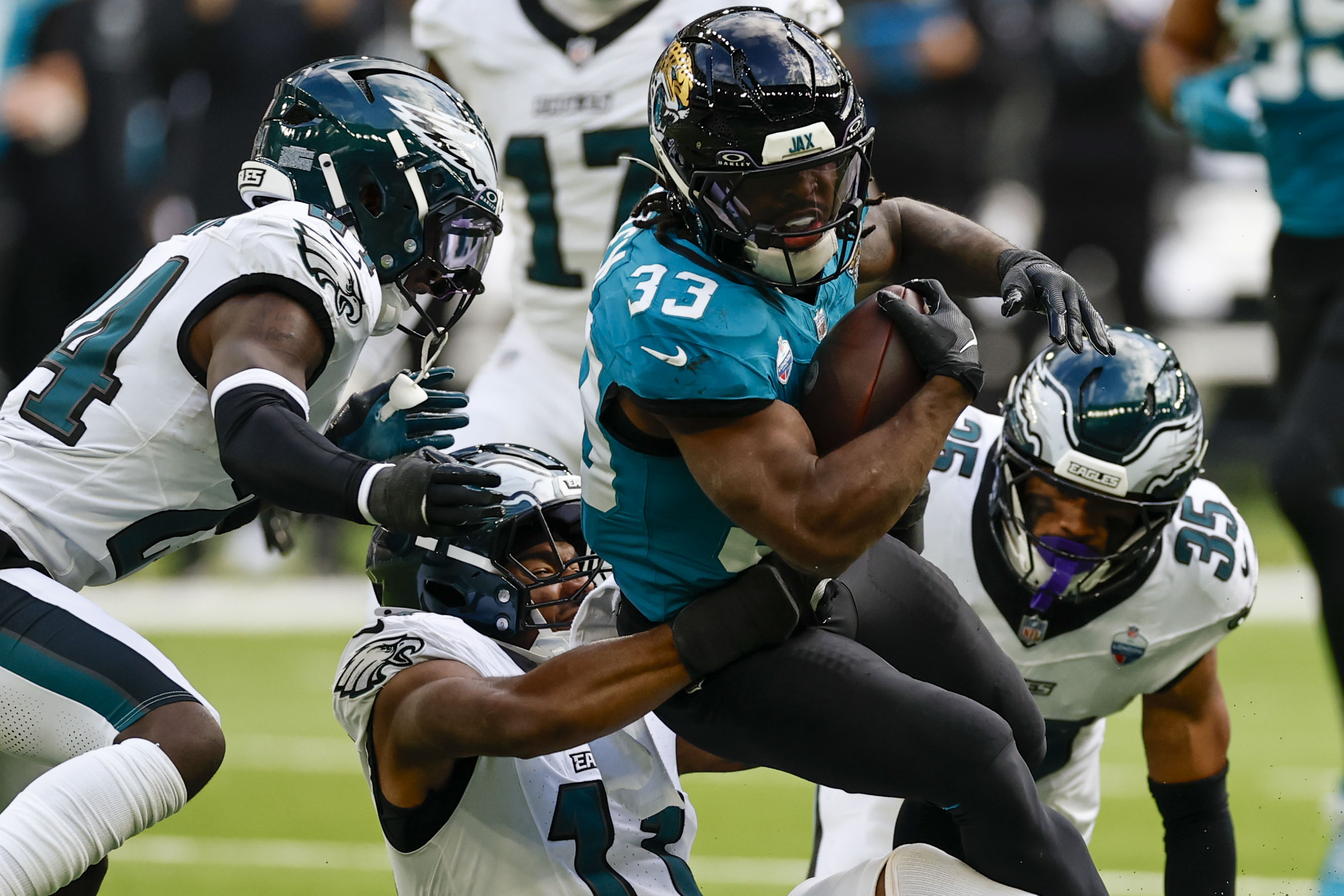
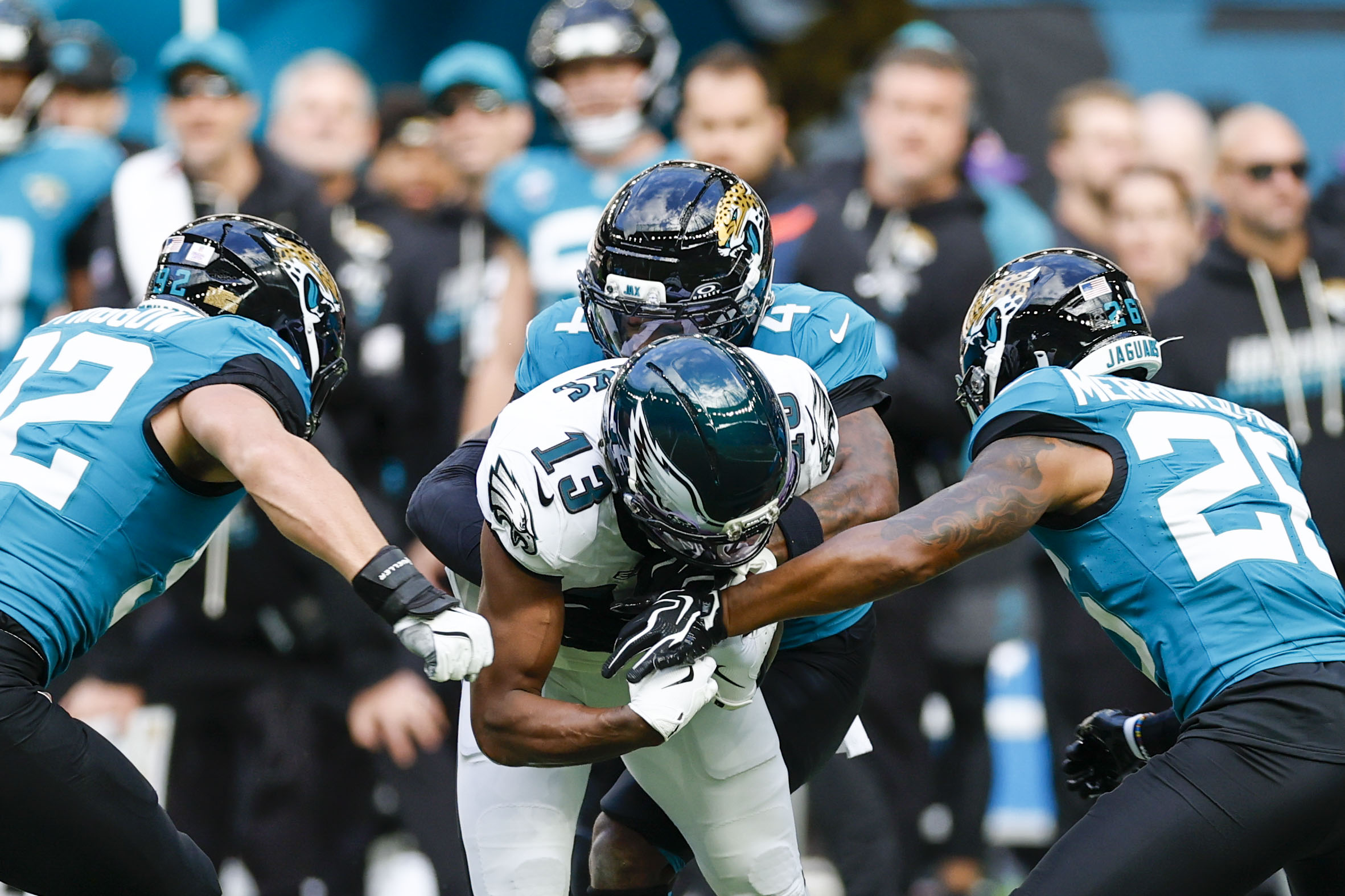
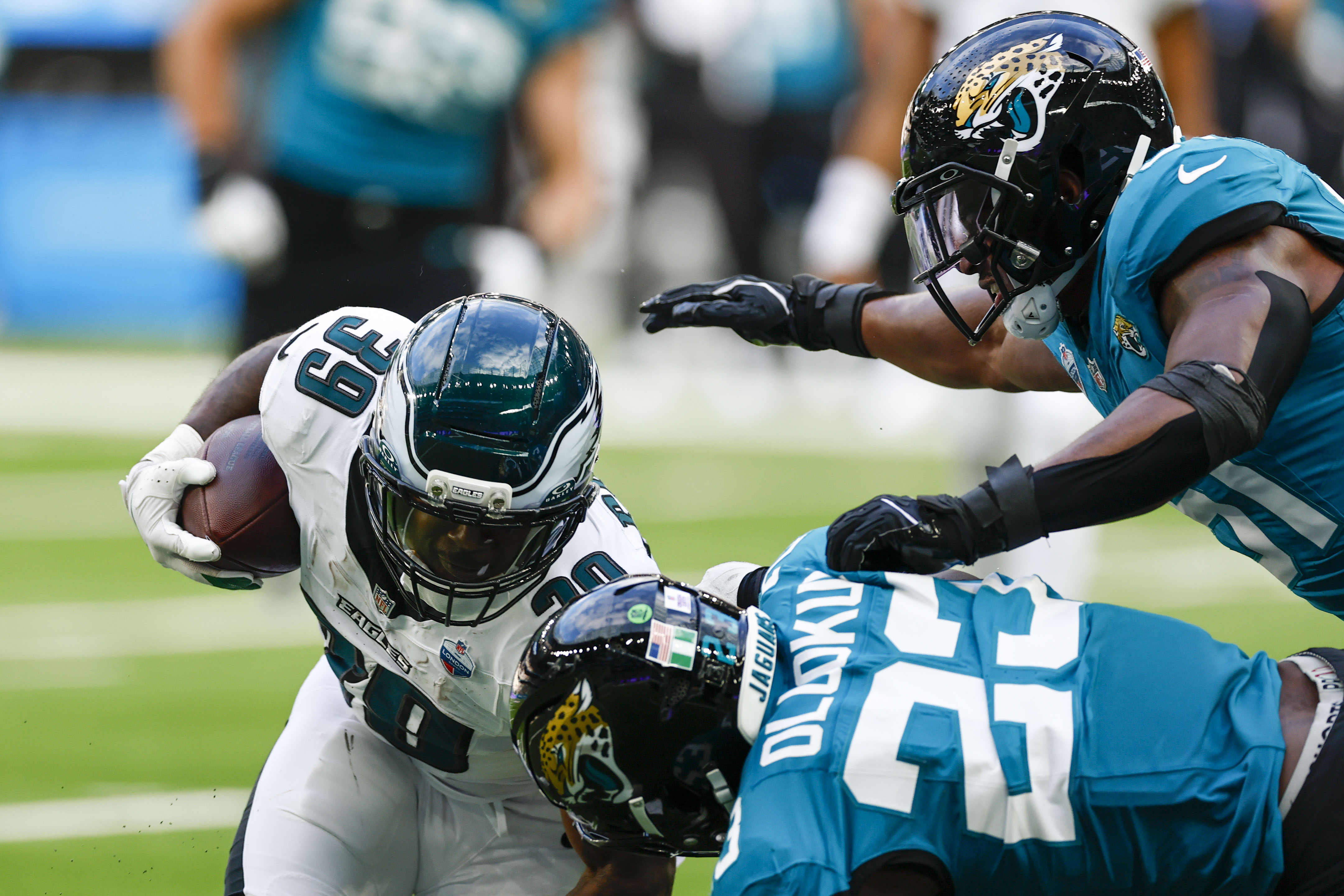
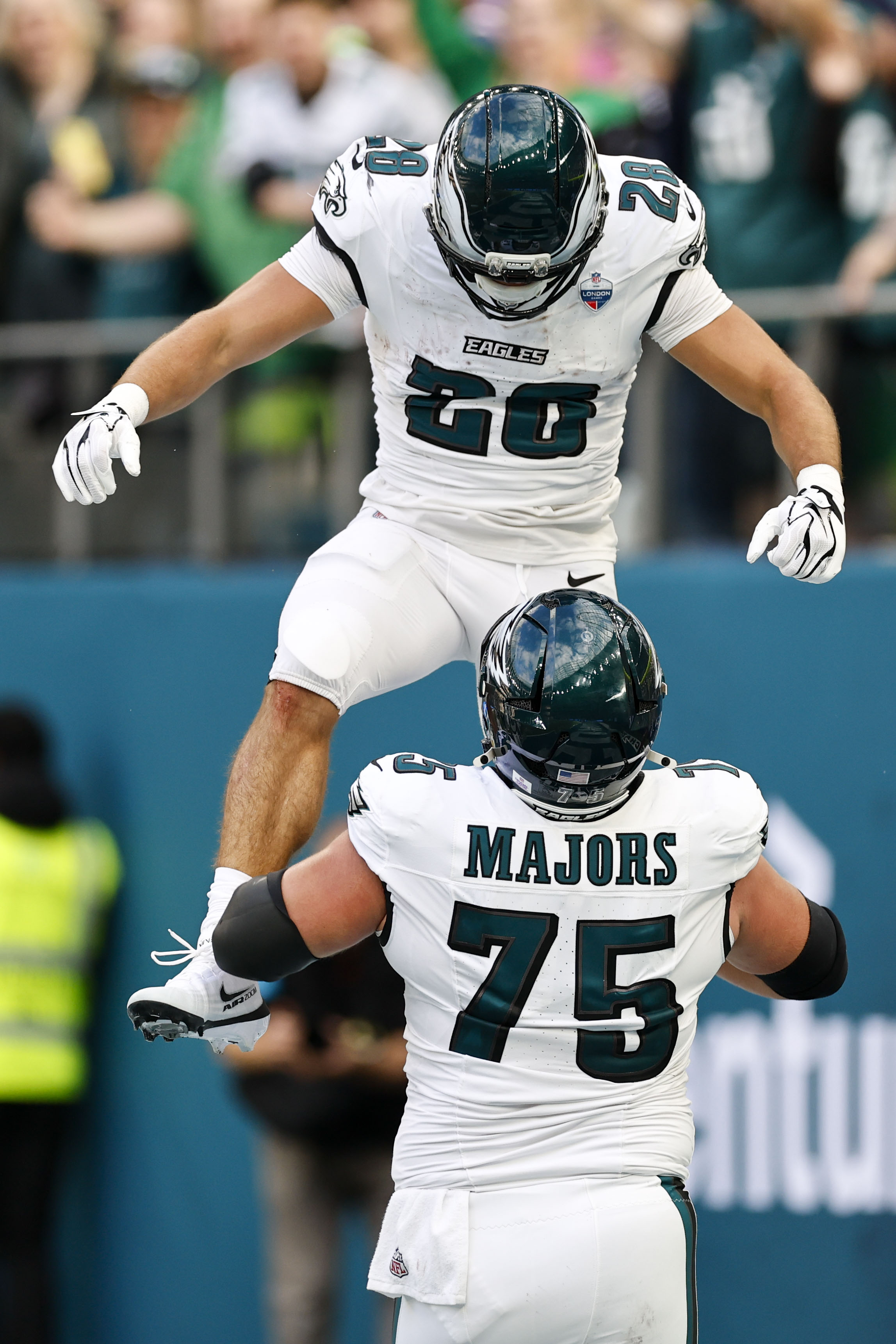
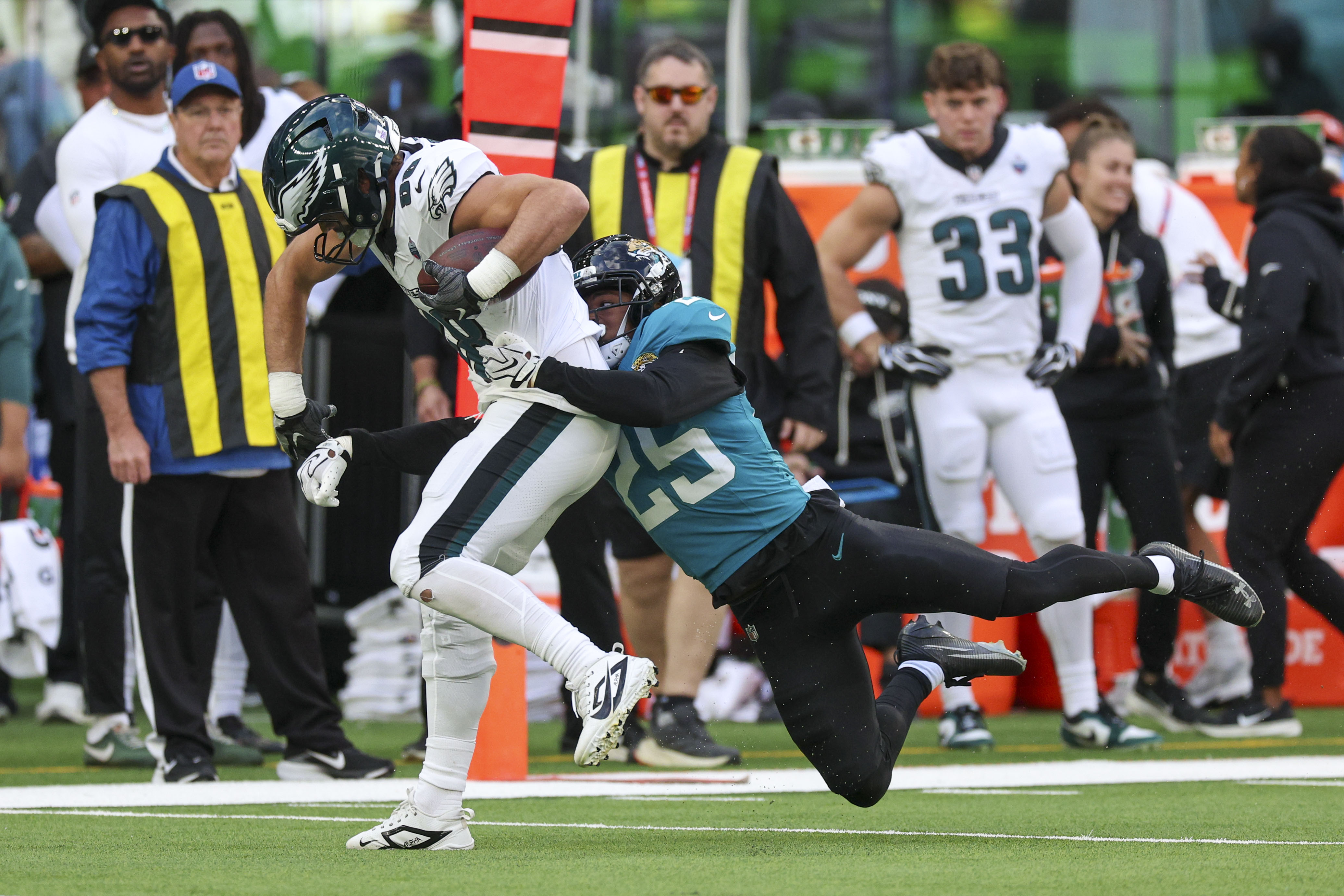
With eight seconds remaining, the Eagles took a one-point lead over the Jacksonville Jaguars. Then, the Jaguars managed a 53-yard kickoff return and kicked a 57-yard game-winning field goal on the next play to win 19-17 — disappointing all the Birds fans who made the trip to London’s Tottenham Hotspur Stadium.
Following the loss, most of the discourse surrounding the team has centered around the team’s offensive struggles and Nick Sirianni’s decision-making on the game’s final kickoff.
Here’s everything they’re saying about the Birds, following their third consecutive loss:
On the final kickoff, instead of making the decision to kick the ball through the end zone, Sirianni decided to kick the ball to Jacksonville’s Ameer Abdullah. Abdullah put Cam Little in position to score a 57-yard game-winning field goal as time expired.
“Nick Sirianni made an absolutely idiotic decision to not kick the ball out the back of the end zone and you got to make a tackle,” said former Eagles linebacker Emmanuel Acho on The Speakeasy podcast. “Here’s why it starts and ends with Sirianni. The very first play of the game, before Hurts took a snap, before Jalen Carter got a sack, the Philadelphia special teams already showed itself that day in London when Jacksonville already took a kick return about 80 [yards]. The very first play of the game. As a result, Nick Sirianni, you got to know that.
“Yes, the kickoff team should have made the tackle. But Nick Sirianni has to understand the hand that he was dealt, not the hand he wishes he had. He does not have pocket aces, he doesn’t. Nick Sirianni is sitting there with a couple of threes.”
.@EmmanuelAcho on Nick Sirianni costing the Eagles a clutch victory
"Nick Sirianni made an ABSOLUTELY idiotic decision to not kick the ball out of the back of the end zone… He has to play the hand he was dealt, not the hand he wants"
This is now the second week in a row where Sirianni’s decision making has been questioned, following his Week 4 decision to not kick a field goal on fourth-and-goal from the Los Angeles Rams’ 2-yard line.
“Well we know it’s fully on you Nick,” Chris Canty said on ESPN’s unSportsmanlike. “And this is the second week in a row where your players have to overcome bad coaching. And quite frankly, they weren’t able to do it. … As great as Nick Sirianni’s coaching record was since he’s taken over the team, it doesn’t absolve him from criticism or blame for what’s happened over the last two weeks — but certainly what happened across the pitch in London yesterday. That was an absolute embarrassment.”
And for the second week in a row, former Eagles linebacker Seth Joyner had plenty to say about the Eagles coach.
“You go and you make a bonehead decision to not only kick the ball off but kick the ball straight to a guy, and give him a straight line run,” Seth Joyner said. “I feel so bad for these players because they played their hearts out. And again, the head coach is the reason for this loss. And I’m going to chime it all week long because guess what? He deserves to be held accountable for this.”
I feel for these Eagles players. They left it all out on the field today…
The Eagles were missing key players in London, including DeVonta Smith and Saquon Barkley. Earlier in the week, the team lost Lane Johnson to retirement, and traded Cam Jurgens to the Baltimore Ravens.
Despite the loss, former Eagles quarterback Nick Foles has faith that the Eagles could be a “super dangerous” team once they figure everything out.
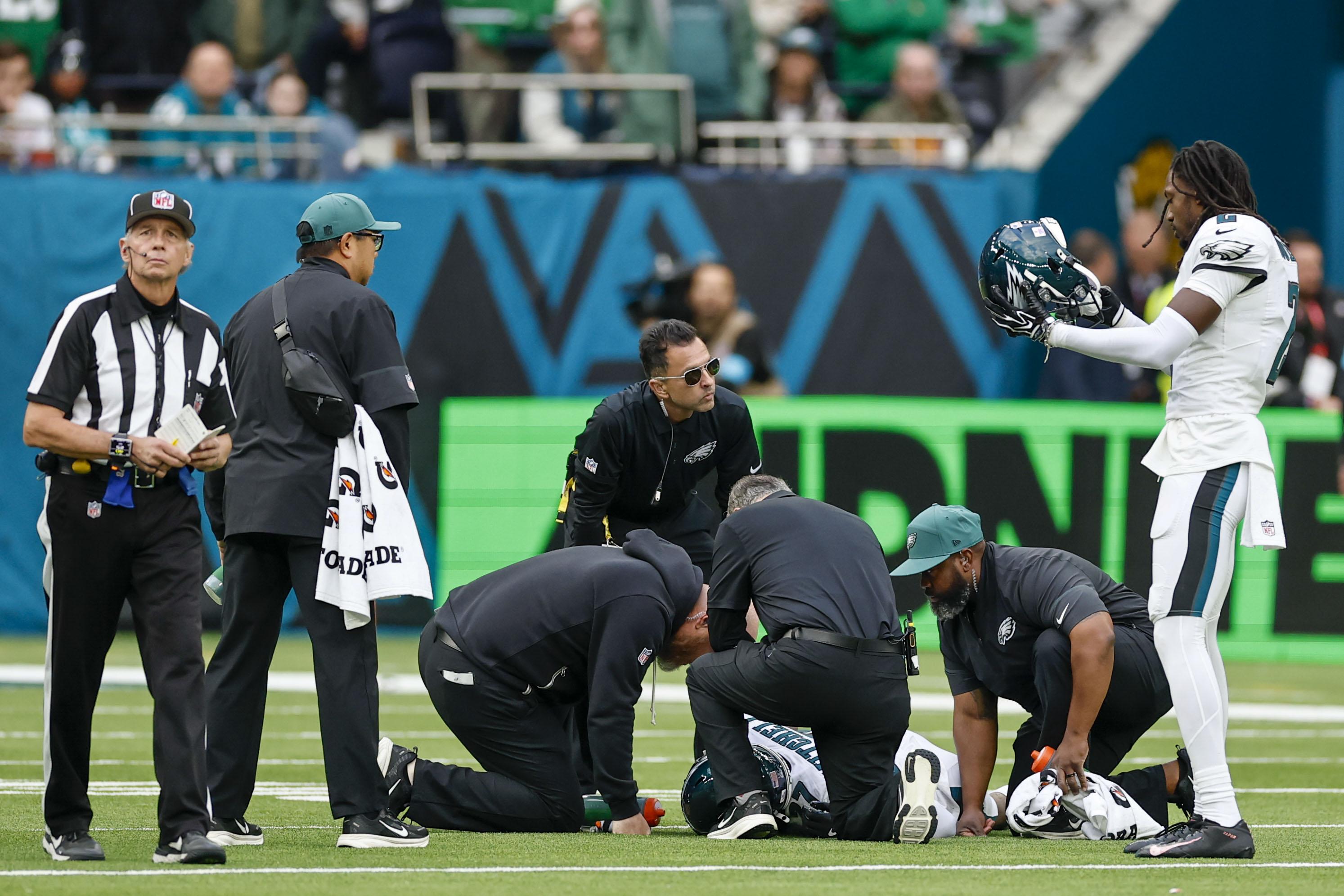
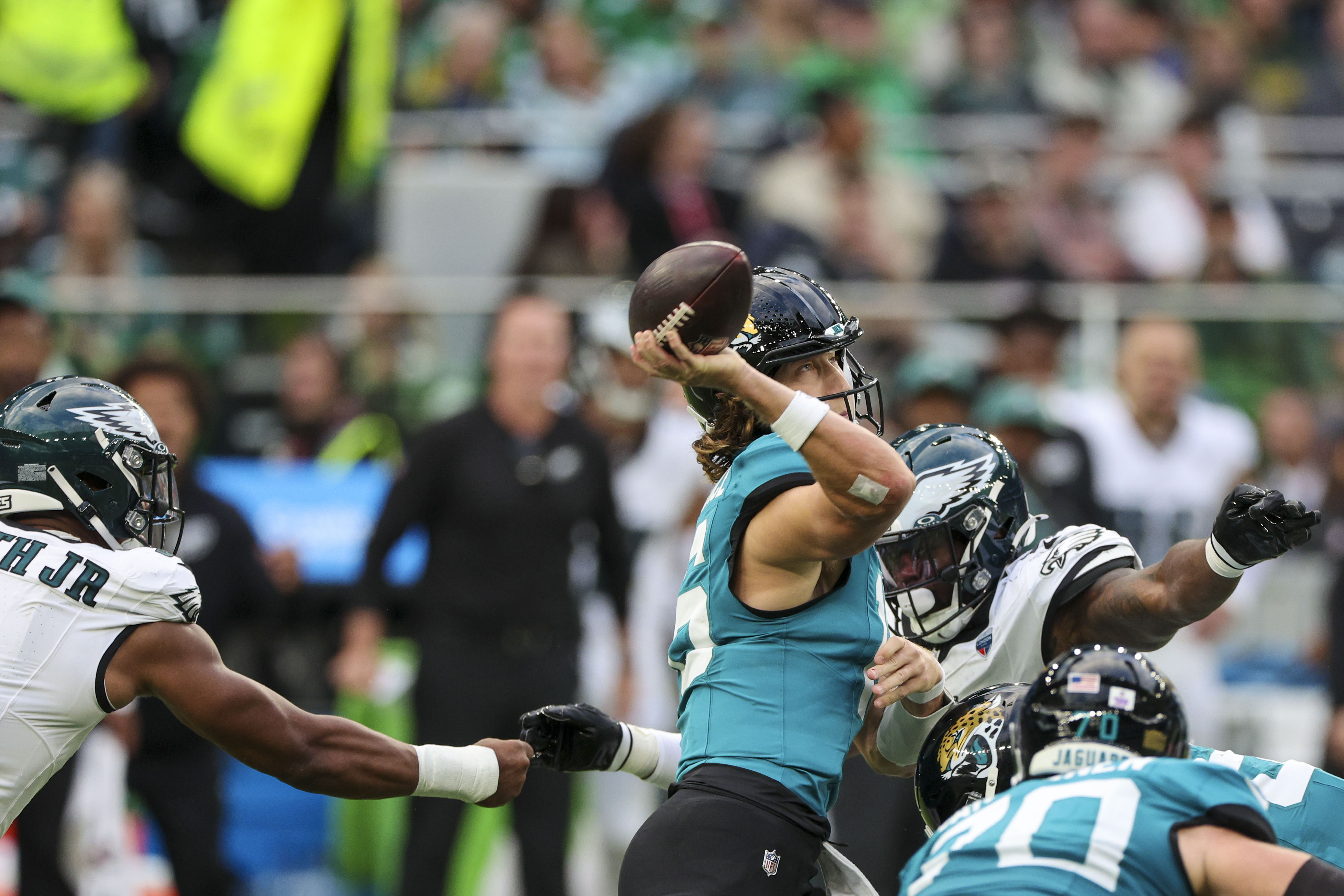
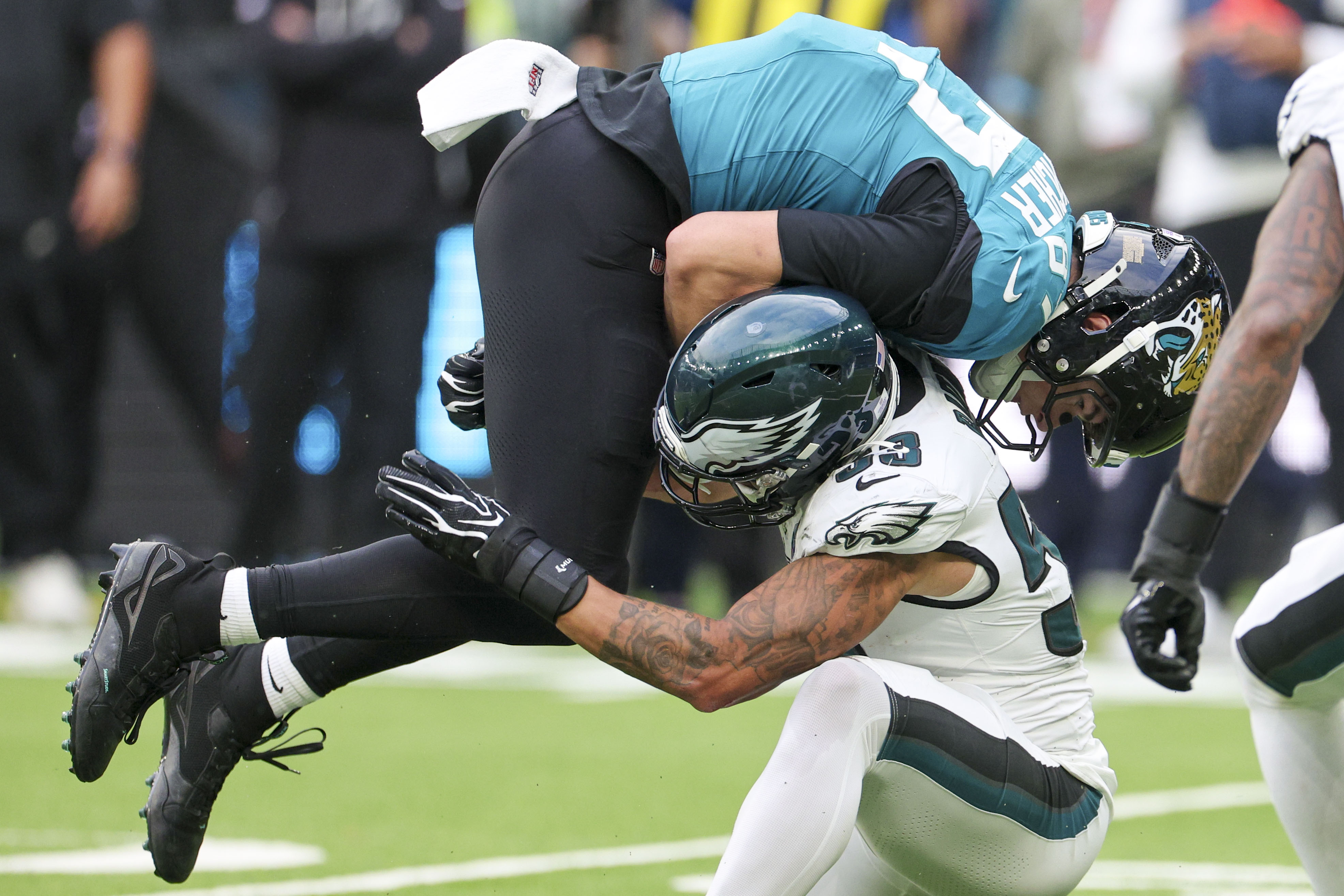
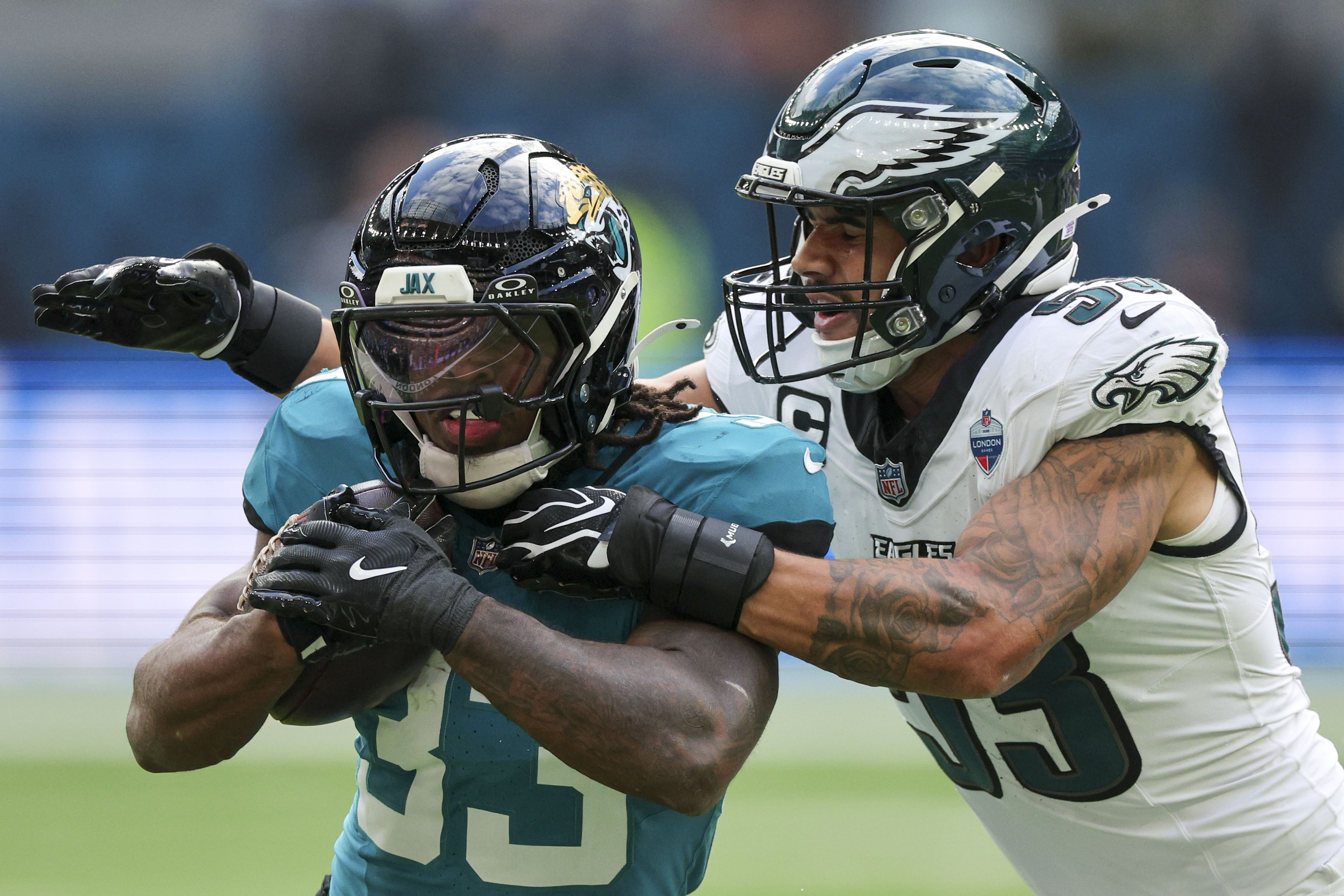
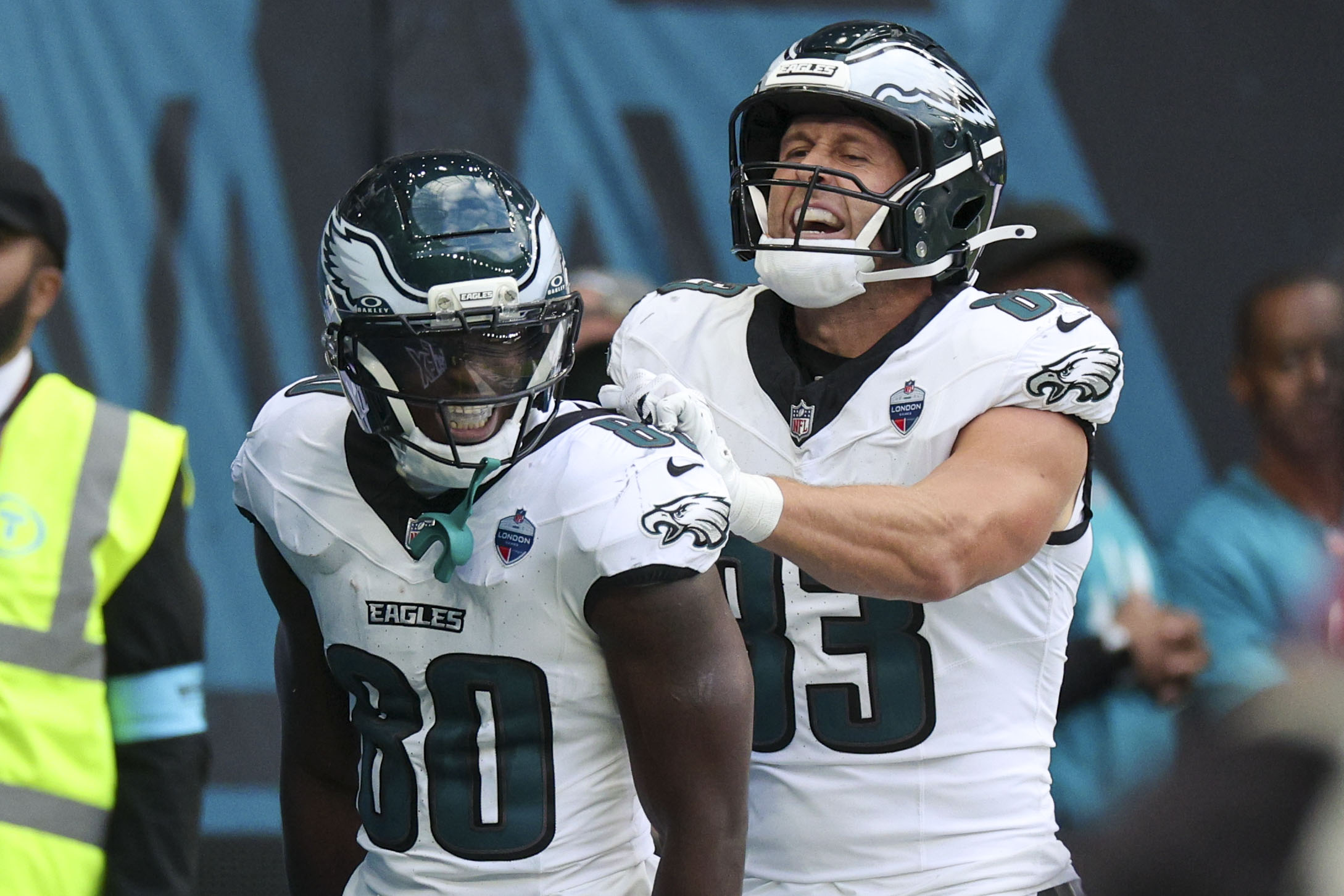
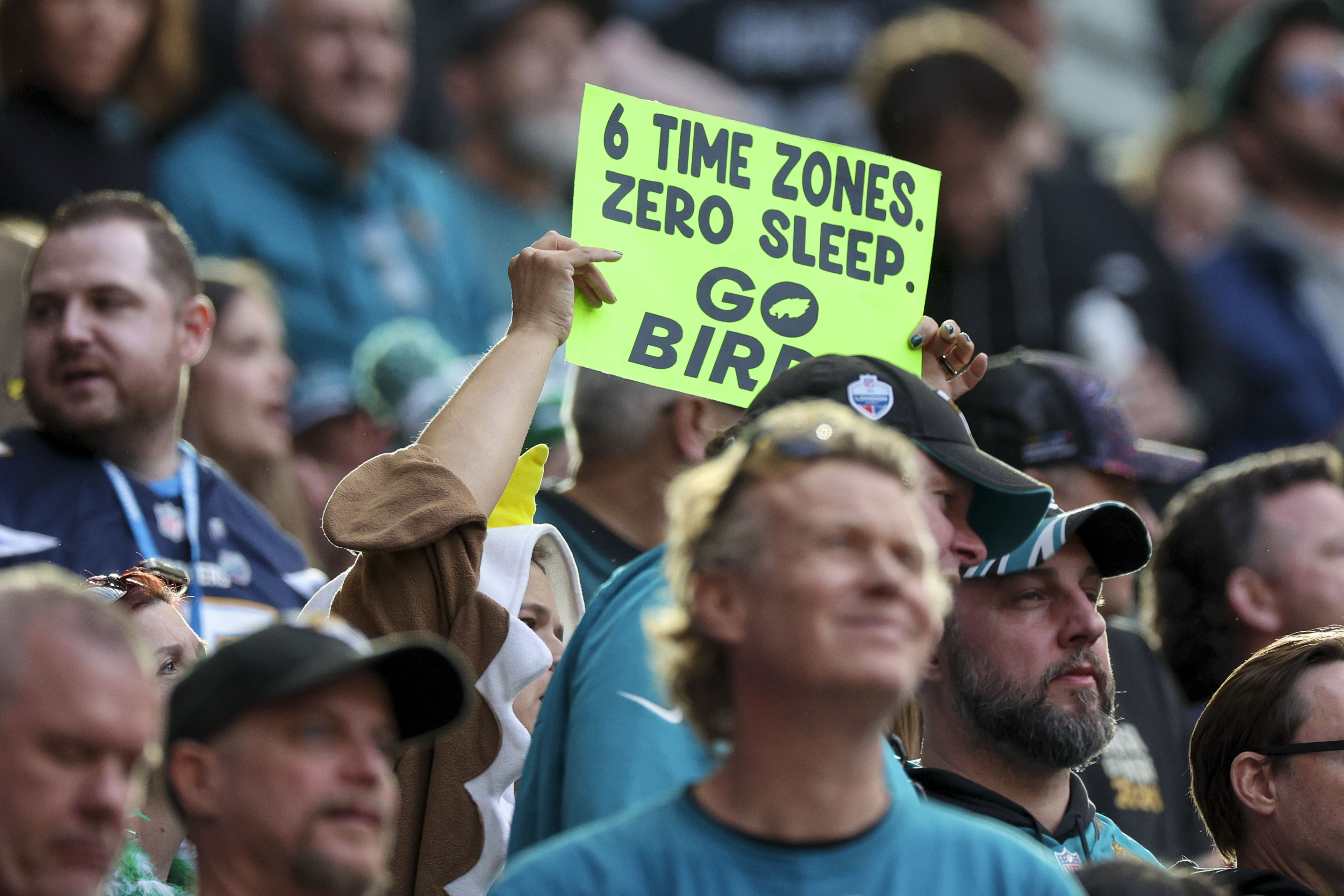
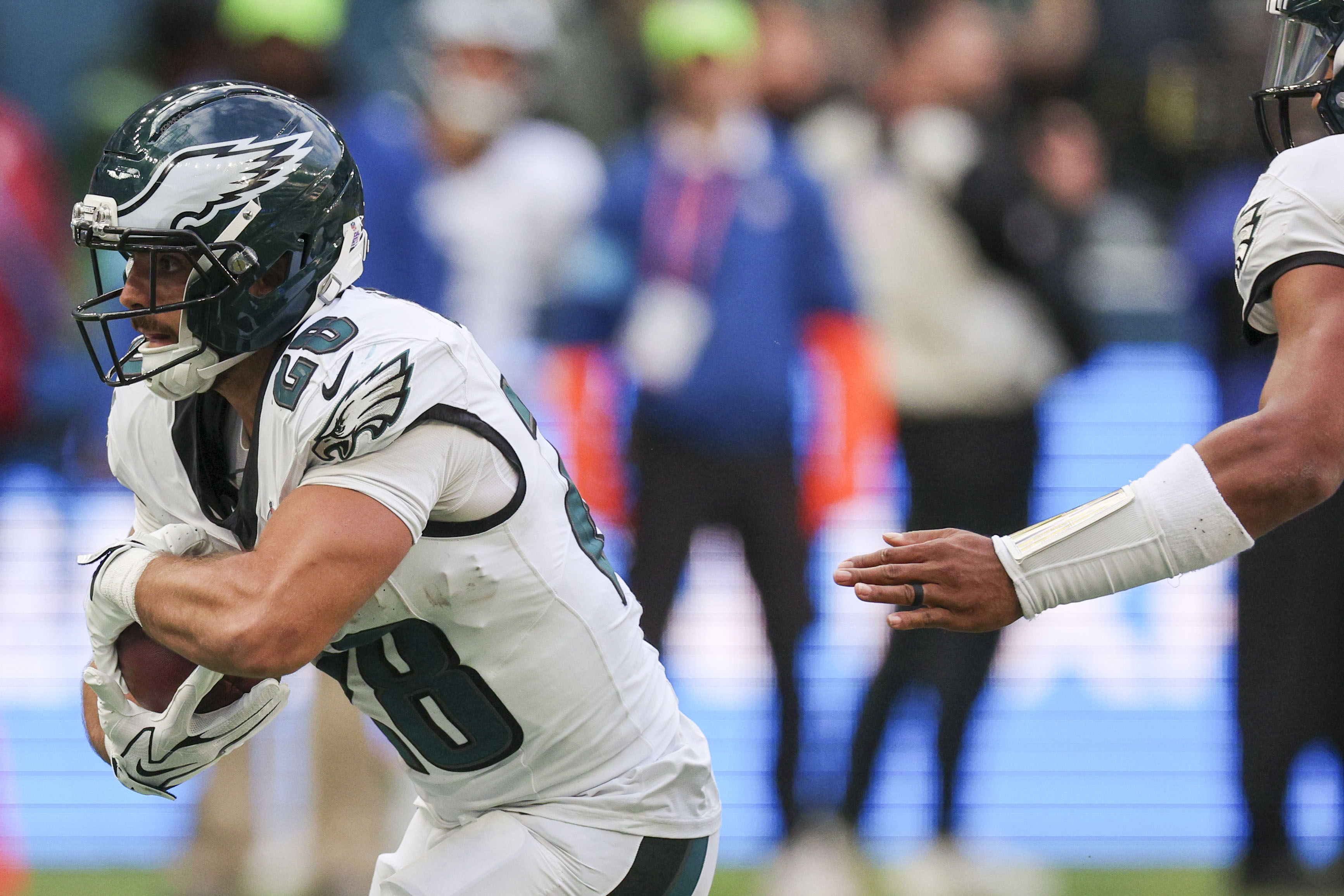
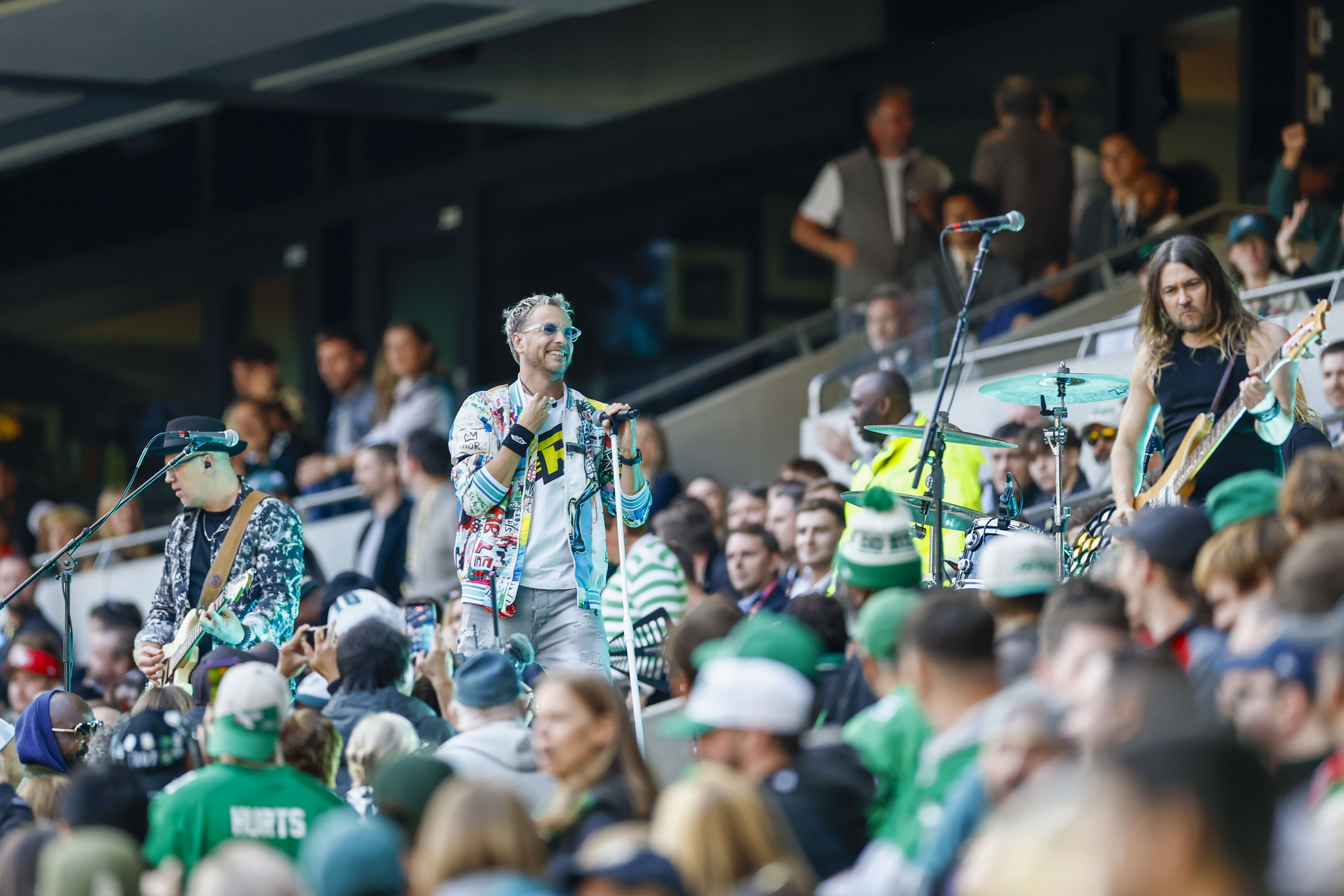
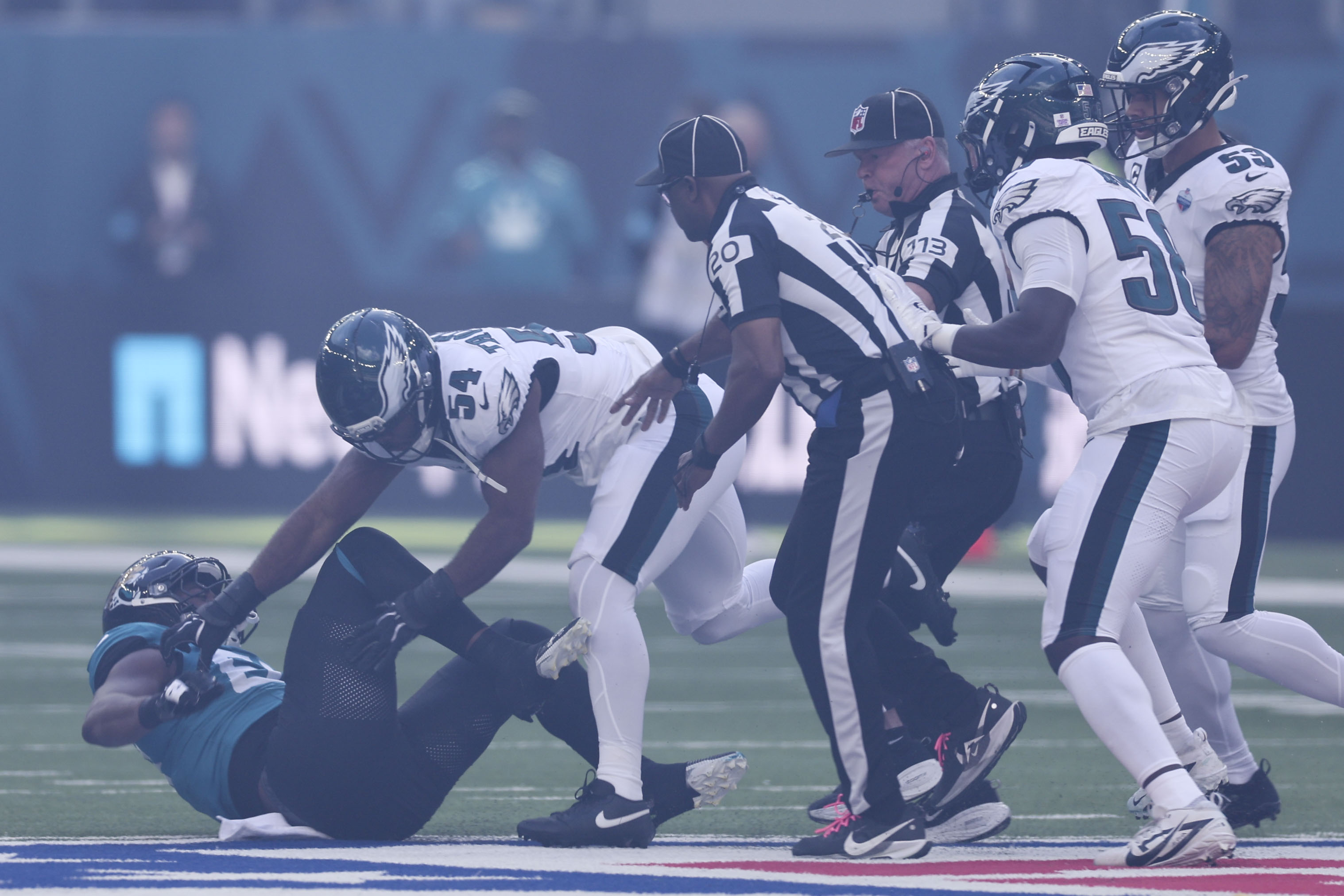
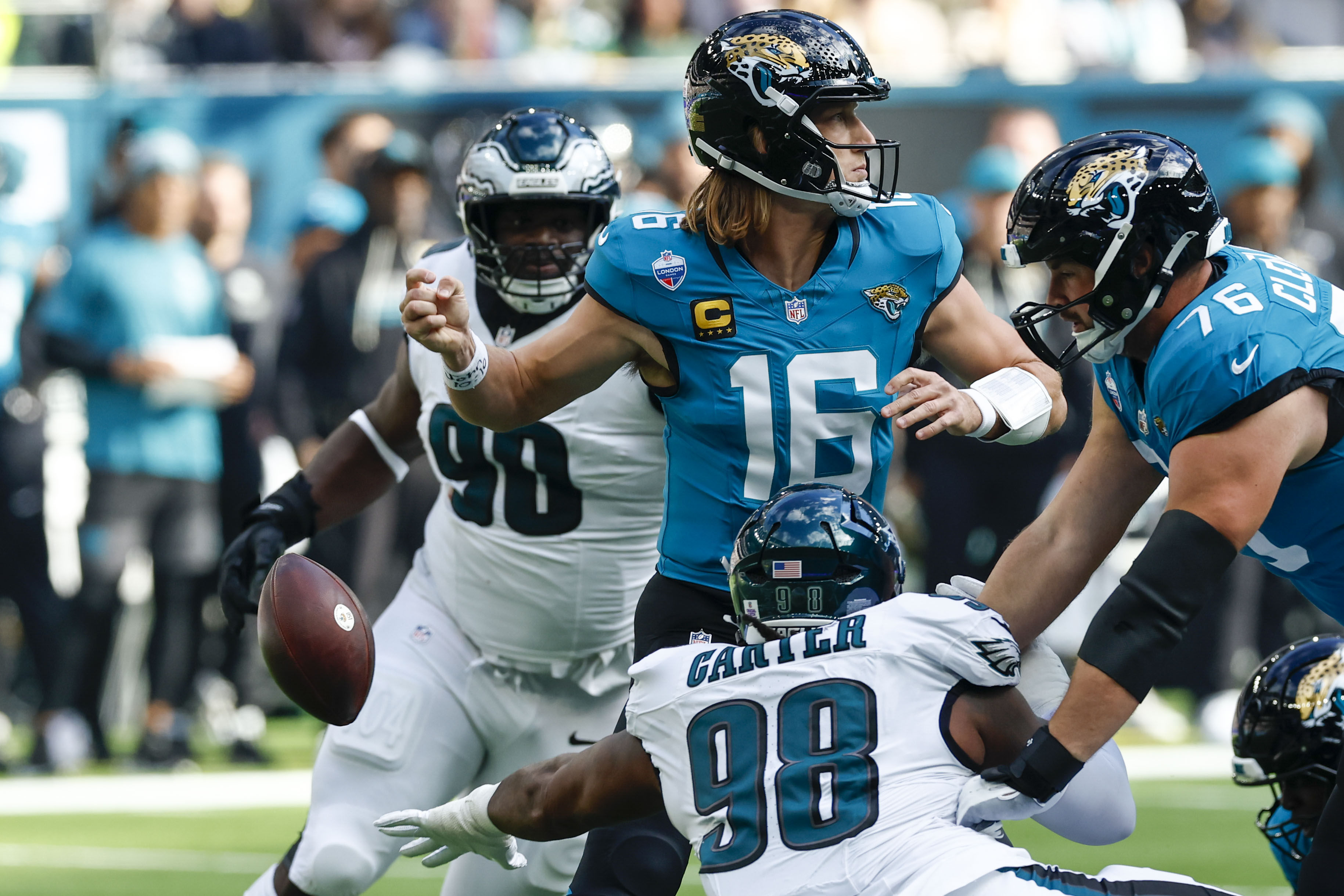
Philadelphia Eagles head coach Nick Sirianni (center) walks across the field as the Jacksonville Jaguars their game winning-field goal in London on Sunday, Oct. 11, 2026. Eagles lose 19-17.David Maialetti / Staff PhotographerPhiladelphia Eagles wide receiver Dontayvion Wicks walks off the field after the team’s loss to the Jacksonville Jaguars in London.David Maialetti / Staff PhotographerStunned Eagles fans after the Philadelphia Eagles lose to the Jacksonville Jaguars 19-17 at Tottenham Hotspur Stadium in London, England.Yong Kim / Staff PhotographerPhiladelphia Eagles wide receiver Dontayvion Wicks after the Eagles lose to the Jacksonville Jaguars.Yong Kim / Staff PhotographerStunned Eagles fans sit in the stands after the Eagles lose to the Jacksonville Jaguars.David Maialetti / Staff PhotographerPhiladelphia Eagles fans after losing to the Jacksonville Jaguars in Tottenham Hotspur Stadium.David Maialetti / Staff PhotographerDevastated Philadelphia Eagles fans.Yong Kim / Staff PhotographerJacksonville Jaguars kicker Cam Little reacts after winning the game with a field goal and two seconds left in the game.Yong Kim / Staff PhotographerGame-winning field goal by Jacksonville Jaguars kicker Cam Little at Tottenham Hotspur Stadium.Yong Kim / Staff PhotographerPhiladelphia Eagles punter Braden Mann and Philadelphia Eagles kicker Jake Elliott celebrate Elliott’s field goal with 8 seconds left in the game.Yong Kim / Staff PhotographerPhiladelphia Eagles quarterback Jalen Hurts gets rid of the football with 17 seconds left in the fourth quarter.Yong Kim / Staff PhotographerJacksonville Jaguars wide receiver Parker Washington catches a touchdown pass in the fourth quarter.David Maialetti / Staff PhotographerPhiladelphia Eagles fans celebrate as the Eagles stop the Jacksonville Jaguars on fourth down in the red zone in the fourth quarter.David Maialetti / Staff PhotographerPhiladelphia Eagles tight end Dallas Goedert is tackled by Jacksonville Jaguars cornerback Jourdan Lewis and Jacksonville Jaguars linebacker Foyesade Oluokun, short of the first down.David Maialetti / Staff PhotographerPhiladelphia Eagles fans in the fourth quarter at Tottenham Hotspur Stadium.Yong Kim / Staff PhotographerPhiladelphia Eagles cornerback Quinyon Mitchell is on the ground, injured after an interception in the third quarter.Yong Kim / Staff PhotographerPhiladelphia Eagles linebacker Nolan Smith (left) and Philadelphia Eagles linebacker Arnold Ebiketie (right) pressure Jacksonville Jaguars quarterback Trevor Lawrence on the throw in the third quarter.David Maialetti / Staff PhotographerPhiladelphia Eagles fans singing “Sweet Caroline” in the third quarter at Tottenham Hotspur Stadium in London, England.Yong Kim / Staff PhotographerJacksonville Jaguars tight end Nate Boerkircher is tackled by Philadelphia Eagles linebacker Zack Baun in the third quarter.David Maialetti / Staff PhotographerJacksonville Jaguars running back Bhayshul Tuten was tackled by Philadelphia Eagles cornerback Cooper DeJean.David Maialetti / Staff PhotographerAn Eagles fan holds a sign as the Philadelphia Eagles and Jacksonville Jaguars play.David Maialetti / Staff PhotographerPhiladelphia Eagles linebacker Zack Baun (right) stops Jacksonville Jaguars running back Bhayshul Tuten (left) as the Jaguars go for it on fourth-and-goal at the end of the second quarter.David Maialetti / Staff PhotographerPhiladelphia Eagles safety Andrew Mukuba, Philadelphia Eagles linebacker Jihaad Campbell (center), and Philadelphia Eagles cornerback Michael Carter II stop Jacksonville Jaguars running back Bhayshul Tuten after the Jaguars got a first down.Yong Kim / Staff PhotographerJacksonville Jaguars running back Bhayshul Tuten was brought down by Philadelphia Eagles linebacker Zack Baun.David Maialetti / Staff PhotographerPhiladelphia Eagles wide receiver Darius Cooper (left) and Philadelphia Eagles tight end Johnny Mundt (right) celebrate Cooper’s touchdown reception in the second quarter.David Maialetti / Staff PhotographerPhiladelphia Eagles fan holds a sign that reads “6 time zones. Zero Sleep. Go Birds” at Tottenham Hotspur Stadium as the Eagles play the Jacksonville Jaguars.David Maialetti / Staff PhotographerPhiladelphia Eagles running back Will Shipley takes the handoff from Philadelphia Eagles quarterback Jalen Hurts to score in the second quarter on a running play.David Maialetti / Staff PhotographerPhiladelphia Eagles wide receiver Dontayvion Wicks gets the first down against Jacksonville Jaguars cornerback Travis Hunter, Jacksonville Jaguars cornerback Jarrian Jones, and Jacksonville Jaguars safety Kaevon Merriweather in the second quarter.Yong Kim / Staff PhotographerPhiladelphia Eagles running back Dameon Pierce loses yardage against Jacksonville Jaguars linebacker Foyesade Oluokun and Jacksonville Jaguars linebacker Ventrell Miller in the second quarter.Yong Kim / Staff PhotographerPhiladelphia Eagles running back Will Shipley celebrates a touchdown with Philadelphia Eagles center Jake Majors in the second quarter.Yong Kim / Staff PhotographerPhiladelphia Eagles tight end Dallas Goedert makes a catch in front of Jacksonville Jaguars safety Rayuan Lane III in the second quarter.David Maialetti / Staff PhotographerA band playing in the seats on the Eagles side in Tottenham Hotspur Stadium.Yong Kim / Staff PhotographerJacksonville Jaguars defensive end Bryan Thomas Jr. and Philadelphia Eagles linebacker Jeremiah Trotter Jr. tussle at midfield during the kickoff. Both were ejected from the game.David Maialetti / Staff PhotographerJacksonville Jaguars quarterback Trevor Lawrence loses the football to Philadelphia Eagles defensive tackle Jalen Carter.Yong Kim / Staff Photographer
“You don’t want to let this loss or the previous loss affect the next game,” said Foles on The SZN podcast. “Because all it takes is that one game, or one play to change the entire season. So, the Eagles are on the cusp of that. They can’t play worse, offensively. They are playing really bad offensively.
“And this might be a soundbite that someone takes, but they’re losing the context. The only way where they can go is up. And that’s really good because they’re almost beating teams that are going to be in the playoffs while playing really bad. So, once they figure this thing out they’re going to be super dangerous.”
"The only way where they can go is up."
Nick Foles and Evan Moore react to the Eagles 19-17 loss to the Jaguars and discuss where the team can go from here. pic.twitter.com/AzcL1nhLgz
The Bella twins, Nikki and Brie, also have optimism for their team.
“No matter what at the end of the day Go Birds,” they wrote on X. “To see a stadium from across the pond be so electrifying for the Philadelphia Eagles was incredible. You truly felt the emotions through the screen. The boys have been through a lot especially this past week and they showed up for England. So proud to be a Philly fan. Fly Eagles Fly.”
No matter what at the end of the day Go Birds. To see a stadium from across the pond be so electrifying for the Philadelphia Eagles was incredible. You truly felt the emotions through the screen. The boys have been through a lot especially this past week and they showed up for…
With Sunday’s loss, the Birds are now 0-2 in October. The Phillies’ season ended on Oct. 1 in Game 3 of their wild-card series with the Atlanta Braves. And the Flyers are now 0-6 this month, after losing to the Carolina Hurricanes at home on Sunday night, setting a franchise record for most losses to start a season.
Early Saturday morning, Philadelphia police Officer Shane Seiber and his partner stepped onto the front porch of a West Philadelphia home to investigate a report of a person with a gun.
There, they were met by a man police have described as agitated and aggressive. After a short struggle with the officers, the man, whom police have identified as Eric Lewis, shot Seiber and his partner multiple times.
What followed was more than an hour of chaos, as police across the city rushed to the scene and the man continued to fire shots, sending responding officers running for cover in the bustling residential neighborhood.
They caught glimpses of a figure in the windows of a boarded-up home, but Lewis was elusive.
Over police airwaves, officers struggled in real time to locate a man who had hidden in the shadows of a grassy alleyway behind the property. Armed with a shotgun, among other firearms, he was determined to evade them, eventually seeking cover in a nearby tree before being spotted by SWAT snipers.
story continues after advertisement
And once he was arrested, a city was left to mourn.
Seiber, a 40-year-old husband and father of two children, died hours after he arrived at the hospital, police said. He was shot three times. His 33-year-old partner was shot 12 times and remains hospitalized. Police, who have not publicly identified that officer, declined to provide an update on his condition Monday.
Lewis, 35, was charged with murder, attempted murder, and a host of related crimes. He later told officers he shot Seiber and his partner because they had put their hands on him, according to an arrest report detailing what transpired.
Shortly after midnight Saturday, a woman called 911 to report there was a person with a gun on the front porch of a home in the 100 block of North 52nd Street, between Race and Arch Streets in West Philadelphia.
A radio dispatcher asked for police to respond and broadcast a description of the shooter: “Black male, dark hoodie, brandishing [a] firearm on the porch,” she said.
Initial report of male with firearm on porch
00:00
story continues after advertisement
About 12:50 a.m. Saturday
Shots fired
At the home, Seiber knocked on the front door, his back to the street, police said. Lewis approached from behind, they said. He was angry, according to a law enforcement source, who spoke on the condition of anonymity to discuss an ongoing investigation, and demanded to know why the officers were on his porch.
According to the report, a struggle ensued, and Lewis shot both officers. After they fell to the floor of the porch, Lewis kept shooting, the source said. Seiber was hit three times, and his partner was shot 12 times.
Then, police said, Lewis fled.
1:01 a.m. Saturday
‘Two officers down’
A neighbor called 911 to report a shooting on the block, and news that two officers were down quickly spread over police radio. Multiple units told dispatchers they were heading to the scene.
When reinforcements arrived, they found Seiber and his partner collapsed on the porch, unconscious, officers said, according to summaries of their accounts included in the arrest report.
“Two officers down,” an officer told dispatchers, and asked urgently for assistance.
“Two officers down”
00:00
Moments later, another officer, breathing heavily, said: “We’ve got two officers down on the porch.”
But, he added, “unknown where the shooter is.”
1:05 a.m. Saturday
Officers search for the shooter
As two officers scrambled to get Seiber and his partner to the hospital, others spread out across the street, searching it and surrounding blocks for the shooter. A SWAT team was requested.
“They don’t know where the shooter is”
00:00
“Use caution, they don’t know where the shooter is,” an officer said over the airwaves, as the search began.
“Use caution, male is still firing shots”
00:00
The officers struggled to find Lewis, in part because of high grass behind Lewis’ house, according to one officer’s remarks that came in over the airwaves. “We’re going through the yard,” another said over the scanner, “trying to find the male.”
“We’re going through the yard”
00:00
At one point during the confusion, officers mistakenly reported the gunman had shot himself, and that the threat was neutralized. “He’s down,” an officer said.
Dispatchers, too, said neighbors reported they believed the shooter was dead.
“The male shot himself, he’s down”
00:00
But police soon learned that was not so.
1:07 a.m. Saturday
From the alleyway, fresh bullets fired
As two officers walked toward North Wilton Street, near an alleyway behind the homes lining 52nd Street, the pop! pop! pop! of gunfire came from the darkened breezeway, the officers said, according to the arrest report. They took cover on Wilton Street as bullets continued to fly, they said. At least one bullet struck a parked Nissan Altima.
An officer, sounding short of breath, said he heard rustling in bushes behind the home before the shots rang out. “He shot at us as we were approaching the alleyway,” the officer said hurriedly. “No one’s hit.”
“Rustling in the bushes”
00:00
Urging caution, dispatchers asked officers to stay back and wait for SWAT to arrive, radio chatter shows.
Meanwhile, a handful of officers worked to identify the injured officers, and asked for their badge numbers over the airwaves. A dispatcher asked whether Seiber and his partner were conscious.
“They’re both still getting worked on,” one officer replied.
1:12 a.m. Saturday
The operation expands
The department’s Real-Time Crime Center, which uses digital tracking tools to locate suspects, was called to assist with the search. An officer told dispatchers he would “raise the drones” to monitor from the skies.
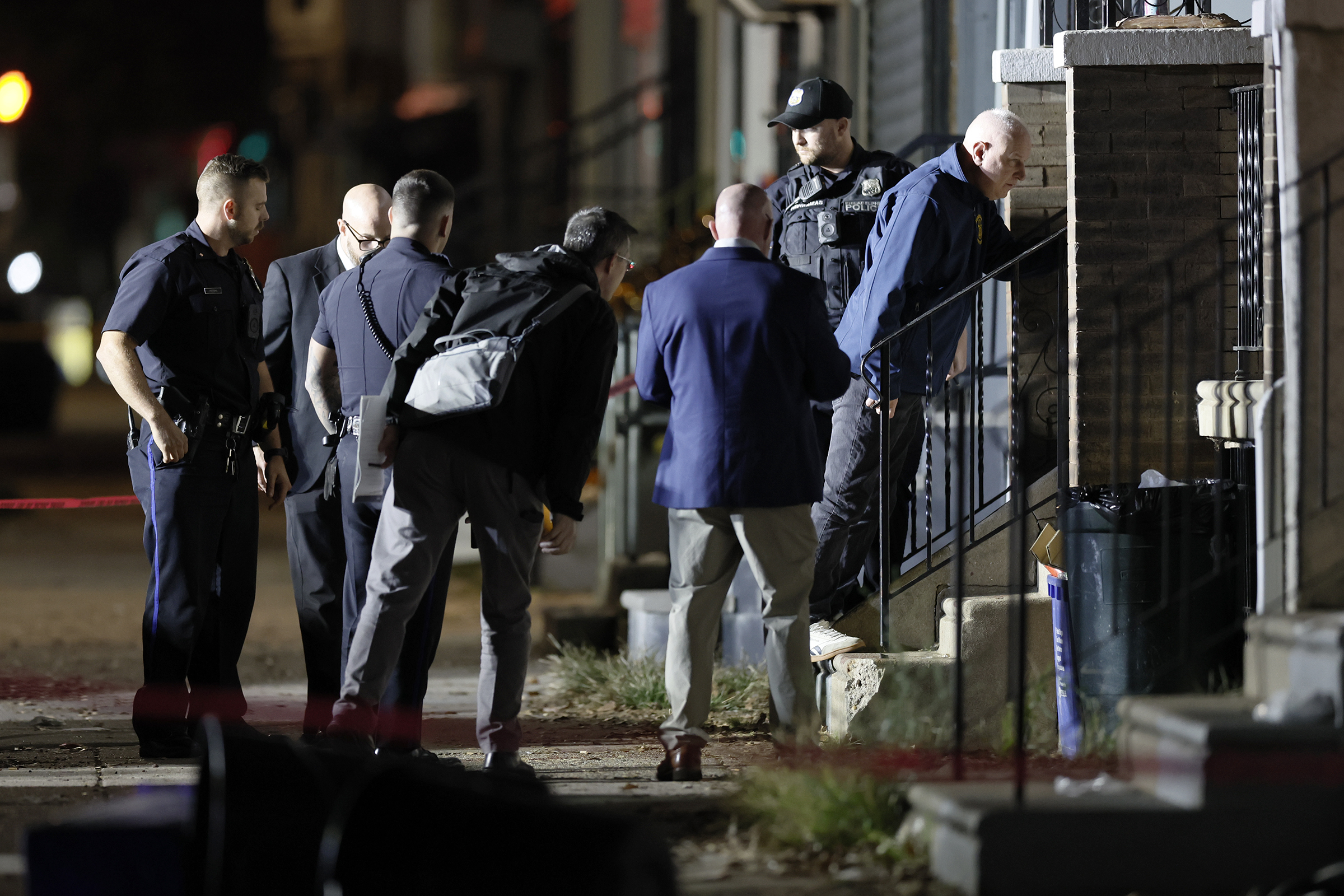
Police investigate the scene on the 100 block of North 52nd Street.Elizabeth Robertson / Staff Photographer
1:29 a.m. Saturday
A lull in the gunfire
After the gunfire ceased, police who had been pushed from the alleyway reported that they did not “have eyes” on the shooter, one officer told dispatchers.
“He’s not actively shooting”
00:00
“Haven’t had shots for a few minutes now,” another officer said over the airwaves.
“Negative to both”
00:00
Even so, a dispatcher warned officers that the scene was still active and dangerous — and soon, officers reported fresh movement in the alley between North 52nd and Wilton Streets over the airwaves.
Technology began to aid the operation. In addition to the drone, images of Lewis, captured on an officer’s bodyworn camera, began being circulated to commanders digitally.
“I’m with the drone operator”
00:00
1:40 a.m. Saturday
SWAT arrives, and snipers take their positions
A SWAT team arrived at 1:40 a.m., 35 minutes after it was called to the scene, according to the arrest report. The team parked an armored vehicle in front of Lewis’ house, blocking a potential escape.
SWAT members urged other officers to turn their flashlights and weapons away from the property, radio chatter shows, and an officer requested the city’s streets department turn off a lamp across from Lewis’ home, casting the crime scene into deeper darkness.
“No discharge”
00:00
Using a loudspeaker, the SWAT team told Lewis: Exit the house unarmed. But after several minutes, no one had come out.
So, one team member — a sniper — made a suggestion, according to the report: He and another sniper should take a position on a nearby rooftop. The team’s commanding officer agreed.
The two snipers set up on a rooftop on North Wilton Street, the report said. And there, they heard a voice.
Sometime after 2 a.m. Saturday
Lewis asks to end the standoff ‘peacefully’
From a tree directly in front of the snipers, the team heard a request: Don’t shoot me, a male voice said, according to the arrest report. He wanted to “end this peacefully.”
One of the snipers shined his flashlight on the tree and found Lewis two stories high in its branches, the report said. The team ordered Lewis to climb down from the tree.
Lewis fell instead, according to the report, hitting several branches as he crashed to the ground and injuring his head. As officers approached him, Lewis told them that he couldn’t walk, the report said.
An officer said over the radio that police had not fired any shots throughout the morning.
Paramedics transported Lewis to Thomas Jefferson University Hospital, where he was admitted to the emergency room to be treated for what officers described in the arrest report as a “large abrasion” on his head.
There, multiple officers spoke with Lewis, according to the report, and said he confessed to shooting Seiber and his partner.
Lewis was across the street from his house, he said, when he saw two officers walk up to the front porch. He approached the officers and at some point, they “grabbed me,” Lewis said, according to the report.
Lewis also alleged the officers, who he said were white, touched him because he is Black, the report said.
“They never should have come on my porch or touched me. That is why I was like ‘bam, bam,’” Lewis said, according to the report, which described Lewis as rambling relentlessly.
Lewis talked “for the entire time we were at the hospital, for almost two hours,” according to a summary of an officer’s interview included in the report.
After he was treated for his wounds, officers transported Lewis to the police department’s homicide unit for a formal interview at 6:30 a.m., according to the arrest report.
Eric Lewis, charged with murder in the shooting death of police officer Shane Seiber, is shown in a Philadelphia Police Department photo.Philadelphia Police Department
9:04 a.m. Saturday
Seiber is pronounced dead, and a city mourns
A little more than eight hours after he was shot, Seiber was pronounced dead at the hospital. Officers from the city’s police department and the University of Pennsylvania lined the hospital’s driveway and saluted as his body was transported by ambulance to the medical examiner’s office Saturday morning.
He was the fourth Philadelphia police officer to die in the line of duty in the last three years.
He also thanked his wife in the same post, writing that she dealt with his “constant shenanigans, pranks, and general goofing around” with infinite patience. Together, the couple has a son, 7, and daughter, 3.
Officer Shane Seiber, 40, joined the police department in 2016.Courtesy of the Philadelphia Police Department
Seiber served in the U.S. Air Force, at Dover Airforce Base, from 2007 to 2015, according to the Delaware Fraternal Order of Police State Lodge. “He is being remembered for his courageous service and infectious laugh,” the union wrote in a Facebook post.
His killing prompted an outpouring of grief from police and city officials, as colleagues mourned one of their own and a family lost a loved one.
On Saturday, Mayor Cherelle L. Parker asked that flags be flown at half staff until Seiber’s internment, which has not yet been announced.
Police Commissioner Kevin Bethel asked for prayers, as the department grieved: “This will be a period of mourning for us, but we will stand tall as a department,” he said. “We can get through this together.”
Philadelphia police salute as the medic unit carrying the body of the slain police officer pulls up to the medical examiner’s office.Elizabeth Robertson / Staff Photographer
1:36 a.m. Sunday
Lewis is arraigned
Lewis appeared in Philadelphia Municipal Court, where he was arraigned and charged with murder in connection with Seiber’s death, as well as 10 counts of attempted murder, tied to Seiber’s partner and nine other officers who came under fire Saturday morning.
Lewis was also charged with disarming a law enforcement officer, carrying a firearm without a license, and related crimes. Police said they recovered three guns, including a shotgun and two handguns — one of which belonged to Seiber’s partner, they said.
Lewis was being held at the Curran-Fromhold Correctional facility without bail, court records show.
The scene outside the headquarters of Philadelphia Police District 19, where Seiber worked, on Sunday.Tom Gralish / Staff Photographer
Staff Contributors
Digital editing: Nick Vadala
Reporting: Jesse Bunch, Jillian Kramer, and Brett Sholtis
Editing: Molly Eichel and Emily Babay
Copy Editing: Scott Sturgis
(()=>{var ue=(e,t)=>()=>(t||e((t={exports:{}}).exports,t),t.exports);var P=ue(r=>{var pe={0:”Jan.”,1:”Feb.”,2:”March”,3:”April”,4:”May”,5:”June”,6:”July”,7:”Aug.”,8:”Sept.”,9:”Oct.”,10:”Nov.”,11:”Dec.”};function A(e){return e===void 0&&(e=new Date),pe[e.getMonth()]}var fe={0:”Jan”,1:”Feb”,2:”Mar”,3:”Apr”,4:”May”,5:”Jun”,6:”Jul”,7:”Aug”,8:”Sep”,9:”Oct”,10:”Nov”,11:”Dec”};function q(e){return e===void 0&&(e=new Date),fe[e.getMonth()]}function a(e){return e==null}function H(e){return typeof e==”number”&&isFinite(e)}function h(e){return H(e)&&Math.floor(e)===e}var me=[“one”,”two”,”three”,”four”,”five”,”six”,”seven”,”eight”,”nine”],he=[“million”,”billion”,”trillion”,”quadrillion”,”quintillion”,”sextillion”,”septillion”,”octillion”,”nonillion”,”decillion”],j=[“th”,”st”,”nd”,”rd”,”th”,”th”,”th”,”th”,”th”,”th”],ye=[11,12,13];function k(e){if(a(e))return””;var t=+e;return h(t)?ye.indexOf(t%100)>-1?j[0]:j[t%10]:””}var ge=[“first”,”second”,”third”,”fourth”,”fifth”,”sixth”,”seventh”,”eighth”,”ninth”],ve=new RegExp(/s+([^s]*)s*$/);r.apdate=function(e){return e===void 0&&(e=new Date),A(e)+” “+e.getDate()+”, “+e.getFullYear()},r.apdatetab=function(e){return e===void 0&&(e=new Date),q(e)+” “+e.getDate()+”, “+e.getFullYear()},r.apmonth=A,r.apmonthtab=q,r.apnumber=function(e){if(a(e))return””;var t=+e;return h(t)?t=10?e.toString():me[t-1]:e.toString()},r.aptime=function(e){e===void 0&&(e=new Date);var t,n,o=e.getHours(),i=e.getMinutes(),s=i===0;if(s){if(o===0)return”midnight”;if(o===12)return”noon”}return o0?o:12):(t=”p.m.”,n=o===12?o:o-12),s?n+” “+t:n+”:”+(i<10?"0"+i:i)+" "+t},r.capfirst=function(e){if(a(e))return"";var t=String(e);return""+t.charAt(0).toUpperCase()+t.slice(1)},r.intcomma=function(e){if(a(e))return"";var t,n=+e;return H(n)?((t=n.toString().split("."))[0]=t[0].replace(/B(?=(d{3})+(?!d))/g,","),t.join(".")):e.toString()},r.intword=function(e){if(a(e))return"";var t=+e;if(!h(t))return e.toString();var n=Math.abs(t);if(n<1e6)return e.toString();var o=Math.ceil(Math.log(n+1)/Math.LN10)-1,i=o-o%3,s=t/Math.pow(10,i);return(s=Math.round(10*s)/10)+" "+he[Math.floor(i/3)-2]},r.ordinal=function(e,t){if(t===void 0&&(t=!1),a(e))return"";var n=+e;return h(n)?t&&n/Android|webOS|iPhone|iPad|iPod|BlackBerry|IEMobile|Opera Mini/i.test(navigator.userAgent);var v=(e,t=null,n=null)=>{n||(n=document.querySelector(“head”));let o=document.createElement(“script”);o.type=”text/javascript”,o.src=e,t&&(o.onload=t),n.appendChild(o)},B=()=>(window.PMNdataLayer?.[0]!==void 0&&window.PMNdataLayer[0])?.analytics?.user?.state===”Subscribed”,D=()=>{let t=(window.PMNdataLayer?.[0]!==void 0&&window.PMNdataLayer[0])?.analytics?.user?.state;return window.location.host.includes(“zzz-systest”)||window.location.host.includes(“pmn.arcpublishing.com”)||window.location.host.includes(“stage.fusion.inquirer.com”)||typeof t>”u”},N=()=>{let t=(window.PMNdataLayer?.[0]!==void 0&&window.PMNdataLayer[0])?.analytics?.user?.hasAdsFreeReading;return!!(t&&t==1)},w=()=>window.location.host.includes(“localhost”);var we=()=>{N()&&document.querySelectorAll(“.js-adbox”).forEach(t=>{t.classList.add(“is-hidden”)})},I={init:()=>{we()}};var c,L=!1,Le=()=>{c=document.querySelector(“.js-appendix”)},$=()=>{let e=document.querySelector(“.js-appendix-static-content”),t=e.querySelector(“.js-appendix-static-items”).getBoundingClientRect().height;e.classList.remove(“is-collapsed”),e.style.maxHeight=t+”px”},O=()=>{c.classList.contains(“js-appendix-sticky”)&&(c.getBoundingClientRect().top{L=document.querySelector(“.js-appendix-static-content”).getBoundingClientRect().bottom{L&&document.querySelector(“body”).classList.toggle(“is-open-appendix”)},Se=()=>{window.addEventListener(“scroll”,()=>{O(),F()}),window.addEventListener(“resize”,()=>{O(),F()}),document.querySelector(“.js-appendix”).addEventListener(“click”,()=>{z()}),document.querySelectorAll(“.js-appendix-expand-static”).forEach(e=>{e.addEventListener(“click”,()=>{$(),window.addEventListener(“resize”,()=>{$()})})}),document.querySelectorAll(“.js-appendix-link”).forEach(e=>{e.addEventListener(“click”,()=>{z()})})},R={init:()=>{Le(),Se()}};var y,xe=(e,t)=>{y=y||window.PMNdataLayer,y?y.push({event:”misc_event”,eventAction:e,eventLabel:t}):window.location.hostname.includes(“localhost”)?console.log(“Analytics event:”,e,t,”(not actually being sent due to localhost)”):console.log(“Failed to push analytics event”,e,t)},p={event:(e,t)=>{xe(e,t)}};var V={PLAYED:”audio_play”,COMPLETION:”audio_completion”},S=function(e){let t=Math.floor(e/3600),n=Math.floor((e-t*3600)/60),o=Math.floor(e-t*3600-n*60),i=`${t}`.padStart(2,”0″),s=`${n}`.padStart(2,”0″),m=`${o}`.padStart(2,”0″);return i==”00″?s+”:”+m:i+”:”+s+”:”+m},be=()=>{let e=document.getElementsByClassName(“js-audio”);for(let t=0;t{re.innerHTML=`(${S(o.duration)})`,M.innerHTML=S(o.duration)});let E=()=>{i.classList.remove(“is-playing”),i.classList.remove(“is-paused”),i.classList.add(o.paused?”is-paused”:”is-playing”)};o.addEventListener(“play”,E),o.addEventListener(“pause”,E),s.addEventListener(“click”,ce=>{let le=ce.offsetX/s.clientWidth,de=Math.floor(le*o.duration);o.currentTime=de});let T=!1;i.addEventListener(“click”,()=>{T||(p.event(V.PLAYED,n.dataset.name),T=!0),se.classList.add(“is-hidden”),ae.classList.remove(“is-hidden”),o.paused?o.play():o.pause(),i.blur()}),o.addEventListener(“timeupdate”,()=>{m.style.width=100*(o.currentTime/o.duration)+”%”,M.innerHTML=S(o.duration-o.currentTime)}),o.addEventListener(“ended”,()=>{p.event(V.COMPLETION,n.dataset.name)})}},Y={init:()=>{be()}};var Me=()=>{document.querySelectorAll(“.js-card-show-more”).forEach(e=>{e.addEventListener(“click”,()=>{Ee(e)})})},Ee=e=>{let t=e.closest(“.js-card”),n=t.querySelector(“.js-card-body”),i=n.querySelector(“.js-card-body-content”).getBoundingClientRect().height;t.classList.remove(“is-collapsed”),n.style.maxHeight=i+”px”,setTimeout(()=>{n.style.maxHeight=”none”},1e3),p.event(“expand_card”,`${t.dataset.id}`)},J={init:()=>{Me()}};var l,W,Te=()=>{l=document.getElementById(“js-inno-toast”)},Ae=e=>{if(!l)return;l.innerHTML=e,l.classList.add(“is-active”);let t=()=>{l.addEventListener(“transitionend”,qe,{once:!0}),l.classList.remove(“is-active”)};clearTimeout(W),W=setTimeout(t,5e3)},qe=()=>{l.innerHTML=””},d={init:()=>{Te()},showToast:Ae};var g,G=!1,je=async()=>new Promise(e=>{setTimeout(()=>{console.log(“simulating createShareLink for localhost”),e(“https://inquirer.com/interactives”),ke()},100)}),ke=()=>{let e=document.querySelector(“.js-gift-toast-receiver”);!e||!(e instanceof HTMLElement)||setTimeout(()=>{let t=e?.querySelector(“span”);t&&(t.innerHTML=”Gift link copied to clipboard“)},20)},He=()=>{let e=window.services?.createShareLink;e&&(g=e),w()&&(g=je),g&&Ce()},Pe=async e=>{let t=”text/plain”,n=async()=>{try{return await g(window.location.pathname)}catch{e.dataset.state=”error”,d.showToast(“Hmm, we couldn’t generate a gift link…”)}},o=new ClipboardItem({[t]:n()});await navigator.clipboard.write([o]).catch(i=>{console.log(i),d.showToast(“Couldn’t copy to clipboard, try again?”),e.dataset.state=”error”}),d.showToast(“Gift link copied to clipboard!”),e.dataset.state=”complete”},Ce=()=>{document.querySelectorAll(“.js-gift”).forEach(t=>{(B()||w()||D())&&t.classList.add(“is-available”)}),document.querySelectorAll(“.js-gift-button”).forEach(t=>{t instanceof HTMLButtonElement&&t.addEventListener(“click”,()=>{t.classList.contains(“disabled”)||(t.dataset.state=”loading”,G=!0,Pe(t),setTimeout(()=>{t.dataset.state=”ready”},2e3))})});let e=document.querySelector(“.js-gift-toast-receiver”);!e||!(e instanceof HTMLElement)||Be(e)},Be=e=>{new MutationObserver(n=>{for(let o of n){let i=[…o.addedNodes].at(0);if(!(i instanceof HTMLElement))return;G&&d.showToast(i.outerHTML)}}).observe(e,{subtree:!0,childList:!0})},_={init:()=>{He()}};var De=()=>{window.addEventListener(“message”,e=>{if(e.data[“datawrapper-height”]){let t=e.data[“datawrapper-height”];for(let n in t)document.querySelector(`#datawrapper-chart-${n}`).setAttribute(“height”,t[n])}})},Ne=()=>{document.querySelectorAll(“.js-datawrapper-graphic”).forEach(e=>{v(`https://datawrapper.dwcdn.net/${e.dataset.id}/embed.js`,null,e)})},Ie=()=>{window.addEventListener(“message”,e=>{let t=e.data;document.querySelectorAll(`iframe[src*=”${t.id}”]`).forEach(o=>{o.style.height=`${t.height}px`})},!1)},$e=()=>{document.querySelectorAll(“.js-pym-graphic”).forEach(e=>{if(typeof window{new window.pym.Parent(e.id,e.dataset.iframe)};typeof window.pym>”u”?v(“https://pym.nprapps.org/pym.v1.min.js”,t):t()}})},U={init:()=>{De(),Ne(),$e(),Ie()}};var f,Oe=()=>{document.querySelectorAll(“.js-hover”).forEach(e=>{e.addEventListener(“click”,()=>{X(e)}),e.addEventListener(“mouseenter”,()=>{X(e)}),e.addEventListener(“mouseout”,()=>{Z(e)})}),window.addEventListener(“scroll”,()=>{f!==null&&Fe()})},Fe=()=>{(f>window.scrollY+100||f{Z(e)})},X=e=>{e.classList.add(“is-visible”),f=window.scrollY},Z=e=>{e.classList.remove(“is-visible”),f=null},K={init:()=>{Oe()}};var ze=()=>{},Q={init:()=>{ze()}};var u,x,b=!0,Re=()=>{u=document.querySelectorAll(“.js-video-autoplay”)},Ve=()=>{window.addEventListener(“resize”,()=>{ee()}),window.addEventListener(“scroll”,()=>{ee()}),u.forEach(e=>{e.addEventListener(“volumechange”,t=>{e.muted!==b&&!C()&&(b=e.muted,Ye())})})},ee=()=>{let e;u.forEach((t,n)=>{let o=t.getBoundingClientRect(),i=o.height/2;o.y-i&&(e=t)}),e!==x&&(x=e,u.forEach(t=>{t.pause()}),e?e.play():x=null)},Ye=()=>{u.forEach(e=>{e.muted=b})},te={init:()=>{Re(),u&&Ve()}};var ne={init:()=>{I.init?.(),R.init?.(),Y.init?.(),J.init?.(),_.init?.(),U.init?.(),K.init?.(),Q.init?.(),te.init?.(),d.init?.()}};var Je=()=>{},oe={init:()=>{Je()}};var We=document.querySelector(“.js-inno”),ie=()=>{ne.init(),oe.init()};We?ie():new MutationObserver((t,n)=>{if(document.querySelector(“.js-inno”)){n.disconnect(),ie();return}}).observe(document,{attributes:!0,childList:!0,subtree:!0});})();
Actor Selma Blair was arrested late Sunday after police responded to a call about a “physically abusive passenger” aboard a flight that had landed at Kennedy Airport in New York, the Port Authority Police Department said.
The police said two flight attendants reported injuries on a Delta Air Lines flight from Los Angeles to New York.
One flight attendant was taken to a hospital for further evaluation. Details about the attendants’ injuries were not immediately available.
Blair, 54, was taken into custody just after 11 p.m. and was then taken to a hospital, the Port Authority Police Department said.
The FBI, which is responsible for investigating assaults on airplanes, said Monday that it was investigating but declined to comment further.
It was not immediately clear what, if any, charges Blair faces.
Blair “experienced a medical emergency that led to the alleged conduct,” a representative for the actor said in a statement. “Upon landing, she received immediate medical attention and is currently in stable condition.”
The representative did not elaborate about the specifics of what led up to the episode or describe the nature of the medical emergency.
There were no operational issues on the flight. The plane landed ahead of schedule at Kennedy Airport, according to FlightAware, a flight-tracking site.
Delta said in a statement that the airline “has zero tolerance for unruly or unlawful behavior, as the safety of our customers and crew always comes first.”
Blair was diagnosed with multiple sclerosis in 2018, an autoimmune disease that attacks the central nervous system.
The actor, who has starred in the movies Cruel Intentions and Hellboy, has talked openly about the chronic illness, which was the subject of a documentary, Introducing, Selma Blair, in 2021.
In 2016, Blair was removed from a flight from Cancun, Mexico, to Los Angeles after a disruptive outburst.
Blair said in a statement to Vanity Fair at the time that a combination of alcohol and medication caused her to “black out” and “say and do things that I deeply regret.”