Blog

  • Did LeBron James order takeout from a Chinatown institution?

    Did LeBron James order takeout from a Chinatown institution?

    Will the real LeBron James please stand up? Or at least tell us how he likes his soup?

    Chinatown’s Sang Kee Peking Duck House went viral on Instagram Sunday after posting about a DoorDash order for a small wonton soup that it received from a mysterious “LeBron J.” at 3:41 p.m.

    Could it be the LeBron James — basketball legend, Polymarket ambassador, and newly minted Sixer — himself? Is the King really just like us plebeians who order takeout on Sundays to avoid cooking?

    Probably not. The Sixers played in Boston on Saturday, losing 106-144 to the Celtics in a preseason game where James didn’t even take to the court. James also lives in New York City and has been commuting via 45-minute helicopter rides to games and practices, so it’s unlikely he ducked into Philly just for soup.

    That didn’t stop Sang Kee from dreaming.

    “THE KING HAS SPOKEN 👑,” Sang Kee captioned a photo of LeBron J.’s $18.36 to-go order of a small wonton soup with extra scallions, extra wontons, and shrimp dumplings.

    “Solid move going with all dumplings no noodles … Eating crazy early too … We get it. Rest well, king,” the caption went on.

    The post received nearly 2,800 likes in less than a day. The comments section is a mix of skeptics and true believers.

    “Sang Kee, official food provider for the Sixers 👀?” one person wrote.

    That’s “what I put my name as on DoorDash when I want my order to be fire,” admitted another.

    Sang Kee Peking Duck’s wonton noodle soup, which LeBron James may or may not have ordered this weekend.Michael Klein

    Several also dunked on LeBron J.’s order from the Chinatown institution that has been piling heaps of perfectly roast duck into soups, stir-fries, and platters since 1980.

    “No roast duck is terrible,” one commenter jeered. Others wanted to know how he expected to fit extra wontons and shrimp dumplings in a pint-sized soup.

    Sang Kee general manager Henry Chow concedes that LeBron J.’s order was a little unorthodox. Chow was filling in on the noodle-soup station Sunday when the ticket came in, he said, so he ended up filling the order himself.

    “It’s actually not possible to fit that many wontons and dumplings into a small soup container, so we had to upgrade to a larger one to get everything in there,” Chow said. And if the order really was for James, “he probably needs something with a little more fiber.”

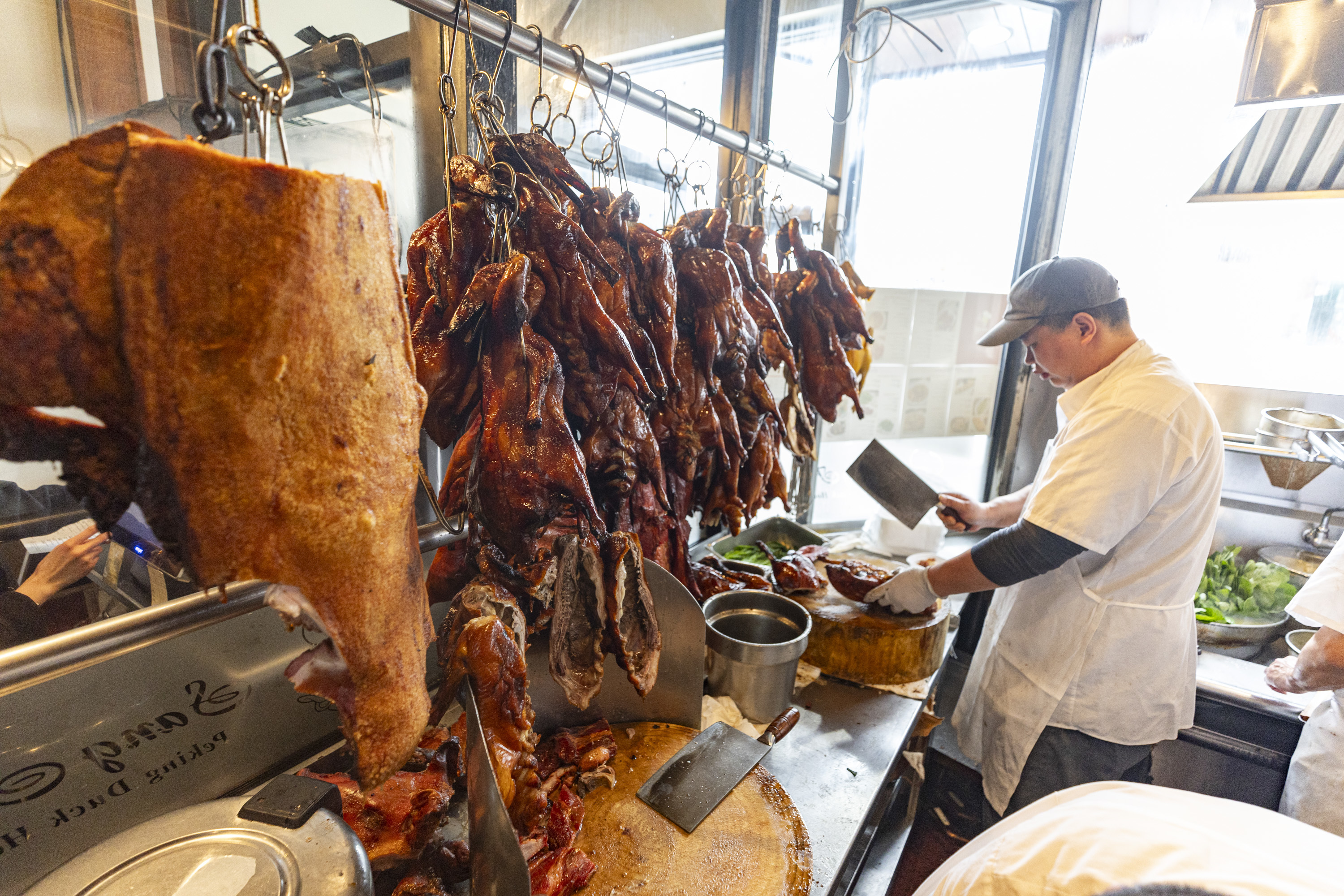
    Workers slice fresh Peking duck inside Chinatown’s Sang Kee Peking Duck House, where LeBron James may or may not have ordered takeout.Tyger Williams / Staff Photographer

    Chow said he didn’t learn that the customer may or may not be a four-time NBA champion until after he filled the order. An awestruck server showed the receipt to Chow — a Sixers “diehard” — and encouraged him to post the proof on social media for all to see.

    The real LeBron James hasn’t been glimpsed in Philly yet, but that hasn’t stopped Sixers fans from posting AI-generated memes of the GOAT, well, everywhere: ordering Wawa, buying real estate in South Jersey, popping wheelies on dirt bikes, and even posing outside corner stores.

    Still, there is hope that James may dine in Philly for real some day. Recently, he took to Instagram to solicit Philly-based recommendations for seafood potato greens, a Liberian stew, on behalf of his wife, Savannah James.

    “She likes all suggestions,” he wrote. (Have they tried somewhere near a heliport, perhaps?)

    Sang Kee fulfills 40 to 50 takeout orders at time on busy weekends, Chow said, so the restaurant does occasionally see famous names on orders. Not that he has time to wonder.

    “People always ask if we do something special if we see [a famous person’s] name on an order,” Chow said. “Honestly, we do thousands upon thousands of dumplings a day. It all has to be equally good.”

  • Lincoln Memorial Reflecting Pool is being refilled again

    Lincoln Memorial Reflecting Pool is being refilled again

    After a tumultuous summer of construction, peeling paint, vandalism claims, and arrests, the Reflecting Pool is once again being refilled.

    As of Monday morning, water was lapping into the partly filled navy blue basin while fencing still encircled the pool.

    A sign posted by the National Park Service read: “The Lincoln Memorial Reflecting Pool is being refilled as the National Park Service and contractors put the final touches on a historic effort to clean, repair, and beautify this iconic national landmark. As part of the normal refilling process, the water may temporarily appear cloudy before clearing.”

    Last week, President Donald Trump told reporters that the second round of renovations for the Reflecting Pool was “totally complete” — necessary after the pool’s new “American flag blue” coating peeled because of what the Justice Department deemed a “botched” installation.

    “The Reflecting Pool is totally complete, and we changed the old pipes,” the president told reporters Tuesday. “I’m going to visit.”

    On Oct. 5, Atlantic Industrial Coatings, the contractor that was awarded a no-bid contract for the pool’s renovation, posted on its website: “All warranty repairs were completed Friday, 10/2/2026! It has been an honor to serve our great nation!”

    Trump announced the pool’s renovation in the spring in anticipation of America 250 festivities on the National Mall. But problems quickly appeared: First, a massive algae bloom, and then the flaking coating. The administration initially blamed the pool’s problems on vandals, and several people, including former Olympian David Hearn, were arrested and charged.

    The Justice Department dropped the case in July. On Oct. 1, a judge said federal prosecutors cannot refile charges against Hearn.

    In remarks on Tuesday, the president again cited vandalism as a cause of the Reflecting Pool’s problems.

    “We had vandalism there, and we have it about as vandal-proof as you can get,” Trump told reporters. “But only sick people do that, and we have their pictures.”

    Jerad Johnson, 46, a Georgia pastor visiting D.C. with his family, admired the pool from the base of the Lincoln Memorial. He called the alleged vandalism “a disgrace.”

    “The things that we’re trying to honor here are about more than an individual,” Johnson said. “Whether they appreciate or don’t appreciate our president, still respect the fact that this isn’t just about a person, it’s about our entire country, and our country’s history.”

    As for the construction issues that led to the peeling paint: “When you’re trying to rush to get a project done by a certain date, that happens.”

    Andrea Meisgeier, 53, visiting from San Diego, also stopped to watch the water rippling in. “I think it’s a complete waste of taxpayer money,” she said, referring to the renovation and revision of the work.

    “You feel like it’s his city when you’re walking around in it,” said her son, 19-year-old college student Maxwell Meisgeier, referring to the president. “It’s not your city. It’s not the same.”

    “It’s our city,” his mother added. “The citizens’.”

  • After Russian diesel deal, Trump faces new crisis over Ukraine

    After Russian diesel deal, Trump faces new crisis over Ukraine

    President Donald Trump’s new diplomatic crisis over Ukraine first erupted at Steve Witkoff’s exclusive golf club outside Miami on Friday.

    Senior Ukrainian and European officials had traveled to the club, Shell Bay, for talks with Trump’s peace envoys, Witkoff and Jared Kushner. They had planned to discuss updated proposals to end the war in Ukraine before another trip to Russia by Witkoff and Kushner.

    But Witkoff and Kushner soon made an announcement that stunned the visitors and much of the world when the news became public shortly thereafter. The United States, the Americans said, would suspend sanctions on Russian diesel fuel. The Americans added a firm request from Trump: that Ukraine stop attacking Russian oil refineries.

    One of the Ukrainians asked what they would get in return.

    The Americans responded that the United States was doing a lot for Ukraine already, according to three people familiar with the meeting, and should not have to make a trade for Ukraine to stop its refinery attacks. The Americans then mentioned U.S. intelligence assistance, considered vital to the Ukrainian war effort.

    Some in the room heard that as a veiled threat, according to two of the people. A U.S. official, speaking on condition of anonymity to discuss sensitive diplomacy, denied any suggestion of a threat to withhold such support. But the official also said that Trump had grown so angry with Ukraine that it was hard to say what he might do.

    Now, the dispute has ballooned into the biggest crisis between Washington and Kyiv since the Oval Office blowup with Ukraine’s president last year. The future of U.S. support for Ukraine again appears to be hanging in the balance. The escalating back-and-forth showed how Trump’s efforts to bring down energy prices before next month’s midterm elections have threatened to destabilize the fragile Ukraine talks.

    Witkoff and Kushner are now indicating that they have put their expected trip to Russia on hold until Ukrainian President Volodymyr Zelensky mends fences with Trump, two people familiar with the talks said.

    To the Ukrainians and their European supporters, the attacks on Russia’s fuel refineries are Kyiv’s most effective way to respond to Russia’s bombardment of Ukraine’s energy grid. Ukraine is prepared to stop attacking energy infrastructure, Zelensky has said, if Russia does the same.

    Russia has refused such a deal. Nevertheless, to Trump, Ukraine’s attacks are an affront to a U.S. administration that has continued to provide intelligence and some military support to Ukraine despite the American president’s harsh words about Zelensky. Diesel prices in particular have become a sore spot for Trump, causing farmers’ costs to spike just as harvest season arrives and the midterms are weeks away.

    “He better damn well stop,” Trump told reporters Saturday, referring to Zelensky and Ukraine’s attacks on Russian refineries, and ignoring Russia’s strikes on the Ukrainian energy grid. “He wants to make problems for the world. He wants to make problems for our farmers, our ranchers.”

    Export statistics indicate that the increase in diesel and energy prices stems largely from Trump’s war with Iran, though Ukraine’s attacks on Russia have also played a role.

    On Sunday, Trump said on social media that Russia and Ukraine had agreed to an “ENERGY CEASEFIRE” with immediate effect. Neither side confirmed an agreement. A person familiar with his thinking said that Trump was referring to a ceasefire only on refineries in both countries — even though Ukraine’s refining capacity had been all but destroyed early in the war.

    On Monday, European and Ukrainian leaders suggested that while they would be open to an energy ceasefire, they were skeptical that Russia would follow through on one. Ukraine’s foreign minister, Andrii Sybiha, noted that Russia had attacked Ukrainian energy infrastructure Sunday night “just hours after” the announcement.

    “We are ready for an energy ceasefire: We are ready for any mutual format, anything that is not one-sided,” Sybiha told reporters while entering a meeting of foreign affairs ministers in Luxembourg.

    Six hours of talks

    The meeting Friday at Witkoff’s golf club lasted about six hours, two people familiar with it said. Much of the meeting involved brainstorming about what the future peace talks might require to work, and the focus was on the standard issues, according to several people. The issues included accession to the European Union for Ukraine, for instance, and the question of territorial control.

    Witkoff stepped out at one point to join a call between Russian President Vladimir Putin and Trump, according to one of the people, who was in the room for the meeting. In addition to Ukraine’s three-person negotiating team, the national security advisers to the leaders of Britain, Germany, and France, as well as top officials from the European Union and NATO, joined the meeting.

    But Trump’s diesel deal with Putin quickly overshadowed the rest of the talks. Zelensky on Friday called Trump’s deal with Putin to allow imports of Russian diesel fuel in order to lower prices a “weak decision.” As the dispute intensified, Trump said Saturday that Ukraine needed “a new president.”

    European leaders, including France’s president, Emmanuel Macron, and the head of the EU’s executive arm, Ursula von der Leyen, issued statements of support for Zelensky. Members of Congress criticized the diesel deal as helping fund Russia’s war machine.

    “The United States should not provide Putin with a financial lifeline while Russia continues to kill Ukrainian civilians,” a bipartisan group of six senators, including Sens. Susan Collins (R., Maine) and John Curtis (R., Utah), said in a statement Sunday. “The administration must immediately reverse course.”

    Björn Seibert, a senior EU official who attended Friday’s meeting in Florida, gave ambassadors from across the European Union’s 27 nations a briefing on the meeting Sunday, according to one European official who was there and three diplomats briefed on the matter.

    The official and two of the diplomats said that the Europeans in Florida were taken by surprise by the Trump administration’s diesel announcement. The official said the ambassadors were stunned by the announcement.

    One major takeaway from Florida, Seibert told ambassadors, was that the Americans were engaging more with the Russians than they publicly acknowledge, the official and one of the diplomats said. No further details on those engagements were given during Seibert’s briefing, which lasted about 20 minutes, according to the official.

    The Trump administration has argued that energy deals with Putin, in addition to lowering energy prices, could help pave the way for a settlement in Ukraine by showing the Kremlin that reintegration into the world economy was possible for Russia if it compromised in the war.

    This article originally appeared in the New York Times.
  • Critics slam Shane Gillis for misogyny on ‘Saturday Night Live’ appearance

    Critics slam Shane Gillis for misogyny on ‘Saturday Night Live’ appearance

    Comedian Shane Gillis’ third time hosting Saturday Night Live is being characterized poorly by critics and, more broadly, the internet at large.

    Things were so rough that the Mechanicsburg native apologized for a slip-up before the show was over. But viewers say he has a lot more to be sorry for.

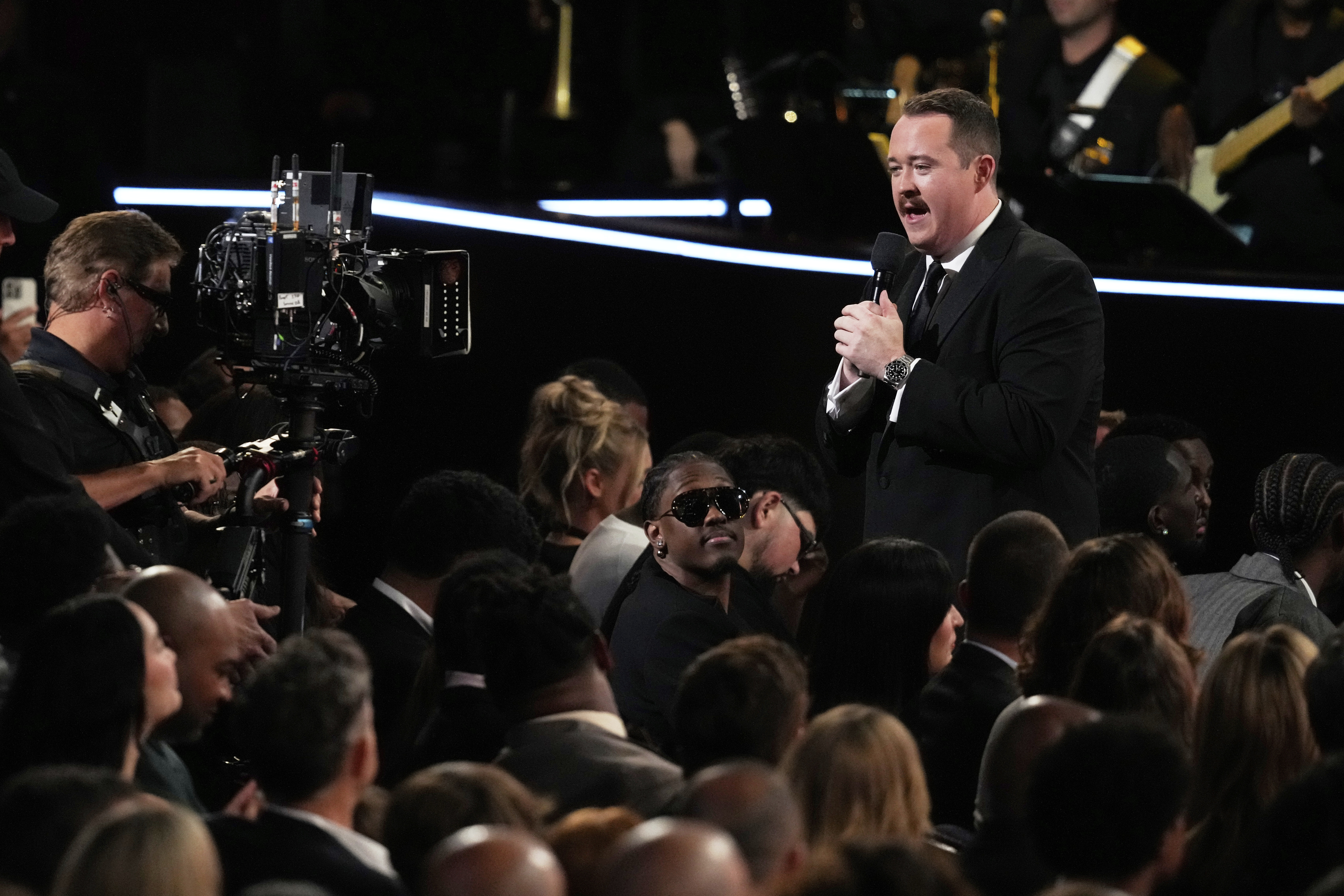
    During this weekend’s episode, which featured Gillis and musical guest Rosalía, Gillis said in his opening monologue that women dress like “whores” when they go to the gym.

    “Look, I’m sorry there’s no other way to describe it,” he added. The monologue has been viewed over a million times on SNL’s YouTube channel as of publication time.

    Viewers slammed his language, calling it misogynistic and tone deaf, especially in the weeks following news of the Cornell 7 sexual assault case, where a group of men are accused of a gang rape in 2024 at an Ivy League frat house. The case has led to women speaking out about their own experiences being objectified and abused.

    “Shane Gillis knows that there’s a major national conversation happening right now about sexual assault,” said feminist author Jessica Valenti in an Instagram post with over 1 million views. “When you demean and denigrate and dehumanize women … What do you think rape culture is?”

    Actor and fellow former SNL host Dan Levy also posted a reel criticizing Gillis’s monologue.

    “I’m speechless that something like that can exist on live national television, and to be perfectly honest, more men need to be standing up in opposition to it because it’s complacency that has created the environment with which women are sexually assaulted, and it’s a ‘conversation’ as opposed to a crime,” he said.

    Support for Levy’s stance against Gillis came quickly, including from celebrities like Jersey Shore’s Jenni “JWoww” Farley and Hacks star and Eagles enthusiast Hannah Einbinder.

    It’s not Gillis’ first time catching heat.

    In 2019, he was hired alongside Bowen Yang and Chloe Fineman to join the cast of Saturday Night Live. But before he could make his show debut, his invitation was rescinded after video clips showing Gillis using a racial slur for Chinese people, mocking Asian accents, and using homophobic slurs surfaced.

    Gillis has maintained the quotes from those videos were taken out of context and he would apologize to anyone offended by his remarks. He has gone on to have a successful comedy career, hosting SNL and starring in multiple specials and TV appearances.

    In the Tires star’s most recent SNL appearance, he ended up apologizing for an issue completely separate from the opening monologue. During a Dr. Seuss-themed skit with Andrew Dismukes and Mikey Day, Gillis dropped an f-bomb. The flub happened too quickly to be bleeped on the live broadcast. It has since been censored in reposts of the skit online. Gillis said “sorry about earlier,” at the end of the skit and apologized again at the end of the show during his goodnights.

    In July, Gillis celebrated a sold-out show at Lincoln Financial Field with special guest appearances by Dave Chappelle, Meek Mill, Three 6 Mafia, Jay Oakerson, Matt McCusker, Jason Kelce, Cooper DeJean, and Jordan Mailata.

    As of publication time, neither Saturday Night Live nor Gillis have responded to criticism about the monologue.

  • Albertsons seeks more than $9 billion over failed Kroger deal

    Albertsons seeks more than $9 billion over failed Kroger deal

    Albertsons Cos. is demanding that Kroger Co. pay more than $9 billion for the collapse of what would have been the largest U.S. grocery chain merger in history.

    Lawyers for Albertsons made the demand Monday in Delaware Chancery Court, where a two-week trial is slated later this month in a legal fight over who is to blame for the failure of the $24.6 billion deal. The plan to combine the two largest U.S. grocery chains was blocked by a federal court in December 2024. Albertsons is the parent company of Acme Markets.

    Albertsons wants Judge Lori Will to find that Kroger “willfully” breached the merger agreement by failing to use “best efforts” to get regulatory approval, including a refusal to alter its plan to divest certain assets. Kroger should pay more than $9.3 billion, which includes a premium stockholders would have gotten if the deal had closed, and a $600 million termination fee plus $75 million in interest and additional costs, Albertsons said.

    Under the terms of the agreement, Kroger had agreed “to remove any antitrust impediment to the merger — with no limit except that Kroger did not have to divest more than 650 stores,” Albertsons said in the court filing. “Kroger willfully breached these maximalist contractual commitments. Kroger wanted the Merger but only on its own terms.”

    A Kroger representatives didn’t provide an immediate comment on the Albertsons filing.

    “The bottom line is that Kroger made a promise and broke it,” Albertsons said in a statement. “Kroger should be held accountable for the harm it caused our shareholders, associates, and customers — and we look forward to proving our case in court.”

    If Albertsons wins its case, its stockholders would benefit. The publicly-listed company counts private equity firm Cerberus Capital Management as its largest shareholder, with a more than 30% stake at the end of June.

    The merger would have seen Kroger, the largest U.S. grocery chain, acquire the No. 2 grocer, Albertsons, with the aim of boosting competition against Amazon.com Inc., Walmart Inc., and other nonunionized rivals.

    To win regulatory approval, the companies agreed to sell hundreds of stores to C&S Wholesale Grocers Inc. But a federal judge in December 2024 blocked the deal after ruling in favor of the U.S. Federal Trade Commission, which argued the divestiture plan was insufficient to address antitrust concerns.

    Albertsons then terminated the deal and sued Kroger, accusing it of “willfully” violating the merger agreement by refusing to sell off the required assets. Albertsons said Kroger prioritized profit targets at the expense of ensuring regulatory approval.

    “Kroger inflexibly held to its pre-merger targets — even refusing to divest assets specifically identified by the regulators as key to the success of its chosen divestiture buyer,” Albertsons said in a court filing. “Despite clear feedback from regulators, clear advice from its own counsel and economists, and repeated pleas from Albertsons and the divestiture buyer, C&S Wholesale Grocers, Kroger stuck to its failing lowball strategy right through the litigation that ended the deal.”

    Kroger has said it did everything it could to secure approval and accused Albertsons of undermining its divestiture proposal to regulators. It alleged Albertsons secretly worked with C&S to get regulators to require Kroger to divest more stores than needed. C&S has said all of its communications with Kroger, Albertsons, and the regulators met contractual, legal, and ethical obligations, and were aimed at obtaining regulatory approval.

  • Suspected plot at U.S.-run air base almost certainly directed by Iran, U.K. prime minister says

    Suspected plot at U.S.-run air base almost certainly directed by Iran, U.K. prime minister says

    LONDON — A suspected plot to attack a U.S.-run military air base in England was “almost certainly” directed by Iran’s Revolutionary Guard, British Prime Minister Andy Burnham said Monday.

    Burnham previously said there are strong indications Iran was linked to the apparent plan last month to attack the RAF Fairford air base, which has been used by American bombers to strike Iran in the ongoing war.

    Police have arrested seven men in the investigation into the alleged plot, but all suspects have been released on bail and no one has been charged so far.

    Iran has denied involvement, although it has previously said that it considers any base used to attack its territory a legitimate target.

    “I can confirm our assessment that it is highly likely to have been coordinated in Iran, almost certainly directed by Iran’s Islamic Revolutionary Guard,” Burnham told lawmakers. ”We will not tolerate these threats on our soil.”

    Police found gasoline but no explosives in suspects’ vehicles

    Scores of residents near the air base were evacuated from their homes on Sept. 27 as armed police officers and army bomb-disposal experts swarmed the rural area.

    Police later said they had found a quantity of an accelerant — gasoline — in three vans linked to the initial five suspects who were arrested on the scene, but no explosives.

    All the suspects arrested are in their 20s. None has been identified, though police said six are British nationals while one is a dual U.K.-Iranian citizen.

    On Monday, the British government summoned the Iranian ambassador, who reiterated that Tehran was not involved in the suspected plot and urged the U.K. to provide evidence supporting its claims.

    The U.K. also said it added two Iranians, including the head of counterespionage operations in the Revolutionary Guard, to its sanctions list. Authorities said the two were involved in conducting espionage and attacks on behalf of Iran’s government in Europe and the U.S.

    The U.S. pulled its bombers last week from RAF Fairford, about 100 miles west of London, and the aircraft have now been redeployed to their home bases, the Pentagon said.

    The Trump administration has said it believed the base faced Iranian threats intended to kill as many American troops and destroy as many U.S. planes as possible.

    The British government allowed the U.S. military to use RAF Fairford for what it called defensive strikes on Iranian missiles and their launch sites following Iranian attacks on U.K. interests and Britain’s allies in the Gulf.

    U.S. joins many Western countries in condemning Iranian proxy attacks

    Officials have said that local proxies linked to Iran were behind a string of arson and other attacks on the U.S., Britain, and other countries, many of them targeting Jewish communities and intended to sow fear.

    British officials have said the number of national security cases involving activity by hostile states, including Iran, increased by 50% in the six months to December 2025.

    Home Secretary Shabana Mahmood said Monday that the Fairford air base incident “speaks to a wider trend.”

    “States like Iran are using proxies to conduct hostile activity here in Britain. They pay criminals or exploit naive volunteers, attacking our country and its citizens while maintaining an air of plausible deniability,” she said.

    In a joint statement released Monday, the foreign ministers of the U.K., U.S. and about two dozen Western countries condemned Iranian attacks on their territory. They said the Fairford incident demonstrated Iran’s “continued willingness to project hostile activity beyond its borders through covert networks and proxy actors.”

    “Anyone who conducts hostile activities on behalf of Iran, or any other state, should know that we will take action to identify, investigate, disrupt, and prosecute these acts,” the statement said.

  • Proposed banking rule change threatens city and small town lending, advocates warn

    Proposed banking rule change threatens city and small town lending, advocates warn

    Kenneth Bigos’ day job is running the Affordable Housing Centers of Pennsylvania, which helps people buy their first homes. That puts him arm-in-arm with a lot of Philadelphia’s bankers.

    He serves on TD Bank’s Community Advisory Council. Citizens Bank helps train his group’s housing counselors. He credits Wells Fargo’s NeighborhoodLift program with finding down-payment assistance for first-time borrowers. And he cites WSFS as a major lender in the city’s Turn the Key and Philly First Home grant programs.

    But Bigos is worried that federal bank regulators’ pending plan to streamline the Community Reinvestment Act (CRA) endangers that community-bank energy. Regulators have used this 49-year-old law to set targets for banks so they offer loans and services throughout their market areas, including in lower-income neighborhoods. Bigos and other advocates say the regulators’ plans cuts those targets so banks can do less.

    “All of this good work is because of CRA,” Bigos said. “My concern is that the rollback of the CRA will result in having fewer banks accountable to the communities,” slowing bank-financed improvements to the region’s working-class neighborhoods.

    Kenneth Bigos (right), executive director of Affordable Housing Centers of Pennsylvania, with State Sen. Sharif Street at an event announcing a grant to the housing counseling organization. AHCOA

    The CRA was intended to curb redlining policies from when banks refused to lend in certain sections of Philadelphia and other cities. Regulators are now considering changes, with the public comment period drawing to a close.

    Rules added in 1995 obliged banks to document their loan approval, equity investments, branch networks, and service levels in working-class and low-income neighborhoods. It helped spawn a network of nonprofits that helps banks meet their CRA targets by recruiting local projects, developers, and borrowers.

    Regulators rank banks’ CRA performance. Banks that seek to expand need good CRA ratings or risk regulators’ refusal.

    Some banks made a virtue of necessity.

    PNC, the biggest bank in Pennsylvania, scored an “outstanding” in every inspection and has won approval for mergers, which made it the fifth-largest in the U.S. The Pittsburgh-based company regularly highlighted its CRA lending along the way.

    Big lenders that missed targets, like Wells Fargo, were rated “needs to improve,” and they were blocked from deals until they did better. Underlining the narrow line banks may walk between changing regulatory currents, the Wall Street Journal recently reported that the Trump administration is investigating whether Wells Fargo is violating the Fair Housing Act in its efforts to boost Black homeownership.

    Two suburban Philly institutions, Parke Bank and Penn Community Bank, received low ratings in recent years. Parke Bank is rated “needs to improve.” Penn Community Bank’s rating was updated from “needs to improve” to “satisfactory” in 2025.

    Banker groups have long lobbied for relief from CRA rules and compliance work.

    Proposals put forward earlier this year by the Federal Deposit Insurance Corp. (FDIC) and the Treasury Department’s Office of the Comptroller of the Currency (OCC) would enable banks to ease CRA targets by at least two-thirds, advocates say.

    In Pennsylvania the annual CRA targets would drop from $3 billion to $1.1 billion, according to estimates by the National Community Reinvestment Coalition (NCRC), which represents nonprofit housing and lending groups.

    The American Bankers Association says it’s “pleased” that the proposal focuses CRA more narrowly on loans and community projects, not broader programs or organization funding, and eases targets especially for small banks.

    What the proposed rules would do

    Banks covered by CRA would see the rules eased in two ways, says NCRC director Kevin Hill.

    Under the proposal, banks would be able to comply with the law by issuing strategic plans with a lower CRA loan and investment total — a 64% reduction, by Hill’s calculation — or they could lend a percentage of their capital in low-income areas, with a much lower minimum commitment required.

    The proposals would also raise the definitions of large and midsize banks so that hundreds of banks would move into categories with lower CRA targets. Banks including Mid Penn Bank, which has recently opened offices in Philadelphia, and family-owned Firstrust Bank of Conshohocken would be among those reclassified from large to midsize banks with fewer CRA obligations.

    (function(){function e(){window.addEventListener(`message`,function(e){if(e.data[`datawrapper-height`]!==void 0){var t=document.querySelectorAll(`iframe`);for(var n in e.data[`datawrapper-height`])for(var r=0,i;i=t[r];r++)if(i.contentWindow===e.source){var a=e.data[`datawrapper-height`][n]+`px`;i.style.height=a}}})}e()})();

    Hill says banks in some cases would be able to close urban branches without suffering a loss in CRA standing. And they would be able to stop compiling data on their small-business loan applications, a key credit measure.

    Local and national community-lending groups are sounding warnings and urging members and supporters to write to regulators during the public comment period, which ends Oct. 13.

    What community groups fear

    Nonprofit lenders who have worked with banks for years say they’re scared banks will retreat from the communities meant to benefit from CRA.

    “This is particularly going to affect small towns and rural areas with small banks. They won’t have to adhere to CRA rules so closely,” said Daniel Betancourt, president and CEO of Finanta Credit Union, which has offices in primarily Latino communities of Philadelphia, Lancaster, and other eastern Pennsylvania communities.

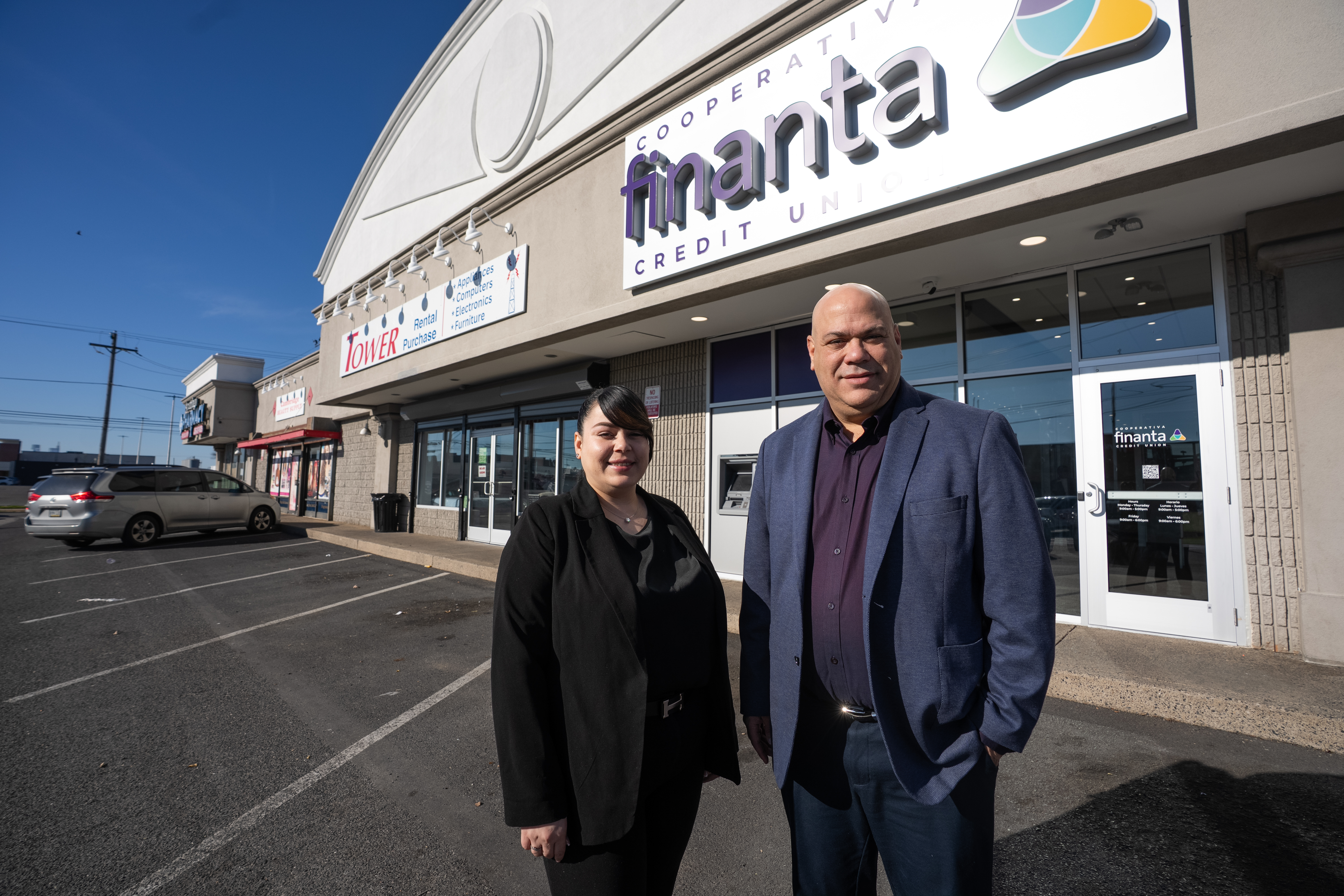
    Iris Santiago, branch manager, and Daniel Betancourt, CEO of Finanta Credit Union, at a Philadelphia branch in 2025.Jessica Griffin / Staff Photographer

    “They will now be able to meet their CRA requirements by lending to large infrastructure projects and stop focusing as much on small mortgages and small-business lending,” Betancourt said. “It will be easier for them to meet the tests, to get a satisfactory rating. I definitely would rather they keep the [current] rules in place.”

    Betancourt cited projects that have been built to meet CRA requirements — mortgages and small-business loans in Frankford and Northeast Philadelphia, and projects like Xiente’s rental unit construction at the former St. Boniface property on Norris Square, ACANA’s Africa Center in Southwest Philadelphia, Taller Puertorriqueno on the Bloque de Oro in Fairhill.

    Bigos, of the Affordable Housing Coalition of Pennsylvania, said he worries about inner-city bank-branch closings and that banks will make fewer, larger loans to richer borrowers, if they no longer get credit for making lots of small ones, which cost more.

    Bankers insist they’ll still lend

    “Philly is a tough city to do business in,” said Abe Ibrahim, head of Mid Penn Bank’s Philadelphia region. “You can’t just open a branch” and expect to profit, he said. There are a lot of banks chasing attractive borrowers.

    Abe Ibrahim, head of Mid Penn Bank’s Philadelphia region. “We don’t use [the federal Community Reinvestment Act] as a box to check off. It’s a leadership philosophy. A good project benefits the community and makes families better,” Ibrahim says.Mid Penn Bank

    “People want to see that you’re from here and you want to add value,” Ibrahim said. “That opens the door.”

    Because it’s so difficult to find solid customers in competitive markets, Ibrahim says he is hopeful the banks won’t cut and run just because the law no longer obliges them to maintain their current loans and grants.

    He said Philadelphia programs like Turn the Key, which gives city land cheap in exchange for selling houses at below-market prices, will remain attractive to lenders even if CRA requirements are reduced.

    “There’s a waiting list for these programs,” which come with income qualifications and other pre-approval requirements. Ibrahim said his bank would back solid city projects, such as a recent Turn the Key development Mid Penn helped fund, “even if there were no CRA consideration.”

    “We don’t use CRA as a box to check off. It’s a leadership philosophy. A good project benefits the community and makes families better, smarter, wealthier,” Ibrahim said.

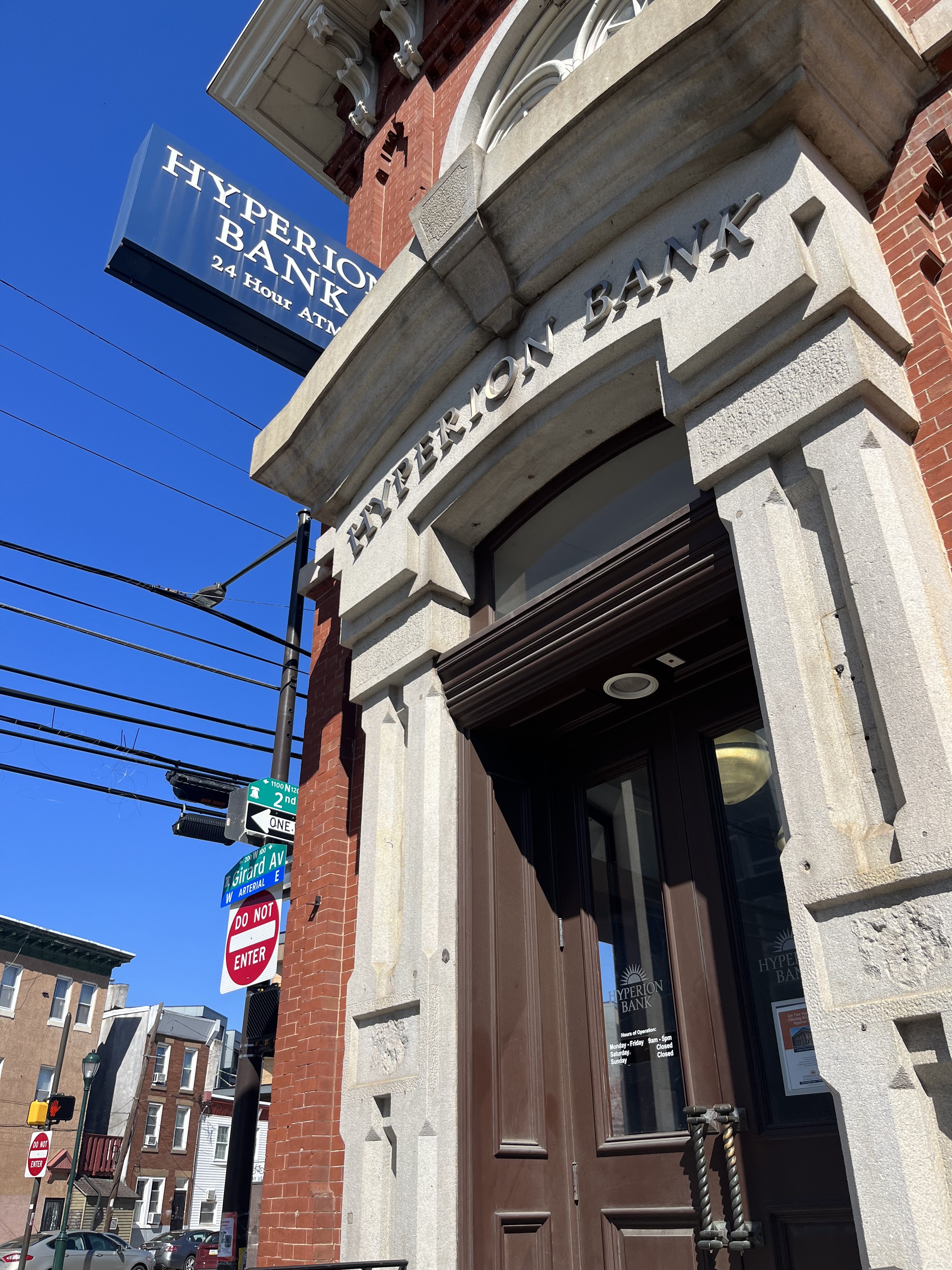
    At Northern Liberties-based Hyperion Bank, “we will, of course, evaluate any (CRA) changes in requirements,” said CEO Charles B. Crawford, a former chair of the Pennsylvania Association of Community Banks. But those changes alone won’t “change Hyperion’s commitment to the communities we serve.”

    Hyperion Bank headquarters at Girard Avenue and North Second Street in Northern Liberties. CEO Charles Crawford says CRA requirement changes alone won’t “change Hyperion’s commitment to the communities we serve.” Joseph N. DiStefano

    “Regardless of how CRA regulations evolve,” Wilmington-based WSFS will focus on “meaningful, sustainable investments that strengthen the communities we serve,” said Justin Dunn, WSFS’s chief community impact officer.

    Wells Fargo, with 4,000 local branches across the U.S., is “evaluating the proposed changes,” said spokesperson Shea Leordeanu.

    Editor’s note: This story has been updated to note that Penn Community Bank’s rating changed in 2025.

  • Alex Gibney’s ‘Musk’ has already gotten under Elon Musk’s skin. It goes nationwide this week

    Alex Gibney’s ‘Musk’ has already gotten under Elon Musk’s skin. It goes nationwide this week

    VENICE, Italy — Elon Musk has called filmmaker Alex Gibney a lot of names leading up to the theatrical release of the documentary Musk, which is playing in select theaters in New York and Los Angeles and expands nationwide on Friday.

    Over the past few weeks, Musk has posted on X that Gibney is an “idiot,” a “horrible human,” a “shill for the far left,” and a “tinfoil hat crackpot” with “zero credibility.” When the documentary was announced three years ago, he called it a “hit piece.”

    After its premiere at the Venice Film Festival last month, Musk wrote that dog feces are “worth more respect than Gibney.” The trillionaire has reportedly not yet seen the film and did not respond to a request for comment from the Associated Press.

    Paid advertisements for ‘Musk’ are being rejected by X

    The documentary is facing more than a war of words from Musk, however. The film’s distributor, Bleecker Street, has not been able to run paid advertisements on several major social media platforms. As of Sept. 25, YouTube, Meta, TikTok, and X had all refused. YouTube, where the trailer had been available through regular channels, and Meta have since reversed course, saying that it had been flagged for “political content.”

    There are also concerns about whether Musk will eventually land on HBO as originally planned in the aftermath of the Skydance merger, the new entertainment giant created by Paramount’s takeover of Warner Bros. Discovery. CEO David Ellison’s father, Larry Ellison, is friendly with Musk.

    “Would Musk be able to call Larry or David and say, you know, don’t put this doc on? Yeah,” Gibney said in an interview with the AP. “We live in that world now, particularly a world that’s become so transactional in the political realm … it’s literally pay to play.”

    There have been threats of lawsuits from Musk’s camp as well. But Gibney is also leaning into it, posting regularly on X from his own account and through a newly created one called @muskfilmfacts, which is actively dispelling false narratives and highlighting suspicions of suppressed content. Recently, Gibney wrote on X that his film is “about a ‘free-speech absolutist’ who has threatened a lawsuit to try to stop the film from being seen.”

    The Oscar-winner learned from making his Scientology documentary Going Clear: Scientology and the Prison of Belief that the best way to fight back is to “not let them get inside your head.”

    “We also have a lawyer who’s really, really good,” he said. “Because, of course, we vet this stuff very carefully.”

    Musk did not sit for an interview with filmmakers

    Gibney spent nearly four years making the film, a sweeping portrait of the power and influence of the world’s richest man, charting his rise from his early days in Silicon Valley through SpaceX, Tesla, and DOGE, the Musk-led Department of Government Efficiency that overhauled the federal workforce last year.

    It runs nearly four hours and features on-camera interviews with Musk’s family, including his father Errol Musk, his first wife, and another mother of one of his children, as well as journalists, business associates, former friends, colleagues, and government officials.

    The project became a “runaway story,” said Gibney, who was finalizing a two-hour cut when Musk endorsed Donald Trump following the 2024 assassination attempt on Trump in Butler, Pa. HBO leadership encouraged Gibney to keep going.

    “I started out doing the film because it was about 21st century power,” Gibney said. “I didn’t have a sense at that time that he was literally going to accrete the power of a kind of shadow president. … But that’s what he did, so we had to follow that story where it went.”

    Musk did not sit for an interview, so Gibney and his team did something a little unconventional: They made a computer-generated Musk that speaks directly to the camera. The image might be a visual effect, both flattering and a bit uncanny, but the voice and the words it says are all Musk’s own, taken directly from recordings of things he’s said in interviews and at public appearances. Gibney’s team used artificial intelligence to help sync the words to his mouth.

    The lasers in space statement comes from a Musk text

    One of the sticking points for Musk and his supporters that has emerged since the film started screening for press and festival audiences has to do with “space lasers” and the 2024 U.S. presidential election.

    The source is a text exchange between Musk and Ashley St. Clair, the mother of one of Musk’s children who provided the messages. Musk writes to her about feeling optimistic about Trump’s chances, and how he has “10,000 lasers in space right now.”

    Its inclusion in the documentary has provided ammunition for Musk supporters and his lawyers to discredit the film, pointing to an unfounded conspiracy theory about SpaceX’s Starlink satellites interfering in the election. But neither the film, nor St. Clair, make that claim. It simply presents his text messages and lets the audience decide what to make of it.

    St. Clair also provides an audio recording of Musk associate Jared Birchall trying to negotiate an NDA with her, on which parental support would be contingent, after she gave birth to their child. She said she turned down some $40 million to maintain her right to speak freely.

    Free speech and the benefits of synthesizing information in a film

    With attentions fractured in modern life, Gibney hopes there is some benefit in synthesizing information into a narrative. He’s also quick to credit the journalists whose work they draw upon.

    The runtime might be longer than your average movie, but it’s an engaging watch. For the first 45 minutes, he said, “you’re kind of rooting for Elon.”

    “He’s trying to get those rockets up in the air. Fails three times. He’s got that critical fourth launch, and you see those incredible images of the reusable rockets. It’s Elon at his best,” he said. “But then you have to ask the question, what happened?”

    There is also a six-hour version, Gibney said. But they edited it down to stick to the most pressing information, including questions about the data gathered on U.S. citizens during Musk’s DOGE tenure.

    “I hope that people will look at some of the stuff that we present in the film and then take it further,” he said. “You know, should there be an investigation in Congress about the data and what happened to the data? And is it sitting in a hard drive in SpaceX or Tesla?”

    As for who he thinks the audience might be, he hopes that it’s not just Musk skeptics.

    “If you’re in a cult and you assume that he’s your supreme leader, then maybe just like the folks in Scientology, you’ll criticize the film and you won’t see it,” Gibney said. “But if you’re intrigued by the guy, and even if you have some affection and admiration for his accomplishments, I would hope you go see it.”

  • Mayor Parker renews call to expand involuntary commitment law following fatal Philly police officer shooting

    Mayor Parker renews call to expand involuntary commitment law following fatal Philly police officer shooting

    Hours after a Philadelphia police officer was fatally shot and another was wounded by a man who ambushed them with a shotgun in West Philly, Mayor Cherelle L. Parker stood in front of the hospital and called for a specific policy change.

    During a news conference outside Penn Presbyterian Medical Center, the mayor asked Gov. Josh Shapiro and the state legislature to change Pennsylvania’s laws on involuntary commitment, which do not currently allow the city to hold people who use drugs in a hospital without their consent.

    The change in law has been a long-held goal for Parker as her administration attempts to drive a turnaround in Kensington, the neighborhood located across the city from the site of Saturday’s shooting, and where open drug use and sales have proliferated for decades.

    State law says that in order for the city to involuntarily commit a patient, the person must be a danger to themselves or others as a result of severe mental illness, not primarily drug or alcohol use.

    “We are coming to the Commonwealth of Pennsylvania [to] seek legislation that will expand involuntary commitment laws to cover not only severe mental illness, but substance use disorder,” Parker said Saturday, “and any kind of mental and/or behavioral challenge that could interfere with Philadelphia’s ability to keep itself safe.”

    Within hours, Shapiro’s office said in a statement that he’d already discussed the matter with Parker and committed to reviewing the law.

    Days after the West Philadelphia shooting, it remains unclear whether such a change in state law would have applied for Eric Lewis, the city water department employee charged with murder and related counts in the shooting of the officers.

    Philadelphia police hug each other outside of Penn Presbyterian Medical Center in Philadelphia on Saturday, October 10, 2026. Two Philadelphia police officers were shot and seriously wounded overnight.Elizabeth Robertson / Staff Photographer

    Court records show that a judge previously ordered Lewis to undergo substance abuse treatment after he was charged in 2012 with theft and receiving stolen property.

    And in 2015, a judge ordered Lewis to receive a drug and alcohol assessment as part of his probation sentence after he was convicted of carrying firearms in public and simple assault.

    But police officials have not indicated that Lewis still has substance use-related health problems or that drugs played a role in the shooting that killed Officer Shane Seiber and wounded another. District Attorney Larry Krasner said on Saturday that it was “premature” to say.

    Joe Grace, a spokesperson for the mayor’s office, said in a statement that the mayor’s comments stemmed from broader concerns about access to mental health treatment, citing two recent incidents that each resulted in a person being fatally shot by police. Last week at 21st Street and the Benjamin Franklin Parkway, police shot a man who was firing a gun. Grace also cited an instance earlier this month in Northeast Philadelphia, where police fatally shot a man who they said brandished a knife at officers.

    “These incidents are on Mayor Parker’s mind as she speaks about Pennsylvania’s involuntary commitment laws and the need for changes in the law to strengthen public safety,” he said.

    Flanked by Councilmember Curtis Jones (left), District Attorney Larry Krasner announces the charges against a man accused of shooting two Philadelphia police officers, one fatally, on Saturday, Oct. 10, 2026. Elizabeth Robertson / Staff Photographer

    Parker, a centrist Democrat who has made Kensington a primary focus of her first term, spoke about the involuntary commitment law in December 2023, shortly after she won election and before she was sworn in as mayor.

    She said during a news conference at the time that she had met with behavioral health providers who outlined potential roadblocks to addressing the sprawling addiction and homelessness in Kensington.

    “When you talk to the providers, they’ll tell you… What are you going to do about this issue called involuntary commitment?” Parker said then.

    She said the administration needs support from the state General Assembly in order to help people “get access to the treatment that they need when they are not in a position or place and space to determine that it is what they need.”

    Two years later, Parker had a bipartisan group of lawmakers on board.

    In May 2025, State Sen. Daniel Laughlin, an Erie County Republican who leads the state Senate’s Law and Justice Committee, introduced legislation to amend Pennsylvania’s Mental Health Procedures Act to explicitly classify substance use disorder and alcohol dependence as mental illnesses.

    Mayor Cherelle L. Parker signs an executive order during an announcement about the new Kensington Neighborhood Wellness Court and Wellness Support Center at the Philadelphia Police 24th/25th District Building on Tuesday, Jan. 21, 2025 in Philadelphia.Monica Herndon / Staff Photographer

    Laughlin was joined in his effort by State Sen. Anthony Williams, a West Philadelphia Democrat. The two said in a memo issued along with the legislation that it would “enable individuals with severe SUD or alcohol dependence to receive emergency evaluation and treatment before reaching crisis levels while providing pathways for loved ones to seek help for those who cannot advocate for themselves.”

    Williams said Monday that Parker had asked him to sponsor the legislation, but it has since stalled in the Senate. The bill hasn’t received a committee hearing. Williams chalked that up to the “politics of the Senate,” which is controlled by the GOP.

    The legislative session ends in November, meaning that if the bill is not passed by then, it would need to be reintroduced at the start of the next legislative session in January. Democrats are vying to flip the state Senate in the November election, which could lead to a different legislative makeup by next session.

    Williams said he wants to reintroduce it.

    “Circumstances that led to introducing the bill, unfortunately, haven’t changed,” he said. “We see circumstances where, because of the construct of the law and the limitations, we can’t prevent some tragedies from occurring.”

    The existing law allows for healthcare professionals, police, or others who are responsible for a patient who witness behavior they consider dangerous to initiate what’s known informally as a 302 petition, referring to Section 302 of Pennsylvania’s Mental Health Procedures Act. The city’s Department of Behavioral Health and Intellectual Disability Services can then authorize the evaluation, even without the patient’s consent.

    Under the law, a patient can then be admitted to an inpatient facility, such as a hospital, for up to five days. To extend involuntary treatment after that, the hospital or facility must file additional paperwork in court outlining the patient’s illness.

    As of 2024, 34 states allowed for the involuntary commitment of patients whose primary diagnosis is substance use disorder, according to the American Society of Addiction Medicine.

    However, some advocates who want the city to further embrace a harm-reduction approach oppose Parker’s effort to expand state law. They say that forcing people into treatment before they are ready doesn’t work and can be harmful to patients.

    Carla Sofronski, executive director of the substance use policy group Pennsylvania Harm Reduction Network, said that the state’s healthcare system is not prepared to adequately treat an influx of patients who could be in withdrawal from the city’s toxic drug supply.

    “People have the right to choose what to do with their bodies,” she said. “What would you say to a cancer patient that decides that they no longer want to continue with their treatment? People should have autonomy over what to do.”

    Staff writers Ellie Rushing and Gillian McGoldrick contributed to this article.

  • Inside Elon Musk’s $276 million midterm rescue mission for Republicans

    Inside Elon Musk’s $276 million midterm rescue mission for Republicans

    WASHINGTON — Elon Musk has quietly funneled more than $276 million into Republican groups and his super political action committee since the start of July, building a huge turnout operation to help the party battle headwinds in the midterm elections.

    The staggering amount of money makes Musk, the richest person in the world, by far the largest known donor in the midterms. Representatives for Musk supplied the previously unreported figures on his political giving to the New York Times before a federal filing deadline Thursday.

    In an effort to save Republicans’ Senate majority, Musk gave a total of $158 million this summer to the Senate Leadership Fund, the main super PAC backing the party’s candidates for the chamber, according to his team. In sum, that is one of the largest political donations in American history, and more than the group’s Democratic rival raised from all of its donors that quarter.

    Musk has also built a major Republican turnout operation through a super PAC he founded in 2024, America PAC. He donated over $76 million this summer to the group, which in turn spent that much on building a sprawling canvassing program to try to turn out hard-to-reach Republican voters. The group is active in seven Senate battlegrounds and nearly three dozen House races.

    Musk has already given far more money, about $366 million, to federal committees during the 2025-26 election cycle than he did during the 2024 election, when he laid out roughly $290 million to help return President Donald Trump and Republicans to power. He has given even more in undisclosed donations during both elections, according to people briefed on the giving.

    The latest torrent of spending has helped give the Republican Party a financial advantage in the midterms, as well-funded outside groups like Trump’s powerful super PAC flood the airwaves with advertising in the final weeks. No Democratic billionaire is spending nearly as much as Musk, and money remains a central worry for the party in an otherwise favorable political environment.

    The donations also clear up the mystery of how much staying power Musk wants to have in American politics.

    “In terms of political spending, I’m going to do a lot less in the future,” he said in May 2025.

    Musk, who oversees a vast business empire that has benefited from enormous federal contracts, is famously unpredictable and often jumps from one project to another. He has been far quieter about his political work since his dramatic blowup with Trump last year. After months of wielding vast influence inside the White House and overseeing Trump’s government cost-cutting project, he raged against the president’s major domestic policy bill and floated threats to start a third party.

    But the two men have warmed back up, appearing together at three events in the last two weeks and praising each other.

    Now Musk has donated more than a quarter-billion dollars to help Trump and Republicans in the midterms. The money signals his commitment to the right and sets him up as a potential player in the 2028 presidential election, when his super PAC says it intends to remain active — the first time it has confirmed such plans.

    Beyond Musk’s donations to his super PAC and the Senate Leadership Fund, his representatives said that from July through September, he had given smaller but still substantial amounts to other conservative groups:

    — $20 million to the Congressional Leadership Fund, the main super PAC for House Republicans

    — $10 million to Lone Star Liberty PAC, a group supporting Ken Paxton, the Republican nominee for Senate in Texas

    — $10 million to the Republican Governors Association

    — $2 million to the Republican Attorneys General Association

    “If Democrats take control of Washington and win key gubernatorial and attorney general races this November, then America risks becoming a socialist, woke, and borderless country,” said Andrew Romeo, a spokesperson for America PAC. “These robust investments have allowed the GOP apparatus to get its message out so Republicans can have a fighting chance to defy history.”

    Pushing for Paxton

    On voters’ doors across Texas, the campaign literature carries a stark warning: “Radical Democrat socialists are winning elections all across America. Could Texas be next?”

    The hanging door cards are the work of Musk’s voter-turnout operation, which deployed nearly 3,000 paid canvassers last week around the country, according to America PAC officials.

    The group has devoted most of its more than $76 million in midterm spending so far to this canvassing program, shelling out smaller amounts on advertising, mail, phone calls, and text messages. Much of the messaging targets Democrats, sometimes in misleading or overheated ways.

    This spring, Trump’s political advisers asked Musk to reprise America PAC’s 2024 field program, a person familiar with the conversation said. Despite the challenging environment for Republicans, some party strategists believe that a field program can make the difference in particularly tight races.

    America PAC relies on a few voter-canvassing firms that compete aggressively with one another for work and for staffing, according to people briefed on the operation.

    Turnover in the canvassing industry is high. One canvasser who worked for America PAC told the Times that he was paid between $1.50 and $3.00 for each door he knocked on across Texas in the heat. America PAC says it has knocked on about 6.5 million doors across the country so far.

    Musk and his operation, people close to them say, have been particularly focused on the Texas Senate race. The group has unloaded over a third of its disclosed spending in that expensive race, more than in any other. It is uncommon to run an extensive field campaign in large states like Texas, where television ads are more often used to reach voters.

    Musk, a resident of Austin, has extensive business interests and property holdings in Texas. Paxton, the state attorney general, has investigated Musk’s opponents, including Media Matters, a liberal group.

    Musk’s $10 million donation to Paxton’s super PAC came at a critical time, when the Republican candidate was being badly outspent.

    And Musk’s $158 million in donations to the Senate Leadership Fund, the most the super PAC has ever received from a single donor in a quarter, may have made it possible for that group to suddenly spend big for Paxton after months of reluctance.

    That is because Musk’s donations preceded the decision in late August by the super PAC, led by allies of Sen. John Thune of South Dakota, the majority leader, to start what has become a $149 million pro-Paxton ad campaign.

    A focus on transgender issues

    As it did in 2024, Musk’s operation is focused not on persuading swing voters, but on registering and turning out voters with conservative beliefs — especially “low-propensity” ones who are less likely to cast a ballot.

    This is a lot harder for Republicans in a midterm election, without Trump at the top of the ballot.

    To do it, Musk’s super PAC is leaning hard into the culture wars, especially transgender issues. (Musk’s daughter, who is transgender, has spoken about their clashes over her identity, and he has suggested that this led to his increased political engagement.)

    At voters’ doors in Texas, canvassers are told to target Gina Hinojosa, the Democratic candidate for governor, over her record on transgender issues, according to parts of a script reviewed by the Times.

    Similarly, the Musk operation is leaving literature on doors that claims that James Talarico, the Democratic nominee for Senate in Texas, has a “radical trans agenda.” And America PAC’s top ad in the state, according to the media tracking firm AdImpact, denounces Talarico over his past comments suggesting that “God is nonbinary.”

    The Musk group is also targeting other Democratic Senate candidates over transgender issues, including Josh Turek, the party’s nominee in Iowa. Nationally, one of the super PAC’s most visible ads on Facebook features a man in makeup and reads: “He made his plan to vote. Did you? Don’t stay home while crazies elect radicals.”

    The group is running ads and sending mail on a broad range of topics, but socialism is a core theme. The Musk super PAC regularly attacks Democrats as socialist and ties them to figures such as New York City Mayor Zohran Mamdani and Rep Alexandria Ocasio-Cortez of New York, according to 48 pieces of direct mail shared by Mintt, a mail-tracking firm.

    Online, it is even running personalized messaging that invokes a voter’s first name. For example, in a video showing smiling Democrats: “Why are they smiling? Because Christopher hasn’t made a plan to vote yet.”

    Much of this outreach points voters to an America PAC website where conservatives can learn how to register to vote. The super PAC is pushing what it calls an “America Pass,” a digital card on Apple or Google wallets on voters’ phones that lists their registration information, along with election dates and deadlines in their home state.

    A big spender with a backseat role

    While Musk is spending big again and using some tactics that are similar to those he deployed two years ago, this is not 2024 anymore.

    He is in a different place politically. While he and Trump appear to be on good terms again — “our modern-day Thomas Edison,” the president called him Thursday — Musk is taking a hands-off approach this election and does not appear as personally passionate.

    He has not brought up the midterm elections or the Trump presidency much in private conversations with friends, according to people who have spoken to him in recent months. He is focused on his businesses, these people say, and he and his business lieutenants have taken a less active role in America PAC’s operations, entrusting major decisions to Chris Young, his top adviser.

    And on the social platform X, a semi-reliable indicator of where the billionaire’s mind is, Musk has written just seven direct posts this year about candidates in competitive midterm races, according to a Times review, a far cry from his relentless calls throughout 2024 to elect Trump. Five of those posts focused on Talarico — and one appeared critical of Sen. Susan Collins, a vulnerable Republican in Maine.

    Gone, too, are Musk’s barnstorming campaign stops, such as the ones he did in Pennsylvania in October 2024 or a Wisconsin judicial election in the spring of 2025. There are no more sweepstakes where he personally hands an oversize check of $1 million to those who register voters or sign a petition, a gambit that drew legal challenges.

    Musk has not evidently grown infatuated with candidates this time around, as he did with Trump. The closest he came was a $10 million donation for a long-shot Republican running for the U.S. Senate in Kentucky — an investment that went poorly.

    The $276 million figure is, of course, just what is publicly known. Musk has also made some seven-figure donations to support midterm candidates through groups that are not required to disclose their donors, according to a person with knowledge of the matter.

    This article originally appeared in the New York Times.