Blog

  • Political campaigns are quietly paying influencers to support candidates

    Political campaigns are quietly paying influencers to support candidates

    Josh Greene is a rising left-wing social media star with his own podcast, nearly 800,000 followers, and access to politicians like Sen. Bernie Sanders of Vermont and Mayor Zohran Mamdani of New York.

    He has used that platform to support dozens of progressive candidates in the midterm elections, ranging from low-profile, down-ballot contests to some of the nation’s marquee Democratic primaries. In camera-facing videos, Greene informs his followers of his preferences, calling some candidates “the most viable” and, in other cases, declaring that “this is the candidate for you.”

    He does not always tell his viewers that he is being compensated for his support.

    But records show that Greene, 26, has received money from at least seven politicians, or outside groups supporting them, in the current campaign cycle, including several congressional candidates in New York and a super political action committee linked to Abdul El-Sayed, the Senate nominee in Michigan. Tom Steyer, a former candidate for governor in California, paid him $21,500.

    Abdul El-Sayed, the Democratic candidate for U.S. Senate in Michigan, who is trying to bring his party together after a divisive primary, at a June 28 campaign event in Ann Arbor, Mich.NICK HAGEN

    Greene, who lives in Southern California and is best known by his handle @joshtheprogressive, is among a growing number of influencers who, at a moment when campaigns are increasingly willing to pay for online attention, appear willing to put their mouth where the money is.

    As more people spend time scrolling on their phones, campaigns view these shows of support from influencers as a vital way to reach voters. They are also significantly less expensive than traditional advertising.

    But unlike campaign mailers, billboards, and television spots, these messages fall into a legal gray area.

    There are no federal regulations requiring disclosure of payments for political support on social media, and only a few states have such rules. That allows influencers, in most instances, to endorse candidates for a fee without ever disclosing those payments in their posts. Creators say some campaigns have even asked them to actively conceal the fact that they’re being compensated, making it impossible to know what’s genuine support — and what is pay-for-play.

    In most cases, the only way a viewer would know an influencer is being paid would be to search a candidate’s campaign finance reports, as the New York Times did to discover the payments. Even then, such compensation is regularly obscured by funneling the payments through middlemen.

    “It’s completely out of control,” said Suzanne Lambert, a progressive influencer and comedian with more than 1.3 million followers between TikTok and Instagram. She said that while she happily promotes candidates she likes, she has “never taken a cent” in exchange for an endorsement and worries that the practice distorts the democratic process. “People don’t know what’s real anymore,” she said.

    Greene defended the idea of influencers getting paid for their work and noted that he accepts money only from candidates and campaigns that he would support anyway. “I turn down offers every single day because I’m not going to take money from anyplace if I don’t agree with it,” he said. (In the case of the Steyer campaign, Greene said he was initially critical but came to see him as the most viable candidate.)

    Still, he suggested there was a need for straightforward and consistent rules on disclosure. “If anything, we do need more clear transparency laws so that creators like myself aren’t confused,” he said.

    Coordinated networks

    The phenomenon is bipartisan.

    In June, Rep. Barry Moore of Alabama filed a complaint with the Federal Election Commission, alleging that at least eight social media accounts were being paid to attack his military record during the Republican primary. In April, a newspaper in Kentucky revealed what appeared to be a coordinated network of influencers boosting Nate Morris — at the time running in a Republican Senate primary — even though none acknowledged being paid for their efforts. Ken Paxton, the attorney general of Texas and the Republican nominee for Senate, benefited from a paid campaign on the social platform X when he was facing impeachment in the state several years ago.

    But the question of paid influence has gained particular attention in recent months thanks to aggressive efforts by a handful of Democratic candidates to secure support from well-known influencers.

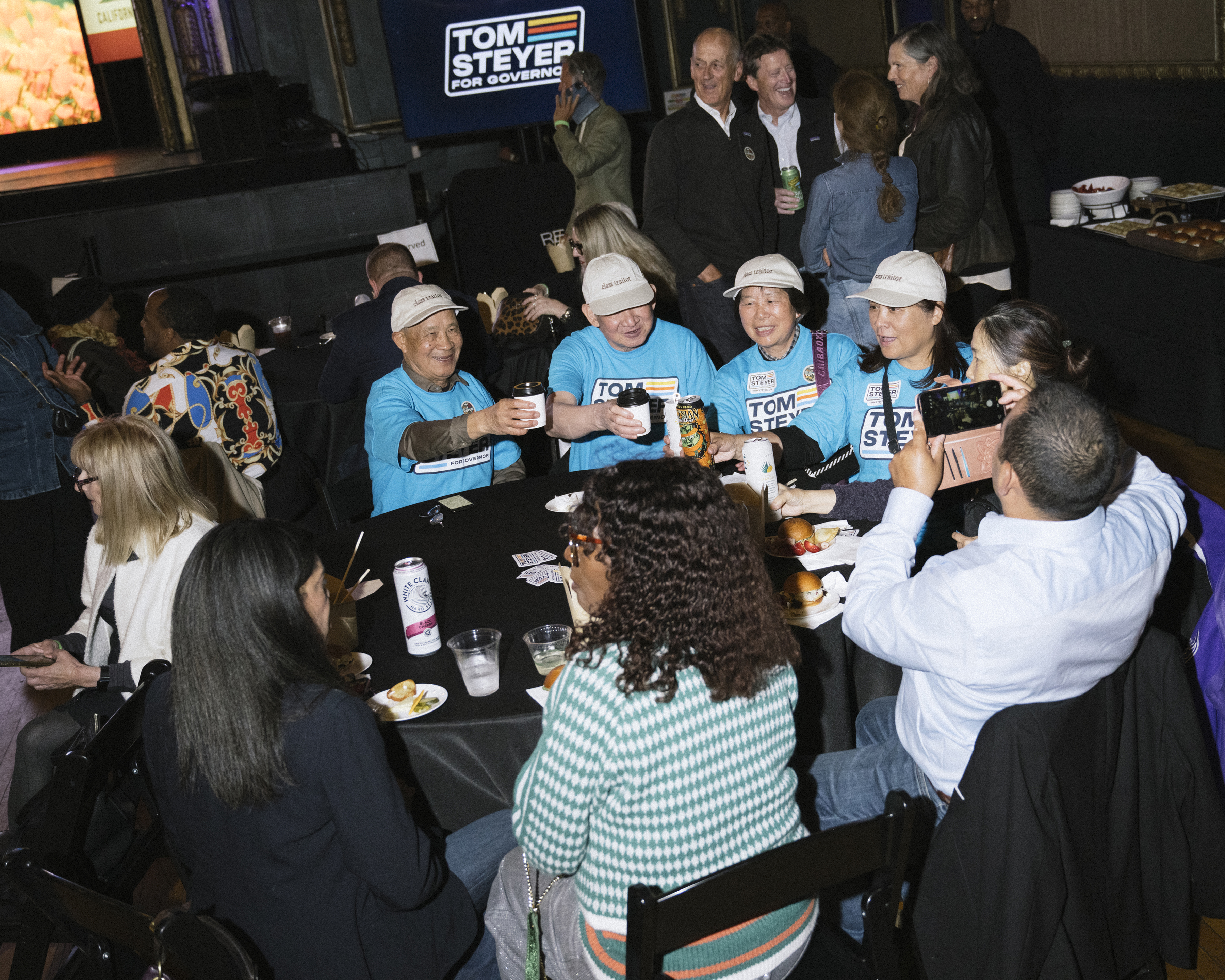
    During California’s hard-fought primary this spring, Steyer’s campaign paid 17 influencers at least $5,000 apiece, including one, Carlos Eduardo Espina, who has over 14 million followers on TikTok and received a total of $400,000, campaign finance filings show.
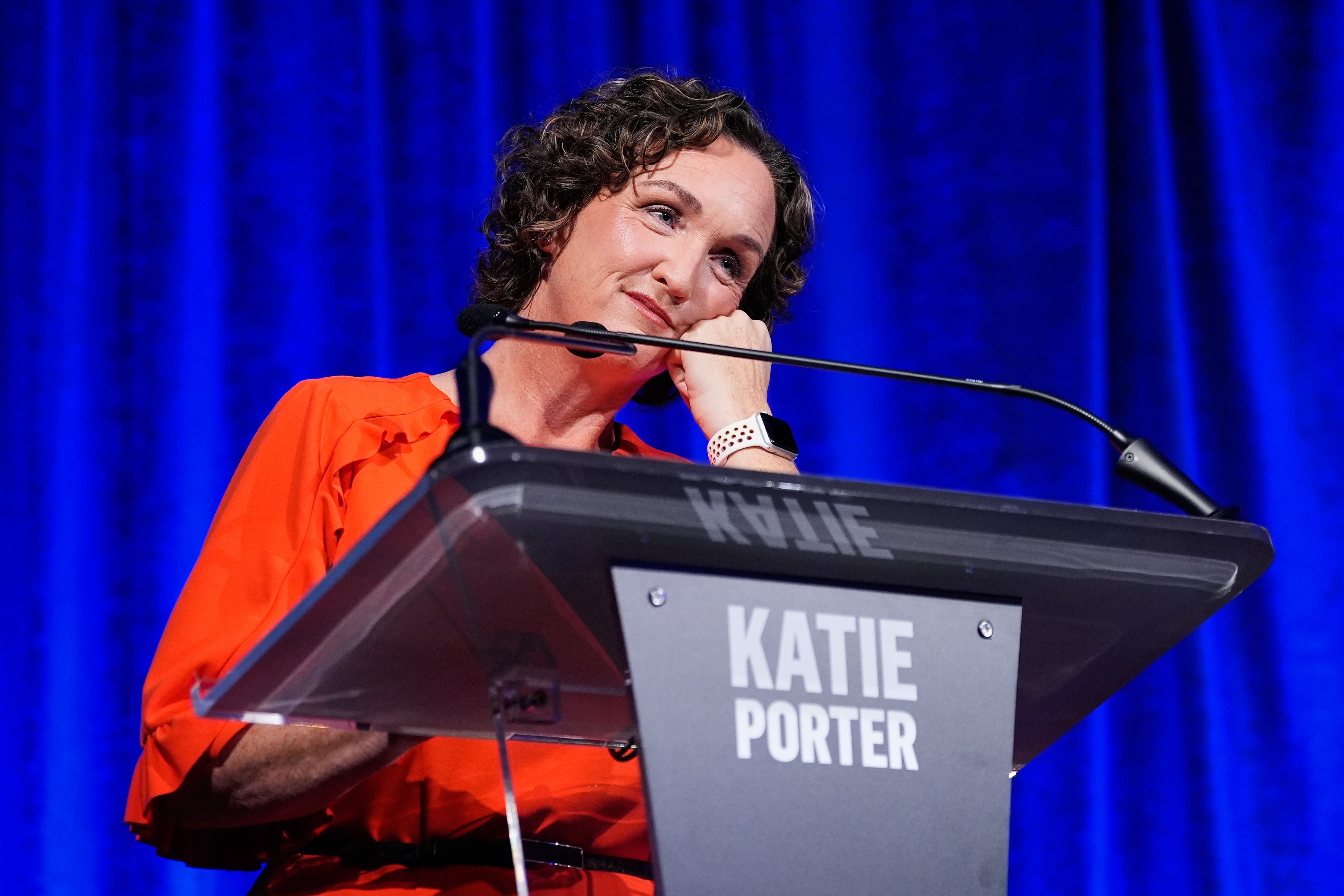
    Katie Porter was one of several candidates to deploy paid influencers during the California gubernatorial primary in 2026.Godofredo A. Vásquez

    Former Rep. Katie Porter, who also ran unsuccessfully for California governor, paid 12 influencers a total of $139,500. One of them, a lifestyle creator named Avery Cyrus with 9.5 million followers on TikTok, received $25,000 for what appeared to be a single post claiming “Katie Porter’s thing works.”

    Cyrus’ post was deleted after the Times inquired about it. She did not respond to a request for comment made through the social media agency that represents her, UnderCurrent Media, but the firm’s CEO, Eric Bogard, said in an email that it “was not asked to oversee disclosure compliance, nor were we provided instructions concerning any required disclosures.”

    Under California law, paid political posts on social media must be disclosed. A Times review found three posts supporting Porter on TikTok from influencers who were paid by her campaign that did not include any disclosures. In seven other instances, the disclosures could be found only after clicking through to a hidden section of TikTok for comments flagged “as potentially offensive or disturbing.”

    Sander Jennings, an influencer based in Florida who was paid $22,000, said “the Porter campaign and I agreed to disclose the payment” in TikTok’s comments section in order to get around the site’s practice of removing paid political posts. He said he did not know why the disclosures ended up in the hidden section of the comments.

    TikTok’s terms of service bar all paid political advertising, including “creators being compensated for making branded political content.” In an email, Porter said that “nothing was paid for and posted without review and coordination and compliance with all law.”

    Other political efforts have employed a different strategy, contracting private firms that pay little-known content creators smaller sums to put out a large volume of posts. Those companies, known as user-generated content platforms, or UGCs, operate on the principle that carpet-bombing the internet with hundreds of nearly identical posts is more likely to generate viral content than paying one large influencer the same amount of money to make a single post.

    This spring, a woman posted dozens of videos promoting Steyer in the California primary. Weeks later, she appeared in videos from a different account complaining about the cost of living “here in Michigan” and encouraging people to vote for Rep. Haley Stevens, El-Sayed’s primary opponent in the Senate race. Then she pivoted to a third account talking about affordability in Wisconsin.

    Corporate records show that the woman, Paige Dunmeyer, actually lives in Kansas City, Mo., and is registered to work with a UGC company called SideShift. It’s not clear how much she was paid for her Michigan and Wisconsin videos, but she has earned more than $30,000 on SideShift for a variety of political and commercial campaigns, according to company records reviewed by the Times. Filings from Steyer’s campaign showed she received $1,320 for her efforts in that race. Dunmeyer did not respond to requests for comment.

    A Times analysis found that at least 87 people registered to work with SideShift had made posts backing Steyer or Stevens, or participated in a third campaign to post video clips on TikTok supporting Rep. James Talarico, the Democratic Senate nominee from Texas. Most of the posts by those creators included no acknowledgment that money changed hands.

    In a statement, SideShift said that it advised creators to follow applicable disclosure requirements, and called for more explicit laws governing how paid content is disclosed on social media.

    “SideShift believes anyone can be a creator and that creators should get paid fairly for work they choose to do,” the company said.

    In June, Kendall Boyle, a TikToker in Michigan with over 21,000 followers, was contacted by a social media marketing agency called Activate HQ offering her a paid opportunity to post videos about “how rising costs are affecting Michigan residents in real life.”

    When she asked who was footing the bill, she was told it was Majority Forward, a dark money group linked to the Senate Majority PAC, a Democratic super PAC, email correspondence reviewed by the Times shows. Boyle said she was turned off by warnings in those emails from Activate HQ that “disclosure is not required and the paid partnership label will not be included in any posts” and also that Majority Forward “will not be mentioned” in her content.

    “It was one of those things where something isn’t fitting right,” Boyle said.

    In a statement, Majority Forward said the language in the email “explains disclosure requirements necessary under FEC rules, which were fully followed.”

    Little regulation

    Just four states have laws or regulations requiring influencers to disclose paid political messaging, but they apply only to state and local races, not federal contests. Although regulations for social media have been proposed multiple times to the FEC, it has never taken action. The Federal Trade Commission, which requires disclosure of paid commercial content on social media, makes an exception for political messaging.

    Rep. Mark Takano (D., Calif.) introduced a bill in June that would require anyone paid by a candidate or political committee to clearly disclose that fact in the same way that traditional campaign materials are required to note such payments.

    In an interview, Takano said he was inspired to draft the legislation after online sleuths revealed that numerous influencers had been making paid endorsements in the California governor’s race without proper disclosure, as required in that state.

    “It’s unfair when an influencer is allowed to be silent or not transparent about money they’re taking from a candidate, making it seem like what they’re saying is authentic and not influenced by money,” he said.

    Takano acknowledges that there are some potential loopholes in the bill. For instance: Campaigns often obscure payments to influencers by hiding them under layers of vendors and subvendors.

    Porter, for example, hired Activate HQ for “influencer marketing services,” and it in turn paid 13 creators to bolster her campaign for governor. One of them, a political influencer in Los Angeles named Dash Dobrofsky, who also posted in support of Stevens in Michigan, received $15,500 from Porter’s campaign. Dobrofsky did not respond to a request for comment.

    Steyer’s campaign, for its part, hired multiple digital strategy firms to manage social media, including one called Group Project, which hired a Los Angeles company, Gutsy Media, which paid Greene through UnderCurrent, which represents him.

    Those payment chains are visible because California is one of a handful of states that require campaigns to report payments to subvendors. There is no such obligation for campaigns for federal office. “Every dollar spent by this campaign is publicly disclosed and available for anyone to see,” the Steyer campaign said in a statement.

    ‘Social media consulting’
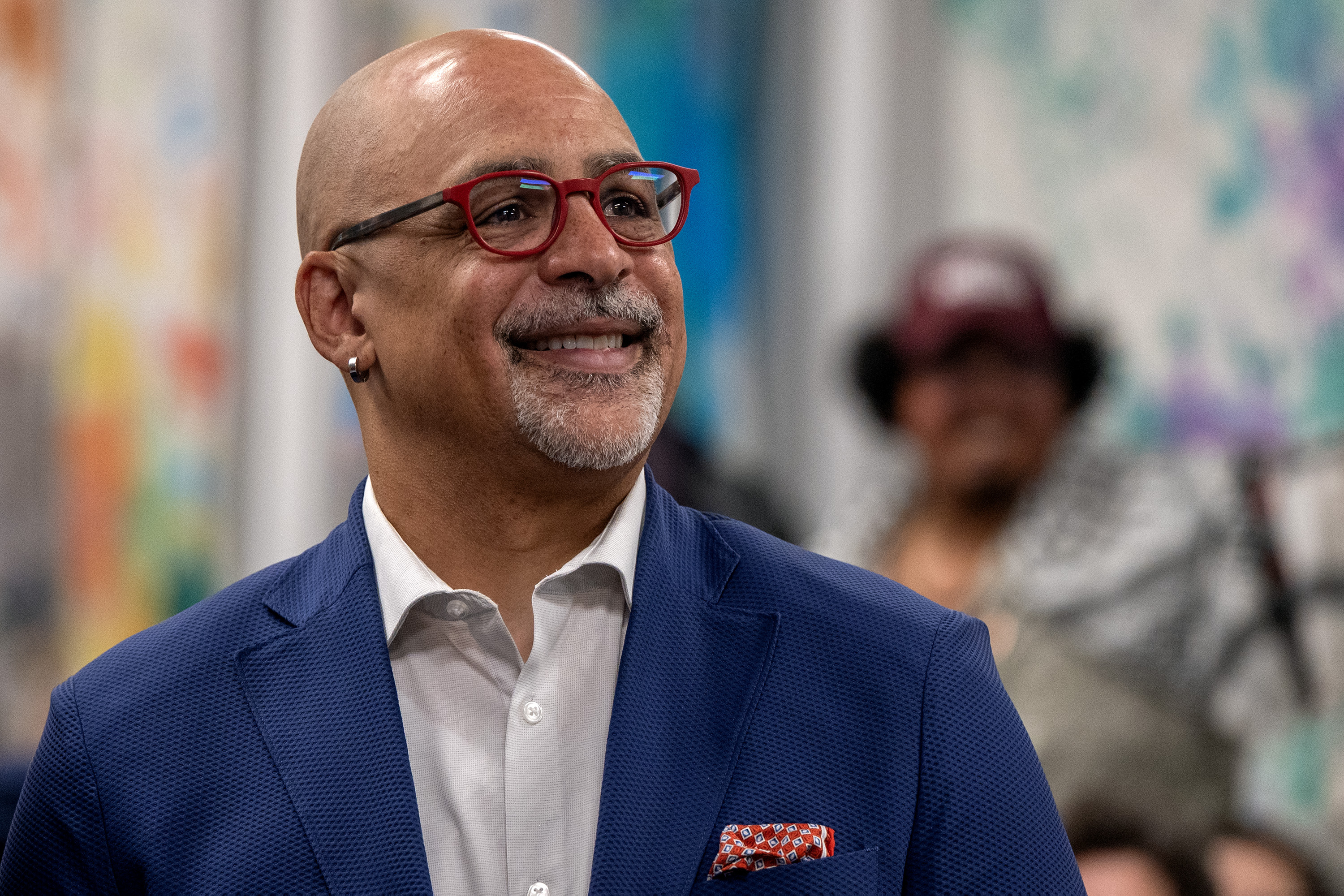
    State Rep. Chris Rabb at a July 28 event with U.S. Rep. Ro Khanna.Tom Gralish / Staff Photographer

    Occasionally, campaigns or independent expenditure groups will reveal direct payments to influencers, such as the super PAC Freedom PA, which supported socialist candidate Chris Rabb’s successful bid to win a Pennsylvania House primary in May. It has disclosed payments to nearly 50 influencers for “social media consulting,” among them Greene, who received $750 and posted a video celebrating the candidate’s victory.

    Other committees listing payments to Greene in federal filings employed less illuminating descriptions. Chuck Park, who unsuccessfully ran for Congress in New York’s Queens borough this year, listed a $300 disbursement to Greene as “staff salary.” Greene posted at least five videos promoting Park, none of which state that he had received payment.

    Park, in an interview, said that Greene was in fact not employed by the campaign, but said that “our campaign absolutely leaned into new media” and that he spent time with Greene in Queens filming a series of videos.

    Greene disclosed being paid on three of his posts about Steyer and told the Times that those videos were the only ones that he was specifically contracted by the Steyer campaign to produce. He said he didn’t receive compensation for prior posts about the candidate.

    Greene has also supported Sen. Ed Markey (D., Mass.) in a competitive primary against Rep. Seth Moulton, and last month, he posted a video accusing Moulton of “posturing to be someone they really aren’t.” He posted a second video this month critiquing Moulton, this time for taking corporate political money.

    Neither video includes disclosures, and FEC filings don’t show any payments to Greene related to Markey’s reelection bid. But a spokesperson for Commonwealth Together, a super PAC that is supporting Markey, said it had paid Greene $3,500 for “digital communications consulting” through his agency, UnderCurrent.

    Greene, in a text message, acknowledged the payment to support Markey, saying he took it “because I believe he is by far the more progressive candidate in the race.”

    The murkiness has left some in the political world uneasy. Last month Rynn Reed, the founder of Creator Congress, an organizing hub for influencers interested in politics, introduced a code of conduct for the group that would require creators to make clear when they’re paid, whether required by law or not.

    “With no standards,” Reed said, “there’s going to be a race to the bottom.”

    This article originally appeared in The New York Times.
  • Four years after Nick Elizalde’s death, I’m rooting for Roxborough football

    Four years after Nick Elizalde’s death, I’m rooting for Roxborough football

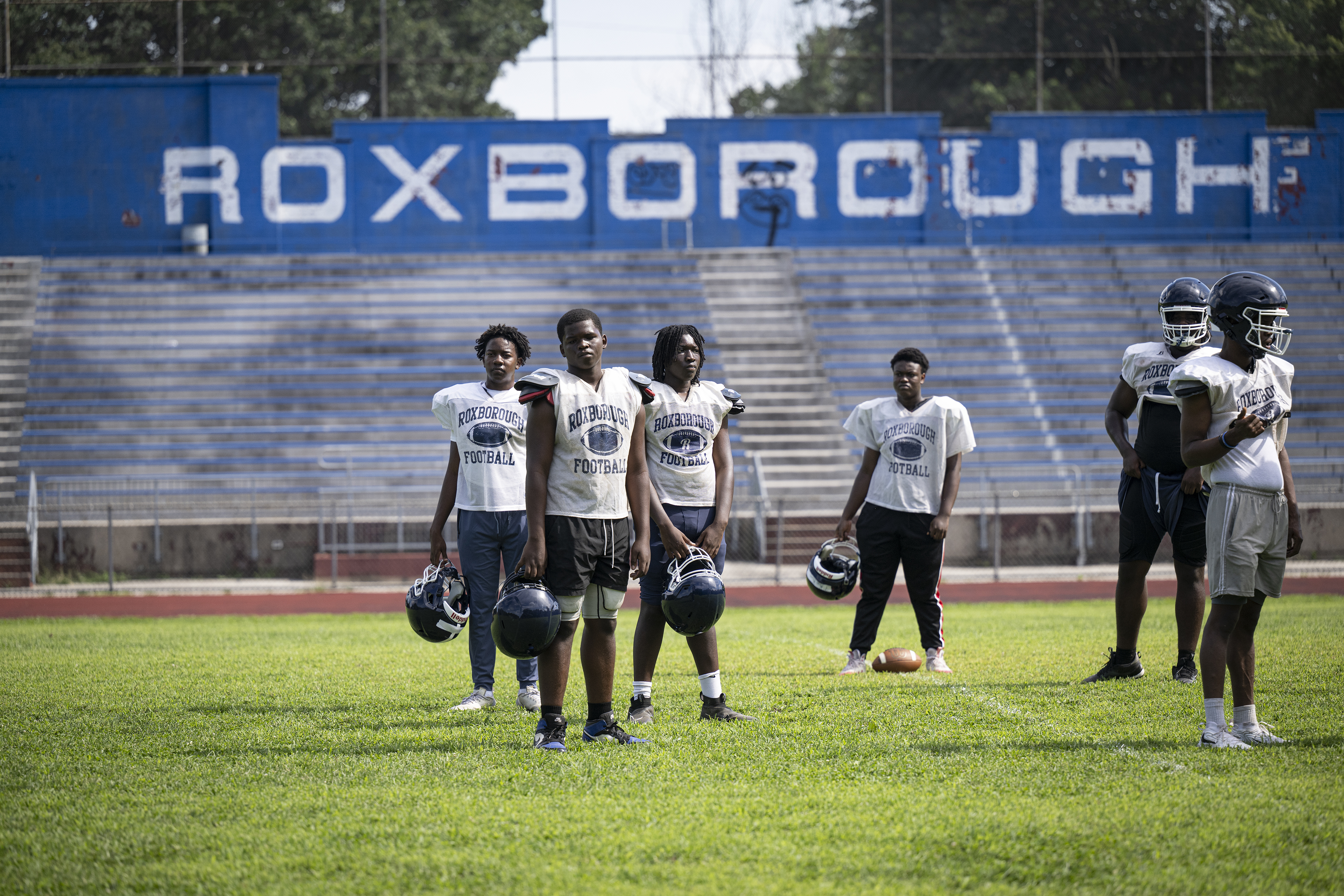
    School is back in session, and a fresh high school football season is underway, so foot traffic has picked up on the sidewalk on Pechin Street that separates the locker room at Roxborough High School from its dusty, weathered, 87-year-old football stadium.

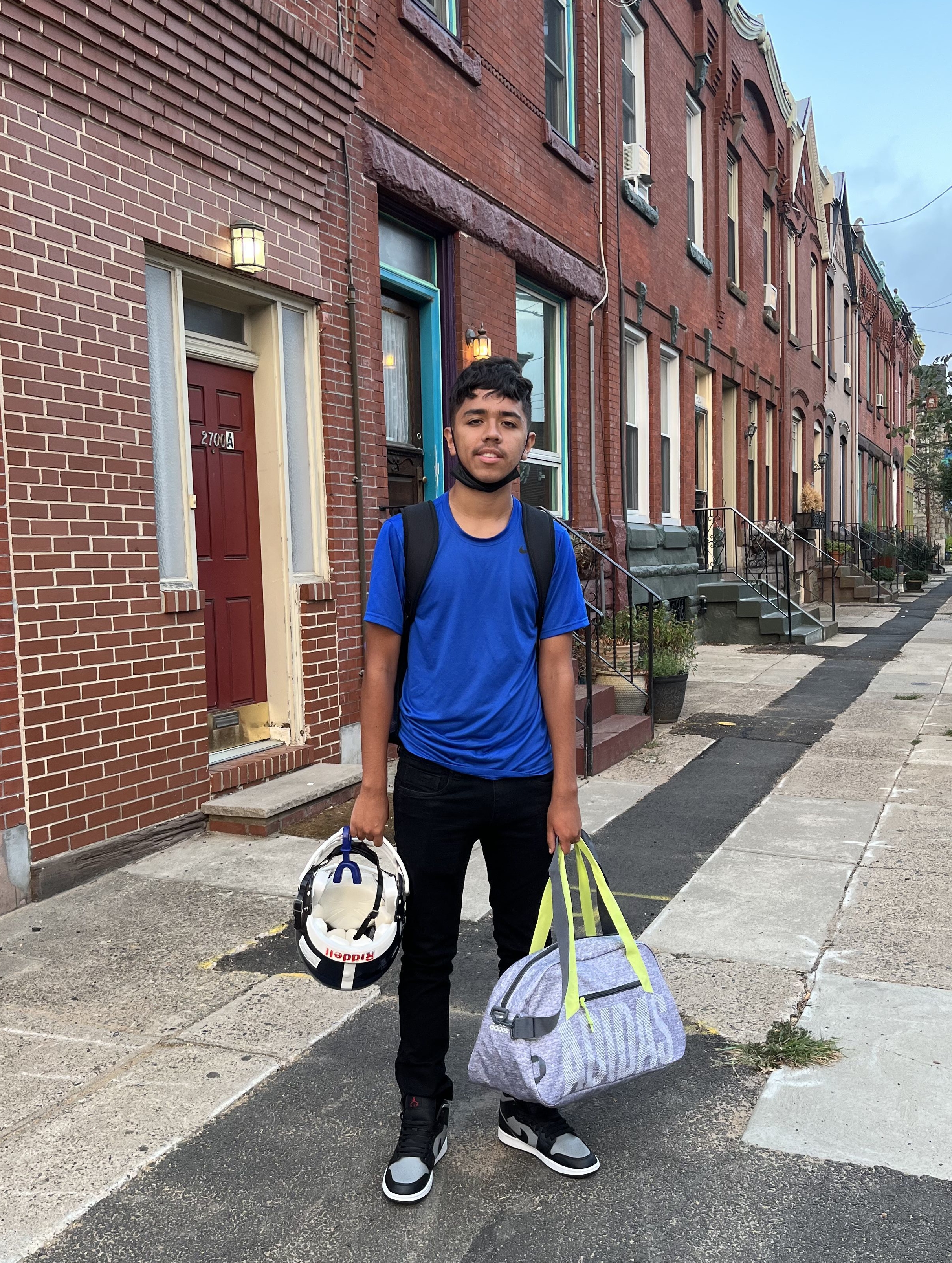
    At least twice a day, down a short hill along that stretch of sidewalk to practice or a game and back up, players and coaches pass a well-tended bronze memorial for Nick Elizalde, the 14-year-old freshman who had only started playing football at Roxborough four years ago.

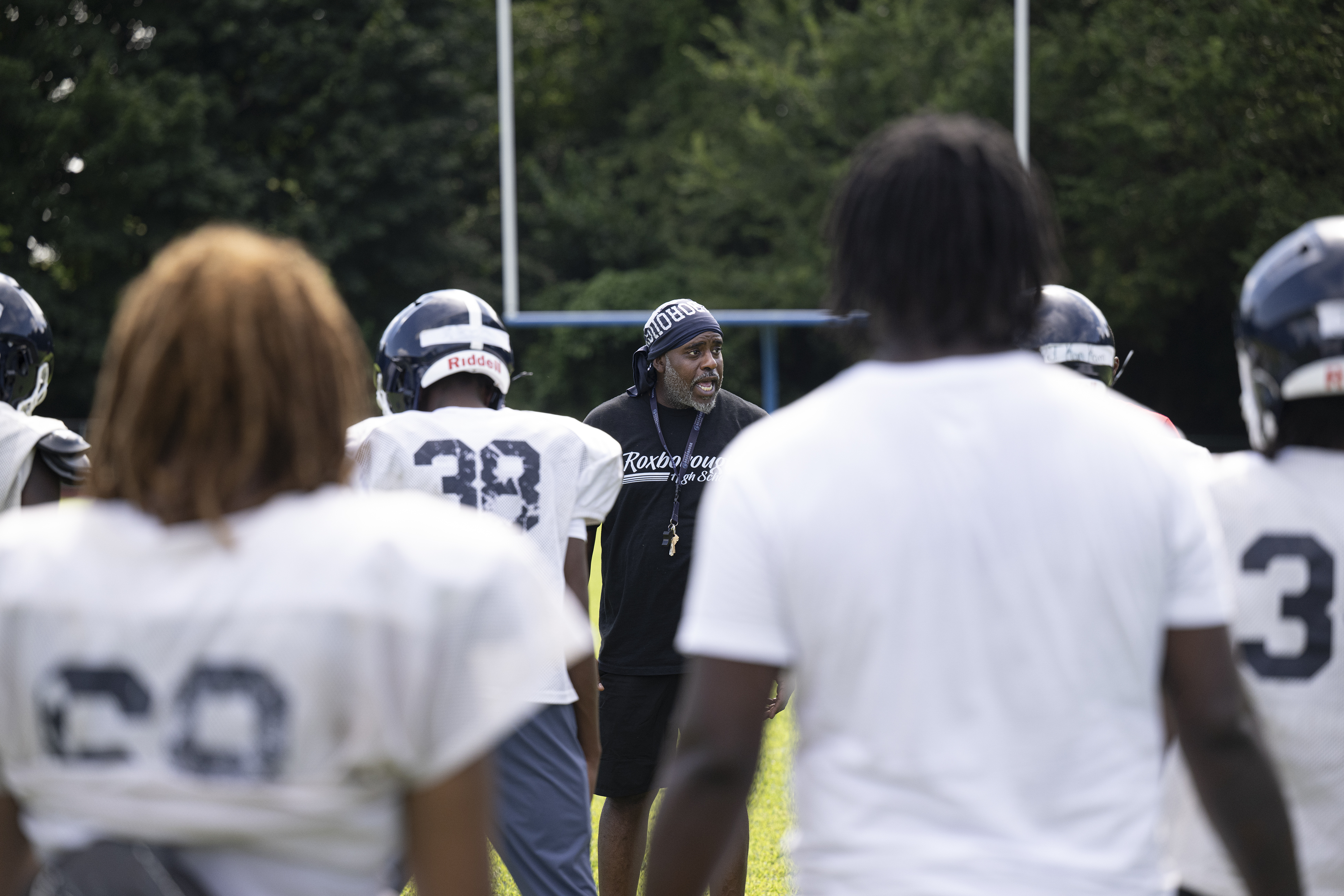
    “Quiet kid, wasn’t very outspoken. But he was starting to open up and become more social,” Marc Skinner, the 47-year-old head football coach at Roxborough, told me before practice last week. “Then we ran into that tragedy.”

    Yes. That tragedy. The memorial is roughly at the spot where Nick was gunned down when five shooters fired more than 60 bullets toward a group of football players following an afternoon scrimmage on Sept. 27, 2022. Skinner, then an assistant coach, was there.

    But none of the 35 or so members of the current Roxborough football team were there because they all were in junior high school. Two captains, senior defensive end Zaid McDonald and senior quarterback Javon Jones, said they certainly know about Nick even though they never got a chance to meet him.

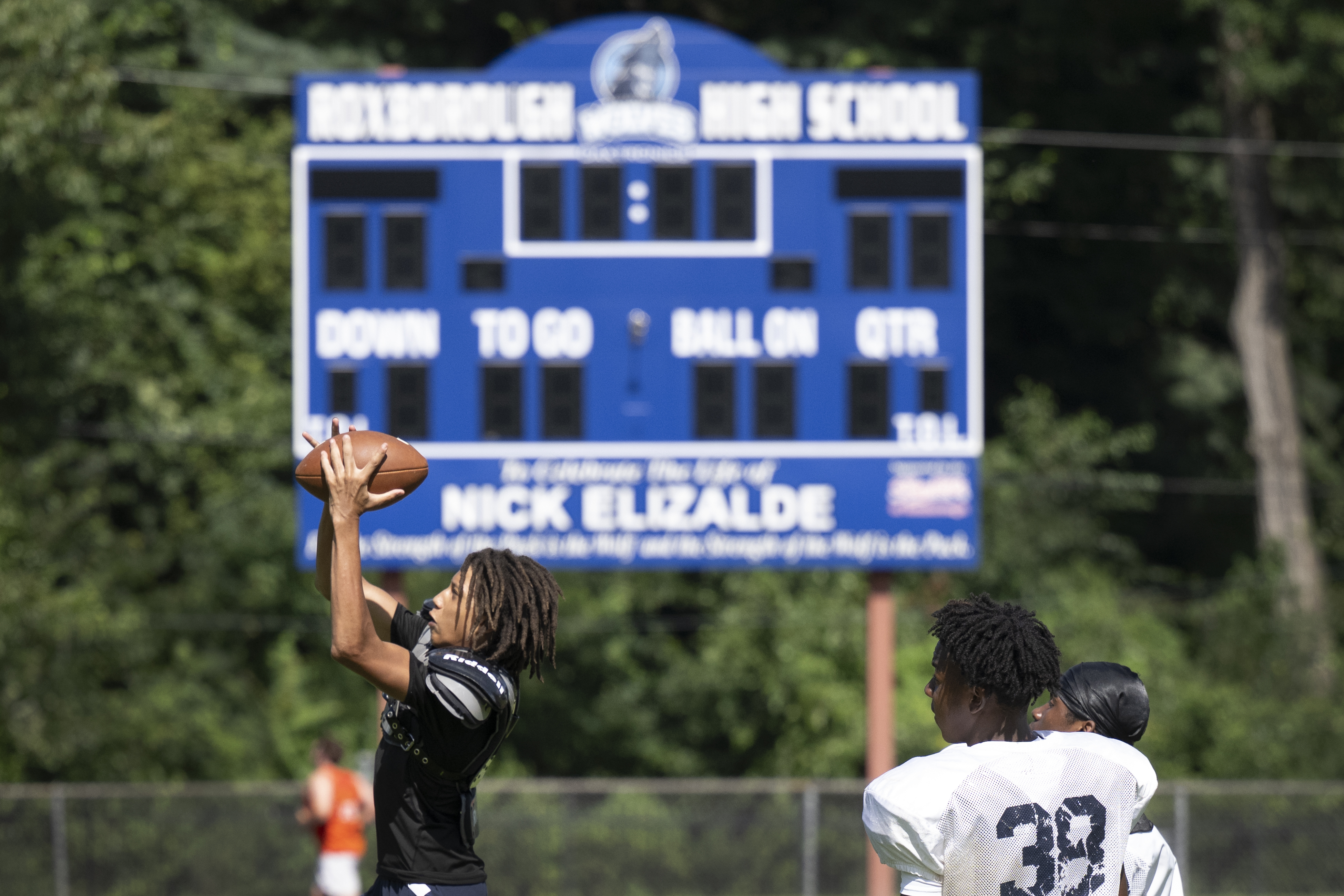
    There is a new mural with a large “62” — Nick’s jersey number — at the back of the school, and a new scoreboard at the field celebrating Nick. Skinner said he was planning to put No. 62 stickers on the players’ navy-blue helmets before Friday’s season opener.

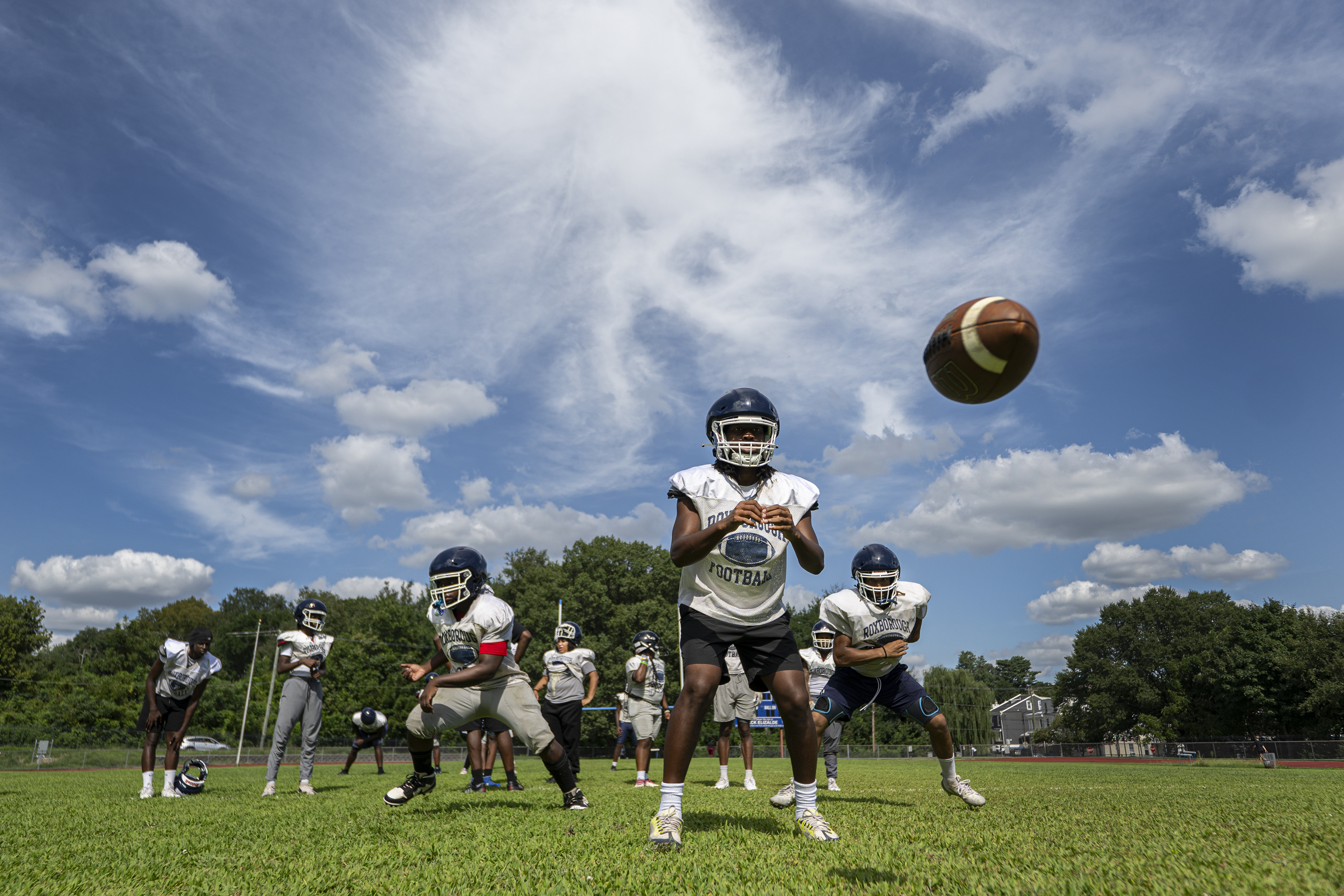
    Roxborough High School football players gather for on-field drills during an after-school practice Aug. 21 at Nick Elizalde Stadium.Jose F. Moreno / Staff Photographer

    But make no mistake: The Roxborough Wolves are excited about their chances this season. Last year’s team won four of its 11 games, and the first winning season in seven years feels within reach. As Jones said of the 2025 season, “I feel like we got better as the season went on.”

    McDonald would add, smiling, “Playing for Roxborough — oh, you really got to work, because not everyone is on the same level.”

    Of 571 high school football teams in Pennsylvania, Roxborough ranked 514th entering the season, according to the MaxPreps ratings website. But the Wolves, like the 570 other teams, will start each game this fall with a 0-0 score and a fighting chance.

    And I, for one, hope to be at as many Roxborough games as I can. I live a 20-minute walk from the stadium, and as someone who both played and then wrote about high school football way back in the day, the competition is as spirited and ferocious here as anywhere. Really.

    It is just that the backdrop is a little different. Games tend to be played Friday after school. Admission is free. Seats in the 2,100-seat grandstand, with a fence still separating Roxborough fans from visiting fans, are easy to find, because 100 people, tops, might show up. There is a dance team on occasion, but there are no lights, no refreshment stand, no press box, no programs, and no marching bands. The patchy grass gridiron is lined only every 10 yards.

    Roxborough football coach Marc Skinner leads his team during practice on Aug. 21. Of the Wolves’ 4-7 record last year, one player said, “I feel like we got better as the season went on.”Jose F. Moreno / Staff Photographer

    How some things have changed. The Academies at Roxborough High School, the full name of the stately, 102-year-old institution on Ridge Avenue in Northwest Philadelphia, has an enrollment of only about 600 students, less than one-third the school’s size in 1972.

    The stadium, built for $300,000 by the Works Project Administration, opened on Oct. 7, 1939, for a 14-0 Roxborough victory over Olney. About 3,000 showed up, The Inquirer reported. It was Roxborough’s first game in the Philadelphia Public League.

    The very next year, a full-out riot broke out after players from Roxborough tangled with players from Simon Gratz during a 33-0 Roxborough victory, with many fans joining in. Three Philly cops were needed to help the two flustered head coaches break up the melee.

    Roxborough won Public League titles in 1957 and 1963, but it had become an also-ran in recent years. A Thanksgiving Day game against Roman Catholic ended in 2018 because Roxborough had not won since 1991, and lost each of the last 14 games by three touchdowns.

    Skinner, who became the head coach in 2023, said turnout for football slipped during the pandemic and after the shooting, with a few potential opponents telling him they’d rather not play at Roxborough. The besieged 2022 team won its only game 11 days before the shooting.

    Each of the 35 or so members of the current Roxborough football team was in junior high school when Nick Elizalde was fatally shot four years ago following a scrimmage at the school.Jose F. Moreno / Staff Photographer

    “We have kids from different walks of life, and we’re bringing them together to do something they thought they could never do,” Skinner said.

    A year after the shooting, the school changed its nickname from Indians to Wolves. The wolf was Nick Elizalde’s “spirit animal”: For the strength of the pack is the wolf, and the strength of the wolf is the pack, reads an inscription under his name on the new scoreboard.

    Kristin Williams Smalley, the principal at Roxborough, told me two years ago that the school had been considering a new nickname, and she said: “The mascot was not necessarily named to honor him. It just happened that all of the stars aligned, and the wolf was selected.”

    But the name change helped to reset, or refocus, the football program, Skinner said. Because of suspensions and academic ineligibility, Roxborough had only 17 players for a game last year against Olney. But the Wolves stuck together, played hard, and lost by only 22-7.

    “Upon further reflection, the wolf is the perfect mascot to represent the Academies at Roxborough High School,” Williams Smalley said. “Wolves are complex, highly intelligent animals who are caring, playful, and above all devoted to family. That is who we are!”

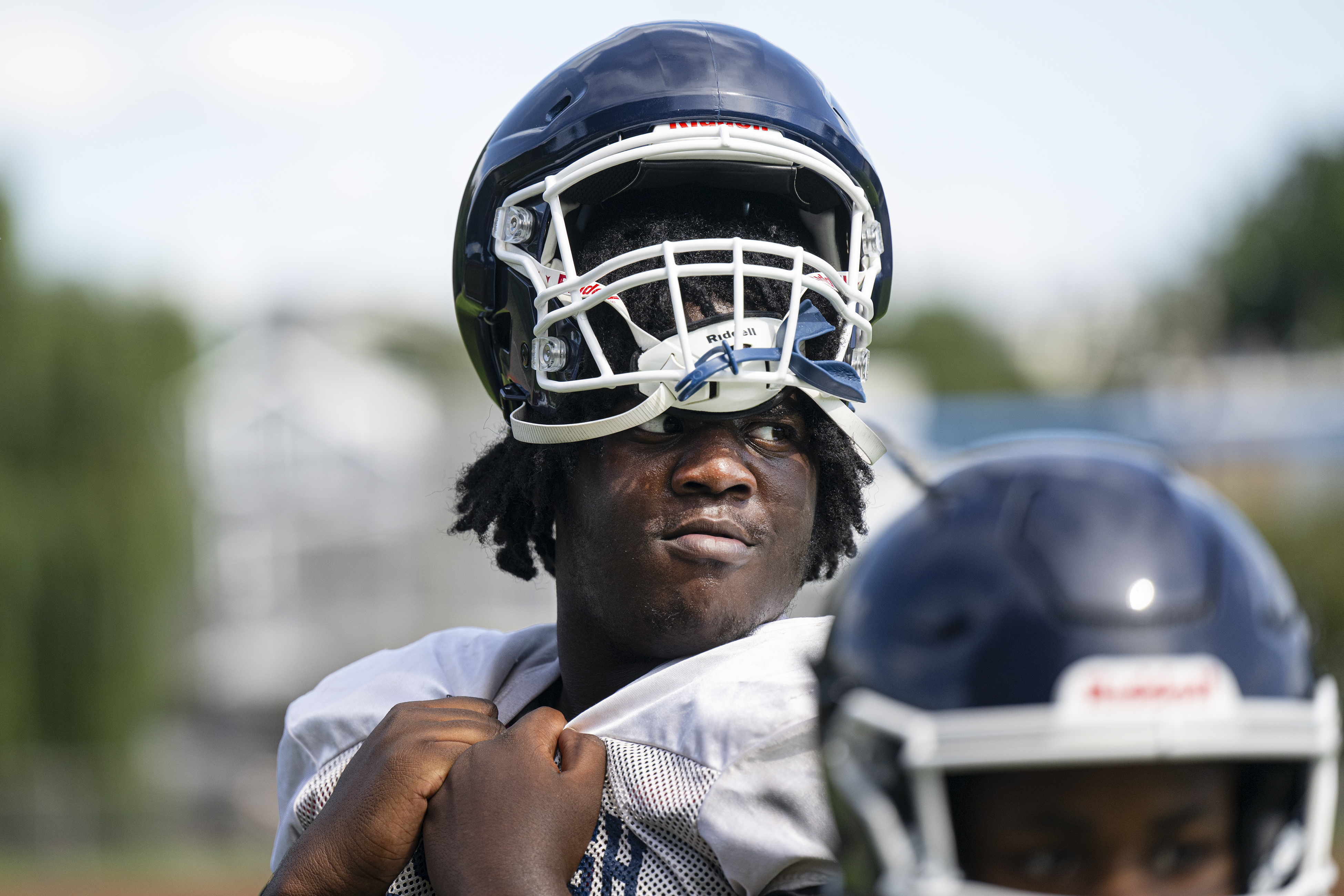
    Roxborough football player Domenick Washington, a defensive tackle, looks on during practice on Aug. 21.Jose F. Moreno / Staff Photographer

    The best high school football players don’t have to stay close to home anymore. The best scholastic player in Pennsylvania last year was Joey O’Brien, a wide receiver and safety from La Salle College High School, the state Class 6A champs. O’Brien, now a freshman at Notre Dame, played for the Roxborough Eagles youth program. Skinner never met him.

    He and his small staff will do the best with who shows up. These Wolves have worked hard, and together, during the offseason, he said, but there are still a few students each year who only decide to join the football team after school starts. Skinner brings them on. Nick was a student at Saul High School, but because it doesn’t have any athletic teams, he played for Roxborough.

    The players on this team were too young to be around, but the coaches and many former players did know him, and could recall that awful afternoon in 2022. It needs to be remembered, but as Skinner says, “We just try not to dwell on it.”

    So, click-clacking on their cleats, the players trudge up and down that hill on Pechin Street, past the site of the shooting. Four other teenagers were wounded on that awful day, and six people were arrested in connection with the shooting. The memorial to Nick serves as a reminder that the impact of gun violence is not so far away.

    Nick Elizalde, 14, waiting for the bus before his first day of ninth grade at Walter B. Saul High School in August 2022. Because Saul doesn’t have its own athletic teams, Nick played for Roxborough. Meredith Elizalde

    “We’re trying to keep our eyes open in the hope that our children are not involved in anything bad,” said Skinner, who is a member of the “climate staff” that keeps order at the school.

    Students come from all over the city: Zaid McDonald is from Germantown, and Javon Jones is from North Philadelphia. Each would love to go on to play college football, but the opportunity would come at a small school if it did, and Jones said he would go to trade school if it did not.

    But football is there for at least the next three months. A winning season and the playoffs are possible, just as they are for any of the state’s other 570 teams. And that is all any high schooler can ask for. Go see for yourself some Friday afternoon. Watch kids play football with joy.

    Dave Caldwell lives in Manayunk and covered sports for The Inquirer from 1986 to 1995.

  • A Chesco play area memorializes a child who died at 7 days old. His father is fighting plans to move it.

    A Chesco play area memorializes a child who died at 7 days old. His father is fighting plans to move it.

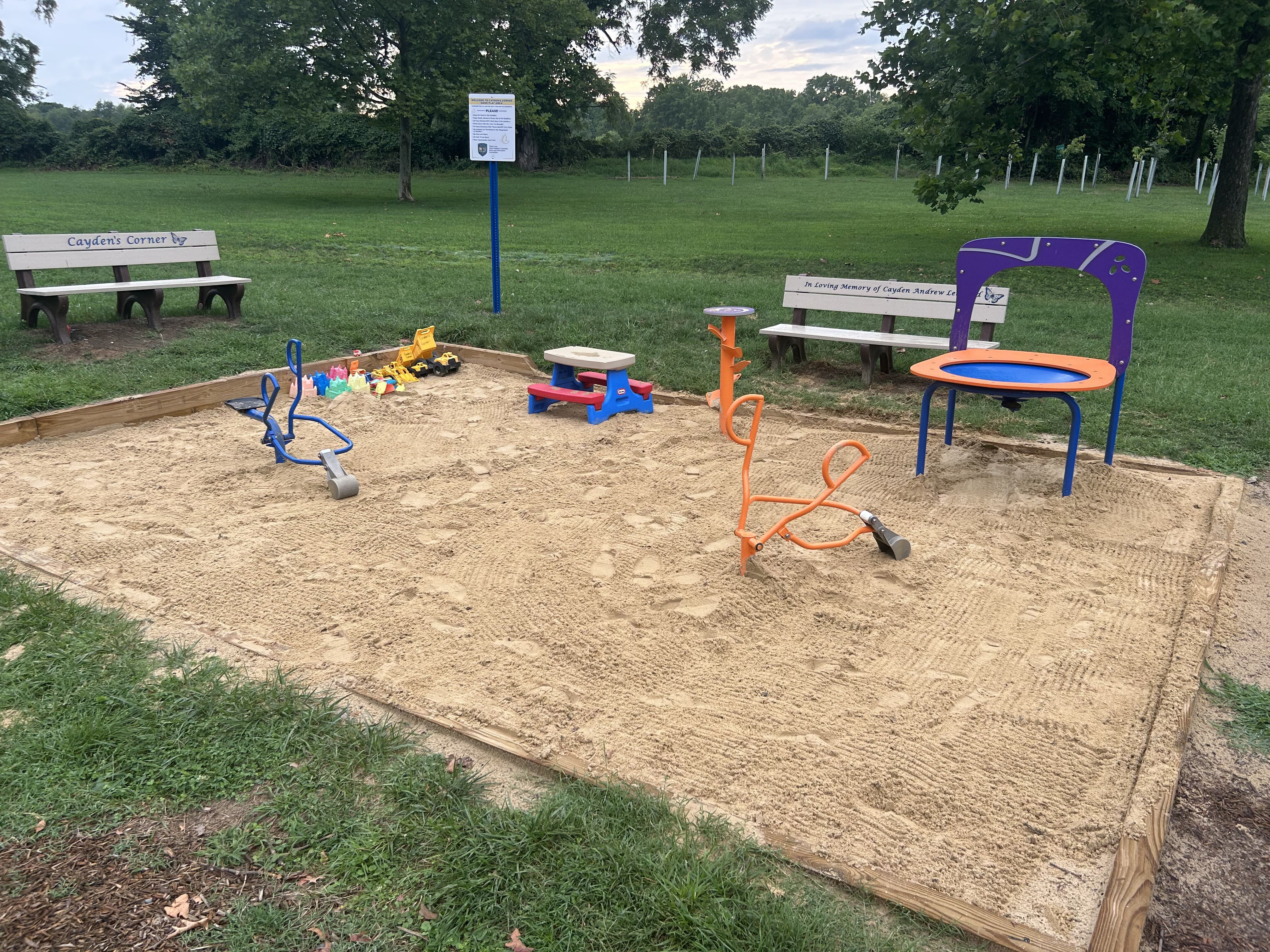
    When Ryan Leithead’s son Cayden died at just 7 days old in 2022, he channeled his grief into making something. Alongside West Pikeland Township officials, Leithead worked for weeks, mostly in freezing rain, to build what became Cayden’s Corner, a sandpit play area at Pine Creek Park’s playground.

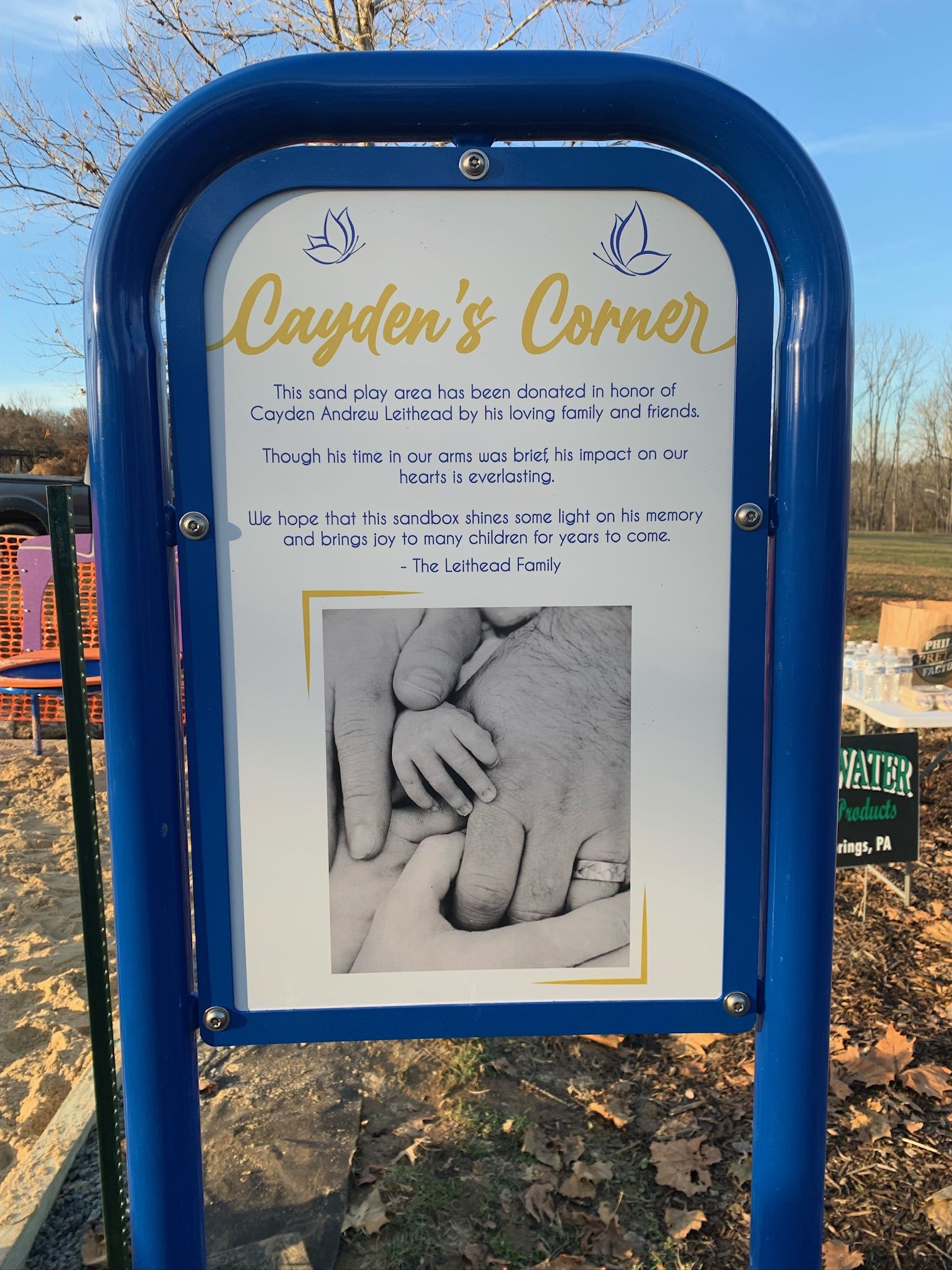
    A dedication sign, with a photo of Cayden’s little hand encircled by his parents’, notes that the hope is “that this sandbox sheds some light on his memory and brings joy to many children for years to come.”

    It offered a glimmer of light amid a tragic, unexpected loss. Leithead’s oldest son, 6, and daughter, 2, play there often. “It’s kind of like they’re playing with their brother because they’re there,” he said.

    But now, just a few years later, Leithead, 37, worries the memorial will be swept up in proposed playground renovations, which are the subject of several grants and public fundraising efforts to update the decades-old equipment and make the site more accessible. Final plans haven’t been released yet, but officials say it could involve relocating the sandpit and replacing the memorial.

    For Leithead, it feels like losing Cayden again.

    “It was built by those who loved Cayden. It kind of goes into that term of ‘grief in action,’” he said. “I spent the first year after he died kind of focusing on this — right, wrong, or indifferent, that’s how I grieved. So it’s a memorial built by his father.”

    The elected board of supervisors will vote on the proposal and plans “when they are available,” said Joan Blatcher, township manager. Completion of the full renovation is anticipated for mid-2027, she said.

    “The intention behind Cayden’s Corner was to provide a memorial for Cayden Leithead. If the sandpit is relocated, it will continue to be called Cayden’s Corner,” she wrote in an email. “The benches and a dedication explaining the reason for the name have always been part of the plan for the new playground.”

    After his son Cayden died at just seven days old in 2022, Ryan Leithead worked with West Pikeland Township to build a sandpit in honor of Cayden’s memory. Under proposed renovations of the playground, officials are considering relocating the sandpit and removing the existing dedication sign.Photo courtesy of Ryan Leithead

    Leithead isn’t against renovating the playground. When he helped bring the sandbox to life, seeing the whole playground renovated was something he hoped for. His work with the project is also how Leithead became involved with the township’s parks and recreation committee. But he struggles with the idea of relocating or altering the memorial they built in the early days of that grief.

    “The analogy my wife used was: Say you have a wedding ring that was a family heirloom for generations, and you lost it, and your husband turns around and says, ‘Well, I’ll just buy a new one, it’ll be bigger and better,’” he said. “It’s not the same, right? You lose the meaning behind that heirloom.”

    At a meeting on Aug. 17, vice chair of the supervisors Noreen Vigilante said that the sandpit was within the “fall zone” of the swing set, according to a recording shared with The Inquirer. A preliminary design, which the township hasn’t released, would relocate the sandbox and make it bigger. A recording of the public meeting is not available online.

    She also mentioned removing the existing sign dedicating the corner, saying that the playground designers felt it was “depressing.” Signage would still be there, later saying they could “negotiate” the sign, but not the sandpit’s placement.

    In an email, Vigilante said that in early meetings “it was requested that the playground not be moved.” Leaving the sandpit where it is “severely limits the opportunities for a safe and accessible design.”

    The sign, she said, is a “trigger for others who have also lost children or have family members who have lost children.”

    “The sign is so large and centrally located that it cannot be avoided if it makes one uncomfortable. An alternative is to have a smaller sign with the same text by the tot lot/sand play area of the playground so that those who may also be grieving do not have to look at the sign when they are attempting to enjoy a playground with other children,” she wrote. “A playground should provide the opportunity for adult-child enjoyment.”

    During the meeting last week, officials said they hadn’t heard of any complaints about the sign when the Leitheads asked. Separately, Leithead said the purpose of the sign was “to honor Cayden’s life and to show how a community came together to support a grieving family.”

    Other supervisors disagreed with the playground designers’ assessment.

    “I don’t care what the playground people think,” supervisor Harold Hallman III said at the meeting. “It’s a park of West Pikeland playground. It’s a part of West Pikeland. It should stay there.”

    An early supporter of the memorial plaque and sandpit, Vigilante wrote in an email that she continues “to support the sandpit and a memorial plaque in the playground.”

    “However, I feel very strongly that in my role as a township supervisor, I have an obligation to represent all of the residents/children of the township and that all children of all abilities should have safe access to a playground,” she added in an email.

    A Facebook page, Preserve Cayden’s Corner, has collected just shy of 100 members, asking fellow residents to push back on the proposed relocation.

    The board will meet next on Tuesday, Sept. 8.

    Blatcher, the township manager, said that officials have “had multiple conversations with the family” and said it will share the plans with the family when they’re available. Leithead said he hadn’t heard about the possible relocation officially from the township; he approached them at August’s meeting after hearing about the possibility through someone else.

    Blatcher wrote that Vigilante championed the proposed renovation, helping secure a second grant for $230,000 and has been “instrumental” in raising more than $65,000 in private donations to cover what the grants don’t.

    “The updating of the playground is for the benefit of all West Pikeland Township’s residents and will make the playground ADA accessible and allow more children to access the full play area, including the sandpit,” she said.

    Leithead said he just wants the ability to weigh in on the design, saying it wouldn’t be hard to modify the existing sandpit to be ADA accessible, or to relocate the swing set to keep the sandbox out of the fall area.

    “We would have never built this three years ago if they said there is even a 1% chance that, ‘Oh, when we redo the playground, we’re going to have to move it,’” he said.

    This suburban content is produced with support from the Leslie Miller and Richard Worley Foundation and The Lenfest Institute for Journalism. Editorial content is created independently of the project donors. Gifts to support The Inquirer’s high-impact journalism can be made at inquirer.com/donate. A list of Lenfest Institute donors can be found at lenfestinstitute.org/supporters.

  • Why was this previously healthy 14-year-old so sick? | Medical Mystery

    Why was this previously healthy 14-year-old so sick? | Medical Mystery

    A previously healthy 14-year-old male was brought to the emergency department after experiencing fatigue, fevers, and decreased appetite for four days. Two days earlier, he’d been seen in an urgent care center, where doctors prescribed a course of amoxicillin for suspected middle ear infection. Now, he was feeling worse and complaining of abdominal pain.

    When examined in the ED, the patient had a fever, an increased heart rate, and low blood pressure requiring IV fluids. He was admitted to the pediatric intensive care unit for close monitoring. His doctors were worried about sepsis, which is the body’s extreme response to infection and is a life-threatening medical emergency.

    But what was the underlying cause of his illness? Initially, doctors were concerned about pancreatitis, as his pancreatic enzymes (amylase and lipase) were elevated in his blood. However, the patient developed new symptoms including neck pain and limited neck motion, as well as reddening of his eyes, which is not consistent with this diagnosis.

    The answer

    Further laboratory testing revealed elevated heart enzyme levels, indicating damage to his myocardium, or heart muscle, as well as very high levels of c-reactive protein, which indicates generalized inflammation. Due to the evidence of inflammation in multiple organ systems, his doctors now suspected a condition called multisystem inflammatory syndrome in children, or MIS-C.

    What is MIS-C?

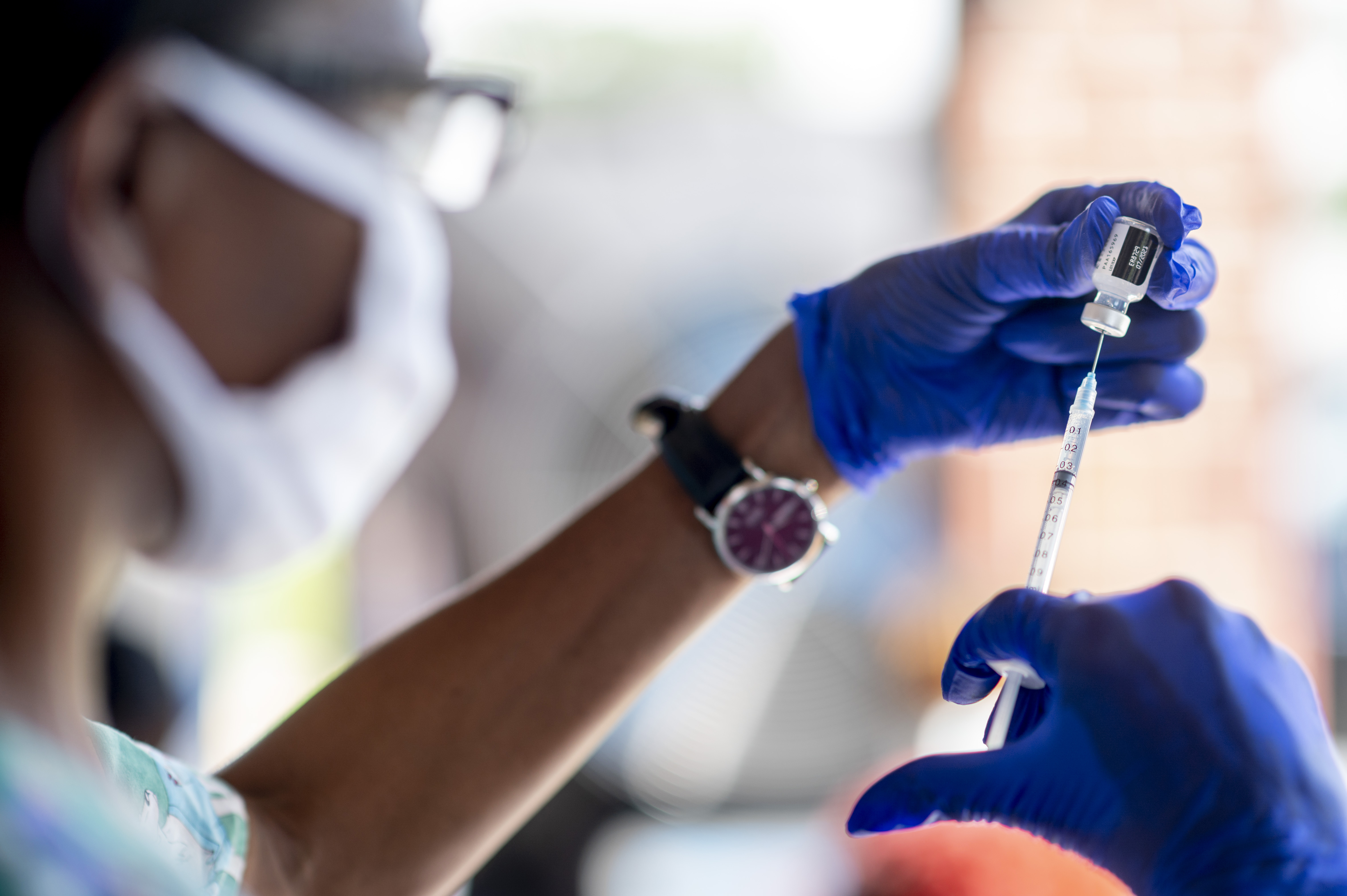
    MIS-C is a rare but serious complication of COVID-19 that can occur in susceptible patients, usually presenting around 2-6 weeks after initial COVID infection. This patient was not aware of having had COVID recently, but an asymptomatic COVID infection can still spur MIS-C. MIS-C can present with persistent fever, multiorgan dysfunction, and elevated inflammatory markers, which were all present in our patient. This condition was much more prevalent at the heights of the COVID-19 pandemic. Cases dropped rapidly after distribution of the COVID vaccine. This particular patient presented before the creation of the COVID vaccine.

    Since this patient’s inflammatory symptoms were progressing and tests showed signs of heart involvement, treatment for MIS-C was started. Specific treatment courses can vary but all include intravenous immunoglobulin (IVIG), steroids, and aspirin. The patient’s symptoms improved quickly; he was soon able to move his neck without pain, and the redness in his eyes abated. COVID-19 antibody testing eventually came back positive, further supporting the diagnosis.

    The bottom line

    As we get further into life with COVID-19 as a part of our overall medical picture, it’s important to take a step back and look at all we have already learned about the disease. MIS-C is a well documented complication of a COVID infection; however, it may no longer be foremost in physicians’ minds. COVID vaccination has proven highly effective in preventing this frightening condition; a CDC study from 2021 reported 91% effectiveness of these vaccines in preventing MIS-C, as well as more severe disease in MIS-C patients who were unvaccinated. For this patient, there was a full recovery thanks to doctors who quickly recognized the signs and symptoms of MIS-C and started treatment rapidly. Moving forward, it’s important for parents to understand that vaccination can help prevent COVID-related complications, and for our primary care teams to continue communicating everything we have learned over the past six years.

    Jordan Priess is a third-year pediatric resident and Hayley Goldner is a pediatrician in the adolescent medicine department at Nemours Children’s Hospital, Delaware.

  • Ways to save the Shore | Morning Newsletter

    Ways to save the Shore | Morning Newsletter

    Rise and shiny, Philly. It’s Sunday, and conditions should be near perfect for the Philadelphia Cycling Classic.

    As the busy Shore summer winds down, we racked our brains, asked experts, and solicited ideas from readers for ideas to improve the experience for all.

    Also in today’s newsletter, a father fights to prevent the replacement of a play area that memorializes the life of his child.

    And a new lawsuit alleges that unpaid fuel made it possible for some Freedom Fuel stations to sell gas at such low prices.

    Scroll along for these stories and more.

    — Paola Pérez (morningnewsletter@inquirer.com)

    If someone forwarded you this email, sign up for free here.

    What the Shore needs

    Should Ocean City stay dry? Do we need more trains? Why aren’t Atlantic City concerts fully funded?

    Shore reporter Amy Rosenberg wrestled with these and many more questions and possibilities on how the Jersey Shore could transform for the betterment of everyone. Here’s a preview of the suggestions she compiled:

    🐶 More dog beaches and dog hours. “Are dogs so bad?” Rosenberg writes. “What if every town, or every island, had a beach dedicated to dogs and their owners?”

    🚴 Expand bike lanes and redesign roads to calm traffic, to protect cyclists and pedestrians alike (see also: leave the cars off the island).

    🎟️ Eliminate beach tags (or at least make them reciprocal).

    See Rosenberg’s full list.

    What you should know today

    Losing a glimmer of light

    The creation of a sandpit play area in a Chester County playground was one way in which Ryan Leithead coped with the tragic, unexpected loss of his son, Cayden. He died at just 7 days old in 2022.

    In Leithead’s own words: “I spent the first year after he died kind of focusing on this — right, wrong, or indifferent, that’s how I grieved. So it’s a memorial built by his father.”

    That memorial is now at risk of being swept up in proposed renovations, which officials say could involve moving the sandpit and replacing the memorial. In a recording shared with The Inquirer, a township supervisor could also be heard saying that designers felt that a sign dedicating the pit to Cayden was “depressing.”

    Leithead is not against the renovations, but said that the idea that Cayden’s Corner would be impacted in any way feels like he is losing his son again.

    Brooke Schultz reports.

    This week in history

    🎤 Here’s Tommy Rowan with a look back at the “weird” game between the Phillies and Cubs that set a record that still stands.

    Newspapers weren’t kind when describing the windy-day matchup.

    In Philly, The Inquirer called it a “weird” game. In Chicago, the Tribune described the Aug. 25, 1922, game between the visiting Philadelphia Phillies and the Chicago Cubs as a “comedy of runs, hits and errors.”

    The two teams accounted for 49 runs, the most ever recorded in a Major League Baseball game.

    More than 100 years later, record-keepers call it baseball history.

    Read on for the full story.

    ❓Pop quiz

    More than 150,000 people have signed a petition to rename an airport after Dolly Parton in what state?

    A) California

    B) Kentucky

    C) Pennsylvania

    D) Tennessee

    Think you know? Check your answer.

    What we’re …

    🐟 Hungry for: Lots of delicious fish at Bastia.

    🧠 Finding: The “bridge” between words in this week’s Pillars game.

    🏡 Learning: How a homeowner transformed a “total dump” in South Philly, in our latest installment of “How I Bought This House.”

    🤩 Looking up at: The newly restored coffered ceiling at 30th Street Station.

    🚰 Recalling: How O’Brien’s Water Hole in Manayunk provided much-needed hydration to racers on “The Wall” for 20-plus years.

    🧩 Unscramble the anagram

    Hint: Representative of Pennsylvania’s first senatorial district

    AVAIL LINKS

    Email us if you know the answer. We’ll select a reader at random to shout out here.

    Cheers to Matthew Carlyle, who correctly guessed Saturday’s answer: Victory Brewing. The brewery company’s large taproom on the Parkway closed last week after the health department flagged a series of “imminent hazards.”

    GIF of the day

    🏁 Whether you’re spectating or pushing pedals, happy Philadelphia Cycling Classic Day. I hope you have a thrilling time.

    🎶 Today’s song goes like this: “I don’t need a lot just a little / But can you see a world where we meet in the middle?”

    👋🏽 Thanks for spending part of your morning with The Inquirer. Take care.

    By submitting your written, visual, and/or audio contributions, you agree to The Inquirer’s Terms of Use, including the grant of rights in Section 10.

  • The invisible volunteers who help keep democracy running

    The invisible volunteers who help keep democracy running

    They’ve been called the “most important people in running an election” by Secretary of the Commonwealth Al Schmidt, yet even as interest in election security has skyrocketed after Donald Trump’s persistent false claims of voter fraud, their jobs seem to be hidden in plain sight.

    Unlike the grifters and sycophants who help feed the president’s Big Lie and earn millions of social media followers, make frequent TV appearances, and are showered with adulation by the White House, the roughly 45,000 volunteers across Pennsylvania who are essential to ensuring elections happen fairly, smoothly, and efficiently are rarely recognized for the work they do.

    No wonder poll workers are in short supply — in the commonwealth and across the nation. A Brookings Institution report said that about half of all election officials found it either very or somewhat difficult to find enough workers.

    As someone who worked in elections before becoming a journalist, I’m hardly surprised. Running the polling booths is neither glamorous nor convenient. Voting starts promptly at 7 a.m. on Election Day and continues until 8 p.m. With prep and closing work, a shift can take up to 16 hours for some. In Philadelphia, doing your part to help preserve democracy can earn you up to $295. Elsewhere, compensation tends to be much less.

    In Pennsylvania, the job comes with an additional wrinkle. Our poll workers are elected. Across roughly 1,700 divisions in the city of Philadelphia alone, neighbors are asked to choose a judge of elections and inspectors. The judge then appoints a clerk, and either the city commissioners or the election board finds a voting machine operator. If the judge fails to show, the first voters may be asked to hold a curbside election to pick a successor.

    It is all somewhat delightfully antiquated even as it can contribute to Election Day delays.

    Recently, Philadelphia’s election officials sought to stem the shortage of poll workers. City Commissioners Omar Sabir, Seth Bluestein, and Lisa Deeley joined Schmidt to honor some of the city’s poll workers — and ideally recruit others at a rally in the City Hall courtyard, complete with pizza, pretzels, and water ice.

    Student poll worker India Nakai, 17, a Girard College senior, told the audience she was motivated to serve her community and see what happens behind the scenes, even though she isn’t old enough to vote herself yet. At the other end of the spectrum was another kind of senior, honoree Gwendolyn Clay, 74, who has been working the polls for 51 years.

    Their dedication to public service and commitment to helping their neighbors reminded me of the people who signed up to help count ballots during 2020.

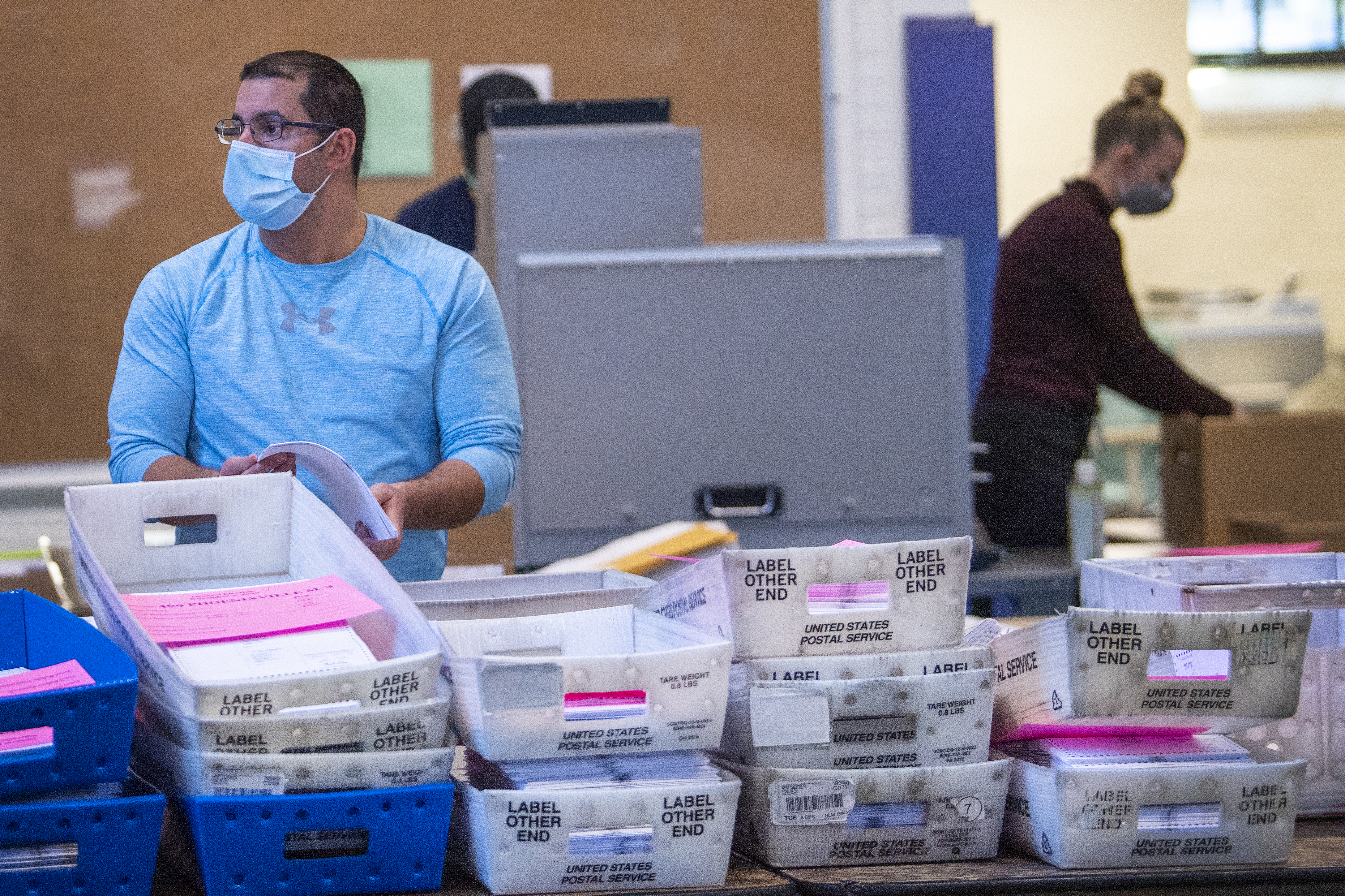
    I was there at the Pennsylvania Convention Center, where — despite the pandemic and the threats of armed agitators who believed Trump’s false claims of fraud — scores of Philadelphians showed up every day to help tally the unprecedented flood of mail-in ballots.

    Vote counters zealously followed the law, erring on the side of strict interpretation and removing ballots for even minor and inconsequential errors like a missing date or an absent secrecy envelope.

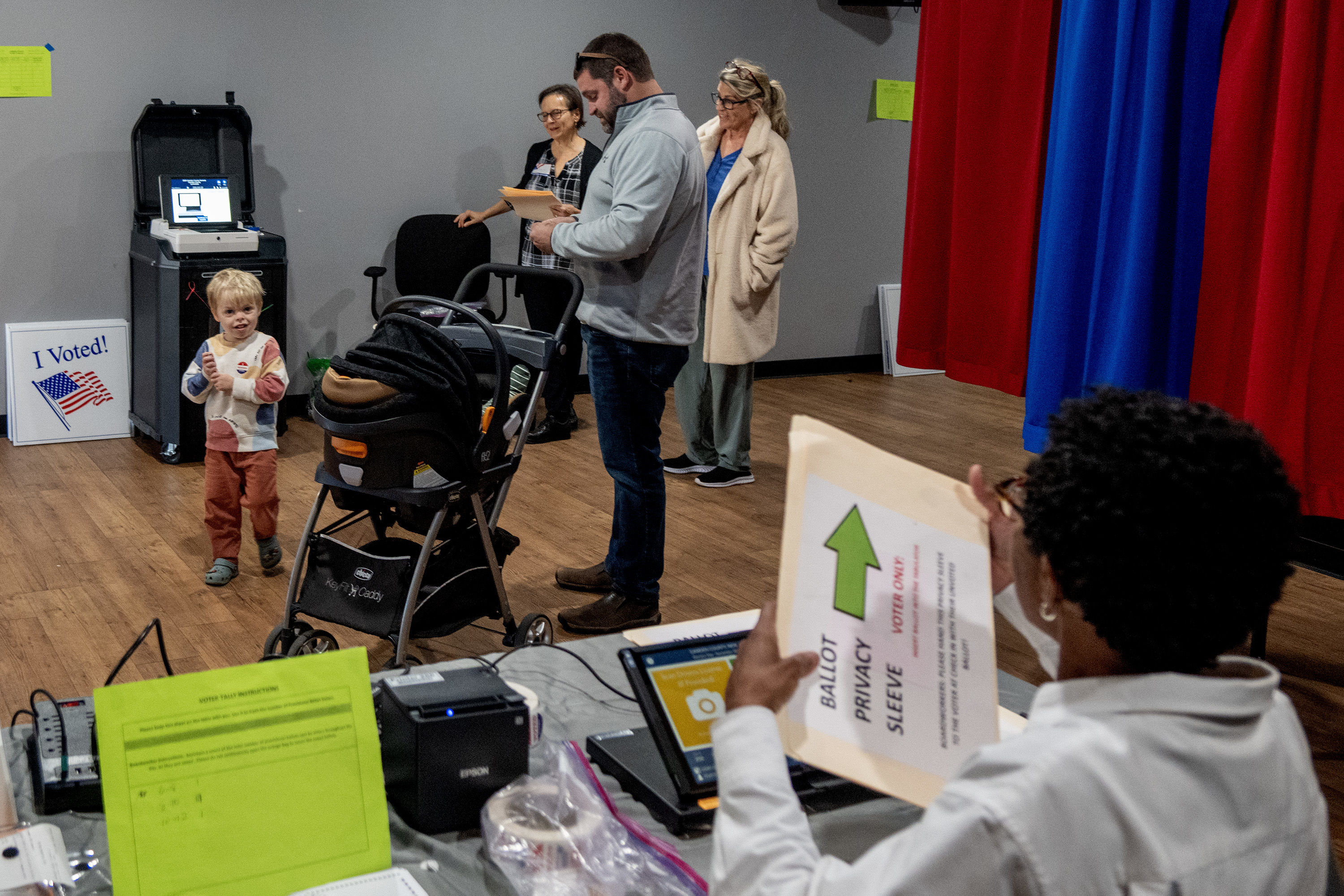
    Poll worker Janice Masud-Paul (seated) speaks with 4-year-old Weston after his father, Bob Comfort, voted in the Erlton Fire House on Route 70 in Cherry Hill on Election Day last year.Tom Gralish / Staff Photographer

    Elections, and democracy itself, depend on this kind of selfless dedication.

    Unfortunately, people like Clay and Nakai, who are willing to do essential but usually thankless work, are becoming rarer. And it’s not just staffing the polls that has seen recruitment challenges.

    Service organizations like the Elks, Kiwanis, and Rotarians once built and maintained parks and memorials, but are now in the midst of rapid decline. Veterans from the wars in Iraq and Afghanistan are less likely to join VFW or American Legion clubs, and more and more Americans are spending their days alone.

    Traditional, neighborhood-based churches have been supplanted by regional megachurches, with paid full-time staff replacing the volunteers and part-timers who once taught Sunday school and led worship.

    Across society, genuine connection is being eroded. It has been replaced by communities of outrage.

    The election-denying hordes are just one facet of this phenomenon. Instead of toiling away for hours in service of their fellow citizens, members of an outrage community must simply “like,” “reply,” or “repost” sentiments that align with their own half-baked suspicions. The actual factual record rarely matters, replaced by the wisdom of the algorithmic mob.

    Communities of outrage now exist for nearly every major facet of life, and every national news story. They allow participants to live in a world reconstructed to fit their belief system, with all the inconvenient facts smoothed away.

    School shootings like Sandy Hook are dismissed as false flags. Disappointing election results are attributed to fraud. People across the ideological spectrum increasingly believe antisemitic conspiracy theories, which blame every complex societal problem on Jewish people. Climate change is either denied or blamed solely on corporations, with no acknowledgment of who is buying all the gas, using artificial intelligence, or purchasing legions of plastic junk to fill our homes.

    Collective action to fix societal woes becomes impossible when individuals can no longer agree on what’s happening in the first place. As the internet has become a haven for everyone’s petty grievances, a society built on online outrage is a miserable one. At the turn of the century, roughly 70% of Americans reported being satisfied with the direction of the country. Today, that number sits at 25%.

    It is up to us as individuals to choose differently.

    Outrage artists will continue to peddle lies as long as we are willing to click on them. Outrage communities will keep growing as long as real communities continue to shrink. Filling a vacant seat on an election board won’t fix this problem overnight, but it is a step in the right direction.

    The more we strive to follow the example of service-minded people like Nakai and Clay, the closer we’ll be to creating a society we can be proud of.

  • Straying from the herd | Editorial Cartoon

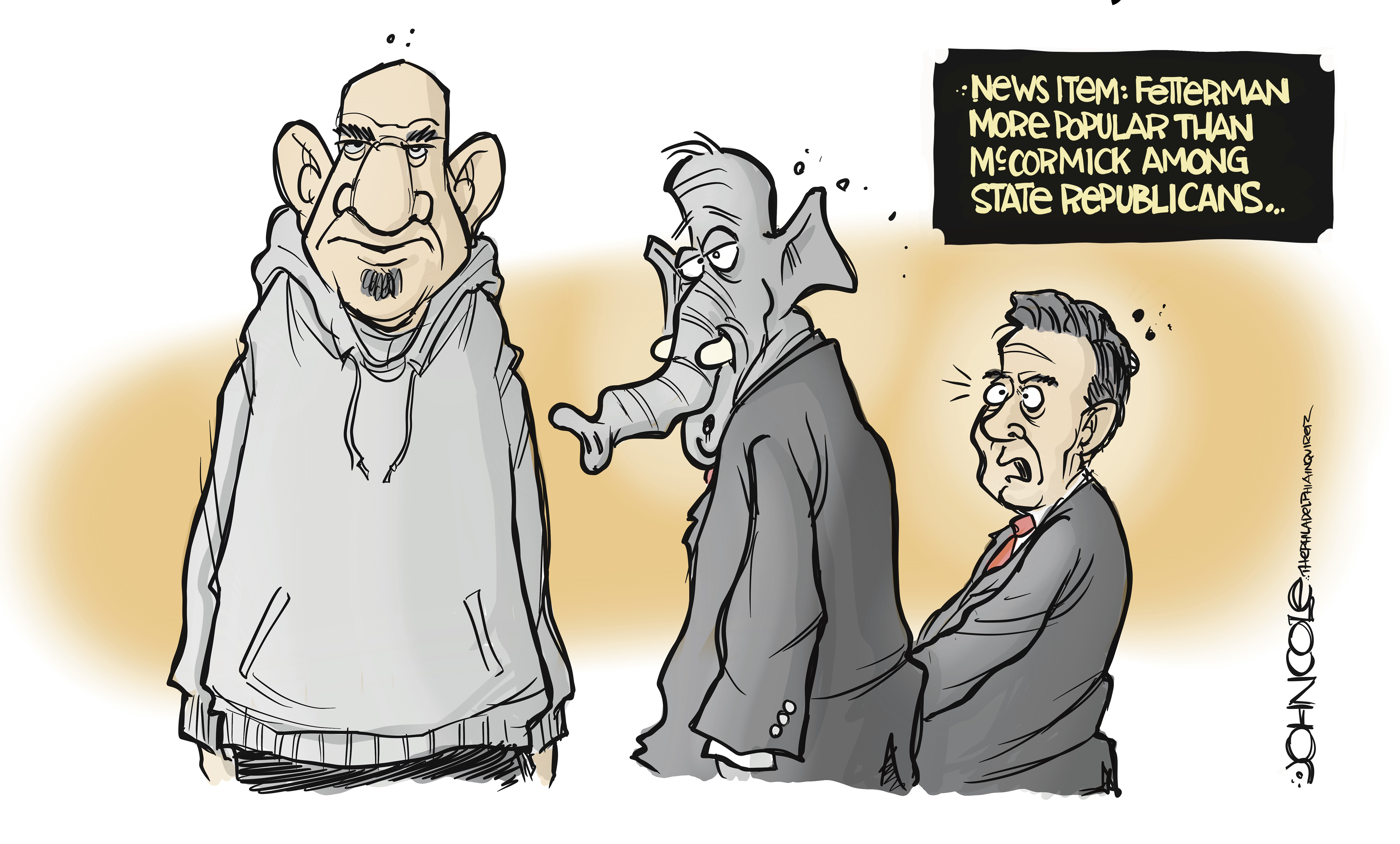
    Straying from the herd | Editorial Cartoon

    John Cole spent 18 years as editorial cartoonist for The (Scranton) Times-Tribune, and now draws for various statesnewsroom.com sites.

  • Will Cavan Sullivan’s latest highlight-reel goal lead to a USMNT call-up? The drumbeat is growing.

    Will Cavan Sullivan’s latest highlight-reel goal lead to a USMNT call-up? The drumbeat is growing.

    Lionel Messi scored four goals for Inter Miami on Saturday night, a feat that no doubt will have given MLS the kind of global publicity it craves.

    But it wasn’t the league’s only headline. In fact, for quite a few people around the league, it wasn’t the biggest.

    The Union’s visit to Red Bull New York finally drew the kind of hype that U.S. national team fans have waited to see for a domestic league game. As with their meeting at Subaru Park soon after the World Cup final last month, it featured a slew of major prospects for the 2030 World Cup team: the Union’s Cavan and Quinn Sullivan, Frankie Westfield, and Neil Pierre against New York’s Julian Hall, Adri Mehmeti, Matthew Dos Santos, and Justin Che.

    It took just one moment for the Union’s 3-1 win to live up to the billing, from the player who stood atop the marquee.

    Cavan Sullivan’s sixth goal for the Union’s first team was easily his most sensational: a perfect jumping trap of Danley Jean Jacques’ cross-field pass, a cut left into the 18-yard box, and a lashing shot to the far post.

    It sent jaws dropping from North Jersey to Chester and well beyond, perhaps even to his future home at Manchester City. (Or at least it would have when they woke up Sunday morning over there, as it was just before 2 a.m. in England when the play happened.)

    “This was the first moment of a really special individual play for one of his goals,” interim Union manager Ryan Richter said. “So that was cool.”

    The trap alone was a special play, and Richter rightly insisted that the pass was its own highlight. Jean Jacques hit it inch-perfect into open space on the right flank.

    WHAT A GOAL BY CAVAN SULLIVAN!

    WHAT A CALL BY DAVE LENO!

    [image or embed]

    — Nick Piccone (@piccone.bsky.social) August 29, 2026 at 9:07 PM

    Sullivan then brought the ball down before it could hit the turf, with the kind of first touch that makes soccer scouts worldwide swoon. All the more when it’s done by a 16-year-old — and yes, with an extra layer when that teen is an American. The world has gotten used to this country winning men’s World Cup games, but it’s sometimes still surprised when a Yank shows such skill.

    There was no guarantee a goal would follow, though, not least since Sullivan had passed up a chance to fire from atop the box in the first half. This time, he charged past Dos Santos and shot before a sliding Ronald Donkor could get there.

    It really was a breathtaking play.

    “The first half, I didn’t think that he was at his best: A couple opportunities where he had a chance to make a play that didn’t come off in the way that you know he can, and then a couple defensive lapses, I thought … [where] he got outplayed a little too bit too easily,” Richter said. “But the second half, he fixed what he needed to fix, and he got going in the game.”

    Then came a moment where Richter could watch just like the rest of us.

    “The goal that he scored, it’s what he’s capable of doing,” he said. “In these one-v-one situations, he’s different, and we want to give him the freedom to express himself. And honestly, he has gained the respect of his teammates, that they also give him the freedom that he can go in these moments, because they know that he can create something out of it.”

    The drumbeat has grown louder for Sullivan to earn his first senior U.S. national team call-up for the four-game friendly run in September and October. Indeed, quite a few observers think Mauricio Pochettino should call up Pierre and Westfield, too.

    Pierre has turned just as many heads in the know as Sullivan lately, and turned more with his latest goal Saturday — his fourth in nine Union first-team games this year.

    “He’s growing every week, and you guys are watching the same thing I am: he looks like a top center back in this league,” Richter said. “He has to keep pushing, and keep his feet on the ground, and focus in the right way, and become the best center back in this league. That should be his target — but that’s a day-to-day thing that he has to keep pushing to get better and better.”

    Westfield, meanwhile, has become the leading candidate to be the starting right back on the 2028 Olympic team.

    Andrew Rick and Quinn Sullivan could also merit consideration, given their past work for Pochettino and Rick’s potential to make the 2028 squad.

    Asked whether Cavan should get the call, Richter answered promptly: “That’s not my job to influence that one way or the other.”

    The Union could soon see Mauricio Pochettino (right) call up a new generation of their prospects, following in the footsteps of alumni like Auston Trusty and Mark McKenzie.Jonathan Tannenwald

    But that doesn’t mean he isn’t allowed to, and he snuck in a little of it.

    “If you’re watching the games — which, the national team staff, I’m sure they are watching these games — then he’s making a case for himself,” Richter said.

    The squad should be announced in mid-September, which means the Union probably have three more games before then: Saturday at home vs. CF Montréal (now with Chilean legend Alexis Sánchez), Sept. 9 at home vs. FC Cincinnati, then the year’s longest road trip to visit San Diego FC on Sept. 13.

    (And yes, this writer hears those of you ready to pounce on Richter saying “watching the games.” Four years into MLS’s streaming deal with Apple, no Union-related subject still draws more emails than the lack of games on traditional TV. So take note that the Cincinnati game will be on FS1.)

    The two weeks left for the U.S. staff to judge the Union will go by quickly. But they’ve got plenty of evidence now, especially with Cavan Sullivan, Pierre, and Westfield.

    So does ever more of the soccer world.

    Lionel Messi scored four goals last night, but it isn't the biggest story in MLS this morning – not even on the league's own website.

    Cavan Sullivan is.

    www.inquirer.com/soccer/union…

    [image or embed]

    — Jonathan Tannenwald (@jtannenwald.bsky.social) August 30, 2026 at 9:52 AM

  • Philly Open organizers believe the event has the ‘potential to grow into something special’ after strong fan turnout

    Philly Open organizers believe the event has the ‘potential to grow into something special’ after strong fan turnout

    In the final of the inaugural Ennoble Care Philly Open on Penn’s campus on Saturday, Katie Volynets beat Tereza Valentová, 6-3 and 7-5.

    The event marked the return of the Women’s Tennis Association to the city after more than two decades. Event organizers Top Notch Management and the Philadelphia Sisters secured a three-year contract for the tournament to be held in the city through 2028, but tournament director Alex Guthrie said the plan is for the Philly Open to become a regular stop on tour.

    “We put a lot of time, energy, and investment into this,” Guthrie told The Inquirer. “We want this. We didn’t invest all this time and energy just to do it for three years. We see this as a 10, 20-year thing. I think this has the potential to grow into something special.”

    Guthrie said the organizers weren’t sure what to expect from fans. Crowds at WTA 125-level events can vary widely from session to session and tournament to tournament, but the WTA was impressed with the turnout in Philly, especially for the day sessions.

    The tournament sold out its opening day on Aug. 23, selling 1,500 tickets, and maintained a solid crowd for the remaining sessions. For the final, fans packed the grandstand, the nearby grass hill, and some unticketed even peeked in from a bridge outside the grounds.

    “I was so surprised that even the day it rained, the fans stayed all night and watched the match finish,” Volynets said. “That was really impressive to me, and says a lot about the crowd. I also thought that they cheer so well, because they’re so respectful, they clearly know their tennis. They cheered both sides on while still making me feel like a home favorite.”

    Katie Volynets claimed the inaugural Ennoble Care Philly Open on Saturday.Thibault Camus

    Hosting the tournament the week before the U.S. Open helped draw a field of several top-100 players, including both finalists (Volynets ranked 91st, while Valentová was 57th). Semifinalist Julia Grabher was a late entry to the field, after a late U.S. Open withdrawal pulled her out of qualifying and straight into the main draw.

    “She was already in New York for qualifying, and she texted me, ‘Hey, do you have any wild cards open?’ And a space had literally just opened up for us,” Guthrie said. “If we were anywhere else, she couldn’t just take an hourlong train ride.”

    Some players on tour, Guthrie said, avoid first-year events to make sure the facilities and management are up to par before committing. After the success of the 2026 edition, he believes it’ll be an easier sell next year.

    Working with a new facility at Penn, which hadn’t previously hosted a professional event before, added a few “quirks and challenges,” but ultimately Year 1 was a success among the players.

    “I love these kind of courts,” Volynets said. “They’re grippy, so you can play different spins. If you play a slice, it stays low, if you hit topspin, it goes high. I love how the courts accept the spin. I think it makes tennis so fun to play and so fun to watch.”

    Spectators watched from the bridge near Penn’s tennis courts throughout the Philly Open week.Monica Herndon / Staff Photographer

    Organizers have already begun conversations with potential sponsors for 2027, and hosted a few prospective sponsors during the week. In order for Philly to attract a larger 250 or 500-level WTA tournament, more sponsorships and funding would be required, according to Guthrie.

    But the tournament is on stable footing. The Philadelphia Sisters hope the event will become another permanent installment of women’s sports on the Philly sports calendar.

    “From a Year 1 perspective, the foundation was laid very well,” Guthrie said. “Now that it’s happened, and people see what the event is — we were selling something that didn’t exist. Now we have proof of concept, fans know what to expect, and sponsors know what to expect.”

  • The neurologist who led Penn Medicine’s diversity efforts and saw his title changed after Trump came to office has a new role

    The neurologist who led Penn Medicine’s diversity efforts and saw his title changed after Trump came to office has a new role

    Roy Hamilton’s varied racial, social, and religious identities helped him in his former role as a chief diversity leader at the University of Pennsylvania — and now they will help him in his new role as chair of Penn’s faculty senate.

    The behavioral neurologist at the Perelman School of Medicine is the son of a Japanese immigrant and an African American. He is married to a white woman who is Jewish, while he was raised as one of Jehovah’s Witnesses and now is a secular humanist. And one of the couple’s children is LGBTQ+; he is an ally. Add to that growing up in a lower middle-class family and learning to navigate an Ivy League education system, first as an undergraduate and then as a medical school student.

    That background has made it easier for him to understand a range of factors in his own life and how they affect his thinking, Hamilton said, and more readily understand where others are coming from and look for common ground.

    Those same skills, he said, will be just as valuable as he steps into a position leading Penn’s faculty senate, the representative body for the school’s approximate 3,000-member standing faculty in a system of shared governance.

    Hamilton said one of his primary goals will be to make the faculty senate representative of the collective views of a vastly diverse staff and foster conversation across those views.

    “It does call for a person who is interested in hearing and honoring a multiplicity of opinions and perspectives and then coming to some kind of collective consensus as to how to act in the face of that,” Hamilton, 53, said during an interview in his office this month.

    “Penn has acted judiciously in a difficult time,” when responding to Trump, said Roy Hamilton, faculty senate chair and a behavioral neurologist at Penn. “It’s trying to thread a needle. Time will tell whether that strategy ultimately pays off.” Monica Herndon / Staff Photographer

    The senate plays a key role on campus discussing issues of faculty concern, making policy recommendations, responding to regular reports of university administrators, and providing oversight on issues that include academic freedom and research policy. And Hamilton, who has spent 24 years at Penn, comes in as chair at a pivotal time. The school is searching for a new president to replace J. Larry Jameson, who will step down next summer, and continuing to operate under the scrutiny of the federal government, which has targeted elite universities. There are ongoing concerns about access to federal research funding, and the school this year plans to adopt new guidelines for open expression on campus that have drawn strong objections from faculty.

    “As Penn confronts the major questions of our time, the Faculty Senate’s contribution is not to provide a single set of answers, but to pursue a constructive process of thoughtful deliberation and principled engagement conducted in good faith,” he said in a message to faculty last week.

    Roy Hamilton collects masks and his office is filled with pieces he has received from his students and mentees over the years. Monica Herndon / Staff Photographer

    ‘Trying to thread a needle’

    Hamilton has been in the hot seat before. He was the medical school’s vice dean for inclusion, diversity, and equity when President Donald Trump’s administration last year cracked down on diversity initiatives in higher education and Penn scrubbed its websites of those programs. Hamilton’s own title was changed to special adviser to the dean.

    “It would be disingenuous to say that it was easy,” Hamilton said. “It was a huge change. It was a difficult change. It was a change that I wish the institution didn’t feel like it had to make.”

    But Hamilton — who for more than a decade held administrative roles centered on diversity and inclusion at Penn — said he understood that Penn felt it had to make changes, given its reliance on federal research funding. Hamilton pointed out that he gets National Institutes of Health funding for his work.

    “If you jeopardize some of the fundamentals of how the institution works and runs, you jeopardize lots of positions and roles, including the roles of persons like myself and the very diverse lab that I run,” he said. “So I understand the Sophie’s choice that the medical school was faced with. That doesn’t mean I have to be happy about it.”

    Roy Hamilton talks about his work as a behavioral neurologist.Monica Herndon / Staff Photographer

    Still, he said, some of the work continues.

    “We are the same people, and I believe that Penn’s values will endure,” he said.

    Penn at times has stood up to the Trump administration and at times negotiated. It ardently opposed the Equal Employment Opportunity Commission’s quest to get lists of Jewish people on campus for its investigation into antisemitism. The EEOC dropped its subpoena last month and said it would not take further measures to seek the information through other means.

    Last summer, the school entered into an agreement with the administration over the past participation of transgender athlete Lia Thomas on the women’s swim team. Penn met a number of the White House’s demands, including adhering to the Trump administration’s definitions of sex, female, male, women, and men only as they apply to athletics, and sending letters of apology to female athletes who felt aggrieved by Thomas’ position on their team during the 2021-22 season.

    “Penn has acted judiciously in a difficult time” when responding to Trump, Hamilton said. “It’s trying to thread a needle. Time will tell whether that strategy ultimately pays off.”

    “I was one of those guys, even as a small child, sort of door to door trying to talk to people about the Bible and what God had planned,” Roy Hamilton said, discussing his upbringing as one of Jehovah’s Witnesses. Monica Herndon / Staff Photographer

    Hamilton’s upbringing was instrumental to his interest in diversity.

    “Every step of the way has felt like I was … some kind of explorer finding some new territory,” he said. “I’ve historically been very interested in seeing to it that other people don’t have that level of alienness in the process.”

    Raised as one of Jehovah’s Witnesses, then on to Harvard

    Born in Long Beach, Calif., Hamilton grew up as one of Jehovah’s Witnesses. His late father worked in a brewery and his mother, who got her undergraduate degree in Japan, earned money as a seamstress, working from the family home. (She later returned to college, earned a master’s degree, and became a teacher.)

    Neither of his parents was raised in the Jehovah’s Witnesses faith, but his father had several family members who belonged. When his mother emigrated from Japan, she told his father she would like to go to church, and he took her to a Kingdom Hall, the worship place of Jehovah’s Witnesses.

    “By the time I was a small child, she was one of Jehovah’s Witnesses, and so that was the background in which I was raised,” Hamilton said. “I was one of those guys, even as a small child, sort of door-to-door trying to talk to people about the Bible and what God had planned.”

    But he and his family parted ways with the religion when it came time for Hamilton to go to college. Hamilton was in the gifted and talented program as a child, did well in school, and wanted to continue. At that time, the faith generally discouraged higher education, he said.

    He recalled congregation elders pulling him aside and questioning his intent to apply to college.

    “It had the same kind of vibe as if I had been caught smoking in the boys’ bathroom,” he said.

    Hamilton did not just go to college — he went to Harvard University. His father feared flying, so Hamilton took the train from California and arrived three days later in Massachusetts.

    The Ivy League experience was “a huge adjustment,” he said. One of his roommates hung out with a son of media mogul Rupert Murdoch, he recalled. A student down the hall was dating then-Vice President Al Gore’s daughter.

    He got his bachelor’s degree in psychology and graduated from Harvard’s medical school, where he said he felt a bit of “impostor syndrome.” He also got a master’s degree in health sciences technology from Massachusetts Institute of Technology.

    At Harvard, his interest in the brain grew and was amplified when he worked in the lab of cognitive neuroscientist Nancy Kanwisher, whose work led to the discovery of the region of the brain that processes facial recognition.

    “It’s the reason why we recognize incredibly subtle differences between faces,” he said.

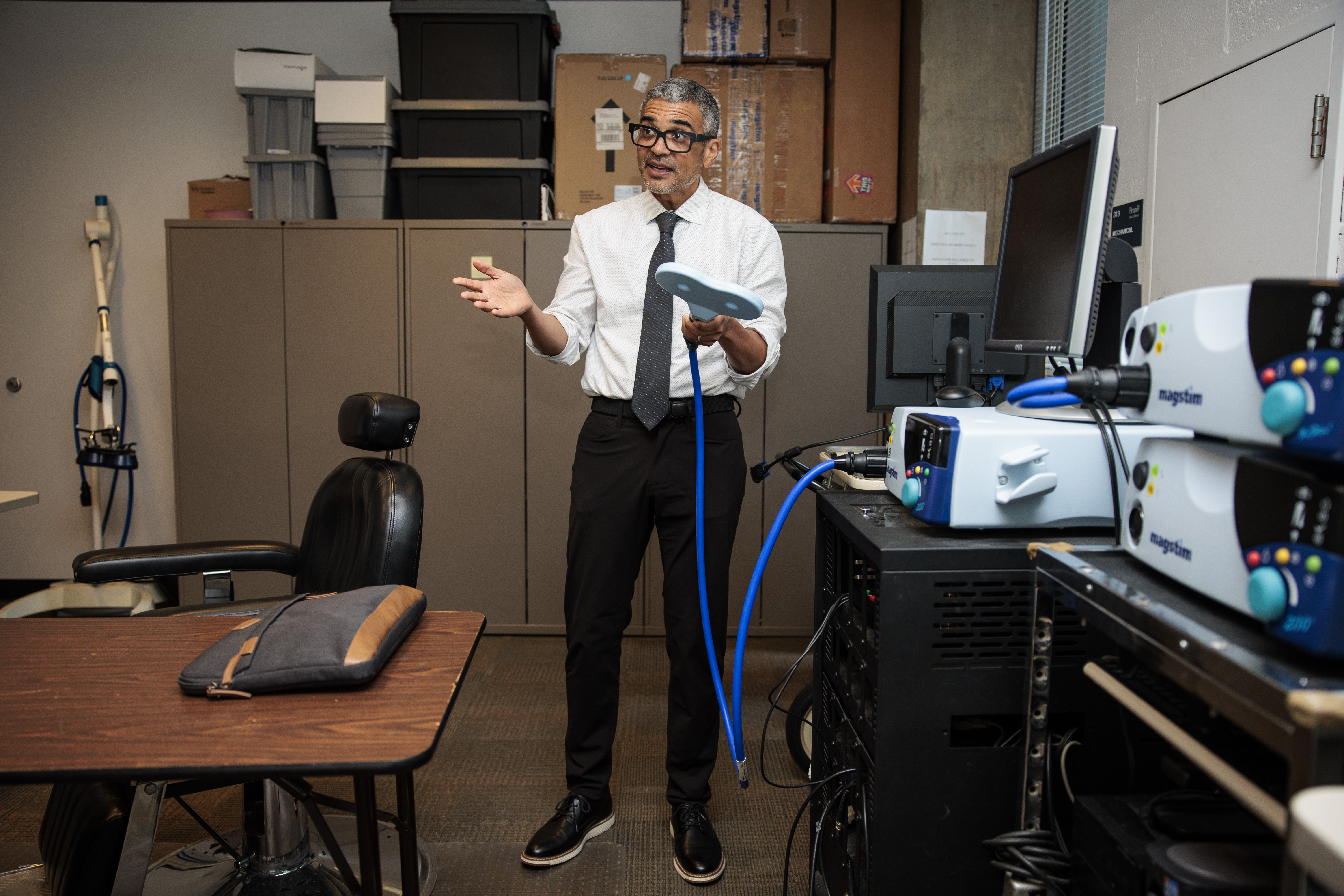
    Roy Hamilton discusses how transcranial magnetic stimulation (TMS) units are used in helping to study the brain and develop new treatments for patients with conditions like aphasia. When a TMS device is triggered, the box-shaped main unit discharges a large current through the attached coil. This creates a magnetic field that, when placed against the scalp, activates electrical signals in the brain.
    “You can basically force the brain to fire,” he said.

    Monica Herndon / Staff Photographer

    Another key moment came when neurologist Alvaro Pascual-Leone visited his medical school seminar and showed how magnets aimed at the head could temporarily affect behavior in the brain.

    “I was like, ‘That is the most amazing thing I’ve ever seen in my life,’” he said. “‘I’m going to do that for the rest of my life.’”

    Magnets and the brain

    After an internship at UCLA, in 2002 he came to Penn, where he now runs the Laboratory for Cognition and Neural Stimulation, as well as the Brain Stimulation, Translation, Innovation and Modulation Center. Putting it simply, he said: “I take magnets. I put them on people’s brains and I make them think different things.”

    He sees patients struggling with memory and cognition disorders, such as dementia and aphasia.

    “The central but not sole clinical focus of my research is in persons with language loss,” he said.

    He is married to Dawn Mechanic-Hamilton, a clinical neuropsychologist and associate professor in Penn’s department of neurology.

    Last year, Hamilton became chair elect of the senate, which functions under tri-chairs — chair-elect, current chair, and past chair — all one-year terms for a three-year commitment.

    The senate earlier this year was charged with naming faculty to serve on a committee outlining priorities for Penn’s next president. Among its priorities this year, the senate will focus on implications of artificial intelligence on teaching and learning, he said.

    “While Penn’s future remains full of promise, the road ahead may not always be easy,” he wrote to faculty. “Difficult moments, however, provide an opportunity to think carefully about the principles that give purpose to our work and ought to guide our decisions.”