If you’re looking for a place to rent a spacious new apartment, Philly ain’t it.
Apartments across the country got slightly bigger last year, but in Philadelphia, they’reshrinking.
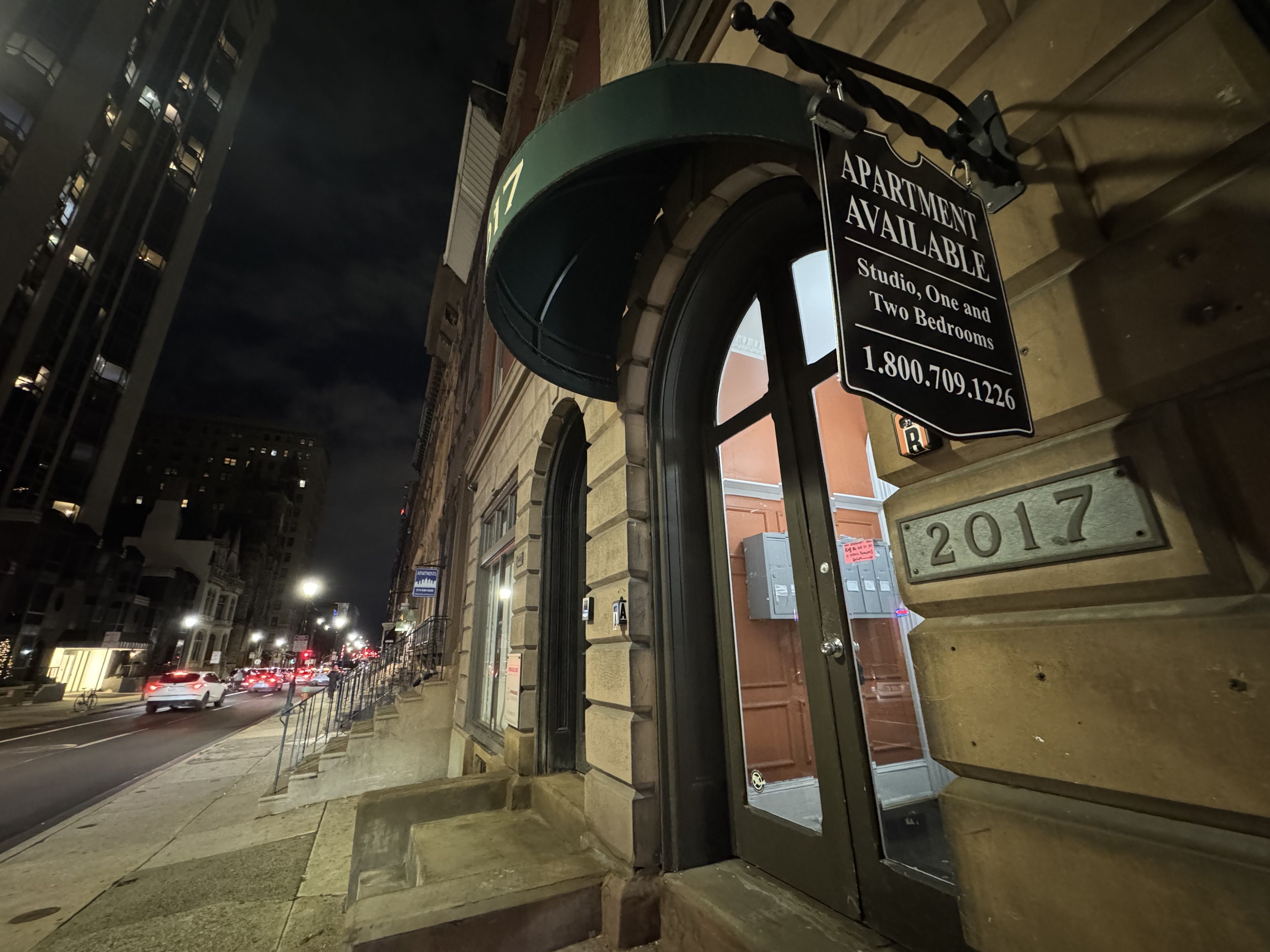
Apartments inPhilly are already relatively small. Of the country’s top 100 cities with the largest apartment supply, Philadelphia ranked 88th in apartment size, according to an analysis by the nationwide apartment search website RentCafe. The report was based on apartments in buildings with 50 or more units.
New Philly apartments, which RentCafedefined as those built between 2016 and 2025, spanan average of 747 square feet — 163 fewer square feet than the national average.
But in Philadelphia, the average new apartmentshrank by 104 square feet compared toapartments built during the previous decade — basicallythe loss of a home office, according to RentCafe.
Philadelphia’s position as a desirable rental market and demographic trends help explain the shrinking, according to Veronica Grecu, research analyst at RentCafe.
“In high-demand markets, developers often prioritize studios and one-bedrooms because they can deliver more apartments per building and meet the needs of a growing number of single-person and smaller households,” Grecu said in a statement. “… the upside is more availability in markets where inventory has historically been tight.”
Apartments currently under construction in Philadelphia average 627 square feet, according to RentCafe.
The platform found that Philadelphia’s new three-bedroom apartments actually grew in size — by 93 square feet — as studios and one- and two-bedroom apartments shrank. But not many developers are building three-bedroom units. They made up 3% of the city’s supply of new apartments, according to RentCafe.
(function(){function e(){window.addEventListener(`message`,function(e){if(e.data[`datawrapper-height`]!==void 0){var t=document.querySelectorAll(`iframe`);for(var n in e.data[`datawrapper-height`])for(var r=0,i;i=t[r];r++)if(i.contentWindow===e.source){var a=e.data[`datawrapper-height`][n]+`px`;i.style.height=a}}})}e()})();
How Philly compares to other cities
Cities in the Northeast and West dominate RentCafe’s list of places with the smallest new apartments.
Pittsburgh was one of the top 10 cities where new apartments shrank the most in the last decade. The average size decreased by 142 square feet. But the average new apartment was 804 square feet, still larger than the average in Philadelphia.
Seattle has the smallest new apartments. Those built in the last decade average 645 square feet, asmore studios and one-bedroom apartments have been built.
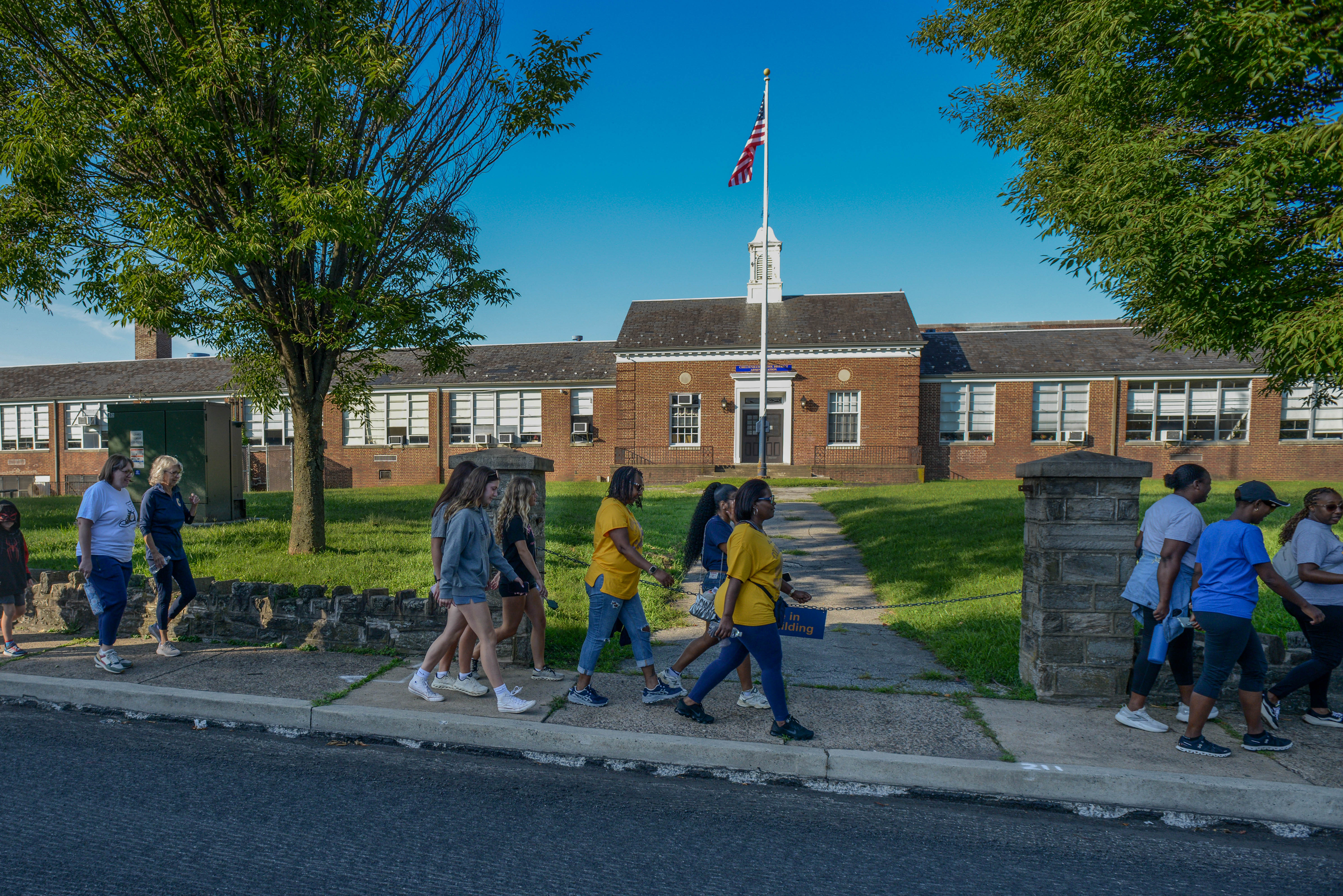
Cheltenham parents, students, and school district officials marched across town to show support for students ahead of the new academic year as the community continues to grapple with the fallout of the recent football hazing scandal.
Heads up: Next week’s edition of this newsletter will arrive in your inboxes on Wednesday, Sept. 9, instead of Tuesday, as our team will be out of the office for Labor Day on Monday.
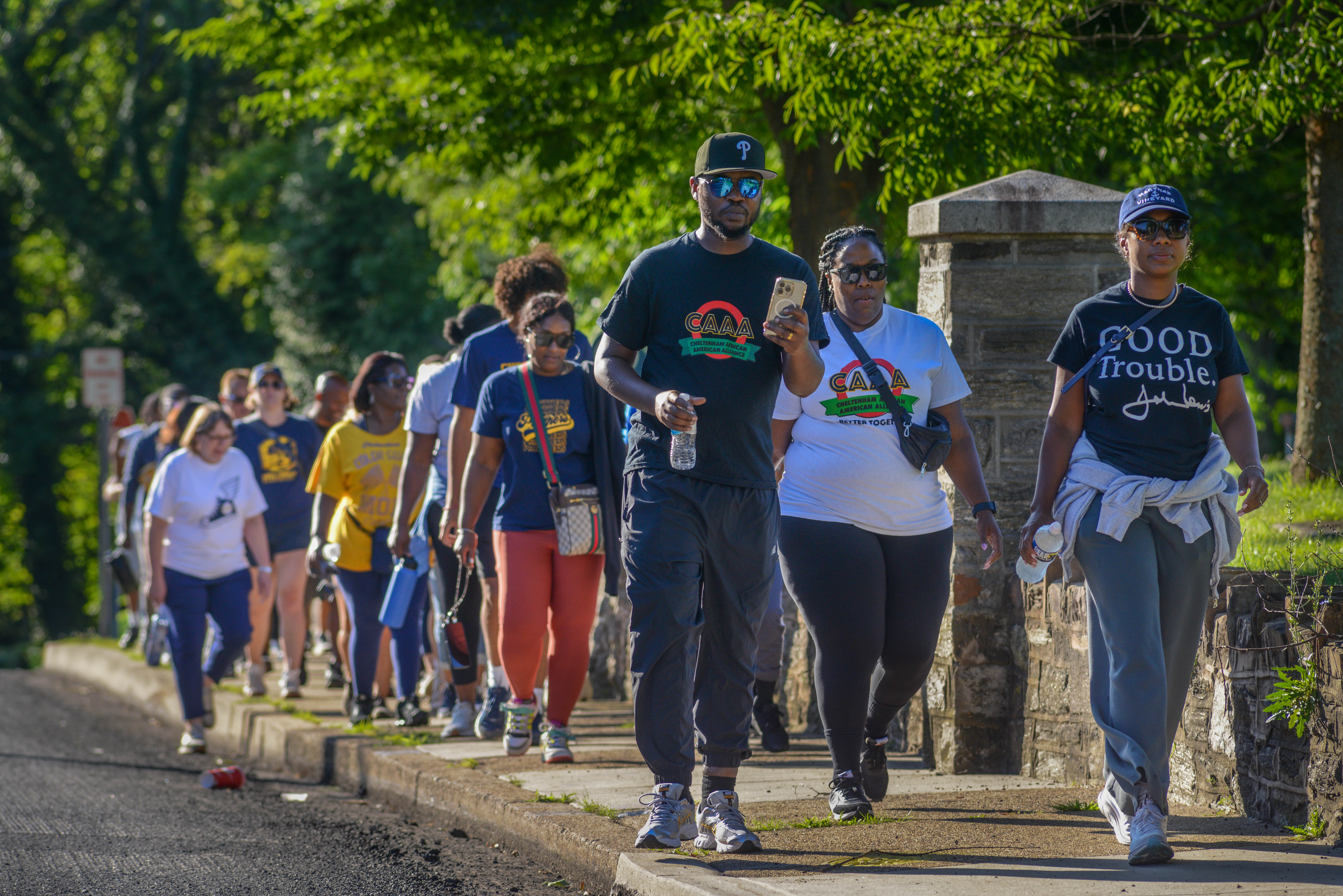
Roughly three dozen parents, students, and officials of Cheltenham School District marched across town over the weekend in an effort to show support for students in the aftermath of a football hazing scandal that led to criminal charges for coaches and players.
Taking place just days before the start of the 2026-27 academic year, Saturday’s march covered an almost two-mile stretch from the school district building to the high school.
“We need to come together as a community, address needed changes, and also push back against some of the false information out there,” said Ikysha Dearry, president of the Cheltenham African American Alliance.
The controversial $4.5 million pool project in Cheltenham can continue after a judge denied a resident’s injunction request over allegations that the township violated public bidding rules, The Inquirer’s Jess Rohan reports.
Jenkintown residents will be able to give feedback on the master plan for its historic library’s makeover. The borough is seeking a design and engineering consultant to guide the overhaul.
Cheltenham police killed a reportedly aggressive coyote in Wyncote, which they said tested positive for rabies.
Montgomery County Commissioner Neil Makhija is among the Pennsylvania Democrats working to reassure voters they’ll have the option to vote by mail in November’s midterm elections after a recent Supreme Court decision caused uncertainty.
Abington Township pools will close for the season after Labor Day. The Alverthorpe Wading Pool concludes its 2026 run on Thursday at 5 p.m., and the mini-golf course at Alverthorpe Park will transition from a daily schedule to weekend-only hours after the holiday for the remainder of September.
Jenkintown’s Cherry Street will be closed between York Road and Johnson Street on Tuesday and Wednesday between 7 a.m. and 1 p.m. while steel material is transported in the area. Additionally, pipe replacement work in Cheltenham will close a northbound lane on Washington Lane between Ashbourne Road and Rock Lane through the end of Friday.
Schools are closed on Monday in the Cheltenham and Jenkintown school districts in recognition of Labor Day.
A few area kindergartens have dipped below a 95% vaccination rate against measles — the threshold recommended by scientists to achieve herd immunity against the highly contagious disease. See what’s happening at your school.
🧗 Wyncote Women’s Climb: Rock climbers of all skill levels can climb and connect. ⏰ Tuesday, Sept. 1, 6-8 p.m. 💵 $30.50 for a day pass 📍 Philadelphia Rock Gyms, Wyncote
🎲 Game Night for Adults: Get to know your neighbors over some board and card games. ⏰ Tuesday, Sept. 1, 6:30-8:45 p.m. 💵 Free 📍 Glenside Library
🐦 Curtis Arboretum Bird Walk: Spot late-summer migrant birds during this outdoor excursion with Liberty Bird Alliance. ⏰ Friday, Sept. 4, 8-10 a.m. 💵 Free 📍 Curtis Arboretum, Wyncote
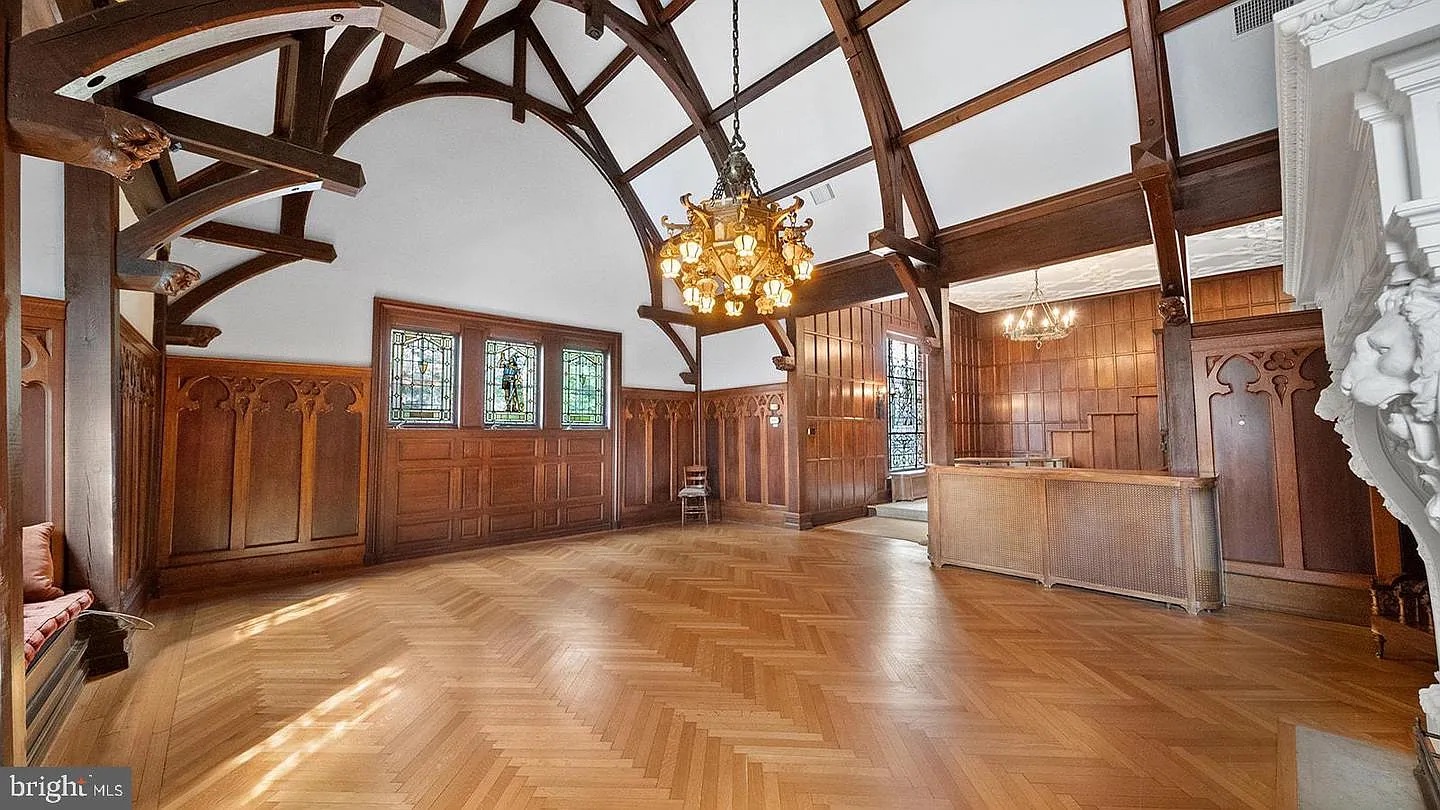
This nine-bedroom, eight-bathroom estate dates back to 1903 and has played host to a slew of interesting people within its walls: Inventor Walter Herring, who has ties to ticket turnstiles and the Slinky, once called the Normandy Tudor-style residence home, while Amelia Earhart and composer John Philip Sousa are thought to have spent time there.
Hand-painted and -crafted elements include exposed wooden beams and murals, and stained glass windows portray various fairy tales. The roof is composed of Italian terracotta shingles, per the listing agent. The property features a concrete whisper bench, plus a pool house designed by Horace Trumbauer, the Beaux-Arts architect who worked on notable buildings including Elkins Park’s Lynnewood Hall and the Philadelphia Museum of Art.
By submitting your written, visual, and/or audio contributions, you agree to The Inquirer’s Terms of Use, including the grant of rights in Section 10.
This suburban content is produced with support from the Leslie Miller and Richard Worley Foundation and The Lenfest Institute for Journalism. Editorial content is created independently of the project donors. Gifts to support The Inquirer’s high-impact journalism can be made at inquirer.com/donate. A list of Lenfest Institute donors can be found at lenfestinstitute.org/supporters.
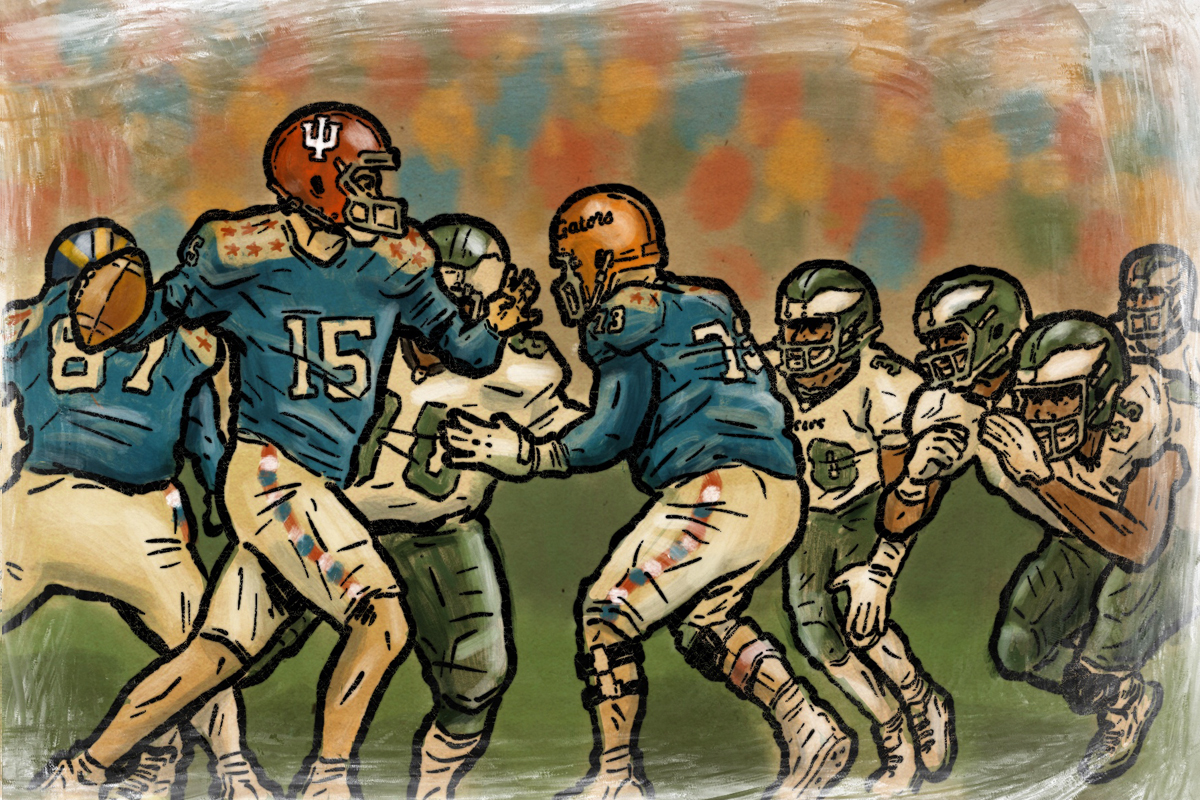
Imagine this: A college football player lauded as one of the best in the country gets roped into a collective of other top college players just as good for an All-Star team.
Except these players won’t prove their mettle against other college athletes; they’ll prepare to face the reigning Super Bowl champions.
The annual All-Star game, also formerly known as the Chicago Tribune All-Star Charity Game, featured not just the full preseason roster of an NFL team that won the league championship but also played many of its starters. The Eagles played in the event in 1949, 1950, and 1961, and actually lost the 1950 game.
It was an event that offered an honest proving ground for college players to see if they could handle the rigors of playing in the NFL against the league’s top team.
Imagine being a college player and trying to stop Hall of Fame receiver Tommy McDonald, who scored three touchdowns for the Eagles in the 1961 game.
What about the Steel Curtain of the Pittsburgh Steelers, against the likes of guys like Ernie Holmes and “Mean” Joe Greene? It happened in 1975 and again in 1976, the last year of the event.
But as NFL players got bigger, faster, and stronger, the annual preseason spectacle lost its allure. Once considered an even playing field with college’s best lining up against the cream of the NFL crop, the game began turning into a contest of men against boys.
Fast-forward to today’s college game and NFL, you’ll see that the parity in size, strength, and speed between top college products and NFL players is debatable.
Thanks to advances in sports science, training methodologies, and more recently, players simply being allowed to play longer college seasons, the idea reviving an annual game between college’s best and Super Bowl champions is at least a conversation starter, right?
One argument for the water cooler talk would be the NCAA’s recent “5 in 5 rule,” which will allow Division I athletes up to five years of eligibility as long as their first academic year begins no later than their 19th birthday.
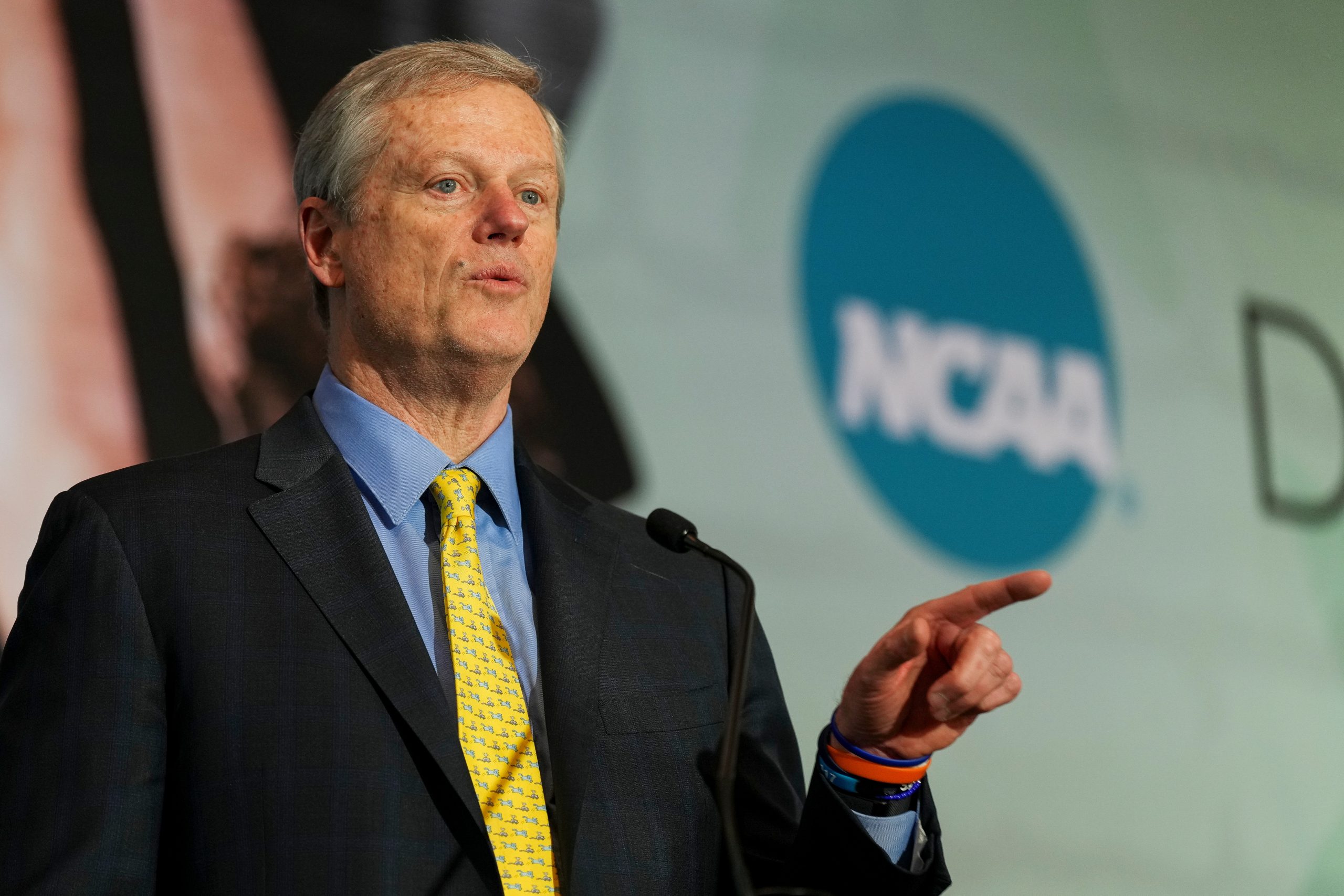
NCAA President Charlie Baker granted athletes five years of eligibility if they enroll in college no later than the academic year after their 19th birthday.George Walker IV
This rule would guarantee that top college athletes could play through their 24th birthday, which already felt like the norm due to the extra COVID-19 year. Earlier this month, a trickle effect began to occur within many college conferences as NFL players who recently signed pro contracts weighed the option to return and play a fifth season of college ball.
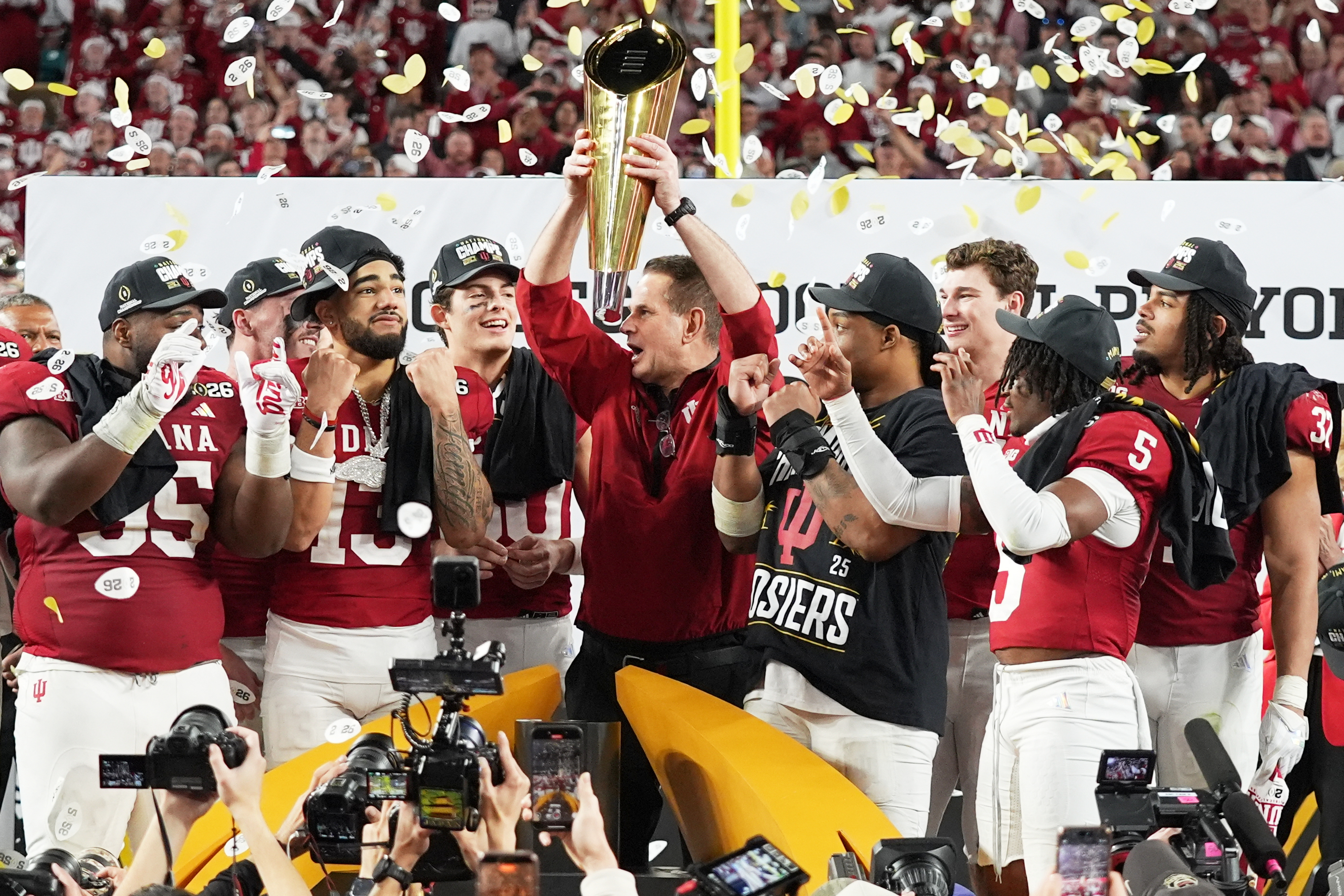
Also, the age gap between a college team and today’s NFL franchise isn’t too wide. Take just last season and look at the Indiana team that ran the table en route to a national championship. Average age? It was 23.1, and 18 of those players cracked the 53-man rosters of NFL teams this season, according to 247 Sports.
The average age of the Seattle Seahawks roster that won Super Bowl LX? Just 26.1.
While there’s precedent for a pro-am like the Chicago Charities College Game to make a return or even have a similar offshoot sprout up, a number of college coaches believe it will never happen — and it has nothing to do with a more level playing field when it comes to athletic abilities.
Indiana won the national championship with a team that had an average age of 23 when it defeated Miami in last season’s game. Lynne Sladky
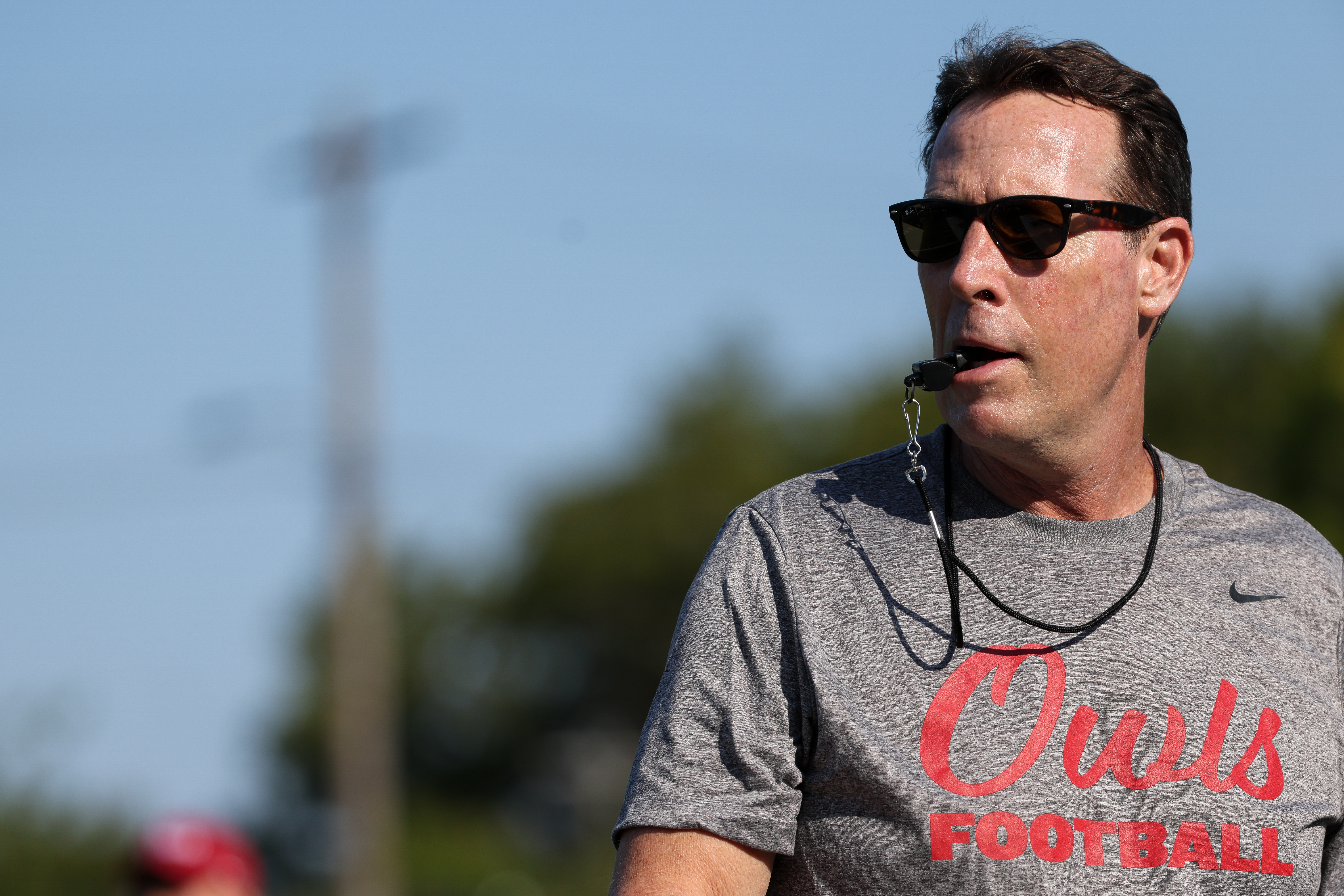
“I think the college kids would be very enthusiastic. I think the NFL guys would be like, ‘Why are we doing this?’” said Temple coach K.C. Keeler, who remembers the old Chicago Charities College All-Star Game well, but contends it has no place in today’s football. “Nowadays, [NFL teams] aren’t even playing their starters in the first preseason game, right? And now you’re talking about a whole game against a bunch of [college] guys who want to prove themselves.
“But this isn’t about athleticism, it’s about money. One injury can change the trajectory of a player’s career in both pro and college ball. I think just looking at the logistics of pro football, you’d be hard-pressed to find anyone that would be willing to match up these days and risk it all against college kids who have that ‘I’ll show you’ mentality.”
Temple head coach K.C. Keeler says there’s too much at risk for players in college and the NFL to consider reintroducing a spectacle like the old Chicago Charities College All-Star Game. Isaiah Vazquez / For The Inquirer
A similar thought process came from Villanova coach Mark Ferrante, who also took a larger look at the state of both college football and the country during the heyday of the annual exhibition.
“My gut tells me that it would be much harder for a college all-star team to beat an NFL Super Bowl champion,” said Ferrante. “And the reason I say that is, even though the college teams are keeping older guys and all the extra years of eligibility that really came through [because of the pandemic], that’s kind of going to get erased [as those eligibility years phase out].
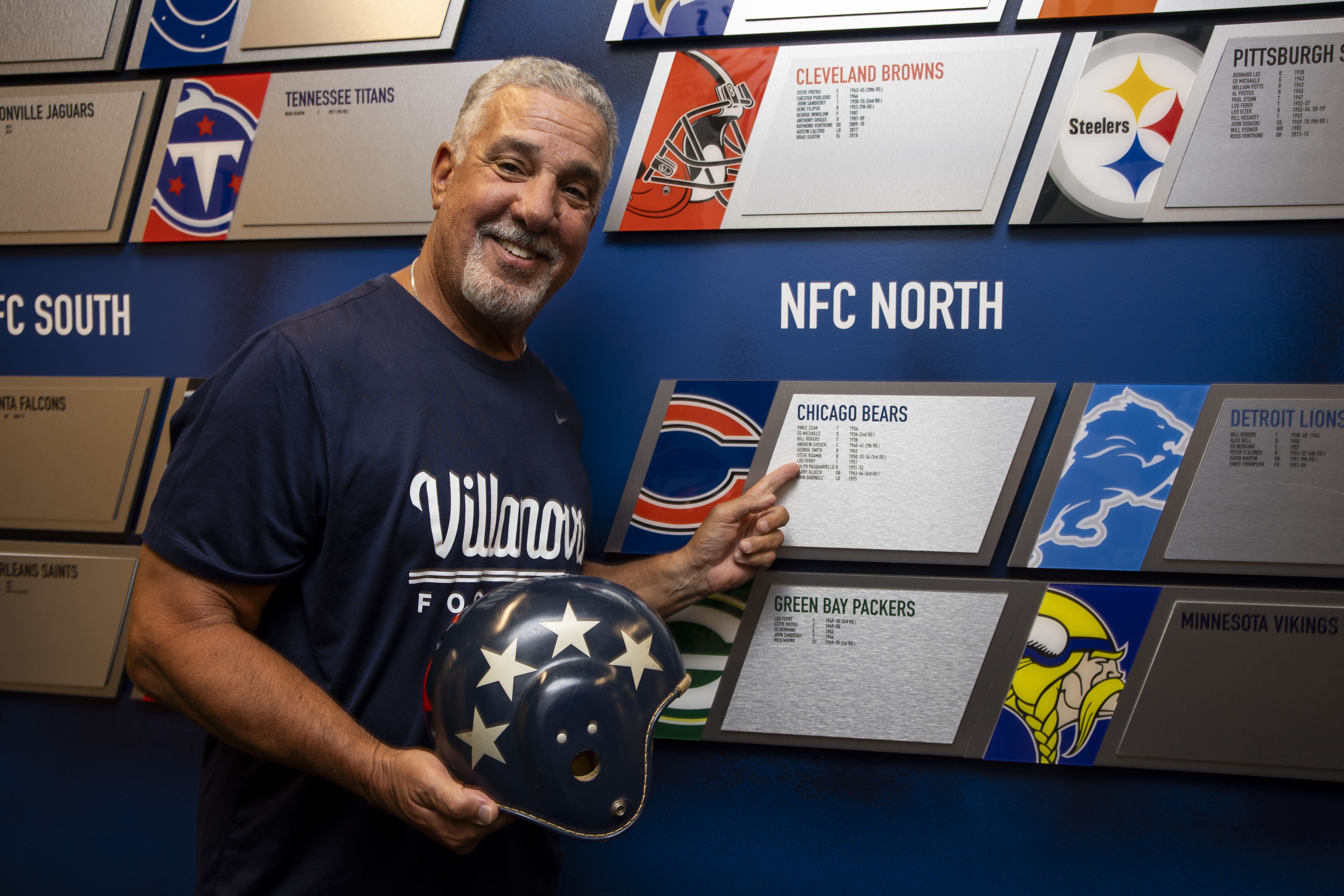
Villanova head football coach Mark Ferrante posed for a portrait with an all-star helmet worn by former fullback Ralph Pasquariello, who played in the 1950 Chicago Charities game, with the team that defeated the Eagles.Monica Herndon / Staff Photographer
“Also, I’d like to see the age rosters of those 1940s and 1950s teams. Because, I bet you a lot of those college guys might’ve actually been the same age or even a bit older than the pro guys they were playing against back then because of [World War II].”
To Ferrante’s point, it’s also harder for a college kid today to crack an NFL roster. There are a little more than 18,500 Division I players competing for 250-plus spots in the NFL draft.
“It’s still under 2% of college guys that make it to that level,” Ferrante said. “And we’re talking about the best of the best, not that it wasn’t the best back then, but it’s just different and dare I say harder to get to the NFL now than it was then.”
But the proving ground for college players in the Chicago Charities All-Star Game was apparent back then, with the Eagles feeling the brunt of it. In 1950, the Eagles lost to a collective of college players, one that featured former Villanova standout Ralph Pasquariello.
A star fullback for the Wildcats, Pasquariello was coming off an MVP performance a year earlier in the 1949 North-South Shrine Game where he scored the game-winning touchdown.
Pasquariello was drafted later that year in the first round (ninth overall) by the Los Angeles Rams. The Eagles’ loss was one of just nine times a college team defeated an NFL champion.
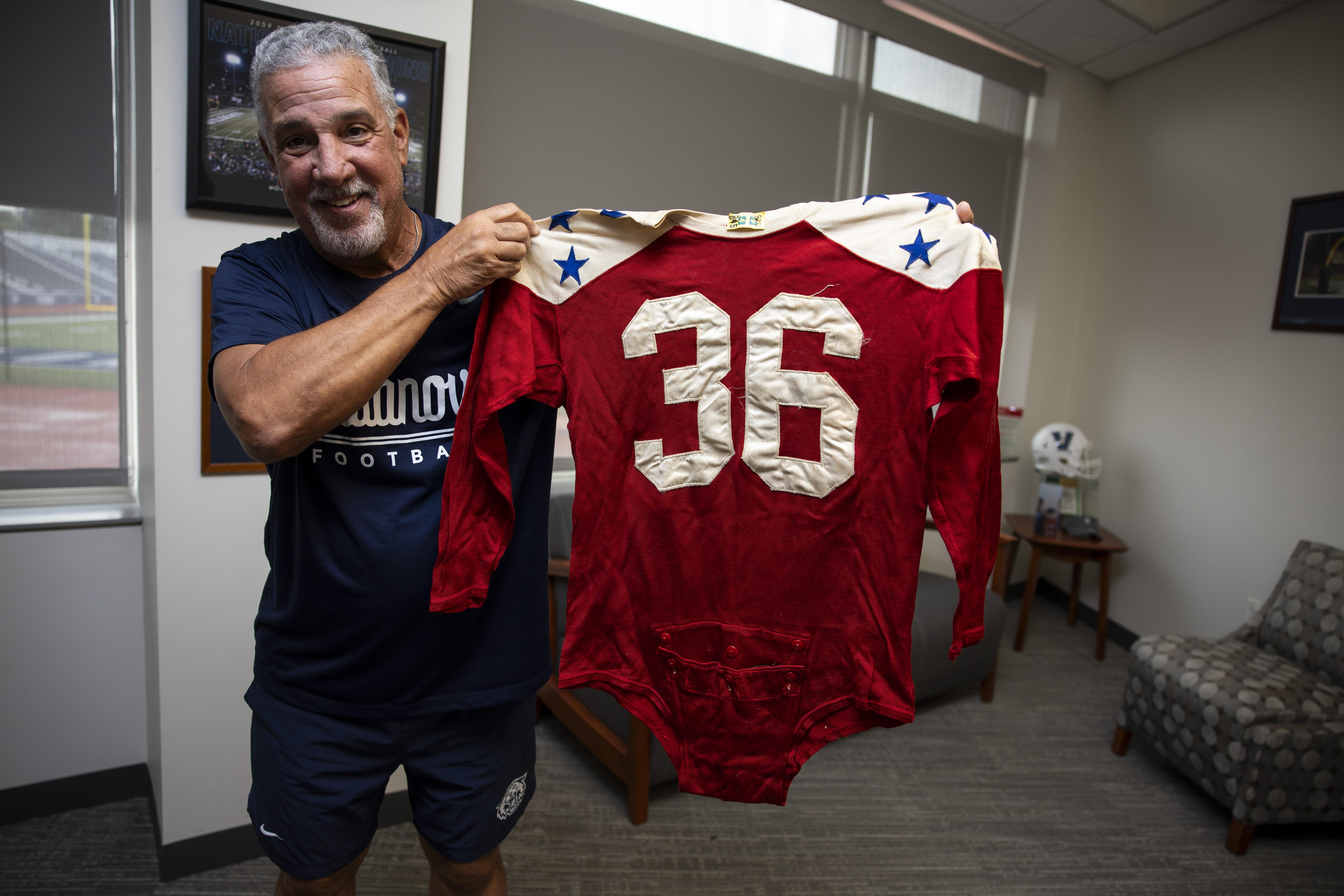
Mark Ferrante holds up an all-star jersey worn by former Villanova fullback Ralph Pasquariello, who played on the 1950 college team that defeated the Eagles in the Chicago Charities College All-Star Game. Monica Herndon / Staff Photographer
But the notion that a college group would beat an NFL champion today — even with a closer-to-equal playing field than we’ve seen between college and professional football in recent years — would be tough to imagine. Between lucrative name, image, and likeness deals in college and blockbuster sponsorship deals in the NFL, both coaches say there’s too much money to be made.
“Listen, it would be something really cool to see all these young players who are going to be 22- or 23-year-old seniors go up against NFL stars, but I just don’t think it’s viable,” Keeler said. “Everyone has a time frame now to make as much money as they can. Also, they’re getting rid of more and more [contests like these].
“I mean, look, they just got rid of the Pro Bowl. Why? The impossibility of suggesting that you can play at three-quarters speed and not get hurt when you’re tackling guys to the ground. That’s just not how this game works anymore.”
Eleven years ago, Carlton Williams was, to some, a symbol of government dysfunction.
He was leading the troubled Philadelphia Department of Licenses and Inspections, an agency engulfed in controversy over safety lapses and staffing issues following the deadly 2013 Market Street building collapse. The city controller called on Williams to resign, and Jim Kenney, then a candidate for mayor, promised that he’d get rid of him.
And yet Williams remained.
In July, he was named Philadelphia’s managing director, one of the most powerful positions in city government, second only to the mayor. He is assuming responsibility for L&I again, plus dozens of other agencies and thousands of employees who carry out the day-to-day operations that make the city run.
It is perhaps an improbable outcome for a longtime city employee who absorbed a level of scrutiny that could have easily ended his career.
But Williams proved durable, cycling through leadership positions across several departments while establishing himself as a City Hall insider. He has politically powerful allies and a reputation among City Council members as someone who will quickly act on their needs. That goes a long way with 17 politicians who value responsiveness and omnipresence, traits that they did not see in Williams’ predecessor, Adam K. Thiel.
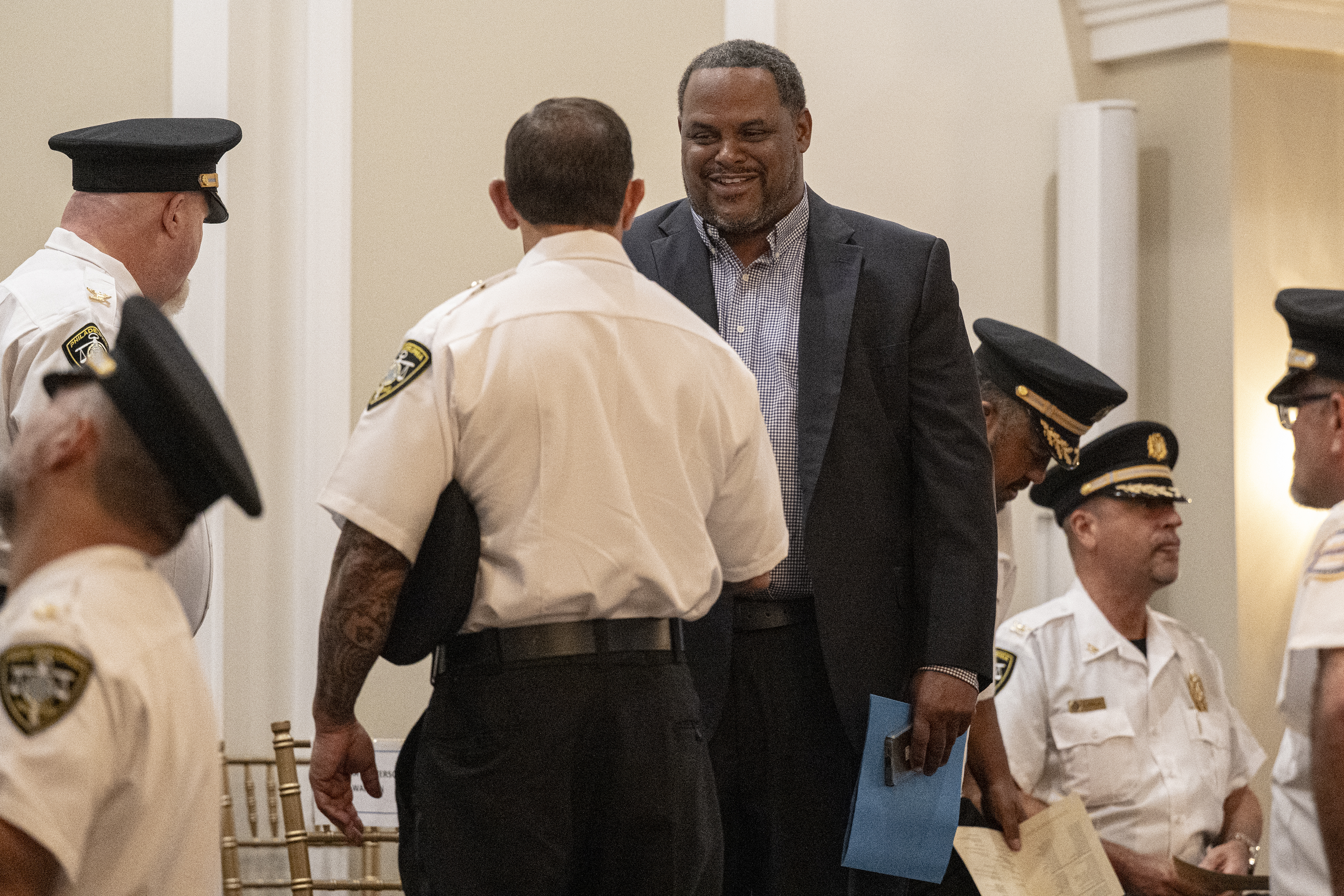
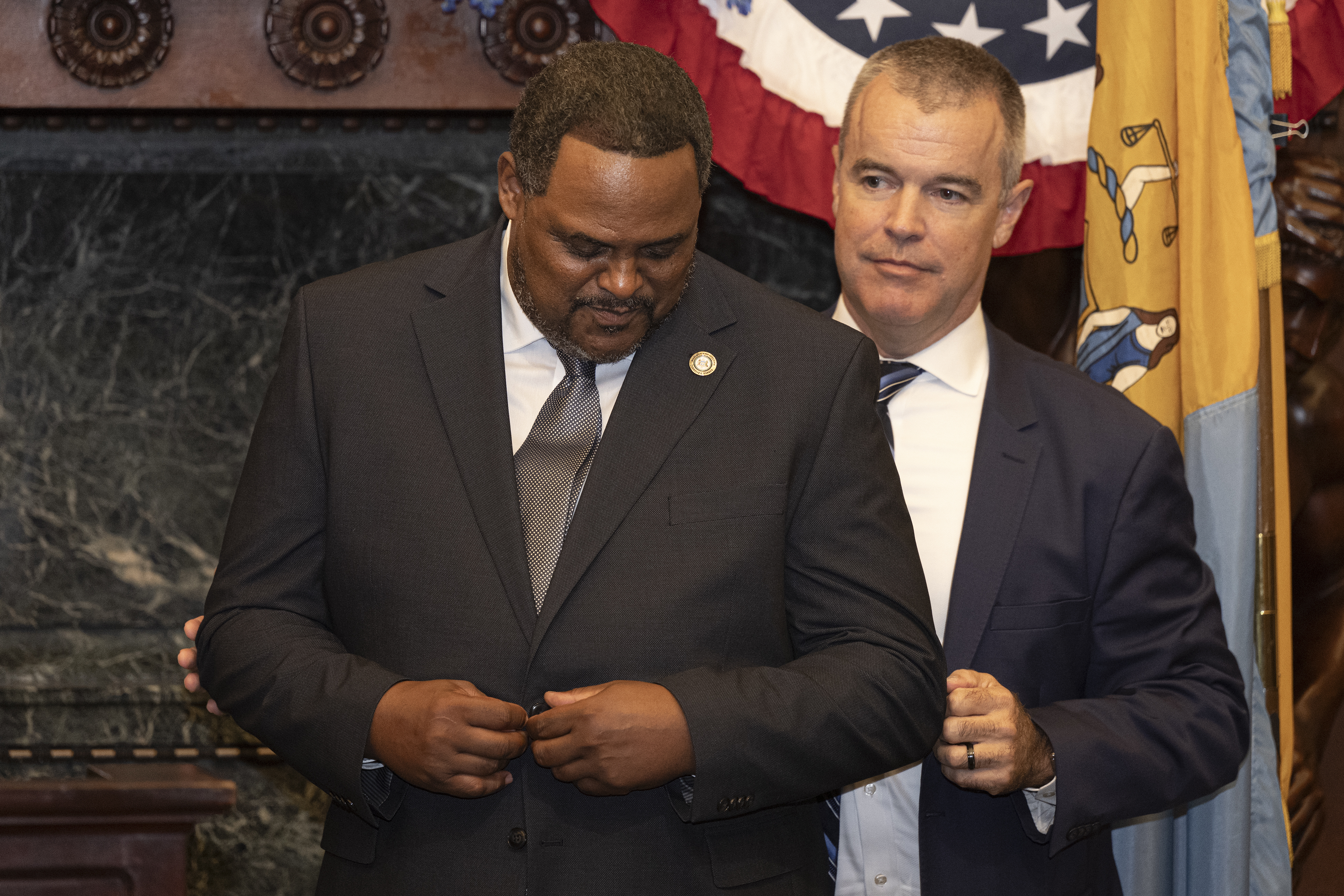
Newly appointed Managing Director Carlton Williams interacts with city officials during a correctional officer graduation ceremony at FOP Lodge 5 in Philadelphia on Friday.Jose F. Moreno / Staff Photographer
Perhaps most importantly for Williams’ ascent: he is all-in on Mayor Cherelle L. Parker.
The ties between Parker, 53, and Williams, 57, stretch back to their childhoods in Northwest Philly — he played football for the Oak Lane Wildcats, and she was a cheerleader. The team remains a part of both of their identities: Williams has led the Oak Lane Youth Association for 20 years, and the mayor often says proudly that she is a “Wildcat for life.”
Later in life, both found allies in the storied Northwest Coalition, a powerful political family. Williams said that he has known for 20 years that Parker would one day sit atop City Hall. And he most recently led Parker’s Office of Clean and Green Initiatives, overseeing the implementation of some of her key campaign promises.
“I’m bringing the ‘One Philly’ brand to the managing director’s office,” Williams said in an interview, echoing the mayor’s oft-used slogan. “Not to say it wasn’t being done under my predecessor. But I want to make sure it’s completely aligned with the mayor’s goals, because I believe in that vision.”
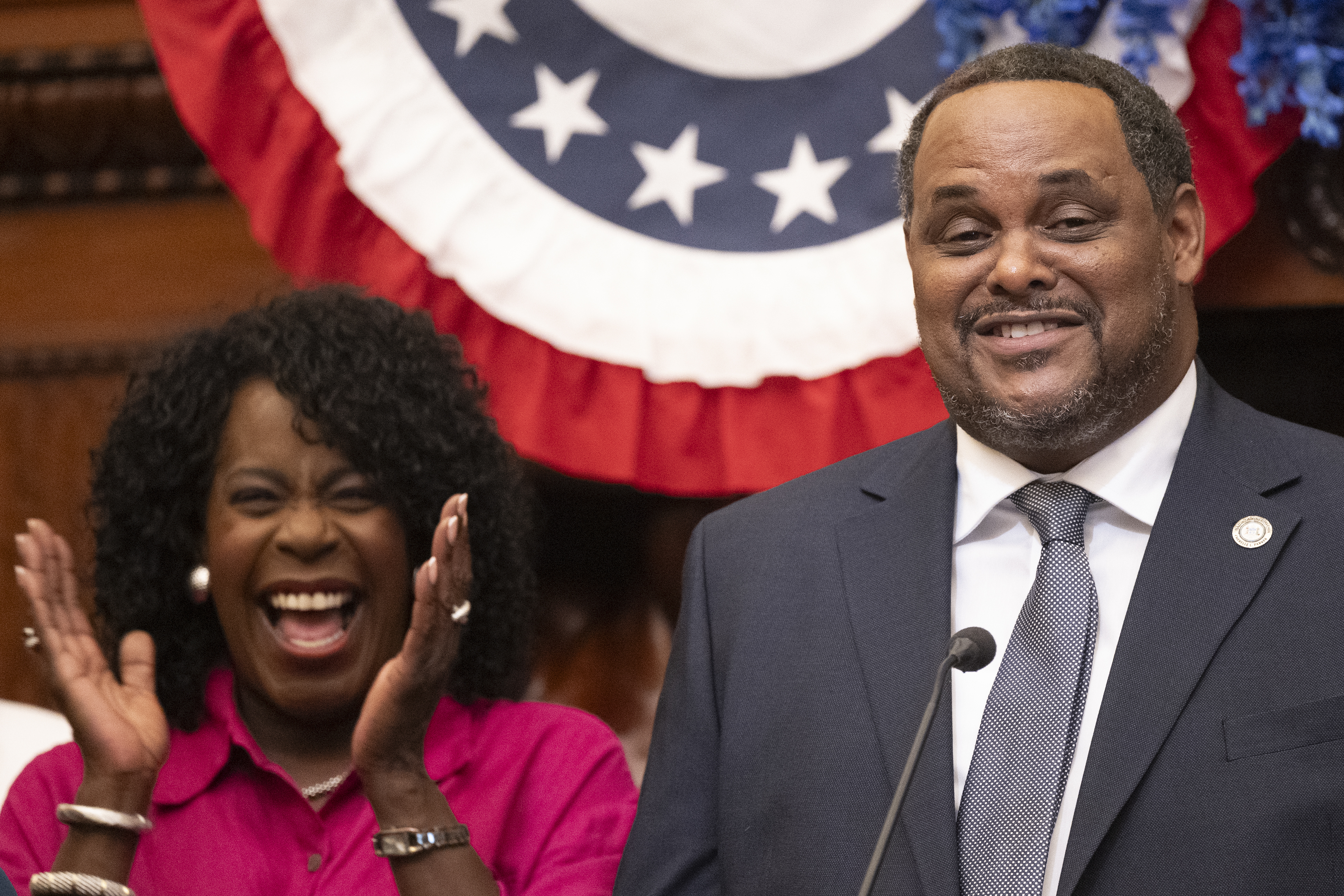
New Philadelphia Managing Director Carlton Williams speaks at the podium after being announced by Philadelphia Mayor Cherelle L. Parker during a July 28 news conference at City Hall.Jose F. Moreno / Staff Photographer
His appointment as managing director marks a new stage for the Parker administration that has seen significant turnover at its highest levels. And it is indicative of what Parker values in her inner circle: vast institutional knowledge and loyalty.
For the mayor, trust in Williams’ ability to operate within the bureaucracy and advance her priorities may outweigh his mixed record of management.
“Whenever we had a crisis of any kind in this city, he has been on my speed dial,” Parker said when she announced Williams’ appointment last month. “No matter who’s been leading, I’ve always called him for his counsel.”
Overseeing ‘a very broken’ L&I
Parker’s bet on Williams would have seemed almost unimaginable a decade ago.
A year after Williams was appointed to lead L&I, an excavator demolishing a wall on Market Street in Center City toppled the building onto an adjacent Salvation Army store, killing six people and injuring a dozen more. The inspector responsible for the demolition project died by suicide a week later.
Calls for reform abounded and questions swirled about whether the city’s agencies were responsible. There were multiple investigations launched and commissions convened to probe the disaster, and within days, Council members were pressing Williams to institute reforms that would bolster safety on private construction sites.
In response, Williams sought to hire more inspectors, increase their training, raise demolition standards, and create new specialized units within L&I.
Today, he says the collapse on Market Street was “one of the saddest moments” of his time in government.
“You have to lead through some tough challenges when you’re a leader,” he said. “You don’t get to pick and choose when you lead.”
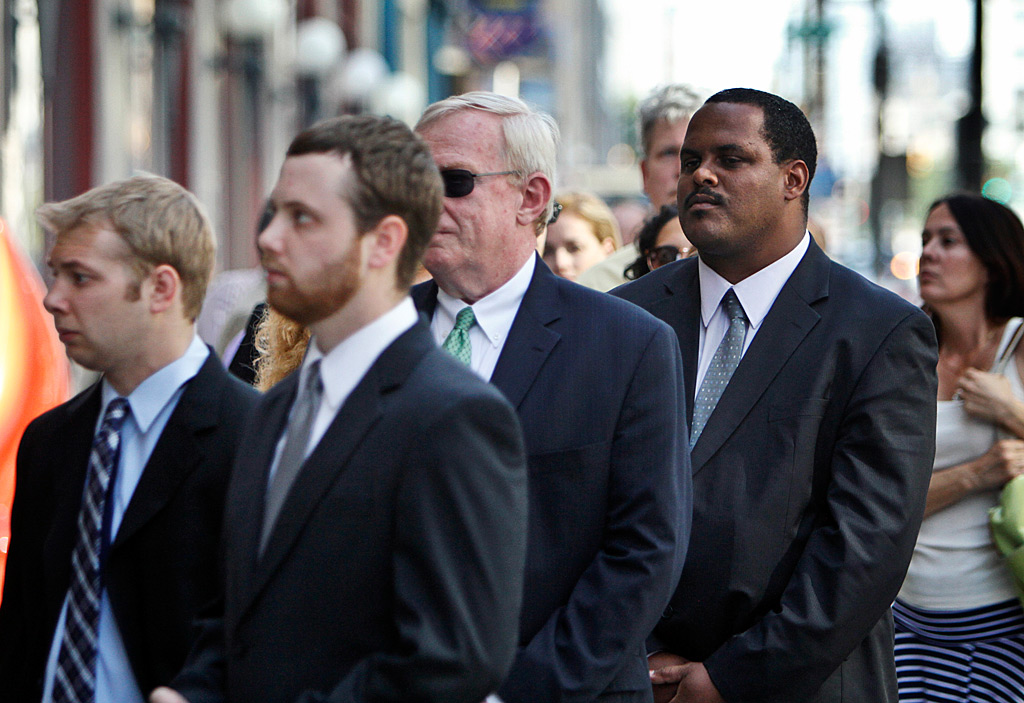
In this June 2013 file photo, then-Philadelphia Commissioner of the Department of Licenses and Inspections Carlton Williams (second from right) waits in line to attend a memorial service for Anne Bryan, who was among the victims of the Market Street building collapse.JOSEPH KACZMAREK / Associated Press
By fall 2015, then-City Controller Alan Butkovitz was calling on Williams to be fired. He said at the time that L&I had long been troubled, but that his office’s audit of the agency found that Williams had not made enough improvements.
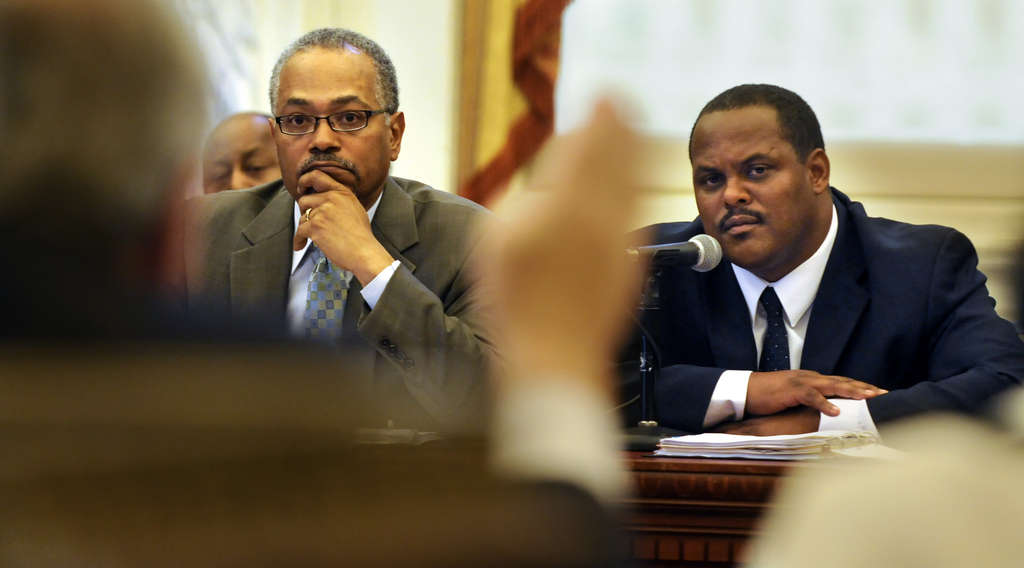
In this 2013 photo, then-Deputy Mayor Everett Gillison (left) and then-Commissioner of Licenses and Inspections Carlton Williams listen to members of City Council during a hearing.TOM GRALISH / Staff Photographer
Butkovitz now says that he blames former Mayor Michael Nutter instead, and that Williams was “caught between the mayor and me.” He said Williams had promised to provide the controller’s office with documents to assist in an audit, and then did not.
“I took it out on Carlton Williams at the time,” Butkovitz said.“His inclination was to cooperate with me, but at the time, it looked to me like duplicity. And I don’t think it was. I think he was overridden by higher authority.”
Nutter did not respond to a request for comment.
Estelle Richman, a former Philadelphia managing director who has held a variety of roles in local, state and federal government, said L&I is “one of the most difficult city departments.” She noted that past agency leaders have been pushed out, fired, indicted, and jailed.
“We can go back and say ‘maybe [Williams] should have done this or that,’ but the reality is it was a very broken department,” she said. “I think he did more to try to get it restabilized and back on track than any other commissioner at that time could have done.”
‘You have to be accessible’
Before taking the helm at L&I, Williams was a career bureaucrat.
Born in North Philly and raised in West Oak Lane, Williams started with the city at age 19, working in Fairmount Park as one of the first-ever members of the Philadelphia Ranger Corps. The program paid for part of his tuition to attend Temple University and marked his foray into public service.
Jeffrey Montague, who led the Philadelphia Ranger Corp. and has been a mentor to Williams for decades, said that at a young age, Williams showed potential.
“He didn’t try to fit in. He always stood out on his own independence,” Montague said. “He wasn’t trying to fit into a crowd.”
After working as a ranger, Williams spent three years running a Harrisburg youth program for AmeriCorps — the first and last time Williams lived outside the city.
He returned to Philadelphia to work for the Parks and Recreation Department, rising to become a deputy commissioner in both the recreation and streets departments.
Then came the four-year stint leading L&I, and when Kenney took office in 2016, he moved Williams back to his old job as a deputy in the streets and sanitation department.
But it didn’t last. Five months after Kenney took office, the streets commissioner was arrested for assault. Williams ascended to the role, and suddenly, the person who Kenney said he wouldn’t retain to lead L&I was in charge of one of Philadelphia’s most visible departments, overseeing transportation and sanitation operations citywide.
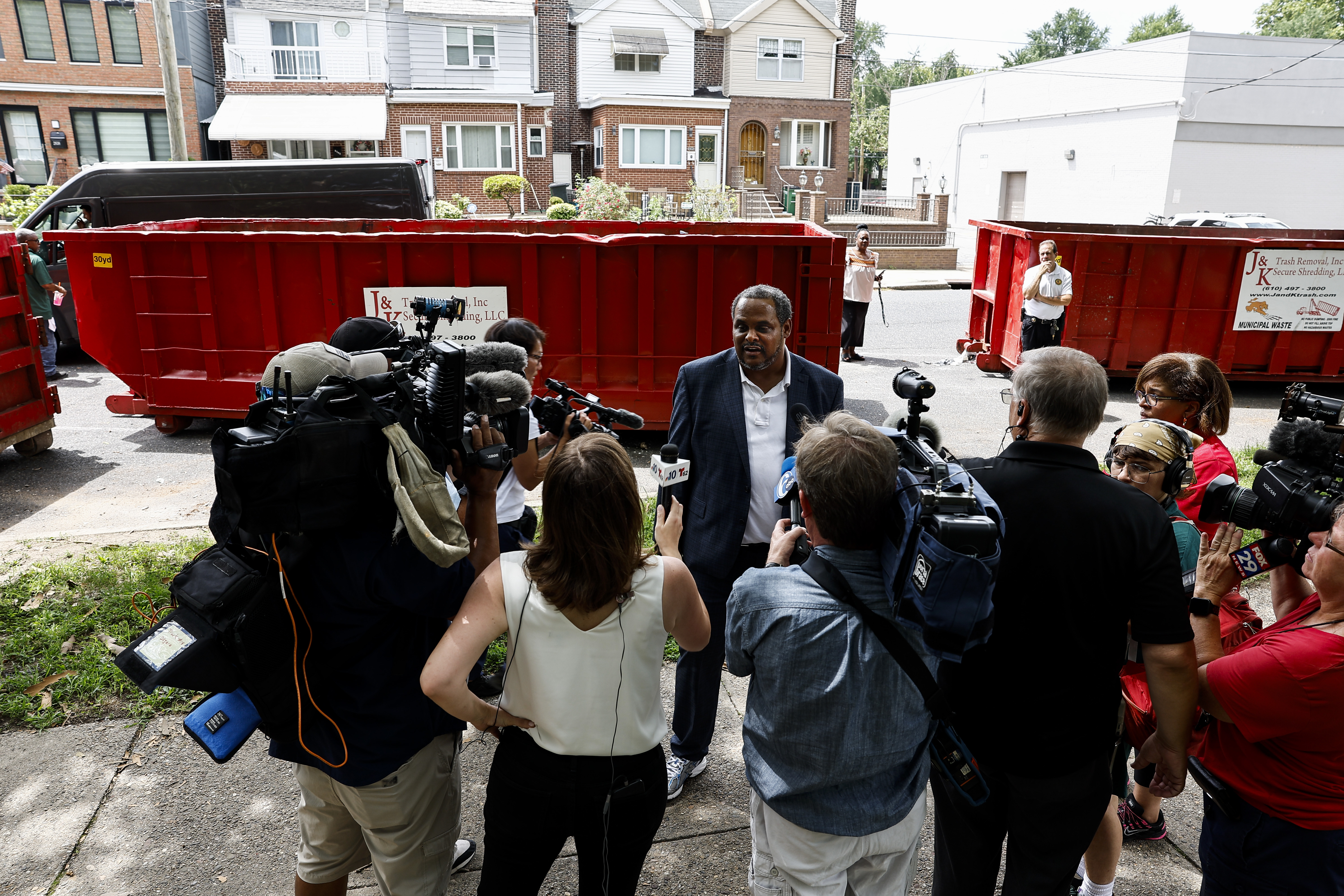
Carlton Williams, then the director of the Office of Clean and Green Initiatives, speaks during a news conference at Bigler and South 15th Streets on July 7, 2025.Monica Herndon / Staff Photographer
It was there where Williams solidified himself as a City Hall fixture. He said that as an administration staffer,he has “one primary that I listen to” — the mayor — but he has always tried to be attentive to Council.
That may be a key difference between Williams and Thiel, his predecessor. Thiel was the former fire commissioner and a nationally recognized expert in emergency management who was seen as a skilled behind-the-scenes operator.
But Council members said thatThiel did not foster close relationships with members of the city’s legislative body who are often conduits between residents and the mayor’s administration.
In addition, Thiel was often absent during major events in the city and he was frequently on leave — he joined the Army Reserve eight months into his tenure, and held several jobs outside city government, including as a consultant and professor.
That was a departure from prior administrations, when the managing director was often the public face of city operations.
On several occasions during the Parker administration, it was Williams who was in the spotlight. As director of the Office of Clean and Green Initiatives, he played a key coordinating role during the eight-day municipal worker strike that halted city services — most visibly, trash pickup.
And he oversaw the city’s response to a severe winter storm earlier this year that left much of the city encased in ice, despite weather emergencies typically falling under the managing director’s purview.
New Philadelphia Managing Director Carlton Williams (left) stands near the former director, Adam Thiel, before an introduction by Philadelphia Mayor Cherelle L. Parker during a July 28 news conference at City Hall.Jose F. Moreno / Staff Photographer
City Councilmember Anthony Phillips, whose district includes Northwest Philadelphia, said that prior to Thiel’s resignation, members of Council were “gravely concerned” about his frequent leave.Some members said that, in Thiel’s absence, Williams was their primary contact among Parker’s top staff.
“You can’t get certain things done and you can’t expect an efficient and effective city when you’re not present,” Phillips said. “Carlton is going to be the complete opposite of that.”
Williams said that his role as managing director is his only job aside from volunteering.
“It’s a full-time, 24-hour, seven-day-a-week job,” he said. “You have to be accessible.”
Williams’ coziness with elected officials has also drawn criticism.
A former city employee who previously worked for Williams said his relationships with Council amount to a “favor machine.” The staffer spoke on the condition of anonymity in order to preserve relationships.
“There is this cycle of Council getting calls from constituents, like ‘there’s a pothole,’ and then they get it fixed, and that’s the main work,” the former staffer said. “It’s not actually setting up systems that are solving the problems. It’s reacting to them.”
But Williams said some of his proudest achievements have resulted in systemic change: he led the installation of some of the first spraygrounds in the city, overhauled the recycling program, had BigBelly trash cans placed throughout Philadelphia, and started the annual Philly Spring Cleanup.
“He is probably one of the most well-prepared managing directors that the city has had,” Richman said. “He knows not only how operations work within the city departments, he knows the political structure of the city. And I believe a managing director has to know both.”
John Dougherty, the former leader of the politically powerful Local 98 of the International Brotherhood of Electrical Workers, and his ally, ex-Councilmember Bobby Henon, were on trial for bribery and other corruption charges. Prosecutors accused Henon of taking official actions as a Council member at Dougherty’s behest in exchange for a salaried, no-show job with the union.
One of the schemes prosecutors presented during the trial focused on efforts by union officials in 2015 to halt the installation of an MRI machine at the Children’s Hospital of Philadelphia, a project that was being completed with nonunion labor. Williams, at the time, was at the helm of L&I.
Department of Streets Commissioner Carlton Williams exits federal court on Oct. 12, 2021, after testifying in the John Dougherty and Bobby Henon bribery trial.Thomas Hengge / Staff Photographer
During the 2021 trial, Williams was called to testify. He told the jury that Henon called him in August 2015 to report that an unlicensed contractor was working at CHOP, and that he dispatched an inspector to investigate.
The inspector, Williams testified, issued a stop-work order on the construction of the MRI machine. But he insisted that he did not direct the inspector to do so, and told the jury that responding to complaints from Council members was a routine part of his job.
Ultimately, L&I reversed the stop-work order, and the MRI machine was built.
Prosecutors said Dougherty paid Henon to be his “man on the inside” in City Hall and used the episode at CHOP to establish evidence of a corrupt agreement between the two.
“You heard what happened,” Assistant U.S. Attorney Frank Costello told the jury during closing arguments. “Henon contacted Carlton Williams, Carlton Williams sent inspectors out and they issued orders — they issued orders to shut the job down.”
But defense attorneys said one public official asking another to take action doesn’t constitute a crime.
“Carlton Williams was the recipient of information just passed on to him about the MRI and the unlicensed contractor,” said defense attorney Brian McMonagle. “That ain’t a crime.”
During the 2023 mayoral campaign, when a half-dozen Democrats could have plausibly won the party’s nomination, Williams nearly left the city.
He said he got a job as the public works director in San Francisco, but before he accepted, Parker won the primary election. Williams decided to stay.
“I wanted to work for Cherelle Parker,” he said. “I believed in her vision.”
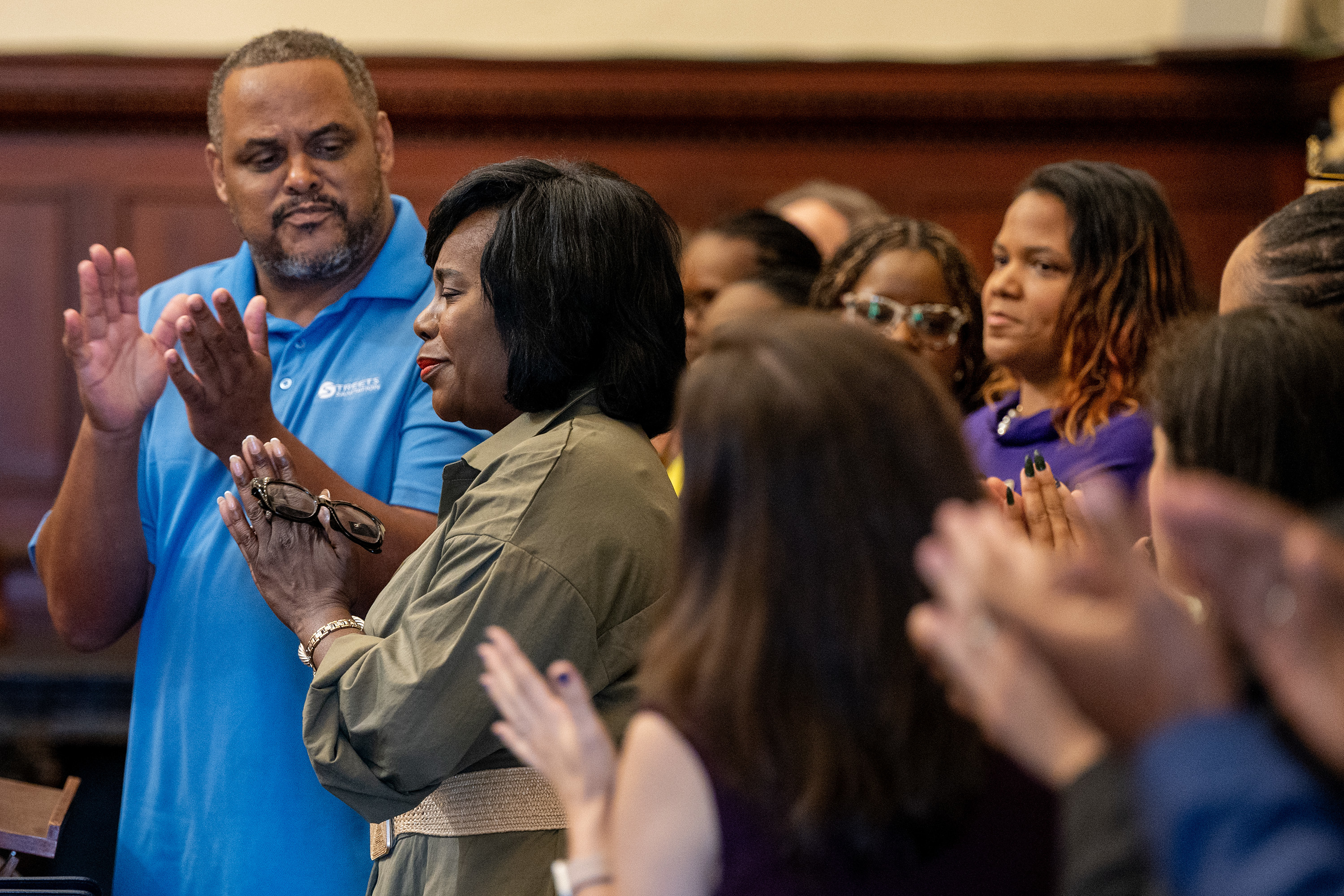
Mayor Cherelle L. Parker is applauded by members of her administration at City Hall on July 9, 2025, hours after reaching a tentative contract agreement with District Council 33 leaders overnight, ending the workers’ strike. At left is Carlton Williams, director of the Office of Clean and Green Initiatives. Chief Deputy Mayor Sinceré Harris is behind the mayor at right.Tom Gralish / Staff Photographer
Parker took office in 2024 and created a new role: director of the Office of Clean and Green Initiatives. Williams would carry out her campaign promise to rid the city of its “Filthadelphia” moniker by implementing twice-weekly trash collection, an expansion of illegal dumping enforcement, and a biannual citywide program to clean every block.
As managing director, Williams’ portfolio will grow substantially. He will be responsible for the city’s response to public health and homelessness, as well as overseeing large agencies like the fire department and the prisons.
He will also coordinate the city’s strategies in Kensington, the beleaguered neighborhood and the site of an open-air drug market that the Parker administration has spent more than two years working to shut down. Williams said there is inherent pressure that comes with being responsible for addressing such long-entrenched issues.
“But I work best under pressure, and so I take that as a badge of honor,” he said.
Williams said he intends to prioritize communication with residents because they “understand that everything can’t get fixed at one time.”
“But at least we can say what needs to be done, when it’s going to [be] fixed, what’s the timeline,” he said. “I manage through the eyes of everyday citizens. I want what they want.”
There once was a time when players in the NFL and college faced off in a preseason game.
From 1934 to 1976, the annual Chicago Charities College All-Star game featured an NFL team that won the league championship and had many of its starters play against college football’s best athletes.
In this day and age, that’s a crazy concept to consider. Although the playing field and athletic abilities are likely to be evenly matched, most NFL starters don’t even play in preseason games. It’s too much of a risk.
But the Eagles once played in the event in 1949, 1950, and 1961, and actually came up short in the 1950 game, which included a former Villanova standout.
Kerith Gabriel turns back the clock to look back on an event known for proving ground for college players to see if they could handle the rigors of playing in the NFL.
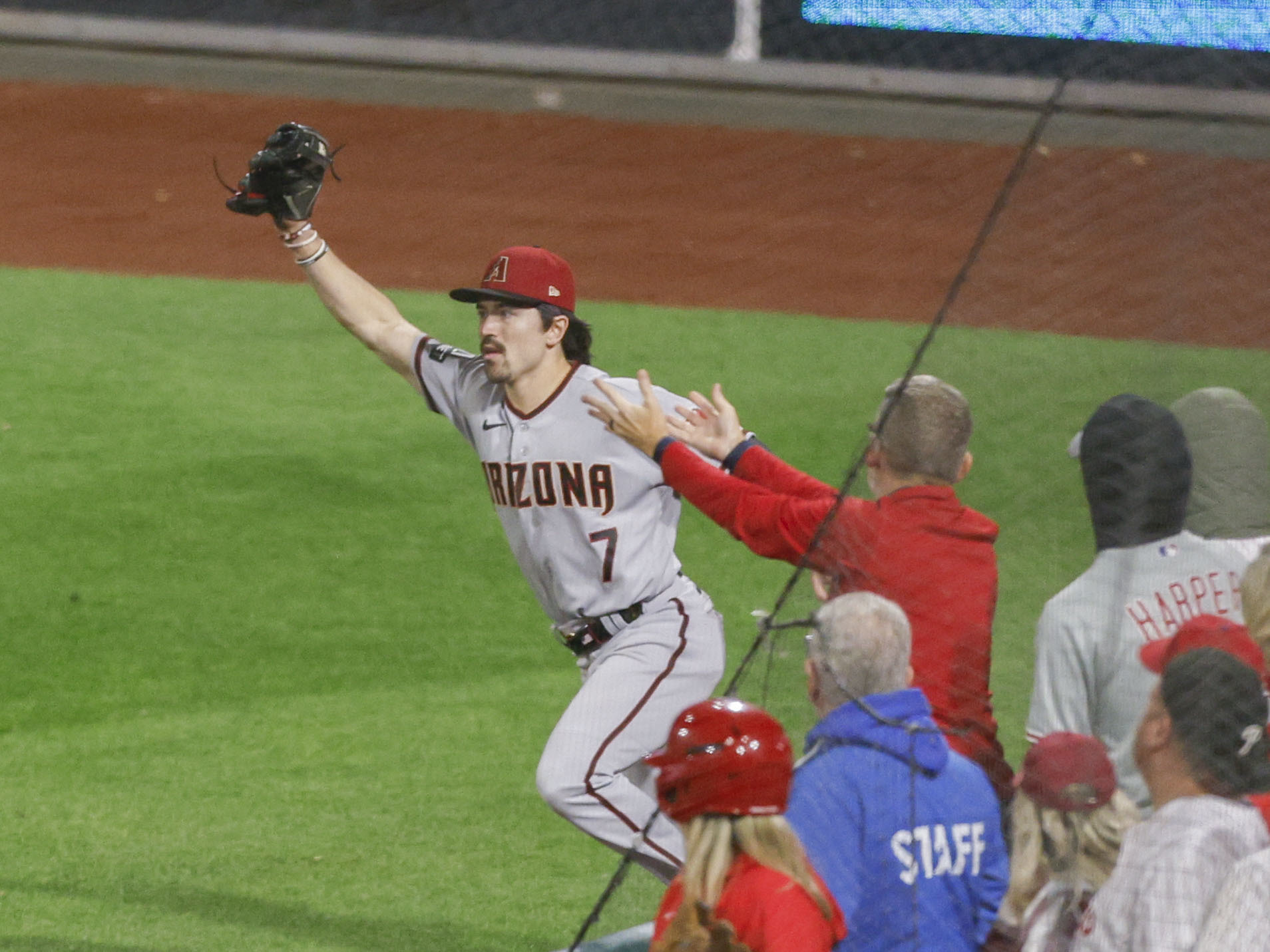
Diamondbacks outfielder Corbin Carroll catches the final out to win Game 7 of the National League Championship Series over the Phillies on Oct. 24, 2023 at Citizens Bank Park.Steven M. Falk / Staff Photographer
A pivotal week for the Phillies began in the desert with three games against the Diamondbacks that will have implications in the National League wild-card race. It was a good time, then, to check in with Arizona general manager Mike Hazen. He joined Scott Lauber on Phillies Extra to discuss his absent star player, the playoff race, and that memorable (or forgettable, depending on your perspective) NLCS in 2023.
And here’s a fun fact: Last Saturday,Cristopher Sánchez joined Jesús Luzardo with 200 strikeouts this season. The pair also surpassed 200 strikeouts in 2025. Their milestone made it the first time the Phillies have had multiple lefties with more than 200 strikeouts in consecutive seasons since Cole Hamels and Cliff Lee in 2012 and 2013.
Next: The Phillies continue their series in Arizona at 9:40 tonight (NBCSP). Jesús Luzardo (12-5, 3.09 ERA) will start against Diamondbacks left-hander Eduardo Rodriguez (14-4, 2.50).
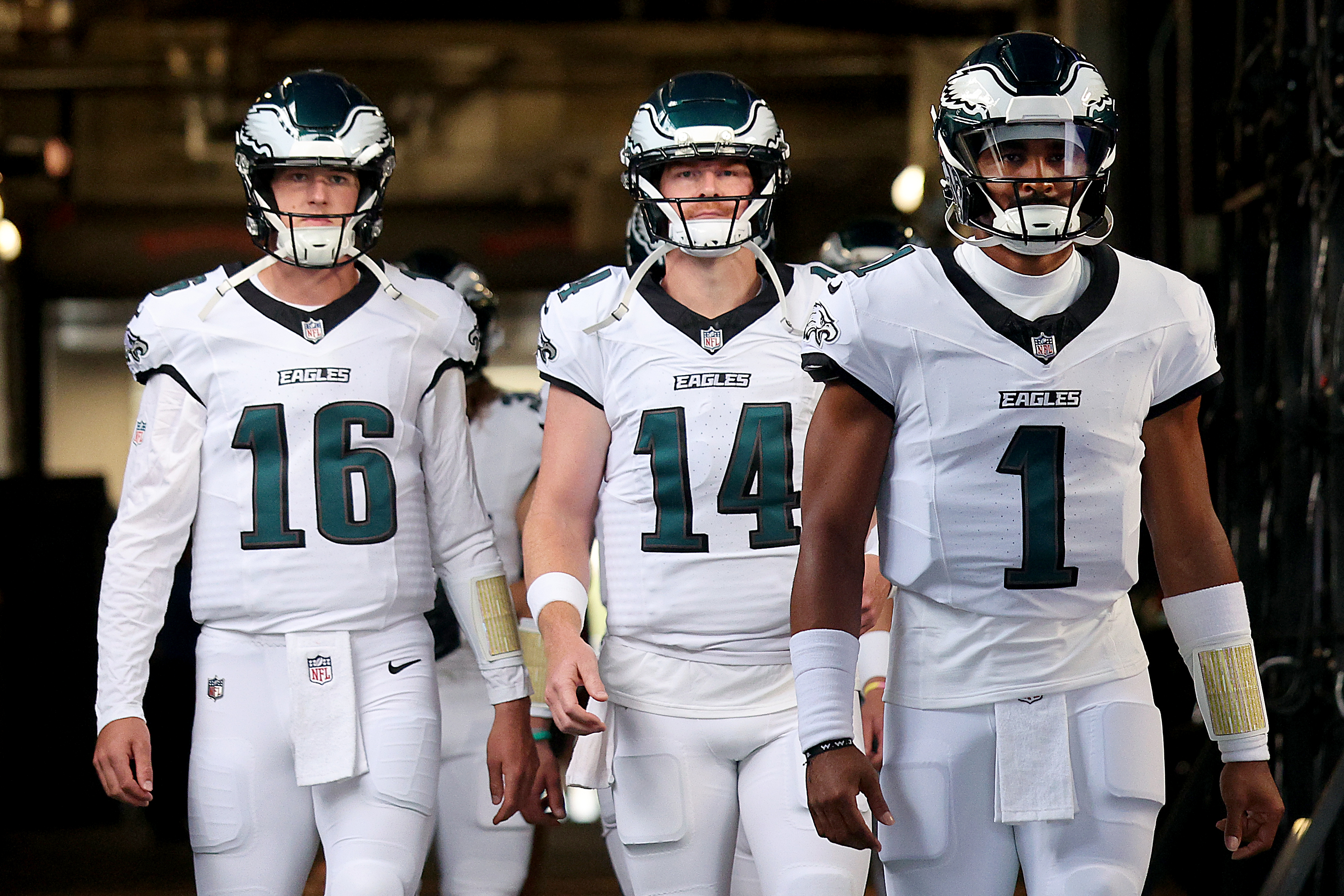
Philadelphia Eagles quarterback Jalen Hurts (right) walks to the field with quarterback Tanner McKee (left) and quarterback Andy Dalton (center) before the preseason game against the Baltimore Ravens on Aug. 15.David Maialetti / Staff Photographer
Even after announcing the initial 53-man roster, the Eagles didn’t reveal who will back up Jalen Hurts against the Washington Commanders next Sunday in the season opener.
The real question here seems to be: Why did the Eagles go the unconventional route of keeping all four (Hurts, Andy Dalton, Tanner McKee, and rookie Cole Payton) quarterbacks?
“I feel like all those guys have value for our team — some is short-term value, some is long-term value,” says general manager Howie Roseman.
And Uar Bernard and Joshua Weru, both from the International Player Pathway, cleared waivers on Monday and later signed with the Eagles’ practice squad.
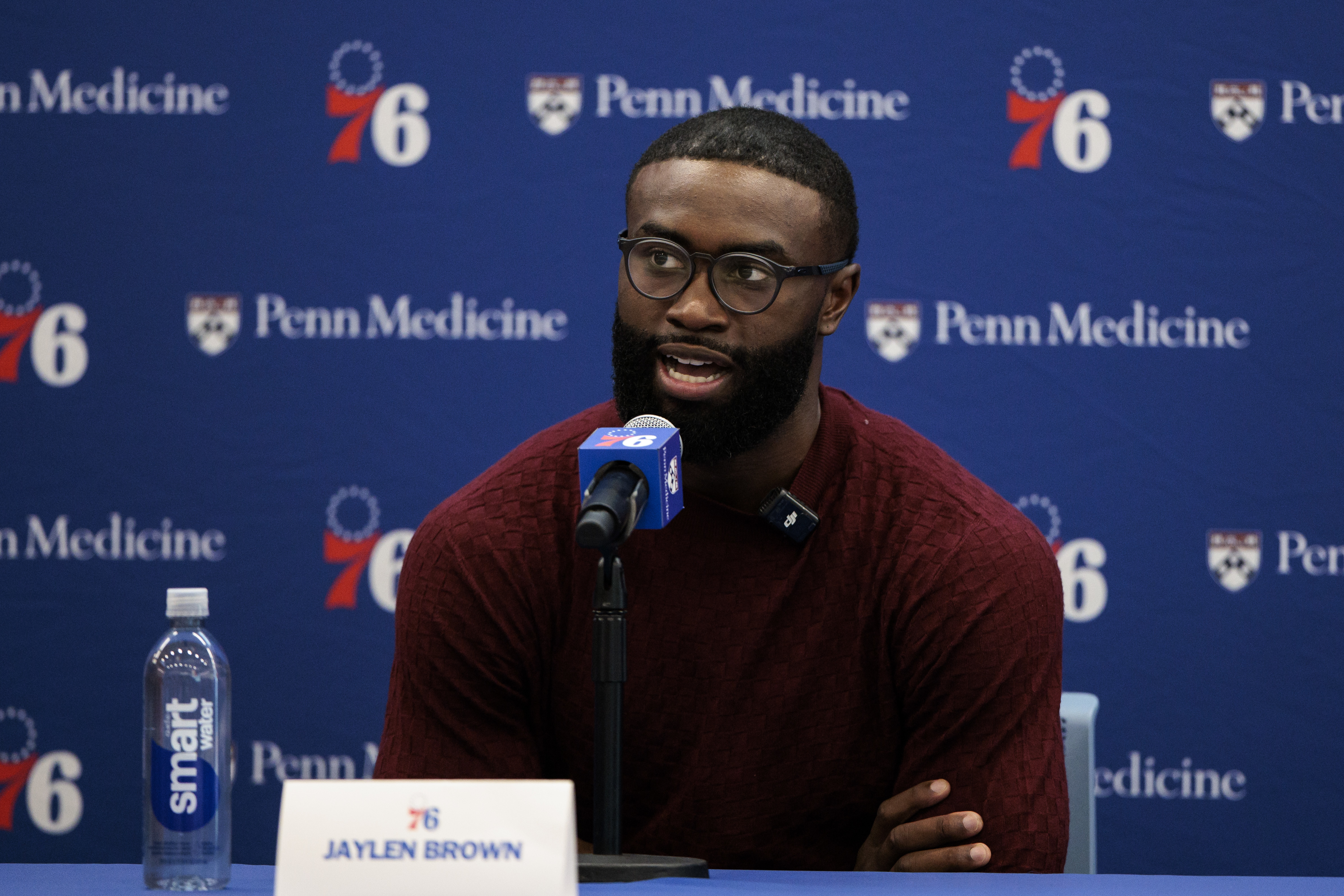
Jaylen Brown averaged 28.7 points per game during his final season in Boston.Monica Herndon / Staff Photographer
Jaylen Brown has had a long offseason. It started with trade rumors positioning him in Milwaukee as part of a trade to lure Giannis Antetokounmpo to Boston. It continued with personal criticisms and deep examinations of his game. Then, finally, it culminated with a trade to the 76ers as part of a deal that brought back Paul George and picks to Boston.
Brown has had to reckon with the Celtics’ decision to part ways, his icy relationship with former running mate Jayson Tatum and a divorce with the only city he has known in his adult life. The final step came this weekend in Boston, where he held a block part at Boston Common and celebrated the city before officially taking off for Philly. They celebrated him too, as Chris Hine documented from the scene.
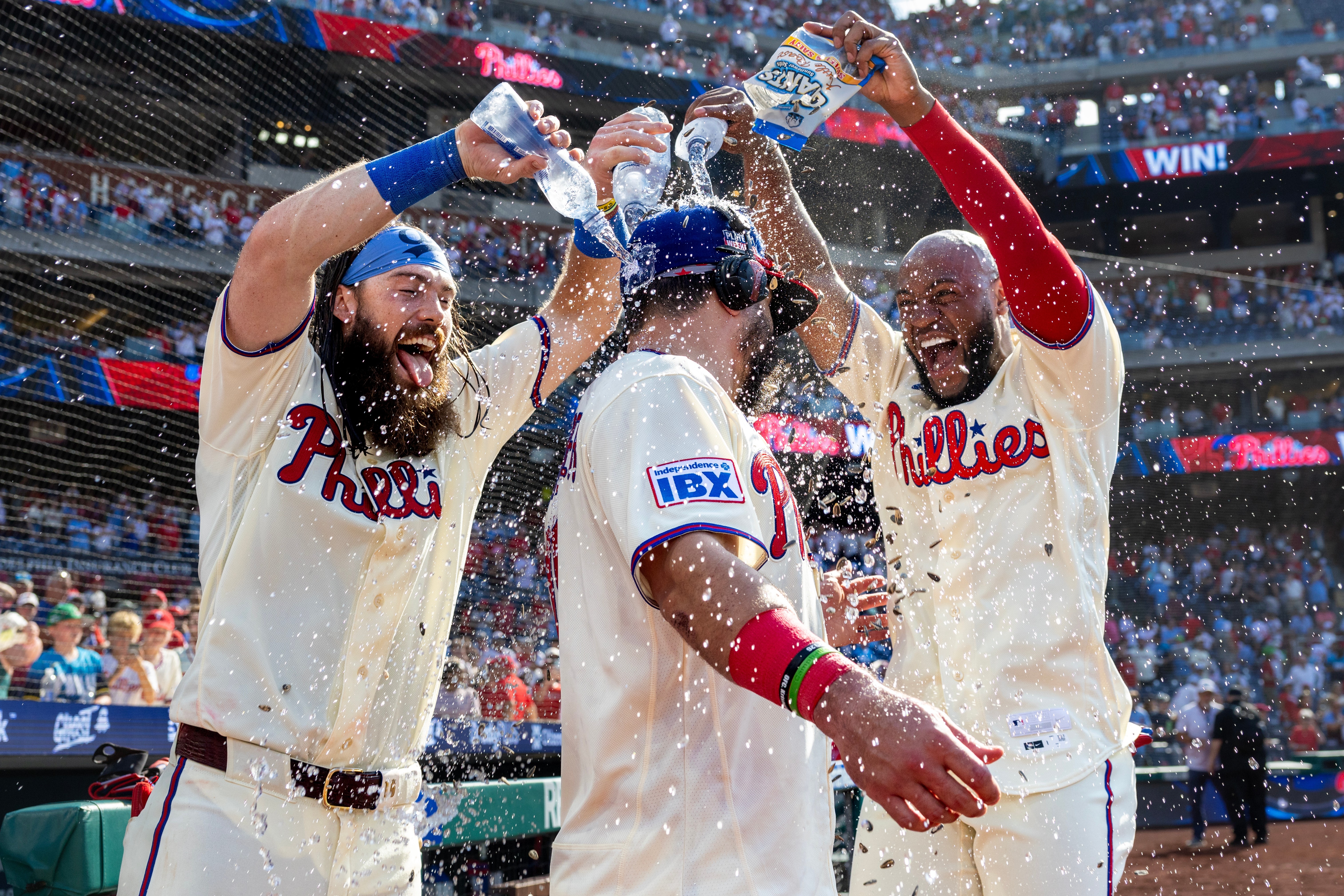
The Phillies have had a lot to celebrate lately.Laurence Kesterson
The Diamondbacks series will serve as a benchmark as to whether these Phillies even have a chance of achieving what the 2023 Phillies came so close to achieving.
They could leave Arizona on Wednesday with the wild-card lead if they take care of business and if the Brewers batter the Cubs. But the Diamondbacks have lately been poison for the Phillies, writes columnist Marcus Hayes.
🧠 Trivia time
How many NFL teams kept four quarterbacks on the initial 53-man rosters this year?
A) Six
B) Four
C) One
D) Three
What you’re saying about favorite outdoor activity
We asked: What is your favorite outdoor activity and why?
Golf is my favorite outdoor. Even a so-so round can’t mess up a beautiful day outside with friends. — Tom G.
Walking up the gang plank of a cruise ship. Any ship going any where. My “safe place.” Sailing aboard the Queen Mary 2 for 11 nights in November. — Ronald R.
I used to bike often back in Orange County, but crashed and broke my collarbone right before moving here to Prescott AZ. Now at 88 my favorite outdoor activity is hiking while taking bird and wildlife photography. And we have enough Bald Eagles here to remind me of my favorite team. — Everett S.
We compiled today’s newsletter using reporting from Marcus Hayes, Kerith Gabriel, Lochlahn March, Scott Lauber, Jeff Neiburg, Chris Hines, and Jeff McLane.
By submitting your written, visual, and/or audio contributions, you agree to The Inquirer’s Terms of Use, including the grant of rights in Section 10.
As always, thanks for reading! That’s it from me this week, Maria will be in your inbox tomorrow. — Bella
Chris Christie has been a two-time Republican presidential candidate, the governor of New Jersey, and a U.S. attorney. But history might show that he generated the most enduring national impact in a different role, as the godfather of legalized sports betting.
In 2012, when he was still New Jersey’s governor, Christie signed a bill that would allow customers to wager on professional and collegiate sports at 12 casinos and four racetracks.
He correctly predicted that the bill — which directly challenged a longstanding federal law that restricted legal sports betting to just a handful of states — would lead to him being sued by powerful opponents, and that over the long haul, his efforts would succeed.
But in a recent interview with The Inquirer, Christie said that even he did not imagine that sports gambling would evolve from a location-based attraction to phone apps that are readily accessible and open for business around the clock. Americans spent a record $165 billion on sports wagers in 2025, amid growing concern from health experts and lawmakers that mobile gambling is driving a health epidemic.
Nor did Christie — who now works as a strategic adviser to the American Gaming Association — envision the rise of prediction markets, some of which have been accused in lawsuits across the U.S. of running illegal sports betting operations. Christie, however, said he is unsurprised that two prediction market companies count Donald Trump Jr. among their advisers.
Christie’s sports gambling crusade began just two months after New Jersey voters approved a referendum in November 2011 to legalize sports betting in the state.
Casino industry lobbyists had long championed the type of bill that he signed, predicting that sports betting would be a double win for the state, attracting new customers to struggling casinos and generating revenue to benefit elderly and disabled residents.
But a federal law, the Professional and Amateur Sports Protection Act, had since 1992 restricted legal sports betting to Delaware, Montana, Nevada, and Oregon. Christie wasn’t deterred.
“Am I expecting there may be legal action taken against us to try to prevent it? Yes,” he told reporters in 2012. “But I have every confidence we’re going to be successful.”
Then the National Collegiate Athletic Association — along with Major League Baseball, the NFL, the NBA, and the NHL — sued Christie for violating the federal law, igniting a legal saga that would wind for years through district and circuit courts before reaching the U.S. Supreme Court in 2017.
Christie argued that PASPA had been a constitutional overreach that violated the Tenth Amendment’s “anti-commandeering” doctrine.
“We lost the first six times [in lower courts],” Christie said. “I had the sense that maybe I was wrong.”
In 2018, the Supreme Court voted to overturn PASPA, giving states the freedom to enact their own sports betting laws.
This interview with Christie, 63, has been edited and condensed for clarity.
Why was legalizing sports betting in 2012 a priority for you?
I was trying to differentiate Atlantic City, and give the casinos something new and different to offer, and to help preserve the horse racing business. I saw it at the time as an offensive and defensive measure. That was the motivation.
The leaders of professional sports leagues were critical of your efforts, and deeply opposed to legalizing sports gambling. What did you think of their position?
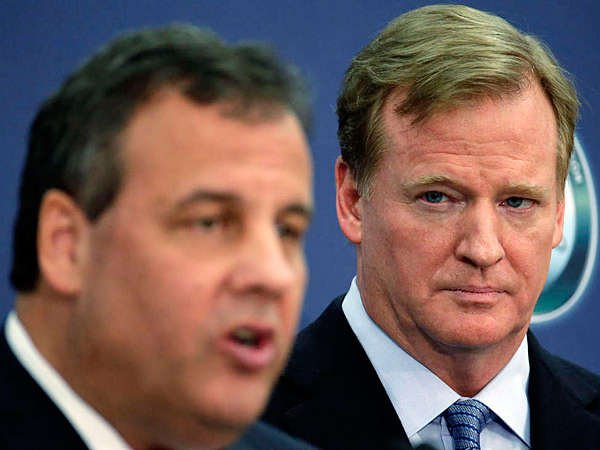
I thought that their opposition was both wrongheaded and hypocritical, and I told them so. [Then-NBA commissioner] David Stern was probably the most vehement against it, but [NFL Commissioner] Roger Goodell was a driving force, too. I told them, ‘[Sports betting] is happening anyway. You’d rather have people bet with illegal bookies — either mob-related, or offshore — than companies who are in the business and regulated by the state?’ It made no sense.
Along with his peers in other professional sports, NFL Commissioner Roger Goodell (right) was opposed in 2012 to an expansion of legalized sports betting.
Were you surprised to see those leagues later enter into lucrative partnerships with sportsbook companies?
I wasn’t surprised at all. The leagues have shown an extraordinary ability to chase a dollar. I’m still waiting for the statue that they’re going to build of me, or the thank-you note. [Legalizing sports betting] has helped their TV contracts as well. People who weren’t even necessarily interested in sports before are now extraordinarily interested because they have a little bit of a wager on it. It’s kind of amazing.
In the years since the Supreme Court overturned PASPA, NBA and MLB players have been arrested for conspiring with gamblers. An NFL executive was recently suspended for sharing inside information about the team’s draft plans.
It’s inevitable that was going to happen. But I think because there is such a great deal of transparency, the leagues can act quickly. That makes it much more different from when gambling was illegal, and you still had some athletes or people associated with sports interacting with [bettors]. The regulation brings about transparency, and transparency makes it easier to police.
Sports betting has evolved into a 24/7 mobile enterprise. Do you consider it to be a different product than what it was in 2012?
Completely. I don’t think I could ever have anticipated that it would be in everybody’s pocket. That’s a little bit disturbing to me, to tell you the truth, the proliferation of it. And obviously prediction markets have been very disturbing to me, particularly because they market to teenagers, which is strictly prohibited for the legal gaming companies.
Prediction markets have also faced backlash for allowing people to wager on U.S. military operations and the deaths of foreign leaders.
I think the whole thing is absurd, and not good for the public.
President Trump’s son, Donald Trump Jr., was reportedly given $300,000 worth of Kalshi shares in 2025, after becoming an adviser to the company. MARSHALL SCHEUTTLE
President Trump’s son, President Donald Trump Jr., is an adviser to Kalshi and has shares of the company, and his venture capital firm has invested in Polymarket. Those companies are regulated by the federal Commodity Futures Trading Commission. Does that seem like a conflict to you?
I think common sense gives you the answer to that. If it’s a money-making enterprise for the Trump family, then the odds are it’s going to face light regulatory action.
It’s betting. It’s not an investment. It’s not a commodity. The Supreme Court has ruled that states have the right to regulate sports betting. I think that it’s going to go to the Supreme Court, and I’m confident [the prediction markets] will lose.
We’ve interviewed addiction experts who say that sports gambling addiction is now a health epidemic, similar to tobacco and opioid abuse.
I always thought that a big portion of this [revenue] has to go toward addiction treatment, and I think that’s got to continue.
Elected officials in Pennsylvania, New Jersey and other states are exploring new regulations for sportsbook operators, like curtailing or eliminating in-game microbets or VIP programs. Are those kinds of reforms needed?
As long as [sports betting] is a venture that creates tax revenue, then the states are always going to be examining this issue. They’re partners. They can’t claim no responsibility. I don’t know how it’ll manifest, or where it’ll land. … I think all regulation should be rooted in evidence-based research. So if there are changes that we see that could help make [gambling] safer, they should be considered.
The Inquirer will continue to report on issues related to the growth of gambling addiction — among teens and adults — across Pennsylvania. If you or someone you know wants to speak with a reporter, please contact David Gambacorta or William Bender at dgambacorta@inquirer.com and wbender@inquirer.com
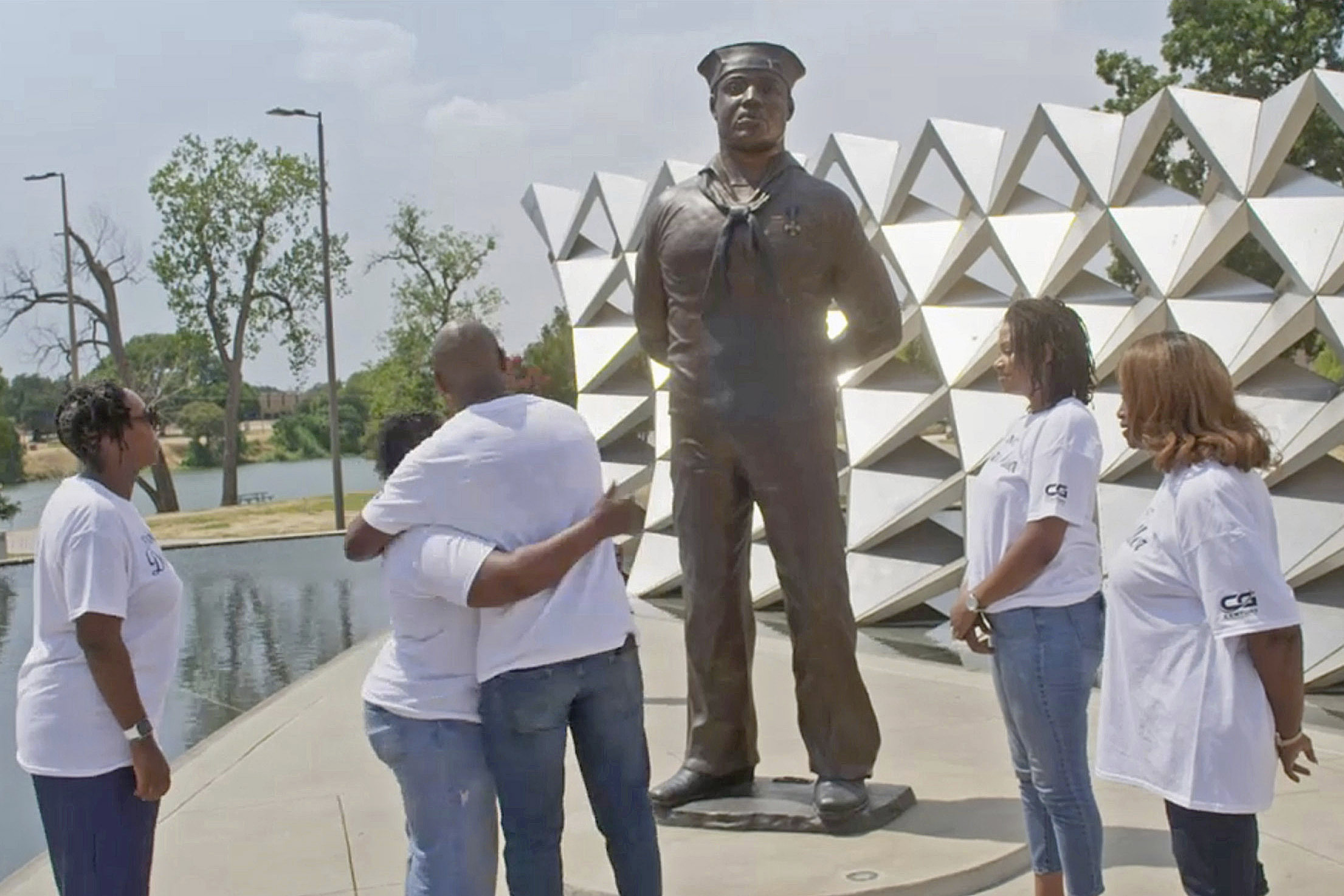
Doris Miller was a sailor serving aboard the battleship USS West Virginia in World War II. During the attack on Pearl Harbor, his ship was bombed and strafed with enemy gunfire. He disregarded his own safety and carried his mortally wounded captain to a safer location. Returning to his ship, although untrained, he operated a .50 caliber Browning anti-aircraft gun. Miller successfully shot down several enemy planes until he ran out of ammunition and was ordered to abandon ship.
Fast-forward to today. We have a U.S. president who avoided any type of service in our military due to bone spurs. This commander in chief wants to take the naming of an aircraft carrier away from Miller, a bona fide war hero, and put his own name on the ship. Outrageous, despicable, and scandalous! Every combat veteran, everyone who served in the military, and every American should be sickened by the very thought. Let me ask you, in a moment of extreme distress, who would you want to have your back: Doris Miller or Donald Trump?
William D. Markert Jr.,Vietnam veteran, Warminster
Mission creep
U.S. Immigration and Customs Enforcement is back in the news with its record-breaking July arrest total of nearly 50,000. Most arrests were made in Texas and Florida, largely due to financial incentives offered to cooperating local police departments. An arrest of a Haitian immigrant in Key West, Fla., who was seeking asylum due to death threats in his country of origin is particularly concerning. According to The Inquirer, the restaurant owner, who employed the Haitian as a cook and supervisor, claimed: “He was an excellent worker, he learned very fast, he never had any problem with the law …. He was a nice kid; he was a family man.” I wonder if any ICE agents who responded to the ad that ICE would rid our nation of the “worst of the worst” are getting second thoughts about their mission?
John Groch,West Chester
Memorable footnote
As Donald Trump attempts to whitewash history by rewriting the story of George Washington’s house on Independence Mall, a significant footnote has been widely overlooked. On Friday evening, April 18, 2008, five days before the Pennsylvania primary, a presidential candidate rose to speak from almost the exact site where enslaved people lived and served the nation’s first president. The young senator addressed an overflow crowd of more than 35,000. Barack Obama lost the primary five days later, but would go on to become the country’s 44th — and first Black — president.
Martha Jablow, Philadelphia
Grid collapse
Cuba’s national power grid has collapsed several times this year. Not a neighborhood, not a province — the whole island, all at once, over and over. Hospitals are rationing care. Ventilators are going quiet. Water pumps have stopped. In parts of the country, the outages exceed 20 hours at a stretch. This isn’t a natural disaster. It’s an oil blockade the Trump administration has enforced since January, letting a grand total of one tanker reach Cuban shores in seven months. Congress can end it. There is a privileged resolution sitting in the House right now, H.Con.Res.106, that would force a vote to stop these unauthorized hostilities. House Democratic leadership just has to schedule it. Will you tell your member of Congress to call for the vote?
Andrew Mills, Lower Gwynedd
Join the conversation: Send letters to letters@inquirer.com. Limit length to 150 words and include home address and day and evening phone number. Letters run in The Inquirer six days a week on the editorial pages and online.
PHOENIX — As the Diamondbacks’ next hitter stepped into the batter’s box, catcher Garrett Stubbs studied Alex McFarlane.
Looking across the mound, he could see no hint of fear or nerves in the rookie reliever. Even in a one-run game in the sixth inning, even with two inherited runners looming behind him, even with eight-time All-Star Nolan Arenado setting up at the plate.
“In that moment, you look out at him,” Stubbs said, “and he didn’t show anything but wanting to attack the zone.”
And Stubbs was game. They started Arenado off with a fastball, a 99.4 mph offering he watched at the bottom of the zone, but the Diamondbacks third baseman battled back to a 3-1 hitter’s count.
Still, McFarlane didn’t waver. He evened things up with a perfectly placed fastball on the outside edge before Stubbs made a gutsy call on a 3-2 sweeper. McFarlane missed his spot — it was intended to be low and away, and the righty left it up — but it was not a pitch that Arenado was anticipating. He froze, watching it land in Stubbs’ glove for strike three.
The Phillies’ 2-1 win over the Diamondbacks on Monday night was ensured by several nervy performances from their relievers. But perhaps none more than the one in the sixth inning from the 25-year-old, who a month ago was pitching in double A.
“Just doing what this bullpen has helped me out with the whole season,” McFarlane said. “Just breathing and slowing down and understanding, just trusting your stuff in the zone.”
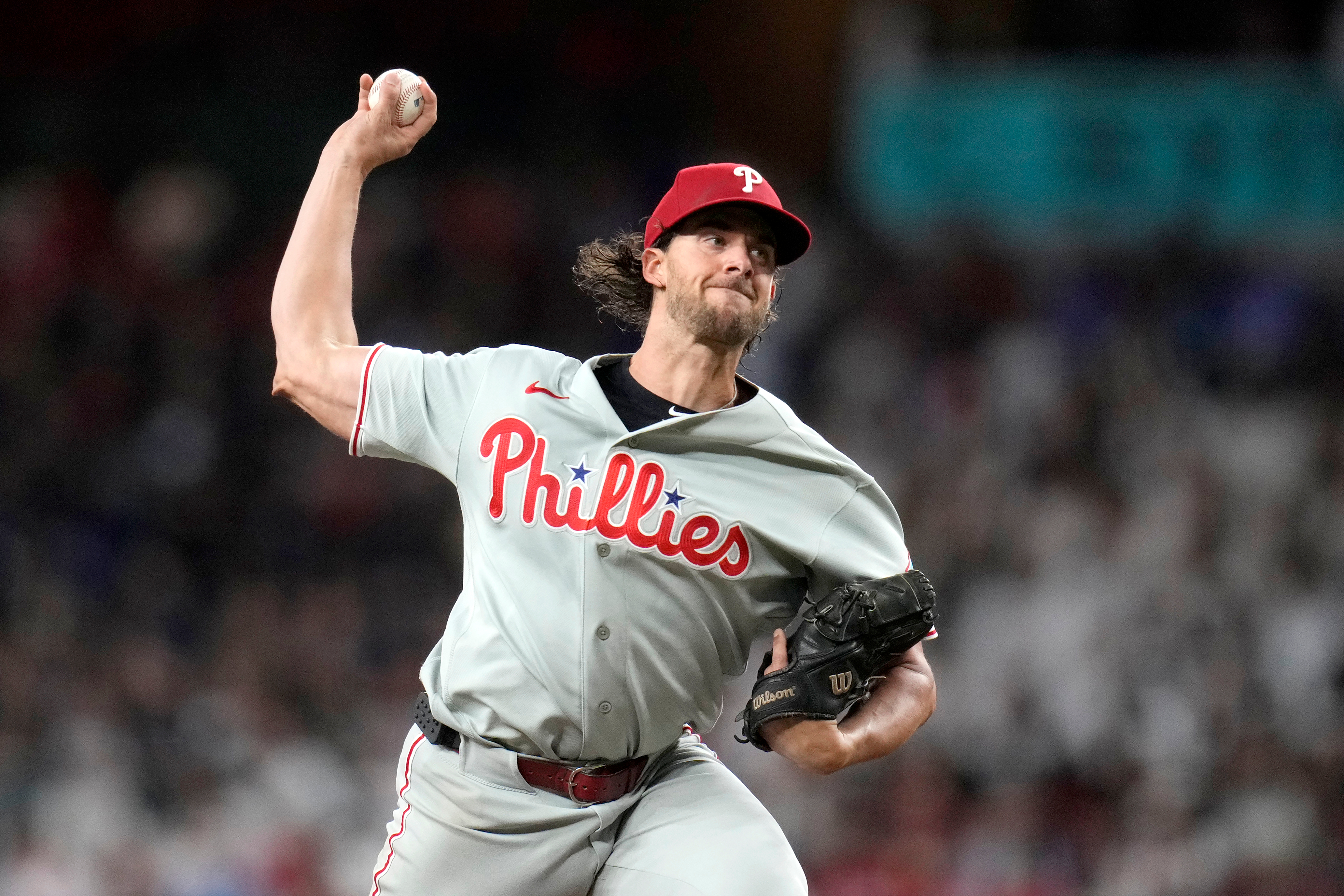
Of Aaron Nola’s 104 total pitches, more than half were out of the strike zone. Ross D. Franklin
McFarlane entered the game with two runners on after interim manager Don Mattingly’s decision to send Aaron Nola back out for the sixth backfired. The Phillies starter held Arizona to one run, working around a fastball that didn’t have as much life as normal, but his pitch count was already at 92 after five.
The long at-bats caught up to him, and Nola departed the sixth inning without recording an out.
“I notice that when I don’t have that much life on the fastball, they foul more pitches off and run the pitch count up, and work better [at-bats],” Nola said.
McFarlane induced a flyout from Lars Nootbar, and after striking out Arenado, got a groundout from Tim Tawa. Looking on from the dugout, Nola raised his fist in triumph.
“That’s pretty special right there,” Nola said. “Pretty awesome. Left him in a tough spot to come in.”
The Phillies bullpen, which was without setup man Jonathan Bowlan for workload reasons, covered four scoreless innings to cinch the win.
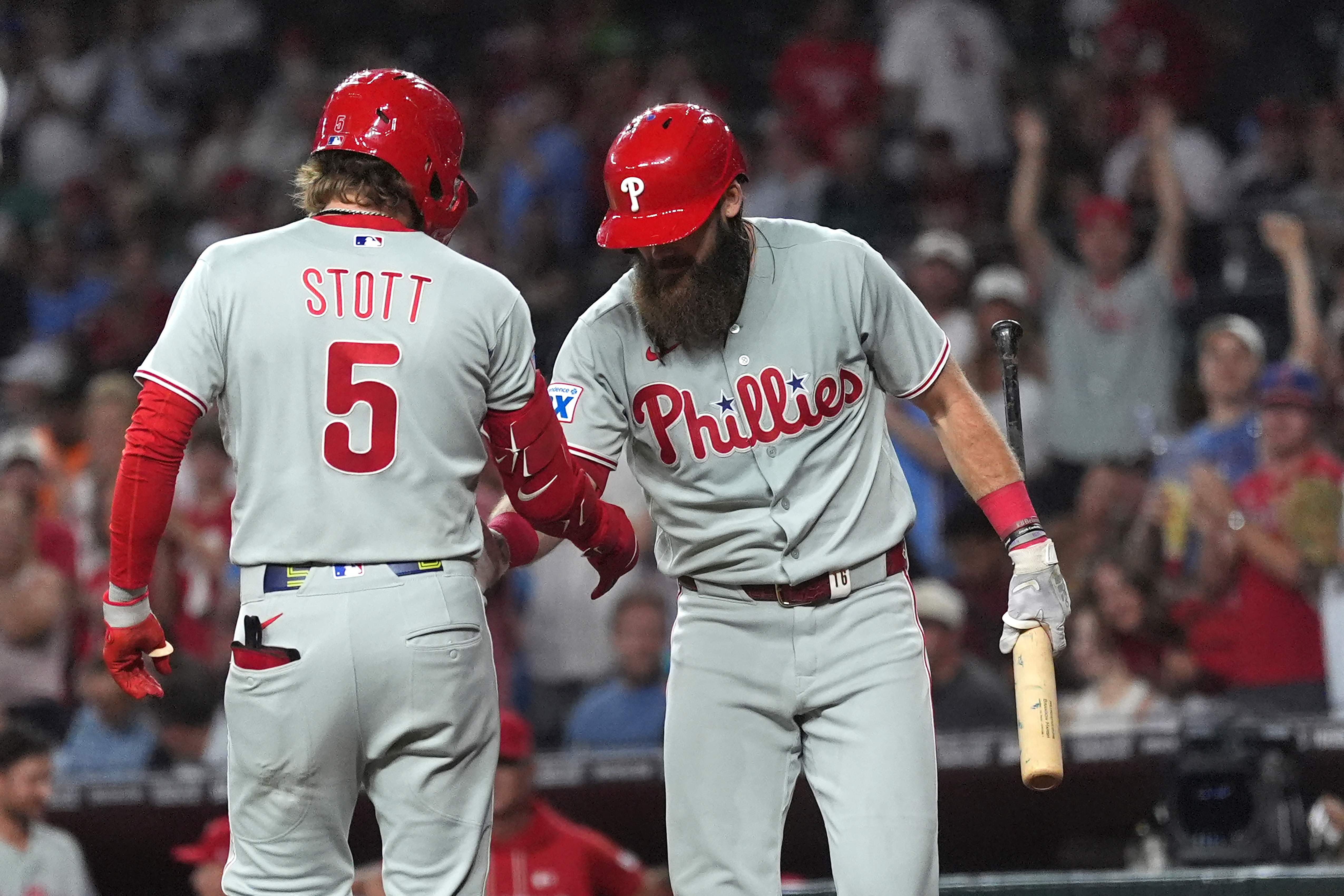
Bryson Stott gave the Phillies an early lead with the longest home run of his career. Brandon Pfaadt left a fastball over the middle of the plate and Stott sent it 464 feet, a towering shot that landed a few rows in front of the concourse in right field.
window.addEventListener(“message”,function(a){if(void 0!==a.data[“datawrapper-height”]){var e=document.querySelectorAll(“iframe”);for(var t in a.data[“datawrapper-height”])for(var r,i=0;r=e[i];i++)if(r.contentWindow===a.source){var d=a.data[“datawrapper-height”][t]+”px”;r.style.height=d}}});
“I wasn’t sure if it was going to go out or not,” joked Mattingly. “No, that was a long one.”
The Phillies scored another run in the third inning as Bryce Harper extended his career-high on-base streak to 33 games with an RBI double. He drove in Stubbs from second base and advanced Kyle Schwarber to third.
But they missed a few opportunities to add on more. Schwarber was tagged out at the plate in the third and the Phillies stranded the bases loaded in the eighth. So a one-run lead was all the bullpen would get.
But it proved to be all they needed. Brooks Raley bailed out Orion Kerkering by stranding an inherited runner to end the seventh with a strikeout. José Alvarado left two runners with a big strikeout to end the eighth. Tawa chased four pitches out of the strike zone to go down swinging.
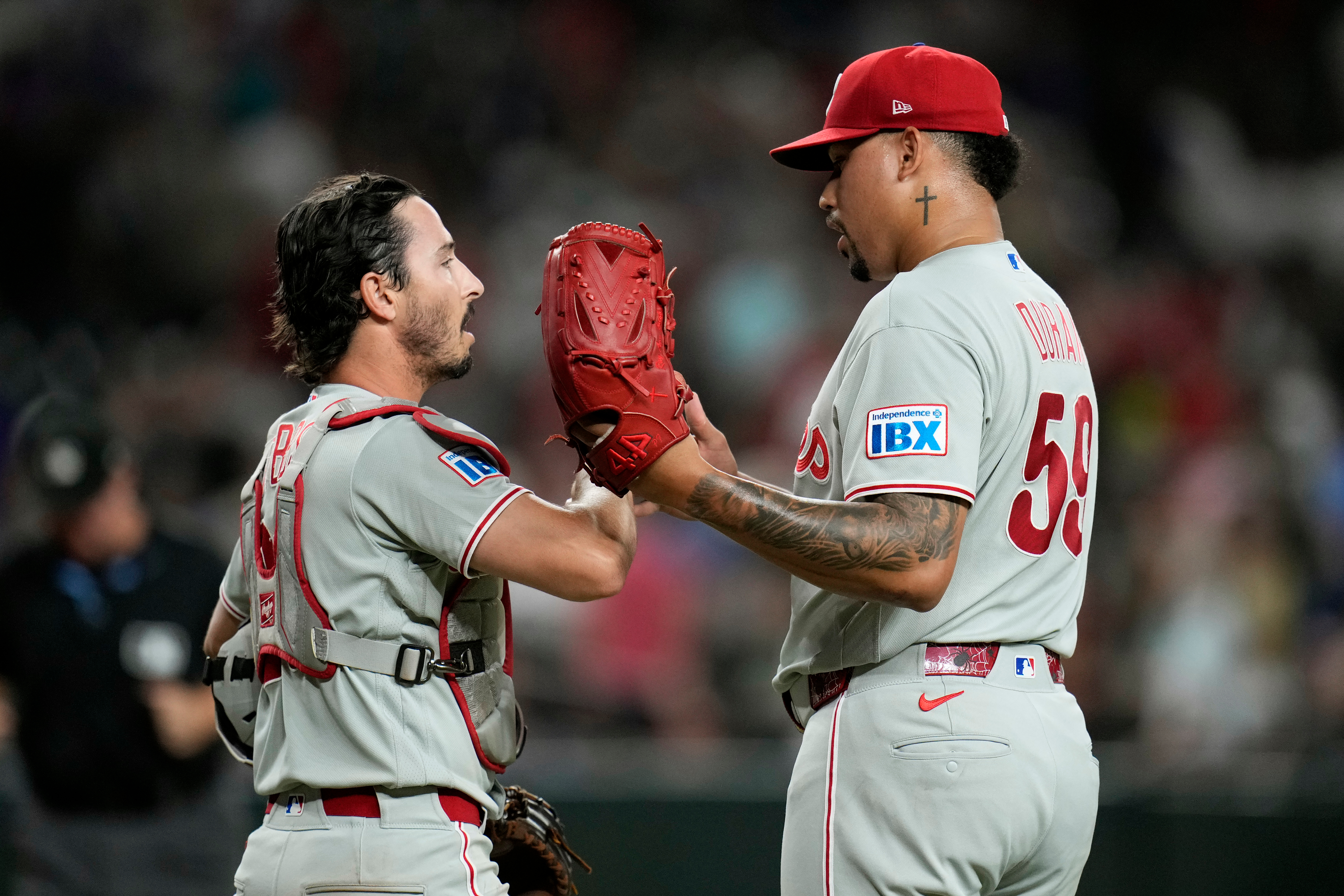
Jhoan Duran picked up his 29th save.Ross D. Franklin
Against closer Jhoan Duran, the Diamondbacks advanced the tying run 90 feet away after a pair of infield singles to shortstop, followed by a wild pitch. But the third time proved to be the charm, and Trea Turner fielded the next grounder for the third out to seal the Phillies’ fifth consecutive win.
“I think we got a lot of different mix out there. … I think we think we feel OK with the way the bullpen’s going. This is who we are at this point,” Mattingly said.
The rest of the bullpen has taken McFarlane, who has the least major league service time on the team, under its collective wing. McFarlane’s locker in the visitors’ clubhouse in Phoenix is in the corner, neighboring Duran’s. The two hard-throwing righties were chatting as the clubhouse was emptying out late Monday night.
Arenado has become the latest future Hall of Famer added to McFarlane’s mantle of outs. The first hitter he retired in the majors — just over a month ago — was Shohei Ohtani. A few days ago, he struck out Mike Trout on a 101 mph fastball.
“That’s kind of been my story, the whole season, is facing those big guys,” McFarlane said. “And just seeing him in the box is a great thing.”
What stands out the most to those around him is McFarlane’s composure. On July 18, he threw his last pitch in double A. Now he’s here.
“I’ll tell you what,” Stubbs said. “For a kid who debuted a month ago or whatever it was, the demeanor that he’s got on the mound in a situation like that is pretty incredible.”
“He seems to not be bothered, honestly, by it,” said Mattingly. “He kind of comes in right away and just says, ‘Hey, Skip, how you doing?’ He’s been good, and he’s a worker, too.”
As Nola put it: “Doesn’t really pitch like a rookie.”
DEAR ABBY: My father passed away three months ago, leaving my mom alone for the first time in her life. She lives nearby, so my wife and I have been doing what we can. We have her over several times a week, and we visit and call to check in often.
Mom is having a hard time and sometimes forgets to eat or get dressed if we don’t remind her. There has been a lot of legal stuff to do following Dad’s death, decisions she’s not up for, so we’re doing that, too. I’m trying to get her professional help (counseling and help at home), but there are waiting lists, and it’s going to take time. I’m also mourning Dad, and it’s been a lot.
What I’d really like is for my brothers to step up. One lives in the next town. The other is only a couple of hours away. Neither one has been to see Mom since the funeral, and it doesn’t sound like they’ve been calling her often.
I’m the oldest, and they are used to me taking care of things, but this is more than I can handle alone. I have told them that directly. They both say they want to help, but then they don’t. I have tried giving them specific tasks (for example, to call Mom in the morning before 10 on a certain day), and they agree but then don’t follow through. We usually get along.
They are both successful people with good jobs and families, so I don’t understand why they are slacking here. I think they’re just used to Mom being the caretaker and can’t see that the roles are reversed now even though we’re all in our 40s and no longer little boys. How do I get them to start shouldering their share of the responsibility here?
— IN CHARGE IN WISCONSIN
DEAR IN CHARGE: Because your brothers cannot be trusted to step up and give your mother more time, there is another way they can take some of the responsibility off your shoulders. They can offer money in lieu of time. Each could chip in so that their mother has a caregiver or companion to help her with the household chores. They should also contribute toward grief or psychological counseling until she is stronger. If you suggest all of that, you may find they magically begin calling Mom more often!
** ** **
DEAR ABBY: I am at my wits’ end. I support myself and my boyfriend of 14 years. I have no extra money to support anyone else. My boyfriend’s mother, who is our neighbor, treats him like a dog and always has. She constantly asks him for stuff. He gives her things that I have worked for — cigarettes, soft drinks, food, etc. It all adds up, and I can’t do it anymore. Please give me any advice that you have.
— TIRED
DEAR TIRED: You have learned the hard way that your boyfriend and his mom are a package deal, and they are both deadbeats. Get out of there and stop letting them use you. Find a place of your own, block his calls, and experience the satisfaction of living on your own. Once you’ve done that, I’m sure you can find yourself a much better man — or you may decide you don’t need one.
ARIES (March 21-April 19). The doubt: If I cannot make the move now, I may lose my chance. The remedy: Use the delay to sharpen your approach. When you are able to make a move, you’ll be so ready.
TAURUS (April 20-May 20). The doubt: I lack enough money, time or security to begin. The remedy: Build from what is already stable. One dependable resource will support the next. Every dream needs a foundation. It’s not glamorous or showy; it’s just necessary.
GEMINI (May 21-June 21). The doubt: I have too many ideas and no clear path. The remedy: Choose the idea that keeps coming back to you. Give it one concrete task. Contact with the work will turn possibilities into clarity and evidence.
CANCER (June 22-July 22). The doubt: Pursuing this may take something away from the people I love. The remedy: Design a version that includes their needs and yours. And remember, the key element of your future is the “you” in it.
LEO (July 23-Aug. 22). The doubt: What if the result fails to match the magnificent vision? The remedy: Make something real enough to revise. Most ideas don’t have a flawless debut, but the imperfect first version can be worked into something grand.
VIRGO (Aug. 23-Sept. 22). The doubt: I have overlooked the flaw that will undo everything. The remedy: Look for the next necessary correction, rather than every possible thing that can go wrong. Revision and repair belong inside the plan from the beginning.
LIBRA (Sept. 23-Oct. 23). The doubt: Moving forward may upset the balance or cost me someone’s approval. The remedy: Honest conversation. Ultimately withholding your true desire will be too much work. A fair arrangement makes room for every person involved.
SCORPIO (Oct. 24-Nov. 21). The doubt: If I reveal how much this matters, I will surrender my power. The remedy: If you care, care. Controlling or revealing your feelings doesn’t guarantee an outcome; it only keeps you from fully entering the experience.
SAGITTARIUS (Nov. 22-Dec. 21). The doubt: Choosing one path will make my future smaller. The remedy: Treat commitment as a way of traveling to a distant destination. It may be one road, but the view changes with every step.
CAPRICORN (Dec. 22-Jan. 19). The doubt: If success takes this much effort, perhaps I chose the wrong goal. The remedy: Try to see difficulty as information, not as the final verdict. Necessary work is rewarding. Hard-won goals are more satisfying to attain.
AQUARIUS (Jan. 20-Feb. 18). The doubt: My idea is too unusual for systems or people to support. The remedy: Find the part others can use now. People are more likely to welcome the innovation that comes through a familiar door.
PISCES (Feb. 19-March 20). The doubt: Turning this dream into practical steps will drain its magic. The remedy: Let the vision keep its mystery. The steps don’t need it. Spells have recipes. Illusions have instructions. Structure doesn’t steal from imagination; it protects it.
TODAY’S BIRTHDAY (Sept. 1). Welcome to your Year of the Expanded Comfort Zone. You’ve noticed that when you’re out of your element, you grow. So you’re willing to push yourself into new situations, and life will bring the ones that intrigue and embolden you to become the person you want to be. More highlights: Those you’ve taught will make you proud. Your team wins more than the prize they were going for. Relationships blossom; adventure ensues. Aquarius and Taurus adore you. Your lucky numbers are: 4, 10, 33, 7 and 18.