Blog

  • Family of man who died after Penn police used a stun gun on him files wrongful-death suit

    Family of man who died after Penn police used a stun gun on him files wrongful-death suit

    The brother of a man who died two months after a University of Pennsylvania police officer used a stun gun on him during a chase has filed a wrongful-death lawsuit against the West Philadelphia Ivy League school.

    Ronald Harmon died Jan. 9, 2025, from complications of a head injury, the suit says, roughly two months after police “wrongfully” used a stun gun on him. Harmon, 52, fell to the ground and suffered a blunt injury to his head, according to the complaint.

    The medical examiner ruled Harmon died by homicide, the lawsuit says. The cause of death was “complications of blunt impact injury to the head.”

    Penn Police Officer James Squadroni deployed the Taser against department policies and Officer James Schwartz failed to prevent his partner from using “excessive force,” the complaint says. The officers’ conduct violated Harmon’s constitutional rights, the suit says.

    “I’m just hoping that we can get justice,” Harmon’s brother, Bruce Harmon, said in a media event announcing the lawsuit Monday.

    Renowned civil rights attorney Ben Crump is part of the legal team that filed the lawsuit on Monday in the Eastern District of Pennsylvania. Crump has represented the families of high-profile victims of police use of force such as George Floyd, Trayvon Martin, and Breonna Taylor.

    Crump is not currently listed as an attorney for Harmon on the federal court’s docket. The local attorney who filed the complaint, Gregg Zeff, said Crump would be formally added to the case in the future. He did not comment further about the litigation.

    A Penn spokesperson said in a statement that the university extends its deepest condolences to Harmon’s family.

    “The University and the Division of Public Safety take any use of force and loss of life with the utmost seriousness,” the statement said. “Because this matter is now the subject of active federal litigation, the University cannot discuss the specific factual allegations or legal claims outside of the judicial process.”

    Officers Squadroni and Schwartz saw Harmon taking a package from a building in West Philly on the night of Nov. 5, 2024, the suit says. Squadroni chased Harmon on foot while Schwartz followed in the police cruiser.

    Harmon threw the package as police chased him, the suit says. When he noticed the police vehicle ahead of him, he turned around and ran past Squadroni, according to the complaint. The officer deployed his stun gun, the suit says, striking Harmon in the back.

    Harmon fell and hit his head on the curb, the lawsuit says.

    Squadroni violated department policies when he deployed his stun gun against an unarmed suspect wanted for a nonviolent misdemeanor, the suit says.

    “As a direct result of being unlawfully struck with a taser, Harmon died,” the complaint says.

  • FAA clears the way for airlines to put Boeing’s long-delayed 737 Max 10 into service

    FAA clears the way for airlines to put Boeing’s long-delayed 737 Max 10 into service

    Boeing’s 737 Max 10 airliner has been approved for passenger service after years of delays, the Federal Aviation Administration announced Tuesday.

    The Max 10’s certification represents another milestone in Boeing’s efforts to restore its reputation and financial footing after years of safety, quality, and production challenges. With production approved, the aircraft can now be sold to domestic and foreign carriers.

    “After extensive safety reviews — including thousands of hours of test flights — the team at the FAA is ready to approve this critical aircraft for sale,” Transportation Secretary Sean Duffy said in a statement. “This is a major win for American manufacturing and our nation’s status as a global aviation powerhouse.”

    Duffy is expected to speak about the decision later Tuesday during a visit to Boeing’s manufacturing plant in Everett, Wash.

    The Max 10 — the largest version of Boeing’s best-selling 737 family — is an important piece of Boeing’s effort to regain ground in the narrow-body market. For airlines, the larger plane offers a way to carry more passengers on a single flight, potentially lowering costs per seat. For travelers, it could eventually mean more seats on popular routes, though the impact on fares will depend on how airlines deploy the planes and how much competition they face.

    Stephanie Pope, president and CEO of Boeing Commercial Airplanes, said in a statement that “completing the certification program clears the path for us to deliver a Boeing airplane that will set a new standard in commercial aviation.” The Max 10 will typically seat 185-210 passengers, according to Boeing, compared with 175-195 on the Max 9 and 160-180 on the Max 8.

    The single-aisle jet was introduced at the Paris air show in 2017 to help Boeing compete with rival Airbus. But technical and regulatory hurdles repeatedly delayed certification of the largest version of Boeing’s best-selling 737 family.

    Boeing said in its 2020 annual report that it expected to make the plane’s first delivery in 2023. The company now expects to begin deliveries in 2027.

    The delays have held up a key part of Boeing’s business. More than 30 customers worldwide have ordered 1,555 Max 10s that Boeing has yet to deliver, accounting for more than 30% of its total 737 Max backlog.

    Major customers for the Max 10 include United Airlines, Delta Air Lines, American Airlines and Ryanair. Alaska Airlines joined that list in January, ordering 105 Max 10s, with options for 35 more.

    Boeing’s struggles have been particularly acute since two deadly crashes involving the smaller Max 8 killed 346 people in 2018 and 2019 off the coast of Indonesia and in Ethiopia, respectively. In 2024, a panel flew off of an Alaska Airlines Max 9 in midair, renewing scrutiny of Boeing’s manufacturing and safety practices.

    The Max 10 is intended to compete with Airbus’s A321neo model family, which entered service in 2017. The largest A321neo can carry more passengers and fly farther without refueling than the Max 10.

    Still, Boeing designed the Max 10 to carry more passengers while burning less fuel than older aircraft — a potentially attractive combination for airlines facing soaring jet fuel costs amid the U.S. war with Iran. Those rising costs have put added pressure on airlines to control expenses.

    The Max 10’s certification completes the lineup of four 737 Max models. The FAA cleared the smaller Max 7 for airline operations in August.

    Certification means the FAA has determined that the Max 10’s design meets safety standards, following engineering reviews and flight testing. But Boeing must continue to show it can consistently build the aircraft to the approved design, and each plane must be cleared before it can fly passengers.

    In the wake of the fatal Max 8 crashes, the FAA overhauled how it certifies Boeing aircraft. But over the past 18 months, the agency has gradually eased some of its restrictions on the company, increasing the limit on how many planes Boeing can produce. In July, the FAA also said Boeing could once again issue airworthiness certificates for its 737 Max and 787 planes at the end of production, allowing the company to take back some responsibility for determining whether finished aircraft are ready to fly.

    Editor’s Note: This article has been updated to include a statement from the president and CEO of Boeing Commercial Airplanes.

  • Ann Hornaday, longtime Washington Post film critic, dies at 66

    Ann Hornaday, longtime Washington Post film critic, dies at 66

    Ann Hornaday, who championed the craft of filmmaking and helped readers understand the enduring magic and occasional disappointment of movies as the Washington Post’s longtime chief film critic, died Oct. 18 at her home in Baltimore. She was 66.

    The cause was glioblastoma, a form of brain cancer, said her husband, Dennis Greenia.

    Ms. Hornaday brought a casual, if knowledgeable, approach to her reviews, writing more from the viewpoint of a popcorn-eating moviegoer than from the lofty perch of a scholar of cinema. She wrote hundreds of reviews for the Post over more than 20 years and was a Pulitzer Prize finalist in criticism in 2008. She was also the author of Talking Pictures, a book about how to watch films with a deeper level of discernment.

    “For many years, Post readers were blessed by Ann’s informed, insightful, warm, accessible, and totally unique voice,” Washington Post executive editor Matt Murray said in a statement. “Reading her work was like talking with a close — if much more knowledgeable — friend.”

    Ms. Hornaday was among the first critics to draw attention to the work of filmmakers such as Tom McCarthy, Ryan Coogler, Greta Gerwig, and Alexander Payne. She wrote in-depth profiles of people in the film world and often interviewed them at festivals and other public forums.

    “Ann was a compassionate, trusted voice whose film reviews inspired a deep appreciation for all aspects of the filmmaking process,” producer Albert Berger, whose credits include Election, Little Miss Sunshine and Nebraska, wrote in an email. “She understood the collaborative nature of making a movie and spread her praise beyond those who are afforded the spotlight. Filmmakers and moviegoers alike relied on her to help us better understand our work and enrich our viewing experience.”

    Ms. Hornaday wrote about intimate art-house theaters, about pilgrimages to filmmaking locations, and about darker issues, such as Hollywood’s long pattern of sexism and exploitation of women. If there was an overarching theme in her work, it was to highlight the role of film as a cultural touchstone and its outsize place in the nation’s collective memory.

    “Of all artistic mediums,” she wrote in 2022, “cinema occupies the trickiest space between fabrication and reality, exploiting the porous nature of both to become a third thing entirely: the distortion of the literal truth that becomes internalized as consensus history.”

    Ms. Hornaday’s reviews were anchored in her high standards, but she was not a cinematic snob. Her favorites tended to be deeply in the American grain, including such classics as Casablanca (1942), Sweet Smell of Success (1957), and The Best Years of Our Lives (1946) — which, Ms. Hornaday said in a 2019 interview with her alma mater, Smith College, “checks every box in terms of a well-crafted, beautiful film” — and the 1967 romantic comedy Two for the Road.

    “She especially loved meeting and talking with readers about movies,” said Liz Seymour, a former managing editor and features editor at the Post, fellow Smith graduate, and close colleague of Ms. Hornaday’s for many years. “Every year, she was the featured guest for a gathering of Smith alums in the D.C. area before the Oscars. She was so smart, and she was also just so interested to hear what other people thought of the movies. It was a highlight for her, and it was a highlight for me.”

    Ms. Hornaday didn’t care for Forrest Gump or The Lord of the Rings trilogy, but she admired This Is Spinal Tap, Goodfellas, and Thelma & Louise, noting in 2023 that the film “had nothing to do with my real life, other than the exhilaration of watching two women light out for the territory, with zero figs to give and needing only each other for support. Is this what Easy Rider felt like to baby boomer men?”

    “Her writing was elegant,” former Post executive editor Martin Baron noted in an email. “Her tone was warm and empathetic, qualities that defined her own personality. When a movie achieved its ambitions, there was no more enthusiastic champion. When it fell short, she made her disappointment abundantly evident. But cheap shots were never in her portfolio.”

    A surprising choice for best year in film history

    In evaluating a film, Ms. Hornaday was guided by three questions: What was the artist trying to achieve? Did they achieve it? And was it worth achieving?

    For her, a thumbs-up or thumbs-down review was insufficient; she wanted readers to grasp exactly why a film like The Hurt Locker, the 2009 drama about a bomb disposal unit in the Iraq War, was the best film she ever reviewed.

    “The Hurt Locker is about Iraq,” she wrote, “in the same way that Paths of Glory was about World War I or Full Metal Jacket was about Vietnam — which is to say, utterly and not at all. The Hurt Locker is a great movie, period.”

    The film won the Academy Award for best picture and earned Kathryn Bigelow the first Oscar for directing by a woman.

    In a never-ending debate among movie buffs about what was the best year in film history, Ms. Hornaday offered an unexpected choice: 2007. No Country for Old Men came out that year, along with The Great Debaters, American Gangster, Zodiac, Juno, Superbad, and Michael Clayton. It was also the year of Paul Thomas Anderson’s There Will Be Blood, set during the California oil boom of the early 1900s and starring Daniel Day-Lewis.

    In her review, which was included in her Pulitzer finalist package, Ms. Hornaday described the film as “a sweeping epic of enterprise, aspiration, greed and hubris” and an “audacious portrait of California’s founding and, by extension, the forging of the American identity.”

    In 2023, she found a similar ambitious grandeur in Oppenheimer, director Christopher Nolan’s three-hour film about the development of the atomic bomb during World War II, calling it “a film of magnitude, profundity and dazzling artistry.”

    She was less charitable toward its blockbuster bookend of the same summer, Barbie, which she described as a “hot-pink mess of a movie.”

    In her profiles of Hollywood figures, Ms. Hornaday made such luminaries as George Clooney, Shirley MacLaine, Dustin Hoffman, Cicely Tyson, and Sally Field seem simultaneously down to earth and larger than life.

    A book on filming ‘All the President’s Men’

    In 2017, Ms. Hornaday published Talking Pictures, which examined different elements of filmmaking, including the acting, directing, production design, music, editing, and, most important of all, the screenplay.

    “Within the first ten minutes,” she wrote, “a well-written movie will teach the audience how to watch it.”

    Shortly before her death, Ms. Hornaday had completed work on a book about the filming of All the President’s Men, the 1976 journalism thriller directed by Alan J. Pakula about the pursuit of the Watergate story by Post reporters Bob Woodward and Carl Bernstein, played by Robert Redford and Hoffman, respectively.

    Ms. Hornaday wrote for the Post in 2025 that the movie was a “masterpiece” that “exemplified film as a supremely collaborative medium, with all the artists and technicians involved demonstrating superb craft, skill, taste and smarts.” The book is tentatively scheduled for release in 2028.

    Ann Mills Hornaday was born March 9, 1960, in Iowa City. She was adopted at birth by William R. Hornaday Jr., a urologist, and his wife, the former Mary Mills, who was active in civic and charitable work.

    Ms. Hornaday grew up in Des Moines and graduated in 1982 from Smith College in Northampton, Mass., where she majored in government. She spent two years at Ms. Magazine in New York as the personal assistant to the magazine’s co-founder and feminist activist Gloria Steinem, who died in September.

    She worked as a freelance writer in New York for several years, contributing to the New York Times, Premiere magazine, and other publications. She was the film critic of the Austin American-Statesman from 1995 to 1997 and later the Baltimore Sun before joining the Post in 2002. In addition to writing for the Post, Ms. Hornaday often appeared on former Post sports columnist Tony Kornheiser’s radio program and was a regular reviewer for the PBS NewsHour.

    In 2014, Ms. Hornaday wrote a first-person essay in which she described “the tensions, contradictions and fleeting moments of grace I have experienced as a film critic who also happens to be a practicing Christian.” She was a parishioner and Sunday school teacher at the Episcopal Cathedral of the Incarnation in Baltimore.

    Ms. Hornaday took a buyout and left the Post in 2025.

    She is survived by Greenia, her husband of 26 years; their daughter, Victoria Greenia; a stepdaughter, Leila Greenia; and a brother, William Hornaday III.

    In one of her final essays for the Post, in 2025, Ms. Hornaday looked back fondly at the 50th anniversary of Steven Spielberg’s Jaws, often considered the progenitor of the summer blockbuster.

    “As a movie,” she wrote, “it’s an exercise in superb technique in every area: Take one element away, and it doesn’t work.” For all its spectacle, special effects and shock value, “Jaws still keeps us coming back, reminding us that the fundamentals — character, visceral storytelling, authenticity and humanism — will always be the greatest show on Earth.”


  • FanDuel cancels Philadelphia Zoo offer for VIP bettors and their kids

    FanDuel cancels Philadelphia Zoo offer for VIP bettors and their kids

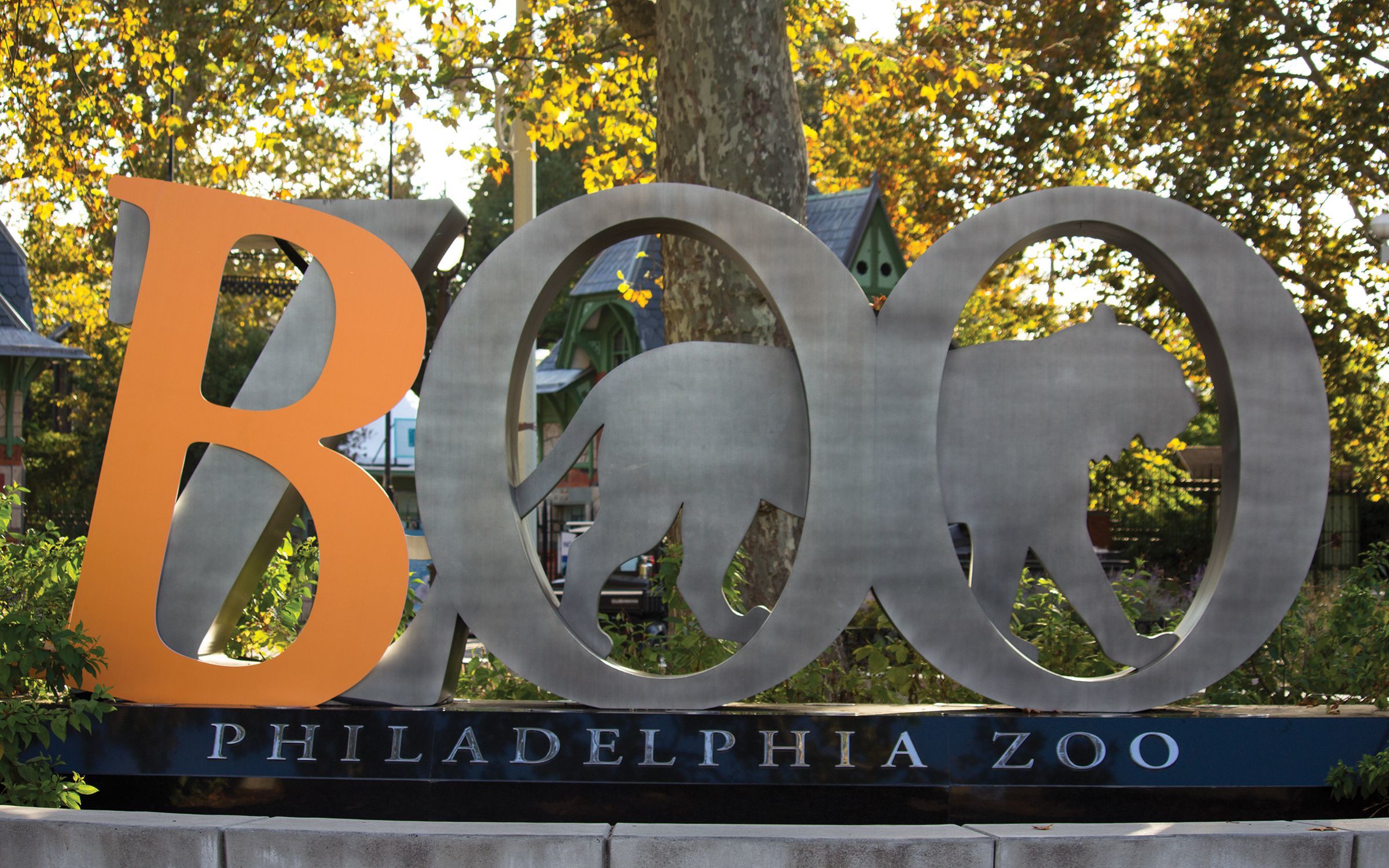
    FanDuel on Tuesday abandoned a plan to offer VIP gamblers and their children admission to the Philadelphia Zoo on Saturday for its annual “Boo at the Zoo” festivities.

    The Inquirer reported Monday that the online sportsbook had invited its best customers to visit the zoo, promising “the perfect combination of Halloween fun, family entertainment, and VIP treatment for all ages,” including free parking, and lunch and snacks in the zoo’s Garden Pavilion.

    Addiction experts said a reward that could be enjoyed by children of heavy gamblers, in a family-centric setting, was troubling, while Pennsylvania’s Gaming Control Board — which regulates casinos, online gambling, and sports wagering — said it would look into the matter.

    In an email to its customers, FanDuel wrote that it was canceling the Boo at the Zoo offer “following guidance from our regulators,” according to a copy of the announcement The Inquirer obtained. “Ensuring that we’re operating in partnership and compliance with our regulators is foundational to the experience that we’re able to provide you as a customer.”

    The company apologized for any inconveniences caused by the cancellation, adding: “We hope to have the opportunity to welcome you to another experience in the future.”

    FanDuel had offered VIP bettors admission to the zoo, free parking, and lunch and snacks at the zoo’s Garden Pavilion. Tom Gralish / Staff Photographer

    A zoo spokesperson, Maria Bryant, said FanDuel “reached out to us to cancel the event. The event itself was in a private area that wouldn’t be accessible to regular guests. It was never a partnership with the zoo.”

    Bryant said the planned arrangement “did not constitute an endorsement of FanDuel.”

    State Rep. Tarik Khan (D., Philadelphia) said he found the idea of a sports gambling company using access to the zoo as a potential reward for VIP bettors to be “really disturbing.”

    “This is the oldest zoo in the nation, where people bring their kids,” he said. “It seems like [FanDuel] is sort of testing what they can get away with. If they were allowed to do this, what else are they going to try? Sesame Place?”

    Khan said he will soon introduce a bill that would prohibit online gambling entities from offering VIP programs or similar loyalty rewards.

    Similar legislative action was recommended earlier this year in a 126-page study that was published by a nonpartisan Joint State Government Commission.

    “This is exactly why we want to ban [VIP programs],” Khan said.

    Federal lawmakers have also called on FanDuel to end its VIP rewards. Other online sportsbooks and federally regulated prediction markets offer similar programs.

    The Sports Betting Alliance, a national advocacy organization whose members include FanDuel, DraftKings, BetMGM, bet365, and Fanatics, has said it would fight any efforts to enforce such restrictions.

    Longtime addiction counselors have said that Pennsylvania is the epicenter of a gambling addiction crisis. Researchers at Pennsylvania State University have found that between 2.4% and 6.4% of Pennsylvanians might be problem gamblers — more than double the reported national average of 1% to 3%.

    Pennsylvania recorded $7.7 billion in overall gambling revenue in 2025, a sum that trailed only Nevada, while the Philadelphia media market last year outpaced even Las Vegas and New York City for gambling advertisements.

    The Inquirer will continue to report on issues related to the growth of gambling addiction — among teens and adults — across Pennsylvania. If you, or someone you know, would like to speak with a reporter, please contact David Gambacorta or William Bender at dgambacorta@inquirer.com and wbender@inquirer.com

  • CEO confirms World Stage will close on Halloween, citing challenges facing indie music venues

    CEO confirms World Stage will close on Halloween, citing challenges facing indie music venues

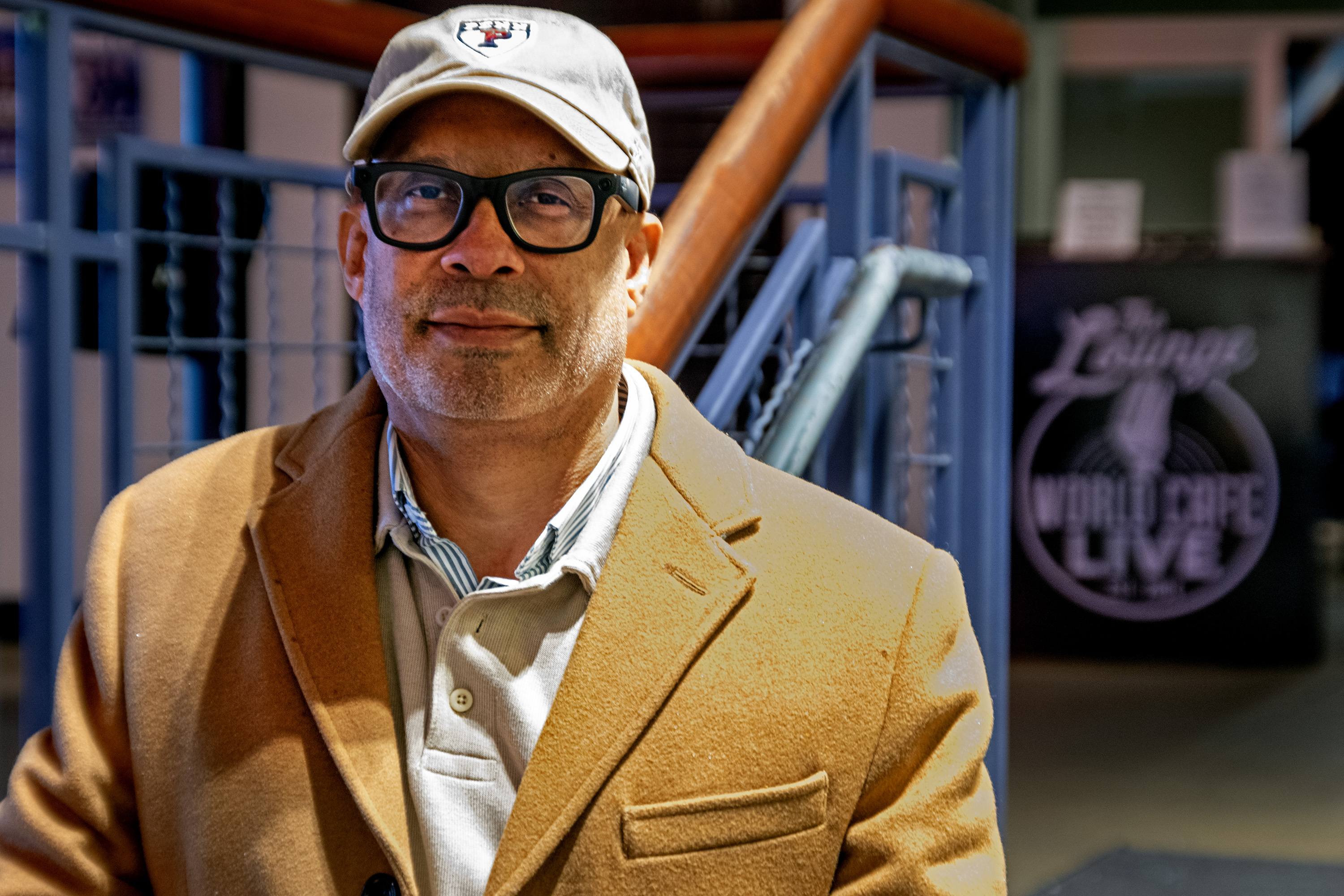
    J. Sean Diaz, the CEO of World Stage, the music venue formerly known as World Cafe Live, confirmed Tuesday that the University City music venue will close on Halloween, in a statement sent to concertgoers and the Philadelphia music community.

    News of the imminent closing of the venue, which was founded by Hal Real in 2004, was shared with staffers at a meeting in the venue’s Music Hall on Monday and first reported by The Inquirer.

    “On behalf of the organization operating the venue formerly known as World Café Live, and pursuant to a recent court approved agreement with the University of Pennsylvania, we are making the difficult decision to wind down our operations,” Diaz wrote in the statement.

    The agreement Diaz is referring to is a lease dispute between Penn and World Stage, a nonprofit organization that’s legally known as LiveConnections.org and Real Entertainment-Philadelphia, LLC. It was settled in United States Bankruptcy Court for the Eastern District of Pennsylvania.

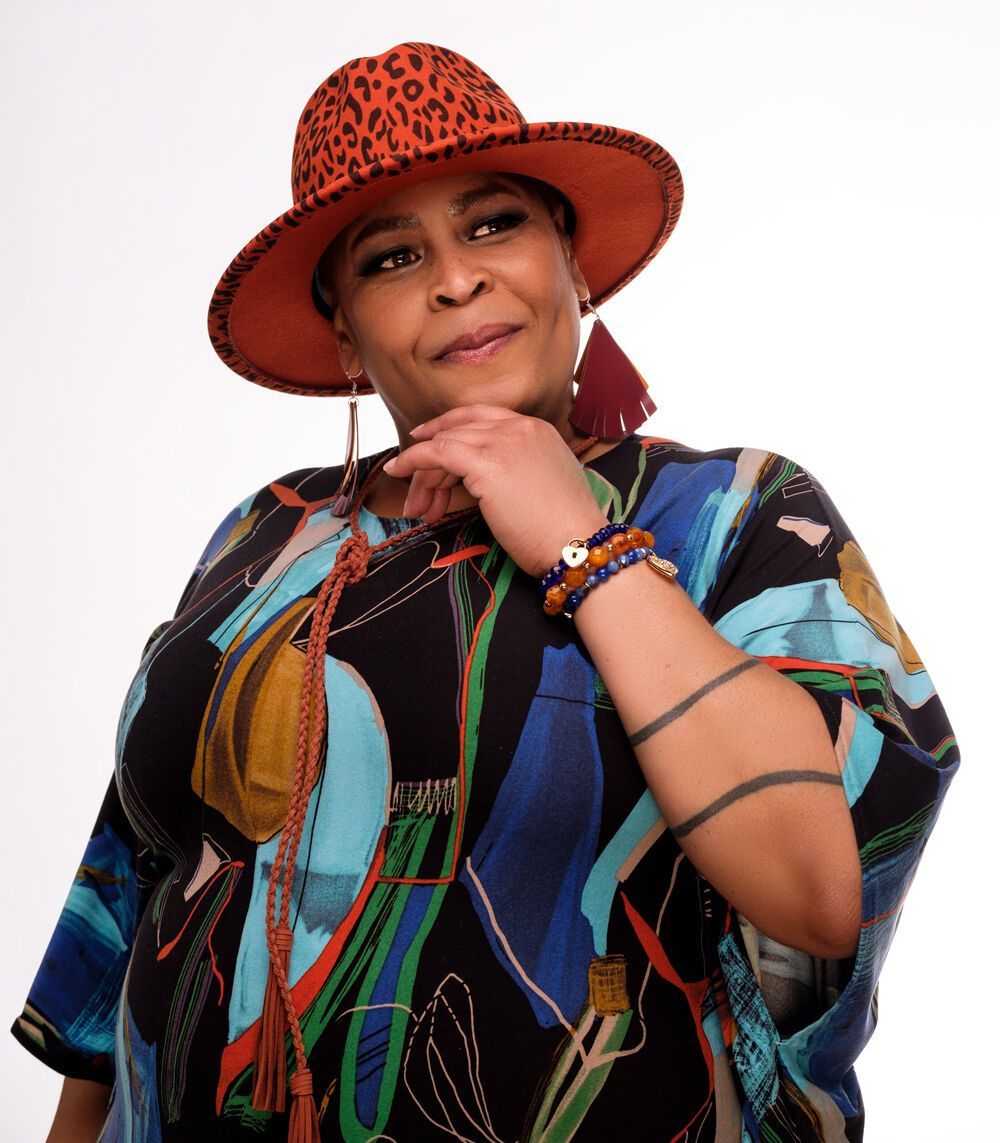
    Lady Alma is scheduled to play the Lounge at World Stage on Halloween, its final night in business. Karim Muhammad

    That agreement dissolved the two parties’ previous lease and granted a temporary lease for the venue to keep operating through October.

    But “we were unable to come to terms on a new agreement and lease with the University,” Diaz said, “so our last event will be a closing party on Saturday, Oct. 31, 2026. We will work with our ticketing partner to issue refunds for events scheduled after 10/31 and will work toward relocating shows and private events that must be canceled.”

    Diaz was named CEO and president of the venue in September 2025 by Joseph Callahan, the entrepreneur who took over from Real in the spring of that year and had pledged to reboot the venue as a virtual reality entertainment hub.

    This July, after a tumultuous year for the venue that included a lapsed liquor license and a police raid that resulted in three employees spending a night in jail, Diaz became chair of the board of LiveConnections.org, the venue’s parent nonprofit, after Callahan stepped down.

    Diaz cited multiple factors that led to the demise of the venue, which changed its name to World Stage in March.

    “It has proven near impossible to sustain an independent small to mid-sized live performance venue without institutional and philanthropic support,” Diaz said.

    “This reality is further complicated by the market dominance and saturation of larger ticketing and live entertainment conglomerates,” he said of indie venues struggle to survive against oversize entities such as Ticketmaster and concert promotion companies like Live Nation and AEG.

    “In the end, the economics and liabilities associated with leasing a costly venue, while also facing significant legacy debt, has proven unsustainable.”

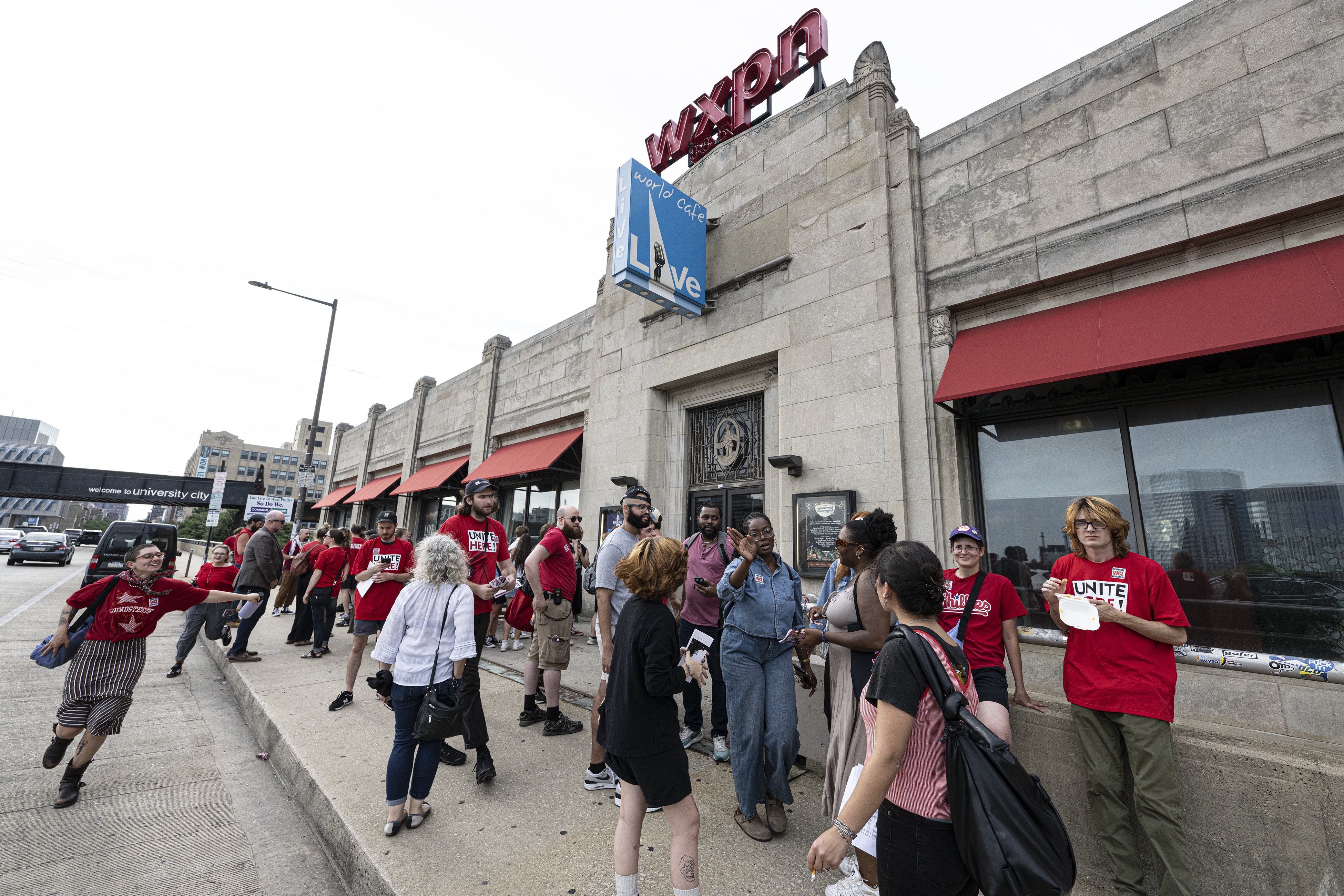
    Workers outside before a Town Hall meeting at World Cafe Live on Thursday, July, 2025. The venue, now known as World Stage, will close on Halloween. Jose F. Moreno / Staff Photographer

    Diaz cited the struggles of venue across the U.S. that “must be supported and supplemented in new and creative ways; if not, venues will continue to fail, artists will have fewer stages to perform on, and ultimately the community and culture will suffer the loss.”

    World Stage has two events scheduled on its last night in business. Sway Philly, billed as “Philly’s biggest queer monthly party, curating spaces for LGBTQ ppl of color,” has a “Nightmare on Sway Street” soiree in the downstairs Music Hall and “I Remember House: A Music Anthology featuring Lady Alma & Sean Jodi Diaz” is in the upstairs Lounge.

    After World Stage closes, the facility will remain in use for events presented by Penn radio station WXPN-FM (88.5), including its popular Friday Free at Noon series.

  • U.S. officials privately advise states fearing Trump election meddling

    U.S. officials privately advise states fearing Trump election meddling

    A small group of U.S. national security officials has been discreetly advising state governments and congressional lawmakers on how to prepare for the possibility that the Trump administration will attempt to interfere in November’s midterm elections, according to people involved in the effort.

    The group includes about 10 current and former officials with experience in the Defense Department, some of whom have previously focused on countering authoritarianism abroad.

    Their efforts are motivated not by political bias, they say, but a growing sense of alarm that President Donald Trump will harm American democracy by undermining the integrity of the vote to keep the Republican Party in power.

    Over the past several months, the group has consulted with officials from 10 states, including governors, election officials, and members of the House and Senate from both political parties who share a fear of federal intervention, two people involved in the effort said.

    The effort, which has not been previously reported, focuses on states and jurisdictions where tightly contested races will determine control of Congress for the remainder of Trump’s presidency. Members of the group remain in contact with congressional staffs, and at least one state has continued to meet with them as it works to address potential vulnerabilities.

    “All of them have said we’re concerned but we don’t know what to do,” one member of the group said of its meetings with lawmakers.

    “The outcome that we hope for is that states would be prepared for any contingencies should they arise,” the person continued.

    This report is based on interviews, conducted over several months, with two officials involved in the effort. They spoke on the condition of anonymity and that the lawmakers and state leaders with whom the group has met not be identified either, for fear of retaliation. The Washington Post also reviewed some of the documents the group prepared for its meetings.

    Trump has long claimed that a “deep state” of government officials is working to undermine his presidency. Since returning to office, he has undertaken an expansive effort to fire career civil servants and solicit political loyalty from the bureaucracy.

    Lauren Bis, a White House spokesperson, dismissed the group’s concerns and blamed Democrats for not supporting stricter election laws.

    The Trump administration, she said in a statement, “is taking decisive action to protect our elections including prosecuting election crimes, strengthening election infrastructure security, and protecting vulnerable voters from fraud and coercion.”

    The president, Bis added, “is making clear that anyone who illegally votes in our elections will be held accountable.”

    In their discussions ahead of the midterms, the national security officials have detailed ways the Trump administration could use its federal powers to sway the upcoming vote, covering categories that include legal and illegal activity. Among their concerns are that the administration could deploy troops or immigration agents to polling stations or seek to nullify results based on claims of voter fraud.

    Their meetings with lawmakers have mainly focused on raising awareness, especially among Republicans, of the potential for interference and on counseling them to be prepared to publicly oppose any such efforts. With state governments, they’ve focused more on how to harden election protocols that could be exploited by the federal government, the two members of the group said.

    Their warnings are based on personal analysis of the administration’s activities and public statements made by the president and his allies — not access to specific government intelligence or information to which they have access because of their positions within federal agencies, members of the group said. They described the meetings as a way to help state and federal officials secure the election and emphasized that their work has occurred outside of their official capacity as government employees.

    Still, their efforts indicate an extraordinary level of concern that Trump may use his authority to influence the election or challenge the results, similar to his extended campaign to overturn the results of the 2020 presidential election that culminated with a raid on the Capitol on Jan. 6, 2021.

    Trump’s approval rating is at record lows only weeks ahead of the Nov. 3 midterms, with voters frustrated about the cost of living and the war in Iran. Democrats appear likely to flip the House and possibly the Senate, and have vowed to intensify oversight of the administration if they regain power.

    Election officials, including some Republicans, have decried efforts by the Trump administration to assert federal control over a process that the Constitution entrusts to the states. Some GOP-led states, such as Utah, have refused to comply with the administration’s efforts to access their voter rolls.

    “The threats that we’re getting now are mostly from our own government,” Utah Lt. Gov. Deidre Henderson told the Post earlier this month.

    In January, the FBI raided an election office in Fulton County, Ga., and seized voting materials in an investigation tied to Trump’s debunked claims of voter fraud in the 2020 election. Trump told the New York Times in an interview earlier this year that he regretted not having the National Guard seize voting machines during that race.

    As he has campaigned on behalf of Republicans, Trump has repeated his claims about the 2020 election and said that Democrats are attempting mass voter fraud ahead of the midterms. In October, a group of nongovernmental organizations sued the administration, alleging that it unlawfully collected voting data from 47 states.

    Throughout the year, he has unsuccessfully urged Congress to pass an election security bill — the SAVE America Act — that would give the federal government more authority over the voting process. The GOP-controlled Senate has not done so, as passing the bill would require ending the chamber’s 60-vote threshold known as the filibuster.

    Trump and some of his top Cabinet officials also have declined to rule out the possibility that they will send members of the military or immigration agents to polling stations, alarming Democrats.

    During a combative Senate Armed Services Committee hearing in late April, Defense Secretary Pete Hegseth was asked whether he would refuse a presidential order to deploy troops to the polls or to collect voting machines. He dismissed the question, posed by Sen. Elissa Slotkin (D., Mich.), as a “hypothetical.”

    When the committee’s Republican chairperson, Sen. Roger Wicker (Miss.), urged Hegseth to provide a response, the secretary said, “I’ve never been ordered to do anything illegal, and I won’t.”

    In August, Gen. Dan Caine, the chair of the Joint Chiefs of Staff, wrote to Slotkin and said that there were no plans to deploy troops to the polls or seize voting records.

    The Pentagon did not respond to a request for comment.

    In September, Homeland Security Secretary Markwayne Mullin declined to rule out the possibility of deploying immigration agents to the polls. Speaking to reporters, Mullin said that they would appear only if there were “specific threats” and that such agents wouldn’t “patrol” voting sites.

    A spokesperson for the Department of Homeland Security said that Immigration and Customs Enforcement “is not planning operations targeting polling locations” and would only do so if an “active public safety threat endangered a polling location.”

    At other times, Trump and other senior officials have attempted to use the powers of their office to sway voters to support Republicans. The president has promised voters a $5,000 reward if the GOP maintains its majority in Congress, and he has used taxpayer money to air campaign-style ads ahead of the midterms.

    The precautions some states are taking against potential federal interference in the midterms signal a radical departure from the threats that state governments normally focus on in an election year. Foreign actors such as China and Russia have long sought to influence or disrupt U.S. elections, and continue to do so ahead of the November midterms, the U.S. intelligence community has assessed.

    Tammy Patrick, the chief program officer at the National Association of Election Officials, said that over the past year the possibility of federal interference has become the dominant concern of election officials she has spoken to around the country.

    State and local officials, for example, have been rehearsing how to respond if a federal agent appears at a polling place to compel access to ballots or voting machines, she said.

    Other officials, Patrick said, have been concerned about moves the Trump administration has already taken.

    Since returning to office, Trump has pressured states, such as Indiana and Texas, to redraw their congressional maps to favor Republicans. His administration has also asked the Supreme Court to limit the availability of mail-in voting, a request the court has rejected.

    “All of these things,” Patrick said, “are being done in the open.”

  • Darth Vader will interview a player after the Eagles-Cowboys game. He finds your lack of faith disturbing.

    Darth Vader will interview a player after the Eagles-Cowboys game. He finds your lack of faith disturbing.

    Does anyone know if Darth Vader keeps a Bacta Tank with him? Asking for a friend named the Eagles.

    An animated version of the iconic Star Wars character will interview one Eagles or Cowboys player next week on SportsCenter+ following their Monday Night Football matchup.

    Darth Vader then will speak with one player from ESPN’s prime-time game every week afterward. SC+, which is ESPN’s SportsCenter on Disney+, also will stream “Hyperspace Highlights” weekly starting Tuesday, which will show plays from Monday Night Football in a Star Wars visual theme.

    It has not been revealed who Darth Vader will be interviewing, or which team the player will be from.

    Darth Vader roams Citizens Bank Park in 2015 during a Phillies game against the Toronto Blue Jays.

    The announcement came with the reveal of Star Wars Funday Football, a separate telecast for Super Bowl LXI that will show an animated version of the game set in the Star Wars galaxy and feature some iconic characters alongside the teams playing.

    Star Wars Funday Football will be on Disney+, Disney Channel, and Disney XD alongside the usual telecast of Joe Buck, Troy Aikman, Lisa Salters (a King of Prussia native), and Laura Rutledge on ESPN and ABC.

    “The Star Wars animated telecast will recreate every play of Super Bowl LXI in real time, transforming players on the field into animated avatars, while Star Wars characters sub in during key moments and various Easter eggs appear throughout the game,” according to a news release.

    This separate telecast was announced during this week’s Monday Night Football matchup between the San Francisco 49ers and Washington Commanders with a 30-second teaser at halftime.

    “We’re going to the Super Bowl?” C-3PO said to R2-D2 in the trailer. “Well, now that you ask, I am ready for some football.”

    Previous franchise-based animated telecasts by ESPN include Toy Story, The Simpsons, and Monsters, Inc. The Eagles took part in the Monsters, Inc. game last December against the Chargers.

    The Eagles’ rash of injuries, notably to quarterback Jalen Hurts, who’s sidelined indefinitely with blood clots in his lungs, means they’ve tumbled down national power rankings and hopes of another Super Bowl appearance appear dim — that is, unless Darth Vader teaches them to use the Force.

    More importantly, the Eagles could really use a Bacta tank, a device in the Star Wars universe that accelerates healing and is often used by Darth Vader to manage his chronic pain and severe burns he suffered following a duel on the volcanic planet Mustafar. Along with Hurts, Saquon Barkley, DeVonta Smith, and Landon Dickerson have been sidelined throughout the season.

    Football fans have already begun making jokes on social media regarding Darth Vader’s iconic lines and syntax. The Inquirer’s own Rob Tornoe even joked about the character asking Tanner McKee about the Hurts situation.

    The first Star Wars movie, A New Hope, debuted in 1977, and the franchise will be celebrating its 50th anniversary in 2027.

  • Asian American voters in Bucks and Montco could sway key U.S. House race. Democrats are making their pitch.

    Asian American voters in Bucks and Montco could sway key U.S. House race. Democrats are making their pitch.

    National Democrats are targeting Asian American and Pacific Islander voters as they try to flip a Bucks County congressional seat next month in one of the mostly closely watched contests in the country.

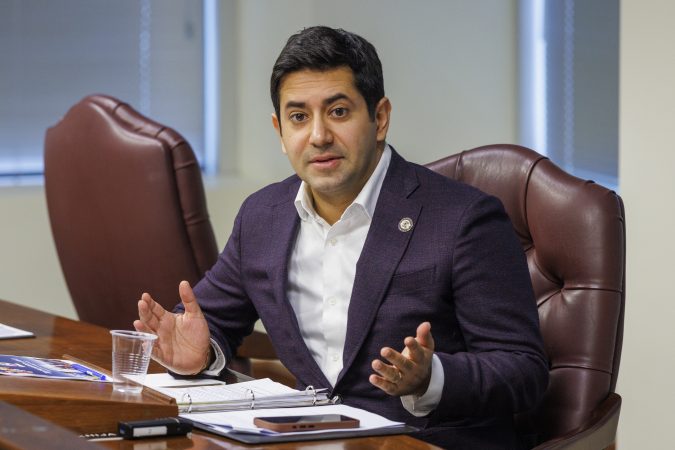
    The new 30-second ad from the Democratic Congressional Campaign Committee features Montgomery County Commissioner Neil Makhija, a Democrat and the first Asian American county commissioner in Pennsylvania.

    Makhija criticizes five-term incumbent Republican U.S. Rep. Brian Fitzpatrick on affordability issues and for being “not the same guy anymore” before urging voters to cast their ballots for Bucks County Commissioner Bob Harvie, the Democratic nominee.

    “In Bucks and Montgomery Counties, we deserve someone in Congress who actually represents us,” Makhija says in the digital ad, which is backed by a six-figure buy in the 1st Congressional District, which includes all of Bucks County and a sliver of Montgomery County.

    The district includes a large population of Asian American and Pacific Islander residents in communities such as Bensalem and Hatfield, who could play a key role in determining the outcome of November’s elections.

    “Oftentimes, Asian American voters are invisible to the political parties, but when you start paying attention, you realize that in close races like this, we can decide the margin, and in many cases, do decide the margin,” Makhija said in an interview Tuesday.

    Bucks County is home to over 30,000 Asian Americans, including more than 18,000 of whom are U.S. citizens of age to vote, Makhija said in a news release. (Census data show Asian Americans make up nearly 7% of the county’s population and nearly 14% of Bensalem’s).

    This past weekend, South Asian leaders such as Makhija and Democratic State Reps. Arvind Venkat and Tarik Khan knocked on doors in Bensalem for Harvie and Democrats Eileen Hartnett Albillar in the 6th state Senate District and Bryan Allen in the 18th state House district.

    He said that Harvie has “been doing a great job showing up and listening,” but it’s also up to officials within these communities to be reliable messengers.

    For his part, in his close to 10 years in Congress, Fitzpatrick has built relationships with Asian American and Pacific Islander voters by regularly celebrating Diwali in the community and cosponsoring legislation, including a bipartisan bill to increase language access in clinical settings.

    A national poll from the Associated Press and AAPI Data, released this week, found that Asian American and Pacific Islander voters were shifting toward Democrats on key issues ahead of the election.

    AAPI voters favored Democrats over Republicans on the economy 41% to 21% as of September, while they were nearly evenly split between the two parties on the issue in March of 2025.

    A similar shift took on place on immigration, which AAPI voter favor Democrats on 43% to 24%.

  • Trump invokes antisemitic trope again at rally for Kansas senator

    Trump invokes antisemitic trope again at rally for Kansas senator

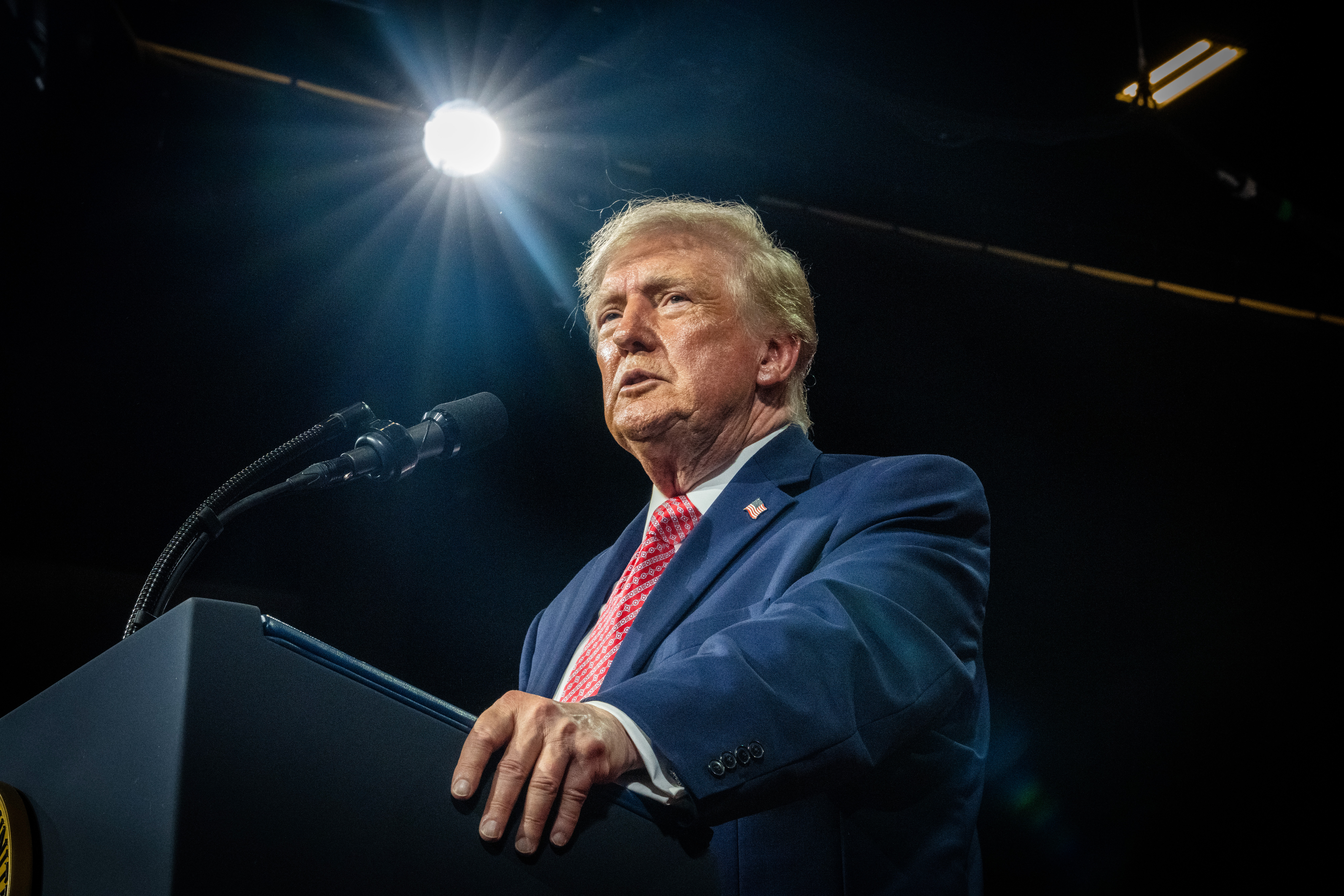
    President Donald Trump invoked a centuries-old antisemitic trope to defend the aggressive debt-collecting tactics of Sen. Roger Marshall, the first-term Republican fighting for reelection in Kansas, before the senator began his political career.

    At a rally Monday with Marshall in Park City, Kan., the president said Marshall’s opponents had unfairly cast him as “some kind of a Shylock-type guy,” an apparent reference to recent reporting by the New York Times that revealed that Marshall had filed lawsuits against more than 700 patients with outstanding medical bills during his decades-long career as an obstetrician-gynecologist. Marshall, the Times reported, routinely charged an 18% annual interest rate and garnished patients’ paychecks and bank accounts. Trump did not mention the Times by name.

    Shylock is the name of the Jewish moneylender from Shakespeare’s The Merchant of Venice. The character, who demands a pound of human flesh as collateral for a loan, has become shorthand for antisemitic representations of avarice and usury.

    At the rally, Trump sought to make the case that Marshall had been following the law.

    “He’s a fine person,” Trump said of Marshall, who is not Jewish. “And he was given a bum rap because he was mandated by law to request, strongly, money owed from patients. You’re not allowed not to do it. You have to, by law, go after those people. And they made it like, ‘Oh, he was some kind of a Shylock-type guy.’”

    Doctors have wide discretion on how to handle unpaid bills and are not required by law to sue patients or involve debt collectors.

    “The term ‘Shylock’ is rooted in a longstanding antisemitic stereotype,” the Anti-Defamation League wrote Tuesday on social media, after the Times reached out to the Jewish advocacy group for comment on Trump’s remarks. “Regardless of intent, its use can reinforce harmful tropes about Jews and normalize language that has long been used to target the Jewish community.”

    It was not the first time Trump has used the term publicly. During a rally last year in Iowa, he said that farmers should not have to go to, “in some cases, Shylocks and bad people” to borrow money. Afterward, Trump said he didn’t know it was an antisemitic slur.

    “You view it differently than me,” Trump told reporters at the time. “I’ve never heard that.”

    Jewish leaders and lawmakers last year quickly denounced his use of the term. The Anti-Defamation League called the trope “extremely offensive and dangerous.” Rep. Jerry Nadler (D., N.Y.) said it was “one of the most recognizable antisemitic slurs in the English language.”

    The Senate race in Kansas, which Republican leaders did not view as competitive just a few months ago, has evolved into one of the tightest contests of the midterm elections. Marshall faces Adam Hamilton, a megachurch United Methodist pastor who is vying to become the first Democrat from Kansas elected to the Senate since 1932.

    During the campaign, Hamilton has turned Marshall’s debt-collecting practices into fodder for political attacks and advertisements, one of which shows a former patient of Marshall’s saying she had been arrested while eight months pregnant for a $50 missed payment. Lawyers for Marshall called the ad “defamatory,” though Hamilton’s campaign continued to use it.

    Other politicians have faced criticism for using the term “Shylock” in the past. In 2014, then-Vice President Joe Biden apologized after he said it during a speech.

    Trump’s comments come at a time when Republicans up and down the ballot, and across the country, have been trying to win over Jewish voters who feel disillusioned by the Democratic Party’s posture toward Israel. Republican leaders have seized on opportunities to draw a contrast on issues relating to Israel and antisemitism, often casting their Democratic opponents as threatening. Republican leaders have been relentless in their use of Islamophobic attacks against Abdul El-Sayed, the Democratic candidate for Senate in Michigan, who is Muslim. Trump recently claimed that the candidate “hates Jews,” to which El-Sayed responded, “I love and revere Judaism and the Jewish people.”

    Republican Senate candidates across the Midwest have struggled to make their case to voters amid rising energy prices and Trump’s unpopular war in Iran. Some, like Rep. Ashley Hinson in Iowa and former Rep. Mike Rogers in Michigan, have sought to distance themselves from the president on these issues. Marshall has not.

    For years, Trump and his campaign have been accused of stealthily trying to win over racists and antisemites, a claim they reject. In 2016, Trump, then the presumptive Republican presidential nominee, posted an image on Twitter depicting Hillary Clinton beside a Jewish star and piles of money that had previously appeared on a message board known for antisemitism and white supremacy.

    During Trump’s second term, official government social media accounts, including those for the White House, have made dozens of posts that invoke white supremacist and neo-Nazi messaging, drawing condemnation from Jewish leaders and experts in online extremism.

    This article originally appeared in the New York Times.

  • Slain Philadelphia Police Officer Shane Seiber honored by hundreds at funeral services

    Slain Philadelphia Police Officer Shane Seiber honored by hundreds at funeral services

    Shane Seiber came home from two tours in Iraq wanting one thing: to be a Philadelphia police officer.

    Then a letter from the police academy arrived, turning him down.

    He crumpled it up and threw it in the trash. But his wife, Lisa, fished it out. She submitted a new application on his behalf. This time, he was accepted.

    Seiber was soon working his dream job.

    Philadelphia Police Commissioner Kevin Bethel told that story Tuesday at funeral services for Seiber, 40, who joined the force in 2016 and served until Oct. 10, when he was killed in the line of duty.

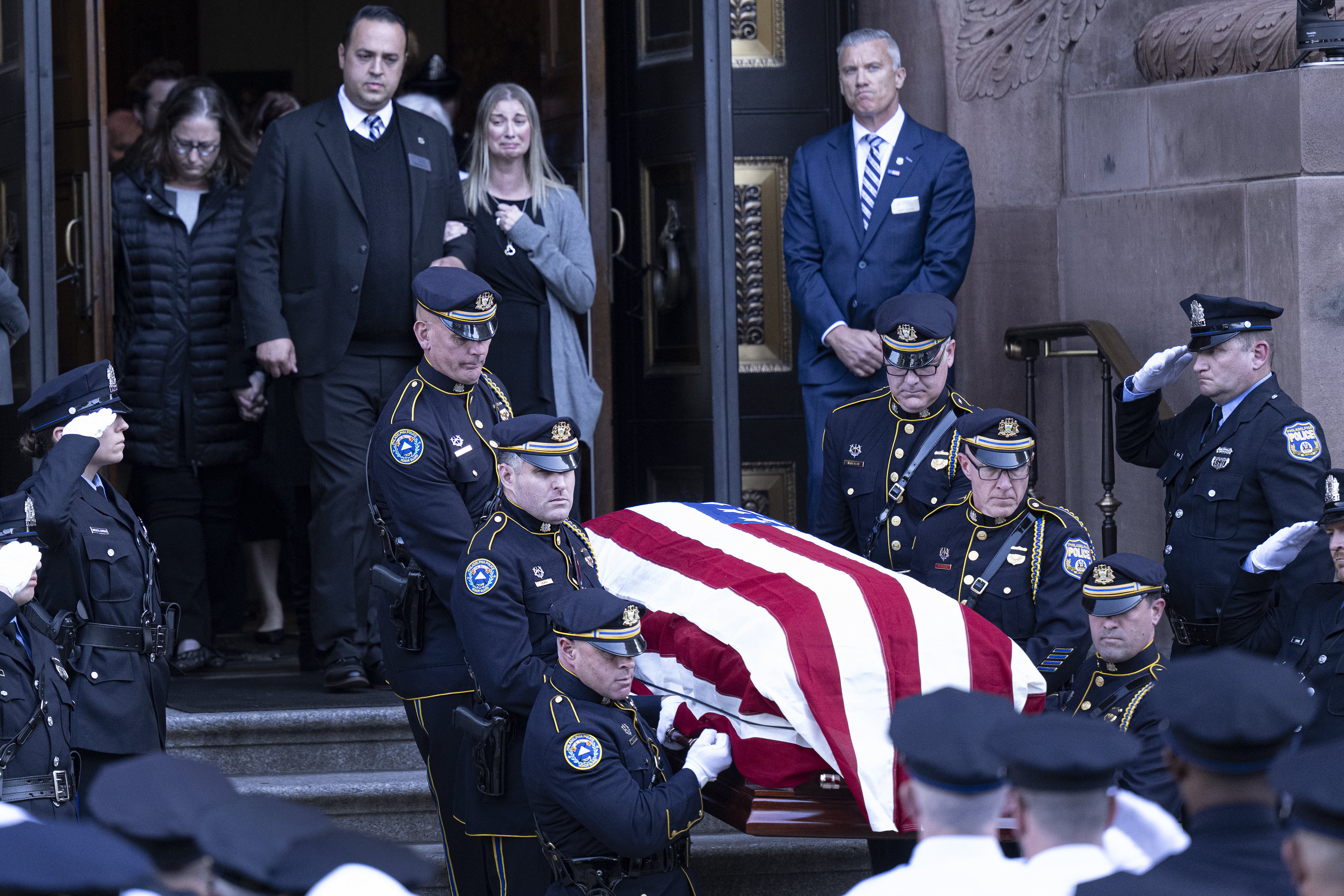
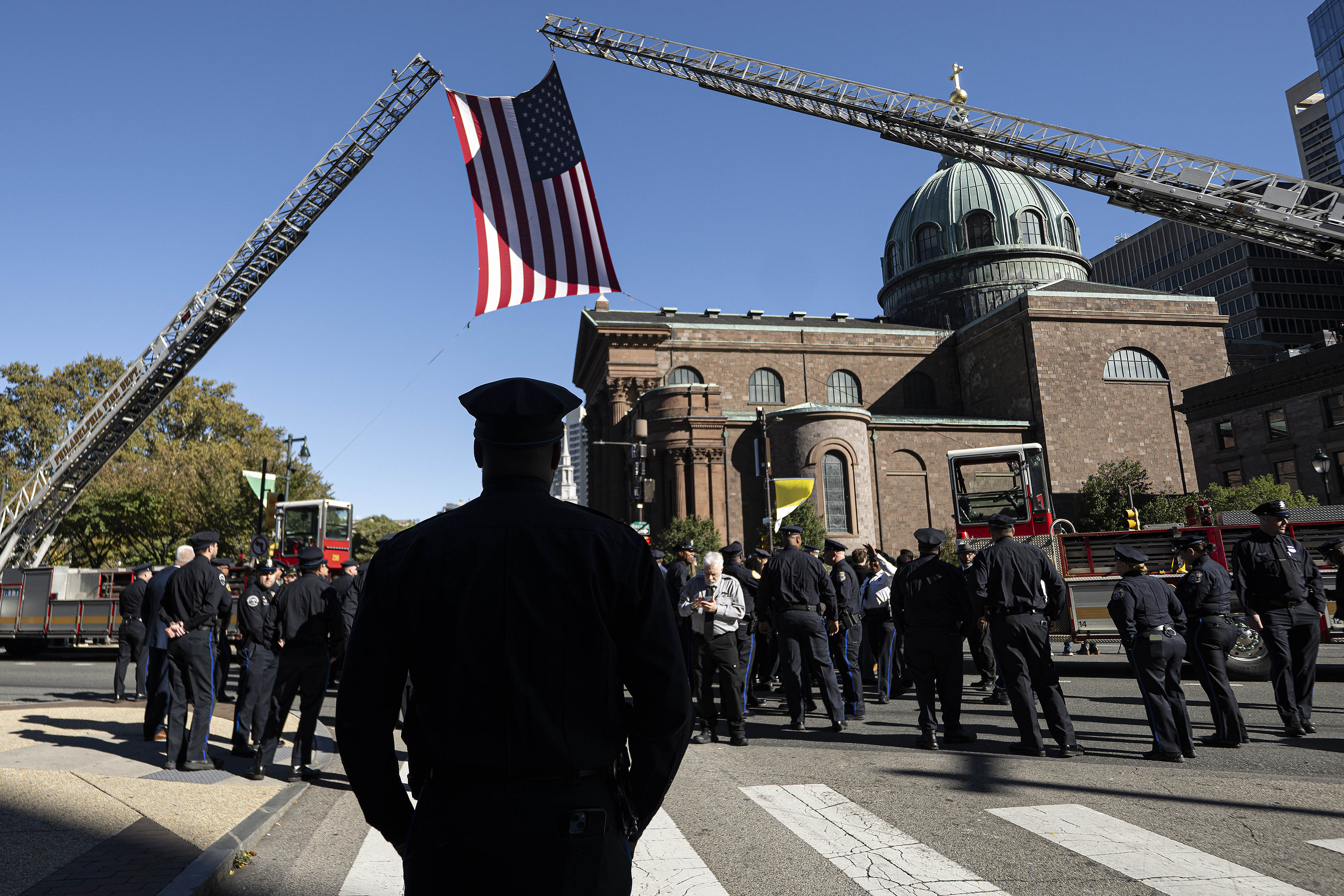
    Hundreds of uniformed officers, including scores from agencies across the state, filled the Cathedral Basilica of SS. Peter and Paul in Center City to mourn Seiber, whom Bethel described as “a man who loved his family, who served this country and this city, who walked into a room and made it better simply by being there.”

    Seiber was shot three times on a front porch in West Philadelphia during what police have described as an attack that also left his partner, Officer Hector Rodriguez III, seriously wounded. Seiber “fought for his life for hours,” Bethel said, before succumbing to his injuries at Penn Presbyterian Medical Center.

    Rodriguez, who was shot 12 times, was among the officers who gathered inside the cathedral to honor his partner, mourning alongside Seiber’s family, his friends, and officials from all levels of government.

    Philadelphia police officers embrace at the funeral services for fallen Officer Shane Seiber at the Cathedral Basilica of SS. Peter and Paul in Philadelphia on Tuesday, Oct. 20, 2026.Jose F. Moreno / Staff Photographer

    Speaking during a remembrance service that preceded a funeral liturgy, Gov. Josh Shapiro praised Seiber as a selfless team player with an unforgettable, omnipresent smile.

    “His life left a real impact, and his spirit will be felt long after this ceremony ends,” Shapiro said.

    Born in Trenton, Seiber grew up in Levittown and Langhorne and later moved to Northeast Philadelphia, according to his obituary.

    He enlisted in the U.S. Air Force in 2006 and served with the 436th Security Forces at Dover Air Force Base in Delaware, completing two tours in Iraq. Then, in 2016, Seiber joined the Philadelphia Police Department. He graduated from its police academy the next year with a promise to “do my best to make y’all proud” — a vow he posted publicly on his Facebook page.

    Seiber worked in the 22nd and 19th Police Districts. And though he died an officer, Bethel announced on Tuesday that Seiber had been posthumously promoted to sergeant. His family would receive the department’s Medal of Honor and a Purple Heart, Bethel said.

    Away from the job, Seiber was a beloved husband and father known affectionately as “Colgate” for his near-constant grin, speakers recalled.

    Seiber was married to his wife, Lisa, for 11 years. The couple lived in Bensalem with their 7-year-old son and 3-year-old daughter.

    “I know that they’re going to survive,” said Seiber’s uncle, Dan Farris. “I know they’re going to do well. Their father’s going to be looking over them from above.”

    Mayor Cherelle L. Parker described Seiber as a father who “melted like marshmallows” any time his children wanted anything. She also announced a new annual city internship that will be created in Seiber’s name and will be shaped by his family.

    Bethel also addressed Seiber’s two children. “I want [them] to grow up knowing their father was a hero,” he said, “not simply because of how he died, but because of how he chose to live.”

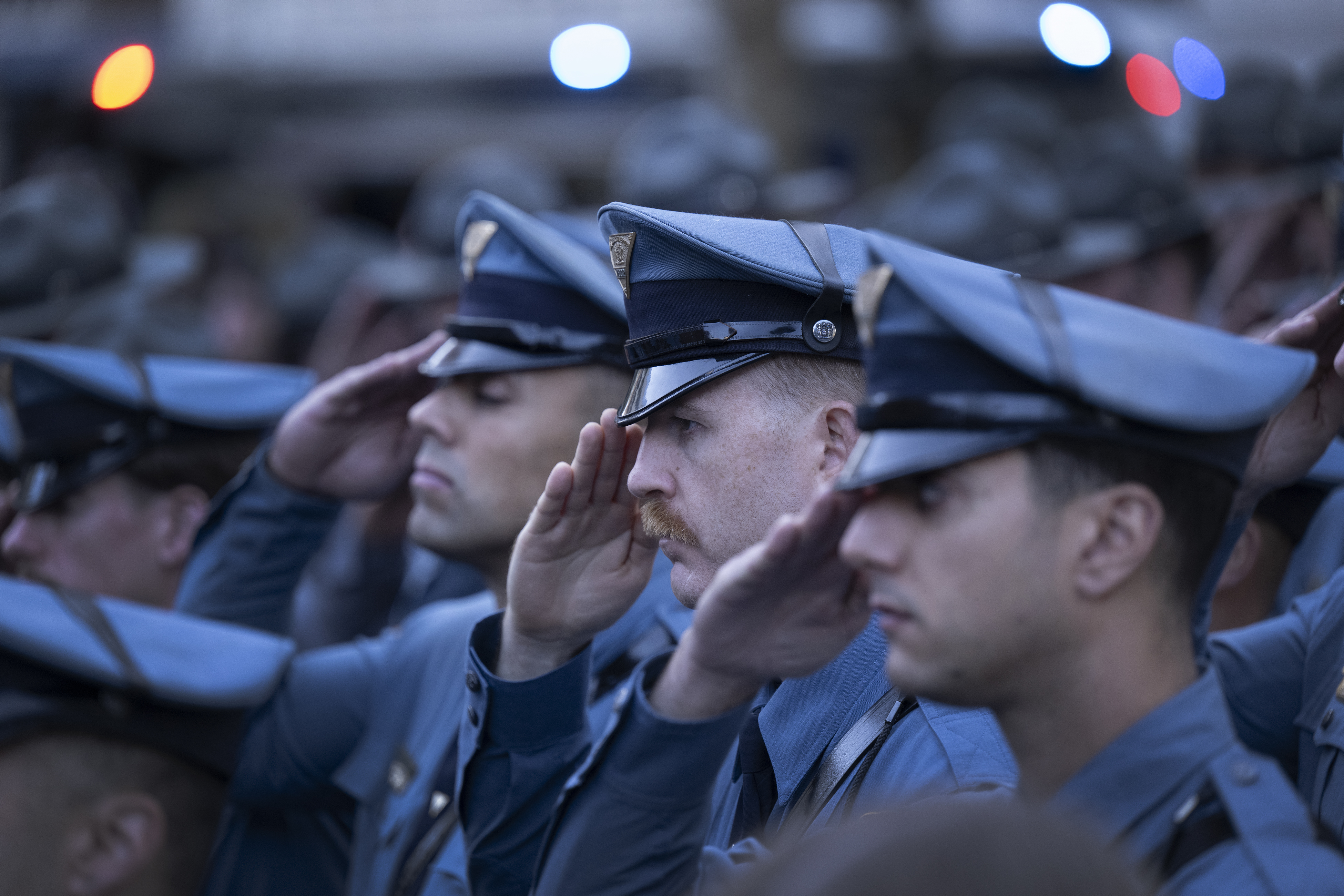
    New Jersey state troopers salute during the funeral procession for fallen Officer Shane Seiber outside the Cathedral Basilica of SS. Peter and Paul in Philadelphia on Tuesday, Oct. 20, 2026.Jose F. Moreno / Staff Photographer

    And he shared a photo of Seiber that, Bethel said, he will never forget: It captured Seiber holding both the crumpled rejection letter and his acceptance into Philadelphia’s police academy. “His arms are stretched wide, and he’s smiling from ear to ear,” Bethel described.

    “Think about what that photograph represents,” he continued. “In one hand, disappointment. But in the other hand, a dream fulfilled.

    “Standing behind that moment was a wife who refused to let her husband give up,” Bethel said. “Lisa believed Shane had something important to offer this world. And, Lisa, you were right.”

    The Rev. Gerald Dennis Gill delivered the eulogy, urging attendees to find solace in Seiber’s death through prayer and Scripture.

    Gill said Seiber had died a violent and tragic death — a sobering reality but one that had been countered by the beauty and elegance of the words shared by the officer’s loved ones that afternoon. And at times, Gill’s remarks touched on the strange power of the divine.

    The evening before the Oct. 10 shooting, Gill said, he was spending time with a group of police officers when a thought occurred to him: The lives of those men and women were fragile, he remembered thinking, particularly when answering the call of duty.

    The next day, he said, a police captain called to inform him of Seiber’s death.

    Police began exiting the cathedral at 1:30 p.m. as choir singers continued their song. They gathered on South 18th Street, where hundreds of law enforcement officers had waited patiently throughout the service. They stood shoulder to shoulder, some carrying the flag of the nation or the state, others with rifles at their hip. Under a golden October sun, they gazed solemnly at the long, gray hearse that would carry Seiber’s body to its final resting place.

    Seiber’s casket was carried out as a band played, bagpipes blaring and snare drums rattling in unison.

    The officers stood at attention, their hands raised in salute, while the final police radio call for Seiber played on the loudspeakers: “No response from 1925, Officer Shane Seiber, badge number 7258.”

    Seiber’s burial will be private.

    Seiber was the fourth Philadelphia police officer to die in the line of duty in the last three years. He was shot shortly before 1 a.m. on the front porch of a home on the 100 block of North 52nd Street, where he and his partner, Rodriguez, had responded to a report of a person with a gun.

    Authorities have arrested and charged Eric Lewis, 35, with Seiber’s killing and a slew of related crimes.

    Philadelphia Police Officer Ponucey stands in formation with hundreds of other officers for the funeral service of fallen Officer Shane Seiber, 40, at the Cathedral Basilica of SS. Peter and Paul in Philadelphia on Tuesday, Oct. 20, 2026.Jose F. Moreno / Staff Photographer