Blog

  • Smithsonian changes course, will put Latino museum in existing building

    Smithsonian changes course, will put Latino museum in existing building

    The Smithsonian Institution announced Monday that it will put its National Museum of the American Latino in a 145-year-old building on the National Mall instead of constructing a new one.

    The Smithsonian’s Board of Regents voted Monday to house the American Latino museum, which Congress created in 2020 but which has lacked a permanent home, in the Arts and Industries Building, a 258,000-square-foot redbrick Victorian structure next to the institution’s headquarters.

    Jorge Zamanillo, the museum’s director, called the decision “a major milestone in a dream and effort of decades in the making.”

    “Designating the Smithsonian’s Arts & Industries Building as the home of the National Museum of the American Latino places the U.S. Latino story at the heart of the National Mall and the American story,” Zamanillo said in a statement. “We could not be more excited to build on the rich legacy of this historic building and transform it into a next generation museum that celebrates the history, culture, and contributions of Latinos in the United States.”

    The decision revives a plan the Smithsonian considered but discarded years ago, a major shift for a project whose supporters have spent decades pushing for a new building on the National Mall designed specifically for the museum. It also gives the Smithsonian a path forward that does not depend on Congress approving construction on one of the undeveloped sites the institution previously selected.

    The Smithsonian had chosen two sites near the Washington Monument for its two new museums — one across from the National Museum of African American History and Culture and another between the U.S. Holocaust Memorial Museum and the Tidal Basin. Both are controlled by the National Park Service and sit within the Reserve, an area of the Mall where Congress has restricted new construction.

    Because the Smithsonian owns the Arts and Industries Building, the institution can decide how to use it without additional legislation.

    That distinction could prove important. Building a Smithsonian museum from scratch can take a decade or longer, even after Congress authorizes it. The National Museum of African American History and Culture took more than a decade to build after its 5-acre site was chosen.

    In a statement Monday, the regents noted that Congress directed them to consider the Arts and Industries Building when it authorized the Latino museum in 2020 and said their selection of a site is now complete.

    The decision also separates the Latino museum’s path from that of its counterpart, the Smithsonian American Women’s History Museum. The two museums were created together in 2020 and had been pursuing potential sites in lockstep, but legislation needed to move the women’s museum forward ran into a congressional roadblock this spring.

    The House rejected that legislation after Republicans added provisions restricting how the museum could present transgender women and giving President Donald Trump greater control over its site. The Smithsonian has said a new building for the women’s museum would still be roughly a decade or more away.

    The regents’ decision Monday returns to an idea almost as old as the campaign for the Latino museum itself.

    Latino advocates began pressing for a national museum after a Smithsonian-commissioned report in 1994, titled “Willful Neglect,” sharply criticized the institution’s treatment and representation of Latino Americans. The Smithsonian created what became the Smithsonian Latino Center in 1997, but supporters continued pushing for a full-fledged museum.

    Then-Rep. Xavier Becerra (D., Calif.) began sponsoring legislation in 2003 to create a commission to study the idea. Congress approved the commission five years later, and in 2011 it recommended creating a Smithsonian museum devoted to Latino history and culture, estimating that the project would cost $600 million. Among the locations under consideration was the Arts and Industries Building.

    The building resurfaced as a proposed home in 2016, when Becerra and then-Sen. Bob Menendez (D., N.J.) introduced legislation that would have placed the museum there and added an underground annex. The historic building presented challenges for a modern museum: Its soaring ceilings and skylights were not designed for conventional exhibitions.

    Congress finally authorized the museum in December 2020, during the final weeks of Trump’s first term, as part of a massive spending and pandemic-relief package that also created the women’s history museum. Arts and Industries was among four finalist locations for the two museums in 2022, but the regents ultimately chose the two undeveloped sites on the Mall instead.

    That same year, the Latino museum opened its first physical exhibition space, the 4,500-square-foot Molina Family Latino Gallery inside the National Museum of American History.

    The project has also become entangled in the second Trump administration’s broader campaign to reshape the Smithsonian.

    Trump’s proposed 2026 budget sought to eliminate separate funding for the stand-alone museum and instead integrate Latino programming across the Smithsonian. The proposal drew objections from Democrats as well as Republican members of the Congressional Hispanic Conference, who called eliminating the museum’s funding a “disservice to the American public.” A White House official said at the time there was no reason to provide construction funding because Congress had not approved a site.

    The museum’s programming has also drawn criticism from conservatives. It’s first exhibition, “¡Presente! A Latino History of the United States,” addressed immigration, LGBTQ rights, and criminal justice reform alongside figures including Celia Cruz and Roberto Clemente. Republican lawmakers criticized the exhibition’s portrayal of Latinos, and a planned follow-up exhibition on Latino youth movements was later scrapped.

    Mike Gonzalez, a senior fellow at the conservative Heritage Foundation and a longtime critic of the Latino museum, has argued that the problem goes deeper than individual exhibitions. He contends that the museum was conceived to portray Latinos primarily as victims of discrimination rather than as part of a shared American story.

    The Smithsonian ”could never win a vote in Congress to house the Latino Museum anywhere else,” Gonzalez wrote Monday on X. He first wrote about the Smithsonian’s change in plans in the Washington Examiner this month.

    The building the regents selected Monday carries its own unusually rich Smithsonian history.

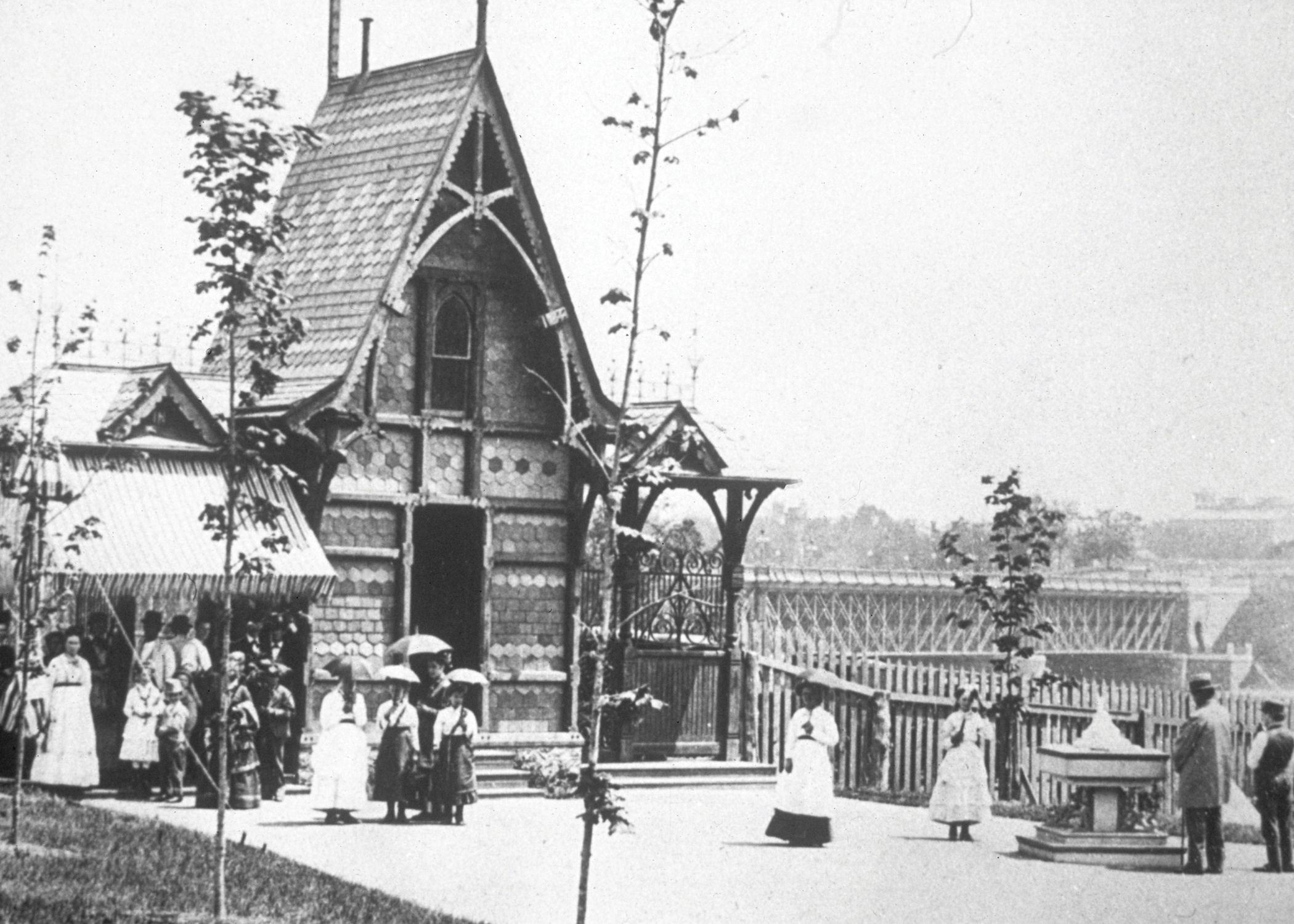
    Arts and Industries opened in 1881 as the institution’s second building and the first Smithsonian facility designed as a public museum. Over the decades, it served as an incubator for collections that eventually moved into the National Museum of Natural History, the National Museum of American History, and the National Air and Space Museum.

    The building closed in 2004 because of structural problems. A renovation that took nearly 12 years and cost $55 million stabilized the structure, although it has been used only intermittently since. The Smithsonian temporarily reopened it in mid-June to celebrate America’s 250th anniversary but plans to close it again at the start of next week.


  • No tax on tips is here. What employers need to know for 2026 | Expert Opinion

    No tax on tips is here. What employers need to know for 2026 | Expert Opinion

    “No tax on tips” sounds simple. For employers, it isn’t.

    Starting in 2025, employees who received tipped income can now take a deduction for this amount on their individual tax returns, which reduces their taxable income and taxes owed.

    The benefits are obvious, but some of the rules are less so. Here’s what to know.

    Cap on tips deduction

    The deduction is capped at $25,000 per return, even for married couples filing jointly. It phases out for joint filers with $300,000 or more annual income and $150,000 for other taxpayers.

    No deduction for mandatory service fees

    Tips claimed must be voluntary. If you’re charging your customers a mandatory “service charge” and then disbursing the amount collected to your employees, that amount is not eligible as tipped income for purposes of the tax deduction.

    Put simply, a mandatory service charge and a voluntary tip are not interchangeable, said Shanita Jones, a certified public accountant in Philadelphia.

    “Calling a charge a gratuity on the receipt doesn’t automatically make it a tip for tax purposes,” she said. “Owners should verify that their point-of-sale system, bookkeeping records, and payroll system distinguish voluntary tips from mandatory charges.”

    Specific jobs qualify for tip deduction

    Eligible employees must work in one of the more than 70 occupations the IRS has designated as traditionally tipped. These include servers, bartenders, hairstylists, makeup artists, hotel workers, rideshare drivers, and personal trainers. Occupations such as accountants, tax preparers, and most legal professionals aren’t on the IRS list.

    Self-employed workers can also take advantage of the tips deduction, but the deduction can’t exceed the net income of their trade or business.

    States still tax tipped income

    The “no tax on tips” deduction is applied only at the federal level. Neither Pennsylvania nor New Jersey makes this deduction available when calculating state income taxes owed.

    The two states do have a reciprocal agreement so that if a worker who lives in Pennsylvania earns tipped income at their job in New Jersey, they’re still taxed at Pennsylvania rates.

    Other taxes that still apply to tips

    Also, tips are not exempt from all kinds of federal taxes. Employees must still pay the taxes for Social Security and Medicare.

    “Before telling employees their tips are tax-free, make sure you can answer: free from which tax?” Jones said. “The distinction matters because employees may make spending decisions based on what they believe they will keep.”

    Employers must also match the FICA and Medicare payments.

    But restaurants and certain food service businesses may qualify for the federal FICA Tip Credit, said Adrienne Straccione, a partner at accounting and advisory firm Wouch Maloney in Philadelphia.

    This credit is different from the employee tip deduction. It was expanded as part of last year’s tax legislation to include qualifying barbering, hair care, nail care, esthetics, and body and spa treatment businesses. The credit is not a deduction — it is taken against taxes owed and if it exceeds what’s owed it can generally be carried back one year and forward up to 20 years.

    “This expansion can potentially provide a valuable tax benefit on certain employer-related taxes for more employers with tipped workers,” she said.

    Employers must keep accurate tip records

    If you’re an employer, you need to be familiar with the reporting required, Jones said, because no tax on tips does not mean “no reporting of tips.”

    “A tax break for an employee does not erase an employer’s responsibilities,” she said. “Business owners should not stop recording tips or change their payroll practices simply because they hear the phrase “tax-free.”

    For 2025, employers received transition relief because Forms W-2 and 1099 had not yet been redesigned to separately report the information needed for the new deduction. That’s different for 2026. Employers now report cash tips on Form W-2 using Box 12, Code TP, and identify the worker’s qualifying occupation in Box 14b.

    Employers should expect “greater scrutiny of how tips are tracked,” categorized, and reported, Straccione said.

    “Businesses need to understand what code section your employees fall under for the Treasury Tipped Occupation Codes,” she said. “Failure to comply with the new W-2 reporting standards can result in penalties.”

    It’s important that your employees take advantage of the deduction during the course of the year by reducing the amount of federal taxes they’re having withheld from their paychecks. We’ve been recommending to our clients that they help their employees revise their W-4 withholding form to reduce the amount of tax taken from their paycheck. This will leave them with more money left over throughout the year, rather than waiting for a refund from the government.

    Both Jones and Straccione are advising clients to establish written processes for reporting all tips, documenting the distributions, and getting that information into their payroll systems.

    “Cash tips should not disappear from the records simply because they never passed through the business’s card processor,” Jones said. She advises that businesses review their process with their accountant and payroll provider, confirm the applicable year’s reporting requirements, and reconcile records regularly.

    “Tax season should not be the first time you discover that your sales system, payroll records, and books tell three different stories.”

    The no-tax-on-tips deduction is good for both employees and employers. Obviously, the employee gets to save money. But the employer, because their workers are effectively getting paid a little more by the tax savings, may feel less pressure to increase wages this year.

    The deduction won’t last forever. It’s scheduled to expire after the 2028 tax year, unless Congress extends it.

  • Note to cops: Don’t drive away from a person lying in the road

    Note to cops: Don’t drive away from a person lying in the road

    There’s a special place in hell for a cop who leaves a human being lying in the street, and they get run over by a car.

    It doesn’t matter who the person is, or if they are under the influence of a substance. It doesn’t matter if they resist. They need to be escorted to safety. If needed, rescue workers or a behavioral health expert should be summoned. No one — and I mean no one — should be left lying in the street.

    If the police officer who encountered the 48-year-old pedestrian who wound up lying in the bike lane in the 5500 block of Rising Sun Avenue in the wee hours of Aug. 27 had a shred of humanity left in his soul, that man would still be alive today.

    Instead of being a hero and saving that man’s life, the officer talked to the victim as he lay on his back in the roadway, then got into his police cruiser and drove away. Minutes later, the man was fatally injured by a hit-and-run driver. Two unidentified people pulled the man out of the street and contacted authorities.

    The same officer who had encountered the man earlier was the first to respond. Did he even try to make up for what happened? Not according to First Deputy Commissioner John Stanford, who said at a news conference on Friday that the officer didn’t administer first aid or file a police report. “That goes against everything that we stand for,” Stanford told reporters. “We talk about empathy. We talk about compassion as an organization, and none of those things were on display.”

    The officer, whose name hasn’t been released, has since been placed on administrative leave and is still on the Philadelphia police force.

    He shouldn’t be.

    His job is to serve and protect. But he lacks the human decency and compassion it takes to do that.

    What happened last week reminds me of a similar incident that took place four years ago, which I also wrote about. In that case, Elizabeth Negron had wandered into the middle of Germantown Avenue near Coulter Street around midnight one hot summer night in 2022.

    It’s unclear what exactly was going on with her, but clearly something was off. She stood in the roadway and blocked the path of a SEPTA bus as vehicles veered around her in different directions. Soon, a police car arrived. Officers got out of their vehicle and interacted with her briefly before driving off, leaving Negron still in the roadway.

    They left her in the street like an old discarded shoe. At one point, Negron can be seen lying on her back. A video, recorded by a nearby business, ends shortly thereafter, leaving viewers to imagine what happened next as a passing car ran her over and then fled the scene.

    I’ve had the privilege of meeting and interviewing many incredible police officers over the years. Most are good people both on and off the job. But there are some who forget that the people they encounter out on the streets acting oddly are as human as anyone else. They matter, too.

    Negron was loved by her two young daughters, a devoted sister, and others who still mourn and miss her. Her sister, Jackie Martinez, told me she had been scrolling on her phone when she learned someone else had suffered a similar fate. “I’m hanging in there and trying my best to not let it bother me,” she said.

    Martinez said she would never just walk by someone in harm’s way. “You put them somewhere safe,” Martinez said. “If you walk away and they end up back in the middle of the street, at least you know that was on them.”

    Jackie Martinez poses next to a tree planted in honor of her sister, Elizabeth Negron, who was killed on Germantown Avenue near Coulter Street by a hit-and-run driver in July 2022.Jenice Armstrong

    David Fisher, a 29-year veteran of the Philadelphia Police Department and president of the National Black Police Association, agreed, saying, “You don’t leave somebody on the street needing care.”

    It’s really that simple. It should be obvious. But apparently it isn’t.

  • Employer health costs are expected to spike in 2027

    Employer health costs are expected to spike in 2027

    Large and small employers are bracing for what looks to be the sharpest increase in healthcare costs in more than two decades. The cost per worker is projected to go up an average of 11% next year, or somewhat lower if workers’ insurance benefits are reduced, according to a U.S. survey released Wednesday.

    The employers’ final costs, after they make changes to health plans, are still expected to increase about 8% next year, the steepest since 2003, according to Marsh, the benefits consultant formerly known as Mercer.

    More than a third of the 1,800 employers surveyed said they anticipated that costs would rise at least 10% after making cuts.

    “This year was a rough year, and next year looks like it will be even rougher,” Beth Umland, director of employer research for health and benefits at Marsh, said in an interview.

    The Marsh survey is the latest report by an employer group or benefit consultant predicting a sharp rise in healthcare costs next year. Many Americans, even those with insurance, are already struggling to afford care, according to various surveys, and healthcare has become a top issue for voters.

    “This seems to be a new normal,” said Ellen Kelsay, the CEO of Business Group on Health, which represents large employers that offer health benefits.

    From 2018 to 2027, healthcare costs could increase 76%, roughly twice the rate of general inflation, according to a survey the employer group released last month. For next year, companies predicted a 9.2% median increase, which fell to 8% after they made benefit changes.

    The cost of providing coverage to employees is becoming an existential business issue, said Mike Pasterick, an executive at insurance broker Aon, which issued its own projection last month. Aon estimated employers’ costs would rise 9.5% next year, pushing the average cost per employee above $19,000 if no changes are made. “This is impacting the companies in a very material way,” he said.

    The upshot is that about 160 million people under 65 who rely on employers for health insurance will again confront higher costs and shoulder more of the burden. More and more, workers are facing year-over-year increases that further stress household budgets already dealing with the growing expenses of groceries and gasoline.

    Workers are facing higher premiums, deductibles and copays, which require them to carry a larger share of their medical bills. Some companies are cutting benefits by discontinuing coverage of expensive GLP-1 drugs to treat obesity, or dropping coverage for spouses who have other insurance options.

    Employers and benefits consultants cited a number of factors contributing to higher costs: rising prices for hospital care and prescription drugs, including expensive medicines for cancer, and robust demand for GLP-1 drugs to treat conditions like diabetes.

    But they also pointed to new contributors like hospitals’ and doctors’ use of artificial intelligence to increase payments through better documentation of care. They also blamed increasing reimbursements to some doctors who are out of network and are exploiting a new consumer protection law that allows them to challenge what they were originally paid.

    The pressure by hospitals and doctors to charge employers even more is likely to intensify with looming cuts to government plans like Medicaid, the federal-state program for low-income individuals. Hospital groups are already seeing an increase in the number of patients who don’t have insurance or can’t pay their bills, and many are expected to charge employers more to help make up for lost revenue.

    Many employees are already being asked to pay significantly more of their medical bills. Workers are paying an average of 10% more in out-of-pocket costs in 2026 — some $2,167 — than they were last year, Aon estimated.

    These kinds of increases are not sustainable, said Rosa Novo, the benefits administrator for Miami-Dade County Public Schools, which covers about 45,000 employees and their families. “It’s become really, really difficult, extremely difficult,” she said. The bulk of the system’s costs are for hospital care, she said, but among the fastest-growing expenses are pharmacy costs.

    For the first time, the school system is exploring new ways of delivering care. “We’re having to reinvent the way we operate,” Novo said. The system is considering contracting directly with hospitals and doctors for some of its employees’ care, like imaging, rather than relying on its insurer to negotiate for it. The system is also starting to demand more visibility into what it pays for care, requiring audits and detailed information about claims.

    “I personally see a readiness to do things differently,” said Elizabeth Mitchell, the CEO of the Purchaser Business Group on Health, which represents employers. She said employers were more interested in seeing more information from insurers about how they were spending their money and consideration of alternatives.

    “It’s more than just talk,” she said, saying many companies are revisiting their arrangements with their insurer or pharmacy benefit manager.

    Like the Miami-Dade school system, many companies are in discussions directly with local hospital groups or other organization to provide care outside their traditional insurance plans. Others are contemplating ways to steer patients to select hospitals or doctors, either by charging them less to see those providers or limiting where employees can get care.

    “We’re seeing a lot of employers taking a closer look at the network,” said Eric Miller, a vice president at Segal, another benefits consultant, despite concerns that employees will be upset if they can’t see their longtime doctor or go to the hospital of their choice.

    “Unequivocally, there is more openness to change and disruption than there ever has been,” he said.

    Smaller employers may be making the most significant changes, said Shawn Gremminger, the CEO of the National Alliance of Healthcare Purchaser Coalitions, many of whose members are smaller companies.

    “I think it’s the smaller market where the pain is most acute,” he said.

    While some are considering moves like offering employees a fixed amount of money to pay for a plan, others are taking a close look at the giant companies that sell them insurance or pharmacy benefit management. In the alliance’s most recent survey, 54% of employers said they were working with one of the three largest pharmacy benefit managers, a drop from 63% the year before. Many said they were moving to one of the smaller pharmacy benefit managers, many of which promise more transparency about how they operate and what they pay for drugs.

    “We may be seeing a tipping point,” Gremminger said.

    This article originally appeared in The New York Times.

  • From a simple awning to a six-figure outdoor room, how Philly homeowners add shade to their yards

    From a simple awning to a six-figure outdoor room, how Philly homeowners add shade to their yards

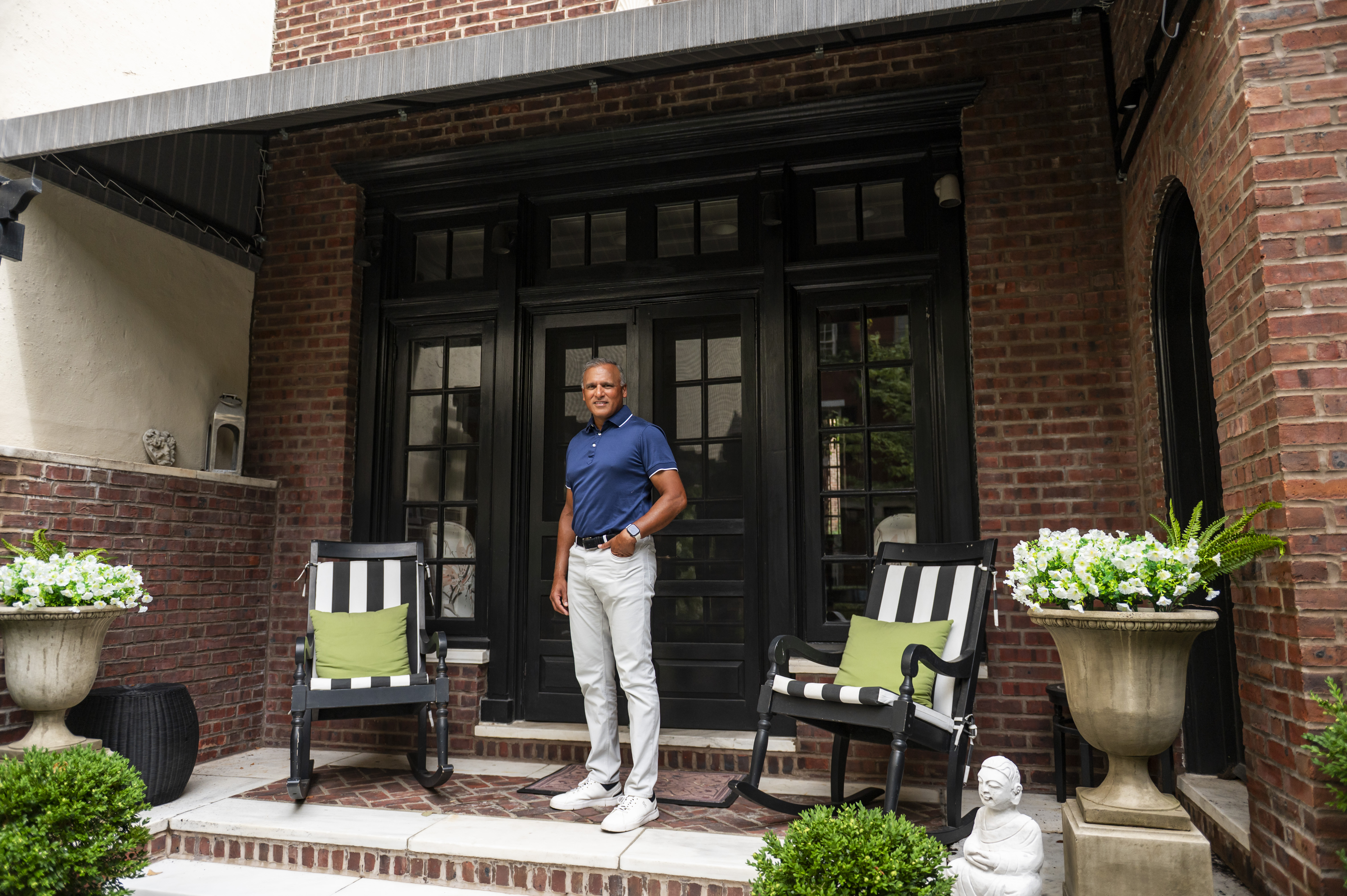
    Carla and Steve Red had a pair of covetable outdoor living spaces on their Fitler Square rowhouse, with a first-floor patio and a rooftop deck. But they weren’t so pleasant in the summer.

    “During Philly summers, you want to spend a lot of time outside on your patio, but the roof is basically baking in the sun,” Carla said. “There aren’t trees to cover you, and you really get crushed.”

    So last year they added some shade, and it was a game changer.

    With the help of a landscape designer and Paul Construction & Awning, the couple installed motorized retractable awnings over each deck. They now escape the summer heat and extend the outdoor season through the fall and early winter.

    The roughly 600-square-foot roof deck is the prime spot for entertaining guests and enjoying an evening glass of wine while watching the sunset. During rain showers, they’re no longer forced to retreat inside and instead enjoy the pitter-pattering of precipitation on the gray-and-white striped awning.

    The patio awning on their first level covers about half the 300-square-foot space, allowing for a mix of shade and sun. The couple also upgraded the furniture and added colorful flowers, a koi pond, and gas firepit.

    “We created extensions of the house where people really want to hang out,” said Carla, who spent about $27,000 on the two awnings. “It’s a Zen experience.”

    Outdoor structures, including pergolas, arbors, and gazebos, were added or upgraded by 35% of homeowners in 2026, according to the 2026 Houzz Outdoor Trend Study. That’s up from 20% in 2024. It’s a sign that homeowners are thinking about outdoor spaces less as occasional-use areas and more as functional living spaces, said Marine Sargsyan, head of economic research at Houzz.

    The most budget-friendly shade options, like a simple pergola kit ordered online, have price tags of a few hundred dollars at the low end. Customized structures offering year-round comfort can come with six-figure costs.

    “Shade structures are a key part of how homeowners turn outdoor areas into true extensions of the home,” Sargsyan said. “By adding comfort, definition, and protection from the elements, these structures help transform a yard, patio, or deck into an outdoor room.”

    Choosing an outdoor structure

    No matter the size of the property — from a city rowhouse’s garden to a sprawling yard in the suburbs — outdoor living can be enhanced with a thoughtfully designed shade structure. Options range from a DIY shade sail, constructed from UV-resistant fabric hung onto poles, to an elaborate gazebo outfitted with a retractable louvered roof and walls, rain and wind sensors, and radiant heat or air-conditioning.

    People just want to spend more time outside, said Gregg DiSantis, president of Distinctive Outdoor Structures in North Wales. Finding a new appreciation for the outdoors during the pandemic, homeowners sought out ways to turn their decks and patios into structures they could enjoy year-round.

    “They got used to being outside and really enjoyed it,” he said. “Now it’s a way of life.”

    Popular options include a pergola, cabana, awning, or screen. The yard’s layout and the homeowner’s budget shape the options.

    Rooftop decks, prevalent in the city and at the Shore, are a popular spot for a louvered pergola system with adjustable horizontal slats that open and close by the push of a button. The closed roof offers relief from the hot daytime sun and then opens to enjoy the evening breeze under the stars.

    Structures come in a multitude of colors, wood grains, designs, and styles. Homeowners can choose decorative features and trim to match the home’s architecture. A custom-built pergola from Distinctive Outdoor Structures costs $35,000 to $45,000 on average.

    Building an outdoor room at a historic city home

    Construction projects in the city, even for an outdoor feature, come with additional challenges. Permitting, installing electricity, and using a crane to get materials up to the roof are more likely to be part of the project. These steps take time and are costly.

    Bob and Amy Kothari’s outdoor space at their home in Washington Square West.Allie Ippolito / For The Inquirer

    Amy and Bob Kothari took the time to see these challenges through. After many years living in the suburbs, the couple were anxious for city living when they bought a Washington Square West rowhouse in 2019. But they didn’t want to give up the outdoor space they enjoyed and depended upon when they lived in Ardmore.

    Their new home offered the best of both worlds: the benefits of urban living and an 800-square-foot yard. The house is a designated historic home, requiring special permits before starting construction.

    Distinctive Outdoor Structures built a 10-foot square pergola in their yard, complete with a louvered roof operated by a remote. In inclement weather, the roof closes automatically. The space includes lights, a ceiling fan to keep it cool in the summer, and heaters that kick on when it’s cold outside.

    They use the space to entertain, enjoy evening cocktails and morning coffee, and for private work-from-home space. The project cost about $140,000 for the pergola, brickwork, lighting, landscaping, and flagstone.

    “It’s a very functional but comfortable area,” Amy said. “It extends the inside of the house outside.”

    Budget-friendly shade

    Awnings and motorized retractable shades and screens are popular ways to create a cooler, more comfortable outdoor space.

    “An awning is ideal when the homeowner wants protection from direct sun overhead, shelter from light rain, a lower-cost alternative to building a permanent roof, and the flexibility of a retractable system — sun when desired, shade when needed,” said AnnMarie Salassa, executive assistant at Paul Construction & Awning in Skippack.

    Awnings are especially common over patios, decks, outdoor dining areas, and windows to reduce indoor heat gain.

    Bob Kothari stands in his yard, under an awning that also provides protection from the elements just off the back of the house.Allie Ippolito / For The Inquirer

    Screens are selected when homeowners want to enjoy fresh air without being bothered by mosquitoes and other insects, Salassa said. Screens also keep space clean from debris, pollen, or leaves, and reduce glare while maintaining views, she said.

    Motorized screens are often paired with covered patios or decks because they can disappear when not needed.

    “The shades we install can withstand 100-mile-per-hour winds,” DiSantis said. “They block out the sun and rain, and keep the heat in. They are a game changer in how people enjoy their spaces.”

    Motorized awnings range in price from about $6,000 to $10,000 for a 12-foot installed product, depending on the materials used, DiSantis said. A 10-foot-wide retractable screen costs $4,500 to $6,000 on average. On the lower end, the screens offer shade or keep out insects but aren’t able to withstand strong winds, he said.

    Budget-friendly shade options aren’t limited to awnings and shades. A prefabricated pergola, for instance, can be more affordable than a custom-built one. Hanso, for instance, a Scandinavian-based company with a large U.S. market, sells prefabricated aluminum gazebos and pergolas starting at $6,000. Ordered online, these are shipped to the consumer, who can then DIY the installation or hire a local contractor to help.

    Home improvement stores and other manufacturers also offer pergola kits, the simplest of which are less than $1,000.

    These structures are made with a powder coating that “last more than 30 years and does not require repainting,” Hanso CEO Darius Kunca said. And, he noted, “Aluminum kits can move with you when you move houses — simple to pack and rebuild again.”

  • 6abc lands a Philly native to lead ‘Action News’ after predecessor’s abrupt exit

    6abc lands a Philly native to lead ‘Action News’ after predecessor’s abrupt exit

    After more than five months, 6abc finally has a news director.

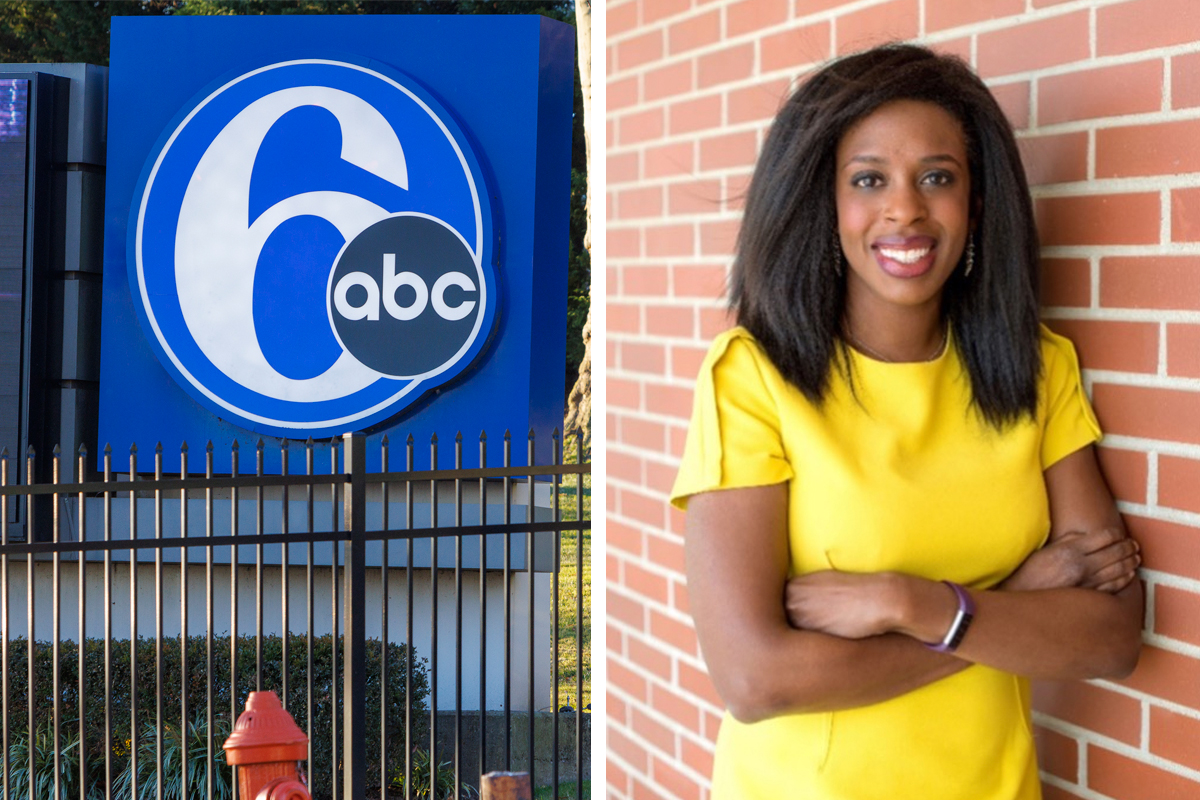
    The station announced Nneka Nwosu, a Philadelphia native serving as the vice president of marketing and local programming at sister-station WLS in Chicago, would take over running the Action News newsroom.

    6abc president John Morris announced the move to staff in an email Tuesday, noting that Nwosu is such a big Eagles fan “their 2018 Super Bowl win may have actually sent her into labor with one of her sons.”

    “Running the news department at the station I grew up watching is surreal!” Nwosu wrote on LinkedIn, adding she was “thrilled to be coming home.”

    Nwosu spent the past four years in Chicago, previously serving as one of the station’s assistant news directors. Prior to that, she spent eight years at Boston ABC affiliate WCVB.

    At 6abc, Nwosu is inheriting the city’s most-watched newscast dating back more than 40 years. Her first day in the newsroom will be Oct. 5, and among her first tasks will be overseeing a new chief meteorologist following the retirement of Cecily Tynan, who delivered her final forecast Monday after more than three decades at the station.

    Nwosu is filling the spot vacated by the sudden departure of Tom Davis, who abruptly left in March after more than two decades.

    In a note to staff, Chad Matthews, the president of ABC’s eight owned and operated TV stations, wrote Davis “made the decision to leave 6abc” and thanked him “for his years of service to the station.”

    Davis could not be reached for comment. He spent 15 years as news director, maintaining the station’s place as the region’s most-watched newscast. He also served as an assistant news director for seven years before that.

    In a separate move, Morris also announced Mike Amato had been promoted to the vice president of technology. The Drexel grad has been with the station since 2015, and prior to that he spent nine years at NBC Sports Philadelphia.

    6abc still threatened by Trump administration

    Nwosu and 6abc also face the threat of being taken off the air by President Donald Trump’s administration.

    ABC’s parent company, Disney, is locked in a legal fight as the Federal Communications Commission considers whether to take away the broadcast licenses for the company’s eight owned-and-operated stations in the wake of a Jimmy Kimmel joke involving first lady Melania Trump.

    The FCC contends the unusual early review of the licenses stems from an earlier investigation into diversity, equity, and inclusion initiatives at Disney, citing “the agency’s prohibition on unlawful discrimination.”

    It’s unclear if and when the government will take action. The FCC’s final deadline for public comments was Aug. 5, and respondents were overwhelmingly supportive of 6abc and the network’s other local stations.

    Trump also recently called on the FCC to punish NBC and Philly native Kristen Welker, the moderator of Meet the Press, over a TV segment in which she said the president had “mixed results” backing candidates this election cycle.

    The FCC is also investigating NBC and its parent company, Comcast, over the company’s DEI policies and how it handles its owned and operated affiliates, including NBC10.

    Anna Gomez, the only remaining FCC commissioner appointed by a Democrat, wrote “the FCC has no authority to punish journalists this administration doesn’t like.”

  • Being first is only the beginning for the Philadelphia Zoo. We want to build a movement.

    Being first is only the beginning for the Philadelphia Zoo. We want to build a movement.

    In early August, Philadelphia Zoo had the honor of being celebrated as part of Philadelphia’s “52 Weeks of Firsts,” recognizing the people, places, and ideas that have made our city a birthplace of American innovation.

    Our place on that list is well-established. Chartered in 1859 and opened in 1874, Philadelphia Zoo is America’s first zoo. But what makes us most proud is not simply that we were first. It is what we have done with that distinction, and what it challenges us to do next.

    The Philadelphia Zoo on opening day, July 1, 1874.The Philadelphia Zoo

    For more than 150 years, Philadelphia Zoo has pioneered advances in animal care, conservation, education, and the visitor experience. We recorded the first successful births of orangutans and chimpanzees in a U.S. zoo, and opened the nation’s first children’s zoo.

    At the Philadelphia Zoo, Momma Maggie and Baby Lucky, the first orangutan born in an American zoo, in 1928.The Philadelphia Zoo

    More recently, we created Zoo360, a first-in-the-world network of trails that gives animals greater opportunities to move, explore, and make choices while allowing visitors to experience wildlife from an entirely new perspective.

    Those innovations matter. But the most important thing a zoo can create is not a record or a “first.” It is a connection. When a child comes face-to-face with an animal they have only seen on a screen, suddenly that animal is more than an image or an abstraction. It is alive, individual, and extraordinary. And perhaps that child begins to understand that we humans are animals, too, connected to an astonishing web of life we have both the privilege and responsibility to protect. It led both of us to the work we do today.

    During America’s 250th anniversary, Philadelphia Zoo is not only looking backward. We are asking what we can build together for the next 250 years.

    The story we tell about wildlife conservation often centers on grand gestures — a landmark law, a sweeping treaty, a species pulled back from extinction’s edge by heroic intervention. But grand gestures only occur because ordinary people, over and over, choose to act in ways too small to make headlines.

    As part of the Philadelphia Zoo’s 250,000 Actions for Animals Challenge, two young boys picked up nearly 80 pounds of trash at a park in Wilkes-Barre, Pa.Courtesy of the Philadelphia Zoo

    Through our 250,000 Actions for Animals Challenge, we are asking Philadelphia — and the world — to complete a quarter million individual actions by the end of 2026 that make life better for animals, habitats, and the people who share space with them.

    When a baby squirrel fell out of its nest, a Manayunk resident took care of them overnight and transported them to a rescue the next day.Courtesy of the Philadelphia Zoo

    Some actions are wonderfully simple: Plant native flowers. Pick up litter. Refill a bird bath. Make a sustainable swap. Participate in a wildlife survey. Help an animal in need. Introduce a child to nature. None of them require expertise or money. They require only the decision to act, repeated.

    An individual in Philadelphia saved an endangered red-bellied turtle who was caught in the middle of crossing a busy highway.Courtesy of the Philadelphia Zoo

    Our community is answering the call. A Tinicum resident has stopped traffic to help snapping turtles safely cross a four-lane highway.

    A family in Mantua planted 500 plants and bulbs in memory of a city worker who died in the line of duty.

    Neighbors in Fort Washington faithfully refill bird baths and tend butterfly gardens.

    A mother and toddler in the Lehigh Valley have spent two summers raising caterpillars into monarch butterflies, and their backyard is now a thriving ecosystem the monarchs return to.

    These individual actions will never appear on a list of Philadelphia firsts. But multiply them by 250,000, and they become something remarkable. In many ways, this is how change has always been made — through individual choices repeated until they become collective action.

    An individual helped install bird-safe window decals at John Heinz National Wildlife Refuge in Tinicum.Courtesy of the Philadelphia Zoo

    Philadelphia Zoo is proud to have been first. We are proud of the generations of people who have made this institution a leader in wildlife conservation, education, animal care, and innovation.

    But as Philadelphia and America celebrate 250 years, our greatest responsibility is not simply to honor what came before us. It is to decide what we want the next 250 years to look like — for wildlife, for people, and for the planet we share.

    Our future won’t be written by a handful of grand gestures, but by a multitude of individual actions — turtle by turtle, season by season, neighbor by neighbor — growing into something much bigger: a movement.

    Submit your actions for animals at philadelphiazoo.org.

    Dani Hogan is the director of mission integration at the Philadelphia Zoo, and Jo-Elle Mogerman is the zoo’s president and CEO.

  • Good news for soccer fans: All of MLS’ U.S. teams will return to the U.S. Open Cup in 2027

    Good news for soccer fans: All of MLS’ U.S. teams will return to the U.S. Open Cup in 2027

    With all the craziness in the soccer world, it can feel like there isn’t much good news out there. But this week, American fans are finally getting some.

    MLS announced Wednesday morning that all 27 of its U.S.-based teams will compete in the U.S. Open Cup next year, returning the league to full standing in the national championship after three years of acrimony.

    The league was in a protracted argument with U.S. Soccer, which runs the Open Cup, over a variety of factors from a lack of marketing to travel costs, revenue splits, and stadium standards.

    The dispute led the nation’s top circuit to withdraw many of its clubs from the tournament from 2024-26. There were attempts to send reserve teams, and to exempt teams in the Leagues Cup and/or Concacaf Champions Cup in the name of schedule congestion. The Union were one of those teams this year.

    Cavan Sullivan (left) in action in the U.S. Open Cup last year.Elizabeth Robertson / Staff Photographer

    None of it held water with fans who value the Open Cup’s special place as the only American soccer competition in which teams from every level can play against each other, similar to England’s FA Cup and other national cup tournaments around the world.

    There was even a rare public rebuke from U.S. Soccer, making the league’s stubbornness look even worse.

    Fans also value the Open Cup’s over 110 years of history, much of which was created in Pennsylvania. The state ranks No. 3 all-time for most Open Cup winners. Its famous teams down the decades include the Bethlehem Steel dynasty of the 1910s, and Philadelphia’s Ukrainian Nationals, German-Americans, and United German-Hungarians.

    The list of great players is even longer: Archie Stark, Francis “Hun” Ryan, Walter Bahr, Walt Chyzowych, and Larry Sullivan — not just a great player and coach, but grandfather to the Union’s Quinn and Cavan Sullivan.

    A program from the 1977 U.S. Open Cup final soccer game between Philadelphia’s United German-Hungarians and Los Angeles Maccabee, with Larry Sullivan in the German-Hungarians’ lineup, displayed at the National Soccer Hall of Fame in Frisco, Texas.Jonathan Tannenwald

    Larry’s son Brendan also played in the Open Cup in the 1990s, making three generations of the family to take part in the tournament.

    In recent times, the Union have made three Open Cup finals: 2014, 2015, and 2018. But they haven’t yet joined their predecessors in lifting the trophy. Fans will hope the Sullivans and the club’s other academy products finally break through next year.

    A pair of tournament rules changes could help the Union’s odds. Game-day rosters will expand from 18 to 20 players, and MLS teams can pick their squads from a wider range of first-team and reserve-squad prospects.

    Next year’s Open Cup will be played in the midst of MLS changing its schedule to a winter-centric one. The Open Cup will change some too, though it will remain based on the calendar year for now.

    Nashville SC won last year’s U.S. Open Cup.Eric Gay

    MLS teams will enter the tournament in the round of 64, which will be played in July — during MLS teams’ preseasons for the 2027-28 campaign. Notably, all MLS teams will be at home for that round, which will help with advance ticket sales.

    David Applegate, U.S. Soccer’s director of competitions told the Sports Business Journal that the governing body agreed to change its take of revenue to a flat fee instead of a percentage.

    The pre-set home games will annoy fans of lower-division clubs hoping for upsets. But a reward will come after that: any lower-division team that makes the round of 32 will have priority to host. And there should be some lower teams still alive at that point, since having 27 MLS teams in a round of 64 means there won’t be a MLS team in every game.

    The round of 32 will be played in September. The round of 16 isn’t set yet, but the remainder of the tournament is: quarterfinals in late November, semifinals on Dec. 1, and the final on Dec. 15. That could make for a cold title game, since it’s on a Wednesday night. But it could also be memorable.

    “The Lamar Hunt U.S. Open Cup is one of the most powerful platforms we have to showcase what makes American soccer special,” U.S. Soccer chief operating officer Dan Helfrich said in a statement. “When you bring various levels of the soccer community together, you create a connected, competitive environment that moves the sport forward and gives fans the drama of knockout soccer.”

  • Six takeaways from the Massachusetts primaries

    Six takeaways from the Massachusetts primaries

    Massachusetts, as it turns out, is a good state in which to be a very old Democratic incumbent.

    Three Democrats who have been in office since long before the iPhone was in stores all won renomination Tuesday. Sen. Ed Markey, 80, and Reps. Richard Neal, 77, and Stephen F. Lynch, 71, are all likely to return for additional terms.

    Each faced challengers who had called for a new generation of leadership. Markey coasted past Rep. Seth Moulton, 47, who ran to the middle, while Neal and Lynch both fought off progressive challengers.

    Markey has been in office for 50 years. Neal has represented western Massachusetts since 1989. Lynch first won election from South Boston in 2001. The state’s Democrats do not seem inclined to reject their incumbents.

    Here are six takeaways from the Massachusetts primary results:

    Voters didn’t care about Markey’s age

    The party still scarred by former President Joe Biden’s public meltdown during the 2024 campaign was not convinced that an octogenarian senator should not serve another six years.

    Perhaps if Markey, 80, had faced a younger challenger with better political relationships than Moulton, he would have been in trouble in Tuesday’s Democratic primary. But Moulton has spent his career challenging his party’s orthodoxy and its leaders.

    That record left Markey the political space he needed to paint himself as the progressive in the race, campaigning on the ideas of the future — even though he has been in Congress for 50 years.

    In the waning days of the Massachusetts primary, several Democrats described Moulton as having the generational change message the party needed but being the wrong messenger to deliver it.

    Markey said throughout the campaign that he would resign his seat if his advanced age left him unable to properly fulfill his Senate duties. He is now favored to win in November, which would have him serve in the Senate until he is 86 years old.

    Moulton’s trans remarks weren’t forgotten

    If Massachusetts were a general election battleground state, perhaps Moulton’s skepticism about trans athletes’ participation in youth sports might have played better among primary voters.

    But from the moment Moulton entered the race last October, Markey used his remarks questioning transgender girls’ participation in girls’ sports as a battering ram against him. Not only did it galvanize the LGBTQ vote for Markey, it also helped frame him as the progressive candidate.

    It was the same formula that powered Markey’s last primary triumph in 2020 against another younger, more moderate Democrat, Joe Kennedy III.

    Moulton eventually offered a qualified apology for his remarks, which came the day after President Donald Trump won a second term in the 2024 election. But by then the state’s progressive voters had heard for months from Markey and his supporters that Moulton, during tough times, was willing to toss trans people aside.

    Dan Koh wins, thanks to Biden and Harris

    A lot of Democrats rolled their eyes when Dan Koh rolled out endorsement videos from Biden and former Vice President Kamala Harris.

    Koh, who was a White House aide for Biden, was running against Tram Nguyen, a progressive state legislator, for Moulton’s House seat north of Boston.

    Tying one’s political identity to a presidential administration a lot of Democrats would like to move past was a unique strategy. No other Democrat in a competitive primary this year had video testimonials from both Biden and Harris. (He also had a lot of help from a pro-AI super political action committee.)

    The strategy worked. Koh won a relatively easy victory over Nguyen and four other candidates. In a heavily Democratic district, he is all but certain to enter Congress in January as a legacy of the Biden administration.

    Stephen Lynch and Richie Neal hang on

    Markey was not the only old guy to hang on Tuesday. Neal and Lynch both fended off younger challengers for their House seats.

    Unlike Markey, Neal and Lynch both faced progressive upstarts. And while both won by margins closer than they have achieved in previous races, they are both likely to return to Congress for another two years.

    Massachusetts has not elected a Republican to any of its congressional seats since 1994. As long as that remains the case — and it is widely expected to — five of the nine members of the Massachusetts House delegation next year will be 63 or older. Both senators will be 77 or older. And efforts by young challengers to oust the state’s older incumbents have failed time after time.

    The pollsters got one right

    The polling industry has gotten a lot of grief lately after Democratic primary results were way off from the forecasts of the final surveys in Michigan and Wisconsin, followed by a big upset in the Florida Senate race.

    In Massachusetts, Big Polling got it right.

    Emerson College and the University of New Hampshire released polls in the final week before the primary showing Markey as getting more than 60% of the vote — blowout numbers.

    They turned out to be right on target.

    Getting the numbers right is something of a triumph for pollsters as they head into the final general election sprint in election battlegrounds.

    Ambitious Democrats are already looking toward 2030 and ’32

    The next two Massachusetts Senate contests could feature a pileup of ambitious Democrats from competing wings of the party.

    The state’s Senate races in 2030, when Sen. Elizabeth Warren, now 77, would face reelection, and 2032, when Markey’s next term would end, are likely to be open-seat contests.

    Markey said in July that the term he was running for now would be his last. Warren would be 81 in 2030.

    Massachusetts has no shortage of Democrats who have been eyeing upcoming Senate openings. Reps. Ayanna Pressley and Jake Auchincloss have barely disguised their interest in the seats. Mayor Michelle Wu of Boston is a popular progressive. Marty Walsh, the former Boston mayor who served as Biden’s labor secretary, could also mount a run.

  • U.N. says world will miss its climate target, warming must be reversed

    U.N. says world will miss its climate target, warming must be reversed

    The world has failed in its goal of limiting global warming to 1.5 degrees Celsius above preindustrial times, the United Nations said Wednesday, in a sober assessment that laid out a new goal for fighting climate change that would set the world on an uncertain path.

    A decade ago, most of the world’s countries agreed in Paris to try to limit global temperature rise to “well below” 2 degrees Celsius while aiming for the more ambitious target of 1.5 degrees Celsius, or 2.7 degrees Fahrenheit.

    But Wednesday’s 141-page U.N. report warned that the world is certain to breach that mark and should focus on finding ways to limit “overshoot” and eventually bring global temperatures back down.

    Despite advancements in wind and solar power, countries have continued to burn oil, gas and coal, releasing carbon dioxide into the atmosphere where it traps the sun’s heat and has raised average global temperatures by about 1.4 degrees Celsius. The damage from global warming is now felt across the planet, with intensifying heat, drought, floods, fire and other threats to humans, animals and plants.

    The idea laid out in the U.N. report would be extremely difficult because it would require pulling carbon dioxide out of the atmosphere on a colossal scale. Achieving that would potentially mean blanketing enormous parts of the world with forests or relying on novel technologies for sucking carbon out of the air that haven’t yet worked on any significant scale.

    Under such a scenario, the planet would still continue to heat up for the foreseeable future, and wouldn’t return to temperatures like today’s for decades or even centuries. And some changes, like glacial melting or rising seas, would be essentially irreversible.

    “This is by no means an acceptable or preferred pathway,” the U.N. said in its report Wednesday. “It is simply the best remaining option.”

    But even this fallback plan would require the kind of climate ambition and major cuts in greenhouse gas emissions that have long been out of reach. To add to the challenges, the Trump administration has withdrawn the United States, the largest historical emitter of greenhouse gases, from the global fight against climate change and weakened domestic environmental policies.

    Based on current climate policies among nations and trends, the planet is expected to warm 2.6 degrees Celsius, or 4.7 degrees Fahrenheit, by the end of the century.

    “So long as we fail to find political will, we will be marching past every target we put out there. That is the danger,” said Michael Mann, a professor of earth and environmental science at the University of Pennsylvania who was not involved with the report.

    Mann noted that even at current levels of warming, “dangerous and catastrophic climate change is here,” referencing last week’s deadly glacial collapse and flood in Nepal.

    António Guterres, the U.N.’s secretary-general, had previously acknowledged that the 1.5 Celsius mark — the most ambitious aspect of the Paris Agreement among nations to limit global warming — would inevitably be breached. The new report makes clear just how little margin there is for the overshoot plan to be feasible.

    Specifically, in order for temperatures to be brought back to the 1.5 degree mark this century, global warming at its peak would have to be limited to 1.8 Celsius (3.2 Fahrenheit), compared with preindustrial times. Most scientists describe that as unlikely.

    Then, countries would have to ramp up an enormous program for removing carbon dioxide from the atmosphere. Even under the most optimistic scenarios, a single decade of warming could take about 50 years to reverse.

    Glen Peters, a senior researcher at the CICERO Center for International Climate Research in Norway, said the idea of bringing down temperatures might sound as easy as “planting a billion trees” to absorb carbon dioxide. But tracts of land larger than entire American states would need to be reforested. Conflicts with agriculture could arise. Higher temperatures could hinder forest growth. And of course, wildfires could stymie progress.

    “Anything at scale, you’re going to run into some sort of problem,” said Peters, who was not involved in the report.

    The report says that while tech-based solutions would be needed, it noted that the current industrial capacity to pull carbon dioxide from the atmosphere is extremely limited. The technology has long been controversial in part because the fossil fuel industry has pitched it as a way for their products to continue to be used. Over the course of the industrial age, the burning of fossil fuels has released immense amounts of planet-warming carbon dioxide into the atmosphere.

    Climate Analytics, a Berlin-based climate science and policy institute, said in a statement that the U.N. report risked “being a call to apathy,” and criticized the report for not more explicitly mentioning the need to phase out fossil fuels. Countries committed to pivot away from oil, gas and coal at an international climate summit in 2023 but carbon emissions continue to climb.

    The U.N. report predicted the rise in average global temperatures would eclipse 1.5 degrees Celsius in “the next few years.” At that level of warming, “there are no good outcomes,” said Inger Andersen, the executive director of the U.N. Environment Program.

    Already common extreme weather events, like heat waves and floods, will intensify, as will the melting of glaciers, the rising of sea levels and the bleaching of coral reefs, the report said. There is also a risk of changes in crucial global systems, like the weakening or collapse of ocean currents that carry heat northward from the tropics, the report said, with the potential to “reshape the world forever.”

    This article originally appeared in The New York Times.