Blog

  • Academy of Natural Sciences and Drexel University reach tentative terms on the Academy’s future

    Academy of Natural Sciences and Drexel University reach tentative terms on the Academy’s future

    After the threat of a possible split, the Academy of Natural Sciences and Drexel University reached a tentative agreement that will continue their affiliation and maintain Drexel’s financial support of the Academy, multiple sources confirmed Wednesday. It will also give the university control over its major decision-making.

    Also on Wednesday, Drexel and the Academy appointed Patricia “Trish” Wellenbach to temporarily lead the Academy, serving as its senior adviser. She is deputy mayor to Philadelphia Mayor Cherelle L. Parker’s administration and previously president and CEO of the Please Touch Museum. Wellenbach is on loan from the city and will not receive any compensation from Drexel or the Academy for her new role.

    Drexel holds the reins

    The announcement comes one day after Drexel and the Academy said they would close the Academy’s museum effective Sept. 30 and that Academy CEO Scott Cooper would be stepping down immediately. Sept. 27 will be the last day the museum will be open to the public.

    Though not part of the new terms, the goal now is to relocate the Academy’s collections and sell its 1876 building at 19th and the Benjamin Franklin Parkway, which has numerous deferred maintenance needs, said a source close to the talks between Drexel and the Academy who asked not to be identified.

    The new “nonbinding” terms of the letter of intent maintain Drexel’s financial support of the Academy, modify the governance structure, and preserve the right of the Academy board to de-affiliate from Drexel and find a new partner or partners for its collections should it wish to do so.

    The terms cover issues such as selection of an interim leader and a permanent leader of the Academy and budgeting, according to a source close to the talks. While Drexel and the Academy will engage in a collaborative process to find a new leader, the final decision will rest with Drexel, the source said.

    Dinosaur Hall at the Academy of Natural Sciences on Wednesday, Aug. 5, 2026.Allie Ippolito / For The Inquirer

    “It’s fair to say all decisions of importance have to be approved by Drexel,” the source said, including the budget, which is about $25 million annually.

    Under the affiliation agreement in 2011, Drexel provided substantial financial support to the Academy and covered its deficits. That will continue, and Drexel also will cover the costs of relocation of the collection and other transition expenses, the source said.

    Academy board chair Suzanne Biemiller did not respond to messages seeking comment.

    A ‘solid’ but nonbinding resolution

    Of the new terms, another Academy board member said:

    “I’m hopeful that something positive will come of it. The goal is to find a way to keep the Academy in existence and achieve its mission, so I think it’s a solid resolution,” said the board member, who asked that their name not be used.

    Like most letters of intent, the agreement is nonbinding until the two sides come to a complete binding agreement, the source said.

    The Inquirer reported in April that Drexel was seeking to totally take over the Academy or end the partnership. The terms signed Tuesday were brokered by former Comcast executive and U.S. Ambassador to Canada David L. Cohen at the behest of Gov. Josh Shapiro.
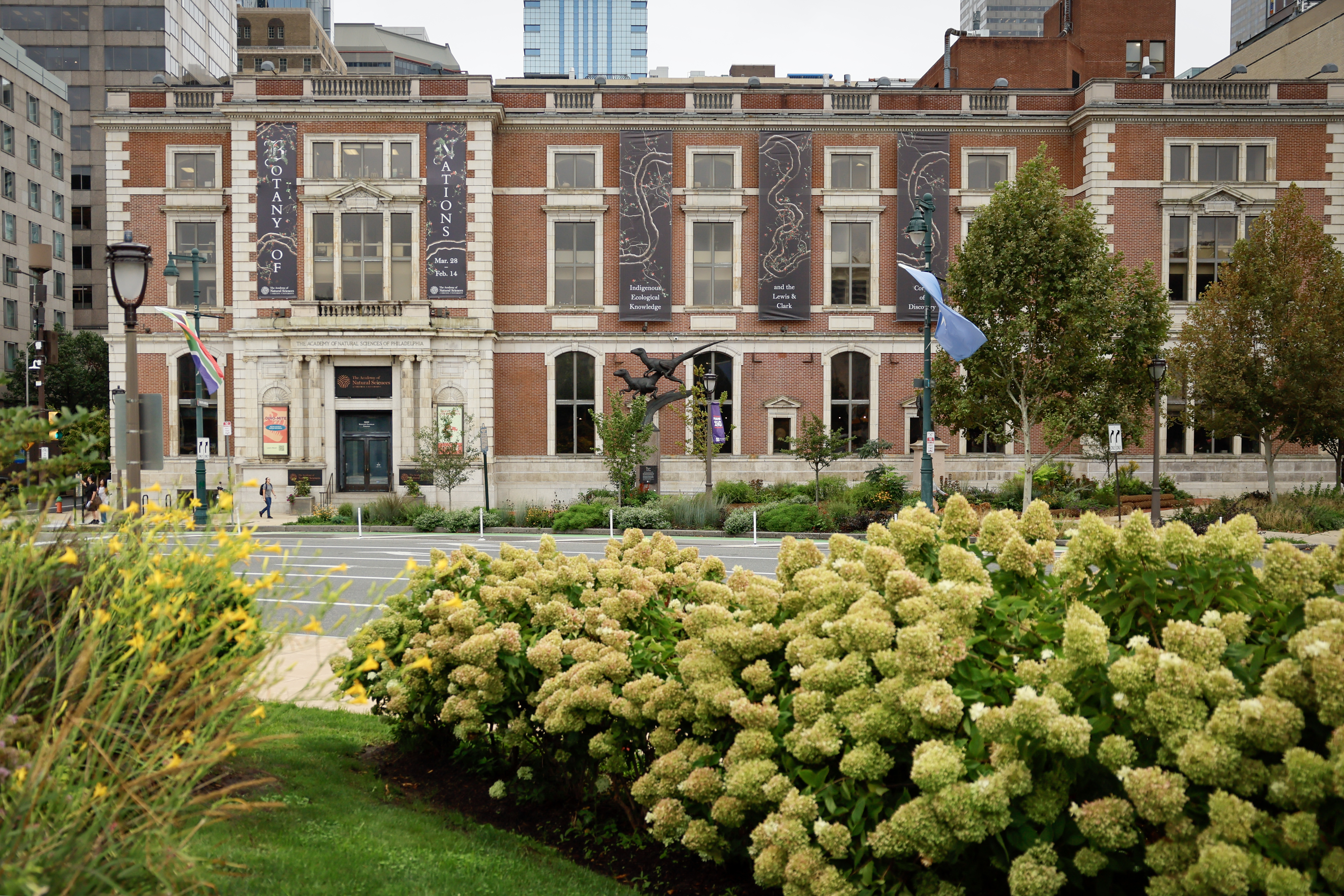
    Sept. 27 is the last day the Academy of Natural Sciences of Drexel University will be open to the public.Elizabeth Robertson / Staff Photographer

    The leaders of Drexel and the Academy signed the terms sheet on Tuesday, Cohen said. But there are significant ongoing issues for the Academy and Drexel to work through, he added.

    “They include the responsible move of the collections, and a variety of other transition activities,” he said. “The Academy needs a senior representative, a senior voice in these ongoing discussions both to communicate internally at the Academy and with other stakeholders including Drexel.”

    That will be Wellenbach’s role, he said.

    She will have a voice in discussions on finding another location to display some of the collections, now that the museum will be closed, Cohen said.
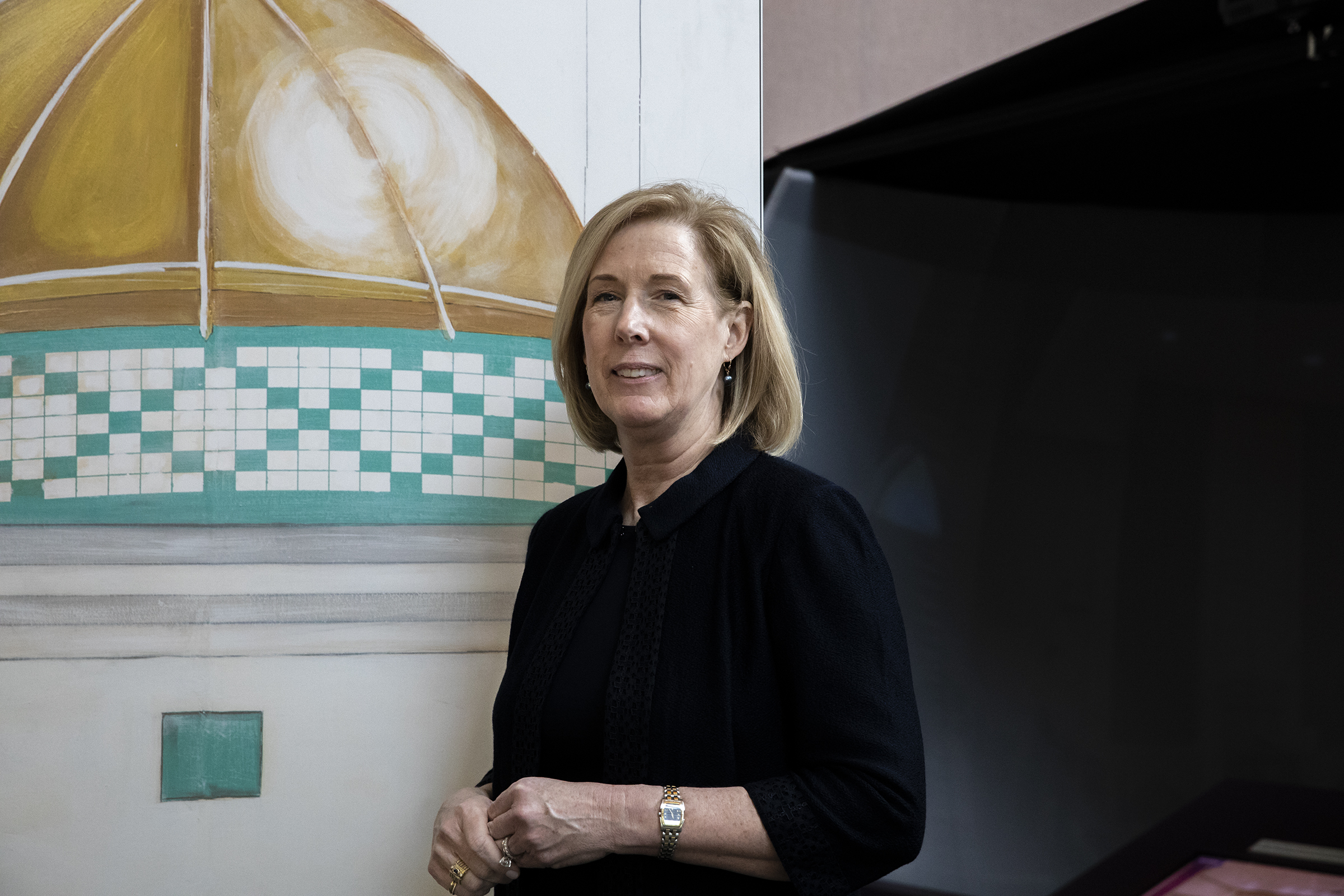
    Patricia Wellenbach, former president and CEO of the Please Touch Museum.Heather Khalifa / Staff Photographer

    A temporary leader

    Wellenbach will be based at the Academy part of the week while also continuing in her city role. She will lead temporarily while Drexel and the Academy search for an interim leader.

    “Ms. Wellenbach has had a distinguished career spanning nonprofit leadership, healthcare, governance and public service,” said the announcement from Drexel president Antonio Merlo and Biemiller.

    Mayor Parker in a statement called the Academy “a critical, longstanding part of Philadelphia’s cultural and educational landscape” and said she was pleased to loan Wellenbach to the effort.

    “We are working collaboratively with Gov. Shapiro, Ambassador Cohen, the Academy and toward the outcome we all seek for the City of Philadelphia,” Parker said.

    The Academy museum is ending operations after nearly two centuries because of declining visitorship and rising expenses, according to the Academy and Drexel.

    “Over time, it became clear that these were not temporary pressures, but fundamental changes in the economics of the Academy’s operational model, costs that have imperiled the Academy’s ability to discharge its overall mission and preserve its legacy,” the two institutions said in a joint statement Tuesday.

    Biemiller and others have pledged to not abandon the Academy’s role in educating the broader public about the natural world.

    While it was “incumbent upon us to find places and ways” for the museum to continue, she said earlier this week, the exact form it would take has not been determined.

    While Drexel has the major decision-making power, the Academy board will continue to be the fiduciary board and decision-maker for the Academy’s endowment, though management of it has been delegated to Drexel’s investment office, according to the source close to talks.


  • Kacey Musgraves, Kehlani, Lily Allen, Don Toliver, and Delaware Valley Bluegrass Festival are highlights of this last summer week

    Kacey Musgraves, Kehlani, Lily Allen, Don Toliver, and Delaware Valley Bluegrass Festival are highlights of this last summer week

    The unofficial last weekend of Philly’s summer pop music schedule keeps the heat on. There’s Don Toliver and Kacey Musgraves in South Philly, Kehlani in Camden, Lily Allen in Fairmount Park, Los Lobos in King of Prussia, and the Delaware Valley Bluegrass Festival in South Jersey.

    Thursday Sept. 3

    Los Lobos

    The great Chicano band Los Lobos is the focus of Native Sons, a documentary that is now making the film festival rounds. It shares a name with the band’s 2021 album of songs of Los Angeles. That album was produced by the band’s one non-Los Angeleno: Cheltenham-native sax and keyboard player Steve Berlin. So this Montgomery County gig is a hometown show of sorts for the band that — if justice is ever served — will one day wind up in the Rock & Roll Hall of Fame. 7 p.m., Concerts Under the Stars, 175 W. Valley Forge Road, King of Prussia, concertsunderthestarskop.com.

    Don Toliver performs during the BET Awards on Sunday, June 28, 2026, at the Peacock Theater in Los Angeles. (AP Photo/John Locher)John Locher

    Don Toliver

    The Houston rapper born Caleb Zackery Toliver brought his “Octane Tour” to South Philly in May and already, he’s back. It’s the second “Nitrous” leg of the trek for Toliver’s Octane album, which features Teezo Touchdown and The Odyssey actor Travis Scott. Chase B. is also on the bill. 8 p.m., XfinityMobile Arena, 3601 S. Broad St., xfinitymobilearena.com

    Friday Sept. 4

    Kacey Musgraves

    Kacey Musgraves comes back to country on Middle of Nowhere, the Grammy-winning Texas songwriter’s excellent seventh album. Willie Nelson, Billy Strings, and Philly Music Fest headliner Gregory Alan Isakov drop in. Musgraves also finds common ground with fellow Lone Star State singer Miranda Lambert, with whom she had a longstanding beef, on “Horses and Divorces.” Expect this show to turn into a Dolly Parton celebration. Flatland Cavalry opens. 8 p.m., Xfinity Mobile Arena, 3601 S. Broad St., xfinitymobilearena.com

    Dan Tyminski headlines the Delaware Valley Bluegrass Festival in Pilesgove, N.J., on Saturday, Sept. 5.Courtesy of the Artist

    Friday Sept. 4 to Sunday Sept. 6

    Delaware Valley Bluegrass Festival

    Founded at the urging of bluegrass titans Bill Monroe and Ralph Stanley in 1972, the Delaware Valley Bluegrass Festival is a Labor Day weekend tradition that endures.

    This year’s three days of music kicks off Friday in Salem County in South Jersey with Kathy Mattea, the country-bluegrass singer who hosts public radio’s Mountain Stage, as headliner. Friday’s lineup also includes the Price Sisters — singing Ohio siblings Lauren and Leanna Price — as well as Virginia guitarist Junior Sisk and the Travelin’ McCourys, sons of bluegrass legend and frequent DVBF headliner Del McCoury.

    On Saturday, Dan Tyminski gets top billing. The former member of Alison Krauss’ Union Station has had two moments of extraordinary popularity for a bluegrass musician: 2000’s O Brother, Where Art Thou? soundtrack, on which he sang “I Am a Man of Constant Sorrow,” and “Hey Brother,” an unlikely 2013 hit with Swedish dance music producer Avicii.

    New Orleans street band Tuba Skinny at the Delaware Valley Bluegrass Festival in 2022. The band will return to play the Pilesgrove, N.J., fest on Saturday.Delaware Valley Bluegrass Festival

    New Orleans ragtime street band Tuba Skinny also plays Saturday, as do Critten Hollow, Danny Paisley & Southern Grass, and the Gibson Brothers. The festival winds down Sunday with Black Eyed Suzies — self-described as “the Bluegrass Ladies of Maryland” — as well as Tennessee quintet Blue Highway, Chicago duo Special Consensus, Boone, N.C., roots band Burnett Sisters, and Nashville quintet Appalachian Road Show. Gates open at 8 a.m. each day. Salem County Fairgrounds, 735 Route 40, Pilesgrove, N.J., delawarevalleybluegrass.org.

    Kehlani performing during the second day of The Roots Picnic at the Belmont Plateau on May 31, 2026, in Philadelphia.Monica Herndon / Staff Photographer

    Saturday Sept. 5

    Kehlani

    Kehlani had the biggest hit of their career last year with “Folded,” which was co-written with Philly producer Andre Harris and won two Grammys. The R&B vocalist celebrated with a performance at The Roots Picnic, and now they’re back for a headlining show in Camden on a tour that includes Durand Bernard, TheArti$t, Wahseel, and Dixson. 7 p.m., Freedom Mortgage Pavilion, 1 Harbour Blvd, Camden, freedommortgagepavilion.com.

    Lily Allen at the Met Philly in April during her show “Lily Allen performs West End Girl.” She returns to play the Highmark Mann on Sunday.Christina Bryson

    Sunday Sept. 6

    Lily Allen performs ‘West End Girl’

    Lily Allen struck a nerve with last year’s West End Girl, a song suite inspired by the dissolution of her marriage to actor David Barbour, that resonated big time with an audience all too familiar with shady doings by unfaithful partners. Earlier this year, the British songwriter, who has displayed a winningly wicked wit going back to her 2006 Alright, Still?, performed West End Girl album in order in a terrific, if brief, show at the Met. Sunday’s show was scheduled for the Xfinity Mobile Arena but moved to the Mann. 8 p.m., TC Pavilion at the Highmark Mann, 52901 Parkside Ave., highmarkmann.com.

    Philly tribute to the Clash

    Many, including me, have argued that the four sides of London Calling, the 1979 double album by the British punk band the Clash, add up to the greatest album of all time. One side each goes to a Philly band: Citizens Riot, No Good Crowd, the Big Trip, and 2 Tones Clash. Guests on this tribute show include Hannah Taylor, Spoon Ferguson, John Faye, Cowmuddy, Phil Dunn, and Adam Weiner of Low Cut Connie (also playing a Free at Noon in Ardmore on Friday.) 6 p.m., Ardmore Music Hall, 23 E. Lancaster Ave., ardmoremusichall.com

    Slowey and the Boats

    Fab Philly instrumental quintet Slowey and the Boats’ breezy, light-on-its-feet sound is built around steel guitarist Isaac Stanford. The band’s delightful Slowey After Dark swings sweetly, using the Hawaiian origins of Stanford’s instrument as a starting point. 2 p.m. Wissahickon Brewing Company, 3705 W. School House Lane, sloweyandtheboats.com.

    Peter Hook & the Light play Union Transfer on Monday.Adam Kennedy

    Monday Sept. 7

    Peter Hook & the Light

    Bassist Peter Hook was a key player in Manchester, England, in the late 1970s and 1980s as cofounder of Joy Division, New Order, and Durutti Column. Since 2020, he’s played the music of Joy Division and New Order, with his bassist son Jack, who frees him up to sing. He’ll perform New Order’s 2001 album Get Ready, plus pull from the JD and NO catalogs. 8 p.m., Union Transfer, 1026 Spring Garden St., utphilly.com

    Tuesday Sept. 8

    Social Distortion

    Longtime Southern California punk band Social Distortion is in fine form on Born to Kill, its first album in 15 years. Leader Mike Ness sounds refreshed after a battle with tonsil cancer, and the band is pushed hard by drummer David Hidalgo Jr., son of the coleader of Los Lobos. Social D’s fellow SoCal punks the Descendents and young Australian punks the Chats also perform. 8 p.m., themetphilly.com

    Gary Clark Jr.

    At Bruce Springsteen’s Music of America concerts in the spring, Gary Clark Jr. covered “Power of Soul” by Jimi Hendrix’s Band of Gypsys and Bobby “Blue” Bland’s Texas shuffle “Further on up the Road.” Those two songs hint at the range of the Austin-based Clark Jr., who has been Texas’ leading guitar hero since he gained nationwide renown with Blak & Blu in 2012. Dumpstaphunk and DJ Kurupt open. 8 p.m. Keswick Theatre, 291 N. Keswick Ave., Glenside, Keswicktheatre.com

    DJ Jazzy Jeff performing at The Roots Picnic in Philadelphia, on May 30, 2026.Tyger Williams

    Wednesday Sept. 9

    DJ Jazzy Jeff

    Jeff Townes has had himself a Semiquincentennial summer. At The Roots Picnic, the West Philly-born and -raised DJ put on a turntablism clinic on Belmont Plateau. Then Townes teamed with Will Smith and The Roots to shut down the Philly 250th celebration on the Ben Franklin Parkway in the wee hours of the morning. Now he’ll display his musical mastery at a Longwood Gardens illuminated Fountain Party. 8 p.m., 1001 Longwood Road, Kennett Square, longwoodgardens.org.

    New Zealand singer Aldous Harding plays Underground Arts on Wednesday.Emma Wallbanks

    Aldous Harding

    New Zealand songwriter Aldous Harding is touring behind Train on the Island, the fourth album she’s recorded with PJ Harvey collaborator John Parish producing. The songs are in keeping with Harding’s reputation as an inscrutable, willfully strange songwriter but are also rock solid psychedelic folk tunes. Sam Burton opens. 8 p.m., Underground Arts, 1200 Callowhill St., undergroundarts.org.

  • One of the fastest-growing jobs has a wage theft problem. Pa. will now fast-track investigations

    One of the fastest-growing jobs has a wage theft problem. Pa. will now fast-track investigations

    One of the fastest-growing occupations is also a hot spot for wage theft complaints in Pennsylvania. A new initiative by state regulators aims to help change that.

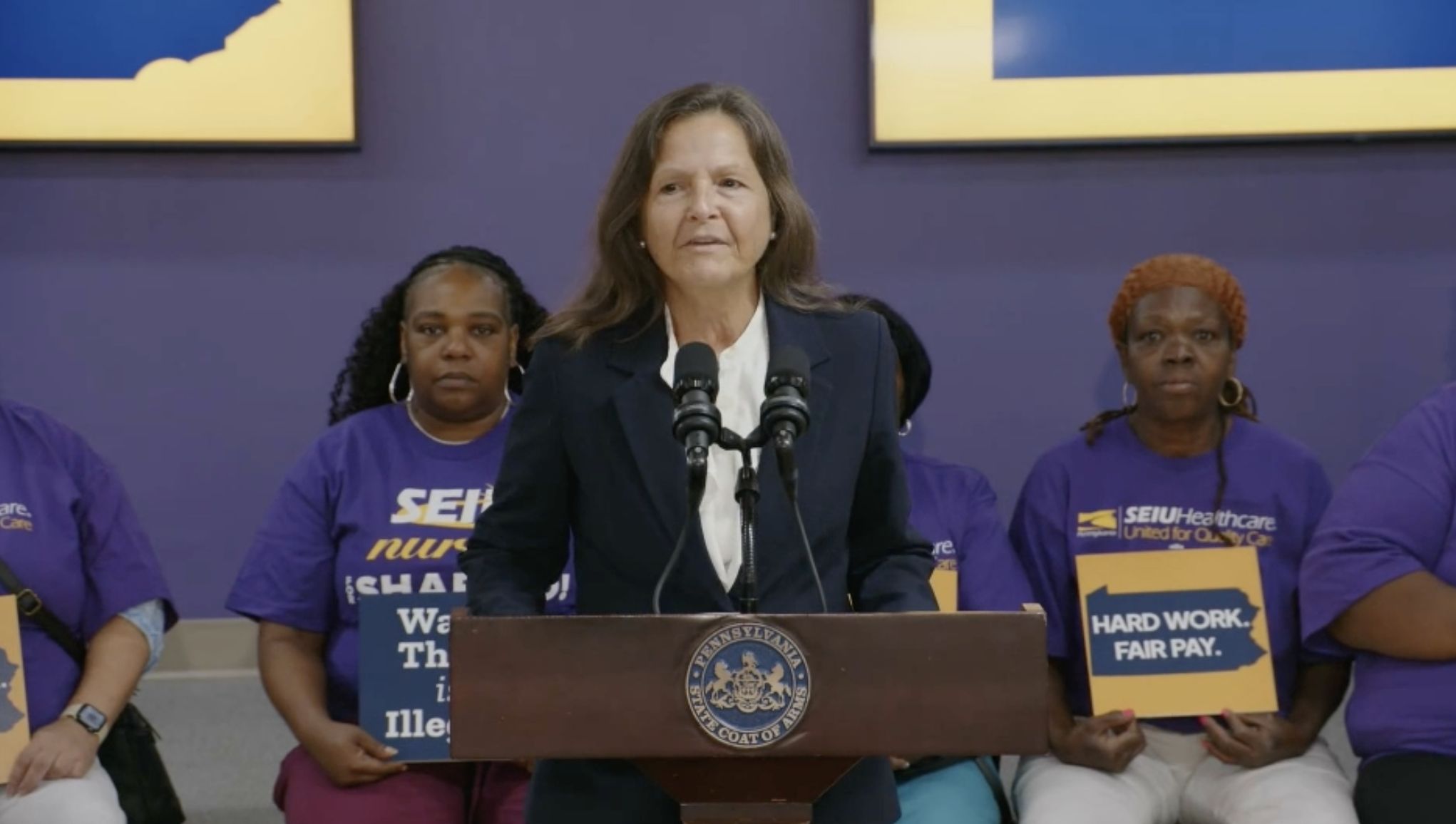
    Nearly 40% of the minimum-wage complaints sent to Pennsylvania’s Department of Labor and Industry are from the home healthcare industry, State Labor Secretary Nancy Walker said at a news conference Tuesday.

    Under the new initiative, the state won’t wait to receive new complaints, said Walker. Instead, regulators will audit home healthcare agencies, making “legal demands for wage and hour information,” said Walker, to find potential wage violations.

    “We’re here today because these workers are not receiving the wages they earned, and that changes now,” Walker said.

    Demand for home healthcare is expected to continue growing, but attracting workers to the industry has been a challenge.

    Many home healthcare workers, who help patients with daily living needs, have been shorted on their overtime pay in Pennsylvania in recent years and employers have ultimately had to pay back millions in some instances. One contributing factor is that Medicaid doesn’t pay home healthcare employers extra for overtime.

    “The workers doing this care are not always treated the way we should be,” Marshene Ellis, a home care worker for over 17 years, said at Tuesday’s news conference. “I’ve worked for different agencies and seen the broken promises and low wages.”

    Making ‘good jobs’ in home healthcare

    Pennsylvania is home to more than 257,000 home care workers, according to the Bureau of Labor Statistics, but more are needed to meet demand, especially as the population ages.

    Nationally, home health aide is expected to be one of the fastest growing jobs in the coming decade, according to BLS, which predicts 847,300 more home health jobs by 2035.

    In Pennsylvania, some 112,000 care shifts go unfilled every month, according to Matt Yarnell, president of the SEIU Healthcare Pennsylvania union.

    “That means somebody who cannot get themselves out of bed, is laying in that bed hoping someone shows up,” said Yarnell. “We have a lot of work to do in this space.”

    Those in need may find themselves in the emergency room instead, Yarnell added.

    “When families cannot find a home care worker, the impact is immediate,” said Gabrielle Szymanski, of Pennsylvania’s Department of Aging. “Family caregivers are forced to leave work or take on additional responsibilities, and providers struggle to meet demand — and too often people end up in more restrictive and more costly settings.”

    Attracting and retaining home-health workers has been challenging. Turnover is high in the industry, and wages are low. The median wage in Pennsylvania is $14.14 per hour.

    Workers deserve higher wages, said Mia Haney, CEO of Pennsylvania Homecare Association in a statement on Tuesday and pointed to low Medicaid rates as part of the issue.

    “We support holding bad actors accountable, but they should not define an industry overwhelmingly made up of providers committed to their workers and the people they serve,” said Haney, whose organization represents nearly 700 home care and hospice providers.

    Gov. Josh Shapiro’s administration recently added $21 million to the state budget to boost home healthcare wages.

    “It is really really critical that these become good jobs, and that will not happen on its own,” said Yarnell.

  • How much is that gene-edited dog in the window?

    How much is that gene-edited dog in the window?

    For thousands of years, we have been trying to craft our ideal canine companions. We have honed their abilities to perform an array of specific tasks, from fetching waterfowl to staring down wayward sheep. We have reshaped and refined their bodies, producing sausage-shaped dachshunds, polka-dotted Dalmatians, bushy-browed schnauzers, and deeply wrinkled Shar-Peis.

    And we have done it using nothing more sophisticated than good old-fashioned selective breeding.

    Now our canine engineering efforts are entering a new era. Earlier this month, Kindred Companion Sciences, a biotech startup based in New York, revealed that it had used the technique known as CRISPR to create the first gene-edited, hypoallergenic dogs. Thanks to a single genetic tweak, the dogs — two undeniably adorable beagles — appear unable to produce a protein that can leave some people red-eyed and wheezing.

    Still, it’s a long way from the lab to the laps of pet owners across America. (It has been 2½ years since scientists announced a gene-edited, hypoallergenic cat, but such felines are not yet available to the public.) More time and data are needed to determine whether Kindred has truly delivered on its promise of hypoallergenic dogs, experts said. Can a single gene edit reliably stave off the sniffles in humans?

    An even more critical question: What does it mean for dogs? Will our efforts to create pets that are more convenient for us have unintended health consequences for them?

    History is not encouraging. Since the Victorian era, when dog fanciers began to create and codify modern dog breeds, our quest for the perfect pooch has yielded dogs that are inbred, disease-prone, and saddled with extreme physical traits — super flat faces and ultralong backs — that compromise their welfare.

    “We’ve created an enormous amount of inherited diseases in dogs, often unintentionally, because of our pursuit of certain traits that appeal to us,” said Rowena Packer, an expert on companion animal welfare at the Royal Veterinary College in London. “I just think we have a lot more responsibility to think more critically about the dogs that we create.”

    Dog design

    For all the canine diversity we’ve managed to create through selective breeding, a truly hypoallergenic dog remains something of a holy grail. Breeders have created all manner of low-shedding dogs and purportedly hypoallergenic dogs (behold the labradoodle and all of its doodle-y descendants). But these dogs still produce proteins that, secreted through their skin, saliva, and urine, can trigger human allergies.

    Gene editing provides a “simple, elegant” way to solve the problem at the source, said Matt Walker, cofounder and CEO of Kindred, who has suffered from dog allergies his whole life.

    Kindred began with canine cells, using CRISPR to disable a gene known as Can f 1, which codes for one of the main canine allergens. Then, the scientists used a basic cloning technique to transfer the edited genomes from these cells into dog embryos. They implanted the embryos in a surrogate beagle mother, who gave birth to two puppies: Alfie and Bailey, who are now almost 2 years old.

    The company has detected no trace of the allergen in either dog, and Walker, who adopted Bailey, has experienced no allergic reactions. (Alfie was adopted by one of Walker’s colleagues.) The dogs appear to be developing normally.

    “No red flags, no yellow flags — so far, the animals seem completely healthy,” Walker said. “That said,” he added, “this is the starting point of our work.”

    Indeed, for all its purported precision, gene editing can have unpredictable consequences. Medical issues might appear later in the dogs’ lives, or when the company starts producing enough dogs to spot rare side effects.

    Or, of course, they could turn out to be perfectly healthy. But it’s too soon to say, and we’re likely to see more efforts to create gene-edited dogs in the future. Where do we want to draw our ethical lines?

    Thirty years ago, when genetic engineering was still in its infancy, philosopher Bernard Rollin proposed an ethical principle he called the “conservation of welfare,” which held that we should not modify animal genomes in ways that left the animals “worse off, in terms of suffering” than their unmodified forebears.

    That’s a sensible starting point. But it’s a low bar. And it doesn’t address all the ethical implications of making gene-edited dogs, which may require using additional animals to serve as test subjects, egg donors, and surrogate mothers.

    “I think we get sometimes so excited about the idea of what technology can fix, particularly biotechnology — we’ve got to remember that, generally, we use a lot of animals to get to that end ‘product,’” said Lisa Moses, a veterinarian and bioethicist at Harvard University.

    Ethicists have also questioned whether we should bring gene-edited dogs into a world that already has more dogs than it can care for, especially when the goal is not to create a healthier animal, but one that better meets our human needs.

    “Should we use sophisticated biotechnology to create the animals we want, rather than changing how we relate to the animals who already exist?” said Jessica Pierce, a bioethicist at the University of Colorado Anschutz Medical Campus. “That’s a question of priorities, and perhaps misplaced priorities.”

    Walker sees it differently. His allergies would prevent him from ever adopting a shelter dog, he said; gene editing is the only thing that has made it possible for him to have a relationship with dogs. “I’m also really invested in applying this work to service dogs for people who are allergic,” he said.

    “People’s ethical barometers are set differently,” he added. “For me, this feels justified by the potential benefits, as long as animal health is protected.”

    Good breeding

    Dog lovers can, in good faith, come down on different sides of the Kindred question. But if we’re going to discuss the ethics of dog creation, experts agreed, we need to ask ourselves some hard questions not just about our new gene-editing tools, but also about our long-standing breeding practices.

    “At the end of the day, they’re both producing animals for companion purposes,” said Alison Van Eenennaam, an expert on animal genomics and biotechnology at the University of California, Davis. “It’s not the technology that’s creating the ethical issues.”

    We’ve done plenty of harm without modern biotechnology. And there are ways to use gene editing to improve canine lives — even, in some cases, to undo some of the damage done through selective breeding. In a 2022 study, scientists showed that it was technically possible to use gene editing to “correct” a genetic mutation associated with hip problems in Labrador retrievers.

    But these hip problems stem from a variety of risk factors — both genetic and environmental — and most canine health conditions probably cannot be cured by editing just one gene, experts said.

    Improving dog welfare is likely to require an array of complementary approaches. These include revising breed standards, opening up closed breeding pools, performing widespread genetic screening, and educating the public about the welfare costs of breeding dogs with certain physical traits.

    Experts have been calling for these reforms for years, with limited success. But they are necessary if we want to bring our behavior in line with the values we claim to hold. We are, after all, a society that is so besotted with dogs that we have startups trying to develop canine longevity drugs — and editing genes so that people can live alongside creatures that would otherwise give them hives.

    Life with Bailey has been “amazing,” Walker said. “I didn’t really appreciate, when people say pets are part of your family, what that really means. But she really is a part of our family.”

    His wife had grown up with dogs, he added, and had long bemoaned his allergies. “She always said that this was the one thing she wished she could change about me,” he said.

    Indeed, as news of Kindred’s hypoallergenic dogs spread across the internet this month, one Facebook commenter raised precisely that possibility: “Why doesn’t he alter himself instead of the beagles?”

    Alas, we can’t yet edit dog allergies out of our own genomes. But that doesn’t mean we can’t evolve.

    This article originally appeared in the New York Times.

  • A 118-unit apartment tower is proposed for 23rd and Walnut Streets, replacing a Rite Aid

    A 118-unit apartment tower is proposed for 23rd and Walnut Streets, replacing a Rite Aid

    An 118-unit apartment building at 2301-11 Walnut St. received a warm welcome from a city-designated panel of architects and planners at Tuesday’s meeting of the Civic Design Review committee.

    The eight-story proposal is slated for land that once housed a suburban-style Rite Aid and its surface parking lot.

    The new building would include 46 underground parking spaces, 2,750 square feet of retail on Walnut Street, and 5,675 square feet of amenity space facing an interior courtyard.

    The property has long been held by Patriot Development Associates, a company that owns and operates parking facilities throughout Center City.

    In 2022, developer Trammel Crow Co., based in Dallas, proposed a 172-unit tower on the site, but the project was scuttled when interest rates began rising sharply.

    The new plans show Patriot developing the property themselves. The president of the company, Richard Zeghibe, did not respond to requests for comment.

    Philadelphia-based Boxwood Architects is designing the project. The firm is known for high-end restaurant and bar design, as well as multifamily projects.

    The architect plans a variety of plant life features, including new street trees, a green roof, and a garden in the courtyard facing Bonsall Street, as well as design detailing on the side of the building.

    “We introduced an artistic gesture on Bonsall Street, inspired by the movement of the Schuylkill River, to activate the streetscape and connect the courtyard to the neighborhood through brick screens and sculptural metal railings,” said John Weckerly of Boxwood.

    The detailing on Bonsall Street is “inspired by the movement of the Schuylkill River,” according to the project architect.[Box]wood Architects

    “Gardens and green spaces are situated throughout the project to reduce the heat island effect and create a more welcoming experience for residents and neighbors,” Weckerly said.

    The overwhelming majority of the project is comprised of one-bedroom units, with only 13 two-bedrooms.

    The proposal does not require any breaks from zoning law, so the developer only had to meet with the local community organization — the Center City Residents Association (CCRA) — in advance of Tuesday’s advisory-only meeting.

    “[We] welcome the addition of housing to the neighborhood, additional residents, and retail opportunities for more businesses,” Alex Roederer, head of CCRA’s zoning committee, said at the Tuesday meeting.

    He noted that Patriot Development had expanded the bicycle room in response to the neighborhood’s feedback and that the company was considering a Community Benefits Agreement as well. Details are not yet available.

    A close-up rendering of Patriot Development’s proposed building, with the green roof visible.[Box]wood Architects

    The Civic Design Review committee generally praised the aesthetics of the project and its potential to enliven Walnut Street as it approaches the Schuylkill.

    Multiple street-level businesses in the blocks of Walnut Street leading up to the river have shuttered since 2020.

    Some members of the CDR committee encouraged the developer to add more street-level commercial space — currently only the Walnut Street side features room for retail — and others urged the architects to bring more definition to the existing street frontage.

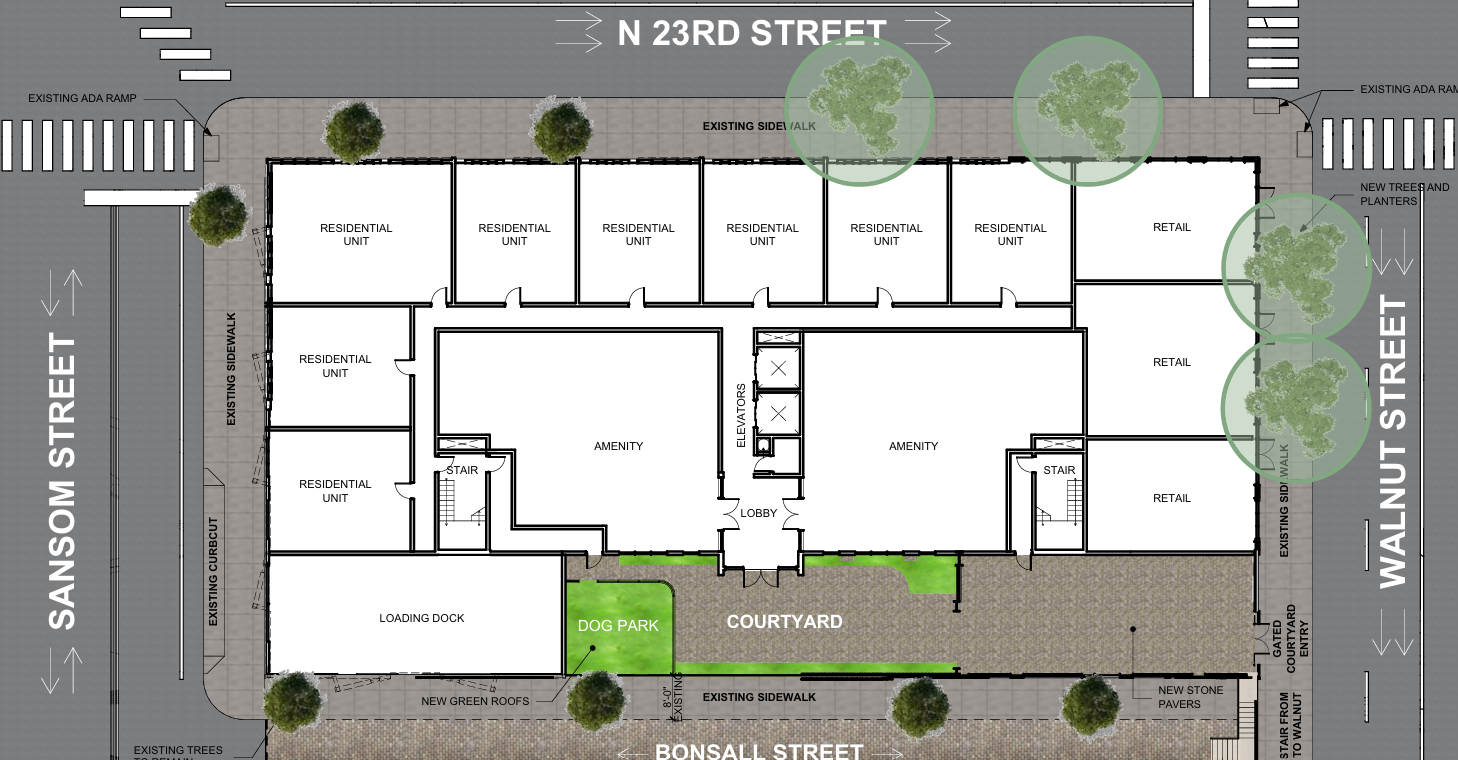
    Alternatively, they suggested wrapping amenity space, such as a gym, around to Walnut. (Currently, the space faces the courtyard, with residential units lining Sansom and 23rd Streets.)

    A map of the ground floor of the proposed building, which unusually has apartments on the ground floor.[Box]wood Architects

    “I would just love to see how you can … make this more special because right now I’m afraid it’s just a glass surface on the sidewalk,” said Ximena Valle, an architect who chairs the committee. “If they remain empty, which they might, it’s really quite ominous. It would be more of what’s already there” — vacant space.

    When asked about specific amenities — beyond a dog park — Weckerly of Boxwood noted that those details have not been fleshed out.

    Neither have potential retail offerings, with committee members noting that the current configuration did not appear to have the back-of-house space needed to sustain a restaurant.

    However, the committee on the whole praised Boxwood and Patriot Development’s design, a contrast with the reception of Trammell Crow Co.’s project in 2022.

    “Sometimes we have developers come in, and they do the absolute minimum to make an apartment, and this is more than that,” said Dan Garofalo, an architect who is the committee’s vice chair.

    This is the second major development recently announced this summer on the western edge of Walnut Street. A 372-unit building from PMC Property Group is planned just to the west at 200-10 S. 24th St.

    “I was excited to see the project come through. It provides a great opportunity of connecting West Philly and the east side of the Schuylkill,” Valle said. Right now, “I think that pedestrian experience, pre-bridge, heading west is pretty miserable.”

  • Advocacy groups, fearing federal intimidation, plan to deploy poll watchers

    Advocacy groups, fearing federal intimidation, plan to deploy poll watchers

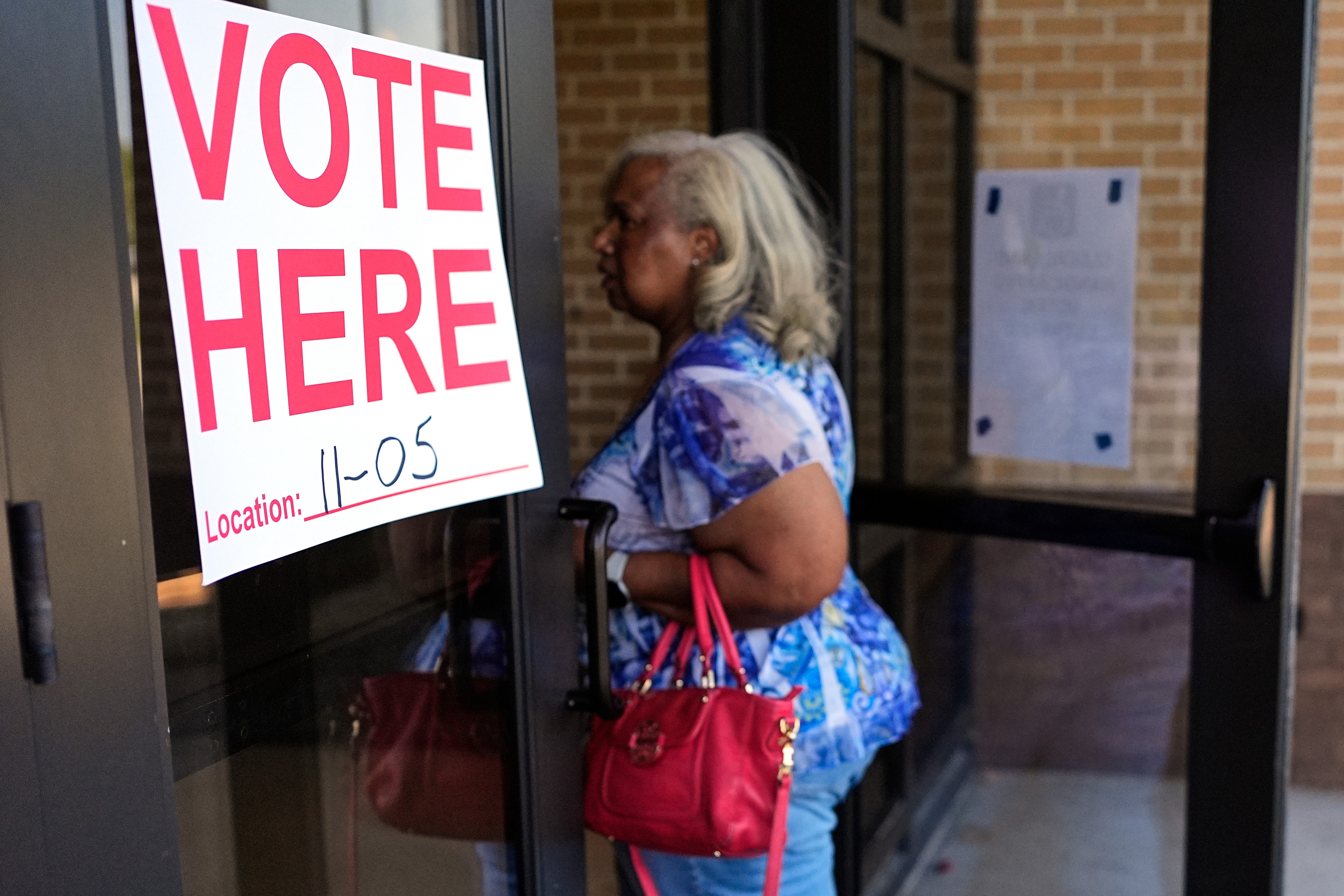
    A coalition of civil rights and advocacy groups plans to deploy hundreds of poll watchers this fall at heavily minority precincts to counter what organizers say is a threat of voter intimidation from President Donald Trump’s administration.

    The National Action Network, the American Federation of Teachers, and the Save America Movement are launching the Vote Safe project, which they described as a nonpartisan initiative set to begin during early voting and culminate in the Nov. 3 midterm elections. They are focusing on Michigan, Ohio, Georgia, and North Carolina, all of which are competitive in the battle for control of the Senate.

    Trump has routinely raised alarms about the threat of voter fraud this fall, stoking fears among his followers and prompting calls for preemptive action. He has urged Republicans to nationalize elections, and some administration officials haven’t ruled out deploying agents to polls, even though federal law prohibits doing so.

    “There is really an unprecedented threat to our elections this year, and it’s coming from our own government,” Mary Corcoran, executive director of the Save America Movement, said in an interview. Corcoran co-founded the group along with Lincoln Project co-founder Steve Schmidt to counter what they see as the excesses of Trump’s MAGA movement.

    Those locations were chosen as politically significant areas with large populations of people of color that could be vulnerable to intimidation, she said. The idea is to have trained community members — such as faith leaders, teachers, veterans, and firefighters — at polling places, so voters “can go there with confidence,” Corcoran said. “We want to replace that fear with comfort and knowledge.”

    Homeland Security Secretary Markwayne Mullin said at a news conference Tuesday that Immigration and Customs Enforcement agents aren’t meant to patrol polling places but may be present if they are serving a warrant or responding to a threat. Then-White House spokeswoman Karoline Leavitt said at a news conference this year that she “can’t guarantee that an ICE agent won’t be around a polling location in November” but added that she hadn’t heard Trump discuss plans to do so.

    Former Trump strategist and podcaster Stephen K. Bannon has suggested that ICE deployments at airports could serve as a “test run” for similar efforts at election sites.

    While both political parties have increasingly deployed poll watchers since 2020, recent years have seen clashes over charges of voter intimidation. During 2022’s midterm elections, a court order stopped armed, masked individuals from photographing people casting early ballots in Arizona. This year, the Justice Department has said it plans to send 1,000 monitors to the polls.

    Organizers said they modeled the Vote Safe initiative after a project the Save America Movement undertook last year to station observers and videographers in areas of the country with a heavy ICE presence in hopes of preventing violence.

    Corcoran said volunteers are being trained in local election laws and techniques to de-escalate tense situations. They will be clearly identified with Vote Safe insignia, she said, and none will be armed.

    Vote Safe plans to deploy poll watchers around Detroit, Atlanta, Cleveland, and Charlotte, in the 20 precincts in each area with the highest expected turnout of racial-minority voters.

    Citing the Supreme Court’s recent weakening of protections for minority voters in the Voting Rights Act, the organizers said they want to ensure that voters of every ethnicity feel welcome at polling places. They also want to protect voters from having their immigration status inappropriately challenged.

    “No voter should have to wonder whether exercising their constitutional right will put them at risk,” the Rev. Al Sharpton, founder of the National Action Network, said in a statement. “If anyone thinks the presence or threat of federal agents will frighten our communities away from the polls, they are badly mistaken.”

    Randi Weingarten, president of the American Federation of Teachers, said in a statement that the coalition’s goal is for voters to feel there is “someone standing beside them who knows their rights and knows the law,” so they can cast a ballot with confidence.

  • China presses the U.S. for answers after a man dies hours after entering ICE custody

    China presses the U.S. for answers after a man dies hours after entering ICE custody

    The Chinese government is pressing for answers after a Chinese man died hours after being taken into custody by U.S. Immigration and Customs Enforcement in a U.S. territory.

    Lianyong Wei, 51, died Aug. 23 at a hospital in the Northern Mariana Islands, ICE announced in a news release Tuesday.

    Wei was arrested Aug. 21 by the Northern Mariana Islands Department of Public Safety on criminal charges stemming from an alleged assault on a family of five at their home, according to ICE. He was taken into ICE custody the next day pending removal proceedings.

    ICE said a guard at the lockup in Saipan found Wei unresponsive during routine morning checks on Aug. 23. He was taken to a hospital emergency room, where he was pronounced dead after “life-sustaining interventions were initiated,” the agency said, noting that the cause of his death is under investigation.

    Wei entered the U.S. territory in February 2019 and was authorized to stay for two weeks, according to ICE. U.S. authorities began removal proceedings in July 2026, and Wei’s next hearing had been scheduled for this month.

    The Chinese Consulate General in Los Angeles said it had been notified of Wei’s death.

    “We have expressed serious concerns to the relevant U.S. authorities over this incident and required a timely and thorough investigation into the cause of Mr. Wei’s death, notification of the findings, measures to prevent any recurrence of similar incidents, and assistance to the family of the deceased in handling the aftermath,” the consulate said in a statement.

    Wei is at least the fifth Chinese national who has died in the custody of ICE or the U.S. Border Patrol since March 2025, according to tracking by The Associated Press. Two of the first four deaths have been ruled suicides, and the other two were the result of medical complications.

    At least 57 ICE detainees have died since President Donald Trump returned to office in January 2025, a death rate that has alarmed public health experts, advocates for immigrants, and the Mexican government.

    ICE hasn’t said whether Wei received the medical intake screening, which the agency promises to detainees within their first 12 hours in custody. Medical experts say a thorough screening is critical to preventing deaths.

    It’s unclear why it took ICE more than a week to acknowledge Wei’s death, which was announced by authorities in the Northern Mariana Islands on Aug. 24. ICE has said it aims to issue a news release on detainee deaths within two business days.

    The lockup in Saipan has held an average of 18 ICE detainees on any given day this year, according to ICE data. Roughly 50,000 people live in the Northern Mariana Islands.

    “Following this incident, the Department is reviewing relevant procedures and will implement any necessary corrective actions to strengthen prevention and response measures,” Northern Mariana Islands corrections commissioner Anthony Torres said in a statement.

  • How the Supreme Court locks away its own history

    How the Supreme Court locks away its own history

    In early 2016, Justice Antonin Scalia died of a heart attack on a Texas ranch, sending his Supreme Court colleagues into a period of grief and uncertainty. Behind closed doors, they had to contend with another piece of unsettling news.

    Scalia, the leading light of the conservative legal movement, had left no plans for his working papers, according to five people aware of the situation. For a Supreme Court justice, this was the equivalent of dying without a will. With no instructions for creating an archive or opening it to the public, the definitive inside account of his work — and the court’s — could be lost or emerge with uncomfortable speed.

    So following his death, his colleagues entered into private negotiations to try to head off any such situation in the future.

    In a series of memos and conference meetings, Chief Justice John Roberts led the surviving justices in discussions about imposing a more uniform seal for their own papers, according to several people with knowledge of the process.

    The absence of instructions from Scalia and ensuing confidential conversations, which have not previously been reported, help explain why the nation’s highest court can be so difficult to understand. The ultimate record of the court’s work is considered the personal property of each justice, to dispose of or share as he or she chooses. And many of the justices have valued confidentiality over transparency and chosen to postpone scrutiny of their work for years to come.

    In contrast with the executive branch, which is required to preserve and ultimately make public a record of its inner workings, there are no laws to determine what the justices save, shred, burn, or reveal, or when. The court does not share any information about policies or plans for records; a spokesperson for the court did not respond to written questions.

    People familiar with the episode after Scalia’s death, who spoke to the New York Times on the condition of anonymity because of the court’s sensitivity over disclosure of internal workings, recalled that a consensus was reached but had differing memories of its terms and how solid or lasting it was.

    Still, the death of Justice Ruth Bader Ginsburg, just a few years later, provides a clue: Her Supreme Court papers went, at her direction, to the Library of Congress on the condition that no case file would be opened until every justice involved in the matter had died, a restriction that could lock away many documents for decades.

    Although some justices in previous eras arranged for their papers to be released not long after their own deaths, the trend on the Roberts court has been to impose much tighter restrictions, serving to further obscure a branch of government that has resisted calls for more transparency.

    Each year, the justices carefully compose and edit about 60 opinions in argued cases to share with the world. The fuller, richer narratives of each case, showing the behind-the-scenes stories of how members of the court pressured, persuaded, and prevailed over one another to arrive at those opinions, are hidden away in the justices’ working papers — their confidential internal memos and opinion drafts.

    The justices have said they want to keep those internal exchanges out of view, contending that secrecy protects the authority and finality of their decisions.

    Because of the court’s lack of transparency, it is impossible to say what will become of the inner history of its current work — which scholars say is more crucial, and more endangered, than ever.

    And people familiar with the court’s operations say they worry some of the most authoritative and revealing records are not being saved at all. That is because some work is now conducted digitally, via emails and texts. Those people, who spoke on the condition of anonymity to describe internal matters, said they were unaware of any consistent procedures for saving electronic records.

    The revelations found in past justices’ working papers have been so potent, they have caused bruised feelings among the justices and blowups among government institutions.

    And because no law governs the preservation of the justices’ work, each justice, assisted by staff, builds his or her own archival trove, deciding which memos, drafts, voting sheets, and meeting notes to preserve — or not.

    One spring morning in 1993, the justices opened their morning copies of the Washington Post to find detailed accounts of their internal debates. Earlier that year, Justice Thurgood Marshall, the first Black member of the court, had died, and his papers had been donated to the Library of Congress. With no announcement, the library had opened his papers for public review, and Post reporters had been digging through the newly released archive.

    The surprise release led to a brawl over how to interpret the justice’s written instructions. In a furious public letter, Chief Justice William Rehnquist took a swing at the Library of Congress, accusing it of “bad judgment” and of opening the records, some only two years old, prematurely. Marshall’s family sided with the chief justice, asking a senator to request that the papers be resealed. The library defended its reading of Marshall’s instructions. The papers stayed open.

    In the wake of that controversy, the justices considered establishing common timelines for releasing their papers but could not come to a consensus, according to the papers of Justice Harry Blackmun, who chose to make his papers public five years after his death.

    “‘This is the people’s court; it’s not our court,’” Harold Hongju Koh, a Yale University law professor and former Blackmun clerk, recalled his boss saying. “‘Who cares if we’re embarrassed. The main purpose here is to educate the public.’”

    The 2004 release of Blackmun’s papers again caused shock at the court, because of the unvarnished portrait they revealed. His 24-year chronicle of his time on the court exposed tensions among the justices, his own heavy reliance on clerks, and a bombshell: In 1992, the court had come close to overturning Roe v. Wade, but a centrist coalition of justices had secretly worked together to save the federal right to abortion. The precedent had been far more vulnerable than outsiders realized.

    A year after that release, Roberts joined the court as chief justice. The court’s new leader was reserved and disciplined. He rarely gave interviews or delivered speeches.

    The fullest record of the Roberts court is hidden away in its basement.

    In the bowels of the Supreme Court, below the red-velvet grandeur of the courtroom and the shuffle of tourists, the justices are assigned storage rooms in which they store case files, said people familiar with the court’s practices.

    Access to the records in the basement is highly restricted. But every year, about three dozen new people are allowed to read some of them: the justices’ incoming law clerks, who arrive for yearlong apprenticeships.

    Reading those files clears away the mystery that surrounds the court, say those who have seen them. Clerks often ask to read the insider accounts of the most game-changing decisions. But the deeper education is in learning about the dynamics among the justices.

    In public remarks, the justices have argued that their judicial independence requires keeping these kinds of exchanges private so they can bat around ideas and change positions.

    But some scholars question why papers should be sealed long after a justice has retired.

    The Trump era has transformed and heightened the importance of the current justices’ working papers: They will one day provide the public’s first opportunity to understand why the court ruled as it did in some emergency matters.

    “The more cases get decided without full opinions, the more important it is to get access to the papers,” Stuart Banner, a legal historian at UCLA, said in an interview.

    But it is virtually impossible to estimate when — if ever — the public might see those records.

    This article originally appeared in the New York Times.

  • Iran fires on its Gulf neighbors, retaliating for U.S. strikes after a wedding was hit

    Iran fires on its Gulf neighbors, retaliating for U.S. strikes after a wedding was hit

    Iran fired on U.S. allies in the Gulf early Wednesday following a night of American bombardment that Iranian state media says included a deadly strike on a wedding party.

    The latest violence came after a monthlong lull in fighting. The six-month war has led to a spike in oil prices, roiled the global economy and posed increasing political problems for U.S. President Donald Trump’s Republican Party ahead of November midterm elections.

    Fighting has escalated since the American military hit Iranian rocket launchers on an island in the Strait of Hormuz over the weekend, saying Iran was planning to use them to lay mines. Iran retaliated by firing missiles at American bases in Jordan that were intercepted.

    American military resources are stretched and political pressure in Washington is mounting, while Iran’s economy has been battered by sanctions and an American naval blockade. Iran’s currency hit another record low on Wednesday, with traders in Tehran exchanging 2.20 million rials for one U.S. dollar, a 10% hike from last week’s record.

    Neither side can continue indefinitely between full-scale war and a truce, said Hamidreza Azizi, senior Iran analyst at the Crisis Group, an international think tank.

    “At some point, one of the sides may see a need to escalate in order to break this cycle,” he cautioned. “So that could bring the two sides to a point that they have been trying to avoid until now, which is a full-scale war.”

    The struggle is focused on the Strait of Hormuz and oil prices

    The latest flare-up in violence came as the standoff seemed to be shifting slightly more in the U.S.’ favor, with the price of oil around $80 a barrel and Iranian leaders talking about growing economic hardships, said Sascha Bruchmann, an analyst with the International Institute for Strategic Studies’ Middle East office in Bahrain.

    “The U.S. is trying to reinstall some kind of confidence into the global oil markets … and the Iranians had to respond to that by reinserting insecurity and doubt,” Bruchmann said.

    Since the fighting resumed, the price of Brent crude oil, the international standard, has climbed to around $95, up more than 30% from the start of the war.

    U.S. Secretary of State Marco Rubio said Iran will “continue to feel the squeeze” from the United States until it drops any nuclear weapons ambitions and ends support for armed groups in the Middle East. Iran has always insisted its nuclear program is peaceful.

    U.S. allies in the region fend off Iranian attacks

    Following the strikes on Jordan, U.S. Gulf allies Kuwait and Bahrain said they had also come under attack, without reporting any casualties.

    “You will soon see that Iran’s new strategy on the battlefield, in diplomacy, and in confronting the economic blockade will shatter your foundations,” the recently appointed head of Iran’s powerful Supreme National Security Council, Mohsen Rezaei, said on X.

    In Iraq, where Iranian-backed forces are active, Kurdish authorities said they had intercepted 10 drones laden with explosives in the Irbil area. Iranian television reported that American bases in Irbil had been targeted.

    Israel’s military also said that Iran-backed Hezbollah fired two explosive drones at its soldiers in southern Lebanon, without causing casualties.

    The U.S. Central Command said Tuesday’s strikes focused on Iranian military targets, including air defense sites, radar systems and maritime assets.

    Strike on wedding killed 4 and wounded dozens, Iranian officials say

    One U.S. strike hit a home hosting a wedding in Kuhestak, a small coastal town overlooking the Strait of Hormuz, according to Iranian state media.

    Four people were killed — two women and two children, aged 4 and 16 — and at least 68 were wounded, the state news agency IRNA and state TV said Wednesday. Just after the strike, Ahmad Nafisi, the province’s deputy governor, had told Iranian state television that five people were killed. There was no explanation for the change.

    Several heavy explosions shook Kuhestak, with fireballs that lit up the night sky, according to security camera footage carried by the semiofficial Fars news agency.

    Images from Iran’s semiofficial Tasnim news agency showed several hospitalized children being treated for injuries at a hospital in the nearby town of Minab, where a U.S. missile strike on the opening day of the war hit a primary school, killing more than 100 children.

    Footage from the Iranian Red Crescent showed rescue workers entering a damaged home in the wake of the strike. It showed a hole in the roof of one house in a neighborhood of densely packed homes.

    Experts say a ‘very precise’ weapon appears to have been used

    Two weapons experts told The Associated Press that images of fragments of a missile, which Iranian media said was used in the strike, were from a U.S.-made SLAM-ER cruise missile.

    Trevor Ball, an analyst with Armament Research Services, said the SLAM-ER was “developed as a very precise weapon” that can be retargeted in flight by a human operator watching by infrared camera.

    N.R. Jenzen-Jones, director of Armament Research Services, said the air-launched missile is also used by the United Arab Emirates and Saudi Arabia. Neither has reported carrying out any recent strikes on Iran.

    “Make no mistake: these crimes will not go unpunished,” Ebrahim Azizi, chairperson of the Iranian parliament’s National Security and Foreign Policy Committee, said on X.

    U.S. Central Command spokesman Capt. Tim Hawkins said the U.S. military was “aware of the reports, which originated from Iranian state media, and we are looking into them.” He would not say if CENTCOM had launched a formal investigation.

    Separately, Iran has said four members of its paramilitary Revolutionary Guard and 10 members of the Guard’s volunteer Basij forces died in the U.S. attacks. A total of 108 people were injured in the latest round of attacks, state broadcaster the Islamic Republic of Iran Broadcasting quoted the country’s health minister as saying.

    The Strait of Hormuz remains largely shut down

    During last month’s lull in fighting, the U.S. ramped up economic pressure on Iran as Washington sought to fully open the Strait of Hormuz.

    About a fifth of the world’s traded oil was shipped through the key waterway before Israel and the U.S. attacked Iran on Feb. 28 and Iran largely shut it down in response. Despite many pronouncements from Washington that the strait is open, only a handful of ships are making the passage each day and Iran has regularly attacked vessels.

    On Wednesday, Saudi shipping company Bahri said two Filipino sailors were killed in an attack late Monday as their vessel transited the strait.

    A ceasefire deal reached in June quickly fell apart amid exchanges of strikes that same month. Mediator Pakistan has been working to restart talks.

    Late Tuesday, Trump said he would not force Iran to the bargaining table.

    “I couldn’t care less if they sign a worthless, to them, agreement. I like our position now much better, with almost total control of the Hormuz Strait, and their economy totally collapsing. They are just playing out the inevitable. When are the Iranian people going to rise up and fight?” Trump wrote on social media.

  • Poll shows nearly 90% of Americans believe government corruption is widespread

    A record number of Americans believe there is widespread corruption in the U.S. government, reaching the highest level of distrust in two decades, according to a Gallup poll released Wednesday.

    The survey of 1,000 people conducted in May and June reflects the surging bipartisan frustration with the country’s political institutions and the people who run them.

    Nearly 90% of U.S. adults said corruption was widespread in the government, a 10 percentage point jump from last year, according to Gallup’s poll. The United States also has the highest level of perceived government corruption compared with other countries with advanced economies as of 2025, the year of the latest available data.

    Since 2006, the percentage of Americans perceiving widespread corruption stayed mostly in the 70s, Gallup’s data shows. It began to sharply rise in 2024.

    In 2024, when Joe Biden was president, 57% of Democrats said government corruption was widespread. In 2025, after President Donald Trump returned to the White House, that percentage rose to 76 and climbed to 91 this year, according to Gallup’s data.

    As November has grown nearer, Democratic leaders have homed in on anti-corruption messages in their quest to retake Congress. Democrats repeatedly accused the president of breaking his promise to get rid of waste, fraud, and abuse in Washington, instead enriching himself, his family and his allies through the federal government.

    During an event to mark the final 100 days before the midterm elections, House Minority Leader Hakeem Jeffries,(D, N.Y.) debuted a new line in his stump speech: “We are going to hold the crooks accountable.”

    On the other side of the aisle, Republicans’ view of corruption has stayed relatively steady since 2024, suggesting that their perception of the issue does not hinge on the party in power as much as it does for Democrats. This year, 83% of Republicans and 90% of independents said corruption was widespread.

    That finding suggests that Americans are accessing political news and information — and that corruption is breaking through as an issue, said David Szakonyi, a political science professor at George Washington University.

    “There is a broad base consensus for the fact that something is broken in Washington,” Szakonyi said.

    The new poll does not shed light on where exactly Americans believe the corruption is. It posed a very broad question — “Is corruption widespread throughout the government in this country, or not?” — without identifying specific people, agencies or administrations.

    But over the last year, Democratic voters and lawmakers have criticized the Trump administration for what they have called “self-dealing” initiatives — including a $1.8 billion payout fund to compensate administration allies who felt they were unfairly investigated that was later abandoned and no-bid contracts given to Trump allies.

    During his presidency, Trump has made historic financial gains, charged by ventures including cryptocurrency that his administration is tasked with regulating. White House officials have said the president and his relatives have not nor would they engage in conflicts of interests.

    No formal federal public corruption charges have been brought against Trump administration officials since the president retook the office in 2025.

    Democrats have dealt with high-profile corruption investigations within their party in recent years. Among them was the case of former senator Bob Menendez of New Jersey, who was sentenced to 11 years in prison for a corruption case involving bribes that totaled nearly $1 million in cash and other items. More recently, Rep. Henry Cuellar (D, Texas) was facing bribery, money laundering and conspiracy charges before Trump pardoned him.

    In June, another poll had similar findings about government corruption views among American political groups. The Brennan Center for Justice survey, which polled 2,000 registered voters, found that majorities of Republicans, Democrats, and independents viewed corruption as “a very big problem” facing the federal government.