Blog

  • Meta ordered to pay New Mexico $25 billion for deceiving users about privacy on Facebook

    Meta ordered to pay New Mexico $25 billion for deceiving users about privacy on Facebook

    A judge on Wednesday ordered Meta to pay New Mexico $25 billion after a jury found the company liable for deceiving users about privacy on Facebook, marking the biggest fine ever against the tech giant.

    Facebook’s deception was intentional and executives consistently misled users about how the platform worked, state District Court Judge Francis J. Mathew wrote in his ruling.

    “Facebook promised users that they [the users] controlled their data. This was false,” he said.

    Jurors in September found Meta liable for over 43 million violations of New Mexico consumer protection laws for making misleading public statements about how it handled users’ personal data. The case was brought after political consulting firm Cambridge Analytica harvested Facebook data to generate targeted political ads during the 2016 election season.

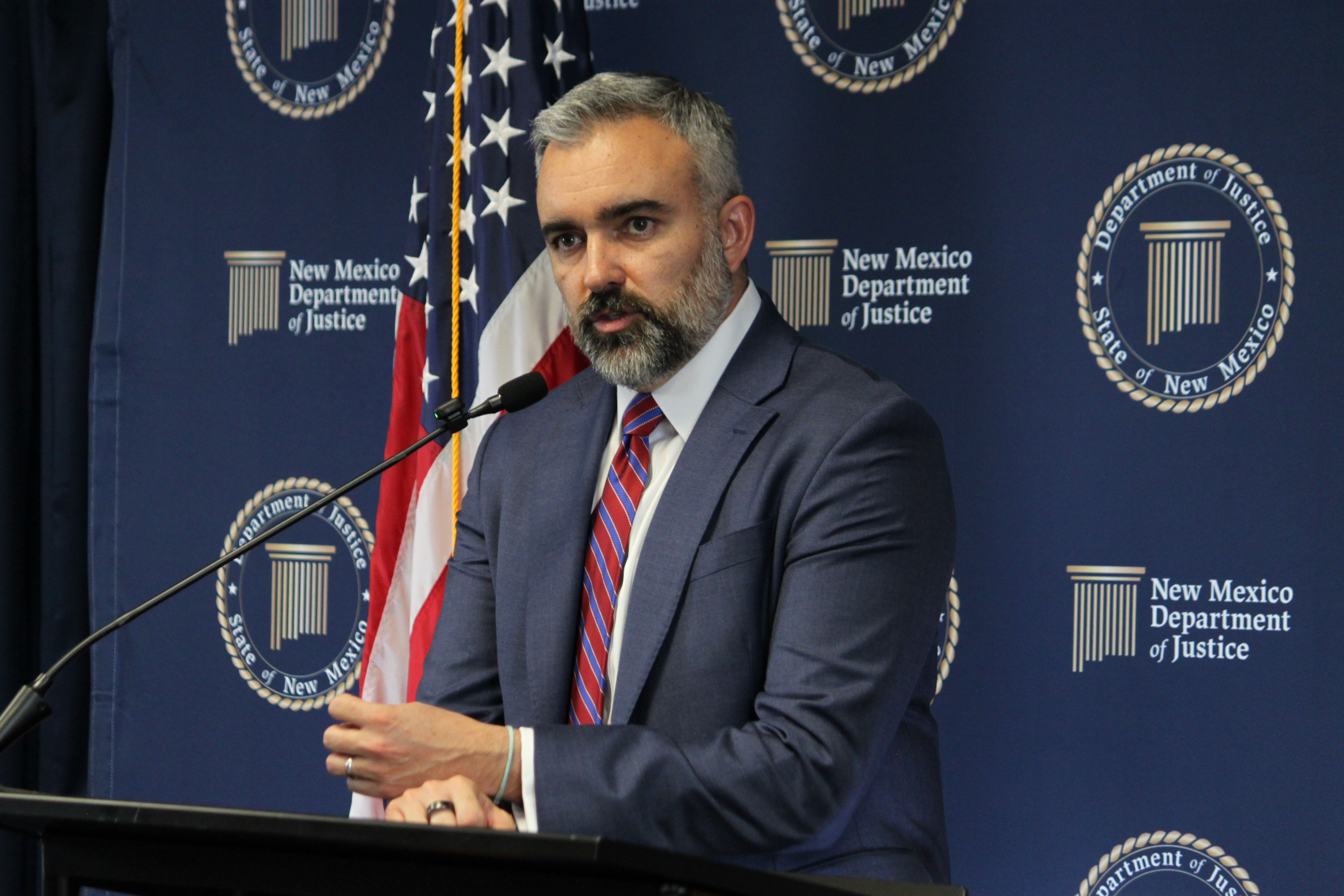
    The award will serve as a warning to tech companies that New Mexico will hold them accountable, state Attorney General Raúl Torrez said at a news conference.

    “This judgment should be a signal, an unambiguous message, to Silicon Valley,” he said.

    Meta said the ruling and Torrez’s office’s approach to enforcement “makes it all but impossible to do business in the state of New Mexico.”

    “At its core, this lawsuit seeks to impose a tax on speech to enforce new rules for what people can say online. We are confident we will prevail on appeal,” C.J. Mahoney, the company’s chief legal officer, said in a statement.

    The Menlo Park, Calif., company’s shares were trading 2% higher in the immediate aftermath of the penalty announcement, and it was scheduled to report its quarterly earnings later Wednesday.

    New Mexico goes it alone

    In August, Meta reached a settlement with nearly all states and territories — except New Mexico and Florida — to pay $18 billion and add stronger child-safety measures to its Facebook and Instagram platforms.

    The settlement ended a trial over teen social media addiction and resolved a pivotal case years in the making that sought to hold the tech giant accountable for the role its platforms played in undermining children’s mental health. The effort targeted features designed to grab young people’s attention.

    New Mexico didn’t join the multistate settlement, choosing to go after the company on its own.

    During the trial, prosecutors cited a 2010 Washington Post op-ed from Facebook CEO Mark Zuckerberg, in which he wrote that the company didn’t sell user data.

    “You have control over how your information is shared,” Zuckerberg said. “We do not and never will sell any of your information to anyone.”

    Attorneys for New Mexico had sought $35 billion to $40 billion, arguing that the company would only change its ways with a sum that affected its stock price.

    Meta’s lawyers, meanwhile, argued that the state failed to prove the company made misleading statements about privacy and that content moderation actually harmed New Mexicans. They contended that the company should pay no more than $3.4 billion, saying an award 10 times that or even more would violate due process, was unconstitutional, and would not hold up on appeal.

    Although interest would accrue on the penalty during the appeal process, Meta could succeed in reducing the number of violations for which it is found liable.

    The $25 billion award far exceeds the $5 billion fine that the Federal Trade Commission levied against Facebook in 2019.

    Peter Ormerod, an associate law professor at Villanova University, was surprised by the size of the New Mexico judgment because previous legal settlements over Cambridge Analytica were much lower.

    “It comes out to about $12,000 per person in New Mexico, and that’s just a very large number. It’s quite unlike anything else we’ve seen,” Ormerod said.

    Under the New Mexico Constitution, fines for violations of consumer protection laws go toward state education spending. But it could take years before the state sees any of the money while the company appeals.

    Company argues that the state failed to prove harm

    The state’s case focused on accusations that Facebook deceived users about a breach stemming from a third-party personality quiz that harvested data from roughly 87 million profiles and sold it to Cambridge Analytica. The now-defunct firm’s clients included Donald Trump’s 2016 presidential campaign.

    Attorneys for New Mexico argued that the state’s entire population, not just Facebook users, were deceived by the company. They also said Facebook allowed misinformation or violent content to proliferate.

    Meta attorneys vehemently denied the allegations, saying the company’s content moderation policies were robust and that freedom of speech must be considered. They argued that the state failed to prove people were harmed by deceptive statements.

    In one of the tech giant’s few wins, jurors found that the state didn’t prove Facebook made false claims about removing harmful content, including misinformation about the COVID-19 pandemic.

    During a video deposition, Zuckerberg denied the state’s claims that Facebook profited off harmful content. He said the company had to balance freedom of speech with content moderation.

    Attorneys for the company said it has changed its policies since the lawsuit was filed in 2021 and that it catches and removes an estimated 99% of the content that violates its standards.

    Matthew Brown and Barbara Ortutay contributed to this article. Schuettler is a corps member for the Associated Press/Report for America Statehouse News Initiative. Report for America is a nonprofit national service program that places journalists in local newsrooms to report on undercovered issues.

  • Jeff Van Drew, House GOP leaders subpoena Mikie Sherrill’s administration over N.J. noncitizen voter records

    Jeff Van Drew, House GOP leaders subpoena Mikie Sherrill’s administration over N.J. noncitizen voter records

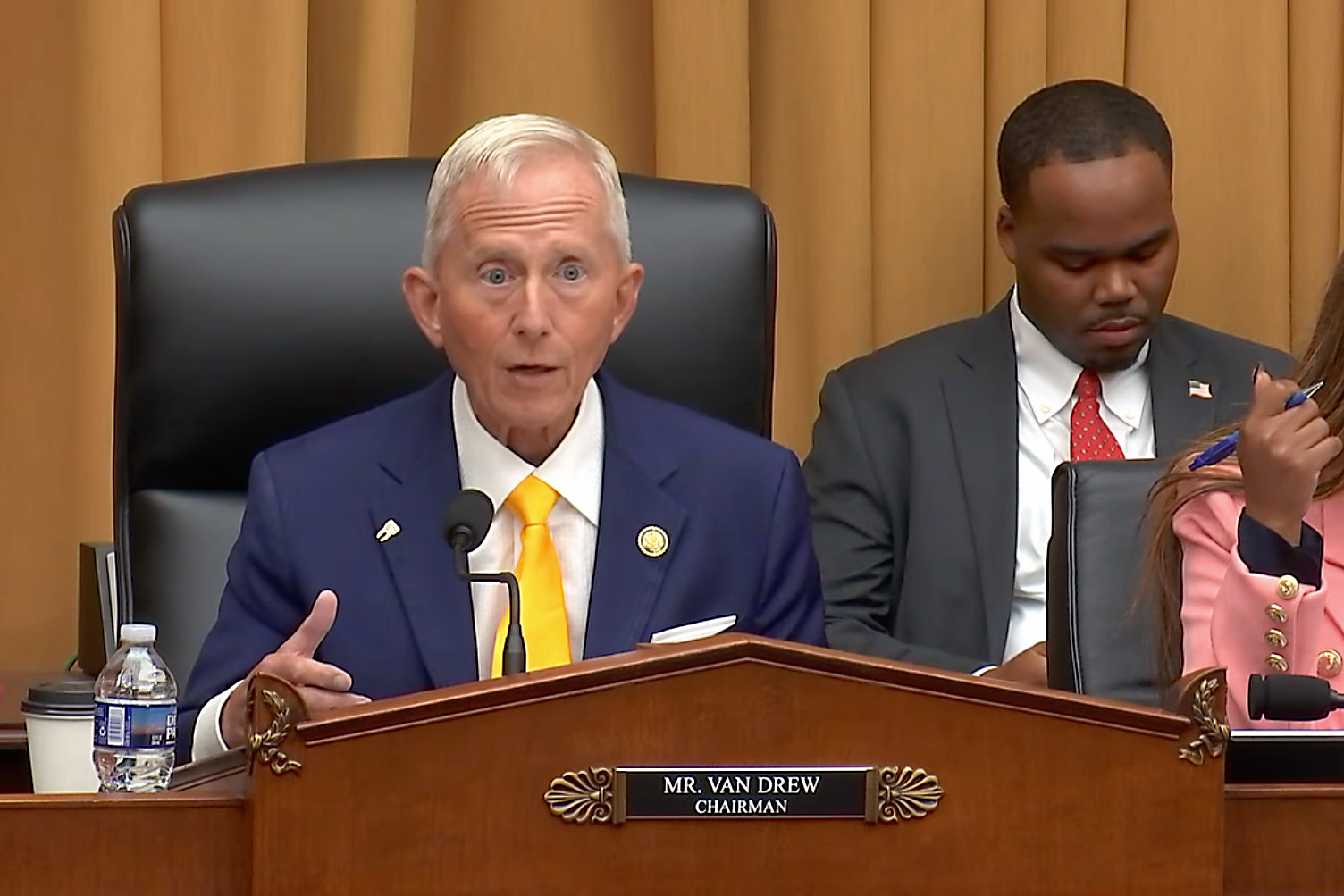
    South Jersey Republican Rep. Jeff Van Drew Wednesday announced a congressional subpoena of New Jersey Gov. Mikie Sherrill’s administration, demanding it produce records he requested three months ago that may explain how 6,600 noncitizens were added to the voter rolls in violation of federal law.

    Sherrill, a first-term Democrat, revealed in July that approximately 6,600 people who identified themselves as noncitizens were registered to vote in New Jersey between June 2023 and June 2024 through the Motor Vehicle Commission, though fewer than 400 actually cast ballots.

    Van Drew, the Cape May Republican who chairs House Judiciary Committee’s subcommittee on Oversight, first requested the documents Aug. 7 as part of the subcommittee’s investigation. To date, the state has produced just 12 documents that shed no light on how this happened, Van Drew and other Republican congressional leaders wrote in a letter accompanying the subpoena from the Judiciary Committee and the House Administration Committee.

    Her administration’s response has been “inadequate,” and “an impediment” to their investigation, the letter said.

    “None of the documents offered any substantive insight into how the noncitizen voter registration issue was discovered or why New Jersey did not conduct any remediation efforts until 2026,” said the letter Van Drew co-authored.

    “These ineligible voter registrations raise concerns about the application of federal law in New Jersey as it pertains to accurate voter registration, as well as the effect that New Jersey’s failure to identify and remove noncitizens from its voter rolls has on the civil liberties of American voters and their ability to elect representatives,” according to the letter.

    Sherrill has blamed former Gov. Phil Murphy’s team, as well as software vendor IDEMIA, for the registration of people who had answered they weren’t citizens and therefore ineligible to vote. Both have denied responsibility.

    Murphy spokesperson Mahen Gunaratna on Wednesday pointed to his one statement on the matter from July in which he said Murphy “had no knowledge” of the issue and “applauds” Sherrill for looking into it.

    In addition to removing thousands of people from the rolls, Sherrill sent about 2,000 registrants to county election officials for verification to make sure they didn’t accidentally disenfranchise citizens.

    Sherrill also referred the matter the law firm of former Republican Attorney General Jeffrey S. Chiesa for an independent investigation, which is ongoing, Sherrill noted Wednesday.

    “I promised that when we discover a problem, we communicate the facts and fix it — and I meant it,” Sherrill’s statement said. “From the moment we discovered the Motor Vehicle Commission registration issue from 2023, we took action immediately, went above and beyond in making agencywide reforms, and have been transparent every step of the way. We did this so that New Jerseyans can feel confident that we are running the strongest and fairest election in our country.”

    Sherrill dismissed the subpoena as “political theater,” and derided Van Drew and House Judiciary Chair Jim Jordan (R., Ohio) as “enablers” of President Donald Trump, whose administration has pushed for more power over state-run elections.

    Van Drew defended IDEMIA, the vendor Sherrill has blamed, at the hearing on the matter last month but no one from New Jersey’s government or the voter registration system participated. Van Drew repeatedly accused the state of knowing about the noncitizen registration issue since 2024 and called it a “cover-up.”

    Van Drew spokesperson Paxton Antonucci told The Inquirer after the hearing that documents showed the state contacted IDEMIA in June 2024 after noticing registered voters whose files were missing their age and party affiliation. Those questions were only asked of people who identified themselves as citizens wanting to vote, but the system still allowed people who said they aren’t citizens to register.

    “This information was missing due to the fact that the software, for some reason, was failing to flag that this group of individuals had selected the ‘No’ option when asked if they were a U.S. citizen but were still allowed to be registered to vote,” Antonucci said last month.

  • Pope Leo’s doctors say tests show he needs no further treatment for lung cancer

    Pope Leo’s doctors say tests show he needs no further treatment for lung cancer

    VATICAN CITY — Pope Leo XIV needs no further treatment for lung cancer after follow-up tests confirmed the disease was localized, the Vatican said in a statement Wednesday.

    Leo, 71, had the lower lobe of his right lung removed last week in the first major health event of his 17-month pontificate. The surgery confirmed he had adenocarcinoma, the most common type of lung cancer. He left the hospital on Saturday, four days after surgery and well ahead of the weeklong hospital stay the Vatican had initially anticipated.

    The pope’s personal physician, Luigi Carbone, and his surgeon, Stefano Margaritora, said in a statement that results of the final post-operative tests on tissue removed during the pope’s surgery confirmed the initial diagnosis and that the cancer had not spread.

    “A subsequent oncology assessment confirmed that no further treatment is necessary,” the doctors said.

    The pope had the lower section, or lobe, of his right lung removed to try to ensure that all the cancer was removed.

    Additional treatment is offered in such cases if follow-up testing finds signs that the cancer has spread or has certain other signs that it might be particularly aggressive. Surgery often can be enough when tumors are caught very early, such as when someone has an X-ray or other scan that shows a spot long before it’s large or causing symptoms.

    The pope appears to have had one of those “incidental findings,” a nodule in his lung spotted during another exam. In an interview with Vatican News, Margoritora, the chief thoracic surgeon at Rome’s Gemelli hospital, confirmed that the nodule was found by chance during routine abdominal examinations.

    The pope carried on business while in the hospital, including a call with Russian President Vladimir Putin, and has appeared strong in two public appearances at the Vatican since his surgery: the traditional Sunday blessing from a window overlooking St. Peter’s Square and Wednesday’s longer audience, when he greeted the faithful from all over the world.

    His next major engagement is an ambitious Nov. 6-17 trip to Uruguay, Argentina, and Peru.

    Margaritora was quoted by Vatican News as saying that there was “no clinical reason” to prevent the trip, which includes a dozen flights, two helicopter rides, and high-altitude stops.

    The pope revealed that a nodule had been found and would be surgically removed during the traditional Sunday blessing on Oct. 11, in an unusually transparent disclosure.

  • Israeli forces detain and then release U.S. congressional candidate at West Bank harvest

    Israeli forces detain and then release U.S. congressional candidate at West Bank harvest

    Israeli forces detained U.S. Democratic congressional candidate Brad Lander on Wednesday as he helped Palestinian farmers harvest olives in the occupied West Bank, releasing him hours later while dozens of other volunteers, including a group of American rabbis, remained in custody.

    The incident was the latest in an annual olive harvest that has been marked by violence between Israeli settlers and Palestinian villagers attempting to gather their crops.

    The Israeli military said the farmers and volunteers had failed to seek prior approval for the harvest and were detained “due to the security risk posed by conducting an uncoordinated harvest near an Israeli community.” It later added that it viewed “the arrival of dozens of activists as an act intended solely to provoke, which undermines the harvesting process.”

    Lander is running in the U.S. elections on Nov. 3 to represent a heavily Democratic New York district in the U.S. House of Representatives.

    “The occupation is a crime under international law,” Lander wrote on social media after he was detained. “Harvesting olives isn’t a crime under any law I know.”

    “These detentions by the IDF are one more attempt to undermine Palestinians’ right to harvest their olive groves, travel on their roads, and live in their homes,” he added in a post after his release.

    This year, Palestinians have been required to coordinate with the Israeli military to access more of their privately owned farmland than in previous years. The anti-settlement group Peace Now said last week that the army had expanded by nearly 30% the area of farmland that Palestinians cannot enter without prior approval, to 34 square miles. The Israeli military declined to comment on the exact figures but said Palestinian farmers must coordinate access to areas under Israeli security control.

    The detained volunteers were taken to a police facility. Lander was among them but “released after it became known that he was a congressional candidate,” the Israeli police said in a statement.

    Israeli rights group Yesh Din and the Palestinian Farmers’ Union have said the 2026 harvest has been the most violent in recent history, with hundreds of reported thefts, clashes, and arson attacks.

    Much of the violence has unfolded on land outside Palestinian villages, where Palestinians have historically harvested olives and Israeli settlers have increasingly erected outposts without authorization from Israel’s government.

    But there were no clashes before Israeli forces arrived Wednesday, according to Beck Strober, a spokesperson for Protect the Harvest, the advocacy group that organized the volunteers at the grove.

    Jill Jacobs, one of a dozen American rabbis detained, condemned the Israeli government restricting the ability of Palestinians to harvest freely.

    “The Israeli government is actively advancing the forced displacement of Palestinian communities across the West Bank, using its military to deny Palestinians access to their land and intimidate those who stand alongside them,” Jacobs, chief executive of T’ruah: The Rabbinic Call for Human Rights, said in a statement.

    Lander, who was endorsed by New York City Mayor Zohran Mamdani and U.S. Rep. Alexandria Ocasio-Cortez, defeated U.S. Rep. Dan Goldman in a primary for New York’s 10th congressional district. The race was viewed as a referendum on the Democratic party’s support for Israel. Both candidates are Jewish and have criticized Israel, but only Lander called the war in Gaza a genocide.

    Lander was not the first U.S. politician detained in the West Bank this year. U.S. Rep. Ro Khanna, a California Democrat, said Israeli forces detained him during a visit in July.

  • Websites scramble to fix software flaw that could put much of internet at risk

    A programming language used in as much as 70% of websites on the internet has a critical security issue that could allow attackers to take control of or disrupt systems using it, a research firm said Wednesday.

    The scope and scale of the bug is all the more remarkable for the way it was found: by security researchers with the assistance of artificial intelligence tools.

    The issue was so severe that National Security Agency’s Cybersecurity Collaboration Center advised websites that could not immediately fix the issue Wednesday morning to go temporarily offline, amid fears that hackers could use AI to rapidly exploit gaps in the system.

    The issue, called php2shell, concerns technology that handles website memory when processing queries from a computer. It was disclosed Wednesday morning after the nonprofit foundation that maintains the tool had a chance to fix the vulnerability.

    For the past six months, the cybersecurity world has been racing to use new advanced AI models to find computer bugs and fix them before they can be found and exploited by hackers.

    The best cyber models from AI companies, including OpenAI, are strictly controlled and only vetted cyber and tech companies have access. But in the past month, new Chinese AI models that are nearly as capable have become freely available for anyone to download.

    AI has already been used in multiple high-impact hacks. Earlier this month, a South Korean bank had detailed customer information stolen by a China-based hacker, who cybersecurity analysts said appeared to be an amateur who used AI tools to execute the attack.

    The php2shell bug was found as part of an initiative run by OpenAI to help security researchers find internet vulnerabilities with cutting-edge AI tools. (The Washington Post has a content partnership with OpenAI.) The vulnerability, named after the programming language PHP, was identified by researchers with the firm Calif.

    “Given the severity of these flaws and PHP’s widespread use, we consider this one of the most impactful security issues in recent memory,” OpenAI said in a statement. “It highlights how AI can uncover security flaws with internet-scale impact, but the same capabilities can also help attackers rapidly develop offensive tools and exploits.”

    The company also hinted that it had found several more significant vulnerabilities that are in the process of being fixed.

    Calif, the research firm that identified the vulnerability, said in a blog post that it had not expected to find any critical issues when it examined PHP, the programming language, because many people had done “extensive AI assisted audits of this target.” But after a few days of looking, the firm managed to piece together a version of the vulnerability. Calif began reporting the bug to be fixed in August.

    Cloudflare, a majority internet security provider, said it has deployed protections against the vulnerability, enabling sites to keep running. WordPress, another major platform, also urged site owners to immediately update their applications.

  • Taxpayers are funding private school tuition. It’s helping classical Christian schools expand

    Taxpayers are funding private school tuition. It’s helping classical Christian schools expand

    HURST, Texas — Keith Castello spends a lot of time praying about available real estate. Driving in his white pickup under a glaring Texas sun, the classical Christian school administrator points out empty office parks, a shopping mall, and an old church — all locations he is scouting for new Christian schools.

    Demand is booming, he says. And part of that demand comes from a new state incentive: taxpayer money for kids who attend Christian schools.

    This summer, Texas began rolling out $1 billion in public funding that eligible families can put toward private education expenses. Republican-controlled state legislatures around the country have approved a cascade of similar programs in the past six years, alarming public school advocates.

    These programs mean half of school-age children in the United States are now eligible to apply for state money to attend private schools. In the U.S., most private schools are religious. Securing public money for them raises issues over church-state separation but fulfills a longstanding goal for Christian conservatives, who lobbied for this funding.

    “I have been praying for 28 years for things that are coming to fruition right now,” said Castello, who is launching three classical Christian schools this fall under his Kyrie Christian Academy brand.

    Those suburban Texas schools are part of a larger network, the Association of Classical Christian Schools, which has ties to the Trump administration and was founded by Doug Wilson, a conservative Idaho pastor and writer. The schools offer a liberal arts education, with an added emphasis on virtue and a biblical worldview.

    The annual ACCS conference in June in Atlanta buzzed with talk of the historic shift in school funding, which bolsters a conservative Christian push to remake the education landscape. Critics worry it will drain public schools, which educate students of all religious backgrounds and political persuasions. When students leave their public school, state money allocated to educate each student goes away too.

    Conservatives are banding together to leverage these expanding taxpayer-funded scholarships. Last year, ACCS formed a coalition with some powerful conservative groups, including Turning Point Education and the Heritage Foundation. Their goal is to convert or create 5,000 new classical Christian schools in the next decade with 1.5 million students nationwide.

    The aim, according to ACCS President David Goodwin, is to take a share of public funding and educate future leaders through Christian schools. “It sounds like a very ambitious goal, but this money has never been there before,” he said.

    Conservatives wage the ‘Battle for the American School’

    The Association of Classical Christian Schools calls its campaign the “Battle for the American School.” It’s a riff on the 2022 bestselling book Goodwin co-wrote with Defense Secretary Pete Hegseth, who sent his children to ACCS schools before joining President Donald Trump’s cabinet. Their book, Battle for the American Mind, extols classical education and critiques the prevailing public school model.

    Hegseth remains a booster: The Pentagon recently introduced a form of classical education into government-run schools on military bases.

    The ACCS version of classical Christian education is proudly erudite: The Oxford-educated Christian writer C.S. Lewis is a lodestar, and students study the “great books.” Its teaching methods draw from ancient and medieval sources with a strong focus on Western Christian history.

    The schools have their roots in a radical source. Wilson, the founder of ACCS, is a self-described Christian nationalist who has made headlines for preaching at a Pentagon worship service and advocating for the repeal of women’s voting rights. For more than four decades, he has also been a pioneer in classical Christian education.

    In 1981, he helped start the Logos School in Moscow, Idaho, one of the first in the modern classical Christian movement. He founded ACCS in 1994.

    At the June conference, Wilson told a packed ballroom of 1,000 ACCS leaders they can’t opt out of the culture wars.

    Education is “the central cultural battle,” he argued. He repeated for emphasis the refrain: “Classical Christian education is a hot center of the conflict of our time.”

    Parents — and, now, states — can pay thousands for tuition

    On a Wednesday in August, the school year begins at Covenant Christian Academy, an ACCS school in the Dallas-Fort Worth suburbs. Well-behaved children in lower grades file into chapel in the cafeteria, all wearing blue oxford shirts, the girls in blue-and-white plaid skirts and dresses. The principal gives a talk on the virtue of prudence.

    By the time these students are in fifth grade, they will study Latin, in a building where bulletin boards now feature quotes from Cicero and St. Augustine. In their final year, they will present a senior thesis. Most will go on to college, many at public universities, some at Christian colleges.

    Castello was at Covenant Christian Academy for 20 years. While he was headmaster, the academy expanded its campus and grew from 275 students to more than 600. Though he is a product of public schools — good ones, he’s quick to note — he is now a foot soldier in this battle for private education.

    When he began his teaching career after seminary, he loved how academics came alive at schools like Covenant: “Every class was grounded on the word of God, it was rooted in truth, it was meant to be transformative in the lives of students.”

    But private schools can be financially out of reach for families. It was a struggle for Castello and his wife to afford Covenant for their two sons. He knew most members of his Southern Baptist church could not pay the tuition, now around $20,000, so he helped raise scholarship money and ramped up financial aid.

    Now that Texas offers money for private school tuition, he encourages parents to use it.

    When Gwen Albaugh’s husband died from cancer three years ago, Castello secured a scholarship for her two children to attend Covenant. She said, “I know that they are somewhere that they are being taught the foundational work, whether that be academics or faith-wise, and I’m able to now provide for our family.”

    After Texas launched its education savings accounts this year, Albaugh’s children were among at least 78 Covenant students who qualified for the program.

    Christian schools aim to take public money and students

    For years, Democrats and rural Republicans in Texas blocked efforts to create education savings accounts.

    “They were worried, I think rightfully, about what it would do to public schools in rural areas,” said Douglas Harris, an economist at Tulane who studies school choice.

    Advocates also warned these programs entwine government and religion by diverting taxpayer money to Christian schools.

    “It’s an abject violation of religious freedom to force a taxpayer to fund a school that discriminates against their faith,” said Rachel Laser, head of the advocacy group Americans United for Separation of Church and State.

    Classical education, popular among conservatives, was already on the rise before more taxpayer funds became available. It exists in many forms, in religious schools outside ACCS, homeschooling groups, secular, and charter schools. Many classical Christian schools go a step further in their focus on reclaiming and promoting Western Christian culture.

    ACCS is an accrediting body and the oldest network of classical Christian schools. Its membership includes about 500 schools, but it has grown by nearly 200 schools since 2019. Goodwin, its president, credits a pandemic-era mistrust of public education, when debates ignited over school closures, books, race, sexuality, and gender identity.

    Not all ACCS schools accept government money, but many that do now advertise state funding options on their websites.

    “What we’re trying to do is take enough of the public school share that we can change the country’s direction with powerful leadership coming out of these classical Christian schools,” Goodwin said in a promotional video.

    Wilson echoed that idea. “We are training and educating leaders,” he told The Associated Press. “We teach them how to analyze, how to take arguments apart, how to understand what your opponent is saying and represent it accurately.”

    The school network has a controversial founder

    Wilson can be a provocateur, suggesting homosexuality should be criminalized and criticizing Muslim immigration to the U.S. His Idaho church prefers heads of households, usually men, to vote. He describes his politics as “slightly to the right” of Confederate Gen. J.E.B. Stuart.

    Castello labels some of Wilson’s statements as “vilely offensive.” He compares Wilson to a family elder, one who deserves respect, but also has some reprehensible views.

    ACCS is less pugilistic than its founder. It includes socially conservative Christians across denominations and hasn’t adopted Wilson’s more fringe beliefs. Schools agree to a statement of faith, including that same-sex relationships and gender transitions are off-limits, but families may not be aware of Wilson’s teachings or influence. He still advises the ACCS board, though, and his books are required reading in some of its schools.

    Wilson is part of the reason three mothers pulled their children this year from a San Diego-area Christian school, which pursued an affiliation with ACCS. They opposed his patriarchal, controversial views and were concerned when students received humanities coursework Wilson wrote.

    In one of the texts students read, a commentary on C.S. Lewis, Wilson defends the author’s “historic Christian understanding of the relationship of men and women.” He calls Islam and Hinduism “false religions.”

    Sarah Stankorb, an author who covered Wilson in her book Disobedient Women, said ACCS schools are “definitely a mode of transmission into the Doug Wilson pipeline.”

    Hundreds of students at one Christian school are taxpayer-funded

    At Coram Deo Academy, an ACCS school where Castello served as vice president of operations until last year, more than 360 students out of 2,000 have been approved for Texas Education Freedom Accounts, or TEFA.

    Coram Deo could potentially receive $3.5 million in TEFA funds this year, equal to nearly 17% of its budget, according to Scott Head, the school’s chief financial officer. The taxpayer funds are also on track to cover half of the school’s financial aid budget.

    The Texas program prioritizes low-income students and those with disabilities, but its income limits this year go up to $165,000 for a family of four, opening the door to middle-income families. Eligible students can receive at least $10,474 for private school, which covers Coram Deo’s average tuition. The school’s hybrid model keeps costs lower because students are homeschooled part of the week.

    Nathanael Wydner graduated from Coram Deo, but he and his wife Candice could not afford to send both of their children on his salary alone. They cried when they got off the TEFA waitlist.

    “This year and probably for years to come, it’s everything. It’s the only way that this works for us,” Wydner said.

    At one of Castello’s startup schools, 22 out of 25 students are using TEFA this year.

    The Rev. Victor Shahat, head of St. Clement Orthodox Christian Academy, said, “I can’t imagine without TEFA we can open the school this year at all.”

    The TEFA program is not conducive to startups, since vendor schools must be in operation for two years. Castello qualified because he ran a microschool for seven years at a tennis club for the owners’ children. His Kyrie organization now serves as a TEFA conduit for three new locations.

    Castello said the influx of taxpayer money “completely transforms the possibility” of increasing access to Christian education.

    Blurring the lines between public and private schools

    “We’re on a massive inflection point in the Christian school movement,” Castello tells a sanctuary full of Christian-school parents one Monday evening.

    Standing behind the lectern, cowboy boots under his dress slacks, he predicts Texas will increase the funding for its education savings accounts — an outcome that may hinge on whether the Republican or Democrat wins the governor’s race this November. He tells the audience about a new federal tax credit, which will also send money to private schools.

    There are murmurs of approval and “amens” when he mentions how Christian schools will benefit.

    Hours earlier, Castello had walked through his newest school, Southlake Christian Academy, located in a church. Supplies crowded an office, and the sound of drilling echoed as contractors installed security cameras.

    The campus opened with six students this year, but Castello has big plans for it. A longtime coach, he hopes to add athletic facilities, and he has brought on a real estate consultant.

    He plans to talk to lawmakers about making it easier for private schools like his to buy shuttered public school buildings.

    He has heard the critiques that these programs will hurt public schools. He counters that he and other private school parents still pay taxes that support public education.

    “I’m not against the public schools,” Castello said, though he doesn’t see them as religiously neutral, calling them “secular humanist schools.”

    The line between public and private schools is blurring.

    “If private schools are being funded by taxpayer funds, then what is the difference between public and private?” he asked.
  • Sarah Hart, longtime South Jersey teacher and onetime rider of Steel Pier’s high-diving horses, has died at 90

    Sarah Hart, longtime South Jersey teacher and onetime rider of Steel Pier’s high-diving horses, has died at 90

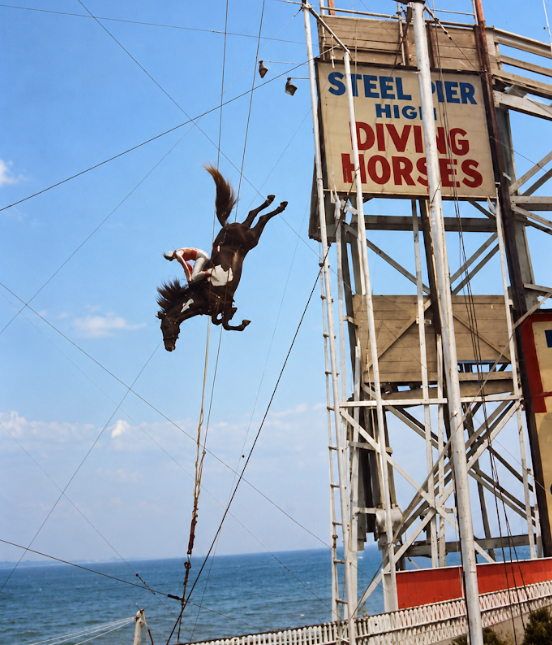
    Sarah Hart was 21 when she met Gamal and the other horses that high dived into a 10-foot pool of water several times a day at Steel Pier in Atlantic City.

    Gamal, she told the Courier-Post in 1998, liked to leap off the 40-foot-high platform without a second thought. Other horses, she said, “would take five minutes before they’d jump.”

    It was 1957, and Mrs. Hart, already a skilled diver and college swimmer, knew about the horse-diving grand finale at Steel Pier’s water circus. “It was a little bit spectacular to see this huge horse flying through the air,” she told the Courier-Post. “The motion was beautiful. A young girl brave enough to ride the horse added to it.”

    That summer, Mrs. Hart became one of those brave girls. She outperformed 100 other applicants and, until 1962, rode Gamal and his counterparts off the platform and into the water below.

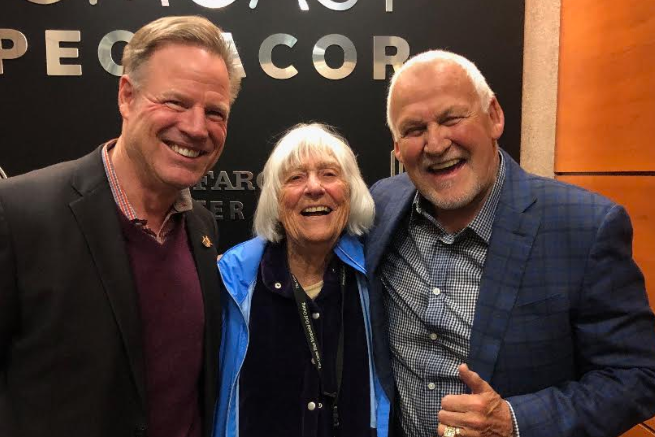
    Mrs. Hart was equally comfortable riding horses into pools of water and frolicking with dolphins.Courtesy of the family

    “What you have to do is just simply get on the horse and hang on tight, and go along for the ride,” she told the Courier-Post in 1993. In 1998, she said: “It was the easiest thing I ever did.”

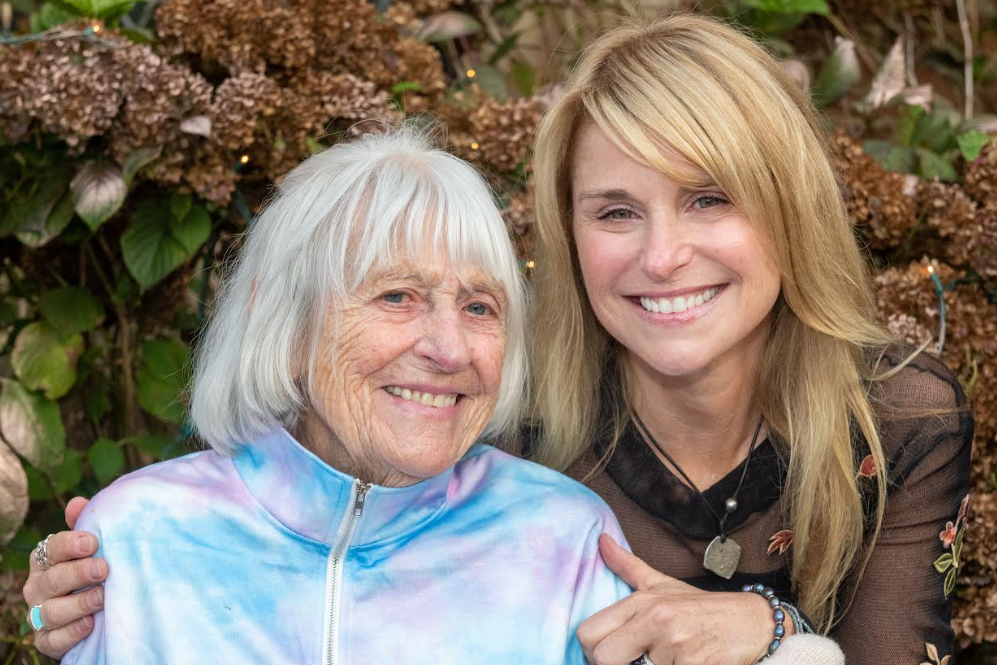
    On Tuesday, Oct. 13, Mrs. Hart, also a longtime South Jersey teacher, an environmentalist, and the wife of Gene Hart, the longtime Flyers broadcaster, died of heart failure at her home in Gladwyne. She was 90.

    “She was a free spirit,” her daughter Lauren said. “She did a little bit of everything.”

    Born in Chester, Mrs. Hart grew up on and around the Boardwalk in Atlantic City. She went to schools in Pleasantville and worked at Boardwalk carnival games as a teenager. For years, she told a story about beating future Hall of Famer Wilt Chamberlain in the old shoot-the-basketball game.

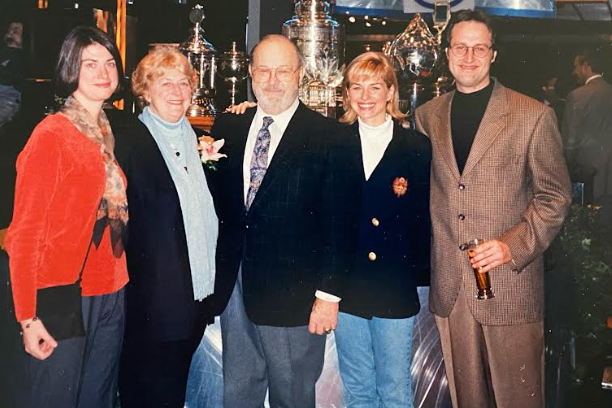
    Mrs. Hart, left below, was a lifelong Flyers fan. Courtesy of the family

    She performed with synchronized swimming teams at the University of Florida after high school and at the 1958 World’s Fair in Brussels, Belgium. She met the Flying Wallendas, singer Tony Bennett, and other entertainers at Steel Pier, and swam with the dolphins at the old Aquarama Aquarium Theater of the Sea in South Philadelphia in the 1960s.

    She met her husband, Gene, at Steel Pier, and they married in 1963. His mother had ridden the high-diving horses at Steel Pier in the 1930s, and he was a comic diver and announcer for the water circus.

    They had daughters Lauren and Sharon and a son, Brian, and lived in Cherry Hill. Her husband died in 1999, and she moved to Gladwyne during the COVID-19 pandemic.

    Mrs. Hart taught English as a second language for decades at schools in the Lenape Regional High School District and later as a general substitute. She ran unsuccessfully for Cherry Hill Township Council in 1981 and was active with the Cherry Hill Environmental Board and the Pinelands Preservation Alliance. She was a longtime election worker at voting polls in South Jersey.

    Mrs. Hart, front above and left below, enjoyed time with her family. Courtesy of the family

    She graduated from high school in Florida, returned to South Jersey after two years of premed classes at the University of Florida, and earned a bachelor’s degree in English with honors at what is now Rowan University.

    “A more kind and generous spirit you will never find,” a former teaching colleague said in a Facebook tribute, “and what a great advocate for students and their needs.” A longtime friend said: “There was no sweeter, more considerate, or kinder soul on the face of the Earth.”

    Sarah Gregg Detwiler was born Aug. 2, 1936. She enjoyed dancing, nature, and animals as a girl, and even flew small airplanes out of the Atlantic City airport. Her family moved to Apopka, Fla., 20 miles northwest of Orlando, before her senior year of high school.

    Later, she and her husband traveled the world together, sharing fine art, classical music, opera, and the theater. For years, Monday night was date night at the Metropolitan Opera House in New York.

    Mrs. Hart, second from left below, was popular wherever she went. Courtesy of the family

    She stabled her own horse near their home for a time and landscaped the entire property, in-ground pool and all, when they moved to Tampa Avenue in Cherry Hill in 1971. “There wasn’t a tree in the yard when we moved in,” Gene Hart told The Inquirer in 1981.

    Mrs. Hart especially liked roses and said: “I’m an outdoor person, and we all love the water.” Of course, she was a lifelong Flyers fan.

    “She was known above all for her warmheartedness and egalitarian spirit,” her family said in a tribute. Her daughter Lauren said: “She was kind and always working in the service of others. She was a giver.”

    In addition to her children, Mrs. Hart is survived by five grandchildren, two sisters, and other relatives. A sister and three brothers died earlier.

    Mrs. Hart “was known above all for her warmheartedness and egalitarian spirit,” her family said in a tribute. Courtesy of the family

    Private services are to be held later.

    Donations in her name may be made to the Gene Hart Scholarship Fund at Temple University, 115 Mifflin St., Philadelphia, Pa. 19148.

  • Eagles defensive coordinator Vic Fangio offers explanation for Cooper DeJean’s sudden tackling woes

    Eagles defensive coordinator Vic Fangio offers explanation for Cooper DeJean’s sudden tackling woes

    Cooper DeJean has missed a surprising number of tackles this season, leading the league in the dubious category with 12.

    In his first two NFL seasons, the 23-year-old Eagles defensive back finished with 11 missed tackles per season — meaning he’s missed more tackles through the first six weeks of 2026 than his season average entering the year.

    So, what gives? Vic Fangio offered a possible explanation to this surprising trend in his news conference on Wednesday.

    “There’s been a few more [missed tackles] than usual,” Fangio said. “He did get that stinger when he had to come out of the Rams game [in Week 4], I believe it was. I think that’s affected him a little bit.”

    These struggles come at an unfortunate time for DeJean, who has played both slot corner and safety this season. DeJean and fellow Eagles defensive back Quinyon Mitchell are eligible to sign contract extensions after the 2026 season.

    Cooper DeJean (right) and Quinyon Mitchell (27) are both in line for hefty pay raises this offseason. Yong Kim / Staff Photographer

    Mitchell, who is one of the best cornerbacks in the league, is in line to earn a massive pay raise. DeJean might need to return to his once-elite form if he wants to improve his chances of reaching the $25-plus million per season range that the best corners and safeties currently make.

    While some have been critical of DeJean’s slumping 2026, Fangio offered a different perspective. The veteran defensive coordinator, who isn’t typically quick to dish out praise, said he’s been impressed with DeJean’s play to this point.

    “He’s doing good,” Fangio said. “We really haven’t played a ton of base to where he’s playing a lot of safety. But Cooper’s playing good overall.”

    DeJean had a particularly rough outing against the Carolina Panthers, when he missed three tackles in the 25-14 loss. Asked about his struggles, DeJean shrugged his shoulders.

    “Yeah, I don’t know,” DeJean said after the game. “I just got to find ways to get guys down. Part of it is different angles, where I’m hitting the guys. But I have no doubt that I’m going to continue to work on that and fix that.”

    Has the position change — which was implemented this offseason — impacted the 2025 first-team All-Pro at all?

    “That’s not really an excuse to use,” DeJean said. “I still got to be able to tackle better and get guys to the ground.”

    He’s not the only Eagle near the top of the missed-tackles leader board. Safety Andrew Mukuba is tied for second in the league with nine missed tackles, while defensive tackle Jalen Carter is tied for fifth with five. Carter has been playing with a hairline fracture in his right wrist suffered in Week 1 against the Washington Commanders.

    The secondary’s issues with missed tackles could also be attributed to the unit’s lagging communication at times this season. Even Fangio said Wednesday that there’s no true “general” of the unit quite yet.

    “I don’t know that we could say that yet, but Mukuba is progressing nicely,” Fangio said.

  • Matvei Michkov’s improved skating has fueled his torrid start: ‘I want to play, and I want to support [the] team more’

    Matvei Michkov’s improved skating has fueled his torrid start: ‘I want to play, and I want to support [the] team more’

    BUFFALO, N.Y. — After a dreadful 0-6-3 start to the 2026-27 season, the Flyers have won two straight, including a 3-2 win on Monday against a perennial Stanley Cup contender in the Colorado Avalanche.

    Matvei Michkov was a driver in both victories, notching the game-winner against the Ottawa Senators on Saturday and scoring twice vs. Colorado.

    After his goal total dropped from 26 as a rookie to 20 last season, the Russian winger has six goals in 11 games ― it took him 22 games to reach that mark last year ― tying him for 12th in the NHL, alongside prolific goal scorers like Connor McDavid, Nathan MacKinnon, and Cole Caufield. He has scored 35% of the Flyers’ 17 goals, which are tied for the fewest in the NHL with the Calgary Flames and Los Angeles Kings, and is on pace for 46 goals. A reminder: No Flyer has scored 40 goals since Jeff Carter accomplished the feat during the 2008-09 season.

    It feels like there has been a shift in Michkov, who doesn’t turn 22 until December.

    “I feel so good on ice, and I think I [am] ready for the season, and I want to play, and I want to support for [the] team more,” he said, speaking to the media after Monday’s game without a translator.

    Michkov has been outspoken about his lack of preparation for his sophomore season in 2025-26. This past summer, in a Russian interview, he said he had lost around 29 pounds since last year’s training camp.

    Coming in lighter has been more apparent not just physically but in his skating.

    His stride looks less choppy, his base is more underneath him, and he isn’t getting knocked off pucks as much. And his improved skating is noticeable late in games, which he struggled with last year. It was even more readily apparent as he danced around the entire offensive zone and away from two-time Norris Trophy winner Cale Makar to score on Monday.

    “His retrievals this year are a lot better,” coach Rick Tocchet said Wednesday. “If you look at [some of] his goals, they’re coming off a rebound; he’s beating his check to the net. He gets two empty-net [goals] from the side, where he’s reading it and he’s beating his check. And the game’s all about beating your check, and I think that’s why he’s moving quicker this year.”

    Flyers right wing Matvei Michkov has scored in three straight games and has four goals during that span.Yong Kim / Staff Photographer

    Slava Kuznetsov, the Flyers’ interpreter and one of local Olympian figure skater Isabeau Levito’s coaches, along with his wife Yulia, went to Michkov’s hometown of Perm, Russia, this summer to work with the youngster.

    “We work at skate, I think every day; just one day off, the Sunday,” Michkov told The Inquirer recently. “We work more [on conditioning] on ice, conditioning and speed and the crossover. too.

    “I don’t like every drill when [there are] no shots. And every drill we have lots of shots and skate together [for] speed.”

    Michkov worked on his skating, shooting, and one-timers and credits the hard work in the summer for where his game is now.

    “He’s definitely skating better. … I just think he comes out of the corner a little quicker. He’s getting up the ice a little bit quicker, and that just helps push defenses back,” his centerman Noah Cates said Wednesday.

    “And if you give him a little space, he knows how to take advantage of it. … [He’s] getting a little bit more room, and obviously a little more comfortable, a little more confident, and we’re seeing it in his game right now.”

    Michkov said this season he wants to work even harder on his game — “maximum one, two days off” — because he has more fun when the team wins. It’s a message he learned this summer, spending time at Artemi Panarin’s camp. He skated and spent time in the gym with veteran Russian players like Panarin and Mikhail Sergachev and said they talked to him about the importance of putting in the hard work.

    “My first time. I like it,” he said. “So good when you see superstars, and after you want more harder work [in the] gym and on ice. And this is so good for me, so good experience, and next summer, I think I want same offseason, maybe.”

    Michkov is skating on a line with Cates, who was his center for a good chunk of last season, and rookie Porter Martone, who joined the Flyers late last season after completing his freshman year at Michigan State.

    Michkov and Martone have connected on the ice with several goals, and off the ice too, with Michkov, who has clearly learned from last season, giving the teenager some advice.

    “I know second season every time, so [much] harder than first,” he learned. “And I talk before the season, Marty, second season so hard, and you need more work, and this is better for you.”

    Breakaways

    The schedule worked out for Hunter McDonald, who was called up on Sunday and made his season debut Monday, as the blueliner grew up approximately 85 miles west of Buffalo’s KeyBank Center. Tocchet thought he moved the puck well and liked his aggressiveness and ability to squash plays. A sixth-round pick in 2022, McDonald is expected to be in the lineup Wednesday against the Sabres alongside Simon Benoit, and will have family in attendance. … Dan Vladař (1-3-1, .889 save percentage) will get the start in goal as the Flyers seem to be rotating their netminders since Joseph Woll started two straight during the first week of the season. … NHL teams released cryptic messages on social media Wednesday in advance of the “Hometown Remix” jerseys being released in early November. Long speculated that the Liberty Bell and a steel gray color will be involved, the numbers in the Flyers’ tweet corresponded to letters spelling out the phrase: “The Bell Tolls.” The Flyers will wear the hometown remix jersey 13 times, beginning Nov. 3 at home against the Minnesota Wild.

  • Trump approval hits new low two weeks before midterms, poll finds

    Trump approval hits new low two weeks before midterms, poll finds

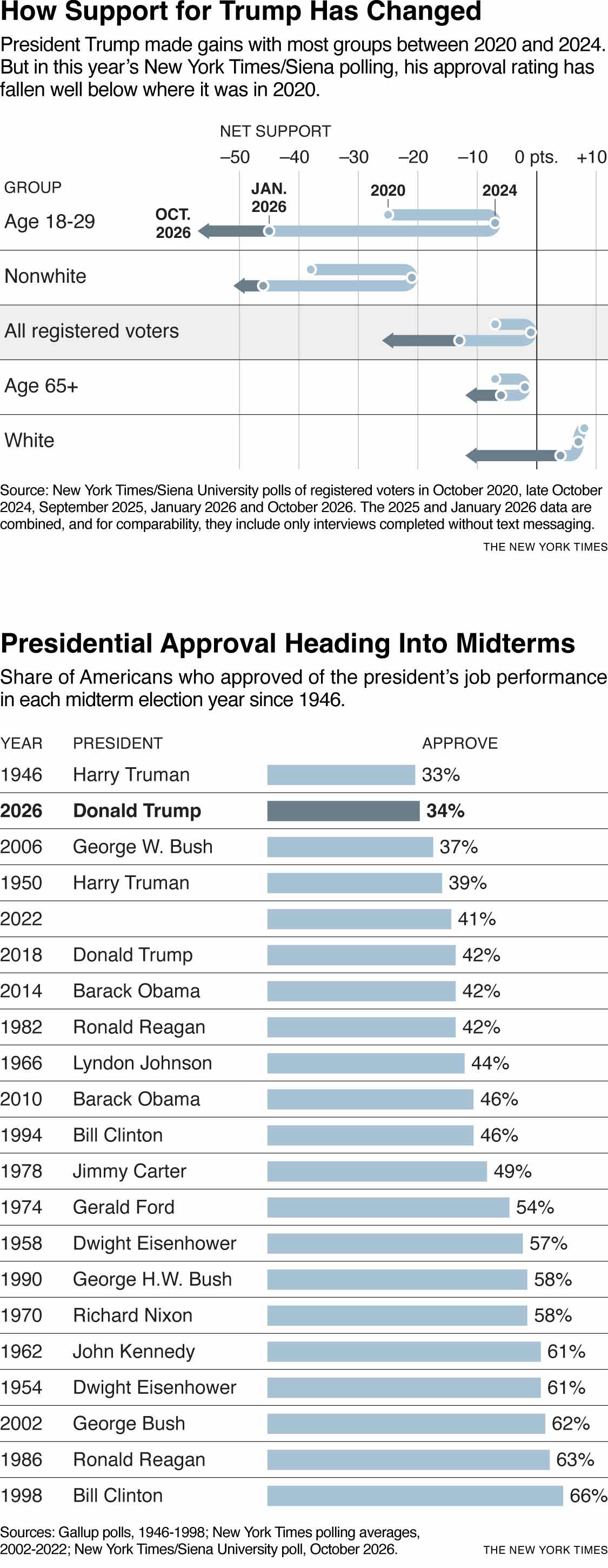
    President Donald Trump’s approval rating hit a new low just a few weeks before the midterm elections, driven down by broad disapproval of his handling of the economy, the war in Iran and high gas prices, according to a new national poll from The New York Times and Siena University.

    Just 36% of likely voters said they approved of Trump’s performance, while 59% said they disapproved. That is his lowest approval rating recorded in any Times/Siena poll. More than two-thirds of independent voters said they disapproved of the way he has handled his job as president.

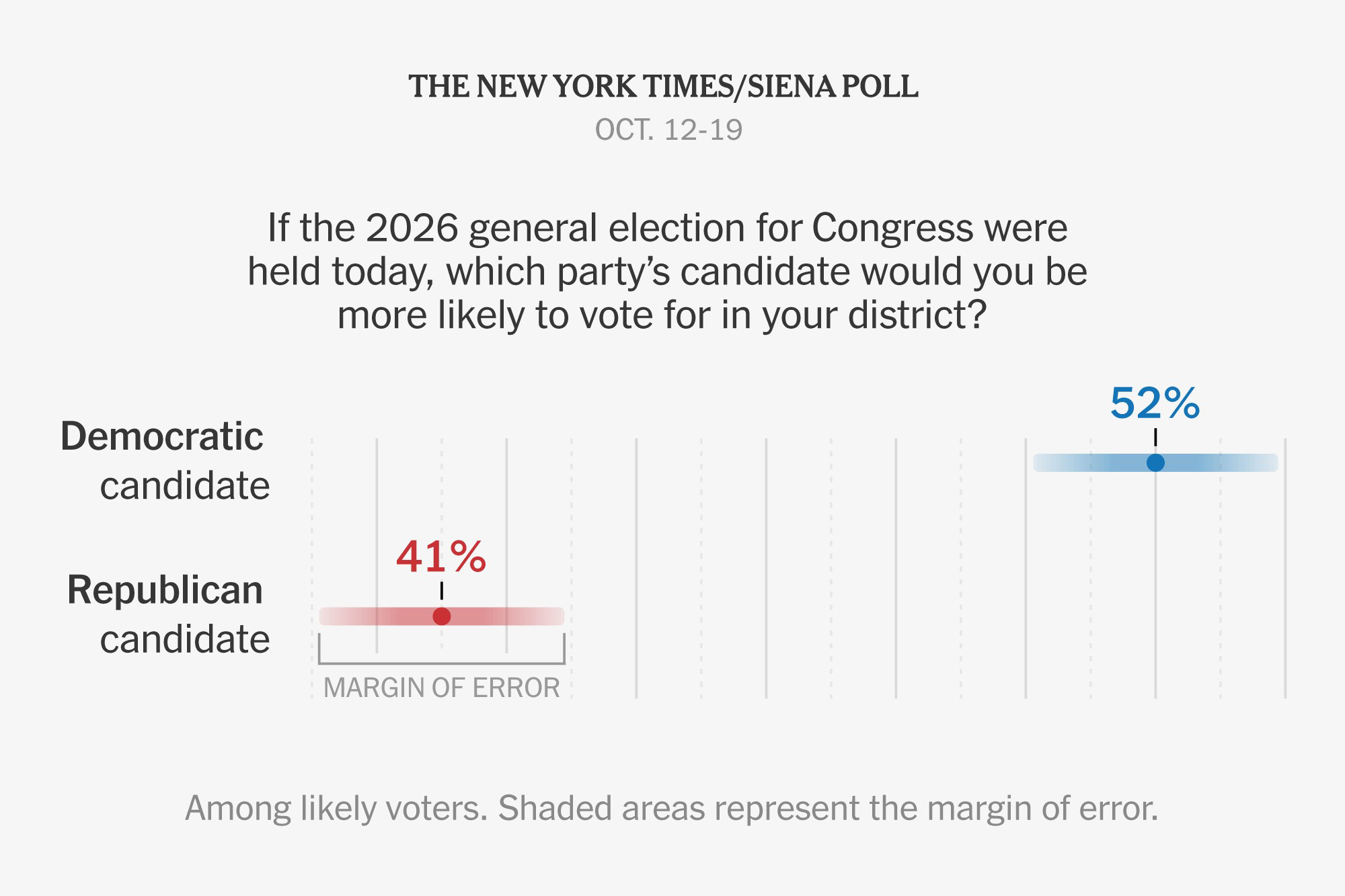
    Likely voters said they preferred Democratic candidates over Republicans by 11 percentage points in their congressional districts in the final Times/Siena national poll before the midterm elections, a slight improvement for Democrats since last month. The metric is widely seen as a strong indicator of political momentum.

    The national political environment is bleak for Republicans. Americans broadly disapprove of economic conditions under the Trump administration, with three-quarters rating the economy as fair or poor. A majority of voters blame Trump for the decline: 69% disapprove of his handling of the cost of living, 65% disapprove of his handling of the war in Iran and nearly three-quarters disapprove of his handling of gas prices, which are above $4 a gallon.

    But Democrats still face serious challenges, particularly as they seek to win control of the Senate. To do so they are trying to flip seats in Republican-leaning states including Texas, Iowa, Alaska, and Ohio, which Trump won by double digits in 2024. Other polls show that Democrats and Republicans are locked in tight races in several key Senate contests.

    Still, the deep economic frustration has even broken into the coalition that elected Trump to his second term. Over the past year, Democrats have improved their standing among men, young voters and Hispanic voters — winning back some voters in those groups who helped propel Trump to victory two years ago.

    Paul Gettings, a Republican who lost his job running a logistics company in June, said he supported Trump in 2024 but plans to back Democrats this year. He cited frustration with high gas prices, the war in Iran, and what he sees as harsh immigration enforcement in Simi Valley, Calif., where he lives.

    “I’m very disillusioned with the Republican Party and how they can continue to support Trump,” said Gettings, 62, who is unemployed. “He’s turned into a politician just like the rest of them and it’s a lot of empty promises.”

    Among all registered voters, including those who are less likely to vote, Trump’s approval rating was even worse, with 34% approving of his job performance. Trump built his 2016 and 2024 wins partly on the strength of his support among white voters without a college degree, but the poll found that group is about evenly split in its approval of his job, with 48% approving and 46% disapproving.

    As views of Republicans have declined, public perceptions of Democrats have grown increasingly positive over the last two years on an array of measures.

    A majority of likely voters now see the Democratic Party as the party of the working class — a shift from 2022, when voters gave the Republican Party the edge. Voters also see Democrats as more likely to keep their promises than Republicans, a striking reversal from two years ago, when Republicans held an advantage on that question.

    And majorities across nearly every demographic group now view Democrats as more understanding and able to fix the problems of average Americans.

    “The Republican Party is, if anything, causing more problems for people like me: being Latino, feeling the weight of that kind of prejudice that I think the Republican Party tends to kind of portray,” said Vince Cordero, 25, an independent in Oak Lawn, Ill., who said he plans on voting for Democrats this year. “I also think the Democratic Party deserves an opportunity to see if they’re really up to snuff.”

    By a 15-point margin, more voters trust the Democratic Party over the Republican Party to tackle the cost of living, the single most important issue to voters. The party holds an 8-point advantage on the economy, an area that has historically been a strength for Trump. Democrats have also grown their lead since September on who voters trust to handle foreign wars and artificial intelligence.

    But even amid his declining numbers, Trump has held on to strong support from his base. The vast majority of Republicans, 82%, still approve of his job performance and his signature policies, including the Iran war and tariffs.

    “People are upset, ‘Oh, Trump put these tariffs on people and now our food costs go up,’” said Sheila Murdock, a retired nurse from Shelley, Idaho, who has already voted absentee for Republicans this year. “Well, yes, but if you look at the bigger picture and what it eventually does, it makes things better.”

    The poll also found immigration reemerging as a defining concern for voters. Ten percent of voters now say it is their top issue this fall, up from 6% in September. Among Republicans, almost 20% now say it is their top priority — nearly double the percentage who said the same last month.

    While Democrats still hold an edge over Republicans in who voters trust to handle immigration — which had long been a Republican strength — that advantage has shrunk since September. Now, 46% of voters say they trust Republicans on immigration, 50% say the same of Democrats.

    Still, the survey indicates that even as Democratic candidates gain support, there is lingering discontent with their party. Just 28% of voters said they are satisfied with the Democratic Party, 8 points lower than the share who express satisfaction with the Republican Party.

    Much of the unhappiness stems from Democratic voters themselves. Forty-three percent of Democrats said they are unsatisfied with their party, compared with just 16% of Republicans who said the same about the GOP.